


Abstract
Macroalgal surfaces harbor epiphytic bacterial communities with potential roles in host metabolism, stress tolerance, chemical defense, and ecological interactions, yet their genome-resolved diversity remains poorly characterized across major macroalgal lineages. Here, we reconstructed epiphytic bacterial metagenome-assembled genomes (MAGs) from 108 culture-derived macroalgal shotgun datasets originally generated for host genome sequencing, together with three additional macroalgal species with paired high-accuracy long-read and short-read data. Benchmarking of matched MAGs showed comparable assembly sizes and genome quality between sequencing strategies, supporting short-read-based MAG recovery from host-associated macroalgal datasets. Across all datasets, we recovered 3272 preliminary MAGs and retained 1915 non-redundant, quality-controlled MAGs, of which 1543 could not be assigned to species-level taxa by GTDB-Tk based on ANI. These genomes were dominated by Pseudomonadota, Bacteroidota, and Planctomycetota, which together represented 88.3% of the collection, and included many species-level unassigned genomes. Functional analyses identified 12,950 biosynthetic gene clusters grouped into 7985 gene cluster families, 20 biosynthetically rich MAGs, and 222 KEGG modules. This atlas provides a genome-resolved resource for studying macroalgal holobiont function and microbial natural product potential.
1. Introduction
The holobiont/hologenome framework views a host and its associated microbiota as an integrated biological system, in which microbial genomes can expand host functional potential and contribute to environmental adaptation [1]. This view is supported by plant studies showing that drought-enriched root bacteria can improve sorghum growth under water-limited conditions, demonstrating that root-associated microbiota can contribute directly to host stress adaptation [2].
Compared with the studies of root microbiomes of terrestrial plants, epiphytic bacterial communities of macroalgae remain comparatively underexplored, although emerging evidence suggests that they can play important roles in host stress tolerance, metabolism, and chemical defense. For example, a heat-tolerant Saccharothrix strain isolated from Pyropia haitanensis enhanced the host’s tolerance to high-temperature stress [3], while recent work under desiccation–rehydration stress showed that host-derived glycerol-3-phosphate can recruit stress-tolerant bacterial symbionts, indicating that epiphytic microbiota may contribute directly to macroalgal resilience under environmental stress [4]. In red and brown macroalgae, associated bacterial MAGs were found to encode diverse halogenation- and dehalogenation-related genes, suggesting that macroalgal microbiomes may participate in organohalogen metabolism and host defense [5]. These findings indicate that epiphytic bacteria are not merely passive surface colonizers but may provide functional traits relevant to macroalgal adaptation and ecological interactions.
Genome-resolved metagenomics has begun to reveal the functional potential of macroalgal epiphytic microbiomes. In P. haitanensis, genome-resolved analysis reconstructed 202 MAGs and revealed broad metabolic potential in nitrate reduction, taurine metabolism, organophosphorus metabolism, ACC degradation, auxin biosynthesis, and vitamin B12 synthesis [6]. In Ulva, metagenomic analysis across a 2000 km salinity gradient recovered 639 MAGs and showed that, despite pronounced taxonomic turnover, the functional potential of the microbiome remained relatively conserved [7]. However, these studies have largely focused on a small number of representative macroalgal hosts, highlighting the need for broader multi-species comparisons to resolve the diversity, functional repertoire, and host specificity of epiphytic bacterial MAGs across macroalgal lineages [8].
In this study, we investigated the genomic diversity and functional potential of epiphytic bacteria associated with 114 macroalgae samples. Most short-read datasets were originally generated for host genome assembly within the ALG-ALL-CODE-macro project; however, their high sequencing depth also provided sufficient sequence information for recovering epiphytic microbial genomes. By leveraging these macroalgal sequencing resources, we aimed to expand the genome-resolved understanding of macroalgal surface microbiomes and their potential roles in the macroalgal holobiont. This work provides a foundation for exploring epiphytic bacteria as contributors to macroalgal ecology and microbial biosynthetic diversity.
2. Materials and Methods
2.1. Data Retrieval and Assembly
Illumina sequencing data from 108 macroalgal samples maintained in algal culture collections (CCAP/CCMP) were retrieved from the National Center for Biotechnology Information under BioProject PRJNA924561. High-accuracy long-read and paired short-read datasets for Kappaphycus striatus (red alga), Okellya marina (green alga), and Saccharina japonica (brown alga) were additionally obtained from BioProjects PRJNA1150769, PRJNA1331326, and PRJNA1181279, respectively.
Short-read datasets were quality-filtered with fastp v1.3.2 [9] and assembled using MEGAHIT v1.2.9 [10] with default parameters. Long-read datasets were assembled with metaMDBG v1.3.1 [11].
2.2. Reconstruction of Epiphytic Bacteria Genomes
Assembled contigs were classified with Tiara v1.0.3 [12] using a minimum contig length cutoff of 3 kb. Contigs classified as bacterial were extracted together with their corresponding identifiers. Short reads were then mapped to their own assembly using bwa mem v0.7.18 [13], and the alignments were sorted with samtools v1.23.1 [14]. BAM files were subsequently filtered with a custom script to retain only alignments associated with bacterial contigs.
Coverage profiles for bacterial contigs were generated using jgi_summarize_bam_contig_depths v2.18, followed by binning with MetaBAT2 v2.18 [15]. Genome binning was also performed with VAMB v5.0.4 [16]. Because contigs shorter than 3 kb had already been excluded during the classification step, no additional minimum contig length threshold was specified. Bins generated by MetaBAT2 and VAMB were integrated using DAS_Tool v1.1.7 [17], and bin quality was evaluated with CheckM2 v1.0.2 [18]. CheckM2 was selected because its machine-learning-based framework provides robust genome quality estimates across taxonomically diverse and poorly characterized lineages, which was particularly suitable for this dataset containing many taxonomically unassigned MAGs.
MAGs were dereplicated using MAGmax v1.4.0 [19] with -i 95 -c 50 -p 90 --no-reassembly. Only MAGs with completeness of at least 50% and contamination of no more than 10% were retained for downstream analyses.
2.3. Comparison of Long-Read and Short-Read Assemblies
For the three algal species with both long-read and short-read datasets, ANI values among reconstructed MAGs were calculated using skani v0.3.1 [20]. MAG pairs were considered to represent the same species recovered by both sequencing strategies when they shared an ANI greater than 99% and an alignment fraction of at least 60%. For MAGs recovered from both sequencing strategies, basic assembly metrics were calculated to compare the performance of long-read and short-read sequencing in reconstructing epiphytic microbial genomes.
2.4. Taxonomic Assignment and Functional Annotation of MAGs
MAGs were taxonomically classified using GTDB-Tk v2.7.2 [21] with GTDB release 232 (April 2026) [22]. For comparison, the publicly available isolate-derived draft genome assemblies reported by Lu et al. were downloaded and reclassified using the same GTDB-Tk version and GTDB release [8]. A maximum-likelihood phylogeny was reconstructed with FastTree v2.2.0 [23] based on concatenated amino acid sequences of the bac120 marker genes and subsequently visualized and annotated using iTOL [24]. MAGs that could not be assigned to described species based on ANI were regarded as putative novel species or taxonomically unassigned MAGs.
For functional annotation, protein-coding genes were predicted from each MAG using Prodigal v2.6.3 [25]. Predicted protein sequences were annotated with eggNOG-mapper v2.1.23 [26]. Briefly, homologous sequences were searched against the eggNOG database using DIAMOND v2.0.11.149 [27], and functional annotations were assigned based on the matches. The completeness of KEGG modules was calculated by kegg-pathways-completeness-tool v1.4.3 [28].
Biosynthetic gene clusters (BGCs) were predicted and annotated using antiSMASH v8.0.4 with --genefinding-tool prodigal --cc-mibig --cb-knownclusters --cb-general --cb-subclusters. Family-level clustering was performed using BiG-SLiCE v2.0.0 [29] in two separate analyses: one using the default settings without the --complete option and the other using the --complete option to focus on complete BGCs.
3. Results
3.1. Sequencing Data and Genome-Resolved Reconstruction of Macroalgal Epiphytic Bacteria
We analyzed whole-genome shotgun sequencing datasets from 108 macroalgal culture samples originally generated by the ALG-ALL-CODE-macro project [30]. This dataset was initially produced for host macroalgal genome sequencing and represents a broad phylogenetic and ecological sampling of macroalgae maintained in international algal culture collections, including the Culture Collection of Algae and Protozoa (CCAP) and the National Center for Marine Algae and Microbiota/CCMP collection. Thus, although the original sequencing effort was designed for comparative macroalgal genomics, the resulting shotgun datasets also provide a valuable resource for reconstructing host-associated epiphytic bacterial genomes across a broad macroalgal host range.
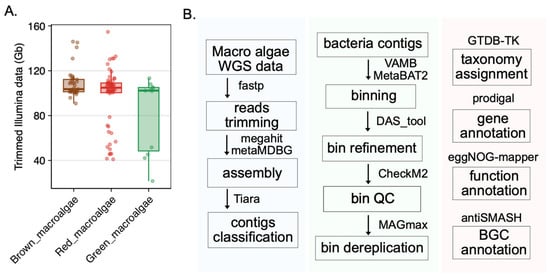
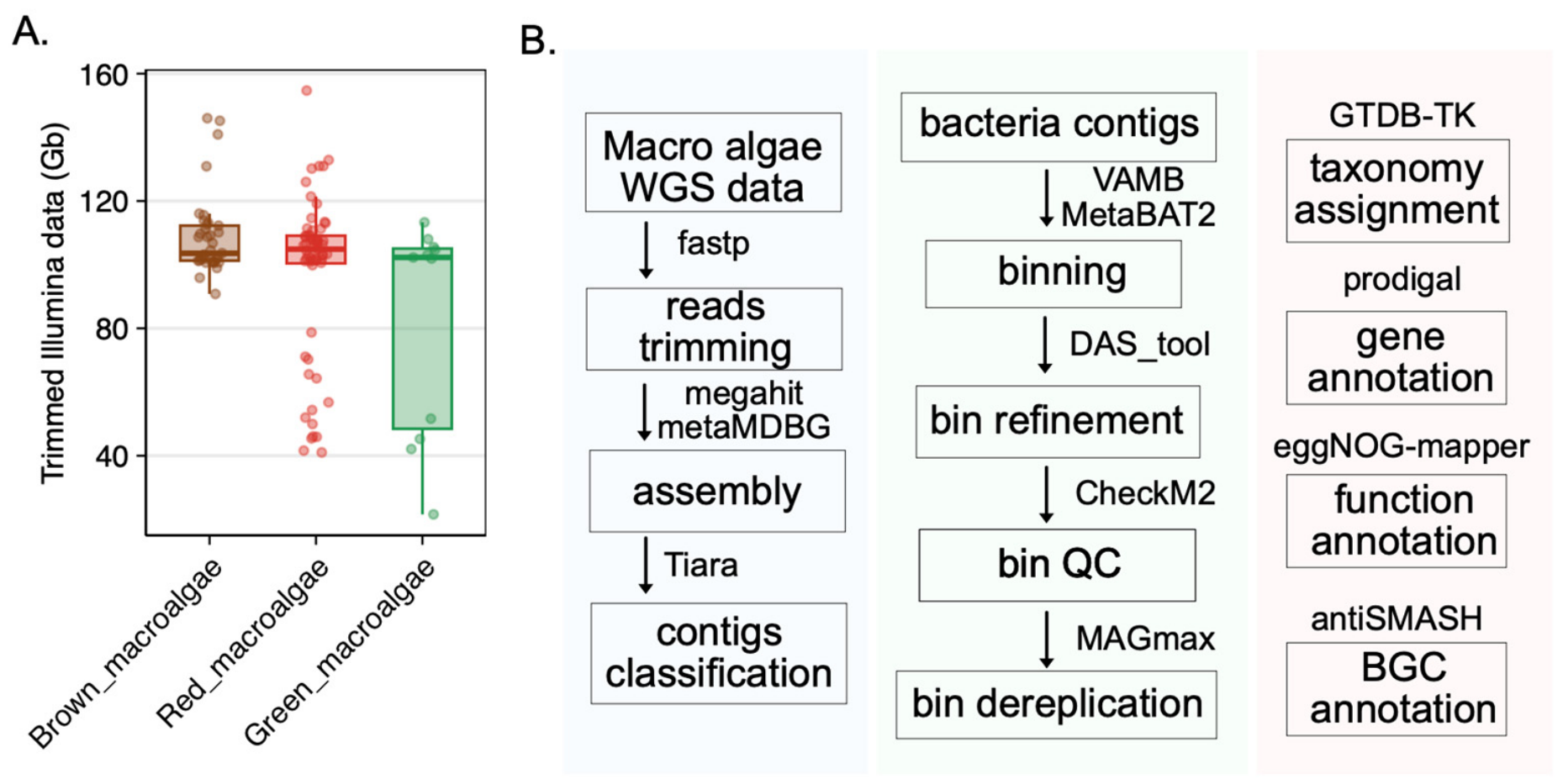
After read trimming, most short-read datasets retained sequencing depths on the order of approximately 100 Gb (Table S1). Given that many macroalgal genomes are relatively small compared with this sequencing depth, and that the extracted DNA contains both host-derived and associated microbial DNA, these datasets were expected to retain sufficient microbial sequence coverage for downstream bacterial contig assembly and MAG reconstruction (Figure 1A).
Figure 1.
Overview of the sequencing data and bioinformatics workflow. (A) Trimmed Illumina sequencing data generated from 108 macroalgal samples. (B) Bioinformatics workflow used for assembly, MAG reconstruction, quality assessment, dereplication, and downstream annotation.
To recover epiphytic bacterial genomes from these mixed host-associated metagenomes, we implemented a genome-resolved workflow. Briefly, assembled contigs were first classified to identify bacterial sequences, which were then subjected to binning with complementary algorithms and integrated bin refinement. The resulting MAGs were evaluated for completeness and contamination, dereplicated, and subsequently annotated for taxonomy, gene functions, KEGG modules, and biosynthetic gene clusters (Figure 1B). This workflow enabled systematic reconstruction of epiphytic bacterial genomes from macroalgal genome-skimming datasets while reducing interference from algal host sequences.
3.2. Comparison of Short- and Long-Read-Based MAG Reconstruction from Host-Associated Macroalgal Datasets
Because the 108 macroalgal datasets analyzed in this study were generated using short-read sequencing, we evaluated whether short-read data were sufficient for reconstructing bacterial MAGs from host-associated macroalgal shotgun datasets. The presence of abundant host-derived sequences may therefore increase assembly complexity and affect bacterial genome recovery.
To assess the reliability of MAG reconstruction under this condition, we analyzed three representative macroalgal species for which both high-accuracy long-read and paired short-read datasets were available: Kappaphycus striatus representing red algae, Okellya marina representing green algae, and Saccharina japonica representing brown algae. MAGs were independently reconstructed from long-read and short-read assemblies and compared using assembly size and genome quality metrics.
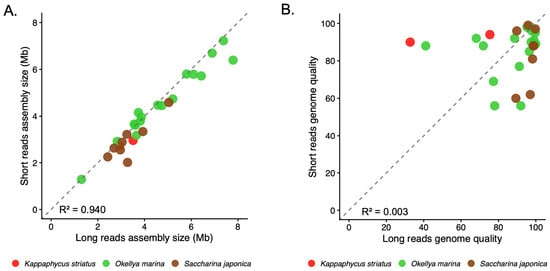
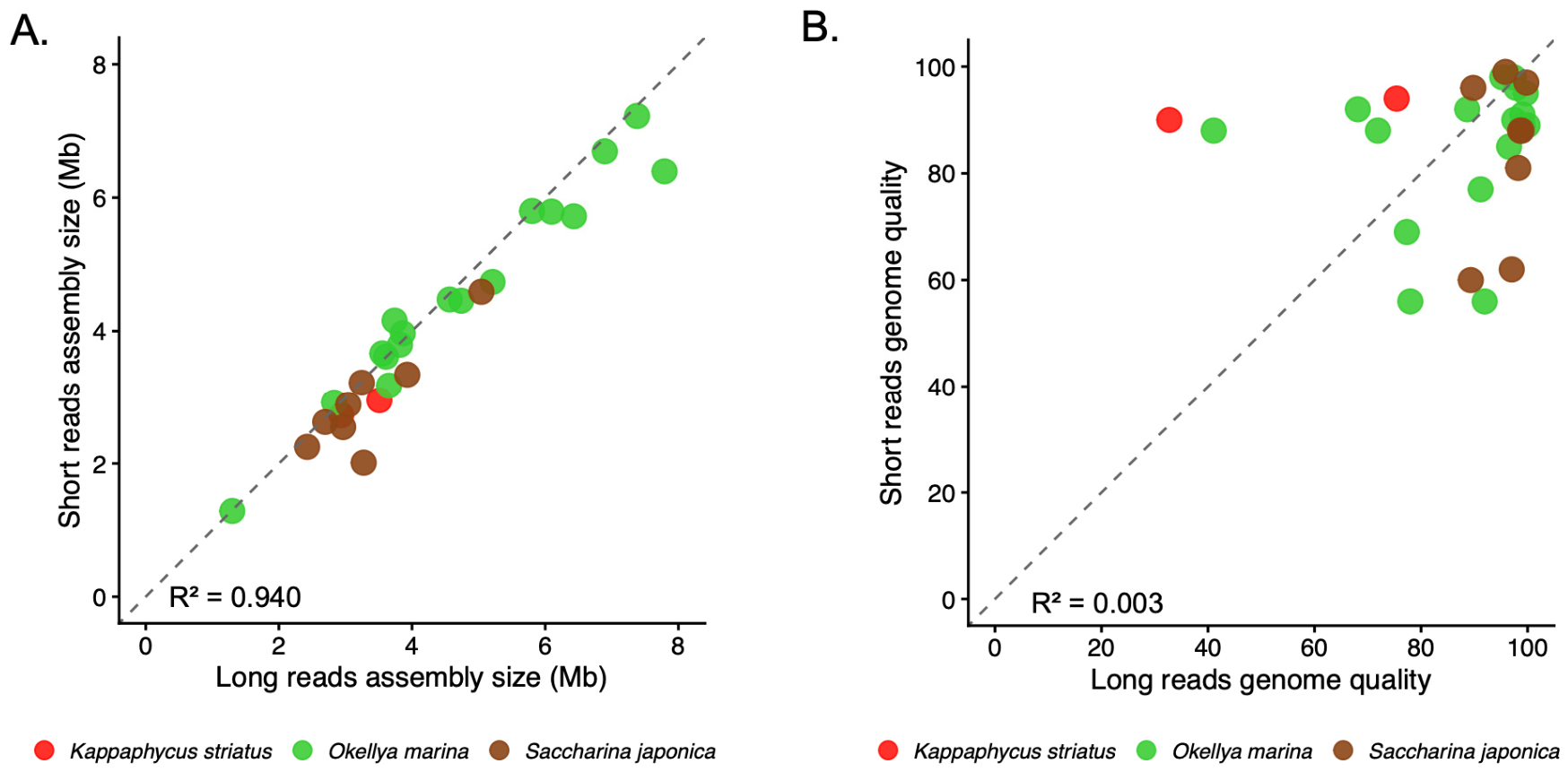
Matched MAGs reconstructed from the two sequencing strategies showed broadly comparable assembly sizes. Most MAG pairs were distributed close to the 1:1 relationship between long-read and short-read assembly sizes, with a strong linear relationship between the two datasets (R2 = 0.94), indicating that short-read assemblies generally recovered similar genome lengths to long-read assemblies (Figure 2A). However, consistent with the greater read length of long-read sequencing, long-read-derived MAGs generally exhibited higher contig N50 (Table S2).
Figure 2.
Comparison of MAG recovery between long-read and short-read sequencing strategies. (A) Assembly sizes of matched MAG pairs. (B) Genome quality scores of matched MAG pairs, calculated as completeness − 5 × contamination. The dashed line represents the 1:1 relationship. Colors indicate Kappaphycus striatus (red macroalga), Okellya marina (green macroalga), and Saccharina japonica (brown macroalga).
In contrast, genome quality scores showed little linear correspondence between the two sequencing strategies (R2 = 0.003). Long-read-derived MAGs did not show a systematic improvement in genome quality relative to short-read-derived MAGs, and in several cases, MAGs reconstructed from short-read assemblies showed equal or higher estimated quality than their long-read counterparts (Figure 2B and Table S2). These results indicate that, despite the presence of macroalgal host DNA, short-read shotgun datasets can support reliable reconstruction of bacterial MAGs when bacterial contigs are first identified and subsequently subjected to genome binning, refinement, and quality control.
3.3. Phylogenetic Diversity and Quality of Reconstructed Macroalgal Epiphytic MAGs
In total, bacterial genome reconstruction was performed across 108 macroalgal culture center short-read datasets and three additional macroalgal species for which both high-accuracy long-read and paired short-read datasets were available. These datasets covered representatives of the three major macroalgal lineages, including red, green, and brown algae, and yielded 3272 preliminary MAGs before dereplication. After genome dereplication and quality filtering, 1915 non-redundant, quality-controlled MAGs were retained for downstream analyses.
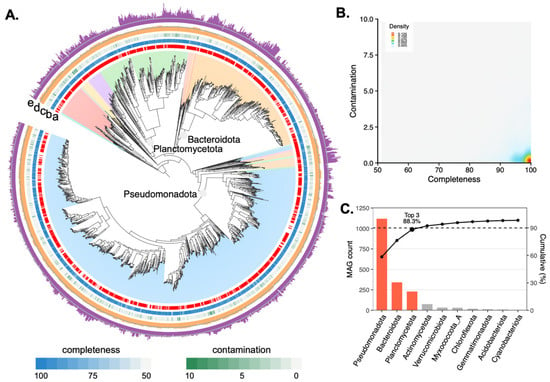
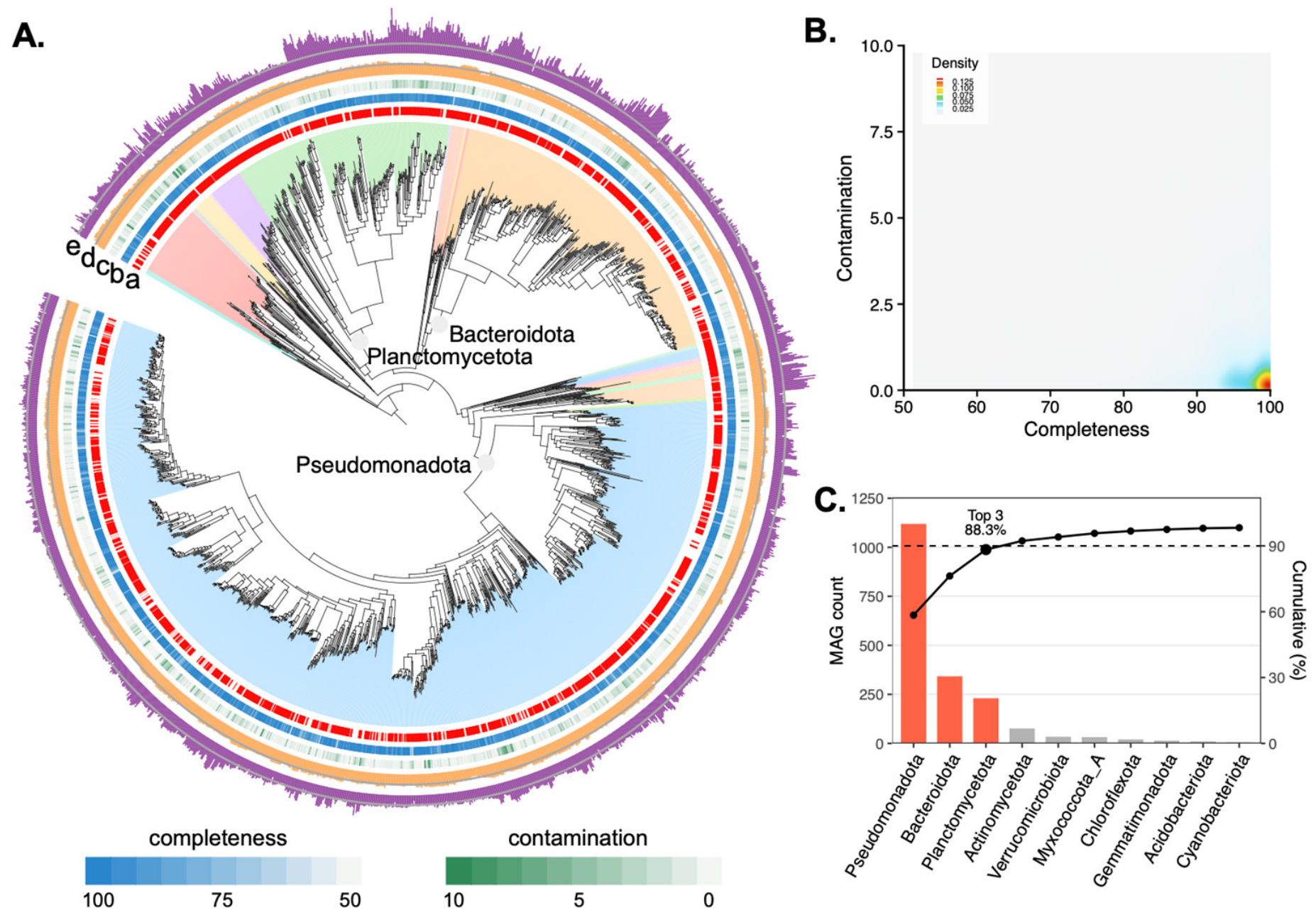
Phylogenomic reconstruction based on concatenated bac120 marker proteins showed that these MAGs spanned broad bacterial diversity across the macroalgal epiphytic microbiome (Figure 3A and Table S3). The retained MAGs were generally characterized by high completeness and low contamination, with most genomes concentrated near high-completeness and low-contamination ranges in the CheckM2 quality distribution (Figure 3B). These results indicate that the genome reconstruction and filtering strategy generated a robust non-redundant MAG collection suitable for comparative taxonomic and functional analyses.
Figure 3.
Phylogenetic distribution, genome quality, and taxonomic composition of reconstructed MAGs. (A) Maximum-likelihood phylogenetic tree of reconstructed MAGs based on concatenated bac120 marker protein sequences. Major bacterial phyla are highlighted. The circular tracks indicate: a, MAGs that could not be assigned to the species level by ANI-based classification in GTDB-Tk, shown in red; b, completeness; c, contamination; d, GC content, with the reference line indicating 0.6; and e, MAG size, with the reference line indicating 6 Mb. (B) Density distribution of MAG completeness and contamination estimates assessed using CheckM2. (C) Phylum-level distribution of reconstructed MAGs. Bars indicate MAG counts, and the line shows the cumulative percentage. The horizontal dashed line indicates the 90% cumulative MAG-count threshold.
Taxonomic classification revealed that the MAG collection was dominated by three major bacterial phyla: Pseudomonadota, Bacteroidota, and Planctomycetota. Together, these three phyla accounted for 88.3% of all reconstructed MAGs (Figure 3C). A substantial proportion of MAGs (1543 of 1915) could not be assigned on ANI-based species-level classification, suggesting that macroalgal surfaces harbor extensive bacterial genomic diversity that remains underrepresented in current reference databases (Figure 3A).
3.4. Biosynthetic Gene Clusters and Metabolic Module Profiles of Macroalgal Epiphytic MAGs
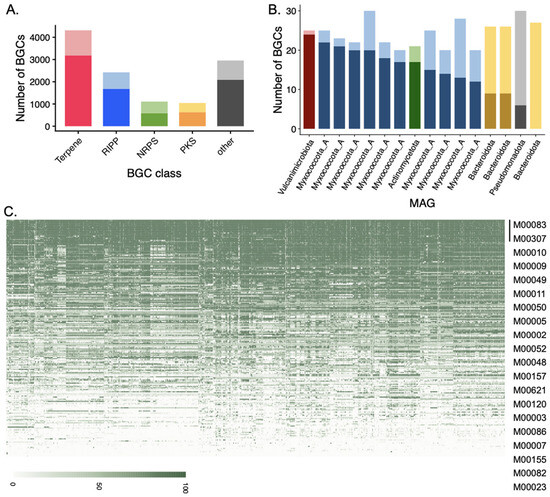
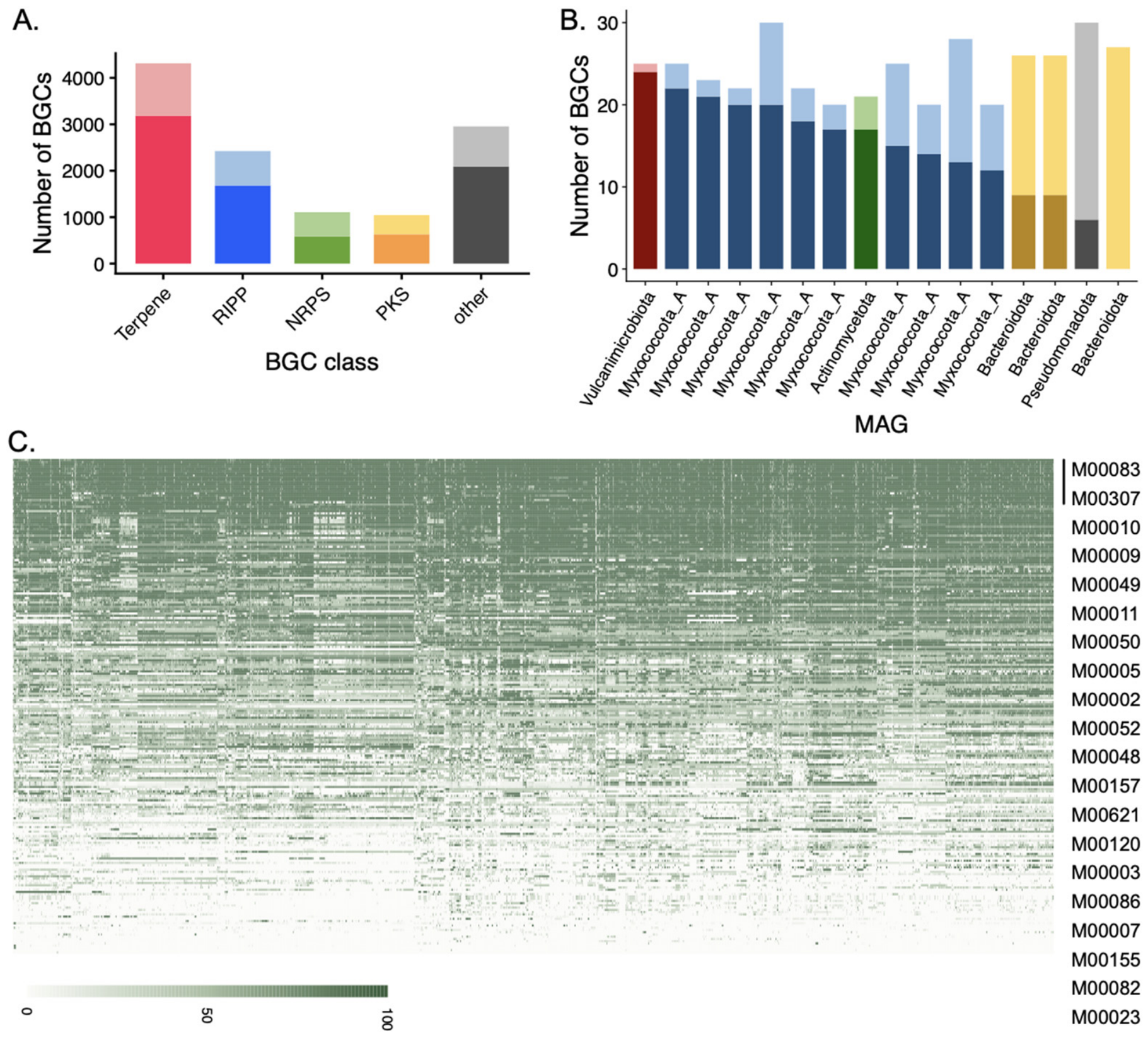
We next investigated the biosynthetic and metabolic potential of the 1915 non-redundant, quality-controlled MAGs. antiSMASH analysis identified 12,950 biosynthetic gene clusters (BGCs) across the MAG collection. Only about 20% of predicted BGCs were located at contig edges (Figure 4A). These BGCs were assigned to multiple product classes, with terpene-related clusters representing the most abundant category, followed by ribosomally synthesized and post-translationally modified peptide (RiPP) clusters, nonribosomal peptide synthetase (NRPS) clusters, polyketide synthase (PKS) clusters, and other BGC classes (Figure 4A). The predominance of terpene BGCs suggests that terpenoid biosynthesis is a widespread feature of macroalgal epiphytic bacteria. Clustering of the predicted BGCs with BiG-SLiCE yielded 7985 and 5409 gene cluster families (GCFs) under the default and --complete settings, respectively, highlighting the substantial biosynthetic diversity encoded by the macroalgal epiphytic MAG collection.
Figure 4.
Predicted BGC product types and KEGG module completeness across MAGs. (A) Distribution of predicted BGC product types across all MAGs. Light-colored segments indicate BGCs located at the edge of a contig. (B) MAG-level distribution of predicted BGCs. Light-colored segments indicate BGCs located at the edge of a contig. (C) Completeness of all identified KEGG modules across MAGs. MAGs are ordered according to the phylogenetic tree in Figure 3, and KEGG modules are ordered by summed completeness, with the top 20 modules labeled.
A subset of MAGs encoded a high number of predicted BGCs, indicating the presence of biosynthetically rich microorganisms within the macroalgal epiphytic microbiome. Using 20 BGCs per genome as a threshold for defining biosynthetically rich microorganisms, 20 MAGs met this criterion (Figure 4B). These BGC-rich MAGs were mainly concentrated in Myxococcota_A, with additional representatives from Bacteroidota, Actinomycetota, Pseudomonadota, Vulcaniimicrobiota, and Gemmatimonadota. The enrichment of BGC-rich genomes in Myxococcota_A is consistent with the well-recognized biosynthetic capacity of this lineage; however, this pattern may also partly reflect the larger genome sizes of some BGC-rich taxa, which can provide greater genomic capacity for encoding secondary-metabolite pathways.
In parallel, KEGG module analysis identified 222 modules across the MAG collection. Module completeness was projected onto each MAG to assess the distribution of metabolic functions across the phylogeny (Figure 4C and Table S4). The top-ranked modules were predominantly associated with central and conserved cellular functions, including fatty acid biosynthesis (M00082 and M00083), glycolysis and central carbon metabolism (M00002, M00009, M00010, M00011, and M00307), nucleotide biosynthesis (M00048, M00049, M00050, and M00052), energy metabolism (M00155 and M00157), and amino acid and cofactor metabolism (M00621, M00120, and M00023). These broadly represented modules indicate conserved capacities for central metabolism and cellular maintenance across the reconstructed MAGs. In contrast, some modules showed more restricted or genome-specific distributions. For example, the DMSP degradation demethylation pathway (M00990) showed variable completeness across the MAG collection (Table S4), indicating that DMSP-related sulfur metabolism may represent a more specialized metabolic potential in particular epiphytic bacterial lineages. These patterns suggest functional differentiation among macroalgal epiphytic bacterial lineages.
4. Discussion
Deep sequencing of non-axenic macroalgal samples can provide substantial genome-resolved information on their associated microbiota, even when sequencing was originally designed for the algal host. Previous dedicated metagenomic studies recovered 202 MAGs from the P. haitanensis microbiome, 1619 MAGs and 965 isolate-derived draft genomes from co-located red, green, and brown macroalgae, and 639 MAGs from Ulva across a broad salinity gradient [6,7,8]. In the present study, most host-oriented datasets contained approximately 100 Gb of short-read data, from which 1915 non-redundant bacterial MAGs were ultimately recovered. Together with the comparable genome sizes and quality of matched short- and long-read MAGs, these results indicate that deeply sequenced macroalgal genomic datasets represent an underused resource for recovering epiphytic bacterial genomes, provided that bacterial sequences have sufficient coverage and are subjected to appropriate classification, binning, and quality control.
The taxonomic comparison also illustrates how rapidly reference genome databases are expanding, while substantial uncultivated diversity remains unresolved. In 2023, Lu et al. reported that more than 80% of their nearly complete isolate-derived draft genomes could not be affiliated with described species using GTDB-Tk; similarly, 88.4% of their high-quality MAGs lacked affiliation with described species. In our re-analysis of the publicly available isolate-derived draft genomes using the latest GTDB release (release 232) [31], however, only seven genomes remained without ANI-based species-level assignment. This dramatic improvement indicates that many previously novel cultured macroalgal-associated bacteria have now been incorporated into reference databases. Nevertheless, 1543 of the 1915 MAGs recovered in the present study still lacked species-level assignments, suggesting that the uncultivated fraction of the macroalgal epiphytic microbiome continues to contain extensive genomic diversity not represented by currently available reference genomes.
The biosynthetic diversity of macroalgal epiphytic bacteria remains even less explored. Lu et al. identified 8810 BGCs from their macroalgal-associated MAGs and isolated genomes, with particularly high biosynthetic potential in several core phycosphere lineages [8]. Here, we detected 12,950 BGCs forming up to 7985 GCFs, including several BGC-rich bacterial genomes, further indicating that macroalgal surfaces harbor substantial unexplored biosynthetic potential. This pattern resembles recent genome-resolved analyses of coral-associated microbiomes, in which approximately 35,000 BGCs were identified from more than 13,000 microbial genomes and most GCFs represented previously uncharacterized biosynthetic diversity [32]. Together with the approximately 40,000 mostly novel BGCs identified from the global ocean microbiome, these findings suggest that host-associated marine microbiomes remain a major reservoir of unexplored biosynthetic diversity [33].
One limitation of this study is that host-derived reads were not removed prior to metagenomic assembly. Because the available macroalgal host genome assemblies were often incomplete and fragmented [30], reference-based host-read depletion was not expected to reliably remove all host-derived sequences. Consequently, the high proportion of host DNA in these host-oriented sequencing datasets may have reduced the effective sequencing depth available for microbial populations and increased assembly complexity. This may have particularly affected the reconstruction of low-abundance bacterial genomes and contributed to genome fragmentation. Therefore, the MAG collection recovered here likely represents a conservative estimate of the genome-resolved bacterial diversity associated with these macroalgae.
Supplementary Materials
The following supporting information can be downloaded at: https://www.mdpi.com/article/10.3390/phycology6030102/s1.
Author Contributions
Conceptualization: W.X., W.W. and C.X., methodology: W.X., X.L., J.W., K.X., Y.X., D.J., W.W. and C.X., investigation: W.X., X.L., J.W., K.X., Y.X., D.J., W.W. and C.X., visualization: W.X. and X.L., supervision: C.X. and W.W., writing-orinal draft: W.X. and X.L.; All authors have read and agreed to the published version of the manuscript.
Funding
This work was financially supported by the National Natural Science Foundation of China (32573492; 32473157); the National Key Research and Development Program of China (2023YFD2400103); the Independent Research Protect of State Key Laboratory of Mariculture Breeding (MBL25IRO8); the Natural Science Foundation of Fujian Province (2026J008186); the Natural Science Foundation of Xiamen, China (3502Z202671047); the Initial Fund for Scientific Research of Jimei University-Natural Science (ZQ2026017).
Institutional Review Board Statement
Not applicable. This study did not involve human participants or animals; therefore, ethical review and approval were not required.
Informed Consent Statement
Not applicable. This study did not involve human participants.
Data Availability Statement
The raw sequencing data used in this study are publicly available from NCBI under BioProject accession numbers PRJNA924561, PRJNA1150769, PRJNA1331326, and PRJNA1181279. The MAGs assembled in this study, together with the corresponding CheckM2 quality assessment results, GTDB-Tk taxonomic annotations and antismash annotations, are available on Zenodo at https://zenodo.org/records/21563086 (accessed on 25 July 2026).
Acknowledgments
We thank Daniel H. Huson and Anupam Gautam for their support and helpful discussions. We also thank all members of our laboratory for their help and valuable discussions.
Conflicts of Interest
The authors declare no conflicts of interest.
References
- Zilber-Rosenberg, I.; Rosenberg, E. Role of Microorganisms in the Evolution of Animals and Plants: The Hologenome Theory of Evolution. FEMS Microbiol. Rev. 2008, 32, 723–735. [Google Scholar] [CrossRef] [Scilit] [PubMed]
- Xu, L.; Dong, Z.; Chiniquy, D.; Pierroz, G.; Deng, S.; Gao, C.; Diamond, S.; Simmons, T.; Wipf, H.M.-L.; Caddell, D.; et al. Genome-Resolved Metagenomics Reveals Role of Iron Metabolism in Drought-Induced Rhizosphere Microbiome Dynamics. Nat. Commun. 2021, 12, 3209. [Google Scholar] [CrossRef] [Scilit] [PubMed]
- Wang, W.; Ge, Q.; Wen, J.; Zhang, H.; Guo, Y.; Li, Z.; Xu, Y.; Ji, D.; Chen, C.; Guo, L.; et al. Horizontal Gene Transfer and Symbiotic Microorganisms Regulate the Adaptive Evolution of Intertidal Algae, Porphyra Sense Lato. Commun. Biol. 2024, 7, 976. [Google Scholar] [CrossRef] [Scilit] [PubMed]
- Wang, Y.; Zhu, Z.; Zhang, Y.; Luo, Q.; Niu, T.; Liu, Y.; Chen, J.; Yang, R.; Zhu, S.; Chen, H. Dynamic Microbiome Turnover and Glycerol-3-Phosphate-Linked Metabolic Adjustments Underlie Resilience to Desiccation in Intertidal Algae. New Phytol. 2026. [Google Scholar] [CrossRef] [Scilit] [PubMed]
- Lavecchia, A.; Fosso, B.; Engelen, A.H.; Borin, S.; Manzari, C.; Picardi, E.; Pesole, G.; Placido, A. Macroalgal Microbiomes Unveil a Valuable Genetic Resource for Halogen Metabolism. Microbiome 2024, 12, 47. [Google Scholar] [CrossRef] [Scilit] [PubMed]
- Wang, J.; Tang, X.; Mo, Z.; Mao, Y. Metagenome-Assembled Genomes from Pyropia haitanensis Microbiome Provide Insights into the Potential Metabolic Functions to the Seaweed. Front. Microbiol. 2022, 13, 857901. [Google Scholar] [CrossRef] [Scilit] [PubMed]
- van der Loos, L.M.; Steinhagen, S.; Stock, W.; Weinberger, F.; D’hondt, S.; Willems, A.; De Clerck, O. Low Functional Change despite High Taxonomic Turnover Characterizes the Ulva Microbiome across a 2000-Km Salinity Gradient. Sci. Adv. 2025, 11, eadr6070. [Google Scholar] [CrossRef] [Scilit] [PubMed]
- Lu, D.-C.; Wang, F.-Q.; Amann, R.I.; Teeling, H.; Du, Z.-J. Epiphytic Common Core Bacteria in the Microbiomes of Co-Located Green (Ulva), Brown (Saccharina) and Red (Grateloupia, Gelidium) Macroalgae. Microbiome 2023, 11, 126. [Google Scholar] [CrossRef] [Scilit] [PubMed]
- Chen, S.; Zhou, Y.; Chen, Y.; Gu, J. Fastp: An Ultra-Fast All-in-One FASTQ Preprocessor. Bioinformatics 2018, 34, i884–i890. [Google Scholar] [CrossRef] [Scilit] [PubMed]
- Li, D.; Liu, C.-M.; Luo, R.; Sadakane, K.; Lam, T.-W. MEGAHIT: An Ultra-Fast Single-Node Solution for Large and Complex Metagenomics Assembly via Succinct de Bruijn Graph. Bioinformatics 2015, 31, 1674–1676. [Google Scholar] [CrossRef] [Scilit] [PubMed]
- Benoit, G.; Raguideau, S.; James, R.; Phillippy, A.M.; Chikhi, R.; Quince, C. High-Quality Metagenome Assembly from Long Accurate Reads with metaMDBG. Nat. Biotechnol. 2024, 42, 1378–1383. [Google Scholar] [CrossRef] [Scilit] [PubMed]
- Karlicki, M.; Antonowicz, S.; Karnkowska, A. Tiara: Deep Learning-Based Classification System for Eukaryotic Sequences. Bioinformatics 2022, 38, 344–350. [Google Scholar] [CrossRef] [Scilit] [PubMed]
- Li, H. Aligning Sequence Reads, Clone Sequences and Assembly Contigs with BWA-MEM. arXiv 2013, arXiv:1303.3997. [Google Scholar]
- Li, H.; Handsaker, B.; Wysoker, A.; Fennell, T.; Ruan, J.; Homer, N.; Marth, G.; Abecasis, G.; Durbin, R.; 1000 Genome Project Data Processing Subgroup. The Sequence Alignment/Map Format and SAMtools. Bioinformatics 2009, 25, 2078–2079. [Google Scholar] [CrossRef] [Scilit] [PubMed]
- Kang, D.D.; Li, F.; Kirton, E.; Thomas, A.; Egan, R.; An, H.; Wang, Z. MetaBAT 2: An Adaptive Binning Algorithm for Robust and Efficient Genome Reconstruction from Metagenome Assemblies. PeerJ 2019, 7, e7359. [Google Scholar] [CrossRef] [Scilit] [PubMed]
- Nissen, J.N.; Johansen, J.; Allesøe, R.L.; Sønderby, C.K.; Armenteros, J.J.A.; Grønbech, C.H.; Jensen, L.J.; Nielsen, H.B.; Petersen, T.N.; Winther, O.; et al. Improved Metagenome Binning and Assembly Using Deep Variational Autoencoders. Nat. Biotechnol. 2021, 39, 555–560. [Google Scholar] [CrossRef] [Scilit] [PubMed]
- Sieber, C.M.K.; Probst, A.J.; Sharrar, A.; Thomas, B.C.; Hess, M.; Tringe, S.G.; Banfield, J.F. Recovery of Genomes from Metagenomes via a Dereplication, Aggregation and Scoring Strategy. Nat. Microbiol. 2018, 3, 836–843. [Google Scholar] [CrossRef] [Scilit] [PubMed]
- Chklovski, A.; Parks, D.H.; Woodcroft, B.J.; Tyson, G.W. CheckM2: A Rapid, Scalable and Accurate Tool for Assessing Microbial Genome Quality Using Machine Learning. Nat. Methods 2023, 20, 1203–1212. [Google Scholar] [CrossRef] [Scilit] [PubMed]
- Yazhini, A.; Söding, J. Enhancing Genome Recovery across Metagenomic Samples Using MAGmax. Bioinformatics 2025, 41, btaf538. [Google Scholar] [CrossRef] [Scilit] [PubMed]
- Shaw, J.; Yu, Y.W. Fast and Robust Metagenomic Sequence Comparison through Sparse Chaining with Skani. Nat. Methods 2023, 20, 1661–1665. [Google Scholar] [CrossRef] [Scilit] [PubMed]
- Chaumeil, P.-A.; Mussig, A.J.; Hugenholtz, P.; Parks, D.H. GTDB-Tk v2: Memory Friendly Classification with the Genome Taxonomy Database. Bioinformatics 2022, 38, 5315–5316. [Google Scholar] [CrossRef] [Scilit] [PubMed]
- Parks, D.H.; Chuvochina, M.; Rinke, C.; Mussig, A.J.; Chaumeil, P.-A.; Hugenholtz, P. GTDB: An Ongoing Census of Bacterial and Archaeal Diversity through a Phylogenetically Consistent, Rank Normalized and Complete Genome-Based Taxonomy. Nucleic Acids Res. 2022, 50, D785–D794. [Google Scholar] [CrossRef] [Scilit] [PubMed]
- Price, M.N.; Dehal, P.S.; Arkin, A.P. FastTree: Computing Large Minimum Evolution Trees with Profiles Instead of a Distance Matrix. Mol. Biol. Evol. 2009, 26, 1641–1650. [Google Scholar] [CrossRef] [Scilit] [PubMed]
- Letunic, I.; Bork, P. Interactive Tree of Life (iTOL) v6: Recent Updates to the Phylogenetic Tree Display and Annotation Tool. Nucleic Acids Res. 2024, 52, W78–W82. [Google Scholar] [CrossRef] [Scilit] [PubMed]
- Hyatt, D.; Chen, G.-L.; Locascio, P.F.; Land, M.L.; Larimer, F.W.; Hauser, L.J. Prodigal: Prokaryotic Gene Recognition and Translation Initiation Site Identification. BMC Bioinform. 2010, 11, 119. [Google Scholar] [CrossRef] [Scilit] [PubMed]
- Cantalapiedra, C.P.; Hernández-Plaza, A.; Letunic, I.; Bork, P.; Huerta-Cepas, J. EggNOG-Mapper v2: Functional Annotation, Orthology Assignments, and Domain Prediction at the Metagenomic Scale. Mol. Biol. Evol. 2021, 38, 5825–5829. [Google Scholar] [CrossRef] [Scilit] [PubMed]
- Buchfink, B.; Xie, C.; Huson, D.H. Fast and Sensitive Protein Alignment Using DIAMOND. Nat. Methods 2015, 12, 59–60. [Google Scholar] [CrossRef] [Scilit] [PubMed]
- Richardson, L.; Allen, B.; Baldi, G.; Beracochea, M.; Bileschi, M.L.; Burdett, T.; Burgin, J.; Caballero-Pérez, J.; Cochrane, G.; Colwell, L.J.; et al. MGnify: The Microbiome Sequence Data Analysis Resource in 2023. Nucleic Acids Res. 2023, 51, D753–D759. [Google Scholar] [CrossRef] [Scilit] [PubMed]
- Kautsar, S.A.; van der Hooft, J.J.J.; de Ridder, D.; Medema, M.H. BiG-SLiCE: A Highly Scalable Tool Maps the Diversity of 1.2 Million Biosynthetic Gene Clusters. Gigascience 2021, 10, giaa154. [Google Scholar] [CrossRef] [Scilit] [PubMed]
- Nelson, D.R.; Mystikou, A.; Jaiswal, A.; Rad-Menendez, C.; Preston, M.J.; De Boever, F.; El Assal, D.C.; Daakour, S.; Lomas, M.W.; Twizere, J.-C.; et al. Macroalgal Deep Genomics Illuminate Multiple Paths to Aquatic, Photosynthetic Multicellularity. Mol. Plant 2024, 17, 747–771. [Google Scholar] [CrossRef] [Scilit] [PubMed]
- Parks, D.H.; Chaumeil, P.-A.; Mussig, A.J.; Rinke, C.; Chuvochina, M.; Hugenholtz, P. GTDB Release 10: A Complete and Systematic Taxonomy for 715 230 Bacterial and 17 245 Archaeal Genomes. Nucleic Acids Res. 2026, 54, D743–D754. [Google Scholar] [CrossRef] [Scilit] [PubMed]
- Wiederkehr, F.; Paoli, L.; Richter, D.; Racunica, D.; Ruscheweyh, H.-J.; Sperfeld, M.; O’Brien, J.; Miravet-Verde, S.; Streiff, A.B.; Ransome, J.; et al. Coral Microbiomes as Reservoirs of Unknown Genomic and Biosynthetic Diversity. Nature 2026, 652, 686–693. [Google Scholar] [CrossRef] [Scilit] [PubMed]
- Paoli, L.; Ruscheweyh, H.-J.; Forneris, C.C.; Hubrich, F.; Kautsar, S.; Bhushan, A.; Lotti, A.; Clayssen, Q.; Salazar, G.; Milanese, A.; et al. Biosynthetic Potential of the Global Ocean Microbiome. Nature 2022, 607, 111–118. [Google Scholar] [CrossRef] [Scilit] [PubMed]
Disclaimer/Publisher’s Note: The statements, opinions and data contained in all publications are solely those of the individual author(s) and contributor(s) and not of MDPI and/or the editor(s). MDPI and/or the editor(s) disclaim responsibility for any injury to people or property resulting from any ideas, methods, instructions or products referred to in the content. |
© 2026 by the authors. Licensee MDPI, Basel, Switzerland. This article is an open access article distributed under the terms and conditions of the Creative Commons Attribution (CC BY) license.