


Simple Summary
Dairy goats are kept by millions of farmers worldwide and matter most where the climate is harsh and resources are scarce. Efforts to make goat farming more sustainable usually look at one thing at a time, most often greenhouse gas emissions per kilogram of milk. This review brings together research from the past decade to highlight the multidimensional nature of goat farming, focusing on environmental impact, feeding, farm finances, milk quality, animal health and welfare, and the social conditions that shape farmers’ decisions. These different components turn out to be closely linked. Feed drives both emissions and costs, hidden disease quietly lowers milk output, and the farms that perform best environmentally are not always the most profitable. Yet most studies examine only one part. We argue that future research should model these links together, so that farmers, advisors, and policymakers can see the real trade-offs between profit and environmental performance.
Abstract
Dairy goat production plays a crucial role in food security and rural livelihoods worldwide, yet has received far less scientific attention than dairy cattle farming. Moreover, most sustainability assessments currently assess farm sustainability using a single metric. This narrative review synthesizes more than 100 studies, published between 2015 and 2025, to show the need for multi-metric assessment. It finds that farm management affects nearly everything that matters: greenhouse gas emissions, profit, milk quality, and resilience to shocks. Research is deep within each dimension but poorly integrated across them. For instance, environmentally efficient farms may not necessarily be the most profitable; farm size and system type predict sustainability outcomes less reliably than farm-level management; and subclinical disease pressure may lead to hidden farm inefficiencies. Economic models rarely account for uncertainty from disease, reproduction, and feed or milk prices, and environmental and economic impacts have not been evaluated within a single framework. Research is concentrated in Europe and the Mediterranean, and U.S. systems are largely absent. This review maps these gaps as a baseline for integrated frameworks that support dairy goat systems that are both environmentally responsible and economically viable.
1. Introduction
Dairy goats occupy a paradoxical position in sustainability research: despite being among the most globally important livestock species, they remain relatively little studied from a sustainability perspective compared with dairy cattle. More than a billion goats exist worldwide, concentrated particularly in South Asia, sub-Saharan Africa, Latin America, and the Mediterranean, where they are central to rural livelihoods and food security, especially among populations most vulnerable to climate change [1,2,3]. Their adaptability to stressful environments and different types of feed, their ability to thrive in critical conditions such as high temperatures or steep terrain, and their delivery of multiple outputs (milk, meat, fiber, and manure) make them well suited to smallholder systems in highly climate-vulnerable conditions [4,5,6].
As climate change intensifies these conditions, the pressure to demonstrate better environmental outcomes is increasing, alongside expanding dairy markets for niche products such as cheeses, specialty foods, and lactose-intolerant-friendly options, which increasingly favor goat dairy [7,8,9,10]. Producers, processors, and policymakers must therefore confront sustainability issues for which the literature offers limited guidance.
Sustainability in the livestock context has been defined predominantly in terms of greenhouse gases produced per unit of product, and by this measure, dairy goats are significantly more under-investigated than dairy cattle. Yet beyond the understudied goat industry, such an indicator alone is insufficient. A system optimized solely to minimize carbon per kilogram of milk could simultaneously be economically unviable for smallholders, dependent on high upstream impacts, or inaccessible to the farmers who would need to change production patterns to meet the benchmark. The environmental, feed, economic, product-quality, animal health and welfare, and social/institutional dimensions of sustainability are not independent axes that can be optimized separately; they are causally interconnected, such that a change in one often produces effects in the others that are difficult to quantify or predict through single-dimension analysis. The review, therefore, is a narrative review that links six diverse and disconnected areas of literature into a single critical argument addressing whether sustainability in dairy goats can be achieved or understood through any one of these methods alone or through building complex multidisciplinary models. It is not a systematic review or meta-analysis, but a thematically structured critical review that selects and integrates literature to provide evidence for this argument. Here we review studies across these six dimensions to examine how they interact. We seek to answer the following research questions: (RQ1) What methodologies have been used in the literature to evaluate the environmental and economic performance of dairy goat production, and what are their limitations? (RQ2) What are the main trade-offs identified in the reviewed studies between environmental performance and farm-level economic performance in dairy goat production, and how are these influenced by feed management, animal health management, milk quality, and the social aspects of dairy goat production? (RQ3) What research priorities can be drawn from the reviewed studies related to integrated sustainability assessment in dairy goat production, and what are the implications for goat milk production in the U.S.?
While this review covers studies around the world, we highlight the importance of generating more sustainability assessments of dairy goat farms in the U.S. Although the U.S. is not currently considered a major goat milk producer, production has been rapidly increasing [11], with 430,000 milk goats on 1 January 2025 [12]. Most of the LCA and bio-economic studies were conducted in dairy goat production systems in Europe and the Mediterranean area, whose characteristics differ from those of U.S. goat milk production (e.g., goat breeds, management practices, feed availability and composition, regulatory framework). To our knowledge, there is not yet a comprehensive life cycle inventory that considers the variability (typologies) in U.S. dairy goat production. Conducting sustainability assessments of U.S. dairy goat production faces challenges due to limited data availability (e.g., we did not find a federal price series for goat milk, and federal dairy programs define milk as cow’s milk [13]; national statistics also lack detailed farm-level information on feeding practices, health and veterinary practices and costs, and manure management). Results of sustainability assessments conducted in other countries can, however, provide important lessons for goat milk production in the U.S., which we discuss in Section 9.
Following a description of the search approach (Section 2), the review examines environmental performance and life cycle assessment (Section 3), feed systems (Section 4), economic performance and bio-economic modeling (Section 5), product quality and value chains (Section 6), animal health and welfare (Section 7), and behavioral, institutional, and social dimensions (Section 8), before answering the three research questions (Section 9).
2. Methods
2.1. Search Strategy
The literature search combined a block of dairy goat terms (“dairy goat*”, “goat milk”, caprine, “Capra hircus”), using the Boolean operator AND, with terms for each of five themes: (i) environmental and sustainability assessment (“life cycle assessment”, “environmental impact*”, “sustainability assessment”, “economic input-output”); (ii) bio-economic modeling and profitability (“bioeconomic model*”, “bio-economic simulation”, profit); (iii) farmer behavior, farm management, and decision support (“farmer behavior”, “adoption”, “decision making”, “farming system*”, “farm management system*”, “decision support tool*”, “management tool*”); (iv) animal health and welfare (“disease burden”, “animal welfare”); and (v) milking management, covering pre-stimulation and milking routine, machine settings and udder health, and milking systems and labor efficiency. The full search strings for each database are given in Table S1. Themes (i)–(iv) were searched in Web of Science, CAB Abstracts (via EBSCOhost), and PubMed for records published up to 31 December 2025, and a publication-year filter (2015 onward) was applied after deduplication. The milking-management search was run in Web of Science, PubMed, and EBSCOhost for English-language records published from 2015 to 2025, and eight studies were included out of 258 unique records after deduplication (Table S2). The reference lists of some key papers were also hand-searched (snowballing) to capture studies missed by the database searches. As a narrative review, this study did not follow the PRISMA guidelines, and no protocol was registered.
2.2. Eligibility Criteria
Studies were eligible if they were relevant to dairy goat sustainability, welfare, economics, or production. Studies were excluded if they only addressed goat biology, clinical or laboratory methods, food processing, disease occurrence, or sector-level statistics without a link to farm-level production, economic, environmental, welfare, or social outcomes; the full criteria, with examples of excluded records, are given in Table S2. Only English-language articles were retained. Studies on other ruminant species (sheep, cattle, and buffalo) were eligible only where findings could be generalized to goats, where they provided a methodological template not yet applied to goats, or where goat-specific literature was absent on that subtopic.
2.3. Study Selection and Supplementary Evidence from Other Species
Search results were first screened by title and abstract, and records passing this stage underwent full-text screening against a purpose-built data extraction framework. All screening was conducted by a single reviewer, consistent with the aims of a narrative review. The searches identified 471 records (334 from CAB Abstracts and PubMed; 137 from Web of Science), of which 401 remained after cross-batch deduplication and 271 after the publication-year filter. Title screening excluded 28 records and abstract screening a further 25. Of the remaining 218 records, 93 were clearly eligible and were included after title and abstract screening, and 125 were of uncertain eligibility and went to full-text review; 21 of these 125 were retained, giving 114 studies eligible for data extraction. On detailed reading during data extraction, 32 of the 114 studies were excluded because they did not contribute evidence relevant to the review questions, leaving 82 studies from the database searches. Eight further dairy goat studies identified through the authors’ background reading on dairy goat production, economics, and LCA, and two identified from the reference list of an included study, were assessed against the same criteria and included, together with eight studies from the milking-management search, giving 100 included studies (Figure 1).
Figure 1.
Flow of records through the database searches, screening, data extraction, reference-list searching, and the milking-management search. Records excluded or added at each stage are shown on the right. The dashed box shows supplementary sources from other species or general livestock systems that are not counted among the included studies.
Seven further sources, identified by hand-searching the reference lists of included studies, concern other species or livestock systems in general [14,15,16,17,18,19,20]. They are not counted among the included studies and are used as supplementary evidence. During final selection, studies of other species were retained only where the underlying mechanism or process is shared with goats, where they provide a methodological template not yet applied to goats, or where they offer a comparison whose limits for goats are stated in the text; they were excluded where goat evidence already supported the same point or where the link to dairy goat systems was weak. Of the 116 references, 76 are specifically about dairy goats, 22 refer to goat–sheep or other small-ruminant or multi-species production systems, eight refer to sheep, dairy cattle, or buffalo, and ten are general, methodological, or regulatory sources. Of the eight references on other species, three are used in the present review to provide information on subjects where the underlying mechanism or process is common to different species [14,21,22], three provide information on methodological approaches that could be of interest for goat research but that have seen little use in dairy goats [16,17,18], and two are used to provide comparative information, with limitations in extrapolation to goats that are highlighted in the text [19,23]. The species to which each of these references pertains is indicated in the text and in the summary tables. The reference list also includes nine background, methodological, and regulatory sources. In total, the 116 references comprise 100 included studies, seven supplementary sources, and nine background sources.
For each included study, data were extracted into a structured framework designed by the authors, covering study design (country, study type, species, sample size, duration), content (objectives, methods, key results, conclusions, statistical methods, limitations), and relevance to the review. The study-design and content fields were drafted with the assistance of a large language model (Claude, Anthropic), and all entries, including every numerical value, were checked against the source articles. Relevance scores and thematic codes were then assigned, and the use of each study decided, during synthesis.
This approach does have its limitations. The search was limited to English-language literature and three databases and there was no quality appraisal of the included studies. Also, the search and data extraction were carried out by a single reviewer which may have introduced selection bias. Future reviews may wish to explore other options for systematic searching and critical appraisal of the literature. Nevertheless, the 100 included studies cover environmental performance, feed systems, economic efficiency, product quality, animal health and welfare, and social and institutional context. The evidence base is also drawn mainly from studies in European and Mediterranean countries, which should be considered when generalizing the results to other systems. Overall, the paper can be seen as a structured critical synthesis of the available literature, rather than an exhaustive review.
3. The Environmental Dimension: Life Cycle Assessment and Environmental Outcomes
Life cycle assessment (LCA) is one of the standard approaches for assessing environmental footprint in livestock production, and in the last decade numerous LCA studies have been carried out at the species level, for goats and sheep individually, and for small ruminants as a whole sector. Though relatively few in number, these LCAs show a similar result: feed production and use are a major hotspot in nearly all environmental categories, from climate change to land use, freshwater depletion, eutrophication, and water footprint, as in the study carried out by Cabral et al. [24], a rigorous cradle-to-gate LCA of goat milk and goat cheese production in Brazil. Soybean-based concentrate feed was the predominant contributor to environmental impact in this study in terms of global warming, land use, and fossil resource depletion, and in a scenario that replaced 1.0 kg of soybean with 0.5 kg of hay and 0.5 kg of grass meal (baseline: 1.73 kg of soy concentrate per liter of milk), the climate change impact of goat milk fell by 57.6%, and freshwater ecotoxicity, land use, and resource depletion fell by 40–47%. The same substitution, however, increased acidification, terrestrial eutrophication, and human toxicity (cancer effects) by 9–14%, and it was modeled with the ILCD 2011 midpoint method, and the authors note that, unlike soybean, hay and grass cannot supply high-biological-value protein, so the nutritional adequacy of the substitute diet remains to be tested. A similar result is observed across 17 intensive dairy goat farms in Italy, whose greenhouse gas (GHG) intensity ranges from 1.12 to 5.05 kg CO2-eq per kg of fat- and protein-corrected milk (FPCM), mainly depending on milk yield and feed conversion efficiency. The authors also identify feed sourcing as a driver of these farms’ footprint [25]. In a more extensive modeling exercise carried out on 36 small ruminant farms in the Castilla-La Mancha region of Spain (31 dairy sheep and 5 dairy goat farms; 3.06 kg CO2-eq per liter of FPCM for the goat group), results obtained with the ManleCO2 simulation model indicate that, across the 17 modeled mitigation scenarios, feeding strategies delivered larger emission reductions than herd or crop management strategies [26]. Because feed recurs as the dominant hotspot across small ruminant species, regions, and production systems worldwide, this pattern likely reflects a structural feature of ruminant milk production rather than an artifact of methodology or dataset.
Another consistent finding is that, among the farms belonging to the same farming system, farm-to-farm variability in environmental impacts is very high. Indeed, in an analysis of 21 Andalusian dairy goat farms over the course of one production year, covering all four types of dairy goat farm (indoor with associated crops; indoor without associated crops; grazing-based with high concentrate use; and extensive grazing or pastoral) found that, although there were significant differences in land use, land cover, farm intensity and feed purchasing across those four typologies, the environmental impacts per kg of FPCM measured at the farm gate were quite similar [27]. Consequently, each system has a unique set of advantages and disadvantages with respect to environmental parameters that seem to cancel each other out at the emission per kg of product basis.
Across a gradient of management intensities ranging from intensive conventional to extensive organic production in 9 dairy goat farms in Extremadura region of Spain, gross GHGs (expressed per unit of FPCM) were higher for the extensive farms due to the lower production intensity of these systems [28]. In contrast, soil and vegetation carbon sequestration during extensive grazing flipped the scale when assessing net GHG emissions. Under the authors’ accounting method, which estimated rather than measured sequestration (soil carbon inputs from pasture and crop dry matter, taken from published reports, and from manure, expressed as a net carbon flow balance over a 100-year horizon), sequestration offset up to 100% of emissions on the most extensive farms. Because these values are modeled, and because soil carbon gains slow as soils approach a new equilibrium and can be reversed if management changes [29], they indicate the mitigation potential of grazing rather than a permanent offset. At the Latin American and Caribbean regional level, GHG emissions, blue water footprint and value added vary substantially among countries in small ruminant systems [3], suggesting that regional aggregation masks relevant heterogeneity at the level of the farm and country.
Beyond the farm gate and up the value chain, processing and distribution are shown to have a relevance in the overall environmental impacts: in a cradle-to-distribution LCA of sheep cheese in Romania, diesel and electricity use dominated global warming potential and wastewater treatment contributed 44% of freshwater eutrophication, impacts that depend on the processing plant rather than the species and do not appear in cradle-to-gate assessments; a farm-to-consumer inventory of PDO Feta in Greece now makes the same stage-level comparison possible for a mixed sheep–goat supply chain [14,30]. The implication is that LCAs for goat systems oriented towards products such as cheese, processed milk, or intended for export should look at the value chain, beyond the farm.
Finally, the relationship between animal performance and environmental outputs, which was previously assumed to be linear, was shown to be non-linear, as it is influenced by the efficiency of energy partitioning. A dynamic model, built upon a set of differential equations, simulating the balance of energy ingested through feed intake, energy partitioned among milk production, body reserve mobilization and replenishment, and enteric methane production, was developed based on 158 data points, two-thirds for model development and one-third for internal evaluation, and externally evaluated based on 77 data points from 20 additional, independently published studies [31]. A meta-regression of 223 data points across 12 studies indicated that the palmitic acid (C16:0) content of milk fat predicted enteric methane yield (R2 = 0.46), because diets that increase the hydrogen available in the rumen favor both methane production and C16:0 synthesis [32]. This relationship suggests that milk fatty acid analyses could be included in inventory calculations; however, this area requires further methodological research.
Despite progress made to date, the existing evidence also indicates several areas that need attention to enable improvement of environmental assessments of goat production. The functional unit, for instance, has been highlighted by some authors. Since applying FPCM correction equations established for other species leads to incorrect environmental impact estimation, more accurate FPCM correction equations specific to a given breed are required, distinguishing the milk component (low-fat breeds: 3.70% and 3.27%; high-fat breeds: 4.92% and 3.61%) in order to avoid the wrong ranking of production systems [33]. Alternatively, it has been suggested that energy be used as the functional unit of goat milk production systems because it reflects the nutritional characteristic of this species [34]. Goat emissions per unit of body weight were found to be lower than those from cattle and sheep, so the adjustment of emission results by area occupied has been suggested in order to account more properly for the performance of extensive production systems [6]. Evidence from five New Zealand farms shows why this choice matters: indoor and outdoor systems did not differ significantly per kg of FPCM (0.81 vs. 1.03 kg CO2-eq), but indoor farms emitted about twice as much per hectare (11.05 vs. 5.38 t CO2-eq/ha), and the method used to estimate enteric methane, the manure management system, and the choice of supplementary feed also changed the footprint substantially [35]. The latter results have encouraged the development of hybrid LCA techniques, which would include other indicators such as ecosystem services and socio-ecological dimensions [15].
LCA can also be complemented with economic analysis through hybrid frameworks such as the U.S. Environmentally-Extended Input-Output (USEEIO) model [36]. Table 1 summarizes the small ruminant LCA literature, highlighting variation in methodological approach and GHG intensity outcomes across systems:
Table 1.
Life cycle assessment studies in dairy goat and small ruminant systems: scope, outcomes, and methodological observations. FPCM, fat- and protein-corrected milk; GHG, greenhouse gas; LCA, life cycle assessment; LCI, life cycle inventory; PDO, Protected Designation of Origin.
4. Feed Systems as the Central Sustainability Lever
4.1. Feed, Emissions, Energy Efficiency, and Milk Quality
Feed has the potential to act as a single lever across multiple sustainability dimensions at once. Feed composition and sourcing affect methane emissions associated with enteric fermentation and upstream crop production, economic viability through feed costs, milk composition and quality, and ultimately system resilience through the trade-off between reliance on purchased feeds and homegrown or local forages. Therefore, improving feed production or feed management has the potential to positively affect all these factors simultaneously (although environmental improvements might still entail economic or milk quality trade-offs). Among tannin inclusion studies, one well-controlled example is a 4 × 4 Latin square trial in which lactating goats received condensed tannins at levels from 0% to 6% of dry matter (DM) [39]: methane emissions fell by as much as 18% at the highest tannin level. But tannin inclusion also reduced digestibility, feed efficiency, milk yield, and milk quality at higher levels, while shifting rather than reducing nitrogen excretion. It is a clear illustration of how gains on a single environmental metric can coincide with productivity losses that single-indicator approaches miss entirely.
It should be noted that synergies between environmental and economic goals could be expected from diets based on locally available by-products and/or forages. In goats, partially substituting the diet with artichoke by-product silage did not compromise milk production, lowered feed cost, and improved the milk fatty acid profile (lower n-6:n-3 ratio; see Section 4.2) [40]. In buffalo, a forage-based diet maintained feed intake and milk yield, increased milk fat, conjugated linoleic acid, and n-3 fatty acid content, and saved EUR 0.46/head/day compared with the control [23]. Synergies between climate change mitigation/adaptation and farm economy could arise from reducing purchased feeds (thus limiting the risk related to feed price fluctuations [41]) and/or imported feeds [23], but also, in buffalo, from an increase in milk fat due to the higher proportion of forage in the diet (acetate is the main end-product of forage fermentation in the rumen and the main precursor of milk fat synthesis in ruminants) [23]. Nonetheless, these potential synergies were not directly demonstrated: environmental impact was not measured in either study, and the buffalo results cannot be transferred directly to goats owing to differences in digestive physiology and milk secretion. Further studies are warranted to explore these possible synergies, which may be of interest for climate-resilient dairy goat farming.
A further distinction is drawn between biological feed efficiency (milk energy output per unit of feed DM consumed) and nutritional efficiency (food energy output per unit of human-edible feed DM consumed) [42]. The authors conclude that systems with lower biological efficiency, especially large-scale and pastoral farming that largely uses grazing as the basis for production, are actually more nutritionally efficient, because they use human-inedible resources such as pasture, fallow land, and crop residues as raw materials for human-edible milk. For instance, in integrated goat–crop systems in Indonesia, the forage crops grown, including leguminous shrubs such as Calliandra and Indigofera, differed with the type of integrated farming adopted [43]. Feed supply choices should be tailored to the farming context, instead of copied from other contexts. High biological efficiency systems, on the other hand, depend heavily on human-edible feeds such as grain-based concentrates. Therefore, what might appear to be inefficient in some extensive systems does not necessarily constitute an inefficiency when viewed from a broader systems perspective.
4.2. Agro-Industrial By-Products, Circular Feeding, and the Limits of Win-Win Narratives
Feeding goats by-products has been explored as an approach that may simultaneously reduce feed costs, decrease upstream impacts through by-product valorization, and improve milk quality. The literature supports the feasibility of these approaches, but results are highly variable and should not be extrapolated from compositional data alone. In southern Spain, a life-cycle assessment that combined feeding-trial data on enteric methane and milk yield with whole-farm modeling estimated that replacing part of a conventional dairy goat diet with tomato-waste or olive by-product silages reduced the carbon footprint of goat milk by about 12–19% per kg, mainly by displacing concentrate crops, with tomato waste also lowering enteric methane; the authors note that these by-products have alternative uses, such as bioenergy and soil amendment, that a complete assessment should include [38].
One of the strongest positive pieces of evidence involves by-products rich in polyphenols, a class of plant secondary compounds. Dried orange pulp fed at high inclusion rates throughout lactation improved milk fatty acid profile, phenolic compound content, vitamin E, and antioxidant activity [44]. Cocoa bean shells at 200 g/day increased branched-chain and monounsaturated fatty acid fractions while lowering the n-6:n-3 ratio [45], and olive pulp at up to 12% of concentrate dry matter maintained stable rumen fermentation, digestibility, and production [46]. A meta-analysis of 41 studies in sheep and goats found that agro-industrial by-products rich in polyphenols reduced saturated and increased monounsaturated fatty acids without affecting milk yield [47], indicating that polyphenol-rich by-products can improve milk fatty acid quality while maintaining yield.
However, there are also examples where by-products have not had positive impacts on milk yield. When broccoli and artichoke silages were each included at 40% of dietary DM (dry matter) across a full lactation, the artichoke treatment maintained milk yield relative to a conventional diet and improved the milk fatty acid profile whereas the broccoli treatment reduced feed intake, reduced milk yield, and eventually led to loss in body weight. Both alternatives reduced feeding costs, by about 15% (artichoke) and 25% (broccoli) [40]. Although there was a genuine reduction in feed costs when the goats ate broccoli, the milk yield losses offset it entirely. It was not that broccoli was lacking in nutrients, as the study adjusted the diets to provide equal energy and protein, but that the goats simply would not eat enough of it, likely due to its high moisture content, fermentation products, and polyphenols. Another fundamental issue is trial duration: these differences became clear only because the diets were fed over an entire lactation, and a short trial would likely have missed them.
The same knowledge gap also occurred with traditional plant-based remedies for ticks in sub-Saharan Africa. Although many plants are used for this purpose and several have shown some efficacy, without established doses and information about the impacts on productivity, farmers have little guidance on how to effectively adopt these plant remedies [48]. Circular feeding strategies can be low cost and environmentally beneficial, but determining whether an alternative feeding strategy is viable depends on a multitude of factors such as milk yield, duration of feeding, and inclusion rate in the existing diet, all of which must be documented carefully before adoption.
5. Economic Performance, Efficiency, and Farm Heterogeneity
5.1. Efficiency Measurement and the Architecture of Farm Diversity
The economics of a dairy goat system cannot be reduced to milk production per goat or profit per farm. The literature on economic performance reveals a genuinely diverse sector, where differences in farm structure, production efficiency, and market conditions produce a wide range of farm-specific outcomes that general system-type averages tend to obscure. Capturing this diversity matters analytically, because a sound economic decision for one type of farm can be meaningless, or even counterproductive, for another. This point comes through clearly in an analysis of Italian sheep and goat farms using Farm Accountancy Data Network (FADN) data from 2008 to 2020 [49]. By applying Multi-directional Efficiency Analysis rather than standard Data Envelopment Analysis (DEA), the study could identify not just a single efficiency score per farm but which specific inputs (land, capital, labor, fixed assets) each farm was over-using. The finding that Italian small ruminant farms are technically efficient relative to other EU countries, yet still show input-specific inefficiencies, suggests that farm size per se matters less than which particular inputs get optimized. The authors also note that Common Agricultural Policy (CAP) subsidies were central to these farms’ economic performance.
A different study examined efficiency in the context of transhumance in Turkey [50], finding average technical efficiency of 0.64 under constant returns to scale and 0.82 under variable returns to scale. The authors argue that variable returns to scale better fits transhumance systems, since scale constraints there are driven by biophysical and institutional factors tied to seasonal migration rather than by producer choice. That has broader implications for how efficiency frontiers should be applied to traditional and extensive farming systems.
Farm typology studies reveal as much variation within system types as between them. Applying multiple correspondence analysis and hierarchical cluster analysis to 62 goat farms along Peru’s Lima coast, Paredes Chocce et al. [51] found three distinct clusters within what looked, superficially, like a fairly uniform set of smallholder extensive operations. The clusters differed in milk use, marketing, reproduction strategies, and future investment plans, with implications for which extension support, financial products, and market opportunities would serve each group best. A review and meta-analysis of East African smallholder dairy goat systems found that farmers were constrained by concentrate costs, land scarcity, limited technical knowledge, and poor access to markets, veterinary and extension services, while breed affected kid growth but not lactation performance [52].
5.2. The Misalignment Between Environmental Efficiency and Economic Reward
Perhaps the most important finding is that environmental efficiency and economic returns do not necessarily align in dairy goat markets. This lack of alignment resembles a market failure, in which environmental benefits are not priced, and it undermines the practical relevance of any recommendation that ignores a farm’s institutional and market context. The clearest example comes from an assessment of the energy and monetary efficiency of 21 dairy goat farms spanning all four typological groups in Andalusia [53]. Pastoral systems were the most energetically efficient on both total and non-renewable energy use. Purchased feed accounted for more than 79% of external energy inputs across all systems, but pastoral farms, relying on natural pasture, drew far less heavily on purchased energy than intensive indoor systems did. They also avoided the manure disposal costs and associated energy expenditure that indoor farms incurred, since manure was returned to pasture.
Despite these advantages, market prices favored the intensive systems, which produced more milk per farm. Net value added per worker was positive in all four systems, but pastoral farms depended on CAP payments to close the gap: once aid was counted, their family farm income per goat was on a par with indoor systems, and their income per worker exceeded that of the grazing and indoor-without-crops groups. The authors therefore conclude that extensification can remunerate family labor and be economically viable, but only when CAP support is included, even though pastoral farms are more energy efficient and less dependent on purchased energy.
A similar pattern appears across five silvopastoral systems in central Greece [54]. Extensive, multi-species systems had smaller carbon footprints and greater ecological multifunctionality but were economically non-viable: apart from the most intensive, beef-integrated system, profits fell below the poverty line for an average Greek household.
Access to premium markets is similarly conditioned by farm structure rather than product quality alone. A probit model of marketing channel use in Cyprus found that reaching quality-premium channels through traditional processors depended not only on milk quality but on flock size, current and expected availability of family labor, years of experience, and technology adoption [55]. Farms can be closed off from these markets by their resource base alone. The same conclusion emerges from an analysis of techno-economic performance on Greek dairy goat farms, where despite high-quality products the enterprises were not competitive because of high production costs, and the authors call for quality assurance, clear identification of origin, and new distribution channels [56].
Credit is a further constraint: in a specialized dairy goat region of China, a hybrid analytic hierarchy process (AHP)–ELECTRE III model proposed for assessing creditworthiness includes value chain characteristics as well as those of the individual farmer [57]. These constraints are recognized by practitioners themselves. A participatory study involving farmers, academics, industry representatives, cooperatives, and technical services across several European countries identified price volatility, low producer income, high dependence on subsidies, and slow knowledge transfer between research institutions and farm managers as the sector’s principal challenges [41].
Studies that focus exclusively on identifying optimal farm-level management practices therefore risk operating within a political economy that limits the practical utility of their recommendations. Research aimed at improving the sustainability of dairy goat systems must take market, policy, and institutional contexts as seriously as it takes animal health, nutrition, and farm management.
5.3. Determinants of Profitability and Insights from Bio-Economic Modeling
The profitability of dairy goat systems arises from a combination of biological, managerial, and market factors, which deterministic accounting methods capture only partially. Stochastic, dynamic bio-economic modeling is well suited to analyzing dairy goat profitability, for three main reasons: the impact of disease, the role of herd structure and reproductive performance, and the variability of feed and milk prices. Most bio-economic modeling research has been carried out in the dairy cattle sector, but the same logic holds in dairy goat systems, where variation in disease levels, kidding rates, lactation length, and milk prices creates comparable economic uncertainty.
Disease has a substantial, though often unmeasured, impact on dairy goat profitability and can severely affect farm income especially for smallholder producers. Section 7.1 discusses how epidemic diseases [58] and subclinical mastitis, which is highly prevalent [59], can reduce milk yield without being accounted for in farm financial records. Bio-economic modeling of Staphylococcus aureus mastitis in dairy cows shows that differences between strains of the same pathogen change the relative effectiveness of most intervention strategies [16]; our search identified no comparable model for dairy goats, although the same logic would apply to the mastitis pathogens found in goat herds [59]. Bio-economic modeling of Lithuanian dairy cattle breeds shows that mastitis and lameness carry the highest economic value among health traits, reinforcing the case for including them in breeding goals [18]. These results suggest that herd health should be included as an explicit variable in dairy goat profitability models rather than assumed to be a fixed component of operating costs.
Herd structure and reproductive performance are a second major source of bio-economic complexity. Kidding rate, litter size, pre-weaning mortality, and replacement rate combine to determine herd composition and, through it, farm profitability. The kid-rearing system (whether kids are bottle-fed, suckled by their dams, or raised on automatic milk feeders) influences not only animal welfare and labor demand but also the volume of milk available for sale in the short term and the growth rate of kids, and therefore the timing of meat sales [60]. The reproductive seasonality common to several goat breeds is a structural feature of these systems that constrains cash flow availability, and such constraints are best accounted for using herd simulation models. Finally, breed choice (local versus high-yielding cosmopolitan breeds) alters the productive and reproductive characteristics of the herd, with implications for both the environmental and the economic sustainability of the farm, which again require a whole-system model to capture.
Feed cost, the largest input cost in the Andalusian dairy goat systems studied by Mena et al. [53], and milk price variability are the final source of uncertainty in dairy goat profitability. Because feed accounts for such a large share of total costs, even small fluctuations in concentrate prices can have substantial effects on profit margins. Output prices are similarly uncertain, particularly where price formation is informal (Section 6.2) [61]. Milk and livestock prices therefore need to be treated probabilistically rather than as a constant parameter. Milking labor belongs in the same set of variables: labor is the largest component of milking costs in goat parlors, and the time it requires depends on parlor configuration, milking speed, and routine (Section 7.2) [62,63].
Together, these considerations show that dairy goat profitability is not fully captured by static partial budgets or deterministic enterprise models. The interplay of disease dynamics, herd structure, reproductive performance, feed costs, and milk price creates a system whose economic behavior is inherently stochastic and context dependent. Integrated, dynamic bio-economic models that represent these interactions simultaneously, and that treat health status, reproductive parameters, and market prices as distributions rather than point estimates, are well suited to this sector; apart from household-level disease models and a few breeding-objective models (Section 8.1), our search identified no such models for dairy goats, a significant methodological gap relative to what has already been developed for ruminant dairy systems more broadly. Table 2 summarizes the economic, bio-economic, and decision-modeling studies most relevant to dairy goat profitability, including model types, inputs, and key findings.
Table 2.
Economic, bio-economic, and decision-modeling studies relevant to dairy goat profitability: model types, inputs, and key findings. CAP, Common Agricultural Policy; LCA, life cycle assessment; PPR, peste des petits ruminants.
6. Product Quality, Value Chains, and Downstream Sustainability Dimensions
6.1. Milk Composition, Cheese Quality, and the Limits of System-Type Generalization
Goat milk quality is not a fixed biological attribute defined by species or breed alone, but a multi-factorial outcome shaped simultaneously by genetics, production system, feeding, management, season, and lactation stage [64]. The reviewed literature shows this complexity clearly and cautions against simple system-type generalizations.
Three findings stand out. First, system type produces characteristic quality trade-offs rather than clear-cut advantages. Extensive systems yield milk with higher protein and casein concentrations, good for cheesemaking, but also higher somatic cell counts and total bacterial loads, signaling elevated contamination risk [65]. Another study found that low-input systems produce milk with a more favorable fat composition, but welfare indicators do not follow the same pattern, meaning that system type and welfare quality do not map neatly onto each other [66]. Seasonal differences can add to the effects described above: the composition of milk from Sarda and Saanen goats changes across the production year [67]. Similar patterns have been reported in other species. Comparing organic and conventional systems in bovine, caprine, and ovine milk, Tzamaloukas et al. [68] showed that both system and season affected fatty acid profile, suggesting that these system-level quality effects are common to ruminant dairy production rather than specific to goats.
Second, breed interacts with system type to shift multiple sustainability dimensions at once. Murciano-Granadina goats yield less milk per day than cosmopolitan breeds, but produce higher fat, protein, and casein concentrations with lower somatic cell scores and reduced reproductive seasonality. Optimizing for cheese solid content, in other words, also improves hygiene indicators and eases the management burden of photoperiod manipulation [69]. Breed choice, put simply, is a sustainability decision, not just a production one.
Third, and most important for study design, breed and stage of production were the dominant sources of variation in bulk milk traits, followed by individual flock, which explained more variation than farming system did [70]. Protein-level analysis confirms the same pattern: farm effects account for 50–60% of variance in most casein and whey protein fractions, with individual animal effects reaching 94% for specific proteins [71]. This layered variance structure means system-level generalizations are unreliable, and that studies sampling only at the farm level are likely to underestimate true quality variability. It also matters for value chain design: extensive-system milk coagulated more slowly into firmer curds in Skopelos goats [72] but faster into weaker curds across 161 Sardinian farms [70], so even the direction of the effect differs between studies. Matching production system to target cheese type, then, is as much a value-chain design decision as a farm management one.
6.2. Food Safety Risks, Market Structure, and the Value Chain
Production and marketing of milk are integrated processes, and evaluations of a system’s sustainability should therefore extend beyond the farm gate to include food safety, market structure, consumer access, and subsidy schemes. In this section, we discuss where risk and opportunity arise downstream; however, it should be noted that a significant gap in current research is the lack of integration between farm-level sustainability analysis and research on food safety, value chains, and consumer market performance. Milk quality also depends on the feed choices and milking procedures adopted by producers. In Skopelos goats, aflatoxin M1, which originates from contaminated stored feed and passes into milk, reached higher concentrations in the intensive system, though below the legal limit, while Streptococcus spp. were more frequent in the extensive system, possibly because of hand milking [73].
Microbial diversity in raw milk from nomadic and ranched goat production systems in Nigeria was higher in the nomadic systems, with a greater proportion of both potential pathogens (Bacillus, Klebsiella, Pseudomonas, Serratia and Cryptococcus) and potential probiotics (Limosilactobacillus fermentum and Pediococcus acidilactici) identified [74]. Both aflatoxin M1 and citrinin occurred in samples from both systems, with higher levels in the nomadic systems. On Dutch farms, there was more variation in milk microbial composition between individual farms than between industrial and smallholder dairy goat production types, with the majority of variation explained by farm-specific characteristics and sampling time [75]. In semi-arid Brazil, production levels were adequate, but almost no farms owned milk cooling equipment, and 92% of producers dried udders with fabric rather than disposable towels, suggesting that much of the quality loss could be avoided through changes in practice rather than through technical intervention [76]. These studies are not the only ones that address downstream aspects of dairy production and marketing, but they do show the types of problems that might undermine a positive sustainability narrative.
However, other important aspects of market structure and consumer demand are not addressed in these studies. A study conducted in Sri Lanka finds that although goat milk is nutritious, easily digestible and less likely to cause allergic reactions, and possesses a unique fatty acid composition, demand for it in Sri Lankan markets is constrained by low consumer awareness and inadequate marketing and distribution networks, compounded by socio-cultural constraints related to affordability and accessibility [8]. Applying the Fishbein Multi-Attribute Attitude Model and the Theory of Reasoned Action in conjunction with logistic regression, the study found that consumer purchasing behavior was affected more by levels of awareness, familiarity, and social norms than by nutritional value. Increasing demand for goat milk will therefore depend as much on increasing awareness, availability, and affordability as on improving production.
Market structure can be equally decisive. In rural sheep and goat markets in western Kenya, animals passed through producers, brokers, retailers, and wholesalers, each of whom took a profit, and there were no clear policies guiding how animals were priced [61]. Where prices are formed in this way, improvements in animal or product quality are unlikely to reach producers unless the market arrangements themselves change. Prices can also be set institutionally: in three Kenyan dairy goat breeders’ associations, the association fixed the price of breeding stock (although farmers sometimes sold outside it), and milk prices differed by breed, from US$0.19 for Alpine to US$0.53 for Saanen [77] (see Section 8.1). Finally, early evidence that goat milk extracellular vesicles may help mitigate colitis and correct gut microbiota composition in a mouse model hints at functional properties that could support premium positioning for goat milk as a bioactive product [78]. Taken together, these studies suggest that the value of goat milk to producers depends less on its intrinsic quality than on the hygiene practices, market structures, and consumer awareness that determine whether quality is rewarded.
7. Animal Health, Welfare, and Hidden System Constraints
7.1. Disease Burdens and Their Structural Economic Consequences
Disease can be a major factor influencing profitability, but it is often omitted from profitability analysis. For example, the estimated losses of 2 to 40% of household income and 20 to 80% of production attributable to Peste des petits ruminants (PPR) under endemic and outbreak scenarios in smallholder households in Ethiopia, Malawi, Mali, and Rwanda show that disease losses of this size, which depend on how much household income comes from small ruminants, need to be represented explicitly in profitability analysis [58]. A study conducted in Kenya illustrates the impact of subclinical disease pressure. A cross-sectional survey of 189 lactating goats on 56 smallholder farms (1–10 goats each) in Mukurweini Sub-County, Kenya, whose farmers were recruited by snowball sampling because no list of dairy goat farmers existed, found clinical mastitis in 1.1% of goats but subclinical mastitis in 84.7%, diagnosed with the California Mastitis Test (CMT; scores 2–3 positive) and followed by bacterial culture of CMT-positive milk [59]. Because healthy goat milk naturally carries higher somatic cell counts than cow milk, CMT-based prevalence may overstate intramammary infection in goats [79], and a single sub-county survey cannot establish prevalence for dairy goat systems generally; the result nonetheless suggests that, where subclinical mastitis has been measured, many animals may be producing below their potential without farmers noticing or seeking veterinary care. The most common bacteria (Staphylococcus aureus, coagulase-negative staphylococci, Escherichia coli, Pseudomonas spp., and others) included many antimicrobial-resistant strains, leaving few treatment options if a case progresses from subclinical to clinical.
The relationship between health and productivity is illustrated by a comparison of Skopelos dairy goats of the same breed and origin reared intensively or extensively [80]. The risk profile for diseases varies between systems: intensive systems are subject to higher risk of housing-related disease from poor cleaning and disinfection procedures whereas, in extensive systems, the main problems are related to parasitic diseases and difficulties in animal identification and management. In both systems, lameness, udder disease, and clinical lesions were strongly correlated with low milk production.
The first national serosurvey in Algeria of maedi-visna virus, a chronic infection that leads to gradual deterioration in lung function and body weight over months, was conducted in sheep herds but is relevant to goats due to their frequent co-grazing in small ruminant herds [21]. In South Tyrol, Italy, multivariate logistic regression analysis was used to identify the reasons why attempts at Caprine Arthritis Encephalitis Virus (CAEV) eradication had so far failed on many Alpine multi-species farms. No single factor was found to account for the persistence of the virus; rather, several weak risk factors (mixed grazing, mixing of species, farm design) together acted to sustain the virus [81]. The findings support the idea that disease dynamics in complex systems are emergent properties of the system, rather than being determined by a few distinct risk factors. A serosurvey of brucellosis in small ruminant herds and farming systems in Mali showed a herd-level seroprevalence of 25.2% and identified drinking unpasteurized milk, unprotected delivery assistance, and close and prolonged contact with animals as drivers of human infection [82]. It emphasizes the need to consider the human and socio-cultural dimension of animal production in order to prevent disease transmission to humans, something which a purely veterinary approach would overlook. Meat goats in southern Thailand were found to carry gastrointestinal parasites at a rate of 88.8%. Parasite burden was shown to vary according to season, related to rainfall, grazing management, and flock mixing [83]. Anthelmintic failure on many of the Italian farms where a new real-time PCR diagnostic test for Haemonchus contortus was applied suggested the routine use of inappropriate drugs and possible development of anthelmintic resistance, both serious threats to the effective control of parasite infections and essential aspects of welfare in extensive and organic goat production systems [84]. In a survey of goat farmers in Romania, most farmers treated goats themselves, estimated doses from visual body weight, and treated prophylactically (>85%), practices that favor anthelmintic resistance [85].
There is considerable variation in susceptibility to maedi-visna in native sheep breeds of Sicily [22]; maedi-visna belongs to the same group of small ruminant lentiviruses that causes caprine arthritis encephalitis in goats. These observations suggest that the combination of good biosecurity practice with selection for resistance is likely to be more effective in reducing the impact of chronic infection than biosecurity and chemical control alone. Genes involved in immune response and adaptation to heat stress and feed efficiency have been shown to be targets for genome-wide selection, suggesting that there is a genetic basis for disease resistance and that the diversity present in local and native breeds could be utilized as a key component in developing more sustainable production systems [86].
Zoonotic risk follows the same management-dependent pattern. The prevalence of brucellosis in goats in Bangladesh was found to be 3.81% when tested by Rose Bengal Plate Test and 2.38% by indirect ELISA, with higher rates in household-based and free-ranging systems and in female animals. This shows that farm management practices and biosecurity are associated with zoonotic risk and consequently affect farmers’ health and welfare [87]. Across these studies, disease emerges not as an isolated veterinary problem but as a system property shaped by management, biosecurity, and breed, with direct consequences for productivity, household income, and human health; sustainability assessments therefore cannot treat it as external to the farm system.
Table 3 summarizes disease burden and health economics across dairy goat systems, with attention to how these factors intersect with LCA-based sustainability assessments.
Table 3.
Disease burden and animal health studies in dairy goat systems: prevalence, economic consequences, and linkage to sustainability assessment frameworks. The species studied is given after the region; only studies of goats provide goat-specific evidence. CMT, California Mastitis Test; CoNS, coagulase-negative staphylococci; GHG, greenhouse gas; GI, gastrointestinal; LCA, life cycle assessment.
7.2. Milking Management and Technology
Although often neglected in dairy goat sustainability assessments, milking practices can have important implications for labor requirements, animal (mammary) health, and milk hygiene and quality. Teat preparation prior to milking (done manually or by mechanical pre-stimulation) is not commonly applied in dairy goats [89]. This is because, unlike in dairy cows, the majority of the milk in the udder at the onset of milking (70 to 90%, depending on breed) is located in the udder cistern, and can thus be milked out immediately after cluster attachment, before oxytocin-mediated milk ejection from the alveoli takes place [89]. In fact, pre-stimulation of the teats with a milking machine for 20 s did not result in any improvement in milk fractioning during milking, milking time, or teat-end status at early, mid, or late stages of lactation in Murciano-Granadina dairy goats [90]. In other goat breeds, however, teat preparation has been shown to increase milk flow rates and reduce milking time (Alpine goats, 30 s of teat preparation) [89]. Milking practices in dairy goats should thus be adapted to breed and udder type instead of simply copied from the dairy cow.
Milking machine parameters also have an effect on goat udder health. Vacuum levels higher than 42 kPa are usually applied to increase milking speed but may induce lesions in teat tissues [89]. Moreover, the impact of overmilking on teat tissue is likely greater in goats than in sheep, as goats are milked for longer periods and more often show unbalanced udder emptying [89]. The most suitable parameters to avoid negative effects of milking on udder health also vary according to milk line height. In Murciano-Granadina goats milked throughout a whole lactation, the best compromise among milking performance, teat-end score, mammary gland health, and milk composition in mid-line milking parlors was obtained with a milking machine set at 40 kPa, 90 cycles/min, and a pulsator ratio of 60/40 [91]. In the same study, in low-line parlors, a vacuum of 40 kPa resulted in increased cortisol concentration in milk with no other advantages, and thus a vacuum of 38 kPa was advised [91]. In agreement with these results, in a previous study of shorter duration, a reduced vacuum level in low-line milking machines resulted in better teat-end score and lower cortisol concentration in milk, although with a negative effect on milk fractionation [92]. Likewise, in Saanen goats, reducing milking vacuum from 42 to 38 kPa decreased somatic cell count (2470 vs. 2167 × 103 cells/mL), with no effect on milk yield or total milking time [93]. Although somatic cell counts in goat milk are usually higher than in cow milk and are less reliable indicators of udder infection [79], subclinical mastitis (see Section 7.1) may be due, at least in part, to inappropriate milking machine parameters and/or inadequate milking machine maintenance. Poor hygiene practices during milking (e.g., the use of a single towel to dry the udders of different goats, as occurred on some farms in the Kenyan survey [59]) may also favor subclinical mastitis.
Management decisions related to milking, such as the type of milking system, the design of the parlor, and the milking routine, have a major impact on the labor required for milking and, consequently, on farm costs. These decisions should therefore be treated as decision variables, not fixed costs, in bio-economic models (Section 5.3). For instance, on ten dairy goat farms located in northeastern Italy, labor represented the largest cost component for milking, whereas in dairy cow parlors the cost of the milking equipment is the main component. Farms equipped with parallel parlors with a high number of stalls and clusters had lower milking times per animal compared with bucket or cart milking systems, and as the number of animals milked increased, the costs of milking per goat decreased [62]. Moreover, the milking speed of 1132 Murciano-Granadina dairy goats was on average 0.67 kg/min, but the difference between the fastest and slowest goats exceeded 2 kg/min [63]. Milking speed had a relatively high repeatability (0.68) and, according to the authors, could be considered for selection in breeding programs [63]. The use of automatic cluster removers can also reduce overmilking, improve teat condition, and save labor [89]. No studies were found that directly addressed the relationship between milking management and GHG or nitrogen emissions intensity. However, as discussed above, milking management may indirectly affect emissions through its effects on milk yield and udder health.
7.3. Welfare Science, Measurement Challenges, and the Welfare-Productivity Link
Animal welfare occupies a somewhat ambiguous position in dairy goat sustainability evaluation. It is widely accepted that welfare is a terminal value with normative weight independent of its instrumental importance. At the same time, the empirical evidence linking welfare to productivity and profitability is extensive enough that welfare is treated as a direct component of sustainability analysis, and not merely a side issue of ethical concern.
A further complication arises from the difficulty of operationalizing and measuring welfare, particularly in outdoor and extensive systems, which makes the limitations of currently available welfare assessment protocols in goat farming worth close attention. Goat welfare protection in Europe has a limited scope under current regulations (Council Directive 98/58/EC [94]) unlike detailed, species-specific standards for calves, pigs, laying hens and broiler chickens. Housing system, floor surface type, and management routine have likewise been identified as significant determinants of claw health in Swiss dairy goats, underscoring the value of welfare-oriented housing design in maintaining animal health and reducing treatment costs [95].
Repeatability of health and welfare indicators was assessed in 1210 goats of three breeds reared in a low-input system in Greece [96]. Most individual-level objective indicators demonstrated moderate to good repeatability and may serve as reliable measures of goat welfare in practice. Some individual and group-level subjective scores were less repeatable, indicating that further refinement is required before they can be applied on farm or in comparative studies. The reliability of welfare assessment protocols developed for indoor systems was subsequently tested on dairy goats on alpine summer pastures [97]. Individual-level indicators were repeatable, with fair to good inter-observer reliability, but group-level indicators assessed from a distance showed unacceptably low inter-observer agreement, reflecting the difficulty of visual assessment in mountain terrain, where variability in ground cover, vegetation, animal distribution, and illumination all impede consistent scoring. These findings indicate that the reliability of welfare assessment depends on the production system: a protocol may yield reliable data in one system but not in another, and welfare differences observed between systems may therefore be partly an artifact of measurement. Hard tick infestation in extensively reared dairy goats was significantly associated with compromised udder health, but showed no significant relationship with milk yield [88], suggesting that short-term productivity measures may mask the longer-term welfare consequences of parasitic disease.
In African communal livestock systems, welfare is framed in terms of limited resources, cultural expectations, and weak institutions: rather than attributing deficiencies to individual negligence, they are treated as consequences of underlying structural conditions, calling for systemic intervention through improved access to veterinary services, farmer education, and institutional support [98].
8. Behavioral, Institutional, and Social Dimensions of Sustainability
8.1. The Social Determinants of Adoption and Management Change
Research on sustainable farm management is only as valuable as its applicability on farms. Studies of adoption show that it is not automatic and that it is shaped by social processes as well as by the merits of the innovation and the producer’s economic reasoning [99,100,101]. Adoption is embedded within social institutions; it is molded by culture, values, and identity; limited by availability of information, money, labor, and social connections; and influenced by trust, risk, and observation of neighbors. Grasping social determinants of adoption is not a secondary issue. Rather, it is fundamental to knowing whether any given sustainable practice will be adopted in practice.
A qualitative study of climate-resilient farming practice adoption among the Giriama people of the Kenyan coast provides a theory-heavy description of adoption as a social process [99]. Through 30 semi-structured interviews conducted in the local language, supplemented by farm visits and thematic analysis, researchers explored why some households chose to adopt climate-resilient farming practices (such as drought-tolerant crops, water harvesting, and dairy goats) while others did not. In this particular case, differences between adopters and non-adopters were not due to farm size or years of education, but to structural factors such as land tenure security, gender dynamics in terms of control over land and other resources, cultural norms governing what constitutes acceptable farming practice, orientation to market, and access to agricultural extension. Land tenure security mattered most where farmers had access to a market outlet through which to profit from long-term investments in land. Cultural norms dictated the limits of acceptable farming practice. Gender dynamics mattered because they defined, both structurally and culturally, the extent to which time and resources could be allocated to farming by women and men, and the power that women and men could exercise in their farming activities, regardless of individual women’s competence and desire. The wider point is that adoption is shaped as much by the social system as by the choices of individual farmers, and that interventions aimed at changing farmer behavior are unlikely to be successful unless they address the structural conditions underlying farmer choice. A study looking at digital technology uptake among Swiss ruminant farmers found that larger farms and younger farmers were more likely to adopt [100].
In Kenya’s highlands, crop-dairy goat integration tends to be adopted reactively, in response to drought and feed shortages, rather than proactively, and because dairy goats are regarded as women’s animals, the system increased women’s participation in decisions over farm resources [101]. In two Kenyan counties, agro-pastoralists’ inability to recognize the symptoms of contagious caprine pleuropneumonia led to poor treatment choices and low vaccination campaign participation, suggesting that adopting health-related practices depends on a basic understanding of clinical signs first [102]. Extension efforts that skip symptom recognition are unlikely to succeed. In an international survey of 242 dairy goat farmers, willingness to adopt kid-rearing enrichments that improve welfare was higher than willingness to change weaning protocols; both were held back mainly by concerns over safety and feasibility, and even farmers with positive attitudes toward welfare improvement cited feasibility as their dominant concern [103]. Systematic recording of kid performance data on Dutch commercial dairy goat farms improved farmers’ awareness of production variability, but farmers themselves did not find it easy to sustain [104].
The adoption literature also shows farmers producing breeding-objective rankings that closely match deterministic bio-economic models of the same traits. Working with Begait goat farmers in Ethiopia, Abraham et al. [105] found that farmer-based own-flock rankings correlated with model-derived trait values at 0.80, across traits including six-month weight, litter size, pre-weaning kid survival, and milk yield; in Central Highland goats in Ethiopia, farmer rankings and a bio-economic model also identified similar key traits (growth rate, weaning rate, and body size), although farmers also valued coat color [106]. In Burkina Faso, farmers selected breeding stock mainly on body size, coat color, and growth rate, which the authors propose as primary targets for community-based breeding programs [107]. In Kenya, a bio-economic model built for three dairy goat breeders’ associations gave positive economic values for kid and doe survival in all three breeds but a negative value for milk yield in Alpine goats, whose keepers had already shifted their breeding objective from milk yield to producing breeding animals [77]. Breeding soundness examinations of male goats still rely on guidelines developed for rams and bulls, as no buck-specific guideline exists, a case of tools transferred across species without checking their applicability [108]. A review of the Portuguese Serrana breed argued that conserving local breeds is not only a matter of cultural heritage but also a functional one, since many local breeds are genetically distinct, robust, and well adapted, traits that would be lost if they were displaced by a narrower set of high-producing cosmopolitan breeds [109].
8.2. Precision Livestock Technologies, Decision Support, and System Resilience
The logic behind precision livestock farming (PLF) is straightforward: more and better information about animals and herds at the right time should help farmers manage them better and hence improve their economic and environmental performance without making any changes to the production system. In the case of dairy goats, the evidence for the PLF logic generally holds. However, the conditions required to realize it are not found everywhere.
The results of LCAs conducted on five intensive dairy goat farms in Spain before and after four years of implementing precision technology show a decrease of 11% in carbon footprint per kg of FPCM along with decreases in land use, water use, energy and nutrient losses ranging from 9 to 16%. Importantly, this environmental improvement was achieved through enhanced feed efficiency and higher production intensity through earlier first kidding age, shorter dry period and improved reproduction and culling management rather than through direct mechanisms like dietary interventions to reduce enteric methane emissions [37]. This suggests that the environmental improvements brought about by PLF operate through the same feed efficiency pathway that explains improvements on conventionally managed farms; if so, the gains from PLF may overlap with, rather than add to, those from other feed efficiency interventions. At the scale of grazing management, GPS collars and leg-mounted accelerometers on dairy goats browsing a Mediterranean woodland in northern Morocco were used to estimate grazing activity and seasonal protein–energy balances; intakes fell short of requirements in several cases, especially in summer, and the authors suggest these balances could guide supplementation strategies. This shows that PLF is not limited to intensive dairy goat farming [110]. At the individual animal level, automated milk feeders have been shown to affect the feeding behavior and intake patterns of kids with direct implications for the design and management of automatic feeders for the welfare of kids [111].
However, these potential environmental benefits cannot be weighed against costs when these are not available. In the LCA carried out in five Spanish farms, capital goods (e.g., equipment) were not included. Similarly, none of the PLF studies mentioned above [37,110,111] reported capital or operating costs, or payback periods.
Investment costs can be the main hindrance to the implementation of PLF in small ruminants, especially considering the low margins obtained per animal, the lack of milking robots for single animals, and grazing management [37]. Sheep and goat farmers rarely invest in sensors under current financial pressures, and decision support tools such as iSAGE have therefore been designed to be fed by average values provided by the farmer instead of data obtained by sensors [112].
PLF and digital technologies in general are perceived by farmers as costly and profitable only for larger farms, and farm size was found to be a determinant of technology adoption among Swiss ruminant farmers [100]. Conventional milking technology also scales with farm size (Section 7.2) [62]. In dairy cattle, a higher level of technology adoption has been associated with an increase in profitability and farm efficiency; however, technology uptake is influenced by the level of income and investment capacity, information networks, and farm efficiency [19]. In dairy goat farming, the break-even herd size and payback period of PLF may depend on the level of mechanization and automation, the type of technology and its cost, the amount of labor saved, and the goat milk price. To date, we have not found studies reporting costs related to PLF in dairy goats; however, we believe these should be estimated together with environmental benefits before PLF can be suggested as a strategy to increase dairy goat farm sustainability.
Decision support tools (DST) represent the integration layer above PLF. The DST developed as part of the iSAGE (Innovation for Sustainable Sheep and Goat Production in Europe) project, integrates nutritional management and financial modeling tools to compare alternative management scenarios in European dairy goat farming [112]. This shows that the kind of integrated farm assessment framework that this review recommends is achievable with current software and not merely a hypothetical construct. The next stage in developing DST would be to integrate multi-omics, sensor and real-time adaptive feeding tools into farm platforms that allow the simultaneous optimization of feed cost, nutritional performance and environmental impact [20]. At the level of the farming system, the Resilience Assessment Tool, developed for Andalusian dairy goat and sheep farms, operationalizes resilience as a set of 21 attributes measured across 85 indicators related to the use of feed resources, the economic situation of the farm, the orientation of the farm towards the market and the management of the farm [113]. This provides a practical means of assessing the aspect of sustainability related to the ability of the farm to adapt to changing conditions, which is often missing in LCA and economic/efficiency analyses of farm performance.
8.3. Gender, Social Equity, and the Human Dimensions of Goat System Sustainability
The literature on gender, labor, and the social dimensions of dairy goat systems is modest compared with the biophysical and economic literature, but it raises issues important enough to warrant explicit treatment in any comprehensive sustainability assessment.
In a study of 52 dairy goat farms in southern Spain, women were involved in 61.5% of enterprises; very few were owners, although they took binding decisions on 81.25% of those farms, and their work centered on milking and kid rearing [114]. The same study found lower herd-level mastitis incidence on farms where women were involved in milking, which the authors attributed to greater attentiveness and more careful technique. Although the evidence is observational, it suggests that informal, unrecognized care work may shape animal welfare and, through it, economic performance. More broadly, sustainability assessments and indicator frameworks that do not account for informal and gendered work risk misrepresenting what drives farm productivity and performance.
Among arid-region Zimbabwean farming households, a study of goat milking and milk use found that although goat-keeping was widespread, actual milking occurred in just over half of households, was carried out mainly by children, and depended significantly on household head education level and cattle ownership [115]. Nutritional value and health benefits mattered less to households than cultural beliefs about taste and preference, with goats also serving as a form of savings. Social and cultural values, not nutritional or productivity logic, were the primary drivers of household milking decisions.
In Kenyan systems combining crops and goats, women were identified as the main caregivers and primary daily laborers for the goats, and the additional labor burden that climate change imposes (longer searches for water and feed, more time spent watering livestock during droughts) fell disproportionately on them. Women were also more disadvantaged in access to adaptation tools such as credit, agricultural extension, and support services, and in adopting more productive drought-tolerant fodder species [7].
Across these studies, the social organization of goat keeping (who milks, who decides, and what milk means culturally) shapes animal health, adoption, and household nutrition. Sustainability frameworks that treat the farm only as an economic and biophysical unit will therefore miss some of the mechanisms that determine outcomes in practice.
9. Synthesis and Conclusions
9.1. Key Findings
Regarding methods (RQ1), the studies included in this review mainly analyzed the environmental performance of goat milk production by means of cradle-to-gate LCA, focusing on European and Mediterranean dairy goat systems, and methodological choices that are still open for debate (e.g., functional unit, accounting for carbon sequestration) were identified. Farm typologies and efficiency analyses were the most applied approaches to assess the economic performance of goat milk systems; stochastic bio-economic models are still few, and although some studies assessed environmental and economic performance together [53,54], none combined them with animal health and social dimensions.
Regarding the interactions between dimensions (RQ2), feed emerges as the primary hotspot in most impact categories in almost all the LCA studies analyzed; however, it is difficult to assess its environmental role independently of the economic and institutional context that influences its use and choice. Market prices do not reward the environmental efficiency of goat milk production systems [53]. Where it has been measured, subclinical disease can be far more prevalent than clinical cases suggest, suppressing productivity in ways that neither LCA nor economic benchmarking currently captures. In the studies reviewed, system type was a weaker predictor of environmental, economic, and quality outcomes than farm-level variation. Figure 2 summarizes the principal links documented in the reviewed studies, together with one link that has yet to be quantified.
Figure 2.
Principal links between the six sustainability dimensions of dairy goat production identified in this review. Management levers (left) act on sustainability outcomes (right). Milking management and technology (Section 7.2) is shown as a separate lever because it links labor efficiency, udder health, and milk hygiene. Solid arrows indicate links documented in the reviewed studies; the dashed arrow indicates a proposed link that has not yet been quantified; and the red double arrow indicates the trade-off between environmental and economic performance. Farm-level management and farm typology can modify the strength of these links. Section numbers in each box refer to the section of this review in which that dimension is discussed (Section 1 and Section 2 are the Introduction and Methods). Sources for the arrow labels: Dominant LCA hotspot [24,25,26]; Largest input cost [53]; Milk fatty acid profile [40,44,47]; Adoption, feasibility [99,100]; Market access, price formation [55,61]; Labor, gender, symptom recognition [102,114]; Hidden yield loss, income shocks [58,59,80]; Vacuum, pulsation, teat condition [89,91,92,93]; Labor efficiency [62,63]; Hygiene, somatic cell count [59,79]; Rewarded only with market access [55,56]; Often misaligned [53,54]. GHG, greenhouse gas; LCA, life cycle assessment.
9.2. The Main Trade-Off: Intensive Versus Extensive Systems
There is no consensus as to whether extensive or intensive dairy goat systems are more sustainable, since this depends on the indicator, methodology, and specification of studies. GHG emissions per kg of goat milk tend to be higher in extensive systems due to lower milk yields [28], unless sequestration of C in soil and vegetation is taken into account (which in most cases was done through modeling), in which case differences between systems narrow or disappear [27,28]. Higher economic performances have been found in intensive systems, given higher milk yields and current milk prices, whereas pastoral and silvopastoral systems, although multifunctional and more energy efficient, are generally viable only with subsidies [53], or not at all [54]. Concerning milk quality and safety, although extensive systems produce milk with higher contents of protein and casein, it has also been found to contain higher somatic cell counts and total bacterial counts [65], whilst aflatoxin M1, a mycotoxin produced by molds growing on stored feeds, was found at higher concentrations, though below the legal limit, in milk from intensive dairy goat farms [73]. Concerning goat health, in a comparison of intensive and extensive Skopelos goat farms, health problems were related mainly to housing conditions in the intensive system and to parasitism in the extensive system [80]. Thus, policies focusing on a system type (e.g., extensive farming) instead of target performances may favor unsustainable dairy goat farms.
9.3. Research Gaps and Methodological Priorities
Regarding research priorities (RQ3), the persistent limitation is not insufficient depth within any one dimension; it is insufficient modeling of the causal connections between them. Environmental studies often do not ask whether the system that emerges as optimal is adoptable and economically viable. On the other hand, economic studies often treat animal health and welfare as exogenous variables. Studies of animal health and welfare quantify the burden of disease but not in relation to GHG and other emissions intensities or the economic efficiency of production.
More comprehensive approaches would: (1) consider adoption and diffusion issues (institutional and social conditions [41,99,101]); (2) account explicitly for uncertainty and risk (feed and milk prices, diseases, and reproductive performance should be treated as stochastic variables); (3) include labor and milking management as decision variables (Section 7.2); (4) report GHG results with and without sequestration [28,116]; (5) broaden the system boundary to include milk processing where milk is processed on the farm or destined for export [14,30]; (6) consider breed-specific functional units [33,34]; and (7) where precision technologies are considered, include the costs of such technologies along with their environmental effects (Section 8.2). The evidence reviewed here suggests that the biological, economic, and social foundations for that integration already exist. What is missing is their assembly into frameworks that fit the diversity of global dairy goat production systems.
9.4. Implications for U.S. Dairy Goat Production
Our search identified no environmental assessments of U.S. dairy goat production and no studies that apply stochastic, dynamic modeling to U.S. dairy goat production economics. The studies reviewed were performed mainly in Europe and Mediterranean countries; hence, their results should be considered as hypotheses to be tested on U.S. dairy goat farms rather than extrapolated directly, since dairy goat production systems vary greatly in breed, production intensity, feeding strategies, farm support policies (e.g., CAP payments do not apply in the U.S.), and end markets; pastoral dairy goat systems can be economically sustainable in Andalusia [53] but not necessarily in the U.S.
Further research on LCA of U.S. dairy goat production (Tier 2 LCA that accounts for production system variability through farm-scale inventories and species-specific functional units) should be encouraged, and such studies would greatly benefit from being coupled with stochastic bio-economic models applied to dairy goat farm typologies. For extension, because, in the studies reviewed, farm-level variation often outweighed differences between system types, advice and support are likely to be more effective when tailored to farm typologies than when built around generic system recommendations. Subclinical disease and parasite burdens, which farmers often cannot see, offer a practical entry point: routine somatic cell count monitoring, fecal egg counts, and training in symptom recognition could improve productivity and welfare and, potentially, emissions intensity. Finally, because market access and institutional support repeatedly determine whether better practices pay, extension programs that connect producers with processors, cooperatives, and premium channels may deliver more than technical training alone.
Supplementary Materials
The following supporting information can be downloaded at: https://www.mdpi.com/article/10.3390/ruminants6040096/s1, Table S1: Search strings, databases and record counts; Table S2: Eligibility criteria, screening stages and data-extraction framework.
Author Contributions
Conceptualization, U.D. and M.M.; methodology, U.D.; investigation, U.D.; data curation, U.D.; writing—original draft preparation, U.D.; writing—review and editing, U.D. and M.M.; supervision, M.M.; project administration, M.M.; funding acquisition, M.M. All authors have read and agreed to the published version of the manuscript.
Funding
This research was funded by the U.S. Department of Agriculture (USDA), National Institute of Food and Agriculture (NIFA), Agriculture and Food Research Initiative (AFRI) Sustainable Agricultural Systems program, grant number 2024-68012-41749 (Funding Opportunity No. USDA-NIFA-AFRI-009802; Program Code A9201), as part of the project “Systems based integrated approach to demonstrating, promoting and enhancing the sustainability of dairy goat production in the United States”. The APC was funded by the University of Arkansas Libraries Open Access Publishing Fund.
Institutional Review Board Statement
Not applicable.
Informed Consent Statement
Not applicable.
Data Availability Statement
No new data were created or analyzed in this study. Data sharing is not applicable to this article.
Acknowledgments
The University of Arkansas Libraries provided funding for this publication through the Open Access Publishing Fund. During the preparation of the manuscript, the authors used Claude (Anthropic; Claude Opus 5.5) for editing and checks, proofreading and language editing (including suggested rephrasing of some passages), identifying internal inconsistencies, formatting, checking reference metadata against publisher records, drafting descriptive entries in the data-extraction framework (see Section 2), and generating the Python (version 3.12.11) code for the layout of Figure 1 and Figure 2. The authors have reviewed and edited the output and take full responsibility for the content of this publication.
Conflicts of Interest
The authors declare no conflicts of interest.
References
- Jaber, L.; Chedid, M.; Masry, B.; Hamadeh, S. Management Strategies for Sustainable Goat Production. In Sustainable Goat Production in the Changing Climate; Sejian, V., Silpa, M.V., Thirunavukkarasu, D., Eds.; Academic Press: London, UK, 2025; pp. 229–244. [Google Scholar] [CrossRef] [Scilit]
- Koluman, N. Goats and Their Role in Climate Change. Small Rumin. Res. 2023, 228, 107094. [Google Scholar] [CrossRef] [Scilit]
- Meza-Herrera, C.A.; Navarrete-Molina, C.; Luna-Garcia, L.A.; Perez-Marin, C.; Altamirano-Cardenas, J.R.; Macias-Cruz, U.; De La Pena, C.G.; Abad-Zavaleta, J. Small ruminants and sustainability in Latin America & the Caribbean: Regionalization, main production systems, and a combined productive, socio-economic & ecological footprint quantification. Small Rumin. Res. 2022, 211, 106676. [Google Scholar] [CrossRef] [Scilit]
- Lima, A.R.C.; Silveira, R.M.F.; Castro, M.S.M.; De Vecchi, L.B.; Fernandes, M.H.M.D.R.; Resende, K.T.D. Relationship between thermal environment, thermoregulatory responses and energy metabolism in goats: A comprehensive review. J. Therm. Biol. 2022, 109, 103324. [Google Scholar] [CrossRef] [Scilit] [PubMed]
- Dubeuf, J.-P.; Genis, J.C.; Morand-Fehr, P.; Ruiz Morales, F.D.A. The contribution of goats in the future redesigning of livestock activities and value chains. Small Rumin. Res. 2023, 227, 107065. [Google Scholar] [CrossRef] [Scilit]
- Kerven, C. Contribution of goats to climate change: How and where? Pastor. Res. Policy Pract. 2024, 14, 13988. [Google Scholar] [CrossRef] [Scilit]
- Cheboi, J.J.; Nkukwana, T.; Greathead, H.; Keyster, M. Gendered impacts of climate change on integrated crop-dairy goat farming in Kenya. Front. Sustain. Food Syst. 2025, 9, 1485804. [Google Scholar] [CrossRef] [Scilit]
- Divarathne, H.K.D.M.P.; Guruge, T.P.S.R.; Jayasinghe, K.L.A.M.; Abeysiriwardana, P.C.; Kuruppu, I.V.; Bandara, A.L.J.; Johnson, S.R.E. Exploring the commercial viability of goat milk from a developing country perspective: Implications for consumer preferences, market dynamics, and food security. Small Rumin. Res. 2025, 250, 107559. [Google Scholar] [CrossRef] [Scilit]
- Bhat, R.; Infascelli, F. The Path to Sustainable Dairy Industry: Addressing Challenges and Embracing Opportunities. Sustainability 2025, 17, 3766. [Google Scholar] [CrossRef] [Scilit]
- Simoes, J.; Abecia, J.A.; Cannas, A.; Delgadillo, J.A.; Lacasta, D.; Voigt, K.; Chemineau, P. Review: Managing sheep and goats for sustainable high yield production. Animal 2021, 15, 100293. [Google Scholar] [CrossRef] [Scilit] [PubMed]
- Lu, C.D.; Miller, B.A. Current Status, Challenges and Prospects for Dairy Goat Production in the Americas. Asian-Australas. J. Anim. Sci. 2019, 32, 1244–1255. [Google Scholar] [CrossRef] [Scilit] [PubMed]
- USDA National Agricultural Statistics Service. Sheep and Goats; United States Department of Agriculture: Washington, DC, USA, 2025. [Google Scholar]
- Code of Federal Regulations. 7 C.F.R. § 1150.111—Milk. Part 1150—Dairy Promotion Program; Subpart—Dairy Promotion and Research Order. Available online: https://www.ecfr.gov/current/title-7/subtitle-B/chapter-X/part-1150 (accessed on 13 November 2026).
- Ghinea, C.; Leahu, A. Life cycle assessment of sheep cheese production in a small dairy factory from Romanian rural area. Environ. Sci. Pollut. Res. 2023, 30, 6986–7004. [Google Scholar] [CrossRef] [Scilit] [PubMed]
- Franca, A.; Arca, P.; Altana, G.M.; Assouma, M.H.; Manzano, P.; Vagnoni, E.; Vayssières, J.; Vigne, M.; Zeren, G.; Scoones, I. Are impact assessment approaches effective for addressing researches on GHG emissions from pastoral systems? Pastor. Res. Policy Pract. 2025, 15, 15362. [Google Scholar] [CrossRef] [Scilit]
- Exel, C.E.; Halasa, T.; Koop, G.; Steeneveld, W.; Lam, T.J.G.M.; Benedictus, L.; Gussmann, M. A stochastic modeling approach to determine the effect of diverse Staphylococcus aureus strains on the economic and epidemiological outcomes of mastitis intervention strategies in dairy cattle. Prev. Vet. Med. 2022, 199, 105566. [Google Scholar] [CrossRef] [Scilit] [PubMed]
- Schmidtmann, C.; Thaller, G.; Kargo, M.; Hinrichs, D.; Ettema, J. Derivation of economic values for German dairy breeds by means of a bio-economic model—With special emphasis on functional traits. J. Dairy Sci. 2021, 104, 3144–3157. [Google Scholar] [CrossRef] [Scilit] [PubMed]
- Marašinskienė, S.; Sveistienė, R.; Kosinska-Selbi, B.; Schmidtmann, C.; Ettema, J.F.; Juškienė, V.; Kargo, M. Application of a bio-economic model to demonstrate the importance of health traits in herd management of Lithuanian dairy breeds. Animals 2022, 12, 1926. [Google Scholar] [CrossRef] [Scilit] [PubMed]
- Erdem, M.; Ağır, H.B. Enhancing dairy farm welfare: A holistic examination of technology adoption and economic performance in Kahramanmaraş Province, Turkey. Sustainability 2024, 16, 2989. [Google Scholar] [CrossRef] [Scilit]
- Zhang, S.; Lai, C.; Zhao, J.; Wang, J. Big Data and AI-Powered Modeling: A Pathway to Sustainable Precision Animal Nutrition. Adv. Sci. 2025, 12, e07564. [Google Scholar] [CrossRef] [Scilit] [PubMed]
- Idres, T.; Ibrahim, N.A.; Lamara, A.; Boudjellaba, S.; Derguini, A.; Basher, N.S.; Temim, S.; Aleissa, M.S.; Chebloune, Y. Epidemiological Insights into Maedi-Visna Virus in Algeria: First National Seroprevalence Survey and Risk Factor Profiling in Sheep Herds. Animals 2025, 15, 2166. [Google Scholar] [CrossRef] [Scilit] [PubMed]
- Tumino, S.; Tolone, M.; Galluzzo, P.; Migliore, S.; Sechi, T.; Bordonaro, S.; Puleio, R.; Carta, A.; Loria, G.R. Alternative Molecular Tools for the Fight against Infectious Diseases of Small Ruminants: Native Sicilian Sheep Breeds and Maedi-Visna Genetic Susceptibility. Animals 2022, 12, 1630. [Google Scholar] [CrossRef] [Scilit] [PubMed]
- Infascelli, L.; Musco, N.; Iommelli, P.; Vassalotti, G.; Capezzuto, F.; Zicarelli, F.; Morittu, V.M.; Spina, A.A.; Infascelli, F.; Tudisco, R. Diet with High Forage:Concentrate Ratio Improves Milk Nutritional Properties and Economic Sustainability of Buffalo Breeding. Animals 2025, 15, 2050. [Google Scholar] [CrossRef] [Scilit] [PubMed]
- Cabral, C.F.S.; Elabras Veiga, L.B.; Araujo, M.G.; De Souza, S.L.Q. Environmental Life Cycle Assessment of goat cheese production in Brazil: A path towards sustainability. LWT 2020, 129, 109550. [Google Scholar] [CrossRef] [Scilit]
- Zucali, M.; Lovarelli, D.; Celozzi, S.; Bacenetti, J.; Sandrucci, A.; Bava, L. Management options to reduce the environmental impact of dairy goat milk production. Livest. Sci. 2020, 231, 103888. [Google Scholar] [CrossRef] [Scilit]
- Salcedo, G.; Garcia, O.; Jimenez, L.; Gallego, R.; Gonzalez-Cano, R.; Arias, R. GHG Emissions from Dairy Small Ruminants in Castilla-La Mancha (Spain), Using the ManleCO2 Simulation Model. Animals 2022, 12, 793. [Google Scholar] [CrossRef] [Scilit] [PubMed]
- Mancilla-Leyton, J.M.; Morales-Jerrett, E.; Munoz-Valles, S.; Mena, Y. A Comparative Analysis of Carbon Footprint in the Andalusian Autochthonous Dairy Goat Production Systems. Animals 2023, 13, 2864. [Google Scholar] [CrossRef] [Scilit] [PubMed]
- Horrillo, A.; Gaspar, P.; Rodriguez-Ledesma, A.; Escribano, M. Assessment of Greenhouse Gas Emissions and Carbon Sequestration in Dairy Goat Farming Systems in Northern Extremadura, Spain. Animals 2024, 14, 3501. [Google Scholar] [CrossRef] [Scilit] [PubMed]
- Godde, C.M.; de Boer, I.J.M.; zu Ermgassen, E.; Herrero, M.; van Middelaar, C.E.; Müller, A.; Röös, E.; Schader, C.; Smith, P.; van Zanten, H.H.E.; et al. Soil Carbon Sequestration in Grazing Systems: Managing Expectations. Clim. Change 2020, 161, 385–391. [Google Scholar] [CrossRef] [Scilit]
- Le Feon, S.; Papadakis, A.; Yannou-Le Bris, G.; Auberger, J.; Chatzitheodorou, D.; Aubin, J.; Penicaud, C. Life cycle inventory and life cycle impact assessment datasets of PDO Feta production in Stymfalia region, Greece. Data Brief 2023, 48, 109207. [Google Scholar] [CrossRef] [Scilit] [PubMed]
- Fernandez, C.; Loor, J.J. Development of a dynamic model for prediction of energy in milk protein, lactose, fat, and enteric methane emissions in goats based on energy balance and indirect calorimetry studies. J. Anim. Sci. 2023, 101, skad048. [Google Scholar] [CrossRef] [Scilit] [PubMed]
- Requena, F.; Peña, F.; Agüera, E.; Marín, A.M. A meta-analytic approach to predict methane emissions from dairy goats using milk fatty acid profile. Sustainability 2020, 12, 4834. [Google Scholar] [CrossRef] [Scilit]
- Mancilla-Leyton, J.M.; Morales-Jerrett, E.; Delgado-Pertinez, M.; Mena, Y. Fat- and protein-corrected milk formulation to be used in the life-cycle assessment of Mediterranean dairy goat systems. Livest. Sci. 2021, 253, 104697. [Google Scholar] [CrossRef] [Scilit]
- Danieli, P.P.; Ronchi, B. Developing a predictive model for the energy content of goat milk as the basis for a functional unit formulation to be used in the life cycle assessment of dairy goat production systems. Animal 2018, 12, 408–416. [Google Scholar] [CrossRef] [Scilit] [PubMed]
- Robertson, K.; Symes, W.; Garnham, M. Carbon footprint of dairy goat milk production in New Zealand. J. Dairy Sci. 2015, 98, 4279–4293. [Google Scholar] [CrossRef] [Scilit] [PubMed]
- Yang, Y.; Ingwersen, W.W.; Hawkins, T.R.; Srocka, M.; Meyer, D.E. USEEIO: A new and transparent United States environmentally-extended input-output model. J. Clean. Prod. 2017, 158, 308–318. [Google Scholar] [CrossRef] [Scilit] [PubMed]
- Pardo, G.; Del Prado, A.; Fernandez-Alvarez, J.; Yanez-Ruiz, D.R.; Belanche, A. Influence of precision livestock farming on the environmental performance of intensive dairy goat farms. J. Clean. Prod. 2022, 351, 131518. [Google Scholar] [CrossRef] [Scilit]
- Pardo, G.; Martin-Garcia, I.; Arco, A.; Yañez-Ruiz, D.R.; Moral, R.; del Prado, A. Greenhouse-gas mitigation potential of agro-industrial by-products in the diet of dairy goats in Spain: A life-cycle perspective. Anim. Prod. Sci. 2016, 56, 646–654. [Google Scholar] [CrossRef] [Scilit]
- Battelli, M.; Colombini, S.; Crovetto, G.M.; Galassi, G.; Abeni, F.; Petrera, F.; Manfredi, M.T.; Rapetti, L. Condensed tannins fed to dairy goats: Effects on digestibility, milk production, blood parameters, methane emission, and energy and nitrogen balances. J. Dairy Sci. 2024, 107, 3614–3630. [Google Scholar] [CrossRef] [Scilit] [PubMed]
- Monllor, P.; Muelas, R.; Roca, A.; Atzori, A.; Diaz, J.; Sendra, E.; Romero, G. Long-Term Feeding of Dairy Goats with Broccoli By-Product and Artichoke Plant Silages: Milk Yield, Quality and Composition. Animals 2020, 10, 1670. [Google Scholar] [CrossRef] [Scilit] [PubMed]
- Belanche, A.; Martin-Collado, D.; Rose, G.; Yanez-Ruiz, D.R. A multi-stakeholder participatory study identifies the priorities for the sustainability of the small ruminants farming sector in Europe. Animal 2021, 15, 100131. [Google Scholar] [CrossRef] [Scilit] [PubMed]
- Rouille, B.; Jost, J.; Fanca, B.; Bluet, B.; Jacqueroud, M.P.; Seegers, J.; Charroin, T.; Le Cozler, Y. Evaluating net energy and protein feed conversion efficiency for dairy ruminant systems in France. Livest. Sci. 2023, 269, 105170. [Google Scholar] [CrossRef] [Scilit]
- Susilorini, T.E.; Kuswati, K.; Wahyuni, R.D.; Surjowardojo, P.; Suyadi, S. Production of Feed Crops for Local Dairy Goats Using an Integrated Farming System. AGRIVITA J. Agric. Sci. 2022, 44, 344–354. [Google Scholar] [CrossRef] [Scilit]
- Delgado-Pertinez, M.; Martin-Garcia, I.; Mena, Y.; Zarazaga, L.A.; Guzman, J.L. Supplementing the Diet of Dairy Goats with Dried Orange Pulp throughout Lactation: II Effect on Milk Fatty Acids Profile, Phenolic Compounds, Fat-Soluble Vitamins and Antioxidant Capacity. Animals 2021, 11, 2421. [Google Scholar] [CrossRef] [Scilit] [PubMed]
- Renna, M.; Lussiana, C.; Colonna, L.; Malfatto, V.M.; Mimosi, A.; Cornale, P. Inclusion of Cocoa Bean Shell in the Diet of Dairy Goats: Effects on Milk Production Performance and Milk Fatty Acid Profile. Front. Vet. Sci. 2022, 9, 848452. [Google Scholar] [CrossRef] [Scilit] [PubMed]
- Sánchez-García, A.M.; Romero-Huelva, M.; Pino-López, N.; Jiménez-Romero, I.; Rosillo-Lozano, J.A.; Martín-García, A.I. Inclusion of Novel Olive Pulp: Impacts on Nutrient Digestibility, Rumen Fermentation, and Dairy Goat Performance. Animals 2025, 15, 3128. [Google Scholar] [CrossRef] [Scilit] [PubMed]
- Nudda, A.; Carta, S.; Correddu, F.; Caratzu, M.F.; Cesarani, A.; Hidalgo, J.; Pulina, G.; Lunesu, M.F. A meta-analysis on use of agro-industrial by-products rich in polyphenols in dairy small ruminant nutrition. Animal 2025, 19, 101522. [Google Scholar] [CrossRef] [Scilit] [PubMed]
- Mkwanazi, M.V.; Ndlela, S.Z.; Chimonyo, M. Indigenous knowledge to mitigate the challenges of ticks in goats: A systematic review. Vet. Anim. Sci. 2021, 13, 100190. [Google Scholar] [CrossRef] [Scilit] [PubMed]
- Galluzzo, N. Technical efficiency analysis in Italian sheep and goat farms using FADN dataset. Bulg. J. Agric. Econ. Manag. 2024, 69, 15–26. [Google Scholar] [CrossRef] [Scilit]
- Yetişgin, S.O.; Canan, S. Optimizing Efficiency in Transhumance Goat Farming: Insights From DEA Analysis in Turkey. Anim. Sci. J. 2025, 96, e70127. [Google Scholar] [CrossRef] [Scilit] [PubMed]
- Paredes Chocce, M.E.; Ramirez-Vergara, R.; Trillo-Zarate, F.T.; Cruz Luis, J. Characterization of dairy goat production systems in coastal valleys of the Lima region. Trop. Anim. Health Prod. 2024, 56, 351. [Google Scholar] [CrossRef] [Scilit] [PubMed]
- Ruvuga, P.R.; Maleko, D.D. Dairy goats’ management and performance under smallholder farming systems in Eastern Africa: The systematic review and meta-analysis. Trop. Anim. Health Prod. 2023, 55, 255. [Google Scholar] [CrossRef] [Scilit] [PubMed]
- Mena, Y.; Morales-Jerrett, E.; Soler-Montiel, M.; Perez-Neira, D.; Mancilla-Leyton, J.M. Energetic and Monetary Analysis of Efficiency in Family-Owned Dairy Goat Production Systems in Andalusia (Southern Spain). Animals 2024, 14, 104. [Google Scholar] [CrossRef] [Scilit] [PubMed]
- Tziolas, E.; Papadopoulos, A.; Lappa, V.; Bakogiorgos, G.; Galanopoulou, S.; Mosquera-Losada, M.R.; Pantera, A. Carbon Footprint and Economic Trade-Offs in Traditional Greek Silvopastoral Systems: An Integrated Life Cycle Assessment Approach. Forests 2025, 16, 1262. [Google Scholar] [CrossRef] [Scilit]
- Hadjipavlou, G.; Tzouramani, I.; Ligda, C. Impact of Diverse Technical and Economic Factors on Sustainable Farmer Market Choices: The Case of Cyprus Sheep and Goat Milk Channel Choice. J. Innov. Econ. Manag. 2020, 34, 57–78. [Google Scholar] [CrossRef] [Scilit]
- Maria, T.; Dimitrios, G.; Christos, K.; Stamatis, A. Techno-economic and financial index analysis for the improvement of entrepreneurship and competitiveness strategies of Greek goat enterprises. Front. Sustain. Food Syst. 2022, 6, 982307. [Google Scholar] [CrossRef] [Scilit]
- Guo, S.; Niu, R.; Zhao, Y. Credit evaluation and rating system for farmers’ loans in the context of agricultural supply chain financing based on AHP-ELECTRE III. Agric. Econ. 2024, 70, 541–555. [Google Scholar] [CrossRef] [Scilit]
- Lhermie, G.; Pica-Ciamarra, U.; Newman, S.; Raboisson, D.; Waret-Szkuta, A. Impact of Peste des petits ruminants for sub-Saharan African farmers: A bioeconomic household production model. Transbound. Emerg. Dis. 2022, 69, e185–e193. [Google Scholar] [CrossRef] [Scilit] [PubMed]
- Kabui, S.; Kimani, J.; Ngugi, C.; Kagira, J. Prevalence and antimicrobial resistance profiles of mastitis causing bacteria isolated from dairy goats in Mukurweini Sub-County, Nyeri County, Kenya. Vet. Med. Sci. 2024, 10, e1420. [Google Scholar] [CrossRef] [Scilit] [PubMed]
- Fernandez, N.; Palomares, J.L.; Perez-Baena, I.; Rodriguez, M.; Peris, C. Effect of the rearing system on financial returns from Murciano-Granadina breed goats. Animal 2019, 13, 1730–1735. [Google Scholar] [CrossRef] [Scilit] [PubMed]
- Ojango, J.M.K.; Audho, J.; Oyieng, E.; Radeny, M.; Kimeli, P.; Recha, J.; Muigai, A.W.T. Assessing actors in rural markets of sheep and goats in the Nyando Basin of Western Kenya. Trop. Anim. Health Prod. 2018, 50, 1871–1879. [Google Scholar] [CrossRef] [Scilit] [PubMed]
- da Borso, F.; Kic, P.; Kante, J. Analysis of Management, Labor and Economics of Milking Systems in Intensive Goat Farms. Agriculture 2022, 12, 513. [Google Scholar] [CrossRef] [Scilit]
- Blasco, E.; Gomez, E.A.; Vicente, C.; Vidal, G.; Peris, C. Factors affecting milking speed in Murciano-Granadina breed goats. J. Dairy Sci. 2016, 99, 10102–10108. [Google Scholar] [CrossRef] [Scilit] [PubMed]
- Ponnampalam, E.; Priyashantha, H.; Vidanarachchi, J.; Kiani, A.; Holman, B. Effects of Nutritional Factors on Fat Content, Fatty Acid Composition, and Sensorial Properties of Meat and Milk from Domesticated Ruminants: An Overview. Animals 2024, 14, 840. [Google Scholar] [CrossRef] [Scilit] [PubMed]
- Basdagianni, Z.; Stavropoulos, I.-E.; Manessis, G.; Arsenos, G.; Bossis, I. Assessment of Milk Quality in Skopelos Goats Under Low- and High-Input Farming Systems. Appl. Sci. 2025, 15, 7906. [Google Scholar] [CrossRef] [Scilit]
- Lopez, A.; Vasconi, M.; Battini, M.; Mattiello, S.; Moretti, V.M.; Bellagamba, F. Intrinsic and Extrinsic Quality Attributes of Fresh and Semi-Hard Goat Cheese from Low- and High-Input Farming Systems. Animals 2020, 10, 1567. [Google Scholar] [CrossRef] [Scilit] [PubMed]
- Scano, P.; Caboni, P. Seasonal Variations of Milk Composition of Sarda and Saanen Dairy Goats. Dairy 2022, 3, 528–540. [Google Scholar] [CrossRef] [Scilit]
- Tzamaloukas, O.; Neofytou, M.C.; Simitzis, P.E.; Miltiadou, D. Effect of Farming System (Organic vs. Conventional) and Season on Composition and Fatty Acid Profile of Bovine, Caprine and Ovine Milk and Retail Halloumi Cheese Produced in Cyprus. Foods 2021, 10, 1016. [Google Scholar] [CrossRef] [Scilit] [PubMed]
- Magro, S.; Costa, A.; De Marchi, M.; Manuelian, C.L. Milk-related performances of Murciano-Granadina goats reared in Italy compared to cosmopolitan breeds. Ital. J. Anim. Sci. 2022, 21, 1170–1180. [Google Scholar] [CrossRef] [Scilit]
- Pazzola, M.; Amalfitano, N.; Bittante, G.; Dettori, M.L.; Vacca, G.M. Composition, coagulation properties, and predicted cheesemaking traits of bulk goat milk from different farming systems, breeds, and stages of production. J. Dairy Sci. 2022, 105, 6724–6738. [Google Scholar] [CrossRef] [Scilit] [PubMed]
- Secchi, G.; Amalfitano, N.; Cecchinato, A.; Lante, A.; Pegolo, S.; Dettori, M.L.; Pazzola, M.; Vacca, G.M.; Bittante, G. Detection and quantification of true proteins, casein fractions and their genetic variants, and whey proteins in goat milk by reverse-phase high-performance liquid chromatography. J. Dairy Sci. 2025, 108, 3858–3867. [Google Scholar] [CrossRef] [Scilit] [PubMed]
- Kotsiou, K.; Andreadis, M.; Manessis, G.; Lazaridou, A.; Biliaderis, C.G.; Basdagianni, Z.; Bossis, I.; Moschakis, T. Effects of Farming System on the Rheological Behavior of Rennet-Induced Coagulation in Milk from Skopelos Breed Goats. Foods 2025, 14, 1316. [Google Scholar] [CrossRef] [Scilit] [PubMed]
- Stavropoulos, I.; Basdagianni, Z.; Manessis, G.; Tsiftsi, A.; Bossis, I. Aflatoxin M1 content and mastitis-causing bacteria in milk from Skopelos dairy goats reared in extensive and intensive farming systems. Animals 2025, 15, 1238. [Google Scholar] [CrossRef] [Scilit] [PubMed]
- Akinyemi, M.O.; Kleyn, M.S.; Abdelmaksoud, M.; Van Wyk, D.A.B.; Adeleke, R.A.; Ezekiel, C.N. Functional and safety profiles of microbial communities in milk of ranched and nomadic goats and their predictive role in mycotoxin reduction. World J. Microbiol. Biotechnol. 2025, 41, 292. [Google Scholar] [CrossRef] [Scilit] [PubMed]
- Hoving-Bolink, R.A.H.; Antonis, A.F.G.; Te Pas, M.F.W.; Schokker, D. An observational study of the presence and variability of the microbiota composition of goat herd milk related to mainstream and artisanal farm management. PLoS ONE 2023, 18, e0292650. [Google Scholar] [CrossRef] [Scilit] [PubMed]
- Silva, I.W.H.; Moura, J.F.P.; Santos Junior, E.; Pereira Filho, J.M.; Oliveira, J.P.F.; Dias-Silva, T.P.; Bezerra, L.R. Dairy goat production in the semi-arid region: Productive and reproductive analysis, and the influence of the adoption of hygienic practices on milk quality. Arq. Bras. Med. Vet. Zootec. 2021, 73, 1147–1158. [Google Scholar] [CrossRef] [Scilit]
- Waineina, R.W.; Ngeno, K.; Ilatsia, E.D.; Okeno, T.O. Economic values of traits in the breeding goals defined by different dairy goat breeders’ associations in Kenya. Trop. Anim. Health Prod. 2024, 56, 86. [Google Scholar] [CrossRef] [Scilit] [PubMed]
- Wang, X.; Liu, Y.; Chang, H.; Tun, H.-M.; Xia, X.; Peng, Y.; Qin, N. Goat Milk-Derived Extracellular Vesicles Alleviate Colitis Potentially Through Improved Gut Microbiota in Mice. Foods 2025, 14, 1514. [Google Scholar] [CrossRef] [Scilit] [PubMed]
- Kaskous, S.; Farschtschi, S.; Pfaffl, M.W. Physiological Aspects of Milk Somatic Cell Count in Small Ruminants—A Review. Dairy 2023, 4, 26–42. [Google Scholar] [CrossRef] [Scilit]
- Korelidou, V.; Kalogianni, A.I.; Arsenos, G.; Gelasakis, A.I. Health Status of Skopelos Goats and Its Impact on Milk Yield Under Intensive and Extensive Farming Systems. Animals 2025, 15, 1328. [Google Scholar] [CrossRef] [Scilit] [PubMed]
- Tavella, A.; Capello, K.; Bertoni, G.; Bettini, A. Risk Factors Associated with the Alpine Multispecies Farming System in the Eradication of CAEV in South Tyrol, Italy. Viruses 2021, 13, 1959. [Google Scholar] [CrossRef] [Scilit] [PubMed]
- Traore, S.; Yapi, R.B.; Coulibaly, K.; Mathew, C.; Fokou, G.; Kazwala, R.R.; Bonfoh, B.; Alambedji, R.B. Seroprevalence of brucellosis in small ruminants and related risk behaviours among humans in different husbandry systems in Mali. PLoS ONE 2021, 16, e0245283. [Google Scholar] [CrossRef] [Scilit] [PubMed]
- Sontigun, N.; Sansamur, C.; Klong-Klaew, T.; Kaewthamasorn, M.; Fungwithaya, P.; Mektrirat, R. Seasonal Infective Dynamics and Risk Factors Associated with Prevalence of Zoonotic Gastrointestinal Parasites from Meat Goats in Southern Thailand. Animals 2025, 15, 2040. [Google Scholar] [CrossRef] [Scilit] [PubMed]
- Maurizio, A.; Dotto, G.; Tessarin, C.; Beraldo, P.; Franzo, G.; Cassini, R. Use of a Novel Real-Time PCR to Investigate Anthelmintic Efficacy Against Haemonchus contortus in Sheep and Goat Farms. Vet. Sci. 2025, 12, 569. [Google Scholar] [CrossRef] [Scilit] [PubMed]
- Potarniche, A.-V.; Cerbu, C.; Olah, D.; Trif, E.; D’Amico, G.; Gyorke, A.; Mickiewicz, M.; Nowek, Z.; Czopowicz, M.; Nadolu, D.; et al. An Insight into Practices Associated with the Control of Internal Parasites in the Dairy Goat Herds of Romania: A Questionnaire Survey. Animals 2024, 14, 2375. [Google Scholar] [CrossRef] [Scilit] [PubMed]
- Pallotti, S.; Garcia, A.F.R.; Deiana, G.; Antonini, M.; Zhou, J.; Sun, H.; Renieri, C.; Napolioni, V. A comprehensive genome-wide analysis for signatures of selection in goat (genus Capra) revealed new candidate genes for environmental adaptation and productive traits. BMC Genom. 2025, 26, 935. [Google Scholar] [CrossRef] [Scilit] [PubMed]
- Sobur, K.A.; Bose, P.; Rahman, M.Z.; Muktaruzzaman, M.; Ghosh, P.P.; Sultana, P.; Ahamed, T.; Khatun, M.M.; Islam, M.A. Sero-prevalence and Risk Factors of Brucellosis in Goats in Bangladesh: Rose Bengal Plate Test and Enzyme-Linked Immunosorbent Assay Based Approaches. Pak. Vet. J. 2025, 45, 852–858. [Google Scholar] [CrossRef] [Scilit]
- Vouraki, S.; Gelasakis, A.I.; Papanikolopoulou, V.; Papadopoulos, E.; Arsenos, G. Association of Hard Ticks (Ixodidae) Infestation with Milk Production and Udder Health of Extensively Reared Dairy Goats. Animals 2022, 12, 354. [Google Scholar] [CrossRef] [Scilit] [PubMed]
- Dzidic, A.; Rovai, M.; Poulet, J.L.; Leclerc, M.; Marnet, P.G. Review: Milking routines and cluster detachment levels in small ruminants. Animal 2019, 13, s86–s93. [Google Scholar] [CrossRef] [Scilit] [PubMed]
- Bueso-Ródenas, J.; Alejandro, M.; Romero, G.; Díaz, J.R. Automatic Prestimulation on Dairy Goats: Milking Efficiency and Teat-End Status. Animals 2021, 11, 121. [Google Scholar] [CrossRef] [Scilit] [PubMed]
- Bueso-Ródenas, J.; Romero, G.; Roca, A.; Moya, F.; Alejandro, M.; Díaz, J.R. Optimal Parameters to Milk Murciano-Granadina Goats in Mid and Low-Line Milking Parlours. Animals 2023, 13, 1155. [Google Scholar] [CrossRef] [Scilit] [PubMed]
- Romero, G.; Bueso-Ródenas, J.; Alejandro, M.; Moya, F.; Díaz, J.R. Effect of Vacuum Level and Pulsation Parameters on Milking Efficiency and Animal Welfare of Murciano-Granadina Goats Milked in Mid-Line and Low-Line Milking Machines. Animals 2022, 12, 40. [Google Scholar] [CrossRef] [Scilit] [PubMed]
- Domanico, M.; D’Onofrio, V.; Militello, G.; Giacinti, G.; Bitonti, G.; Guarducci, M.; Giontella, D.; Grande, S.; Caria, M.; Boselli, C. The Influence of Vacuum Level on the Milk Emission Curves and Udder Health of Saanen Goats Reared in Italy. Animals 2025, 15, 2432. [Google Scholar] [CrossRef] [Scilit] [PubMed]
- Council of the European Union. Council Directive 98/58/EC of 20 July 1998 Concerning the Protection of Animals Kept for Farming Purposes. Off. J. Eur. Communities 1998, L 221, 23–27. [Google Scholar]
- Sailer, L.M.; Holinger, M.; Burla, J.-B.; Wechsler, B.; Zanolari, P.; Friedli, K. Influence of Housing and Management on Claw Health in Swiss Dairy Goats. Animals 2021, 11, 1873. [Google Scholar] [CrossRef] [Scilit] [PubMed]
- Vouraki, S.; Gelasakis, A.I.; Fotiadou, V.; Banos, G.; Arsenos, G. Repeatability of Health and Welfare Traits and Correlation with Performance Traits in Dairy Goats Reared under Low-Input Farming Systems. Vet. Sci. 2022, 9, 289. [Google Scholar] [CrossRef] [Scilit] [PubMed]
- Renna, M.; Torsiello, B.; Mattiello, S.; Battaglini, L.; Battini, M. The assessment of dairy goats’ welfare in alpine summer ranges. Ital. J. Anim. Sci. 2025, 24, 292–308. [Google Scholar] [CrossRef] [Scilit]
- Njisane, Y.Z.; Mukumbo, F.E.; Muchenje, V. An outlook on livestock welfare conditions in African communities—A review. Asian-Australas. J. Anim. Sci. 2020, 33, 867–878. [Google Scholar] [CrossRef] [Scilit] [PubMed]
- Ziro, J.S.; Kichamu-Wachira, E.; Ross, H.; Palaniappan, G. Adoption of climate resilient agricultural practices among the Giriama community in South East Kenya: Implications for conceptual frameworks. Front. Clim. 2023, 5, 1032780. [Google Scholar] [CrossRef] [Scilit]
- Groher, T.; Heitkamper, K.; Umstatter, C. Digital technology adoption in livestock production with a special focus on ruminant farming. Animal 2020, 14, 2404–2413. [Google Scholar] [CrossRef] [Scilit] [PubMed]
- Cheboi, J.; Greathead, H.; Nkukwana, T.; Keyster, M. Farmers’ Knowledge, Perceptions and Attitudes on Crop-Dairy Goat Integration Farming System in Elgeyo Marakwet County. Sustainability 2024, 16, 164. [Google Scholar] [CrossRef] [Scilit]
- Ouya, F.O.; Bett, E.; Nguhiu, P.; Makokha, S.; Mwirigi, M.K. Agro pastoralists’ awareness and knowledge on contagious caprine Pleuropneumonia in two selected counties in Kenya. Cogent Food Agric. 2022, 8, 2140472. [Google Scholar] [CrossRef] [Scilit]
- Vickery, H.M.; Neal, R.A.; Meagher, R.K. Rearing goat kids away from their dams 2. Understanding farmers’ views on changing management practices. Animal 2022, 16, 100548. [Google Scholar] [CrossRef] [Scilit] [PubMed]
- Dijkstra, E.; Santman-Berends, I.; De Haan, T.; Van Schaik, G.; Van Den Brom, R.; Stegeman, A. Prospects for Data Collection to Optimise Kid Rearing in Dutch Dairy Goat Herds. Animals 2025, 15, 1653. [Google Scholar] [CrossRef] [Scilit] [PubMed]
- Abraham, H.; Gizaw, S.; Urge, M. Identification of breeding objectives for Begait goat in western Tigray, North Ethiopia. Trop. Anim. Health Prod. 2018, 50, 1887–1892. [Google Scholar] [CrossRef] [Scilit] [PubMed]
- Tesema, Z.; Derbie, B.; Shenkute, A.; Gobeze, M.; Kefale, A.; Gizaw, S. Breeding objectives for Central Highland goats using participatory and bio-economic modelling approaches. J. Anim. Breed. Genet. 2024, 141, 1–12. [Google Scholar] [CrossRef] [Scilit] [PubMed]
- Badjibassa, A.; Ouedraogo, D.; Burger, P.A.; Rosen, B.D.; Van Tassell, C.P.; Solkner, J.; Soudre, A. Participatory investigation of goat farmers’ breeding practices, trait preference, and selection criteria in Burkina Faso. Trop. Anim. Health Prod. 2024, 56, 35. [Google Scholar] [CrossRef] [Scilit] [PubMed]
- Harighi, M.F.; Wahid, H.; Khumran, A.M.; Baiee, F. Breeding soundness examination (BSE): A decision-making tool that requires a particular guideline for male goats. Trop. Anim. Health Prod. 2022, 54, 174. [Google Scholar] [CrossRef] [Scilit] [PubMed]
- Sacarrao-Birrento, L.; De Almeida, A.M. The Portuguese Serrana goat breed: A review. Trop. Anim. Health Prod. 2021, 53, 114. [Google Scholar] [CrossRef] [Scilit] [PubMed]
- Chebli, Y.; El Otmani, S.; Hornick, J.-L.; Bindelle, J.; Cabaraux, J.-F.; Chentouf, M. Estimation of Grazing Activity of Dairy Goats Using Accelerometers and Global Positioning System. Sensors 2022, 22, 5629. [Google Scholar] [CrossRef] [Scilit] [PubMed]
- Vickery, H.M.; Meagher, R.K.; Stergiadis, S.; Neal, R.A. A preliminary investigation of the feeding behaviour of dairy goat kids reared away from their dams on a computerised ad libitum milk feeding system. Appl. Anim. Behav. Sci. 2023, 261, 105898. [Google Scholar] [CrossRef] [Scilit]
- Vouraki, S.; Skourtis, I.; Psichos, K.; Jones, W.; Davis, C.; Johnson, M.; Ruperez, L.R.; Theodoridis, A.; Arsenos, G. A Decision Support System for Economically Sustainable Sheep and Goat Farming. Animals 2020, 10, 2421. [Google Scholar] [CrossRef] [Scilit] [PubMed]
- Prat-Benhamou, A.; Meuwissen, M.P.M.; Slijper, T.; Bernues, A.; Gaspar-Garcia, P.; Lizarralde, J.; Mancilla-Leyton, J.M.; Mandaluniz, N.; Mena, Y.; Soriano, B.; et al. A practical approach to assess the resilience attributes of livestock farms. Animal 2025, 19, 101566. [Google Scholar] [CrossRef] [Scilit] [PubMed]
- Arce, C.; Diaz-Gaona, C.; Sanchez-Rodriguez, M.; Sanz-Fernandez, S.; Lopez-Farina, M.D.; Rodriguez-Estevez, V. The Role of Women on Dairy Goat Farms in Southern Spain. Animals 2022, 12, 1686. [Google Scholar] [CrossRef] [Scilit] [PubMed]
- Nhovhoro, T.; Imbayarwo-Chikosi, V.E.; Kagande, S.M.; Washaya, S.; Zenda, M. Goat milk production and utilization by communal farmers in an arid region. Small Rumin. Res. 2025, 251, 107566. [Google Scholar] [CrossRef] [Scilit]
- Horrillo, A.; Gaspar, P.; Escribano, M. Organic Farming as a Strategy to Reduce Carbon Footprint in Dehesa Agroecosystems: A Case Study Comparing Different Livestock Products. Animals 2020, 10, 162. [Google Scholar] [CrossRef] [Scilit] [PubMed]
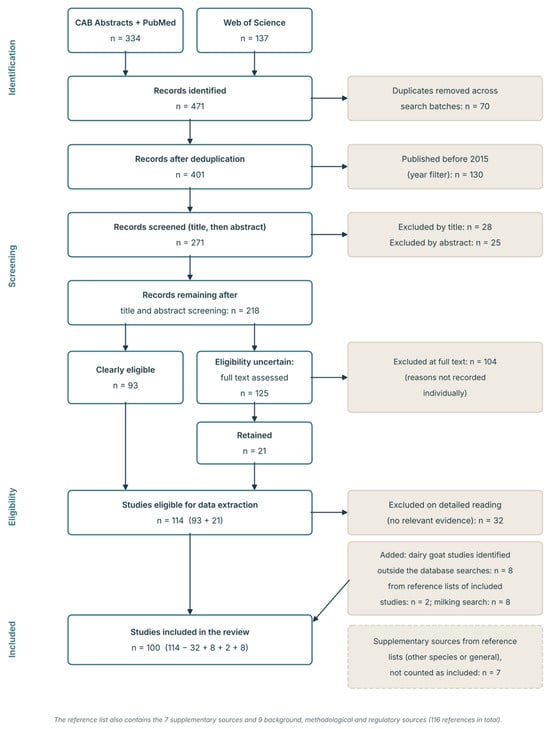
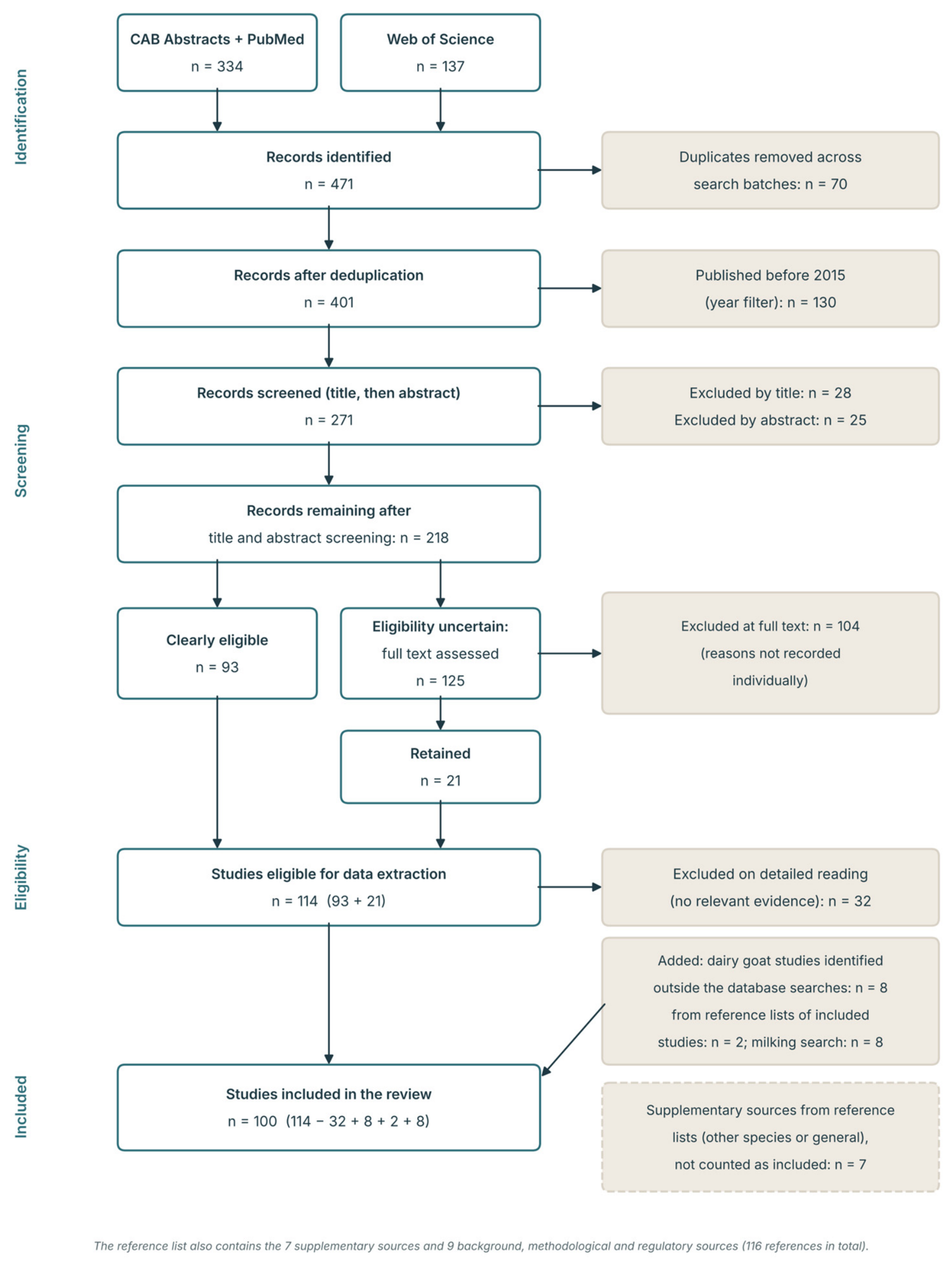
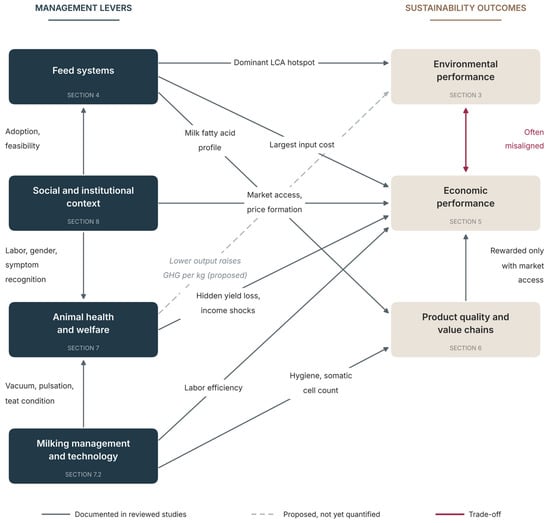
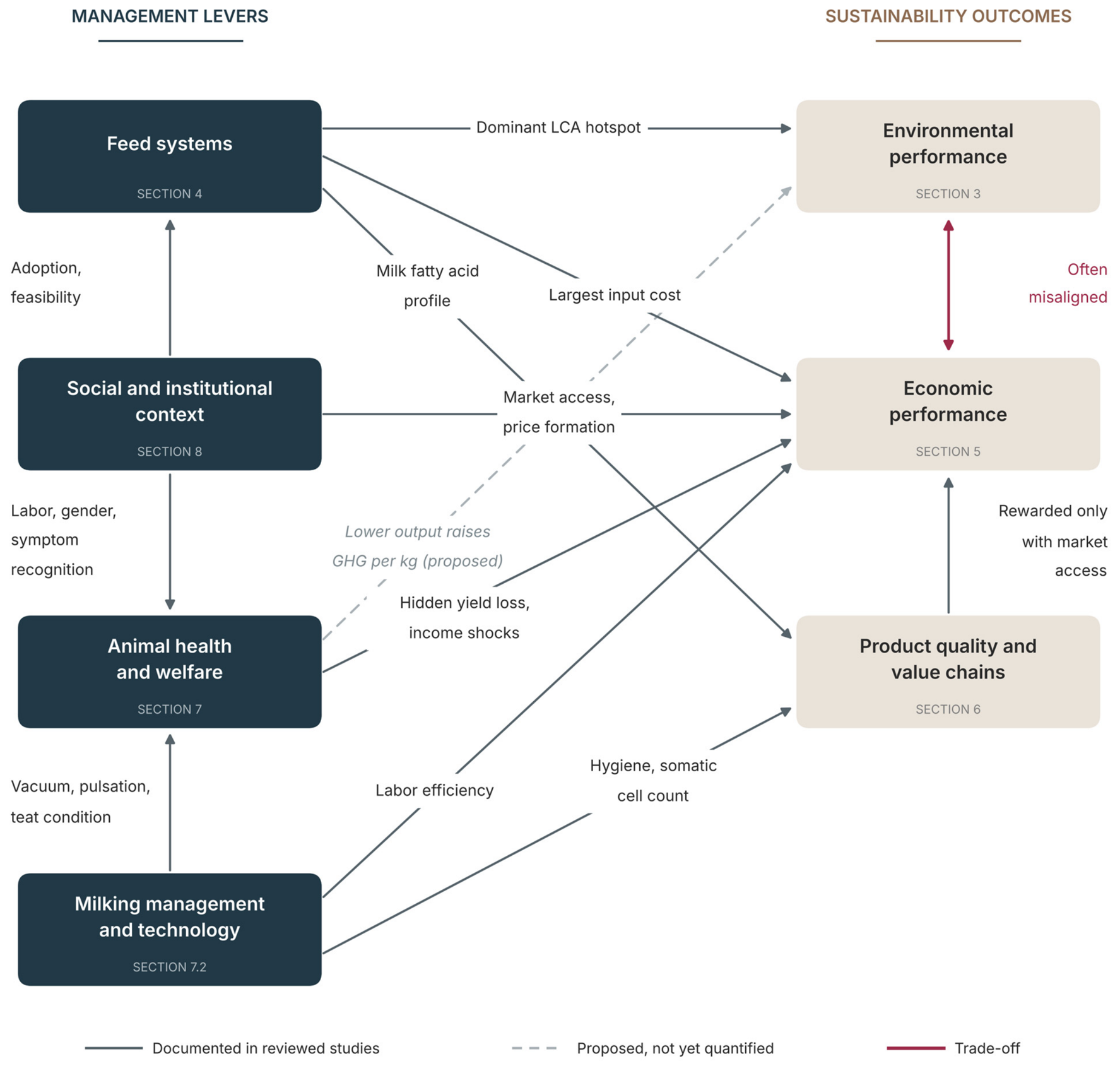

Disclaimer/Publisher’s Note: The statements, opinions and data contained in all publications are solely those of the individual author(s) and contributor(s) and not of MDPI and/or the editor(s). MDPI and/or the editor(s) disclaim responsibility for any injury to people or property resulting from any ideas, methods, instructions or products referred to in the content. |
© 2026 by the authors. Licensee MDPI, Basel, Switzerland. This article is an open access article distributed under the terms and conditions of the Creative Commons Attribution (CC BY) license.