


Simple Summary
Mastitis, an inflammation of the udder, is one of the most important health problems in dairy cows. Many cases are linked to bacteria living in the cow’s surroundings, especially in stall bedding. Across Europe, more farms are using recycled manure solids (RMSs)—the fibrous part of cow manure separated from the liquid and reused as bedding—mostly for economic reasons. In this study, we compared RMSs with conventional straw in a controlled laboratory setting and tested two hygiene additives. Hydrated lime makes bedding strongly alkaline, while the liquid conditioner we tested lowered the pH, with both meant to create an inhibitory environment for bacteria. Hydrated lime reduced all examined bacteria by >99%, while the acidic liquid conditioner worked well for aesculin-positive Streptococcus spp. and Klebsiella pneumoniae, but failed to significantly reduce Escherichia coli in the tested concentration. RMSs could be bettered with lime treatment, but straw showed consistently lower bacterial counts in our tests. Importantly, both bedding materials exceeded commonly cited hygiene thresholds before treatment, indicating that both substrates require active management (e.g., regular renewal and/or conditioning) to achieve and maintain hygienic bedding conditions.
Abstract
This study aimed to evaluate recycled manure solids (RMSs) as an alternative to straw as dairy bedding under controlled in vitro conditions using two different conditioners. Pre-cut straw and RMSs were treated once with either 10 wt.% hydrated lime, 200 mL/m2 of an acidic liquid conditioner or left untreated, and incubated for three days at room temperature. Daily, samples were inoculated with manure and Klebsiella (K.) pneumoniae. Outcomes were aesculin-positive Streptococcus spp. and coliform counts, pH, and dry matter (DM) content. Hydrated lime reduced all target bacteria by >99% in both materials. The acidic conditioner decreased K. pneumoniae and streptococcal counts by 98.62%/96.6% (straw) and 98.63%/99.58% (RMSs), respectively. It reduced Escherichia (E.) coli counts by ~67% in both materials without statistical significance (p = 0.064). RMSs showed higher bacterial loads and lower DM content than straw but could be substantially improved by lime treatment. As the conditioner were applied following different manufacturer-recommended dosing principles, these findings reflect effectiveness under practical use rather than intrinsic superiority of one conditioner. RMSs might represent an alternative bedding material when managed with appropriate hygienic measures, although straw showed more favorable microbiological and physicochemical aspects. Both materials contained substantial bacterial loads prior to treatment.
1. Introduction
Mastitis is defined as an inflammation of one or more quarters of the mammary gland and remains one of the most economically significant diseases in dairy production [1,2]. It is a complex, multifactorial condition influenced by host, pathogen, and environmental factors with bacterial infections being the primary cause [3,4]. While contagious transmission of pathogens like Staphylococcus aureus or Streptococcus agalactiae has declined over the past decades through better milking hygiene and mastitis prevention programs, environmental transmission has become increasingly more important [4,5]. Infections occur when bacteria present on the teat skin enter the mammary gland through the teat canal. This entry route is strongly influenced by teat defense mechanisms and management around milking. Shortly after milking, teat-end closure may still be incomplete, and bacteria can more easily reach and penetrate the teat canal [6,7]. For environmental pathogens in particular, integrity of teat end and sphincter is relevant, as compromised teat ends can increase microbial load at the teat apex [8]. Paduch et al. [9] reported positive associations of teat-end hyperkeratosis with Escherichia (E.) coli and Streptococcus uberis, but not with Staphylococcus aureus. Also cows with milk leakage as a sign of compromised sphincter function have 3.4 higher odds of developing new intramammary infection during the dry period [10].
Streptococcus uberis and coliform bacteria are the most frequently isolated organisms in clinical mastitis cases caused by environmental transmission. Coliform infections are often associated with more severe clinical manifestations, including both local inflammation of the udder and systemic signs [11,12,13]. Although E. coli mastitis occurs more frequently, infections caused by Klebsiella spp. are typically associated with greater economic losses, lower survival rates, and a more pronounced reduction in milk yield. In a study conducted by Oliveira et al. [14] 39% of cows developing clinical mastitis caused by Klebsiella spp. were removed from herds within 90 days, compared with 23% of cows affected by E. coli. A more recent study by Krebs et al. [13] showed that, although Klebsiella spp.-induced mastitis occurred less frequently, it was associated with a markedly higher mortality rate (75.0%) compared to E. coli-induced cases (35.5%) and carried an increased risk of developing bacteremia.
Environmental conditions play a crucial role in pathogen exposure, particularly in cases of environmental mastitis [15]. Common sources of exposure include feed, manure, water, and soil, with bedding being a primary source of bacterial contamination [16]. Since cows spend 12 to 14 h per day lying down, udder and teat ends are constantly in direct contact with the bedding [17]. The risk of intramammary infection is determined by the bacterial load within the bedding and the duration of udder contact. To reduce the risk of infection, the bacterial load in the bedding must be minimized, as extended lying times are essential for optimal metabolic performance in high-producing dairy cows [18]. Reducing bacterial contamination in bedding also decreases the bacterial load on the teat [19]. An effective bedding material should therefore create an inhibitory environment for microorganisms. This includes pH levels beyond the bacterial tolerance range, along with a high dry matter (DM) content (>70%) and low concentrations of organic matter [20,21]. On the other hand, it is crucial for cow comfort that the bedding is soft, absorbent, and compressible. This leads to the necessity of finding a compromise between cow comfort and hygiene.
Organic materials such as straw or recycled manure solids (RMSs) provide comfort and compressibility but contain high levels of organic matter, which can support microbial growth. Conditioners can be added to the bedding to improve its hygienic quality. Most pathogenic bacteria are tolerant to a pH range of 4 to 10; therefore, conditioners aim to maintain either more acidic or more alkaline conditions to inhibit bacterial proliferation [22]. Additionally, conditioners can increase the DM content by binding moisture and reduce the proportion of organic matter due to their inorganic composition. These effects generally last for 24 to 48 h, as bacterial contamination accumulates through continuous cow exposure [23].
The European dairy industry is increasingly using RMSs as bedding material due to its availability and cost-effectiveness [24,25]. Frondelius et al. [25] also showed benefits in cow well-being as cows housed in RMS bedding had less severe integument alterations in tarsal joints and cleaner udders. Since it is a renewable bedding source, it offers potential benefits in terms of sustainability and climate protection. However, compared to other bedding materials, RMSs are characterized by a higher bacterial load and lower DM content, raising concerns about its impact on udder health [26].
Given the increasing use of RMSs, it is essential to evaluate its suitability as bedding in terms of physicochemical properties and pathogenic microbial load. We compared RMS with conventional straw under standardized in vitro conditions and, given the clinical relevance of K. pneumoniae, quantified its survival and the effects of conditioner treatment. Specifically, our objectives were to (i) compare RMSs with straw under standardized in vitro conditions, (ii) evaluate an acidic liquid conditioner versus hydrated lime, and (iii) quantify the survival of K. pneumoniae in bedding.
2. Materials and Methods
2.1. Study Design
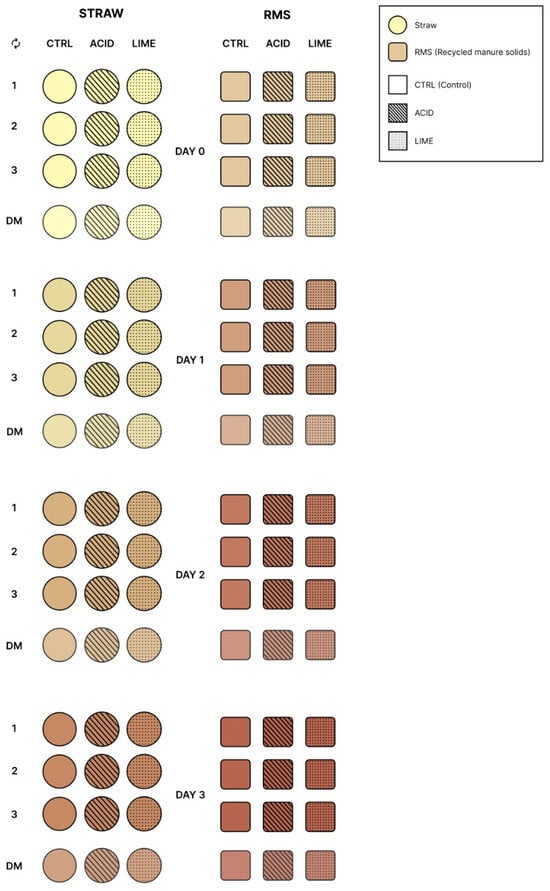
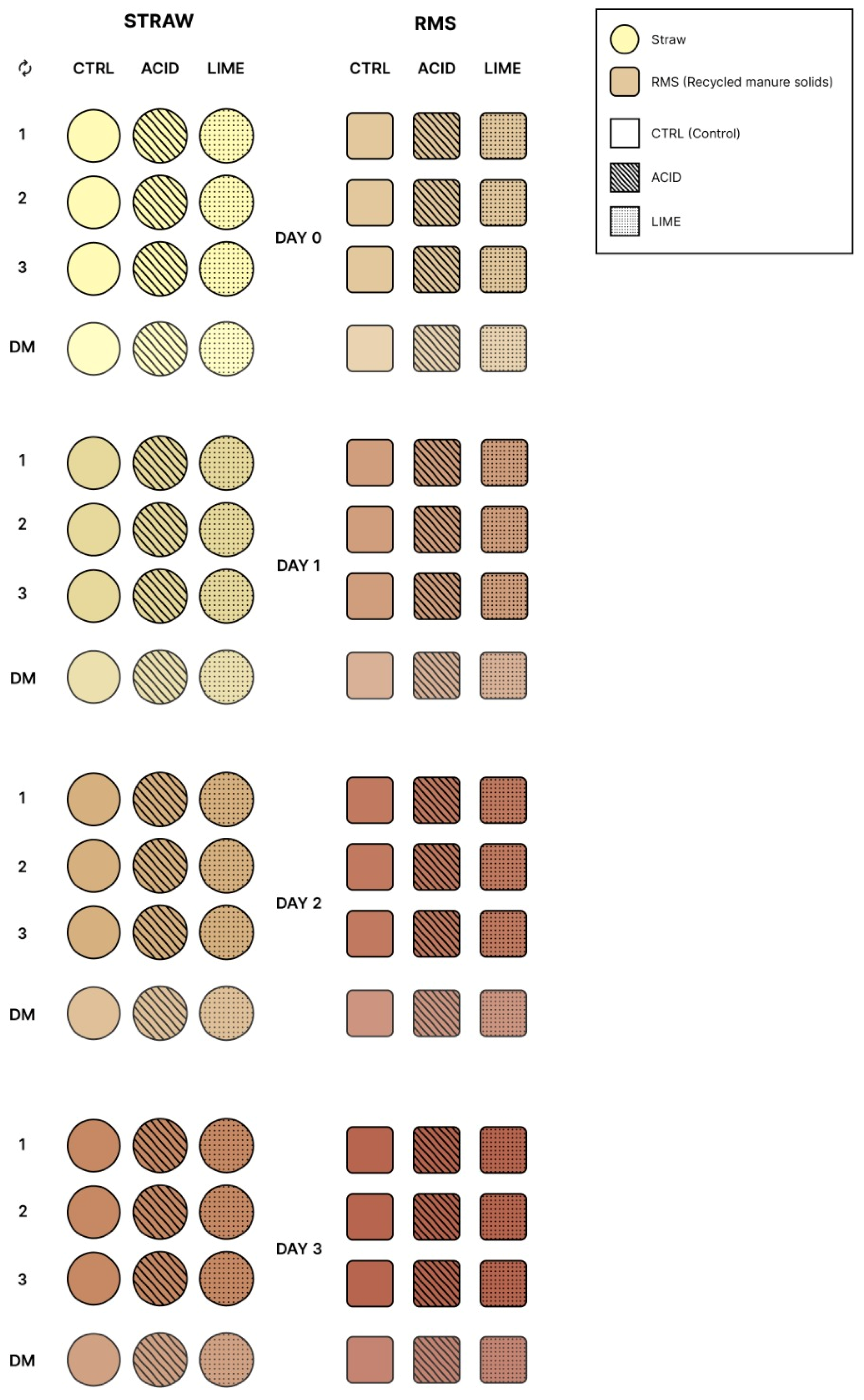
We used a 2 × 3 factorial design with two material groups, pre-cut straw (≤0.6 cm length) and RMSs, from a dairy farm in Northern Germany, and each was subdivided into three treatments: CTRL (no conditioner, negative control), ACID (acidic liquid conditioner), and LIME (hydrated lime, Ca(OH)2). To replicate the cubicle surface layer, bedding was filled into commercially available 300 mL plastic cups to a height of 4 cm (surface area 33.18 cm2). Each material × treatment combination was prepared in triplicate. The study design is shown in Figure 1. Unit CTRL served as a negative control with no conditioner added, unit ACID was treated with 200 mL/m2 corresponding to 0.66 mL/cup of a not commercially available acidic liquid conditioner, and unit LIME with 10 wt.% hydrated lime based on the total mass of the bedding, corresponding to 2.8 g/cup RMSs and 0.8 g/cup straw. The liquid conditioner consists of inorganic salts in aqueous solution (mineral acids based on iron, aluminum and sodium sulfates) and has a pH of 3.5. It is dosed according to the surface area and should be mixed immediately. It is expected to dry quickly and leave a white layer on top of the bedding. Hydrated lime (calcium hydroxide, Ca(OH)2) is a fine, inorganic mineral powder which is dosed according to the total weight and should also be thoroughly mixed with the bedding material.
Figure 1.
Cup-scale 2 × 3 factorial design. Treatments: CTRL (no conditioner/negative control), ACID (200 mL/m2 acidic liquid conditioner), LIME (10 wt.% hydrated lime). For each material × treatment, three cups were prepared per day; one additional cup was used for dry matter analysis. Sampling on days 0–3.
The samples were contaminated daily for three days with 1 mL of manure from the same dairy farm. The manure was frozen prior to the experiment and thawed at room temperature on each morning. The amount of manure used was determined through preliminary tests by weighing the bedding material in the cubicles of a dairy farm on a daily basis. Preliminary tests of the manure before freezing revealed 1.5 × 10⁶ colony-forming units (cfu)/g aesculin-positive Streptococcus spp. and an E. coli content of 4.9 × 10⁶ cfu/g, with no other coliforms detected. After thawing, coliform counts dropped to 2.0 × 10² cfu/g, whereas aesculin-positive Streptococcus spp. counts remained stable. To reintroduce viable coliforms and specifically assess the growth of Klebsiella spp., each cup received 0.5 mL of ¼ Ringer’s solution containing K. pneumoniae. Back-titration of the inoculum showed 8.3 × 10⁸ to 9.9 × 10⁹ cfu/mL. The K. pneumoniae isolate was obtained from a severe mastitis sample submitted to the microbiology department of the University of Applied Sciences and Arts, Hannover, for analysis. It was stored in Brain Heart Infusion Broth (Merck, Darmstadt, Germany) supplemented with 20% anhydrous glycerol (Merck, Darmstadt, Germany) at –80 °C. For the experiment, the isolate was thawed and cultured on blood agar. To achieve the desired concentration, it was cultured in Brain Heart Infusion Broth overnight and diluted threefold.
The study duration of three days was chosen based on previous research, which identified this period as the recommended maximum interval for renewing the cubicle bedding layer for dairy farms in Northern Germany. The experiment was conducted at the laboratory of the Microbiology Unit of the University of Applied Sciences and Arts, Hanover, in December 2024. Room temperature and humidity were measured twice a day.
2.2. Microbiological Analyses
Daily analyses including content of coliforms and aesculin-positive Streptococcus spp., DM content and pH, were conducted every 24 h (24, 48 and 72 h). In addition, samples were analyzed at two baseline time points to characterize the materials. Day 0− refers to measurements taken immediately after adding the bedding material and conditioner to the cups but before manure and K. pneumoniae addition. Day 0 refers to measurements taken immediately after the first manure and K. pneumoniae addition, prior to any incubation period. A total of 120 cups were used, with a set of four cups per unit each day for each material, including one for DM testing. For bacteriological testing, the whole cup of bedding was mixed 1:10 with sterile water in a stomacher bag using the Easy Mix machine (AES Chemunex, Bruz, France) to obtain a 10−1 dilution. It was then diluted with ¼ Ringer’s solution following §64 LFGB, Method L 00.00–54, to prepare a serial dilution.
Aesculin-positive Streptococcus spp. were detected on Modified Edwards medium (EMCO) supplemented with 5.0 mg/L colistin sulfate, 2.5 mg/L oxolinic acid and 3% ovine blood [27] using the pour plate method according to DIN EN ISO 4833-1 and incubated at 37 °C for 24 h [28]. The dilution levels were analyzed in three steps, with each step performed in duplicate, starting with 10−3, 10−4, and 10−5 dilutions. If the bacterial count increased, a higher dilution was used the following day. On EMCO agar, aesculin-positive Streptococcus spp. appear as black round colonies approximately 2 mm in diameter, surrounded by a light or darker halo. These colonies were counted as aesculin-positive Streptococcus spp.
Chromocult® Coliform Agar (CC, Merck KGaA, Darmstadt, Germany) was used to detect and differentiate coliform bacteria using the spatula method, in accordance with DIN EN ISO 4833-2 [29]. Plates were incubated at 37 °C for 24 h. E. coli colonies appear blue to purple, while other coliform colonies appear pink. To confirm most of the pink colonies were K. pneumoniae, a representative selection of pink colonies was analyzed using matrix-assisted laser desorption/ionization time-of-flight mass spectrometry (MALDI-TOF MS; Bruker Daltonics, Bremen, Germany).
2.3. Physicochemical Analyses
After bacteriological testing, the pH of the 10−1 dilution was measured using a Mettler Toledo pH meter (Mettler-Toledo, Columbus, OH, USA).
Samples designated for DM content analysis were assessed using the Q-Dry (hcs-products GmbH & Co. KG, Hofheim, Germany).
2.4. Data Analyses
Data were entered and checked in Microsoft Excel (Microsoft Corp., Redmond, WA, USA) and analyzed in IBM SPSS Statistics 29.0 (IBM Corp., Armonk, NY, USA). Colony counts were transformed as log10 (cfu/g + 1). Generalized linear mixed models were fit for each outcome (logKleb, logColi, logStrep) with fixed effects treatment (CTRL, ACID, LIME), material (straw, RMSs), and day (0-, 0, 24, 48, 72 h). Repeated measurements were specified as day within cup using a diagonal residual covariance; models were estimated by REML with Satterthwaite denominator degrees of freedom. Estimated marginal means from the mixed models were computed and are presented in the figures for the reported main effects and combinations. Type III tests of fixed effects were conducted; two-sided p < 0.05 was considered statistically significant.
3. Results
The room temperature and humidity were on average 22.65 ± 0.76 °C and 33.03 ± 1.87%, respectively.
3.1. Material
Prior to the addition of any conditioners or manure, the bedding materials were tested for pH, DM and bacterial content. RMSs demonstrated a higher overall bacterial load compared to straw, with a particularly high concentration of aesculin-positive Streptococcus spp. (7.33 log10 cfu/g). Straw had a neutral pH of 7.17, while RMSs had a slightly higher pH of 8.37. DM content was 93.9% for straw and 55.7% for RMSs.
Bedding type significantly affected bacterial counts; compared with straw, RMSs showed higher counts of E. coli and aesculin-positive Streptococcus spp. (p < 0.001) and higher K. pneumoniae counts (p = 0.007).
3.2. Aesculin-Positive Streptococcus spp. Counts
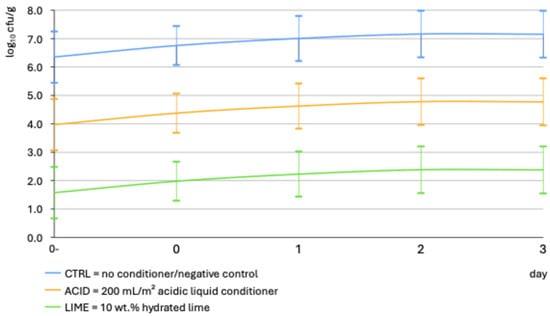
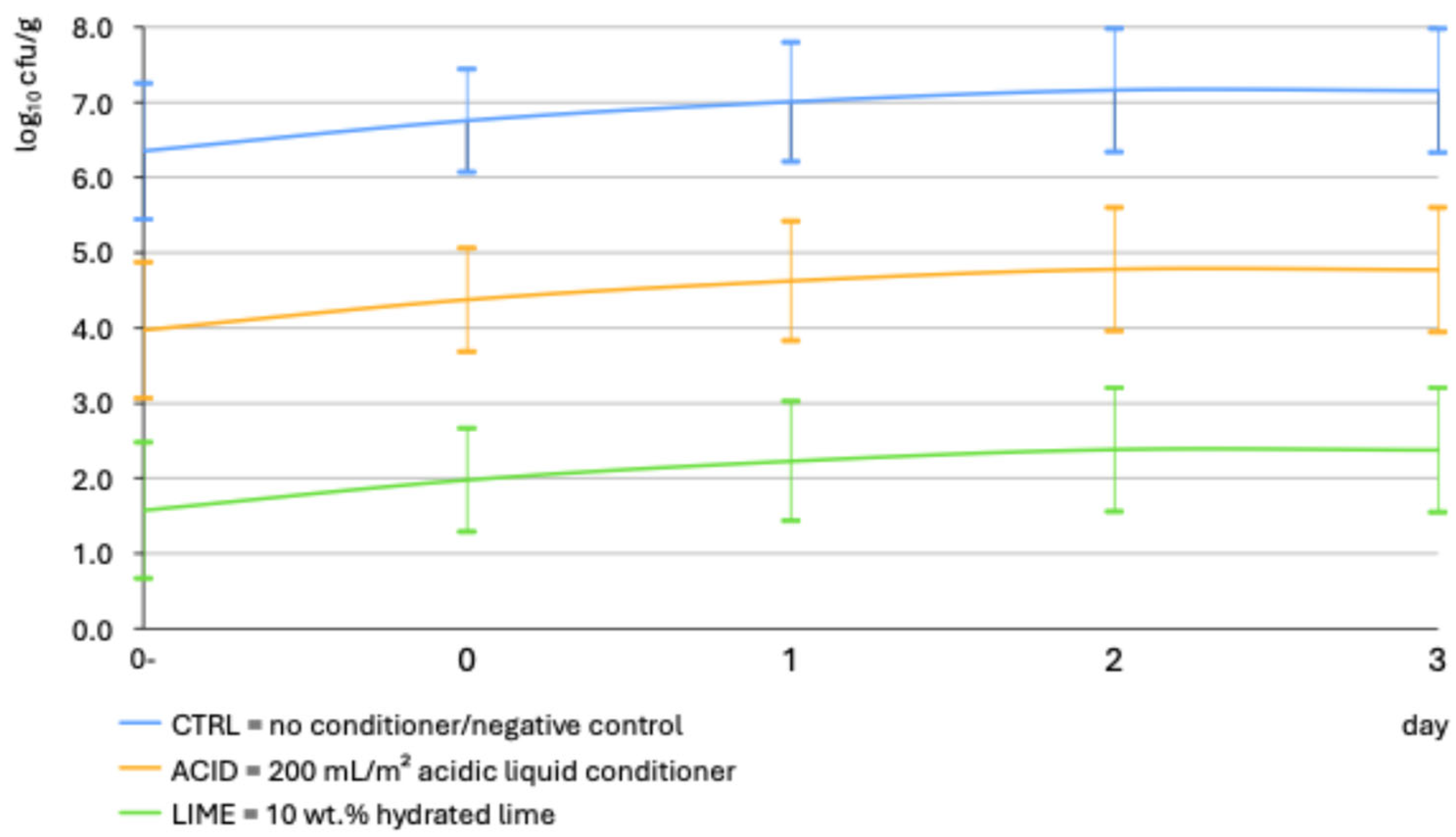
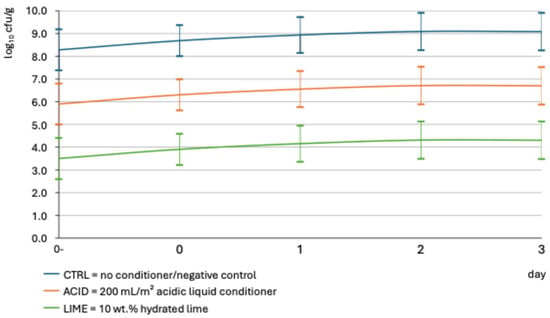
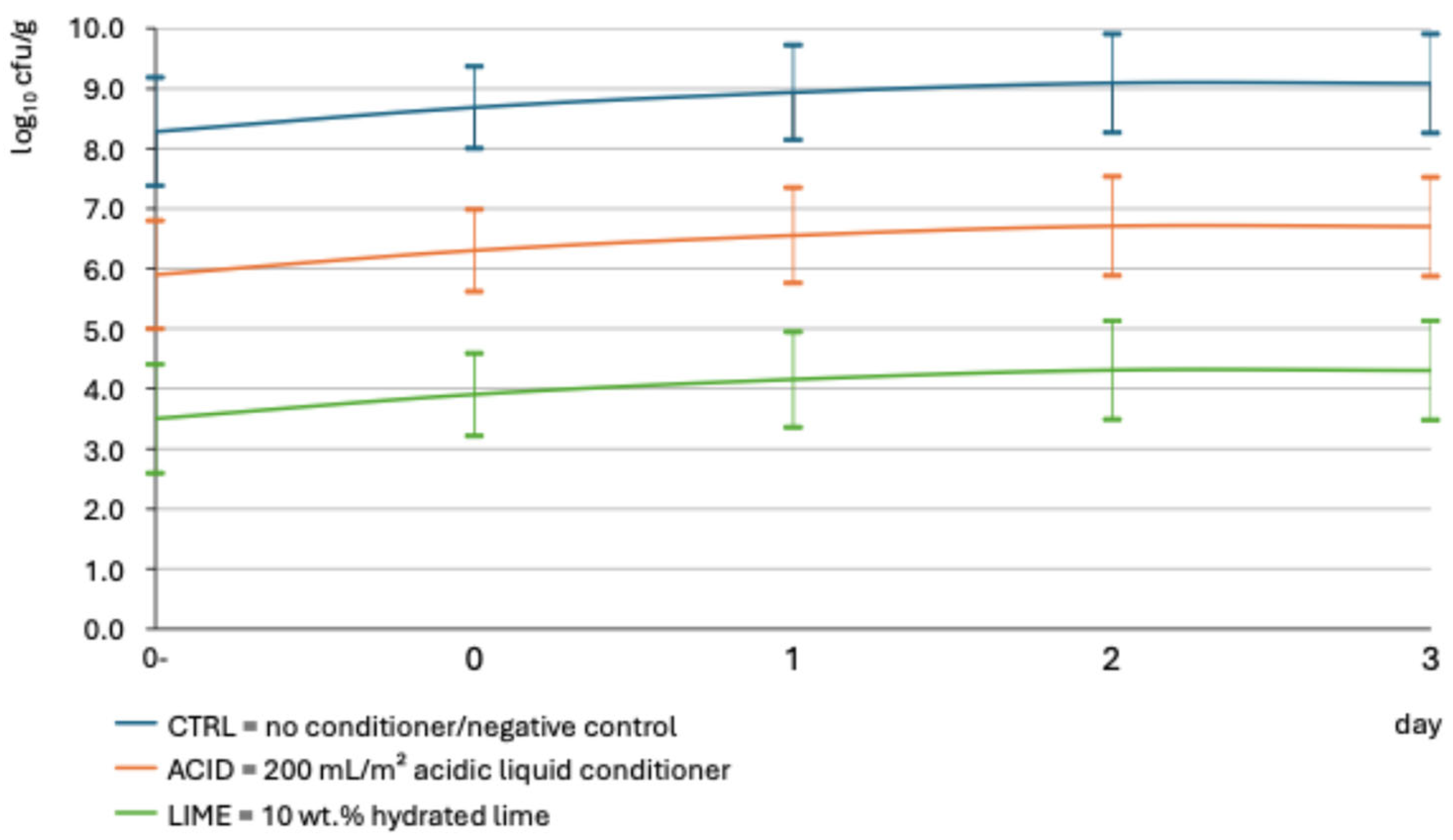
No effect of time as a fixed factor was found (p = 0.438). The initial estimated mean of the streptococcal count in straw was 5.055 log10 cfu/g. The liquid conditioner caused a reduction of 1.465 log10, corresponding to 96.60%, while hydrated lime resulted in a 3.86 log10 reduction, corresponding to a 99.99% reduction, as shown in Figure 2. In RMSs, the initial streptococcal count was particularly high (7.33 log10 cfu/g) and could be reduced by 2.381 log10, corresponding to a 99.58% reduction with the liquid conditioner, and by 4.781 log10, corresponding to a 99.998% reduction with hydrated lime, as shown in Figure 3. All reductions were highly significant (p < 0.001).
Figure 2.
Estimated means of aesculin-positive Streptococcus spp. in cfu/g straw over the course of three days.
Figure 3.
Estimated means of aesculin-positive Streptococcus spp. in cfu/g recycled manure solids over the course of three days.
3.3. Coliform Counts
Species identification using MALDI-TOF of representative coliform isolates showed 64% Klebsiella pneumoniae, 29% Pantoea agglomerans, and 7% Klebsiella variicola. The latter two species are likely environmental contaminants introduced via the bedding material.
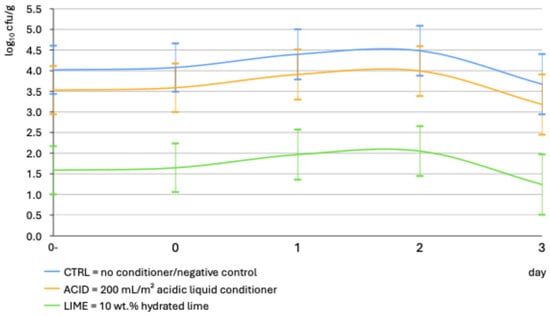
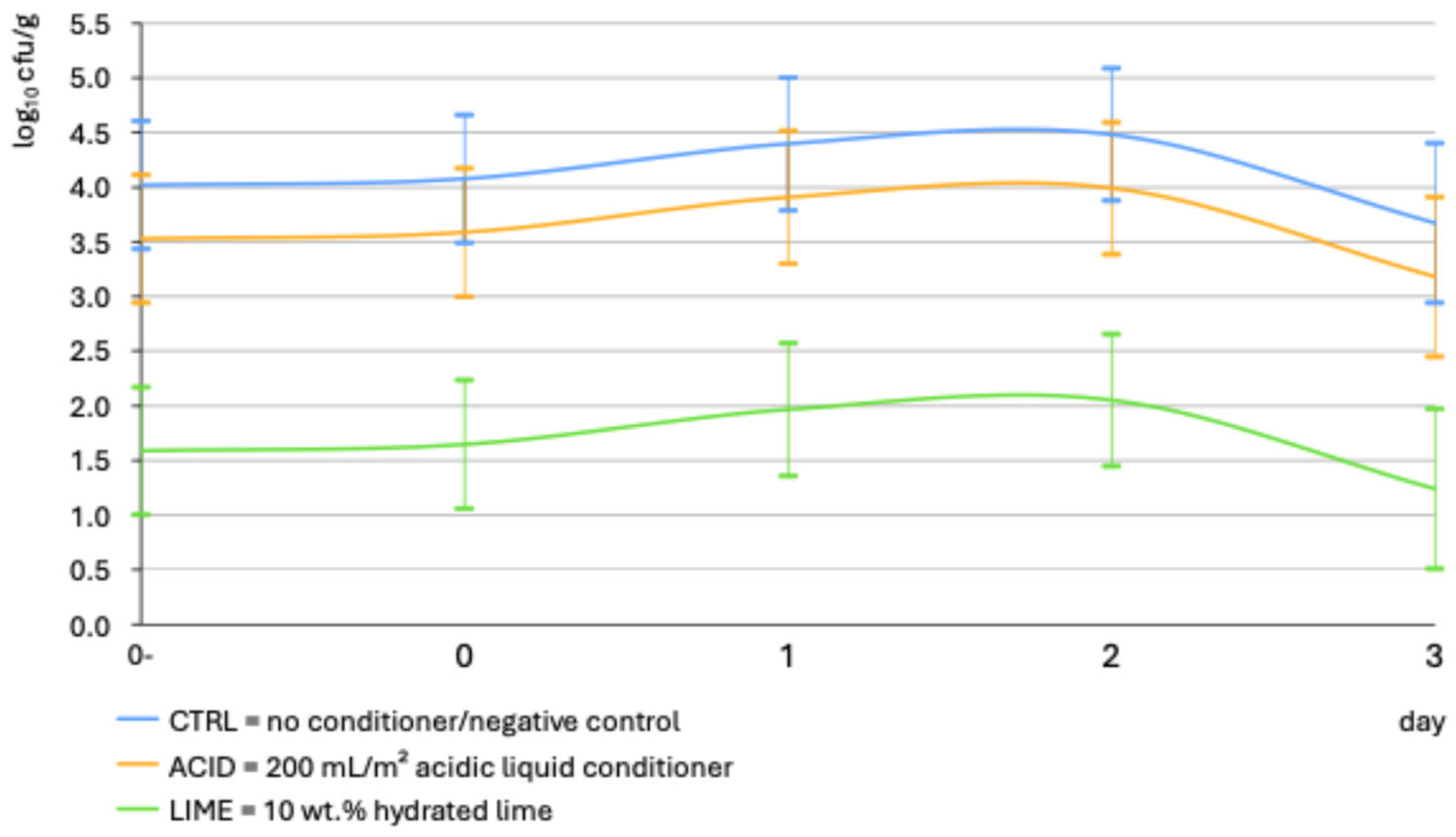
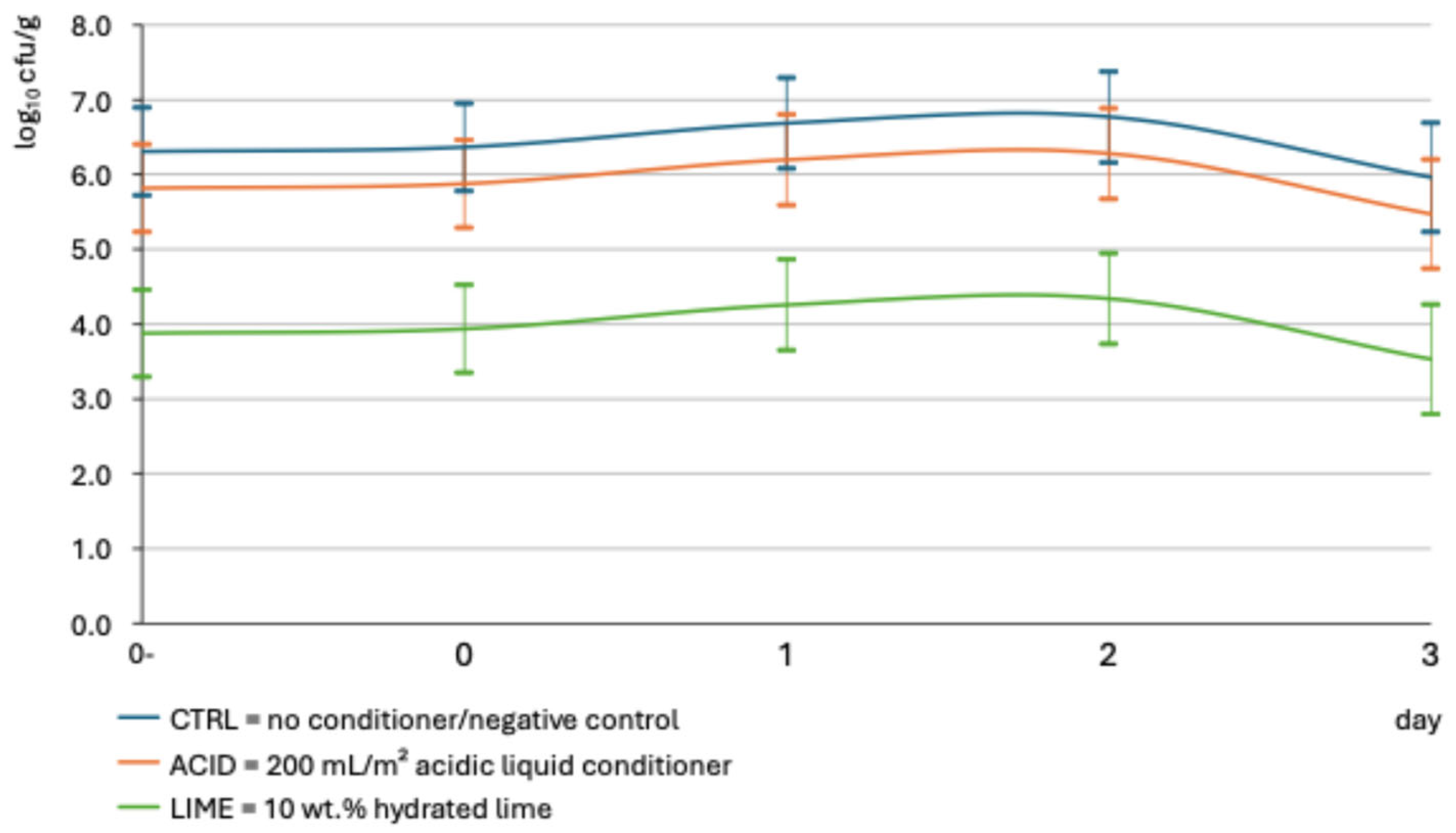
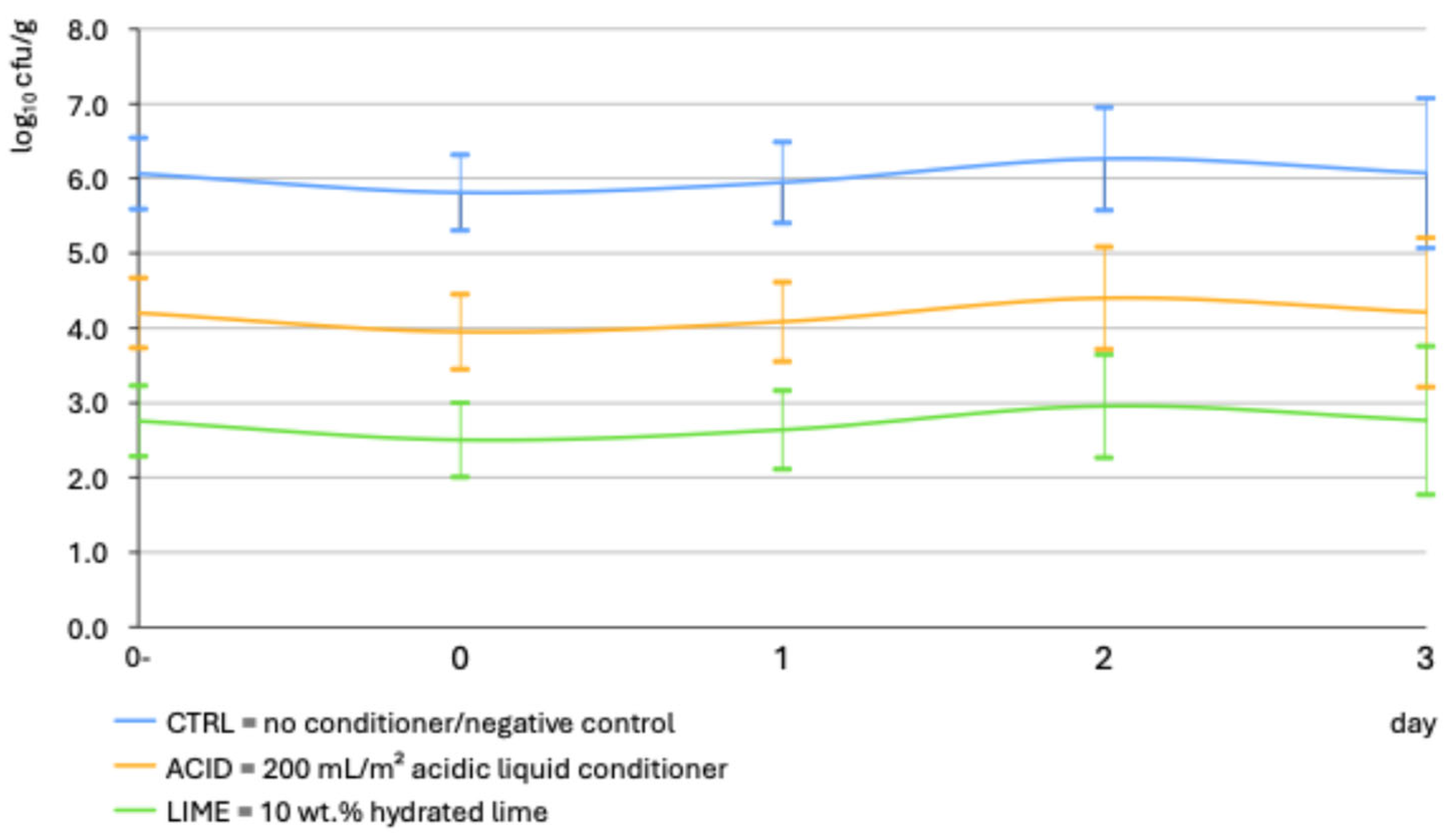
No effect of time as a fixed factor was found (E. coli p = 0.225; K. pneumoniae p = 0.714). The estimated mean E. coli count in straw was 3.218 log10 cfu/g, which was reduced by 0.489 log10, corresponding to 67.5% by the liquid conditioner. In contrast, hydrated lime reduced the E. coli count by 2.431 log10, equivalent to a 99.63% reduction, as shown in Figure 4. The initial estimated mean in RMSs was higher (5.506 log10) and could be reduced by the liquid conditioner by 0.489 log10, corresponding to a 67.6% reduction, and by 2.431 log10, equivalent to a 99.63% reduction with hydrated lime, as shown in Figure 5. The reductions by the liquid conditioner were not statistically significant (p = 0.064), while the reductions by hydrated lime were highly significant (p < 0.001).
Figure 4.
Estimated means of E. coli in cfu/g straw over the course of three days.
Figure 5.
Estimated means of E. coli in cfu/g recycled manure solids over the course of three days.
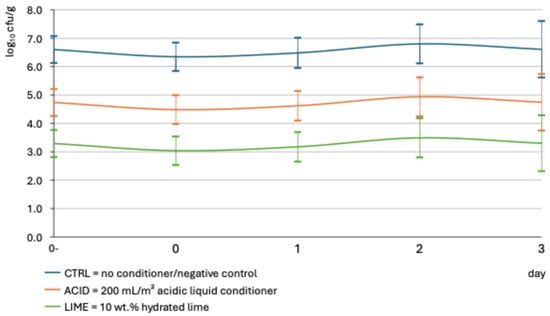
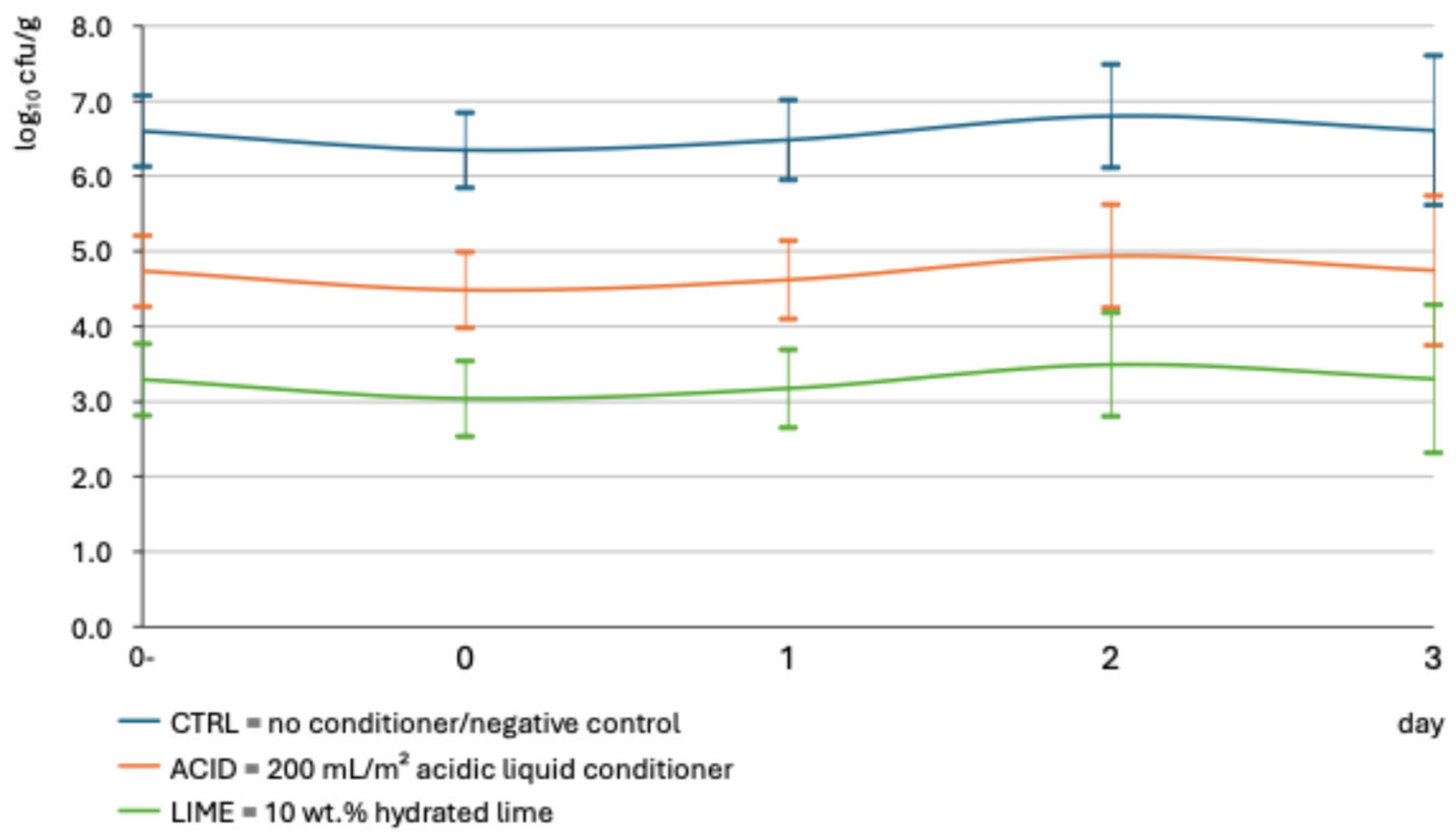
The initial bacterial count of K. pneumoniae was 5.057 log10 cfu/g in straw and 5.593 log10 cfu/g in RMSs. In straw, the liquid conditioner reduced the bacterial count by 1.861 log10 (98.62%), while in RMSs, it achieved a reduction of 1.863 log10 (98.63%). Hydrated lime produced the largest decrease, lowering counts by 3.307 log10 (99.95%) in both bedding materials, as shown in Figure 6 and Figure 7. All reductions were highly significant (p < 0.001).
Figure 6.
Estimated means of K. pneumoniae in cfu/g straw over the course of three days.
Figure 7.
Estimated means of K. pneumoniae in cfu/g recycled manure solids over the course of three days.
3.4. Dry Matter (DM) Content
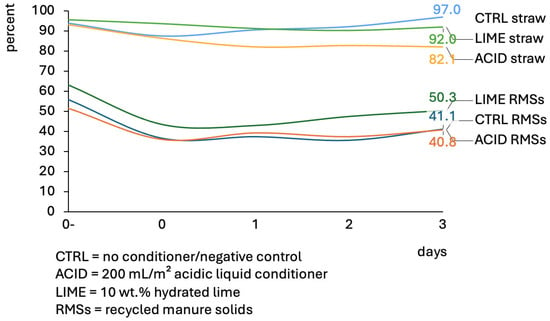
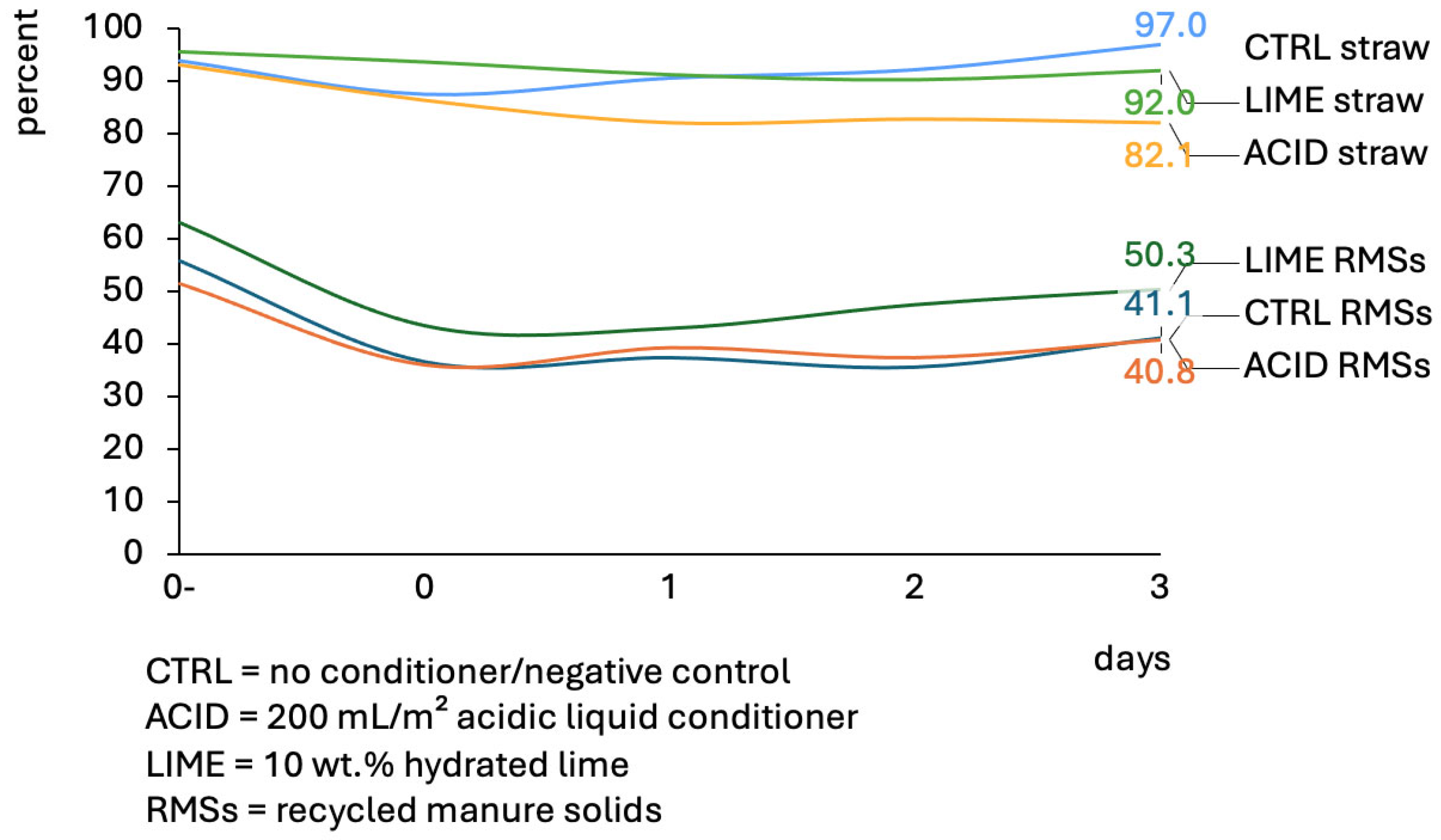
The initial DM content of straw was 93.9%. After the first manure application, it decreased to 87.5% and gradually increased to 97.0% over three days. Straw treated with liquid conditioner dropped from 93.2% to 86.4% initially and further to 82.1%, stabilizing with minor fluctuations. Hydrated lime increased the DM to 95.7%, with a slight decrease to 92.0% over the three days.
RMSs had an initial DM of 55.7%, which dropped to 36.6% after manure application and fluctuated, reaching 41.1% by day three. The liquid conditioner followed a similar pattern, dropping from 51.6% to 36.0%, then recovering to 40.8%. The treatment with hydrated lime raised the DM content significantly (p = 0.0034). The initial DM content of 63.0% dropped to 43.4% but increased to 50.3% over the three-day period with minor fluctuations, as shown in Figure 8.
Figure 8.
Dry matter content in straw and recycled manure solids in % over the course of three days.
3.5. pH
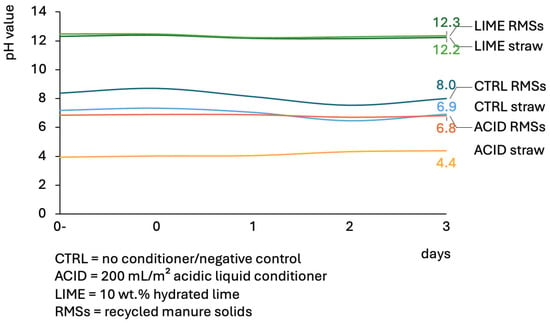
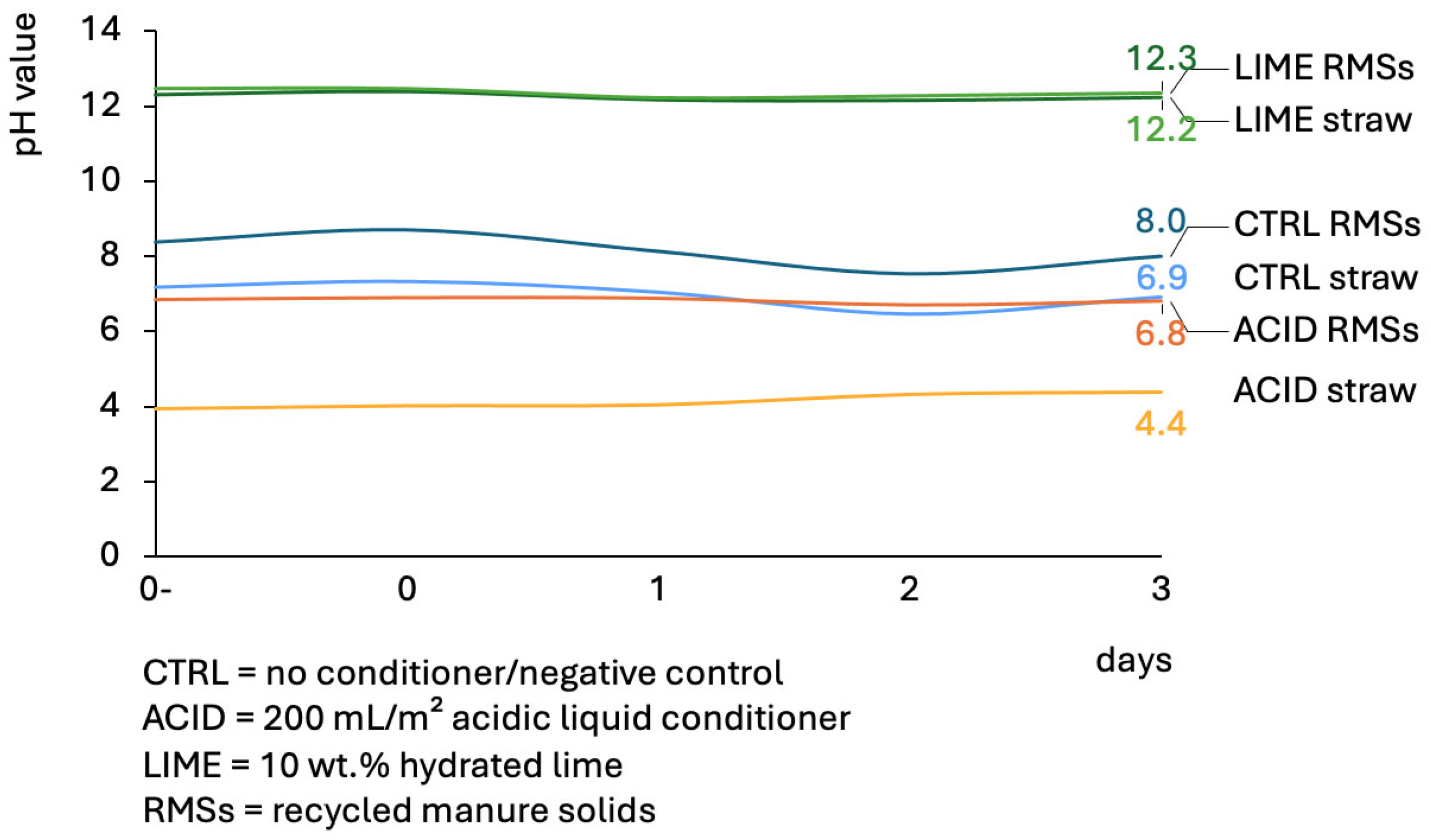
The added manure had an initial pH of 7.77, the liquid conditioner had a pH of 3.5 and hydrated lime had a pH of 12.4. The straw had a neutral pH of 7.17, which decreased to 3.93 with the liquid conditioner and increased to 12.32 with hydrated lime. In contrast, RMSs had an initial pH of 8.37, which increased to 12.47 with lime but was only reduced to 6.84 by the liquid conditioner. All pH changes were highly significant (p < 0.001). The pH of each unit remained stable over the three-day period, as shown in Figure 9.
Figure 9.
pH values in straw and recycled manure solids over the course of three days.
4. Discussion
Fresh bedding, not yet contaminated by feces, milk, or urine, can already exhibit elevated bacterial loads. Organic materials are particularly susceptible. The aim of this study was to assess the bacterial load in RMSs as a bedding material under in vitro conditions and further evaluate two different approaches, an acidic conditioner and hydrated lime, to lower microbial contamination, especially of K. pneumoniae.
In this study we tried to replicate the surface layer of a cubicle using a cup-based model to monitor bacterial counts over three consecutive days. This approach ensured standardized conditions and allowed for reproducible comparisons across treatments. Daily addition of manure improved the model’s resemblance to on-farm conditions, although it cannot fully replicate the mechanical and environmental effects introduced by cow activity. Furthermore, the small scale of the cup model influences factors such as DM content, as larger surface areas in actual cubicles would facilitate greater moisture evaporation from the top layer. This restricts a direct transfer into practice and needs further assessment in an in vivo experiment.
Another limitation concerns the application methods of the conditioners. The liquid conditioner was dosed according to surface area (0.66 mL per cup), as recommended by the manufacturer, resulting in equal application rates across both bedding types. In contrast, hydrated lime was dosed by weight (10 wt.%), meaning RMSs, with its higher density (28 g per cup vs. 8 g for straw), received approximately 3.5 times more hydrated lime than the straw. This discrepancy may have influenced the observed antimicrobial effects and should be considered in the interpretation of the results. The experiment evaluated the performance of the two conditioners under manufacturer-recommended use conditions rather than in a dose-equivalent head-to-head comparison.
Because the manufacturer has not fully disclosed the formulation of the acidic liquid conditioner, as it is not commercially available yet, we cannot determine whether the antibacterial effect arises from acidity per se or from particular mineral components. Only the associated change in pH can be evaluated.
The bedding materials used in our study initially contained 5.07 log10 cfu/g of coliform bacteria in straw and 5.78 log10 cfu/g in RMSs. The proportion of E. coli within the coliform population was notably low in straw at only 0.89%, whereas RMS samples showed a significantly higher share, with E. coli accounting for 33.84% of the total coliform count. Kristula et al. [30] proposed that coliform concentrations exceeding 6.0 log10 cfu/g may be associated with an elevated risk for intramammary infections. Cluster analyses conducted by Krömker et al. [21], have shown that high-quality bedding does not contain more than 4.0 log10 cfu/g of coliform microorganisms or aesculin-positive Streptococcus spp., and this threshold was surpassed by both bedding materials in the present study. This, coupled with the high relative abundance of E. coli in RMSs, highlights the importance of implementing targeted hygiene management strategies; for example, the use of conditioners, when using organic substrates. Additionally, the RMSs contained a significant number of aesculin-positive Streptococcus spp. (7.28 log10 cfu/g), further emphasizing this need. Straw exhibited a lower bacterial load (5.35 log10 cfu/g), yet it still exceeded the threshold of 4 log10 cfu/g, indicating that it also requires active management to meet hygiene standards.
Throughout the duration of the experiment, no significant time effect was detected, indicating that bacterial levels did not change markedly throughout the three-day period under the controlled in vitro conditions applied. These results are not directly transferable to farm conditions and should not be used to derive on-farm bedding renewal intervals, as the small-scale in vitro testing does not fully resemble cow contact in real cubicles, including compression, urine, milk and manure exposure and evaporation dynamics. Consistent with this, different studies report high bacterial counts after one day and no antibacterial effects of conditioners after two days [31,32].
Fregonesi et al. [33] demonstrated that dairy cows exhibited a strong preference for dry bedding (DM content 86.4 ± 2.1%) compared to wet bedding (DM content 26.5 ± 2.1%), with lying times reduced by approximately 5 h per day when only wet bedding was available. Reich et al. [34] examined a wider range of intermediate moisture levels and likewise found that lying times increased with drier bedding, although the effect was modest until DM fell below ~60%. Maintaining a high DM content in bedding is not only essential for cow comfort but also plays a crucial role in limiting bacterial proliferation, as microbial survival and growth are dependent on sufficient moisture and organic substrates [33,35]. Zdanowicz et al. [36] reported that the DM percentage in sawdust was negatively correlated with bedding pathogen counts, further highlighting the importance of moisture control in bedding materials.
There are different methods to obtain RMSs, such as screw presses or decanter centrifuges, which vary in their efficiency regarding DM content. Depending on the method used, RMSs can reach DM contents exceeding 34%; however, this remains well below the > 70% typically associated with high-quality bedding. Studies have shown that the separation of manure into solid and liquid fractions does not substantially reduce the bacterial load, as bacteria are evenly distributed between both phases [37]. Consequently, RMSs tend to have a higher initial bacterial content compared with alternative bedding materials, which was also reflected in our study, where RMSs exhibited a consistently higher overall bacterial load than straw throughout the experiment.
The hygienic quality of bedding can be substantially improved using conditioners. In this study, we compared the effects of hydrated lime and an acidic liquid conditioner applied to two different bedding materials.
Hydrated lime is highly basic and can elevate the pH of the bedding material above 12, exceeding the tolerance levels of most pathogenic bacteria. Being inorganic, it also reduces the proportion of organic matter and increases the DM content, thereby creating a less favorable environment for bacterial growth. However, excessive use of lime in bedding has raised concerns regarding teat and skin health [23,38].
The acidic liquid conditioner is designed to preserve the natural acid mantle of the skin while inhibiting bacterial proliferation and neutralizing ammonia. It consists of a suspension of inorganic minerals with known antimicrobial properties. Despite being a liquid, the conditioner is expected to dry rapidly and leave a white layer on top of the bedding, an effect not observed in the experiment. Another study on an acidic conditioner also found no effect on DM content in sawdust but reduced environmental pathogens without affecting teat-end integrity [19].
The application of 10 wt.% hydrated lime reduced the bacterial load of all measured mastitis pathogens in both bedding materials by over 99%. Hydrated lime significantly increased the mean DM content of the RMSs by 22.08%, though it did not raise the DM content above the recommended threshold of 70%. The lime did not notably affect the straw, as it already contains a high DM content. The acidic conditioner on the other hand significantly decreased the DM content of straw, but it remained above 80%, making the reduction clinically irrelevant. The impact on DM content of RMSs was not significant.
The pH of hydrated lime is approximately 12.4, which raised the pH of both bedding materials above 12, exceeding the tolerance levels of most pathogenic bacteria. In contrast, the acidic liquid conditioner, with a pH of 3.5, effectively lowered the pH of straw to 4.14. The pH of the RMSs dropped to 6.82, which remains within the tolerance range of most bacteria. This suggests that dosing by surface area may be insufficient for high-density bedding materials, and/or that pH-reducing conditioners may be less suitable for more alkaline substrates.
E. coli is a neutrophilic bacterium capable of surviving across a broad pH range. To cope with acidic environments, it employs various acid stress response systems [39,40]. Although mammary pathogenic E. coli (MPEC) is not typically exposed to the extreme pH conditions that enteropathogenic E. coli (EPEC) faces in the gastrointestinal tract, E. coli as a species is highly adaptable to a wide range of environmental stresses, including acidic and moderately alkaline conditions. While no studies have specifically investigated MPEC, numerous studies on other E. coli strains indicate survival at pH values as low as 2, with active proliferation occurring above pH 4. Studies suggest that pH values above 11.3 reduce viable cell counts below the detection limit [41,42]. While the physiological pH in the bovine udder ranges between 6.4 and 6.8, this inherent resilience may contribute to the survival of E. coli in bedding materials. The general acid tolerance of E. coli, supported by its robust stress response systems, may help explain the limited efficacy of the acidic conditioner in reducing bacterial counts in the present study.
K. pneumoniae on the other hand seems to be more sensitive to acidic conditions compared to E. coli. Studies show that a pH values below 6 and above 10 already lead to significant cell death, indicating a tolerance to neutral and moderate alkaline conditions and poor tolerance to acidic conditions [43,44]. In the present study, the acidic conditioner reduced K. pneumoniae counts by >98% in both bedding materials, despite the minimal pH reduction in RMSs. This suggests that the antimicrobial efficacy of the conditioner may be primarily attributed to its formulation rather than pH effects alone. As the composition is not fully disclosed by the manufacturer this cannot be interpreted conclusively. The hydrated lime was slightly more effective with a reduction of 99.95% in both materials, as highly alkaline conditions are not tolerated by K. pneumoniae.
The findings in this study further support that the use of hydrated lime to limit bacterial growth in bedding is highly effective, even at a relatively low concentration of 10 wt.%. It substantially reduced all investigated mastitis pathogens, including K. pneumoniae, in both bedding materials. In practice, farmers often add water to lime-treated straw, to improve workability. The effectiveness of the lime treatment when mixed with water should be further evaluated, as moisture content may increase and further bacteria can be introduced through the water. This might be a potential practical advantage of the liquid conditioner as no additional water must be added.
The standardized conditions of this laboratory study without actual cow contact contributed to consistent bacterial counts across the three days. However, this must not be interpreted as evidence that renewal intervals longer than three days are sufficient, since many in vivo studies have shown that bacterial growth peaks after 24 h and conditioner efficacy declines after 24–48 h [23,31,32].
If a farm experiences poor teat condition or elevated ammonia levels, acidic conditioners may offer a useful alternative, provided that E. coli mastitis is not a predominant issue. Further research testing different dosing levels of the acidic conditioner would be valuable, particularly because we evaluated only one recommended dose in two substrates and compared it with a lime treatment applied according to a different dosing principle. This limitation must be considered and should not be taken as evidence that the liquid conditioner is inherently inferior to hydrated lime. Its use in straw or sawdust bedding should be investigated further, as these substrates typically have a lower baseline pH. In contrast, because RMSs are already more alkaline, an acidic conditioner may be less suitable as it mainly neutralizes the pH rather than creating sufficiently inhibitory conditions.
Further studies investigating the association between RMS bedding and mastitis incidence on farms would be valuable to better assess the potential risk. In this study the overall bacterial load was higher than straw even in lime-treated RMSs. These findings support cautious handling when using this substrate as bedding and the application of conditioners; for example, hydrated lime in ≥10 wt.% can be beneficial. Because the straw used in the experiment also exceeded the threshold of 4.0 log10 cfu/g, this consideration may apply to many organic substrates. Where possible, testing fresh bedding for relevant pathogens before use may support more informed hygiene and bedding management practices.
5. Conclusions
In the present study, we compared straw and recycled manure solids (RMSs), as well as hydrated lime and an acidic liquid conditioner under controlled in vitro conditions. We found that (i) RMSs carried higher bacterial loads than straw and, although improved by lime, did not reach the hygienic level of lime-treated straw; (ii) 10 wt.% hydrated lime achieved ≥ 99% reductions across targets, whereas the acidic liquid conditioner was effective for Streptococcus spp. and K. pneumoniae but limited for E. coli; when using a concentration of 200 mL/m2, and (iii) K. pneumoniae survival was markedly reduced by both treatments.
These findings are based on a cup-based in vitro model that does not capture key farm-level factors such as mechanical disturbance, compaction, urine and fecal inputs, cow contact, and barn-specific evaporation and redistribution dynamics. Therefore, the lack of a time effect observed here cannot be extrapolated to on-farm bedding renewal intervals, and the longevity and practical performance of both conditioners under field conditions remain unresolved and require validation in on-farm studies. Considering the higher bacterial load and lower DM content observed for RMSs in our experiment, we suggest cautious use with regular renewal and use of conditioners. Under the conditions tested, 10 wt.% hydrated lime appears to be a reliable bedding treatment, but the transferability of these results to farm settings should be assessed in field studies before clear recommendations are made.
Author Contributions
Conceptualization, V.K. and S.M.P.; methodology, V.K., N.W. and S.M.P.; formal analysis, V.K.; investigation, S.M.P., N.W., D.K. and J.S.; resources, V.K.; data curation, S.M.P.; writing—original draft, S.M.P.; writing—review and editing, V.K. and F.N.; supervision, V.K.; funding acquisition, V.K. All authors have read and agreed to the published version of the manuscript.
Funding
This study was funded by Steinbeis Research Center Milk Science, Kirchlengern, Germany (25-1).
Institutional Review Board Statement
Not applicable.
Informed Consent Statement
Not applicable.
Data Availability Statement
The raw data supporting the conclusions of this article will be made available by the corresponding author on request.
Acknowledgments
We thank the staff and students at the University of Applied Sciences and Arts, Hannover, for their assistance, and the company Vilofoss® (Denmark) for providing the acidic liquid conditioner.
Conflicts of Interest
The authors declare no conflicts of interest. The funders had no role in the design of the study; in the collection, analyses, or interpretation of data; in the writing of the manuscript; or in the decision to publish the results.
References
- International Dairy Federation. Suggested Interpretation of Mastitis Terminology, 2nd ed.; Bulletin of the IDF 448; International Dairy Federation: Brussels, Belgium, 2011. [Google Scholar]
- Rasmussen, P.; Barkema, H.W.; Osei, P.P.; Taylor, J.; Shaw, A.P.; Conrady, B.; Chaters, G.; Munoz, V.; Hall, D.C.; Apenteng, O.O.; et al. Global losses due to dairy cattle diseases: A comorbidity-adjusted economic analysis. J. Dairy Sci. 2024, 107, 6945–6970. [Google Scholar] [CrossRef] [Scilit] [PubMed]
- De Vliegher, S.; Ohnstad, I.; Piepers, S. Management and prevention of mastitis: A multifactorial approach with a focus on milking, bedding and data-management. J. Integr. Agric. 2018, 17, 1214–1233. [Google Scholar] [CrossRef] [Scilit]
- Klaas, I.C.; Zadoks, R.N. An update on environmental mastitis: Challenging perceptions. Transbound. Emerg. Dis. 2018, 65, 166–185. [Google Scholar] [CrossRef] [Scilit] [PubMed]
- Makovec, J.A.; Ruegg, P.L. Results of Milk Samples Submitted for Microbiological Examination in Wisconsin from 1994 to 2001. J. Dairy Sci. 2003, 86, 3466–3472. [Google Scholar] [CrossRef] [Scilit]
- Watters, M.E.; Barkema, H.W.; Leslie, K.E.; von Keyserlingk, M.A.; DeVries, T.J. Relationship between postmilking standing duration and risk of intramammary infection in freestall-housed dairy cows milked 3 times per day. J. Dairy Sci. 2014, 97, 3456–3471. [Google Scholar] [CrossRef] [Scilit]
- Kumar, P.; Dar, Y.; Kumar, A. Functional anatomy of cow mammary glands with special reference to its defence mechanism. Int. J. Cow Sci. 2022, 6, 30–31. [Google Scholar] [CrossRef] [Scilit]
- Spellman, M.E.; Geary, C.M.; Somula, H.; Singh, A.; Wieland, M. The association between teat shape and clinical mastitis. J. Dairy Sci. 2025, 108, 773–780. [Google Scholar] [CrossRef] [Scilit]
- Paduch, J.H.; Mohr, E.; Kromker, V. The association between teat end hyperkeratosis and teat canal microbial load in lactating dairy cattle. Vet. Microbiol. 2012, 158, 353–359. [Google Scholar] [CrossRef] [Scilit]
- Katthofer, P.; Zhang, Y.; Wente, N.; Preine, F.; Nitz, J.; Kromker, V. The Influence of Milk Leakage, Udder Pressure and Further Risk Factors on the Development of New Intramammary Infections during the Dry Period of Dairy Cows. Pathogens 2024, 13, 430. [Google Scholar] [CrossRef] [Scilit]
- Schmenger, A.; Krömker, V. Characterization, Cure Rates and Associated Risks of Clinical Mastitis in Northern Germany. Vet. Sci. 2020, 7, 170. [Google Scholar] [CrossRef] [Scilit]
- Fredebeul-Krein, F.; Schmenger, A.; Wente, N.; Zhang, Y.; Krömker, V. Factors Associated with the Severity of Clinical Mastitis. Pathogens 2022, 11, 1089. [Google Scholar] [CrossRef] [Scilit]
- Krebs, I.; Zhang, Y.; Wente, N.; Leimbach, S.; Krömker, V. Severity of Clinical Mastitis and Bacterial Shedding. Pathogens 2023, 12, 1098. [Google Scholar] [CrossRef] [Scilit]
- Oliveira, L.; Hulland, C.; Ruegg, P.L. Characterization of clinical mastitis occurring in cows on 50 large dairy herds in Wisconsin. J. Dairy Sci. 2013, 96, 7538–7549. [Google Scholar] [CrossRef] [Scilit] [PubMed]
- Rowbotham, R.F.; Ruegg, P.L. Bacterial counts on teat skin and in new sand, recycled sand, and recycled manure solids used as bedding in freestalls. J. Dairy Sci. 2016, 99, 6594–6608. [Google Scholar] [CrossRef] [Scilit] [PubMed]
- Hogan, J.; Smith, K. Coliform mastitis. Vet. Res. 2003, 34, 507–519. [Google Scholar] [CrossRef] [Scilit] [PubMed]
- Gomez, A.; Cook, N.B. Time budgets of lactating dairy cattle in commercial freestall herds. J. Dairy Sci. 2010, 93, 5772–5781. [Google Scholar] [CrossRef] [Scilit]
- Krömker, V. Liegeboxenhygiene und Mastitis. In Nutztierpraxis Aktuell 2010; AVA-Haupttagung: Steinfurt, Germany, 2010; pp. 110–113. [Google Scholar]
- Proietto, R.L.; Hinckley, L.S.; Fox, L.K.; Andrew, S.M. Evaluation of a clay-based acidic bedding conditioner for dairy cattle bedding. J. Dairy Sci. 2013, 96, 1044–1053. [Google Scholar] [CrossRef] [Scilit]
- Krömker, V. Mastitismonitoring, Risikoanalyse und Mastitistherapie; Seminar Mastitis BPT Kongress: Hannover, Germany, 2018. [Google Scholar]
- Krömker, V.; Paduch, J.-H.; Bormann, A.; Friedrich, J.; Zinke, C. Microbiological procedures for the assessment of bedding materials and the environmental mastitis risk. Tierärztl. Prax. 2010, 38, 73–78. [Google Scholar]
- Beales, N. Adaptation of Microorganisms to Cold Temperatures, Weak Acid Preservatives, Low pH, and Osmotic Stress: A Review. Compr. Rev. Food Sci. Food Saf. 2004, 3, 1–20. [Google Scholar] [CrossRef] [Scilit]
- Freu, G.; Fusar Poli, S.; Monistero, V.; Biscarini, F.; Rota, N.; Hossain, D.; Gusmara, C.; Musa, L.; Gioia, G.; Leso, L.; et al. Effect of a lime-based bedding conditioner on physical-chemical characteristics and microbiological counts of recycled manure solids. Front. Vet. Sci. 2024, 11, 1408798. [Google Scholar] [CrossRef] [Scilit]
- Leach, K.A.; Archer, S.C.; Breen, J.E.; Green, M.J.; Ohnstad, I.C.; Tuer, S.; Bradley, A.J. Recycling manure as cow bedding: Potential benefits and risks for UK dairy farms. Vet. J. 2015, 206, 123–130. [Google Scholar] [CrossRef] [Scilit]
- Frondelius, L.; Lindeberg, H.; Pastell, M. Recycled manure solids as a bedding material: Udder health, cleanliness and integument alterations of dairy cows in mattress stalls. Agric. Food Sci. 2020, 29, 420–431. [Google Scholar] [CrossRef] [Scilit]
- Fréchette, A.; Généreux, M.; Fecteau, G.; Côté, C.; Dufour, S. Ability of unsterilized recycled manure solids bedding to support growth of Klebsiella pneumoniae and Escherichia coli. Can. J. Vet. Res. 2024, 88, 12–18. [Google Scholar] [PubMed]
- Sawant, A.A.; Pillai, S.R.; Jayarao, B.M. Evaluation of Five Selective Media for Isolation of Catalase-Negative Gram-Positive Cocci from Bulk Tank Milk. J. Dairy Sci. 2002, 85, 1127–1132. [Google Scholar] [CrossRef] [Scilit] [PubMed]
- DIN EN ISO 4833-1:2022-05; Mikrobiologie der Lebensmittelkette—Horizontales Verfahren zur Zählung von Mikroorganismen—Teil 1: Koloniezählung bei 30 °C mittels Gussplattenverfahren (ISO 4833-1:2013 + Amd 1:2022). Deutsche Fassung EN ISO 4833-1:2013 + A1:2022; Deutsches Institut für Normung: Berlin, Germany, 2022.
- DIN EN ISO 4833-2:2022-05; Mikrobiologie der Lebensmittelkette—Horizontales Verfahren zur Zählung von Mikroorganismen—Teil 2: Koloniezählung bei 30 °C Mittels Oberflächenverfahren (ISO 4833-2:2013 + Cor. 1:2014 + Amd 1:2022). Deutsches Institut für Normung: Berlin, Germany, 2022.
- Kristula, M.A.; Rogers, W.; Hogan, J.S.; Sabo, M. Comparison of Bacteria Populations in Clean and Recycled Sand used for Bedding in Dairy Facilities. J. Dairy Sci. 2005, 88, 4317–4325. [Google Scholar] [CrossRef] [Scilit] [PubMed]
- Hogan, J.S.; Bogacz, V.L.; Thompson, L.M.; Romig, S.; Schoenberger, P.S.; Weiss, W.P.; Smith, K.L. Bacterial counts associated with sawdust and recycled manure bedding treated with commercial conditioners. J. Dairy Sci. 1999, 82, 1690–1695. [Google Scholar] [CrossRef] [Scilit]
- Godden, S.M.; Royster, E. Bedding Management with a View to Promoting Udder Health. Vet. Clin. N. Am. Food Anim. Pract. 2025, 41, 237–248. [Google Scholar] [CrossRef] [Scilit]
- Fregonesi, J.A.; Veira, D.M.; von Keyserlingk, M.A.; Weary, D.M. Effects of bedding quality on lying behavior of dairy cows. J. Dairy Sci. 2007, 90, 5468–5472. [Google Scholar] [CrossRef] [Scilit]
- Reich, L.J.; Weary, D.M.; Veira, D.M.; von Keyserlingk, M.A. Effects of sawdust bedding dry matter on lying behavior of dairy cows: A dose-dependent response. J. Dairy Sci. 2010, 93, 1561–1565. [Google Scholar] [CrossRef] [Scilit]
- Patel, K.; Godden, S.M.; Royster, E.; Crooker, B.A.; Timmerman, J.; Fox, L. Relationships among bedding materials, bedding bacteria counts, udder hygiene, milk quality, and udder health in US dairy herds. J. Dairy Sci. 2019, 102, 10213–10234. [Google Scholar] [CrossRef] [Scilit]
- Zdanowicz, M.; Shelford, J.A.; Tucker, C.B.; Weary, D.M.; von Keyserlingk, M.A.G. Bacterial Populations on Teat Ends of Dairy Cows Housed in Free Stalls and Bedded with Either Sand or Sawdust. J. Dairy Sci. 2004, 87, 1694–1701. [Google Scholar] [CrossRef] [Scilit] [PubMed]
- Fournel, S.; Godbout, S.; Ruel, P.; Fortin, A.; Genereux, M.; Cote, C.; Landry, C.; Pellerin, D. Production of recycled manure solids for bedding in Canadian dairy farms: I. Solid-liquid separation. J. Dairy Sci. 2019, 102, 1832–1846. [Google Scholar] [CrossRef] [Scilit] [PubMed]
- Fusar Poli, S.; Freu, G.; Lohana Dos Santos, L.; Piccinini, R.; Bronzo, V.; Gioia, G.; Moroni, P.; Addis, M.F.; Veiga Dos Santos, M. Efficacy of lime-based conditioner against environmental udder pathogens in different bedding materials. Vet. Anim. Sci. 2025, 28, 100459. [Google Scholar] [CrossRef] [Scilit] [PubMed]
- Xu, Y.; Zhao, Z.; Tong, W.; Ding, Y.; Liu, B.; Shi, Y.; Wang, J.; Sun, S.; Liu, M.; Wang, Y.; et al. An acid-tolerance response system protecting exponentially growing Escherichia coli. Nat. Commun. 2020, 11, 1496. [Google Scholar] [CrossRef] [Scilit]
- Jordan, K.N.; Oxford, L.; O’Byrne, C.P. Survival of low-pH stress by Escherichia coli O157:H7: Correlation between alterations in the cell envelope and increased acid tolerance. Appl. Environ. Microbiol. 1999, 65, 3048–3055. [Google Scholar] [CrossRef] [Scilit]
- Small, P.; Blankenhorn, D.; Welty, D.; Zinser, E.; Slonczewski, J.L. Acid and base resistance in Escherichia coli and Shigella flexneri: Role of rpoS and growth pH. J. Bacteriol. 1994, 176, 1729–1737. [Google Scholar] [CrossRef] [Scilit]
- Zhu, T.; Wang, Z.; McMullen, L.M.; Raivio, T.; Simpson, D.J.; Ganzle, M.G. Contribution of the Locus of Heat Resistance to Growth and Survival of Escherichia coli at Alkaline pH and at Alkaline pH in the Presence of Chlorine. Microorganisms 2021, 9, 701. [Google Scholar] [CrossRef] [Scilit]
- Ajayasree, T.; Borkar, S. Survival of Klebsiella pneumoniae strain borkar in pomegranate orchard soil and its tolerance to temperature and pH. J. Appl. Biotechnol. Bioeng. 2018, 5, 299–301. [Google Scholar] [CrossRef] [Scilit]
- Alya’ainun, R.; Fathoni, E.Y.; Puspita, I.D. The effect of pH on bacterial growth and histamine formation by Klebsiella pneumoniae CK02 and Raoultella ornithinolytica TN01. IOP Conf. Ser. Earth Environ. Sci. 2021, 919, 012039. [Google Scholar] [CrossRef] [Scilit]
Disclaimer/Publisher’s Note: The statements, opinions and data contained in all publications are solely those of the individual author(s) and contributor(s) and not of MDPI and/or the editor(s). MDPI and/or the editor(s) disclaim responsibility for any injury to people or property resulting from any ideas, methods, instructions or products referred to in the content. |
© 2026 by the authors. Licensee MDPI, Basel, Switzerland. This article is an open access article distributed under the terms and conditions of the Creative Commons Attribution (CC BY) license.