


Abstract
Green Building Rating Systems (GBRSs) are widely used to promote and guide sustainable development across the built environment. However, a significant gap remains between certification achievement and actual operational performance, limiting the ability of existing GBRSs to support Performance-Based Contracts (PBCs), particularly in the rapidly growing and energy-intensive data centre sector. This gap underscores the need for PBCs, which rely on measurable and verifiable performance outcomes. This study evaluates the potential of GBRSs to support PBC implementation in Southeast Asian data centres through a comparative content analysis of seven certification frameworks: LEED, EDGE, Green Building Index (GBI), GreenRE, MCMC MTSFB TC G004:2024, Greenship Data Center, and BCA-IMDA Green Mark. The analysis compares certification criteria, scoring methodologies, assessment categories, and their compatibility with PBC requirements, including measurable indicators, performance verification, monitoring capability, and contractual enforceability. The findings show that energy efficiency is the dominant assessment category across all frameworks, with Power Usage Effectiveness (PUE) emerging as the most widely adopted performance metric. Nevertheless, substantial differences in scoring structures, category weightings, and performance thresholds limit regional harmonisation and benchmarking. Among the seven frameworks analysed, MCMC MTSFB TC G004:2024 and BCA-IMDA Green Mark demonstrate the strongest alignment with PBC principles due to their explicit performance benchmarks and structured evaluation mechanisms. Overall, the findings demonstrate that GBRSs have the potential to evolve from compliance-based certification tools into performance-orientated frameworks capable of supporting PBCs and advancing low-carbon, net-zero data centre development.
1. Introduction
Green Building Rating Systems (GBRSs) play a crucial role in promoting sustainable development by providing standardised frameworks to assess environmental and operational performance in buildings [1]. Their adoption has increased globally, particularly in developing regions experiencing rapid urbanisation.
However, the effectiveness of these tools in addressing local contexts and supporting policy implementation, particularly through performance-based contracts (PBCs) [2], remains insufficiently explored. This study is motivated by the need to examine the extent to which GBRSs can facilitate the implementation of PBCs.
Previous research has shown that, although practitioners recognise the potential of PBCs, their implementation remains challenging due to limited familiarity, insufficient experience, and the organisational changes required to support performance-based management [3]. In contrast, successful applications of PBCs have been reported in countries such as the United States and Canada, demonstrating their feasibility in the construction sector and providing useful examples for Southeast Asian countries [4].
A preliminary review identified GBRSs as a recurring theme in discussions of PBC implementation. Consequently, this study examines the potential of GBRS frameworks to facilitate the implementation of PBCs.
Despite widespread use, a gap persists between certification outcomes and actual building performance, especially in energy-intensive facilities.
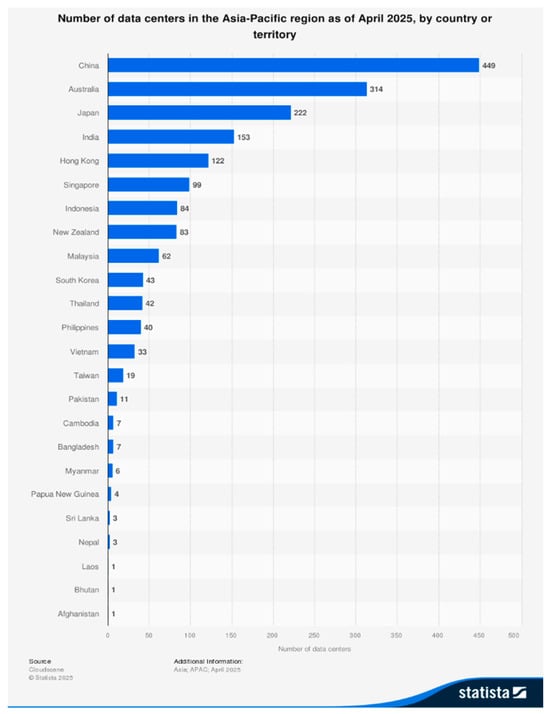
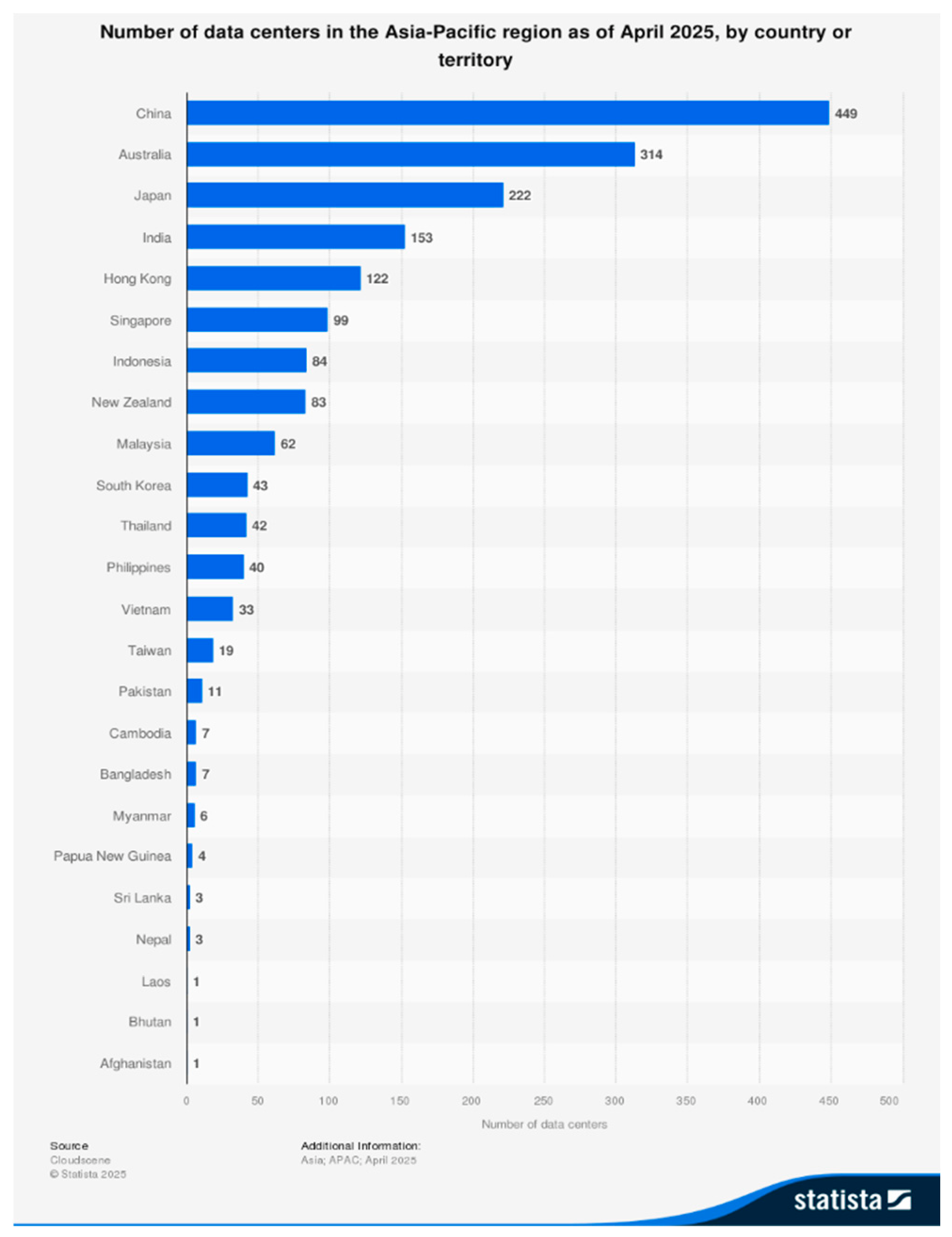
Southeast Asia is experiencing rapid digital transformation, driving substantial growth in data centres (Figure 1) [5]. Countries including Malaysia, Singapore, Indonesia, Thailand, the Philippines, and Vietnam are emerging as major data centre hubs due to their strategic location, expanding digital infrastructure, and sustained economic growth [6,7,8]. A regional survey reported by Eco-Business found that 77.05% of respondents identified stronger government support and more stringent regulations as priorities for achieving a low-carbon future for ASEAN data centres [9]. These findings highlight the need for more effective sustainability frameworks capable of supporting policy implementation through mechanisms such as PBCs.
Figure 1.
Data Centres growth in Southeast Asia. Source: APAC: number of data centers by country 2025| Statista as of April 2025.
PBCs link financial outcomes to verified performance metrics, offering a mechanism to improve accountability and align operational results with sustainability objectives [2]. Integrating GBRS criteria into PBCs presents an opportunity to enhance their effectiveness.
However, there is limited research evaluating how GBRS frameworks can function as enablers of PBCs, particularly within the diverse regulatory landscape of Southeast Asia. Therefore, this study aims to (1) analyse green data centre certification frameworks and their criteria, (2) examine their scoring methodologies and assessment categories, and (3) evaluate their potential to support PBC implementation.
Unlike previous studies that primarily examine GBRSs as sustainability assessment and certification tools, this study evaluates these frameworks from a PBC perspective. It adopts the concept of PBC-compatible certification frameworks and proposes a comparative evaluation framework based on measurable indicators, verification capability, performance tracking, and contractual enforceability.
This study contributes to the literature by linking GBRS frameworks with PBC concepts and demonstrating how certification frameworks can support performance-driven sustainability strategies in Southeast Asia’s data centre sector.
The remainder of this paper is organised as follows. Section 2 presents the conceptual framework and regional context, including the role of GBRSs as enablers of PBCs and the sustainability challenges facing data centres in Southeast Asia. Section 3 describes the research methodology, including the selection of certification frameworks, comparative assessment criteria, and an evaluation framework for PBC compatibility. Section 4 presents the results of the comparative analysis and discusses key findings regarding certification structures, scoring systems, and performance metrics. Section 5 critically examines the extent to which certification categories can support the implementation of PBCs through energy, carbon, and innovation-related indicators. Finally, Section 6 concludes the study by summarising the main findings, discussing policy implications, and identifying directions for future research.
2. Conceptual Framework and Regional Context
2.1. Conceptualising GBRS as Enablers of Performance-Based Contracts
GBRSs have traditionally been developed as design- and compliance-orientated tools intended to promote sustainable building practices. However, their effectiveness in ensuring actual operational performance remains uncertain [9,10]. A critical limitation lies in their primary focus on prescriptive measures rather than outcome-based verification, which weakens their ability to support performance accountability in real-world applications. This limitation is particularly problematic when considering their integration with PBCs, which fundamentally rely on measurable and verifiable outcomes [2].
To address this gap, certification frameworks have increasingly incorporated operational considerations. For instance, Soft Landings is used in public projects in the UK to improve project delivery, stakeholder collaboration and post-occupancy engagement. However, previous reviews of Soft Landings similarly concluded that improved collaboration and post-occupancy support do not necessarily translate into reduced operational carbon emissions [11], reinforcing the need for stronger operational performance verification and “PBC-compatible” certification.
In this study, a certification framework is considered PBC-compatible if it demonstrates the following characteristics:
- Measurable performance indicators: The presence of quantifiable metrics such as Power Usage Effectiveness (PUE), energy savings percentages, or carbon emissions thresholds that can serve as contractual benchmarks.
- Verifiable metrics: Indicators that can be independently monitored and validated, ensuring transparency and reducing contractual disputes.
- Capacity for longitudinal performance tracking: The ability to monitor performance over time rather than relying solely on design-stage assessments.
- Compatibility with contractual enforcement mechanisms: The extent to which certification criteria can be translated into enforceable contractual terms, including incentives and penalties linked to performance outcomes.
These characteristics provide the analytical framework used throughout this study to evaluate the extent to which existing certification frameworks can support PBCs. These criteria highlight a fundamental shift from certification as a compliance tool to certification as a performance-enabling framework. Although some certification frameworks (e.g., those incorporating PUE thresholds or carbon metrics) demonstrate strong alignment with PBC principles, many mainstream frameworks remain limited in their ability to support continuous performance verification. These findings suggest that, in their current form, most GBRSs only partially fulfil the requirements of PBC structures and would require further adaptation or integration to support PBC effectively.
2.2. Regional Context: Data Centres and Sustainability Challenges in Southeast Asia
The need to re-evaluate GBRSs through a performance-based lens is particularly evident in Southeast Asia, where rapid digital transformation is driving significant growth in data centre infrastructure [5,6,7,8]. Countries including Malaysia, Singapore, Indonesia, Thailand, the Philippines, and Vietnam are emerging as major digital hubs due to favourable economic conditions, strategic location, and expanding technological ecosystems [6,7,8].
However, this growth is accompanied by escalating environmental challenges. Data centres are highly energy-intensive, with cooling efficiency and power usage representing key determinants of their overall sustainability performance. Regional studies indicate strong demand for stricter policies and improved regulatory frameworks, with stakeholders emphasising the need for more robust mechanisms to ensure low-carbon development [9].
Despite shared climatic and operational conditions across Southeast Asia, the region is characterised by fragmented certification practices and varying levels of regulatory maturity [11,12]. While some countries have introduced specialised certification frameworks for data centres, others continue to rely on adapted or voluntary certification schemes. For example, Singapore has introduced the BCA-IMDA Green Mark alongside the Infocomm Media Development Authority (IMDA) Green Data Centre Roadmap [9], while Malaysia has implemented the MCMC MTSFB TC G004:2024 [13] Technical Code and the Malaysia Digital Economy Blueprint (MyDigital) to support sustainable digital development [10]. This diversity creates challenges for standardisation, benchmarking, and the cross-border implementation of sustainability strategies.
More importantly, the current landscape reveals a disconnect between certification frameworks and contractual innovation. While certifications provide structured sustainability criteria, they are rarely designed to function as enforceable performance instruments. As a result, their potential to support PBC implementation remains underdeveloped. This is particularly significant in the context of Southeast Asia, where the alignment between sustainability goals, regulatory frameworks, and procurement mechanisms is still evolving [14].
Table 1 reviews key certification frameworks and representative applications across the region, emphasising their scope and relevance to PBCs and net-zero goals. As Southeast Asia expands its digital infrastructure, GBRSs can play an important role in promoting more sustainable data centres. Malaysia illustrates the diversity of approaches within the region: the GBI, GreenRE, and the MCMC MTSFB TC G004:2024 address sustainability from complementary perspectives. While GBI and GreenRE adopt broader green building approaches, the MCMC code provides sector-specific guidance for data centres, placing greater emphasis on operational energy efficiency [15]. Indonesia’s Greenship Data Centre certification adopts a points-based approach that evaluates energy efficiency, water use, site sustainability, and material use, encouraging continuous improvement in operational performance [16]. Singapore promotes the BCA-IMDA Green Mark for Data Centres, which evaluates energy efficiency, cooling systems, information technology (IT) power, and sustainable design. It supports both new and existing facilities and aligns with the national Green Data Centre Roadmap [17]. In the Philippines, internationally recognised certification frameworks such as EDGE and LEED are commonly adopted. Digital Edge’s NARRA1 facility in Manila demonstrates how these certifications can support high levels of operational efficiency, achieving both EDGE and LEED Gold certification alongside a PUE of 1.193 [18]. Vietnam is emerging as a green data centre hub, with facilities like Viettel Hoa Lac integrating 30% renewable energy and achieving Tier III certifications. These efforts align with international standards and green finance eligibility, supported by institutions like HSBC [19]. Thailand adopts LEED Gold v.4 [19], TIA-942 Rated-3 [20], and Uptime Institute Tier III [21] certifications, reflecting its commitment to resilient and sustainable infrastructure. Case studies such as BOI-supported data centres benefit from tax incentives and regulatory support, demonstrating Thailand’s commitment to resilient and sustainable digital infrastructure.
Table 1.
Overview of green building certification frameworks for data centres and representative projects across Southeast Asia.
Overall, these examples demonstrate considerable variation in the maturity, scope, and emphasis of certification frameworks across Southeast Asia. Although all frameworks promote sustainability, they differ substantially in their treatment of measurable operational performance, carbon metrics, and post-certification monitoring. These differences provide the basis for the comparative analysis presented in the following sections.
2.3. Southeast Asia Carbon Emissions
The rapid growth of data centres, combined with rising carbon emissions across Southeast Asia, highlights the importance of certification frameworks that support measurable operational performance and contribute to national net-zero ambitions.
Although Southeast Asian countries differ substantially in their absolute carbon emissions, all have established long-term decarbonisation targets ranging from 2050 to 2065. These commitments increasingly emphasise renewable energy, energy efficiency, and low-carbon infrastructure, creating a favourable policy environment for greener data centre development. However, the pace of implementation and the maturity of supporting regulatory frameworks vary considerably across the region.
Indonesia is the greatest emitter in the area, emitting 620 million tonnes of CO2 in 2024. It aims to reach net zero by 2060, with emissions peaking by 2030. Vietnam, which emits 320 million tonnes, plans to reach net zero by 2050 by phasing out coal and growing renewable energy. Thailand, with 280 million tonnes of emissions, aims for net zero by 2065 through electric mobility and renewable energy. Malaysia emits 250 million tonnes and strives for net zero by 2050 with energy efficiency and a growing carbon market. With emissions near 150 million tonnes, the Philippines aims to reach net zero by 2050 and lower emissions by 75% below business-as-usual levels by 2030. Singapore has one of the most aggressive net zero policies, aiming for 2050 via carbon pricing and green finance despite its smaller footprint of 50 million tonnes. These targets reflect ambition and development realities, with each country pursuing decarbonisation. Indonesia, Vietnam, Thailand, Malaysia, the Philippines, and Singapore have committed to long-term decarbonisation despite different emission levels and net-zero timetables. However, implementation rate and depth vary greatly. Singapore and Malaysia are relatively well positioned to advance sustainable data centre development owing to their earlier net-zero commitments (2050), established regulatory frameworks, and greater adoption of specialised certification systems. Singapore’s robust legislative framework, carbon pricing, and early adoption of green construction standards like BCA Green Mark and LEED have made it a regional hub for sustainable digital infrastructure.
The new MCMC MTSFB TC G004:2024 technical code for green data centres in Malaysia aligns digital growth with national climate goals. This code addresses a vital need by offering sector-specific guidance that GBI and GreenRE may not. This development reflects growing recognition that energy-intensive data centres require sector-specific sustainability guidance beyond general green building certification frameworks.
Indonesia, Thailand, Vietnam, and the Philippines have greater or growing emissions but structural issues such as coal dependency [8], insufficient green financing, and slower policy implementation [21]. Data centre-specific standards are unavailable or in development, and green building certifications are optional or underutilised. This mismatch between digital infrastructure growth and climate pledges risks carbon lock-in without regulated or incentivised green certification.
Despite broadly similar climatic conditions, Southeast Asian countries have adopted markedly different approaches to green building certification for data centres. These differences are reflected in certification scope, assessment criteria, and scoring methodologies. Consequently, comparing these frameworks provides an opportunity to identify differences in performance requirements, evaluate their relative stringency, and assess the potential for greater regional standardisation.
Despite extensive research on certification criteria and operational challenges, few studies have examined how these certifications can enable PBCs that link financial incentives to measured energy performance to drive data centres towards net zero energy status. In particular, the relationship between certification frameworks and contractual innovation remains underexplored.
2.4. Linking Certification, Performance, and Contracts
The integration of GBRSs with PBCs requires a clear alignment between certification criteria (what is measured), performance outcomes (what is achieved), and contractual mechanisms (how it is enforced). In principle, GBRSs can serve as foundational platforms for defining key performance indicators (KPIs), particularly in areas such as energy efficiency, water use, and carbon emissions.
However, a critical evaluation of existing frameworks indicates that this linkage is not consistently established. Many certification frameworks emphasise design intent and one-time assessment rather than continuous performance verification, limiting their applicability in PBC structures. Without reliable mechanisms for post-occupancy monitoring and verification, the translation of certification metrics into contractual obligations remains weak.
Therefore, the conceptual framework proposed in this study positions GBRSs not as standalone tools, but as potential enablers of PBC, provided their criteria are aligned with measurable, verifiable, and enforceable performance indicators. This perspective underscores the need for certification frameworks to evolve beyond design-stage assessment towards supporting contractual accountability, continuous performance verification, and longitudinal operational optimisation.
Building on this conceptual framework, the following section describes the methodology used to evaluate the extent to which existing certification frameworks satisfy these requirements across Southeast Asia.
3. Methodology
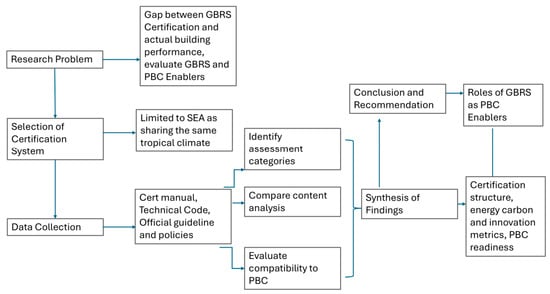
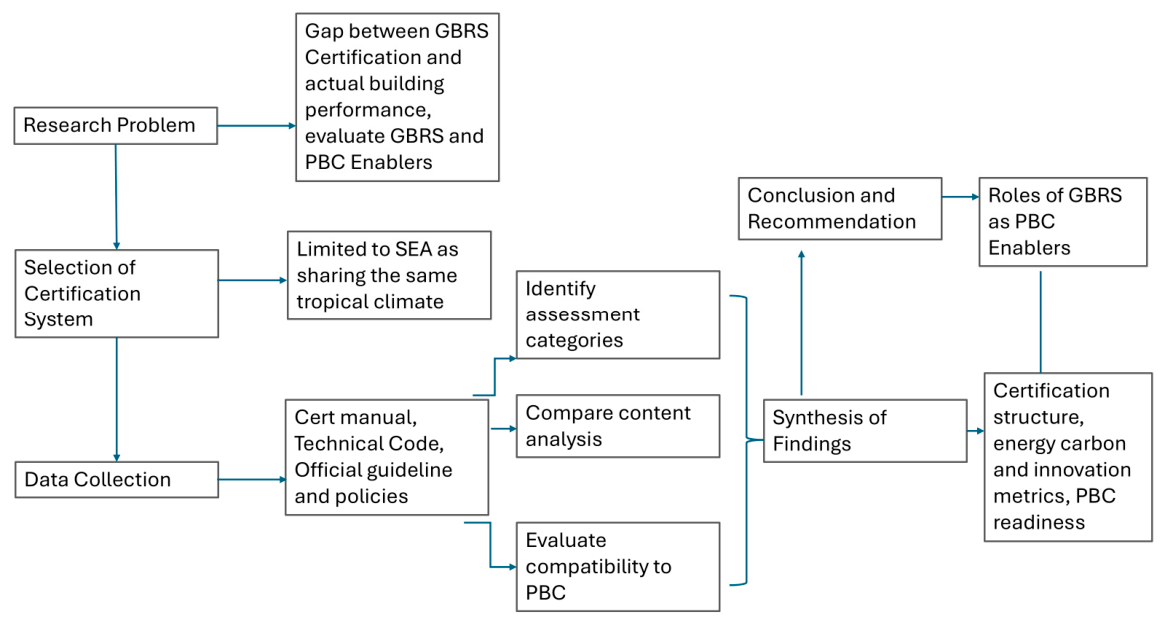
This study adopts a comparative content analysis approach to evaluate the potential of GBRSs to support PBC implementation for data centres in Southeast Asia. The methodological process, summarised in Figure 2, comprises framework selection, document review, category mapping, scoring comparison, and evaluation against predefined PBC-compatibility criteria.
Figure 2.
Methodological framework for the comparative analysis.
3.1. Selection of Certification Frameworks and Documentary Sources
Seven certification frameworks were selected for analysis: LEED, EDGE, GBI, GreenRE, MCMC MTSFB TC G004:2024, Greenship, and BCA Green Mark. The frameworks were included where they met at least one of the following criteria: (1) they were developed or formally adopted within a Southeast Asian country; (2) they included provisions directly applicable to data centres; (3) they had documented application to data centre projects within the region. International frameworks such as LEED and EDGE were retained because of their use in Southeast Asian projects and their value as comparative benchmarks.
The selection was further informed by the broadly tropical climatic conditions of the countries examined, including high cooling demand and humidity. These shared operational challenges provide a relevant basis for comparing how the frameworks address energy use, cooling performance, and related environmental impacts. However, the analysis recognises that the selected countries differ in regulatory maturity, electricity systems, and national policy contexts.
Only publicly available official manuals, technical codes, assessment guides, and related documentation valid at the time of analysis were included. Secondary sources were used only to identify applications or provide contextual information and were not used as the primary basis for coding certification criteria.
3.2. Data Extraction and Category Harmonisation
The primary assessment categories and individual criteria within each framework were first extracted from the relevant official documentation. Categories with comparable purposes but different terminology were subsequently grouped under common analytical headings: energy efficiency, water efficiency, materials and resources, indoor environmental quality, sustainable sites, carbon emissions and environmental impact, and innovation.
The harmonisation process was based on the intended performance outcome of each criterion rather than its title alone. Particular attention was given to categories directly associated with measurable operational performance, including energy consumption, cooling efficiency, PUE, water use, carbon emissions, and post-occupancy monitoring. This process established a common basis for cross-framework comparison while retaining framework-specific criteria where no direct equivalent existed.
3.3. Comparative Analysis of Criteria and Scoring Structures
The analysis comprised two related stages:
- Content analysis: Official certification manuals, technical codes, assessment guides, and supporting documentation were reviewed. The unit of analysis was the individual certification criterion or credit. For each criterion, information was extracted on its assessment category, metric, threshold, evidence requirement, assessment stage, monitoring requirement, and relevance to operational performance.
- Scoring-structure comparison: The allocation of points, credits, mandatory requirements, thresholds, and certification levels was compared across frameworks. Particular attention was given to measurable operational indicators, including PUE, quantified energy savings, water-use metrics, carbon indicators, and monitoring requirements.
The extracted information was organised in a structured comparison matrix. The findings were then synthesised to identify common features, differences in performance emphasis, and the extent to which each framework incorporates measurable and verifiable operational criteria.
3.4. Evaluation of PBC Compatibility
To assess the potential of GBRSs to support PBCs, each certification framework was evaluated against the four PBC-compatibility dimensions, established in Section 2.1:
- Measurability: whether the framework specifies quantified indicators, targets, or thresholds that could serve as contractual KPIs.
- Verifiability: whether compliance requires documented evidence, monitoring data, third-party assessment, or another independently verifiable process.
- Longitudinal performance tracking: whether the framework includes operational, post-occupancy, recertification, or continuing monitoring requirements.
- Suitability for contractual translation: whether the criteria are sufficiently clear, measurable, time-bound, and attributable to be translated into contractual obligations, incentives, or penalties.
For each dimension, a framework was classified as demonstrating clear, partial, or limited compatibility. “Clear compatibility” indicated the presence of explicit and verifiable requirements; “partial compatibility” indicated optional, indirect, or incomplete provisions; and “limited compatibility” indicated that no substantive provision was identified. The classifications were supported by evidence extracted from the official framework documents. The assessment was used to compare relative alignment with PBC principles rather than to establish an absolute ranking of certification quality.
3.5. Analytical Procedure and Quality Assurance
The analytical procedure comprised six stages:
- Selection of regionally relevant and data centre-applicable certification frameworks;
- Collection of official framework manuals, technical codes, and assessment documentation;
- Extraction and coding of certification categories, criteria, metrics, thresholds, and evidence requirements;
- Harmonisation of comparable assessment categories across the seven frameworks;
- Comparison of scoring structures, operational performance metrics, and monitoring provisions; and
- Evaluation of each framework against the four predefined PBC-compatibility dimensions, followed by synthesis of the findings.
This sequence provides a traceable link between the source documents, comparative results, and conclusions concerning the potential of GBRSs to enable PBC implementation.
4. Results
4.1. Comparison of Certification Structures
The comparative analysis reveals substantial differences in the structures, assessment categories, scoring method, and certification levels of the seven selected frameworks. As summarised in Table 2, LEED, GBI, GreenRE, Greenship, and BCA-IMDA Green Mark predominantly use point-based scoring systems. EDGE evaluates compliance through minimum percentage improvements, whereas MCMC MTSFB TC G004:2024 applies tiered performance levels.
Table 2.
Structural comparison of the selected green building certification frameworks.
Uptime Institute Tier Standards and ANSI/TIA-942 were reviewed for contextual purposes but excluded from the detailed sustainability comparison because their principal focus is infrastructure availability, resilience, and fault tolerance rather than environmental performance.
Table 2 summarises the principal assessment categories and rating structures of the selected certification frameworks.
As shown in Table 2, energy efficiency is a central assessment area across the selected frameworks. Common indicators include PUE, energy savings, renewable energy integration, cooling efficiency, water use, and carbon-related measures. However, the frameworks operationalise these indicators differently through point allocations, minimum improvement requirements, mandatory thresholds, or tiered performance levels. Examples are: PUE ≤ 2.2 in Singapore’s Green Mark and 20% minimum energy savings in EDGE.
From a PBC perspective, point-based and threshold-based systems offer potentially measurable outputs that could inform contractual KPIs. However, most were developed primarily to demonstrate certification compliance rather than to support continuing monitoring, incentive payments, penalties, or long-term performance enforcement. Their direct compatibility with PBCs therefore depends not only on whether a metric is included, but also on whether it is measurable, independently verifiable, monitored over time, and suitable for translation into contractual terms.
4.2. Assessment Categories and Their Relevance to Data Centre Performance
The comparative analysis proceeds by examining the assessment criteria within each certification framework. TIA-942 and the Uptime Institute Tier Standards were excluded from this stage because their assessment structures primarily address infrastructure resilience and availability rather than environmental sustainability. The remaining seven frameworks were compared according to their assessment categories, performance metrics, and relative weightings.
To facilitate comparison across certification frameworks, it is important to understand the purpose of each assessment category presented in Table 3. Although the terminology varies among frameworks, most categories are designed to evaluate different aspects of environmental and operational sustainability. Energy and atmosphere (or energy efficiency) focus on reducing operational energy consumption through efficient building systems, cooling technologies, renewable energy integration, and performance monitoring. Water efficiency evaluates measures that minimise water consumption, particularly in cooling operations. Sustainable sites and site planning assess the environmental impact of site selection, transportation accessibility, and ecological protection. Materials and Resources promote responsible material selection, waste reduction, and life-cycle considerations. Indoor environmental quality addresses occupant comfort, health, and indoor environmental conditions. Carbon emissions and Environmental Protection categories focus on reducing greenhouse gas emissions and supporting low-carbon development. Finally, innovation categories encourage the adoption of advanced technologies and management practices that exceed minimum certification requirements.
Table 3.
Certification with the detailed assessment categories comparison.
Within the analysed frameworks, energy efficiency is the most strongly emphasised category, reflecting the high operational electricity demand of data centres. As a result, most certification frameworks allocate the highest proportion of points to energy-related criteria, reflecting the industry’s emphasis on operational efficiency and decarbonisation.
Table 3 tabulates the presence and relative weighting of assessment categories across the selected frameworks. For point-based frameworks, higher relative weightings indicate greater emphasis on a particular sustainability objective rather than superior overall environmental performance. Therefore, differences reflect variation in certification structure, policy priorities, and operational focus.
4.3. Key Findings
The comparison presented in Table 3 reveals both similarities and significant differences among the analysed certification frameworks. While all frameworks recognise the importance of sustainable data centre development, they differ in the categories assessed, the weighting allocated to each category, and the performance thresholds required for certification. Energy-related performance receives the highest weighting across all frameworks, demonstrating a strong regional consensus that operational energy consumption is the primary sustainability challenge for data centres. In contrast, categories such as carbon emissions, innovation, and environmental protection appear less consistently across frameworks, reflecting differences in national policies and certification priorities. These variations indicate that, although certification frameworks pursue similar sustainability objectives, they do not yet provide a harmonised regional approach for assessing data centre performance.
The analysis of Table 3 reveals PUE as a central metric for evaluating energy efficiency, yet its treatment varies significantly across frameworks. Certifications like LEED, EDGE, GBI, GreenRE, MCMC, Greenship, and Green Mark all reference PUE either directly or indirectly, with most setting thresholds around 1.5 or lower to qualify for higher ratings such as Gold or Platinum. For instance, Green Mark Singapore distinguishes between new and existing buildings with stricter PUE limits for new facilities, while MCMC Malaysia introduces tiered recognition based on progressively lower PUE values, down to 1.1 for net-zero champions. This emphasis reflects the growing importance of operational efficiency in data centres, which are among the most energy-intensive building types. However, the lack of a unified PUE benchmark across certifications creates challenges for regional harmonisation and cross-border benchmarking.
4.3.1. Energy Performance and PUE
Power Usage Effectiveness (PUE), defined in Equation (1), is one of the most widely used indicators for assessing energy performance in data centres. Developed as an industry-standard metric, PUE measures how efficiently a data centre uses energy by comparing total facility energy consumption with the energy consumed by IT equipment.
A theoretical PUE of 1.0 indicates that all facility energy is consumed by IT equipment, with no additional energy required for cooling, lighting, power conversion, or supporting infrastructure. Lower PUE values therefore indicate lower non-IT energy demand. Consequently, many certification frameworks use PUE thresholds as a benchmark for evaluating operational performance and awarding certification points. As shown in Table 3, frameworks such as BCA-IMDA Green Mark, MCMC MTSFB TC G004:2024, GreenRE, and GBI incorporate explicit PUE targets to encourage continuous improvements in energy efficiency.
PUE is therefore a potentially suitable KPI for PBCs because it can be measured over time and linked to operational outcomes. Its contractual use would nevertheless require clearly defined measurement boundaries, monitoring periods, data-quality requirements, baseline conditions, and verification procedures.
4.3.2. Variation in Category Coverage and Weighting
Table 3 shows that energy efficiency emerges as the most heavily weighted category across all certifications, reflecting the critical importance of power consumption in data centre operations. MCMC places particularly strong emphasis on energy performance, while energy also receives the largest point allocation in BCA-IMDA Green Mark, GreenRE, GBI, and LEED.
This concentration on operational energy supports the use of energy-related metrics as candidate KPIs within PBCs. However, category weighting alone does not demonstrate PBC compatibility because contractual application also requires verification, continuing monitoring, and enforceability. This pattern aligns with the industry’s focus on reducing PUE and overall energy consumption.
4.3.3. Implications for Regional Harmonisation
The frameworks reflect different regional priorities and institutional contexts. LEED distributes points across a broad range of categories, including location and transportation and regional priority, whereas specialised regional frameworks place greater emphasis on operational energy and sector-specific requirements. Malaysia illustrates this diversity particularly clearly: GBI adopts a broad building-sustainability structure, GreenRE includes a separate carbon-emissions category, and MCMC MTSFB TC G004:2024 focuses more directly on technical and operational requirements for green data centres. BCA-IMDA Green Mark assigns substantial emphasis to energy efficiency and innovation, while Greenship distributes points across a wider range of environmental categories.
From Table 3, LEED v4 (Thailand)’s 110-point system across eight categories, including unique emphasis on Location & Transportation (16 points) and Regional Priority (4 points) contrasts with regional frameworks that focus on efficiency and pragmatism. EDGE (Philippines) applies regional pragmatism with its reduced 20-point distribution across three main zones, prioritising efficiency improvements above coverage. The most striking example of regional diversification is Malaysia, where three certification frameworks—GBI’s balanced 100-point approach emphasising Indoor Environmental Quality (21 points); GreenRE’s pioneering inclusion of Carbon Emission as a 10-point category; and MCMC MTSFB TC G004:2024’s highly specialised focus on telecommunications infrastructure with 90 points for Waste Management—operate simultaneously. Singapore’s BCA-IMDA Green Mark, with its heavy emphasis on Energy & Atmosphere (60 points) and Innovation (15 points), aligns with the city-state’s digital economy ambitions, while Indonesia’s Greenship DC covers seven categories with balanced scoring for most assessed areas, emphasising its comprehensive but not overly weighted approach.
This fragmentation may complicate cross-border benchmarking and the development of common contractual performance requirements.
4.3.4. Other Assessment Categories
Analysis of assessment categories across the seven data centre green building certification frameworks shows diverse sustainability priority structures and weights. Universal categories show industry consensus, with Energy & Atmosphere receiving 20–75 points across certification frameworks, reflecting the critical importance of power consumption in data centre operations. Water Efficiency is the second most consistently represented category, although its treatment ranges from minimum savings requirements to point allocations. While materials & resources receive moderate attention from five certifications, using modest point allocations to reflect its secondary priority to operational efficiency metrics.
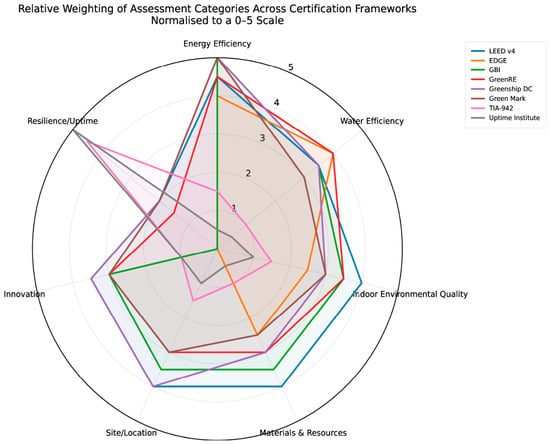
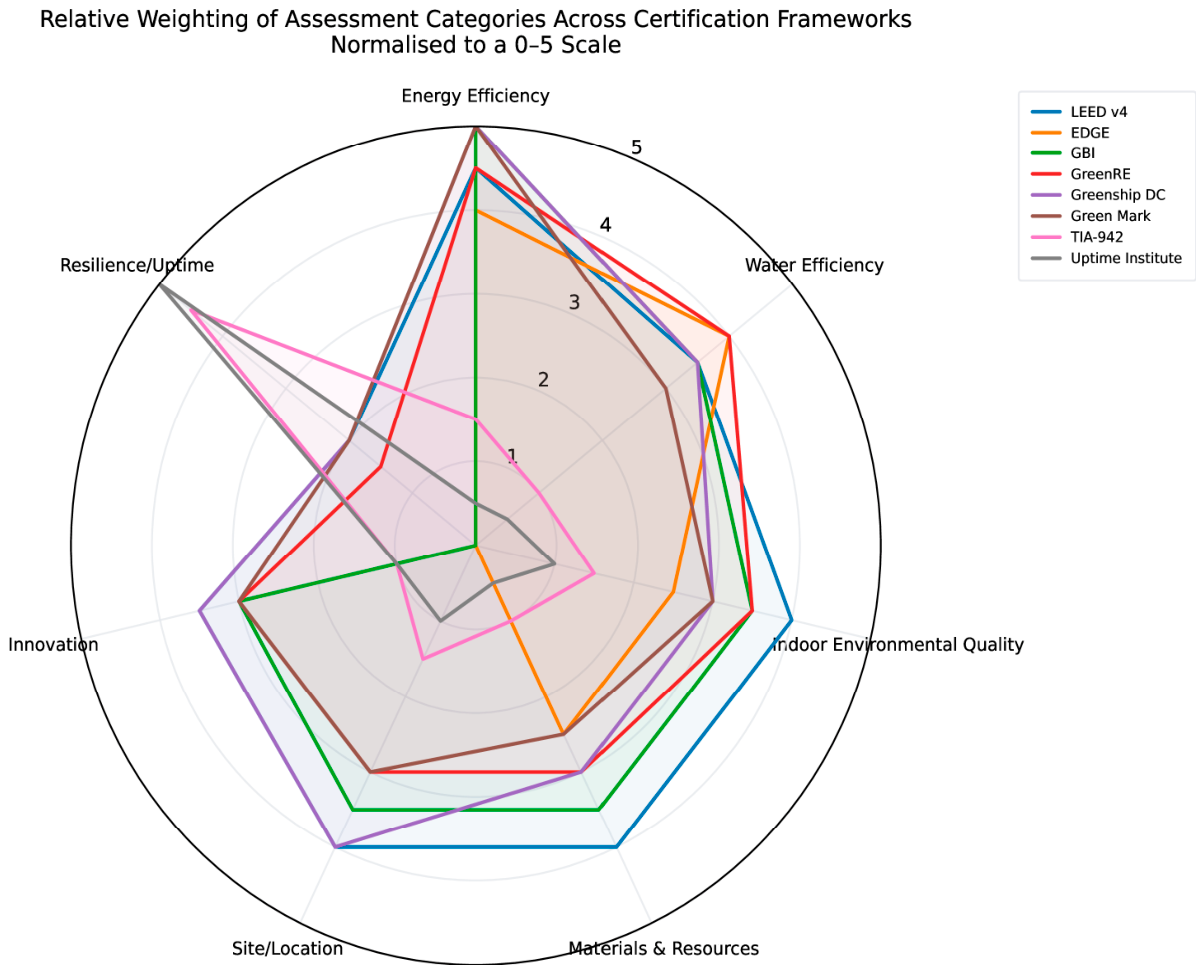
Specialised categories show how geographical and regulatory settings impact certification frameworks, with certain frameworks focusing on specialised evaluation areas. The MCMC MTSFB TC G004:2024 (Malaysia) standard uniquely allocates 90 points to Waste Management, reflecting telecommunications infrastructure requirements. Within the categories recorded in Table 3, GreenRE is the only framework that presents carbon emissions as a separately weighted category, demonstrating Malaysia’s early adoption of carbon accounting principles. Thai LEED v4 preserves worldwide standardisation through distinct categories like Regional Priority and Location & Transportation, lacking in other regional frameworks. Figure 3 shows that while BCA-IMDA Green Mark (Singapore) awards 15 points for innovation, other certifications, such as EDGE (Philippines), do not address innovation, indicating different approaches to rewarding creative sustainability solutions versus standardised performance metrics.
Figure 3.
Relative weighting of assessment categories across certification frameworks.
4.3.5. Compatibility with PBC Requirements
From a PBC perspective, the comparison indicates that selected certification metrics can provide:
- Quantifiable performance indicators;
- Recognised technical benchmarks;
- Evidence suitable for independent verification;
- Potential inputs for contractual KPIs, incentives, and penalties.
However, differences in metric definitions, system boundaries, thresholds, monitoring periods, and verification procedures constrain their use in standardised regional contracts.
Figure 3 was developed from the comparative matrix presented in Table 3. The figure visualises the relative emphasis placed on different sustainability assessment categories across the selected certification frameworks. For each certification framework, the maximum available score or weighting assigned to each assessment category was extracted from the official certification documentation and compared across frameworks. Categories not included within a particular certification framework were recorded as not applicable and assigned a value of zero for visualisation purposes.
The purpose of the comparison is not to evaluate the overall quality of one certification framework against another, but rather to identify the sustainability dimensions prioritised by each framework. Higher values indicate greater weighting and importance assigned to a particular category within the certification structure. This enables comparison of regional priorities, particularly regarding energy efficiency, water conservation, carbon emissions, innovation, and environmental management.
As shown in Figure 3, energy-related categories consistently receive the highest weighting across all analysed frameworks, demonstrating the central role of operational energy performance in green data centre certification. The figure also highlights differences in secondary priorities, such as innovation, carbon emissions, indoor environmental quality, and waste management, illustrating the diverse approaches adopted across Southeast Asia.
Overall, the analysis indicates that energy-related metrics, particularly PUE, provide the strongest potential link between certification frameworks and PBC requirements because they can be expressed as measurable operational outcomes. However, PUE thresholds vary across frameworks, and the inclusion of a performance metric does not necessarily ensure continuous monitoring, independent verification, or contractual enforceability. Consequently, the selected frameworks demonstrate partial rather than complete compatibility with PBCs. Greater harmonisation of metric definitions, measurement boundaries, verification procedures, and post-certification monitoring would be required to support cross-border performance-based contracting.
5. Discussion: Certification Categories as Enablers of PBCs
This section extends the comparative results by examining how selected certification categories could support PBC implementation. The discussion focuses on three categories with particular relevance to contractual performance: energy performance (contractual KPIs), carbon performance (financial incentives), and innovation (performance bonuses). Their suitability for PBCs is considered in relation to the four compatibility criteria established in Section 2.1: measurability, verifiability, long-term performance tracking, and suitability for contractual enforcement.
5.1. Energy Performance as a Basis for Contractual KPIs
Energy efficiency provides the clearest potential connection between certification frameworks and PBCs because it can be represented through quantifiable operational indicators, particularly PUE and energy-consumption targets. As shown in Section 4.2, all analysed frameworks include energy-related criteria, although the specificity, weighting, and form of their performance requirements vary considerably.
MCMC MTSFB TC G004:2024 and BCA-IMDA Green Mark appear to demonstrate comparatively strong alignment in terms of measurability because they include explicit operational requirements and structured performance levels. Other frameworks, including EDGE, also provide quantified improvement targets that could inform contractual performance requirements.
These metrics could be incorporated into PBCs through guaranteed performance targets, incentive payments for exceeding agreed thresholds, and penalties or remedial actions where performance falls below contractual requirements. However, their translation into enforceable KPIs would require clearly defined baselines, measurement boundaries, monitoring periods, data-quality requirements, and independent verification procedures.
A further limitation is the variation in thresholds and calculation methods across frameworks. This inconsistency reduces regional comparability and complicates the development of standardised contractual provisions for cross-border projects.
Although PUE is useful for assessing the proportion of facility energy used by supporting infrastructure, it should not be treated as a complete measure of sustainability. A low PUE does not necessarily indicate low absolute energy consumption, low-carbon electricity use, efficient IT workload, or reduced water consumption. For contractual purposes, PUE should therefore be combined with complementary indicators such as total energy consumption, energy use per unit of IT output, renewable electricity share, carbon intensity, and water-use effectiveness where relevant.
5.2. Carbon Performance and Financial Incentives
Carbon-related indicators could extend PBCs beyond energy efficiency by linking contractual payments to emissions reductions or carbon-intensity targets. GreenRE explicitly includes carbon emissions as a separate assessment category, while other frameworks address carbon more indirectly through energy efficiency, renewable energy, and environmental-impact requirements.
Where clearly quantified and verified, carbon indicators could support incentive payments for reducing operational emissions, compliance with internal carbon budgets, and alignment with green-finance requirements. They may also complement carbon-pricing or recognised carbon-credit mechanisms, although certification alone would not establish eligibility for carbon credits.
Their current contractual value is limited by inconsistent system boundaries, baseline methods, emissions factors, and reporting requirements. In several frameworks, carbon remains embedded within broader energy categories rather than being defined as a standalone and independently verifiable performance indicator. This reduces transparency and limits the use of carbon performance as a consistent basis for contractual incentives across the region.
5.3. Innovation as a Supplementary Performance Mechanism
Innovation categories provide opportunities to recognise technologies and management practices that exceed minimum certification requirements. Relevant examples include advanced metering, automated controls, BIM, digital twins, and AI-assisted energy-management systems [11]. These technologies can strengthen the monitoring, reporting, and optimisation processes required to support PBCs.
BIM can provide an integrated record of design, construction, and asset information, supporting energy modelling, performance simulation, and the documentation of intended performance requirements [15]. Digital twins can extend these capabilities by connecting asset information with operational data, enabling more continuous monitoring of energy consumption, cooling efficiency, and PUE [15,16]. AI-assisted systems may further support anomaly detection, predictive control, and operational optimisation.
However, the use of an innovative technology should not itself constitute a contractual performance outcome. PBC incentives should be linked to independently verified improvements resulting from its application, such as reduced energy use, lower carbon intensity, or improved cooling efficiency. Innovation categories are also frequently qualitative and inconsistently defined, limiting their suitability as core contractual KPIs. They are therefore better positioned as supplementary bonus mechanisms than as primary determinants of payment.
5.4. Comparative PBC Compatibility of the Selected Frameworks
Drawing on the four PBC-compatibility criteria (measurability, verifiability, longitudinal performance tracking, and suitability for contractual enforcement) along with the three evaluation criteria (energy, carbon, and innovation), the analysed certification frameworks exhibit varying potential to support PBCs. MCMC MTSFB TC G004:2024 and BCA-IMDA Green Mark show comparatively strong alignment in relation to measurable operational indicators and structured performance requirements, particularly for energy efficiency and PUE.
EDGE, GreenRE, and Greenship demonstrate partial alignment because they include quantified sustainability requirements but vary in their treatment of operational verification, post-certification monitoring, and category standardisation. LEED and GBI provide broad sustainability assessment structures and potentially relevant energy criteria, but their use as PBC platforms may be more limited where certification remains focused on design-stage achievement or one-time compliance rather than continuing operational outcomes.
These classifications should therefore be interpreted as comparative assessments of documented compatibility rather than evidence of successful PBC implementation. Overall, GBRSs provide a useful basis for defining sustainability requirements, but certification criteria become contract-ready only when they are measurable, independently verifiable, monitored over an agreed performance period, and suitable for incorporation into enforceable payment mechanisms.
Overall, GBRSs provide a valuable foundation for defining sustainability requirements, but certification criteria become contract-ready only when they are measurable, independently verifiable, monitored over an agreed performance period, and suitable for incorporation into enforceable payment mechanisms. Achieving these requirements is unlikely to rely on certification frameworks alone. Complementary approaches such as Soft Landings can strengthen PBC compatibility by promoting early stakeholder engagement, structured commissioning, extended aftercare, post-occupancy evaluation, and continuous performance monitoring, thereby improving the link between design intent and operational performance [1]. Similarly, digital technologies, including BIM, digital twins, advanced metering, and AI-assisted building management systems, can enhance the collection, verification, and reporting of operational data, supporting the measurement and transparency required for PBCs. However, evidence suggests that no single framework, process, or technology is sufficient to consistently close the performance gap or achieve net-zero outcomes. More promising results have been reported where complementary approaches are integrated, for example by combining Soft Landings with operationally focused frameworks such as Passivhaus and performance-oriented assessment systems such as NABERS, together with robust monitoring and contractual accountability. Such an integrated approach provides a stronger foundation for aligning certification frameworks with PBC principles and improving long-term operational performance.
5.5. Research, Policy, and Contractual Implications
The findings address the study’s three research objectives. Regarding the first objective, energy efficiency is the most consistently emphasised category across the analysed frameworks, while water efficiency, materials and resources, environmental protection, carbon emissions, and innovation receive varying levels of attention. These differences reflect national policy priorities, framework scope, and the extent to which each certification system is tailored to data centre operations.
Regarding the second objective, the analysis identifies substantial variation in assessment structures, category weightings, performance thresholds, and certification levels. PUE and other energy indicators receive considerable emphasis, but their definitions and threshold values are not harmonised. This limits direct regional comparison and complicates the development of common performance benchmarks.
Regarding the third objective, GBRSs can support PBC implementation where their requirements are measurable, independently verifiable, monitored over time, and suitable for translation into contractual obligations. MCMC MTSFB TC G004:2024 and BCA-IMDA Green Mark demonstrate comparatively strong potential in relation to measurable energy-performance requirements, although further examination of their verification and long-term monitoring provisions is necessary before concluding that they are fully PBC-ready.
For certification bodies, the findings indicate a need to strengthen operational monitoring, recertification, and performance-verification requirements. For policymakers, regional coordination around core definitions, including PUE measurement boundaries and carbon-reporting methods, could improve comparability. For clients and contract developers, certification criteria should be supplemented with project-specific baselines, monitoring periods, verification protocols, payment mechanisms, and procedures for addressing underperformance.
These improvements could support more accountable performance-based procurement and contribute to the development of lower-carbon data centres across Southeast Asia.
In summary, Table 4 highlights the central conclusion of PBC compatibility across the seven certification frameworks. MCMC MTSFB TC G004:2024 and BCA-IMDA Green Mark show the strongest alignment with PBC principles, followed by GreenRE and Greenship. In contrast, LEED and GBI focus primarily on certification compliance rather than ongoing performance management. The findings also indicate that energy-related indicators, particularly PUE, offer the strongest foundation for PBC implementation, while carbon and innovation criteria can support additional performance-based incentives.
Table 4.
Comparative assessment of certification systems against PBC compatibility and key sustainability dimensions.
6. Conclusions
This study contributes to the understanding of green certification frameworks in Southeast Asia by examining their potential role in enabling PBCs within the data centre sector.
From an empirical perspective, the research provides a comparative analysis of seven certification frameworks across the region, demonstrating significant variation in scoring structures, assessment categories, and performance metrics. While energy efficiency is consistently prioritised, particularly through indicators such as power PUE, the findings highlight a fragmented landscape with limited standardisation across frameworks. This diversity constrains cross-border benchmarking and reduces the comparability of sustainability performance in regional data centre development.
From a conceptual perspective, the study extends existing knowledge by establishing a clear linkage between GBRSs and PBC. It identifies key conditions under which certification frameworks can support PBCs, namely the presence of measurable, verifiable, and enforceable performance indicators. In doing so, the paper positions certification frameworks not merely as compliance tools but as potential enablers of performance-driven contractual models. However, the analysis reveals that most current frameworks only partially satisfy these requirements, with limited integration of post-occupancy performance verification and contractual applicability.
Unlike previous studies that primarily examine GBRSs as sustainability assessment and certification tools, this study evaluates these frameworks through a PBC perspective. It introduces the concept of PBC-compatible certification frameworks and develops a comparative evaluation of seven Southeast Asian green data centre certification frameworks based on measurable indicators, verification capability, performance tracking, and contractual enforceability.
From a policy perspective, the findings underscore the need for greater harmonisation of certification standards across Southeast Asia. Aligning core metrics, particularly energy and carbon indicators, would improve consistency, facilitate regional benchmarking, and strengthen the integration of certification frameworks into performance-based procurement and financing mechanisms. Such harmonisation is critical to supporting the transition towards NZEBs and achieving broader decarbonisation goals in the rapidly expanding data centre sector.
In conclusion, while GBRSs provide a valuable foundation for sustainability assessment, their role as enablers of PBCs remains in an early stage of development. Advancing this integration will require a shift towards more standardised, performance-orientated, and contract-compatible certification frameworks.
6.1. Limitation of Studies
This study has several limitations. First, the analysis is based primarily on certification manuals, technical codes, and publicly available documentation rather than data from certified operational facilities. Second, the evaluation of PBC compatibility is qualitative in nature and does not include empirical validation through actual performance-based contract implementation. Future studies should incorporate case studies and operational performance data to further validate the proposed findings.
6.2. Future Research Directions
Future research should examine how PBCs enable accredited data centres in Southeast Asia to meet NZEB goals. Tracking real-world energy use, carbon emissions, and cost savings over time helps determine these contracts’ impact. Research should also examine how renewable energy and AI may boost energy efficiency. Common NZEB measurement standards across certification frameworks would improve regional comparisons and policy alignment. Researchers can also find ways to expand sustainable digital infrastructure by studying economic and regulatory factors, including green finance and government incentives.
Author Contributions
Conceptualization, R.A.R. and S.M.; methodology, R.A.R.; software—not applicable.; validation, R.A.R., S.M. and D.S.A.R.; formal analysis, R.A.R.; investigation, R.A.R.; resources, R.A.R.; data curation, R.A.R. and S.M.; writing—original draft preparation, R.A.R.; writing—review and editing, S.M. and D.S.A.R.; visualization, R.A.R.; supervision, S.M. and D.S.A.R.; project administration, S.M.; funding acquisition, S.M. All authors have read and agreed to the published version of the manuscript.
Funding
The APC was funded by Heriot-Watt University.
Institutional Review Board Statement
Not Applicable.
Informed Consent Statement
Not applicable.
Data Availability Statement
The original contributions presented in this study are included in the article. Further inquiries can be directed to the corresponding author.
Acknowledgments
Special thanks to my supervisor for their unwavering support throughout. During the preparation of this manuscript/study, the authors used Microsoft Copilot (available online: https://copilot.microsoft.com/ (accessed on 30 May 2026)) for the purposes of graphic generation. The authors have reviewed and edited the output and take full responsibility for the content of this publication.
Conflicts of Interest
The authors declare no conflicts of interest.
References
- Ding, L.; Aflaki, S.; Kapuscinski, R. Performance-Based Contracts for Energy Efficiency Projects. In Proceedings of the International Conference on Industrial Engineering and Operations Management, Bandung, Indonesia, 6–8 March 2018. [Google Scholar]
- Yahya, F.B. The Singapore–Malaysia–Indonesia Triangle Can Be a Data Centre Powerhouse. East Asia Forum. 2024. Available online: https://eastasiaforum.org/2024/08/14/the-singapore-malaysia-indonesia-triangle-can-be-a-data-centre-powerhouse/ (accessed on 29 June 2025).
- World Bank. Green Technologies: Decarbonizing Development in East Asia and Pacific. Available online: https://www.worldbank.org/en/region/eap/publication/green-technologies (accessed on 18 July 2025).
- Hu, M. 2019 energy benchmarking data for LEED-certified buildings in Washington, D.C.: Simulation and reality. J. Build. Eng. 2021, 42, 102475. [Google Scholar] [CrossRef] [Scilit]
- Pritchard, R.; Kelly, S. Realising Operational Energy Performance in Non-Domestic Buildings: Lessons Learnt from Initiatives Applied in Cambridge. Sustainability 2017, 9, 1345. [Google Scholar] [CrossRef] [Scilit]
- GBI Assessment criteria for NON-RESIDENTIAL NEW CONSTRUCTION (NRNC). Kuala Lumpur, Malaysia. April 2009. Available online: www.greenbuildingindex.org (accessed on 25 May 2025).
- Liu, F.H.M.; Lai, K.P.Y.; Seah, B.; Chow, W.T.L. Decarbonising digital infrastructure and urban sustainability in the case of data centres. npj Urban Sustain. 2025, 5, 15. [Google Scholar] [CrossRef] [Scilit]
- Widyanto, T.; Hardjoprakoso, W. Greenship Data Center—A Green Data Centre Standard for Indonesia. In Proceedings of the International Conference Multidisciplinary Research for Sustainable Innovation, Virtual, 13–14 March 2024; Volume 1, pp. 492–500. [Google Scholar] [CrossRef] [Scilit]
- uHoo Business. Benefits and Importance of BERDE Certification. uHoo|Clean Air for All. Available online: https://getuhoo.com/blog/business/berde-certification (accessed on 29 June 2025).
- theinvestor.vn. Viettel Group Unit Gets $17 mln HSBC Green Loan for Data Center. Available online: https://theinvestor.vn/viettel-group-unit-scores-17-mln-green-loan-for-data-center-d1620.html (accessed on 29 June 2025).
- Jain, N.; Burman, E.; Robertson, C.; Stamp, S.; Shrubsole, C.; Aletta, F.; Barrett, E.; Oberman, T.; Kang, J.; Raynham, P.; et al. Building performance evaluation: Balancing energy and indoor environmental quality in a UK school building. Build. Serv. Eng. Res. Technol. 2020, 41, 343–360. [Google Scholar] [CrossRef] [Scilit]
- International Telecommunication Union and World Bank. Green Data Centers: Towards a Sustainable Digital Transformation—A Practitioner’s Guide; World Bank: Geneva, Switzerland, 2023. [Google Scholar] [CrossRef] [Scilit]
- MCMC MTSFB TC G004:2024, Specification for Green Data Centres, First Revision; Malaysian Communications and Multimedia Commission: Kuala Lumpur, Malaysia. 2024. Available online: https://www.mcmc.gov.my/skmmgovmy/media/General/registers/MCMC-MTSFB-G0042024-Specification-for-Green-Data-Centres-First-Revision.pdf (accessed on 29 June 2025).
- Hadi, N.F.A.; Nasir, N.M.; Alih, S.C.; Hanid, M. The Implementation of Green Building Index (GBI) towards Green Township in Cyberjaya. Built Environ. J. 2024, 21, 79–92. [Google Scholar] [CrossRef] [Scilit]
- Building and Construction Authority. Keppel Bay Tower Certified as Singapore’s First Green Mark Platinum (Zero Energy) Commercial Building. 2020. Available online: https://www1.bca.gov.sg/resources/newsroom/keppel-bay-tower-certified-as-singapore-s-first-green-mark-platinum-zero-energy-commercial-building/ (accessed on 30 June 2025).
- EDGE Certification|Ecoinch Services, Singapore. 2025. Available online: https://www.ecoinch.com/edge-certification/ (accessed on 29 June 2025).
- Boscariol, M.; Cacciaguerra, E.; Gasbarri, P.; Accardo, D.; Meschini, S.; Tagliabue, L.C. A Review of current practices and challenges in Green Data Centers: Renewable energy sources, waste heat recovery, and intelligent management systems. In 2025 33rd Euromicro International Conference on Parallel, Distributed, and Network-Based Processing (PDP); IEEE: Turin, Italy, 2025; pp. 478–485. [Google Scholar] [CrossRef] [Scilit]
- Cao, Z.; Zhou, X.; Wu, X.; Zhu, Z.; Liu, T.; Neng, J.; Wen, Y. Data Center Sustainability: Revisits and Outlooks. IEEE Trans. Sustain. Comput. 2024, 9, 236–248. [Google Scholar] [CrossRef] [Scilit]
- U.S. Green Building Council. LEED v4.1 Building Design and Construction Guide. 2019. Available online: https://www.usgbc.org/sites/default/files/2021-03/LEED%20v4.1%20BD%2BC%20Guide%2004092019.pdf (accessed on 30 June 2025).
- Telecommunications Industry Association. ANSI/TIA-942-C Data Center Infrastructure Standard; White Paper; Telecommunications Industry Association: Arlington, VA, USA, 2024. [Google Scholar]
- Uptime Institute Professional Services, LLC. Data Center Site Infrastructure Tier Standard: Operational Sustainability; Uptime Institute: New York, NY, USA, 2020. [Google Scholar]

Disclaimer/Publisher’s Note: The statements, opinions and data contained in all publications are solely those of the individual author(s) and contributor(s) and not of MDPI and/or the editor(s). MDPI and/or the editor(s) disclaim responsibility for any injury to people or property resulting from any ideas, methods, instructions or products referred to in the content. |
© 2026 by the authors. Licensee MDPI, Basel, Switzerland. This article is an open access article distributed under the terms and conditions of the Creative Commons Attribution (CC BY) license.