


Abstract
Hybrid rural–urban environments present growing challenges for architecture and design because they require ecological, cultural, and spatial values to be integrated within coherent design solutions. This study proposes a qualitative framework for identifying sustainability aesthetics archetypes that can support the interpretation and design of such hybrid environments through the integration of accessible artificial intelligence (AI) tools and author-based qualitative analysis. The research is based on a design experiment conducted with first-year Industrial Design Engineering students at Kaunas University of Technology during 2024–2025, resulting in a dataset of 43 modular spatial systems. Photographs of the design outcomes were analysed using user-friendly AI tools to generate image descriptions, semantic tags, colour palettes, and AI-assisted visual interpretations, which were combined with researcher observations in a triangulated qualitative framework. Comparative cross-case analysis identified six recurring sustainability aesthetics archetypes: living organism, habitat, geological harmony, modular ecosystem, cultivated landscape, and biomorphic artefact. Together, these archetypes provide a conceptual vocabulary for exploring how sustainability-related aesthetic principles might inform buildings, public spaces, and hybrid rural–urban environments. Beyond the identified archetypes, the study illustrates how accessible AI-assisted visual analysis can support the interpretation of implicit sustainability-related aesthetic patterns and complement researchers’ qualitative interpretation in architectural and design research.
1. Introduction
The growing complexity of contemporary spatial environments has intensified the need to reconsider the role of aesthetics in sustainable design. In particular, hybrid rural–urban landscapes, which are shaped simultaneously by natural processes, infrastructure development, agriculture, and urbanization, present design challenges that cannot be addressed solely through technical or functional criteria. These environments require forms of design that are capable of integrating ecological, cultural, and spatial dimensions while remaining perceptible and meaningful to users. In this context, researchers increasingly emphasise the importance of aesthetic experience as a component of sustainability, leading to the emergence of the concept of sustainability aesthetics [1,2].
The literature indicates that designing for hybrid environments requires the public and users to engage with new forms of spatial expression that may evolve over time and integrate multiple environmental narratives [3,4]. Within this framework, sustainability aesthetics can be understood as a mode of perceiving and designing environments that expresses ecological relationships and systemic thinking through form, materiality, and spatial organisation. Kagan [1] situates sustainability aesthetics within the broader tradition of ecological aesthetics and draws on Gregory Bateson’s notion of aesthetics as the perception of “patterns that connect” [1]. From this perspective, aesthetic experience becomes a means of recognising relationships among living systems, sociocultural practices, and environmental processes. Sustainability aesthetics, therefore, does not merely refer to visual appearance but rather to the capacity of design to reveal complexity, balance competing forces, and articulate the interconnectedness of ecological and social systems [1]. Other researchers emphasise the strategic dimension of sustainability aesthetics in design practice. Ji and Lin [2], for example, identify several design strategies that contribute to sustainable aesthetic expression, including enjoyment, functionality, narrative, symbolism, interaction, and innovation. These strategies illustrate that sustainability aesthetics emerges through multiple layers of design meaning, combining sensory perception with symbolic and experiential dimensions. As a result, sustainability aesthetics cannot be fully understood through purely descriptive or technical analysis. Instead, it involves complex perceptual processes that integrate environmental awareness, spatial experience, and cultural interpretation. It is important to note that in this study, sustainability aesthetics is explicitly distinguished from sustainability performance. The research examines how sustainability-related ideas and values are aesthetically represented and perceived through form, materiality, spatial organisation, ecological references, semantic associations, and experiential qualities. It does not assess whether the analysed design outcomes achieve measurable environmental performance. Accordingly, references to ecological, regenerative, adaptive, or resilient qualities throughout the study describe aesthetic meanings and design associations rather than verified performance characteristics.
A significant aspect of this complexity is related to the role of tacit knowledge in design. Tacit knowledge refers to forms of understanding that arise from personal experience, intuition, and embodied practice rather than from explicit rules or formalized knowledge systems [5]. As Polanyi [5] noted, “we know more than we can tell,” suggesting that much of human knowledge remains implicit and difficult to articulate directly. In design processes, tacit knowledge plays a crucial role in shaping aesthetic decisions, spatial intuitions, and material experimentation. While explicit knowledge can be documented and transferred through descriptions or diagrams, tacit knowledge is embedded in the practices and experiences of designers and users [6]. The tacit dimension of design knowledge presents particular challenges when addressing sustainability aesthetics. Designers may intuitively create forms that resonate with ecological patterns or environmental narratives, yet these qualities are often difficult to identify and communicate through conventional analytical methods. Scholars have noted that tacit knowledge is inherently difficult to transfer because it cannot be easily separated from the individual who possesses it [7]. Consequently, part of the challenge in sustainability-oriented design research lies in finding methods capable of revealing and interpreting these implicit aesthetic patterns. Rather than treating tacit and explicit knowledge as separate categories, many authors argue that knowledge exists along a continuum between these two forms [6]. In this sense, the aesthetic dimension of sustainability may be understood as a field in which tacit insights gradually become articulated through design practice, experimentation, and interpretation. In the present study, tacit knowledge is treated as an interpretative concept rather than as a directly measurable research variable.
In recent years, the development of accessible Artificial Intelligence (AI) tools has opened new possibilities for exploring such implicit dimensions of design. AI-assisted visual analysis and generative models can provide additional perspectives for exploring recurring patterns in spatial compositions, materials, forms, and environmental metaphors [8]. When used in combination with qualitative interpretation, these tools can support the interpretation of implicit aesthetic patterns that might otherwise remain unnoticed. Importantly, the use of user-friendly AI tools allows such analysis to be conducted without advanced programming expertise, making them accessible for design researchers and educators.
To interpret these patterns systematically, this study adopts the concept of archetypes. Archetypes are conceptual constructs that represent recurrent patterns or typical configurations observed across multiple cases [9,10]. Rather than seeking a single universal model of sustainability, archetype analysis identifies intermediate-level patterns that explain how similar phenomena emerge under different conditions. In sustainability research, archetypes are often used to describe recurring interactions between human and environmental systems [11]. As a comparative approach, archetype analysis is particularly suited to research contexts where both qualitative and quantitative methods are combined, allowing researchers to identify patterns while still acknowledging contextual diversity.
Despite increasing interest in sustainability aesthetics, archetype-based sustainability research, and AI-supported design analysis, these strands have rarely been integrated into a single qualitative framework for interpreting aesthetic expressions of sustainability in design artefacts. Existing archetype research has primarily addressed recurrent configurations in social-ecological systems and emphasises the need to define domains of validity, levels of abstraction, and relationships between theoretical attributes and empirical cases [9]. At the same time, emerging research on AI-assisted qualitative analysis and generative AI in architectural design indicates that AI can provide additional analytical perspectives, while also requiring human interpretation, reflexivity, and careful evaluation of model-dependent outputs [12]. The present study addresses this intersection by examining whether a structured combination of sustainability-aesthetics theory, AI-assisted visual interpretation, and researcher cross-case synthesis can support the identification of recurring aesthetic configurations within a defined set of design experiments.
The aim of this research is to explore the concept of sustainability aesthetics and its application in hybrid spatial environments by examining how such aesthetics are created and perceived by an emerging generation of designers. The study is based on a design experiment conducted with first-year (second-semester) Industrial Design Engineering students at Kaunas University of Technology. The present study extends an earlier publication by the authors [13], which introduced the theoretical and methodological basis of the design experiment and reported preliminary observations from its first, 2024 stage. While selected 2024 design outcomes and reflections were discussed previously, the current research expands the empirical dataset to two consecutive student cohorts (from the 2024 and 2025 stages of the research) and introduces a new analytical objective and methodology: the systematic identification of sustainability aesthetics archetypes through AI-assisted visual interpretation, cross-case comparison, and researcher interpretative synthesis. Within this experiment, students developed conceptual modular spatial systems intended to express sustainability aesthetics through material experimentation and spatial composition. The research combines qualitative interpretation of student projects with AI-assisted visual analysis of design outcomes. Photographs of the design experiments and AI-generated interpretations of these images were analysed to identify patterns related to materials, biomorphic references, spatial organisation, semantic associations, and affective qualities. Through the synthesis of these analytical layers, the study aims to identify sustainability aesthetics archetypes that characterize recurring patterns in the design approaches of emerging designers and to identify implicit aesthetic structures that may reflect partially articulated or tacit dimensions of sustainable spatial thinking in hybrid environments. Within architecture, this perspective shifts attention from sustainability as a primarily technical objective toward sustainability as a spatial, material, and experiential design quality that shapes the relationship between buildings, landscapes, and everyday human experience.
2. Theory
2.1. Notion of Archetype
The concept of the archetype has been widely used across different fields to describe recurring patterns, models, or representative configurations that capture essential characteristics of a phenomenon. In general terms, an archetype can be understood as a prototype or typical example from which similar instances may be derived [14]. Dictionaries define archetypes as exemplary models or patterns that contain the most important characteristics of a particular type of object, phenomenon, or behavior [15]. The term itself originates from the Greek words meaning “first” and “imprint” or “type,” suggesting an original pattern that informs later variations. In this sense, archetypes serve as conceptual references that help organise complex phenomena by identifying underlying structures shared across multiple cases [14,15]. In addition to this general meaning, the concept of archetype has also been influential in analytical psychology, particularly in the work of Carl Gustav Jung. Jung proposed that archetypes represent fundamental patterns of thought and imagery embedded within the collective unconscious and manifested through symbolic forms in myths, art, and cultural expressions [14]. While Jung’s theory focuses primarily on psychological processes, the broader notion of archetypes as recurring patterns has been adopted in many other disciplines, including cultural studies, design theory, and sustainability research. For architectural research, archetypes provide a useful conceptual language for interpreting recurring spatial ideas without reducing design to fixed stylistic categories or formal typologies.
2.2. Archetypes in Design and Sustainability Research
Within design research, archetypes are often used as analytical tools to identify characteristic patterns in design practice and creative processes. Rather than prescribing rigid rules or stylistic guidelines, archetypes help reveal typical approaches, strategies, or conceptual frameworks that designers employ when addressing particular challenges [16,17]. By identifying these patterns, researchers can better understand how design knowledge develops and how certain forms of thinking reappear across projects and contexts. The archetype approach has also gained increasing relevance in sustainability research. In this field, archetype analysis is used as a comparative framework for identifying recurring patterns in complex social-ecological systems [9,10]. Rather than searching for a single universal model capable of explaining sustainability across all contexts, archetype analysis recognises that sustainability challenges are highly context-dependent. Consequently, the method seeks to identify multiple recurring patterns—archetypes—that function as building blocks for understanding diverse cases [9,10]. These archetypes capture typical interactions between human activities and environmental processes, helping researchers identify common mechanisms that influence sustainability outcomes.
Archetype analysis is particularly valuable because it operates at an intermediate level of abstraction. On the one hand, purely quantitative approaches may overlook contextual differences and oversimplify complex phenomena. On the other hand, purely qualitative case studies may remain too specific to reveal broader patterns. Archetype analysis bridges these approaches by combining comparative reasoning with multiple research methods, including qualitative interpretation, cluster analysis, and case-based comparisons [9]. In sustainability studies, archetypes have been used to identify recurrent trajectories of social-ecological systems, classify development pathways, and support scenario-building processes [11]. An important feature of archetype analysis is that the identified archetypes are conceptual representations rather than rigid categories. In practice, individual cases may display characteristics of several archetypes simultaneously, and boundaries between archetypes often remain fluid [16]. This flexibility makes the approach particularly suitable for fields where phenomena are complex, hybrid, and evolving, conditions that are typical of contemporary spatial environments. Instead of establishing prescriptive models, archetype analysis allows researchers to map patterns of similarity and difference across cases, offering a framework that remains open to reinterpretation and adaptation. This is particularly relevant to the study of sustainability aesthetics because it emerges through complex interactions between ecological processes, spatial configurations, cultural meanings, and sensory experiences. As these interactions vary across contexts, it is unlikely that a single aesthetic model could adequately represent sustainable design. Instead, identifying recurring patterns of aesthetic expression may provide a more useful way of understanding how sustainability is communicated and perceived through design. Consequently, for architectural research, archetypes provide a useful conceptual language for interpreting recurring spatial ideas without reducing design to fixed stylistic categories or formal typologies. Methodologically, archetype development requires more than identifying superficial similarities between cases. Eisenack et al. [9] emphasise that rigorous archetype analysis should specify the empirical domain within which an archetype is considered valid, allow combinations of archetypes within individual cases, explicitly distinguish levels of abstraction, and maintain a transparent relationship between theoretical attributes and empirical evidence. These principles are particularly relevant to qualitative design research, where categories remain interpretative and boundaries may be permeable. In the present study, they informed the use of theoretically defined analytical dimensions, systematic cross-case comparison, and allowance for primary and secondary archetype memberships.
2.3. Theoretical Framework of Sustainability Aesthetics Archetypes in Hybrid Rural–Urban Environments
Based on the analysed literature, in the context of this study, sustainability aesthetics archetypes can be interpreted as recurring, context-sensitive configurations of ecological references, material expression, spatial organisation, human–environment relations, and perceptual-affective qualities that together make sustainability experientially legible in hybrid rural–urban environments (Figure 1). In sustainability research, archetype analysis is valued because it avoids one-size-fits-all explanations, instead identifying multiple recurrent patterns at an intermediate level of abstraction that can generalise without erasing context [9,10,11]. Consequently, sustainability aesthetics archetypes are proposed not only as analytical constructs but also as conceptual design frameworks capable of informing architectural thinking across multiple spatial scales.
Figure 1.
Conceptual framework linking universal theoretical foundations with empirical design contexts for identifying sustainability aesthetics archetypes. Sustainability aesthetics archetypes here are conceptualised as recurring patterns of sustainable design expression emerging through the interaction of ecological references, material expression, spatial organisation, human–environment relations, and perceptual and affective qualities. Figure by the authors.
Ecological references matter first because sustainability aesthetics is not only about “looking green,” but about perceiving and designing the “patterns that connect” [1] across living processes, material cycles, and cultural practices. In Kagan’s framing, sustainability aesthetics must be capable of holding complexity—unity and conflict, complementarity and antagonism—within a single sensibility rather than reducing sustainability to a simplified visual code [1]. In hybrid rural–urban settings, where agriculture, infrastructure, settlement, and spontaneous ecologies appear together, these references often surface as analogies and narratives that make processes visible (e.g., growth, decay, succession, seasonal rhythm), helping publics recognise the bidirectional dynamics between city and countryside and the design implications of “hybrid landscapes” [3,4].
Material expression is central because sustainability is read through tactile presence, durability, imperfection, and provenance; materials-experience research shows that materials mediate sensorial, emotional, meaning, and performative responses, so the same formal idea can communicate different sustainability meanings when realized in reclaimed, bio-based, or craft-processed matter [18]. In rural–urban hybrids, this often involves deliberate juxtapositions of engineered and natural matter (e.g., hard infrastructure meeting soil, wood, vegetation) and the visible trace of making, which can signal care [19], repairability, and local resource cycles beyond what can be conveyed by verbal claims alone.
Spatial organisation is important because sustainability is systemic: arrangement logics such as modularity [20], porosity, layering, and connectivity translate ecological thinking into spatial experience, supporting intuitive readings of circulation, habitat, thresholds, and microclimate; in peri-urban zones, such logics resonate with the mosaics of edges and gradients through which land uses and ecologies overlap.
Human–environment relations matter because sustainability aesthetics is relational and enacted: Ji and Lin’s [2] sustainable design strategies (enjoyment, functionality, narrative, symbolism, interaction, innovation) imply that sustainable aesthetics must be lived through use, interpretation, and participation, not only observed at a distance. Hybrid environments foreground practices such as food-growing, stewardship, shared access, and coexistence with infrastructural systems, so aesthetic value often depends on whether a design invites (or frustrates) these relations in everyday life.
Perceptual and affective qualities are important because aesthetic experience is partly emotional and motivational: environmental psychology links natural settings to strong aesthetic/affective responses and restorative benefits, which can support attachment and care—conditions relevant to enduring sustainable practices [21,22].
The five dimensions identified above provide a framework for interpreting partially articulated dimensions of design knowledge: designers and users rely on embodied judgement—“we know more than we can tell” [5]—when sensing material authenticity, reading spatial coherence, or recognising ecological analogies; knowledge therefore moves along a tacit-explicit continuum rather than a strict dichotomy [6], and design work in particular depends on practice-based knowing that resists full verbalization [7]. Taken together, the dimensions should not be treated as a checklist or style guide; rather, archetypes emerge when certain cross-dimensional couplings recur, offering flexible interpretive models that guide reflection and comparison without collapsing hybrid rural–urban complexity into prescriptive aesthetic rules.
3. Methodology
3.1. Methodological Framework
This research adopts a qualitative and exploratory methodological framework aimed at identifying sustainability aesthetics archetypes in hybrid rural–urban environments through the analysis of design experiment outcomes. The framework combines theoretical reasoning, AI-assisted visual analysis, and qualitative interpretation in order to identify recurring patterns of sustainable design expression and to explore implicit aesthetic patterns that may reflect partially articulated dimensions of design thinking. The methodological approach is grounded in the theoretical framework of sustainability aesthetics archetypes presented in the previous section (Figure 1). From an architectural research perspective, this framework allows spatial qualities embedded within conceptual design artefacts to be interpreted systematically while preserving the contextual and experiential nature of architectural design. According to this framework, sustainability aesthetics can be interpreted through five interconnected dimensions: ecological references, material expression, spatial organisation, human–environment relations, and perceptual-affective qualities. These dimensions serve as analytical lenses through which both the original student-created design artefacts and their AI-generated visual interpretations are examined.
The analytical process consists of three interconnected stages:
- -
- The first stage focuses on the qualitative and AI-assisted analysis of the design experiment outcomes. Photographs of student-created modular spatial systems are analysed using a set of user-friendly AI tools capable of generating image descriptions, semantic tags, visual interpretations, and comparative analyses. The aim of this stage is to identify visible aesthetic characteristics and explore implicit sustainability-related meanings represented in the design outcomes.
- -
- The second stage involves the synthesis of the collected analytical evidence. The results of visual analysis, AI-generated interpretations, and qualitative reflections are compared and integrated in order to identify recurring configurations of ecological references, material expression, spatial organisation, human–environment relations, and perceptual-affective qualities. These recurring configurations are interpreted as sustainability aesthetics archetypes. Archetype membership was not assumed to be mutually exclusive, since the theoretical framework conceptualises archetypes as recurring configurations with permeable boundaries; consequently, cases displaying a clearly dominant configuration together with substantial characteristics of another archetype were coded with primary and secondary memberships.
- -
- The third stage focuses on the interpretation of the design process and outcomes through qualitative reflection. Student project descriptions, observations from the design experiment, and general characteristics of the resulting artefacts are analysed in order to contextualize the findings obtained through AI-assisted image analysis. This stage serves as a form of analytical triangulation, helping to contextualise and support the interpretations generated through AI tools while maintaining sensitivity to the educational and design context of the experiment. As a result of this stage, the identified archetypes are organised into an archetype matrix adapted to the Lithuanian context and to the specific characteristics of hybrid rural–urban environments.
Quality in interpretative qualitative research depends on transparency, methodological coherence, credibility, and reflexivity rather than on treating researcher judgement as eliminable [23,24]. Accordingly, qualitative trustworthiness in the present study was supported through explicit documentation of the analytical procedure, consistent application of the analytical framework across cases, collaborative researcher interpretation, and reflexive consideration of the respective roles of AI-generated outputs and researcher judgement. This consideration is particularly important in AI-assisted analysis, where model outputs constitute an additional interpretative layer rather than an independent source of validation. Comparative studies of LLM-assisted qualitative analysis similarly suggest that AI can support pattern recognition and analytical exploration, but that contextual interpretation and critical researcher oversight remain necessary [12].
3.2. Research Tools Applied
The research employed a set of accessible AI-assisted visual analysis tools to support the identification of implicit aesthetic patterns within student design experiments. Rather than functioning as automated evaluators, the selected tools were used as interpretative instruments capable of providing complementary interpretative perspectives on different layers of visual information within the design outcomes. The choice of user-friendly tools was deliberate, as one of the objectives of the study was to develop an analytical framework that could be applied by design researchers, educators, and practitioners without requiring advanced programming skills or specialized machine-learning expertise. Two principal web-based platforms were employed: Deep Dream Generator (Aifnet Ltd., Sofia, Bulgaria, continuously updated online platform; DaVinci2 image model) [25] and Canva Pro (Canva Pty Ltd., Sydney, Australia, continuously updated web-based platform) [26]. The selection of Deep Dream Generator and Canva Pro was primarily motivated by their accessibility, intuitive user interfaces, and suitability for non-programming researchers and design practitioners. Deep Dream Generator was used both as a generative image model and as a visual interpretation tool. The DaVinci2 image model was selected from the models offered by the Deep Dream Generator platform because it produces relatively stable and coherent transformations of input images while preserving recognisable formal and compositional characteristics of the original artefacts. DaVinci2 was selected during preliminary methodological exploration because its outputs were considered sufficiently coherent for the interpretative purpose of the study. No systematic comparison between alternative generative models was conducted; therefore, this selection should be understood as a pragmatic methodological choice rather than evidence of superior model stability. Canva Pro was selected because it provides a range of automated image-analysis functions accessible through a standard graphical interface. In particular, the platform enables extraction of dominant colour palettes and generation of image tags (“smart tags”), which can be interpreted as machine-generated semantic descriptors of visual content. Although such outputs cannot be treated as objective representations of image meaning, they offer an additional analytical perspective that may reveal recurring associations and semantic tendencies present within the dataset. The outputs produced by these tools were not analysed independently. Instead, AI-generated descriptions, tags, colour palettes, and visual transformations were combined with researcher interpretation and qualitative analysis. Rather than replacing architectural interpretation, the AI tools functioned as analytical assistants that supported the interpretation of potential spatial, material, and ecological associations requiring subsequent researcher evaluation (Table 1).
Table 1.
Tools applied and their contribution to sustainability archetypes analysis. Table by the authors.
A standardized single-pass procedure was applied to all 43 cases. For each representative photograph, Deep Dream Generator was used once for image-to-prompt conversion and once to produce an image-based interpretation using the DaVinci2 model; no alternative outputs were generated from which a preferred result could subsequently be selected. Consequently, unexpected outputs were retained rather than regenerated, since the purpose was to examine how the model reinterpreted characteristics of the original image rather than to obtain a preferred visual result. Canva Pro was then applied once to each original and generated image using its Smart Tags and dominant colour-palette extraction functions. No repeated analyses or selective exclusion of tags or palettes were performed. ChatGPT (OpenAI, San Francisco, CA, USA; standard default web interface; continuously updated service) [27] was used as a structured analytical assistant rather than as an autonomous classifier. Identical analytical templates were applied across cases for the same analytical operation. Keyword extraction organised image-to-prompt descriptions according to material, form, nature analogy, spatial logic, surface texture, and colour. Structured analysis of original photographs followed predefined categories of material expression, biomorphic references, human mediation, spatial order, semantics, mood/affect, and colour. Comparative analysis of original and generated images followed the same seven categories across cases: colour, materiality, biomorphic references, human mediation, spatial organisation, semantics, and affect. AI-generated analytical outputs were reviewed by the authors against the source photographs, Deep Dream Generator descriptions, Canva Pro outputs, and the complete case data sheet; they were treated as interpretative evidence rather than accepted as objective classifications. ChatGPT was accessed through a Plus subscription using the standard default interface; no specific model or advanced reasoning configuration was manually selected by the researchers. Because the analysis extended across several months during which the ChatGPT service underwent model updates, the exact underlying model version used for every individual analytical interaction cannot be reconstructed retrospectively. The workflow should therefore be understood as procedurally standardised rather than computationally deterministic at the model-version level. Standardisation was maintained through the use of identical analytical operations, predefined category structures, and consistent researcher review across the dataset. The inability to archive the underlying model version for every interaction represents a limitation to exact computational reproducibility and is acknowledged accordingly. ChatGPT supported defined intermediate analytical operations, including keyword structuring and structured visual and comparative interpretation. The final cross-case synthesis, definition of the six archetypes, and assignment of primary and secondary archetype memberships were undertaken by the two researchers and were not generated or determined by the LLM. For image generation, the original photograph was used as the image input in Deep Dream Generator with the DaVinci2 model. No additional text prompt or manually specified advanced generation parameters were applied; consequently, generation relied on the platform’s default model settings available at the time of analysis. The same configuration was maintained for all 43 cases. One generation was produced and retained per photograph; no reruns or researcher selection among alternative outputs were performed. Generated outputs were not rejected when they introduced unexpected biomorphic interpretations, such as anthropomorphic or animal-like associations. Such outputs were retained because the study examined model-mediated visual interpretation rather than reconstruction fidelity. Unexpected transformations were therefore documented as semantic shifts and subsequently evaluated by the researchers rather than treated automatically as errors. Accordingly, AI-generated images were treated as model-mediated interpretative transformations rather than as direct visualizations of latent properties inherent in the original artefacts. While some transformations reinforced characteristics already identifiable in the source photographs, others introduced new semantic or biomorphic associations; both types of output were retained as interpretative probes and subsequently evaluated through comparison with the original image and researcher interpretation. The AI-generated transformations may reflect model-specific visual tendencies and generative priors in addition to characteristics of the source images; consequently, the identified AI-mediated associations should not be assumed to be model-independent. In architectural and design analysis, such model-generated associations were, therefore, interpreted only at the visual, semantic, and conceptual level; visually plausible representations were not treated as evidence of actual material properties, spatial performance, ecological function, structural feasibility, or other technical characteristics of the designs.
Although Deep Dream Generator, Canva Pro, and ChatGPT were used in the present study, the analytical logic of the proposed workflow is potentially transferable to other software platforms offering comparable functions. Such transferability should not be interpreted as demonstrating platform independence, since differences between generative models, image-recognition systems, and large language models may influence the resulting interpretations. Replication using alternative platforms and model configurations therefore represents an important direction for future research. Alternative image-generation systems such as Midjourney, DALL·E, Stable Diffusion, Adobe Firefly, Leonardo AI and others could be employed to generate AI-assisted visual interpretations, while image-tagging and colour-extraction functions are available in numerous commercial and open-access platforms. Similarly, large language models, including ChatGPT, Claude, Gemini, or comparable systems, may be used to support the interpretation of image descriptions, extraction of analytical keywords, categorization of semantic tags, and identification of recurring patterns within visual datasets.
For each design project, a qualitative data sheet was completed. This sheet served as the principal analytical instrument for integrating AI-generated visual and text outputs and researcher interpretations into a unified qualitative framework. Rather than functioning as an automated classification tool, the data sheet served as a structured analytical matrix through which visual, semantic, and contextual information was systematically organised prior to synthesizing interpretations and identifying sustainability aesthetics archetypes. Cross-case comparison enabled the identification of recurring relationships across these dimensions. These recurring configurations were interpreted as implicit aesthetic patterns within the design outcomes and were subsequently synthesized into sustainability aesthetics archetypes.
3.3. Data Collection
The empirical material for this study originated from a design experiment conducted within the regular spring-semester module Fundamentals of Design during two consecutive years, from April to June 2024 and from April to June 2025. The design assignment, its documentation, and student reflections formed part of the educational process independently of participation in the research. The research was approved by the Kaunas University of Technology Research Ethics Committee on 29 April 2024 (Protocol No. M6-2024-04). Students were informed about the research and the intended research use of their design outcomes and were given the opportunity to decline participation without any effect on course grades, assessment, or academic standing. Written informed consent authorising the research use of the completed design outcomes, photographs, and related reflections was obtained from all participating students on 28 May 2024 for the 2024 cohort and on 15 May 2025 for the 2025 cohort. All students agreed to participate; consequently, no design outcomes were excluded from the research dataset because of non-consent. Only materials covered by written informed consent were included in the research dataset and subjected to the research analysis reported in this study. Thus, the educational production and documentation of the design work are distinguished here from its subsequent inclusion and analysis as research material. To minimize perceived coercion, the research component was presented separately from academic assessment, and consent decisions were not used in grading or communicated as part of students’ academic evaluation. Written informed consent for the research use of student design outcomes, photographs, and related reflections was obtained both from the 2024 cohort and from the 2025 cohort. The approved protocol covered continuation of the same research procedure with the 2025 cohort.
The aim of the design experiment was to explore how an emerging generation of designers interprets and expresses sustainability aesthetics through material experimentation and three-dimensional spatial composition. During the module, students were introduced to the fundamentals of design history, composition, and colour theory, after which they completed an experimental design assignment focused on the creation of contextual modular systems embodying sustainability aesthetics. The assignment encouraged students to interpret sustainability not as a set of technical requirements but as an aesthetic and experiential quality expressed through form, materiality, spatial organisation, and relationships with the environment. The experimental design process consisted of four stages: (1) empathizing with the environment and identifying a design problem, (2) idea generation, creative exploration, and prototyping, (3) testing and refinement of the proposed solution, and (4) completion and presentation of the final project. Throughout the process, students documented their design proposals and provided short written reflections describing their concepts, sources of inspiration, and intended sustainability-related qualities [13]. Although the experimental models were intentionally abstract, they can be interpreted as conceptual architectural prototypes representing possible relationships between materials, ecological systems, and spatial organisation rather than finished design proposals.
The 2024 and 2025 cohorts comprised 23 and 20 students, respectively, all of whom completed the design assignment and consented to participation. The final dataset therefore comprised 43 completed design outcomes: 23 produced by the 2024 cohort and 20 by the 2025 cohort. The 2024 cohort constituted the first stage of the broader design experiment and was partially reported in an earlier publication [13], where selected artefacts, photographs, student reflections, and preliminary qualitative observations were used to introduce and reflect on the experimental design methodology. The 2025 cohort has not been previously published. Importantly, the AI-assisted image interpretation, semantic-tag and colour-palette analysis, original–generated image comparison, cross-case archetype extraction, six-archetype framework, archetype matrix, and architectural scaling proposed in the present study are new and were not included in the earlier publication. The two experiment sessions were conducted within the same Fundamentals of Design module following the same assignment structure, teaching content, supervision, duration, general requirement to use clay, modular-system requirements, design stages, and assessment conditions; no substantive procedural changes capable of affecting comparability between the two cohorts were introduced. Although the general material requirement remained the same, a visible cohort-level difference occurred in the colour of the clay used: the 2024 outcomes included a broader range of coloured clays, whereas the 2025 outcomes were predominantly produced using white clay. This difference was not an intentional experimental variable but emerged through students’ material choices and/or material availability. It may nevertheless have influenced colour-palette extraction, visual interpretation, and potentially some semantic associations generated by the AI-assisted tools. Consequently, cohort differences in archetype frequencies should not be attributed solely to differences in students’ aesthetic approaches. For each project, one representative photograph was selected jointly by the two authors from the photographic documentation of the final presentation stage (Figure 2). Selection was completed before any AI-assisted analysis and was based on the richness and clarity of the visual information contained in the image, particularly the visibility of the completed modular system together with the contextual setting created by the student. These final-stage photographs were considered the most informative because they combined the artefact, its spatial arrangement, material expression, and immediate environmental context. As the physical models had subsequently been removed or dispersed across different locations, additional standardized photographs could not be produced after the analytical process had begun. Consequently, the study does not assume that all spatial characteristics are independent of photographic viewpoint; interpretations of enclosure, porosity, layering, and spatial organisation are understood as image-based readings of the selected views rather than exhaustive documentation of the three-dimensional artefacts. The photographic context surrounding each modular system was not treated as an incidental background but as part of the final design presentation. Students intentionally positioned the completed modular system within a small contextual setting or selected environmental surface in order to communicate its intended relationship with place; consequently, contextual materials, colours, and surfaces formed part of the sustainability-aesthetics expression under study. Nevertheless, the modular system itself remained the primary object of analysis and occupied the central visual position in the selected photographs. Contextual features were interpreted as supporting information rather than as independent evidence for archetype assignment. Accordingly, ecological semantic tags and AI-generated associations such as “moss,” “soil,” “landscape,” or “nature” were interpreted cautiously, since they could derive partly from the surrounding setting as well as from the designed artefact. Archetype assignments therefore relied primarily on recurring formal, material, spatial, and biomorphic characteristics of the modular systems, while contextual ecological cues were used as complementary rather than sufficient evidence. These photographs served as the primary visual dataset and were subsequently subjected to AI-assisted image interpretation, colour palette extraction, semantic tag extraction, keyword analysis, and comparative visual analysis (Figure 3, Appendix B). As an additional qualitative sensitivity check, the authors subsequently revisited the 43 original photographs while deliberately disregarding ecological cues provided by the surrounding presentation context, such as vegetation, moss, soil, and other natural background surfaces. Initial archetype assignments were reconsidered on the basis of characteristics attributable principally to the designed modular systems themselves, including form, material expression, biomorphic references, spatial organisation, repetition, enclosure, and visible human mediation. The initial assignments remained unchanged across the cases. This check suggests that the surrounding setting contributed to the overall sustainability-aesthetics interpretation but was not, in itself, the principal basis for archetype assignment. Contextual influence nevertheless remains relevant, particularly for interpretations involving explicit relationships between designed artefacts and their environmental setting.
Figure 2.
Numbered photographs of 43 student design outcomes produced in 2024–2025 and used in the AI-assisted qualitative analysis. Figure by the authors.
Figure 3.
Standardized AI-assisted analytical workflow illustrated through case 11_2024. The same sequence of single-pass Deep Dream Generator image interpretation and generation, Canva Pro semantic-tag and colour-palette extraction, structured ChatGPT-assisted analysis, comparative interpretation, and researcher synthesis was applied across the 43 cases. The prompt structures shown represent the fixed analytical categories used throughout the dataset. Figure by the authors.
The resulting dataset combines visual and textual material. The visual component includes original photographs of student design experiment outcomes and AI-generated visual interpretations derived from these photographs (Appendix A). The textual component includes AI-generated image descriptions and analytical keywords extracted during the research process and AI-supported researcher analysis of visual material. Together, these materials provide complementary perspectives on the ways sustainability aesthetics is expressed, interpreted, and communicated through design.
4. Results and Discussion
4.1. Emerging Sustainability Aesthetic Archetypes
The combined analysis of original photographs, AI-generated image transformations, image descriptions, semantic tags, colour palettes, and comparative interpretations identified a series of recurring patterns in the way sustainability was aesthetically represented by the student design experiments. Although the individual design outcomes varied in form, composition, and symbolic content, the analyses indicated the repeated emergence of several coherent aesthetic configurations. Importantly, the AI-generated outputs functioned as interpretative probes that either reinforced characteristics already perceptible in the original photographs or introduced new model-mediated visual and semantic associations. Across many cases, these transformations tended to strengthen biomorphic references, reduce visible craftsmanship, clarify spatial organisation, and shift semantic readings toward more ecological or natural associations. These tendencies made it possible to distinguish six sustainability aesthetics archetypes: (1) the living organism, (2) the habitat, (3) the geological harmony, (4) the modular ecosystem, (5) the cultivated landscape, (6) the biomorphic artefact. Their distribution is presented in Table 2 and Table 3, while the corresponding design outcomes are shown in Figure 2. Taken together, the archetypes represent alternative architectural logics through which sustainability may be translated into spatial organisation, material expression, and ecological relationships rather than merely visual appearance.
Table 2.
Case-level membership of the six emerging sustainability aesthetics archetypes across the 2024 and 2025 student cohorts. Primary membership indicates the archetype providing the most coherent interpretation across the five analytical dimensions; secondary membership indicates an additional archetypal configuration identifiable across more than one analytical dimension. Archetype membership represents qualitative interpretative classification rather than mutually exclusive or quantitatively scored categorisation. Table by the authors.
Table 3.
Distribution of primary and total archetype memberships across the 2024 and 2025 cohorts. Table by the authors.
The AI-assisted analysis and iterative cross-case synthesis resulted in the six-archetype framework. The established archetype definitions were subsequently applied across the complete dataset to assign primary and, where applicable, secondary archetype memberships based on comparison across all five analytical dimensions. The resulting case-level classifications and their distribution are presented in Table 2 and Table 3. For each of the 43 cases, the authors reviewed the completed qualitative data sheet integrating the structured analysis of the original photograph, AI-generated image, image-to-prompt description and extracted keywords, semantic tags, colour information, and comparative original–generated image interpretation. Cases were compared according to the five theoretically defined dimensions—ecological references, material expression, spatial organisation, human–environment relations, and perceptual-affective qualities—and recurrent combinations of characteristics were provisionally grouped. The definitions subsequently formulated for the six archetypes and presented in Section 4.1.1, Section 4.1.2, Section 4.1.3, Section 4.1.4, Section 4.1.5 and Section 4.1.6 were used explicitly as the interpretative criteria for final case-level assignment. Primary membership was assigned when the configuration characteristic of one archetype provided the most coherent interpretation across the five analytical dimensions and represented the dominant organising logic of the case. Secondary membership was assigned when a case also displayed a clearly identifiable configuration characteristic of another archetype across more than one analytical dimension, rather than merely sharing an isolated formal, material, or semantic feature. Thus, primary and secondary memberships were determined through cross-dimensional qualitative correspondence with the archetype definitions rather than through a numerical threshold or single visual characteristic. The first author, who conducted and observed the design experiment, contributed contextual knowledge of the artefacts and their development, while the second author contributed primarily to the theoretical framework and comparative interpretative synthesis. Provisional groupings and final case-level assignments were reviewed jointly by both authors. Ambiguous cases were resolved through discussion with reference to the original photograph and the complete analytical data sheet. No inter-coder agreement statistic was calculated because the procedure followed a reflexive interpretative approach based on collaborative interpretation and consensus rather than independent coding intended to establish coder interchangeability [23].
The case-level comparison indicates both recurrence and cohort-specific variation within the shared six-archetype framework. Based on primary membership, the 43 cases comprised 11 biomorphic artefact cases, 10 living organism cases, 8 geological harmony cases, 6 modular ecosystem cases, 5 habitat cases, and 3 cultivated landscape cases. 14 cases additionally displayed a secondary archetype membership, resulting in 57 total archetype memberships across the dataset. When primary and secondary memberships are considered together, living organism occurred in 14 cases, biomorphic artefact in 13, geological harmony in 10, modular ecosystem in 9, cultivated landscape in 6, and habitat in 5. These combined frequencies describe overlapping interpretative configurations and should therefore be distinguished from the distribution of primary archetypes.
All six archetypes occurred as primary memberships in both cohorts; however, their relative frequencies differed. This should be interpreted as recurrence of the six archetypes within the shared analytical framework rather than as independent emergence, since the archetypes themselves were derived through cross-case synthesis of the pooled dataset. Biomorphic artefact increased from 3 primary cases in 2024 to 8 in 2025, whereas modular ecosystem decreased from 5 to 1. When secondary memberships are also included, the corresponding differences are 4 to 9 for biomorphic artefact and 7 to 2 for modular ecosystem. Living organism remained comparatively stable, with 6 primary cases in 2024 and 4 in 2025 (7 total memberships in each cohort). These differences suggest that the relative prominence of particular aesthetic configurations varied between the two cohorts and warrant cautious interpretation in relation to cohort-specific characteristics.
4.1.1. The Living Organism Archetype
The core idea of the archetype is that sustainability is expressed through references to biological growth, living organisms, and natural morphogenesis. Its sustainability message is that nature is perceived as a living, self-organising organism. Design solutions belonging to this archetype are characterized by flower-like, root-like, fungal, branch-like, or cellular forms that evoke processes of growth, adaptation, and regeneration. The ecological reference becomes the dominant organising principle of the composition rather than a decorative motif. AI-generated interpretations frequently strengthened or introduced floral, vegetal, and fungal associations, while colour palettes became concentrated around green, white, and earth-toned combinations. Spatial organisation typically involves radial, layered, or organically expanding structures, creating a perception of self-organising systems. The resulting aesthetic expression emphasises vitality, emergence, and the dynamic qualities of ecological systems. Architecturally, this archetype may provide conceptual inspiration for regenerative design approaches by aesthetically referencing growth, adaptation, and living systems.
4.1.2. The Habitat Archetype
The core idea of the archetype is that sustainability is expressed as shelter, refuge, ecological niche, or inhabitable structure. Its sustainability message is that sustainability emerges through supportive environments capable of hosting life. The analysed designs frequently resembled caves, nests, shelters, tunnels, pathways, or enclosed spatial systems. In contrast to the living organism archetype, which focuses on biological form, the habitat archetype emphasises spatial relationships and environmental conditions that enable life to exist and flourish. AI-generated images repeatedly reinforced associations with shelter, enclosure, and spatial continuity, often simplifying the original compositions into more coherent environmental structures. Sequential pathways, nested spaces, and protective boundaries emerged as recurring spatial motifs. The archetype aesthetically represents sustainability through ideas of support, refuge, and continuity for human and non-human life. Its architectural relevance lies in providing conceptual inspiration for environments intended to accommodate human occupation alongside non-human ecological needs.
4.1.3. The Geological Harmony Archetype
The core idea of the archetype is that sustainability is expressed through resemblance to stones, pebbles, erosion forms, and geological formations. Its message is that sustainability is associated with permanence, stability, durability, and integration with natural geological processes. This archetype emerged as one of the most prominent patterns within the dataset. Rounded forms, smooth surfaces, earth-toned colour palettes, and clustered arrangements frequently appeared in both original and generated images. AI-generated transformations frequently strengthened geological readings, often transforming ambiguous objects into coherent pebble-like or rock-like systems. Materiality becomes particularly important within this archetype, as its aesthetic expression evokes permanence, durability, resilience, and adaptation to long-term natural processes. Rather than emphasising growth or movement, the geological harmony archetype evokes stability and integration with larger natural processes operating over extended temporal scales. This archetype may offer conceptual inspiration for architectural approaches emphasising permanence, topographic integration, and durable local materials.
4.1.4. The Modular Ecosystem Archetype
The core idea of the archetype is that sustainability is understood as a system of interconnected elements rather than isolated objects. Its message is that sustainability is perceived as connectivity, cooperation, and systemic organisation. This archetype expresses sustainability through interconnected systems of repeated elements. The analysed projects frequently employed modular units, chains, clusters, radial structures, aggregations, and repetitive organisational patterns. AI-generated transformations often increased spatial coherence, making relationships between individual elements more visible and strengthening perceptions of connectivity and systemic organisation. Unlike the geological harmony archetype, which emphasises stability, the modular ecosystem archetype highlights interaction, cooperation, and network formation. Sustainability is interpreted as the capacity of multiple components to function collectively while maintaining individual identities. This archetype represents a systemic understanding of sustainability in which interdependence becomes an aesthetic metaphor for resilience. Architecturally, it may offer a conceptual reference for exploring adaptable construction systems, modular planning, and network-based urban organisation.
4.1.5. The Cultivated Landscape Archetype
The core idea of the archetype is that sustainability is expressed through relationships between human care and ecological processes. Its sustainability message is that sustainability is neither purely natural nor purely artificial but emerges through co-creation between humans and ecosystems. This archetype occupies an intermediate position between natural and human-made environments. Sustainability is represented through imagery associated with gardens, planting, cultivation, growth, and stewardship. Recurrent semantic tags such as plant, garden, green, outdoor, and nature appeared throughout the analysed material. Interestingly, AI-generated images often reduced explicit signs of human intervention while preserving traces of care, maintenance, and environmental management. As a result, sustainability is aesthetically represented through the idea of collaboration between ecological systems and human agency. Spatial arrangements tend to be embedded within living contexts and emphasise coexistence, nurturing, and gradual transformation. The archetype reflects sustainability as an ongoing relationship of mutual adaptation between people and environments. The archetype may provide conceptual inspiration for architectural approaches integrating productive landscapes, ecological stewardship, and everyday human activities.
4.1.6. The Biomorphic Artefact Archetype
The core idea of the archetype is that sustainability is expressed through crafted objects that imitate natural forms. Its sustainability message is that sustainability aesthetics emerges through the dialogue between craft and nature. This archetype is distinguished by the coexistence of visible craftsmanship and references to natural forms. Many projects combined handcrafted ceramic or sculptural qualities with abstract analogies to plants, animals, fungi, shells, bones, or other biological structures. The original photographs often revealed clear traces of making, modelling, and experimentation. However, AI-generated images often reduced visible evidence of craftsmanship while strengthening or introducing natural analogies, transforming crafted objects into forms that appeared increasingly organic or naturally occurring. Within this dataset, this pattern suggests a tendency of the DaVinci2-generated transformations to foreground ecological associations relative to visible anthropogenic ones. Sustainability within this archetype emerges through a dialogue between human creativity and natural inspiration, where crafted artefacts become mediators between cultural production and ecological imagination. At the architectural scale, it may offer conceptual inspiration for exploring material innovation, façade articulation, craft traditions, and biomimetic design.
The distinguished six archetypes reveal that sustainability aesthetics is not expressed through a single visual language but through a range of recurring aesthetic strategies. Across the analysed cases, several AI-mediated transformations showed tendencies toward strengthened ecological associations, altered semantic complexity, and more visually coherent relationships with natural systems; however, these tendencies varied between cases and archetypes. Viewed against previous research, the six archetypes both correspond to and extend established interpretations of sustainability-oriented design. Their recurrent emphasis on ecological relationships, materiality, spatial connectivity, and human–environment interaction is consistent with sustainability aesthetics as a relational rather than purely stylistic phenomenon [1,2] and with archetype research that understands recurring configurations as intermediate-level patterns rather than universal categories [10,11]. The living-organism, habitat, and modular-ecosystem configurations also resonate with biomimetic understandings of organism-, habitat-, and ecosystem-level analogies [28], whereas cultivated landscape and biomorphic artefact foreground stronger forms of human mediation, stewardship, and making. At the same time, the AI-mediated transformations complicate these correspondences: strengthened biomorphism, ecological associations, or spatial coherence cannot be assumed to originate exclusively in the student artefacts. Research on generative image models demonstrates that their outputs may reflect model- and training-data-dependent representational tendencies and biases [29]. In the present study, the recurrent strengthening of particular ecological or biomorphic associations should therefore be interpreted as a model-mediated tendency observed within this specific dataset and workflow rather than as an inherent property of the original design artefacts or a general characteristic of generative AI. This finding aligns with emerging AI-assisted qualitative research, which supports the use of AI as an augmentative analytical instrument while retaining human interpretation and reflexive evaluation [12], and with architectural AI research showing that generative outputs require multidimensional and frequently human-mediated evaluation rather than acceptance on visual plausibility alone [30].
4.2. Qualitative Reflection on Sustainability Aesthetics
The qualitative reflection on the design experiment complements the AI-assisted visual analysis by providing insight into how sustainability aesthetics emerged during the creative process and how the identified archetypes relate to experiential learning of students. While the AI-supported analysis revealed recurring visual patterns across the completed projects, the observations collected throughout the studio process help explain why these patterns emerged and how they evolved. Together, these perspectives strengthen the triangulation of the six sustainability aesthetics archetypes identified in this study. The qualitative reflection presented in this subsection was used as a contextual interpretative layer rather than as an independent dataset for formal thematic analysis. The design experiment was conducted and observed throughout both cohorts by the first author, who documented the development of student ideas, material experimentation, interaction with environmental contexts, and final presentations. Following completion of the AI-assisted visual analysis, the second author prepared a structured set of reflective questions addressing changes in students’ sustainability concepts, the role of material and place-based experimentation, the relationship between verbalized intentions and design outcomes, and the relevance of the emerging archetypes. The first author responded to these questions on the basis of her direct studio observations and familiarity with the student projects. These reflections were subsequently discussed by both authors and used to contextualize and critically compare the visually derived findings. They were not treated as independent evidence proving the presence of tacit knowledge, but as complementary observations supporting the interpretation of implicit patterns identified in the artefacts. The qualitative interpretation was conducted by the two authors of the study; no external expert panel was involved. The authors contribute complementary expertise in design education and the design experiment itself, and in architectural, sustainability, and qualitative design research. One author conducted and directly observed the student design experiment, while the other contributed to the analytical framework and subsequent interpretation. Accordingly, the analysis represents author-based qualitative interpretation rather than independent external expert validation. The analysis was not conducted as a blinded independent expert assessment; rather, the different analytical layers were progressively integrated within each case data sheet and subsequently considered together during cross-case archetype synthesis.
4.2.1. Tacit and Explicit Knowledge
The researchers’ reflections indicate that students initially approached sustainability primarily through explicit concepts such as ecology, pollution, circular economy, or environmental cleanliness. Early design proposals frequently emphasised isolated objects and human-oriented interventions rather than ecological relationships. However, this perspective gradually changed as students began working directly with natural clay and, more importantly, when they placed their experimental modular systems into real outdoor settings. The encounter with vegetation, soil, insects, weather conditions and existing landscape structures encouraged students to reconsider their initial ideas and to perceive sustainability less as an abstract technical concept and more as a contextual relationship between design, place and living systems. This transition suggests the possible role of tacit and embodied knowledge in sustainability-oriented design. Many students were able to formulate an initial concept, yet the final meaning of their projects often emerged only through material experimentation, observation and interaction with the environment. Likewise, the completed artefacts frequently communicated sustainability-related associations that were more elaborate than those expressed verbally by students, suggesting that aspects of the design process may have remained only partially articulated. These findings correspond closely to the theoretical discussion of tacit knowledge [5,6,15] and support the assumption that sustainability aesthetics develops through iterative interaction between thinking, making and experiencing rather than through predefined design rules alone.
4.2.2. Interpretative Validity of Sustainability Aesthetics Archetypes
The qualitative observations also support the relevance of the identified archetypes. Rather than representing rigid categories, the archetypes appeared as overlapping tendencies that frequently coexisted within individual projects, supporting their interpretation as flexible interpretative models. At the level of primary membership, biomorphic artefact (11 cases) and living organism (10 cases) were the most frequently represented archetypes, followed by geological harmony (8 cases), modular ecosystem (6 cases), habitat (5 cases), and cultivated landscape (3 cases). Secondary memberships further demonstrate the permeability of these categories, particularly through overlaps involving living organism, modular ecosystem, and cultivated landscape. The distribution therefore suggests that sustainability aesthetics within the studied dataset emerged through interconnected ecological, material, and spatial relationships rather than through mutually exclusive formal categories.
From an architectural perspective, the identified archetypes may be understood not as formal design styles but as conceptual frameworks for designing context-sensitive environments. Their emphasis on ecological references, material authenticity, spatial systems and human–environment relationships makes them particularly relevant for hybrid rural–urban landscapes, where architecture increasingly mediates between natural processes and human activity. The reflections further suggest that the archetypes resonate with characteristics of the Lithuanian landscape, including forests, meadows, rivers, stones and cultivated environments, while remaining sufficiently flexible to be adapted to other geographical contexts. Their particular manifestation is nevertheless expected to depend on local environmental conditions, cultural experience and educational context, highlighting the importance of place-based design thinking.
Finally, the educational observations suggest that sustainability aesthetics can be cultivated through reflective, place-based design education. Compared with conventional sustainability teaching centred on technical or engineering criteria, the design experiment encouraged empathy with the environment, careful observation and material exploration. Students gradually shifted from designing for nature toward designing with nature, developing a more holistic understanding of sustainability grounded in contextual experience. A comparable approach could be explored in architectural education, which can cultivate sustainability not only through technological competence but also through experiential learning, material experimentation, and place-based design thinking. It should be emphasised that the participants in this study were first-year Industrial Design Engineering students rather than architecture students. Consequently, the educational observations reported here relate directly to this specific design-education context, while their potential relevance to architectural education should be understood as a prospective implication requiring further investigation with architecture students and architecture-specific design tasks.
4.3. Sustainability Aesthetics Archetype Matrix
The sustainability aesthetics archetypes matrix (Table 4) synthesizes the findings of the study by linking the theoretical dimensions introduced in Section 2.3 with the empirical archetypes identified through the design experiment and AI-assisted qualitative analysis. Rather than functioning as a classification system, the matrix demonstrates how recurring sustainability aesthetics archetypes emerge through different combinations of spatial organisation, ecological references, human–environment relationships, material expression, perceptual qualities and contextual suitability. In this way, it operationalizes the theoretical framework and illustrates how abstract sustainability aesthetics concepts can be translated into architectural interpretation.
Table 4.
Sustainability aesthetics archetype matrix and potential architectural interpretations. The proposed material and contextual applications represent conceptual design associations rather than empirically verified environmental performance. Table by the authors.
The architectural and landscape applications presented in the matrix should be understood as conceptual extrapolations from the aesthetic characteristics of the identified archetypes rather than as empirically validated applications. Since the archetypes were derived from abstract student design experiments, their translation to buildings, public spaces, and hybrid rural–urban landscapes represents a hypothesis regarding their potential relevance across broader spatial contexts. These proposed applications therefore provide directions for subsequent architectural investigation. The characteristics of the archetypes presented in Table 4 are derived from the empirical analysis of the student design outcomes, whereas the architectural, landscape, and territorial applications included in the table represent theoretically informed extrapolations.
The comparison in Table 4 shows that each archetype emphasises a distinct configuration of the same theoretical dimensions rather than introducing entirely different sustainability principles. The living organism and habitat archetypes primarily express sustainability through biological processes and living environments; geological harmony emphasises permanence, durability and integration with geological context; modular ecosystem interprets sustainability as systemic connectivity and adaptability; cultivated landscape highlights the continuous interaction between ecological processes and human stewardship; while biomorphic artefact demonstrates how craftsmanship and biomimetic inspiration can communicate sustainability through cultural expression. Although each archetype exhibits characteristic features, their boundaries remain permeable, and individual design solutions may combine characteristics of several archetypes simultaneously. This supports the interpretation of the archetypes as flexible interpretative models rather than prescriptive design categories.
From an architectural perspective, the matrix suggests that sustainability aesthetics should not be reduced to visual style or the application of environmentally friendly materials. Instead, sustainable architectural expression emerges from coherent relationships between spatial structure, ecological processes, material authenticity and human experience. Consequently, the proposed archetypes may offer a conceptual framework for future exploration in architectural and landscape design by providing alternative ways of organising sustainability-related design thinking without prescribing formal solutions. Instead, the matrix encourages designers to reflect on how different sustainability values become spatially and aesthetically perceptible.
The final column of Table 4 extends the theoretical framework towards practical application by considering the suitability of each archetype for Lithuanian hybrid rural–urban landscapes. Such environments are characterized by the coexistence of agricultural land, forests, rivers, dispersed settlements and contemporary urban lifestyles. Within these contexts, sustainability often depends on strengthening relationships between natural systems, cultural heritage and emerging forms of rural living rather than separating urban and rural development. Although developed from Lithuanian empirical material, the proposed matrix should be understood as context-sensitive rather than geographically restricted. The archetypes may therefore be explored as conceptual references in other contexts, subject to reinterpretation according to local environmental, cultural, and architectural conditions. Viewed collectively, the archetypes propose a preliminary conceptual vocabulary for investigating how sustainability-related meanings might be communicated through spatial experience; they are not indicators of technological or environmental performance.
4.4. Architectural Scaling of Sustainability Aesthetics Archetypes
The identified sustainability aesthetics archetypes can be interpreted not only as recurring aesthetic patterns but also as conceptual frameworks operating at different scales of architectural and spatial design (Figure 4). The proposed scaling should likewise be interpreted as a conceptual hypothesis rather than an empirically validated progression. The present experiment did not test the archetypes at building, landscape, or territorial scales; instead, these scales indicate potential domains in which the aesthetic logics identified in the student artefacts could be explored through future architectural and landscape design research. The diagram therefore extends the archetypes from an empirical analytical framework toward a prospective multi-scale design vocabulary, whose applicability requires further testing through projects developed at corresponding spatial scales. The proposed multi-scale applications should be understood as conceptual and aesthetic extrapolations rather than as demonstrations of structural, technical, or functional feasibility. Since the archetypes were derived from small-scale experimental design artefacts, their translation into architectural, landscape, or territorial interventions would require further investigation addressing material performance, construction, function, environmental performance, and context-specific planning requirements.
Figure 4.
Conceptual extrapolation of sustainability aesthetics archetypes across potential scales of architectural and spatial application, from material/detail to landscape/territory. The proposed scaling represents a hypothesis for future investigation rather than empirically validated application domains. Figure by the authors.
The proposed scaling (Figure 4) does not imply a hierarchical ordering of the archetypes. Instead, it illustrates their potential domains of architectural application, acknowledging that individual projects may integrate multiple archetypes simultaneously and operate across several spatial scales. Rather than representing isolated categories, the archetypes form a continuum extending from material expression and individual artefacts to landscape and territorial systems. At the smaller scales, the biomorphic artefact and geological harmony archetypes could potentially inform conceptual exploration of material selection, craftsmanship, architectural details, and the integration of buildings with local geological context. At the building scale, the living organism archetype may provide conceptual inspiration for architectural approaches aesthetically associated with regeneration, adaptation, and living systems, while the habitat archetype foregrounds spatial relationships between human and non-human occupation. At broader landscape and territorial scales, the cultivated landscape and modular ecosystem archetypes may inform conceptual thinking about productive landscapes, ecological networks, multifunctional public spaces, and green infrastructure. This scaling perspective suggests a possible direction for investigating sustainability aesthetics across multiple spatial levels, from material expression and architectural detail to landscape and territorial systems. Rather than demonstrating a directly transferable architectural language, the proposed scaling offers a conceptual hypothesis concerning how the identified aesthetic logics might be explored at broader spatial scales. Its applicability and relevance to architectural, landscape, and territorial design require further empirical investigation.
5. Conclusions
This exploratory study suggests that sustainability aesthetics in hybrid rural–urban environments can be interpreted through recurring archetypal patterns rather than predefined stylistic principles. Through the combined analysis of design artefacts, qualitative reflection, and AI-assisted visual interpretation, six sustainability aesthetics archetypes were identified, representing recurring relationships among ecological references, material expression, spatial organisation, human–environment relationships, and perceptual-affective qualities. Within the studied dataset, these archetypes provide a flexible interpretative framework for understanding different aesthetic expressions of sustainability. Their proposed extension from material and building detail to landscape and territorial systems should be understood as a conceptual extrapolation and a hypothesis for further architectural investigation.
From a methodological perspective, the study proposes an accessible AI-assisted workflow combining image generation, automated image recognition, large language models, and researcher interpretation. Rather than revealing latent aesthetic structures objectively embedded in design artefacts, these tools provided model-mediated interpretative transformations and additional analytical perspectives through which recurring implicit visual, material, spatial, and semantic patterns could be examined. The findings therefore suggest that user-friendly AI tools can complement researchers’ qualitative interpretation and support the interpretation and articulation of sustainability-related aesthetic patterns, while their outputs require critical evaluation rather than treatment as independent evidence.
Rather than prescribing what sustainable architecture should look like, the proposed archetypes offer a preliminary conceptual vocabulary for examining how sustainability may be aesthetically expressed through relationships among form, material, nature, human intervention, and spatial organisation. Their potential relevance to architectural and landscape design beyond the educational experiment remains to be tested. Nevertheless, the framework provides a basis for further investigation of sustainability aesthetics and for exploring how AI-assisted interpretation may contribute to qualitative architectural research.
These methodological observations are consistent with broader qualitative and AI-assisted research emphasising reflexive human interpretation, transparent analytical procedures, and critical evaluation of model-generated outputs [13,23], as well as with architectural AI research highlighting the continuing need for context-sensitive and multidimensional evaluation of generative results [30]. Consequently, the methodological contribution of the present study lies in proposing a structured exploratory workflow rather than in establishing AI interpretation as an independently validated analytical procedure.
The findings should be considered in relation to several limitations. The dataset comprised 43 student design outcomes produced within a specific educational and Lithuanian cultural context, while the prescribed use of clay and modular composition may have influenced the recurrence of particular formal and material patterns. In addition, differences in clay colour between the two cohorts, particularly the predominance of white clay in the 2025 outcomes, may have influenced colour-based and AI-assisted interpretations and should be considered when interpreting cohort-level differences in archetype distribution. AI-generated transformations may reflect model-specific visual tendencies and generative priors as well as characteristics of the source images, and qualitative interpretation necessarily involves researcher judgement. The archetypes concern aesthetic representations and associations of sustainability and do not demonstrate environmental, ecological, or technical performance. In addition, reliance on one representative photograph per three-dimensional artefact introduces viewpoint dependence, while the intentionally constructed photographic settings make complete separation of artefact- and context-derived associations difficult, particularly in automated semantic tagging. Future research should therefore test, refine, and potentially expand the proposed archetypes using larger and more diverse datasets, different materials and design tasks, alternative AI models, multiple visual perspectives, professional architectural projects, and different cultural and rural–urban contexts. Such validation could establish whether the identified archetypes remain stable across settings and whether their proposed multi-scale architectural application is supported in practice.
Author Contributions
Conceptualization, I.R. and I.G.-V.; methodology, I.R. and I.G.-V.; software, I.R. and I.G.-V.; validation, I.R. and I.G.-V.; formal analysis, I.R. and I.G.-V.; investigation, I.R. and I.G.-V.; resources, I.R.; data curation, I.R. and I.G.-V.; writing—original draft preparation, I.R. and I.G.-V.; writing—review and editing, I.R. and I.G.-V.; visualization, I.R. and I.G.-V.; supervision, I.G.-V. All authors have read and agreed to the published version of the manuscript.
Funding
This research received no external funding.
Institutional Review Board Statement
The study was conducted in accordance with the Declaration of Helsinki, and approved by the Kaunas University of Technology Research Ethics Committee (protocol code M6-2024-04, date of approval 29 April 2024).
Informed Consent Statement
Informed consent was obtained from all subjects involved in the study.
Data Availability Statement
The original student design photographs, complete set of AI-generated visual interpretations, and standardised analytical templates supporting the study are provided in the article as specified. Additional case-level analytical documentation may be made available by the corresponding author upon reasonable request, subject to applicable ethical and data-protection considerations.
Acknowledgments
During the preparation of this manuscript, the authors used ChatGPT as part of the research methodology to support visual and comparative image analysis and for stylistic editing and improvement of language clarity. Deep Dream Generator and Canva Pro were used as part of the research methodology for visual analysis and image interpretation. The underlying concepts and intellectual content remain solely the responsibility of the authors. The authors reviewed and edited all AI-assisted outputs and take full responsibility for the content of this publication.
Conflicts of Interest
The authors declare no conflicts of interest.
Abbreviations
The following abbreviations are used in this manuscript:
| AI | Artificial Intelligence |
| LLM | Large Language Model |
Appendix A
Figure A1.
Set of 43 Deep Dream Generator-generated visual interpretations arranged in the same case order and numbering as Figure 2. Figure by the authors.
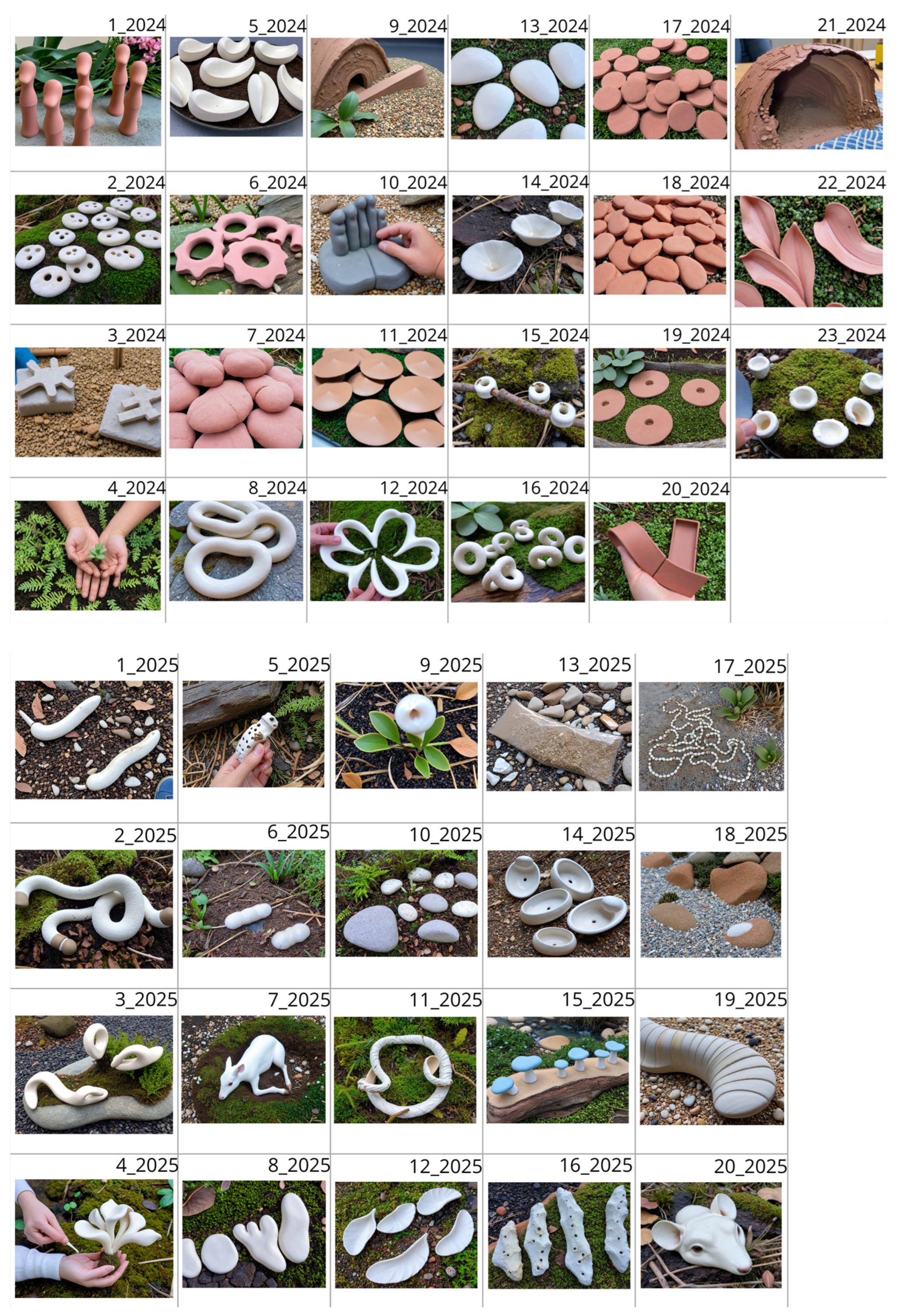
Appendix B
Table A1.
Standardised analytical templates and category structures applied across the 43 design cases. Table by the authors.
Table A2.
Detailed category structures used in ChatGPT-assisted qualitative interpretation of the design cases. Table by the authors.
References
- Kagan, S. Aesthetics of sustainability: A transdisciplinary sensibility for transformative practices. Transdiscipl. J. Eng. Sci. 2011, 2, 70–79. [Google Scholar] [CrossRef] [Scilit] [PubMed]
- Ji, S.; Lin, P.S. Aesthetics of sustainability: Research on the design strategies for emotionally durable visual communication design. Sustainability 2022, 14, 4649. [Google Scholar] [CrossRef] [Scilit]
- Torreggiani, D.; Dall’Ara, E.; Tassinari, P. The urban nature of agriculture: Bidirectional trends between city and countryside. Cities 2012, 29, 412–416. [Google Scholar] [CrossRef] [Scilit]
- Hou, J. Hybrid Landscapes: Toward an Inclusive Ecological Urbanism on Seattle’s Central Waterfront. In Proceedings of the ACSA 94th Annual Conference Getting Real: Design Ethos Now, Salt Lake City, UT, USA, 30 March–3 April 2006; pp. 245–250. [Google Scholar]
- Polanyi, M. The Tacit Dimension; Routledge & Kegan Paul Ltd.: London, UK, 1967. [Google Scholar]
- Jasimuddin, S.M.; Klein, J.H.; Connell, C. The paradox of using tacit and explicit knowledge: Strategies to face dilemmas. Manag. Decis. 2005, 43, 102–112. [Google Scholar] [CrossRef] [Scilit]
- Wong, W.L.P.; Radcliffe, D.F. The tacit nature of design knowledge. Technol. Anal. Strateg. Manag. 2000, 12, 493–512. [Google Scholar] [CrossRef] [Scilit]
- Anantrasirichai, N.; Zhang, F.; Bull, D. Advances in artificial intelligence: A review for the creative industries. Artif. Intell. Rev. 2026, 59, 89. [Google Scholar] [CrossRef] [Scilit] [PubMed]
- Eisenack, K.; Villamayor-Tomas, S.; Epstein, G.; Kimmich, C.; Magliocca, N.; Manuel-Navarrete, D.; Oberlack, C.; Roggero, M.; Sietz, D. Design and quality criteria for archetype analysis. Ecol. Soc. 2019, 24, 6. [Google Scholar] [CrossRef] [Scilit]
- Oberlack, C.; Sietz, D.; Bonanomi, E.B.; De Bremond, A.; Dell’Angelo, J.; Eisenack, K.; Ellis, E.C.; Epstein, G.; Giger, M.; Heinimann, A.; et al. Archetype analysis in sustainability research: Meanings, motivations, and evidence-based policy making. Ecol. Soc. 2019, 24, 26. [Google Scholar] [CrossRef] [Scilit]
- Sietz, D.; Frey, U.; Roggero, M.; Gong, Y.; Magliocca, N.; Tan, R.; Janssen, P.; Václavík, T. Archetype analysis in sustainability research: Methodological portfolio and analytical frontiers. Ecol. Soc. 2019, 24, 34. [Google Scholar] [CrossRef] [Scilit]
- Wachinger, J.; Bärnighausen, K.; Schäfer, L.N.; Scott, K.; McMahon, S.A. Prompts, pearls, imperfections: Comparing ChatGPT and a human researcher in qualitative data analysis. Qual. Health Res. 2025, 35, 951–966. [Google Scholar] [CrossRef] [Scilit] [PubMed]
- Raudonikyte, I.; Grazuleviciute-Vileniske, I. Sustainability aesthetics of hybrid environments: Creation and perception by the emerging generation of designers. Archit. Urban Plan. 2025, 21, 70–84. [Google Scholar] [CrossRef] [Scilit]
- Davis, J.K. Image, symbol, and archetype: Definitions and uses. Interpretations 1985, 16, 26–30. [Google Scholar]
- Collins Dictionary. 2026. Available online: https://api.collinsdictionary.com/dictionary/english-learner/archetype (accessed on 7 March 2026).
- Trathen, S.; Varadarajan, S. Archetypes of Design Practice. Australian Council of University Art & Design. 2013. Available online: https://acuads.com.au/conference/article/archetypes-of-design-practice/ (accessed on 7 March 2026).
- Lee, J. Using Archetypes in the Design Process. 2012. Available online: https://www.diva-portal.org/smash/get/diva2:922006/FULLTEXT01.pdf (accessed on 7 March 2026).
- Karana, E.; Pedgley, O.; Rognoli, V. On materials experience. Des. Issues 2015, 31, 16–27. [Google Scholar] [CrossRef] [Scilit]
- Nassauer, J.I. The aesthetics of horticulture: Neatness as a form of care. HortScience 1988, 23, 973–977. [Google Scholar] [CrossRef] [Scilit]
- Hristova-Dimitrova, K. Affordability and sustainability through modular design in residential buildings. Facta Univ. Ser. Archit. Civ. Eng. 2026, 1, 27–40. [Google Scholar] [CrossRef] [Scilit]
- Ulrich, R.S. Aesthetic and affective response to natural environment. In Behavior and the Natural Environment; Altman, I., Wohlwill, J.F., Eds.; Springer: Boston, MA, USA, 1983; pp. 85–125. [Google Scholar] [CrossRef] [Scilit]
- Kaplan, R.; Kaplan, S.; Brown, T. Environmental preference: A comparison of four domains of predictors. Environ. Behav. 1989, 21, 509–530. [Google Scholar] [CrossRef] [Scilit]
- Braun, V.; Clarke, V. One size fits all? What counts as quality practice in (reflexive) thematic analysis? Qual. Res. Psychol. 2021, 18, 328–352. [Google Scholar] [CrossRef] [Scilit]
- Tracy, S.J. Qualitative quality: Eight “big-tent” criteria for excellent qualitative research. Qual. Inq. 2010, 16, 837–851. [Google Scholar] [CrossRef] [Scilit]
- Deep Dream Generator. 2026. Available online: https://deepdreamgenerator.com/ (accessed on 2 April 2026).
- Canva Pro. 2026. Available online: https://www.canva.com/ (accessed on 2 May 2026).
- OpenAI. ChatGPT. Available online: https://chatgpt.com (accessed on 2 September 2026).
- Gražulevičiūtė-Vileniškė, I.; Zaleckis, K.; Viliūnas, G. Urban biomimicry typologies: Ways of learning from nature and locality. Archit. Urban Plan. 2026, 22, 51–69. [Google Scholar] [CrossRef] [Scilit]
- Luccioni, S.; Akiki, C.; Mitchell, M.; Jernite, Y. Stable bias: Evaluating societal representations in diffusion models. Adv. Neural Inf. Process. Syst. 2023, 36, 56338–56351. [Google Scholar] [CrossRef] [Scilit]
- Jang, S.; Roh, H.; Lee, G. Generative AI in architectural design: Application, data, and evaluation methods. Autom. Constr. 2025, 174, 106174. [Google Scholar] [CrossRef] [Scilit]
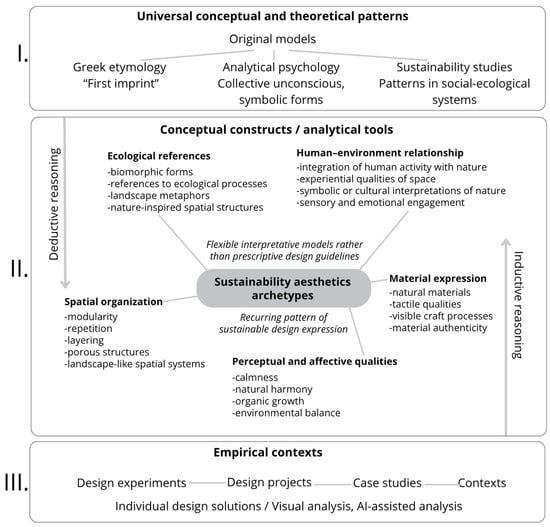
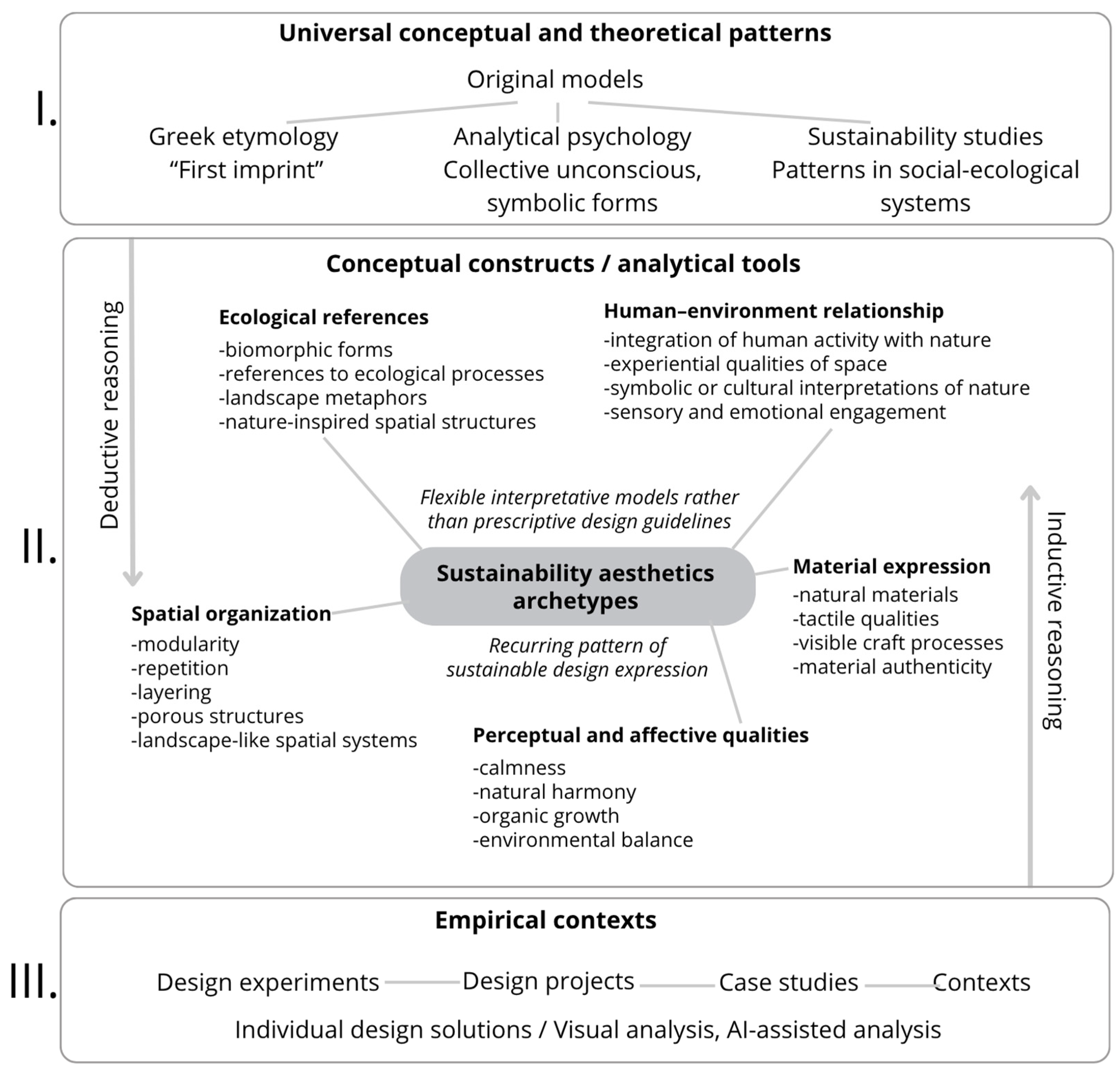
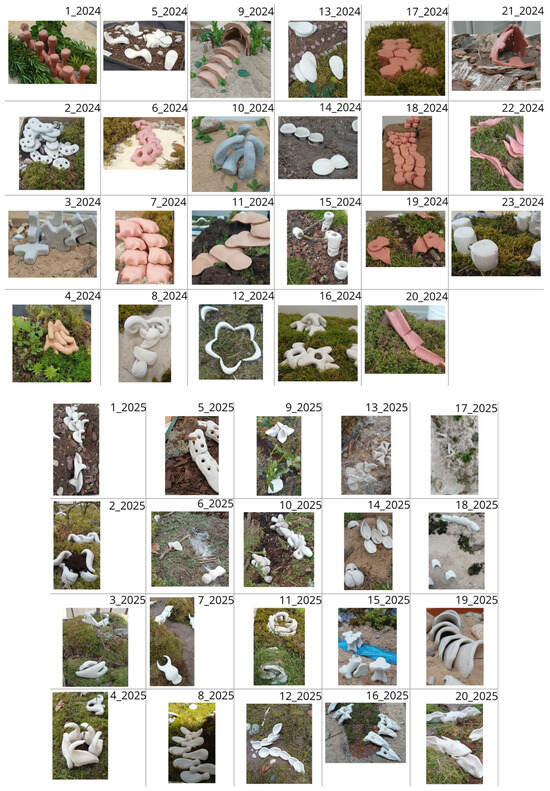
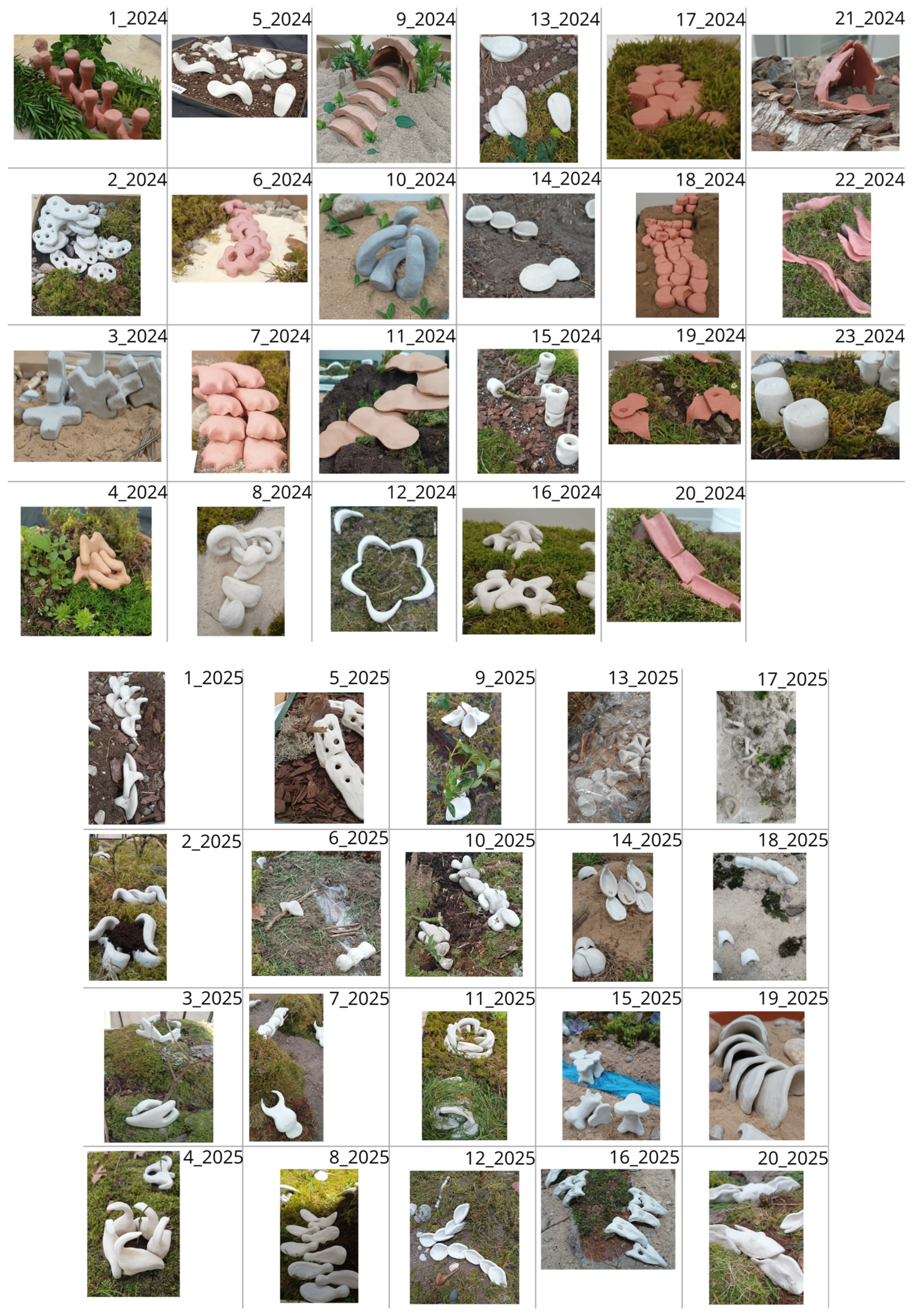
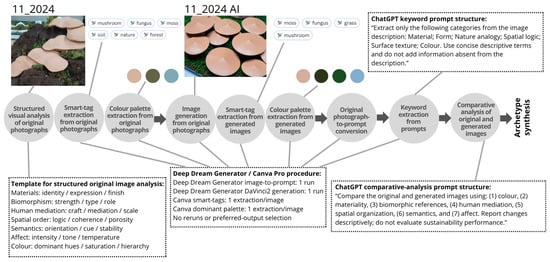
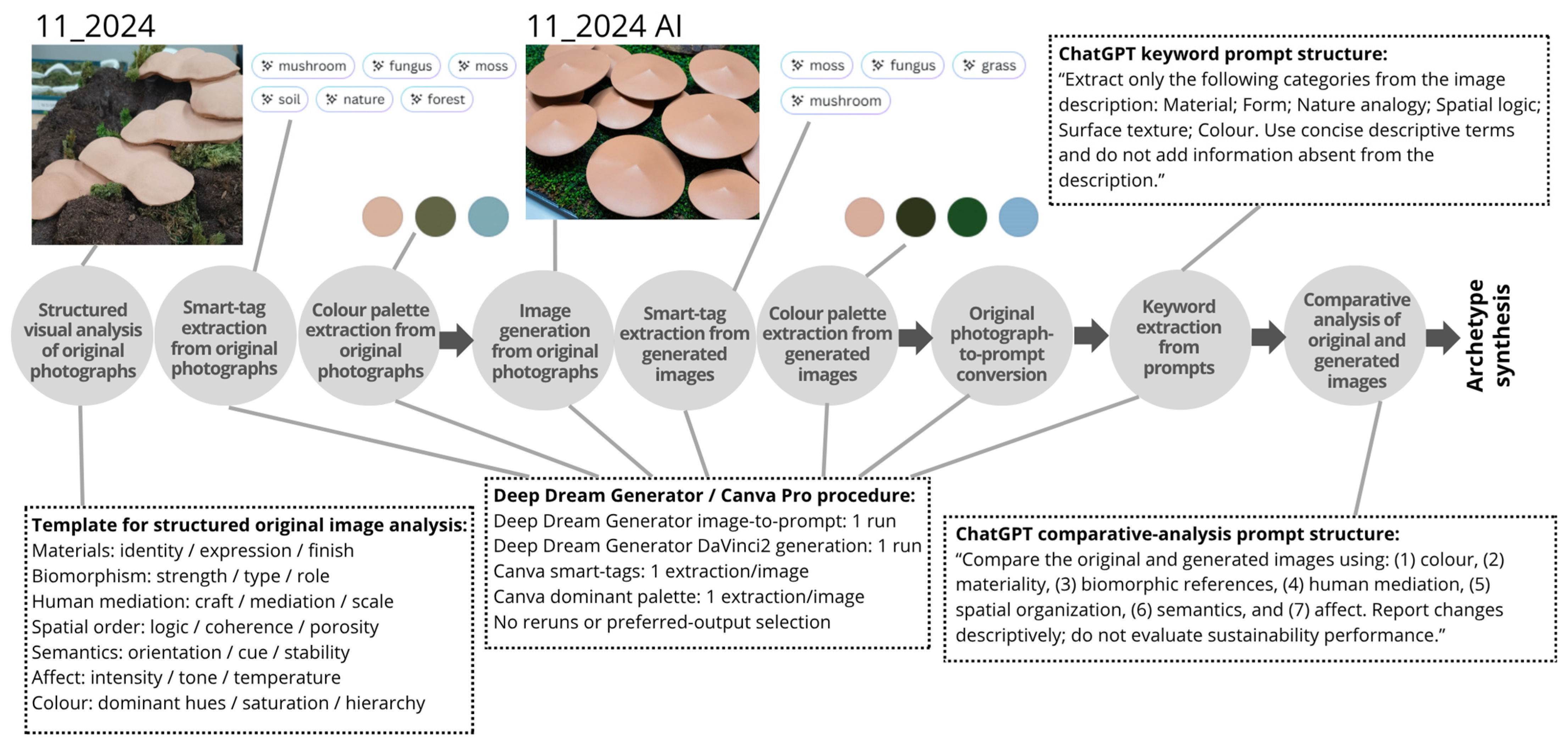
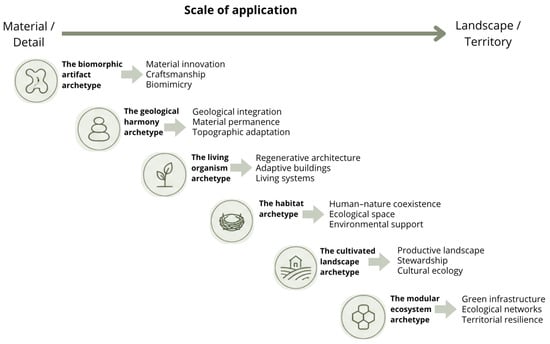
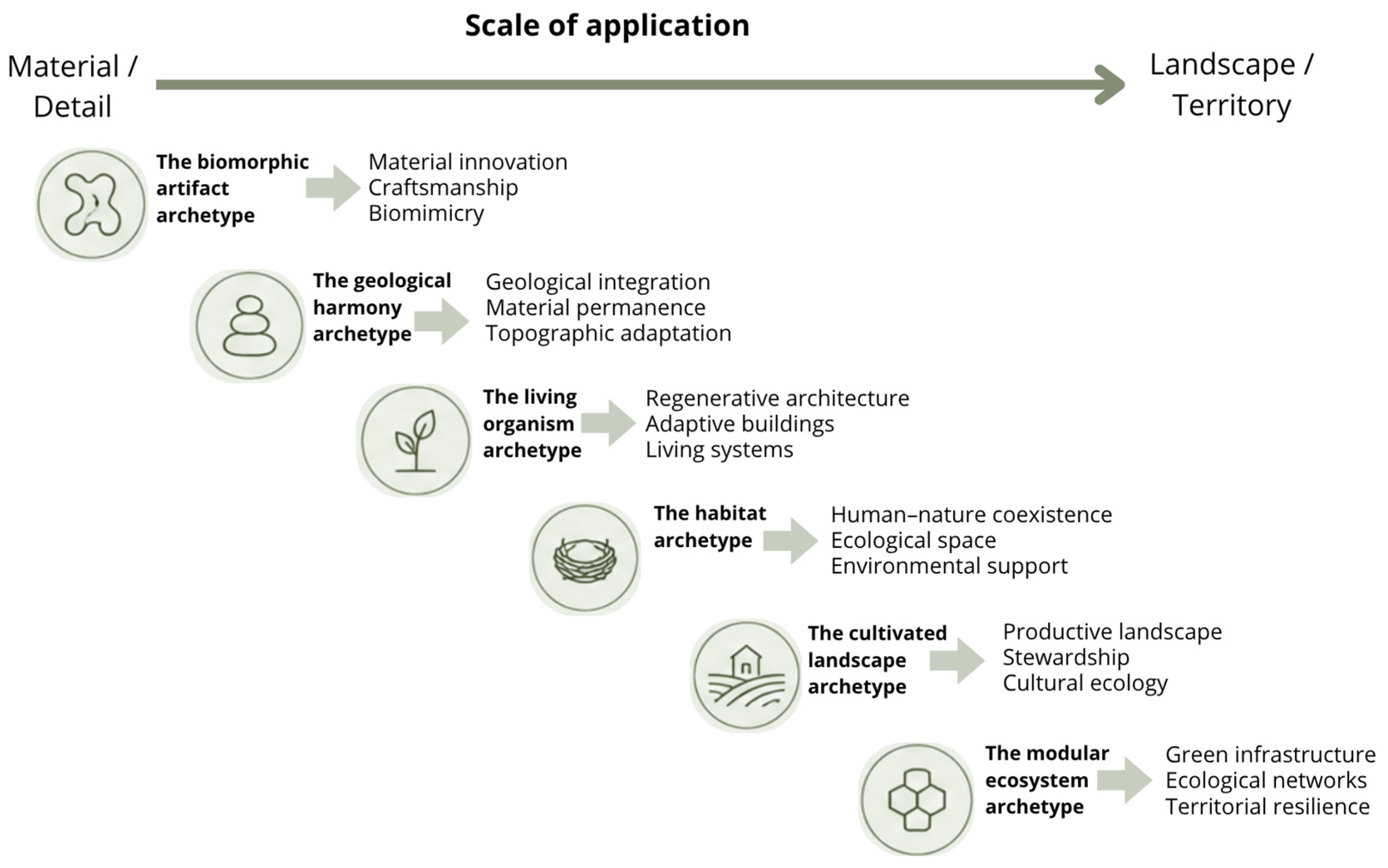



Disclaimer/Publisher’s Note: The statements, opinions and data contained in all publications are solely those of the individual author(s) and contributor(s) and not of MDPI and/or the editor(s). MDPI and/or the editor(s) disclaim responsibility for any injury to people or property resulting from any ideas, methods, instructions or products referred to in the content. |
© 2026 by the authors. Licensee MDPI, Basel, Switzerland. This article is an open access article distributed under the terms and conditions of the Creative Commons Attribution (CC BY) license.