


Abstract
Generative AI has reached the early, ideational phase of architectural design, the stage most tightly bound to conceptual creativity, yet its effect on student creativity remains unevenly investigated. This study examines the transfer of creativity from handmade concept to AI refinement. In a first-year studio, 45 students developed a bus-stop design and then reworked it using AI visualisation tools. Pre-AI and post-AI designs were rated by experts using the same nine-dimensional Consensual Assessment Technique (CAT) rubric; the prompt log was text-mined; and the two streams were linked for each student and analysed. Results suggest a modest rise in total creativity (3.38 to 3.71; Wilcoxon p = 0.022, dz = 0.38), yet concentrated in appropriateness; functional adequacy (+0.80), structural feasibility (+0.78), and environmental response (+0.56) increased significantly, while novelty dimensions remained unaltered. The cohort suggested a reordering: weaker starters gained most and several strong starters declined. Although baseline input creativity dominated the prediction of output quality and prompt behaviour added no significant variance once it was controlled, gains were largest when students let AI transform their original concepts. Results indicate that in the context of this study, generative AI acts as a leveller and redirector of creativity, strengthening the buildability of weaker designs without raising originality, with direct implications for how studios deploy and teach the tool. As results are based on a single first-year cohort, institution, design brief, and an observational within-student design, the findings are limited to exploratory evidence of conditional creativity transfer rather than causal evidence.
1. Introduction
Architectural representation has steadily migrated into software, and the nature of that migration has changed. Where digital tools once handled representation, and later workflow, they now reach into ideation: contemporary systems generate compelling imagery and formal suggestions from a few words of text, and they do so from the earliest, most exploratory phase of design, a phase closely bound up with conceptual creativity. Carpo describes this as a “second digital turn”, in which software ceases to be a making tool and becomes a thinking tool that competes with established design routines [1]. Tools in architecture have never merely assisted design; they reshape how designers think, and different ways of drawing entail different ways of thinking [2]. Therefore, generative AI does not only help students produce nicer images; it may reorder the sequence in which ideas are generated, developed, and selected. Unlike conventional digital design tools, such as CAD, parametric modelling, and digital fabrication, which primarily support designer-directed modelling processes, generative AI produces design alternatives [3] through learned statistical relationships that are largely opaque to the user. This “black-box” characteristic represents a fundamental shift in architectural design practice. It raises important pedagogical questions, particularly for first-year architecture students who are simultaneously developing spatial reasoning and design thinking.
Recent research has shifted from evaluating the technical capabilities of generative AI to examining its pedagogical role in architectural education [4,5]. The UNESCO Beijing Consensus on Artificial Intelligence and Education emphasises that AI should support, rather than replace, human creativity and critical thinking [6]. Similarly, recent studies from various research communities [7,8] together with experimental studies [9] highlight both the opportunities and challenges of integrating generative AI into architectural design education, particularly for developing design thinking and creativity in novice students.
This consideration is significant in early-stage pedagogy, where representation serves at once as a mode of thinking, a medium of communication, and a basis for assessment. For a studio to ignore an ideational tool already in students’ hands is not a neutral stance but a risky one [10,11]. The discipline has long defined its purpose as cultivating designers who produce responses that are at once original and appropriate [12,13], and design is understood not as a single flash of insight but as an iterative cycle of generating, evaluating, and reframing [14,15]. Any tool that alters how ideas are generated and judged therefore warrants examination for its effect on creativity itself, not only on the polish of the final image.
Empirical accounts of students and generative AI are accumulating, but they cluster at the level of perception and attitude. Students report strong interest in image generators during early design while hesitating to submit AI outputs as finished work [16]. The studio question is increasingly framed not as whether generative AI will appear but as how teaching can preserve rigour, critical evaluation, and process-based assessment around it [17], and related literature treats “prompt literacy”, the capacity to specify constraints and communicate intent in language, as a new and learnable creative skill [18,19]. At the same time, observers warn that AI can yield superficial, ungrounded solutions and blur the line between a student’s own thinking and the tool’s output [20].
Direct measurement of the aspect the discipline significantly values remains underdeveloped: the transformation of creativity itself as a student’s concept passes through AI. Many studies assess perceptions [16,17,20], evaluate AI-supported output/divergent-thinking assessment [21], or examine practitioners rather than beginners [22]; few rate a student’s pre-AI design and its post-AI refinement on a single creativity instrument while also observing the full prompting corpus that connects those. A consistent finding from adjacent work is that generative tools tend to improve the appropriateness of a design more than its originality, and may even narrow divergent thinking [21], a pattern recently reported among senior architects [22] that has not been observed in education: in novices, on their own work, with the process made visible. Recent reviews of AI use among youth similarly suggest that AI and generative AI can support learning efficiency and creativity, but may also encourage cognitive offloading, dependency, and reduced critical engagement when not pedagogically structured [23]. This study addresses that gap by engaging 45 students who developed a design by hand and refined it through AI visualisation in a first-year studio. The pre-AI and post-AI designs were rated on the same nine-dimension CAT rubric and text-mined the prompt log. The input, process, and output were examined with reference to three central questions: (i) How does creativity change, and along which dimensions, when a student’s concept passes through AI? (ii) What role does the degree of conceptual transformation play in that change? (iii) How do first-year students actually prompt a generative system, and does prompting behaviour explain output quality once baseline ability is taken into account?
2. Theoretical Background
2.1. Creativity and Its Assessment in Architectural Education
Creativity sits at the centre of architectural education [5,14,15,24,25], yet its assessment is conceptually unsettled [24,25]. In studio practice, it is rarely articulated through explicit criteria; more often it is folded implicitly into an overall judgement of a project [24], an approach that may sit uneasily with growing expectations of transparency and reproducibility [26]. The pedagogical literature is clear that creativity cannot be reduced to aesthetic originality [14,15]. It is a multifaceted construct spanning both process and product, idea generation and conceptual evolution on one side, internal coherence and developmental depth [24,25]. Originality, fluency, and flexibility are consistently named as core dimensions, joined by coherence and elaboration as a concept matures; staged accounts such as the “From Idea to Architecture” model suggest that fluency and originality dominate early phases while coherence and elaboration come to the fore later [25]. For evaluation, CAT remains the most credible domain-specific method, resting on the calibrated judgement of experts to separate genuinely creative work from the merely competent [12]. The present study adapts a CAT-based rubric whose nine dimensions span the novelty, appropriateness, and resolution of a design, so that creativity can be read not as a single score but as a profile.
Two foundational theories frame how that profile is expected to behave under AI mediation. Amabile’s componential theory holds that creative performance rests on three ingredients—domain-relevant knowledge and skill, creative-thinking processes, and task motivation—of which the first sets the ceiling on what any external support could add [27]. If generative AI functions as support rather than a substitute, the componential view predicts that a student’s initial domain capability should remain the strongest determinant of the final result, a prediction this study is positioned to investigate. Guilford’s distinction between divergent and convergent thinking adds a second expectation [13]: divergent thinking generates alternatives and underwrites originality, whereas convergent thinking selects and refines toward a workable solution and underwrites appropriateness. To the extent that a text-to-image system supplies plausible resolution more readily than genuine departure, it could aid convergent refinement more than divergent ideation, sharpening a concept’s feasibility while leaving its originality largely to the designer.
2.2. Human–AI and Co-Creativity
The framing of generative AI as a passive instrument has shifted toward its treatment as a collaborator in the design process, a shift with a theoretical lineage. Boden’s analysis of machine creativity distinguishes among combinatorial, exploratory, and transformational forms and argues that computational systems can participate in each, while leaving open whether the value of a machine-made design is ultimately recognised by people rather than by the machine [28]. The literature on co-creativity pushes further, locating creativity not in either partner but in the exchange between them: in Davis et al.’s [29] account of participatory sense-making, a creative outcome emerges as human and computational agents continuously interpret and respond to one another’s moves, so that authorship is distributed across the interaction and exclusive control by one side is avoided. Drawing on Rhodes’s fourfold scheme, such collaboration redistributes the process between person and machine, while the studio frames what counts as a creative result [30]. Accordingly, an AI-assisted design is neither the student’s work merely polished by a tool nor the machine’s invention merely curated by a student, but the product of the dialogue. Prompting is where that dialogue is conducted, and it may be viewed as externalised design thinking. Writing a prompt forces a student to convert an intention that may be only partly formed into explicit language (naming materials, constraints, spatial relations, and atmosphere) and thus to commit to a reading of their own concept. The prompt could therefore reveal a trace of design reasoning made explicit, the linguistic counterpart of the sketch; a sequence of prompts records the reframing that reflective practice places at the centre of design. This reframes the prompt corpus from a set of commands to a log of how novices think aloud to a generative medium.
Underlying these accounts is a distinction between augmentation and automation. Automation substitutes machine output for human work; augmentation amplifies human judgement, keeping the person in the loop as the source of intention and the arbiter of value. The educational question considers which of the two generative AI delivers in practice. If the tool augments, it should extend what a student can already do by sharpening, resolving, and developing a concept the student supplies without manufacturing the conceptual move itself. If it automates, the output should detach from the student’s starting point, and quality should track the tool more than the designer. Recent work on human–AI collaboration in architectural education leans toward the augmentation reading, modelling generative AI as a co-creative partner within reflective and generative–exploratory cycles rather than as a replacement for design cognition [31]. The present study puts that reading to a quantitative test: by linking each student’s pre-AI concept to its post-AI output and to the prompts between, it asks whether the human–AI exchange augments creative capability, raising the appropriateness of a design while leaving its originality to the human, or overrides the student’s contribution altogether.
2.3. Generative AI as a Mediator of Creative Transformation
If representation has always mediated creative thought [2,14,15,32], generative AI mediates it in a new way, because the output is no longer a transcription of the student’s idea but the product of an exchange between that idea, the prompts that express it, and the system’s own variation [18,33]. Two features of that exchange are widely treated as consequential. The first is prompting: in text-to-image work, formulating a prompt is increasingly understood as a creative act in its own right and as a skill that must be acquired rather than assumed [18,19]. The second is iteration: the educational value of these tools is held to depend not on one-shot generation but on sustained cycles of generation, review, and selection in which the designer steers the result [33]. Yet the same affordances carry a risk as generative imagery can intensify design fixation and narrow divergent thinking even as it speeds production [21], and a study of senior architects using a purpose-built system found gains in execution and efficiency alongside doubt that the tool produced genuine invention [22]. Together, these strands point to a specific expectation for education, in that AI may make the appropriateness of a design more readily apparent than its originality. This is consistent with broader work on AI educational assistants, which shows that AI-supported learning often operates through explicit feedback and implicit learner adaptation rather than through direct replacement of the learner’s judgement [34]. This study explores whether that pattern holds for beginners working on their own concepts, and what, in the process, governs it.
3. Conceptual Framework
This study treats creativity as a property of a finished design that is transferred, and potentially transformed, as a concept moves from the student’s hand through AI mediation to a final output. The framework, shown in Figure 1, follows this movement across three stages and reads it through two complementary streams of evidence. The three stages are the pre-AI input (the handmade concept), the AI-mediated process (the student’s prompting), and the post-AI output (the final AI-assisted design). Loosely mapped onto Rhodes’s enduring fourfold view of creativity, the input corresponds to the person and early ideation, the prompt sequence to the process, and the final design to the product, with the studio supplying the context [24,30]. The mapping offers a base to organise the constructs, independent of a single causal model.
Figure 1.
Conceptual and methodological framework of AI-mediated creativity transfer (CT): A hand-made design (input) undergoes prompt-based interaction (AI-mediated stage) and emerges as a final design (output). Creativity was evaluated on a nine-dimensional CAT rubric, forming the product-evidence stream, while prompts were text-mined to yield process-evidence metrics. Both streams were linked per student (N = 45) and analysed to model CT.
Creativity is captured through two streams of evidence. The product stream is the analytical spine: experts rate the pre-AI and post-AI designs on the same nine-dimensional CAT rubric, so that the difference in CT, defined as the post-AI total minus the pre-AI total, can be examined per dimension as well as per global gain. The process stream provides complementary evidence on how novice designers interact with generative AI: the full prompt corpus is text-mined into measures of length, lexical diversity, and thematic emphasis that describe how beginners address the system. This stream is treated descriptively and characterises novice prompting and its correlates. Linking the two streams is concept continuity, a rating of how far a student’s original idea survives into the final output, from fully preserved to wholly transformed. Concept continuity records a decision taken during the AI exchange. It bears directly on how far the output departs from the input and therefore serves as the conceptual bridge between the input and output.
The analytical framework adopted here intentionally explores the constructs through paired comparisons and exploratory classification based on the observational character of the study and the sample size. Conceptually, the framework treats creativity as a staged transfer rather than a static output. Three shifts follow from this stance. First, assessment moves from the finished product to the dynamic progression of creativity across human–AI stages. Second, novice prompting is foregrounded as a process that can be described, while resisting its elevation to the status of a creativity engine. Third, continuity of concepts is positioned as the pivotal hinge on which the transfer turns. Taken together, these moves yield a structure that corresponds with the evidence available in this study and is adaptable to future inquiries into AI-assisted design pedagogy. Table 1 outlines the constructs and their analytical roles accordingly.
Table 1.
Conceptual model of AI-mediated creativity transfer showing constructs and analytical roles.
4. Materials and Methods
This section sets out the research design, participants, materials, and analytical procedures used to examine how generative AI conditioned creativity across the pre-AI and post-AI design stages. The overall methodological structure is summarised in Figure 1, which links the three study stages to the two streams of evidence used in the analysis: expert-rated product creativity and text-mined prompt process behaviour. Together, these stages yield the paired creativity scores from which CT is derived. Each component of this structure is described in detail in the subsections that follow.
4.1. Research Design
This study adopted a quantitative comparative design to examine the association between AI-assisted prompting behaviour and changes in architectural design creativity. The methodological logic was grounded in the assumption that creativity in architectural education cannot be fully understood through final products alone, but must be examined through the interaction between initial human ideation, AI-mediated process behaviour, and post-AI design outcomes. Creativity was treated as a multidimensional construct unfolding across design stages, consistent with recent work emphasising the importance of combining output evaluation with prompt and iteration analysis [18,33]. The design was structured around two evaluation points: a pre-AI design evaluation and a post-AI design evaluation. In parallel, the full chronological prompt sequence for each student was collected and subjected to text-mining analysis, enabling the study to examine not only whether creativity changed after AI use, but also how different prompting behaviours were associated with different forms and magnitudes of change in creativity score.
4.2. Study Context and Participants
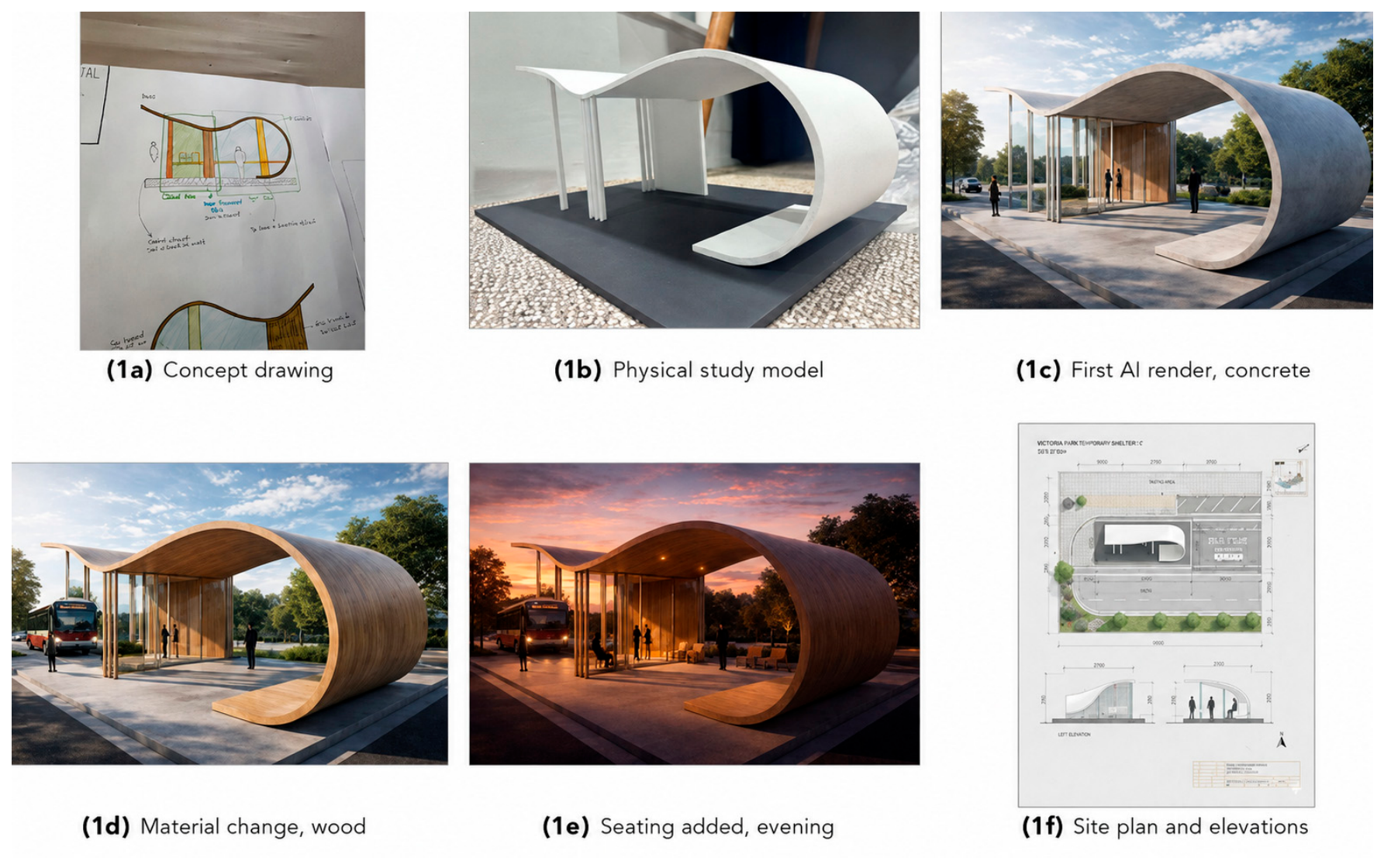
The study was conducted during a first-year undergraduate architectural design studio at Salahaddin University-Erbil. The studio brief required students to conceptualise and develop a bus-stop shelter, a task selected for its combination of spatial, structural, environmental, and user-experience demands. Students were in a studio environment in which conceptual sketching, spatial ideation, and design communication formed the core pedagogical activities; this phase ensured the representational affordances of new tools did not influence students. The final cohort consisted of 45 students who completed all stages of the exercise and had full prompt data and creativity evaluations available. First-year architecture students were intentionally selected because they represented the cohort taught directly by the research team throughout their foundational design education. Before undertaking the bus-stop design exercise, the students had completed more than one year of studio instruction and two previous architectural design projects, providing them with fundamental competencies in spatial organisation, composition, and conceptual design while remaining at an early stage of domain-specific expertise. This cohort therefore offered an appropriate context for examining how generative AI influences creativity during the development of architectural design knowledge rather than after design practices have become more established. This rationale is consistent with Amabile’s componential theory, which identifies domain-relevant skills as a fundamental component of creative performance [27]. Participation was voluntary; all data were anonymised during analysis; and students provided informed consent before the exercise. Figure 2 shows representative examples of the student models used for pre-AI processing.
Figure 2.
Representative examples of pre-AI physical conceptual models by students before AI interaction. These outputs constituted the baseline corpus for creativity evaluation (N = 45).
4.3. Design Task and Experimental Procedure
- The experimental procedure was based on a single shared architectural design brief. All students designed a bus stop responding to site, user needs, environmental conditions, material considerations, and spatial requirements. The procedure unfolded in three stages: Stage 1 (Pre-AI Design): Students produced an initial bus-stop design concept without AI assistance. These hand-generated physical models served as the baseline condition and were evaluated for creativity using the nine-dimensional rubric described below. Figure 2 shows representative examples of these models. These hand-made physical models served as the baseline condition and were evaluated for creativity using the nine-dimensional rubric described in Table 2.
- Stage 2 (AI-mediated process): Students used AI visualisation to develop design alternatives through an iterative prompting process. Students used a multimodal prompting approach by uploading photographs of their physical design models together with text prompts describing their design intentions and the specific aspects they wished to refine or develop. Multiple prompt iterations were then used to progressively refine the generated design proposals. All prompts written during this stage were collected, coded in sequence, and linked to each student using a common identifier, thereby capturing how students directed, refined, and selected AI outputs.
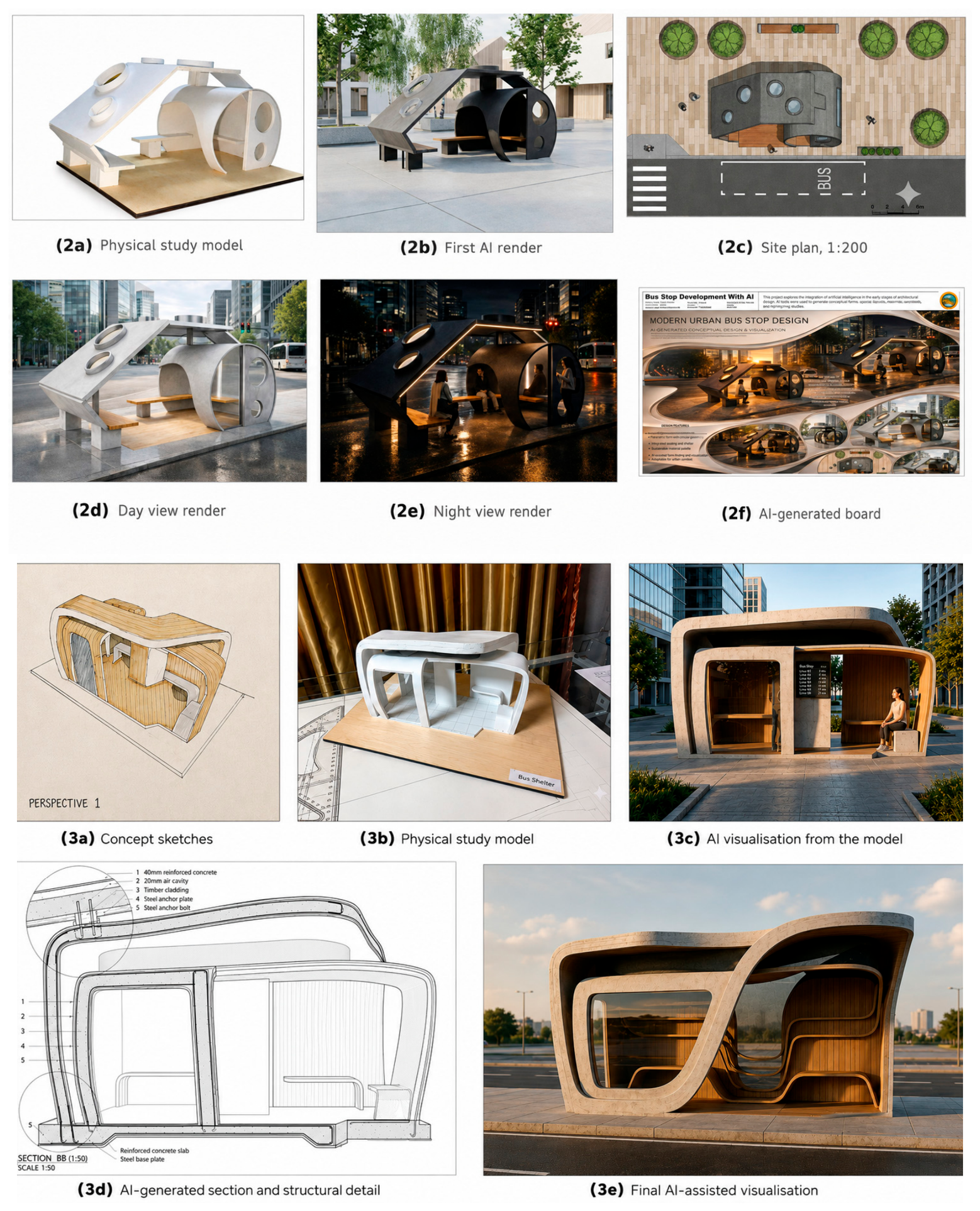
- Stage 3 (Post-AI Output): The finalised AI-assisted designs constituted the post-AI condition. They were evaluated using the same nine-dimension rubric applied in Stage 1, enabling a direct before–after comparison of creativity for each student; see Figure 3 and more examples in Appendix A.
Table 2.
Creativity evaluation framework applied to pre-AI and post-AI design outputs (scale 1–6).
Figure 3.
Representative examples of final AI-assisted design outputs (Stage 3) generated through AI medium following the students’ iterative prompting process. These outputs constituted the post-AI creativity evaluation corpus.
4.4. Data Structure
The final dataset was organised into a single Excel workbook containing two sheets. The first sheet, Student Prompts, contained student code, prompt code, and prompt command. The prompt codes preserved the chronological sequence of each student’s interaction with the AI. The second sheet, Creativity Evaluation, contained the input and output creativity evaluations for all 45 students. Creativity was assessed using nine dimensions organised into three sub-constructs: Originality and Novelty (conceptual uniqueness, formal innovation, construction innovation), Resolution and Appropriateness (functional adequacy, structural feasibility, environmental response), and Elaboration and Synthesis (formal composition, detail depth, spatial coherence). Each dimension was scored on a six-point scale from 1 to 6. Total creativity scores were calculated as the mean of the nine respective dimension scores. A concept-continuity score (1–6) was also recorded, indicating the extent to which the original design concept was maintained in the AI-assisted output.
4.5. Creativity Evaluation Framework
Creativity was assessed using a structured expert-rating rubric informed by the CAT and the Creative Product Semantic Scale (CPSS). CAT is widely recognised for enabling domain experts to assess creativity within disciplinary standards rather than relying on generic psychometric criteria [12,27]. CPSS operationalises product creativity through novelty, resolution, elaboration and synthesis [35,36], which map directly onto architectural evaluation practice. Each student’s pre-AI and post-AI outputs were assessed independently by five architectural experts experienced in design-studio teaching, using the same rubric to ensure direct comparability, and final dimension scores were calculated as the mean across raters. Although CAT relies on expert judgement rather than prescribing specific creativity dimensions, the present evaluation framework was informed by the CPSS, which conceptualises creativity through the complementary facets of Novelty, Resolution, and Elaboration–Synthesis [35,36]. Accordingly, the dimensions Formal Composition, Detail Depth, and Spatial Coherence were used to represent the Elaboration–Synthesis facet by assessing how effectively an original concept was developed into a coherent and integrated architectural design. These dimensions assess the creative development and integration of ideas rather than technical drafting quality or construction performance (see Table 2). Inter-rater agreement was examined using reliability statistics and the intraclass correlation coefficient; the use of trained domain evaluators and a standardised rubric supported domain validity and internal consistency.
4.6. Creativity Change Calculation
For each student, total creativity gain was calculated as (Total creativity gain = Total output creativity score − Total input creativity score). Students were classified into three outcome groups: Improved (gain > 0), Declined (gain < 0), or Unchanged (gain = 0). Dimension-level gains were calculated using the same formula for each of the nine dimensions, allowing identification of which specific forms of creativity changed after AI-assisted development.
4.7. Prompt Pre-Processing
Prompt texts were analysed using Python. Each prompt was converted to lowercase, punctuation was removed, and the text was tokenised using regular expressions. A conservative stop word list removed common function words while retaining design-relevant terms such as “design”, “form”, “space”, and “structure”. For each prompt, word count, unique word count, and lexical diversity were calculated: (Lexical diversity (%) = Unique words/Total words × 100). Prompt-level results were then aggregated to the student level.
4.8. Prompt-Process Coding Framework
A dictionary-based text-mining procedure classified prompt content into six process dimensions (see Table 3), developed to reflect architectural design cognition along with the preceding general text frequency. Single-word terms and multi-word phrases were counted (e.g., “bus stop”, “do not change”, “structural detail”). Category percentages were calculated as (Category percentage = Category term count/Total cleaned prompt words × 100).
Table 3.
Six prompt-process coding categories used for the prompt analysis.
4.9. Prompt Strategy Index
A composite Prompt Strategy Index (PSI) summarised the overall design richness of each student’s prompting process. It combined architectural, developmental, technical, and user-experience language while penalising constraint and presentation orientation:
PSI = (Arch% × 0.25) + (Dev% × 0.25) + (Tech% × 0.20) + (Exp% × 0.15) + (LexDiv% × 0.10) + (ExplBal% × 0.10) − (Constraint% × 0.15) − (Pres% × 0.05)
The raw PSI was rescaled to a 0–100 range across the sample (minimum = 0, maximum = 100), making it a relative indicator of prompt-strategy richness. An additional Exploration Balance variable was calculated:
Exploration Balance (%) = Development Count/(Development Count + Constraint Count) × 100
A value approaching 100 indicates a more exploratory and less restrictive prompt process. The prompt metrics reported in this study were used to characterise students’ prompting behaviour where prompt effectiveness was inferred through the relationship between prompt characteristics and subsequent design outcomes. Concept continuity was used as an outcome-based indicator of whether students’ design intentions were preserved in the AI-generated designs, rather than as a measure of prompt clarity or instruction quality.
4.10. Prompt Archetypes and Sequence Analysis
Each prompt was assigned a dominant type based on its highest-percentage category. At the student level, a dominant prompting archetype was identified: Architectural Thinker, Design Developer, Render-Focused User, Constraint-Corrector, Technical Detailer, Experience-Oriented, or General/Weakly Specified. The chronological prompt sequence was retained for each student to examine whether first prompt type, last prompt type, and variety of prompt types differed across the improved, declined, and unchanged groups.
4.11. Statistical and Text Analyses
The analysis was conducted in Python 3.14.5, using pandas 3.0.3, NumPy 2.4.6, SciPy 1.17.1, scikit-learn 1.9.0, and matplotlib 3.10.9. Six analytical steps were followed:
- Descriptive statistics for total creativity change and each of the nine dimensions. The number of students who improved, declined, or remained unchanged was tabulated.
- Paired-samples tests (paired t-test and Wilcoxon signed-rank) for total creativity and each dimension. Wilcoxon was prioritised given the modest sample and ordinal-bounded scale. Cohen’s dz was calculated as an effect-size estimate.
- Pearson and Spearman correlations between prompt-process variables and total creativity gain. Spearman’s correlations were emphasised given the sample size and the ordinal nature of the scores.
- Dimension-level Spearman correlation matrices between prompt-process variables and the nine dimension gain scores, testing whether specific prompting behaviours were associated with specific forms of creativity change.
- Group comparisons between improved, declined, and unchanged students. Kruskal–Wallis tests examined whether prompt-process variables differed across the three outcome groups.
- Exploratory binary logistic regression distinguishing students who improved from those who did not. Dependent variable: 1 = improved, 0 = unchanged, or −1 = unchanged. All predictors standardised. Model treated as exploratory given N = 45. Additional analyses included k-means clustering and TF-IDF vocabulary analysis by outcome group.
4.12. Analytical Limitations
The prompt-process analysis used dictionary-based text mining. This approach provides transparent and reproducible coding but cannot fully capture semantic nuance, irony, or the visual quality of AI outputs. The Prompt Strategy Index is a constructed composite indicator and should be interpreted as exploratory and is not a validated psychometric scale. With N = 45, the regression and clustering results were treated with caution, while the study identifies associations between prompting behaviour and changes in creativity, not causal effects. Because a single design task and a single AI platform were used, the findings should be tested across other studio briefs and generative systems before making broad generalisations.
5. Results
The analysis covered all 45 first-year students and the 965 prompts they wrote during the AI-mediated stage. We worked from two types of evidence and read them against each other. The first was expert-rated product creativity, scored before and after AI use on the nine-dimension rubric. The second was the prompt behaviour itself, mined from each student’s chronological prompt log. The findings are reported in the order of the research questions, opening with whether total creativity changed and closing with the role of concept continuity. Because the scores are ordinal and capped at 6, and the sample is not large, the analyses relied on nonparametric tests (Wilcoxon, Mann–Whitney, Kruskal–Wallis, Spearman) and presented parametric results and effect sizes alongside them. Relationships are described as associations throughout; the design does not licence causal claims.
5.1. Change in Total Creativity After AI-Assisted Development
Total creativity rose after the AI-assisted stage. The mean score moved from 3.38 on the input designs to 3.71 on the output designs, a gain of 0.34 on the six-point scale. Both tests agreed regarding this increase: the paired t-test returned t(44) = 2.53, p = 0.015, and the Wilcoxon signed-rank test returned W = 268.00, p = 0.022. The effect was small to moderate, with Cohen’s dz = 0.38. However, this average hides a within-sample divergence, as twenty-seven students (60.0%) improved, fifteen (33.3%) declined, and three (6.7%) stayed where they were (see Figure 4). The results suggest that AI use lifted creativity on average while pushing a third of the cohort in the opposite direction. Therefore, the evidence does not support a blanket claim that AI makes students’ projects more creative. What they could support is narrower: the AI stage went with an average gain, but how any individual student fared varied widely. The rest of this section asks what separated the two groups. Table 1 shows the paired comparison for the total score and for the nine dimensions taken up next.
Figure 4.
Distribution of total creativity outcomes after AI-assisted design (improved, declined, unchanged; N = 45).
Two features of this change are significant: First, the cohort-level gain was modest, but the individual trajectories were not, as Figure 5 shows: many lines rise or fall steeply, and many cross. Second, AI-assisted development substantially reordered the cohort. Pre-AI and post-AI scores correlated only moderately (r = 0.48), so where a student stood before AI explained less than a quarter of where they stood after it. The change was also tied to the starting point. Input creativity and gain were negatively correlated (r = −0.43, p = 0.004): split into thirds, the weakest starters (mean input 2.45) gained +0.62 on average. In contrast, the strongest (mean input 4.21) lost −0.11, and 7 of those 15 strong starters declined (Figure 6 and Table 4).
Figure 5.
Individual student creativity trajectories from pre-AI to post-AI. Green lines rose, and red lines fell; the bold line is the cohort mean. The frequent crossing of lines reflects the substantial reordering of the cohort.
Figure 6.
Relationship between pre-AI creativity and subsequent gain. Lower starting scores were associated with larger gains (r = −0.43; green = gain, red = decline).
Table 4.
Pre-AI (input) and post-AI (output) means, mean gain, Wilcoxon significance, and paired effect size for total creativity and the nine creativity dimensions (N = 45).
These results suggest AI did not lift everyone; it raised many weaker designs toward competence and pulled several already strong ones down. This indicates a reordering rather than a narrowing: the overall spread of scores did not shrink (input SD 0.82, output SD 0.92), so AI concentrated gains among weaker starters without making the cohort more uniform. Part of the negative input-gain correlation is the familiar regression-to-the-mean effect, so we read it as a tendency rather than as proof that AI equalises ability.
5.2. Dimension-Level Creativity Change
Breaking the total apart shows that a few dimensions accounted for most of the change in score outputs (Figure 7 and Figure 8). Functional adequacy gained the most, at 0.80 (Wilcoxon p < 0.001, dz = 0.71), with structural feasibility close behind at 0.78 (p < 0.001, dz = 0.76) and environmental response some way back but still clearly significant at 0.56 (p = 0.005, dz = 0.47). No other dimension reached significance.
Figure 7.
Pre-AI to post-AI change for each creativity dimension, ordered by mean gain. Asterisks denote Wilcoxon p < 0.01.
Figure 8.
Mean gain (post-AI minus pre-AI) for each of the nine creativity dimensions.
The dimensions tied to originality barely moved. Conceptual uniqueness and construction innovation each rose by 0.29, and formal innovation by 0.22, yet none of the three were significant. Detail depth and spatial coherence sat flat at 0.16, and formal composition actually slipped by 0.22, though not significantly. The counts in Table 5 point to the same story: only four students lost ground in functional adequacy or structural feasibility, whereas the novelty dimensions and formal composition were close to a coin toss.
Table 5.
Direction of change across the nine creativity dimensions (students improved, declined, unchanged) with mean gain.
The results indicate that AI did not make the designs more original; it made them more buildable, more functional, and better matched to their setting. Thus, the AI stage improved the practical adequacy of student work without improving its inventiveness. This frames the subsequent prompting analyses: whatever room students had to improve lay mostly on the appropriateness side of the rubric, not the novelty side.
Grouped by what they capture, the nine dimensions fall into three tiers, and the gains track those tiers almost exactly. The appropriateness dimensions (functional adequacy, structural feasibility, environmental response) increased the most, by an average of +0.71. The novelty dimensions (conceptual uniqueness, formal innovation, construction innovation) rose only +0.27 on average and never significantly. The composition-and-resolution dimensions (formal composition, detail depth, spatial coherence) barely moved, at +0.03 on average. Almost the entire post-AI gain was therefore a gain in appropriateness.
5.3. Prompting Behaviour and Creativity Outcomes
We approached the prompting question from four angles: how the outcome groups prompted, whether those differences held up under a clean two-group test, how the prompt variables correlated with total gain, and whether prompting explained anything once we accounted for where students started.
5.3.1. Prompt-Process Profiles of Improved and Declined Students
Results indicate that improvers and decliners had different prompting behaviours (Table 6 and Figure 9). Improvers wrote more prompts (23.56 against 19.27), more words (257.19 against 176.80), and slightly longer prompts (15.26 against 13.47 words). Their prompts carried more architectural content (27.94% vs. 24.79%), more talk of user experience (1.86% vs. 1.05%), broader exploration (66.00% vs. 58.79%), and a higher Prompt Strategy Index (57.58 vs. 50.70). Decliners leaned the other way, with more presentation language (11.06% vs. 9.44%), more constraint language (1.24% vs. 0.68%), and slightly higher concept continuity (5.00 vs. 4.78). The three unchanged students appear in Figure 6 for completeness, but at n = 3 they reveal little.
Table 6.
Descriptive prompt-process characteristics by creativity outcome group (group means).
Figure 9.
Prompt-process characteristics of improved versus declined students across the main metrics.
A Mann–Whitney test tested those gaps by directly comparing improvers (n = 27) and decliners (n = 15), setting the unchanged group aside. Only one variable survived: total words (median 262 vs. 146, U = 283.0, p = 0.036). Architectural content, presentation language, exploration balance, and the strategy index all looked different in the means but did not hold up. The reading of Figure 6, then, could be that most of those contrasts are tendencies rather than differences, and the one thing we can say with confidence is that students who improved gave the AI more to work with.
The prompt corpus further suggests that improvers more often pressed the system to resolve the design, as when one student asked for a “floor plan of this bus stop (with dimensions and seating)” and then for furniture detailing. Decliners more often steered toward packaging the result, as in one request for “a full architectural presentation package … night view render, site location proposal, interior view, furniture visuals.” The first prompt works on the building; the second works on its presentation.
5.3.2. Prompting Behaviuor
Correlating the prompt variables with total gain gives a faint but readable signal (Figure 10 and Table 7). On the Pearson side, constraint language had the strongest negative link to gain (r = −0.337, p = 0.024), and concept continuity was not far behind (r = −0.305, p = 0.042). Both shrank and lost significance under Spearman (rho = −0.138 and −0.145), which gives them a suggestive role. The clearest positive pulls were total words and unique words (Spearman rho = 0.290 and 0.282), both just short of significance, while the raw number of prompts told us nothing at all (r = −0.062). Across the two methods, the pattern points the same way: volume by itself does not buy improvement. Fuller written engagement tended to go with gains, but what students wrote about mattered more than how much, and the more restrictive registers, constraint and presentation tracked with smaller gains.
Figure 10.
Spearman correlations between prompt-process variables and total creativity gain.
Table 7.
Selected associations between prompt-process variables and total creativity gain (N = 45).
5.3.3. Associations Between Prompting and Total Creativity Gain
There is a critical point about the results: students who started low had more room to improve, so the link between prompting and gain might only reflect their starting position. This was tested with a hierarchical regression predicting output creativity, entering input creativity first (Figure 11). Input creativity on its own accounted for 22.6% of the variance in output creativity (β = 0.57, p < 0.001). Concept continuity added almost nothing (ΔR2 = 0.035, not significant), and the three prompt variables (the architectural, presentation, and constraint percentages) added only 4.4% more, none of them significant (the largest, constraint, reached β = −0.20, p = 0.18).
Figure 11.
Hierarchical regression of output creativity: variance explained by input creativity, then by concept continuity, then by prompt-process variables.
This sets another boundary to claims; once we control for where a student began, prompt behaviour no longer predicts how creative the output is. The dimension-level gains in Section 5.2 are unaffected by this, since they are within-student, before-and-after changes; the regression limits only the prompting story. Prompting is fairly described as associated with the direction and the description of change. On this evidence, it is suggested that what determines how creative a finished design turns out is not in the model once baseline ability is in it.
5.3.4. Exploratory Classification of Improvers
For a compact summary of which behaviours showed improvement, an exploratory logistic regression model was applied to distinguish improvers (coded 1) from everyone else (coded 0) using the standardised prompt variables (Table 8). At this sample size, it is a screening tool and cannot be viewed as a predictive model, and it classified students correctly 64.4% of the time. Architectural content carried the largest positive weight (B = 0.354), followed by experience language (0.270) and prompt length (0.231). Presentation content carried the largest negative weight (B = −0.312), followed by constraint and development content (both B = −0.134), the strategy index (B = −0.117), and concept continuity (B = −0.109). These results support the findings of Section 5.3.1, with architectural and user-focused prompting on the improvement side and presentation-focused prompting on the decline side. As with the regression, they are best read as pointers rather than estimates.
Table 8.
Standardised coefficients from the exploratory logistic regression distinguishing improved (1) from non-improved (0) students (accuracy = 64.4%).
5.4. Prompt-Process Variables and Specific Creativity Dimensions
Moving from the total to the individual dimensions suggests that prompting did not relate to creativity in one uniform way (Figure 12). The associations were specific to particular dimensions, and the same behaviour could pull one dimension up while pulling another down. Table 9 lists those that reached statistical significance.
Figure 12.
Heatmap of Spearman correlations between prompt-process variables (rows) and dimension-level creativity gains (columns).
Table 9.
Statistically significant Spearman associations (p < 0.05) between prompt-process variables and dimension-level creativity gains (N = 45).
Two restrictive styles went with weaker gains. Constraint language was negatively associated with environmental-response gain (rho = −0.366, p = 0.013) and showed the same pattern for functional adequacy and formal composition. Presentation language was negatively associated with detail-depth gain (rho = −0.324, p = 0.030), with similar findings for formal composition and spatial coherence. Pulling the other way, experience language (rho = 0.328, p = 0.028) and the strategy index (rho = 0.298, p = 0.046) both went with stronger formal-composition gains. Wider exploration and technical prompting showed steady positive leanings toward the appropriateness dimensions, mostly short of significance, which again echoes Section 5.2.
5.5. Concept Continuity, Prompting, and Creativity Change
Concept continuity measures how much of a student’s original idea survived into the AI output, on the same one-to-six scale. Wherever it turned up, more continuity went with less gain. At the whole-design level, it correlated negatively with total gain (Pearson r = −0.305, p = 0.042; Spearman rho = −0.145, not significant), and the group means lined up neatly: 4.78 for improvers, 5.00 for decliners, 5.33 for the unchanged. The logistic model also placed it on the negative side (B = −0.109). When split directly, the 9 students who most transformed their concept (continuity ≤ 3) gained an average of +0.95, compared with just +0.18 for the 33 who largely preserved it (continuity ≥ 5).
The dimension which suggested this most was structural feasibility, where concept continuity was the strongest single correlate among the prompt variables (rho = −0.381, p = 0.010). Students who clung to their first idea improved their structural feasibility the least. That fits the picture from Section 5.2. The dimensions that gained under AI were the practical ones, and gaining on feasibility seems to have meant letting the AI rebuild the concept rather than guard it. Read this way, concept continuity is less a sign of design discipline than a ceiling on how far the AI stage could move a project, especially toward sounder structure and better environmental fit.
This logic surfaces in the prompts themselves. One declining student repeatedly instructed the system to “maintain the exact structure and benches of the building,” asking the AI to preserve the original rather than rework it, the very prompting behaviour the continuity score is meant to capture.
5.6. Supplementary Exploratory Analyses
We conducted three additional analyses to describe the prompting in greater detail. They sit here as supplementary because none of them separated creativity outcomes, and none bears directly on the five questions. The first was a k-means clustering of the prompt metrics, which sorted students into three styles (Figure 13): long prompts with little exploration (Cluster 0, with 30.4 words, exploration 18.8, PSI 22.8), short prompts with heavy exploration (Cluster 1, with 9.2 words, exploration 94.1, PSI 76.9), and a middle group (Cluster 2, with 12.8 words, exploration 46.4, PSI 42.4). The telling part is that creativity gain was practically identical across all three (0.38, 0.33, 0.32), and the spread of improved, declined, and unchanged students barely shifted between them (Table 10). Different prompting styles did not yield different creative results.
Figure 13.
Prompt-process profiles of the three k-means clusters across the main prompt-process metrics.
Table 10.
Distribution of creativity outcomes across the three prompt-process clusters.
The second analysis tracked prompt sequences. Students passed through about three distinct prompt types on average (3.04); most opened with an architectural prompt (37 of 45), and improvers were slightly more likely than decliners to finish on an architectural or development prompt rather than a presentation prompt. However, the cells are too thin to test. The third was a TF-IDF reading of the vocabulary, which mostly showed how much the groups had in common: the brief’s own words (“bus stop,” “architectural,” “design”) dominated everyone. The faint difference was tonal. The improvers’ distinctive terms tilted toward making and place (“create,” “urban”), while the decliners’ tilted toward depiction (“realistic,” “plan”), which matches the presentation pattern seen elsewhere.
Furthermore, the prompt corpus reveals several consistent characteristics of how the architecture students interacted with generative AI during conceptual design. They rarely treated AI as a single-step image generator, as prompting evolved into an iterative architectural workflow in which the AI was repeatedly asked to refine, document, visualise, and reinterpret the design proposal. One of the clearest qualitative patterns is the predominance of architectural language. Students frequently specified architectural elements such as floor plans, elevations, sections, structural systems, material specifications, circulation, seating arrangements, environmental context, and user experience instead of relying exclusively on stylistic descriptors. The prompts therefore functioned as external representations of architectural reasoning. This observation supports the interpretation that prompting became part of the design process itself, requiring students to translate spatial intentions into explicit verbal instructions.
The prompts also demonstrate that students progressively expanded the level of architectural detail throughout the workflow. Early prompts commonly focused on overall form, concept, or visualisation, whereas later prompts increasingly requested technical documentation, including plans, structural details, furniture layouts, material palettes, presentation boards, and contextual adaptations. Examples include requests for dimensioned floor plans, structural joints, mood boards, multiple site contexts, and interior perspectives illustrating user experience. The corpus further suggests that students employed AI for multiple architectural tasks extending well beyond visualisation. Prompts requested conceptual development, architectural analysis, precedent interpretation, technical documentation, environmental simulation, presentation design, and user-experience evaluation. In this respect, AI functioned as a multifunctional design assistant supporting several stages of the architectural workflow instead of serving solely as an image-rendering tool.
5.7. Summary of Findings
The five analyses point to a single claim: the AI stage raised total creativity by a significant but uneven margin, and the lift came from the practical dimensions, functional adequacy, structural feasibility, and environmental response, rather than from originality. How a student fared aligned with how they were prompted: broad, architecturally specific, user-minded prompting among the improvers, and tighter, presentation- and constraint-heavy prompting among the decliners. Yet once we held starting creativity constant, prompting no longer explained the output. The links that did exist were specific to particular dimensions rather than general, and how tightly a student held to their original concept set a limit on how much could change, most visibly in terms of structural feasibility. This implies that AI neither boosted nor blunted creativity. It redirected it, firming up the practical quality of the designs while leaving their originality much as it found it, in a way that prompting accompanied but did not, on its own, account for.
5.8. An Integrative Model of When AI Raised Creativity
Drawing the threads together suggests a simple two-factor account of which students gained (Figure 14). The size of a student’s gain depended on two things: how much room they had to improve, indexed by their baseline creativity, and how far they let the AI transform their original concept, the inverse of concept continuity. Students who started lower and transformed their concept gained the most (mean +0.92)—guided improvers who started lower but kept their concept still gained moderately (+0.47). Students who started high and preserved their concept showed no gain or a slight decline (−0.10). The remaining cell, high-baseline students who transformed their concept, held only two students and cannot be read with confidence. Crucially, the gains in the productive cells were the appropriateness-oriented gains identified in Section 5.2, so the model describes when AI strengthened the practical quality of a design rather than when it made a design more original. This is offered as an organising summary of the present sample rather than a validated framework, and would need testing on independent cohorts.
Figure 14.
An integrative two-factor model of AI-conditioned creativity gain, by baseline creativity and concept preservation. Cell values are mean total creativity gains; the high-baseline, low-preservation cell (n = 2) is not interpretable.
6. Discussion
This study examined whether AI enhances, transforms, or constrains creativity in early architectural education. The evidence points to transformation rather than uniform enhancement or constraint. After the AI-mediated stage, student designs became more functional, more structurally feasible, and better matched to their environment, while their originality remained close to its baseline level. The gain was therefore a gain in appropriateness rather than in novelty. The following subsections interpret this pattern in light of recent work on generative AI and creativity and draw out implications for design-studio teaching.
6.1. AI-Redirected Creativity Dimensions
The clearest finding rests on within-student paired changes rather than on any predictive model, making it the most robust result of the study. The three appropriateness dimensions rose significantly (functional adequacy +0.80, structural feasibility +0.78, environmental response +0.56), whereas the three novelty dimensions changed only slightly and never significantly. Aggregated by tier, the appropriateness dimensions gained +0.71 on average, against +0.27 for novelty and +0.03 for composition and resolution. AI did not make first-year designs more original; it made them more buildable.
This pattern is consistent with evidence that generative image tools can intensify design fixation and narrow divergent thinking even as they accelerate production [12]. The dimensions that improved are those a text-to-image model can readily supply from its training distribution, namely plausible structure, workable function, and environmental cues. In contrast, the dimensions that depend on a designer departing from the expected did not move. The same signature appears at the opposite end of the expertise spectrum. In a study of senior architects using a purpose-built generative system, practitioners credited the tool with gains in efficiency and execution while doubting that it produced genuine invention [13]. The fact that experts assessed subjectively and novices assessed through expert ratings converge on the same appropriateness-without-novelty profile suggests that the pattern reflects the technology’s current contribution to design rather than an artefact of either sample.
The result is not universal across design domains. In an engineering education experiment, AI-assisted teams exhibited premature convergence and produced solutions of lower functional quality than human-only teams [24], the reverse of the functional gains observed here. The divergence is plausibly attributable to differences in task structure, tool, and population, and it cautions against generalising the appropriateness gain beyond settings that resemble early architectural ideation. A caveat about measurement also applies, since appropriateness may be rated more reliably than originality; the convergence with an independent study by experts nonetheless makes a purely methodological explanation unlikely.
6.2. Concept Continuity and Creativity Transfer
If the dimensional shift describes what AI changed, concept continuity describes when it changed. Students who allowed the AI to substantially rework their original idea (continuity ≤ 3) gained an average of +0.95, whereas those who preserved it (continuity ≥ 5) gained only +0.18. The strongest single relationship in the prompt analysis was the negative association between continuity and structural-feasibility gain (rho = −0.381, p = 0.010). Improving the buildability of a scheme appears to have required a willingness to allow it to change.
This finding engages a long-standing idea in design theory. Darke’s notion of the “primary generator” describes how designers commit early to a core concept or constraint and use it to make an ill-defined problem tractable [37]; the primary generator is productive precisely because it is held firmly. The present data suggest that, in AI-mediated work, this firmness becomes a liability: students who treated their first concept as fixed gave the system little to resolve and gained the least. In contrast, those who treated it as provisional allowed the tool to carry the design toward feasibility. Schön’s account of design as a reflective conversation with the situation offers a complementary reading [32]. The conversation advances only when the designer is prepared to be answered back and to reframe; a student who instructs the system to “maintain the exact structure” of the original, as one declining participant repeatedly did, closes the conversation before it begins. Generative AI appears to reward the reflective stance, in which the concept is treated as a hypothesis, and to penalise the committed one. Concept continuity is therefore better understood not as a design virtue but as a constraint on how far the AI stage can move a design, and it locates the mechanism behind the headline finding: the appropriateness gains were available mainly to students prepared to transform their primary generator.
6.3. Changes in Creativity Dimensions Following AI Assistance
The third thread concerns the distribution of gains. The cohort mean rose modestly, but the average concealed a substantial rearrangement. Pre-AI and post-AI scores correlated only moderately (r = 0.48), and gain was negatively related to starting score (r = −0.43, p = 0.004): the weakest starters improved while several of the strongest declined. It is tempting to describe this as a levelling effect, yet the spread of scores did not narrow (input SD: 0.82; output SD: 0.92). The change was a reordering rather than a compression; AI raised many weaker designs to a level of competence without making the cohort more uniform, and, in doing so, reshuffled the ranking.
This dependence on the starting point echoes experimental evidence from creative writing. In this case, access to generative AI most strongly increased the assessed creativity of participants’ outputs among those initially less creative [38]. That study, however, also reported a reduction in the collective diversity of outputs, with AI-assisted stories more similar to one another than human-only stories [38]. The present results diverge on this second point, since the spread of architectural scores did not contract, a difference that may reflect the higher idiosyncrasy of spatial design or the fact that the gains here were in appropriateness rather than in shared content. Two qualifications keep the interpretation conservative. First, part of the negative input-to-gain relationship is the regression to the mean inherent in any pre-post comparison, so it is read as a tendency for gains to concentrate among weaker starters rather than as evidence that AI equalises ability. Second, and more consequentially, when output creativity is modelled with input creativity entered first, prompt behaviour adds no significant variance; baseline ability is by far the strongest predictor of the finished design. Whatever prompting is associated with, it does not explain the quality of the output once the starting point is known.
6.4. Interpretation and Limitations of the Prompt Analysis
The prompt-process stream is the methodological contribution of this work. Few studies in architectural education have text-mined a corpus of this size (965 prompts) to characterise how beginners address a generative system, and the analysis earns its place as description. Students who improved engaged the system with more architecturally specific, user-oriented, and exploratory language and pressed it to resolve the design, for example by requesting a floor plan with dimensions and seating. In contrast, students who declined leaned toward presentation and packaging and toward restrictive, preservation-minded instructions. This accords with the view that prompt engineering is a learnable creative skill that must be acquired rather than an intuitive ability [19], and with recent evidence that prompt-based activities can be structured to support creative design in first-year architecture courses [39]. Prompt usage patterns have likewise been linked to design outcomes and cognitive load in architectural conceptual design [40].
The analysis does not, however, support a causal or predictive reading. The group differences largely do not survive a clean two-group test; the correlations with gain are weak and method-dependent; and prompting does not predict output once baseline is controlled for. The prompt profiles are therefore presented as a portrait of novice behaviour and its descriptive correlates, not as a recipe whose ingredients produce creativity. The contribution is a map of how first-year students prompt, along with the observation that productive and unproductive styles align with the appropriateness-versus-presentation distinction observed throughout the product data.
6.5. Implications for Architectural Education
Several directions may follow, offered as reasoned implications rather than tested prescriptions. First, AI should be used for what it demonstrably does. Its strength is its resolution, turning a rough scheme into something more functional, feasible, and environmentally responsive, making it a useful scaffold for weaker students and the development phase of a project. On the present evidence, it is not a generator of originality, and studios that rely on it for ideation may find novelty stagnating. Second, divergent thinking should be protected and taught separately; because output quality tracked starting ability so strongly, the pre-AI work of sketching, framing, and idea generation that sets a student’s baseline remains the most reliable lever educators hold, and the same risk of premature convergence has been observed elsewhere when AI is introduced early [41]. Third, students should be encouraged to hold concepts loosely, since the instinct to defend a first idea worked against them; framing the tool as a reflective partner that tests and reworks the primary generator, rather than as a renderer that executes it, is likely to yield greater gains. Fourth, prompting should be taught as a mode of design inquiry rather than as a means of producing presentation assets, building on the treatment of prompt literacy as an acquirable skill [19,39], provided it is not oversold as a determinant of creative quality.
6.6. Limitations
Several limitations bound these claims. The study was conducted with first-year students at a single institution working on one design brief, so generalisation to other levels, schools, and tasks is untested. As creativity is influenced by domain-relevant knowledge and skills [27], students at more advanced stages of architectural education may interact with generative AI differently because of their greater design expertise. Future research should therefore examine whether these findings remain consistent across different academic levels. The creativity scores rest on expert rating in the CAT [3]; inter-rater reliability for the present panel is reported in the methodology, and the dimensional findings should be read with that figure in mind, particularly the possibility that appropriateness is rated more reliably than novelty. The design is observational and within-student, with no non-AI control condition, so the changes cannot be attributed to AI rather than to maturation or repeated engagement with the brief. The prompt analyses are associational, and given the sample size, the regression and clustering results are exploratory. Prompt effectiveness was inferred indirectly through design outcomes and concept continuity rather than measured using a direct prompt-to-output alignment metric. Future studies should incorporate objective measures of prompt-to-output alignment better to evaluate the preservation of students’ design intentions. Finally, the reordering effect carries a regression-to-the-mean component that the present design cannot fully separate. Studies incorporating control conditions, multiple cohorts, and a reliability-anchored rubric would test how far the appropriateness-without-novelty pattern, and its dependence on concept transformation, extends beyond this setting.
7. Conclusions
This study investigated what happens to a student’s creativity when their own concept passes through a generative system. Across 45 first-year students, the answer is consistent and somewhat at odds with the optimistic reading. AI raised total creativity by a real but modest margin, yet the gain was almost entirely a gain in appropriateness. Functional adequacy, structural feasibility, and environmental response accounted for the entire effect, while the three novelty dimensions did not suggest significant change. Thus, in the context of this study, the tool made first-year designs more buildable, not more original.
Pre- and post-AI scores correlated only moderately, gain ran opposite to starting score, and the spread of scores did not shrink. AI lifted weaker designs toward competence and pulled several strong ones down, reordering the cohort without making it more uniform. How far a student moved depended less on how they prompted than on two things: how much room they had to improve, and how willing they were to let the AI rework their first idea. Students who transformed their concept gained +0.95; those who guarded it gained +0.18, and the cost of concept continuity showed most sharply in structural feasibility. Once baseline ability was entered into the model, prompt behaviour did not account for any additional variance. This study outcome constrains prompt analysis to a descriptive role.
For early architectural education, the lesson can be narrow and usable. Generative AI can be utilised as a resolution tool, valuable for developing and firming up a scheme and a reasonable scaffold for weaker students; the findings of this study do not point to the tools as a source of originality, and early-year studios that lean on it for ideation could risk flat novelty and premature convergence. The durable creative work (sketching, framing, holding a concept loosely enough to be answered) still sits with the student before the prompt is written. More broadly, this research suggests that the educational impact of generative AI should not be evaluated solely by the quality of the images it produces, but by how effectively it supports students in developing, articulating, and refining architectural ideas throughout the design process. As AI becomes increasingly embedded within students’ lives and education, understanding how students externalise design thinking through prompts, iterative dialogue, and creative reflection may become as important as evaluating the generated designs themselves. Such a perspective positions prompting as an integral component of architectural learning rather than merely a technical interaction with an AI system.
These conclusions are bounded by one institution, one brief, one platform, and an observational design with no non-AI control. They invite testing across cohorts, tasks, and systems, with a control condition to separate AI’s contribution from maturation, a reliability-anchored rubric to check whether appropriateness is rated more consistently than novelty, and longitudinal follow-up to see whether students can be taught the concept-loosening stance the gains here seemed to reward. This aspect is particularly interesting to test with students in later stages of architectural education. Whether the appropriateness-without-novelty signature, pointed to in both novices and, in adjacent work, senior architects, is a certainty about today’s tools or about how we use them is the question worth carrying forward.
Supplementary Materials
The following supporting information can be downloaded at: https://www.mdpi.com/article/10.3390/architecture6030133/s1, Supplementary File S1: Student-level creativity change and prompt-process dataset; Supplementary File S2: Cluster and group comparison outputs; Supplementary File S3: Prompt language and sequence outputs. Supplementary File S4: Prompt Analyses Code.
Author Contributions
Conceptualization, H.H.J.S. and F.D.M.; methodology, H.H.J.S. and F.D.M.; software, H.H.J.S. and F.D.M.; validation, H.H.J.S., F.D.M. and H.K.A.; formal analysis, H.H.J.S., F.D.M. and A.B.S.; investigation, H.H.J.S. and F.D.M.; resources, formal analysis, H.H.J.S., F.D.M. and A.B.S.; data curation, H.H.J.S. and A.B.S.; writing—original draft preparation, H.H.J.S.; writing—review and editing, H.H.J.S. and F.D.M.; visualization, H.H.J.S. and F.D.M.; supervision, H.H.J.S.; project administration, H.H.J.S. and H.K.A.; funding acquisition, H.H.J.S., F.D.M., H.K.A. and A.B.S. All authors have read and agreed to the published version of the manuscript.
Funding
This research received no external funding.
Institutional Review Board Statement
Ethical review and approval were waived for this study due to the essence of minimal-risk educational research. The research was conducted within a regular architectural design studio course and involved only the analysis of anonymised student design work. No clinical procedures, medical interventions, interviews, questionnaires, or sensitive personal data were involved. Participation was voluntary, and no personally identifiable information was collected or reported. The study was conducted in accordance with accepted principles of ethical academic research, including informed consent, confidentiality, and anonymity. Written consent for the use of students’ design outputs for research and publication purposes was obtained from participating students prior to inclusion in the study.
Informed Consent Statement
Informed consent for participation was obtained from all subjects. The study did not involve the collection of personal information, and participation had no impact on the subjects.
Data Availability Statement
The Python scripts and outputs that support the reported results are provided in the Supplementary Materials. Further inquiries may be directed to the corresponding author.
Acknowledgments
During the preparation of this study, the authors used ChatGPT (GPT-5.5, accessed through ChatGPT Pro) to assist with wording standardisation, proofreading, and Python script preparation. The authors have reviewed and edited the output and take full responsibility for the content of this publication. The authors would like to thank the reviewers for their careful reading of the manuscript and for the constructive comments provided throughout the review process.
Conflicts of Interest
The authors declare no conflicts of interest.
Abbreviations
The following abbreviations are used in this manuscript:
| AI | Artificial Intelligence |
| CAT | Consensual Assessment Technique |
| CPSS | Creative Product Semantic Scale |
| CT | Creativity Transfer |
Appendix A
Figure A1.
Some selected bus stop design process examples produced by students. Student codes are anonymised, and the original presentation layouts are reproduced at reduced scale for reference.
References
- Carpo, M. The Second Digital Turn: Design Beyond Intelligence; The MIT Press: Cambridge, MA, USA, 2017. [Google Scholar]
- Perez-Gomez, A. Architecture as Drawing. J. Archit. Educ. 1982, 36, 2–7. [Google Scholar] [CrossRef] [Scilit]
- Sektani, H.H.J.; Miran, F.D.; Abdullah, H.K. AI-Assisted Visualisation of Heritage Conservation Interventions: An Exploratory Study of Community Preferences. Heritage 2026, 9, 226. [Google Scholar] [CrossRef] [Scilit]
- UNESCO. AI and Education: Guidance for Policy-Makers; Fengchun, M., Holmes, W., Huang, R., Zhang, H., Eds.; UNESCO: Paris, France, 2021. [Google Scholar]
- UNESCO; International Union of Architects. UNESCO–UIA Charter for Architectural Education: 2023 Revision of the 2021 Edition; UNESCO: Paris, France; UIA: Paris, France, 2023. [Google Scholar]
- UNESCO. Beijing Consensus on Artificial Intelligence and Education. In Proceedings of the International Conference on Artificial Intelligence and Education, Planning Education in the AI Era: Lead the Leap, Beijing, China, 16–18 May 2019. [Google Scholar]
- CAADRIA. Architectural Informatics. In Proceedings of the 30th International Conference on Computer-Aided Architectural Design Research in Asia, Tokyo, Japan, 22–29 March 2025; Reinhardt, D., Rogeau, N., Herr, C.M., Globa, A., Chen, J., Narahara, T., Eds.; CAADRIA: Hong Kong, China, 2025. [Google Scholar]
- eCAADe. Data-Driven Intelligence. In Proceedings of the 42nd Conference on Education and Research in Computer Aided Architectural Design in Europe, Nicosia, Cyprus, 9–13 September 2024; Kontovourkis, O., Phocas, M.C., Wurzer, G., Eds.; University of Cyprus: Nicosia, Cyprus, 2024. [Google Scholar]
- Chandrasekera, T.; Hosseini, Z.; Perera, U. Can Artificial Intelligence Support Creativity in Early Design Processes? Int. J. Archit. Comput. 2025, 23, 122–136. [Google Scholar] [CrossRef] [Scilit]
- Abdullah, H.K.; Hassanpour, B. Digital Design Implications: A Comparative Study of Architecture Education Curriculum and Practices in Leading Architecture Firms. Int. J. Technol. Des. Educ. 2021, 31, 401–420. [Google Scholar] [CrossRef] [Scilit]
- Ali, A.; Himdad, H. The Effect of Conventional and Digital Drawing Tools on Imagination in Architectural Design Education. Sulaimani J. Eng. Sci. 2015, 2, 27–45. [Google Scholar] [CrossRef] [Scilit]
- Amabile, T.M. Social Psychology of Creativity: A Consensual Assessment Technique. J. Pers. Soc. Psychol. 1982, 43, 997–1013. [Google Scholar] [CrossRef]
- Guilford, J.P. Creativity. Am. Psychol. 1950, 5, 444–454. [Google Scholar] [CrossRef] [Scilit] [PubMed]
- Cross, N. Design Thinking: Understanding How Designers Think and Work; Bloomsbury Publishing: Oxford, UK; New York, NY, USA, 2011. [Google Scholar]
- Lawson, B. How Designers Think: The Design Process Demystified; Architectural Press: Oxford, UK; Burlington, MA, USA, 2006. [Google Scholar]
- Huh, M.B.; Miri, M.; Tracy, T. Students’ Perceptions of Generative AI Image Tools in Design Education: Insights from Architectural Education. Educ. Sci. 2025, 15, 1160. [Google Scholar] [CrossRef] [Scilit]
- Fagan, D. Defining AI In The Education Of An Architect. In Proceedings of the AI and the Future of Architectural Education in the UK: A Report by the SCOSA AI Working Group; Fagan, D., Philips, K., Eds.; Newcastle University: Newcastle, UK, 2025. [Google Scholar]
- Medel-Vera, C.; Britton, S.; Gates, W.F. An Exploration of the Role of Generative AI in Fostering Creativity in Architectural Learning Environments. Comput. Educ. Artif. Intell. 2025, 9, 100501. [Google Scholar] [CrossRef] [Scilit]
- Oppenlaender, J.; Linder, R.; Silvennoinen, J. Prompting AI Art: An Investigation into the Creative Skill of Prompt Engineering. Int. J. Hum. Comput. Interact. 2025, 41, 10207–10229. [Google Scholar] [CrossRef] [Scilit]
- Alshahrani, A.; Mostafa, A.M. Enhancing the Use of Artificial Intelligence in Architectural Education—Case Study Saudi Arabia. Front. Built Environ. 2025, 11, 1610709. [Google Scholar] [CrossRef] [Scilit]
- Wadinambiarachchi, S.; Kelly, R.M.; Pareek, S.; Zhou, Q.; Velloso, E. The Effects of Generative AI on Design Fixation and Divergent Thinking. In Proceedings of the CHI Conference on Human Factors in Computing Systems; ACM: New York, NY, USA, 2024; pp. 1–18. [Google Scholar]
- Li, J.; Wang, X.; Liu, C.; Chen, Y.; Fang, L.; Xu, Y.; Zhang, L.; Lee, K.-P.; Wang, S.J. AI for Creativity: A GenAI-Based Approach for Early Concept Design and Its Impact on Senior Architects. In Proceedings of the 2026 CHI Conference on Human Factors in Computing Systems, Barcelona, Spain, 13–17 April 2026; ACM: New York, NY, USA, 2026; pp. 1–22. [Google Scholar]
- Giansanti, D.; Cosenza, C. Artificial Intelligence and Youth: Cognitive, Educational, and Behavioural Impacts. AI 2026, 7, 121. [Google Scholar] [CrossRef] [Scilit]
- Askland, H.H.; Ostwald, M.J.; Williams, A. Assessing Creativity: Proposition. In Proceedings of the International Conference on Engineering and Product Design Education; Kovacevic, A., Ion, W., McMahon, C., Buck, L., Hogarth, P., Eds.; City University: London, UK, 2011; pp. 275–280. [Google Scholar]
- Życzkowska, K.; Krawczyk-Bryłka, B. Levels of Creativity in Architectural Education. Glob. J. Eng. Educ. 2023, 25, 2. [Google Scholar]
- Barth, P.; Stadtmann, G. Creativity Assessment over Time: Examining the Reliability of CAT Ratings. J. Creat. Behav. 2021, 55, 396–409. [Google Scholar] [CrossRef] [Scilit]
- Amabile, T.M. Creativity in Context: Update to the Social Psychology of Creativity; Avalon Publishing: Boulder, CO, USA, 1996. [Google Scholar]
- Boden, M.A. Creativity and Artificial Intelligence. Artif. Intell. 1998, 103, 347–356. [Google Scholar] [CrossRef] [Scilit]
- Davis, N.; Hsiao, C.-P.; Yashraj Singh, K.; Li, L.; Magerko, B. Empirically Studying Participatory Sense-Making in Abstract Drawing with a Co-Creative Cognitive Agent. In Proceedings of the 21st International Conference on Intelligent User Interfaces, Sonoma, CA, USA, 7–10 March 2016; ACM: New York, NY, USA, 2016; pp. 196–207. [Google Scholar]
- Rhodes, M. An Analysis of Creativity. Phi Delta Kappan 1961, 42, 305–310. [Google Scholar]
- Hikmet, Ş.; Ozay, N. Human–AI Collaboration in Architectural Design Education: Towards a Conceptual Framework. Buildings 2026, 16, 1097. [Google Scholar] [CrossRef] [Scilit]
- Schon, D.A. The Reflective Practitioner: How Professionals Think in Action; Basic Books: New York, NY, USA, 1984. [Google Scholar]
- Uhrík, M.; Cervantes, J.C.L.; Morales, C.E.S.; Hajtmanek, R.; Demčák, J.; Kupko, A. Prompt Choreographies: Dialogues Between Humans and Generative AI in Architecture. Architecture 2026, 6, 46. [Google Scholar] [CrossRef] [Scilit]
- Alqarni, F.; Alhirabi, N.; Rana, O.; Perera, C. Explicit and Implicit Learning Mechanisms in AI Educational Assistants: A Systematic Review. AI 2026, 7, 160. [Google Scholar] [CrossRef] [Scilit]
- Besemer, S.; O’Quin, K. Analysing Creative Products: Refinement and Test of a Judging Instrument. J. Creat. Behav. 1986, 20, 115–126. [Google Scholar] [CrossRef] [Scilit]
- O’Quin, K.; Besemer, S.P. The Development, Reliability, and Validity of the Revised Creative Product Semantic Scale. Creat. Res. J. 1989, 2, 267–278. [Google Scholar] [CrossRef] [Scilit]
- Darke, J. The Primary Generator and the Design Process. Des. Stud. 1979, 1, 36–44. [Google Scholar] [CrossRef] [Scilit]
- Doshi, A.R.; Hauser, O.P. Generative AI Enhances Individual Creativity but Reduces the Collective Diversity of Novel Content. Sci. Adv. 2024, 10, eadn5290. [Google Scholar] [CrossRef] [Scilit] [PubMed]
- Lee, S.; Kang, S. The Influence of Generative AI with Prompt Engineering on Creative Design in Architectural Education. J. Asian Archit. Build. Eng. 2025, 1–16. [Google Scholar] [CrossRef] [Scilit]
- Jiang, H.; Xiao, Y.; Hurley, R.; Liu, S. The Impact of Generative AI on Architectural Conceptual Design: Performance, Creative Self-Efficacy and Cognitive Load. arXiv 2026, arXiv:2601.10696. [Google Scholar]
- Tsakalerou, M.; Akhmadi, S.; Balgynbayeva, A.; Kumisbek, Y. AI-Assisted Design Synthesis and Human Creativity in Engineering Education. Front. Artif. Intell. 2026, 9, 1714523. [Google Scholar] [CrossRef] [Scilit] [PubMed]
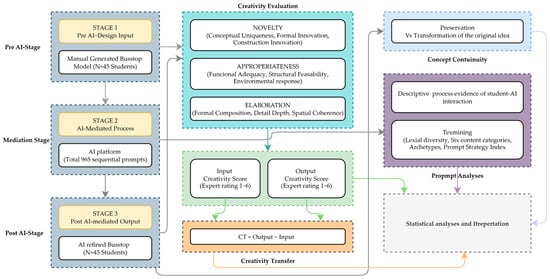
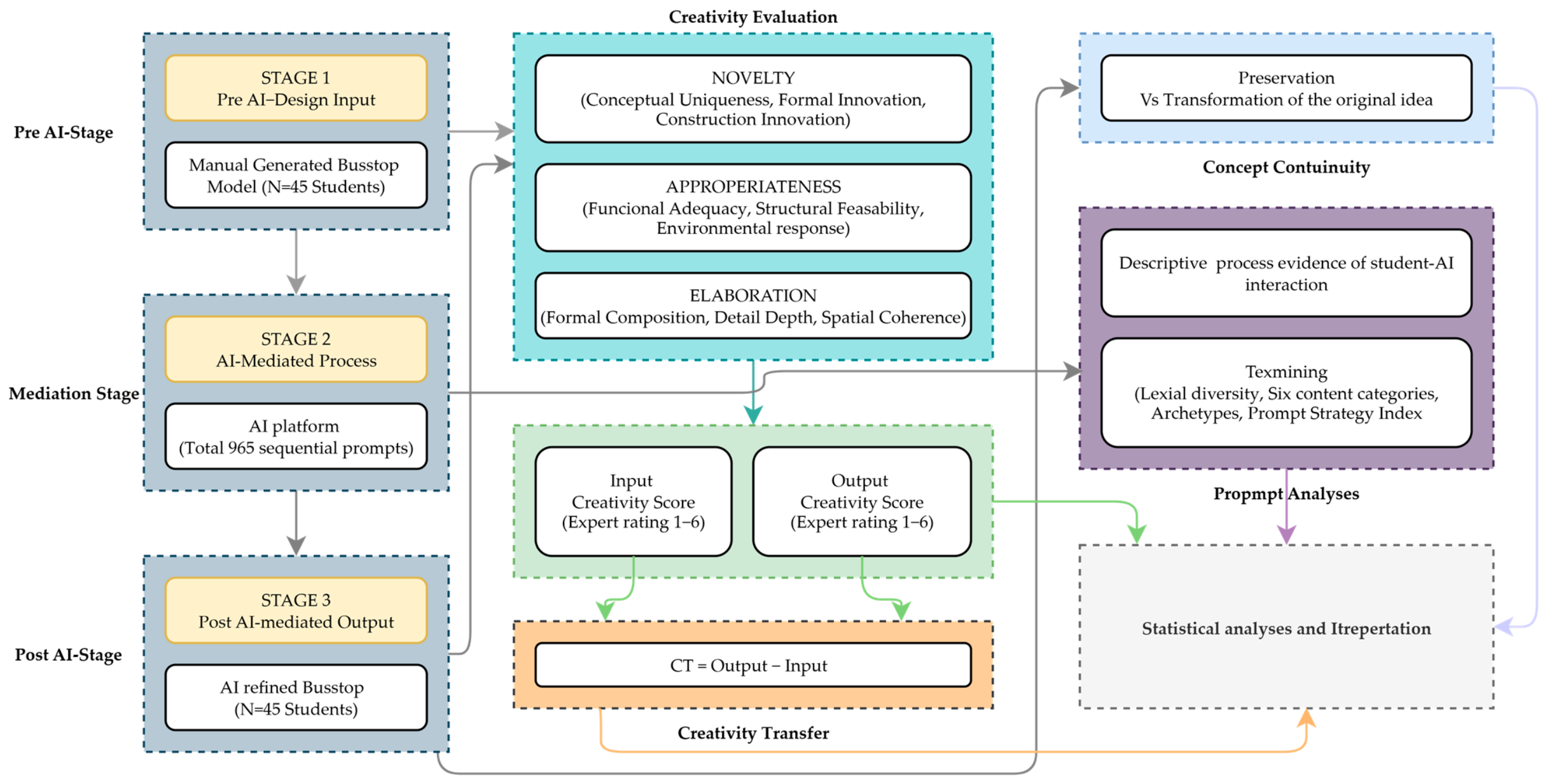
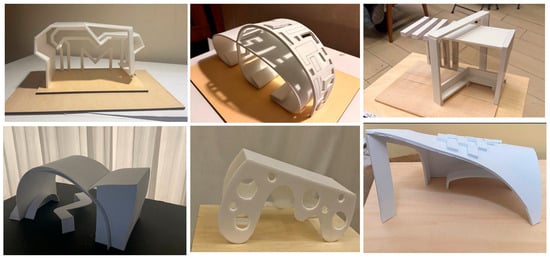
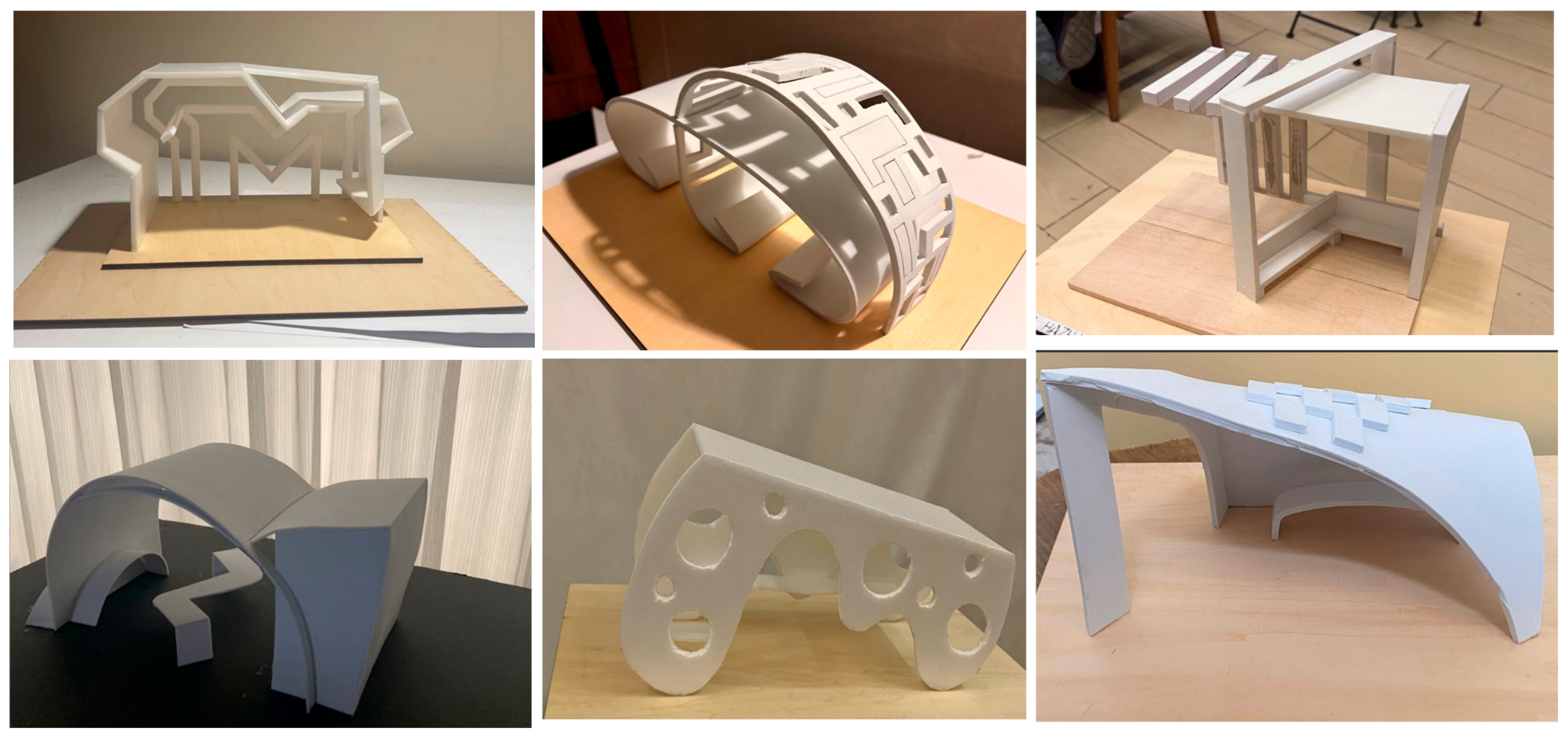


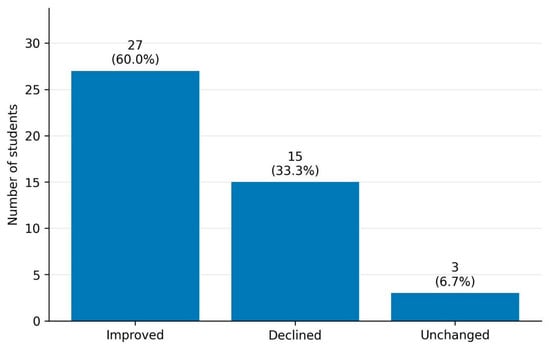
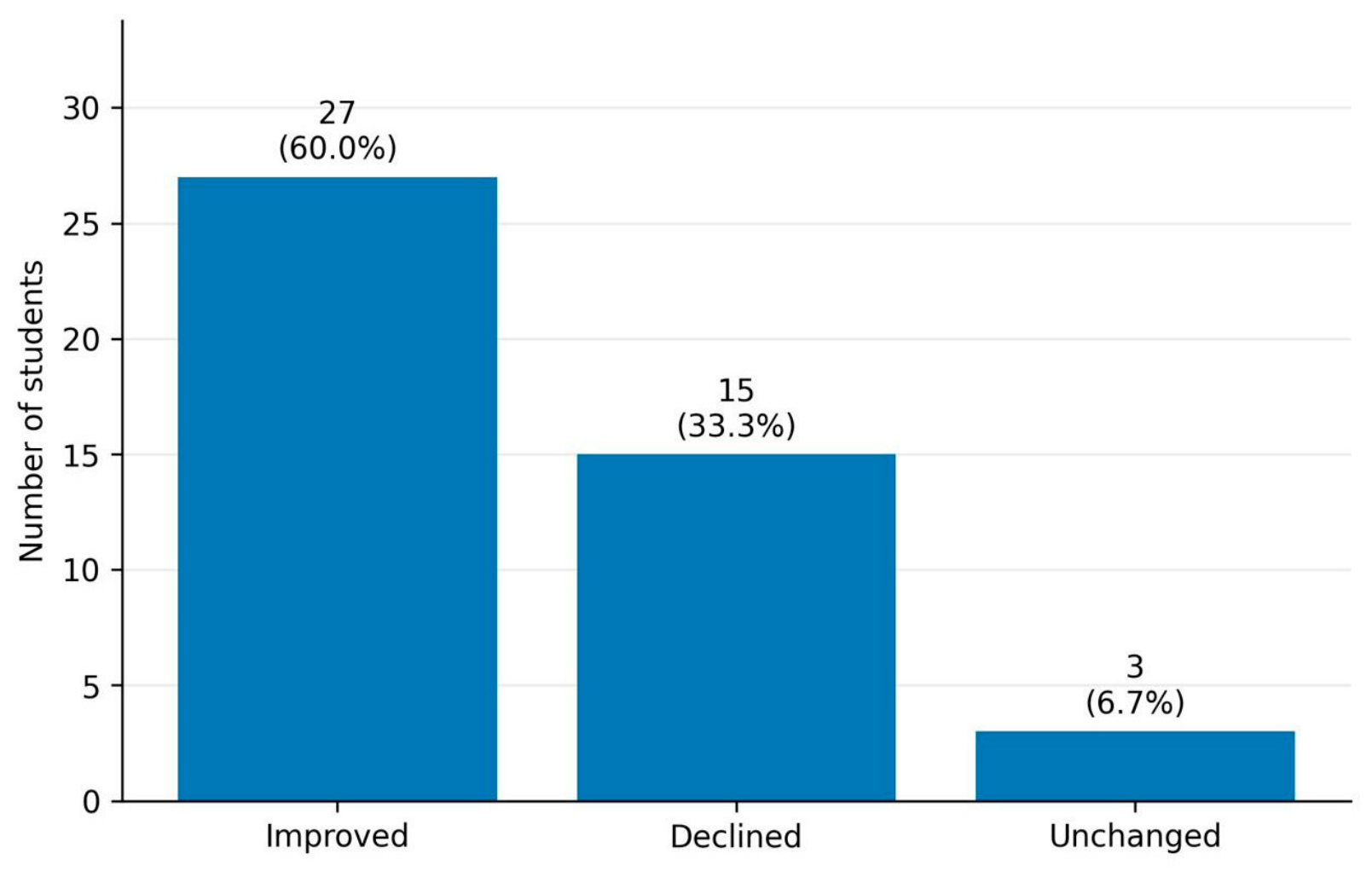
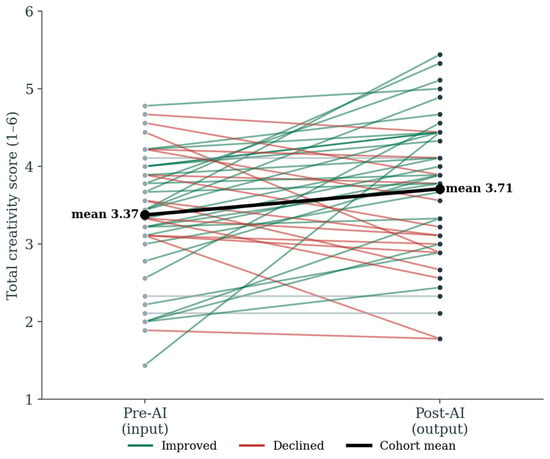
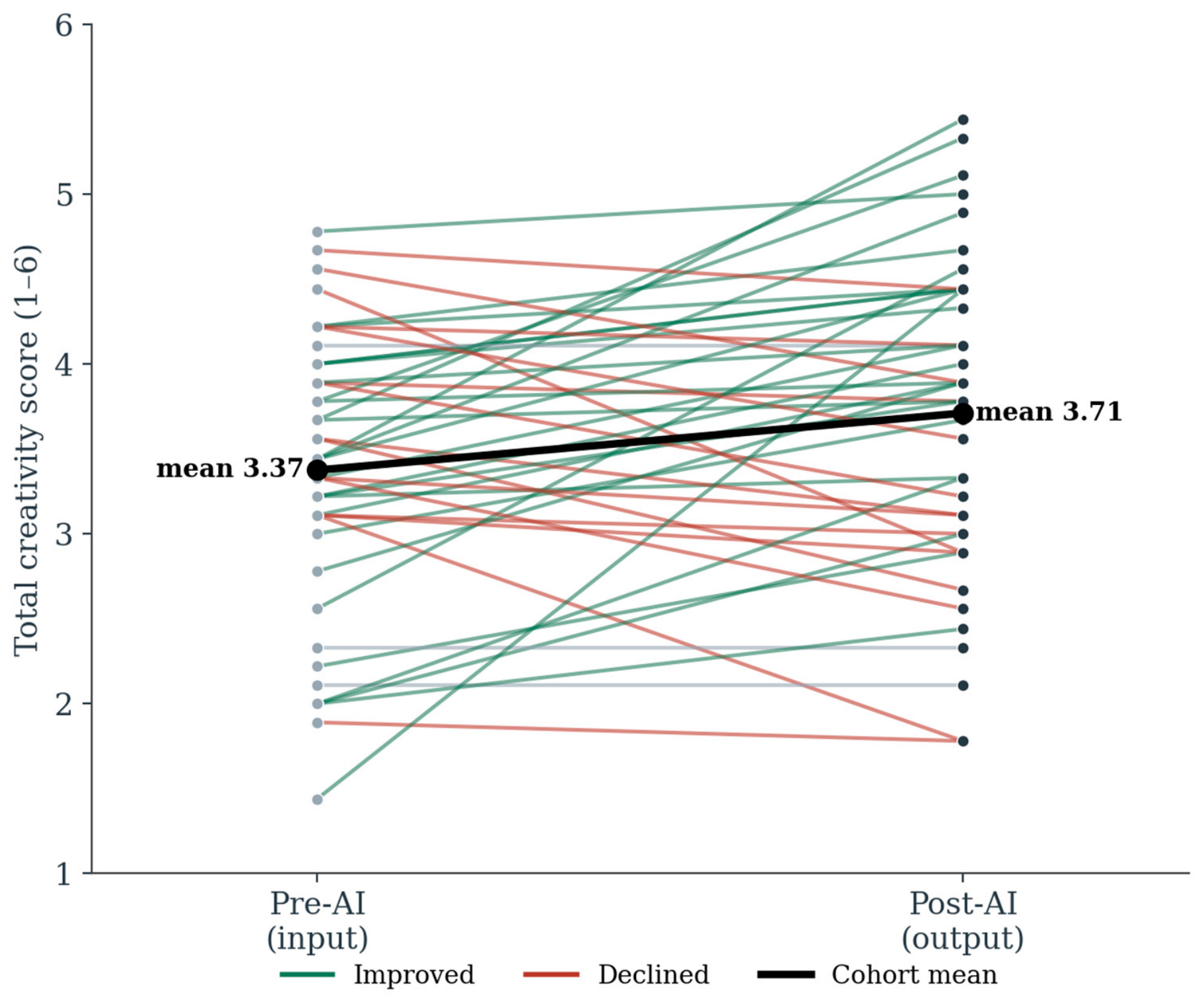
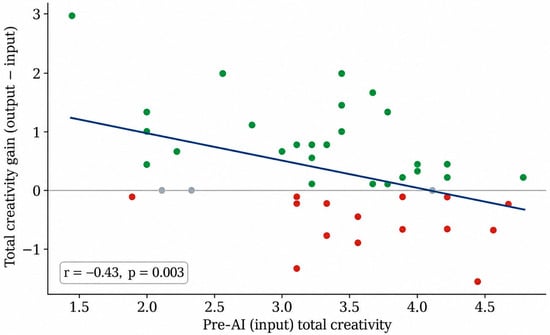
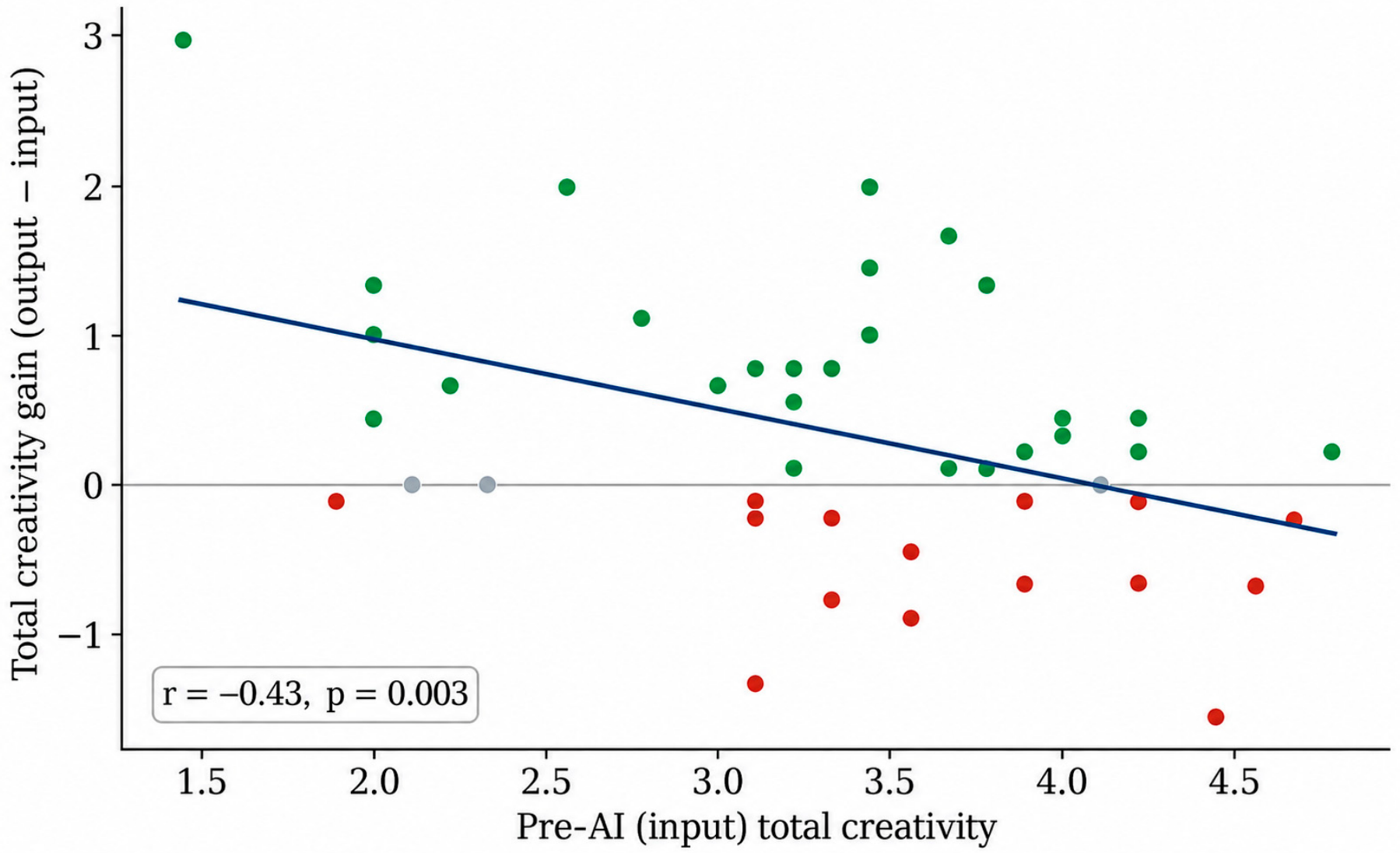
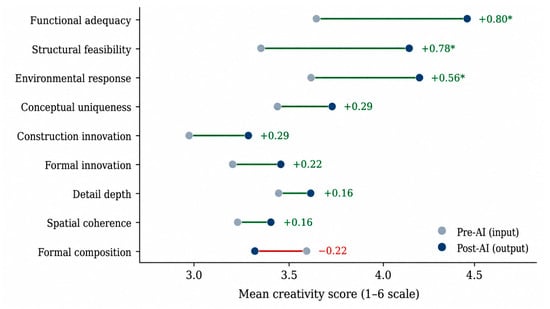
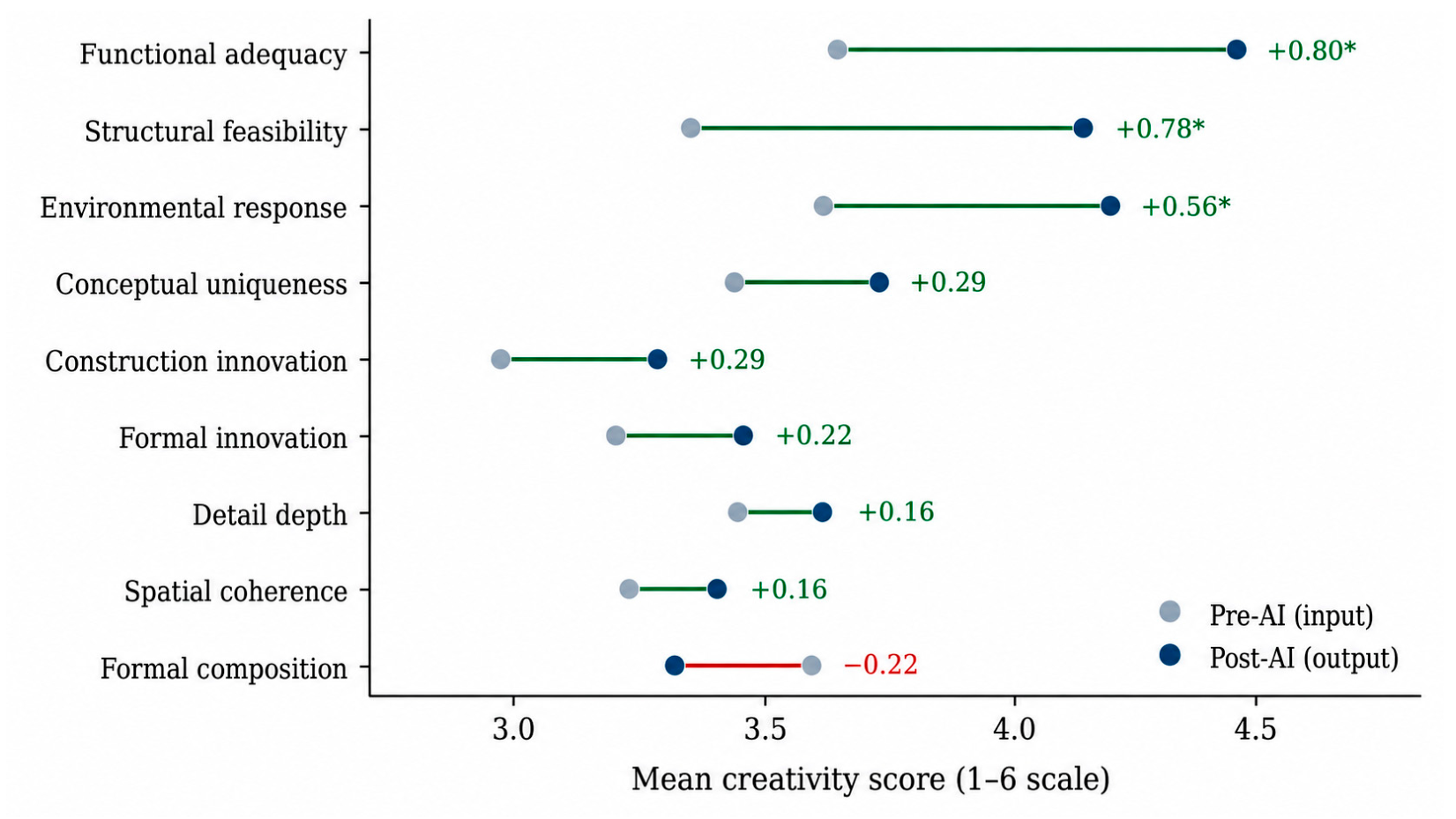
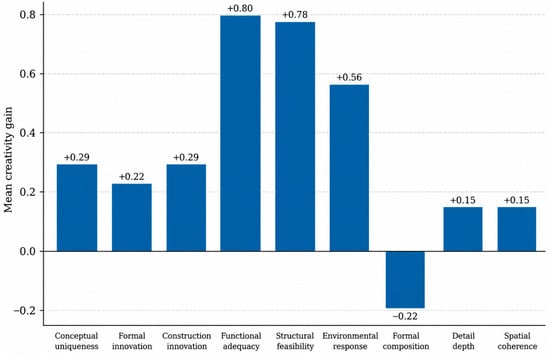
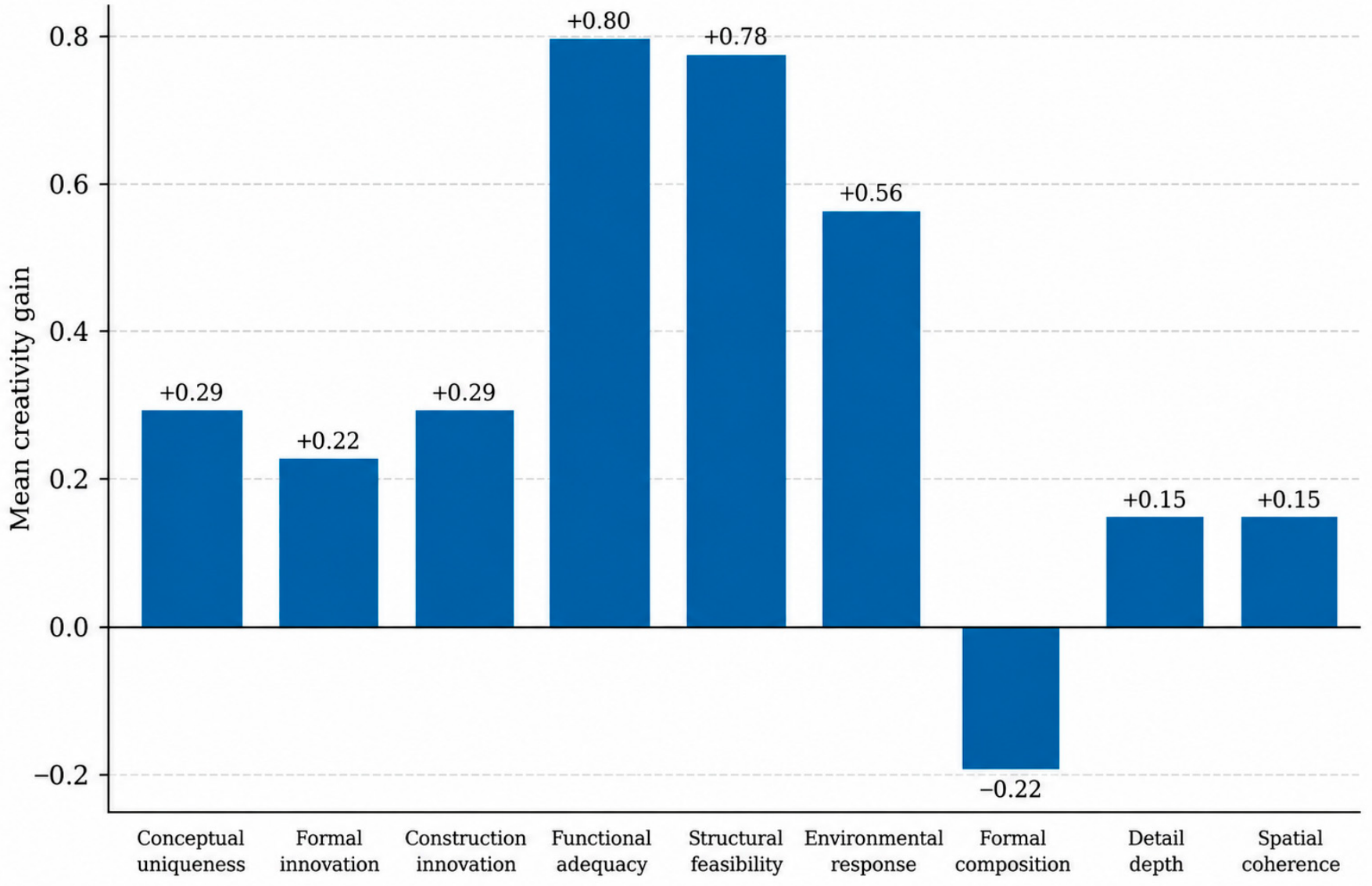
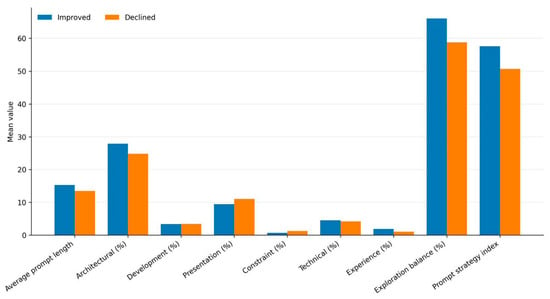
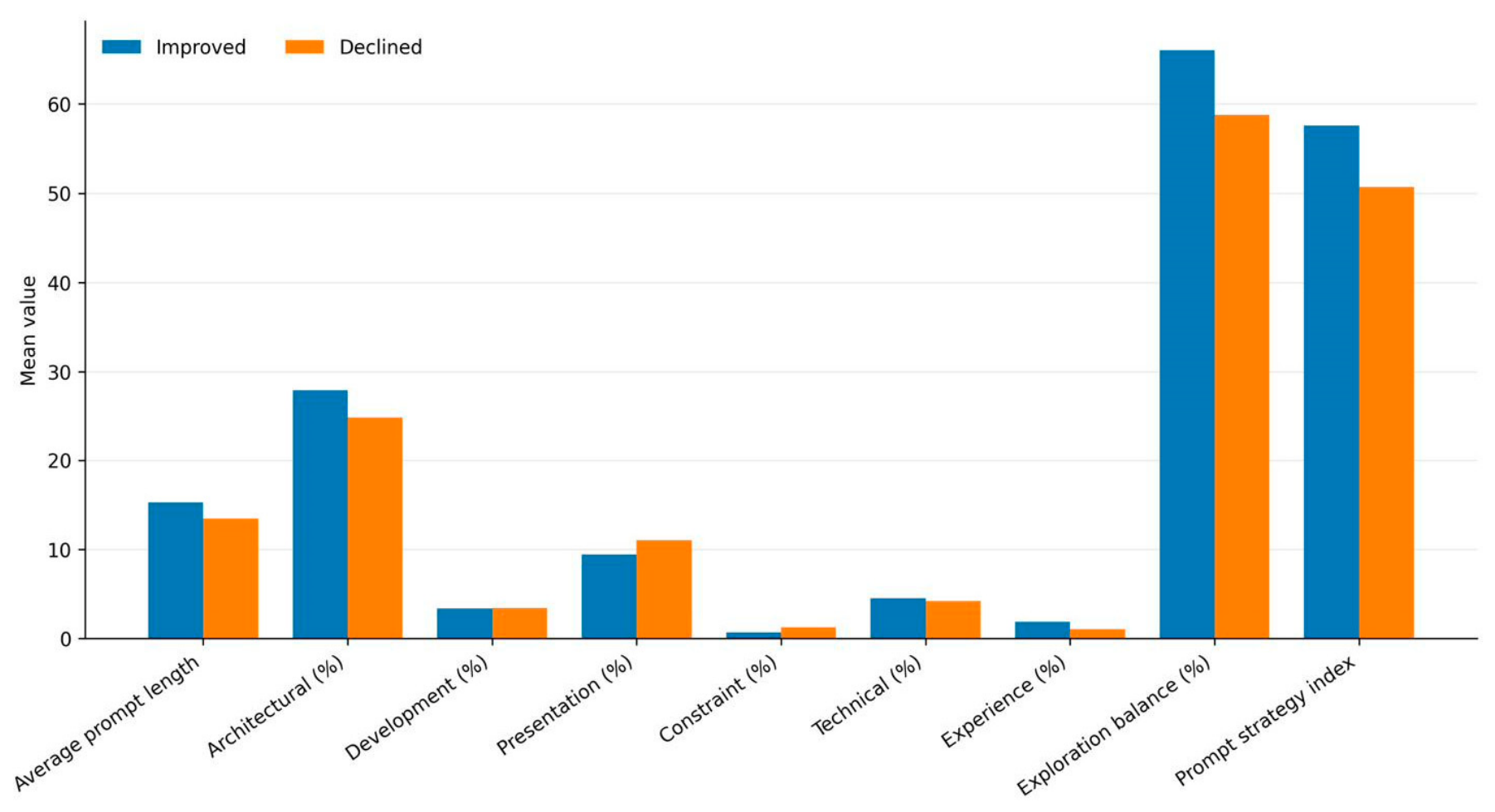
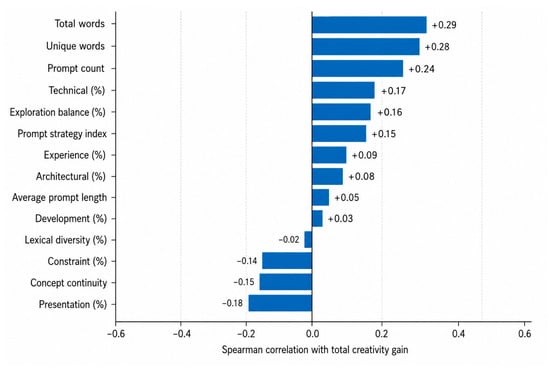
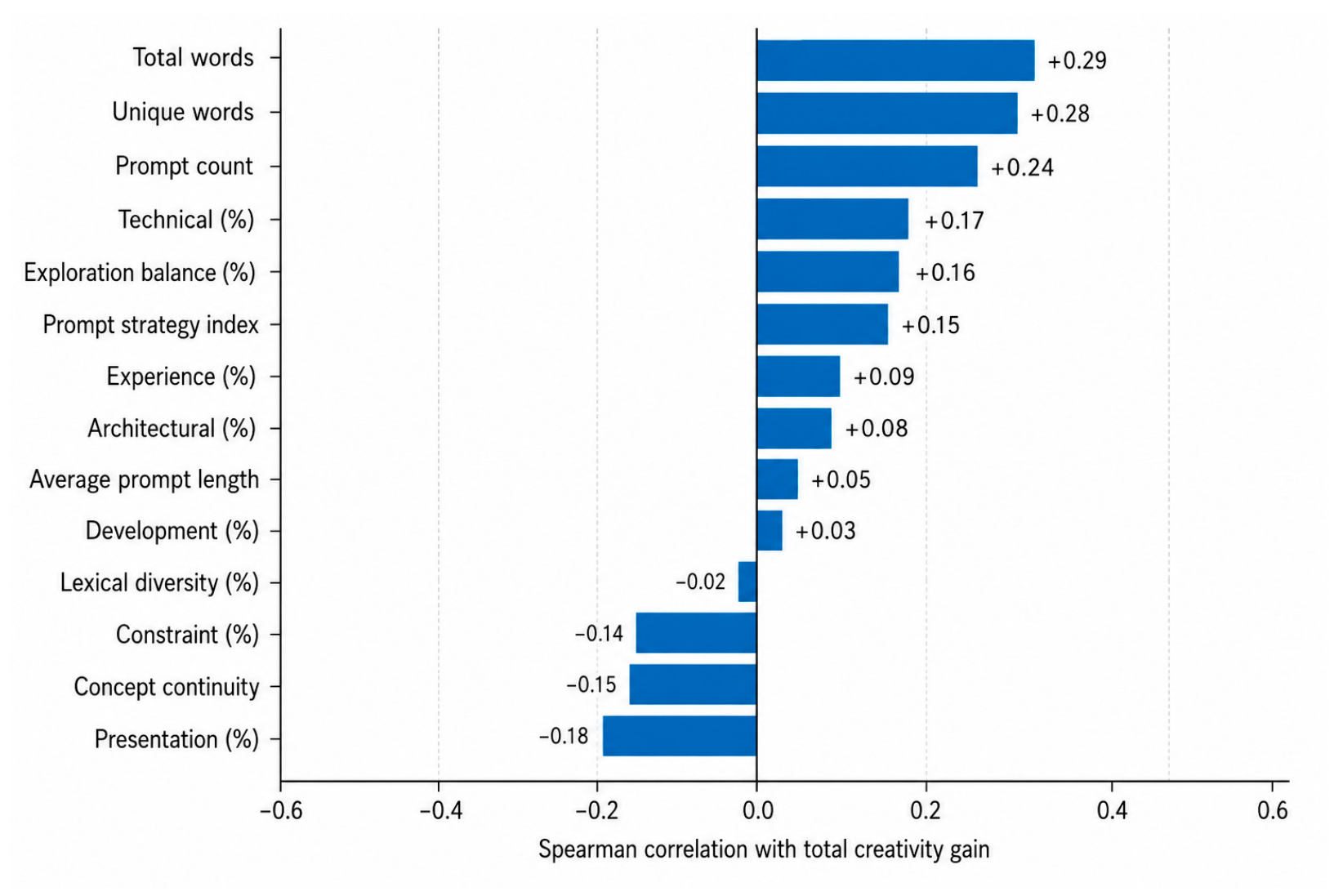
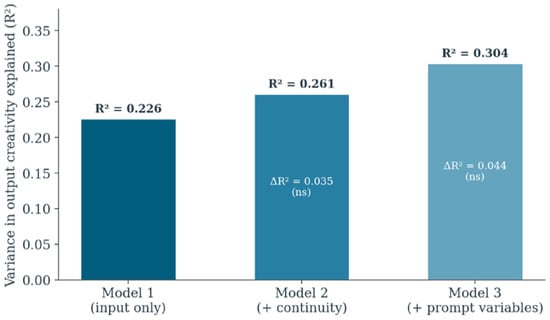
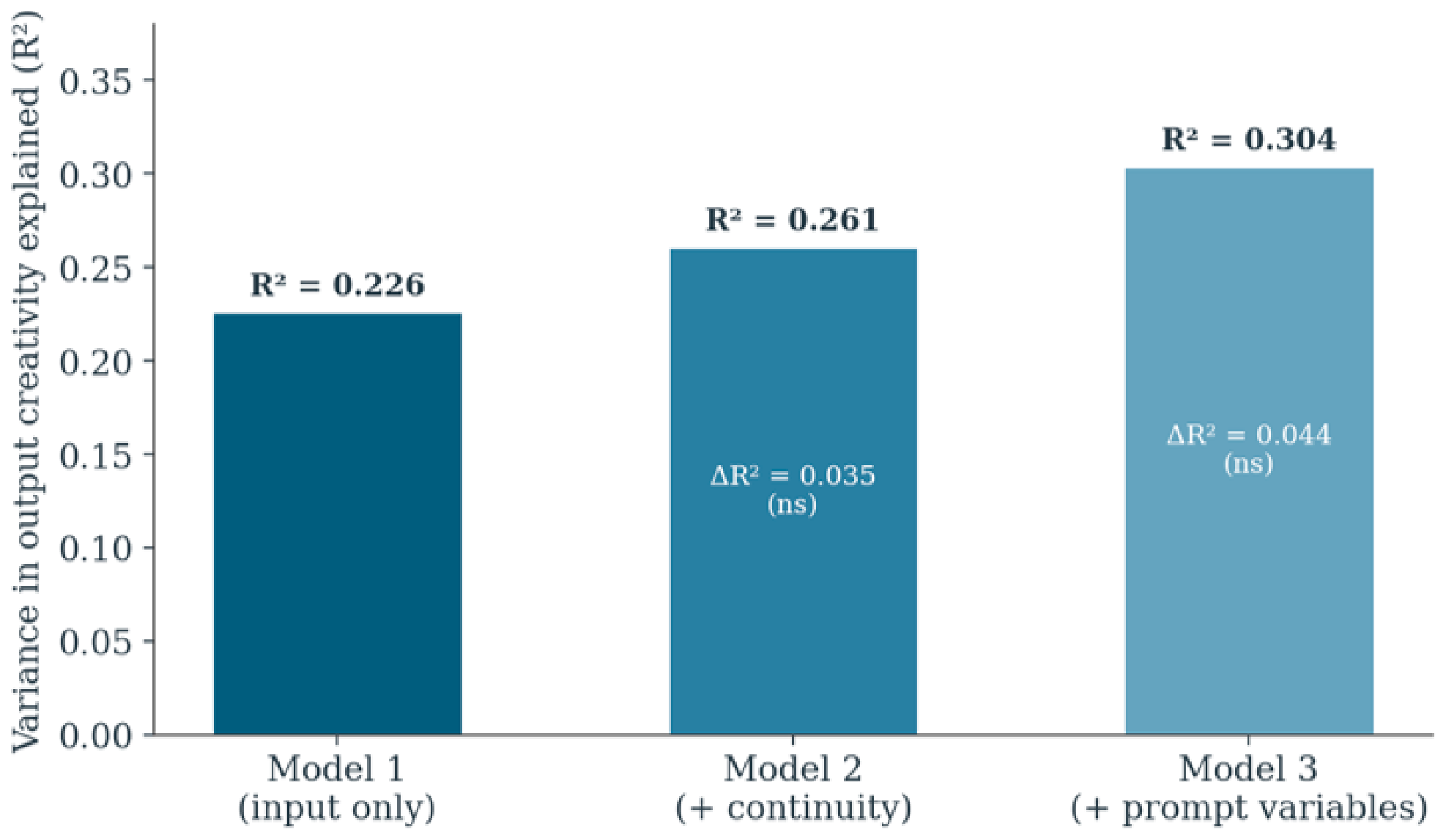
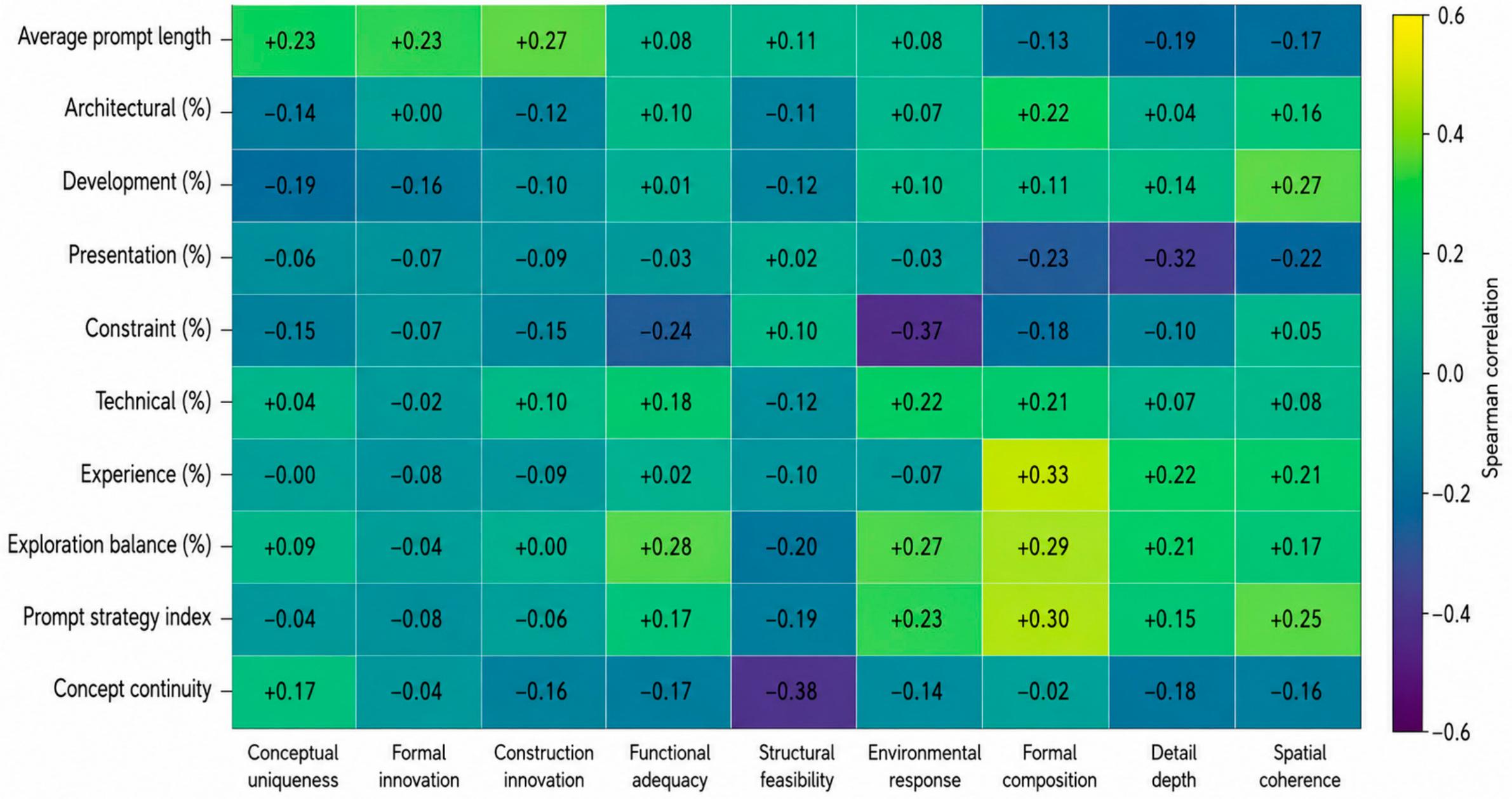
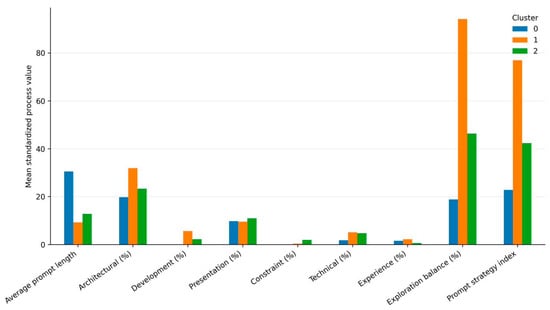
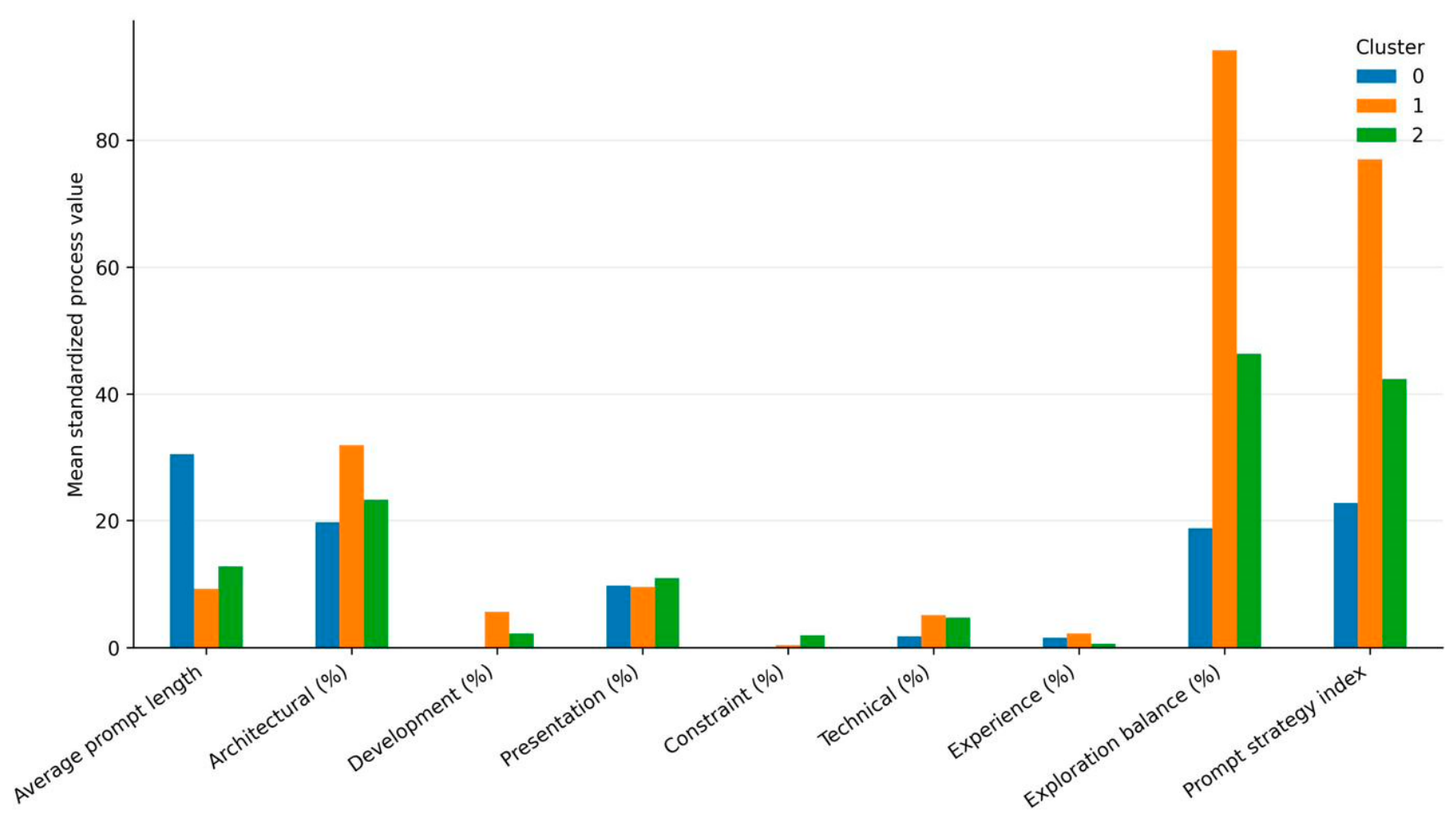
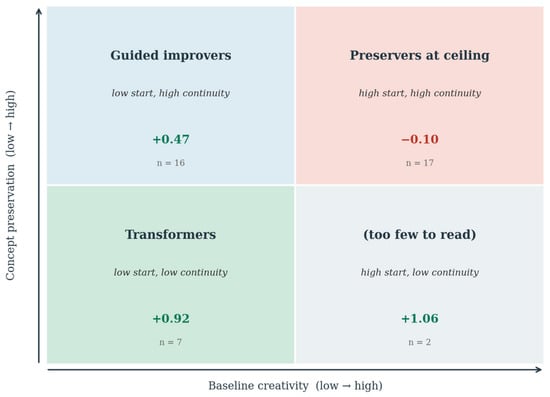
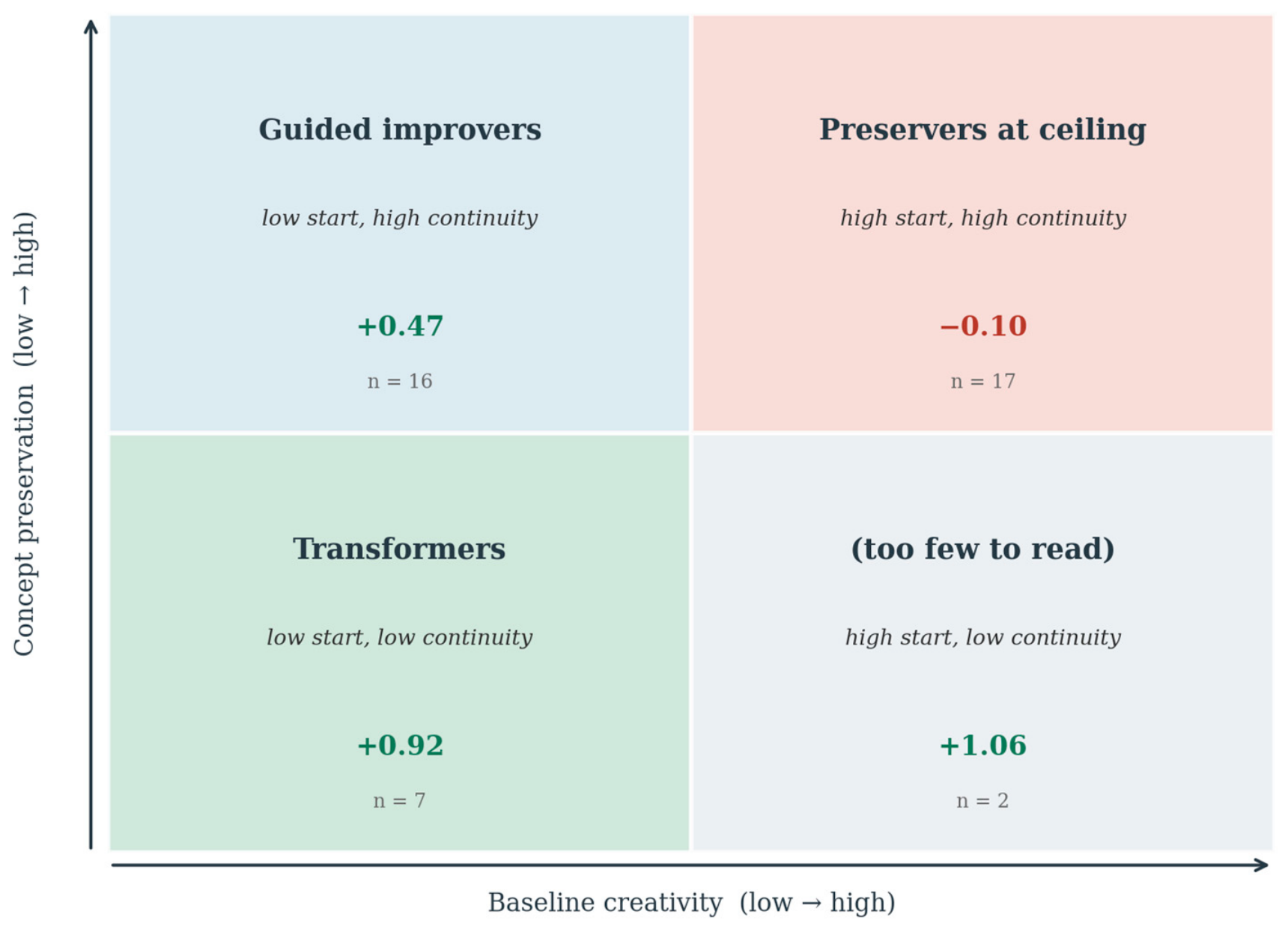

Disclaimer/Publisher’s Note: The statements, opinions and data contained in all publications are solely those of the individual author(s) and contributor(s) and not of MDPI and/or the editor(s). MDPI and/or the editor(s) disclaim responsibility for any injury to people or property resulting from any ideas, methods, instructions or products referred to in the content. |
© 2026 by the authors. Licensee MDPI, Basel, Switzerland. This article is an open access article distributed under the terms and conditions of the Creative Commons Attribution (CC BY) license.