Review

Gasifier Stoves for Bioenergy Generation from Oil Palm Residues in Humid Tropical Regions of Mexico: A Review


by
Marco Antonio-Zarate
,
Lizeth Rojas-Blanco
,
Moises Moheno-Barrueta
,
Marcela Arellano-Cortaza
,
Ildefonso Zamudio-Torres
and
Erik Ramirez-Morales
*
Universidad Juárez Autónoma de Tabasco, Avenida Universidad S/N, Col. Magisterial, Villahermosa CP 86690, Mexico
*
Author to whom correspondence should be addressed.
Biomass 2026, 6(3), 33; https://doi.org/10.3390/biomass6030033
Submission received: 24 January 2026 / Revised: 25 March 2026 / Accepted: 3 April 2026 / Published: 24 April 2026
(This article belongs to the Topic Biomass for Energy, Chemicals and Materials)

Abstract

The growing demand for sustainable, decentralized energy solutions has heightened interest in biomass-based technologies for rural applications. In Mexico, the expansion of oil palm cultivation in humid tropical regions has generated large quantities of agro-industrial residues that remain largely underutilized. This review analyzes the potential of oil palm residues as feedstock for small-scale thermochemical conversion, with a particular focus on gasifier stove technologies. Key residues, including empty fruit bunches, mesocarp fiber, and palm kernel shells, exhibit favorable physicochemical properties, including adequate calorific values and high volatile matter content, which support their suitability for gasification processes. However, challenges related to moisture content, ash composition, and tar formation may affect system performance and require appropriate pre-treatment and operational control. Gasifier stoves, especially fixed-bed and top-lit updraft (TLUD) configurations, represent a viable solution for decentralized energy generation in rural settings, improving combustion efficiency and reducing emissions compared to traditional biomass use. Despite their potential, current bioenergy policies in Mexico remain primarily focused on large-scale biofuel production, limiting the deployment of small-scale technologies. Overall, oil palm residues constitute a promising feedstock for gasifier stove applications, although their successful implementation depends on feedstock optimization, appropriate stove design, and the development of policy frameworks that support decentralized bioenergy systems.

1. Introduction

The global and national energy outlooks for renewable energy and bioenergy are increasingly shaped by the need to reduce dependence on fossil resources and mitigate the effects of climate change. Biomass energy, one of the most relevant renewable resources, contributes approximately 10.4% of the world’s total primary energy supply and 77.4% of global renewable energy consumption [1]. These figures underscore its potential to replace conventional fuels in multiple applications, including heat and power generation, reinforcing its role in the global energy transition.
In this context, agricultural and agro-industrial residues have gained increasing attention due to their availability and potential for energy conversion [2,3]. Among these, oil palm (Elaeis guineensis Jacq.) stands out as a key crop in tropical regions, not only for its high oil productivity but also for the significant lignocellulosic residues generated during harvesting and processing. These residues, including empty fruit bunches (EFBs), mesocarp fiber, and palm kernel shells, represent a valuable but still underutilized biomass resource.
Oil palm is cultivated intensively across several regions worldwide, with Indonesia and Malaysia standing as the principal producers. The performance and economic viability of plantations, however, vary depending on geographic and environmental conditions, ranging from soil characteristics to palm oil processing profitability [4].
According to FAO (2024), global palm oil production increased by 547.4% between 1984 and 2021, while in Latin America, production rose by 593.4%, from 0.91 million tons in 1984 to 5.4 million tons in 2021 [5]. The global distribution of palm oil production in 2023 is shown in Figure 1.
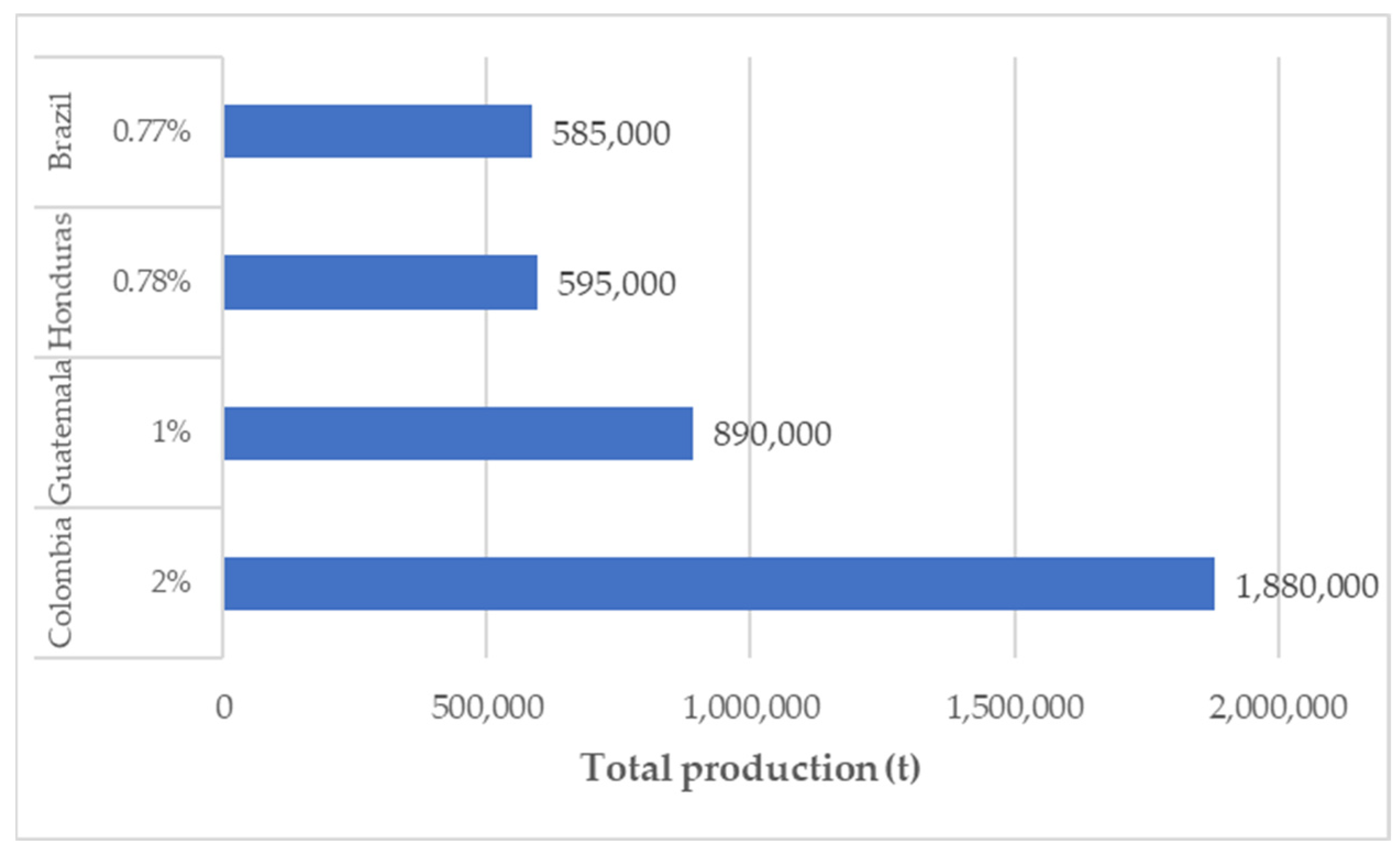
In Latin America, palm oil production is concentrated in Colombia, Guatemala, Honduras, and Brazil, reflecting the regional importance of this crop in emerging markets (Figure 2).
This regional distribution shows Latin America’s growing contribution to global oil palm production. It also highlights the increasing potential for biomass residue generation in tropical areas.
In Mexico, particularly in humid tropical regions such as Tabasco, Chiapas, and Campeche, oil palm cultivation has expanded significantly in recent decades, driven by public policies aimed at rural development, crop diversification, and reducing dependence on imported vegetable oils [7,8,9]. However, this expansion has also resulted in the accumulation of large quantities of agro-industrial residues, which are often inadequately managed despite their potential for energy recovery. In this context, the energetic valorization of these residues remains limited.
Thermochemical conversion technologies, especially gasification, offer a promising pathway for transforming oil palm residues into useful energy carriers [10,11,12]. Compared to conventional biomass combustion, gasification allows higher energy efficiency, lower pollutant emissions, and improved adaptability to decentralized energy systems, particularly in rural areas.
Despite the growing body of literature on biomass energy and oil palm cultivation, most studies have focused on general biomass systems or large-scale industrial applications. In contrast, limited attention has been given to the specific energetic valorization of oil palm residues through gasification technologies in humid tropical regions of Mexico.
Therefore, this review aims to provide a comprehensive analysis of the bioenergy potential of oil palm residues for their application as fuel in gasification-based cooking systems, with particular emphasis on humid tropical regions of Mexico. The review also discusses the availability of these residues, their physicochemical suitability for thermochemical conversion, the performance of gasifier stoves, and the main technical, environmental, and socio-economic factors affecting their implementation.

2. Oil Palm Expansion and Biomass Residue Generation in Mexico

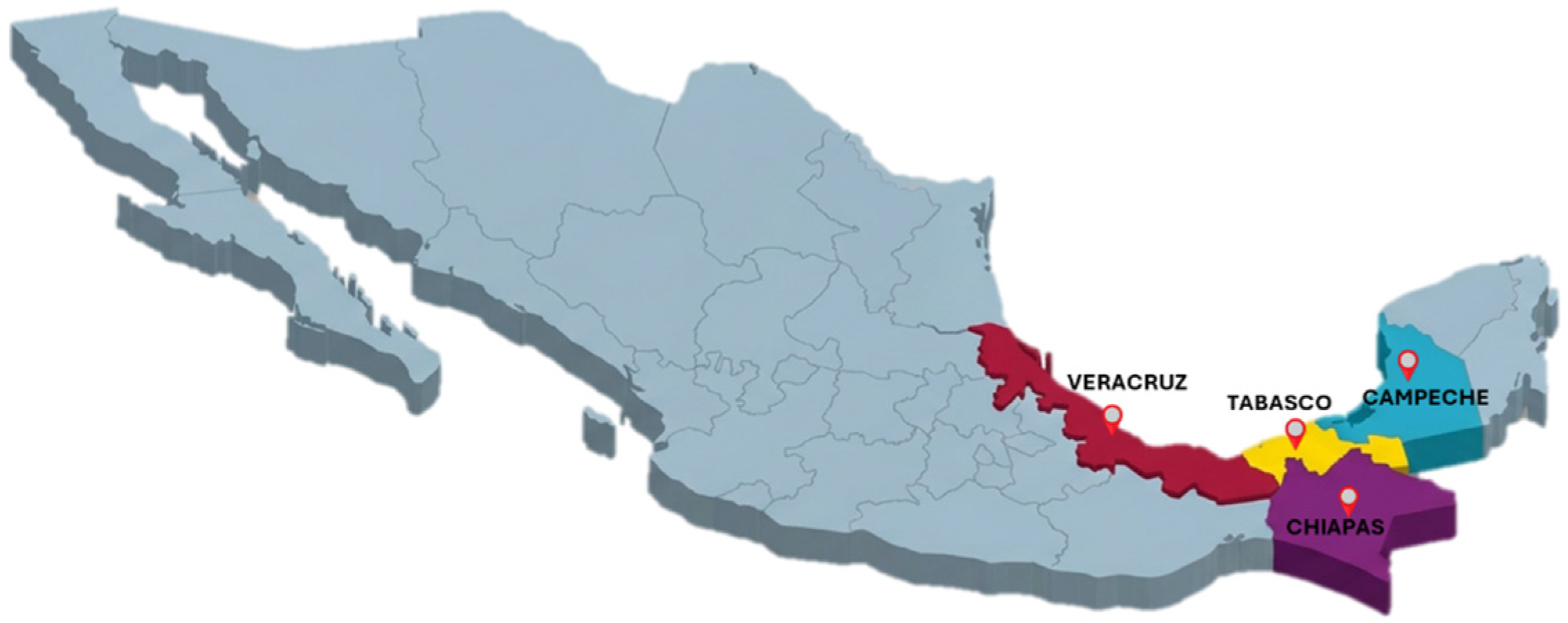
The cultivation of oil palm (Elaeis guineensis) has rapidly expanded in Mexico, particularly in the states of Chiapas, Campeche, Tabasco, and Veracruz. This development has been closely linked to rural development strategies, as well as the growing demand for vegetable oils and biofuels. Existing studies indicate that the expansion of oil palm cultivation has generated significant socio-economic, territorial, and environmental changes, which have been analyzed from multiple perspectives [13,14]. The main oil palm-producing regions in Mexico, including Chiapas, Tabasco, Campeche, and Veracruz, are illustrated in Figure 3.

2.1. Impacts of Crop Expansion on Rural Development

Studies by Cifuentes et al. [15], Castellanos-Navarrete & Jansen [16], and Méndez-Rodríguez [17] report that Mexico’s oil palm expansion was promoted by public policies encouraging rural development and reduced dependence on vegetable oil imports. Between the late 1990s and 2010s, the government used subsidies, technical assistance, and crop conversion programs to incentivize plantations.
These studies concur that public policies have been a primary driver of oil palm expansion, focusing on rural development, crop diversification, and reduced dependence on imported vegetable oils. Federal and state measures supported the establishment of plantations, aiming to strengthen domestic oil production, stimulate rural economies, and encourage biofuel production [18,19].
Research in rural communities in Campeche found that oil palm cultivation supports rural households by diversifying income and increasing local employment [20]. Households involved in agriculture experienced greater economic stability and food security compared to those reliant on non-agricultural income. However, key findings caution that unregulated oil palm expansion risks land concentration and could worsen food security by replacing traditional practices, such as milpa farming [20,21].
Marquez et al. [21] and Sánchez et al. [14] found that rural development in Campeche is characterized by small-scale peasant farms managed by family units, typically under 10 hectares, allowing producers to retain land control and avoid conflicts seen in industrial plantations. A key finding is that despite this advantage, limited access to technology, investment, and financing has restricted productivity improvements that would benefit the regional economy.

2.2. Territorial Transformations and Social Dynamics

The transformation of peasant territories in Chiapas, driven by oil palm expansion, is well documented. In Palenque, studies found that oil palm cultivation has created new economic relationships among peasants, companies, and government actors, resulting in territorial and cultural reorganization [17].
Research shows that a productive identity linked to oil palm cultivation has emerged, where “palm-farmer peasants” now depend mainly on income from palm fruit sales. Key findings indicate that these economic benefits are often limited and that the expansion of agribusiness has created tensions, including changes to traditional systems, shifts in the agricultural landscape, and reconfigurations of community structures [16,17].
Building on this, research in political ecology suggests that the expansion of biofuel crops, including oil palm, cannot be explained solely by economic or technological factors. In southeastern Mexico, the adoption of these crops has been facilitated by political and organizational processes in which the State and rural organizations have established strategic alliances to promote new forms of agricultural production [16].

2.3. Land Tenure and Crop Governance

Shifting the focus to land tenure issues, another central aspect in the literature is the role of land tenure systems in the expansion of oil palms. Recent research has specifically analyzed the role of property regimes, especially the ejido system, in shaping the oil palm sector.
A study using satellite imagery and spatial analysis found that, while many plantations are on privately owned land or areas suitable for future expansion, those on ejidos (communal lands) constitute a smaller proportion of the total area. A key finding is that the ejido system limits land grabbing because collective ownership makes it difficult for outsiders to concentrate land. However, some cases have identified illegal investments on ejido lands, posing challenges for governance and community protection [16,22].

2.4. Environmental and Socio-Ecological Impacts

The environmental impacts of oil palm cultivation remain highly debated. Overall, key findings show that these impacts depend greatly on the specific production model used and the local context.
In Campeche, research on land-use change and biodiversity indicates that oil palm expansion has mainly occurred on already deforested lands, reducing conflicts associated with direct deforestation. A main finding is that small-scale plantations, dispersed in diverse landscapes and using fewer agrochemicals, generally cause lower environmental impacts [14].
However, researchers found evidence that the introduction of large-scale agribusiness plantations could bring more serious negative impacts, including deforestation, pollution, and social conflicts. A documented example includes a transnational company sanctioned in Palizada for environmental violations during plantation expansion [14,21].
Research by Oliveira et al. [23] highlights that oil palm plantations offer lower-quality habitat than native forests for many migratory bird species in Tabasco. The key finding underscores the need for plantation management strategies that increase habitat complexity.
Mayer et al. [24] demonstrated that oil palm plantations have significantly higher evapotranspiration rates than other vegetation, lowering local water availability, especially during dry periods. While high regional rainfall often offsets total watershed reductions, research also documents oil palm expansion into fragile ecosystems, such as protected wetlands in Chiapas, raising challenges for environmental governance [25].

2.5. Technological Innovation and Agricultural Productivity

Research on crop productivity indicates that oil palm yields in Mexico are typically lower than in other producing countries. The key reason identified is limited adoption of advanced technologies and agronomic practices [26]. Studies on producer information networks indicate that farmers with better access to extension agents and technical advice adopt more technologies, leading to higher yields and incomes [26]. This is a primary finding linking advice to outcomes.
Research in Tabasco found significant nutrient deficiencies (nitrogen, phosphorus, potassium) in oil palm-cultivated soils, presenting a main finding that targeted fertilization is needed to boost productivity [27].
Recent research found that oil palm populations in Mexico, especially in Tabasco, display considerable genetic diversity. The key finding suggests that this diversity could support genetic improvement programs to increase productivity and resilience [28].

2.6. Oil Palm, Bioenergy, and Energy Transition

Many publications examine how oil palm can help produce bioenergy and support the transition to cleaner energy. Studies have assessed the feasibility of producing biodiesel from palm oil in Mexico, finding that it may reduce greenhouse gas emissions and fossil fuel use in transport. The key finding is that economic viability relies on tax incentives and regulatory policies [18].
Researchers report that oil palm industry waste in Tabasco, like fibers, husks, and empty fruit bunches, has high biomass potential. Key findings indicate that these residues could be used for energy generation through technologies such as pelleting and anaerobic digestion [29].
Research on public perception indicates that community acceptance of oil palm cultivation depends primarily on perceived economic benefits, the level of government support, and expectations of environmental impacts [30]. This is a main finding regarding social acceptance.
Despite these opportunities, recent research shows the biodiesel sector in Mexico faces major challenges. These include a lack of tax incentives, inadequate regulatory frameworks, and poor coordination among stakeholders in the production chain [19].

2.7. Synthesis of Research Trends

Overall, the scientific literature indicates that oil palm cultivation in Mexico is complex with many interconnected dimensions. The crop has been promoted as a rural development and economic diversification strategy for farming communities. However, its expansion poses challenges for land governance, environmental sustainability, and social equity. The studies agree that the crop’s impact largely depends on the production model used. Small-scale producer systems often create local economic benefits and moderate environmental impacts. In contrast, large-scale plantations could lead to greater socio-environmental conflicts.
Finally, the literature identifies several important research gaps. These include the long-term sustainability of oil palm cultivation, the relationship between public policies and territorial dynamics, and the need to integrate socio-ecological approaches to comprehensively assess the crop’s impacts in Mexico.
These findings highlight that, beyond its socio-economic and environmental implications, oil palm cultivation in Mexico generates significant quantities of biomass residues that remain largely underutilized. This creates an opportunity to integrate these residues into bioenergy systems, particularly through thermochemical conversion technologies such as gasification.

3. Biomass Availability and Oil Palm Residue Generation in Mexico

Biomass Availability in Humid Tropical Regions of Mexico

Humid tropical regions of Mexico generate a wide diversity of biomass residues derived from agro-industrial, forestry, livestock, and energy crop activities, as summarized in Table 1 This diversity reflects the strategic relevance of these regions for the development of integrated biomass valorization pathways [31].
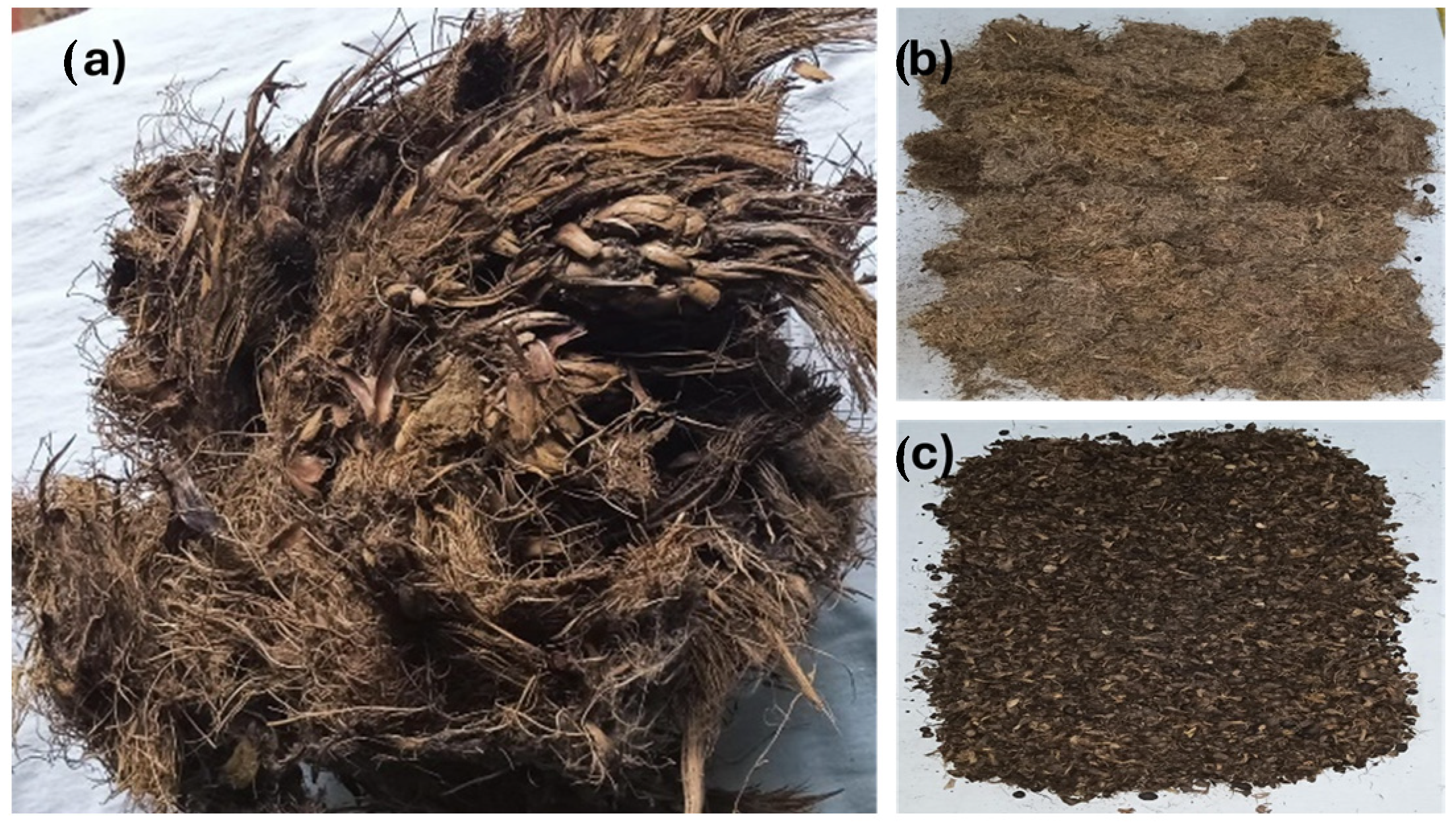
Ordoñez-Frías et al. [29] report that, among these regions, Tabasco stands out for the predominance of oil palm residues generated during harvesting and processing activities; as of 2017 production was 185,868.8 tons per year, and solid waste was 80–90%. The main oil palm residues include EFB, mesocarp fiber, and palm kernel shell (Figure 4), and it is estimated that 100 tons of fresh fruit bunches can generate 5 tons of palm kernel peel, between 20 and 22 tons of EFB, and 14 tons of mesocarp fiber [29]. These residues represent an underutilized biomass resource with significant potential for bioenergy and biofuel production.

4. Key Findings and Technical Limitations

4.1. Characterization and Potential of Oil Palm Residues in Mexico

Oil palm cultivation and processing generate a wide variety of lignocellulosic residues, originating from both agricultural activities and industrial operations. Among the most representative residues are empty fruit bunches (EFB), mesocarp fiber (MF), palm kernel shells (PKS), oil palm fronds (OPF), and oil palm trunks (OPT). EFB is produced during the sterilization and threshing processes, while MF and PKS are obtained during oil extraction. In contrast, fronds and trunks are generated during plantation maintenance and replanting cycles [32,33].
The availability and distribution of these residues vary across regions in Mexico, particularly in humid tropical areas such as Tabasco, Chiapas, Campeche, and Veracruz, where agro-industrial activities are concentrated. In these regions, oil palm residues coexist with other biomass sources such as sugarcane bagasse, coffee husks, and livestock manure, contributing to a diversified biomass portfolio with significant energy potential [34].
Despite their abundance, a considerable fraction of these residues remains underutilized, often being disposed of or used in low-value applications. This represents a missed opportunity for energy recovery and resource optimization. From an energy perspective, oil palm residues constitute a promising feedstock due to their continuous generation, relatively high availability, and compatibility with thermochemical conversion technologies [35].

4.2. Physicochemical Properties of Oil Palm Residues

Oil palm residues mainly consist of lignocellulosic materials (Table 2). These include cellulose, hemicellulose, and lignin. They play a critical role in determining behavior during thermochemical conversion. Physicochemical properties such as moisture content, volatile matter, ash content, and higher heating value (HHV) vary by residue type and processing conditions [36].
Palm kernel shells have the highest calorific value due to their elevated lignin and fixed carbon content. In contrast, empty fruit bunches have higher moisture and ash content, which may reduce energy conversion efficiency. Mesocarp fiber has intermediate properties and is widely used as a biofuel in industrial applications [37].
These properties directly influence the stages of the thermochemical process. High volatile matter content enhances reactivity and aids devolatilization. This promotes better gasification performance. High moisture levels, however, lower thermal efficiency. They increase the energy needed for drying. High ash content may cause issues like slagging, fouling, and reactor instability [38].
Therefore, selecting appropriate feedstock and implementing suitable pretreatment strategies—such as drying, size reduction, and densification—is essential to optimize process performance and ensure efficient energy conversion.
Table 2. Main oil palm residues and their higher heating value [39].
Type of ResidueCalorific Value (MJ/kg)
Empty fruit bunches (EFB)17.76
Mesocarp fiber (MF)19.06
Palm kernel shell (PKS)20.09
Oil palm leaves (OPF)15.72

4.3. Classification and Applications of Oil Palm Residues

Oil palm residues are broadly classified by origin and physical characteristics into processing residues, such as empty fruit bunches (EFB), mesocarp fiber (MF), and palm kernel shells (PKS), and field residues, including fronds and trunks. Each residue type exhibits distinct properties that influence its potential applications in both energy and non-energy sectors [40].
At present, only a small proportion of these residues is utilized in value-added applications, such as the production of biofuels, fertilizers, animal feed, and composite materials. For example, mesocarp fiber and palm kernel shells are primarily used as solid fuels in industrial boilers, whereas empty fruit bunches are investigated for bioethanol production, composting, and direct combustion [41].
Despite these applications, most oil palm residues remain underutilized, especially in rural areas, where inefficient disposal practices contribute to environmental issues such as methane emissions and biomass accumulation. This underutilization underscores the necessity for integrated biomass management strategies that facilitate the conversion of these residues into valuable energy carriers [42].
In this context, it is recommended to accelerate the deployment of thermochemical technologies, particularly gasification, to convert oil palm residues into syngas for decentralized heat and power generation. Stakeholders should actively adopt these technologies to realize the full value of oil palm residues and address current underutilization [43].
Oil palm residues are organized by origin and use, as shown in Table 3.

4.4. Implications for Thermochemical Conversion

The physicochemical properties of oil palm residues directly shape their performance in thermochemical processes such as combustion, pyrolysis, and gasification. Volatile matter, moisture content, ash composition, and particle size decisively determine process efficiency and product quality [44].
Building on this, a high volatile matter content enhances fuel reactivity and promotes efficient devolatilization during gasification, thereby improving syngas yield and composition. In contrast, high moisture content—especially in empty fruit bunches—reduces thermal efficiency and necessitates pre-drying to achieve stable operation.
Furthermore, ash content and the presence of inorganic elements, including potassium, sodium, and silica, can significantly affect reactor performance by promoting slagging, fouling, and ash deposition. These phenomena may reduce heat transfer efficiency, increase maintenance requirements, and compromise system stability [45].
To mitigate these challenges, various pre-treatment strategies have been proposed, including washing, leaching, drying, and densification, as well as the use of additives and catalysts to address ash-related issues and tar formation. These approaches improve syngas quality, enhance carbon conversion efficiency, and ensure more stable operation of gasification systems [46].
As a result, these factors are particularly relevant for small-scale gasification technologies, such as gasifier stoves, where feedstock variability directly impacts system performance. Consequently, a comprehensive understanding of biomass properties and their interaction with operating conditions is essential to achieve efficient, reliable, and sustainable energy production in decentralized applications [47].

5. Gasifier Stove Based on Oil Palm Residues for Cooking Applications

5.1. Fundamentals of Gasifier Stoves

Gasifier stoves are small-scale thermochemical devices that convert solid biomass into a combustible gas (syngas) through partial oxidation under controlled air supply. Unlike traditional combustion stoves, gasifier stoves operate through sequential stages, including drying, pyrolysis, oxidation, and reduction, enabling cleaner and more efficient energy conversion. These systems are specifically designed for cooking applications, offering improved thermal efficiency and reduced emissions compared to conventional biomass stoves [48].

5.2. Operating Principles and Stages

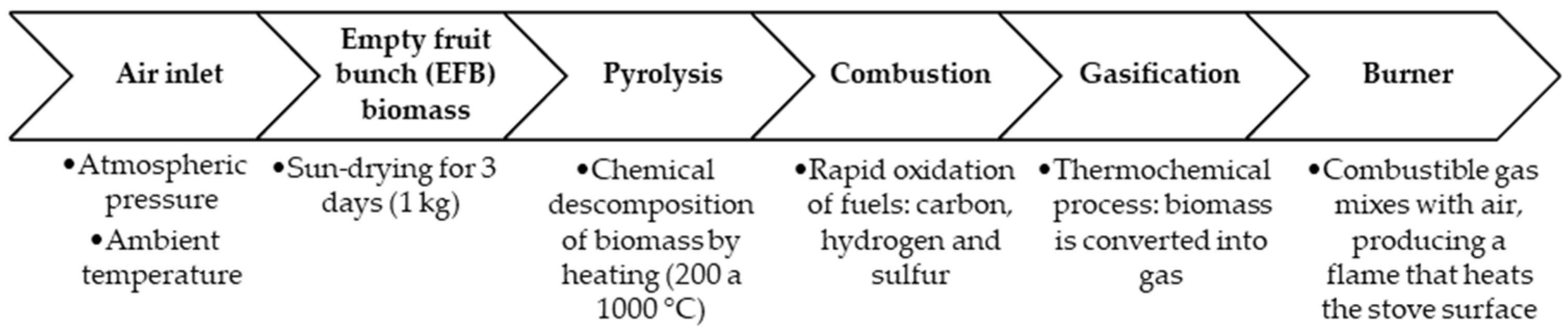
The gasification process in gasifier stoves involves four main stages: drying, pyrolysis, oxidation, and reduction. These stages enable the transformation of solid biomass into a combustible gas that is burned in a secondary combustion zone, improving heat transfer and combustion efficiency. A schematic representation of these stages is presented in Figure 5 [49].

5.3. Types of Gasifier Stoves and Relevant Gasifier Configurations

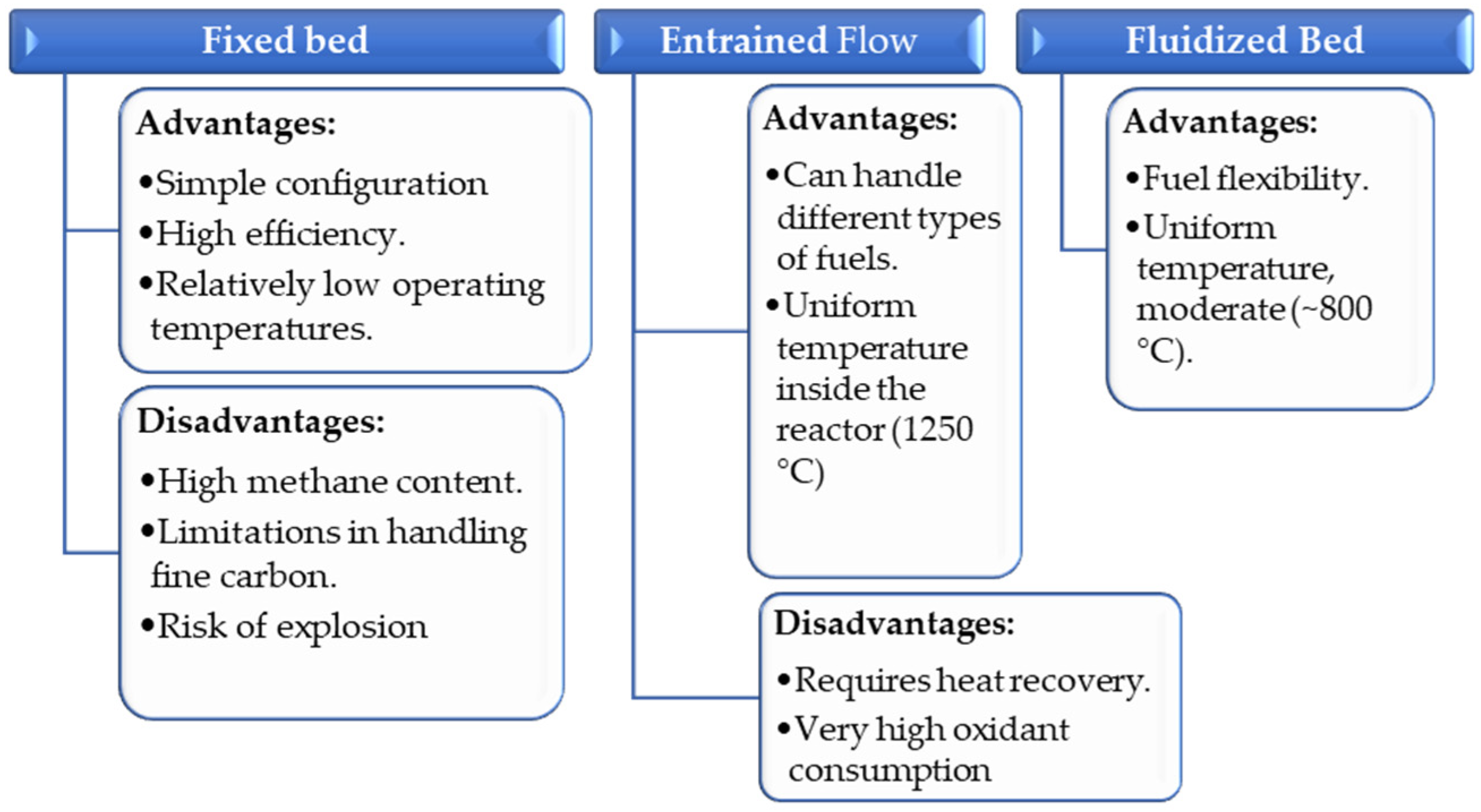
Several gasifier configurations have been developed for biomass conversion, including fixed-bed, entrained-flow, and fluidized-bed systems. These technologies differ in operating temperature, feedstock flexibility, process complexity, and scale of application. A comparative overview of the main gasifier types is presented in Figure 6. Although entrained-flow and fluidized-bed gasifiers are mainly associated with industrial-scale applications, their inclusion provides a broader technological context for understanding biomass gasification systems [50].
For cooking applications, fixed-bed gasifiers are the most relevant configuration, particularly updraft and top-lit updraft (TLUD) designs. These systems are preferred for gasifier stoves because of their simple configuration, relatively low operating cost, and suitability for decentralized household energy use [52].
Figure 6 Schematic comparison of the main biomass gasifier types, including fixed-bed, entrained-flow, and fluidized-bed configurations, highlighting their key operational characteristics [50].
Among these technologies, fixed-bed systems are the most suitable for small-scale cooking applications, whereas entrained-flow and fluidized-bed gasifiers generally require more complex operating conditions and are therefore less practical for household stove deployment.

5.4. Performance and Efficiency of Gasifier Stoves

The application of gasification stoves represents a sustainable alternative to traditional solid fuels, particularly in regions where agricultural residues are readily available. When biomass is produced and managed sustainably, gasification-based systems can be considered close to carbon-neutral, contributing to reduced greenhouse gas emissions and improved environmental performance compared to conventional fuelwood use [51]. In addition, gasification stoves typically offer thermal efficiencies of 20–30%, compared with 10–15% for traditional stoves, lower pollutant emissions, and improved fuel utilization relative to traditional open-fire or direct-combustion stoves [53]. As shown in the study by Cansee et al. [54], which developed a natural updraft gasification stove, achieved a thermal efficiency of 39%, reducing heat loss to 930 kJ, 4.3 times lower than conventional stoves, and 98% combustion efficiency, and reduced CO/CO2 emissions.
Syngas typically consists of combustible components such as carbon monoxide (CO), hydrogen (H2), and methane (CH4), along with non-combustible gases including carbon dioxide (CO2) and nitrogen (N2) [55]. Its calorific value is primarily determined by operating parameters such as air supply, equivalence ratio, and reactor design. For instance, top-lit updraft (TLUD) gasifiers have been reported to achieve gasification efficiencies of approximately 52% under hot-gas conditions, although performance is often limited by the formation of heavy hydrocarbons (tars) that are difficult to crack into lighter compounds [56].

5.5. Application of Oil Palm Residues in Gasifier Stoves

Oil palm residues, such as empty fruit bunches (EFB) and mesocarp fiber, represent promising feedstocks for gasifier stoves due to their availability and energy potential in humid tropical regions. The use of these residues enables the valorization of agro-industrial waste while providing a locally available and renewable energy source for cooking applications. This is particularly relevant in rural areas of Mexico, where access to clean energy remains limited [57].

5.6. Environmental and Social Benefits

Gasifier stoves contribute to environmental sustainability by reducing greenhouse gas emissions and improving biomass utilization efficiency. When biomass is sourced sustainably, these systems can be considered close to carbon neutral. Additionally, the adoption of gasifier stoves can reduce deforestation pressure, improve indoor air quality, and contribute to better health outcomes in rural communities [51].

5.7. Challenges and Limitations

For small-scale applications, fixed-bed gasifiers, particularly updraft and top-lit updraft (TLUD) configurations, are widely preferred due to their simple design, low cost, and suitability for decentralized rural energy systems [29]. These systems are especially relevant for gasifier stoves, as they can efficiently utilize biomass residues with relatively low moisture content.
The performance of gasifier stoves depends strongly on heat transfer mechanisms and the quality of the produced syngas. Improvements in convective and radiative heat transfer enhance the utilization of low-calorific gases, contributing to higher overall thermal efficiency [58].
Biomass pre-treatment plays a critical role in optimizing gasification performance. Physical methods such as size reduction and densification increase surface area and improve reactivity, while chemical treatments (e.g., acid or alkaline processes) enhance biomass accessibility through partial delignification. Thermal treatments, including torrefaction and hydrothermal processing [59], increase energy density and reduce moisture content, making biomass more suitable for gasification [60,61]. These strategies help overcome common limitations of raw biomass, such as high moisture and low bulk density, thereby improving syngas quality and overall system efficiency.
Additionally, the integration of biomass gasification with other renewable energy sources, such as solar or wind systems, has been identified as a promising approach to enhance system reliability and sustainability in decentralized energy applications [62].

5.8. Integration with Energy Systems

The integration of gasifier stoves with broader renewable energy systems, including solar and hybrid systems, represents a promising pathway for improving energy access and sustainability in rural regions. These systems can support decentralized energy models, enhancing resilience and reducing dependence on fossil fuels [63].

5.9. Performance and Efficiency of Biomass Gasification Systems

A summary of different biomass conversion technologies and their reported thermal efficiencies under various operating conditions is presented in Table 4. This comparison highlights the variability in performance depending on reactor type, process conditions, and system configuration.
As shown in Table 4, gasification-based systems, particularly fixed-bed and fluidized-bed configurations, can achieve relatively high thermal efficiencies under controlled conditions. However, for small-scale applications such as gasifier stoves, performance is strongly influenced by feedstock properties, moisture content, and operational design.
These findings emphasize the importance of adapting gasification technologies to local conditions, especially when using oil palm residues in decentralized energy systems.

6. Application of Oil Palm Residues in Gasifier Stove Systems in Mexico

Oil palm residues, particularly empty fruit bunches (EFBs), represent a significant biomass resource with high potential for energy conversion. Understanding their physicochemical properties is essential for evaluating their suitability in thermochemical processes such as gasification [83].

6.1. Oil Palm Residues as Feedstock for Gasifier Stoves

Oil palm residues, including empty fruit bunches, mesocarp fiber, and palm kernel shells, have been identified as promising feedstocks for gasifier stove applications due to their availability and suitable physicochemical properties. In humid tropical regions of Mexico, particularly in states such as Tabasco, Chiapas, and Campeche, these residues are generated in significant quantities and remain largely underutilized. This creates an opportunity for their integration into decentralized bioenergy systems [34].
Gasifier stoves represent an effective solution for converting these locally available residues into useful energy for cooking applications. Their implementation can contribute to reducing dependence on traditional biomass combustion, improving thermal efficiency, and lowering pollutant emissions in rural communities [84].
Furthermore, the use of oil palm residues in small-scale gasification systems aligns with the need for sustainable and context-specific energy solutions in tropical regions, where resource availability and energy access challenges coexist.

6.2. Public Policies and Incentives for Bioenergy and Oil Palm Utilization

In Mexico, public policies have increasingly recognized the importance of renewable energy and bioenergy as part of national strategies to address climate change and promote sustainable development. Government initiatives have supported the diversification of energy sources, particularly in rural areas, where access to reliable and clean energy remains limited [85].
In southeastern regions such as Tabasco, Chiapas, and Campeche, public programs have also encouraged the expansion of oil palm cultivation as a strategy for rural development, income diversification, and reduction in dependence on imported vegetable oils. As a result, significant quantities of agro-industrial residues are generated, creating opportunities for their use in bioenergy applications.
Despite these efforts, the implementation of small-scale biomass conversion technologies, such as gasifier stoves, remains limited. Current policies have primarily focused on large-scale biofuel production, while decentralized energy solutions using locally available residues have received less attention.
Therefore, there is a need for targeted public policies and incentives that support the integration of oil palm residues into small-scale bioenergy systems. Promoting technologies such as gasifier stoves could enhance energy access in rural communities, reduce environmental impacts associated with traditional biomass use, and contribute to the sustainable development of tropical regions in Mexico.

6.3. Integration into Decentralized Energy Systems

The integration of biomass gasification with other renewable energy sources, such as solar photovoltaic and wind systems, has been identified as a promising strategy to improve the efficiency, reliability, and sustainability of decentralized energy systems. This approach is particularly relevant in rural and remote regions, where access to centralized energy infrastructure is limited [82].
In this context, oil palm residues can play a key role as a stable and locally available energy source, complementing intermittent renewable technologies. Hybrid renewable energy systems (HRES) that combine biomass gasification with solar or wind energy have demonstrated the potential to enhance system performance, reduce environmental impacts, and ensure a more continuous and reliable energy supply [83].
Several studies have explored these integrated systems, highlighting their potential to support energy needs in rural communities while reducing dependence on fossil fuels. In regions with limited grid access, such as southeastern Mexico, the integration of gasifier stove technologies with other renewable energy systems could provide a viable and sustainable solution for decentralized energy access.
Furthermore, the use of oil palm residues within these systems supports circular economy principles by valorizing agro-industrial waste and promoting local energy generation. This integrated approach reinforces the potential of biomass gasification as a key component of sustainable energy transitions in humid tropical regions.

6.4. Ash-Related Challenges: Slagging, Fouling, and Mitigation Strategies

Ash management is a critical aspect in biomass-based energy systems due to the presence of inorganic elements such as potassium (K), calcium (Ca), sodium (Na), sulfur (S), and chlorine (Cl), which are inherent constituents of many biomass feedstocks. These elements can trigger operational challenges, including slagging, fouling, corrosion, and ash deposition on reactor and burner surfaces. Such phenomena are often associated with reactions between alkali metals and silica, forming low-melting-point compounds that promote ash sintering and deposition, thereby reducing thermal efficiency and increasing maintenance requirements [86,87,88].
Oil palm biomass residues, particularly empty fruit bunches (EFB), are characterized by relatively high alkali content, which exacerbates ash-related issues during thermochemical conversion processes. The presence of potassium and sodium is especially problematic, as these elements can volatilize at high temperatures and subsequently condense on cooler surfaces, contributing to fouling and corrosion.
To mitigate these effects, several pre-treatment strategies have been proposed, including washing, leaching, and physicochemical modification of biomass. These approaches aim to reduce the concentration of problematic inorganic species prior to conversion, thereby improving process stability and reducing ash-related operational issues [61].
In addition to pre-treatment, the use of fuel additives and catalytic materials has emerged as an effective strategy for controlling ash behavior. For instance, Siegmund et al. [89] investigated the application of aluminum- and silicate-based additives during small-scale biomass combustion and demonstrated that kaolin was particularly effective. The addition of kaolin reduced carbon monoxide emissions by 52% and total particulate matter by 49%. This effect is attributed to the capture of potassium, forming thermally stable compounds such as kalsilite (KAlSiO4), which remain in bottom ash and prevent the formation of fine particulates and harmful deposits.
Similarly, the incorporation of alumina-based materials (e.g., Al2O3) into biomass fuels has been shown to improve thermal stability and reduce ash-related operational issues. These materials enhance ash melting behavior and reduce slag formation, contributing to more stable reactor operation and improved syngas quality.
Overall, effective ash management in biomass conversion systems requires an integrated approach combining feedstock pre-treatment, fuel additives, and careful control of operating conditions. These strategies are essential to mitigate slagging, fouling, and corrosion phenomena, improve system reliability, and ensure the long-term sustainability of biomass-based energy technologies, particularly in small-scale gasifier stove applications.

6.5. Tar Formation and Reduction Strategies

Tar formation is one of the main operational challenges in biomass gasification systems, particularly in small-scale applications such as gasifier stoves. Tar consists of a complex mixture of condensable hydrocarbons formed during the pyrolysis and incomplete gasification of biomass. High tar concentrations can lead to operational problems, including clogging, fouling of downstream equipment, reduced combustion efficiency, and increased maintenance requirements. The formation and composition of tar are strongly influenced by several operating parameters, including temperature, gasifying agent, reactor design, and feedstock properties. Among these, temperature is one of the most critical factors. Higher gasification temperatures generally promote more complete thermal cracking and reforming of tar compounds, resulting in lower tar yields and improved syngas quality.
In general, gasification temperatures above 700 °C favor tar reduction by enhancing secondary reactions such as thermal cracking, steam reforming, and catalytic decomposition. Conversely, lower temperatures tend to increase tar production due to incomplete conversion of volatile compounds. The use of appropriate temperature control strategies, including staged heating and optimized reactor design, is therefore essential for minimizing tar formation.
Various studies have evaluated the influence of temperature and related parameters on tar reduction, as summarized in Table 5. These studies demonstrate that both increasing temperature and incorporating catalytic materials significantly enhance tar conversion efficiency.
In addition to temperature control, catalytic approaches have been widely investigated for tar mitigation. Materials such as activated carbon, alumina (Al2O3), and naturally occurring minerals have shown effectiveness in promoting tar cracking and reforming reactions. These catalysts enhance the breakdown of complex hydrocarbons into lighter gaseous compounds, thereby improving syngas quality and reducing operational issues.
Process integration strategies have also proven effective in reducing tar formation. For example, two-stage systems combining pyrolysis and gasification allow the initial removal of volatile compounds, followed by the conversion of more stable char into syngas. This approach significantly reduces tar content while enhancing hydrogen production and overall process efficiency.
Furthermore, biomass pre-treatment methods, including size reduction, densification, and thermal treatments such as torrefaction, can improve feedstock uniformity and reduce tar precursors. These strategies contribute to more stable gasification behavior and improved system performance.
Overall, effective tar management requires a combination of optimized operating conditions, catalytic enhancement, reactor design improvements, and appropriate feedstock preparation. These measures are essential to ensure efficient and reliable operation of gasifier stove systems using oil palm residues, particularly in decentralized energy applications in humid tropical regions.

6.6. Gaseous and Particulate Emissions (PM, CO, and NOx)

Biomass combustion and thermochemical conversion processes generate gaseous and particulate emissions, including particulate matter (PM), carbon monoxide (CO), and nitrogen oxides (NOx), which are critical parameters for assessing environmental performance and human health impacts. Although biomass is considered a renewable energy source, emission levels are strongly influenced by feedstock composition, operating conditions, and the conversion technology employed, making emission control a key aspect in the sustainable deployment of biomass-based energy systems.
Compared with conventional fossil fuels, biomass-derived biofuels have demonstrated potential advantages in emission reduction. For instance, biodiesel produced from biomass can reduce particulate matter emissions by approximately 30% relative to conventional diesel, offering a cleaner alternative for energy generation and transportation [23]. In contrast, fossil fuel combustion, including coal, oil, and natural gas, remains a dominant contributor to greenhouse gas emissions and climate change impacts [98].
Gasification-based systems, particularly in small-scale applications such as gasifier stoves, generally exhibit improved emission performance compared with direct combustion. These systems enable more controlled conversion conditions and improved mixing of air and fuel, which contribute to more complete combustion and lower emissions of incomplete combustion products such as CO and particulate matter. Additionally, biomass gasification can reduce emissions of harmful pollutants such as black carbon and fine particulates, while simultaneously producing biochar as a co-product that may be valorized as a soil amendment or carbon sequestration material [99].
Furthermore, biomass-derived fuels typically contain lower sulfur content than fossil fuels, which can contribute to reduced SOx emissions and, under optimized conditions, lower NOx formation [100,101]. However, emission performance remains highly dependent on reactor design, operating temperature, and air–fuel ratio, highlighting the importance of proper system design and operation.
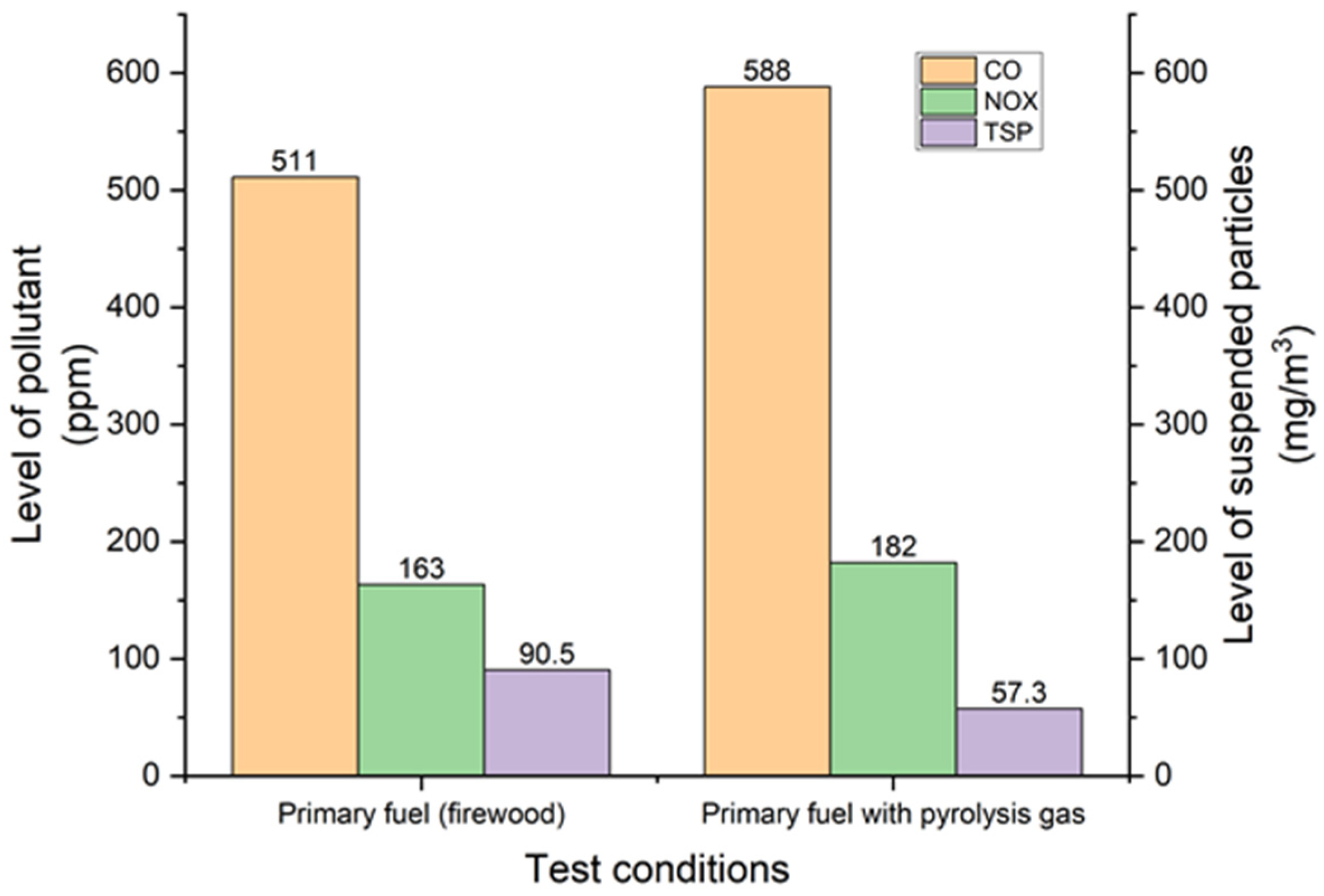
A comparative analysis of pollutant emissions from a biochar furnace operating with conventional primary fuel (firewood) and with primary fuel supplemented by pyrolysis gas is presented in Figure 7. The results indicate relatively small variations in CO and NOx emissions, with differences of approximately 77 ppm and 19 ppm, respectively. In contrast, suspended particulate matter emissions decreased significantly, by up to 36.7%, when pyrolysis gas was used. These findings highlight the potential of integrating pyrolysis- and gasification-derived gases to reduce particulate emissions while maintaining comparable gaseous emission levels.
Overall, these results underscore the potential of biomass-based thermochemical systems, particularly gasification-assisted configurations, to contribute to cleaner energy production. When appropriately designed and operated, these systems can significantly mitigate air pollutant emissions and support reductions in greenhouse gas impacts, making them especially relevant for decentralized energy applications in humid tropical regions.

7. Feasibility of the Proposed Approach: Socio-Economic and Environmental Aspects in Mexico

The feasibility of bioenergy-based proposals in Mexico involves a combination of socio-economic, regulatory, and environmental considerations. Although Mexico possesses significant biomass resources, the integration of bioenergy into the national energy matrix faces persistent challenges, including limited technology transfer, weak regulatory frameworks, and insufficient institutional support, which collectively hinder the large-scale implementation of biomass technologies [19].
Despite these barriers, bioenergy offers substantial socio-economic benefits, particularly in terms of job creation, rural development, and local value generation. The utilization of regionally available biomass resources can stimulate local economies while reducing dependence on imported fossil fuels and enhancing energy security [2]. From an environmental perspective, the increasing impacts of climate change in Mexico have driven the implementation of policies aimed at expanding renewable energy deployment. Under the General Climate Change Law, Mexico has committed to reducing CO2 emissions by 50% by 2050, positioning biomass as a strategic renewable energy option due to the country’s diverse climates and ecosystems.
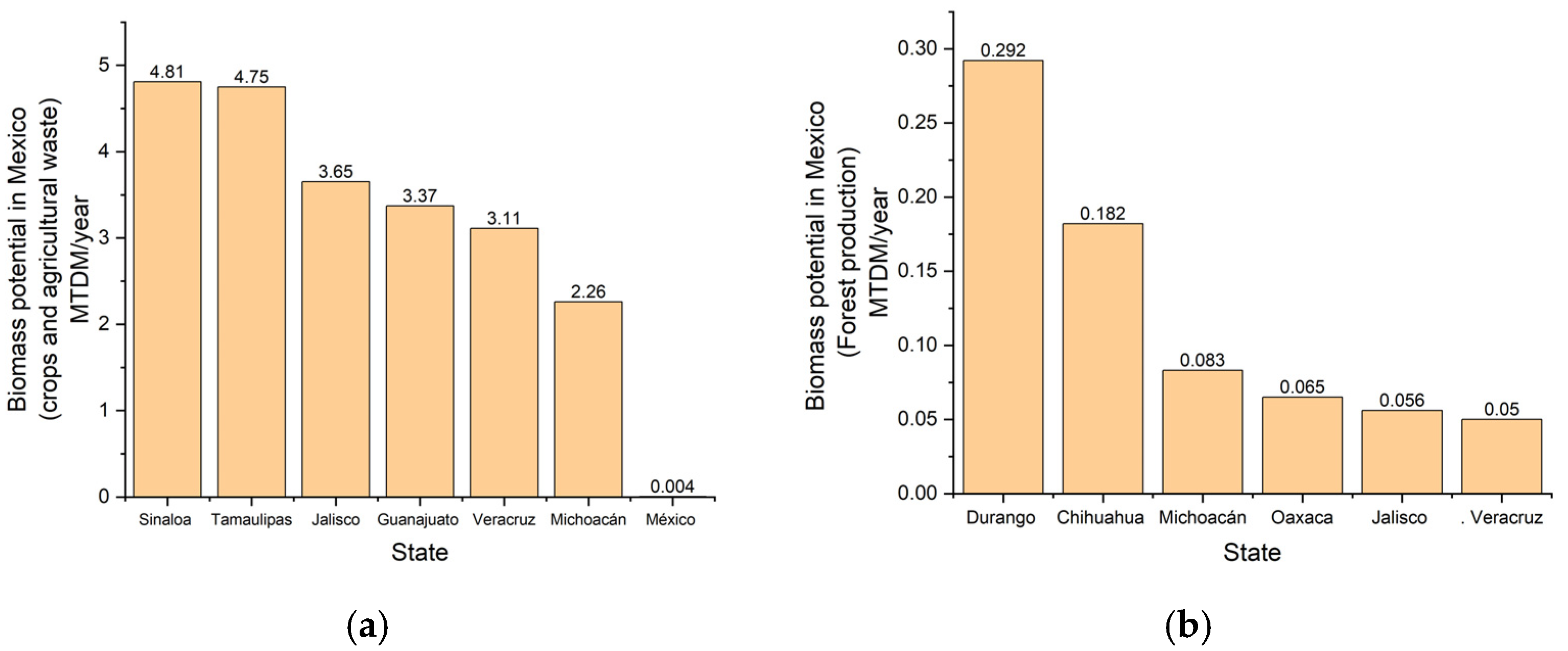
The national potential for biomass utilization is illustrated in Figure 8, which highlights the heterogeneous distribution of biomass resources across Mexico. States such as Sinaloa and Tamaulipas exhibit the highest potential for agricultural crops and residues, with estimated values of 4.81 and 4.75 MTDMY, respectively. In contrast, forest biomass production is more prominent in states such as Durango and Chihuahua, with potentials of 0.292 and 0.182 MTDMY, respectively. Overall, Mexico was estimated to have a bioenergy generation potential of approximately 982 MW in 2022, underscoring the relevance of biomass in national climate mitigation strategies [103].
However, the adoption of bioenergy technologies in Mexico remains constrained by the lack of direct incentives for biomass producers, continued subsidies and structural support for fossil fuels, and limited investment in bioenergy infrastructure. Addressing these challenges through targeted policy instruments, financial incentives, and infrastructure development could significantly enhance the socio-economic and environmental viability of bioenergy projects, particularly in rural and biomass-rich regions of the country [29].

7.1. Economic Viability and Associated Costs (Collection, Transportation, and Processing)

The economic viability of biomass-based energy production is strongly influenced by costs associated with feedstock collection, transportation, and processing. Biomass logistics, particularly for dispersed resources such as oil palm residues, require careful planning to ensure a reliable and continuous supply of raw material while minimizing transportation distances and associated costs. These logistical considerations are critical for defining the optimal size, location, and capacity of biomass conversion facilities, directly impacting their overall economic feasibility [104].
Collection and transportation costs typically represent a substantial fraction of total biomass supply chain expenses, especially in rural or geographically fragmented regions. Inefficient logistics can rapidly offset the economic benefits derived from abundant biomass availability. Therefore, integrated supply chain design, including decentralized processing or pre-treatment near the biomass source, is often proposed as a strategy to reduce transportation costs and improve system competitiveness [104].
Biomass processing into biofuels or bioenergy carriers involves a range of biochemical and thermochemical technologies, whose economic performance depends on both capital and operational expenditures. While the availability of large biomass volumes supports the technical feasibility of these processes, high costs associated with energy input, auxiliary chemicals, and process additives—such as surfactants required for emulsification—can represent significant economic barriers [105]. These factors must be carefully balanced against conversion efficiency gains to ensure cost-effective operation.
From a broader economic perspective, biomass energy systems offer additional value by partially substituting fossil fuels such as coal in power generation. This substitution not only contributes to emission reduction goals but also enhances energy security by decreasing reliance on imported fuels, thereby improving long-term economic resilience [106]. Collectively, these logistical, processing, and substitution-related factors determine the economic feasibility of biomass as a renewable energy source and highlight the importance of integrated techno-economic assessments for biomass-based energy projects.
This is particularly relevant for small-scale gasifier stove applications, where feedstock availability and local logistics directly determine system feasibility.

7.2. Socio-Economic Impacts on Rural Communities

The socio-economic impact of biomass-based energy systems in rural communities is multifaceted, encompassing improvements in public health, household economics, and local income generation. One of the most immediate benefits is the improvement in air quality resulting from the reduction in pollutant emissions associated with traditional biomass combustion. Cleaner biomass-based energy solutions can significantly reduce exposure to harmful pollutants, thereby improving public health outcomes and lowering healthcare-related costs in rural populations [107].
The transition from traditional energy practices to modern biomass technologies, such as biogas systems and improved biomass cookstoves, also yields substantial time and cost savings for rural households. These technologies are generally more energy-efficient and require lower fuel consumption, reducing the time spent on fuel collection and associated household expenditures [108]. Such efficiency gains contribute to improved quality of life, particularly for women and children, who are often disproportionately affected by traditional fuel collection and indoor air pollution, since reductions in CO concentrations of 66–82% and PM2.5 concentrations of 67–97% compared to conventional stoves [109,110,111]. Gasification stoves also had a 28% reduction in fuel consumption and cooking time by 25% [112]. In terms of health and quality of life, the constant use of biomass stoves was associated with a reduction in the relative risk of respiratory symptoms in women: 0.77 for cough and 0.29 for wheezing; the use of improved stoves was associated with an improvement of 0.3–0.4 standard deviations in height index for young children, a positive impact on their physical development by reducing exposure to smoke during their early years; women in rural communities walk an average of 30 km a month to collect firewood, spending 2.7 h per trip, which causes back and neck pain, efficient stoves reduce this physical effort [113,114,115].
Beyond household-level benefits, the development of biomass-based industries in rural areas can stimulate local economic activity by creating employment opportunities across the biomass value chain, including feedstock collection, processing, system operation, and maintenance. This economic diversification fosters regional development and social inclusion, particularly in biomass-rich areas where localized bioenergy systems can strengthen rural economies and reduce migration pressures toward urban centers [116].
Overall, biomass energy represents a sustainable pathway for enhancing socio-economic resilience in rural communities by simultaneously addressing energy access, public health, and local economic development. When supported by appropriate policies and community engagement, biomass-based energy systems can play a pivotal role in promoting inclusive and sustainable rural development.

7.3. Environmental Impact and Life Cycle Assessment (LCA)

Although biomass energy is widely regarded as a renewable energy source, its environmental sustainability cannot be assumed a priori and must be evaluated through comprehensive life cycle assessment (LCA). LCA provides a systematic framework to quantify environmental impacts across all stages of the biomass energy chain, including feedstock production, harvesting, transportation, processing, conversion, and end use. This approach is essential for identifying trade-offs and ensuring that biomass-based systems deliver net environmental benefits [52].
Biomass combustion and thermochemical conversion processes can contribute to greenhouse gas (GHG) emissions, depending on factors such as feedstock type, land-use practices, conversion efficiency, and supply chain logistics. In addition to climate-related impacts, biomass utilization may affect soil quality, water resources, and biodiversity, particularly when feedstock harvesting is not managed sustainably [1]. These considerations highlight the importance of incorporating land-use change, resource depletion, and ecosystem impacts into LCA studies of biomass energy systems.
Despite these challenges, numerous LCA studies have demonstrated that biomass-based energy can offer significant environmental advantages compared to fossil fuel systems, particularly when residues and waste streams are used as feedstocks and when conversion technologies are optimized for efficiency [117]. Under such conditions, biomass energy systems can achieve substantial reductions in net GHG emissions and contribute to climate change mitigation goals.
A robust LCA enables decision-makers to balance the renewable energy benefits of biomass against its potential environmental costs, guiding technology selection, system design, and policy development. By identifying critical hotspots within the biomass value chain, LCA supports the implementation of mitigation strategies that enhance environmental performance and ensure alignment with low-carbon energy transition pathways [89]. Consequently, life cycle-based evaluation is indispensable for the sustainable deployment of biomass energy systems and for maximizing their contribution to environmentally responsible energy production.

8. Opportunities for Future Research

Future research on biomass-based energy systems presents several promising directions aimed at improving environmental performance, technological efficiency, and socio-economic integration. One important research avenue involves the comprehensive environmental assessment of hybrid renewable energy systems (HRES), particularly through life cycle–based evaluations. Special attention should be given to the impacts of primary biomass consumption on local ecosystems, land-use dynamics, and greenhouse gas emissions associated with biomass combustion, enabling a more holistic evaluation of the sustainability of HRES configurations [52].
Another relevant research opportunity lies in the optimization of agricultural resource allocation within the water–food–energy nexus. Integrating dynamic crop patterns, resource availability, and robust optimization methods could enhance biomass utilization efficiency in agricultural systems while minimizing competition for land and water resources [118]. Such approaches are particularly relevant in regions with strong seasonal variability and competing resource demands.
Significant advances are also needed in biomass conversion technologies, particularly in pyrolysis processes, to improve bio-oil yield and quality. Key challenges such as thermal instability, high oxygen content, and corrosivity of bio-oils remain barriers to large-scale implementation and require further investigation into catalytic upgrading, reactor design, and process integration strategies [98].
In addition, the development and deployment of biomass gasification technologies, especially small-scale gasifier stoves, represent a promising research area for delivering cleaner and more efficient energy solutions at the household and community levels. Future studies should focus on improving gasifier design, emission control, operational stability, and user acceptance, particularly in rural contexts where access to modern energy remains limited. Such efforts could significantly reduce harmful emissions while enhancing the sustainability and resilience of decentralized energy systems [99].
Overall, addressing these research gaps through interdisciplinary and systems-oriented approaches will be essential for advancing biomass energy technologies and maximizing their contribution to sustainable and low-carbon energy transitions.

8.1. Optimization of Small-Scale Gasification Stove Designs

Optimizing small-scale gasification stove designs involves improving energy efficiency and reducing emissions through targeted design modifications. Several studies highlight the critical role of air-flow dynamics—particularly the balance between primary and secondary air—in enhancing combustion efficiency and minimizing pollutant formation [100]. The incorporation of computational fluid dynamics (CFD) modeling has proven especially valuable, as it allows for the simulation of different air-flow configurations and operating conditions, enabling the systematic optimization of stove geometry and operating parameters [119].
In addition, the development of advanced gasifier stoves with innovative air-supply strategies has demonstrated substantial reductions in CO2 and PM2.5 emissions, positioning these systems as viable and cleaner alternatives to traditional biomass stoves [120]. Design improvements such as corrugated plates, throat restrictions, and helical deflectors have also been shown to enhance heat transfer, promote more complete combustion, and improve overall thermal performance [58].
Table 6 summarizes key design parameters reported in the literature that influence the energy efficiency of gasification stoves. For example, a bluff-body burner (type B) operating at an equivalence ratio of 0.5 with a mixed feedstock (rice husks and sawdust in a 1:1 ratio) achieved thermal efficiencies ranging from 13.5 to 17.6%, with a heating rate of 2.27 kW [121]. A downdraft gasifier with a throat nozzle and cyclone separator reported an efficiency of approximately 70%, while simultaneously reducing tar formation through improved gas–solid separation [122]. Furthermore, an integrated combustion system coupled with methanol synthesis achieved an efficiency of 95.23%, alongside significant reductions in soot, sulfur dioxide, and nitrogen oxides emissions [123].
It is important to note that a substantial number of studies summarized in Table 7 do not report thermal efficiency explicitly, as their primary focus lies on process simulation, fuel characterization, life cycle assessment, emission mitigation, or cost analysis rather than direct stove performance metrics. This highlights a critical research gap: the need for standardized experimental protocols—such as water boiling tests (WBT) and field-based performance evaluations—to enable consistent comparison of stove efficiencies across studies and operating contexts.
Overall, the literature demonstrates that optimizing feedstock composition, reactor geometry, air-supply configuration, and operating conditions is essential for improving the performance of small-scale gasification stoves. Future research should emphasize integrated experimental–numerical approaches and field validation to translate laboratory-scale design improvements into robust, efficient, and low-emission cooking technologies suitable for real-world rural applications.

8.2. Development of Low-Cost Catalysts for Tar Reduction

The development of low-cost catalysts for tar reduction in biomass gasification is a key strategy to improve the efficiency and sustainability of biofuel production. Catalytic pyrolysis, which involves upgrading pyrolysis vapors through catalytic reactions, has emerged as a promising approach to mitigate tar formation while simultaneously enhancing the quality of gaseous and liquid products [130]. This process not only reduces the oxygen content of bio-oil—thereby increasing its heating value and thermal stability—but also facilitates the conversion of biomass into higher-value hydrocarbons and platform chemicals in a single step [131].
Zeolite-based catalysts such as HZSM-5, HY, and Al-MCM-41 have been widely reported to promote C–O bond cleavage and key reactions including dehydration, decarboxylation, and decarbonylation, resulting in improved bio-oil characteristics and reduced tar content [130,132]. However, the relatively high cost of conventional zeolites has motivated increasing research interest in alternative low-cost catalytic systems.
Table 7 summarizes recent studies focused on tar reduction mechanisms using economically viable catalysts. Commercial metal oxides, natural minerals, and waste-derived supports have demonstrated significant potential for tar mitigation. For instance, the direct addition of 5–10 wt.% commercial Al2O3 into an updraft gasifier reduced tar formation by 25–27.5% while increasing hydrogen concentration and the lower heating value of syngas [133]. Similarly, metal-impregnated biochars prepared from agricultural residues (Fe, Zn, and Ni) promoted deoxygenation and aromatization reactions, achieving bio-oil yields of up to 64.16% with oxygen contents below 3% [128].
Table 7. Tar reduction mechanisms and catalysts.
ReferenceCatalytic SystemTar Reduction MechanismPerformance MetricsCost Considerations
[128]Biochar with zinc, iron, and nickelMetallic sites promote deoxygenation, aromatization, and syngas formationBio-oil yield up to 64.16%; aromatics > 50%; hydrogen 156.8 NmL g−1; iron@carbon surface area 964 m2 g−1; oxygen content < 3%Biochar from agricultural residues; metal salts; scalable
[133]Aluminum oxide in granules from sago bark ashIncreases surface area, improves interaction between fuel and gasifying agent, reducing tarTar reduced by 25–275%; hydrogen increased up to 31.65%; lower heating value reduced to 23.5–26.5%; H2/CO ratio 1.51–1.65Commercial alumina; direct addition; low cost
[134]Ferric sulfate, zinc sulfate saltsIron alters activation energies, modifies released gas profile; both enhance oxygenationMass loss up to 71.17%; increased CO2, H2O, CH4, CO, HCN, formic acid, acetic acid; iron more active than zincSimple salts; direct impregnation; very low cost
[135]Dolomite, calcined dolomite (CaO/MgO)Promotes deoxygenation, accelerates pyrolysis, reduces tarHydrocarbon selectivity 57.27%; liquid yield 68–73%; char 0.64%; stable over cycles; surface area up to 9.7 m2 g−1Natural mineral; minimal processing; highly scalable
[136]Nickel nanoparticlesPromotes deoxygenation, hydrogenation, and micropore formationBio-oil HHV up to 42.68 MJ kg−1; biochar HHV up to 28.7 MJ kg−1; increased gas yield; improved fuel propertiesNanoparticle synthesis cost; no support required; moderate cost
[137]Nickel–molybdenum/Y-NAC (hybrid zeolite/carbon)High deoxygenation/hydrogenation, low solid residue, high cycloalkane yieldSolid yield 3.9%; deoxygenated products 50.2%; cycloalkanes 48.1%; outperforms Al2O3, ZrO2, TiO2, and CeO2 supportsZeolite/carbon hybrid; wet impregnation; moderate cost
Other studies highlight the effectiveness of simple metal salts, natural dolomite, and nickel-based catalysts as scalable and low-cost alternatives capable of enhancing hydrocarbon selectivity and catalytic stability over multiple cycles [134,135,136]. More advanced hybrid systems, such as Ni–Mo catalysts supported on zeolite–carbon composites, have shown high selectivity toward deoxygenated products and cycloalkanes, although their economic feasibility and large-scale applicability require further assessment [137].
Overall, these findings indicate that low-cost catalyst designs—including metal oxides, mineral-based materials, waste-derived supports, and zeolite-based systems—offer a promising pathway to reduce tar formation by enhancing surface area, promoting deoxygenation and hydrogenation reactions, and improving gas–solid interactions. Continued research in this area is essential to balance catalytic performance, cost, and scalability for sustainable thermochemical biomass conversion processes.

8.3. Integrated Waste Management Strategies and Energy Valorization

Integrated waste management and energy valorization strategies are essential for advancing sustainable biomass-based energy systems, particularly in regions with abundant agricultural, forestry, and agro-industrial residues. The utilization of biomass for energy production not only addresses waste management challenges but also contributes to the diversification of renewable energy sources and the reduction in environmental burdens associated with unmanaged waste [117].
In several regions worldwide, integrated approaches combining biomass residues with existing waste management frameworks have demonstrated significant potential. For example, in Southeast Asia, oil palm residues and municipal solid waste (MSW) have been identified as promising feedstocks for partial coal substitution in energy systems, offering substantial energy recovery while reducing landfill disposal and associated emissions [138]. Similar strategies involving agricultural and forestry residues enable the extension of energy resource availability and support long-term fuel sustainability.
From an environmental perspective, the valorization of biomass residues through thermochemical and biochemical pathways can contribute to greenhouse gas mitigation by reducing open burning, landfill emissions, and fossil fuel consumption. When properly managed, these integrated systems align with international environmental objectives by minimizing lifecycle emissions and promoting circular economy principles [1,39].
Future research should focus on developing region-specific integrated waste-to-energy frameworks [139,140]. It is imperative that these frameworks consider feedstock availability, logistics, and conversion technology selection [29,141,142].
The implementation of these comprehensive strategies must also include public policy constraints and current regulatory frameworks, such as the Biofuels Law in Mexico, to ensure the long-term viability of projects [143,144]. These strategies have the potential to simultaneously enhance waste management efficiency, improve energy security, and stimulate local economic development by maximizing the value of locally available biomass resources [143,145].

8.4. Case Studies and Pilot Projects in Mexico

Case studies and pilot-scale projects play a critical role in bridging the gap between theoretical assessments and real-world implementation of biomass-based energy systems. In recent years, computational modeling and spatial analysis tools have increasingly been applied to evaluate environmental and energy impacts in rural and biomass-rich regions. For example, Wahyudin [146] employed computational models to quantify PM2.5 emissions across multiple rural locations, providing valuable insights for environmental assessment and public policy design related to air quality management.
In the Mexican context, notable efforts have been undertaken to support evidence-based bioenergy planning. A relevant initiative supported by the Economic Commission for Latin America and the Caribbean (ECLAC) in collaboration with the National Autonomous University of Mexico (UNAM) involves the development of a geospatial platform designed to assess the energy potential of biomass resources. This platform focuses on feedstocks derived from forestry industry by-products, dedicated forest plantations, and native forests, enabling spatially resolved evaluation of biomass availability and energy potential. Tauro et al. [147] estimated the energy potential of sugarcane and oil palm in Honduras, for the production of ethanol and biodiesel, respectively. In the case of sugarcane, a technical potential was estimated at 7038 million liters (equivalent to 82 PJ) of ethanol production. Regarding oil palm, a production of 7077 million liters of biodiesel was estimated.
Such geospatial decision-support tools address key challenges associated with the spatial dispersion of biomass resources by integrating data on resource distribution, logistics, and potential energy yields. By facilitating informed decision-making, these platforms support the strategic integration of bioenergy into national and regional energy matrices and contribute to the diversification of renewable energy sources. Furthermore, these initiatives are aligned with Sustainable Development Goal 7 of the United Nations 2030 Agenda, which promotes access to affordable, reliable, sustainable, and modern energy.
Overall, existing case studies and pilot projects highlight the technical and strategic potential of biomass energy to partially substitute non-renewable energy sources in Mexico and Central America. However, they also underscore the need for expanded pilot-scale demonstrations that integrate environmental assessment, techno-economic analysis, and social acceptance. Future research should prioritize the validation of such tools through field implementation and community-based projects to ensure the scalable and sustainable deployment of biomass energy systems in the region [147].

8.5. Public Policies and Incentives for Implementation

Public policies and economic incentives play a decisive role in enabling the deployment of biomass-based energy systems by reducing investment risks, improving economic feasibility, and fostering technological adoption. International experience demonstrates that well-designed policy frameworks can significantly accelerate the integration of biomass into national energy systems.
In the European Union, comprehensive energy policies incorporating market-based instruments- such as emissions trading schemes and green certificate systems—have been implemented to promote renewable energy sources, including biomass. These mechanisms aim to reduce greenhouse gas emissions while stimulating economic growth through the creation of competitive renewable energy markets [138]. Similarly, in Southeast Asia, countries such as Malaysia have introduced financial incentives including feed-in tariffs, tax exemptions, and investment subsidies to attract private capital and support the deployment of biomass energy technologies [39]. In parallel, government incentives targeting innovative logistics systems and community-based bioenergy projects have been shown to enhance sustainable livelihoods, highlighting the importance of bottom-up policy design [148].
In Mexico, fiscal incentives for biomass-based energy projects are primarily provided through the Income Tax Law, which allows a 100% tax deduction for investments in machinery and equipment used for renewable energy generation, including biomass. This fiscal mechanism represents a key economic driver for private investment in bioenergy infrastructure. From a regulatory perspective, the recently enacted Biofuels Law (published on 18 March 2025) establishes the legal framework for the sustainable use of biofuels and explicitly promotes the national energy transition. In addition, the Energy Transition Law supports the development and diversification of clean energy sources, reinforcing the strategic role of biomass within Mexico’s renewable energy portfolio.
Biomass and bioenergy projects in Mexico are also required to comply with sustainability certification standards, notably the Mexican Standard NMX-AA-174-SCFI-2015 [149], which establishes specifications and requirements for environmental sustainability certification in the production of liquid biofuels from vegetable biomass. This regulatory instrument ensures that bioenergy development aligns with environmental protection objectives and international sustainability criteria.
Overall, the successful implementation of biomass energy systems depends on coherent and stable policy frameworks that combine fiscal incentives, regulatory clarity, and sustainability standards. Strengthening policy coordination, expanding targeted incentives, and supporting community-based initiatives will be essential to overcome existing barriers and to enable the large-scale and socially inclusive deployment of biomass-based energy technologies in Mexico and other emerging economies.
The initial oil palm plantations in Mexico were established in the 1950s. Oil palm is a perennial species with a productive lifespan ranging from approximately 2 to 28 years [135]. Oil palm produces a fruit that, because of its physicochemical properties, rapidly accumulates free fatty acids. Therefore, fruit requires processing soon after harvesting, which necessitates the location of oil extraction plants near cultivation areas [150]. Fresh fruit bunches typically weigh around 70 kg, with approximately 20% of this weight consisting of extractable crude oil [151,152].

8.6. Policy Implications and Final Remarks

Oil palm solid waste is mainly used in Mexico because it is abundant, dries easily, and has high energy content. Densified waste, such as pellets or briquettes made from compacted fiber, husk, and bunches, is also used [138].
When implemented in rural projects, these solid waste systems offer significant advantages: they streamline the movement and storage of materials, increase energy conversion rates during gasification, and utilize locally available raw materials from extraction plants. Additionally, their effective drying capacity in humid climates allows for broader implementation across a range of producing regions [153,154].
In Mexico, bioenergy has been incorporated into official policy as a component of energy transition and climate mitigation strategies. Within this framework, oil palm cultivation is advanced as a principal biodiesel source, particularly in the humid southeastern tropics. Nevertheless, the newness of these policies has generated friction between energy goals, rural livelihoods, and environmental safeguards [155].
Bioenergy can contribute to emissions reduction, rural development, and increased income in rural areas. However, these advances depend on political and regulatory systems, as well as prevailing economic and social conditions, factors that limit their effective implementation [156].
The Biofuels Law (2025) establishes sustainability-oriented principles, including [157]:
  • Utilization of organic waste as feedstock;
  • Production on marginal lands;
  • Avoidance of competition with food production.
In line with these principles, the government also identifies the need to develop bioenergy markets, technological capacities, and appropriate environmental and institutional regulations.
Yet, this regulatory orientation often contrasts with on-the-ground realities. Although the legal framework aims to limit impacts, its implementation has led to increased cultivation of energy crops, particularly in humid tropical regions [143].
These territories are classified as priorities due to their optimal climate, abundant rainfall and warmth, land accessibility, and presence of rural populations [158].
Consequently, evidence indicates that this expansion in rural areas has resulted in land dispossession, increased pressure on indigenous communities, and significant changes to local economies [156,158].
Overall, these findings demonstrate that Mexico’s success in its bioenergy and palm oil energy transition relies on the government’s capacity to align policies with environmentally sustainable practices, social justice, and effective territorial governance.
This reinforces the role of oil palm residues not only as an agro-industrial by-product, but as a key component in the transition toward decentralized and sustainable energy systems in Mexico.

9. Conclusions

Oil palm residues in Mexico constitute a largely underutilized biomass resource with significant potential for decentralized energy generation. Their continuous availability in humid tropical regions, combined with favorable physicochemical properties—particularly in palm kernel shells and mesocarp fiber—supports their suitability as feedstock for thermochemical conversion in small-scale gasification systems such as gasifier stoves.
This study demonstrates that gasifier stoves represent a technically viable and context-appropriate solution for converting oil palm residues into useful thermal energy, offering improved combustion efficiency and reduced pollutant emissions compared to traditional biomass use. However, feedstock-related limitations, including high moisture content and ash-related issues, remain critical factors affecting stove performance, requiring adequate pre-treatment and optimized operating conditions.
A key finding of this work is that, despite the recognized role of biomass in national energy strategies, current policy frameworks in Mexico remain predominantly oriented toward large-scale biofuel production. This creates a structural gap that limits the development and deployment of small-scale technologies such as gasifier stoves, particularly in rural and marginalized regions where their impact could be most significant.
From a socio-environmental perspective, the expansion of oil palm cultivation introduces important trade-offs. While it contributes to biomass availability and rural economic activity, it may also generate land-use pressures and social challenges if not properly managed. Therefore, the sustainable use of oil palm residues through gasifier stove technologies must be accompanied by integrated policy approaches that ensure environmental protection, social equity, and responsible territorial planning.
Overall, the successful implementation of gasifier stoves using oil palm residues depends on the alignment between feedstock characteristics, stove design, and supportive regulatory frameworks. Future efforts should focus on improving stove efficiency, reducing operational challenges such as tar formation and ash-related issues, and strengthening policy instruments that promote decentralized bioenergy systems.
This work highlights the role of gasifier stoves as a key pathway for the practical utilization of oil palm residues, contributing to improved energy access, reduced emissions, and the advancement of sustainable and locally integrated energy solutions in Mexico.

Author Contributions

M.A.-Z., Writing—original draft preparation; L.R.-B., Writing and Validation; M.M.-B., Formal analysis; M.A.-C., Conceptualization; I.Z.-T., Visualization-validation; and E.R.-M., Writing—review and editing. All authors have read and agreed to the published version of the manuscript.

Funding

This research received no external funding.

Data Availability Statement

The original contributions presented in this study are included in the article. Further inquiries can be directed to the corresponding author.

Conflicts of Interest

The authors declare no conflicts of interest.

References

  1. Tun, M.M.; Juchelkova, D.; Win, M.M.; Thu, A.M.; Puchor, T. Biomass Energy: An Overview of Biomass Sources, Energy Potential, and Management in Southeast Asian Countries. Resources 2019, 8, 81. [Google Scholar] [CrossRef]
  2. Martinez-Hernandez, E.; Castillo-Landero, A.; Dominguillo-Ramírez, D.; Amezcua-Allieri, M.A.; Morse, S.; Murphy, R.; Aburto, J.; Sadhukhan, J. Priorities and Relevance of Bioenergy Sustainability Indicators: A Participatory Selection Framework Applied to Community-Based Forestry in Mexico. Energy Res. Soc. Sci. 2024, 109, 103425. [Google Scholar] [CrossRef]
  3. Sánchez-Pólito, J.; Berrueta, V.; Ruiz-García, V.; Beltrán, A.; Herrera-Medina, E.; Cazarez-Barboza, M.; Álvarez-Icaza, L.; Masera, O. Development and Evaluation Performance of Top-Lit Updraft Biomass Micro-Gasifiers for Energy-Intensive Household Cooking Tasks in Mexico. Sustain. Energy Technol. Assess. 2024, 67, 103813. [Google Scholar] [CrossRef]
  4. Yu, H.; Fu, D.; Yuan, Z.; Tang, J.; Xiao, Y.; Kang, L.; Lyne, V.; Su, F. Regimes of Global and National Oil Palm Cultivations from 2001 to 2018. Glob. Environ. Change 2024, 86, 102845. [Google Scholar] [CrossRef]
  5. FAOSTAT. Available online: https://www.fao.org/faostat/es/#data/QCL (accessed on 21 September 2025).
  6. Palm Oil|USDA Foreign Agricultural Service. Available online: https://www.fas.usda.gov/data/production/commodity/4243000 (accessed on 21 September 2025).
  7. Han, X.; Wang, Y.; Du, M.; Tian, C.; Xie, M.; Zhang, L.; Cao, J. Synergistic Governance of Carbon Emissions and PM2.5 Pollution: Evidence from Environmental Rebound Effect in China. Sustain. Futures 2025, 10, 101232. [Google Scholar] [CrossRef]
  8. Lazaro, L.L.B.; Usuriaga-Najera, O.C.; Neto, A.H.; Grimoni, J.A.B.; Jacobi, P.R. Climate Commitments and Energy Transition Pledges in Latin America: Where Is the Region Headed? Energy Sustain. Dev. 2025, 88, 101779. [Google Scholar] [CrossRef]
  9. Barrera Giraldo, J.A.; Galeano, D.; Morales, D.; Trespalacios, A. Economic and Policy Assessment on Nuclear Energy for Latin America’s Energy Transition. Energy Policy 2025, 206, 114771. [Google Scholar] [CrossRef]
  10. Biomass. Available online: https://energy.ec.europa.eu/topics/renewable-energy/bioenergy/biomass_en (accessed on 6 March 2026).
  11. Biomass in the EU Green Deal: Towards Consensus on Sustainable Use of Biomass for EU Bioenergy?—IEEP AISBL. Available online: https://ieep.eu/publications/biomass-in-the-eu-green-deal-towards-consensus-on-sustainable-use-of-biomass-for-eu-bioenergy/ (accessed on 6 March 2026).
  12. Millinger, M.; Hedenus, F.; Zeyen, E.; Neumann, F.; Reichenberg, L.; Berndes, G. Diversity of Biomass Usage Pathways to Achieve Emissions Targets in the European Energy System. Nat. Energy 2025, 10, 226–242. [Google Scholar] [CrossRef]
  13. Magaña, S.A.T.; Vidal, V.V. Impacto de La Palma de Aceite En México En El Ámbito: Económico. Publicaciones Investig. 2022, 16. [Google Scholar] [CrossRef]
  14. Isaac Márquez, R.; Retana Guiascón, O.G.; Rendón von Osten, J. Impactos Socioambientales de La Agroindustria de Palma de Aceite En Campeche, México; Universidad Nacional Autónoma de México: Ciudad de México, Mexico, 2024. [Google Scholar]
  15. Cifuentes-Espinosa, J.A.; Feintrenie, L.; Monzón-Alvarado, C.; Schmook, B.; Mesa-Jurado, M.A. Oil Palm Growers’ Prospects for Sustainable Oil Palm Production. A Case Study from Campeche, Mexico. Agric. Syst. 2023, 212, 103780. [Google Scholar] [CrossRef]
  16. Castellanos-Navarrete, A.; Jansen, K. Why Do Smallholders Plant Biofuel Crops? The ‘Politics of Consent’ in Mexico. Geoforum 2017, 87, 15–27. [Google Scholar] [CrossRef]
  17. Méndez Rodríguez, J.L.; Mier y Terán Giménez-Cacho, M. Expansión de La Producción de Aceite de Palma En Territorios Campesinos, El Caso de Palenque, Chiapas (1996–2018). Rev. Pueblos Front. Digit. 2020, 15. [Google Scholar] [CrossRef]
  18. Lozada, I.; Islas, J.; Grande, G. Environmental and Economic Feasibility of Palm Oil Biodiesel in the Mexican Transportation Sector. Renew. Sustain. Energy Rev. 2010, 14, 486–492. [Google Scholar] [CrossRef]
  19. Aguilar-Aguilar, F.A.; Mena-Cervantes, V.Y.; Hernández-Altamirano, R. Analysis of Public Policies and Resources for Biodiesel Production in México. Biomass Bioenergy 2025, 196, 107762. [Google Scholar] [CrossRef]
  20. Rosas Urióstegui, F.I.; Pat Fernández, J.M.; Pat Fernández, L.A.; Cornelis van der Wal, J. The Effect of Oil Palm on Income Strategies and Food Security of Households in Rural Communities in Campeche, Mexico. Acta Univ. 2018, 28, 25–32. [Google Scholar] [CrossRef]
  21. Isaac Márquez, R.; Ayala Arcipreste, M.E.; Sánchez González, M.C. Desarrollo Rural y Palma de Aceite. Estudio de Caso en Campeche, México. 2018. Available online: https://ru.iiec.unam.mx/3776/ (accessed on 21 September 2025).
  22. Castellanos-Navarrete, A.; Colocho-Rodríguez, M.A.; Vargas-Ramírez, N. Does Community-Based Tenure Prevent Land Grabbing? The Oil Palm Case in Mexico. Appl. Geogr. 2024, 172, 103413. [Google Scholar] [CrossRef]
  23. Oliveira, S.L.; Flaspohler, D.J.; Knowlton, J.L.; Wolfe, J.D. Do Oil Palm Plantations Provide Quality Habitat for Migratory Birds? A Case Study from Mexico. Ecol. Indic. 2022, 139, 108964. [Google Scholar] [CrossRef]
  24. Heidari, A.; Mayer, A.; Watkins, D.; Castillo, M.M. Hydrologic Impacts and Trade-Offs Associated with Developing Oil Palm for Bioenergy in Tabasco, Mexico. J. Hydrol. Reg. Stud. 2020, 31, 100722. [Google Scholar] [CrossRef]
  25. Castellanos-Navarrete, A. Oil Palm Dispersal into Protected Wetlands: Human–Environment Dichotomies and the Limits to Governance in Southern Mexico. Land Use Policy 2021, 103, 105304. [Google Scholar] [CrossRef]
  26. Aguilar-Gallegos, N.; Muñoz-Rodríguez, M.; Santoyo-Cortés, H.; Aguilar-Ávila, J.; Klerkx, L. Information Networks That Generate Economic Value: A Study on Clusters of Adopters of New or Improved Technologies and Practices among Oil Palm Growers in Mexico. Agric. Syst. 2015, 135, 122–132. [Google Scholar] [CrossRef]
  27. Salgado-García, S.; Palma-López, D.J.; Zavala-Cruz, J.; Lagunes-Espinoza, L.d.C.; Córdova-Sánchez, S.; Castelán-Estrada, M.; Ortiz-García, C.F.; Rincón-Ramírez, J.A.; Salgado-Velázquez, S. Fertilization and Sustainable Nutrition of Oil Palm (Elaeis guineensis) in Tabasco, México. Ecosistemas Recur. Agropecu. 2023, 10, e3082. [Google Scholar]
  28. Magaña-Álvarez, A.; Pérez-Brito, D.; Cortés-Velázquez, A.; Nexticapan-Garcéz, Á.; Ortega-Ramírez, M.E.; García-Cámara, I.; Sánchez-Rodríguez, Y.; Martín-Mex, R. Genetic Variability of Oil Palm in Mexico: An Assessment Based on Microsatellite Markers. Agriculture 2023, 13, 1772. [Google Scholar] [CrossRef]
  29. Ordoñez-Frías, E.J.; Azamar-Barrios, J.A.; Mata-Zayas, E.; Silván-Hernández, O.; Pampillón-González, L. Bioenergy Potential and Technical Feasibility Assessment of Residues from Oil Palm Processing: A Case Study of Jalapa, Tabasco, Mexico. Biomass Bioenergy 2020, 142, 105668. [Google Scholar] [CrossRef]
  30. Pischke, E.C.; Rouleau, M.D.; Halvorsen, K.E. Public Perceptions towards Oil Palm Cultivation in Tabasco, Mexico. Biomass Bioenergy 2018, 112, 1–10. [Google Scholar] [CrossRef]
  31. López-Santiago, J.G.; Villanueva-López, G.; Casanova-Lugo, F.; Martínez-Zurimendi, P.; Jarquín-Sánchez, A.; Bravo-Oviedo, F.; Aryal, D.R. Carbon Reservoirs in the Biomass and Soil in Livestock Systems with Scattered Trees in Pastures in the Humid Tropics of Mexico. Terra Latinoam. 2024, 42. [Google Scholar] [CrossRef]
  32. Taib, M.N.A.M.; Salleh, A.; Jamaluddin, N.A.N.; Rasheed, T.; Hussin, M.H.; Julkapli, N.M.; Saji, V.S.; Saleh, T.A. A Review on Recent Developments of Oil Palm Solid Waste Upcycling into Green Bio-Based Materials for Sustainable Building and Construction Applications. Results Eng. 2025, 27, 107049. [Google Scholar] [CrossRef]
  33. Rendón-Camargo, D.; Boom-Cárcamo, E.; Buelvas-Gutiérrez, L.; Maya-Gonzalez, A. Utilization of Oil Palm Residual Biomass Within the Framework of Industrial Symbiosis: A Systematic Review of the Economic Sectors Involved in Its Valorization. Biomass 2026, 6, 10. [Google Scholar] [CrossRef]
  34. Molina, N.A.D.; Olivier, J.A.S.; Canepa, J.R.L.; Silvan, R.S.; Jaramillo, D.A.F. Evaluation of the Bioenergy Potential of Agricultural and Agroindustrial Waste Generated in Southeastern Mexico. AIMS Energy 2024, 12, 984–1009. [Google Scholar] [CrossRef]
  35. Molina-Guerrero, C.E.; Sanchez, A.; Vázquez-Núñez, E. Energy Potential of Agricultural Residues Generated in Mexico and Their Use for Butanol and Electricity Production under a Biorefinery Configuration. Environ. Sci. Pollut. Res. 2020, 27, 28607–28622. [Google Scholar] [CrossRef]
  36. Yang, H.; Yan, R.; Chen, H.; Lee, D.H.; Zheng, C. Characteristics of Hemicellulose, Cellulose and Lignin Pyrolysis. Fuel 2007, 86, 1781–1788. [Google Scholar] [CrossRef]
  37. Ibrahim, M.N.M.; Zakaria, N.; Sipaut, C.S.; Sulaiman, O.; Hashim, R. Chemical and Thermal Properties of Lignins from Oil Palm Biomass as a Substitute for Phenol in a Phenol Formaldehyde Resin Production. Carbohydr. Polym. 2011, 86, 112–119. [Google Scholar] [CrossRef]
  38. Saxena, A.; Parveen, F.; Hussain, A.; Khubaib, M.; Ashfaque, M. Exploring the Multifaceted Landscape of Lignocellulosic Biomass-Derived Nanocellulose and Nanolignin: Synthesis and Applications. Polym. Bull. 2025, 82, 7525–7563. [Google Scholar] [CrossRef]
  39. Hamzah, N.; Tokimatsu, K.; Yoshikawa, K. Solid Fuel from Oil Palm Biomass Residues and Municipal Solid Waste by Hydrothermal Treatment for Electrical Power Generation in Malaysia: A Review. Sustainability 2019, 11, 1060. [Google Scholar] [CrossRef]
  40. Shuit, S.H.; Tan, K.T.; Lee, K.T.; Kamaruddin, A.H. Oil Palm Biomass as a Sustainable Energy Source: A Malaysian Case Study. Energy 2009, 34, 1225–1235. [Google Scholar] [CrossRef]
  41. Hambali, E.; Rivai, M. The Potential of Palm Oil Waste Biomass in Indonesia in 2020 and 2030. Proc. IOP Conf. Ser. Earth Environ. Sci. 2017, 65, 012050. [Google Scholar] [CrossRef]
  42. Loh, S.K. The Potential of the Malaysian Oil Palm Biomass as a Renewable Energy Source. Energy Convers. Manag. 2017, 141, 285–298. [Google Scholar] [CrossRef]
  43. Dudyński, M.; Van Dyk, J.C.; Kwiatkowski, K.; Sosnowska, M. Biomass Gasification: Influence of Torrefaction on Syngas Production and Tar Formation. Fuel Process. Technol. 2015, 131, 203–212. [Google Scholar] [CrossRef]
  44. Toscano Miranda, N.; Lopes Motta, I.; Maciel Filho, R.; Wolf Maciel, M.R. Sugarcane Bagasse Pyrolysis: A Review of Operating Conditions and Products Properties. Renew. Sustain. Energy Rev. 2021, 149, 111394. [Google Scholar] [CrossRef]
  45. Ghanbarzadeh, S.; Yuan, Y.; Koupaie, E.H. Energy Recovery from Biowaste and Biomass via Gasification: A Modelling Approach. BioTech 2025, 15, 1. [Google Scholar] [CrossRef]
  46. Cheng, H.; Liang, Y.; Guo, R.; Sun, Z.; Wang, Q.; Xie, Q.; Wang, J. Effects of Solution Loss Degree, Reaction Temperature, and High Temperature Heating on the Thermal Properties of Metallurgical Cokes. Fuel 2021, 283, 118936. [Google Scholar] [CrossRef]
  47. Susastriawan, A.A.P.; Purwanto, Y.; Purnomo. Biomass Gasifier–Internal Combustion Engine System: Review of Literature. Int. J. Sustain. Eng. 2021, 14, 1090–1100. [Google Scholar] [CrossRef]
  48. Jetter, J.; Zhao, Y.; Smith, K.R.; Khan, B.; Yelverton, T.; DeCarlo, P.; Hays, M.D. Pollutant Emissions and Energy Efficiency under Controlled Conditions for Household Biomass Cookstoves and Implications for Metrics Useful in Setting International Test Standards. Environ. Sci. Technol. 2012, 46, 10827–10834. [Google Scholar] [CrossRef] [PubMed]
  49. Ike, M.; Kawagoe, H.; Oshita, K.; Takaoka, M. Detailed Estimation of Generated Woody Biomass Ash for Use as Fertilizer Material. Waste Manag. 2025, 195, 275–283. [Google Scholar] [CrossRef] [PubMed]
  50. Li, W.; Koo, C.; Hong, T.; Oh, J.; Cha, S.H.; Wang, S. A Novel Operation Approach for the Energy Efficiency Improvement of the HVAC System in Office Spaces through Real-Time Big Data Analytics. Renew. Sustain. Energy Rev. 2020, 127, 109885. [Google Scholar] [CrossRef]
  51. Yew, P.J.; Chaulagain, D.; Same, N.N.; Park, J.; Lim, J.-O.; Huh, J.-S. Optimal Hybrid Renewable Energy System to Accelerate a Sustainable Energy Transition in Johor, Malaysia. Sustainability 2024, 16, 7856. [Google Scholar] [CrossRef]
  52. Quist, C.M.; Jones, M.R.; Lewis, R.S. Influence of Variability in Testing Parameters on Cookstove Performance Metrics Based on the Water Boiling Test. Energy Sustain. Dev. 2020, 58, 112–118. [Google Scholar] [CrossRef]
  53. Rabby, M.I.I.; Uddin, M.W.; Sheikh, M.R.; Bhuiyan, H.K.; Mumu, T.A.; Islam, F.; Sultana, A. Thermal Performance of Gasifier Cooking Stoves: A Systematic Literature Review. F1000Research 2023, 12, 38. [Google Scholar] [CrossRef]
  54. Cansee, S.; Saenkham, S.; Promtow, W.; Hu, S.; Kanasri, T. Performance Optimization of Natural Updraft Gasifier Stoves: Impact of Air Hole Configuration and Biomass Fuel Characteristics on Combustion Efficiency. Energy Nexus 2025, 19, 100480. [Google Scholar] [CrossRef]
  55. Isgiyarta, J.; Sudarmanta, B.; Prakoso, J.A.; Jannah, E.N.; Saleh, A.R. Micro-Grid Oil Palm Plantation Waste Gasification Power Plant in Indonesia: Techno-Economic and Socio-Environmental Analysis. Energies 2022, 15, 1782. [Google Scholar] [CrossRef]
  56. Mehta, Y.; Richards, C. Gasification Performance of a Top-Lit Updraft Cook Stove. Energies 2017, 10, 1529. [Google Scholar] [CrossRef]
  57. Park, Y.J.; Min, G.; Hong, J. Operational Guidelines for a Residential Solid Oxide Fuel Cell-Combined Heat and Power System with an Optimal System Layout Design. Energy Convers. Manag. 2021, 246, 114666. [Google Scholar] [CrossRef]
  58. Li, H.; Liu, X.; Cao, B.; Yang, J.; Liu, C.; Chen, W. Enhanced Heat Transfer in the Heat Exchanger Integrating Convection and Radiation Mechanisms for Low Calorific Value Biomass Syngas. Appl. Therm. Eng. 2024, 255, 124045. [Google Scholar] [CrossRef]
  59. Koprivica, M.; Petrović, J.; Ercegović, M.; Simić, M.; Milojković, J.; Šoštarić, T.; Dimitrijević, J. Improvement of Combustible Characteristics of Paulownia Leaves via Hydrothermal Carbonization. Biomass Convers. Biorefin. 2024, 14, 3975–3985. [Google Scholar] [CrossRef]
  60. Song, L.; Yang, Y.; Lei, T.; Li, Y.; Shen, Y.; Wang, G.; Yang, M.; Wang, Y.; Zheng, H. Regulation of Biomass Physicochemical Properties for Fuel Quality Improvement by Pretreatment Technology: A Review. Energy 360 2025, 3, 100015. [Google Scholar] [CrossRef]
  61. Zhang, Y.; Hou, D.; Sun, X.; Zhu, X.; Yan, B.; Chen, G. Different Pretreatment of Biomass for Gasification: A Critical Review. J. Energy Inst. 2025, 119, 101992. [Google Scholar] [CrossRef]
  62. Hosseini, E. Tri-Level Model for Hybrid Renewable Energy Systems. arXiv 2023, arXiv:2312.03776. [Google Scholar] [CrossRef]
  63. Sanni, O.; Dyosiba, X.; Ren, J. A Brief Overview of Hydrogen Production and Storage. S. Afr. J. Chem. Eng. 2025, 53, 60–72. [Google Scholar] [CrossRef]
  64. Antar, E.; Robert, E. Thermodynamic Analysis of Small-Scale Polygeneration Systems Producing Natural Gas, Electricity, Heat, and Carbon Dioxide from Biomass. Energy 2024, 290, 130278. [Google Scholar] [CrossRef]
  65. Al Afif, R.; Tondl, G.; Pfeifer, C. Experimental and Simulation Study of Hydrochar Production from Cotton Stalks. Energy 2023, 276, 127573. [Google Scholar] [CrossRef]
  66. Mendoza-Martinez, C.; Sermyagina, E.; Saari, J.; Ramos, V.F.; Vakkilainen, E.; Cardoso, M.; Alves Rocha, E.P. Fast Oxidative Pyrolysis of Eucalyptus Wood Residues to Replace Fossil Oil in Pulp Industry. Energy 2023, 263, 126076. [Google Scholar] [CrossRef]
  67. Siddique, I.J.; Salema, A.A. Production of Syngas from Oil Palm Shell Biomass Using Microwave Gasification. Energy 2024, 306, 132468. [Google Scholar] [CrossRef]
  68. Magdziarz, A.; Jerzak, W.; Wądrzyk, M.; Sieradzka, M. Benefits from Co-Pyrolysis of Biomass and Refuse Derived Fuel for Biofuels Production: Experimental Investigations. Renew. Energy 2024, 230, 120808. [Google Scholar] [CrossRef]
  69. Álvarez-Bermúdez, C.; Anca-Couce, A.; Chapela, S.; Scharler, R.; Buchmayr, M.; Gómez, M.Á.; Porteiro, J. Validation of a Biomass Conversion Mechanism by Eulerian Modelling of a Fixed-Bed System under Low Primary Air Conditions. Renew. Energy 2023, 215, 119003. [Google Scholar] [CrossRef]
  70. Röder, M.; Chong, K.; Thornley, P. The Future of Residue-Based Bioenergy for Industrial Use in Sub-Saharan Africa. Biomass Bioenergy 2022, 159, 106385. [Google Scholar] [CrossRef]
  71. Lodato, C.; Hamelin, L.; Tonini, D.; Astrup, T.F. Towards Sustainable Methane Supply from Local Bioresources: Anaerobic Digestion, Gasification, and Gas Upgrading. Appl. Energy 2022, 323, 119568. [Google Scholar] [CrossRef]
  72. Ogorure, O.J.; Heberle, F.; Brüggemann, D. Thermo-Economic Analysis and Multi-Criteria Optimization of an Integrated Biomass-to-Energy Power Plant. Renew. Energy 2024, 224, 120112. [Google Scholar] [CrossRef]
  73. Okoro, P.A.; Chong, K.; Röder, M. Enabling Modern Bioenergy Deployment in Nigeria to Support Industry and Local Communities. Biomass Bioenergy 2024, 190. [Google Scholar] [CrossRef]
  74. Jerzak, W.; Wądrzyk, M.; Kalemba-Rec, I.; Bieniek, A.; Magdziarz, A. Release of Chlorine during Oat Straw Pyrolysis Doped with Char and Ammonium Chloride. Renew. Energy 2023, 215, 107403. [Google Scholar] [CrossRef]
  75. Hollands, A.F.; Daly, H. Modelling the Integrated Achievement of Clean Cooking Access and Climate Mitigation Goals: An Energy Systems Optimization Approach. Renew. Sustain. Energy Rev. 2023, 173, 113054. [Google Scholar] [CrossRef]
  76. Cabrera-Jiménez, R.; Mateo-Sanz, J.M.; Gavaldà, J.; Jiménez, L.; Pozo, C. Comparing Biofuels through the Lens of Sustainability: A Data Envelopment Analysis Approach. Appl. Energy 2022, 307, 118201. [Google Scholar] [CrossRef]
  77. Perpiñán, J.; Bailera, M.; Peña, B.; Romeo, L.M.; Eveloy, V. Technical and Economic Assessment of Iron and Steelmaking Decarbonization via Power to Gas and Amine Scrubbing. Energy 2023, 276, 127616. [Google Scholar] [CrossRef]
  78. Pettersson, M.; Olofsson, J.; Börjesson, P.; Björnsson, L. Reductions in Greenhouse Gas Emissions through Innovative Co-Production of Bio-Oil in Combined Heat and Power Plants. Appl. Energy 2022, 324, 119637. [Google Scholar] [CrossRef]
  79. Terlouw, T.; Gabrielli, P.; AlSkaif, T.; Bauer, C.; McKenna, R.; Mazzotti, M. Optimal Economic and Environmental Design of Multi-Energy Systems. Appl. Energy 2023, 347, 121374. [Google Scholar] [CrossRef]
  80. Tran, H.; Juno, E.; Arunachalam, S. Emissions of Wood Pelletization and Bioenergy Use in the United States. Renew. Energy 2023, 219, 119536. [Google Scholar] [CrossRef]
  81. Zoppi, G.; Tito, E.; Bianco, I.; Pipitone, G.; Pirone, R.; Bensaid, S. Life Cycle Assessment of the Biofuel Production from Lignocellulosic Biomass in a Hydrothermal Liquefaction—Aqueous Phase Reforming Integrated Biorefinery. Renew. Energy 2023, 206, 375–385. [Google Scholar] [CrossRef]
  82. Akter, M.M.; Surovy, I.Z.; Sultana, N.; Faruk, M.O.; Gilroyed, B.H.; Tijing, L.; Arman; Didar-ul-Alam, M.; Shon, H.K.; Nam, S.Y.; et al. Techno-Economics and Environmental Sustainability of Agricultural Biomass-Based Energy Potential. Appl. Energy 2024, 359, 122662. [Google Scholar] [CrossRef]
  83. Subramaniam, V.; Loh, S.K.; Aziz, A.A. GHG Analysis of the Production of Crude Palm Oil Considering the Conversion of Agricultural Wastes to By-Products. Sustain. Prod. Consum. 2021, 28, 1552–1564. [Google Scholar] [CrossRef]
  84. Onyango, G.; Ondiek, J.O. Digitalization and Integration of Sustainable Development Goals (SGDs) in Public Organizations in Kenya. Public Organ. Rev. 2021, 21, 511–526. [Google Scholar] [CrossRef]
  85. Rosales-Asensio, E.; Diez, D.B.; Sarmento, P. Electricity Balancing Challenges for Markets with High Variable Renewable Generation. Renew. Sustain. Energy Rev. 2024, 189, 113918. [Google Scholar] [CrossRef]
  86. Zhai, J.; Burke, I.T.; Stewart, D.I. Beneficial Management of Biomass Combustion Ashes. Renew. Sustain. Energy Rev. 2021, 151, 111555. [Google Scholar] [CrossRef]
  87. Wang, Q.; Zhang, Y.; Ma, K. Study of the Differences in Collection Scope of Raw Materials of Biomass CHP Plants Caused by Regional Factors. J. Environ. Manag. 2024, 360, 121106. [Google Scholar] [CrossRef] [PubMed]
  88. Cao, W.; Li, J.; Zhang, X. Evaluation of the Effects and Interactions of Initial Chlorine and Sulphur Contents on the Release of Potassium Compounds during Biomass Combustion. J. Energy Inst. 2022, 101, 178–186. [Google Scholar] [CrossRef]
  89. Siegmund, T.; Gollmer, C.; Horstmann, N.; Kaltschmitt, M. Carbon Monoxide (CO) and Particulate Matter (PM) Emissions during the Combustion of Wood Pellets in a Small-Scale Combustion Unit—Influence of Aluminum-(Silicate-)Based Fuel Additivation. Fuel Process. Technol. 2024, 262, 108111. [Google Scholar] [CrossRef]
  90. Saha, N.; Klinger, J.; Rowland, S.M.; Dunning, T.; Carpenter, D.; Mills, Z.; Parks, J. Influence of Feedstock Variability on Thermal Decomposition of Forest Residue in a Screw Feeder for High Temperature Conversion. Fuel Process. Technol. 2023, 245, 107725. [Google Scholar] [CrossRef]
  91. Yang, H.; Han, T.; Shi, Z.; Sun, Y.; Jiang, J.; Sandström, L.; Jönsson, P.G.; Yang, W. In Situ Catalytic Fast Pyrolysis of Lignin over Biochar and Activated Carbon Derived from the Identical Process. Fuel Process. Technol. 2022, 227, 107103. [Google Scholar] [CrossRef]
  92. Morya, R.; Andrianantenaina, F.H.; Singh, S.; Pandey, A.K.; Kim, G.B.; Verma, J.P.; Kumar, G.; Raj, T.; Kim, S.H. Exploring Rice Straw as Substrate for Hydrogen Production: Critical Challenges and Opportunities. Environ. Technol. Innov. 2023, 31, 103153. [Google Scholar] [CrossRef]
  93. Niemelä, N.P.; Mylläri, F.; Kuittinen, N.; Aurela, M.; Helin, A.; Kuula, J.; Teinilä, K.; Nikka, M.; Vainio, O.; Arffman, A.; et al. Experimental and Numerical Analysis of Fine Particle and Soot Formation in a Modern 100 MW Pulverized Biomass Heating Plant. Combust. Flame 2022, 240, 111960. [Google Scholar] [CrossRef]
  94. Liu, G.; Du, Z.; Lu, H.; Zeng, J.; Wu, K.; Liang, B. A Green Route for Hydrogen Production from Alkaline Thermal Treatment (ATT) of Biomass with Carbon Storage. Carbon Resour. Convers. 2023, 6, 298–314. [Google Scholar] [CrossRef]
  95. Batuecas, E.; Serrano, D.; Horvat, A.; Abelha, P. Sustainable Conditions for Waste Tires Recycling through Gasification in a Bubbling Fluidized Bed. J. Clean. Prod. 2023, 415, 137839. [Google Scholar] [CrossRef]
  96. Liu, Z.; Hughes, M.; Tong, Y.; Zhou, J.; Kreutter, W.; Lopez, H.C.; Singer, S.; Zitomer, D.; McNamara, P. Paper Mill Sludge Biochar to Enhance Energy Recovery from Pyrolysis: A Comprehensive Evaluation and Comparison. Energy 2022, 239, 121925. [Google Scholar] [CrossRef]
  97. Mishra, R.K.; Vinu, R. Pyrolysis Characteristics and Kinetic Investigation of Waste Groundnut Shells Using Thermogravimetric Analyzer, Py-FTIR, and Py-GC-MS. J. Anal. Appl. Pyrolysis 2024, 179, 106514. [Google Scholar] [CrossRef]
  98. Dolah, R.; Karnik, R.; Hamdan, H. A Comprehensive Review on Biofuels from Oil Palm Empty Bunch (Efb): Current Status, Potential, Barriers and Way Forward. Sustainability 2021, 13, 10210. [Google Scholar] [CrossRef]
  99. Kersten, W.C.; Long, N.H.; Diehl, J.C.; Crul, M.R.M.; Van Engelen, J.M.L. Comparing Performance of Biomass Gasifier Stoves: Influence of a Multi-Context Approach. Sustainability 2017, 9, 1140. [Google Scholar] [CrossRef]
  100. Baloch, H.A.; Nizamuddin, S.; Siddiqui, M.T.H.; Riaz, S.; Jatoi, A.S.; Dumbre, D.K.; Mubarak, N.M.; Srinivasan, M.P.; Griffin, G.J. Recent Advances in Production and Upgrading of Bio-Oil from Biomass: A Critical Overview. J. Environ. Chem. Eng. 2018, 6, 5101–5118. [Google Scholar] [CrossRef]
  101. Gollakota, A.R.K.; Shu, C.M. Comparisons between Fossil Fuels and Bio-Fuels. In Bioenergy Engineering: Fundamentals, Methods, Modelling, and Applications; Woodhead Publishing: Cambridge, UK, 2023; pp. 67–85. [Google Scholar] [CrossRef]
  102. Unsomsri, N.; Koedthong, P.; Tawkaew, S.; Wiriyasart, S.; Kaewluan, S. Mitigating Dust and Air Pollution from Open-Field Rice Straw Burning through Biochar Production Using an Integrated Biomass Gasifier and Burner. Case Stud. Chem. Environ. Eng. 2025, 11, 101222. [Google Scholar] [CrossRef]
  103. Vega, L.P.; Bautista, K.T.; Campos, H.; Daza, S.; Vargas, G. Biofuel Production in Latin America: A Review for Argentina, Brazil, Mexico, Chile, Costa Rica and Colombia. Energy Rep. 2024, 11, 28–38. [Google Scholar] [CrossRef]
  104. Ahmed, B.; Bharti, A.; Singh, G.N.; Graham, N.T.; Bohre, A.; Evans, M.; Vijay, V. Biomass to Bio-Energy Supply Chain: Economic Viability, Case Studies, Challenges and Policy Implications in India. Sustain. Energy Technol. Assess. 2025, 75, 104249. [Google Scholar] [CrossRef]
  105. Poornima, S.; Manikandan, S.; Prakash, R.; Deena, S.R.; Subbaiya, R.; Karmegam, N.; Kim, W.; Govarthanan, M. Biofuel and Biochemical Production through Biomass Transformation Using Advanced Thermochemical and Biochemical Processes—A Review. Fuel 2024, 372, 132204. [Google Scholar] [CrossRef]
  106. Gani, A.; Mamat, R.; Nizar, M.; Yana, S.; Yasin, M.H.M.; Rosdi, S.M. Prospects for Renewable Energy Sources from Biomass Waste in Indonesia. Case Stud. Chem. Environ. Eng. 2024, 10, 100880. [Google Scholar] [CrossRef]
  107. Chowdhury, P.; Mahi, N.A.; Yeassin, R.; Chowdhury, N.U.R.; Farrok, O. Biomass to Biofuel: Impacts and Mitigation of Environmental, Health, and Socioeconomic Challenges. Energy Convers. Manag. X 2025, 25, 100889. [Google Scholar] [CrossRef]
  108. Pin, L.A.; Pennink, B.J.W.; Balsters, H.; Sianipar, C.P.M. Technological Appropriateness of Biomass Production in Rural Settings: Addressing Water Hyacinths (E. crassipes) Problem in Lake Tondano, Indonesia. Technol. Soc. 2021, 66, 101658. [Google Scholar] [CrossRef]
  109. Gitau, J.K.; Sundberg, C.; Mendum, R.; Njenga, M. Comparative Assessment of Gasifier Cookstove Performance on Smallholder Farms in Three Regions in Kenya. Sustainability 2025, 17, 5872. [Google Scholar] [CrossRef]
  110. Masera, O.; Edwards, R.; Arnez, C.A.; Berrueta, V.; Johnson, M.; Bracho, L.R.; Riojas-Rodríguez, H.; Smith, K.R. Impact of Patsari Improved Cookstoves on Indoor Air Quality in Michoacán, Mexico. Energy Sustain. Dev. 2007, 11, 45–56. [Google Scholar] [CrossRef]
  111. Ebissa, D.T.; Getahun, E. Development and Performance Evaluation of Biomass-Based Injera Baking Gasifier Stove: A Case Study of Clean Cooking Technologies in Ethiopia. Sci. World J. 2024, 2024, 1524398. [Google Scholar] [CrossRef] [PubMed]
  112. Pradhan, P.; Deore, S.P.; Gadkari, P.; Arora, A.; Mahajani, S.M. Field Evaluation of Biomass Gasifier for Bioenergy Application: Case Studies on Institutional Cooking in India. Sustain. Energy Technol. Assess. 2023, 59, 103409. [Google Scholar] [CrossRef]
  113. Romieu, I.; Riojas-Rodríguez, H.; Marrón-Mares, A.T.; Schilmann, A.; Perez-Padilla, R.; Masera, O. Improved Biomass Stove Intervention in Rural Mexico: Impact on the Respiratory Health of Women. Am. J. Respir. Crit. Care Med. 2009, 180, 649–656. [Google Scholar] [CrossRef]
  114. LaFave, D.; Beyene, A.D.; Bluffstone, R.; Dissanayake, S.T.M.; Gebreegziabher, Z.; Mekonnen, A.; Toman, M. Impacts of Improved Biomass Cookstoves on Child and Adult Health: Experimental Evidence from Rural Ethiopia. World Dev. 2021, 140, 105332. [Google Scholar] [CrossRef]
  115. Parikh, J. Hardships and Health Impacts on Women Due to Traditional Cooking Fuels: A Case Study of Himachal Pradesh, India. Energy Policy 2011, 39, 7587–7594. [Google Scholar] [CrossRef]
  116. Padilla-Rivera, A.; Paredes, M.G.; Güereca, L.P. A Systematic Review of the Sustainability Assessment of Bioenergy: The Case of Gaseous Biofuels. Biomass Bioenergy 2019, 125, 79–94. [Google Scholar] [CrossRef]
  117. Makul, N.; Fediuk, R.; Amran, M.; Al-Akwaa, M.S.; Pralat, K.; Nemova, D.; Petropavlovskii, K.; Novichenkova, T.; Petropavlovskaya, V.; Sulman, M. Utilization of Biomass to Ash: An Overview of the Potential Resources for Alternative Energy. Materials 2021, 14, 6482. [Google Scholar] [CrossRef]
  118. Siah, Q.; Zabiri, H. Modeling and Optimization of Water–Food–Energy Nexus for Malaysia’s Agricultural Sector. Sustainability 2022, 14, 1799. [Google Scholar] [CrossRef]
  119. Hayyat, U.; Khan, M.U.; Farooq, M.; Sultan, M.; Khan, M.M.H.; Liu, G.; Chunyu, X.; Alkhedher, M.; Riaz, F. CFD Simulation of a Forced Draft Biomass Cookstove for Different Airflow Conditions. Results Eng. 2024, 21, 101928. [Google Scholar] [CrossRef]
  120. Qi, J.; Liu, L.; Wu, J. Improving Combustion Technology for Cooking Activities for Pollutant Emission Reduction and Carbon Neutrality. Atmosphere 2022, 13, 561. [Google Scholar] [CrossRef]
  121. Susastriawan, A.A.P.; Purwanto, Y.; Sidharta, B.W.; Wahyu, G.; Trisna, T.; Setiawan, R.A. Producer Gas Stove: Design, Fabrication, and Evaluation of Thermal Performance. J. King Saud Univ.—Eng. Sci. 2021, 33, 1–8. [Google Scholar] [CrossRef]
  122. Ali, B.I.; Gunjo, D.G. Experimental and Numerical Investigation of Throated Downdraft Gasifier Using Mango Seed Hull as a Biomass. Int. J. Thermofluids 2024, 22, 100608. [Google Scholar] [CrossRef]
  123. Liu, J.; Zhao, J.; Zhu, Q.; Huo, D.; Li, Y.; Li, W. Methanol-Based Fuel Boiler: Design, Process, Emission, Energy Consumption, and Techno-Economic Analysis. Case Stud. Therm. Eng. 2024, 54, 103885. [Google Scholar] [CrossRef]
  124. Nath, B.; Chen, G.; Bowtell, L.; Graham, E. Thermal Decomposition of Wheat Straw Pellets in a Nitrogen Environment: Characterization Using Thermogravimetric Analyzer. Case Stud. Therm. Eng. 2024, 64, 105457. [Google Scholar] [CrossRef]
  125. Akbari, M.; Kumar, A. The Development of Data-Intensive Techno-Economic Models for the Comparison of Renewable Natural Gas Production from Six Different Biomass Feedstocks for the Decarbonization of Energy Demand Sectors. Fuel 2024, 358, 130107. [Google Scholar] [CrossRef]
  126. Dieterich, V.; Hanel, A.; Bastek, S.; Spliethoff, H.; Fendt, S. Entrained Flow Gasification-Based Biomass-to-X Processes: A Techno-Economic Assessment. Energy Convers. Manag. 2024, 301, 118061. [Google Scholar] [CrossRef]
  127. Lehmusto, J.; Tesfaye, F.; Karlström, O.; Hupa, L. Ashes from Challenging Fuels in the Circular Economy. Waste Manag. 2024, 177, 211–231. [Google Scholar] [CrossRef]
  128. Zhang, Y.; Zhang, Z.; Zhou, Y.; Dong, R. The Influences of Various Testing Conditions on the Evaluation of Household Biomass Pellet Fuel Combustion. Energies 2018, 11, 1131. [Google Scholar] [CrossRef]
  129. Baul, T.K.; Atri, A.C.; Salma, U.; Alam, A.; Jashimuddin, M. Understanding Substitution Impacts of Harvested Wood and Processing Residues to Mitigate Climate Change: A Case of Chattogram, Bangladesh. Clean. Responsible Consum. 2024, 15, 100224. [Google Scholar] [CrossRef]
  130. Niu, Y.H.; Chi, Z.Y.; Li, M.; Du, J.Z.; Han, F.T. Advancements in Biomass Gasification and Catalytic Tar-Cracking Technologies. Mater. Rep. Energy 2024, 4, 100295. [Google Scholar] [CrossRef]
  131. Kumar, V.; Sharma, N.; Abdelaal, A.S.; Chakraborty, P.; Thomas, J.; Duhan, L.; Pasrija, R.; Dogra, S.; Jayaraj, I. Bio-Oil Production and Catalytic Upgrade to Value Added Product: A Review on Recent Technologies. J. Energy Inst. 2025, 118, 101880. [Google Scholar] [CrossRef]
  132. Chaihad, N.; Karnjanakom, S.; Abudula, A.; Guan, G. Zeolite-Based Cracking Catalysts for Bio-Oil Upgrading: A Critical Review. Resour. Chem. Mater. 2022, 1, 167–183. [Google Scholar] [CrossRef]
  133. Tangke Tosuli, Y.; Cahyadi; Dafiqurrohman, H.; Hermawan, R.; Surjosatyo, A. Gasification of Sago Dreg Waste in a Top-Lit Updraft Fixed Bed Gasifier: Syngas Composition and Its Effect with Additional Al2O3 as Catalyst. Energy Convers. Manag. X 2024, 24, 100775. [Google Scholar] [CrossRef]
  134. Vesga, A.X.; Cuentas, M.F.; Albis Arrieta, A.R. The Effect of ZnSO4 and Fe2(SO4)3 on the Pyrolysis of Cocoa Shells: A Tg-FTIR Study. Heliyon 2024, 10, e33117. [Google Scholar] [CrossRef]
  135. Buyang, Y.; Nugraha, R.E.; Holilah, H.; Bahruji, H.; Suprapto, S.; Jalil, A.A.; Muryani, M.; Prasetyoko, D. Dolomite Catalyst for Fast Pyrolysis of Waste Cooking Oil into Hydrocarbon Fuel. S. Afr. J. Chem. Eng. 2023, 45, 60–72. [Google Scholar] [CrossRef]
  136. Egbosiuba, T.C. Biochar and Bio-Oil Fuel Properties from Nickel Nanoparticles Assisted Pyrolysis of Cassava Peel. Heliyon 2022, 8, e10114. [Google Scholar] [CrossRef]
  137. Tran, Q.K.; Salam, M.A.; Ho, P.H.; Le, H.X.; Kugge, C.; Creaser, D.; Olsson, L. One-Pot Depolymerization of Forest Residues to Potential Aviation Fuel over Hybrid Zeolite—N-Doped Activated Carbon Supported NiMo Catalyst. Renew. Energy 2025, 246, 122835. [Google Scholar] [CrossRef]
  138. Nunes, L.J.R.; De Oliveira Matias, J.C.; Da Silva Catalão, J.P. Physical Pretreatment of Biomass. In Torrefaction of Biomass for Energy Applications; Elsevier: Amsterdam, The Netherlands, 2018; pp. 45–88. [Google Scholar]
  139. Aprianti, N.; Faizal, M.; Said, M.; Nasir, S. Valorization of Palm Empty Fruit Bunch Waste for Syngas Production through Gasification. J. Ecol. Eng. 2020, 21, 17–26. [Google Scholar] [CrossRef]
  140. Noerrizki, A.M.; Putri, T.K.; Ernah, E. Utilization of Palm Oil Waste as Bioenergy. Sustinere: J. Environ. Sustain. 2019, 3, 48–66. [Google Scholar] [CrossRef]
  141. Kurniawan, T.A.; Ali, M.; Mohyuddin, A.; Haider, A.; Othman, M.H.D.; Anouzla, A.; Goh, H.H.; Zhang, D.; Dai, W.; Aziz, F.; et al. Innovative Transformation of Palm Oil Biomass Waste into Sustainable Biofuel: Technological Breakthroughs and Future Prospects. Process Saf. Environ. Prot. 2025, 193, 643–664. [Google Scholar] [CrossRef]
  142. Orozco, L.M.; Mejía, J.A.; Cardona, S.M.; Pérez-Rodriguez, C.P.; Orozco, L.M.; Mejía, J.A.; Cardona, S.M.; Pérez-Rodriguez, C.P. Gasificación Con Aire de Hojas y Tallo de Palma de Aceite y Determinación de Su Potencial Para La Generación de Energía Eléctrica. Inf. Tecnológica 2023, 34, 57–68. [Google Scholar] [CrossRef]
  143. Mexico Reinforces Sustainable Palm Production: Key Players Expand MoU to Drive Positive Change—Roundtable on Sustainable Palm Oil (RSPO). Available online: https://rspo.org/mexico-reinforces-sustainable-palm-production-key-players-expand-mou-to-drive-positive-change/ (accessed on 16 March 2026).
  144. De Diputados, C.; Congreso De, D.H.; Unión, L.A.; Ley, N.; De Biocombustibles, L. Ley de Biocombustibles. Available online: https://www.diputados.gob.mx/LeyesBiblio/pdf/LBio.pdf (accessed on 21 September 2025).
  145. Wahyudin, C.I.; Oge, L. Utilization of Oil Palm Waste as a Renewable Energy Source: A Current Literature Review. J. Agric. Agribus. Welf. Technol. Humanit. Environ. Soc. Econ. 2025, 1, 70–81. Available online: https://jurnal.yayasanmeisyarainsanmadani.com/index.php/AGRONES/article/view/280 (accessed on 21 September 2025).
  146. He, Y.; Nishandar, S.R.; Edwards, R.D.; Olaya-García, B.; Serrano-Medrano, M.; Ruiz-García, V.M.; Berrueta, V.; Princevac, M.; Masera, O. Estimation of Neighborhood Scale PM2.5 Impacts in Rural Towns in the Purepecha Region of Mexico. Environ. Sci. Atmos. 2024, 5, 171–180. [Google Scholar] [CrossRef]
  147. Tauro, R.J.; Luis, J.; Miguel, C.; Salinas, Á.; Ghilardi, A.; Arroyo, J.M. Evaluación Del Potencial Energético de Los Recursos Biomásicos En Honduras; CEPAL: Mexico City, Mexico, 2021. [Google Scholar]
  148. Carvalho, R.L.; Yadav, P.; García-López, N.; Lindgren, R.; Nyberg, G.; Diaz-Chavez, R.; Kumar Upadhyayula, V.K.; Boman, C.; Athanassiadis, D. Environmental Sustainability of Bioenergy Strategies in Western Kenya to Address Household Air Pollution. Energies 2020, 13, 719. [Google Scholar] [CrossRef]
  149. Dirección General del Servicio de Información Agroalimentaria y Pesquera. Gobierno de México Palma Africana o de Aceite En México: Cultivo Tropical Aceitero. Available online: https://www.gob.mx/agricultura%7Cdgsiap/es/articulos/palma-africana-o-de-aceite-en-mexico-cultivo-tropical-aceitero (accessed on 21 March 2026).
  150. Siew Wai-Lin Palm Oil. Available online: https://www.aocs.org/resource/palm-oil/ (accessed on 21 March 2026).
  151. Eyaa Ngombo, C.; Nsimi, M.; Ndele, P.; Bille, N.; Molo, T.; Mbo, L.F.; Fouman, A.; Likeng, L.-G.; Ngando, G.; Bell, J.M. A Review of Main Factors Involved in the Maturation of Oil Palm (Elaeis guineensis Jacq.) Fruit Bunches. Am. J. Plant Sci. 2023, 14, 727–740. [Google Scholar] [CrossRef]
  152. Kaniapan, S.; Hassan, S.; Ya, H.; Patma Nesan, K.; Azeem, M. The Utilisation of Palm Oil and Oil Palm Residues and the Related Challenges as a Sustainable Alternative in Biofuel, Bioenergy, and Transportation Sector: A Review. Sustainability 2021, 13, 3110. [Google Scholar] [CrossRef]
  153. Masera Cerutti, O.; Coralli, F. La Bioenergía En México: Situación Actual y Perspectivas; Red Mexicana de Bioenergía: Morelia, Mexico, 2011. [Google Scholar]
  154. de León, E.E.S.; Muñoz, V.H.P. Las Políticas Públicas Para El Cultivo de Palma de Aceite. El Caso de La Región Soconusco, Chiapas, México. Rev. Geogr. Agrícola 2018, 81–103. [Google Scholar] [CrossRef]
  155. García Bustamante, C.A.; Masera Cerutti, O. Estado Del Arte de La Bioenergía En México; Red Mexicana de Bioenergía: Morelia, Mexico, 2016. [Google Scholar]
  156. Movimiento Mundial por los Bosques Tropicales; World Rainforest Movement Plantaciones de Palma Aceitera En Chiapas, México: Mujeres En Lucha Contra El Control Territorial y La Violencia. Available online: https://www.wrm.org.uy/es/articulos-del-boletin/plantaciones-de-palma-aceitera-en-chiapas-mexico-mujeres-en-lucha-contra-el-control-territorial-y-la-violencia (accessed on 21 March 2026).
  157. Cámara de Diputados. Diario Oficial de la Federación. In Ley de Biocombustibles; Cámara de Diputados: Mexico City, Mexico, 2025. [Google Scholar]
  158. González Merino, A.; Castañeda Zavala, Y. Biocombustibles, Biotecnología y Alimentos: Impactos Sociales Para México. Argumentos 2008, 21, 55–83. [Google Scholar]
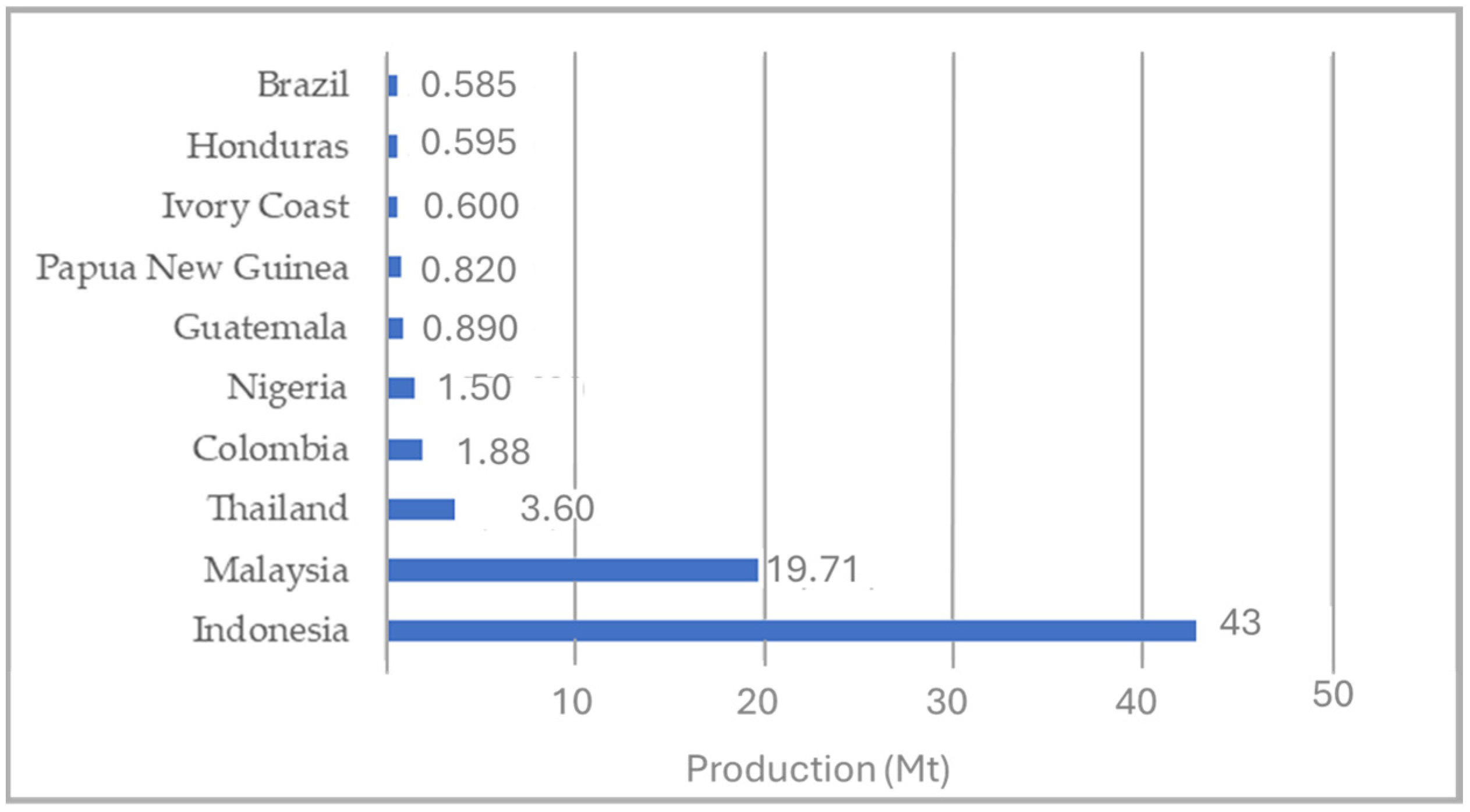
Figure 1. Palm oil production by major producing countries in 2023 (metric tons). Source: USDA, Palm Oil Production 2023–2024, Production commodities, 2024 [6].
Biomass 06 00033 g001
Figure 2. Palm oil production in major Latin American producing countries in 2023 (metric tons), highlighting Colombia as the leading regional producer and the associated potential for biomass residue generation. Source: USDA Foreign Agricultural Service (Palm Oil Production 2023–2024) [6].
Biomass 06 00033 g002
Figure 3. Main oil palm-producing regions in Mexico (Chiapas, Tabasco, Campeche, and Veracruz). Source: elaborated by the authors.
Biomass 06 00033 g003
Figure 4. Representative oil palm harvest residues: (a) EFB; (b) mesocarp fiber; and (c) palm kernel shell.
Biomass 06 00033 g004
Figure 5. Schematic representation of the main stages involved in biomass gasification, including drying, pyrolysis, oxidation, and gasification, leading to syngas production for stove applications. Source: adapted from [49].
Biomass 06 00033 g005
Figure 6. Schematic comparison of the main biomass gasifier types, including fixed-bed, entrained-flow, and fluidized-bed configurations, highlighting their key operational characteristics [51].
Biomass 06 00033 g006
Figure 7. Comparison of pollutant emissions (CO, NOx, and total suspended particulates, TSP) at the outlet of a biochar furnace operating with conventional primary fuel (firewood) and with primary fuel supplemented by pyrolysis gas [102].
Biomass 06 00033 g007
Figure 8. Estimated biomass potential in Mexico: (a) agricultural crops and residues, and (b) forest biomass production, expressed as million tonnes of dry matter per year (MTMSA) [103].
Biomass 06 00033 g008
Table 1. Main types of biomass residues by state in humid tropical regions of Mexico, classified according to agro-industrial, forestry, livestock, and energy crop origins.
StateAgro-Industrial ResiduesForestry ResiduesLivestock ResiduesEnergy Crops
ChiapasCoffee pulp, sugarcane bagasse, oil palm EFB, cocoa husk.Sawdust, wood chips, bark (from forest plantations such as teak).Cattle manure.Jatropha (Jatropha curcas), elephant grass.
CampecheOil palm EFB, rice husk, sugarcane bagasse, maize stover.Forest and jungle management residues (branches, treetops).Cattle manure.-
TabascoCocoa and coffee husks, banana pseudostems, citrus bagasse, oil palm residues.-Cattle manure (one of the highest potential sources).Jatropha (Jatropha curcas).
VeracruzSugarcane bagasse (main residue), coffee pulp, citrus bagasse, maize and sorghum stover, pineapple residues.Sawdust, wood chips, bark (from industrial processing).--
Table 3. Classification of oil palm residues and their potential applications in bioenergy pathways.
Type of Waste Applications
Solid waste from palm treesEmpty Fruit Bunches (EFB): a byproduct resulting from oil extraction.Biogas production, bioethanol production, or use as biomass for combustion.
Mesocarp fiber: fibrous residue obtained after oil extraction.Solid fuel in boilers or for electricity generation.
Peels (endocarp): the hard part of the fruit.
Applications:
High-calorific-value biomass or raw material for activated carbon production.
Liquid wastePOME (Palm Oil Mill Effluent): liquid effluent generated during the extraction process.Biogas production (mainly methane) through anaerobic digestion.
Crop residuesPruned leaves and frondsBioethanol production or use as biomass.
Trunks (derived from plantation renewal):Energy generation or production of second-generation biofuels.
Table 4. Thermal efficiencies in gasification stoves.
ReferenceStove Modelo/TypeThermal Efficiency (%)Test Conditions
[64]Dual fluidized-bed gasifier, downdraft gasifier (polygeneration)86.6% (dual fluidized bed), 82.5% (downdraft)Simulation, steam-to-biomass ratio = 1.5, 850 °C
[65]Hydrothermal carbonization reactor (hydrochar production)Not reported200 °C, 20 bar, 5–360 min
[66]Fluidized-bed reactor for oxidative fast pyrolysisNot reported480 °C, feed rate 15.06 kg/h
[67]Microwave-assisted gasification (laboratory scale)19.7% (process), 55.6% (conversion)Microwaves 250–500 W, 775 °C, 10 wt.% absorbent
[68]Co-pyrolysis (fixed bed)Not reported600 °C, 100 °C/s
[69]Fixed-bed combustion (computational fluid dynamics)Not reported8–30% moisture content, gas temperature 700 °C/400 °C
[70]Ethanol stove, traditional stove55% (ethanol), 10% (traditional)Regional modeling
[71]Gasification, anaerobic digestion (regional)Not reportedGasification at 850 °C, anaerobic digestion at 56 °C
[72]Integrated anaerobic digestion/gasification/solid oxide fuel cell-gas turbine/organic Rankine cycle54.81% (optimal), 44.93% (overall)Simulation, high-temperature gasifier
[73]Combined heat and power cycle, combined cooling, heat and power cycle (case studies)Not reportedNot reported
[74]Pyrolysis (fixed bed)Not reported400–600 °C, 2 min
[75]Kiln process, cookstoves30% (kiln),TIMES model, India
[76]Biofuel pathwaysNot reportedData envelope analysis, life cycle assessment
[77]Power-to-gas, amine scrubbingNot reported350–1200 °C, 5 bar
[78]Pyrolysis in combined heat and powerNot reportedNot reported
[79]Advanced wood gasification, combined heat and powerNot reportedSimulation, maximum 60% hydrogen in combined heat and electricity
[80]Wood pelletization, bioenergyNot reportedNot reported
[81]Aqueous-phase reforming biorefinery of hydrothermal liquefactionNot reported350 °C, 200 bar
[82]Combined heat and power cycle (Bangladesh)34.6% (electric), 42% (thermal)35–55 °C, 20 days retention time
Table 5. Effects of temperature and operating parameters on tar reduction during biomass gasification processes.
ReferenceDesign ParameterOperating RangeEffect on Tar Reduction
[90]Temperature control (auger, purge region)500 °C (reactor), average temperature difference 93–126 °C (auger)Lower auger temperature reduces deposit formation (including tar); maintaining temperatures below 250–300 °C in the feeder reduces tar formation
[91]Pyrolysis temperature550 °C (pyrolysis), 800 °C (activated carbon activation)Activation of activated carbon at 800 °C produces an effective catalyst; high-temperature activated carbon reduces tar
[92]Gasification temperature750–950 °C (optimum 900 °C)Elevated temperature (above 700 °C) reduces tar through more complete conversion
[93]Combustion temperatureNot reportedNot reported
[94]Alkaline thermal treatment temperature100–600 °C (typically 500 °C)Higher temperature combined with alkali/catalyst reduces tar via enhanced reforming
[95]Gasification temperature700 °C, 850 °CNo mention of tar measurement was found
[96]Pyrolysis temperature600–800 °CHigh temperature and catalyst reduces bio-oil yield (tar)
[97]Pyrolysis temperature450 °C, 550 °C, 650 °CHigher temperature combined with catalyst increases cracking, which may reduce tar
Table 6. Energy efficiency in gasification stoves.
ReferenceDesign ParameterEvaluation Method/Remarks
[47]Bluff-body (B), equivalence ratio 0.5, blended feedstockWater Boiling Test (WBT), direct measurement. Efficiency of 13.5–17.6%
[110]Throat downdraft gasifierCalculation of gasification efficiency. Efficiency of 70%
[123]Methanol boilerEfficiency measured after conversion of 95.23%
[124]Pellet composition, heating rateThermogravimetric analysis (TGA), reactivity index
[125]Feedstock type, gasifier pressureProcess simulation
[126]Entrained-flow gasificationLevelized cost, process simulation
[127]Ash utilizationCarbon dioxide reduction and adsorption
[128]MSW-to-aviation fuelLife cycle assessment, greenhouse gas emissions per megajoule
[129]Wood residue substitutionAvoided emissions, user surveys
Disclaimer/Publisher’s Note: The statements, opinions and data contained in all publications are solely those of the individual author(s) and contributor(s) and not of MDPI and/or the editor(s). MDPI and/or the editor(s) disclaim responsibility for any injury to people or property resulting from any ideas, methods, instructions or products referred to in the content.