


Abstract
Distributed sensing systems must ultimately reach a single shared decision, whether an alarm, a classification, or a control action. Achieving this is challenging because the two underlying technologies rely on conflicting assumptions. Quorum-based consensus protocols provide a consistent, totally ordered decision log, but they depend on relatively stable network connectivity and lose availability during network partitions. In contrast, disruption-tolerant communication relies on store-and-forward mechanisms that continue operating despite intermittent connectivity, yet these mechanisms are not designed to support the synchronous message exchanges required by consensus protocols. This work investigates how these two approaches interact by deploying the Raft consensus protocol over a resilient, multi-transport, store-and-forward communication layer. The system is evaluated in NS-3 under varying degrees of network partitioning, adversarial source participation, and node failures, while also validating the transport abstraction through packet-level analysis. The study yields four main findings. First, the integrated system maintains safety: committed logs remain consistent in every experiment, including scenarios where isolated leaders rejoin the network and discard uncommitted log entries. Once connectivity is restored, the system converges to a common state within a bounded recovery time. Second, intermittent connectivity can trigger excessive Raft term growth, a phenomenon effectively controlled by enabling PreVote together with CheckQuorum. This configuration reduces post-recovery convergence time by approximately an order of magnitude while also revealing a trade-off between the CheckQuorum timeout and the transport carry deadline. Third, decision accuracy follows the predictions of the Condorcet jury theorem: as partitions reduce the effective number of participating nodes, the system becomes more susceptible to adversarial influence, lowering the threshold at which incorrect decisions can dominate. Finally, we quantify the resilience of different data-fusion strategies against confidence-inflation attacks. Our evaluation focuses on crash-fault tolerance in the presence of malicious data sources, and we explicitly discuss the limitations of this model.
1. Introduction
Many monitoring and coordination systems are inherently distributed. Examples include acoustic sensor arrays deployed across urban areas, robotic teams operating in disaster response, and environmental monitoring networks spanning remote or infrastructure-limited regions. In these settings, multiple nodes observe the same event and must collectively reach a single authoritative decision. Such decisions often have operational or forensic significance, requiring both consistency, so that all nodes maintain the same committed sequence of decisions, and availability, so that the system continues operating despite adverse network conditions. Unfortunately, these requirements are most difficult to satisfy precisely when they are most critical: communication links fail, network partitions emerge, nodes crash, and adversaries exploit the resulting disruption.
Existing research addresses these challenges only in isolation. Quorum-based consensus protocols, such as Raft, Paxos, and their variants [1,2], ensure that replicas maintain a single, totally ordered log while providing strong safety guarantees. Once an entry is committed, it cannot be altered, and committed logs never diverge across correct replicas. However, these protocols depend on sufficiently reliable connectivity to make progress. During network partitions, they deliberately sacrifice availability to preserve consistency, consistent with the CAP theorem [3,4]. In contrast, disruption- and delay-tolerant networking (DTN) adopts the opposite design philosophy [5,6,7]. By relying on store-and-forward communication across intermittent contacts, DTN can continue delivering messages even when end-to-end paths do not exist. However, DTN provides only a communication service; it does not guarantee that transported messages correspond to a globally consistent decision history. Moreover, the long and unpredictable delays inherent in store-and-forward communication are fundamentally at odds with the timely exchange of acknowledgements required by quorum-based consensus protocols.
We address the following research question: under what partition, failure, and adversarial conditions can quorum consensus, executed over a disruption-tolerant, store-and-forward substrate, preserve safety and remain useful, and where does it break down? We test four hypotheses: (H1) committed-log safety is preserved across the operating envelope regardless of transport delay or reordering; (H2) intermittency induces term inflation that grows with partition duration, bounded by PreVote with CheckQuorum; (H3) committed-decision accuracy is predictable from a Condorcet-jury model whose effective jury is the transport-delivered vote set; and (H4) fusion-rule robustness to adversarial voting varies systematically across aggregation strategies.
This paper examines the interaction between these two paradigms by running quorum-based consensus over a resilient, multi-transport, store-and-forward communication substrate [8]. Our objective is to understand both the benefits and limitations of combining them. This integration is inherently challenging because their underlying assumptions conflict. Quorum consensus requires a majority of replicas to exchange acknowledgments within bounded time to commit an operation, whereas a store-and-forward network may retain messages across multiple contact opportunities before forwarding them. A straightforward combination therefore risks either prolonged loss of progress, when acknowledgments arrive too late to satisfy the consensus protocol, or incorrect behavior when delayed messages are processed after the system has already advanced. The central question addressed in this work is whether quorum-based consensus can preserve its safety guarantees under these conditions, and under which operating regimes this remains possible.
To answer this question, we developed a prototype that integrates a full implementation of the Raft consensus protocol with three interchangeable communication transports exposed through a common interface: (i) a resilient, multi-hop, multipath, store-and-forward transport, (ii) a direct point-to-point transport, and (iii) a centralized, broker-based transport. The Raft implementation includes leader election with the log-completeness property, AppendEntries enforcing log matching, and commitment restricted to current-term entries replicated by a quorum. Sensor nodes classify observed events within each decision window, and their outputs are submitted to the consensus layer, which commits a single fused decision for each window. The system is evaluated in NS-3 under varying levels of network partitioning, adversarial participation, sensor noise, and partition recovery. To ensure that the communication model accurately reflects network behavior, the transport abstraction is also validated against packet-level NS-3 simulations.
This work makes the following contributions, ordered by significance.
- Safety and recovery of quorum consensus over a disruption-tolerant substrate. We empirically demonstrate that Raft semantics are preserved when executed over a store-and-forward, multi-transport substrate. Across the full experimental envelope, committed logs never diverge. The system also recovers after network partitions heal, including the strict leader-isolation scenario: a rejoining former leader must truncate any uncommitted suffix and adopt the majority log, without loss or corruption of committed entries.
- Characterization and mitigation of an intermittency-induced Raft pathology. We identify a term-inflation effect that arises specifically under intermittent connectivity. When isolated, a node repeatedly times out, causing its term to grow proportionally to partition duration and triggering a burst of re-elections upon reconnection. We show that combining PreVote with CheckQuorum effectively suppresses this phenomenon, reducing term inflation to near zero and decreasing post-heal reconvergence time by an order of magnitude, while preserving correct leader transitions. We further expose a nontrivial configuration trade-off between the CheckQuorum timeout and the store-and-forward carry deadline and identify a stable operating region.
- A Condorcet-jury interpretation of decision accuracy under partition and adversarial influence. By modeling sensor outputs as noisy votes, we show that committed-decision accuracy can be predicted using a Condorcet jury framework in which the effective jury size is determined by the transport layer. A resilient substrate preserves the full voting population, whereas partition-prone transports reduce it. This reduction lowers the effective adversarial breaking point below the nominal majority threshold, not because adversarial prevalence increases, but because smaller sampled vote sets exhibit higher variance and are more likely to yield transient adversarial majorities within a decision window. We validate this model against closed-form predictions and quantify deviations under correlated sensing errors.
- Robustness of fusion rules under confidence-inflation attacks. We evaluate aggregation strategies under an adversary that amplifies confidence in a false target. Results show that unweighted majority voting and trimmed-mean aggregation remain consistent with the classical majority resilience bound, while confidence-weighted fusion degrades significantly earlier, even when per-vote weight clipping is applied.
Supporting these contributions, we also characterize the commit-availability envelope of the system, quantify the availability–overhead trade-off across transport configurations, and validate the fidelity of the analytic transport abstraction against packet-level simulation. We emphasize that committed-log safety under delayed or reordered delivery follows from Raft’s existing term and log-matching invariants. Our contribution is not a new safety proof, but empirical confirmation that these invariants hold when the transport is a disruption-tolerant, store-and-forward substrate, a composition whose correctness is not guaranteed a priori, and that they continue to hold across consensus-cluster sizes (), correlated (bursty) connectivity, and strategy-aware adversaries (Section 6.7, Section 6.8 and Section 6.9). The novel findings are the intermittency-induced term-inflation characterization, the CheckQuorum/carry-deadline coupling, the transport-determined Condorcet-jury interpretation, and the fusion-rule robustness analysis, including its dependence on the adversary’s strategy. HERMES [8] provides the transport substrate; this paper contributes and characterizes the consensus layer built on top of it.
We are explicit about the scope and limitations of this work. We assume crash faults among consensus nodes and malicious behavior only at the sensor/source level; Byzantine faults within the consensus protocol (e.g., equivocation or log-level misbehavior) are out of scope and left for future work. The consensus layer is fully executed with real Remote Procedure Calls (RPCs), quorum formation, and log replication, while the transport is modeled analytically and validated against packet-level NS-3 for per-hop delay and loss. Connectivity is abstracted as a per-epoch Bernoulli process, consistent with the intermittent-networking literature, rather than a detailed mobility or MAC model, and full packet-level validation of connectivity dynamics remains future work. The impact of adversaries versus honest noise depends on sensor accuracy: high-accuracy regimes are adversary-dominated and relatively insensitive to partition-induced jury shrinkage, whereas performance degrades sharply as accuracy approaches the Condorcet threshold, where shrinkage becomes decisive. Overall, this is a feasibility study that characterizes behavior and limits under an abstracted substrate rather than a deployed system.
The remainder of the paper is organized as follows. Section 2 reviews related work in consensus protocols, disruption-tolerant networking, and robust sensor fusion. Section 3 introduces the system model, including connectivity, sensor, and threat assumptions, as well as the evaluation metrics. Section 4 describes the consensus protocol and its integration with the underlying transport layer. Section 5 outlines the experimental methodology and design. Section 6 presents the results. Section 7 discusses limitations and highlights the broader research directions enabled by this work. Section 8 concludes the paper and summarizes future work.
2. Related Work
2.1. Quorum Consensus and Its Connectivity Assumptions
Paxos [1] and Raft [2] are the canonical quorum-based protocols for replicated state machines, providing a totally ordered log with strong safety guarantees. The Fischer–Lynch–Paterson (FLP) impossibility result [9] shows that consensus cannot simultaneously guarantee safety and liveness in a fully asynchronous system with even a single faulty process, while the CAP theorem highlights the trade-off between consistency and availability during network partitions [3,4]. Practical enhancements such as PreVote and CheckQuorum [10] improve Raft’s resilience to disruptive elections and stale leaders, but these mechanisms still assume sufficient connectivity for regular quorum communication. In this work, we examine how these assumptions hold when consensus operates over a disruption-tolerant transport that permits prolonged, intermittent connectivity.
2.2. Byzantine Fault Tolerance
Practical Byzantine Fault Tolerance (PBFT) [11] and its successors tolerate Byzantine replica behavior by using larger quorums and additional communication rounds. In contrast, this work focuses on crash-fault tolerance within the consensus layer while addressing malicious behavior only in the sensor fusion layer. Extending the proposed framework to tolerate Byzantine faults among consensus replicas remains an important direction for future research.
2.3. Disruption- and Delay-Tolerant Networking
The DTN architecture and its bundle-based store-and-forward communication model [5,12], together with opportunistic routing protocols such as epidemic routing [6], Spray-and-Wait [7], and probabilistic forwarding [13], enable message delivery across intermittent network partitions by exploiting opportunistic contacts. Contact-based models [14] provide a common abstraction for representing this intermittent connectivity. Although these approaches are designed to maximize message delivery, they do not address the consistency of replicated state or decision logs. Our work complements this literature by executing a genuine quorum-based consensus protocol over a disruption-tolerant communication substrate.
2.4. Consensus over Intermittent and Challenged Networks
Research on achieving distributed agreement over DTN-like, mobile ad hoc (MANET), tactical, and edge networks [14,15] remains limited. Recent efforts continue to advance resilient consensus over multi-hop relay networks, including quantized consensus schemes that tolerate misbehaving nodes [16]; however, these target asymptotic agreement on node states over a persistently connected relay graph rather than quorum-committed log replication under prolonged partitions. Prior work on adversarial behavior in mobile ad hoc networks has largely focused on routing-layer misbehavior, such as nodes that drop or misroute packets [17], rather than on the consistency of a replicated decision log. Existing studies rarely combine genuine quorum-based consensus, store-and-forward communication, and adversarial sensor fusion within a single, systematically evaluated framework. This work addresses that gap by examining how these components interact under intermittent and adversarial network conditions.
2.5. Distributed Acoustic Sensing and Wireless Acoustic Sensor Networks
Urban and environmental acoustic monitoring systems, wireless acoustic sensor networks [18,19], and edge-based sound event classification [20,21] motivate our sensor model. Our contributions focus on the consensus and decision-fusion layers rather than acoustic signal processing, with the acoustic sensing application serving as a realistic source of noisy classifier outputs.
2.6. Robust Sensor Fusion and the Condorcet Jury Theorem
Classical data-fusion rules—including majority voting, weighted aggregation, and Bayesian combination [22]—as well as robust statistical estimators such as trimmed means and clipping [23], limit the impact of outliers and adversarial inputs. The Condorcet jury theorem [24,25], including its finite-jury and competence-threshold variants, together with extensions that account for correlated voters [26], provides the analytical framework used in this work. We leverage this perspective to relate the transport-induced effective jury size to the theorem’s predictions and to characterize decision accuracy under network partitioning.
3. System and Threat Model
3.1. Architecture and Decision Model
The system consists of two node classes operating over a shared network, illustrated in Figure 1. A set of source nodes observes the underlying phenomenon and, once per fixed decision window of duration W, produces a labeled classification with an associated confidence value. These outputs are treated as votes. A separate set of consensus nodes executes a replicated state machine using quorum-based consensus. Within each window, the current leader aggregates all received votes into a single fused decision and proposes it as a log entry. The entry is committed once it has been replicated to a quorum of size . Each committed entry corresponds to exactly one decision window, and the resulting log forms a totally ordered, replicated sequence of authoritative decisions. We explicitly distinguish two agreement layers: source-level agreement, which determines the fused decision within a window (a fusion problem), and replica-level agreement, which determines which log entries are committed (a consensus problem). These two layers exhibit distinct failure modes and require different mechanisms for correctness and robustness.
Figure 1.
System architecture: noisy sources feed votes through the resilient substrate to a Raft consensus cluster.
3.2. Consensus Layer
The replicated log is maintained using a faithful implementation of the Raft protocol [2]. This includes leader election with the log-completeness (up-to-date) restriction, AppendEntries enforcing the log-matching property, and commitment limited to entries from the current term that have been replicated on a quorum. Followers maintain independent logs and apply an entry only after completing a genuine quorum acknowledgment round; there is no shortcut in which followers passively replay a shared message stream.
Two optional mechanisms are evaluated. In PreVote, a candidate runs a preliminary election phase that does not increment its term and is promoted only if a quorum indicates it would grant a vote. In CheckQuorum, a leader demotes itself if it has not received communication from a quorum within a timeout .
For reproducibility, we record the implementation choices relevant to this study. The Raft layer is a from-scratch implementation executed in the NS-3 event loop (not a wrapper around an external library), with all timers driven by the simulator clock. Leader election uses a randomized election timeout drawn uniformly from with s, re-sampled at the start of each election. This is the standard Raft mechanism for avoiding split votes. The heartbeat interval is s.
The election timeout is deliberately larger than the canonical ms of the original Raft proposal [2]. With a contact epoch of 2 s and per-hop delays on the order of milliseconds, a follower must tolerate transient gaps within a contact epoch before suspecting the leader, so a sub-second timeout would trigger near-continuous spurious elections under intermittent connectivity. Setting s (half the contact epoch) keeps the election timeout above the heartbeat-plus-jitter budget while remaining well below the store-and-forward carry deadline , so genuine leader loss is still detected within one carry window. The leader re-sends AppendEntries to every follower on each heartbeat tick, which doubles as the retransmission path for unacknowledged RPCs. A RequestVote that fails to gather a quorum is not retransmitted; instead, the candidate’s timeout expires and a new election begins. If a follower rejects an AppendEntries, the leader decrements that follower’s next index by one and retries on the following heartbeat, converging on the divergence point.
Because the store-and-forward substrate can delay and reorder messages, every RPC carries its term and, for AppendEntries, the index and term of the preceding entry. A message whose term is stale, or whose (index, term) does not match the recipient’s log, is rejected, and entries are applied through a monotone last-applied cursor, so a reordered or re-delivered message has no side effect. These checks are the same invariants that guarantee safety under delay (Section 4.4); here they also make the protocol robust to the substrate’s out-of-order delivery.
3.3. Transports
Three transports are implemented behind a common send/deliver interface so that all behavior above the interface remains identical and any observed differences are attributable solely to the underlying substrate, as shown in Figure 2. The resilient multi-transport substrate—the system under study—is multi-hop and multipath with store-and-forward: messages are relayed along available paths and, when no path exists, are carried until connectivity resumes or a carry deadline expires, enabling delivery across partitions that would otherwise fully disconnect direct or broker-based communication [8].
Figure 2.
The three interchangeable transports: (a) resilient store-and-forward, (b) direct single-link foil, (c) broker star (SPOF).
The direct transport (used as a baseline) relies on a single point-to-point link with no relaying or carrying; if the link is unavailable during a given epoch, the message is dropped. The broker-based transport routes all traffic through a centralized intermediary, introducing a single point of failure (SPOF). For clarity, we note a modeling choice: a source vote traversing the broker is treated as a single delivery event subject to the same per-epoch availability as the direct link, ensuring comparability in delivered vote counts. In this setting, the broker’s impact appears primarily in consensus liveness, since all coordination traffic must pass through the central node, rather than in the raw delivery rate of individual votes.
3.4. Connectivity Model
Connectivity is modeled as a parameterized abstraction of intermittent networking rather than as a specific medium-access or mobility scenario. Time is divided into contact epochs of duration , and during each epoch every link is independently available with probability (denoted link_up) and unavailable otherwise. The parameter controls the severity of network intermittency, ranging from a fully connected network () to highly partitioned conditions. When a link is available, per-hop delay and packet loss are modeled using a constant-delay, linearly accumulating, compounding-loss formulation, which is validated against packet-level NS-3 simulations. Under this connectivity model, the expected number of votes received by the leader during each decision window is for the partition-prone transports, whereas the resilient store-and-forward substrate delivers the full set of votes provided connectivity returns within the carry deadline , votes whose carriers exceed are dropped and counted against liveness. This behavior is a consequence of the substrate’s relay-and-carry design, not an unconditional guarantee.
To test whether the conclusions depend on the memoryless assumption, we also model connectivity as a two-state Gilbert–Elliott process per link (GOOD/BAD), with transition probabilities chosen so that the stationary availability equals exactly for every correlation rho, while the lag-1 correlation of the up/down indicator equals rho. At = 0, the process reduces to the per-epoch Bernoulli model; larger concentrates the same total downtime into fewer, longer outages (mean outage seconds). This isolates temporal correlation while keeping the mean link budget fixed.
3.5. Sensor and Noise Model
Honest sources are modeled as noisy classifiers. In each decision window, an honest source reports the correct label with probability and an incorrect label with probability p, where p denotes the per-window misclassification probability. This parameter is chosen to reflect representative learned-classifier performance [20,21] and is varied throughout the evaluation. For analytical tractability, we adopt a binary model in which incorrect honest votes and adversarial votes are assumed to support the same incorrect label, representing a conservative worst-case scenario.
To account for correlated sensing errors, we introduce an error-correlation parameter , where corresponds to independent errors and introduces a shared latent error component across honest sources. This parameter is used to evaluate the applicability of the Condorcet framework beyond its independence assumption. Confidence scores are assumed to be calibrated, with honest sources assigning higher confidence to correct predictions than to incorrect ones, while adversarial sources always report maximum confidence. The Condorcet competence condition, , defines the operating regime in which increasing the number of honest votes improves decision accuracy.
3.6. Threat Model
The adversary controls a fraction of the source nodes, while consensus nodes are assumed to experience only crash faults. Malicious sources may falsify labels, inflate confidence values, equivocate by sending different votes to different consensus nodes, replay stale messages, or launch Sybil attacks in the absence of identity authentication. The primary defenses considered in this work are robust aggregation mechanisms at the fusion layer. Byzantine faults within the consensus layer, such as replica equivocation or log manipulation, are explicitly out of scope; the proposed system addresses crash faults, network partitions, and leader isolation and recovery, but not Byzantine replica behavior. Extending the framework to tolerate Byzantine consensus faults, together with authenticated and post-quantum-secure communication to mitigate forgery, replay, and Sybil attacks, is left as future work.
We emphasize that the consensus layer is not Byzantine-fault-tolerant: it tolerates crash faults, partitions, and leader isolation, but not equivocating or log-manipulating replicas. All resilience and robustness claims refer either to crash-fault tolerance at the consensus layer or to adversarial robustness at the sensor-fusion layer, and never to Byzantine tolerance among replicas. At the fusion layer, we evaluate false-label injection and confidence inflation and, beyond a single fixed adversary, partition-timed and confidence-camouflaged strategies (Section 6.9); equivocation, replay, and Sybil defenses are deferred to future work.
3.7. Fusion Rules
Within each decision window, the leader aggregates the received votes using one of four fusion rules. Robust applies an unweighted majority vote over the reported labels. performs confidence-weighted voting while clipping each vote’s weight so that no individual vote contributes more than of the total weight, where k is the number of received votes. Trimmed discards the highest and lowest 20% of confidence values before applying majority voting. Naive uses uncapped confidence-weighted voting and is included only as a pathological baseline to illustrate the impact of confidence-inflation attacks.
We make the two confidence-based rules precise for small and odd received-vote counts k. For trimmed, we sort the k received votes by confidence and discard the highest and t lowest, then take an unweighted majority over the remaining labels. With , no votes are trimmed for (the rule then coincides with robust), one is trimmed from each end for , and so on. If a trim boundary falls between two equal confidences, votes are removed in ascending order of source index so the rule is deterministic. For CW_Clip, each vote’s weight is its confidence capped at , where W is the total (uncapped) confidence over the k received votes; the cap guarantees that no single vote can supply a majority of the weight and that at least votes must agree to decide a window. Ties in the final label count—possible only for even k under robust or trimmed—are broken toward the label with the higher summed confidence, and, if still tied, toward the lower-index label; such ties did not affect any reported result because the sensor count is odd throughout. A window that receives votes produces no proposal and is counted against commit liveness (Section 3.8), not decision accuracy. Unless otherwise stated, Robust serves as the reference fusion rule for the safety, recovery, and performance evaluations.
3.8. Metrics
We report, per run and aggregated across seeds as mean ± 95% confidence interval, the following metrics. M1a (commit liveness) is the fraction of decision windows that reach a quorum commit and is primarily sensitive to network partitioning. M1b (decision accuracy) is the fraction of committed decisions whose label matches ground truth and is sensitive to both adversarial influence and sensor noise. The *adversarial knee* is defined with respect to M1b relative to the no-adversary ceiling at a given operating point: it is the smallest adversarial fraction for which M1b falls by more than below M1b for the same . This relative definition is necessary because honest sensing noise reduces the absolute ceiling, making fixed thresholds ill-posed. Because M1b conditions on commitment, we additionally report a system-level accuracy over all decision windows, counting uncommitted windows as no decisions, to avoid the selection bias that would arise from scoring only committed windows.
M2 (commit latency) measures the time from window closure to commit and is reported as the median with p95/p99 tail latencies; end-to-end latency is reported separately. Latency is computed only over committed windows, while uncommitted windows are accounted for in M1a. M3 (safety) counts the number of committed log positions that differ across replicas; this must remain zero and is reported both at run termination and during partition-healing phases. M4 (post-heal convergence) measures the time required after partition recovery for all replicas to reach identical committed logs, along with the associated lag, re-election count, and term inflation. For the bursty-connectivity study (Section 6.8), we also report , the longest sequence of consecutive committed windows whose decision was wrong—the accuracy analogue of the worst commit gap—because a mean under-describes a bursty deployment, where errors occur in sustained runs.
M5 (overhead) reports total transmissions and bytes per committed decision. Finally, records the mean and variance of votes received by the leader per committed window, serving as the key mechanism variable linking network partitioning to decision accuracy. All reported means are accompanied by 95% confidence intervals computed over the seed replicates for each configuration.
4. Consensus Protocol and Composition with the Transport
4.1. Raft, Faithfully
We use Raft as the replication protocol because its safety argument is explicit and its mechanisms align naturally with the failure conditions studied in this work. Time is partitioned into terms, each of which has at most one leader elected by majority vote under the log-completeness constraint, which requires that a candidate’s log be at least as up-to-date as any voter’s. The leader replicates log entries using the AppendEntries RPC, which includes the index and term of the preceding log entry, ensuring that a follower accepts a new entry only if its log matches at that point, thereby enforcing the log-matching property.
An entry is committed only if it belongs to the current term and has been replicated on a quorum of nodes; entries from previous terms are committed indirectly once a later entry from the current term is committed above them. Together, these properties establish leader completeness and guarantee that committed entries are never altered or lost. Importantly, the implementation preserves the full protocol semantics: followers do not passively consume a shared message stream, but instead apply entries only after completing a genuine quorum-based acknowledgement round.
4.2. The Per-Window Decision Pipeline
Each decision window proceeds as illustrated in Figure 3. When a window W closes, the leader aggregates all votes received during that window using the selected fusion rule and proposes a single log entry containing the resulting fused decision. This entry is then replicated through the transport layer and is committed once it is a current-term entry acknowledged by a quorum. Upon commitment, the entry is applied to the replicated state machine. Each committed entry therefore corresponds to exactly one window’s authoritative decision, and the committed log forms a totally ordered history of fused decisions over time.
Figure 3.
Per-window commit over store-and-forward and the term-inflation pathology.
4.3. Carrying Consensus over a Disruption-Tolerant Substrate
AppendEntries messages and their acknowledgements are treated as ordinary messages handled by the underlying transport. The resilient substrate may relay them over multiple hops or, when no path is available, carry them until connectivity is restored or the carry deadline expires. Under favorable connectivity, a quorum round completes in approximately one round-trip, resulting in low commit latency. Under partitioned conditions, the round may complete only once connectivity resumes, producing long-tailed latency behavior, or, if the carry deadline expires before a quorum responds, the window results in no commit.
The substrate is responsible only for message delivery, while correctness and safety are enforced entirely by the consensus layer; it is the consensus invariants, not the transport behavior, that determine whether a log entry can be committed.
4.4. Why Safety Survives Stale Carried Messages
This is the property that the combined system must preserve, and it follows directly from Raft’s invariants rather than from any assumptions about the underlying transport. Every Raft message carries a term, and AppendEntries additionally includes the index and term of the preceding log entry. Upon receipt—regardless of how long the transport has delayed the message—a node compares terms and enforces the log-matching property before applying any update.
A delayed AppendEntries message from an obsolete term is rejected by any node that has already advanced to a higher term. Similarly, a rejoining former leader that may have carried uncommitted tail entries will observe a higher term upon re-entry and, through the combination of the log-matching property and the restriction that only current-term entries can be committed, will truncate its uncommitted suffix and adopt the majority log. Critically, no committed entry is ever lost in this process.
As a result, committed logs cannot diverge, regardless of message delay, reordering, or intermittent delivery. This is the property observed empirically in our evaluation, where zero divergence is maintained across all runs, including leader isolation and subsequent recovery. The transport may reduce availability through delay or loss, but it cannot violate safety; that guarantee is enforced entirely by the consensus layer.
4.5. PreVote and CheckQuorum Under Intermittency
Standard Raft exhibits a liveness hazard under intermittent connectivity. When a node is isolated by a partition, it repeatedly reaches its election timeout and initiates new elections. Because it cannot contact a quorum, each attempt increments its term without success, causing term inflation that grows with the duration of the partition. Upon reconnection, the resulting high term forces the cluster into a disruptive sequence of re-elections.
The PreVote mechanism mitigates this behavior by introducing a pre-election phase that does not increment the term. A candidate is promoted only if it would receive votes from a quorum and only if no current leader has been recently observed. As a result, an isolated node cannot inflate its term while disconnected. CheckQuorum further complements this mechanism by causing a leader to step down if it has not heard from a quorum within a timeout , preventing a partitioned leader from persisting indefinitely.
These mechanisms interact directly with the properties of the underlying transport. In particular, choosing shorter than the typical inter-contact interval may cause a leader to step down during transient disconnections that the store-and-forward substrate would otherwise bridge, effectively trading availability for responsiveness.
5. Experimental Design
5.1. Platforms
The main results are obtained from an NS-3-based consensus simulator [27] that runs a full implementation of the Raft protocol, with the three transport designs interchangeable behind a common interface. The transport layer is modeled analytically, providing per-hop delay and loss characteristics, together with a per-epoch link-up connectivity process. A separate packet-level NS-3 study calibrates this analytic model against a point-to-point multi-hop chain under contention, ensuring consistency between the abstract and packet-level behaviors.
All experiments use a fixed 600 s simulation horizon (300 s for partition-healing scenarios), with an initial 60 s warm-up period excluded from measurements. The offered load is held constant across all configurations so that throughput and latency comparisons remain meaningful and directly comparable.
5.2. Factors and Ranges
The primary experimental factors include partition severity, parameterized by ; the number of adversarial sources, swept as an integer and reported as the fraction , including regimes beyond the 50% threshold; the honest misclassification probability p, centered around a representative strong-classifier value and extended toward the Condorcet competence boundary; and the error correlation coefficient . Additional factors include the fusion rule, the partition scenario used in heal experiments (follower lag versus leader isolation), the Raft configuration (baseline versus PreVote with CheckQuorum), and the CheckQuorum timeout .
The consensus cluster size is fixed at (quorum size 2), and the number of source nodes is fixed at for all fusion and envelope experiments. Each experimental series varies only one factor at a time while all other parameters are held constant, as summarized in Table 1.
Table 1.
Pinned experimental configuration (only the factor under study varies per series).
5.3. Anti-Confound Controls
To ensure valid comparisons across configurations, we fix the run length and offered load in all experiments, vary only a single factor per series, discard an initial warm-up period, and execute at least twenty independent seeds per configuration (thirty for the main envelope results). All reported values include 95% confidence intervals. The adversarial fraction is varied using integer counts rather than fractional values to avoid spurious precision effects. The full experimental matrix is preregistered before execution. Throughput is reported only together with its corresponding fixed run length and offered load.
6. Results
6.1. Safety and Recovery
In Table 2, beyond the 9015-run core envelope, committed-log divergence remained zero in all 111,320 additional runs, comprising 89,010 distinct configuration seed cells, across five robustness studies (A1–A5), spanning cluster sizes , Bernoulli and bursty connectivity (31,800 bursty runs), and six adversary strategies (48,240 runs with a non-static adversary). Safety therefore holds across every configuration examined, as expected from Raft’s size, and delivery-independent State Machine Safety property (Section 4.4), rather than from any property of the transport—which is what justifies extrapolating it beyond the specific conditions simulated.
Table 2.
Committed-log safety across all experiment families. The maximum committed-log divergence is zero at run end and through every partition heal in every family. † Includes 480 leader-isolation heals, the stringent case in which a rejoining former leader truncates an uncommitted suffix; these are a subset of the heal runs, not a separate family. The 111,320 robustness runs (studies A1–A5: cluster sizes , Bernoulli and bursty connectivity, six adversary strategies) are reported separately and are not part of the 9015-run core envelope.
Recovery was likewise bounded. In the follower-lag scenario, the post-heal convergence time (M4) increased with partition duration as the lagging replica replayed the missing log entries, rising from approximately 3.0 s after a 10 s partition to 6.6 s after a 120 s partition. In contrast, the leader-isolation scenario exhibited an almost constant recovery time of approximately 0.18 s, corresponding to a single truncate-and-adopt operation that was effectively independent of partition duration.
6.2. Term Inflation and the PreVote Fix
The baseline Raft configuration exhibits the expected behavior under intermittent connectivity. An isolated follower repeatedly reaches its election timeout and increments its term on each unsuccessful election attempt, causing term inflation that grows almost linearly with partition duration—from approximately 6 term increments after a 10 s partition to about 80 after a 120 s partition. Upon reconnection, the inflated term triggers a sequence of unnecessary re-elections (approximately two per recovery), increasing the post-heal convergence time from 3.0 s to 6.6 s over the same partition range (Figure 4).
Figure 4.
Naive Raft versus PreVote/CheckQuorum: (a) term inflation grows with partition duration under naive Raft and is bounded under PreVote; (b) post-heal reconvergence collapses by an order of magnitude.
Enabling PreVote together with CheckQuorum eliminates this pathology. Term inflation is effectively reduced to zero, and reconvergence remains nearly constant at approximately 0.16 s, independent of partition duration. Importantly, PreVote suppresses only spurious elections. In the leader-isolation scenario, where electing a new leader is genuinely required, both configurations perform exactly one election, preserving the correctness of leader transitions. Throughout all experiments, safety is maintained, with the committed-log divergence metric remaining zero (M3 = 0).
The choice of the CheckQuorum timeout introduces a trade-off with the store-and-forward carry deadline (Figure 5). When is significantly shorter than the typical inter-contact interval (e.g., s versus an 8 s carry deadline), leaders step down unnecessarily during transient partitions that the transport layer could otherwise tolerate. In this configuration, unnecessary step-downs increase to 2.1 per run, and commit liveness decreases to 0.961. As approaches the carry deadline, these unnecessary transitions disappear; at s, only the single legitimate leader change remains, and commit liveness improves to 0.970. This identifies an effective operating point where the CheckQuorum timeout is approximately equal to the transport carry deadline.
Figure 5.
CheckQuorum timeout versus carry-deadline tension.
6.3. A Condorcet-Jury Lens on Accuracy Under Partition and Adversaries
Modeling honest sensors as noisy voters with a misclassification probability of , the experimental results closely follow the Condorcet jury prediction, where the effective jury corresponds to the set of votes received by the leader in each decision window. The resilient store-and-forward substrate consistently delivers all 15 votes, maintaining an adversarial knee at one-third of the source population regardless of partition severity. In contrast, the direct and broker transports experience a reduction in effective jury size as connectivity deteriorates, causing the adversarial knee to decrease from 0.333 under full connectivity to 0.267 at and 0.20 at (Figure 6).
Figure 6.
Effective adversarial knee versus partition severity for each transport, across sensor-jury sizes . The knee shifts with connectivity for the partition-prone transports and is invariant for the resilient substrate; a larger jury raises the usable margin at every connectivity level.
This shift is driven by increased sampling variance rather than a change in the expected adversarial fraction: fewer received votes produce larger fluctuations in the observed adversarial proportion, increasing the likelihood of temporary adversarial majorities. At this sensor accuracy, the no-adversary performance remains nearly unchanged, decreasing only from 1.000 to approximately 0.986, indicating that the observed degradation is primarily attributable to the interaction between partitioning and adversarial variance rather than sensing noise. Moreover, the empirical results closely match the closed-form Condorcet prediction under independent errors and diverge progressively as error correlation increases (Figure 7).
Figure 7.
Empirical decision accuracy versus the closed-form Condorcet prediction across sensor-jury sizes . The match is close at and departs as error correlation rises; a larger jury sharpens the transition () but does not help under correlated error.
Increasing the sensor jury sharpens the Condorcet transition without shifting its threshold: across = 15, 31, and 51, the accuracy-0.5 threshold remains at the closed-form limit = 0.444 (measured 0.453/0.449/0.447), while the usable margin rises from 0.306 to 0.378 (+24%), and the transition width narrows as (fitted exponent ). Over-provisioning sensors is thus a partial substitute for a carrying substrate: the direct and broker baselines recover most of their lost margin at = 51—but only partially, as they need 51 sensors to approach the margin HERMES achieves with 15. Under correlated honest error ( = 0.4), a larger jury no longer helps, confirming that common-mode error, not jury size, then limits accuracy.
The effect of error correlation is not uniformly detrimental. At full connectivity () with a sensor misclassification probability of , increasing the correlation coefficient to reduces decision accuracy below the adversarial knee, decreasing it from 0.995 to 0.920 at an adversarial fraction of 0.2. However, beyond the knee, where honest majorities are already unreliable, the same increase in correlation slightly improves accuracy, from 0.776 to 0.803 at an adversarial fraction of 0.4. This behavior arises because the additional variance occasionally produces windows in which the honest minority temporarily regains a majority. Accordingly, we limit the predictive claim of the Condorcet framework to the operating region below the adversarial knee and explicitly report this non-monotonic behavior rather than treating correlation as uniformly negative. This benefit disappears under correlated honest error: at , a larger jury no longer helps, confirming that common-mode error, not jury size, then determines accuracy.
Figure 8 shows the full decision accuracy operating envelope across partition severity and adversarial fraction. At the strong-classifier operating point (), the no-adversary accuracy remains essentially perfect, even when network partitioning reduces the effective jury size, indicating that adversarial influence is the dominant source of performance degradation. This observation, however, depends on classifier accuracy. With connectivity held constant, increasing the misclassification probability progressively lowers the no-adversary accuracy ceiling, from 1.000 at to 0.995 at and 0.951 at . As sensor accuracy approaches the Condorcet competence threshold, the reduction in effective jury size caused by partitioning becomes the primary factor affecting decision quality. Consequently, the relative impact of sensing noise and adversarial behavior should be interpreted as a function of classifier accuracy rather than as a fixed property of the system.
Figure 8.
Decision-accuracy (M1b) operating envelope with sensor noise, adversary axis crossing the majority bound.
6.4. Fusion-Rule Robustness Under Confidence-Inflation
Under a confidence-inflation attack ( and full connectivity), the four fusion rules show markedly different robustness characteristics (Figure 9). Against this static, high-confidence adversary, the Trimmed rule appears most resilient, maintaining accuracy at an adversarial fraction of 0.533 by discarding the extreme confidence values the attacker relies on; robust (unweighted majority) breaks at 0.333, CW_Clip at 0.267, and the uncapped Naive rule at 0.133. However, this ranking is contingent on the adversary announcing itself with conspicuous confidence. As we show in Section 6.9 with a strategy-aware adversary, Trimmed’s advantage disappears against an opponent that claims moderate, honest-looking confidence, whereas robust’s guarantee is unaffected because it never inspects the confidence field. We therefore adopt Robust as the reference rule not because it is strongest against any single adversary, but because it is the only rule whose resilience does not depend on the adversary’s confidence strategy.
Figure 9.
Decision accuracy of the four fusion rules under a confidence-inflation (static) adversary, across sensor-jury sizes . The rule ranking under this adversary is ; however, trimmed’s advantage is specific to a conspicuous adversary and does not survive a strategy-aware opponent (Section 6.9). Robust is adopted as the strategy-invariant choice.
6.5. Availability Envelope, Latency, and Overhead
Supporting results further characterize the performance trade-offs among the three transport mechanisms. As network partitioning increases, commit liveness remains highest for the resilient store-and-forward substrate, followed by direct transport and, finally, broker-based transport. At , the corresponding commit liveness values are 0.955, 0.602, and 0.239, decreasing to 0.635, 0.353, and 0.031 at (Figure 10). Because the resilient substrate is explicitly designed to relay and carry messages across intermittent links, this result is presented as supporting evidence rather than as a primary contribution.
Figure 10.
Commit liveness (M1a) versus partition severity for the three transports.
Commit latency remains stable at the median but exhibits increasingly long upper-tail delays as connectivity deteriorates (Figure 11). The median latency remains approximately 16 ms across all connectivity levels, whereas the 99th-percentile latency increases from 16 ms under full connectivity to 3.5 s at and 25 s at , reflecting the time spent waiting for communication opportunities to resume. Finally, the communication overhead, measured as bytes transmitted per committed decision, illustrates the availability–cost trade-off of the different transport designs (Figure 12). Under favorable connectivity, the resilient substrate is more efficient than the broker-based transport, requiring approximately half as many bytes because of the broker’s centralized routing overhead. As partition severity increases, the resilient substrate incurs additional communication cost to preserve commit availability, reaching a maximum of approximately 6.56 times the overhead of direct transport at .
Figure 11.
Commit latency versus partition severity.
Figure 12.
Availability-versus-overhead trade-off.
6.6. Fidelity Calibration of the Analytic Transport
To validate the analytic transport model, we conducted a packet-level NS-3 study, shown in Figure 13, comparing end-to-end delay and packet loss on a multi-hop chain with the corresponding analytic predictions, under varying levels of background traffic. The delay model exhibits high accuracy, with a mean error of 0.94% under the consensus workload and only 1.28% at a background load of 5000 kbps, corresponding to approximately half of the available link capacity and well beyond the operating regime of the consensus protocol. Packet-loss predictions are similarly accurate: the signed mean error is approximately 0.2 percentage points, well within a percentage-point tolerance, while the observed per-run variation of approximately 0.6 percentage points remains below the expected binomial sampling-noise floor (approximately 1.25 percentage points for the probe count used). These results indicate that the observed deviations arise primarily from measurement variability rather than systematic model bias, validating the analytic per-hop delay and loss model for the workload considered.
Figure 13.
Fidelity calibration: packet-level NS-3 versus the analytic model. (a) End-to-end delay matches within 1% at consensus load; (b) loss tracks the compounding prediction without bias.
We emphasize that this calibration validates only the per-hop delay and loss model, not the connectivity process itself, which is an explicit per-epoch abstraction rather than a packet-level or mobility model. The robustness of our conclusions to the connectivity assumption is examined separately in Section 6.8, where we replace the memoryless model with a correlated (bursty) one; packet-level and trace-driven validation of the connectivity process remains future work.
6.7. Scaling the Consensus Cluster
All results so far use a three-replica cluster (quorum of two). To verify that the findings are not an artifact of the smallest useful cluster, we repeated the core suite at and 7 (quorums ; fault tolerances ), holding every other parameter fixed— sensors, , , , robust fusion, PreVote/CheckQuorum—and keeping a single partition profile per measurement so that is the only variable. Figure 14 reports the results over 1800 runs (30 seeds per cell), with a supplementary point in the overhead phase to confirm the growth trend.
Figure 14.
Safety, recovery, and overhead versus consensus-cluster size (, with a supplementary overhead point). Safety () and recovery ( ms) are size-invariant; commit liveness is flat at the operating point; transport overhead per committed decision grows linearly ().
Safety is unaffected. The committed-log divergence is zero in all 1800 runs at every cluster size, including the 360 runs that pass through a partition heal, and it remains zero at every instant sampled during the heal. This is the expected outcome: Raft’s State Machine Safety property does not depend on cluster size, and confirms that the implementation inherits it uniformly.
Recovery is size-invariant. Under the fixed partition profile (one replica isolated from s to s), post-heal convergence is ms at every size, with the lagging replica acquiring the same twelve entries in each case. Eight milliseconds is one hop: the store-and-forward buffer already holds the repair traffic when the partition lifts, so reconvergence costs a single delivery irrespective of . The one configuration with a materially larger —naive Raft with an isolated follower, the term-inflation pathology of Section 6.2—recovers in s and becomes marginally faster as grows ( s), so it too is not a scaling liability.
Commit liveness is flat at the operating point. At the fixed partition profile (), at all three sizes: the larger quorum costs nothing because the multipath substrate masks link outages before the quorum is exposed to them. A size effect appears only once the substrate can no longer mask the partition. At , the resilient substrate’s liveness in fact improves with size (), since more replicas offer more relay paths, whereas the broker baseline collapses by () because a single relay must carry a quorum that grows with . Larger clusters thus amplify, rather than alter, the substrate ranking established in Section 6.5.
Overhead is the cost, and it is linear. Transport cost per committed decision grows by from to — transmissions and kB per decision on the resilient substrate, and twice that on the broker. The growth is exactly linear (, , confirmed by the supplementary point), i.e., rather than , because both contributing planes are individually linear—the Raft RPC plane as and the sensor-vote fan-out as . In absolute terms, each added replica costs transmissions per decision, roughly of the entire three-node budget, so raising fault tolerance from to nearly triples the per-decision radio cost. Median commit latency under partition rises correspondingly from to ms, while the p95 tail and commit throughput are unchanged.
In short, cluster size provides fault tolerance at a predictable linear transport cost and leaves safety, recovery, and, at the operating point, liveness unchanged. For the deployments targeted here, we retain as the default and recommend only when a two-fault-tolerance requirement justifies roughly doubling the per-decision transmission budget.
6.8. Robustness to Correlated (Bursty) Connectivity
The results so far draw each link’s availability independently at each contact epoch. Real outages are typically bursty rather than memoryless, so we repeat the headline measurements under the two-state Gilbert—Elliott model of Section 3.4, whose stationary availability equals for every correlation , so that only the temporal correlation changes. We sweep Bernoulli and (mean outages of 5–100 s at ) over 13,580 runs (Figure 15). Three conclusions are robust to correlation, and two shift.
Figure 15.
Bernoulli versus bursty (Gilbert–Elliott) connectivity at matched mean availability. Safety, the adversarial knee, and mean commit liveness are robust to correlation (mean liveness improves under bursts), while worst-case outages, the recovery tail, and the carry-deadline drop rate grow substantially. Lengthening the carry deadline does not recover liveness (Section 6.8).
Robust: safety, the adversarial knee, and mean liveness. Committed-log divergence is zero in all 13,580 runs, for both models and at every and every instant sampled through every heal. The adversarial knee moves by at most because it is set by the mean received jury, which the matched parameterization holds fixed. Mean commit liveness is not merely robust but improves under bursts (the resilient substrate rises from to at as goes from 0 to ): with availability matched, correlation concentrates the same total downtime into fewer, longer outages, so more decision windows fall inside long good stretches. The substrate ranking is unchanged at every .
Shifts: the worst-case outage and the recovery tail. The same matched mean conceals much longer blackouts. The worst commit gap grows by up to (the resilient substrate: s at ), and the post-heal recovery tail by up to ( p95 217 ms ms at ). Any availability figure stated as a mean is therefore misleading under bursty connectivity, and we report the worst-case gap alongside .
The carry deadline is the most correlation-sensitive parameter. At with the default 8 s deadline, the fraction of carried messages dropped at the deadline rises from (Bernoulli) to () and ()—a increase—because a bursty outage more often outlasts a fixed carry window. Counterintuitively, lengthening the deadline does not recover this: sweeping it from 2 s to 64 s changes commit liveness by at most while raising transmissions by up to , because the multipath substrate has already delivered most messages by another route and the extra carrying mostly re-delivers them. Under bursty connectivity the carry deadline should therefore be shortened, not lengthened: a 2–4 s deadline captures essentially all the liveness benefit at a little over half the transmission cost of a 64 s deadline.
We explicitly note the scope of this study. The Gilbert–Elliott model makes each link’s outages bursty but keeps links mutually independent; it does not capture spatially correlated failures, a region or all links to one node failing together, which is the more dangerous case for a quorum system and which only mobility traces or a geometric channel model can resolve. Trace-driven and mobility-based validation therefore remain future work (Section 7). A burst model is a credible step toward realism that directly addresses the memoryless objection; it is not a substitute for traces, and the worst-case figures above should be taken as indicative rather than predictive.
6.9. Robustness to Adaptive and Coordinated Adversaries
The fusion results in Section 6.4 use a single fixed adversary: every compromised source appears in every window at maximum confidence. To test whether the conclusions depend on that choice, we evaluate five additional strategies over both Bernoulli and bursty channels ( and ; 61,380 runs, Figure 16 and Figure 17): a partition-timed adversary (thin, lying only when the reachable jury is thin), a confidence-camouflaged adversary (mimic, claiming confidence —between honest-wrong and honest-correct ), a clip-aware coordinated adversary (collude), their combination (adaptive), and an equal-footprint random control (rand). The timed strategies use an oracle view of window reachability, a deliberate upper bound on adversary knowledge.
Figure 16.
Adaptive versus static adversaries (Bernoulli channel). The static, high-confidence adversary is the worst case for the decision threshold under robust fusion; trimmed-mean fusion’s advantage disappears against a moderate-confidence (mimic) adversary, collapsing onto unweighted majority; robust fusion is strategy-invariant (Section 6.9).
Figure 17.
Adaptive adversaries under bursty connectivity. The static-adversary and strategy-invariance conclusions survive the Bernoulli/Gilbert–Elliott cross; under bursts the longest run of consecutive wrong committed decisions triples, while the resilient substrate remains immune (Section 6.9).
Safety holds under every strategy. in all runs: vote manipulation is an accuracy attack, not a safety attack, and no confidence game or timing choice allows two replicas to commit different values.
The static adversary is the worst case for the decision threshold. Under robust fusion, no adaptive strategy pushes the adversarial knee below the static baseline in any connectivity regime—every timed or camouflaged knee is greater than or equal to the static one. With a fixed number of compromised sources, lying in fewer windows can only reduce total damage, so the threshold reported in Section 6.4 is not optimistic but rather the worst case among the strategies tested. Timing adaptivity buys stealth, not power: concentrating lies on thin-jury windows is more damaging per unit footprint than placing the same lies blindly, but this advantage exists only in the low-footprint regime where the attacker is stealthy—up to +42.5% versus at a footprint of for bursty versus memoryless channels (and versus at a footprint of ), decaying to nil as the footprint approaches one (where the timed adversary converges to the static one)—and it never moves the threshold, mattering only against a detection or reputation mechanism, which this system does not have.
The fusion-rule ranking, however, is not strategy-invariant. This is the result that qualifies Section 6.4. Against the static, high-confidence adversary, trimmed-mean fusion appears strongest because the top- trim removes the conspicuous adversaries before the vote. Against the mimic adversary, which claims a moderate confidence that sits in the middle of the sorted order, trimmed-mean fusion survives neither end of the trim and its accuracy becomes identical to unweighted majority (breaking point on a whole jury under both, versus trimmed-mean fusion’s against the static adversary); the trim then discards honest votes instead. Symmetrically, mimic is a weaker attack on the confidence-weighted rules, which recover margin because the adversary has surrendered the inflation they are vulnerable to. No single strategy is worst for every rule, which is precisely why a fixed adversary cannot rank them.
Unweighted majority is minimax-optimal and strategy-invariant. Robust fusion attains the best worst-case knee in every cell, tied with trimmed, which reaches it only by degenerating to unweighted majority against a moderate-confidence adversary, and it is the only rule whose outcome is essentially unaffected by the adversary’s strategy. Measured over the strategies that mount an effective attack in each cell (excluding timed strategies where the substrate delivers the full jury, so no thin window ever occurs and the strategy never fires), the spread of the breaking point across strategies is at most for robust in both the whole-jury and shrunk-jury cells, against – for the other rules. This invariance is structural rather than empirical: unweighted majority never reads the confidence field, so there is no confidence game to play. We therefore adopt it as the reference rule—not because it is strongest against any single adversary, but because it is the only rule whose guarantee does not depend on the adversary’s strategy.
Under bursty connectivity, errors become sustained rather than scattered. Crossing the adaptive adversary with the Gilbert–Elliott channel () leaves both conclusions above intact—the static adversary remains the worst case for the threshold in each of the 18 channel × substrate cells, and robust remains minimax, optimal, but reveals a new effect. At matched mean availability, with the same static adversary, mean accuracy falls only modestly (the direct baseline: at ), yet the longest run of consecutive wrong committed decisions triples ( s mean; worst case s), because a bursty channel delivers thin juries for long intervals, and a thin jury makes the same fixed adversaries a larger fraction of what the leader hears. The resilient substrate is immune (a flat s across all channels), for the same structural reason as before: it does not let the jury thin, so there is no thin-jury tail for burstiness to stretch. As with liveness, a mean under-describes a bursty deployment, and we report the longest wrong-decision run alongside accuracy.
We state the scope of the adversary model explicitly. Six strategies do not exhaust all possible adversaries; in particular, we do not model an opponent that adapts its target label per window, splits into sub-coalitions, attacks the Raft layer rather than the sensor plane, or learns the fusion rule online. The claim defended here is specific: within this space, the static adversary is the worst case for the threshold under robust fusion, and the trimmed-mean advantage does not survive a strategy-aware opponent.
7. Discussion
The results demonstrate that genuine quorum consensus can operate over a disruption-tolerant, store-and-forward substrate without compromising safety, maintaining zero committed-log divergence across all 9015 experiments, including 480 leader-isolation recovery scenarios, while achieving bounded recovery after partitions. Enabling PreVote with CheckQuorum eliminates the intermittency-induced term-inflation pathology, reducing unnecessary term growth from as many as 80 increments to zero and decreasing post-heal convergence time from 6.6 s to 0.16 s. Furthermore, the proposed Condorcet-jury framework explains decision accuracy through the transport-determined effective jury size, providing a predictive interpretation of adversarial resilience under partition. These findings are subject to several intentional limitations: the transport is analytically modeled (with per-hop validation against packet-level NS-3), Byzantine faults among consensus replicas are not considered, classifier-error correlation is evaluated using a synthetic model, and no physical deployment is included. Consequently, this work should be viewed as a feasibility study that establishes the viability of the proposed approach while motivating future research on Byzantine-tolerant consensus, authenticated and post-quantum-secure communication, validation with real acoustic sensing data, and deployment in real-world distributed sensing and coordination systems.
Finally, the distributed acoustic sensing application is a motivating abstraction rather than a validated deployment: honest sensor votes are drawn from a parameterized noisy classifier model, not from real audio or a trained acoustic classifier, and no physical sensor hardware or field trial is involved. Our contributions are therefore at the consensus and fusion layers, and claims about acoustic sensing in practice should be read as motivation for the system model rather than as demonstrated performance; validation with real acoustic data, learned classifier error distributions, and a physical testbed is left to future work.
8. Conclusions
We investigated the integration of quorum-based consensus with disruption-tolerant communication by implementing Raft over a resilient, multi-transport, store-and-forward substrate for distributed acoustic sensing. The approach preserves consensus safety: committed logs remained identical in every experiment, across the core envelope and the robustness studies alike, spanning cluster sizes, correlated (bursty) connectivity, and six adversary strategies, while achieving bounded recovery after network partitions. Because this guarantee follows from Raft’s size- and delivery-independent invariants rather than from the transport, it extends beyond the specific conditions simulated. We identified an intermittency-induced term inflation phenomenon and showed that combining PreVote with CheckQuorum eliminates unnecessary term growth and reduces post-heal convergence time by an order of magnitude, while exposing a configuration trade-off with the store-and-forward carry deadline. We interpreted decision accuracy through a Condorcet jury framework in which the transport layer sets the effective jury size, explaining how partitioning lowers the effective adversarial threshold by increasing vote-set variance, and confirmed that this behavior scales as predicted as the jury grows. Finally, in evaluating fusion strategies against adaptive as well as static adversaries, we found that the apparent advantage of trimmed-mean fusion is specific to a conspicuous attacker: unweighted-majority fusion is the strategy-invariant choice, being the only rule whose adversarial guarantee does not depend on the attacker’s strategy.
The study also yields actionable guidance: provision cluster size for the fault-tolerance requirement alone, shorten the carry deadline under bursty connectivity, report worst-case runs alongside means, and prefer unweighted-majority fusion. It also identifies several clear limitations: the transport is modeled analytically with only its per-hop delay and loss calibrated at the packet level; spatial connectivity correlation and node mobility are not modeled; the consensus layer is not Byzantine-fault-tolerant; and the acoustic-sensing setting is a motivating abstraction rather than a validated deployment. Within the scope of its fault and transport models, this work shows that consistent, recoverable, adversary-aware distributed decision-making is achievable over intermittent networks, and it lays a foundation for future work on Byzantine-fault-tolerant consensus over disruption-tolerant substrates, authenticated and post-quantum-secured communication, and validation on real acoustic data and physical deployments.
Author Contributions
Conceptualization, C.E.G.; methodology, C.E.G.; software, C.E.G., J.E.G. and J.C.; writing—original draft preparation, C.E.G.; writing—review and editing, C.E.G., J.E.G. and J.C. All authors have read and agreed to the published version of the manuscript.
Funding
This project has been funded with support from the TICKET Laboratory at the Antonine University.
Institutional Review Board Statement
Not applicable.
Informed Consent Statement
Not applicable.
Data Availability Statement
The necessary files related to all simulations, together with the datasets (CSV files) underlying all results in this study, are openly available at https://doi.org/10.5281/zenodo.22955066. Any further materials or clarifications are available from the corresponding author upon reasonable request.
Conflicts of Interest
The authors declare no conflicts of interest. The funders had no role in the design of the study; in the collection, analyses, or interpretation of data; in the writing of the manuscript; or in the decision to publish the results.
Abbreviations
The following abbreviations are used in this manuscript:
| CAP | Consistency, Availability, Partition Tolerance |
| DTN | Disruption/Delay-Tolerant Networking |
| FLP | Fischer–Lynch–Paterson (impossibility result) |
| MANET | Mobile Ad Hoc Network |
| NS-3 | Network Simulator 3 |
| PBFT | Practical Byzantine Fault Tolerance |
| RPC | Remote Procedure Call |
| SPOF | Single Point of Failure |
| M1a | Commit Liveness |
| M1b | Decision Accuracy |
| M2 | Commit Latency |
| M3 | Safety (committed-log divergence) |
| M4 | Post-Heal Convergence Time |
| M5 | Overhead per Committed Decision |
References
- Lamport, L. The part-time parliament. ACM Trans. Comput. Syst. 1998, 16, 133–169. [Google Scholar] [CrossRef] [Scilit]
- Ongaro, D.; Ousterhout, J. In search of an understandable consensus algorithm. In Proceedings of the 2014 USENIX Annual Technical Conference (USENIX ATC ’14), Philadelphia, PA, USA, 19–20 June 2014; pp. 305–319. [Google Scholar]
- Brewer, E. CAP twelve years later: How the “rules” have changed. Computer 2012, 45, 23–29. [Google Scholar] [CrossRef] [Scilit]
- Gilbert, S.; Lynch, N. Brewer’s conjecture and the feasibility of consistent, available, partition-tolerant web services. ACM SIGACT News 2002, 33, 51–59. [Google Scholar] [CrossRef] [Scilit]
- Fall, K. A delay-tolerant network architecture for challenged internets. In Proceedings of the 2003 Conference on Applications, Technologies, Architectures, and Protocols for Computer Communications (SIGCOMM ’03), Karlsruhe, Germany, 25–29 August 2003; pp. 27–34. [Google Scholar]
- Vahdat, A.; Becker, D. Epidemic Routing for Partially Connected Ad Hoc Networks; Technical Report CS-2000-06; Duke University: Durham, NC, USA, 2000. [Google Scholar]
- Spyropoulos, T.; Psounis, K.; Raghavendra, C.S. Spray and wait: An efficient routing scheme for intermittently connected mobile networks. In Proceedings of the 2005 ACM SIGCOMM Workshop on Delay-Tolerant Networking (WDTN ’05), Philadelphia, PA, USA, 26 August 2005; pp. 252–259. [Google Scholar] [CrossRef] [Scilit]
- El Gemayel, C.; El Gemayel, J.; Constantin, J. HERMES: Metric-Driven Multi-Transport Routing for Civilian Messaging During Connectivity Disruption. Network 2026, 6, 64. [Google Scholar] [CrossRef] [Scilit]
- Fischer, M.J.; Lynch, N.A.; Paterson, M.S. Impossibility of distributed consensus with one faulty process. J. ACM 1985, 32, 374–382. [Google Scholar] [CrossRef] [Scilit]
- Ongaro, D. Consensus: Bridging Theory and Practice. Ph.D. Thesis, Stanford University, Stanford, CA, USA, 2014. [Google Scholar]
- Castro, M.; Liskov, B. Practical Byzantine fault tolerance. In Proceedings of the 3rd Symposium on Operating Systems Design and Implementation (OSDI ’99), New Orleans, LA, USA, 22–25 February 1999; pp. 173–186. [Google Scholar]
- Cerf, V.; Burleigh, S.; Hooke, A.; Torgerson, L.; Durst, R.; Scott, K.; Fall, K.; Weiss, H. Delay-Tolerant Networking Architecture; RFC 4838; Internet Engineering Task Force (IETF): Fremont, CA, USA, 2007. [Google Scholar]
- Lindgren, A.; Doria, A.; Schelén, O. Probabilistic routing in intermittently connected networks. ACM SIGMOBILE Mob. Comput. Commun. Rev. 2003, 7, 19–20. [Google Scholar] [CrossRef] [Scilit]
- Cao, Y.; Sun, Z. Routing in delay/disruption tolerant networks: A taxonomy, survey and challenges. IEEE Commun. Surv. Tutor. 2013, 15, 654–677. [Google Scholar] [CrossRef] [Scilit]
- Whitbeck, J.; Conan, V. HYMAD: Hybrid DTN-MANET routing for dense and highly dynamic wireless networks. Comput. Commun. 2010, 33, 1483–1492. [Google Scholar] [CrossRef] [Scilit]
- Yuan, L.; Ishii, H. Resilient Quantized Consensus in Multihop Relay Networks. IEEE Trans. Autom. Control 2026, 71, 2708–2715. [Google Scholar] [CrossRef] [Scilit]
- Marti, S.; Giuli, T.J.; Lai, K.; Baker, M. Mitigating Routing Misbehavior in Mobile Ad Hoc Networks. In Proceedings of the 6th Annual International Conference on Mobile Computing and Networking (MobiCom ’00), Boston, MA, USA, 6–11 August 2000; pp. 255–265. [Google Scholar] [CrossRef] [Scilit]
- Bello, J.P.; Silva, C.; Nov, O.; DuBois, R.L.; Arora, A.; Salamon, J.; Mydlarz, C.; Doraiswamy, H. SONYC: A system for monitoring, analyzing, and mitigating urban noise pollution. Commun. ACM 2019, 62, 68–77. [Google Scholar]
- Bertrand, A. Applications and trends in wireless acoustic sensor networks: A signal processing perspective. In Proceedings of the 18th IEEE Symposium on Communications and Vehicular Technology in the Benelux (SCVT), Ghent, Belgium, 22–23 November 2011; pp. 1–6. [Google Scholar] [CrossRef] [Scilit]
- Salamon, J.; Jacoby, C.; Bello, J.P. A dataset and taxonomy for urban sound research. In Proceedings of the 22nd ACM International Conference on Multimedia (MM ’14), Orlando, FL, USA, 3–7 November 2014; pp. 1041–1044. [Google Scholar] [CrossRef] [Scilit]
- Piczak, K.J. Environmental sound classification with convolutional neural networks. In Proceedings of the 2015 IEEE 25th International Workshop on Machine Learning for Signal Processing (MLSP), Boston, MA, USA, 17–20 September 2015; pp. 1–6. [Google Scholar]
- Khaleghi, B.; Khamis, A.; Karray, F.O.; Razavi, S.N. Multisensor data fusion: A review of the state-of-the-art. Inf. Fusion 2013, 14, 28–44, Corrigendum in Inf. Fusion 2013, 14, 562. https://doi.org/10.1016/j.inffus.2012.10.004. [Google Scholar] [CrossRef] [Scilit]
- Huber, P.J. Robust Statistics; Wiley: New York, NY, USA, 1981. [Google Scholar]
- de Condorcet, N. Essai sur l’Application de l’Analyse à la Probabilité des Décisions Rendues à la Pluralité des Voix; Imprimerie Royale: Paris, France, 1785. [Google Scholar]
- Boland, P.J. Majority systems and the Condorcet jury theorem. J. R. Stat. Soc. Ser. D Stat. 1989, 38, 181–189. [Google Scholar] [CrossRef] [Scilit]
- Ladha, K.K. The Condorcet jury theorem, free speech, and correlated votes. Am. J. Political Sci. 1992, 36, 617–634. [Google Scholar] [CrossRef] [Scilit]
- Riley, G.F.; Henderson, T.R. The ns-3 Network Simulator. In Modeling and Tools for Network Simulation; Wehrle, K., Gunes, M., Gross, J., Eds.; Springer: Berlin/Heidelberg, Germany, 2010; pp. 15–34. [Google Scholar] [CrossRef] [Scilit]
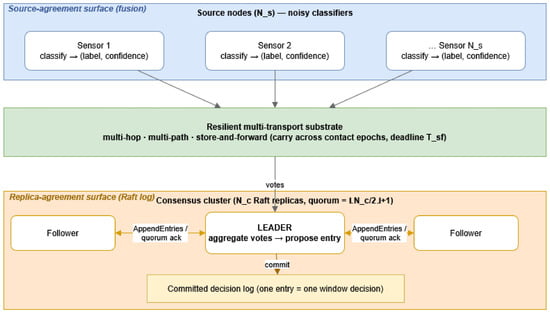
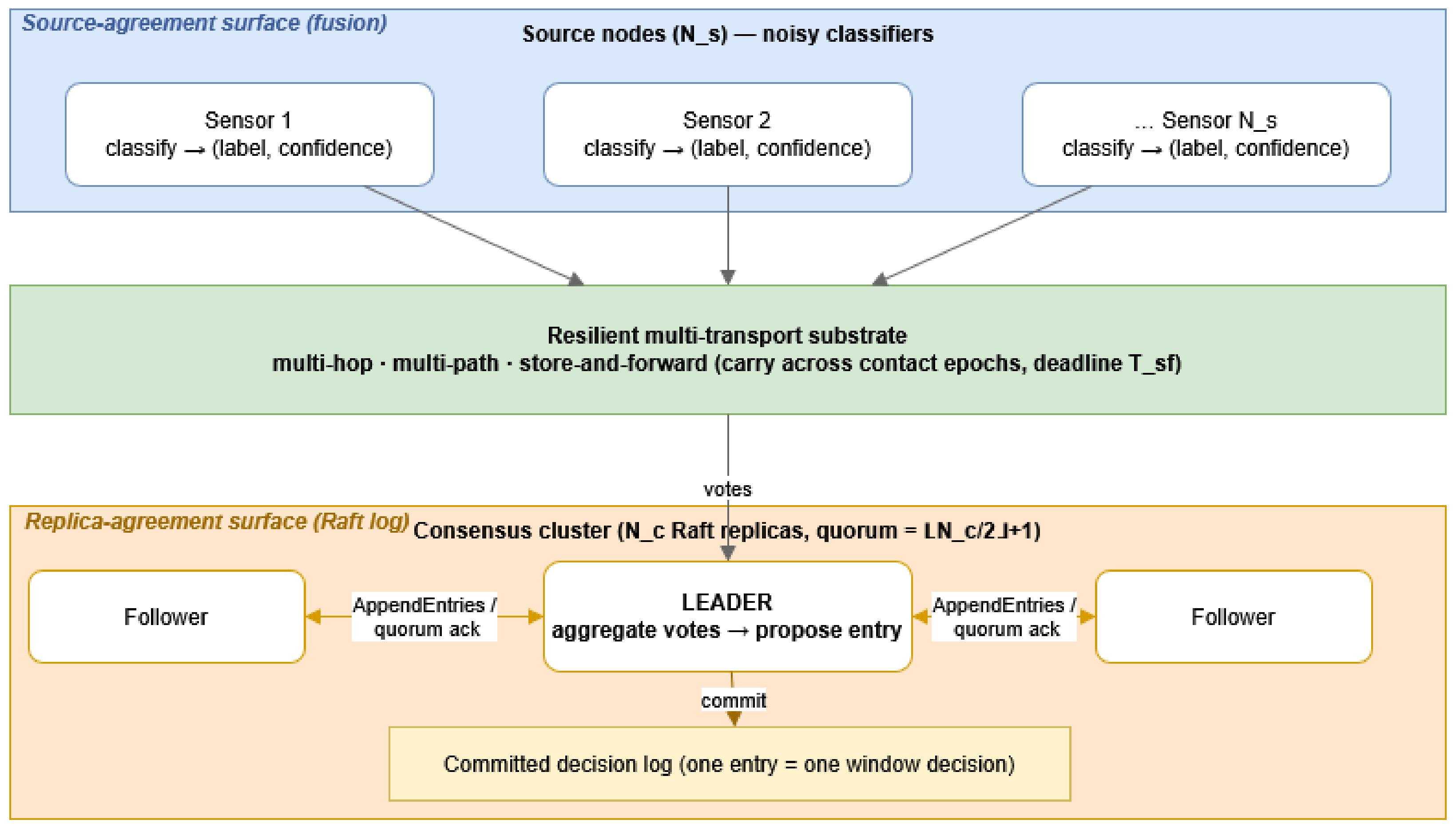
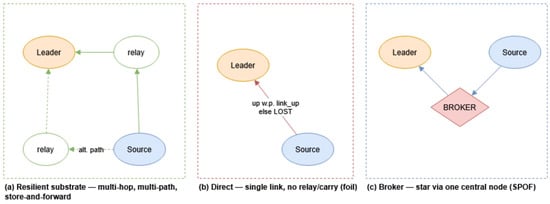
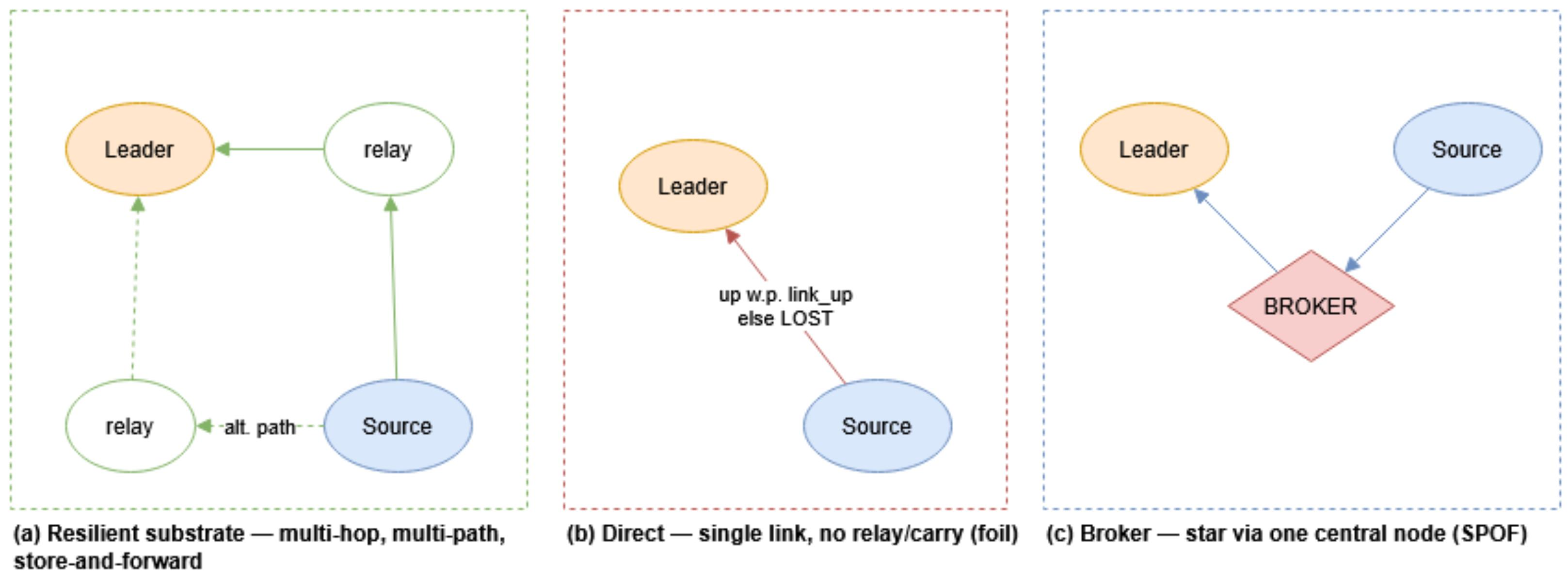
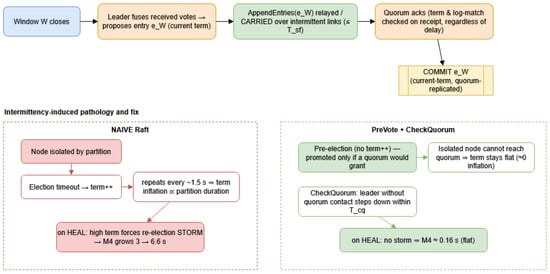
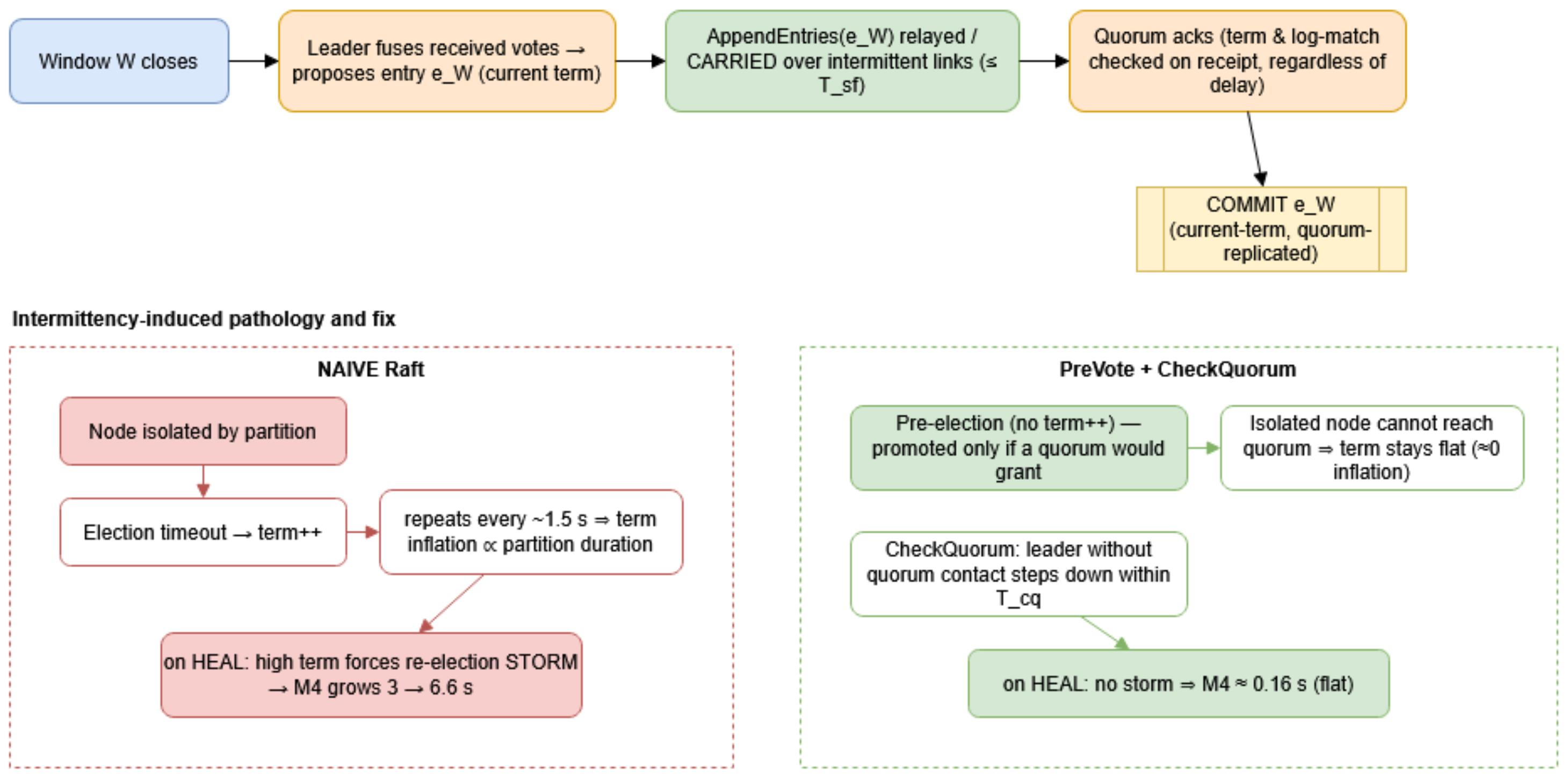
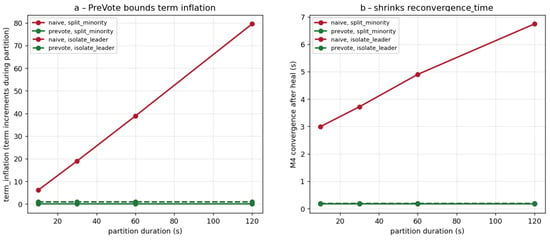
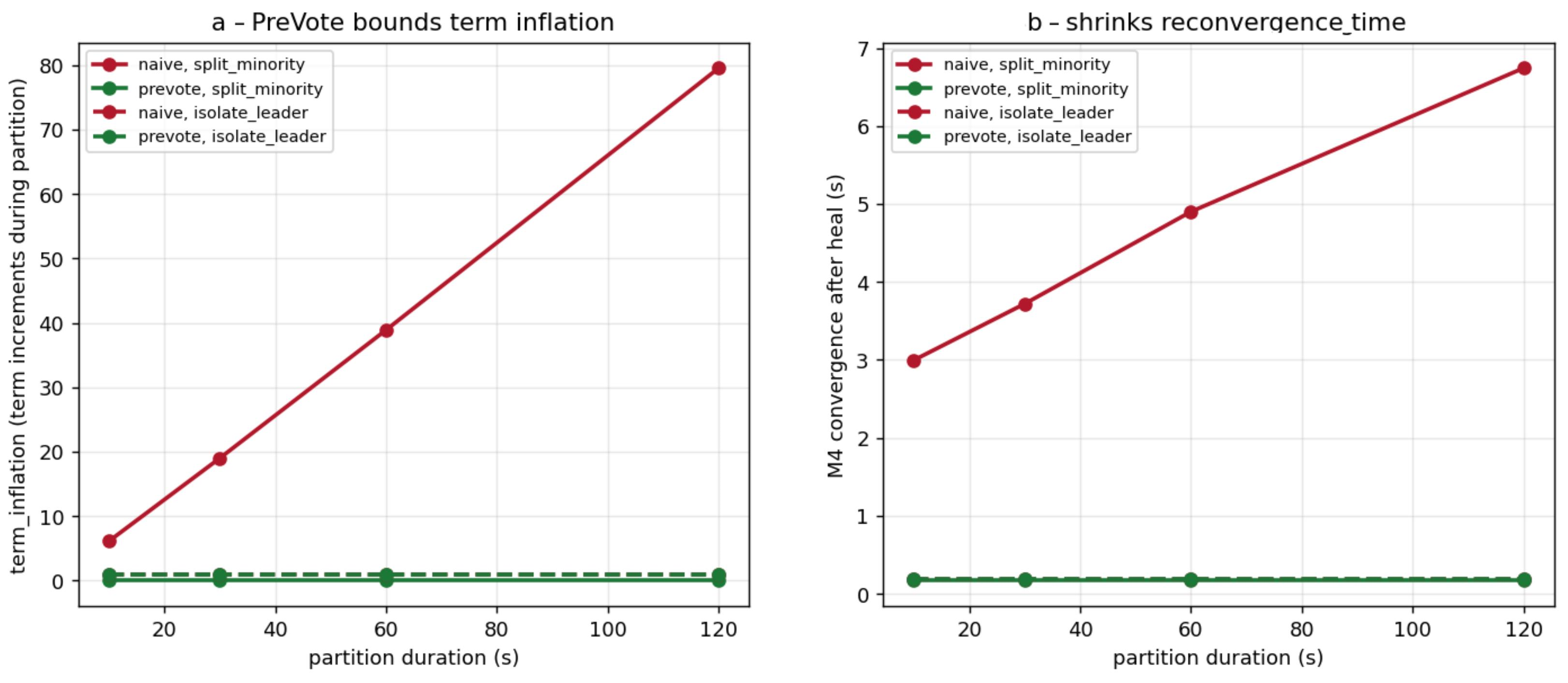
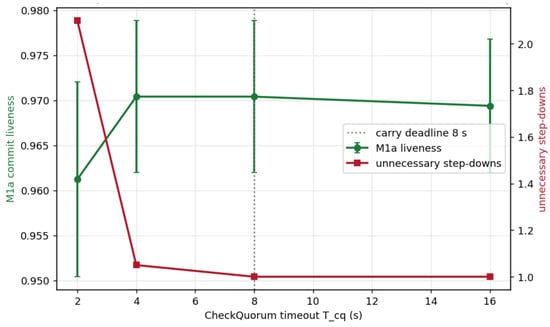
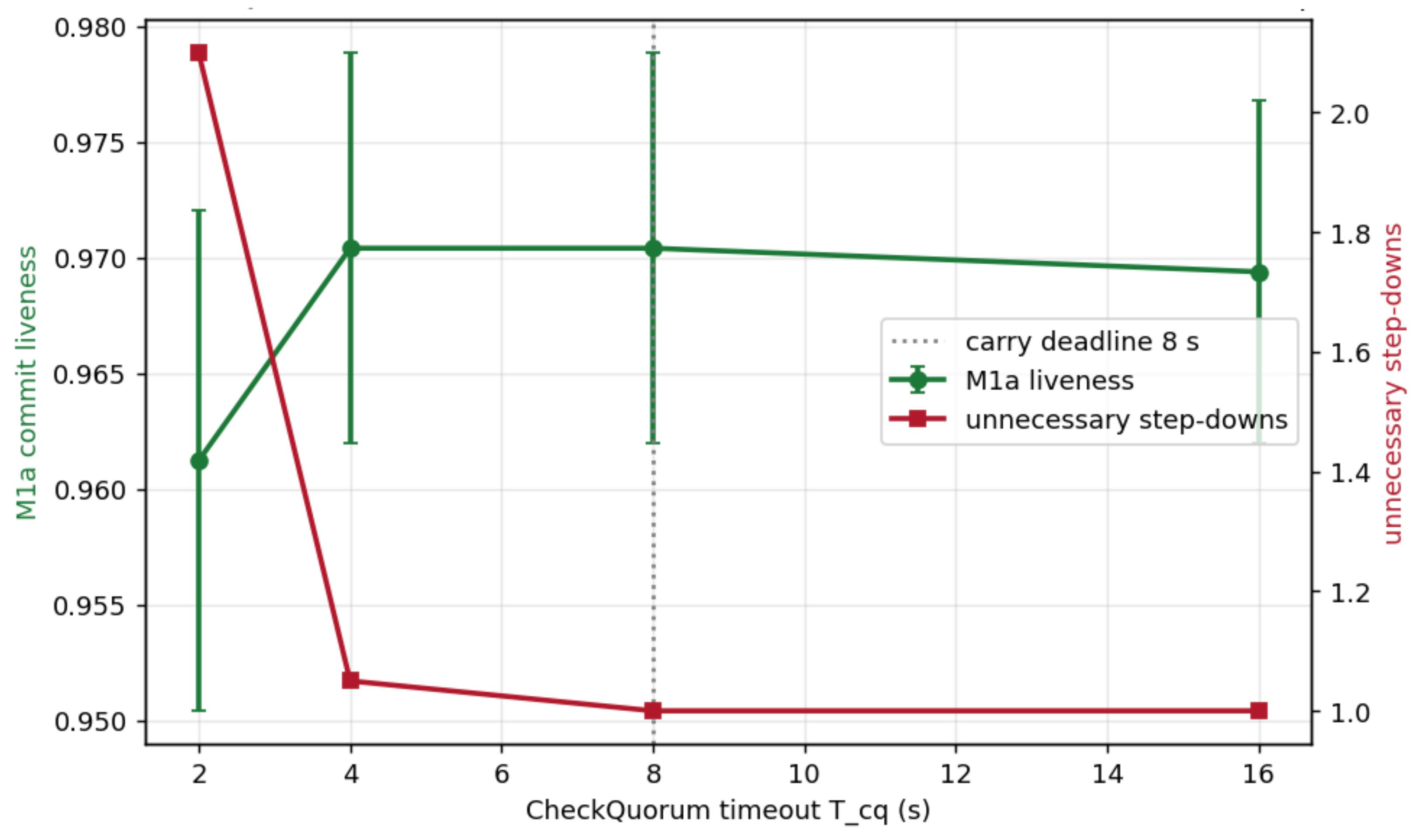
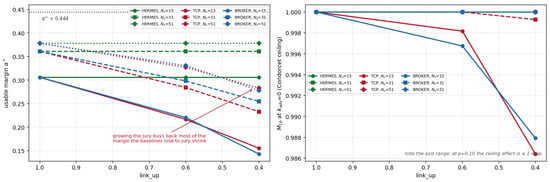
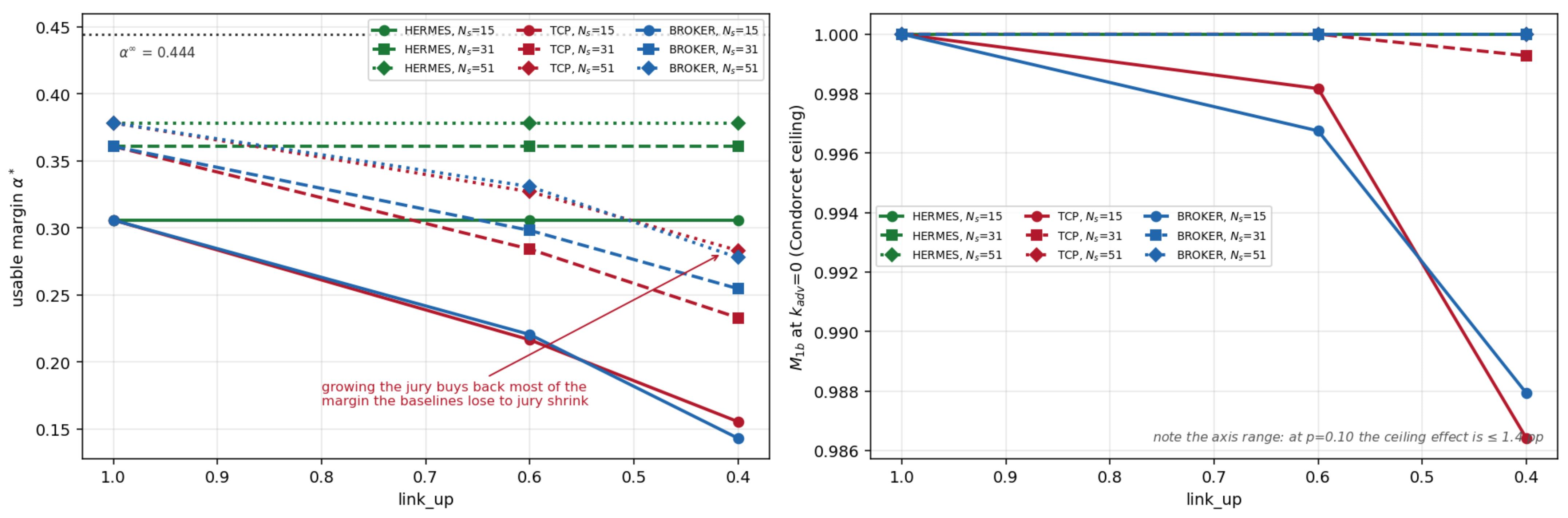
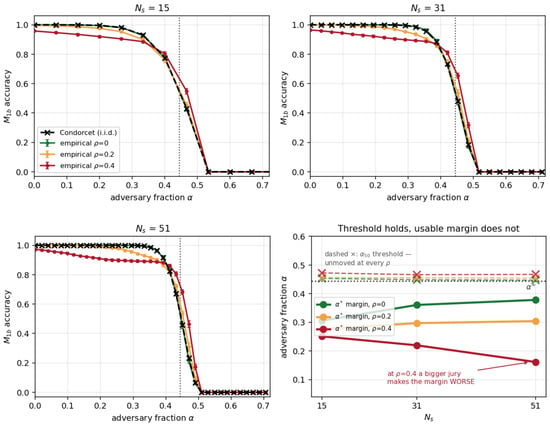
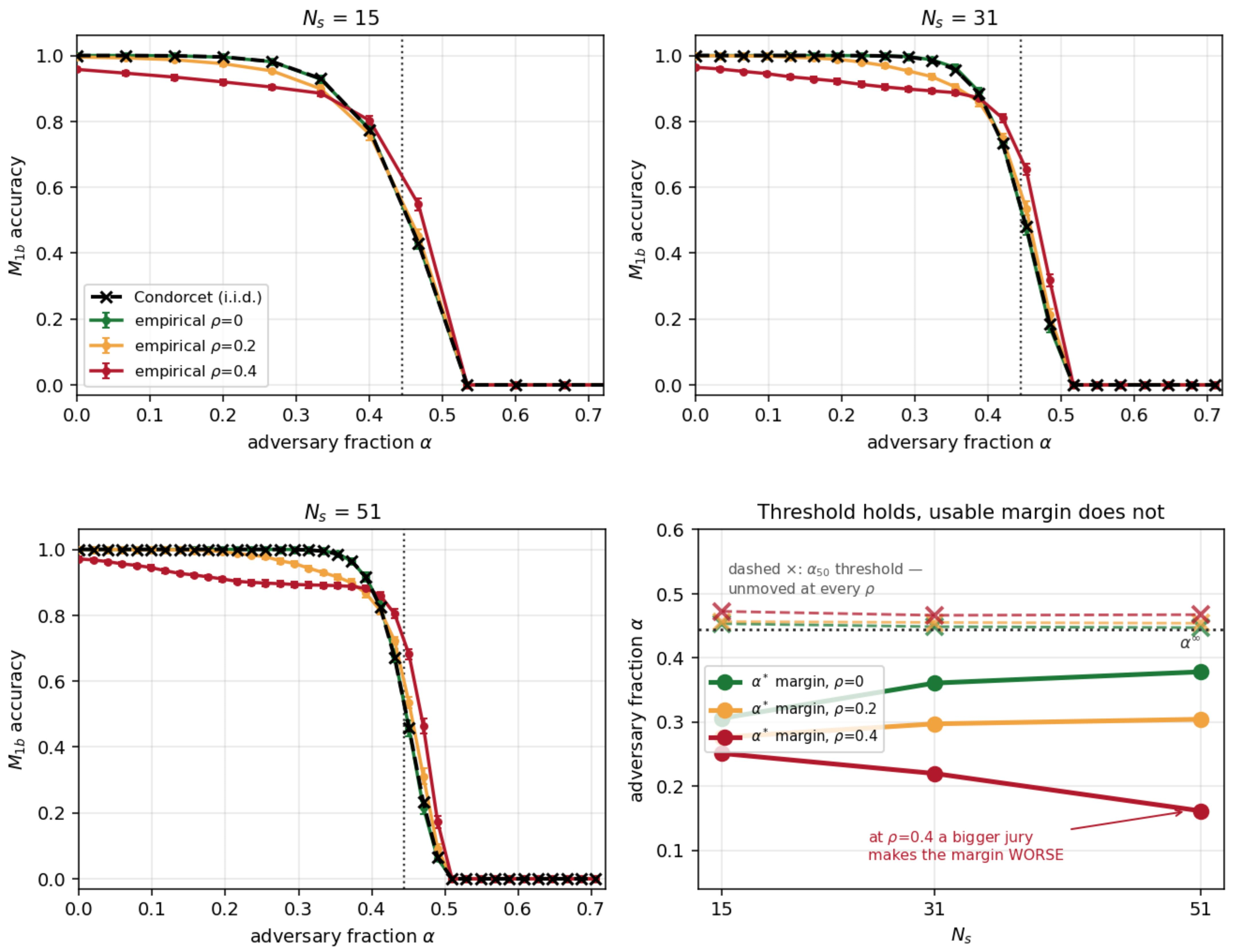
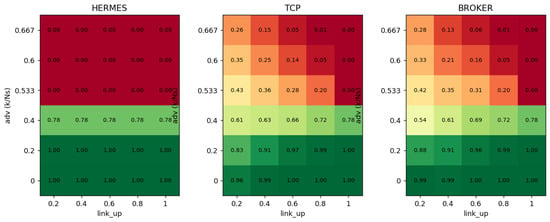
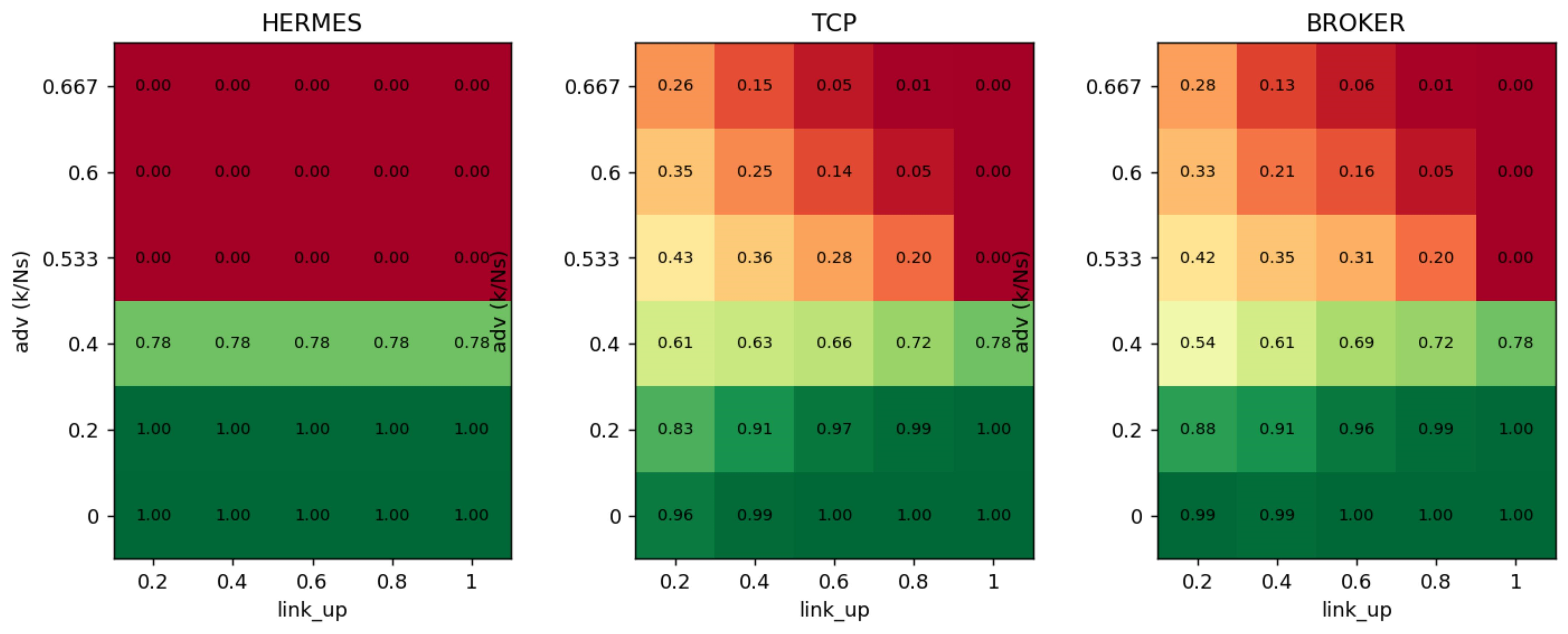
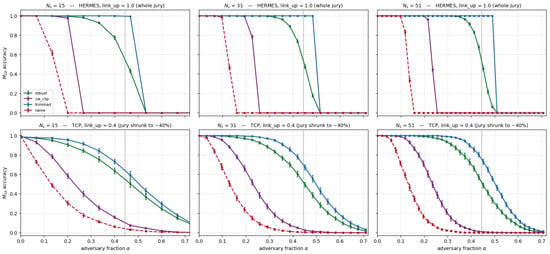
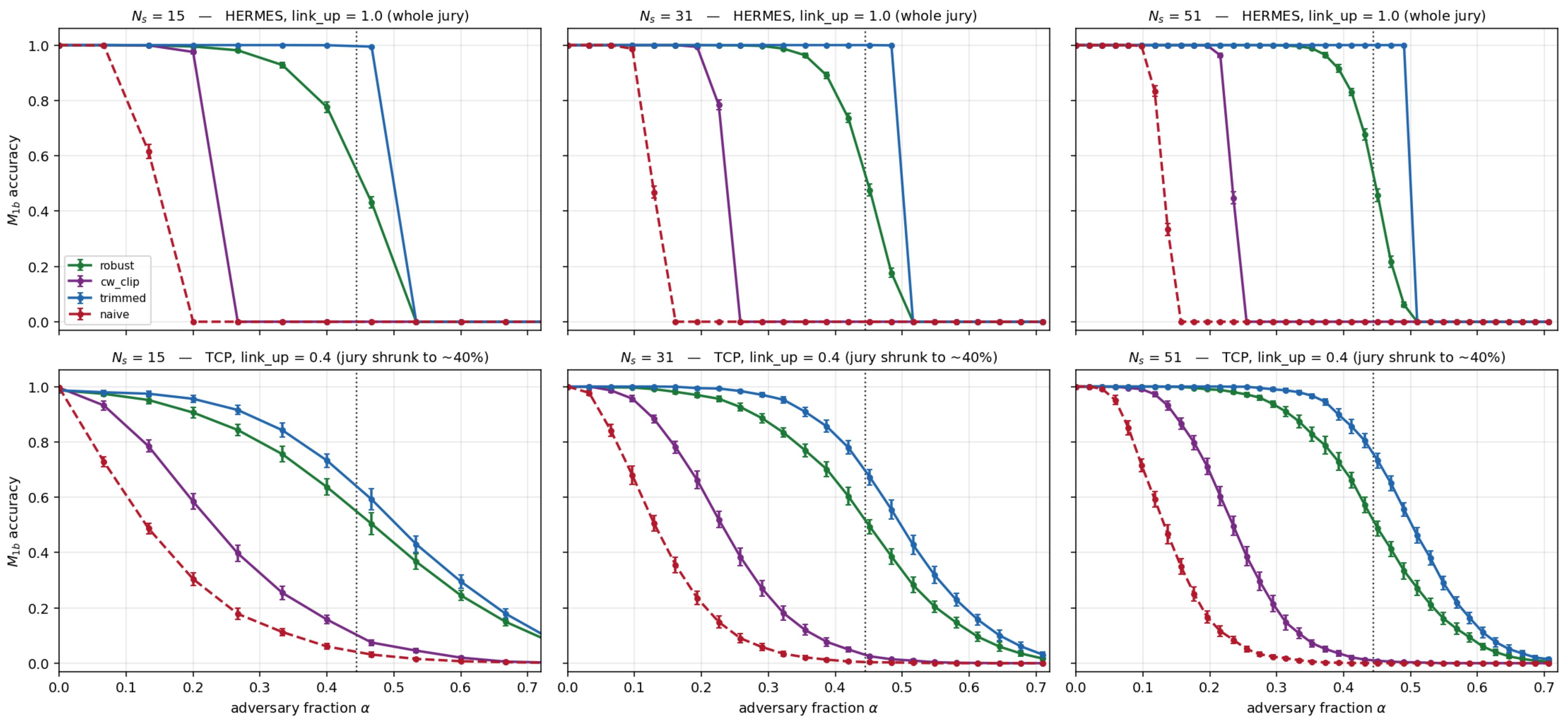
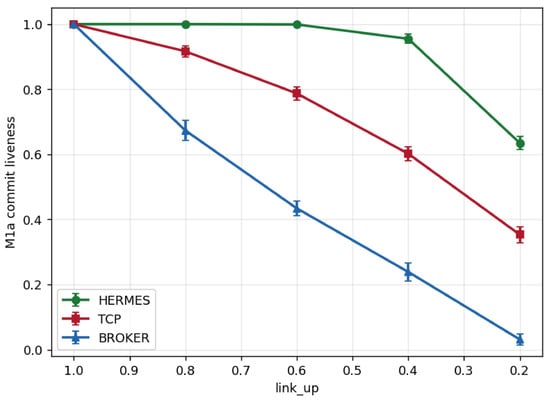
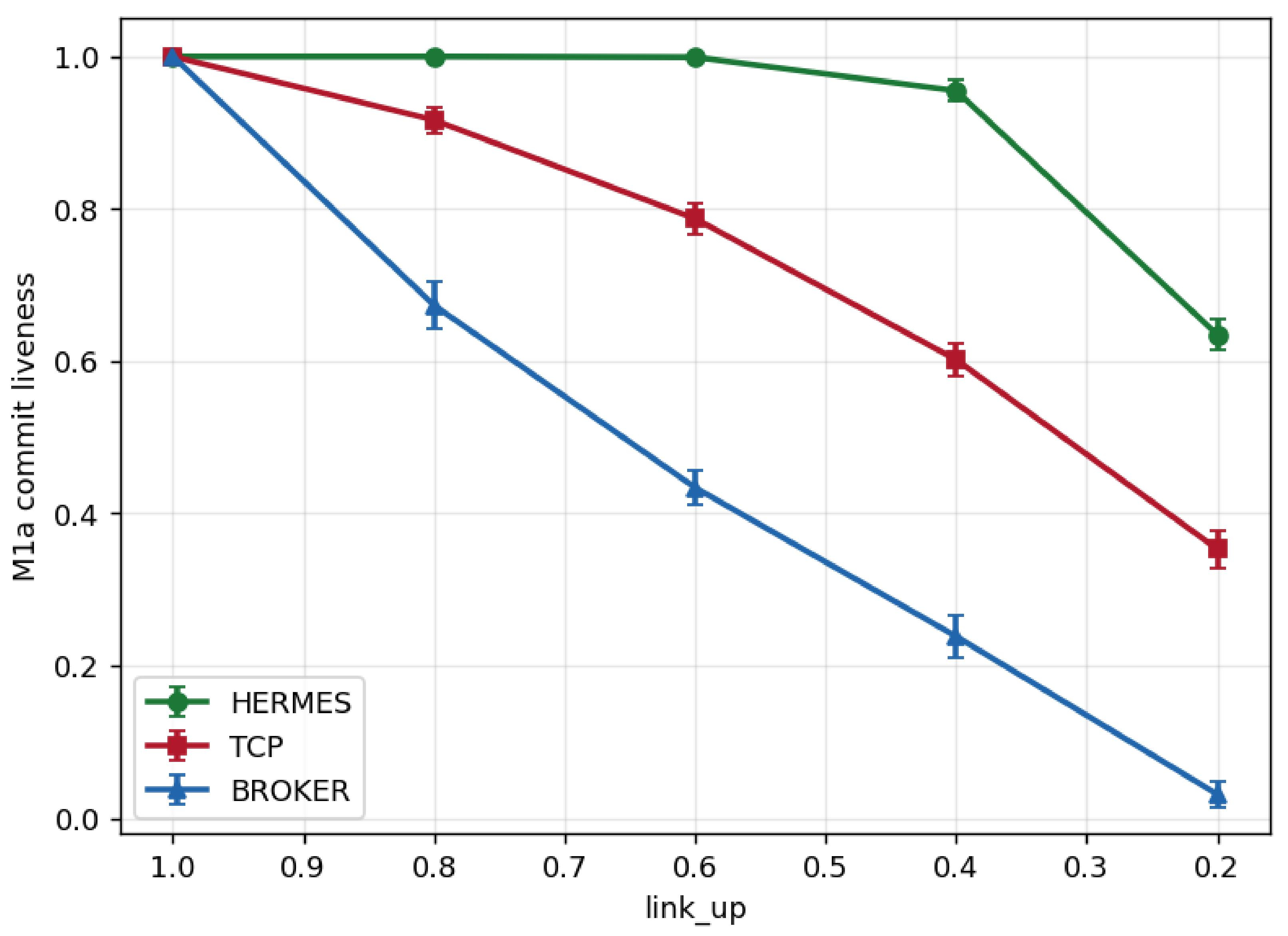
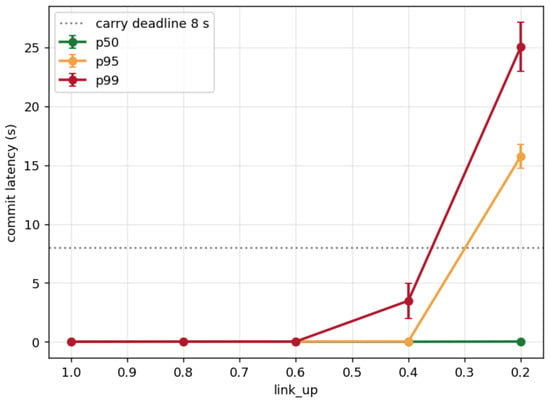
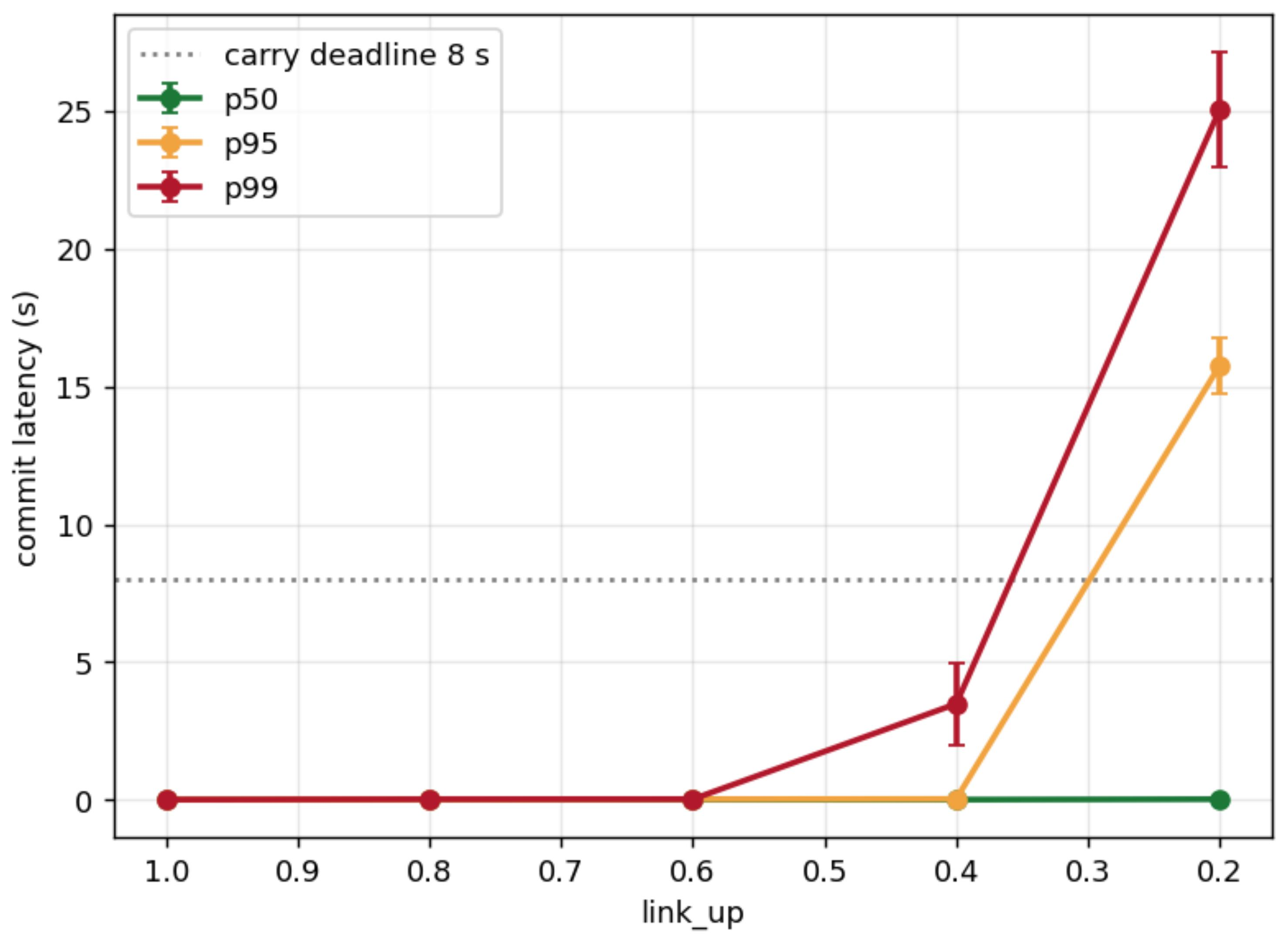
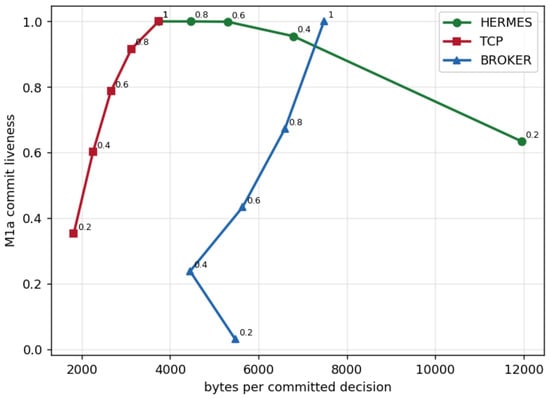
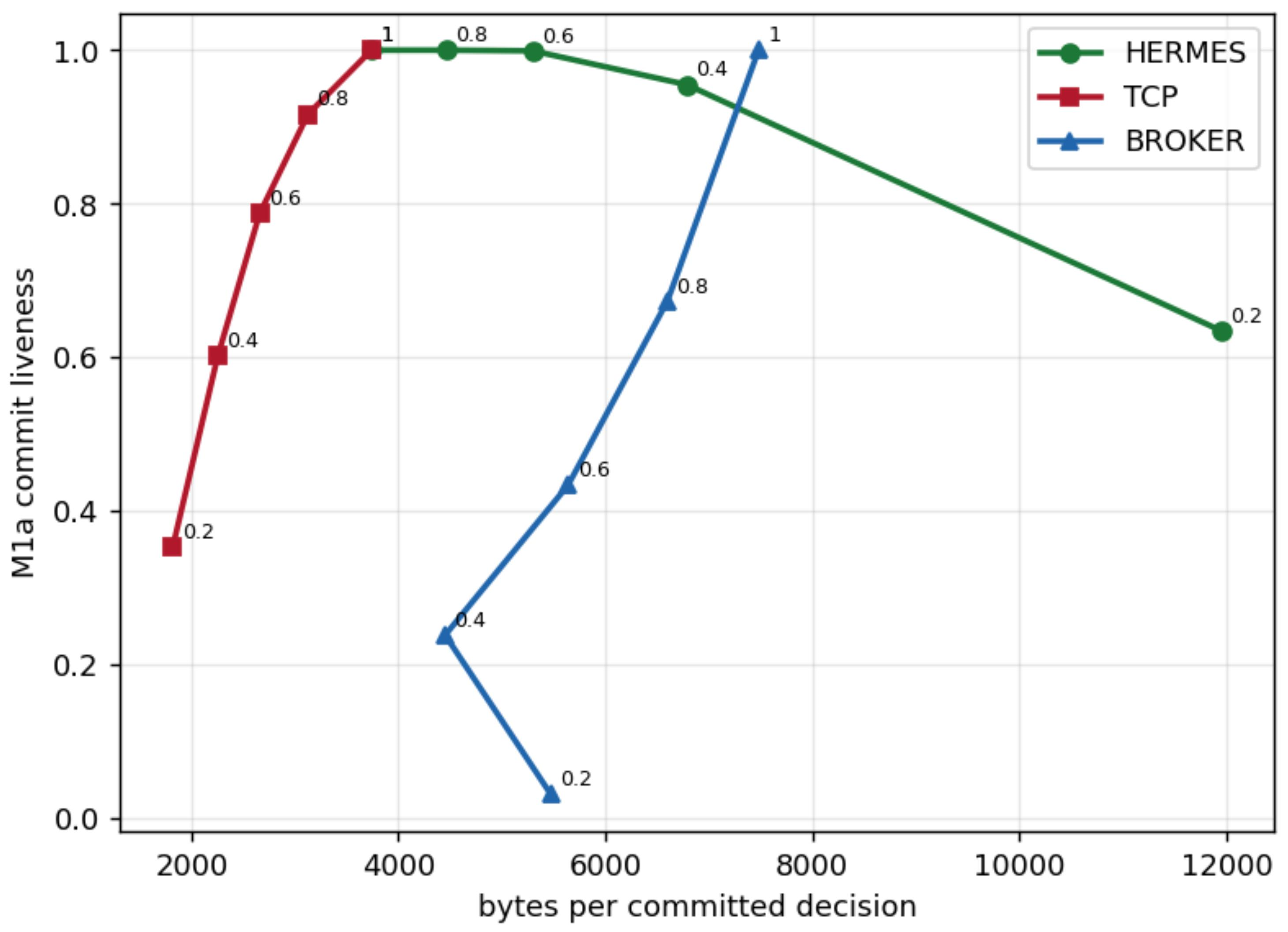
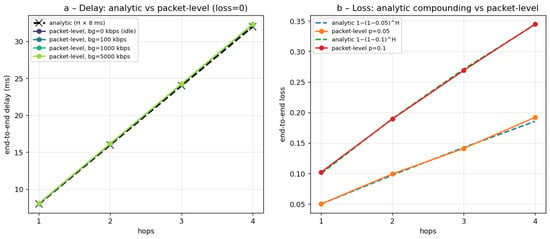
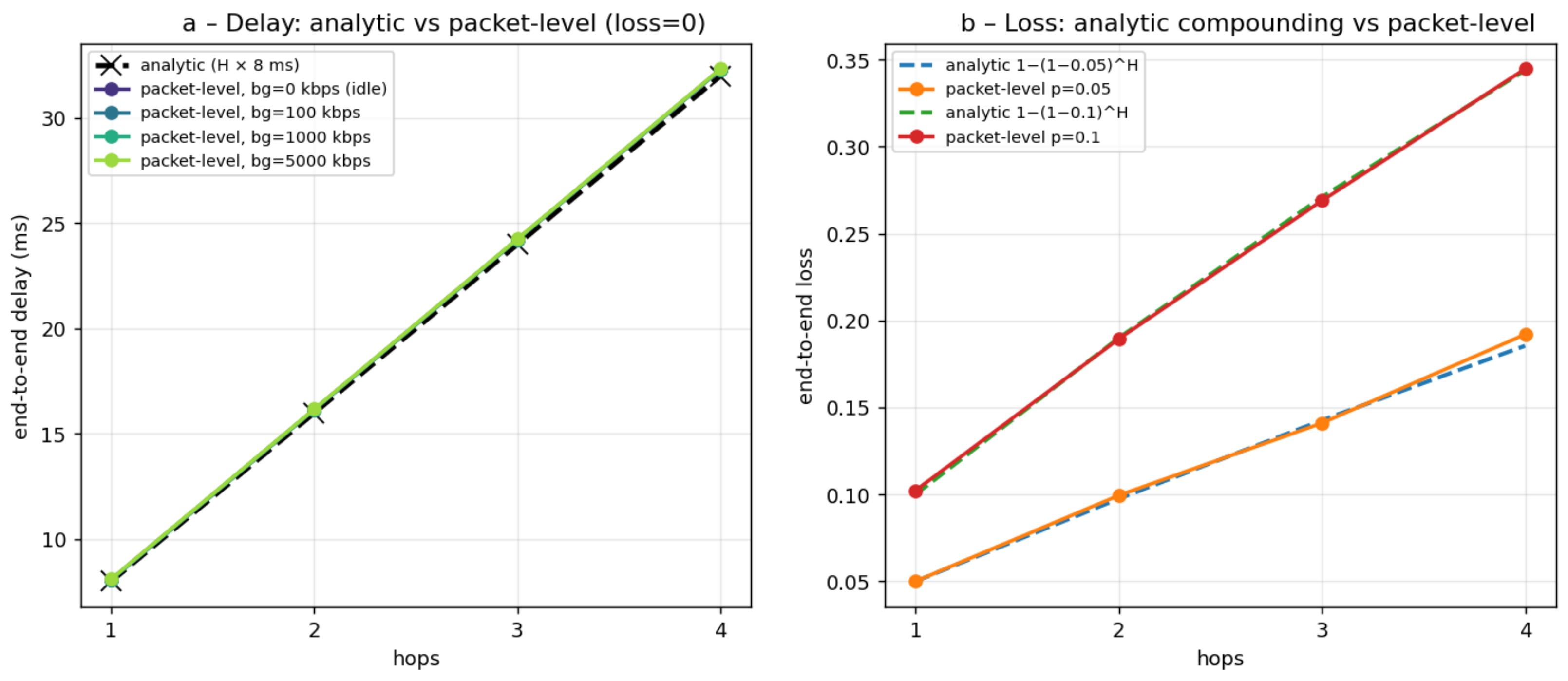
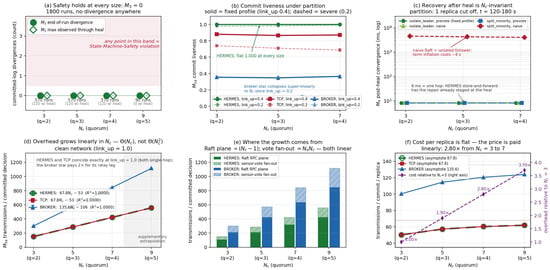
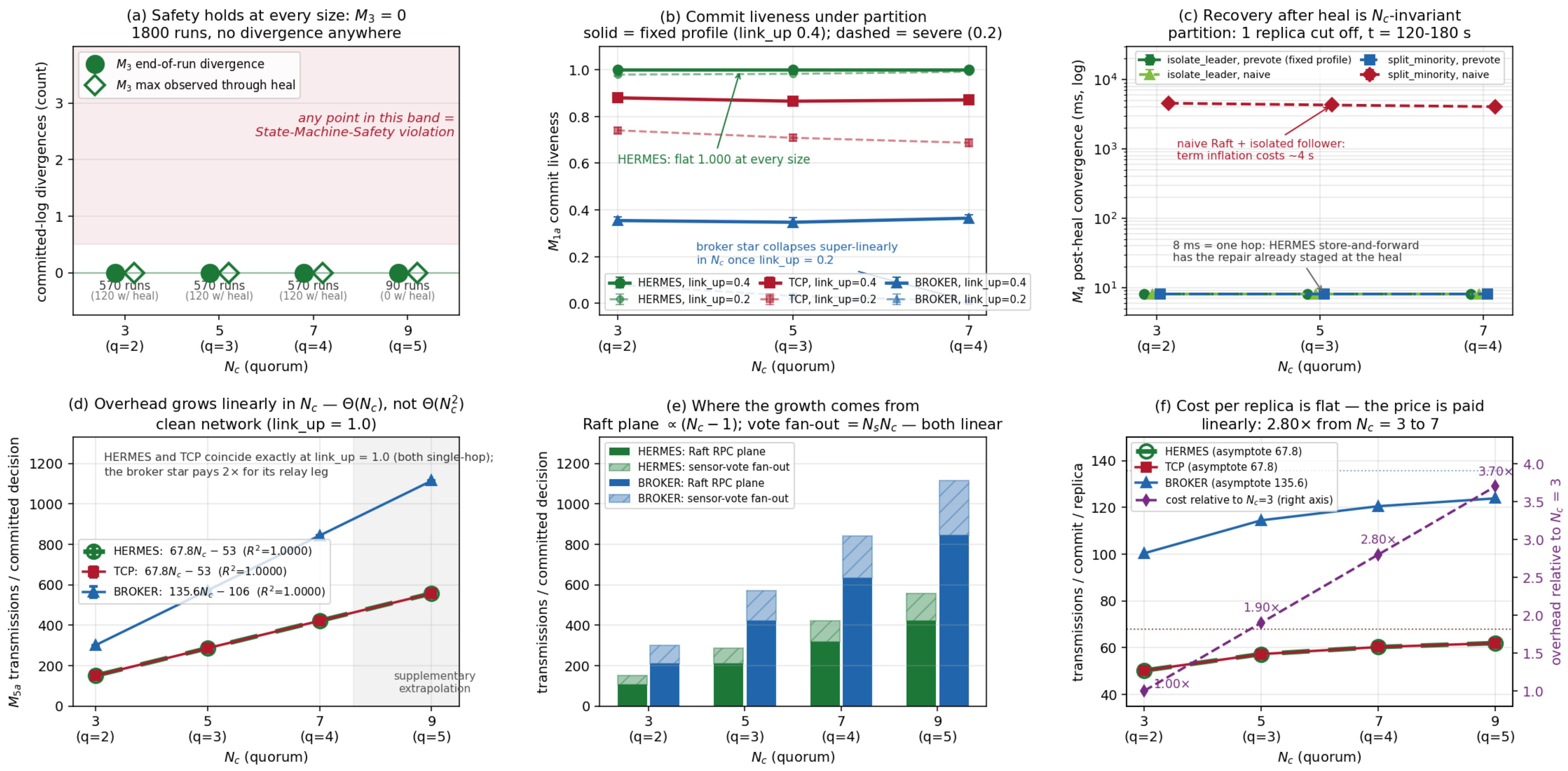
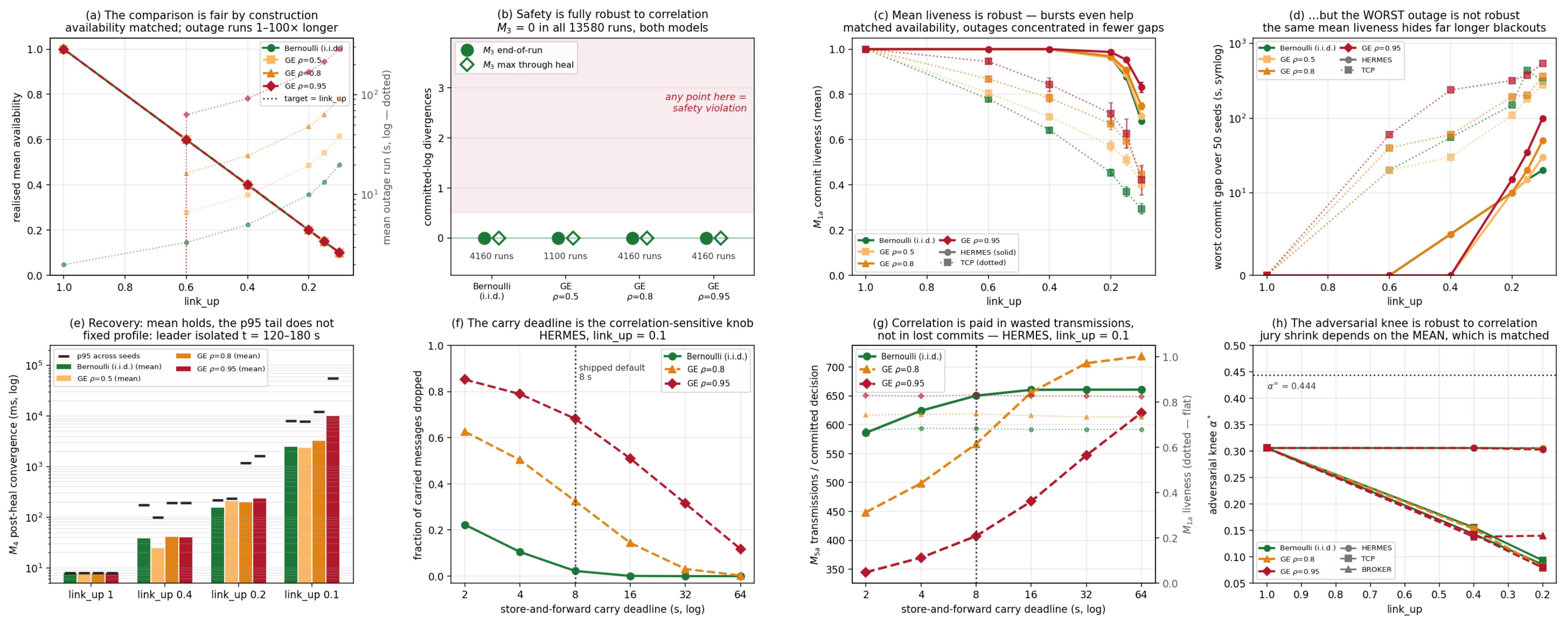
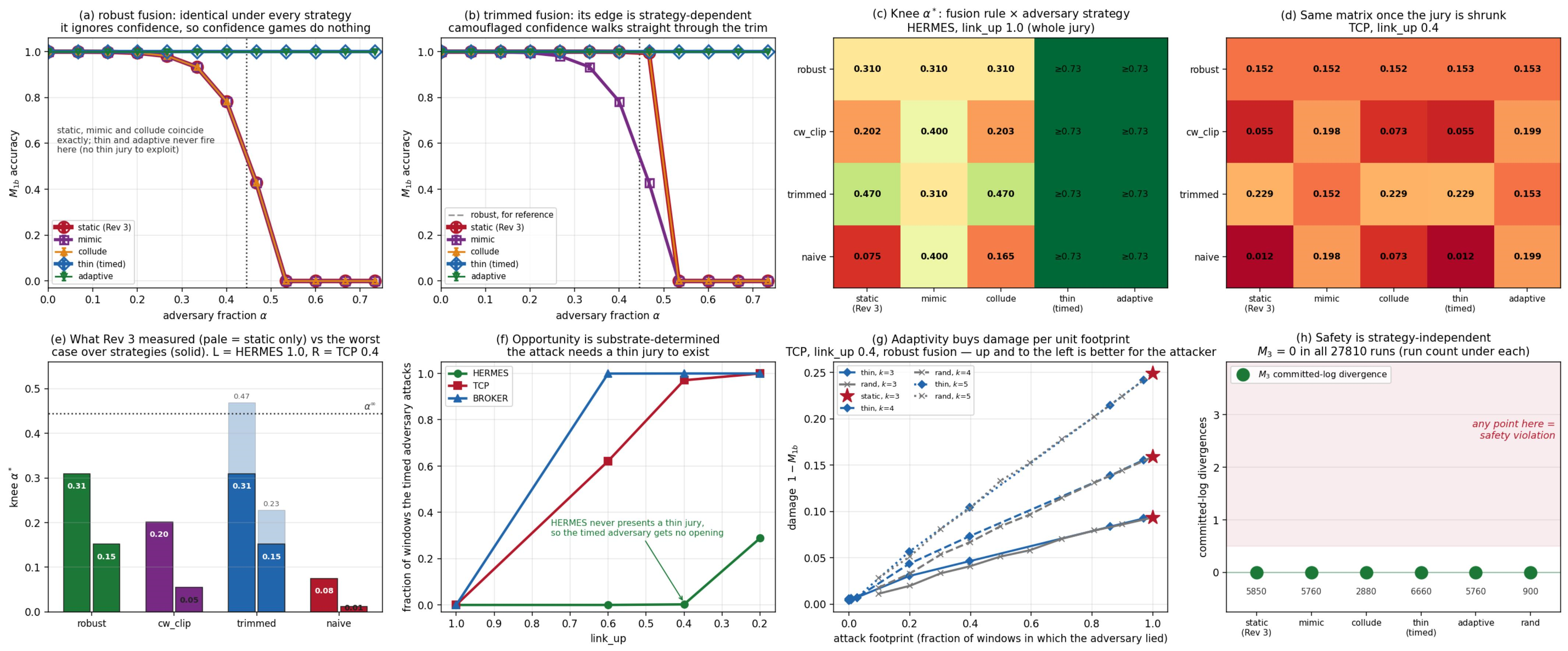
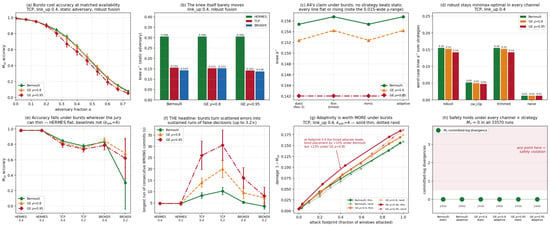
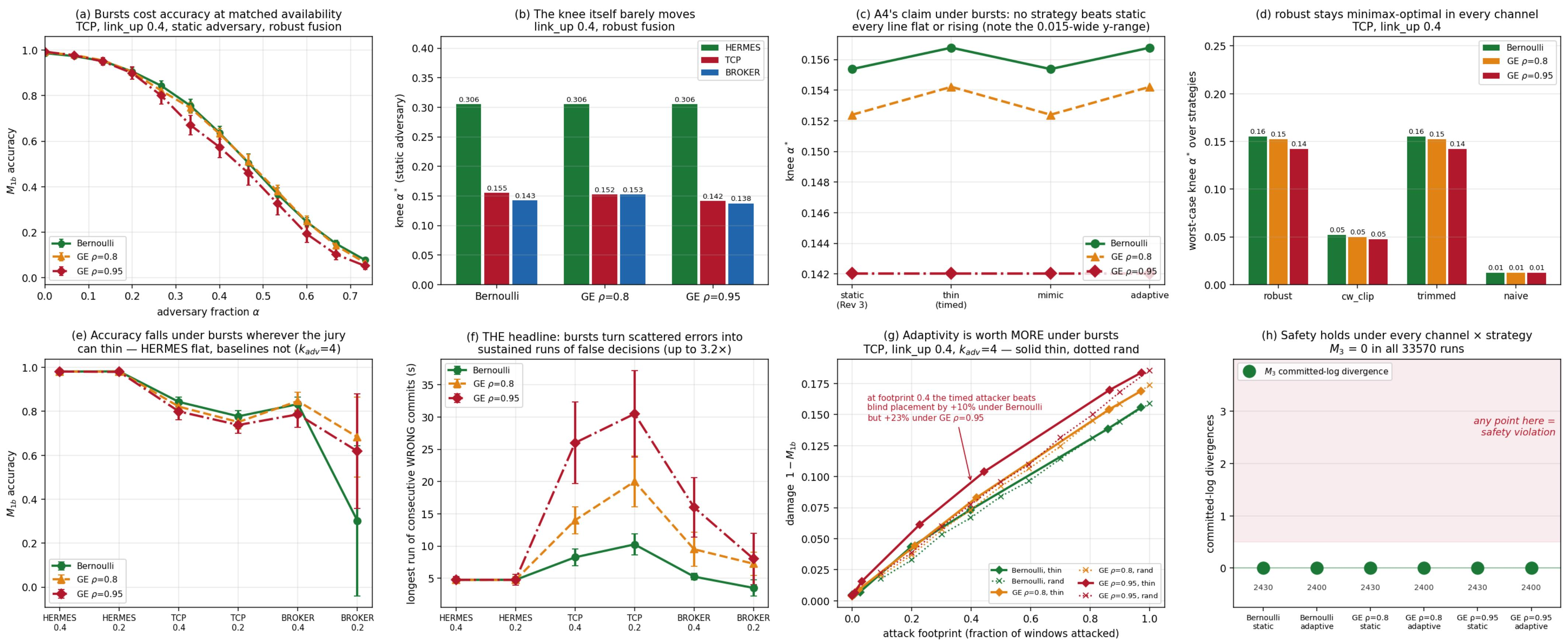

Disclaimer/Publisher’s Note: The statements, opinions and data contained in all publications are solely those of the individual author(s) and contributor(s) and not of MDPI and/or the editor(s). MDPI and/or the editor(s) disclaim responsibility for any injury to people or property resulting from any ideas, methods, instructions or products referred to in the content. |
© 2026 by the authors. Licensee MDPI, Basel, Switzerland. This article is an open access article distributed under the terms and conditions of the Creative Commons Attribution (CC BY) license.