


Abstract
In recent years, with the improvement of unmanned aerial vehicle (UAV) performance, various applications have been explored. In environments such as disaster areas, where existing infrastructure may be damaged, alternative uplink communication for transmitting observation data from UAVs to the ground station (GS) is critical. However, conventional mobile ad hoc network (MANET) routing protocols do not sufficiently account for GS-oriented traffic or the highly mobile UAV topology. This study proposed a flying ad hoc network (FANET) routing protocol that introduces a control option called GS flood, where the GS periodically disseminates routing information, enabling each UAV to efficiently acquire fresh source routes to the GS. Evaluation using NS-3 in a disaster scenario confirmed that the proposed method achieves a higher packet delivery ratio and practical latency compared to the representative MANET routing protocols, namely DSR, AODV, and OLSR, while operating with fewer control IP packets than existing methods. Furthermore, although the multihop throughput between UAVs and the GS in the proposed method plateaued at approximately 40% of the physical-layer maximum, it demonstrated performance exceeding realistic satellite uplink capacities ranging from several hundred kbps to several Mbps.
1. Introduction
In recent years, advances in airframe design, power systems, autonomous control, and sensing technologies for unmanned aerial vehicles (UAVs) have significantly enhanced their flight endurance, the variety of sensors that can be carried on board, and flight stability [1,2]. Building on these performance improvements, UAVs have been extensively studied and employed in a wide range of application domains, including precision agriculture and agrochemical spraying in the agricultural sector [3], last-mile delivery in the logistics sector [4], and civil and environmental monitoring based on remote sensing [5]. Among these applications, disaster response using UAVs is a notable example [6,7,8].
UAVs search disaster-affected areas and transmit the acquired data to a ground station (GS), thereby supporting rapid damage assessment and search-and-rescue operations [9]. Even when the communication infrastructure in the disaster area is destroyed, UAVs can provide alternative communication links from the air [10,11]. Thus, UAVs play a critical role in disaster response, and in particular, the communication between UAVs and the GS is crucial for these applications [12,13].
Although a UAV can communicate directly with a GS within its communication range, multihop relaying among UAVs enables communication over a wider area. Such an infrastructure-less network autonomously formed by mobile nodes is referred to as a mobile ad hoc network (MANET) [14,15], and it enhances the flexibility of UAV operations in disaster areas [13]. However, existing MANET routing protocols, such as dynamic source routing (DSR) [16], ad hoc on-demand distance vector (AODV) [17], and optimized link state routing (OLSR) [18], have been designed under the assumption of peer-to-peer communication among ground nodes [19,20,21]. Consequently, they cannot adequately accommodate the high mobility and battery constraints of UAVs [22,23]. To address these issues, routing protocols customized for flying ad hoc networks (FANETs) have been investigated [24,25]. Nevertheless, these studies assumed peer-to-peer communication among UAVs and did not focus on communication between the GS and UAV, which is considered critical in disaster scenarios.
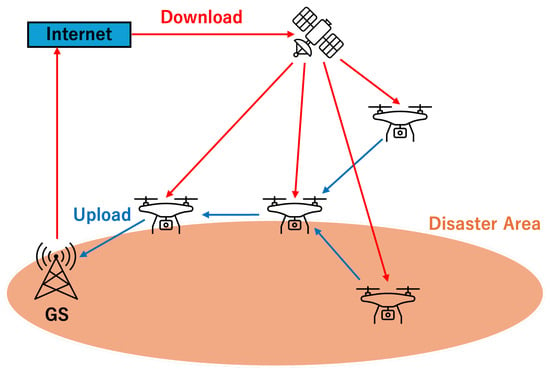
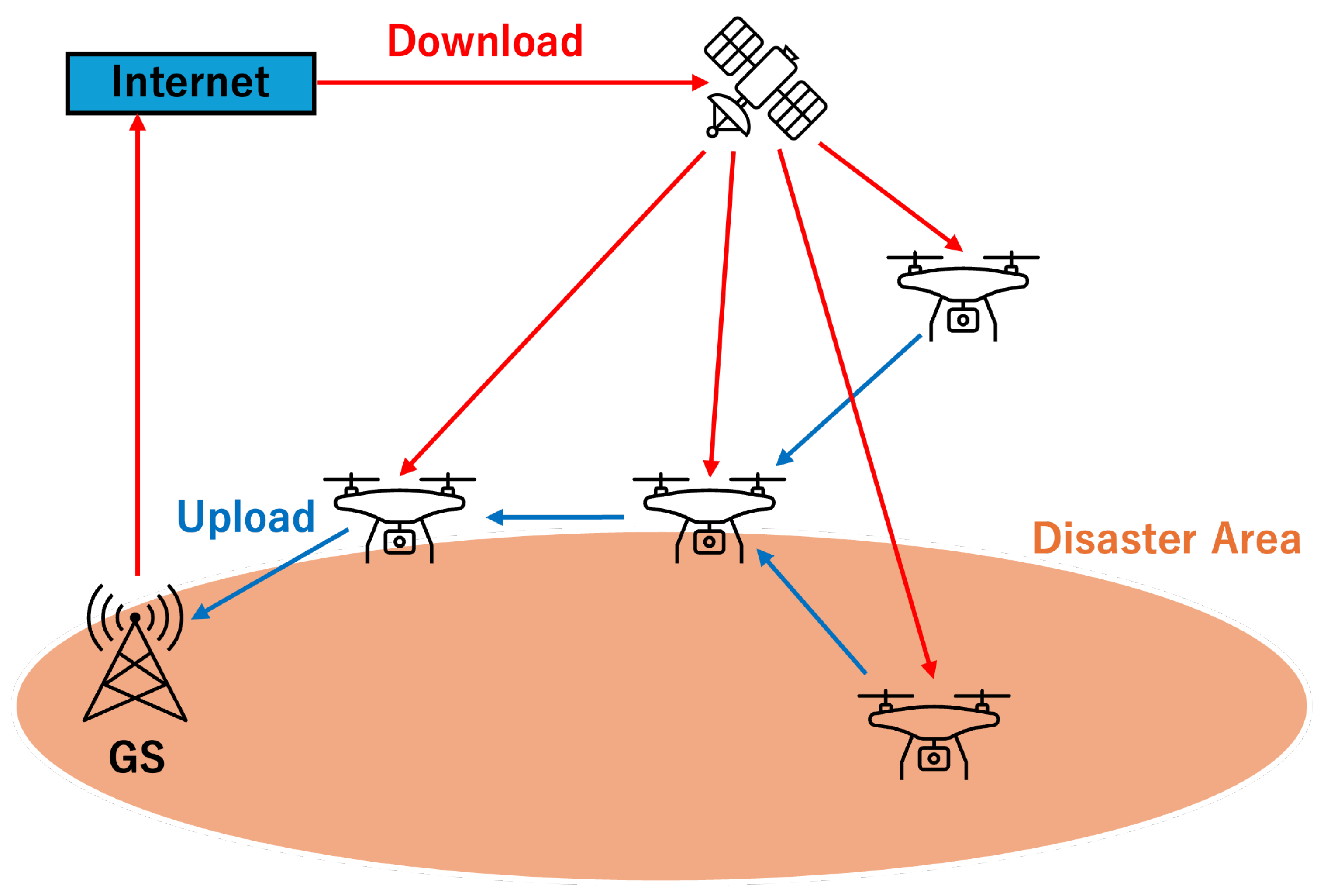
In addition, low Earth orbit satellite communication services have attracted attention as a means of communication that does not rely on existing ground infrastructure. In the future, these services will provide direct communication between UAVs and the GS via satellites in addition to communication via multihop relaying among UAVs. By contrast, satellite communication generally exhibits lower uplink performance (ground-to-satellite) compared with downlink performance (satellite-to-ground) [26,27]. Furthermore, considering the physical constraints on communication equipment, such as antennas that can be mounted on UAVs, the uplink performance from UAVs to satellites is even more limited. For example, according to technical information on the Starlink service published by SpaceX, the standard plan for individual users provides a downlink throughput of approximately 100 to 200 Mbps and an uplink throughput of approximately 20 Mbps [28]. However, these figures represent the performance for fixed GSs, and no Starlink user terminal specifically designed for direct installation on UAVs has been disclosed. Even for Starlink Mini, the antenna has external dimensions of approximately 298.5 × 259 × 38.5 mm and a mass of approximately 1.16 kg [29]; when mounted on a UAV, constraints on flight attitude and antenna operation are expected to further reduce the achievable data rate [30]. In contrast, the product line from Gotonomi has advanced to the stage of practical deployment as compact SATCOM terminals for UAVs, and flight experiments have demonstrated that it can provide data rates of up to 200 kbps [31,32]. Based on the aforementioned discussion, in scenarios, such as disaster areas, where the uplink data rate from UAVs to the GS is crucial, a configuration that uses FANET and complementary satellite communication is considered effective. Specifically, downlink satellite communication is used for disseminating commands and configuration information from the GS to UAVs and for wide-area information sharing, whereas multihop relaying among UAVs is used for uploading sensing data from UAVs to the GS (Figure 1). In such a configuration, if existing FANET routing protocols are directly applied, the uplink communication performance between UAVs and the GS becomes the bottleneck; therefore, designing an FANET routing protocol that prioritizes data transmission to the GS is crucial. In this study, we addressed this issue and investigated an FANET routing scheme that enables efficient data transmission to the GS.
Figure 1.
Division of roles between UAV communication and satellite communication.
This study aims to design and propose an FANET routing protocol based on DSR, which prioritizes data transmission from UAVs to the GS. Specifically, we introduced a new GS flood option in which the GS node periodically disseminates route information, enabling each UAV to efficiently obtain up-to-date routes to the GS and thereby reducing the overhead and route staleness associated with the conventional route request (RREQ)-/ route reply (RREP)-based route discovery in DSR. Furthermore, for communication to nodes other than the GS, we combined multihop communication over the FANET with satellite communication and allowed satellite forwarding via the GS to be selected, thereby enabling flexible delivery to various destinations.
We evaluated the proposed method through simulations using network simulator 3 (NS-3) [33]. In the simulations, we assumed UAV operations in a disaster area and constructed scenarios in which multiple UAVs distributed over the area move and transmit data. We considered three scenarios: (i) a scenario in which UAVs send low-volume data to the GS; (ii) a scenario in which UAVs send low-volume data to other UAVs; and (iii) a scenario in which UAVs send high-volume data to other UAVs. We mainly used packet delivery ratio (PDR), latency, and the number of generated IP packets as performance metrics to evaluate the proposed method and compared it with the representative MANET routing protocols, such as DSR, AODV, and OLSR. In addition, we compared it with a configuration in which all communication is performed solely via satellite links, thereby clarifying the effectiveness of GS-directed data delivery using an FANET.
The main contributions of this study are as follows:
- We proposed a DSR-based routing scheme for FANETs in disaster scenarios, aiming to improve the reliability of uplink communications from UAVs to the GS.
- We designed a mechanism in which UAVs can efficiently obtain fresh routes to the GS by introducing the GS flood option, where the GS periodically disseminates routing information.
- We enhanced operational flexibility by combining data buffering when a route is unavailable for forwarding over a satellite link when necessary.
- Through NS-3 simulations, we conducted a comparative evaluation against the existing schemes in terms of PDR, latency, control-packet overhead, and throughput.
2. Related Works
Salma Badawi Mohammed Ahmed et al. [34] evaluated four routing protocols, such as DSR, AODV, OLSR, and ZRP, under two disaster scenarios to support the selection of routing protocols suitable for constructing FANETs in different disaster environments. Using packet delivery ratio (PDR), latency, and throughput as performance metrics, they showed that AODV achieves the best performance in scenarios involving low-volume data transfer, whereas OLSR performs best in scenarios involving high-volume data transfer. However, they also demonstrated that DSR operates with the lowest routing overhead in both scenarios. Salma Badawi et al. [35] further surveyed existing routing protocols for FANETs in disaster environments and classified them into several major categories. These works consistently conclude that no single routing protocol is optimal for all types of disasters; rather, the selection of a protocol depends on the disaster scenario and parameters, including network size, UAV density, and UAV speed.
Hua Yang et al. [36] proposed CHNN-DSR as an extension of DSR to accommodate high node mobility. In CHNN-DSR, link stability is incorporated into the routing metric, thereby improving performance indicators, such as throughput. Although CHNN-DSR is effective in enhancing route stability in FANET environments, it does not provide a mechanism for efficiently obtaining routes to the GS. In addition, Shaoshi Yang et al. [37] proposed BC-DSR, which exploits betweenness centrality to evaluate node importance and select more reliable routes. Although BC-DSR improves communication in formation flight, its assumptions differ from the scenario considered in this study, where UAVs are deployed distributively over a disaster area, and the topology changes irregularly; moreover, BC-DSR does not focus on mechanisms for efficiently acquiring routes to the GS.
Woonghee Lee et al. [38] proposed GCS-routing, in which the GS centrally controls routes by maintaining knowledge of the positions and movement schedules of all UAVs. In GCS-routing, the GS estimates link costs based on geographic information, predicts future topology changes, and proactively notifies each UAV of new routes. Although GCS-routing achieves high throughput and stability, it assumes the continuous availability of a control channel between the GS and UAVs and that the GS can constantly obtain the location information and schedules of all UAVs. However, this study accounts for distributed deployments in which certain UAVs cannot communicate directly with the GS; thus, we do not assume an always-on control channel or centralized control by the GS. Moreover, GCS-routing does not discuss any design that prioritizes uplink communication from UAVs to the GS.
This study focused on the following issues that arise when generic MANET routing protocols are directly applied to FANETs in disaster environments:
- insufficient optimization for GS-directed traffic;
- increased routing overhead owing to frequent link disruptions; and
- staleness of route information.
Building on DSR, we proposed an FANET routing protocol that prioritizes data transmission to the GS to address these issues.
3. Proposed Method
In this study, we proposed an FANET routing protocol based on DSR that prioritizes data transmission from UAVs to the GS. The proposed method introduces a new control option, called the GS flood option, which preserves the basic operation of DSR while suppressing excessive route discovery by individual nodes, thereby achieving efficient routing.
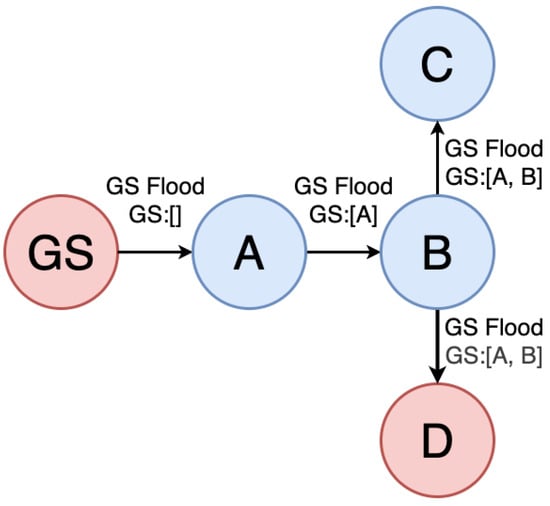
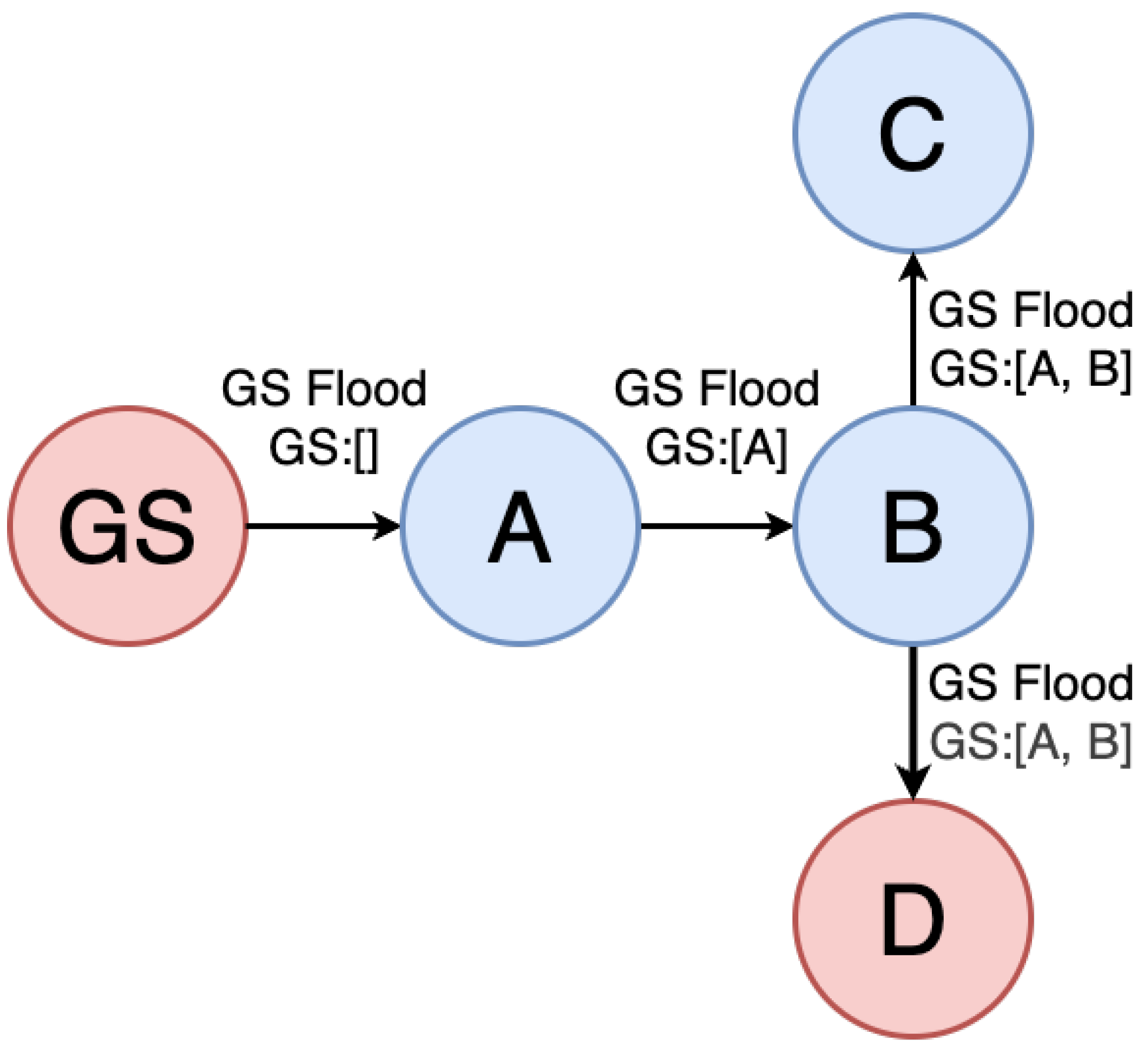
The GS node periodically disseminates GS flood packets. Neighboring nodes forward these packets while appending their own addresses, such that each node can obtain the route information to the GS node. In this way, route information to the GS, which in conventional DSR is constructed independently by each node through the route discovery mechanism, can be created more efficiently.
For example, when the GS node generates a GS flood and nodes B, C, and D relay it in sequence, node D obtains the route D → C → B → GS to the GS node (Figure 2).
Figure 2.
Example of GS flood forwarding.
In addition, in the proposed method, data transmission to the GS and data transmission to nodes other than the GS follow different procedures.
- Data transmission to the GS
- 1.
- A data packet is generated.
- 2.
- Check whether a route to the GS is stored in the local route cache.
- (a)
- If a route exists, send the data to the GS using that route.
- (b)
- If no route exists, temporarily cache the data and wait until the next GS flood arrives.
- Data transmission to nodes other than the GS
- 1.
- A data packet is generated.
- 2.
- Check whether a route to the destination node is stored in the local route cache.
- (a)
- If a route exists, send the data to the destination node using that route and terminate.
- (b)
- If no route exists, proceed to the next step.
- 3.
- Check whether a route to the GS is stored in the local route cache.
- (a)
- If a route to the GS exists, send the data to the GS using that route, and let the GS forward the data to the destination node via satellite communication.
- (b)
- If no route to the GS exists, cache the data and wait until the next GS flood arrives.
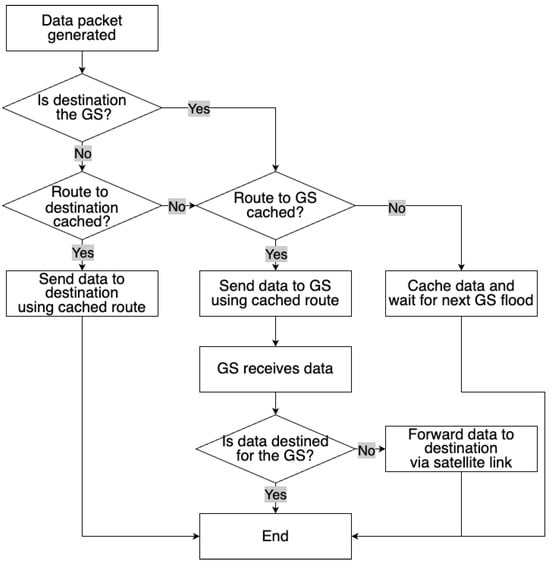
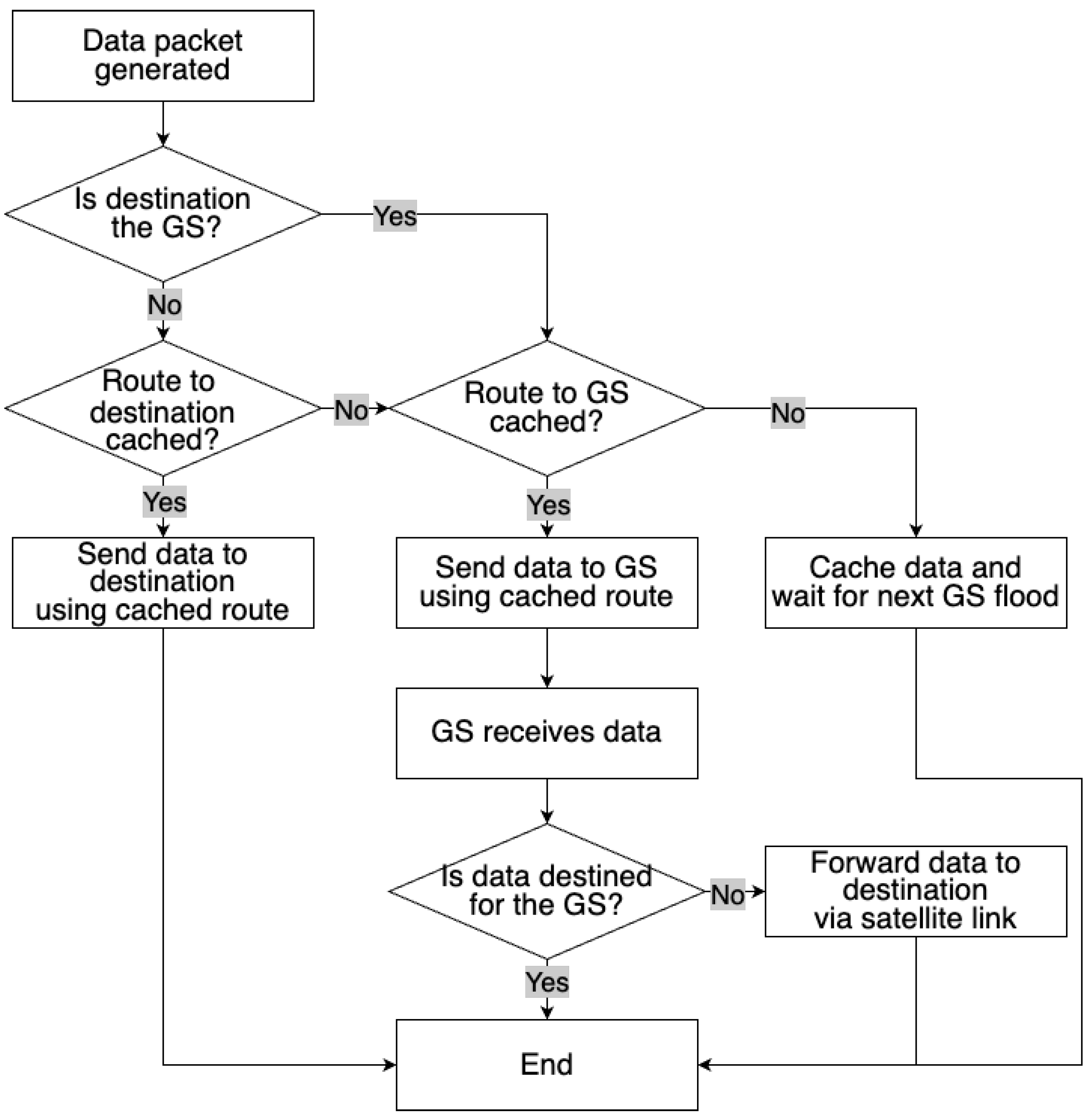
These procedures can be summarized as the flowchart shown in Figure 3.
Figure 3.
Data transmission flow in the proposed method.
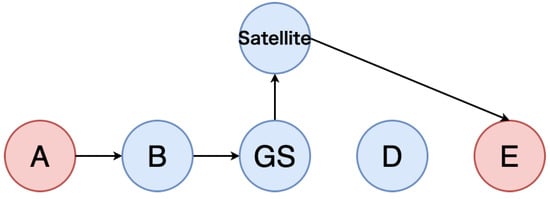
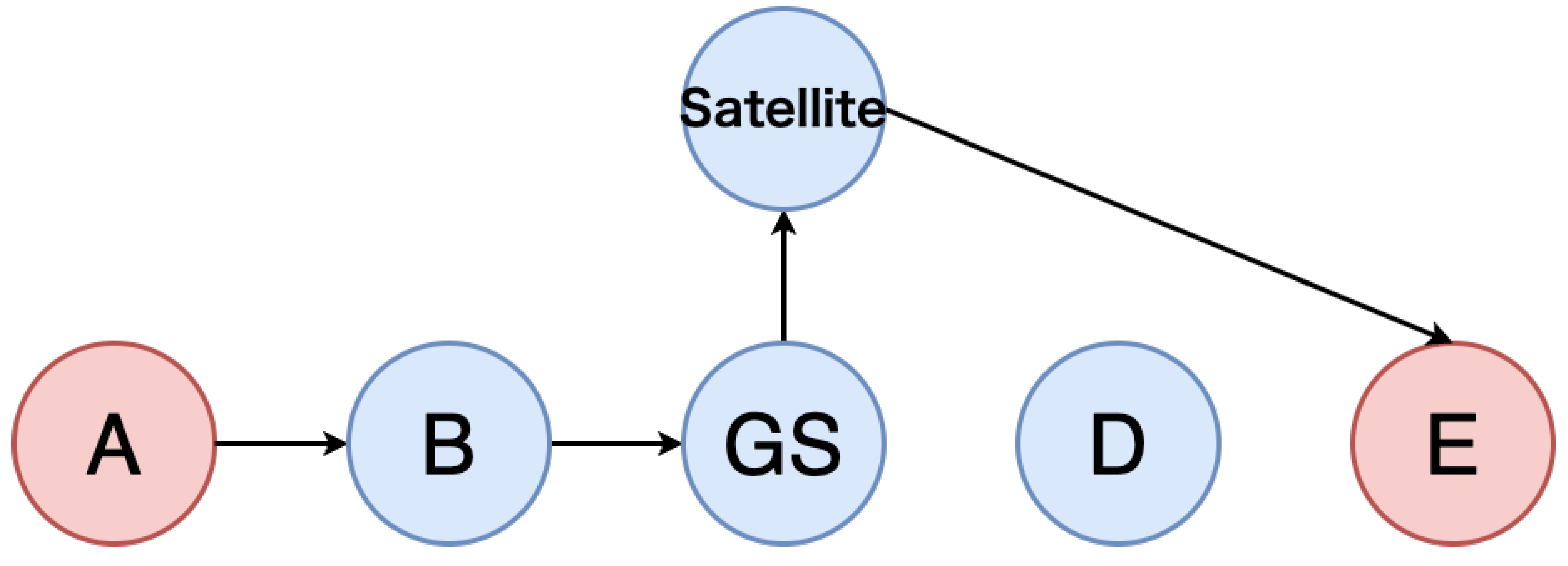
For example, in the topology shown in Figure 4, node A receives the GS flood from the GS via node B and maintains route information to node B and to the GS, enabling it to send data directly to these nodes. However, because it has no route information to node E, it sends the data to the GS, which then forwards the data to node E via satellite communication. In this study, data transmission to the GS is the primary objective, and satellite forwarding is introduced only as one possible option to enable communications with nodes other than the GS.
Figure 4.
Example of data transmission in the proposed method.
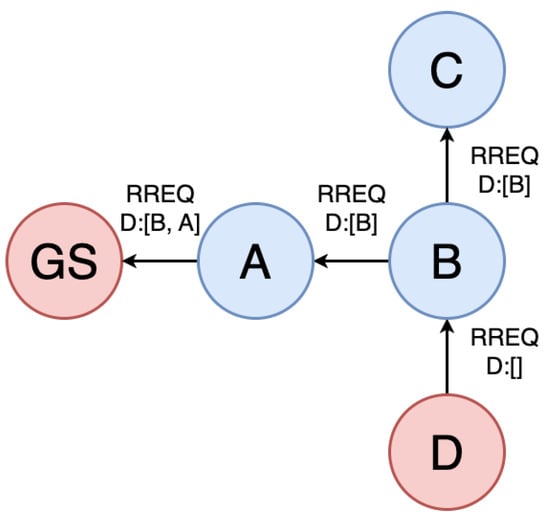
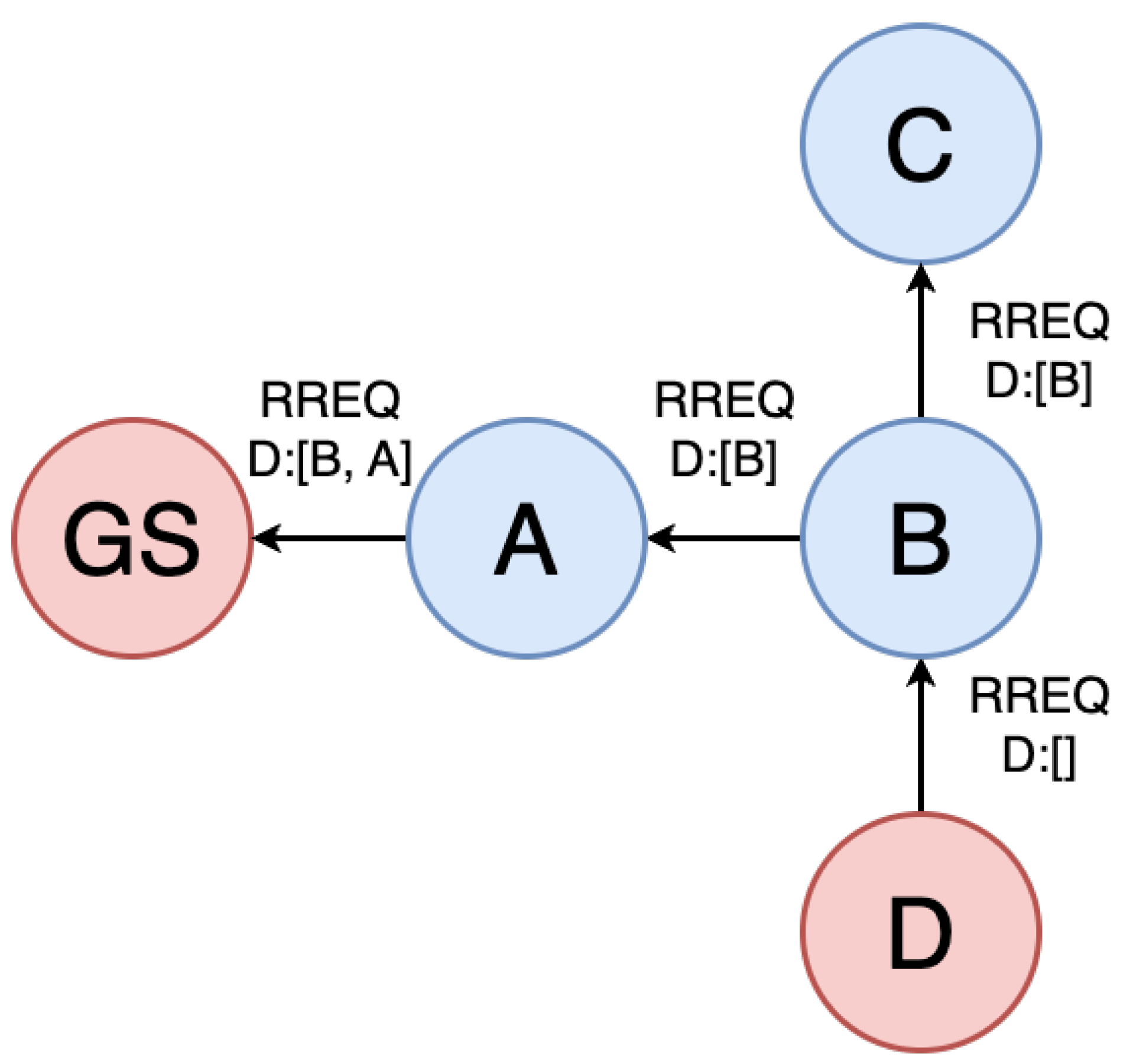
Because the proposed method allows each node to construct its route to the GS from a single GS flood, it can reduce communication overhead compared with conventional DSR in which each node disseminates its own RREQ whenever it sends data. For example, Figure 5 illustrates the dissemination of RREQs in conventional DSR when node D attempts to obtain a route to the GS. In this case, node C also acquires route information to node D, even though routes to node D are rarely used.
Figure 5.
Dissemination of RREQs.
By contrast, when the proposed method is applied and GS floods are disseminated as shown in Figure 6, node C acquires only the route information to the GS. This prevents node C from obtaining unnecessary route information to node D.
Figure 6.
Dissemination of the GS flood.
In addition, in conventional DSR, intermediate nodes may generate an RREP by combining their route information with the RREQ created by the source, resulting in outdated routes. By contrast, in the proposed method, each node obtains the route that was used by the most recently forwarded GS flood packet. This helps maintain the freshness of route information.
4. Experiments and Results
In this study, we conducted four experiments using NS-3 to evaluate the effectiveness of the proposed method. The following subsections describe the experimental environment, evaluation metrics, and experimental results.
4.1. Experimental Environment
4.1.1. Experiment 1 Setup: Data Transmission to the GS Node
Using the parameters listed in Table 1, we conducted experiments for the proposed method, AODV, DSR, and OLSR. For the proposed method, we considered two patterns for the GS flood transmission interval: 1 s and 2 s. This experiment was designed to compare the performance of each protocol in terms of data transmission to the GS node. For each condition, we performed 10 simulation runs with different random seeds.
Table 1.
Parameters of Experiment 1.
4.1.2. Experiment 2 Setup: Data Transmission to All Nodes
Using the parameters listed in Table 2, we conducted experiments for the proposed method, AODV, DSR, and OLSR. For the proposed method, we considered the GS flood transmission intervals of 1 s and 2 s. The parameters were the same as those in Experiment 1, except that the set of destination nodes was expanded to all nodes. In the proposed method, when transmitting data to nodes other than the GS becomes necessary, we utilize forwarding through the GS via a satellite downlink as a backup option. However, the appropriate downlink technology in real deployments depends on the application and environment; therefore, this study evaluated the satellite link using a simplified model, leaving comprehensive analysis for future work. Specifically, the satellite delay was set to 0.1 s, and the satellite packet loss rate was set to 0%, 1%, and 5%. This experiment was conducted to examine the impact of delivering data to nonGS destination nodes via the GS when using the proposed method. For each condition, we performed 10 simulation runs with different random seeds.
Table 2.
Parameters of Experiment 2.
4.1.3. Experiment 3 Setup: Comparison with CHNN-DSR
Hua Yang et al. [36] conducted simulations using the parameters listed in Table 3 and compared conventional DSR with CHNN-DSR. However, in their paper [36], some settings, such as the receiver sensitivity and transmit power, are not clearly specified. In addition, the implementation of CHNN-DSR is not publicly available, and reproducing an identical implementation based solely on the description in the paper is difficult. Therefore, in this study, we followed the reported parameters in Table 3 as closely as possible and constructed a reproduced simulation environment by explicitly complementing the missing items (Table 4). Using this reproduced environment, we compared conventional DSR with the proposed method. For the proposed method, we considered two GS flood transmission intervals, 1 s and 2 s. This experiment was conducted to compare CHNN-DSR and the proposed method by using the conventional DSR implementation in NS-3 as a common baseline.
Table 3.
Parameters reported in the CHNN-DSR paper.
Table 4.
Parameters for Experiment 3 (reproduced environment).
4.1.4. Experiment 4 Setup: Throughput Comparison with Starlink
Using the parameters listed in Table 5, we conducted comparative experiments between the proposed method and Starlink. For the proposed method, we considered GS flood transmission intervals of 1 s and 2 s. This experiment was performed to compare data transmission using the proposed method with that using the uplink of Starlink. For each condition, we performed five simulation runs with different random seeds.
Table 5.
Parameters of Experiment 4.
In addition, we measured the maximum throughput of each data mode in an environment with only two fixed nodes communicating with each other. The results are listed in Table 6.
Table 6.
Maximum throughput of each data mode.
In NS-3, 12 data modes were implemented for IEEE 802.11ax (HE), ranging from HeMcs0 to HeMcs11. The trailing number in HeMcs0, HeMcs2, and HeMcs7 corresponds to the modulation and coding scheme (MCS) index for IEEE 802.11ax (HE) in NS-3. An MCS specifies a combination of a modulation scheme and a forward error correction coding rate; a higher MCS index provides higher spectral efficiency but requires better received signal quality (e.g., higher signal-to-noise ratio).
4.2. Evaluation Metrics
In this study, we used the following metrics to evaluate the performance of each protocol.
- Packet Delivery Ratio (PDR)PDR is the ratio of the number of data packets that successfully arrive at their destination to the number of data packets transmitted. A higher PDR indicates more reliable communication.
- LatencyLatency is the average delay experienced by data packets traveling from the source to the destination. A shorter average latency indicates that more real-time communication is achievable.
- PDR under 2 sThis is the PDR measured only for data packets whose end-to-end latency from the source to the destination is less than 2 s. A higher value indicates better suitability for applications that require real-time performance.
- Latency under 2 sThis is the average latency measured only for data packets whose end-to-end latency from the source to the destination is less than 2 s. A lower value indicates better suitability for applications that require real-time performance.
- Number of generated IP packetsThis metric represents the total number of IP packets generated during the simulation. When the same amount of data is successfully delivered, a smaller value indicates more efficient communication.
- Loss ReductionThis metric compares the reduction in packet loss rate by the target protocol to that by the baseline protocol. A higher value indicates that the communication reliability is improved relative to the baseline protocol.
- ThroughputThroughput is the amount of data transmitted per unit time. A higher throughput indicates that a larger amount of data can be transferred per unit time.
4.3. Experimental Results
4.3.1. Experiment 1 Result: Data Transmission to the GS Node
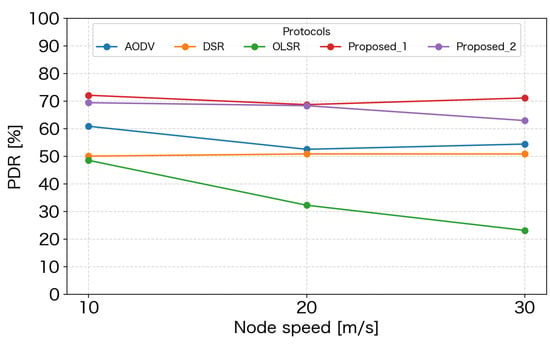
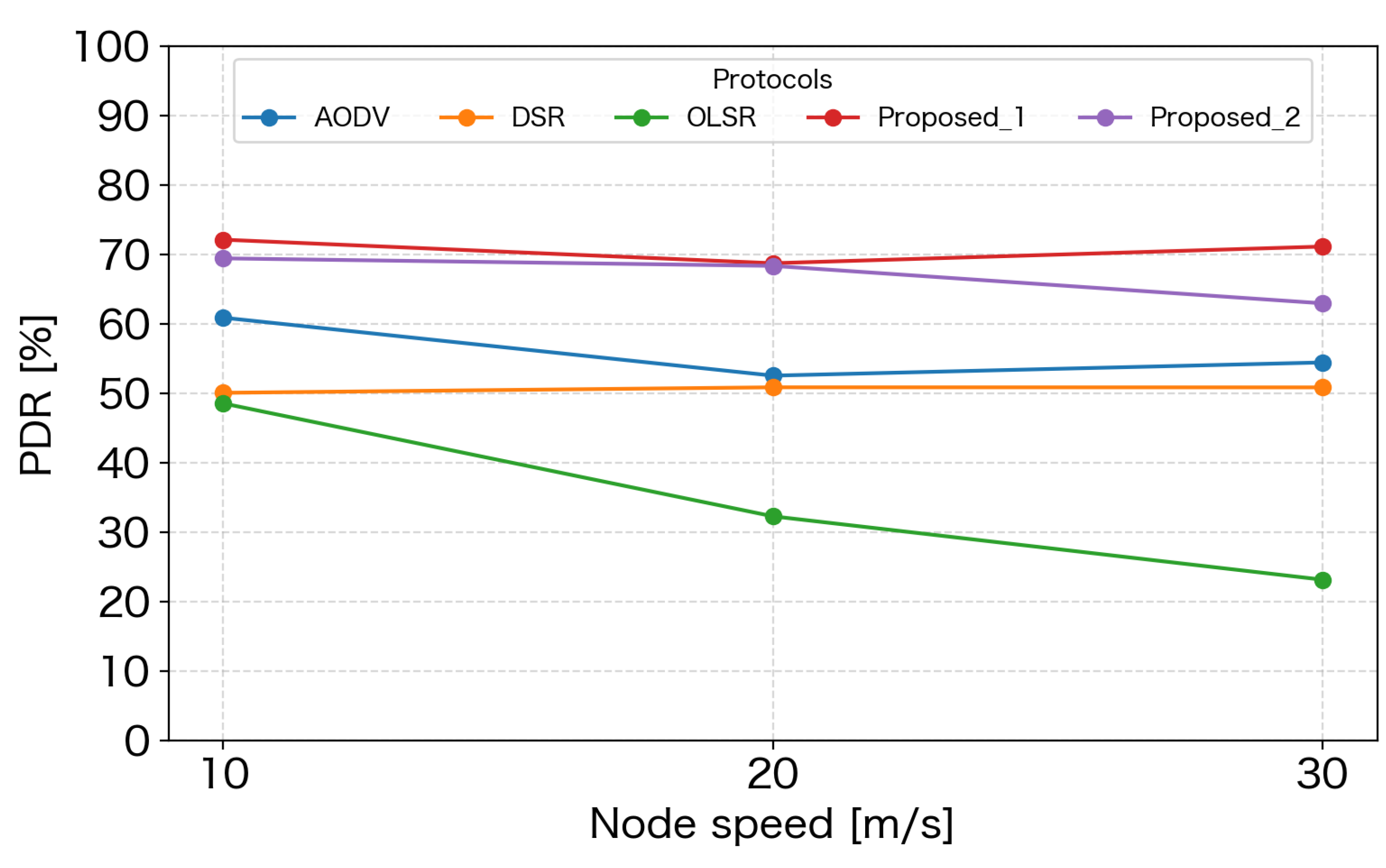
The results of Experiment 1 are shown in Figure 7, Figure 8, Figure 9, Figure 10, Figure 11, Figure 12, Figure 13, Figure 14 and Figure 15. Here, Proposed_1 denotes the proposed method with a GS flood transmission interval of 1 s, and Proposed_2 denotes the proposed method with a GS flood transmission interval of 2 s.
Figure 7.
PDR for transmissions to the GS node (40 mobile nodes and 5 data streams).
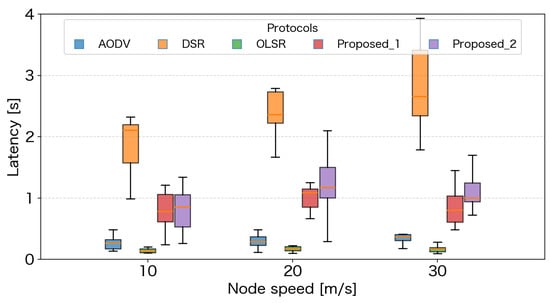
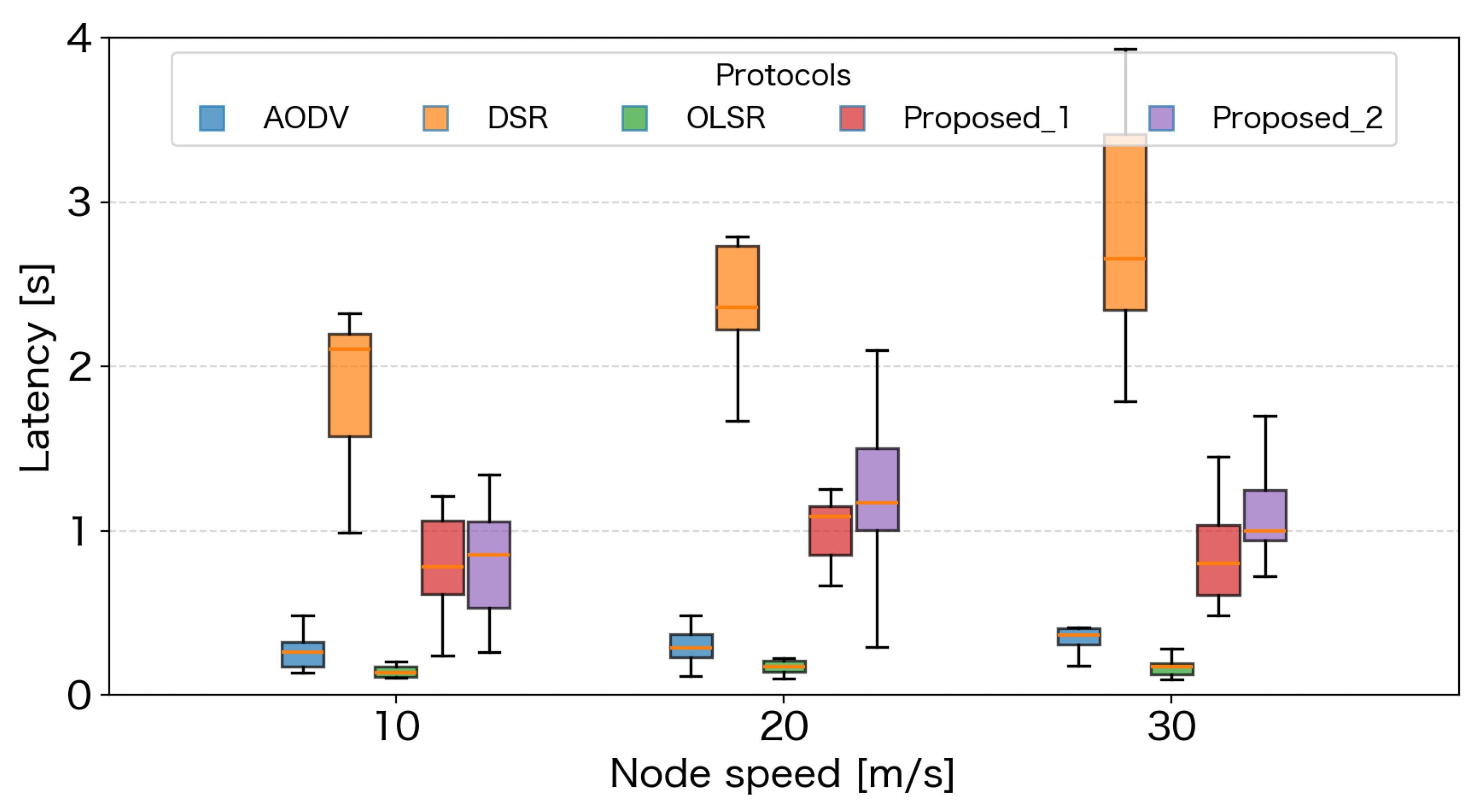
Figure 8.
Latency for transmissions to the GS node (40 mobile nodes and 5 data streams).
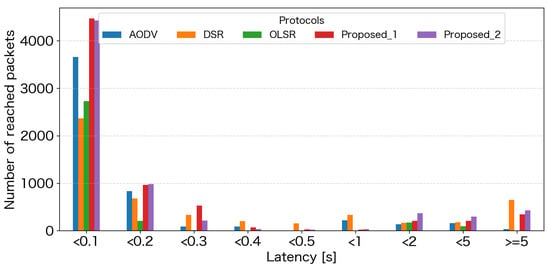
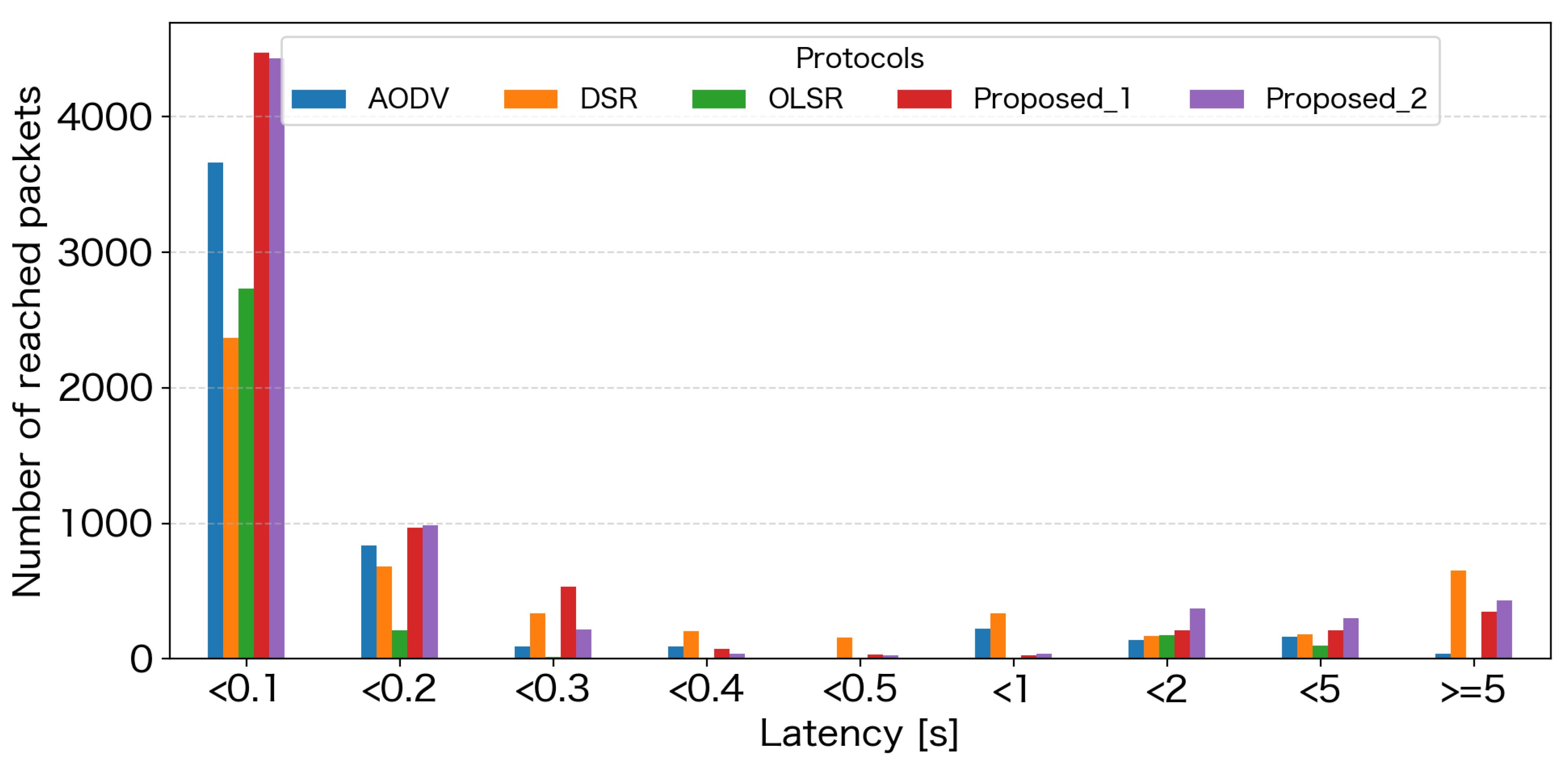
Figure 9.
Latency distribution for transmissions to the GS node (40 mobile nodes and 5 data streams).
Figure 10.
PDR under 2 s for transmissions to the GS node (40 mobile nodes and 5 data streams).
Figure 11.
Latency under 2 s for transmissions to the GS node (40 mobile nodes and 5 data streams).
Figure 12.
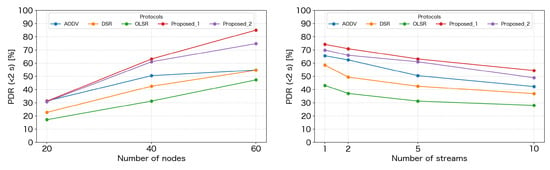
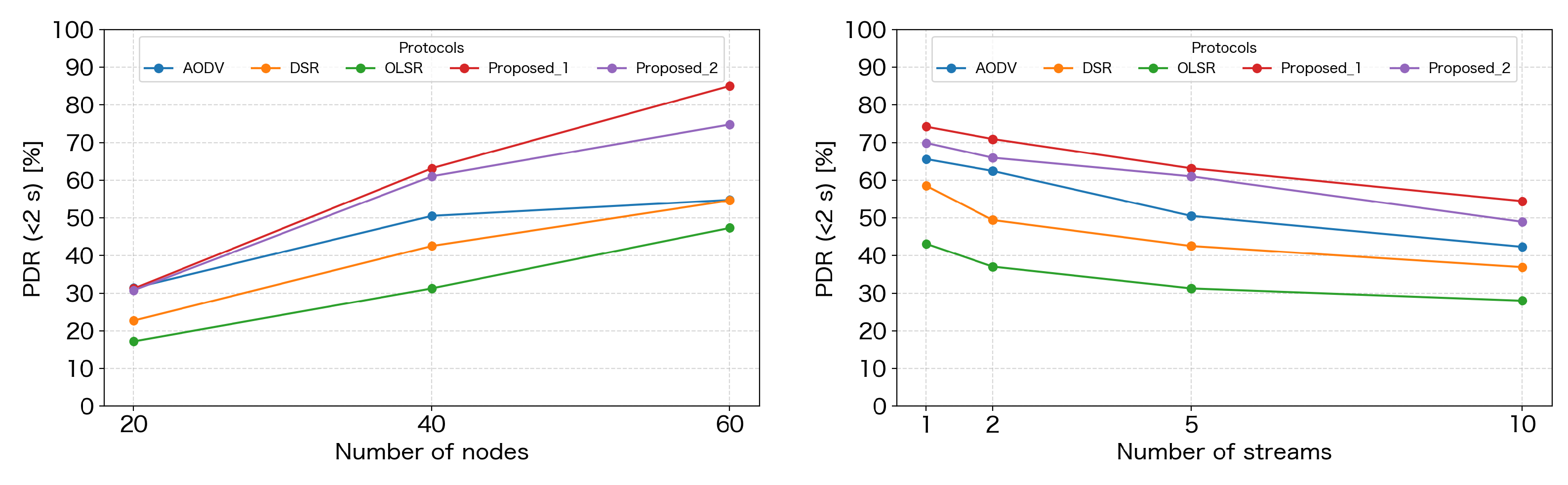
Trends of PDR under 2 s for transmissions to the GS node.
Figure 13.
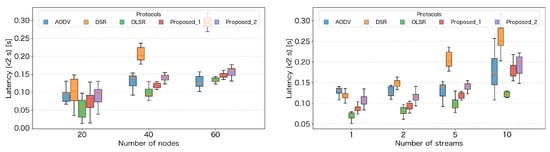
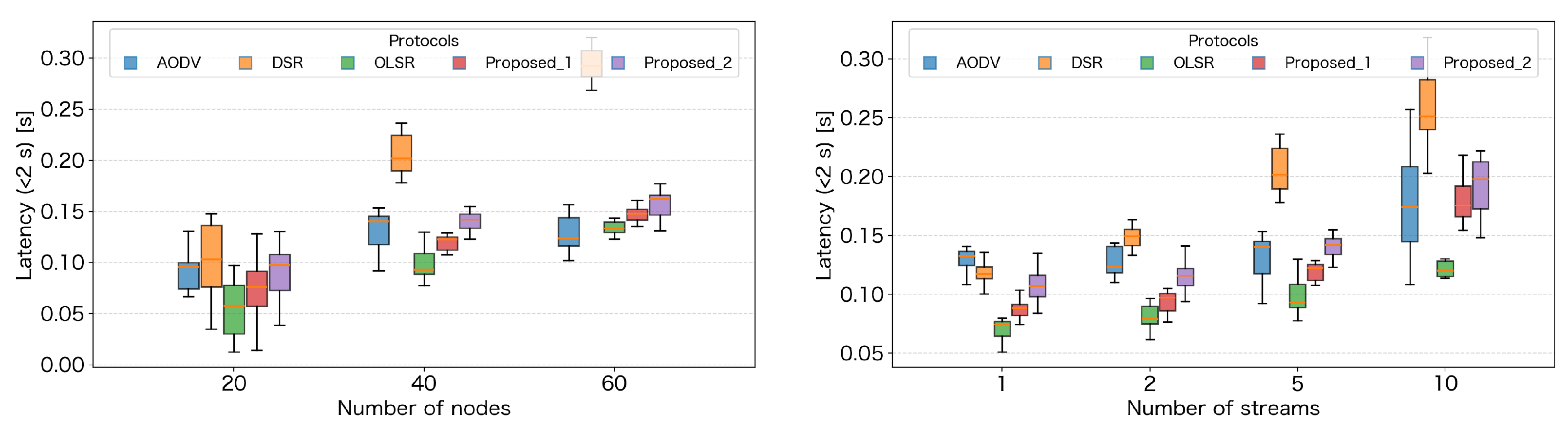
Trends of latency under 2 s for transmissions to the GS node.
Figure 14.
Number of generated IP packets for transmissions to the GS node.
Figure 15.
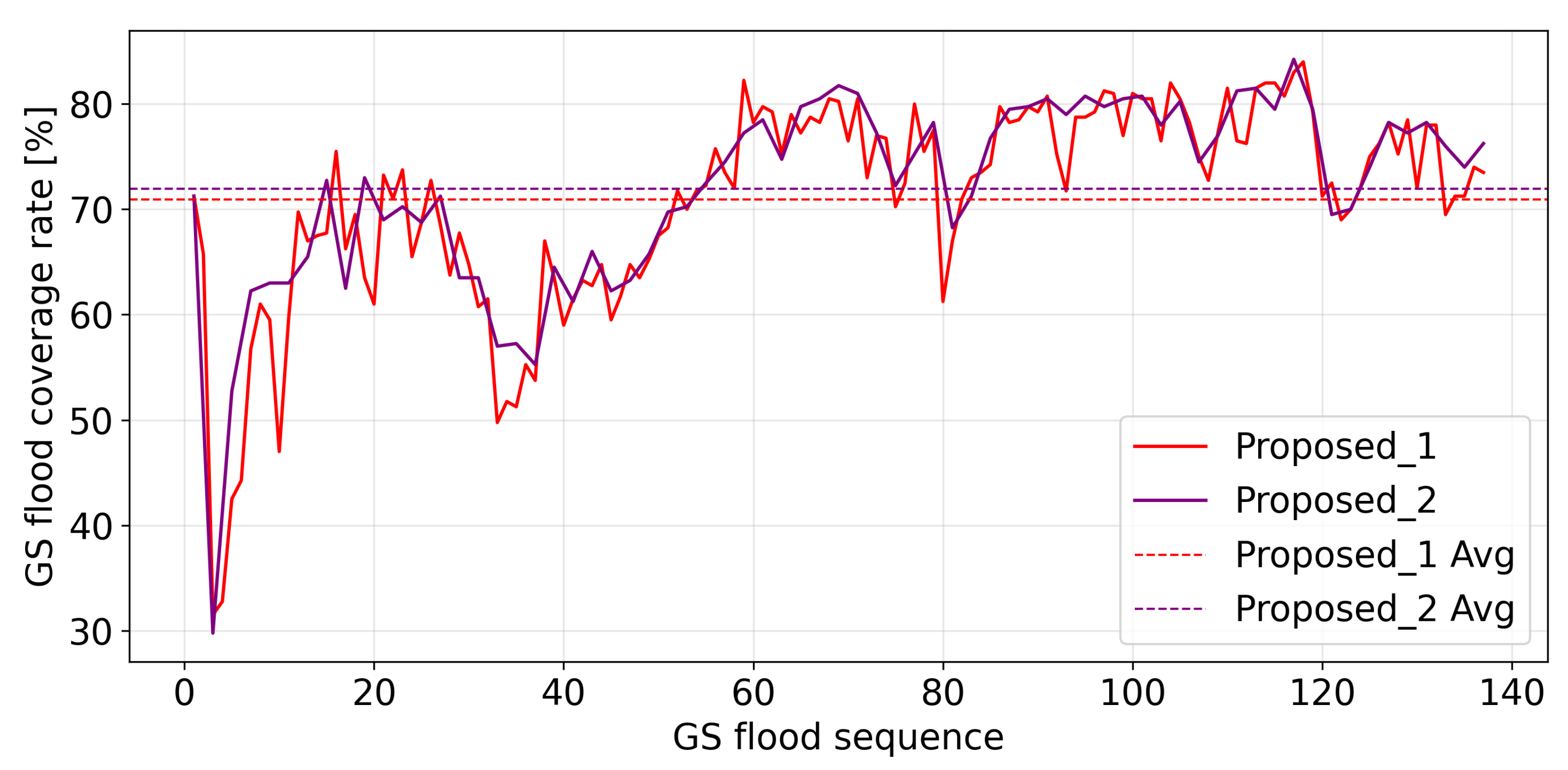
Time-series coverage ratio of GS flood (40 mobile nodes, 5 data streams, and node speed of 20 m/s).
Figure 7 shows the average PDR over 10 runs with 40 mobile nodes and 5 data streams. The proposed method achieved the highest PDR among all protocols, regardless of node speed.
Figure 8 shows box plots of latency for 10 runs with 40 mobile nodes and 5 data streams. The orange line inside each box indicates the median. Focusing on the median latency, the proposed method exhibited lower latency than conventional DSR. Among all protocols, OLSR achieved the lowest latency.
Figure 9 shows the latency distribution of successfully delivered packets. Compared to the other protocols, the proposed method delivered a larger number of packets with low latency. In addition, both DSR and the proposed method delivered more packets with latency of 5 s or more than the other two protocols. The impact of a packet with a latency of 5 s or more is more than 50 times higher than that of a packet with a latency of 0.1 s. Therefore, PDR under 2 s and latency under 2 s must be used as evaluation metrics that exclude packets with excessively large latency.
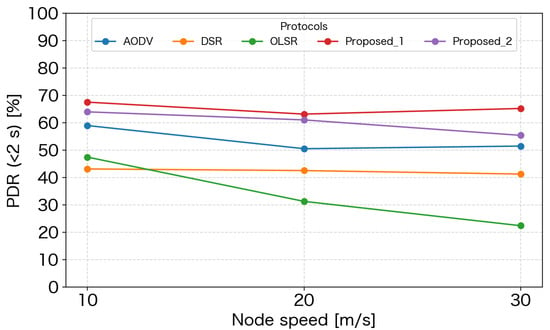
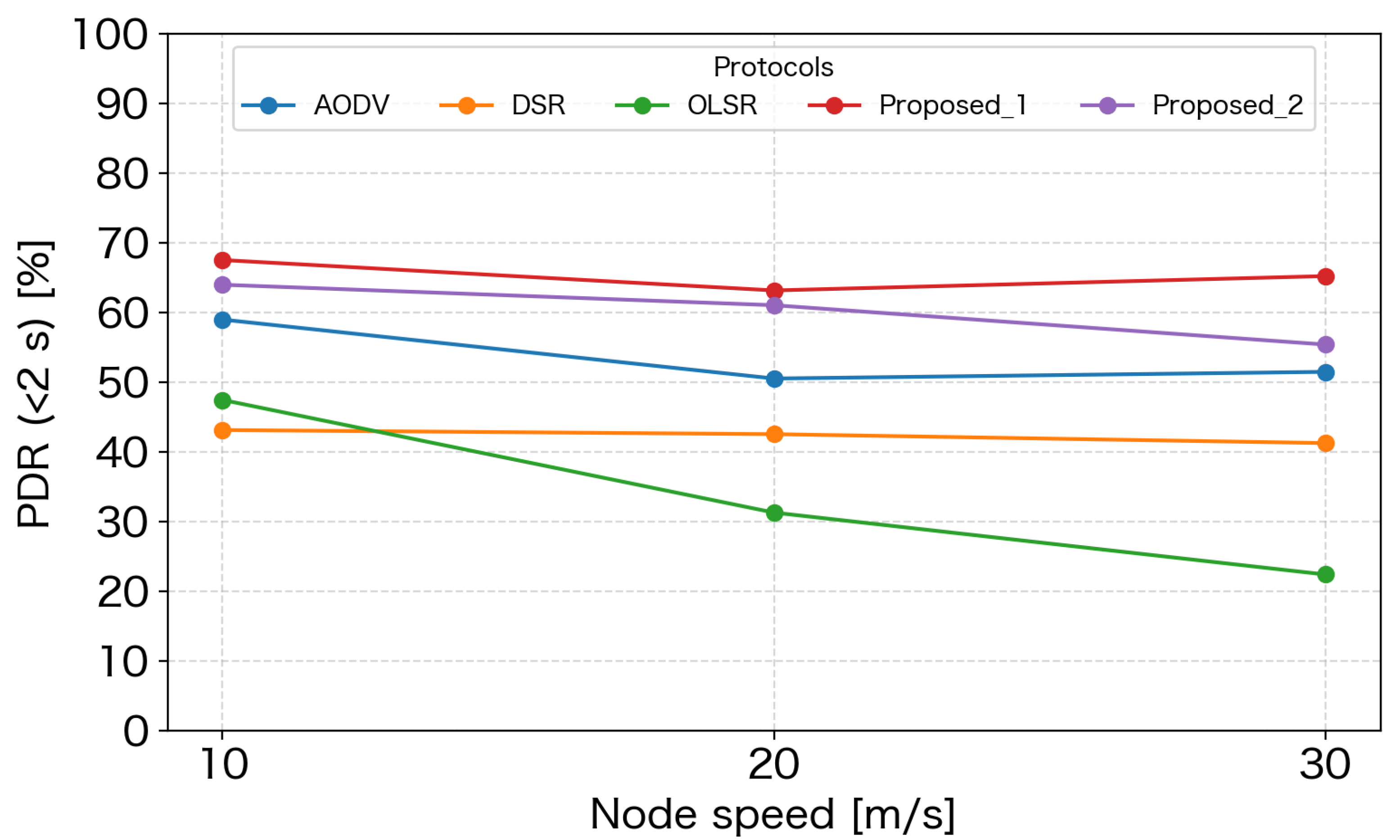
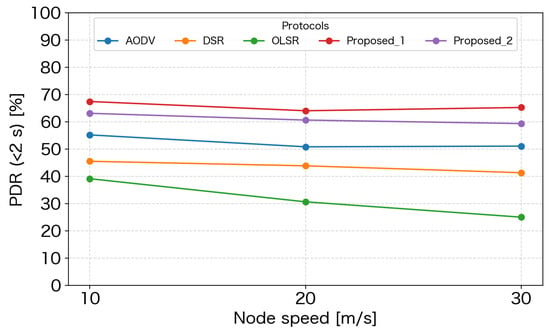
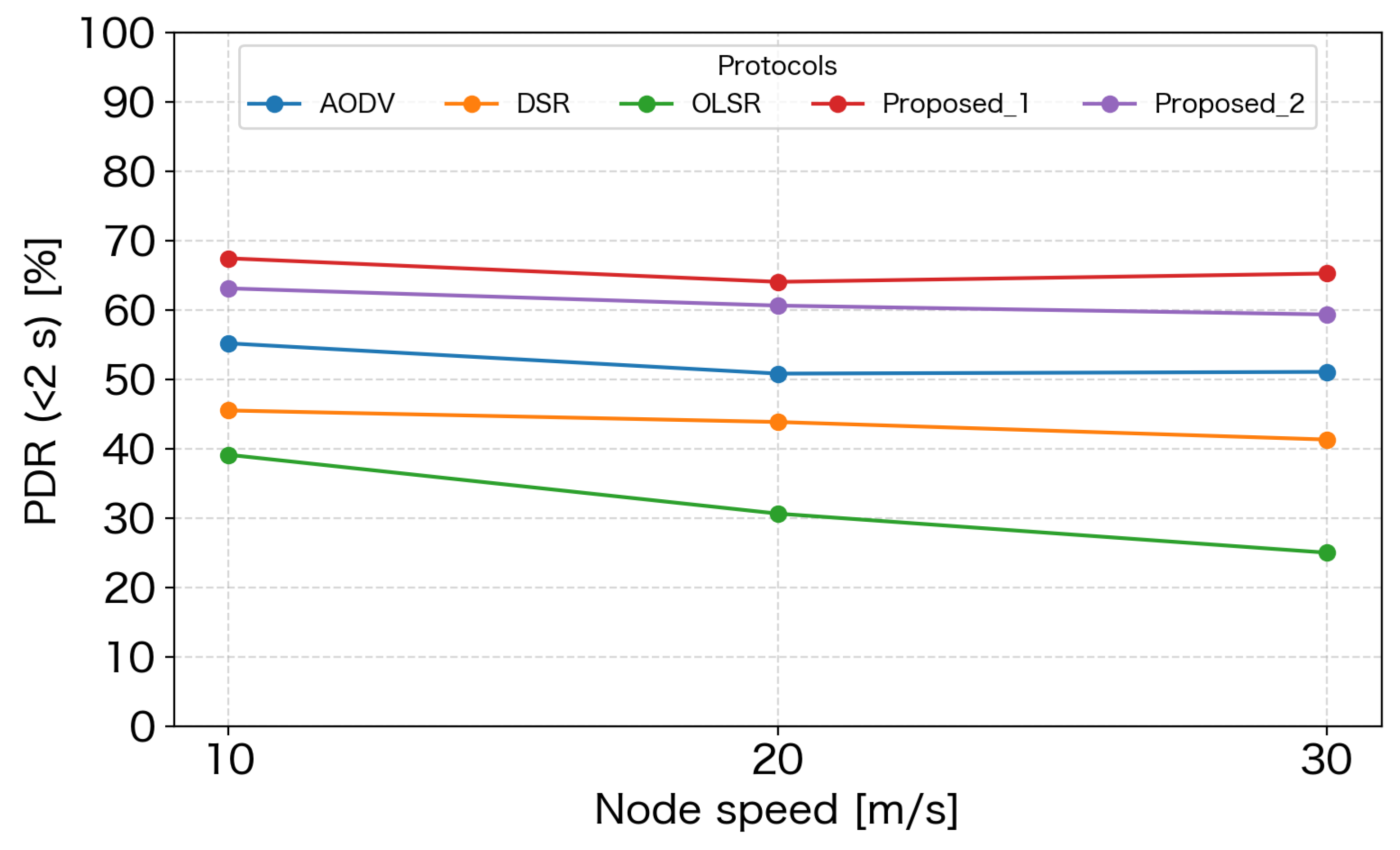
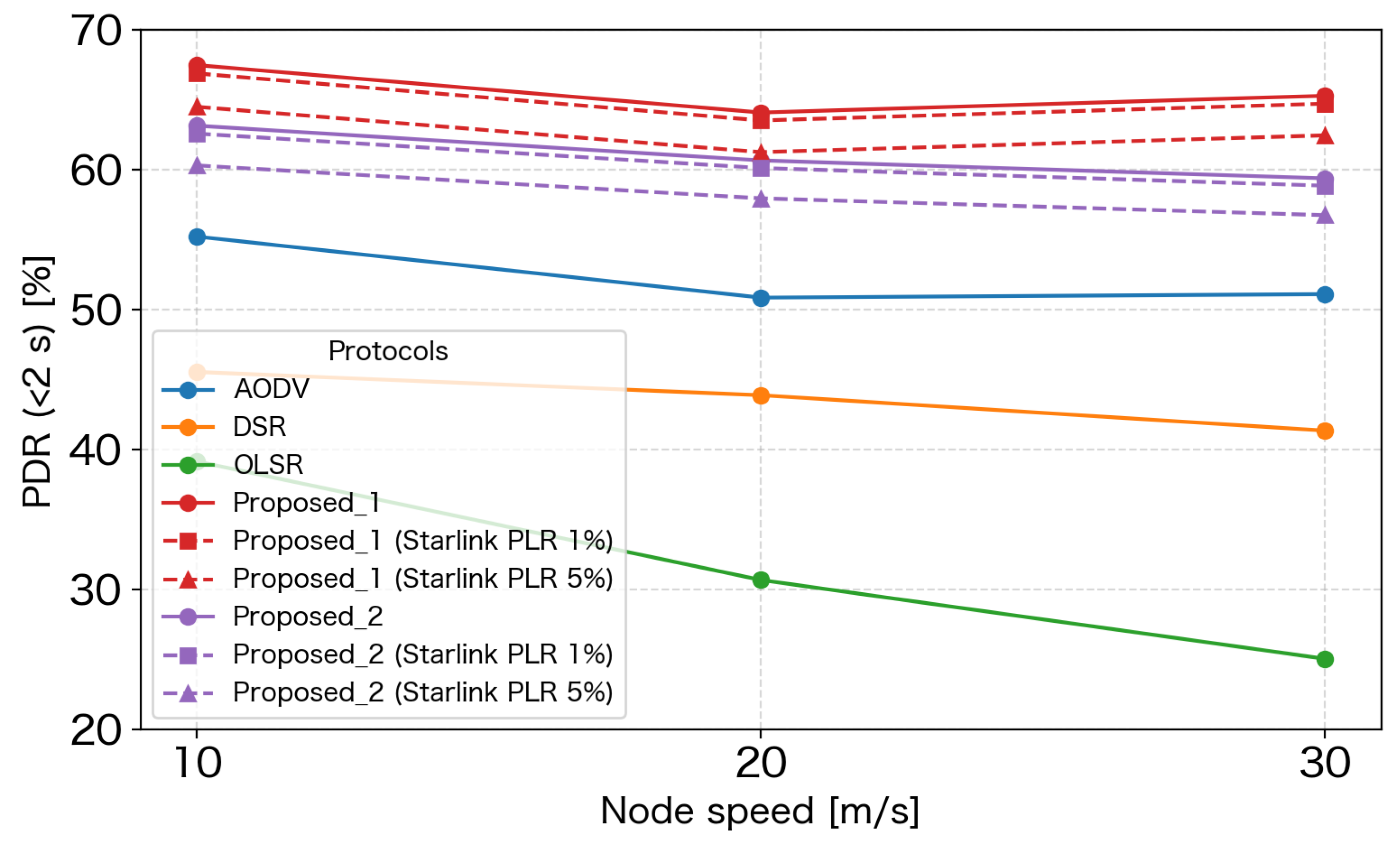
Figure 10 shows the average PDR under 2 s over 10 runs with 40 mobile nodes and 5 data streams. The proposed method achieved the highest PDR under 2 s among all protocols, regardless of node speed.
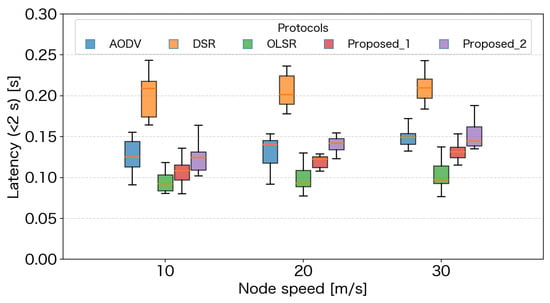
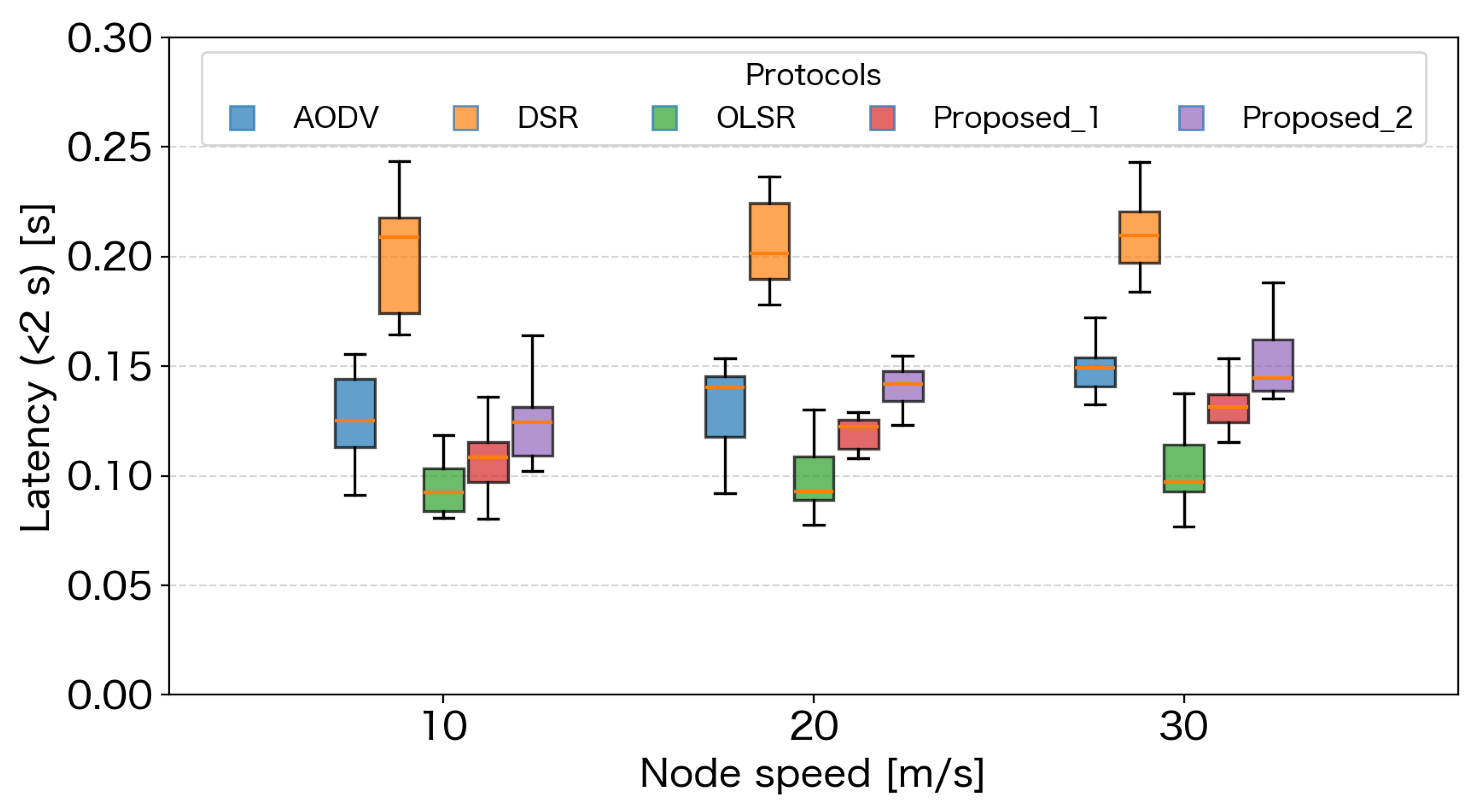
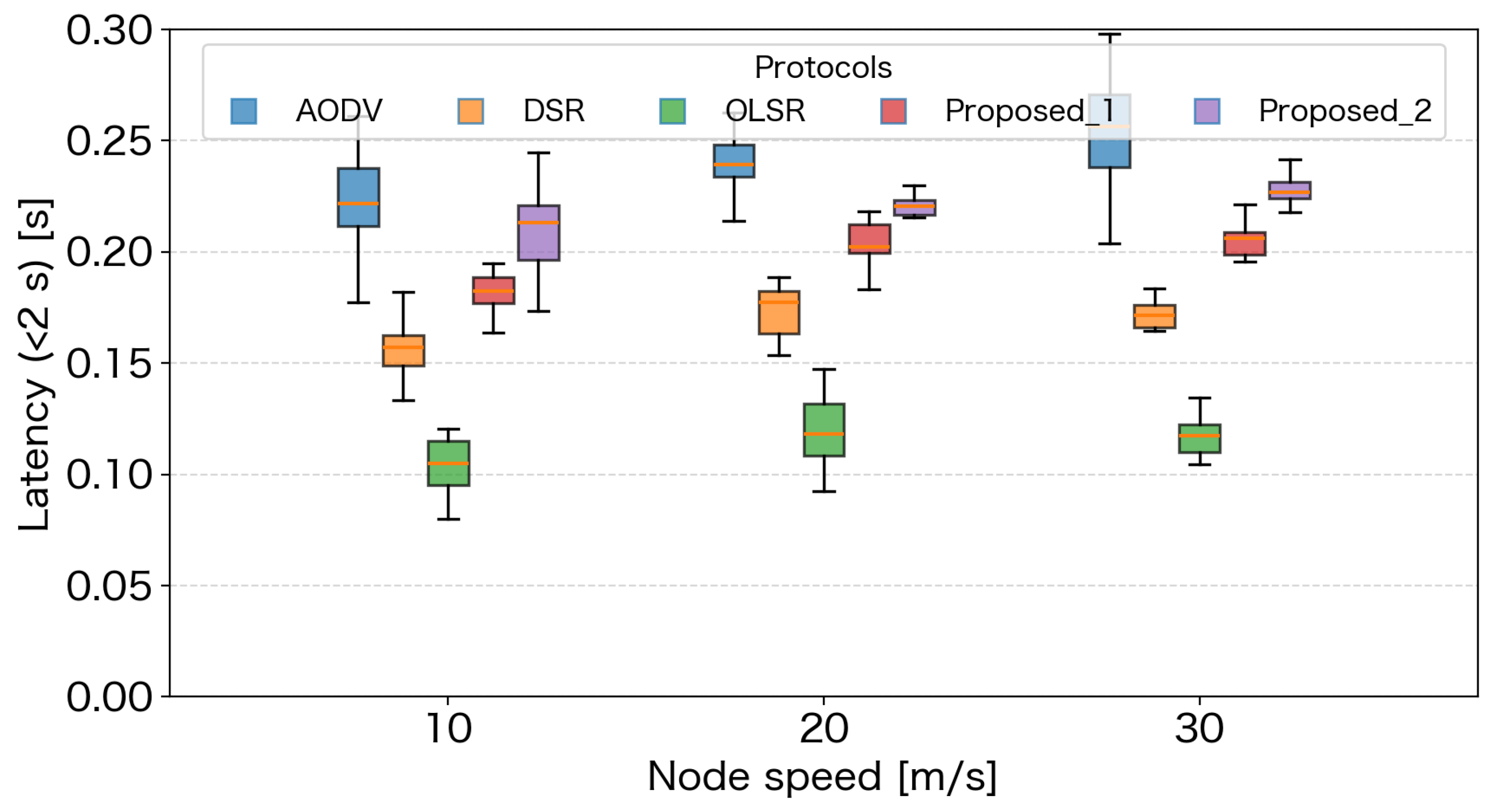
Figure 11 shows box plots of latency under 2 s for 10 runs with 40 mobile nodes and 5 data streams. Compared with Figure 8, the latency of all protocols reduced significantly, with fewer differences between them. The latency under 2 s of the proposed method is lower than that of AODV.
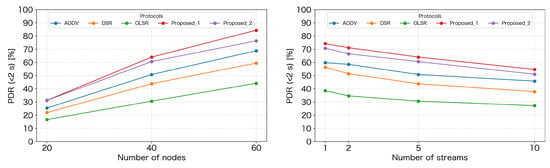
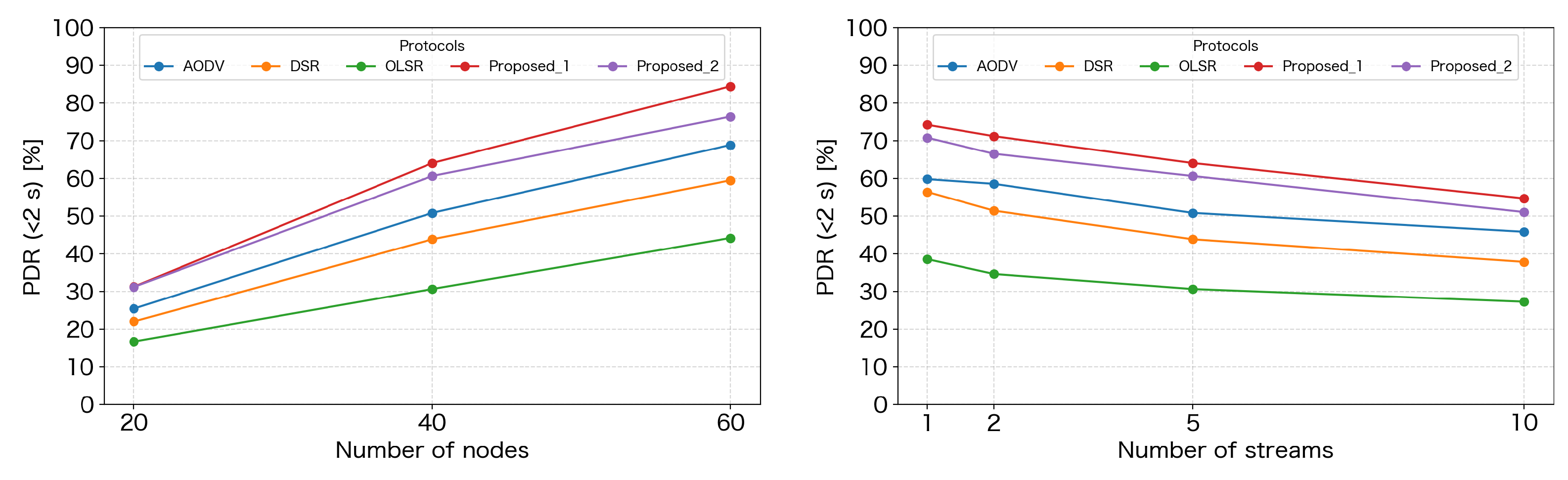
In Figure 12, the left panel shows the PDR under 2 s when varying the number of mobile nodes with 5 data streams and a node speed of 20 [m/s], whereas the right panel shows the PDR under 2 s when varying the number of data streams with 40 mobile nodes and a node speed of 20 [m/s]. Regardless of node speed, number of mobile nodes, and number of data streams, the proposed method achieved a higher PDR under 2 s than the other protocols (Figure 10 and Figure 12).
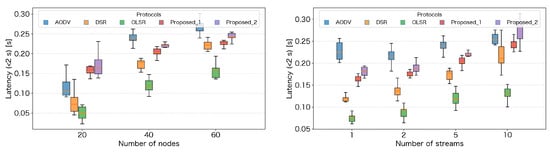
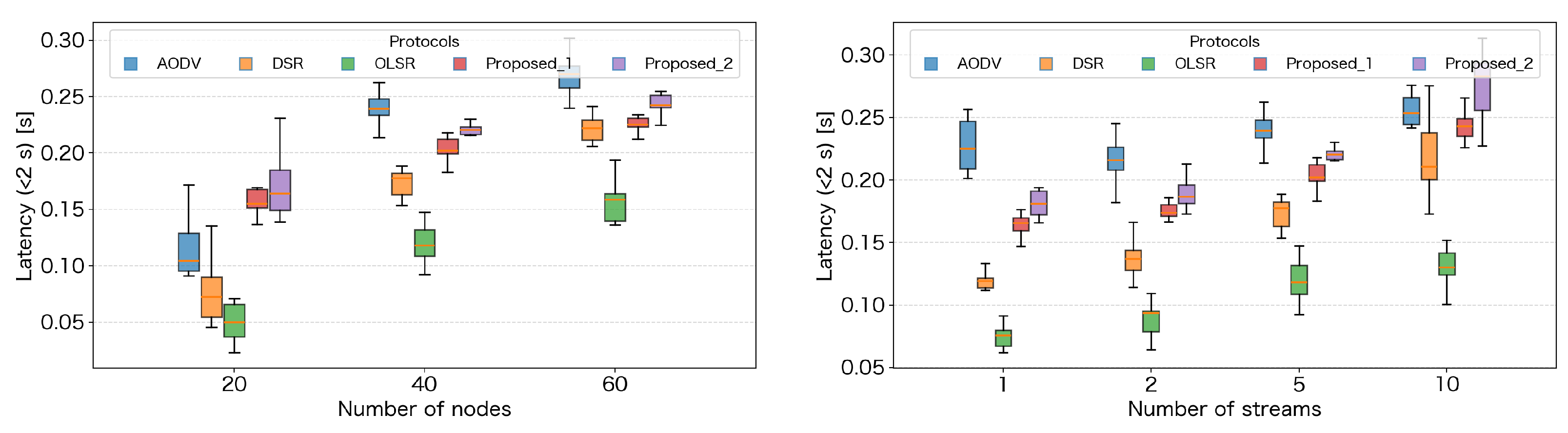
In Figure 13, the left panel shows the latency under 2 s when varying the number of mobile nodes with 5 data streams and a node speed of 20 [m/s], whereas the right panel shows the latency under 2 s when varying the number of data streams with 40 mobile nodes and a node speed of 20 [m/s]. Regardless of node speed, number of mobile nodes, and number of data streams, all protocols exhibited similar trends in latency (Figure 11 and Figure 13).
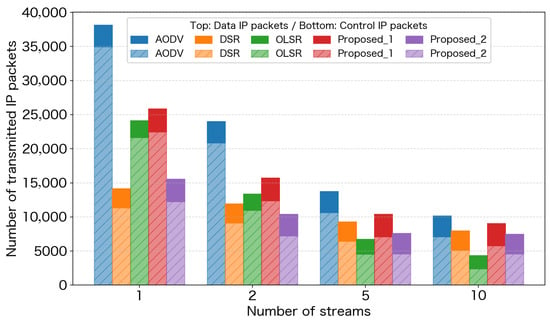
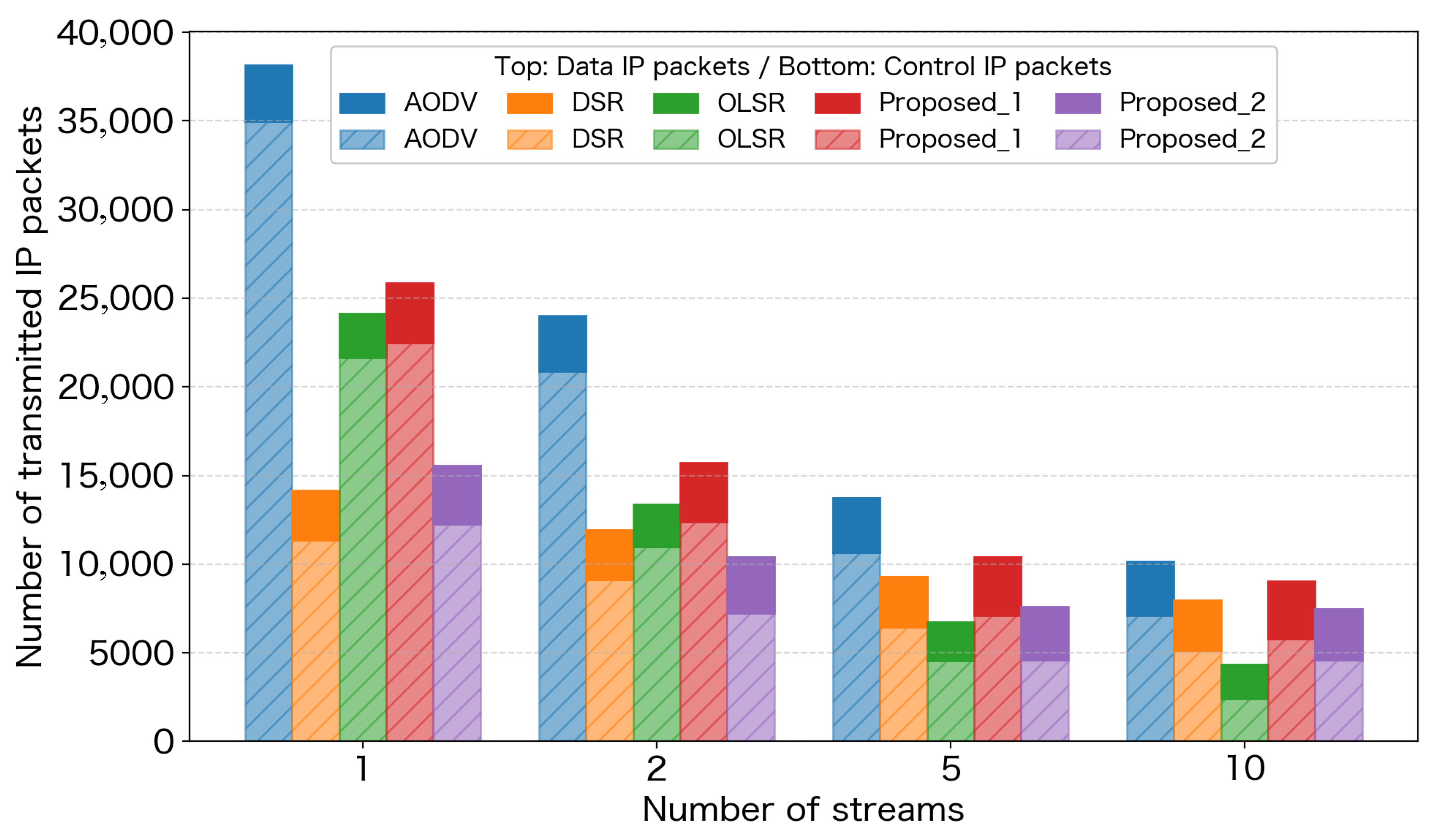
Figure 14 shows the number of generated IP packets when varying the number of data streams with 40 mobile nodes and a node speed of 20 [m/s]. The number of control IP packets in the proposed method is smaller than that of AODV, which achieves the highest PDR under 2 s among the existing protocols. Furthermore, when the GS flood transmission interval increases in the proposed method, the number of generated control IP packets decreases.
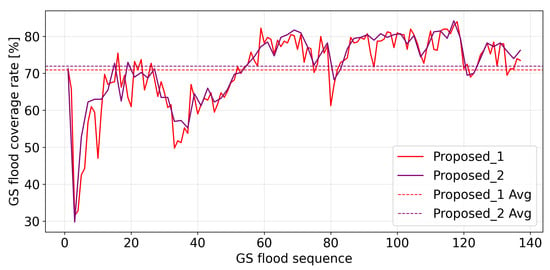
Figure 15 shows, for the case of 40 mobile nodes, 5 data streams, and a node speed of 20 m/s, the fraction of nodes that successfully acquired routing information from each GS flood. The solid line represents the average value over 10 runs for each GS flood sequence, and the dashed line represents the overall average across all runs. The coverage ratio drops sharply at certain intervals, indicating that the GS flood may not sufficiently propagate under highly dynamic topology changes or temporary network partitioning. Nevertheless, in many intervals, the coverage ratio remains approximately 70%.
4.3.2. Experiment 2 Result: Data Transmission to All Nodes
The results of Experiment 2 are shown in Figure 16, Figure 17, Figure 18, Figure 19 and Figure 20. Here, Proposed_1 denotes the proposed method with a GS flood transmission interval of 1 s, and Proposed_2 denotes the proposed method with a GS flood transmission interval of 2 s.
Figure 16.
PDR under 2 s for transmissions to all nodes (40 mobile nodes, 5 data streams, and Starlink packet loss rate of 0%).
Figure 17.
Trends of PDR under 2 s for transmissions to all nodes.
Figure 18.
PDR under 2 s for transmissions to all nodes (40 mobile nodes and 5 data streams).
Figure 19.
Latency under 2 s for transmissions to all nodes (40 mobile nodes, 5 data streams, and Starlink packet loss rate of 0%).
Figure 20.
Trends of latency under 2 s for transmissions to all nodes.
The proposed method outperformed existing protocols in terms of PDR under 2 s when the destination is not fixed to the GS and UAV-to-UAV communication is included, regardless of node speed, the number of mobile nodes, or the number of data streams (Figure 16 and Figure 17).
Figure 18 compares the PDR under 2 s by the proposed method to Figure 16 when the Starlink packet loss rate is set to 1% and 5%. As the Starlink packet loss rate increases, the PDR under 2 s of the proposed method decreases. However, it still achieved a higher PDR under 2 s than the other protocols.
Regardless of node speed, the number of mobile nodes, and the number of data streams, the proposed method maintained latency at a feasible level for real-world applications in scenarios where the destination is not fixed to the GS and UAV-to-UAV communications are included (Figure 19 and Figure 20).
4.3.3. Experiment 3 Result: Comparison with CHNN-DSR
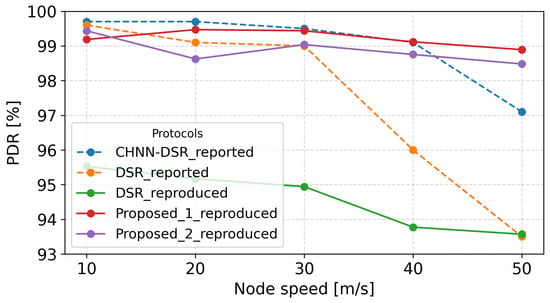
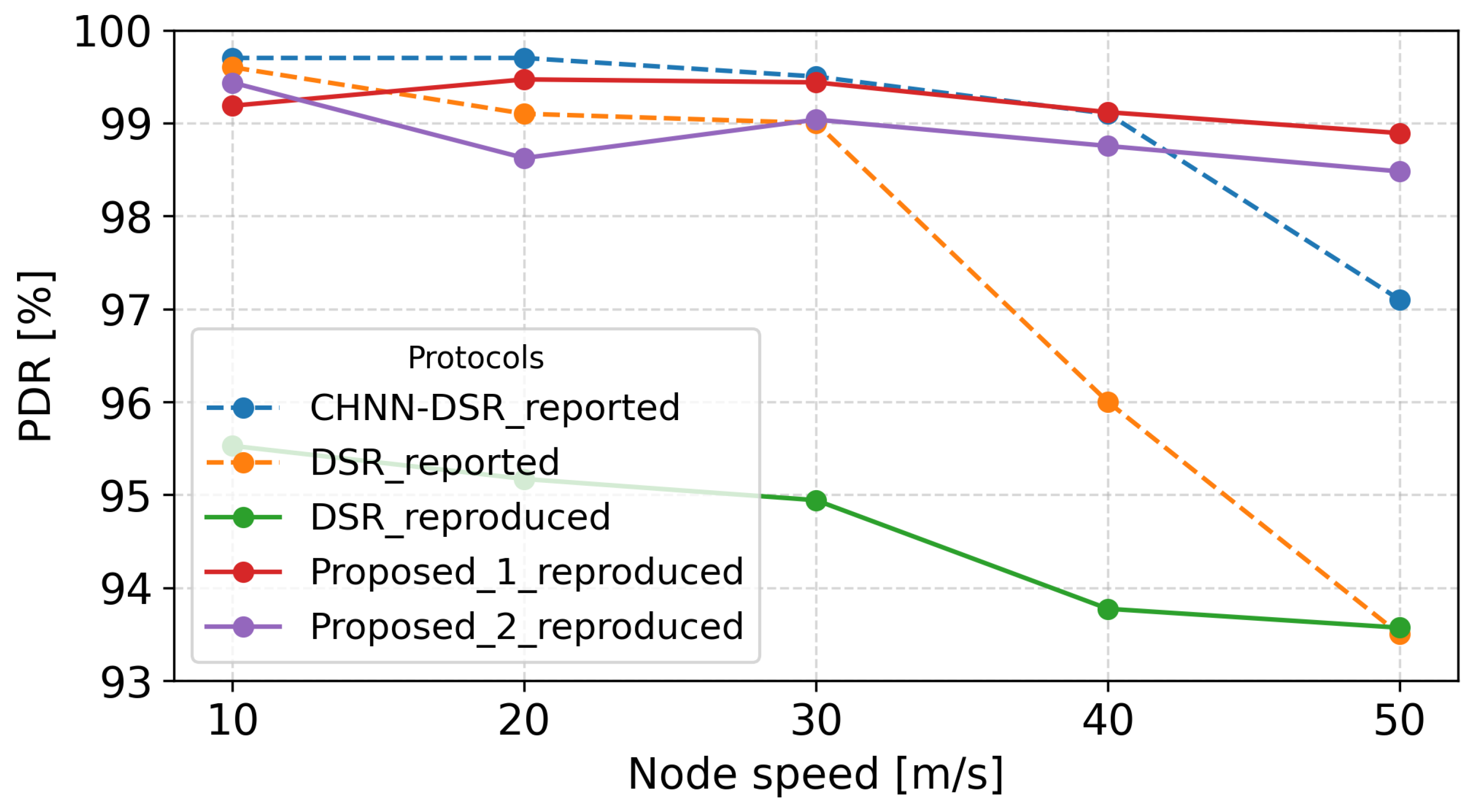
Figure 21 shows the results reported under the experimental conditions in Hua Yang et al. [36] (Table 3) as dashed lines, and the results obtained under our reproduced experimental conditions (Table 4) as solid lines. Under the experimental setting of Hua Yang et al., CHNN-DSR mitigated the decrease in PDR as node speed increases compared with conventional DSR. In our reproduced environment, the proposed method consistently achieved a higher PDR than conventional DSR for all node speeds.
Figure 21.
PDR comparison with CHNN-DSR: reported in [36] (dashed) and reproduced results (solid).
Table 7 summarizes, for each node speed, the loss-reduction ratio of the PDR loss rate achieved by each protocol. Because CHNN-DSR and the proposed method were evaluated under different experimental conditions, their absolute PDR values cannot be directly compared. However, the proposed method outperformed CHNN-DSR in terms of PDR improvements when compared to a common baseline of conventional DSR.
Table 7.
Loss-reduction ratio of the PDR loss rate for each node speed.
4.3.4. Experiment 4 Result: Throughput Comparison with Starlink
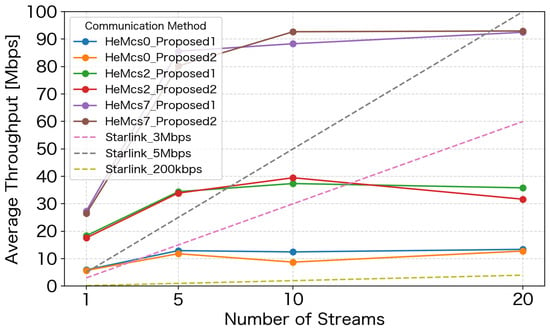
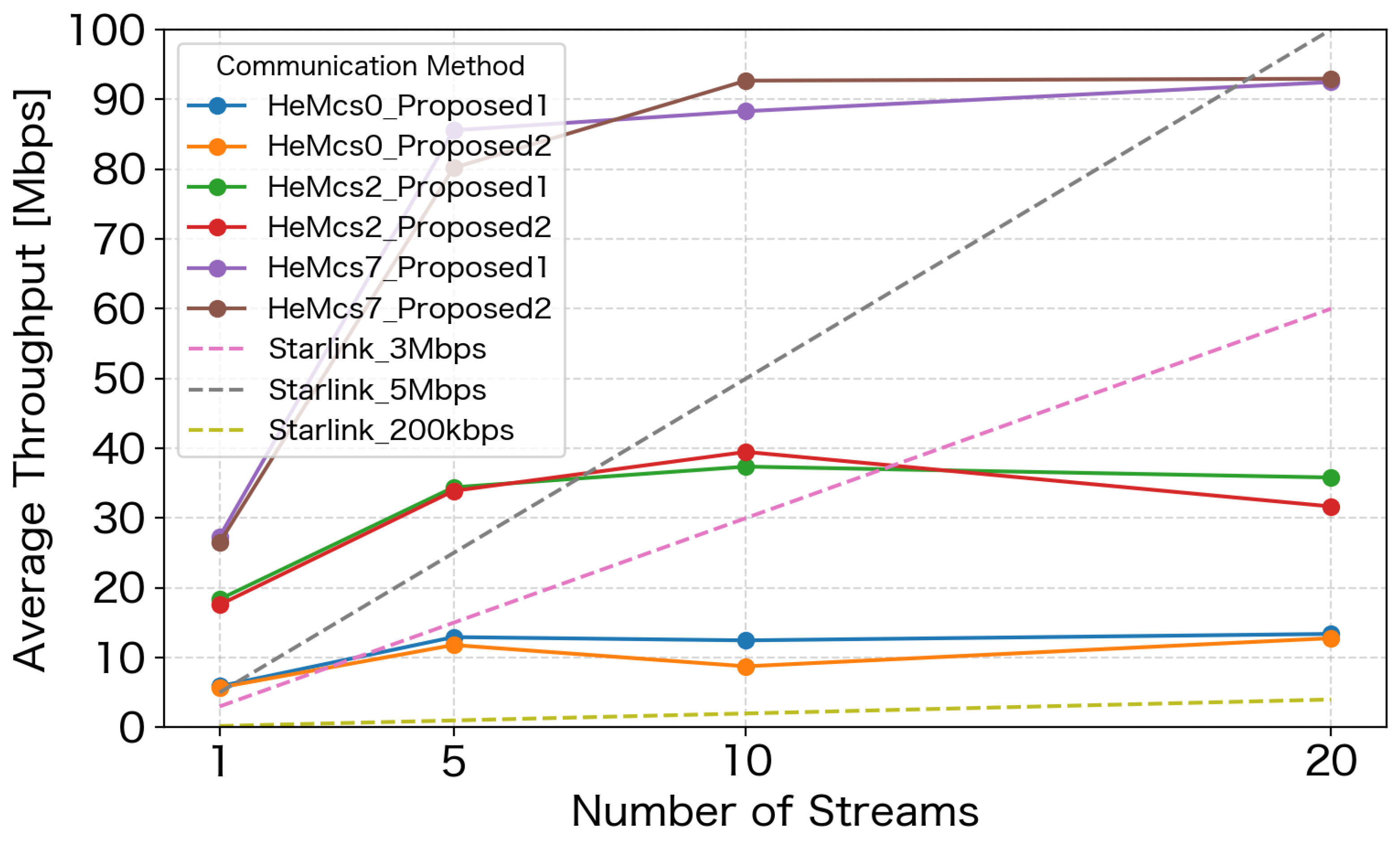
Comparing the maximum throughput of each data mode in Table 6 with the results of Experiment 4, we can observe that the throughput of the proposed method saturates at approximately 40% of the maximum throughput for each data mode. The dashed lines in Figure 22 represent Starlink communication assuming a per-stream throughput of 200 kbps, 3 Mbps, and 5 Mbps. These results indicate that the proposed method achieved sufficient throughput compared with realistic satellite uplink throughput.
Figure 22.
Throughput comparison.
5. Discussion
5.1. PDR and Latency
The proposed method outperformed previous MANET routing protocols in terms of PDR and PDR under 2 s, even when destinations are limited to the GS node and all nodes are considered potential destinations. The route construction based on GS flood is effective in FANETs because it consistently maintains a high PDR under 2 s regardless of node speed, the number of mobile nodes, and the number of data streams. Although the proposed method has the drawback that a node cannot communicate even with neighboring nodes when it does not have an established route to the GS, the benefits of effective route construction by GS flood at the network level outweigh this drawback, thereby maintaining a high PDR under 2 s. Moreover, in the scenario assumed in this study, the majority of traffic is directed toward the GS; therefore, the fraction of communications forwarded via Starlink is small. Consequently, the impact of Starlink link quality, as shown in Figure 18, is expected to be even more limited under the assumed scenario.
From the viewpoint of latency, among the protocols other than the proposed method, AODV achieved the highest PDR under 2 s; however, the latency of the proposed method is lower than that of AODV. Thus, the proposed method exhibits sufficiently practical delay characteristics even for applications that require real-time performance.
5.2. Number of Generated Packets
As shown in Figure 10 and Figure 12, AODV achieves the highest PDR under 2 s among the existing protocols. In addition, Figure 14 shows that the proposed method generates fewer control IP packets than AODV. These results indicate that the proposed method can maintain a high PDR under 2 s while reducing the number of generated control IP packets, enabling more efficient communication. This is because the proposed method disseminates route information to the GS in a batch manner using GS flood; therefore, nodes are not required to independently broadcast RREQs, thereby reducing broadcast traffic associated with route discovery. Because this study focused on the routing layer, the reduction in control IP packets implies fewer transmissions, which can qualitatively reduce communication-induced energy consumption.
In addition, increasing the GS flood transmission interval reduces the number of control IP packets. Therefore, the GS flood transmission interval serves as a parameter for controlling the trade-off between control overhead and the freshness of route information.
5.3. Throughput
The results indicate that the proposed method achieves higher throughput between the GS and UAVs compared to using a satellite communication terminal on each UAV for direct data transmission. However, as the number of data streams increases, the throughput of the proposed method is affected by channel sharing and saturates at approximately 40% of the maximum achievable throughput of the link.
In multihop communication over MANETs, throughput degrades as the hop count increases because all nodes share the same channel [39,40]. Therefore, future work is needed to investigate methods for improving channel utilization efficiency. For example, in the proposed method, each node maintains its hop count from the GS. This allows different channels to be used depending on the hop count or the deployment of more multichannel UAVs around the GS.
5.4. Role Sharing Between FANET and Satellite Communication and Future Work
In this study, we assumed a configuration in which multihop communication over an FANET and satellite communication are complementary and mainly evaluated the effectiveness of FANET routing for uplink traffic to the GS. The experimental results show that, even when compared with realistic satellite uplink throughput, the proposed method can achieve sufficient throughput and high PDR. In scenarios such as disaster areas, where uploading sensing data is crucial, FANET-based communication can serve as an effective alternative or complement to satellite-only communication.
By contrast, when GS floods do not sufficiently propagate, or when the network becomes partitioned and no multihop route to the GS exists, satellite communication must be prioritized. In addition, when the hop count becomes excessively large, the degradation in delay and throughput owing to multihop communication is expected to become significant; therefore, policies that switch to satellite paths for routes whose hop count exceeds a certain threshold can also be considered. The design of such switching conditions, as well as hybrid control that combines these policies with hop-count limits on GS floods, are important design parameters that are not addressed in this study and remain areas for future work.
Furthermore, although this study focused on the dissemination of route information to the GS and the comparison with satellite uplink throughput, physical-layer and system-level constraints, such as UAV energy consumption, the weight and power consumption of Starlink user terminals, and antenna directivity, are also important in deployments. We believe that a comprehensive evaluation considering these factors would enable a clear understanding of the conditions under which FANET-based multihop communication is advantageous and when greater dependence on satellite communication is preferable.
6. Conclusions and Future Work
In this study, we assumed the complementary use of multihop communication over FANETs and satellite communication and proposed an FANET routing protocol that prioritizes data transmission to the GS. In the proposed method, the route information to the GS is efficiently constructed using GS flood. Simulation evaluations using NS-3 demonstrated that the proposed method achieves a higher PDR under 2 s than existing MANET routing protocols. Furthermore, the results validate that the proposed method can provide sufficient throughput between the GS and UAVs, even when compared with realistic satellite uplink throughput. The scope for future work includes designing the role sharing between FANET and satellite communication, for example, by prioritizing satellite communication outside the propagation range of the GS flood option or when the network is partitioned, and resolving the throughput saturation caused by channel sharing, which is inherent in multihop communication.
Author Contributions
Conceptualization, K.T. and T.M.; methodology, K.T.; software, K.T.; validation, K.T.; formal analysis, K.T.; investigation, K.T.; resources, K.T.; data curation, K.T.; writing—original draft preparation, K.T.; writing—review and editing, K.T. and T.M.; visualization, K.T.; supervision, T.M.; project administration, K.T.; funding acquisition, T.M. All authors have read and agreed to the published version of the manuscript.
Funding
This research was funded by JSPS KAKENHI Grant Number JP24K07989.
Institutional Review Board Statement
Not applicable.
Informed Consent Statement
Not applicable.
Data Availability Statement
The original contributions presented in this study are included in the article. Further inquiries can be directed to the corresponding author.
Conflicts of Interest
The authors declare no conflicts of interest.
References
- Ahmed, F.; Mohanta, J.; Keshari, A.; Yadav, P.S. Recent advances in unmanned aerial vehicles: A review. Arab. J. Sci. Eng. 2022, 47, 7963–7984. [Google Scholar] [CrossRef] [Scilit] [PubMed]
- Telli, K.; Kraa, O.; Himeur, Y.; Ouamane, A.; Boumehraz, M.; Atalla, S.; Mansoor, W. A comprehensive review of recent research trends on unmanned aerial vehicles (uavs). Systems 2023, 11, 400. [Google Scholar] [CrossRef] [Scilit]
- Velusamy, P.; Rajendran, S.; Mahendran, R.K.; Naseer, S.; Shafiq, M.; Choi, J.G. Unmanned Aerial Vehicles (UAV) in precision agriculture: Applications and challenges. Energies 2021, 15, 217. [Google Scholar] [CrossRef] [Scilit]
- Li, Y.; Liu, M.; Jiang, D. Application of unmanned aerial vehicles in logistics: A literature review. Sustainability 2022, 14, 14473. [Google Scholar] [CrossRef] [Scilit]
- Dainelli, R.; Toscano, P.; Di Gennaro, S.F.; Matese, A. Recent advances in Unmanned Aerial Vehicles forest remote sensing—A systematic review. Part II: Research applications. Forests 2021, 12, 397. [Google Scholar] [CrossRef] [Scilit]
- Khan, A.; Gupta, S.; Gupta, S.K. Emerging UAV technology for disaster detection, mitigation, response, and preparedness. J. Field Robot. 2022, 39, 905–955. [Google Scholar] [CrossRef] [Scilit]
- Yucesoy, E.; Balcik, B.; Coban, E. The role of drones in disaster response: A literature review of operations research applications. Int. Trans. Oper. Res. 2025, 32, 545–589. [Google Scholar] [CrossRef] [Scilit]
- Ishiwatari, M. Leveraging Drones for Effective Disaster Management: A Comprehensive Analysis of the 2024 Noto Peninsula Earthquake Case in Japan. Prog. Disaster Sci. 2024, 23, 100348. [Google Scholar] [CrossRef] [Scilit]
- Rattanaamporn, S.; Perera, A.; Nguyen, A.; Ngo, T.B.; Chahl, J. Drone imaging and sensors for situational awareness in hazardous environments: A systematic review. J. Sens. Actuator Netw. 2025, 14, 98. [Google Scholar] [CrossRef] [Scilit]
- Chakrabarti, C.; Das, N.; Ghorui, A.; Santra, R.; Anand, A.; Das, S. Designing UAV-aided Communication Network for Disaster Response. In Proceedings of the International Conference on Computer Science and Communication Engineering (ICCSCE 2025), Hyderabad, India, 25–26 April 2025; Atlantis Press: Dordrecht, The Netherlands, 2025; pp. 1521–1532. [Google Scholar] [CrossRef] [Scilit]
- Yang, B.; Xiong, X.; Liu, H.; Jia, Y.; Gao, Y.; Tolba, A.; Zhang, X. Unmanned aerial vehicle assisted post-disaster communication coverage optimization based on internet of things big data analysis. Sensors 2023, 23, 6795. [Google Scholar] [CrossRef] [Scilit]
- Zhang, P.; Chen, S.; Zheng, X.; Li, P.; Wang, G.; Wang, R.; Wang, J.; Tan, L. UAV Communication in Space–Air–Ground Integrated Networks (SAGINs): Technologies, Applications, and Challenges. Drones 2025, 9, 108. [Google Scholar] [CrossRef] [Scilit]
- Chandran, I.; Vipin, K. Multi-UAV networks for disaster monitoring: Challenges and opportunities from a network perspective. Drone Syst. Appl. 2024, 12, 1–28. [Google Scholar] [CrossRef] [Scilit]
- Corson, D.S.M.; Macker, J.P. Mobile Ad hoc Networking (MANET): Routing Protocol Performance Issues and Evaluation Considerations. RFC 2501, 1999. Available online: https://www.rfc-editor.org/rfc/rfc2501.html (accessed on 11 January 2026).
- Jain, J.; Fatima, M.; Gupta, R.; Bandhopadhyay, K. Overview and challenges of routing protocol and mac layer in mobile ad-hoc network. J. Theor. Appl. Inf. Technol. 2009, 8, 6–12. [Google Scholar]
- Hu, Y.C.; Maltz, D.A.; Johnson, D.B. The Dynamic Source Routing Protocol (DSR) for Mobile Ad Hoc Networks for IPv4. RFC 4728, 2007. Available online: https://www.rfc-editor.org/rfc/rfc4728.html (accessed on 11 January 2026).
- Das, S.R.; Perkins, C.E.; Belding-Royer, E.M. Ad hoc On-Demand Distance Vector (AODV) Routing. RFC 3561, 2003. Available online: https://www.rfc-editor.org/rfc/rfc3561.html (accessed on 11 January 2026).
- Clausen, T.H.; Jacquet, P. Optimized Link State Routing Protocol (OLSR). RFC 3626, 2003. Available online: https://www.rfc-editor.org/rfc/rfc3626.html (accessed on 11 January 2026).
- Johnson, D.B.; Maltz, D.A. Dynamic Source Routing in Ad Hoc Wireless Networks. In Mobile Computing; Imielinski, T., Korth, H.F., Eds.; Springer: Boston, MA, USA, 1996; pp. 153–181. [Google Scholar] [CrossRef] [Scilit]
- Perkins, C.; Royer, E. Ad-hoc on-demand distance vector routing. In Proceedings of the WMCSA’99, Second IEEE Workshop on Mobile Computing Systems and Applications, New Orleans, LA, USA, 25–26 February 1999; pp. 90–100. [Google Scholar] [CrossRef] [Scilit]
- Jacquet, P.; Muhlethaler, P.; Clausen, T.; Laouiti, A.; Qayyum, A.; Viennot, L. Optimized link state routing protocol for ad hoc networks. In Proceedings of the IEEE International Multi Topic Conference. IEEE INMIC 2001. Technology for the 21st Century, Lahore, Pakistan, 30–30 December 2001; pp. 62–68. [Google Scholar] [CrossRef] [Scilit]
- Medjo Me Biomo, J.D.; Kunz, T.; St-Hilaire, M.; Zhou, Y. Unmanned Aerial ad Hoc Networks: Simulation-Based Evaluation of Entity Mobility Models’ Impact on Routing Performance. Aerospace 2015, 2, 392–422. [Google Scholar] [CrossRef] [Scilit]
- Tan, X.; Zuo, Z.; Su, S.; Guo, X.; Sun, X.; Jiang, D. Performance Analysis of Routing Protocols for UAV Communication Networks. IEEE Access 2020, 8, 92212–92224. [Google Scholar] [CrossRef] [Scilit]
- Kim, T.; Lee, S.; Kim, K.H.; Jo, Y.I. FANET routing protocol analysis for multi-UAV-based reconnaissance mobility models. Drones 2023, 7, 161. [Google Scholar]
- Almansor, M.J.; Din, N.M.; Baharuddin, M.Z.; Ma, M.; Alsayednoor, H.M.; Al-Shareeda, M.A.; Al-asadi, A.J. Routing protocols strategies for flying Ad-Hoc network (FANET): Review, taxonomy, and open research issues. Alex. Eng. J. 2024, 109, 553–577. [Google Scholar] [CrossRef] [Scilit]
- Kozłowski, S.; Kurek, K.; Skarzyński, J.; Szczygielska, K.; Darmetko, M. Investigation on adaptive satellite communication system performance using SDR technique. In Proceedings of the 2018 22nd International Microwave and Radar Conference (MIKON), Poznan, Poland, 14–17 May 2018; IEEE: New York, NY, USA, 2018; pp. 363–366. [Google Scholar]
- Hsieh, F.; Jardel, F.; Visotsky, E.; Vook, F.; Ghosh, A.; Picha, B. UAV-based multi-cell HAPS communication: System design and performance evaluation. In Proceedings of the GLOBECOM 2020-2020 IEEE Global Communications Conference, Taipei, Taiwan, 7–11 December 2020; IEEE: New York, NY, USA, 2020; pp. 1–6. [Google Scholar]
- SpaceX. Starlink Documents. 2025. Available online: https://starlink.com/legal/documents/DOC-1470-99699-90 (accessed on 26 November 2025).
- SpaceX. Starlink Mini Specifications. 2025. Available online: https://starlink.com/public-files/specification_sheet_mini.pdf?srsltid=AfmBOorS6bCIEzoUrK0H8utSTCXX771KuOTIY6Awi-fxFAk6smmB242z (accessed on 26 November 2025).
- Yan, C.; Fu, L.; Zhang, J.; Wang, J. A comprehensive survey on UAV communication channel modeling. IEEE Access 2019, 7, 107769–107792. [Google Scholar] [CrossRef] [Scilit]
- Gotonomi Ltd. Gotonomi Completes Successful Flight Trials and Opens Orders. 2024. Available online: https://gotonomi.com/resources/gotonomi-completes-successful-flight-trials-and-opens-orders/ (accessed on 26 November 2025).
- Gotonomi Ltd. Velaris Module Key Features. 2025. Available online: https://gotonomi.com/velaris-module/ (accessed on 26 November 2025).
- ns-3 Consortium. ns-3: Discrete-Event Network Simulator. 2025. Available online: https://www.nsnam.org/ (accessed on 29 November 2025).
- Mohammed Ahmed, S.B.; Hussain, S.A.; Latiff, L.A.; Ahmad, N.; Sam, S.M. Performance Evaluation of FANET Routing Protocols in Disaster Scenarios. In Proceedings of the 2021 IEEE Symposium on Future Telecommunication Technologies (SOFTT), Bandung, Indonesia, 6–7 December 2021; pp. 46–51. [Google Scholar] [CrossRef] [Scilit]
- Badawi, S.; Ahmad, N.; Akmam, R.; Mohamed, N.; Mohd, S. Routing Protocols in Fanet for Disaster Area Networks: A Review. ASEAN Eng. J. 2025, 15, 81–100. [Google Scholar] [CrossRef] [Scilit]
- Yang, H.; Liu, Z. An optimization routing protocol for FANETs. EURASIP J. Wirel. Commun. Netw. 2019, 2019, 120. [Google Scholar] [CrossRef] [Scilit]
- Yang, S.; Zhao, W.; Wang, C.M.; Dong, W.Y.; Ju, X. Betweenness Centrality Based Dynamic Source Routing for Flying Ad Hoc Networks in Marching Formation. IEEE Trans. Veh. Technol. 2025, 74, 12791–12798. [Google Scholar] [CrossRef] [Scilit]
- Lee, W.; Lee, J.Y.; Lee, J.; Kim, K.; Yoo, S.; Park, S.; Kim, H. Ground control system based routing for reliable and efficient multi-drone control system. Appl. Sci. 2018, 8, 2027. [Google Scholar] [CrossRef] [Scilit]
- Li, J.; Blake, C.; De Couto, D.S.; Lee, H.I.; Morris, R. Capacity of ad hoc wireless networks. In Proceedings of the 7th Annual International Conference on Mobile Computing and Networking, Rome, Italy, 16–21 July 2001; pp. 61–69. [Google Scholar]
- Ng, P.C.; Liew, S.C. Throughput analysis of IEEE802.11 multi-hop ad hoc networks. EEE/ACM Trans. Netw. 2007, 15, 309–322. [Google Scholar] [CrossRef] [Scilit]



Disclaimer/Publisher’s Note: The statements, opinions and data contained in all publications are solely those of the individual author(s) and contributor(s) and not of MDPI and/or the editor(s). MDPI and/or the editor(s) disclaim responsibility for any injury to people or property resulting from any ideas, methods, instructions or products referred to in the content. |
© 2026 by the authors. Licensee MDPI, Basel, Switzerland. This article is an open access article distributed under the terms and conditions of the Creative Commons Attribution (CC BY) license.