


Abstract
Background/Objectives: Opioid requirements among patients with spine trauma vary widely, yet the patient- and injury-level factors associated with high morphine milligram equivalent (MME) dosing at discharge remain unclear. This study aimed to characterize factors associated with high-dose MME at discharge. Methods: We conducted a retrospective cohort study of adult patients with spine trauma from 2019 to 2020. After excluding patients without spine trauma, 1593 patients with an opioid prescription at discharge were categorized into low-dose (below the cohort median MME) and high-dose (at or above the cohort median MME) groups. Patients in the high-dose group were propensity-score matched 1:3 to low-dose controls (with replacement) on age, sex, race, ethnicity, chronic opioid use, chronic pain syndrome, and other substance use. Within the matched cohort, a multivariable logistic regression model with cluster-robust standard errors was fitted to examine factors associated with high-dose MME (cutoff at 384). Covariates included spine trauma group (isolated vs. polytrauma, isolated as reference), injury severity score (ISS) stratum (ISS ≤ 15 as reference), head injury severity category, spine injury severity category, procedural status (non-surgical as reference), mechanical ventilation status (non-ventilated as reference), hospital length of stay, and discharge disposition (home/home health as reference, versus rehabilitation, nursing home, or other facility). Adjusted odds ratios (aORs) with 95% confidence intervals (CIs) were reported. Results: Of the 1593 patients included, 793 were in the low-dose MME group and 800 in the high-dose group. In the propensity-matched cohort, surgical procedures were associated with high-dose MME (aOR 1.52 [95% CI, 1.18–1.95]; p = 0.001). Discharge to inpatient rehabilitation (aOR 0.30 [95% CI, 0.14–0.64]; p = 0.002) and discharge to a nursing home (aOR 0.41 [95% CI, 0.30–0.56]; p < 0.001) were independently associated with lower odds of high-dose MME relative to home discharge. Spine trauma type, ISS stratum, head and spine injury severity category, mechanical ventilation, discharge to other facilities, and hospital length of stay were not associated with high-dose MME. Conclusions: This study demonstrates that discharge opioid prescribing in spine trauma is shaped more by procedural and discharge practices. These findings underscore the need for targeted opioid stewardship interventions at the points of surgical decision-making and discharge planning.
1. Introduction
The opioid epidemic continues to have devastating consequences, with as many as 47,600 opioid-related deaths a year and an annual financial burden of $1.02 trillion as of 2017 [1]. Yet opioid medications seem to be unavoidable as they remain the mainstay of treatment for the vast majority of pain conditions and are commonly prescribed. In 2023, there were approximately 125 million opioid prescriptions for patients in the United States (opioid dispensing rate map) [2].
Patients who have suffered physical trauma are especially vulnerable as they are inevitably exposed to opioid medications for pain management during the acute phase of their injury. Not surprisingly, exposure to trauma, injury severity, increased doses of opioid exposure after trauma, and high opioid prescription after hospitalization are all risk factors for long-term opioid use [3,4,5,6], which in turn increases the risk of opioid-related adverse events [7,8,9]. For patients who undergo major surgeries, age, sex, race, preoperative opioid use, initial opioid prescription amount, and discharge disposition have all been implicated in increased opioid consumption [10,11,12].
Pain from spine trauma can be especially complex and challenging to treat. There is, however, limited literature that has examined opioid use in this specific patient population. According to a study of over 5000 patients with orthopedic traumas, patients with spine trauma had the highest morphine prescription and highest pain scores in the first ninety postoperative days [13]. Another recent study showed that spine injuries specifically were predictive of opioid misuse [14].
While there are studies that highlight patient and injury-related risk factors for opioid use as well as broad interventions to limit opioid prescription, there is a lack of tools that clinicians can use for a more individualized approach to clinical decision-making and opioid stewardship in patients with spine injuries. This study aims to examine the factors associated with the prescription of high-dose opioids at the time of hospital discharge.
2. Materials and Methods
2.1. Institutional Review Board
The study was reviewed and approved by the Institutional Review Board of the University of Washington, and a waiver of informed consent was provided due to the retrospective study design. Study number: STUDY00013784 (approved 19 August 2021); modification ID: MOD00023325 (approved on 5 August 2025).
2.2. Study Design
This retrospective study is a secondary analysis of data used for a prior study, consisting of adults (18 years and older) with spine trauma who were seen in the ED or admitted to Harborview Medical Center, a Level I trauma center, between the time periods of 1 January 2019 and 31 December 2019, and between 1 March 2020 and 31 December 2020. The break in time between 1 January 2020 and 28 February 2020 was an intentional design of the original study for which the data were initially extracted [15]. Patients before 2019 were excluded to minimize confounding variability in opioid prescription associated with the Centers for Disease Control (CDC) opioid rules and the institution of state-specific opioid policies [15]. This current study examined demographic and clinical characteristics associated with high opioid prescription at the time of discharge from the hospital.
2.3. Study Population
All patients aged 18 years and above who presented to the center for trauma during the study period were included. Patients who were not admitted to the hospital, those who expired or were discharged to hospice, those with discharge destinations other than home or any health facility, or those with missing data were excluded. We used the Newcastle definition to categorize spine trauma into isolated and polytrauma (defined as non-spine AIS > 2 in 2 or more body regions) [16].
2.4. Conversion to Oral Morphine Milligram Equivalents
MME was calculated using conversion guides from the Multicenter Perioperative Outcomes Group (MPOG) [17].
2.5. Opioid Exposure Groups
We included patients who were prescribed opioids at the time of hospital discharge. Patients with a total discharge morphine milligram equivalent (MME) below the cohort median were classified as low-dose MME, and those at or above the cohort median were classified as high-dose MME.
2.6. Propensity Score–Matched Cohort
Propensity scores were estimated using a logistic regression model of exposure group (High-Dose vs. Low-Dose MME) on baseline demographic and pain-related characteristics: age, sex, race, ethnicity, chronic opioid use, chronic pain syndrome, and other substance use. We selected these covariates as plausible confounders of the relationship between injury/procedural exposures and discharge opioid dose, distinct from the injury-severity and treatment covariates used in the subsequent outcome regression (see Section 2.8, below). We matched patients in the High-Dose MME group 1:3, with replacement, to Low-Dose MME patients on the logit-transformed propensity score using nearest-neighbor matching, with a caliper of (0.2 × the standard deviation of the logit propensity score). Matching with replacement allows a given Low-Dose patient to serve as a control for more than one High-Dose patient when few close matches are available; because this can introduce non-independence among matched observations, the subsequent regression model used cluster-robust standard errors, clustered on the matched control’s patient identifier. We confirmed adequate overlap of propensity score distributions between exposure groups before matching, and assessed covariate balance via standardized mean differences (SMD) before and after matching (SMD < 0.10 considered adequate balance).
2.7. Multivariable Regression Analysis
Within the propensity-matched cohort, we fitted a multivariable logistic regression model with cluster-robust standard errors (clustered on the matched control’s patient identifier, to account for controls reused across multiple matched sets) to examine factors associated with high discharge MME. Adjusted odds ratios with 95% confidence intervals were reported. Model discrimination and calibration were assessed via a receiver operating characteristic (ROC) curve, a calibration plot comparing observed frequency to predicted probability across 10 bins, Brier score, and McFadden’s pseudo-R2 Variance inflation factors (VIF) were calculated for all regression covariates to assess multicollinearity; because the propensity-matching covariates and the outcome-regression covariates are non-overlapping sets (see Covariates, below), this also served to confirm the regression model does not re-adjust for the same variables used for matching.
2.8. Covariates
Propensity-score-matching covariates: age (continuous), sex, race, ethnicity, chronic opioid use, chronic pain syndrome, and other substance use. Outcome-regression covariates (injury-severity and treatment/care-related exposures of primary interest): spine trauma type (isolated vs. polytrauma, defined as Abbreviated Injury Scale [AIS] > 2 in ≥2 non-spine body regions); Injury Severity Score (ISS) category (≤15, 16–24, ≥25); head AIS category (0–2 none/mild, 3–4 moderate, 5–6 severe); spine AIS category (0–2 minor, 3–4 moderate, 5–6 severe); surgical/anesthesia intervention (yes vs. no); mechanical ventilation status in the intensive care unit; discharge disposition; and length of stay (continuous). Discharge disposition was classified into four categories: home (with or without home health services); inpatient rehabilitation; nursing home (skilled nursing, intermediate care, or long-term acute care facility); and other (psychiatric facility, or law-enforcement custody).
2.9. Software
All analyses were performed using Python (version 3.14). Data management and preprocessing were conducted using pandas and NumPy. statsmodels and patsy were used for regression modeling (including cluster-robust standard errors) and construction of design matrices; scikit-learn was used for propensity score matching, receiver operating characteristic analysis, Brier score calculation, and calibration curve estimation; matplotlib was used for figure generation. Model calibration was assessed using a 10-bin calibration plot and the Brier score, and multicollinearity was assessed using variance inflation factors. Code for cohort selection, propensity score estimation, matching, and regression analyses is available upon request. The authors used Anthropic Claude to assist in generating portions of the Python code, and all outputs were reviewed and verified by the authors. GenAI was not used for data collection, data analysis, or data interpretation.
3. Results
3.1. Derivation of Study Population
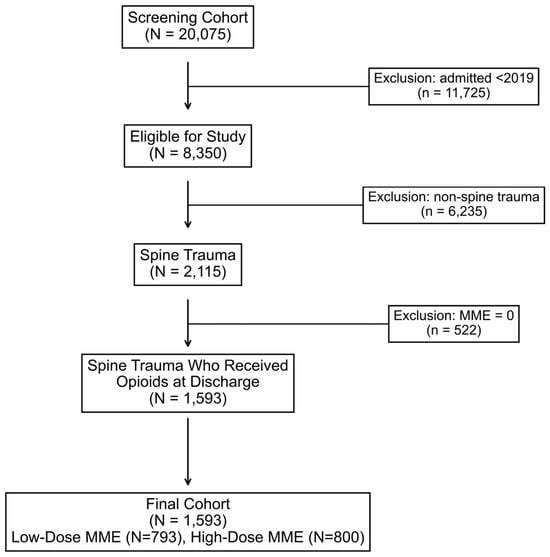
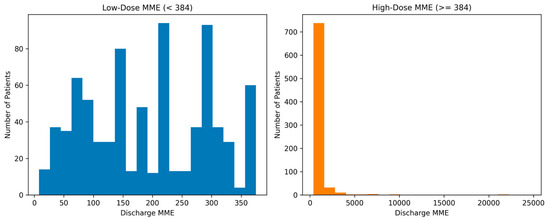
As detailed in Figure 1, of the 20,075 patients screened, 11,725 were excluded for having been admitted before 2019, leaving 8350 patients eligible for the study. After excluding 6235 patients with non-spine trauma, 2115 patients with spine trauma remained. Of these, 522 patients had a discharge MME of zero and were excluded, resulting in a final analytic cohort of 1593 patients who received opioids at the time of discharge. This cohort was classified into a Low-Dose MME group (n = 793) and a High-Dose MME group (n = 800) based on the cohort median discharge MME (384.0 MME).
Figure 1.
Study sample derivation flowchart.
Low- and High-Dose MME at the Time of Discharge
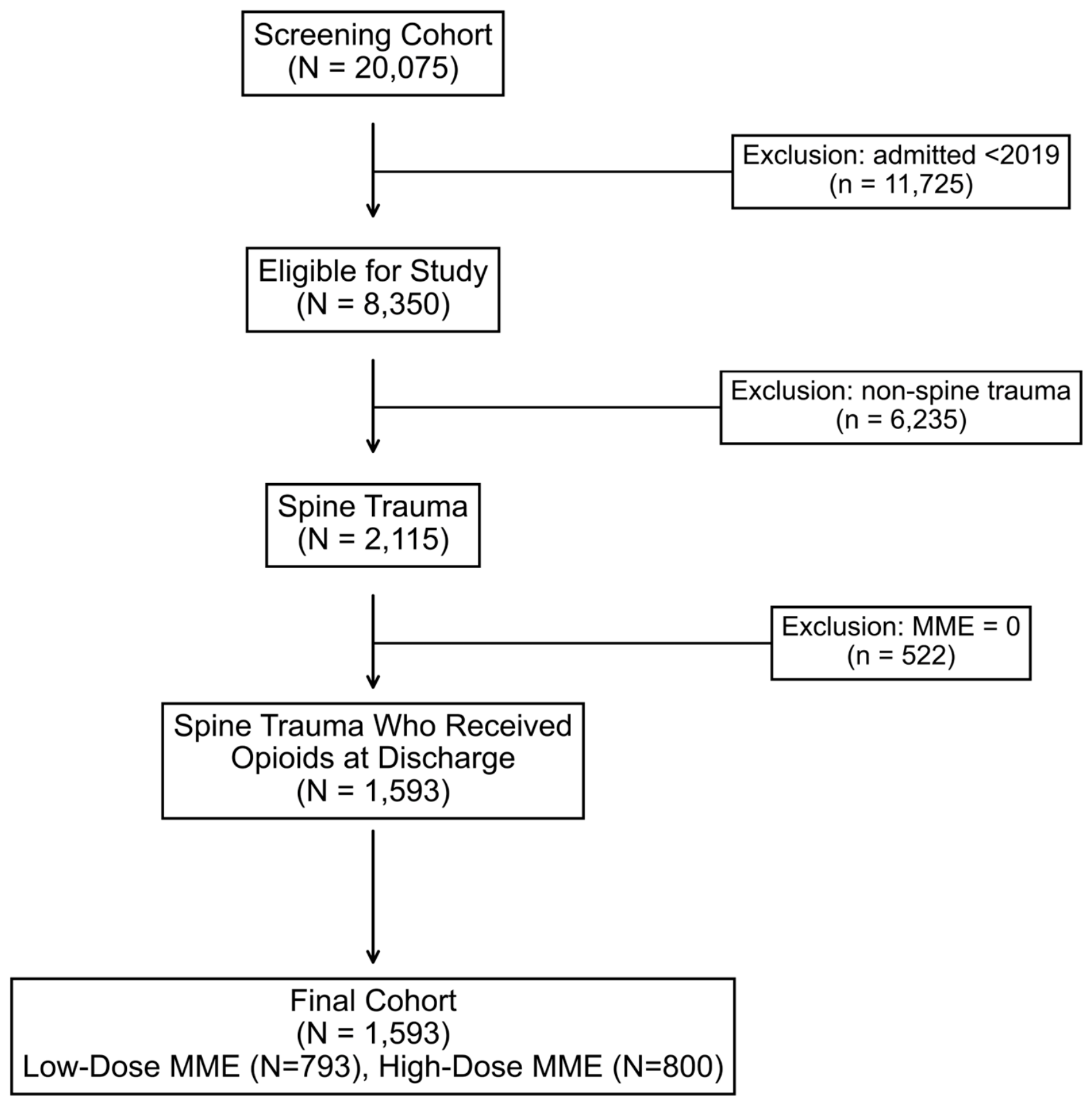
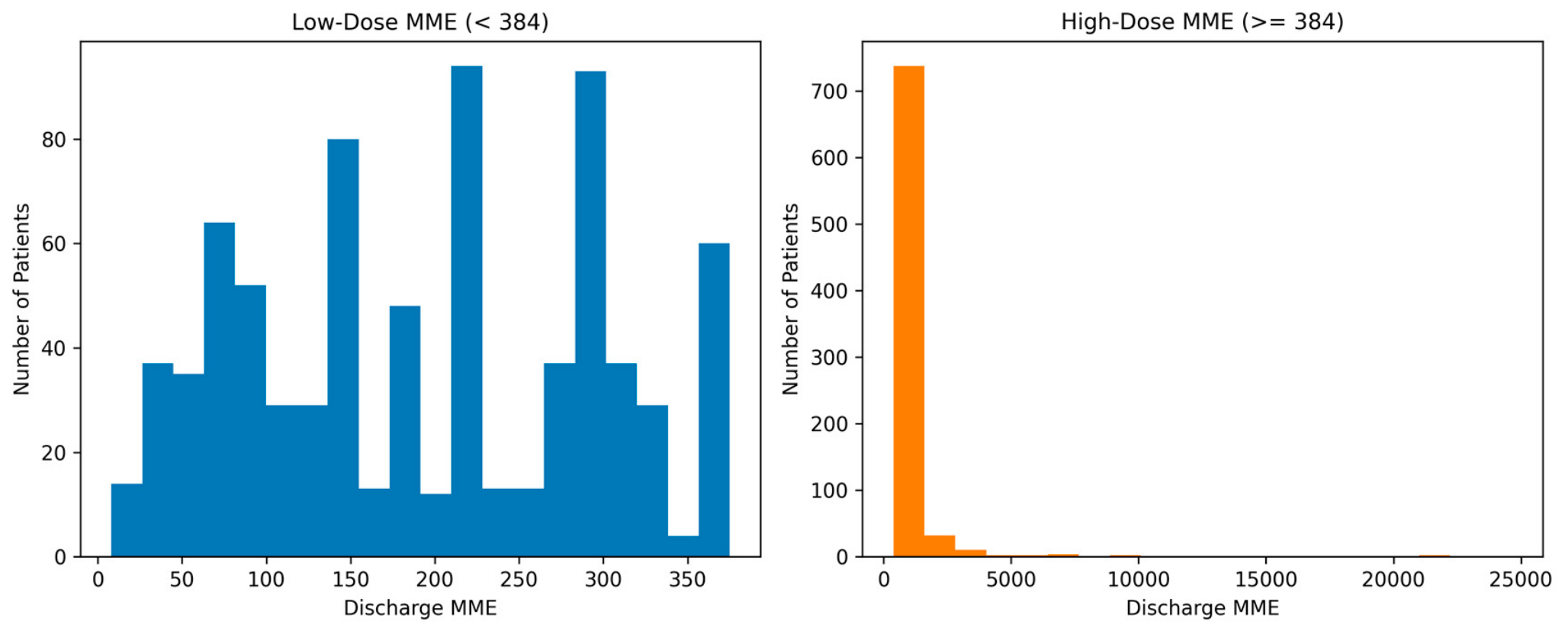
Figure 2 shows the distribution of discharge MME by exposure group. In the Low-Dose MME group, the median discharge MME was 188 (range, 8 to 375; n = 793). In the High-Dose MME group, the median discharge MME was 630 (range, 384 to 24,640; n = 800).
Figure 2.
Low- and high-dose MME at the Time of Discharge.
3.2. Study Sample Characteristics
Table 1 presents the characteristics of the final study sample, stratified by high-MME and propensity-matched cohort.
Table 1.
Baseline characteristics of patients prescribed opioids at the time of hospital discharge.
3.2.1. Socio-Demographics
The final sample comprised 1593 patients: 793 in the Low-Dose MME group and 800 in the High-Dose MME group. The median age (years) was 58.0 [37.0–74.0] in the Low-Dose MME group and 46.5 [33.0–61.0] in the High-Dose MME group. The median injury severity score was 17.0 [10.0–24.0] in the Low-Dose MME group and 17.0 [10.0–24.0] in the High-Dose MME group. The median length of stay (days) was 7.0 [3.0–13.0] in the Low-Dose MME group and 6.0 [3.0–11.0] in the High-Dose MME group. Sex (M) was present in 485 (61.2%) of the Low-Dose MME group and 544 (68.0%) of the High-Dose MME group. Race (White) was present in 638 (80.5%) of the Low-Dose MME group and 654 (81.8%) of the High-Dose MME group. Race (Non-White) was present in 144 (18.2%) of the Low-Dose MME group and 135 (16.9%) of the High-Dose MME group. Race (Declined/Unknown) was present in 11 (1.4%) of the Low-Dose MME group and 11 (1.4%) of the High-Dose MME group. Ethnicity (Not Hispanic or Latino) was present in 684 (86.3%) of the Low-Dose MME group and 716 (89.5%) of the High-Dose MME group. Ethnicity (Hispanic or Latino) was present in 98 (12.4%) of the Low-Dose MME group and 67 (8.4%) of the High-Dose MME group. Ethnicity (Declined/Unknown) was present in 11 (1.4%) of the Low-Dose MME group and 17 (2.1%) of the High-Dose MME group.
3.2.2. Co-Morbidities
Chronic opioid use was present in 8 (1.0%) of the Low-Dose MME group and 8 (1.0%) of the High-Dose MME group. Chronic pain syndrome was present in 55 (6.9%) of the Low-Dose MME group and 57 (7.1%) of the High-Dose MME group. Other substance use was present in 154 (19.4%) of the Low-Dose MME group and 192 (24.0%) of the High-Dose MME group.
3.2.3. Intra-Hospital Course
Surgical procedures were present in 488 (61.5%) of the Low-Dose MME group and 582 (72.8%) of the High-Dose MME group. Spine trauma type (Polytrauma) was present in 203 (25.6%) of the Low-Dose MME group and 202 (25.2%) of the High-Dose MME group. Mechanical ventilation was present in 186 (23.5%) of the Low-Dose MME group and 183 (22.9%) of the High-Dose MME group.
3.2.4. Discharge Disposition
28 (3.5%) of the Low-Dose MME group and 16 (2.0%) of the High-Dose MME group. Discharge disposition (Other) was present in 13 (1.6%) of the Low-Dose MME group and 12 (1.5%) of the High-Dose MME group. Discharge disposition (Nursing Home) was present in 274 (34.6%) of the Low-Dose MME group and 123 (15.4%) of the High-Dose MME group. Discharge to home was present in 478 (60.3%) of the Low-Dose MME group and 649 (81.1%) of the High-Dose MME group.
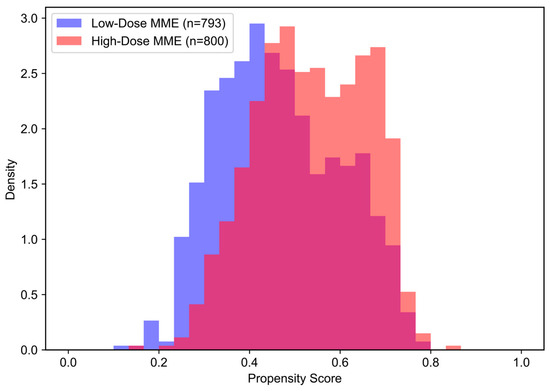
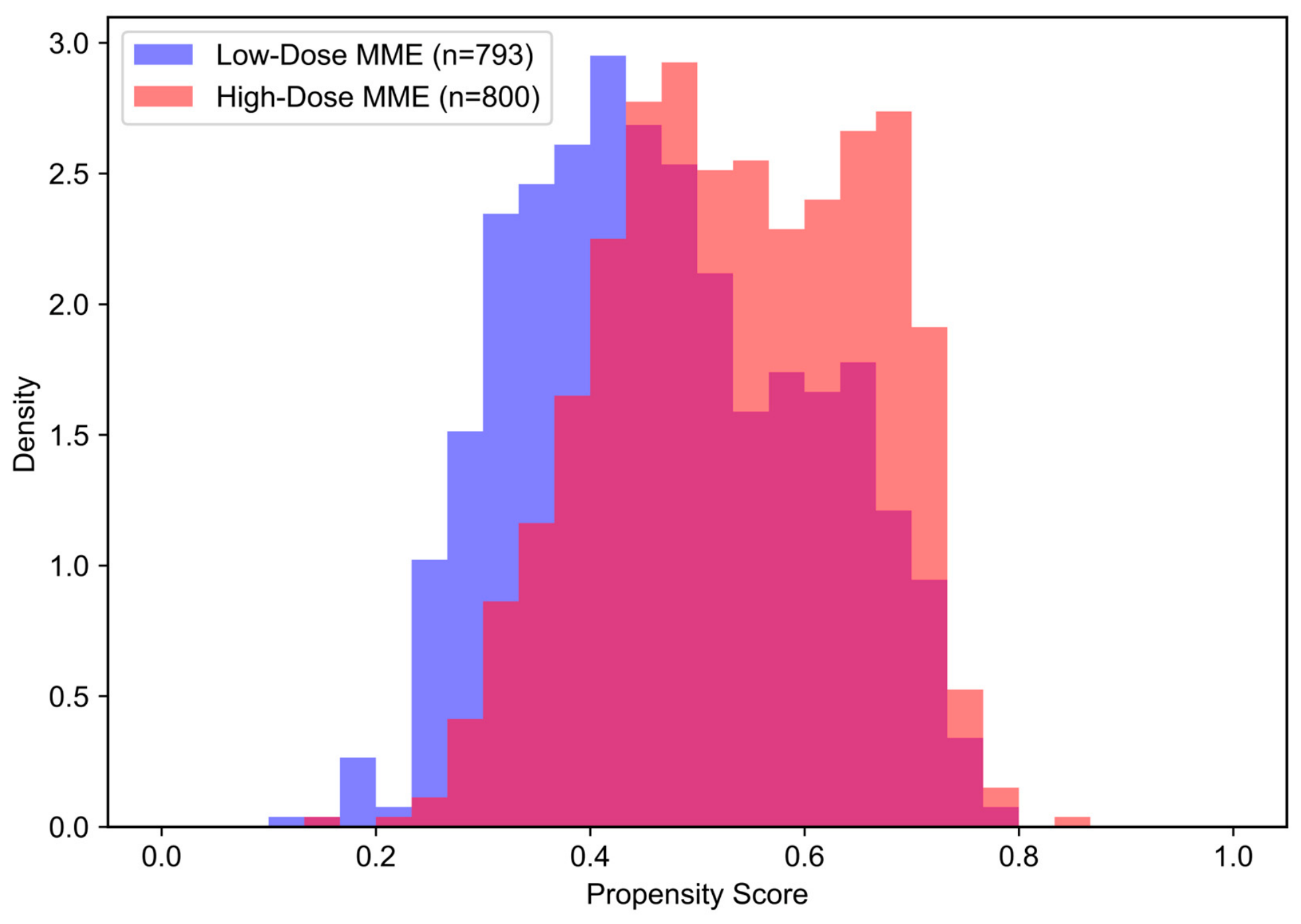
Prior to matching, the estimated propensity score ranged from 0.16 to 0.84 (mean, 0.54) in the High-Dose MME group and 0.13–0.78 (mean, 0.47) in the Low-Dose MME group, with substantial overlap between the two distributions as shown in Figure 3.
Figure 3.
Propensity Score Overlap Before Matching. Purple: (Overlap/region of common support)—where Low-Dose and High-Dose patients coexist at the same propensity score.
3.3. Propensity Score Matching
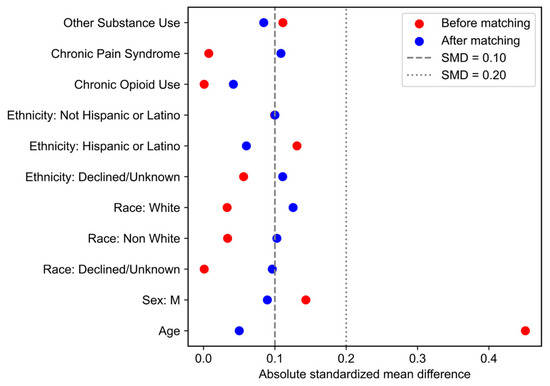
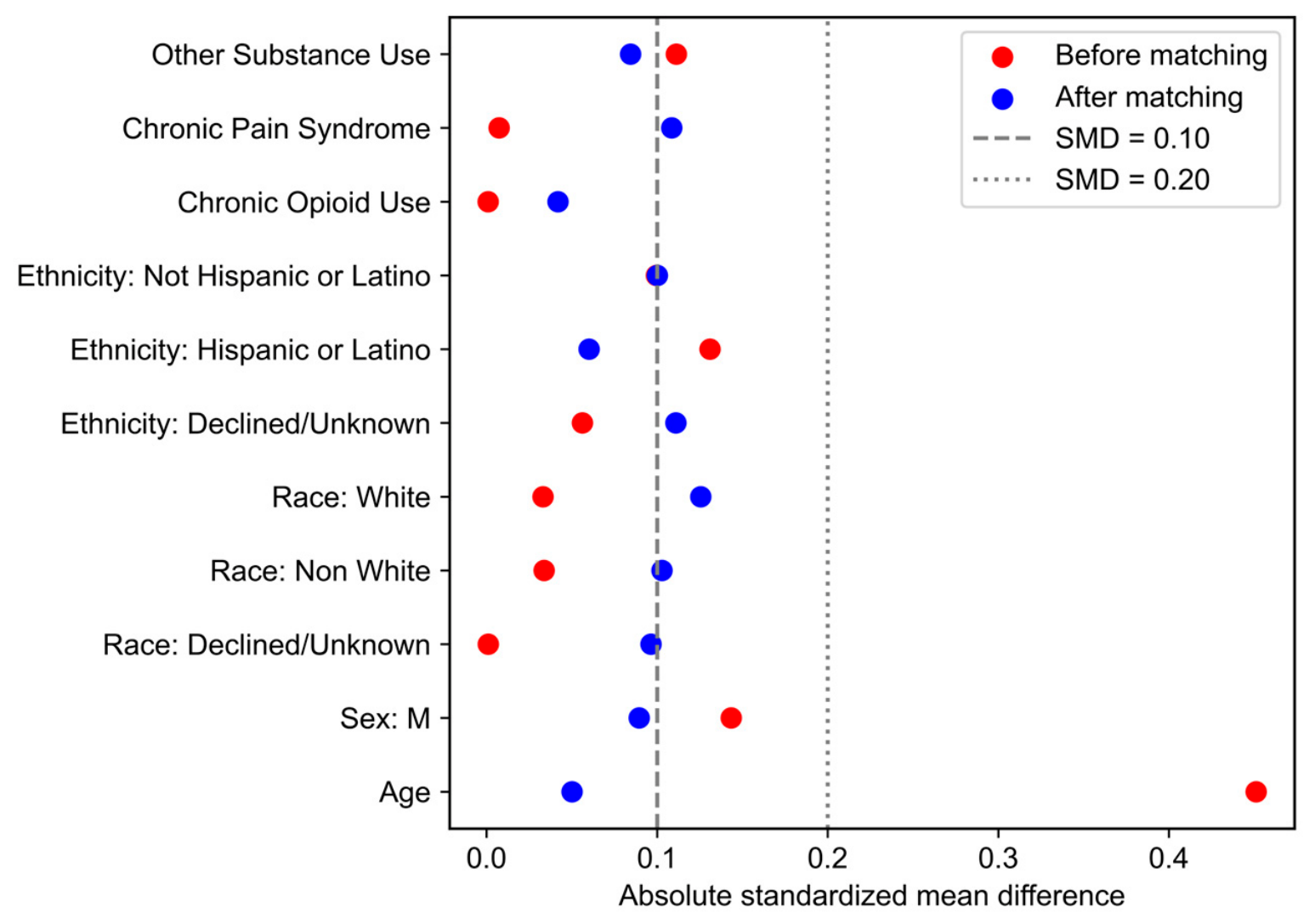
Propensity scores were estimated using a logistic regression model that included Patient Age, Gender, Race Category, Ethnicity Category, Chronic Opioid Use, Chronic Pain Syndrome, and Other Substances. Patients in the High-Dose MME group were matched to Low-Dose MME controls using 1:3 nearest-neighbor matching with replacement and a caliper of 0.1112. Of 800 High-Dose MME patients, 799 were matched to at least one control (1 had no control within the caliper), yielding a mean matching ratio of 3.00:1. Of 793 eligible Low-Dose MME patients, 601 served as controls at least once, with a mean reuse of 3.98 times per control (maximum 19). After matching, 6 of 11 propensity-score covariates had a standardized mean difference below 0.10 (Figure 4, Table 2).
Figure 4.
Love Plot of Covariate Balance Before and After Propensity-Score Matching.
Table 2.
Covariate Balance Before and After Propensity-Score Matching.
3.4. Variance Inflation Factors
As shown in Table 3, all covariates in the final adjusted model had a variance inflation factor (VIF) < 5, ranging from 1.03 (discharge disposition: other) to 3.82 (injury severity score: ≥25). Individual VIF values were: spine trauma type: polytrauma, 3.50; injury severity score: 16–24, 1.65; injury severity score: ≥25, 3.82; head AIS: 3–4 [moderate], 1.41; head AIS: 5–6 [severe], 1.10; spine AIS: 3–4 [moderate], 1.41; spine AIS: 5–6 [severe], 1.26; surgical procedures, 2.50; mechanical ventilation, 1.95; discharge disposition: rehabilitation, 1.32; discharge disposition: nursing home, 1.57; and discharge disposition: other, 1.03; length of stay [days], 2.79.
Table 3.
Variance Inflation Factors for Covariates in the Adjusted Multivariable Logistic Regression Model.
3.5. Factors Associated with High Opioid Use at Discharge
As shown in Table 4, the factors significantly associated with high-dose MME were surgical procedures (adjusted odds ratio [aOR], 1.52 [95% CI, 1.18–1.95]; p = 0.0011) and discharge disposition other than home, which included rehabilitation (aOR, 0.30 [0.14–0.64]; p = 0.0019) and nursing home (aOR, 0.41 [0.30–0.56]; p < 0.0001). The remaining covariates (spine trauma type: polytrauma, injury severity score: 16–24, injury severity score: ≥25, head AIS: 3–4 [moderate], head AIS: 5–6 [severe], spine AIS: 3–4 [moderate], spine AIS: 5–6 [severe], mechanical ventilation, discharge disposition: other, length of stay [days]) were not significantly associated with high-dose MME (all p ≥ 0.05).
Table 4.
Factors associated with high MME at the time of discharge from the hospital.
3.6. Model Performance
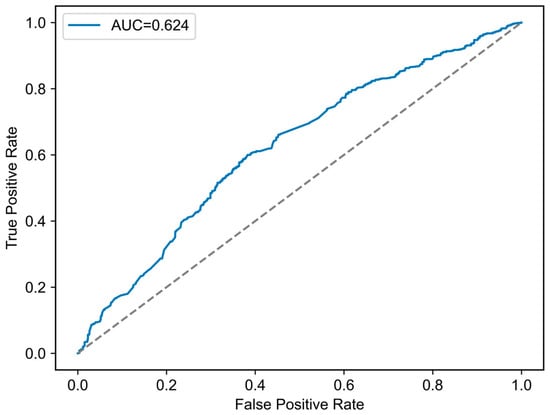
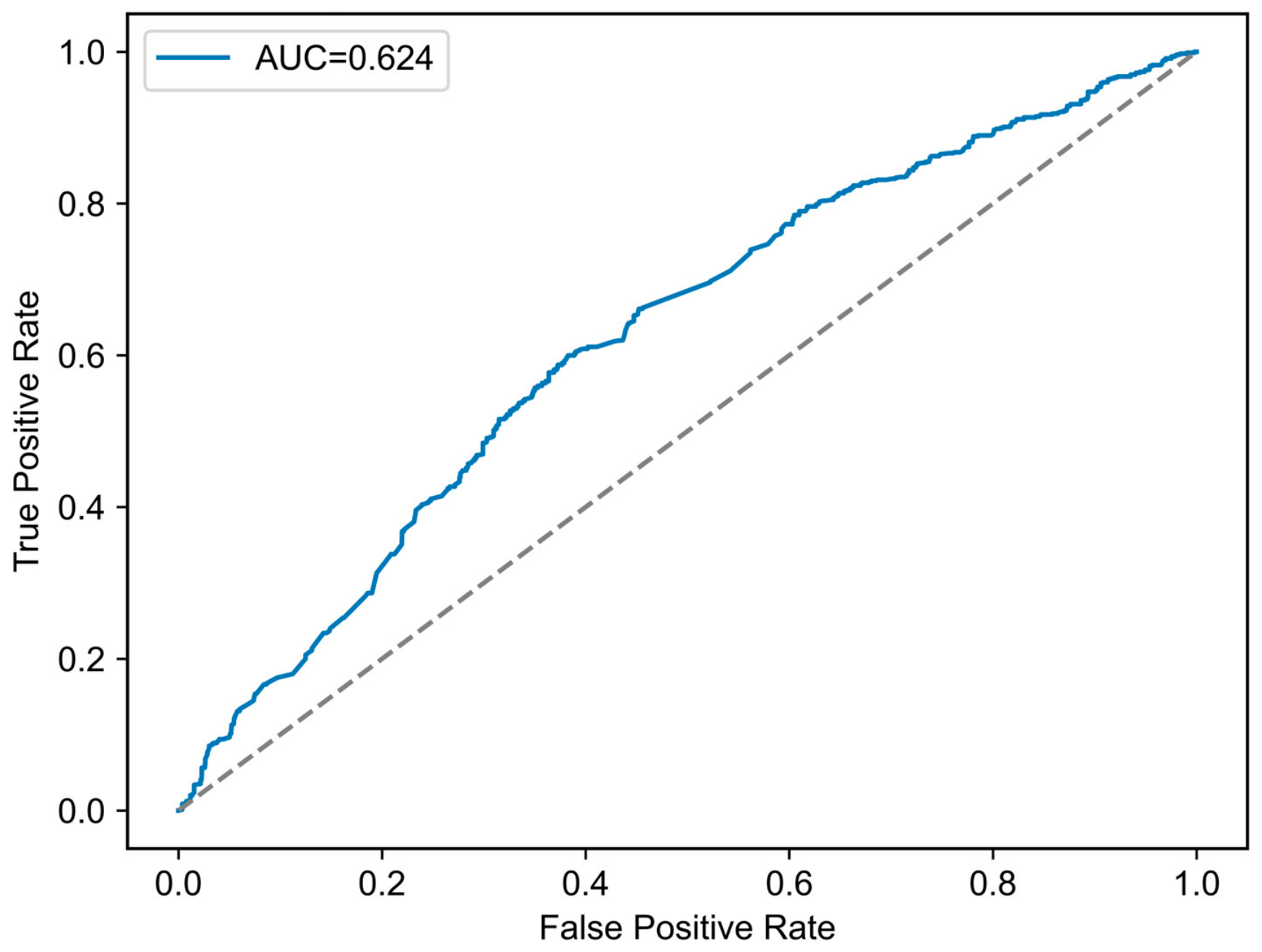
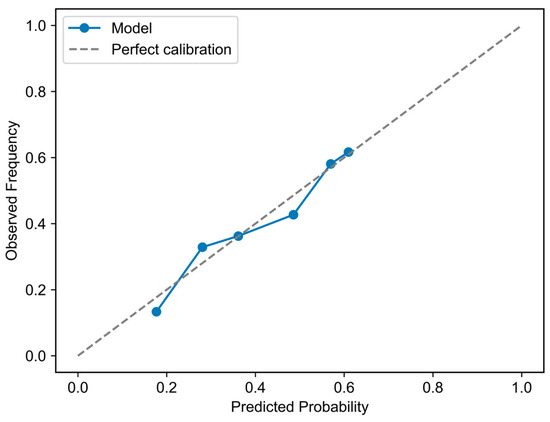
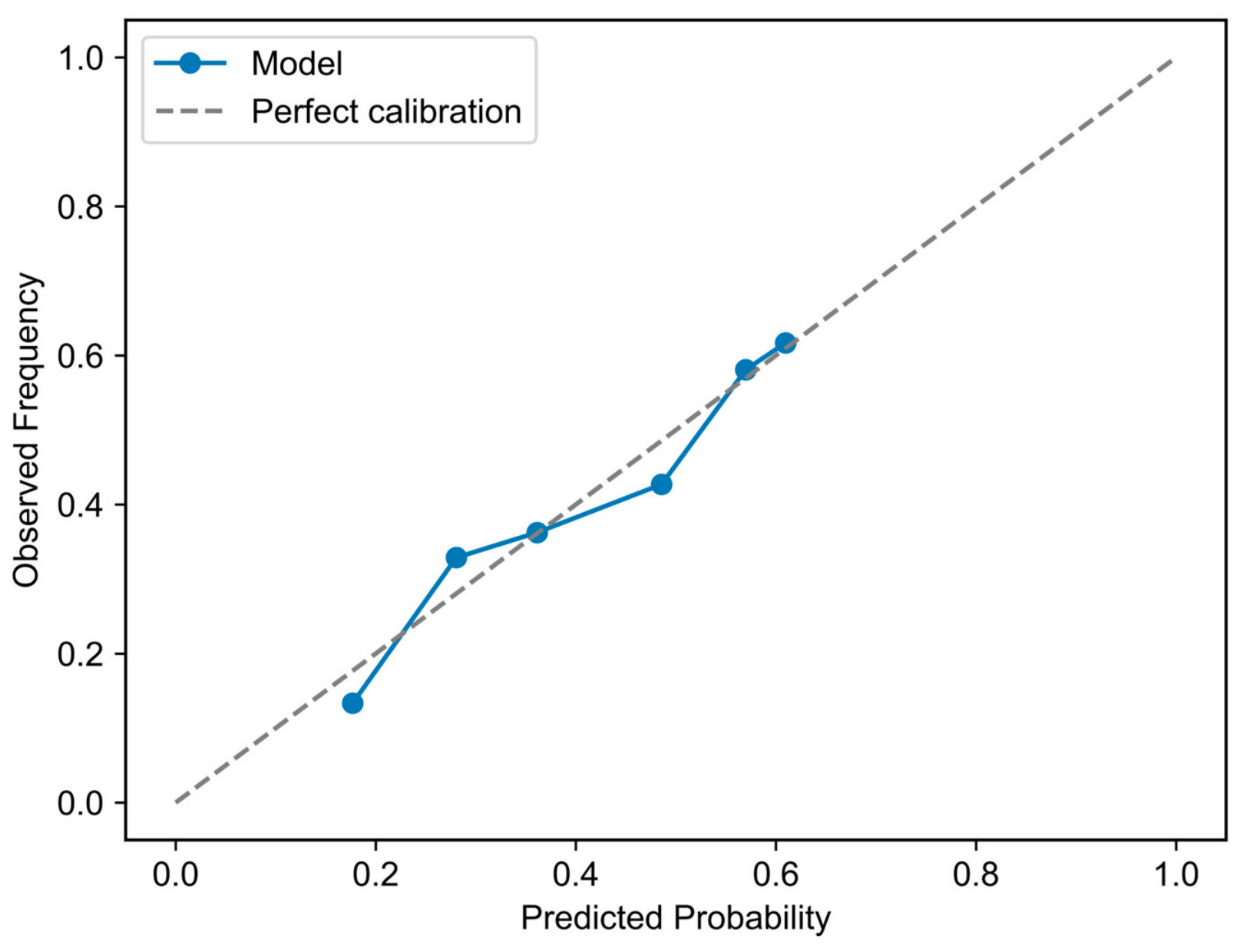
The primary adjusted logistic regression model had a receiver operating characteristic area under the curve of 0.624, a Brier score of 0.238, and a McFadden pseudo-R-squared of 0.035. Model ROC and calibration plot are shown in Figure 5 and Figure 6.
Figure 5.
Receiver Operating Characteristic Curve for the Adjusted Multivariable Logistic Regression Model. The grey dashed line is “baseline”.
Figure 6.
Calibration Plot for the Adjusted Multivariable Logistic Regression Model.
4. Discussion
Pain from acute spine trauma is complex and often results in high opioid use with an increased risk of opioid misuse [3,4,5,6]. Compounded with a lack of regional anesthesia options, pain management in this patient population often presents unique challenges for clinicians. In examining factors that may contribute to higher discharge opioid prescription in these patients, we aim to help clinicians better identify patients at the highest risk of high opioid consumption and facilitate a more individualized approach to their pain management plan.
Based on our analysis, patients with spine trauma who underwent surgical procedure(s) were significantly more likely to receive higher discharge opioid prescriptions. The surgical procedure category in this study is not limited to spinal surgery in polytrauma patients. There is a lack of literature on opioid usage in patients with spine trauma who needed surgery as a result, compared to those who did not. It is conceivable that patients may be exposed to a higher opioid load in the postoperative period, which can be difficult to taper prior to hospital discharge [18,19]. There is also the possibility that, given injury severity (ISS or spine AIS) is not predictive of high discharge opioid in our findings, there may be confounders related to both the nature of the injury in spine trauma and the necessity for surgical intervention, and are worth exploring in future studies. For example, a recent study at a level I trauma center on patients undergoing surgery for traumatic spine injuries found that higher discharge opioid prescriptions are associated with incomplete spinal cord injuries (SCI) [20].
Our analysis also showed that discharge to a non-home destination, such as health or nursing facilities, was found to be associated with significantly lower odds of high opioid prescriptions on discharge. Compared to patients who are discharged home from the hospital, it is possible that patients discharged to health or nursing facilities after an acute traumatic injury are likely to be more frail and/or have multiple healthcare needs, which may necessitate stricter opioid prescription practices [21]. Our finding contrasts with a study by Hubsky et al., which showed that opioids were frequently prescribed at high doses to patients discharged to nursing facilities, although the study by Hubsky et al. is not specific to trauma patients and includes patients with cancer pain [22]. Another recent study by Whitfield et al. [12] found that there was an increased likelihood of long-term opioid prescription for patients discharged to inpatient rehabilitation after spine surgery compared to those who were discharged home. This study, however, did not separate elective and emergent spine surgeries, nor did it specify whether trauma patients were included. Nonetheless, the reason(s) behind this seemingly contrasting trend in discharge opioid prescription between the trauma population in our study and the patient populations in these studies remain unclear and warrant further exploration.
Tilhou et al. [14] demonstrated that length of stay, injury severity, and intubation were potentially associated with opioid misuse in patients with spine trauma. Our study did not demonstrate any statistically significant associations between these factors and hospital discharge opioid prescriptions. This may indicate that there are other factors at play with respect to opioid misuse. Another recent study [20] on spine trauma reported similar findings to ours in that the length of stay was not associated with the amount of discharge opioid prescription. The lack of difference in persistent opioid use based on ISS was also reported by Baker et al. [23], although an AIS for any of the body region of 2 or above was associated with persistent opioid use in that study.
The strengths of this study lie in a robust sample population size, the presence of patients with very high opioid prescriptions on hospital discharge, and the inclusion of both isolated spine injury and spine injury in the presence of polytrauma. Owing to the retrospective design, this study is limited by the accuracy and completeness of existing medical records. While the model included factors that are known to be associated with opioid prescription and/or consumption, we cannot entirely exclude the presence of residual confounders. This study was based on data from a single level I trauma center. While the center receives trauma patients from 5 states (WA, AK, WY, ID, and MT), the results may not be sufficiently generalizable for all patient populations and subtypes.
5. Conclusions
Patients with spine trauma exhibit distinct demographic and clinical profiles associated with high-dose opioid requirements. Our study identified clinical and hospitalization-related factors that significantly influence opioid prescription at hospital discharge. Our findings highlight the need for opioid stewardship in the perioperative period and at discharge planning. One topic for future studies is further exploring whether specific injury types, rather than injury severity, have any association with increased opioid requirement in this patient population. Another future direction would be to create a predictive model that can be examined prospectively across multiple centers and adapted for clinical use to improve patient outcomes in real time. Having out-of-hospital follow-up data on opioid use would further add to the comprehensiveness of the model and potentially bridge the link between this model and long-term opioid use and/or opioid misuse.
Author Contributions
Conceptualization, W.Y.W. and A.V.L.; methodology, W.Y.W. and A.V.L.; software, A.V.L.; validation, A.V.L.; formal analysis, A.V.L.; data curation, A.V.L. and C.T.F.; writing—original draft preparation, W.Y.W. and A.V.L.; writing—review and editing, W.Y.W., A.V.L. and C.T.F. All authors have read and agreed to the published version of the manuscript.
Funding
This research received no external funding.
Institutional Review Board Statement
The study was conducted in accordance with the Declaration of Helsinki and approved by the Institutional Review Board of the University of Washington. Study number: STUDY00013784 (approved on 19 August 2021); modification ID: MOD00023325 (approved on 5 August 2025).
Informed Consent Statement
Patient consent was waived due to the retrospective study design.
Data Availability Statement
The data generated for this study are not publicly available due to privacy restrictions.
Acknowledgments
The authors acknowledge the help of The Center for Perioperative and Pain Initiatives in Quality Safety Outcome (PPIQSO) for their assistance with data collection. The authors acknowledge the use of ChatGPT (Version 4.5) for revising Python and RStudio (Version 4.5.3) code. Grammarly Premium software was used for grammar and language edits. The authors have reviewed and edited the output and take full responsibility for the content of the publication.
Conflicts of Interest
Author A.V.L. reports salary support as the Medical Advisor for LifeCenter Northwest. The authors declare no conflicts of interest.
Abbreviations
The following abbreviations are used in this manuscript:
| AIS | Abbreviated Injury Scale |
| aOR | Adjusted odds ratio |
| AUC | Area under the (ROC) curve |
| CDC | Center for Disease Control |
| CI | Confidence interval |
| ED | Emergency department |
| IQR | Interquartile range |
| ISS | Injury severity score |
| MME | Morphine milligram equivalent |
| MPOG | Multicenter Perioperative Outcomes Group |
| ROC | Receiver operating characteristic (curve) |
| SCI | Spinal cord injury |
| VIF | Variance inflation factors |
References
- Florence, C.; Luo, F.; Rice, K. The economic burden of opioid use disorder and fatal opioid overdose in the United States, 2017. Drug Alcohol Depend. 2021, 218, 108350. [Google Scholar] [CrossRef] [Scilit] [PubMed]
- Centers for Disease Control (CDC). About Prescription Opioids [Internet]. Overdose Prevention. 2025. Available online: https://www.cdc.gov/overdose-prevention/about/prescription-opioids.html (accessed on 3 December 2025).
- von Oelreich, E.; Eriksson, M.; Brattström, O.; Sjölund, K.-F.; Discacciati, A.; Larsson, E.; Oldner, A. Risk factors and outcomes of chronic opioid use following trauma. Br. J. Surg. 2020, 107, 413–421. [Google Scholar] [CrossRef] [Scilit] [PubMed]
- Gong, J.; Jones, P.; Chan, A.H.Y. Incidence and risk factors of new persistent opioid use after surgery and trauma: A systematic review. BMC Surg. 2024, 24, 210. [Google Scholar] [CrossRef] [Scilit] [PubMed]
- Mosher, H.J.; Hofmeyer, B.A.; Hadlandsmyth, K.; Richardson, K.K.; Lund, B.C. Predictors of long-term opioid use after opioid initiation at discharge from medical and surgical hospitalizations. J. Hosp. Med. 2018, 13, 243–248. [Google Scholar] [CrossRef] [Scilit] [PubMed]
- Kurteva, S.; Abrahamowicz, M.; Weir, D.; Gomes, T.; Tamblyn, R. Determinants of long-term opioid use in hospitalized patients. PLoS ONE 2022, 17, e0278992. [Google Scholar] [CrossRef] [Scilit] [PubMed]
- Campbell, C.I.; Weisner, C.; LeResche, L.; Ray, G.T.; Saunders, K.; Sullivan, M.D.; Banta-Green, C.J.; Merrill, J.O.; Silverberg, M.J.; Boudreau, D.; et al. Age and gender trends in long-term opioid analgesic use for noncancer pain. Am. J. Public Health 2010, 100, 2541–2547. [Google Scholar] [CrossRef] [Scilit] [PubMed]
- Dowell, D.; Haegerich, T.M.; Chou, R. CDC guideline for prescribing opioids for chronic pain—United States, 2016. JAMA 2016, 315, 1624–1645. [Google Scholar] [CrossRef] [Scilit] [PubMed]
- Paulozzi, L.J.; Zhang, K.; Jones, C.M.; Mack, K.A. Risk of adverse health outcomes with increasing duration and regularity of opioid therapy. J. Am. Board Fam. Med. 2014, 27, 329–338. [Google Scholar] [CrossRef] [Scilit] [PubMed]
- Larach, D.B.; Sahara, M.J.B.; As-Sanie, S.; Moser, S.E.; Urquhart, A.G.; Lin, J.; Hassett, A.L.P.; Wakeford, J.A.B.; Clauw, D.J.; Waljee, J.F.; et al. Patient factors associated with opioid consumption in the month following major surgery. Ann. Surg. 2021, 273, 507–515. [Google Scholar] [CrossRef] [Scilit] [PubMed]
- Guichard, L.; Engoren, M.C.; Li, Y.-J.; Sigakis, M.J.; An, X.; Brummett, C.M.; Mauck, M.C.; Raghunathan, K.; Clauw, D.J.; Krishnamoorthy, V. Risk factors for increased opioid use during postoperative intensive care. Crit. Care Explor. 2024, 6, e1172. [Google Scholar] [CrossRef] [Scilit] [PubMed]
- Whitfield, S.R.; Hanson, A.C.; Bellamkonda, E.; Garza, M.M.D.L.; Schmidt, X.; Hooten, W.M.; Warner, N.S. Associations between preoperative opioids, posthospitalization discharge disposition, and long-term opioid prescribing after spine surgery: A population-based cohort study. Asian Spine J. 2025, 19, 590–599. [Google Scholar] [CrossRef] [Scilit] [PubMed]
- Fisher, N.; Hooper, J.; Bess, S.; Konda, S.; Leucht, P.; Egol, K.A. Ninety-day postoperative narcotic use after hospitalization for orthopaedic trauma. J. Am. Acad. Orthop. Surg. 2020, 28, e560–e565. [Google Scholar] [CrossRef] [Scilit] [PubMed]
- Tilhou, A.S.; Glass, J.E.; Hetzel, S.J.; Shana, O.E.; Borza, T.; Baltes, A.; Deyo, B.M.; Agarwal, S.M.; O’rourke, A.M.; Brown, R.T.M. Association between spine injury and opioid misuse in a prospective cohort of Level I trauma patients. OTA Int. 2022, 5, e205. [Google Scholar] [CrossRef] [Scilit] [PubMed]
- Wang, D.W.Y.; Copley, M.; Qiu, Q.; Fong, C.; Mills, B.; Curatolo, M.; Lele, A.; Vavilala, M. Association between state opioid prescribing policies and the COVID-19 pandemic and hospital and emergency department discharge opioid prescription in injured patients. Trauma Surg. Acute Care Open 2026, 11, e001811. [Google Scholar] [CrossRef] [Scilit] [PubMed]
- Pape, H.-C.; Lefering, R.; Butcher, N.; Peitzman, A.; Leenen, L.; Marzi, I.; Lichte, P.; Josten, C.; Bouillon, B.; Schmucker, U.; et al. The definition of polytrauma revisited: An international consensus process and proposal of the new “Berlin definition”. J. Trauma Acute Care Surg. 2014, 77, 780–786. [Google Scholar] [CrossRef] [Scilit] [PubMed]
- Burns, M.; Vandervest, J.; Buehler, K.; Shi, B.; Shah, N.; MPOG Quality Committee. Multicenter Perioperative Outcomes Group. Opioid: Opioid Equivalency. Available online: https://datalibrary.mog.org/Measures/Public/37 (accessed on 8 May 2026).
- Levy, B.; Paulozzi, L.; Mack, K.A.; Jones, C.M. Trends in opioid analgesic-prescribing rates by specialty, U.S., 2007–2012. Am. J. Prev. Med. 2015, 49, 409–413. [Google Scholar] [CrossRef] [Scilit] [PubMed]
- Rainer, M.; Ommerli, S.M.; Burden, A.M.; Betschart, L.; Stämpfli, D. Opioid exit plans for tapering postoperative pain control in noncancer patients: A systematic review. Patient Saf. Surg. 2024, 18, 25. [Google Scholar] [CrossRef] [Scilit] [PubMed]
- Rajan, P.V.; Dean, E.; Milby, A.H. Post-operative opioid utilization after surgery for spinal trauma: A retrospective study at a level 1 trauma center. J. Spine Surg. 2025, 11, 410–419. [Google Scholar] [CrossRef] [Scilit] [PubMed]
- Abbitt, D.; Choy, K.; Robinson, T.N.; Jones, E.L.; Horney, C.; Sommerville, S.; Jones, T.S. Preoperative risk factors for discharge to facility after surgery in geriatric patients. Am. Surg. 2024, 90, 2222–2227. [Google Scholar] [CrossRef] [Scilit] [PubMed]
- Hubsky, A.R.; Noble, B.N.; Hartung, D.M.; Tjia, J.; Lapane, K.L.; Furuno, J.P. Opioid prescribing on discharge to skilled nursing facilities. Pharmacoepidemiol. Drug Saf. 2020, 29, 1183–1188. [Google Scholar] [CrossRef] [Scilit] [PubMed]
- Baker, R.C.; Brown, C.S.; Montgomery, J.R.; Mouch, C.A.; Kenney, B.C.; Englesbe, M.J.; Waljee, J.F.M.; Hemmila, M.R. Effect of injury location and severity on opioid use after trauma. J. Trauma Acute Care Surg. 2021, 91, 226–233. [Google Scholar] [CrossRef] [Scilit] [PubMed]

Disclaimer/Publisher’s Note: The statements, opinions and data contained in all publications are solely those of the individual author(s) and contributor(s) and not of MDPI and/or the editor(s). MDPI and/or the editor(s) disclaim responsibility for any injury to people or property resulting from any ideas, methods, instructions or products referred to in the content. |
© 2026 by the authors. Licensee MDPI, Basel, Switzerland. This article is an open access article distributed under the terms and conditions of the Creative Commons Attribution (CC BY) license.