


Abstract
Background: While ibuprofen is a widely used non-opioid analgesic with growing evidence in surgical settings, its safety and efficacy in acute burn care remain poorly characterized. This review aims to address this gap. Methods: A systematic search was conducted in accordance with PRISMA-ScR (September 2025) across PubMed, MEDLINE, CENTRAL, CINAHL, and Scopus for original, English-language studies evaluating the safety and/or efficacy of ibuprofen, distinguishable from multimodal regimens, for acute burn analgesia. Results: Of 136 studies, six met inclusion criteria (5 adult, 1 pediatric). Populations primarily consisted of second- and third-degree burns; only two studies included >10% total body surface area (TBSA). Study designs were heterogeneous, all with moderate to high risk of bias, including one retrospective study (oral ibuprofen), two experimental double-blind placebo randomized controlled trials (RCTs) (topical; oral), and three clinical RCTs (intravenous; topical; topical and oral). No study reported associations with increased adverse events; a retrospective study found no increased bleeding risk with perioperative ibuprofen in skin graft patients. Analgesic outcomes were not directly comparable across studies due to heterogeneity. Experimental models found that ibuprofen did not reduce acute burn pain, but attenuated pain within hyperalgesic skin. Among clinical studies, both oral and dressing ibuprofen formulations demonstrated reduced procedural pain. One topical study noted faster wound healing, though this was confounded by less frequent dressing changes. Conclusions: The available studies were insufficient to draw definitive conclusions, limited by sample size, heterogeneity, bias, and exclusion of high-risk patients. Nonetheless, no study reported increased adverse events across diverse ibuprofen protocols. These findings underscore the need for adequately powered, agent-specific trials in clinically representative burn populations to inform evidence-based multimodal compositions amidst growing advocacy for opioid-sparing analgesia.
1. Introduction
Effective analgesia is essential in acute burn care, but practice remains heterogeneous. Interest in non-steroidal anti-inflammatory agents (NSAIDs) such as ibuprofen has increased because of their opioid-sparing potential and well-understood analgesic mechanisms, yet their routine use in burn patients is controversial [1,2,3]. Earlier systematic reviews and expert summaries emphasized that the burn-specific evidence base is often underpowered to detect clinically meaningful analgesic outcomes, limiting firm conclusions about efficacy [4,5]. The American Burn Association (ABA) and International Society for Burn Injuries (ISBI) recommend multimodal, opioid-sparing strategies, including NSAIDs. However, they explicitly note the paucity of burn-specific evidence and that recommendations are largely extrapolated from the other surgical literature, leaving clinicians to balance potential benefit against uncertain risk [1,2].
NSAIDs have demonstrated promise in pain management and in reducing opioid consumption [6,7,8]. They exert analgesic effects by inhibiting cyclooxygenase (COX), decreasing prostaglandin synthesis [9]. However, this mechanism carries well-known risks of impaired platelet aggregation, gastrointestinal mucosal injury, and potential reductions in renal perfusion. These effects may be particularly clinically meaningful in hypovolemic, systemically inflamed, and perioperative burn patients [1,9]. Historically, these physiologic concerns have been a central argument against routine NSAID use in burns, though studies on bleeding risks have been inconclusive [1,4,9].
Ibuprofen, a widely accessible, cost-effective NSAID available across a range of formulations and delivery methods, is a particularly appealing alternative to opioids. While the broader surgical literature suggests ibuprofen may be safe in many settings, it underscores that patients with fluid instability, surgical exposure, or compromised renal perfusion are at higher risk for adverse effects [9,10,11]. Within acute care settings, contemporary reports have begun to challenge the assumption that ibuprofen leads to clinically significant bleeding complications, and early implementations of multimodal pain control (MMPC) demonstrate opioid-sparing effects when ibuprofen is incorporated into standardized analgesic protocols [6].
However, MMPC regimens remain highly heterogeneous in composition across institutions and clinical settings [6,12,13,14], and many caution against or exclude NSAIDs altogether based on broader critical care guidelines [15,16]. Existing studies primarily assess MMPC collectively, leaving evidence-based individualized formulation challenging [17,18]. Individual NSAIDs differ in COX-1/COX-2 selectivity and carry distinct pharmacologic profiles, and may present substantial implications for medication selection and optimal MMPC combinations [12,18,19].
Despite calls for individualized MMPC preparations and burn-context research, agent-specific evaluations remain sparse [1,6,12]. To our knowledge, no comprehensive review to date has evaluated the scope of evidence on ibuprofen use in acute burn settings. This scoping review aims to characterize the existing literature, identify gaps in current knowledge, and provide a framework to inform prescribing practices, guide multimodal analgesic protocols, and support future research and guideline development.
2. Materials and Methods
2.1. Systematic Search and Study Selection
This scoping review was conducted and reported in accordance with the Preferred Reporting Items for Systematic Reviews and Meta-Analyses Extension for Scoping Reviews (PRISMA-ScR) [20]. This design was selected to map the extent and nature of available evidence on the safety and efficacy of ibuprofen in acute burn care, rather than generate graded recommendations [20,21]; the heterogeneity of study designs, populations, and outcomes further supported this approach [20]. No review protocol was registered. A systematic search was conducted across five electronic databases—PubMed, MEDLINE, CENTRAL, CINAHL, and Scopus—from the earliest available records through September 2025. Search terms included ibuprofen, burn, pain, analgesia, and NSAID, using Medical Subject Headings (MeSH terms) with exploded trees where available and combined using Boolean operators. The full search strategies are presented in Table 1.
Table 1.
Database search strategy.
Original, English-language, human studies evaluating ibuprofen’s analgesic efficacy or safety profile in acute burn care were included. Eligible study designs included clinical trials, retrospective and prospective reviews, case series with ≥10 patients, and experimental studies. Studies using MMPC protocols were included provided that ibuprofen’s contribution to analgesia or safety could be individually evaluated. Studies were excluded if ibuprofen was administered solely for anti-pyretic, metabolic, or anti-inflammatory indications without an analgesic objective. Articles limited to chronic burn care, superficial sunburns, or abstract-only publications were also excluded. This review focused on burns managed in acute care settings, where the pharmacologic considerations of ibuprofen—including bleeding risk, renal dysfunction, gastrointestinal effects, and wound healing—are most clinically relevant.
Article screening was performed using automated tools for English language and study type, where available, prior to export into Covidence systematic review software (2025, Veritas Health Innovation, Melbourne, Australia). Duplicate texts were removed via automated and manual processes. In two screening stages, two independent reviewers (I.Y.B. and A.L.H.) assessed the title and abstract, followed by the full text for final inclusion. Disagreements were resolved by discussion.
2.2. Data Extraction and Synthesis
Qualitative and quantitative data were extracted for narrative synthesis, including metadata, sample size, patient population, study design (i.e., inclusion and exclusion criteria, interventions, endpoints, control groups, evidence appraisal, etc.), ibuprofen prescribing pattern (i.e., route, dose, frequency, indication, scheduled versus as needed), adjuvant medications, and burn dressing and wound care, using a standardized spreadsheet. Burn information included etiology (e.g., thermal versus electrical, experimental infliction versus traumatic), location, timing, depth/degree, total body surface area (TBSA), wound size, and treatment setting (i.e., inpatient, outpatient, experimental setting). Primary outcomes of interest were analgesia (patient-reported or observed), control or placebo comparisons, and safety, as measured by adverse events such as bleeding risk, gastrointestinal or mucosal injury, renal dysfunction, and delayed wound healing. Secondary outcomes included overall patient outcomes such as complication rate and treatment, adjuvant medication or dressing use, non-analgesic use of ibuprofen (e.g., anti-pyretic, anti-inflammatory effects), and opioid prescribing patterns with and without ibuprofen or multimodal pain management.
2.3. Study Appraisal
Although critical appraisal is not required in scoping reviews, risk-of-bias assessment was performed to contextualize the strength of available evidence and inform recommendations for future research. Evidence was appraised qualitatively, and risk of bias was assessed using Cochrane risk-of-bias tools RoB 2 (version 22 August 2019, Cochrane, London, UK) [22] for randomized controlled trials (RCTs) and ROBINS-I V2 (Cochrane, London, UK) [23] for non-randomized studies of interventions by two independent reviewers (I.Y.B. and A.L.H.). Risk of bias was visualized as a traffic light plot, generated using the Robvis tool [24]. Data analysis was limited to qualitative reporting and was not subjected to statistical testing or quantitative synthesis due to heterogenous methodology and limited sample size.
3. Results
3.1. Search Results
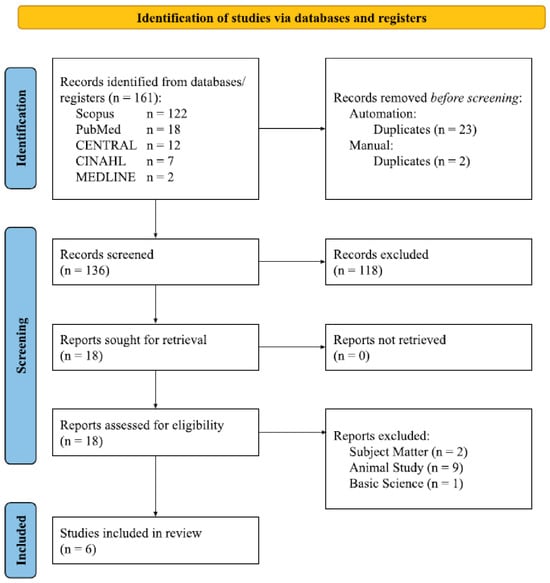
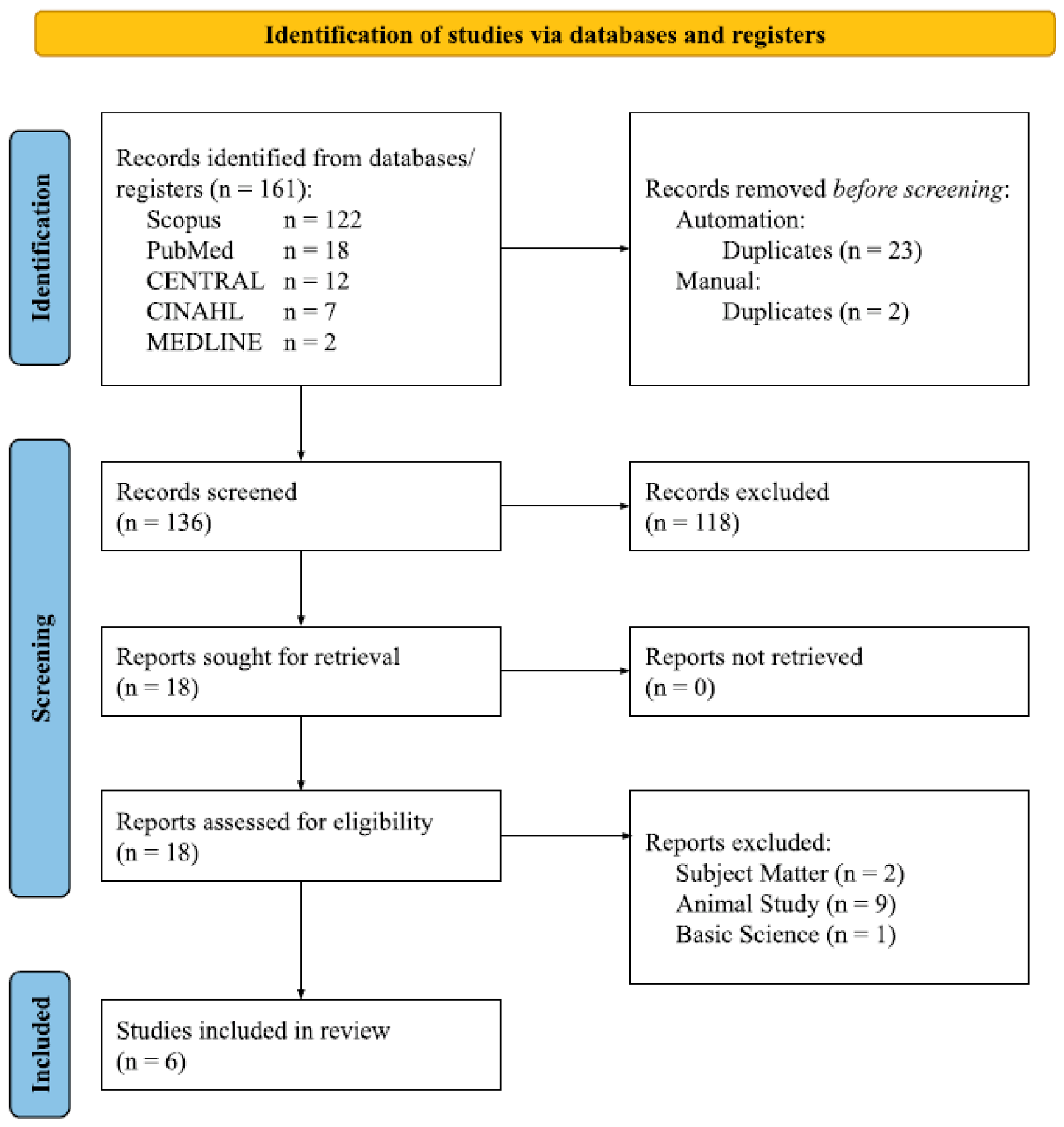
The initial search yielded 136 unique articles, of which six met the inclusion criteria (Figure 1) [25,26,27,28,29,30]. Only the second component of Petersen et al.’s two-part study, which examined burn-associated pain, met criteria for in-depth review [26].
Figure 1.
PRISMA 2020 flow diagram for systematic reviews, retrieved from: Page et al. [21].
3.2. Overview of Studies
Studies were heterogeneous in design, patient population, burn characteristics, and protocol for ibuprofen administration (Table 2). Designs included one double-blind placebo-controlled clinical RCT [27], one retrospective case–control chart review [30], two unblinded clinical RCTs [28,29], and two non-clinical double-blind placebo-controlled experimental RCTs [25,26]. Total sample sizes ranged from 20 to 120 participants. Populations included children (ages 6–15 years) [29] and adults (≥18 years) [25,26,27,28,30]. No study included patients with significant comorbidities, such as chronic kidney disease (CKD), congenital heart failure (CHF), or chronic liver diseases. The two experimental RCTs [25,26] were conducted in healthy adults, of which Petersen et al. [26] included only male volunteers; these participants were subjected to small, first-degree thermal injuries [25,26]. Burn depth across the clinical RCTs and the retrospective review ranged from second- to third-degree [27,28,29,30]. Komarčević et al. [29] and Akgün and Alkin [28] included patients with <10% TBSA burn involvement; Promes et al. [27] and Manasyan et al. [30] included >10% (range 11–54%) and 5–20% TBSA, respectively.
Table 2.
Characteristics of included studies.
The dose and schedule of ibuprofen administration varied widely, including topical, oral (PO), and intravenous (IV) formulations. Ibuprofen safety was captured by transfusion requirements, adverse events, wound healing or time to epithelialization, laboratory values, and vital signs, among other variables [27,28,30]. Analgesic efficacy was assessed using the Visual Analog Scale (VAS), the Verbal Rating Scale (VRS), hyperalgesia mapping, and additional painkiller requirement [25,26,28,29]. Other notable outcomes explored included ibuprofen’s effects on attenuating secondary hyperalgesia [25,26], as well as its anti-pyretic properties [27], though these were not the focus of the present review. Study protocols and key findings are summarized in Table 3.
Table 3.
Protocols of included studies.
3.3. Risk of Bias
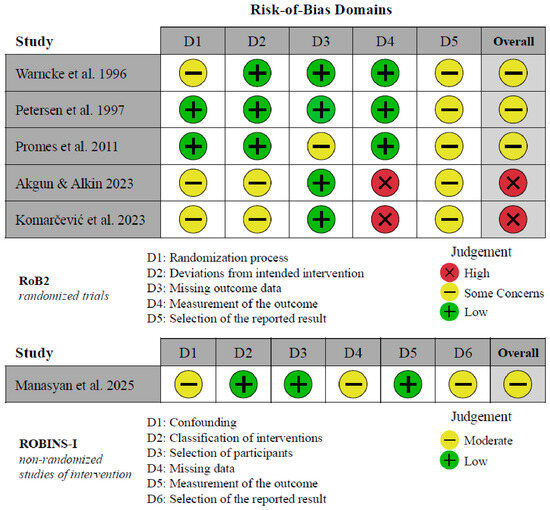
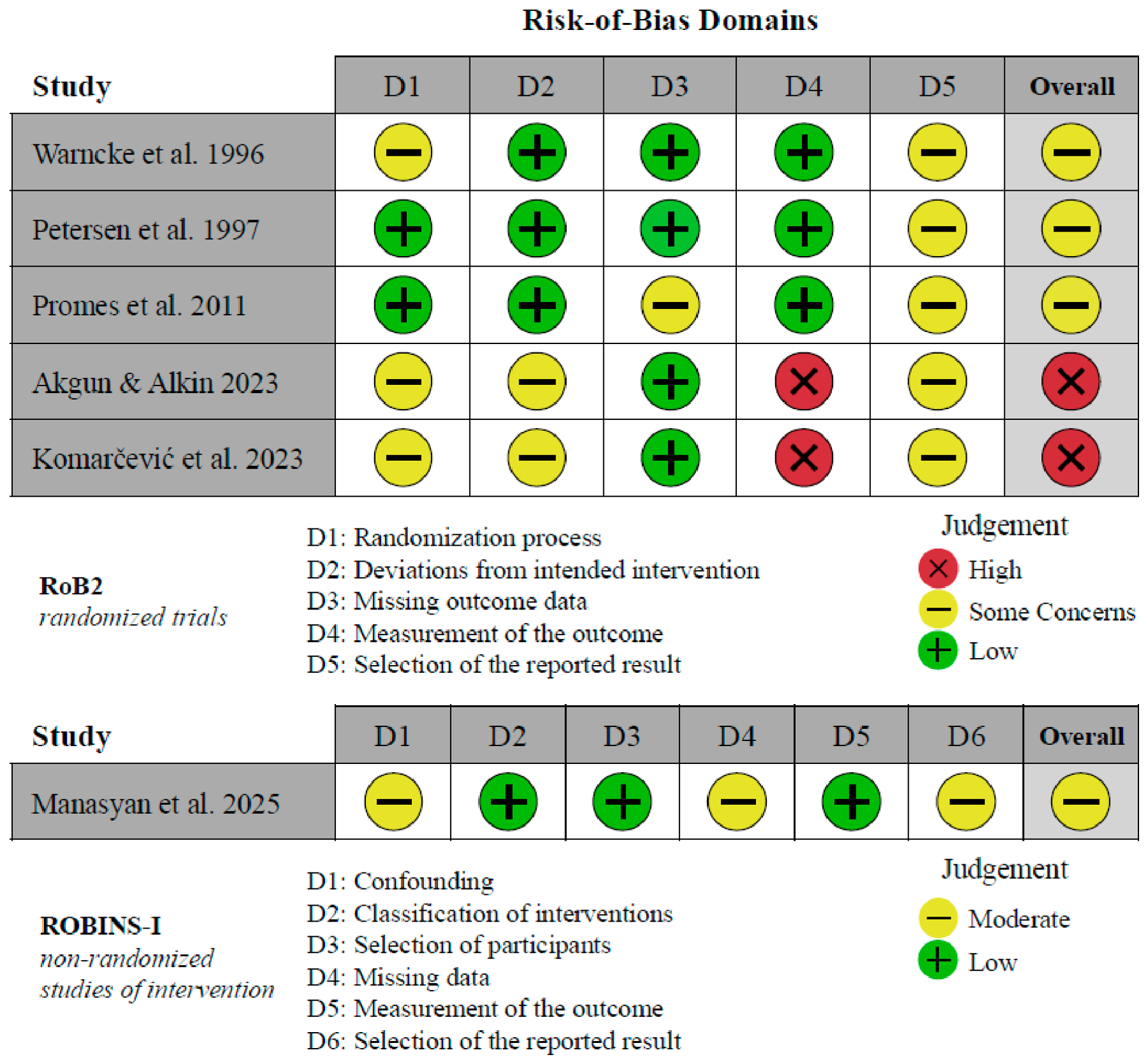
Risk-of-bias assessments are presented in Figure 2. All included studies were judged to have moderate to high overall risk of bias. Two RCTs exhibited high risk, both due to outcome measurement [28,29]. Bias in selection of the reported result, a domain in both RoB 2 and ROBINS-I, was assessed as moderate across all studies, primarily due to a lack of study pre-registration and incomplete reporting of secondary outcomes [22,23].
Figure 2.
Traffic light plot for risk-of-bias [25,26,27,28,29,30] assessed using Cochrane RoB 2 for randomized trials [22] and ROBINS-I for non-randomized studies of interventions [23], and visualized using Robvis, R package tool [24].
3.4. Included Studies
3.4.1. Randomized Trial of Topical and Oral Ibuprofen for Burn-Induced Pain in Healthy Volunteers
Using a double-blind, cross-over RCT design, Warncke et al. [25] compared ibuprofen (5%) cream (3 g applied topically) to placebo cream (n = 10), and 600 mg ibuprofen PO to an identical tablet (n = 20) in a two-part experiment among healthy adult volunteers (ages 21–40 years). For each part, increasing heat was applied to the skin via a computerized thermal stimulator, and participants were instructed to report when the temperature became painful (i.e., heat-pain detection threshold) and when it reached the maximum that they would tolerate (i.e., heat-pain tolerance threshold). The area of hyperalgesia was mapped using mechanical nylon monofilament stimulation at the burn injury site, identifying the border where participants reported a change in sensation (e.g., “‘burning’, ‘tenderness’, or ‘more intense pricking’”) [25].
In part 1, first-degree burns were inflicted on both calves, each side receiving either topical ibuprofen or a masked placebo. Both treatment groups were associated with decreased heat-pain detection and tolerance thresholds (p < 0.0001, both). However, when comparing intervention to placebo, there was no significant difference in threshold reduction nor area of hyperalgesia (p = 0.16, p = 0.34, p = 0.11, respectively). In part 2, a first-degree burn was inflicted on only one calf, and participants received either PO ibuprofen or masked placebo. The injured side mirrors results from part 1: while both ibuprofen and placebo groups were associated with decreased heat-pain thresholds (p < 0.0001, both), these reductions, along with hyperalgesia, did not differ significantly between groups (detection p = 0.12; tolerance p = 0.20; hyperalgesia reported as p < 0.71 and non-significant) [25].
3.4.2. Randomized Trial of Oral Ibuprofen for Burn-Induced Hyperalgesia in Healthy Volunteers
Similarly to Warncke et al. [25], Petersen et al. [26] also conducted a two-part, double-blind, placebo-controlled RCT among healthy adults (19–31 years), but included only male volunteers (n = 20 across the entire cross-over study). Part 2 compared the efficacy of PO ibuprofen 600 mg to a masked placebo tablet on pain, which was captured on an electronic VAS slider bar from least to worst possible pain (0–100) and a maximum input of 125. One hour after receiving the randomized treatment tablet, a thermode was placed on the calf for seven minutes to induce a small, first-degree burn, during which participants continuously rated VAS scores. Eight subjects developed blisters, delaying further examination until complete healing. The area of the resultant hyperalgesia was mapped using both pinprick and stroke stimulation. The VAS score was then recorded continuously during motor brush stimulation of the hyperalgesic area [26].
Petersen et al. [26] showed that the VAS score plateaued after the first 30 s of thermode-induced burning and did not differ between the intervention groups (ibuprofen: mean 77.6 [range 22.4–106.9]; placebo: 75.4 [33.1–103.5]). The area of secondary hyperalgesia also did not show significant differences following pinprick or stroke stimulation, consistent with findings from Warncke et al. [25]. However, ibuprofen was associated with lower VAS scores than placebo during motor brush stimulation of the hyperalgesic area (120 min, p < 0.05; 180 min, p < 0.02; 240 min, p < 0.01). Thus, the authors hypothesized that while ibuprofen reduced pain processing in already hyperalgesic skin, it did not reverse the central mechanism of sensitization that underlies secondary hyperalgesia [26]. This interpretation is supported by ibuprofen’s known inhibitory effect on prostaglandin synthesis, a key inflammatory mediator that amplifies pain signals [26,31,32].
3.4.3. Randomized Trial of Intravenous Ibuprofen for Temperature Control in Hospitalized Burn Patients
Promes et al. [27] conducted a multicenter double-blind, masked placebo RCT of 61 adult patients admitted for second- or third-degree burns covering >10% TBSA (range 11–54.5%). Patients were randomized in a 2:1 ratio to receive either IV ibuprofen 800 mg (n = 40) or IV normal saline (n = 21), given every 6 h for 5 days. The primary endpoint was the difference between actual and target body temperature, reported as the area under the curve (AUC-T) in °C for the first 24 h of treatment. Secondary endpoints were rate of treatment failure (i.e., >103 °F within 2 h of ibuprofen infusion), analgesia (i.e., VAS or VRS), and anti-pyretic effects over the entire dosing period (AUC-T °C). Safety outcomes included protocol deviation, transfusion requirement, adverse events, vital signs, and laboratory values as detailed in Table 3.
Although attrition presents some concern for risk of bias due to missing outcome data, this was partially mitigated by intent-to-treat analysis. Study completion rates were comparable between groups (ibuprofen 75%, placebo 81%), as were reasons for withdrawal; four patients of the ibuprofen group cited adverse events as the reason for non-completion compared to two in the placebo group. One patient in the ibuprofen group was withdrawn due to experiencing breathlessness, tachypnea, and hypotension after erroneously receiving 3200 mg IV ibuprofen per dose. A second patient also received this dose in error but completed the study without significant adverse events. Neither patient exhibited laboratory changes in hematocrit, platelet count, INR, coagulation studies, or creatinine. There was a total of two deaths in the placebo group and three in the ibuprofen group; of these five, two occurred prior to completion of the full 20-dose regimen and were cited as reasons for protocol deviation (ibuprofen n = 1, placebo n = 1). All deaths were deemed unrelated to treatment by the study investigator, attributing them to acute respiratory distress syndrome or sepsis [27].
Overall, IV ibuprofen significantly reduced body temperature within the first 24 h of treatment (p = 0.008) and trended towards sustained anti-pyretic effects, without significant increases in adverse events. Although ibuprofen appeared to be well tolerated, the wide range of TBSA and sample size precluded subgroup analyses. Additionally, while the authors reported that the VAS and VRS scores did not appear to differ between groups, pain scores were underpowered due to frequent sedation and unconsciousness, and no descriptive or quantitative pain data were reported. No other significant differences were identified across secondary outcomes, and there were no differences in adverse events, bleeding risk, or laboratory changes to suggest renal or liver dysfunction [27].
3.4.4. Randomized Trial of Ibuprofen-Impregnated Dressings for Superficial Burns in Adults
Akgün and Alkin [28] conducted an unblinded RCT of 50 adults receiving outpatient care for superficial second-degree burns involving <10% TBSA. Patients were randomized into two groups. The intervention group (n = 25) received ibuprofen-containing foam dressings, which were to be changed every 7 days per manufacturer guidelines. The control group (n = 25) received paraffin gauze dressings, which were changed every other day per standard protocol. Dressings were also changed if they became soiled or detached, or due to patient factors. Outcomes included wound-healing time (time to complete epithelialization), the highest VAS (0–10) score reported across all dressing changes, Vancouver Scar Scale (VSS) scores assessed by clinicians, and whether additional oral analgesics were requested [28].
Patients receiving ibuprofen-impregnated dressings had shorter wound-healing times, averaging 8.84 ± 2.97 days to complete epithelialization, compared with 11.32 ± 4.39 days in the control group (p = 0.010). However, dressings were changed substantially less frequently in the intervention group than in the control group (1.36 ± 0.49 dressing changes vs. 5.68 ± 2.07, respectively; p < 0.001). As noted by the authors, the higher frequency of dressing changes may disrupt epithelialization. Despite the lack of a significant difference in scarring (VSS) between groups, the unblinded design and short follow-up pose additional risks of bias favoring the ibuprofen intervention. Thus, while it is unsurprising that both the VAS score (ibuprofen 5.04 ± 2.44; control 8.64 ± 1.29; p = 0.000) and oral painkiller requirement (ibuprofen 20%; control 80%; p = 0.000) were significantly lower in the ibuprofen group, cautious interpretation is warranted [28].
3.4.5. Randomized Trial of Oral Ibuprofen and Topical Lidocaine for Procedural Pain in Pediatric Burns
In this RCT, Komarčević et al. [29] compared analgesic strategies for procedural pain during dressing changes in pediatric patients (ages 6–15 years) with second-degree burns of the extremities or trunk, which involve <10% TBSA. Children were randomly assigned to four groups: 30 mg/kg PO ibuprofen, topical lidocaine gel, both PO ibuprofen and lidocaine gel, or distraction alone as the control. At each dressing change during the 1-week study period, patients were prompted to report their pain using a VAS (0–100), which was then stratified into mild (< 30), moderate (30–70), and severe (>70).
On the first day of treatment, pain scores were consistently high across groups, with poor separation on receiver operating characteristic (ROC) analysis, as indicated by the area under the curve (AUC 0.656, 95% CI 0.558–0.753). Children in any of the three intervention groups had significantly lower VAS scores than distraction-only controls throughout hospitalization, with increasing separation over time, achieving excellent separation by day 5 (AUC 0.863, 95% CI 0.798–0.927, p = 0.000). Notably, no patient in the control group had a VAS score < 30, indicating mild pain; in contrast, the proportion of patients with mild pain increased over time across all intervention groups. There were no differences in VAS score by age or gender. No increase in adverse events was reported. Interpretation of these studies is limited by several potential sources of bias. The oral versus topical formulations likely prevented blinding. Additionally, while the VAS has been validated in pediatric populations, stratifying pain scores into discrete bins (mild, moderate, severe) can limit granular interpretation and may obscure smaller, meaningful differences [29].
3.4.6. Retrospective Case-Control Study of Perioperative Ibuprofen Safety in Adult Burn Skin Grafting
Manasyan et al. [30] conducted a retrospective case–control review of 53 adult patients who underwent skin grafting for second- and third-degree burns covering 5–20% TBSA to assess the risk of bleeding and the overall safety of perioperative ibuprofen use. Patients who received scheduled PO ibuprofen 600 mg every 6 h, with at least one dose within 48 h of surgery, were compared to those who did not receive ibuprofen or any other NSAIDs. This non-NSAID group primarily received acetaminophen and opioid analgesia. However, specific regimens (i.e., medication type, dose, frequency) were not standardized or systematically reported.
Safety outcomes included transfusion requirement, hematoma, graft failure, other complications, and length of stay. The operative time did not differ significantly between the ibuprofen and control groups (167.0 ± 95.9 min vs. 148.1 ± 59.3 min, respectively; p = 0.405). Hematoma occurred in one patient in each group (p = 0.498), and transfusion requirements were also comparable (4.6 ± 3.1 pRBC vs. 3.2 ± 2.8 pRBC; p = 0.207). Overall, ibuprofen use was not associated with higher transfusion needs, bleeding complications, graft failure, or length of stay. No hypersensitivity or gastrointestinal bleeding events was reported. Despite limitations inherent to a retrospective design and the lack of standardized non-NSAID analgesic protocols, these findings suggest that short-term perioperative ibuprofen does not significantly increase postoperative complications, including bleeding events, in similar adult burn populations [30].
4. Discussion
Across experimental and clinical studies, evidence regarding the safety and efficacy of ibuprofen in burn populations is limited and heterogeneous. Importantly, however, no study reported an increased rate of adverse events with any form of ibuprofen. Experimental studies in healthy adults suggest that while systemic and topical ibuprofen have minimal impact on acute pain from first-degree burns, observed effects on secondary hyperalgesia may reflect insufficiently characterized analgesic properties warranting further investigation [25,26]. Clinical studies demonstrated statistical promise; ibuprofen-containing dressings reduced pain and oral analgesic use in adults with superficial burns [28], and oral ibuprofen lowered procedural pain during dressing changes in children, particularly when used with topical lidocaine [29]. IV ibuprofen was well tolerated in adult patients with second- and third-degree burns, though pain outcomes were underpowered due to frequent sedation [27]. Notably, short-term, perioperative PO ibuprofen was not associated with increased bleeding risks or other postoperative complications in skin graft patients, an evidence gap emphasized by the ABA [30].
All included studies carried moderate or high risk of bias, and most excluded patients with significant comorbidities (e.g., CKD, CHF, chronic liver disease) or large TBSA burns. Analgesic outcomes were also not directly comparable across studies due to differences in instruments, time points, and clinical contexts, limiting definitive conclusions in broader burn populations. Nonetheless, the pattern of findings urges agent-specific re-evaluation of historical safety concerns and more granular exploration of ibuprofen’s analgesic mechanisms within the clinical and physiological context of burn injury.
Burn pain arises from complex peripheral and central mechanisms that lead to heightened local sensitivity to pain [31,32,33]. Upon stimulation of peripheral nociceptors, A-delta and C fibers propagate signals to the central nervous system, where complex neuroplasticity pathways contribute to neuronal excitability and hypersensitivity [31,32,33]. Peripheral inflammatory mediators, including prostaglandins, bradykinin, and cytokines, are released from damaged tissue, reducing nociceptor activation thresholds and amplifying pain perception at the site of injury (i.e., primary hyperalgesia) [31,33]. Central mediators, such as prostaglandin E2 (PGE2), glutamate, and substance P, modulate neurosynaptic plasticity, resulting in hypersensitivity of surrounding, uninjured tissue (i.e., secondary hyperalgesia) [31,33]. Upregulated by peripheral inflammation, cyclooxygenase-2 (COX-2) stimulates PGE2 production, which plays a prominent role in central sensitization [31,33]. Recognizing these pathways allows targeted, mechanism-specific MMPC to provide appropriate burn analgesia while minimizing medication tolerance and preventing progression of sensitization [32].
Ibuprofen reversibly inhibits COX-1 and COX-2, reducing prostaglandin synthesis in the peripheral and central sites [32]. By blocking PGE2 production, ibuprofen reduces sensitization signals [31,32]. Furthermore, the glucuronide metabolite of ibuprofen may contribute additional antalgic effects by inhibiting Transient Receptor Potential Ankyrin 1 (TRPA1) channels, which modulate nociceptor activity and inflammatory mediator release [34]. In the included experimental studies [25,26], ibuprofen’s effect on secondary hyperalgesia is consistent with a dose-dependent blockade of spinal hyperexcitability through central COX-2 inhibition, especially relevant in dressing changes where hypersensitive skin is repeatedly stimulated [26,28,29,32,35]. Beyond thermal pain, ibuprofen has also demonstrated potential benefits of maintaining tissue perfusion, reducing tissue edema, anti-pyretic action, and opioid-sparing effects [6,27,36].
Despite guideline endorsement of multimodal strategies, ibuprofen is frequently omitted from burn analgesic protocols based on concerns about bleeding, renal dysfunction, and gastrointestinal injury extrapolated from broader NSAID class data and critical care recommendations [1,15]. However, the available burn-specific data do not support clinical avoidance on the basis of these potential harms—a finding consistent with the broader surgical and acute care literature challenging routine ibuprofen exclusion [7,8,10]. The consistency of safety signals across the diverse study designs, routes, and clinical settings included in this review warrants further investigation. While studies increasingly demonstrate the benefit of multimodal approaches, few incorporate the context- and agent-specific evaluation necessary to inform standardized best practices, reflecting a broader limitation of MMPC research. These limitations are compounded by heterogeneous injury presentations, inconsistent control of confounders such as concomitant acetaminophen or opioids, and the overall paucity of the burn-specific analgesic literature.
Future research should prioritize adequately powered clinical trials that directly compare ibuprofen-containing regimens with standard opioid-based protocols, stratified by burn size, depth, and comorbidity profile. Such trials should incorporate both safety endpoints and standardized, patient-centered pain and functional outcomes. Targeted investigation in high-risk and severely injured populations is particularly needed to define the optimal route, dose, frequency, and timing of ibuprofen and to clarify its role in antipyresis, wound healing, and opioid-sparing burn pain management.
5. Conclusions
This review synthesizes the existing literature on ibuprofen use in acute burn care. The included studies were insufficient to draw definitive conclusions regarding analgesic efficacy, limited by heterogeneity, substantial bias, and exclusion of high-risk populations. Nonetheless, no study reported an increase in adverse events, including bleeding risk or impaired wound healing, associated with ibuprofen use across diverse formulations and routes of administration. While these findings do not establish ibuprofen as safe or effective across burn care at large, this review underscores the gap in the agent- and context-specific literature, despite growing support for multimodal analgesia. Future adequately powered trials in clinically representative burn populations are needed to define ibuprofen’s role in opioid-sparing pain management.
Author Contributions
Conceptualization, I.Y.B.; methodology and investigation, I.Y.B. and A.L.H.; investigation, I.Y.B. and A.L.H.; writing—original draft preparation, I.Y.B., A.L.H. and B.A.C.; writing—review and editing, I.Y.B., B.A.C., C.R.D. and S.A.S.; supervision, C.R.D. and S.A.S. All authors have read and agreed to the published version of the manuscript.
Funding
This research received no external funding.
Institutional Review Board Statement
Not applicable.
Informed Consent Statement
Not applicable.
Data Availability Statement
The original contributions presented in this study are included in the article. Further inquiries can be directed to the corresponding author.
Conflicts of Interest
The authors declare no conflicts of interest.
Abbreviations
The following abbreviations are used in this manuscript:
| NSAID | Non-Steroidal Anti-Inflammatory Drug |
| ABA | American Burn Association |
| ISBI | International Society for Burn Injuries |
| COX | Cyclooxygenase |
| MMPC | Multimodal Pain Control |
| PRISMA-ScR | Preferred Reporting Items for Systematic Reviews and Meta-Analyses Extension for Scoping Reviews |
| MeSH | Medical Subject Heading |
| TBSA | Total Body Surface Area |
| RCT | Randomized Controlled Trial |
| CKD | Chronic Kidney Disease |
| CHF | Congestive Heart Failure |
| PO | Oral (per os) |
| IV | Intravenous |
| VAS | Visual Analog Scale |
| VRS | Verbal Rating Scale |
| VSS | Vancouver Scar Scale |
| AUC-T | Area Under the Curve in Temperature |
| ROC | Receiver Operating Characteristic |
| AUC | Area Under the Curve |
| PGE2 | Prostaglandin E2 |
| TRPA1 | Transient Receptor Potential Ankyrin 1 |
References
- Romanowski, K.S.; Carson, J.; Pape, K.; Bernal, E.; Sharar, S.; Wiechman, S.; Carter, D.; Liu, Y.M.; Nitzschke, S.; Bhalla, P.; et al. American Burn Association Guidelines on the Management of Acute Pain in the Adult Burn Patient: A Review of the Literature, a Compilation of Expert Opinion, and Next Steps. J. Burn Care Res. 2020, 41, 1129–1151. [Google Scholar] [CrossRef] [Scilit]
- ISBI Practice Guidelines Committee; Steering Subcommittee; Advisory Subcommittee. ISBI Practice Guidelines for Burn Care. Burns 2016, 42, 953–1021. [Google Scholar] [CrossRef] [Scilit]
- Ljungqvist, O.; Scott, M.; Fearon, K.C. Enhanced Recovery After Surgery: A Review. JAMA Surg. 2017, 152, 292–298. [Google Scholar] [CrossRef] [Scilit] [PubMed]
- Morgan, M.; Deuis, J.R.; Frøsig-Jørgensen, M.; Lewis, R.J.; Cabot, P.J.; Gray, P.D.; Vetter, I. Burn Pain: A Systematic and Critical Review of Epidemiology, Pathophysiology, and Treatment. Pain Med. 2018, 19, 708–734. [Google Scholar] [CrossRef] [Scilit]
- Henschke, A.; Lee, R.; Delaney, A. Burns Management in ICU: Quality of the Evidence. Burns 2016, 42, 1173–1182. [Google Scholar] [CrossRef] [Scilit]
- Garelli, A.; Boyd, A.N.; Brown, M.; Rhew, T.; Tieman, M.; Hartman, B.C.; Walroth, T.A. Implementation of a Multimodal Pain Protocol in Adult Burn Patients. Burns 2025, 51, 107515. [Google Scholar] [CrossRef] [Scilit]
- Qureshi, I.; Abdulrashid, K.; Thomas, S.H.; Abdel-Rahman, M.E.; Pathan, S.A.; Harris, T. Comparison of Intravenous Paracetamol (Acetaminophen) to Intravenously or Intramuscularly Administered Non-Steroidal Anti-Inflammatory Drugs (NSAIDs) or Opioids for Patients Presenting with Moderate to Severe Acute Pain Conditions to the ED: Systematic Review and Meta-Analysis. Emerg. Med. J. 2023, 40, 499–508. [Google Scholar] [CrossRef] [Scilit]
- Chang, A.K.; Bijur, P.E.; Esses, D.; Barnaby, D.P.; Baer, J. Effect of a Single Dose of Oral Opioid and Nonopioid Analgesics on Acute Extremity Pain in the Emergency Department: A Randomized Clinical Trial. JAMA 2017, 318, 1661. [Google Scholar] [CrossRef] [Scilit] [PubMed]
- Sheth, K.R.; Bernthal, N.M.; Ho, H.S.; Bergese, S.D.; Apfel, C.C.; Stoicea, N.; Jahr, J.S. Perioperative Bleeding and Non-Steroidal Anti-Inflammatory Drugs: An Evidence-Based Literature Review, and Current Clinical Appraisal. Medicine 2020, 99, e20042. [Google Scholar] [CrossRef] [Scilit]
- Bongiovanni, T.; Lancaster, E.; Ledesma, Y.; Whitaker, E.; Steinman, M.A.; Allen, I.E.; Auerbach, A.; Wick, E. Systematic Review and Meta–Analysis of the Association Between Non–Steroidal Anti–Inflammatory Drugs and Operative Bleeding in the Perioperative Period. J. Am. Coll. Surg. 2021, 232, 765–790e1. [Google Scholar] [CrossRef] [Scilit] [PubMed]
- Kelley, B.P.; Bennett, K.G.; Chung, K.C.; Kozlow, J.H. Ibuprofen May Not Increase Bleeding Risk in Plastic Surgery: A Systematic Review and Meta-Analysis. Plast. Reconstr. Surg. 2016, 137, 1309–1316. [Google Scholar] [CrossRef] [Scilit] [PubMed]
- Kincaid, S.; How, J.; Agrawal, D.K. Multimodal Analgesia in the Perioperative Period of Major Surgeries: An In-Depth Analysis. Anesth. Crit. Care 2025, 7, 68–76. [Google Scholar] [CrossRef] [Scilit]
- Wick, E.C.; Grant, M.C.; Wu, C.L. Postoperative Multimodal Analgesia Pain Management with Nonopioid Analgesics and Techniques: A Review. JAMA Surg. 2017, 152, 691–697. [Google Scholar] [CrossRef] [Scilit] [PubMed]
- Helander, E.M.; Webb, M.P.; Bias, M.; Whang, E.E.; Kaye, A.D.; Urman, R.D. A Comparison of Multimodal Analgesic Approaches in Institutional Enhanced Recovery After Surgery Protocols for Colorectal Surgery: Pharmacological Agents. J. Laparoendosc. Adv. Surg. Tech. 2017, 27, 903–908. [Google Scholar] [CrossRef] [Scilit] [PubMed]
- Devlin, J.W.; Skrobik, Y.; Gélinas, C.; Needham, D.M.; Slooter, A.J.C.; Pandharipande, P.P.; Watson, P.L.; Weinhouse, G.L.; Nunnally, M.E.; Rochwerg, B.; et al. Clinical Practice Guidelines for the Prevention and Management of Pain, Agitation/Sedation, Delirium, Immobility, and Sleep Disruption in Adult Patients in the ICU. Crit. Care Med. 2018, 46, e825–e873. [Google Scholar] [CrossRef] [Scilit]
- Lewis, K.; Balas, M.C.; Stollings, J.L.; McNett, M.; Girard, T.D.; Chanques, G.; Kho, M.E.; Pandharipande, P.P.; Weinhouse, G.L.; Brummel, N.E.; et al. A Focused Update to the Clinical Practice Guidelines for the Prevention and Management of Pain, Anxiety, Agitation/Sedation, Delirium, Immobility, and Sleep Disruption in Adult Patients in the ICU. Crit. Care Med. 2025, 53, e711–e727. [Google Scholar] [CrossRef] [Scilit]
- Ladha, K.S.; Patorno, E.; Huybrechts, K.F.; Liu, J.; Rathmell, J.P.; Bateman, B.T. Variations in the Use of Perioperative Multimodal Analgesic Therapy. Anesthesiology 2016, 124, 837–845. [Google Scholar] [CrossRef] [Scilit]
- Graham, L.A.; Illarmo, S.; Wren, S.M.; Mudumbai, S.C.; Odden, M.C. Optimal Multimodal Analgesia Combinations to Reduce Pain and Opioid Use Following Non-Cardiac Surgery: An Instrumental Variable Analysis. Reg. Anesth. Pain Med. 2025. online ahead of print. [Google Scholar] [CrossRef] [Scilit]
- Harvin, J.A.; Albarado, R.; Truong, V.T.T.; Green, C.; Tyson, J.E.; Pedroza, C.; Wade, C.E.; Kao, L.S.; MAST Study Group. Multi-Modal Analgesic Strategy for Trauma: A Pragmatic Randomized Clinical Trial. J. Am. Coll. Surg. 2021, 232, 241–251.e3. [Google Scholar] [CrossRef] [Scilit]
- Tricco, A.C.; Lillie, E.; Zarin, W.; O’Brien, K.K.; Colquhoun, H.; Levac, D.; Moher, D.; Peters, M.D.J.; Horsley, T.; Weeks, L.; et al. PRISMA Extension for Scoping Reviews (PRISMA-ScR): Checklist and Explanation. Ann. Intern. Med. 2018, 169, 467–473. [Google Scholar] [CrossRef] [Scilit]
- Page, M.J.; McKenzie, J.E.; Bossuyt, P.M.; Boutron, I.; Hoffmann, T.C.; Mulrow, C.D.; Shamseer, L.; Tetzlaff, J.M.; Akl, E.A.; Brennan, S.E.; et al. The PRISMA 2020 Statement: An Updated Guideline for Reporting Systematic Reviews. BMJ 2021, 372, n71. [Google Scholar] [CrossRef] [Scilit]
- Sterne, J.; Savovic, J.; Page, M.; Elbers, R.; Blencowe, N.; Boutron, I.; Cates, C.; Cheng, H.; Corbett, M.; Eldridge, S.; et al. RoB 2: A Revised Tool for Assessing Risk of Bias in Randomised Trials. BMJ 2019, 366, l4898. [Google Scholar] [CrossRef] [Scilit]
- Sterne, J.A.; Hernán, M.A.; Reeves, B.C.; Savović, J.; Berkman, N.D.; Viswanathan, M.; Henry, D.; Altman, D.G.; Ansari, M.T.; Boutron, I.; et al. ROBINS-I: A Tool for Assessing Risk of Bias in Non-Randomised Studies of Interventions. BMJ 2016, 355, i4919. [Google Scholar] [CrossRef] [Scilit]
- McGuinness, L.A.; Higgins, J.P.T. Risk-of-bias VISualization (Robvis): An R Package and Shiny Web App for Visualizing Risk-of-bias Assessments. Res. Synth. Methods 2021, 12, 55–61. [Google Scholar] [CrossRef] [Scilit] [PubMed]
- Warncke, T.; Brennum, J.; Arendt-Nielsen, L.; Branebjerg, P.-E. Effects of Local and Systemic Ibuprofen on Primary and Secondary Hyperalgesia in Man. Curr. Ther. Res. 1996, 57, 937–949. [Google Scholar] [CrossRef] [Scilit]
- Petersen, L.K.; Brennum, J.; Dahl, B.J. Experimental Evaluation of the Analgesic Effect of Ibuprofen on Primary and Secondary Hyperalgesia. Pain 1997, 70, 167–174. [Google Scholar] [CrossRef] [Scilit]
- Promes, J.T.; Safcsak, K.; Pavliv, L.; Voss, B.; Rock, A. A Prospective, Multicenter, Randomized, Double-Blind Trial of IV Ibuprofen for Treatment of Fever and Pain in Burn Patients. J. Burn Care Res. 2011, 32, 79–90. [Google Scholar] [CrossRef] [Scilit] [PubMed]
- Akgun, A.; Alkin, M. Pain Management with Topical Ibuprofen in Partial-Thickness Burn Wounds and Effects on Wound Healing: A Prospective Randomized Clinical Study. Wound Manag. Prev. 2023, 69, 32–48. [Google Scholar] [CrossRef] [Scilit]
- Komarcevic, A.; Jokic, R.; Pajic, M.; Jovanovic, M.; Milenkovic, M. Analgesic Protocol for Procedural Pain Treatment of Second-Degree Burns in Children. Vojnosanit. Pregl. 2023, 80, 115–120. [Google Scholar] [CrossRef] [Scilit]
- Manasyan, A.; Gasho, J.O.; Kim, M.I.; Stanton, E.W.; Johnson, M.B.; Gillenwater, T.J. Ibuprofen Is Not Associated with an Elevated Bleeding Risk or Transfusion Requirement in Skin Grafting for Patients with Burn Injuries. J. Burn Care Res. 2025, 46, 642–645. [Google Scholar] [CrossRef] [Scilit]
- Latremoliere, A.; Woolf, C.J. Central Sensitization: A Generator of Pain Hypersensitivity by Central Neural Plasticity. J. Pain 2009, 10, 895–926. [Google Scholar] [CrossRef] [Scilit]
- Klifto, K.M.; Hultman, C.S. Pain Management in Burn Patients. Clin. Plast. Surg. 2024, 51, 267–301. [Google Scholar] [CrossRef] [Scilit]
- Gallagher, G.; Rae, C.P.; Kinsella, J. Treatment of Pain in Severe Burns. Am. J. Clin. Dermatol. 2000, 1, 329–335. [Google Scholar] [CrossRef] [Scilit] [PubMed]
- De Logu, F.; Li Puma, S.; Landini, L.; Tuccinardi, T.; Poli, G.; Preti, D.; De Siena, G.; Patacchini, R.; Tsagareli, M.G.; Geppetti, P.; et al. The Acyl-Glucuronide Metabolite of Ibuprofen Has Analgesic and Anti-Inflammatory Effects via the TRPA1 Channel. Pharmacol. Res. 2019, 142, 127–139. [Google Scholar] [CrossRef] [Scilit] [PubMed]
- Hodkinson, D.J.; Khawaja, N.; O’Daly, O.; Thacker, M.A.; Zelaya, F.O.; Wooldridge, C.L.; Renton, T.F.; Williams, S.C.R.; Howard, M.A. Cerebral Analgesic Response to Nonsteroidal Anti-Inflammatory Drug Ibuprofen. Pain 2015, 156, 1301–1310. [Google Scholar] [CrossRef] [Scilit] [PubMed]
- Barrow, R.E.; Ramirez, R.J.; Zhang, X.-J. Ibuprofen Modulates Tissue Perfusion in Partial-Thickness Burns. Burns 2000, 26, 341–346. [Google Scholar] [CrossRef] [Scilit]

Disclaimer/Publisher’s Note: The statements, opinions and data contained in all publications are solely those of the individual author(s) and contributor(s) and not of MDPI and/or the editor(s). MDPI and/or the editor(s) disclaim responsibility for any injury to people or property resulting from any ideas, methods, instructions or products referred to in the content. |
© 2026 by the authors. Licensee MDPI, Basel, Switzerland. This article is an open access article distributed under the terms and conditions of the Creative Commons Attribution (CC BY) license.