


Abstract
This study explores how internal and external brand management synergistically construct employee brand equity in contemporary organizations. Drawing on social identity theory, brand equity theory, and relationship quality theory, we conducted a systematic literature review of research published from 2019 to 2024 to analyze the cognitive, emotional, and behavioral mechanisms underlying this process. Our findings reveal that internal brand management activities (brand-oriented HR practices, brand communication) and external initiatives (CSR, marketing strategies) jointly shape employees’ brand cognition, while brand relationship quality mediates emotional connections through brand commitment, trust, and advocacy. These elements ultimately manifest in behavioral expressions including brand citizenship behavior, loyalty, retention intention, and positive word-of-mouth. This research provides organizations with an integrated framework for strategically aligning internal and external brand activities to enhance employee brand support, thereby strengthening competitive advantage through consistent brand delivery across all stakeholder touchpoints.
1. Introduction
In an increasingly competitive global market environment, corporate brands have become crucial strategic resources for organizations to gain sustainable competitive advantages [1]. Brands represent the cumulative value of an organization’s tangible and intangible equity, embodying its identity, vision, and promises to stakeholders [2]. The significance of brand management has grown exponentially as markets become more saturated and consumers increasingly make purchase decisions based on brand perceptions rather than product attributes alone [3]. With the deepening development of service economy, the interaction interface between enterprises and customers increasingly relies on employees’ brand presentation behaviors [4]. As important transmitters of brand value, employees’ brand cognition, emotional attachment, and behavioral tendencies directly influence the fulfillment of brand promises and the shaping of brand image [5].
The growing recognition of employees as brand stakeholders has led to increased scholarly attention on employee brand equity—the added value that employees contribute to a brand through their understanding, emotions, and behaviors [6]. Unlike traditional brand equity which focuses on customer perspectives, employee brand equity emphasizes the internal dimension of brand value creation [7]. Recent studies have demonstrated that employees function not merely as passive recipients of brand messages but as active co-creators of brand meaning who significantly influence both internal organizational culture and external brand perceptions [8]. This dual role positions employees at a critical juncture in the brand value chain, making the construction of employee brand equity a strategic imperative for organizations seeking to maintain brand consistency [9].
Research on employee brand equity has primarily developed along two parallel streams: internal brand management and external brand management [10]. Internal brand management includes brand-oriented human resource practices, internal communication, training, and leadership that help employees understand and enact brand values [11,12]. Through these systematic efforts, organizations aim to equip employees with the knowledge, skills, and motivation necessary to deliver on brand promises [13]. Concurrently, external brand management initiatives such as corporate social responsibility practices and marketing strategies establish the brand’s positioning in the marketplace and create expectations among external stakeholders [14]. Although these activities target different audiences, employees are exposed to both and interpret them together.
However, much of the literature still treats these two streams separately. This separation limits understanding of contemporary brand environments, where internal and external messages increasingly overlap [15]. Employees may receive internal training about brand values while simultaneously observing how the brand is presented in advertising, social media, public relations, or CSR campaigns [16]. When these signals are consistent, they strengthen employees’ brand understanding; when they conflict, they may weaken trust and identification [17].
Brand relationship quality provides a useful bridge between brand management activities and employee brand equity [18]. Through dimensions such as brand commitment, brand trust, and brand advocacy, brand relationship quality reflects the strength of emotional connection between employees and the brand [19]. High-quality brand relationships not only enhance employees’ emotional attachment to the brand but also promote positive brand citizenship behavior and brand loyalty [20]. However, the mechanism of how internal and external brand management influence employee brand equity through brand relationship quality still remains underexplored, particularly in terms of their interactive effects [21]. Recent evidence further suggests that internal brand knowledge and employee brand participation can strengthen employee-based brand equity and brand citizenship behavior [22,23].
Social identity theory suggests that employee brand equity can be understood as a process that often moves from cognition to emotion and then to behavior [24], although feedback loops and alternative pathways may also occur. Brand equity theory emphasizes that the formation of brand equity requires the synergy of multiple dimensions [25]. In the field of employee brand equity, these dimensions include brand citizenship behavior, employee satisfaction, retention intention, and positive word-of-mouth [26]. Research indicates that internal brand management can promote positive brand behavior by enhancing employees’ brand knowledge and skills [27]. Meanwhile, external brand management activities can enhance employees’ brand pride and identification by strengthening brand reputation and image [28]. Relationship quality theory provides a theoretical foundation for understanding the role of brand relationship quality in building employee brand equity [29]. Research has found that high-quality brand relationships can enhance employees’ emotional investment and behavioral support for the brand [30].
Internal and external brand management are therefore best understood as mutually reinforcing rather than independent [31]. Studies show that when internal and external brand management activities are coordinated, they produce stronger brand-building effects than either approach in isolation [32]. For instance, corporate social responsibility practices can not only enhance external brand image but also strengthen employees’ brand pride and identification. Similarly, effective internal brand communication improves employees’ brand understanding while simultaneously promoting the dissemination of external brand image [33]. However, the synergistic mechanism of internal and external brand management and their impact pathways on employee brand equity still require in-depth investigation through a comprehensive theoretical lens [34].
Based on the existing theoretical research, scholars have recognized that there are multiple mechanisms at work in building employee brand equity [35]. First, the cognitive mechanism explains how internal brand management continuously strengthens employees’ understanding and identification of brand value, while external brand management enhances employees’ perception and cognition of brand image [36]. Second, the emotional mechanism explains how brand relationship quality plays a key mediating role, gradually cultivating emotional bonds between employees and the brand [37]. Finally, the behavioral mechanism explains how employee brand equity is ultimately manifested through specific brand-supporting behaviors that reflect employees’ level of brand commitment and directly impact brand value realization [38]. Notably, these mechanisms are analytically distinct but mutually connected.
This study addresses the research gap by reviewing international journal articles published from 2019 to 2024 and by constructing an integrative framework that connects internal and external brand management, brand relationship quality, and employee brand equity, guided by social identity theory, brand equity theory, and relationship quality theory. This research focuses on three core questions: (1) How do internal and external brand management influence the construction of employee brand equity through cognitive mechanisms? (2) How does brand relationship quality support the emotional formation of employee brand equity? (3) How is the behavioral performance mechanism of employee brand equity formed? This study provides both theoretical guidance for researchers exploring the multidimensional nature of employee brand equity and practical implications for organizations seeking to leverage the synergistic potential of integrated brand management approaches.
2. Theoretical Framework and Research Methods
2.1. Theoretical Framework
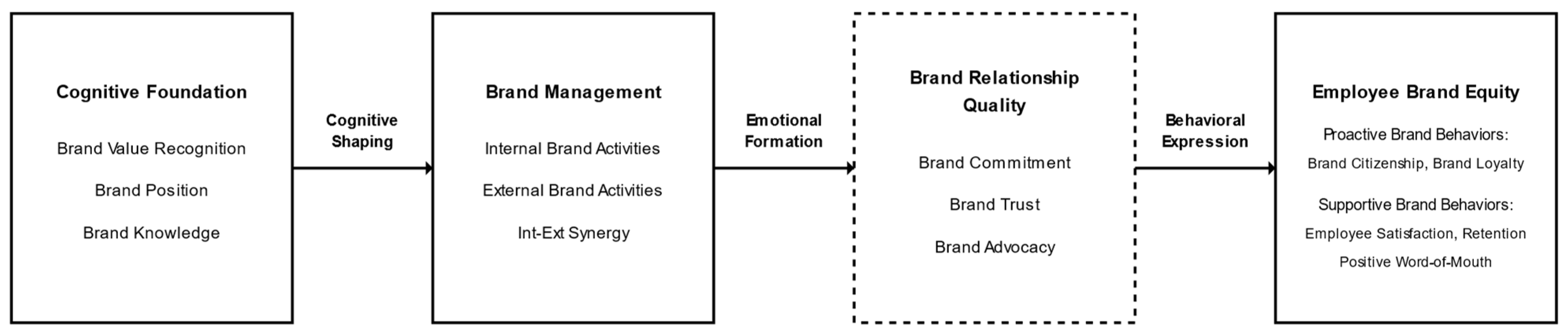
This study integrates social identity theory, brand equity theory, and relationship quality theory to elucidate the intrinsic mechanism of employee brand equity construction. Social identity theory explains that the formation of individual identification begins with cognitive recognition of organizational identity, proceeds through the establishment of emotional connections, and ultimately manifests as concrete behavioral support [13]. In the context of employee brand equity construction, this theory reveals three key stages: First, through internal brand management activities (such as brand-oriented human resource management, internal brand communication, transformational leadership) and external brand management activities (such as corporate social responsibility, marketing strategies), employees form basic cognition of brand value and positioning [2]; second, this cognition gradually transforms into deep emotional identification through the mediating effect of brand relationship quality (brand commitment, brand trust, brand advocacy) [24]; and finally, the dual identification of cognition and emotion drives employees to demonstrate positive brand support behaviors [5]. This sequence helps explain why brand management must address employees’ knowledge, feelings, and behavior rather than focusing only on communication.
Brand equity theory explains the multidimensional nature of employee brand equity. This theory not only clarifies that brand equity construction requires the synergy of multiple dimensions but more importantly reveals the intrinsic connections among these dimensions [25]. First, the cognitive dimension is the foundation of brand equity construction, encompassing employees’ deep understanding of brand value propositions, brand positioning, and brand promises, which derives from the systematic effects of internal and external brand management activities; Second, the emotional dimension is the core of brand equity, manifested as employees’ emotional attachment and identification with the brand, formed through the establishment and maintenance of brand relationship quality [16]; Third, the behavioral dimension is the external manifestation of brand equity, including proactive brand behaviors (such as brand citizenship behavior, brand loyalty) and supportive brand behaviors (such as employee satisfaction, retention intention, positive word-of-mouth), which are natural extensions of cognitive understanding and emotional identification. Specifically, deepened cognition promotes emotional investment, emotional identification drives behavioral performance, while positive behaviors in turn reinforce cognitive understanding and emotional connection [22].
Relationship quality theory explains the mediating role of employees’ relationship with the brand. This theory explicates that the formation of high-quality relationships needs to go through three key stages: commitment establishment, trust cultivation, and advocacy stimulation [29]. Brand commitment reflects employees’ willingness to maintain a long-term relationship with the brand, forming the emotional foundation of relationship quality; brand trust reflects confidence in the brand’s reliability and integrity, constituting the cognitive core of relationship quality; and brand advocacy reflects employees’ readiness to speak positively about the brand, representing the behavioral manifestation of relationship quality [19]. Together, these elements connect brand management activities with employee brand equity by translating cognitive understanding into emotional connection and behavioral support [12].
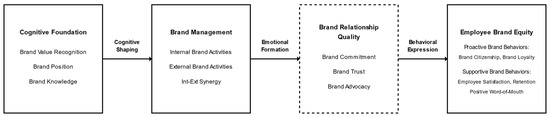
The theoretical framework of the article is shown in Figure 1.
Figure 1.
Theoretical Framework.
2.2. Research Methods
This study adopts the Systematic Literature Review (SLR) method to systematically organize and analyze relevant literature. The SLR method ensures the systematicity and reliability of research results through rigorous literature retrieval, screening, and analysis procedures. The selection of Web of Science (WOS) and Scopus as literature sources is primarily based on the following considerations: First, these two databases include numerous high-quality management journals with broad coverage and strong representativeness; Second, they provide comprehensive literature retrieval and analysis tools, facilitating systematic literature analysis; Finally, the complementarity of the two databases helps enhance the completeness of literature coverage. In terms of retrieval strategy, carefully designed search strings were used to retrieve literature from both WOS and Scopus databases. The search focused on terms related to internal branding, internal brand management, internal marketing, external branding, external brand management. This strategy helped capture studies relevant to both the internal and external drivers of employee brand equity.
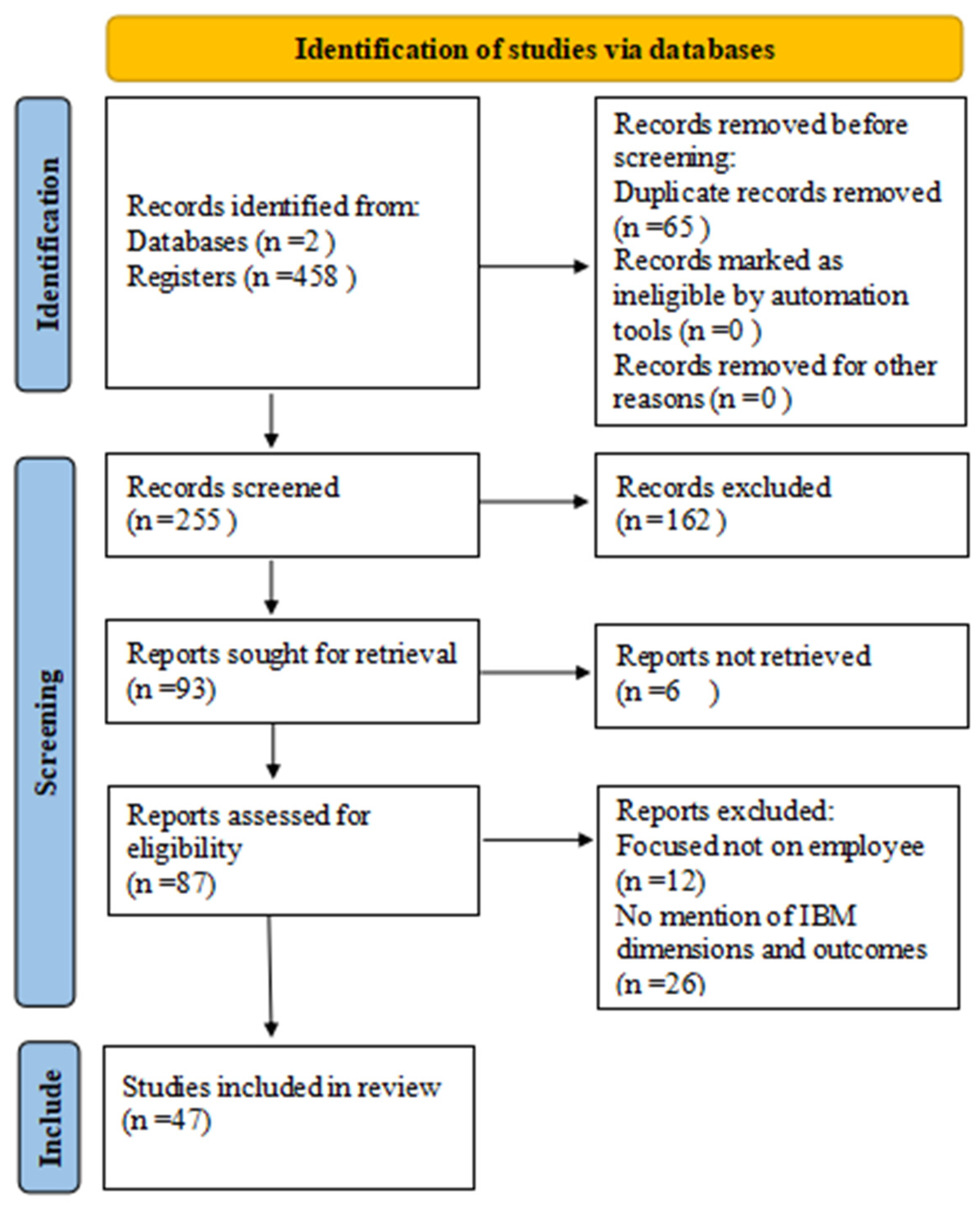
In the literature screening and quality assessment phase, strict inclusion/exclusion criteria and quality assessment procedures were adopted. The initial search identified 320 records. After removing 65 duplicates, 255 records were screened. In the screening phase, 162 articles that did not meet the requirements were excluded based on preset inclusion/exclusion criteria, identifying 93 articles for the retrieval phase. Among these, 6 articles were excluded due to unavailability of full texts, leaving 87 articles for eligibility assessment. During the eligibility assessment phase, the research team carefully evaluated the research focus and content of each article, excluding 11 articles that did not focus on the employee perspective and 26 articles that did not address internal brand management dimensions and outcomes. Finally, 47 high-quality articles were included in the scope of this systematic review. The final review included 47 articles. This process ensured that the synthesis was based on literature directly relevant to the article’s framework.
Data were extracted according to author, year, context, brand management focus, theoretical lens, employee-related outcomes, and key findings. The included studies were then coded into three analytical themes: cognitive shaping, emotional formation, and behavioral expression. These themes were derived deductively from the theoretical framework and refined inductively during article reading.
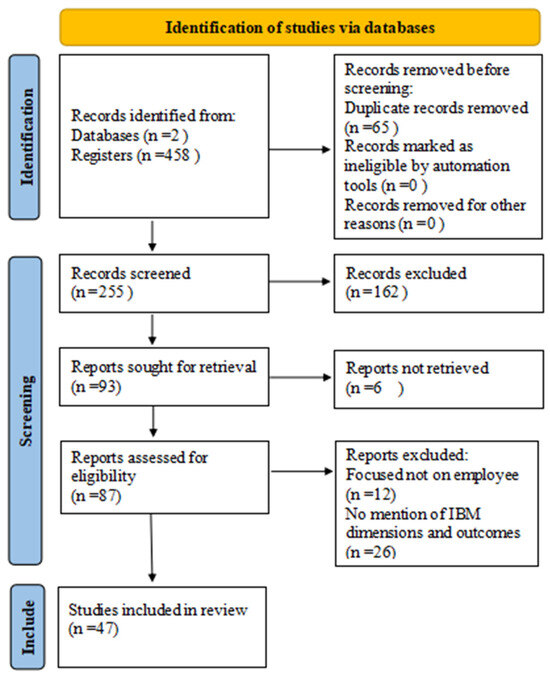
This systematic review was reported following the PRISMA 2020 guidelines, and the PRISMA checklist and flow diagram (Figure 2) are provided as Supplementary Materials.
Figure 2.
The detailed screening process of the study.
3. Results: Cognitive Shaping Mechanism of Enterprise Brand Management
The following results are organized according to the three synthesis themes derived from the coding process.
3.1. The Cognitive Shaping Role of Internal Brand Management
Internal brand management activities profoundly influence employees’ brand understanding and identification through systematic cognitive shaping mechanisms. From the perspective of brand-oriented human resource management practices, the management system constructed through employee selection, development, utilization, and retention establishes a foundational framework for employees’ brand cognition. During talent selection, organizations’ emphasis on brand value alignment facilitates the identification of employees with brand cognitive potential [21]. In talent development, organizations foster deep understanding of brand essence, value propositions, and brand promises through systematic brand training and education activities, thereby forming accurate brand cognition. This cognitive formation process often accompanies organizational socialization, where employees gradually internalize brand knowledge and construct deep brand understanding through daily work practices [27].
Internal brand communication further strengthens cognition by combining formal and informal channels. Research indicates that brand information conveyed through formal channels such as internal publications, brand manuals, and training materials demonstrates complementary effects with brand cognition formed through informal channels like supervisor-subordinate communication and peer interactions. This multi-level brand communication not only enhances the depth of employees’ brand cognition but also improves cognitive accuracy and consistency [36]. Meanwhile, transformational leaders also support this process by explaining the brand vision, modelling brand-aligned behavior, and linking individual roles to broader brand goals, thereby promoting the formation of comprehensive brand cognitive frameworks [39].
Organizational support and employee well-being also influence brand cognition. When employees perceive organizational support and care, they are more likely to develop positive cognitive evaluations of the brand and promote employees’ active learning and understanding of brand knowledge, strengthening identification with brand values [40]. Training and development, as core elements of internal brand management, continuously deepen employees’ brand cognition through systematic knowledge transfer and capability enhancement. Research findings indicate that continuous brand training significantly improves employees’ brand knowledge levels and cognitive accuracy, subsequently driving the formation of brand identification [41]. In this process, the systematic nature and synergy of internal brand management activities prove particularly important, where complementary effects between different management practices generate stronger cognitive shaping outcomes.
3.2. External Brand Management’s Cognitive Shaping Effect
External brand management initiatives significantly shape employees’ brand cognition through organizational brand positioning and market presence. Corporate social responsibility practices serve as a vital channel through which employees form cognitive understanding of brand values and social commitments. When organizations engage in socially responsible activities, employees develop deeper insights into brand essence and positioning, which enhances their cognitive connection with the brand identity [20]. The external marketing strategies and brand communication efforts also influence how employees perceive and understand the brand. Through market positioning and promotional activities, organizations create a brand image that employees internalize as part of their cognitive framework. Vanka’s case study of Simpo Furniture Company also shows that external branding can strengthen brand visibility and attractiveness, while providing a platform through which internal branding can be communicated and supported [42]. This process of cognitive internalization is particularly evident when employees observe the alignment between external brand promises and internal brand delivery [43].
Market performance and competitive positioning represent another dimension through which external brand management shapes employee cognition. The brand’s market success and competitive standing influence employees’ cognitive evaluation of brand strength and value proposition. Research indicates that positive market feedback and brand reputation contribute to employees’ cognitive understanding of brand differentiation and competitive advantage [31]. Additionally, stakeholder relationships and customer interactions provide employees with experiential learning opportunities that enhance their brand cognition. Through direct engagement with external stakeholders, employees develop practical understanding of brand values and promises, which strengthens their cognitive connection to the brand [28].
3.3. Interactive Relationship Between Internal and External Brand Management
The interaction between internal and external brand management creates a dynamic system that shapes employee brand cognition through multiple pathways. When internal brand messages are aligned with external brand communication, they generate cognitive synergy and strengthen employees’ understanding of brand values and positioning. Research demonstrates that when internal brand training aligns with external brand promises, employees develop more coherent and integrated brand cognition [44]. This view is also supported by Vanka’s case study of Simpo Furniture Company, which shows that internal and external branding should work closely together because external branding provides a platform for internal branding, while internal branding supports the execution of external branding [42]. Such integration is especially important in service contexts, where employees need to connect internal brand expectations with external brand delivery.
This alignment also creates a reciprocal feedback loop between internal brand building and external brand performance. External brand success reinforces internal brand initiatives, while effective internal brand management enhances external brand delivery. Studies show that this interactive dynamic strengthens employees’ cognitive connection to the brand through multiple touchpoints [32]. As internal and external brand practices converge, they form a comprehensive cognitive framework that guides employee brand understanding. This enables organizations to leverage both internal capabilities and external market insights to enhance employee brand cognition [26]. Consistent with this argument, Vanka (2019) found that the combination of internal and external branding helps strengthen brand credibility, attractiveness, and value, indicating that the two forms of branding should not operate separately [42]. Overall, this interactive relationship appears across organizational contexts, as internal brand training and development align with external brand positioning to create consistent cognitive schemas among employees.
4. Brand Relationship Quality’s Emotional Formation Mechanism
4.1. Emotional Attachment of Brand Commitment
Brand commitment emerges as a fundamental emotional bond between employees and organizational brands through deep psychological connections. The formation of brand commitment involves complex emotional processes where employees develop strong affective ties to the brand’s values and identity. Emotional attachment through brand commitment develops when employees internalize brand values and integrate them into their professional identity [30]. The psychological bonding process is strengthened through consistent brand experiences and meaningful brand interactions. when employees perceive alignment between their personal values and brand values, they develop stronger emotional commitment to the brand [45]. Brand commitment’s emotional dimension manifests through employees’ willingness to maintain long-term relationships with the brand and their emotional investment in brand success. This creates lasting bonds that influence employees’ brand-supportive behaviors and attitudes.
4.2. Emotional Stimulation of Brand Advocacy
Brand advocacy represents an active emotional expression where employees become passionate brand ambassadors through their voluntary promotion of brand values. The emotional stimulation underlying brand advocacy emerges from employees’ internalized brand enthusiasm and their desire to share positive brand experiences. Emotionally engaged employees naturally transition into brand advocates when they feel genuine pride and connection with the brand [33]. The advocacy behavior stems from deep emotional resonance with brand values and manifests through spontaneous brand promotion and defense. For example, brand advocacy’s emotional component is particularly powerful when employees experience personal fulfillment through their brand representation role [46]. This emotional dimension of brand advocacy creates authentic brand communications that resonate with both internal and external stakeholders.
4.3. Emotional Identification Through Brand Trust
Brand trust develops through emotional identification processes where employees form secure and confident relationships with the brand based on consistent positive experiences. The emotional foundation of brand trust emerges from repeated positive interactions that build psychological safety and confidence in the brand’s integrity. Emotional identification through brand trust strengthens when organizations consistently deliver on their brand promises and maintain transparent brand communications [47]. The trust-building process involves emotional evaluation of brand reliability and credibility, leading to deeper emotional connections. Strong brand trust facilitates emotional openness and vulnerability, enabling employees to fully embrace their role as brand representatives [48]. This emotional aspect of brand trust creates a stable foundation for long-term brand relationships and sustained brand support behaviors.
5. Behavioral Expression Mechanism of Employee Brand Equity
5.1. Proactive Brand Behaviors
The examination of brand citizenship behavior and brand loyalty reveals complex patterns in employees’ proactive engagement with organizational brands. Through systematic analysis of employee–brand interactions, research has identified distinctive behavioral manifestations that characterize proactive brand support. When individuals develop strong brand identification, they tend to exhibit behaviors that transcend formal job requirements [38]. This behavioral pattern emerges through empirical observations where employees independently initiate brand-supportive actions, suggesting an intrinsic motivation to contribute to brand success. Investigation of brand citizenship phenomena reveals multiple dimensions of voluntary participation, including knowledge sharing, brand promotion, and innovation initiatives.
Brand loyalty among employees is expressed through stable and proactive support for the brand. Employees with sustained brand commitment are more likely to remain resilient during organizational change and to participate actively in brand development [26]. When employees internalize brand values, their loyalty is reflected in consistent behaviors that support long-term brand goals. For example, loyal employees may voluntarily defend the brand, share positive brand messages, and seek opportunities to improve brand performance [34]. Therefore, employee brand loyalty represents not only an attitude toward the brand but also a pattern of ongoing brand-supportive behavior.
5.2. Supportive Brand Behaviors
Analysis of employee satisfaction, retention intention, and positive word-of-mouth reveals how supportive brand behaviors emerge within organizations. Research on employee satisfaction and brand-related behaviors shows a clear connection between positive brand experiences and behavioral outcomes. Employees who respond positively to brand initiatives tend to demonstrate higher satisfaction, better service delivery, and stronger engagement in brand-related activities [49]. These patterns indicate a structured relationship between employee satisfaction and brand-supportive actions.
Retention intention also reflects supportive brand behavior. Studies on employee retention show that strong organizational identification often leads to specific supportive actions, such as greater participation in brand development initiatives and sustained commitment to brand objectives [37]. Similarly, research on word-of-mouth behavior shows that employees’ brand experiences influence their external communication tendencies. Authentic brand experiences often encourage spontaneous brand advocacy and positive brand recommendations [35]. Overall, findings across different organizational contexts suggest consistent links between employee attitudes and supportive brand behaviors.
6. Research Implications and Future Directions
6.1. Theoretical Contributions
This research contributes to brand management literature in several significant ways. First, we establish an integrated analytical framework that systematically connects internal–external brand management, brand relationship quality, and employee brand equity. Unlike previous research that often examined these elements in isolation [19], our framework reveals their dynamic interconnections throughout the employee brand equity construction process. By demonstrating how internal and external brand management activities interact synergistically rather than independently, we challenge the conventional siloed approach that has dominated the literature [34].
Second, the framework clarifies the progressive transformation from cognitive shaping to emotional formation and then to behavioral expression. This sequence helps explain how employees move from being recipients of brand knowledge to becoming active brand advocates through identifiable psychological and social mechanisms [26]. In this process, brand relationship quality functions as a key mediating mechanism. It helps transform cognitive understanding into emotional attachment and, subsequently, into behavioral support. This finding enriches relationship quality theory by applying it to the brand management context and demonstrating its explanatory value for employee–brand relationships [30].
Third, this research extends social identity theory by explaining how organizational identification operates in brand contexts. The findings suggest that brand identification follows a more complex pathway than general organizational identification because it involves continuous interaction between externally projected brand images and internally communicated brand values [37]. This perspective deepens understanding of how employees integrate brand attributes into their professional identities and self-concepts.
6.2. Management Implications
Our systematic analysis of employee brand equity construction mechanisms offers several practical implications. First, organizations should implement integrated brand management systems that align internal and external brand initiatives rather than manage them separately. Cross-functional committees from human resources, marketing, and operations can regularly assess the consistency between internal communications and external brand promises across all touchpoints [49]. This view is consistent with Vank [42], who argues that internal and external branding should work together to support brand visibility, recognition, and delivery. Such integration requires leadership coordination and brand management teams with both internal and external responsibilities.
Second, organizations should develop multi-dimensional brand training programs based on the three mechanisms identified in this framework. At the cognitive level, training should explain brand values, positioning, and differentiation, as well as their expression in external marketing communications [48]. At the emotional level, experiential learning, brand storytelling, and customer feedback can strengthen employees’ emotional connection with the brand. At the behavioral level, practical training can help employees translate brand understanding into consistent service delivery and brand-aligned decisions.
Third, organizations should pay closer attention to brand relationship quality. Personalized brand engagement programs can address employees’ different relationship development patterns and career stages [33]. These programs may include brand ambassador systems, mentoring between senior employees and newcomers, and regular brand-related dialogue. Digital platforms for sharing brand success stories and employee experiences can further strengthen relationship quality by building communities around brand values [47].
Finally, organizations should establish metrics to monitor employee brand equity across cognitive, emotional, and behavioral dimensions. Brand knowledge assessments can measure cognitive understanding, engagement surveys can assess emotional connection, and behavioral observation can track brand-supportive actions [35]. Integrating these metrics into performance evaluation systems can strengthen accountability and show the strategic importance of brand alignment. Regular brand pulse surveys can also help identify improvement areas and track the effectiveness of brand management initiatives over time.
6.3. Future Research Directions
Future research opportunities emerge in several innovative directions. Scholars could explore the dynamic interplay between digital transformation and employee brand equity construction, particularly how virtual work environments influence brand relationship quality. Investigation into the role of artificial intelligence in personalizing brand training and engagement programs represents another promising avenue. Research could also examine how cross-cultural differences affect the cognitive–emotional–behavioral transformation process in global organizations. Additionally, longitudinal studies tracking the evolution of employee brand equity through organizational change cycles could provide valuable insights into the sustainability of brand relationship quality. Future studies might also investigate the impact of emerging workplace trends, such as the gig economy and hybrid work models, on traditional employee brand equity construction mechanisms.
Supplementary Materials
The following supporting information can be downloaded at: https://www.mdpi.com/article/10.3390/encyclopedia6050113/s1, PRISMA checklist.
Author Contributions
The conceptualization of this paper was jointly proposed by S.B.H. and C.H., and the manuscript was written by C.H. All authors have read and agreed to the published version of the manuscript.
Funding
This research received no external funding.
Institutional Review Board Statement
Not applicable.
Informed Consent Statement
Not applicable.
Data Availability Statement
No new data were created or analyzed in this study. Data sharing is not applicable to this article.
Conflicts of Interest
The authors declare no conflicts of interest.
References
- Knezović, E.; Jamak, L. Internal branding as a strategy of increasing employee retention. J. East Eur. Manag. Stud. 2023, 28, 583–605. [Google Scholar] [CrossRef] [Scilit]
- Barros-Arrieta, D.; García-Cali, E. Internal branding: Conceptualization from a literature review and opportunities for future research. J. Brand Manag. 2021, 28, 133–151. [Google Scholar] [CrossRef] [Scilit]
- Erkmen, E. Managing your brand for employees: Understanding the role of organizational processes in cultivating employee brand equity. Adm. Sci. 2018, 8, 52. [Google Scholar] [CrossRef] [Scilit]
- Tang, A.D.; Chang, M.-L.; Wang, T.-H.; Lai, C.-H. How to create genuine happiness for flight attendants: Effects of internal marketing and work-family interface. J. Air Transp. Manag. 2020, 87, 101860. [Google Scholar] [CrossRef] [Scilit]
- Piehler, R.; King, C.; Burmann, C.; Xiong, L. The importance of employee brand understanding, brand identification, and brand commitment in realizing brand citizenship behaviour. Eur. J. Mark. 2016, 50, 1575–1601. [Google Scholar] [CrossRef] [Scilit]
- Zhang, J.; Jiang, Y.; Shabbir, R.; Zhu, M. How brand orientation impacts B2B service brand equity? An empirical study among Chinese firms. J. Bus. Ind. Mark. 2016, 31, 83–98. [Google Scholar] [CrossRef] [Scilit]
- El Sheikh, S.A.H.; Assaad, R.Y.; Halim, Y.T.; Emara, O.A.M. The impact of sustainable internal branding on teaching staff’s commitment: Application on private higher education institutions. J. Mark. High. Educ. 2024, 1–26. [Google Scholar] [CrossRef] [Scilit]
- Suomi, K.; Saraniemi, S.; Vähätalo, M.; Kallio, T.J.; Tevameri, T. Employee engagement and internal branding: Two sides of the same coin? Corp. Reput. Rev. 2019, 24, 48–63. [Google Scholar] [CrossRef] [Scilit]
- Goud, V.M.; Sheena. Exploring the nexus between internal branding and front-line employees performance in Indian public sector banks: Serial mediation approach. Vision 2024, 28, 580–591. [Google Scholar] [CrossRef] [Scilit]
- Ayrom, S.; Tumer, M. Effects of internal branding and brand-oriented leadership on work-related outcomes. Serv. Ind. J. 2021, 41, 1097–1117. [Google Scholar] [CrossRef] [Scilit]
- Gulati, C.; Mathur, G.; Upadhyay, Y. Internal branding: Connecting links to establish employees’ brand behaviour in hospitality sector. FIIB Bus. Rev. 2023, 1–15. [Google Scholar] [CrossRef] [Scilit]
- Tong, G.-T.; Kang, G.-D. The effect of internal branding on brand citizenship behavior and service performance. J. Innov. Entrep. 2025, 14, 76. [Google Scholar] [CrossRef] [Scilit]
- Thokoa, R.L.; Nadioo, V.; Herbst, T. An exploration of internal branding at the National Treasury of South Africa. S. Afr. J. Bus. Manag. 2022, 53, 2593. [Google Scholar] [CrossRef] [Scilit]
- Frye, W.D.; Kang, S.; Huh, C.; Lee, M.J.M. What factors influence Generation Y’s employee retention in the hospitality industry? An internal marketing approach. Int. J. Hosp. Manag. 2020, 85, 102352. [Google Scholar] [CrossRef] [Scilit]
- González Santa Cruz, F.; Moreira Mero, N.; Loor Alcívar, M.I.; Hidalgo Fernández, A. Analysis of the internal marketing dimensions in social economy organizations: Study applied to co-operativism in Ecuador. Front. Psychol. 2020, 11, 580673. [Google Scholar] [CrossRef] [Scilit]
- Khan, K.; Hameed, I.; Hussainy, S.K. Antecedents and consequences of brand citizenship behavior in private higher education institutions. J. Mark. High. Educ. 2023, 33, 223–244. [Google Scholar] [CrossRef] [Scilit]
- Choi, Y.-L.; Kim, I.; Park, J. The effect of internal branding in public sports organizations on job satisfaction and turnover intention. Pol. J. Manag. Stud. 2024, 29, 201–220. [Google Scholar] [CrossRef] [Scilit]
- Konecnik Ruzzier, M.; Terglav, K.; Kaše, R. Internal Brand Communication for Transforming Employees into Brand Champions: The Role of Knowledge and Value Congruence. Mark.-Tržište 2021, 33, 9–27. [Google Scholar] [CrossRef] [Scilit]
- Cavdar Aksoy, N.; Yazici, N.; Duzenci, A. Employees’ online brand advocacy behaviors as a response to justice and emotion. J. Prod. Brand Manag. 2023, 32, 878–891. [Google Scholar] [CrossRef] [Scilit]
- Knop, S. Internal branding and job satisfaction: Investigating the roles of brand individuality and personality–brand fit. Ind. Mark. Manag. 2022, 107, 70–81. [Google Scholar] [CrossRef] [Scilit]
- Afshardoost, M.; Eshaghi, M.S.; Bowden, J.L.-H. Internal brand management, brand understanding, employee brand commitment, and brand citizenship behavior: A meta-analysis. J. Strateg. Mark. 2023, 31, 983–1011. [Google Scholar] [CrossRef] [Scilit]
- Baca, G.; Reshidi, N. Investigating the role of internal brand knowledge in enhancing employee-based brand equity and driving positive employee outcomes. J. Bus. Ind. Mark. 2026, 41, 117–127. [Google Scholar] [CrossRef] [Scilit]
- Chiang, H. The Impact of Employee Brand Participation on Brand Citizenship Behavior: Mediation, Moderation, and Moderated Mediation Effects. J. Mark. Manag. 2025, 13, 25–44. [Google Scholar] [CrossRef] [Scilit]
- Huang, M.; Saleh, M.S.M.; Zolkepli, I.A. The moderating effect of environmental gamification on the relationship between social media marketing and consumer-brand engagement: A case study of Ant Forest Gen Z users. Heliyon 2024, 10, e25948. [Google Scholar] [CrossRef] [Scilit]
- Adamu, L.; Ghani, N.; Rahman, M.A. The internal branding practices and employee brand citizenship behavior: The mediating effect of employee brand fit. J. Environ. Treat. Tech. 2020, 8, 99–106. [Google Scholar]
- Rahmanabadi, M.; Nouri, B.A.; Bashokouh, M.; Arbabi, A.H. Key determinants and consequences of brand citizenship behavior. Contemp. Manag. Res. 2023, 19, 235–271. [Google Scholar] [CrossRef] [Scilit]
- Prashar, A.; Maity, M. Building employee commitment through internal branding—A meta-analytic study. Eur. J. Mark. 2024, 58, 1241–1274. [Google Scholar] [CrossRef] [Scilit]
- Smith, D.; Jacobson, J.; Rudkowski, J.L. Employees as influencers: Measuring employee brand equity in a social media age. J. Prod. Brand Manag. 2021, 30, 834–853. [Google Scholar] [CrossRef] [Scilit]
- McKimm, J.; Jollie, C.; Hatter, M. Mentoring: Theory and Practice; London NHSE: London, UK, 2007. [Google Scholar]
- Serafim, A.; Veloso, C.M.; Rivera-Navarro, J.; Sousa, B. Emotional intelligence and internal marketing as determinants of job satisfaction and satisfaction with life among Portuguese professionals. Sustainability 2024, 16, 1932. [Google Scholar] [CrossRef] [Scilit]
- Zhang, H.; Xu, H. Improving internal branding outcomes through employees’ self-leadership. J. Hosp. Tour. Manag. 2021, 46, 257–266. [Google Scholar] [CrossRef] [Scilit]
- Chhibber, P.; Chahal, H.; Kaurav, R.P.S. Is brand commitment the missing link in the internal branding and brand citizenship behaviours relationship in services sector: A meta-analysis. Manag. Rev. Q. 2025, 75, 1259–1310. [Google Scholar] [CrossRef] [Scilit]
- Thai, T.D.-H.; Nguyen, T.T.; Chen, W.-K.; Tang, A.D. The roles of internal marketing and person-organization fit in hospitality employees’ life satisfaction: An integration of work and nonwork domains. Balt. J. Manag. 2023, 18, 173–189. [Google Scholar] [CrossRef] [Scilit]
- Soleimani, M.; Dana, L.P.; Salamzadeh, A.; Bouzari, P.; Ebrahimi, P. The effect of internal branding on organisational financial performance and brand loyalty: Mediating role of psychological empowerment. J. Asian Bus. Econ. Stud. 2023, 30, 143–163. [Google Scholar] [CrossRef] [Scilit]
- Davras, Ö. Prioritization of internal marketing practices according to their influence on employee satisfaction by comparing IPA and AIPA. Int. J. Hosp. Manag. 2024, 122, 103821. [Google Scholar] [CrossRef] [Scilit]
- Park, J.; Kim, J. Exploring the relationships among internal branding, work engagement, and turnover intention in public sports organizations after the pandemic. Sustainability 2024, 16, 1342. [Google Scholar] [CrossRef] [Scilit]
- Lee, S.B.; Liu, S.-H.; Maertz, C.P.; Singh, N.; Fisher, J. A mechanism for employees’ brand citizenship behavior (BCB) and negative word-of-mouth (NWOM): The divergent moderating effects of horizontal collectivism. J. Prod. Brand Manag. 2023, 32, 1123–1138. [Google Scholar] [CrossRef] [Scilit]
- Qureshi, F.N.; Bashir, S.; Mahmood, A.; Ahmad, S.; Attiq, S.; Zeeshan, M. Impact of internal brand management on sustainable competitive advantage: An explanatory study based on the mediating roles of brand commitment and brand citizenship behavior. PLoS ONE 2022, 17, e0264379. [Google Scholar] [CrossRef] [Scilit]
- Sujchaphong, N.; Nguyen, B.; Melewar, T.; Sujchaphong, P.; Chen, J. A framework of brand-centred training and development activities, transformational leadership and employee brand support in higher education. J. Brand Manag. 2020, 27, 143–159. [Google Scholar] [CrossRef] [Scilit]
- Raj, A.B. Employee well-being through internal branding: An integrated approach for achieving employee-based brand outcomes. Glob. Bus. Rev. 2020, 21, 1065–1086. [Google Scholar] [CrossRef] [Scilit]
- Koo, B.; Curtis, C. An examination of the role of internal brand management: Impact of contractual models. J. Hosp. Mark. Manag. 2020, 29, 503–525. [Google Scholar] [CrossRef] [Scilit]
- Vanka, G.M. Internal and external branding: A case study of Simpo furniture company. Int. Rev. 2019, 111, 110–130. [Google Scholar] [CrossRef] [Scilit]
- Ahmed, U.; Hashim, S. Sustainable brand management: The role of internal brand management and intrinsic motivation in building employee’s brand relationship quality towards organization’s brand. Sustainability 2022, 14, 16660. [Google Scholar] [CrossRef] [Scilit]
- Almaslukh, F.M.O.; Khalid, H.; Sahi, A.M. The impact of internal marketing practices on employees’ job satisfaction during the COVID-19 pandemic: The case of the Saudi Arabian banking sector. Sustainability 2022, 14, 9301. [Google Scholar] [CrossRef] [Scilit]
- Kaur, P.; Malhotra, K.; Sharma, S.K. Moderation-mediation framework connecting internal branding, affective commitment, employee engagement and job satisfaction: An empirical study of BPO employees in Indian context. Asia-Pac. J. Bus. Adm. 2020, 12, 327–348. [Google Scholar] [CrossRef] [Scilit]
- Xu, S.Q.; Zhou, L.; Kim, S.H.; Chung, D.-H.; Li, Z. Internal marketing analysis for improving the internal consumer satisfaction and customer orientation of employees in private-owned sports center. PLoS ONE 2023, 18, e0286021. [Google Scholar] [CrossRef] [Scilit]
- Way, S.A.; Chan, E.K.; Sturman, M.C. The effects of internal marketing climate on hotel effectiveness and competitive excellence. Cornell Hosp. Q. 2024, 65, 526–539. [Google Scholar] [CrossRef] [Scilit]
- Taku, B.; Saini, Y.K.; Abratt, R. The impact of internal branding on employees’ brand supporting behaviour in banking. Serv. Mark. Q. 2022, 43, 166–182. [Google Scholar] [CrossRef] [Scilit]
- Sung, Y.-K.; Hu, H.-H.S. The impact of airline internal branding on work outcomes using job satisfaction as a mediator. J. Air Transp. Manag. 2021, 94, 102063. [Google Scholar] [CrossRef] [Scilit]
Disclaimer/Publisher’s Note: The statements, opinions and data contained in all publications are solely those of the individual author(s) and contributor(s) and not of MDPI and/or the editor(s). MDPI and/or the editor(s) disclaim responsibility for any injury to people or property resulting from any ideas, methods, instructions or products referred to in the content. |
© 2026 by the authors. Licensee MDPI, Basel, Switzerland. This article is an open access article distributed under the terms and conditions of the Creative Commons Attribution (CC BY) license.