


Abstract
During the pre-Omicron phases of the COVID-19 pandemic, patients with hematological neoplasms were characterized by very high morbidity and mortality rates. Remdesivir, a viral RNA-polymerase inhibitor, interferes with key SARS-CoV-2 enzymes, preventing the virus from multiplying. The use of convalescent plasma (CP) in treating patients with COVID-19 has been shown to be beneficial in patients with an impaired humoral response to infection, including most of those on active treatment for hematologic malignancies. This retrospective, non-interventional study was performed using the Croatian Cooperative Group for Hematological Diseases database of patients with hematological malignancies infected with SARS-CoV-2. Patients treated with remdesivir and/or CP were matched to those untreated according to age, disease type, and antineoplastic therapy. We identified 119 patients treated with remdesivir and/or CP fulfilling entry criteria and matched 116 according to our established criteria to one of the 374 untreated patients. Treatment significantly reduced COVID-19 mortality. The beneficial effect of antiviral therapy was limited to those who started antiviral treatment within 7 days of the onset of symptoms. Due to the exclusive enrolment of hematological patients with COVID-19, our study provides unique insights into the benefits of early application of both antiviral and CP therapy. It emphasizes the need for early administration before the infection has transformed into the hyperinflammatory phase.
1. Introduction
Patients with hematological neoplasms were a population characterized by very high morbidity and mortality rates during the pre-Omicron phases of the coronavirus disease 2019 (COVID-19) pandemic [1]. Severe infections in individuals with hematological neoplasms can deteriorate their clinical condition, which may impact their life expectancy. Severe acute respiratory syndrome coronavirus 2 (SARS-CoV-2) has a disproportionate impact on patients with compromised immune systems, often resulting in severe cases of COVID-19 with a high probability of death [2]. Multiple publications have been released on hematological patients with COVID-19; however, in most instances, these investigations have focused on small patient groups and specific types of hematological neoplasms or larger reports from individual countries. In June 2021, the American Society of Hematology (ASH) reported a total of 1013 cases of COVID-19 infections in individuals with hematological neoplasms as part of a global registry. Overall, these data demonstrate a notable mortality rate, varying from 13.8% to 39%, and emphasize the critical need to manage COVID-19 in this vulnerable patient population [1,2,3]. Most patients with malignant hematological tumors are not only severely immunosuppressed by their disease but also by antineoplastic therapies. They tend to have poor antibody production and an impaired response to vaccination, especially if treated with B-lymphocyte-depleting therapies, such as anti-CD20 monoclonal antibodies. A significant proportion of individuals with hematologic conditions, especially those with B-cell malignancies such as chronic lymphocytic leukemia, do not generate anti-spike antibodies even after complete vaccination. This effect is associated with the disease itself and/or the immunosuppressive therapy [4,5,6]. Hence, the effects of antiviral treatments for COVID-19 differ in this group of patients compared to the general population.
Remdesivir is an inhibitor of viral RNA polymerase, which interferes with one of the key enzymes of SARS-CoV-2 and thus prevents the virus from multiplying. Although initial data on its effectiveness in treating COVID-19 infection were controversial, extensive, well-designed randomized studies and systematic reviews indicated that it shortens recovery time in hospitalized patients and reduces mortality and disease progression, especially in patients requiring no or low-flow supplemental oxygen [4].
Based on these data, remdesivir received approval from EMA and FDA for the treatment of COVID-19, albeit in later phases of the pandemic.
The effect of convalescent plasma (CP) in treating patients with COVID-19 is also controversial. Ling et al. found that in patients with severe or life-threatening COVID-19, the addition of convalescent plasma therapy to standard treatment did not lead to a statistically significant improvement compared to standard treatment alone [7,8,9,10,11,12]. Several other trials, such as PLACID (conducted in India), the RECOVERY trial, and REMAP-CAP, have reported similar results. Consequently, nowadays, the consensus is that the use of convalescent plasma is not beneficial in immunocompetent patients [13,14,15].
It could nevertheless be beneficial in patients with an impaired humoral response to infection, including most of those on active treatment for hematologic malignancies, as indicated by Hueso et al., who conducted a study on 112 patients with hematological malignancies and COVID-19. They analyzed the impact of convalescent plasma on subgroups of patients with B-cell lymphoid disease and found that convalescent plasma could be advantageous for COVID-19 patients with B-cell neoplasia who are incapable of generating an antibody-based immune response [16,17,18,19,20,21].
During the pre-Omicron phases of the pandemic, data on the efficacy of antiviral therapies were scarce and frequently controversial. Therefore, recommendations on their use in infected patients undergoing treatment for hematological malignancies varied widely, as did clinical practice [22,23]. Some centers used neither remdesivir nor CP; others used these drugs only in patients with prolonged or severe disease; and some treated all patients as soon as they were diagnosed. Therefore, the Croatian Cooperative Group for Hematological Diseases (KroHem) performed this study to analyze the effects of different remdesivir and CP use practices in patients with active malignant hematological diseases infected with COVID-19, with the hypothesis that early treatment improves survival. Due to inconsistencies in treatment strategies, our aim was to establish data for creating a strategy for possible future COVID-19 outbreaks in this heavily immunocompromised patient population.
2. Patients and Methods
This retrospective, non-interventional study was performed using the Croatian Cooperative Group for Hematological Diseases database on patients with hematological malignancies infected with SARS-CoV-2. Patients were included in the analysis if they were older than 18 years, had a hematological malignancy other than myeloproliferative disorders and Hodgkin lymphoma, were on active antineoplastic therapy, including maintenance, and became infected during 2020 and 2021 before the appearance of the Omicron strain. The diagnosis of COVID-19 infection had to be confirmed by a positive reverse transcriptase–polymerase chain reaction test. Patients were considered to be undergoing active treatment for their hematological malignancy if the period between the last application and first symptoms of infection was not longer than 3 months. Those with Hodgkin lymphoma and myeloproliferative neoplasms were excluded because previous analyses have shown that their COVID-19-related mortality was below 20%, which is significantly lower than in other hematologic tumor types [1,3].
Patients treated with remdesivir and/or convalescent plasma were matched to those untreated according to age (by decade), disease type, and antineoplastic therapy—factors found in our previous analyses to be related to outcome. Matching was optimal and without replacement. Other factors were not considered for matching. Early antiretroviral therapy was defined as starting within 7 days of the onset of symptoms and late if it started after more than 7 days. The primary outcome was death versus recovery from infection. Death during infection was considered due to COVID-19. Convalescent plasma was prepared by regional blood banks from the plasma of otherwise healthy persons who recovered from COVID-19. Anti-SARS-CoV-2 antibody titers were not routinely measured.
Statistical analysis was performed using freely available programs. Categorical variables were compared using McNemar’s test for paired samples (SPSS Statistics, v.15).
This study was conducted in accordance with the Declaration of Helsinki and all pertaining Croatian, EU, and international rules and regulations. No personal data were ever divulged. Since this was a retrospective study of anonymized patient data, informed consent was not required.
3. Results
We identified 119 patients treated with remdesivir and/or convalescent plasma fulfilling entry criteria. We matched 116 of these individuals according to the criteria described in Section 2 to one of the 374 untreated patients. Out of 14 patients undergoing an allogeneic stem cell transplant or chimeric antigen receptor T-cell therapy, 7 were in the treatment group, and 7 did not receive remdesivir and/or convalescent plasma. Furthermore, 18 patients with acute myeloid leukemia or myelodysplastic syndrome were in both the treated and untreated groups. There were 22 patients with multiple myeloma, as well as 68 patients with non-Hodgkin lymphoma or chronic lymphocytic leukemia in both groups (Table 1).
Table 1.
Patient characteristics.
Three patients could not be matched; two had T-cell prolymphocytic leukemia treated with alemtuzumab, and one had plasmablastic lymphoma and newly diagnosed HIV infection treated with DA-EPOCH (dose-adjusted etoposide, prednisone, vincristine, cyclophosphamide, and doxorubicin) and highly active antiretroviral therapy; all of them died. The median age was 65, with a range of 19 to 93 years. In the treated group, there were 50% females and 50% males; in the untreated group, there were 41% females and 59% males. Ten patients received only convalescent plasma, 43 received only remdesivir, and 63 received both drugs. The median time from symptom onset to initiation of remdesivir and convalescent plasma was 4 days (IQR 2–15) and 7 days (IQR 3–23), respectively.
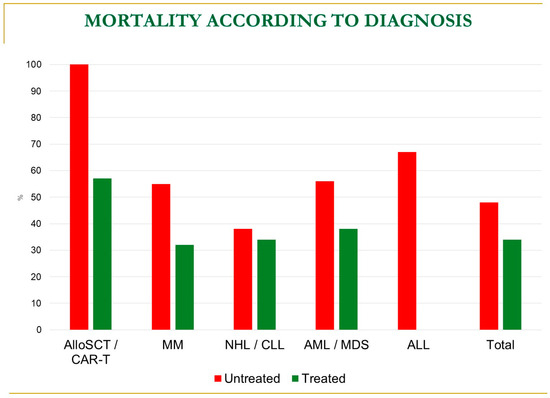
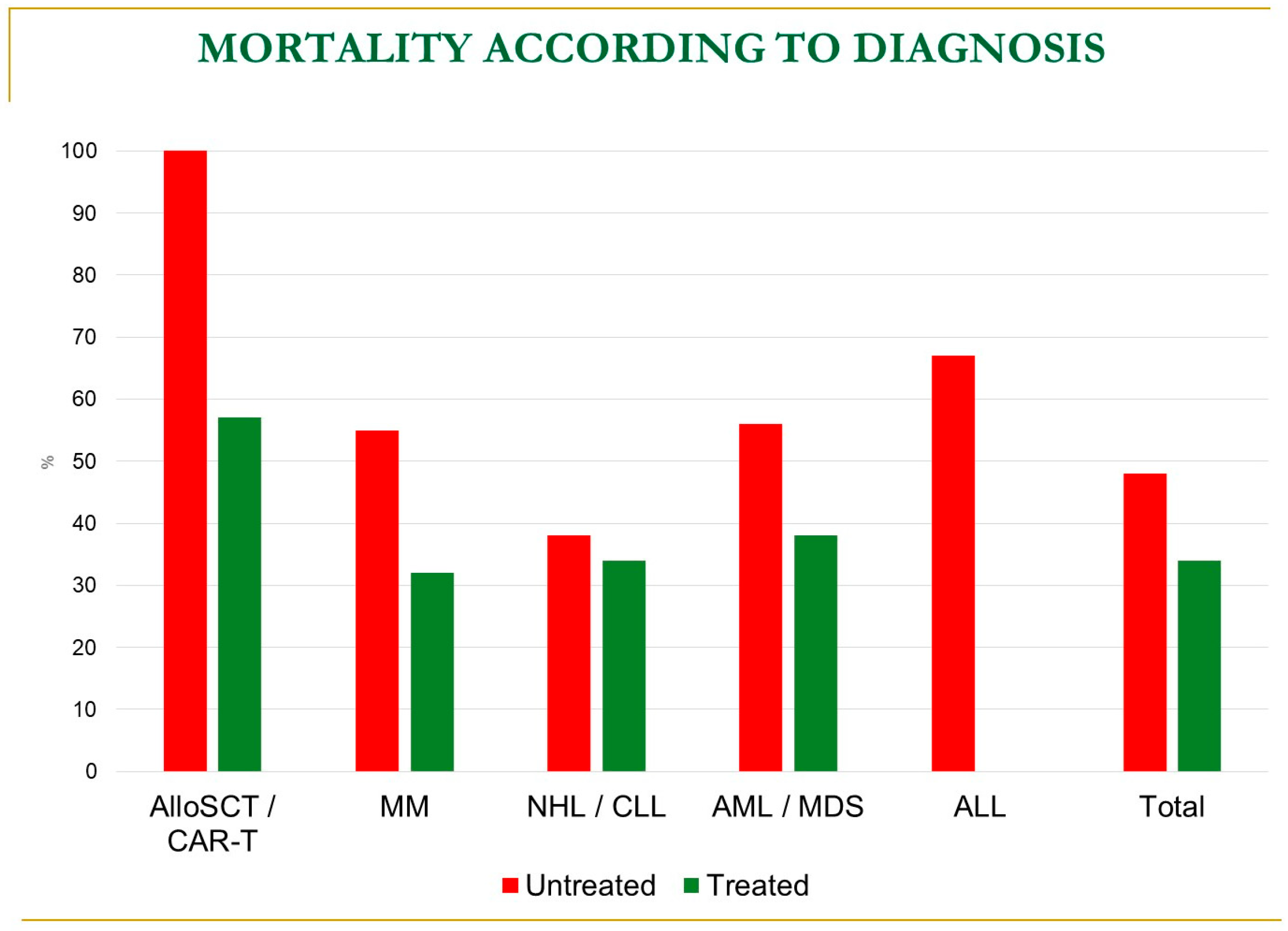
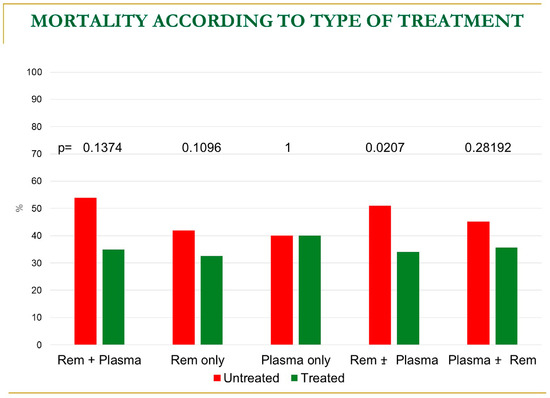
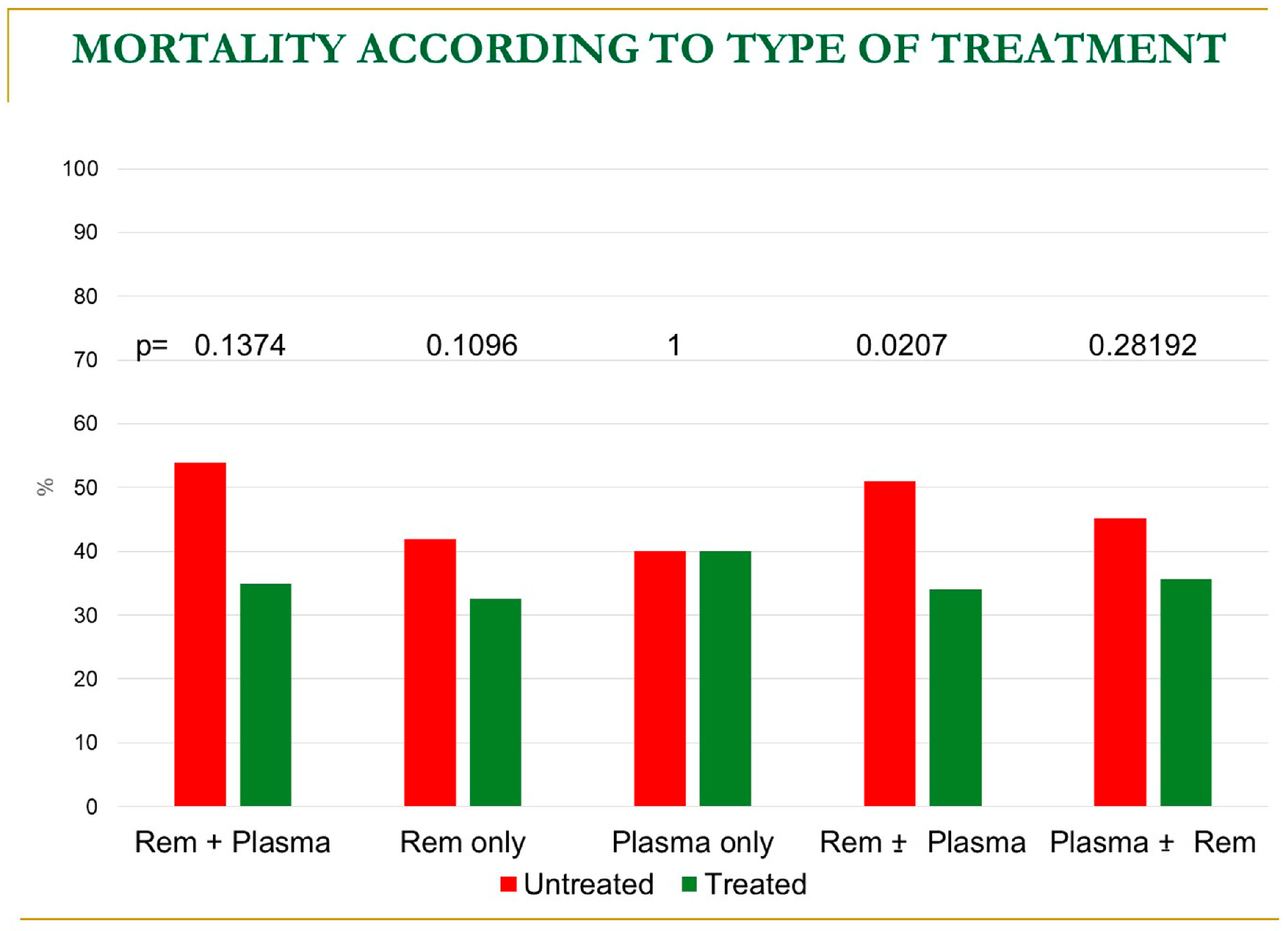
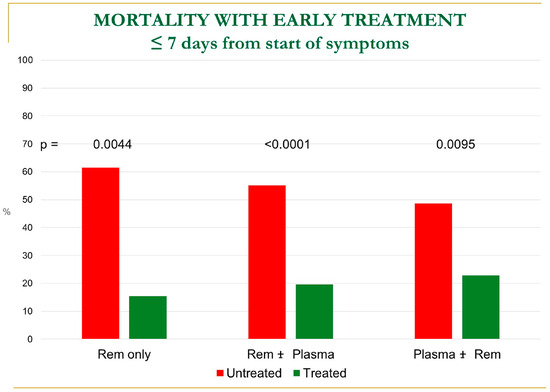
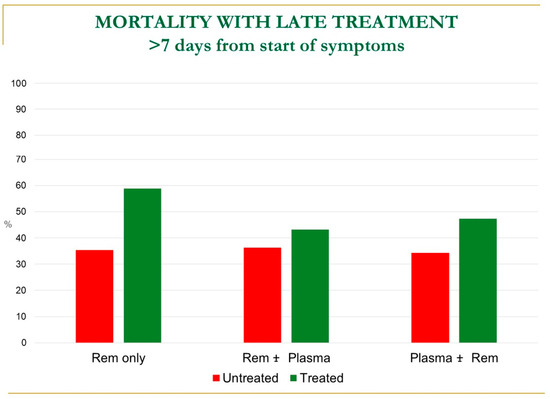
Mortality according to diagnosis is presented in Figure 1. Treatment significantly reduced the COVID-19 mortality: 40 out of 116 treated patients died, in comparison to 56 untreated patients. Patients treated with remdesivir had improved survival: 36 out of 106 treated patients died, in comparison to 54 untreated patients (p = 0.0207; OR 0.495, 95% CI 0.285–0.862) (Figure 2). The effect of convalescent plasma was not found to be significant, but due to the small number of patients, the power to detect such a difference was limited; 26 out of 73 treated patients died, in comparison to 33 untreated patients (p = 0.2812: OR 0.671, 95% CI 0.345–1.304). The beneficial effect of antiviral therapy was limited to those who started antiviral treatment within 7 days of the onset of symptoms (Figure 3). In the group receiving early treatment, 12 out of 61 died, in comparison to 34 untreated patients. Eleven out of 58 patients receiving early remdesivir died, in comparison to 33 untreated patients (p < 0.0001; OR 0.177, 95% CI 0.077–0.410), and 8 out of 35 who received early convalescent plasma died, in comparison to 20 untreated patients (p = 0.0095; OR 0.222, 95% CI 0.079–0.625). Mortality rates were not reduced in the group of patients receiving remdesivir and/or convalescent plasma more than 7 days from the onset of symptoms (Figure 4).
Figure 1.
Mortality from COVID-19 according to diagnosis. AlloSCT—allogeneic stem cell transplant; CAR-T—chimeric antigen receptor T cells; AML—acute myeloid leukemia; MDS—myelodysplastic syndrome; ALL—acute lymphoblastic leukemia; MM—multiple myeloma; NHL (SLL/CLL)—non-Hodgkin lymphoma (small lymphocytic lymphoma/chronic lymphocytic leukemia).
Figure 2.
Mortality according to the type of treatment for COVID-19. Rem—remdesivir; Plasma—convalescent plasma.
Figure 3.
Mortality with early treatment for COVID-19.
Figure 4.
Mortality with late treatment for COVID-19.
There was no apparent difference in the outcome of patients treated with remdesivir only, in comparison to those receiving both remdesivir and convalescent plasma (mortality rates of 15% vs. 19% respectively). The number of patients receiving only convalescent plasma was too low to enable meaningful comparisons.
4. Discussion
The EPICOVIDEHA study, conducted by the European Hematology Association, is the largest study to date on the epidemiology of COVID-19 infection in patients with hematological malignancies. This multinational project has collected data on COVID-19 cases among hematological malignancy patients in 2020. The study was carried out by the Scientific Working Group on Infection in Hematology on behalf of the European Hematology Association (EHA). The aim was to evaluate the prevalence and consequences of COVID-19 in individuals with hematological malignancies.
The study included 3801 cases of individuals with hematological malignancies. The findings revealed that 63.8% of these patients experienced severe or critical cases of COVID-19. Among these patients, 73.1% required hospitalization, with 18.1% of them being admitted to intensive care units (ICUs). Regrettably, it was shown that individuals with active malignant hematological disorders who contracted COVID-19 were at a significantly elevated risk of experiencing severe consequences, resulting in an overall mortality rate of 31.2%. The highest mortality rates were seen in acute myeloid leukemia, with a rate of 40%, and myelodysplastic syndromes, with a rate of 42.3% [1].
Croatian hematological patients and their physicians also faced severe consequences of COVID-19, especially at the beginning of the pandemic when it was unknown which drugs were effective while vaccines were still not available. Aurer et al. demonstrated that mortality was not significantly influenced by lymphoid malignancy type, utilization of anti-CD20 monoclonal antibodies, prior autologous stem cell transplantation (ASCT), or line of treatment. Older patients and individuals treated with purine analogs had elevated mortality rates. Patients treated with anti-CD20 monoclonal antibodies, particularly obinutuzumab and purine analogs, had a higher occurrence of prolonged COVID-19. Age, previous autologous stem cell transplantation (ASCT), and treatment sequence did not significantly impact the chance of experiencing an extended period of infection. The data indicate that older age and the usage of purine analogs are the primary risk factors for higher fatality rates in COVID-19 patients with lymphoid malignancies [3].
Passive immunotherapy with human convalescent blood products is an old concept that has been used in the past on several occasions, such as with Spanish influenza A (H1N1), Ebola, or Middle East respiratory syndrome-related coronavirus (MERS-CoV) infections [23,24]. In the absence of effective drugs and considering the possibility of local production of this blood product, the use of CP emerged very quickly as a treatment option for hematological patients with COVID-19. Remdesivir is a drug that had already been used in other indications and, throughout the early pandemic period, was the only available antiviral agent effective against COVID-19. These are the reasons why, in addition to steroids, remdesivir and CP were the most used therapies in Croatia for the treatment of COVID-19 infection in hematological patients [4]. However, due to a lack of firm evidence and contradictory recommendations, there were differences in the use of these therapies across different hospitals in the country. This enabled the Croatian Cooperative Group for Hematological Diseases to collect data from different Croatian hematological centers with the aim of determining the effect of remdesivir and CP on the mortality of patients with hematologic malignancies on concurrent systemic antineoplastic therapy suffering from COVID-19. As explained earlier, patients with Hodgkin lymphoma and myeloproliferative neoplasms were not included in this study due to a lower risk of COVID-19 mortality, which, even in the early phases of the pandemic, was below 20%.
Mortality rates in patients with different disease types in our series are in accordance with other large epidemiological studies [1,2]. Patients treated with allogeneic hematopoietic stem cell transplantation or CAR-T cell therapy, as well as those with acute leukemias, were the most sensitive group of hematological patients with the highest mortality from COVID-19 [3,25,26,27,28].
The results of this matched-pair comparison confirm the efficacy of antiviral therapies. While the comparison of different antiviral therapeutic options is beyond the scope of this study, our data suggest that treatment with remdesivir is more important than CP. We were actually unable to prove a beneficial effect of the latter.
This is in accordance with a comprehensive study conducted in Israel. The study involved 313 patients with blood and cancer disorders who were diagnosed with COVID-19. The study collected clinical and laboratory data from these patients, which were obtained from 16 different medical centers. The study used multivariate regression analysis to identify the characteristics linked to severe disease, hospitalization, and mortality. The results showed that 35.7% of the participants developed a severe or critical respiratory infection. A total of 61.4% of the individuals were admitted to the hospital, while 20.0% of them passed away. Individuals over the age of 70 had a strong correlation with severe/critical illness and death. Hypertension was strongly connected with severe/critical illness and the need for hospitalization. Active therapy for hemato-oncological conditions resulted in hospitalization. Additionally, the use of remdesivir treatment was linked to a decrease in mortality. Treatment with convalescent plasma, enoxaparin, and corticosteroids did not provide any therapeutic advantage [29].
Neither remdesivir nor CP nor their combination reduced mortality if they were administered later in the course of the disease. In contrast, if treatment was started early, the mortality rate was reduced threefold, which was statistically significant and clinically very meaningful. The results would possibly be even better if treatment had been started within three days of the onset of symptoms. This is consistent with the results of published studies, which included a smaller number of patients or those with different tumor types [30,31,32,33,34]. The outcome of patients receiving late antiretroviral therapy was numerically inferior to that of those who were untreated. This was most probably because remdesivir and CP were used in later phases of infection only in those with more severe and progressive disease and not because this approach was harmful.
This study defined early administration of antiviral drugs as starting within 7 days of symptom onset. The term “early” was defined differently in different studies, varying from 3 to 14 days from the onset of symptoms of infection [16,17,30,35]. All came to similar conclusions, making it impossible to define the period after which the administration of antiviral agents is no longer helpful.
Our study is not without its limitations. Aside from the fact that the design was uncontrolled and retrospective, which invariably introduces certain biases, we also encountered challenges related to the insufficient sample size within specific subgroups. Furthermore, there was notable heterogeneity in the patient population concerning variables such as the type of hematological diseases represented, the presence of comorbid conditions, the severity of COVID-19 infections, and the varying number of convalescent plasma (CP) doses administered to the patients and their anti-SARS-CoV-2 antibody titers. Also, by not including other groups, such as those with Hodgkin’s lymphoma, we might have overlooked potential variations in treatment response across different hematologic malignancies. Furthermore, our study focuses on mortality as the primary outcome but does not provide information on long-term morbidity or quality of life post-COVID-19 infection, which might provide further valuable insight. These factors may have influenced the overall outcomes and interpretations of our findings.
On the other hand, compared to previously published studies in the field, our study’s strengths lie in our comprehensive analysis incorporating a significantly larger cohort of patients exclusively diagnosed with various hematological conditions. This particular group is known to exhibit a heightened sensitivity to the adverse effects of COVID-19 infection, compared to patients dealing with solid tumors. Such differences highlight a critical area of concern within the medical community, as hematological patients often present unique vulnerabilities.
After the Omicron strain became dominant, the course of COVID-19 changed significantly. Although almost all patients were vaccinated, some still developed breakthrough infections; however, severe disease was uncommon. Deaths were mainly related to delayed and suboptimal antineoplastic treatment due to the prolonged disease course and recurrent infections [36]. While early antiviral treatment in this context may not reduce mortality from infection, it could still be beneficial by leading to earlier eradication of infection and thus reducing delays and interruptions in antineoplastic therapy.
5. Conclusions
The results of our study strongly underscore the urgency for the early initiation of antiviral therapies in hematological patients afflicted by COVID-19. This includes ensuring access to direct antiviral medications, such as remdesivir, and immunotherapeutic agents like convalescent plasma. The timing of these interventions is paramount; they should be administered before the viral response phase progresses into the hyperinflammatory phase of the infection. Once the disease reaches this more severe stage, the efficacy of antiviral treatment and the ability to prevent viral replication diminish considerably. Therefore, timely therapeutic action is not only advisable but necessary in addressing the heightened risks faced by hematological patients in the context of COVID-19.
Author Contributions
Conceptualization, T.V. and I.A.; methodology, O.J. and T.V.; software, O.J.; validation, S.M., S.B.-K. and S.N.-C.; formal analysis, R.S.S.; investigation, A.G., D.L., M.N., M.M., R.S.S. and I.H.-D.; resources, I.A.; data curation, T.V.; writing—original draft preparation, T.V., D.D., B.D. and G.P.; writing—review and editing, T.V. and A.G.; visualization, S.B.-K. and M.S.D.; supervision, I.A.; project administration, T.V.; funding acquisition, I.A. All authors have read and agreed to the published version of the manuscript.
Funding
This research received no external funding.
Institutional Review Board Statement
This study was conducted in accordance with the Declaration of Helsinki and approved by the Ethics Committees of UHC Rijeka (Approval Code 2170-29-02/1-20-2, Approval Date: 13 November 2020).
Informed Consent Statement
Due to the retrospective, non-interventional and anonymized nature of data collection, an informed consent waiver was obtained.
Data Availability Statement
Due to the informed consent waiver, any requests for original data should be sent to the corresponding author and must be approved by a Croatian Ethics Committee.
Acknowledgments
We would like to acknowledge invaluable logistical and administrative support from KroHem, the Croatian Cooperative Group for Hematologic Diseases.
Conflicts of Interest
The authors declare no conflicts of interest.
References
- Pagano, L.; Salmanton-García, J.; Marchesi, F.; Busca, A.; Corradini, P.; Hoenigl, M.; Klimko, N.; Koehler, P.; Pagliuca, A.; Passamonti, F.; et al. COVID-19 infection in adult patients with hematological malignancies: A European Hematology Association Survey (EPICOVIDEHA). J. Hematol. Oncol. 2021, 14, 168. [Google Scholar] [CrossRef] [Scilit] [PubMed] [PubMed Central]
- Vijenthira, A.; Gong, I.Y.; Fox, T.A.; Booth, S.; Cook, G.; Fattizzo, B.; Martín-Moro, F.; Razanamahery, J.; Riches, J.C.; Zwicker, J.; et al. Outcomes of patients with hematologic malignancies and COVID-19: A systematic review and meta-analysis of 3377 patients. Blood 2020, 136, 2881–2892. [Google Scholar] [CrossRef] [Scilit]
- Aurer, I.; Jakšić, O.; Bašić-Kinda, S.; Mrđenović, S.; Ostojić-Kolonić, S.; Lozić, D.; Holik, H.; Novaković-Coha, S.; Berneš, P.; Krečak, I.; et al. Treatment-related risk factors for adverse outcomes of COVID-19 in patients treated for lymphoid malignancies in the pre-omicron era—a study of KroHem, the Croatian group for hematologic diseases. Biomedicines 2024, 12, 331. [Google Scholar] [CrossRef] [Scilit] [PubMed] [PubMed Central]
- Choi, S.W.; Shin, J.S.; Park, S.-J.; Jung, E.; Park, Y.-G.; Lee, J.; Kim, S.J.; Park, H.-J.; Lee, J.-H.; Park, S.-M.; et al. Antiviral activity and safety of remdesivir against SARS-CoV-2 infection in human pluripotent stem cell-derived cardiomyocytes. Antivir. Res. 2020, 184, 104955. [Google Scholar] [CrossRef] [Scilit] [PubMed] [PubMed Central]
- Noori, M.; Azizi, S.; Varaki, F.A.; Nejadghaderi, S.A.; Bashash, D. A systematic review and meta-analysis of immune response against first and second doses of SARS-CoV-2 vaccines in adult patients with hematological malignancies. Int. Immunopharmacol. 2022, 110, 109046. [Google Scholar] [CrossRef] [Scilit]
- Greenberger, L.M.; Saltzman, L.A.; Senefeld, J.W.; Johnson, P.W.; DeGennaro, L.J.; Nichols, G.L. Antibody response to SARS-CoV-2 vaccines in patients with hematologic malignancies. Cancer Cell 2021, 39, 1031–1033. [Google Scholar] [CrossRef] [Scilit]
- Sertić, Z.; Lucijanić, M.; Bašić-Kinda, S.; Seiwerth, R.S.; Periša, V.; Sertić, D.; Coha, B.; Pulanić, D.; Perić, Z.; Desnica, L.; et al. Non-myelofibrosis chronic myeloproliferative neoplasm patients show better seroconversion rates after SARS-CoV-2 vaccination compared to other hematologic diseases: A multicentric prospective study of KroHem. Biomedicines 2022, 10, 2892. [Google Scholar] [CrossRef] [Scilit]
- Beigel, J.H.; Tomashek, K.M.; Dodd, L.E.; Mehta, A.K.; Zingman, B.S.; Kalil, A.C.; Hohmann, E.; Chu, H.Y.; Luetkemeyer, A.; Kline, S.; et al. Remdesivir for the Treatment of COVID-19—Final Report. N. Engl. J. Med. 2020, 383, 1813–1826. [Google Scholar] [CrossRef] [Scilit] [PubMed] [PubMed Central]
- Gottlieb, R.L.; Vaca, C.E.; Paredes, R.; Mera, J.; Webb, B.J.; Perez, G.; Oguchi, G.; Ryan, P.; Nielsen, B.U.; Brown, M.; et al. Early Remdesivir to Prevent Progression to Severe COVID-19 in Outpatients. N. Engl. J. Med. 2022, 386, 305–315. [Google Scholar] [CrossRef] [Scilit] [PubMed] [PubMed Central]
- Beckerman, R.; Gori, A.; Jeyakumar, S.; Malin, J.J.; Paredes, R.; Póvoa, P.; Smith, N.J.; Teixeira-Pinto, A. Remdesivir for the treatment of patients hospitalized with COVID-19 receiving supplemental oxygen: A targeted literature review and meta-analysis. Sci. Rep. 2022, 12, 9622. [Google Scholar] [CrossRef] [Scilit] [PubMed] [PubMed Central]
- Lai, C.-C.; Chen, C.-H.; Wang, C.-Y.; Chen, K.-H.; Wang, Y.-H.; Hsueh, P.-R. Clinical efficacy and safety of remdesivir in patients with COVID-19: A systematic review and network meta-analysis of randomized controlled trials. J. Antimicrob. Chemother. 2021, 76, 1962–1968. [Google Scholar] [CrossRef] [Scilit] [PubMed] [PubMed Central]
- Li, L.; Zhang, W.; Hu, Y.; Tong, X.; Zheng, S.; Yang, J.; Kong, Y.; Ren, L.; Wei, Q.; Mei, H.; et al. Effect of Convalescent Plasma Therapy on Time to Clinical Improvement in Patients with Severe and Life-threatening COVID-19: A Randomized Clinical Trial. JAMA 2020, 324, 460–470, Erratum in JAMA 2020, 324, 519. [Google Scholar] [CrossRef] [Scilit] [PubMed] [PubMed Central]
- Agarwal, A.; Mukherjee, A.; Kumar, G.; Chatterjee, P.; Bhatnagar, T.; Malhotra, P. Convalescent plasma in the management of moderate covid-19 in adults in India: Open label phase II multicentre randomised controlled trial (PLACID Trial). BMJ 2020, 371, m3939, Erratum in BMJ 2020, 371, m4232. [Google Scholar] [CrossRef] [Scilit] [PubMed] [PubMed Central]
- RECOVERY Collaborative Group. Convalescent plasma in patients admitted to hospital with COVID-19 (RECOVERY): A ran-domised controlled, open-label, platform trial. Lancet 2021, 397, 2049–2059. [Google Scholar] [CrossRef] [Scilit] [PubMed] [PubMed Central]
- Writing Committee for the REMAP-CAP Investigators; Effect of Convalescent Plasma on Organ Support-Free Days in Critically Ill Patients With COVID-19: A Randomized Clinical Trial. JAMA 2021, 326, 1690–1702. [CrossRef] [Scilit] [PubMed] [PubMed Central]
- Hegerova, L.; Gooley, T.A.; Sweerus, K.A.; Maree, C.; Bailey, N.; Bailey, M.; Dunleavy, V.; Patel, K.; Alcorn, K.; Haley, R.; et al. Use of convalescent plasma in hospitalized patients with COVID-19: Case series. Blood 2020, 136, 759–762. [Google Scholar] [CrossRef] [Scilit] [PubMed] [PubMed Central]
- Libster, R.; Marc, G.P.; Wappner, D.; Coviello, S.; Bianchi, A.; Braem, V.; Esteban, I.; Caballero, M.T.; Wood, C.; Berrueta, M.; et al. Early High-Titer Plasma Therapy to Prevent Severe COVID-19 in Older Adults. N. Engl. J. Med. 2021, 384, 610–618. [Google Scholar] [CrossRef] [Scilit] [PubMed] [PubMed Central]
- Hueso, T.; Godron, A.-S.; Lanoy, E.; Pacanowski, J.; Levi, L.I.; Gras, E.; Surgers, L.; Guemriche, A.; Meynard, J.-L.; Pirenne, F.; et al. Convalescent plasma improves overall survival in patients with B-cell lymphoid malignancy and COVID-19: A longitudinal cohort and propensity score analysis. Leukemia 2022, 36, 1025–1034. [Google Scholar] [CrossRef] [Scilit] [PubMed] [PubMed Central]
- Thompson, M.A.; Henderson, J.P.; Shah, P.K.; Rubinstein, S.M.; Joyner, M.J.; Choueiri, T.K.; Flora, D.B.; Griffiths, E.A.; Gulati, A.P.; Hwang, C.; et al. Association of Convalescent Plasma Therapy with Survival in Patients with Hematologic Cancers and COVID-19. JAMA Oncol. 2021, 7, 1167–1175, Erratum in JAMA Oncol. 2021, 7, 1249. [Google Scholar] [CrossRef] [Scilit] [PubMed] [PubMed Central]
- Bar, K.J.; Shaw, P.A.; Choi, G.H.; Aqui, N.; Fesnak, A.; Yang, J.B.; Soto-Calderon, H.; Grajales, L.; Starr, J.; Andronov, M.; et al. A randomized controlled study of convalescent plasma for individuals hospitalized with COVID-19 pneumonia. J. Clin. Investig. 2021, 131, e155114. [Google Scholar] [CrossRef] [Scilit]
- Senefeld, J.W.; Franchini, M.; Mengoli, C.; Cruciani, M.; Zani, M.; Gorman, E.K.; Focosi, D.; Casadevall, A.; Joyner, M.J. COVID-19 Convalescent Plasma for the Treatment of Immunocompromised Patients: A Systematic Review and Meta-analysis. JAMA Netw. Open 2023, 6, e2250647. [Google Scholar] [CrossRef] [Scilit]
- Jirjees, F.; Saad, A.K.; Al Hano, Z.; Hatahet, T.; Al Obaidi, H.; Bashi, Y.H. COVID-19 Treatment Guidelines: Do They Really Reflect Best Medical Practices to Manage the Pandemic? Infect. Dis. Rep. 2021, 13, 259–284. [Google Scholar] [CrossRef] [Scilit]
- Cesaro, S.; Mikulska, M.; Hirsch, H.H.; Styczynski, J.; Meylan, S.; Cordonnier, C.; Navarro, D.; von Lilienfeld-Toal, M.; Mehra, V.; Marchesi, F.; et al. Update of recommendations for the management of COVID-19 in patients with haematological malignancies, haematopoietic cell trans-plantation and CAR T therapy, from the 2022 European Conference on Infections in Leukaemia (ECIL 9). Leukemia 2023, 37, 1933–1938. [Google Scholar] [CrossRef] [Scilit] [PubMed]
- Luke, T.C.; Kilbane, E.M.; Jackson, J.L.; Hoffman, S.L. Meta-analysis: Convalescent blood products for Spanish influenza pneumonia: A future H5N1 treatment? Ann. Intern. Med. 2006, 145, 599–609. [Google Scholar] [CrossRef] [Scilit]
- Edwards, T.; Semple, M.G.; De Weggheleire, A.; Claeys, Y.; De Crop, M.; Menten, J.; Ravinetto, R.; Temmerman, S.; Lynen, L.; Bah, E.I.; et al. Design and analysis considerations in the Ebola Tx trial evaluating convalescent plasma in the treatment of Ebola virus disease in Guinea during the 2014–2015 outbreak. Clin. Trials 2016, 13, 13–21. [Google Scholar] [CrossRef] [Scilit] [PubMed]
- Spanjaart, A.M.; Ljungman, P.; de La Camara, R.; Tridello, G.; Ortiz-Maldonado, V.; Urbano-Ispizua, A.; Barba, P.; Kwon, M.; Caballero, D.; Sesques, P.; et al. Poor outcome of patients with COVID-19 after CAR T-cell therapy for B-cell malignancies: Results of a multicenter study on behalf of the European Society for Blood and Marrow Transplantation (EBMT) Infectious Diseases Working Party and the European Hematology Association (EHA) Lymphoma Group. Leukemia 2021, 35, 3585–3588. [Google Scholar]
- Sharma, A.; Bhatt, N.S.; Martin, A.S.; Abid, M.B.; Bloomquist, J.; Chemaly, R.F.; Dandoy, C.; Gauthier, J.; Gowda, L.; Perales, M.-A.; et al. Clinical characteristics and outcomes of COVID-19 in haematopoietic stem-cell transplantation recipients: An observational cohort study. Lancet Haematol. 2021, 8, e185–e193. [Google Scholar] [CrossRef] [Scilit] [PubMed]
- Mushtaq, M.U.; Shahzad, M.; Chaudhary, S.G.; Luder, M.; Ahmed, N.; Abdelhakim, H.; Bansal, R.; Balusu, R.; DeJarnette, S.; Divine, C.; et al. Impact of SARS-CoV-2 in hematopoietic stem cell transplantation and chimeric antigen receptor T cell therapy recipients. Transplant. Cell Ther. 2021, 27, 796.e1–796.e7. [Google Scholar] [CrossRef] [Scilit]
- Levy, I.; Lavi, A.; Zimran, E.; Grisariu, S.; Aumann, S.; Itchaki, G.; Berger, T.; Raanani, P.; Harel, R.; Aviv, A.; et al. COVID-19 among patients with hematological malignancies: A national Israeli retrospective analysis with special emphasis on treatment and outcome. Leuk. Lymphoma 2021, 62, 3384–3393. [Google Scholar] [CrossRef] [Scilit]
- Magyari, F.; Pinczés, L.I.; Páyer, E.; Farkas, K.; Ujfalusi, S.; Diószegi, Á.; Sik, M.; Simon, Z.; Nagy, G.; Hevessy, Z. Early administration of remdesivir plus convalescent plasma therapy is effective to treat COVID-19 pneumonia in B-cell depleted patients with hematological malignancies. Ann. Hematol. 2022, 101, 2337–2345. [Google Scholar] [CrossRef] [Scilit] [PubMed] [PubMed Central]
- Weinbergerova, B.; Mayer, J.; Kabut, T.; Hrabovsky, S.; Prochazkova, J.; Kral, Z.; Herout, V.; Pacasova, R.; Zdrazilova-Dubska, L.; Husa, P.; et al. Successful early treatment combining remdesivir with high-titer convalescent plasma among COVID-19-infected hematological patients. Hematol. Oncol. 2021, 39, 715–720. [Google Scholar] [CrossRef] [Scilit] [PubMed] [PubMed Central]
- Jaroszewicz, J.; Kowalska, J.; Pawłowska, M.; Rogalska, M.; Zarębska-Michaluk, D.; Rorat, M.; Lorenc, B.; Czupryna, P.; Sikorska, K.; Piekarska, A.; et al. Remdesivir Decreases Mortality in COVID-19 Patients with Active Malignancy. Cancers 2022, 14, 4720. [Google Scholar] [CrossRef] [Scilit] [PubMed] [PubMed Central]
- Jeyaraman, P.; Agrawal, N.; Bhargava, R.; Bansal, D.; Ahmed, R.; Bhurani, D.; Bansal, S.; Rastogi, N.; Borah, P.; Naithani, R. Convalescent plasma therapy for severe COVID-19 in patients with hematological malignancies. Transfus. Apher. Sci. 2021, 60, 103075. [Google Scholar] [CrossRef] [Scilit] [PubMed] [PubMed Central]
- Zeng, Q.-L.; Yu, Z.-J.; Gou, J.-J.; Li, G.-M.; Ma, S.-H.; Zhang, G.-F.; Xu, J.-H.; Lin, W.-B.; Cui, G.-L.; Zhang, M.-M.; et al. Effect of convalescent plasma therapy on viral shedding and survival in patients with coronavirus disease 2019. J. Infect. Dis. 2020, 222, 38–43. [Google Scholar] [CrossRef] [Scilit] [PubMed]
- Biernat, M.M.; Kolasińska, A.; Kwiatkowski, J.; Urbaniak-Kujda, D.; Biernat, P.; Janocha-Litwin, J.; Szymczyk-Nużka, M.; Bursy, D.; Kalicińska, E.; Simon, K.; et al. Early Administration of Convalescent Plasma Improves Survival in Patients with Hematological Malignancies and COVID-19. Viruses 2021, 13, 436. [Google Scholar] [CrossRef] [Scilit]
- Cattaneo, C.; Salmanton-García, J.; Marchesi, F.; El-Ashwah, S.; Itri, F.; Weinbergerová, B.; Da Silva, M.G.; Dargenio, M.; Dávila-Valls, J.; Martín-Pérez, S.; et al. Simultaneous Onset of Haematological Malignancy and COVID: An Epicovideha Survey. Cancers 2022, 14, 5530. [Google Scholar] [CrossRef] [Scilit] [PubMed] [PubMed Central]

Disclaimer/Publisher’s Note: The statements, opinions and data contained in all publications are solely those of the individual author(s) and contributor(s) and not of MDPI and/or the editor(s). MDPI and/or the editor(s) disclaim responsibility for any injury to people or property resulting from any ideas, methods, instructions or products referred to in the content. |
© 2026 by the authors. Licensee MDPI, Basel, Switzerland. This article is an open access article distributed under the terms and conditions of the Creative Commons Attribution (CC BY) license.