


Abstract
Background: Pandemic-related deaths disrupted bereavement experiences and created a need for brief symptom measures. This study reassessed the Greek adaptation of the five-item Pandemic Grief Scale (PGS) and explored associations with insomnia and resilience. Methods: Following translation and cultural adaptation, 342 adults bereaved by a COVID-19-related death were recruited by convenience sampling in Greece between January and April 2022. Participants completed the PGS, Athens Insomnia Scale (AIS), and six-item Brief Resilience Scale (BRS). Internal consistency was assessed using Cronbach’s alpha; the prespecified one-factor model was evaluated with confirmatory factor analysis (CFA) treating the four response categories as ordinal and using weighted least squares mean- and variance-adjusted estimation (WLSMV). A separate principal component analysis (PCA) was retained as descriptive supplementary analysis. Results: The PGS mean score was 1.93 (SD 2.6), and Cronbach’s alpha was 0.848. WLSMV CFA produced standardized loadings of 0.626–0.900. Scaled fit indices were CFI = 0.988, TLI = 0.975, SRMR = 0.050, and RMSEA = 0.119 (90% CI 0.079–0.162); corresponding robust CFI, TLI, and RMSEA were 0.914, 0.828, and 0.267. Higher PGS scores were associated with higher AIS scores and lower BRS scores in cross-sectional analyses. Conclusions: The Greek PGS showed good internal consistency and substantial loadings on a common factor, but mixed and partly unfavorable CFA fit results limit conclusions regarding structural validity. The study does not establish a Greek diagnostic threshold or population prevalence.
1. Introduction
The COVID-19 pandemic was associated with widespread bereavement and substantial disruption of usual mourning practices [1,2]. Sudden deaths, restrictions on visits and funeral rites, and limited access to in-person social support could intensify the distress experienced by bereaved families [2,3,4]. Brief, culturally appropriate instruments may help researchers characterize pandemic-related grief symptoms, provided their psychometric limitations are acknowledged.
Grief is a normal psychological response to loss; however, when symptoms become severe, persistent, and impair daily functioning, it may develop into Prolonged Grief Disorder (PGD), as recognized in the DSM-5-TR and ICD-11 [5,6]. Studies suggest that 10% of bereaved individuals experience dysfunctional grief, characterized by intense emotional pain, yearning, and difficulty accepting the loss [7]. The impact of dysfunctional grief extends beyond mental health, contributing to increased risks of cardiovascular disease, immune system dysregulation, and suicidal ideation [8].
The COVID-19 pandemic affected mourning through unexpected deaths, restricted funerals, reduced contact with family members, and social isolation [3,4,9,10]. Other studies documented grief during the pandemic in different groups [11,12]. In addition to deaths, broader losses of routines, social roles, and economic security contributed to a collective experience of disruption and grief; these broader experiences should nevertheless be distinguished from the bereavement-specific construct measured by the PGS [13].
The pandemic produced losses at individual and societal levels, motivating research on brief measures of bereavement associated specifically with COVID-19-related deaths [13,14]. The five-item Pandemic Grief Scale (PGS) assesses the frequency of selected grief-related thoughts and feelings in the preceding two weeks. The original English-language instrument was developed as a screening measure [14], and subsequent studies examined its psychometric properties in Turkish- and Spanish-speaking bereaved samples [15,16]. Results from other languages and populations cannot, by themselves, establish diagnostic accuracy or measurement invariance for a Greek version.
The Greek translation and initial psychometric findings from this study were previously presented in a published conference abstract in European Psychiatry in 2023 [17]. The present full-length report expands that preliminary communication by detailing the translation process, item responses, reliability, ordinal-data CFA, supplementary PCA, associations with AIS and BRS, and methodological limitations. Given the cultural context of Greek bereavement traditions [10], a careful appraisal of the instrument in Greek-speaking bereaved participants remains warranted.
Furthermore, the Greek population faced significant mental health challenges during the pandemic, with recent studies reporting increased rates of depression, anxiety, and stress-related disorders [18,19]. Understanding how pandemic-related grief manifests in Greece can guide mental health policies and enhance bereavement support programs.
This study aimed to describe the Greek translation and cultural adaptation of the PGS, examine its internal consistency and proposed one-factor structure, and explore cross-sectional associations of continuous PGS scores with insomnia symptoms, resilience, and sociodemographic variables. It did not aim to establish a Greek diagnostic cutoff or estimate population prevalence.
2. Materials and Methods
2.1. The Questionnaire
The Pandemic Grief Scale (PGS) is a brief five-item instrument originally developed in 831 adults who had experienced the death of a close family member or friend due to COVID-19 [14]. It captures symptoms related to COVID-19 bereavement. Estimates of diagnostic performance reported for the original English-language validation sample should not be generalized to the present Greek sample without criterion-based validation.
Each PGS item asks about experiences over the preceding two weeks on a four-category scale from 0 (not at all) to 3 (nearly every day). The five responses are summed to form a continuous score from 0 to 15, with higher scores indicating more frequent grief-related symptoms [14]. No Greek-language cutoff was developed or validated in this study; the PGS was therefore analyzed as a continuous total score for correlations and as five ordered categorical indicators for CFA. Interpretation of potentially clinically relevant symptoms requires an appropriate independent clinical assessment [14,20].
2.2. Translation
The translation process involved two independent forward translations of the original English version of the questionnaire into Greek by two different translators. Following this stage, the two translations were compared by a third individual, who reviewed any discrepancies and selected the most appropriate wording to produce a consensus version (first reconciliation version).
The reconciled Greek version was subsequently translated back into English (back-translation) by a bilingual professional translator whose native language was English and who was blinded to the original version of the questionnaire. The back-translated version was then sent to the original authors for review and comments. Their feedback was incorporated into the Greek translation, resulting in a second reconciled version of the questionnaire.
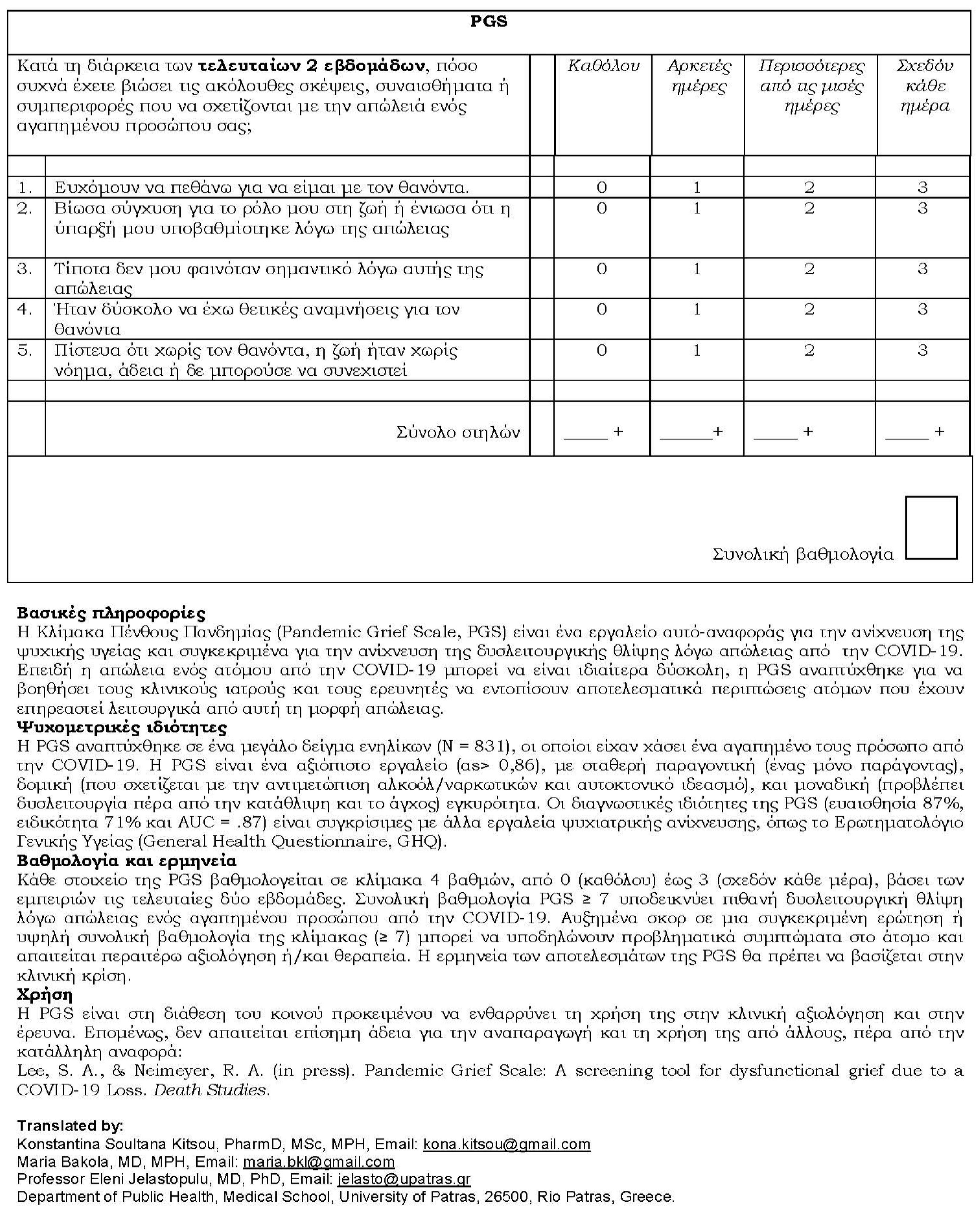
The version resulting from the translation and reconciliation process was administered to 10 individuals from the target population to assess face validity. Participants evaluated whether the items were clear, comprehensible, and consistent with the construct intended to be measured, and whether any items were likely to result in incomplete or misleading responses. The original English-language PGS and the Greek version are presented in Appendix A (Figure A1 and Figure A2).
Content relevance was appraised by three subject-matter experts, and the Content Validity Ratio (CVR) was calculated for each item. All five items met the prespecified acceptance criterion as reported by the study team. This expert appraisal was treated as supporting content relevance, not as evidence of clinical diagnostic accuracy. The exact item-level CVR and overall Content Validity Index (CVI) values should be checked against the original expert-rating forms before any numerical claim beyond item acceptance is made.
2.3. Participants
This cross-sectional study enrolled 342 adults in Greece using convenience sampling between January and April 2022. Eligibility regarding COVID-19-related bereavement was assessed at enrolment through a specific self-report question included in the study questionnaire, asking participants whether they had experienced the loss of a loved one due to COVID-19. Only participants who reported such a loss were included in the study. Participants reported age, biological sex, education, residential setting (rural, semi-urban, or urban), and time since loss. Their relationship to the deceased was not available in the analytical dataset. The sampling procedure does not support claims of representativeness of the Greek population. Participants also completed the AIS and BRS.
The AIS is a brief self-report instrument designed to assess the severity of insomnia based on the diagnostic criteria of the International Classification of Diseases, Tenth Revision (ICD-10). It consists of eight items assessing different aspects of sleep and daytime functioning. Each item is rated on a 4-point Likert scale ranging from 0 (no sleep or daytime problems) to 3 (severe sleep or daytime difficulties). The total AIS score is calculated by summing the scores of the individual items, with higher scores indicating greater severity of insomnia symptoms [21].
The six-item Brief Resilience Scale (BRS) measures perceived ability to recover from stress [22]. Items 2, 4, and 6 were reverse-scored before calculating the study’s recorded total score (range 6–30; higher scores indicate greater resilience). Dividing the sum by six gives the conventional mean-item BRS score (range 1–5). The database contains the six-item BRS, not the distinct Brief Resilience Coping Scale (BRCS); the term BRCS in the earlier conference abstract [17] was inconsistent with the administered measure.
2.4. Psychometric Analyses
Internal consistency of the five PGS items was examined using Cronbach’s alpha. The original content-appraisal procedure and its reported item acceptability were summarized separately. Internal consistency and content appraisal were not interpreted as establishing diagnostic validity or a validated screening threshold.
The prespecified one-factor PGS model was examined by confirmatory factor analysis (CFA) with the five item responses specified as ordered categorical indicators. Weighted least squares mean- and variance-adjusted estimation (WLSMV; delta parameterization, latent variance fixed at one) was used in R 4.3.3 with lavaan 0.6–17 [23,24]. Model fit was evaluated by the scaled chi-square statistic (df = 5), scaled CFI and TLI, scaled RMSEA with 90% confidence interval, SRMR, and the additional robust CFI, TLI, and RMSEA reported by lavaan. Global fit measures were interpreted jointly and not against a single rigid threshold, particularly in view of sparse upper response categories and the small degrees of freedom. Standardized factor loadings, item R2, and residual polychoric correlations were examined. No data-driven model modifications were applied [23].
A separate principal component analysis (PCA) of the five observed PGS items, performed in SPSS, was retained as a supplementary descriptive analysis of the item covariance structure; PCA was not designated exploratory factor analysis (EFA) and was not treated as independent confirmation of the CFA model. Bartlett’s sphericity test, the Kaiser–Meyer–Olkin (KMO) index, and the proportion of variance explained by the first component were reported. Because PCA and CFA used the same participants, their apparent agreement is not a cross-validation.
2.5. Data Analysis
Descriptive analyses, reliability coefficients, PCA, and correlations were carried out using IBM SPSS Statistics, version 25 (IBM Corp., Armonk, NY, USA); the reanalysis of ordinal-item CFA used R 4.3.3 (R Foundation for Statistical Computing, Vienna, Austria) and lavaan 0.6–17 [24]. Continuous scale scores were summarized by mean and standard deviation; categorical characteristics were presented as N (%). Spearman’s rho (ρ) was used for ordered age, education, residential setting, and time-since-loss categories; Pearson’s r for the AIS and BRS total scores; and a point-biserial correlation for sex. All tests were two-sided, with nominal α = 0.05. Correlations were unadjusted and descriptive, and multiple comparisons and confounding should be considered when interpreting them.
The preliminary findings of this study were previously presented in a conference abstract published in 2023, using the same sample of 342 participants. Confirmatory factor analysis was repeated using the WLSMV estimator, which accounts for the ordinal nature of the PGS items. Consequently, the model-fit indices differ from those previously reported. These differences reflect the revised estimation procedure rather than changes in the dataset, sample composition, or hypothesized factor structure. Both scaled and robust fit indices are reported to ensure transparent inter-pretation of model fit.
3. Results
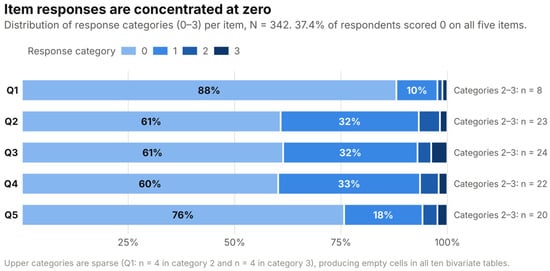
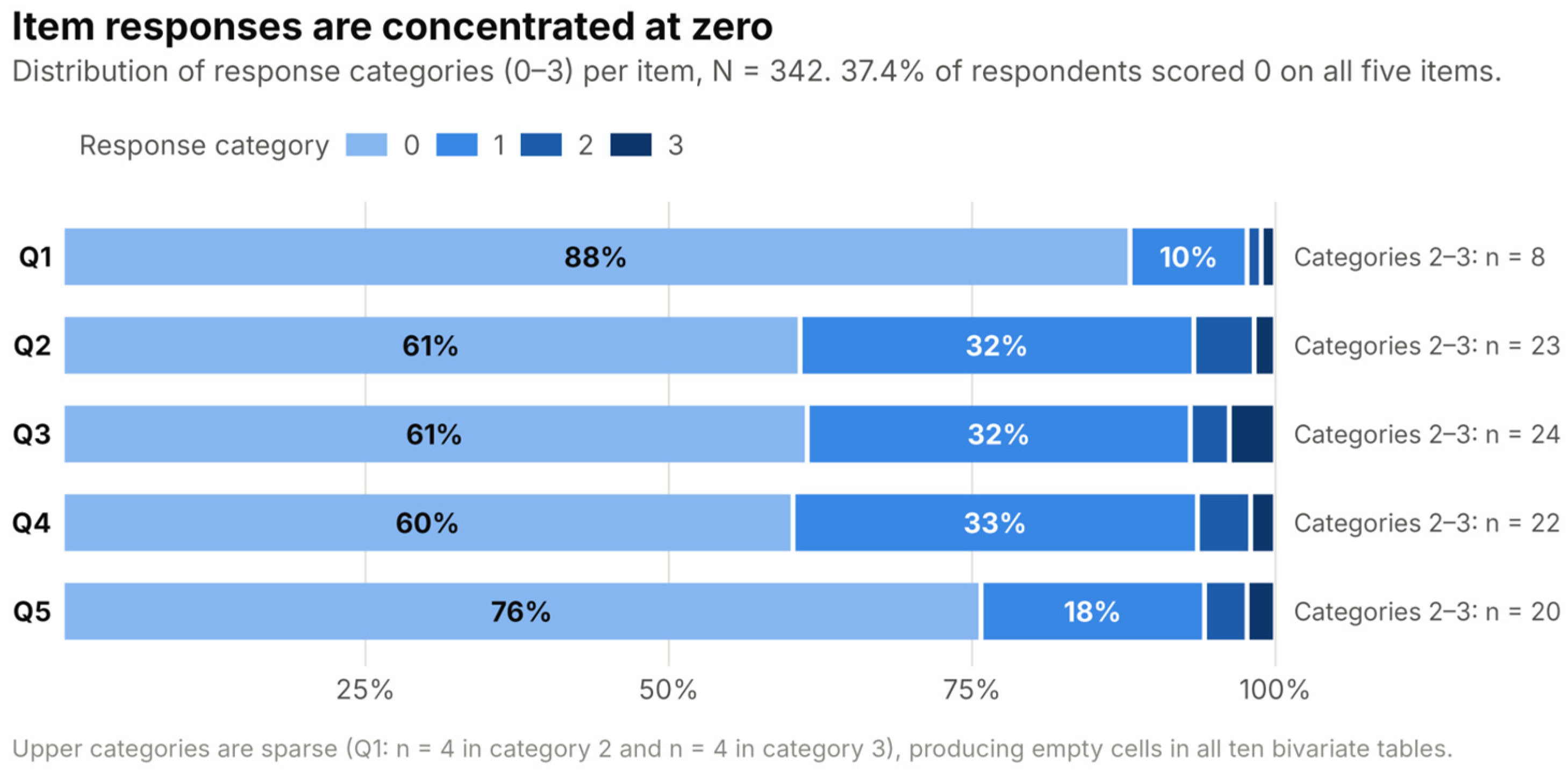
Among 342 participants, 232 (67.8%) were women and 110 (32.2%) men. Table 1 summarizes the demographic and bereavement characteristics of this nonprobability sample. The mean total PGS score was 1.93 (SD 2.6), the mean AIS score was 7.2 (SD 5.1), and the mean six-item BRS sum score was 19.6 (SD 4.6; equivalent mean-item score approximately 3.27). Cronbach’s alpha values were 0.848, 0.908, and 0.810 for PGS, AIS, and BRS, respectively (Table 2). PGS scores were concentrated at the lower end of the 0–15 range: 128/342 participants (37.4%) scored zero on all five items. The item-level response distributions are shown in Figure 1. No estimate of population prevalence or Greek-language diagnostic classification was derived.
Table 1.
Sociodemographic and bereavement characteristics of the nonprobability sample (N = 342).
Table 2.
Descriptive scores and internal consistency of the PGS, AIS, and BRS. BRS results are reported as a six-item sum score (range 6–30) after reverse scoring items 2, 4, and 6; the equivalent mean-item score is 19.6/6 = 3.27.
Figure 1.
Distribution of PGS item response categories (0–3), N = 342. Upper categories were sparsely populated; 37.4% of respondents gave a zero response to all five items.
3.1. Internal Consistency and Factor Structure of the PGS
All five items met the acceptance criterion in the original expert content appraisal, and Cronbach’s alpha for the PGS was 0.848. Item-level content-validity ratings were not available for independent recalculation. Descriptively, the PGS items showed a pronounced floor effect, especially Q1 (88.0% responses in category 0); all ten 4 × 4 item-pair frequency tables contained at least one empty cell (Figure 1).
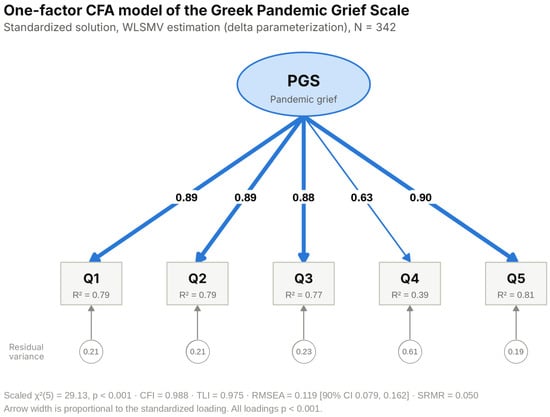
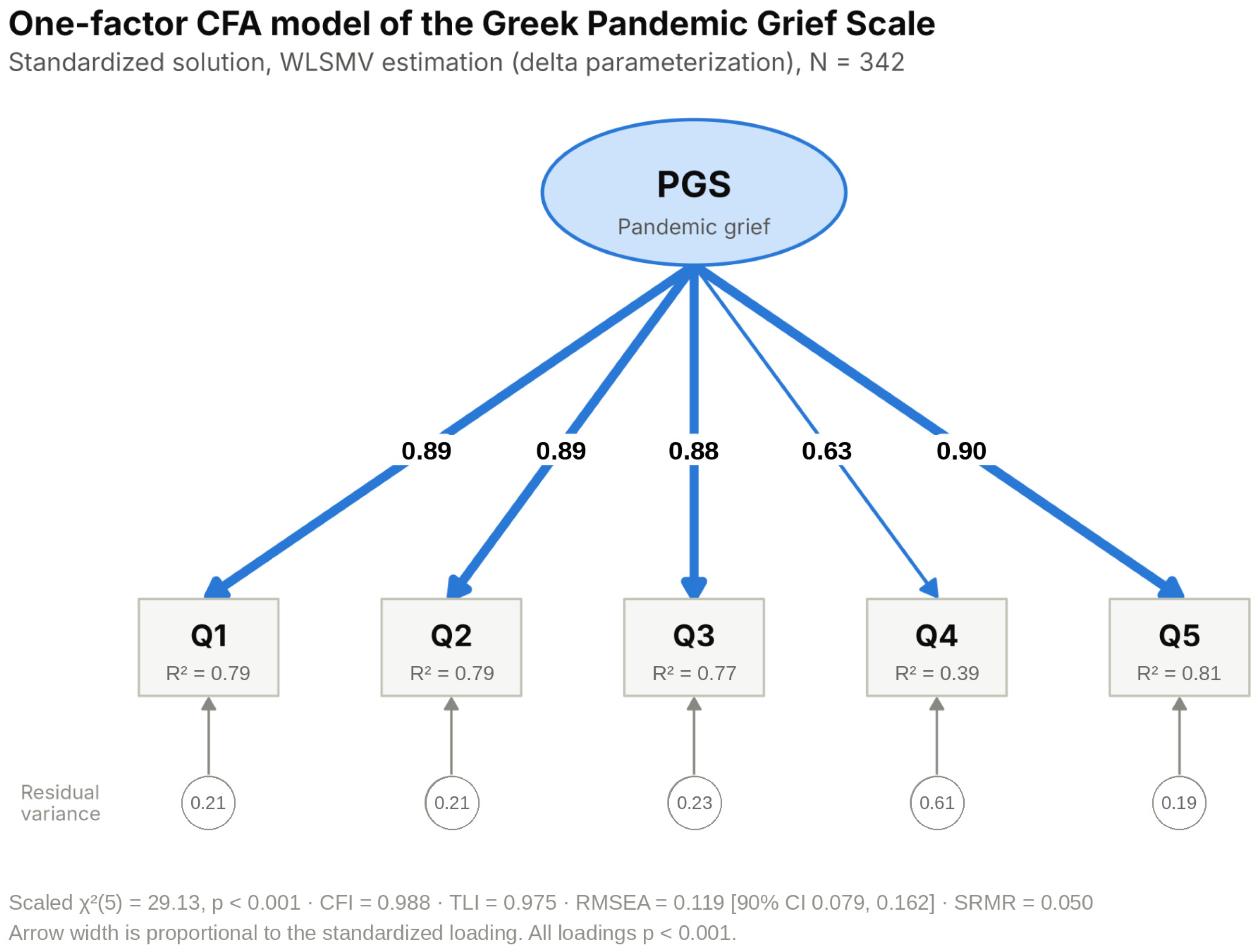
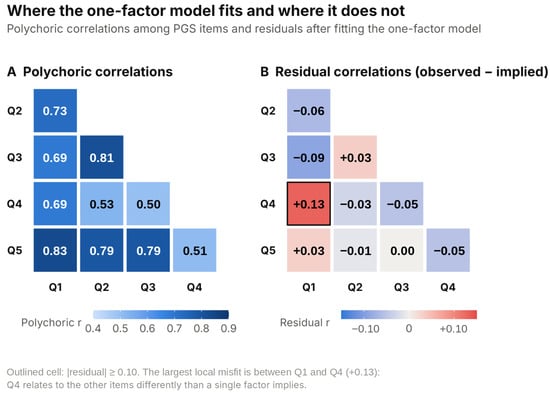
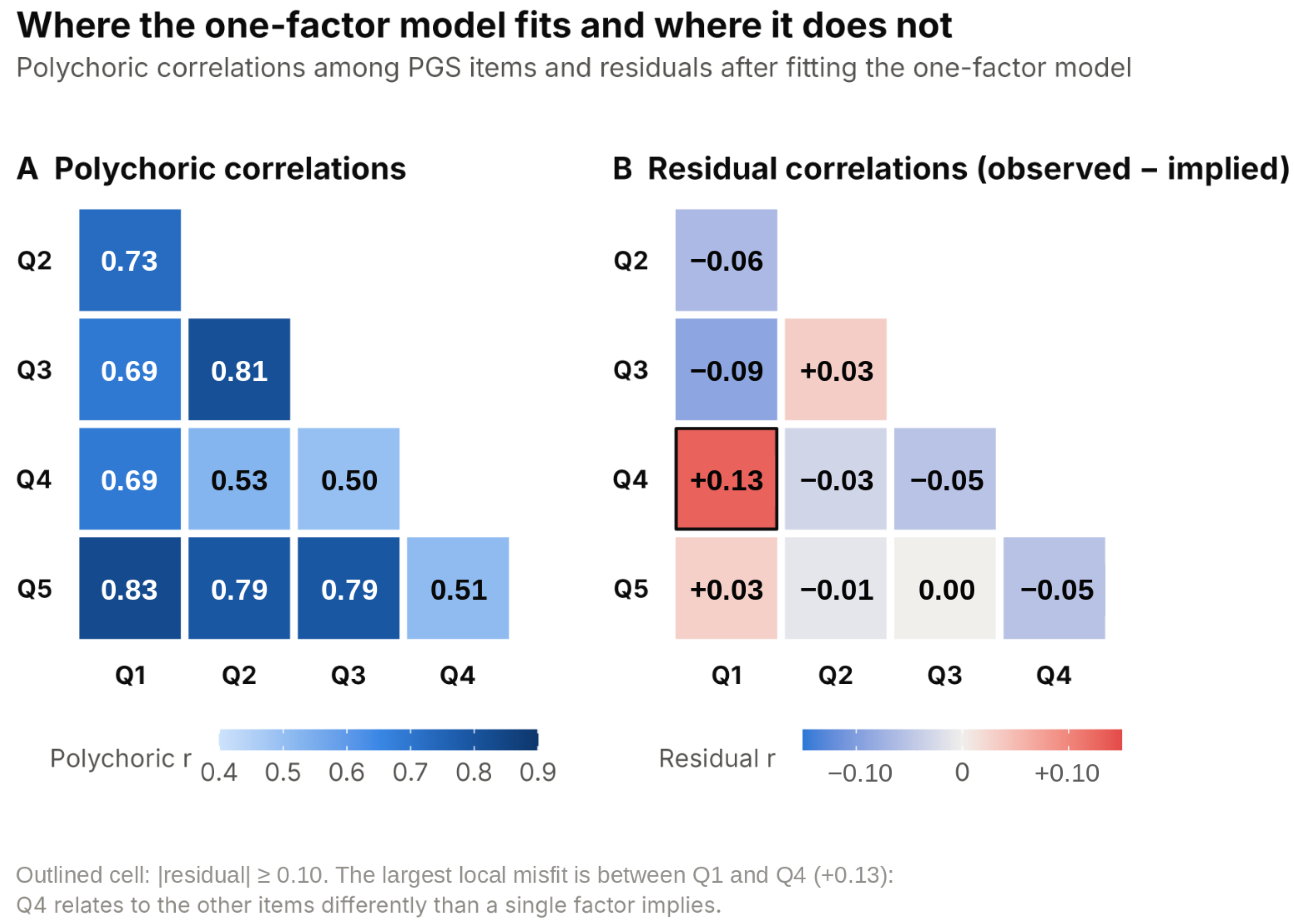
The ordinal-data, one-factor CFA converged normally (12 iterations; N = 342) without warnings for the primary fit. Standardized loadings ranged from 0.626 (Q4) to 0.900 (Q5), with item-level R2 values from 0.392 to 0.809 (Figure 2). Model-fit evidence was mixed (Table 3): scaled χ2(5) = 29.134, p < 0.001; scaled CFI = 0.988, TLI = 0.975, SRMR = 0.050, and scaled RMSEA = 0.119 (90% CI 0.079–0.162). In contrast, the alternative robust CFI = 0.914, TLI = 0.828, and the robust RMSEA = 0.267 (90% CI 0.181–0.361). Thus, the favorable scaled incremental indices and meaningful item loadings did not establish satisfactory overall model fit. Residual polychoric correlations were largest for Q1–Q4 (observed minus model-implied r = +0.131). No residual covariances or further paths were added to improve fit. Additional CFA diagnostics are provided in Appendix B.
Figure 2.
Prespecified one-factor PGS CFA (WLSMV, N = 342), showing standardized item loadings, item-level R2, and residual variances on the latent-response scale. Paths from the latent factor are measurement loadings, not causal effects.
Table 3.
Fit statistics for the prespecified one-factor CFA of the five ordered PGS items (WLSMV, N = 342). Values marked “not applicable (—)” are not separately defined as robust statistics in the output.
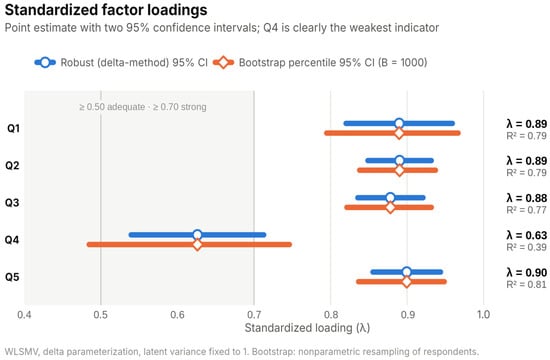
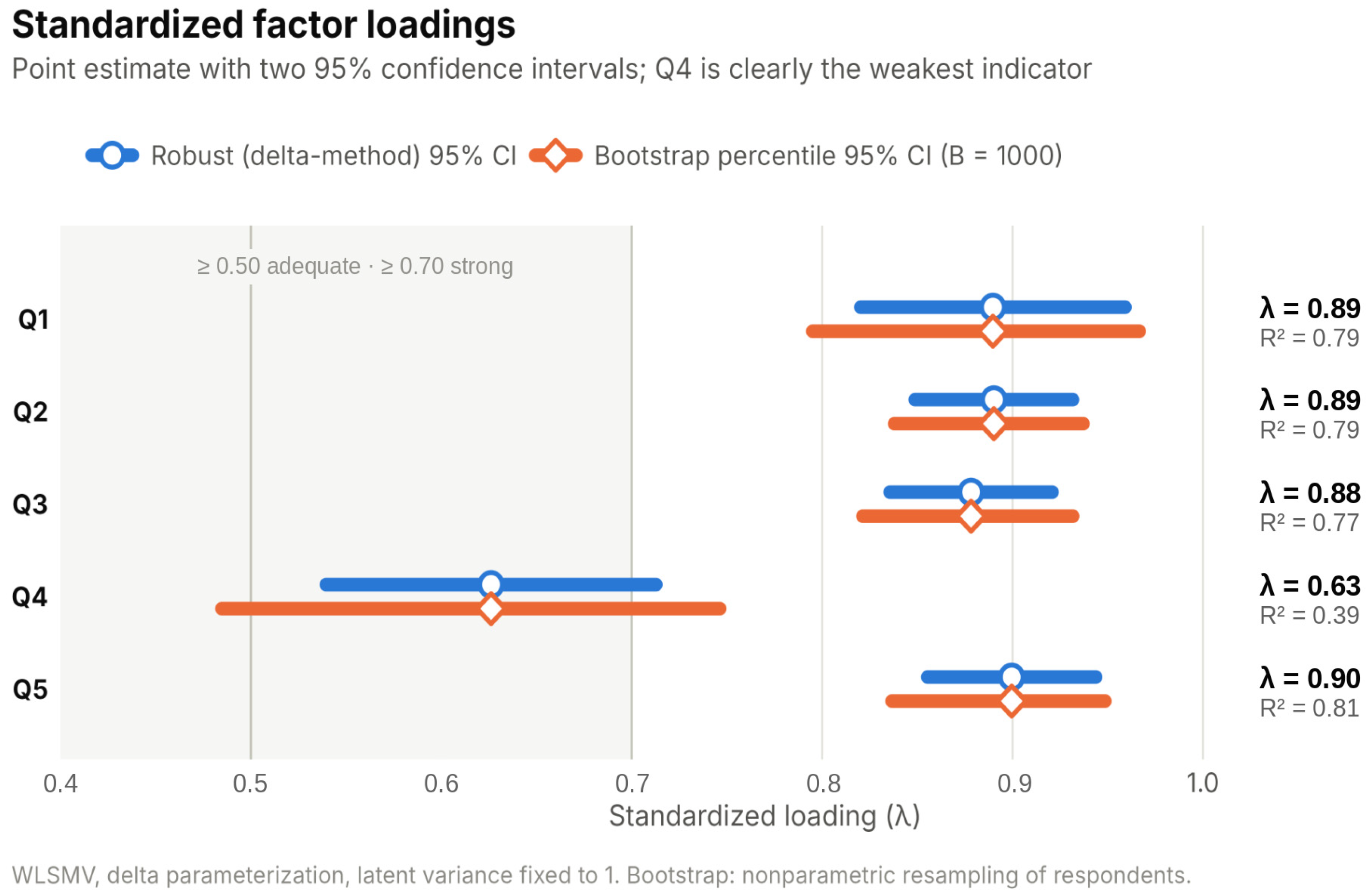
For the separate supplementary PCA, Bartlett’s test of sphericity was χ2 = 758.08 (p < 0.001) and the KMO index was 0.826. The first principal component accounted for 64.3% of the observed-item variance (Table 4). This descriptive PCA was computed in the same sample as the CFA and should not be interpreted as a second independent test of factorial validity. Standardized WLSMV loadings with 95% confidence intervals are displayed in Figure 3, and observed versus model-implied item correlations in Figure 4.
Table 4.
Supplementary principal component analysis (PCA) output for five PGS items. These component loadings do not represent independent exploratory factor analysis or standardized CFA loadings.
Figure 3.
Standardized factor loadings and 95% confidence intervals from the ordinal-data CFA. Blue intervals use robust delta-method standard errors; orange intervals are percentile bootstrap estimates (1000 resamples). Bootstrap results are exploratory because warnings arose in 222/1000 resamples and should not be interpreted as independent confirmation.
Figure 4.
Polychoric correlations among PGS items and residual correlations (observed minus model-implied) after fitting the one-factor CFA. The largest residual was observed for Q1–Q4 (+0.131).
3.2. Correlations
Unadjusted correlations of continuous PGS total scores with participant characteristics and AIS/BRS scores are shown in Table 5. Sex and time since loss were not significantly associated with PGS scores in these analyses. Statistically significant associations were as follows:
Table 5.
Unadjusted correlations between continuous PGS score and sample characteristics, AIS, and BRS. Residential setting denotes a rural, semi-urban, or urban category. Coefficients indicate association, not causation.
- Older age category was associated with a higher PGS score (Spearman ρ = 0.220, p < 0.001).
- Higher educational attainment was associated with a lower PGS score (Spearman ρ = −0.239, p < 0.001).
- More urban residential setting was associated with a lower PGS score (Spearman ρ = −0.204, p < 0.001). The variable represents rural/semi-urban/urban setting, not geographical region of origin.
- Higher AIS scores were associated with higher PGS scores (Pearson r = 0.515, p < 0.001).
- Higher BRS sum scores were weakly associated with lower PGS scores (Pearson r = −0.165, p = 0.002).
4. Discussion
This study extends an earlier published conference abstract [17] by reporting the Greek PGS translation process and a fuller psychometric evaluation using ordinal-data WLSMV CFA. The five-item score showed good internal consistency (Cronbach’s alpha = 0.848) and sizeable positive standardized loadings on a common factor. However, findings regarding global fit were mixed: scaled CFI and TLI were favorable, whereas the scaled RMSEA, robust fit indices, and significant chi-square indicated substantial qualifications. Consequently, the present evidence supports only a preliminary interpretation of the proposed factor structure, not an unequivocal claim of structural or diagnostic validity.
We deliberately report the PGS as a continuous symptom score. Although the original English version included a proposed screening cutoff [14], the current study collected no external diagnostic interview or independent clinical criterion against which to validate a threshold in Greek. The sample was also recruited by convenience rather than probability methods. For these reasons, neither a Greek cutoff recommendation nor an estimate of the population prevalence of dysfunctional grief is justified.
Older age categories were weakly associated with higher PGS scores, consistent with some previous observations regarding vulnerability during pandemic-related isolation [9,25,26,27]. However, age was recorded in ordered categories and the present cross-sectional, unadjusted correlation cannot establish an independent age effect.
Lower educational attainment was weakly associated with higher PGS scores (ρ = −0.239). The association may reflect differences in resources, circumstances of bereavement, or other unmeasured characteristics and cannot be interpreted as evidence that education itself protects against grief [28,29].
The variable previously described as “region” actually records residential setting (rural, semi-urban, or urban). Respondents in less urban settings had somewhat higher PGS scores; this should not be interpreted as a comparison of administrative regions of Greece. Access to support and other contextual factors were not measured, so explanations based on availability of local mental-health services remain speculative [30,31].
PGS scores showed a positive correlation with AIS insomnia-symptom scores (r = 0.515) and a weak negative correlation with BRS resilience scores (r = −0.165). These findings are broadly compatible with research on bereavement distress, sleep difficulties, and resilience [32,33], but the cross-sectional design does not establish their direction, exclude confounding, or demonstrate that resilience prevents grief. The BRS result refers to the verified six-item Brief Resilience Scale rather than the similarly named coping instrument cited in the previous abstract [17].
5. Limitations
The study relied on a convenience sample collected in January–April 2022, with a predominance of women and urban residents, which restricts generalizability to all bereaved adults in Greece. Although COVID-19 bereavement eligibility was confirmed by the study team, the available analytical dataset does not contain participants’ relationship to the deceased or a detailed record of how the cause of death was verified. These characteristics could be relevant to grief severity and should be reported in future samples.
The cross-sectional design does not establish temporal ordering or causal associations for age, education, residential setting, insomnia, or resilience. The analyses were unadjusted for possible confounding, and multiple nominal tests increase the chance of chance findings. Data collected in early 2022 may not characterize the changing post-pandemic context.
The measures were self-reported and subject to reporting and recall bias. Item scores were markedly concentrated at zero; in Q1, only eight participants used categories 2 or 3, and all ten bivariate item tables had empty cells. Such sparse upper categories can make polychoric correlations and WLSMV fit indices unstable. Although the original CFA converged, bootstrap refits generated warnings in 222 of 1000 resamples, warranting caution in interpreting resampling uncertainty.
The observed loadings and internal consistency do not constitute clinical criterion validity. The Greek PGS was not compared against a structured interview, an established clinical diagnosis, or an independently validated criterion, and thus neither sensitivity/specificity nor a Greek diagnostic cutoff could be established. Moreover, conventional grief reactions cannot be distinguished from Prolonged Grief Disorder using the present dataset alone.
The one-factor CFA and supplementary PCA were based on the same 342 participants; PCA is not independent cross-validation. The Q4 loading (0.626) was lower than the other item loadings, and alternative robust indices, particularly the robust RMSEA, indicated poor model fit. No alternative factor structure was tested or empirically justified in this dataset. Relationship to the deceased, additional bereavement circumstances, vaccination views, and support-service access were not recorded, further limiting interpretation.
Future research should use prospectively documented bereavement-eligibility criteria, more representative samples, independent confirmation samples, and longitudinal and criterion-based assessments. The present findings are best interpreted as preliminary evidence for the Greek PGS, supporting further evaluation rather than immediate diagnostic deployment.
6. Conclusions
The Greek version of the PGS showed satisfactory internal consistency and substantial positive standardized item loadings, but the one-factor CFA yielded conflicting fit indices, including poor robust RMSEA and TLI. This study provides preliminary psychometric information, rather than definitive structural validation or evidence of diagnostic performance. Independent, criterion-based validation is required before recommending a Greek screening threshold.
Author Contributions
Conceptualization, M.B., S.A.-V., N.V. and E.J.; linguistic validation and cultural adaptation of the original questionnaire, K.A., M.B., K.S.K. and E.J.; statistical analysis, S.A.-V. and N.V.; data collection, M.C., E.G., C.K., M.K., V.K., S.K., N.K., K.M., M.S., A.T., K.T. and M.V. listed in alphabetical order; writing—original draft preparation, K.A.; E.J. and P.G. critically reviewed and approved both the study design and the final manuscript version. K.A., M.B. and K.S.K. contributed equally to this work. All authors have read and agreed to the published version of the manuscript.
Funding
This research received no external funding.
Institutional Review Board Statement
The study protocol was reviewed and approved by the Research Ethics Committee (REC) of the University of Patras, Greece (approval no. 8296/31-08-2021).
Informed Consent Statement
Informed consent was obtained from all subjects involved in the study.
Data Availability Statement
The data used in this study are not publicly available due to privacy and confidentiality concerns. However, the data can be made available upon reasonable request to the corresponding author, provided that appropriate ethical and privacy considerations are addressed.
Conflicts of Interest
The authors declare no conflicts of interest.
Appendix A
Figure A1.
Original English-language version of the Pandemic Grief Scale [14]. Original scoring guidance appears in the reproduced source and is not a diagnostic recommendation derived from this Greek study.
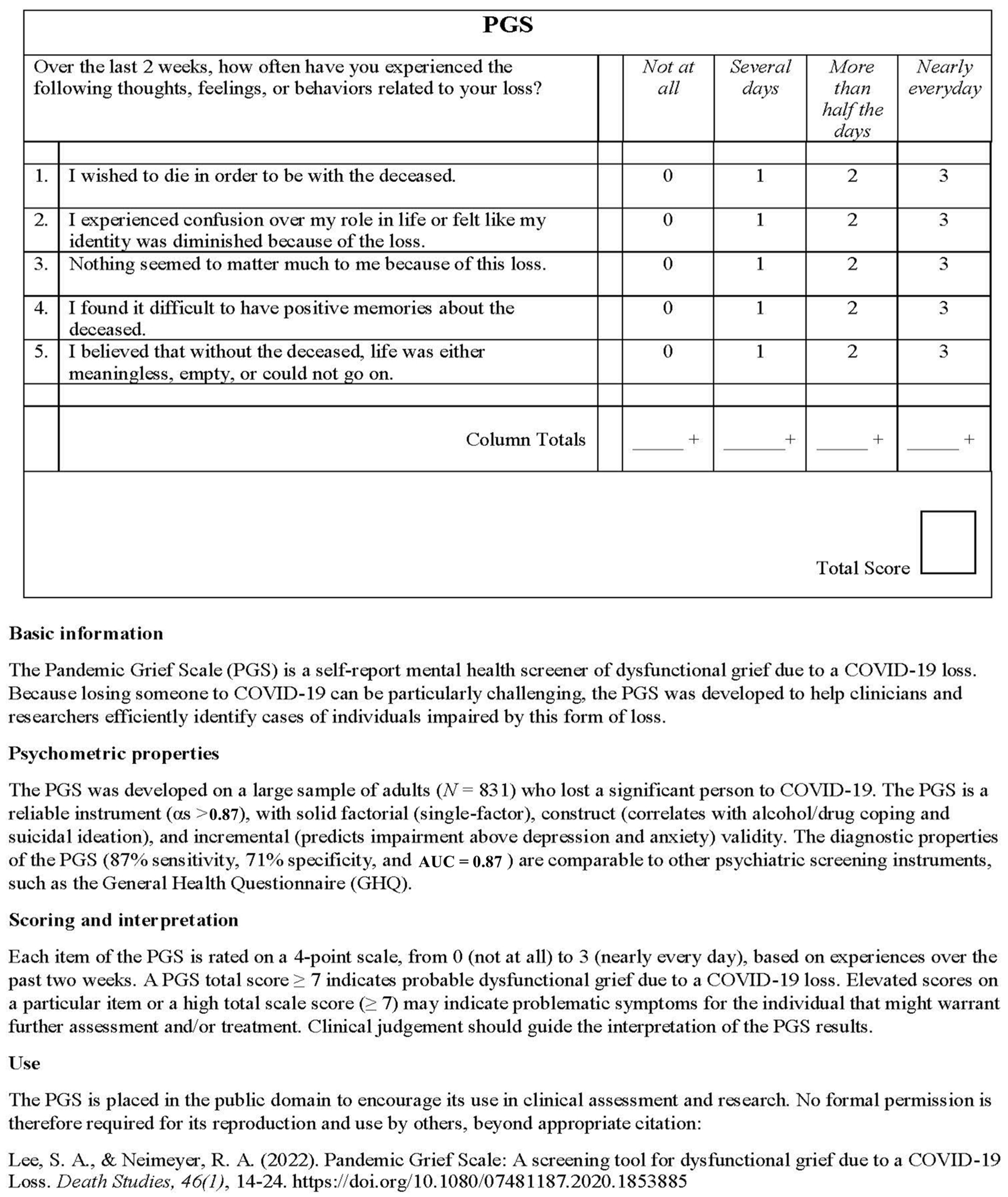
Figure A2.
Greek-language adaptation of the Pandemic Grief Scale [14]. The originally reproduced ≥7 guidance is not a validated Greek cutoff and should not be applied as such on the basis of this study.
Appendix B. Additional CFA Diagnostics
The CFA used ordinal responses and lavaan WLSMV. The standardized item loadings were Q1 = 0.890, Q2 = 0.890, Q3 = 0.878, Q4 = 0.626, and Q5 = 0.900; model-based R2 values were 0.792, 0.792, 0.771, 0.392, and 0.809, respectively. The 1000-bootstrap sensitivity results are exploratory because of frequent warning messages. Detailed reproducible results are available from the analysis output.
References
- World Health Organization (WHO). The Impact of COVID-19 on Mental Health and Public Health Responses; WHO Reports; WHO: Geneva, Switzerland, 2022. [Google Scholar]
- Eisma, M.C.; Boelen, P.A.; Lenferink, L.I.M. Prolonged grief disorder following the Coronavirus (COVID-19) pandemic. Psychiatry Res. 2020, 288, 113031. [Google Scholar] [CrossRef] [Scilit] [PubMed]
- Pancani, L.; Marinucci, M.; Aureli, N.; Riva, P. Forced social isolation and mental health: A study on 1006 Italians under COVID-19 quarantine. Front. Psychol. 2021, 12, 663799. [Google Scholar] [CrossRef] [Scilit] [PubMed]
- Eisma, M.C.; Tamminga, A.; Smid, G.E.; Boelen, P.A. Acute grief after deaths due to COVID-19, natural causes, and unnatural causes: An empirical comparison. J. Affect. Disord. 2021, 278, 54–56. [Google Scholar] [CrossRef] [Scilit] [PubMed]
- American Psychiatric Association. Diagnostic and Statistical Manual of Mental Disorders, 5th ed., Text Revision; American Psychiatric Publishing: Washington, DC, USA, 2022. [Google Scholar]
- Boelen, P.A.; Lenferink, L.I.M. Prolonged grief disorder in DSM-5-TR: Early predictors and longitudinal measurement invariance. Aust. N. Z. J. Psychiatry 2022, 56, 667–674. [Google Scholar] [CrossRef] [Scilit] [PubMed]
- Lundorff, M.; Holmgren, H.; Zachariae, R.; Farver-Vestergaard, I.; O’Connor, M. Prevalence of prolonged grief disorder in adult bereavement: A systematic review and meta-analysis. J. Affect. Disord. 2017, 212, 138–149. [Google Scholar] [CrossRef] [Scilit] [PubMed]
- Schoo, C.; Azhar, Y.; Mughal, S.; Rout, P. Grief and Prolonged Grief Disorder. In StatPearls [Internet]; StatPearls Publishing: Treasure Island, FL, USA, 2025. Available online: https://www.ncbi.nlm.nih.gov/books/NBK507832/ (accessed on 2 November 2026).
- Goveas, J.S.; Shear, M.K. Grief and the COVID-19 pandemic in older adults. Am. J. Geriatr. Psychiatry 2021, 28, 1119–1125. [Google Scholar] [CrossRef] [Scilit] [PubMed]
- Mystakidou, K.; Tsilika, E.; Parpa, E.; Katsouda, E.; Vlahos, L. A Greek perspective on concepts of death and expression of grief, with implications for practice. Int. J. Palliat. Nurs. 2003, 9, 534–537. [Google Scholar] [CrossRef] [Scilit] [PubMed]
- Eisma, M.C.; Tamminga, A. Grief before and during the COVID-19 pandemic: Multiple group comparisons. J. Pain. Symptom Manag. 2020, 60, e1–e4. [Google Scholar] [CrossRef] [Scilit] [PubMed]
- Rahmani, F.; Hosseinzadeh, M.; Gholizadeh, L. Complicated grief and related factors among nursing staff during the COVID-19 pandemic: A cross-sectional study. BMC Psychiatry 2023, 23, 73. [Google Scholar] [CrossRef] [Scilit] [PubMed]
- Albuquerque, S.; Teixeira, A.M.; Rocha, J.C. COVID-19 and disenfranchised grief. Front. Psychiatry 2021, 12, 638874. [Google Scholar] [CrossRef] [Scilit] [PubMed]
- Lee, S.A.; Neimeyer, R.A. Pandemic grief scale: A screening tool for dysfunctional grief due to a COVID-19 loss. Death Stud. 2020, 46, 14–24. [Google Scholar] [CrossRef] [Scilit] [PubMed]
- Evren, C.; Evren, B.; Dalbudak, E.; Topcu, M.; Kutlu, N. Measuring dysfunctional grief due to a COVID-19 loss: A Turkish validation study of the Pandemic Grief Scale. Death Stud. 2022, 46, 25–33. [Google Scholar] [CrossRef] [Scilit] [PubMed]
- Caycho-Rodríguez, T.; Vilca, L.W.; Vivanco-Vidal, A.; Saroli-Araníbar, D.; Carbajal-León, C.; Gallegos, W.L.A.; White, M.; Lee, S.A. Assessment of dysfunctional grief due to death from COVID-19 in Peru: Adaptation and validation of a Spanish version of the Pandemic Grief Scale. Trends Psychol. 2021, 29, 595–616. [Google Scholar] [CrossRef] [Scilit] [PubMed]
- Kitsou, K.S.; Bakola, M.; Kalogirou, C.; Aggelakou-Vaitsi, S.; Vaitsis, N.; Argyropoulos, K.; Kampouraki, M.; Gkatsi, E.; Tsolaki, K.; Vakas, M.; et al. Translation and validation of Greek version of the Pandemic Grief Scale [conference abstract]. Eur. Psychiatry 2023, 66, S474. [Google Scholar] [CrossRef] [Scilit]
- Fountoulakis, K.N.; Apostolidou, M.K.; Atsiova, M.B.; Filippidou, A.K.; Florou, A.K.; Gousiou, D.S.; Katsara, A.R.; Mantzari, S.N.; Padouva-Markoulaki, M.; Papatriantafyllou, E.I.; et al. Self-reported changes in anxiety, depression, and suicidality during the COVID-19 lockdown in Greece. J. Affect. Disord. 2021, 279, 624–629. [Google Scholar] [CrossRef] [Scilit] [PubMed]
- Liozidou, A.; Varela, V.; Vlastos, D.D.; Giogkaraki, E.; Alzueta, E.; Perrin, P.B.; Ramos-Usuga, D.; Arango-Lasprilla, J.C. Forced social isolation and lockdown during the COVID-19 pandemic: Depression, anxiety, trauma-distress and coping mechanisms of a Greek sample. J. Public Health 2023, 32, 1261–1270. [Google Scholar] [CrossRef] [Scilit] [PubMed]
- Lee, S.A.; Neimeyer, R.A.; Breen, L.J. The utility of the pandemic grief scale in identifying functional impairment from COVID-19 bereavement. J. Palliat. Med. 2021, 24, 1783–1788. [Google Scholar] [CrossRef] [Scilit] [PubMed]
- Soldatos, C.R.; Dikeos, D.G.; Paparrigopoulos, T.J. Athens Insomnia Scale: Validation of an instrument based on ICD-10 criteria. J. Psychosom. Res. 2000, 48, 555–560. [Google Scholar] [CrossRef] [Scilit] [PubMed]
- Smith, B.W.; Dalen, J.; Wiggins, K.; Tooley, E.; Christopher, P.; Bernard, J. The brief resilience scale: Assessing the ability to bounce back. Int. J. Behav. Med. 2008, 15, 194–200. [Google Scholar] [CrossRef] [Scilit] [PubMed]
- Savalei, V. Improving fit indices in structural equation modeling with categorical data. Multivar. Behav. Res. 2021, 56, 390–407. [Google Scholar] [CrossRef] [Scilit] [PubMed]
- Rosseel, Y. lavaan: An R package for structural equation modeling. J. Stat. Softw. 2012, 48, 1–36. [Google Scholar] [CrossRef] [Scilit]
- Kivi, M.; Hansson, I.; Bjälkebring, P. Up and about: Older adults’ well-being during the COVID-19 pandemic in a Swedish longitudinal study. J. Gerontol. B Psychol. Sci. Soc. Sci. 2020, 76, e4–e9. [Google Scholar] [CrossRef] [Scilit] [PubMed]
- van Tilburg, T.G.; Steinmetz, S.; Stolte, E.; van der Roest, H.; de Vries, D.H. Loneliness and mental health during the COVID-19 pandemic: A study among Dutch older adults. J. Gerontol. B Psychol. Sci. Soc. Sci. 2020, 76, e249–e255. [Google Scholar] [CrossRef] [Scilit] [PubMed]
- Montero-Odasso, M.; Goens, S.; Kamkar, N.; Lam, R.; Madden, K.; Molnar, F.; Speechley, M.; Stranges, S. Canadian geriatrics society COVID-19 recommendations for older adults. What do older adults need to know? Can. Geriatr. J. 2020, 23, 149–151. [Google Scholar] [CrossRef] [Scilit] [PubMed]
- von Blanckenburg, P.; Seifart, C.; Ramaswamy, A.; Berthold, D.; Volberg, C. Prolonged grief in times of lockdown during the COVID-19 pandemic. Omega 2023, 92, 303–321. [Google Scholar] [CrossRef] [Scilit] [PubMed]
- Dominguez-Rodriguez, A.; Herdoiza-Arroyo, P.E.; Martínez Arriaga, R.J.; Bautista Valerio, E.; Mateu Mollá, J.; de la Rosa-Gómez, A.; Farfallini, L.; Hernández Jiménez, M.J.; Esquivel Santoveña, E.E.; Ramírez-Martínez, F.R.; et al. Prevalence of anxiety symptoms and associated clinical and sociodemographic factors in Mexican adults seeking psychological support for grief during the COVID-19 pandemic: A cross-sectional study. Front. Psychiatry 2022, 13, 749236. [Google Scholar] [CrossRef] [Scilit] [PubMed]
- Breen, L.J.; O’Connor, M. Rural health professionals’ perspectives on providing grief and loss support in cancer care. Eur. J. Cancer Care 2013, 22, 765–772. [Google Scholar] [CrossRef] [Scilit] [PubMed]
- Hansford, L.; Wyatt, K.; Creanor, S.; Davies, J.; Horne, G.; Lynn, A.; McCready, S.; Pearce, S.; Peeler, A.; Rhys, A.; et al. Engaging with communities in rural, coastal and low-income areas to understand barriers to palliative care and bereavement support: Reflections on a community engagement programme in South-west England. Palliat. Care Soc. Pract. 2023, 17. [Google Scholar] [CrossRef] [Scilit] [PubMed]
- Hong, J.; Park, C.H.K.; Kim, H.; Hong, Y.; Ahn, J.; Jun, J.Y.; Park, J.; Kim, J.H.; Bang, Y.R.; Chung, S. Grief response of nursing professionals is associated with their depression, loneliness, insomnia, and work-related stress while working in COVID-19 inpatient wards. Psychiatry Investig. 2023, 20, 374–381. [Google Scholar] [CrossRef] [Scilit] [PubMed]
- Bonanno, G.A.; Wortman, C.B.; Lehman, D.R.; Tweed, R.G.; Haring, M.; Sonnega, J.; Carr, D.; Nesse, R.M. Resilience to loss and chronic grief: A prospective study from preloss to 18-months postloss. J. Pers. Soc. Psychol. 2002, 83, 1150–1164. [Google Scholar] [CrossRef] [PubMed]

Disclaimer/Publisher’s Note: The statements, opinions and data contained in all publications are solely those of the individual author(s) and contributor(s) and not of MDPI and/or the editor(s). MDPI and/or the editor(s) disclaim responsibility for any injury to people or property resulting from any ideas, methods, instructions or products referred to in the content. |
© 2026 by the authors. Licensee MDPI, Basel, Switzerland. This article is an open access article distributed under the terms and conditions of the Creative Commons Attribution (CC BY) license.