


Abstract
Long COVID has become a public health challenge, particularly in aging societies. Although persistent symptoms have been extensively investigated in the general adult population, their clinical significance in older adults differs because biological aging, frailty, multimorbidity, sarcopenia, and nutritional impairment modify both symptom expression and recovery. We conducted a structured narrative review of literature published from January 2020 through 7 September 2026, using database-specific searches conducted between 23 July and 7 September 2026. PubMed/MEDLINE was supplemented by Google Scholar, Cochrane Library, ScienceDirect, and manual reference-list searching, with particular attention to longitudinal and population-based studies involving older adults. Direct evidence from older-adult cohorts was distinguished from evidence extrapolated from broader adult studies. The available geriatric evidence indicates heterogeneous post-COVID trajectories, including persistent symptoms, mobility loss, worsening frailty, nutritional deterioration, cognitive concerns, and increased care dependency. We propose a hypothesis-generating, conceptual and pragmatic geriatric framework that integrates biological aging, frailty, nutrition, cognition, functional status, and long-term care into assessment and management. This framework is intended to complement, not replace, WHO/CDC symptom-based definitions and is not a validated Long COVID-specific clinical model.
1. Introduction
Long COVID, also referred to as post-COVID-19 condition, has emerged as an important cause of prolonged morbidity after acute SARS-CoV-2 infection. The World Health Organization defines post-COVID-19 condition as symptoms that usually begin within 3 months of the initial illness, last for at least 2 months, and cannot be explained by an alternative diagnosis [1]. Persistent manifestations may impair daily activities, household functioning, social participation, and quality of life, underscoring the continuing clinical relevance of COVID-19 beyond the acute phase [1,2].
Accumulating evidence indicates that Long COVID is not evenly distributed across populations. In contrast to acute COVID-19, in which men generally experienced higher risks of severe disease and mortality, Long COVID has repeatedly shown a female predominance [3,4,5]. However, the implications of these differences in older adults remain insufficiently characterized [6].
Older adults represent a distinct clinical context in which immunosenescence, inflammaging, multimorbidity, sarcopenia, cognitive vulnerability, and reduced physiological reserve may modify the expression and consequences of post-COVID illness [6,7]. Symptoms commonly attributed to Long COVID, including fatigue, dyspnea, sleep disturbance, dizziness, reduced appetite, and cognitive complaints, overlap with age-related decline, post-hospital deconditioning, and progression of chronic disease. Clinically, a post-COVID functional shift is therefore most credible when a new or clearly accelerated decline is temporally related to SARS-CoV-2 infection and exceeds the individual’s recent pre-infection trajectory. This distinction is particularly important in patients with pre-existing frailty, mild cognitive impairment, dementia, or chronic mobility limitation.
Importantly, the burden of Long COVID in later life may be reflected less by symptom counts than by deterioration in function. Loss of independence, worsening frailty, nutritional vulnerability, reduced rehabilitation potential, increased care needs, and institutionalization may be more meaningful outcomes than persistent symptoms alone. Recent older-adult cohorts now provide empirical support for this perspective. RECOVER data show age-related differences in the clinical picture of Long COVID [8]; Medicare cohorts demonstrate substantial post-acute morbidity and coded Long COVID diagnoses in adults aged 65 years or older [9,10]; Canadian population-based cohorts link COVID-19 to persistent symptoms and worsening mobility in middle-aged and older adults [11,12]; and longitudinal studies in Brazil and residential care facilities in China extend these observations across diverse settings [13,14]. These studies also reinforce that sex differences observed in general adult Long COVID cohorts interact with age, multimorbidity, baseline function, and care setting rather than representing a uniform effect across later life. We therefore propose a geriatric framework for understanding Long COVID in older adults that integrates biological aging, frailty, nutrition, cognition, function, and long-term care into clinical assessment and management.
Most prior Long COVID reviews have emphasized symptom prevalence, pathophysiological mechanisms, or management across younger and mixed-age adult populations [15,16,17]. The distinct contribution of this review is to organize the evidence around geriatric vulnerability and change from the pre-infection baseline, with particular emphasis on functional trajectories, frailty transitions, nutrition, cognition, and care dependency. Rather than proposing a new diagnostic definition, the framework is hypothesis-generating and intended to complement existing WHO and CDC definitions by identifying age-sensitive domains that may be missed by symptom counts alone.
2. Methods of the Review
2.1. Review Design and Objective
This article was designed as a structured narrative review rather than a systematic review or meta-analysis. Its objective was to integrate heterogeneous evidence on Long COVID in later life—including biological mechanisms, sex differences, frailty, nutritional vulnerability, functional outcomes, rehabilitation, and long-term care—and to develop a hypothesis-generating, clinically oriented geriatric framework. The framework is intended to complement existing WHO/CDC definitions rather than function as a diagnostic guideline. A single-author integrative design was used deliberately to maintain a consistent clinical-geriatric interpretation across diverse domains and study types; however, the absence of duplicate independent screening remains an important methodological limitation. The review was not intended to identify every eligible publication or generate pooled effect estimates.
2.2. Information Sources and Search Strategy
PubMed/MEDLINE was initially searched on 23 July 2026 for English-language publications dated from 1 January 2020 onward. A representative Boolean structure was: (“Long COVID” OR “post-COVID-19 condition” OR “post-acute sequelae of SARS-CoV-2” OR PASC) AND (“older adult*” OR aged OR elderly OR geriatric OR “long-term care”) AND (frailty OR “functional decline” OR “functional status” OR “activities of daily living” OR cognition OR nutrition OR malnutrition OR sarcopenia OR rehabilitation OR disability OR “quality of life”). To broaden coverage, supplementary Google Scholar searches were performed on 26 August 2026 using targeted queries for older-adult Long COVID cohorts (including RECOVER, Medicare, the Canadian Longitudinal Study on Aging, Paraná State, and residential-care cohorts). Cochrane Library and ScienceDirect were additionally searched on 7 September 2026 using the broader expression (“long COVID” OR “post-COVID-19 condition” OR “post-acute sequelae of SARS-CoV-2” OR PASC) AND (“older adult” OR “older adults” OR aged OR elderly OR geriatric). In the Cochrane Library, the Title/Abstract/Keyword search returned three Cochrane Reviews, none directly eligible for the geriatric Long COVID synthesis. In ScienceDirect, publication years were limited to 2020–2026 and article type to research articles and review articles, yielding 4457 records before relevance screening. CINAHL Ultimate was also considered following the Academic Editor’s recommendation, but institutional access was unavailable through the author’s clinical institution; it was therefore not included as a searched database. Reference lists of key cohort studies, systematic reviews, and clinical guidance were examined manually to identify additional relevant sources. Thus, the review’s literature cutoff was 7 September 2026, while individual database search dates differed as specified above.
2.3. Eligibility Considerations and Source Selection
Priority was given to peer-reviewed original studies and reviews involving adults aged 65 years or older, geriatric cohorts, long-term care populations, or outcomes directly relevant to geriatric practice, including frailty, mobility, activities of daily living, cognition, nutrition, sarcopenia, rehabilitation, disability, and care dependency. Studies enrolling adults aged 50 years or older were also considered when they provided population-based information on aging-related mobility or symptom persistence. Evidence was classified conceptually as direct geriatric evidence when the study specifically enrolled or reported older-adult populations, and as extrapolated evidence when findings came primarily from broader adult Long COVID cohorts or from acute/post-acute COVID studies without an age-specific Long COVID analysis. Sources focused exclusively on acute COVID-19 without post-acute implications were used only when they informed geriatric nutrition or rehabilitation and were explicitly labeled as indirect evidence. The expanded searches identified additional age-relevant evidence, including prospective geriatric cohorts evaluating functional decline and loss of independence and a systematic review/meta-analysis of rehabilitation interventions in older adults with Long COVID [18,19,20].
For source selection, inclusion criteria were applied pragmatically within the narrative-review design: (1) peer-reviewed original cohort, cross-sectional, case–control, or interventional studies; systematic/scoping reviews; or authoritative clinical guidance; (2) publication in English from 2020 through 7 September 2026, except foundational geriatric measurement references; (3) adults aged 65 years or older, an age-stratified older-adult subgroup, a geriatric/long-term care population, or adults aged 50 years or older when the study provided population-based aging-related functional data; and (4) at least one outcome relevant to persistent post-COVID morbidity, including symptoms beyond the acute phase, frailty, ADL/IADL, mobility, cognition, nutrition, sarcopenia, disability, rehabilitation, or care dependency. For symptom-persistence studies, follow-up beyond 4 weeks was generally required; studies using an established administrative post-acute window (for example, ≥21 days) were retained and explicitly identified as such. Sources were not retained when they were pediatric-only, acute-COVID-only without post-acute relevance, conference abstracts/preprints without peer-reviewed publication, or lacked relevance to aging or geriatric outcomes. Broader adult mechanistic studies and geriatric guidance were retained only as explicitly labeled extrapolated or contextual evidence.
2.4. Narrative Synthesis
The selected evidence was organized thematically around definitions and diagnostic challenges, epidemiology and sex differences, pathophysiology, frailty and sarcopenia, cognitive and nutritional vulnerability, functional outcomes, long-term care, and clinical management. For key cohort studies, interpretation considered study design, population age and setting, sample size, Long COVID or post-acute definition, hospitalization status, availability of pre-infection or comparator data, follow-up duration, outcome instruments, and major sources of confounding or selection bias. Particular attention was paid to whether findings represented direct evidence in older adults or extrapolation from broader adult populations. For clinical recommendations, evidence was described in three pragmatic tiers: direct intervention evidence (randomized trials or meta-analyses of trials), direct observational geriatric evidence, and extrapolated evidence or established geriatric practice/expert guidance. These tiers are descriptive and are not intended as a formal GRADE assessment. Findings were synthesized qualitatively across heterogeneous designs and settings; no quantitative pooling or formal risk-of-bias scoring was undertaken. Selected cohorts providing direct evidence in older adults are summarized in Table 5, and their operational definitions of Long COVID or post-acute outcomes are summarized in Table 6.
2.5. Methodological Limitations
All literature searching, source selection, interpretation, and narrative synthesis were performed by the sole author. This approach enabled integration across biological, geriatric, nutritional, rehabilitation, and long-term care domains using a consistent clinical perspective, but it increases the possibility of selection and interpretation bias relative to a systematic review with duplicate screening. No formal risk-of-bias tool or quantitative evidence-grading framework was applied. Google Scholar searches were purposive and dynamically ranked, and ScienceDirect produced a large, broadly indexed result set; therefore, the review does not present a PRISMA-style pooled screening denominator across all sources. CINAHL Ultimate could not be accessed through the author’s institution. The evidence base may consequently overrepresent English-language publications, hospital-based cohorts, and studies from high-income countries. In post-hospital cohorts, conditioning on hospitalization or survival can introduce collider/selection bias, while death as a competing event may reduce the opportunity to observe later functional decline in the oldest and frailest patients. Large claims-based cohorts also remain susceptible to diagnostic misclassification and residual confounding. These limitations should be considered when interpreting the proposed pathways and management implications. Accordingly, the findings should be interpreted as a structured, clinically oriented narrative synthesis rather than an exhaustive systematic review.
3. Definitions and Diagnostic Challenges in Older Adults
The diagnosis of Long COVID in older adults is complicated by heterogeneity in definitions across major organizations. WHO defines post-COVID-19 condition as symptoms that usually begin within 3 months of initial infection, persist for at least 2 months, and cannot be explained by another diagnosis [1]. The CDC similarly describes Long COVID as a chronic condition occurring after SARS-CoV-2 infection that may persist for at least 3 months and may improve, worsen, or recur over time [2]. These frameworks overlap conceptually but differ enough to influence case ascertainment and prevalence estimates.
In later life, definitional problems are amplified by the high background prevalence of chronic symptoms. Fatigue, dyspnea, poor sleep, dizziness, reduced appetite, cognitive complaints, and reduced physical performance are common even without SARS-CoV-2 infection. Persistent symptoms may therefore be mistaken for normal aging or chronic disease progression, whereas pre-existing frailty or multimorbidity may be misclassified as Long COVID [6,7]. Cognitive terminology also requires precision: a cognitive complaint is a subjective symptom; cognitive impairment implies an abnormal objective assessment; and cognitive decline requires demonstrable worsening from a prior level. In older adults, pre-existing mild cognitive impairment or dementia, delirium sequelae, depression, medication effects, and sensory impairment should be considered before attributing cognitive change to Long COVID.
A further challenge is that Long COVID in older adults may be less symptom-centered and more function-centered. Older patients may present with reduced mobility, new dependence in activities of daily living, worsening frailty, poorer oral intake, or loss of rehabilitation gains rather than explicit complaints such as “brain fog” or palpitations. A clinically meaningful post-COVID shift should be evaluated against the person’s recent pre-infection baseline and trajectory rather than against age-based norms alone. The problem is especially pronounced in long-term care settings, where dementia, sensory deficits, and communication difficulty reduce the reliability of symptom reporting [21].
4. Epidemiology of Long COVID in Older Adults
The epidemiology of Long COVID in older adults remains difficult to define because estimates vary according to case definitions, follow-up duration, study setting, variant period, vaccination status, and methods used to separate post-COVID symptoms from baseline morbidity [1,2,6]. Direct older-adult evidence is nevertheless expanding. In the RECOVER-Adult cohort, age modified the probability and symptom profile of research-defined Long COVID among community-dwelling adults, including 2662 previously infected participants aged 60 years or older [8]. In U.S. Medicare fee-for-service beneficiaries aged 66 years or older, 3.89% of 3,588,671 individuals diagnosed with COVID-19 received a Long COVID diagnosis within one year [9]. A separate Medicare Advantage analysis found that 32% of adults aged at least 65 years had one or more new or persistent clinical sequelae requiring medical attention in the post-acute period, although many sequelae overlapped with those following other viral lower respiratory tract illnesses [10]. These differences illustrate how claims-based diagnosis, symptom-based definitions, and comparator choice can yield markedly different burden estimates.
Female sex has emerged as a consistent risk factor for Long COVID in broader adult populations [3,4,5], but direct geriatric evidence suggests that the magnitude and expression of this association vary with age and setting. In the Canadian Longitudinal Study on Aging, persistent symptoms after COVID-19 were more common in women and in participants with multimorbidity [11]. In five residential care facilities in Hefei, China, women had higher longitudinal symptom scores and older residents recovered more slowly [14]. RECOVER likewise demonstrated age-related changes in the clinical picture of Long COVID rather than a uniform age-independent sex effect [8]. Thus, sex differences observed in younger and middle-aged adults should not be assumed to apply unchanged to frail or very old populations.
Function-based outcomes may capture clinically important burden that symptom inventories miss. In the Canadian Longitudinal Study on Aging, adults aged 50 years or older with confirmed or probable COVID-19 had higher odds of worsening household activity, physical activity, and chair-rise function than contemporaneous participants without COVID-19 [12]. Among 233 post-hospitalized adults aged at least 80 years followed for 18 months, baseline frailty and physical function were associated with subsequent frailty and functional trajectories [7]. A Brazilian population-based cohort that included 842 adults aged at least 60 years documented substantial symptom persistence 12 months after hospital discharge [13]. Taken together, these cohorts support multidomain follow-up while also underscoring heterogeneity in definitions, baseline information, hospitalization status, and outcome measurement.
5. Pathophysiology of Long COVID in Older Adults
Long COVID is increasingly understood as a heterogeneous, multifactorial condition rather than a single disease entity. Proposed mechanisms include persistence of viral material, chronic immune activation, autoimmunity, endothelial and microvascular dysfunction, autonomic abnormalities, mitochondrial impairment, and tissue-specific injury [15,16,17,22]. These mechanisms are derived predominantly from broader adult mechanistic studies rather than age-specific geriatric cohorts. They should therefore be viewed as biologically plausible explanatory pathways for older adults, not as mechanisms validated specifically in frail or long-term care populations.
Biological aging may amplify these pathways. Immunosenescence reduces the efficiency and coordination of antiviral responses, whereas inflammaging creates a background of chronic low-grade inflammation. In an older person with limited physiological reserve, even modest persistent immune or vascular abnormalities may have disproportionate functional consequences. The interaction between post-infectious biology and pre-existing vulnerability may therefore be more important than any single mechanism.
Persistent inflammation and endothelial dysfunction may contribute to fatigue, exertional intolerance, dyspnea, cognitive complaints, and cardiovascular symptoms. Mitochondrial and skeletal-muscle dysfunction may further reduce energy production and physical performance, thereby accelerating inactivity and sarcopenia. Autonomic dysfunction may present as orthostatic symptoms, dizziness, falls, or exercise intolerance rather than a clearly labeled dysautonomia syndrome.
Sex-related biological differences may also modify pathophysiology. Women generally mount stronger immune responses and have a greater propensity for autoimmune activation, whereas men experienced more severe acute disease in many cohorts [5,16,22]. These mechanistic observations arise mainly from broader adult populations. Direct geriatric cohorts demonstrate age- and sex-related differences in symptom patterns [8,11,14], but current evidence is insufficient to determine whether the same immune, hormonal, or vascular mechanisms explain those differences in later life. Hormonal changes, multimorbidity, medication exposure, survivor effects, and baseline frailty may attenuate or reshape these associations.
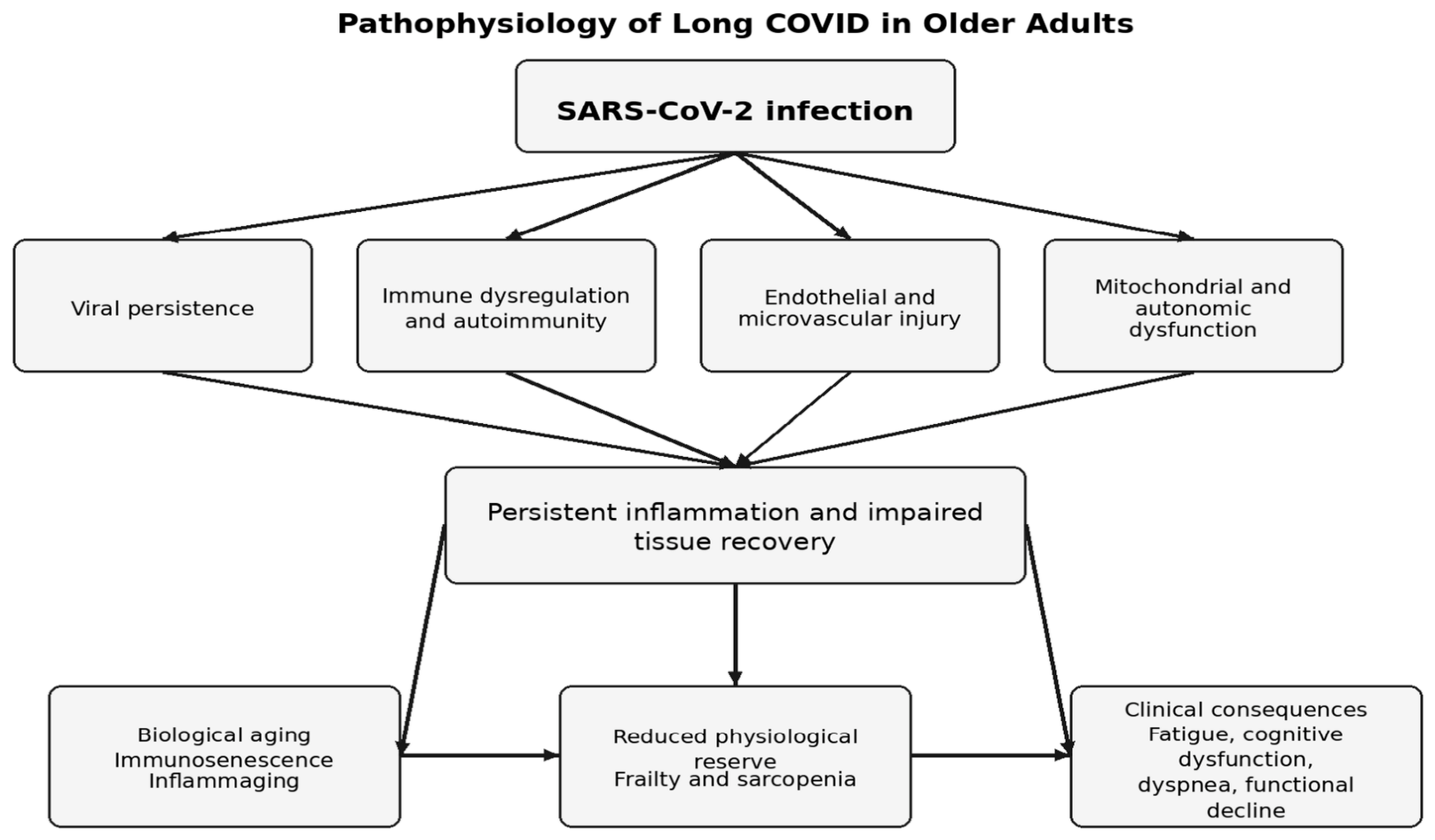
From a geriatric perspective, frailty, sarcopenia, malnutrition, and cognitive impairment may be both consequences and amplifiers of persistent post-COVID morbidity (Figure 1). Figure 1 is therefore intended as a proposed conceptual map linking biologically plausible pathways with geriatric vulnerability, rather than as a validated causal model. This distinction is important because direct age-specific mechanistic evidence remains limited.
Figure 1.
Proposed Conceptual Pathways Linking Long COVID and Geriatric Vulnerability. This conceptual figure integrates mechanisms described largely in broader adult Long COVID studies with biological aging, reduced physiological reserve, and geriatric outcomes. Arrows indicate hypothesized relationships and should not be interpreted as validated causal pathways in older adults.
6. Sex Differences in Symptom Expression and Outcomes
Across adult studies, women generally report a higher overall symptom burden than men, particularly fatigue and neurocognitive symptoms [3,4,5]. Direct older-adult evidence is more limited but broadly consistent with effect modification by age and setting. In the CLSA cohort, women were more likely to report persistent symptoms [11], whereas the Hefei residential-care cohort found consistently higher symptom scores in women across follow-up [14]. Fatigue in older adults may manifest as reduced mobility, slower recovery, diminished participation in rehabilitation, and loss of physiological reserve rather than as a discrete complaint [7].
Cognitive complaints, objective cognitive impairment, and longitudinal cognitive decline should not be used interchangeably. Subjective memory or concentration symptoms are commonly described in Long COVID, whereas objective impairment requires formal testing and cognitive decline requires change from a prior baseline. In older adults, interpretation must account for pre-existing mild cognitive impairment or dementia, delirium sequelae, depression, sensory impairment, sleep disturbance, and medication effects. Where pre-infection cognitive data are unavailable, attribution to Long COVID should remain cautious. The available age-specific evidence is still sparse, and broader adult findings should be treated as supportive rather than definitive geriatric evidence.
Respiratory and autonomic symptoms may likewise take different forms in later life. Older adults may present with exertional limitation, inactivity, orthostatic symptoms, falls, poor oral intake, or fear of activity. Sex differences in older populations may consequently be expressed not only as differences in prevalence but also as differences in symptom patterns, functional consequences, and recovery trajectories. Formal sex-stratified analyses of geriatric outcomes remain scarce.
7. Frailty, Sarcopenia, and Cognitive Vulnerability
Frailty provides a clinically useful framework because it captures vulnerability beyond individual diseases or symptoms. Direct longitudinal evidence in very old COVID-19 survivors demonstrates heterogeneous trajectories rather than a single recovery pattern. In a cohort of 233 adults aged at least 80 years assessed up to 18 months after discharge, worse baseline frailty, older age, longer hospital stay, and poorer baseline physical function were associated with subsequent deterioration [7]. Additional geriatric cohorts reinforce this pattern. Among older hospitalized survivors followed for 3 months, functional decline occurred in 36%, long-term symptoms in 49%, and worsening frailty in 26.8% [18]. In the multicenter GeroCovid Outcomes Study, 28 of 132 evaluable survivors (21.2%) lost independence in at least one ADL by long-term follow-up, with greater baseline frailty strongly associated with loss of independence [19]. These findings support the importance of pre-infection function and frailty when interpreting post-COVID outcomes, while also cautioning against attributing all later decline directly to Long COVID.
Frailty is relevant both as a pre-existing risk factor and as a possible consequence of persistent post-COVID illness. Fatigue, exertional limitation, poor sleep, reduced appetite, and inactivity may gradually reduce strength, mobility, and independence even when no single symptom appears severe. A frailty-informed interpretation can therefore reveal clinically meaningful deterioration that might otherwise be dismissed as slow convalescence or normal aging.
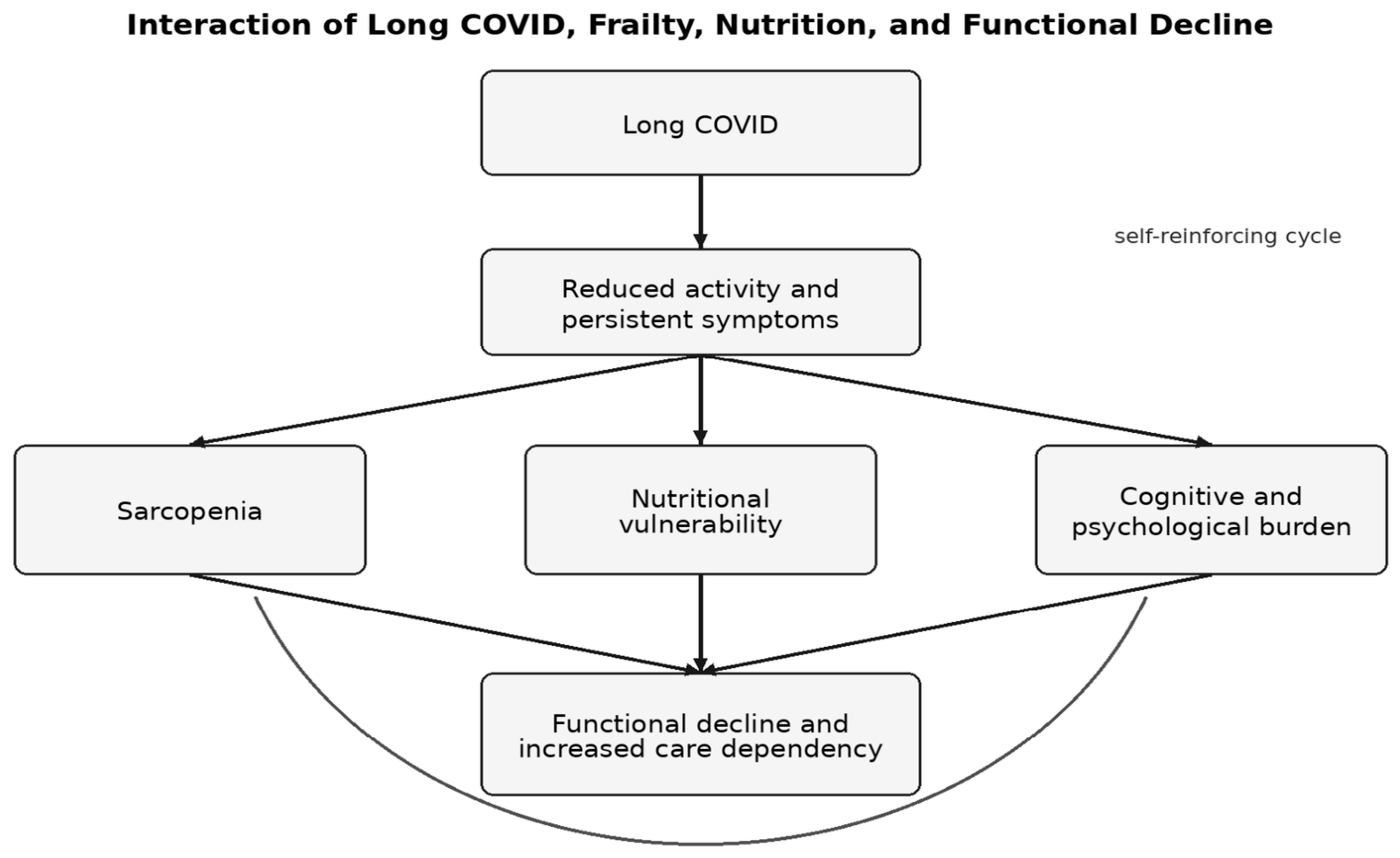
Sarcopenia is closely linked to this process, forming a potentially self-reinforcing cycle with inactivity, nutritional vulnerability, and functional decline (Figure 2). Reduced activity, inflammation, dyspnea, poor sleep, and inadequate protein intake can accelerate muscle loss and impair gait speed, balance, transfers, and rehabilitation potential [7,23,24]. Cognitive vulnerability is similarly important because persistent attention or memory problems may interact with pre-existing neurodegenerative disease, depression, sensory impairment, and delirium sequelae [7,25].
Figure 2.
Proposed Interaction of Long COVID, Frailty, Nutrition, and Functional Decline. The figure presents a conceptual, potentially self-reinforcing cycle connecting persistent symptoms, reduced activity, sarcopenia, nutritional vulnerability, cognitive or psychological burden, functional decline, and increased care dependency. It is a pragmatic synthesis of heterogeneous evidence rather than a validated causal model.
8. Nutritional Vulnerability
Nutritional vulnerability is an important but frequently overlooked component of Long COVID in older adults. Many older adults enter SARS-CoV-2 infection with reduced physiological reserve, sarcopenia, or subclinical malnutrition. Reviews and cohort studies of older adults with COVID-19 have documented a high burden of malnutrition or nutritional risk, and expert guidance has emphasized early nutritional screening and support in vulnerable patients [26,27,28,29]. However, much of this evidence concerns acute or post-acute COVID rather than Long COVID specifically; nutritional recommendations in this review should therefore be understood as geriatric best practice applied to a post-COVID context unless Long COVID-specific data are available.
Nutritional decline can reinforce frailty and sarcopenia through a cycle of reduced intake, muscle loss, decreased activity, and diminished appetite. In clinical practice, validated geriatric screening tools such as the Mini Nutritional Assessment-Short Form can be used to identify nutritional risk [29]. Unintentional weight loss greater than 5% within 6 months, reduced food intake, low body mass index, or evidence of reduced muscle mass should prompt formal nutritional assessment; these thresholds reflect general malnutrition criteria rather than Long COVID-specific diagnostic cutoffs [30]. Assessment should also include swallowing, hydration, dentition, assistance with feeding, and social barriers to food access. Laboratory values such as albumin may help characterize overall vulnerability but should not be interpreted as isolated nutritional markers because inflammation and acute illness also influence them.
Protein-energy malnutrition and micronutrient deficiencies may impair immune function, tissue repair, and rehabilitation. Documented deficiencies, including vitamin D or zinc deficiency, should be corrected, but Long COVID-specific evidence is insufficient to recommend routine supplementation in individuals without confirmed deficiency [16,17,28]. Nutritional interventions should therefore be individualized and, when tolerated, integrated with resistance exercise and rehabilitation.
In older adults, the practical objective is not simply correction of a laboratory abnormality but preservation of muscle function, mobility, and independence. Repeated nutritional assessment is especially important in long-term care facilities, where changes in intake, weight, and assistance needs may be among the earliest signs of persistent decline.
9. Functional Outcomes and Recovery Trajectories
In older adults, the burden of Long COVID is often best understood through functional outcomes rather than symptom counts alone. The most clinically consequential question is whether the person returns to their previous level of independence, mobility, and daily participation [1,7,31].
Longitudinal studies identify multiple trajectories of function and frailty rather than a single recovery course. The oldest-old cohort described above showed persistent heterogeneity through 18 months [7], while CLSA data demonstrated worse mobility and physical-function outcomes among adults with COVID-19 compared with contemporaneous controls [12]. At 3 months after hospitalization, Prampart et al. observed functional decline in 36% of older survivors, long-term symptoms in 49%, and worsening frailty in 26.8% [18]. At least 6 months after discharge, the multicenter GeroCovid Outcomes Study found that 21.2% of evaluable older survivors had lost independence in at least one ADL; frailty was a major determinant of this outcome [19]. These studies differ in age composition, acute disease severity, baseline measurement, and outcome instruments, limiting direct comparison. Nonetheless, they consistently support assessment of change from baseline rather than reliance on symptom counts alone.
Recovery should not be conceptualized simply as symptom resolution. An older adult may no longer meet a formal symptom-based definition yet still have reduced gait speed, impaired endurance, delayed restoration of routines, or persistent need for assistance. Such outcomes directly affect falls, institutionalization risk, caregiver burden, and quality of life [7,32].
10. Long COVID in Long-Term Care Settings
Long-term care settings require separate consideration because persistent post-COVID morbidity is shaped by advanced age, frailty, cognitive impairment, and high baseline dependency [21]. Direct longitudinal evidence from residential care facilities is emerging: the Hefei multicenter cohort followed 228 residents across three assessment waves and found changing symptom patterns over time, greater symptom burden in women, and slower recovery with advanced age [14]. In practice, Long COVID may be less visible as a self-reported symptom syndrome and more visible as persistent deterioration in function, cognition, nutrition, and care needs [21,32,33].
Standard frameworks rely heavily on patient-reported fatigue, brain fog, dyspnea, and palpitations [1,2]. Many long-term care residents have dementia, sensory impairment, communication difficulty, or delirium vulnerability, reducing the reliability of symptom reporting. Persistent sequelae may instead be recognized through new dependence in activities of daily living, poorer oral intake, prolonged inactivity, increased falls, behavioral change, or reduced engagement in rehabilitation.
Even modest declines in bathing, dressing, transfers, toileting, eating, or mobility can substantially increase staffing needs and long-term dependency [32,33]. Clinicians and institutional staff should look for operationalized changes from the resident’s recent baseline, such as abrupt new dependence in self-feeding, a transition from supervised or assisted transfers to total dependence, a sustained reduction in walking or participation, recurrent new falls, unexplained weight loss or reduced oral intake, or a new need for substantially greater ADL assistance. These changes are clinical warning signals rather than validated Long COVID diagnostic criteria. Their temporal relationship to infection, alternative diagnoses, and the person’s pre-existing neurodegenerative or frailty trajectory should be reviewed before attributing deterioration to Long COVID. Repeated observation by nursing and care staff is particularly valuable because they can identify deviations from the resident’s usual baseline.
11. Clinical Management
The management of Long COVID in older adults requires a multidomain geriatric approach in addition to symptom-specific assessment. Persistent symptoms frequently coexist with frailty, multimorbidity, sarcopenia, malnutrition, cognitive impairment, and polypharmacy. The primary goal is often preservation or restoration of function. Importantly, the geriatric instruments and management strategies discussed below are established tools of geriatric practice but, in most cases, have not been specifically validated as Long COVID assessment instruments in older adults. Table 1 therefore presents common thresholds as general geriatric interpretations rather than Long COVID-specific cutoffs, and indicates whether each tool is used in cited studies or proposed as an extension for structured assessment.
Table 1.
Geriatric Assessment Domains Relevant to Long COVID.
Comprehensive geriatric assessment provides a practical structure for evaluating activities of daily living, instrumental activities, mobility, balance, frailty, nutrition, cognition, mood, continence, medication burden, social support, and caregiver needs. Current status should be compared with the pre-infection baseline whenever possible. Differential diagnosis remains essential because anemia, heart failure, chronic lung disease, thyroid dysfunction, depression, sleep disorders, medication adverse effects, infection, and malnutrition can mimic core Long COVID symptoms [1,2].
Rehabilitation should be individualized according to symptom pattern, frailty, and post-exertional response. For patients without post-exertional symptom exacerbation (PESE), carefully titrated progressive activity may include aerobic exercise, resistance training, balance work, respiratory rehabilitation, occupational therapy, and fall prevention. In addition to individual randomized and interventional studies [38,39,40], a 2024 systematic review and meta-analysis identified 11 randomized trials involving 832 participants with a mean age of approximately 64 years and found improvements in 6-min walk distance, 30-s sit-to-stand performance, activities-of-daily-living independence, quality of life, fatigue, depression, and anxiety after rehabilitation interventions [20]. The meta-analysis used fixed- or random-effects models according to heterogeneity; heterogeneity varied materially by outcome (for example, I2 = 0% for ADL independence but >85% for depression and anxiety), underscoring that pooled effects should not be assumed to apply uniformly to frail or very old adults [20]. In patients with PESE, standard progressive exercise should not be applied automatically; pacing, energy conservation, symptom-contingent activity adjustment, and avoidance of repeated symptom provocation are more appropriate [41,42]. Rehabilitation targets should be meaningful and functional, such as transfers, walking to meals, self-care, and participation in daily routines.
Nutritional management should address inadequate protein and energy intake, swallowing difficulties, altered taste or smell, hydration, and documented micronutrient deficiencies. Geriatric nutrition guidance supports routine screening and individualized intervention in older people at nutritional risk [29]. General malnutrition criteria—including clinically important unintentional weight loss and reduced intake—can help trigger assessment [30], but they are not Long COVID-specific thresholds. Protein support combined with resistance exercise may be appropriate for sarcopenia when tolerated and when PESE is absent or carefully managed. Cognitive, mood, and sleep assessment should be incorporated into care, with referral for formal cognitive evaluation, rehabilitation, or psychological support when indicated.
At present, no pharmacological treatment has been established as universally effective for Long COVID [16,17]. Management should therefore be symptom-targeted, safety-conscious, and explicit about the source of evidence. Some recommendations are supported by Long COVID or post-COVID rehabilitation studies, whereas others reflect established geriatric practice or expert guidance rather than Long COVID-specific trials. Exercise should not be prescribed indiscriminately; exertional desaturation and relevant cardiac or pulmonary disease should be evaluated before training, and pacing or energy-conservation strategies should be used when PESE is present [41,42].
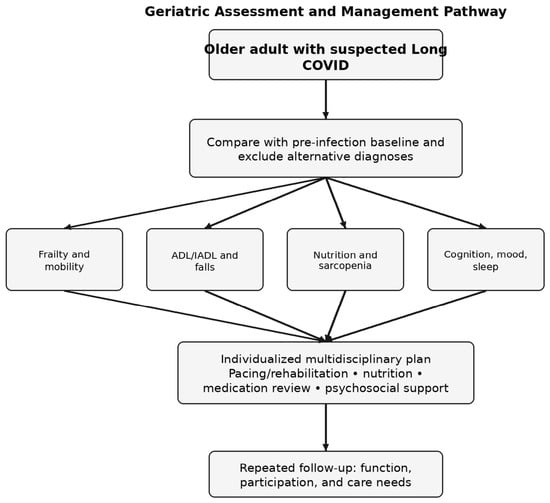
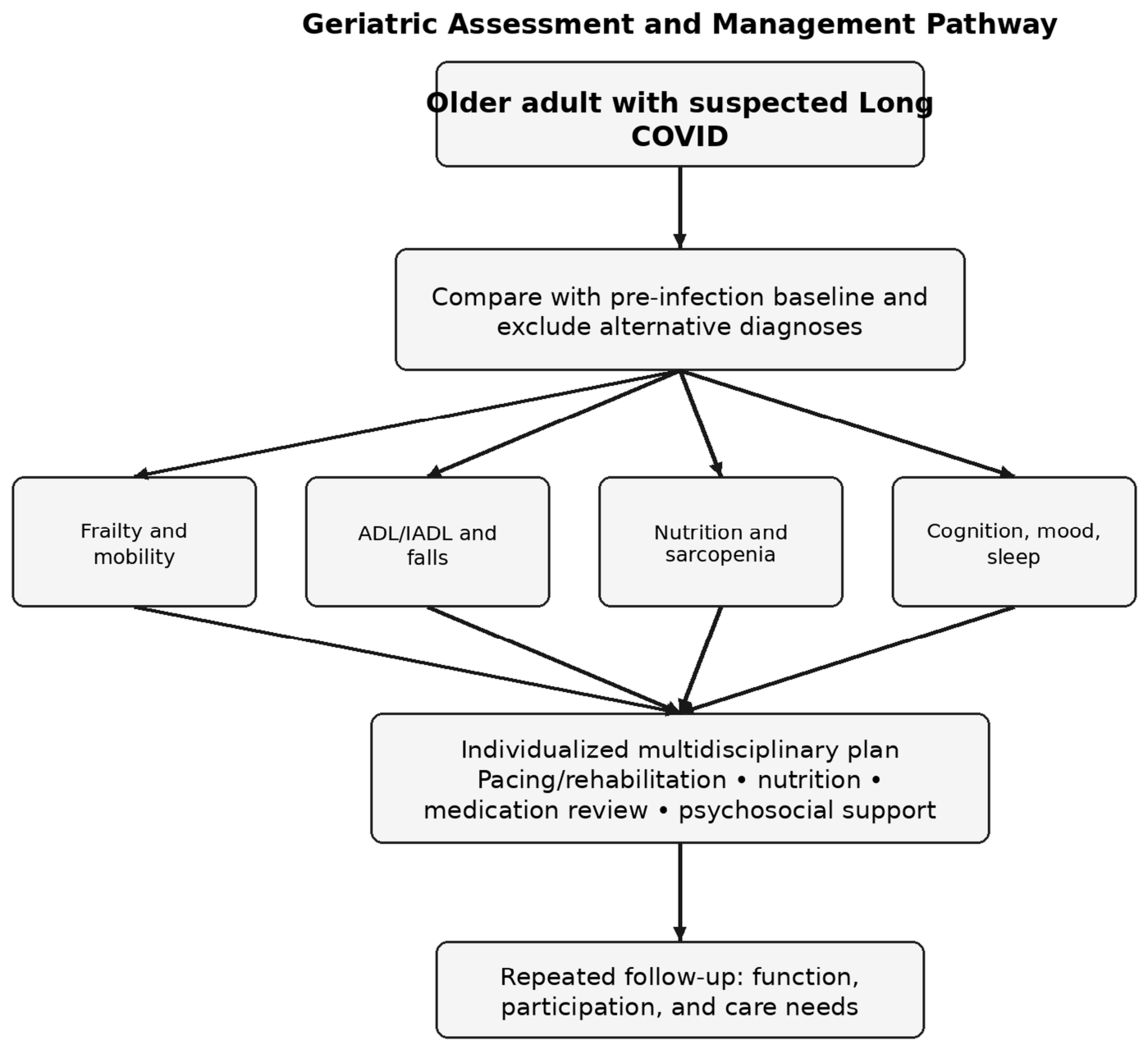
Medication review is essential because polypharmacy may contribute to fatigue, dizziness, orthostatic hypotension, falls, and cognitive impairment. Representative management strategies are summarized in Table 2, and a practical assessment and management pathway is shown in Figure 3. Multidisciplinary care involving physicians, nurses, rehabilitation professionals, dietitians, pharmacists, social workers, and caregivers is often necessary, particularly in long-term care settings.
Table 2.
Management Strategies for Long COVID in Older Adults.
Figure 3.
Proposed Geriatric Assessment and Management Pathway. This pragmatic pathway emphasizes comparison with the pre-infection baseline, exclusion of alternative diagnoses, multidomain geriatric assessment, individualized multidisciplinary care, and repeated functional follow-up. It adapts established geriatric principles to Long COVID and has not been validated as a Long COVID-specific clinical pathway.
12. Proposed Geriatric Framework for Long COVID
Most prior Long COVID reviews were developed primarily from younger and middle-aged cohorts and emphasize persistent multisystem symptoms, mechanisms, or organ-specific management [15,16,17]. These perspectives remain essential, but they do not consistently organize later-life evidence around pre-infection function, frailty transitions, nutritional vulnerability, cognition, and care dependency. The distinct contribution of the present framework is therefore the systematic use of baseline-adjusted functional trajectories and geriatric vulnerability domains to interpret persistent post-COVID morbidity. The framework should be understood as an adaptation and integration of established comprehensive geriatric assessment principles for the Long COVID context, not as a wholly novel or validated diagnostic model.
We propose a conceptual and pragmatic framework in which persistent post-COVID abnormalities may interact with age-related vulnerability to contribute to functional deterioration. The biological components—such as immune dysregulation, endothelial dysfunction, autonomic abnormalities, and altered energy metabolism—are supported mainly by broader adult mechanistic literature [15,16,17,22], whereas the geriatric components are grounded in direct evidence showing age-related symptom differences, mobility loss, frailty trajectories, persistent post-acute diagnoses, and care-setting effects [7,8,9,10,11,12,13,14,18,19]. The relationships shown in the framework are therefore hypothesis-generating and clinically organizing rather than demonstrated causal pathways. Selection bias, competing mortality, heterogeneous definitions, and limited representation of very frail adults further mean that Figure 1, Figure 2 and Figure 3 should be interpreted as heuristic tools rather than validated models.
The main clinical implication is not that function should replace symptom assessment, but that geriatric domains can add an important layer to it. Assessment may include mobility, activities of daily living, nutrition, cognition, frailty, medication burden, and rehabilitation potential alongside conventional symptom evaluation. This approach is especially relevant to long-term care, where self-reported symptoms may be unreliable and increased care needs may be the clearest manifestation of persistent post-COVID morbidity.
The proposed framework complements rather than replaces the WHO consensus definition and other symptom-centered approaches [1,43]. Table 3 therefore presents symptom assessment and geriatric-domain assessment as complementary layers rather than competing models. The framework encourages clinicians and researchers to ask whether post-COVID symptoms are accompanied by measurable change from baseline in independence, mobility, cognition, nutrition, participation, and care needs, while recognizing that these domains are also influenced by aging and chronic disease.
Table 3.
Complementary Symptom-Based and Geriatric-Domain Assessment of Long COVID.
12.1. Strength of Evidence and Caution in Implementation
The evidentiary basis for recommendations varies by domain. Direct intervention evidence is strongest for selected rehabilitation outcomes, where randomized trials and meta-analysis support improvements in functional capacity and some patient-reported outcomes, although heterogeneity is substantial for several outcomes [20,38,39,40]. Direct observational geriatric evidence supports baseline-adjusted assessment of symptoms, mobility, frailty, and care needs [7,8,9,10,11,12,13,14,18,19], but cannot by itself establish treatment efficacy or causality. Nutritional screening, medication review, cognitive assessment, and comprehensive geriatric assessment are largely extrapolated from established geriatric practice and expert guidance [28,29,30,34,35,36,37], not validated Long COVID-specific interventions. Local implementation should therefore be accompanied by systematic data collection, explicit outcome monitoring, and periodic reassessment of benefit and burden.
12.2. Public Health and Implementation Considerations
From a public health perspective, a minimal geriatric Long COVID dataset could include pre-infection and current ADL/IADL, frailty category, mobility, nutrition, cognition, falls, hospitalization, and care dependency. Routine baseline-adjusted functional measurement would support surveillance, service planning, and comparison of outcomes across post-COVID programs. Resource allocation should account for access to rehabilitation, nutrition services, and geriatric expertise in primary care and long-term care, while equity monitoring should assess whether frail, cognitively impaired, socioeconomically disadvantaged, and institutionalized older adults are under-recognized or under-served. These proposals are implementation priorities rather than validated service standards and should be evaluated prospectively.
13. Research Gaps and Future Directions
Important gaps remain in older adults (Table 4, Table 5 and Table 6). Priority research questions are summarized in Table 4, and representative studies providing direct age-relevant evidence are summarized in Table 5. Recent RECOVER, Medicare, CLSA, Brazilian, Spanish, French, Italian, and residential-care cohorts substantially strengthen the empirical basis of this review [7,8,9,10,11,12,13,14,18,19], while rehabilitation evidence in older adults is now supported by randomized-trial meta-analysis [20]. Nevertheless, definitions, settings, baseline data, follow-up periods, and outcome measures differ considerably. Adults aged 65 years or older-particularly those who are frail, very old, cognitively impaired, or living in long-term care-remain incompletely represented in intervention studies [6].
Table 4.
Priority Research Questions for Long COVID in Older Adults.
Table 5.
Selected Cohort Studies Providing Direct or Age-Relevant Evidence on Long COVID and Post-COVID Outcomes in Older Adults.
Table 6.
Operational Definitions Used in Selected Older-Adult Long COVID and Post-Acute Cohorts.
First, geriatric outcomes should be used more often as primary endpoints. Frailty transitions, activities of daily living, mobility, falls, nutritional decline, institutionalization, caregiver burden, and quality of life may be more meaningful than symptom prevalence alone. Second, sex-stratified analyses should examine differences in functional recovery and long-term dependency, not only symptom counts.
Third, long-term care residents need dedicated prospective studies with repeated baseline-adjusted assessments. Fourth, intervention trials should specifically include frail and very old adults and test rehabilitation, nutrition support, cognitive strategies, medication optimization, and multidisciplinary care models [20,28,38,39,40,41,42]. Future trials and registries should pre-specify frailty-adjusted, function-centered endpoints—including ADL/IADL, mobility, falls, participation, and care dependency—in addition to symptom outcomes. Finally, biomarker and prediction studies should determine whether biological measures add clinically useful information beyond frailty and functional assessment.
14. Conclusions
Long COVID in older adults should be interpreted through a geriatric lens that complements conventional symptom assessment. Broader adult cohorts consistently show a higher overall risk in women, while direct geriatric studies indicate that age, sex, multimorbidity, baseline frailty, mobility, and care setting shape the clinical expression and recovery trajectory [3,4,5,6,7,8,9,10,11,12,13,14]. Because definitions and outcome measures remain heterogeneous, the magnitude of these associations should not be assumed to be uniform across frail or very old populations.
For older adults, persistent post-COVID morbidity may be expressed not only as persistent symptoms but also as incomplete recovery, reduced independence, worsening frailty, nutritional deterioration, cognitive concerns, rehabilitation failure, and increased care needs. This pattern is especially important in long-term care environments, where symptom-centered frameworks may underestimate clinically meaningful change [14,21,32,33]. Attribution should nevertheless be cautious and should consider the pre-infection trajectory, competing diagnoses, and the effects of aging and chronic disease.
The proposed geriatric framework is a hypothesis-generating, conceptual and pragmatic adaptation of established geriatric principles rather than a validated Long COVID-specific model. It may help structure baseline-adjusted, multidomain assessment and identify research and surveillance priorities, but specific instruments, nutritional thresholds, rehabilitation strategies, and management pathways require further validation in frail and very old adults with Long COVID. Future studies should prioritize sex-stratified, frailty-adjusted, function-centered outcomes, prospective long-term care cohorts, and implementation research that addresses rehabilitation capacity, nutrition services, geriatric expertise, resource allocation, and equity.
Funding
This research received no external funding.
Institutional Review Board Statement
Not applicable.
Informed Consent Statement
Not applicable.
Data Availability Statement
No new data were created or analyzed in this study. Data sharing is not applicable to this article.
Acknowledgments
During the preparation of this manuscript, the author used OpenAI ChatGPT (GPT-5.6 Pro; accessed July–September 2026) to assist with draft development, language revision, structural refinement, bibliographic cross-checking, and preparation of conceptual figures. The author critically reviewed, revised, and verified all AI-assisted content and takes full responsibility for the content of this publication.
Conflicts of Interest
The author declares no conflicts of interest.
References
- World Health Organization. Post COVID-19 Condition (Long COVID). 26 February 2025. Available online: https://www.who.int/news-room/fact-sheets/detail/post-covid-19-condition-%28long-covid%29 (accessed on 23 July 2026).
- Centers for Disease Control and Prevention. Long COVID Basics. 6 May 2026. Available online: https://www.cdc.gov/long-covid/about/index.html (accessed on 23 July 2026).
- Shah, D.P.; Thaweethai, T.; Karlson, E.W.; Bonilla, H.; Horne, B.D.; Mullington, J.M.; Wisnivesky, J.P.; Hornig, M.; Shinnick, D.J.; Klein, J.D.; et al. Sex differences in Long COVID. JAMA Netw. Open 2025, 8, e2455430. [Google Scholar] [CrossRef] [Scilit] [PubMed]
- Silva, J.; Iwasaki, A. Sex differences in postacute infection syndromes. Sci. Transl. Med. 2024, 16, eado2102. [Google Scholar] [CrossRef] [Scilit] [PubMed]
- Kudeken, N. Long COVID and sex differences: A narrative review. Intern. Med. 2026. [Google Scholar] [CrossRef] [Scilit] [PubMed]
- Russell, S.J.; Parker, K.; Lehoczki, A.; Lieberman, D.; Partha, I.S.; Scott, S.J.; Phillips, L.R.; Fain, M.J.; Nikolich, J.Ž. Post-acute sequelae of SARS-CoV-2 infection (Long COVID) in older adults. GeroScience 2024, 46, 6563–6581. [Google Scholar] [CrossRef] [Scilit] [PubMed]
- Saavedra-Palacios, R.; Álvarez-Bustos, A.; Furones-Fernández, L.; Chen-Chim, Á.; Boimorto-Medina, M.T.; Martiño-Córdoba, R.; Gil-Gregorio, P.; Sepúlveda-Loyola, W.; Rodríguez-Sánchez, I. Transitions in functional status and frailty among post-hospitalized COVID-19 oldest-old adults: An 18-month follow-up study. J. Clin. Med. 2026, 15, 209. [Google Scholar] [CrossRef] [Scilit] [PubMed]
- Fain, M.J.; Horne, B.D.; Horwitz, L.I.; Thaweethai, T.; Greene, M.; Hornig, M.; Orkaby, A.R.; Rosen, C.; Ritchie, C.S.; Ashktorab, H.; et al. Age-related changes in the clinical picture of Long COVID. J. Am. Geriatr. Soc. 2025, 73, 3123–3137. [Google Scholar] [CrossRef] [Scilit] [PubMed]
- Abul, Y.; Harris, D.A.; Chachlani, P.; Hayes, K.N.; Zullo, A.R.; Mor, V.; Gravenstein, S. Incidence of Long COVID diagnoses in 3.6 million U.S. Medicare beneficiaries with COVID-19. J. Gerontol. A Biol. Sci. Med. Sci. 2025, 80, glaf108. [Google Scholar] [CrossRef] [Scilit] [PubMed]
- Cohen, K.; Ren, S.; Heath, K.; Dasmariñas, M.C.; Jubilo, K.G.; Guo, Y.; Lipsitch, M.; Daugherty, S.E. Risk of persistent and new clinical sequelae among adults aged 65 years and older during the post-acute phase of SARS-CoV-2 infection: Retrospective cohort study. BMJ 2022, 376, e068414. [Google Scholar] [CrossRef] [Scilit] [PubMed]
- Griffith, L.E.; Beauchamp, M.; McMillan, J.; Borhan, S.; Oz, U.E.; Wolfson, C.; Kirkland, S.; Basta, N.E.; Thompson, M.; Raina, P.; et al. Persistent COVID-19 symptoms in community-living older adults from the Canadian Longitudinal Study on Aging (CLSA). Commun. Med. 2023, 3, 36. [Google Scholar] [CrossRef] [Scilit] [PubMed]
- Beauchamp, M.K.; Joshi, D.; McMillan, J.; Oz, U.E.; Griffith, L.E.; Basta, N.E.; Kirkland, S.; Wolfson, C.; Raina, P.; Canadian Longitudinal Study on Aging (CLSA) Team; et al. Assessment of functional mobility after COVID-19 in adults aged 50 years or older in the Canadian Longitudinal Study on Aging. JAMA Netw. Open 2022, 5, e2146168. [Google Scholar] [CrossRef] [Scilit] [PubMed]
- Salci, M.A.; Carreira, L.; Oliveira, N.N.; Pereira, N.D.; Covre, E.R.; Pesce, G.B.; Oliveira, R.R.; Höring, C.F.; Baccon, W.C.; Alcaraz, J.P.; et al. Long COVID among Brazilian adults and elders 12 months after hospital discharge: A population-based cohort study. Healthcare 2024, 12, 1443. [Google Scholar] [CrossRef] [Scilit] [PubMed]
- Wu, Q.; Zhao, Y.; Fang, X.; Chen, T.; Zhang, C.; Liu, Z.; Wang, C. Longitudinal changes in Long COVID symptoms by sex and age among geriatric residents of residential care facilities: A multicenter cohort study in Hefei, China. J. Am. Med. Dir. Assoc. 2026, 27, 106071. [Google Scholar] [CrossRef] [Scilit] [PubMed]
- Davis, H.E.; McCorkell, L.; Vogel, J.M.; Topol, E.J. Long COVID: Major findings, mechanisms and recommendations. Nat. Rev. Microbiol. 2023, 21, 133–146. [Google Scholar] [CrossRef] [Scilit] [PubMed]
- Greenhalgh, T.; Sivan, M.; Perlowski, A.; Nikolich, J.Ž. Long COVID: A clinical update. Lancet 2024, 404, 707–724. [Google Scholar] [CrossRef] [Scilit] [PubMed]
- Peluso, M.J.; Deeks, S.G. Mechanisms of long COVID and the path toward therapeutics. Cell 2024, 187, 5500–5529. [Google Scholar] [CrossRef] [Scilit] [PubMed]
- Prampart, S.; Le Gentil, S.; Bureau, M.L.; Macchi, C.; Leroux, C.; Chapelet, G.; de Decker, L.; Rouaud, A.; Boureau, A.S. Functional decline, long term symptoms and course of frailty at 3-months follow-up in COVID-19 older survivors, a prospective observational cohort study. BMC Geriatr. 2022, 22, 542. [Google Scholar] [CrossRef] [Scilit] [PubMed]
- Okoye, C.; Calsolaro, V.; Calabrese, A.M.; Zotti, S.; Fedecostante, M.; Volpato, S.; Fumagalli, S.; Cherubini, A.; Incalzi, R.A.; Monzani, F. Determinants of cause-specific mortality and loss of independence in older patients following hospitalization for COVID-19: The GeroCovid Outcomes Study. J. Clin. Med. 2022, 11, 5578. [Google Scholar] [CrossRef] [Scilit] [PubMed]
- Deng, J.; Qin, C.; Lee, M.; Lee, Y.; You, M.; Liu, J. Effects of rehabilitation interventions for old adults with long COVID: A systematic review and meta-analysis of randomised controlled trials. J. Glob. Health 2024, 14, 05025. [Google Scholar] [CrossRef] [Scilit] [PubMed]
- Fyffe, I.; Sorensen, J.; Carroll, S.; MacPhee, M.; Andrews-Paul, A.; Crooks, V.A.; Freeman, S.; Davison, K.; Walls, J.; Berndt, A.; et al. Long COVID in long-term care: A rapid realist review. BMJ Open 2023, 13, e076186. [Google Scholar] [CrossRef] [Scilit] [PubMed]
- Yin, K.; Peluso, M.J.; Luo, X.; Thomas, R.; Shin, M.-G.; Neidleman, J.; Andrew, A.; Young, K.C.; Ma, T.; Hoh, R.; et al. Long COVID manifests with T cell dysregulation, inflammation and an uncoordinated adaptive immune response to SARS-CoV-2. Nat. Immunol. 2024, 25, 218–225. [Google Scholar] [CrossRef] [Scilit] [PubMed]
- Sayer, A.A.; Cruz-Jentoft, A.J. Sarcopenia definition, diagnosis and treatment: Consensus is growing. Age Ageing 2022, 51, afac220. [Google Scholar] [CrossRef] [Scilit] [PubMed]
- Martone, A.M.; Tosato, M.; Ciciarello, F.; Galluzzo, V.; Zazzara, M.B.; Pais, C.; Savera, G.; Calvani, R.; Marzetti, E.; Robles, M.C.; et al. Sarcopenia as potential biological substrate of Long COVID-19 syndrome: Prevalence, clinical features, and risk factors. J. Cachexia Sarcopenia Muscle 2022, 13, 1974–1982. [Google Scholar] [CrossRef] [Scilit] [PubMed]
- Guzmán-Gurrola, A.L.; González-López, L.; Chávez-Íñiguez, J.S.; Vázquez, M.V.; Flores-Hernández, E.I.; Novoa-Burquez, J.A.; Zavala-Cerna, M.G. Sex-specific differences in nutritional status and olfaction in association with cognitive impairment amongst older adults with Long COVID syndrome. J. Clin. Med. 2026, 15, 1994. [Google Scholar] [CrossRef] [Scilit] [PubMed]
- Moreno-Guillamont, E.; Moret Tatay, A.; Tripiana Rallo, M.; Dea-Ayuela, M.A.; San Onofre, N.; Soriano, J.M. Nutritional assessment of the elderly population with COVID-19: A systematic review. COVID 2026, 6, 3. [Google Scholar] [CrossRef] [Scilit]
- Li, T.; Zhang, Y.; Gong, C.; Wang, J.; Liu, B.; Shi, L.; Duan, J. Prevalence of malnutrition and analysis of related factors in elderly patients with COVID-19 in Wuhan, China. Eur. J. Clin. Nutr. 2020, 74, 871–875. [Google Scholar] [CrossRef] [Scilit] [PubMed]
- Barazzoni, R.; Bischoff, S.C.; Breda, J.; Wickramasinghe, K.; Krznaric, Z.; Nitzan, D.; Pirlich, M.; Singer, P. ESPEN expert statements and practical guidance for nutritional management of individuals with SARS-CoV-2 infection. Clin. Nutr. 2020, 39, 1631–1638. [Google Scholar] [CrossRef] [Scilit] [PubMed]
- Volkert, D.; Beck, A.M.; Cederholm, T.; Cruz-Jentoft, A.; Hooper, L.; Kiesswetter, E.; Maggio, M.; Raynaud-Simon, A.; Sieber, C.; Sobotka, L.; et al. ESPEN practical guideline: Clinical nutrition and hydration in geriatrics. Clin. Nutr. 2022, 41, 958–989. [Google Scholar] [CrossRef] [Scilit] [PubMed]
- Cederholm, T.; Jensen, G.L.; Correia, M.I.T.D.; Gonzalez, M.C.; Fukushima, R.; Higashiguchi, T.; Baptista, G.; Barazzoni, R.; Blaauw, R.; Coats, A.J.; et al. GLIM criteria for the diagnosis of malnutrition—A consensus report from the global clinical nutrition community. Clin. Nutr. 2019, 38, 1–9. [Google Scholar] [CrossRef] [Scilit] [PubMed]
- Ford, N.D.; Slaughter, D.; Edwards, D.; Dalton, A.; Perrine, C.; Vahratian, A.; Saydah, S. Long COVID and significant activity limitation among U.S. adults. MMWR Morb. Mortal. Wkly. Rep. 2023, 72, 866–870. [Google Scholar] [CrossRef] [Scilit] [PubMed]
- Goździewicz, Ł.; Tobis, S.; Chojnicki, M.; Chudek, J.; Wieczorowska-Tobis, K.; Idasiak-Piechocka, I.; Merks, P.; Religioni, U.; Neumann-Podczaska, A. Long-term impairment in activities of daily living following COVID-19 in residents of long-term care facilities. Med. Sci. Monit. 2023, 29, e941197. [Google Scholar] [CrossRef] [Scilit] [PubMed]
- Harris, E. Long COVID in nursing home residents manifests as functional decline. JAMA 2024, 331, 15. [Google Scholar] [CrossRef] [Scilit] [PubMed]
- Rockwood, K.; Song, X.; MacKnight, C.; Bergman, H.; Hogan, D.B.; McDowell, I.; Mitnitski, A. A global clinical measure of fitness and frailty in elderly people. CMAJ 2005, 173, 489–495. [Google Scholar] [CrossRef] [Scilit] [PubMed]
- Morley, J.E.; Malmstrom, T.K.; Miller, D.K. A simple frailty questionnaire (FRAIL) predicts outcomes in middle aged African Americans. J. Nutr. Health Aging 2012, 16, 601–608. [Google Scholar] [CrossRef] [Scilit] [PubMed]
- Malmstrom, T.K.; Miller, D.K.; Simonsick, E.M.; Ferrucci, L.; Morley, J.E. SARC-F: A symptom score to predict persons with sarcopenia at risk for poor functional outcomes. J. Cachexia Sarcopenia Muscle 2016, 7, 28–36. [Google Scholar] [CrossRef] [Scilit] [PubMed]
- Kaiser, M.J.; Bauer, J.M.; Ramsch, C.; Uter, W.; Guigoz, Y.; Cederholm, T.; Thomas, D.R.; Anthony, P.; Charlton, K.E.; Maggio, M.; et al. Validation of the Mini Nutritional Assessment short-form (MNA-SF): A practical tool for identification of nutritional status. J. Nutr. Health Aging 2009, 13, 782–788. [Google Scholar] [CrossRef] [Scilit] [PubMed]
- Liu, K.; Zhang, W.; Yang, Y.; Zhang, J.; Li, Y.; Chen, Y. Respiratory rehabilitation in elderly patients with COVID-19: A randomized controlled study. Complement. Ther. Clin. Pract. 2020, 39, 101166. [Google Scholar] [CrossRef] [Scilit] [PubMed]
- Pleguezuelos, E.; Del Carmen, A.; Moreno, E.; Serra-Prat, M.; Serra-Payá, N.; Garnacho-Castaño, M.V. Telerehabilitation improves cardiorespiratory and muscular fitness and body composition in older people with post-COVID-19 syndrome. J. Cachexia Sarcopenia Muscle 2024, 15, 1785–1796. [Google Scholar] [CrossRef] [Scilit] [PubMed]
- Elyazed, T.I.A.; Alsharawy, L.A.; Salem, S.E.; Helmy, N.A.; Abd El-Hakim, A.A.E.-M. Effect of home-based pulmonary rehabilitation on exercise capacity in post-COVID-19 patients: A randomized controlled trial. J. Neuroeng. Rehabil. 2024, 21, 40. [Google Scholar] [CrossRef] [Scilit] [PubMed]
- World Health Organization. Clinical Management of COVID-19: Living Guideline, June 2025; World Health Organization: Geneva, Switzerland, 2025; Available online: https://www.who.int/publications/i/item/B09467 (accessed on 23 July 2026).
- Saunders, E.G.; Pouliopoulou, D.V.; Miller, E.; Billias, N.; MacDermid, J.C.; Brunton, L.; Pereira, T.V.; Quinn, K.L.; Bobos, P. Rehabilitation interventions and outcomes for post-COVID condition: A scoping review. BMJ Public Health 2025, 3, e001827. [Google Scholar] [CrossRef] [Scilit] [PubMed]
- Soriano, J.B.; Murthy, S.; Marshall, J.C.; Relan, P.; Diaz, J.V.; WHO Clinical Case Definition Working Group on Post-COVID-19 Condition. A clinical case definition of post-COVID-19 condition by a Delphi consensus. Lancet Infect. Dis. 2022, 22, e102–e107. [Google Scholar] [CrossRef] [Scilit] [PubMed]

Disclaimer/Publisher’s Note: The statements, opinions and data contained in all publications are solely those of the individual author(s) and contributor(s) and not of MDPI and/or the editor(s). MDPI and/or the editor(s) disclaim responsibility for any injury to people or property resulting from any ideas, methods, instructions or products referred to in the content. |
© 2026 by the author. Licensee MDPI, Basel, Switzerland. This article is an open access article distributed under the terms and conditions of the Creative Commons Attribution (CC BY) license.