


Abstract
Balancing ionic transport, thermal robustness, and electrochemical stability remains an important challenge in the design of ionic liquid (IL) electrolytes for lithium-based energy storage. Here, quantitative structure–transport relationships were established through a systematic comparison of six bis(trifluoromethanesulfonyl)imide ([Tf2N]−)-based ILs spanning imidazolium, pyrrolidinium, and quaternary ammonium cation families, each examined in both conventional alkyl and ether-functionalized forms. Density, viscosity, and ionic conductivity were measured over broad temperature ranges, while Raman spectroscopy and electrochemical stability measurements were used to probe ion association and voltage stability under selected conditions for both neat ILs and LiTf2N-containing electrolytes. Ether functionalization consistently lowered viscosity and enhanced conductivity in the neat ILs, whereas LiTf2N addition markedly increased viscosity and reduced conductivity in all systems. The magnitude of this lithium-induced transport penalty depended on cation architecture, being smallest for imidazolium systems and largest for ammonium analogues. Raman spectra indicate that these trends are associated with competition between Li+–anion coordination and ether-mediated solvation, which modifies ion association and local coordination environments. Walden analysis showed subionic behavior for all systems, with larger deviations after lithium incorporation, suggesting increased ion correlation. Electrochemical measurements revealed a complementary trade-off between transport and stability: the ether-functionalized imidazolium electrolyte containing 0.65 mmol g−1 LiTf2N exhibited the highest ionic conductivity among the lithium-containing systems, reaching 1.6 and 12.6 mS cm−1 at 25 and 80 °C, respectively, but the corresponding imidazolium IL had the narrowest electrochemical stability window, about 4.3 V. In contrast, the ether-functionalized pyrrolidinium and ammonium ILs exhibited wider electrochemical stability windows of about 5.5 V, with improved cathodic stability and somewhat higher anodic stability than the imidazolium analogue.
1. Introduction
Electrolyte chemistry remains a central constraint in the development of safer, higher-energy lithium-based electrochemical storage systems. Although conventional carbonate electrolytes provide high ionic conductivity, their volatility, flammability, and limited thermal stability restrict operation under elevated-temperature and high-stress conditions [1,2,3]. Developing liquid electrolytes that simultaneously deliver efficient ion transport, wide electrochemical stability windows, and improved thermal robustness therefore remains an important challenge for next-generation batteries.
Ionic liquids (ILs) are promising alternatives because they combine negligible vapor pressure, low flammability, wide liquidus ranges, and broad electrochemical stability with substantial molecular tunability through independent choice of cation and anion structure [2,3]. IL-based electrolytes have been shown to stabilize electrode–electrolyte interfaces, suppress dendritic metal deposition, and extend operational temperature windows in lithium and metal batteries [3,4,5]. Their importance is further expanding in liquid, gel, and polymer electrolyte architectures where interphase stability and non-flammable operation are increasingly desirable [6,7]. Yet these advantages are offset by a persistent limitation: many ILs exhibit lower ionic conductivity than conventional organic electrolytes because of their relatively high viscosities, strong Coulombic interactions, and pronounced ion correlation.
This transport limitation becomes more acute when lithium salts are introduced. In lithium-containing IL electrolytes, Li+ coordination to surrounding ions can increase local ordering, promote ion pairing or aggregation, and reduce mobility [4,5]. As a result, electrolyte optimization requires balancing multiple coupled variables rather than maximizing any single property in isolation. High conductivity does not necessarily coincide with wide electrochemical stability, and molecular features that improve neat-liquid fluidity may not preserve transport once lithium is added.
Recent theoretical and computational studies reinforce this view. Molecular dynamics simulations reveal structural and dynamical crossovers arising from ion pairing, clustering, and electrostatic screening in concentrated ionic media [8]. Complementary theoretical analyses show that transport in dense electrolytes is shaped by coupled effects of ion size, concentration, and nanoscale organization rather than by classical dilute-solution descriptions [9]. These findings indicate that local coordination structure and collective ion motion are important determinants of macroscopic electrolyte behavior.
Two molecular design variables are especially important: cation architecture and side-chain functionality. Even with a fixed anion, changes in cation ring structure, charge delocalization, substituent identity, and molecular packing strongly influence density, viscosity, conductivity, diffusivity, and electrochemical stability. Systematic studies of imidazolium bis(trifluoromethanesulfonyl)imide ILs established strong alkyl-chain effects on transport properties [10], while broader comparisons across cation families confirmed important roles for cation geometry and charge distribution [11,12,13]. Bulut et al. [14] reported transport and Walden behavior for several neat imidazolium- and pyrrolidinium-based [Tf2N]− ILs, providing useful benchmarks for cation-dependent trends. Distinct transport and electrochemical responses have also been reported for imidazolium and ammonium dicyanamide ILs [15], and differences between imidazolium- and pyrrolidinium-based Tf2N systems have been linked to local structure and viscoelastic relaxation [16]. Recent studies further emphasize a recurring trade-off between transport efficiency and electrochemical stability across cation families [17], while subtle pyrrolidinium side-chain modifications can alter solvation number, conductivity, and oxidative stability [18]. Complementary thermophysical studies further showed that, even with a common cation, IL viscosity can vary widely with anion identity, highlighting the broader importance of specific ion interactions and packing effects [19]. In particular, cyano-based anions were associated with comparatively low viscosities and densities, whereas sulfate- and carboxylate-containing anions produced substantially higher viscosities.
Ether functionalization provides an additional route to tune local interactions. Pendant ether groups can redistribute cation charge, weaken cation–anion interactions, and introduce donor sites for Li+ coordination. In conventional imidazolium [Tf2N] ILs, long alkyl substituents promote nonpolar domain formation and enhanced nanostructuring [20]. Replacing purely alkyl side chains with ether-functionalized groups is therefore expected to modify local packing and segregation behavior. Spectroscopic, simulation, self-assembly, and scattering studies support this view, showing that functional side chains can reorganize cation–anion interactions, nanoscale domains, and liquid packing in ILs [21,22,23]. Earlier experimental studies showed that ether-functionalized imidazolium cations can exhibit improved fluidity relative to conventional alkyl analogues because intramolecular coordination reduces effective ion pairing [24]. Simulations also showed that ether oxygen atoms participate directly in Li+ solvation and alter diffusion pathways [25]. However, lithium salt addition introduces competing effects: although Li+ solvation may be enhanced, stronger ion association, higher viscosity, and lower conductivity can result [22,26]. Thus, the benefit of ether substitution depends on the broader ionic environment.
Our previous studies identified several of these competing effects in ether-functionalized IL systems, including reduced cation–anion interactions, altered Li+ coordination environments, and conductivity changes that did not always track charge-carrier concentration [22,24,25,26]. Related hybrid polymer–IL and solvate IL systems likewise showed that transport depends sensitively on lithium coordination environment and cation structure [27,28]. Despite these advances, direct experimental comparisons that simultaneously isolate cation family, ether functionalization, and lithium salt incorporation under identical conditions remain limited.
Here, we sought to address this gap through a controlled comparative study of six [Tf2N]−-based ILs spanning three major cation families—imidazolium, pyrrolidinium, and quaternary ammonium—each examined in both conventional alkyl and ether-functionalized forms (Figure 1). Density, viscosity, ionic conductivity, Raman spectroscopy, and electrochemical stability measurements were used to establish quantitative structure–property relationships in neat ILs and lithium salt-containing electrolytes. This comparative design enabled direct evaluation of how cation charge distribution, ring structure, and ether coordination influence lithium-induced transport penalties, ion association, and the balance between conductivity and electrochemical robustness. More broadly, this study highlights cation architecture as an important design variable in developing next-generation IL electrolytes that balance transport efficiency with practical stability.
Figure 1.
Chemical structures of the ionic liquid cations investigated in this work. The series includes imidazolium, pyrrolidinium, and quaternary ammonium cations bearing either conventional alkyl substituents or ether-functionalized side chains. Comparison of these cation frameworks enables systematic evaluation of the effects of cation charge delocalization, ring structure, and ether coordination on density, viscosity, and ionic conductivity in lithium salt–ionic liquid electrolytes.
2. Materials and Methods
2.1. Materials
1-Methylimidazole (CAS 616-47-7, 99%, Alfa Aesar, Ward Hill, MA, USA), N- methylpyrrolidine (CAS 120-94-5, 98%, Alfa Aesar), N,N-diethyl-N-methylamine (CAS 616-39-7, 97%, Sigma-Aldrich, St. Louis, MO, USA), and 2-chloroethyl methyl ether (CAS 627-42-9, 98%, Alfa Aesar) were used as received. Lithium bis(trifluoromethanesulfonyl)imide (LiTf2N, CAS 90076-65-6, 98%, Alfa Aesar) was used as the lithium salt. Acetonitrile (>99%, J.T. Baker, Phillipsburg, NJ, USA), ethyl acetate (99%, Alfa Aesar), dichloromethane (99+%, Alfa Aesar), and diethyl ether (anhydrous, >99%, Fisher Scientific, Pittsburgh, PA, USA) were used as solvents without further purification. Ultrahigh-purity nitrogen (Airgas, UHP300, 99.999%; <1 ppm O2 and H2O) and distilled water were used for all reactions and sample preparation.
2.2. Synthesis of Ionic Liquids
Ether-functionalized ILs were synthesized by quaternization of tertiary amines followed by anion metathesis. In a typical procedure, 1-methylimidazole (5.66 g, 69 mmol) and 2-chloroethyl methyl ether (8.04 g, 85 mmol) were combined in a nitrogen-purged round-bottom flask and heated at 70 °C for 48 h with stirring. After cooling to room temperature, the mixture was extracted with ethyl acetate (20 mL, five times). Residual solvent was removed by rotary evaporation, and the product was dried under vacuum (60 °C, < mbar, 24 h) to obtain 1-(2-methoxyethyl)-3-methylimidazolium chloride ([mEtMeIm][Cl]).
The corresponding bis(trifluoromethanesulfonyl)imide IL was obtained by anion exchange. [mEtMeIm][Cl] (2.0 g, 11.3 mmol) was dissolved in distilled water (10 mL), followed by the addition of LiTf2N (3.9 g, 13.5 mmol). The hydrophobic IL phase formed immediately and was extracted with dichloromethane. Water-soluble by-products were removed by repeated washing with water (8 mL, five times). The organic phase was evaporated and dried under vacuum (100 °C, < mbar, 12 h) to yield [mEtMeIm][Tf2N] (87.5%).
Pyrrolidinium and ammonium ILs were synthesized using analogous procedures. 1-Methylpyrrolidine or N,N-diethylmethylamine was reacted with 2-chloroethyl methyl ether to produce the corresponding chloride salts, followed by anion metathesis with LiTf2N to generate the [Tf2N]− ILs.
Butyl-substituted ILs were prepared by alkylation of the corresponding amines with 1-bromobutane at 80 °C for 48 h under nitrogen. The crude products were purified by repeated washing with cold diethyl ether and dried under vacuum (100 °C, 24 h). Anion exchange with LiTf2N yielded [BuMeIm][Tf2N], [BuMePyrr][Tf2N], and [BuDEMA][Tf2N], following established procedures [24,28]. All ILs were subsequently dried under vacuum at 100 °C for 12 h and handled with minimal exposure to ambient moisture. Residual water contents were not directly quantified in the present study. However, based on prior measurements under similar drying procedures, moisture levels are expected to be relatively low [24]. Because all samples were synthesized, dried, handled, and measured using identical procedures, the reported trends are based on internally consistent comparative measurements. Trace water can nevertheless influence IL thermophysical and transport properties [29], and this limitation should be considered when comparing absolute values across independent datasets.
Chemical structures were confirmed by 1H NMR spectroscopy (Bruker Avance 400 MHz, CDCl3). [mEtMeIm][Tf2N]: 8.69 (s, 1H, C2 H), 7.38–7.48 (m, 1H, C4 H), 7.26–7.35 (m, 1H, C5 H), 4.29–4.43 (m, 2H, N CH2), 3.87–4.02 (m, 3H, N CH3), 3.72 (dd, Hz, 2H, CH2O), 3.31–3.43 (m, 3H, O CH3). [mEtMePyrr][Tf2N]: 3.55–3.75 (m, 7H, O–CH3 + CH2–O + N–CH2), 3.25–3.45 (m, 7H, NCH3 + two ring NCH2), 2.05–2.25 (m, 4H, two ring CH2). [mEtDEMA][Tf2N]: 3.85–3.70 (m, 2H, NCH2CH2O), 3.55–3.35 (m, 9H, OCH3 + two NCH2CH3 + NCH2CH2O), 3.13–2.96 (s, 3H, NCH3), 1.46–1.29 (t, 6H, two NCH2CH3).
2.3. Preparation of Ionic Liquid–Lithium Salt Electrolytes
LiTf2N and the ether-functionalized ionic liquids [mEtMeIm][Tf2N], [mEtMePyrr][Tf2N], and [mEtDEMA][Tf2N] were dried under vacuum at 100 °C for 12 h and subsequently handled with minimal exposure to ambient moisture. LiTf2N solutions (≈18.66 wt%) were prepared in each IL by magnetic stirring until complete dissolution, corresponding to a LiTf2N concentration of 0.65 mmol g−1 of solution. This concentration was selected for consistency with our prior study of related ether-functionalized IL systems, where 0.65 mmol g−1 LiTf2N was used as a common reference composition for comparing direct LiTf2N/IL mixtures with corresponding glyme-containing lithium solvate systems [28]. It also represents an intermediate lithium loading below the highly concentrated regimes often explored in recent lithium-rich ionic conductors [30]. The resulting mixtures were stirred for 2 h to ensure homogeneity and then dried under vacuum (60 °C, 12 h) prior to characterization.
2.4. Characterization Methods
Thermogravimetric analysis (TGA) was performed using a Pyris 1 thermogravimetric analyzer (PerkinElmer, Waltham, MA, USA) under argon flow (20 cm3 min−1) at a heating rate of 20 °C min−1.
Liquid densities were measured using a Rudolph Research Analytical DDM-2911 digital density meter equipped with oscillating U-tube detection and Peltier temperature control. The instrument was calibrated with deionized water before each measurement series. Viscosity-dependent damping corrections were applied using a 140 cP viscosity reference standard (S60; CANNON Instrument Company, State College, PA, USA). Measurements were conducted at ambient pressure over the temperature range of 10–90 °C in 5 °C increments, with 15 min equilibration at each temperature set point. The instrumental accuracies of the density and temperature measurements were g cm−3 and 0.03 °C, respectively.
Viscosities were measured using a Brookfield LVDV-II+ Pro cone-and-plate viscometer equipped with a CP-52 spindle (Brookfield Engineering Laboratories, Middleboro, MA, USA). Approximately 0.5 cm3 of sample was loaded onto the viscometer plate, and the cone–plate assembly was sealed to minimize moisture uptake. Measurements were conducted over 10–100 °C with 20 min equilibration at each temperature and shear rates ranging from 40 to 400 s−1. After measurements at the highest temperature, selected lower-temperature measurements were repeated to verify that viscosity values were not significantly affected by moisture uptake during the experiment. The uncertainty in viscosity at the 95% confidence level was generally below 2%.
Electrochemical stability windows were evaluated by cyclic voltammetry in a custom three-electrode glass cell containing 0.5 cm3 of electrolyte. The cell employed a glassy carbon working electrode (3.1 mm diameter; BASi Research Products, West Lafayette, IN, USA), an Ag wire reference electrode, and a Pt coil counter electrode (Ag and Pt wires from Sigma-Aldrich, Burlington, MA, USA). Voltammograms were acquired at a scan rate of 50 mV s−1. Measurements were repeated over five cyclic scans, and the electrochemical stability windows were determined from the resulting voltammograms.
Ionic conductivities were measured using electrochemical impedance spectroscopy (EIS). The electrolyte was contained in a custom Teflon cell with parallel stainless-steel electrodes. The cell constant ( cm−1) was determined using aqueous KCl conductivity standards. Impedance spectra were acquired using a Solartron 1287A potentiostat coupled with a 1252A frequency response analyzer with a 10 mV AC perturbation over frequencies from 300 kHz to 0.1 kHz. Nyquist spectra were analyzed using complex nonlinear least-squares (CNLS) fitting in ZSimpWin v3.5 (AMETEK Scientific Instruments, Berwyn, PA, USA), and the electrolyte conductivity was calculated from the fitted bulk resistance of the solution [24]. The uncertainties in all calculated fit parameters were below 15%.
Raman spectra were recorded using an inVia Raman microscope (Renishaw, Wotton-under-Edge, Gloucestershire, UK) with 514.5 nm laser excitation in a backscattering geometry. Laser power at the sample was maintained between 50 and 100 µW and focused using a objective. Samples were dried under vacuum at 60 °C for 12 h prior to measurement. Spectra were collected at ambient conditions with five accumulations per sample.
3. Results and Discussion
3.1. Thermal Stability
Figure 2 shows the derivative thermogravimetric analysis (DTGA) profiles of the ILs grouped by cation family. Distinct DTGA maxima correspond to the temperatures of maximum mass-loss rate. Onset and peak decomposition temperatures are summarized in Table 1, together with selected thermophysical and transport properties at 25 °C. Although the thermal stability of ILs is often strongly influenced by anion identity [31], the common use of the [Tf2N]− anion in the present study permits direct assessment of cation structure and side-chain effects. TGA mass-loss profiles (Figure S1, Supplementary Materials) showed negligible mass loss below approximately 150 °C, indicating minimal residual water or low-boiling impurities [32]. The DTGA features discussed below, therefore, primarily reflect intrinsic thermal decomposition processes.
Figure 2.
Derivative thermogravimetric analysis curves for ILs grouped by cation family: (a) imidazolium, (b) pyrrolidinium, and (c) ammonium. Within each panel, the ether-functionalized IL (mEt) and the corresponding butyl-substituted analogue (Bu) are compared over 200–600 °C. Solid lines represent the mEt ILs and dotted lines the Bu analogues. Numbers adjacent to the peaks denote the temperatures of maximum derivative mass loss.
Table 1.
Thermal decomposition temperatures (onset and DTGA peak, °C) a, formula weight (FW, g mol−1), and density (g cm−3), viscosity (cP), and ionic conductivity (mS cm−1) b at 25 °C.
A clear cation-dependent stability trend is observed. Based on the DTGA peak temperatures and 5% mass-loss onset temperatures (; Table 1), thermal stability follows the approximate order
Thus, imidazolium- and pyrrolidinium-based ILs show the greatest resistance to thermal degradation, whereas the ammonium systems decompose at lower temperatures. Representative values are 380 °C for [mEtMeIm][Tf2N], 386 °C for [mEtMePyrr][Tf2N], and 373 °C for [mEtDEMA][Tf2N]. The corresponding values are 480, 449, and 445 °C, respectively.
Within each cation family, side-chain chemistry exerts a secondary but consistent influence. The butyl-substituted (Bu) ILs exhibit slightly higher and values than their ether-functionalized (mEt) analogues, indicating modestly improved thermal robustness.
Peak shape provides additional mechanistic insight. Pyrrolidinium- and ammonium-based systems display relatively sharp, symmetric DTGA peaks, consistent with more localized or single-step mass-loss events. By contrast, the imidazolium systems exhibit broader and less symmetric peaks, suggesting overlapping or multistep decomposition pathways, consistent with reported ring fragmentation and side-chain cleavage processes.
These trends can be rationalized by the combined effects of intrinsic cation stability and condensed-phase cohesive interactions. Imidazolium cations are often thermally more robust than tetraalkyl ammonium analogues, consistent with earlier comparative TGA studies and the stabilizing influence of the heteroaromatic cation framework [33]. Thermal stability is nevertheless strongly modulated by ion identity, substituent pattern, and decomposition conditions [34,35]. The lower stability of the ether-functionalized liquids is plausibly associated with reduced liquid-phase cohesion: ether substituents weaken cation–anion association, and alkoxy-functionalized ILs exhibit significantly lower vaporization enthalpies than corresponding alkyl analogues [24,36]. By contrast, butyl substitution restores stronger dispersive interactions and is consistent with the modestly higher thermal resistance observed here.
It should also be noted that, in [Tf2N]−-based systems, thermal decomposition commonly proceeds through anion-centered pathways, including bond cleavage within the anion and formation of volatile fragments, whereas the cation influences stability more indirectly through ion pairing, local liquid structure, and volatility effects [33].
3.2. Volumetric Properties and Effect of Lithium Salt
The temperature dependence of density for the six ILs is shown in Figure 3. In all cases, decreases linearly with increasing temperature over 10–90 °C and is accurately described by
where a is the intercept (g cm−3) and b is the temperature coefficient of density (g cm−3 °C−1). The fits show excellent agreement (, AAD ; Table 2), indicating highly regular volumetric behavior. Similar linear relationships have been reported for related [Tf2N]−-based ILs [37].
Figure 3.
Temperature dependence of density for ILs grouped by cation family: (a) imidazolium, (b) pyrrolidinium, and (c) ammonium. Within each panel, the ether-functionalized IL (mEt), the butyl-substituted analogue (Bu), and the corresponding LiTf2N-containing mixture (Li + mEt) are compared. Symbols represent experimental data, and lines denote linear fits.
Table 2.
Parameters of Equation (1) used to correlate the densities of the neat ILs and LiTf2N-containing mixtures. The average absolute deviation (AAD, %) is defined as , where and are the experimental and fitted densities at the ith temperature, respectively, and N is the number of data points.
At a given temperature, density follows the order imidazolium > pyrrolidinium > ammonium, consistent with prior studies of [Tf2N]−-based ILs [38]. Although the molar masses of the six ionic liquids investigated are relatively similar (Table 1), their densities differ systematically, indicating that cation structure and packing efficiency strongly influence volumetric behavior. The higher density of the imidazolium systems is consistent with more efficient packing of the relatively compact aromatic cation framework, whereas the saturated pyrrolidinium and tetraalkylammonium cations occupy larger effective volumes and, therefore, generate lower bulk densities [38,39].
Within each cation family, the ether-functionalized ILs are consistently denser than their butyl-substituted counterparts. Comparable behavior has been reported for related systems and is attributed to the compact conformations accessible to ether-containing side chains, which reduce excess free volume and improve liquid packing efficiency [40].
Addition of LiTf2N produces a modest but systematic increase in density for all ether-functionalized ILs (Figure 3), corresponding to relative increases of about 4.5%, 4.9%, and 5.4% at 25 °C for the imidazolium, pyrrolidinium, and ammonium systems, respectively (Table A2). Similar density increases upon lithium salt addition have been reported previously for [Tf2N]−-based IL electrolytes [41,42].
To assess whether the observed density increase could be explained primarily by composition, ideal additive-volume estimates were calculated using
where and are the weight fraction and density of component i, respectively. The calculations used the measured pure-IL densities (Table 1) together with a crystalline LiTf2N density of 2.13 g cm−3. For the present mixtures, the LiTf2N weight fraction was 0.1866, corresponding to a concentration of 0.65 mmol g−1 solution. The calculated densities closely approximated the experimental values (Figure 4), indicating that the observed density increase is largely consistent with compositional and volumetric additivity effects.
Figure 4.
Comparison of experimentally measured densities with ideal additive-volume estimates for LiTf2N-containing ether-functionalized ionic liquid electrolytes. (a) Measured densities of the Li-containing mixtures compared with densities calculated using the additive-volume relation, , where and are the weight fraction and density of component i, respectively. The calculations used the experimentally measured pure-IL densities together with a crystalline LiTf2N density of 2.13 g cm−3 and a LiTf2N weight fraction of 0.1866 corresponding to 0.65 mmol g−1 solution. (b) Relative deviation between the measured and calculated densities, evaluated using linear fits to the density–temperature data to reduce point-to-point scatter. The measured densities are systematically lower than the additive-volume estimates by approximately 1–2% over the investigated temperature range.
At the same time, Li+ coordination and ion association are known to influence local liquid structure in [Tf2N]−-based electrolytes. Monteiro et al. [41] showed, through combined density, Raman spectroscopy, and molecular dynamics analyses, that LiTf2N addition to a [Tf2N]−-based imidazolium IL promotes Li+-centered aggregates and modifies the local coordination environment. Related simulations further indicate that [Tf2N]− efficiently solvates Li+ ions and that increasing lithium concentration alters short-range ionic organization [42].
The present systems exhibit strictly linear behavior across the investigated range, with no statistically meaningful curvature. This contrasts with the weak quadratic dependence reported by Monteiro et al. [41] for [1-butyl-2,3-dimethylimidazolium][Tf2N]–LiTf2N mixtures. Because the reported curvature is small, the difference is more appropriately interpreted as a system-specific response, potentially arising from subtle temperature-dependent changes in Li+ coordination or local packing structure, rather than evidence of a distinct thermodynamic regime. The corresponding thermal expansion coefficients () were estimated from the linear density fits according to
where is the density at 25 °C and is obtained from the slope of Equation (1) with T in K. The resulting values fall within a narrow range of – K−1 for all systems (Figure 5). Lithium addition produces only a small increase in , indicating that volumetric expansion is only weakly affected by ion coordination.
Figure 5.
(a) Thermal expansion coefficients () of the ether-functionalized ILs and their corresponding LiTf2N mixtures. (b) Li-induced increase in .
3.3. Rheological Behavior and Viscosity
Figure 6 presents the variation in shear stress with shear rate for [BuMePyrr][Tf2N] over the temperature range of 20–100 °C. At all temperatures, shear stress increases linearly with shear rate, confirming Newtonian behavior across the entire range investigated, with no evidence of shear thinning.
Figure 6.
Shear stress as a function of shear rate for [BuMePyrr][Tf2N] at different temperatures. Symbols represent experimental data, while solid lines denote linear fits constrained through the origin over the measured shear-rate range. Dashed lines indicate extrapolated fits outside the experimental range. The linear dependence of shear stress on shear rate at all temperatures confirms Newtonian behavior, and the viscosity at each temperature was obtained from the slope of the corresponding linear fit.
Accordingly, viscosity was obtained from the slope of the linear – relationship constrained through the origin:
where is the shear stress, is the shear rate, and is the viscosity. The slope decreased systematically with increasing temperature, consistent with the expected thermally induced decrease in viscosity.
All ILs investigated in this study exhibit similar linear shear stress–shear rate relationships, confirming Newtonian behavior for both neat ILs and their corresponding lithium salt mixtures. The representative behavior shown in Figure 6 is therefore characteristic of the entire system.
The measured viscosities (Figure 7) are in good agreement with literature values across all systems. Detailed quantitative comparisons are provided in Supplementary Materials. The observed deviations are comparable to the spread among published datasets and primarily reflect differences in measurement methodology and water content, which is known to significantly influence ionic liquid viscosity [14,37,43,44].
Figure 7.
Temperature dependence of viscosity for ILs grouped by cation family: (a) imidazolium, (b) pyrrolidinium, and (c) ammonium. Within each panel, the ether-functionalized ionic liquid (mEt), the butyl-substituted analogue (Bu), and the corresponding LiTf2N-containing mixture (Li + mEt) are compared over their respective measured temperature ranges. Symbols represent experimental data, and solid lines denote VFT fits. The addition of lithium salt significantly increases viscosity across all systems, while ether-functionalized ionic liquids exhibit lower viscosities than their butyl-substituted counterparts within each cation family.
For ammonium-based ionic liquids, the agreement is particularly strong. The measured viscosity of [mEtDEMA][Tf2N] (69.03 cP) is essentially identical to the value reported by Zhou et al. [45], while that of [BuDEMA][Tf2N] (109.38 cP) is close to the reported value of 120 cP. These small differences are within the range of literature variability and further support the consistency of the present measurements.
The temperature dependence of viscosity for all ILs is well described by the VFT equation,
where is the viscosity, T is the absolute temperature, and , , and are fitting parameters. Here, represents the high-temperature limiting viscosity, reflects the degree of non-Arrhenius behavior (liquid strength/fragility), and defines the characteristic temperature scale for cooperative dynamic slowing-down [26].
To examine reduced-temperature scaling, the data were additionally analyzed using the framework introduced by Wu et al. [26]. In this treatment, each neat IL and its corresponding Li-containing mixture within a given cation family were constrained to share common values of and , while only was allowed to vary between compositions. This assumes that lithium salt addition primarily shifts the cooperative temperature scale of viscous flow while preserving the intrinsic form of the temperature dependence. Despite the reduced number of adjustable parameters, the fits remained satisfactory, with only modest increases in RMSE and AAD relative to fully unconstrained regression. The principal rheological effect of LiTf2N addition can therefore be represented as an increase in .
The fitted parameters (Table 3) show a broadly similar salt effect across the ether-functionalized systems. LiTf2N addition increases by approximately 13–14 K in every case (mEtMeIm: +13.3 K; mEtMePyrr: +14.1 K; mEtDEMA: +14.2 K), despite the differing cation chemistries. This consistent shift suggests a common mechanism in which Li+ coordination to Tf2N− reduces configurational freedom and slows collective structural relaxation. Because and remain fixed within each pair, the viscosity increase is therefore attributed primarily to reduced mobility rather than to a substantial change in fragility or local flow mechanism.
Table 3.
VFT fitting parameters for viscosity. For each ether-functionalized neat/LiTf2N-containing pair, and were fitted as common parameters, while was fitted separately for the neat and Li-containing systems. The butyl-substituted ILs were fitted independently. n.d. = not determined. RMSE .
Figure 8 shows the same data replotted against reduced temperature, . Two key trends emerge. First, the imidazolium and ammonium ether-functionalized systems, including both neat and Li-containing liquids, collapse closely onto common trajectories. For these families, lithium addition is therefore captured predominantly as a shift in with minimal distortion of the underlying transport response. Second, the pyrrolidinium pair remains displaced to higher viscosities at a given reduced temperature, demonstrating that reduced-temperature scaling is not universal and retains sensitivity to cation structure. The butyl-substituted ionic liquids are shifted further still, indicating that side-chain chemistry continues to influence transport behavior even after normalization by . Ether substitution thus lowers not only the absolute viscosity but also the normalized resistance to flow.
Figure 8.
Reduced-temperature scaling of viscosity plotted as versus using pairwise-shared VFT parameters. The ether-functionalized imidazolium and ammonium systems (neat and Li-containing) collapse closely onto common trajectories, indicating that lithium addition is represented primarily through a shift in . In contrast, the pyrrolidinium pair remains displaced to higher viscosities at a given reduced temperature. The butyl-substituted ionic liquids are shifted further still, demonstrating that normalization by captures the dominant salt effect within a given family but does not eliminate cation- and side-chain-dependent differences in viscous flow.
These results show that viscosity is controlled by two largely independent factors. First, addition of LiTf2N produces a similar increase in for all ether-functionalized systems, indicating a common salt effect in which Li+ coordination slows structural rearrangement and reduces ion mobility. Second, the remaining differences between liquids arise from cation structure and side-chain chemistry, which determine the baseline viscosity and the quality of reduced-temperature scaling. Ether functionalization is especially beneficial because it lowers viscosity while maintaining compatibility with lithium salt, whereas butyl substitution retains stronger intermolecular packing and higher flow resistance. A practical implication is that low-viscosity ionic-liquid electrolytes can be designed by first selecting cations and side chains that minimize neat-liquid viscosity, then adjusting lithium concentration to balance conductivity and salt-induced thickening.
A useful contrast emerges with the reduced-temperature scaling reported by Wu et al. [26] for imidazolium iodide and Tf2N− ionic liquids bearing either alkyl or PEGylated side chains. In that study, the alkyl systems generally lay below the PEG-functionalized analogues on vs. plots, whereas the present data show the reverse ordering: the butyl-substituted ionic liquids lie above the corresponding ether-functionalized systems, i.e., they retain higher viscosity at the same reduced temperature. The different trends reflect the distinct molecular comparisons being made. Wu et al. compared short hexyl substituents with substantially longer oligomeric PEG chains, for which chain length, segmental mobility, and modified nanosegregation can strongly influence transport. Here, chain length is effectively controlled, and the comparison isolates replacement of an internal methylene unit by oxygen (alkyl → ether substitution in the mEt series). The lower viscosities of the ether-functionalized liquids therefore reveal the intrinsic consequence of oxygen incorporation: greater conformational flexibility, reduced packing efficiency, and faster structural relaxation. Thus, when chain-length effects are minimized, ether insertion lowers both absolute viscosity and normalized flow resistance, while the higher viscosities of the butyl analogues reflect persistent packing constraints even after reduced-temperature scaling.
3.4. Ionic Conductivity
Ionic conductivities of the neat ILs were measured by electrochemical impedance spectroscopy over the temperature range of 0–100 °C in 10 °C increments (Table A9). For [mEtMeIm][Tf2N], three independent measurements were performed to assess reproducibility. Mean values and associated deviations are summarized in Table S8 (Supplementary Materials). These measurements showed acceptable reproducibility, with relative standard deviations (RSD) below 7%.
Conductivity increased with temperature for all systems, consistent with enhanced ionic mobility and reduced viscous resistance at elevated temperature. Figure 9 compares the temperature-dependent conductivities of the ether-functionalized ILs and their mixtures with LiTf2N (0.65 mmol g−1) over the range of 0–100 ° C.
Figure 9.
Temperature dependence of ionic conductivity for imidazolium (a), pyrrolidinium (b), and ammonium ILs (c) and their corresponding LiTf2N mixtures (0.65 mmol g−1). Within each panel, the ether-functionalized IL (mEt), the butyl-substituted analogue (Bu), and the corresponding LiTf2N-containing IL (Li + mEt) are compared. Symbols represent experimental data, and curves correspond to VFT fits to the data.
For the neat ILs, imidazolium-based systems exhibited the highest conductivities at a given temperature, followed by pyrrolidinium and ammonium analogues. This ordering is consistent with the greater charge delocalization and generally weaker ion association of imidazolium cations, which facilitate ion transport.
Comparison with published data reveals moderate variability among reported conductivity values. The present conductivities for [mEtMeIm][Tf2N] are higher than those reported by Bulut et al. [14]. Similarly, the conductivities of [BuMeIm][Tf2N] and [BuMePyrr][Tf2N] reported by Bulut et al. [14] are substantially lower than those reported by Vranes et al. [37]. In contrast, the [BuMePyrr][Tf2N] values obtained in the present work are in good agreement with those of Vranes et al. [37]. For [mEtMePyrr][Tf2N], the conductivities reported by Ibrahim et al. [46] are markedly lower than both the present results and those of Bulut et al. [14].
These differences likely arise from a combination of experimental factors, including electrode geometry, cell constant calibration, frequency range, equivalent-circuit fitting procedures, and temperature control during measurement. Sample history may also contribute, particularly differences in drying protocols or residual impurities such as water and halides, both of which can strongly influence ionic liquid conductivity. Because conductivity is highly sensitive to such variables, direct comparison between independently reported datasets should be made with caution. A detailed tabulated comparison with literature values is provided in the Supplementary Materials.
The addition of LiTf2N caused a substantial decrease in conductivity for all systems, consistent with earlier studies on PEG-functionalized ILs [25,26,28]. This behavior is characteristic of Li-salt-doped ILs and is primarily governed by strong Li+–Tf2N− coordination. Added Li+ preferentially binds Tf2N− anions and available ether oxygen sites to form contact ion pairs, multidentate complexes, and extended transient aggregates, which reduce the population of mobile charge carriers and increase ion–ion correlations that do not efficiently contribute to net charge transport [25,47,48]. In parallel, incorporation of LiTf2N increases viscosity and slows structural relaxation of the IL matrix, thereby decreasing the diffusional mobility of both cations and anions [2,25,49,50]. As a result, the conductivity loss reflects the combined effects of fewer effective charge carriers and lower ionic mobility. Although Li+ can migrate through exchange between neighboring coordination sites at high salt loadings [48,51], this hopping-like mechanism generally does not offset the reduction in bulk conductivity at the concentrations examined here.
3.5. Transport Penalty Induced by LiTf2N
The transport penalty associated with LiTf2N addition was quantified as the percent increase in viscosity and percent decrease in conductivity relative to the corresponding neat ether-functionalized ionic liquid (Figure 10), thereby isolating the effect of Li+ incorporation across the full temperature range.
Figure 10.
Temperature-dependent effect of LiTf2N addition on the transport properties of ether-functionalized ionic liquids. (a) Percent increase in viscosity and (b) percent conductivity loss upon addition of LiTf2N, shown for the imidazolium-, pyrrolidinium-, and ammonium-based systems. In all cases, LiTf2N substantially increases viscosity and decreases conductivity. The viscosity penalty remains large across the full temperature range, whereas the conductivity penalty is most severe at lower temperatures and decreases progressively with increasing temperature. Among the three cation families, the ammonium system exhibits the largest transport penalty, while the imidazolium system shows the smallest.
The addition of LiTf2N causes a substantial increase in viscosity for all three cation families across the entire temperature range investigated. The magnitude of this increase follows the order ammonium > pyrrolidinium > imidazolium, indicating that Li+ coordination disrupts molecular mobility most strongly in ammonium-based systems. Although the viscosity penalty decreases with increasing temperature, it remains pronounced throughout the full range, exceeding ≈80% even at 85 °C and reaching ≈350–480% at 10 °C.
A similar trend is observed for ionic conductivity. The addition of lithium leads to a pronounced decrease in conductivity for all systems, with the largest reduction again occurring in the ammonium ionic liquid. The imidazolium and pyrrolidinium systems exhibit comparatively smaller conductivity penalties, with the imidazolium system showing slightly greater tolerance to lithium incorporation across most of the temperature range. Unlike the viscosity response, however, the relative conductivity penalty exhibits a comparatively weaker temperature dependence, decreasing only gradually with increasing temperature. This suggests that although elevated temperature improves ion mobility, lithium-induced ion association and correlated motion continue to limit conductivity across the full temperature range investigated.
Thus, the transport penalty associated with LiTf2N addition was substantial and strongly dependent on both cation structure and temperature. The ammonium system exhibited the greatest transport penalty, whereas the imidazolium and pyrrolidinium systems were comparatively more tolerant to lithium incorporation.
3.6. Fractional Free Volume and Transport Behavior
Fractional free volume (FFV) has previously been used to correlate solubility and transport properties in ionic liquids, particularly for gas transport and diffusion processes [52]. To examine whether the observed transport behavior of the present ILs can be explained in terms of residual free volume, the molar volume () and van der Waals volume () were analyzed. The molar volumes were calculated from the experimentally measured density values, while the van der Waals volumes were estimated using the atomic- and bond-contribution method proposed by Zhao et al. [53]. The FFV was estimated according to
Table 4 summarizes the calculated values. The ratios range from approximately 0.508 to 0.524, corresponding to FFV values of 47.6–49.8%. Interestingly, these values are comparable to those previously reported for protic ionic liquids based on diffusion coefficient measurements and analysis using the Sutherland–Einstein framework [54]. The imidazolium ILs exhibit slightly larger FFV values than the pyrrolidinium and ammonium ILs, while the alkyl-substituted ILs exhibit slightly larger FFV values than the corresponding ether-functionalized analogues. For example, [mEtMeIm][Tf2N] exhibits the largest FFV (49.2%), whereas [mEtDEMA][Tf2N] exhibits a somewhat smaller value (47.5%).
Table 4.
van der Waals volume, molar volume (25 °C), and fractional free volume (FFV) of the ILs.
However, the FFV differences between the pyrrolidinium and ammonium systems are relatively modest. In particular, [BuMePyrr][Tf2N] and [BuDEMA][Tf2N] exhibit nearly identical FFV values of 48.0% and 47.9%, respectively, despite substantial differences in viscosity, conductivity, and Li-salt transport behavior. These observations indicate that the unusually large transport penalty observed for the ammonium-based systems cannot be explained solely on the basis of residual free volume and that ion coordination and collective dynamic effects play a dominant role.
3.7. Conductivity–Viscosity Relationship
- The ionic conductivity, , of an electrolyte arises from the transport of charged species and can be expressed as
For a pure IL, if the cation and anion are present at equal number concentration and their motions are treated as uncorrelated, the molar conductivity, , can be expressed in the Nernst–Einstein form as
Using the Sutherland–Einstein relation, , where is viscosity, yields
For IL–lithium salt (Li+X−) mixtures, contributions from both IL ions and salt species lead to [26]
where C is a proportionality constant, is the mole fraction of IL in the liquid mixture, and , , , and denote the effective hydrodynamic radii of the IL cation, IL anion, lithium cation, and salt anion (Tf2N−), respectively. Rearranging,
Thus, for approximately constant ionic sizes, the product represents a limiting hydrodynamic charge-transport efficiency determined by ion size and composition. Walden plots (log vs. log ) therefore provide an empirical framework for assessing deviations from ideal behavior. Systems that follow the ideal Walden line exhibit decoupled ion motion, whereas downward (subionic) deviations indicate correlated transport arising from ion association and coordination.
Previous studies have associated subideal Walden behavior and anomalous ion transport in ILs with ion association and correlated ionic motion [25,54,55,56]. In ammonium- and imidazolium-based protic ILs, Walden deviations were associated with strong ion correlation and predominantly vehicular ion transport rather than Grotthuss-type hopping [54]. These observations indicate that, in highly concentrated ionic environments, charge transport is strongly influenced by transient ion association and collective ionic motion. Studies on Li-salt-containing ILs further showed that Li+ coordination with multiple anions promotes ionic clustering, long ion-pair lifetimes, and nanoscale structural organization, leading to reduced ionic mobility and conductivity [25,55]. In pyrrolidinium–LiTf2N systems, Li+ ions formed extended coordination structures with multiple [Tf2N]− anions, producing network-like ionic arrangements that increased viscosity, suppressed conductivity, and enhanced deviations from ideal Walden behavior [56]. These studies suggest that Walden deviations in concentrated IL electrolytes arise primarily from ion association, correlated ion motion, and coordination-driven structural heterogeneity rather than fully independent ion solvation and transport. Similar Li+–anion coordination and correlated transport effects likely contribute to the Walden behavior observed in the present electrolytes.
For construction of the Walden plots, the LiTf2N and IL concentrations were calculated from the solution composition as follows. Let denote the LiTf2N concentration (mol g−1 solution) and the solution density (g cm−3). The molar concentration of LiTf2N is given by
and the corresponding mass fraction is
where is the molar mass of LiTf2N (≈287.09 g mol−1). The IL concentration was calculated from
where is the molar mass of the ionic liquid.
As a qualitative reference, the percent ionicity may be defined relative to the ideal Walden line as
where is obtained from a standard reference electrolyte, such as aqueous KCl. Values below 100% indicate subionic behavior associated with correlated ion motion and ion association.
All systems lie below the ideal Walden line (Figure 11a), indicating subionic behavior and significant ion correlation. To quantify deviations from ideality, the Walden deviation is defined as
More negative values therefore indicate larger deviations from ideal Walden behavior and lower effective charge-transport efficiency, corresponding to reduced ionicity (cf. Equation (15)).
Figure 11.
Walden analysis of the ILs. (a) Molar conductivity, , as a function of fluidity, . Colors denote cation family (blue: imidazolium, ochre: pyrrolidinium, red: ammonium). Filled markers represent ether-functionalized (mEt) ILs, open circles, squares, and triangles represent butyl-substituted (Bu) ILs, and open diamonds, pentagrams, and inverted triangles represent the corresponding LiTf2N-containing systems. Black reference lines correspond to the ideal Walden line and the 50% and 20% ionicity limits. (b) Temperature dependence of the Walden deviation, , for neat ILs. (c) Temperature dependence of for LiTf2N-containing systems. (d) Lithium-induced Walden shift, , quantifying the effect of LiTf2N addition on deviations from ideal Walden behavior.
The imidazolium systems showed the least negative values and therefore the highest charge-transport efficiency among the ILs investigated (Figure 11b,c and Table 5). At 25 °C, BuMeIm gave the smallest Walden deviation () and the highest ionicity (51.9%), followed by mEtMeIm (, ionicity = 47.6%). In contrast, the pyrrolidinium and ammonium systems showed larger negative deviations and lower ionicities, consistent with stronger ion correlation and reduced transport efficiency. For example, mEtMePyrr gave and an ionicity of only 38.9%.
Table 5.
Walden deviation () and ionicity values at 25 °C.
The neat ether-functionalized ILs generally showed more negative values than the corresponding butyl-substituted analogues (Figure 11b and Table 5) despite their lower viscosities. Across all three cation families, the butyl analogues gave higher ionicities than the ether-functionalized systems. For example, BuMePyrr and BuDEMA gave ionicities of 46.3% and 46.5%, respectively, compared with 38.9% and 42.4% for mEtMePyrr and mEtDEMA. These results suggest stronger ion correlation and coordination in the ether-functionalized systems, likely associated with ether oxygen interactions and altered local ionic organization.
LiTf2N addition generally shifted the ether-functionalized systems toward more negative values, although the magnitude of the effect varied substantially across the cation families (Figure 11c,d). This behavior reflected reduced charge-transport efficiency arising from Li+–anion coordination and enhanced correlated ionic motion. At 25 °C, the lithium-containing mixtures showed ionicities ranging from 46.0% for [mEtMeIm][Tf2N] + LiTf2N to 31.4% for [mEtDEMA][Tf2N] + LiTf2N (Table 5), indicating substantially stronger lithium-induced ion association and transport suppression in the ammonium system.
To quantify the effect of LiTf2N addition, the change in Walden deviation was defined as
where more negative values indicate a larger lithium-induced reduction in charge-transport efficiency. The largest change was observed for [mEtDEMA][Tf2N], for which shifted from to , whereas [mEtMePyrr][Tf2N] changed only minimally and remained near (Figure 11d and Table 5). These results indicate that LiTf2N addition disrupted charge transport most strongly in the ammonium system and had little effect on the pyrrolidinium system. The negligible change for the pyrrolidinium system likely reflects the substantial ion correlation already present in the neat IL, which showed an ionicity of only 38.9%.
Among the LiTf2N-containing mixtures, proximity to the ideal Walden line followed the order imidazolium > pyrrolidinium > ammonium (Figure 11c). The imidazolium system retained the highest ionicity, consistent with reduced ion pairing arising from charge delocalization in the aromatic imidazolium ring. In contrast, the ammonium system showed the largest deviation from ideality and the lowest ionicity, indicating stronger ion association and correlated ionic motion after LiTf2N addition. For all systems, became modestly more negative with increasing temperature, indicating that increased fluidity at elevated temperature did not fully eliminate lithium-associated ion correlation.
3.8. Raman Scattering Spectroscopy
Figure 12 presents the Raman spectra in the 720–760 cm−1 region for [BuMeIm][Tf2N], [mEtMeIm][Tf2N], their mixtures with LiTf2N, and neat LiTf2N. This band arises from coupled vibrational modes of the Tf2N− anion involving the SNS framework and CF3 groups, and it is highly sensitive to local coordination and conformational state, making it a widely used probe of ion pairing in Tf2N-based electrolytes [57,58]. Herstedt et al. [57] showed that the ∼740 cm−1 feature originates from a collective anion vibration rather than an isolated CF3 bending mode. Fujii et al. [58] further demonstrated that Tf2N− exists as a dynamic equilibrium between C1 and C2 conformers, whose populations depend on local environment and temperature.
Figure 12.
Raman scattering spectra in the 720–760 cm−1 region for (a) [BuMeIm][Tf2N], (b) [mEtMeIm][Tf2N], and (c) neat LiTf2N. For the ILs, spectra are shown for the neat IL, IL + 0.65 mmol g−1 LiTf2N, and IL + 1.0 mmol g−1 LiTf2N. All spectra were baseline-corrected and normalized to their respective maximum intensities. Symbols denote selected experimental data points shown for clarity, while lines connect the full spectra and serve as visual guides. Peak positions labeled in the figure correspond to maxima in the measured spectra, whereas the descriptors summarized in Table 6 were extracted directly from the baseline-corrected spectra. Increasing LiTf2N concentration produces a systematic shift of the characteristic Tf2N− band toward higher wavenumbers, consistent with enhanced Li+–Tf2N− coordination and ion association. The peak position for neat LiTf2N is shown for reference.
Upon addition of LiTf2N, the Raman band shifts systematically to higher wavenumber for both ionic liquids. This blue shift signifies stronger Li+–Tf2N− coordination, which perturbs charge delocalization within the anion and stiffens the coupled SNS mode. The magnitude of the shift therefore reflects the extent of Li+–anion association and is consistent with increasing formation of contact ion pairs and larger aggregates as salt concentration rises.
The influence of cation functionality is evident from direct comparison of the two electrolytes (Figure 13). At identical LiTf2N concentrations, the BuMeIm-based electrolyte exhibits the higher Raman frequency, indicating stronger direct Li+–Tf2N− interactions than the mEtMeIm analogue. In the ether-functionalized system, the pendant ether oxygen provides an additional coordination site for Li+, partially solvating lithium and reducing direct Li+–anion coordination. Consequently, the spectral shift is smaller in [mEtMeIm][Tf2N], consistent with weaker Li+–anion association and reduced ion correlation.
Figure 13.
Raman spectra of [mEtMeIm][Tf2N] and [BuMeIm][Tf2N] containing 1.0 mmol g−1 LiTf2N, compared with neat LiTf2N. The shift of the Tf2N− band toward higher wavenumbers in the BuMeIm system indicates a greater extent of Li+–Tf2N− coordination.
This weaker local Li+–anion coordination does not necessarily translate to more efficient macroscopic transport. Transient Li+–ether coordination can slow exchange dynamics and increase correlated motion among Li+, the cation side chain, and Tf2N−. These constraints reduce the population of independently mobile charge carriers and suppress conductivity relative to fluidity. Accordingly, the ether-functionalized electrolyte exhibits a smaller Raman blue shift while still showing a slightly larger Walden deviation than the BuMeIm system.
The evolution of peak position with LiTf2N concentration further illustrates this behavior. For the neat ionic liquids, the Tf2N− band appears at 740.8 cm−1, characteristic of predominantly weakly interacting anions. Upon addition of LiTf2N (0.65 mmol g−1), the peak shifts to 741.9 cm−1 and further to 744.2 cm−1 at 1.0 mmol g−1 in the BuMeIm system. In contrast, the mEtMeIm system exhibits a smaller shift, reaching 743.1 cm−1 at the highest salt concentration. The larger shift observed for BuMeIm indicates a stronger local perturbation of the Tf2N− anion and, consequently, stronger Li+–anion association.
To quantify these spectral changes, the Raman bands were baseline-corrected using a linear baseline and analyzed over a restricted window (typically 734–752 cm−1) to exclude weak secondary features. The primary band was modeled using a pseudo-Voigt function with a linear baseline,
where is the band amplitude, is the Lorentzian fraction, and represents the baseline. In addition to fit-derived parameters, robust descriptors were extracted directly from the baseline-corrected spectra, including the peak position , intensity-weighted centroid , full width at half maximum (FWHM), and an asymmetry ratio defined as the ratio of the high- to low-wavenumber half-width at half-maximum, .
Table 6.
Raman band parameters for the Tf2N− mode in neat ILs and LiTf2N-containing mixtures.
Beyond the peak shift, the Raman bands broaden and become increasingly asymmetric with increasing LiTf2N concentration. The FWHM rises from ≈8.5 to ≈10–11 cm−1, while the centroid remains consistently below the peak maximum. These features indicate a distribution of dynamically exchanging coordination environments rather than discrete, well-separated species, reflecting coexistence of weakly and strongly coordinated Tf2N− anions.
The BuMeIm system shows a larger peak shift but comparatively modest asymmetry, consistent with a more uniform coordination environment dominated by Li+–Tf2N− interactions. In contrast, the mEtMeIm system exhibits substantially greater broadening and asymmetry, indicating a wider distribution of local environments. This behavior is consistent with ether functionality, introducing additional coordination pathways and greater structural flexibility, leading to more heterogeneous Li+ solvation.
This interpretation is consistent with our past work [28], which showed that transport in ether-functionalized IL/solvate IL blends depends strongly on Li+ complexation and mixture composition, and with recent studies of LiTf2N–glyme systems, where Raman and infrared spectroscopy and molecular simulations showed that Li+ solvation can involve partially chelating ether donors and that the balance between solvent-separated ion pairs, contact ion pairs, and anion participation depends sensitively on chain length and composition [59,60].
These results show that Li salt addition increases both Li+–anion coordination and structural heterogeneity, with the extent and character of these effects strongly dependent on cation chemistry. Such differences provide a structural basis for the contrasting transport behavior of the butyl- and ether-functionalized systems.
3.9. Mechanistic Origin of Structure–Transport Relationships
The combined transport, Raman, and Walden analyses show that electrolyte performance is governed by the balance between Li+ coordination strength and coordination heterogeneity, both of which are controlled by cation structure. Alkyl-substituted ILs favor stronger and more uniform Li+–Tf2N− interactions, leading to greater ion association and reduced mobility. Ether-functionalized ILs partially solvate Li+ through pendant oxygen sites, weakening direct Li+–anion binding but generating a broader distribution of transient coordination environments. This reduces local ion pairing while increasing dynamic structural heterogeneity.
These competing effects explain why ether substitution can lower viscosity, increase ionic conductivity, and alter Raman shifts without necessarily improving Walden behavior. Ion transport, therefore, depends not only on the average strength of Li+–anion interactions, but also on how uniformly those interactions are distributed and dynamically exchanged. Designing high-performance IL electrolytes thus requires simultaneous control of both coordination strength and coordination heterogeneity.
3.10. Electrochemical Stability Window
The electrochemical stability window (ESW) defines the usable potential range of an IL and is determined by the onset potentials for oxidation and reduction [61]. Here, ESWs were evaluated by cyclic voltammetry, with decomposition onsets identified from the derivative of current density with respect to voltage (), which more clearly resolves decomposition thresholds than the raw voltammograms.
Figure 14a shows the voltammograms over a wide potential range, while Figure 14b presents the corresponding profiles. All systems exhibit a broad region of minimal current bounded by sharp increases at extreme potentials corresponding to reductive and oxidative decomposition. The positions of these limits depend strongly on cation structure.
Figure 14.
(a) Cyclic voltammograms of mEtMeIm, mEtMePyrr, and mEtDEMA ILs showing the first (dashed lines) and fifth (solid lines) cycles. The current density is plotted as a function of applied voltage over a wide potential window. All systems exhibit a broad region of low current density, followed by a sharp increase at extreme potentials corresponding to the onset of electrochemical decomposition. (b) Derivative of current density with respect to voltage () for the first (dashed lines) and fifth (solid lines) cycles of the ionic liquids. Peaks in correspond to regions of rapid current increase and provide clearer identification of the onset of faradaic processes compared with the raw cyclic voltammetry data.
Reduction begins first for mEtMeIm at approximately V, followed by mEtMePyrr at V and mEtDEMA at V. The substantially earlier cathodic decomposition of mEtMeIm is consistent with the greater susceptibility of imidazolium cations to electron-induced ring reduction and decomposition [62]. In contrast, the saturated pyrrolidinium and ammonium cations exhibit significantly enhanced cathodic stability because they lack the unsaturated heterocyclic structure characteristic of imidazolium systems. Consequently, mEtMePyrr and mEtDEMA remain stable to substantially more negative potentials.
Oxidation begins first for mEtMeIm at approximately 2.3 V, followed by mEtDEMA at 2.7 V, whereas mEtMePyrr remains stable to approximately 2.8 V. These values yield ESWs of about 4.3 ± 0.2 V for mEtMeIm and approximately 5.5 ± 0.2 V for both mEtMePyrr and mEtDEMA. Although all three ILs contain the common [Tf2N]− anion, the anodic limit is not determined solely by anion identity. Oxidation of [Tf2N]− is influenced by the surrounding cation environment and the resulting cation–anion interactions [63]. Stronger electrostatic interactions can stabilize the anion and shift oxidation to more positive potentials, whereas more charge-delocalized cations may exhibit weaker interactions and correspondingly lower oxidation onset potentials [64,65]. Reorganization of the local ionic environment during oxidation can further influence the measured anodic onset [66]. The lower oxidation potential of mEtMeIm relative to mEtMePyrr and mEtDEMA is qualitatively consistent with these considerations. The measured onset potential is also influenced by impurity content, ion pairing, interfacial organization, electrode surface chemistry, and experimental protocol [67]. These observations demonstrate that electrochemical stability arises from coupled cation–anion interactions rather than from the isolated stability of either ion. This interpretation is further supported by reports that [BF4]−-based imidazolium ILs can exhibit wider ESWs than corresponding pyrrolidinium analogues [62].
To evaluate short-term electrochemical robustness, five consecutive voltage cycles were collected. The first and fifth scans are shown in Figure 14a as dashed and solid lines, respectively. The ESW boundaries remain essentially unchanged upon cycling, indicating that decomposition products formed beyond the stability limits do not significantly perturb the non-faradaic window under these conditions. Although faradaic currents outside the ESW decrease by the fifth cycle, consistent with depletion and/or passivation of electroactive decomposition products, the intrinsic voltage window remains preserved.
Previous mechanistic studies further support the dominant role of the [Tf2N]− anion in anodic decomposition. Alwast et al. [68] used differential electrochemical mass spectrometry to show that anodic decomposition of [BuMePyrr][Tf2N] on Au and glassy carbon electrodes is dominated by anion-derived CF3-containing fragments, whereas both cation and anion contribute under cathodic polarization. Practical ESWs are therefore governed by coupled cation reduction, anion oxidation, and interfacial reaction pathways rather than by the isolated stability of individual ions.
4. Conclusions
Cation architecture and side-chain functionality strongly influenced transport, coordination, thermal stability, and electrochemical robustness in [Tf2N]−-based IL electrolytes. Across the imidazolium, pyrrolidinium, and quaternary ammonium families, ether functionalization consistently lowered viscosity and increased conductivity in the neat ILs, confirming its effectiveness for enhancing fluidity and ion mobility. These gains were only partially retained upon LiTf2N addition. Lithium incorporation increased viscosity, decreased conductivity, and shifted all systems to more negative Walden deviations, indicating stronger ion correlation and reduced effective charge transport. The resulting transport penalty was most severe for the ammonium IL and markedly smaller for the imidazolium and pyrrolidinium analogues.
Raman spectroscopy showed that Li+–Tf2N− coordination competed with ether-mediated Li+ solvation in determining local structure. Ether substitution weakened direct Li+–anion interactions but generated a broader distribution of transient coordination environments. This helps explain why improved neat-IL transport did not necessarily translate into superior Walden behavior in Li-containing mixtures.
Electrochemical measurements revealed a complementary trade-off. Imidazolium ILs delivered the highest conductivity but narrower cathodic stability windows, whereas pyrrolidinium and ammonium ILs provided greater electrochemical robustness. Notably, the ether-functionalized ammonium IL retained cathodic stability comparable to the pyrrolidinium analogue while offering improved transport relative to its butyl counterpart.
Improved IL electrolytes, therefore, require more than independent optimization of viscosity, conductivity, or Li+ solvation. Effective molecular design requires simultaneous control of cation charge distribution, side-chain coordination motifs, Li+–anion association, and electrochemical stability. A useful strategy is to balance fluidity, transport efficiency, coordination heterogeneity, and voltage stability within a single molecular framework.
Supplementary Materials
The following supporting information can be downloaded at: https://www.mdpi.com/article/10.3390/liquids6020022/s1. Figure S1: Thermogravimetric analysis profiles of the neat ionic liquids investigated in this study. Table S1: Density of [BuMeIm][Tf2N] compared with literature data. Table S2: Density of [mEtMePyrr][Tf2N] compared with literature data. Table S3: Density of [BuMePyrr][Tf2N] compared with literature data. Table S4: Viscosity of [mEtMeIm][Tf2N] compared with literature data. Table S5: Viscosity of [mEtMePyrr][Tf2N] compared with literature data. Table S6: Viscosity of [BuMeIm][Tf2N] compared with literature data. Table S7: Viscosity of [BuMePyrr][Tf2N] compared with literature data. Table S8: Reproducibility of conductivity measurements for [mEtMeIm][Tf2N]. Table S9: Conductivity of [mEtMeIm][Tf2N] compared with literature data. Table S10: Conductivity of [BuMeIm][Tf2N] compared with literature data. Table S11: Conductivity of [mEtMePyrr][Tf2N] compared with literature data. Table S12: Conductivity of [BuMePyrr][Tf2N] compared with literature data. Literature data used for the density, viscosity, and conductivity comparisons were taken from Refs. [14,37,43,44,46,69,70,71,72,73,74].
Author Contributions
Conceptualization, S.K.; methodology, S.K. and D.R.; validation, Y.W. and S.K.; formal analysis, Y.W. and S.K.; investigation, Y.W., A.P.P., A.S. and M.C.T.; resources, S.K.; data curation, Y.W. and S.K.; writing—original draft preparation, Y.W. and S.K.; writing—review and editing, S.K., D.R., and A.P.P.; visualization, S.K.; funding acquisition, S.K. All authors have read and agreed to the published version of the manuscript.
Funding
The authors gratefully acknowledge support from the State of New York through the Center for Advanced Materials Processing, a New York State Center for Advanced Technology at Clarkson University.
Data Availability Statement
The original contributions presented in this study are included in the article. Further inquiries can be directed to the corresponding author.
Conflicts of Interest
The authors declare no conflicts of interest.
Abbreviations
The following abbreviations are used in this manuscript:
| mEtMeIm | 1-(2-methoxyethyl)-3-methylimidazolium |
| BuMeIm | 1-n-butyl-3-methylimidazolium |
| mEtMePyrr | N-(2-methoxyethyl)-N-methylpyrrolidinium |
| BuMePyrr | N-(n-butyl)-N-methylpyrrolidinium |
| mEtDEMA | N-(2-methoxyethyl)-N,N-diethyl-N-methylammonium |
| BuDEMA | N-(n-butyl)-N,N-diethyl-N-methylammonium |
| Tf2N | bis(trifluoromethylsulfonyl)imide |
Appendix A. Temperature-Dependent Density Data
Table A1.
Density (g cm−3) of the neat ILs over the temperature range 10–90 °C.
Table A2.
Density (g cm−3) of the IL–LiTf2N mixtures over the temperature range 10–90 °C. The LiTf2N concentration was 0.65 mmol g−1.
Appendix B. Temperature-Dependent Viscosity Data
Table A3.
Viscosity (cP) of the neat ILs over the temperature range 10–100 °C.
Table A4.
Temperature-dependent viscosity (cP) of ether-functionalized IL–lithium salt mixtures (0.65 mmol g−1 LiTf2N) measured over 10–85 °C.
Table A5.
VFT fit parameters for the viscosity of [mEtMeIm][Tf2N] obtained from present work and literature datasets using constrained nonlinear regression. Parameters are reported as value ± standard error.
Table A6.
VFT fit parameters for [BuMeIm][Tf2N] obtained from present work and literature datasets.
Table A7.
VFT fit parameters for [mEtMePyrr][Tf2N] obtained from present work and literature datasets.
Table A8.
VFT fit parameters for [BuMePyrr][Tf2N] obtained from present work and literature datasets.
Appendix C. Temperature-Dependent Ionic Conductivities
Table A9.
Ionic conductivity (mS cm−1) of the neat ILs over the temperature range 0–100 °C.
Table A10.
Ionic conductivity (mS cm−1) of the ether-functionalized IL–LiTf2N mixtures over the temperature range 10–85 °C. The LiTf2N concentration was 0.65 mmol g−1.
References
- Rock, S.E.; Wu, L.; Crain, D.J.; Krishnan, S.; Roy, D. Interfacial Characteristics of a PEGylated Imidazolium Bistriflamide Ionic Liquid Electrolyte at a Lithium-Ion Battery Cathode of LiMn2O4. ACS Appl. Mater. Interfaces 2013, 5, 2075–2084. [Google Scholar] [CrossRef] [Scilit]
- Vishweswariah, K.; Madikere Raghunatha Reddy, A.K.; Zaghib, K. Beyond Organic Electrolytes: An Analysis of Ionic Liquids for Advanced Lithium Rechargeable Batteries. Batteries 2024, 10, 436. [Google Scholar] [CrossRef] [Scilit]
- Wu, X.; Dai, Y.; Li, N.W.; Chen, X.C.; Yu, L. Recent Progress in Ionic Liquid-Based Electrolytes for Nonaqueous and Aqueous Metal Batteries. eScience 2024, 4, 100173. [Google Scholar] [CrossRef] [Scilit]
- Rana, S.; Thakur, R.C.; Dosanjh, H.S. Ionic Liquids as Battery Electrolytes for Lithium-Ion Batteries: Recent Advances and Future Prospects. Solid State Ion. 2023, 400, 116340. [Google Scholar] [CrossRef] [Scilit]
- Ma, X.; Yu, J.; Hu, Y.; Texter, J.; Yan, F. Ionic Liquid/poly(ionic Liquid)-Based Electrolytes for Lithium Batteries. Ind. Chem. Mater. 2023, 1, 39–59. [Google Scholar] [CrossRef] [Scilit]
- He, T.; Han, Y.; Shi, B.; Wang, J.; Yang, H. Electrode–Electrolyte Interphases in Lithium-Based Rechargeable Batteries with Ionic Liquid Electrolytes: Recent Advances and Future Perspectives. J. Mater. Chem. A 2024, 12, 32593–32612. [Google Scholar] [CrossRef] [Scilit]
- Ai, C.; Shu, Y.; Zhao, Z.; Guo, H.; Chen, S.; Yi, Q. Advances in the Application of Ionic Liquids in PEO-Based Lithium-Ion Solid-State Electrolytes: From the Perspective of Fillers. J. Mater. Chem. A 2025, 13, 13632–13656. [Google Scholar] [CrossRef] [Scilit]
- Kim, D.; Kwon, T.; Kim, J. Structural and Dynamical Crossovers in Dense Electrolytes. Phys. Rev. E 2026, 113, 025405. [Google Scholar] [CrossRef] [Scilit]
- Park, H.; Sung, B.J.; Kim, J. Bridging Electrostatic Screening and Ion Transport in Lithium Salt-Doped Ionic Liquids. J. Chem. Phys. 2025, 163, 104503. [Google Scholar] [CrossRef] [Scilit]
- Tokuda, H.; Hayamizu, K.; Ishii, K.; Susan, M.A.B.H.; Watanabe, M. Physicochemical Properties and Structures of Room Temperature Ionic Liquids. 2. Variation of Alkyl Chain Length in Imidazolium Cation. J. Phys. Chem. B 2005, 109, 6103–6110. [Google Scholar] [CrossRef] [Scilit]
- Gardas, R.L.; Costa, H.F.; Freire, M.G.; Carvalho, P.J.; Marrucho, I.M.; Fonseca, I.M.A.; Ferreira, A.G.M.; Coutinho, J.A.P. Densities and Derived Thermodynamic Properties of Imidazolium-, Pyridinium-, Pyrrolidinium-, and Piperidinium-Based Ionic Liquids. J. Chem. Eng. Data 2008, 53, 805–811. [Google Scholar] [CrossRef] [Scilit]
- Rogalsky, S.; Tarasyuk, O.; Vashchuk, A.; Dzhuzha, O.; Cherniavska, T.; Makhno, S. Thermophysical Properties and Ionic Conductivity of New Imidazolium-Based Protic Ionic Liquids. J. Mol. Liq. 2023, 382, 121942. [Google Scholar] [CrossRef] [Scilit]
- Kumar, S.; Lelisho, T.A.; Bahadur, I.; Singh, T. Thermodynamics and Computational Study of the Molecular Interactions of Imidazolium and Pyrrolidinium Based Ionic Liquids in Water. ChemistrySelect 2025, 10, e202403975. [Google Scholar] [CrossRef] [Scilit]
- Bulut, S.; Eiden, P.; Beichel, W.; Slattery, J.M.; Beyersdorff, T.F.; Schubert, T.J.S.; Krossing, I. Temperature Dependence of the Viscosity and Conductivity of Mildly Functionalized and Non-Functionalized [Tf2N]− Ionic Liquids. ChemPhysChem 2011, 12, 2296–2310. [Google Scholar] [CrossRef] [Scilit]
- Yuan, W.L.; Yang, X.; He, L.; Xue, Y.; Qin, S.; Tao, G.H. Viscosity, Conductivity, and Electrochemical Property of Dicyanamide Ionic Liquids. Front. Chem. 2018, 6, 59. [Google Scholar] [CrossRef] [Scilit]
- Ogbodo, R.; Karunaratne, W.V.; Acharya, G.R.; Emerson, M.S.; Mughal, M.; Yuen, H.M.; Zmich, N.; Nembhard, S.; Wang, F.; Shirota, H.; et al. Structural Origins of Viscosity in Imidazolium and Pyrrolidinium Ionic Liquids Coupled with the NTf2− Anion. J. Phys. Chem. B 2023, 127, 6342–6353. [Google Scholar] [CrossRef] [Scilit] [PubMed]
- Domingues, L.S.; Torresi, R.M.; Vivier, V.; Turmine, M.; Martins, V.L.; de Melo, H.G. Pyrrolidinium and Imidazolium-Based Ionic Liquids as Electrolytes for Na0.67Ni0.33Mn0.67O2 Positive Electrode for Sodium–Ion Batteries. J. Phys. Chem. B 2026, 130, 1915–1932. [Google Scholar] [CrossRef] [Scilit] [PubMed]
- Hirotsu, Y.; Thomas, M.L.; Takeoka, Y.; Rikukawa, M.; Yoshizawa-Fujita, M. Effect of Cation Side-Chain Structure on the Physicochemical Properties of Pyrrolidinium-Based Electrolytes upon Mixing with Sodium Salt. Sci. Technol. Adv. Mater. 2025, 26, 2466417. [Google Scholar] [CrossRef] [Scilit]
- Almeida, H.F.D.; Canongia Lopes, J.N.; Rebelo, L.P.N.; Coutinho, J.A.P.; Freire, M.G.; Marrucho, I.M. Densities and Viscosities of Mixtures of Two Ionic Liquids Containing a Common Cation. J. Chem. Eng. Data 2016, 61, 2828–2843. [Google Scholar] [CrossRef] [Scilit]
- Bodo, E.; Gontrani, L.; Caminiti, R.; Plechkova, N.V.; Seddon, K.R.; Triolo, A. Structural Properties of 1-Alkyl-3-methylimidazolium Bis(trifluoromethyl)sulfonylamide Ionic Liquids: X-ray Diffraction Data and Molecular Dynamics Simulations. J. Phys. Chem. B 2010, 114, 16398–16407. [Google Scholar] [CrossRef] [Scilit] [PubMed]
- Shimizu, K.; de Freitas, A.A.; Burba, C.M. Cation-Anion and Cation-Cation Interactions in Mixtures of Hydroxy-functionalized and Aprotic Ionic Liquids. J. Ion. Liq. 2022, 2, 100022. [Google Scholar] [CrossRef] [Scilit]
- Ganapatibhotla, L.V.N.R.; Wu, L.; Zheng, J.; Jia, X.; Roy, D.; McLaughlin, J.B.; Krishnan, S. Ionic Liquids with Fluorinated Block-Oligomer Tails: Influence of Self-Assembly on Transport Properties. J. Mater. Chem. 2011, 21, 19275–19285. [Google Scholar] [CrossRef] [Scilit]
- Elstone, N.S.; Shaw, E.V.; Shimizu, K.; Lai, J.; Demé, B.; Lane, P.D.; Costen, M.L.; McKendrick, K.G.; Youngs, S.; Rogers, S.E.; et al. Chain-length Dependent Organisation in Mixtures of Hydrogenous and Fluorous Ionic Liquids. Faraday Discuss. 2024, 253, 55–78. [Google Scholar] [CrossRef] [Scilit]
- Ganapatibhotla, L.V.; Zheng, J.; Roy, D.; Krishnan, S. PEGylated Imidazolium Ionic Liquid Electrolytes: Thermophysical and Electrochemical Properties. Chem. Mater. 2010, 22, 6347. [Google Scholar] [CrossRef] [Scilit]
- Venkatanarayanan, R.I.; Lebga-Nebane, J.L.; Wu, L.; Krishnan, S. Lithium Coordination and Diffusion Coefficients of PEGylated Ionic Liquid and Lithium Salt Blends: A Molecular Dynamics Simulation Study. J. Mol. Liq. 2021, 331, 115694. [Google Scholar] [CrossRef] [Scilit]
- Wu, L.; Venkatanarayananan, R.I.; Shi, X.; Roy, D.; Krishnan, S. Glass Transition, Viscosity, and Conductivity Correlations in Solutions of Lithium Salts in PEGylated Imidazolium Ionic Liquids. J. Mol. Liq. 2014, 198, 398–408. [Google Scholar] [CrossRef] [Scilit]
- Wang, Y. Hybrid Polymer Electrolyte Membranes Incorporating Ether-Derivatized Ionic Liquids and Glyme–Lithium Salt Complexes. Ph.D. Thesis, Clarkson University, Potsdam, NY, USA, 2018. [Google Scholar]
- Wang, Y.; Turk, M.C.; Sankarasubramanian, M.; Srivatsa, A.; Roy, D.; Krishnan, S. Thermophysical and Transport Properties of Blends of an Ether-Derivatized Imidazolium Ionic Liquid and a Li+-Based Solvate Ionic Liquid. J. Mater. Sci. 2017, 52, 3719–3740. [Google Scholar] [CrossRef] [Scilit]
- de Castro, C.A.N.; Lamas, A.; Magendran, C.; Almeida, R.M.; Paredes, X.; Santos, A.F.; Lampreia, I.M.S.; Santos, F.J.V.; Lourenco, M.J.V.; Graber, T.A. Thermophysical Properties of 1-Ethyl-3-methylimidazolium Dicyanamide + Water: Understanding Interactions and Structure of Ionic Liquid + Water Systems. J. Chem. Eng. Data 2024, 69, 2713–2734. [Google Scholar] [CrossRef] [Scilit]
- Li, X.; Yao, X. Recent Progress of Ionic Liquid-Based Ionic Conductors for Ionotronic Applications. npj Soft Matter 2026, 2, 1. [Google Scholar] [CrossRef] [Scilit]
- Xu, C.; Cheng, Z. Thermal Stability of Ionic Liquids: Current Status and Prospects for Future Development. Processes 2021, 9, 337. [Google Scholar] [CrossRef] [Scilit]
- Yu, B.; Zhou, F.; Wang, C.; Liu, W. A Novel Gel Polymer Electrolyte Based on Poly Ionic Liquid 1-Ethyl-3-(2-Methacryloyloxy Ethyl) Imidazolium Iodide. Eur. Polym. J. 2007, 43, 2699–2707. [Google Scholar] [CrossRef] [Scilit]
- Ngo, H.L.; LeCompte, K.; Hargens, L.; McEwen, A.B. Thermal Properties of Imidazolium Ionic Liquids. Thermochim. Acta 2000, 357–358, 97–102. [Google Scholar] [CrossRef] [Scilit]
- Maton, C.; De Vos, N.; Stevens, C.V. Ionic Liquid Thermal Stabilities: Decomposition Mechanisms and Analysis Tools. Chem. Soc. Rev. 2013, 42, 5963–5977. [Google Scholar] [CrossRef] [Scilit]
- Cao, Y.; Mu, T. Comprehensive Investigation on the Thermal Stability of 66 Ionic Liquids by Thermogravimetric Analysis. Ind. Eng. Chem. Res. 2014, 53, 8651–8664. [Google Scholar] [CrossRef] [Scilit]
- Zaitsau, D.H.; Yermalayeu, A.V.; Verevkin, S.P.; Bara, J.E.; Stanton, A.D. Structure–Property Relationships in Ionic Liquids: A Study of the Influence of N(1) Ether and C(2) Methyl Substituents on the Vaporization Enthalpies of Imidazolium-Based Ionic Liquids. Ind. Eng. Chem. Res. 2013, 52, 16615–16621. [Google Scholar] [CrossRef] [Scilit]
- Vranes, M.; Dozic, S.; Djeric, V.; Gadzuric, S. Physicochemical Characterization of 1-Butyl-3-Methylimidazolium and 1-Butyl-1-Methylpyrrolidinium Bis(trifluoromethylsulfonyl)imide. J. Chem. Eng. Data 2012, 57, 1072–1077. [Google Scholar] [CrossRef] [Scilit]
- Tokuda, H.; Ishii, K.; Susan, M.A.B.H.; Tsuzuki, S.; Hayamizu, K.; Watanabe, M. Physicochemical Properties and Structures of Room-Temperature Ionic Liquids. 3. Variation of Cationic Structures. J. Phys. Chem. B 2006, 110, 2833–2839. [Google Scholar] [CrossRef] [Scilit]
- Ye, C.; Shreeve, J.M. Rapid and Accurate Estimation of Densities of Room-Temperature Ionic Liquids and Salts. J. Phys. Chem. A 2007, 111, 1456–1461. [Google Scholar] [CrossRef] [Scilit]
- Philippi, F.; Rauber, D.; Kuttich, B.; Kraus, T.; Kay, C.W.M.; Hempelmann, R.; Hunt, P.A.; Welton, T. Ether Functionalisation, Ion Conformation and the Optimisation of Macroscopic Properties in Ionic Liquids. Phys. Chem. Chem. Phys. 2020, 22, 23038–23056. [Google Scholar] [CrossRef] [Scilit]
- Monteiro, M.J.; Bazito, F.F.; Siqueira, L.J.; Ribeiro, M.C.; Torresi, R.M. Transport Coefficients, Raman Spectroscopy, and Computer Simulation of Lithium Salt Solutions in an Ionic Liquid. J. Phys. Chem. B 2008, 112, 2102–2109. [Google Scholar] [CrossRef] [Scilit]
- Liu, H.; Maginn, E.J. Effect of ion structure on conductivity in lithium-doped ionic liquid electrolytes: A molecular dynamics study. J. Chem. Phys. 2013, 139, 114508. [Google Scholar] [CrossRef] [Scilit] [PubMed]
- Jacquemin, J.; Husson, P.; Padua, A.A.H.; Majer, V. Density and viscosity of several pure and water-saturated ionic liquids. Green Chem. 2006, 8, 172–180. [Google Scholar] [CrossRef] [Scilit]
- Marciniak, A.; Królikowski, M. Ternary Liquid–Liquid Equilibria of Bis(trifluoromethylsulfonyl)-Amide Based Ionic Liquids+methanol+heptane. Fluid Phase Equilibria 2012, 318, 56–60. [Google Scholar] [CrossRef] [Scilit]
- Zhou, Z.B.; Matsumoto, H.; Tatsumi, K. Low-Melting, Low-Viscous, Hydrophobic Ionic Liquids: Aliphatic Quaternary Ammonium Salts with Perfluoroalkyltrifluoroborates. Chemistry 2005, 11, 752–766. [Google Scholar] [CrossRef] [Scilit] [PubMed]
- Ibrahim, M.H.; Hayyan, M.; Hashim, M.A.; Hayyan, A.; Hadj-Kali, M.K. Physicochemical Properties of Piperidinium, Ammonium, Pyrrolidinium and Morpholinium Cations Based Ionic Liquids Paired with Bis(trifluoromethylsulfonyl)imide Anion. Fluid Phase Equilibria 2016, 427, 18–26. [Google Scholar] [CrossRef] [Scilit]
- Lesch, V.; Jeremias, S.; Moretti, A.; Passerini, S.; Heuer, A.; Borodin, O. A Combined Theoretical and Experimental Study of the Influence of Different Anion Ratios on Lithium Ion Dynamics in Ionic Liquids. J. Phys. Chem. B 2014, 118, 7367–7375. [Google Scholar] [CrossRef] [Scilit]
- Sabagh, S.; Izadyar, M.; Housaindokht, M.R. Molecular-Level Understanding of Lithium Ion Mobility in Imidazolium and Pyrrolidinium-Based Ionic Liquids with [FSI]− and [TFSI]− Anions. J. Mol. Liq. 2025, 438, 128719. [Google Scholar] [CrossRef] [Scilit]
- Lawler, C.; Fayer, M.D. The Influence of Lithium Cations on Dynamics and Structure of Room Temperature Ionic Liquids. J. Phys. Chem. B 2013, 117, 9768–9774. [Google Scholar] [CrossRef] [Scilit]
- Xue, S.; Liu, Y.; Hou, K.; He, M.; Liu, X. A New Ionic Liquid-Based Electrolyte with Both High Conductivity and Electrochemical Stability. J. Power Sources 2024, 615, 235097. [Google Scholar] [CrossRef] [Scilit]
- Chen, F.; Forsyth, M. Elucidation of Transport Mechanism and Enhanced Alkali Ion Transference Numbers in Mixed Alkali Metal–Organic Ionic Molten Salts. Phys. Chem. Chem. Phys. 2016, 18, 19336–19344. [Google Scholar] [CrossRef] [Scilit]
- Moganty, S.S.; Chinthamanipeta, P.S.; Vendra, V.K.; Krishnan, S.; Baltus, R.E. Structure–Property Relationships in Transport and Thermodynamic Properties of Imidazolium Bistriflamide Ionic Liquids for CO2 Capture. Chem. Eng. J. 2014, 250, 377–389. [Google Scholar] [CrossRef] [Scilit]
- Zhao, Y.H.; Abraham, M.H.; Zissimos, A.M. Fast Calculation of van der Waals Volume as a Sum of Atomic and Bond Contributions and Its Application to Drug Compounds. J. Org. Chem. 2003, 68, 7368–7373. [Google Scholar] [CrossRef] [Scilit] [PubMed]
- Lebga-Nebane, J.L.; Rock, S.E.; Franclemont, J.; Roy, D.; Krishnan, S. Thermophysical Properties and Proton Transport Mechanisms of Trialkylammonium and 1-Alkyl-1H-imidazol-3-ium Protic Ionic Liquids. Ind. Eng. Chem. Res. 2012, 51, 14084–14098. [Google Scholar] [CrossRef] [Scilit]
- Judeinstein, P.; Zeghal, M.; Constantin, D.; Iojoiu, C.; Coasne, B. Interplay of Structure and Dynamics in Lithium/Ionic Liquid Electrolytes: Experiment and Molecular Simulation. J. Phys. Chem. B 2021, 125, 1618–1631. [Google Scholar] [CrossRef] [Scilit] [PubMed]
- Zhou, Q.; Boyle, P.D.; Malpezzi, L.; Mele, A.; Shin, J.H.; Passerini, S.; Henderson, W.A. Phase Behavior of Ionic Liquid–LiX Mixtures: Pyrrolidinium Cations and TFSI− Anions – Linking Structure to Transport Properties. Chem. Mater. 2011, 23, 4331–4337. [Google Scholar] [CrossRef] [Scilit]
- Herstedt, M.; Smirnov, M.; Johansson, P.; Chami, M.; Grondin, J.; Servant, L.; Lassègues, J.C. Spectroscopic Characterization of the Conformational States of the Bis(trifluoromethanesulfonyl)imide Anion (TFSI−). J. Raman Spectrosc. 2005, 36, 762–770. [Google Scholar] [CrossRef] [Scilit]
- Fujii, K.; Fujimori, T.; Takamuku, T.; Kanzaki, R.; Umebayashi, Y.; Ishiguro, S.i. Conformational Equilibrium of Bis(trifluoromethanesulfonyl)imide Anion of a Room-Temperature Ionic Liquid: Raman Spectroscopic Study and DFT Calculations. J. Phys. Chem. B 2006, 110, 8179–8183. [Google Scholar] [CrossRef] [Scilit]
- Bonilla, V.; Kuroda, D.G. Probing the Solvation Shells of Lithium Ions in Glyme-Based Electrolytes. J. Phys. Chem. B 2025, 129, 13248–13257. [Google Scholar] [CrossRef] [Scilit] [PubMed]
- Carrillo-Bohórquez, O.; Kuroda, D.G.; Kumar, R. Atomistic Insights into Lithium–Glyme Solvate Ionic Liquids: Effects of Chain Length and Anion Coordination. J. Phys. Chem. B 2025, 129, 10072–10083. [Google Scholar] [CrossRef] [Scilit]
- Stevenson, K.J. Electrochemical Aspects of Ionic Liquids Edited by Hiroyuki Ohno (Tokyo University of Agriculture and Technology); John Wiley & Sons, Inc.: Hoboken, NJ, USA, 2005. [Google Scholar]
- Madria, N.; Arunkumar, T.A.; Nair, N.G.; Vadapalli, A.; Huang, Y.W.; Jones, S.C.; Reddy, V.P. Ionic Liquid Electrolytes for Lithium Batteries: Synthesis, Electrochemical, and Cytotoxicity Studies. J. Power Sources 2013, 234, 277–284. [Google Scholar] [CrossRef] [Scilit]
- Lethesh, K.C.; Bahaa, A.; Abdullah, M.; Bamgbopa, M.O.; Susantyoko, R.A. Temperature-Dependent Electrochemical Stability Window of Bis(trifluoromethanesulfonyl)imide and Bis(fluorosulfonyl)imide Anion Based Ionic Liquids. Front. Chem. 2022, 10, 859304. [Google Scholar] [CrossRef] [Scilit]
- Mohammed, S.A.S.; Yahya, W.Z.N.; Bustam, M.A.; Kibria, M.G.; Masri, A.N.; Kamonwel, N.D.M. Study of the Ionic Liquids’ Electrochemical Reduction Using Experimental and Computational Methods. J. Mol. Liq. 2022, 359, 119219. [Google Scholar] [CrossRef] [Scilit]
- Fernandes, A.M.; Rocha, M.A.A.; Freire, M.G.; Marrucho, I.M.; Coutinho, J.A.P.; Santos, L.M.N.B.F. Evaluation of Cation–Anion Interaction Strength in Ionic Liquids. J. Phys. Chem. B 2011, 115, 4033–4041. [Google Scholar] [CrossRef] [Scilit] [PubMed]
- Renfro, C.A.; Hymel, J.H.; McDaniel, J.G. Redox Potentials in Ionic Liquids: Anomalous Behavior? J. Chem. Phys. 2024, 160. [Google Scholar] [CrossRef] [Scilit]
- Turk, M.C.; Johnson, C.A.; Roy, D. Electroanalytical evaluation of temperature dependent electrolyte functions for lithium ion batteries: Investigation of selected mixed carbonate solvents using a lithium titanate electrode. J. Energy Storage 2018, 20, 395–408. [Google Scholar] [CrossRef] [Scilit]
- Alwast, D.; Schnaidt, J.; Hancock, K.; Yetis, G.; Behm, R.J. Effect of Li+ and Mg2+ on the Electrochemical Decomposition of the Ionic Liquid 1-Butyl-1- methylpyrrolidinium bis(trifluoromethanesulfonyl)imide and Related Electrolytes. ChemElectroChem 2019, 6, 3009–3019. [Google Scholar] [CrossRef] [Scilit]
- Regueira, T.; Lugo, L.; Fernández, J. High Pressure Volumetric Properties of 1-Ethyl-3-Methylimidazolium Ethylsulfate and 1-(2-Methoxyethyl)-1-Methylpyrrolidinium Bis(trifluoromethylsulfonyl)imide. J. Chem. Thermodyn. 2012, 48, 213–220. [Google Scholar] [CrossRef] [Scilit]
- Troncoso, J.; Cerdeiriña, C.A.; Sanmamed, Y.A.; Romaní, L.; Rebelo, L.P.N. Thermodynamic Properties of Imidazolium-Based Ionic Liquids: Densities, Heat Capacities, and Enthalpies of Fusion of [bmim][PF6] and [bmim][NTf2]. J. Chem. Eng. Data 2006, 51, 1856–1859. [Google Scholar] [CrossRef] [Scilit]
- Harris, K.R.; Kanakubo, M.; Woolf, L.A. Temperature and Pressure Dependence of the Viscosity of the Ionic Liquids 1-Hexyl-3-Methylimidazolium Hexafluorophosphate and 1-Butyl-3-Methylimidazolium Bis(trifluoromethylsulfonyl)imide. J. Chem. Eng. Data 2007, 52, 1080–1085. [Google Scholar] [CrossRef] [Scilit]
- Krummen, M.; Wasserscheid, P.; Gmehling, J. Measurement of Activity Coefficients at Infinite Dilution in Ionic Liquids Using the Dilutor Technique. J. Chem. Eng. Data 2002, 47, 1411–1417. [Google Scholar] [CrossRef] [Scilit]
- Wandschneider, A.; Lehmann, J.K.; Heintz, A. Surface Tension and Density of Pure Ionic Liquids and Some Binary Mixtures with 1-Propanol and 1-Butanol. J. Chem. Eng. Data 2008, 53, 596–599. [Google Scholar] [CrossRef] [Scilit]
- Dzyuba, S.V.; Bartsch, R.A. Influence of Structural Variations in 1-Alkyl(aralkyl)-3-methylimidazolium Hexafluorophosphates and Bis(trifluoromethylsulfonyl)imides on Physical Properties of the Ionic Liquids. ChemPhysChem 2002, 3, 161–166. [Google Scholar] [CrossRef] [Scilit]
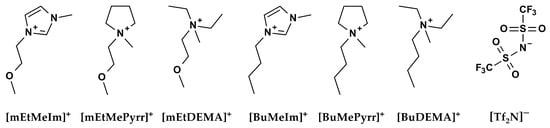
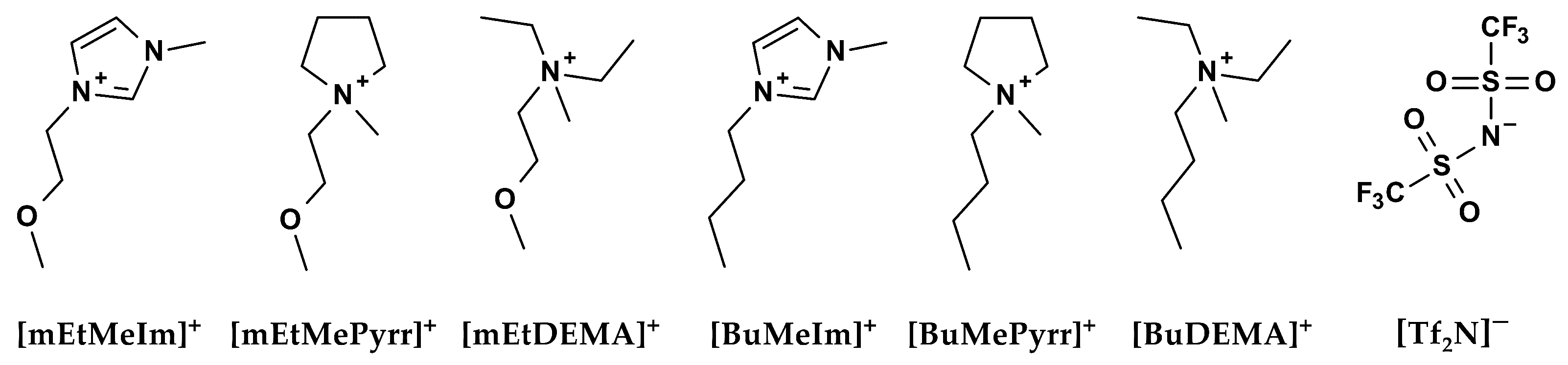
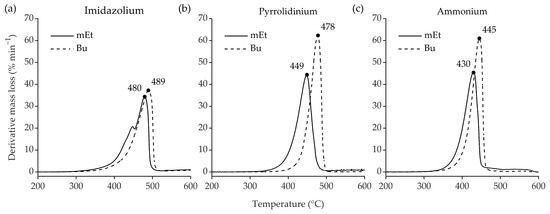
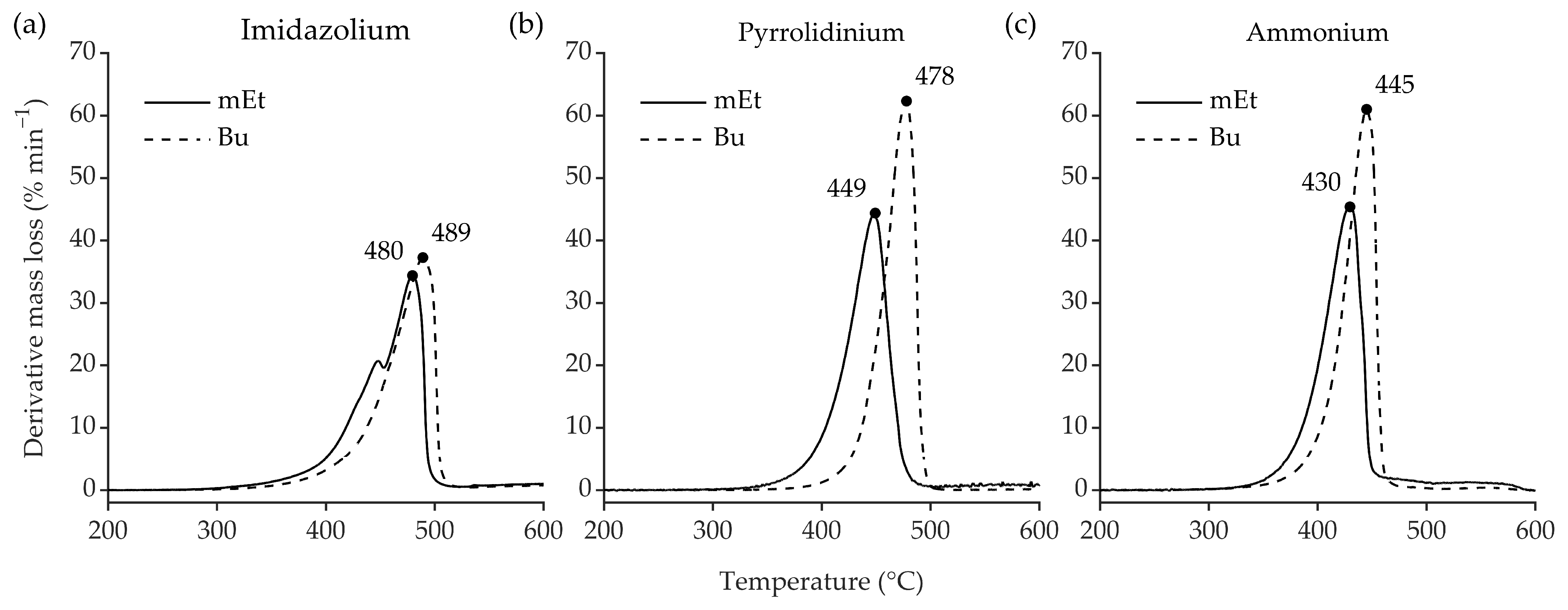
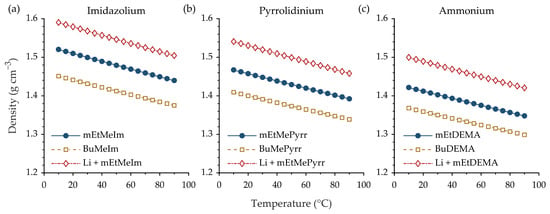
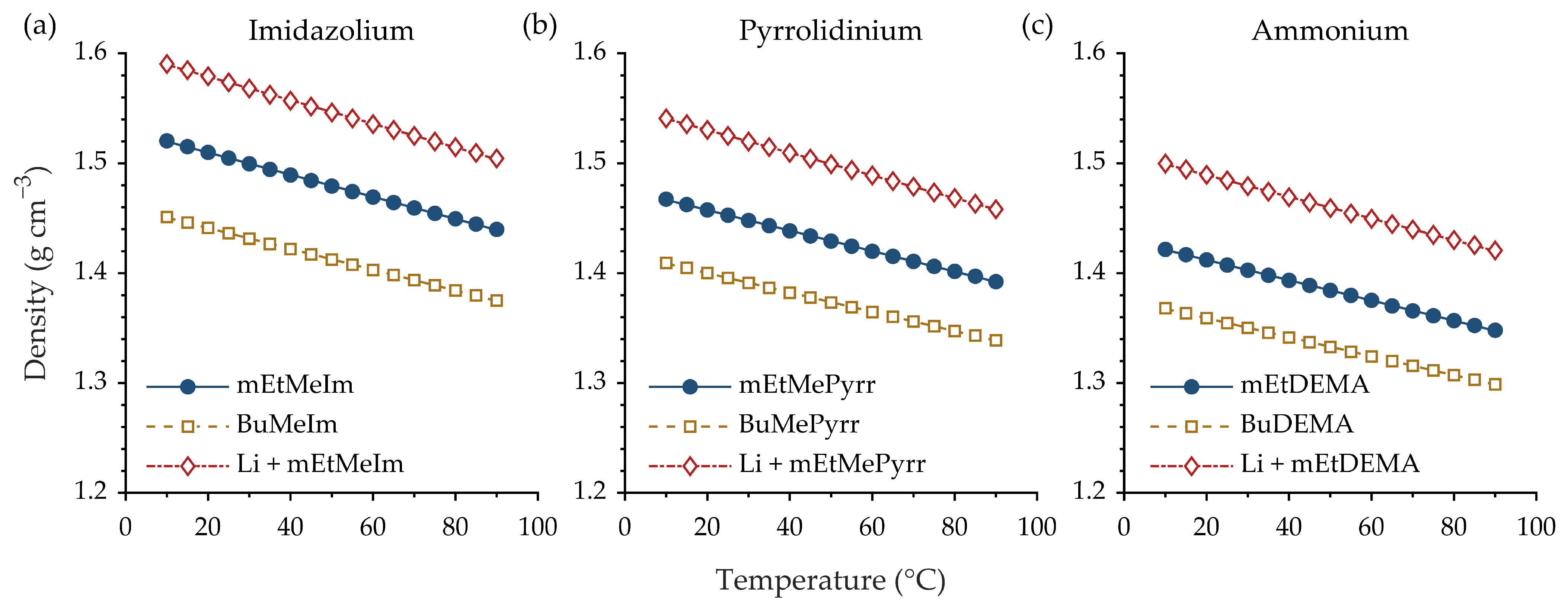
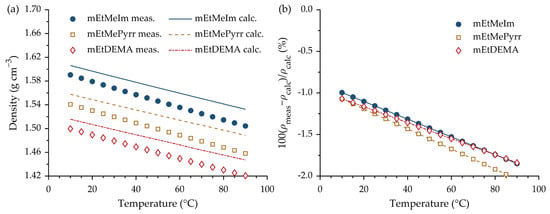
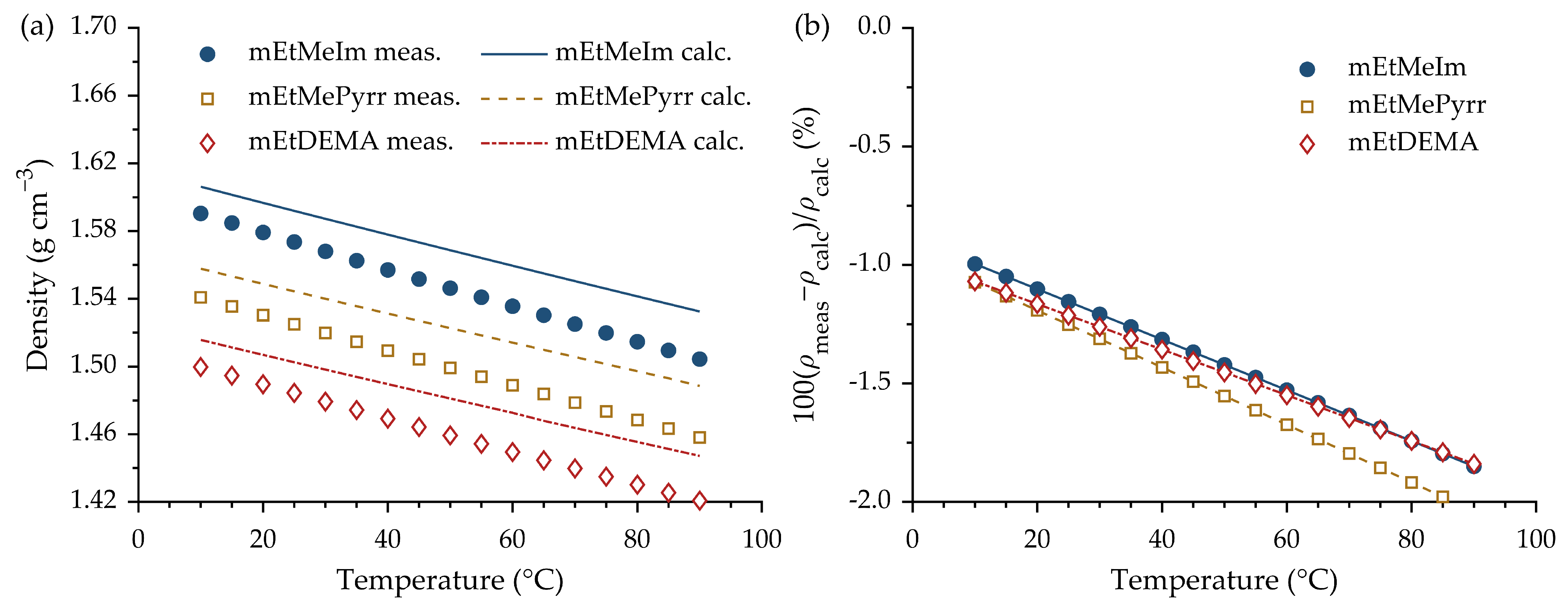
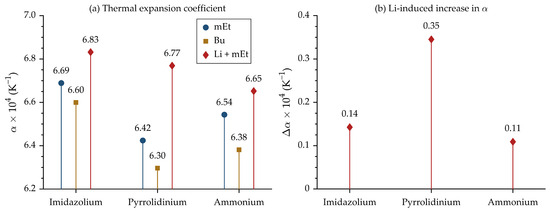
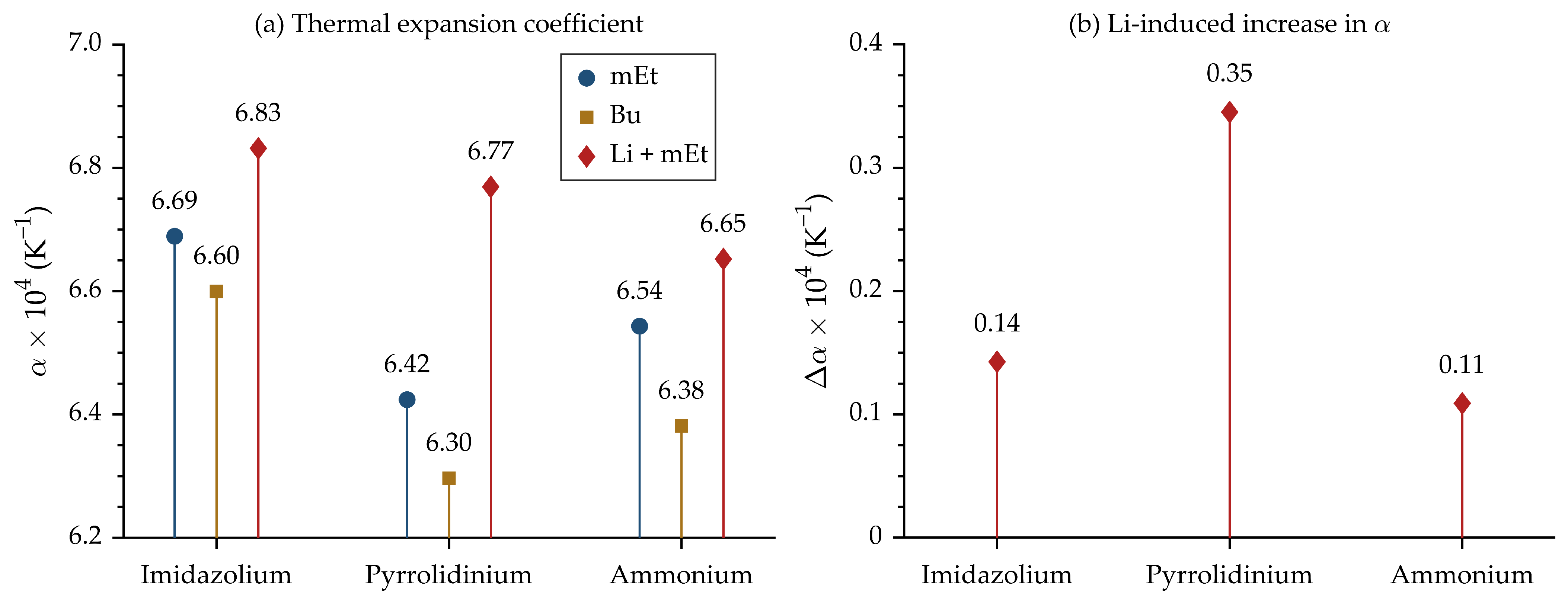
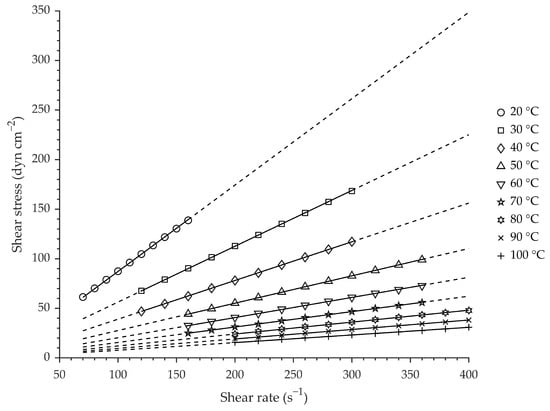
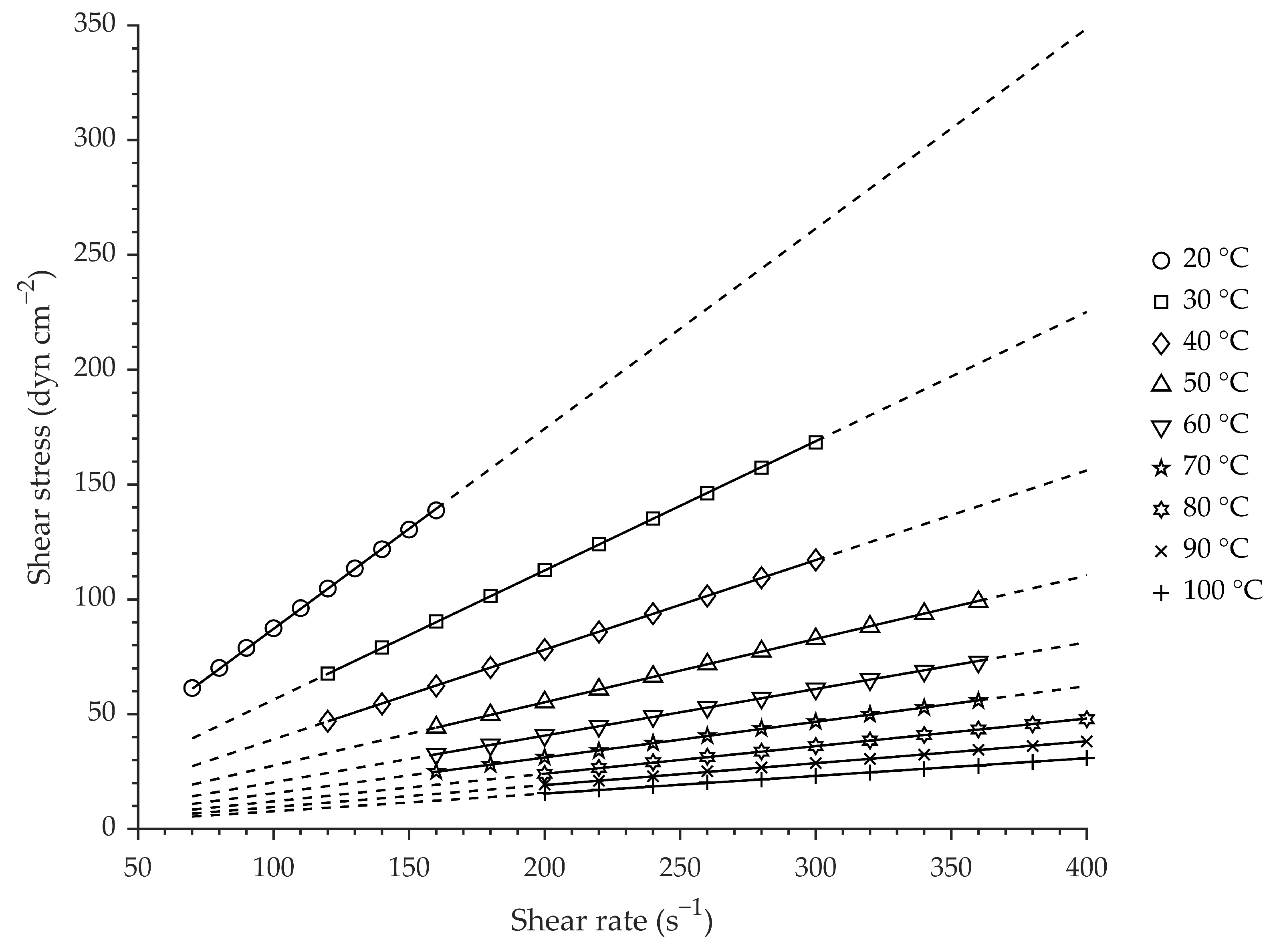
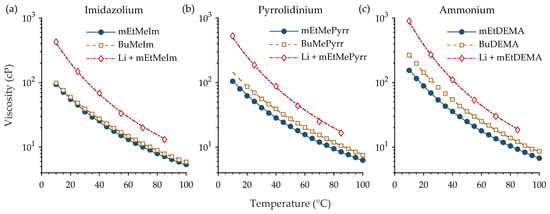
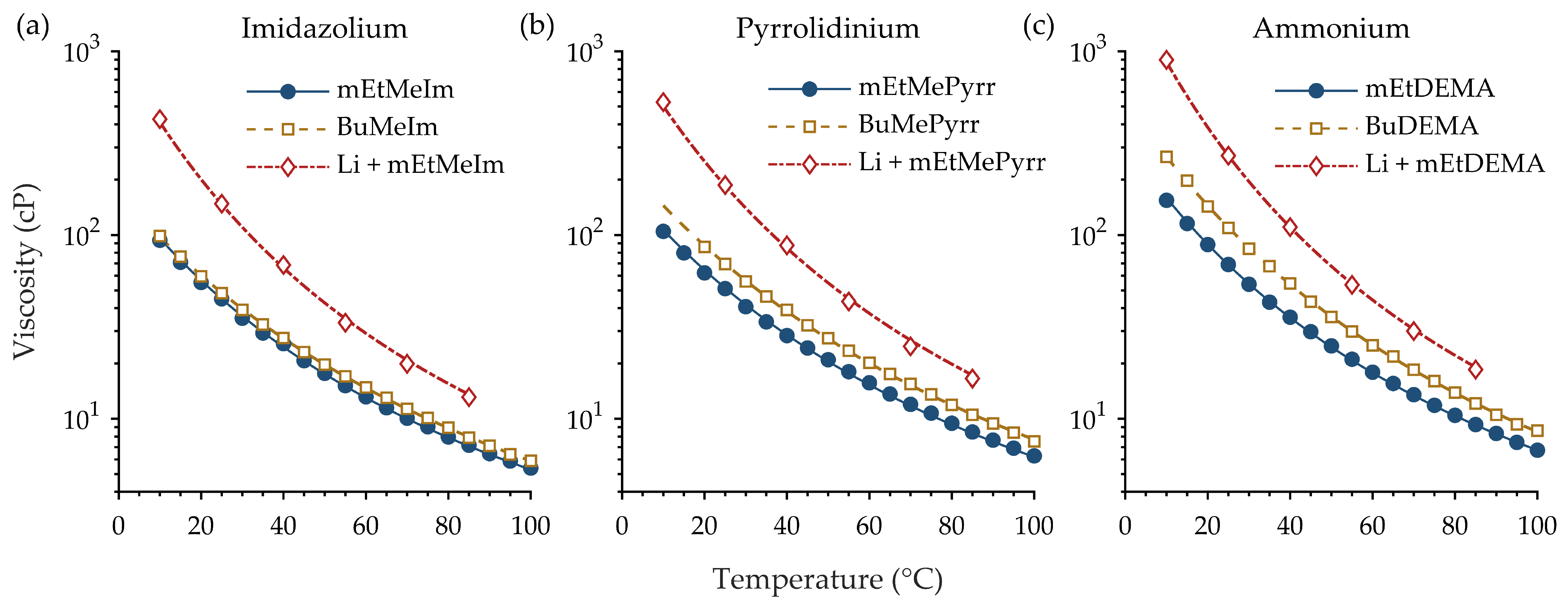
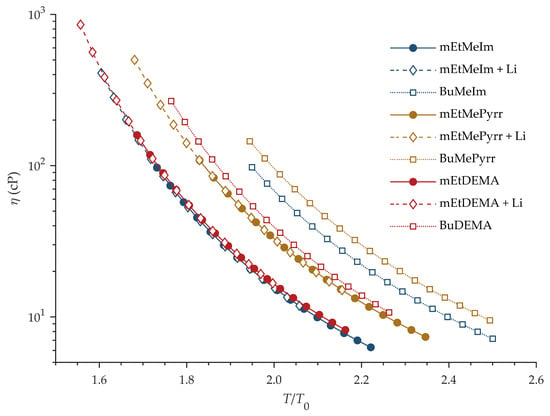
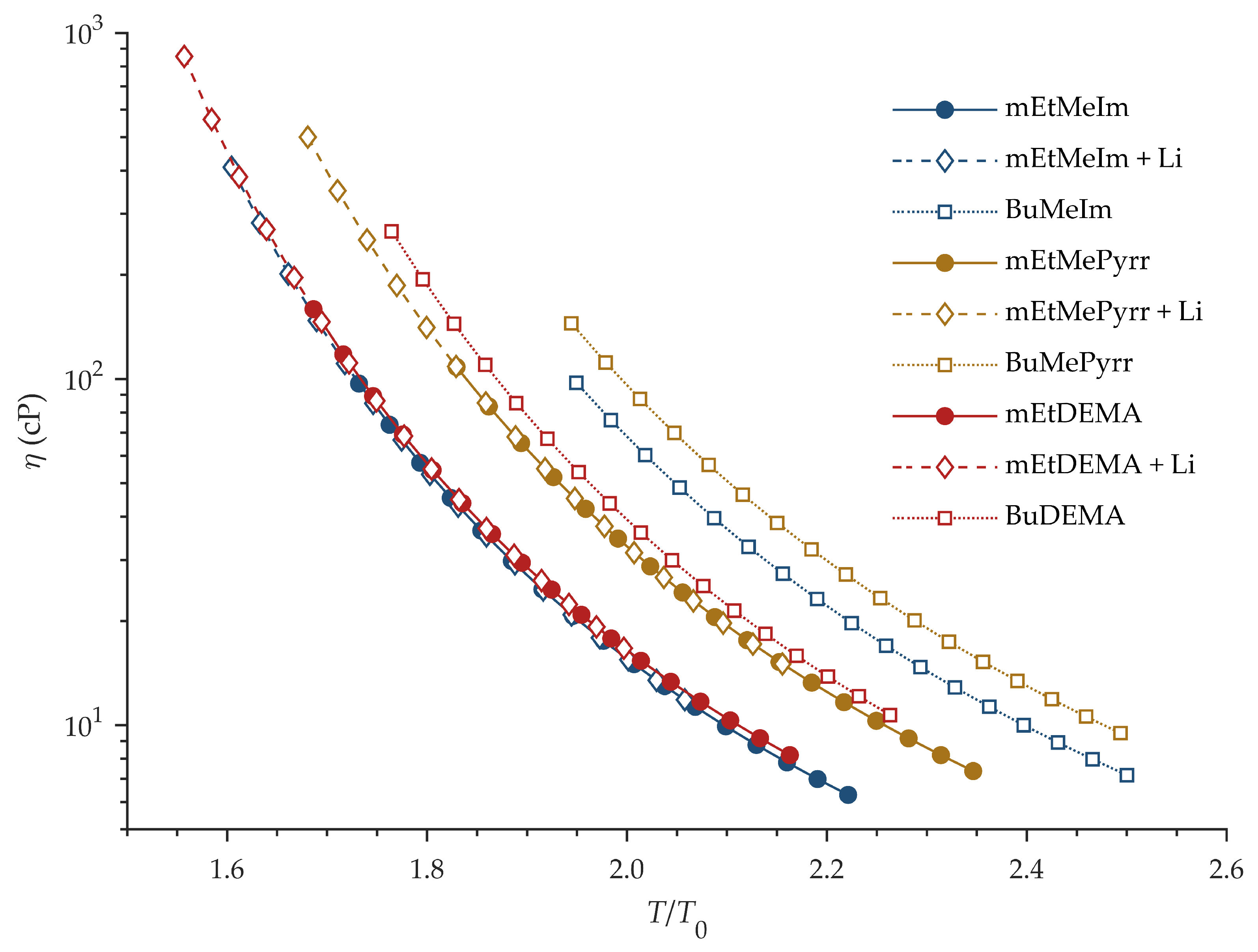
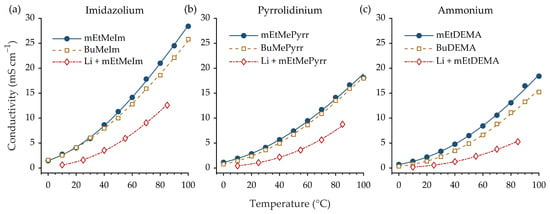
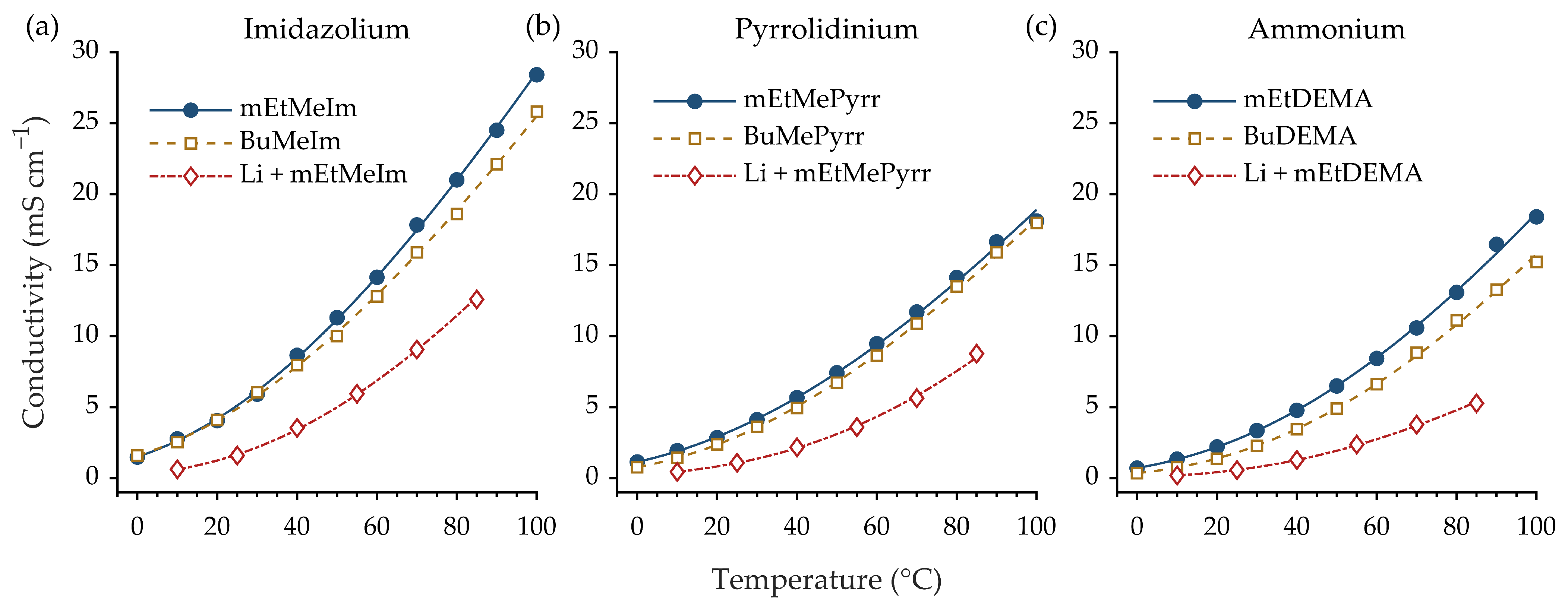
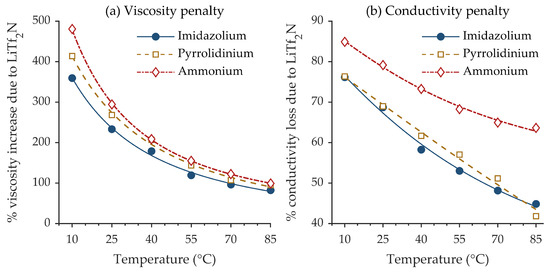
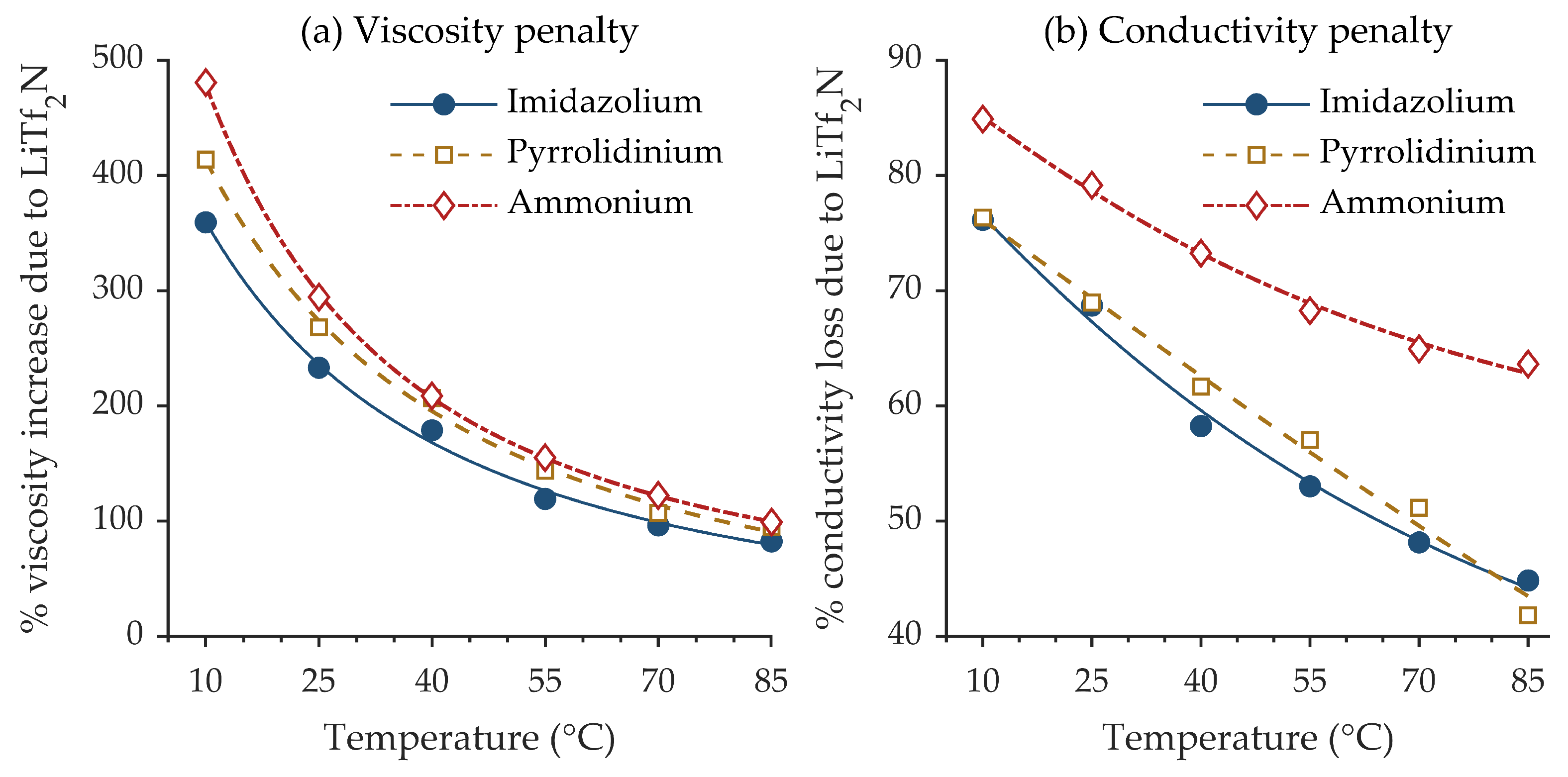
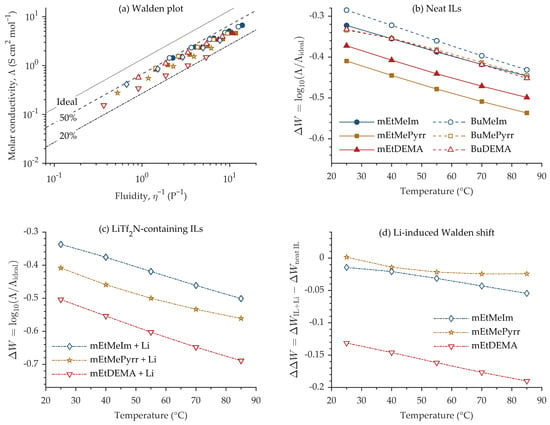
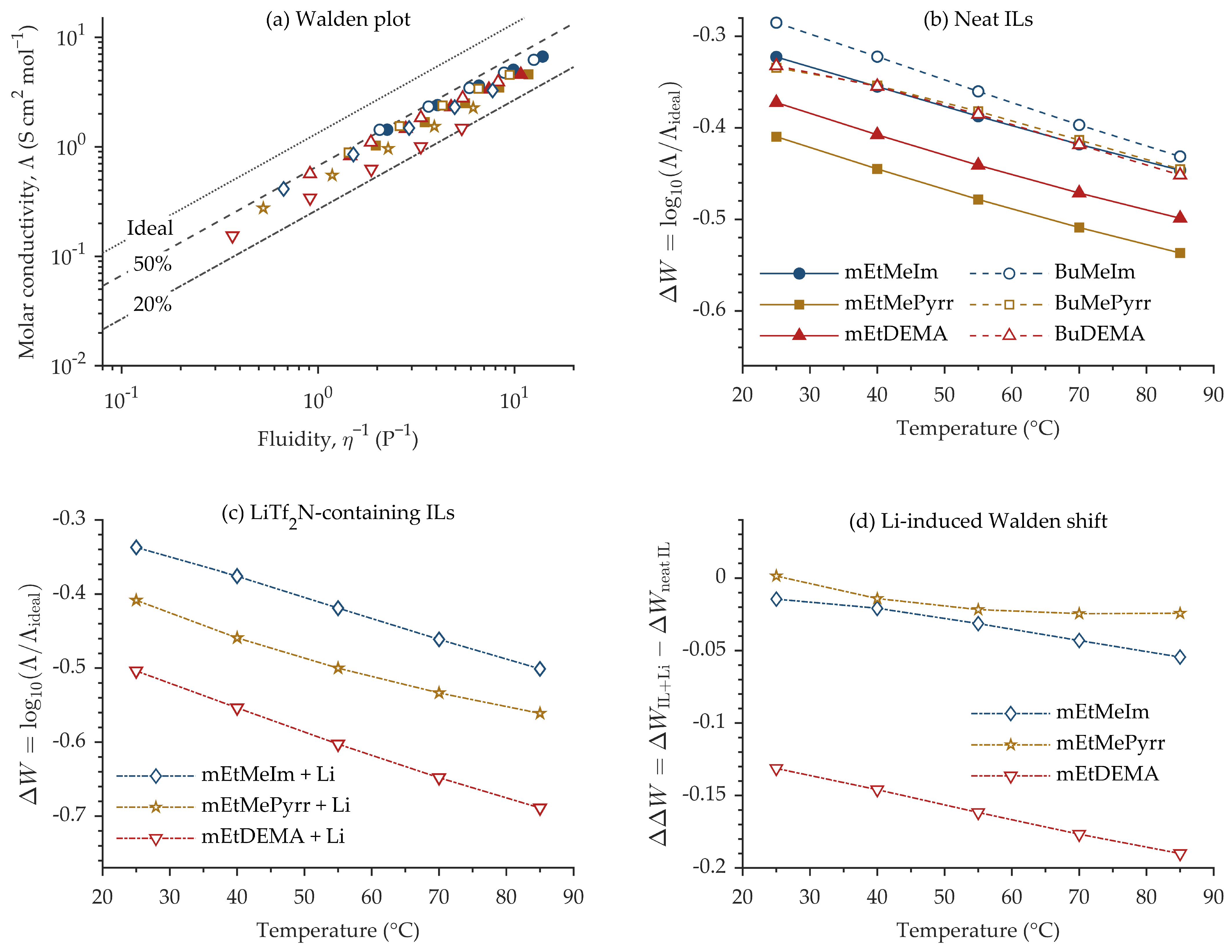
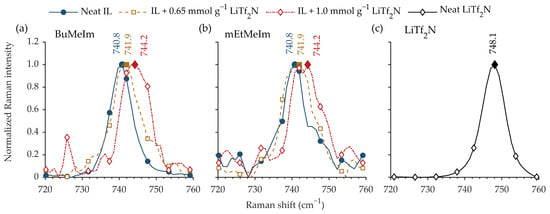
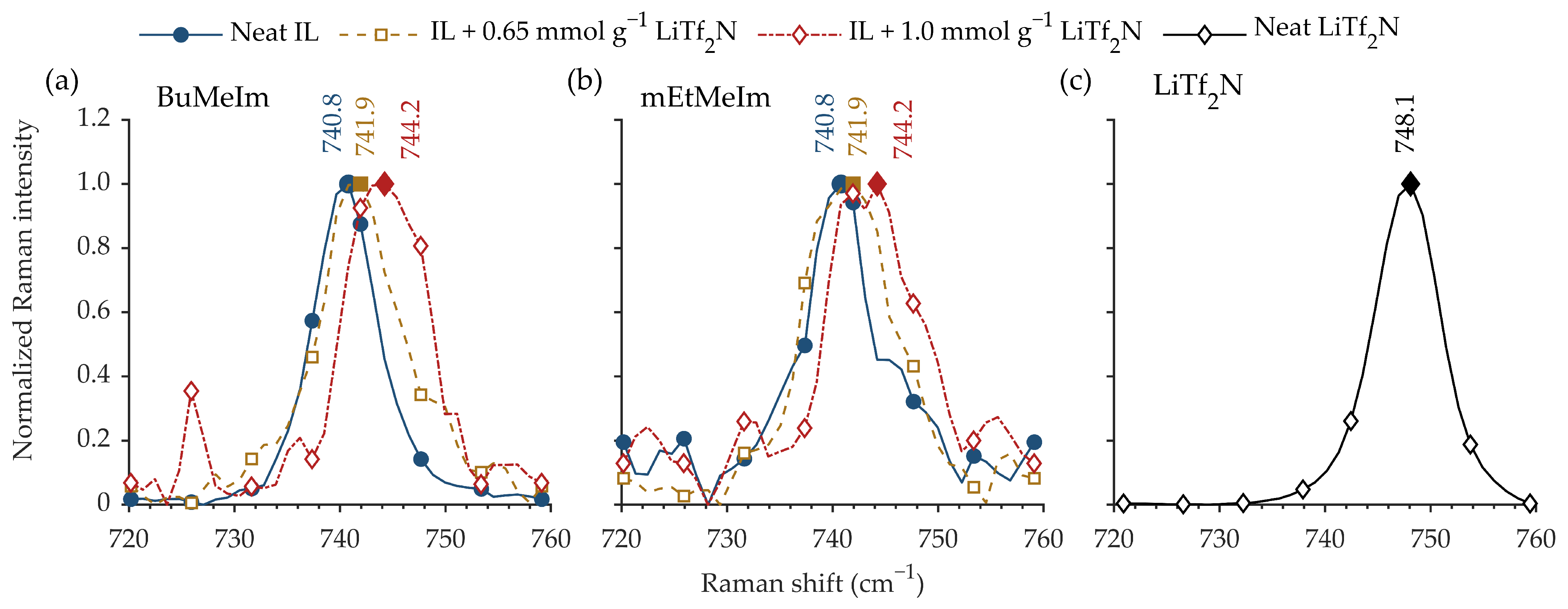
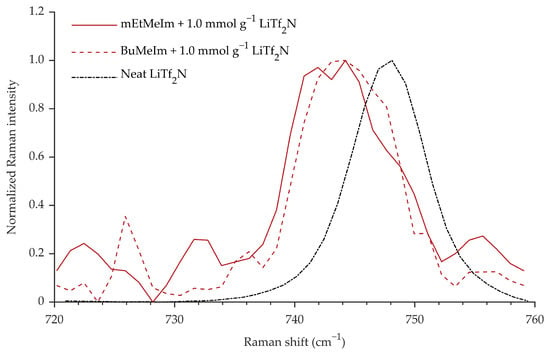
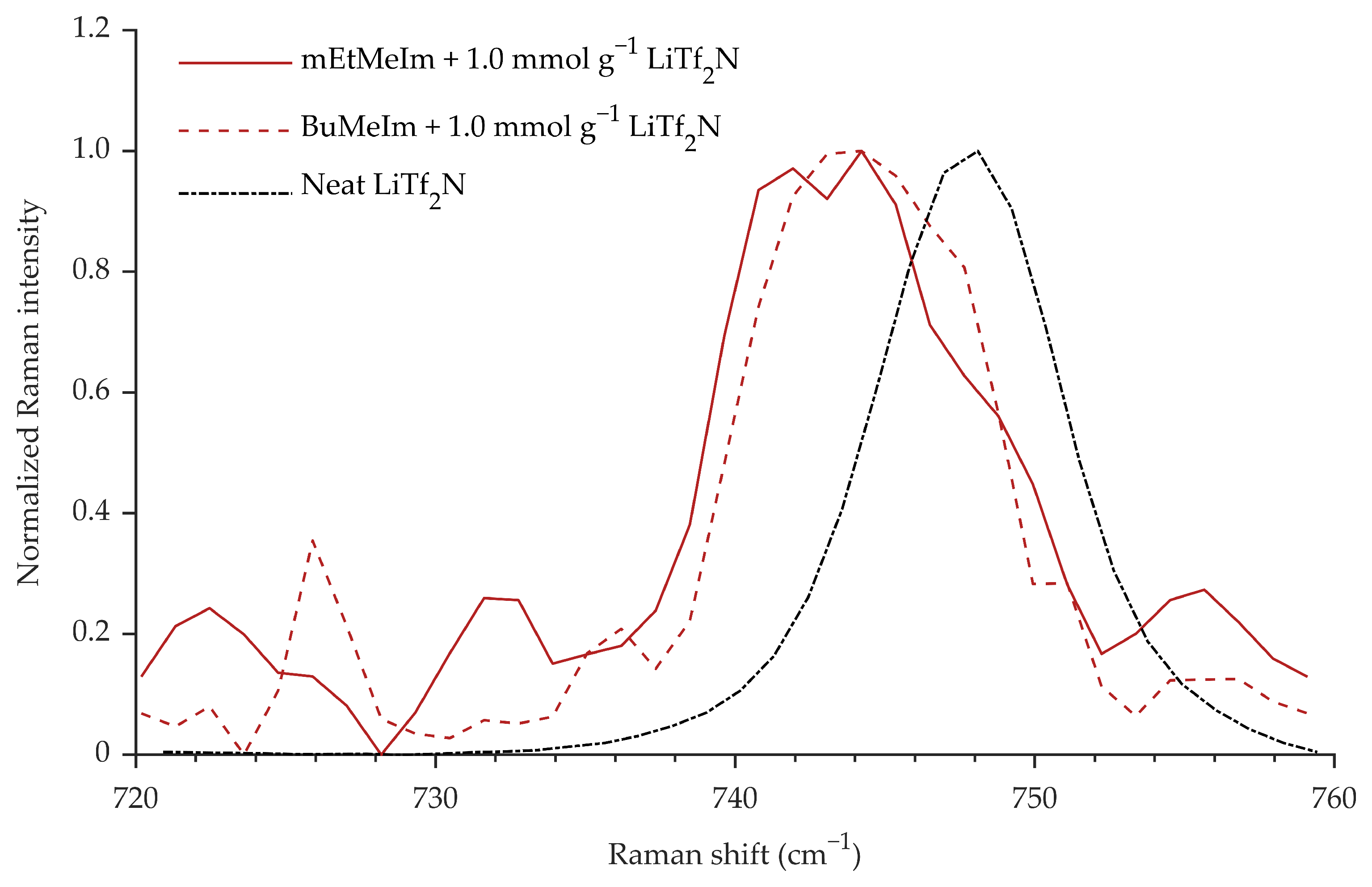
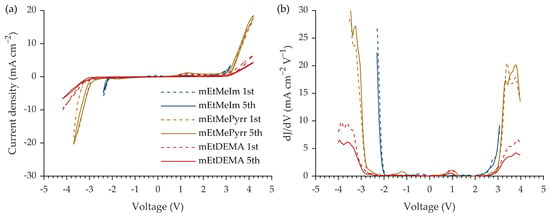
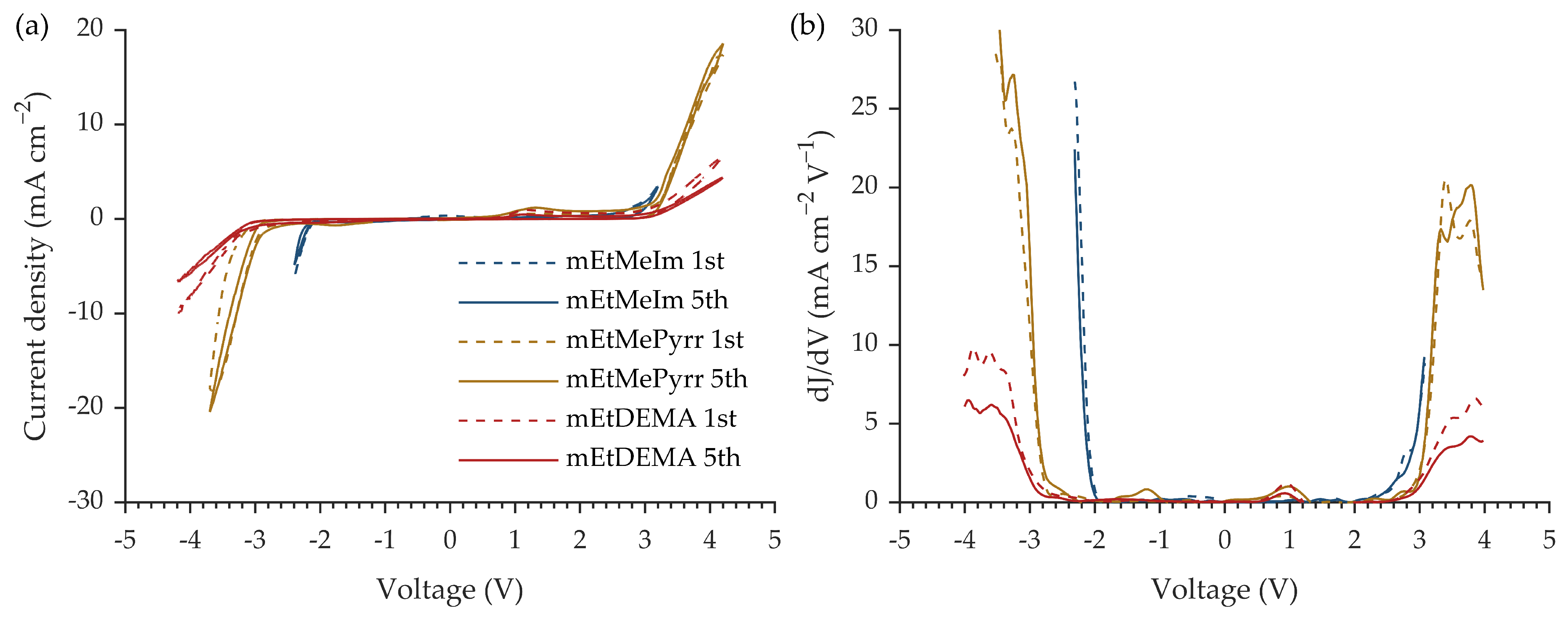

Disclaimer/Publisher’s Note: The statements, opinions and data contained in all publications are solely those of the individual author(s) and contributor(s) and not of MDPI and/or the editor(s). MDPI and/or the editor(s) disclaim responsibility for any injury to people or property resulting from any ideas, methods, instructions or products referred to in the content. |
© 2026 by the authors. Licensee MDPI, Basel, Switzerland. This article is an open access article distributed under the terms and conditions of the Creative Commons Attribution (CC BY) license.