


Abstract
Microbial oils produced by oleaginous yeasts are promising renewable lipid resources for biofuel and other biotechnological applications. Tropical fruits may harbor diverse yeasts with the capacity to accumulate intracellular microbial oils, but their lipid profiles and biodiesel-related characteristics remain insufficiently characterized. This study aimed to isolate and screen oleaginous yeasts from tropical fruits in Thailand and evaluate their intracellular microbial oil accumulation, fatty acid composition, and predicted biodiesel-related properties. A total of 56 fruit-derived yeast isolates were screened using Sudan IV staining, followed by gravimetric determination of intracellular microbial oil content. Eleven isolates were Sudan IV-positive, of which two were classified as oleaginous based on lipid contents exceeding 20% of dry biomass. These isolates were identified as Pichia kudriavzevii strain SA(I)02 and Candida tropicalis strain PSM(I)01, with microbial oil contents of 29.953% and 40.622%, respectively. Their fatty acid profiles differed markedly, with P. kudriavzevii showing higher MUFA content, particularly oleic acid, whereas C. tropicalis exhibited a higher proportion of saturated fatty acids. Consequently, P. kudriavzevii showed a higher predicted degree of unsaturation and a lower long-chain saturated factor, while C. tropicalis showed a higher predicted cetane number and a higher long-chain saturated factor. These findings show that lipid accumulation capacity and fatty acid composition are distinct characteristics that should be considered together when evaluating oleaginous yeasts for potential biodiesel applications.
1. Introduction
Microbial oil, also known as single-cell oil (SCO), refers to intracellular lipids accumulated by oleaginous microorganisms, including algae, bacteria, fungi, and yeasts [1,2]. Oleaginous microorganisms are generally characterized by their ability to accumulate lipids at levels exceeding 20% of their dry biomass, particularly under cultivation conditions that favor lipid biosynthesis [3]. Triacylglycerols (TAGs) constitute a major fraction of microbial storage lipids and contain fatty acids with compositions that can vary substantially among microbial species and strains [3,4]. Compared with conventional plant- and animal-derived oils, microbial oils offer several potential advantages, including reduced land requirements, lower dependence on agricultural resources, and relatively short production cycles [5]. Consequently, microbial oils have attracted increasing interest as renewable feedstocks for biofuels, oleochemicals, nutraceuticals, and other biotechnological applications [3].
Yeasts are unicellular fungi widely distributed in terrestrial and aquatic environments and are frequently associated with the surfaces of plants and fruits [6]. Some yeast species can accumulate intracellular lipids exceeding 20% of their dry cell weight and are therefore classified as oleaginous yeasts. Representative oleaginous genera include Candida, Cryptococcus, Lipomyces, Rhodotorula, Trichosporon, and Yarrowia [7]. Microbial oils produced by oleaginous yeasts have been investigated for applications ranging from specialty lipid production to renewable biofuel production, including biodiesel [6,8]. However, only a relatively small proportion of known yeast species have been characterized as oleaginous, suggesting that additional yeast habitats remain to be explored [3].
Tropical fruits comprise a diverse group of species native to hot and humid regions located between the Tropics of Cancer and Capricorn [9,10]. Recent research identified yeast species isolated from 26 tropical fruit species in Costa Rica, with Hanseniaspora and Pichia as the most abundant genera [11]. Another study examining yeast species from 10 Amazonian native fruits found Candida, Debaryomyces, and Hanseniaspora to be the dominant genera [12]. Hanseniaspora and Pichia are frequently found on various fruits, with certain strains identified as oleaginous [13]. Studies on yeasts isolated from three tropical fruits in Malaysia demonstrated that Kluyveromyces and Pichia species can accumulate microbial oil as intracellular oil droplets [14]. Investigations of yeasts from longkong (Lansium domesticum), a tropical fruit in Thailand, established that Hanseniaspora opuntiae and Pichia manshurica are oleaginous yeasts, with microbial oil contents of 33.59% and 43.03% of their dry cell weight, respectively [13]. The isolated P. manshurica primarily produced saturated fatty acids in its microbial oil, including 42.57% palmitic acid (C16:0) and 25.11% stearic acid (C18:0). These findings indicate that tropical fruit-associated yeasts represent a promising but incompletely characterized source of oleaginous microorganisms.
Importantly, the biotechnological value of an oleaginous yeast depends not only on the quantity of intracellular lipid accumulated but also on the fatty acid composition of the resulting microbial oil. Differences in the proportions of saturated, monounsaturated, and polyunsaturated fatty acids can substantially influence the functional properties of microbial oils and their potential suitability for specific applications, including biodiesel production. Nevertheless, the lipid accumulation capacity and fatty acid characteristics of yeasts associated with tropical fruits remain insufficiently characterized, particularly among isolates from Thailand. In addition, the relationship between lipid accumulation and biodiesel-relevant fatty acid characteristics remains poorly understood for fruit-derived yeast isolates.
Therefore, the objective of this study was to isolate and screen oleaginous yeasts from tropical and subtropical fruits collected in Thailand and to characterize selected isolates based on their intracellular microbial oil content, molecular identity, and fatty acid composition. The fatty acid profiles were further used to predict selected biodiesel-related properties. By integrating lipid accumulation with fatty acid profiling and prediction of biodiesel-related properties, this study aimed to evaluate the potential of fruit-derived yeasts as microbial oil producers and to determine whether differences in lipid composition translate into distinct predicted biodiesel characteristics.
2. Materials and Methods
2.1. Fruit Samples
Thirty-three specimens representing 25 different species of tropical fruit and 3 species of subtropical fruit were collected from fruit markets and plantations in Chachoengsao, Rayong, and Suphan Buri Provinces, Thailand. All fruits were ripe and exhibited no visible spoilage. Specimens were transported in refrigerated, sterilized plastic bags to the laboratory for yeast isolation within 48 h. Table 1 provides a list of the 33 specimens from 28 fruit species used in this study. Supplementary details and coordinates for the fruit samples are available in Table S1.
Table 1.
Sampling sites and fruit samples collected during this study.
2.2. Isolation of Fruit-Derived Yeasts
The method for isolating fruit-derived yeasts was based on the previous study by Planonth and Chantarasiri [13]. Fruit surfaces were swabbed with sterile cotton swabs pre-moistened with sterile 0.85% (w/v) NaCl solution and then transferred into 3 mL of Yeast Malt Broth (YMB) culture tubes (HiMedia, Mumbai, India). The culture broths were incubated at 30 °C (the optimal standard for isolating most environmental yeasts) for 48 h in an incubator cabinet (BINDER, Tuttlingen, Germany). Subsequently, 100 μL of the culture broths were spread-plated on Dichloran Rose Bengal Chloramphenicol Agar (DRBC) (HiMedia, Mumbai, India) as a selective medium for yeast isolation and incubated at 30 °C for 48 h. Distinct morphological colonies were selected and purified by streak plating on Yeast Malt Agar (YMA) (HiMedia, Mumbai, India). Purified yeast isolates were assigned isolation codes and stored in YMB containing 20% (v/v) glycerol at −80 °C until further analysis.
2.3. Accumulation and Extraction of Intracellular Microbial Oils from the Isolated Yeasts
Isolated yeast strains were pre-cultured in YMB and incubated at 30 °C for 48 h. Subsequently, each strain was inoculated into Glycerol Yeast Peptone (GYP) medium to promote intracellular microbial oil accumulation. The GYP medium was prepared according to the formulation described by Planonth and Chantarasiri [13]. A 10% (v/v) inoculum of each pre-cultured yeast was transferred to 100 mL of GYP medium and incubated at 30 °C for 120 h in a New Brunswick Innova 40 orbital shaker at 150 rpm (Eppendorf, Hamburg, Germany).
Intracellular microbial oil accumulation was initially screened qualitatively using Sudan IV staining method [14,15]. For staining, 300 μL of each yeast culture in GYP medium was mixed with 300 μL of Sudan IV solution (Sigma-Aldrich, Darmstadt, Germany) and incubated in the dark at room temperature for 1 h. The stained yeast cells were examined under an ECLIPSE E200 light microscope (Nikon, Tokyo, Japan), and intense red staining within the cells was used as an indication of intracellular lipid droplets.
Yeast isolates showing intracellular microbial oil accumulation were subsequently subjected to quantitative microbial oil extraction. Oil-accumulating yeast cells were harvested by centrifugation at 3500× g for 15 min using a Digicen 21R refrigerated centrifuge (OrtoAlresa, Madrid, Spain). The collected cells were washed with 0.85% (w/v) sterile NaCl solution to remove residual GYP medium. Harvested yeast cells were dried to constant weight in an FD240 hot-air oven (Binder, Tuttlingen, Germany) at 105 °C and subsequently weighed. Intracellular oils were extracted from dried yeast according to the methodology of Planonth and Chantarasiri [13]. One gram of dried yeast was suspended in 9 mL of n-hexane and ultrasonicated using a VCX 130PB Vibra-Cell ultrasonic liquid processor (Sonics & Materials, Inc., Newtown, CT, USA) at 90% amplitude for 10 min to facilitate cell disruption and lipid release. The sonicated mixture was then centrifuged at 3500× g for 15 min. The supernatant (n-hexane-extractable lipid fraction) was collected and dried using a Hei-VAP rotary evaporator (Heidolph Instruments, Schwabach, Germany) at 69 °C to obtain the extracted intracellular microbial oils. Intracellular microbial oils are defined as the n-hexane-extractable lipid fraction obtained from dried yeast biomass under the specified extraction conditions. Yeast isolates containing >20% intracellular microbial oils relative to their dry biomass were classified as oleaginous yeasts based on a commonly used literature criterion [3].
The positive control was Yarrowia lipolytica strain TISTR 5212 (Thailand Institute of Scientific and Technological Research, Pathum Thani, Thailand), and the negative control was a baker yeast, Saccharomyces cerevisiae. These experiments were performed in triplicate using independent biological replicates.
2.4. Molecular Genetics and Phylogenetic Analyses of the Oleaginous Yeasts
Genomic DNA was extracted from oleaginous yeast cells using a genomic DNA isolation kit (Bio-Helix, New Taipei City, Taiwan), following the manufacturer’s protocols. The extracted genomic DNA was then used as a template to amplify the D1/D2 domain of the large subunit (26S) ribosomal RNA gene by polymerase chain reaction (PCR). Sequencing the D1/D2 domain of the large subunit ribosomal RNA gene has proven useful for identifying most fungi and yeasts [16]. Amplification was performed with an OmniPCR Supermix reaction mixture (Bio-Helix, New Taipei City, Taiwan) using the universal NL-1 and NL-4 primer set. Primer sequences and PCR cycling conditions were described by Kurtzman and Robnett [17]. PCR products were purified and sequenced by Macrogen Inc. (Seoul, Republic of Korea).
The nucleotide sequences of the D1/D2 domain were aligned using the BLASTN suite version 2.17.0 based on the core nucleotide (core_nt) database and the megablast algorithm (highly similar sequences) from the National Center for Biotechnology Information (NCBI) (MD, USA). The phylogenetic tree of oleaginous yeasts was generated and analyzed using SeaView software version 4.7 (Laboratoire de Biométrie et Biologie Evolutive, Université de Lyon, Villeurbanne Cedex, France) based on the maximum likelihood (ML) method with the general time-reversible (GTR) nucleotide substitution model and 1000 bootstrap replicates. The generated tree was edited in FigTree software version 1.4.4 (Institute of Evolutionary Biology, University of Edinburgh, Edinburgh, UK). All nucleotide sequences of the D1/D2 domain were deposited in the NCBI GenBank database under the following accession numbers: PZ863756 and PZ863758.
2.5. Fatty Acid Profiles of Microbial Oils Produced by the Oleaginous Yeasts
Pichia kudriavzevii strain SA(I)02 and Candida tropicalis strain PSM(I)01 were identified as oleaginous yeasts in this study. These strains were cultured in GYP medium, and intracellular microbial oils were extracted using the previously described methodology in Section 2.3, “Accumulation and Extraction of Intracellular Microbial Oils from the Isolated Yeasts”. The extracted oils were then converted into fatty acid methyl esters (FAMEs) through transesterification. The FAMEs were analyzed with a 7890A gas chromatograph (GC) (Agilent Technologies, Santa Clara, CA, USA), equipped with a flame ionization detector (FID) and a CP-Sil 88 column (100 m × 0.25 mm × 0.20 µm) (Agilent Technologies, Santa Clara, CA, USA). The preparation of FAMEs and gas chromatography conditions followed the protocol established by Chantarasiri and Ungwiwatkul [18] with modifications. The injection volume was 1 µL with a split ratio of 50:1. Injector and detector temperatures were maintained at 250 °C and 240 °C, respectively. The column temperature was initially set at 70 °C, increased to 175 °C at a rate of 13 °C/min, then raised to 215 °C at 4 °C/min, and finally to 240 °C at 4 °C/min, with a final hold for 30 min. Helium was used as the carrier gas at a flow rate of 0.38 mL/min.
Methyl heptadecanoate (C17:0) served as the internal standard. Individual FAMEs were identified by matching their retention times with reference standards from the Analytical Equipment Department, Suranaree University of Technology (Nakhon Ratchasima, Thailand). The fatty acid profiles of oleaginous yeasts were expressed as the relative percentage of each detected FAME relative to the total detected FAMEs.
2.6. Predicted Biodiesel-Related Properties Based on the Fatty Acid Compositions
The biodiesel-related properties of microbial oils produced by P. kudriavzevii strain SA(I)02 and C. tropicalis strain PSM(I)01 were predicted from their fatty acid compositions. The evaluated parameters included degree of unsaturation (DU), iodine value (IV), saponification value (SV), cetane number (CN), higher heating value (HHV), and long-chain saturated factor (LCSF). Predicted biodiesel-related properties were calculated using the equations and calculation approaches reported by Gopinath et al. [19], Ramos et al. [20], Mishra et al. [21], and Patel et al. [22], as summarized in Table 2. The equations used to predict the biodiesel-related properties are presented in Table S2.
Table 2.
Calculation approaches used to predict biodiesel-related properties.
The predicted values were compared with relevant EN 14214 specifications [23], where applicable, to provide a reference framework for evaluating the predicted biodiesel-related characteristics of the microbial oils. Because these parameters were estimated from fatty acid composition rather than directly measured in experimentally produced biodiesel, the results represent predicted values based on fatty acid composition. Consequently, the biodiesel-related parameters reported in this study should not be regarded as experimentally validated biodiesel fuel properties or as confirmation of compliance with EN 14214.
2.7. Statistical Analyses
Statistical analyses were performed using R software version 4.4.1 (R Foundation for Statistical Computing, Vienna, Austria). Intracellular microbial oil content data are presented as mean ± standard deviation (SD) based on three independent biological replicates. Differences among the means were assessed using one-way analysis of variance (ANOVA), followed by Tukey’s HSD test for multiple comparisons. Statistical significance was considered at p < 0.05.
3. Results
3.1. Fruit-Derived Yeasts Isolated from the Collected Samples
Thirty-three tropical and subtropical fruit samples were collected from fruit markets and plantations in three provinces of Thailand: Chachoengsao, Rayong, and Suphan Buri. Fruit-derived yeasts were isolated from all fruit samples using DRBC selective medium and categorized according to distinct colony morphologies. A total of 56 fruit-derived yeasts were colony-purified on YMA medium and assigned specific isolation codes. Representative colony morphologies of fruit-derived yeasts are shown in Figure S1. The corresponding fruit sources and isolation codes are summarized in Table 3.
Table 3.
Fruit samples and corresponding isolation codes of fruit-derived yeasts included in this study.
3.2. Accumulation, Screening, and Extraction of Intracellular Microbial Oils from the Isolated Fruit-Derived Yeasts
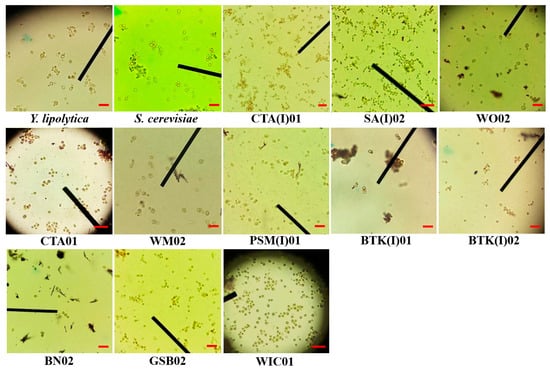
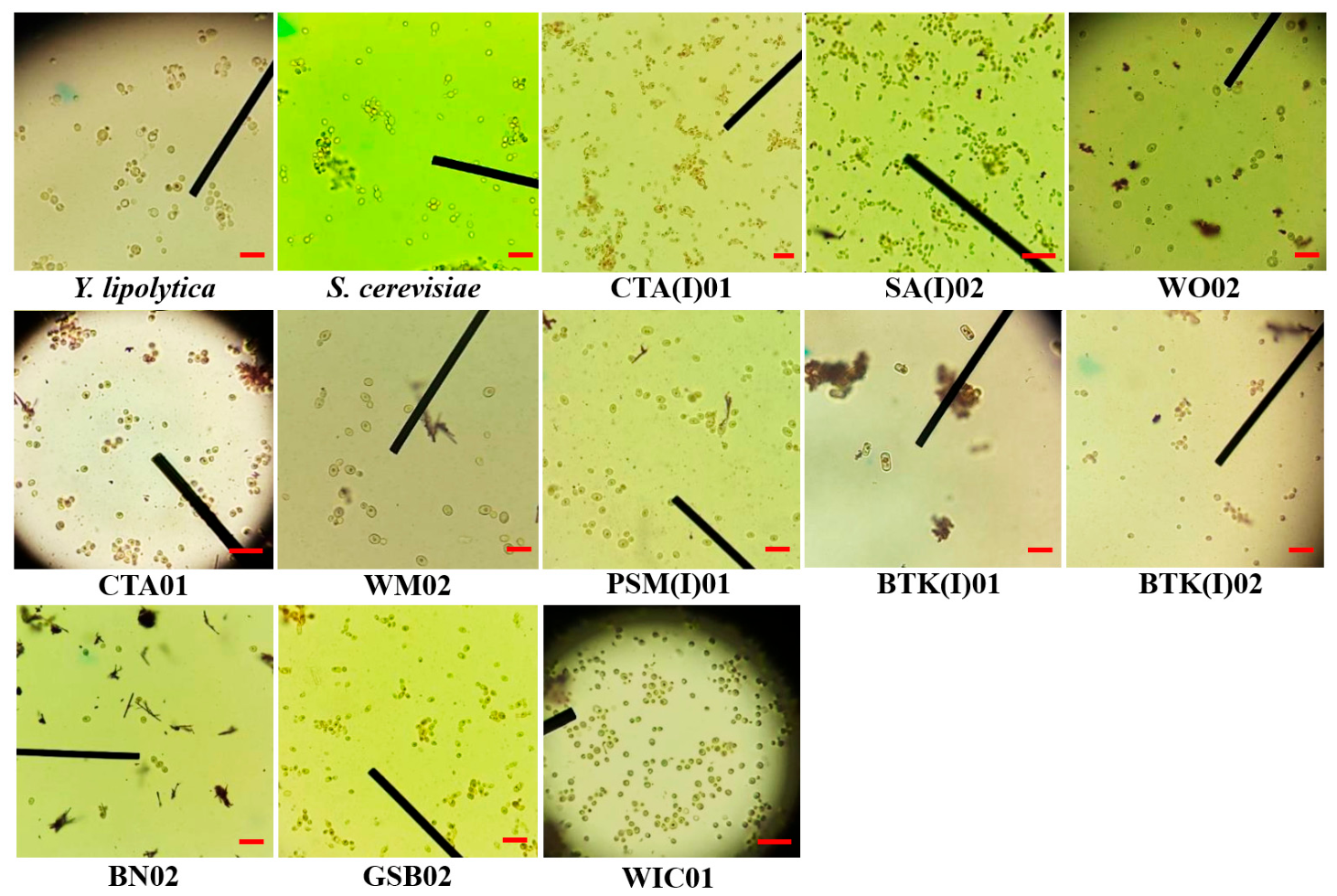
Fruit-derived yeast isolates were cultured in GYP medium to promote intracellular microbial oil accumulation. This medium, characterized by high glucose and low nitrogen content, facilitates the formation of intracellular lipid droplets. Qualitative assessment of intracellular microbial oil accumulation was conducted using the Sudan IV staining method, which confirmed that 11 yeast isolates, including CTA(I)01, SA(I)02, WO02, CTA01, WM02, PSM(I)01, BTK(I)01, BTK(I)02, BN02, GSB02, and WIC01, tested positive for Sudan IV. Results from light microscopy and Sudan IV staining are shown in Figure 1. The oleaginous Y. lipolytica strain TISTR 5212, used as a positive control, exhibited positive Sudan IV staining, while S. cerevisiae, the negative control, exhibited negative staining.
Figure 1.
Light microscopy and Sudan IV staining demonstrated the presence of lipid bodies within cells of the isolated fruit-derived yeasts. The intracellular lipid bodies appear as intensely red-colored structures. The oleaginous Y. lipolytica strain TISTR 5212 served as the positive control, while S. cerevisiae was used as the negative control. Red scale bar = 10 μm. The black line indicates the eyepiece pointer and is not a structural feature of the yeast cells.
All Sudan IV-positive isolates were harvested, dried, and processed to extract intracellular microbial oil. The intracellular microbial oil content of the fruit-derived yeasts ranged from 2.544 ± 0.034% of dry biomass in isolate CTA(I)01 to 40.622 ± 1.976% in isolate PSM(I)01. The positive control, Y. lipolytica strain TISTR 5212, exhibited an intracellular microbial oil content of 38.514 ± 0.379% of dry biomass, whereas the negative control, S. cerevisiae, exhibited a content of 0.949 ± 0.027%. Based on their intracellular microbial oil content, the yeasts were classified into three categories: oleaginous yeasts (>20%), oil-accumulating yeasts (1–≤20%), and non-oil-accumulating yeasts (<1%), with the values expressed as a percentage of dry biomass. Isolates SA(I)02 from A. carambola (star fruit) and PSM(I)01 from D. malabarica (Indian persimmon) were classified as oleaginous yeasts, with intracellular microbial oil contents of 29.953% and 40.622% of dry biomass, respectively (Table 4). The remaining nine fruit-derived isolates exhibited intracellular microbial oil contents below 20% and were classified as oil-accumulating yeasts.
Table 4.
Intracellular microbial oil content (% of dry biomass) of 11 isolated fruit-derived yeasts and two control yeasts.
Notably, SA(I)02 and PSM(I)01 exhibited significantly higher intracellular microbial oil contents than the other fruit-derived isolates (p < 0.05) and were therefore selected for further analysis of the fatty acid profiles of their microbial oils, as described in Section 2.5, “Fatty Acid Profiles of Microbial Oils Produced by the Oleaginous Yeasts”. The intracellular microbial oil contents of the isolated fruit-derived yeasts are summarized in Table 4.
3.3. Genetic and Phylogenetic Identification of the Isolated Oleaginous Yeasts
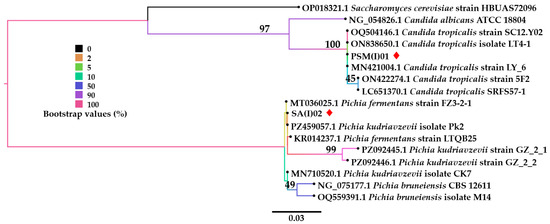
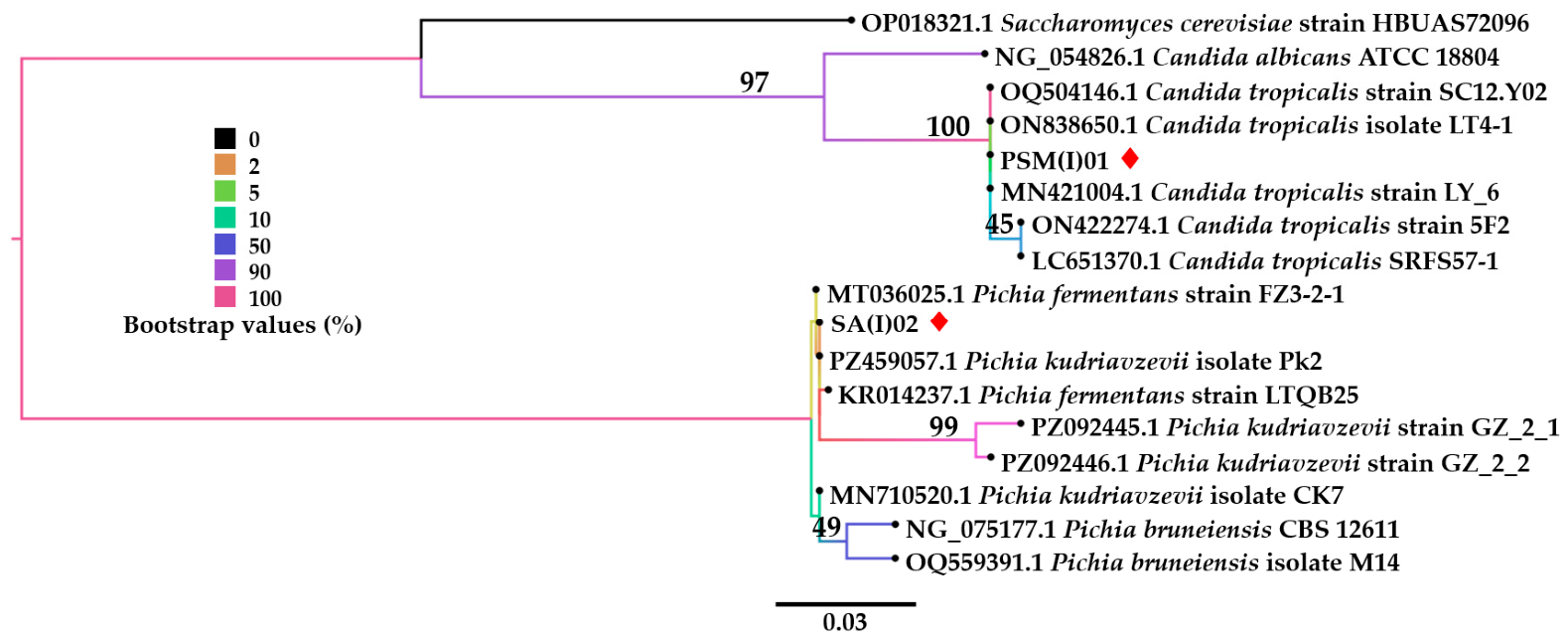
The D1/D2 domains of the large subunit (26S) ribosomal RNA gene from two oleaginous yeast isolates, SA(I)02 and PSM(I)01, were PCR-amplified and analyzed for molecular identification. BLASTn analysis against the NCBI core nucleotide database (core_nt) indicated that isolate SA(I)02 was most closely related to Pichia kudriavzevii isolate Pk2 (GenBank accession number PZ459057), while isolate PSM(I)01 was most closely related to Candida tropicalis strain SC12.Y02 (GenBank accession number OQ504146). Both isolates demonstrated 100% sequence identity and 100% query coverage, with E-values of 0. Phylogenetic analysis using the ML method with the GTR nucleotide substitution model revealed that isolate SA(I)02 clustered within a clade containing P. kudriavzevii and P. fermentans. However, the branch supporting the placement of SA(I)02 within this clade exhibited low bootstrap support (<50%), indicating that the phylogenetic analysis could not reliably confirm a species-level identification for SA(I)02. In contrast, isolate PSM(I)01 clustered with C. tropicalis with strong bootstrap support (100%), providing robust evidence for its species-level assignment.
The species-level identification of strain SA(I)02 should be interpreted with caution because its placement within the P. kudriavzevii/P. fermentans clade showed low bootstrap support (<50%). Isolate SA(I)02 was therefore designated as P. kudriavzevii strain SA(I)02 based primarily on BLASTn results, whereas isolate PSM(I)01 was designated as C. tropicalis strain PSM(I)01 based on both BLASTn results and phylogenetic analysis. The corresponding nucleotide sequences were deposited in the NCBI GenBank database under accession numbers PZ863756 and PZ863758, respectively. The phylogenetic relationships among the oleaginous yeast isolates are presented in Figure 2.
Figure 2.
Phylogenetic tree of oleaginous yeast isolates shown using the ML method with the GTR nucleotide substitution model with 1000 bootstrap replicates. The phylogenetic tree was generated by SeaView software version 4.7 and visualized by the FigTree software version 1.4.4. Red rhombi (♦) indicate the two yeast isolates analyzed in this study (PSM(I)01 and SA(I)02).
3.4. Fatty Acid Profiles of Intracellular Microbial Oils Produced by Isolated Oleaginous Yeasts
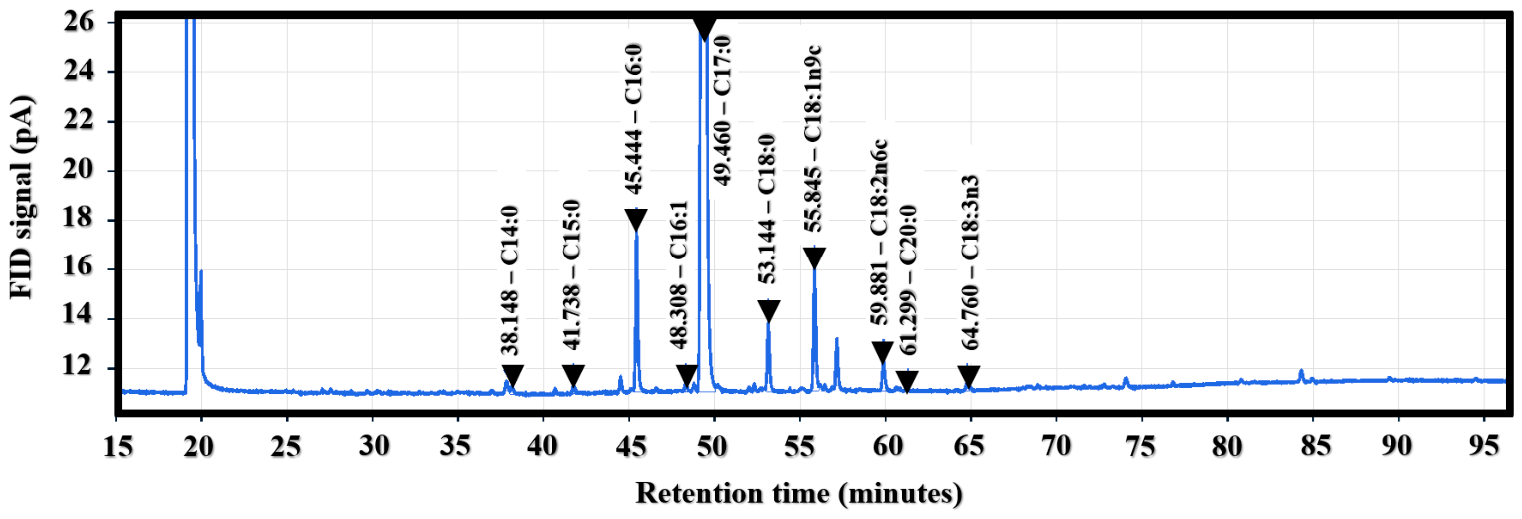
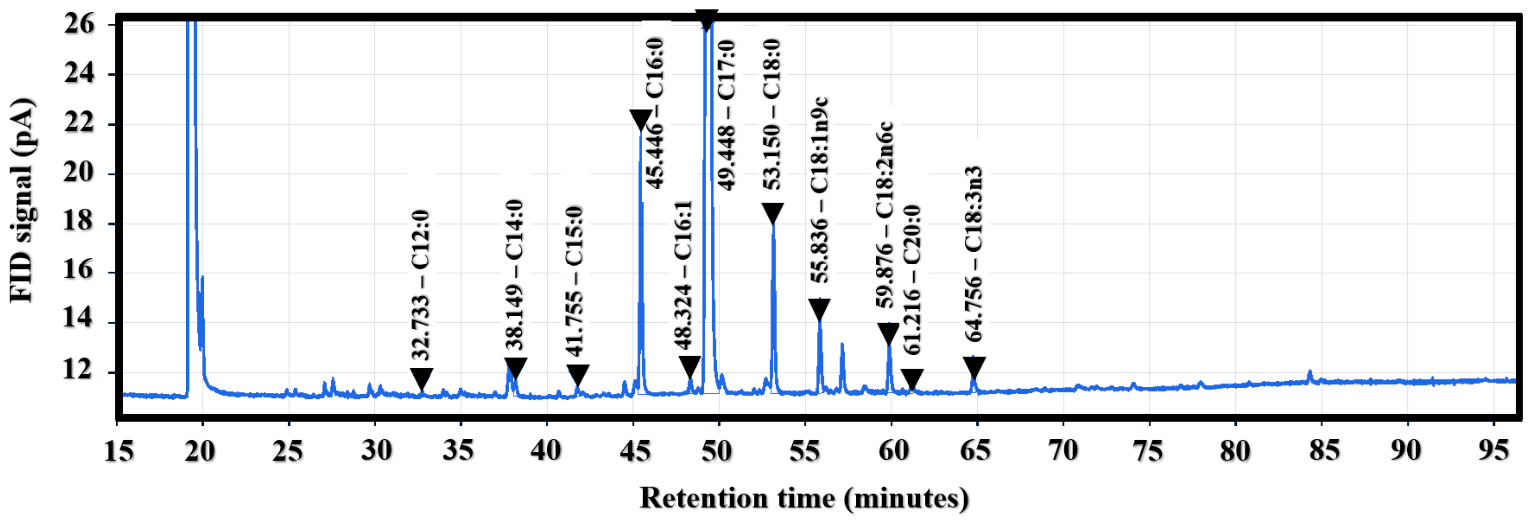
The oleaginous yeast isolates P. kudriavzevii strain SA(I)02 and C. tropicalis strain PSM(I)01 were selected for fatty acid profile analysis. Both isolates were cultivated in GYP medium, after which intracellular microbial oils were extracted from the harvested and dried yeast biomass. The extracted microbial oils were converted to FAMEs and analyzed by GC-FID. The GC-FID analysis revealed that the intracellular microbial oil of P. kudriavzevii strain SA(I)02 contained nine fatty acids ranging from C14 to C20, comprising five saturated and four unsaturated fatty acids. The predominant fatty acids detected were palmitic acid (C16:0), oleic acid (C18:1n9c), and stearic acid (C18:0), which accounted for 35.965%, 29.825%, and 16.447% of the total FAMEs, respectively. In comparison, the intracellular microbial oil of C. tropicalis strain PSM(I)01 contained ten fatty acids ranging from C12 to C20, including six saturated and four unsaturated fatty acids. Palmitic acid (C16:0), stearic acid (C18:0), and oleic acid (C18:1n9c) were identified as the predominant fatty acids, representing 39.079%, 26.597%, and 12.333% of the total FAMEs, respectively.
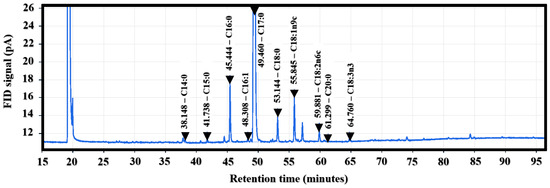
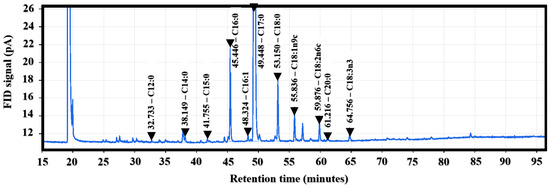
The microbial oil produced by C. tropicalis strain PSM(I)01 exhibited a high proportion of saturated fatty acids (SFAs) at 72.511%, while P. kudriavzevii strain SA(I)02 demonstrated a greater proportion of monounsaturated fatty acids (MUFAs) at 32.018%. These differences provided the basis for subsequent prediction of biodiesel-related properties. The GC-FID chromatograms and corresponding fatty acid profiles of the intracellular microbial oils produced by P. kudriavzevii strain SA(I)02 and C. tropicalis strain PSM(I)01 are presented in Figure 3 and Figure 4, respectively. The FAME profiles of the intracellular microbial oils extracted from P. kudriavzevii strain SA(I)02 and C. tropicalis strain PSM(I)01 are presented in Table 5. The values are expressed as relative percentages of the total FAMEs detected by GC-FID.
Figure 3.
GC-FID chromatogram of the fatty acid composition of intracellular microbial oil extracted from P. kudriavzevii strain SA(I)02. Methyl heptadecanoate (C17:0) was used as the internal standard and was detected at a retention time of 49.460 min.
Figure 4.
GC-FID chromatogram of the fatty acid composition of intracellular microbial oil extracted from C. tropicalis strain PSM(I)01. Methyl heptadecanoate (C17:0) was used as the internal standard and was detected at a retention time of 49.448 min.
Table 5.
FAME profiles of intracellular microbial oils extracted from P. kudriavzevii strain SA(I)02 and C. tropicalis strain PSM(I)01, expressed as relative percentages of total detected FAMEs.
3.5. Predicted Biodiesel-Related Properties Based on Fatty Acid Composition
The predicted biodiesel-related properties of microbial oils produced by P. kudriavzevii strain SA(I)02 and C. tropicalis strain PSM(I)01 demonstrated distinct characteristics attributable to their fatty acid compositions (Table 6). The DU was higher in P. kudriavzevii strain SA(I)02 (52.19) compared to C. tropicalis strain PSM(I)01 (40.12), indicating a greater contribution of unsaturated fatty acids in P. kudriavzevii. Specifically, P. kudriavzevii strain SA(I)02 contained a higher proportion of oleic acid (C18:1n9c, 29.825%) than C. tropicalis strain PSM(I)01 (12.333%), while C. tropicalis exhibited a greater proportion of saturated fatty acids.
Table 6.
Predicted biodiesel-related properties of microbial oils based on fatty acid composition.
Predicted IVs were 46.77 g I2/100 g for P. kudriavzevii strain SA(I)02 and 38.01 g I2/100 g for C. tropicalis strain PSM(I)01. Both predicted IVs were below the maximum iodine value of 120 g I2/100 g specified by EN 14214. This comparison served only as a reference for assessing unsaturation and does not indicate compliance of the microbial oils with the standard. SV were similar for both microbial oils, with 197.20 mg KOH/g for P. kudriavzevii strain SA(I)02 and 198.18 mg KOH/g for C. tropicalis strain PSM(I)01.
Predicted CN, estimated using the fatty acid composition-based model of Mishra et al. [21], were 62.49 for P. kudriavzevii strain SA(I)02 and 64.94 for C. tropicalis strain PSM(I)01. Both predicted CN values exceeded the minimum cetane number of 51 specified in EN 14214. This comparison was used as a reference for assessing cetane-related characteristics and does not indicate compliance with the standard. The slightly higher predicted CN for C. tropicalis corresponded with its higher proportion of saturated fatty acids, particularly palmitic acid (C16:0, 39.079%) and stearic acid (C18:0, 26.597%). Conversely, P. kudriavzevii exhibited a greater proportion of monounsaturated fatty acids, especially oleic acid (C18:1n9c), contributing to its higher degree of unsaturation.
Predicted HHV were similar for both microbial oils, with 40.64 MJ/kg for P. kudriavzevii strain SA(I)02 and 40.73 MJ/kg for C. tropicalis strain PSM(I)01. However, the LCSF differed markedly, with values of 12.92 for P. kudriavzevii strain SA(I)02 and 19.14 for C. tropicalis strain PSM(I)01. The higher LCSF in C. tropicalis strain PSM(I)01 was attributed to its substantially greater abundance of long-chain saturated fatty acids, particularly palmitic acid (C16:0) and stearic acid (C18:0).
Despite both isolates exhibiting substantial intracellular microbial oil accumulation, their microbial oils displayed distinct predicted biodiesel characteristics that reflected their contrasting fatty acid compositions. P. kudriavzevii strain SA(I)02 exhibited a more unsaturated, oleic acid-rich profile, resulting in a higher DU and lower LCSF. In contrast, C. tropicalis strain PSM(I)01 demonstrated a more saturated profile, leading to a lower DU but higher predicted CN and LCSF. These results suggest that variations in fatty acid composition, particularly the distribution of saturated and monounsaturated fatty acids, produced distinct predicted biodiesel properties in the microbial oils.
4. Discussion
Tropical fruits represent a diverse and potentially valuable reservoir of yeasts with a broad range of physiological and biotechnological capabilities, including the capacity for intracellular microbial oil accumulation [11,12,14]. The occurrence of oil-accumulating yeasts in fruit-associated environments may be associated with the availability of readily assimilable carbon sources and other nutrients that support yeast growth and lipid biosynthesis [24]. Previous studies have identified representative isolates with lipid contents exceeding 20% of dry cell weight, further supporting the potential of tropical fruit-derived yeasts as oleaginous candidates for microbial oil production [13,25].
In this study, two yeast isolates, SA(I)02 and PSM(I)01, were identified as oleaginous yeasts among 56 fruit-derived isolates based on complementary qualitative and quantitative assessments of intracellular microbial oil accumulation. Isolate SA(I)02 was isolated from A. carambola (star fruit) and molecularly identified as P. kudriavzevii strain SA(I)02, whereas isolate PSM(I)01 was obtained from D. malabarica (Indian persimmon) and identified as C. tropicalis strain PSM(I)01. The isolation of yeasts from these fruit-associated environments is consistent with previous studies demonstrating that tropical and fruit-associated habitats harbor diverse epiphytic yeast communities with potential biotechnological significance. The presence of P. kudriavzevii in the present study is particularly noteworthy because this non-conventional yeast is widely distributed in natural environments and possesses diverse physiological traits that have attracted considerable interest for biotechnological applications [26,27]. Similarly, C. tropicalis is a non-conventional yeast of both medical and industrial significance that has been investigated as a producer of diverse value-added metabolites, including lipids and other bioproducts from various carbon substrates [15,28,29]. The potential industrial use of C. tropicalis requires detailed consideration, as factors such as strain-specific safety, pathogenicity, regulatory status, and process suitability must be evaluated alongside lipid production. In this study, strain PSM(I)01 was selected for its lipid accumulation and fatty acid profile; however, its biosafety and industrial suitability were not specifically assessed. These findings should therefore serve as a basis for further research, rather than as direct evidence of industrial applicability. Importantly, both P. kudriavzevii and C. tropicalis have been reported as oleaginous yeasts isolated from rotten fruits, supporting their capacity to accumulate substantial amounts of intracellular microbial oils [30]. In the present study, P. kudriavzevii strain SA(I)02 and C. tropicalis strain PSM(I)01 accumulated 29.953% and 40.622% microbial oils on a dry-cell-weight basis, respectively. These values differ from those reported for other strains of the same species, emphasizing that lipid accumulation is strongly dependent on strain-specific characteristics and cultivation conditions [15,30,31,32]. Therefore, the differences observed between the present study and previous reports should not necessarily be interpreted as differences in the intrinsic oleaginous capacity of the species, but rather as a consequence of strain-dependent metabolic characteristics and the cultivation environment. Collectively, these findings show that P. kudriavzevii strain SA(I)02 and C. tropicalis strain PSM(I)01 have substantial lipid accumulation capacity and support their further evaluation as candidate yeasts for microbial oil production.
An important finding of the present study was the distinct fatty acid profiles of the intracellular microbial oils produced by the two representative oleaginous yeasts. P. kudriavzevii strain SA(I)02 exhibited a relatively high proportion of unsaturated fatty acids, particularly oleic acid (C18:1), which accounted for 29.825% of the total fatty acids. The lipid profile comprised 57.894% SFA, 32.018% MUFA, and 10.088% PUFA, resulting in a total unsaturated fatty acid content of 42.106%. In contrast, C. tropicalis strain PSM(I)01 exhibited a more saturated lipid profile, with SFA accounting for 72.511% of the total fatty acids. Palmitic acid (C16:0, 39.079%) and stearic acid (C18:0, 26.597%) were the predominant fatty acids in this strain, whereas MUFA accounted for only 14.859%. These contrasting profiles indicate distinct lipid phenotypes between the two representative strains despite their capacity to accumulate substantial amounts of intracellular lipids. The higher oleic acid (C18:1) content in P. kudriavzevii strain SA(I)02 indicates a greater contribution of monounsaturated fatty acids to its storage lipid pool, whereas the predominance of palmitic acid (C16:0) and stearic acid (C18:0) in C. tropicalis strain PSM(I)01 indicates a greater contribution of saturated fatty acids. However, intracellular microbial oil content alone does not establish the process-level production potential of an oleaginous yeast because the present study did not determine biomass concentration, volumetric lipid yield, or lipid productivity. Thus, the lipid contents reported here should be interpreted as indicators of intracellular lipid accumulation under the cultivation and extraction conditions employed rather than as direct measures of production performance. Furthermore, lipid accumulation should not be equated with demonstrated biodiesel production potential, because biodiesel production requires subsequent lipid conversion and experimental evaluation of the resulting fuel properties.
In addition, the contrasting proportions of MUFA and SFA may reflect strain-specific differences in fatty acid metabolism, including the relative regulation of fatty acid biosynthesis, elongation, and desaturation. Greater desaturation may favor the accumulation of monounsaturated fatty acids in P. kudriavzevii strain SA(I)02. In contrast, relatively greater retention of saturated fatty acids may result in the higher SFA proportion observed in C. tropicalis strain PSM(I)01. However, these metabolic processes were not directly investigated in the present study and therefore remain possible explanations for the observed fatty acid profiles.
Such variation in fatty acid composition is consistent with previous studies demonstrating that both strain-specific characteristics and cultivation conditions can substantially influence the relative proportions of individual fatty acids in oleaginous yeasts [4,33,34,35,36]. Notably, P. kudriavzevii strain MTCC 5493 isolated from rotten fruit was previously reported to contain 41.9% oleic acid (C18:1) and 29.3% palmitic acid (C16:0) [37]. Although the predominance of oleic acid (C18:1) in this previous isolate is consistent with the relatively high proportion of oleic acid observed in SA(I)02, the lower oleic acid (C18:1) proportion in the present strain indicates substantial quantitative variation in fatty acid composition among strains of the same species. Similarly, C. tropicalis isolated from mangrove soil was reported to contain 36.699% palmitic acid (C16:0) and 25.672% stearic acid (C18:0), showing a fatty acid pattern broadly comparable to that of C. tropicalis strain PSM(I)01 [15]. However, the differences in the relative abundance of individual fatty acids between these isolates further support the influence of strain-specific metabolism and cultivation conditions on fatty acid composition. Previous comparative studies have likewise shown that oil accumulation and fatty acid composition do not necessarily vary in parallel, emphasizing that lipid quantity and lipid quality represent distinct characteristics of oleaginous yeasts [4,33,35]. Intracellular microbial oil content alone may not adequately assess the process-level production potential or technological value of an oleaginous yeast because the present study did not determine biomass concentration, volumetric lipid yield, cultivation time, or lipid productivity. Combining quantitative microbial oil accumulation with fatty acid profiling therefore offers a stronger basis for selecting strains for specific applications.
The predicted CN values were 62.49 for P. kudriavzevii strain SA(I)02 and 64.94 for C. tropicalis strain PSM(I)01. The higher predicted CN for C. tropicalis was consistent with its higher proportions of saturated fatty acids, particularly palmitic acid (C16:0) and stearic acid (C18:0). Conversely, the greater proportion of unsaturated fatty acids, particularly oleic acid (C18:1n9c), in P. kudriavzevii strain SA(I)02 was associated with its higher predicted DU and IV. These relationships are consistent with the fatty acid composition used in the applied prediction models [38,39]. Both predicted CN values exceeded the minimum value of 51 specified by EN 14214; however, this comparison is indicative only and does not establish compliance with the standard because the biodiesel was not experimentally produced and tested.
The LCSF was higher for C. tropicalis strain PSM(I)01 (19.14) than for P. kudriavzevii strain SA(I)02 (12.92), consistent with the higher abundance of long-chain saturated fatty acids, particularly palmitic acid (C16:0) and stearic acid (C18:0), in the former. A higher proportion of saturated long-chain FAMEs is generally associated with greater crystallization tendency and less favorable cold-flow behavior [38,39]. However, experimental measurements of cloud point and cold-filter plugging point would be required to confirm these predicted characteristics.
The contrasting fatty acid profiles illustrate a trade-off among different fuel-related characteristics. The more unsaturated profile of P. kudriavzevii strain SA(I)02 was associated with higher predicted unsaturation-related parameters. In contrast, the more saturated profile of C. tropicalis strain PSM(I)01 was associated with greater saturation-related characteristics. These results show that changes in fatty acid composition can influence multiple predicted biodiesel-related properties simultaneously, pointing out the importance of considering the overall fatty acid profile rather than any single parameter when interpreting the fuel-related characteristics of microbial oils [40,41].
The predicted SV of P. kudriavzevii strain SA(I)02 and C. tropicalis strain PSM(I)01 were 197.20 and 198.18 mg KOH/g, respectively, while the corresponding HHV were 40.64 and 40.73 MJ/kg. The relatively small differences in SV and HHV indicate that these parameters were similar between the two microbial oils despite their contrasting fatty acid profiles. However, because both values were calculated from fatty acid composition, they should be regarded as predicted estimates rather than direct measurements of the corresponding biodiesel fuels.
Several limitations of the present study should be considered when interpreting the results. Optimization of cultivation parameters, including carbon source, carbon-to-nitrogen ratio, cultivation duration, temperature, and other process variables, may further affect lipid accumulation and fatty acid composition and should therefore be addressed in future studies. In addition, the present study did not determine biomass concentration, volumetric lipid yield, or lipid productivity; therefore, the measured lipid content should not be interpreted as a direct indicator of process-level production performance.
As the fatty acid data are reported as relative proportions of total detected FAMEs, this study does not present absolute fatty acid yields per unit biomass or extracted lipid. Additionally, biodiesel-related properties were predicted based on fatty acid composition and were not experimentally validated using biodiesel produced from the extracted microbial oils. The present study did not experimentally determine other important fuel properties, including viscosity, density, oxidative stability, cloud point, and cold-filter plugging point; future work should measure these directly to validate the predicted properties.
The predicted biodiesel-related properties provide a basis for further evaluation of both microbial oils as potential biodiesel feedstocks. Despite both isolates exhibiting substantial lipid accumulation, they produced microbial oils with markedly different fatty acid profiles and, consequently, different predicted fuel characteristics. This finding emphasizes that oleaginous yeast selection should consider not only lipid accumulation but also fatty acid composition and the resulting balance among ignition quality, oxidation stability, and cold-flow behavior [40]. Further studies involving biodiesel conversion and direct determination of standardized fuel properties, including CN, oxidation stability, viscosity, density, and cold-flow properties, are therefore required to validate the predicted performance characteristics.
5. Conclusions
This study demonstrated that tropical fruits in Thailand harbor yeast isolates with substantial intracellular microbial oil accumulation. Among 56 fruit-derived yeast isolates, P. kudriavzevii strain SA(I)02 and C. tropicalis strain PSM(I)01 were classified as oleaginous yeasts. Their intracellular microbial oil contents were 29.953% and 40.622% of dry biomass, respectively. Despite this substantial lipid accumulation, the two isolates showed markedly different fatty acid profiles. P. kudriavzevii strain SA(I)02 contained a higher proportion of monounsaturated fatty acids, particularly oleic acid. In contrast, C. tropicalis strain PSM(I)01 had a higher proportion of saturated fatty acids, particularly palmitic and stearic acids. These differences were associated with distinct predicted biodiesel-related properties. P. kudriavzevii strain SA(I)02 showed a higher predicted degree of unsaturation and a lower long-chain saturated factor, whereas C. tropicalis strain PSM(I)01 showed a higher predicted cetane number and long-chain saturated factor. Overall, the findings show that lipid accumulation capacity alone is insufficient to characterize the production potential or biodiesel-related characteristics of oleaginous yeasts. Fatty acid composition should also be considered when evaluating candidate strains for specific biotechnological applications. However, the present study did not experimentally produce biodiesel or directly measure standardized fuel properties. Further studies involving biodiesel conversion and direct fuel-property measurements are required to determine the actual biodiesel performance and production potential of these yeast isolates.
Supplementary Materials
The following supporting information can be downloaded at https://www.mdpi.com/article/10.3390/applmicrobiol6100121/s1. Table S1. Additional information on the sampling locations and sample sources. Figure S1. Representative colony morphologies of fruit-derived yeasts. Red scale bar = 2 mm. Table S2. Equations and references used for the prediction of biodiesel-related properties based on fatty acid composition [19,20,21,22].
Author Contributions
Conceptualization, A.C.; methodology, A.C. and P.B.; software, A.C.; validation, A.C. and P.B.; formal analysis, A.C. and P.B.; investigation, A.C., P.B., P.T., and P.C.; resources, P.T. and P.C.; data curation, A.C.; writing—original draft preparation, A.C. and P.B.; writing—review and editing, A.C.; visualization, A.C. and P.B.; supervision, A.C. and P.B.; project administration, A.C.; funding acquisition, A.C. All authors have read and agreed to the published version of the manuscript.
Funding
This research was funded by King Mongkut’s University of Technology North Bangkok, Contract no. KMUTNB-69-KNOW-11.
Institutional Review Board Statement
Not applicable.
Informed Consent Statement
Not applicable.
Data Availability Statement
The sequencing data are available at the National Center for Biotechnology Information (NCBI), with accession numbers provided in the article.
Acknowledgments
During the preparation of this manuscript, the authors used Generative AI Grammarly Pro version 14.1334.0 and GPT 5.6 Luna for the purposes of assistance in editing and refining the English language. The authors have reviewed and edited the output and take full responsibility for the content of this publication.
Conflicts of Interest
The authors declare no conflicts of interest.
References
- Boontanom, B.; Emnin, N.; Planonth, S.; Chantarasiri, A. The oleaginous Rhodotorula mucilaginosa isolated from paddy field soils and the profile of fatty acid in its intracellular microbial oils. Trends Sci. 2025, 22, 9470. [Google Scholar] [CrossRef] [Scilit]
- Anjum, F.; Mattia, D.; Nourafkan, E.; Xie, M.; Lye, G.J.; Leese, H.S. Reimagining oil recovery: Sustainable downstream processing of oleaginous yeasts for food applications. Bioresour. Technol. 2026, 446, 134148. [Google Scholar] [CrossRef] [Scilit] [PubMed]
- Florea, E.C.; Niculescu, A.G.; Bratu, A.G.; Mihaiescu, D.E.; Grumezescu, A.M. Process engineering strategies for microbial lipid production: From strain evolution to industrial-scale bioprocessing. Int. J. Mol. Sci. 2026, 27, 3760. [Google Scholar] [CrossRef] [Scilit] [PubMed]
- Poontawee, R.; Lorliam, W.; Polburee, P.; Limtong, S. Oleaginous yeasts: Biodiversity and cultivation. Fungal Biol. Rev. 2023, 44, 100295. [Google Scholar] [CrossRef] [Scilit]
- Collier, T.R.V.; da Roza, P.A.; Goold, H.D.; Singh, S.; Paulsen, I.T.; Walker, R.S.K.; Pretorius, I.S. Microbial lipids for a sustainable future: The growing potential of synthetic microbial engineering for consumer oils. Crit. Rev. Biotechnol. 2026, 46, 477–500. [Google Scholar] [CrossRef] [Scilit] [PubMed]
- Lopes da Silva, T.; Fontes, A.; Reis, A.; Siva, C.; Gírio, F. Oleaginous yeast biorefinery: Feedstocks, processes, techniques, bioproducts. Fermentation 2023, 9, 1013. [Google Scholar] [CrossRef] [Scilit]
- Nguyen, Q.D.; Nguyen, T.V.L.; Tran, T.T.V.; Khatri, Y.; Chandrapala, J.; Truong, T. Single cell oils from oleaginous yeasts and metabolic engineering for potent cultivated lipids: A review with food application perspectives. Future Foods 2025, 11, 100658. [Google Scholar] [CrossRef] [Scilit]
- Pajares, I.G.; Requiso, P.J.; Fabro, L.M., Jr.; Ramos, K.R.M.; Raymundo, A.K. Biodiesel production of oleaginous yeast isolated from the Mount Makiling Forest Reserve. J. Appl. Biol. Biotechnol. 2024, 12, 67–75. [Google Scholar] [CrossRef] [Scilit]
- López-Martínez, L.X.; Rojo-Gutiérrez, E.; Márquez-Molina, O.; Saenz-Hidalgo, H.K.; Baeza-Jiménez, R. Bioactive extraction from tropical fruit residues by enzyme-assisted processes. In Value-Addition in Agri-Food Industry Waste Through Enzyme Technology; Kuddus, M., Ramteke, P., Eds.; Academic Press: Cambridge, MA, USA, 2023; pp. 209–220. [Google Scholar]
- Sayago-Ayerdi, S.; García-Martínez, D.L.; Ramírez-Castillo, A.C.; Ramírez-Concepción, H.R.; Viuda-Martos, M. Tropical fruits and their co-products as bioactive compounds and their health effects: A review. Foods 2021, 10, 1952. [Google Scholar] [CrossRef] [Scilit] [PubMed]
- Rojas-Jiménez, K.; Quirós-Castegnaro, A.; Ramirez-Rodríguez, I.; Solera-Rodríguez, P.; Morera-Huertas, J.; Vallejo-Arróliga, M. Yeast diversity in tropical fruits from Costa Rica. Rev. Biol. Trop. 2025, 73, e64703. [Google Scholar] [CrossRef] [Scilit]
- Vegas, C.; Zavaleta, A.I.; Canales, P.E.; Esteve-Zarzoso, B. Yeasts associated with various Amazonian native fruits. Pol. J. Microbiol. 2020, 69, 251–261. [Google Scholar] [CrossRef] [Scilit] [PubMed]
- Planonth, S.; Chantarasiri, A. The oleaginous yeast Pichia manshurica isolated from Lansium domesticum fruit in Thailand and its fatty acid composition of single cell oil. Biodiversitas 2022, 23, 801–809. [Google Scholar] [CrossRef] [Scilit]
- Vincent, M.; Hung, M.C.; Baran, P.R.M.; Azahari, A.S.; Adeni, D.S.A. Isolation, identification and diversity of oleaginous yeasts from Kuching, Sarawak, Malaysia. Biodiversitas 2018, 19, 1266–1272. [Google Scholar] [CrossRef] [Scilit]
- Wongchamrearn, S.; Boontanom, P.; Ungwiwatkul, S.; Emnin, N.; Chantarasiri, A. Short communication: The oleaginous Candida tropicalis isolated from mangrove soil in eastern Thailand and the fatty acid composition profile of its intracellular lipids. Biodiversitas 2023, 24, 5088–5095. [Google Scholar] [CrossRef] [Scilit]
- Kang, M.J.; Choi, Y.S.; Kim, S. A comparison of the ability of fungal internal transcribed spacers and D1/D2 domain regions to accurately identify Candida glabrata clinical isolates using sequence analysis. Biomed. Sci. Lett. 2018, 24, 430–434. [Google Scholar] [CrossRef] [Scilit][Green Version]
- Kurtzman, C.P.; Robnett, C.J. Identification and phylogeny of ascomycetous yeasts from analysis of nuclear large subunit (26S) ribosomal DNA partial sequences. Antonie van Leeuwenhoek 1998, 73, 331–371. [Google Scholar] [CrossRef] [Scilit] [PubMed]
- Chantarasiri, A.; Ungwiwatkul, S. Effects of CO2 aeration and light supply on the growth and lipid production of a locally isolated microalga, Chlorella variabilis RSM09. Appl. Sci. 2024, 14, 10512. [Google Scholar] [CrossRef] [Scilit]
- Gopinath, A.; Puhan, S.; Nagarajan, G. Theoretical modeling of iodine value and saponification value of biodiesel fuels from their fatty acid composition. Renew. Energy 2009, 34, 1806–1811. [Google Scholar] [CrossRef] [Scilit]
- Ramos, M.J.; Fernández, C.M.; Casas, A.; Rodríguez, L.; Pérez, A. Influence of fatty acid composition of raw materials on biodiesel properties. Bioresour. Technol. 2009, 100, 261–268. [Google Scholar] [CrossRef] [Scilit] [PubMed]
- Mishra, S.; Anand, K.; Mehta, P.S. Predicting the cetane number of biodiesel fuels from their fatty acid methyl ester composition. Energy Fuels 2016, 30, 10425–10434. [Google Scholar] [CrossRef] [Scilit]
- Patel, A.; Arora, N.; Mehtani, J.; Pruthi, V.; Pruthi, P.A. Assessment of fuel properties on the basis of fatty acid profiles of oleaginous yeast for potential biodiesel production. Renew. Sustain. Energy Rev. 2017, 77, 604–616. [Google Scholar] [CrossRef] [Scilit]
- EN 14214:2012+A2:2019; Liquid petroleum products—Fatty acid methyl esters (FAME) for use in diesel engines and heating applications—Requirements and test methods. European Committee for Standardization (CEN): Brussels, Belgium, 2019.
- Maina, S.; Pateraki, C.; Kopsahelis, N.; Paramithiotis, S.; Drosinos, E.H.; Papanikolaou, S.; Koutinas, A. Microbial oil production from various carbon sources by newly isolated oleaginous yeasts. Eng. Life Sci. 2017, 17, 333–344. [Google Scholar] [CrossRef] [Scilit] [PubMed]
- Martínez, A.; Alvarez, A.; Arbildi, E.; Rocca, I.; Garmedia, G.; Tonani, F.L.; Pimenta, R.S.; Vero, S. Oleaginous yeasts from Brazilian Cerrado for sustainable biodiesel production using crude glycerol. Antonie van Leeuwenhoek 2025, 118, 147. [Google Scholar] [CrossRef] [Scilit] [PubMed]
- Wang, N.; Zhang, P.; Zhou, X.; Zheng, J.; Ma, Y.; Liu, C.; Wu, T.; Li, H.; Wang, X.; Wang, H.; et al. Isolation, identification, and characterization of an acid-tolerant Pichia kudriavzevii and exploration of its acetic acid tolerance mechanism. Fermentation 2023, 9, 540. [Google Scholar] [CrossRef] [Scilit]
- Chu, Y.; Li, M.; Jin, J.; Dong, X.; Xu, K.; Jin, L.; Qiao, Y.; Ji, H. Advances in the application of the non-conventional yeast Pichia kudriavzevii in food and biotechnology industries. J. Fungi 2023, 9, 170. [Google Scholar] [CrossRef] [Scilit] [PubMed]
- Lima, R.; Ribeiro, F.C.; Colombo, A.L.; de Almeida, J.N., Jr. The emerging threat antifungal-resistant Candida tropicalis in humans, animals, and environment. Front. Fungal Biol. 2022, 3, 957021. [Google Scholar] [CrossRef] [Scilit] [PubMed]
- Queiroz, S.S.; Jofre, F.M.; Bianchini, I.A.; Boaes, T.S.; Bordini, F.W.; Chandel, A.K.; Felipe, M.G.A. Current advances in Candida tropicalis: Yeast overview and biotechnological applications. Biotechnol. Appl. Biochem. 2023, 70, 2069–2087. [Google Scholar] [CrossRef] [Scilit] [PubMed]
- Diwan, B.; Gupta, P. Comprehending the influence of critical cultivation parameters on the oleaginous behaviour of potent rotten fruit yeast isolates. J. Appl. Microbiol. 2018, 125, 490–505. [Google Scholar] [CrossRef] [Scilit] [PubMed]
- Bettencourt, S.; Miranda, C.; Pozdniakova, T.A.; Sampaio, P.; Franco-Duarte, R.; Pais, C. Single cell oil production by oleaginous yeasts grown in synthetic and waste-derived volatile fatty acids. Microorganisms 2020, 8, 1809. [Google Scholar] [CrossRef] [Scilit] [PubMed]
- Thangavelu, K.; Sundararaju, P.; Srinivasan, N.; Uthandi, S. Bioconversion of sago processing wastewater into biodiesel: Optimization of lipid production by an oleaginous yeast, Candida tropicalis ASY2 and its transesterification process using response surface methodology. Microb. Cell Fact. 2021, 20, 167. [Google Scholar] [CrossRef] [Scilit] [PubMed]
- Sitepu, I.R.; Sestric, R.; Ignatia, L.; Levin, D.; German, J.B.; Gillies, L.A.; Almada, L.A.; Boundy-Mills, K.L. Manipulation of culture conditions alters lipid content and fatty acid profiles of a wide variety of known and new oleaginous yeast species. Bioresour. Technol. 2013, 144, 360–369. [Google Scholar] [CrossRef] [Scilit] [PubMed]
- Tanimura, A.; Takashima, M.; Sugita, T.; Endoh, R.; Kikukawa, M.; Yamaguchi, S.; Sakuradani, E.; Ogawa, J.; Shima, J. Selection of oleaginous yeasts with high lipid productivity for practical biodiesel production. Bioresour. Technol. 2014, 153, 230–235. [Google Scholar] [CrossRef] [Scilit] [PubMed]
- Shaigani, P.; Awad, D.; Redai, V.; Fuchs, M.; Haack, M.; Mehlmer, N.; Brueck, T. Oleaginous yeasts- substrate preference and lipid productivity: A view on the performance of microbial lipid producers. Microb. Cell Fact. 2021, 20, 220. [Google Scholar] [CrossRef] [Scilit] [PubMed]
- Sapsirisuk, S.; Polburee, P.; Lorliam, W.; Limtong, S. Discovery of oleaginous yeast from mountain forest soil in Thailand. J. Fungi 2022, 8, 1100. [Google Scholar] [CrossRef] [Scilit] [PubMed]
- Sankh, S.; Thiru, M.; Saran, S.; Rangaswamy, V. Biodiesel production from a newly isolated Pichia kudriavzevii strain. Fuel 2013, 106, 690–696. [Google Scholar] [CrossRef] [Scilit]
- Sia, C.B.; Kansedo, J.; Tan, Y.H.; Lee, K.T. Evaluation on biodiesel cold flow properties, oxidative stability and enhancement strategies: A review. Biocatal. Agric. Biotechnol. 2020, 24, 101514. [Google Scholar] [CrossRef] [Scilit]
- Pradana, Y.S.; Makertihartha, I.G.B.N.; Indarto, A.; Prakoso, T.; Soerawidjaja, T.H. A review of biodiesel cold flow properties and its improvement methods: Towards sustainable biodiesel application. Energies 2024, 17, 4543. [Google Scholar] [CrossRef] [Scilit]
- Banerjee, S.; Singh, V. Economic and environmental bottlenecks in the industrial scale production of lipid-derived biofuels from oleaginous yeasts: A review of the current trends and future prospects. GCB Bioenergy 2024, 16, e13173. [Google Scholar] [CrossRef] [Scilit]
- Ouellet, B.; Abdel-Mawgoud, A.M. Production of genetically engineered designer biodiesel from yeast lipids. Curr. Res. Biotechnol. 2024, 7, 100189. [Google Scholar] [CrossRef] [Scilit]

Disclaimer/Publisher’s Note: The statements, opinions and data contained in all publications are solely those of the individual author(s) and contributor(s) and not of MDPI and/or the editor(s). MDPI and/or the editor(s) disclaim responsibility for any injury to people or property resulting from any ideas, methods, instructions or products referred to in the content. |
© 2026 by the authors. Licensee MDPI, Basel, Switzerland. This article is an open access article distributed under the terms and conditions of the Creative Commons Attribution (CC BY) license.