


Abstract
This study evaluates driver yielding behavior toward pedestrians at roundabout crosswalks in Minnesota, comparing base-case crossings against three specialized crossing treatments (in-roadway signs, rectangular rapid flashing beacons (RRFBs), and colored crosswalks) and testing which site and treatment characteristics are statistically associated with yielding. A statewide survey of 91 Minnesota city and county engineers identified candidate roundabouts with known pedestrian concerns. Video cameras were installed at 15 roundabouts (approximately 50 h of daytime footage per leg), and eight roundabouts were selected for detailed case study analysis of vehicle–pedestrian interactions, following observational protocols adapted from prior driver yielding research; the resulting leg-level dataset comprises 22 treatment-condition observations across 18 roundabout legs. Each pedestrian crossing event was coded for driver yielding behavior (active yield, passive yield, no yield) and pedestrian crossing behavior (normal, hesitates, retreats, runs, not ready). To complement this descriptive analysis and enable formal statistical inference from a limited number of sites, a beta regression model was fit to leg-level overall yielding rates as a function of specialized crossing treatment, roundabout configuration, total lanes, approach speed, circulatory roadway speed, traffic volume, and pedestrian count. Descriptively, single-lane roundabouts showed higher overall yielding (85.7–100%) than multi-lane roundabouts, and exit-lane yielding was consistently lower than entry-lane yielding across all sites. RRFBs achieved close to 100% compliance when activated by pedestrians, but compliance fell by 15–38 percentage points when pedestrians did not activate the beacon. Colored crosswalk sites showed the lowest observed yielding rates (11.1–24.1%). The beta regression model supported and refined these patterns: RRFB activation was associated with 4.76 times higher odds of yielding (p = 0.0015), each additional lane was associated with 49% lower yielding odds (p = 0.022), and 2 × 1 roundabout configurations showed 76% lower yielding odds than 1 × 1 configurations (p = 0.0085). Colored crosswalks were associated with significantly lower yielding odds in the simplified model (p = 0.004). Approach speed, traffic volume, and pedestrian count were not statistically significant once treatment and configuration were accounted for, a finding that qualifies speed-focused interpretations of the descriptive results. This study pairs a statewide Minnesota case study dataset with a formal inferential layer, a beta regression model appropriate for bounded proportion outcomes, and is, to the authors’ knowledge, the first application of beta regression to driver yielding compliance data at roundabout pedestrian crossings. The finding that colored crosswalk sites showed the lowest yielding among the treatments studied, based on two sites and best treated as a preliminary association rather than a conclusive treatment effect, together with the confirmation that RRFB effectiveness depends on pedestrian activation, offer transportation agencies early, statistically grounded evidence to inform selecting and pairing pedestrian crossing treatments at roundabouts as installations of this proven intersection form continue to expand nationally.
1. Introduction
Modern roundabouts are among the most well-documented safety countermeasures in transportation engineering, with a substantial body of research demonstrating reductions in fatal and injury crashes relative to signalized and stop-controlled intersections [1,2]. Once rare in the United States, roundabouts are now installed at an accelerating pace and are increasingly treated as a forward-looking intersection investment, with a growing number of state transportation agencies adopting intersection control evaluation policies that place roundabouts among the first alternatives considered. These safety benefits are best established for vehicle occupants; whether they extend equally to pedestrians is a narrower and less settled question. Roundabouts offer pedestrians some structural advantages, including lower vehicle speeds and shorter average delay [1,3], but transportation agencies in Minnesota and nationally have received persistent stakeholder feedback that roundabouts, particularly larger multi-lane configurations, can be difficult for pedestrians to navigate. As this next generation of intersection infrastructure continues to scale up, its long-term success will be judged not only by vehicle-occupant safety but by how well it serves pedestrians and other vulnerable road users.
A central mechanism behind this concern is driver yielding behavior. Unlike a signalized crossing, a roundabout crosswalk typically relies on drivers voluntarily yielding to a waiting or crossing pedestrian under a yield-control regime, with no signal to enforce the right-of-way. Whether drivers reliably do so, and how that reliability varies with lane configuration, vehicle speed, and the presence of supplemental crossing treatments, is therefore a direct determinant of the pedestrian experience at these facilities.
This paper investigates this question in Minnesota through a statewide engineer survey, video-based observation at 15 roundabouts, and detailed case study analysis of vehicle–pedestrian interactions at eight of those sites. With eight case study locations spanning several roundabout configurations and crossing treatments, descriptive comparison alone provides limited observations within each category and cannot establish whether observed differences in yielding behavior are statistically significant or consistent with sampling variation. We address this directly by applying a beta regression model, an approach suited to bounded proportion outcomes such as a yielding rate, to the leg-level data.
The survey, video data collection, and descriptive case study analysis presented in this paper were originally conducted as part of a Minnesota Department of Transportation (MnDOT) and Local Road Research Board (LRRB) research project and are documented in the associated technical report [4]. That report presented the descriptive findings but did not include a formal statistical model; the beta regression analysis presented in Section 3.4, Section 4.1, Section 4.2 and Section 4.3 of this paper, including the treatment and configuration effect estimates, the sensitivity and diagnostic analyses, and the associated discussion, is original to this paper and has not appeared in the technical report or elsewhere. We disclose this relationship explicitly, consistent with common practice for research originating in state department of transportation-funded studies, so that the paper’s contribution relative to the underlying data collection effort is transparent to readers.
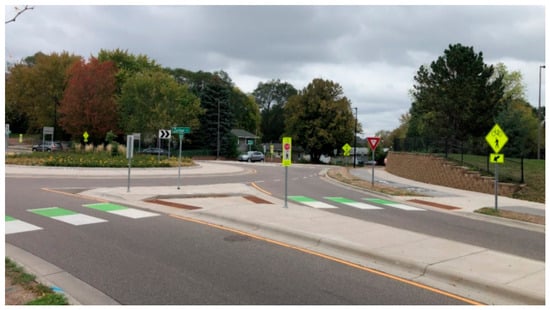
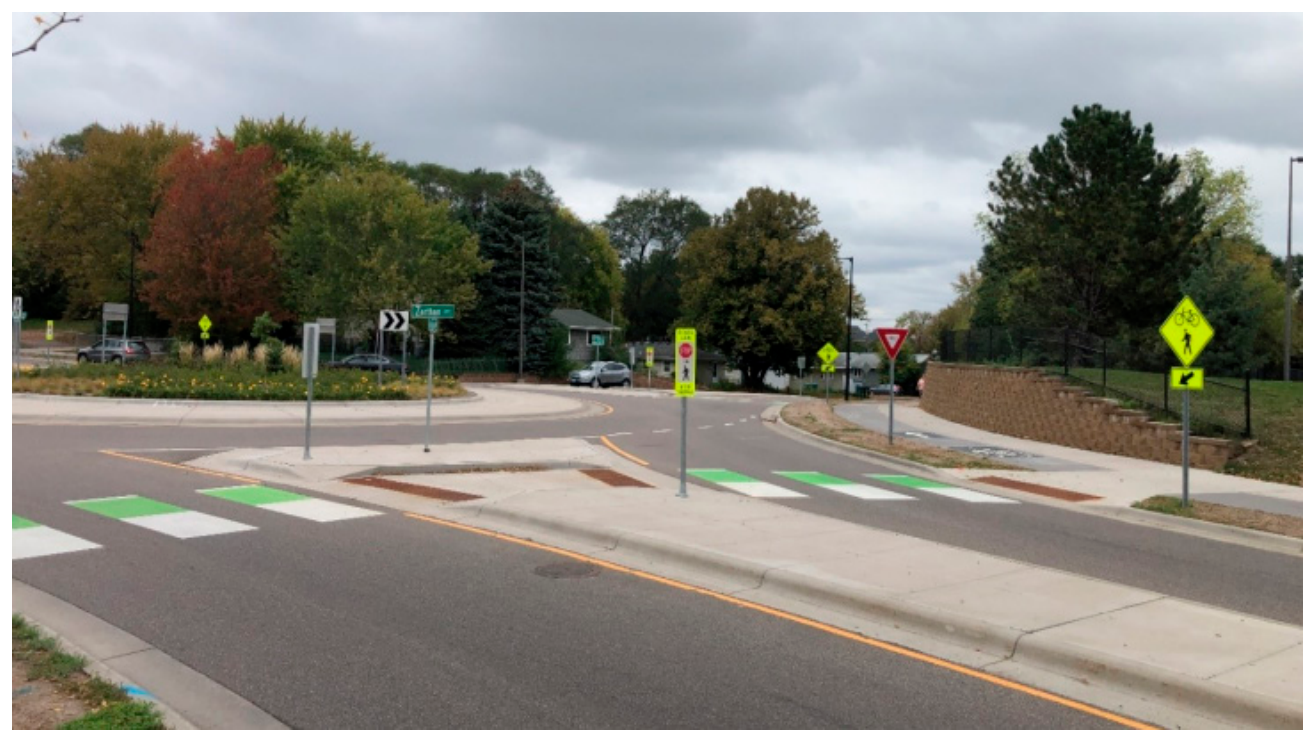
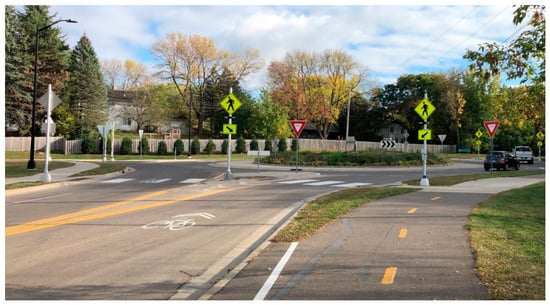
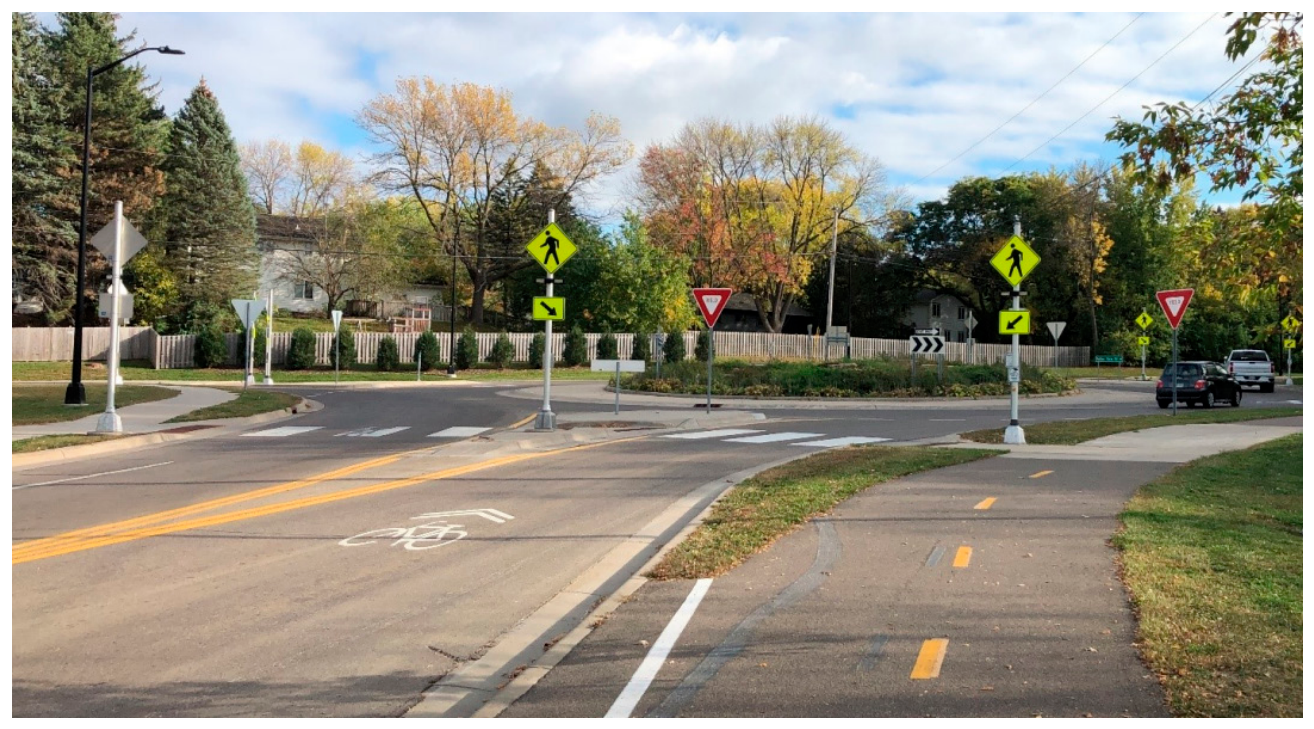
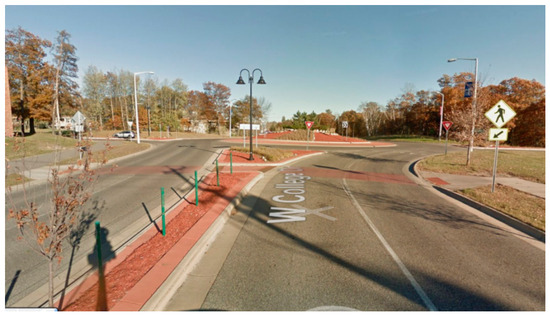
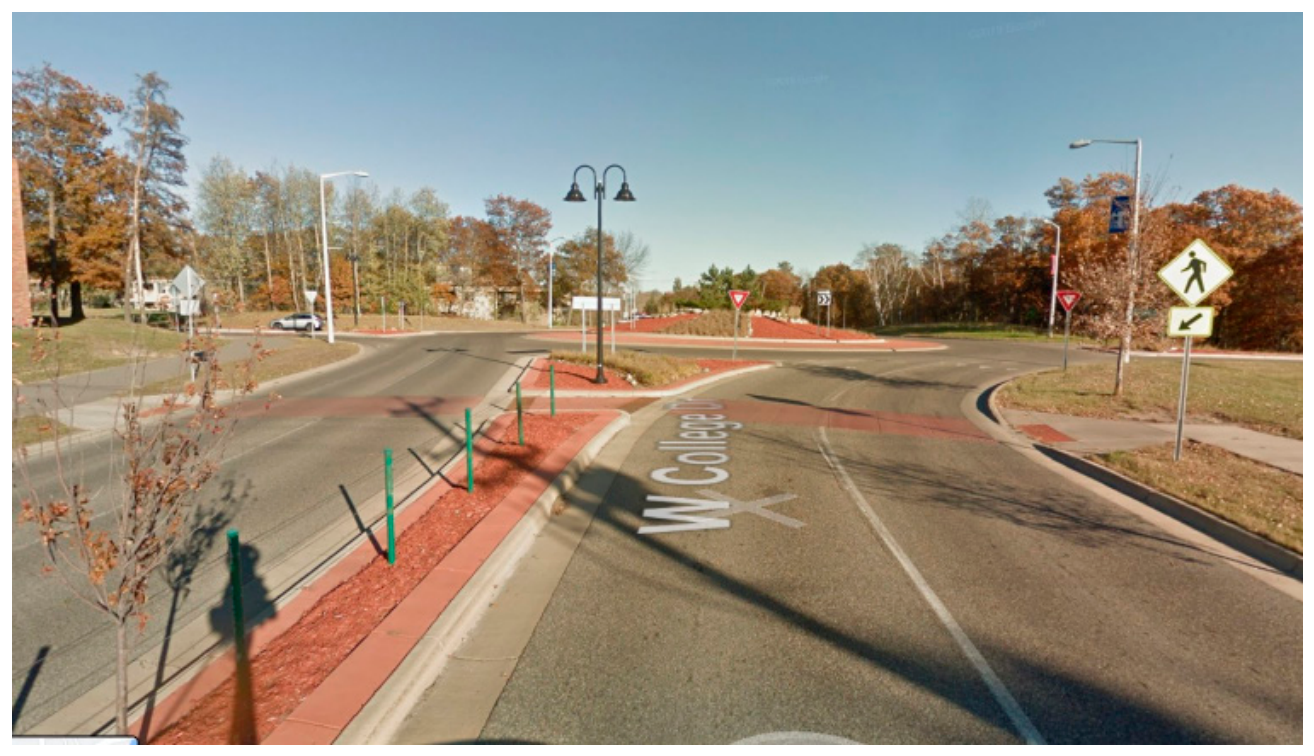
The contribution of this paper is twofold. First, it presents descriptive vehicle–pedestrian interaction findings from eight Minnesota case studies, comparing driver yielding behavior across base-case crossings and three specialized crossing treatments (in-roadway signs, rectangular rapid flashing beacons, and colored crosswalks). Figure 1, Figure 2 and Figure 3 illustrate the roundabout locations in Minnesota with specialized crossing treatments considered for the study.
Figure 1.
Roundabout approach showing pedestrian crosswalk with in-roadway sign crossing treatment on Zarthan Ave. S. and Cedar Lake Rd, St Louis Park, Minnesota.
Figure 2.
Roundabout approach showing pedestrian crosswalk with RRFBs installed at Tracy Ave. and Valley View Ln., Edina, Minnesota.
Figure 3.
Roundabout approach showing pedestrian colored crosswalk at College Dr. and Mississippi Pkwy., Brainerd, Minnesota. Source: Google Maps–Street View.
Second, it adds a formal statistical layer that tests which treatment and site characteristics are robustly associated with yielding once other factors are accounted for, refining and in one notable case qualifying the conclusions suggested by descriptive comparison alone. More broadly, as roundabout adoption accelerates nationally, statistically grounded evidence for selecting and pairing pedestrian crossing treatments will become increasingly central to ensuring that this future-oriented infrastructure investment serves all road users, not only vehicle occupants.
2. Literature Review
A foundational strand of research has directly observed driver yielding behavior toward pedestrians at roundabout crosswalks. Geruschat and Hassan [5] studied driver yielding to sighted and blind pedestrians at two multi-lane roundabouts in Annapolis, Maryland, and found that yielding was strongly related to vehicle speed and to whether the vehicle was entering or exiting the roundabout: drivers traveling below 15 mph yielded 75% of the time versus 50% above 20 mph, and drivers yielded 79% of the time in entry lanes versus 37% in exit lanes. Ashmead et al. [6] reported a similar entry-versus-exit asymmetry. Harkey and Carter [7] extended this line of research to seven roundabouts across six states, analyzing motorist, pedestrian, and bicyclist interactions in detail. While the study did not identify substantial safety problems in terms of observed conflicts or collisions, its behavioral analysis found that motorists yielded less often on exit legs than entry legs, that pedestrians and bicyclists hesitated more often at exit legs as a result, and that two-lane approaches were more difficult to cross than one-lane approaches because drivers yielded less consistently. Harkey and Carter concluded that roundabout yield control produced motorist and pedestrian behavior intermediate between uncontrolled crossings and signal- or stop-controlled crossings, and recommended that exit legs be designed with adequate sight distance and low vehicle speeds, supplemented where needed by static warning signs or real-time crossing devices at multi-lane sites. Building on this descriptive foundation, Salamati et al. [8] developed event-based logistic regression models of driver yielding at two-lane roundabout entry and exit legs across six roundabouts in five states, confirming the entry-versus-exit asymmetry and the effect of far-lane position at a finer, event level of analysis than the present study’s leg-level aggregation permits, and illustrating the kind of individual-event model that a future re-analysis of this study’s underlying data, were it accessible, could pursue.
A related body of work has focused specifically on accessibility for pedestrians with vision disabilities, for whom the absence of a signal phase at most roundabout crossings removes an important wayfinding and right-of-way cue. Rouphail et al. [9] used simulation to study pedestrian crossings at roundabouts and similarly found that blind pedestrians waited considerably longer to cross than sighted pedestrians. NCHRP Project 3-78A [10,11] evaluated accessibility for blind pedestrians at three single-lane and two multi-lane roundabouts, before and after installing crossing treatments, and linked single-lane accessibility to four factors: low vehicle speeds achieved through good geometric design, a majority of drivers willing to yield, properly installed detectable warning surfaces, and orientation and mobility assistance during the crossing exercise. For the two multi-lane sites, installing a pedestrian hybrid beacon (PHB) at one location and a raised crosswalk at the other both produced significant decreases in pedestrian delay and crossing risk, with the simpler raised-crosswalk treatment performing comparably to the more complex PHB. A related FHWA evaluation of RRFBs at 12 approaches of seven multi-lane roundabouts in five states [12] found that driver yielding and blind-pedestrian intervention rates were correlated with both vehicle speed and the geometric radius of curvature at the crosswalk, and that RRFB effectiveness varied enough across sites that the treatment’s presence alone did not guarantee accessible yielding, a pattern broadly consistent with the site-dependent RRFB effects described in Section 4.1 of the present study. The follow-on NCHRP Project 3-78B synthesized this work into a practitioner guidebook, published as NCHRP Report 674 and later NCHRP Research Report 384 [13], identifying 28 candidate treatments across six categories, including driver information treatments, traffic calming, pedestrian information systems, crosswalk geometric modification, signalized treatments with accessible pedestrian signals, and grade-separated crossings. The U.S. Access Board’s proposed Public Right-of-Way Accessibility Guidelines (PROWAG) specify that multi-lane roundabout crossings should include a pedestrian-actuated signal, such as a PHB, to meet accessibility requirements [14]; Minnesota voluntarily adopts PROWAG as a department standard with the notable exception of this particular roundabout signalization requirement. Considerably less is known about roundabout use by pedestrians with cognitive disabilities, an accessibility gap that remains largely unaddressed in the literature [15].
A third strand of research evaluates specific design and treatment interventions intended to improve driver yielding. NCHRP Report 672, the second edition of the national roundabout design guide, documents that single-lane roundabouts designed for lower operating speeds are the safest at-grade intersection treatment overall, while multi-lane roundabouts, though generally safer than signalized intersections for fatal and injury crashes, cannot fully replicate single-lane performance because crossing pedestrians face multiple, sequential vehicle-yielding decisions [1]. The guide recommends minimizing travel lanes, designing for slower speeds, setting sidewalks back from the circulatory roadway with a landscape buffer, and providing splitter island refuges at least 6 feet wide. The city of Madison, Wisconsin, an early and extensive roundabout adopter, has documented a complementary set of low-cost practices, including reduced sign clutter, shorter crossing distances, and, where existing roundabouts show pedestrian safety concerns, retrofit installation of rectangular rapid flashing beacons (RRFBs) [16,17]. NCHRP Web-Only Document 222 [18] analyzed roundabouts across multiple U.S. states and found that driver yielding rates decreased by approximately 12% for every one mile-per-hour increase in mean crosswalk approach speed, and that RRFB installation was associated with an 8.1 percentage point increase in driver compliance relative to sites without the treatment.
Minnesota-specific evidence prior to this study is limited but directionally consistent with the national literature. Hourdos [3] analyzed video data at two Twin Cities roundabouts and found that driver yielding was more likely when pedestrians began crossing from the splitter island, less likely when vehicles were exiting the roundabout, and decreased further as the number of circulating vehicles increased, though the study identified no safety-compromising conflicts and found pedestrian delay considerably lower than would be expected at a comparably trafficked signalized crossing. Leuer [2] evaluated crash rates before and after construction at 144 Minnesota roundabouts and found more than an 80% reduction in fatal and serious injury crashes overall, with single-lane configurations outperforming unbalanced and full multi-lane configurations, consistent with the safety hierarchy described in the national design literature.
Because the underlying data collection for this study took place in October 2021, most of the directly comparable roundabout-specific yielding literature reviewed above predates that period; however, more recent work confirms that the mechanisms this paper documents remain active areas of investigation. Gupta et al. [19], drawing on a Michigan Department of Transportation study, examined speed selection and driver yielding toward pedestrians and bicyclists at roundabouts and reported an entry-versus-exit yielding asymmetry (approximately 80 percent entry yielding versus 40 percent exit yielding) consistent with the pattern documented in Section 4.1 of the present study, underscoring that this asymmetry is not specific to Minnesota or to the period of this study’s data collection. This recent work, together with Salamati et al. [8] and the FHWA multi-lane roundabout RRFB evaluation [12] cited above, indicates that the entry/exit asymmetry, the speed–yielding relationship, and RRFB performance variability identified in this paper are consistent with, and extend, findings from roundabout-specific research published both before and after the present study’s data collection.
Despite this body of work, no prior Minnesota study has applied a formal statistical model capable of testing which of these candidate factors, crossing treatment, lane configuration, approach speed, or traffic volume, are robustly associated with yielding once the others are held constant, rather than compared descriptively one at a time. This is the specific gap this paper addresses.
Beyond this gap, the present study differs from the existing roundabout pedestrian literature in three ways. First, most prior work on driver yielding at roundabouts is either descriptive and observational, comparing sites or factors one at a time [3,5,7], or centered on accessibility for pedestrians with vision disabilities rather than general pedestrian traffic [10,13]; this study instead applies a formal multivariate model to field-observed yielding rates from general pedestrian traffic, allowing treatment, configuration, speed, and volume effects to be tested jointly rather than compared in isolation. Second, to the authors’ knowledge, this is the first application of beta regression, a method specifically appropriate for bounded proportion outcomes such as a yielding rate, to driver yielding compliance data at roundabout crossings. Third, this study evaluates three distinct crossing treatments, including colored crosswalks, a treatment rarely examined in the roundabout literature, against base-case comparisons within a single consistent statewide observational protocol, and distinguishes RRFB performance by whether pedestrians actually activated the beacon, a behavioral condition most prior treatment evaluations do not separate. Finally, because the observed sites span single-lane and multi-lane configurations deployed in diverse settings statewide, and were observed in a state where roundabout installation has expanded rapidly, the study provides a benchmark of driver compliance during a period of growing driver exposure to roundabouts, against which future observations can test whether yielding improves as familiarity with this intersection form matures.
3. Materials and Methods
3.1. Site Identification and Selection
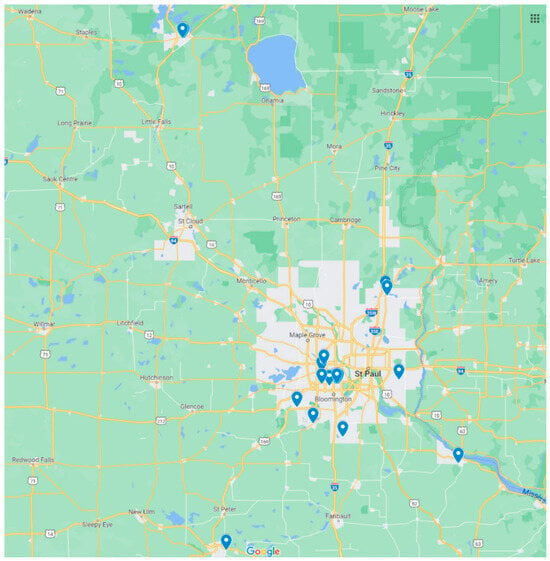
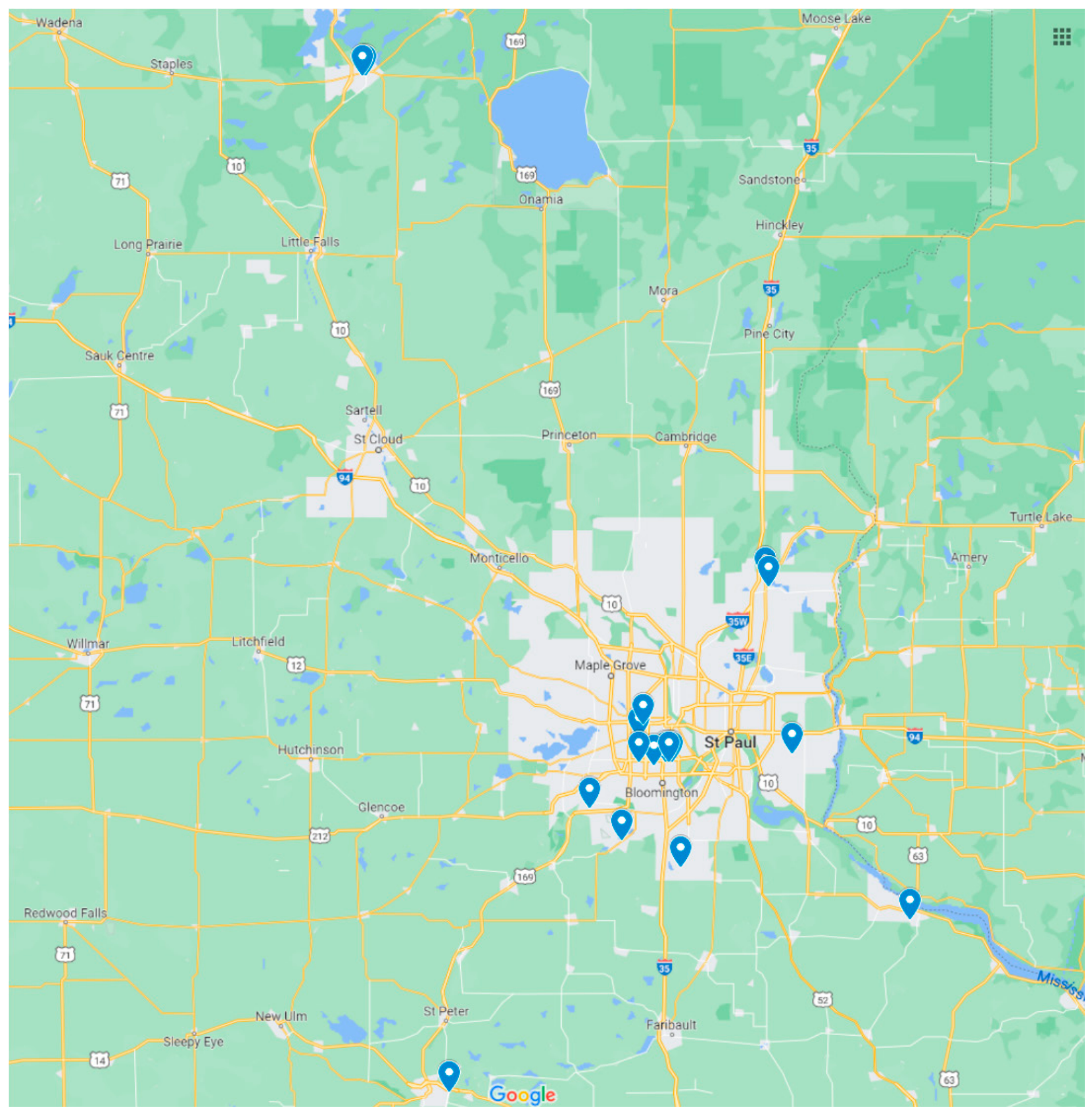
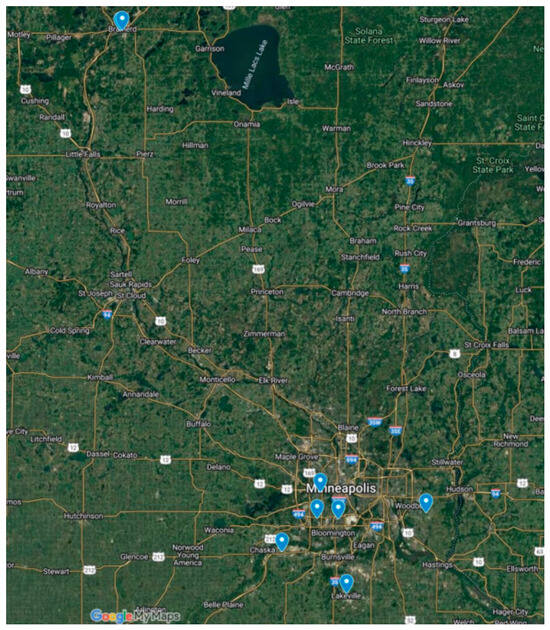
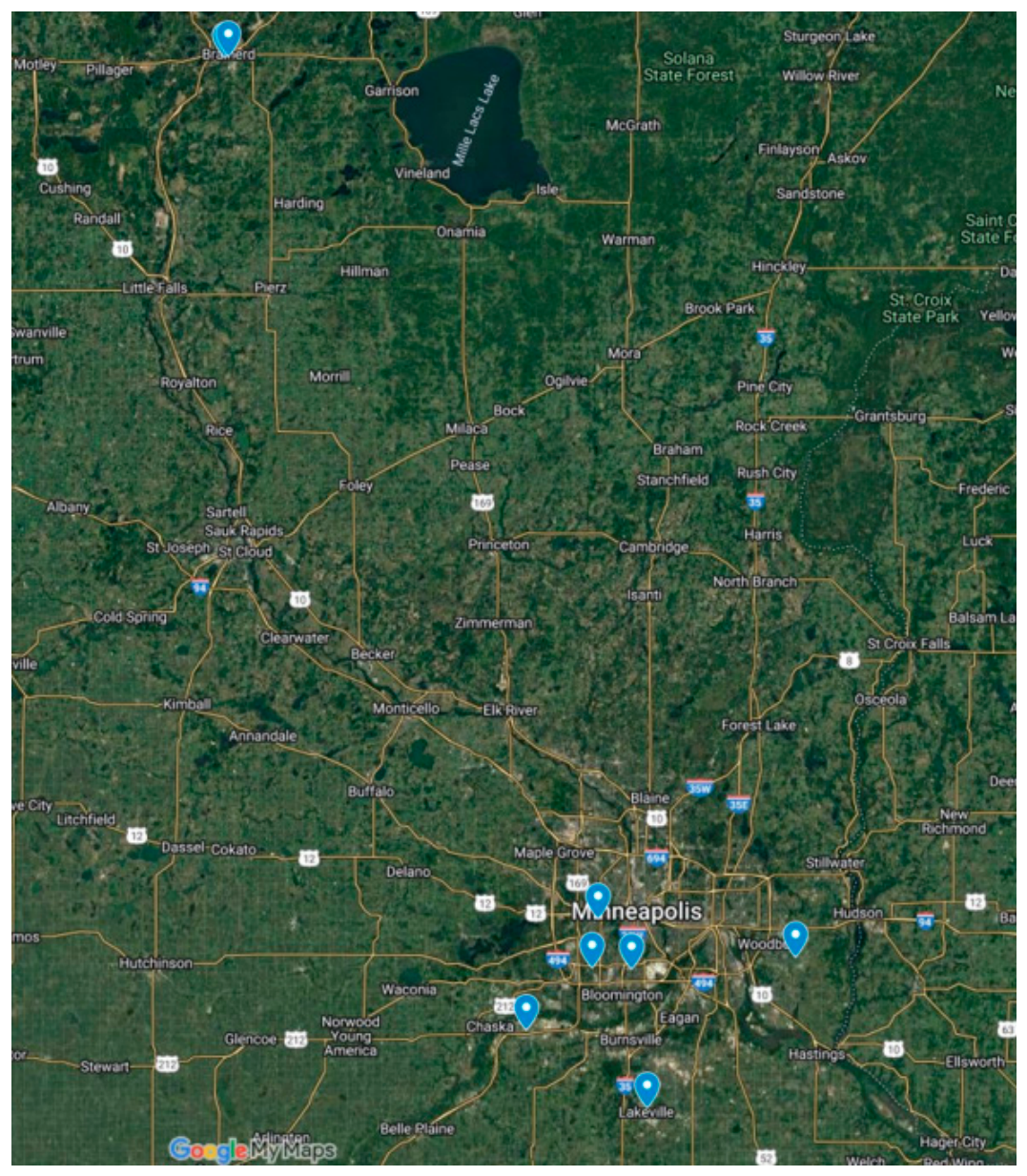
An online survey was distributed to Minnesota city and county engineers, through the City Engineers Association of Minnesota and the Minnesota County Engineers Association, and to the study’s Technical Advisory Panel, to identify roundabouts with known or suspected pedestrian crossing concerns. The survey generated 91 responses; roundabouts identified only as meeting minimum MUTCD signing requirements [20], with no additional pedestrian crossing treatment, were classified as base-case sites. Follow-up communication with respondents identified roundabouts that had implemented one of three specialized crossing treatments beyond minimum requirements: rectangular rapid flashing beacons (RRFBs), in-roadway “State law–Stop for pedestrians in crosswalk” signs, and colored crosswalks. From this pool, 15 roundabouts were selected for video data collection (refer Figure 4), chosen to ensure adequate representation of each crossing treatment, of 1 × 1, 2 × 1, and 2 × 2 lane configurations, of base-case comparisons within each configuration, and of geographic distribution across the state.
Figure 4.
Fifteen roundabout locations selected for video recording and analysis in the state of Minnesota. Source: Google Maps.
3.2. Video Data Collection
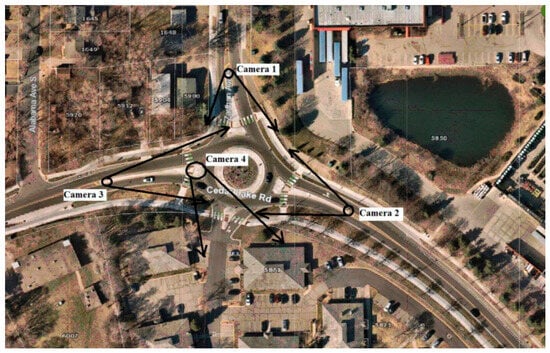
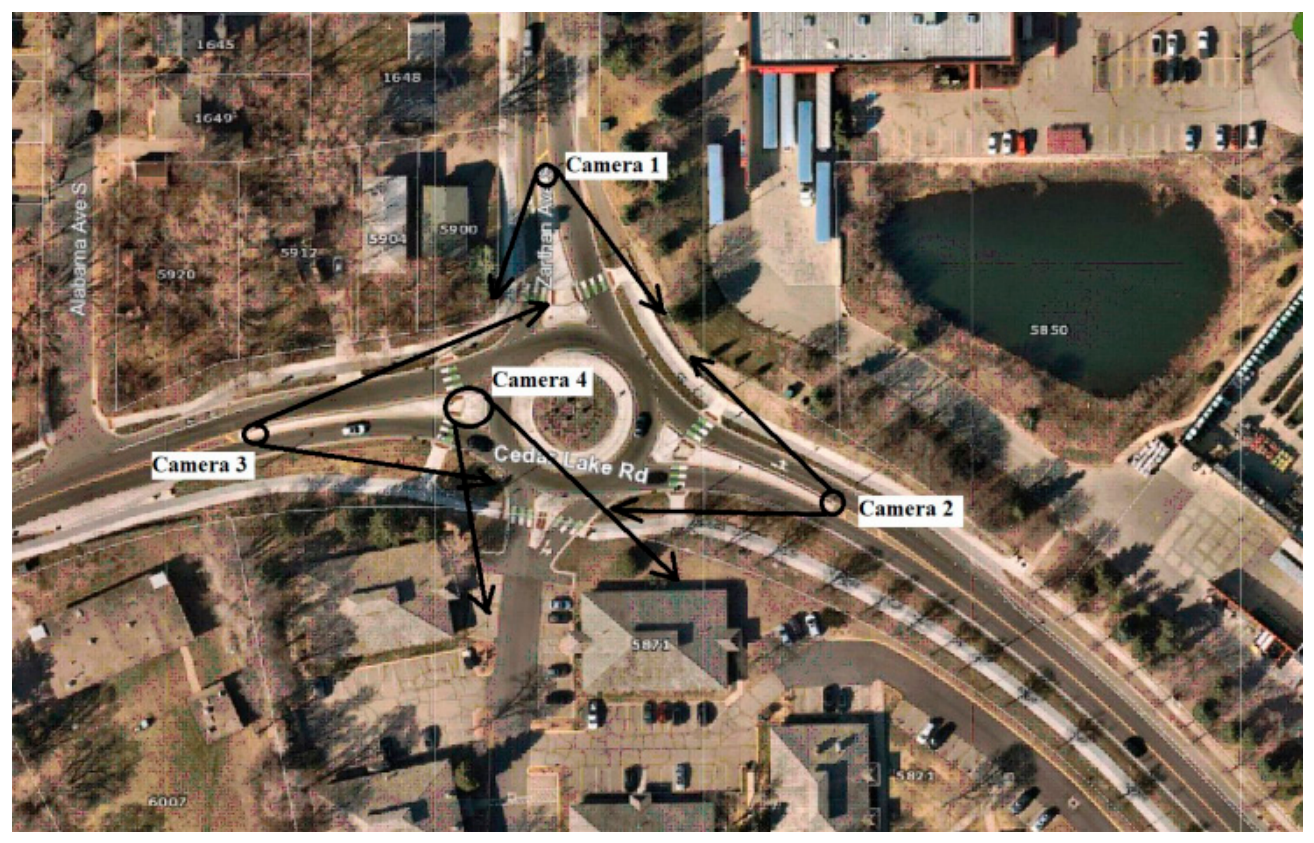
One camera was installed at each leg of the 15 selected roundabouts, positioned to capture the pedestrian crosswalk and sufficient approach and departure length to observe vehicle–pedestrian interaction. Figure 5 illustrates the concept of installing a camera for capturing vehicle–pedestrian interactions for each leg at a roundabout.
Figure 5.
Figure illustrating idea of installing cameras to capture vehicle–pedestrian interactions for each leg of a roundabout—example illustration for roundabout on Zarthan Ave. S. and Cedar Lake Rd., St Louis Park, Minnesota.
Cameras recorded approximately 50 continuous hours per leg in October 2021. Because nighttime footage did not reliably permit pedestrian detection and behavioral coding, only daytime footage (approximately 7:00 a.m. to 8:00 p.m.) was analyzed. After reviewing footage quality across all 15 sites, some legs were excluded due to poor video quality, adverse weather, camera obstruction, or concurrent construction activity; eight roundabouts were ultimately selected (refer Figure 6) for detailed case study analysis, chosen to preserve a mix of base-case and treated sites across lane configurations.
Figure 6.
Google map showing 8 case study roundabout locations in Minnesota. Source: Google Maps.
3.3. Behavioral Coding
Video coding followed protocols adapted from Schneider et al. [21] and Harkey and Carter [7]. Each observed pedestrian or pedestrian group constituted a pedestrian event, for which the research team recorded the crossing location (vehicle entry lane, exit lane, or jaywalking), whether an RRFB push button was activated where applicable, pedestrian delay in seconds, and, where a yielding opportunity existed, driver yielding behavior for both entering and exiting vehicles. Yielding was classified as active yield (the motorist slowed or stopped specifically for the pedestrian), passive yield (the motorist yielded but was already stopped for another reason, such as a queue), or no yield. Total yield is the sum of active and passive yield. Pedestrian crossing behavior was separately classified as normal, hesitates, retreats, runs, or not ready. For exit-lane events, the study further distinguished whether the exiting vehicle originated from the adjacent upstream approach or from another approach, since sight lines and driver expectation differ between these cases. Video coding was conducted by the research team without a second independent coder; formal inter-rater reliability statistics (e.g., Cohen’s kappa or percentage agreement) were therefore not computed for this study. While the yielding categories (active yield, passive yield, no yield) are comparatively objective, the pedestrian crossing behavior categories (hesitates, retreats, not ready) involve greater subjective judgment, and their reliability has not been independently verified. This is noted as a limitation in Section 6. A further distinction is drawn between RRFB presence and RRFB activation. The installation of an RRFB at a crosswalk is a fixed infrastructural treatment comparable to in-roadway signs or a colored crosswalk, but its flashing state is triggered by a pedestrian push-button action and is therefore a behavioral, pedestrian-dependent condition rather than a static site characteristic. In this study’s data, both RRFB locations recorded events under both conditions (activated and not activated); because pedestrians activated the beacon in only a minority of observed crossings (12.9 percent and 26.2 percent, respectively, at the two RRFB sites), the “RRFB Activated” category in the statistical model reflects a specific, and comparatively rare, behavioral state rather than the general condition of an RRFB-equipped crossing. This distinction is discussed further in Section 5.
3.4. Statistical Modeling
To formally test which factors are associated with yielding, a beta regression model was fit to the leg-level overall yielding rate (the average of entry-lane and exit-lane total yield rates) observed at each roundabout leg across the eight case study locations. Beta regression is appropriate for modeling a bounded continuous outcome such as a proportion, specifying the outcome as Y ~ Beta(μ, ϕ) with a logit link connecting the mean μ to a linear combination of predictors, logit(E[Y]) = β0 + β1 × 1 + … + βkXk, where ϕ is a precision parameter governing the variance of the outcome around its mean. Because the beta distribution is undefined at exactly 0 or 1 and the observed data included legs with 100% yielding, outcome values were transformed using the standard boundary adjustment for beta regression prior to estimation; this adjustment has a negligible effect on the observed values (for example, a leg with 100% observed yielding was adjusted to 97.7% for estimation purposes) while enabling valid model fitting. Specialized crossing treatment and roundabout configuration were treated as categorical factors. Candidate predictors were specialized crossing treatment (base case, colored crosswalk, in-roadway signs, or RRFB activated), roundabout configuration (1 × 1 or 2 × 1), total lanes, posted approach speed, circulatory roadway speed, traffic volume (AADT), and pedestrian count. Model fit was assessed using pseudo R-squared, and nested models were compared using likelihood ratio tests, Akaike Information Criterion (AIC), and Bayesian Information Criterion (BIC).
The regression was fit to leg-level aggregated yielding rates (the overall proportion of vehicles yielding at each leg), rather than to individual pedestrian–vehicle interaction events, for one primary reason. In the current study, a small number of independent sites (eight roundabouts) would limit what a mixed-effects or event-level binomial model could add beyond appropriately cautious leg-level analysis, since the number of higher-level clusters, not the number of pedestrian events within them, principally determines the precision with which between-site variance can be estimated. Beta regression was selected over an alternative such as a beta-binomial model because it directly models the leg-level proportion together with a precision parameter, requires only the aggregated rate rather than the underlying event counts, and is well established for bounded proportion outcomes of this kind. A logistic or beta-binomial model fit directly to individual pedestrian–vehicle events, had those data been available, would be a natural extension for future work and would allow the residual within-leg variability to be modeled explicitly rather than absorbed into the beta distribution’s precision parameter.
A related concern is that legs belonging to the same roundabout are not statistically independent, since they share geometry, surrounding land use, and driver population; treating them as independent observations, as the leg-level beta regression does, risks understating the true standard errors of the treatment and configuration effects. This concern is compounded by the fact that the two RRFB locations each contributed both an “RRFB Activated” and a “RRFB Not Activated” observation sharing identical speed, traffic volume, and lane covariates, which further reduces the effective number of independent sites underlying those two categories. With only eight roundabouts in the sample, a random-intercept (mixed-effects) specification would not reliably estimate a between-roundabout variance component, so as an alternative diagnostic, a cluster (roundabout-level) bootstrap was used to assess how sensitive the model’s standard errors are to non-independence among legs from the same roundabout. Resampling roundabouts with replacement (2000 replicates) produced standard errors for the RRFB and colored crosswalk coefficients that were moderately larger than the model-based standard errors (RRFB: 0.56 vs. 0.49; colored crosswalk: 0.65 vs. 0.60), but did not reverse the direction or overall significance pattern of either effect; the lane-configuration coefficient was considerably more sensitive to clustering (bootstrap standard error 0.81 vs. a model-based 0.38), indicating that this particular finding rests on weaker effective replication and should be interpreted with more caution than the treatment effects. These results are discussed further in Section 5.
Finally, the dependent variable, overall leg yielding, is defined as a delay-weighted combination of entry-lane and exit-lane yielding, which necessarily obscures the substantial entry-versus-exit asymmetry documented descriptively in Section 4.1 and Table 1. This aggregation was a deliberate modeling choice, made to keep the number of leg-level observations from being effectively doubled by treating entry and exit lanes as separate rows sharing most covariates, but it means the regression results describe the average crossing experience at a leg rather than the entry-lane and exit-lane experiences separately. A leg-level model of this kind cannot substitute for the entry/exit breakdown already reported descriptively, and a future analysis with a larger sample could model entry and exit yielding as a lane-level, roundabout-clustered outcome to test whether treatment and configuration effects differ by lane type.
Table 1.
Overall driver yielding rate by roundabout, configuration, and crossing treatment (adapted from case study video data analysis).
4. Results
4.1. Descriptive Findings by Crossing Treatment
Table 1 summarizes overall driver yielding rates by roundabout location and crossing treatment across the eight case studies. Single-lane roundabouts consistently showed higher yielding than multi-lane roundabouts. The base-case single-lane roundabout (Spencer Street and Vierling Drive, Shakopee) showed an overall yielding rate of 86.1%; the single-lane roundabout with in-roadway signs (Zarthan Avenue South and Cedar Lake Road, St. Louis Park) showed 85.7% (individual legs of 100%, 83.3%, and 82.8%); and the single-lane roundabout with an RRFB (Tracy Avenue and Valley View Lane, Edina) showed 100% yielding when the beacon was activated.
RRFB activation had a large effect on compliance: at both RRFB locations, activating the beacon produced close to 100% driver compliance, while failing to activate it reduced compliance by 15 to 18 percentage points at the single-lane Edina site and by approximately 38 percentage points at the multi-lane Richfield site. This gap illustrates that the treatment’s effectiveness depends on a pedestrian behavior, activation, in addition to the treatment’s mere presence. In-roadway signs produced satisfactory yielding at the single-lane site but a substantially lower rate at the multi-lane site, where posted approach speed (55 mph) and circulatory roadway speed (20 mph) were both higher than at the single-lane comparison (35 mph approach, 15 mph circulatory). The two colored crosswalk sites, both multi-lane roundabouts in Brainerd located near a college and a high school, produced the lowest observed yielding rates of any treatment studied, driven primarily by especially poor exit-lane compliance.
Table 2 reports the full joint distribution of the leg-level characteristics entering the beta regression models presented in Section 4.2, so that the sparseness of some treatment-by-configuration combinations, most notably the two colored crosswalk observations, is visible directly alongside the site characteristics.
Table 2.
Distribution of roundabout leg observations by lane configuration, crossing treatment, approach speed, circulatory speed, traffic volume (AADT), and pedestrian count, used as the regression dataset (N = 22 observations across 18 physical legs at 8 roundabouts).
Across every site studied, exit-lane yielding was lower than entry-lane yielding, consistent with reduced driver visibility of pedestrians while attention is directed toward merging into the circulatory roadway on entry versus navigating an already-committed exit maneuver. For example, at the Shakopee base-case site, entry-lane yielding on the north leg was 92.3% versus 60% at the exit lane; a similar pattern held across the other case study legs. Descriptively, higher posted approach speed and higher circulatory roadway speed also corresponded to lower yielding, consistent with the national literature reviewed above [18].
4.2. Beta Regression Model of Overall Yielding
Table 3 reports the full beta regression model, including all candidate predictors. RRFB activation was associated with substantially higher yielding odds: 4.76 times the odds of a base-case crossing (1.56 log-odds, p = 0.0015). To illustrate the magnitude, if a base-case roundabout leg had 50% yielding (odds of 1), the model implies that adding an activated RRFB would raise yielding to approximately 82%. Lane count and configuration were also strongly associated with yielding: each additional lane was associated with 49% lower yielding odds (−0.665 log-odds, p = 0.022), and 2 × 1 configurations showed 76% lower yielding odds than 1 × 1 configurations (−1.42 log-odds, p = 0.0085). Colored crosswalk showed a negative coefficient relative to base case but did not reach conventional significance in this full specification (p = 0.41), which the following simplified model resolves. Approach speed, traffic volume (AADT), circulatory roadway speed, and pedestrian count were not statistically significant in this model. The full model explained a substantial share of variation in yielding (pseudo R2 = 0.755), and the precision parameter (ϕ = 16.57, p = 0.001) indicated that, after accounting for treatment and configuration, yielding behavior was fairly consistent across sites.
Table 3.
Full beta regression model of overall leg-level yielding rate (mean model, logit link).
Because prior research suggests approach speed should affect yielding, the model was re-estimated with a quadratic speed term to test for a non-linear relationship. The linear and quadratic speed terms were only marginally significant (p = 0.091 and p = 0.093, respectively), suggesting a possible inverted-U relationship in which yielding rises with speed before declining at higher speeds; however, a likelihood ratio test comparing the quadratic specification to the original model was not significant (p = 0.103), and pseudo R2 improved only marginally (0.755 to 0.772). The quadratic term was therefore not retained.
To evaluate whether correlation among predictors, rather than a true absence of a speed effect, could explain this result, variance inflation factors (VIFs) and pairwise correlations were computed for the full model’s predictors. VIF values ranged from approximately 1.4 for RRFB activation to approximately 5.1 for colored crosswalk and circulatory roadway speed, with most predictors in the 2 to 4 range; while no VIF exceeded the conventional threshold of 10 associated with severe multicollinearity, several values in the moderate range are consistent with material, non-trivial correlation among predictors given the small sample. Consistent with this, circulatory roadway speed correlated moderately with roundabout configuration (r = 0.67) and with approach speed (r = 0.65), and colored crosswalk status correlated with total lanes (r = 0.58), reflecting the fact that the higher-speed, multi-lane sites in this sample also tended to be the sites with certain treatments. This supports the discussion in Section 5 that speed differences in this sample are substantially confounded with treatment and configuration, limiting the model’s ability to isolate an independent speed effect, rather than indicating that speed has no true relationship to yielding.
Table 4 reports a simplified model retaining only the specialized crossing treatment, roundabout configuration, and total lane variables, after approach speed, traffic volume, circulatory roadway speed, and pedestrian count were dropped for non-significance. In this simplified specification, colored crosswalk showed a significant negative association with yielding (−1.735 log-odds, p = 0.004), confirming descriptively that this treatment was associated with the lowest observed compliance among the three treatments studied. RRFB activation remained significantly positive (1.148 log-odds, p = 0.018), and total lanes remained negatively associated with yielding, though only marginally significant in this specification (p = 0.073). A likelihood ratio test comparing the full and simplified models was not significant (p = 0.403), indicating the dropped predictors did not meaningfully improve model fit; AIC and BIC both favored the simplified model (AIC difference of 3.99; BIC difference of 8.35), and the simplified model achieved comparable explanatory power (pseudo R2 = 0.713) with fewer parameters.
Table 4.
Simplified beta regression model of overall leg-level yielding rate (mean model, logit link).
Expressed as odds ratios with 95% confidence intervals, the simplified model estimates are: colored crosswalk, OR = 0.18 (95% CI: 0.05, 0.58); in-roadway signs, OR = 1.21 (95% CI: 0.55, 2.63); RRFB activated, OR = 3.15 (95% CI: 1.22, 8.17); 2 × 1 configuration, OR = 0.61 (95% CI: 0.29, 1.26); and total lanes, OR = 0.64 per additional lane (95% CI: 0.39, 1.04). The relatively wide intervals, particularly for colored crosswalk and RRFB activation, reflect the small number of independent sites underlying each category and reinforce that these estimates should be read as indicative associations rather than precise effect sizes; the point estimates and their statistical significance are consistent with the descriptive patterns in Table 1, but the confidence intervals convey the substantial uncertainty that remains given the sample size.
Using the simplified model’s coefficients, the predicted yielding probability for an untreated (base case) roundabout leg is 93.4%. Predicted yielding falls to 71.7% for a colored crosswalk (a 21.7 percentage-point reduction from baseline) and rises to 97.8% for an RRFB (a 4.4 percentage-point increase from baseline). This ordering, RRFB above baseline, in-roadway signs approximately at baseline, and colored crosswalk substantially below baseline, is consistent with the descriptive case study findings in Table 1 and provides a quantified, model-based estimate of each treatment’s independent association with yielding.
To characterize in-sample fit, the simplified model’s fitted values were compared against the observed yielding rates in the same case study data used to estimate the model. This comparison yielded a mean absolute error (MAE) of 0.063 and a root mean squared error (RMSE) of 0.088; because the same observations were used for both estimation and evaluation, these values describe in-sample fit rather than predictive performance on new sites, and are reported here as a fit diagnostic rather than as a validation exercise. To obtain a genuine, if still limited, indication of out-of-sample performance given the small number of independent sites, a leave-one-roundabout-out (LORO) cross-validation was conducted: the simplified model was refit eight times, each time withholding all legs belonging to one roundabout, and used to predict the withheld roundabout’s leg-level yielding rates. This procedure yielded a substantially higher MAE of 0.087 and RMSE of 0.125, roughly 40 percent larger than the in-sample values, indicating that the model’s true predictive accuracy at an unseen roundabout is meaningfully worse than the in-sample fit suggests. The treatment and configuration coefficients were directionally stable across the eight LORO refits (colored crosswalk remained negative, ranging from −1.37 to −2.07 log-odds; RRFB activation remained positive, ranging from 1.02 to 1.57 log-odds), suggesting these associations are not driven by any single roundabout, though the model’s absolute predictive accuracy at a new, unobserved site should be regarded as modest given both the LORO error and the width of the confidence intervals reported above.
4.3. Sensitivity Analysis: Active Yield Only
Total yield, the outcome used in the models above, combines active yield (a motorist slowing or stopping specifically for the pedestrian) and passive yield (a motorist already stopped for an unrelated reason, such as a traffic queue). Because passive yield does not necessarily reflect a driver’s responsiveness to the pedestrian, the simplified and full models were re-estimated using active yield only as the outcome, as a sensitivity check on the robustness of the reported treatment effects.
In the active-yield-only simplified model, RRFB activation remained a statistically significant positive predictor (1.01 log-odds, p = 0.039), consistent with the total-yield result and supporting the robustness of the RRFB finding to this alternative outcome definition. The colored crosswalk coefficient remained negative and of similar magnitude (−1.12 log-odds) but did not reach conventional statistical significance in the active-yield-only specification (p = 0.131), whereas roundabout configuration became a statistically significant negative predictor (−1.03 log-odds, p = 0.016) that had not reached significance in the total-yield simplified model. In the full active-yield-only specification, circulatory roadway speed emerged as a statistically significant positive predictor (p = 0.001), a pattern not observed in the total-yield full model.
These differences indicate that the colored crosswalk finding is somewhat sensitive to how yielding is defined, most likely reflecting the very small number of colored crosswalk observations (two sites, entirely composed of active yield with no passive yield recorded, as shown in Table 2) combined with the fact that passive yield contributed meaningfully to total yield at several other sites, which shifts the relative position of the colored crosswalk sites once passive yield is excluded from the comparison group. The RRFB finding, by contrast, is robust across both outcome definitions. This sensitivity reinforces the caution already expressed in Section 4.2 and Section 6 regarding the colored crosswalk result, and suggests that the precise magnitude and significance of the lane-configuration effect depend in part on how yielding is operationalized.
5. Discussion
Taken together, the descriptive and inferential results tell a consistent but more precise story than either would alone. Descriptively, the case studies suggested that crossing treatment, lane configuration, and speed all mattered for driver yielding. The beta regression model confirms that crossing treatment and lane configuration are robust, statistically significant predictors, but finds that approach speed, circulatory roadway speed, traffic volume, and pedestrian count are not significant once treatment and configuration are accounted for—that is, no statistically significant independent association between these variables and yielding was detected in the present sample, which is a narrower claim than saying no such association exists. This does not mean speed is irrelevant to driver yielding in general, a relationship well established in the broader literature [18], but rather that within this particular sample, speed differences were substantially correlated with which treatment and configuration a site had, limiting the model’s ability to separately identify a speed effect. This is a useful qualification of the descriptive impression that higher approach speeds directly reduce yielding, and it illustrates precisely the kind of refinement a multivariate model can offer over one-factor-at-a-time comparison, while also pointing to a specific direction for future research: a larger sample with more independent variation in speed across treatments and configurations would be needed to estimate a speed effect with confidence.
The RRFB findings carry a clear practical implication and an important caveat. Both the descriptive data and the regression model agree that RRFBs are associated with the largest improvement in yielding of the three treatments studied, and the model quantifies this as a 4.76-fold increase in yielding odds. However, this benefit is conditional on pedestrians actually activating the beacon; compliance dropped by 15 to 38 percentage points when they did not. This suggests that RRFB effectiveness depends jointly on driver response and pedestrian behavior, and that public education encouraging pedestrians to use the push button may be as important to realizing the treatment’s benefit as the installation itself.
This also means the “RRFB Activated” category in the model should be interpreted as a behavioral state rather than a fixed infrastructural treatment: unlike a colored crosswalk or an in-roadway sign, which are present continuously once installed, an RRFB confers its estimated benefit only in the subset of crossings where a pedestrian actually presses the button, a minority of crossings at both RRFB sites in this study. The practical implication is that RRFB installation alone, without corresponding pedestrian uptake of the push button, would not be expected to reproduce the yielding rates reported here for the activated condition. It is also worth noting that the predicted probability of yielding rises only from 93.4 percent at baseline to 97.8 percent with RRFB activation, a 4.4 percentage-point increase, despite the odds ratio of 3.15 being statistically significant. This apparent tension arises because the baseline yielding rate in this sample is already high, leaving comparatively little room for a percentage-point improvement even where the underlying odds change substantially; a given odds ratio corresponds to a larger percentage-point shift when the baseline probability is closer to 50 percent than when it is already close to a boundary. The odds ratio and the percentage-point difference therefore describe the same effect on different scales, and both are reported here because each is informative for a different purpose: the odds ratio for statistical inference, and the percentage-point difference for judging the practical magnitude of the improvement in absolute terms, which agencies weighing the cost of RRFB installation against a base condition that already yields fairly well may reasonably want to consider.
The colored crosswalk finding is, by contrast, a cautionary one. Both the two lowest-yielding sites in the descriptive data and the only statistically significant negative treatment coefficient in the simplified regression model are associated with the colored crosswalk sites, which exhibited the lowest observed and modeled yielding among the treatments evaluated in this study; because this pattern rests on only two sites, it is best read as an association observed at those two locations rather than evidence that colored crosswalks are intrinsically ineffective as a treatment. A plausible explanation is that a colored crosswalk is a passive visual treatment: it makes the crossing more visually prominent to a driver who is already looking, but unlike an RRFB or an in-roadway sign, it provides no dynamic or regulatory cue that a pedestrian is specifically present and waiting to cross. Because only two sites represented this treatment, a consequence of the small number of colored crosswalk installations at Minnesota roundabouts, both multi-lane roundabouts in Brainerd located near a college and a high school, this finding should be treated as suggestive rather than conclusive; it is possible that site-specific factors, such as driver demographics or trip purpose near these institutions, contributed to the low yielding rates independently of the crosswalk treatment itself. Distinguishing these explanations would require testing colored crosswalks at additional, more varied sites.
The lane-configuration and lane-count findings reinforce the national design literature’s emphasis on minimizing lanes wherever feasible [1]. The mechanism is consistent with the “multiple threat” pattern documented by Harkey and Carter [7] and echoed in the statewide engineer survey conducted for this study: a pedestrian crossing a multi-lane approach must negotiate a yielding decision from each lane independently, and a single non-yielding vehicle in an adjacent lane can create risk even where the nearer lane’s driver has yielded. This same mechanism underlies the accessibility concerns raised in the vision-disability literature [10] and the PROWAG requirement for pedestrian-actuated signals at multi-lane roundabout crossings [14]; the present results, drawn from general pedestrian traffic rather than a vision-disability-specific sample, are consistent with that requirement’s underlying rationale. These considerations will grow in importance as multi-lane roundabouts become more common on higher-volume corridors, and as the walkable, multimodal networks central to most visions of future transportation systems depend on pedestrians being both safe and comfortable crossing them.
6. Limitations
Several limitations, some arising from the case study data collection and some specific to the statistical modeling, qualify these findings. First, despite the formal inferential layer, the sample remains small: eight roundabouts and a subset of their legs, with as few as one or two sites representing some treatment and configuration combinations, most notably colored crosswalk. The colored crosswalk finding warrants particular caution in this regard: colored crosswalk installations at Minnesota roundabouts remain rare, and the two installations available for observation through engineer surveys were both located near educational institutions, a college and a high school in Brainerd. Pedestrian populations and crossing behavior near schools and universities, as well as the driver demographics and trip purposes common in these environments, may differ systematically from those of general-public pedestrians at other locations, and may therefore have contributed to the low observed yielding independently of the treatment itself. Evaluating colored crosswalks at locations serving general pedestrian traffic is needed before the treatment’s poor performance observed here can be attributed to the treatment alone. Model estimates for underrepresented categories should be treated with appropriate caution, and the overall model, however well it fits this sample, would benefit from validation against additional sites. More broadly, with only eight independent roundabouts underlying the model, the reported p-values, confidence intervals, and pseudo R2 should not be read as conveying more inferential certainty than a study of this size can support; the 95% confidence intervals reported in Section 4.2, the cluster bootstrap results in Section 3.4, and the leave-one-roundabout-out cross-validation in Section 4.2 are intended to make this uncertainty more visible than the point estimates and p-values alone would.
Second, site selection was not random: roundabouts were selected in part because engineers had identified known or suspected pedestrian concerns, and the specific treated sites were selected based on existing treatment installations rather than random assignment. This raises the possibility that some sites received a specific treatment, or were more likely to be flagged for study, for reasons related to unobserved local conditions that also affect yielding, a form of selection that a beta regression model fit to observational data cannot fully rule out. The findings here should therefore be interpreted as robust statistical associations rather than confirmed causal effects of each treatment.
Third, this study observed driver and pedestrian behavior directly but did not capture pedestrians’ own reported experience or comfort; state agency policy did not permit the research team to survey pedestrians on-site. The behavioral categories used here (hesitates, retreats, runs, not ready) are behavioral proxies for discomfort rather than direct measures of perceived safety, and a self-reported pedestrian survey would complement this observational evidence.
Fourth, video coding relied on a single research team without a second independent coder, so formal inter-rater reliability statistics were not computed for the behavioral categories used in this study, as noted in Section 3.3; this is a more material concern for the subjective pedestrian crossing behavior categories than for the comparatively objective yield/no-yield determinations. Fifth, video analysis was limited to daytime hours because nighttime footage did not reliably support pedestrian detection; driver yielding behavior after dark, when visibility and driver expectation both differ, remains unstudied at these sites.
7. Conclusions
This study combined descriptive video-based case study analysis with a beta regression model to evaluate driver yielding behavior toward pedestrians at Minnesota roundabout crossings, pairing field-observed behavioral evidence with formal statistical inference. The results confirm that specialized crossing treatments and lane configuration are strong, statistically significant predictors of yielding: RRFB activation was associated with substantially higher yielding odds, while additional lanes and multi-lane configurations were associated with substantially lower odds. The two colored crosswalk sites, a passive treatment relative to the other two, showed the lowest observed and modeled yielding among the treatments studied; given the small number of colored crosswalk locations available here, both of which were adjacent to educational institutions whose pedestrian and driver populations may not represent general traffic, this association merits further testing at additional, more varied sites before being generalized. Approach speed and traffic volume, factors emphasized in descriptive comparisons, were not statistically significant once treatment and configuration were accounted for, illustrating the value of a multivariate approach for disentangling correlated site characteristics.
For transportation agencies, these findings offer concrete, statistically grounded guidance: RRFBs, paired with public education encouraging pedestrian activation, are a promising option for improving driver yielding at roundabout crossings, though the magnitude of benefit in absolute terms depends on the baseline yielding rate at a given site; the association between colored crosswalks alone and lower observed yielding, while based on only two sites, suggests agencies may wish to pair a colored crosswalk with an active treatment pending further evidence; and minimizing lanes at pedestrian crossings, consistent with existing national design guidance, remains one of the most robust levers available for improving the pedestrian experience at Minnesota roundabouts. Future research should prioritize expanding the sample of case study sites, particularly for underrepresented treatments such as colored crosswalks, incorporating direct pedestrian-reported experience, and testing whether the treatment and configuration effects identified here generalize to roundabouts outside Minnesota. As roundabouts continue their rapid expansion across the United States as a proven, future-oriented intersection investment, ensuring that they serve pedestrians as well as they serve vehicle occupants will be essential to realizing their full promise; the evidence-based crossing treatment guidance developed here is offered as one practical step toward that goal.
Author Contributions
Conceptualization, R.G. and E.R.R.; methodology, R.G., E.R.R., S.H. and L.P.; software, R.G. and S.H.; validation, R.G., E.R.R., S.H. and L.P.; formal analysis, R.G. and S.H.; investigation, R.G., E.R.R. and S.H.; resources, R.G., E.R.R. and S.H.; data curation, R.G. and S.H.; writing—original draft preparation, R.G., E.R.R., S.H. and L.P.; writing—review and editing, R.G., E.R.R., S.H. and L.P.; visualization, R.G. and S.H.; supervision, R.G. and E.R.R.; project administration, R.G.; funding acquisition, R.G. and E.R.R. All authors have read and agreed to the published version of the manuscript.
Funding
This research was funded by the Minnesota Department of Transportation (MnDOT) and the Minnesota Local Road Research Board (LRRB).
Institutional Review Board Statement
Not applicable. The IRB office at North Dakota State University determined that this project did not require IRB approval or a determination of exemption, as it does not meet the regulatory definition of research with human subjects. The data collected is not about the individual respondents, but the features of the roundabouts within their jurisdiction.
Informed Consent Statement
Not applicable.
Data Availability Statement
The data supporting the findings of this study are available from the corresponding author on reasonable request.
Acknowledgments
The authors thank the project’s Technical Advisory Panel and the Minnesota city and county engineers who responded to the statewide survey. The contents of this paper reflect the views of the authors, who are responsible for the facts and the accuracy of the information presented herein, and do not necessarily reflect the official views or policies of MnDOT or the LRRB. During the preparation of this manuscript, the authors used an AI-based language model (Claude (Sonnet 5), Anthropic) to assist with editing for language, flow, and clarity. The original study design, data collection, core statistical modeling, and drafting of journal article were developed independently by the research team. The authors carefully reviewed all AI-assisted suggestions for accuracy, relevance, and consistency, and take full responsibility for the content of this publication.
Conflicts of Interest
The authors declare no conflicts of interest.
References
- Rodegerdts, L.; Bansen, J.; Tiesler, C.; Knudsen, J.; Myers, E.; Johnson, M.; O’Brien, A. Roundabouts: An Informational Guide, 2nd ed.; NCHRP Report 672; Transportation Research Board: Washington, DC, USA, 2010. [Google Scholar]
- Leuer, D. A Study of the Traffic Safety at Roundabouts in Minnesota; Office of Traffic, Safety, and Technology, Minnesota Department of Transportation: St. Paul, MN, USA, 2017.
- Hourdos, J. Investigation of Pedestrian/Bicyclist Risk in Minnesota Roundabout Crossings; Minnesota Department of Transportation: St. Paul, MN, USA, 2012. [Google Scholar]
- Godavarthy, R.; Russell, E.; Sharma, K.; Saha, N.; Molina, A.; Ezekwem, K. Pedestrian User Experience at Roundabouts; MN 2023-01; Minnesota Department of Transportation: St. Paul, MN, USA, 2022. [Google Scholar]
- Geruschat, D.R.; Hassan, S.E. Driver behavior in yielding to sighted and blind pedestrians at roundabouts. J. Vis. Impair. Blind. 2005, 99, 286–302. [Google Scholar] [CrossRef] [Scilit]
- Ashmead, D.H.; Guth, D.; Wall, R.S.; Long, R.G.; Ponchillia, P.E. Street crossing by sighted and blind pedestrians at a modern roundabout. J. Transp. Eng. 2005, 131, 812–821. [Google Scholar] [CrossRef] [Scilit]
- Harkey, D.L.; Carter, D.L. Observational analysis of pedestrian, bicyclist, and motorist behaviors at roundabouts in the United States. Transp. Res. Rec. 2006, 1982, 155–165. [Google Scholar] [CrossRef]
- Salamati, K.; Schroeder, B.J.; Geruschat, D.R.; Rouphail, N.M. Event-based modeling of driver yielding behavior to pedestrians at two-lane roundabout approaches. Transp. Res. Rec. 2013, 2389, 1–11. [Google Scholar] [CrossRef] [Scilit] [PubMed]
- Rouphail, N.; Hughes, R.; Chae, K. Exploratory simulation of pedestrian crossings at roundabouts. J. Transp. Eng. 2005, 131, 211–218. [Google Scholar] [CrossRef] [Scilit]
- Schroeder, B.; Hughes, R.; Rouphail, N.; Cunningham, C.; Salamati, K.; Long, R.; Myers, E. Crossing Solutions at Roundabouts and Channelized Turn Lanes for Pedestrians with Vision Disabilities; Transportation Research Board: Washington, DC, USA, 2011. [Google Scholar]
- National Cooperative Highway Research Program. Supporting Material to NCHRP Report 674 (Project 3-78A); Transportation Research Board: Washington, DC, USA, 2011. [Google Scholar]
- Schroeder, B.; Salamati, K.; Rouphail, N.; Findley, D.; Hunter, E.; Phillips, B.; Barlow, J.; Rodegerdts, L. Accelerating Roundabout Implementation in the United States, Volume I: Evaluation of Rectangular Rapid-Flashing Beacons (RRFB) at Multilane Roundabouts; FHWA-SA-15-069; Federal Highway Administration: Washington, DC, USA, 2015.
- Schroeder, B.; Rodegerdts, L.; Jenior, P.; Myers, E.; Cunningham, C.; Salamati, K.; Bentzen, B.L. Crossing Solutions at Roundabouts and Channelized Turn Lanes for Pedestrians with Vision Disabilities—A Guidebook; NCHRP Web-Only Document; Transportation Research Board: Washington, DC, USA, 2016. [Google Scholar]
- U.S. Access Board. Proposed Accessibility Guidelines for Pedestrian Facilities in the Public Rights of Way; United States Access Board: Washington, DC, USA, 2011.
- Russell, E.R. A Study of the Effects of ADA Accessibility on Kansas Roundabouts; Kansas Department of Transportation: Topeka, KS, USA, 2008.
- U.S. Department of Transportation. Making Roundabouts Work for Pedestrians and Bicycles; Federal Highway Administration: Washington, DC, USA, 2014.
- Federal Highway Administration. Interim Approval 21—Rectangular Rapid Flashing Beacons Memorandum; FHWA: Washington, DC, USA, 2018.
- National Cooperative Highway Research Program. Guidelines for the Application of Crossing Solutions at Roundabouts and Channelized Turn Lanes for Pedestrians with Vision Disabilities; Web-Only Document 222; Transportation Research Board: Washington, DC, USA, 2016. [Google Scholar]
- Gupta, N.; Mohammadpour, M.; Imosemi, S.; Dasgar, Y.; Gupta, G.; Savolainen, P.; Gates, T.J. Examining speed selection and driver yielding behavior toward pedestrians and bicyclists at roundabouts. Transp. Res. Rec. 2025, 2679, 629–646. [Google Scholar] [CrossRef] [Scilit]
- Federal Highway Administration. Manual on Uniform Traffic Control Devices for Streets and Highways (MUTCD), 2009 ed.; FHWA: Washington, DC, USA, 2009.
- Schneider, R.J.; Qin, X.; Shaon, M.R.; Sanatizadeh, A.; He, Z.; Wykhuis, P.; Block, B. Evaluation of Driver Yielding to Pedestrians at Uncontrolled Crosswalks; Wisconsin Department of Transportation: Madison, WI, USA, 2017.

Disclaimer/Publisher’s Note: The statements, opinions and data contained in all publications are solely those of the individual author(s) and contributor(s) and not of MDPI and/or the editor(s). MDPI and/or the editor(s) disclaim responsibility for any injury to people or property resulting from any ideas, methods, instructions or products referred to in the content. |
© 2026 by the authors. Licensee MDPI, Basel, Switzerland. This article is an open access article distributed under the terms and conditions of the Creative Commons Attribution (CC BY) license.