


Abstract
Ventilated façades are increasingly used in building renovations, often containing non-renewable and CO2-emissions-intensive cement-based materials. Renewable biomass-based materials offer a more sustainable alternative with a high amount of sequestered CO2. However, water uptake is a critical factor in exterior applications. This study investigates the water resistance of high-density particleboards made of wheat straw (WS), grey alder (GA), and softwood (SW) for façade-related exterior applications. Two general board types were produced from each biomass using (1) steam explosion (SE) treatment and (2) the addition of birch-bark-derived suberinic acids (SAs) as the bio-based binder. In addition, the influence of conventional and mold hot pressing was investigated. The particleboards were coated with four types of innovative finishes, comprising (1) purified SA, (2) SA + chitosan (SH), (3) SA + earth pigment (SP), and (4) SHP. The water resistance of the particleboards was evaluated using an internal bonding (IB) test after 2 h of boiling and by measuring the water drop contact angle. FTIR analysis was performed to identify differences between the board varieties and to explain the obtained results. Only two board varieties (GASA and SWSA) fulfilled the Type P5 EN 312 water resistance requirement (0.15 N/mm2), achieving IB values of 0.81 ± 0.23 N/mm2 and 0.22 ± 0.07 N/mm2, respectively. In turn, the coatings used did not significantly increase the static contact angle compared to the reference board. Although the results of this study confirm the inherent moisture sensitivity of engineered particleboards, two board varieties demonstrate promising potential for façade-related exterior applications.
1. Introduction
The building sector is one of the most important material production sectors, consuming about 40% of total final energy and generating the same percentage of greenhouse gas emissions. The Europe 2020 Strategy aims to significantly reduce the carbon footprint and increase energy efficiency across all industries [1]. To increase a building’s lifecycle, renovation is necessary. Conventional building renovation systems usually contain cement-based materials, which are recognized as emission-intensive during production and utilization [2]. They highly contribute to environmental pollution and global warming.
Modern façades are dominated by composite and metal systems, though brick, stone, fiber cement, vinyl, wood, and glass remain significant regionally [3]. The industry has shifted from heavyweight brickwork and precast concrete toward lightweight options, with current research prioritizing fire compliance, durability, sustainability, and prefabricated rainscreens [4,5,6]. Commercial and high-rise projects favor composite metal panels and curtain walls, whereas residential buildings rely on traditional materials like aluminum, brick, wood, fiber cement, stucco, and vinyl [5,7,8]. Lighter, engineered, and non-combustible materials like Alucobond-type laminates are now standard due to strict fire-performance constraints [5].
Commercial cladding carries a heavy environmental burden, driven by embodied carbon across its lifecycle [9,10]. However, material sustainability rankings are highly context-dependent. While one LCA favored brick or granite depending on economic or environmental modeling [11], a retrofit study found that gravel stones had the lowest impact, contrasting with high-emission aluminum and metal panels [12]. Although it is durable and recyclable, primary aluminum production remains highly energy- and greenhouse-gas-intensive [13]. Ultimately, minimizing the use of virgin materials and extending service life outperform simple material substitution. Using recycled construction waste in geopolymeric panels or reusing curtain wall components yields greater net benefits than recycling alone [9,14]. Because manufacturing energy drives climate impacts, grid mix and supply chain efficiency are as critical as material selection [10].
Studies on wood, wood-composite, and natural-fiber façade systems indicate that untreated bio-based façade claddings tend to weather poorly. While water-resistant finishes mitigate degradation, they often introduce trade-offs regarding vapor permeability, adhesion, or mechanical retention. For instance, a two-year outdoor exposure study of 120 bio-based façade materials revealed that untreated natural wood exhibited the lowest weathering resistance, with 63 samples developing checks [14]. Furthermore, a separate outdoor study of 33 coated and uncoated biobased claddings demonstrated that both material type and climate conditions significantly influence fungal colonization—serving as a reliable proxy for the interaction between moisture exposure and surface protection in real-world applications.
Studies on self-adhesive particleboards, especially using steam explosion (SE) pretreatment, have broadened engineered wood products by using raw materials from agriculture with promising properties [15]. The SE treatment relies heavily on altering biomass chemistry to trigger inherent self-bonding mechanisms. High-pressure steam hydrolyzes hemicelluloses into soluble sugars and furfural derivatives, while simultaneously disrupting the lignocellulosic matrix and causing lignin to flow and redistribute across fiber surfaces [16]. This thermal mobilization allows lignin to act as a natural, thermosetting adhesive through subsequent condensation reactions during hot pressing while also providing good form stability [17]. Concurrently, the incorporation of suberinic acids (SAs)—extrapolated from wood outer bark biomass—enhances these self-bonding characteristics. SAs undergo thermal polymerization and esterification, reacting with both the hydroxyl groups of liberated cellulose fragments and the cross-linked networks of mobilized lignin [18]. This co-polymerization not only bridges the structural components of the biomass but also imparts critical hydrophobic properties, establishing non-combustible, moisture-resistant, and chemically stable matrices within the composite architecture without the need for synthetic resins [19,20].
The most promising results for surface finishes were observed in hydrophobic yet vapor-permeable bio-based surface systems. For instance, a fully bio-based coating derived from spruce and birch bark achieved a water absorption value of 100 g/m2 after 72 h, outperforming traditional alkyd emulsions [21]. Another bio-based formulation, characterized as both hydrophobic and water-permeable, was recommended specifically for exterior applications such as overlapping or open cladding, fencing, and ventilated rainscreens [22]. In evaluations of natural-fiber and wood-based composites, polyfurfuryl alcohol coatings demonstrated superior long-term moisture resistance compared to polyurethane-based bio-coatings [23]. Furthermore, plant-oil coatings on hemp/starch boards achieved a four-fold reduction in water absorption (from 1.34 to 0.37 kg/m2), while wood varnishes reduced uptake by 50–56% in optimized jute-fiber setups [24]. The functionalization of bio-based fillers also proved to be critical: silane and wax treatment significantly lowered the water-uptake tendency of lignocellulosic fillers, underscoring the decisive role of surface chemistry in material performance [25].
To evaluate the water resistance of particleboards or fiberboards, internal bond (IB) retention is typically calculated following the boiling treatment described in the EN 1087-1 standard [26]. Boiling or boil-dry exposure generally leads to a sharp reduction in IB, serving as a proxy for the adhesive network’s resilience under water stress. Research indicates that the modulus of rupture (MOR) and IB of PF-bonded boards decrease significantly within the first hour at 100 °C, reaching a low plateau as soaking continues [27]. Notably, self-bonded fiberboards composed of steam-exploded grey alder biomass exhibited an IB retention ratio of 43–49% after two hours of boiling—significantly higher than the 2% retention observed in commercial load-bearing MDF.HLS [28]. Other durability studies utilizing the “cyclic boil-dry test” confirm that this is among the harshest aging treatments for bond retention [29]. Furthermore, moisture-resistant particleboards incorporating Kraft paper pulp were found to meet EN 312 requirements for humid conditions, specifically regarding IB strength after boiling [30]. Similarly, chitosan-treated particleboards demonstrated reduced water absorption and superior IB compared to untreated controls after soaking [31].
Drawing on the reviewed literature and the authors’ extensive experience with SE lignocellulosic boards and birch-bark-derived SAs as bio-based binders [18,19,32,33,34], this study continues the investigation of high-density particleboards for external-ventilated facade applications. The main physical–mechanical properties were presented in a previous study [33] evaluating particleboards produced from available lignocellulosic biomass (LCB) sources, including wheat straw, grey alder, and softwood thinning. Because high mechanical properties have been achieved during the previous study (MOR and MOE of up to 66 N/mm2 and 9980 N/mm2, respectively; IB of up to 3.0 N/mm2), this study assesses the impact of SE treatment and SA addition, combined with both conventional and mold hot pressing, by measuring boil-dry IB and water drop contact angles. Furthermore, the efficacy of an innovative finishing system based on purified SA was examined. While the results generally confirm the inherent hygroscopicity of engineered particleboards, two specific varieties demonstrated significant potential for exterior use.
2. Materials and Methods
2.1. Raw Materials
Locally sourced LCB was used to produce particleboards from wheat straw (WS, Triticum aestivum), grey alder (GA, Alnus incana), and softwood (SW), which was a mixture containing half spruce (Picea abies) and half pine (Pinus sylvestris) wood. Each raw material was processed according to the specific board production technology: either as binderless boards using SE pretreatment or as particleboards bonded with SA as a natural binder.
For the production of SA, birch outer bark (Betula pendula) was provided by BetulinLab (JSC Latvijas Finieris, Riga, Latvia). The feedstock, with a moisture content (MC) of 4–5 wt.%, was milled using a Retsch SM 100 cutting mill (Retsch GmbH, Haan, Germany) and fractionated with an AS 200 Basic vibratory sieve shaker (Retsch GmbH, Haan, Germany). Following extraction in 96 vol% ethanol (Kalsnava, Latvia), hydrolytic depolymerization was performed using potassium hydroxide (KOH, 85.0%, Reag. Ph Eur, VWR International, Leuven, Belgium) and nitric acid (HNO3, 65%, Honeywell, Seelze, Germany).
Natural earth pigment (Burnt Sienna, 40470) was purchased from Kremer Pigmente GmbH & Co. KG (Aichstetten, Germany). Medium-molecular-weight chitosan (430 kDa; degree of deacetylation >90%) was supplied by Jiangsu Aoxin Biotechnology Co., Ltd. (Lianyungang, China) as a food-grade reagent.
2.2. SE Pretreatment
A custom-built SE device, equipped with a 0.5 L batch reactor, was used to pretreat half of the raw LCB for binderless particleboard production. Prior to SE processing, the raw materials were crushed using a knife mill (CM4000, LAARMANN, Roermond, The Netherlands) with a 10 mm sieve. The materials were then moistened by immersing in water overnight, resulting in a natural MC of ~50% for WS and ~60% for GA and SW. To obtain well-defibrated fiber mass, each moistened LCB type was SE-pretreated separately based on previous experience and differences in species structure: WS and GA chips were processed at 220 °C for a residence time of 120 s, while for the disruption of SW species, slightly more severe conditions at 230 °C for 90 s were needed [33].
To evaluate the effect of post-treatment, the majority of SE-pretreated LCB was centrifuged to separate the liquid fraction (hydrolysate), while some SE-LCB parts were retained as the hydrolysate. As previously reported, the SE hydrolysate contains soluble sugars, phenolics, acetic acid, and furfural [35], which potentially contributes to the self-bonding mechanism in particleboard production [17]. Samples with retained soluble compounds are hereafter denoted as SE+SF, while those without the fraction are referred to as SE−SF. The SE-LCB was then pre-dried and mechanically processed using a system of two rotating cylinders coupled with stainless-steel wires, as described in [36], before being oven-dried at 60 °C to a final MC of 2% ± 0.2%.
2.3. Binder Preparation
The SA binder for particleboards was produced via the hydrolytic depolymerization of the extracted birch outer bark (1–2 mm) in a 4 wt.% KOH solution within a 100 L jacketed stainless-steel reactor operated at 90 °C for 30 min with a 1:10 bark-to-liquid ratio. The process involved cooling the mixture to 30 °C, acidifying it with HNO3 to pH 2, and filtering it through a 100-micron polypropylene bag to separate water-soluble KNO3 and isolate the final binder with a solid content of 20% [33].
2.4. Particleboard Production
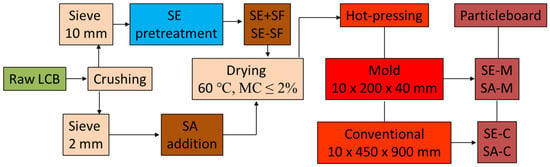
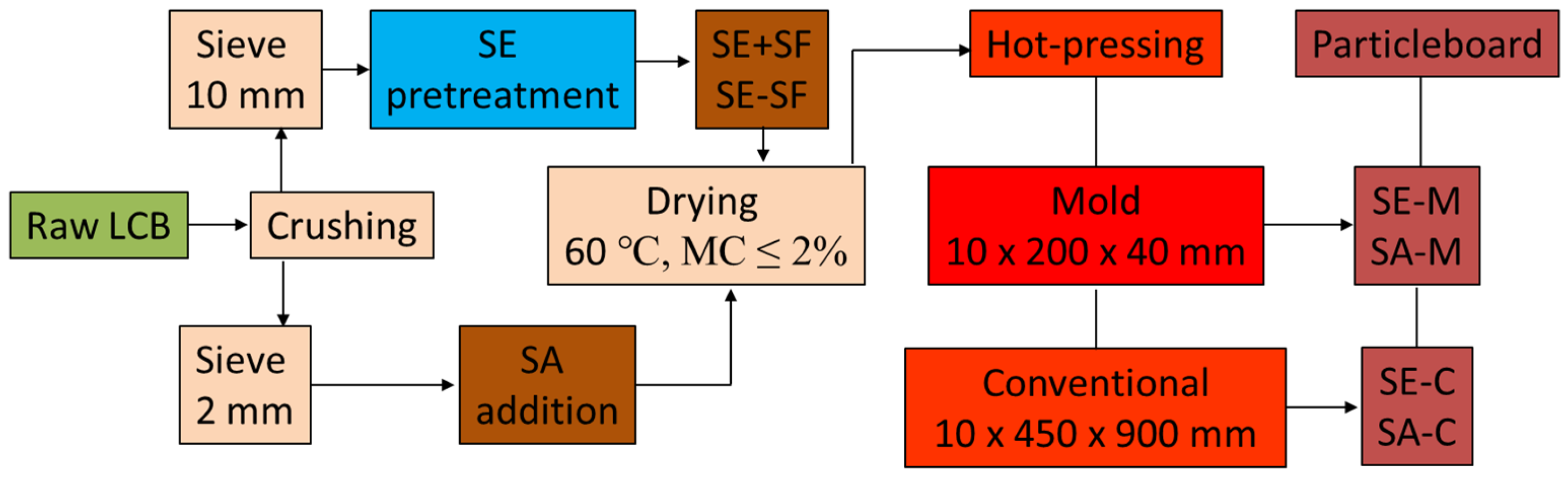
Bio-based particleboards were produced from each LCB species using two distinct manufacturing approaches: (1) binderless fabrication using SE-treated particles and (2) bonding of milled raw particles with an SA binder (Figure 1). The SE boards were produced from dried, SE-pretreated LCB, with the soluble fraction either retained (+SF) or separated (−SF). SA-bonded boards were fabricated from milled (SM 100, Retsch GmbH, Haan, Germany) LCB using 17 ± 1% SA binder on an oven-dry basis (o.d.), as previously described [33]. For each manufacturing approach, two board types were produced using either conventional (C) or mold (M) hot pressing (Figure 1). C boards (450 mm × 900 mm) were later cut into four 200 mm × 400 mm samples, while M boards were hot-pressed directly in an aluminum alloy mold with inner dimensions of 200 mm × 400 mm.
Figure 1.
Particleboard production scheme.
All boards were hot-pressed to a target thickness of 10 mm and a density of 1200 kg/m3, with minor adjustments to temperature and time. The density of boards was chosen by analogy with commercial cement-based particleboards typically used in ventilated façade systems. Additionally, this was due to the fact that the properties of particleboards are density-dependent.
The pressing cycle consisted of two stages: (1) pressing at the set temperature for 9 min at 10 ± 2 MPa and (2) cooling under reduced pressure (approximately 20% lower) until a temperature of 90 °C was reached. The production conditions are summarized in Table 1.
Table 1.
Types and conditions of produced particleboards.
2.5. Particleboard Finishing
The produced particleboards were coated with four self-prepared systems based on purified SA, which were obtained according to the following procedure. The extracted birch outer bark (2.5 kg, 1–2 mm) was depolymerized in 20 L of a 4.5 wt.% KOH-ethanol solution for 60 min at 78 °C. This was conducted in a 30 L stainless-steel reactor equipped with a steam heating jacket, reflux condenser, and mechanical stirrer. After depolymerization, the resulting SA–salt solution was cooled to 30 °C and filtered through a 100 µm polypropylene bag to remove bark residues. Subsequently, 65 wt.% of ethanol was evaporated using a Hei-VAP industrial rotor evaporator (Heidolph, Schwabach, Germany) and replaced with water. The suspension was then acidified with HNO3 to pH 2, vacuum-filtered, and rinsed with water. The final SA–water suspension, with a solid content of 30 wt.%, was used for finishing the boards.
The coating of the boards was performed using a paint roller (15 cm, Anza Platinum 584516, MICMEX, Bankeryd, Sweden), applying a two-layer configuration. For the S system, two consecutive layers of SA were applied. In the SP system, two layers of SA were used, with earth pigment incorporated into the second layer at 5 wt.% relative to the coating mass. For the SH system, the first layer consisted of SA, followed by a second layer of chitosan. In the SHP system, the first layer was SA, while the second layer was chitosan containing 5 wt.% of earth pigment. Before applying the second layer, the first layer was allowed to dry at ambient conditions. The chitosan solution was prepared by dissolving 4 wt.% chitosan in 4 wt.% acetic acid. After coating, all boards were cured in an oven at 180 °C for 30 min. A commercial water-based wood paint suitable for exterior applications (VivaColor Villa Ultima TVT Q858, grey) was used as a reference coating (REF1), while uncoated boards served as an untreated reference (REF0). The finishing types of coated particleboards are summarized in Table 2.
Table 2.
Finishing types used for particleboard coating.
2.6. Particleboard Evaluation
The particleboards were evaluated for water resistance, water drop contact angle, and Fourier transform infrared (FTIR) spectra. Water resistance was assessed according to Option 2 of the EN 312:2010 standard [37], following the methodology specified in EN 1087-1:2002 [26]. Option 2 was selected over Option 1 due to its shorter testing duration. Specimens (50 × 50 mm), conditioned at 20 ± 2 °C and 65 ± 5% RH, were submerged in a water bath, boiled for 2 h, cooled in water (20 °C) for 1 h, and subsequently oven-dried at 70 °C for 16 h. Finally, the specimens were glued to aluminum testing blocks to determine IB in a ZWICK/Roell Z010 testing machine (ZwickRoell, Ulm, Germany) in accordance with EN 319:1993 [38]. The following equation was used for the determination of the IB retention ratio (RIB) of the boards before (IB) and after the boiling test (IBboil):
RIB = IBboil/IB × 100%.
The obtained IBboil values were compared to the standard requirement for load-bearing boards for use in humid conditions (Type P5) according to EN 312 [37]. In addition, the dried board samples after the boiling treatment were tested for thickness swelling (TS) based on the standard EN 317 [39].
Water contact angle measurements were performed using a goniometer (OCA20, Data Physics Instruments, Filderstadt, Germany) equipped with a high-resolution video camera and image analysis software for droplet contour fitting and angle determination. The static sessile drop method was applied, using distilled water as the test liquid. A droplet volume of 10 µL was deposited on the sample’s surface, and the contact angle was recorded over 30 s at 1 s intervals.
FTIR spectra of unfinished boards were recorded using KBr (IR grade, Sigma Aldrich, Darmstadt, Germany) pellets with a Thermo Fisher Nicolet iS50 spectrometer (Waltham, MA, USA) within the range of 4000–700 cm−1, with a spectral resolution of 4 cm−1 and 32 scans. All spectra were normalized to the highest absorption maxima in the range of 2000–700 cm−1.
The influence of the factors on the mean values of the tested properties was analyzed in Excel software, using the one-way ANOVA tool at a significance level of α = 0.05 [40].
3. Results and Discussion
Among all investigated particleboard formulations, substantial differences in water resistance were observed depending on biomass type, bonding approach, and pressing method. In general, SA-bonded particleboards demonstrated considerably higher resistance to boiling treatment than SE-based boards, particularly in the case of GA processed by conventional hot pressing. Therefore, the discussion below focuses primarily on the relationship between biomass composition, bonding mechanism, and retention of IB after severe water exposure.
3.1. Water Resistance of Uncoated Particleboards
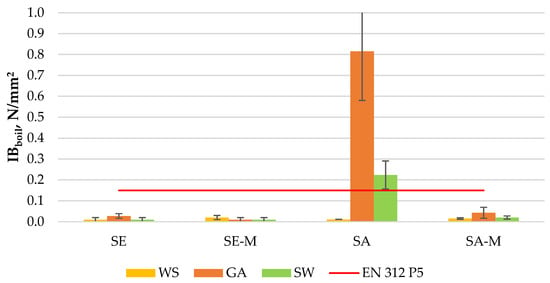
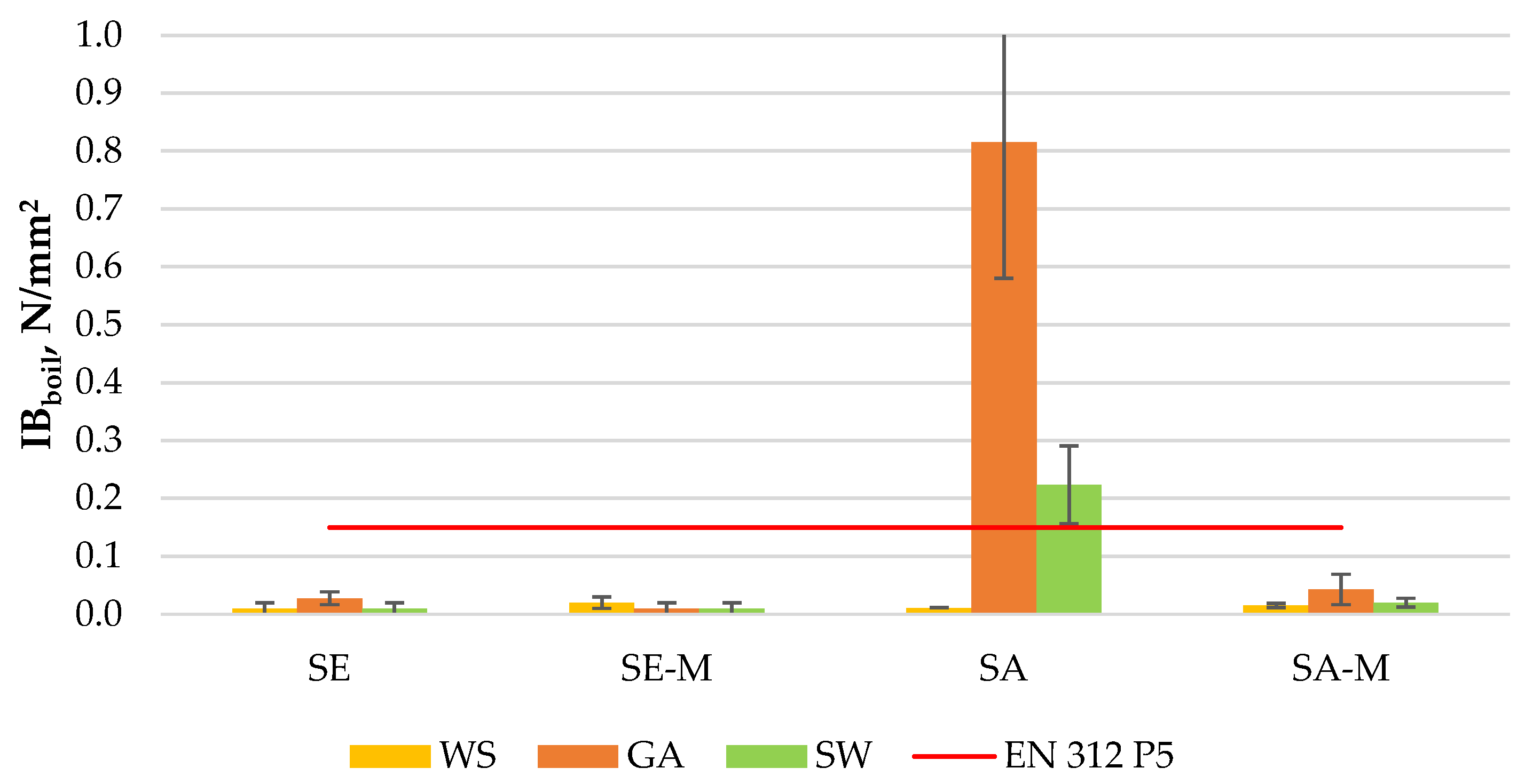
Water resistance of the obtained uncoated particleboards in terms of IB values after 2 h boiling treatment varied substantially in the range of 0.01–0.81 N/mm2 depending on the board type (Figure 2). Both SE board types exhibited similarly low IBboil values between 0.01 N/mm2 and 0.03 N/mm2. The SA boards obtained from wood species by conventional hot pressing achieved the highest values of 0.81 ± 0.23 N/mm2 and 0.22 ± 0.07 N/mm2 for GASA and SWSA, respectively. These results substantially exceeded the standard requirement of P5 boards 0.15 N/mm2, indicating favorable compatibility between the wood biomass and the SA-based binder system. Overall, GASA particleboards demonstrated the highest water resistance among all investigated formulations. The only negative aspect of GASA boards regarding the IBboil results should be noted as its high standard deviation. This indicates heterogeneity of the manufactured laboratory-scale boards, which we assume is related to the disadvantages of manual formation of the board mat for conventional hot pressing with dimensions of 450 mm × 900 mm. It is difficult to manually form a one-layer mat by evenly distributing the binder-mixed particles to achieve a board with a homogeneous structure. Further, during the boiling treatment of such samples, they penetrate the water unevenly, resulting in high deviations in the detected results. Despite the relatively high standard deviation, even the lowest IBboil values of both GASA and SWSA boards met the P5 requirement (Figure 2), confirming the excellent water resistance of the SA-based particleboard system.
Figure 2.
IB of uncoated particleboards after 2 h boiling test.
The SA-M boards hot-pressed in a mold demonstrated considerably lower water resistance, similar to both SE boards, independent of the used species (Figure 2). The obtained IBboil result of SWSA in the present study can be compared with the IBboil of particleboards composed of pine chips bonded with 8% PF/pMDI (70/30) adhesives, reported to be in the range of 0.22–0.32 N/mm2, which decreased down to 0.075 N/mm2 with the addition of kraft pulp residue in the core [30]. The comparison of the results shows the high potential of SA to be used as a binder for softwood particles, providing high intrinsic strength that is sufficiently retained even after severe water treatment.
The retention ratio of the board’s IB values after the boiling treatment is summarized in Table 3. It indicates the impact of specific water treatment by boiling, resulting in a similar tendency as in the case of IBboil values. However, it should be noted that the WSSE-M boards retained the highest RIB value among all SE boards, indicating differences between the species regarding the hot-pressing impact (Table 3). This characteristic of the WSSE-M board after the boiling treatment fits the trend obtained in the TS in water for 24 h, achieving the lowest water absorption (54%) and TS (43%) values regarding other WS board types [33]. The SWSA board retained 9.0% of RIB, indicating lower adhesion than in the case of GASA. The GASA board retained the highest RIB value (28.4%) among all obtained boards, indicating the best variation of used LCB species and compatibility with SA.
Table 3.
IB strength and retention ratio (RIB) of uncoated particleboards after boiling test.
The obtained water resistance results indicate a significant influence of both the biomass species and the manufacturing technology used. Despite relatively high IB values after the production of SE boards, they dropped drastically after the boiling treatment, indicating severe degradation of the self-bonded structure under hydrothermal conditions. This behavior may also be associated with the details of SE post-treatment, in which the soluble fraction was removed. In the previous study performed by the authors, the IBboil of GASE boards without SE post-treatment achieved values in the range of 0.25–0.34 N/mm2, with RIB in the range of 43–49% [28]. The influence of SE processing details on the boards’ water resistance is described in the following section. The RIB of commercial particleboards bonded by synthetic phenol formaldehyde and pMDI was reported in the range of 10–20% and 47–73%, respectively, depending on the boiling time (1–72 h) [27]. Taking this into account, our results in the case of GASA and SWSA bonded with the natural SA-based binder demonstrate promising potential for moisture-resistant bio-based particleboard applications.
3.1.1. Influence of Finishing
Initially, coated particleboards appeared visually promising in terms of improved water resistance. Figure 3 summarizes the appearance of the board’s surfaces coated with all finishing types, including references, board type, and species. It can be observed that SA boards were composed of mechanically shredded chips, while SE boards contained more fiber-like particles obtained during the SE process. Differences in surface color were also observed, with lighter tones in the case of the uncoated board; coated boards exhibited slightly darker tones in the case of S and SH finishings, and they exhibited more intensive tones in the cases of P and REF1 finishings, covering the structure of the board faces (Figure 3).
Figure 3.
Particleboards coated with all finishing types used in this study.
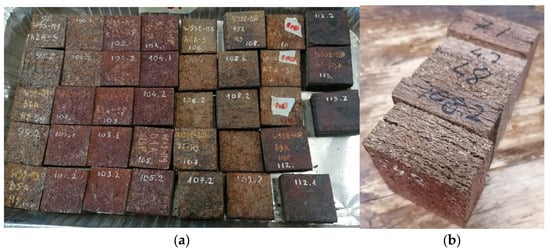
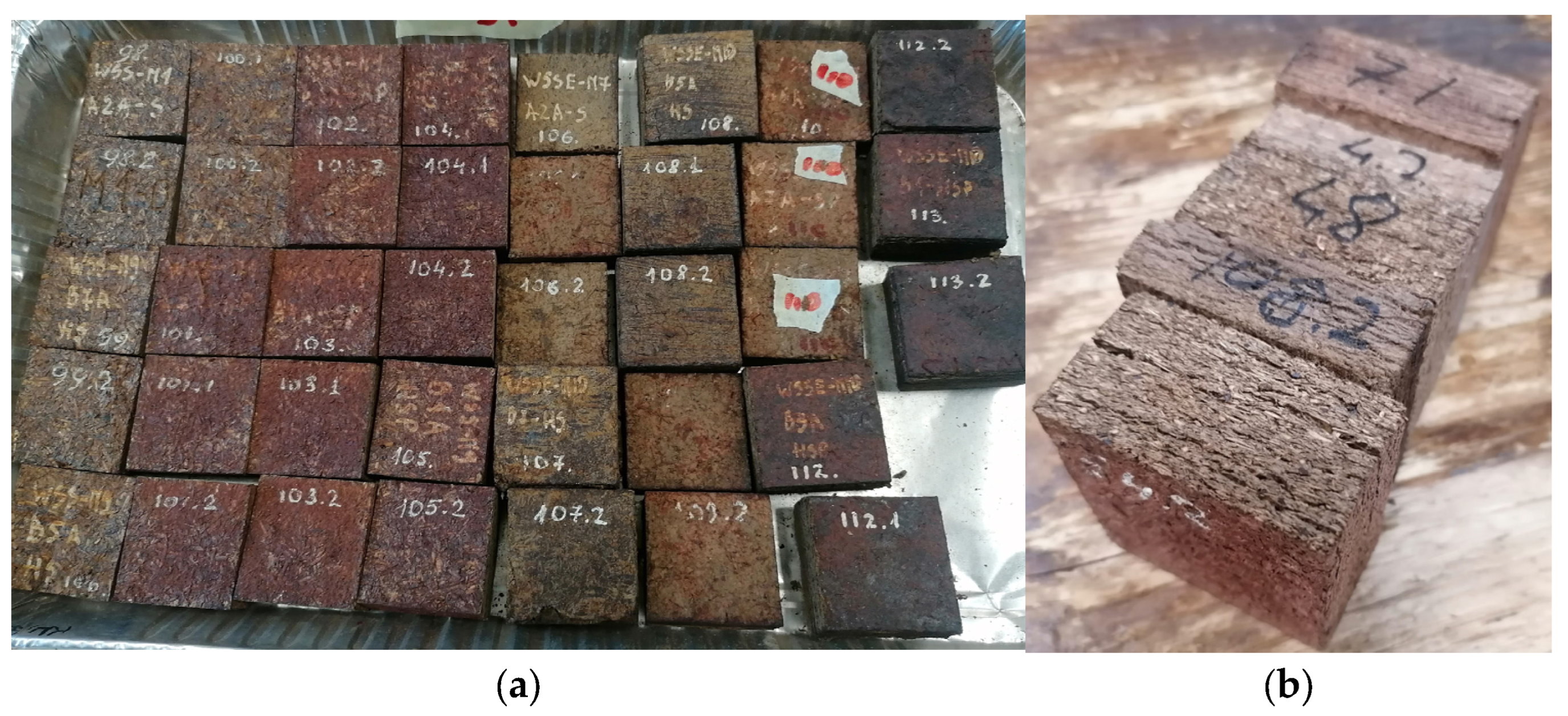
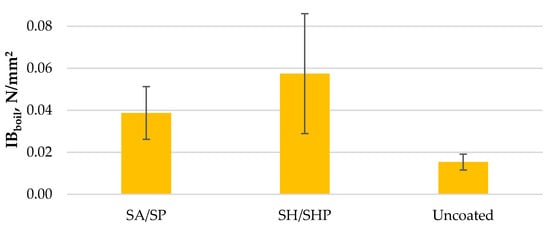
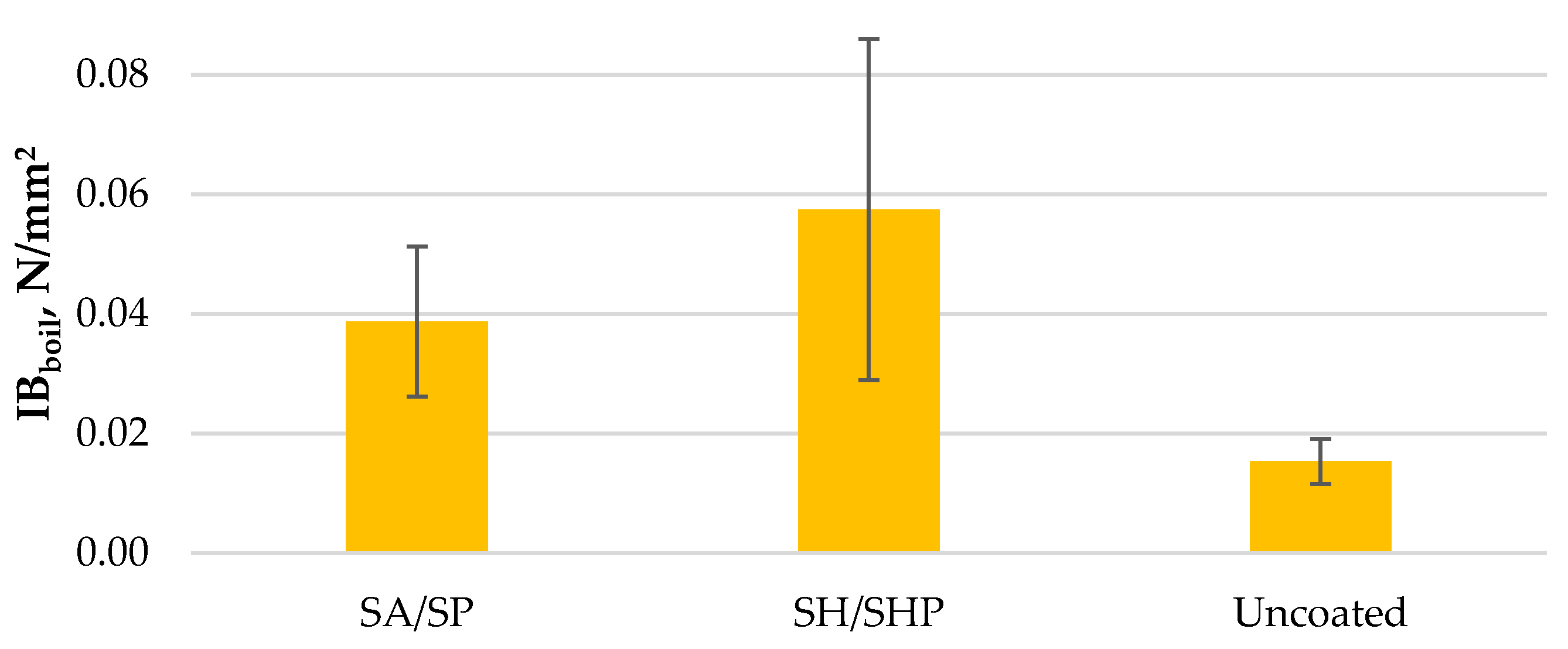
To detect the influence of the used finishing types, all coated particleboards were boiled in water for 2 h (Figure 4). Since no obvious improvement was initially observed between coated and uncoated samples, it was decided to test IBboil only for the WSSA board samples, and the results are summarized in Figure 5.
Figure 4.
Particleboard specimens after the boiling test: (a) face surface of WS-coated boards and (b) cross-sections of (upward direction) WSSA-SP, WSSE-SH, WSSA-M, GASA, and GASE-M.
Figure 5.
Influence of finishing on water resistance of WSSA particleboards after 2 h boiling test.
A significant difference was revealed between the IBboil values depending on the applied finishing. The coated samples showed higher IBboil values than the uncoated ones. Moreover, the highest IBboil values were achieved in WSSA samples coated by SH/SHP, indicating superior performance compared with S/SP coatings. This could be explained by the positive impact of chitosan, which is capable of forming a water barrier for the coated chips, thereby reducing TS, water gain, and linear expansion of particleboards [31]. These results further support the beneficial effect of chitosan-containing finishing systems on water resistance. Taking into account the detected influence of finishing, it may be assumed that the effect could be further improved by sealing the sample’s sides or applying a complete surface coating before the boiling treatment. Such practice is used for solid wood to test the water permeability of coatings according to the EN 927-5 standard [41].
The standard was used to test the solid wood coated with a fully bio-based system composed of SA (90%) from birch bark and polyphenols (10%) from spruce bark [21]. The water resistance of such SA-based finishings, evaluated by immersing the prepared samples with sealed sides for 72 h in water, was reported to achieve a favorable result of 100 g/m2.
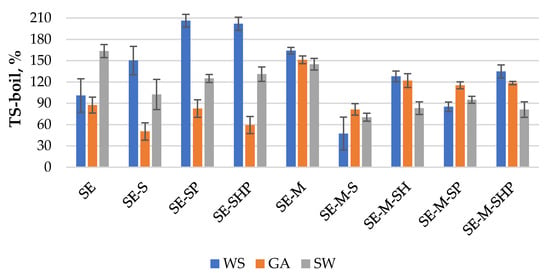
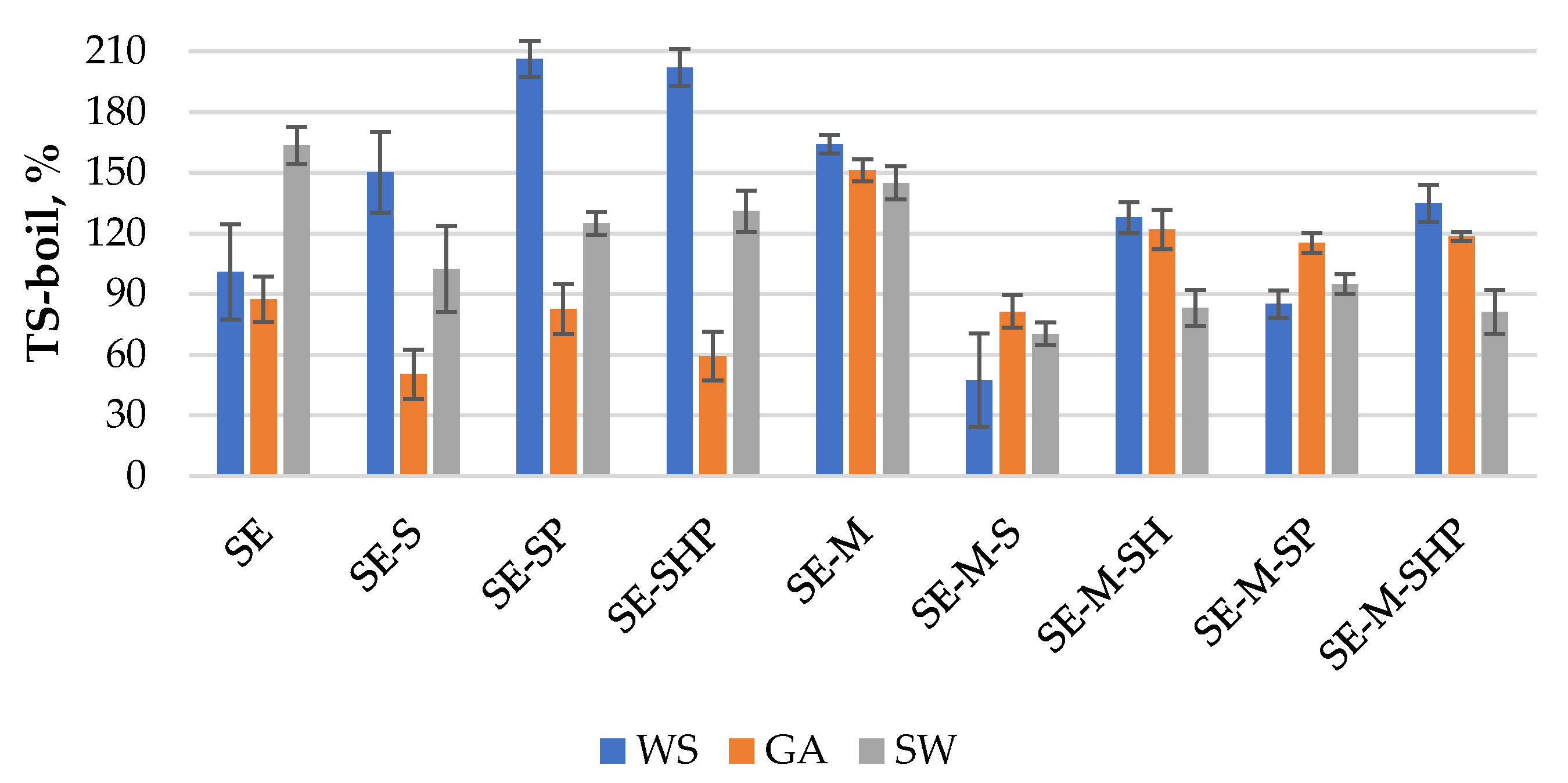
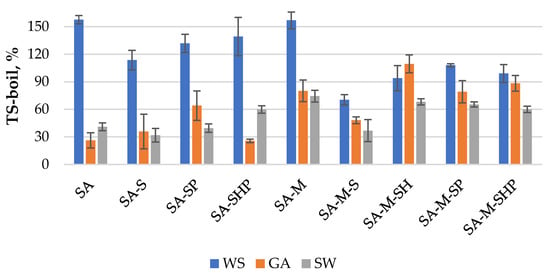
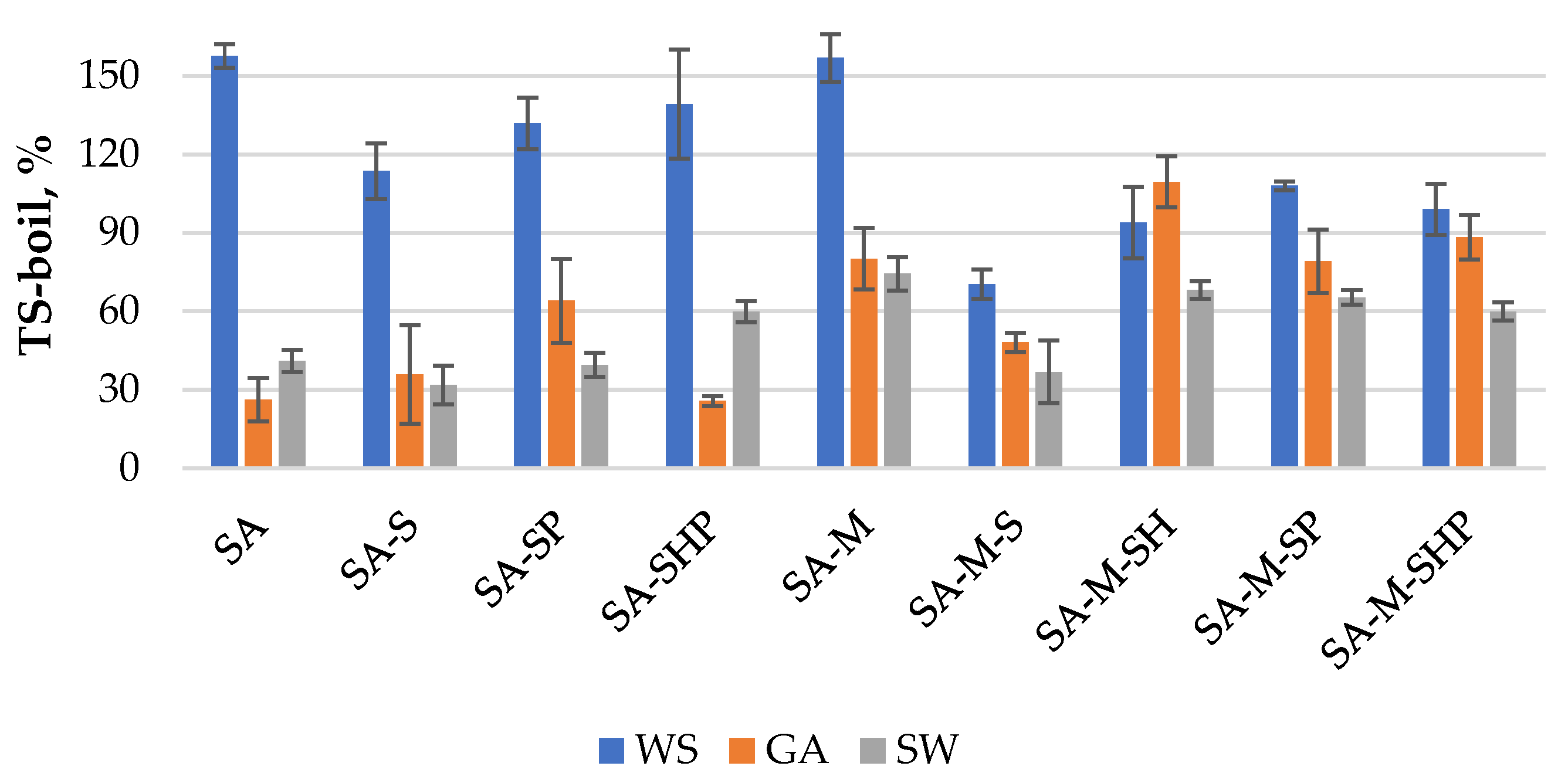
The influence of finishing was also analyzed in terms of TS after boiling (TS-boil). The boiling treatment affected the board samples in terms of TS, as illustrated in Figure 4 b. The results of TS-boil are summarized in Figure 6 and Figure 7, depending on the board production technology. As can be seen from Figure 6, the TS-boil of SE boards varies substantially in the range of 47–206%, while SA boards demonstrated overall lower TS values, ranging between 26% and 158% (Figure 7). This trend was generally consistent with the IBboil results discussed above, further indicating improved hydrothermal stability of the SA-based particleboards.
Figure 6.
TS values of SE particleboards after 2 h boiling depending on finishing.
Figure 7.
TS values of SA particleboards after 2 h boiling depending on finishing.
Regarding the biomass species, GA showed the best average performance in SE boards, with TS-boil values ranging from 50% to 151%. In contrast, SW performed best in SA boards (32–74%). For both uncoated SE and SA boards, those produced via mold hot pressing exhibited lower resistance compared to conventionally hot-pressed boards. Evaluating the finishing types, TS-boil was significantly improved across all SE board varieties, with the exception of those composed of WSSE and those hot-pressed in a mold (Figure 6). Conversely, the TS-boil of coated SA-bonded boards significantly decreased only for all WS samples and for SA-M boards with the S finishing (Figure 7).
A strong negative correlation was previously established between IBboil and TS-boil values for particleboards bonded with synthetic adhesives, indicating that the reduction in RIB is directly associated with increased TS during prolonged boiling exposure times (1–72 h) [27]. This finding is also supported by other authors who subjected particleboards to various accelerated aging treatments [29]. In the present study, a correlation between IBboil and TS-boil was also observed across different board types. However, this relationship varied by species, exhibiting both positive and negative characteristics: r = 0.69 for WS boards, r = −0.80 for GA boards, and r = −0.78 for SW boards. Although the conducted ANOVA revealed insignificance in the detected correlations (p-values 0.198–0.312), this tendency supports some hydrothermal stability of the best-performing SA-based wood particleboards.
3.1.2. Influence of SE Soluble Fraction
The influence of the SE-derived soluble fraction (SF) on IB values, measured before and after boiling, is summarized for all SE board samples in Table 4.
Table 4.
Influence of soluble fraction after the SE on IB values of particleboards before and after the boiling test.
Despite the relatively large differences observed in the initial IB values of the SE boards from the same species depending on the SF, these differences were not statistically significant (Table 4). The presence of the SF led to an IB reduction of 23% for WSSE and 8% for GASE, whereas for SWSE, an increase of 47% was recorded. These results may be attributed to species-specific differences in chemical composition. For instance, WS has a higher ash content than wood species; if it is not removed after SE treatment, this ash remains in the material [16] and may inhibit fiber adhesion. Conversely, SW naturally contains a lower amount of hemicelluloses, which are further reduced during the SE; the resulting dissolved hexoses degrade to 5-hydroxymethylfurfural, which is known to contribute to particleboard adhesion [42].
The IB values of the SE boards decreased drastically after the boiling test, regardless of the presence of the soluble fraction (Table 4). In terms of IBboil performance, no impact was observed for WS boards, while a 33% reduction was detected in GA boards and a 20% increase was detected in SW boards. The remaining IB strength of the SE boards after the boiling test varies in the range of 0.7–2.5% without strong correlations, depending on the soluble fraction (Table 4). Although a minor increase in RIB was observed for the WSSE+SF and SWSE+SF samples, it remained negligible compared to the mold-pressed WSSE-M board without the soluble fraction (Table 3). These results further indicate that the presence of the soluble fraction alone is insufficient to ensure the hydrothermal stability of SE-based particleboards.
The results regarding the soluble fraction in this study do not align with those previously reported for GASE boards [28], indicating differences in production parameters. First of all, the MC of the raw materials before SE was substantially higher in the present study (50% or 30%, depending on the fraction separation), whereas the MC in the previous study was only 10%. A higher MC typically leads to reduced hemicellulose removal and limited pseudo-lignin formation [43], which explains the current findings. Conversely, in the previous study, the lower MC facilitated more extensive hemicellulose removal while retaining a higher proportion of lignin within the SE biomass. Secondly, the resulting superior IBboil in the previous study seems to have been supported by the finer fraction of raw materials before the SE. A recent review of self-adhesive boards particularly highlights the importance of the biomass fraction before the SE with respect to final board properties [15]. And thirdly, the moisture resistance-influencing factor seems to be the MC of the mat before hot pressing, optimally being around 8%, which ultimately resulted in superior RIB values for the investigated particleboards in the previous study [28]. The importance of the MC of SE substrates before hot pressing was approved by other authors [16].
3.2. Water Contact Angle
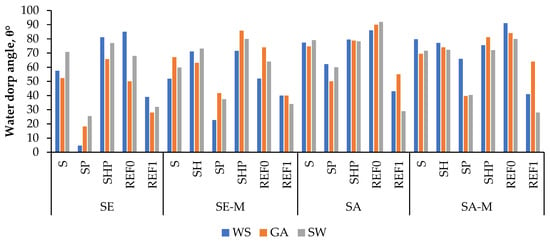
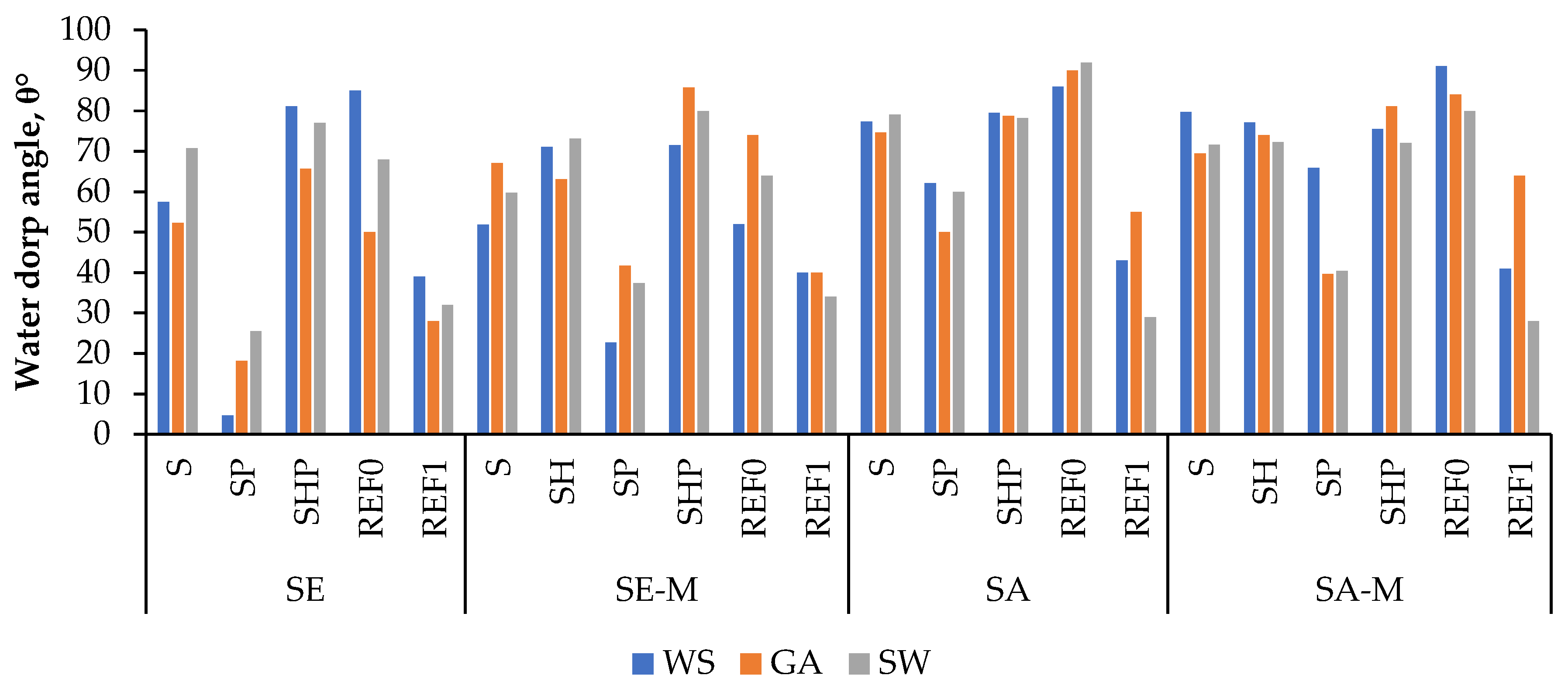
Figure 8 illustrates the water contact angle measured after 30 s for particleboards produced from various raw materials, bonding methods, and surface treatments.
Figure 8.
Water contact angle of particleboards after 30 s as a function of raw material, bonding approach (SE and SA), and surface treatment (S, SP, SH, SHP, REF0, and REF1).
Among the raw materials investigated, GA showed the most consistent and systematic response to the treatments and coatings, with contact angle values following similar trends across different conditions. In contrast, WS samples showed the highest variability, with contact angles ranging from low to high values under comparable treatments. SW samples displayed intermediate behavior. No clear differences were observed between the pressing methods, indicating that the pressing configuration did not significantly affect the contact angle values.
SA-bonded particleboards exhibited higher contact angles than SE boards across all raw materials. For SA-bonded boards, uncoated samples (REF0) showed contact angles of approximately 80–90° after 30 s. The application of the S-coating system did not produce a notable increase in contact angle compared to REF0. In contrast, the SP treatment yielded lower contact angles across all raw materials. Coatings containing chitosan (SH and SHP) exhibited higher contact angles than SP, particularly with respect to SE boards. The commercial coating (REF1) exhibited moderate contact angles compared with those of other treatments.
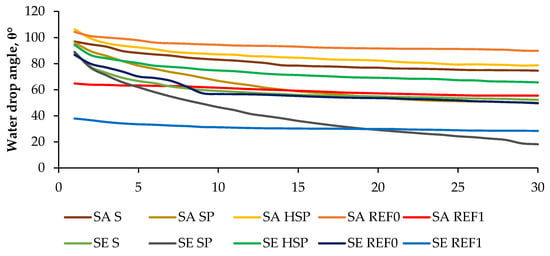
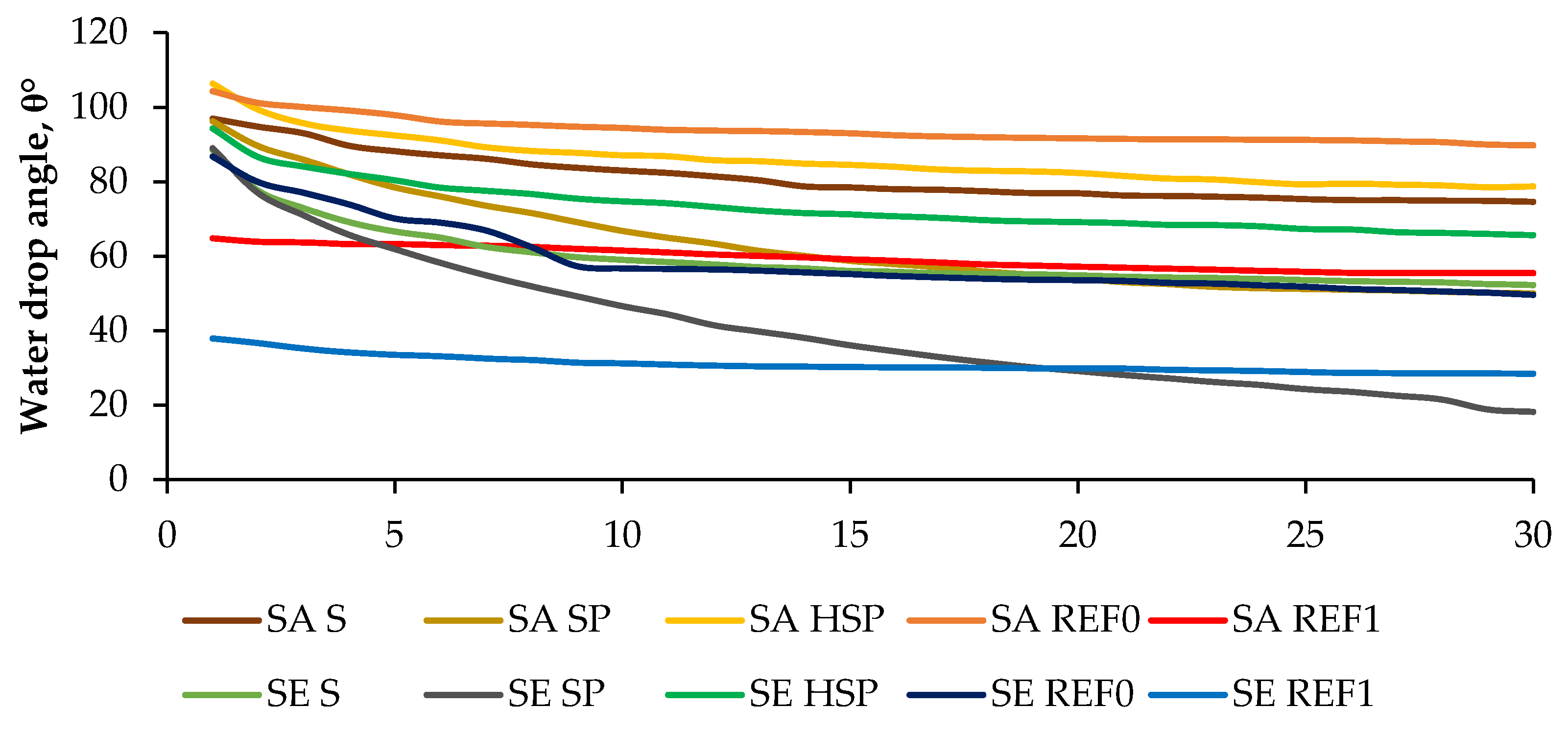
The evolution of the contact angle over 30 s for GA particleboards is shown in Figure 9 as a representative example. For all samples, the contact angle decreased over time. However, SA-bonded boards consistently maintained higher contact angle values than their SE-pretreated counterparts across all corresponding surface treatments. The GASA-REF0 sample exhibited the highest contact angle values, remaining above 90° throughout the 30 s measurement period. The application of the S-coating resulted in values similar to or slightly lower than those of REF0, while the SP treatment led to a pronounced decrease in contact angle over time. In contrast, coatings containing chitosan (HSP) demonstrated higher contact angles and greater stability than SP. Interestingly, while the SA-REF1 finishing remained relatively stable over time, its values were lower than those of the untreated SA-REF0 boards.
Figure 9.
Evolution of water contact angle over 30 s for GA particleboards, comparing bonding approaches and surface treatments.
The combined evaluation of the board’s contact angle values after 30 s and their evolution over time indicates that surface wettability is predominantly controlled by chemical composition rather than by processing parameters such as pressing configuration. The absence of a systematic effect of the pressing method suggests that macroscopic densification may have a limited influence on surface energy, whereas chemical composition appears to play a more dominant role in governing water–surface interactions [44].
The superior performance of SA-bonded boards can be attributed to the intrinsic chemistry of SA. Their structure, rich in long-chain aliphatic components, is likely associated with reduced surface free energy and enhanced hydrophobicity [18]. Furthermore, thermal treatment at 180 °C may promote condensation and polymerization reactions, potentially contributing to the formation of a more crosslinked hydrophobic network. Possible esterification reactions between SA carboxyl groups and the hydroxyl groups of lignocellulosic fibers may further reduce the availability of hydrophilic sites and enhance interfacial compatibility [45,46]. The limited effect of the additional S-coating suggests that once the surface is dominated by SA chemistry; further modification does not significantly alter wettability. This indicates that hydrophobicity in these S-based systems is more strongly influenced by the bulk-derived surface composition rather than by coating thickness.
The observed decrease in contact angle for pigment-containing systems (SP) may be associated with increased surface heterogeneity and the possible introduction of more hydrophilic components. Similar behaviors have been reported for pigment-containing systems, where enhanced wetting has been observed [47]. The presence of dispersed pigment particles may disrupt the continuity of the hydrophobic matrix, promoting localized wetting and water penetration. This interpretation is partially supported by the more rapid decline in contact angle over time, which may indicate reduced resistance to liquid uptake [48].
In contrast, the improved performance of chitosan-containing coatings (SH and SHP), particularly for SE boards, suggests the formation of a more coherent and less permeable surface layer. This behavior is likely governed by both physical and chemical mechanisms. Chitosan is known to form a continuous film, and its amino groups (–NH2) may interact with carboxyl groups (–COOH) of SA through ionic interactions under ambient conditions [49]. In addition, such interactions may contribute to the formation of a more interconnected network through ionic and hydrogen bonding, which could improve coating integrity and reduce permeability [50].
The higher variability in contact angles observed for WS boards may be attributed to their heterogeneous morphology and chemical composition. Factors such as the presence of silica, waxes, and extractives can lead to non-uniform surface properties and inconsistent wetting behavior [51]. In contrast, the more consistent results obtained for GA suggest a homogeneous surface composition, establishing it as a suitable representative material for analyzing wetting dynamics.
Despite being specifically formulated for exterior applications, the commercial reference coating (REF1) did not outperform SA-based systems in terms of hydrophobic performance. This indicates that bio-based formulations can achieve comparable, or even superior, water repellency without the need for additional surface treatments. However, protective coatings may still be essential to ensure long-term durability, including resistance to UV radiation, prolonged moisture exposure, and biological degradation—factors that remain critical for façade applications.
3.3. FTIR Analysis
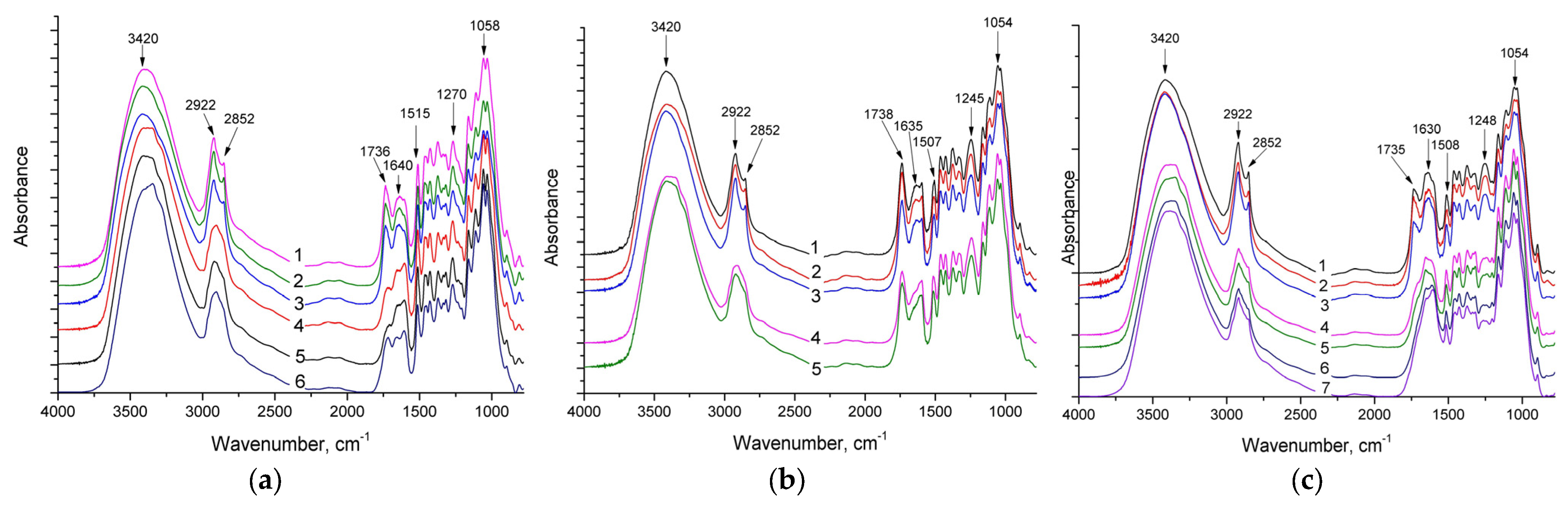
FTIR spectra facilitate a clear differentiation between particleboards obtained using the SA and SE approaches (Figure 10). Regardless of the raw material, SA-bonded particleboards showed increased absorption at 2922 cm−1, 2852 cm−1, 1735 cm−1, 1640 cm−1, and 1240 cm−1. These peaks correspond to the characteristic vibrations of aliphatic and ester functional groups inherent to SA. The enhanced intensity of aliphatic groups may indicate their contribution to the hydrophobic behavior of SA-based particleboards, as discussed in the previous sections. These observations are generally consistent with the improved water resistance and lower TS values obtained for SA-bonded board systems.
Figure 10.
FTIR spectra of particleboards produced: (a) SW (1—SA-M; 2—SA-M boiled; 3—SA-C boiled; 4—SE-M boiled; 5—SE-M boiled; 6—SE-C), (b) GA (1—SA-C; 2—SA-C boiled; 3—SA-M; 4—SE-C; 5—SE-C+SF), and (c) WS (1—SA-C boiled; 2—SA-M; 3—SA-M boiled; 4—SA-C boiled; 5—SA-M boiled; 6—SE-C+SF, 7—SE-C).
The reduced intensity of the broad OH-related absorption band around 3420 cm−1 observed for SA-based particleboards suggests a lower relative contribution of hydrophilic functional groups, thereby contributing to the enhanced hydrophobic behavior observed [50].
FTIR absorption was not affected by the type of particleboard—hot-pressed conventionally or using a mold. The retention of soluble parts in WSSE boards increased the relative contribution of carbohydrate-related absorption bands compared with lignin-related absorption, as indicated by an increase in absorption in the range from 1200 cm−1 to 900 cm−1 relative to the lignin absorption peak at ~1500 cm−1 (Figure 10c). However, this relationship was not observed in the case of GA and SW particleboards corresponding to hardwood and softwood (Figure 10a,b). This is probably because the soluble part of SE-hardwood and SE-softwood contains both polyphenols and carbohydrates.
Both SE and SA board samples produced from GA and SW exhibited lower relative carbohydrate absorption after boiling compared to their untreated counterparts. Conversely, WS particleboards displayed the opposite trend. The boiling treatment appeared to have a more pronounced effect on phenolic compounds than on carbohydrates, as evidenced by the decreased absorption at 1508 cm−1 relative to the 1054 cm−1 band. These spectral changes align with the substantial changes in hydrothermal stability observed after boiling treatment.
4. Conclusions
This study evaluated high-density particleboards produced from WS, GA, and SW biomass, using SE treatment or SA bonding, combined with conventional or mold hot pressing. Water resistance of the boards was assessed through IB testing after a 2 h boiling treatment and water contact angle measurements. Among the biomass species, WS exhibited the lowest performance, while SW and GA showed superior resistance. Although species type had a negligible effect on water contact angles, surface wettability was significantly influenced by the board type, production technology, and finishing system.
The most robust hydrothermal performance was achieved by conventionally hot-pressed GASA and SWSA particleboards. Their IBboil values (0.81 ± 0.23 N/mm2 and 0.22 ± 0.07 N/mm2) and TS-boil values (26 ± 8% and 41 ± 4%) substantially exceeded the EN 312 requirements for Type P5 boards (0.15 N/mm2) intended for use in humid conditions. These results underscore the high compatibility between wood biomass and the SA-based binder. Furthermore, the developed SA-based finishing systems—particularly those incorporating chitosan and earth pigment—further enhanced water resistance.
These findings advance the development of sustainable, bio-based façade materials with reduced environmental impact. While these technological approaches show great promise for improving lignocellulosic particleboard stability, further research into long-term outdoor durability—including weathering, UV resistance, biological degradation, and fire performance—is currently underway.
Author Contributions
Conceptualization, R.T.; methodology and data curation, R.T., A.B., M.A., L.A., O.B., R.B. and G.P.; software, R.T., A.B., L.A., M.A. and O.B.; validation, formal analysis, and investigation, R.T., L.A. and O.B.; resources, R.T., M.A. and J.R.; writing—original draft preparation, R.T., L.A. and O.B.; writing—review and editing, all authors; visualization, R.T., L.A. and O.B.; supervision, project administration, and funding acquisition, R.T. and G.P. All authors have read and agreed to the published version of the manuscript.
Funding
This research and the APC of the article were funded by the LATVIAN SCIENCE COUNCIL, Project “Investigation of innovative biomass-based panels for application in external building façade,” grant number lzp-2023/1-0348.
Data Availability Statement
The data generated during the study and the supporting conclusions of this article will be made available upon request.
Acknowledgments
The authors would like to thank Sara Manes and Francesco Delle Donne from the Italian Istituto di Istruzione Superiore “Enrico Mattei” as part of an Erasmus+ mobility initiative and Roberts Gandzjuks from the laboratory of Cellulose of LSIWC for providing and processing FTIR data. During the preparation of Section 1 of this manuscript, GenAI [https://elicit.com, accessed on 20 March 2026] was used, asking the following research questions: “What bio-based facade materials (timber, cork, mycelium composites, wood and agricultural waste-based panels) are currently commercially available in European markets as of 2024?” and “What are the optimal parameters for steam explosion pretreatment of lignocellulosic materials, including posttreatment, to produce binderless panels with adequate mechanical properties?” The authors have reviewed and edited the output and take full responsibility for the contents of this publication.
Conflicts of Interest
The authors declare no conflicts of interest. The funders had no role in the design of the study; in the collection, analyses, or interpretation of data; in the writing of the manuscript; or in the decision to publish the results.
Abbreviations
The following abbreviations are used in this manuscript:
| LCB | Lignocellulosic biomass; |
| SE | Steam explosion treatment; |
| SF | Soluble fraction of SE; |
| SAs | Suberinic acids; |
| WS | Wheat straw; |
| GA | Grey alder wood; |
| SW | Softwood; |
| MC | Moisture content; |
| C | Conventional hot pressing; |
| M | Molding; |
| S | SA-based finishing; |
| SH | SA-based finishing containing chitosan; |
| SP | SA-based finishing containing earth pigment; |
| SHP | SA-based finishing containing chitosan and earth pigment; |
| REF0 | Reference board without coating; |
| REF1 | Reference board coated with commercial finishing; |
| EN | European norm; |
| IB | Internal bonding according to EN 319; |
| TS | Thickness swelling according to EN 317. |
References
- Liobikiene, G.; Butkus, M. The European Union Possibilities to Achieve Targets of Europe 2020 and Paris Agreement Climate Policy. Renew. Energy 2017, 106, 298–309. [Google Scholar] [CrossRef] [Scilit]
- Shivaprasad, K.N.; Yang, H.-M.; Singh, J.K. A Path to Carbon Neutrality in Construction: An Overview of Recent Progress in Recycled Cement Usage. J. CO2 Util. 2024, 83, 102816. [Google Scholar] [CrossRef] [Scilit]
- Global Forecast 2025–2032 Cladding Market by Material Type, End Use, Product Type, Distribution Channel; ID: GVR-1-68038-477-2; Grand View Research: San Francisco, CA, USA, 2025; p. 198. Available online: https://www.grandviewresearch.com/industry-analysis/cladding-market (accessed on 19 July 2026).
- Watts, A. Facades—Technical Review; RIBA Publishing: London, UK, 2007; p. 78. [Google Scholar]
- Thevega, T.; Jayasinghe, J.A.S.C.; Robert, D.; Bandara, C.S.; Kandare, E.; Setunge, S. Fire Compliance of Construction Materials for Building Claddings: A Critical Review. Constr. Build. Mater. 2022, 361, 129582. [Google Scholar] [CrossRef] [Scilit]
- Palani, H.; Vo, T.; Bhandari, M.; Karatas, A. A Review of the State-of-the-Art of Rainscreen Cladding Performance in Residential Building Walls. CIB Conf. 2025, 1, 232. [Google Scholar] [CrossRef] [Scilit]
- Dodge, B.; Liu, R. Comparing Exterior Wall Finishes Using Life-Cycle Assessment. In Proceedings of the IBPC. Healthy, Intelligent and Resilient Buildings and Urban Environments, Syracuse, NY, USA, 23–26 September 2018; pp. 289–294. [Google Scholar]
- Martini, A. Cladding Innovations: Composite Material Technologies as Environmentally Friendly, Responsive and Lightweight Solution; EDA Esempi di Achitettura: Alcamo, Italy, 2014; pp. 1–7. [Google Scholar]
- Cheong, C.Y.; Brambilla, A.; Gasparri, E.; Kuru, A.; Sangiorgio, A. Life Cycle Assessment of Curtain Wall Facades: A Screening Study on End-of-Life Scenarios. J. Build. Eng. 2024, 84, 108600. [Google Scholar] [CrossRef] [Scilit]
- Antypa, D.; Petrakli, F.; Gkika, A.; Voigt, P.; Kahnt, A.; Böhm, R.; Suchorzewski, J.; Araujo, A.; Sousa, S.; Koumoulos, E.P. Life Cycle Assessment of Advanced Building Components towards NZEBs. Sustainability 2022, 14, 16218. [Google Scholar] [CrossRef] [Scilit]
- Saleem, M.; Chhipi-Shrestha, G.; Andrade, M.T.B.; Dyck, R.; Ruparathna, R.; Hewage, K.N.; Sadiq, R. Life Cycle Thinking–Based Selection of Building Facades. J. Archit. Eng. 2018, 24, 04018029. [Google Scholar] [CrossRef] [Scilit]
- Alegbe, M.; Hammed, N. Sustainability beyond the Surface: Evaluating the Long-Term Environmental and Energy Performance of Selected Cladding Materials for Housing Retrofits. J. Sustain. Constr. Mater. Technol. 2024, 9, 221–238. [Google Scholar] [CrossRef] [Scilit]
- Mastropasqua, A.; Mazzucchelli, E.S.; Rigone, P.; Zabihi, S.H. Life Cycle Assessment of Aluminium Alloys for Sustainable Building Materials and Components. Key Eng. Mater. 2026, 1045, 115–121. [Google Scholar] [CrossRef] [Scilit]
- Alao, P.; Visnapuu, K.; Kallakas, H.; Poltimäe, T.; Kers, J. Natural Weathering of Bio-Based Facade Materials. Forests 2020, 11, 642. [Google Scholar] [CrossRef] [Scilit]
- Lambert, G.F.; Lopez, E.M.N.; Echeverria, E.F.; Aguilar-Lasserre, A.A.; Gonzalez, D.R. The Influence of Non-Catalyzed Steam Explosion on Lignocellulosic Materials: A Review to Produce Self-Adhesive Boards. Int. Wood Prod. J. 2026, 1–17. [Google Scholar] [CrossRef] [Scilit]
- Tanase-Opedal, M.; Ghoreishi, S.; Hermundsgård, D.H.; Barth, T.; Moe, S.T.; Brusletto, R. Steam Explosion of Lignocellulosic Residues for Co-Production of Value-Added Chemicals and High-Quality Pellets. Biomass Bioenergy 2024, 181, 107037. [Google Scholar] [CrossRef] [Scilit]
- Kurokochi, Y.; Sato, M. Effect of Steam Explosion and Grinding on Binderless Board Made from Rice Straw. Wood Res. 2015, 60, 791–800. [Google Scholar]
- Rizhikovs, J.; Brazdausks, P.; Paze, A.; Tupciauskas, R.; Grinins, J.; Puke, M.; Plavniece, A.; Andzs, M.; Godina, D.; Makars, R. Characterization of Suberinic Acids from Birch Outer Bark as Bio-Based Adhesive in Wood Composites. Int. J. Adhes. Adhes. 2022, 112, 102989. [Google Scholar] [CrossRef] [Scilit]
- Tupciauskas, R.; Rizhikovs, J.; Grinins, J.; Paze, A.; Andzs, M.; Brazdausks, P.; Puke, M.; Plavniece, A. Investigation of Suberinic Acids-Bonded Particleboard. Eur. Polym. J. 2019, 113, 176–182. [Google Scholar] [CrossRef] [Scilit]
- Makars, R.; Rizikovs, J.; Paze, A. Study of Catalysts for Suberinic Acid-Based Adhesive Polymerization. Mater. Sci. Forum 2022, 1071, 182–188. [Google Scholar] [CrossRef] [Scilit]
- Wang, F.; Pylypchuk, I. Fully Bio-Based Water-Resistant Wood Coatings Derived from Tree Bark. Mater. Horiz. 2024, 11, 6504–6515. [Google Scholar] [CrossRef] [Scilit] [PubMed]
- Angelski, D.; Atanasova, K. Water Permeability and Adhesion Strength of Bio-Based Coating Applied on Wood Vodopropusnost i Adhezivna Čvrstoća Biopremaza Nanesenoga Na Drvo. Drv. Ind. 2024, 75, 43–48. [Google Scholar]
- Mokhothu, T.H.; John, M.J. Bio-Based Coatings for Reducing Water Sorption in Natural Fibre Reinforced Composites. Sci. Rep. 2017, 7, 13335. [Google Scholar] [CrossRef] [Scilit] [PubMed]
- Rayan, S.M.A.; Islam, M.S.; Arifuzzaman, M.; Shoily, S.K. Effect of Wood Varnish Coating on the Water Absorption and Mechanical Properties of Jute Fiber Reinforced Epoxy Composites. Heliyon 2024, 10, e37433. [Google Scholar] [CrossRef] [Scilit] [PubMed]
- Calovi, M.; Rossi, S. Functional Olive Pit Powders: The Role of the Bio-Based Filler in Reducing the Water Uptake Phenomena of the Waterborne Paint. Coatings 2023, 13, 442. [Google Scholar] [CrossRef] [Scilit]
- European Standard EN1087-1; Particleboards—Determination of Moisture Resistance—Part 1: Boil Test. European Committee for Standardization: Brussels, Belgium, 1995.
- Korai, H.; Saotome, H.; Ohmi, M. Effects of Water Soaking and Outdoor Exposure on Modulus of Rupture and Internal Bond Strength of Particleboard. J. Wood Sci. 2014, 60, 127–133. [Google Scholar] [CrossRef] [Scilit]
- Tupciauskas, R.; Irbe, I.; Janberga, A.; Buksans, E. Moisture and Decay Resistance and Reaction to Fire Properties of Self-Binding Fibreboard Made from Steam-Exploded Grey Alder Wood. Wood Mater. Sci. Eng. 2017, 12, 63–71. [Google Scholar] [CrossRef] [Scilit]
- Kajita, H.; Mukudai, J.; Yano, H. Durability Evaluation of Particleboards by Accelerated Aging Tests. Wood Sci. Technol. 1991, 25, 239–249. [Google Scholar] [CrossRef] [Scilit]
- Dukarska, D.; Buszka, K.; Modzelewska, I. Kraft Scrap Paper Pulp as a Substitute of Wood Chips in Manufacture of Particleboards Rsinated with Hybrid PF/PMDI Resin. Maderas Cienc. Tecnol. 2018, 20, 161–170. [Google Scholar] [CrossRef] [Scilit]
- Basturk, M.A. Heat Applied Chitosan Treatment on Hardwood Chips to Improve Physical and Mechanical Properties of Particlboard. Bioresouces 2012, 7, 4858–4866. [Google Scholar] [CrossRef] [Scilit]
- Tupciauskas, R.; Veveris, A.; Andzs, M.; Gravitis, J.; Liitia, T.; Tamminen, T. Investigation of Grey Alder Particleboard Bonded by Different Industrial Side-Stream Lignins. Mech. Compos. Mater. 2021, 57, 57–68. [Google Scholar] [CrossRef] [Scilit]
- Tupciauskas, R.; Berzins, A.; Andzs, M.; Berzins, R.; Rizikovs, J.; Pavlovics, G. Physical—Mechanical Properties of Innovative Biobased Particleboards for Application in External Building Façades. Forests 2025, 16, 1359. [Google Scholar] [CrossRef] [Scilit]
- Tupciauskas, R.; Rizhikovs, J.; Andzs, M.; Bikovens, O. Influence of Manufacturing Conditions on Binder-Less Boards from Steam-Exploded Hemp Shives and Wheat Straw. Materials 2022, 15, 3141. [Google Scholar] [CrossRef] [Scilit] [PubMed]
- Klaban, J.; Meile, K.; Godina, D.; Tupciauskas, R.; Berzins, A.; Andze, L.; Sedlarik, V. Evaluation of Value-Added by-Products from Steam Explosion Lignocellulosic Biomass (Triticum aestivum, Zea mays, and Phragmites australis). Ind. Crops Prod. 2024, 222, 119443. [Google Scholar] [CrossRef] [Scilit]
- Tupciauskas, R.; Berzins, A.; Pavlovics, G.; Bikovens, O.; Filipova, I.; Andze, L.; Andzs, M. Optimization of Thermal Conductivity vs Bulk Density of Steam Exploded Loose-Fill Annual Lignocellulosics. Materials 2023, 16, 3654. [Google Scholar] [CrossRef] [Scilit] [PubMed]
- European Standard EN 312; Particleboards—Specifications. European Committee for Standardization: Brussels, Belgium, 2010; pp. 1–18.
- European Standard EN 319; Particleboards and Fibreboards—Determination of Tensile Strength Perpendicular to the Plane of the Board. European Committee for Standardization: Brussels, Belgium, 1993.
- European Satndard EN 317; Particleboards and Fibreboards—Determination of Swelling in Thickness after Immersion in Water. European Committee for Standardization: Brussels, Belgium, 1993.
- Montgomery, D.C. Design and Analysis of Experiments, 9th ed.; John Wiley & Sons: Hoboken, NJ, USA, 2017. [Google Scholar]
- EN 927-5; Paint and Varnishes—Coating Materials and Coating Systems for Exterior Wood—Part 5: Assessment of the Liquid Water Permeability. European Committee for Standardization: Brussels, Belgium, 2000.
- Pielhop, T.; Amgarten, J.; Von Rohr, P.R.; Studer, M.H. Steam Explosion Pretreatment of Softwood: The Effect of the Explosive Decompression on Enzymatic Digestibility. Biotechnol. Biofuels 2016, 9, 152. [Google Scholar] [CrossRef] [Scilit] [PubMed]
- Sui, W.; Chen, H. Effects of Water States on Steam Explosion of Lignocellulosic Biomass. Bioresour. Technol. 2016, 199, 155–163. [Google Scholar] [CrossRef] [Scilit] [PubMed]
- Webb, H.K.; Crawford, R.J.; Ivanova, E.P. Wettability of Natural Superhydrophobic Surfaces. Adv. Colloid Interface Sci. 2014, 210, 58–64. [Google Scholar] [CrossRef] [Scilit] [PubMed]
- Makars, R.; Rizikovs, J.; Godina, D.; Paze, A.; Merijs-Meri, R. Utilization of Suberinic Acids Containing Residue as an Adhesive for Particle Boards. Polymers 2022, 14, 2304. [Google Scholar] [CrossRef] [Scilit] [PubMed]
- Heinämäki, J.; Halenius, A.; Paavo, M.; Alakurtti, S.; Pitkänen, P.; Pirttimaa, M.; Paaver, U.; Kirsimäe, K.; Kogermann, K.; Yliruusi, J. Suberin Fatty Acids Isolated from Outer Birch Bark Improve Moisture Barrier Properties of Cellulose Ether Films Intended for Tablet Coatings. Int. J. Pharm. 2015, 489, 91–99. [Google Scholar] [CrossRef] [Scilit] [PubMed]
- Girdthep, S.; Sirirak, J.; Daranarong, D.; Daengngern, R.; Chayabutra, S. Physico-Chemical Characterization of Natural Lake Pigments Obtained from Caesalpinia Sappan Linn. and Their Composite Fi Lms for Poly(Lactic Acid)—Based Packaging Materials. Dye. Pigment. 2018, 157, 27–39. [Google Scholar] [CrossRef] [Scilit]
- Al-turaif, H. Surface Coating Properties of Different Shape and Size Pigment Blends. Prog. Org. Coat. 2009, 65, 322–327. [Google Scholar] [CrossRef] [Scilit]
- Shamov, M.V.; Bratskaya, S.Y.; Avramenko, V.A. Interaction of Carboxylic Acids with Chitosan: Effect of PK and Hydrocarbon Chain Length. J. Colloid Interface Sci. 2002, 249, 316–321. [Google Scholar] [CrossRef] [Scilit] [PubMed]
- Sailakshmi, G.; Mitra, T.; Chatterjee, S.; Gnanamani, A. Engineering Chitosan Using α, ω-Dicarboxylic Acids—An Approach to Improve the Mechanical Strength and Thermal Stability. J. Biomater. Nanotechnol. 2013, 4, 151–164. [Google Scholar] [CrossRef]
- Ghaffar, S.H.; Fan, M. Revealing the Morphology and Chemical Distribution of Nodes in Wheat Straw. Biomass Bioenergy 2015, 77, 123–134. [Google Scholar] [CrossRef] [Scilit]



Disclaimer/Publisher’s Note: The statements, opinions and data contained in all publications are solely those of the individual author(s) and contributor(s) and not of MDPI and/or the editor(s). MDPI and/or the editor(s) disclaim responsibility for any injury to people or property resulting from any ideas, methods, instructions or products referred to in the content. |
© 2026 by the authors. Licensee MDPI, Basel, Switzerland. This article is an open access article distributed under the terms and conditions of the Creative Commons Attribution (CC BY) license.