


Abstract
Aramid fibers combine high specific strength, impact-energy absorption and thermal stability, yet the same rigid, highly oriented chains also produce a chemically inert surface, low compressive strength and sensitivity to ultraviolet (UV) radiation and hydrolysis. This review synthesizes original research articles, indexed in the Web of Science Core Collection, with emphasis on 2021–2026, on how fiber- and fabric-level functionalization affects the structural and functional integrity of aramid composites. Unlike previous reviews, organized by method, material form or application, it follows the retention of this integrity from fiber to component. Plasma, chemical, bio-inspired and nano structural treatments are compared by interfacial gain, fiber damage and property retention after UV exposure. The roles of aramid nanofibers, matrices, processing, hybridization and shear-thickening fluids are discussed, together with added functions such as electromagnetic shielding, strain sensing, thermal management, liquid repellence and self-healing. Several interphases, including oxide layers and aramid nanofiber coatings carrying conductive phases, strengthen adhesion while protecting the fiber or adding a function, but most data refer to unaged fibers or small specimens tested for one property at a time. An evaluation framework is proposed that links fiber, laminate and component scales with combined aging, icing and electromagnetic requirements for outdoor structures.
1. Introduction
Reducing structural mass without compromising strength, stiffness or safety has driven the development of polymer-matrix composites for several decades. Within this class, composites reinforced with para-aramid fibers combine a high strength-to-density ratio with damage tolerance and a large capacity to dissipate impact energy. These attributes explain their use in helmets and lightweight armor [1,2,3], in radomes and other aerospace components [4], in the confinement of concrete members with aramid-fiber-reinforced polymer (AFRP) sheets [5] and, as fabrics, in protective clothing for firefighters [6,7].
These properties originate in the molecular architecture of fiber. Rigid-chain aromatic polyamides form nematic liquid-crystalline solutions, and the molecular orientation achieved in solution is transferred to the fiber during spinning [8]. The resulting poly(p-phenylene terephthalamide) (PPTA) fibers are highly crystalline, with chains organized in hydrogen-bonded sheets [9] and a fibrillar, skin–core and pleated morphology [10]. The same structure, however, is responsible for the main limitations of the material. The fiber surface is smooth and contains few reactive groups, so adhesion to most matrices relies on weak physical interactions and interfacial debonding is a common failure mode [11,12,13]. The compressive strength of the fiber is several times lower than its tensile strength [14], and the amide linkage is sensitive to ultraviolet (UV) radiation, moisture and hydrolysis, which reduces durability outdoors, in marine environments and at elevated temperatures [15,16,17].
Maintaining the integrity of aramid composites therefore has two components. Structural integrity is the ability of the material to carry the design loads throughout its intended service life, including its residual capacity after damage and environmental exposure. Functional integrity is the retention of the properties for which the material was selected, such as impact protection, thermal insulation, electromagnetic shielding or electrical conductivity. Over the last two decades, fiber and fabric functionalization has been used to address both components: plasma activation and chemical grafting [11,12,18], bio-inspired polydopamine (PDA) coatings [19,20], the growth of ZnO nanowires or deposition of carbon nanotubes (CNTs) [21,22], and the deposition of graphene oxide (GO), MXene or UV-absorbing inorganic nanoparticles [23,24,25]. In parallel, the deprotonation of Kevlar in a KOH/dimethyl sulfoxide (DMSO) system produced stable dispersions of aramid nanofibers (ANFs) [26], which have since been assembled into films, aerogels and nanocomposites for electromagnetic interference (EMI) shielding, thermal management, energy storage and sensing [27,28,29,30].
The experimental evidence on these strategies is, however, fragmented. Most studies optimize a single property of a single fiber–matrix system, in the as-produced state, on individual fibers or small specimens. Whether a gain in adhesion or an added function survives UV radiation, moisture, thermal cycling, abrasion and impact, and whether it is retained in a real component with edges, drilled holes and joints, remains much less documented.
1.1. Previous Reviews and Novelty of This Review
Several reviews have covered parts of this field (Table 1). Reviews organized by modification method have classified the functionalization of aramid fibers and composites for protective applications [31], the additive methods that deposit a coating, a grafted layer or a nanostructure on the fiber surface [32] and the surface and interface modifications used in thermoset and rubber composites [33]; the most recent of them examines interphase engineering in aramid/epoxy composites, from surface modification to its mechanical consequences [34]. Reviews organized by material form have covered aramid fibrous materials from their fundamentals to their applications [35] and ANFs and ANF-based functional composites [36,37]. Other reviews are organized by application, namely aerospace components [38], bulletproof and body-armor composites [39], coatings and nanostructured interfaces for ballistic protection materials [40], the mechanisms by which aramid composites absorb ballistic energy [41], civil engineering [42] and shear-thickening fluids for impact protection [43], or by degradation mechanism, namely the mechanical deterioration of aramid fabrics in harsh environments [44] and the aging of high-performance fibers in firefighters’ protective clothing [45].
Table 1.
Previous reviews related to the functionalization of aramid fibers, fabrics and their composites (2018–2026), listed chronologically, and the perspective of the present review.
Taken together, these reviews describe how aramid fibers can be modified and where their composites are used, but the interface, the added functions and environmental durability are typically treated in different reviews, each from the perspective of one method, material form, application or degradation mechanism. The two most recent reviews on ballistic protection explicitly identify the long-term durability of coatings and functionalized surfaces under environmental aging as an open issue [40,41]. The present review is complementary to them in five respects:
- Evidence base and comparison criteria. Only original research articles are used as evidence, and for each treatment, the interfacial gain, the change in fiber strength and, where reported, the retention of properties after exposure are extracted together (Section 4.7, so that treatments are compared on more than one criterion.
- Organizing perspective. The review is organized around the retention of structural and functional integrity rather than around a method, a material form or an application, and it follows the material from fiber and fabric to laminate and component.
- Outdoor requirements. Icing and electromagnetic transparency, two requirements of outdoor structures such as panels installed near antennas, are considered together with the mechanical requirements (Section 8); to our knowledge, they have not been discussed together with fiber and fabric functionalization in previous reviews.
- Testing and evaluation. The interpretation of tests across scales is discussed, and an evaluation framework with factorial comparisons, retention indicators and acceptance thresholds fixed before testing is proposed (Section 9 and Section 10).
Figure 1.
(a) Number of included studies by year of publication; studies published in 2021–2026 are shown in blue, and diamonds mark the previous reviews listed in Table 1. (b) Co-occurrence network of the thematic descriptors assigned to the studies included in this review; previous reviews are not included. Node size is proportional to the number of studies carrying a descriptor, line width to the number of studies in which two descriptors co-occur, and colors indicate clusters obtained by modularity optimization (Louvain algorithm). EMI, electromagnetic interference; UV, ultraviolet.
1.2. Aim and Structure of This Review
This review addresses the gap outlined above. Its evidence base is restricted to original research articles published in journals indexed in the Web of Science Core Collection, so that each statement can be traced to measured data rather than to secondary interpretation; earlier reviews are cited only to position the review and to direct readers to broader treatments of individual topics. The review follows the aramid system across scales, from fiber and fabric to laminate and component, and asks three questions: (i) which functionalization routes improve the fiber–matrix interface, and at what cost to fiber strength; (ii) which routes also preserve or add functions, and how durable are those functions; and (iii) which test methods and reporting practices are needed before results obtained on coupons can be transferred to structures used outdoors. Section 2 describes the literature search. Section 3 summarizes the structure, properties and degradation mechanisms of aramid fibers. Section 4 compares surface and interphase modification methods, and Section 5 discusses Aramid Nanofibers. Section 6 addresses processing, impact behavior and environmental durability at laminate level, and Section 7 reviews multifunctional aramid fabrics and composites. Section 8 examines two requirements specific to outdoor structures, icing and electromagnetic transparency. Section 9 discusses test methods and their interpretation, and Section 10 identifies research gaps and proposes an integrated evaluation framework.
2. Literature Search and Analysis
Studies were identified in the Web of Science Core Collection (Science Citation Index Expanded) through topic searches that combined fiber-related terms (aramid, Kevlar, Twaron, Technora, para- and meta-aramid, PPTA and aramid nanofibers) with four groups of terms describing the interface (surface modification, interface, interphase, adhesion, interfacial and interlaminar shear strength), durability (aging, ultraviolet, hydrolysis, moisture, hygrothermal), mechanical performance (impact, ballistic, stab, hybrid) and added functions (conductivity, electromagnetic shielding, sensing, self-healing, icephobicity, superhydrophobicity, thermal conductivity). The search was updated in October 2026, with particular attention to studies published in 2021–2026. Backward and forward citation tracking of the key studies complemented the database search and also retrieved studies on generic concepts that are transferable to aramid systems, such as autonomic self-healing, damage sensing with carbon-nanotube networks and ice adhesion.
Studies were included if they (i) were original research articles reporting experimental, analytical or computational results; (ii) were published in English in journals indexed in the Science Citation Index Expanded; and (iii) reported quantitative data on aramid fibers, fabrics, nanofibers or composites, or on methods directly transferable to them. Reviews, book chapters, patents, standards, theses and conference abstracts were excluded from the evidence base; test standards are referred to by their designation only. Earlier reviews were identified in a separate search that combined the fiber terms with terms describing functionalization, interfaces and composites and were restricted to the document type Review (Table S1, provided in the Supplementary Materials); they were used only to position the present review (Section 1.1) and to direct readers to broader treatments. For each study, the material system, the treatment or architecture, the test method, the performance indicator and its change relative to the reference condition, and any environmental exposure (UV, moisture, chemicals, cyclic or impact loading) were extracted. Changes are reported as given in the original studies. Because fibers, matrices and test methods differ between studies, the values are compared qualitatively and are not pooled statistically. The final evidence base comprises 129 original studies, 56 of which (43%) were published in 2021–2026 (Figure 1a).
To visualize the thematic structure of the evidence base, each included study was assigned between one and four standardized thematic descriptors on the basis of its title and abstract, and a descriptor co-occurrence network was constructed and partitioned into clusters by modularity optimization (Figure 1b). The network resolves five clusters: (1) interface engineering of fibers for epoxy, thermoplastic and rubber matrices (plasma and irradiation, chemical grafting, PDA); (2) protection against impact, stab and UV radiation, which combines inorganic nanostructures, shear-thickening fluids, yarn friction, protective clothing, superhydrophobicity and self-healing; (3) ANF-based multifunctional materials (MXene, EMI shielding, thermal management, energy storage, recycling); (4) fiber structure, synthesis and compressive behavior, together with carbon nanomaterials used for sensing and de-icing, icephobicity and machine learning; and (5) laminate-level durability and processing (moisture, manufacturing, hybrid laminates, low-velocity impact and the dielectric behavior of radomes). Interfacial adhesion is the descriptor with the largest total link strength and is connected to all other clusters. The nanofiber cluster, by contrast, is only weakly connected to environmental durability: the ANF descriptor has no link to UV degradation, the single link between the cluster and UV degradation comes from a silver nanowire coating on aramid fabrics [46], and its links to moisture come from a study of MXene oxidation in water [47] and from an immersion test of silver nanowire/ANF films in acidic and alkaline solutions [48], not from the humid aging of an aramid composite.
3. Aramid Fibers: Structure, Properties and Intrinsic Vulnerabilities
3.1. From Polymer Synthesis to Fiber Structure
PPTA is produced by low-temperature polycondensation of p-phenylenediamine with terephthaloyl chloride in amide solvents such as the N-methyl-2-pyrrolidone (NMP)/CaCl2 system. Because the polymer degrades before it melts, it cannot be melt-processed, and molecular weight must be built up in solution. Hernández et al. showed that in situ silylation of the diamine markedly increases the molecular weight: the inherent viscosity reached 6.7 dL/g, about twice the value obtained by the classical low-temperature route (3.15 dL/g) and like, if not higher than, that of commercial PPTA [49]. The rigid chains form anisotropic, nematic solutions in which the molecular orientation is preserved during fiber formation [8].
The crystal structure of PPTA was determined by X-ray diffraction as a monoclinic, practically pseudo-orthorhombic unit cell with a = 7.87 Å, b = 5.18 Å and c = 12.9 Å (fiber axis), in which the chains are arranged in sheets held together by hydrogen bonds [9]. At a larger scale, the fibers have a skin–core structure, a fibrillar organization and a periodic pleated structure along the fiber axis [10]. Comparing several Kevlar grades, Rao et al. correlated the elastic modulus with crystallite orientation and with the degree of para-crystalline disorder [50]; higher orientation increases stiffness but, as a rule, reduces elongation at break and therefore the energy that the fiber can absorb before failure.
The fiber itself can also be improved during synthesis. Incorporating 0.05 wt.% of short, aminated single-walled CNTs into heterocyclic aramid fibers by in situ polymerization raised the tensile strength to 6.44 GPa (+26%), the modulus to 141.7 GPa (+13%) and the toughness to 184 MJ/m3 (+66%) [51]. Introducing GO during polymerization produced heterocyclic aramid fibers with a tensile strength of 6.27 GPa and an interfacial shear strength (IFSS) of 49.3 MPa [52], showing that fiber strength and adhesion need not always be traded against each other.
3.2. Compressive and Shear Weakness
The main mechanical weakness of aramid fibers is their behavior under compression. For Kevlar 49, DeTeresa et al. measured a tensile-to-compressive strength ratio of about 5:1 and a tensile-to-shear strength ratio of about 17:1 [14]. Under axial compression, helical kink bands form at 50–60° to the fiber axis. The damage remains limited, however: after compressive strains of up to 3%, the fiber loses only about 10% of its tensile strength [14]. As a consequence, aramid composites are rarely used alone in components loaded mainly in bending or compression, which is one of the reasons for hybridizing them with carbon or glass fibers (Section 6.2). Recent work has addressed this weakness at the synthesis stage: introducing GO modified with p-phenylenediamine into heterocyclic aramid fibers gave tensile strengths of up to 6.75 GPa and compressive strengths of up to 676.8 MPa, which the authors attributed to increased crystallinity, fiber densification and stronger interfacial interactions across molecular scales [53].
3.3. Photodegradation
UV radiation is one of the most damaging environmental factors for aramids, because the aromatic amide structure absorbs strongly in this range; photo-oxidation leads to chain scission, yellowing and loss of strength, which limits outdoor use [15,25]. Said et al. compared the UV resistance of several high-strength fibers, including Kevlar, poly(p-phenylene-2,6-benzobisoxazole) (PBO) and Vectran, for space applications and observed significant strength losses in the aramid and PBO fibers [15]. In a Kevlar/polybenzimidazole (PBI) blend, Arrieta et al. identified by attenuated total reflectance Fourier-transform infrared spectroscopy (ATR-FTIR) the terminal carboxyl groups formed by hydrolysis of the amide bonds, while UV exposure at 50–80 °C produced a continuous decrease in breaking strength [16].
Studies on fabrics for firefighter clothing provide accelerated-aging protocols and criteria for performance loss that are directly relevant to textile reinforcements. Houshyar et al. reported residual-strength reductions of 79% for a PBI/Kevlar fabric and 51% for a Nomex IIIA fabric after UV exposure and evaluated a UV sensor as an indicator of end of service life [6]. Wakatsuki et al. derived a predictive equation for the tensile strength of UV-degraded fabrics as a function of the m-aramid/p-aramid blend ratio [7]. The aging of high-performance fibers used in such clothing has been reviewed by Hoque and Dolez [45].
3.4. Hydrolysis, Moisture and Thermal Degradation
Hydrolytic stability depends on fiber chemistry. Technora fibers aged in deionized water and at pH 9 and 11 showed slight degradation of the molecular chains but retained their mechanical properties [17], whereas the amid bonds of Kevlar in the Kevlar/PBI blend were hydrolyzed under humid aging [16]. For meta-aramids, the thermal degradation of Nomex fibers was followed by atomic force microscopy (AFM) and infrared spectroscopy [54]. At composite level, moisture acts mainly through the matrix and the interfaces, so fiber-level data do not fully describe the behavior of a laminate exposed outdoors; these effects are discussed in Section 6.4. Table 2 summarizes the intrinsic limitations and the experimental evidence for each.
Table 2.
Intrinsic limitations of para-aramid fibers and the experimental evidence for each.
4. Surface and Interphase Engineering of Aramid Fibers and Fabrics
Surface treatments for aramid fibers fall into two broad groups. Activating treatments, such as plasma, high-energy irradiation and direct fluorination, modify the existing surface by introducing polar groups and roughness. Additive treatments deposit or grow a new layer on the fiber, either a coating, a grafted molecular layer or a nanostructured interphase. The two groups have different risks: activating treatments may remove material and damage the fiber if overdosed, whereas additive treatments raise questions of layer thickness, uniformity across a fabric, adhesion of the layer itself and compatibility with the impregnation process. Their effectiveness is usually assessed by micromechanical tests on single fibers (microbond, single-fiber pull-out or fragmentation tests), by the short-beam interlaminar shear strength (ILSS) of laminates and, increasingly, by impact or ballistics tests on fabrics and laminates. Treatment can therefore only be judged when the interfacial gain is reported together with the tensile strength of the treated fiber. Broader overviews of these methods are available in earlier reviews [31,32,33,34,40]; here, they are compared based on the data reported in the original studies.
4.1. Plasma and High-Energy Treatments
Dielectric barrier discharge (DBD) plasma atmospheric pressure is attractive because it can be integrated into continuous processes. A 12 s treatment of aramid fibers with air DBD plasma at 27.6 W/cm3 introduced C–O, C=O and O=C–O groups and increased surface roughness, improving wetting by a thermoplastic resin [11]. With argon DBD plasma, Gu et al. increased the IFSS by 28% under optimal conditions, whereas excessive treatment time, power or gas flow canceled part of the benefit and damaged the fiber [12]. The trade-off was quantified by Xu et al.: after 10 min of atmospheric-pressure air plasma at 400 W, the ILSS of the aramid/epoxy composite increased by 45.5% and its tensile strength by 10.4%, but the monofilament tensile strength decreased by 8.6% [13]. Atmospheric plasma is also being transferred to new processing routes: in continuous aramid fiber/polylactic acid (PLA) composites printed by nozzle impregnation, plasma treatment raised the fiber pull-out force from 63.28 to 75.43 N and the tensile strength of the printed composite from 410.25 to 442.78 MPa [59]. High-energy irradiation acts similarly. Gamma irradiation of F-12 aramid fiber in epichlorohydrin at 400 kGy increased the IFSS by 45.17%, to 68.57 MPa [55]. A microwave-induced treatment that created nanostructures on the surface of Twaron fibers raised the microbond IFSS from 29.8 to 54.2 MPa with epoxy (+82%) and from 5.7 to 25.9 MPa with polypropylene (+358%), through increased roughness and mechanical adhesion; after 48 months of storage at room temperature, protected from light, the IFSS of the treated fibers was only about 2% lower than that of freshly treated fibers [60]. These results show that optimal parameters are specific to each fiber, gas, reactor and matrix and cannot be transferred between systems, and that fiber strength must be measured alongside interfacial strength.
4.2. Chemical Grafting and Fluorination
Chemical routes create covalent anchoring points on the inert surface. For heterocyclic aramid (PBIA) fibers, direct fluorination followed by grafting of 3-aminopropyltriethoxysilane (APTES) or 3-glycidoxypropyltriethoxysilane (GPTES) increased the IFSS by 46.7% and 40%, respectively [18]. Grafting of amino-functional silanes [61] and hybrid coatings [62] are variants of the same strategy. Layer-by-layer assembly of poly(L-3,4-dihydroxyphenylalanine) followed by silane grafting significantly improved both the IFSS and the ILSS of epoxy composites [63]. Treating PPTA fabric with phthalic anhydride in the presence of anhydrous AlCl3 as a catalyst increased the tensile strength, flexural strength and ILSS of epoxy laminates by 17.94%, 44.18% and 15.94%, respectively, compared with the unmodified fabric [64]. The main practical constraints of these routes are the handling of reactive reagents, in particular gaseous fluorine, and the control of grafting density on fabrics rather than on single fibers.
4.3. Bio-Inspired Catechol Chemistry
The oxidative self-polymerization of dopamine forms an adherent PDA layer on virtually any substrate [19], and the method was rapidly adopted for aramid fibers. A PDA layer combined with epoxy-functional silane grafting improved adhesion to rubber [20], and catechol/polyamine codeposition was proposed as a lower-cost alternative [65]. The PDA layer also serves as a platform for anchoring GO [23,66]: Zeng et al. grafted GO onto a PDA-coated fiber and obtained a 210% increase in IFSS together with a fiber strength of 2603 MPa, 24% higher than that of the untreated fiber [23]. In rubber composites, PDA-primed Kevlar fibers grafted with mercapto-functionalized GO–CNT hybrids raised the pull-out force from 28.3 to 59.7 N [67], and a dipping system based on pyrogallic acid and polyethyleneimine gave an H pull-out force of 147 N, close to the 154 N of a conventional resorcinol–formaldehyde–latex dip, without using resorcinol or formaldehyde [68]. Combining molecular simulation with experiments, a recent study found that a PDA coating increased the roughness of aramid fibers by 38.55% and gave epoxy composites with higher flexural and tensile strengths (832.57 and 1183.72 MPa) than a polyurethane coating (773.52 and 1176.23 MPa) [69].
Two studies extended the evaluation from the interface to the bulk behavior of the composite. Xu et al. treated aramid fabric with ZnCl2 and PDA and manufactured epoxy composites by vacuum-assisted resin transfer molding (VARTM). The combined treatment (6 wt.% ZnCl2 and 1.5 g/L PDA) gave an impact energy 20% higher than that of the untreated material, PDA alone increased the bending strength by 13%, and the tensile strength was not significantly affected [70]. Adopting such a process requires control of concentration, washing and drying, and the management of residual solutions. Chen et al. deposited PDA on plasma-activated fibers for aramid/epoxy insulating rods and monitored the dielectric properties of the composite [71]. Dielectric data obtained for electrical insulation cannot, however, be used as evidence of microwave transparency, because frequency, thickness and test configuration differ (Section 8.2).
4.4. Inorganic Nanostructures and Dual-Function Interphases
Inorganic nanostructures can improve mechanical interlocking and, at the same time, absorb or scatter UV radiation. Ehlert and Sodano introduced the low-temperature hydrothermal growth of ZnO nanowires on Kevlar fibers, which increased the interfacial strength without degrading the fiber [21]. Grown on fabrics, ZnO nanowire arrays greatly increased interyarn friction, raising the energy needed to pull a yarn out of the fabric by about 23 times [72], and the nanowire morphology could be used to tune this friction [73]. A ZnO nanoparticle size increased the IFSS and provided UV shielding simultaneously [74].
Supercritical CO2 (scCO2) allows precursors to penetrate between the fibrils. Nano-SiO2 grown on aramid fibers in scCO2 increased the IFSS by up to 64% (at 14 MPa); after 216 h of UV exposure, the treated fiber retained 91.5% of its tensile strength, compared with 73% for the untreated fiber [25]. TiO2 synthesized by the same route both on the surface and between the fibrils and microfibrils of aramid III fibers raised the retention after 168 h of UV irradiation from 81.48% to 86.34% for tensile strength and from 51.41% to 65.03% for modulus [75]. Grafting a thermally resistant PDA@BN@CeO2 double core–shell UV absorber increased the tensile strength 1.14 times, and after 168 h of UV exposure, the residual fracture energy was 1.62 times that of the untreated fiber [76]. For fibers containing benzimidazole units, coordination with Fe3+ ions preserved 96% of the tensile strength after UV irradiation and increased the IFSS by 39% [77]. These studies are the clearest experimental demonstrations of dual functionalization, in which a single modification strengthens the interface and protects the fiber. Other recent coatings have targeted protection alone. Laminated Al2O3/TiO2 layers deposited by atomic layer deposition on poly(m-phenylene isophthalamide) (PMIA) fabric limited the loss of tenacity to about 8% after 6 h of intense UV irradiation (4260 W/m2) at temperatures above 200 °C, an exposure that the authors equated to about 7.5 years of strong sunlight, and doubled the ultraviolet protection factor (UPF) to 126.4 [78]. At fabric level, UV protection has been linked to ballistic performance: under UV radiation, the ballistic limit velocity of an aramid fabric modified with CuO and ZnO particles was 185.1% higher than that of a neat fabric of similar areal density, and the loss of performance of the neat fabric was attributed to surface damage caused by the fracture of its chemical structure [79].
4.5. Carbon Nanomaterials
Carbon nanomaterials add friction, roughness and, when they percolate, electrical conductivity. Coating Kevlar with multi-walled carbon nanotubes (MWCNTs) increased friction coefficients by up to 30% and changed yarn pull-out behavior and the ballistic limit of the fabric [22]. MWCNTs can also be grown directly on para-aramid fabric by low-temperature (450 °C) chemical vapor deposition: the maximum single-yarn pull-out force increased by 66.19%, the static and kinetic friction coefficients by 26.67% and 16.67%, and the intra-yarn shear resistance threefold, but multi-yarn pull-out performance decreased because the friction exceeded the filament strength [80]. More friction is therefore beneficial only up to the point at which yarns break instead of dissipating energy by sliding. GO grafted through a PDA layer produced one of the largest IFSS gains reported for aramid fibers [23], and GO introduced during polymerization improved adhesion and fiber strength simultaneously [52]. When the carbon network is continuous, the same coating can be used for conductivity and strain sensing (Section 7).
4.6. All-Aramid Interphases
An interphase made of the same polymer as the fiber avoids chemical incompatibility between the coating and substrate. Partial fibrillation of the aramid fiber surface produced high-strength composites [81], and ANFs adsorbed onto aramid fibers from dispersion increased the interfacial strength of the resulting composites [82]. Tannic acid and polyethyleneimine deposited on aramid fibers provided anchoring groups for a subsequent ANF/CNT coating, which raised the H pull-out force from rubber by 126.4%; the entangled CNTs formed a conductive path that allowed the deformation of the composite to be monitored in real time [83]. Aramid nanostructures can also act from the matrix side: aramid nanoparticles synthesized in situ in a styrene–butadiene rubber matrix bridged the matrix and the fibers and raised the pull-out load from 75.0 to 140 N for aramid fibers and from 70.9 to 302 N for aramid fabric [84]. Because ANFs can also carry conductive phases (Section 7.1), all-aramid interphases are a promising route for combining interfacial reinforcement with self-sensing; among the studies reviewed here, this combination has so far been demonstrated in a rubber matrix [83].
4.7. Cross-Study Comparison
Table 3 summarizes the main methods, the effects reported and the aspects that should be verified before a method is adopted, and Figure 2 compares the reported interfacial gains and the retention of tensile strength after UV exposure. Three observations emerge. First, the largest interfacial gains were obtained with additive, nanostructured interphases (GO on PDA, scCO2-grown SiO2) and with microwave-induced surface nanostructures [60], whereas plasma and irradiation treatments produced gains of 28–46% and a catalyzed chemical treatment of fabric raised the ILSS by about 16% [64]. Second, where the effect on fiber strength was quantified, it ranged from a decrease of 8.6% (air plasma) to increases of 14–24% (CeO2-based absorber, GO on PDA), and overtreatment was explicitly linked to fiber damage [12]; an interfacial gain is therefore not a sufficient indicator on its own. Third, in the studies reviewed here, retention after UV exposure was measured mainly for treatments designed for UV protection; UV was combined with high temperature [78] or followed by ballistic testing [79] in recent studies, but not with moisture, thermal cycling or prior mechanical damage.
Table 3.
Surface and interphase modification methods for aramid fibers and fabrics: reported effects and aspects to verify before adoption.
Figure 2.
Reported effects of surface and interphase treatments of aramid fibers and fabrics: (a) increase in interfacial (IFSS) or interlaminar (ILSS) shear strength relative to the untreated reference; (b) tensile strength retained by untreated and treated fibers or fabrics after UV exposure (exposure time below each pair). Values are those reported in the original studies [12,13,18,23,25,55,60,64,75,77,85]; because fibers, matrices and test methods differ, the bars indicate orders of magnitude rather than a ranking. DBD, dielectric barrier discharge; APTES, 3-aminopropyltriethoxysilane; GPTES, 3-glycidoxypropyltriethoxysilane; scCO2, supercritical CO2; GO, graphene oxide; PDA, polydopamine; F-TiO2, fluorinated TiO2; AlCl3, aluminum chloride.
5. Aramid Nanofibers as Building Blocks and Interphases
Yang et al. showed that Kevlar fibers deprotonated in a KOH/DMSO system form stable dispersions of ANFs with diameters of 3–30 nm and lengths of up to 10 µm, which retain the chemical structure of the parent fiber [26]. Unlike conventional fibers, ANFs can be processed by methods specific to nanomaterials. Layer-by-layer assembly of reactive ANFs with epoxy produced layered, stiff and strong nanocomposites [86]; combining ANFs with CNTs gave strong, stiff and electrically conductive nanocomposites [87]; and isolated ANFs reinforced polymer nanocomposites with high strength and toughness [88]. The preparation and applications of ANFs have been reviewed in detail [36,37]; this section focuses on the roles of ANFs that are relevant to composites with durable integrity.
The main practical obstacle, the slow deprotonation, was largely removed by adding a proton donor, which shortened the preparation from about 7 days to about 4 h and yielded nanofibers with a diameter of 10.7 ± 1.0 nm [89]. A bottom-up alternative forms ANFs directly during polymerization and assembles them into layered aerogel monoliths [90]. ANF aerogel films have very low thermal conductivity and, combined with phase-change materials, have been used for infrared stealth [91]. Films of ANFs and boron nitride nanosheets reached an in-plane thermal conductivity of 46.7 W/(m·K) at 30 wt% boron nitrides while remaining flexible and thermally stable [28]. In energy storage, ANF-based composite ion conductors suppressed lithium-dendrite growth [29], and CO2-assisted self-assembled ANF aerogels were used as the framework of solid polymer electrolytes for all-solid-state lithium-metal batteries [92].
ANFs also offer a route for recycling. Nanofibers recovered from waste aramid materials produced films with a tensile strength of 149.2 MPa and a decomposition temperature of 542 °C, comparable to films made from virgin fibers [93]. Waste heterocyclic aramid fibers have also been converted into nanofibers and assembled into knittable aerogel fibers with a tensile strength of up to 83.1 MPa and a thermal conductivity as low as 22.0 mW/(m·K), which withstood 5000 cycles of 180° bending and of tensile loading [94]. Even without conversion to nanofibers, ground aramid selvedge waste from weaving, bonded with polymeric diphenylmethane diisocyanate, produced hard boards 4.5 and 10.9 mm thick that were classified as Class C s3 d0 for reaction to fire [95]. For composites with durable integrity, ANFs are therefore of interest in three roles: as an all-aramid interphase that is chemically compatible with the fiber [82], as a binder for conductive two-dimensional phases in shielding and sensing layers (Section 7) and as a way of valorizing aramid waste.
6. Processing, Impact Behavior and Environmental Durability of Aramid Composites
6.1. Matrix Selection and Manufacturing
Aramid composites are produced with thermosetting matrices (epoxy, phenolic, vinyl ester, phenolic–polyvinyl butyral (PVB)) and with thermoplastics such as polypropylene (PP), polyethylene and polyamides. The matrix has a decisive influence on the response. Rigid matrices, usually epoxies, transfer load efficiently and are preferred for structural parts, whereas, in ballistic laminates, more compliant thermoplastic matrices allow for fiber mobility and activate additional dissipation mechanisms such as fiber–matrix debonding and delamination [2,3].
Vacuum infusion has been validated for thick protective laminates: aramid/epoxy plates with five to 23 layers showed a homogeneous reinforcement distribution, a fiber content of about 60% and acceptable porosity, making infusion a lower-cost alternative to autoclave processing [96]. In aramid/vinyl ester composites made by resin transfer molding (RTM), a six-layer laminate had a 35% higher impact resistance than a four-layer laminate and a ballistic limit velocity (V50) of 304 m/s, sufficient for level I protection [97]. Epoxy composites reinforced with a hybrid glass/Kevlar fabric and produced by hand lay-up outperformed Kevlar/epoxy in specific strength and impact-energy absorption [98]. Processing quality also controls durability: oven-cured Kevlar-49/epoxy laminates absorbed more moisture than autoclave-cured laminates because of their higher porosity [56]. For the Kevlar/phenolic–PVB composite used in helmets, material characterization including internal defects was linked to the modeling of the impact response [99]. The choice of reinforcement also depends on the function of the part. In cyanate ester composites for radomes manufactured by hand lay-up, infusion and autoclave processing, autoclaved quartz/cyanate ester gave the best electromagnetic response in the Ku band (10–14.5 GHz), whereas the Kevlar composites had mechanical advantages [4]. Application-specific aspects of aramid laminates have been reviewed for aerospace components [38] and civil engineering [42].
These studies indicate that porosity, fiber volume fraction and impregnation quality can affect moisture uptake and impact response as much as a surface treatment does. The effect of treatment can therefore only be isolated when the manufacturing route is kept constant and untreated control is produced in the same way.
6.2. Impact and Ballistic Behavior
Under ballistic impact, the kinetic energy of the projectile is dissipated by several simultaneous mechanisms. Naik and Shrirao identified the formation of a cone on the back face, tension in the primary yarns, deformation of the secondary yarns, delamination, matrix cracking, shear plugging and friction [100]. Interyarn friction is the mechanism most directly affected by fiber surface treatments: ZnO nanowires and CNT coatings that increase friction also change yarn pull-out and the ballistic limit [22,72]. Experimental comparisons are available for aramid and ultra-high-molecular-weight polyethylene (UHMWPE) composites [101], for thermoplastic aramid/PP laminates [2,3] and, at component level, for a Kevlar helmet tested and simulated by Tham et al. [1]. Fabric panels are also sensitive to small changes in impact velocity: in a 32-layer Twaron fabric panel struck by 9 mm full-metal-jacket projectiles, all shots were stopped, but raising the velocity from 414 to 428 m/s increased the number of broken layers from 15 to 22; numerical models of the panel were validated against this layer count [102]. Recent progress in Kevlar/epoxy composites for bulletproof and body-armor applications has been reviewed by Kim et al. [39], and the underlying energy-absorption mechanisms of aramid composites by Rana et al. [41].
Hybridization combines the stiffness of carbon fibers with the damage tolerance of aramids. In woven laminates, the specific energy absorbed by carbon laminates was 77.70% of that of aramid laminates, and hybrids containing 20–30 wt.% carbon outperformed pure aramid laminates [103]. Among hybrid plain-woven laminates, UHMWPE/Kevlar hybrids with the Kevlar layer on the impact face absorbed the most energy, followed by carbon/Kevlar hybrids [104]. Under low-velocity impact, placing Kevlar layers on the impacted face of sandwich composites increased energy absorption: replacing the impact-side carbon layers with Kevlar raised the maximum absorbed energy and the average maximum impact force by about 10%, at the cost of a lower compressive strength of the non-impacted panel and an approximately 9% lower in-plane modulus when only one layer was replaced [105]. The stacking sequence governs the distribution of delamination in carbon–aramid/epoxy laminates; an alternating aramid/carbon sequence spread the delamination evenly through the thickness and lost the least flexural strength after impact (13.9% at 20 J and 24.6% at 30 J) [106], and the compression-after-impact (CAI) strength of carbon/aramid hybrids decreases as impact energy increases [107].
6.3. Shear-Thickening Fluids
Impregnating Kevlar fabrics with a colloidal suspension of silica in polyethylene glycol, a shear-thickening fluid (STF), significantly increased the energy dissipated during ballistic impact without reducing flexibility, so fewer layers were needed [108]. The same treatment improved stab resistance [109], and at impact velocities of 1–2 km/s, STF-impregnated fabrics absorbed more energy per unit mass, thickness and cost than untreated fabrics [110]. In a more recent comparison of STF-impregnated aramid, PBO and carbon fabrics, the STF nearly doubled the maximum impact load of the aramid fabric against a spike (from 128.9 to 254.7 N), and microscopy showed that the fluid limited the slip of fiber bundles during penetration, helping to keep the fabric structure intact [111]. In ballistics tests on aramid fabrics treated with STF, an epoxy resin or a polyurea elastomer, the polyurea-treated structure absorbed the most impact energy per unit areal density [112]. STF impregnation is thus a fabric-level functionalization that adds a rate-dependent protective function; its durability under moisture, washing and long-term storage has received far less attention than its initial performance. The fluid itself can degrade artificial UV aging of STFs based on silica, and polypropylene glycol degraded the liquid carrier, formed carbonyl groups and turned the fluids from liquid into solid, indicating that STFs may lose their properties during storage [113]. STF formulations and their protective applications have been reviewed by Liu et al. [43].
6.4. Environmental Durability at Laminate Level
At laminate level, environmental exposure acts on the matrix and the interfaces as well as on the fiber. Absorbed moisture lowers the glass-transition temperature and the mechanical properties of Kevlar-49/epoxy laminates, and the effect is amplified by porosity [56]. Reis et al. immersed Kevlar/epoxy laminates for 30 days in several hostile solutions before impacting them at 12 J and testing them in fatigue. After immersion in seawater and NaOH solution, the elastic energy restored during impact decreased by 30.4% and 27.6%, respectively, compared with unexposed laminates, and the residual fatigue life after impact at 143 MPa decreased by 96.6% and 95%; even distilled water reduced the residual fatigue life by 71.1% [57]. The matrix can dominate the wet response. In two-layer Kevlar/PVB composites immersed for 56 days in distilled water at 40 °C, TiO2 nanoparticles lowered the water uptake from 36.9% to about 30.5%, and 2 wt.% TiO2 increased the dry tensile strength by 39.8%; nevertheless, all wet specimens lost about 20% of their tensile strength, and the unfilled composite lost 61.4% of its flexural strength because the PVB matrix degraded [58]. Doğan et al. monitored the natural frequencies and damping of hybrid aramid/glass/epoxy composites after aging in distilled water and seawater, which supports the inclusion of dynamic tests in durability programs [114]. In civil engineering, AFRP confinement greatly increased the compressive strength of concrete members, and the durability of the system was assessed with wet–dry cycles in salt water [5]. The mechanisms by which harsh environments degrade aramid fabrics have been reviewed by Xu et al. [44].
Two practical consequences follow. First, data obtained only on dry specimens do not describe a component exposed outdoors; comparing an initially conditioned state, a wet state after exposure and a redried state distinguishes reversible plasticization from permanent damage. Second, cut edges, drilled holes and fastener zones are preferential paths for moisture, so a coating that performs well on a defect-free coupon does not guarantee the same performance on an assembled part; specimens with sealed edges and with controlled sealing defects make this sensitivity measurable.
7. Multifunctional Aramid Fabrics and Composites
7.1. Electrical Conductivity and Electromagnetic Shielding
Making the intrinsically insulating aramid fiber conductive opens the way to EMI shielding, heating and damage monitoring. Single-walled CNTs deposited on Kevlar fibers through an intermediate polyurethane layer gave a conductivity of 65 S/cm that was maintained during bending and washing without significant loss of mechanical properties [115]. ANFs are also used as a binder for conductive two-dimensional materials. In MXene/ANF composite papers, the nanofibers provide cohesion between the MXene sheets and increase the strength of the film without compromising shielding [116]. Layered architectures improve performance further: double-layered ANF–MXene/silver nanowire papers reached a conductivity of 922 S/cm, a tensile strength of 235.9 MPa and a shielding effectiveness (SE) of 48.1 dB [27]. Such films can combine functions: MXene/ANF films only 9 µm thick provided about 40 dB of shielding and triggered a fire alarm in less than 10 s [117]. Asymmetric Ag–MXene/ANF papers 34 µm thick reached a conductivity of 248,120 S/m and an SE of 62 dB [118], and nacre-like ANF/MXene/silver nanowire films reached an electrical conductivity of 71.53 S/cm and a thermal conductivity of 6.4 W/(m·K) and heated to 78.3 °C at 2.5 V [119]. ANFs can also reinforce the weak interfaces of structural shielding laminates: an ANF-embedded thermoplastic interlayer increased the adhesion at the weakest interface of an aluminum/glass-fabric/carbon-fiber thermoplastic multilayer by a factor of 1.15, and the structure shielded 94 dB on average at 0.2–1.0 GHz [120].
The same principles have been transferred to textiles. Silver nanoparticles deposited on a PDA-pretreated meta-aramid nonwoven gave an SE of 92.6 dB, which remained stable after washing, repeated bending and exposure to chemical agents [121]. An aramid fabric coated successively with ANFs and MXene by vacuum-assisted filtration reached an average SE of 78.1 dB in the X band; the same fabric heated to 120 °C within 32 s at 5 V and showed improved flame retardancy [24]. These results confirm that an ANF layer can act as a compatible interphase between the aramid substrate and the conductive phase. They also show a gap in the evidence: durability is typically assessed by bending, washing or heating cycles, whereas the retention of conductivity and shielding after UV exposure, humid aging or abrasion is rarely reported, even though MXenes are known to oxidize in the presence of water and oxygen [47]. Recent studies have begun to report such data. After UV irradiation, the surface resistance of meta- and para-aramid fabrics coated with silver nanowires and silanes in two steps (of the order of 102 Ω) did not change, whereas that of fabrics coated in one step rose from the order of 104 to 1010 Ω; after UV exposure, the coated para-aramid fabrics also had a specific strength 102–110% higher than that of the unmodified fabric, and the two-step coating withstood 100,000 abrasion cycles without thread damage [46]. Silver nanowire/ANF sandwich films retained SE values of 38.6–40.2 dB after 48 h in solutions at pH 2, 7 and 13 [48], and Ag–MXene/ANF papers retained 96.1% of their SE after 5000 bending cycles [118]. Data after humid aging and after combined exposures are still lacking in the studies reviewed here.
7.2. Strain Sensing and Structural Health Monitoring
Conductivity can also be used to monitor the material itself, which links functional integrity directly to structural integrity. Percolating CNT networks dispersed in a matrix act as distributed sensors whose resistance changes reveal the initiation and growth of matrix cracks and delamination [122]. Under cyclic loading, the electrical response can even distinguish between damage modes [123]. CNTs self-assembled on aramid fibers formed piezoresistive fiber strain sensors that can be embedded in a composite [124]. Wet-spun core–shell MXene@ANF fibers had a conductivity of 2515 S/m and a tensile strength of 130 MPa and, used as motion sensors, responded in about 100 ms with stable signals over 1000 cycles [30]. Piezoresistive Ti3C2Tx MXene fibers embedded in fiber-reinforced laminates were used to monitor the response to cyclic tensile loading and low-velocity impact [125]. Sensing and toughening can also be combined in the interlayer of aramid laminates: laser-induced graphene (LIG) together with short Kevlar fibers increased the initial mode II interlaminar fracture toughness of aramid/epoxy composites by 381.60%, and the electrical resistance of the LIG layer rose markedly when delamination or cracks propagated. LIG alone reduced the tensile strength by 14.02%, a loss that the short fibers largely offset [126]. For aramid composites, the most attractive configuration is a sensing function placed in the fiber–matrix interphase itself, so that a single modification improves adhesion and provides self-monitoring [82,124], as recently shown for ANF/CNT coatings on aramid fibers in rubber composites [83].
7.3. Thermal Management, UV Shielding and Liquid Repellence
ANF-based films and aerogels provide either high in-plane thermal conductivity [28] or very low thermal conductivity for insulation and infrared camouflage [91]. At fabric level, surface functionalization can mitigate the intrinsic UV sensitivity of aramids while adding new surface properties. Aramid fabrics coated with networks of fluorinated TiO2 nanotubes were superhydrophobic, with water contact angles of 152–160°, had a UPF above 100 and retained 74.58% of their tensile strength after 24 h of UV irradiation, compared with 55.15% for the untreated fabric [85]. A superhydrophobic, antibacterial aramid fabric reported more recently reached a water contact angle of 152.7°, a UV shielding rate of 99.9% and an antibacterial rate above 99% [127]. Together with the fiber-level UV absorbers discussed in Section 4.4 [25,74,75,76,77], these studies show that one coating can provide protection and a new function at the same time. Yarn and fabric architecture offer a further route: in woven fabrics with para-aramid warp and core-spun weft yarns, the sheath fiber and the core material changed the UPF, and UV exposure even increased the UPF of the para-aramid/high-tenacity polyamide core fabric from 53.63 to 79.53 [128]. Because photodegradation of aramids is accompanied by yellowing and loss of strength [15,16], a higher UPF after exposure cannot be taken as evidence that the fiber itself is intact; optical protection and mechanical retention must be reported together.
7.4. Self-Healing
Integrity can also be restored after damage. In the first autonomic self-healing composite, microcapsules of dicyclopentadiene and a Grubbs catalyst dispersed in an epoxy matrix recovered up to 75% of the virgin fracture toughness [129]. Because each capsule can be used only once, microvascular networks were introduced to heal the same crack repeatedly [130]. In protective textiles, a self-healing polyurethane/fabric composite combined puncture resistance with partial recovery of performance after damage [131], suggesting that healing functions can be associated with the protective role of aramid fabrics. A flame-retardant polyurea coating on meta-aramid fabric raised the limiting oxygen index from 20.9% to 27.8%, the tensile force from 1195 to 1585 N and the puncture force from 101 to 128 N, and scratches in the coating narrowed and partly closed after 30 min at 80 °C [132]. Table 4 summarizes the multifunctional systems discussed in this section and the robustness tests reported for each.
Table 4.
Multifunctional aramid-based fibers, fabrics and films: key reported metrics and robustness tests.
8. Requirements of Outdoor Structures: Icing and Electromagnetic Transparency
Composite panels installed outdoors, for example, near antennas, add two requirements to the mechanical ones: they should limit ice accumulation and, when located in the propagation path, they should not degrade the transmitted signal. Both requirements are affected by moisture and by the functional layers discussed above.
8.1. Icephobic Surfaces and De-Icing
Protection against icing pursues three distinct objectives: delaying freezing, reducing ice accretion and facilitating the removal of ice that has already formed. A single measurement cannot capture all three, and wettability alone is not a reliable indicator. For smooth surfaces, ice adhesion correlates with the receding rather than the static water contact angle [133]. On superhydrophobic surfaces, icephobic performance deteriorated over repeated icing/deicing cycles, as surface asperities were damaged, and in humid air, as condensation occurred within the texture [134]. For elastomeric coatings, ice adhesion is governed mainly by the elastic modulus and by interfacial slippage: low crosslink density combined with slippage at the interface markedly reduced ice adhesion and gave durable icephobic surfaces [135]. Golovin et al. later introduced materials with low interfacial toughness towards ice, for which the force needed to detach ice no longer increases with contact area above a critical length, enabling ice removal from large surfaces [136]. Comparing standard and oil-infused silicone coatings over 100 icing/deicing cycles, Megregian et al. found that the infused coatings kept ice adhesion at about 10–20 kPa, compared with about 100 kPa for the non-infused coatings, and that adhesion depended more on shear modulus than on thickness or contact angle [137].
These findings have direct consequences for aramid/epoxy panels. Superhydrophobic aramid fabrics have been developed [85,127], but their water repellence cannot be taken as evidence of icephobicity without ice-adhesion measurements after repeated icing cycles and humid exposure. Ice adhesion measured on a small coupon does not describe a panel with different dimensions and support conditions, so scale effects and the propagation of detachment have to be checked [136]. The adhesion of the icephobic layer to the composite, its tolerance to contamination and its retention after weathering are as important as its initial ice adhesion, and ice detachment should be distinguished from delamination of the coating. Where passive coatings are insufficient, electrothermal heating is an option. Glass-fiber laminates with embedded aligned CNT webs removed accreted ice within 15 s at 4.9 kW/m2, with a heating layer about 104 times lighter than an equivalent carbon-fiber heater [138], and MXene-coated aramid fabrics reached 120 °C within 32 s at 5 V [24]. In such systems, the maximum local temperature has to be compared with the properties of the composite in the wet and aged states, not only with the thermal resistance of the fiber.
8.2. Electromagnetic Transparency
For components in the propagation path, the relevant quantities are insertion loss and reflection in the operating frequency band. In cyanate ester composites for radomes, quartz reinforcement gave a better electromagnetic response than Kevlar in the Ku band, whereas Kevlar offered mechanical advantages [4]. Absorbed water, which has a much higher permittivity than the dry polymer, degrades both the dielectric and the mechanical performance of radome laminates. After accelerated temperature–humidity aging equivalent to 25 years of service, high-silica fiber/epoxy radome composites showed an increase in moisture uptake from 1.13% to 1.67%, a 3.69% higher dielectric constant and a 9.68% higher loss tangent; among the mechanical properties, the interlaminar shear strength was the most affected, retaining 77.66% of its initial value [139]. Transmission should therefore be measured on both dry and moisture-conditioned specimens, and the interface-dominated properties deserve particular attention. ANFs may also contribute to low-loss dielectric materials: ice-templated ANF aerogels used as a three-dimensional framework in polytetrafluoroethylene gave composites with a dielectric constant of 2.18 and a dielectric loss below 0.003 at 10 GHz, together with a tensile strength of 36 MPa [140]; as for any radome material, such values need to be confirmed after moisture conditioning. Functional layers add a further constraint: conductive coatings based on CNTs, MXene or silver, which are attractive for shielding, sensing and heating (Section 7), reflect or absorb microwaves and must either be kept outside the propagation path or be designed together with the antenna. Dielectric data obtained for other purposes, such as the electrical insulation of PDA-modified aramid/epoxy rods [71], cannot be transferred to radio-frequency transparency, and a favorable result at a single frequency should not be extrapolated to the whole operating band.
9. Test Methods and Interpretation Pitfalls
Comparability between studies is limited more by how their results are interpreted than by the number of available tests. Characterization is therefore needed at several scales, from fiber to panel (Table 5). At fiber level, electron microscopy, FTIR and X-ray photoelectron spectroscopy (XPS) document morphological and chemical changes, and monofilament or bundle tensile tests detect treatment-induced damage [12,13]. Wettability measurements should be interpreted in relation to the specimen geometry and the test liquid. None of these measurements alone demonstrate an improvement of the composite.
At interface level, the microbond test [141], single-fiber pull-out and fragmentation tests measure the apparent interfacial strength directly, but their results are widely scattered and require enough valid determinations, together with fractographic analysis of the failure locus. The interface is also rate-sensitive. Using microbond specimens on a miniature split Hopkinson tension bar, Liu et al. showed that a catechol–tetraethylenepentamine treatment raised the dynamic IFSS of aramid III fiber/waterborne polyurethane from 36.16 to 41.51 MPa without affecting the tensile properties of the fiber, whose strength itself increased with strain rate [142]. Quasi-static interfacial data therefore does not necessarily represent the interface under impact. Two further techniques complement these tests. Micro-Raman spectroscopy can map the axial stress transferred to an aramid fiber in microbond specimens [143]; applied to the fiber itself, it detects the spectral changes caused by UV radiation and moisture [144] and, because the signal originates mainly from the outer skin, it follows the changes in the amide I and amide II bands during the UV aging of PPTA with a better surface sensitivity than ATR-FTIR. Nanoindentation across the fiber–matrix region measures the modulus and width of the interphase, although the constraint imposed by the stiff fiber and the scatter between specimens limit its resolution, as shown for glass-fiber composites, where differences between coupling agents could not be resolved [145]. At laminate level, the short-beam test (ASTM D2344/D2344M) [145] is the most common indicator of interfacial quality, but the complex stress state in the specimen does not allow the result to be related to a single material property. It should therefore be reported as short-beam strength, together with the observed failure mode, and should not be confused with a direct measurement of fiber–matrix adhesion. Tensile (ASTM D3039/D3039M) [145], flexural (ASTM D7264/D7264M) [145], drop-weight impact and CAI tests (ASTM D7136/D7136M and D7137/D7137M) [145] and moisture-absorption conditioning (ASTM D5229/D5229M) [145] provide the coupon-level data on which structural verification can build. For personal ballistic protection, NIJ Standard 0101.06, which is still frequently cited, was replaced in 2023 by NIJ Standard 0101.07, with protection levels defined separately in NIJ Standard 0123.00. Claiming compliance with any of these methods requires the full text of the edition used, and specimen geometry, equipment and validity criteria should be fixed before the specimens are manufactured.
Methods for functional properties are less standardized. Ice adhesion depends on temperature, frozen area, specimen geometry, loading mode and rate, so these parameters must be reported and only identical conditions compared to [136,137]. Electromagnetic transmission must be measured in the actual operating band on dry, wet and functionalized material [4]. For functions such as conductivity, shielding or UV protection, the property should be measured before and after the same exposure sequence as the mechanical properties, so that structural and functional retention can be compared on the same specimens or batches.
Table 5.
Characterization methods across scales and the main limitations in their interpretation.
10. Research Gaps and Outlook
10.1. Gaps in the Current Evidence
The studies reviewed above show that functionalization can strengthen the interface of aramid composites and, in several cases, protect the fiber or add a function with the same layer. Five gaps nevertheless limit the transfer of these results to structures.
- Durability of the functionalized state. Most results describe the material immediately after manufacture. Retention after UV exposure is documented for UV-protective treatments [25,75,76,77,78,85], and robustness to bending, washing or heating cycles for conductive textiles [24,115,121] and films [118]; recent studies have added UV exposure, abrasion and immersion in acidic or alkaline solutions [46,48], but data after combined exposure to moisture, UV radiation, thermal cycling and surface damage are scarce.
- Scale. Most data are obtained on single fibers, yarns or small coupons, whereas the behavior of laminates and, above all, of components with edges, drilled holes, inserts and joints remains insufficiently documented.
- Coupled requirements. Mechanical properties, icephobicity and electromagnetic behavior are almost always studied separately, so no study reviewed here evaluated all three on the same material.
- Process robustness. Hydrothermal growth, scCO2 deposition and gamma irradiation are batch processes, whereas atmospheric-pressure plasma and aqueous PDA deposition are easier to integrate into continuous lines. The time between treatment and impregnation, the uniformity of treatment across a fabric and the management of residual solutions are rarely reported; a rare exception is the stability of a microwave-induced treatment over 48 months of storage [60].
- Life cycle. Benefits are rarely expressed as component life-cycle performance, including inspection, repair and recoating, and only a few studies address end-of-life routes such as the recovery of ANFs from aramid waste [93,94] or the conversion of weaving waste into boards [95].
The thematic map of the evidence base (Figure 1b) is consistent with these gaps: durability descriptors are linked mainly to inorganic protective coatings, protective clothing, interface engineering and epoxy laminates, whereas the cluster of ANF- and MXene-based multifunctional materials is linked to UV degradation and to moisture only through three individual studies, none of which involve the aging of an aramid composite.
10.2. An Integrated Evaluation Framework
The gaps above suggest an evaluation framework that progresses from fiber to component while assessing structural and functional integrity together (Figure 3).
Figure 3.
Proposed framework for evaluating the structural and functional integrity of functionalized aramid composites. Candidate treatments progress from screening on fibers and fabrics to a factorial comparison at laminate level, component validation and field monitoring; at each gate, acceptance thresholds fixed before testing decide whether a variant proceeds. R, retention indicator; P, measured property; IFSS, interfacial shear strength; CAI, compression after impact; UPF, ultraviolet protection factor; EM, electromagnetic.
At the screening stage, candidate treatments are compared on fibers and small specimens, and only variants that maintain an acceptable fiber strength and can be reproduced proceed to laminate manufacture. At laminate level, a minimal factorial design separates the effect of the interfacial treatment from that of an exterior functional coating and from their interaction (Table 6). Plates for each series should come from independent manufacturing batches, because specimens cut from one plate are not independent replicates, and a metallic reference component of comparable geometry can be added to compare mass, deformation and maintenance, without replacing the untreated composite control.
Table 6.
Minimal factorial design for separating interfacial and surface effects at laminate level.
Each property P can be tracked with a retention indicator, R = 100 × Pfinal/Pinitial, reported together with the batch, the exposure history and the measurement conditions. R is a descriptive indicator and not a service-life estimate; extrapolation in time requires a validated degradation model. Statistical analysis should estimate the effects of the treatment, the coating and their interaction, include the manufacturing batch as a random effect when the data allow it, account for repeated measurements on the same specimen and report confidence intervals and effect sizes alongside their engineering significance. Acceptance should rely on thresholds fixed before testing: a large reduction in ice adhesion, for example, cannot compensate for insufficient residual strength. Negative results, documented with their mechanism and test conditions, are as useful for material selection as positive ones.
10.3. Data-Driven Design and Monitoring
The number of process variables involved in functionalization makes purely experimental optimization costly. Machine-learning models trained on finite-element data have already been used to design composite microstructures with improved toughness and strength [146], and machine-learning-enabled multiscale models have been proposed as digital twins that estimate the evolution of damage from limited sensor data [147]. Combined with sensing interphases (Section 7.2) and with healing functions (Section 7.4), such tools outline a route towards aramid composites whose structural and functional integrity is not only designed but also monitored and, where possible, restored in service. Their reliability will depend on datasets in which treatments, exposures and test conditions are reported consistently, which is a further argument for the reporting practices proposed above.
11. Conclusions
Aramid fibers owe their high specific strength, thermal stability and capacity to dissipate impact energy to rigid, highly oriented chains joined by hydrogen bonds. The same structure produces their main limitations: a smooth, chemically inert surface, low compressive strength and an amid bond that is vulnerable to UV radiation and hydrolysis. Because advantages and weaknesses share one origin, any modification of the fiber or the interface must be evaluated from both perspectives at once. By organizing the evidence around the retention of structural and functional integrity, rather than around a modification method, a material form or an application as earlier reviews have done, this review links interfacial gains, fiber damage and environmental retention for the same treatments.
The experimental studies reviewed here show that surface and interphase engineering can overcome the adhesion problem. Plasma and irradiation treatments increased interfacial or interlaminar shear strength by 28–46%, and nanostructured interphases such as scCO2-grown SiO2 and GO grafted on PDA produced gains of 64% and 210%, respectively. Several interphases, including SiO2, TiO2 and CeO2-based absorbers, ZnO and Fe3+ coordination, also improved the retention of fiber properties after UV exposure, which supports the concept of dual functionalization. These gains are not universal: activation can damage the fiber, optimal parameters are specific to each fiber–matrix–process combination, and a better interface does not automatically yield a better composite.
Aramid nanofibers add a second set of possibilities. They retain the chemistry of the parent fiber, form all-aramid interphases that are compatible with it and bind conductive phases into thin films and textile coatings that provide EMI shielding of tens of decibels, strain sensing or Joule heating. At laminate level, matrix choice, porosity, fiber volume fraction and hybridization with carbon or glass fibers affect impact response and moisture uptake as much as surface treatment does, so the effect of a treatment can only be isolated against a control manufactured by the same route.
The main gaps concern durability, scale and coupling. Few studies report whether interfacial gains and added functions survive combined moisture, UV, thermal and mechanical exposure, few go beyond fibers and coupons to components with edges and holes, and mechanical, icing and electromagnetic requirements are rarely assessed on the same material. Studies published since 2021 have begun to report retention after single exposures, such as UV irradiation, abrasion, acid or alkali immersion and repeated bending, but combined exposures remain rare. For outdoor applications, three methodological points follow: the advantage of a composite over a metal part must be established at the level of the finished component; icephobicity must be characterized with several independently measured indicators after wear and weathering, not with contact angle alone; and electromagnetic results must be obtained for the actual configuration and band, in dry and wet states. The integrated framework proposed in Section 10, with factorial comparisons, retention indicators and acceptance thresholds fixed before testing, is intended to make future studies comparable and to show not only when functionalization helps but also when its advantage disappears.
Supplementary Materials
The following supporting information can be downloaded at: https://www.mdpi.com/article/10.3390/textiles6040137/s1, Table S1: Search strategy used in the Web of Science Core Collection.
Author Contributions
Conceptualization, P.C.A. and D.L.B.; methodology, N.B., V.G. and G.G.A.; investigation, P.C.A., N.B. and G.G.A.; visualization, D.L.B.; writing—original draft preparation, P.C.A. and V.G.; supervision, D.L.B. All authors have read and agreed to the published version of the manuscript.
Funding
This research received no external funding.
Data Availability Statement
No new experimental data was created in this study. The values summarized in the tables and in Figure 2 were extracted from the published studies cited in the text.
Acknowledgments
This paper acknowledges the project intitled Romanian System for Identification and Marking of Wrecks on the Danube River—RoSIBEFD, SMIS Code: 332354, Priority: P1. Supporting and promoting an attractive and competitive RDI ecosystem in Romania; Specific objectives: ERDF-RSO1.1_Developing and enhancing research and innovation capacities and adopting advanced technologies.
Conflicts of Interest
The authors declare no conflicts of interest.
Abbreviations
The following abbreviations are used in this manuscript:
| AFM | Atomic force microscopy |
| AFRP | Aramid-fiber-reinforced polymer |
| AgNW | Silver nanowire |
| ANF | Aramid nanofiber |
| APTES | 3-Aminopropyltriethoxysilane |
| ATR-FTIR | Attenuated total reflectance Fourier-transform infrared spectroscopy |
| BN | Boron nitride |
| CAI | Compression after impact |
| CNT | Carbon nanotube |
| CVD | Chemical vapor deposition |
| DBD | Dielectric barrier discharge |
| DMSO | Dimethyl sulfoxide |
| EMI | Electromagnetic interference |
| FTIR | Fourier-transform infrared spectroscopy |
| GO | Graphene oxide |
| GPTES | 3-Glycidoxypropyltriethoxysilane |
| IFSS | Interfacial shear strength |
| ILSS | Interlaminar shear strength |
| LIG | Laser-induced graphene |
| LOI | Limiting oxygen index |
| MWCNT | Multi-walled carbon nanotube |
| NMP | N-Methyl-2-pyrrolidone |
| PBI | Polybenzimidazole |
| PBIA | Heterocyclic aramid containing benzimidazole units |
| PBO | Poly(p-phenylene-2,6-benzobisoxazole) |
| PDA | Polydopamine |
| PEI | Polyethyleneimine |
| PLA | Polylactic acid |
| PMIA | Poly(m-phenylene isophthalamide) |
| PP | Polypropylene |
| PPTA | Poly(p-phenylene terephthalamide) |
| PVB | Polyvinyl butyral |
| RTM | Resin transfer molding |
| SBR | Styrene–butadiene rubber |
| scCO2 | Supercritical carbon dioxide |
| SE | Shielding effectiveness |
| SEM | Scanning electron microscopy |
| STF | Shear-thickening fluid |
| SWCNT | Single-walled carbon nanotube |
| UHMWPE | Ultra-high-molecular-weight polyethylene |
| UPF | Ultraviolet protection factor |
| UV | Ultraviolet |
| VARTM | Vacuum-assisted resin transfer molding |
| XPS | X-ray photoelectron spectroscopy |
References
- Tham, C.Y.; Tan, V.B.C.; Lee, H.P. Ballistic impact of a KEVLAR® helmet: Experiment and simulations. Int. J. Impact Eng. 2008, 35, 304–318. [Google Scholar] [CrossRef] [Scilit]
- Carrillo, J.G.; Gamboa, R.A.; Flores-Johnson, E.A.; Gonzalez-Chi, P.I. Ballistic performance of thermoplastic composite laminates made from aramid woven fabric and polypropylene matrix. Polym. Test. 2012, 31, 512–519. [Google Scholar] [CrossRef] [Scilit]
- Bandaru, A.K.; Chavan, V.V.; Ahmad, S.; Alagirusamy, R.; Bhatnagar, N. Ballistic impact response of Kevlar® reinforced thermoplastic composite armors. Int. J. Impact Eng. 2016, 89, 1–13. [Google Scholar] [CrossRef] [Scilit]
- Khichi, S.A.; Bhutto, A.W.; Maitlo, I.; Chandio, A.D. Processing and characterization of aerospace composites for advanced radome applications. ACS Omega 2025, 10, 36421–36431. [Google Scholar] [CrossRef] [Scilit] [PubMed]
- Toutanji, H.; Deng, Y. Strength and durability performance of concrete axially loaded members confined with AFRP composite sheets. Compos. Part B Eng. 2002, 33, 255–261. [Google Scholar] [CrossRef] [Scilit]
- Houshyar, S.; Padhye, R.; Ranjan, S.; Tew, S.; Nayak, R. The impact of ultraviolet light exposure on the performance of polybenzidimazole and polyaramid fabrics: Prediction of end-of-life performance. J. Ind. Text. 2018, 48, 77–86. [Google Scholar] [CrossRef] [Scilit]
- Wakatsuki, K.; Matsubara, M.; Watanabe, N.; Bao, L.; Morikawa, H. Effects of m-aramid/p-aramid blend ratio on tensile strength due to UV degradation for firefighter clothing fabrics and development of predictive equation for tensile strength. Polymers 2022, 14, 3241. [Google Scholar] [CrossRef] [Scilit] [PubMed]
- Kwolek, S.L.; Morgan, P.W.; Schaefgen, J.R.; Gulrich, L.W. Synthesis, anisotropic solutions, and fibers of poly(1,4-benzamide). Macromolecules 1977, 10, 1390–1396. [Google Scholar] [CrossRef] [Scilit]
- Northolt, M.G. X-ray diffraction study of poly(p-phenylene terephthalamide) fibers. Eur. Polym. J. 1974, 10, 799–804. [Google Scholar] [CrossRef] [Scilit]
- Panar, M.; Avakian, P.; Blume, R.C.; Gardner, K.H.; Gierke, T.D.; Yang, H.H. Morphology of poly(p-phenylene terephthalamide) fibers. J. Polym. Sci. Polym. Phys. Ed. 1983, 21, 1955–1969. [Google Scholar] [CrossRef] [Scilit]
- Jia, C.; Chen, P.; Liu, W.; Li, B.; Wang, Q. Surface treatment of aramid fiber by air dielectric barrier discharge plasma at atmospheric pressure. Appl. Surf. Sci. 2011, 257, 4165–4170. [Google Scholar] [CrossRef] [Scilit]
- Gu, R.; Yu, J.; Hu, C.; Chen, L.; Zhu, J.; Hu, Z. Surface treatment of para-aramid fiber by argon dielectric barrier discharge plasma at atmospheric pressure. Appl. Surf. Sci. 2012, 258, 10168–10174. [Google Scholar] [CrossRef] [Scilit]
- Xu, T.; Qi, Z.; Yin, Q.; Jiao, Y.; An, L.; Tan, Y. Effects of air plasma modification on aramid fiber surface and its composite interface and mechanical properties. Polymers 2022, 14, 4892. [Google Scholar] [CrossRef] [Scilit] [PubMed]
- DeTeresa, S.J.; Allen, S.R.; Farris, R.J.; Porter, R.S. Compressive and torsional behaviour of Kevlar 49 fiber. J. Mater. Sci. 1984, 19, 57–72. [Google Scholar] [CrossRef] [Scilit]
- Said, M.A.; Dingwall, B.; Gupta, A.; Seyam, A.M.; Mock, G.; Theyson, T. Investigation of ultra violet (UV) resistance for high strength fibers. Adv. Space Res. 2006, 37, 2052–2058. [Google Scholar] [CrossRef] [Scilit]
- Arrieta, C.; David, É.; Dolez, P.; Vu-Khanh, T. Hydrolytic and photochemical aging studies of a Kevlar®-PBI blend. Polym. Degrad. Stab. 2011, 96, 1411–1419. [Google Scholar] [CrossRef] [Scilit]
- Derombise, G.; Vouyovitch Van Schoors, L.; Davies, P. Degradation of Technora aramid fibers in alkaline and neutral environments. Polym. Degrad. Stab. 2009, 94, 1615–1620. [Google Scholar] [CrossRef] [Scilit]
- Cheng, Z.; Li, B.; Huang, J.; Chen, T.; Liu, Y.; Wang, X.; Liu, X. Covalent modification of aramid fibers’ surface via direct fluorination to enhance composite interfacial properties. Mater. Des. 2016, 106, 216–225. [Google Scholar] [CrossRef] [Scilit]
- Lee, H.; Dellatore, S.M.; Miller, W.M.; Messersmith, P.B. Mussel-inspired surface chemistry for multifunctional coatings. Science 2007, 318, 426–430. [Google Scholar] [CrossRef] [Scilit] [PubMed]
- Sa, R.; Yan, Y.; Wei, Z.; Zhang, L.; Wang, W.; Tian, M. Surface modification of aramid fibers by bio-inspired poly(dopamine) and epoxy functionalized silane grafting. ACS Appl. Mater. Interfaces 2014, 6, 21730–21738. [Google Scholar] [CrossRef] [Scilit] [PubMed]
- Ehlert, G.J.; Sodano, H.A. Zinc oxide nanowire interphase for enhanced interfacial strength in lightweight polymer fiber composites. ACS Appl. Mater. Interfaces 2009, 1, 1827–1833. [Google Scholar] [CrossRef] [Scilit] [PubMed]
- LaBarre, E.D.; Calderon-Colon, X.; Morris, M.; Tiffany, J.; Wetzel, E.; Merkle, A.; Trexler, M. Effect of a carbon nanotube coating on friction and impact performance of Kevlar. J. Mater. Sci. 2015, 50, 5431–5442. [Google Scholar] [CrossRef] [Scilit]
- Zeng, L.; Liu, X.; Chen, X.; Soutis, C. Surface modification of aramid fibers with graphene oxide for interface improvement in composites. Appl. Compos. Mater. 2018, 25, 843–852. [Google Scholar] [CrossRef] [Scilit]
- Wang, Q.; Wang, Y.; Sun, C.; Zhang, Y.; Qu, R.; Shen, Y. Multifunctional aramid nanofiber/MXene/aramid fiber composite fabric with outstanding EMI shielding performance. Coatings 2025, 15, 354. [Google Scholar] [CrossRef] [Scilit]
- Zhang, L.; Kong, H.; Qiao, M.; Ding, X.; Yu, M. Growing nano-SiO2 on the surface of aramid fibers assisted by supercritical CO2 to enhance the thermal stability, interfacial shear strength, and UV resistance. Polymers 2019, 11, 1397. [Google Scholar] [CrossRef] [Scilit] [PubMed]
- Yang, M.; Cao, K.; Sui, L.; Qi, Y.; Zhu, J.; Waas, A.; Arruda, E.M.; Kieffer, J.; Thouless, M.D.; Kotov, N.A. Dispersions of aramid nanofibers: A new nanoscale building block. ACS Nano 2011, 5, 6945–6954. [Google Scholar] [CrossRef] [Scilit] [PubMed]
- Ma, Z.; Kang, S.; Ma, J.; Shao, L.; Zhang, Y.; Liu, C.; Wei, A.; Xiang, X.; Wei, L.; Gu, J. Ultraflexible and mechanically strong double-layered aramid nanofiber–Ti3C2Tx MXene/silver nanowire nanocomposite papers for high-performance electromagnetic interference shielding. ACS Nano 2020, 14, 8368–8382. [Google Scholar] [CrossRef] [Scilit] [PubMed]
- Wu, K.; Wang, J.; Liu, D.; Lei, C.; Liu, D.; Lei, W.; Fu, Q. Highly thermoconductive, thermostable, and super-flexible film by engineering 1D rigid rod-like aramid nanofiber/2D boron nitride nanosheets. Adv. Mater. 2020, 32, 1906939. [Google Scholar] [CrossRef] [Scilit] [PubMed]
- Tung, S.-O.; Ho, S.; Yang, M.; Zhang, R.; Kotov, N.A. A dendrite-suppressing composite ion conductor from aramid nanofibers. Nat. Commun. 2015, 6, 6152. [Google Scholar] [CrossRef] [Scilit] [PubMed]
- Wang, L.; Zhang, M.; Yang, B.; Tan, J. Lightweight, robust, conductive composite fibers based on MXene@aramid nanofibers as sensors for smart fabrics. ACS Appl. Mater. Interfaces 2021, 13, 41933–41945. [Google Scholar] [CrossRef] [Scilit] [PubMed]
- Gore, P.M.; Kandasubramanian, B. Functionalized aramid fibers and composites for protective applications: A review. Ind. Eng. Chem. Res. 2018, 57, 16537–16563. [Google Scholar] [CrossRef] [Scilit]
- Palola, S.; Vuorinen, J.; Noordermeer, J.W.M.; Sarlin, E. Development in additive methods in aramid fiber surface modification to increase fiber-matrix adhesion: A review. Coatings 2020, 10, 556. [Google Scholar] [CrossRef] [Scilit]
- Zhang, B.; Jia, L.; Tian, M.; Ning, N.; Zhang, L.; Wang, W. Surface and interface modification of aramid fiber and its reinforcement for polymer composites: A review. Eur. Polym. J. 2021, 147, 110352. [Google Scholar] [CrossRef] [Scilit]
- Kim, M.; Choi, Y.; Kim, Y.; Lee, B.; Kim, M.-K.; Jin, Y. Interphase engineering in aramid-fiber-reinforced epoxy composites: From surface modification to mechanical consequences. Nanomaterials 2026, 16, 972. [Google Scholar] [CrossRef] [Scilit] [PubMed]
- He, A.; Xing, T.; Liang, Z.; Luo, Y.; Zhang, Y.; Wang, M.; Huang, Z.; Bai, J.; Wu, L.; Shi, Z.; et al. Advanced aramid fibrous materials: Fundamentals, advances, and beyond. Adv. Fiber Mater. 2024, 6, 3–35. [Google Scholar] [CrossRef] [Scilit]
- Yang, B.; Wang, L.; Zhang, M.; Luo, J.; Lu, Z.; Ding, X. Fabrication, applications, and prospects of aramid nanofiber. Adv. Funct. Mater. 2020, 30, 2000186. [Google Scholar] [CrossRef] [Scilit]
- Zhang, H.; Zhang, M.; Li, J.; Yang, B.; Abbas, S.C.; Fu, C.; Chen, T.; Xia, Y.; Liu, J.; Du, X.; et al. Aramid nanofiber-based functional composite materials: Preparations, applications and perspectives. Compos. Part B Eng. 2024, 271, 111151. [Google Scholar] [CrossRef] [Scilit]
- Xu, X.; Guo, Y.; Shen, Z.; Liu, B.; Yan, F.; Zhong, N. Aramid fiber-reinforced plastics (AFRPs) in aerospace: A review of recent advancements and future perspectives. Polymers 2025, 17, 2254. [Google Scholar] [CrossRef] [Scilit] [PubMed]
- Kim, G.; Cho, Y.; Lee, M.Y.; Prasad, C.; Munagapati, V.S.; Wen, J.-C.; Choi, H.Y.; Won, J.S. Progress and prospects of Kevlar-epoxy composites: The next generation materials for bulletproof and body armor applications. Compos. Part B Eng. 2026, 324, 113906. [Google Scholar] [CrossRef] [Scilit]
- Ghisman Alexe, G.; Carp, G.B.; Tiganescu, T.V.; Buruiana, D.L. Enhancing the performance of materials in ballistic protection using coatings—A review. Technologies 2026, 14, 13. [Google Scholar] [CrossRef] [Scilit]
- Rana, K.; Sajid, Z.; Baluch, A.H.; Špatenka, P. Aramid fiber composites for ballistic impact protection: A mechanistic review of recent advances. Appl. Compos. Mater. 2026, 33, 103. [Google Scholar] [CrossRef] [Scilit]
- Wang, A.; Lan, R.; Chen, Q.; Kong, W.; Liu, H.; Yue, Q.; Liu, X. Applications of aramid fiber-reinforced polymer composites in civil engineering: A review. Polymers 2026, 18, 1102. [Google Scholar] [CrossRef] [Scilit] [PubMed]
- Liu, H.; Fu, K.; Cui, X.; Zhu, H.; Yang, B. Shear thickening fluid and its application in impact protection: A review. Polymers 2023, 15, 2238. [Google Scholar] [CrossRef] [Scilit] [PubMed]
- Xu, Y.; Zhang, H.; Huang, G. Review on the mechanical deterioration mechanism of aramid fabric under harsh environmental conditions. Polym. Test. 2023, 128, 108227. [Google Scholar] [CrossRef] [Scilit]
- Hoque, M.S.; Dolez, P.I. Aging of high-performance fibers used in firefighters’ protective clothing: State of the knowledge and path forward. J. Appl. Polym. Sci. 2023, 140, e54255. [Google Scholar] [CrossRef] [Scilit]
- Nejman, A.; Baranowska-Korczyc, A.; Ranoszek-Soliwoda, K.; Jasińska, I.; Celichowski, G.; Cieślak, M. Silver nanowires and silanes in hybrid functionalization of aramid fabrics. Molecules 2022, 27, 1952. [Google Scholar] [CrossRef] [Scilit] [PubMed]
- Zhang, C.J.; Pinilla, S.; McEvoy, N.; Cullen, C.P.; Anasori, B.; Long, E.; Park, S.-H.; Seral-Ascaso, A.; Shmeliov, A.; Krishnan, D.; et al. Oxidation stability of colloidal two-dimensional titanium carbides (MXenes). Chem. Mater. 2017, 29, 4848–4856. [Google Scholar] [CrossRef] [Scilit]
- Jiang, X.; Cai, G.; Song, J.; Zhang, Y.; Yu, B.; Zhai, S.; Chen, K.; Zhang, H.; Yu, Y.; Qi, D. Large-scale fabrication of tunable sandwich-structured silver nanowires and aramid nanofiber films for exceptional electromagnetic interference (EMI) shielding. Polymers 2024, 16, 61. [Google Scholar] [CrossRef] [Scilit] [PubMed]
- Hernández, G.; Ferrero, S.; Reinecke, H.; Bartolomé, C.; Martínez-Ilarduya, J.M.; Álvarez, C.; Lozano, Á.E. New insights in the synthesis of high-molecular-weight aromatic polyamides—Improved synthesis of rod-like PPTA. Int. J. Mol. Sci. 2023, 24, 2734. [Google Scholar] [CrossRef] [Scilit] [PubMed]
- Rao, Y.; Waddon, A.J.; Farris, R.J. Structure–property relation in poly(p-phenylene terephthalamide) (PPTA) fibers. Polymer 2001, 42, 5937–5946. [Google Scholar] [CrossRef] [Scilit]
- Luo, J.; Wen, Y.; Jia, X.; Lei, X.; Gao, Z.; Jian, M.; Xiao, Z.; Li, L.; Zhang, J.; Li, T.; et al. Fabricating strong and tough aramid fibers by small addition of carbon nanotubes. Nat. Commun. 2023, 14, 3019. [Google Scholar] [CrossRef] [Scilit] [PubMed]
- Zhang, Z.; Jia, X.; Li, C.; Li, L.; Wen, Y.; Gao, Z.; Zhang, J.; Gao, E.; Jiao, K.; Zhang, J. Simultaneously enhanced interfacial shear strength and tensile strength of heterocyclic aramid fiber by graphene oxide. Nano Res. 2023, 16, 12286–12293. [Google Scholar] [CrossRef] [Scilit]
- Zhang, Z.; Wang, Y.; Zhou, H.; Dai, H.; Luo, J.; Chen, Y.; Li, Z.; Li, M.; Li, C.; Gao, E.; et al. Fabricating aramid fibers with ultrahigh tensile and compressive strength. Adv. Fiber Mater. 2025, 7, 774–783. [Google Scholar] [CrossRef] [Scilit]
- Villar-Rodil, S.; Paredes, J.I.; Martínez-Alonso, A.; Tascón, J.M.D. Atomic force microscopy and infrared spectroscopy studies of the thermal degradation of Nomex aramid fibers. Chem. Mater. 2001, 13, 4297–4304. [Google Scholar] [CrossRef] [Scilit]
- Xing, L.; Liu, L.; Huang, Y.; Jiang, D.; Jiang, B.; He, J. Enhanced interfacial properties of domestic aramid fiber-12 via high energy gamma ray irradiation. Compos. Part B Eng. 2015, 69, 50–57. [Google Scholar] [CrossRef] [Scilit]
- Akay, M.; Kong Ah Mun, S.; Stanley, A. Influence of moisture on the thermal and mechanical properties of autoclaved and oven-cured Kevlar-49/epoxy laminates. Compos. Sci. Technol. 1997, 57, 565–571. [Google Scholar] [CrossRef] [Scilit]
- Reis, P.N.B.; Silva, M.P.; Santos, P.; Parente, J.; Valvez, S. Effect of hostile solutions on the residual fatigue life of Kevlar/epoxy composites after impact loading. Molecules 2021, 26, 5520. [Google Scholar] [CrossRef] [Scilit] [PubMed]
- Obradović, V.; Sejkot, P.; Zabloudil, A.; Machalická, K.V.; Vokáč, M. Degradation effect of moisture on mechanical properties of Kevlar/PVB composites with TiO2 nanoparticles. Buildings 2024, 14, 409. [Google Scholar] [CrossRef] [Scilit]
- Bilir Kilinc, F.; Bozaci, E.; Kilinc, A.C.; Turkoglu, T. Effect of atmospheric plasma treatment on mechanical properties of 3D-printed continuous aramid fiber/PLA composites. Polymers 2025, 17, 397. [Google Scholar] [CrossRef] [Scilit] [PubMed]
- Palola, S.; Javanshour, F.; Kolahgar Azari, S.; Koutsos, V.; Sarlin, E. One surface treatment, multiple possibilities: Broadening the use-potential of para-aramid fibers with mechanical adhesion. Polymers 2021, 13, 3114. [Google Scholar] [CrossRef] [Scilit] [PubMed]
- Jia, C.; Zhang, R.; Yuan, C.; Ma, Z.; Du, Y.; Liu, L.; Huang, Y. Surface modification of aramid fibers by amino functionalized silane grafting to improve interfacial property of aramid fibers reinforced composite. Polym. Compos. 2020, 41, 2046–2053. [Google Scholar] [CrossRef] [Scilit]
- Chen, J.; Zhu, Y.; Ni, Q.; Fu, Y.; Fu, X. Surface modification and characterization of aramid fibers with hybrid coating. Appl. Surf. Sci. 2014, 321, 103–108. [Google Scholar] [CrossRef] [Scilit]
- Li, Z.; Liu, B.; Kong, H.; Yu, M.; Qin, M.; Teng, C. Layer-by-layer self-assembly strategy for surface modification of aramid fibers to enhance interfacial adhesion to epoxy resin. Polymers 2018, 10, 820. [Google Scholar] [CrossRef] [Scilit] [PubMed]
- Xiao, Y.; E, Y.; Gao, H.; Li, H.; Xu, G.; Qiang, X. Mechanical properties of aramid fiber fabrics and composites enhanced by phthalic anhydride catalyzed with anhydrous aluminum chloride. Appl. Sci. 2024, 14, 3800. [Google Scholar] [CrossRef] [Scilit]
- Wang, L.; Shi, Y.; Sa, R.; Ning, N.; Wang, W.; Tian, M.; Zhang, L. Surface modification of aramid fibers by catechol/polyamine codeposition followed by silane grafting for enhanced interfacial adhesion to rubber matrix. Ind. Eng. Chem. Res. 2016, 55, 12547–12556. [Google Scholar] [CrossRef] [Scilit]
- Gong, X.; Liu, Y.; Wang, Y.; Xie, Z.; Dong, Q.; Dong, M.; Liu, H.; Shao, Q.; Lu, N.; Murugadoss, V.; et al. Amino graphene oxide/dopamine modified aramid fibers: Preparation, epoxy nanocomposites and property analysis. Polymer 2019, 168, 131–137. [Google Scholar] [CrossRef] [Scilit]
- Fang, Z.; Tu, Q.; Yang, X.; Shen, X.; Yin, Q.; Chen, Z. Polydopamine and mercapto functionalized 3D carbon nano-material hybrids synergistically modifying aramid fibers for adhesion improvement. Polymers 2022, 14, 3988. [Google Scholar] [CrossRef] [Scilit] [PubMed]
- Zhang, B.; Shao, X.; Tian, M.; Ning, N.; Zhang, L.; Wang, W. Mussel-inspired environmentally friendly dipping system for aramid fiber and its interfacial adhesive mechanism with rubber. Polymer 2022, 238, 124414. [Google Scholar] [CrossRef] [Scilit]
- Wang, Y.; Cao, Y.; Zhang, F. Effect of polymer coating modification on the interfacial properties of aramid fiber-reinforced epoxy composites. J. Mater. Eng. Perform. 2026, 35, 10164–10178. [Google Scholar] [CrossRef] [Scilit]
- Xu, G.; Jin, Y.; Song, J. Improvement of the mechanical properties by surface modification of ZnCl2 and polydopamine in aramid fiber composites. Appl. Sci. 2022, 12, 3119. [Google Scholar] [CrossRef] [Scilit]
- Chen, Y.; Du, B.; Xue, R.; Xing, Y.; Kong, X. Polydopamine-enabled surface modification to improve the dielectric property of aramid fiber/epoxy composites for insulation rod. ACS Appl. Polym. Mater. 2024, 6, 7524–7531. [Google Scholar] [CrossRef] [Scilit]
- Hwang, H.-S.; Malakooti, M.H.; Patterson, B.A.; Sodano, H.A. Increased interyarn friction through ZnO nanowire arrays grown on aramid fabric. Compos. Sci. Technol. 2015, 107, 75–81. [Google Scholar] [CrossRef] [Scilit]
- Hwang, H.-S.; Malakooti, M.H.; Sodano, H.A. Tailored interyarn friction in aramid fabrics through morphology control of surface grown ZnO nanowires. Compos. Part A Appl. Sci. Manuf. 2015, 76, 326–333. [Google Scholar] [CrossRef] [Scilit]
- Patterson, B.A.; Sodano, H.A. Enhanced interfacial strength and UV shielding of aramid fiber composites through ZnO nanoparticle sizing. ACS Appl. Mater. Interfaces 2016, 8, 33963–33971. [Google Scholar] [CrossRef] [Scilit] [PubMed]
- Sun, H.; Kong, H.; Ding, H.; Xu, Q.; Zeng, J.; Jiang, F.; Yu, M.; Zhang, Y. Improving UV resistance of aramid fibers by simultaneously synthesizing TiO2 on their surfaces and in the interfaces between fibrils/microfibrils using supercritical carbon dioxide. Polymers 2020, 12, 147. [Google Scholar] [CrossRef] [Scilit] [PubMed]
- Cai, H.; Shen, D.; Yuan, L.; Guan, Q.; Gu, A.; Liang, G. Developing thermally resistant polydopamine@nano turbostratic BN@CeO2 double core-shell ultraviolet absorber with low light-catalysis activity and its grafted high performance aramid fibers. Appl. Surf. Sci. 2018, 452, 389–399. [Google Scholar] [CrossRef] [Scilit]
- Cheng, Z.; Hong, D.; Dai, Y.; Jiang, C.; Meng, C.; Luo, L.; Liu, X. Highly improved UV resistance and composite interfacial properties of aramid fiber via iron (III) coordination. Appl. Surf. Sci. 2018, 434, 473–480. [Google Scholar] [CrossRef] [Scilit]
- He, A.; Xing, T.; Shi, Z.; Zhang, Y.; Luo, Y.; Wang, M.; Huang, Z.; Qiao, S.; Tong, A.; Chen, S.; et al. Facile fabrication of multifunctional aramid fibers for excellent UV resistance in extreme environments. Mater. Des. 2024, 242, 112989. [Google Scholar] [CrossRef] [Scilit]
- Liu, L.; Huang, F.; Xu, Y.; Lan, X.; Huang, G. Experimental and numerical study on CuO/ZnO-modified aramid fabric for ballistic and UV radiation protection. Polym. Test. 2024, 139, 108563. [Google Scholar] [CrossRef] [Scilit]
- Bilisik, E.; Korkmaz, M.; Bilisik, K. Interfacial pull-out properties of surface-grown carbon nanotubes (gCNTs) on para-aramid fabric material by chemical vapor deposition (CVD). Nanomaterials 2025, 15, 1637. [Google Scholar] [CrossRef] [Scilit] [PubMed]
- Nasser, J.; Lin, J.; Sodano, H. High strength fiber reinforced composites with surface fibrilized aramid fibers. J. Appl. Phys. 2018, 124, 045305. [Google Scholar] [CrossRef] [Scilit]
- Nasser, J.; Lin, J.; Steinke, K.; Sodano, H.A. Enhanced interfacial strength of aramid fiber reinforced composites through adsorbed aramid nanofiber coatings. Compos. Sci. Technol. 2019, 174, 125–133. [Google Scholar] [CrossRef] [Scilit]
- Yin, L.; Zhang, B.; Tian, M.; Ning, N.; Zhang, L.; Wang, W. Surface construction of ANF/CNT onto aramid fibers to enhance interfacial adhesion and provide real-time monitoring of deformation. Compos. Sci. Technol. 2022, 223, 109336. [Google Scholar] [CrossRef] [Scilit]
- Guo, W.; Lu, S.; Gong, L.; Zhao, Z.; Sun, C.; Teng, C.; Zhang, Y.; Qu, R.; Wang, Y. In-situ synthesized aramid nanoparticles for multiscale fiber reinforcement of polymer composites. Polym. Test. 2025, 153, 109032. [Google Scholar] [CrossRef] [Scilit]
- Dong, L.; Shi, M.; Xu, S.; Sun, Q.; Pan, G.; Yao, L.; Zhu, C. Surface construction of fluorinated TiO2 nanotube networks to develop uvioresistant superhydrophobic aramid fabric. RSC Adv. 2020, 10, 22578–22585. [Google Scholar] [CrossRef] [Scilit] [PubMed]
- Cao, K.; Siepermann, C.P.; Yang, M.; Waas, A.M.; Kotov, N.A.; Thouless, M.D.; Arruda, E.M. Reactive aramid nanostructures as high-performance polymeric building blocks for advanced composites. Adv. Funct. Mater. 2013, 23, 2072–2080. [Google Scholar] [CrossRef] [Scilit]
- Zhu, J.; Cao, W.; Yue, M.; Hou, Y.; Han, J.; Yang, M. Strong and stiff aramid nanofiber/carbon nanotube nanocomposites. ACS Nano 2015, 9, 2489–2501. [Google Scholar] [CrossRef] [Scilit] [PubMed]
- Lin, J.; Bang, S.H.; Malakooti, M.H.; Sodano, H.A. Isolation of aramid nanofibers for high strength and toughness polymer nanocomposites. ACS Appl. Mater. Interfaces 2017, 9, 11167–11175. [Google Scholar] [CrossRef] [Scilit] [PubMed]
- Yang, B.; Wang, L.; Zhang, M.; Luo, J.; Ding, X. Timesaving, high-efficiency approaches to fabricate aramid nanofibers. ACS Nano 2019, 13, 7886–7897. [Google Scholar] [CrossRef] [Scilit] [PubMed]
- Xie, C.; He, L.; Shi, Y.; Guo, Z.-X.; Qiu, T.; Tuo, X. From monomers to a lasagna-like aerogel monolith: An assembling strategy for aramid nanofibers. ACS Nano 2019, 13, 7811–7824. [Google Scholar] [CrossRef] [Scilit] [PubMed]
- Lyu, J.; Liu, Z.; Wu, X.; Li, G.; Fang, D.; Zhang, X. Nanofibrous Kevlar aerogel films and their phase-change composites for highly efficient infrared stealth. ACS Nano 2019, 13, 2236–2245. [Google Scholar] [CrossRef] [Scilit] [PubMed]
- Da, X.; Chen, J.; Qin, Y.; Zhao, J.; Jia, X.; Zhao, Y.; Deng, X.; Li, Y.; Gao, N.; Su, Y.; et al. CO2-assisted induced self-assembled aramid nanofiber aerogel composite solid polymer electrolyte for all-solid-state lithium-metal batteries. Adv. Energy Mater. 2024, 14, 2303527. [Google Scholar] [CrossRef] [Scilit]
- Yang, B.; Li, W.; Zhang, M.; Wang, L.; Ding, X. Recycling of high-value-added aramid nanofibers from waste aramid resources via a feasible and cost-effective approach. ACS Nano 2021, 15, 7195–7207. [Google Scholar] [CrossRef] [Scilit] [PubMed]
- Xiao, G.; Ma, X.; Ma, B.; Chen, Z.; Qi, X.; Shen, C.; Li, J.; Yang, Y.; Lin, Z.; Yao, S.; et al. Knittable, thermally insulating, and sustainable aerogel fibers enabled by ion-mediated hierarchical assembly. Nat. Commun. 2026, 17, 3335. [Google Scholar] [CrossRef] [Scilit] [PubMed]
- Cieślak, M.; Witczak, E.; Nejman, A.; Tkacz-Szczęsna, B.; Jasińska, I. Study on the use of aramid waste for the production of boards. Sci. Rep. 2025, 15, 19860. [Google Scholar] [CrossRef] [Scilit] [PubMed]
- Nunes, S.G.; Amorim, W.F., Jr.; Manes, A.; Amico, S.C. The effect of thickness on vacuum infusion processing of aramid/epoxy composites for ballistic application. J. Compos. Mater. 2019, 53, 383–391. [Google Scholar] [CrossRef] [Scilit]
- Pagnoncelli, M.; Piroli, V.; Romanzini, D.; Pereira, I.M.; Dias, R.R.; Amico, S.C.; Zattera, A.J. Mechanical and ballistic analysis of aramid/vinyl ester composites. J. Compos. Mater. 2018, 52, 289–299. [Google Scholar] [CrossRef] [Scilit]
- Valença, S.L.; Griza, S.; de Oliveira, V.G.; Sussuchi, E.M.; de Cunha, F.G.C. Evaluation of the mechanical behavior of epoxy composite reinforced with Kevlar plain fabric and glass/Kevlar hybrid fabric. Compos. Part B Eng. 2015, 70, 1–8. [Google Scholar] [CrossRef] [Scilit]
- Carpenter, A.J.; Chocron, S.; Scott, N.L.; Anderson, C.E., Jr. Characterization, modeling, and ballistic impact of Kevlar/phenolic PVB composite. J. Dyn. Behav. Mater. 2023, 9, 225–239. [Google Scholar] [CrossRef] [Scilit]
- Naik, N.K.; Shrirao, P. Composite structures under ballistic impact. Compos. Struct. 2004, 66, 579–590. [Google Scholar] [CrossRef] [Scilit]
- Karahan, M.; Jabbar, A.; Karahan, N. Ballistic impact behavior of the aramid and ultra-high molecular weight polyethylene composites. J. Reinf. Plast. Compos. 2015, 34, 37–48. [Google Scholar] [CrossRef] [Scilit]
- Chiper Titire, L.; Muntenita, C. Experimental and numerical analysis of the damage mechanism of an aramid fabric panel engaged in a medium-velocity impact. Polymers 2024, 16, 1920. [Google Scholar] [CrossRef] [Scilit] [PubMed]
- Bao, J.; Wang, Y.; An, R.; Cheng, H.; Wang, F. Investigation of the mechanical and ballistic properties of hybrid carbon/aramid woven laminates. Def. Technol. 2022, 18, 1822–1833. [Google Scholar] [CrossRef] [Scilit]
- Li, Z.; Xue, Y.; Sun, B.; Gu, B. Ballistic penetration damages of hybrid plain-woven laminates with carbon, Kevlar and UHMWPE fibers in different stacking sequences. Def. Technol. 2023, 26, 23–38. [Google Scholar] [CrossRef] [Scilit]
- Gustin, J.; Joneson, A.; Mahinfalah, M.; Stone, J. Low velocity impact of combination Kevlar/carbon fiber sandwich composites. Compos. Struct. 2005, 69, 396–406. [Google Scholar] [CrossRef] [Scilit]
- Tian, J.; Xu, T.; An, L.; Wang, S.; Tan, Y.; Chen, G. Study on behavior and mechanism of low-velocity impact and post-impact flexural properties of carbon-aramid/epoxy resin laminated composites. Compos. Struct. 2022, 300, 116166. [Google Scholar] [CrossRef] [Scilit]
- Li, Y.; Jin, Y.; Chang, X.; Shang, Y.; Cai, D. On low-velocity impact response and compression after impact of hybrid woven composite laminates. Coatings 2024, 14, 986. [Google Scholar] [CrossRef] [Scilit]
- Lee, Y.S.; Wetzel, E.D.; Wagner, N.J. The ballistic impact characteristics of Kevlar® woven fabrics impregnated with a colloidal shear thickening fluid. J. Mater. Sci. 2003, 38, 2825–2833. [Google Scholar] [CrossRef] [Scilit]
- Decker, M.J.; Halbach, C.J.; Nam, C.H.; Wagner, N.J.; Wetzel, E.D. Stab resistance of shear thickening fluid (STF)-treated fabrics. Compos. Sci. Technol. 2007, 67, 565–578. [Google Scholar] [CrossRef] [Scilit]
- Park, Y.; Kim, Y.; Baluch, A.H.; Kim, C.-G. Empirical study of the high velocity impact energy absorption characteristics of shear thickening fluid (STF) impregnated Kevlar fabric. Int. J. Impact Eng. 2014, 72, 67–74. [Google Scholar] [CrossRef] [Scilit]
- Wei, R.; Dong, B.; Zhai, W.; Li, H. Stab-resistant performance of the well-engineered soft body armor materials using shear thickening fluid. Molecules 2022, 27, 6799. [Google Scholar] [CrossRef] [Scilit] [PubMed]
- Shih, C.-H.; You, J.-L.; Lee, Y.-L.; Cheng, A.-Y.; Chang, C.-P.; Liu, Y.-M.; Ger, M.-D. Design and ballistic performance of hybrid plates manufactured from aramid composites for developing multilayered armor systems. Polymers 2022, 14, 5026. [Google Scholar] [CrossRef] [Scilit] [PubMed]
- Żurowski, R.; Tryznowski, M.; Gürgen, S.; Szafran, M.; Świderska, A. The influence of UV radiation aging on degradation of shear thickening fluids. Materials 2022, 15, 3269. [Google Scholar] [CrossRef] [Scilit] [PubMed]
- Doğan, N.F.; Oğuz, Z.A.; Erkliğ, A. An experimental study on the hydrothermal aging effect on the free vibration properties of hybrid aramid/glass/epoxy composites: Comparison of sea water and distilled water. Polym. Compos. 2023, 44, 6902–6912. [Google Scholar] [CrossRef] [Scilit]
- Xiang, C.; Lu, W.; Zhu, Y.; Sun, Z.; Yan, Z.; Hwang, C.-C.; Tour, J.M. Carbon nanotube and graphene nanoribbon-coated conductive Kevlar fibers. ACS Appl. Mater. Interfaces 2012, 4, 131–136. [Google Scholar] [CrossRef] [Scilit] [PubMed]
- Xie, F.; Jia, F.; Zhuo, L.; Lu, Z.; Si, L.; Huang, J.; Zhang, M.; Ma, Q. Ultrathin MXene/aramid nanofiber composite paper with excellent mechanical properties for efficient electromagnetic interference shielding. Nanoscale 2019, 11, 23382–23391. [Google Scholar] [CrossRef] [Scilit] [PubMed]
- Peng, T.; Wang, S.; Xu, Z.; Tang, T.; Zhao, Y. Multifunctional MXene/aramid nanofiber composite films for efficient electromagnetic interference shielding and repeatable early fire detection. ACS Omega 2022, 7, 29161–29170. [Google Scholar] [CrossRef] [Scilit] [PubMed]
- Ye, X.; Zhang, X.; Zhou, X.; Wang, G. Asymmetric and flexible Ag-MXene/ANFs composite papers for electromagnetic shielding and thermal management. Nanomaterials 2023, 13, 2608. [Google Scholar] [CrossRef] [Scilit] [PubMed]
- Dong, J.; Lin, J.; Zhang, H.; Wang, J.; Li, Y.; Pan, K.; Zhang, H.; Hu, D. Nacre-like anisotropic multifunctional aramid nanofiber composites for electromagnetic interference shielding, thermal management, and strain sensing. Molecules 2024, 29, 4000. [Google Scholar] [CrossRef] [Scilit] [PubMed]
- Kwon, D.-J.; Kwon, I.-J.; Milam-Guerrero, J.; Yang, S.-B.; Yeum, J.-H.; Choi, H.-H. Aramid nanofiber-reinforced multilayer electromagnetic-interference (EMI) shielding composites with high interfacial durability. Mater. Des. 2022, 215, 110452. [Google Scholar] [CrossRef] [Scilit]
- Zhou, Y.; Li, W.; Li, L.; Sun, Z.; Jiang, L.; Ma, J.; Chen, S.; Ning, X.; Zhou, F. Lightweight and highly conductive silver nanoparticles functionalized meta-aramid nonwoven fabric for enhanced electromagnetic interference shielding. J. Mater. Sci. 2021, 56, 6499–6513. [Google Scholar] [CrossRef] [Scilit]
- Thostenson, E.T.; Chou, T.-W. Carbon nanotube networks: Sensing of distributed strain and damage for life prediction and self healing. Adv. Mater. 2006, 18, 2837–2841. [Google Scholar] [CrossRef] [Scilit]
- Gao, L.; Thostenson, E.T.; Zhang, Z.; Chou, T.-W. Sensing of damage mechanisms in fiber-reinforced composites under cyclic loading using carbon nanotubes. Adv. Funct. Mater. 2009, 19, 123–130. [Google Scholar] [CrossRef] [Scilit]
- Ehlert, G.J.; Sodano, H.A. Fiber strain sensors from carbon nanotubes self-assembled on aramid fibers. J. Intell. Mater. Syst. Struct. 2014, 25, 2117–2121. [Google Scholar] [CrossRef] [Scilit]
- Haspulat Taymaz, B.; Kamış, H.; Dziendzikowski, M.; Kowalczyk, K.; Dragan, K.; Eskizeybek, V. Enhancing structural health monitoring of fiber-reinforced polymer composites using piezoresistive Ti3C2Tx MXene fibers. Sci. Rep. 2025, 15, 2456. [Google Scholar] [CrossRef] [Scilit] [PubMed]
- Wang, B.; Tian, W.; Wang, C.; Wang, Q. Research on interlayer toughening and damage detection of laser-induced graphene and short Kevlar fibers aramid fiber/epoxy resin composites. Polymers 2024, 16, 3380. [Google Scholar] [CrossRef] [Scilit] [PubMed]
- Wang, Y.; Gao, Q.; Cao, J.; Xia, X.; Wang, Y.; Sun, H.; Tuo, L.; Liu, X. Antibacterial superhydrophobic aramid fabric with self-cleaning, ultraviolet protection, and oil–water separation functionalities. Text. Res. J. 2025, 95, 2707–2720. [Google Scholar] [CrossRef] [Scilit]
- Kostajnšek, K.; Bizjak, M.; Ertekin, G.; Ertekin, M. Evaluation of the UV protection properties of para-aramid woven fabrics with various specialty core yarns. Polymers 2024, 16, 3090. [Google Scholar] [CrossRef] [Scilit] [PubMed]
- White, S.R.; Sottos, N.R.; Geubelle, P.H.; Moore, J.S.; Kessler, M.R.; Sriram, S.R.; Brown, E.N.; Viswanathan, S. Autonomic healing of polymer composites. Nature 2001, 409, 794–797. [Google Scholar] [CrossRef] [Scilit] [PubMed]
- Toohey, K.S.; Sottos, N.R.; Lewis, J.A.; Moore, J.S.; White, S.R. Self-healing materials with microvascular networks. Nat. Mater. 2007, 6, 581–585. [Google Scholar] [CrossRef] [Scilit] [PubMed]
- Sun, Y.; Chu, S.; Hu, X.; Zhang, X.; Zhang, M.; Lou, C.-W.; Li, T.-T. Self-healing polyurethane/fabric composite with puncture resistance enabled by phase regulation and matrix-fiber strengthening. ACS Appl. Polym. Mater. 2024, 6, 12478–12491. [Google Scholar] [CrossRef] [Scilit]
- Yang, K.; Zhao, Y.; Shang, K.; Zhao, B. Multifunctional meta-aramid fabrics enhanced with inherent flame-retardant polyurea coatings: Integration of mechanical strength, puncture resistance, and self-healing properties. Polymers 2025, 17, 1529. [Google Scholar] [CrossRef] [Scilit] [PubMed]
- Meuler, A.J.; Smith, J.D.; Varanasi, K.K.; Mabry, J.M.; McKinley, G.H.; Cohen, R.E. Relationships between water wettability and ice adhesion. ACS Appl. Mater. Interfaces 2010, 2, 3100–3110. [Google Scholar] [CrossRef] [Scilit] [PubMed]
- Kulinich, S.A.; Farhadi, S.; Nose, K.; Du, X.W. Superhydrophobic surfaces: Are they really ice-repellent? Langmuir 2011, 27, 25–29. [Google Scholar] [CrossRef] [Scilit] [PubMed]
- Golovin, K.; Kobaku, S.P.R.; Lee, D.H.; DiLoreto, E.T.; Mabry, J.M.; Tuteja, A. Designing durable icephobic surfaces. Sci. Adv. 2016, 2, e1501496. [Google Scholar] [CrossRef] [Scilit] [PubMed]
- Golovin, K.; Dhyani, A.; Thouless, M.D.; Tuteja, A. Low–interfacial toughness materials for effective large-scale deicing. Science 2019, 364, 371–375. [Google Scholar] [CrossRef] [Scilit] [PubMed]
- Megregian, C.M.; Koutsos, V.; Callanan, A.; Blackford, J.R. Icephobicity of oil-infused silicone elastomer coatings: Ice adhesion, freezing time, and room-temperature characterization. ACS Omega 2025, 10, 15681–15696. [Google Scholar] [CrossRef] [Scilit] [PubMed]
- Yao, X.; Hawkins, S.C.; Falzon, B.G. An advanced anti-icing/de-icing system utilizing highly aligned carbon nanotube webs. Carbon 2018, 136, 130–138. [Google Scholar] [CrossRef] [Scilit]
- Haider, I.; Gul, I.H.; Aziz, S.; Faraz, M.I.; Khan, M.A.; Jaffery, S.H.I.; Jung, D.-W. Environmental aging of reinforced polymer composite radome: Reliability and performance investigation. Front. Mater. 2024, 11, 1427541. [Google Scholar] [CrossRef] [Scilit]
- Wang, Y.; Chen, X.; Li, Q.; Wu, Z.; Zhou, J.; Shen, J.; Chen, W. Ice-templated aramid nanofiber aerogel-reinforced PTFE composites for high-frequency applications. J. Wuhan Univ. Technol.-Mater. Sci. Ed. 2026, 41, 856–865. [Google Scholar] [CrossRef] [Scilit]
- Miller, B.; Muri, P.; Rebenfeld, L. A microbond method for determination of the shear strength of a fiber/resin interface. Compos. Sci. Technol. 1987, 28, 17–32. [Google Scholar] [CrossRef] [Scilit]
- Liu, F.; Li, F.; Li, X.; Tian, H.; Lei, X. Tensile and interfacial mechanical properties for single aramid III fibers under dynamic loading. Polymers 2024, 16, 804. [Google Scholar] [CrossRef] [Scilit] [PubMed]
- Cen, H.; Kang, Y.; Lei, Z.; Qin, Q.; Qiu, W. Micromechanics analysis of Kevlar-29 aramid fiber and epoxy resin microdroplet composite by micro-Raman spectroscopy. Compos. Struct. 2006, 75, 532–538. [Google Scholar] [CrossRef] [Scilit]
- Washer, G.; Brooks, T.; Saulsberry, R. Characterization of Kevlar using Raman spectroscopy. J. Mater. Civ. Eng. 2009, 21, 226–234. [Google Scholar] [CrossRef] [Scilit]
- Kim, J.-K.; Sham, M.-L.; Wu, J. Nanoscale characterisation of interphase in silane treated glass fibre composites. Compos. Part A Appl. Sci. Manuf. 2001, 32, 607–618. [Google Scholar] [CrossRef] [Scilit]
- Gu, G.X.; Chen, C.-T.; Buehler, M.J. De novo composite design based on machine learning algorithm. Extrem. Mech. Lett. 2018, 18, 19–28. [Google Scholar] [CrossRef] [Scilit]
- Ghosh, S.; Dan, S.; Tarafder, P. Machine learning-enabled multiscale modeling platform for damage sensing digital twin in piezoelectric composite structures. Sci. Rep. 2025, 15, 6631. [Google Scholar] [CrossRef] [Scilit] [PubMed]
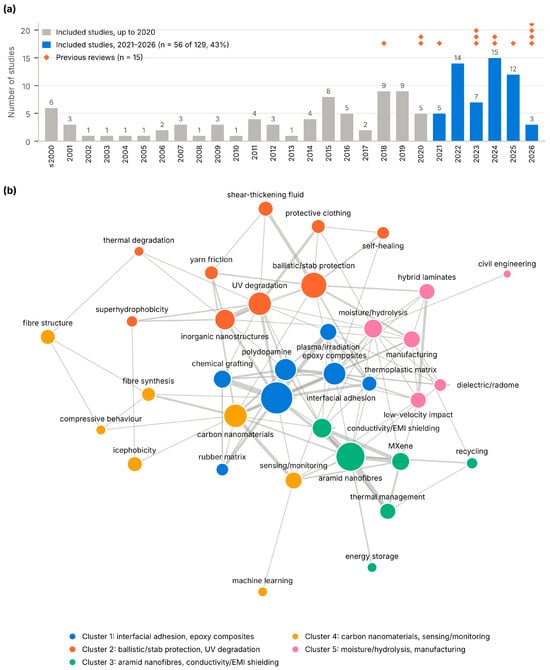
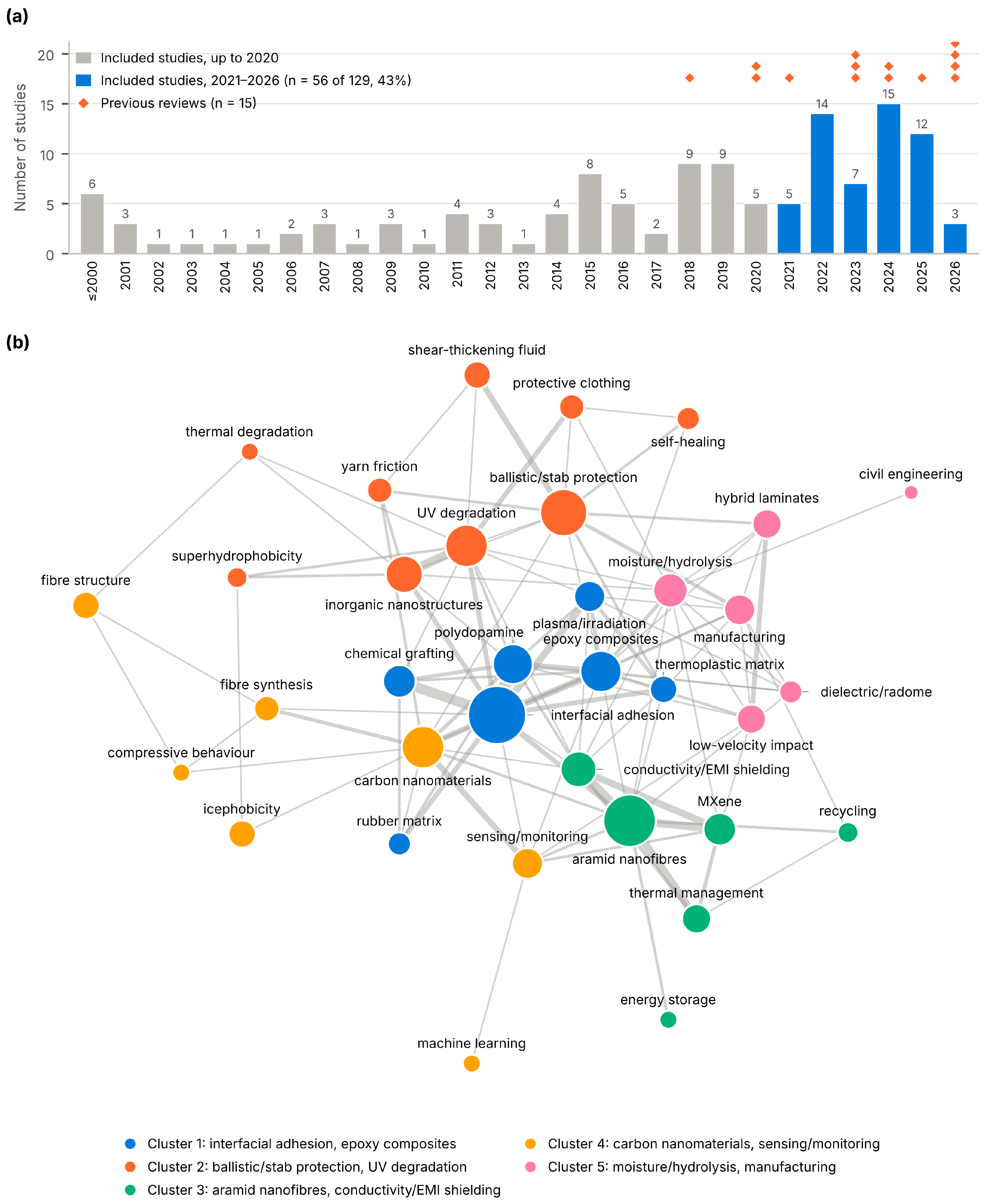
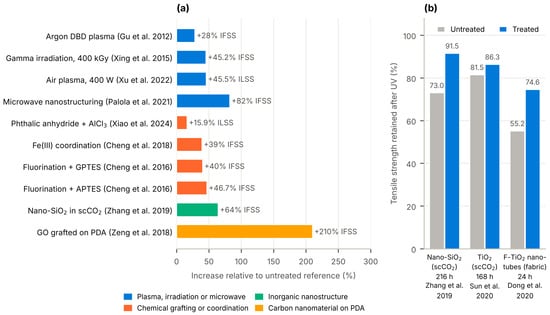
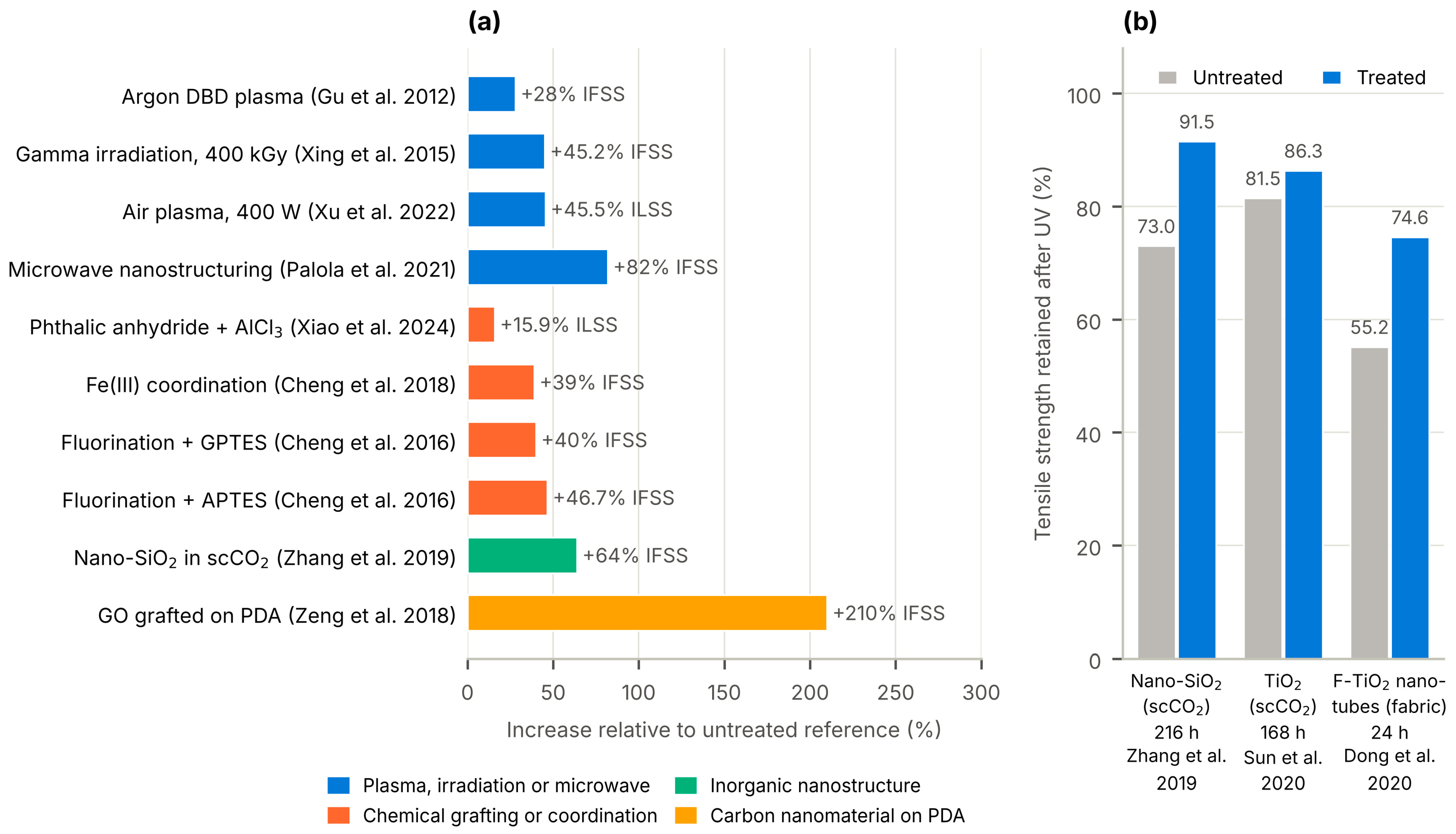
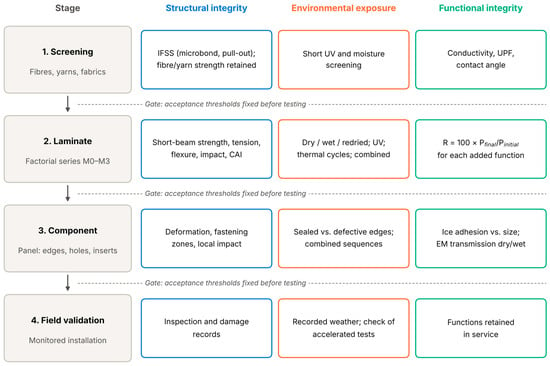
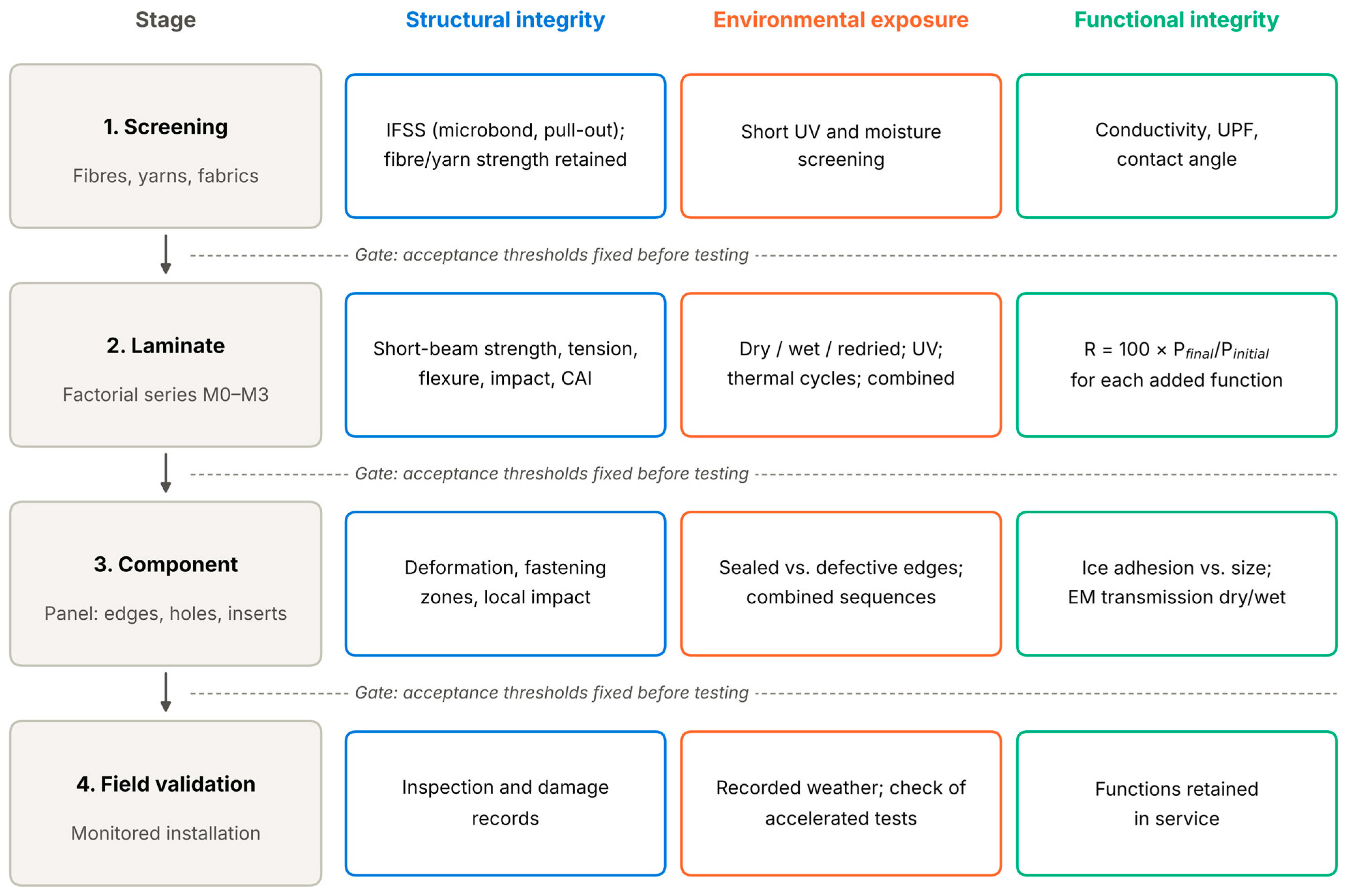

Disclaimer/Publisher’s Note: The statements, opinions and data contained in all publications are solely those of the individual author(s) and contributor(s) and not of MDPI and/or the editor(s). MDPI and/or the editor(s) disclaim responsibility for any injury to people or property resulting from any ideas, methods, instructions or products referred to in the content. |
© 2026 by the authors. Licensee MDPI, Basel, Switzerland. This article is an open access article distributed under the terms and conditions of the Creative Commons Attribution (CC BY) license.