


Abstract
The lack of well-fitting and supportive sports bras is a significant public health barrier, hindering adolescent girls from engaging in physical activity and negatively impacting their physical and mental health. This study aims to optimize sports bra design through seamless construction to improve aesthetics, comfort, support, and user satisfaction. A comparative analysis between proposed seamless designs and conventional sports bras evaluated anthropometric fit, biomechanical pressure distribution, and subjective user feedback. The proposed seamless design outperformed the conventional bras in both objective and subjective measures. It received high subjective ratings for support and satisfaction and provided favourable breast shaping. All measured pressures were within a comfortable threshold (<0.96 kPa), and arm movement significantly influenced breast morphology, underscoring the need for dynamic design considerations. The customized seamless knitted design provided smooth aesthetic, adaptive fit, and superior comfort while maintaining robust support, yielding high satisfaction among adolescent users. Bra D2 received the highest satisfaction rating, whereas D3 was the most preferred overall and provided the most favourable balance of comfort, support, coverage, and cushioning. Pearson’s correlation analysis revealed significant associations between specific breast anthropometric parameters (CIBP-OBP, CSNP-SP, HRBP-LBP, HRMSP-LMSP, VFNP-BP) and contact pressure distribution, providing a scientific basis for future pattern engineering. These findings demonstrate that ergonomically optimized seamless sports bras can mitigate the biomechanical barrier to adolescent sports participation.
1. Introduction
Adolescence is a critical developmental period characterized by significant physiological, psychological, and social transitions, particularly for young women, who experience significant changes in body shape and size [1,2,3]. During this vital life stage, physical activity plays an important role in developing a healthy lifestyle, enhancing physical fitness, and promoting overall well-being [4,5,6,7]. Furthermore, regular physical activity can help enhance self-esteem, reduce symptoms of anxiety and depression, and foster valuable social interaction and teamwork skills [8]. However, a major barrier to adolescent girls’ participation in sports is the lack of well-fitted and supportive sports bras, which negatively impacts their comfort, performance and continued participation [9]. The design of sports bras requires not only aesthetic considerations but also functionality. The dynamic nature of sports requires bras that maintain optimal support and secure fit throughout the entire movement. Current research indicates that a significant portion of commercially available sports bras fail to adequately address the specific needs of this population, leading to potential long-term health consequences such as poor posture and skin irritation [10].
Despite extensive research demonstrating the health benefits of physical exercise, research on sportswear comfort among adolescent female athletes remains insufficient [11]. Existing data indicates that breast discomfort has become a significant barrier to sports participation among adolescent girls. It is deeply concerning that the statistics regarding discomfort and dissatisfaction with sports bras among adolescent girls indicate a serious problem. According to a survey conducted by Women in Sport, 43% of British girls reported disengaging from sports and exercise during their teenage years [12]. A survey conducted across five geographically diverse academic centres revealed that 23.7% of adolescent girls felt that lack of bra support or breast discomfort hindered their ability to exercise or engage in physical activity [13]. Additionally, another survey of 2089 British female students aged 11 to 18 revealed that 73% of respondents reported experiencing at least one breast-related issue during sports, with breast bounce being the most common [14]. This empirical data strongly justifies the practical importance of optimizing sports bra design to provide breast support for adolescent girls.
From a biomechanical perspective, excessive breast displacement during physical activity places abnormal stress on Cooper’s ligaments, the connective tissue crucial for maintaining breast shape. Repeated mechanical loading may lead to irreversible tissue damage and breast sagging [15,16]. More importantly, the psychological impact of inadequate breast support should not be overlooked. A significant proportion of adolescent girls feel self-conscious and embarrassed due to excessive breast movement, leading them to avoid physical activity [10]. This negative psychological state can further affect their self-esteem, body image, and overall confidence, creating a vicious cycle that hinders sports participation. The key to addressing these issues lies in conducting anthropometric studies specifically targeting adolescent girls to design sports bras that provide more effective breast support. During this critical period of growth and development, adolescent girls demonstrate significant dynamic changes in breast morphology, characterized by rapid evolution in breast size, shape, and position. Existing commercially available sports bras are primarily designed based on the body shape parameters of adult women and are unable to adapt to the unique physiological developmental characteristics of adolescents, often resulting in poor fit and insufficient support [17]. Therefore, the accurate identification of key body parameters and design factors has significant engineering and practical value for developing comfortable sports bras tailored to the physiological characteristics of adolescents.
Interfacial pressure is a critical determinant of sports bra comfort, with optimal adult ranges established between 0.96 and 1.355 kPa [18]. However, adolescent females exhibit heightened cutaneous sensitivity and undergo dynamic morphological changes. Excessive or localised pressure causes discomfort, skin irritation, and restricted microcirculation, negatively impacting performance and health [19]. Despite these critical physiological differences, current apparel engineering has given limited attention to adolescents undergoing physical development, and the quantitative relationships linking knitted design parameters, dynamic fit, and multi-zone pressure distributions in adolescents remain poorly defined.
To bridge this gap, this study develops an adaptive, seamless knitted sports bra with stretchable bra pads tailored to developing breast morphology. This study compares seamless sports-bra prototypes to examine their fit, support, pressure distribution, and wearer perceptions. Specifically, this research aims to quantify skin-to-bra contact pressure distributions across critical anatomical regions, including the neckline, side seam, armhole, back, under band, and shoulder straps, during dynamic wear trials. Concurrently, 3D body scanning is employed to evaluate dynamic fit by capturing movement-induced anthropometric variations and garment deformation. Finally, this study correlates these objective biomechanical pressure profiles with subjective user evaluations of fit, cushioning, and support to map the quantitative influence of structural knitted features on overall comfort. By establishing an empirical link between regional pressure mechanics and adolescent anthropometry, this research delivers an evidence-based framework for ergonomic apparel design, ultimately eliminating biomechanical discomfort barriers to promote athletic participation and confidence among young females.
2. Methodology
2.1. Participants
A total of sixteen Chinese adolescent girls (BMI: 19.44 ± 2.31 kg/m2, age: 12.81 ± 1.24, cup size: AA–C) were recruited for this study. Human subject ethics approval was granted by the University Ethics Committee (HSEARS20230531003). Written consent was obtained from the subjects and their guardians before the experiment.
2.2. Bra Conditions
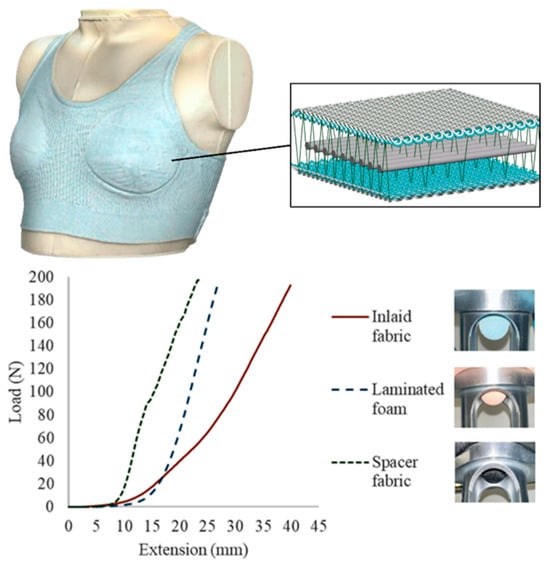
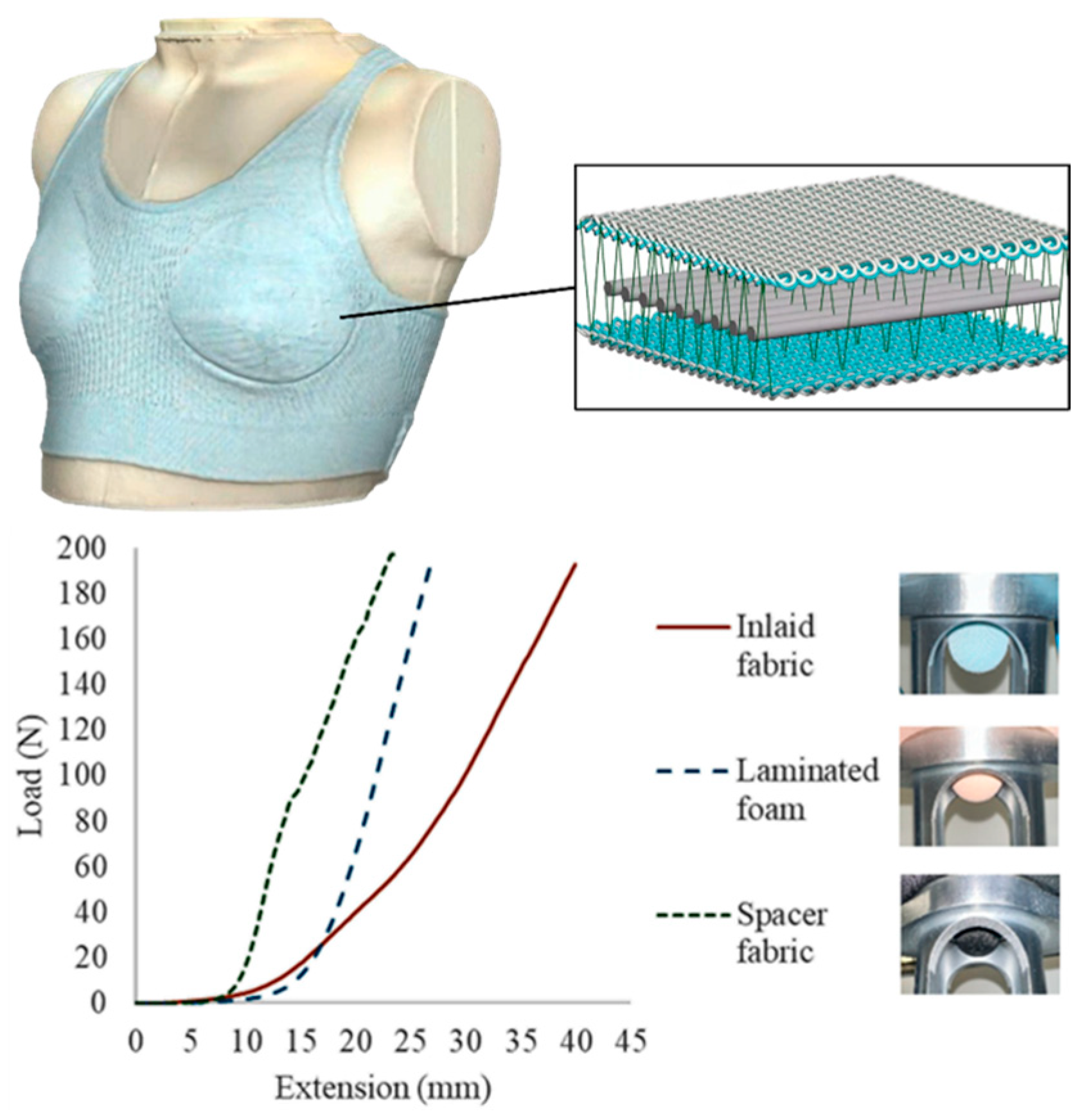
To investigate the effects of different bra designs on breast morphology and pressure, six racerback seamless knitted sports bras (D1–D6) were designed using materials including a 60% cotton and 40% acetate surface layer with 15% spandex and 85% nylon, and an inlay spacer fabric in the cup area made of 100% nylon, using KN70/70 Lycra as the spacer yarn. Our team’s previous research indicates that the inlay spacer fabric offers enhanced thermal conductivity and shape conformity when compared to traditional laminated foams and spacer fabrics, while retaining its stretchability and water vapour permeability. The inlay samples showed greater impact reduction capability than the other materials, implying that inlays are effective at absorbing energy and providing cushioning [20]. Therefore, weft-knitted inlay spacer fabric was used in the cups to provide outstanding shape conformity, providing a snug and supportive fit to the breasts (Figure 1). Table 1 summarizes the key differences among the bra designs, focusing on cup style, body structure, strap structure, and fastener selection.
Figure 1.
3D-scanned novel knitted bra with embedded inlay spacer fabric has outstanding shape conformity.
Table 1.
Overview of bra designs.
Additionally, a soft, minimalist bra (Bra A) made of cotton was included as a simulated braless condition, and a conventional pullover racerback sports bra (Bra B) made of polyamide and elastane was selected as a comparative reference to analyse the advantages and disadvantages of the proposed designs.
2.3. Anthropometric Measurement
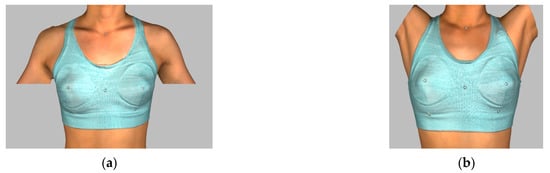
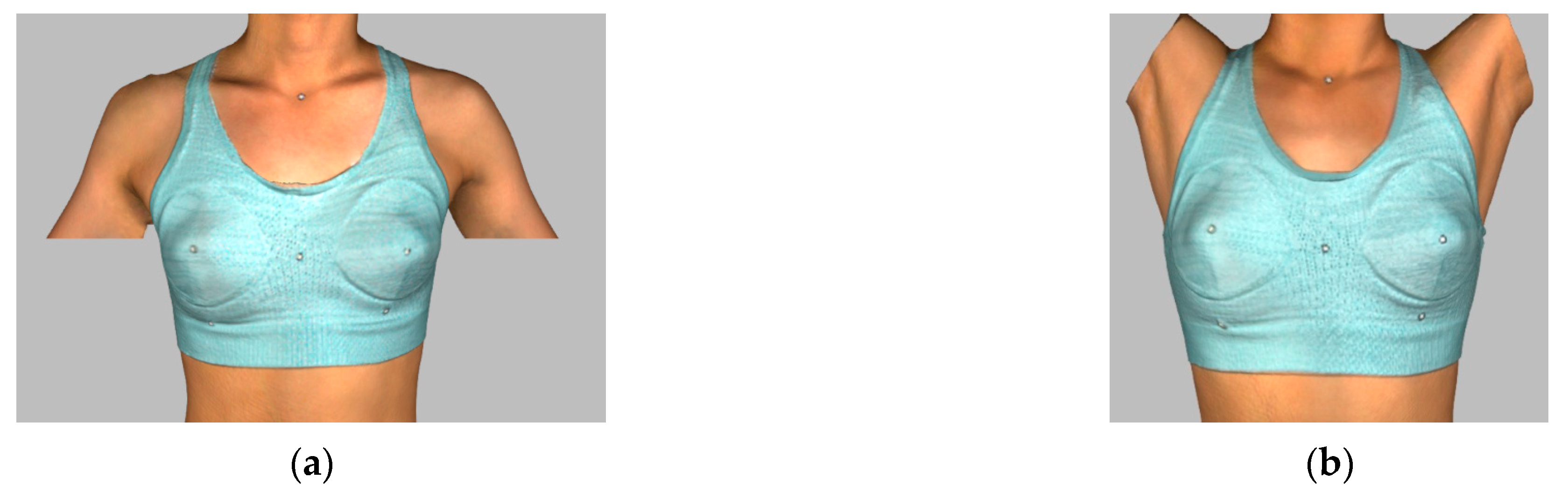
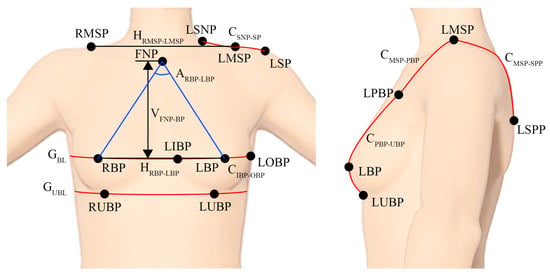
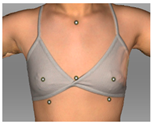
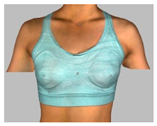
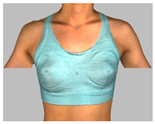
Data collection was conducted using a handheld full-colour Artec Eva 3D scanner (Artec 3D, Luxemburg), assisted by nine markers strategically placed to obtain 3D point cloud body data. These markers included bust points (BPs), under bust points (UBPs), shoulder points (SPs), and scapula prominence points (SPPs) on both sides, as well as the front neck point (FNP). To ensure that the proposed bras provide adequate coverage and support during physical activity while minimizing displacement during arm swinging, two different standing postures (Posture N and Posture O) were scanned. Position N (Figure 2a) is to abduct the arms with the palms facing down, while Posture O (Figure 2b) is to raise the arms with the palms placed on top of the head.
Figure 2.
Scanning postures: (a) Posture N; (b) Posture O.
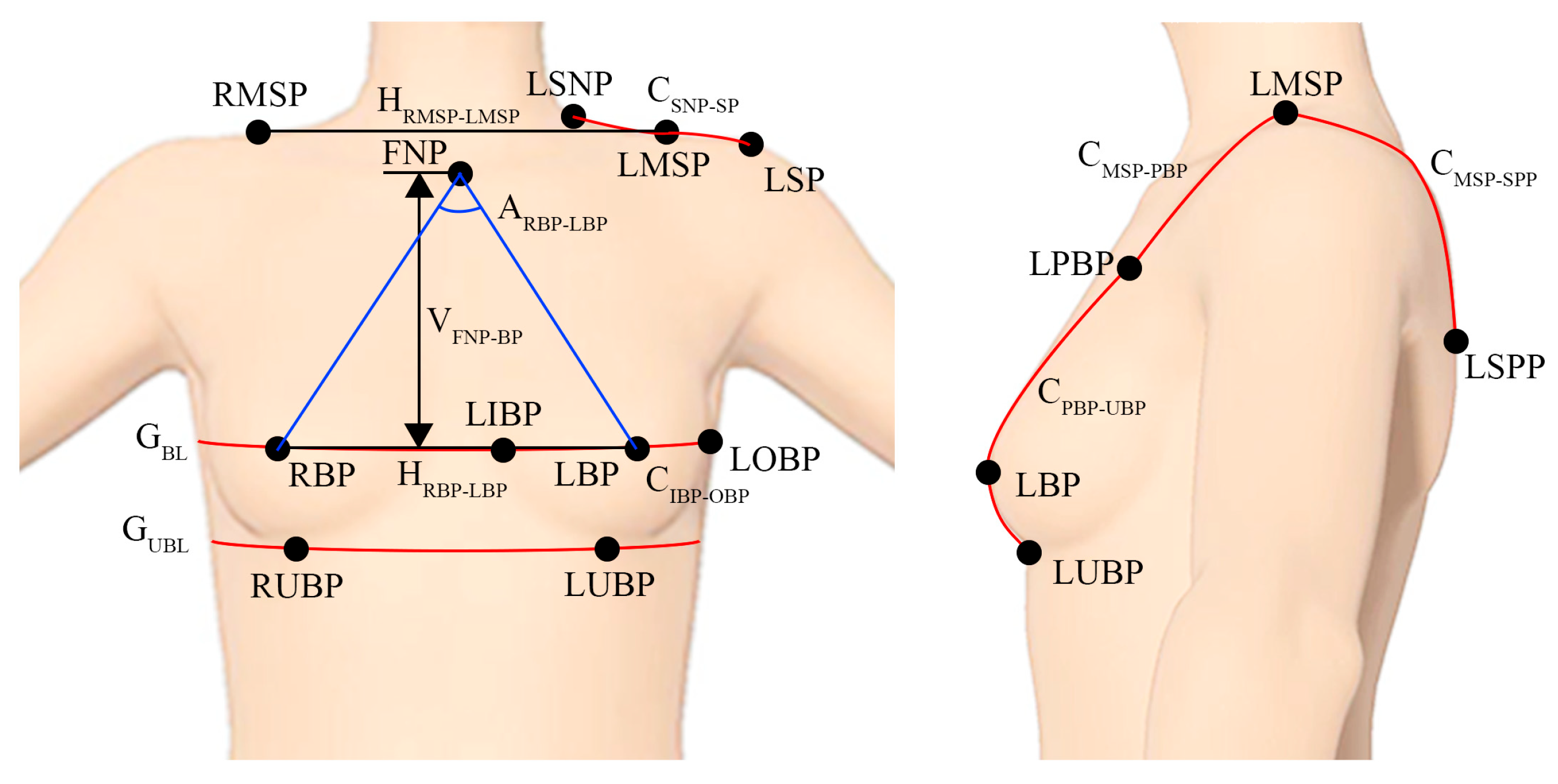
A total of eleven parameters were selected for measurement using the reverse engineering software Imageware (version 12.0) to evaluate the design of sports bras. As shown in Table 2 and Figure 3, CMSP-PBP, CMSP-SPP, CSNP-SP and HRMSP-LMSP are four parameters related to the shoulder straps, VFNP-BP and GBL are two parameters related to the side seams, GUBL is a parameter related to the under band, and CIBP-OBP, CPBP-UBP, HRBP-LBP and ARBP-LBP are four parameters related to the cup. One-way ANOVA analysis was conducted to test the significance of differences among postures and bra conditions, evaluating the effects of various designs on breast morphology and identifying the optimal bra. Tukey HSD post-hoc comparisons were used to identify differences between individual bra conditions. The significance level was set at 0.05.
Table 2.
Summary of points and parameters.
Figure 3.
Anthropometric measurements.
2.4. Pressure and Subjective Evaluations
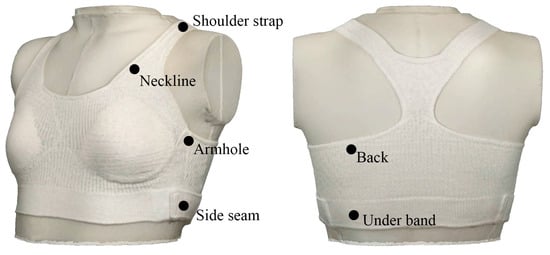
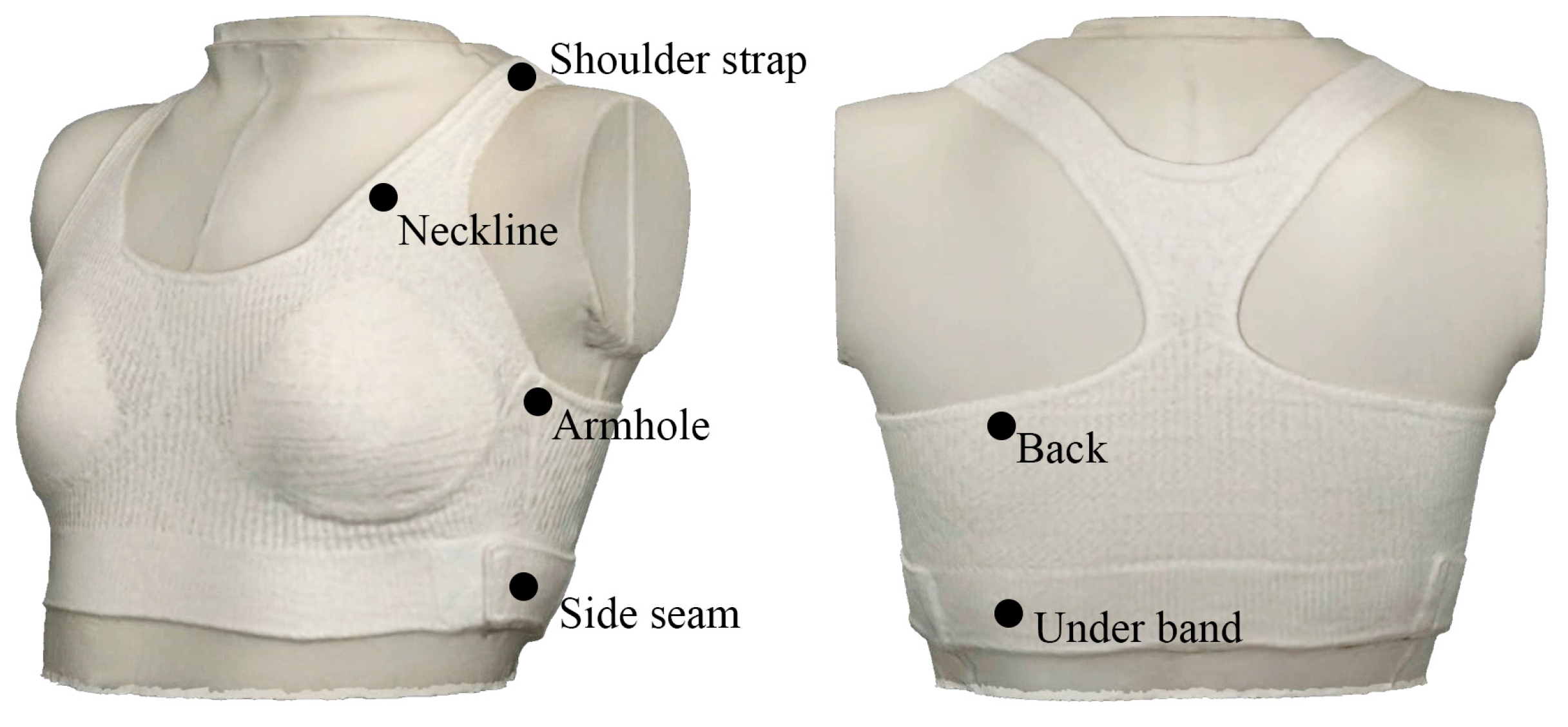
To gather comprehensive data for optimizing bra design to achieve optimal fit, comfort, and protection during physical activities, skin-to-bra pressure induced by sports bras at critical areas, including shoulder strap, under band, upper band, armhole, side seam, and neckline, was recorded during wear trials using the Novel Pliance-X system (novel GmbH, Munich, Germany) (Figure 4). A strip sensor 10 mm in diameter and 0.95 mm in thickness was placed between skin and bra components. Subjective ratings of “Satisfaction” and “Comfort” were also collected, using a 10-point scale, to provide a comprehensive assessment of user experience.
Figure 4.
Six points for pressure measurement.
3. Results
3.1. Body Anthropometry
The results in Table 3 indicate that the type of sports bra worn can significantly affect both HRBP-LBP (p < 0.001) and ARBP-LBP (p < 0.001). Tukey HSD comparisons indicated that HRBP-LBP was significantly lower for Bra B than for all other conditions (p ≤ 0.039), while ARBP-LBP was significantly lower for Bra B than for Bra A, D1, D2, D3, and D5 (p ≤ 0.005), but the differences between Bra B and D4 (p = 0.556) and between Bra B and D6 (p = 0.052) were not significant. According to previous research, when the RBP, LBP, and FNP form an equilateral triangle, it is considered the “aesthetic triangle” in an ideal state, with ARBP-LBP ideally measuring 60° [21]. According to statistical principles, the deviation should be controlled within ±2°. Thus, when the value of ARBP-LBP is within the range of 58° to 62°, the breast position conforms to public aesthetics. The ARBP-LBP for designs D4 and D6 fell within the acceptable range of (60 ± 2) °, indicating their potential to shape an aesthetically pleasing breast profile. Notably, Bra B demonstrated the best breast gathering effect, with the difference in HRBP-LBP reaching 3.18 cm after wearing. However, the value of ARBP-LBP is only 54.90°, which does not conform to popular aesthetics.
Table 3.
Descriptive results and one-way ANOVA analysis of different bra conditions.
Beyond aesthetics, sports bras must provide appropriate protection, support and fit during exercise. Sports bras can be divided into three main types based on their functionality: compression, encapsulation, and a combination of both bras [22]. Compression sports bras have a higher level of vertical displacement of breasts than encapsulation sports bras, while sports bras with both encapsulation and compression design features can reduce vertical displacement [23]. Bra B is a compression sports bra, while the proposed bras are sports bras with both encapsulation and compression design features. Among the bra prototypes, D2 and D3 demonstrated superior fit and support, with CIBP-OBP values of 13.43 cm and 13.42 cm, respectively.
The subjective evaluations of the seven sports bras revealed inconsistencies with the anthropometric results in terms of “Satisfaction”. The overall rating was 7.67, with Bra B and D4 both receiving the lowest “Satisfaction” scores of 7.00, while designs D1 and D2 achieved higher scores of 8.06 and 8.13, respectively. The overall rating for “Support” was higher than that for “Satisfaction”, reaching 7.93. Bra B received the lowest score of 7.45, while D2 and D3 scored higher, at 8.44 and 8.38, respectively, consistent with the anthropometric results.
The overall ranking was also assessed based on various bra designs. The conventional bra B was the least preferred due to itchiness from the material and a perceived lack of breathability. Bra D3 was rated as the most preferred design, noted for its cool and comfortable feel. Bras D1, D2, D5, and D6, which use hook-and-eye fasteners, experienced fastening difficulties and itchiness around the fasteners.
Physical activities, such as jumping jacks and badminton, inevitably involve raising the arms, which necessitates an analysis of the impact of arm position on anthropometric parameters. Table 4 shows that raising both arms during exercise significantly impacts several key parameters. Specifically, when both hands are raised, CMSP-SPP (p = 0.030), CSNP-SP (p < 0.001), VFNP-BP (p < 0.001), HRMSP-LMSP (p < 0.001) and HRBP-LBP (p = 0.014) exhibit a significant decrease, while CMSP-PBP (p < 0.001) and CPBP-UBP (p = 0.010) show a significant increase. This demonstrates that during the transition from Posture N to Posture O, CMSP-SPP, CSNP-SP, VFNP-BP, HRMSP-LMSP and HRBP-LBP become smaller, while CMSP-PBP and CPBP-UBP become larger.
Table 4.
Descriptive results and one-way ANOVA analysis of different postures.
3.2. Pressure Measurements
Some adolescent girls wear bras for the first time and may have a low tolerance for pressure. Therefore, it is crucial to minimize the pressure of each part of the bra to ensure comfort. Table 5 shows the skin-to-bra pressure experienced by seven bras. The results indicate that the pressure values for all parts of the bras were below 0.96 kPa, suggesting that they are relatively comfortable to wear. However, the subjective rating for “Comfort” was only 7.67, with Bra B scoring the lowest at 6.91, while our bra designs received a “Comfort” rating of 8.33.
Table 5.
Skin-to-bra interfacial pressure (kPa) obtained at various bra conditions.
Pearson’s correlation analysis showed that the neckline pressure was significantly positively correlated with CIBP-OBP (r = 0.393, p < 0.001), while the side-seam pressure was significantly negatively correlated with HRBP-LBP (r = −0.251, p = 0.013), and the shoulder strap pressure was significantly negatively associated with VFNP-BP (r = −0.314, p = 0.002). The results indicate that neckline pressure increases with the increasing value of CIBP-OBP. Conversely, side-seam pressure increases with the decreasing value of HRBP-LBP, and shoulder strap pressure increases with the decreasing value of VFNP-BP, implying decreased bra comfort.
The armhole pressure showed a significant positive correlation with CIBP-OBP (r = 0.288, p = 0.004) and negative correlation with HRBP-LBP (r = −0.209, p = 0.041). The results suggest that an increase in CIBP-OBP or a decrease in HRBP-LBP leads to increased armhole pressure, resulting in discomfort. Back pressure was significantly positively correlated with both HRMSP-LMSP (r = 0.297, p = 0.003) and CIBP-OBP (r = 0.261, p = 0.010). The results indicate that increases in HRMSP-LMSP and CIBP-OBP are associated with increases in back pressure.
The under band pressure was positively associated with HRMSP-LMSP (r = 0.227, p = 0.026) and CIBP-OBP (r = 0.243, p = 0.017), while also showing significant negative correlation with CSNP-SP (r = −0.259, p = 0.011) and HRBP-LBP (r = −0.222, p = 0.030). The results present that increases in HRMSP-LMSP and CIBP-OBP or decreases in CSNP-SP and HRBP-LBP were associated with increased under band pressure.
4. Discussion
Regular physical activity is closely associated with enhanced self-esteem during adolescence [24,25,26,27], an effect that is particularly pronounced among young females [28]. Consequently, sports bra engineering for this demographic requires a delicate balance between functional biomechanics and psychosocial preferences. While adult consumers frequently balance support with styling and cleavage enhancement, adolescent users prioritise dynamic breast stability, physical comfort, and a discreet, non-revealing silhouette [13]. Crucially, garments engineered for developing anatomies should avoid excessive compression, which can restrict microcirculation and potentially disrupt healthy breast development. Although Prototype Bra B exhibited the greatest dynamic displacement control and gathering capability, it is not recommended for this demographic. Furthermore, its resulting landmark angle (ARBP-LBP < 58°) failed to satisfy Penn’s “aesthetic triangle” criterion, demonstrating that over-constraining the breast mass compromises natural anatomical alignment.
The observed discrepancies between subjective user evaluations and objective anthropometric data demonstrate that wearer comfort and satisfaction extend beyond kinematic control alone. For instance, Bra B’s lower subjective acceptance was compounded by non-biomechanical factors, including non-adjustable shoulder straps and under band, as well as conspicuous visual design. Conversely, participants consistently reported higher satisfaction with designs offering soft tactile properties, seamless construction, high adjustability, multi-cup adaptability, and low-saturation colours that create a calming visual effect [29]. By eliminating rigid stitched seams, seamless circular knitting directly mitigates localized friction and pressure concentrations, addressing a primary ergonomic barrier that historically discourages young females from participating in physical exercise [30].
Our findings highlight the significant influence of upper-limb kinematics on dynamic fit and garment anchoring during physical activity. Transitioning from Posture N (neutral) to Posture O (overhead arm elevation) exerts substantial musculoskeletal and soft-tissue traction, causing excessive inward displacement of the BP, UBP, and SPP. This displacement reduces the CMSP-SPP, VFNP-BP, and HRBP-LBP spans. Concurrently, trapezius muscle contraction displaces the SP and MSP upward and inward, decreasing CSNP-SP and HRMSP-LMSP. Notably, the upward excursion of the MSP exceeds that of the UBP, thereby expanding CMSP-PBP and CPBP-UBP distances. Since superior garment stability and fit correlate directly with enhanced confidence and physical activity participation among young females [31], optimizing under band and shoulder strap dimensions is critical to prevent movement-induced displacement.
To prevent bra ride-up during dynamic arm elevation while avoiding localized tissue trauma, interfacial pressure distributions must be carefully calibrated. Modulating strap and under band dimensions governs anchoring tension: at the shoulder straps, prototypes D1 (0.91 kPa), D3 (0.80 kPa) and D6 (0.84 kPa) generated sufficient contact pressure to prevent displacement without exceeding physiological thresholds. Along the under band, pressure levels in Bra B (0.74 kPa), D3 (0.27 kPa), and D5 (0.21 kPa) aligned well with adolescent tissue tolerances. Although these pressures remained below the reference threshold, their proximity to 0.96 kPa suggests that the armhole of Bra B (0.95 kPa) may require further optimisation and evaluation in pressure-sensitive adolescent users. Overall, Bra D3 provided the most favourable balance among the evaluated outcomes. It secures full cup coverage and dynamic structural support while sustaining balanced, unrestricted interfacial pressures across key anatomical landmarks, establishing it as the most favourable design among the evaluated prototypes for developing adolescents.
Pearson’s correlation analysis confirms that anthropometric dimensions CIBP-OBP, CSNP-SP, HRBP-LBP, HRMSP-LMSP, and VFNP-BP are critical determinants of interfacial sports bra pressure. Strategically modulating these parameters enables precise pressure optimisation. Reducing CIBP-OBP while increasing HRBP-LBP alleviates restrictive pressure along the neckline, side seams, and armholes to enhance comfort. Conversely, reducing VFNP-BP maintains sufficient shoulder-strap tension to prevent slippage and sustain dynamic support. The dorsal and under band regions present competing biomechanical requirements: lowering back pressure to maximize comfort requires decreasing HRMSP-LMSP, whereas elevating under band pressure to secure garment anchoring requires increasing HRMSP-LMSP alongside decreasing CSNP-SP. Apparel engineers must therefore calibrate this structural trade-off during pattern grading to achieve simultaneous anchoring stability and dorsal comfort.
Although subjective feedback demonstrated high acceptance of the seamless prototypes, several limitations should be noted. The participant cohort was restricted to 16 adolescent Chinese females, which limits the generalizability of these findings across broader demographics, diverse body morphologies, and varying stages of pubertal development. Furthermore, evaluations were conducted under controlled laboratory motions. Future research should recruit larger, multi-ethnic cohorts and evaluate seamless designs under high-impact exercise to validate long-term kinematic stability, durability, and comfort. Meanwhile, more cellulose-based materials should be developed and assessed using standardised physiological-comfort and skin-safety protocols, alongside high hygienic standards, to better safeguard users’ health and help reduce diseases among adolescent women. Future research could also apply multi-objective optimisation or machine-learning methods to larger datasets, integrating anthropometry, material mechanics, regional interface pressure, breast displacement, and subjective preferences. This approach could support personalised recommendations for the fit, knit configuration, and support level of sports bras, while balancing comfort, stability, and aesthetics.
5. Conclusions
This study demonstrates the potential of anthropometry-informed seamless knitting for adjusting the fit, support, and regional pressure distribution of sports bras for adolescent females. Findings demonstrate that conventional designs yielded the lowest aesthetic and sensory acceptance due to excessive medial gathering, rigid aesthetics, and limited adjustability. In contrast, the proposed seamless prototypes, notably D3, achieved superior dynamic fit, anatomical coverage, and wearing comfort.
Kinematic analyses comparing Posture N (neutral) to Posture O (overhead arm elevation) revealed that shoulder strap and under band dimensions critically govern garment anchoring and resist movement-induced displacement. Furthermore, Pearson’s correlation analysis confirmed that specific anthropometric parameters (CIBP-OBP, CSNP-SP, HRBP-LBP, HRMSP-LMSP, and VFNP-BP) directly dictate multi-zone pressure distributions. By integrating seamless knitting technology with adolescent-specific anthropometry, this research resolves the trade-off between dynamic breast support and cutaneous comfort, helping to remove a primary biomechanical barrier to physical activity participation among young females. Although future investigations should expand sample cohorts across diverse developmental stages and exercise modalities, this work establishes an empirical, evidence-based foundation for pattern engineering and grading in functional adolescent sports apparel.
6. Patents
A patent titled “An Inlaid Seamless One-size-fits-more Sports Bra Design” was filed on 5th November 2024 (Filed No. 202411218992.5) by the China National Intellectual Property Administration.
Author Contributions
Conceptualization, M.-Y.K., K.-L.Y. and N.W.L.; software, W.-Y.F.; methodology, M.-Y.K. and W.-Y.F.; validation, W.-Y.F. and Z.Z.; formal analysis, M.-Y.K., W.-Y.F. and Z.Z.; investigation, M.-Y.K., W.-Y.F. and Z.Z.; resources, K.-L.Y., N.W.L. and A.Y.; data curation, M.-Y.K. and Z.Z.; writing—original draft preparation, M.-Y.K., W.-Y.F. and Z.Z.; writing—review and editing, M.-Y.K., K.-L.Y., N.W.L. and A.Y.; visualization, M.-Y.K. and Z.Z.; supervision, K.-L.Y.; project administration, K.-L.Y., N.W.L. and A.Y.; funding acquisition, K.-L.Y., N.W.L. and A.Y. All authors have read and agreed to the published version of the manuscript.
Funding
We acknowledge financial support from the Research Grant Council for funding this research project through project account PolyU 15600225.
Institutional Review Board Statement
This study was conducted in accordance with the Declaration of Helsinki and approved by the University Ethics Committee of Hong Kong Polytechnic University (HSEARS20230531003). The date of approval is 31 May 2023.
Informed Consent Statement
Informed consent was obtained from individual participants include in the study.
Data Availability Statement
The original contributions presented in this study are included in the article. Further inquiries can be directed to the corresponding author.
Conflicts of Interest
The authors declare no conflicts of interest.
References
- Sicilia, Á.; Griffiths, M.D.; Martín-Albo, J. A Longitudinal Study of Pubertal Timing and Tempo on Body Shame Among Young Adolescent Girls and Boys. Sex. Roles 2024, 90, 1923–1936. [Google Scholar] [CrossRef] [Scilit]
- Walters, K.; Chard, C.; Castro, E.; Nelson, D. The Influence of a Girls’ Health and Well-Being Program on Body Image, Self-Esteem, and Physical Activity Enjoyment. Behav. Sci. 2023, 13, 783. [Google Scholar] [CrossRef] [Scilit] [PubMed]
- Kiss, O.; Alzueta, E.; Yuksel, D.; Pohl, K.M.; de Zambotti, M.; Műller-Oehring, E.M.; Prouty, D.; Durley, I.; Pelham, W.E.; McCabe, C.J.; et al. The Pandemic’s Toll on Young Adolescents: Prevention and Intervention Targets to Preserve Their Mental Health. J. Adolesc. Health 2022, 70, 387–395. [Google Scholar] [CrossRef] [Scilit] [PubMed]
- Watson, A.M.; Biese, K.M.; Reardon, C.L.; Schwarz, A.; Haraldsdottir, K.; Brooks, A.; Bell, D.R.; Steiner, Q.; McGuine, T.A. Does Increased Physical Activity Explain the Psychosocial Benefits of Sport Participation During COVID-19? J. Athl. Train. 2023, 58, 882–886. [Google Scholar] [CrossRef] [Scilit] [PubMed]
- Folk, A.L.; Hooper, L.; Hazzard, V.M.; Larson, N.; Barr-Anderson, D.J.; Neumark-Sztainer, D. Does Weight-Motivation for Exercise Predict Physical Activity Levels Across the Life Course From Adolescence to Adulthood? J. Adolesc. Health 2022, 71, 112–118. [Google Scholar] [CrossRef] [Scilit] [PubMed]
- World Health Organization. WHO Guidelines on Physical Activity and Sedentary Behaviour; 92-4-001512-4; World Health Organization: Geneva, Switzerland, 2020. [Google Scholar]
- Zhou, J.; Sun, W.; Tang, S.; Jiang, D.; Tan, B.; Li, S.; Zhao, D.; Zhang, R.; Song, P. Effects of Exercise Interventions on Blood Pressure in Children and Adolescents With Overweight or Obesity: A Systematic Review and Meta-Analysis of Randomized Controlled Trials. J. Adolesc. Health 2025, 76, 361–369. [Google Scholar] [CrossRef] [Scilit] [PubMed]
- Fernandes, H.M.; Costa, H.; Esteves, P.; Machado-Rodrigues, A.M.; Fonseca, T. Direct and Indirect Effects of Youth Sports Participation on Emotional Intelligence, Self-Esteem, and Life Satisfaction. Sports 2024, 12, 155. [Google Scholar] [CrossRef] [Scilit] [PubMed]
- Wakefield-Scurr, J.; St John, E.; Bibby, K.; Renwick, N.; Smith, N.; Hobbs, S.; Brown, N. Insights into breast health issues in women’s rugby. Eur. J. Sport Sci. 2024, 24, 1735–1742. [Google Scholar] [CrossRef] [Scilit] [PubMed]
- Omrani, A.; Wakefield-Scurr, J.; Smith, J.; Wadey, R.; Brown, N. Breast Education Improves Adolescent Girls’ Breast Knowledge, Attitudes to Breasts and Engagement With Positive Breast Habits. Front. Public Health 2020, 8, 591927. [Google Scholar] [CrossRef] [Scilit] [PubMed]
- Brisbine, B.R.; Steele, J.R.; Phillips, E.J.; McGhee, D.E. Breast and torso characteristics of female contact football players: Implications for the design of sports bras and breast protection. Ergonomics 2020, 63, 850–863. [Google Scholar] [CrossRef] [Scilit] [PubMed]
- Women in Sport. Reframing Sport for Teenage Girls: Tackling Teenage Disengagement; Women in Sport: London, UK, 2022. [Google Scholar]
- Rizzone, K.H.; Edison, B.; Chung, J.; Ichesco, I.K.; Coleman, N. Characteristics of Sports Bra Preferences in Adolescent Females. Orthop. J. Sports Med. 2021, 9, 2325967121S00110. [Google Scholar] [CrossRef] [Scilit]
- Scurr, J.; Brown, N.; Smith, J.; Brasher, A.; Risius, D.; Marczyk, A. The Influence of the Breast on Sport and Exercise Participation in School Girls in the United Kingdom. J. Adolesc. Health 2016, 58, 167–173. [Google Scholar] [CrossRef] [Scilit] [PubMed]
- Cameron, L.J.; Burbage, J.; Lewis, V.; Dumbell, L.; Billingsley, E.; Young, K.; King-Urbin, C.; Goater, F. Breast biomechanics, exercise induced breast pain (mastalgia), breast support condition and its impact on riding position in female equestrians. Comp. Exerc. Physiol. 2022, 18, 9–20. [Google Scholar] [CrossRef] [Scilit]
- Chen, J.; Zhong, Z.; Sun, Y.; Yip, J.; Yick, K.-L. Dynamic simulation of breast behaviour during different activities based on finite element modelling of multiple components of breast. Sci. Rep. 2025, 15, 3659. [Google Scholar] [CrossRef] [Scilit] [PubMed]
- Zhao, Y. Construction and validation of a model of the relationship between bra functional requirements and mammary gland development in adolescent girls. Appl. Math. Nonlinear Sci. 2024, 9, 1–15. [Google Scholar] [CrossRef] [Scilit]
- Liu, H.; Chen, D.; Wei, Q.; Pan, R. An investigation into the bust girth range of pressure comfort garment based on elastic sports vest. J. Text. Inst. 2013, 104, 223–230. [Google Scholar] [CrossRef] [Scilit]
- Yick, K.-L.; Keung, Y.-C.; Yu, A.; Wong, K.-H.; Hui, K.-T.; Yip, J. Sports Bra Pressure: Effect on Body Skin Temperature and Wear Comfort. Int. J. Environ. Res. Public Health 2022, 19, 15765. [Google Scholar] [CrossRef] [Scilit] [PubMed]
- Kwan, M.Y.; Tu, Y.F.; Yick, K.L.; Yip, J.; Li, N.W.; Yu, A.; Lo, K.W. Enhancing force absorption, stress-strain and thermal properties of weft-knitted inlay spacer fabric structures for apparel applications. Polymers 2024, 16, 3031. [Google Scholar] [CrossRef] [Scilit] [PubMed]
- Penn, J. Breast reduction. Br. J. Plast. Surg. 1954, 7, 357–371. [Google Scholar] [CrossRef] [Scilit] [PubMed]
- Ocran, F.M.; Ji, X.; Zhai, L. The impact of sports bra features on measured and perceived pressure for torso movement of the upper body. J. Eng. Fibers Fabr. 2022, 17, 1–12. [Google Scholar] [CrossRef] [Scilit]
- Starr, C.; Branson, D.; Shehab, R.; Farr, C.; Ownbey, S.; Swinney, J. Biomechanical analysis of a prototype sports bra. J. Text. Appar. Technol. Manag. 2005, 4, 1–14. [Google Scholar]
- Singh, P.; Sarraf, S.R. Exercise, Body Image and Self-Esteem: A Review. Int. J. Curr. Sci. Res. Rev. 2025, 8, 1391–1394. [Google Scholar] [CrossRef] [Scilit]
- Zartaloudi, A.; Christopoulos, D.; Kelesi, M.; Govina, O.; Mantzorou, M.; Adamakidou, T.; Karvouni, L.; Koutelekos, I.; Evangelou, E.; Fasoi, G.; et al. Body Image, Social Physique Anxiety Levels and Self-Esteem among Adults Participating in Physical Activity Programs. Diseases 2023, 11, 66. [Google Scholar] [CrossRef] [Scilit] [PubMed]
- Rusu, L.; Piele, D.; Ilie, E.; Ionescu, G.; Marin, M.I.; Rusu, M.R.; Calina, M.L. The Relationship Between Body Composition, Physical Activity, Self-Esteem, and Body Image in Female and Male Adolescents. Sports 2025, 13, 11. [Google Scholar] [CrossRef] [Scilit] [PubMed]
- Gothe, N.P.; Erlenbach, E.; Engels, H.-J. Exercise and self-esteem model: Validity in a sample of healthy female adolescents. Curr. Psychol. 2022, 41, 8876–8884. [Google Scholar] [CrossRef] [Scilit]
- Jankauskiene, R.; Baceviciene, M. Testing modified gender-moderated exercise and self-esteem (EXSEM) model of positive body image in adolescents. J. Health Psychol. 2022, 27, 1805–1818. [Google Scholar] [CrossRef] [Scilit] [PubMed]
- Kwan, M.Y.; Zhong, Z.; Yick, K.L.; Yip, J.; Li, N.W.; Yu, A.; Lo, K.W. Adaptive sports bra design for adolescents: A flexible fit solution. Materials 2025, 18, 4161. [Google Scholar] [CrossRef] [Scilit] [PubMed]
- Haworth, L.; Aitkenhead, R.; Grecic, D.; Chohan, A. Understanding experience, knowledge and perceived challenges related to bra fit for sports participation: A scoping review. Res. Sports Med. 2024, 32, 302–315. [Google Scholar] [CrossRef] [Scilit] [PubMed]
- Peng, B.; Chen, W.; Wang, H.; Yu, T. From physical self-esteem to sports participation: The mediating role of exercise motivation and social support in adolescents. PLoS ONE 2025, 20, e0324588. [Google Scholar] [CrossRef] [Scilit] [PubMed]

Disclaimer/Publisher’s Note: The statements, opinions and data contained in all publications are solely those of the individual author(s) and contributor(s) and not of MDPI and/or the editor(s). MDPI and/or the editor(s) disclaim responsibility for any injury to people or property resulting from any ideas, methods, instructions or products referred to in the content. |
© 2026 by the authors. Licensee MDPI, Basel, Switzerland. This article is an open access article distributed under the terms and conditions of the Creative Commons Attribution (CC BY) license.