


Abstract
Soil yeasts represent a significant component of the agricultural microbiota and possess high ecological and biotechnological potential in production systems such as those for sugarcane. This review analyses the importance of these microorganisms in fundamental processes related to soil health and functionality, highlighting their role in nutrient cycling, the decomposition of organic matter, and the availability of essential elements for plant uptake. Numerous studies have shown that certain yeasts possess plant-growth-promoting characteristics, including the production of phytohormones, siderophores and compounds capable of solubilizing nutrients, thereby promoting plant development and the sustainability of the agroecosystem. Furthermore, this review highlights the potential of yeasts as agents for the biological control of agricultural diseases and pests. Various mechanisms of action are described, including the production of volatile organic compounds, hydrolytic enzymes, antagonistic toxins, competition for nutrients and space, and the induction of defense responses in plants. In sugarcane systems, some yeast species such as Metschnikowia spp., Meyerozyma guilliermondii, Wickerhamomyces anomalus, Pichia spp., and Rhodotorula glutinis have demonstrated antagonistic activity against plant pathogens and the potential to be integrated into sustainable agricultural management strategies.
1. Introduction
The health of agricultural soils is intricately linked to their physical structure, nutrient cycling, organic matter content, enzymatic activity, and microbial diversity. While most studies have traditionally focused on bacteria and filamentous fungi, nevertheless, soil yeasts (unicellular fungi) also constitute active components of the edaphic and rhizospheric microbiota that had not been studied thoroughly and may play a functionally significant role in agroecosystems [1]. However, microorganisms such as yeasts have recently attracted interest due to various characteristics such as fast growth, advanced cell structure and stress resistance [2].
Soil yeasts are multifunctional microorganisms that contribute to nutrient cycling, plant growth promotion, and biological control through diverse mechanisms, including nutrient mineralization, phosphorus solubilization, phytohormone and siderophore production, synthesis of antagonistic compounds, and participation in organic matter turnover and soil aggregation, thereby improving nutrient availability, soil structure, and overall soil biological functionality [3,4]. Despite these recognized benefits, their ecological role and practical application in agricultural production remain insufficiently explored.
In agricultural production systems, the retention and management of crop residues through practices commonly referred to as green trash management or mulching provide substantial inputs of organic matter to the soil, thereby directly influencing soil structure and the activity of the soil microbiota [5]. These practices have been associated with increases in microbial biomass, enzymatic activity, nutrient cycling, and soil aggregate stability [6]. Within this framework, soil yeasts may play an important functional role, as they rapidly respond to the availability of carbon derived from plant residues and actively participate in the decomposition of organic compounds, nutrient release, and the production of metabolites that promote plant growth, ultimately contributing to key processes related to the fertility and long-term sustainability of sugarcane soils [7]. Although direct evidence in sugarcane remains limited for several functional traits, this review critically integrates validated information from sugarcane together with evidence from other agricultural systems to identify mechanisms and applications with the greatest potential for future implementation in sugarcane agroecosystems.
Sugarcane agroecosystem is one of the world’s most important cash crops from both an agronomic and economic perspective, about 80% of global sucrose production comes from sugarcane, and approximately 50% of sugarcane production is used for bioethanol generation [8]. This crop is harvested in tropical and subtropical regions and plays an important role for food security and renewable energy, which represented a market size of USD 40.63 billion in 2024. However, intensive sugarcane cultivation places severe demands on soil fertility, requiring sustainable management strategies [9,10].
Within this agronomically vital system, yeasts associated with the soil, rhizosphere, and phytosphere constitute a microbial component with considerable functional potential, contributing to key processes in agroecosystems due to their rapid response to carbon inputs derived from plant residues [4]. Recent studies have demonstrated that several soil yeast species exhibit traits characteristic of plant-growth-promoting microorganisms, including the production of phytohormones (such as indoleacetic acid), phosphorus solubilization, siderophore production, and enhanced nutrient availability, thereby promoting root development and overall plant growth [11,12]. In addition, the inoculation of beneficial yeasts has been shown to stimulate early plant growth and strengthen soil–plant interactions, highlighting their capacity to positively influence key processes related to soil fertility [13]. Collectively, these functions suggest that yeasts play a relevant role in nutrient cycling, soil biological activity, and the long-term sustainability of sugarcane production systems, particularly under management practices that favor the accumulation of organic residues and microbial activity.
Beyond their contribution to plant growth and soil fertility, these ecological functions confer soil yeasts a broader role in the conservation of agroecosystems. By actively participating in nutrient cycling, organic matter decomposition, and the maintenance of soil biological activity, yeasts contribute to preserving the functional microbial diversity that underpins essential ecosystem processes and services, including soil formation, biogeochemical cycling, and ecosystem resilience to environmental disturbances [14,15,16]. Furthermore, several yeast species produce exopolysaccharides that promote biofilm formation and soil particle aggregation, thereby improving soil structure, water retention, and resistance to erosion, which are critical attributes for soil conservation [17]. In addition, some yeasts are capable of degrading organic pollutants, immobilizing toxic compounds, and enhancing phytoremediation processes, thus contributing to the ecological restoration of degraded soils. For example, the inoculation of a Candida strain in association with sugarcane significantly enhanced lindane removal while promoting plant establishment in contaminated soils [18]. Therefore, the conservation and sustainable use of native yeast communities extend beyond their application as bioinoculants, representing an effective strategy to preserve functional microbial biodiversity, maintain soil health and resilience, and safeguard the ecosystem services that support the long-term sustainability of sugarcane agroecosystems under increasing anthropogenic and climatic pressures [16,19].
Therefore, the objective of this review is to analyze the functional role and biotechnological potential of edaphic yeasts within sugarcane agroecosystems, highlighting their fundamental contribution to nutrient cycling, plant growth promotion, biological control of pests and diseases, and the conservation of soil functionality and microbial biodiversity. Beyond synthesizing the current scientific evidence, this review integrates findings from sugarcane and other agricultural systems to critically project the potential application of yeasts in sugarcane production, identifying promising strategies, current knowledge gaps, and future research priorities. By bringing together this evidence, the review aims to support the sustainable exploitation and conservation of native yeast communities as key components for strengthening soil health, enhancing ecosystem services, reducing reliance on agrochemicals, and improving the sustainability and resilience of modern sugarcane agroecosystems.
2. Methodology
The literature search for this review began using the scientific databases Web of Science, Scopus, PubMed, and Google Scholar. The search strategy consisted of combinations of keywords including “soil yeasts”, “edaphic yeasts”, “sugarcane”, “Saccharum officinarum”, “rhizosphere”, “plant growth-promoting yeasts”, “nutrient cycling”, “biological control”, “soil conservation”, “microbial biodiversity”, “agroecosystems”, “phytosphere”, and “soil restoration”. Boolean operators (AND and OR) were used to combine synonyms and establish relationships among ecological functions, agricultural applications, conservation, and sugarcane production systems. Generative artificial intelligence (ChatGPT, GPT-4o, OpenAI) was used exclusively to support the visual design and graphical composition of the conceptual figures included in this review.
The search was primarily focused on peer-reviewed research articles and review papers published between 2020 and 2026. However, earlier publications were also included when they represented foundational studies or key references necessary to understand the ecological role of soil yeasts. Priority was given to studies conducted in sugarcane agroecosystems; nevertheless, because information directly related to sugarcane remains limited for several functional traits, relevant evidence from other agricultural systems was also incorporated when it contributed to understanding conserved biological mechanisms or supported the projection of potential applications in sugarcane production. Finally, the titles, abstracts, and full texts of the retrieved publications were critically evaluated to select the most relevant studies according to their scientific quality, relevance to the objectives of this review, and contribution to the ecological, biotechnological, and conservation perspectives addressed in this manuscript.
3. Yeast
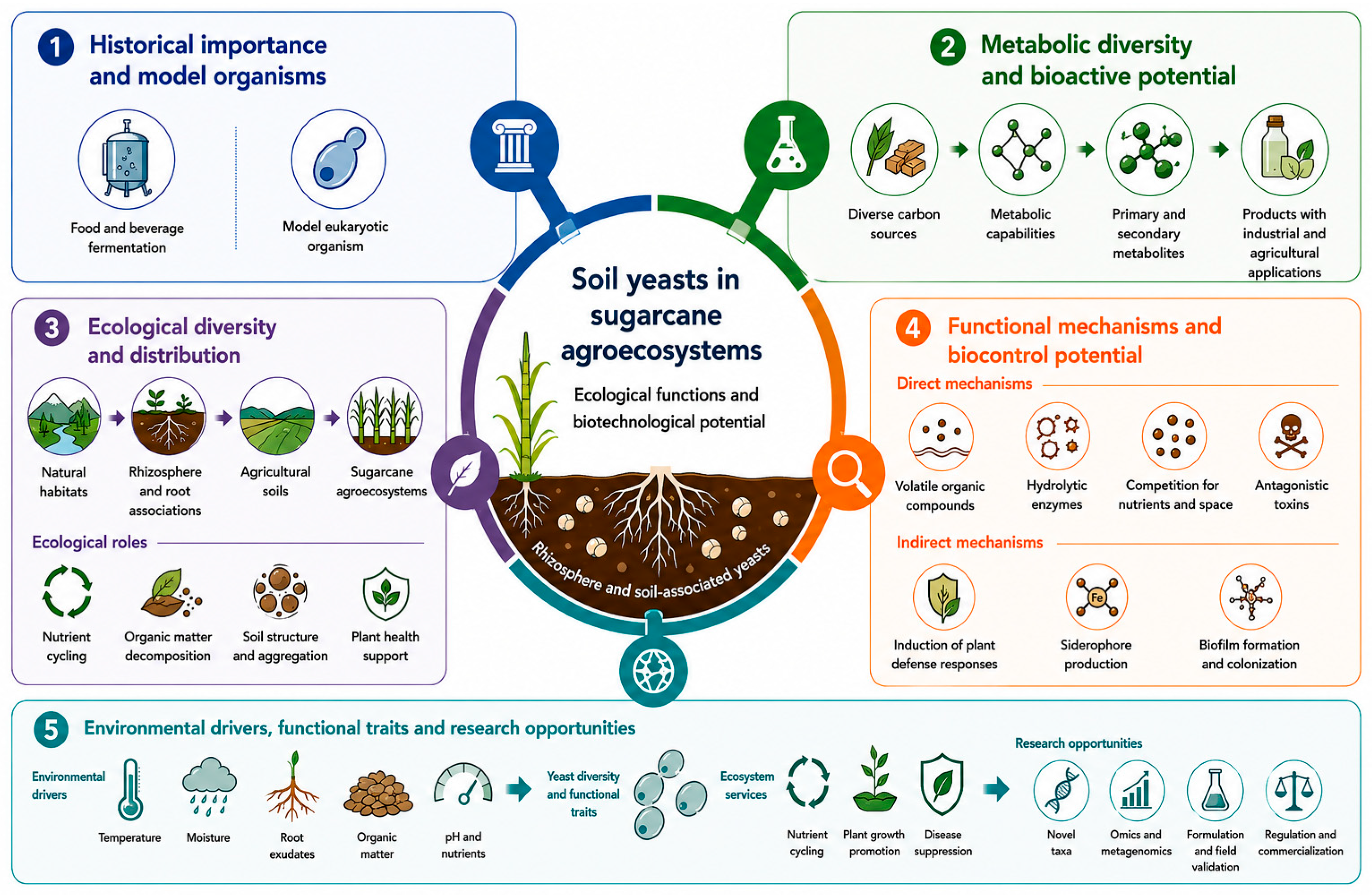
Yeasts are highly significant microorganisms due to their wide range of applications, which stem from their metabolic diversity, reflecting their historical importance in fermentation processes and their role as model organisms for the study of single-celled eukaryotic cellular processes [20]. Furthermore, they have been widely used for thousands of years in the production of food, beverages and in the production of compounds of industrial and pharmaceutical interest [21]. In this context, non-conventional yeasts (NCYs), any yeasts species other than Saccharomyces cerevisiae, have gained prominence due to their greater metabolic diversity and ability to adapt to different environments and along with its rapid growth and ease of cultivation, which enables them to convert various substrates into a wide range of compounds, including alcohols, organic acids, enzymes, and biomolecules of industrial interest, also showed potential in both biotechnological and ecological applications studies. As can be seen, Figure 1 summarizes the main roles of yeasts in five panels: (1) their historical importance and as model organisms; (2) their metabolic diversity and production of metabolites with industrial and agricultural applications; (3) their diversity and ecological distribution in natural habitats and sugarcane agroecosystems; (4) their functional mechanisms and biocontrol potential, through direct and indirect actions; and (5) the influence of environmental factors, as well as research opportunities related to the discovery of new taxa, multi-omics approaches, and their commercialization [21,22]. Despite these advances, the diversity of yeasts and their functional potential have not yet been fully explored, opening new opportunities for their application in industrial, environmental, and agricultural sectors [23].
Figure 1.
The importance, diversity, and applications of yeast. A conceptual model developed by the authors based on the scientific evidence synthesized in this review.
NCYs are notable for their wide metabolic diversity, which allows them to utilize various substrates and adapt to extreme environmental conditions [24]. These characteristics make them highly versatile and make them well-suited for use in a variety of biotechnological applications, such as the production of biofuels, bioactive compounds, and recombinant proteins, as well as bioremediation processes [25]. However, most of their diversity and functional potential remains largely unexplored. These yeasts are widely distributed in various natural environments, including soils, plants, extreme environments, and systems associated with human activity (Figure 1). This ecological diversity reflects their great adaptability and their role in processes such as the decomposition of organic matter, nutrient cycling, and interactions with other organisms [26]. However, although an enormous diversity of species is estimated to exist, only a fraction has been studied in detail, indicating that their functional potential, both ecological and applied, is still far from being fully understood [27].
Recent studies show that yeast diversity in natural environments is strongly influenced by environmental and ecological factors, for example, in ecosystems associated with oak trees, the composition and abundance of yeasts vary depending on conditions such as temperature, precipitation, and the age of the host, with genera such as Saccharomyces, Kluyveromyces, and Pichia [28]. These results demonstrate that the diversity and function of yeasts depend not only on their metabolism but also on their adaptation to specific environmental conditions and their interactions within the ecosystem [28].
4. Nutrient Cycle and Availability to Plants
Soil microbiota plays a vital role in driving key soil ecosystem functions, including organic matter decomposition, disease suppression, and nutrient cycling [29]. The diversity of these microbial communities is essential for maintaining the sustainability of agricultural systems and supporting the production of healthy crops [30].
Soil yeasts actively participate in nutrient cycling by influencing the availability of essential elements for plant uptake, thereby representing a key component of soil health [31]. Although research has traditionally focused on bacteria and filamentous fungi, increasing evidence indicates that yeasts are not only widespread in soil ecosystems but also make meaningful contributions to biochemical processes involved in nutrient release and transformation [32]. Although various yeasts isolated from sugarcane tissues exhibit growth-promoting characteristics under laboratory conditions, direct evidence from inoculation trials on sugarcane plants remains limited. Most studies focus on diversity, isolation, or in vitro functional evaluation (Table 1), highlighting the need for greenhouse and field validation.
Table 1.
Representative studies describing the diversity, functional traits, and agricultural applications of yeasts associated with sugarcane agroecosystems.
Research on these microorganisms indicates that certain soil yeasts can produce compounds involved in the mineralization and mobilization of essential nutrients such as phosphorus, nitrogen, and potassium, thereby enhancing their availability for plant uptake [37]. For instance, some yeast isolates have demonstrated the ability to solubilize insoluble phosphate compounds and release assimilable forms of phosphorus, increasing its availability in soils where this nutrient is frequently fixed in forms inaccessible to plants (Figure 2) [12]. In addition, these microorganisms can synthesize phytohormones such as indoleacetic acid (IAA), along with other growth-promoting metabolites that stimulate root development and improve nutrient acquisition [4,38].
Figure 2.
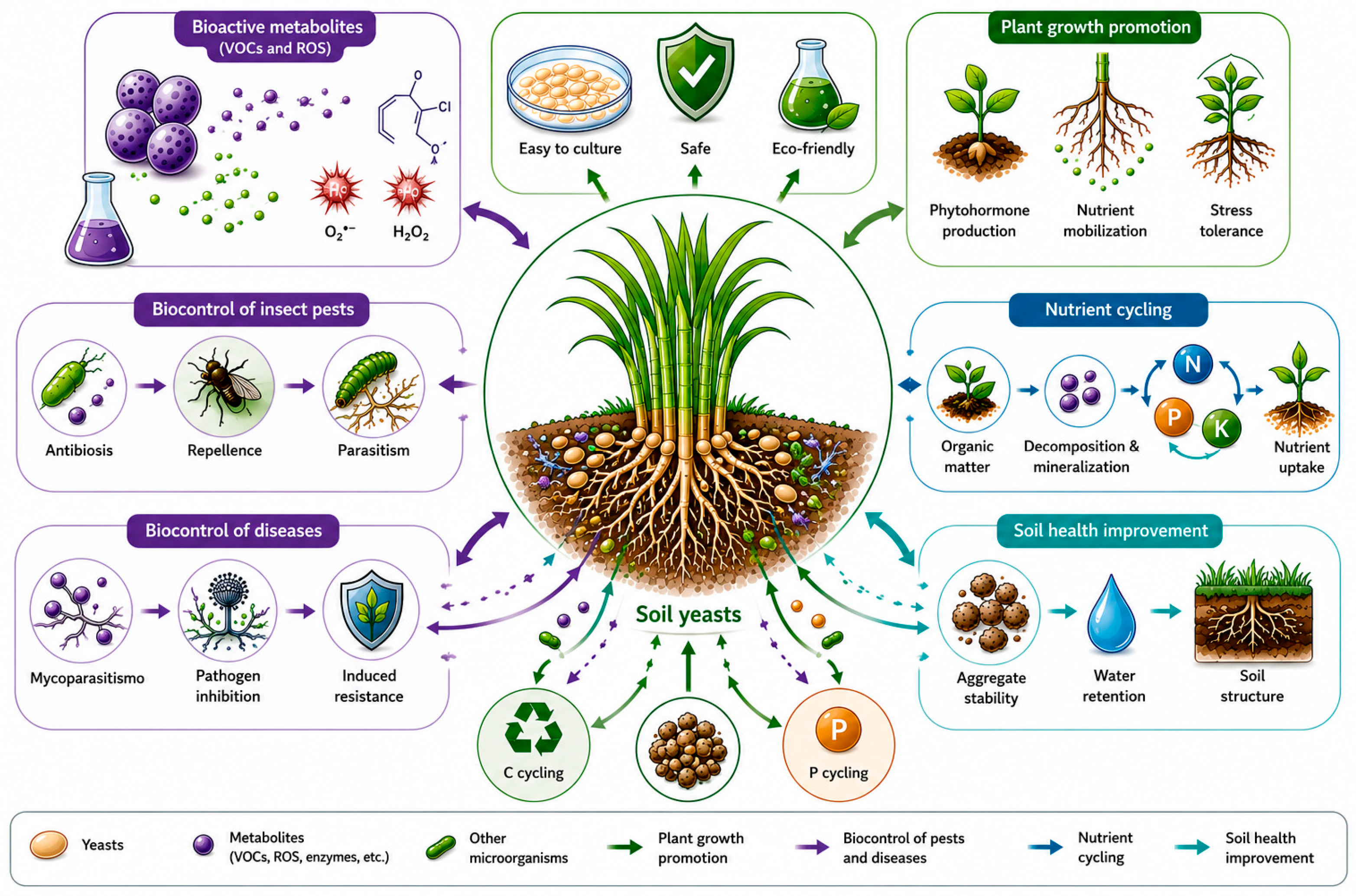
Conceptual framework of the ecological and biotechnological functions of soil yeasts in agroecosystems, highlighting their contribution to nutrient cycling, the promotion of plant growth, soil health, and the biological control of pests and diseases. A conceptual model developed by the authors based on the scientific evidence synthesized in this review.
In addition, yeasts can indirectly influence the nutrient cycle by modifying the conditions of the edaphic microenvironment, for example by producing extracellular polysaccharides that affect water retention and soil aggregate structure, promoting organic matter decomposition processes that release mineral elements [39]. Furthermore, yeasts interact synergistically with other components of the soil microbiota and with plant roots, contributing to improved nutrient acquisition and plant growth through mechanisms such as phosphorus solubilization and stress mitigation [12]. These interactions with other components of the soil microbiota and with the plant indicate that yeasts can contribute significantly to nutrient availability and recycling, reinforcing key soil functions that support plant growth and crop productivity, such as sugarcane [40].
5. Yeast in Biocontrol and Pathogen Suppression
Yeasts are a large and diverse group of microorganisms that have a natural association with plants, some reports have indicated a variety of mechanisms that facilitate beneficial coexistence, as an example plant growth and broad-spectrum antifungal activities [41]. Although the best-known benefits of yeast are at the industrial level, interest in its application in the field has increased due to its abilities or capacities in disease control and biological pest control as can be seen in Figure 2. Currently, application trends are changing, and the application of yeast in the field has evolved due to the reported capabilities of producing enzymes that degrade the cell wall, reducing the load of phytopathogens, as well as the ability to produce enzymes that act against pests, which is why they are also seen as potential biological controllers [42].
Yeasts are highly adaptable microorganisms capable of maintaining active metabolism under various environmental conditions. They require minimal cultivation efforts and do not pose a biosafety risk. Reported biological control mechanisms include enzyme and toxin production, as well as the release of volatile compounds, mycoparasitism, and the activation of plant immune responses (Figure 2). Despite these promising attributes, research on yeasts as biocontrol agents remains limited, and their full functional potential remains largely unknown [43].
6. Biological Disease Control
Recent studies have reported that several yeasts species exhibited distinctive biocontrol capabilities against plant diseases. Moreover, yeasts with the potential to control soil-seed, and air-borne fungal phytopathogens have been isolated from a wide variety of sources, including the rhizosphere of economically important agricultural crops, seawater, the atmosphere, built environments, and the surfaces of animals and fruits [44,45]. Some species of isolated yeasts that showed antagonisms activity through fungal phytopathogens are Metschnikowia, Candida, Pichia, Meyerozyma guilliermondii, Saccharomyces, Rhodotorula glutinis, Wickerhamomyces anomalus, Rhodosporidium, Sterigmatomyces, Cryptococcus, Debaryomyces, Leucosporidium, Sympodiomyces, Trichosporon, Kluyveromyces, Endomycopsis, and Sporobolomyces [46,47].
Although the lack of invasive and filamentous growth in most yeasts can be a disadvantage, their morphology allows for easy reproduction in fermenters, facilitating the generation of formulations and their wide range of applications [48]. The unicellular morphology of yeasts favors adhesion and biofilm formation, which directly influences their permanence in the environment, competitiveness, and, therefore, better biocontrol activity [49].
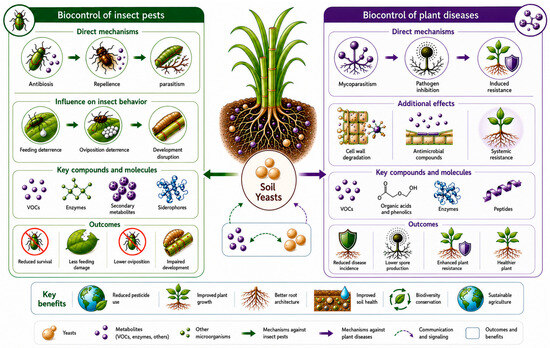
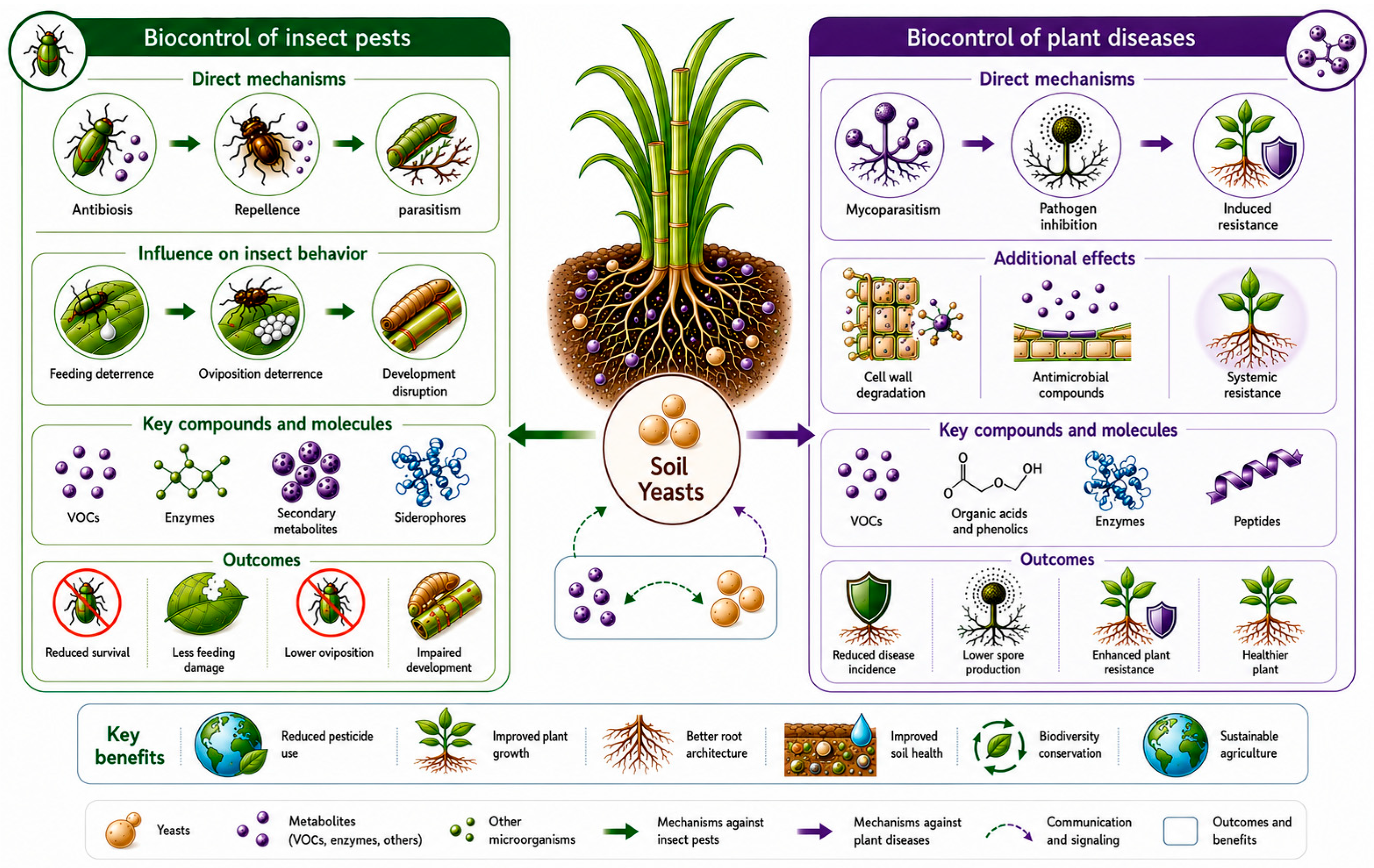
In order to be considered an effective antagonist, it must present or express mechanisms against phytopathogens; these mechanisms are classified into two groups: (a) direct mechanisms, which compete for nutrients and space, siderophores production, mycotoxin detoxification, mycoparasitism through wall-degrading enzymes, volatile organic compounds (VOCs), biofilm formation and killer toxins; (b) indirect mechanisms, which include induction of systemic resistance (induction of plant resistance) and can be linked to reactive oxygen species (ROS) [50,51] as can be seen in Figure 2 and Figure 3. Additionally, to be considered an effective control agent for commercialization, yeasts must have certain qualities such as genetic stability, nutritional flexibility, broad-spectrum activity, pesticide resistance, no expression of compounds harmful to native biota, and stability under adverse conditions of prolonged storage [47,52].
Figure 3.
Conceptual representation of the role of soil yeasts in the biological control of pests and plant diseases in agroecosystems. A conceptual model developed by the authors based on the scientific evidence synthesized in this review.
Yeasts with antagonistic activity against phytopathogens have been reported mainly in fruit crops; however, there are some reports of findings in sugarcane [53]. In this crop, several studies have revealed that the yeast Wickerhamomyces anomalus exhibits antagonistic activity against the phytopathogenic fungus Fusarium moniliforme, which causes red rot disease of sugarcane. This activity is mainly attributed to the production of VOCs (3-methyl-1-butyl acetate and 3-methyl-1-butanol). However, β-1,3-glucanase and chitinase production, siderophore production, as well as phosphate and zinc oxide solubilization were additional mechanisms [54]. Overall, the evidence indicates that the predominant mechanisms in yeast are VOCs, competition for nutrients, hydrolytic enzymes, and resistance induction. However, the relative frequency of these mechanisms varies depending on the crop and the agricultural system, with VOCs and competition being the most commonly reported in sugarcane systems.
Several studies have shown that yeasts exhibit antifungal activity against plant pathogens due to the wide range of metabolites they produce, which supports their use as biocontrol agents in agricultural systems [55]. As can be seen in Table 2, among these compounds, volatile organic compounds (VOCs) stand out; these include alcohols, aldehydes, esters, ketones, phenolic compounds 3-amino-5-methylhexanoic acid, biphenyl-2,3-diol, sinapaldehyde, antimicrobial lipids and other low-molecular-weight metabolites capable of diffusing into the environment and acting even without direct contact with the pathogen [56,57]. These VOCs can inhibit mycelial growth, reduce spore germination, and disrupt physiological processes in plant pathogens, such as cellular respiration and membrane integrity, leading to oxidative stress and loss of cellular viability [58,59]. Specific metabolites produced by the yeast Metschnikowia pulcherrima including biphenyl derivatives, phenolic compounds, and amino acid-related molecules have been identified as important antifungal agents, demonstrating that these metabolites effectively inhibited the growth of Botrytis cinerea and Alternaria alternata, achieving inhibition rates close to 100% in in vitro assays [59]. Although these results highlight the high potential of yeast derived metabolites for the biological control of plant pathogens, their efficacy still needs to be validated under greenhouse and field conditions before their application in agricultural production systems including sugarcane agroecosystems can be considered. Furthermore, it has been documented that yeasts produce non-volatile metabolites such as organic acids, antimicrobial compounds, and “killer” toxins, as well as hydrolytic enzymes such as chitinases, β-glucanases and proteases, which hydrolyze the cell walls of plant pathogenic fungi, weakening their structure and causing cell lysis [60].
Table 2.
Yeasts reported as biological control agents against phytopathogens associated with sugarcane or as sources of mechanisms potentially applicable to sugarcane diseases.
Furthermore, as can be seen in Table 2, yeasts exert indirect inhibitory mechanisms, such as competition for space and nutrients particularly for carbon and iron sources through the production of siderophores which limit the growth of pathogens [64]. Their ability to act as mycoparasites has also been documented, through adhesion to the pathogen’s hyphae and subsequent alteration of its cellular structure, as well as the formation of biofilms that hinder colonization of the host [44]. Furthermore, some yeasts can induce defense responses in plants, activating systemic resistance mechanisms such as the production of salicylic acid, jasmonic acid, and ethylene, which increase tolerance to infections [65]. Together, both direct and indirect mechanisms demonstrate that metabolites produced by yeasts constitute highly effective multifunctional tools for the control of plant pathogens and represent a sustainable alternative to the use of chemical fungicides [66]. However, despite these advances, much of the metabolic and functional diversity of yeasts remains largely unexplored, opening new opportunities for their application in agricultural systems [21,22].
In the specific case of yeasts associated with sugarcane crops, they have shown potential as biological control agents against diseases caused by plant pathogens. It has been reported that yeasts isolated from sugarcane farming systems exhibit antagonistic activity against pathogenic fungi through mechanisms such as the production of antifungal metabolites, competition for nutrients and rapid colonization of plant surfaces [67]. Furthermore, yeast communities present in the rhizosphere and microbiome of sugarcane are involved in processes related to plant health and natural disease suppression [35]. These capabilities, together with the production of hydrolytic enzymes and volatile compounds, highlight the potential of yeasts as sustainable tools for the biological management of diseases in sugarcane systems [46]. However, despite these advantages, yeasts have been studied little in sugarcane agricultural systems, particularly in the soil and rhizosphere. Therefore, their exploration represents a promising opportunity for the development of sustainable strategies aimed at biological control, the promotion of plant growth and the improvement of agroecosystem health.
The evidence summarized in Table 2 shows that various yeasts associated with plant tissues and other agricultural environments possess mechanisms of antagonism, such as competition for nutrients and space, the production of volatile organic compounds, hydrolytic enzymes, and killer toxins, as well as the induction of defense responses in plants. Although direct validation of these microorganisms for disease control in sugarcane is still limited, the results obtained with yeasts isolated from this crop and the evidence generated in other agricultural systems support their potential as biocontrol agents in integrated management programs. Furthermore, the exploration, characterization, and conservation of these microbial resources help preserve the functional biodiversity of soils and agroecosystems, thereby supporting the maintenance of essential ecological processes, such as the natural regulation of diseases, the balance of microbial communities, and the reduction in the use of chemical inputs. Taken together, these aspects strengthen the development of more resilient and sustainable agricultural systems, in which the conservation of microbial diversity is a key component for maintaining soil health, ecosystem services, and long-term productivity.
7. Biological Pest Control
As mentioned, yeasts can be highly significant for agricultural development, as, in addition to playing a role in the biological control of diseases, they also play a significant role in the biological control of pests by modulating the behavior and ecological interactions of insects [68]. One of the key characteristics for biological pest control is their ability to produce volatile organic compounds (VOCs) and other metabolites that can act as attractants or repellents, influencing processes such as feeding, oviposition and the development of insects [69,70]. Furthermore, their rapid colonization ability allows them to compete for resources on plant surfaces, altering the pests’ habitat and reducing their establishment [49]. Some yeasts can also interact with the microbiota associated with insects or produce compounds that affect their physiology, thereby contributing indirectly to their control [71]. These characteristics have enabled their use in biological traps and integrated pest management strategies, positioning them as promising tools within sustainable agricultural systems as can be seen in Figure 3 [72].
In sugarcane cultivation, biological pest control is a highly significant sustainable strategy for reducing dependence on chemical insecticides and minimizing the environmental impact associated with their use. In this context, various beneficial microorganisms, including yeasts, have begun to be studied for their ability to modulate ecological interactions with insects and contribute to integrated pest management. Yeasts can produce volatile organic compounds (VOCs) and other metabolites that function as attractants or repellents, affecting processes such as feeding, oviposition and the behavior of crop-associated insects [69,70]. Furthermore, their rapid colonization of plant surfaces can alter the microhabitat of pests and limit their establishment. Although research on yeasts specifically focused on biological pest control in sugarcane is still limited, numerous studies in sustainable agricultural systems highlight the potential of crop-associated microorganisms to be integrated into integrated management programs, favoring a reduction in pesticide use and promoting more resilient agroecosystems [67,72]. These characteristics position yeasts as a promising tool for future biological control strategies in sugarcane systems.
Table 3 summarizes current knowledge on yeast-mediated strategies for managing insect pests, integrating the available evidence from both sugarcane agroecosystems and other agriculturally important crops. Although studies directly evaluating the use of yeast for insect control in sugarcane are still limited, information generated in other systems demonstrates that these microorganisms play a significant role in regulating insect behavior through the production of volatile organic compounds, bioactive metabolites, nutritional interactions, and associations with the gut microbiota. These mechanisms have enabled the development of strategies for monitoring, attracting, mass trapping, and integrated pest management in various crops, providing a scientific basis that justifies their evaluation against economically significant pests in sugarcane, such as borers, leafhoppers, aphids, and rhizophagous insects. Complementarily, the presence of yeasts associated with insects and the application of microbial consortia that include them in sugarcane systems demonstrate that these agroecosystems harbor microbial diversity with high biotechnological potential that remains insufficiently explored. In this regard, the characterization, conservation, and utilization of native yeasts not only represent an opportunity to develop innovative management alternatives.
Table 3.
Yeast-mediated strategies reported for insect pest management and their potential application in sugarcane agroecosystems.
8. Conclusions
Soil yeasts represent an important, though still largely unexplored, component of sugarcane agroecosystems, with significant potential to contribute to nutrient cycling, promote plant growth, and provide biological control of pests and diseases through various ecological and biotechnological mechanisms. Available scientific evidence shows that these microorganisms enhance soil functionality, strengthen plant–microbiome interactions, and contribute to the development of more sustainable and resilient agricultural systems. Furthermore, their role in the decomposition of organic matter, nutrient recycling, soil aggregation, and the restoration of degraded environments highlights that the conservation of native yeast communities also involves preserving essential ecological processes and ecosystem services that underpin the productivity and stability of agroecosystems. Beyond synthesizing the available knowledge, this review integrates evidence generated in sugarcane with studies conducted in other agricultural systems to provide a comprehensive overview of the ecological, biotechnological, and conservation roles of yeasts in sugarcane agroecosystems. In addition to identifying the main knowledge gaps, it compares the available evidence and proposes strategies with potential applications in nutrient management, biological control of pests and diseases, soil restoration, and the conservation of functional microbial biodiversity. In this context, the use and conservation of native yeasts should be considered complementary strategies to strengthen soil health, maintain ecosystem services, reduce dependence on agrochemicals, and promote more sustainable, resilient, and environmentally responsible sugarcane agroecosystems. Future research should focus on the isolation and characterization of native yeast strains, validation of their performance under greenhouse and field conditions, development of stable microbial formulations, and a deeper understanding of their interactions with the soil microbiome to facilitate their sustainable application in sugarcane production.
Author Contributions
Conceptualization, R.H.M. and D.A.Á.-d.l.C.; methodology, J.D.C.-M.; software, S.V.-R.; validation, R.H.M. and D.A.Á.-d.l.C.; formal analysis, M.A.L.-J.; investigation, J.F.C.-M.; resources, R.H.M.; data curation, M.A.L.-J.; writing—original draft preparation, J.F.C.-M.; writing—review and editing, J.D.C.-M.; visualization, S.V.-R.; supervision, D.A.Á.-d.l.C.; project administration, R.H.M. All authors have read and agreed to the published version of the manuscript.
Funding
This research was funded by Colegio de Postgraduados through funding number CONV_ENASAS_2026_31.
Institutional Review Board Statement
Not applicable.
Informed Consent Statement
Not applicable.
Data Availability Statement
No new data was created in this manuscript.
Acknowledgments
During the preparation of this manuscript, the authors used ChatGPT-4o visual for the purposes of images generation. The authors have reviewed and edited the output and take full responsibility for the content of this publication.
Conflicts of Interest
The authors declare no conflicts of interest.
Abbreviations
The following abbreviations are used in this manuscript:
| NCYs | Non-Conventional Yeasts |
| VOCs | Volatile organic compounds |
| ROS | Reactive oxygen species |
References
- Sarabia, M.; Cazares, S.; González-Rodríguez, A.; Mora, F.; Carreón-Abud, Y.; Larsen, J. Plant Growth Promotion Traits of Rhizosphere Yeasts and Their Response to Soil Characteristics and Crop Cycle in Maize Agroecosystems. Rhizosphere 2018, 6, 67–73. [Google Scholar] [CrossRef] [Scilit]
- Patel, A.; Rova, U.; Christakopoulos, P.; Matsakas, L. From Yeast to Biotechnology. Bioengineering 2022, 9, 751. [Google Scholar] [CrossRef] [Scilit] [PubMed]
- Pandi, R.; Velu, G.; Devi, P.; Dananjeyan, B. Isolation and Screening of Soil Yeasts for Plant Growth Promoting Traits. Madras Agric. J. 2019, 106, 439–443. [Google Scholar] [CrossRef] [Scilit]
- Devi, R.P.; Yamunasri, P.; Balachandar, D.; Murugananthi, D. Potentials of Soil Yeasts for Plant Growth and Soil Health in Agriculture: A Review. J. Pure Appl. Microbiol. 2025, 19, 1–18. [Google Scholar] [CrossRef] [Scilit]
- Pinheiro, C.R., Jr.; Carvalho, J.L.N.; Canisares, L.P.; De Oliveira Bordonal, R.; Cerri, C.E.P.; Cherubin, M.R. Bioenergy Production from Sugarcane Straw: Implications for Soil-Related Ecosystem Services. GCB Bioenergy 2025, 17, e70032. [Google Scholar] [CrossRef] [Scilit]
- Pradhan, A.; Wakchaure, G.C.; Shid, D.; Minhas, P.S.; Biswas, A.K.; Reddy, K.S. Impact of Residue Retention and Nutrient Management on Carbon Sequestration, Soil Biological Properties, and Yield in Multi-Ratoon Sugarcane. Front. Sustain. Food Syst. 2023, 7, 1288569. [Google Scholar] [CrossRef] [Scilit]
- Mkhonza, N.; Muchaonyerwa, P. Effect of Sugarcane Residue Management (Pre-Harvest Burning versus Green Cane Retention) on Soil Organic Carbon Fractions and Aggregate Stability in Umbric Rhodic Ferralsols. Soil Sci. Plant Nutr. 2024, 70, 174–185. [Google Scholar] [CrossRef] [Scilit]
- Verma, K.K.; Song, X.-P.; Yadav, G.; Degu, H.D.; Parvaiz, A.; Singh, M.; Huang, H.-R.; Mustafa, G.; Xu, L.; Li, Y.-R. Impact of Agroclimatic Variables on Proteogenomics in Sugar Cane (Saccharum spp.) Plant Productivity. ACS Omega 2022, 7, 22997–23008. [Google Scholar] [CrossRef] [Scilit] [PubMed]
- De Oliveira-Bordonal, R.; Carvalho, J.L.N.; Lal, R.; De Figueiredo, E.B.; De Oliveira, B.G.; La Scala, N. Sustainability of Sugarcane Production in Brazil. A Review. Agron. Sustain. Dev. 2018, 38, 13. [Google Scholar] [CrossRef] [Scilit]
- Bharadva, D. Growth and development of Indian sugar industry. Int. J. Manag. Public Policy Res. 2026, 5, 82–86. [Google Scholar] [CrossRef] [Scilit]
- Nimsi, K.A.; Manjusha, K.; Kathiresan, K.; Arya, H. Plant Growth-Promoting Yeasts (PGPY), the Latest Entrant for Use in Sustainable Agriculture: A Review. J. Appl. Microbiol. 2022, 134, lxac088. [Google Scholar] [CrossRef] [Scilit] [PubMed]
- Raklami, A.; Babalola, O.O.; Jemo, M.; Nafis, A. Unlocking the Plant Growth-Promoting Potential of Yeast spp.: Exploring Species from the Moroccan Extremophilic Environment for Enhanced Plant Growth and Sustainable Farming. FEMS Microbiol. Lett. 2024, 371, fnae015. [Google Scholar] [CrossRef] [Scilit] [PubMed]
- Ruspi, C.; Pierantoni, D.C.; Conti, A.; Favaro, L.; Antinori, M.E.; Puglisi, E.; Corte, L.; Cardinali, G. Beneficial Effects of Plant Growth-Promoting Yeasts (PGPYs) on the Early Stage of Growth of Zucchini Plants. Curr. Plant Biol. 2024, 39, 100357. [Google Scholar] [CrossRef] [Scilit]
- Bender, S.F.; Wagg, C.; Van Der Heijden, M.G.A. An Underground Revolution: Biodiversity and Soil Ecological Engineering for Agricultural Sustainability. Trends Ecol. Evol. 2016, 31, 440–452. [Google Scholar] [CrossRef] [Scilit] [PubMed]
- Fierer, N. Embracing the Unknown: Disentangling the Complexities of the Soil Microbiome. Nat. Rev. Microbiol. 2017, 15, 579–590. [Google Scholar] [CrossRef] [Scilit] [PubMed]
- Trivedi, P.; Leach, J.E.; Tringe, S.G.; Sa, T.; Singh, B.K. Plant–Microbiome Interactions: From Community Assembly to Plant Health. Nat. Rev. Microbiol. 2020, 18, 607–621. [Google Scholar] [CrossRef] [Scilit] [PubMed]
- Silambarasan, S.; Logeswari, P.; Cornejo, P.; Kannan, V.R. Evaluation of the Production of Exopolysaccharide by Plant Growth Promoting Yeast Rhodotorula sp. Strain CAH2 under Abiotic Stress Conditions. Int. J. Biol. Macromol. 2018, 121, 55–62. [Google Scholar] [CrossRef] [Scilit] [PubMed]
- Salam, J.A.; Hatha, M.A.A.; Das, N. Microbial-Enhanced Lindane Removal by Sugarcane (Saccharum officinarum) in Doped Soil-Applications in Phytoremediation and Bioaugmentation. J. Environ. Manag. 2017, 193, 394–399. [Google Scholar] [CrossRef] [Scilit] [PubMed]
- Delgado-Baquerizo, M.; Maestre, F.T.; Reich, P.B.; Jeffries, T.C.; Gaitan, J.J.; Encinar, D.; Berdugo, M.; Campbell, C.D.; Singh, B.K. Microbial Diversity Drives Multifunctionality in Terrestrial Ecosystems. Nat. Commun. 2016, 7, 10541. [Google Scholar] [CrossRef] [Scilit] [PubMed]
- Segal-Kischinevzky, C.; Romero-Aguilar, L.; Alcaraz, L.D.; López-Ortiz, G.; Martínez-Castillo, B.; Torres-Ramírez, N.; Sandoval, G.; González, J. Yeasts Inhabiting Extreme Environments and Their Biotechnological Applications. Microorganisms 2022, 10, 794. [Google Scholar] [CrossRef] [Scilit] [PubMed]
- Nielsen, J. The Power of Yeast. Yeast 2025, 42, 303–310. [Google Scholar] [CrossRef] [Scilit] [PubMed]
- Türker, M.; Derman, Ü.C.; Alemdar, F. Commercial Applications for Yeast-Based Technologies. In Eukaryotic Microorganisms as Sources of Bioproducts; Elsevier: Amsterdam, The Netherlands, 2025; pp. 431–453. [Google Scholar]
- Soares, C.E.V.F.; De Castro Lins, P.; Dias, S.C. Non-Conventional Yeasts: Exploring Alternative Microorganisms for Brazil’s Biological Inputs Segment. Next Sustain. 2026, 8, 100372. [Google Scholar] [CrossRef] [Scilit]
- Sepe, F.; Costanzo, E.; Ionata, E.; Marcolongo, L. Biotechnological Potential of Extremophiles: Environmental Solutions, Challenges, and Advancements. Biology 2025, 14, 847. [Google Scholar] [CrossRef] [Scilit] [PubMed]
- Rodriguez-Ocasio, E.; Noroozi, K.; Khalid, A.; Brown, J.; Brown, R.C.; Blenner, M.A.; Jarboe, L.R. Adaptive Evolution of Candida Maltosa Improves the Bioconversion of Depolymerized Plastic Feedstock by Targeting Biosurfactant Production. Appl. Environ. Microbiol. 2026, 92, e0205625. [Google Scholar] [CrossRef] [Scilit] [PubMed]
- Singhania, U.; Yemulkar, B.S.; Pathan, E.K. Non-Conventional Yeasts: Versatile Platforms for the Expression and Secretion of Eukaryotic Proteins. Syst. Microbiol. Biomanufacturing 2026, 6, 62. [Google Scholar] [CrossRef] [Scilit]
- Villarreal, P.; Molinet, J.; Braun-Galleani, S.; Cubillos, F.A. Non-Conventional Yeasts as a Source of Genetic Diversity and Biotechnological Potential. Annu. Rev. Microbiol. 2025, 79, 595–614. [Google Scholar] [CrossRef] [Scilit] [PubMed]
- Pinto, J.; Haberkorn, C.; Franzén, M.; Tack, A.J.M.; Stelkens, R. Fermentative Yeast Diversity at the Northern Range Limit of Their Oak Tree Hosts. Environ. Microbiol. Rep. 2025, 17, e70110. [Google Scholar] [CrossRef] [Scilit] [PubMed]
- Sharma, S.; Sati, B.; Pant, D.; Kumar, S.; Basu, S. Rhizosphere Microbiome Dynamics in Hydroponics: Core Taxa, Fungal Pathogen Infestations and Probiotic-Based Management. Plant Pathol. 2025, 75, e70103. [Google Scholar] [CrossRef] [Scilit]
- Chen, Q.; Song, Y.; An, Y.; Lu, Y.; Zhong, G. Soil Microorganisms: Their Role in Enhancing Crop Nutrition and Health. Diversity 2024, 16, 734. [Google Scholar] [CrossRef] [Scilit]
- Yadav, A.N.; Kour, D.; Ahluwalia, A.S. Soil and Phytomicrobiomes for Plant Growth and Soil Fertility. Plant Sci. Today 2021, 8, 1–5. [Google Scholar] [CrossRef] [Scilit]
- Ruspi, C.; Pierantoni, D.C.; Conti, A.; Scarponi, R.; Corte, L.; Cardinali, G. Plant Growth-Promoting Yeasts (PGPYs) as a Sustainable Solution to Mitigate Salt-Induced Stress on Zucchini Plant Growth. Biol. Fertil. Soils 2024, 61, 293–309. [Google Scholar] [CrossRef] [Scilit]
- Nutaratat, P.; Srisuk, N.; Arunrattiyakorn, P.; Limtong, S. Plant Growth-Promoting Traits of Epiphytic and Endophytic Yeasts Isolated from Rice and Sugar Cane Leaves in Thailand. Fungal Biol. 2014, 118, 683–694. [Google Scholar] [CrossRef] [Scilit] [PubMed]
- Khunnamwong, P.; Jindamorakot, S.; Limtong, S. Endophytic Yeast Diversity in Leaf Tissue of Rice, Corn and Sugarcane Cultivated in Thailand Assessed by a Culture-Dependent Approach. Fungal Biol. 2018, 122, 785–799. [Google Scholar] [CrossRef] [Scilit] [PubMed]
- De Souza, R.S.C.; Okura, V.K.; Armanhi, J.S.L.; Jorrín, B.; Lozano, N.; Da Silva, M.J.; González-Guerrero, M.; De Araújo, L.M.; Verza, N.C.; Bagheri, H.C.; et al. Unlocking the Bacterial and Fungal Communities Assemblages of Sugarcane Microbiome. Sci. Rep. 2016, 6, 28774. [Google Scholar] [CrossRef] [Scilit] [PubMed]
- Lonhienne, T.; Mason, M.G.; Ragan, M.A.; Hugenholtz, P.; Schmidt, S.; Paungfoo-Lonhienne, C. Yeast as a Biofertilizer Alters Plant Growth and Morphology. Crop Sci. 2014, 54, 785–790. [Google Scholar] [CrossRef] [Scilit]
- Hernández-Fernández, M.; Cordero-Bueso, G.; Ruiz-Muñoz, M.; Cantoral, J.M. Culturable Yeasts as Biofertilizers and Biopesticides for a Sustainable Agriculture: A Comprehensive Review. Plants 2021, 10, 822. [Google Scholar] [CrossRef] [Scilit] [PubMed]
- Das, S.; Rabha, J.; Narzary, D. Soil Yeast Diversity and Their Plant Growth Promoting Activities in Some Forest Soils of Assam, North-East India. Int. J. Adv. Biochem. Res. 2024, 8, 1191–1196. [Google Scholar] [CrossRef] [Scilit]
- Zhang, M.; Wu, Y.; Qu, C.; Huang, Q.; Cai, P. Microbial Extracellular Polymeric Substances (EPS) in Soil: From Interfacial Behaviour to Ecological Multifunctionality. Geo-Bio Interfaces 2024, 1, e4. [Google Scholar] [CrossRef] [Scilit]
- Madaloz, A.P.; Sette, C.K.; De Oliveira, C.G.; Treichel, H.; Júnior, S.L.A.; Silva, V.N. Effect of a Flower-Isolated Yeast on Seed Germination and Seedling Growth of Carrot and Cauliflower. Discov. Plants 2025, 2, 279. [Google Scholar] [CrossRef] [Scilit]
- Dmytruk, O.; Yemets, A.; Dmytruk, K. Yeasts as Biofertilizers and Biocontrol Agents: Mechanisms and Applications. Biotechnol. Appl. Biochem. 2025, 73, 964–976. [Google Scholar] [CrossRef] [Scilit] [PubMed]
- Mukherjee, A.; Verma, J.P.; Gaurav, A.K.; Chouhan, G.K.; Patel, J.S.; Hesham, A.E.-L. Yeast a Potential Bio-Agent: Future for Plant Growth and Postharvest Disease Management for Sustainable Agriculture. Appl. Microbiol. Biotechnol. 2020, 104, 1497–1510. [Google Scholar] [CrossRef] [Scilit] [PubMed]
- Alqahtani, F.S. The Utilization of Microorganisms for Biological Control of Soil-Borne Plant Pathogens: A Sustainable Strategy for Managing Plant Diseases—A Comprehensive Review. J. Plant Pathol. 2025, 107, 1815–1839. [Google Scholar] [CrossRef] [Scilit]
- Di Canito, A.; Mateo-Vargas, M.A.; Mazzieri, M.; Cantoral, J.; Foschino, R.; Cordero-Bueso, G.; Vigentini, I. The Role of Yeasts as Biocontrol Agents for Pathogenic Fungi on Postharvest Grapes: A Review. Foods 2021, 10, 1650. [Google Scholar] [CrossRef] [Scilit] [PubMed]
- Iturritxa, E.; Mesanza, N.; Torija, M.-J. The Potential of Wild Yeasts as Promising Biocontrol Agents against Pine Canker Diseases. J. Fungi 2023, 9, 840. [Google Scholar] [CrossRef] [Scilit] [PubMed]
- Ali, A.; Ölmez, F.; Zeshan, M.A.; Mubeen, M.; Iftikhar, Y.; Sajid, A.; Abid, M.; Kumar, A.; Divvela, P.K.; Solanki, M.K. Yeast-Based Solutions in Controlling Plant Pathogens. Biocatal. Agric. Biotechnol. 2024, 58, 103199. [Google Scholar] [CrossRef] [Scilit]
- Olana, R.C.; Haituk, S.; Karunarathna, A.; Cumagun, C.J.R. Review: Elucidating the Efficacy of Antagonistic Yeasts by Using Multiple Mechanisms in Controlling Fungal Phytopathogens. J. Phytopathol. 2025, 173, e70097. [Google Scholar] [CrossRef] [Scilit]
- Liu, M.; Zhang, J.; Ye, J.; Qi, Q.; Hou, J. Morphological and Metabolic Engineering of Yarrowia lipolytica to Increase β-Carotene Production. ACS Synth. Biol. 2021, 10, 3551–3560. [Google Scholar] [CrossRef] [Scilit] [PubMed]
- Freimoser, F.M.; Rueda-Mejia, M.P.; Tilocca, B.; Migheli, Q. Biocontrol Yeasts: Mechanisms and Applications. World J. Microbiol. Biotechnol. 2019, 35, 154. [Google Scholar] [CrossRef] [Scilit] [PubMed]
- Zhang, X.; Li, B.; Zhang, Z.; Chen, Y.; Tian, S. Antagonistic Yeasts: A Promising Alternative to Chemical Fungicides for Controlling Postharvest Decay of Fruit. J. Fungi 2020, 6, 158. [Google Scholar] [CrossRef] [Scilit] [PubMed]
- Oztekin, S.; Dikmetas, D.N.; Devecioglu, D.; Acar, E.G.; Karbancioglu-Guler, F. Recent Insights into the Use of Antagonistic Yeasts for Sustainable Biomanagement of Postharvest Pathogenic and Mycotoxigenic Fungi in Fruits with Their Prevention Strategies against Mycotoxins. J. Agric. Food Chem. 2023, 71, 9923–9950. [Google Scholar] [CrossRef] [Scilit] [PubMed]
- Hernandez-Montiel, L.G.; Droby, S.; Preciado-Rangel, P.; Rivas-García, T.; González-Estrada, R.R.; Gutiérrez-Martínez, P.; Ávila-Quezada, G.D. A Sustainable Alternative for Postharvest Disease Management and Phytopathogens Biocontrol in Fruit: Antagonistic Yeasts. Plants 2021, 10, 2641. [Google Scholar] [CrossRef] [Scilit] [PubMed]
- Edo, G.S.; Godana, E.A.; Ngea, G.L.N.; Wang, K.; Yang, Q.; Zhang, H. Improving Biocontrol Potential of Antagonistic Yeasts against Fungal Pathogen in Postharvest Fruits and Vegetables through Application of Organic Enhancing Agents. Foods 2025, 14, 3075. [Google Scholar] [CrossRef] [Scilit] [PubMed]
- Khunnamwong, P.; Lertwattanasakul, N.; Jindamorakot, S.; Suwannarach, N.; Matsui, K.; Limtong, S. Evaluation of Antagonistic Activity and Mechanisms of Endophytic Yeasts against Pathogenic Fungi Causing Economic Crop Diseases. Folia Microbiol. 2019, 65, 573–590. [Google Scholar] [CrossRef] [Scilit] [PubMed]
- Raish, S.M.A.; Sourani, O.M.; Abu-Elsaoud, A.M. Plant Growth-Promoting Microorganisms as Biocontrol Agents: Mechanisms, Challenges, and Future Prospects. Appl. Microbiol. 2025, 5, 44. [Google Scholar] [CrossRef] [Scilit]
- Senthilkumar, M.; Amaresan, N.; Sankaranarayanan, A. Antagonistic Activity of Volatile Compound of Bacteria against Phytopathogens: Dual Plate Assay. In Plant-Microbe Interactions: Laboratory Techniques; Springer: New York, NY, USA, 2020; pp. 171–173. [Google Scholar]
- Josselin, L.; De Clerck, C.; De Boevre, M.; Moretti, A.; Fauconnier, M.-L. Impact of Volatile Organic Compounds on the Growth of Aspergillus Flavus and Related Aflatoxin B1 Production: A Review. Int. J. Mol. Sci. 2022, 23, 15557. [Google Scholar] [CrossRef] [Scilit] [PubMed]
- Liao, B.; Chen, O.; Zhang, H.; Wang, W.; Yi, L.; Li, H.; Zeng, K. Biocontrol Yeast Kurtzmaniella quercitrusa BS-AY-S1 Controls Postharvest Green Mold of Citrus Fruit by Producing Metabolites with Antifungal Activity. Biol. Control 2024, 200, 105667. [Google Scholar] [CrossRef] [Scilit]
- Millan, A.F.-S.; Gamir, J.; Farran, I.; Larraya, L.; Veramendi, J. Identification of New Antifungal Metabolites Produced by the Yeast Metschnikowia pulcherrima Involved in the Biocontrol of Postharvest Plant Pathogenic Fungi. Postharvest Biol. Technol. 2022, 192, 111995. [Google Scholar] [CrossRef] [Scilit]
- Rodrigues, P.L.; Galvão, J.R.; Da Silva Maia, B.K.; Oliveira, C.A.M.M.; Zambrano, M.I.C.; De Melo, N.F.B. Mechanisms of Biocontrolling Action of Yeasts in Post-Harvest Fruit: A Review. Rev. De Gestão Soc. E Ambient. 2024, 18, e09718. [Google Scholar] [CrossRef] [Scilit]
- Herrera-Balandrano, D.D.; Wang, S.-Y.; Wang, C.-X.; Shi, X.-C.; Liu, F.-Q.; Laborda, P. Antagonistic Mechanisms of Yeasts Meyerozyma guilliermondii and M. Caribbica for the Control of Plant Pathogens: A Review. Biol. Control 2023, 186, 105333. [Google Scholar] [CrossRef] [Scilit]
- Palmieri, D.; Ianiri, G.; Del Grosso, C.; Barone, G.; De Curtis, F.; Castoria, R.; Lima, G. Advances and Perspectives in the Use of Biocontrol Agents against Fungal Plant Diseases. Horticulturae 2022, 8, 577. [Google Scholar] [CrossRef] [Scilit]
- Da Costa-Arruda, G.C.; Kovács, M.; Pomázi, A. Biological Control Mechanisms of Non-Saccharomyces Yeasts against Filamentous Fungal Pathogens within Rosaceae Family. Int. J. Agron. 2024, 2024, 1538220. [Google Scholar] [CrossRef] [Scilit]
- Kowalska, J.; Krzymińska, J.; Tyburski, J. Yeasts as a Potential Biological Agent in Plant Disease Protection and Yield Improvement—A Short Review. Agriculture 2022, 12, 1404. [Google Scholar] [CrossRef] [Scilit]
- Maruri-López, I.; Romero-Contreras, Y.J.; Napsucialy-Mendivil, S.; González-Pérez, E.; Aviles-Baltazar, N.Y.; Chávez-Martínez, A.I.; Flores-Cuevas, E.J.; Schwan-Estrada, K.R.F.; Dubrovsky, J.G.; Jiménez-Bremont, J.F.; et al. A Biostimulant Yeast, Hanseniaspora opuntiae, Modifies Arabidopsis thaliana Root Architecture and Improves the Plant Defense Response against Botrytis Cinerea. Planta 2024, 259, 53. [Google Scholar] [CrossRef] [Scilit] [PubMed]
- He, Y.; Degraeve, P.; Oulahal, N. Bioprotective Yeasts: Potential to Limit Postharvest Spoilage and to Extend Shelf Life or Improve Microbial Safety of Processed Foods. Heliyon 2024, 10, e24929. [Google Scholar] [CrossRef] [Scilit] [PubMed]
- Rosa-Magri, M.M.; Tauk-Tornisielo, S.M.; Ceccato-Antonini, S.R. Bioprospection of Yeasts as Biocontrol Agents against Phytopathogenic Molds. Braz. Arch. Biol. Technol. 2011, 54, 1–5. [Google Scholar] [CrossRef] [Scilit]
- Makopa, T.P.; Ncube, T.; Alwasel, S.; Boekhout, T.; Zhou, N. Yeast–Insect Interactions in Southern Africa: Tapping the Diversity of Yeasts for Modern Bioprocessing. Yeast 2024, 41, 330–348. [Google Scholar] [CrossRef] [Scilit] [PubMed]
- Makhlouf, L.; Fakhouri, K.E.; Kemal, S.A.; Maafa, I.; Kadmiri, I.M.; Bouhssini, M.E. Potential of Volatile Organic Compounds in the Management of Insect Pests and Diseases of Food Legumes: A Comprehensive Review. Front. Plant Sci. 2024, 15, 1430863. [Google Scholar] [CrossRef] [Scilit] [PubMed]
- Ma, B.; Chang, H.; Guo, M.; Ai, D.; Wang, J.; Chen, R.; Liu, X.; Ren, B.; Hansson, B.S.; Wang, G. Yeast-Derived Volatiles Orchestrate an Insect-Yeast Mutualism with Oriental Armyworm Moths. Nat. Commun. 2025, 16, 1479. [Google Scholar] [CrossRef] [Scilit] [PubMed]
- Mure, A.; Sugiura, Y.; Maeda, R.; Honda, K.; Sakurai, N.; Takahashi, Y.; Watada, M.; Katoh, T.; Gotoh, A.; Gotoh, Y.; et al. Identification of Core Yeast Species and Microbe-Microbe Interactions Impacting Larval Growth of Drosophila in the Wild. eLife 2023, 12, RP90148. [Google Scholar] [CrossRef]
- Castellan, I.; Duménil, C.; Rehermann, G.; Eisenstecken, D.; Bianchi, F.; Robatscher, P.; Spitaler, U.; Favaro, R.; Schmidt, S.; Becher, P.G.; et al. Chemical and Electrophysiological Characterisation of Headspace Volatiles from Yeasts Attractive to Drosophila suzukii. J. Chem. Ecol. 2024, 50, 830–846. [Google Scholar] [CrossRef] [Scilit] [PubMed]
- De Castro-Oliveira, J.V.; Borges, T.A.; Santos, R.A.C.D.; Freitas, L.F.D.; Rosa, C.A.; Goldman, G.H.; Riaño-Pachón, D.M. Pseudozyma Brasiliensis sp. nov., a Xylanolytic, Ustilaginomycetous Yeast Species Isolated from an Insect Pest of Sugarcane Roots. Int. J. Syst. Evol. Microbiol. 2014, 64, 2159–2168. [Google Scholar] [CrossRef] [Scilit] [PubMed]
- Quintana, I.A.P.; Zorrilla, R.T.; Array, E.L.; Ramírez, R.M.; Suárez, H.J.; Zuaznábar, R.Z.; Pérez, G.H. Resultados Del Fitoestimulante lebame En Caña de Azúcar Plantada En Suelos de Alta Hidromorfía. Cuba Caña 2025, 26, 10. [Google Scholar]
- Verdecía, L.T.; Suárez, H.J.; Pérez, A.M.S.; Marrero, A.N.; Padrón, J.D. Aplicación de Bioproductos En El Cultivo de La Caña de Azucar En La UBPC Pablo Noriega. Cuba Caña 2022, 25, 6. [Google Scholar]
- Mori, B.A.; Whitener, A.B.; Leinweber, Y.; Revadi, S.; Beers, E.H.; Witzgall, P.; Becher, P.G. Enhanced Yeast Feeding Following Mating Facilitates Control of the Invasive Fruit Pest Drosophila suzukii. J. Appl. Ecol. 2016, 54, 170–177. [Google Scholar] [CrossRef] [Scilit]
- Bjeljac, M.; Spitaler, U.; Mori, N.; Fusillo, M.; Bombardini, E.; Preti, M.; Caruso, S.; Vaccari, G.; Eben, A.; Lentola, A.; et al. Canopy Strip Applications of Hanseniaspora uvarum Combined with Spinosad Reduce Insecticide Use without Compromising Drosophila suzukii Control in Cherry. Crop Prot. 2024, 186, 106868. [Google Scholar] [CrossRef] [Scilit]

Disclaimer/Publisher’s Note: The statements, opinions and data contained in all publications are solely those of the individual author(s) and contributor(s) and not of MDPI and/or the editor(s). MDPI and/or the editor(s) disclaim responsibility for any injury to people or property resulting from any ideas, methods, instructions or products referred to in the content. |
© 2026 by the authors. Licensee MDPI, Basel, Switzerland. This article is an open access article distributed under the terms and conditions of the Creative Commons Attribution (CC BY) license.