


Abstract
The Carpathian Mountains are an important hotspot of European biodiversity, where geological history, climatic diversity, and altitudinal heterogeneity have determined a great diversity and endemism of vascular plants. The study was conducted in the national park of Piatra Craiului, a distinctive limestone massif in the Southern Carpathians. The dataset included 731 vascular plant species from the study area, of which 35 taxa are endemic to the Carpathians (of the 47 reported in this area), and 18 are classified as species of conservation interest in the Management Plan of the National Park (MP). The distribution of endemic species showed different habitat and altitudinal specificity across 15 vegetation types, including 14 Natura 2000 habitats and one outside the EUR 28 classification. The endemic species showed a bell-shaped altitudinal distribution, peaking at 1600–1700 m and concentrated in high-altitude open habitats rather than forested mid-elevations. The PCA separates endemic species along a main gradient from open, disturbed, light-rich habitats to stable, nutrient- and moisture-rich forest environments, and a secondary gradient related to temperature and soil reaction linked to altitude. Endemic species are predominantly associated with calcareous rocky and grassland habitats and are almost absent from mesophilic and hygrophilous habitats. A positive association between endemic species frequency and the total number of species of conservation interest per plot was detected. We concluded that species of conservation interest (such endemic species) are unevenly distributed among habitat types in the Carpathians, with the greatest diversity and abundance in subalpine rocky and grassland habitats, shaped by altitude and isolation. Although the threatened endemic species are not officially listed by national law, they are indirectly protected by management zonation. In Piatra Craiului the richest habitats in endemic species are included in the designated zones of the national park with the highest protection regime, according to the National Park’s Management Plan. Moreover, this territory is included in a Natura 2000 site (ROSAC0194 Piatra Craiului) ensuring an additional level of protection for the habitats where endemic species are found.
1. Introduction
Mountains are considered to be one of the most spectacular forms of inland relief worldwide, providing a habitat for a wide variety of species and habitats, but they are not protected from the global vulnerabilities and risks generated by human impact and climate change [1]. Each continent, through its mountain chains, influences the evolution of human civilization and determines specific climatic conditions. Thus, for Europe, at least 32 mountain ranges are setting the major biogeographic regions’ distribution and provide a refuge for highly rare species and habitats [2].
The Carpathian Mountains are characterized by a rich and diverse flora, with approximately 2300 vascular plant species, including a significant number of endemic species [3]. These endemic plants are found in diverse habitats belonging to different landscape units, from alpine grasslands and screes to lowland forests and wetlands. The Carpathian Mountain chain is located in Central-Eastern Europe and is responsible for peculiar climatic conditions between suboceanic and continental climates [4,5]. Several scientific studies confirm this distinctive feature of the Carpathian Mountains, providing lists of species and habitats [6,7,8].
The tectonic uplifting of the Carpathians, volcanism, and glaciation that occurred more than 11,500 years ago contributed to the creation of diverse habitats, while also creating a geographical barrier with a significant role in the fragmentation of populations, isolation and allopatric speciation [9,10]. The presence of diverse geological substrates, such as limestone, granite, and volcanic rocks, further contributes to habitat heterogeneity and ecological niche diversification for a very specific species’ integration [11]. The complexity of topographic and ecological niches supports the presence of extremely diverse plant communities and drives species changes along altitudinal gradients [12,13,14,15]. At the same time, due to their position within the European continent, the Carpathians experience different climatic conditions with distinct precipitation patterns and temperature regimes from west to east and north to south, respectively [2]. These climatic gradients have resulted in the formation of distinct vegetation zones, each with different plant communities [16,17]. The relative isolation of the Carpathians from other major mountain ranges has limited gene flow between populations, allowing the evolution of unique genetic lineages and further promoting endemism [18,19].
Endemic plants often exhibit distinct altitudinal distributions, reflecting their adaptation to specific environmental conditions. Many Carpathian endemics are concentrated in the alpine and subalpine zones, where they have evolved to tolerate harsh conditions such as low temperatures, strong winds, and high UV radiation [20]. The geological bedrock plays a crucial role in determining plant species distribution. Local climatic conditions variations (moisture, temperature, and light variations over small areas) create a mosaic of habitats within the Carpathians. Endemic plants are often restricted to specific microclimates, such as north-facing slopes, sheltered valleys, or areas with high moisture [21,22].
The Carpathians can be divided into two distinct geographic, geologic and floristic units, Eastern and Western Carpathians, each characterized by specific plant communities and endemic species. The Eastern Carpathians, for example, have a higher number of endemic species compared to the Western Carpathians, reflecting their more complex geology and greater latitudinal and longitudinal range [23].
Previous studies on endemism conducted in the northeastern Limestone Alps concluded that the habitats of endemic plants are highly species-specific and that both historical and current ecological factors must be considered [24,25]. Another study found that the evolution of Alpine plant diversity is mainly shaped by past climate-driven spatial isolation in glacial refugia, while gene flow during warmer periods hinders full speciation, and ecological adaptation alone rarely leads to stable new species in the Alps [26]. Guerrina and colleagues [27] suggested that in areas less affected by past climate fluctuations, endemic richness arises from the interplay between species dispersal and both regional and species-specific historical factors.
Kobiv [28] highlighted the decline of rare and endemic cold-adapted alpine species in the Ukrainian Carpathians due to climate warming, which has led to upward shifts in range and the loss of biodiversity. Meanwhile, other studies have shown that rare plant species generally exhibit greater ecological inertia than their more common relatives [29].
Given that species of conservation interest require special attention in conservation planning due to their rarity, vulnerability, ecological importance, or protected status, the aims of this study are to: (1) assess the distribution of endemic vascular plant species across altitudinal gradients and vegetation types; (2) identify the overlap between the species’ ecological requirements and spatial endemic richness hotspots (upper quartile classes); (3) evaluate the relationship between the distribution of species of conservation interest and anthropogenic and natural threats; and (4) assess their current protection status.
2. Materials and Methods
2.1. Study Area
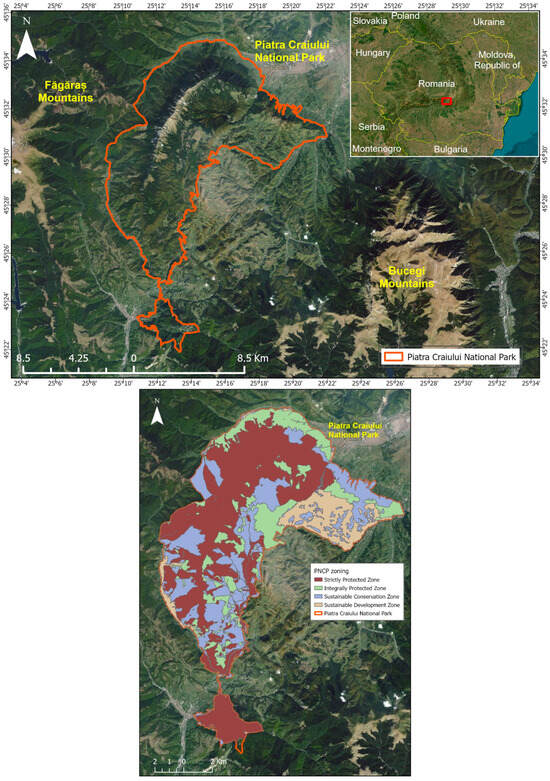
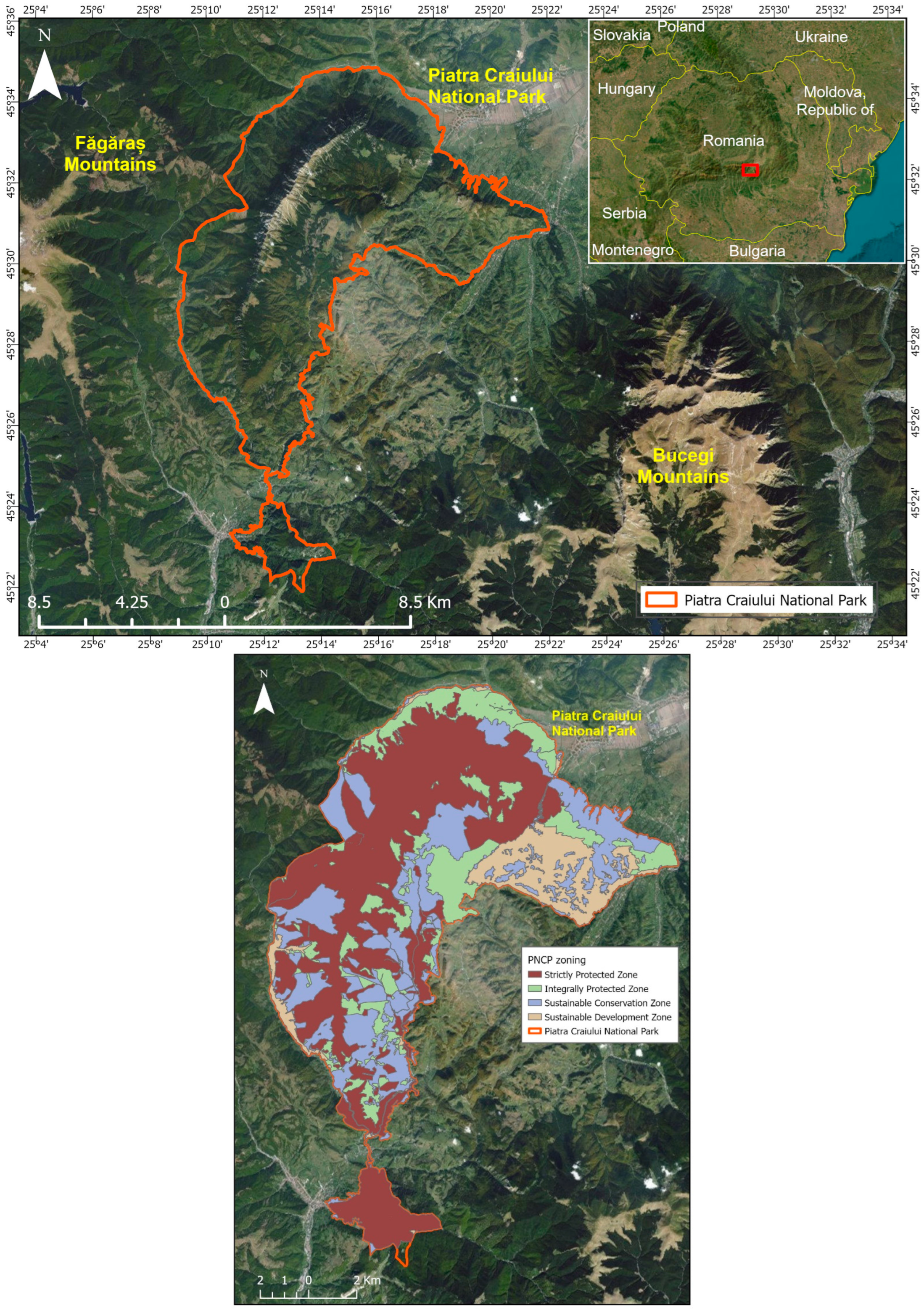
The Piatra Craiului Mountains, situated in the central-southern sector of the Southern Carpathians (Romania), represent a prominent calcareous ridge extending approximately 25 km in length, located between 45.10 and 45.35° N and 25.20–25.65° E (Figure 1). They constitute a limestone massif of the Southern Carpathians, widely recognized for their geomorphological singularity [30]. Mean annual temperatures vary from 6 to 8 °C at the foothills to values below 0 °C along the ridge [31]. At higher altitudes, annual precipitation usually exceeds 1000 mm, and snow cover usually persists for five to six months in sheltered sites [30]. The study was conducted within Piatra Craiului National Park (PCNP), which covers nearly the entire mountain massif and spans a broad altitudinal gradient from approximately 700 to 2200 m.a.s.l. Established in 1990, the park is a protected area aimed at conserving biodiversity and landscape values [32].
Figure 1.
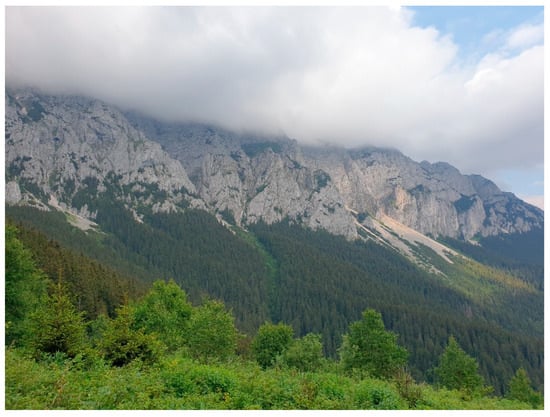
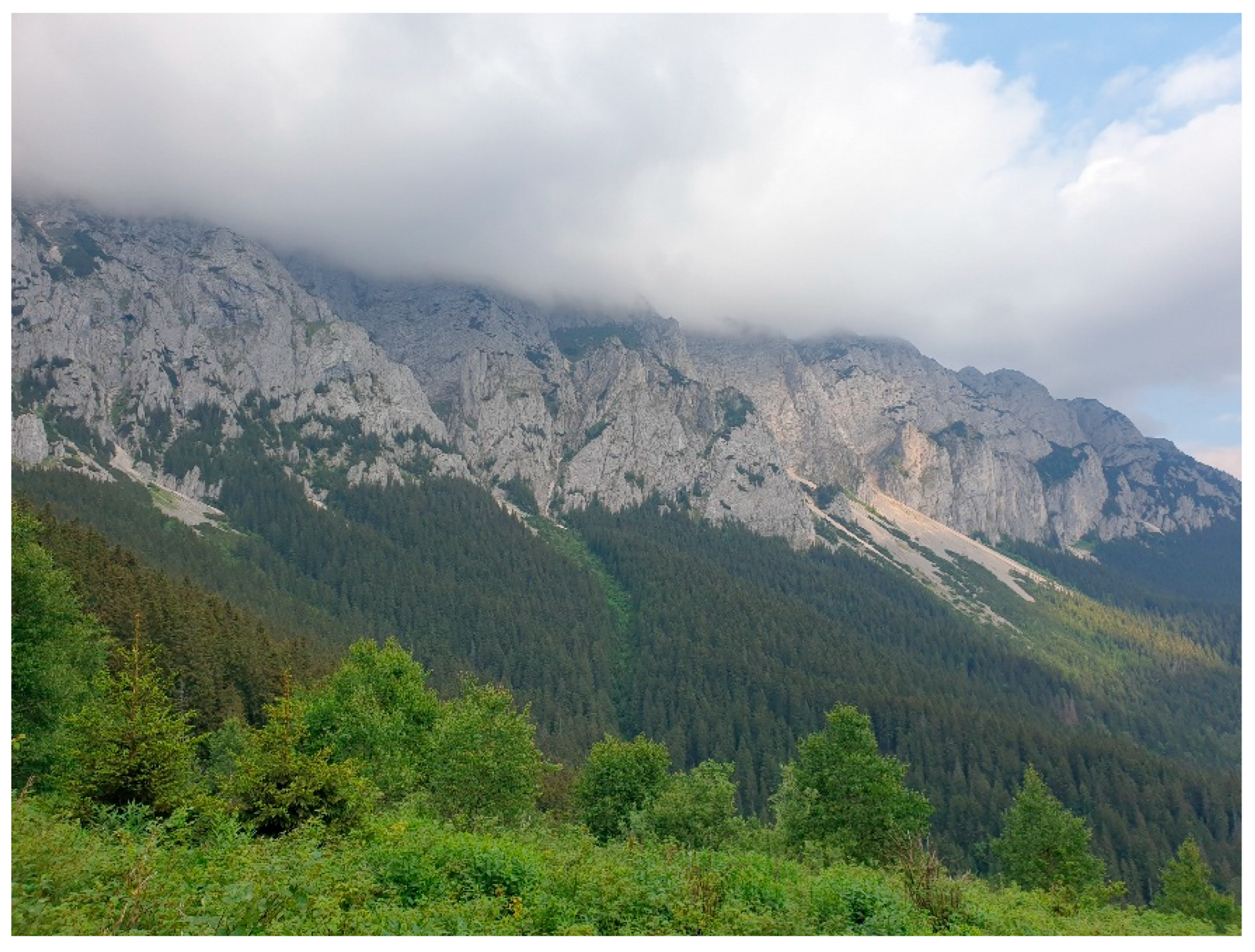
Piatra Craiului National Park, the western side of Marele Grohotis (The Large Scree) photo O. Pop (up) location of Piatra Craiului National Park in the region (center) and distribution of management zones (down) [32,33,34].
2.2. Field Data
For this study, a database of 387 sample plots (relevés) was created with plant surveys collected in the field (309) or extracted from the literature (78) [35]. The sampling covered an altitude gradient ranging from about 700 m to 2200 m, over three vegetation zones: nemoral, boreal, and subalpine. All vegetation plots included in this study were sampled within a relatively short and well-defined time window (2001–2005). Only taxa considered endemic at the national or regional (Carpathian) level were included in the analysis based on published national floras and Carpathian endemic checklists Usually, the assessments were carried out from late May to the end of August. Phytogeographical surveys were conducted as relevés [36] and the plant species were identified [37,38]. The size of sampling plots varied between 1 and 400 m2, depending on the size of the dominant species and vegetation complexity (smaller for aquatic and saxicolous vegetation and larger for shrubs and forests). To account for the potential effect of plot size, species richness was log-transformed per unit area. This approach helps to reduce the bias associated with the species–area relationship.
The percentage cover of each recorded species was estimated, along with the total vegetation cover in each plot.
From a phytogeographical perspective, the Piatra Craiului Mountains belong to the Pannonio–Carpathian province of the Eurosiberian region, within the Carpathian subprovince [39]. The vegetation exhibits well-defined vertical zones: the nemoral zone, i.e., deciduous forests (dominated by beech, Fagus sylvatica L.) and mixed stands of beech, fir and spruce (Fagus-Abies-Picea), occupying the foothills up to 1300 m; the boreal zone, i.e., spruce (Picea abies (L.) H.Karst.) forests up to 1600 (1700) m; the subalpine zone (1600–2200 m) which is characterized by dwarf mountain pine shrubs (Pinus mugo Turra) and subalpine grasslands and rocky areas; while the alpine belt above 2200 m consists of small patches of grasslands and rocky areas [40]. The calcareous substrate favors a particularly rich endemic flora.
2.3. Data Analysis
Ecological and disturbance indicator values for vascular plant species were extracted from European databases [41,42]. The endemic status and the threat categories of species at the national level follow the Carpathian endemic checklist [43].
Each plot was classified into Natura 2000 habitat type, based on species composition and site factors [43]. Synoptic tables for habitat types were created in the Juice software [44].
Data analyses focused in particular on the relationships between environmental gradients, habitat types, and endemic density in order to identify areas of high conservation importance. Principal components analysis ordination (PCA) was used to explore the ecological niches of endemics. The analyses were performed in R software version 4.5.2 (R Core team) [45], using packages vegan for PCA and ggplot2 for boxplots.
The spatial databases on habitat type distribution and the internal zonation of the National Park were retrieved from the management plan of the National Park [32]. Mapping and spatial analysis were performed in ArcGIS, Pro 3.6 USA [46].
3. Results
A total of 731 vascular plant species were present in the dataset from the study area. Previous studies reported 47 endemic taxa in the area, while our analysis confirmed 35 of these (74.47%). Among the confirmed taxa, 18 are also listed as species of conservation interest in the Management Plan (MP) [32] (Table 1).
Table 1.
The recorded endemic species in PCNP.
The analysis of the distribution of endemic species revealed different degrees of specificity in terms of habitat types and altitudinal belts. We differentiated 15 vegetation types, including 14 Natura 2000 habitats and one type outside the EUR 28 classification, along with the vegetation belt where they were found [47] (Table 2). The table provides an overview of the Natura 2000 habitats, their corresponding phytosociological associations, and the number of plots included in the analysis.
Table 2.
Habitat types and corresponding associations in the vegetation database of Piatra Craiului National Park.
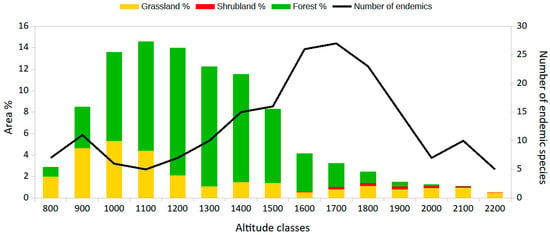
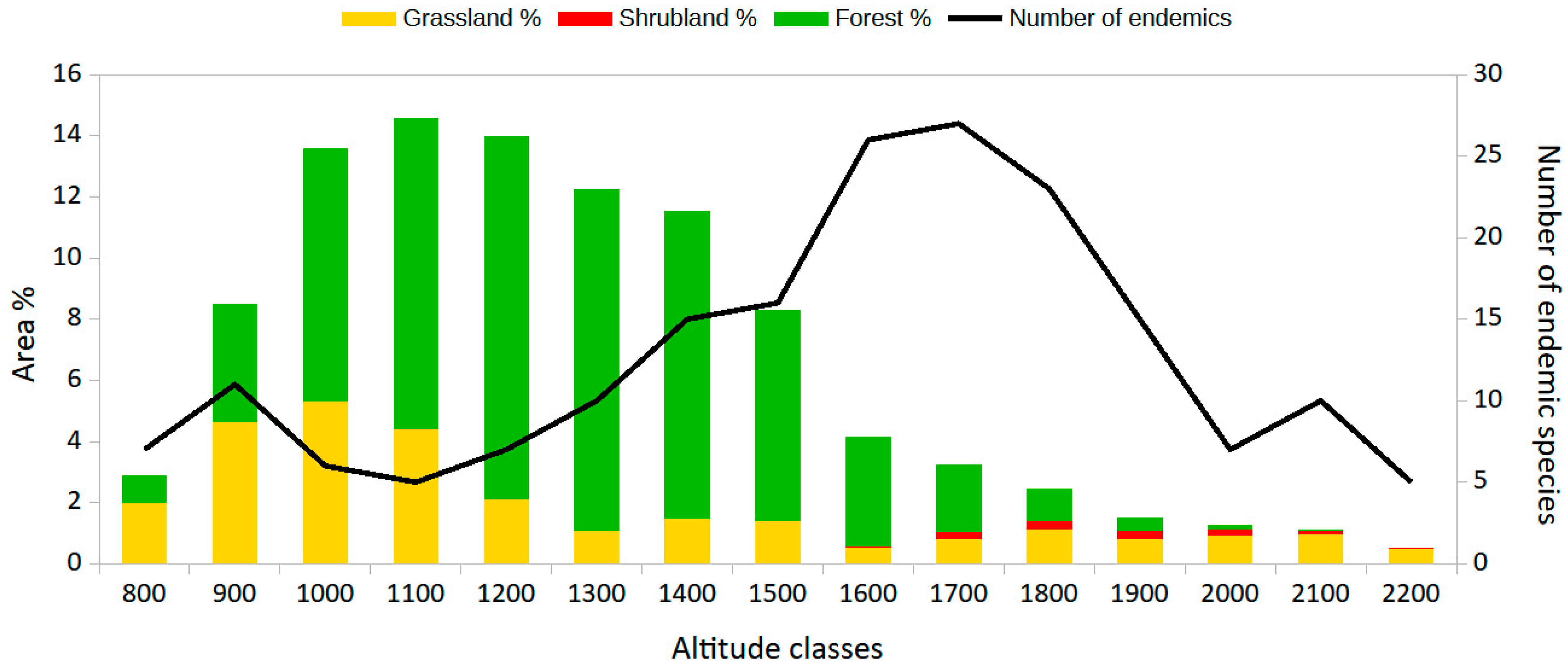
The distribution of endemic species along an altitude has approximately a bell shape (Figure 2), peaking between 1600 and 1700 m, where over 25 species per altitude class were recorded, despite these elevations representing only a small proportion of the park’s area. In contrast, mid-altitudes (1000–1300 m) occupy the largest share of the park but host relatively few endemics. This pattern highlights the disproportionate concentration of endemic species in higher-altitude habitats. It must be emphasized that this distribution is not shaped entirely by elevation, but also by vegetation classes, since the lower altitudes are dominated by forests and the upper by open habitats (grasslands, screes, and rocky slopes).
Figure 2.
The relationship between endemic species, vegetation classes and altitudes for Piatra Craiului National Park.
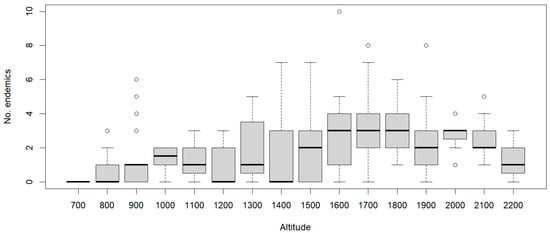
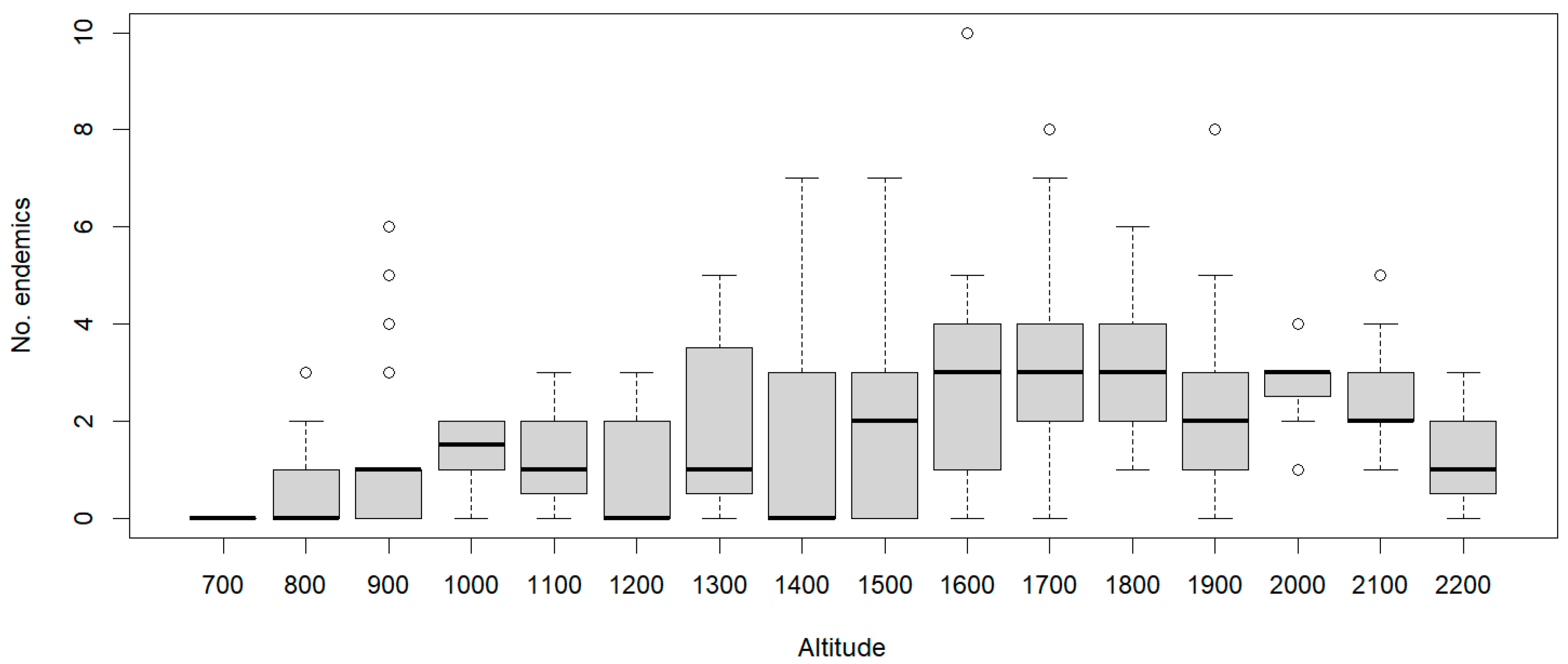
Figure 3 shows the variation in the number of endemic species per plot across altitude classes. The median number of endemics increases from lower elevations up to 1600–1800 m. Above 1800 m, the number of endemics slightly declines but remains higher than at lower elevations. The wide interquartile ranges and occasional outliers in mid- to high-altitude classes indicate greater heterogeneity in endemic richness at these elevations, likely reflecting the existence of more favorable microhabitats and environmental conditions.
Figure 3.
Variation in the number of endemic species per plot, by elevation class for PCNP.
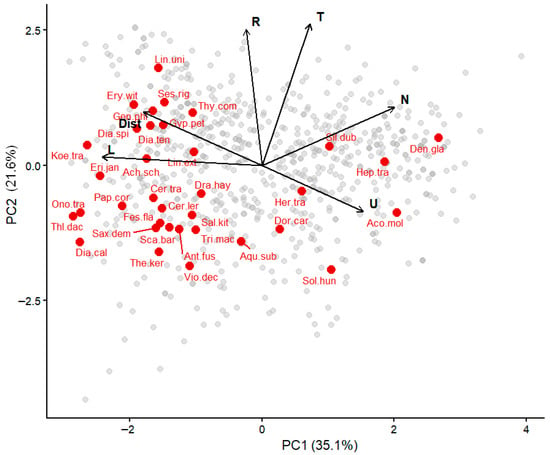
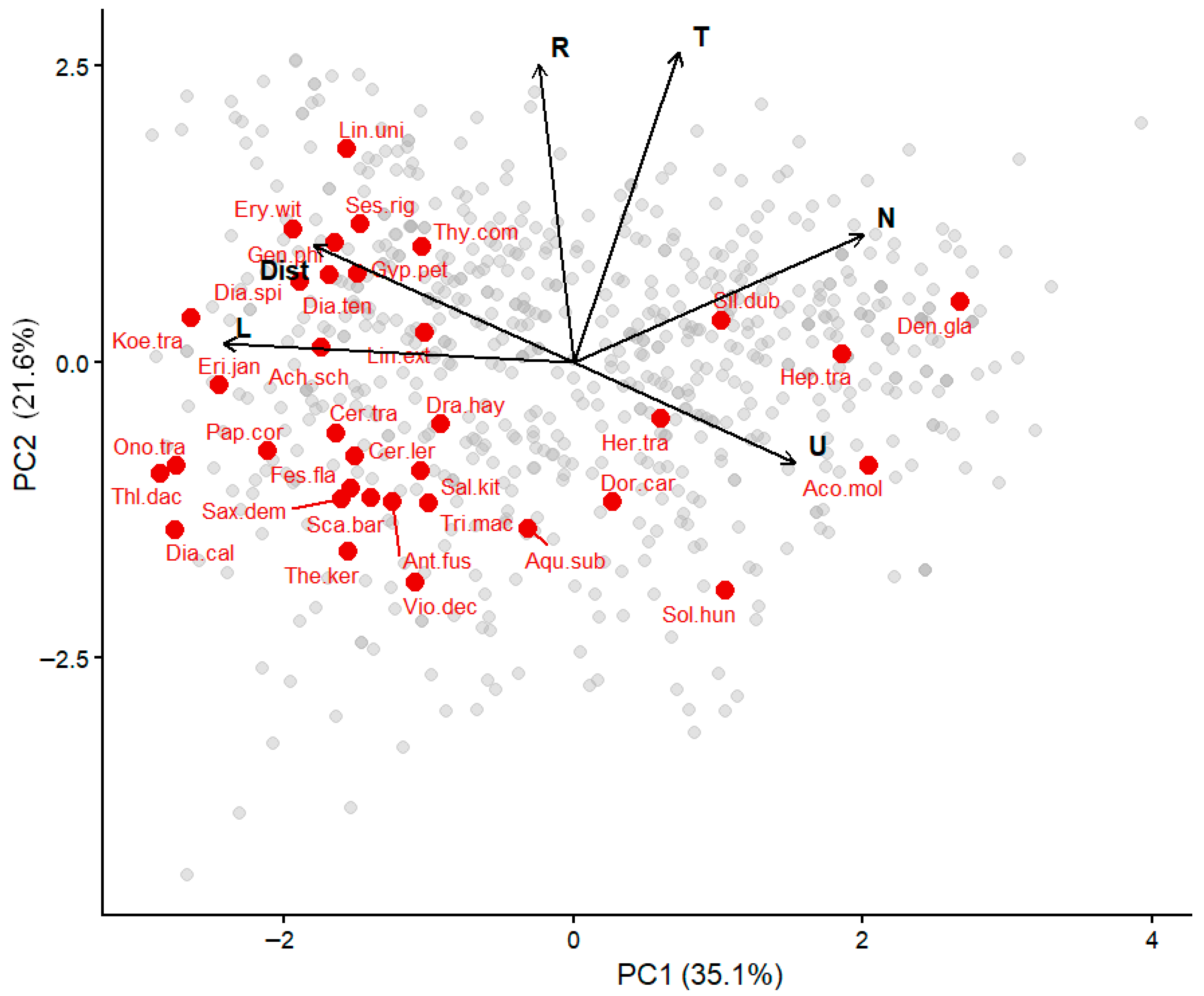
Endemic species occupy distinct areas of the environmental space (Figure 4).
Figure 4.
PCA of species based on ecological indicator values, emphasizing endemic species in PCNP (red dots). Gray dots = non-endemic species. The vectors are indicator values for light (L), temperature (T), soil moisture (U), soil reaction (R), nitrogen (N), and soil disturbance (Dist). Species names are coded with 3 letters from genus and 3 from specific epithet (see Table 1 for the full names).
The PCA biplot (Figure 4) synthesizes the relationships between species composition and ecological preferences expressed by Ellenberg/EIVE indicator values for light (L), nutrients (N), moisture (U), temperature (T), and soil reaction (R), supplemented by a disturbance indicator (Dist) that integrates the severity and intensity of disturbance. The percentage of variance explained by the first two components is: 35.1% for PC1 and 21.6% for PC2. The first principal component (PC1) reflects mostly the light and disturbance gradient that separates species from open, heavily disturbed, nutrient-poor habitats with high light requirements and species that prefer forest habitats, i.e., more mesic, nutrient-rich, and less disturbed conditions, indicating increased substrate stability and increased site productivity. The second principal component (PC2) represents a temperature–soil reaction gradient, separating species associated with warmer, neutral to weakly basic conditions from those preferring cooler and more acidic environments, consistent with altitudinal differentiation. Species on the left side of the ordination (such as Papaver corona- sancti-stephani, Saxifraga demissa, Cerastium transsilvanicum, and Thlaspi dacicum) are associated with high light availability, low nutrient and moisture levels, and high disturbance, reflecting stress-tolerant or pioneer strategies. In contrast, species on the right (such as Aconitum moldavicum, Hepatica transsilvanica, Dentaria glandulosa) are linked to higher nutrient and moisture availability and lower disturbance, indicating a preference for a more stable, forest environment.
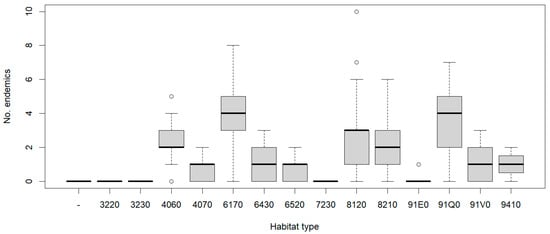
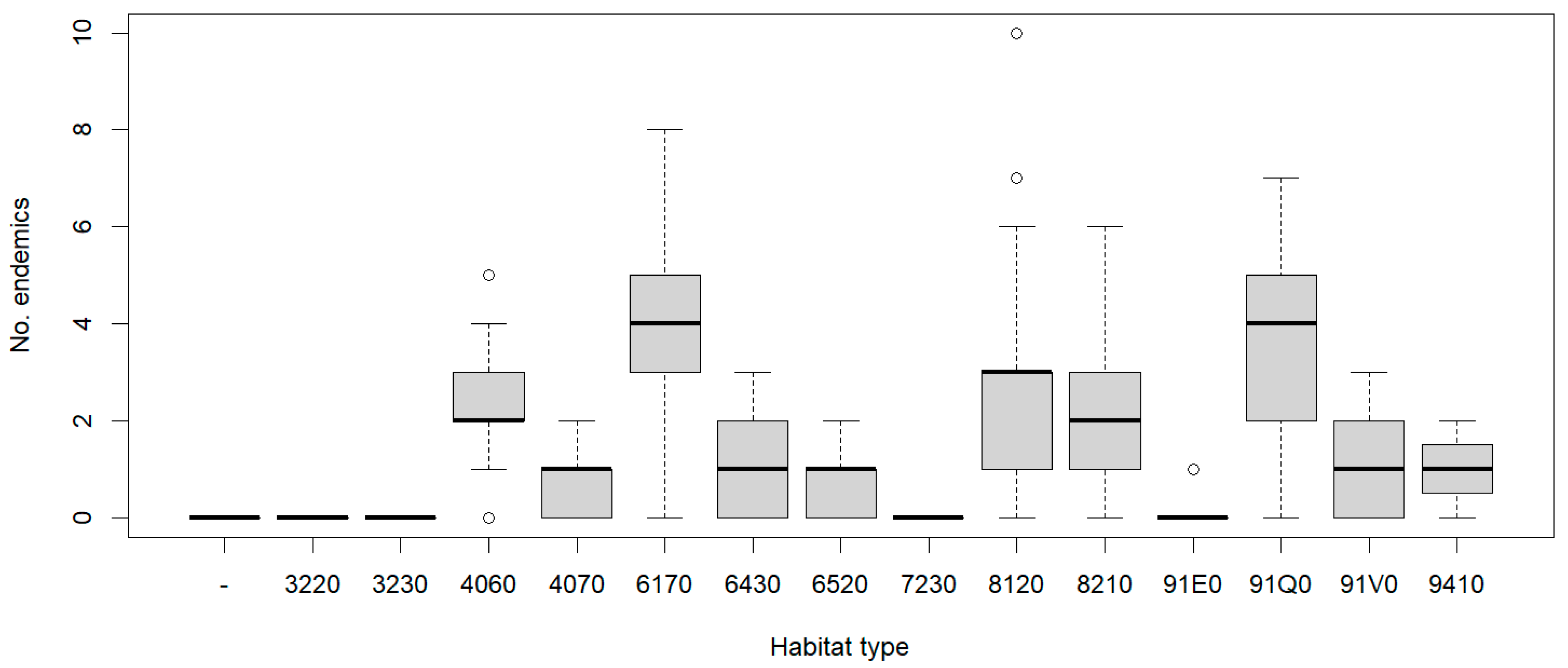
Analysis of the distribution of endemic species in Natura 2000 habitats highlights notable differences between the types of ecosystems investigated. The total number of endemic species varies considerably, from their absence in mesophilic and hygrophilous habitats (3220 and 3230) to higher values in rupicolous and calcareous habitats (6170, 8120, 8210, 91Q0, and 91Q0) (Figure 5).
Figure 5.
Number of plant endemics per plot, by habitat type for PCNP.
The habitats richer in overall endemic species are as follows: 6170—Alpine and subalpine calcareous grasslands (28 endemic species), 8120—Mountain and subalpine limestone screes (23 endemic species), and 8210—Calcareous rocky slopes with chasmophytic vegetation (19 endemics). In contrast, mesic or wet forest habitats (91E0, 91V0, and 9410), mesophilic grasslands (6520) or subalpine shrubs (4060, 4070) had a small number of endemics, most of which have wider ranges and low threat conservation status (LC or R) (Figure 6).
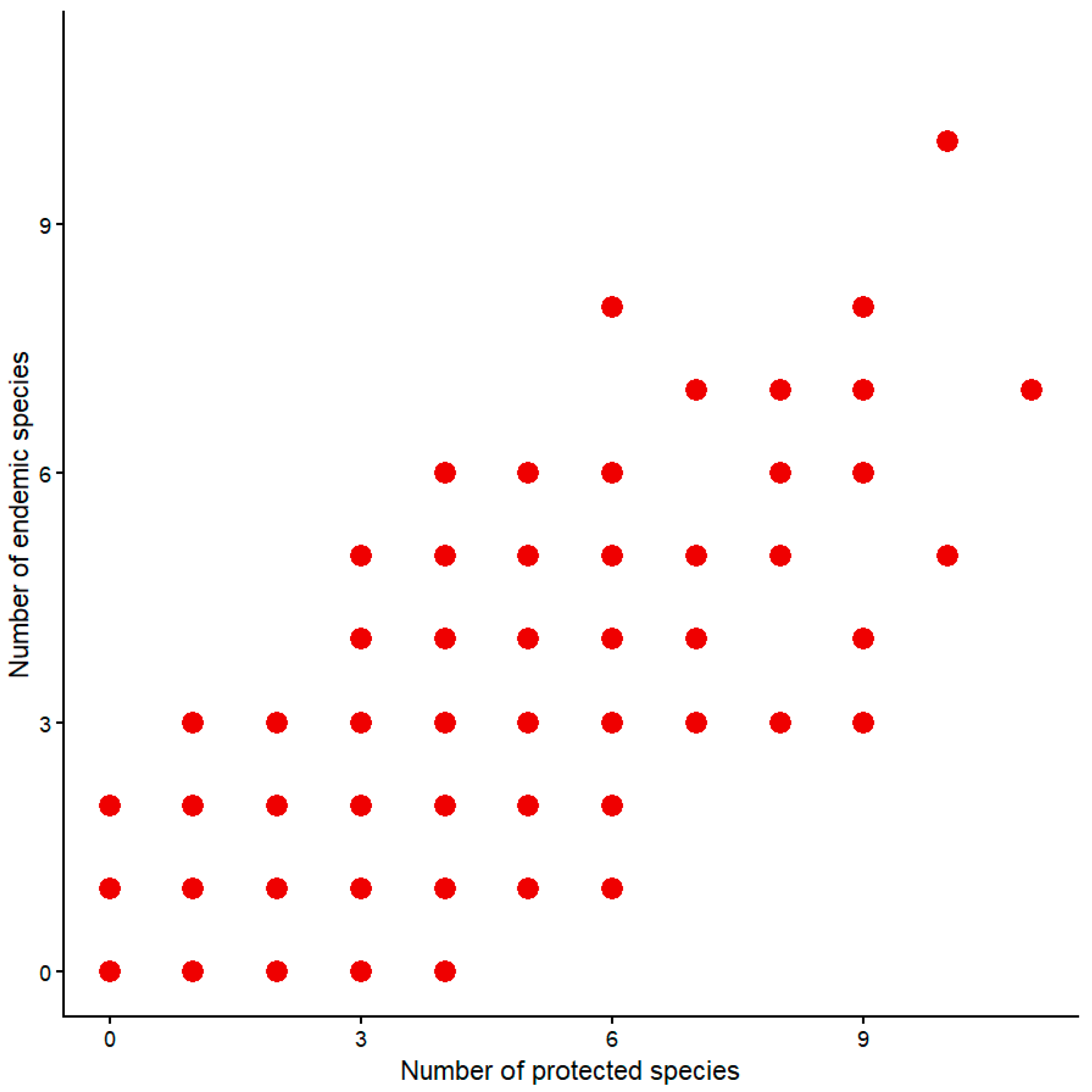
Figure 6.
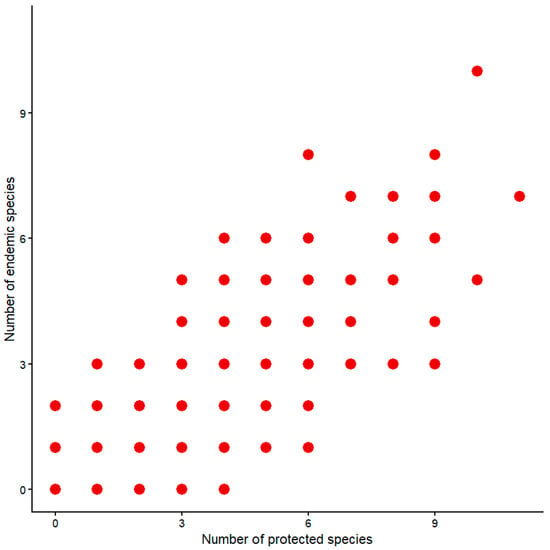
Relationship between the number of species of conservation interest and the number of endemic species recorded per site. Red dot sampling unit.
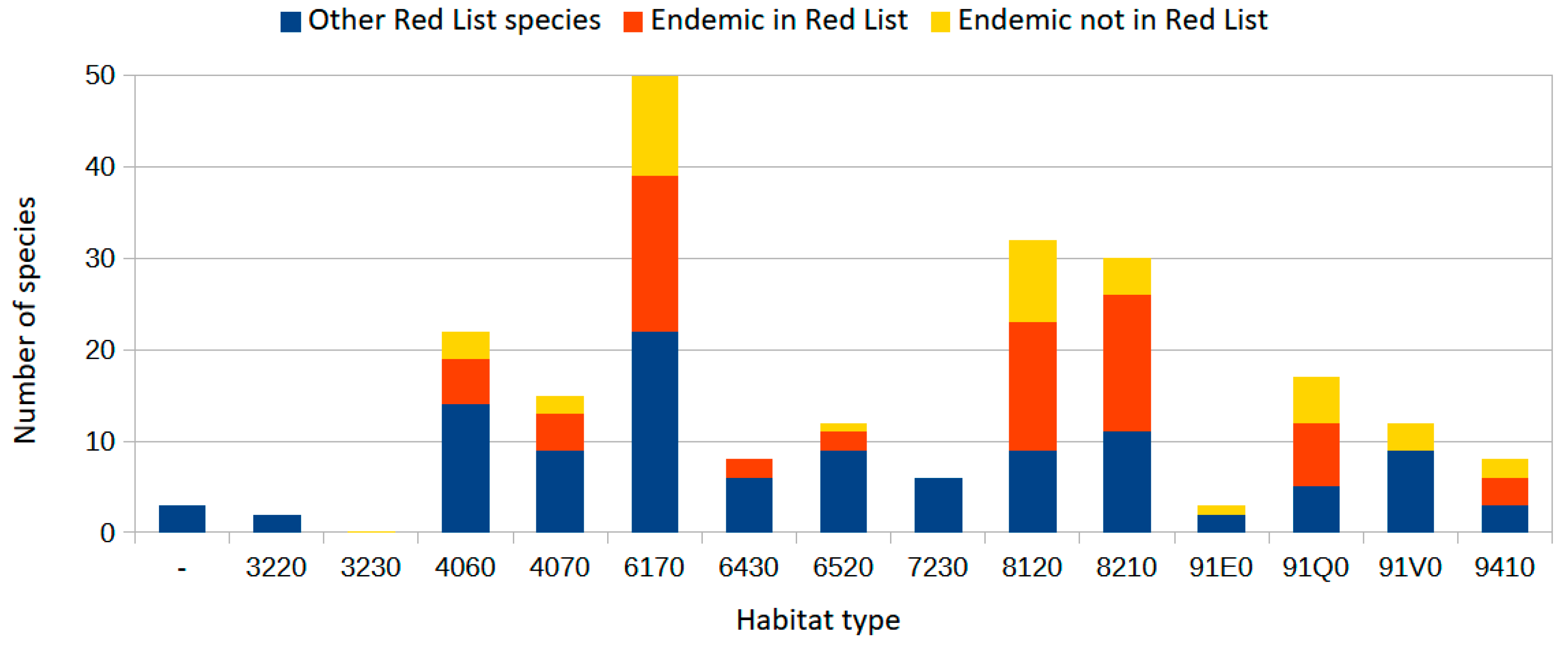
The correlation between the number of endemics and protected species (Figure 6, Table 3) is positive, strong and very significant (Pearson’s r = 0.67, p < 0.001). The scatterplot illustrates the positive relationship between the co-occurrence of endemics and species of conservation interest in sample plots. The number of species of conservation interest tends to increase along with endemics’ frequency (Figure 6, Table 3). Although variability was high, sites characterized by higher numbers of species of conservation interest generally exhibited higher numbers of endemic taxa (Figure 7).
Table 3.
The loadings of variables on the first 2 components.
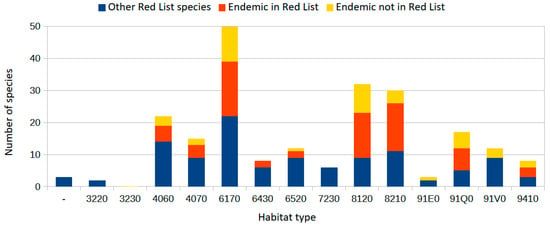
Figure 7.
The number of endemic and protected plant taxa across different habitat types for PCNP (coded according to the EU Habitats Directive).
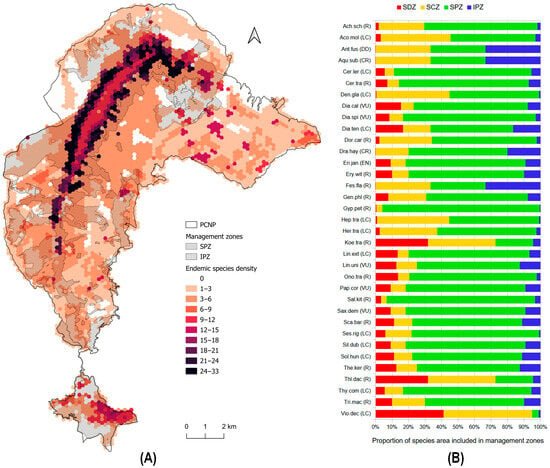
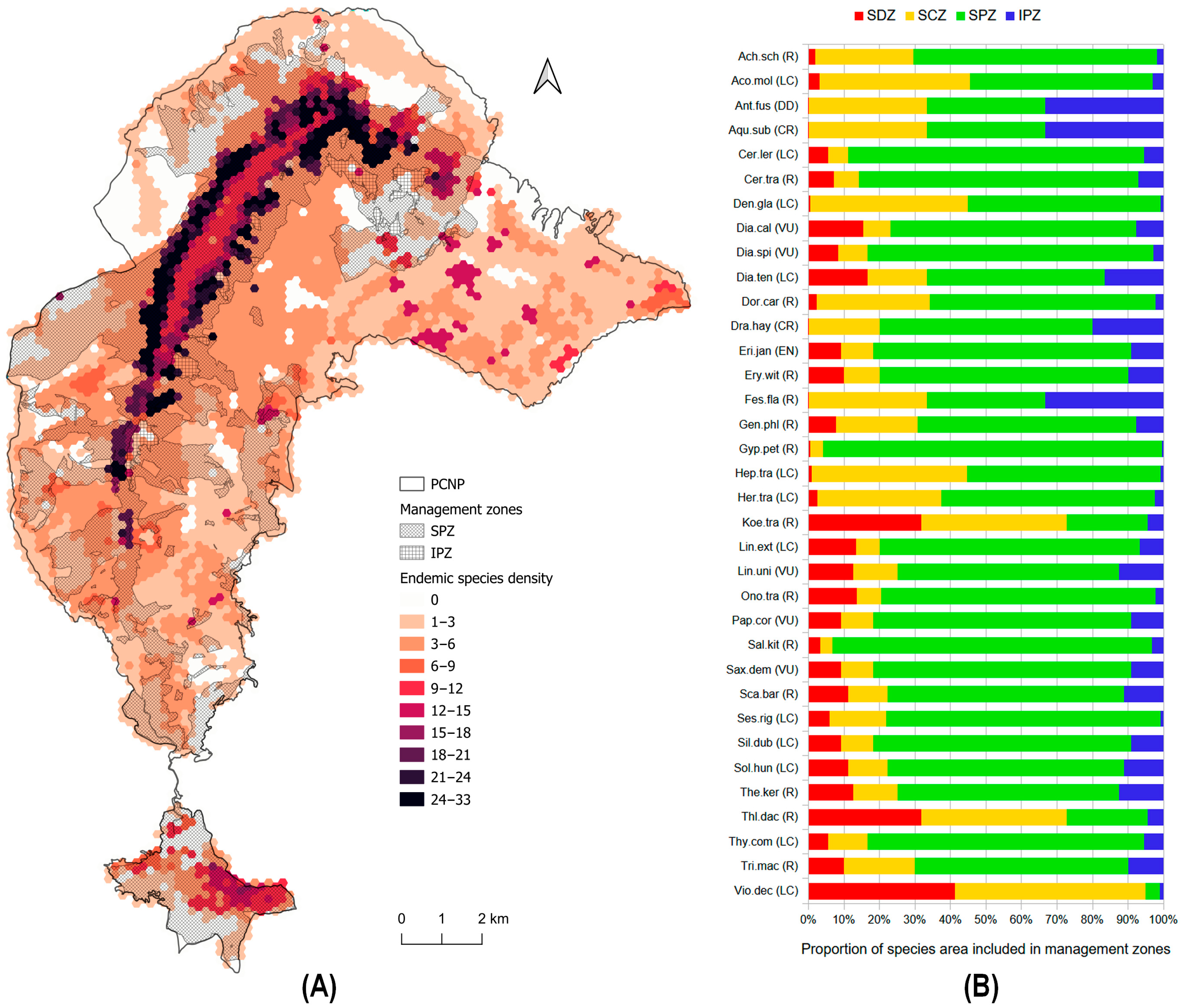
Based on their suitable habitats, the density of endemic species over the park’s territory is shown in Figure 8. It is remarkable that some grid cells concentrate 33 out of 35 endemics. From the map presented in Figure 8, it appears that the potential habitats of many endemic species are included in the SPZ (strict protection zone) and IPZ (integrally protected zone), thus benefiting from the highest degree of protection, in accordance with the PCNP Management Plan.
Figure 8.
The overlap between management zones and the potential habitats of endemic species. (A) The density of endemic plant taxa derived from habitat suitability, on a grid of 200 × 200 m. (B) The proportion of the endemic species areas covered by management zones. Codes for management zones: IPZ = integrally protected zone, SPZ = strict protection zone, SCD = sustainable conservation zone, SDZ = sustainable development zone. Codes of species threatening + rarity: R = rare, LC = least concern, DD = data deficient, VU = vulnerable, EN = endangered, CR = critically endangered from [43]. Species abbreviations correspond to the first three letters of the genus and species names; full names are provided in Table S1.
4. Discussion
Based on the 3136 species of spontaneous vascular plants recorded in Romania’s flora [35], it appears that Piatra Craiului National Park hosts about 24.8% (731 species) of the country’s higher plant diversity.
Altogether, 47 taxa representing endemic species or subspecies of the Carpathians have been reported in the study area based on previous literature [32]. Of these, 35 endemic taxa (74.47%) were confirmed by the surveys analyzed in this study. Out of the 47, a total of 18 species are also listed as species of conservation interest under the MP (25% of total endemics) [32]. However, some species were not identified in the analyzed releves, but have been reported in numerous locations within the park.
Considering all the endemic taxa recorded in the vegetation database of the PCNP, there are 20 species in the subalpine belt, 33 species in the boreal belt, and 20 species in the nemoral belt. The results also suggest that the distribution of phytosociological associations in vegetation belts indicates distinct ecological patterns. The nemoral belt, which contains the highest recorded number of associations, exhibits the largest structural and ecological diversity, particularly in wetlands and forest communities. The boreal belt is relatively poorer in species, dominated by coniferous forests and a restricted group of grasslands and ruderal communities, highlighting a limited diversity of the landscape. In contrast, the subalpine belt supports a mosaic of rocky, shrubby, and alpine grassland communities. Our findings, in line with previous studies [25] emphasize that ecological gradients (such as elevation) and vegetation belts strongly structure plant community distribution, leading to distinct associations with varying levels of diversity and heterogeneity across different habitats. Moreover, consistent with evidence from mountain forests, our results confirm that vegetation distribution along ecological gradients highlights distinct altitude limits and community boundaries within vegetation belts [48,49].
The analysis of these results shows that although mid-altitude zones (1000–1300 m) occupy the largest share of the park’s area, the highest cumulative numbers of endemic species occur at higher altitudes (1600–1700 m), highlighting the disproportionate importance of upper montane and subalpine habitats for endemism. Thus, endemism was highest in subalpine vegetation (grasslands and rocky areas), moderate in boreal vegetation, low in nemoral vegetation, and nearly absent in wetlands and scrublands [50]. Our results are consistent with previous findings for the Alps, showing that endemic plant taxa reach their maximum diversity at higher elevations, particularly in the subalpine and lower alpine belts [51,52,53]. Based on our data, subalpine vegetation, especially grasslands and rocky areas, supported the highest endemism values, while the boreal belt harbored moderate levels, concentrated in grasslands and rocky substrates. By contrast, within the nemoral belt the endemics showed only isolated occurrences, mostly in forests and rocky areas, being nearly absent from wetlands and scrublands. These patterns confirm that altitude and vegetation structure contributed to endemic preservation, with rocky and grassland habitats above the tree line being especially critical for the persistence of endemic species.
Similar maxima at medium altitudes for endemics have been documented in other South American mountains, where a combination of cool climate, heterogeneous substrates, moderate disturbances, and low competition favors endemic species. In the Andes, for example, endemic herbs, shrubs, and epiphytes are most numerous between 1500 and 3000 m [54]. Stress tolerance traits, such as larger seed size, further enhance persistence under edaphic constraints [5,55,56].
In the Northeastern Limestone Alps, endemics are concentrated at high elevations in alpine meadows and azonal habitats, where their narrow niches and restricted ranges make them distinct yet highly vulnerable to climate change, underscoring the need for targeted conservation [53]. Our results similarly indicate subalpine grasslands and rocky habitats as endemic richness hotspots (upper quartile classes), where specific microclimates, skeletal soils, and low competitive pressure allow glacial relicts to persist. The study by Dítě et al. [56] identified glacial relict species in the Western Carpathians based on biogeographical and ecological criteria, revealing a clear gradient of relict characteristics that reflects post-glacial retreat patterns and former glacial vegetation zonation.
However, Selvi et al. [57] found the nemoral and subalpine belts serve as centers of phytocoenotic diversity, while the boreal belt is more specialized but less diverse, and hygrophilous forests also host many endemics, paralleling Italian patterns of increasing southern forest endemism [58]. The results indicate that ruderal vegetation and nemoral scrub contribute little to endemism, whereas subalpine grasslands and rocky areas represent clear hotspots, with both high averages and notable maximum values of endemic species. Boreal grasslands and rocky areas also sustain moderate levels of endemism, highlighting the importance of higher-altitude habitats for the conservation of endemic flora. These results also clearly highlight the concentration of endemics in open mountain habitats (grasslands and rocky areas), with maximum endemic diversity at medium and high altitudes, especially in the subalpine belt. Similar conclusions have already been drawn from a study covering the entire Southern Carpathians, not just the area covered by this study [40].
The plant species are considered of interest for conservation due to their vulnerability, restricted distribution, or ecological specificity, and their co-occurrence with endemic taxa may reflect shared habitat requirements or similar sensitivities to environmental constraints. The protection of plant species of interest for conservation is achieved through national legislation, international conventions, or regional directives and aims to ensure the long-term persistence of species that are vulnerable, endangered, critically endangered, rare, endemic, or otherwise of high conservation concern [58,59]. In this context, Romanian legislation exhibits multiple shortcomings with respect to the protection of endemic plant species and other taxa of conservation concern, with the notable exception of species of community interest listed under the EU Habitats Directive. Although Government Emergency Ordinance (GEO) No. 57/2007 [60] includes general provisions referring to the protection of endemic taxa and those of national interest, its annexes enumerate only a limited number of plant taxa and fail to explicitly include endemic species or other taxa of genuine conservation relevance for the Carpathian Mountain region. Consequently, areas identified through the presence of species of interest for conservation [43], function as effective surrogates for identifying sites of high endemic diversity. The observed association between endemic richness and the number of plant species of interest for conservation, combined with the marked variability among sites, supports the view that effective conservation cannot rely on a single set of priority areas. Similar conclusions have been reached in other biogeographical contexts, where the conservation of rare and endemic taxa was shown to require the designation of multiple protected areas spanning broad environmental gradients and diverse biogeographical units [56,57].
The plant species of conservation interest were generally concentrated in areas that experienced little environmental change, regardless of habitat type. Although Natura 2000 sites followed the general greening trend that affects species of high altitudes or open habitats, they showed fewer loss events compared to unprotected areas due to their effectiveness in reducing human-driven land cover changes [60].
4.1. Potential Threats
The results indicate that the flora of PCNP is primarily differentiated along gradients of nutrient availability, disturbance regime, and light conditions, while temperature and soil reaction act as secondary gradients. These patterns suggest that ecologically specialized communities are sensitive to external pressures, including climate change. Moreover, our results, together with previous findings, highlight subalpine habitats as important reservoirs of biodiversity, supporting high levels of endemism [61,62]. However, these habitats are likely to be among the most vulnerable to climate warming, given the limited maximum elevation of Piatra Craiului. Species confined to alpine and subalpine belts may face increasing population isolation and progressive contraction of suitable habitats, potentially resulting in reduced population sizes and diminished genetic viability. Land use strongly modulates endemic persistence. Traditional practices, such as extensive grazing, maintain open grasslands suitable for many endemic species, while abandonment or overgrazing rapidly erode their diversity. Rocky habitats are particularly important for conservation because they traverse multiple vegetation belts, promoting ecological connectivity along the altitudinal gradient and supporting a substantial number of endemic taxa. In contrast, nemoral forests, limited to lower altitudes, contribute primarily to landscape diversity rather than vertical connectivity. The obtained results confirm and justify the need to prioritize conservation efforts on subalpine and boreal grasslands and rocky habitats, using specific management measures adapted to each type of habitat and local ecological conditions [63].
Moreover, endemic plant species can be effectively used as indicators of the success of management actions aimed at conserving biodiversity in protected areas, such as Dianthus callizonus a local endemic for Piatra Craiului Mts. [64]. Because threatened endemic species are generally sensitive to anthropogenic pressures, periodic assessments of their conservation status provide valuable information on the effectiveness of management measures, both in safeguarding endemic plant species and in maintaining the integrity of their habitats. Consequently, monitoring the populations of selected endemic species represents an essential component for evaluating the effectiveness of management activities in Piatra Craiului National Park [32]. Westerband et al. [65] found that although native and alien invasive species are functionally similar at the regional scale, the success of invaders at the local scale depends on climate suggesting that variations in temperature and precipitation regimes alter local invasion dynamics even in the absence of changes in regional species pools.
4.2. Habitats Conservation
A plant species of conservation interest benefits from legal protection in recognition of its importance at a national or regional scale. The presence and abundance of species of conservation interest vary significantly between habitat types. Certain habitats (6170, 8120, and 91Q0) have higher average values and a wider distribution, while other habitat types (3220, 3230, 7230, and 91E0) contain few or no plant species of interest for conservation.
The spatial distribution of habitats of community interest [32,66,67] highlights a clear ecological structure, controlled by the altitudinal gradient. Subalpine grasslands and rocky habitats (6170, 8120, and 8210) are concentrated in the central area, corresponding to subalpine and alpine zones, where severe climatic conditions and diverse lithological bedrocks favor the presence of a large number of endemic species. In contrast, forest habitats (91Q0, 91V0, and 9410) dominate the lower and intermediate elevations. Hygrophilous and riparian habitats located along main valleys (3230 and 91E0*) have a limited distribution and low conservation status for plant species but high ecological importance as habitat for other groups of species. This distribution confirms the general trend that floristic diversity and endemism increase with altitude and habitat isolation, while area and continuity increase in forest ecosystems [68].
The spatial distribution of different types of protected areas in Piatra Craiului and its surroundings shows an overlap between the National Park (PNPC) and ROSAC0194 Piatra Craiului, a Site of Community Importance designated for the conservation of habitats and species of community interest.
The considerable variability within some habitat types (e.g., 6170 and 8120) indicates that endemism is strongly influenced by habitat heterogeneity. Rocky and alpine habitats (6170, 8120, and 8210) are therefore the most valuable ecosystems in terms of conserving endemic biodiversity in the Piatra Craiului Mountains. There are relict species adapted to cold conditions, but they are also among the most vulnerable to climate warming and anthropogenic activities (land use change and tourism). Consequently, these habitats should be given priority in conservation management plans, through regular monitoring of endangered species, maintenance of the natural substrate regime, and restriction of intensive human use as the management plan (MP) already suggests.
Subalpine grasslands and scree habitats are covered by strictly protected areas within existing nature reserves. Boreal grasslands and rocky areas need to be integrated into ecological corridors to maintain connectivity with the subalpine zone and prevent the isolation of endemic populations. Non-boreal rocky habitats where rare or endemic species are found need specific protection against exploitation and uncontrolled tourism [67].
Agricultural practices such as grazing and mowing are traditional activities in Piatra Craiului. In a previous study, the negative impact of overgrazing on Dianthus callizonus was proven [68], since the stem of this species is very sensitive to trampling. Therefore, grazing should be strictly controlled inside the landscape units comprising these sensitive species [69]. Although it is recognized that we need to apply sustainable agricultural practices, the conservation measures should be stricter and further developed with the support of locals to gain ownership for the implementation of conservation measures.
Traditional grazing and moderate mowing need to be maintained where they are already happening, as it has been proven by the historical land use in the region to prevent existing vegetation loss, due to secondary ecological successions. In the case of grazing, it should be managed through the optimization of livestock size, pasture rotation and rest periods. A consequence of intensive grazing can be the spread and enhancement of invasive species [61].
New social innovation measures and organizations were developed by the park administration with the support of the locals due to unsustainable tourism activities. The involvement of the locals in developing symbolic “ownership” over unique species and habitats should be one of the key points in the implementation of MP [32].
Conservation efforts need to be integrated with long-term monitoring of endemic species, high-resolution habitat mapping, and predictive modeling, as well as genetic analyses of population diversity and connectivity. The global recognition of the role of endemic species in heritage conservation is important for ensuring sustainable conservation results. Although based largely on historical surveys, the results of this study provide a consolidated reference framework that supports protected area planning. Furthermore, promoting agroecological measures that recognize traditional land-use practices beneficial to endemic species is considered important for maintaining biodiversity and landscapes [32].
In this study of the national park, most of the habitats, ecosystems, and altitudinal belts that contain the highest number of threatened endemic plant species are included in either the strictly protected area or the fully protected area. Due to the strict protection regime applied in these areas, both the species and habitats present are implicitly granted a high level of protection. In contrast, endemic plant species occurring in lower altitude habitats are less protected because they are included in areas of the park that are more permissive of human activities, such as the Sustainable Conservation Zone and the Sustainable Development Zone.
The territory of the National Park overlaps, in its largest part, with a Natura 2000 site—ROSCI0194 Piatra Craiului. In accordance with European and national legislation, this site is designated for the protection of species and habitats of community interest and therefore not specifically for the protection of endemic or rare species. According to this, only the plant species included in the Standard Form of the SCI Piatra Craiului are explicitly protected outside the Strictly Protected Zone and Integral Protection Zone of the National Park: Cypripedium calceolus, Tozzia carpathica, Liparis loeselii and Campanula serrata which are included in Annex 2 of the Habitats Directive.
Inside the special area of protection (ROSAC0194 Piatra Craiului), endemic and rare plant species are implicitly protected within the Natura 2000 habitats in which they are found. In the case of Natura 2000 habitats, however, their protection is conducted at the global level of the habitat, with an emphasis on maintaining the favorable conservation status of the habitat in terms of structure, functions, and prospects without making additional or specific mentions regarding endemic or rare plant species.
A relevant subject should be creating synergic actions among the Kunming–Montreal Global Biodiversity Framework of the Convention on Biological Diversity and the UNESCO Intangible Heritage Convention. A complementary regulatory framework should be developed for the mountain-sensitive habitats, where the recognition of traditional knowledge related to the conservation of intact habitats and threatened species should be part of incentive measures meant to protect nature and local human populations.
In this regard, Keith and collaborators [70], since 2013, have provided a methodology to analyze the mechanisms of ecosystem collapse, and symptoms of the risk of collapse [71]. Thus, it is advisable for the future to support the idea of studying scenarios related to climate change impact on the entire mountain, and based on further results, the entire mountain should be taken into consideration for revising the present conservation measures and avoiding ecosystem collapse for the future.
At least two methodological guidelines have been developed and published in the quest to support further biodiversity conservation at the ecosystem level [72,73] by providing a methodology to analyze mechanisms of ecosystem collapse, and symptoms of the risk of collapse [72]. Thus, it is advisable for the future to support the idea of studying scenarios related to climate change impact for the entire mountain, including potential unforeseen wildfires, invasive species impact, or unforeseen anthropogenic impacts that may reduce the distribution of sensitive species and habitats [74,75].
5. Conclusions
The analysis pointed out the major role of grasslands and rocky habitats in subalpine and boreal zones in maintaining endemic plant diversity in the studied area. The maximum concentration of endemic species at high altitudes confirms the importance of these ecosystems for species adapted to narrow and often restrictive ecological conditions.
Conversely, ruderal and synanthropic vegetation, scrubland, and wetland habitats have low endemism values.
Maintaining the ecological functionality of these habitats—through either strict protection, adaptive management, or local community involvement—is an important element in order to ensure the long-term survival of endemic species and the resilience of mountain ecosystems in the context of climate change and anthropogenic pressures.
The conservation of these habitats is not only of national importance, but also contributes significantly to maintaining genetic and ecosystem diversity on a continental scale. However, to ensure the effective protection of all threatened endemics, conservation efforts should be reasonably extended to other vegetation belts and habitat types.
Supplementary Materials
The following supporting information can be downloaded at: https://www.mdpi.com/article/10.3390/conservation6020060/s1, Table S1. Endemic species found in the vegetation belts.
Author Contributions
Conceptualization, C.B.-N., O.G.P. and M.M.A.; methodology, C.B.-N., O.G.P. and M.M.A.; software, A.I.; validation, C.B.-N., O.G.P., A.I. and M.M.A.; formal analysis, A.I.; investigation, O.G.P.; writing—original draft preparation, C.B.-N.; writing—review and editing, C.B.-N., O.G.P., A.I. and M.M.A.; visualization, O.G.P., M.M.A. All authors have read and agreed to the published version of the manuscript.
Funding
This research was funded by the Institute of Biology Bucharest, Romanian Academy, grant number RO1567-IBB01/2025 for C.B.N and Transilvania University of Brasov, grant COFUND-BIODIVERSA+G4B-3/2024, for A.I.
Institutional Review Board Statement
Not applicable.
Informed Consent Statement
Not applicable.
Data Availability Statement
The original contributions presented in this study are included in the article/Supplementary Materials. Further inquiries can be directed to the corresponding author.
Acknowledgments
The author would like to thank eng. Adrian Pătrulescu for his expert assistance in designing and producing the maps.
Conflicts of Interest
The authors declare no conflicts of interest.
References
- Yang, C.; Xu, H.; Li, Q.; Wang, X.; Tang, B.; Chen, J.; Tu, W.; Zhang, Y.; Shi, T.; Chen, M.; et al. Global loss of mountain vegetated landscapes and its impact on biodiversity conservation. Nat. Commun. 2025, 16, 8971. [Google Scholar] [CrossRef] [Scilit]
- Schmitt, T. Biogeographical and evolutionary importance of the European high mountain systems. Front. Zool. 2009, 6, 9. [Google Scholar] [CrossRef] [Scilit]
- Mráz, P.; Barabas, D.; Lengyelová, L.; Turis, P.; Schmotzer, A.; Janišová, M.; Ronikier, M. Vascular plant endemism in the Western Carpathians: Spatial patterns, environmental correlates and taxon traits. Biol. J. Linn. Soc. 2016, 119, 630–648. [Google Scholar] [CrossRef] [Scilit]
- Kajtoch, Ł.; Cieślak, E.; Varga, Z.; Paul, W.; Mazur, M.A.; Sramkó, G.; Kubisz, D. Phylogeographic patterns of steppe species in Eastern Central Europe: A review and the implications for conservation. Biodivers. Conserv. 2016, 25, 2309–2339. [Google Scholar] [CrossRef] [Scilit]
- Rajakaruna, N. The edaphic factor in the origin of plant species. Int. Geol. Rev. 2004, 46, 471–478. [Google Scholar] [CrossRef] [Scilit]
- Bálint, M.; Ujvárosi, L.; Theissinger, K.; Lehrian, S.; Mészáros, N.; Pauls, S.U. The Carpathians as a major diversity hotspot in Europe. In Biodiversity Hotspots; Springer: Berlin/Heidelberg, Germany, 2011; pp. 189–205. [Google Scholar]
- Mráz, P.; Ronikier, M. Biogeography of the Carpathians: Evolutionary and spatial facets of biodiversity. Biol. J. Linn. Soc. 2016, 119, 528–559. [Google Scholar] [CrossRef] [Scilit]
- Morueta-Holme, N.; Enquist, B.J.; McGill, B.J.; Boyle, B.; Jørgensen, P.M.; Ott, J.E.; Peet, R.K.; Šímová, I.; Sloat, L.L.; Thiers, B.; et al. Habitat area and climate stability determine geographical variation in plant species range sizes. Ecol. Lett. 2013, 16, 1446–1454. [Google Scholar] [CrossRef] [Scilit]
- Rączkowska, Z. The Carpathians. In Periglacial Landscapes of Europe; Springer International Publishing: Cham, Switzerland, 2023; pp. 253–279. [Google Scholar]
- Erdős, L.; Ambarlı, D.; Anenkhonov, O.A.; Bátori, Z.; Cserhalmi, D.; Kiss, M.; Kröel-Dulay, G.; Liu, H.; Magnes, M.; Molnár, Z.; et al. The edge of two worlds: A new review and synthesis on Eurasian forest-steppes. Appl. Veg. Sci. 2018, 21, 345–362. [Google Scholar] [CrossRef] [Scilit]
- Antonelli, A.; Kissling, W.D.; Flantua, S.G.A.; Bermúdez, M.A.; Mulch, A.; Muellner-Riehl, A.N.; Kreft, H.; Linder, H.P.; Badgley, C.; Fjeldså, J.; et al. Geological and climatic influences on mountain biodiversity. Nat. Geosci. 2018, 11, 718–725. [Google Scholar] [CrossRef] [Scilit]
- Gordon, J.E. Geoheritage, geotourism and the cultural landscape: Enhancing the visitor experience and promoting geoconservation. Geosciences 2018, 8, 136. [Google Scholar] [CrossRef] [Scilit]
- Körner, C. Why are there global gradients in species richness? Mountains might hold the answer. Trends Ecol. Evol. 2000, 15, 513–514. [Google Scholar] [CrossRef] [Scilit]
- Hlásny, T.; Trombik, J.; Dobor, L.; Barcza, Z.; Barka, I. Future climate of the Carpathians: Climate change hotspots and implications for ecosystems. Reg. Environ. Change 2016, 16, 1495–1506. [Google Scholar] [CrossRef] [Scilit]
- Kim, J.Y.; Yoon, J.; Choi, Y.S.; Eo, S.H. The influencing factors for distribution patterns of resident and migrant bird species richness along elevational gradients. PeerJ 2022, 10, e13258. [Google Scholar] [CrossRef] [Scilit] [PubMed]
- Slezák, M.; Hrivnák, R. How do environmental variables shape plant species diversity and composition in beech forests of Central Slovakia? Biologia 2019, 74, 1295–1301. [Google Scholar] [CrossRef] [Scilit]
- Doležal, J.; Šrůtek, M. Altitudinal changes in composition and structure of mountain-temperate vegetation: A case study from the Western Carpathians. Plant Ecol. 2002, 158, 201–221. [Google Scholar] [CrossRef] [Scilit]
- Sekar, K.C.; Thapliyal, N.; Bhojak, P.; Bisht, K.; Pandey, A.; Mehta, P.; Negi, V.S.; Rawat, R.S. Early signals of climate change impacts on alpine plant diversity in Indian Himalaya. Biodivers. Conserv. 2025, 34, 207–233. [Google Scholar] [CrossRef] [Scilit]
- Nitzu, E.; Vlaicu, M.; Giurginca, A.; Meleg, I.N.; Popa, I.; Nae, A.; Baba, Ş. Assessing preservation priorities of caves and karst areas using the frequency of endemic cave-dwelling species. Int. J. Speleol. 2018, 47, 43–52. [Google Scholar] [CrossRef] [Scilit]
- Breman, E.; Hurdu, B.-I.; Kliment, J.; Kobiv, Y.; Kučera, J.; Mráz, P.; Pușcaș, M.; Renaud, J.; Ronikier, M.; Šibík, J.; et al. Conserving the endemic flora of the Carpathian Region: An international project to increase and share knowledge of the distribution, evolution and taxonomy of Carpathian endemics and to conserve endangered species. Plant Syst. Evol. 2020, 306, 59. [Google Scholar] [CrossRef] [Scilit]
- Biță-Nicolae, C.; Yildiz, F.; Kaya, O. Exploring the biodiversity and conservation value of alpine grasslands in the Bucegi Massif, Romanian Carpathians. Sustainability 2023, 15, 12643. [Google Scholar] [CrossRef] [Scilit]
- Biță-Nicolae, C.; Dhyani, P. Plant diversity: The key to ecosystem resilience in a changing world. Front. Plant Sci. 2025, 15, 1534119. [Google Scholar] [CrossRef] [Scilit]
- Coldea, G.; Cristea, V. Description of the plant associations distinguished in the Retezat National Park. In The Vascular Plant Communities of the Retezat National Park (Southern Carpathians); Springer International Publishing: Cham, Switzerland, 2022; pp. 85–245. [Google Scholar]
- Sârbu, A.; Janauer, G.; Profft, I.; Kaligarič, M.; Doroftei, M. Potential impacts of climate change on protected habitats. In Managing Protected Areas in Central and Eastern Europe Under Climate Change; Springer: Dordrecht, The Netherlands, 2013; pp. 45–60. [Google Scholar]
- Biță-Nicolae, C.; Mogîldea, D.; Pop, O.G. Investigating Endemic Alpine Communities of Papaver corona-sancti-stephani and Cerastium lerchenfeldianum in the Southern Carpathians. Diversity 2025, 17, 283. [Google Scholar] [CrossRef] [Scilit]
- Parisod, C. Plant speciation in the face of recurrent climate changes in the Alps. Alp. Bot. 2022, 132, 21–28. [Google Scholar] [CrossRef] [Scilit]
- Guerrina, M.; Dagnino, D.; Minuto, L.; Médail, F.; Casazza, G. Unveiling the hypotheses of endemic richness: A study case in the Southwestern Alps. Perspect. Plant Ecol. Evol. Syst. 2024, 63, 125792. [Google Scholar] [CrossRef] [Scilit]
- Kobiv, Y. Trends in population size of rare plant species in the alpine habitats of the Ukrainian Carpathians under climate change. Diversity 2018, 10, 62. [Google Scholar] [CrossRef] [Scilit]
- Dickinson, K.J.; Kelly, D.; Mark, A.F.; Wells, G.; Clayton, R. What limits a rare alpine plant species? Comparative demography of three endemic species of Myosotis (Boraginaceae). Austral Ecol. 2007, 32, 155–168. [Google Scholar] [CrossRef] [Scilit]
- Grecu, F. Interconditionality geomorphosites and natural hazards. Riscuri Catastr. 2017, 20, 41–51. [Google Scholar] [CrossRef] [Scilit]
- Munteanu, A.; Nedelea, A.; Comănescu, L.; Gheorghe, C. The dynamics of slopes affected by avalanches in Piatra Craiului Massif–Southern Carpathians. Int. J. Phys. Sci. 2011, 6, 1720–1731. [Google Scholar]
- Management Plan of National Park Piatra Craiului of the N2000 ROSAC0194 Piatra Craiului, ROSPA0165 Piatra Craiului and of the Overlapping Reserves. Available online: http://ananp.gov.ro/wp-content/uploads/ROSCI0194-SKM_28722092909390.pdf (accessed on 9 January 2026).
- Vezeanu, C.; Pop, O.G.; Gruia, R.; Mărculescu, A. Geospatial techniques in the cartography and management of habitats in Piatra Craiului National Park. Environ. Eng. Manag. J. 2010, 9, 1611–1618. [Google Scholar] [CrossRef] [Scilit]
- World Imagery. Available online: https://www.arcgis.com/home/item.html?id=10df2279f9684e4a9f6a7f08febac2a9 (accessed on 15 January 2026).
- Mihailescu, S. Flora şi Vegetaţia Masivului Piatra Craiului; Editura Vergiliu: Bucharest, Romania, 2001. [Google Scholar]
- Braun-Blanquet, J. Pflanzensoziologie: Grundzüge der Vegetationskunde, 3rd ed.; Springer: Vienna, Austria; New York, NY, USA, 1964; 631p. [Google Scholar]
- Biță-Nicolae, C.; Sanda, V. Cormophlora of Romania: Spontaneous and Cultivated Cormophytes in Romania; Lambert Academic Publishing: Saarbrücken, Germany, 2011. [Google Scholar]
- World Flora Online. Available online: http://wfoplantlist.org/ (accessed on 20 November 2024).
- Rivas-Martínez, S.; Penas, A.; Díaz, T.E. Biogeographic Map of Europe; Cartographic Service, University of León: León, Spain, 2004. [Google Scholar]
- Midolo, G.; Herben, T.; Axmanová, I.; Marcenò, C.; Pätsch, R.; Bruelheide, H.; Karger, D.N.; Aćić, S.; Bergamini, A.; Bergmeier, E.; et al. Disturbance indicator values for European plants. Glob. Ecol. Biogeogr. 2023, 32, 24–34. [Google Scholar] [CrossRef] [Scilit]
- Tichý, L.; Axmanová, I.; Dengler, J.; Guarino, R.; Jansen, F.; Midolo, G.; Nobis, M.P.; Van Meerbeek, K.; Aćić, S.; Attorre, F.; et al. Ellenberg-type indicator values for European vascular plant species. J. Veg. Sci. 2023, 34, e13168. [Google Scholar] [CrossRef] [Scilit]
- Hurdu, B.-I.; Coste, A.; Halmagyi, A.; Szatmari, P.-M.; Farkas, A.; Pușcaș, M.; Turtureanu, P.D.; Roșca-Casian, O.; Tănase, C.; Oprea, A.; et al. Ex situ conservation of plant diversity in Romania: A synthesis of threatened and endemic taxa. J. Nat. Conserv. 2022, 68, 126211. [Google Scholar] [CrossRef] [Scilit]
- Gafta, D.; Mountford, J.O. Manual de Interpretare a Habitatelor Natura 2000 din România [Romanian Manual for Interpretation of EU Habitats]; Risoprint: Cluj-Napoca, Romania, 2008. [Google Scholar]
- Tichý, L. JUICE, software for vegetation classification. J. Veg. Sci. 2002, 13, 451–453. [Google Scholar] [CrossRef]
- RStudio Team. RStudio Desktop 2024.12.0-467: Integrated Development for RStudio; PBC: Boston, MA, USA, 2020; Available online: https://posit.co/ (accessed on 12 February 2025).
- ArcGIS Pro 3.6.1, Esri: Redlands, CA, USA, 2026. Available online: https://www.esri.com/en-us/arcgis/products/arcgis-pro/overview (accessed on 20 June 2025).
- Mucina, L.; Bültmann, H.; Dierßen, K.; Theurillat, J.; Raus, T.; Čarni, A.; Šumberová, K.; Willner, W.; Dengler, J.; García, R.G. Vegetation of Europe: Hierarchical floristic classification system of vascular plant, bryophyte, lichen, and algal communities. Appl. Veg. Sci. 2016, 19, 3–264. [Google Scholar] [CrossRef] [Scilit]
- Buira, A.; Cabezas, F.; Aedo, C. Disentangling ecological traits related to plant endemism, rarity and conservation status in the Iberian Peninsula. Biodivers. Conserv. 2020, 29, 1937–1958. [Google Scholar] [CrossRef] [Scilit]
- Rahman, I.U.; Afzal, A.; Iqbal, Z.; Hashem, A.; Al-Arjani, A.-B.F.; Alqarawi, A.A.; Abd_Allah, E.F.; Abdalla, M.; Calixto, E.S.; Sakhi, S.; et al. Species distribution pattern and their contribution in plant community assembly in response to ecological gradients of the ecotonal zone in the Himalayan region. Plants 2021, 10, 2372. [Google Scholar] [CrossRef] [Scilit] [PubMed]
- Bach, K.; Gradstein, S.R. A comparison of six methods to detect altitudinal belts of vegetation in tropical mountains. Ecotropica 2011, 17, 1–13. [Google Scholar]
- Essl, F.; Staudinger, M.; Stöhr, O.; Schratt-Ehrendorfer, L.; Rabitsch, W.; Niklfeld, H. Distribution patterns, range size and niche breadth of Austrian endemic plants. Biol. Conserv. 2009, 142, 2547–2558. [Google Scholar] [CrossRef] [Scilit]
- Dullinger, S.; Dirnböck, T.; Grabherr, G. Reconsidering endemism in the northeastern Limestone Alps. Acta Bot. Croat. 2000, 59, 55–82. [Google Scholar]
- Gehrke, B.; Linder, H.P. Species richness, endemism and species composition in the tropical Afroalpine flora. Alp. Bot. 2014, 124, 165–177. [Google Scholar] [CrossRef] [Scilit]
- van der Werff, H.; Consiglio, T. Distribution and conservation significance of endemic species of flowering plants in Peru. Biodivers. Conserv. 2004, 13, 1699–1713. [Google Scholar] [CrossRef] [Scilit]
- Imbert, E.; Youssef, S.; Carbonell, D.; Baumel, A. Do endemic species always have a low competitive ability? A test for two Mediterranean plant species under controlled conditions. J. Plant Ecol. 2012, 5, 305–312. [Google Scholar] [CrossRef] [Scilit]
- Dítě, D.; Hájek, M.; Svitková, I.; Košuthová, A.; Šoltés, R.; Kliment, J. Glacial-relict symptoms in the Western Carpathian flora. Folia Geobot. 2018, 53, 277–300. [Google Scholar] [CrossRef] [Scilit]
- Selvi, F.; Campetella, G.; Canullo, R.; Chelli, S.; Domina, G.; Farris, E.; Gasperini, C.; Rosati, L.; Wellstein, C.; Carrari, E. The Italian endemic forest plants. Plant Ecol. Evol. 2023, 156, 29–45. [Google Scholar] [CrossRef] [Scilit]
- Riemann, H.; Ezcurra, E. Plant endemism and natural protected areas in the peninsula of Baja California, Mexico. Biol. Conserv. 2005, 122, 141–150. [Google Scholar] [CrossRef] [Scilit]
- Bonn, A.; Rodrigues, A.S.; Gaston, K.J. Threatened and endemic species: Are they good indicators of patterns of biodiversity on a national scale? Ecol. Lett. 2002, 5, 733–741. [Google Scholar] [CrossRef] [Scilit]
- Romanian Government. Emergency Ordinance no. 57 of 20 June 2007 on the Regime of Protected Natural Areas, the Conservation of Natural Habitats, Wild Flora and Fauna, Monitorul Oficial, Romania 2007. Available online: https://www.ecolex.org/details/legislation/emergency-ordinance-no-57-of-20-june-2007-on-the-regime-of-protected-natural-areas-conservation-of-natural-habitats-wild-flora-and-fauna-lex-faoc197166/?q=Emergency+Ordinance+no.+57+of+20+June+2007+on+the+Regime+of+Protected+Natural+Areas%2C+the+Conservation+of+Natural+Habitat (accessed on 9 January 2026).
- Matas-Granados, L.; Pizarro, M.; Cayuela, L.; Domingo, D.; Gómez, D.; García, M.B. Long-term monitoring of NDVI changes by remote sensing to assess the vulnerability of threatened plants. Biol. Conserv. 2022, 265, 109428. [Google Scholar] [CrossRef] [Scilit]
- Buzan, E.V.; Bryja, J.; Zemanová, B.; Kryštufek, B. Population genetics of chamois in the contact zone between the Alps and the Dinaric Mountains: Uncovering the role of habitat fragmentation and past management. Conserv. Genet. 2013, 14, 401–412. [Google Scholar] [CrossRef] [Scilit]
- Tóth, E.G.; Tremblay, F.; Housset, J.M.; Bergeron, Y.; Carcaillet, C. Geographic isolation and climatic variability contribute to genetic differentiation in fragmented populations of the long-lived subalpine conifer Pinus cembra L. in the western Alps. BMC Evol. Biol. 2019, 19, 190. [Google Scholar] [CrossRef] [Scilit]
- Onete, M.; Pop, O.G.; Mărculescu, A. Dianthus callizonus habitat traits and growth strategies—Stages in conservation and management. Environ. Eng. Manag. J. 2010, 9, 1651–1658. [Google Scholar] [CrossRef] [Scilit]
- Westerband, A.C.; Knight, T.M.; Barton, K.E. Scale-dependent variation in leaf functional traits clarifies mechanisms of invasion. Ecography 2025, 2025, e07566. [Google Scholar] [CrossRef] [Scilit]
- Steinbauer, M.J.; Field, R.; Grytnes, J.; Trigas, P.; Ah-Peng, C.; Attorre, F.; Birks, H.J.B.; Borges, P.A.V.; Cardoso, P.; Chou, C.; et al. Topography-driven isolation, speciation and a global increase of endemism with elevation. Glob. Ecol. Biogeogr. 2016, 25, 1097–1107. [Google Scholar] [CrossRef] [Scilit]
- Onete, M.; Pop, O.G. Tourism and Grazing Impact on Narrow Endemic and Relict Dianthus callizonus in Piatra Craiului Massif. In Proceedings of the International Conference BIOATLAS, Alba Iulia, Romania, 30 September–2 October 2010; pp. 278–283. [Google Scholar]
- Pop, O.G.; Gruia, R.; Mărculescu, A. Assessment of the management effectiveness in Romanian protected areas using biological indicators. Environ. Eng. Manag. J. 2010, 9, 1593–1599. [Google Scholar] [CrossRef] [Scilit]
- Scholtz, R.; Twidwell, D. The last continuous grasslands on Earth: Identification and conservation importance. Conserv. Sci. Pract. 2022, 4, e626. [Google Scholar] [CrossRef] [Scilit]
- Keith, D.A.; Rodríguez, J.P.; Rodríguez-Clark, K.M.; Nicholson, E.; Aapala, K.; Alonso, A.; Asmussen, M.; Bachman, S.; Basset, A.; Barrow, E.G.; et al. Scientific foundations for an IUCN Red List of Ecosystems. PLoS ONE 2013, 8, e62111. [Google Scholar] [CrossRef] [Scilit]
- Keith, D.A.; Rodríguez, J.P.; Brooks, T.M.; Burgman, M.A.; Barrow, E.G.; Bland, L.; Comer, P.J.; Franklin, J.; Link, J.; McCarthy, M.A.; et al. The IUCN red list of ecosystems: Motivations, challenges, and applications. Conserv. Lett. 2015, 8, 214–226. [Google Scholar] [CrossRef] [Scilit]
- Bland, L.M.; Keith, D.A.; Miller, R.M.; Murray, N.J.; Rodríguez, J.P. (Eds.) Guidelines for the Application of IUCN Red List of Ecosystems Categories and Criteria, Version 1.0; IUCN: Gland, Switzerland, 2016. [Google Scholar]
- Alaniz, A.J.; Pérez-Quezada, J.F.; Galleguillos, M.; Vásquez, A.E.; Keith, D.A. Operationalizing the IUCN Red List of Ecosystems in public policy. Conserv. Lett. 2019, 12, e12665. [Google Scholar] [CrossRef] [Scilit]
- Nicholson, E.; Watermeyer, K.E.; Rowland, J.A.; Sato, C.F.; Stevenson, S.L.; Andrade, A.; Brooks, T.M.; Burgess, N.D.; Cheng, S.-T.; Grantham, H.S.; et al. Scientific foundations for an ecosystem goal, milestones and indicators for the post-2020 global biodiversity framework. Nat. Ecol. Evol. 2021, 5, 1338–1349. [Google Scholar] [CrossRef] [Scilit] [PubMed]
- Mitoi, E.M.; Maximilian, C.; Holobiuc, I.; Mogîldea, D.; Helepciuc, F.E.; Biță-Nicolae, C. Population Genetic Structure of Convolvulus persicus L. in the Western Black Sea Region (Romania and Bulgaria) and Its Restricted Distribution. Ecologies 2025, 6, 18. [Google Scholar] [CrossRef] [Scilit]

Disclaimer/Publisher’s Note: The statements, opinions and data contained in all publications are solely those of the individual author(s) and contributor(s) and not of MDPI and/or the editor(s). MDPI and/or the editor(s) disclaim responsibility for any injury to people or property resulting from any ideas, methods, instructions or products referred to in the content. |
© 2026 by the authors. Licensee MDPI, Basel, Switzerland. This article is an open access article distributed under the terms and conditions of the Creative Commons Attribution (CC BY) license.