


Abstract
The continuing proliferation and diversification of management system standards (MSSs) intensify the need for integration approaches that extend beyond common clause structures, aligned documents, and combined audits. Organizations increasingly manage requirements concerning quality, environment, occupational health and safety, energy, information security, business continuity, compliance, innovation, asset management, artificial intelligence, and sustainable development. Although the ISO Harmonized Structure improves formal compatibility, it does not itself provide the managerial logic needed to reconcile competing objectives and embed heterogeneous requirements in organizational processes. For organizations operating a management system against two or more MSSs, this conceptual paper argues that quality, understood not as one standardized subsystem but as a logic of quality-oriented governance, provides a foundation for such integration. Based on a structured conceptual synthesis of 53 academic and authoritative sources, this paper combines IMS research with systems theory, institutional decoupling, organizational capability, and excellence-model perspectives. It distinguishes formal integration from functional integration and introduces system coherence/reduced suboptimization as an explicit explanatory mechanism between the degree of management system integration and organizational performance. Quality culture and the process approach are conceptualized as complementary expressions of quality-oriented governance; the process approach also has a dual role as both an antecedent of integration and a construct shaped by quality culture. The model further recognizes partial mediation, contextual moderation, and diminishing returns when additional integration generates coordination costs or bureaucracy. Construct boundaries, composite versus reflective specifications, and organizational-level aggregation requirements are clarified to support future empirical validation. The proposed framework explains how quality-oriented governance can translate a growing portfolio of MSS and sustainability requirements into coherent routines, reduce the risk that improvement of individual subsystems undermines the whole, and support sustained organizational success.
1. Introduction
1.1. Research Context and Problem Statement
Contemporary organizations implement an expanding portfolio of standardized management systems. Alongside quality, environmental, and occupational health and safety systems, organizations increasingly address energy, information security, privacy, business continuity, compliance, anti-bribery, asset management, innovation, and artificial intelligence through dedicated MSSs. ISO’s current MSS portfolio illustrates both the breadth of these domains and the continuing arrival or revision of standards, such as ISO/IEC 42001:2023 (International Organization for Standardization, 2023) for artificial intelligence management and ISO 56001:2024 (International Organization for Standardization, 2024a) for innovation management. The approved final draft of ISO 9001:2026 further strengthens attention to quality culture, ethical behavior, interested-party expectations, risks and opportunities, climate-related relevance, and alignment with other MSSs (International Organization for Standardization, 2026). In parallel, ISO/UNDP PAS 53002:2024 offers organizations a unified approach for systematically managing and optimizing their contribution to the United Nations Sustainable Development Goals across operational activities (International Organization for Standardization & United Nations Development Programme, 2024). These developments make integration a contemporary governance problem rather than a dated exercise in merging ISO 9001, ISO 14001, and occupational safety documentation.
Each MSS introduces legitimate objectives, specialized knowledge, controls, responsibilities, and performance measures. When these systems are implemented in parallel, however, the organization may accumulate duplicated procedures, inconsistent risk assessments, competing targets, and fragmented decision rights. Recent research continues to identify employee engagement, culture, terminology, communication, and inconsistencies among documents, processes, and procedures as material barriers to integration (Oliveira Júnior et al., 2024). Empirical evidence also indicates that the performance consequences of IMS adoption depend on how systems are combined, and that an integrated system does not automatically outperform separate systems (Barbosa et al., 2023; Wang & Liu, 2023). The theoretical and managerial issue is therefore not whether multiple standards can share a structure, but how their requirements can be governed as one organizational system.
The ISO Harmonized Structure supports this task because many MSSs use common clauses, core text, terms, and definitions. ISO explicitly links this common structure to organizations operating a single system that meets two or more MSSs simultaneously (International Organization for Standardization, n.d.). Nevertheless, compatibility at the level of clauses is an enabling condition rather than evidence of functional integration. An organization may use a common manual, conduct joint audits, and hold a combined management review while quality, environmental, safety, and security objectives remain separately owned and optimized. In institutional terms, formal arrangements may be decoupled from operational practices (Meyer & Rowan, 1977; Bromley & Powell, 2012).
This distinction matters because separate optimization can produce organizational suboptimization: a change can improve one subsystem’s local metric but fail to improve, or even harm, the performance of the whole. For example, a production decision may reduce the unit cost while increasing safety exposure, environmental burdens, or information-security vulnerability. Conversely, a control introduced by one specialist system may reduce risk but impose process delays or duplication elsewhere. General systems theory directs attention to interdependence and whole-system consequences (von Bertalanffy, 1968), while Ackoff’s systems view warns that optimizing parts independently does not optimize the system (Ackoff, 1971). IMS research needs a mechanism that makes this system logic explicit.
This paper proposes that quality can provide the required integrative managerial logic when it is understood broadly as quality-oriented governance. Quality in this sense is not equated with ISO 9001, product conformity, or ownership by a quality department. It denotes a way of governing the organization through stakeholder focus, process orientation, leadership, evidence-based decision-making, risk-based thinking, learning, and continual improvement. These principles cut across the substantive domains of different MSSs. They can therefore guide how requirements are interpreted, prioritized, embedded in processes, and evaluated against organizational objectives.
1.2. Recent Developments and Limitations in IMS Research
IMS scholarship has evolved from early models of combining quality and environmental systems (Karapetrovic & Willborn, 1998; Karapetrovic & Jonker, 2003) towards research on integration levels, maturity, organizational context, and performance (Jørgensen et al., 2006; Bernardo et al., 2009; Domingues et al., 2016; Ispas & Mironeasa, 2022; Carvalho et al., 2023). Literature reviews have documented recurring benefits, such as reduced duplication, better coordination, and more efficient audits (Bernardo et al., 2014, 2015). Maturity models distinguish documentary and procedural alignment from deeper operational and strategic integration (Domingues et al., 2016; Santos et al., 2022). Process-based approaches have likewise shown why organizational processes provide a practical architecture for incorporating requirements that converge in the same workflow (Carvalho et al., 2023; Hammer, 2010; McCormack & Johnson, 2001; Kohlbacher, 2010).
Recent work demonstrates that the field remains active and is becoming more heterogeneous. A content and bibliometric analysis of 846 publications identified practical IMS implementation, sustainability and social responsibility, and continuous performance improvement as major research themes, while calling for advanced empirical methods and stronger implementation support (Chountalas & Lagodimos, 2025). A systematic review of risk-based IMS implementation shows that risks arising from different management systems interact, and therefore cannot be adequately managed from isolated system perspectives (Ispas et al., 2023). A recent review of management frameworks and MSSs similarly identifies a need to unify core building blocks in order to improve operational coherence and strategic alignment (Gerek & Aydin, 2025). These studies reinforce the need to explain integration as the management of interdependence rather than as merely the consolidation of documents.
Recent empirical studies also qualify simple claims that more integration always produces better results. Barbosa et al. treat organizational performance as multidimensional and provide evidence relevant to the measurement of IMS outcomes (Barbosa et al., 2023). Wang and Liu, using panel data, find that performance varies with integration strategy and that IMS firms are not invariably superior to non-IMS firms (Wang & Liu, 2023). Oliveira Júnior et al. identify cultural and communicative barriers, while Cagnin et al. show the value of a systemic risk model that integrates prioritization across processes (Oliveira Júnior et al., 2024, Cagnin et al., 2025). Together, these findings suggest that integration quality, sequencing, context, and coordination costs matter; a monotonic “more is better” claim is not theoretically defensible.
Three limitations nevertheless persist. First, much of the literature describes integration through structures, practices, or maturity levels without isolating the mechanism by which integration affects performance. Second, quality culture and the process approach are frequently treated as separate success factors rather than complementary expressions of a broader governing logic. Third, research often moves directly from integration to performance, leaving system coherence and reduced suboptimization implicit. This omission makes it impossible to determine whether any observed performance effect occurs because integration improves whole-system alignment or for another reason.
1.3. Theoretical Problem and Research Gap
The research gap is not the absence of IMS models, but rather the absence of a sufficiently delimited explanation of how quality-oriented governance enables multiple MSSs to become functionally integrated and how that integration contributes to performance through system coherence. Existing models explain harmonization, stages of maturity, and expected benefits, but they provide less clarity on four linked questions: why quality culture and process orientation are theoretically privileged antecedents; why integration can be treated as a capability rather than only a state; how formal integration is distinguished from functional integration; and through which observable mechanism integration reduces the risk of local optimization.
Institutional theory explains why formally adopted structures may become decoupled from everyday activity when organizations pursue legitimacy while protecting operational routines (Meyer & Rowan, 1977; Bromley & Powell, 2012). Systems theory explains why interdependent subsystems must be evaluated in relation to the whole (von Bertalanffy, 1968; Ackoff, 1971). Capability theory clarifies that a capability consists of patterned, repeatable, and purposeful organizational routines for deploying and coordinating resources (Teece et al., 1997). None of these perspectives alone supplies an IMS-specific model. Their integration creates a stronger theoretical basis: quality-oriented governance supplies common principles; quality culture and process architecture translate those principles into behavior and routines; integration capability coordinates requirements across standards; and system coherence captures the mechanism through which conflicting local objectives are reconciled.
1.4. Aim and Contribution of This Study
The aim of this study is to develop a conceptual model explaining how, within organizations or sufficiently autonomous organizational units operating against two or more MSSs, quality-oriented governance can support the functional integration of a growing and heterogeneous portfolio of MSS and sustainability requirements and thereby contribute to organizational performance and sustained success through increased system coherence and reduced suboptimization.
The contribution is fourfold. First, this study reframes quality as an integrative managerial logic rather than as one subsystem among many. Quality culture and the process approach are specified as its normative-behavioral and operational-structural expressions. Second, this study links institutional decoupling to IMS research by distinguishing formal compatibility and symbolic consolidation from integration enacted in processes, decisions, and trade-offs. Third, it separates the degree of integration from its proposed mechanism and outcome: integration capability is expected to increase system coherence/reduce suboptimization, which in turn supports multidimensional organizational performance and sustained success. Fourth, it specifies construct boundaries, measurement logic, level of analysis, boundary conditions, and a transparent path for future empirical testing. Sustainability is therefore treated as a cross-cutting performance criterion and constraint on system-level optimization, not as an isolated subsystem or an instruction to maximize any single result.
1.5. Structure of This Paper
Section 2 explains the structured conceptual synthesis. Section 3 develops the theoretical foundations. Section 4 compares the model with IMS, institutional, systems, capability, and excellence perspectives. Section 5 presents construct boundaries, operationalization, and research propositions. Section 6 sets out requirements for empirical validation. Section 7 and Section 8 discuss theoretical and managerial implications, limitations, and future research. Section 9 concludes. Appendix A reports the fixed search strings, bounded confirmatory audit, and illustrative screening decisions.
2. Methodological Approach to Conceptual Model Development
2.1. Review Design and Scope
This study uses an integrative conceptual-review design aimed at theory building rather than effect-size estimation or exhaustive systematic-review claims (Whetten, 1989; MacInnis, 2011; Jaakkola, 2020). This review was structured to identify established IMS constructs, surface unresolved theoretical tensions, and connect IMS research with adjacent theories capable of explaining those tensions. The search covered the literature published from 1998, the year of an early formal IMS contribution (Karapetrovic & Willborn, 1998), to September 2026. Seminal sources published before 1998 were retained when required for systems theory, institutional theory, or measurement methodology.
Google Scholar and Crossref metadata searches were used for broad discovery, supplemented by targeted searches on ScienceDirect, Emerald Insight, Taylor & Francis, SpringerLink, and MDPI. Official ISO, EFQM, and NIST sources were used for authoritative descriptions of current MSS, sustainable development guidance, and excellence framework architectures. Backward and forward citation chaining was used to identify seminal and recent contributions. The final analytical corpus comprised the 53 academic and authoritative sources listed in the References. Because the original discovery process was iterative across heterogeneous platforms, its historical hit counts cannot be reconstructed as a single PRISMA-style export. To strengthen traceability without manufacturing such counts, a bounded retrospective confirmatory audit was conducted on 14 September 2026 using the six fixed Crossref search families in Appendix A. The first 50 relevance-ranked results per family produced 300 records, 295 unique records after DOI/title deduplication, and 48 records after title and available abstract/metadata relevance screening. These audit counts document reproducibility and search noise; they are not presented as the original linear selection funnel for the 53-source theory-building corpus.
2.2. Search Concepts and Eligibility Criteria
The original searches combined the core terms “integrated management system*” or “management system integration” with integration maturity, organizational performance, sustainable organizational performance, sustained success, quality culture, process approach, process orientation, systems theory, suboptimization, system coherence, decoupling, dynamic capabilities, EFQM, Baldrige, formative measurement, aggregation, risk, Sustainable Development Goals, and management system standards. Additional searches addressed artificial intelligence, innovation management, and sustainable development guidance. Appendix A converts these concepts into six complete, reproducible search strings and reports the bounded audit protocol.
Sources were included when they: (a) conceptualized or empirically examined integration of two or more management systems; (b) developed integration levels, maturity, or process-based models; (c) explained quality culture, process orientation, or organizational performance in a manner relevant to the model; (d) supplied theoretical mechanisms for formal–practice gaps, interdependence, capability, or suboptimization; (e) addressed measurement or level-of-analysis choices required for empirical validation; or (f) provided authoritative descriptions of MSS or excellence frameworks. Sources were excluded when they concerned a single technical standard without implications for cross-system integration, used “integration” only in an information-technology sense, or lacked sufficient conceptual or methodological relevance.
2.3. Coding and Synthesis Procedure
Each retained source was coded against six analytical categories: (1) the object and depth of integration; (2) antecedents and enabling conditions; (3) mechanisms connecting integration to outcomes; (4) performance domains and boundary conditions; (5) theoretical lens; and (6) operationalization implications. Comparative coding distinguished documentary, procedural, operational, and strategic integration; formal adoption from enacted practice; cultural from process-based antecedents; integration practices from coherence mechanisms; and mechanisms from performance results.
The model was developed using the six linked steps shown in Figure 1. First, the problem boundary and relevant literature streams were defined. Second, sources were searched and screened for theoretical relevance. Third, constructs, mechanisms, and competing definitions were coded. Fourth, IMS perspectives were compared with systems theory, institutional decoupling, organizational capability, and excellence frameworks. Fifth, constructs and paths were derived while testing for conceptual overlap. Sixth, propositions and an empirical validation strategy were formulated. Movement between steps was iterative: construct-boundary problems identified during proposition development prompted renewed comparison with measurement and theory sources.
Figure 1.
Structured conceptual synthesis and model development procedure. Source: authors’ own work.
The final 53 sources were rechecked against the eligibility criteria and the six coding categories. Appendix A illustrates both inclusion and exclusion decisions. Seminal systems, institutional, and measurement sources were retained despite predating 1998 when they supplied a non-substitutable theoretical construct. Records were excluded when the term integration referred to vehicles, information technology, or mathematical systems rather than MSSs, when they were peer-reviewed records rather than scholarly works, or when they did not add a non-redundant contribution to the conceptual synthesis.
2.4. Traceability from the Literature to the Model
The model’s components were retained only when they played a non-redundant explanatory role. IMS and maturity research supports the degree-of-integration construct (Jørgensen et al., 2006; Domingues et al., 2016; Ispas & Mironeasa, 2022; Santos et al., 2022). Quality management and culture research supports the normative-behavioral antecedent (Schein & Schein, 2017; Cameron & Quinn, 2011; Baird et al., 2011; Gimenez-Espin et al., 2013; Zu et al., 2010). Process management research supports the operational-structural antecedent (Hammer, 2010; McCormack & Johnson, 2001; Kohlbacher, 2010; Benner & Tushman, 2003; Sousa & Voss, 2002; International Organization for Standardization, 2015). Institutional theory supports the formal–functional distinction (Meyer & Rowan, 1977; Bromley & Powell, 2012). Systems theory supports the separation of local optimization, coherence, and whole-system outcomes (von Bertalanffy, 1968; Ackoff, 1971). Capability theory supports the interpretation of integration as patterned cross-system routines rather than a static certification condition (Teece et al., 1997). Performance and recent IMS studies inform the multidimensional outcome and non-monotonic boundary conditions (Oliveira Júnior et al., 2024; Barbosa et al., 2023; Wang & Liu, 2023; Chountalas & Lagodimos, 2025; Ispas et al., 2023; Gerek & Aydin, 2025; Cagnin et al., 2025). ISO 9001:2026 and ISO/UNDP PAS 53002:2024 support the contemporary relevance of quality culture, cross-standard alignment, and sustainable development impacts (International Organization for Standardization, 2026; International Organization for Standardization & United Nations Development Programme, 2024). Finally, formative-measurement and multilevel sources inform the empirical specification (National Institute of Standards and Technology, n.d.; Jarvis et al., 2003; Hair et al., 2022; James et al., 1984; Bliese, 2000). This traceability is summarised comparatively in Table 1 and operationally in Table 3.
Table 1.
Comparative positioning and literature traceability.
3. Theoretical Background
3.1. Proliferation of MSSs and the Limits of Structural Harmonization
The governance challenge created by multiple MSSs has broadened substantially. The ISO MSS list now spans traditional quality, environmental, and occupational safety domains, as well as information security, privacy, business continuity, compliance, anti-bribery, asset management, innovation, artificial intelligence, and sector-specific systems (International Organization for Standardization, n.d.). Although not every organization adopts every standard, the portfolio from which organizations select is expanding, while stakeholder and regulatory expectations increasingly intersect. A single process can therefore be subject to quality, safety, environmental, cybersecurity, privacy, and resilience requirements at the same time.
The harmonized structure reduces avoidable differences in clause order, terminology, and core requirements, and is particularly useful for organizations operating one system against multiple MSSs (International Organization for Standardization, 2024b, n.d.). However, it answers a structural question: how can standards be made compatible? It does not fully answer a governance question: how should an organization reconcile substantive objectives, risk tolerances, and performance consequences? Common clauses may facilitate integration, but they cannot determine which trade-off is acceptable when objectives conflict. This distinction explains why documentary consolidation can coexist with operational fragmentation.
The 2026 revision of ISO 9001 is especially relevant to this governance argument. Its approved final draft retains the familiar process-based quality framework while strengthening quality culture, ethical behavior, leadership, consideration of climate-related relevance, and the distinction between risks and opportunities; it also improves alignment with other ISO MSSs (International Organization for Standardization, 2026). ISO/UNDP PAS 53002:2024 extends the contemporary context by providing a unified approach for integrating sustainable development impacts and the SDGs into organizational strategy and operations (International Organization for Standardization & United Nations Development Programme, 2024). These documents do not make ISO 9001 a master sustainability standard. Together, however, they demonstrate that quality management increasingly operates within a wider field of stakeholder, climate, ethical, and sustainable development expectations that must be reconciled across the organization.
3.2. Quality-Oriented Governance as the Foundation of Integration
Quality-oriented governance is defined here as a transversal managerial logic that uses stakeholder value, process thinking, leadership responsibility, evidence, risk awareness, learning, and continual improvement to govern the organization as an interdependent whole. It is broader than a QMS and does not imply that quality objectives are hierarchically superior to environmental, safety, security, or other objectives. Rather, it offers principles for relating those objectives to organizational purpose and for managing the processes in which their requirements intersect.
This interpretation follows the evolution of quality from inspection and conformity towards organization-wide management (Sousa & Voss, 2002; Flynn et al., 1995; Sila & Ebrahimpour, 2005). It also resonates with excellence frameworks, which connect leadership, strategy, people, processes, and results rather than treating quality as a narrow control function (National Institute of Standards and Technology, n.d.; European Foundation for Quality Management, 2020; Bocoya-Maline et al., 2024), and with a stronger emphasis on culture, ethics, interested parties, and cross-standard alignment in ISO 9001:2026 (International Organization for Standardization, 2026). Quality-oriented governance is therefore an umbrella theoretical concept, not an additional latent variable in the proposed empirical model. Its two observable organizational expressions are quality culture and the process approach. Quality culture captures shared values and behavioral expectations; the process approach captures the structural and operational routines through which requirements are enacted.
The distinction prevents two misunderstandings. First, this paper does not position ISO 9001 as a master standard that absorbs other specialist systems. Each system retains domain-specific expertise and obligations. Second, quality culture is not used as a synonym for the entire governance concept. It is the normative-behavioral expression that supports cooperation, prevention, learning, and whole-system judgment. The process approach is the corresponding operational-structural expression that locates requirements, risks, controls, and measures within end-to-end value creation.
The focal scope of the model is an organization, or a sufficiently autonomous organizational unit, operating one management system intended to satisfy two or more MSSs simultaneously. In a single-MSS setting, quality culture, the process approach, system coherence, and organizational performance remain conceptually relevant, but INT loses its defining cross-standard content, and the complete serial mechanism cannot be tested as specified. Partial transferability may exist where one MSS interacts with multiple regulatory, stakeholder, or functional control frameworks; in that case, INT would need to be re-operationalized as cross-domain rather than cross-standard coordination.
Quality-oriented governance is an enabling logic rather than a sufficient condition for integration. It may fail to produce functional integration when adoption is ceremonial, leadership does not resolve conflicts among system owners, incentives reward local rather than organizational outcomes, reliable cross-system information is unavailable, or regulatory, confidentiality, and specialist assurance requirements legitimately require separation. It may also lose effectiveness when added integration generates more coordination cost and bureaucracy than coherence.
QC and PA are selected as the model’s parsimonious core expressions, not as an exhaustive ontology of quality-oriented governance. Leadership governance, stakeholder engagement, evidence and knowledge management, risk-based decision routines, and organizational learning may represent additional expressions or enabling dimensions. They are not added as focal constructs here because doing so would reduce parsimony and increase conceptual overlap. Future research should compare these alternative specifications.
3.3. Formal Integration, Functional Integration, and Institutional Decoupling
Institutional theory observes that organizations may adopt formal structures to demonstrate legitimacy while allowing everyday activities to remain loosely connected to those structures (Meyer & Rowan, 1977). Later decoupling research distinguishes gaps between policy and practice and between adopted means and intended ends (Bromley & Powell, 2012). This perspective closely matches the IMS situation in which common manuals, certificates, audit calendars, or management review agendas coexist with separate priorities and routines.
The present model treats formal integration as structural alignment that makes coordinated practice possible but does not demonstrate it. Functional integration exists when requirements from different MSSs are embedded in shared processes, decisions, responsibilities, risk assessments, learning routines, and performance trade-offs. Functional integration is therefore an IMS-specific response to decoupling: it narrows the policy–practice gap by connecting the formal system architecture to operational routines. It is neither an alternative label for institutional decoupling nor a rejection of institutional theory; it extends the theory by specifying routines through which an organization may reduce decoupling across multiple MSSs.
3.4. Systems Theory: Suboptimization, Coherence, and System-Level Optimization
Systems theory conceptualizes an organization as an open system whose components interact with each other and with the environment (von Bertalanffy, 1968). Outcomes cannot be inferred by examining components independently because relationships, feedback, and emergent effects matter. Ackoff makes the managerial implication explicit: improving the performance of each part separately may fail to improve the whole (Ackoff, 1971).
Three concepts must therefore be separated. Suboptimization is a problem condition in which improvement of a subsystem fails to improve, or harms, the whole because interdependencies are ignored. System coherence is an organizational property characterized by consistent objectives, compatible controls, clear cross-system responsibilities, aligned priorities, and explicit trade-off management. System-level optimization is an aspirational decision logic: the organization seeks the best attainable overall and long-term outcome subject to legitimate constraints, stakeholder requirements, and sustainable development impacts. It is therefore distinct from maximizing any one operational, financial, or sustainability indicator. Coherence does not guarantee a globally optimal result, and reduction of one source of suboptimization does not eliminate all trade-offs. The model consequently makes a cautious claim: functional integration may reduce the risk of suboptimization by increasing system coherence.
3.5. Quality Culture as the Normative-Behavioral Expression
Quality culture comprises shared values, assumptions, and behavioral expectations that orient members towards stakeholder focus, prevention, learning, continual improvement, accountability, and cross-functional cooperation (Schein & Schein, 2017; Cameron & Quinn, 2011; Baird et al., 2011; Gimenez-Espin et al., 2013; Zu et al., 2010). Formal systems can specify procedures, but culture influences how seriously problems are surfaced, whether learning crosses professional boundaries, and whether managers defend local targets or consider wider consequences.
In an IMS, quality culture supports integration by legitimizing cooperation across system owners and by encouraging evidence-based discussion of trade-offs. Recent barrier research highlights engagement, communication, and organizational culture as practical conditions of integration (Oliveira Júnior et al., 2024). Quality culture also shapes the maturity of process management because end-to-end ownership requires functions to share information and accept accountability beyond departmental boundaries. It therefore has both a direct relationship with integration and an indirect relationship through the process approach.
3.6. Process Approach as an Operational Architecture and Dual-Role Construct
The process approach treats work as interconnected flows that transform inputs into stakeholder-valued outputs (Hammer, 2010; McCormack & Johnson, 2001; Kohlbacher, 2010). Because multiple MSS requirements converge in the same workflows, processes are a natural unit for assigning responsibilities, risks, controls, and measures. Process orientation can improve performance directly through clarity and disciplined improvement (Kohlbacher, 2010), but its role in the model is primarily to make cross-system integration operational.
The process approach has a dual role. It is an antecedent of integration because mature end-to-end governance creates the architecture into which multiple requirements can be embedded. It is also partly endogenous because a quality culture strengthens the cooperation, learning, and accountability needed for process maturity. The implied serial path therefore runs from QC through PA, INT, and SC to OP, alongside the direct relationship between QC and INT. Making this dual role explicit resolves the apparent inconsistency between parallel and sequential interpretations.
To preserve discriminant validity, the process approach is limited to process infrastructure: defined end-to-end processes, process ownership, mapping of interfaces, routine monitoring, and improvement. Integrated audits, cross-standard objectives, combined management review, and shared cross-system controls do not define PA; they belong to integration capability.
3.7. Integration as Degree, Maturity, and Organizational Capability
The degree of management system integration varies from limited documentary alignment to procedural, operational, and strategic integration (Jørgensen et al., 2006; Domingues et al., 2016; Santos et al., 2022). These dimensions can describe maturity, but maturity and capability are not identical. Maturity denotes how developed integration is at a point in time. Capability denotes the organization’s repeatable capacity to coordinate and reconfigure requirements across standards through patterned routines.
Integration qualifies as an organizational capability when it is enacted through recurrent cross-system routines: translating external requirements into process controls, reconciling objectives, coordinating risk treatment, assigning shared responsibilities, integrating review, and reallocating resources when conditions change. These routines intentionally deploy knowledge and resources across system boundaries, consistent with the capability view of purposeful organizational coordination (Teece et al., 1997). A certificate, common document, or one-off integration project is therefore not sufficient evidence of capability.
INT is modeled as a composite construct formed by documentary, procedural, operational, and strategic components. The components are not interchangeable manifestations of a single hidden trait: an organization may have extensive documentation integration but weak strategic integration. Collectively, however, they form its degree of integration. The maturity interpretation remains useful descriptively, while the capability interpretation explains why integration can mediate between antecedents and outcomes.
3.8. Excellence Frameworks as Adjacent but Distinct Perspectives
EFQM and Baldrige also adopt organization-wide perspectives connecting leadership, strategy, people, processes, and results (National Institute of Standards and Technology, n.d.; European Foundation for Quality Management, 2020; Bocoya-Maline et al., 2024). Baldrige explicitly frames the organization as a unified whole and evaluates the integration of approaches across organization-wide goals (National Institute of Standards and Technology, n.d.). EFQM likewise links direction, execution, and results, and has been empirically associated with knowledge processes and stakeholder outcomes (Bocoya-Maline et al., 2024). These frameworks therefore overlap with the proposed model in systems orientation, culture, leadership, processes, and performance.
The proposed model is narrower in domain and different in explanatory purpose. Excellence frameworks provide comprehensive diagnostic or improvement architectures for organizational excellence. The present model explains a specific governance problem: how diverse MSS requirements move from formal compatibility to functional integration, and how this may improve performance through system coherence. It does not replace excellence frameworks. Instead, it identifies an IMS-specific mechanism that can operate within organizations using EFQM, Baldrige, or neither framework.
4. Comparative Positioning of the Proposed Model
Table 2 shows that the originality claim rests on theoretical connection and boundary clarification rather than on presenting quality culture, processes, or integration levels as new constructs. The model connects a contemporary practical problem—the proliferation of MSSs—with an explanatory sequence: quality-oriented governance supports behavioral and process conditions; cross-system routines produce functional integration; functional integration strengthens coherence; and coherence supports whole-organization performance.
Table 2.
Definitions of the system-level concepts.
5. Conceptual Model and Research Propositions
5.1. Logic of the Revised Conceptual Model
For its focal multi-MSS domain, the revised model (Figure 2) contains five constructs: quality culture (QC), process approach (PA), degree of management system integration (INT), system coherence/reduced suboptimization (SC), and organizational performance (OP). Quality-oriented governance is the umbrella logic expressed through QC and PA rather than a sixth latent variable. QC represents the normative-behavioral conditions for integration, while PA represents the operational architecture. INT captures repeatable cross-system integration routines. SC identifies the proposed mechanism, and OP represents multidimensional results over a time horizon consistent with sustained organizational success. Sustainability is incorporated within the scope and evaluation of OP rather than introduced as a sixth focal construct. P1–P8 are therefore propositions for organizations or sufficiently autonomous organizational units operating against two or more MSSs.
Figure 2.
Revised conceptual model for organizations operating against two or more MSSs. The inset visual legend identifies construct roles and arrow meanings. Solid blue arrows are focal relationships (P1–P5); gray dashed arrows are direct control paths retained for partial-mediation testing; red dashed arrows indicate the path-specific moderation in P8. P6 and P7 represent the serial indirect paths through INT and SC. Source: authors’ own work.
The model includes both parallel and serial paths. QC and PA each contribute to INT, while QC also contributes to PA maturity. INT is expected to increase SC, and SC is expected to improve OP. Direct QC-to-OP, PA-to-OP, and INT-to-OP paths should be retained as controls in future empirical testing because quality culture, process management, and integration may create performance benefits that are not fully transmitted through the focal serial mechanism (Barbosa et al., 2023; Kohlbacher, 2010; Flynn et al., 1995; Sila & Ebrahimpour, 2005). Mediation is therefore partial rather than assumed to be full.
The INT-to-SC relationship is bounded. Initial movement from separate systems to functional integration should reduce duplication and conflicting priorities. Beyond a context-dependent point, however, additional uniformity, meetings, approvals, or central coordination may create bureaucracy, slow decisions, and suppress specialist autonomy. Recent evidence that performance varies by integration strategy supports rejecting an unconditional monotonic assumption (Wang & Liu, 2023). The theoretical expectation is a positive relationship with diminishing returns, and in some contexts, an inverted-U pattern may emerge.
Context also matters. Organizational size, sector, regulatory intensity, certification maturity, and complexity may alter the feasibility and value of integration. These moderators are not proposed as affecting every path indiscriminately. They are expected primarily to influence PA-to-INT, INT-to-SC, and SC-to-OP: process architectures may be more difficult to integrate in complex organizations; regulation may strengthen the need for distinct specialist controls; and dynamic environments may increase the performance value of coherent decisions.
5.2. Construct Boundaries
QC concerns shared values and expected behavior, not the existence of particular integrated procedures. PA concerns the organization’s end-to-end process infrastructure, not whether audits or objectives from different standards are already integrated. INT concerns cross-standard coordination routines and practices, not the outcomes those routines are intended to produce. SC concerns alignment and trade-off quality, not efficiency or stakeholder results. OP concerns realized operational, compliance, stakeholder, resilience, sustainability, and financial/non-financial outcomes, including their durability over time.
These boundaries are consequential. If shared KPIs or integrated audits are simultaneously used as PA and INT indicators, their empirical relationship will be inflated. If strategic alignment is treated as both integration and performance, the INT-to-OP path becomes partly tautological. The revised definitions therefore allocate each indicator according to its causal role. Process ownership belongs to PA; an audit integrating multiple MSSs belongs to INT; reduced conflict among system objectives belongs to SC; and lower failure cost or improved stakeholder satisfaction belongs to OP.
5.3. Preliminary Operationalization and Measurement Specification
INT should not be specified as a purely reflective construct. Documentary, procedural, operational, and strategic integration need not covary closely and are not substitutable manifestations; together they form the overall degree of integration (Jarvis et al., 2003). Researchers may model INT as a composite higher-order construct using consistent partial least squares or another composite-based approach, or specify an appropriate formative model with checks for collinearity, weight significance, and content validity (Jarvis et al., 2003; Hair et al., 2022). Treating the four elements as developmental stages is an alternative only if a study theorizes and tests ordered transitions; the present model does not assume that every organization follows an identical sequence. (Table 3).
Table 3.
Preliminary construct specification for future empirical research.
SC requires new scale development because it is not equivalent to either integration practices or performance. Item generation should cover conflicting objectives, cross-system consequences, duplication, control compatibility, and trade-off resolution. Content validity should be assessed with domain experts and discriminant validity tested against INT and OP. OP indicators should represent realized results rather than alignment practices. Where objective measures are available, they should complement but not be mechanically combined with respondent perceptions.
5.4. Research Propositions
Quality culture makes integration behaviorally feasible. Cross-system integration asks managers and specialists to expose trade-offs, share authority, and interpret requirements in relation to organizational purpose. Shared improvement values, learning, and psychological willingness to report problems make such coordination more likely (Schein & Schein, 2017; Cameron & Quinn, 2011; Baird et al., 2011; Gimenez-Espin et al., 2013; Zu et al., 2010). Recent barrier evidence likewise identifies engagement, culture, and communication as conditions that distinguish effective integration from formal consolidation (Oliveira Júnior et al., 2024). This reasoning concerns the enactment of integration routines, not merely positive attitudes toward quality.
- P1. Quality culture is positively associated with the degree of management system integration.
The process approach provides a structural unit in which heterogeneous requirements can be coordinated. End-to-end process ownership clarifies where standards intersect, who manages interfaces, and how controls affect shared outputs (Hammer, 2010; McCormack & Johnson, 2001; Kohlbacher, 2010; International Organization for Standardization, 2015). Without this architecture, system owners tend to design separate procedures around clauses or functions. With it, requirements can be combined at the point of work and reviewed through common process governance. The expected effect may weaken when processes are poorly bounded or when regulation requires genuinely separate assurance routines.
- P2. The maturity of the process approach is positively associated with the degree of management system integration.
Process management is not culturally neutral. End-to-end ownership can challenge functional authority, and process transparency can expose poor performance. A culture emphasizing evidence, learning, cooperation, and continual improvement increases acceptance of process discipline and shared accountability (Baird et al., 2011; Gimenez-Espin et al., 2013; Zu et al., 2010). QC and PA are thus complementary antecedents but not strictly parallel: part of quality culture’s contribution to integration operates by enabling process maturity.
- P3. Quality culture is positively associated with the maturity of the process approach.
Functional integration should increase system coherence by connecting objectives, controls, responsibilities, and reviews across MSS boundaries. Documentary consolidation alone is unlikely to achieve this effect, but operational and strategic routines can make trade-offs visible and reduce contradictory local decisions (Oliveira Júnior et al., 2024; Jørgensen et al., 2006; Domingues et al., 2016; Ispas et al., 2023; Gerek & Aydin, 2025). The effect is not assumed to increase without limit. Additional integration can eventually impose coordination and bureaucracy costs, particularly where specialized autonomy is essential. The precise functional form is therefore an empirical question.
- P4. The degree of management system integration is positively associated with system coherence/reduced suboptimization, but the marginal benefit diminishes when additional integration creates coordination cost, bureaucracy, or loss of necessary specialist autonomy.
Coherence improves the quality of organizational decisions because local objectives are evaluated against cross-system consequences. It can reduce duplicated work, contradictory controls, unmanaged risk transfer, and oscillation among priorities. These mechanisms should support operational, compliance, stakeholder, resilience, and sustainability outcomes and the durability of organizational results (International Organization for Standardization & United Nations Development Programme, 2024; Barbosa et al., 2023; Bernardo et al., 2014, 2015; Ispas et al., 2023). Coherence is not identical to performance; it is a coordination property whose value is expected to become visible in subsequent results.
- P5. System coherence/reduced suboptimization is positively associated with multidimensional organizational performance and sustained organizational success.
The model predicts a serial mechanism from the normative-behavioral foundation to results. QC supports PA and also contributes directly to INT; PA creates the architecture for INT; INT strengthens SC; and SC supports OP. Because culture and process management also have established direct performance implications (Kohlbacher, 2010; Flynn et al., 1995; Sila & Ebrahimpour, 2005), the serial effect should be evaluated alongside direct effects rather than forcing full mediation.
- P6. The relationship between quality culture and organizational performance is partially and serially mediated by the process approach, the degree of management system integration, and system coherence/reduced suboptimization.
PA can directly improve performance by clarifying flows, reducing hand-off failure, and focusing improvement on stakeholder-valued outputs (Kohlbacher, 2010). Its additional IMS-specific effect should occur when process architecture is used to integrate cross-standard requirements and when those routines reduce conflicts and duplication. This proposition therefore specifies sequential partial mediation rather than conflating PA with integration.
- P7. The relationship between the process approach and organizational performance is partially and sequentially mediated by the degree of management system integration and system coherence/reduced suboptimization.
Integration is contingent on organizational context. Larger and more complex organizations face more interfaces but may also have greater integration resources. Regulatory intensity can increase the value of coherent risk control while constraining the extent to which specialist assurance can be combined. Certification maturity may determine whether common structures have become reliable routines. Environmental dynamism may increase the performance value of rapid, coherent trade-off decisions. These arguments locate moderation on theoretically relevant paths rather than on the model as a whole.
- P8. Organizational size, sector, regulatory intensity, certification maturity, and organizational complexity moderate the PA-to-INT and INT-to-SC relationships, while environmental dynamism and complexity moderate the SC-to-OP relationship.
6. Methodological Implications for Future Empirical Validation
6.1. Unit of Analysis and Aggregation
The intended unit of analysis is the organization or an organizational unit with an identifiable integrated management system and sufficient decision autonomy. Individual employees and managers are informants, not the unit of analysis. Studies must distinguish the level of observation from the level at which conclusions are drawn. A single respondent design should be justified as key-informant measurement and supported, where possible, by archival evidence or additional informants.
When multiple respondents report on QC, PA, INT, or SC, aggregation to the organizational level must be tested rather than assumed. Within-group agreement and between-group reliability should be assessed using statistics such as rwg, ICC(1), and ICC(2) (James et al., 1984; Bliese, 2000). Low agreement may indicate that the construct is not shared, that system practices vary internally, or that respondents occupy different information positions. Such disagreement can be theoretically meaningful and should not be erased through automatic averaging.
6.2. Measurement Model and Discriminant Validity
Future research should separate reflective, composite, and objective measurement. QC may draw on validated reflective dimensions. PA may be modeled as a composite of process-infrastructure practices, subject to empirical validation. INT should be treated as formative/composite for the reasons set out above. SC requires new item development, while OP should combine carefully selected outcomes without mixing causes and results.
The measurement model should be evaluated before structural paths. Researchers should assess content validity, reliability where applicable, convergent and discriminant validity, collinearity among formative indicators, and the significance/relevance of outer weights (Jarvis et al., 2003; Hair et al., 2022). Cross-loadings and heterotrait/monotrait ratios should be examined, but statistical thresholds cannot substitute for conceptual separation. Items referring to common audits or cross-standard objectives must not appear in both PA and INT; alignment and trade-off items must not appear in both INT and OP.
6.3. Structural Testing, Nonlinearity, and Endogeneity
Composite-based SEM, including PLS-SEM, is a plausible approach because the model contains a formative/composite higher-order construct, serial mediation, and prediction-oriented questions (Jarvis et al., 2003; Hair et al., 2022; Bocoya-Maline et al., 2024). Covariance-based SEM may also be used if the measurement model and sample support the chosen specification. The method should be selected from the construct logic rather than by treating all variables as conventional reflective factors.
P4 requires testing nonlinearity. Researchers may include a quadratic INT term, compare segmented relationships across maturity ranges, or use latent class/mixture approaches to identify configurations. Coordination costs, bureaucracy, and specialist autonomy should be measured so that diminishing returns are not inferred solely from a weak average effect. Contextual moderators should be attached to the paths stated in P8.
Endogeneity remains a serious threat. Better-performing organizations may invest more in culture, process capability, and integration, while unobserved leadership quality may affect every construct. Longitudinal or time-lagged designs are preferred. Multi-source data and objective outcomes can reduce common method bias but do not by themselves establish causality (Podsakoff et al., 2003; Antonakis et al., 2010). Where design and data permit, future studies should use fixed effects, instrumental-variable or control-function approaches, cross-lagged models, or natural changes in certification/regulation. Instruments must be theoretically defensible and affect performance only through the endogenous integration variable; convenient but invalid instruments would weaken rather than strengthen inference.
6.4. Complementary Qualitative and Mixed-Method Validation
Comparative case studies can examine how formal integration becomes enacted, where decoupling persists, and how managers handle concrete trade-offs. Process tracing can test whether changes in QC and PA precede integration routines and whether those routines precede improved coherence. Mixed-method designs are especially useful for developing the SC scale because qualitative evidence can identify forms of local optimization not visible in established IMS questionnaires.
7. Discussion
7.1. Theoretical Contribution
The model’s principal contribution is to make the claimed anti-suboptimization mechanism observable and falsifiable. The previous direct INT-to-OP logic could show association but could not demonstrate that integration worked by reducing fragmentation. By inserting SC, the revised model asks whether integration creates consistent objectives, compatible controls, explicit trade-off management, and fewer locally rational but system-damaging decisions. If INT predicts OP without predicting SC, the central systems explanation would not be supported.
A second contribution is the quality-oriented governance argument. The growing MSS portfolio and the increasing salience of sustainable development impacts create a need for a common managerial logic, but this does not require one standard to dominate all others. Quality provides an integration foundation because its mature managerial principles concern how organizations lead, learn, design processes, use evidence, and improve. The culture, ethics, and alignment emphasis of ISO 9001:2026 and the unified impact logic of ISO/UNDP PAS 53002:2024 reinforce the contemporary relevance of this interpretation (International Organization for Standardization, 2026; International Organization for Standardization & United Nations Development Programme, 2024). QC and PA are therefore selected on theoretical grounds as two expressions of this logic, rather than introduced abruptly as convenient antecedents.
Third, the model connects rather than relabels institutional and capability theory. Institutional decoupling explains why formal integration may not reach practice (Meyer & Rowan, 1977; Bromley & Powell, 2012). The model specifies cross-system routines through which the gap may be narrowed. Capability theory explains why INT is more than a level when recurring routines coordinate and reconfigure resources (Teece et al., 1997). Systems theory explains why the outcome of interest is coherent whole-system decision-making rather than maximum integration of every activity (von Bertalanffy, 1968; Ackoff, 1971).
7.2. Relationship to Recent IMS Research
Recent reviews show a field concerned with implementation, sustainability, risk, and performance (Chountalas & Lagodimos, 2025; Ispas et al., 2023; Gerek & Aydin, 2025). The present framework complements these streams by offering a mechanism that can connect them. Integrated risk treatment, for example, should improve performance only if it prevents risk transfer and conflicting decisions across processes. Likewise, maturity is valuable when deeper integration produces coherent routines, not simply when more artefacts are combined. Sustainable development requirements sharpen this point because progress against one objective should not be interpreted as system improvement when it transfers material harm, risk, or cost to another objective, stakeholder group, or future period (International Organization for Standardization & United Nations Development Programme, 2024).
The model is also consistent with evidence that integration benefits are contingent (Oliveira Júnior et al., 2024; Barbosa et al., 2023; Wang & Liu, 2023). A positive average relationship is not assumed to be universal. The diminishing-return proposition recognizes that coordination is costly and that some subsystem autonomy is necessary. This boundary condition provides a more credible systems claim: optimal integration is fit-for-purpose coordination of interdependence, not maximal uniformity.
7.3. Relationship to EFQM and Baldrige
EFQM and Baldrige demonstrate that culture, leadership, processes, and results can be analyzed as an organizational whole (National Institute of Standards and Technology, n.d.; European Foundation for Quality Management, 2020; Bocoya-Maline et al., 2024). The proposed model shares that holistic orientation, but its theoretical contribution is more specific. It centers on MSS proliferation, formal–functional decoupling, and the sequence INT-to-SC-to-OP. An organization may use the model to understand its IMS within an excellence journey, while an empirical researcher may test the mechanism without requiring formal adoption of either excellence framework.
8. Managerial Implications, Limitations, and Future Research
8.1. Managerial Implications
Managers should treat an expanding MSS and sustainability portfolio as a governance-design problem (Table 4). Adding each standard, target, or SDG initiative as a separate project can create specialist excellence alongside organizational fragmentation. A quality-oriented governance lens directs attention to stakeholder consequences, end-to-end processes, evidence, learning, long-term impacts, and trade-offs before additional documents or committees are created.
Table 4.
Managerial use of the revised model.
Managers should distinguish integration evidence by depth. Common templates, manuals, and audit calendars show formal compatibility. Functional integration requires process owners to understand cross-standard requirements, shared risks, and consequences; system owners to reconcile objectives and controls; and top management to review trade-offs against whole-organization performance. Progress should therefore be assessed through both INT practices and SC outcomes.
The goal should not be the maximum integration or maximization of a single result. Organizations should integrate where interdependence creates value and preserve specialist autonomy where independent expertise, confidentiality, or regulation requires it. System-level optimization means seeking the best attainable combination of operational, stakeholder, sustainability, and financial outcomes over time. A useful management review question is not “How much have we combined?” but “Where does separation create contradiction or duplication, where are impacts transferred across objectives or time periods, and where would further integration cost more than it contributes?”
8.2. Limitations and Future Research
This paper is conceptual and does not establish causal effects. Its structured synthesis is transparent but not exhaustive in the sense of a registered systematic review, and the 53-source corpus was selected for theory construction rather than bibliometric representativeness. Future systematic reviews could replicate the search across subscription databases, publish complete query strings and screening counts, and test whether the additional literature changes the proposed boundaries.
Quality-oriented governance is advanced as an umbrella logic rather than measured directly. QC and PA are treated as parsimonious core expressions, not an exhaustive set. Future research should examine whether leadership governance, stakeholder engagement, evidence and knowledge management, risk-based decision routines, or organizational learning warrant additional constructs or higher-order dimensions. The full model is bounded to organizations or sufficiently autonomous units operating against two or more MSSs. In a single-MSS context, QC, PA, SC, and OP may remain relevant, but INT requires re-operationalization and the complete serial mechanism cannot be assumed. The scope condition should also be tested in sectors where one specialist system legitimately dominates risk decisions or where confidentiality, regulation, or specialist assurance requires separation.
SC is a new construct requiring scale development and cross-context validation. Case research should first identify recurring forms of suboptimization, after which item pools can be assessed by experts and pilot samples. Studies should examine whether coherence is unidimensional or consists of objective, control, responsibility, and trade-off dimensions. The distinction between reduced duplication and beneficial redundancy also requires care: some duplicated assurance may increase resilience.
Future studies should test competing functional forms for integration. An inverted U may appear in highly complex or regulated settings, whereas a saturating positive relationship may better fit other contexts. Longitudinal, multi-level, and configuration approaches can examine how different combinations of QC, PA, and integration routines produce coherence. Comparative work may also investigate whether quality-oriented governance remains the most effective integration logic as MSSs concerning artificial intelligence, innovation, sustainability, and human resources become more prominent.
9. Conclusions
The increasing number and diversity of MSSs, together with stronger stakeholder, climate, and sustainable development expectations, make management system integration a current and expanding organizational challenge. A common clause structure can enable formal compatibility, but it cannot by itself reconcile objectives, responsibilities, risks, sustainability impacts, and performance consequences over time. Organizations managing two or more MSSs therefore need an integrative managerial logic; the complete model proposed here is bounded to that multi-MSS context.
This paper argues that quality, understood as quality-oriented governance rather than one standardized subsystem, provides such a foundation. Quality culture supplies the normative-behavioral conditions for cooperation and learning, while the process approach supplies the operational architecture. Their effects on performance and sustained success are expected to be partly transmitted through integration capability and, crucially, through system coherence/reduced suboptimization.
By distinguishing formal from functional integration, integration maturity from capability, system coherence from performance, and optimal from maximal integration, the revised framework makes its theoretical claims more precise and empirically testable. Its central proposition is deliberately bounded: functional integration may reduce the risk of organizational suboptimization and support sustained organizational success by increasing system coherence, provided that the benefits of coordination exceed the costs of bureaucracy and loss of necessary specialist autonomy. Sustainable success does not mean maximizing every result; it means improving the best attainable whole-system outcome while accounting for legitimate stakeholder, environmental, and intertemporal constraints.
Author Contributions
Conceptualization, K.B.; Methodology, K.B.; Validation, K.B., B.B. and Z.M.; Formal analysis, Z.M.; Investigation, K.B.; Resources, K.B. and B.B.; Writing—original draft, K.B.; Writing—review and editing, B.B. and Z.M.; Supervision, K.B.; Project administration, B.B.; Funding acquisition, Z.M. All authors have read and agreed to the published version of the manuscript.
Funding
This research received no external funding.
Data Availability Statement
No new data were created or analyzed in this study.
Acknowledgments
During the preparation of this manuscript, the authors used ChatGPT, Model 5 for the purposes of language refinement, structural editing, and consistency checking. The authors have reviewed and edited the output and take full responsibility for the content of this publication.
Conflicts of Interest
The authors declare no conflicts of interest.
Appendix A. Search Protocol and Source Selection Audit
The audit below is a bounded, retrospective reproducibility check conducted on 14 September 2026. It does not claim to recreate the historical hit counts of the earlier iterative conceptual search. For each search family, the first 50 Crossref relevance-ranked records published from 1998 to the audit date were retrieved. Across six families, 300 records were returned; 295 remained after DOI/title deduplication, and 48 passed title and available abstract/metadata relevance screening. The final 53-source analytical corpus was separately rechecked against the inclusion criteria and six coding categories and includes sources identified through the original platform searches, theory-specific searches, authoritative-source selection, and backward/forward citation chaining.
Table A1.
Fixed search families used in the bounded confirmatory audit.
Table A2.
Illustrative inclusion and exclusion decisions.
References
- Ackoff, R. L. (1971). Towards a system of systems concepts. Management Science, 17, 661–671. [Google Scholar] [CrossRef] [Scilit]
- Antonakis, J., Bendahan, S., Jacquart, P., & Lalive, R. (2010). On making causal claims: A review and recommendations. The Leadership Quarterly, 21, 1086–1120. [Google Scholar] [CrossRef] [Scilit]
- Baird, K., Jia Hu, K., & Reeve, R. (2011). The relationships between organizational culture, total quality management practices and operational performance. International Journal of Operations & Production Management, 31, 789–814. [Google Scholar] [CrossRef] [Scilit]
- Barbosa, A. S., Silva, L. B., Morioka, S. N., Silva, J. M. N., & Souza, V. F. (2023). Integrated management systems and organizational performance: A multidimensional perspective. Total Quality Management & Business Excellence, 34, 1469–1507. [Google Scholar] [CrossRef] [Scilit]
- Benner, M. J., & Tushman, M. L. (2003). Exploitation, exploration, and process management: The productivity dilemma revisited. Academy of Management Review, 28, 238–256. [Google Scholar] [CrossRef] [Scilit]
- Bernardo, M., Casadesus, M., Karapetrovic, S., & Heras, I. (2009). How integrated are environmental, quality and other standardized management systems? An empirical study. Journal of Cleaner Production, 17, 742–750. [Google Scholar] [CrossRef] [Scilit]
- Bernardo, M., Casadesus, M., Karapetrovic, S., & Heras, I. (2014). Integration of management systems as an innovation: A proposal for a new model. Journal of Cleaner Production, 82, 132–142. [Google Scholar] [CrossRef] [Scilit]
- Bernardo, M., Simon, A., Tarí, J. J., & Molina-Azorín, J. F. (2015). Benefits of management systems integration: A literature review. Journal of Cleaner Production, 94, 260–267. [Google Scholar] [CrossRef] [Scilit]
- Bliese, P. D. (2000). Within-group agreement, non-independence, and reliability: Implications for data aggregation and analysis. In K. J. Klein, & S. W. J. Kozlowski (Eds.), Multilevel theory, research, and methods in organizations: Foundations, extensions, and new directions (pp. 349–381). Jossey-Bass. [Google Scholar]
- Bocoya-Maline, J., Rey-Moreno, M., & Calvo-Mora, A. (2024). The EFQM excellence model, the knowledge management process and the corresponding results: An explanatory and predictive study. Review of Managerial Science, 18, 1281–1315. [Google Scholar] [CrossRef] [Scilit]
- Bromley, P., & Powell, W. W. (2012). From smoke and mirrors to walking the talk: Decoupling in the contemporary world. Academy of Management Annals, 6, 483–530. [Google Scholar] [CrossRef]
- Cagnin, F., Oliveira, M. C., Cauchick-Miguel, P. A., & Pelissari, R. (2025). A multicriteria decision-making model for risk management in an integrated management system. The TQM Journal, 37, 2425–2453. [Google Scholar] [CrossRef] [Scilit]
- Cameron, K. S., & Quinn, R. E. (2011). Diagnosing and changing organizational culture: Based on the competing values framework (3rd ed.). Jossey-Bass. [Google Scholar]
- Carvalho, M., Sá, J. C., Marques, P. A., Santos, G., & Pereira, A. M. (2023). Development of a conceptual model integrating management systems and the Shingo model towards operational excellence. Total Quality Management & Business Excellence, 34, 397–420. [Google Scholar] [CrossRef] [Scilit]
- Chountalas, P. T., & Lagodimos, A. G. (2025). Integrated management systems: A content and bibliometric analysis. The TQM Journal, 37, 1827–1873. [Google Scholar] [CrossRef] [Scilit]
- Domingues, P., Sampaio, P., & Arezes, P. M. (2016). Integrated management systems assessment: A maturity model proposal. Journal of Cleaner Production, 124, 164–174. [Google Scholar] [CrossRef] [Scilit]
- European Foundation for Quality Management. (2020). The EFQM model. European Foundation for Quality Management. [Google Scholar]
- Flynn, B. B., Schroeder, R. G., & Sakakibara, S. (1995). The impact of quality management practices on performance and competitive advantage. Decision Sciences, 26, 659–691. [Google Scholar] [CrossRef] [Scilit]
- Gerek, Y., & Aydin, M. N. (2025). Management frameworks and management system standards in the context of integration and unification: A review and classification of core building blocks for consilience. Systems, 13, 234. [Google Scholar] [CrossRef] [Scilit]
- Gimenez-Espin, J. A., Jimenez-Jimenez, D., & Martinez-Costa, M. (2013). Organizational culture for total quality management. Total Quality Management & Business Excellence, 24, 678–692. [Google Scholar] [CrossRef] [Scilit]
- Hair, J. F., Hult, G. T. M., Ringle, C. M., & Sarstedt, M. (2022). A primer on partial least squares structural equation modeling (PLS-SEM) (3rd ed.). Sage. [Google Scholar]
- Hammer, M. (2010). What is business process management? In J. vom Brocke, & M. Rosemann (Eds.), Handbook on business process management 1 (pp. 3–16). Springer. [Google Scholar] [CrossRef] [Scilit]
- International Organization for Standardization. (n.d.). Management system standards list. Available online: https://www.iso.org/management-system-standards-list.html (accessed on 6 September 2026).
- International Organization for Standardization. (2015). Quality management systems—Requirements (ISO 9001:2015). International Organization for Standardization.
- International Organization for Standardization. (2023). Information technology—Artificial intelligence—Management system (ISO/IEC 42001:2023). International Organization for Standardization.
- International Organization for Standardization. (2024a). Innovation management system—Requirements (ISO 56001:2024). International Organization for Standardization.
- International Organization for Standardization. (2024b). ISO/IEC directives, part 1: Consolidated ISO supplement—Procedures specific to ISO (2024 ed.). International Organization for Standardization. [Google Scholar]
- International Organization for Standardization. (2026). Quality management systems—Requirements (ISO 9001:2026, 6th ed., under publication). International Organization for Standardization. Available online: https://www.iso.org/standard/88464.html (accessed on 3 January 2026).
- International Organization for Standardization & United Nations Development Programme. (2024). Guidelines for contributing to the united nations sustainable development goals (SDGs) (ISO/UNDP PAS 53002:2024). International Organization for Standardization. Available online: https://www.iso.org/standard/87945.html (accessed on 3 January 2026).
- Ispas, L., & Mironeasa, C. (2022). The identification of common models applied for the integration of management systems: A review. Sustainability, 14, 3559. [Google Scholar] [CrossRef] [Scilit]
- Ispas, L., Mironeasa, C., & Silvestri, A. (2023). Risk-based approach in the implementation of integrated management systems: A systematic literature review. Sustainability, 15, 10251. [Google Scholar] [CrossRef] [Scilit]
- Jaakkola, E. (2020). Designing conceptual articles: Four approaches. AMS Review, 10, 18–26. [Google Scholar] [CrossRef] [Scilit]
- James, L. R., Demaree, R. G., & Wolf, G. (1984). Estimating within-group interrater reliability with and without response bias. Journal of Applied Psychology, 69, 85–98. [Google Scholar] [CrossRef]
- Jarvis, C. B., MacKenzie, S. B., & Podsakoff, P. M. (2003). A critical review of construct indicators and measurement model misspecification in marketing and consumer research. Journal of Consumer Research, 30, 199–218. [Google Scholar] [CrossRef] [Scilit] [PubMed]
- Jørgensen, T. H., Remmen, A., & Mellado, M. D. (2006). Integrated management systems: Three different levels of integration. Journal of Cleaner Production, 14, 713–722. [Google Scholar] [CrossRef] [Scilit]
- Karapetrovic, S., & Jonker, J. (2003). Integration of standardized management systems: Searching for a recipe and ingredients. Total Quality Management & Business Excellence, 14, 451–459. [Google Scholar] [CrossRef] [Scilit]
- Karapetrovic, S., & Willborn, W. (1998). Integration of quality and environmental management systems. The TQM Magazine, 10, 204–213. [Google Scholar] [CrossRef] [Scilit]
- Kohlbacher, M. (2010). The effects of process orientation: A literature review. Business Process Management Journal, 16, 135–152. [Google Scholar] [CrossRef] [Scilit]
- MacInnis, D. J. (2011). A framework for conceptual contributions in marketing. Journal of Marketing, 75, 136–154. [Google Scholar] [CrossRef] [Scilit]
- McCormack, K. P., & Johnson, W. C. (2001). Business process orientation: Gaining the e-business competitive advantage. St. Lucie Press. [Google Scholar]
- Meyer, J. W., & Rowan, B. (1977). Institutionalized organizations: Formal structure as myth and ceremony. American Journal of Sociology, 83, 340–363. [Google Scholar] [CrossRef] [Scilit] [PubMed]
- National Institute of Standards and Technology. (n.d.). About the Baldrige excellence framework. National Institute of Standards and Technology. Available online: https://www.nist.gov/baldrige/about-baldrige-excellence-framework (accessed on 6 September 2026).
- Oliveira Júnior, G. C., Sigahi, T. F. A. C., Rampasso, I. S., Zanon, L. G., Pinto, J. S., Leal Filho, W., Moraes, G. H. S. M., Antony, J., & Anholon, R. (2024). Integrated management systems: Barrier assessment through grey incidence analysis and contributions to quality management. Quality Management Journal, 31, 102–116. [Google Scholar] [CrossRef] [Scilit]
- Podsakoff, P. M., MacKenzie, S. B., Lee, J. Y., & Podsakoff, N. P. (2003). Common method biases in behavioral research: A critical review of the literature and recommended remedies. Journal of Applied Psychology, 88, 879–903. [Google Scholar] [CrossRef] [Scilit] [PubMed]
- Santos, A. R. S., Melo, R. M., Clemente, T. R. N., & Machado Santos, S. (2022). Integrated management system: Methodology for maturity assessment in food industries. Benchmarking: An International Journal, 29, 1757–1780. [Google Scholar] [CrossRef] [Scilit]
- Schein, E. H., & Schein, P. A. (2017). Organizational culture and leadership (5th ed.). Jossey-Bass. [Google Scholar]
- Sila, I., & Ebrahimpour, M. (2005). Critical linkages among TQM factors and business results. International Journal of Operations & Production Management, 25, 1123–1155. [Google Scholar] [CrossRef] [Scilit]
- Sousa, R., & Voss, C. A. (2002). Quality management re-visited: A reflective review and agenda for future research. Journal of Operations Management, 20, 91–109. [Google Scholar] [CrossRef] [Scilit]
- Teece, D. J., Pisano, G., & Shuen, A. (1997). Dynamic capabilities and strategic management. Strategic Management Journal, 18, 509–533. [Google Scholar] [CrossRef] [Scilit]
- von Bertalanffy, L. (1968). General system theory: Foundations, development, applications. George Braziller. [Google Scholar]
- Wang, J., & Liu, F. (2023). Examining the link between integrated management systems and firm performance: Do the integration strategies matter? International Journal of Operations & Production Management, 43, 332–372. [Google Scholar] [CrossRef] [Scilit]
- Whetten, D. A. (1989). What constitutes a theoretical contribution? Academy of Management Review, 14, 490–495. [Google Scholar] [CrossRef] [Scilit]
- Zu, X., Robbins, T. L., & Fredendall, L. D. (2010). Mapping the critical links between organizational culture and TQM/Six Sigma practices. International Journal of Production Economics, 123, 86–106. [Google Scholar] [CrossRef] [Scilit]
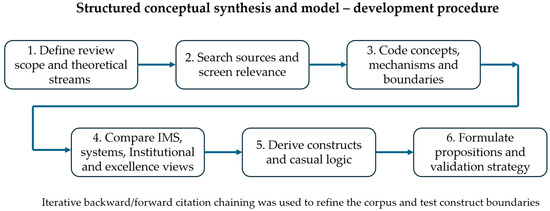
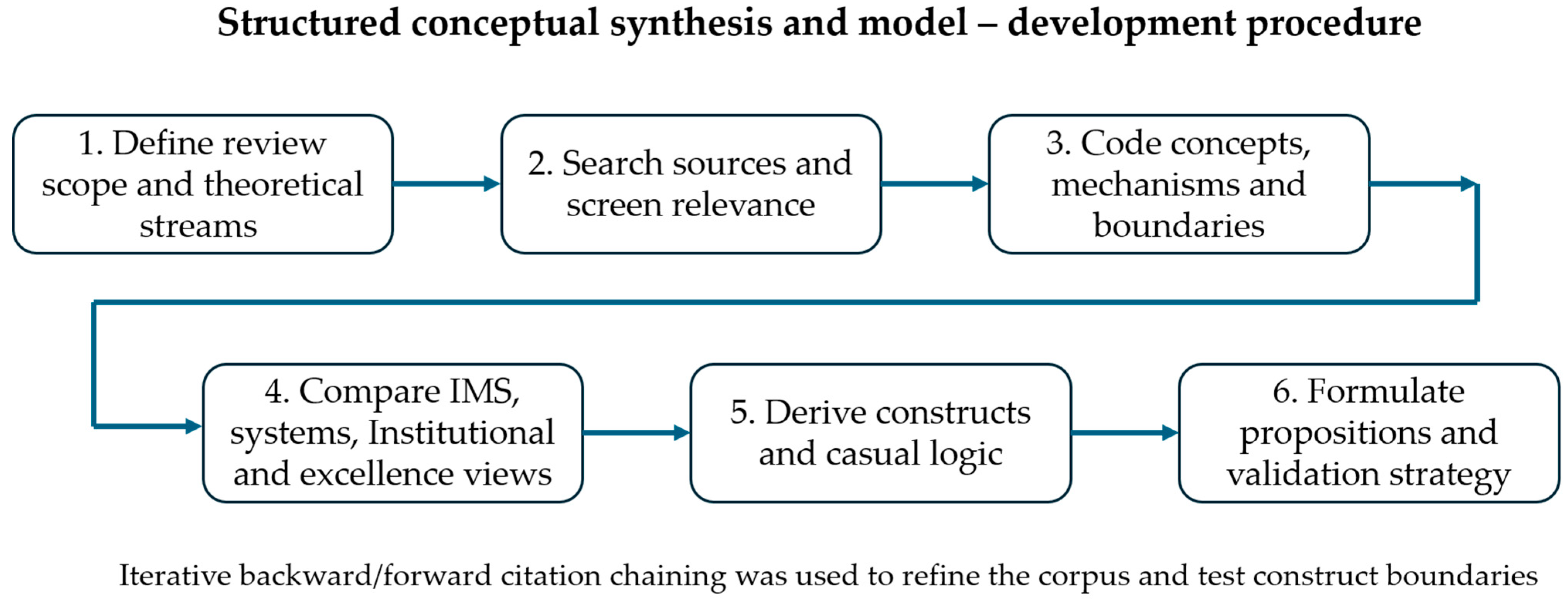
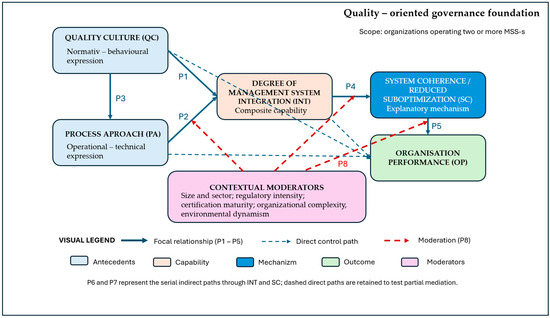
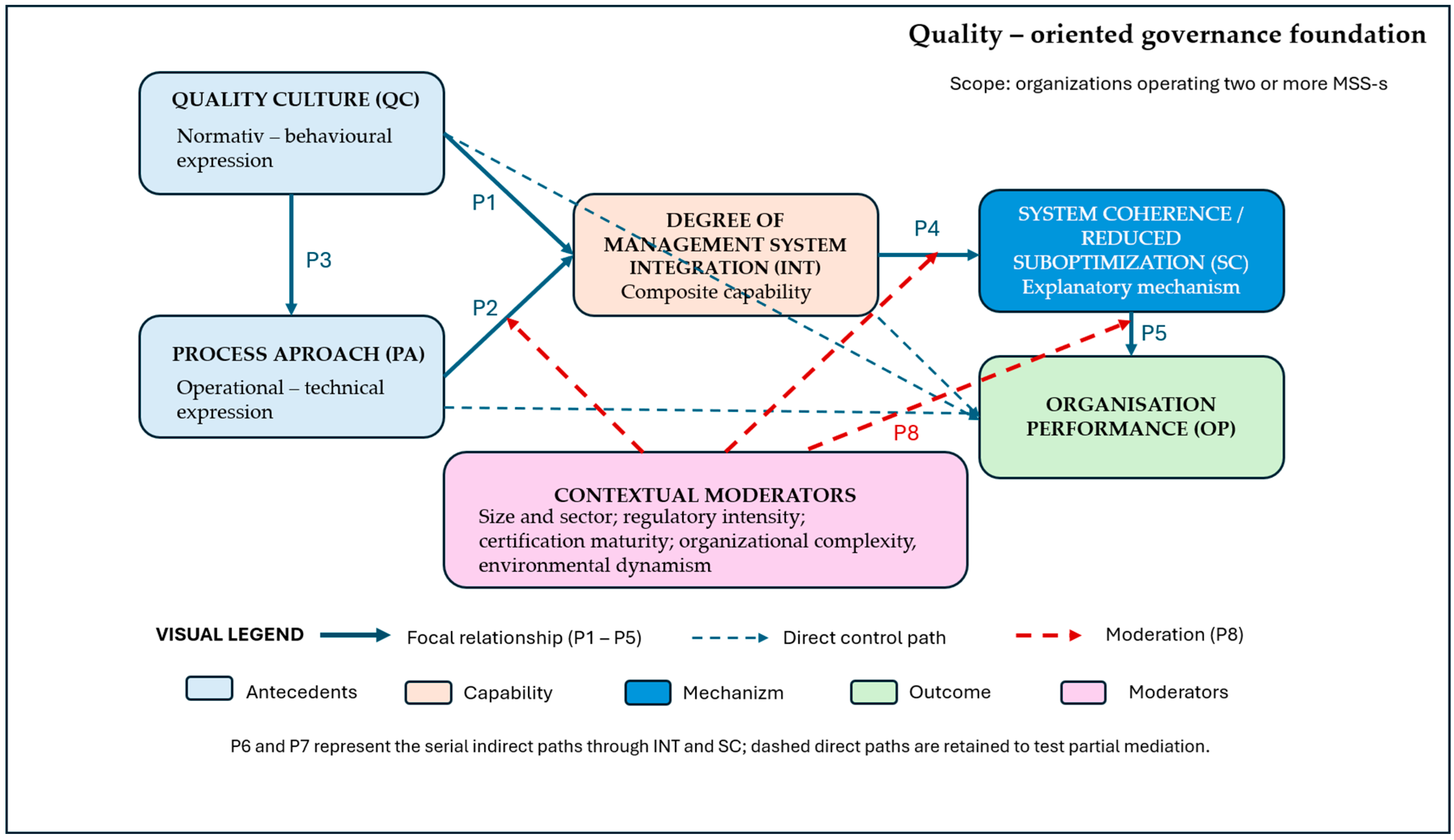

Disclaimer/Publisher’s Note: The statements, opinions and data contained in all publications are solely those of the individual author(s) and contributor(s) and not of MDPI and/or the editor(s). MDPI and/or the editor(s) disclaim responsibility for any injury to people or property resulting from any ideas, methods, instructions or products referred to in the content. |
© 2026 by the authors. Licensee MDPI, Basel, Switzerland. This article is an open access article distributed under the terms and conditions of the Creative Commons Attribution (CC BY) license.