


Abstract
This study investigates the fire behaviour of hybrid fibre reinforced concrete (HFRC) incorporating steel fibres combined with coir, polypropylene (PP), ramie, and sisal fibres under the ISO 834 standard fire curve. Concrete specimens were exposed to fire for 15, 30, and 60 min, and their residual compressive, split tensile, and flexural strengths were evaluated. Mass loss and a Thermal Performance Index (TPI) were determined to quantify fire-induced deterioration, while thermogravimetric analysis (TGA), X-ray diffraction (XRD), and scanning electron microscopy (SEM) were performed to characterize the thermal, phase, and microstructural changes after fire exposure. The results showed that all concrete mixtures experienced progressive reductions in mechanical properties with increasing fire exposure duration. After 60 min of fire exposure, the compressive strength reductions were 45.9%, 42.9%, 37.9%, 45.1%, and 43.8% for CC, SPP, SCO, SSI, and SRA, respectively. The SCO mixture retained 62.1% of its compressive strength, exhibited the lowest mass loss (8.2%), and achieved the highest Thermal Performance Index (7.57). The TGA, XRD, and SEM analyses indicated lower thermal and microstructural deterioration in the hybrid fibre reinforced mixtures than in the control concrete. The findings demonstrate that hybrid fibre reinforcement improves the residual performance of concrete subjected to standard fire exposure.
1. Introduction
Fibre reinforced concrete (FRC) has emerged as an effective cementitious composite for improving the mechanical performance, toughness, ductility, and crack resistance of concrete structures [1,2]. The incorporation of discrete fibres enhances crack-bridging behaviour, delays crack initiation and propagation, and improves the post-cracking load-carrying capacity of concrete. Consequently, FRC has been increasingly adopted in structural elements subjected to severe service conditions, including impact, fatigue, seismic loading, and fire [3,4]. Among these conditions, fire represents one of the most critical hazards, as elevated temperatures can significantly alter the mechanical and microstructural characteristics of concrete, thereby reducing its residual load-carrying capacity and structural reliability [5].
The behaviour of FRC under elevated temperatures is governed by complex thermo-mechanical and physico-chemical processes. During fire exposure, evaporation of free and chemically bound water generates internal vapour pressure, while thermal incompatibility between aggregates and the cementitious matrix induces internal stresses and microcrack development [6,7,8,9,10]. Simultaneously, dehydration of cement hydration products, decomposition of calcium hydroxide, and decarbonation of calcium carbonate progressively deteriorate the concrete matrix, resulting in reductions in compressive, tensile, and flexural strengths [11,12,13,14,15]. The extent of deterioration depends not only on the fire exposure conditions but also on the type, geometry, and thermal stability of the incorporated fibres.
Steel fibres are widely recognised for improving the residual mechanical performance of concrete owing to their excellent crack-bridging capability and high tensile strength [16,17,18]. In contrast, polypropylene (PP) fibres melt at relatively low temperatures, producing interconnected pore channels that facilitate vapour pressure release and reduce the risk of explosive spalling [19,20,21]. Natural fibres such as coir, ramie, and sisal have recently attracted considerable attention as sustainable alternatives because of their renewable nature, low density, and favourable mechanical properties [22,23,24]. Among these fibres, coir possesses relatively high lignin content, which contributes to improved thermal stability, while ramie and sisal fibres provide enhanced tensile performance and effective fibre–matrix interaction. These complementary characteristics make hybrid fibre systems an attractive approach for improving the residual performance of concrete after fire exposure.
Hybrid fibre reinforced concrete (HFRC), produced by combining steel fibres with secondary fibres, has demonstrated improved mechanical properties and crack resistance under ambient conditions [23,25,26]. However, the fire behaviour of hybrid systems has not been investigated to the same extent. Existing studies have primarily focused on steel fibre reinforced concrete or concrete incorporating individual synthetic or natural fibres. Comparative investigations evaluating the fire performance of steel–coir, steel–polypropylene, steel–ramie, and steel–sisal hybrid fibre reinforced concrete under the ISO 834 standard fire curve remain limited. Furthermore, most published studies evaluate residual mechanical properties alone, while comparatively fewer investigations integrate thermal, phase, and microstructural characterization to explain the mechanisms governing fire-induced deterioration.
In addition to experimental investigations, numerical and data-driven approaches can complement fire exposure studies by simulating damage evolution and predicting residual mechanical performance. Physics-based models combined with deep learning have been used for damage identification, while CNN-based models have been applied to predict the residual compressive strength of fire-damaged concrete using mixture and heating parameters [27,28]. These approaches highlight the potential to use experimental fire exposure data to develop predictive models for the residual performance of hybrid fibre reinforced concrete in future studies.
Building on the previous investigations of natural-fibre modification and hybrid fibre reinforced concrete [23,29], the present study experimentally investigates the fire behaviour of selected hybrid fibre systems incorporating steel fibres combined with coir, polypropylene, ramie, and sisal fibres under the ISO 834 standard fire curve. The residual compressive, split tensile, and flexural strengths were evaluated after different fire exposure durations together with mass loss and a Thermal Performance Index (TPI). In addition, thermogravimetric analysis (TGA), X-ray diffraction (XRD), and scanning electron microscopy (SEM) were employed to investigate the thermal stability, phase evolution, and microstructural characteristics of the fire-exposed specimens.
The contribution of this study lies in the comparative evaluation of four hybrid fibre systems under identical fire exposure conditions using an integrated experimental approach. The present investigation extends the understanding of these hybrid fibre systems from ambient-condition performance to fire exposure by evaluating residual mechanical properties together with mass loss, Thermal Performance Index (TPI), thermal behaviour, phase changes, and microstructural characteristics. The findings provide insights into the fire-induced deterioration and residual performance of the selected hybrid fibre reinforced concrete systems.
2. Experimental Program
2.1. Materials
Concrete was produced using 53-grade Ordinary Portland Cement (IS 12269:2013 [30]) with 10% silica fume as a partial cement replacement to improve matrix compactness. River sand conforming to Zone II of IS 383:2016 [31] and crushed granite aggregate (maximum size 12.5 mm) were used as fine and coarse aggregates, respectively. Potable water meeting IS 456:2000 [32] requirements was used for mixing and curing. A polycarboxylate ether (PCE)-based superplasticizer complying with IS 9103:2019 [33] was added to obtain the required workability and ensure uniform fibre distribution. The hybrid reinforcement consisted of hooked-end steel fibres combined with polypropylene, coir, sisal, or ramie fibres. In the present study, steel fibres were considered the primary reinforcement because of their higher tensile strength and stiffness, whereas polypropylene, coir, sisal, and ramie fibres were considered secondary fibres that provide complementary crack-control and post-cracking functions [34,35,36]. The physical and mechanical characteristics of the fibres are summarized in Table 1.
Table 1.
Physical and mechanical characteristics of the fibres.
2.2. Surface Treatment of Natural Fibres
Natural fibres (coir, sisal, and ramie) were chemically modified before use by immersing them in a 4% sodium carbonate (Na2CO3) solution for 24 h at ambient temperature, following the treatment approach established in the previous study [29]. The treated fibres were then washed with distilled water until a neutral condition was achieved, oven-dried at 60 ± 5 °C to constant weight, cut to the required lengths, and stored in a dry environment before concrete mixing.
2.3. Mix Proportions
The concrete mixtures were proportioned according to IS 10262:2019 [37] to achieve a target strength corresponding to M50 grade concrete. The concrete matrix proportions and hybrid fibre configuration were adopted from the optimum formulation identified in the previous hybrid fibre concrete study [23] under ambient conditions. For all hybrid mixtures, the steel-to-secondary-fibre volume ratio was maintained at 1:0.5, corresponding to a total fibre content of 1.5% by volume. Four hybrid fibre combinations—steel–polypropylene (SPP), steel–coir (SCO), steel–sisal (SSI), and steel–ramie (SRA)—together with a fibre-free reference mix (CC), were selected for the fire investigation. The fibre combinations and detailed mix proportions are listed in Table 2 and Table 3, respectively.
Table 2.
Mix designation and fibre contents of concrete mixtures.
Table 3.
Concrete mix proportions.
2.4. Specimen Preparation and Curing
The dry constituents comprising cement, silica fume, fine aggregate, and coarse aggregate were initially mixed to obtain a homogeneous blend. Water mixed with the required dosage of superplasticizer was gradually introduced into the mixture. Fibres were added slowly during mixing to ensure uniform distribution and minimise fibre agglomeration. Fresh concrete was cast into moulds and compacted using a vibrating table. The specimens were covered immediately after casting to prevent moisture loss and were demoulded after 24 h. Subsequently, all specimens were cured in water at room temperature for 28 days prior to fire exposure.
2.5. Elevated Temperature Exposure
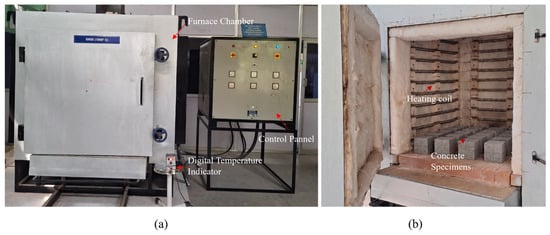
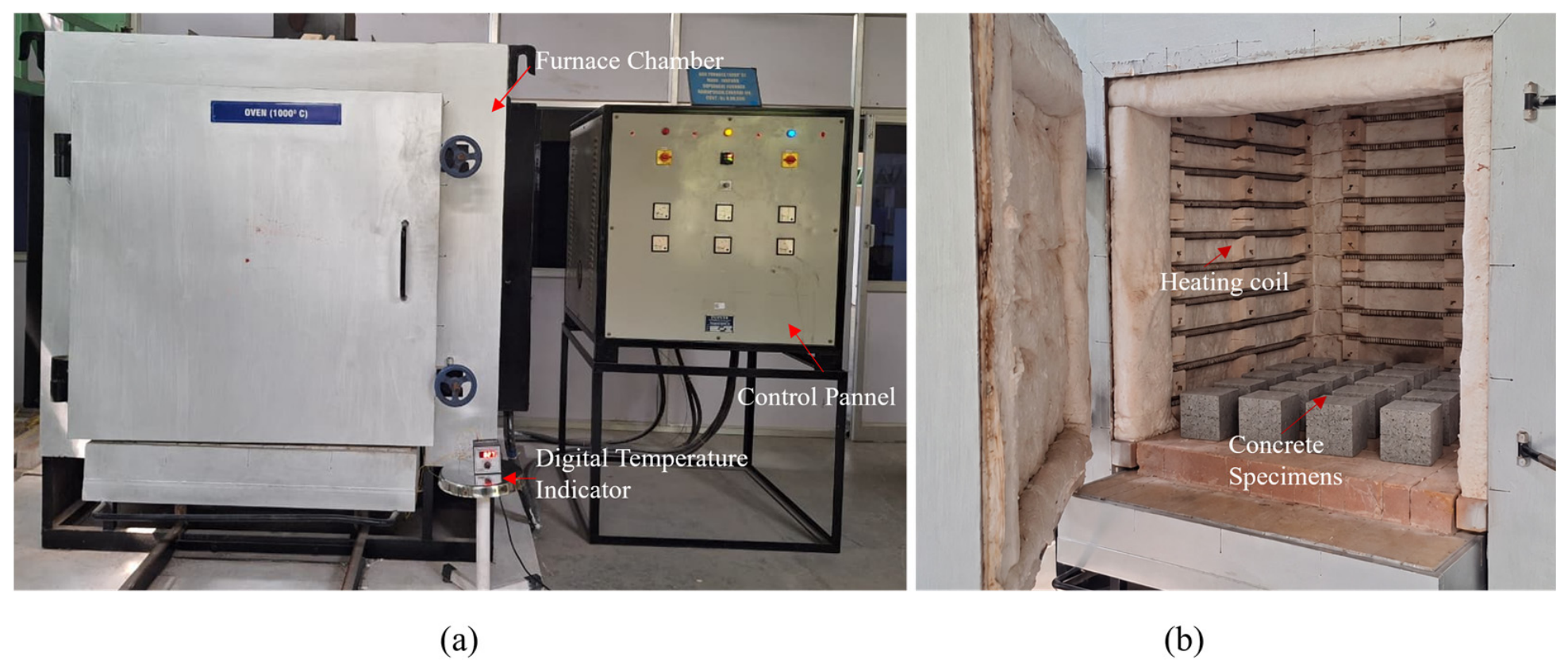
Following 28 days of water curing, the specimens were subjected to elevated temperatures in an electrically controlled furnace in accordance with the ISO 834 [38] standard fire curve. The experimental furnace used for the thermal exposure is shown in Figure 1. The furnace temperature was monitored using a digital temperature display connected to one Type K thermocouple (accuracy: ±2.2 °C) positioned inside the furnace chamber. The furnace temperature was increased according to the standard time–temperature relationship prescribed by ISO 834, as expressed in Equation (1):
where (T) is the furnace temperature (°C), (T0) is the initial furnace temperature (20 °C), and (t) is the fire exposure duration (min).
T = T0 + 345 log10 (8t + 1)
Figure 1.
Electric resistance furnace used for high-temperature exposure of concrete specimens: (a) external view of the furnace; (b) concrete specimens positioned inside the furnace chamber during thermal exposure.
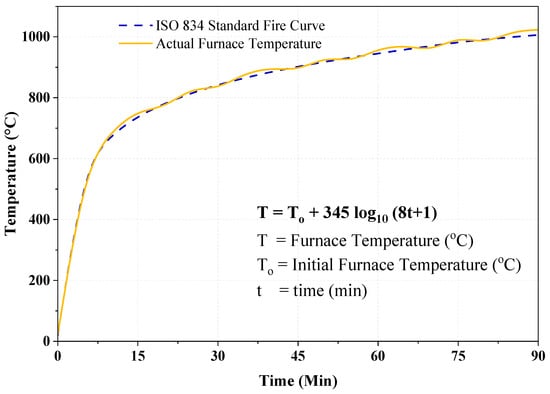
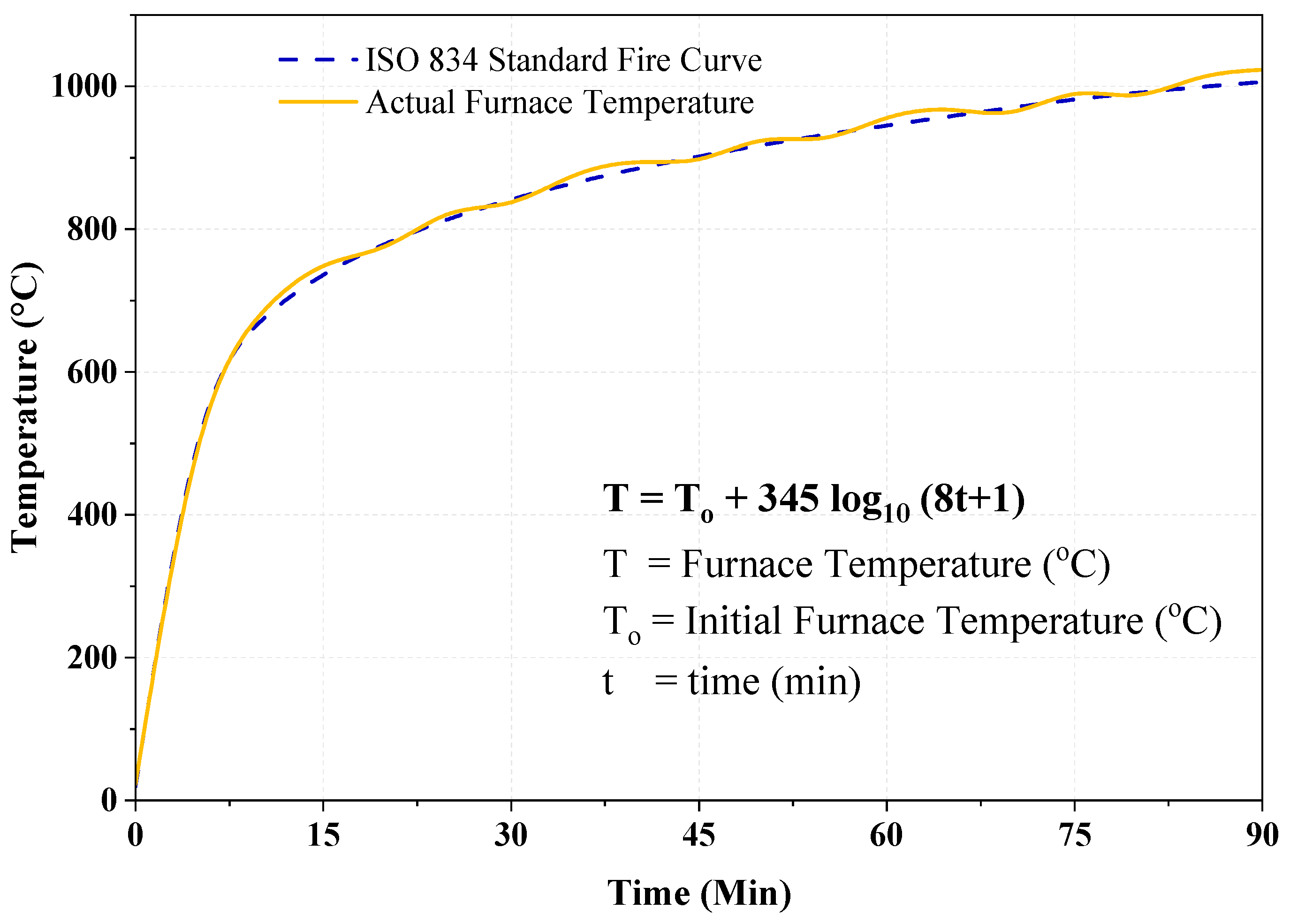
The ISO 834 fire curve adopted in the present investigation is illustrated in Figure 2. To evaluate the influence of fire duration on the residual performance of hybrid fibre reinforced concrete, specimens were exposed to fire for durations of 15, 30, and 60 min. For each exposure duration, specimens of the same geometry were exposed together in a separate furnace run. Unexposed specimens tested at room temperature were considered as the reference condition (F0). The prescribed ISO 834 furnace temperatures at 15, 30, and 60 min were approximately 739 °C, 842 °C, and 945 °C, respectively, while the corresponding experimentally recorded furnace temperatures were 758 °C, 828 °C, and 961 °C. The deviations in the recorded furnace temperatures from the corresponding ISO 834 temperatures were approximately 2.57%, 1.66%, and 1.69% at 15, 30, and 60 min, respectively, indicating close agreement between the experimentally recorded furnace temperatures and the prescribed ISO 834 fire curve. The reported temperatures represent the furnace temperatures. Internal and surface temperatures of the concrete specimens were not measured. The fire exposure programme adopted in the present study is summarized in Table 4.
Figure 2.
ISO 834 standard fire curve and experimental furnace temperature profile.
Table 4.
Fire exposure programme.
Upon reaching the specified exposure duration, the furnace was switched off, and the specimens were allowed to cool naturally inside the furnace until room temperature was attained. This cooling regime was adopted to simulate the gradual cooling conditions typically experienced after fire incidents and to minimise thermal shock effects. Subsequently, the cooled specimens were removed from the furnace and subjected to mechanical, physical, and microstructural characterization to evaluate their residual performance.
2.6. Mechanical Characterization
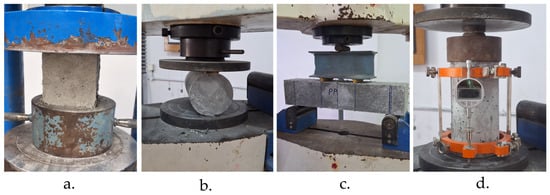
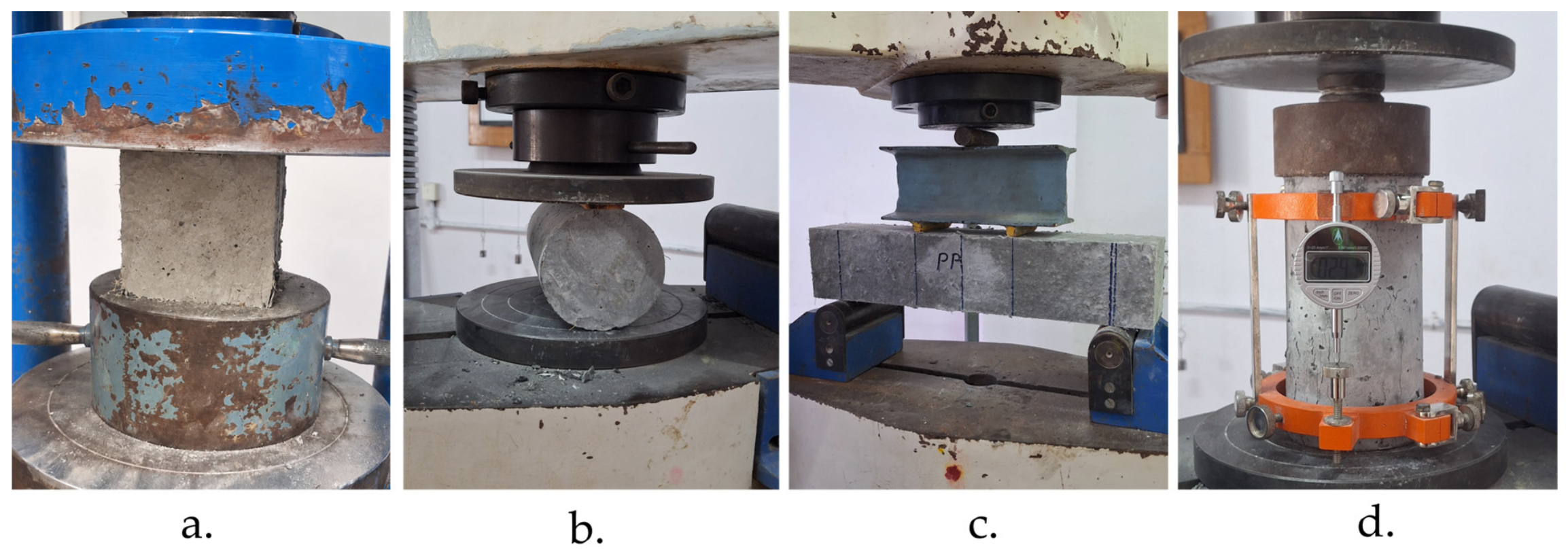
The residual mechanical properties of the concrete mixtures were evaluated after exposure to elevated temperatures. Compressive strength, split tensile strength, flexural strength, and modulus of elasticity tests were conducted to assess the influence of fire exposure on the structural performance of the hybrid fibre reinforced concrete mixtures. For each concrete mixture, fire exposure duration, and mechanical property, three identical specimens were tested (n = 3), and the reported results represent the mean values of the three specimens. Cube specimens measuring 100 mm × 100 mm × 100 mm were used for compressive strength testing in accordance with IS 516 (Part 1/Sec 1):2021 [39]. Split tensile strength and modulus of elasticity were determined using cylindrical specimens measuring 100 mm in diameter and 200 mm in height in accordance with IS 5816:1999 [40] and IS 516 (Part 5/Sec 3):2020 [41], respectively. Flexural strength was evaluated on prism specimens measuring 100 mm × 100 mm × 500 mm under third-point loading in accordance with IS 516 (Part 5/Sec 1) [42]. The experimental test setups used for the mechanical property evaluation are shown in Figure 3. The variability among replicate measurements is presented as standard deviation (SD) using error bars in the corresponding figures. Statistical comparisons among mixtures were performed using one-way ANOVA followed by Tukey’s HSD post hoc test at a significance level of α = 0.05.
Figure 3.
Experimental test setups for mechanical property evaluation: (a) compressive strength, (b) split tensile strength, (c) flexural strength, and (d) modulus of elasticity.
2.7. Physical Characterization
Mass loss tests were performed to evaluate fire-induced deterioration and internal integrity of the concrete mixtures. The percentage mass loss was determined from the difference between the specimen mass before and after fire exposure.
2.8. Microstructural Characterization
Scanning electron microscopy (SEM) was employed to investigate the microstructural characteristics of the concrete mixtures before and after fire exposure. The observations were used to assess fibre degradation, crack propagation, and fibre–matrix interaction, and to explain the residual performance of the hybrid fibre systems.
2.9. Residual Strength Retention Analysis
The residual strength retention of the concrete mixtures was evaluated to quantify the influence of elevated temperature exposure on their mechanical performance. The retention values for compressive strength, split tensile strength, flexural strength, and modulus of elasticity were determined by comparing the residual properties of the fire-exposed specimens with the corresponding properties obtained under ambient conditions. The ambient-condition mechanical properties used as the baseline were taken from the previously reported results [23]. The residual strength retention was calculated using Equation (2):
where (RSR) is the residual strength retention (%), (ft) is the residual mechanical property after fire exposure, and (f0) is the corresponding mechanical property at ambient temperature. The residual strength retention analysis was employed to assess the effectiveness of the different hybrid fibre systems in preserving their mechanical integrity after fire exposure and to compare their resistance to elevated temperature-induced degradation.
3. Result and Discussion
3.1. Effect of Fire Exposure on Compressive Strength
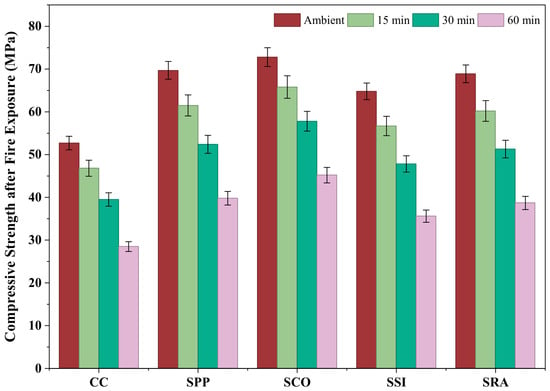
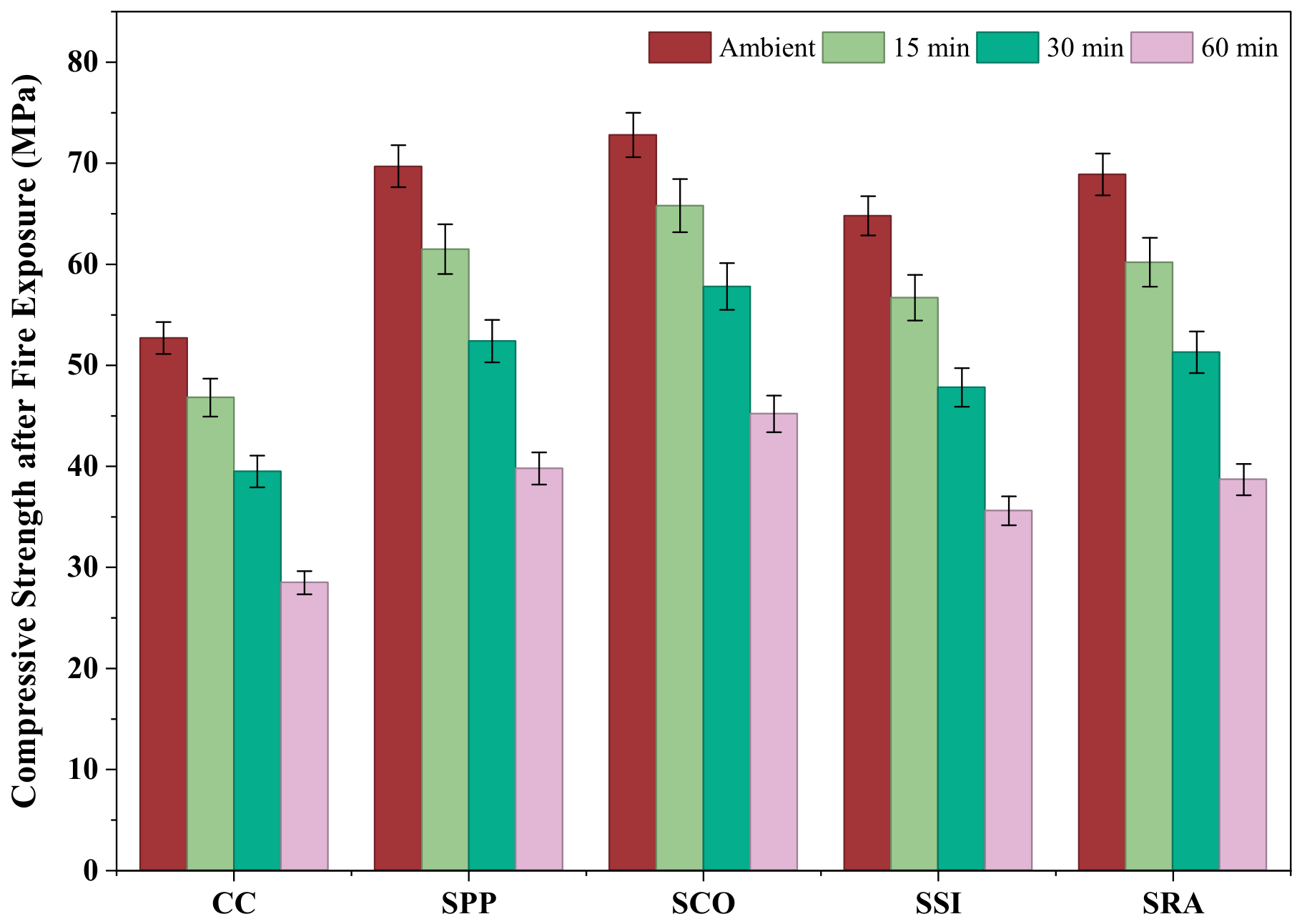
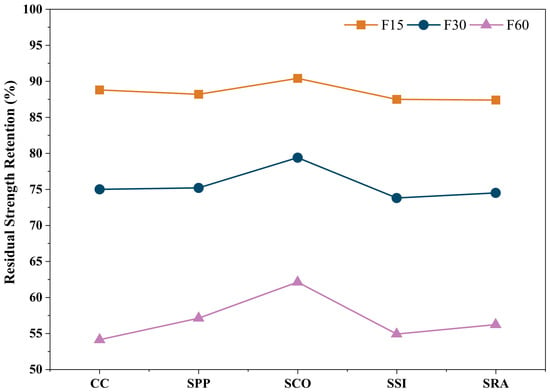
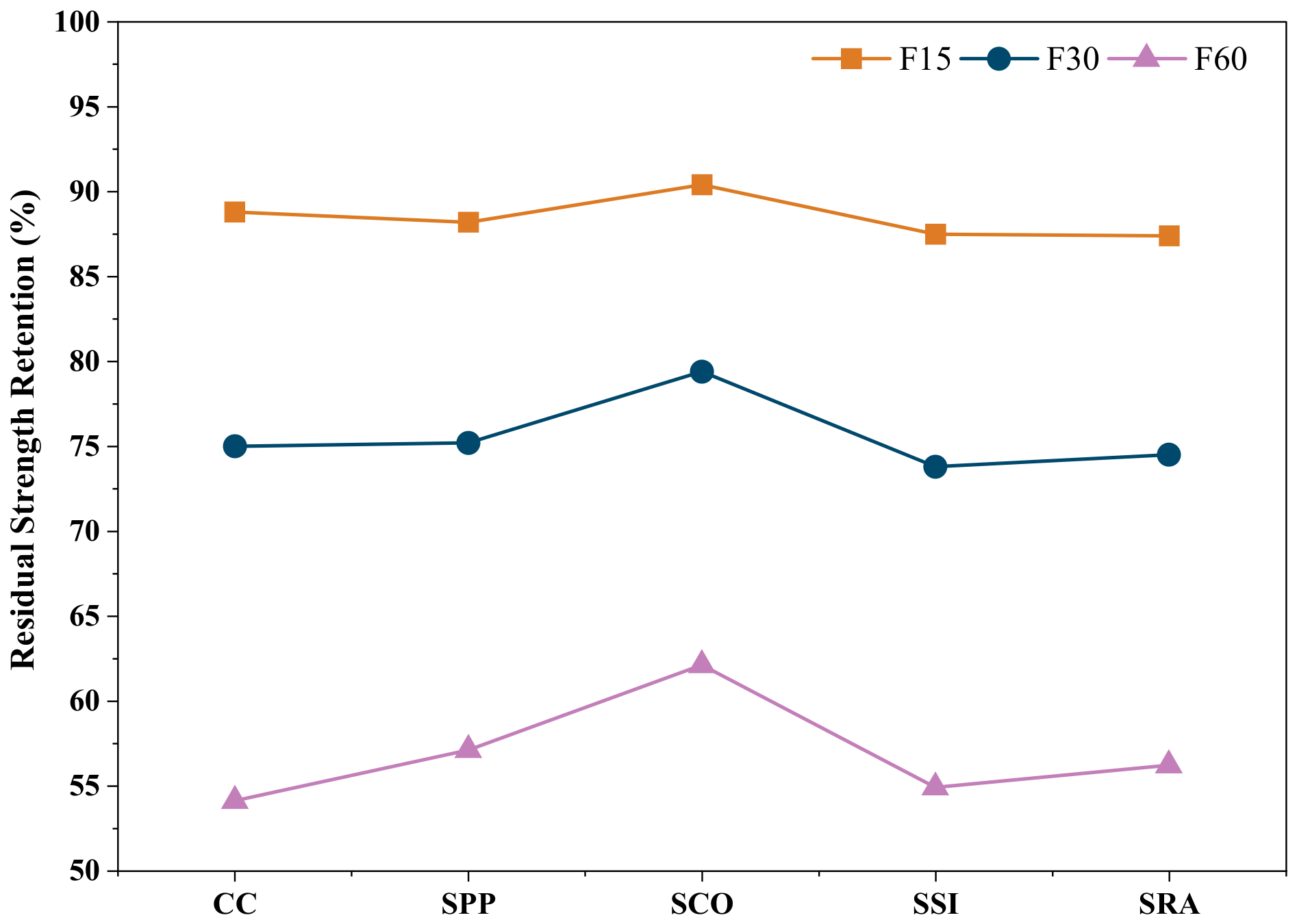
The residual compressive strength results of the investigated concrete mixtures subjected to ISO 834 fire exposure are presented in Figure 4. A gradual reduction in compressive strength was observed for all mixtures with increasing fire exposure duration owing to moisture evaporation, thermal incompatibility between concrete constituents, and the development of internal microcracks. After 15 min of exposure, the reduction in compressive strength ranged from 9.6% to 12.6%. The strength degradation became more pronounced after 30 min, with reductions ranging from 20.6% to 27.3%. Following 60 min of exposure, the compressive strength reductions were 45.9%, 42.9%, 37.9%, 45.1%, and 43.8% for CC, SPP, SCO, SSI, and SRA, respectively. The corresponding residual compressive strength retention values are illustrated in Figure 5. The improved residual compressive strength of the hybrid fibre reinforced concrete mixtures can be attributed to the crack-bridging effect of steel fibres and the ability of the secondary fibres to delay crack propagation under elevated temperature conditions [43,44]. One-way ANOVA followed by Tukey’s HSD test indicated statistically significant differences among the mixtures at all exposure conditions (p < 0.05), as summarized in Table 5. Tukey’s HSD test showed that SCO exhibited significantly higher compressive strength than the other mixtures at F0, F15, and F30 (p < 0.05). At F60, SCO remained significantly higher than CC, SPP, and SSI, whereas the difference between SCO and SRA was not statistically significant (p > 0.05).
Figure 4.
Variation in compressive strength of hybrid fibre reinforced concrete mixtures at different fire exposure durations. Error bars indicate standard deviation. Error bars represent the standard deviation (SD) of three replicate specimens (n = 3).
Figure 5.
Variation in residual compressive strength retention of hybrid fibre reinforced concrete mixtures with increasing fire exposure duration.
Table 5.
Statistical analysis of mechanical properties using Tukey’s HSD test.
3.2. Effect of Fire Exposure on Split Tensile Strength
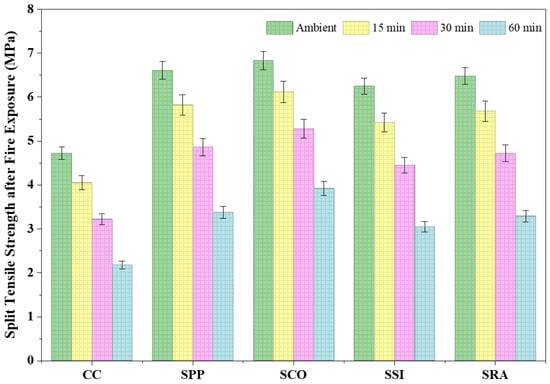
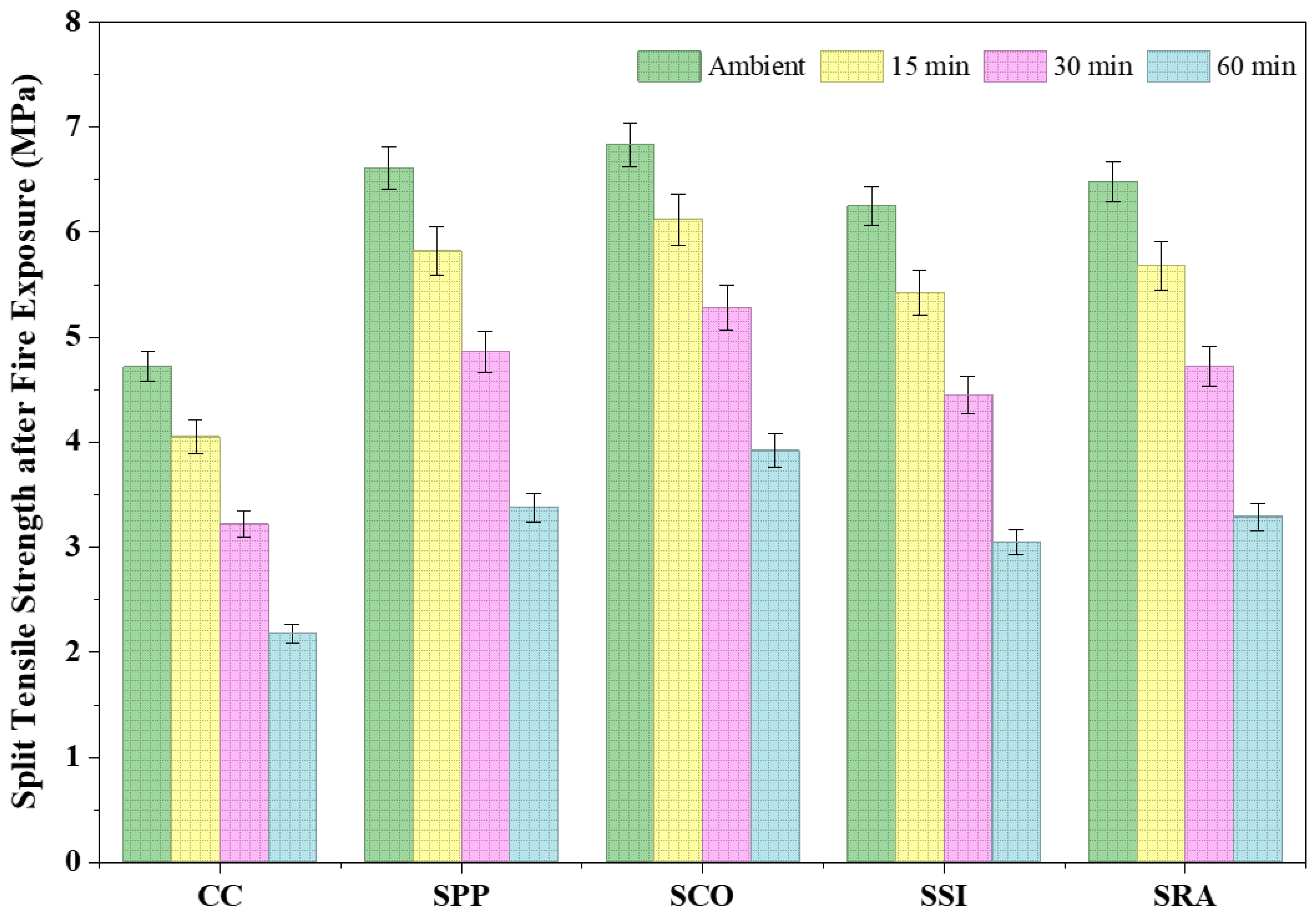
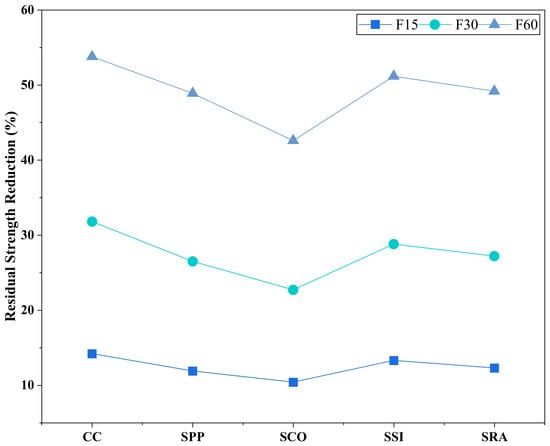
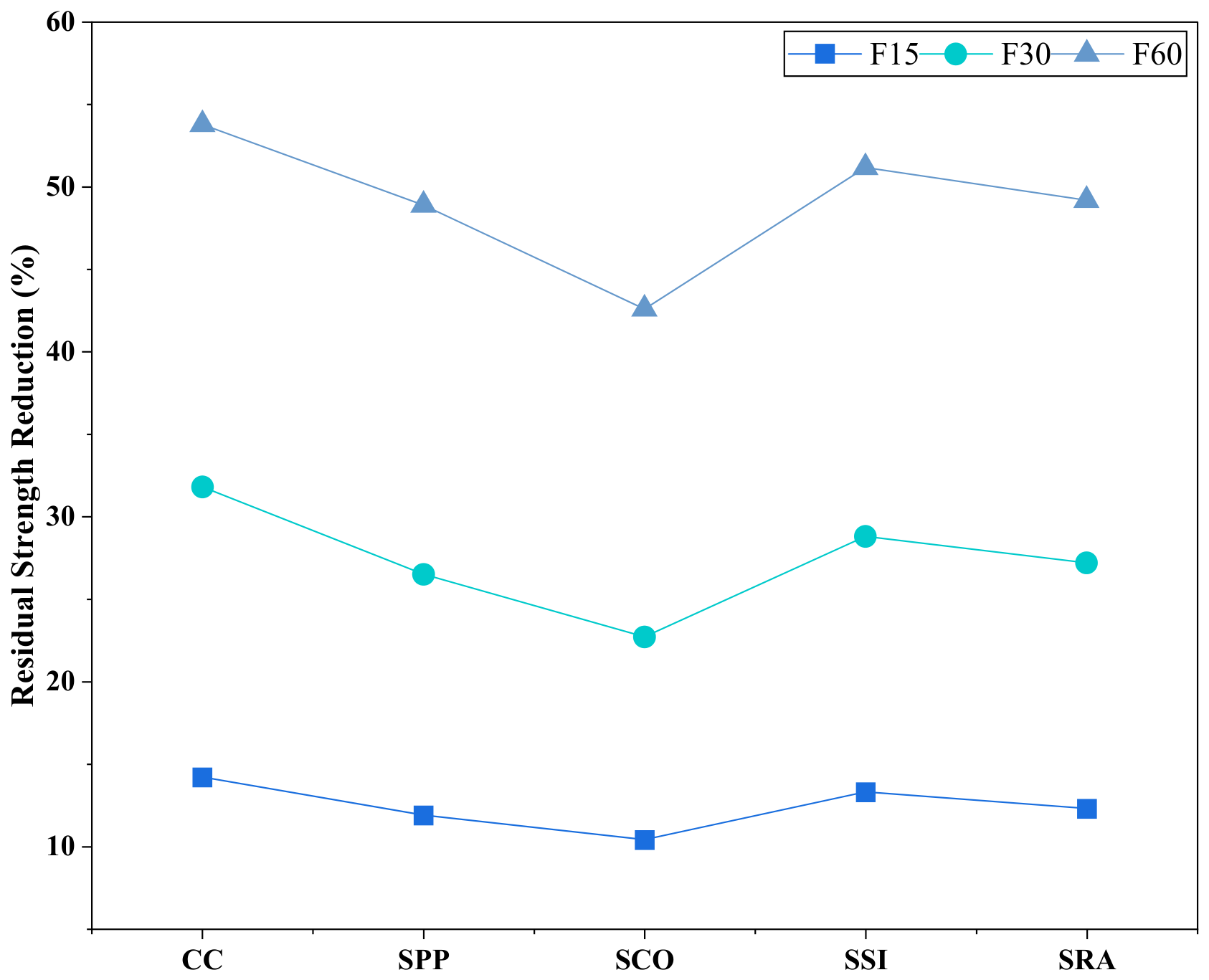
The split tensile strength results of the investigated concrete mixtures subjected to fire exposure are presented in Figure 6, while the corresponding percentage reductions are illustrated in Figure 7. A continuous reduction in split tensile strength was observed with increasing fire exposure duration for all mixtures. The reduction was more pronounced than that observed for compressive strength, indicating the greater susceptibility of tensile properties to elevated temperature exposure. After 15 min of exposure, the reduction in split tensile strength ranged from 10.4% to 14.2%. As the exposure duration increased to 30 min, the strength reduction increased to 22.7–31.8%. Following 60 min of exposure, the reduction ranged from 42.6% to 53.8%, reflecting substantial deterioration in the tensile load-carrying capacity of the concrete mixtures. The observed reduction can be attributed to the weakening of the fibre–matrix interface and the propagation of thermally induced cracks within the cementitious matrix. Since tensile strength is governed primarily by crack initiation and resistance to crack propagation, elevated temperatures resulted in a greater loss of tensile capacity than compressive capacity. Nevertheless, the incorporation of hybrid fibres contributed to maintaining tensile integrity by providing crack-bridging action and delaying crack widening under thermal loading. Tukey’s HSD test showed that SCO exhibited significantly higher split tensile strength than CC and SSI at F0 and F15. At F30 and F60, SCO was significantly higher than CC, SPP, SSI, and SRA (p < 0.05), as shown in Table 5.
Figure 6.
Split tensile strength of hybrid fibre reinforced concrete mixtures after different fire exposure durations. Error bars indicate standard deviation. Error bars represent the standard deviation (SD) of three replicate specimens (n = 3).
Figure 7.
Percentage reduction in split tensile strength of hybrid fibre reinforced concrete mixtures with increasing fire exposure duration.
3.3. Effect of Fire Exposure on Flexural Strength
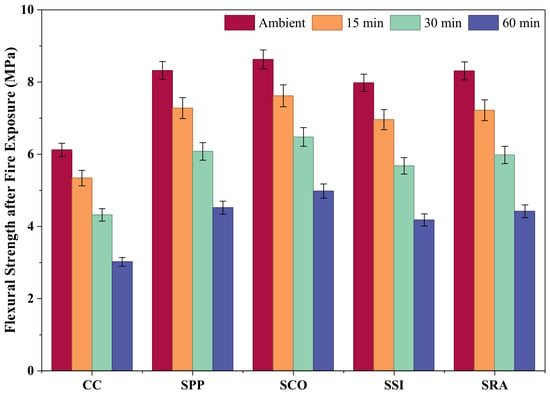
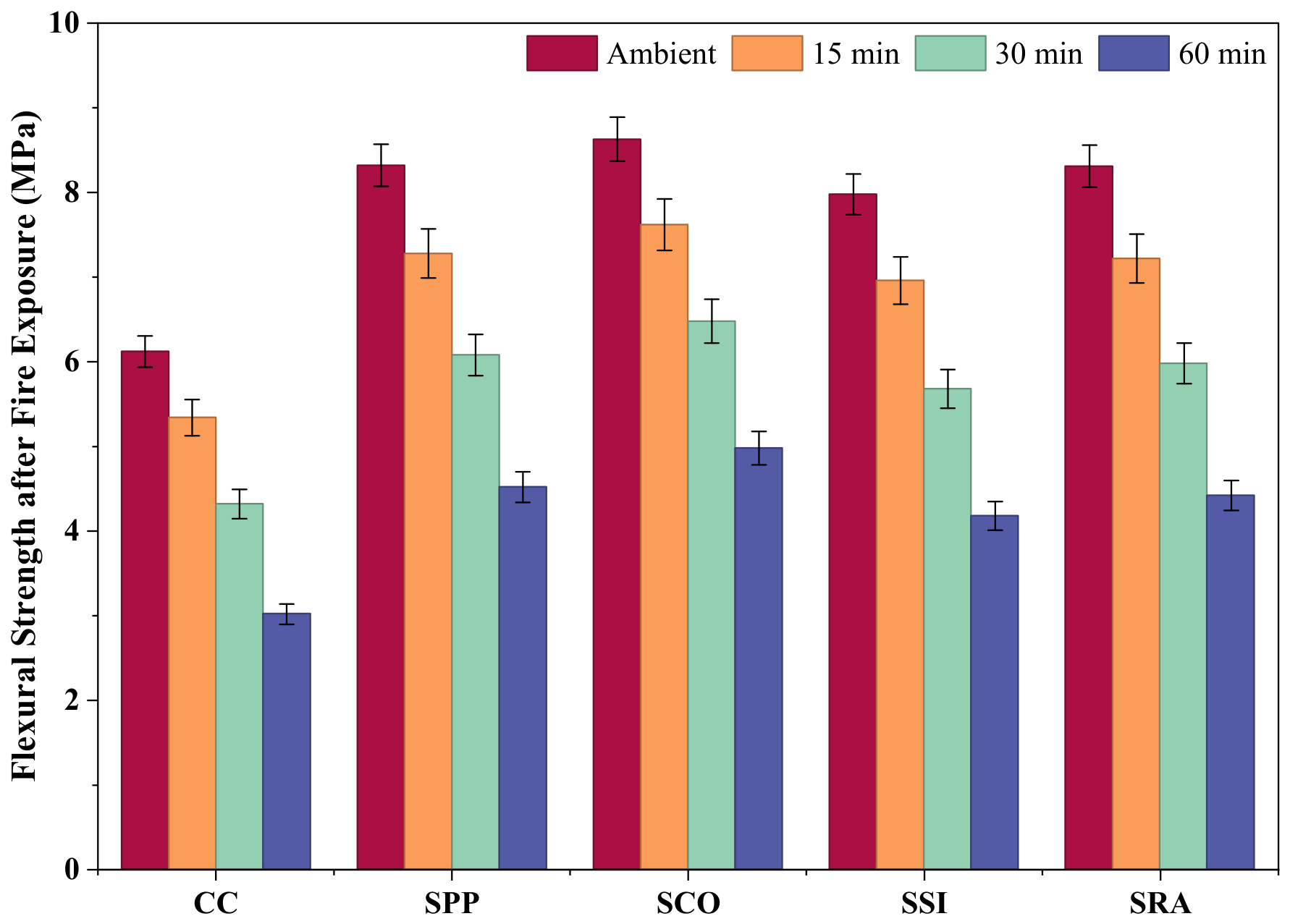
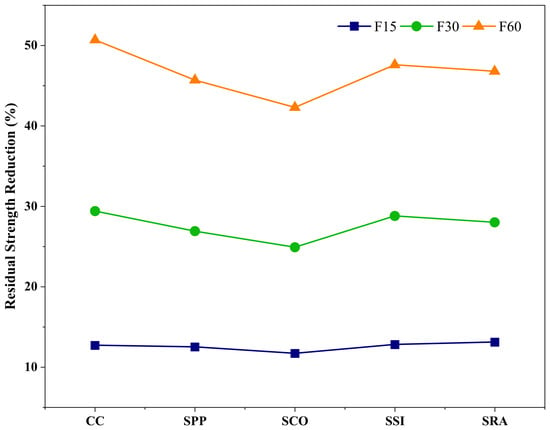
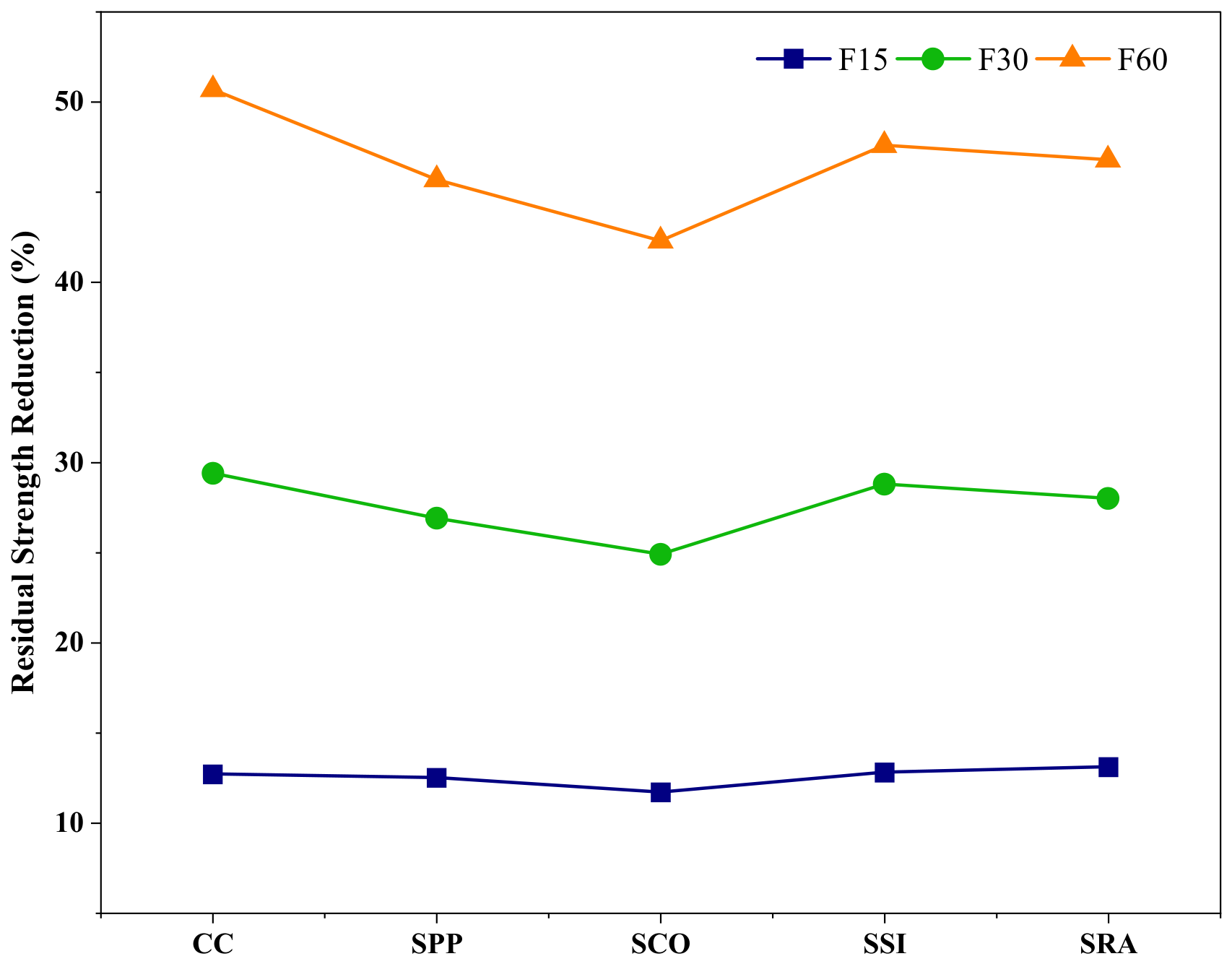
The flexural strength results of the investigated concrete mixtures subjected to fire exposure are presented in Figure 8, while the corresponding percentage reductions are illustrated in Figure 9. A gradual reduction in flexural strength was observed for all mixtures with increasing fire exposure duration. After 15 min of exposure, the reduction in flexural strength ranged from 11.7% to 13.1%. The reduction increased to 24.9–29.4% after 30 min and further increased to 42.3–50.7% after 60 min of exposure.
Figure 8.
Flexural strength of hybrid fibre reinforced concrete mixtures after different fire exposure durations. Error bars indicate standard deviation. Error bars represent the standard deviation (SD) of three replicate specimens (n = 3).
Figure 9.
Percentage reduction in flexural strength of hybrid fibre reinforced concrete mixtures with increasing fire exposure duration.
Flexural performance is highly dependent on the ability of the concrete to resist crack propagation and sustain loads after crack initiation. Exposure to elevated temperatures progressively reduced this capability, resulting in a decline in flexural strength. However, the hybrid fibre reinforced concrete mixtures exhibited improved residual flexural performance compared with the control concrete, indicating their contribution to load redistribution and enhanced post-cracking behaviour under thermal loading. Tukey’s HSD test showed that SCO exhibited significantly higher flexural strength than SSI and CC at F0 and F15 (p < 0.05). At F30, SCO exhibited significantly higher flexural strength than all other mixtures. Similarly, at F60, SCO was significantly higher than CC, SPP, SSI, and SRA (p < 0.05), as shown in Table 5.
3.4. Effect of Fire Exposure on Modulus of Elasticity
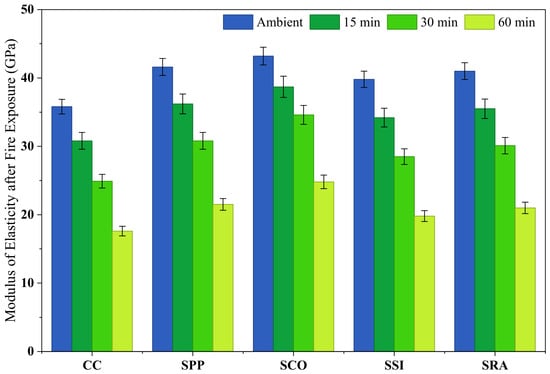
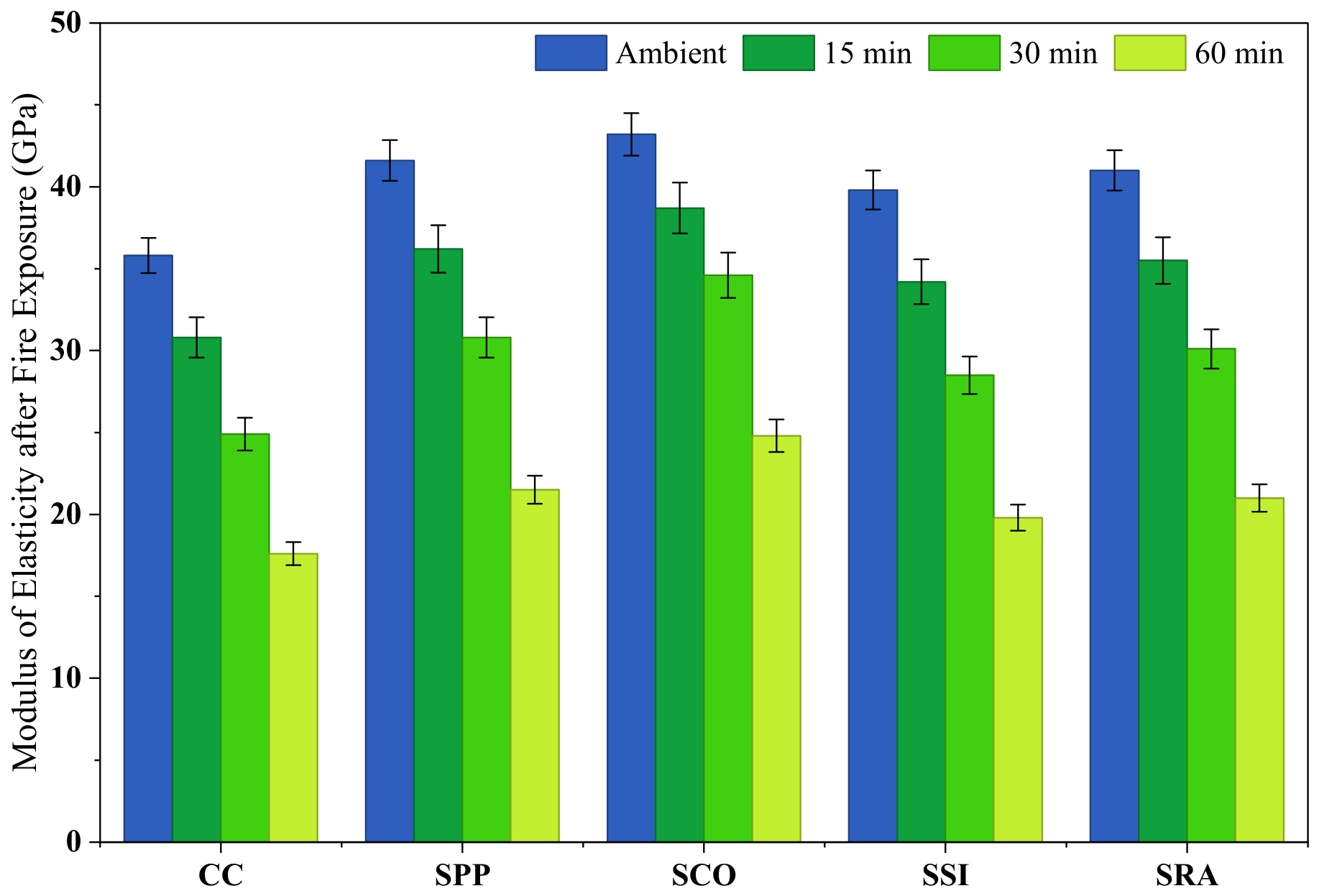
The residual modulus of elasticity of the investigated concrete mixtures subjected to ISO 834 fire exposure is presented in Figure 10. A progressive reduction in the modulus of elasticity was observed for all mixtures with increasing fire exposure duration, indicating a gradual loss of stiffness due to thermally induced microcracking and degradation of the cementitious matrix. After 15 min of fire exposure, the modulus of elasticity decreased by 14.0%, 13.0%, 10.4%, 14.1%, and 13.4% for CC, SPP, SCO, SSI, and SRA, respectively. The reduction increased after 30 min to 30.4%, 26.0%, 19.9%, 28.4%, and 26.6%, respectively. Following 60 min of fire exposure, the reductions reached 50.8%, 48.3%, 42.6%, 50.3%, and 48.8% for CC, SPP, SCO, SSI, and SRA, respectively. Among the investigated mixtures, SCO exhibited the lowest reduction in modulus of elasticity, indicating superior stiffness retention and improved resistance to fire-induced deterioration compared with the other concrete mixtures.
Figure 10.
Modulus of elasticity of hybrid fibre reinforced concrete after fire exposure. Error bars represent the standard deviation (SD) of three replicate specimens (n = 3).
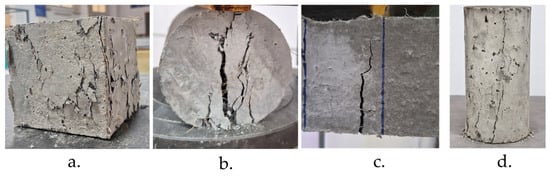
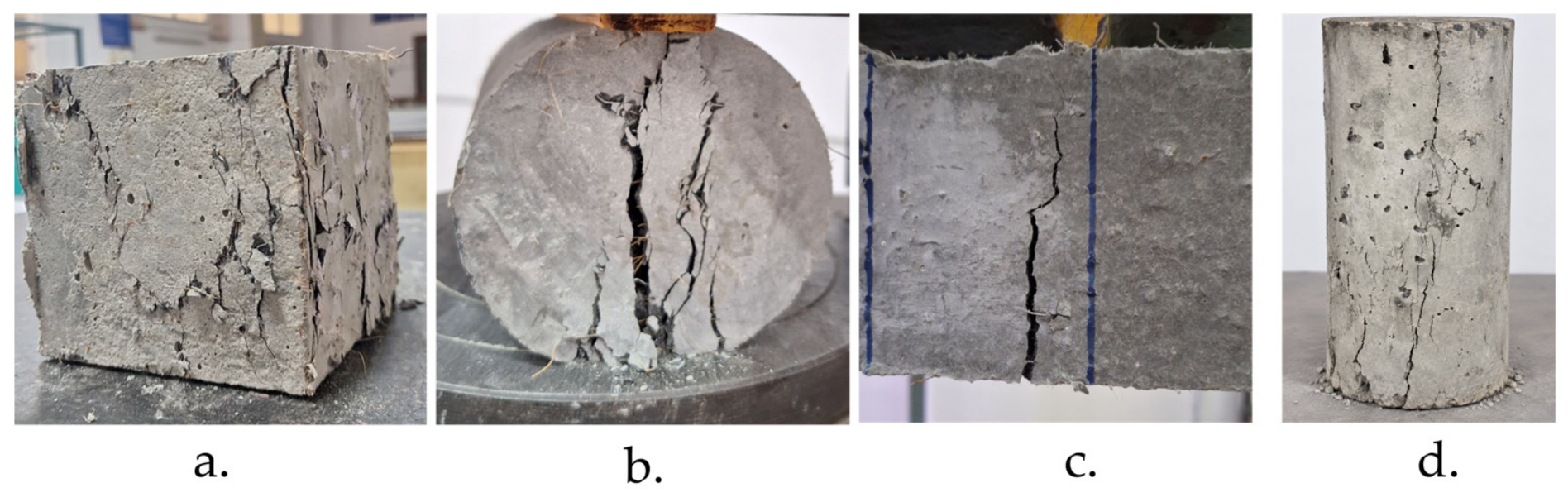
Representative failure and damage patterns observed after mechanical testing are shown in Figure 11. The specimens exhibited visible cracking, splitting, and crushing after loading. The extent of cracking increased with fire exposure duration, which is consistent with the observed reduction in mechanical strength and stiffness.
Figure 11.
Representative failure and damage patterns of the tested concrete specimens: (a) compressive strength, (b) split tensile strength, (c) flexural strength, and (d) modulus of elasticity.
3.5. Mass Loss Characteristics
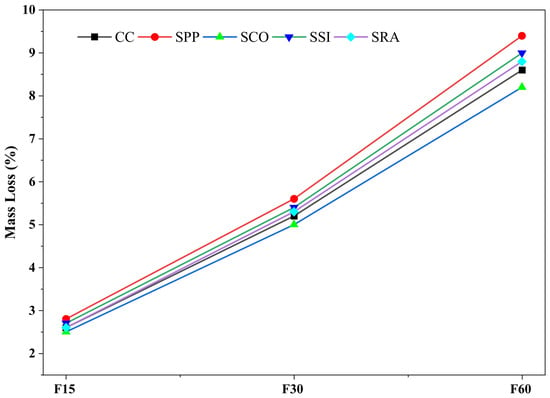
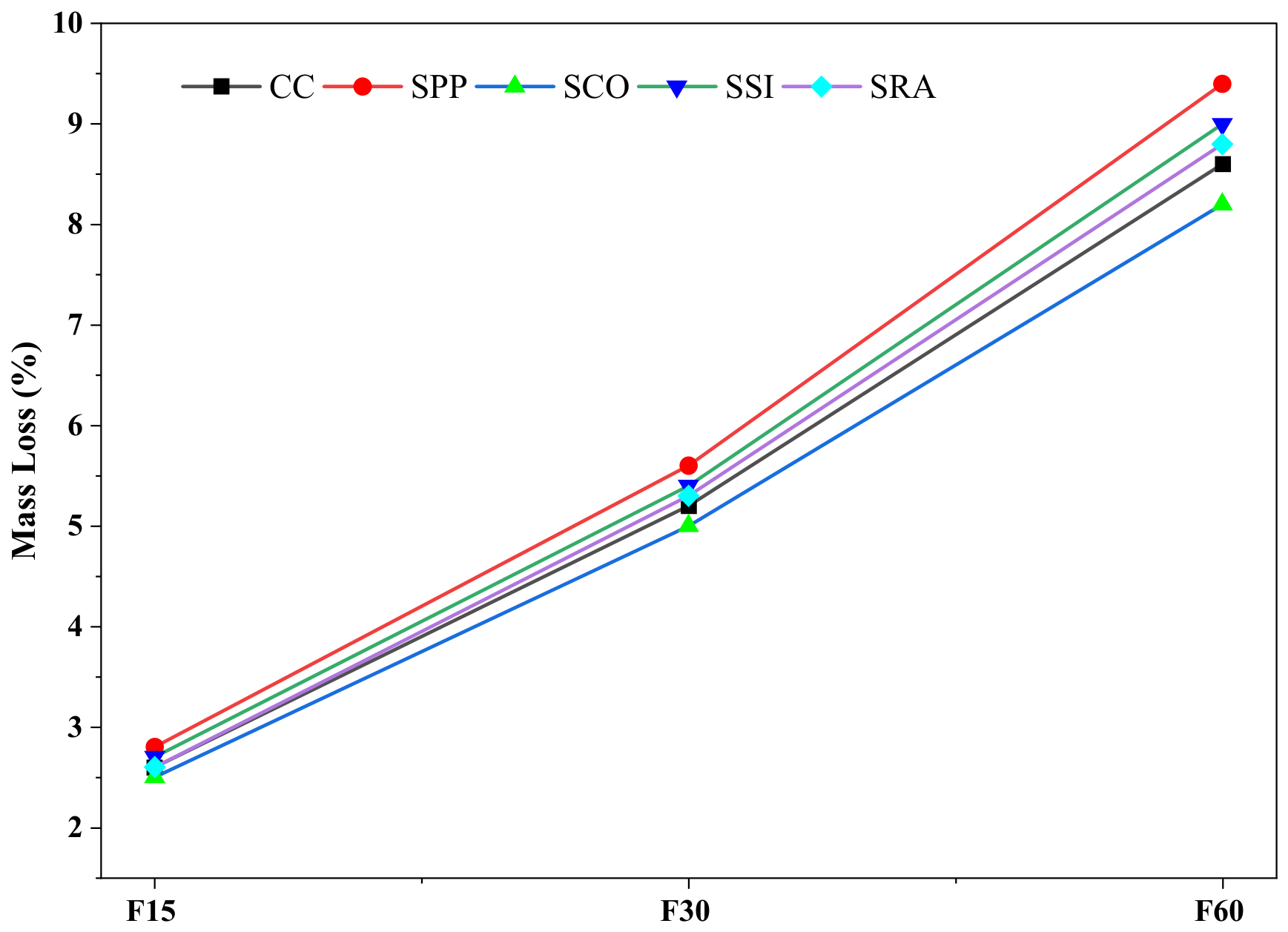
The mass loss results of the investigated concrete mixtures subjected to fire exposure are presented in Figure 12. A progressive increase in mass loss was observed with increasing fire exposure duration for all mixtures. The mass loss ranged from 2.5 to 2.8% after 15 min of exposure, increased to 5.0–5.6% after 30 min, and reached 8.2–9.4% after 60 min of exposure.
Figure 12.
Variation in mass loss of hybrid fibre reinforced concrete mixtures with fire exposure duration.
The increase in mass loss is attributed to the evaporation of free and physically bound water, decomposition of hydration products, and thermal degradation of the secondary fibres. The highest mass loss was observed after 60 min of exposure, indicating substantial thermal deterioration within the concrete matrix. The comparatively lower mass loss exhibited by the SCO mixture suggests enhanced thermal stability, which can be associated with the higher lignin content of coir fibres and their ability to form thermally stable char residues during heating. The observed mass loss behaviour is consistent with the reduction in residual mechanical properties following prolonged fire exposure.
3.6. Thermal Performance Index (TPI) Assessment
A Thermal Performance Index (TPI) was defined in this study to evaluate the overall fire performance of the investigated concrete mixtures by combining residual compressive strength retention and mass loss into a single parameter. The TPI was calculated using the following Equation (3):
The physical rationale of the proposed index is that higher residual compressive strength retention represents better preservation of mechanical performance, whereas lower mass loss indicates reduced fire-induced deterioration. Accordingly, a higher TPI represents a comparatively favourable combination of greater strength retention and lower mass loss. Since the TPI is formulated as a ratio of two percentage-based quantities, it provides an empirical comparative measure that integrates these two indicators of fire performance into a single parameter. The inclusion of mass loss in the denominator ensures that lower mass loss contributes positively to the TPI, consistent with improved thermal performance under elevated temperature exposure. As the TPI combines the effects of mechanical strength retention and material mass loss, it is interpreted together with the corresponding individual results to provide an integrated comparison of the thermal performance of the investigated concrete mixtures.
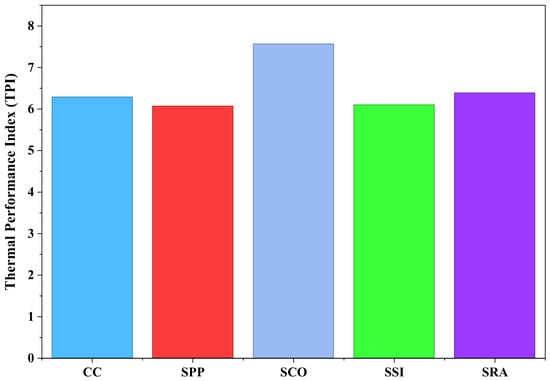
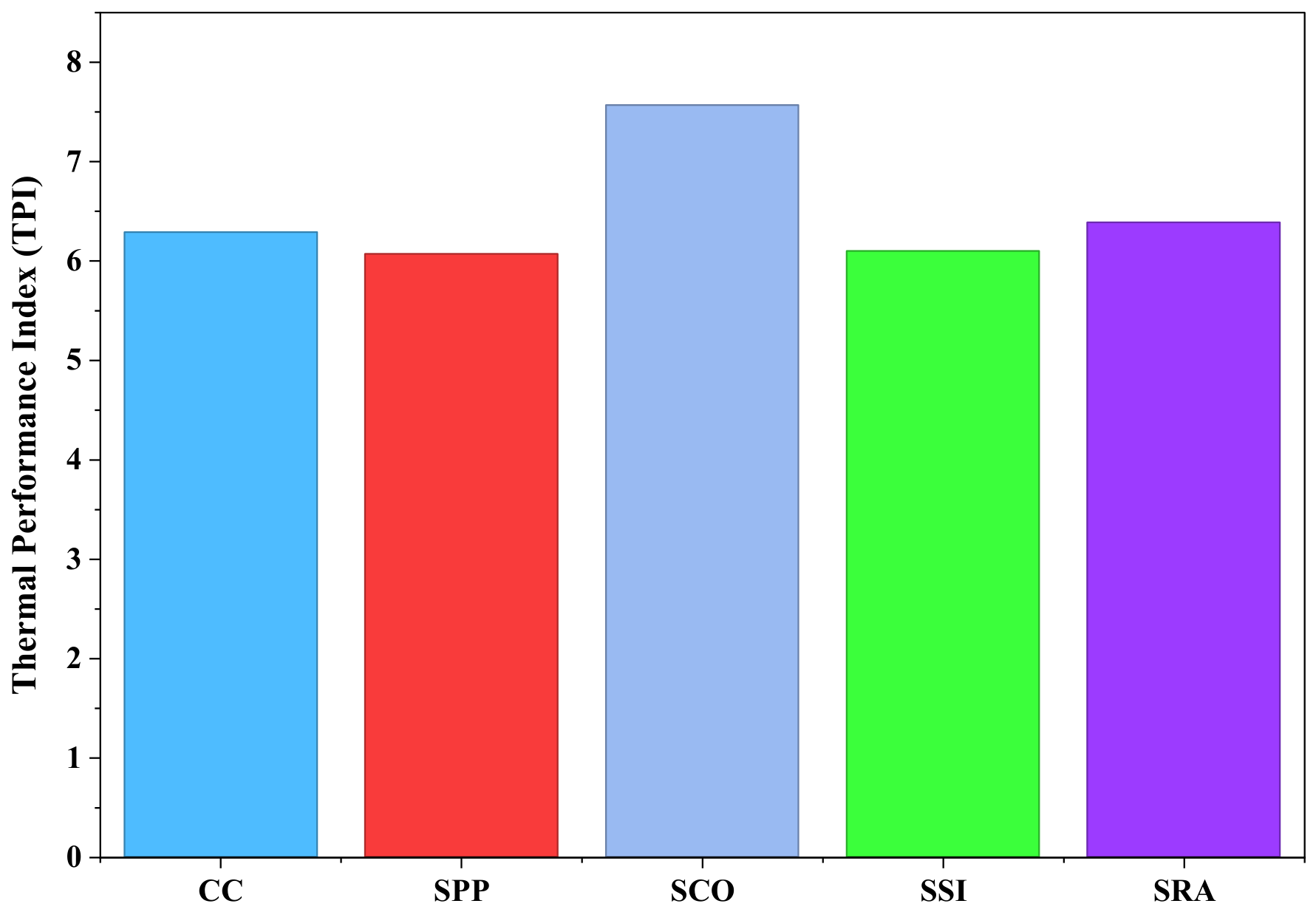
The TPI values corresponding to 60 min of fire exposure are presented in Figure 13. Higher TPI values indicate better overall thermal performance by reflecting greater retention of compressive strength together with comparatively lower mass loss. The calculated TPI values were 6.29, 6.07, 7.57, 6.10, and 6.39 for CC, SPP, SCO, SSI, and SRA, respectively. Among the investigated mixtures, SCO exhibited the highest TPI value, indicating improved retention of compressive strength with comparatively lower mass loss after fire exposure. Overall, the TPI provided a comparative assessment of the thermal performance of the investigated hybrid fibre systems.
Figure 13.
Thermal Performance Index (TPI) of hybrid fibre reinforced concrete mixtures.
3.7. Thermogravimetric Analysis (TGA)
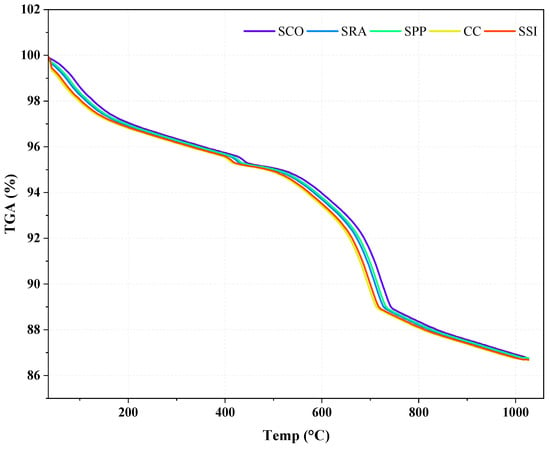
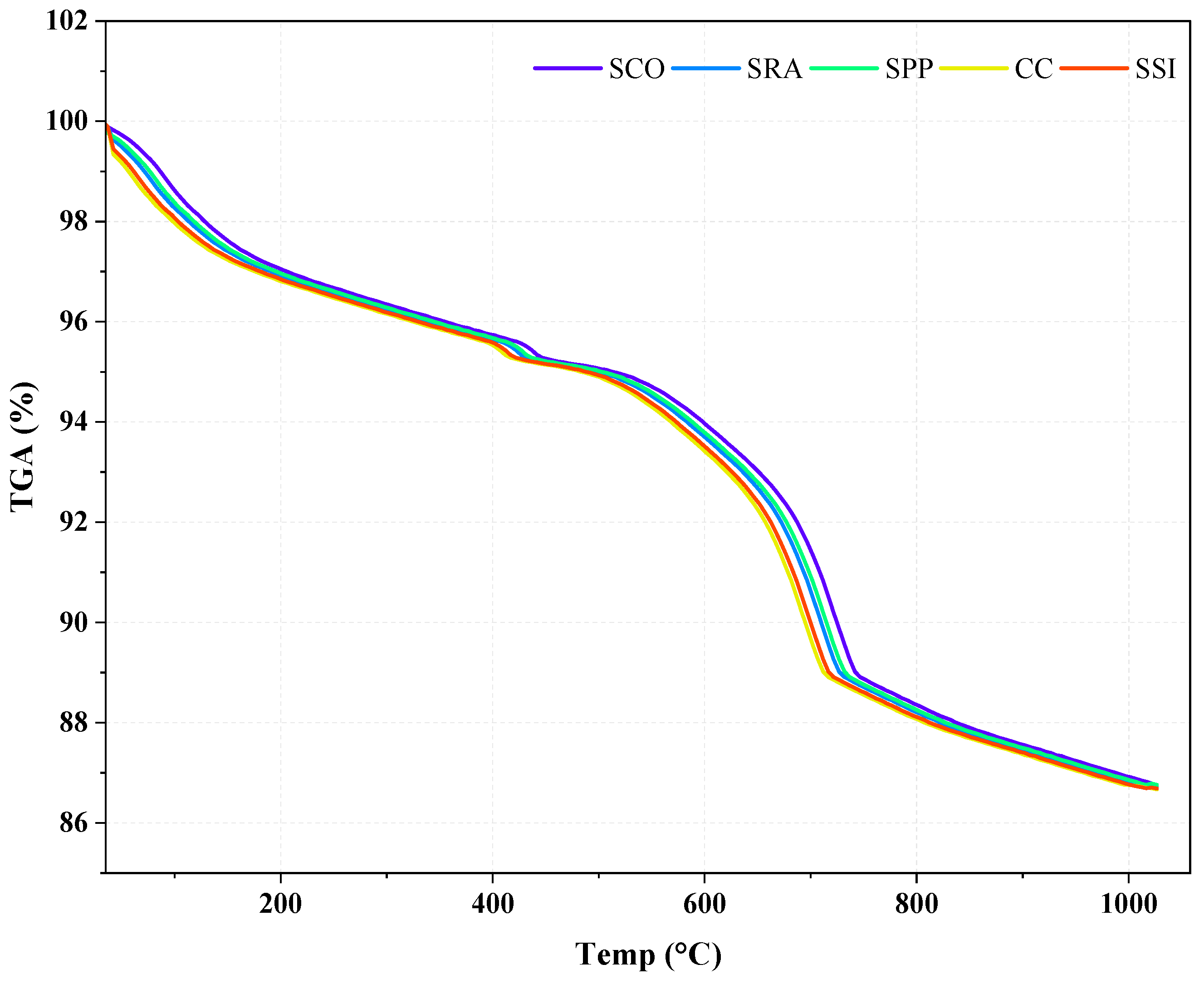
The TGA curves of the investigated concrete mixtures are presented in Figure 14. All mixtures exhibited progressive mass loss with increasing temperature. An initial reduction in mass below 150 °C was attributed to the evaporation of free and physically bound water. Further mass loss between 150 °C and 500 °C was associated with the dehydration of cement hydration products, while a pronounced reduction between 550 °C and 750 °C corresponded to the decomposition of calcium hydroxide and decarbonation reactions.
Figure 14.
Thermogravimetric analysis (TGA) curves of hybrid fibre reinforced concrete mixtures.
Among the investigated mixtures, SCO exhibited slightly higher residual mass retention throughout the temperature range, indicating marginally improved thermal stability. This behaviour can be associated with the comparatively higher lignin content of coir fibres, which can enhance resistance to thermally induced degradation. At 1000 °C, all mixtures retained approximately 86–87% residual mass, indicating similar overall thermal decomposition behaviour. The TGA results are consistent with the trends observed in mass loss and residual mechanical properties after fire exposure.
3.8. Microstructural Analysis of Fire-Exposed Concrete
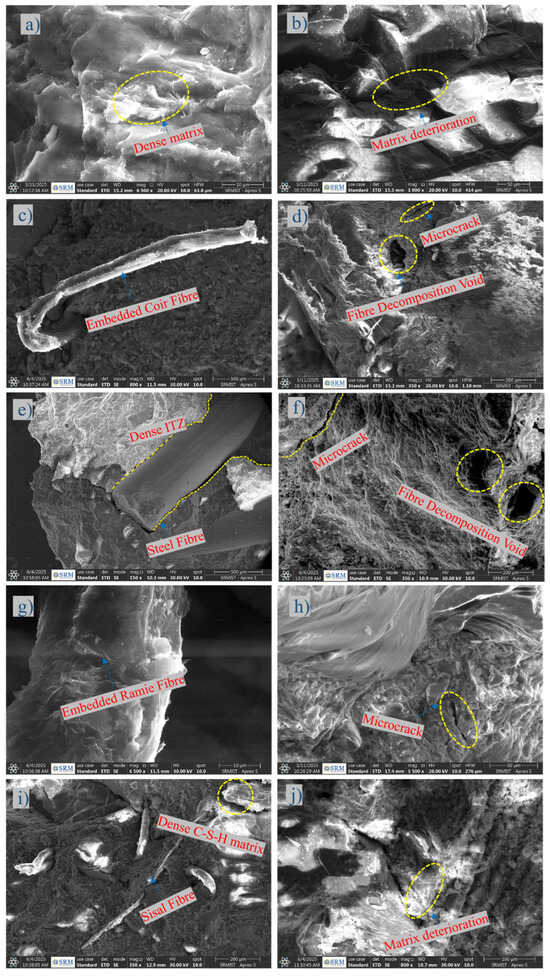
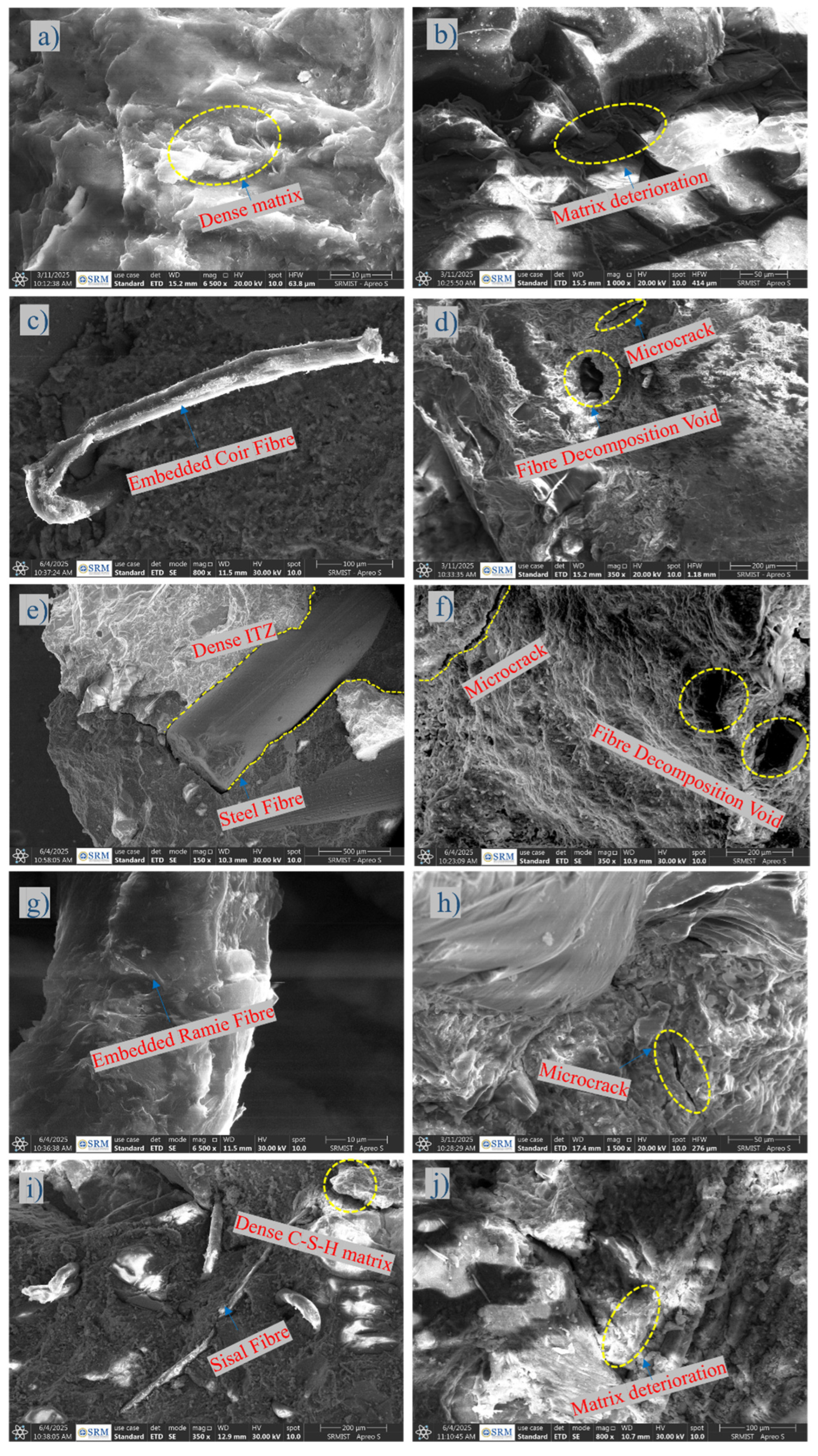
The SEM micrographs of the investigated concrete mixtures before and after fire exposure are presented in Figure 15. SEM observations were conducted on representative specimens, with three different regions examined for each specimen to assess the consistency of the observed microstructural features. The micrographs presented in Figure 15 are representative of the recurring morphological characteristics observed across the examined regions. Under ambient conditions, all mixtures exhibited a dense cementitious matrix with good fibre–matrix bonding. The control concrete (CC) showed a compact C–S–H matrix, while the hybrid fibre reinforced mixtures demonstrated effective embedding of coir, polypropylene, ramie, and sisal fibres within the matrix. The SPP mixture also exhibited a dense interfacial transition zone (ITZ) around the steel fibre, indicating strong fibre–matrix adhesion.
Figure 15.
SEM micrographs of the investigated concrete mixtures under ambient and after 60 min of ISO 834 fire exposure: (a,b) CC, (c,d) SCO, (e,f) SPP, (g,h) SRA, and (i,j) SSI.
Following 60 min of ISO 834 fire exposure, noticeable microstructural deterioration was observed in all mixtures. The control concrete exhibited matrix deterioration, whereas the hybrid fibre reinforced mixtures showed microcrack formation and localized fibre decomposition voids resulting from the thermal degradation of the secondary fibres. In the SPP mixture, the SEM images showed voids at locations corresponding to degraded polypropylene fibres; this morphology is consistent with the proposed vapour-release mechanism during heating. Despite the degradation of the secondary fibres, the steel fibres remained visibly embedded within the matrix and were observed across cracked regions. Among the investigated mixtures, the SCO specimen showed comparatively denser matrix morphology with fewer visible deterioration features. These observations are consistent with the residual strength, mass loss, and TGA results, and provide microstructural support for the observed differences in fire-exposed performance.
3.9. Mineralogical Characterization Using XRD
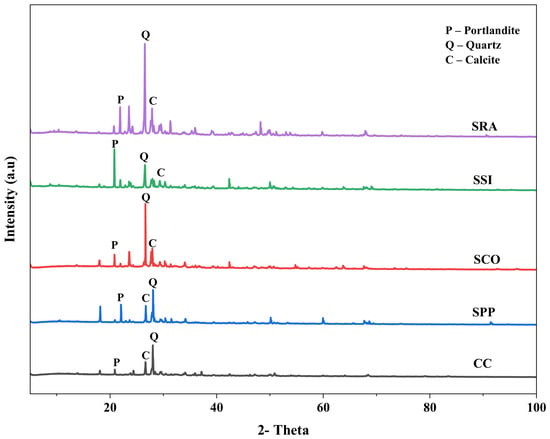
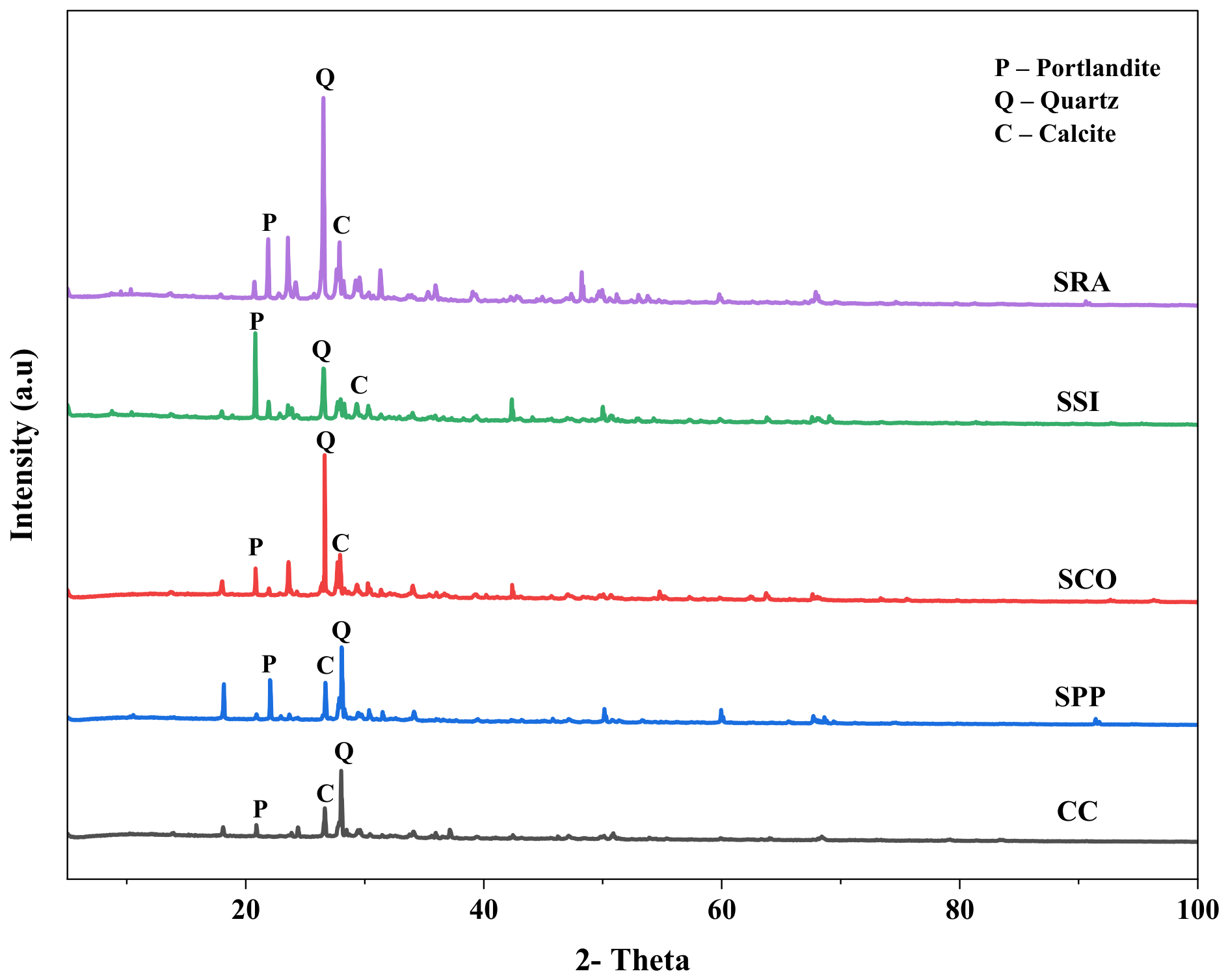
The XRD patterns of the investigated concrete mixtures before and after 60 min of ISO 834 fire exposure are presented in Figure 16. Quartz (Q), portlandite (P), and calcite (C) were identified as the predominant crystalline phases. Following fire exposure, minor changes in diffraction peak intensities were observed, indicating thermal alteration in the hydrated cement matrix. Compared with the control concrete, the hybrid fibre reinforced concrete mixtures exhibited relatively smaller variations in peak intensity, suggesting improved mineralogical stability. Among the investigated mixtures, the steel–coir composite (SCO) showed the least noticeable changes, which is consistent with its superior residual mechanical performance and lower mass loss after fire exposure.
Figure 16.
XRD patterns of fire-exposed hybrid fibre reinforced concrete mixtures.
4. Conclusions
This study investigated the fire performance of hybrid fibre reinforced concrete incorporating steel fibres combined with coir, polypropylene, ramie, and sisal fibres under ISO 834 fire exposure. Based on the experimental results, the following conclusions are drawn:
- Fire exposure progressively reduced the compressive, split tensile, and flexural strengths of all concrete mixtures. After 60 min of fire exposure, the compressive strength reductions were 45.9%, 42.9%, 37.9%, 45.1%, and 43.8% for CC, SPP, SCO, SSI, and SRA, respectively.
- The hybrid fibre reinforced concrete mixtures retained higher residual mechanical properties than the control concrete after fire exposure. The SCO mixture retained 62.1% of its original compressive strength after 60 min of fire exposure, whereas the control concrete retained 54.1%.
- Mass loss increased with increasing fire exposure duration, reaching 8.6%, 9.4%, 8.2%, 9.0%, and 8.8% for CC, SPP, SCO, SSI, and SRA, respectively, after 60 min. The comparatively lower mass loss of the SCO mixture indicates reduced thermal deterioration.
- The calculated Thermal Performance Index (TPI) values were 6.29, 6.07, 7.57, 6.10, and 6.39 for CC, SPP, SCO, SSI, and SRA, respectively, indicating differences in the residual performance of the investigated mixtures after fire exposure.
- The TGA results showed comparable thermal degradation behaviour for all mixtures, while the XRD patterns indicated minor changes in the intensity of the identified crystalline phases after fire exposure. SEM observations revealed matrix deterioration, microcrack formation, and fibre decomposition voids, which were consistent with the reductions observed in the residual mechanical properties.
- Within the scope of this study, the incorporation of hybrid fibres contributed to improved residual performance after fire exposure. Among the investigated mixtures, the steel–coir hybrid fibre reinforced concrete (SCO) exhibited comparatively higher residual strength retention, lower mass loss, and a higher TPI, indicating improved performance under the investigated fire exposure conditions.
Limitation
A limitation of the present study is that the internal and surface temperatures of the concrete specimens were not measured during fire exposure. Future studies may incorporate specimen-level temperature measurements to better characterize the thermal response of different specimen geometries.
Author Contributions
J.V.: Conceptualization, Methodology, Investigation, Validation. Writing—original draft. S.S.S.: Supervision, Writing—review and editing. All authors have read and agreed to the published version of the manuscript.
Funding
This research received no external funding.
Data Availability Statement
The data supporting the findings of this study are available from the corresponding author upon reasonable request.
Acknowledgments
We acknowledge the support and facilities provided by the SRM Central Instrumentation Facility (SCIF), SRM Institute of Science and Technology.
Conflicts of Interest
The authors declare that they have no known competing financial interests or personal relationships that could have appeared to influence the work reported in this paper.
References
- Sun, L.; Liu, S.; Zhao, H.; Muhammad, U.; Chen, D.; Li, W. Dynamic Performance of Fiber-Reinforced Ultra-High Toughness Cementitious Composites: A Comprehensive Review from Materials to Structural Applications. Eng. Struct. 2024, 317, 118647. [Google Scholar] [CrossRef] [Scilit]
- da Silva Neto, J.T.; Ribeiro Soares, P.R., Jr.; Reis, E.D.; de Souza Maciel, P.; Gomes, P.C.C.; Gouveia, A.M.C.; da Silva Bezerra, A.C. Fiber-Reinforced Cementitious Composites: Recent Advances and Future Perspectives on Key Properties for High-Performance Design. Discov. Civ. Eng. 2025, 2, 65. [Google Scholar] [CrossRef] [Scilit]
- Akbulut, Z.F.; Tawfik, T.A.; Smarzewski, P.; Guler, S. Advancing Hybrid Fiber-Reinforced Concrete: Performance, Crack Resistance Mechanism, and Future Innovations. Buildings 2025, 15, 1247. [Google Scholar] [CrossRef] [Scilit]
- Rong, H.; Dong, W.; Zhao, X.; Zhou, X. Investigation on Multi-Cracks Initiation and Propagation of Fiber Reinforced Concrete in Restrained Shrinkage Ring Tests. Theor. Appl. Fract. Mech. 2021, 111, 102856. [Google Scholar] [CrossRef] [Scilit]
- Christopher, C.G.; Gopal, R.; Sadasivam, S.; Devi Keerthika Esakki, A.K.; Dinesh Kumar, P. Experimental Toughness and Durability Evaluation of FRC Composite Reinforced with Steel–Polyester Fiber Combination. Int. J. Concr. Struct. Mater. 2023, 17, 39. [Google Scholar] [CrossRef] [Scilit]
- de Araújo Moura, R.C.; Lima, P.R.L.; Ribeiro, D.V. Effect of Temperature on Mechanical Behavior of Concrete Reinforced with Different Types of GFRP Bar. Polymers 2022, 14, 3437. [Google Scholar] [CrossRef] [Scilit] [PubMed]
- Kodur, V. Properties of Concrete at Elevated Temperatures. ISRN Civ. Eng. 2014, 2014, 1–15. [Google Scholar] [CrossRef] [Scilit]
- Sharifianjazi, F.; Zeydi, P.; Bazli, M.; Esmaeilkhanian, A.; Rahmani, R.; Bazli, L.; Khaksar, S. Fibre-Reinforced Polymer Reinforced Concrete Members under Elevated Temperatures: A Review on Structural Performance. Polymers 2022, 14, 472. [Google Scholar] [CrossRef] [Scilit] [PubMed]
- Ashteyat, A.; Shhabat, M.; Alkhalaileh, A.; Al-Zu’bi, M.; Abdel-Jaber, M. Behavior of Ultra-High-Performance Concrete under Elevated Temperatures: A Comprehensive Review of Mechanical, Physical, Thermal, and Microstructural Properties. Results Eng. 2025, 26, 104960. [Google Scholar] [CrossRef] [Scilit]
- Gong, F.; Jiang, X.; Gamil, Y.; Iftikhar, B.; Thomas, B.S. An Overview on Spalling Behavior, Mechanism, Residual Strength and Microstructure of Fiber Reinforced Concrete under High Temperatures. Front. Mater. 2023, 10, 1258195. [Google Scholar] [CrossRef] [Scilit]
- Rashad, A.M.; Khalil, M.H.; Shaltout, A.M. Calcium Formate as a Modifier Agent for Calcium Hydroxide-Activated Slag Cement. J. Eng. Appl. Sci. 2025, 72, 183. [Google Scholar] [CrossRef] [Scilit]
- Cho, S.; Lee, N.; Kim, M.O. A Comprehensive Review on CO2 Utilization in Cement and Concrete: From Microstructural Transformations to Structural Applications. Case Stud. Constr. Mater. 2025, 23, e05265. [Google Scholar] [CrossRef] [Scilit]
- Marandi, N.; Shirzad, S. Sustainable Cement and Concrete Technologies: A Review of Materials and Processes for Carbon Reduction. Innov. Infrastruct. Solut. 2025, 10, 408. [Google Scholar] [CrossRef] [Scilit]
- Dobiszewska, M.; Bagcal, O.; Beycioğlu, A.; Goulias, D.; Köksal, F.; Płomiński, B.; Ürünveren, H. Utilization of Rock Dust as Cement Replacement in Cement Composites: An Alternative Approach to Sustainable Mortar and Concrete Productions. J. Build. Eng. 2023, 69, 106180. [Google Scholar] [CrossRef] [Scilit]
- Song, H.; Jeong, Y.; Bae, S.; Jun, Y.; Yoon, S.; Eun Oh, J. A Study of Thermal Decomposition of Phases in Cementitious Systems Using HT-XRD and TG. Constr. Build. Mater. 2018, 169, 648–661. [Google Scholar] [CrossRef] [Scilit]
- Li, Y.; Kong, X.; Cao, Z.; Yang, L.; Xu, W.; Gao, D. Mechanical Properties of Steel Fiber Reinforced Concrete (SFRC) Mixed with NaCl Solutions of Varying Concentrations. Case Stud. Constr. Mater. 2025, 23, e05389. [Google Scholar] [CrossRef] [Scilit]
- Liang, J.; Liu, K.; Wang, C.; Wang, X.; Liu, J. Mechanical Properties of Steel Fiber-Reinforced Rubber Concrete after Elevated Temperature. Sci. Rep. 2025, 15, 6965. [Google Scholar] [CrossRef] [Scilit] [PubMed]
- Yang, J.; Zhang, Y.; Huang, J. The Strengthening Theory of Steel Fiber Reinforced Concrete and Its Application in Tunnel Engineering: A Review. J. Eng. Fiber. Fabr. 2024, 19, 1–17. [Google Scholar] [CrossRef] [Scilit]
- Jameran, A.; Ibrahim, I.S.; Yazan, S.H.S.; Rahim, S.N.A.A. Mechanical Properties of Steel-Polypropylene Fibre Reinforced Concrete under Elevated Temperature. In Proceedings of the Procedia Engineering; Elsevier Ltd.: Amsterdam, The Netherlands, 2015; Volume 125, pp. 818–824. [Google Scholar]
- Chen, M.; Yang, F.; Zhang, T.; Zhou, L. Effect of Elevated Temperatures on Behaviour of Recycled Steel and Polypropylene Fibre Reinforced Ultra-High Performance Concrete under Dynamic Splitting Tension. J. Build. Eng. 2024, 84, 108586. [Google Scholar] [CrossRef] [Scilit]
- Zhang, B.; Lin, X.; Zhang, Y.X.; Zhang, L. Microscale Failure Analysis of the Ultra-High-Performance Polypropylene Fibre Reinforced Concrete Panel Subjected to High Thermal Loading Induced by Fire Exposure. Eng. Struct. 2023, 292, 116518. [Google Scholar] [CrossRef] [Scilit]
- Gaur, P.; Khan, T.; Kumar, V.; Yadav, J.; Sebaey, T.A. Graphene-Modified Polymer Composites for Ballistic and Impact Protection: A Comprehensive Review with Design Rules. Int. J. Prot. Struct. 2026. [Google Scholar] [CrossRef] [Scilit]
- Venkatesan, J.; Subramanian, S.S. Influence of Low-Alkali Surface Modified Natural Fibres on the Performance, Microstructure and Sustainability of Hybrid Fibre Reinforced Concrete. Case Stud. Constr. Mater. 2026, 25, e06247. [Google Scholar] [CrossRef] [Scilit]
- Venkatesan, J.; Subramanian, S.S. Synergistic Effect of Silica Fume Modified Ramie-Based Hybrid Natural Fibre Reinforced Cementitious Composites: Experimental Investigation and Optimisation. Arab. J. Sci. Eng. 2026, 1–27. [Google Scholar] [CrossRef] [Scilit]
- Ahmad Farooq, M.; Alomayri, T.; Ali, B.; Sultan, T.; Yosri, A.M. Influence of Hybrid Coir-Steel Fibres on the Mechanical Behaviour of High-Performance Concrete: Step towards a Novel and Eco-Friendly Hybrid-Fibre Reinforced Concrete. Constr. Build. Mater. 2023, 389, 131728. [Google Scholar] [CrossRef] [Scilit]
- Huang, L.; Xu, L.; Chi, Y.; Xu, H. Experimental Investigation on the Seismic Performance of Steel–Polypropylene Hybrid Fiber Reinforced Concrete Columns. Constr. Build. Mater. 2015, 87, 16–27. [Google Scholar] [CrossRef] [Scilit]
- Kharrazi, H.; Toufigh, V.; Boroushaki, M. General and Optimal 2D Convolutional Neural Networks to Predict the Residual Compressive Strength of Concretes Exposed to High Temperatures. Eng. Appl. Artif. Intell. 2024, 131, 107901. [Google Scholar] [CrossRef] [Scilit]
- De Maio, U.; Garro, A.; Greco, F.; Pranno, A.; Silvestri, A. Vibration-Based Damage Identification in Concrete Beams via a Decomposed Deep Learning Approach. Prog. Eng. Sci. 2026, 3, 100280. [Google Scholar] [CrossRef] [Scilit]
- Venkatesan, J.; Subramanian, S.S. Interfacial Modification of Ramie Fibre Using Low-Alkali Sodium Carbonate Treatment and Its Influence on Cementitious Composite Performance. J. Build. Eng. 2026, 129, 116803. [Google Scholar] [CrossRef] [Scilit]
- IS 12269: 2013; Ordinary Portland Cement, 53 Grade Specification. Bureau of Indian Standards: New Delhi, India, 2013; pp. 1–14.
- IS 383:2016; Coarse and Fine Aggregate for Concrete—Specification. Bureau of Indian Standards: New Delhi, India, 2016; pp. 1–21.
- IS 456:2000; Plain and Reinforced Concrete—Code of Practice. Bureau of Indian Standards: New Delhi, India, 2000; pp. 1–114.
- IS 9103:2019; Concrete Admixtures—Specification. Bureau of Indian Standards: New Delhi, India, 2019; pp. 1–28.
- Varona, F.B.; Baeza, F.J.; Bru, D.; Ivorra, S. Influence of High Temperature on the Mechanical Properties of Hybrid Fibre Reinforced Normal and High Strength Concrete. Constr. Build. Mater. 2018, 159, 73–82. [Google Scholar] [CrossRef] [Scilit]
- Du, P.; Yang, Y.; Tan, K.H. Fire Behaviour and Design of Hybrid Fibre Reinforced High-Performance Concrete Columns Subjected to Uniaxial Bending. Eng. Struct. 2022, 251, 113425. [Google Scholar] [CrossRef] [Scilit]
- Elsayed, M.; Ali, M.; El-Azim, A.A. Residual Strength of Ultrahigh-Performance Hybrid Fibre-Reinforced Concrete Columns Subjected to High Temperatures. Constr. Build. Mater. 2024, 411, 134305. [Google Scholar] [CrossRef] [Scilit]
- IS 10262:2019; Concrete Mix Proportioning—Guidelines. Bureau of Indian Standards: New Delhi, India, 2019; pp. 1–38.
- ISO 834-1; Fire Resistance Test—Elements of Building Construction, Part 1: General Requirements. International Organization for Standardization ISO 834: Geneva, Switzerland, 1999.
- IS 516 (Part 1/Sec 1); Hardened Concrete—Method of Test—Compressive Strength. Bureau of Indian Standards: New Delhi, India, 2021; pp. 1–24.
- IS 5816; Method of Test for Splitting Tensile Strength of Concrete. Bureau of Indian Standards: New Delhi, India, 1999; pp. 1–10.
- IS 516 (Part 5/Sec 3): 2020; Hardened Concrete—Method of Test—Static Modulus of Elasticity. Bureau of Indian Standards: New Delhi, India, 2020; pp. 1–15.
- IS 516 (Part 5/Sec 1); Hardened Concrete—Method of Test—Flexural Strength. Bureau of Indian Standards: New Delhi, India, 2018; pp. 1–18.
- Revuelta, D.; Carballosa, P.; García Calvo, J.L.; Pedrosa, F. Residual Strength and Drying Behavior of Concrete Reinforced with Recycled Steel Fiber from Tires. Materials 2021, 14, 6111. [Google Scholar] [CrossRef] [Scilit] [PubMed]
- Jin, A.-H.; Woo, J.-S.; Yun, H.-D.; Kim, S.-W.; Park, W.-S.; Choi, W.-C. Influence of Concrete Strength and Fiber Properties on Residual Flexural Strength of Steel Fiber-Reinforced Concrete. Constr. Build. Mater. 2025, 489, 142366. [Google Scholar] [CrossRef] [Scilit]

Disclaimer/Publisher’s Note: The statements, opinions and data contained in all publications are solely those of the individual author(s) and contributor(s) and not of MDPI and/or the editor(s). MDPI and/or the editor(s) disclaim responsibility for any injury to people or property resulting from any ideas, methods, instructions or products referred to in the content. |
© 2026 by the authors. Licensee MDPI, Basel, Switzerland. This article is an open access article distributed under the terms and conditions of the Creative Commons Attribution (CC BY) license.