Article

Asphalt as a Plasticizer for Natural Rubber in Accelerated Production of Rubber-Modified Asphalt


1
Department of Chemical Engineering, Faculty of Engineering, University of Riau, Pekanbaru 28293, Riau, Indonesia
2
Department of Business and Economics, Faculty of Business and Economics, University of Riau, Pekanbaru 28293, Riau, Indonesia
3
Research Center for Equipment Manufacturing Technology, National Research and Innovation Agency (BRIN), South Tangerang 15314, Banten, Indonesia
4
Department of Chemical Engineering, Sriwijaya State Polytechnic, Palembang City 30139, South Sumatra, Indonesia
*
Author to whom correspondence should be addressed.
Constr. Mater. 2026, 6(1), 4; https://doi.org/10.3390/constrmater6010004

Submission received: 26 November 2025 / Revised: 16 December 2025 / Accepted: 22 December 2025 / Published: 9 January 2026
(This article belongs to the Special Issue Advances in Sustainable Construction Materials for Asphalt Pavements)

Abstract

One of the main obstacles to producing natural rubber-modified asphalt is the difficulty of mixing Technical Specification Natural Rubber (TSNR) or its compounds with asphalt, leading to long mixing times and high costs. This study aims to evaluate the use of 60/70 penetration asphalt as a plasticizer to accelerate the mixing process and improve the rheological properties of modified asphalt using Technical Specification Natural Rubber (TSNR). The production process for technical specification natural rubber-modified asphalt involves two stages: the production of the technical specification natural rubber compound (CTSNR) and the production of CTSNR-based modified asphalt (CTSNRMA). The CTSNR production process begins with mastication of technical specification natural rubber (TSNR), followed by the addition of activators (zinc oxide, stearic acid), accelerators (Mercaptobenzothiazole sulfenamide (MBTS)), antioxidants (2,2,4-Trimethyl-1,2-dihydroquinoline (TMQ)), and 60/70 penetration asphalt as a plasticizer (at concentrations of 30%, 40%, and 50%). After homogeneous mixing for 30–60 min, the CTSNR is diluted 5–10 mm for the next mixing stage with hot asphalt at 160–170 °C. The best results of this study showed that CTSNR-modified asphalt with 4% rubber content and 50% plasticizer (CTSNRM-450) successfully reduced the mixing time to 16 min, making it more efficient than the traditional method, which takes up to 180 min. The addition of asphalt plasticizer decreased penetration to 35.6 dmm and increased the softening point to 55.4 °C. The CTSNRMA-440 formula, with 4% rubber content and 40% plasticizer, produced the best results in terms of storage stability, meeting the ASTM D5892 standard with a softening-point difference of 0.95 °C, which is well below the threshold of 2.2 °C. The CTSNRMA-440 sample achieved a Performance Grade (PG) of 76, suitable for hot-climate conditions, with a significant reduction in mixing time, greater stability, and increased resistance to high temperatures.

1. Introduction

The development of polymer-modified asphalt (PMA) technology is driven by the need for high-performance asphalt to improve the durability and performance of road pavements. Several types of polymers, such as styrene-butadiene-styrene (SBS) and polyethylene (PE), when mixed into asphalt, can improve its mechanical properties, including resistance to rutting, cracking, and temperature sensitivity [1,2,3]. The addition of polymers to asphalt provides significant benefits, including increased stiffness, elasticity, and resistance to deformation under higher loads and at higher temperatures [3,4]. In addition, polymers such as raw natural rubber or vulcanized natural rubber, such as crumb rubber from used tires, can also improve the mechanical properties of asphalt and improve its performance as a binder in road pavements [5,6,7,8,9]. In addition, the use of raw natural rubber or vulcanized natural rubber from used tires is further explored to enhance environmental sustainability by utilizing renewable resources and potentially contributing to sustainability by valorizing renewable rubber and extending pavement service life [10,11].
Although polymer-modified asphalt technology continues to develop, the transition from research to industrial and commercial stages is slow. Technical and economic factors are the primary factors hindering the development of polymer-modified asphalt research to the industrial stage. Technically, polymer-modified asphalt often experiences inconsistencies between polymer and asphalt properties, which can lead to thermodynamic incompatibilities, which in turn trigger macroscopic phase separation during storage, weakening rheological properties, and reducing final mechanical strength [12,13]. In addition, the performance of polymer-modified asphalt can vary significantly depending on the type and content of the polymer used, as well as its interaction with the asphalt [5,9,14,15,16,17]. Additionally, different technologies are required for each production process, tailored to the specific polymer type, which significantly affects the economics of the resulting polymer-modified asphalt (PMA) product. For example, several countries in North and South America produce polymer-modified asphalt using plastic polymer waste or crumb rubber from used tires [18,19]. Meanwhile, in Asia, especially in Southeast Asia, natural rubber is used as a raw material for renewable and sustainable polymer-modified asphalt.
In Southeast Asia, the industrialization of natural-rubber-based modified asphalt is relatively slow compared to other polymer-modified asphalts due to economic and technical factors. Economically, the production cost of natural rubber-modified asphalt is relatively high compared to that of other polymers. This is related to the fluctuating price of natural rubber, a raw material used in asphalt modifiers. These fluctuations in natural rubber prices are influenced by demand from other industries, such as the tire, glove, and other rubber materials sectors, making it difficult to maintain competitive prices. Furthermore, the need for production equipment for natural rubber-modified asphalt requires a significant initial investment. These economic factors collectively hamper the growth of the rubber-modified asphalt industry in Southeast Asia. Meanwhile, technically, the production of natural rubber-modified asphalt varies slightly depending on the type of natural rubber used. Types of natural rubber commonly used as asphalt modification materials include concentrated latex, lump cup, and solid natural rubber (technical specification rubber), as well as crepe rubber [5,20,21,22,23]. Each type of natural rubber has its own advantages and disadvantages in the production process, resulting in modified asphalt with different characteristics.
The use of solid natural rubber or technical specification rubber as a raw material for asphalt modification has several advantages. One of the primary advantages is the enhancement in asphalt’s mechanical properties, resulting in improved elasticity and flexibility. This results in asphalt that is better able to withstand temperature fluctuations and heavy traffic loads, thereby reducing the possibility of cracking and deformation. In addition, the addition of rubber can increase the resistance of asphalt to aging and oxidative damage, thereby extending the life of the road surface [24,25,26]. On the downside, several factors need to be considered when using solid natural rubber or technical specification rubber in asphalt modification. The production process for natural rubber-modified asphalt can be more complex and time-consuming, requiring specialized mixing techniques to ensure uniform dispersion of rubber in the asphalt. This complexity can lead to increased production costs and higher selling prices.
Therefore, production optimisation is necessary to reduce rising production costs for natural rubber-modified asphalt. One way to do this is to increase energy efficiency. The energy sector offers opportunities for optimisation in the natural rubber-modified asphalt production process, specifically the mixing time required to homogenise solid natural rubber within the asphalt, which can be lengthy. For example, adding a solid natural rubber compound requires approximately 12 h to achieve homogeneity, whereas adding pre-vulcanised natural rubber latex (NRL) requires approximately 4 h at a temperature of 150 °C [27]. This long mixing time is attributed to the tendency of solid rubber to expand in hot, molten asphalt, which is influenced by the difference in polarity between rubber and asphalt particles [27]. Meanwhile, in another study, mixing solid natural rubber with the technical specifications of masticated rubber was carried out with pre-conditioning in the form of thermal depolymerization of polymer chain breaking at an extreme temperature of 200 °C to accelerate homogenization by adding asphalt with a ratio of 1:1, thereby shortening the homogenization time of natural rubber in asphalt to 1–3 h [5,9,23,28].
However, the adopted method causes problems due to poor compatibility, primarily because the natural rubber particles remain quite large, leading to phase separation between the rubber and asphalt [29,30]. Several technologies have been redeveloped to increase the efficiency of mixing solid natural rubber into other asphalt by reducing its particle size to a small, micro-sized level, approaching the micro size commonly achieved with used tire rubber as an asphalt modifier. In this study, micro-sized technical specification natural rubber dispersed and became homogeneous in asphalt relatively quickly. The estimated time required to mix micro-sized technical specification rubber to achieve homogeneity ranged from 30 to 75 min [27]. However, the technology and production costs of producing natural rubber on a micro scale are almost as high, requiring a relatively high capital investment.
A comprehensive understanding and control of natural rubber’s thermal and rheological properties are vital for accelerating homogenization within the asphalt matrix. For example, mechanical stress during mastication has been shown to significantly modify the thermal properties of natural rubber. This results in increased material plasticity, effectively facilitating and accelerating depolymerization [5,9,31,32]. However, the application of mechanical stress alone is insufficient to alter the rheology of natural rubber and change its thermal properties. This is related to the nature of the recovery of natural rubber bonds, commonly referred to as re-agglomeration, after experiencing mechanical stress [33]. This re-agglomeration can occur after some time of natural rubber processing; as a result, the thermal properties of natural rubber can improve again; so, the best option is to mix it into the asphalt immediately. However, in this study, natural rubber was manipulated to alter its rheological properties while maintaining its properties during storage. In the production of compounds, plasticizers play a crucial role in modifying the rheology of natural rubber, enhancing flexibility and elasticity, improving filler dispersion, and enhancing the mechanical properties of natural rubber. Based on this, in this study, the thermal properties of natural rubber were manipulated by applying mechanical stress, adding chemical additives, and using plasticizers to maintain its rheology during storage [33].
White oil is a type of plasticizer commonly used in the natural rubber compound industry. It is a type of plasticizer included in the oil-based plasticizer group (paraffinic or naphthenic). White oil is often used in the manufacture of natural rubber compounds to improve the flexibility, elongation, and overall mechanical properties of rubber products [34,35]. The content of white oil used as a plasticizer typically ranges from 1% to 10%. The greater the amount of white oil, the greater the flexibility and elasticity of natural rubber, and the lower the thermal properties of asphalt. However, the use of much higher white oil makes it difficult to mix into rubber, alters the asphalt rheology, making it softer, and increases the production cost of natural rubber compounds. Oil-based plasticizers (paraffinic or naphthenic) can migrate from the rubber compound over time, thereby affecting the mechanical properties of natural rubber. This migration is a common problem with conventional petroleum-based plasticizers. Plasticizer migration can decrease flexibility and cause a rebound increase in the rubber matrix’s stiffness [36,37]. One underlying reason for this plasticizer migration is that low-molecular-weight plasticizers tend to have higher mobility in the polymer matrix, making them more easily migrated than high-molecular-weight plasticizers. This makes white oil unattractive for use as a plasticizer to maintain the stability of natural rubber compounds during storage. In addition, the addition of oil-based plasticizers (paraffinic or naphthenic) at high levels can degrade the performance of asphalt as a road pavement binder, which is indicated by increased penetration, decreased softening point, although accompanied by increased low temperature flexibility, and, most importantly, poor asphalt stability [38].
Although various plasticizer alternatives can replace white oil in natural rubber processing, selecting the right material requires careful consideration of technical and economic factors. Cost evaluation is a crucial parameter to ensure that the substitution does not increase production costs while maintaining the rheological stability of the resulting modified asphalt. A previous literature review indicated that using low-concentration (1–2%) 60/70 penetration asphalt (bulk asphalt) as a plasticizer effectively accelerates mixing. However, this method has significant process limitations because natural rubber cannot be dispersed in the asphalt matrix by direct mixing at standard temperatures (150–170 °C). Natural rubber requires preconditioning via chain-breaking thermal depolymerization at 200 °C to accelerate homogenization. Consequently, even using asphalt as a plasticizer, this method still requires a relatively long processing time, ranging from 1 to 3 h, to produce homogeneous modified asphalt without degrading its functional performance as a road pavement binder [5,9].
In this study, asphalt was adopted as a plasticizer to engineer the rheology of natural rubber. This selection was based on the hypothesis that asphalt, as a high-molecular-weight petroleum derivative, has an adequate plasticizing capacity [39]. The asphalt component also serves as a low-viscosity solvent that facilitates wetting at the rubber interface, thereby accelerating the pre-swelling rate and initiating plasticization by diffusing into the polymer network. This interaction not only accelerates the attainment of mixture homogeneity but also mitigates the risk of rubber reagglomeration during storage [39], thereby enabling a longer shelf life. From an economic and technical perspective, the use of asphalt as a synthetic plasticizer substitute can substantially reduce production costs, given its low cost and direct integration into the asphalt matrix without altering the fundamental rheological characteristics of the resulting modified asphalt. Specifically, this study aims to evaluate the effectiveness of 60/70 penetration asphalt (bulk asphalt) as an internal plasticizing agent during the TSNR compounding stage, with a focus on preparing the physical conditions (pre-swelling) to accelerate the final blending time in hot asphalt.

2. Materials and Methods

2.1. Material

The research sample was prepared using 60/70 penetration asphalt produced by Pertamina and natural rubber technical specifications (TSNR) in accordance with Indonesian Rubber Standard 20 (SIR 20), obtained from Distributor PT. Nata Kimindo Pratama. The TSNR used in this study has specifications of 98% dry rubber content, 0.02% impurity content, and a plasticity retention index (PRI) of 50. In the production process of the TSNR compound (CTSNR), following the temporary specifications issued by the Ministry of Public Works and Public Housing (PUPR) with number SKh-2.M.04, with composition adjustments as listed in Table 1.

2.2. Method

2.2.1. TSNR Compound (CTSNR) Production

The production process of TSNR (CTSNR) compounds begins with mastication in an open mill at room temperature without any heat addition. This mechanical softening process takes place at an average speed of 40 rpm for 10 to 15 min and aims to break the rubber polymer chains until they reach a soft consistency. As the softening time progresses, the temperature of the natural rubber will increase and be kept constant at 45 °C. After softening, a series of functional additives is incorporated in stages. The addition begins with an activator agent, consisting of 6% zinc oxide and 2% stearic acid (based on rubber weight), mixed for 10–15 min at room temperature. The next stage involves adding the accelerator mercaptobenzothiazole disulfide (MBTS) at a 3% weight ratio (stirred for 5–10 min), followed by the antioxidant trimethyl quinoline (TMQ) at 1% to improve thermal stability. The complete composition for CTSNR production is shown in Table 2, with the first single digit indicating the natural rubber content of the asphalt and the last two digits indicating the plasticizer content.
A crucial step in the compounding process is the addition of 60/70 penetration asphalt as a plasticizer, at concentrations ranging from 30% to 50% of the total weight. This compound is mixed in an open mill for 30 to 60 min to ensure complete homogeneity and produce a depolymerized compound with a lower molecular weight and easy dispersion in the asphalt matrix. After homogenization, the CTSNR is thinned to 5–10 mm. This internal plasticization process aims to maintain the rubber’s rheology, prevent reagglomeration during storage, and significantly shorten the time required for final mixing with hot asphalt.

2.2.2. Production of CTSNR Modified Asphalt (CTSNRMA)

The next step in the synthesis of CTSNR-modified asphalt (CTSNRMA) is to implement the direct mixing method. This process begins by introducing TSNR Compound (CTSNR) into a heated 60/70 penetration asphalt matrix. The specific proportions of CTSNR and asphalt are strictly controlled according to the established experimental formulation, as detailed in Table 3. Mixing is carried out in a specially designed, closed vessel to maintain thermal stability and ensure homogeneity. The mixture is then mechanically stirred at a constant speed of 500 rpm.
Mixing is carried out for 1 h at a strictly controlled temperature between 150 °C and 170 °C. This temperature range is selected to maintain optimal mix viscosity, promote complete dispersion of the rubber compound, and reduce the risk of thermal degradation of the TSNR polymer. Achieving this homogeneous dispersion is crucial to ensuring the modified asphalt achieves the desired performance, including improved stability, elasticity, and resistance to permanent deformation under traffic loads. The process of checking the homogeneity of TSNR in asphalt involves periodically sampling 100 g of natural rubber-modified asphalt, filtering it through a 100-mesh sieve, and repeating the process. If no more rubber particles are filtered through the sieve, the asphalt is considered homogeneous. After the modification process, the CTSNR Modified Asphalt (CTSNRMA) undergoes a series of standard characterization tests to validate its performance. These tests are conducted by a certified testing agency of the National Accreditation Committee (KAN) at the Laboratory of the Jakarta-West Java National Road Implementation Center. Tests performed include Penetration (ASTM D5), Softening Point (ASTM D36), Storage Stability (ASTM D7173), Rolling Thin Film Oven Test (RTFOT, D2872), and Dynamic Shear Rheometer (DSR, ASTM D7175), both before and after the RTFOT aging test.

3. Results and Discussion

3.1. Performance Evaluation of CTSNR Homogenization Time in Asphalt Matrix

The main problem in the technical specification natural rubber-modified asphalt (TSNR) industry is the difficulty of mixing TSNR into asphalt. Because TSNR has a long molecular chain and high viscosity, it is difficult to dissolve and distribute evenly in hot asphalt [40,41,42]. This causes various technical and economic problems, such as agglomeration that interferes with storage stability and affects the physical and mechanical properties of modified asphalt [29,43]. The complex mixing process also increases production costs, as it becomes more complicated and time-consuming. All these problems have a direct impact on the efficiency and cost of modified asphalt production [44,45]. In addition, uneven mixing can reduce asphalt adhesion, making it more easily worn and more susceptible to damage from traffic loads or high temperatures [46].
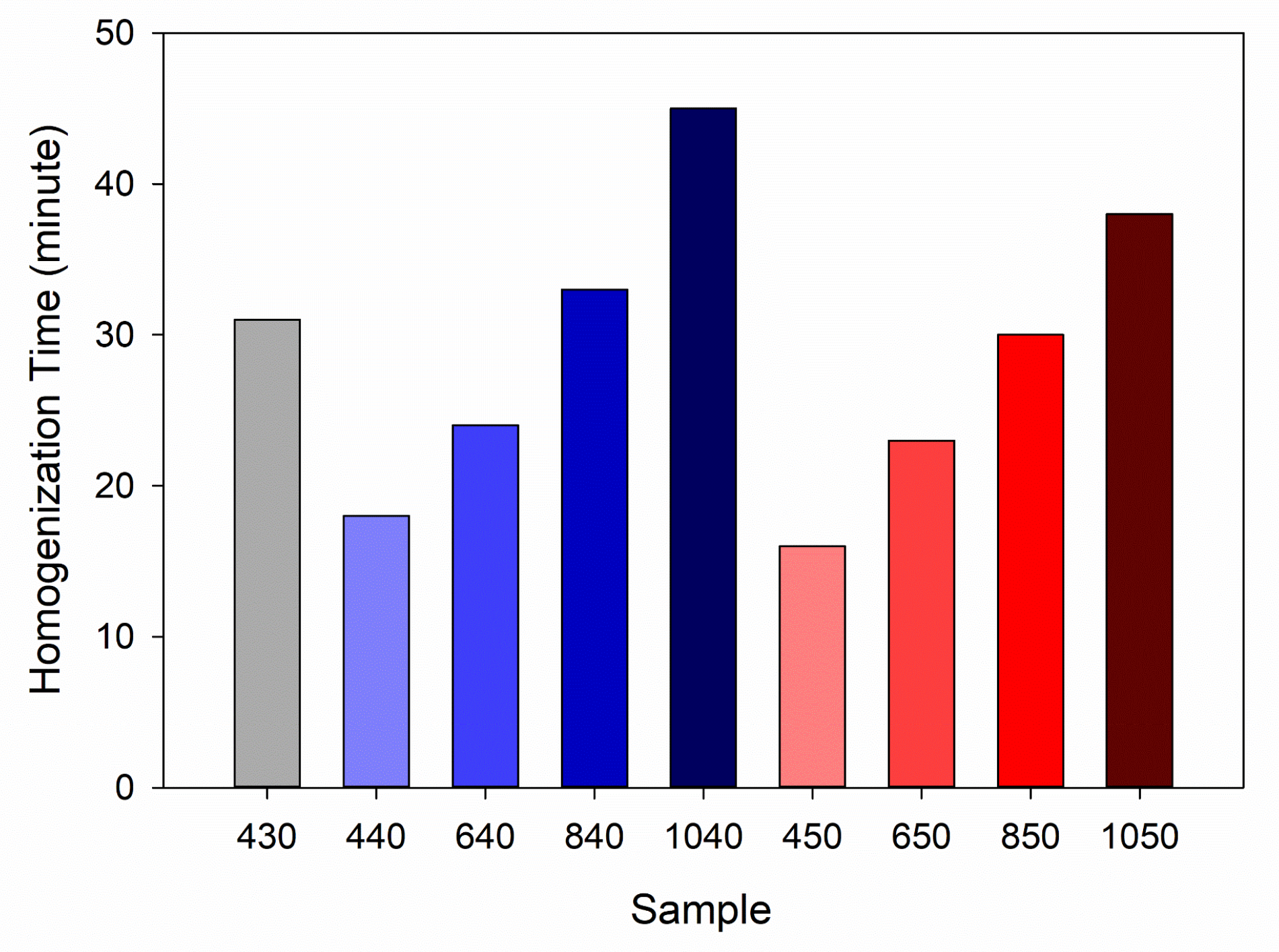
Mastication is the most common and effective method to overcome these challenges. This process involves processing TSNR in an open mill, which mechanically breaks long polymer chains. This chain breaking significantly improves the workability, wettability, and dispersibility of the material [31,39,47,48,49]. As a result, TSNR becomes more plastic and soft, thus facilitating more uniform integration and dispersion into the hot asphalt matrix [23,28,31]. However, mastication alone is not sufficient to maintain the rheological stability of TSNR post-processing. This limitation arises from the natural tendency of rubber polymers to re-agglomerate, i.e., the restoration of intermolecular bonds, which consequently significantly reduces the mixing efficiency [50]. In this study, the thermal properties of TSNR were manipulated by integrating mechanical stress with chemical additives and plasticizers to preserve the material’s rheological properties during storage. The use of asphalt as a plasticizer during the mastication stage (CTSNR production) significantly impacts the rheological changes of natural rubber. This directly increases the dispersion efficiency and accelerates the homogenization time of natural rubber in hot asphalt, as shown in Figure 1.
The use of asphalt as a plasticizing agent has a dual impact: it increases the flexibility and elasticity parameters of TSNR and significantly reduces thermal properties [31,47,48]. This phenomenon occurs because the plasticizer facilitates interfacial wetting and accelerates better pre-swelling, thereby improving the dispersion of the rubber phase into the liquid asphalt [39,49,51]. In this study, increasing the amount of plasticizer also accelerated the mixing time of natural rubber with asphalt. As shown in Figure 1, adding 50% asphalt as a plasticizer can reduce the mixing time to 16 min for the duplicate CTSNR content (4%; CTSNRM-450). This mixing time is much better than CTSNR without plasticizer (CTSNRMA-400), which reached 155 min. In addition, the mixing time obtained in this study is much shorter than in previous studies, in which mixing masticated TSNR without a plasticizer directly required between 60 and 180 min using the indirect method [5,9]. The use of 60/70 penetration asphalt as an internal plasticizer in TSNR processing provides an effective material-engineering solution to mitigate post-mastication re-agglomeration. Mechanistically, the lighter fraction in asphalt (maltene) diffuses between the broken rubber polymer chains, forming a protective layer that inhibits inter-chain interactions and prevents the material from re-hardening during storage [33,37]. This approach not only ensures long-term storage stability of TSNR compounds but also offers significant economic efficiency by eliminating the need for additional commercial plasticizers.
The use of asphalt as an internal plasticizer plays a vital role in maintaining TSNR’s plasticity, ensuring mixture homogeneity, and improving economic efficiency. Mechanistically, the light fraction of asphalt (maltene), consisting of oil and resin components, functions as a solvent that diffuses and intercalates into the TSNR polymer chain. This diffusion mechanism significantly facilitates chain scission during the mechanical mastication process [31,32,50]. The presence of asphalt molecules between the polymer chains creates steric barriers that effectively prevent polymer fragments from re-bonding, thereby mitigating the risk of material hardening or re-agglomeration [33]. Thus, TSNR can be maintained in a soft state, which is crucial to prevent quality degradation due to re-agglomeration during storage [33,37,39,50]. Furthermore, when CTSNR is introduced into a hot asphalt matrix, asphalt acts as a solvent, accelerating the decomposition and breakdown of TSNR molecules into shorter structures. This process directly reduces the energy and time required for homogenization while optimizing the thermodynamic compatibility between the rubber and asphalt phases.
The use of oil-based plasticizers (paraffinic or naphthenic) at high concentrations raises substantial concerns regarding the significant increase in production costs of natural rubber-modified asphalt. Furthermore, the addition of oil-based plasticizers (paraffinic or naphthenic) at high concentrations can degrade the performance of asphalt as a pavement binder, as indicated by increased penetration, decreased softening point, and, most importantly, poor asphalt stability. Due to concerns about increased production costs and decreased performance, this study adopted an innovative approach, using asphalt itself as the raw material for plasticizers. This strategy is proposed to reduce additional costs associated with conventional oil-based plasticizers while minimizing a decline in fundamental asphalt performance following the modification.

3.2. Penetration

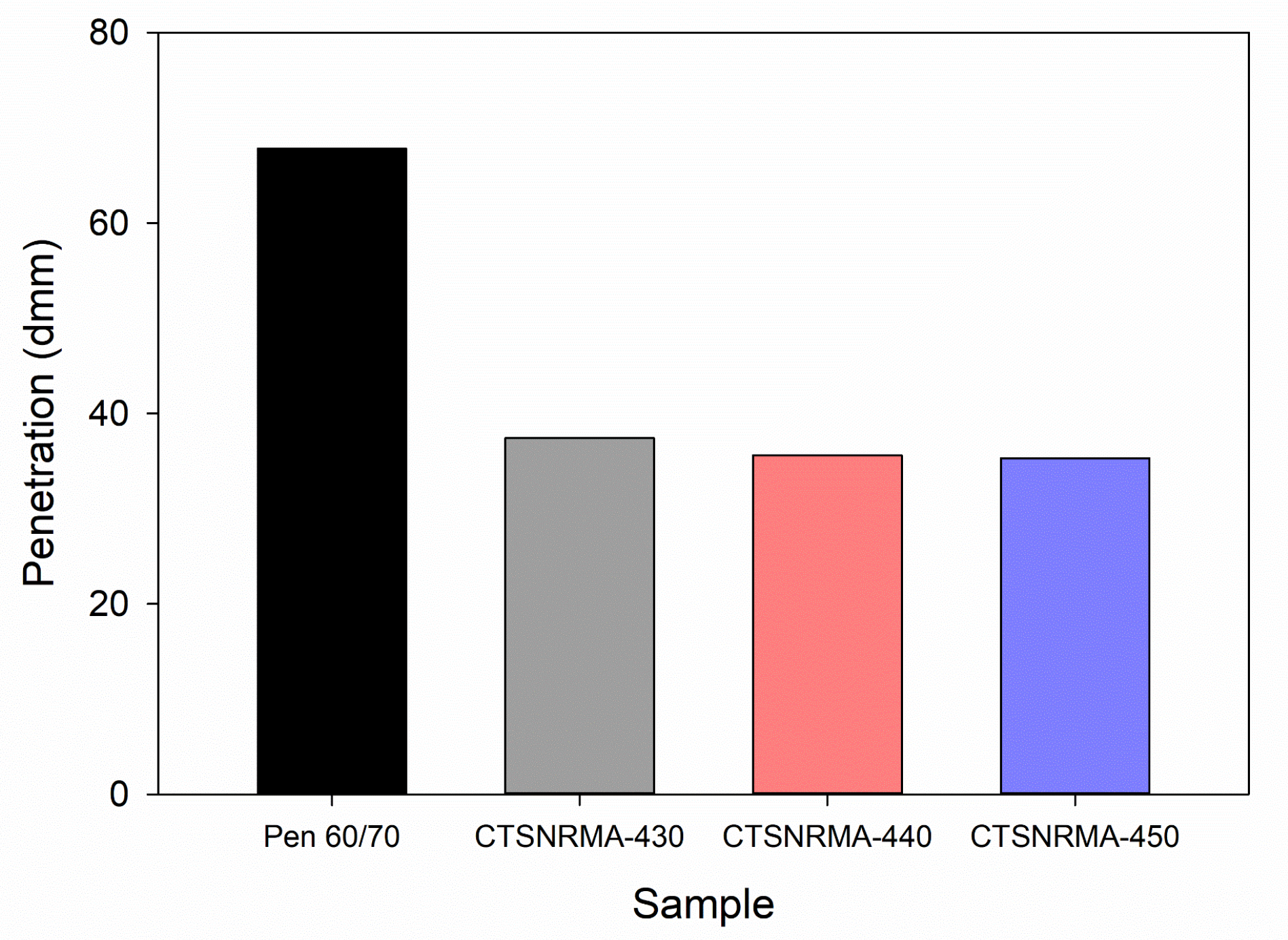
The incorporation of asphalt as a plasticizer in TSNR not only softens the natural rubber but also alters the conventional consistency properties of the resulting CTSNR-modified asphalt (CTSNRMA). As shown in Figure 2, increasing the asphalt content as a plasticizer decreases the penetration of CTSNRMA from 60/70 pen asphalt (67.8 dmm) to 35.3–37.4 dmm in the samples CTSNRMA-430, CTSNRMA-440, and CTSNRMA-450. This reduction in penetration suggests a corresponding increase in asphalt hardness, although the change is not substantial. A higher asphalt content, acting as a plasticizer in TSNR, results in smaller TSNR particle sizes with lower molecular weights, enhances the distribution of TSNR within the asphalt, and accelerates swelling. This swelling process facilitates the absorption of asphalt maltene, significantly increasing the volume of the rubber-rich phase fraction and forming a stiffer interpenetration network, which correlates with an increase in the modulus and stiffness of asphalt as a binder [29,49]. Consequently, the proportion of heavy fractions (asphaltene) and the viscosity of the asphalt both increase [29,30].
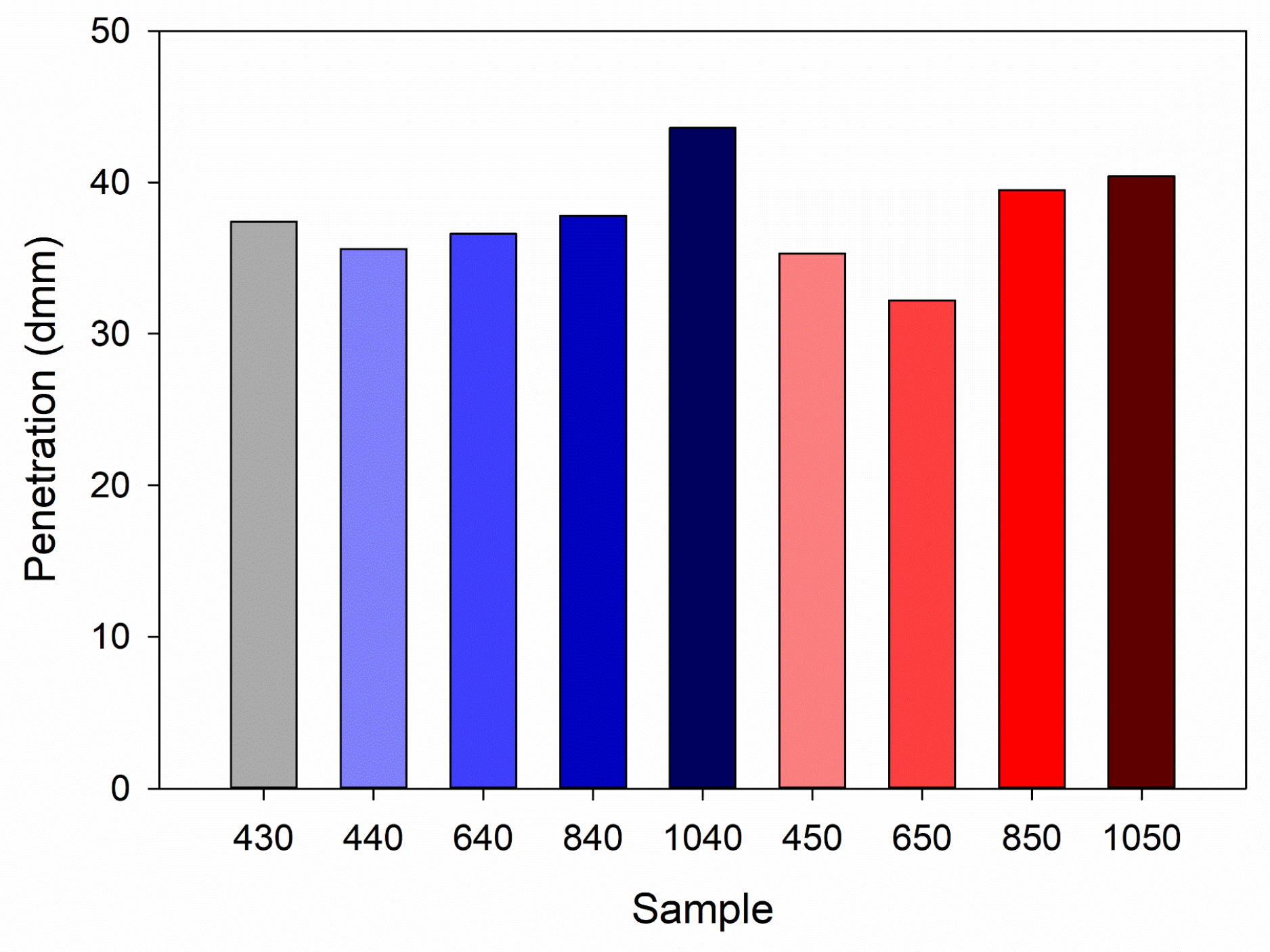
The addition of asphalt as a plasticizer has a much greater effect, consistently reducing asphalt penetration due to increased asphalt distribution, as shown in Figure 3. However, overall penetration increases with increasing TSNR content. This is because excessive TSNR addition makes the swelling process difficult to control. At high temperatures, swollen rubber can degrade and dissolve into small, low-molecular-weight particles [7,52]. These low-molecular-weight rubber particles alter the properties of the asphalt mixture. The rubber, which was originally solid, now turns into a gel-like phase, making the CTSNRMA mixture, which should be hard, more flexible. This increase in the proportion of the viscous phase directly increases the penetration value [53,54,55]. An increase in the number of low-molecular-weight TSNR particles, combined with the transformation of TSNR from a solid to a gel state, imparts new characteristics to modified asphalt mixtures. Although these mixtures are expected to be stiff and rigid, they exhibit increased flexibility [54,55]. This phenomenon also results in higher penetration and reduced viscoelasticity as TSNR content increases. Furthermore, the greater increase in penetration compared to conventional asphalt suggests the accumulation of a TSNR-rich phase within a specific region of the modified asphalt mixture, indicating phase separation between components [56,57].

3.3. Softening Point

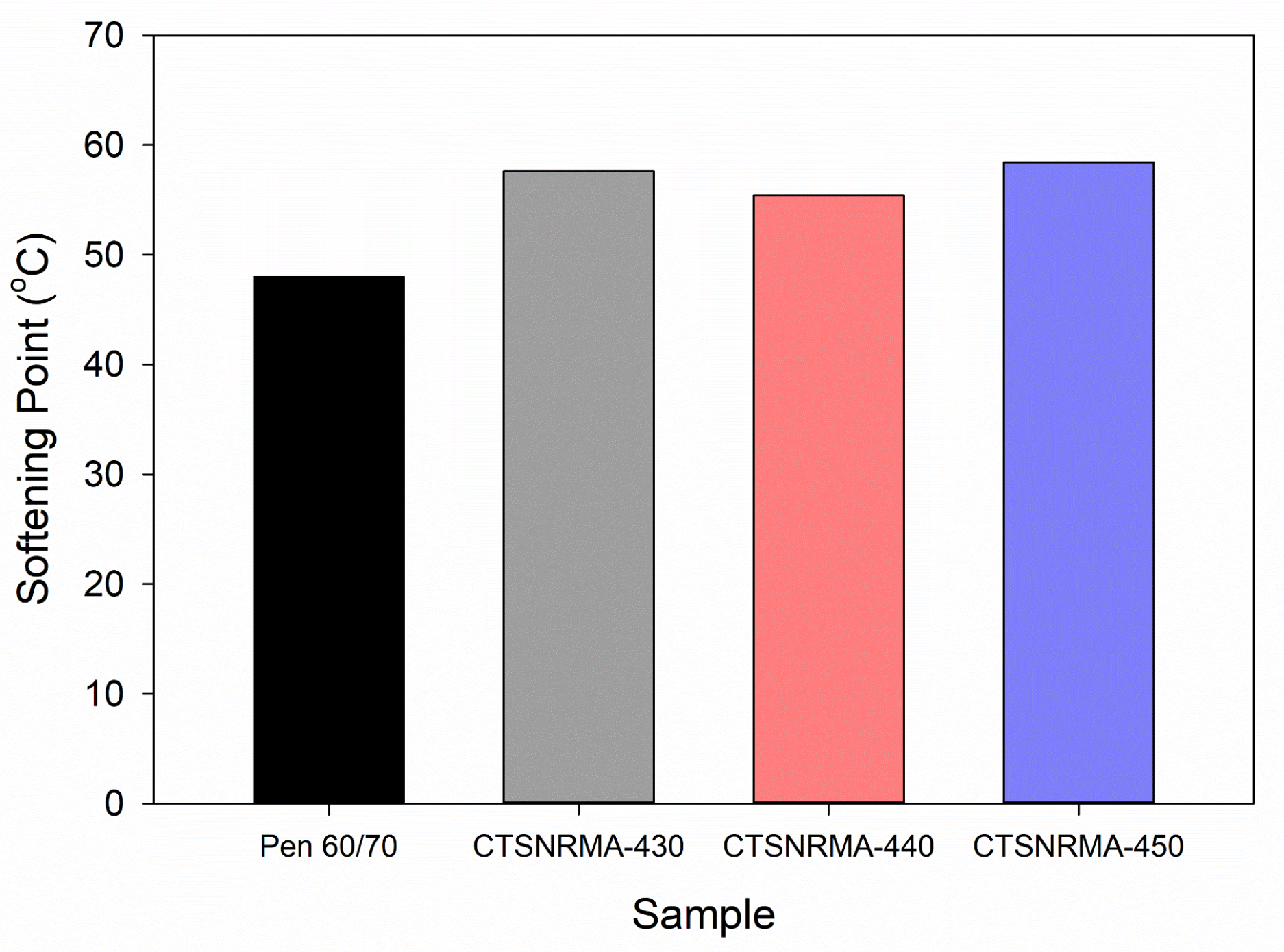
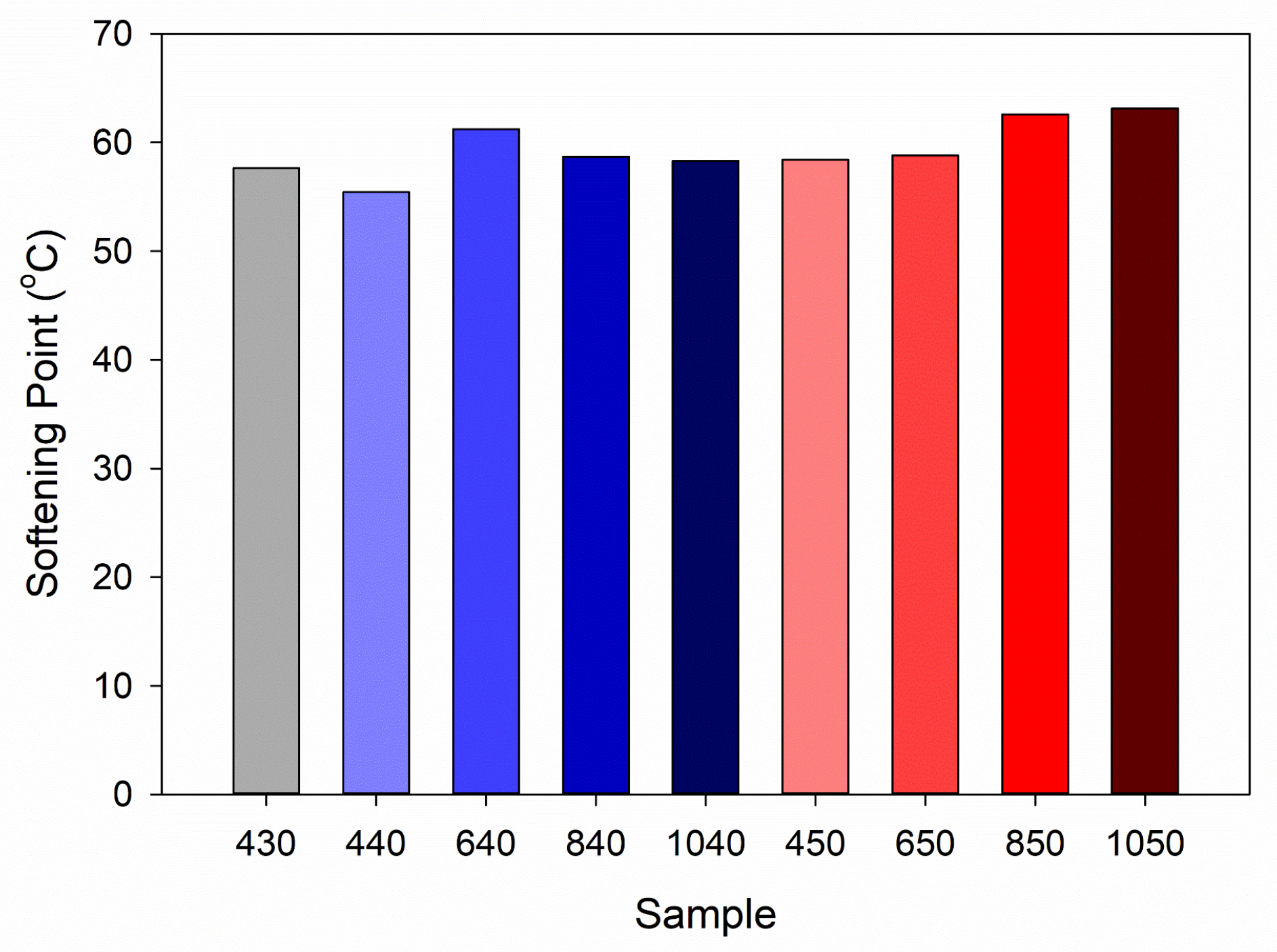
The softening point is another key conventional consistency property of CTSNR-modified asphalt (CTSNRMA). As shown in Figure 4, increasing the plasticizer content at a constant TSNR content of 4% leads to a higher softening point. Specifically, the softening points of CTSNRMA-430, CTSNRMA-440, and CTSNRMA-450 samples increased from 48 °C to 58.40 °C in 60/70 pen asphalt. This increase is typically linked to a higher asphaltene fraction and a lower maltene fraction [58]. In CTSNRMA, the rise in asphaltene fraction is attributed to the distribution of high molecular weight TSNR particles, which, due to increased plasticizer content, enable TSNR to absorb a greater proportion of maltene from the asphalt. The asphaltene fraction imparts stiffness and viscosity to asphalt [6,53,59]. The increase in asphaltene concentration resulting from absorption of the maltene fraction makes CTSNRMA denser and more resistant to deformation at high temperatures. In addition to maltene absorption, swollen TSNR particles interact with each other, forming a network or interconnected polymer structure within CTSNRMA. This network acts as a strong frame, increasing the internal strength of asphalt as a binder and restraining the movement of asphaltene and maltene particles [54,55].
The same trend is also evident in the increase in TSNR levels with the addition of 50% plasticizer (CTSNRMA-450, CTSNRMA-650, CTSNRMA-850, and CTSNRMA-1050), as shown in Figure 5. The softening point of CTSNR-modified asphalt (CTSNRMA) was observed to increase from 58.4 °C to 63.1 °C. The softening point increased with increasing CTSNR content, leading to greater absorption of maltene fractions and significantly increasing the amount of asphaltene [60,61]. The high softening point of CTSNR-modified asphalt (CTSNRMA) is an essential indicator that the asphalt can maintain its stiffness and stability even at high operating temperatures. The primary advantage is improved pavement performance, particularly in preventing permanent deformation, such as rutting, caused by heavy traffic loads, especially in hot climates. Asphalt with a high softening point keeps the pavement firm and resistant to softening, which in turn extends the road’s lifespan, reduces maintenance costs, and enhances safety and comfort for road users [62,63,64]. Therefore, successful modification to increase the softening point yields stronger, more durable road pavement.

3.4. Storage Stability

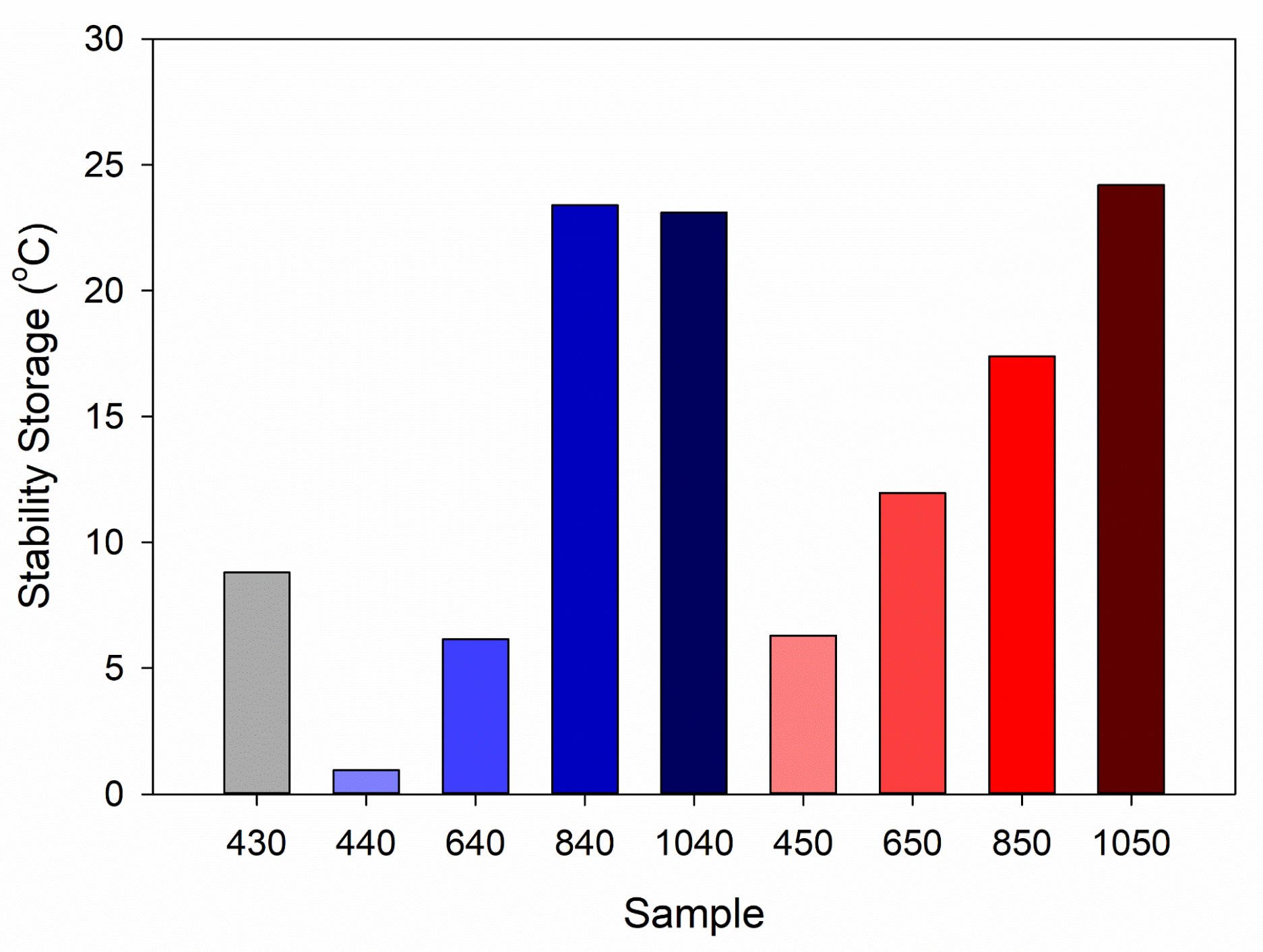
Storage stability is a crucial factor in evaluating the quality of modified asphalt, as it influences the material’s durability and consistency during distribution and storage. Without good stability, the mixture is at risk of phase separation, which reduces its mechanical properties and the quality of the modified asphalt [29,30]. Good storage stability ensures that modified asphalt retains its desired properties, such as viscosity, softening point, and uniform Marshall stability [30,65,66,67]. When asphalt undergoes phase separation due to agglomeration, these properties change, which can cause poor, unpredictable hotmix performance, such as rutting and Marshall stability problems on road pavements [67,68]. Figure 6 shows how the CTSNR content affects the storage stability of CTSNR-modified asphalt (CTSNRMA). An increase in CTSNR content improves the storage stability of CTSNRMA. This phenomenon is influenced by the poor compatibility between asphalt and TSNR at higher TSNR contents.
The stability of modified asphalt mixtures is highly dependent on the level of interfacial compatibility between asphalt and TSNR. The main obstacles to achieving this condition stem from swelling of rubber particles, thermal instability, and differences in rheological characteristics (viscosity) and specific gravity, which trigger particle movement according to Stokes’ Law [9,69,70]. When TSNR interacts with asphalt, maltene fractions (saturates and aromatics) selectively migrate into the polymer network, forming a swollen TSNR phase. The accumulation of light fractions in this rubber phase creates thermodynamic instability, leading to phase separation. The accumulation of light fractions in this rubber phase creates thermodynamic instability, leading to phase separation. This structural degradation process begins with the coalescence and flocculation of rubber particles, leading to particle agglomeration into larger aggregates. Consequently, there is an increase in apparent molecular weight and a drastic decrease in the thermal stability of the mixture [7,71].
Under high-temperature operating conditions, the lifting force acting on the TSNR phase increases, triggering the migration of polymer particles to the surface, as shown in Figure 7. This separation rate is accelerated by the substantial difference in physical properties, namely density and viscosity, between the polymer phase and the asphalt medium [19,54,72]. On the other hand, chemical interactions between the phases cause mass transfer, in which the swollen TSNR-rich phase absorbs saturated and aromatic fractions. As a result, the residual asphalt phase loses its maltene component, increasing the resin-to-asphaltene ratio [6,29,72,73,74]. This increase in the ratio has a direct impact on material stiffness, as evidenced by a shift in the glass transition temperature (Tg) towards positive values [54,55], thereby increasing the bottom softening point of the asphalt mixture. Overall, only one sample met the 2.2 °C requirement outlined in ASTM D5892: sample CTSNRMA-440, with a value of 0.95 °C.

3.5. Dynamic Shear Rheometer (DSR)

Dynamic Shear Rheometer (DSR) testing is a fundamental standard instrument protocol for characterizing viscoelastic materials, particularly for transmitting asphalt rheological profiles. This instrument measures the material’s response to oscillatory shear loading, resulting in two primary rheological parameters: Complex Shear Modulus (G*) and Phase Angle (δ). These measurements are performed at varying temperatures and frequency spectra to simulate dynamic traffic loading conditions [41,75]. In the context of Superpave specifications, DSR plays a crucial role in determining the classification of High Temperature Performance Grade (PG) asphalt as its coating, both at medium and high operating temperature ranges [76]. Evaluation of asphalt performance at high temperatures focuses on resistance to permanent plastic cooling, also known as rutting. In these thermal conditions, asphalt binding is required to have an optimal balance of viscoelastic properties: asphalt must have a stiffness value (G*) that is high enough to withstand the load without deformation while also having elastic properties that are characterized by a low phase angle (δ) to ensure the material can recover its shape after the load is removed [77,78].
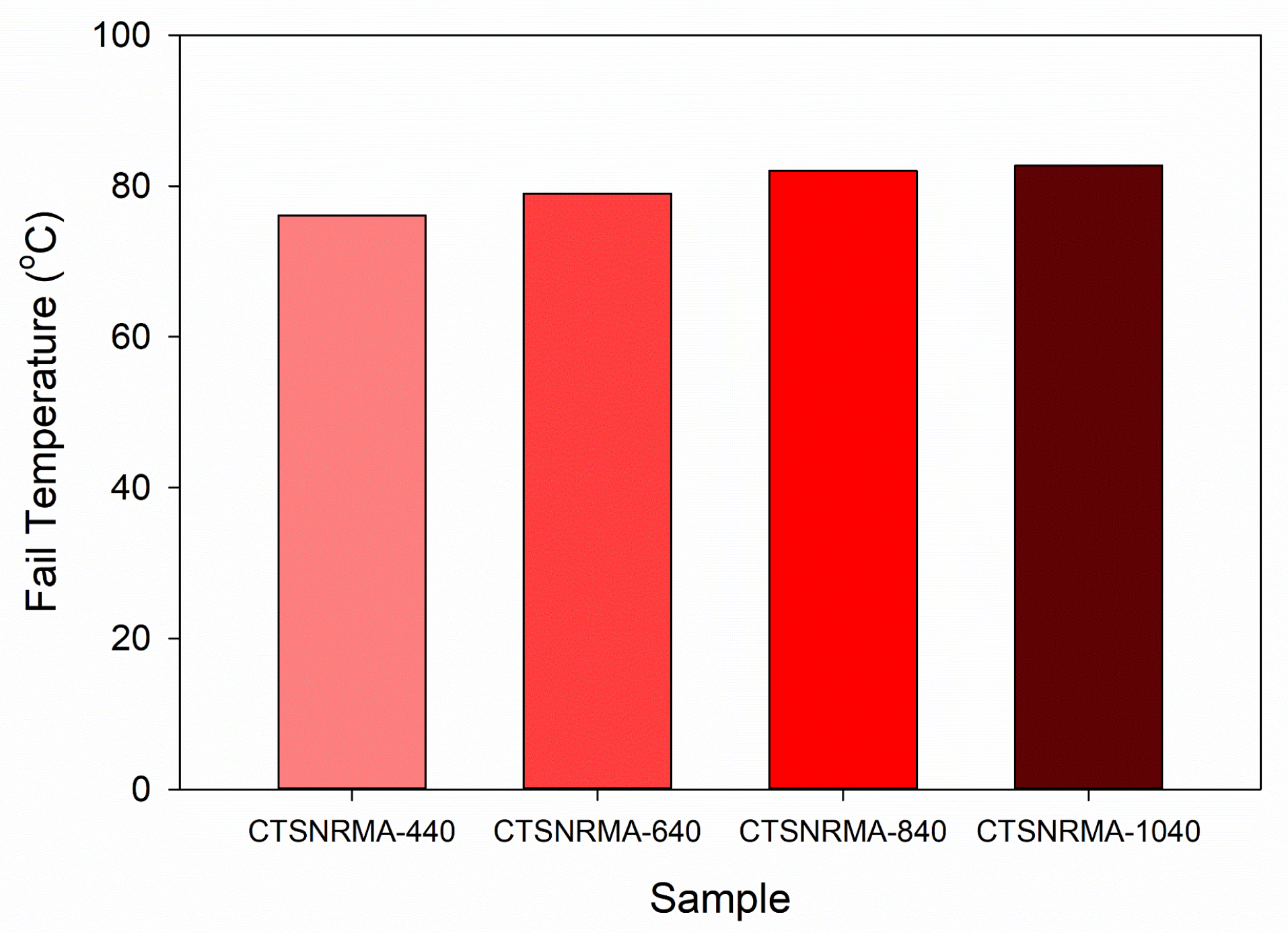
This critical capability is quantified using the rutting parameter (G*/sin δ), which assesses the viscoelastic response of asphalt as a binder to shear stress. Based on the analysis of experimental data presented in Figure 8, the modified asphalt formulations showed significant performance improvements. Samples CTSNRMA-440 and CTSNRMA-640 were identified as having a maximum failure temperature of 79 °C. Meanwhile, formulations with higher modification levels, namely CTSNRMA-840 and CTSNRMA-1040, showed superior thermal resistance, reaching a maximum failure temperature of 82.7 °C. This high failure-temperature classification indicates that TSNR modification with asphalt plasticizers effectively increases the operational temperature range of asphalt as a binder. Rheologically, this shows that the modified asphalt has a better ability to mitigate permanent deformation, such as rutting, under heavy traffic loads in hot climate conditions [79], compared to conventional asphalt. This increase in failure temperature values is directly correlated with the formation of a stronger polymer network in the asphalt matrix, which contributes to increased stiffness (G*) and elasticity of the material at extreme temperatures [79,80,81].
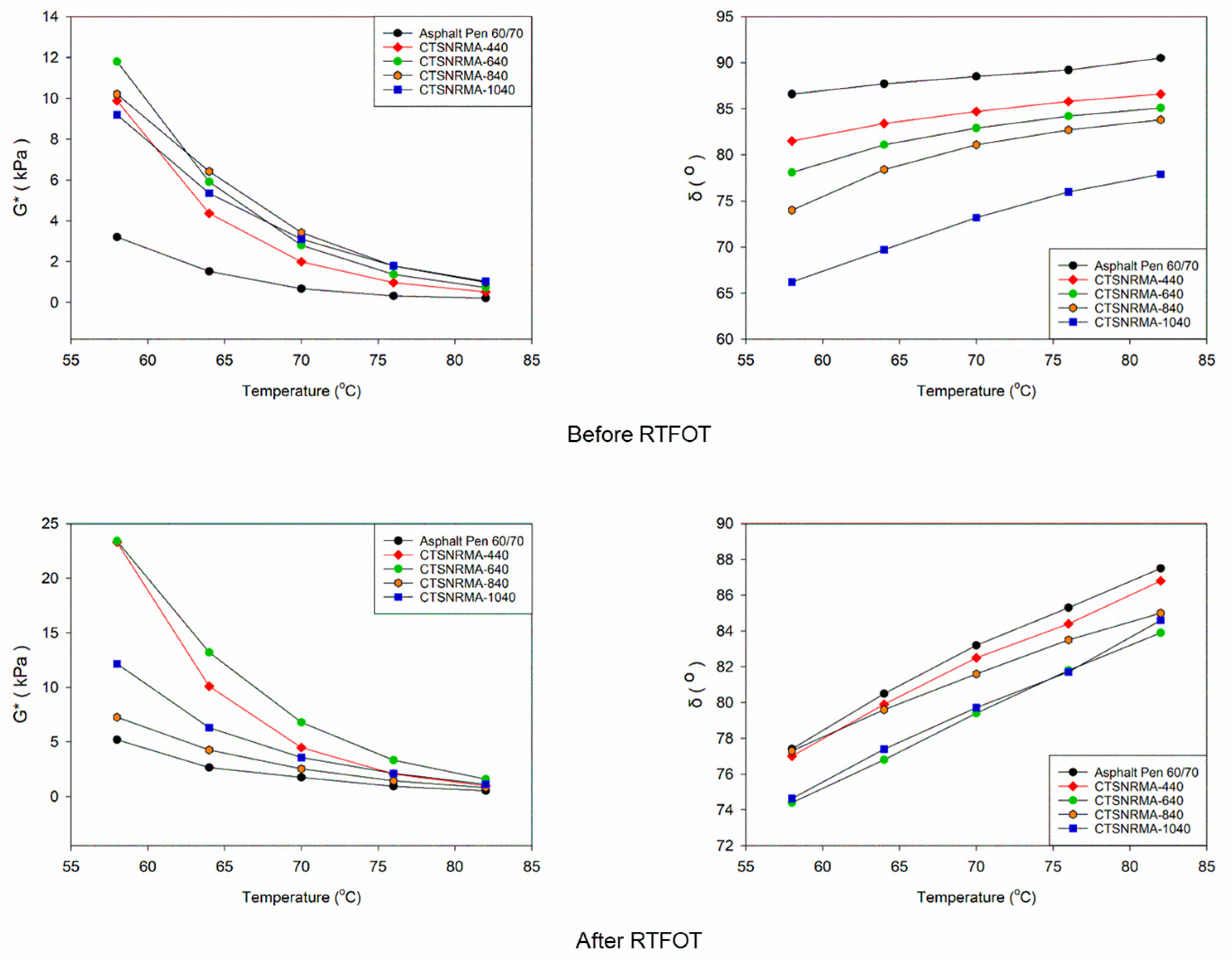
Based on the empirical data analysis presented in Figure 9, a significant performance improvement is observed in Compounded Technical Specification Natural Rubber (CTSNRMA) modified asphalt compared to conventional 60/70 penetration asphalt. Consistently, the complex shear modulus (G*) values of all CTSNRMA samples were recorded as higher than those of the control asphalt across the entire test temperature range. This phenomenon indicates that the CTSNR dispersion effectively increases the stiffness and load-bearing capacity of the asphalt matrix. However, the thermoplastic behavior of the material is still evident, as the G* value decreases with increasing test temperature. This decrease reflects the weakening of intermolecular forces at high temperatures, which causes a reduction in the material’s resistance to deformation [79,82]. However, this degree of stiffness reduction can be mitigated by adjusting the polymer composition. Observations on samples with higher polymer content, namely CTSNRMA-840 and CTSNRMA-1040, showed superior G* values at high temperatures compared to those of CTSNRMA-440 and CTSNRMA-640. This confirms that increasing the concentration of CTSNR substantially reduces the thermal sensitivity (temperature susceptibility) of the modified asphalt, making it more stable and resistant to high temperature changes [78].
The molecular-scale interaction mechanism can explain this macroscopic performance improvement. The presence of the TSNR phase in asphalt triggers the formation of a polymer network or physical cross-linking structure integrated with asphaltene and maltene components. This three-dimensional network limits the free mobility of the polymer chains and the surrounding asphalt molecules. This restriction of molecular movement directly increases the material’s elastic response, as more deformation energy is stored and released rather than dissipated as heat. Consequently, modified asphalt has much higher resistance to plastic deformation, making it an effective solution for mitigating rutting damage in road pavements [69,78,83].
Evaluation of short-term aging characteristics through the Rolling Thin Film Oven Test (RTFOT) is a fundamental step in road material engineering to address the thermal and oxidative degradative conditions experienced by asphalt binders during the production, mixing, and laying phases of Hot Mix Asphalt (HMA). Exposure to the interaction between extreme heat and air circulation triggers the volatilization of light components and chemical oxidation reactions, which collectively increase the stiffness of the asphalt matrix [84,85]. This physical hardening phenomenon is quantified rheologically by an increase in the complex shear modulus (G*), which, while indicating increased resistance to plasticity or rutting at high temperatures, also requires strict control to prevent premature aging-induced brittleness. In the context of specific samples of CTSNRMA-440 and CTSNRMA-640, substantial G* values, up to a twofold increase, were observed posttest, a strong indication of extensive oxidation exceeding the optimal tolerance limits. This excessive hardening reflects decreased binder settlement, which critically increases the pavement’s vulnerability to long-term structural failure [86,87].
The CTSNRMA-840 sample experienced a decrease in complex shear modulus (G*) after RTFOT, indicating that the asphalt softened rather than hardened. This undesirable outcome may result from polymer (TSNR) depolymerization or storage stability issues, as illustrated in Figure 7. A reduction in complex shear modulus (G*) suggests a heightened risk of long-term rutting problems [88]. In contrast, the CTSNRMA-1040 sample demonstrated a typical increase in complex shear modulus (G*) with only a minor rise in stiffness. Ideally, high-quality asphalt should harden after RTFOT, as evidenced by an increase in complex modulus (G*) and a decrease in phase angle (δ). This hardening is essential for producing asphalt that is stiffer, more elastic, and more resistant to permanent deformation at elevated temperatures [89], which is the primary goal of modification and aging, as observed in the samples CTSNRMA-440 and CTSNRMA-640. However, the results reveal an anomaly after RTFOT, where the complex modulus (G*) either increases or decreases, accompanied by an increase in phase angle (δ), as seen in samples CTSNRMA-840 and CTSNRMA-1040. This softening effect is likely to reduce the long-term durability of the asphalt and increase its susceptibility to rutting.

4. Conclusions

This study concluded that using 60/70 penetration asphalt as an internal plasticizer reduced the homogenization time of CTSNR to 16 min, resulting in a 91% increase in process efficiency compared to conventional methods. The CTSNRMA-440 formulation was identified as the most optimal variant, achieving acceptable storage stability (ΔSP = 0.95 °C < 2.2 °C) and adequate high-temperature performance with a failure temperature of 79 °C. Conversely, the use of high TSNR (>6%) may trigger phase separation and post-aging softening, characterized by a decrease in the complex shear modulus (G*). The interaction mechanism is dominated by swelling-driven volume increase rather than covalent cross-linking, with the lighter fraction of asphalt facilitating the dispersion of polymer chains. The limitations of this study include the lack of low-temperature performance data and direct rheological measurements on CTSNR. Therefore, further research will focus on evaluation using a Bending Beam Rheometer (BBR) and field trials.

Author Contributions

Conceptualization, B.I. and A.W.; methodology, B.I. and A.W.; software, J. and E.K.; validation, B.I., A.W. and Z.H.; formal analysis, B.I. and N.; investigation, Z.H., J. and N.; resources, B.I.; data curation, N.; writing—original draft preparation, B.I. and A.W.; writing—review and editing, B.I. and A.W.; visualization, A.S.M. and E.K.; supervision, E.K. and A.S.M.; project administration, B.I., A.W. and Z.H.; funding acquisition, B.I. All authors have read and agreed to the published version of the manuscript.

Funding

This research was supported by the RIIM LPDP grant and BRIN.

Data Availability Statement

The original contributions presented in the study are included in the article, further inquiries can be directed to the corresponding author.

Acknowledgments

The authors thank the National Research and Innovation Agency (BRIN) and the Indonesia Endowment Fund for Education Agency (LPDP) for funding this research.

Conflicts of Interest

The authors declare no conflicts of interest.

References

  1. Moreno-Navarro, F.; Sol-Sánchez, M.; Rubio-Gámez, M.C. The effect of polymer modified binders on the long-term performance of bituminous mixtures: The influence of temperature. Mater. Des. 2015, 78, 5–11. [Google Scholar] [CrossRef]
  2. Wei, K.; Cao, X.; Wu, Y.; Cheng, Z.; Tang, B.; Shan, B. Dynamic chemistry approach for self-healing of polymer-modified asphalt: A state-of-the-art review. Constr. Build. Mater. 2023, 403, 133128. [Google Scholar] [CrossRef]
  3. Basheet, S.H.; Latief, R.H. Assessment of the properties of asphalt mixtures modified with LDPE and HDPE polymers. Int. J. Appl. Sci. Eng. 2024, 21, 2024265. [Google Scholar] [CrossRef]
  4. Yan, Y.; Huan, H.; Guo, R.; He, Y.; Tang, K. Effect of vulcanisation on the properties of natural rubber-modified asphalt. Ind. Crops Prod. 2024, 214, 118588. [Google Scholar] [CrossRef]
  5. Ibrahim, B.; Wiranata, A.; Malik, A. The effect of addition of antioxidant 1,2-dihydro-2,2,4-trimethyl-quinoline on characteristics of crepe rubber modified asphalt in short term aging and long term aging conditions. Appl. Sci. 2020, 10, 7236. [Google Scholar] [CrossRef]
  6. Xia, C.; Chen, M.; Geng, J.; Liao, X.; Chen, Z. Swelling and Degradation Characteristics of Crumb Rubber Modified Asphalt during Processing. Math. Probl. Eng. 2021, 2021, 6682905. [Google Scholar] [CrossRef]
  7. Wang, H.; Liu, X.; Erkens, S.; Skarpas, A. Experimental characterization of storage stability of crumb rubber modified bitumen with warm-mix additives. Constr. Build. Mater. 2020, 249, 118840. [Google Scholar] [CrossRef]
  8. Brasileiro, L.; Moreno-Navarro, F.; Tauste-Martínez, R.; Matos, J.; Rubio-Gámez, M.d.C. Reclaimed polymers as asphalt binder modifiers for more sustainable roads: A review. Sustainability 2019, 11, 646. [Google Scholar] [CrossRef]
  9. Ibrahim, B.; Wiranata, A.; Zahrina, I.; Sentosa, L.; Nasruddin, N.; Muharam, Y. Phase Separation Study on the Storage of Technically Specification Natural Rubber Modified Bitumen. Appl. Sci. 2024, 14, 3179. [Google Scholar] [CrossRef]
  10. Wang, T.; Xiao, F.; Zhu, X.; Huang, B.; Wang, J.; Amirkhanian, S. Energy consumption and environmental impact of rubberized asphalt pavement. J. Clean. Prod. 2018, 180, 139–158. [Google Scholar] [CrossRef]
  11. Wang, Q.Z.; Wang, N.N.; Tseng, M.L.; Huang, Y.M.; Li, N.L. Waste tire recycling assessment: Road application potential and carbon emissions reduction analysis of crumb rubber modified asphalt in China. J. Clean. Prod. 2020, 249, 119411. [Google Scholar] [CrossRef]
  12. Oyelere, A.; Wu, S. State of the art review on the principles of compatibility and chemical compatibilizers for recycled plastic-modified asphalt binders. J. Clean. Prod. 2025, 492, 144895. [Google Scholar] [CrossRef]
  13. Ma, Y.; Wang, S.; Zhou, H.; Hu, W.; Polaczyk, P.; Zhang, M.; Huang, B. Compatibility and rheological characterization of asphalt modified with recycled rubber-plastic blends. Constr. Build. Mater. 2021, 270, 121416. [Google Scholar] [CrossRef]
  14. Chen, J.S.; Wang, T.J.; Lee, C.T. Evaluation of a highly-modified asphalt binder for field performance. Constr. Build. Mater. 2018, 171, 539–545. [Google Scholar] [CrossRef]
  15. Sutanto, M.; Bala, N.; Al Zaro, K.; Sunarjono, S. Properties of Crumb Rubber and Latex Modified Asphalt Binders using Superpave Tests. MATEC Web Conf. 2018, 203, 05007. [Google Scholar] [CrossRef]
  16. Read, J.; Whiteoak, D. The Shell Bitumen Handbook, 6th ed.; Thomas Telford: London, UK, 2015. [Google Scholar] [CrossRef]
  17. Becker, Y.; Méndez, M.P.; Rodríguez, Y. Polymer modified asphalt. Vis. Tecnol. 2001, 9, 39–50. [Google Scholar]
  18. Chavez, F.; Marcobal, J.; Gallego, J. Laboratory evaluation of the mechanical properties of asphalt mixtures with rubber incorporated by the wet, dry, and semi-wet process. Constr. Build. Mater. 2019, 205, 164–174. [Google Scholar] [CrossRef]
  19. Memon, N.A.; Yusoff, N.I.M.; Jafri, S.F.; Sheeraz, K. Rheological Findings on Storage Stability for Chemically Dispersed Crumb Rubber Modified Bitumen. Constr. Build. Mater. 2021, 305, 124768. [Google Scholar] [CrossRef]
  20. Bahruddin; Arya, W.; Yanny, S.; Alfian, M. Effects of cup lump natural rubber as an additive on the characteristics of asphalt-rubber products. IOP Conf. Ser. Mater. Sci. Eng. 2020, 845, 012050. [Google Scholar] [CrossRef]
  21. Bahruddin; Wiranata, A.; Malik, A.; Kumar, R.; Permata, D.S. Pembuatan Aspal Modifikasi Polimer Berbasis Karet Alam Tanpa dan Dengan Mastikasi. Indones. J. Ind. Res. 2019, 2, 260–269. [Google Scholar]
  22. Al-Sabaeei, A.; Nur, N.I.; Napiah, M.; Sutanto, M. A review of using natural rubber in the modification of bitumen and asphalt mixtures used for road construction. J. Teknol. 2019, 81, 81–88. [Google Scholar] [CrossRef]
  23. Bahruddin; Wiranata, A.; Malik, A. The effect of technical natural rubber mastication with wet process mixing on the characteristics of asphalt-rubber blend. J. Phys. Conf. Ser. 2021, 2049, 012081. [Google Scholar] [CrossRef]
  24. Rohayzi, N.F.; Katman, H.Y.B.; Ibrahim, M.R.; Norhisham, S.; Rahman, N.A. Potential Additives in Natural Rubber-Modified Bitumen: A Review. Polymers 2023, 15, 1951. [Google Scholar] [CrossRef]
  25. Al-Mansob, R.A.; Ismail, A.; Md Yusoff, N.I.; Azhari, C.H.; Karim, M.R.; Alduri, A.; Baghini, M.S. Rheological characteristics of epoxidized natural rubber modified bitumen. Appl. Mech. Mater. 2014, 505–506, 174–179. [Google Scholar] [CrossRef]
  26. Utami, R.; Suherman. Temperature sensitivity effect in asphalt modification with natural rubber sir20. IOP Conf. Ser. Mater. Sci. Eng. 2019, 650, 012045. [Google Scholar] [CrossRef]
  27. Ramadhan, A.; Puspitasari, S.; Prastanto, H.; Falaah, A.F.; Maspanger, D.R.; Andriani, W.; Faturrohman, M.I.; Sofyan, T.S.; Firdaus, Y. Development of Rubberized Asphalt Technology Based on Asphalt Cement (AC Pen 60) and Fresh Natural Rubber in Indonesia. Macromol. Symp. 2020, 391, 2000075. [Google Scholar] [CrossRef]
  28. Bahruddin; Wiranata, A.; Malik, A. Effects of 1,2-dihydro-2,2,4-trimethyl-quinoline (TMQ) antioxidant on the Marshall characteristics of crepe rubber modified asphalt. Key Eng. Mater. 2021, 876, 39–44. [Google Scholar] [CrossRef]
  29. Zhu, J.; Birgisson, B.; Kringos, N. Polymer modification of bitumen: Advances and challenges. Eur. Polym. J. 2014, 54, 18–38. [Google Scholar] [CrossRef]
  30. Zhu, J.; Lu, X.; Kringos, N. Experimental investigation on storage stability and phase separation behaviour of polymer-modified bitumen. Int. J. Pavement Eng. 2018, 19, 832–841. [Google Scholar] [CrossRef]
  31. Hayeemasae, N.; Waesateh, K.; Soontaranon, S.; Masa, A. The effect of mastication time on the physical properties and structure of natural rubber. J. Elastomers Plast. 2021, 53, 228–240. [Google Scholar] [CrossRef]
  32. Jiang, S.; Kong, H.; Luo, K.; Wang, M.; Yong, Z. Characterization of the molecular structure of masticated natural rubber using rheological techniques. J. Appl. Polym. Sci. 2024, 141, e55036. [Google Scholar] [CrossRef]
  33. Byun, Y.; Zhang, Y.; Geng, X. Plasticization and Polymer Morphology. In Innovations in Food Packaging, 2nd ed.; Academic Press: San Diego, CA, USA, 2013. [Google Scholar] [CrossRef]
  34. Nasruddin; Susanto, T. The Effect of Natural Based Oil as Plasticizer towards Physics-Mechanical Properties of NR-SBR Blending for Solid Tyres. J. Phys. Conf. Ser. 2018, 1095, 012027. [Google Scholar] [CrossRef]
  35. Nasruddin; Setianto, W.B.; Yohanes, H.; Atmaji, G.; Lanjar; Yanto, D.H.Y.; Wulandari, E.P.; Wiranata, A.; Ibrahim, B. Characterization of Natural Rubber, Styrene Butadiene Rubber, and Nitrile Butadiene Rubber Monomer Blend Composites Loaded with Zinc Stearate to Be Used in the Solid Tire Industry. Appl. Sci. 2023, 13, 1277. [Google Scholar] [CrossRef]
  36. Canepari, S.; Castellano, P.; Astolfi, M.L.; Materazzi, S.; Ferrante, R.; Fiorini, D.; Curini, R. Release of particles, organic compounds, and metals from crumb rubber used in synthetic turf under chemical and physical stress. Environ. Sci. Pollut. Res. 2018, 25, 1448–1459. [Google Scholar] [CrossRef]
  37. Lenzi, L.; Mas-Giner, I.; Esposti, M.D.; Morselli, D.; Santana, M.H.; Fabbri, P. Competing Effects of Plasticization and Miscibility on the Structure and Dynamics of Natural Rubber: A Comparative Study on Bio and Commercial Plasticizers. ACS Polym. Au 2025, 5, 298–310. [Google Scholar] [CrossRef]
  38. Lei, Z.; Bahia, H.; Yi-qiu, T.; Ling, C. Effects of refined waste and bio-based oil modifiers on rheological properties of asphalt binders. Constr. Build. Mater. 2017, 148, 504–511. [Google Scholar] [CrossRef]
  39. Ilyin, S.O.; Melekhina, V.Y.; Kostyuk, A.V.; Smirnova, N.M. Hot-Melt and Pressure-Sensitive Adhesives Based on Asphaltene/Resin Blend and Naphthenic Oil. Polymers 2022, 14, 4296. [Google Scholar] [CrossRef]
  40. Kim, M.H.; Hyun, J.S.; Seol, I.S.; Choi, S. High Shear Viscosity Measurement of A Natural Rubber and Synthetic Rubber Materials Using the Rubber Screw Rheometer. In Proceedings of the Annual Technical Conference—ANTEC, Conference Proceedings; Society of Plastics Engineers: Danbury, CT, USA, 2022. [Google Scholar]
  41. Turbay, E.; Martinez-Arguelles, G.; Navarro-Donado, T.; Sánchez-Cotte, E.; Polo-Mendoza, R.; Covilla-Valera, E. Rheological Behaviour of WMA-Modified Asphalt Binders with Crumb Rubber. Polymers 2022, 14, 4148. [Google Scholar] [CrossRef] [PubMed]
  42. Yan, Y.; Guo, R.; Cheng, C.; Fu, C.; Yang, Y. Viscosity prediction model of natural rubber-modified asphalt at high temperatures. Polym. Test. 2022, 113, 107666. [Google Scholar] [CrossRef]
  43. Zhu, J. Storage Stability and Phase Separation Behaviour of Polymer-Modified Bitumen: Characterization and Modelling. Doctoral Dissertation, KTH Royal Institute of Technology, Stockholm, Sweden, 2016. [Google Scholar]
  44. Abdulrahman, S.; Hainin, M.R.; Idham, M.K.; Hassan, N.A.; Warid, M.M.; Yaacob, H.; Azman, M.; Puan, O.C. Physical properties of warm cup lump modified bitumen. IOP Conf. Ser. Mater. Sci. Eng. 2019, 527, 012048. [Google Scholar] [CrossRef]
  45. Abdulrahman, S.; Alanazi, F.; Hainin, M.R.; Albuaymi, M.; Alanazi, H.; Adamu, M.; Azam, A. Rheological and Morphological Characterization of Cup Lump Rubber-Modified Bitumen with Evotherm Additive. Arab. J. Sci. Eng. 2023, 48, 13195–13209. [Google Scholar] [CrossRef]
  46. Chegenizadeh, A.; Shen, P.J.; Arumdani, I.S.; Budihardjo, M.A.; Nikraz, H. The addition of a high dosage of rubber to asphalt mixtures: The effects on rutting and fatigue. Sustainability 2021, 13, 9718. [Google Scholar] [CrossRef]
  47. Ehabe, E.E.; Nkeng, G.E.; Collet, A.; Bonfils, F. Relations between high-temperature mastication and Mooney viscosity relaxation in natural rubber. J. Appl. Polym. Sci. 2009, 113, 2785–2790. [Google Scholar] [CrossRef]
  48. Latshaw, A.; Reddy, S.; Rauschmann, T. Rheological characterization of mixing effects on natural rubber using an RPA. Rubber World 2019, 259, 34–39. [Google Scholar]
  49. Dong, D.; Huang, X.; Li, X.; Zhang, L. Swelling process of rubber in asphalt and its effect on the structure and properties of rubber and asphalt. Constr. Build. Mater. 2012, 29, 316–322. [Google Scholar] [CrossRef]
  50. Okamoto, K.; Toh, M.; Liang, X.; Nakajima, K. Influence of mastication on the microstructure and physical properties of rubber. Rubber Chem. Technol. 2021, 94, 533–548. [Google Scholar] [CrossRef]
  51. Tian, W.; Gao, Y.; Li, Y.; Zhu, J.; Zhan, M.; Wang, S. Molecular dynamics study on the effect of rheological performance of asphalt with different plasticizers. Constr. Build. Mater. 2023, 400, 132791. [Google Scholar] [CrossRef]
  52. Wang, S.; Cheng, D.; Xiao, F. Recent developments in the application of chemical approaches to rubberized asphalt. Constr. Build. Mater. 2017, 131, 101–113. [Google Scholar] [CrossRef]
  53. Wang, Z.; Ye, F. Experimental investigation on aging characteristics of asphalt based on rheological properties. Constr. Build. Mater. 2020, 231, 117158. [Google Scholar] [CrossRef]
  54. Behnood, A.; Gharehveran, M.M. Morphology, rheology, and physical properties of polymer-modified asphalt binders. Eur. Polym. J. 2019, 112, 766–791. [Google Scholar] [CrossRef]
  55. Wieser, M.; Schaur, A.; Unterberger, S.H. Polymer-bitumen interaction: A correlation study with six different bitumens to investigate the influence of sara fractions on the phase stability, swelling, and thermo-rheological properties of sbs-pmb. Materials 2021, 14, 1273. [Google Scholar] [CrossRef] [PubMed]
  56. Shaffie, E.; Hanif, W.M.M.W.; Arshad, A.K.; Hashim, W. Rutting resistance of asphalt mixture with cup lumps modified binder. IOP Conf. Ser. Mater. Sci. Eng. 2017, 271, 012056. [Google Scholar] [CrossRef]
  57. Azahar, N.M.; Hassan, N.A.; Putrajaya, M.R.; Hainin, R.; Puan, O.C.; Shukry, N.A.M.; Hezmi, M.A. Engineering properties of asphalt binder modified with cup lump rubber. IOP Conf. Ser. Earth Environ. Sci. 2019, 220, 012014. [Google Scholar] [CrossRef]
  58. Hofko, B.; Eberhardsteiner, L.; Füssl, J.; Grothe, H.; Handle, F.; Hospodka, M.; Grossegger, D.; Nahar, S.N.; Schmets, A.J.M.; Scarpas, A. Impact of maltene and asphaltene fraction on mechanical behavior and microstructure of bitumen. Mater. Struct. Constr. 2016, 49, 829–841. [Google Scholar] [CrossRef]
  59. Xie, J.; Yang, Y.; Lv, S.; Peng, X.; Zhang, Y. Investigation on preparation process and storage stability of modified asphalt binder by grafting activated crumb rubber. Materials 2019, 12, 2014. [Google Scholar] [CrossRef]
  60. Holkar, C.; Pinjari, D.; D’Melo, D.; Bhattacharya, S. The effect of asphaltene concentration on polymer modification of bitumen with SBS copolymers. Mater. Struct. Constr. 2023, 56, 16. [Google Scholar] [CrossRef]
  61. Ramdhani, F.; Subagio, B.S.; Rahman, H.; Frazila, R.B. Rheological analysis of micro rubber SIR 20 modified asphalt. IOP Conf. Ser. Earth Environ. Sci. 2024, 1416, 012049. [Google Scholar] [CrossRef]
  62. Feng, X.W.; Zhang, D.W. Research on the impact of temperature on the softening point of SBS modified asphalt. Appl. Mech. Mater. 2013, 365, 978–982. [Google Scholar] [CrossRef]
  63. Khasawneh, M.A.; Dernayka, S.D.; Chowdhury, S.R. Physical properties of crumb rubber modified asphalt binders and environmental impact consideration. Mech. Adv. Mater. Struct. 2024, 31, 7678–7692. [Google Scholar] [CrossRef]
  64. Pan, Y.; Guo, H.; Guan, W.; Zhao, Y. A laboratory evaluation of factors affecting rutting resistance of asphalt mixtures using wheel tracking test. Case Stud. Constr. Mater. 2023, 18, e02148. [Google Scholar] [CrossRef]
  65. Lushinga, N.; Cao, L.; Dong, Z.; Assogba, C.O. Improving storage stability and physicochemical performance of styrene-butadiene-styrene asphalt binder modified with nanosilica. Sustainability 2020, 12, 8968. [Google Scholar] [CrossRef]
  66. Qian, C.; Fan, W.; Ren, F.; Lv, X.; Xing, B. Influence of polyphosphoric acid (PPA) on properties of crumb rubber (CR) modified asphalt. Constr. Build. Mater. 2019, 227, 117094. [Google Scholar] [CrossRef]
  67. Islam, S.S.; Singh, S.K.; Ransinchung, G.D.; Ravindranath, S.S. Effect of property deterioration in SBS modified binders during storage on the performance of asphalt mix. Constr. Build. Mater. 2021, 272, 121644. [Google Scholar] [CrossRef]
  68. Liu, B.; Hou, W. Influence of storage conditions on the stability of asphalt emulsion. Pet. Sci. Technol. 2017, 35, 1217–1223. [Google Scholar] [CrossRef]
  69. Guo, F.; Zhang, J.; Pei, J.; Ma, W.; Hu, Z.; Guan, Y. Evaluation of the compatibility between rubber and asphalt based on molecular dynamics simulation. Front. Struct. Civ. Eng. 2020, 14, 435–445. [Google Scholar] [CrossRef]
  70. Liang, M.; Xin, X.; Fan, W.; Sun, H.; Yao, Y.; Xing, B. Viscous properties, storage stability and their relationships with microstructure of tire scrap rubber modified asphalt. Constr. Build. Mater. 2015, 74, 124–131. [Google Scholar] [CrossRef]
  71. Wang, H.; Liu, X.; Apostolidis, P.; Erkens, S.; Skarpas, A. Experimental Investigation of Rubber Swelling in Bitumen. Transp. Res. Rec. 2020, 2674, 203–212. [Google Scholar] [CrossRef]
  72. Pérez-Lepe, A.; Martínez-Boza, F.J.; Attané, P.; Gallegos, C. Destabilization mechanism of polyethylene-modified bitumen. J. Appl. Polym. Sci. 2006, 100, 260–267. [Google Scholar] [CrossRef]
  73. Fang, C.; Qiao, X.; Yu, R.; Yu, X.; Liu, J.; Yu, J.; Xia, R. Influence of modification process parameters on the properties of crumb rubber/EVA modified asphalt. J. Appl. Polym. Sci. 2016, 133, 1–13. [Google Scholar] [CrossRef]
  74. Ren, S.; Liu, X.; Fan, W.; Wang, H.; Erkens, S. Rheological Properties, Compatibility, and Storage Stability of SBS Latex-Modified Asphalt. Materials 2019, 12, 3683. [Google Scholar] [CrossRef] [PubMed]
  75. Xu, J.; Li, R.; Liu, T.; Pei, J.; Li, Y.; Luo, Q. Study on the effect of microwave processing on asphalt-rubber. Materials 2020, 13, 411. [Google Scholar] [CrossRef]
  76. Zeng, Z.A.; Underwood, B.S.; Castorena, C. Low-temperature performance grade characterisation of asphalt binder using the dynamic shear rheometer. Int. J. Pavement Eng. 2022, 23, 811–823. [Google Scholar] [CrossRef]
  77. Zhang, J.; Walubita, L.F.; Faruk, A.N.M.; Karki, P.; Simate, G.S. Use of the MSCR test to characterize the asphalt binder properties relative to HMA rutting performance—A laboratory study. Constr. Build. Mater. 2015, 94, 218–227. [Google Scholar] [CrossRef]
  78. Fan, Y.; Sun, L.; Duan, D.; Zhang, B.; Wang, G.; Zhang, S.; Yu, W. Enhancing the Storage Stability and Rutting Resistance of Modified Asphalt through Surface Functionalization of Waste Tire Rubber Powder. Appl. Sci. 2024, 14, 4195. [Google Scholar] [CrossRef]
  79. Hoang, H.-G.T.; Mai, H.-V.T.; Nguyen, H.L.; Ly, H.-B. Application of extreme gradient boosting in predicting the viscoelastic characteristics of graphene oxide modified asphalt at medium and high temperatures. Front. Struct. Civ. Eng. 2024, 18, 899–917. [Google Scholar] [CrossRef]
  80. Guo, Y.; Chen, W. Dynamic viscoelastic properties of SBS modified asphalt based on DSR testing. Adv. Mater. Res. 2012, 598, 473–476. [Google Scholar] [CrossRef]
  81. Jexembayeva, A.; Konkanov, M.; Aruova, L.; Zhaksylykova, L.; Baidaulet, Z. Preparation of polymer bitumen binder in the presence of a stabilizer. Polym. Eng. Sci. 2025, 65, 5–13. [Google Scholar] [CrossRef]
  82. Cao, P.C.; Guo, Z.Y.; Yang, Y.S.; Xue, Z.C. Analysis of effects of high temperature on asphalt binder. Appl. Mech. Mater. 2013, 325, 97–101. [Google Scholar] [CrossRef]
  83. Li, C.; Fan, S.; Xu, T. Method for Evaluating Compatibility between SBS Modifier and Asphalt Matrix Using Molecular Dynamics Models. J. Mater. Civ. Eng. 2021, 33, 04021207. [Google Scholar] [CrossRef]
  84. Jiang, W.; Yuan, D.; Tong, Z.; Sha, A.; Xiao, J.; Jia, M.; Ye, W.; Wang, W. Aging effects on rheological properties of high viscosity modified asphalt. J. Traffic Transp. Eng. (Engl. Ed.) 2023, 10, 304–319. [Google Scholar] [CrossRef]
  85. Kumar, V.H.; Suresha, S.N. Investigation of aging effect on asphalt binders using thin film and rolling thin film oven test. Adv. Civ. Eng. Mater. 2019, 8, 637–654. [Google Scholar] [CrossRef]
  86. Yang, X.; Peng, C.; Chen, J.; Liu, G.; He, X. Effect of short-term aging on rheological properties of bio-asphalt/SBS/PPA composite modified asphalt. Case Stud. Constr. Mater. 2023, 19, e02439. [Google Scholar] [CrossRef]
  87. Wang, J.; Lv, S.; Liu, J.; Peng, X.; Lu, W.; Wang, Z.; Xie, N. Performance evaluation of aged asphalt rejuvenated with various bio-oils based on rheological property index. J. Clean. Prod. 2023, 385, 135593. [Google Scholar] [CrossRef]
  88. Uwanuakwa, I.D.; Ali, S.I.A.; Hasan, M.R.M.; Akpinar, P.; Sani, A.; Shariff, K.A. Artificial intelligence prediction of rutting and fatigue parameters in modified asphalt binders. Appl. Sci. 2020, 10, 7764. [Google Scholar] [CrossRef]
  89. Fan, G.; Zhang, N.; Lv, S.; Cabrera, M.B.; Yuan, J.; Fan, X.; Liu, H. Correlation Analysis of Chemical Components and Rheological Properties of Asphalt After Aging and Rejuvenation. J. Mater. Civ. Eng. 2022, 34, 04022303. [Google Scholar] [CrossRef]
Figure 1. Effect of Asphalt Plasticizer Concentration and TSNR Content on Minimum Homogenization Time CTSNR in Modified Asphalt.
Constrmater 06 00004 g001
Figure 2. The Effect of Variations in Asphalt Plasticizer Concentration on the CTSNRMA Penetration Value at a Constant TSNR Content (4%).
Constrmater 06 00004 g002
Figure 3. The Impact of the Combination of Asphalt Plasticizer Concentration and TSNR Content on the Penetration Properties of CTSNR Modified Asphalt (CTSNRMA).
Constrmater 06 00004 g003
Figure 4. The Effect of Variation in Asphalt Plasticizer Concentration on the Softening Point of CTSNRMA at a Constant TSNR Content (4%).
Constrmater 06 00004 g004
Figure 5. The Effect of the Combined Concentration of Asphalt Plasticizer and TSNR Content on the Softening Point of CTSNR Modified Asphalt (CTSNRMA).
Constrmater 06 00004 g005
Figure 6. Effect of Plasticizer and TSNR Content on the Storage Stability of CTSNRMA.
Constrmater 06 00004 g006
Figure 7. Illustration of Asphalt and TSNR Phase Separation in Storage Stability Testing.
Constrmater 06 00004 g007
Figure 8. DSR Binder Fail Temperature for CTSNRMA Sample.
Constrmater 06 00004 g008
Figure 9. Dynamic rheological curves of complex modulus (G*) and phase angle (δ).
Constrmater 06 00004 g009
Table 1. Raw Materials and Composition of TSNR Compound (CTSNR).
NoMaterialSpecificationContent (phr)
1Technically Specified Natural Rubber (TSNR)Dry Rubber Content (DRC) 98%, 0.02% impurity content, and a plasticity retention index (PRI) of 50, Specific Gravity is approximately 0.92 g/cm3.100
2Zinc OxideTechnical specifications with 99% purity6
3Stearic AcidTechnical specifications with 99% purity2
4Mercaptobenzothiazole sulfenamide (MBTS)Technical specifications Production RICHON offers 98% purity3
52,2,4-Trimethyl-1,2-dihydroquinoline (TMQ)Technical specifications Production SINOPEC offers 98% purity1
6Asphalt Penetration 60/70Penetration 60/7030
Table 2. CTSNR Sample Composition.
ComponentCTSNR Composition (g)
CTSNR-430CTSNR-440CTSNR-450CTSNR-640CTSNR-650CTSNR-840CTSNR-850CTSNR-1040CTSNR-1050
TSNR62.553.644.653.544.653.544.653.644.6
Zinc Oxide3.83.22.73.22.73.22.73.22.7
Stearic Acid1.31.10.91.10.91.10.91.10.9
MBTS1.91.61.31.61.31.61.41.61.4
TMQ0.60.50.40.50.40.50.50.50.5
Plasticizer (asphalt)30.040.050.040.050.040.050.040.050.0
Table 3. Composition of CTSNR Modified Asphalt (CTSNRMA) Samples.
ComponentComposition CTSNRMA (%)
CTSNRMA-430CTSNRMA-440CTSNRMA-450CTSNRMA-640CTSNRMA-650CTSNRMA-840CTSNRMA-850CTSNRMA-1040CTSNRMA-1050
Asphalt93.6392.5791.0888.8886.6685.2182.2581.5577.87
CTSNR6.377.438.9211.1213.3414.7917.7518.4522.13
Disclaimer/Publisher’s Note: The statements, opinions and data contained in all publications are solely those of the individual author(s) and contributor(s) and not of MDPI and/or the editor(s). MDPI and/or the editor(s) disclaim responsibility for any injury to people or property resulting from any ideas, methods, instructions or products referred to in the content.