


Abstract
Slope stability assessment remains a fundamental challenge in geotechnical engineering because of the complex nonlinear interactions among soil properties, slope geometry, and hydraulic conditions, particularly variations in pore-water pressure. This study investigates the reliability of Artificial Neural Network–Multi-Layer Perceptron (ANN–MLP) models for predicting the Factor of Safety (FoS) of homogeneous soil slopes through a systematic comparison of three gradient-based optimization algorithms: Adam, Mini-Batch Gradient Descent (MBGD), and Nesterov Accelerated Gradient (NAG). A database comprising 2014 slope cases, compiled from published studies and numerically generated using Limit Equilibrium Method (LEM) and Finite Element Method (FEM) analyses, was used for model development and k-fold cross-validation. Beyond statistical evaluation, the developed models were validated using two classical dry-slope benchmark frameworks based on the Taylor stability charts and Bishop–Morgenstern stability coefficients, followed by two documented engineering case studies from Hulu Kelang and Pahang, Malaysia, to assess predictive performance under both dry and variable hydraulic conditions. Adam achieved the highest cross-validated predictive accuracy (R2 = 0.988; RMSE = 0.212), whereas MBGD demonstrated the closest overall agreement with the reference LEM solutions across the validation cases and under increasing pore-water pressure ratios. NAG generally produced more conservative predictions while exhibiting greater sensitivity to hyperparameter selection. All models successfully reproduced the expected nonlinear reduction in FoS with increasing pore-water pressure, consistent with established geotechnical behaviour. The results demonstrate that optimizer selection significantly influences ANN–MLP prediction behaviour and that properly validated gradient-based ANN models can serve as efficient decision-support tools for rapid slope stability assessment under hydraulic variability.
1. Introduction
Landslides are among the most destructive natural hazards worldwide, resulting in the loss of life, damage to infrastructure, and major economic disruption. Each year, billions of dollars are spent on mitigation and repair efforts, yet slope instability remains a recurring concern across diverse geological and climatic settings. To assess slope stability, engineers commonly use the Factor of Safety (FoS), which measures the balance between available shear strength and mobilized shear stress within soil masses [1]. Despite its importance, FoS evaluation is inherently uncertain due to the variability of soil parameters, groundwater conditions, and slope geometries [2,3,4,5].
Traditionally, slope stability has been evaluated using Limit Equilibrium Methods (LEM) and Finite Element Methods (FEM). LEM approaches are widely established and have been applied since the seminal work of Morgenstern and Price (1965) [6], with further refinements by Leshchinsky (1990) [7], Sun et al. (2008) [8], and others [9,10]. FEM, enabled by advances in computational power, has been increasingly adopted to model stress–strain behavior and capture more complex soil–structure interactions [11,12,13,14,15,16,17,18]. However, both methods remain computationally demanding, and their outcomes are highly sensitive to assumptions regarding soil variability, pore pressures, and slope geometry [19,20,21,22].
In recent decades, researchers have increasingly turned to artificial intelligence (AI) and machine learning (ML) methods to overcome the limitations of traditional analyses. AI techniques have shown considerable promise in handling complex, nonlinear, and multivariate problems in geotechnics [23]. Applications include predicting geotechnical parameters, modeling soil behavior, evaluating pile capacity, enhancing risk assessment, and supporting automated numerical analysis [24,25,26,27,28,29,30,31,32]. In slope stability research, the adoption of AI began in the late 1990s. Niet al. (1996) [33] applied a fuzzy artificial neural network (FANN) to natural slopes, while Sakellariou et al. (2005) [34] compared neural network predictions against conventional analytical methods. Later work by Chakraborty et al. (2017) [35] and Ray, Kumar et al. (2020) [36] extended ANN and regression-based approaches to the prediction of FoS in various slope settings.
More recently, a wide range of AI methods has been applied to slope stability analysis. These include support vector machines/support vector regression (SVM/SVR) [37,38,39], evolutionary polynomial regression (EPR) [40,41], and fuzzy logic or fuzzy-set-based systems [42,43,44]. Ensemble-learning approaches have also been widely investigated, including decision trees (DT) [45,46], random forests (RF) [37,45,47], and gradient boosting machines (GBM) [46,47,48]. Advanced techniques such as extreme gradient boosting (XGBoost) [49,50], Gaussian process regression (GPR) [37,38,51], and deep learning methods, including convolutional neural networks (CNNs), gated recurrent units/recurrent neural networks (GRU/RNNs), and CNN–GRU/CNN–LSTM-type architectures [52,53,54] have further expanded the methodological landscape. These studies demonstrate that AI-based approaches can achieve predictive accuracy comparable to, or exceeding, traditional methods, while being more efficient in handling nonlinearities and uncertainty in geotechnical slope stability problems [48,51].
Among AI methods applied in geotechnical engineering, artificial neural networks (ANNs)—and multi-layer perceptron (MLP) architectures in particular—have demonstrated strong and consistent predictive performance in regression-based tasks such as Factor of Safety estimation [37,55,56,57]. Their capacity to approximate complex nonlinear relationships between geotechnical input parameters and stability outcomes, without requiring explicit analytical formulations, makes them well-suited to problems characterized by soil variability and hydraulic uncertainty [58,59,60]. While more advanced architectures—including convolutional neural networks, long short-term memory networks, and ensemble methods such as random forests and gradient boosting—continue to broaden the methodological landscape [48,61], MLP-based ANNs remain a computationally tractable, well-validated, and widely adopted choice for continuous FoS regression, particularly when dataset size is moderate and the learning process is to be interpreted in terms of optimizer behavior [36,62,63].
Although more advanced architectures have emerged in recent years, MLP-based ANNs remain the most appropriate framework for this study for two specific reasons. First, the central research objective is to benchmark the behavior of gradient-based optimizers—Adam, MBGD, and NAG—within a controlled and interpretable regression setting. More complex architectures would obscure the optimizer’s contribution to predictive performance, making attribution of results to optimizer choice methodologically indefensible. Second, while LEM tools can perform individual calculations rapidly on modern hardware, they require manual setup, software licensing, and iterative user intervention for each scenario. In contrast, a trained ANN-MLP model delivers instantaneous FoS predictions across thousands of Ru scenarios simultaneously, making it particularly suited for parametric sensitivity studies, real-time monitoring integration, and early warning applications where repeated LEM execution is operationally impractical. The contribution of this study is therefore not to replace LEM, but to demonstrate that gradient-based ANN models—when properly benchmarked through optimizer comparison and validated against LEM and FEM—can serve as reliable and efficient decision-support tools under hydraulic variability.
The present work is conceived as a geotechnical engineering study: its primary objective is to improve the reliability and practical applicability of ANN-based slope stability prediction under variable pore water pressure conditions, with gradient-based optimizer benchmarking serving as the core methodological contribution toward this engineering goal. Accordingly, the comparison of gradient-based optimizers is not presented as a machine-learning benchmarking exercise in itself, but as a means of identifying the ANN–MLP configuration that provides the most reliable geotechnical prediction of the Factor of Safety under dry and varying hydraulic conditions.
Despite the growing body of literature on ANN-based slope stability prediction, a critical and underexplored dimension remains: the systematic benchmarking of gradient-based training optimizers within MLP frameworks applied to geotechnical regression problems [64]. Most existing studies either default exclusively to the Adam optimizer without comparison [65], or employ metaheuristic optimizers such as genetic algorithms, particle swarm optimization, or more recently the Kepler Optimization Algorithm combined with tree-based classifiers for stability classification tasks [66]. Gradient-based alternatives such as Mini-Batch Gradient Descent (MBGD) and Nesterov Accelerated Gradient (NAG) [63,67,68,69]—well-established in the deep learning literature for their respective strengths in convergence stability and lookahead momentum—have not been systematically introduced or evaluated in the context of slope stability FoS regression. Furthermore, the pore water pressure ratio (Ru), a governing hydraulic parameter in slope failure mechanisms, has rarely been used as the central variable around which optimizer performance is evaluated and compared. The present study addresses these gaps through four specific contributions: (i) the first systematic introduction and comparison of MBGD and NAG alongside Adam within an MLP-based FoS regression framework for slope stability; (ii) the integration of variable Ru as the primary evaluation axis, directly linking optimizer behavior to hydraulic variability; (iii) comprehensive validation of the developed ANN–MLP models through two classical dry-slope benchmark frameworks (Taylor stability charts and Bishop–Morgenstern stability coefficients) together with two documented engineering case studies, enabling comparison with established analytical, numerical, and field-based reference solutions; and (iv) geotechnical interpretation of optimizer-specific prediction behaviors, linking statistical outcomes to soil mechanics principles and offering practical guidance for optimizer selection in geotechnical ANN modeling.
Since the performance of ANN models depends strongly on the optimizer used for weight adjustment, a concise overview of the three algorithms considered in this study is presented here to clarify their principles and highlight their differences. The detailed mathematical formulations of these algorithms are well established in the literature and are not reproduced here for brevity; instead, the key references are indicated for each optimizer. Adam is an adaptive stochastic optimization algorithm that combines the benefits of momentum and second-moment estimation. By maintaining exponentially decaying averages of past gradients and squared gradients, Adam dynamically adjusts the learning rate for each parameter, resulting in fast and stable convergence even in noisy environments; its mathematical derivation is fully presented in Kingma and Ba (2014) [65] and further analyzed by Reddi, Kale, and Kumar (2019) [70]. Mini-Batch Gradient Descent (MBGD), on the other hand, updates parameters using small, randomly selected subsets of training data, striking a balance between the stability of full-batch gradient descent and the efficiency of stochastic gradient descent, though its performance remains sensitive to hyperparameters such as learning rate, batch size, and momentum; its mathematical background and convergence properties are discussed by Haji and Abdulazeez (2021) [68] and Yang et al. (2023) [71]. Nesterov Accelerated Gradient (NAG) builds on classical momentum methods by incorporating an extrapolated gradient evaluation mechanism in which the gradient is evaluated at an anticipated future parameter position, producing smoother convergence trajectories and often faster training than standard momentum-based updates; the original derivation was introduced by Nesterov (1983) [72] and later adapted for neural networks by Sutskever, Martens, Dahl, and Hinton (2013) [67].
The key distinctions among the three optimizers are summarized in Table 1, which highlights their update strategies, convergence behavior, and generalization characteristics.
Table 1.
Comparative characteristics of the Gradient-Based Optimizers used in this Study.
The brief comparative characteristics of Adam, MBGD, and NAG emphasize their differing strategies for weight updating and convergence. These distinctions are expected to influence the predictive reliability of ANN-MLP models when applied to slope stability problems under varying hydraulic conditions. Building on this foundation, the following methodology in Section 2 outlines the dataset, case study, and model development framework adopted in this study to evaluate the performance of the three optimizers in comparison with traditional geotechnical approaches.
2. Methodology
2.1. Dataset and Input Parameters
The methodology adopted in this study consists of developing ANN-MLP models to predict the Factor of Safety (FoS) of soil slopes, integrating optimizer-specific training procedures with geotechnical validation. The overall workflow includes defining input parameters and output variables, preparing the dataset, designing the ANN-MLP architecture, and evaluating model performance against conventional approaches. The model inputs comprise six key parameters that describe slope geometry and soil strength, while the single output variable corresponds to the predicted FoS.
The ANN architecture consists of an input layer containing the six geotechnical input variables, multiple hidden layers, and a single output neuron representing the predicted Factor of Safety (FoS). Forward propagation follows the standard Multi-Layer Perceptron (MLP) formulation, in which the network output is obtained through successive weighted linear transformations and nonlinear activation functions. Since these mathematical operations are well established in the neural network literature, they are not reproduced here for brevity. Detailed formulations may be found in standard references on MLPs and deep learning [56,63].
The model is trained by minimizing the Mean Squared Error (MSE) loss function L1:
where represents the actual value of the Factor of Safety (FoS) for the ith training and ŷi is the predicted value of the FoS generated by the ANN-MLP model for the same ith example.
The six input parameters were slope height H ranging from 1.1 to 511 m, slope angle β ranging from 14° to 90°, pore-water pressure ratio Ru ranging from 0.00 to 0.85, unit weight γ ranging from 12.0 to 31.3 kN/m3, cohesion c ranging from 0 to 155 kPa, and friction angle φ ranging from 0° to 45°. The output variable was the Factor of Safety, ranging from 0.04 to 4.99. The distributions of all input parameters and the output FoS are shown in Figure 1.
Figure 1.
Statistical distributions of geotechnical input parameters used in slope stability analysis (n = 2014): (a) slope height, (b) slope angle, (c) pore water pressure ratio, (d) unit weight, (e) cohesion, and (f) friction angle; dashed curves represent fitted probability density functions.
The dataset used in this study was constructed from two complementary sources: published slope-stability records and numerical simulation-based augmentation. The final dataset consisted of 2014 homogeneous slope cases, of which approximately 35% were compiled from published studies and approximately 65% were generated numerically using conventional slope-stability analyses. The literature-derived cases provided real geotechnical records with reported slope geometry, soil strength parameters, unit weight, pore-water pressure ratio, and corresponding Factor of Safety values. The numerically generated cases were added to improve the coverage of the input parameter space and reduce the uneven parameter distribution commonly observed in published datasets.
The numerical dataset was generated through a systematic parametric analysis of homogeneous soil slopes. The six input variables—slope height (H), slope angle (β), pore-water pressure ratio (Ru), unit weight (γ), cohesion (c), and friction angle (φ)—were systematically combined within geotechnically meaningful ranges using engineering judgment to ensure broad coverage of stable, marginally stable, and unstable slope conditions. The corresponding Factor of Safety (FoS) values were computed using both Limit Equilibrium Method (LEM) and Finite Element Method (FEM) analyses. LEM analyses were performed in GeoStudio SLOPE/W using the Ordinary Method of Slices, Bishop’s Simplified Method, Spencer’s Method, and the Morgenstern–Price Method. The critical slip surface was identified using the automatic search procedure implemented in SLOPE/W, and the minimum FoS was retained for each case. FEM analyses were conducted in PLAXIS 2D using the same slope geometry, material properties, and hydraulic conditions adopted in the corresponding LEM models, with the FoS determined using the shear-strength reduction technique. The numerical analyses were used to complement the literature-derived cases and improve the coverage of the input parameter space. Cases with incomplete input data, duplicated parameter combinations, numerically redundant records representing identical slope conditions, unrealistic geometries, non-physical material properties, unsuccessful numerical convergence, or implausible FoS values were excluded prior to model development. The final database consisted of 2014 physically meaningful and numerically stable slope cases used for ANN–MLP model development and validation.
Accordingly, the developed ANN–MLP models should be interpreted as surrogate decision-support tools that learn the nonlinear relationship between geotechnical input variables and the corresponding Factor of Safety from validated engineering analyses and documented case histories. Although the models do not explicitly encode constitutive soil mechanics relationships such as the effective stress principle, the Mohr–Coulomb failure criterion, or limit equilibrium equations, their predictive capability is derived from the knowledge embedded in the underlying Limit Equilibrium Method (LEM), Finite Element Method (FEM), and literature-based datasets rather than from an independent physical formulation. Consequently, the proposed models are intended to complement, rather than replace, conventional geotechnical analyses for rapid prediction, preliminary assessment, and parametric investigations.
While the conventional design range for Ru in routine engineering practice extends up to approximately 0.5—corresponding to a fully saturated slope with the water table at the ground surface [73,74] values up to 0.85 were retained in the dataset to represent extreme hydraulic conditions documented in field records, such as artesian pressure and post-rainfall saturation, which are physically valid though uncommon scenarios relevant to slope failure risk assessment.
The ANN-MLP models were developed and implemented in Python, using libraries such as NumPy and Pandas for data handling, and Keras (with TensorFlow backend) for neural network construction and training. Model evaluation was carried out using a k-fold cross-validation procedure to reduce the risk of biased performance estimation and data leakage. In this procedure, the dataset was divided into k folds; during each iteration, the model was trained on k − 1 folds and evaluated on the remaining fold. The process was repeated until each fold had served once as the validation subset. The implementation was performed using the k-Fold and cross_val_score functions in Python. For configurations in which input standardization was applied, the StandardScaler was embedded inside a scikit-learn Pipeline together with the ANN-MLP estimator. As a result, the scaling parameters were estimated only from the training folds within each cross-validation iteration and then applied to the corresponding validation fold. This procedure prevented information from the validation subset from entering the preprocessing or model-training stages. For non-standardized runs, the original input values were passed directly to the cross-validation routine, so no full-dataset scaling was performed before validation. After cross-validation, the selected best-performing model was retrained on the complete dataset only for final deployment and prediction of new slope cases; these full-dataset predictions were not treated as independent validation results.
The present study adopted k-fold cross-validation as the primary model validation strategy and therefore did not employ a separate independent holdout test set. This approach was selected to maximize the use of the available dataset while providing a robust estimate of model generalization through repeated training–validation cycles. The full dataset was used only after cross-validation to retrain the selected best-performing model for deployment purposes, and the resulting predictions were not interpreted as independent validation results.
Only the combinations with the highest predictive accuracy, including the most effective k-fold values, are presented in the results tables. The same cross-validation approach was applied to all three optimization methods. The final models were saved in serialized format for future applications. All computational experiments were performed in Python 3.12.7 using TensorFlow 2.19.0 on a Windows 11 operating system. The workstation was equipped with an Intel Core i7-10750H CPU and 12 GB of RAM. All ANN–MLP training, k-fold cross-validation, model evaluation, and runtime measurements were conducted using CPU computation only; GPU acceleration was not used. Training time depended on the network architecture, batch size, number of cross-validation folds, and number of epochs. Among these parameters, the number of training epochs was the dominant factor affecting runtime in the investigated configurations. Models trained for approximately 1000–5000 epochs generally required about 10 min, whereas configurations with substantially larger epoch counts required progressively longer execution times. In particular, the selected Adam configuration trained for 30,000 epochs required approximately 20 min. These durations refer to the execution time of the reported model-training and cross-validation runs under the specified computational environment and do not include the time required for the complete hyperparameter-screening process.
Optimizer performance was assessed using statistical indicators coefficient of Determination (R2), Mean Absolute Error (MAE), Root mean Squared Error (RMSE), and Mean Square Error (MSE). The formulations of these indicators are provided in Equations (2)–(5) [20].
where
- yi = actual observed value;
- ŷi = predicted value from the model;
- ȳ = mean of observed values;
- n = total number of observations in the dataset.
The architecture search was conducted through an extensive empirical experimentation phase in which several hundred configurations were trained and evaluated across the three optimizers. From these, the 15 most informative combinations per optimizer were selected for tabulation, yielding 45 reported configurations in total. For the Adam optimizer, the exploration covered network depths ranging from 2 to 6 hidden layers, with neuron counts per layer varying from 12 to 128, batch sizes from 32 to 512, and epoch counts from 1000 to 50,000. For MBGD, architectures ranged from 2 to 5 hidden layers with neuron counts between 8 and 128 per layer, batch sizes from 32 to 128, epoch counts from 400 to 1000, learning rates from 0.0001 to 0.005, and momentum values from 0.6 to 0.99. For NAG, the search covered networks with 2 to 5 hidden layers, neuron counts from 4 to 64 per layer, batch sizes from 16 to 64, epoch counts from 500 to 5000, learning rates from 0.0005 to 0.01, and momentum values from 0.85 to 0.9. In all cases, the best-performing configuration was identified based on the highest R2 and lowest RMSE achieved under k-fold cross-validation, ensuring a consistent and data-driven selection criterion across all three optimizers.
2.2. ANN-MLP Model Optimized with Adam
Table 2 shows the performance evaluation of the best ANN-MLP models optimized using the ADAM optimizer under various network structures and hyperparameter configurations.
Table 2.
Performance Evaluation of ANN-MLP Models optimized with Adam.
The configuration numbers used in Figure 2 and Figure 3 correspond to the discrete Adam hyperparameter combinations reported in Table 2. Because the configuration index serves as a categorical identifier rather than a continuous or methodologically ordered variable, the results are displayed using unconnected markers. The performance of these combinations demonstrates robust predictive capability across a diverse range of network structures and training configurations. The R2 values span from 0.85 to 0.988, showing consistent and reliable modeling of the slope stability problem. Notably, deeper, and wider network architectures significantly enhance performance when combined with proper batch sizes and sufficiently high epoch counts. The optimal configuration, achieved in Combination 14 with the structure [6, 128, 64, 1], batch size of 512, and 30,000 epochs, yielded an R2 of 0.988, MAE of 0.062, and RMSE of 0.212 highlighting a precise and stable prediction regime. As shown in Figure 4, the Adam optimizer’s loss curve exhibits a steep initial descent within the first 200 epochs, followed by a smooth asymptotic convergence plateau, consistent with the low final MSE of 0.045 and confirming the stability of the learned solution. For clarity, Figure 4. presents a representative early window of the full 30,000-epoch training run, covering epochs 0–1000, because the loss had already reached a stable plateau within this interval. In contrast, lower-performing configurations (e.g., Combination 2) illustrate that insufficient training epochs or suboptimal batch sizes may hinder convergence despite using the same base architecture.
Figure 2.
Coefficient of determination (R2) for the selected Adam-optimized ANN–MLP configurations.
Figure 3.
MAE, RMSE, and MSE values for the selected Adam-optimized ANN–MLP configurations.
Figure 4.
Adam training-loss curve showing the representative 0–1000 epoch window of the full 30,000-epoch run, during which the MSE loss reached a stable plateau.
2.3. ANN-MLP Model Optimized with Mini-Batch Gradient Descent (MBGD)
Table 3 presents the performance of ANN-MLP models optimized using Mini-Batch Gradient Descent, with a focus on the influence of learning rate and momentum. Figure 5 and Figure 6 illustrate the model’s statistical performance. As depicted in Figure 7, the Mini-Batch Gradient Descent loss curve demonstrates a sharp reduction in MSE within the first 100 epochs, transitioning into a gradual asymptotic decay that stabilizes beyond epoch 200, ultimately converging to a final MSE of 0.282, with the corresponding metrics of R2 = 0.923, MAE = 0.356, and RMSE = 0.531.
Table 3.
Performance Evaluation of ANN-MLP Models optimized with MBGD.
Figure 5.
Coefficient of determination (R2) for the selected MBGD-optimized ANN–MLP configurations.
Figure 6.
MAE, RMSE, and MSE values for the selected MBGD-optimized ANN–MLP configurations.
Figure 7.
Training loss convergence curve of the ANN–MLP model optimized using the MBGD optimizer, showing rapid reduction in MSE loss and stable convergence over 1000 epochs.
The configuration numbers used in Figure 5 and Figure 6 correspond to the discrete MBGD hyperparameter combinations reported in Table 3. Because the configuration index serves as a categorical identifier rather than a continuous or methodologically ordered variable, the results are displayed using unconnected markers. The configurations use learning rates ranging from 0.0001 to 0.005 and momentum values between 0.6 and 0.99. The best performance was recorded in Combination 8, where a learning rate of 0.001 and momentum of 0.9 yielded an R2 of 0.923 and low error values (MAE = 0.356, RMSE = 0.531). Several other configurations with the same learning rate and momentum (e.g., Combinations 7 and 12) also achieved high R2 values above 0.90, indicating this setting is effective for stable learning. When the learning rate was increased to 0.002 or higher (e.g., Combinations 2 and 5), the model performance dropped noticeably. R2 values declined to 0.661 and 0.801, and error terms increased. This implies that higher learning rates led to overshooting during weight updates. On the other hand, setting the learning rate too low, such as 0.0001 in Combination 3, limited the optimizer’s progress. Despite a high momentum value of 0.99, the model reached only R2 = 0.838, with relatively high RMSE and MSE values.
2.4. ANN-MLP Model Optimized with NAG
Table 4 presents the performance of the 15 top performing combinations of ANN-MLP models trained using the Nesterov Accelerated Gradient (NAG) optimizer, with a focus on the interaction between learning rate and momentum. During the model evaluation phase, multiple K-fold cross-validation configurations were systematically examined, including K = 5, 10, 12, and 15, to assess their influence on generalization performance. The results consistently indicated that K = 12 yielded the most stable and highest-performing outcomes across the top-ranked combinations; consequently, since all optimal configurations converged upon K = 12 as the superior partitioning scheme, this parameter was held constant and omitted from the combinations table to avoid redundancy.
Table 4.
Performance Evaluation of ANN-MLP Models optimized with NAG.
The configuration numbers used in Figure 8 and Figure 9. correspond to the discrete NAG hyperparameter combinations reported in Table 4. Because the configuration index serves as a categorical identifier rather than a continuous or methodologically ordered variable, the results are displayed using unconnected markers. The results show a high sensitivity of the NAG optimizer to these two parameters as shown in Figure 8 and Figure 9. At a learning rate of 0.001 and momentum of 0.9 (Combinations 2, 4, 5, 6, and 8), the model achieved relatively stable results, with R2 values ranging from 0.759 to 0.839. Increasing the learning rate to 0.01 while keeping the momentum fixed at 0.9 (Combinations 12–14) resulted in inconsistent outcomes. Although Combination 12 achieved the highest R2 (0.907) in the entire set, the same learning rate produced a much lower R2 (0.621) in Combination 14 using a deeper network. This inconsistency suggests that while higher learning rates may accelerate convergence, they also increase the risk of instability, particularly in deeper architectures. When the learning rate was reduced to 0.0005 (Combination 1), performance degraded (R2 = 0.711), indicating underfitting and slow convergence. Additionally, lowering the momentum to 0.85 in Combination 15 did not improve the model, yielding only R2 = 0.733 despite a moderately aggressive learning rate of 0.007. As shown in Figure 10, the Nesterov Accelerated Gradient loss curve exhibits a rapid initial descent within the first 100 epochs, followed by a prolonged and gradual decay that does not fully stabilize until approximately epoch 581, as indicated by the annotated convergence marker, reflecting a slower yet steady convergence behavior relative to both the Adam and Mini-Batch Gradient Descent optimizers.
Figure 8.
Coefficient of determination (R2) for the selected NAG-optimized ANN–MLP configurations.
Figure 9.
MAE, RMSE, and MSE values for the selected NAG-optimized ANN–MLP configurations.
Figure 10.
Training loss convergence curve of the ANN–MLP model optimized using the NAG optimizer, showing rapid reduction in MSE loss and stable convergence over 1000 epochs.
It should be noted that the objective of this study was not to isolate the intrinsic optimization characteristics of Adam, MBGD, and NAG under a fixed ANN architecture and identical hyperparameter settings. Instead, each gradient-based optimizer was independently used to train and optimize its corresponding ANN–MLP model using the adopted optimization framework. Consequently, the comparison presented in this study evaluates the predictive performance of the optimized ANN–MLP models produced by each optimizer rather than the optimization algorithms in isolation. This approach reflects the practical objective of identifying the optimizer that yields the best-performing ANN model for the considered slope stability prediction problem.
3. Validation Using Benchmark and Case Studies
3.1. Dry-Slope Benchmark Validation
A dry-slope validation was conducted to evaluate the consistency of the ANN–MLP surrogate predictions under idealized homogeneous slope conditions. The validation was performed for Ru = 0 using two established reference frameworks: Taylor stability-chart cases and Bishop–Morgenstern stability-coefficient cases.
3.1.1. Taylor Reference Cases
The dry-slope validation cases were developed from the original Taylor stability charts [75] for homogeneous slopes under dry conditions (Ru = 0). Representative slope geometries covering practical inclination angles between 30° and 45° were selected to represent commonly encountered homogeneous engineered slopes, while the unit weight (γ = 18–19 kN/m3) and friction angle (φ = 17–32°) were chosen within typical geotechnical ranges. For each case, the corresponding Taylor stability number (Nt) was obtained from the corrected Taylor charts using interpolation where necessary. The corresponding cohesion values were subsequently computed using from c = F × γ × H × Nt, where F is the factor of safety, γ is the unit weight, and H is the slope height. The mobilized friction angle was related to the actual friction angle through φm = arctan(tan φ/F). The adopted procedure generated a physically consistent set of dry-slope benchmark cases suitable for independent external validation of the developed ANN–MLP models. Table 5 presents the geometric and geotechnical input parameters of the developed benchmark cases together with the corresponding reference FoS values obtained from the Taylor stability charts and the predictions generated by the ADAM-, NAG-, and MBGD-trained ANN–MLP models.
Table 5.
Comparison of the reference factors of safety derived from the Taylor stability charts with the ANN-MLP predictions obtained using the ADAM, NAG, and MBGD optimization algorithms for the Taylor dry-slope validation cases.
The external validation against the classical Taylor dry-slope benchmark demonstrates that the proposed ANN–MLP models successfully captured the nonlinear relationship between the governing slope parameters and the corresponding factor of safety. Overall, the predicted FoS values closely followed the Taylor reference solutions, confirming the models’ ability to generalize beyond the training dataset. Among the three optimization algorithms, the MBGD-based model exhibited the highest level of consistency with the reference values. Its predictions remained in close agreement with the Taylor solutions for most validation cases, particularly for TR01, TR02, TR04, TR07, and TR08, indicating stable predictive behavior across different slope geometries and soil strength conditions. In contrast, the ADAM model showed a systematic tendency to overestimate the factor of safety, especially in TR02, TR06, TR07, and TR08. Although the deviations were generally moderate, such overprediction may result in a less conservative assessment of slope stability. The NAG model demonstrated greater variability, producing accurate predictions for selected cases (e.g., TR01 and TR08) while underestimating the factor of safety in others, most notably TR05, TR06, and TR07. This behavior suggests a comparatively conservative but less robust generalization capability.
3.1.2. Bishop-Morgenstern Reference Cases
To further assess the generalization capability of the developed ANN–MLP models, an independent validation was conducted using the classical Bishop–Morgenstern stability coefficient method for homogeneous slopes under dry conditions [73]. Five representative benchmark cases were selected from the original Bishop–Morgenstern stability coefficient tables, covering critical and near-critical stability conditions (FoS ≈ 0.95–1.48), which are of greatest engineering relevance. Dry conditions were assumed by setting the pore-pressure ratio to Ru = 0, reducing the Bishop–Morgenstern equation to FoS = m, where m is the published stability coefficient. The depth factor was fixed at D = 1.0, while the remaining geometric and soil parameters were selected to reproduce representative combinations from the original reference tables. These benchmark cases provide an independent analytical dataset for evaluating the predictive accuracy and robustness of the proposed ANN–MLP models. Table 6 presents the geometric and geotechnical input parameters of the developed Bishop–Morgenstern benchmark cases together with the corresponding reference factors of safety and the predictions generated by the ADAM-, NAG-, and MBGD-trained ANN–MLP models.
Table 6.
Comparison of the Bishop–Morgenstern reference factors of safety with the ANN-MLP predictions using the ADAM, NAG, and MBGD optimization algorithms for the dry-slope validation cases.
The bishop–Morgenstern validation demonstrates that all three ANN–MLP models accurately reproduced the classical stability coefficient solutions under independent dry-slope conditions, confirming their ability to predict physically consistent factors of safety. Among the investigated optimization algorithms, the MBGD model exhibited the most consistent agreement with the reference solutions, while the NAG model also achieved excellent accuracy for several benchmark cases, particularly those representing near-critical stability conditions. Although the ADAM model showed comparatively larger deviations in a limited number of cases, its predictions remained within an acceptable engineering range.
3.2. Real-Cases Validation Under Hydraulic Variability
The pore pressure coefficient Ru is, by definition, the ratio of the pore-water pressure to the overburden pressure.
where
- total unit weight;
- thickness of each layer of overlying soil;
The equation is solved for the porewater pressure.
3.2.1. Hulu Kelang Hydraulic Sensitivity Validation
To further assess the external applicability of the developed ANN–MLP models, a rainfall-induced landslide case from Kemensah Heights, Hulu Kelang, Malaysia was considered as an additional validation example [76]. The case study involved a residual silty-sand slope that failed after three consecutive days of rainfall. Based on the reported numerical model, the slope had a height of 24 m and an inclination of approximately 35°, with representative soil parameters of γ = 16.51 kN/m3, c = 11.3 kPa, and φ = 29° (Figure 11). The original study reported a factor of safety of 1.000 from Plaxis 3D and 1.095 from SLOPE/W, confirming a near-failure condition. Since the pore-pressure ratio Ru was not directly reported, the present study used the case as a wet-condition qualitative validation by varying Ru while keeping all other input parameters constant. The resulting SLOPE/W factors of safety were then compared with the predictions obtained from the MBGD-, NAG-, and ADAM-trained ANN–MLP models. The highest adopted Ru value was interpreted as an extreme wetting/saturation scenario, not as the field value.
Figure 11.
Cross-sectional geometry and geotechnical properties of the Hulu Kelang case study slope.
The external validation results for the Hulu Kelang case demonstrate that all three ANN–MLP models successfully reproduced the expected reduction in the factor of safety with increasing pore-water pressure ratio, consistent with the SLOPE/W reference trend (Table 7). As Ru increased from 0.00 to 0.55, the SLOPE/W factor of safety decreased from 1.343 to 0.607, while the ADAM-, NAG-, and MBGD-trained models predicted corresponding reductions from 1.268 to 0.710, 1.495 to 0.613, and 1.267 to 0.598, respectively. Among the three optimization algorithms, the MBGD model exhibited the closest overall agreement with the SLOPE/W reference solution throughout the investigated hydraulic conditions, whereas the ADAM model showed generally good agreement with a noticeable overprediction only at the highest imposed Ru value (Ru = 0.55). The NAG model slightly overestimated the factor of safety under dry and low-Ru conditions but demonstrated improved agreement as the pore-water pressure ratio increased. These trends are further illustrated in Figure 12, where all ANN–MLP models consistently follow the nonlinear decrease in factor of safety with increasing Ru, with the MBGD prediction curve remaining closest to the SLOPE/W reference over most of the investigated range.
Table 7.
Comparison of the SLOPE/W reference factors of safety and the corresponding ANN-MLP predictions using the ADAM, NAG, and MBGD optimization algorithms under varying pore-water pressure ratios (Ru).
Figure 12.
Comparison of FoS–Ru response curves for the Hulu Kelang case study obtained using SLOPE/W and the proposed ANN models (ADAM, NAG, and MBGD), illustrating the influence of increasing pore water pressure on slope stability.
3.2.2. Case Study Validation: Pahang, Malaysia
The best-performing ANN–MLP configurations were further validated using a documented homogeneous soil slope located at the Pahang Matriculation College, Malaysia. The geometrical and geotechnical properties of the slope were adopted from the study of Zolkepli, Ishak, and Zaini [77] (Figure 13). The predicted factors of safety (FoS) were compared with deterministic solutions obtained from Limit Equilibrium Method (LEM) analyses performed using SLOPE/W and Finite Element Analysis (FEA) conducted using PLAXIS 2D, providing an additional assessment of the predictive capability of the developed ANN–MLP models under practical engineering conditions.
Figure 13.
Cross-sectional geometry and mechanical properties of the Pahang case study slope.
Table 8 presents the comparison between the FoS values obtained using the conventional deterministic methods and those predicted by the developed ANN–MLP models for the Pahang slope under the reported hydraulic condition (Ru = 0.02). Among the deterministic approaches, Spencer’s method, and the Morgenstern–Price method produced slightly higher FoS values than the Ordinary Method of Slices, while the finite element analysis performed using PLAXIS 2D yielded a FoS of 2.937. The adopted pore-water pressure ratio (Ru = 0.02), reported by Zolkepli et al. [77], represents the near-dry field condition of the slope with negligible residual pore-water pressure and was retained without modification to preserve consistency with the reference case.
Table 8.
Comparison of obtained values of FoS using conventional and ANN-MLP-optimized techniques.
The comparison presented in Table 8 and Figure 14 demonstrates that the developed ANN–MLP models produced FoS predictions that were in good agreement with the conventional deterministic approaches. Among the three optimization algorithms, the ADAM-trained model yielded the highest predicted FoS (3.267), slightly overestimating the values obtained from the LEM and FEM analyses, whereas the MBGD- and NAG-trained models predicted FoS values of 3.105 and 2.901, respectively, closely matching the PLAXIS 2D result (FoS = 2.937). These results confirm the capability of the developed ANN–MLP models to accurately reproduce the stability condition of the documented Pahang slope under the reported field hydraulic condition (Ru = 0.02).
Figure 14.
Comparison of FoS values obtained using LEM methods, FEM analysis, and ANN–MLP models optimized with Adam, Mini-Batch GD, and NAG for the analyzed slope case.
To further evaluate the predictive performance of the developed ANN–MLP models under varying hydraulic conditions, the same Pahang slope was subsequently analyzed for increasing pore-water pressure ratios (Ru). Table 9 presents the corresponding FoS predictions obtained using the ADAM-, MBGD-, and NAG-trained ANN–MLP models together with the reference solutions computed using the Morgenstern–Price LEM formulation, while Figure 15 illustrates the variation of FoS with increasing Ru.
Table 9.
Effect of pore-water pressure ratio (Ru) on FoS predictions from ANN–MLP optimizers and the Morgenstern–Price method.
Figure 15.
Effect of pore-water pressure ratio (Ru) on FoS predicted by ANN-MLP optimizers and the Morgenstern–Price method.
To provide a more objective comparison between the ANN-MLP predictions and the conventional reference method, the absolute differences between each optimizer-based model and the Morgenstern–Price LEM results were evaluated across the tested Ru values. The Adam-optimized model produced an average absolute FoS difference of approximately 0.225 relative to LEM, with the largest deviation occurring at Ru = 0.5, where Adam predicted a more conservative FoS. The MBGD-optimized model showed the lowest average absolute difference (approximately 0.144), indicating the closest overall agreement with the Morgenstern–Price trend among the investigated hydraulic conditions.
The NAG-optimized model produced an average absolute difference of approximately 0.190 and generally showed a more conservative tendency, particularly at low-to-moderate Ru values. These results indicate that although Adam achieved the highest global statistical accuracy during cross-validation, MBGD provided the closest trend alignment with the LEM reference in the variable-Ru case study. These results suggest that optimizer performance should be evaluated not only using global regression metrics but also considering agreement with geotechnical behavior under the investigated hydraulic conditions.”
4. Discussion
The validation framework adopted in this study provides complementary evidence for the generalization capability of the developed ANN-MLP models under both idealized benchmark conditions and documented engineering case studies. The Taylor and Bishop-Morgenstern reference cases evaluated the model response under dry homogeneous slope conditions using two classical analytical frameworks, whereas the Hulu Kelang and Pahang cases assessed the behavior of the models under practical slope conditions and variable pore-water pressure ratios. Overall, the Taylor benchmark confirms the robustness of the proposed ANN-MLP framework for dry homogeneous slopes. The close agreement between the predicted and reference FoS values indicates that the trained networks successfully learned the underlying stability mechanisms represented by the classical Taylor charts, with the MBGD-trained model providing the most reliable and consistent predictive performance among the three optimization algorithms. Overall, the close agreement between the ANN predictions and the published Bishop-Morgenstern solutions confirms the robustness and generalization capability of the proposed framework. Together with the Taylor benchmark validation, these results provide strong evidence that the developed ANN-MLP models can reliably predict the factor of safety of homogeneous dry slopes beyond the training dataset.
The real-case validations further support this interpretation under hydraulic variability. In the Hulu Kelang case, all three ANN-MLP models reproduced the nonlinear reduction in FoS as Ru increased, consistent with the SLOPE/W reference trend. Similarly, in the Pahang case, the ANN predictions remained close to the deterministic LEM and FEM estimates under the reported near-dry field condition, and the variable-Ru analysis reproduced the expected decline in stability as pore pressure increased. All three optimizer-based ANN-MLP models reproduced the expected inverse relationship between Ru and FoS. This trend is consistent with established slope stability principles, where increasing pore-water pressure reduces effective stress and decreases shear resistance. The ability of the models to reproduce this behavior provides an important geotechnical validation beyond statistical accuracy. However, this agreement should be interpreted within the tested range of input parameters and should not be considered evidence of universal physical generalization.
The results of this study show that optimizer selection has a direct influence on the predicted Factor of Safety (FoS) response of ANN-MLP models under variable pore-water pressure conditions. Although all models were trained using the same input parameters and general MLP framework, the Adam, MBGD, and NAG optimizers produced different FoS trends as Ru increased. This indicates that optimizer choice should not be treated only as a computational setting, but as a modeling decision that can affect the geotechnical interpretation of ANN-based slope stability predictions. Accordingly, the reported performance differences should be interpreted as differences between the final optimized ANN-MLP models obtained using the investigated gradient-based optimizers. The results therefore indicate which optimizer produced the most accurate ANN-MLP model within the investigated dataset and validation framework rather than providing a universal assessment of optimizer performance.
The Adam-optimized model achieved the highest cross-validated statistical accuracy, with R2 = 0.988. This reflects its ability to fit the nonlinear relationship between the input parameters and FoS with high precision. However, in the variable-Ru case study, Adam showed a sharper reduction in FoS at higher Ru values, particularly at Ru = 0.50, where it predicted FoS = 1.50. Within the investigated dataset and validation cases, the Adam-optimized model exhibited greater sensitivity to elevated pore-water pressure conditions than the other investigated models. Such sensitivity may be useful for identifying potentially critical hydraulic scenarios, but it should be interpreted carefully and verified using conventional LEM or FEM analyses before being used in design-level decisions.
The MBGD-optimized model produced the closest agreement with the Morgenstern-Price LEM reference across the tested Ru values. Although its global statistical accuracy was lower than that of Adam, its FoS predictions followed the LEM trend more consistently in the variable-Ru validation case. This indicates that model performance should not be evaluated only using global regression metrics such as R2, MAE, RMSE, and MSE. For geotechnical applications, agreement with expected mechanical behavior and consistency with conventional reference methods are also essential indicators of model reliability. Within the scope of the present investigation, the MBGD-optimized model exhibited the most balanced behavior between statistical performance and agreement with the LEM trend. Within the investigated cases, the NAG-optimized model tended to produce comparatively more conservative FoS prediction, especially at low-to-moderate Ru values. This behavior may be related to the lookahead momentum mechanism of NAG, which can influence the convergence path and the final learned response surface. However, the results also showed that NAG was sensitive to hyperparameter selection, particularly learning rate, momentum, and network depth. Therefore, while NAG may be useful in applications where conservative prediction is preferred, its use requires careful tuning and validation to avoid unstable or inconsistent performance.
The observed differences can be attributed to the optimization characteristics of the three training algorithms. The mini-batch gradient descent (MBGD) optimizer provides a balanced compromise between gradient stability and stochastic exploration, allowing the network to converge toward a solution with improved generalization. Conversely, the adaptive learning strategy employed by ADAM appears to bias the model toward slightly higher FoS estimates, whereas the momentum-based updates of NAG produce less consistent convergence across the external validation cases. Adam initially predicted slightly higher safety factors at lower Ru values, closely aligning with LEM predictions up to Ru = 0.20; however, as Ru increased, its predicted FoS showed a steeper decline compared with LEM and the other techniques, especially at Ru = 0.45 and 0.50. MBGD maintained a more consistent decline in FoS across the investigated Ru values, indicating a balanced response to increasing pore-water pressure. NAG tended to predict lower safety factors at low Ru values compared with Adam, MBGD, and LEM, reflecting a comparatively conservative response within the investigated validation cases. Each optimizer adjusts model weights differently, which affects the rate at which the network converges and its ability to generalize. Adam adaptively adjusts learning rates, allowing it to respond strongly to changes in Ru; MBGD, by working on smaller data portions, averages errors over multiple samples and can generate smoother predictions; and NAG predicts the gradient’s next step and corrects overshooting, making it sensitive to nonlinear changes. The relationship between Ru and FoS is nonlinear, with increasing Ru values typically reducing soil strength and slope stability. AI-based optimizers try to learn these complex patterns, leading to varying sensitivity across techniques.
The results do not imply that ANN-MLP models are superior to conventional slope stability methods, nor that one optimizer is generally optimal for all geotechnical problems. Instead, the study demonstrates that optimizer selection affects ANN-MLP prediction behavior and should be explicitly justified when such models are used for slope stability assessment. The ANN-MLP models developed in this study are best viewed as surrogate decision-support tools rather than replacements for established LEM or FEM procedures. Their main value lies in rapid FoS estimation, Ru-sensitivity analysis, preliminary screening, and prioritization of cases that require more detailed geotechnical evaluation. Conventional LEM and FEM analyses remain essential for final design because they provide mechanical interpretation, slip-surface information, stress–strain response, and design-level verification. When properly trained and validated, ANN-MLP models can complement these traditional methods by providing fast data-driven estimates for repeated hydraulic scenarios and early-stage engineering assessment.
The applicability of the developed models is limited by the scope of the dataset and validation case. Both the training data and the case studies considered in this work represent homogeneous soil slopes, so the models are most reliable for slopes with relatively simple geometry and material conditions. Extension to stratified, anisotropic, highly fractured, or structurally complex slopes would require additional training data that explicitly represent these conditions. Moreover, Ru was treated as a spatially uniform and time-independent parameter, which is consistent with simplified slope stability frameworks but does not fully capture transient or spatially variable pore-water pressure responses during rainfall infiltration, rapid drawdown, or seepage changes.
Overall, the combined validation results indicate that the developed ANN-MLP models can provide reliable and rapid FoS estimates for homogeneous slope stability problems when they are trained and validated within an appropriate geotechnical framework. For engineering applications, the selection of an optimizer should therefore depend not only on global predictive accuracy, but also on the desired balance between agreement with conventional reference methods, conservatism, and sensitivity to hydraulic variability. Within the investigated cases, Adam provided the highest statistical accuracy, MBGD showed the closest agreement with conventional LEM/FEM trends, and NAG produced comparatively conservative predictions; together, these findings emphasize the need for optimizer-specific validation before applying ANN-based models in geotechnical decision-making.
5. Conclusions
This study evaluated the performance of ANN–MLP models optimized with three gradient-based algorithms—Adam, Mini-Batch Gradient Descent (MBGD), and Nesterov Accelerated Gradient (NAG)—for predicting the Factor of Safety (FoS) of homogeneous soil slopes. Traditional approaches such as the Limit Equilibrium Method (LEM) and Finite Element Method (FEM), while reliable, remain computationally demanding and sensitive to input variability, motivating the exploration of efficient data-driven alternatives. Using a database of 2014 homogeneous slope cases, the developed models were trained using k-fold cross-validation and subsequently validated through a comprehensive multi-level framework comprising two classical dry-slope benchmark methods based on the Taylor stability charts and Bishop–Morgenstern stability coefficients, together with two documented engineering case studies from Hulu Kelang and Pahang, Malaysia. The models were systematically assessed for statistical accuracy, sensitivity to pore-water pressure ratio (Ru), and consistency with established geotechnical behaviour. All three optimizers successfully reproduced the expected inverse relationship between Ru and FoS, confirming their ability to capture the hydraulic destabilization effects governing slope stability.
The principal findings of the present investigation may be summarized as follows:
- Adam achieved the highest predictive accuracy (R2 = 0.988), producing precise FoS estimates under low hydraulic loading while exhibiting greater sensitivity as pore-water pressure increased. Its adaptive learning strategy resulted in excellent global statistical performance, although the predicted reduction in FoS became more pronounced under high Ru conditions.
- Within the investigated dataset and validation cases, Mini-Batch Gradient Descent (MBGD) provided the most balanced performance, with FoS predictions showing the closest agreement with the LEM and FEM reference results across the investigated Ru levels.
- Nesterov Accelerated Gradient (NAG) achieved lower overall statistical accuracy but generally produced comparatively conservative FoS predictions under low-to-moderate hydraulic conditions. Although this behaviour may be advantageous in certain engineering applications, it should not be interpreted as a universal characteristic of the optimizer because it remains dependent on the adopted dataset, ANN architecture, and hyperparameter configuration.
An important contribution of this study is the comprehensive validation strategy adopted to evaluate the reliability of the developed ANN–MLP models. By combining statistical cross-validation with independent verification against the classical Taylor and Bishop–Morgenstern benchmark solutions, followed by validation using two documented engineering case studies under both dry and variable hydraulic conditions, the proposed models were evaluated beyond conventional regression metrics. The close agreement obtained with established analytical and numerical reference solutions provides additional confidence in the applicability of the developed models for homogeneous slope stability assessment.
The results of the present study demonstrate that the investigated gradient-based optimizers can be effectively integrated into ANN–MLP models for homogeneous slope stability prediction. The observed variation in FoS responses across increasing pore-water pressure ratios further demonstrates that optimizer selection should not be regarded solely as a computational choice but also as a modelling decision capable of influencing the predicted hydraulic response of ANN-based slope stability models. For engineering practice, the developed ANN–MLP models are best viewed as rapid decision-support tools that complement rather than replace conventional LEM and FEM analyses, enabling efficient preliminary assessment, hydraulic sensitivity analysis, and screening of multiple slope scenarios before detailed numerical investigation.
Future research should extend the proposed framework to heterogeneous and stratified slopes, incorporate transient and spatially variable pore-water pressure conditions, investigate hybrid optimization strategies that combine gradient-based and metaheuristic techniques, and further integrate physically informed constraints to improve model interpretability, robustness, and generalizability.
Author Contributions
Conceptualization, S.S. and M.E.R.; methodology, S.S.; software, S.S.; validation, S.S. and M.E.R.; formal analysis, S.S.; investigation, S.S. and M.E.R.; resources, S.S. and M.E.R.; data curation, S.S.; writing—original draft preparation, S.S.; writing—review and editing, S.S. and M.E.R.; visualization, S.S.; supervision, M.E.R.; project administration, M.E.R. All authors have read and agreed to the published version of the manuscript.
Funding
This research received no external funding.
Institutional Review Board Statement
Not applicable.
Informed Consent Statement
Not applicable.
Data Availability Statement
The raw data supporting the conclusions of this article will be made available by the authors on request.
Conflicts of Interest
The authors declare no conflicts of interest.
Abbreviations
The following abbreviations are used in this manuscript:
| AI | Artificial Intelligence |
| ANN | Artificial Neural Network |
| ANN-MLP | Artificial Neural Network-Multi-Layer Perceptron |
| MBGD | Mini Batch Gradient Descent |
| FANN | Fuzzy Artificial Neural Network |
| FEM | Finite Element Method |
| FEA | Finite Element Analysis |
| FoS | Factor of Safety |
| GD | Gradient Descent |
| LEM | Limit Equilibrium Method |
| MAE | Mean Absolute Error |
| ML | Machine Learning |
| MSE | Mean Squared Error |
| NAG | Nesterov Accelerated Gradient |
| NM | Numerical Method |
| R2 | Coefficient of Determination |
| RMSE | Root Mean Squared Error |
| Ru | Pore Water Pressure Ratio |
| SGD | Stochastic Gradient Descent |
| SVM | Support Vector Machine |
References
- Komadja, G.C.; Pradhan, S.P.; Roul, A.R.; Adebayo, B.; Habinshuti, J.B.; Glodji, L.A.; Onwualu, A.P. Assessment of stability of a Himalayan road cut slope with varying degrees of weathering: A finite-element-model-based approach. Heliyon 2020, 6, e05297. [Google Scholar] [CrossRef] [Scilit] [PubMed]
- Cho, S.E. Probabilistic stability analyses of slopes using the ANN-based response surface. Comput. Geotech. 2009, 36, 787–797. [Google Scholar] [CrossRef] [Scilit]
- Fuentes, S.A.E.; El Naggar, M.H. Uncertainty analysis and quantification of rainfall-induced slope instability in fine-grained clayey soils. Geotechnics 2025, 5, 31. [Google Scholar] [CrossRef] [Scilit]
- Espinosa F, S.A.; El Naggar, M.H. Parametric study of rainfall-induced instability in fine-grained sandy soil. Geotechnics 2024, 4, 1159–1174. [Google Scholar] [CrossRef] [Scilit]
- Tang, Q.; Gratchev, I.; Ravindran, S. Effect of rainfall intensity on landslide initiation: Flume tests and numerical analysis. Geotechnics 2023, 3, 104–115. [Google Scholar] [CrossRef] [Scilit]
- Morgenstern, N.R.; Price, V.E. The analysis of the stability of general slip surfaces. Geotechnique 1965, 15, 79–93. [Google Scholar] [CrossRef] [Scilit]
- Leshchinsky, D. Slope stability analysis: Generalized approach. J. Geotech. Eng. 1990, 116, 851–867. [Google Scholar] [CrossRef] [Scilit]
- Sun, J.; Li, J.; Liu, Q. Search for critical slip surface in slope stability analysis by spline-based GA method. J. Geotech. Geoenviron. Eng. 2008, 134, 252–256. [Google Scholar] [CrossRef] [Scilit]
- Wang, Y.; Li, Y.; Chen, J. Comprehensive Analysis Method of Slope Stability Based on the Limit Equilibrium and Finite Element Methods and Its Application. Open J. Civ. Eng. 2023, 13, 555–571. [Google Scholar] [CrossRef]
- Rotaru, A.; Bejan, F.; Almohamad, D. Sustainable slope stability analysis: A critical study on methods. Sustainability 2022, 14, 8847. [Google Scholar] [CrossRef] [Scilit]
- Matthews, C.; Farook, Z.; Helm, P. Slope stability analysis–limit equilibrium or the finite element method. Ground Eng. 2014, 48, 22–28. [Google Scholar]
- Liu, S.; Shao, L.; Li, H. Slope stability analysis using the limit equilibrium method and two finite element methods. Comput. Geotech. 2015, 63, 291–298. [Google Scholar] [CrossRef] [Scilit]
- Gael, C.N.; Leroy, M.N.L.; Christian, F.B. Research on slope stability assessment methods: A comparative analysis of limit equilibrium, finite element, and analytical approaches for road embankment stabilization. AI Civ. Eng. 2025, 4, 2. [Google Scholar] [CrossRef] [Scilit]
- Rusmanawati, D.; Indrawan, I.G.B.; Setiawan, H. Slope Stability Analysis Using Finite Element Method on Tepus-Jerukwudel Road. Appl. Res. Civ. Eng. Environ. (ARCEE) 2022, 3, 150–162. [Google Scholar] [CrossRef] [Scilit]
- Gu, Y.; Yuan, Y.; Xue, K.; Yin, Y.; Lu, S.; Jiang, X. A novel strength reduction method for a slope stability assessment based on a finite element method. Processes 2024, 12, 2273. [Google Scholar] [CrossRef] [Scilit]
- Jia, X.; Jiang, X.; Huang, J.; Yu, S.; Liu, B. Slope stability analysis based on the explicit smoothed particle finite element method. Sustainability 2024, 16, 702. [Google Scholar] [CrossRef] [Scilit]
- Babu, P.A.; Chandrakaran, S. Numerical Methods in the Stability Analysis of Slopes. In Proceedings of SECON’21: Structural Engineering and Construction Management; Springer: Berlin/Heidelberg, Germany, 2022; pp. 997–1004. [Google Scholar]
- Dyson, A.P.; Tolooiyan, A.; Griffiths, D. Numerical Modelling Techniques for Stability Analysis of Slopes Reinforced with Shallow Roots. Geotechnics 2023, 3, 278–300. [Google Scholar] [CrossRef] [Scilit]
- Abdalla, J.A.; Attom, M.F.; Hawileh, R. Prediction of minimum factor of safety against slope failure in clayey soils using artificial neural network. Environ. Earth Sci. 2015, 73, 5463–5477. [Google Scholar]
- Moayedi, H.; Bui, D.T.; Kalantar, B.; Foong, L.K. Machine-learning-based classification approaches toward recognizing slope stability failure. Appl. Sci. 2019, 9, 4638. [Google Scholar] [CrossRef] [Scilit]
- Tiwari, R.C.; Bhandary, N.P. Stochastic Finite Element Analysis of Root-Reinforcement Effects in Long and Steep Slopes. Geotechnics 2023, 3, 829–853. [Google Scholar] [CrossRef] [Scilit]
- Nobahar, M.; Salunke, R.; Khan, M.S.; Amini, F. Development of soil moisture content and soil matric suction model based on field instrumentation and electrical resistivity imaging (ERI) for highway slopes constructed on high expansive clay soil. Geotechnics 2022, 2, 671–705. [Google Scholar] [CrossRef] [Scilit]
- McQuillan, A.; Mitelman, A.; Elmo, D. Back-analysis of structurally controlled failure in an open-pit mine with machine learning tools. Geotechnics 2023, 3, 1207–1218. [Google Scholar] [CrossRef] [Scilit]
- Liu, H.; Su, H.; Sun, L.; Dias-da-Costa, D. State-of-the-art review on the use of AI-enhanced computational mechanics in geotechnical engineering. Artif. Intell. Rev. 2024, 57, 196. [Google Scholar] [CrossRef] [Scilit]
- Shahin, M. Progression of artificial intelligence/machine learning in geotechnical engineering. Mach. Learn. Data Sci. Geotech. 2025, 1, 5–9. [Google Scholar]
- Baghbani, A.; Choudhury, T.; Costa, S.; Reiner, J. Application of artificial intelligence in geotechnical engineering: A state-of-the-art review. Earth-Sci. Rev. 2022, 228, 103991. [Google Scholar] [CrossRef] [Scilit]
- Firoozi, A.A.; Firoozi, A.A. Application of machine learning in geotechnical engineering for risk assessment. In Machine Learning and Data Mining Annual Volume 2023; IntechOpen: London, UK, 2023. [Google Scholar]
- Parsa-Pajouh, A. Application of generative AI to automate numerical analysis and synthetic data generation in geotechnical engineering. Mach. Learn. Data Sci. Geotech. 2025, 1, 46–55. [Google Scholar] [CrossRef] [Scilit]
- Al-Atroush, M.; Aboelela, A.; Hemdan, E.E.-D. Beyond py method: A review of artificial intelligence approaches for predicting lateral capacity of drilled shafts in clayey soils. J. Rock Mech. Geotech. Eng. 2024, 16, 3812–3840. [Google Scholar] [CrossRef] [Scilit]
- Shao, W.; Yue, W.; Zhang, Y.; Zhou, T.; Zhang, Y.; Dang, Y.; Wang, H.; Feng, X.; Chao, Z. The application of machine learning techniques in geotechnical engineering: A review and comparison. Mathematics 2023, 11, 3976. [Google Scholar] [CrossRef] [Scilit]
- Saif, F. The Role of Artificial Intelligence in Geotechnical Engineering: Applications, Optimization Strategies, Modeling Approaches, and Future Prospects. Environ. Sci. Ecol. Curr. Res. 2025, 6, 10113. [Google Scholar] [CrossRef] [Scilit]
- Gao, W. The Application of Machine Learning in Geotechnical Engineering. Appl. Sci. 2024, 14, 4712. [Google Scholar] [CrossRef] [Scilit]
- Ni, S.; Lu, P.; Juang, C. A fuzzy neural network approach to evaluation of slope failure potential. Comput.-Aided Civ. Infrastruct. Eng. 1996, 11, 59–66. [Google Scholar] [CrossRef] [Scilit]
- Ferentinou, M.; Sakellariou, M. Computational intelligence tools for the prediction of slope performance. Comput. Geotech. 2007, 34, 362–384. [Google Scholar] [CrossRef] [Scilit]
- Chakraborty, A.; Goswami, D. Prediction of slope stability using multiple linear regression (MLR) and artificial neural network (ANN). Arab. J. Geosci. 2017, 10, 385. [Google Scholar] [CrossRef] [Scilit]
- Ray, A.; Kumar, V.; Kumar, A.; Rai, R.; Khandelwal, M.; Singh, T. Stability prediction of Himalayan residual soil slope using artificial neural network. Nat. Hazards 2020, 103, 3523–3540. [Google Scholar] [CrossRef] [Scilit]
- Trinidad, M.; Momayez, M. Application of Machine Learning Methods for Predicting the Factor of Safety in Rock Slopes. Geotechnics 2026, 6, 15. [Google Scholar] [CrossRef] [Scilit]
- Bui, D.T.; Moayedi, H.; Gör, M.; Jaafari, A.; Foong, L.K. Predicting slope stability failure through machine learning paradigms. ISPRS Int. J. Geo-Inf. 2019, 8, 395. [Google Scholar] [CrossRef] [Scilit]
- Lei, D.; Zhang, Y.; Lu, Z.; Lin, H.; Jiang, Z. Predicting factor of safety of slope using an improved support vector machine regression model. Mathematics 2024, 12, 3254. [Google Scholar] [CrossRef] [Scilit]
- Ahangar-Asr, A.; Faramarzi, A.; Javadi, A.A. A new approach for prediction of the stability of soil and rock slopes. Eng. Comput. 2010, 27, 878–893. [Google Scholar] [CrossRef] [Scilit]
- Ghanizadeh, A.R.; Delaram, A.; Fakharian, P.; Armaghani, D.J. Developing predictive models of collapse settlement and coefficient of stress release of sandy-gravel soil via evolutionary polynomial regression. Appl. Sci. 2022, 12, 9986. [Google Scholar] [CrossRef] [Scilit]
- Mao, Y.; Chen, L.; Nanehkaran, Y.A.; Azarafza, M.; Derakhshani, R. Fuzzy-based intelligent model for rapid rock slope stability analysis using Qslope. Water 2023, 15, 2949. [Google Scholar] [CrossRef] [Scilit]
- Moayedi, H.; Bui, D.T.; Foong, L.K. Slope stability monitoring using novel remote sensing based fuzzy logic. Sensors 2019, 19, 4636. [Google Scholar] [CrossRef] [Scilit] [PubMed]
- Shu, S.; Qian, J.; Gong, W.; Pi, K.; Yang, Z. Non-probabilistic reliability analysis of slopes based on fuzzy set theory. Appl. Sci. 2023, 13, 7024. [Google Scholar] [CrossRef] [Scilit]
- Asteris, P.G.; Rizal, F.I.M.; Koopialipoor, M.; Roussis, P.C.; Ferentinou, M.; Armaghani, D.J.; Gordan, B. Slope stability classification under seismic conditions using several tree-based intelligent techniques. Appl. Sci. 2022, 12, 1753. [Google Scholar] [CrossRef] [Scilit]
- Yang, Y.; Zhou, W.; Jiskani, I.M.; Lu, X.; Wang, Z.; Luan, B. Slope stability prediction method based on intelligent optimization and machine learning algorithms. Sustainability 2023, 15, 1169. [Google Scholar] [CrossRef] [Scilit]
- Nanehkaran, Y.A.; Licai, Z.; Chengyong, J.; Chen, J.; Anwar, S.; Azarafza, M.; Derakhshani, R. Comparative analysis for slope stability by using machine learning methods. Appl. Sci. 2023, 13, 1555. [Google Scholar] [CrossRef] [Scilit]
- Trinidad, M.; Momayez, M. Machine Learning in Slope Stability: A Review with Implications for Landslide Hazard Assessment. GeoHazards 2025, 6, 67. [Google Scholar] [CrossRef] [Scilit]
- Kwon, S.; Pan, L.; Kim, Y.; Lee, S.I.; Kweon, H.; Lee, K.; Yeom, K.; Seo, J.I. Empirical comparison of supervised learning methods for assessing the stability of slopes adjacent to military operation roads. Forests 2023, 14, 1237. [Google Scholar] [CrossRef] [Scilit]
- Kassa, S.M.; Wubineh, B.Z.; Geremew, A.M.; Kumar, N.D.; Kacprzak, G. Domain-Driven Teacher–Student Machine Learning Framework for Predicting Slope Stability Under Dry Conditions. Appl. Sci. 2025, 15, 10613. [Google Scholar] [CrossRef] [Scilit]
- Xu, H.; He, X.; Shan, F.; Niu, G.; Sheng, D. Machine learning in the stochastic analysis of slope stability: A state-of-the-art review. Modelling 2023, 4, 426–453. [Google Scholar] [CrossRef] [Scilit]
- Da, Q.; Chen, Y.; Dai, B.; Li, D.; Fan, L. Prediction of slope safety factor based on attention mechanism-enhanced cnn-gru. Sustainability 2024, 16, 6333. [Google Scholar] [CrossRef] [Scilit]
- Liu, H.; Ding, Q.; Yang, X.; Liu, Q.; Deng, M.; Gui, R. A knowledge-guided approach for landslide susceptibility mapping using convolutional neural network and graph contrastive learning. Sustainability 2024, 16, 4547. [Google Scholar] [CrossRef] [Scilit]
- Mutlu, B.; Nefeslioglu, H.A.; Sezer, E.A.; Akcayol, M.A.; Gokceoglu, C. An experimental research on the use of recurrent neural networks in landslide susceptibility mapping. ISPRS Int. J. Geo-Inf. 2019, 8, 578. [Google Scholar] [CrossRef] [Scilit]
- Gajan, S. Data-driven modeling of peak rotation and tipping-over stability of rocking shallow foundations using machine learning algorithms. Geotechnics 2022, 2, 781–801. [Google Scholar] [CrossRef] [Scilit]
- Schmidhuber, J. Deep learning in neural networks: An overview. Neural Netw. 2015, 61, 85–117. [Google Scholar] [CrossRef] [Scilit] [PubMed]
- Savvides, A.-A.; Antoniou, A.A.; Papadopoulos, L.; Monia, A.; Kofina, K. An estimation of clayey-oriented rock mass material properties, sited in Koropi, Athens, Greece, through feed-forward neural networks. Geotechnics 2023, 3, 975–988. [Google Scholar] [CrossRef] [Scilit]
- Xu, J.; Zhang, Y. AI-powered digital twin technology for highway system slope stability risk monitoring. Geotechnics 2025, 5, 19. [Google Scholar] [CrossRef] [Scilit]
- An, L.; Dias, D.; Carvajal, C.; Peyras, L.; Breul, P.; Jenck, O.; Guo, X. Pore water pressure prediction based on machine learning Methods—Application to an Earth dam case. Appl. Sci. 2024, 14, 4749. [Google Scholar] [CrossRef] [Scilit]
- Savvides, A.-A.; Papadopoulos, L. A neural network model for estimation of failure stresses and strains in cohesive soils. Geotechnics 2022, 2, 1084–1108. [Google Scholar] [CrossRef] [Scilit]
- Jeremiah, J.J.; Abbey, S.J.; Booth, C.A.; Kashyap, A. Results of application of artificial neural networks in predicting geo-mechanical properties of stabilised clays—A review. Geotechnics 2021, 1, 147–171. [Google Scholar] [CrossRef] [Scilit]
- Ma, N.; Yao, Z. Analysis of slope stochastic fields using a novel deep learning model with attention mechanism. Front. Earth Sci. 2024, 12, 1352958. [Google Scholar] [CrossRef] [Scilit]
- Abdolrasol, M.G.M.; Hussain, S.M.S.; Ustun, T.S.; Sarker, M.R.; Hannan, M.A.; Mohamed, R.; Ali, J.A.; Mekhilef, S.; Milad, A. Artificial neural networks based optimization techniques: A review. Electronics 2021, 10, 2689. [Google Scholar] [CrossRef] [Scilit]
- Boumezerane, D. Recent tendencies in the use of optimization techniques in geotechnics: A review. Geotechnics 2022, 2, 114–132. [Google Scholar] [CrossRef] [Scilit]
- Kingma, D.P.; Ba, J. Adam: A method for stochastic optimization. arXiv 2014, arXiv:1412.6980. [Google Scholar]
- Chen, C.; Wang, W.; Tang, R.; Zheng, B. An intelligent evaluation method for slope stability: Improved light gradient boosting model based on the Kepler optimization algorithm. Geosci. Lett. 2025, 12, 50. [Google Scholar] [CrossRef] [Scilit]
- Sutskever, I.; Martens, J.; Dahl, G.; Hinton, G. On the importance of initialization and momentum in deep learning. In International Conference on Machine Learning; PMLR: Cambridge, MA, USA, 2013; pp. 1139–1147. [Google Scholar]
- Haji, S.H.; Abdulazeez, A.M. Comparison of optimization techniques based on gradient descent algorithm: A review. PalArch’s J. Archaeol. Egypt/Egyptol. 2021, 18, 2715–2743. [Google Scholar]
- Li, D.; Li, L.; Xu, L.; Li, C.; Meng, K.; Gao, Y.; Yang, Z. Stability analysis of upstream and downstream dam slopes with water level drawdown using response surface function. Geotech. Geol. Eng. 2022, 40, 3107–3123. [Google Scholar] [CrossRef] [Scilit]
- Reddi, S.J.; Kale, S.; Kumar, S. On the convergence of adam and beyond. arXiv 2019, arXiv:1904.09237. [Google Scholar]
- Yang, W.; Yuan, Q.; Wang, Y.; Zheng, F.; Shi, X.; Li, Y. Carbon Emission Forecasting Study Based on Influence Factor Mining and Mini-Batch Stochastic Gradient Optimization. Energies 2023, 17, 188. [Google Scholar] [CrossRef] [Scilit]
- Nesterov, Y. A method for solving the convex programming problem with convergence rate O (1/k2). Proc. USSR Acad. Sci. 1983, 269, 543. [Google Scholar]
- Bishop, A.W.; Morgenstern, N. Stability coefficients for earth slopes. Geotechnique 1960, 10, 129–153. [Google Scholar] [CrossRef] [Scilit]
- Barnes, G. A commentary on the use of the pore pressure ratio ru in slope stability analysis. Ground Eng. 1999, 32, 38–40. [Google Scholar]
- Taylor, D.W. Stability of earth slopes. J. Boston Soc. Civ. Eng. 1937, 24, 197–247. [Google Scholar]
- Jelani, J.; Rahman, M.S.S.A.; Sojipto, S.; Sabri, W.M.S.W.M.; Lee, L.M.; Ahmad, N. Geotechnical Investigation of a Landslide Incident in Hulu Kelang, Malaysia. GEOMATE J. 2024, 27, 138–145. [Google Scholar] [CrossRef] [Scilit]
- Zolkepli, M.; Ishak, M.; Zaini, M. Slope stability analysis using modified Fellenius’s and Bishop’s method. In IOP Conference Series: Materials Science and Engineering; IOP Publishing: Bristol, UK, 2019; Volume 527, p. 012004. [Google Scholar]
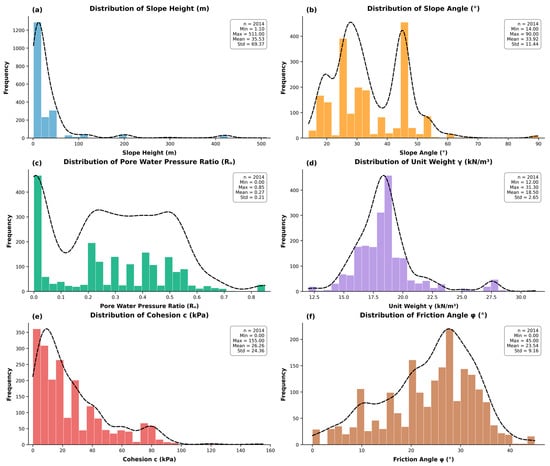
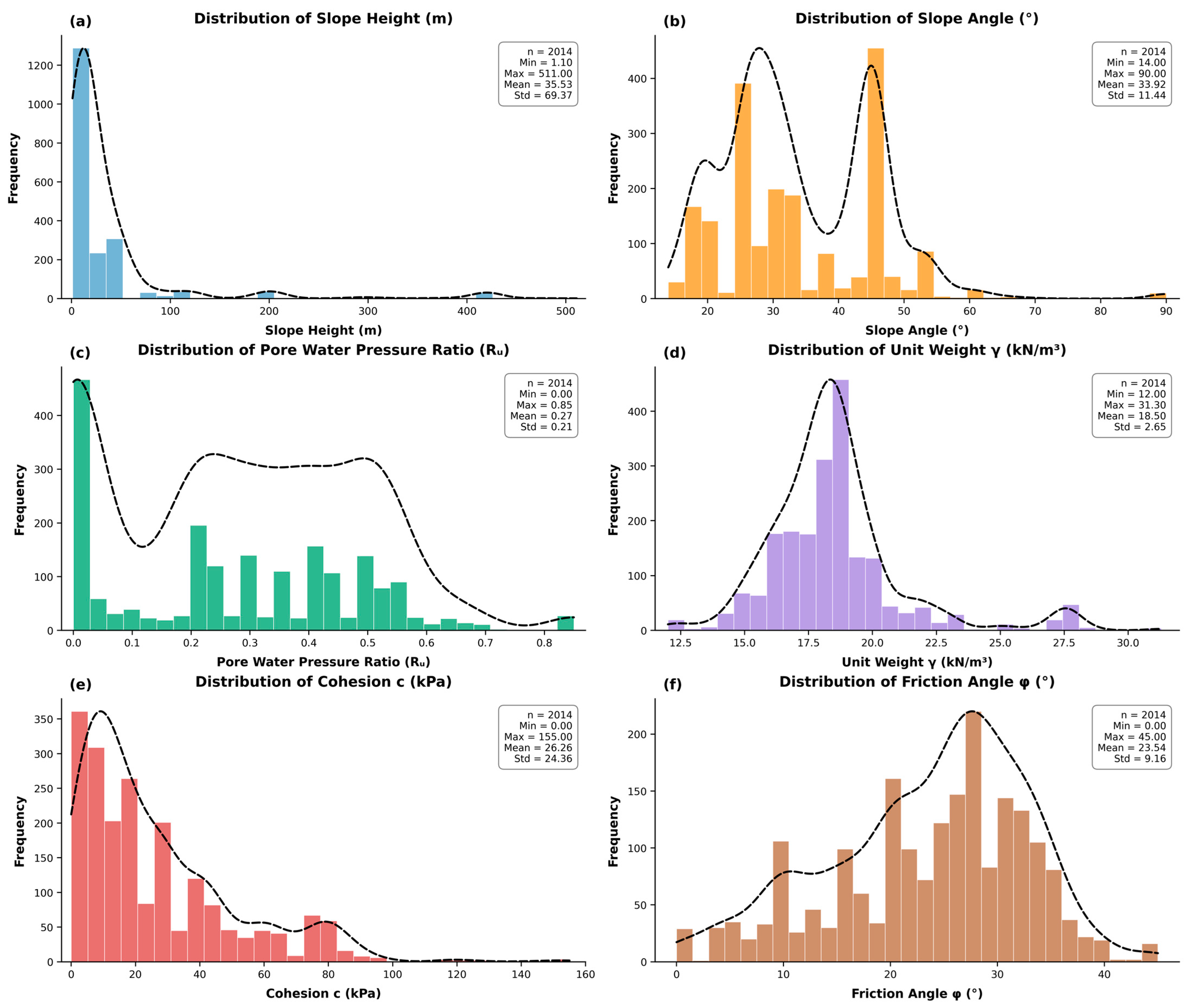
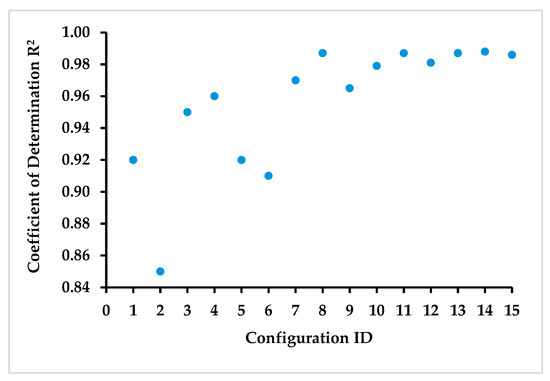
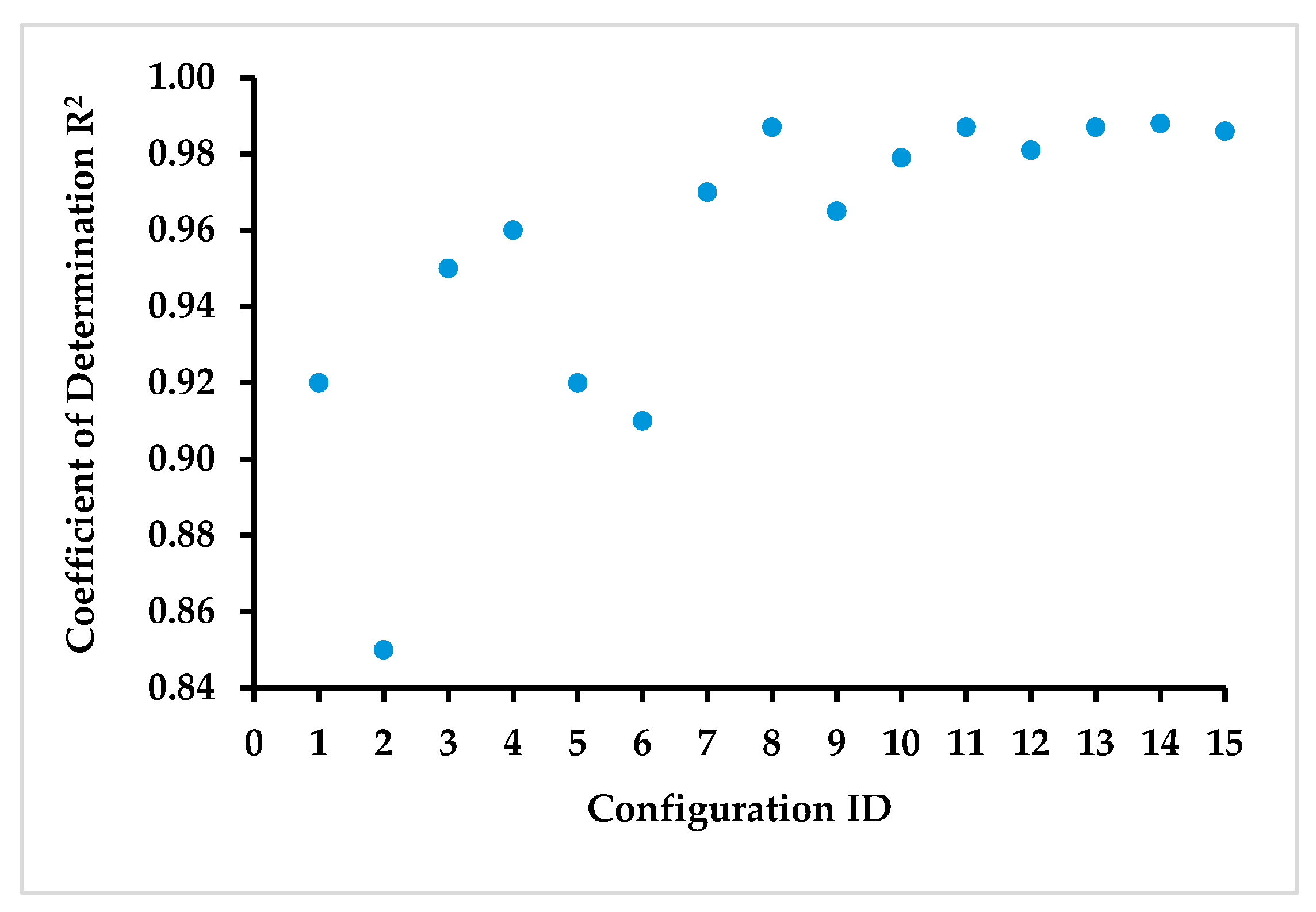
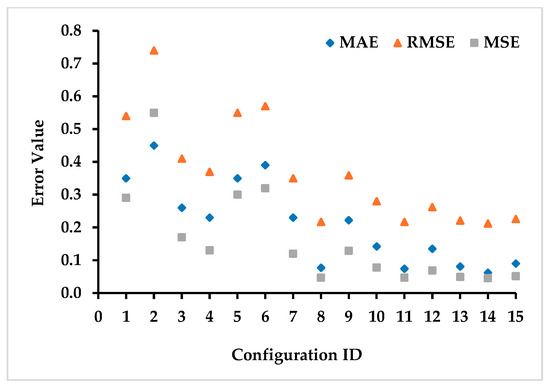
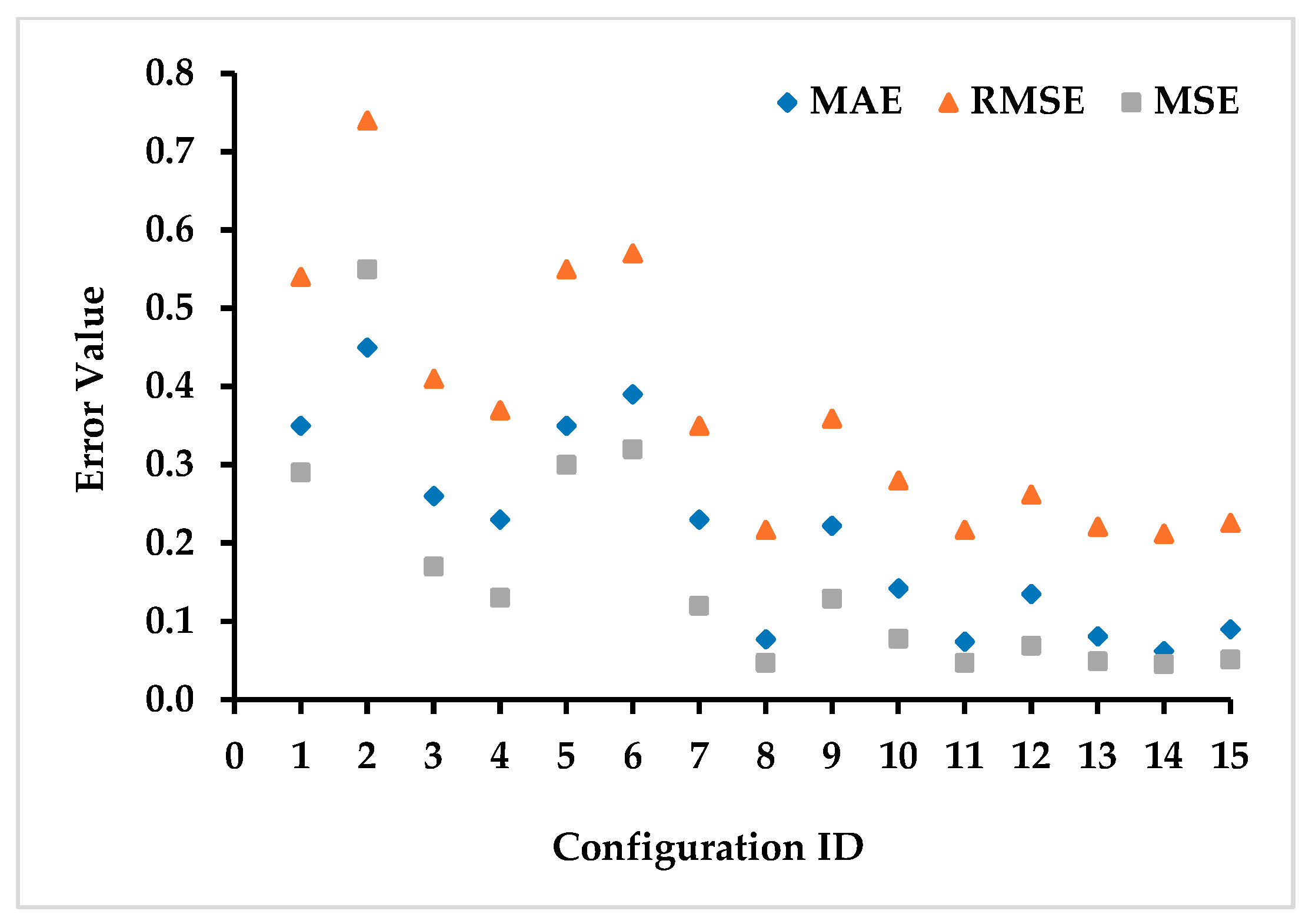
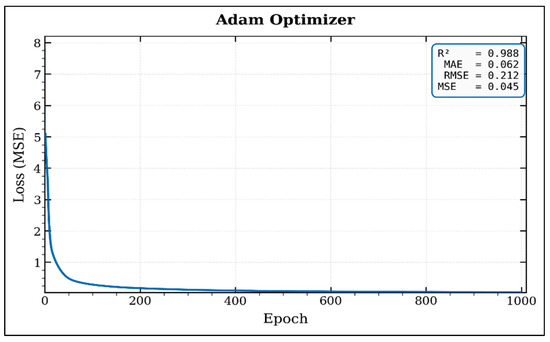
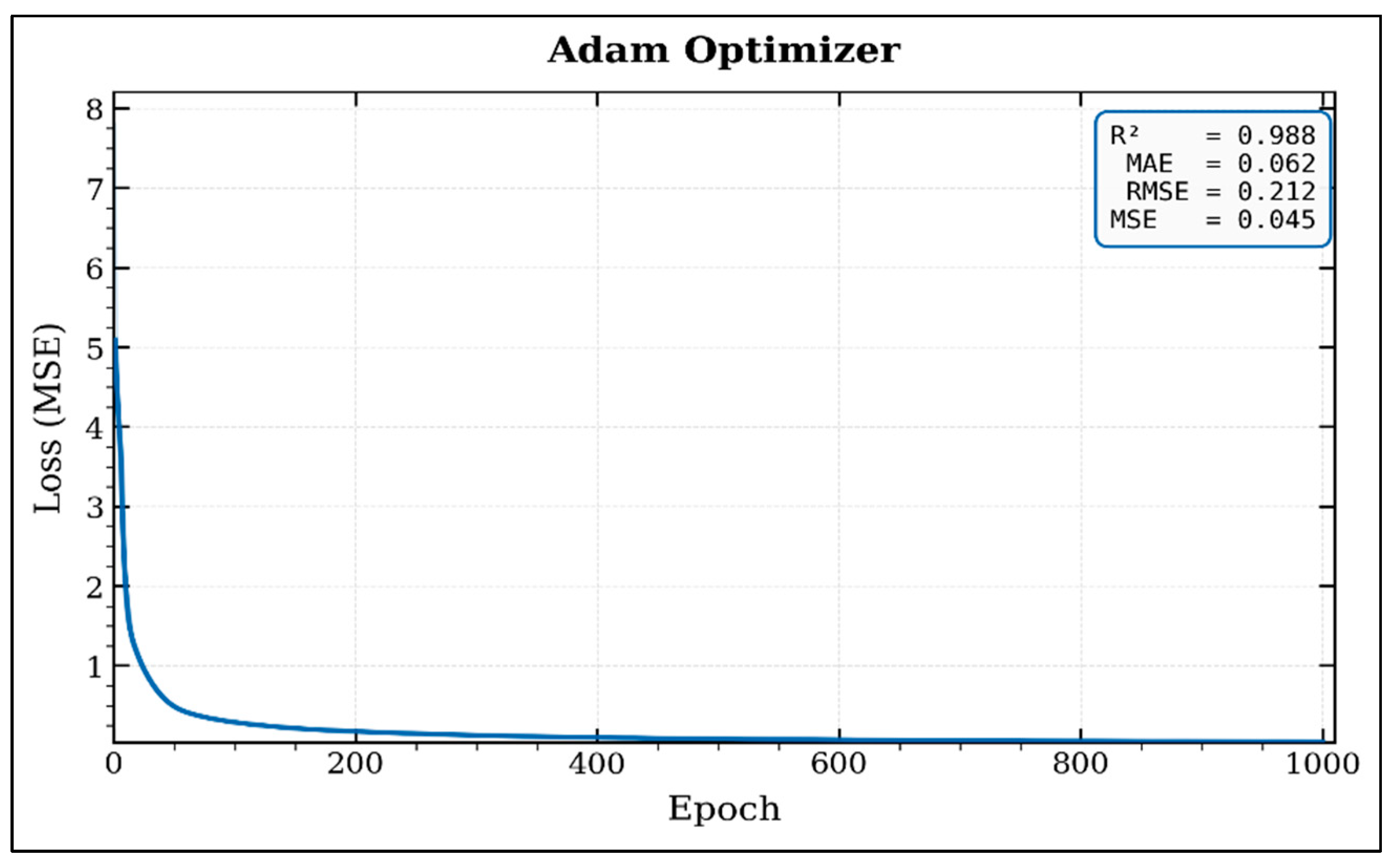
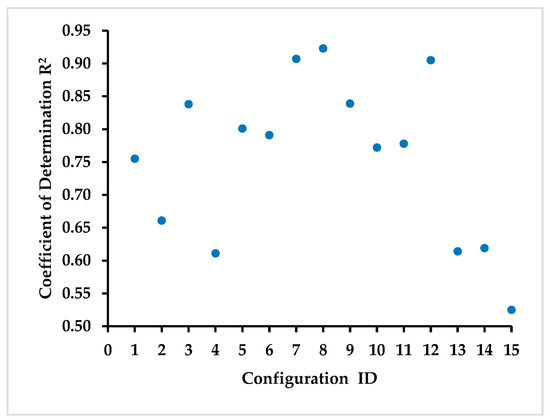
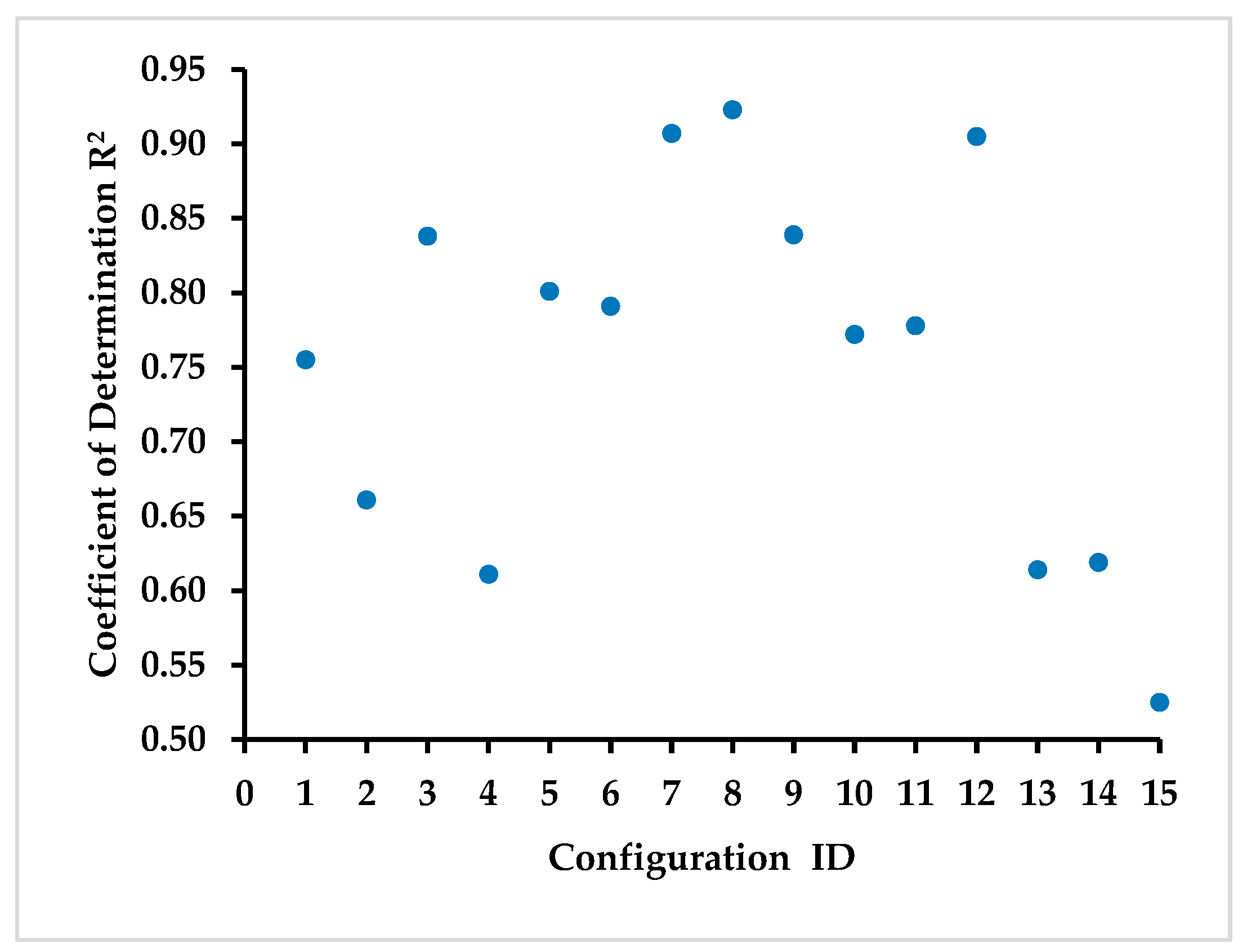
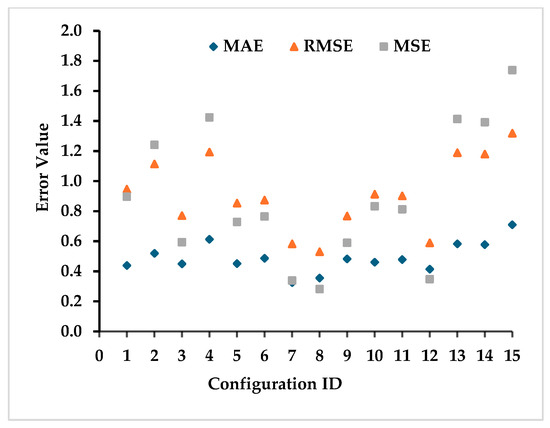
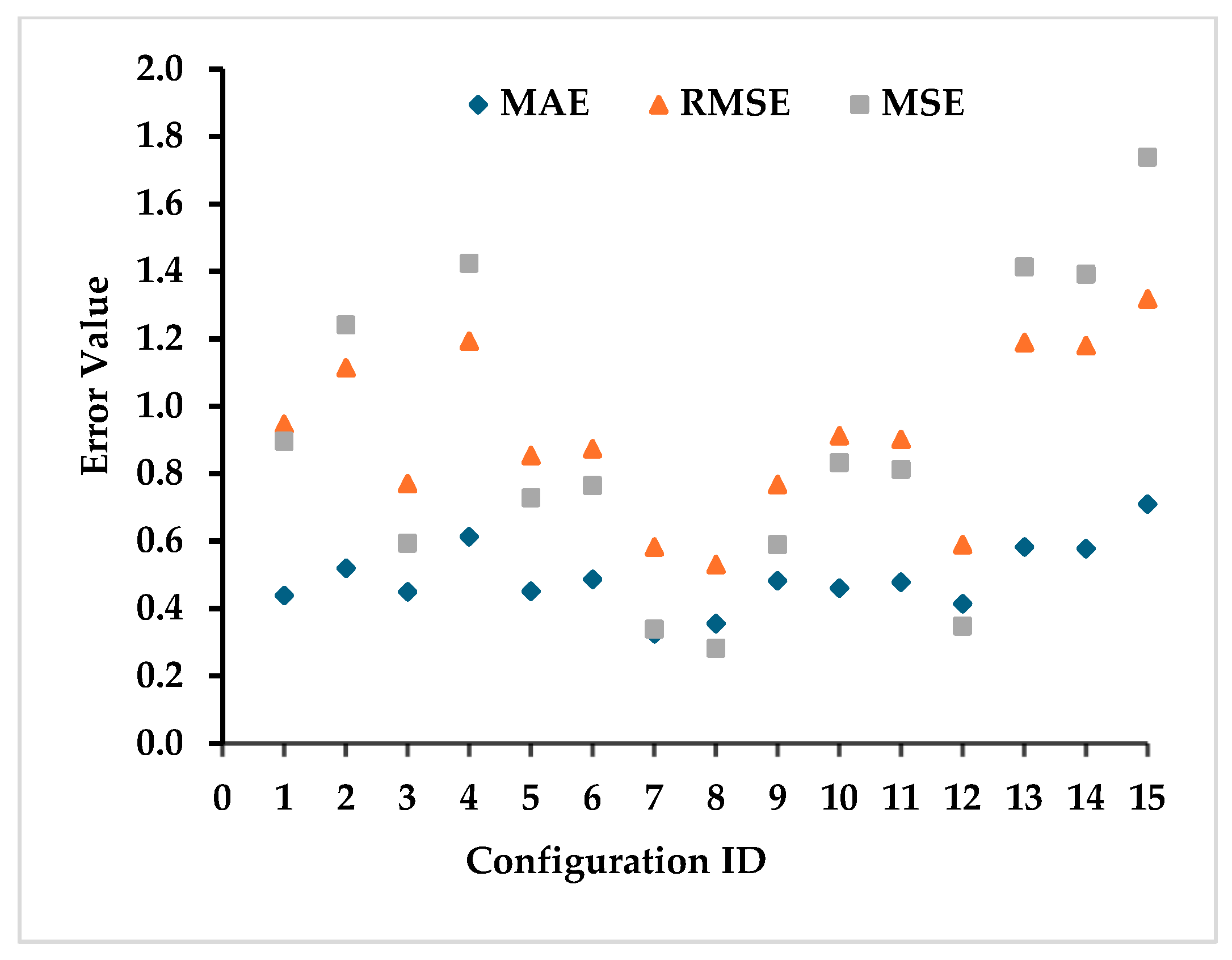
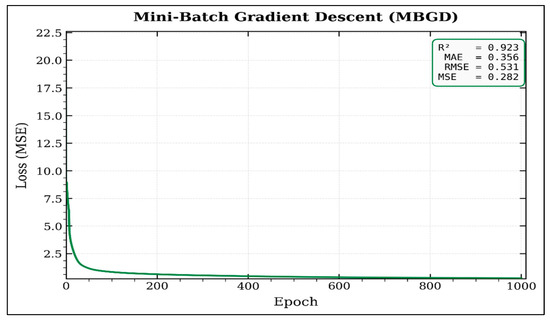
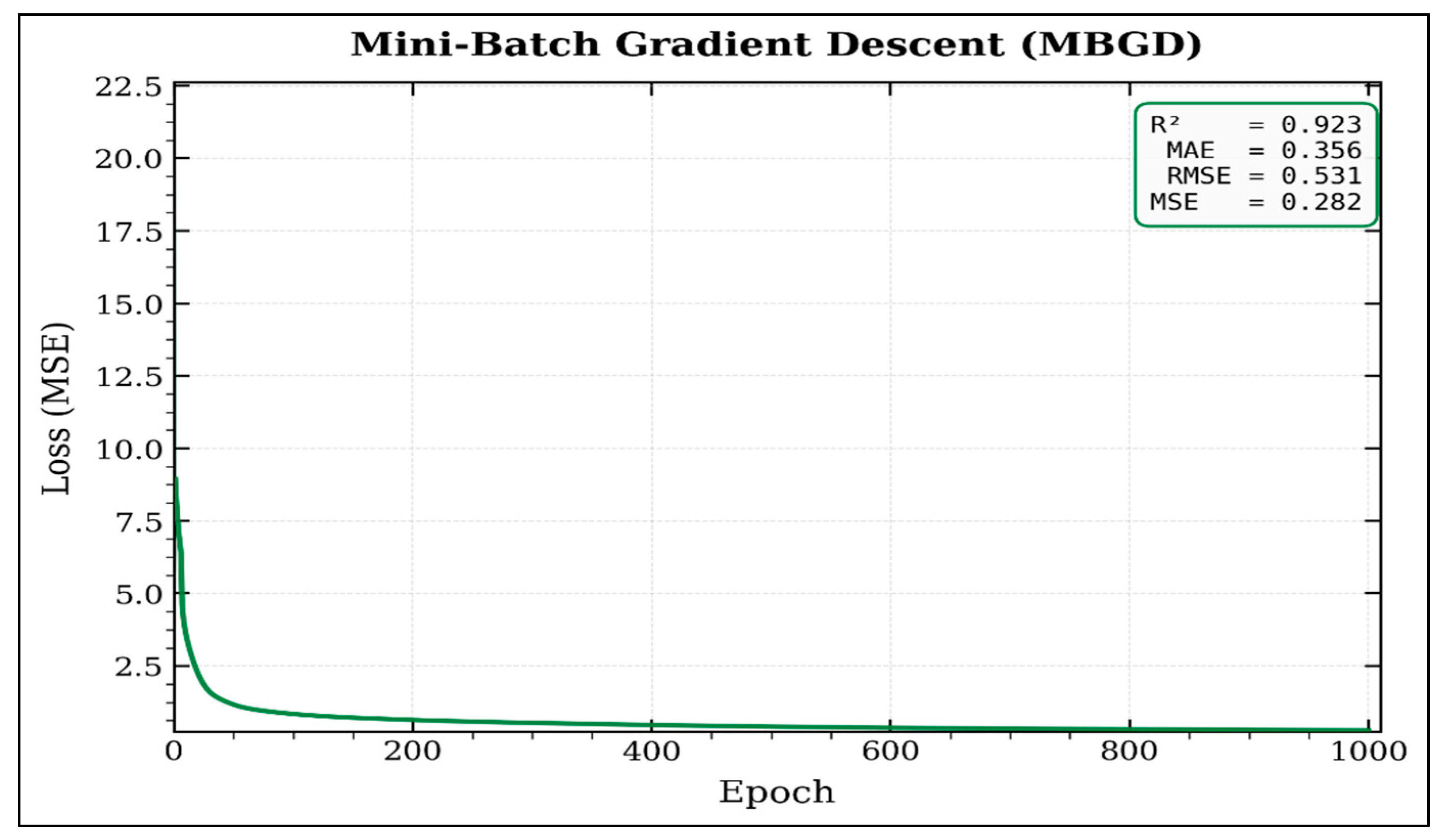
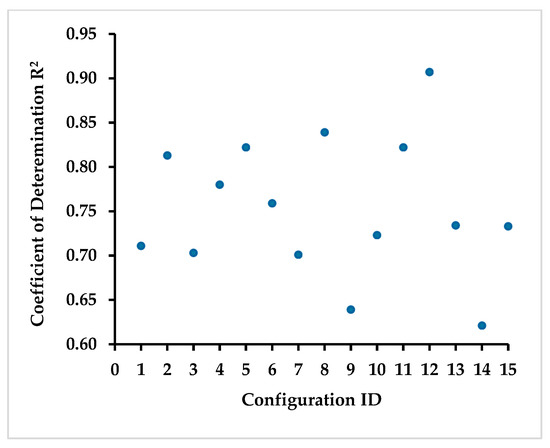
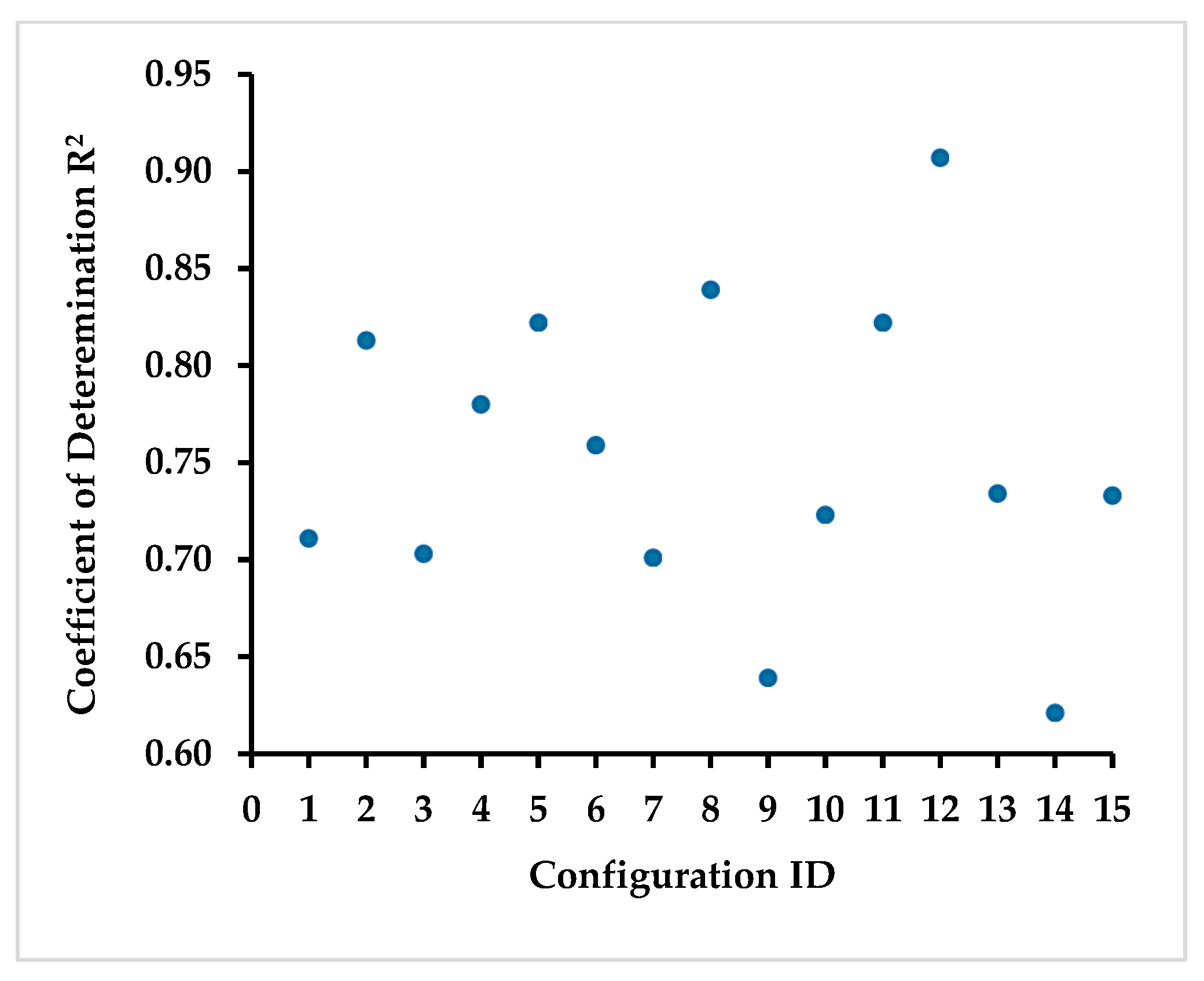
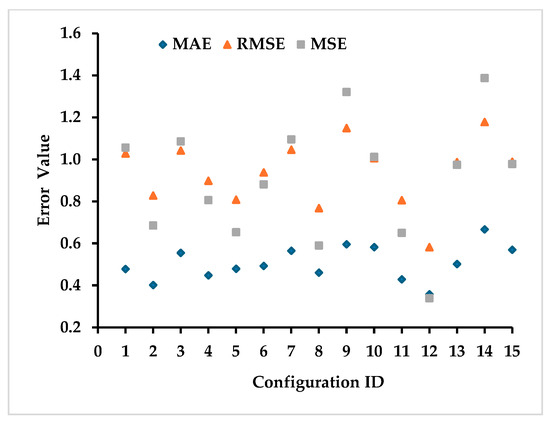
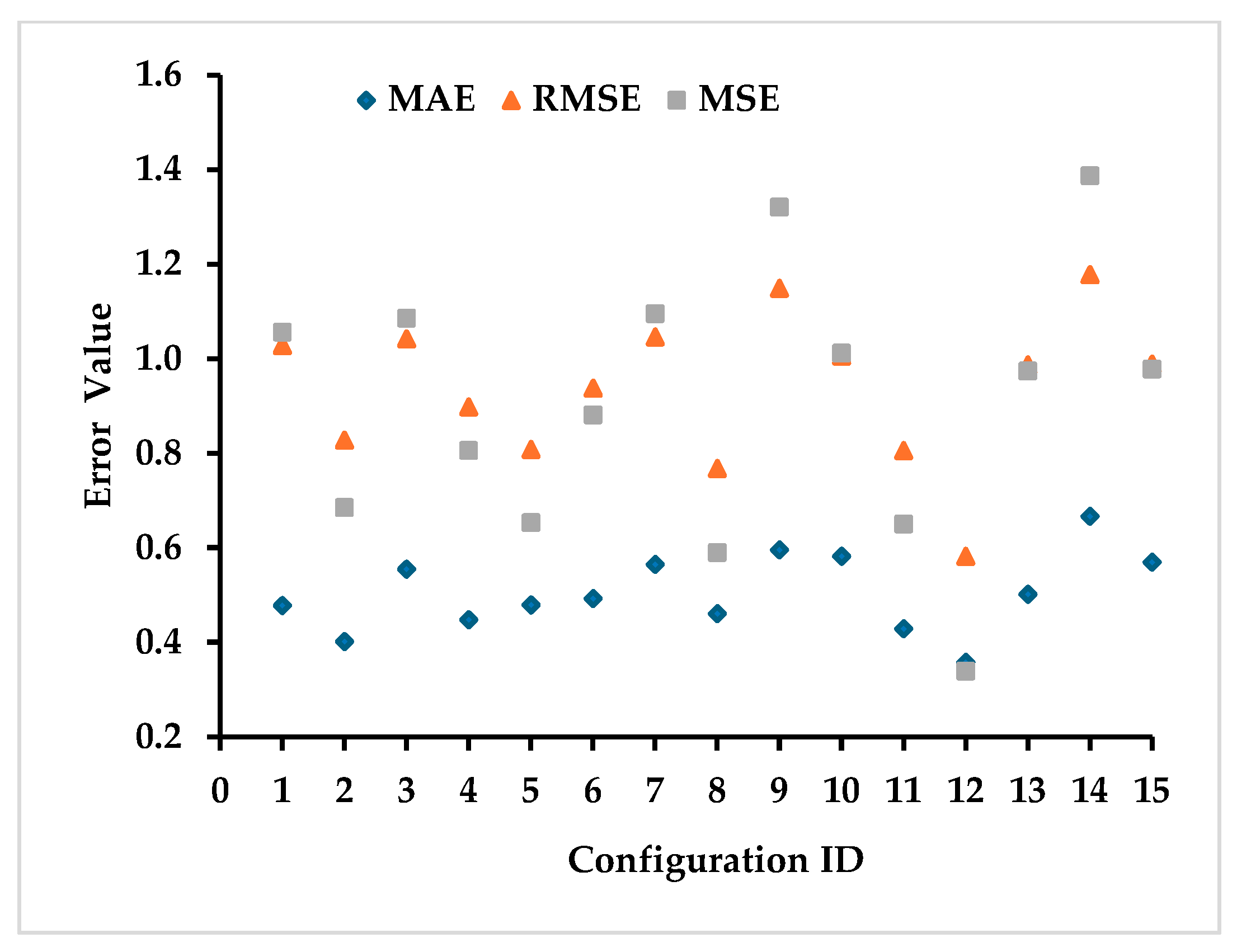
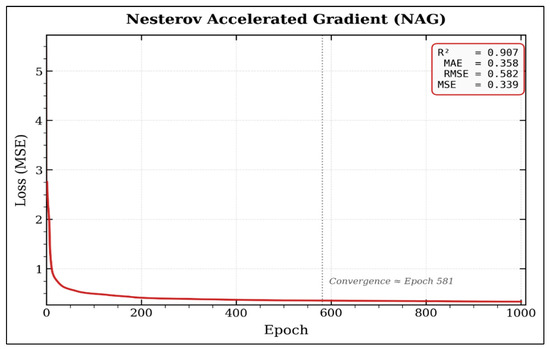
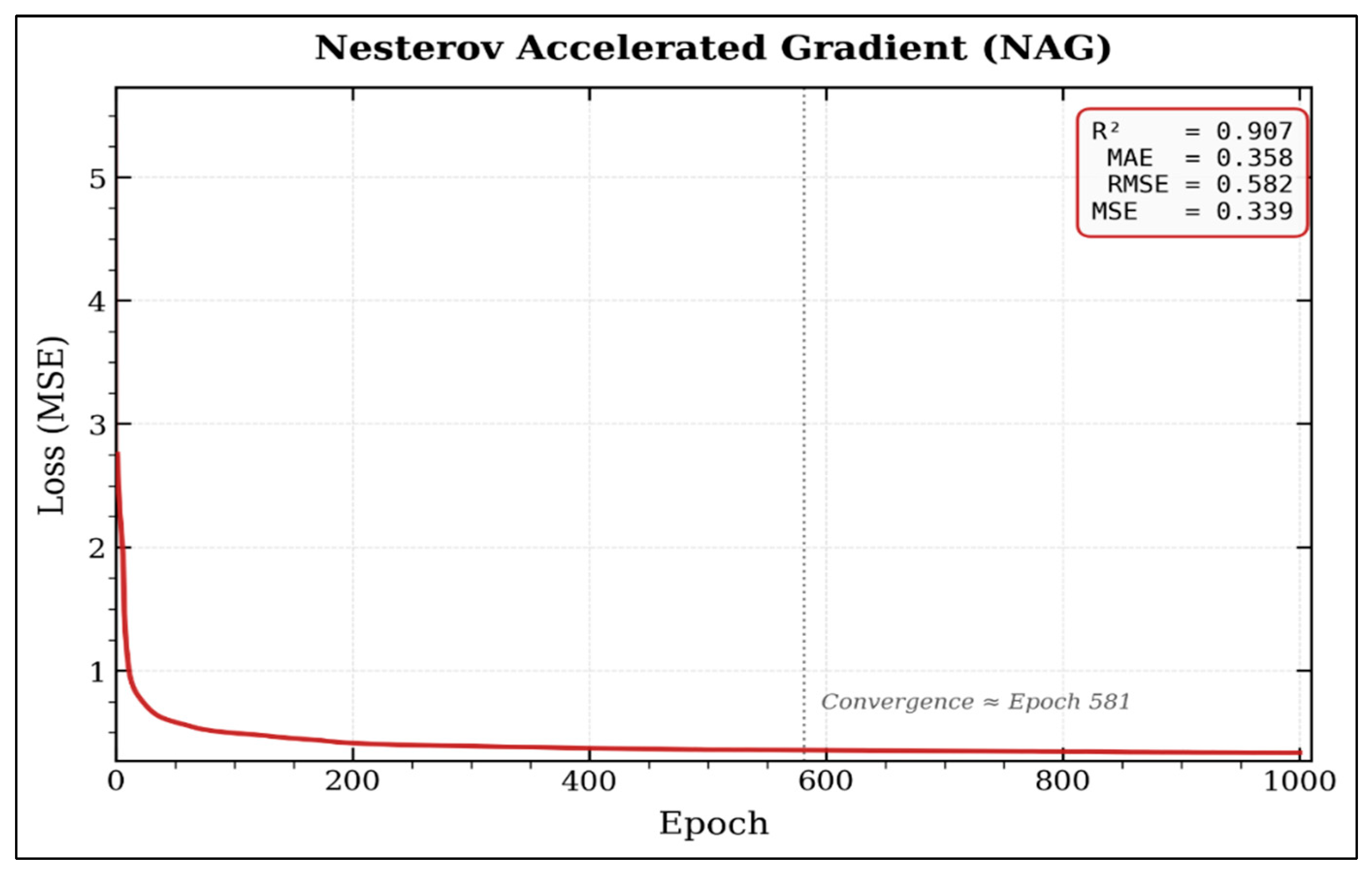
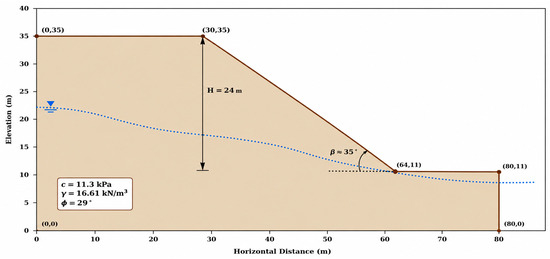
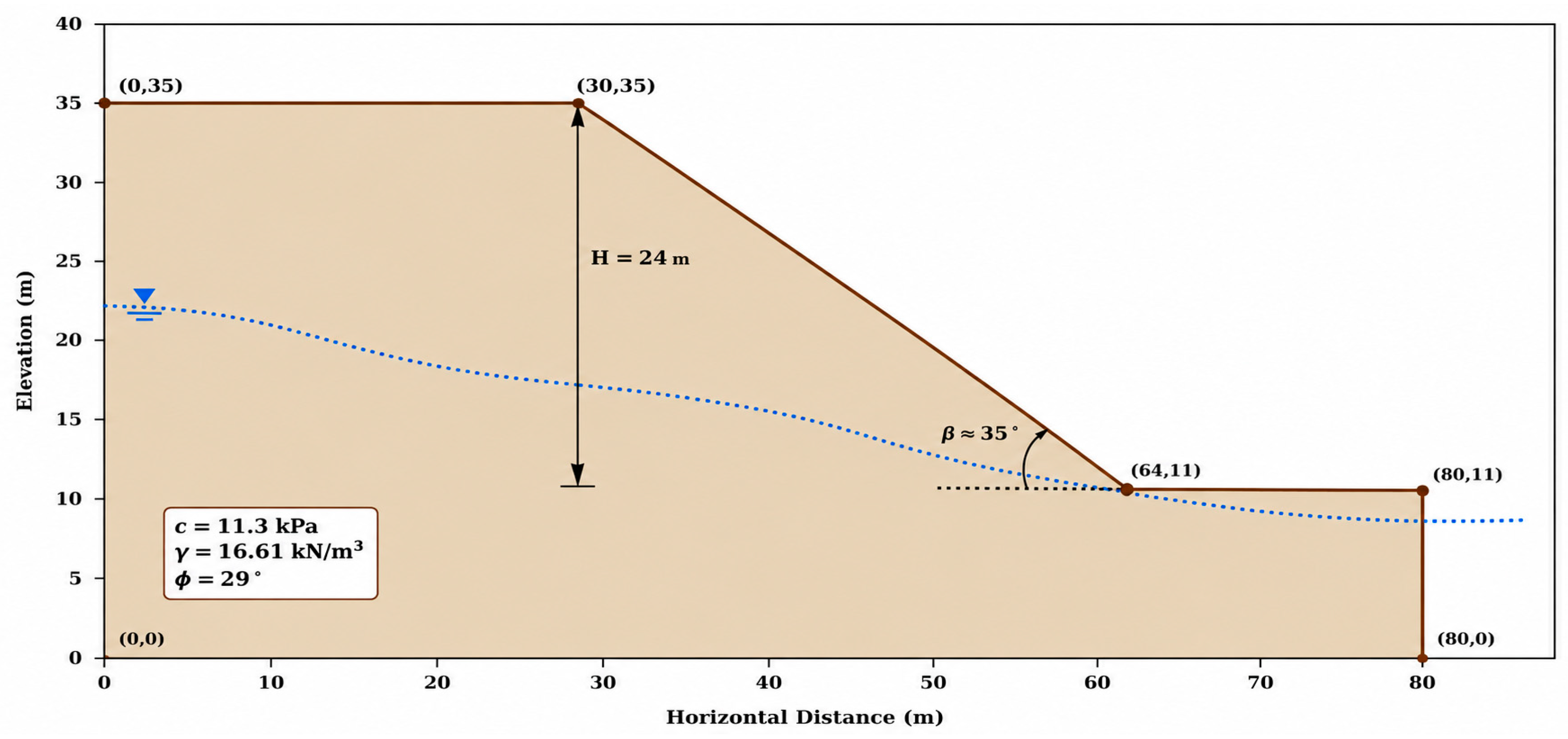
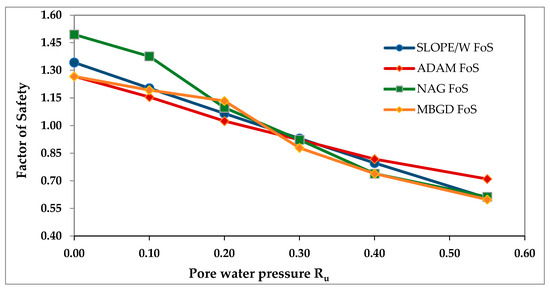
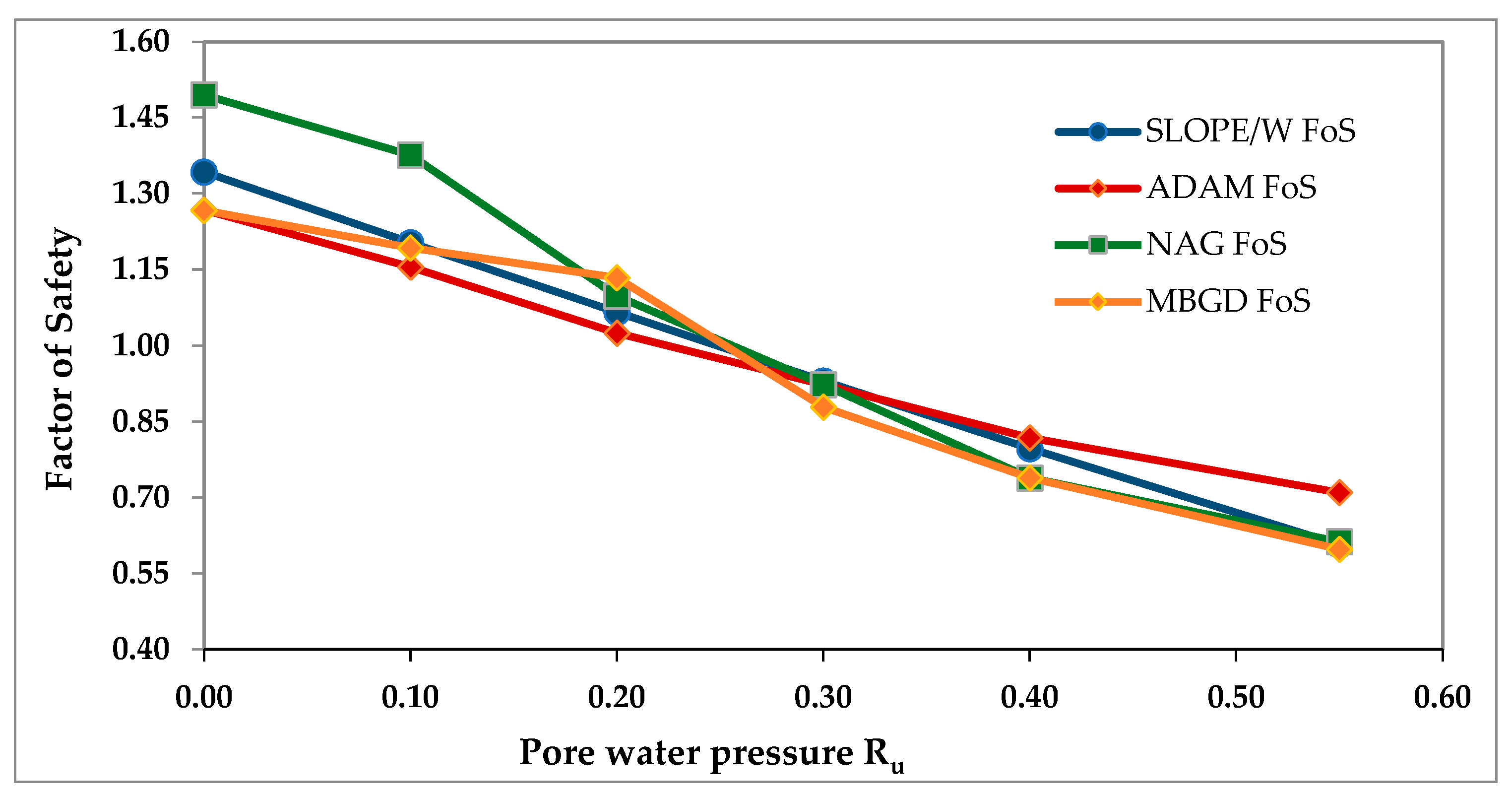
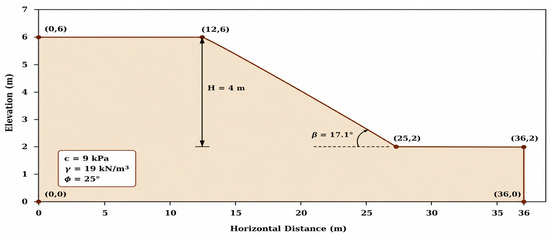
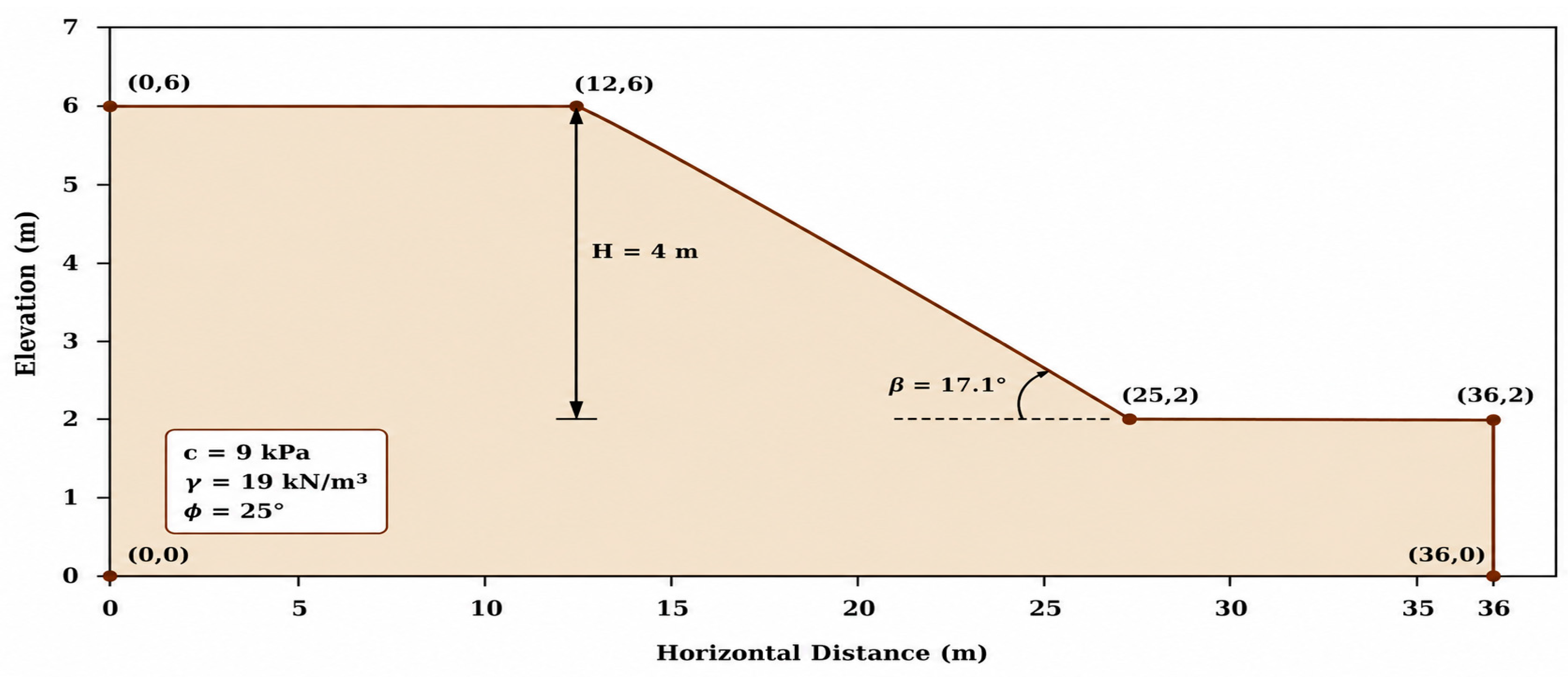
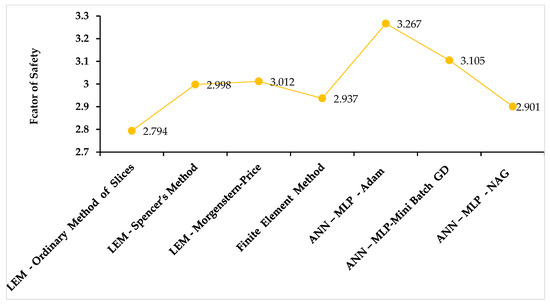
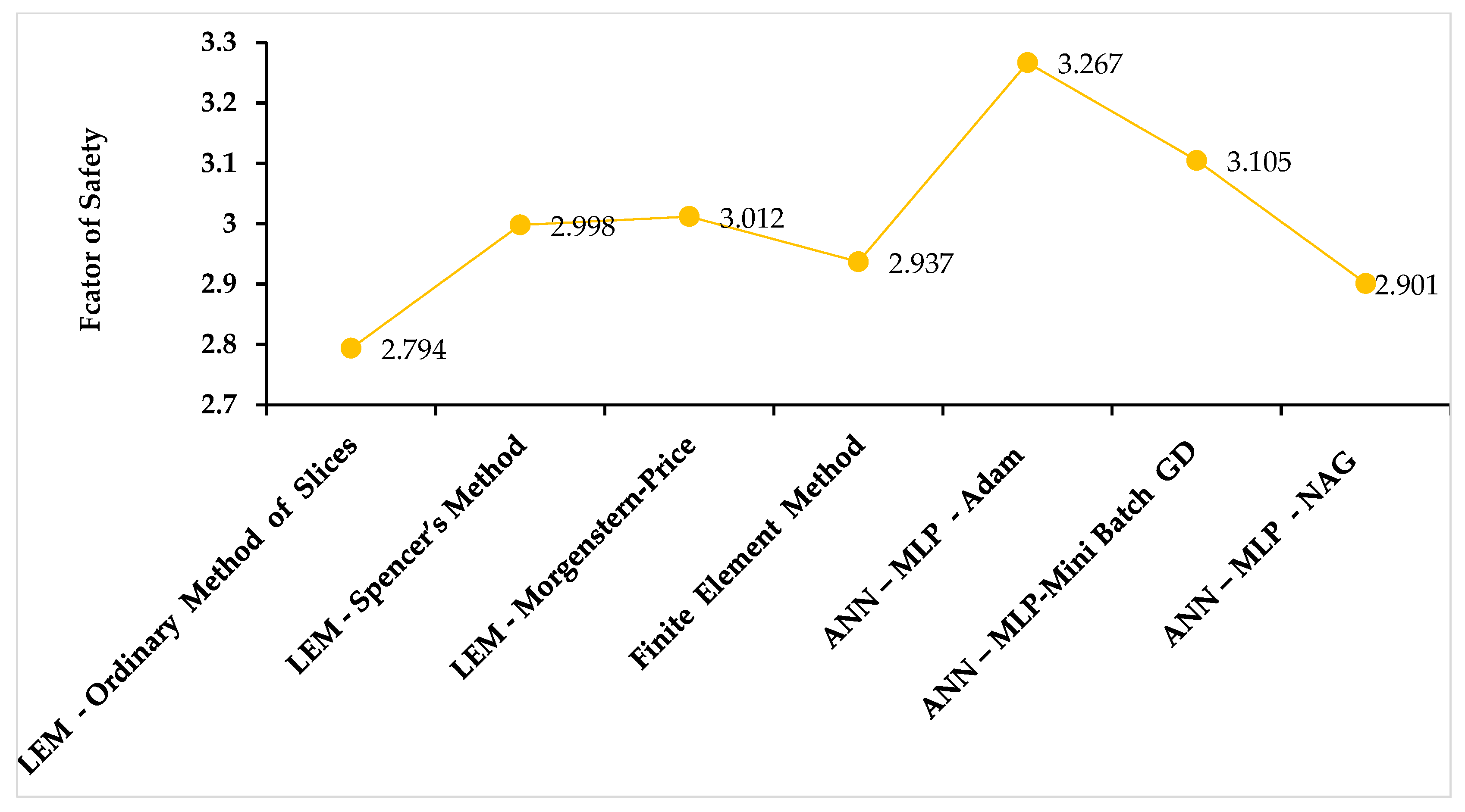
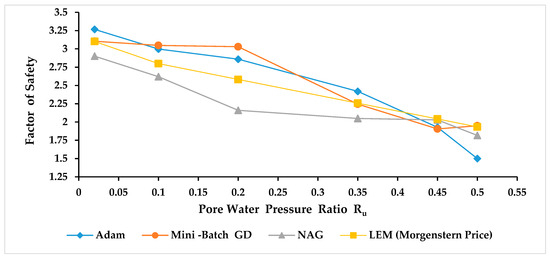
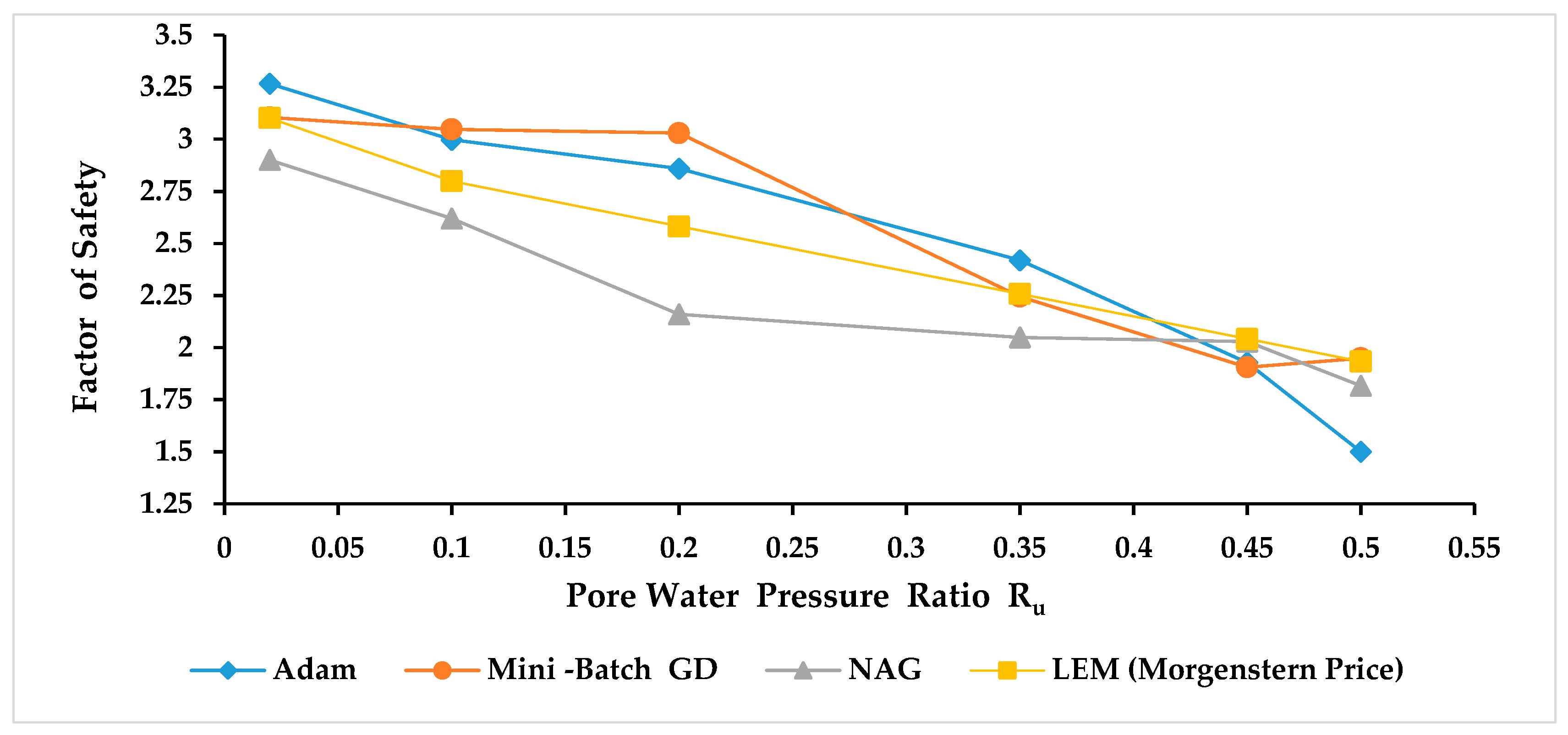

Disclaimer/Publisher’s Note: The statements, opinions and data contained in all publications are solely those of the individual author(s) and contributor(s) and not of MDPI and/or the editor(s). MDPI and/or the editor(s) disclaim responsibility for any injury to people or property resulting from any ideas, methods, instructions or products referred to in the content. |
© 2026 by the authors. Licensee MDPI, Basel, Switzerland. This article is an open access article distributed under the terms and conditions of the Creative Commons Attribution (CC BY) license.