


Abstract
Construction activities transform the physical environment through land-use change, resource consumption, waste generation, and carbon emissions, making sustainable construction especially important in Caribbean Small Island Developing States (SIDS). This study investigates the current use and perception of Extended Reality (XR) as a spatial visualization and human–environment decision-support tool for sustainable construction in the Caribbean construction sector. This study addresses three research gaps: knowledge, contextual, and praxis gaps including a knowledge, contextual, and praxis gap by contributing XR evidence from a Caribbean SIDS context. The novelty lies in positioning XR as a human–environment interface for sustainable construction, creating the foundation for future studies on the use of digital tools within the construction sector for sustainable environmental development. Grounded in Human–Environment Interaction Theory, the study used questionnaire survey responses from 112 construction practitioners for analysis through descriptive statistics, effectiveness scoring, effectiveness indices, and non-parametric comparison of sustainability outcome groups. Findings show that XR adoption remains limited, but practitioners recognized its potential to improve design accuracy, project visualizations, workflow coordination, stakeholder communication, safety and sustainability-related decision-making. The main barriers were lack of awareness, cost, technological complexity and limited trust in digital outputs. XR was perceived to contribute most strongly to social and economic sustainability outcomes, particularly through the creation of jobs for AR (Augmented Reality)/VR (Virtual Reality) specialists, increased worker skills and experience, and enhanced collaboration and communication. Environmental contributions may currently emerge indirectly through improved social and economic sustainability.
1. Introduction
The construction industry has a direct transformational impact on the physical environment. It encompasses spatial and human–environment processes through the development of buildings, housing, roads, utilities, drainage systems, and public infrastructure [1], which reshapes land use, settlement patterns, mobility, resource flows, environmental exposure, and community wellbeing [2]. The Caribbean Small Island Developing States (SIDS) experience a disproportionate impact of climate change [3,4] due to relatively small land areas, high population density, increasing urbanization and exposure to extreme weather events such as flooding, hurricanes, sea-level rise and high temperatures [2,5]. These conditions make construction decisions especially important because buildings and infrastructure can either reduce or intensify long-term environmental and social vulnerability [6].
From a geographical perspective, where decisions and outcomes are inherently spatial, proper site selection requires consideration of physical, economic, and cultural factors such as geology, soil, drainage, climate, transport access, available resources, freshwater availability, and flood protection [7]. A central challenge in construction and spatial planning is that many decisions must be made before their physical consequences are visible [8]. Furthermore, risk-related site factors such as elevation, slope, land cover, drainage networks, proximity to water bodies, topographic wetness, temperature, humidity, wind speed, road access, and flood sensitivity must be taken into consideration to achieve sustainable construction [9]. XR can support the interpretation of these site-related variables by presenting spatial and environmental information within immersive or augmented environments. XR allows the visualization of these risk-related factors when integrated with spatial data sets to reveal access constraints and propose improvement layouts [10].
Therefore, sustainable built-environment planning requires the integration of climate resilience, land-use planning, infrastructure accessibility, socio-economic needs and environmental protection [11]. Poor planning and site-related construction decisions can increase exposure to natural hazards and create long-term social, economic, and environmental consequences [9]. In many developing contexts, construction and settlement decisions may also be influenced by political and economic pressures rather than comprehensive environmental and social assessment [12]. This increases the need for transparent planning tools to enhance communication and evaluation within the decision-making phase of construction projects [13]. It further increases the need for sustainable construction planning to align with the increasing demand for housing, infrastructure, transportation, and public services [14].
In the quest to achieve sustainable infrastructural development, a balancing act is required among these spatial and geographic inputs, human–environmental processes and socioeconomic benefits [15]. Several countries have mandated the adoption of the United Nations’ (UN) sustainable development goals into the spatial development policies to form the framework that guides the building and construction processes [16]. The challenge is left to the competence of the various project teams to integrate climate resilience and land-use planning concepts with socio-economic and environmental needs of the specific geographic area to design, construct and implement a sustainable built environment. However, the final infrastructure product falls far from what society intended, and sometimes these infrastructural developments create further “wicked problems” or adversities [17]. For example, nine out of ten major projects failed to deliver in cost performance [18] and social benefits, while the outcome of many social housing programs initially planned to assist low-income earners has resulted in attracting crime and unemployment [19].
To minimize these drawbacks, technology and digital tools are leveraged to aid in optimizing spatial and project performance [20,21]. Moreover, Extended Reality (XR) technologies are positioned as leading tools that aid in achieving sustainability within the construction industry [22]. It has gained attention for its ability to create immersive, interactive, and spatially realistic representations of construction projects and physical environments. XR mainly consists of two immersive technologies: augmented reality (AR) and virtual reality (VR). AR allows digital information to be overlaid onto real-world settings [23], while VR enables users to experience simulated three-dimensional environments before physical construction occurs [24]. These technologies can improve visualization, simulation, interaction, experiential learning, planning, and design validation [25]. These elements aid significantly in reducing human error and human safety risk by limiting the need for physical investigation of an area and allow project stakeholders to engage with project information in ways that traditional two-dimensional drawings, reports, or static models cannot fully achieve [26,27].
Hence, this study was grounded in Human–Environment Interaction Theory, which explains the reciprocal relationship between human activity and the physical environment [28]. Construction directly alters environmental conditions, while environmental constraints, hazards, and vulnerabilities influence construction planning and development [29]. Within this framework, XR is positioned as a human–environment interface that can help construction professionals visualize site conditions, spatial constraints, design alternatives, and potential environmental hazards before or during construction. This theoretical framing supports the examination of XR not only as a construction management tool, but also as a spatial visualization and decision-support technology for sustainable development in a Caribbean SIDS context.
Therefore, this study aims to examine the current use, perceived benefits, adoption barriers, implementation strategies and sustainability contributions of XR technologies as spatial visualization tools in Caribbean SIDS construction industry. The study addresses four research questions:
- What are the current levels of XR awareness and use among construction practitioners in Caribbean SIDS?
- What benefits, barriers, and implementation strategies do practitioners associate with XR adoption?
- How do practitioners evaluate XR’s potential contributions to social, economic, and environmental sustainability?
- Do perceived XR sustainability contributions differ significantly across the three sustainability pillars?
In doing so, the study positions XR not only as a construction technology, but as a human–environment interface that may improve how professionals visualize site conditions, communicate spatial information, identify risks, and make more sustainable decisions within the Caribbean SIDS.
This study addresses a threefold research gap. A knowledge gap is addressed by contributing to the significantly limited body of research on the use of digital technologies, specifically XR, to support sustainable construction and environmental decision-making [2]. Secondly, a population gap is addressed by contributing to the lack of construction-based studies within the Caribbean SIDS and wider Global South [30]. Lastly, this study addresses a praxis gap, whereby the results from this study can directly inform industry practice, professional training, policy discussions, and institutional strategies for using XR to support construction-sector sustainability [31].
The novelty of this study is found through three related contributions. Firstly, this study provides context-specific empirical evidence of the use of XR within the construction industry of Caribbean SIDS. Secondly, it extends the application of the Human–Environment Interaction Theory to produce a lens through which human actions within the construction sector are understood as directly influencing the environment, while digital technologies such as XR are examined as tools that can help reduce adverse impacts and support better protection of natural surroundings. Thirdly, it moves beyond identifying general XR benefits by comparing its perceived contributions across social, economic, and environmental sustainability pillars and examining whether these perceptions vary across practitioner and organizational groups.
2. Literature Review
2.1. Theoretical Framework: Human–Environment Interaction Theory
Construction is one of the most visible ways in which human activity transforms the physical environment [32]. Through land conversion, material extraction, infrastructure development, waste generation and energy consumption, the construction industry contributes significantly to environmental change and carbon emissions [33]. As a carbon-intensive sector, construction is also linked to the intensification of the greenhouse effect and wider climate-change impacts by contributing significant levels of carbon dioxide to the atmosphere [34]. At regional and global scales, these impacts are reflected in rising temperatures, extreme weather events, sea-level rise, ecosystem degradation and desertification [35]. Furthermore, construction grows in proportion to the current burgeoning urbanization, modernization and population growth, which increases its effect on the environment. The escalation of anthropogenic actions and overexploitation of natural resources continue to destabilize ecological balances [36].
Therefore, this study is grounded in the Human–Environment Interaction Theory to provide a lens for innovative digital technologies such as XR in enhancing the relationship between construction decision-making and the physical environment. This theory explains the reciprocal interactions between humans and the environment [37]. In this context, it is used to recognize that construction activities shape environmental conditions while environmental characteristics, risks, and constraints also influence construction decision-making. Within construction, XR may mediate this relationship by allowing practitioners to interact with representations of site conditions, design alternatives, hazards, and construction processes before physical interventions occur. XR is therefore conceptualized as a decision-support interface rather than as an independent sustainability solution. Its sustainability effects depend on whether enhanced visualization and communication lead to improved human decisions, which may subsequently influence social, economic, and environmental outcomes.
Therefore, this framework positions XR as a technological interface that can support more informed human–environment decision-making by creating simulated or augmented representations of construction sites, surrounding environmental conditions, spatial constraints, and potential hazards [37]. This theoretical framing supports the study’s focus on XR as a tool for improving environmental awareness, spatial understanding and decision-making within sustainable construction practices [1] through enhanced protection and preservation of the environment against anthropogenic activities [38].
2.2. Extended Reality (XR) and Sustainable Construction
The construction industry is increasingly being reshaped by digital technologies that support improved decision-making, communication, productivity, resource management and sustainability [39]. While sectors such as manufacturing and business have advanced more rapidly in their adoption of digital technologies, the architecture, engineering and construction (AEC) industry has generally experienced slower digital transformation [40]. Despite this, the construction industry continues to face persistent challenges such as low productivity, fragmented communication, project delays, cost overruns, inefficient resource use and environmental degradation [18]. The transition toward Construction 4.0 and Construction 5.0 has therefore been positioned as an opportunity to improve project delivery through innovative digital technologies such as Extended Reality (XR) [41]. For the purposes of this study, XR is an umbrella term that includes augmented reality (AR), virtual reality (VR), and related immersive technologies that allow users to visualize, simulate, and interact with digital or digitally enhanced environments [22]. In construction, AR superimposes digital information onto the physical environment in real time, while VR immerses users in 3D simulated environments that replicate real-world construction spaces and processes [42].
The sustainable contribution of XR lies in its ability to support better decision-making before physical construction occurs, particularly regarding its impact on the natural surrounding environment. Immersive visualization can help project teams identify design conflicts earlier in the project lifecycle and support early error detection, including environmental implications [43]. AR/VR systems also improve communication among stakeholders by making construction information more visible, interactive, and easier to interpret in real time [44]. XR does not replace other necessary digital technologies such as Geographic Information Systems (GIS) and Building Information Modeling (BIM) or processes such as Environmental Impact Assessment (EIA) and Multi-Criteria Analysis (MCA) but complements these tools by providing an optimized view and understanding of spatial and environmental information [39]. An example of this is using XR integrated with BIM to map floor plans and structures with real-life data to create accurate 3D models [45]. XR is therefore capable of contributing to sustainable construction by improving coordination and resource efficiency, reducing wasteful rework, and supporting safer work practices [46].
2.3. Sustainable Built-Environment Planning in Caribbean SIDS: The Role of XR
Sustainability has become a major concern in construction due to its high contribution to natural resource consumption, energy use, greenhouse gas emissions, carbon footprint, and waste generation [47]. At the same time, construction supports economic growth, employment opportunities, infrastructure development, and other advancements, including social and community wellbeing [18]. This dual role means that construction technologies should be evaluated not only for efficiency but also for their contribution to sustainable built-environment outcomes.
Environmental preservation and sustainability in the built environment also depend on how natural and constructed systems are integrated [32]. For instance, a popular engineering integration of the environment and construction to support the circular economy and resilient cities is green roofs and green spaces for environmental planning and social wellbeing [48]. Environmentally sustainable construction requires early consideration of green space, drainage, climate responsiveness, and environmental performance [49].
XR can support resource efficiency by improving design accuracy, reducing rework, support energy-efficient design and asset tracking. This technology allows stakeholders to visualize green features, spatial layouts, drainage conditions and design alternatives before physical construction occurs [10]. AR/VR aids in identifying problems earlier and supports preventive maintenance, reducing the need for excessive repair, replacement, or demolition [44]. Such immersive technologies support improved accuracy during the design phase to mitigate unforeseen hazards, rework and material wastage for increased sustainability and project efficiency [43]. Moreover, XR supports energy-efficient design and lifecycle management by utilizing simulations to optimize energy efficiency by assessing airflow, heating requirements, and natural ventilation strategies [23]. AR-based tracking of assets can also allow managers to access maintenance data, manuals, and service histories by interacting with physical components [50].
The advantages of XR are especially useful to the Caribbean nations that often rely on the service industry and tourism for their gross domestic product (GDP) and economic advancement. This draws a fine line between facilitating increased construction, including luxurious facilities such as hotels and resorts, while preserving the natural resources of the environment for higher eco-tourism engagement [51]. XR can then be used to increase the efficiency of understanding complex and dynamic human–environment interaction due to the anthropogenic impact of construction and increase environmental protection [52].
2.4. Barriers to XR Adoption in Emerging Economies
Despite the potential benefits of XR, adoption remains limited in many developing countries and SIDS. Cost and technical complexity are early barriers to XR adoption. These are coupled with globally experienced issues such as the ergonomic limitations of using XR equipment, such as headset discomfort, limited field of view, battery life, and lack of ability to integrate with current technological systems, among other similar factors [53]. Furthermore, software interoperability, learning curves, and inconsistent data standards may impose barriers to the adoption of XR [54]. This issue can escalate within facilities that require consistent and stable internet connections, cloud access and high-performance computing [24].
These high equipment costs can restrict adoption as they often require substantial investment in software, training, and organizational restructuring [38]. This level of technical maturity may not be feasible for small- to medium-scale construction companies and may cost large-scale companies high initial and maintenance costs [55]. For small- and medium-sized firms, these costs may appear difficult to justify without clear evidence of return on investment [56].
The skills, training and organizational barriers play a key role in XR adoption or restriction, especially within SIDS unpredictable economic climate. Delgado et al. (2020) argued that effective use of AR/VR requires digital skills beyond basic technology use [57]. Organizations must undergo cultural change to integrate immersive technologies into construction practice, requiring time lost for training, discussions and organizational readiness [58]. These barriers suggest that XR implementation is not only a matter of purchasing technology but also a socio-technical transition involving training, workflow integration, leadership support, and local demonstration projects.
3. Materials and Methods
3.1. Research Design and Geographical Context
This study adopted an exploratory, quantitative, cross-sectional survey design conducted within a positivist research philosophy to investigate the extent of knowledge and opinion on how XR technologies are perceived to support sustainable human–environment interaction within the construction sector of Caribbean SIDS. For this study, XR refers to augmented reality (AR) and virtual reality (VR) technologies.
The exploratory nature of the study reflects the relatively limited adoption of XR within the regional construction industry and the corresponding lack of empirical evidence on its application within Caribbean SIDS. Rather than evaluating the measured performance of established XR systems, the study therefore examines current adoption conditions and practitioner perceptions of potential applications and sustainability contributions. The findings should consequently be interpreted as evidence of perceived potential, adoption readiness, and implementation priorities rather than demonstrated post-implementation performance.
The positivist research philosophy was adopted to support the objective measurement of construction professionals’ perceptions of XR-enabled sustainable construction outcomes. Positivism assumes that social and technical phenomena can be systematically observed, measured and analyzed using empirical data [59]. From this perspective, the perceived role of XR technologies in supporting sustainable construction within a Caribbean SIDS context was treated as a measurable phenomenon. This allowed the study to examine respondents’ views on XR adoption, limiting factors and sustainability-related outcomes using structured questionnaire data, descriptive statistics and effectiveness scoring. Rather than developing a new theory, the study was based on existing theoretical ideas to interpret how XR may influence construction practice, human interaction, resource efficiency and environmental management [60].
Primary data was collected through a questionnaire survey to solicit views and opinions from relevant experts within the field [61]. Variables for this questionnaire were collated from the literature review [42] and refined to produce a simple and straightforward questionnaire form. A quantitative survey approach was selected to capture the perceptions of construction professionals regarding XR’s role in potential sustainability contributions. The questionnaire was distributed electronically through professional and industry networks using a non-probability purposive sampling approach. Only completed and valid responses from eligible construction practitioners were retained for analysis.
This study was based on the Human–Environment Interaction Theoretical framework, as construction contributes to a direct human–environment relationship due to its anthropogenic effects on the surrounding environment [62]. Innovative technologies such as AR and VR have their limitations, especially towards the dynamic and nonlinear human–environment relationships and interrelationships [63]. Within this context, XR technologies are examined as spatial visualization tools that have the potential to significantly aid construction professionals to understand, communicate and manage built environment changes before or during physical construction.
Since XR adoption remains limited in many Caribbean SIDS, perception-based data were considered appropriate for identifying early sustainability pathways, barriers, and implementation priorities in a low-adoption context. Caribbean SIDS are emerging or developing economies with a lack of abundant resources to accommodate more effective construction, communication, safety and environmental protection. Many Caribbean nations also rely on service industries, particularly nature-based tourism and ecotourism, as major contributors to GDP. Therefore, these economies must engage in optimal management of human–environmental interaction through advancements in modernized and luxury construction while preserving and protecting the natural environment. XR has been shown to aid in advancing human–environmental interaction.
There is limited published evidence on AR/VR and other innovative technology applications in the construction industry within SIDS and the Global South [29,30]. This gap in knowledge, as it relates to the use of AR/VR technology, guided the research method selected and aimed to bridge this gap. Therefore, empirical data was collected for this study to form a basis for interpretation and address this research gap. This data also contributes to this limited body of knowledge for future research and continuous investigation on optimizing the construction industry of SIDS through innovative technologies [64].
The software used to digitize and share this questionnaire via online means was Google Forms v2025 [65]. This was an optimal choice for data sharing and collection due to its user-friendliness, familiarity within the Caribbean region, end-to-end encryption and personal data protection mechanisms [66]. This primary data was then collected and input into the software Statistical Package for Social Sciences (SPSS) version 31 for statistical analysis [67].
3.2. Data Collection Instrument—Cross-Sectional Questionnaire
The primary method of data collection for this study was through a questionnaire survey to a targeted audience of construction personnel, including project managers, engineers, architects, consultants, contractors and other built-environment practitioners. These participants were selected because they are directly involved in planning, designing, managing, or delivering construction projects and are therefore positioned to assess the potential role of XR in shaping construction-related human–environment interaction.
The Human–Environment Interaction Theory was operationalized by examining how XR may influence the interaction between construction practitioners, project decisions and the physical environment. Probability and impact ratings were therefore used to evaluate respondents’ perceptions of the extent to which XR could mediate these human–environment relationships.
This closed-ended questionnaire was divided into five sections with the aim to gauge the relevant respondents’ opinions on the feasibility and potential benefits of XR integration into the Caribbean construction industry.
Section 1 contained general demographic questions to aid in understanding the perspective of the corresponding respondent. This included questions on job role, employment sector, stakeholder representation, number of years of experience, highest level of education and number of projects they were involved in.
Section 2 examined the current application of XR in the construction industry. Questions sought to investigate if organizations have already adopted this digital technology stream and, where applicable, its main areas of use within construction phases and activities.
Section 3 investigated the factors limiting XR adoption within the construction environment that are key obstacles to its use.
Section 4 encompassed strategies towards more efficient implementation of XR within the industry and investigated what needs to be done practically for its uptake.
Finally, Section 5 solicited respondents’ opinions on the potential sustainability benefits of XR to aid in optimization and sustainable development of the construction sector through social, economic and environmental sustainability.
All questions were closed ended where Section 1 entailed multiple-choice questions, Section 2 and Section 4 were multiple choice and Section 5 required respondents to rate using a 5-point Likert scale to judge probability and impact.
The 5-point Likert scale was used where rating “1” represented “strongly agree” and “5” was strongly disagree. This tool was used for its popularity, conciseness and ease of interpretation by respondents [68]. A 5-point scale versus a 7- or 9-point Likert scale was used to reduce the level of possible frustration experienced by respondents, increasing the accuracy and rate of responses [69]. This scale enabled respondents to quickly and easily rate their perception of the current application and sustainable potential of XR adoption within the construction industry.
For the sustainability outcomes, respondents separately evaluated the probability and impact associated with each outcome using a 5-point Likert scale. These two dimensions were combined to produce an effectiveness score, allowing an outcome to receive a high score only where it was simultaneously perceived as likely to occur and capable of producing a substantial effect. The resulting score therefore represents the combined perceived likelihood and consequence of each potential XR sustainability outcome rather than either dimension independently. Moreover, mean effectiveness scores were subsequently calculated across respondents and used to rank the individual sustainability outcomes. To enable standardized comparison, mean scores were normalized against the maximum possible effectiveness score to produce an Effectiveness Index ranging from 0 to 1, where values approaching 1 represent a stronger perceived sustainability contribution.
3.3. Data Analysis
The data was analyzed using descriptive statistics and effectiveness score ranking. Since the questionnaire contained both categorical and scale-based questions, different descriptive and non-parametric techniques were applied according to the nature of the data.
Categorical questions relating to awareness, current use, benefits, limiting factors, and implementation strategies were analyzed using frequencies, percentages, and ranking. Descriptive statistics were applied to selected categorical questions to determine whether responses were evenly distributed or whether particular response categories were dominant. These results were used to interpret trends in respondent characteristics, current XR use, perceived benefits and limiting factors affecting adoption.
For the sustainability-related outcomes, an effectiveness score was calculated for each respondent by multiplying the probability rating by the impact rating for each outcome. Mean effectiveness scores, standard deviations, minimum values, maximum values, and rankings were then calculated for each outcome. These mean scores were ranked to identify the outcomes most strongly associated with XR technologies and grouped into analytical categories. This ranking was also used to identify which XR-related sustainability outcomes were perceived as most significant by construction professionals. The rank was then separated into sustainability outcome groups that described the broad categories of the effectiveness factors. This approach revealed the specific factors of human–environment interaction that are perceived to be most strongly supported by XR technologies.
The suitability of this analysis stems from its assumption that all outcomes within a group are not measured by a single latent construct. Instead, the indicators were treated as formative outcome indicators, where each item represented a distinct perceived contribution of AR/VR to sustainable construction. This means that the indicators were expected to contribute collectively to understanding the perceived sustainability value of AR/VR, but they were not required to be highly correlated with one another.
Furthermore, this analysis was primarily descriptive and comparative because the study sought to establish baseline evidence in a low-adoption context rather than test causal relationships among latent constructs. Accordingly, the analysis identifies relative perceptions, adoption patterns, and sustainability priorities but does not infer causality between XR adoption and sustainability performance.
3.3.1. Descriptive Statistics
Descriptive statistics were used to summarize the overall profile of respondents and the general pattern of AR/VR awareness, adoption, barriers, and sustainability perceptions. For categorical variables, frequencies, percentages, and rankings were calculated to determine the distribution of responses and identify the most frequently reported categories. These measures were used to compare the relative prominence of responses across the sample and provide an initial interpretation of current XR use and practitioner perceptions within the Caribbean construction sector. These descriptive analyses provided the context for interpreting the subsequent effectiveness scoring and sustainability outcome analysis.
3.3.2. Effectiveness Rank
The sustainability section of the questionnaire was analyzed using effectiveness scoring. For each respondent, an effectiveness score was calculated by multiplying the probability score by the impact score for each sustainability outcome.
Equation (1) combines each respondent’s probability and impact ratings to produce an effectiveness score for each sustainability outcome. Since both dimensions were rated on five-point scales, the resulting effectiveness score ranges from 1 to 25, with higher scores representing outcomes perceived as both more probable and more impactful.
Equation (2) calculates the arithmetic mean of these individual effectiveness scores across the valid respondents for each outcome.
The mean effectiveness score was then calculated for each sustainability outcome using the following formula:
where n = number of respondents.
3.3.3. Effectiveness Index
The sustainability outcomes were analyzed using an effectiveness index to determine the perceived contribution of XR technologies to sustainable construction. The mean effectiveness score was normalized by dividing it by the maximum possible score as shown in Equation (3). This score produced a value between 0 and 1, where values closer to 1 indicated a stronger perceived sustainability contribution.
3.4. Ethical Protocol
All ethical protocol for research involving human participants was granted by the University of the West Indies (UWI) Campus Research Ethics Committee, reference CREC-SA.3170/03/2025, according to the UWI Ethical Guidelines. Participation in the study was entirely voluntary and strictly anonymous, without asking for personally identifiable information. Respondents were informed and required to provide informed consent after being informed of the purpose of the research before completing the questionnaire. Responses were treated confidentially and analyzed in aggregate form.
4. Results
This section presents the questionnaire findings on XR use and sustainability potential in the construction industry. This included demographic data of the survey sample size, descriptive statistics of the use, benefits, barriers and implementation strategies of XR within the construction sector and an effectiveness index analysis, which compared XR’s perceived contribution across social, economic, and environmental sustainability outcomes.
4.1. Demographics
The minimum sample size for data accuracy was calculated using Cochran’s formula ( [70] using a 90% confidence interval and 10% (0.1) precision for an unknown population of construction practitioners within Caribbean SIDS. A total of 112 valid responses were received, which exceeded the minimum required sample size.
where = minimum sample size, Z = 90% confidence interval (1.645 on standard normal distribution z table), p = 0.5 (for unknown population), e = 10% = 0.1, q = 1–0.5.
The respondent demographics shown in Table 1 below revealed the general background information of the sample size to understand the context of results. These results showed that the sample consisted mainly of built-environment professionals directly involved in construction decision-making and project delivery, where engineers formed the largest respondent group (43%), followed by project managers, contractors and consultants. The responses of this study therefore reflect the views of leaders within the industry with technical, managerial and stakeholder roles. Most respondents also had more than five years of professional experience (79%), indicating that the sample was sufficiently experienced to comment on the potential use, limitations and sustainability implications of XR technologies in construction. The dominance of respondents with bachelor’s (57%) and postgraduate qualifications (36%) further suggested that the sample had an educational background which would support an informed understanding of the use of digital technologies and their application. Moreover, half of the sample size (50%) hailed from large organizations that are more likely to adopt XR within projects and suggest that findings may be more relevant to larger and more complex construction projects and environments. Overall, this sample size surpassed the minimal number of respondents needed for accurate results according to Cochran’s formula and entailed educated and experienced leaders within the industry who are most fit to understand the realistic application and adoption of XR within the construction field.
Table 1.
Respondent demographics.
4.2. Descriptive Statistics: Current Use, Benefits and Barriers of XR in the Construction Industry
4.2.1. Current Use of XR in the Construction Industry
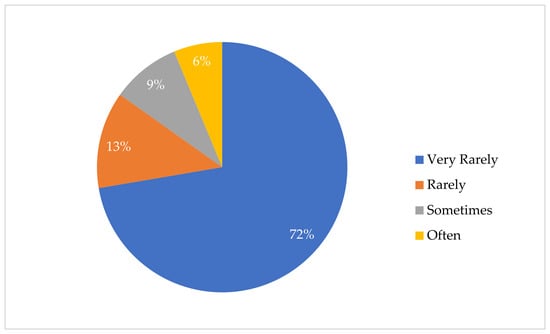
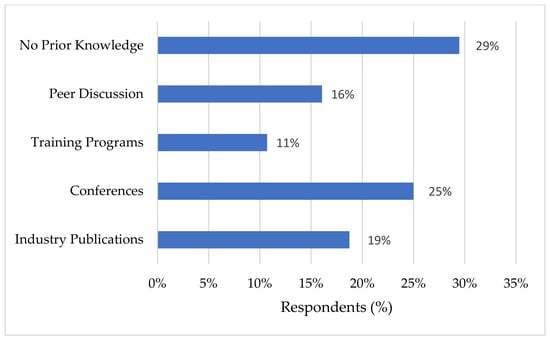
Participants were asked for their perspectives on the current use of XR within their local construction sector. Figure 1 revealed that the current use of XR remained low, with the vast majority (72%) of respondents indicating it is used very rarely. This suggested that XR has not yet become a mainstream tool in the Caribbean SIDS construction industry. Figure 2 follows up by asking respondents about their primary source of knowledge on XR technologies in construction, where the results indicated that awareness of XR was obtained through a mixture of sources, including industry publications, conferences, training programs, peer discussions, and no prior knowledge. It was determined that XR awareness remains uneven across the regional construction sector, which may restrict the ability of construction professionals to recognize how XR may support visualization, site interpretation, safety planning, and sustainable decision-making.
Figure 1.
Frequency of XR use in construction projects currently.
Figure 2.
Primary use of XR in construction projects.
4.2.2. Barriers to XR Adoption in the Construction Industry
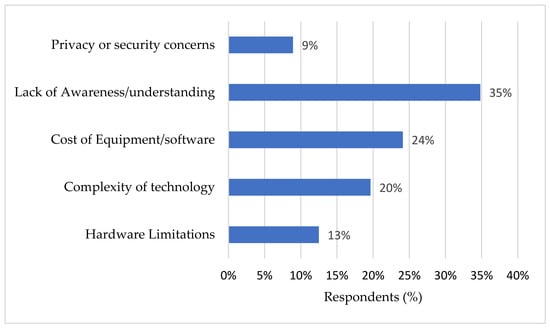
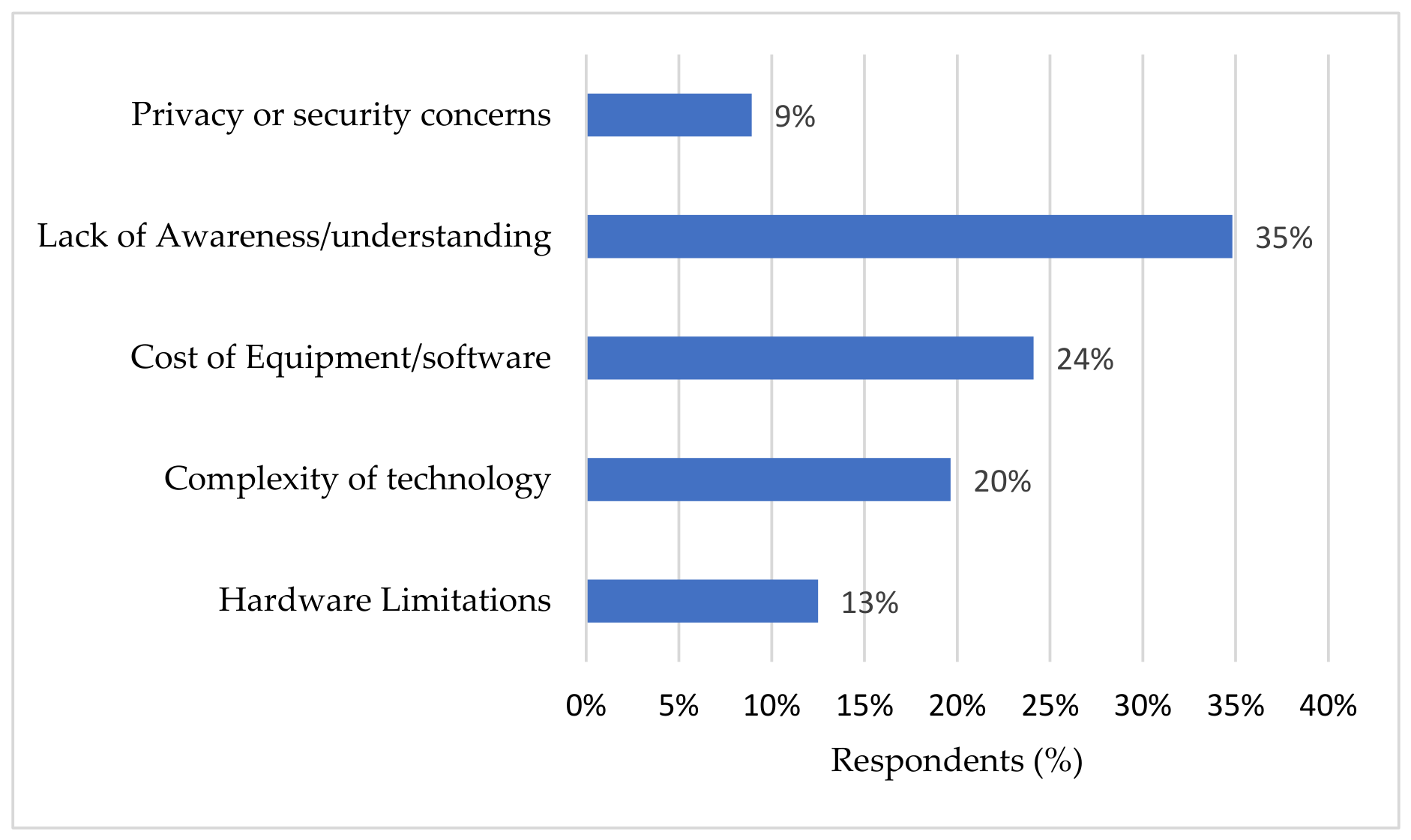
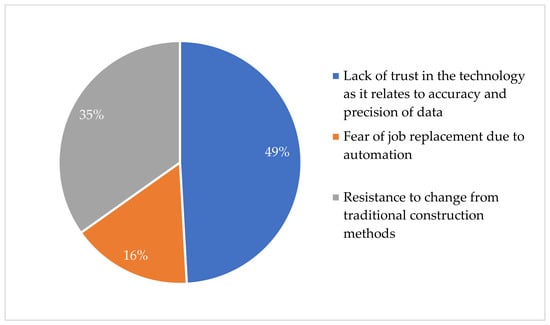
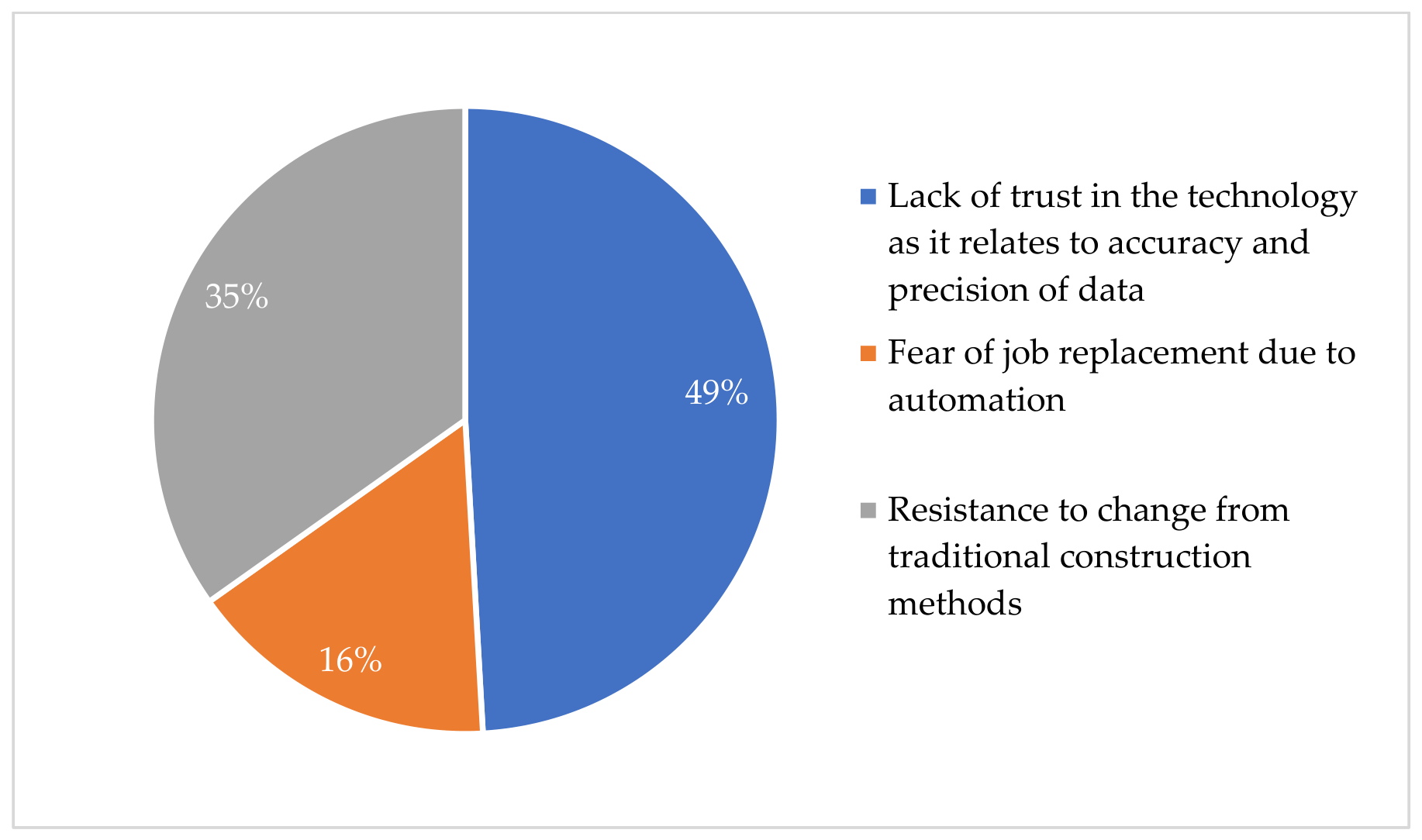
The barrier results show that XR adoption is constrained by a combination of technical, financial, organizational, and social factors. Figure 3 shows that the main barrier was lack of awareness/understanding (35%), followed by cost of equipment/software (24%), complexity of technology (20%), hardware limitations (13%), and privacy or security concerns (9%). Figure 4 further shows that practitioner-level barriers were also important, with 49% identifying lack of trust in the accuracy and precision of XR data as the main social barrier, followed by 35% identifying resistance to change from traditional construction methods and 16% identifying fear of job replacement due to automation. Together, Figure 3 and Figure 4 indicate that XR implementation is a socio-technical challenge. Wider adoption will require not only access to hardware and software, but also professional training, confidence in digital outputs, local demonstration projects, and organizational readiness.
Figure 3.
Barriers to XR adoption within the construction industry.
Figure 4.
Barriers to construction practitioners’ use of XR.
4.2.3. Perceived Benefits of XR Adoption in Construction
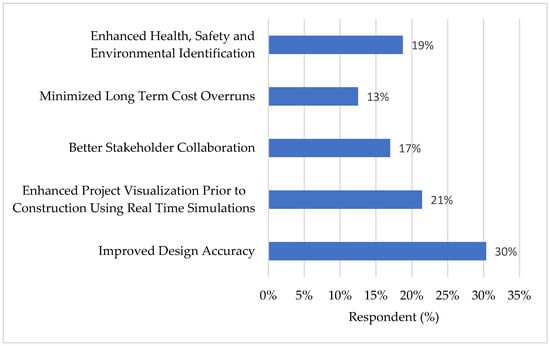
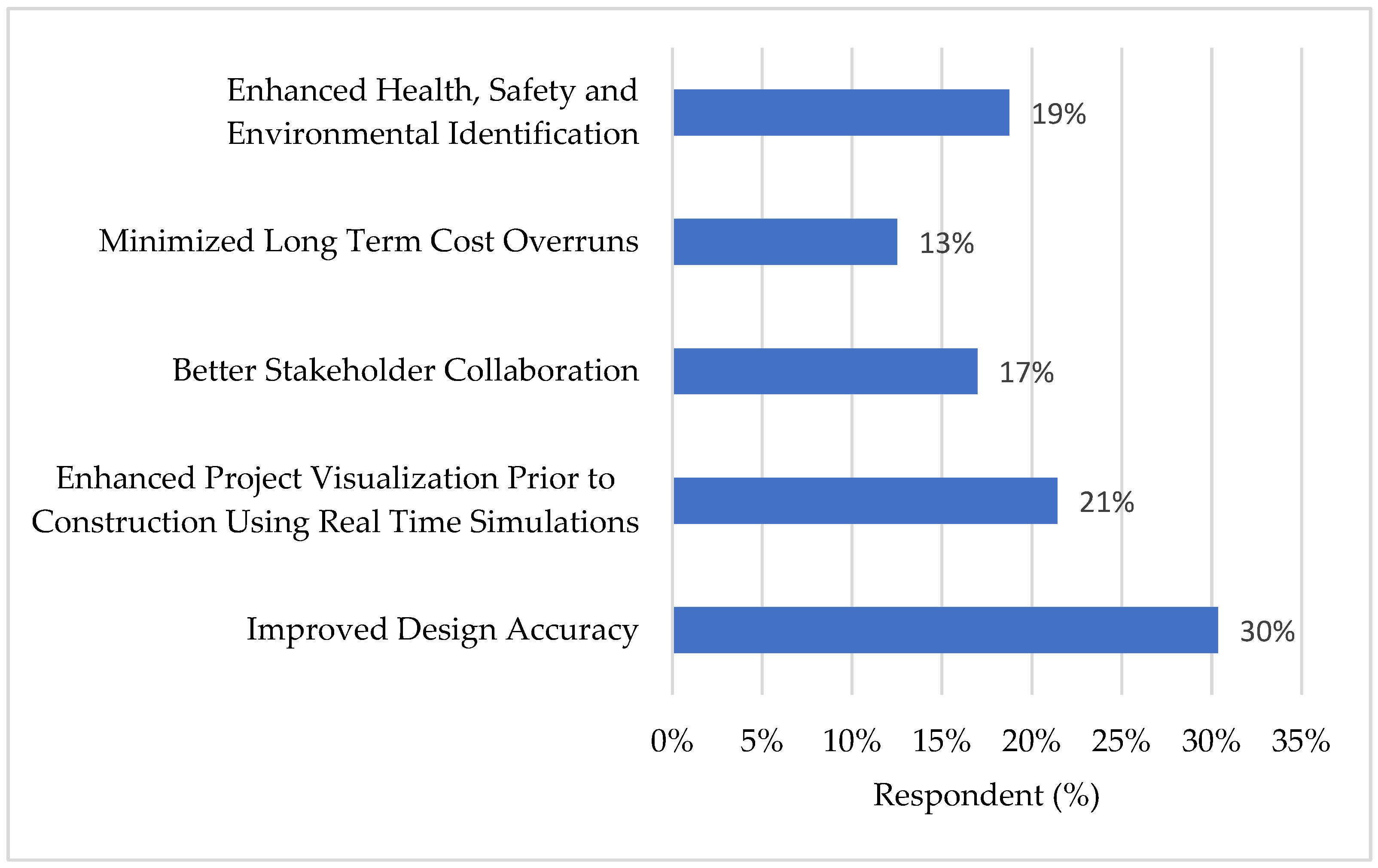
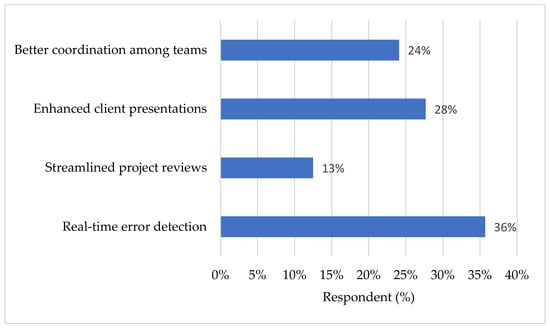
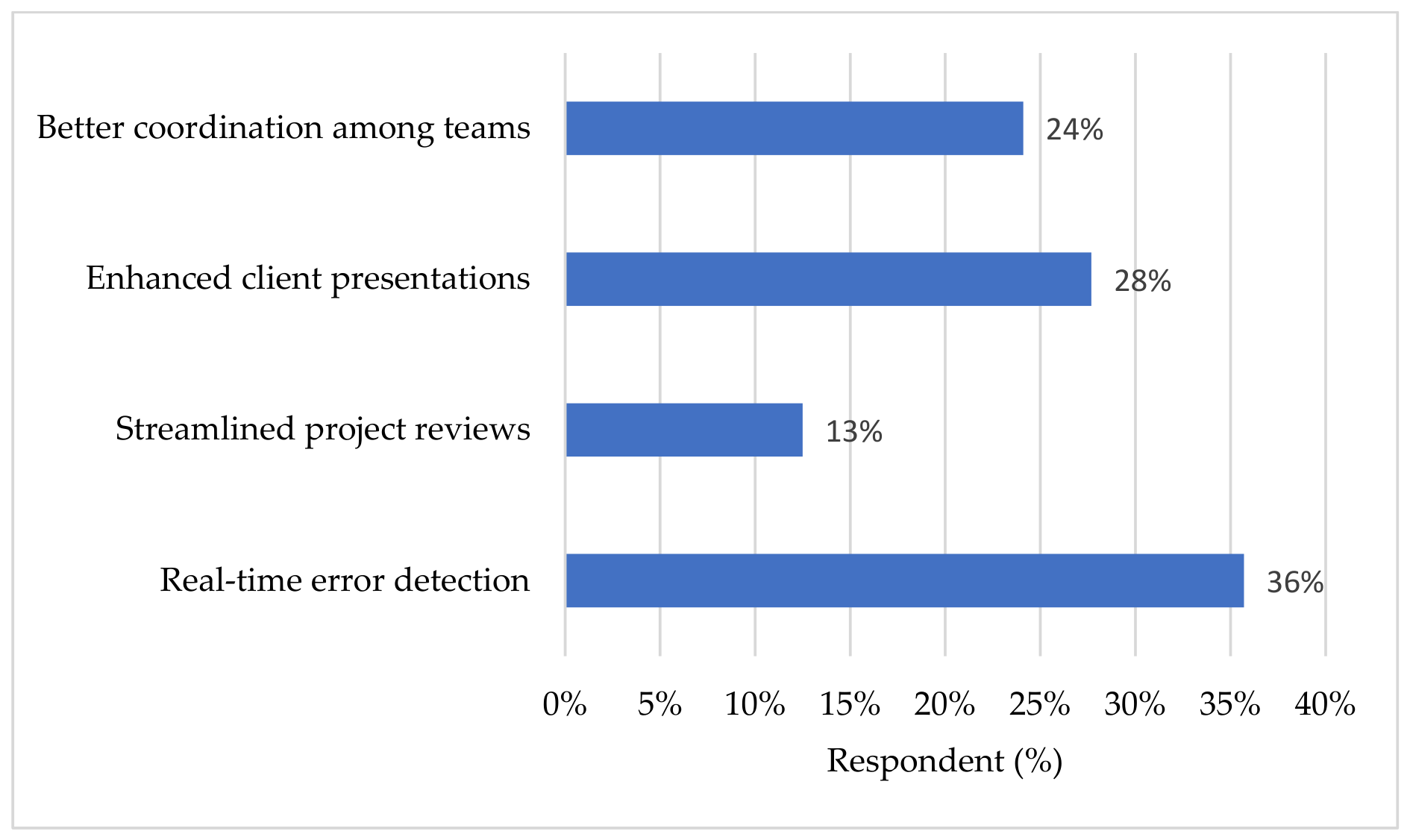
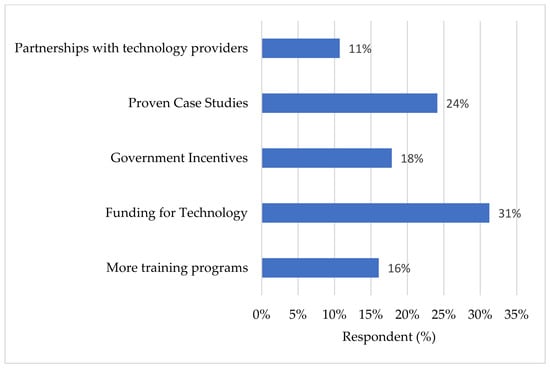
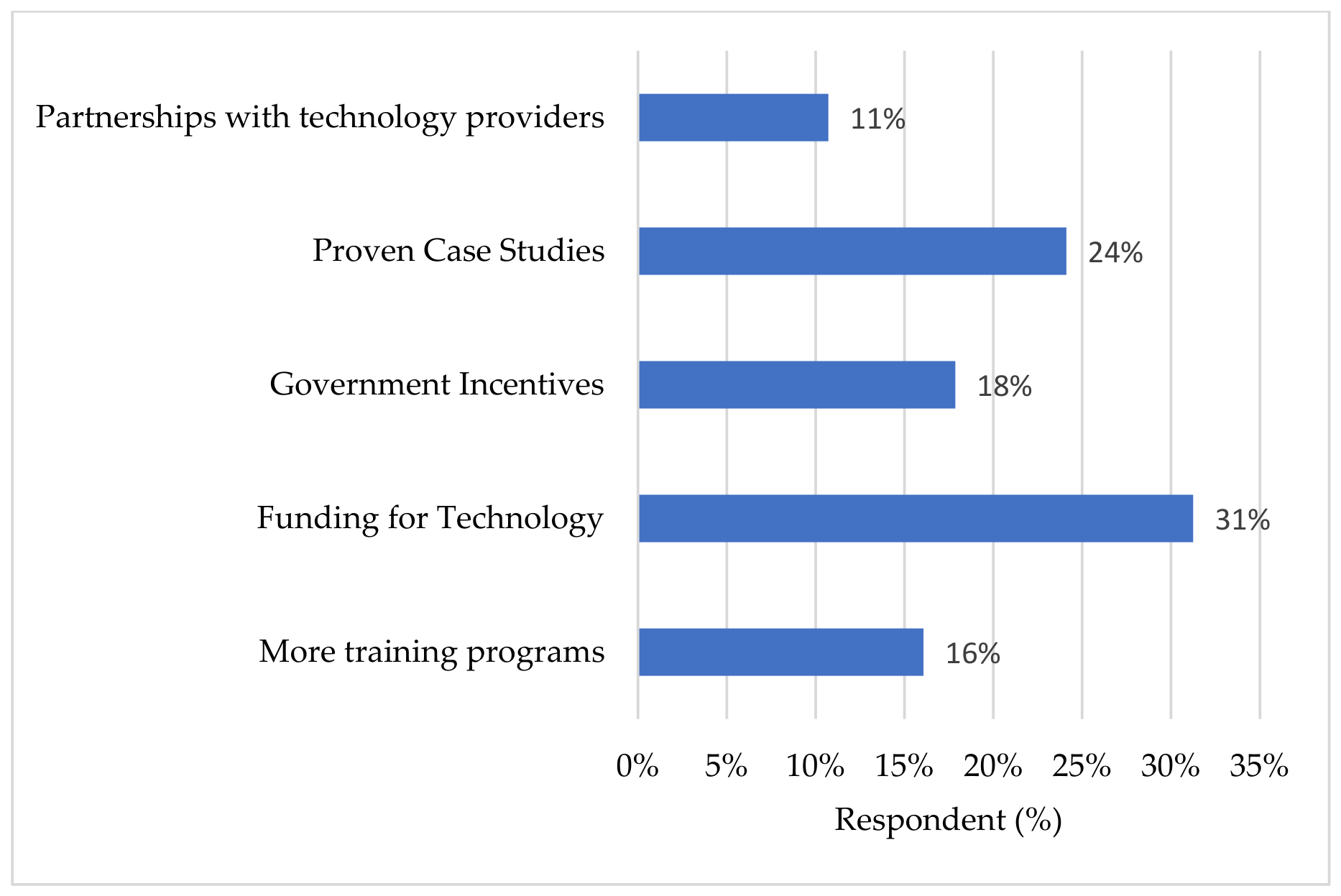
Respondents were questioned on the potential benefits of XR adoption in construction projects. As shown in Figure 5, the most frequently identified benefit was improved design accuracy (30%), followed by enhanced project visualization prior to construction using real-time simulations (21%) and enhanced health, safety, and environmental identification (19%). These findings suggested that respondents associate XR most strongly with improving how construction information is understood before physical work takes place. Figure 6 also showed that respondents viewed XR as useful for improving workflows, particularly through real-time error detection, streamlined project reviews, enhanced client presentations, and better coordination among teams. Moreover, Figure 7 presented the strategies respondents considered most important for improving XR adoption. The leading strategy was funding for technology (31%), followed by proven case studies (24%) and government incentives (18%). These results show that respondents believe XR adoption requires both financial and institutional support. The importance placed on funding suggests that cost remains a major obstacle, while the demand for proven case studies indicates that professionals need evidence of practical success before widespread adoption can occur. XR adoption will depend on a combination of investment, training, policy support, and locally relevant evidence. These results also support the interpretation that XR’s immediate value lies in improving spatial understanding, reducing uncertainty, improving communication, and identifying problems earlier in the construction process.
Figure 5.
Perceived benefits of XR use in construction projects.
Figure 6.
XR use to improve construction workflows.
Figure 7.
Key strategies for XR adoption within the construction industry.
4.2.4. Sustainability Outcomes Using XR in Construction
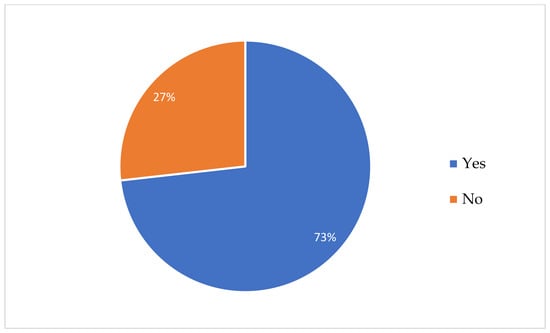
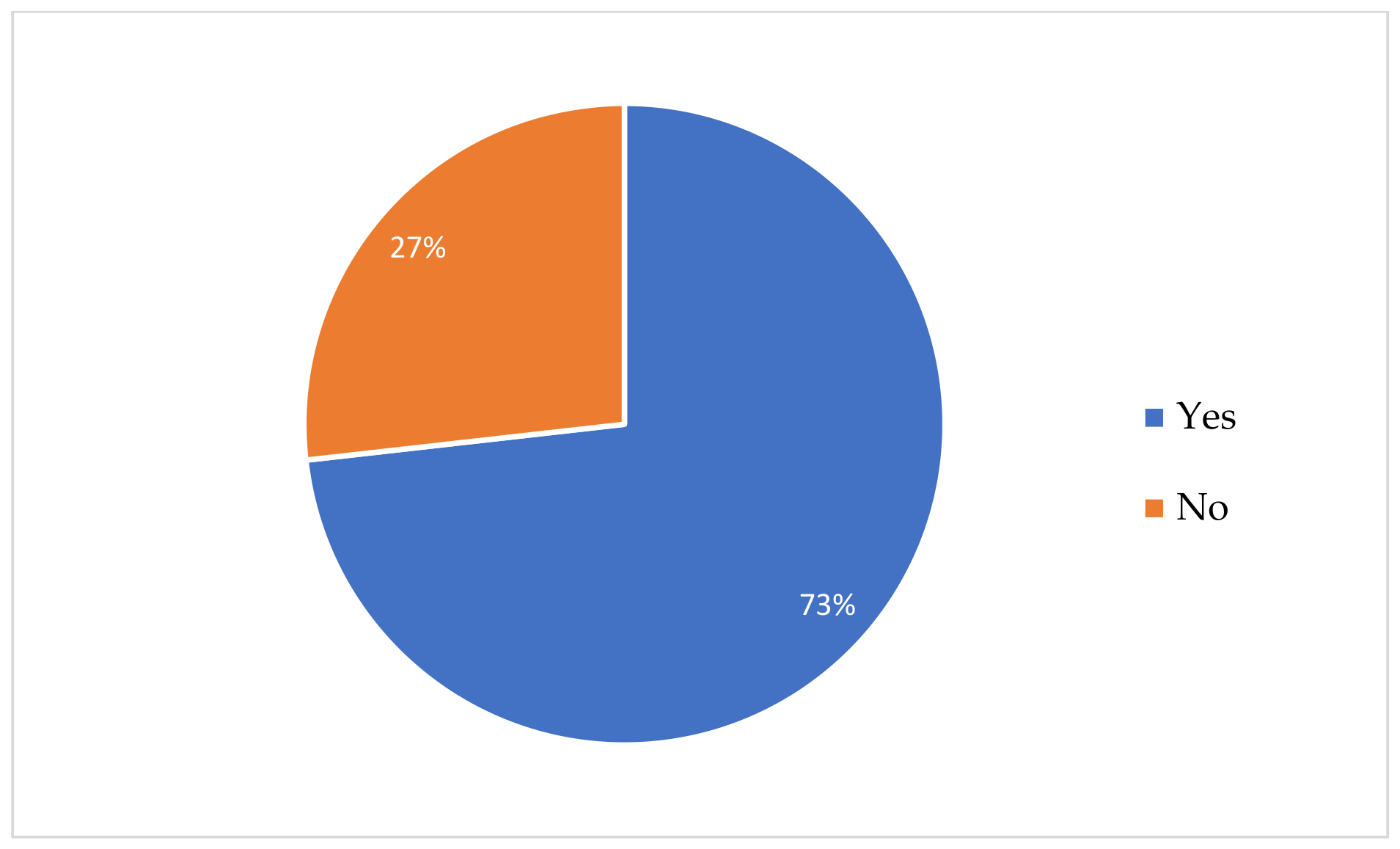
The results from Figure 8 showed that most respondents believed XR can support sustainability outcomes within the construction industry. Specifically, 73% of respondents indicated that XR can support sustainability outcomes, while 27% indicated that it cannot. This suggests that although current XR adoption is limited, professionals still recognize its potential value for sustainable construction. This supports the argument that XR may become more valuable for sustainable built-environment decision-making if barriers such as cost, awareness, training, and trust are addressed.
Figure 8.
Use of XR to support sustainability within the construction industry.
Table 2 presents the mean effectiveness scores and normalized effectiveness indices for twelve XR sustainability outcomes. The higher the effectiveness score and rank of the outcome, the stronger the respondents perceive that this will allow XR to contribute to sustainability. The highest-ranked outcome was creation of jobs for AR/VR specialists, with a mean effectiveness score of 13.946 and an effectiveness index of 0.558. This was followed by increased worker skills and experience (13.750, index 0.550), enhanced collaboration and communication (13.661, index 0.546), reduced construction costs (13.330, index 0.533), and increased safety of personnel (13.125, index 0.525). These higher-ranked outcomes suggest that respondents perceived XR’s strongest contribution to be in workforce development, communication, safety and construction process improvement. Environmental outcomes were ranked lower, including incorporation of green features in planning (11.813, index 0.473), extended asset lifecycle due to predictive maintenance software (11.714, index 0.469), reduced carbon footprint from minimized travel to site (11.607, index 0.464), and waste reduction due to accurate planning models (11.438, index 0.458). This pattern suggests that respondents view XR’s environmental contribution as more indirect or less immediately observable than its human, workforce, and economic benefits.
Table 2.
Sustainability outcome effectiveness.
Table 3 summarizes the sustainability outcomes at pillar level and shows that the highest mean effectiveness score was recorded for the social sustainability pillar (13.29, index 0.532), followed by the economic pillar (12.99, index 0.520), while the environmental pillar recorded the lowest mean score (11.64, index 0.466). These results indicate that XR was perceived most strongly as a human-facing and workforce-supporting technology, particularly in relation to communication, collaboration, skills development, and safety.
Table 3.
Mean effectiveness of sustainability outcomes.
Overall, the results indicate that XR adoption in the Caribbean SIDS’ construction industry remains at an early stage; however, respondents recognized XR’s potential to improve design accuracy, project visualization, workflow coordination, stakeholder communication, and safety-related decision-making.
5. Discussion
This study investigated the current use and perception of XR as a tool to enhance sustainability in the construction sector. It was grounded in the Human–Environmental Interaction Theory [28], providing a lens for understanding how digital technologies can support the relationship between construction decision-making and the physical environment, particularly given the anthropogenic and carbon-intensive activities of the construction industry [71]. Within this framing, XR is positioned as a visualization and decision-support tool that may help construction professionals better understand site conditions, environmental constraints, and potential project impacts before or during physical construction [46]. The geographical context of this study is particularly important because Caribbean developing nations and SIDS face increasing pressure to balance infrastructure development and urbanization with environmental protection, climate resilience and resource efficiency [3]. Given the limited regional evidence on XR adoption and sustainable construction, this study contributes to understanding how immersive digital technologies may support more informed and sustainable built-environment decision-making.
These results indicated that construction practitioners recognize the potential value of XR, even though its current use remains limited. As shown in Figure 8, most respondents (73%) believed that XR can support sustainability outcomes, suggesting that the industry is not resistant to the idea of immersive digital technologies. Rather, practitioners appear to see XR as a tool that could improve the way construction information is visualized, communicated, and used in decision-making. This is supported by the perceived benefits in Figure 5, where respondents identified XR’s main benefits as improved design accuracy (30%), enhanced project visualization before construction (21%) and health, safety and environmental identification (19%). Practitioners see XR as a practical tool for improving how construction information is visualized, communicated, and applied in decision-making [23]. In particular, XR may help project teams detect design errors earlier, explain complex spatial layouts more clearly, improve client and stakeholder understanding, identify site and safety risks, and reduce uncertainty before physical construction begins [10,40]. AR can overlay digital information onto physical environments [44], while VR can immerse users in simulated three-dimensional construction spaces [22].
The workflow results in Figure 6 also support this notion, as practitioners found XR useful for real-time error detection (36%), enhanced client presentations (28%) and better coordination among teams (24%). XR is then particularly valuable for identifying errors early and improving communication between technical and non-technical stakeholders [24]. XR can reduce this uncertainty by allowing stakeholders to visualize spatial layouts, construction sequences, design alternatives, and potential hazards before work begins [43]. From the perspective of Human–Environment Interaction Theory, this is significant because XR can improve how construction professionals visualize and interpret the relationship between proposed development and the surrounding physical environment [36].
However, XR adoption remains limited within the Caribbean construction sector, despite respondents recognizing its potential value. As shown in Figure 2, most respondents indicated that XR is used very rarely in their current projects. This suggests that XR is still at an early stage of diffusion and has not yet become a mainstream construction tool. This finding is consistent with the literature, which notes that the architecture, engineering and construction industry has generally been slower than other sectors in adopting digital technologies, despite persistent challenges such as low productivity, fragmented communication, cost overruns, inefficient resource use and environmental degradation [40].
The limited use of XR is further explained by the barriers presented in Figure 3 and Figure 4. In Figure 3, the leading barrier was lack of awareness/understanding at 35%, followed by cost of equipment/software at 24% and complexity of technology at 20%. These results suggest that the challenge is not only technological availability, but also professional readiness and organizational capacity. The literature similarly identifies cost, technical complexity, software interoperability, inconsistent data standards, internet connectivity, cloud access and high-performance computing requirements as barriers to XR implementation [22,40,43]. These barriers are especially relevant in Caribbean SIDS, where construction firms may face limited financial resources, smaller technology markets and uncertainty regarding return on investment [2].
To stimulate adoption of XR, the adoption strategies shown in Figure 7 indicate that respondents believe wider XR implementation requires financial, institutional and technical support. The leading strategy was funding technology at 31%, followed by proven case studies at 24% and government incentives at 18%. These results suggest that XR implementation in SIDS cannot depend only on individual firms purchasing the new software or hardware [54]. Instead, adoption requires a wider support system involving government agencies, professional bodies, universities, technology providers and construction organizations [58]. Local case studies may be especially important because they can demonstrate XR’s value within familiar project types, regulatory conditions, climate risks and resource constraints.
The adoption of XR is encouraged mainly based on the potential sustainability outcomes it can help achieve within the construction sector. As shown in Figure 8, 73% of respondents believed that XR can support sustainability outcomes, indicating that practitioners recognize its potential contribution despite limited current adoption. The effectiveness results in Table 2 also showed that this perceived contribution is strongest in social and economic areas. The highest-ranked outcomes were creation of jobs for AR/VR specialists with a mean effectiveness score of 13.946 and an index of 0.558, increased worker skills and experience with a score of 13.750 and index of 0.550, and enhanced collaboration and communication with a score of 13.661 and index of 0.546. At pillar level, Table 3 showed that social sustainability recorded the highest mean effectiveness score (13.29, index 0.532), followed by economic sustainability (12.99, index 0.520), while environmental sustainability recorded the lowest score (11.64, index 0.466). Since the normalized effectiveness indices ranged from 0.458 to 0.558, these results revealed moderate and differentiated expectations regarding XR’s sustainability contribution. This result was consistent with the low level of existing XR adoption identified in Figure 1, as practitioners may recognize the potential value of XR while remaining cautious about its effectiveness because of limited direct experience, awareness, cost, technological complexity and trust in digital outputs.
The comparatively lower environmental effectiveness index reflects the current view of XR in the construction industry within the Caribbean. The findings suggest that its most immediate benefits are primarily human-centered and therefore align more strongly with the social sustainability pillar. These include improved worker skills and communication, enhanced visualization of hazards, and the ability to assess inaccessible or high-risk areas without unnecessarily exposing personnel to danger [44]. Environmental outcomes such as carbon reduction, waste minimization and lifecycle extension are less direct because XR does not independently reduce emissions or resource consumption [72]. These effects generally depend on XR being integrated into wider design, planning, asset-management or environmental assessment processes.
Nevertheless, improvements in social and economic sustainability can also support improved environmental outcomes. For example, the use of XR to visualize inaccessible or hazardous areas may reduce the need for intrusive physical investigation, site disturbance, or the use of heavy equipment and potentially harmful clearing methods [22]. This allows aspects of the natural environment to be assessed with less direct interference. Similarly, immersive visualization of proposed developments can allow project stakeholders to identify environmental constraints, assess design alternatives, and anticipate potential impacts before construction begins [43]. Therefore, while practitioners may currently associate XR more strongly with social and economic benefits, its contribution to environmental sustainability may emerge indirectly through improved planning, reduced physical disturbance, and better-informed human–environment decision-making. This pattern can be interpreted through Human–Environment Interaction Theory, which recognizes the reciprocal relationship between human activity and the physical environment [37]. Within construction, human decisions concerning site development, design and project execution can directly influence environmental conditions [71].
Overall, this study confirms that XR has clear potential to support sustainable construction in Caribbean SIDS, even though its current adoption remains limited. Practitioners recognize XR’s value mainly through improved visualization, design accuracy, communication, workflow coordination, safety and professional capacity. The sustainability results suggest that XR’s current value lies mainly in strengthening the human, organizational, and spatial decision-making processes that support sustainable construction, while its direct environmental benefits remain an emerging area for future development. XR contributes to environmental sustainability indirectly by improving how project teams visualize site conditions, assess design alternatives, identify risks, reduce uncertainty and coordinate decisions before physical construction occurs [43,44]. Therefore, XR should be understood not as a standalone environmental solution, but as a socio-spatial and human–environment interface that can support more informed, coordinated, and sustainable construction practices in Caribbean SIDS.
6. Conclusions
This study investigated the current use, perceived benefits, adoption barriers, implementation strategies, and sustainability contributions of XR technologies within the Caribbean SIDS construction industry. Based on 112 valid responses, the findings show that XR adoption remains limited, with 72% of respondents indicating that XR is used very rarely in current projects and only 6% reporting frequent use. However, practitioners still recognized XR’s potential, particularly for improved design accuracy (30%), enhanced project visualizations (21%), health, safety and environmental identification (19%), and stakeholder collaboration (17%).
The main barriers limiting adoption were lack of awareness and understanding (35%), cost of equipment/software (24%), and technological complexity (20%). At the practitioner level, 49% identified lack of trust in the accuracy and precision of XR data as the main social barrier. These findings show that XR adoption is shaped by socio-technical, financial, and organizational readiness, rather than technology availability alone. To improve implementation, respondents prioritized funding for technology (31%), proven case studies (24%), government incentives (18%), training programs (16%), and technology partnerships (11%).
In relation to sustainability, 73% of respondents believed that XR can support sustainability outcomes. The effectiveness results showed that XR was perceived to contribute most strongly to social sustainability (13.29, index 0.532), followed by economic sustainability (12.99, index 0.520) and environmental sustainability (11.64, index 0.466). These findings suggest that XR may support environmental outcomes indirectly by improving human, organizational, and spatial decision-making before construction occurs.
This study revealed that XR has significant potential within the construction sector of SIDS to aid in sustainable development. Since XR adoption is currently limited but practitioners recognize its potential, the industry should focus first on awareness-building, training, and demonstration projects rather than immediate large-scale implementation. Construction firms can use XR initially for areas where practitioners already see value, such as design visualization, error detection, safety planning, stakeholder communication, and client presentations. Government agencies also play a role by encouraging digital construction practices through incentives, innovation grants, or public-sector pilot projects. These steps help build trust in XR outputs, reduce uncertainty around cost and usability, and gradually strengthen its role in sustainable built-environment decision-making.
The practical implications of this study include evidence and awareness of the benefits and barriers of XR within the Caribbean SIDS construction industry. Caribbean construction firms should adopt XR incrementally through clearly defined applications such as design reviews, client visualization, safety planning, and early error detection. Government agencies, universities, and professional bodies can support adoption through shared demonstration facilities, training programs, innovation grants, and regional case studies. These interventions may be more feasible for small markets than requiring individual firms to make substantial independent investments in XR hardware and software.
Further research on this topic moves beyond perception-based findings and examines the actual use of XR on live construction projects. Case studies could measure whether XR reduces design errors, rework, waste generation, site visits, safety incidents, delays, and cost overruns. Technical and advanced multi-criteria decision-making (MCDM) frameworks should also be applied to this study, such as the Analytical Hierarchy Process (AHP) [73], to increase the exactness of results. For example, an AHP can be executed to more accurately obtain the weights for the effectiveness of using XR within construction projects in achieving the three pillars of sustainability. Further studies should also investigate how XR can be integrated with other digital technologies such as Building Information Modeling (BIM), Geographic Information Systems (GIS), digital twins, Internet of Things (IoT), Artificial Intelligence (Ai), among others, for enhanced lifecycle assessments, carbon assessments, health and safety, hazard identification and environmental monitoring to strengthen its direct environmental contribution.
Author Contributions
Conceptualization, A.A.C. and L.S.S.; methodology, A.A.C.; software, L.S.S.; validation, H.M.A., A.A.C. and H.H.M.; formal analysis, L.S.S.; investigation, A.A.C.; resources, C.V.S.R.P.; data curation, C.V.S.R.P.; writing—original draft preparation, L.S.S.; writing—review and editing, A.A.C.; visualization, H.H.M.; supervision, H.M.A.; project administration, C.V.S.R.P.; funding acquisition, H.M.A. All authors have read and agreed to the published version of the manuscript.
Funding
This research received no external funding.
Institutional Review Board Statement
The study was conducted in accordance with the Declaration of Helsinki, and the protocol was approved by the Ethics Committee of the University of the West Indies (UWI) Campus Research Ethics Committee, reference CREC-SA.3170/03/2025, according to the UWI Ethical Guidelines on 18 April 2025.
Informed Consent Statement
Informed consent was obtained from all participants involved in the study prior to completion of the questionnaire.
Data Availability Statement
The raw data supporting the conclusions of this article will be made available by the authors on request.
Conflicts of Interest
The authors declare no conflicts of interest.
Abbreviations
The following abbreviations are used in this manuscript:
| XR | Extended Reality |
| AR | Augmented Reality |
| VR | Virtual Reality |
| SIDS | Small Island Developing States |
References
- Martin, H.; Chebrolu, D.; Chadee, A.; Brooks, T. Too good to waste: Examining circular economy opportunities, barriers, and indicators for sustainable construction and demolition waste management. Sustain. Prod. Consum. 2024, 48, 460–480. [Google Scholar] [CrossRef] [Scilit]
- Chadee, A.A.; Seecharan, L.S.; Martin, H. Leading the Transition Towards Sustainable Affordable Public Housing (SAPH) in Small Island Developing States (SIDS). Sustainability 2025, 17, 8203. [Google Scholar] [CrossRef] [Scilit]
- Cooper, S.; Cloos, P.; Abraham, C.; McPherson, N.; Ravaliere, T.; Harris-Glenville, F. What can be said about risks, vulnerabilities, and adaptation to climate change in Caribbean small island developing states (SIDS)? The case of Dominica. A qualitative study. PLoS Clim. 2025, 4, e0000275. [Google Scholar] [CrossRef] [Scilit]
- O’Brien-Delpesh, C.; Sinanan, N.; Martin, H.; Chadee, A. Preserving fragile ecosystems from oil spills—An environmental sensitivity assessment of the east coast of Trinidad. Ocean Coast. Manag. 2022, 230, 106374. [Google Scholar] [CrossRef] [Scilit]
- Mycoo, M.A. Caribbean Island Cities: Urban Issues, Urbanization Processes and Opportunities for Transformation; Routledge: London, UK, 2022; pp. 579–602. [Google Scholar]
- Chadee, A.A.; Martin, H.H.; Gallage, S.; Banerjee, K.S.; Roopan, R.; Rathnayake, U.; Ray, I. Risk Evaluation of Cost Overruns (COs) in Public Sector Construction Projects: A Fuzzy Synthetic Evaluation. Buildings 2023, 13, 1116. [Google Scholar] [CrossRef] [Scilit]
- Rashid, M.U. Factors affecting location and siting of settlements. J. Sci. Eng. 2020, 14, 44–53. [Google Scholar]
- Chadee, A.A.; Gallage, S.; Martin, H.H.; Rathnayake, U.; Ray, I.; Kumar, B.; Sihag, P. Minimizing Liability of the COVID-19 Pandemic on Construction Contracts—A Structural Equation Model for Risk Mitigation of Force Majeure Impacts. Buildings 2023, 13, 70. [Google Scholar] [CrossRef] [Scilit]
- Dogan, S.; Kilicoglu, C.; Akinci, H.; Sevik, H.; Cetin, M. Determining the suitable settlement areas in Alanya with GIS-based site selection analyses. Environ. Sci. Pollut. Res. 2023, 30, 29180–29189. [Google Scholar] [CrossRef] [Scilit] [PubMed]
- Kumar, H.; Prakash, S.; Sindhwani, R. Economic, social and environmental impacts of extended reality (XR) on supply chain: A grounded theory approach. Int. J. Logist. Manag. 2025, 37, 185–204. [Google Scholar] [CrossRef] [Scilit]
- Amrullah, M.F.; Santosa, E.B.; Tabbu, M.A.S. Settlement Dynamics and Factors Affecting Residence Selection in Population Density Settlements. JAMBURA GEO Educ. J. 2023, 4, 103–111. [Google Scholar] [CrossRef] [Scilit]
- Chadee, A.A.; Chadee, X.T.; Mwasha, A.; Martin, H.H. Implications of ‘lock-in’on public sector project management in a small island development state. Buildings 2021, 11, 198. [Google Scholar] [CrossRef] [Scilit]
- Martin, H.; Miller, A.; Milling, A.; Martin, M. Examining corruption prominence in SIDS–the curse and the cure for construction tender practices. J. Facil. Manag. 2023, 21, 387–411. [Google Scholar] [CrossRef] [Scilit]
- Lu, Y.; Song, W.; Lyu, Q. Assessing the effects of the new-type urbanization policy on rural settlement evolution using a multi-agent model. Habitat Int. 2022, 127, 102622. [Google Scholar] [CrossRef] [Scilit]
- Hametner, M. Economics without ecology: How the SDGs fail to align socioeconomic development with environmental sustainability. Ecol. Econ. 2022, 199, 107490. [Google Scholar] [CrossRef] [Scilit]
- Ajayi, T.O.; Adhuze, O.O.; Adeaga, O.W. Enhancing Sustainable Housing Practices for Low-Income Communities in Nigeria as a Pathway to Achieve SDG-11. Int. J. Adv. Eng. Technol. 2023, 16, 360–375. [Google Scholar]
- Chadee, A.A. From nobel intent to social ills: Mitigating wicked problems in public sector housing in Small Island Developing States (SIDS). Soc. Impacts 2025, 6, 100151. [Google Scholar] [CrossRef] [Scilit]
- Chadee, A.; Chadee, X.; Ray, I.; Mwasha, A.; Martin, H. When Parallel Schools of Thought Fail to Converge: The Case of Cost Overruns in Project Management. Buildings 2021, 11, 321. [Google Scholar] [CrossRef] [Scilit]
- Chadee, A.A.; Martin, H.; Chadee, X.T.; Bahadoorsingh, S.; Olutoge, F. Root Cause of Cost Overrun Risks in Public Sector Social Housing Programs in SIDS: Fuzzy Synthetic Evaluation. J. Constr. Eng. Manag. 2023, 149, 04023106. [Google Scholar] [CrossRef] [Scilit]
- Baik, A. Three Decades of Innovation: A Critical Bibliometric Analysis of BIM, HBIM, Digital Twins, and IoT in the AEC Industry (1993–2024). Buildings 2025, 15, 1587. [Google Scholar] [CrossRef] [Scilit]
- Seecharan, L.; Chadee, A.A. Artificial intelligence (AI) tools for cost overruns on construction projects. Int. J. Commun. Netw. Inf. Secur. 2024, 16, 309–322. [Google Scholar]
- Emma, O. Extended reality in the digital age: A literature review on technology-driven learning environments. Comput. Educ. X Real. 2026, 8, 100127. [Google Scholar] [CrossRef] [Scilit]
- Chacón, R.; Claure, F.; de Coss, O. Development of VR/AR Applications for Experimental Tests of Beams, Columns, and Frames. J. Comput. Civ. Eng. 2020, 34, 05020003. [Google Scholar] [CrossRef] [Scilit]
- Monla, Z.; Assila, A.; Beladjine, D.; Zghal, M. A Conceptual Framework for Maturity Evaluation of BIM-Based AR/VR Systems Based on ISO Standards. In Proceedings of the Extended Reality; Springer: Cham, Switzerland, 2023; pp. 139–156. [Google Scholar]
- Abbasnejad, B.; Soltani, S.; Karamoozian, A.; Gu, N. A systematic literature review on the integration of Industry 4.0 technologies in sustainability improvement of transportation construction projects: State-of-the-art and future directions. Smart Sustain. Built Environ. 2024, 15, 533–569. [Google Scholar] [CrossRef] [Scilit]
- Omrany, H.; Mehdipour, A.; Oteng, D. Digital Twin Technology and Social Sustainability: Implications for the Construction Industry. Sustainability 2024, 16, 8663. [Google Scholar] [CrossRef] [Scilit]
- Yu, L.; Cheng, C.-Y.; Ranc, W.F.; Dow, J.; Szilagyi, M.; Huang, H.; Hong, S.R.; Esmaeili, B.; Yu, L.-F. Col-Con: A collaborative and configurable VR platform for construction—A pipe installation case study. Virtual Real. 2026, 30, 59. [Google Scholar] [CrossRef] [Scilit]
- Moran, E.F.; Brondízio, E.S. Introduction to Human-Environment Interactions Research. In Human-Environment Interactions: Current and Future Directions; Brondízio, E.S., Moran, E.F., Eds.; Springer: Dordrecht, The Netherlands, 2013; pp. 1–24. [Google Scholar] [CrossRef] [Scilit]
- Petrelli, M.Z.; Pacagnella, A.C.; Júnior; Ignacio, P.S.D.A.; Rampasso, I.S.; Anholon, R.; Bortoletto, W.W. Sustainable practices in construction project management: Impacts on triple bottom line. Proc. Inst. Civ. Eng.-Eng. Sustain. 2023, 177, 150–161. [Google Scholar] [CrossRef] [Scilit]
- Hirsh, H.; Eizenberg, E.; Jabareen, Y. A new conceptual framework for understanding displacement: Bridging the gaps in displacement literature between the Global South and the Global North. J. Plan. Lit. 2020, 35, 391–407. [Google Scholar] [CrossRef] [Scilit]
- Magill, K.R.; Blevins, B. Theory–praxis gap: Social studies teaching and critically transformational dialogue. Teach. Coll. Rec. 2020, 122, 1–38. [Google Scholar] [CrossRef] [Scilit]
- Železná, J.; Růžička, J. Towards Low-Carbon Building Sector: National Challanges and European Goals in the Field of Buildings Whole Life Carbon. IOP Conf. Ser. Earth Environ. Sci. 2026, 1615, 012017. [Google Scholar] [CrossRef] [Scilit]
- Bansal, D.; Bhattacharya, N.; Ghosal, I. Encouraging public private collaborations for low carbon green infrastructure in India: The impact of government policies. In Intersecting Environmental Governance with Technological Advancements; IGI Global Scientific Publishing: Hershey, PA, USA, 2025; pp. 149–180. [Google Scholar] [CrossRef] [Scilit]
- Mohamed, H.A.; Badwi, I.M.; Shiba, A.S.E.; Elfattah, Z.A.A. Approaches and strategies for reducing the adverse environmental effects of construction and urbanization. Des. Eng. 2022, 1, 4388–4409. [Google Scholar]
- Elhegazy, H.; Zhang, J.; Amoudi, O.; Zaki, J.N.; Yahia, M.; Eid, M.; Mahdi, I. An Exploratory Study on the Impact of the Construction Industry on Climate Change. J. Ind. Integr. Manag. 2022, 9, 397–418. [Google Scholar] [CrossRef] [Scilit]
- Galvani, A.P.; Bauch, C.T.; Anand, M.; Singer, B.H.; Levin, S.A. Human–Environment interactions in population and ecosystem health. Proc. Natl. Acad. Sci. USA 2016, 113, 14502–14506. [Google Scholar] [CrossRef] [Scilit] [PubMed]
- Moran, E.F. Environmental Social Science: Human-Environment Interactions and Sustainability; John Wiley & Sons: Hoboken, NJ, USA, 2011. [Google Scholar]
- He, X.; Song, Y. Innovative paths and development trends in the integration of environmental design and digital and intelligent technologies. J. Asian Archit. Build. Eng. 2026, 1–13. [Google Scholar] [CrossRef] [Scilit]
- Chong, H.-Y.; Wang, T.; Lee, C.-Y.; Goh Cheng, S.; Li, S. Integrating BIM, AR, GPS, and 5G for Real-Time Construction Management: Application to Water Infrastructure Projects. J. Constr. Eng. Manag. 2026, 152, 05026001. [Google Scholar] [CrossRef] [Scilit]
- Seyman Guray, T.; Kismet, B. VR and AR in construction management research: Bibliometric and descriptive analyses. Smart Sustain. Built Environ. 2022, 12, 635–659. [Google Scholar] [CrossRef] [Scilit]
- Perera, C.S.R.; Francis, V.; Gao, S. Uptake of Industry 4.0 technologies in Australian construction firms. Eng. Constr. Archit. Manag. 2025, 33, 2071–2088. [Google Scholar] [CrossRef] [Scilit]
- Fan, S.-L.; Lin, B.-Y.; Wu, C.-T.; Youn, H.Y.; Recha, F.; Świerzawski, J.; Malucha, M. Integration of AR and deep learning–based image classification using CNN for construction project monitoring. Sci. Rep. 2026, 16, 2852. [Google Scholar] [CrossRef] [Scilit] [PubMed]
- Noghabaei, M.; Heydarian, A.; Balali, V.; Han, K. Trend Analysis on Adoption of Virtual and Augmented Reality in the Architecture, Engineering, and Construction Industry. Data 2020, 5, 26. [Google Scholar] [CrossRef] [Scilit]
- Wang, M.; Wang, C.C.; Sepasgozar, S.; Zlatanova, S. A Systematic Review of Digital Technology Adoption in Off-Site Construction: Current Status and Future Direction towards Industry 4.0. Buildings 2020, 10, 204. [Google Scholar] [CrossRef] [Scilit]
- El Barhoumi, N.; Hajji, R.; Bouali, Z.; Ben Brahim, Y.; Kharroubi, A. Assessment of 3D Models Placement Methods in Augmented Reality. Appl. Sci. 2022, 12, 10620. [Google Scholar] [CrossRef] [Scilit]
- Li, H.; Fang, S.; Chen, L.; Menadue, V.; Martin, S. Extended reality (XR)—A magic box of digitalization in driving sustainable development of the construction industry: A critical review. Sustain. Dev. 2024, 32, 2830–2845. [Google Scholar] [CrossRef] [Scilit]
- Cheng, J.; Zhang, Y.C.; Kamyab, H.; Singh, H.S.M. Unveiling Environmental Sustainability Drivers: Green Innovation Insights From ISO 14001-Certified Manufacturers With Robust Green Information Systems and Technological Intensity. Bus. Strategy Environ. 2026, 35, 8150–8173. [Google Scholar] [CrossRef] [Scilit]
- Gelan, E. GIS-based multi-criteria analysis for sustainable urban green spaces planning in emerging towns of Ethiopia: The case of Sululta town. Environ. Syst. Res. 2021, 10, 13. [Google Scholar] [CrossRef] [Scilit]
- Waikhom, S.I.; Yadav, V.K.; Chadee, A.A.; Varma, V. Variability in trends of streamflow and precipitation in the Narmada River Basin over the past four decades. Water Supply 2023, 23, 1495–1518. [Google Scholar] [CrossRef] [Scilit]
- Kanan, R.; Elhassan, O.; Bensalem, R. An IoT-based autonomous system for workers’ safety in construction sites with real-time alarming, monitoring, and positioning strategies. Autom. Constr. 2018, 88, 73–86. [Google Scholar] [CrossRef] [Scilit]
- Parra, H.A.; Zuñiga-Collazos, A.; Cruz-Caicedo, L.F. Impact of External Risks on International Construction Projects Success: Evidence from Commonwealth Caribbean Islands. J. Constr. Dev. Ctries. 2023, 28, 113–132. [Google Scholar] [CrossRef] [Scilit]
- Sirazhiden, D. VR and AR technologies in the modern cultural space and their role in environmental education. E3S Web Conf. 2020, 217, 08002. [Google Scholar] [CrossRef] [Scilit]
- Guo, Q.; Su, S.; Gan, V.J.; Liu, C.; Feng, J.; Ding, W. Daily construction carbon emissions and costs assessment from an interaction perspective: Integration of BIM and agent-based modeling. Environ. Impact Assess. Rev. 2026, 116, 108109. [Google Scholar] [CrossRef] [Scilit]
- Ahmed, N.; Wu, P.; Huang, K.; Jung, S.; Rheem, H.; Tan, G.; Imani, M.; Islam, R. Human task performance and associated internal states in extended reality: A systematic review of cognitive, psychophysiological, and physiological dimensions. Front. Virtual Real. 2025, 6, 1589256. [Google Scholar] [CrossRef] [Scilit]
- Gatti, S. Project Finance in Theory and Practice: Designing, Structuring, and Financing Private and Public Projects; Elsevier: Amsterdam, The Netherlands, 2023. [Google Scholar]
- Abdullahi, I.M. Augmented Reality and Virtual Reality Applications in Digital Architecture: Transforming Design Visualization and Construction Training Processes. Int. J. Digit. Archit. Smart Constr. 2026, 1, 29–41. [Google Scholar]
- Delgado, A.; Jibon, M.M.H.; Shah, H.; Rahman, F.; Kurnikova, A.; Woodward, J. “If you are a Star Wars fan, use the force”: Exploring Children’s Virtual-Object Interaction Preferences in AR Headsets. In Proceedings of the 2026 CHI Conference on Human Factors in Computing Systems; Association for Computing Machinery: New York, NY, USA, 2026; p. 1696. [Google Scholar]
- Akbaba, H.T.; Bozkir, E.; Puhl, A.; Özdel, S.; Kasneci, E. Exploring Organizational Readiness and Ecosystem Coordination for Industrial XR. arXiv 2026, arXiv:2601.09045. [Google Scholar]
- Habib, H. Positivism and post-positivistic approaches to research. UGC Care J. 2020, 31, 1000–1007. [Google Scholar]
- Park, Y.S.; Konge, L.; Artino, A.R.J. The Positivism Paradigm of Research. Acad. Med. 2020, 95, 690–694. [Google Scholar] [CrossRef] [Scilit] [PubMed]
- Owusu, E.K.; Chan, A.P.C.; Ameyaw, E. Toward a cleaner project procurement: Evaluation of construction projects’ vulnerability to corruption in developing countries. J. Clean. Prod. 2019, 216, 394–407. [Google Scholar] [CrossRef] [Scilit]
- Moran, E.F. Human Adaptability: An Introduction to Ecological Anthropology; Routledge: London, UK, 2022. [Google Scholar]
- Taylor, D.; Robertshaw, P. Sedimentary sequences in western Uganda as records of human environmental impacts. In Proceedings of the Palaeoecology of Africa and the Surrounding Islands, Volume 27: Proceedings of the 25th Inqua Conference, Durban, South Africa, 3–11 August 1999; A A Balkema Publishers: Rotterdam, The Netherlands, 2026; p. 63. [Google Scholar]
- Alexander, D.; Døhl Diouf, L.; Prescod, K. Digital inclusion in Caribbean digital transformation frameworks and initiatives: A review. In Proceedings of the Studies and Perspectives–ECLAC Subregional Headquarters for The Caribbean; Economic Commission for Latin America and the Caribbean: Santiago, Chile, 2023. [Google Scholar]
- Edwards, P.J.; Roberts, I.; Clarke, M.J.; DiGuiseppi, C.; Woolf, B.; Perkins, C. Methods to increase response to postal and electronic questionnaires. Cochrane Database Syst. Rev. 2023, 2023, MR000008. [Google Scholar] [CrossRef] [Scilit] [PubMed]
- Google. Google Workspace Security Whitepaper; Google: Mountain View, CA, USA, 2021. [Google Scholar]
- Leech, N.; Barrett, K.; Morgan, G.A. SPSS for Intermediate Statistics: Use and Interpretation; Routledge: London, UK, 2013. [Google Scholar]
- Tanujaya, B.; Prahmana, R.C.I.; Mumu, J. Likert scale in social sciences research: Problems and difficulties. FWU J. Soc. Sci. 2022, 16, 89–101. [Google Scholar] [CrossRef] [Scilit]
- Russo, G.M.; Tomei, P.A.; Serra, B.; Mello, S. Differences in the use of 5- or 7-point likert scale: An application in food safety culture. Organ. Cult. Int. J. 2021, 21, 1–17. [Google Scholar] [CrossRef] [Scilit]
- Uakarn, C.; Chaokromthong, K.; Sintao, N. Sample size estimation using Yamane and Cochran and Krejcie and Morgan and Green formulas and Cohen statistical power analysis by G* power and comparisons. Apheit Int. J. 2021, 10, 76–88. [Google Scholar]
- Moshood, T.D.; Nawanir, G.; Lee, C.K.; Fauzi, M.A. Toward sustainability and resilience with Industry 4.0 and Industry 5.0. Sustain. Futur. 2024, 8, 100349. [Google Scholar] [CrossRef] [Scilit]
- Danish, M.S.S.; Senjyu, T. Shaping the future of sustainable energy through AI-enabled circular economy policies. Circ. Econ. 2023, 2, 100040. [Google Scholar] [CrossRef] [Scilit]
- Ottaviani, F.M.; Zenezini, G.; Saba, F.; De Marco, A.; Gavinelli, L. System-Level Critical Success Factors for BIM Implementation in Construction Management: An AHP Approach. Systems 2025, 13, 94. [Google Scholar] [CrossRef] [Scilit]

Disclaimer/Publisher’s Note: The statements, opinions and data contained in all publications are solely those of the individual author(s) and contributor(s) and not of MDPI and/or the editor(s). MDPI and/or the editor(s) disclaim responsibility for any injury to people or property resulting from any ideas, methods, instructions or products referred to in the content. |
© 2026 by the authors. Licensee MDPI, Basel, Switzerland. This article is an open access article distributed under the terms and conditions of the Creative Commons Attribution (CC BY) license.