


Abstract
Forest vegetation dynamics are changing under climate change, with important implications for biodiversity conservation, ecosystem services, carbon cycling, and livelihoods. Vegetation regulates terrestrial carbon storage and biophysical feedbacks, but its responses to warming, changing precipitation, rising atmospheric CO2, and climate extremes are complex and spatially variable. This review presents a PRISMA-guided integrative synthesis of 74 peer-reviewed studies published between 1990 and 2025, incorporating evidence from remote sensing, long-term ecological observations, ecosystem flux measurements, experimental studies, and Earth system modelling. Rather than examining climatic drivers independently, the review synthesizes their interactions with water availability, nutrient limitation, land-use change, disturbance, and biotic processes across physiological, population, ecosystem, and biome scales, with particular emphasis on India. The synthesis reveals that vegetation responses are governed less by individual climatic drivers than by their interactions with resource availability, disturbance, land use, and ecosystem characteristics. Across the reviewed evidence, contrasting greening and browning trends, phenological shifts, species redistribution, and changes in productivity and carbon dynamics were observed. Importantly, greening does not consistently translate into enhanced ecosystem functioning or resilience because increased canopy development may occur alongside water and nutrient limitation, declining carbon-use efficiency, recurrent disturbance, land-use intensification, or changes in species composition. Indian evidence further demonstrates contrasting vegetation trajectories across forests, drylands, Himalayan ecosystems, and agricultural landscapes. Major uncertainties arise from differences among remote-sensing indicators, scale dependency, limited long-term experimental coverage, and incomplete representation of water, nutrient, disturbance, and vegetation processes in coupled climate–vegetation models. Overall, the review identifies a shift from assessing forest vegetation change primarily through greening toward evaluating ecosystem functioning, carbon permanence, and ecosystem resilience capacity as integrated indicators.
1. Introduction
Terrestrial vegetation is a core regulator of the Earth system, governing carbon sequestration, surface energy balance, hydrological cycling, nutrient dynamics, and biodiversity maintenance [1,2,3]. Globally, terrestrial ecosystems absorb approximately one-quarter of anthropogenic CO2 emissions annually, thereby moderating atmospheric CO2 accumulation and climate feedbacks [4]. Vegetation also supports food production, soil conservation, water regulation, and livelihoods, linking ecosystem functioning directly with socioeconomic well-being [5,6].
Human-induced climate change has increased global mean surface temperature by more than 1.1 °C relative to pre-industrial levels and has intensified heatwaves, droughts, floods, and wildfires [7,8]. These changes affect plant physiology, phenology, species distributions, and ecosystem productivity. Earlier spring onset, prolonged growing seasons in temperate and boreal regions, poleward and upslope species shifts, and restructuring of plant communities have been widely documented [9,10,11,12,13]. However, vegetation responses are not uniformly positive or negative. Warming may extend growing seasons in some ecosystems while simultaneously increasing evaporative demand, drought stress, and mortality risk in others. Such contrasting responses can alter ecosystem stability, carbon-sink persistence, and the likelihood of ecological regime shifts [14].
The scientific understanding of these responses has developed from early investigations of plant responses to elevated atmospheric CO2 toward increasingly integrated frameworks that consider climatic change, resource limitation, disturbance, and ecosystem feedbacks. Free-Air CO2 Enrichment (FACE) experiments demonstrated that elevated CO2 can stimulate photosynthesis and biomass production, but subsequent evidence showed that the magnitude and persistence of this response depend strongly on water and nutrient availability and physiological acclimation [15,16,17]. Long-term observations have further challenged the assumption that CO2 fertilization will provide a persistent increase in terrestrial carbon uptake, with evidence of declining fertilization effects under changing nutrient and soil-water conditions [18,19]. Similarly, warming-induced productivity gains may be offset by drought, heat stress, fire, pests, and forest mortality [20,21,22,23]. These developments indicate that vegetation responses cannot be adequately understood by considering temperature, precipitation, CO2, or disturbance independently.
Technological advances in satellite remote sensing, eddy covariance flux networks, field experiments, and ecosystem modelling have expanded the capacity to examine vegetation dynamics across spatial and temporal scales. Satellite observations have revealed widespread greening associated with CO2 fertilization, warming, nitrogen deposition, and land management, while browning has increased in many tropical and semi-arid regions affected by drought, deforestation, and land degradation [24,25,26,27]. Long-term flux observations demonstrate substantial climate sensitivity and interannual change in terrestrial carbon exchange, particularly during extreme climatic events [4,28]. Importantly, however, an increase in vegetation greenness does not necessarily represent a corresponding increase in productivity, carbon uptake, or ecosystem resilience. The interpretation of vegetation indices therefore depends on the indicator used, spatial and temporal scale, ecosystem type, and the climatic and anthropogenic drivers operating simultaneously.
These interactions are particularly important because vegetation responses can extend beyond changes in productivity to affect disturbance regimes, biodiversity, ecosystem services, and climate feedbacks. Climate change can intensify wildfire activity, pest outbreaks, and forest dieback, while altered vegetation structure can modify surface energy and water exchanges [20,21,22,23]. Conversely, nature-based solutions, including reforestation, agroforestry, and ecosystem restoration, can enhance carbon storage, biodiversity, and ecosystem services and contribute to climate adaptation and mitigation [8,29,30]. These potential benefits, however, may be constrained by water availability, ecological trade-offs, invasive species, biodiversity loss, and land degradation [5,31,32,33]. Thus, increasing vegetation cover alone cannot be regarded as an adequate measure of ecosystem resilience.
Despite substantial progress in climate–vegetation research, important uncertainties remain concerning how climatic drivers interact with physiological constraints, resource availability, disturbance regimes, and ecosystem resilience [1,18,19]. Evidence is also fragmented across experimental studies, field observations, remote sensing products, and ecosystem models, which differ in spatial extent, temporal coverage, indicators, and assumptions. Consequently, apparent agreement in broad vegetation trends may conceal important differences in mechanisms, regional responses, and ecosystem-level consequences.
This review addresses this gap by developing an integrated climate–vegetation perspective that moves beyond the assessment of greening and browning as isolated indicators of vegetation change. Three aspects constitute the principal synthesis of the review. First, it evaluates vegetation responses as outcomes of interacting climatic, physiological, resource, disturbance, and anthropogenic controls rather than individual climatic drivers. Second, it distinguishes vegetation greenness and productivity from longer-term ecosystem functioning and resilience, emphasizing the importance of ecosystem resilience and potential ecological transitions following climatic disturbances. Third, it brings together evidence from observational, experimental, remote-sensing, and modelling approaches to examine where findings converge, where they diverge, and why responses vary across ecosystems and spatial scales. Particular attention is given to India, where strong climatic gradients, diverse vegetation systems, land-use pressures, and contrasting management conditions provide an important regional context for understanding these interactions.
Accordingly, this review aims to: (i) systematically synthesize evidence on the principal climatic drivers regulating terrestrial vegetation dynamics; (ii) critically evaluate how these interacting drivers influence vegetation structure, functioning, carbon dynamics, biodiversity, disturbance responses, and ecosystem resilience across different ecological and spatial contexts; (iii) assess convergence and uncertainty among observational, experimental, remote-sensing, and modelling evidence; and (iv) synthesize implications for climate-resilient ecosystem management and identify priorities for future research, with particular emphasis on India.
2. Materials and Methods
2.1. Review Design
This study adopts a systematic review approach to synthesize current knowledge on the impacts of climate change on forest vegetation dynamics, ecological shifts, emerging mitigation opportunities, and associated environmental risks. In doing so, the review follows established systematic review principles and reporting guidance consistent with the PRISMA 2020 (Preferred Reporting Items for Systematic Reviews and Meta-Analyses) guidelines to ensure transparency, reproducibility, and methodological rigor [34,35]. The review process involved a structured literature search, predefined inclusion and exclusion criteria, systematic screening of relevant studies, data extraction, thematic classification, and qualitative synthesis of the available evidence. Both peer-reviewed journal articles and authoritative institutional reports were taken into account to garner scientific evidence, policy relevance, and large-scale assessments. The flow diagram of the reviewed literature following the PRISMA framework is given in Figure 1.
Figure 1.
PRISMA flow diagram of data used for review on climate change and forest vegetation dynamics: ecological shifts, emerging opportunities and environmental risks.
2.2. Literature Search Strategy
A comprehensive literature search was conducted using Scopus as the primary bibliographic database because of its extensive multidisciplinary coverage and indexing of peer-reviewed scientific literature. To ensure comprehensive retrieval of relevant studies, supplementary searches were performed using Web of Science Core Collection and Google Scholar. Searches covered publications from 1990 to 2025 to capture long-term trends and recent advances in climate–vegetation research, including satellite-based monitoring, ecosystem flux observations, experimental manipulation studies, and Earth System modelling [4,18,36,37,38,39].
The literature search was conducted using predefined keywords combined with Boolean operators (AND, OR) to maximize the retrieval of relevant studies. The primary Scopus search query used in this review was: TITLE-ABS-KEY ((“climate change” OR “global warming”) AND (forest OR “forest vegetation”) AND (“vegetation dynamics” OR greening OR browning)) AND PUBYEAR > 1989 AND PUBYEAR < 2026 AND LIMIT-TO (DOCTYPE, “ar”) AND LIMIT-TO (LANGUAGE, “English”). Equivalent search strategies were adapted for the remaining databases by modifying the search syntax while maintaining the same search concepts and Boolean logic. In addition, backward and forward citation tracking of highly cited review articles and major assessment reports was undertaken to identify additional relevant publications that may not have been retrieved through the database searches [34,35]. Figure 1 illustrates the methodological workflow adopted for literature identification, study selection, eligibility assessment, and final inclusion of studies in accordance with the PRISMA framework.
2.3. Study Selection and Screening
Following the literature search, a total of 1205 records were identified, comprising 1192 records retrieved from the three electronic databases and 13 additional records identified through backward and forward citation searching and imported into Rayyan (Rayyan Systems Inc., Cambridge, MA, USA), a web-based platform for systematic review management, to facilitate duplicate identification and study screening. Duplicate records were removed before the screening process. The remaining records were screened based on their titles and abstracts to determine their relevance to the objectives of the review. Studies considered relevant were subsequently assessed through full-text evaluation using the predefined eligibility criteria. Data extraction was carried out by one reviewer, whereas the screening and validation of eligible studies were independently performed by two reviewers. Any differences in study selection were resolved through discussion until consensus was reached. Following the eligibility assessment, 74 studies were included in the final qualitative synthesis. The complete process of study identification, screening, eligibility assessment, and study inclusion is presented in the PRISMA 2020 flow diagram (Figure 1).
2.4. Inclusion and Exclusion Criteria
Studies were selected according to predefined inclusion and exclusion criteria to ensure that the evidence synthesized in this review was scientifically relevant and methodologically reliable.
The inclusion criteria comprised: (i) peer-reviewed research articles published in English; (ii) studies examining the effects of climate change on forest vegetation and forest vegetation dynamics; (iii) observational, experimental, modeling, and remote sensing-based investigations; and (iv) studies providing quantitative, qualitative, or mechanistic evidence related to vegetation responses, ecosystem processes, carbon dynamics, or climate–vegetation interactions.
The exclusion criteria included: (i) duplicate records; (ii) conference abstracts, editorials, opinion articles, dissertations, book chapters, and other non-peer-reviewed publications; (iii) studies lacking sufficient methodological information or scientific relevance; and (iv) studies focusing exclusively on aquatic, freshwater, marine, or animal systems without direct relevance to terrestrial vegetation dynamics.
These criteria were applied consistently during title, abstract, and full-text screening to ensure that only studies directly relevant to the objectives of the review were included.
2.5. Data Extraction and Classification
Data from all eligible studies were extracted using a standardized data extraction framework to ensure consistency throughout the review. For each study, information on publication details, geographical region, ecosystem type, climatic drivers, methodological approach, vegetation indicators, principal findings, reported uncertainties, and implications for climate change mitigation, adaptation, and ecosystem resilience was recorded.
The extracted information was organized into five thematic categories:
- Climatic drivers of vegetation change;
- Ecological responses and vegetation dynamics;
- Carbon dynamics and ecosystem feedbacks;
- Emerging opportunities for climate change mitigation; and
- Environmental risks and management challenges.
This classification provided a consistent framework for organizing and interpreting evidence from studies employing different research approaches.
2.6. Remote Sensing and Observational Evidence
Evidence derived from remote sensing studies was examined using long-term vegetation datasets, including MODIS-derived Normalized Difference Vegetation Index (NDVI), Leaf Area Index (LAI), AVHRR GIMMS NDVI, European Space Agency Climate Change Initiative (ESA-CCI) biomass products, and Solar-Induced Chlorophyll Fluorescence (SIF) datasets. These studies were evaluated to compare reported changes in vegetation productivity, greening and browning patterns, phenological shifts, and biomass dynamics under changing climatic conditions.
Observational evidence was compiled primarily from FLUXNET and other long-term ecological monitoring programmes to assess ecosystem carbon exchange and vegetation responses to climatic change. Results reported across different ecosystems, geographical regions, and observational platforms were examined to identify similarities, regional differences, and sources of uncertainty.
2.7. Experimental and Modelling Evidence
Experimental evidence was obtained from Free-Air CO2 Enrichment (FACE) experiments, warming experiments, precipitation manipulation studies, and drought experiments to examine vegetation responses under controlled environmental conditions. These studies were considered to evaluate changes in plant productivity, physiological performance, carbon assimilation, water-use efficiency, and ecosystem resilience associated with climatic change.
Model-based evidence was derived from Earth System Models (ESMs), Coupled Model Intercomparison Project Phase 5 and Phase 6 (CMIP5/CMIP6), Dynamic Global Vegetation Models (DGVMs), and land surface models. These studies were examined to compare projections of vegetation productivity, carbon dynamics, biome distribution, and vegetation–climate feedbacks under different climate scenarios, together with the uncertainty associated with future projections.
2.8. Data Synthesis and Interpretation
The included studies differed considerably in terms of ecosystem type, geographical coverage, climatic variables, vegetation indicators, and methodological approach. Therefore, the findings were synthesized using a qualitative and semi-quantitative approach, whereas a formal meta-analysis was not undertaken because direct quantitative comparison among studies was not appropriate.
Evidence from observational, remote sensing, experimental, and modelling studies was integrated to identify recurring patterns, contrasting observations, regional differences, and research gaps. Particular attention was given to areas where findings were consistent across multiple studies as well as to situations where vegetation responses differed because of variations in climate, ecosystem characteristics, or methodological approach. Findings from international assessment reports and published meta-analyses were considered where appropriate to support the overall interpretation.
2.9. Quality Assessment of Included Studies
The methodological quality of the included studies was assessed during the screening process to ensure that the synthesized evidence was based on scientifically reliable research. Assessment considered the clarity of study objectives, suitability of the research design, adequacy of data sources, transparency of analytical methods, and relevance to the objectives of the present review.
Data extraction was performed by one reviewer, whereas the methodological assessment and validation of the selected studies were independently undertaken by two reviewers. Any differences in assessment were resolved through discussion until agreement was reached. Because the review included observational, remote sensing, experimental, and modelling studies with diverse methodologies and outcome measures, a formal quantitative risk-of-bias assessment was not performed. Instead, methodological limitations reported in the original studies were considered during interpretation of the findings.
2.10. Limitations
This review has certain limitations. The literature search was restricted to English-language peer-reviewed research articles, and therefore relevant studies published in other languages or available as grey literature may not have been captured. Although multiple databases were searched and citation tracking was undertaken, differences in database coverage and indexing may have resulted in some relevant studies being overlooked. Furthermore, the included studies varied considerably in geographical scope, ecosystem type, climatic variables, research design, vegetation indicators, remote sensing products, and modelling frameworks. These differences limited direct quantitative comparison among studies and influenced the interpretation of vegetation responses. Nevertheless, the systematic search strategy, predefined eligibility criteria, structured screening process, standardized data extraction, and quality assessment provide a transparent and comprehensive synthesis of the current evidence on climate change and vegetation dynamics.
3. Results and Discussion
3.1. Climatic Drivers of Vegetation Change
Climate change affects forest vegetation dynamics through a number of interacting factors, including rising temperature, changing precipitation regimes, increasing atmospheric CO2 concentrations, and intensification of climate extremes. These drivers operate across physiological, population, community, and biome scales, reshaping ecosystem productivity, species distributions, carbon cycling, and resilience. Rather than acting independently, these drivers interact with resource availability, disturbance regimes, land use, and ecosystem-specific characteristics. In order to project future vegetation trajectories and ecosystem feedbacks to the climate system, it is essential to understand the underlying pathways and regional change in these drivers (Figure 2).
Figure 2.
Conceptual Framework of Climate–Vegetation Interactions and Ecosystem Responses.
3.1.1. Scientific Foundations of Climate–Vegetation Interactions
The understanding of climate–vegetation interactions has developed from early studies on plant responses to atmospheric CO2 to more integrated approaches involving climate change, resource availability, disturbance, and ecosystem feedback. Elevated CO2 was initially considered an important factor that could enhance photosynthetic carbon assimilation and influence future vegetation development. However, the magnitude of CO2 fertilization was recognized to vary among plant species and ecosystems depending on environmental conditions [40]. Early experimental research established the physiological basis of the CO2 fertilization effect, while subsequent Free-Air CO2 Enrichment (FACE) studies demonstrated that the magnitude and persistence of this response vary with plant functional type, nutrient availability, water status, and experimental duration [15]. Subsequent experimental studies demonstrated that elevated CO2 can increase plant productivity and biomass, but these responses are constrained by nutrient availability. A synthesis of 138 elevated-CO2 experiments showed that nitrogen limitation occurs across a large proportion of forest vegetation, while phosphorus limitation is also important in several ecosystems, indicating that CO2 fertilization cannot be considered independently of nutrient availability [17]. This evidence marked a shift from a simple CO2-fertilization paradigm toward a resource-constrained understanding of vegetation responses, in which the effects of rising CO2 depend on whether other resources can support additional carbon assimilation and biomass production.
With the availability of long-term observations and satellite-based datasets, research subsequently expanded from experimental responses to the assessment of vegetation changes at regional and global scales. Observational evidence has shown that the CO2 fertilization effect is not constant through time. Wang et al. [41] reported a decline in the global CO2 fertilization effect across most terrestrial regions during 1982–2015 and associated this reduction with changes in nutrient and soil-water conditions. This finding challenges the assumption that increasing atmospheric CO2 will produce a continuously strengthening terrestrial carbon sink and indicates that environmental constraints can progressively weaken the fertilization response. Ecosystem and carbon-cycle modelling approaches have further attempted to integrate photosynthesis, respiration, decomposition, and other carbon-cycle processes to represent vegetation–atmosphere interactions [42]. However, model-based estimates remain dependent on the representation of nutrient limitation, soil processes, vegetation dynamics, and carbon-cycle feedbacks, making uncertainty in model structure and parameterization an important consideration when projecting future vegetation responses.
The increasing availability of remote sensing and ecosystem observations has also highlighted differences between vegetation greenness, productivity, and ecosystem functioning. In India, increases in vegetation indices have been reported across several regions, but these trends do not necessarily indicate a corresponding increase in carbon uptake. For example, increases in leaf area have occurred alongside declines in net primary productivity in Indian forests under warming conditions, while soil moisture has emerged as an important control of ecosystem carbon-use efficiency [43,44]. Similarly, a large proportion of the observed greening in India has been associated with croplands and agricultural management, including irrigation, fertilization, and mechanization, rather than ecosystem resilience alone [45]. These findings expose an important interpretive limitation in vegetation-change assessments: greenness, productivity, carbon uptake, and ecosystem resilience are related but not interchangeable indicators. A positive trend in vegetation indices may reflect increased canopy development or phenological change without a proportional increase in net carbon assimilation, particularly where warming, soil-water limitation, or nutrient constraints are present. These findings indicate that vegetation greenness needs to be interpreted in relation to its underlying drivers and associated changes in carbon and water processes.
Climate–vegetation interactions are further influenced by disturbances and changes in ecosystem structure. Drought, heat stress, fire, and land-use change can alter vegetation productivity, mortality, regeneration, and species composition and may modify the ecosystem resilience. Recent evidence from the Eastern Himalaya, for example, indicates a transition from earlier forest greening to increasing browning associated with warming, declining soil moisture, and anthropogenic drivers [46]. This perspective is consistent with the development of disturbance ecology, which recognizes that ecosystems respond not only to the magnitude of climatic forcing but also to disturbance frequency, intensity, timing, and ecological memory [47,48,49]. Disturbances can temporarily reduce productivity while leaving sufficient regenerative capacity, whereas repeated or compound disturbances may progressively erode ecosystem resilience, increasing the likelihood of persistent ecological change.
This distinction provides an important conceptual link between short-term vegetation responses and longer-term ecosystem trajectories. An ecosystem may recover following an individual drought or fire event, whereas repeated climatic change, altered disturbance regimes, and resource limitation can push vegetation toward alternative states, including transitions in forest structure or shifts between forest, shrubland, and grassland systems. Resilience therefore depends not only on maintaining productivity under average climatic conditions but also on the capacity to absorb disturbance, recover, and retain characteristic ecosystem structure and functions. Vegetation change can also influence the climate system through changes in surface energy exchange and water use. Global analyses have reported a cooling effect associated with vegetation greening, including a relatively strong contribution in India, while other studies indicate that vegetation expansion may also increase water demand in some regions [50,51]. These findings illustrate that vegetation–climate feedbacks can involve trade-offs: increased vegetation cover may enhance carbon storage and evaporative cooling, but greater canopy development can simultaneously increase water demand where soil moisture is limiting.
Overall, the development of climate vegetation research shows a progression from considering individual drivers toward recognizing their combined effects on vegetation structure and ecosystem functioning. Temperature, precipitation, atmospheric CO2, nutrient availability, soil moisture, atmospheric conditions, land use, and disturbance can act together to determine whether ecosystems exhibit increased productivity, greening, browning, resilience, or longer-term degradation. This provides the scientific basis for examining the individual climatic drivers and their effects on vegetation dynamics in the following sections.
3.1.2. Rising Temperature
Rising air temperatures alter carbon and water balances by affecting photosynthesis, respiration, phenological development, and evapotranspiration demand [52]. Warming advances spring leaf-out, delays autumn senescence, and lengthens growing seasons, particularly in temperate and boreal regions [10,53]. Concurrently, the distribution of species shows a shift towards the poles and higher elevations as plants track suitable thermal niches [11,12,13]. However, the ecological outcome of warming is strongly temperature- and moisture-dependent. Moderate warming may extend growing seasons where water remains sufficient, whereas continued warming can increase atmospheric dryness and soil-water deficits, shifting the response from enhanced seasonal productivity toward physiological stress and mortality.
However, continued warming causes a rise in heat stress, vapor pressure deficits and soil moisture deficits, which can lead to hydraulic failure, carbon starvation, and tree mortality, especially during compound drought–heat events [20,21,23,54]. Forests in the tropical and semi-arid zones are particularly vulnerable to long term warming exposure [55] which can reduce long-term forest carbon stability and may weaken the terrestrial carbon sink [4].
3.1.3. Changing Precipitation Patterns and Drought
Vegetation productivity, soil moisture availability, and ecosystem water-use efficiency are significantly affected by altered precipitation levels. Dryland ecosystems are especially sensitive to variations in rainfall patterns, which strongly regulate vegetation cover and biomass dynamics [56,57]. The effects of altered precipitation depend not only on total rainfall but also on its timing, intensity, and duration. Consequently, ecosystems receiving similar annual precipitation can exhibit contrasting vegetation responses when rainfall becomes more episodic or drought intervals become longer. Increasing frequency and intensity of droughts across the globe has reduced net primary productivity and suppressed ecosystem carbon uptake [26,58]. Vegetation browning trends are on the rise particularly in arid and semi-arid regions owing to persistent water stress and land degradation [25,27].
Prolonged spells of drought kill vegetation, alter species composition, and increase vulnerability to pests and wildfires [21,22]. These processes can lead to desertification, soil erosion, and long-term loss of ecosystem productivity especially in vulnerable landscapes [59,60]. Future climate projections indicate increasing hydroclimatic change, suggesting that water limitation will become a dominant constraint on vegetation dynamics in many regions [8]. However, differences in drought duration, ecosystem water-storage capacity, rooting depth, and ecosystem resilience can produce substantial regional variation in vegetation responses.
3.1.4. Elevated Atmospheric CO2
Elevated concentrations of atmospheric CO2 can reduce the stomatal conductance thereby increasing the assimilation of photosynthetic carbon along with water [15,61]. Forest, grassland, and cropland systems have been reported to exhibit a short-term increase in primary productivity and biomass. However, factors such as nitrogen and phosphorus limitations, soil nutrient depletion, and physiological acclimation are reported to restrict long-term productivity responses [16,17].
Importantly, experimental evidence for CO2 stimulation does not imply a constant increase in terrestrial carbon uptake. Long-term observational evidence indicates that the global CO2 fertilization effect has weakened over time, suggesting that increasing atmospheric CO2 alone may not sustain the historical strength of the terrestrial carbon sink [41].
At regional and global scales, ecosystem responses to CO2 fertilization vary depending upon interactions with climate, nutrient availability, land management, and disturbance regimes [25]. Although CO2 fertilization has been observed to increase the green cover globally, whether it will continue doing so in future debatable, particularly under increasing drought stress and nutrient constraints [62]. This contrast between experimental stimulation and declining long-term fertilization efficiency highlights the importance of considering resource constraints when projecting future vegetation responses.
3.1.5. Climate Change and Disturbances
Climate change has led to a rapid increase in the frequency, intensity, and duration of extreme events, including heatwaves, droughts, storms, floods, and wildfires, which have disproportionate impacts on vegetation structure, biodiversity, and carbon dynamics [8,47,63]. Extreme events can drastically decrease biomass, set off widespread mortality, and disrupt successional trajectories, often overriding gradual climate trends. Their ecological consequences, however, depend on disturbance history and ecosystem resilience capacity. A single extreme event may produce temporary biomass loss followed by recovery, whereas repeated or compound events can reduce regeneration and recovery capacity, increasing the probability of persistent ecosystem change.
Wildfire occurrence has intensified in many regions due to warmer temperatures, fuel drying, and altered precipitation patterns, releasing large amounts of carbon and transforming ecosystem composition [22,64]. Similarly, long drought spells and prevalence of heatwaves can cause sudden shift in regime from forest to shrubland or grassland states, reducing long-term carbon storage and ecosystem resilience [48]. The interaction between disturbance frequency, intensity and ecosystem resilience is therefore critical for distinguishing temporary vegetation fluctuations from longer-term ecological transitions. Future vegetation dynamics and feedbacks to the climate system largely depend on such disturbance interactions.
3.2. Ecological Shifts in Forest Vegetation
Climate-induced changes in vegetation are expressed through alterations in vegetation greenness, browning, phenology, species distributions, productivity, and carbon dynamics. These responses vary substantially among ecosystems because vegetation is influenced not only by climatic conditions but also by water availability, land use, management practices, atmospheric conditions, and disturbance. Therefore, observed changes in vegetation indices should not be interpreted as direct measures of ecosystem improvement or degradation without considering the underlying ecological processes.
3.2.1. Global Greening and Browning Patterns
A net global greening trend driven by CO2 fertilization, extended warm seasons, nitrogen deposition, and land-use intensification can be inferred from the satellite-based observations [24,25]. High-latitude ecosystems show significant shrub and tree expansion, including Betula pubescens, Larix sibirica, and Salix spp., encroaching into tundra landscapes as temperatures rise [65]. However, the magnitude, direction, and causes of these trends vary among regions and ecosystem types. In particular, satellite-derived increases in greenness do not necessarily represent corresponding increases in productivity, carbon uptake, or natural ecosystem resilience.
The evidence summarized in Table 1 demonstrates that forest vegetation change is neither spatially uniform nor controlled by a single climatic factor. Greening may occur under favorable climatic conditions, but conservation, irrigation, fertilization, atmospheric pollution, wind conditions, and land-use change can also contribute substantially to observed trends. The contrasting responses among forests, croplands, grasslands, and high-elevation ecosystems indicate that vegetation responses are strongly dependent on ecosystem characteristics and local environmental conditions.
Table 1.
Recent evidence of vegetation greening, browning and associated climatic and anthropogenic controls.
In South Asia, greening trends have been observed in parts of the Indo-Gangetic Plain and central India due to irrigation expansion, plantation forestry, and atmospheric CO2 enrichment [75]. Indian forest species such as Tectona grandis (teak), Shorea robusta (sal), Dalbergia sissoo (sissoo), and fast-growing bamboos (Bambusa bambos, Dendrocalamus strictus) show enhanced biomass accumulation under favorable moisture and management conditions [76,77]. However, such trends should be interpreted cautiously because managed vegetation and natural forests may respond differently to climatic and anthropogenic pressures.
Conversely, vegetation browning is increasingly evident in moisture-stressed tropical and semi-arid regions. Repeated droughts have reduced growth and increased mortality in Amazonian species such as Bertholletia excelsa and Southeast Asian Dipterocarpus spp. [78,79]. In India, browning signals are detected in the Deccan Plateau, Bundelkhand, and parts of Rajasthan, affecting dry forest and savanna species including Anogeissus pendula, Prosopis cineraria, and grasslands dominated by Cenchrus ciliaris [76]. Increasing heat and water stress accelerate land degradation and desertification in these regions [27].
Importantly, browning may represent either a temporary response to climatic stress or a more persistent ecosystem transition. Changes in drought intensity, soil moisture, disturbance history, vegetation composition, and resilience capacity can determine whether ecosystems recover or move towards longer-term degradation. Evidence of transitions from earlier greening to subsequent browning in the Eastern Himalaya further demonstrates that vegetation trajectories can change over time rather than following a unidirectional response.
Overall, global greening and browning represent dynamic and heterogeneous ecological responses rather than simple indicators of ecosystem health. Greening may reflect climatic conditions, CO2 effects, agricultural management, conservation, or other environmental changes, whereas browning may result from drought, warming, disturbance, and land degradation. The interpretation of these trends therefore requires integration of vegetation indices with productivity, carbon and water dynamics, land-use information, and field observations.
3.2.2. Phenological Shifts and Species Redistribution
Temperate tree species such as Fagus sylvatica, Quercus robur, and Acer saccharum are reported to exhibit premature leaf emergence and flowering advancing by 2–5 days per decade [40,80]. Alpine plants including Ranunculus glacialis and Gentiana nivalis have shifted upslope in response to warming [81]. Similarly, species such as Juniperus communis and Picea abies have been reported to exhibit migration towards the poles [12,82].
These changes indicate that vegetation responds to altered climatic conditions through adjustments in phenology and geographical distribution. However, successful redistribution depends not only on climatic suitability but also on dispersal capacity, habitat connectivity, competition, soil conditions, and landscape fragmentation. Consequently, species may respond at different rates to the same climatic pressure, potentially altering community composition and ecological interactions.
In the Indian Himalaya, upward altitudinal shifts have been reported for Betula utilis, Rhododendron arboreum, Abies pindrow, and alpine medicinal plants such as Picrorhiza kurroa and Nardostachys jatamansi [83]. Fruit species such as Mangifera indica (mango) and Malus domestica (apple) are reported to experience phonological advancements that have an adverse effect on flowering synchrony and yield stability in Himalayan and peninsular regions [84].
Such phenological changes may have consequences beyond individual species. Changes in flowering, leaf emergence, and fruiting periods can modify interactions with pollinators, herbivores, and competing species, while range shifts can alter community composition and habitat availability. Thus, phenological and distributional responses represent important components of climate-induced ecological change rather than isolated indicators of warming.
3.2.3. Productivity and Carbon Dynamics
Enhancement of productivity has been observed in forest species such as Populus tremuloides, Pinus taeda, and pasture grasses like Lolium perenne using elevated CO2 experiments [15,16]. On the other hand, a reduction in growth and rise in mortality in conifers such as Pinus sylvestris and Picea abies during heat extremes has been reported with increase in drought sensitivity [20,21]. These contrasting responses indicate that productivity depends on the balance between carbon assimilation, respiration, water availability, and climatic stress.
In India, plantation species including Eucalyptus tereticornis, Casuarina equisetifolia, and bamboo species (Bambusa tulda, Dendrocalamus asper) demonstrate high carbon sequestration potential under managed systems but remain vulnerable to prolonged drought and pest outbreaks [76,77,85]. Natural forests dominated by Shorea robusta and Tectona grandis act as major regional carbon sinks, although recent heatwaves and moisture stress have constrained biomass accumulation in central and eastern India.
The relationship between vegetation structure and carbon uptake is particularly important when evaluating satellite-derived vegetation trends. Increased canopy development may not always result in a corresponding increase in ecosystem productivity, particularly where warming, water limitation, or evaporative stress constrain photosynthetic carbon gain. Therefore, assessment of climate-induced vegetation change requires complementary consideration of productivity, biomass, carbon-use efficiency, and carbon fluxes rather than relying solely on vegetation indices.
In Himalayan ecosystems, warming-driven permafrost degradation threatens soil carbon storage under alpine meadows and moss communities (Sphagnum spp.). Such changes highlight the importance of considering below-ground carbon pools alongside above-ground vegetation responses. Overall, climate-induced changes in productivity and carbon storage are nonlinear and ecosystem-dependent, with water availability, temperature extremes, disturbance, nutrient conditions, and land management determining the direction and magnitude of ecosystem carbon responses.
3.3. Emerging Opportunities
The climate change is not only posing problems but also creating some opportunities. Various emerging opportunities are discussed below. However, the potential of these opportunities varies across ecosystems and depends on climatic conditions, resource availability, management practices, and the capacity of ecosystems and communities to adapt.
3.3.1. Carbon Sequestration and Climate Mitigation
Forests and woody vegetation continue to function as the largest terrestrial carbon sink, absorbing approximately 25–30% of annual anthropogenic CO2 emissions [3,4]. Natural climate solutions (NCS), including afforestation, reforestation, agroforestry, improved forest management, and wetland restoration, offer cost-effective mitigation pathways capable of delivering up to one-third of the emission reductions required to meet global climate targets [29]. However, the effectiveness of vegetation-based mitigation depends on ecosystem condition, species composition, water availability, disturbance regimes, and the permanence of stored carbon.
Large-scale forest restoration initiatives such as China’s Grain-for-Green Program and Africa’s Great Green Wall demonstrate the potential of vegetation-based mitigation to enhance carbon storage while improving land productivity and ecosystem resilience [86]. Evidence from India further demonstrates that restoration can generate multiple benefits beyond carbon sequestration. For example, Prasad et al. [87] reported that forest landscape restoration in Madhya Pradesh promoted vegetation recovery, regeneration of non-timber forest products, soil and moisture conservation, carbon sequestration, and livelihood opportunities through community participation. However, the carbon-storage potential of vegetation varies considerably across environmental gradients. Thakur et al. [88] found substantial variation in aboveground biomass and carbon stocks along altitudinal gradients in the temperate Himalaya, with carbon stocks generally peaking at intermediate elevations and differing among deciduous, coniferous, and mixed stands. Their findings suggest that climate mitigation strategies should consider forest composition and landscape position rather than relying on uniform plantation approaches. Similarly, Jhariya et al. [89] demonstrated that wildfire substantially reduced vegetation biomass and carbon sequestration potential in seasonally dry forests of Chhattisgarh, indicating that the carbon benefits of restoration may be undermined where fire frequency and disturbance are not adequately managed.
In India, afforestation programs under the National Mission for a Green India and compensatory afforestation schemes have increased tree cover and carbon stocks in degraded landscapes [76,86]. The high carbon sequestration potential and short rotation cycles of fast-growing species including Tectona grandis, Eucalyptus tereticornis, and bamboos (Dendrocalamus strictus, Bambusa bambos) make them suitable for climate mitigation and bioenergy production [77,85]. Nevertheless, plantation-based carbon gains should not be equated with equivalent ecological resilience because species selection, water demand, fire risk, and effects on native biodiversity can influence the long-term sustainability of such interventions.
Restoration of mangrove forests in coastal regions also provides an opportunity to combine blue-carbon storage with protection against storm surges and sea-level rise [90,91]. Thus, vegetation-based mitigation is increasingly shifting from a narrow emphasis on increasing tree cover toward ecosystem-specific restoration that simultaneously considers carbon permanence, biodiversity, water availability, disturbance risk, and local livelihoods.
3.3.2. Agricultural and Forestry Productivity
Climate warming has resulted in prolongation of seasons and increased photosynthetic activity in high-latitude and temperate ecosystems, which has been shown to enhance productivity of crops such as wheat, maize, and barley when adequate moisture is available [40,92]. High CO2 concentrations support crop biomass accumulation and water-use efficiency, although many of these benefits are restricted due to nutrient limitations and heat stress [15,93]. Gopal et al. [94] quantified gross primary productivity in Himalayan rice–wheat systems and reported seasonal GPP of 997.89 g C m−2 for rice and 822.17 g C m−2 for wheat, demonstrating the potential of high-resolution productivity assessment for climate-sensitive agricultural systems. However, such productivity gains need to be interpreted in relation to water availability, temperature stress, and seasonal change rather than as evidence of a uniform positive response to climate change. High-resolution productivity assessment can therefore support better crop management and help identify areas where productivity can be sustained under changing climatic conditions.
Climate-smart agriculture (CSA) integrates improved crop varieties, conservation tillage, precision irrigation, and diversified cropping systems to enhance productivity, adaptation, and mitigation simultaneously [95]. In South Asia, adoption of drought-tolerant rice (Oryza sativa) and heat-resilient wheat (Triticum aestivum) cultivars, combined with micro-irrigation and digital weather advisory services, has improved yield stability under variable climate conditions. In forestry systems, assisted natural regeneration, mixed-species plantations, and landscape-level restoration enhance productivity while reducing vulnerability to pests, drought, and fire [8,92].
However, these benefits are likely to vary with elevation, species composition, and local resource availability. Therefore, the emerging opportunity lies not simply in increasing vegetation productivity, but in matching species, management systems, and production strategies with local climatic and resource conditions.
3.3.3. Ecosystem Services and Bioeconomy Development
Vegetation underpins critical ecosystem services, including soil conservation, hydrological regulation, nutrient cycling, carbon storage, and biodiversity support, which collectively foster rural livelihoods while combating food insecurity [6,96]. Climate change therefore creates opportunities to strengthen these services through restoration and sustainable biomass utilization, although their benefits depend strongly on vegetation type and management regime. Malunguja and Devi [97] found substantial differences in litter production and decomposition among dominant tree species, with decomposition contributing to the return of nitrogen, phosphorus, and potassium to soils. This indicates that the ecological benefits of restoration may differ considerably among species and that species selection is important for maintaining nutrient cycling in restored ecosystems.
Expanding the bioeconomy through sustainable biomass utilization enables the substitution of fossil-based materials with renewable alternatives such as bamboo composites, bioenergy, bioplastics, and engineered wood products.
India has emerged as a major contributor to the bamboo-based bioeconomy, supporting livelihoods, housing materials, pulp production, and handicraft industries while contributing to land restoration and carbon sequestration [78,98]. Agroforestry systems integrating trees such as Dalbergia sissoo, Azadirachta indica, and fruit species improve soil fertility, microclimate regulation, and farm income diversification. Yan et al. [51] showed that vegetation greening can alter terrestrial water availability and that parts of India have experienced water-resource depletion associated with greening. This highlights an important trade-off: increasing vegetation cover may enhance carbon storage and some ecosystem services, while simultaneously increasing water demand in water-limited environments. Therefore, vegetation-based climate mitigation should consider both carbon benefits and potential impacts on regional water availability. Nature-based tourism, payments for ecosystem services, and carbon markets further enhance financial incentives for conservation and sustainable land management [29,99]. Overall, emerging opportunities associated with climate change lie in integrating carbon sequestration, resilient agricultural and forestry production, ecosystem restoration, and bioeconomy development.
3.4. Environmental Risks and Challenges
Important aspects of environmental risks and challenges because of climate change are discussed here and pictorially depicted in Figure 3. Climate-related risks to vegetation do not occur independently; they interact with habitat fragmentation, land-use change, invasive species, fire, grazing, and other anthropogenic pressures. Consequently, the magnitude of vegetation loss and ecosystem degradation varies considerably among ecosystems and regions.
Figure 3.
Conceptual framework of environmental risks and socio-ecological consequences of climate change and land degradation.
3.4.1. Biodiversity Loss and Extinction Risk
Climate change is aggravating loss of biodiversity through habitat contraction, phenological mismatch, altered disturbance regimes, and fragmentation of ecological corridors [5,31,32]. Species including alpine, island, and tropical montane flora that have narrow climatic niches, limited dispersal capacity, and restricted geographic ranges are particularly vulnerable [81,100]. Model projections indicate that up to one million species globally face increased extinction risk under high-emission scenarios [5].
In the Himalayan region, upward migration of treeline species such as Betula utilis, Abies spectabilis, and alpine medicinal plants (Nardostachys jatamansi, Picrorhiza kurroa) has reduced available habitat and increased competition, threatening endemic biodiversity [83]. The vulnerability is also influenced by local changes in forest structure and composition. Thakur et al. [88] showed that biomass and carbon stocks varied significantly with altitude and overstorey composition in temperate Himalayan forests, with different vegetation components responding differently across coniferous, deciduous, and mixed stands. These findings suggest that climate-driven biodiversity and ecosystem responses are shaped not only by changes in temperature or species ranges, but also by changes in vegetation structure, species composition, and resource availability. Therefore, assessments of ecosystem vulnerability should consider structural and functional characteristics of vegetation alongside climatic changes.
Tropical dry forests in central India dominated by Shorea robusta and Terminalia tomentosa show declining regeneration under increasing drought frequency and grazing pressure, further intensifying fragmentation risks [76]. Similarly, Jhariya et al. [89] demonstrated that increasing fire frequency was associated with reductions in tree density, biomass, carbon stocks, and carbon sequestration potential in seasonally dry forests of Chhattisgarh. These findings illustrate that climate-related stress does not act independently of disturbance; repeated fire can amplify vegetation loss, reduce regeneration capacity, and weaken the ability of forests to maintain carbon storage and other ecosystem functions. Thus, the effectiveness of restoration and climate mitigation measures depends not only on increasing vegetation cover but also on managing the disturbance processes that can undermine ecosystem resilience.
The synthesized evidence presented in Table 2 clearly demonstrates that climate change has acquired the dimension of a pervasive and accelerating driver of global biodiversity loss across terrestrial, freshwater, and marine ecosystems. Large-scale assessments indicate that a significant percentage of the species across the globe now face elevated extinction risk, with climate change acting both as a direct stressor and as a force that amplifies the impacts of other anthropogenic pressures such as land-use change, habitat fragmentation, and biological invasions [5,101].
Table 2.
Some global issues of biodiversity loss due to climate change.
Species range contraction and shifts in geographic distributions are among the most consistently observed biological responses to climate warming. Projections suggest that exceeding 1.5–2.0 °C of global warming could place 20–30% of assessed species at high risk of extinction, particularly those with narrow climatic tolerances and limited dispersal capacity [102]. This trend is especially pronounced in plants and ectothermic organisms, where loss of suitable climatic space is already evident and is expected to intensify under future warming scenarios [104].
Ecosystem-specific impacts further highlight the uneven vulnerability of biodiversity to climate change. Coral reef ecosystems have already been severely impacted by marine heatwaves, resulting in widespread coral bleaching and associated losses in reef-dependent biodiversity [5]. Similarly, freshwater systems are undergoing biodiversity erosion driven by rising water temperatures, altered flow regimes, and increased frequency of extreme events, leading to species homogenization and local extinctions [107]. In mountainous regions, upward shifts in species distributions have resulted in “mountaintop extinctions,” where species are unable to migrate further in response to warming [109]. Recent Indian evidence also demonstrates strong spatial heterogeneity. Chandra et al. [72] found contrasting climatic effects on greening across croplands and forests, indicating that vegetation and biodiversity responses depend strongly on ecosystem type and local climatic conditions.
Importantly, the table highlights how climate change does not operate by itself alone. The combined effects of climate stressors and habitat degradation significantly aggravate risk of extinction, often targeting the already vulnerable populations and pushing them beyond ecological thresholds [101].
The hampering of ecosystem functioning and resilience is illustrated by the decline in the population of insects which are vital for important ecological processes such as pollination and food-chain stability [106]. Therefore, biodiversity loss represents not only a reduction in species numbers but also a potential disruption of ecosystem functions and services on which vegetation-dependent ecosystems and human communities rely.
3.4.2. Invasive Species Expansion
Rising temperatures, altered precipitation regimes, and increasing disturbance aid invasive alien species in establishing and spreading, often outcompeting native vegetation and simplifying ecosystem structure [33]. Owing to their high phenotypic plasticity, rapid reproductive cycles, and broad climatic tolerance, invasive plants are able to exploit warming environments and disturbed landscapes.
Globally, species such as Chromolaena odorata, Lantana camara, and Prosopis juliflora have expanded aggressively in tropical and subtropical ecosystems, suppressing native regeneration and altering fire regimes. In India, Lantana camara now infests more than 13 million hectares of forest land, reducing forage availability and increasing fire risk, while Parthenium hysterophorus threatens agricultural productivity and human health [110]. Climate warming is projected to further expand their potential distribution into higher elevations and previously cooler regions [33].
The expansion of invasive vegetation can affect ecosystem functioning beyond direct competition with native species. Joshi et al. [111] found that shifts among grassland, forest, pine plantation, and invasive Acacia mearnsii vegetation in the southern Western Ghats were associated with differences in soil respiration and carbon cycling, suggesting that invasive expansion can also alter belowground processes. Thus, climate change may increase invasive-species risks through both greater climatic suitability and disturbance, highlighting the need for early detection, native vegetation restoration, and site-specific control measures.
3.4.3. Forest Dieback and Fire Regimes
Prolonged droughts, heatwaves, and pest outbreaks destabilize carbon stocks and ecosystem services by causing widespread forest dieback and increasing wildfire frequency and severity [20,23]. Hydraulic failure, carbon starvation, and bark beetle infestations have led to large scale destruction of conifer forests across North America and Eurasia [21,49].
In Australia, recurrence of severe heat spells has caused dieback in Eucalyptus forests, while Mediterranean ecosystems dominated by Pinus halepensis and Quercus ilex are also subjected to escalating fire incidents [64]. In India, a rapid increase in the incidents of forest fire incidents across the Himalayan pine forests (Pinus roxburghii) and central Indian dry deciduous forests have jeopardized regeneration, soil stability, and carbon sequestration capacity [76].
Quantitative evidence from Chhattisgarh further demonstrates the importance of fire frequency in determining forest carbon dynamics. Jhariya et al. [89] reported vegetation carbon stocks of 59.1–169.5 t ha−1 across different fire regimes, with substantially lower carbon sequestration potential in high-fire zones than in non-fire zones. These findings indicate that increasing fire frequency can weaken the mitigation potential of seasonally dry forests. Fire–climate interactions therefore need to be considered within climate adaptation and carbon management, with emphasis on fire prevention, restoration of affected forests, appropriate species composition, and landscape-level management.
3.4.4. Land Degradation and Desertification
Vegetation loss exacerbates soil erosion, nutrient depletion, surface albedo change, and hydrological instability, worsening land degradation and desertification processes [59]. Drylands, which support over two billion people globally, are particularly vulnerable to climate-induced loss of vegetation cover and productivity [112].
In arid and semi-arid regions of northwest India, degradation of grasslands dominated by Cenchrus ciliaris and woody species such as Prosopis cineraria has reduced forage availability and increased dust storm frequency. Overgrazing, unsustainable irrigation, and groundwater depletion further interact with climate stress to accelerate desert expansion and rural livelihood vulnerability [8,60].
Singh et al. [113] reported an average temperature increase of 0.66 °C and a decline in precipitation of approximately 25.36 mm over nearly four decades, with associated changes in forest vegetation. These warming and drying conditions can increase pressure on already water-limited ecosystems. However, degradation is not driven by climate alone. Bhutia et al. [114] reported a 15% reduction in dense forest cover and a 20% increase in open forests and rocky areas in the Khangchendzonga Biosphere Reserve during 1992–2022. Although these changes cannot be attributed solely to climate change, the findings highlight the need to consider climatic stress together with land-use and human pressures when assessing vegetation degradation.
Restoration approaches such as assisted natural regeneration, dune stabilization, and agroforestry remain critical but require long-term institutional support. The evidence therefore suggests that land degradation and desertification should be addressed through integrated approaches that combine vegetation restoration with water conservation, sustainable grazing, land-use planning, and local community participation rather than through vegetation planting alone.
3.5. Adaptation and Management Strategies
Effective adaptation and management strategies play a vital role in fostering vegetation resilience, sustaining ecosystem services, and reducing climate-related risks. Integrated approaches that combine ecological restoration, climate-smart land use, technological monitoring, and policy alignment offer the greatest potential for long-term sustainability [8]. Since vegetation responses vary considerably among ecosystems, adaptation measures need to be matched with local climatic conditions, species characteristics, disturbance regimes, and socioeconomic requirements.
3.5.1. Assisted Migration and Genetic Conservation
Assisted migration involves the intentional relocation of species or genotypes to climatically suitable habitats to prevent population collapse under rapid warming [108]. This strategy is increasingly being opted for long-lived tree species with limited dispersal capacity, such as alpine and boreal conifers. Genetic conservation through seed banks, clonal archives, and in situ reserves preserves adaptive genetic diversity and enhances evolutionary resilience.
The need for such approaches is particularly relevant in mountain ecosystems where species experience strong environmental gradients and may have limited opportunities for natural migration. Kumar et al. [115] reported an upward shift in Juniperus macropoda at approximately 3.91 m year−1 in the north-western Himalaya, together with changes in vegetation recruitment and climatic conditions. This suggests that natural range adjustment is already occurring in some Himalayan species, but the pace of movement may not be sufficient to keep all species within suitable climatic conditions under continued warming.
In the Indian Himalayan region, assisted regeneration of climate-resilient provenances of Cedrus deodara, Quercus semecarpifolia, and Abies pindrow is being explored to sustain forest productivity and ecosystem stability under warming scenarios. However, a careful selection of assisted migration is crucial to minimizing ecological risks such as maladaptation, invasiveness, and disruption of local species interactions.
3.5.2. Sustainable Forest Management and Landscape Restoration
Sustainable forest management (SFM) integrates biodiversity conservation, carbon sequestration, and livelihood support through reduced-impact logging, mixed-species plantations, fire management, and community forestry [92]. Landscape-scale restoration initiatives, including assisted natural regeneration and ecological corridor development, improve connectivity and climate resilience while enhancing ecosystem multifunctionality [116].
In India, joint forest management, compensatory afforestation, and the National Mission for a Green India aim to restore degraded forest landscapes and strengthen carbon sinks while supporting rural livelihoods [76,117]. Mixed plantations incorporating native species such as Tectona grandis, Terminalia arjuna, and bamboo species improve structural diversity and reduce vulnerability to pests, drought, and fire.
The importance of management based on climatic change is demonstrated by Singh et al. [66], who examined forest responses to rainfall variability in central India using MODIS NDVI and CHIRPS rainfall data. They found that drought conditions affected more than 90% of forest area during several extreme dry years, while most of the forested area nevertheless exhibited long-term greening. This indicates that forest resilience can coexist with substantial short-term climatic stress and highlights the need for management strategies that account for both long-term vegetation trends and episodic drought.
Landscape restoration should therefore move beyond increasing tree cover alone. Maintaining ecological connectivity, structural diversity, natural regeneration, soil and water conservation, and community participation is important for improving the capacity of forests to withstand and recover from climatic and disturbance-related stresses.
3.5.3. Nature-Based Solutions (NbS) and Ecosystem Based Adaptation (EBA)
These are explored as potential approaches for addressing climate change adaptation and building resilience.
Ecosystem-based adaptation (EbA) uses biodiversity and ecosystem services to lessen climate vulnerability, and provides co-benefits for climate mitigation, water security and disaster risk reduction [8,118]. These range from the restoration of mangroves as a coastal defence to the reforestation of watersheds to control floods to the use of agroforestry to buffer the microclimate and provide food security.
Mangrove rehabilitation in coastal India in the Sundarban and Odisha has improved the stability of the shoreline and the resilience against cyclones [90,119]. Silvopastoral systems (SPS) show potential in soil moisture availability and livelihood resilience in semi-arid areas when incorporating Prosopis cineraria, Azadirachta indica and perennial grasses.
The effectiveness of ecosystem-based approaches also depends on the ecological characteristics of the vegetation being managed. Joshi et al. [111] demonstrated that changes in vegetation type in montane forest–grassland landscapes of the southern Western Ghats altered soil respiration and carbon cycling, with the sensitivity of soil respiration to temperature and moisture differing among grassland, forest, pine, and invasive wattle systems. This indicates that vegetation interventions can produce different belowground responses depending on vegetation type and moisture conditions. Therefore, NbS and EbA should be designed according to local ecological conditions rather than treating increased vegetation cover as a universally beneficial intervention.
3.5.4. Monitoring, Early Warning Systems, and Digital Technologies
Satellite remote sensing, eddy covariance flux networks, and unmanned aerial systems can be used to sustainably monitor vegetation stress, drought impacts, fire risk, and carbon flux anomalies for early detection [28]. New AI and machine learning platforms improve the accuracy of forecasting and decision making for adaptive land management.
The value of long-term remote sensing for management is demonstrated by Singh et al. [66], who combined MODIS NDVI and CHIRPS rainfall datasets to examine rainfall variability and forest vegetation in central India. Their results showed substantial spatial variation in drought exposure and vegetation response, demonstrating how remote sensing can help identify climate-sensitive forest areas. Similarly, using multiple vegetation indicators can improve interpretation of ecosystem condition. NDVI, LAI, biomass products, and SIF provide complementary information on vegetation greenness, productivity, and carbon dynamics [28]. However, these indicators may respond differently to climate stress and should not be interpreted as direct measures of ecosystem resilience. Therefore, monitoring systems should combine satellite observations with climatic variables, field measurements, biomass assessments, and, where possible, flux observations.
The high resolution monitoring of forest cover, biomass dynamics, and disturb-ance regimes delivered by India’s National Carbon Project and ISRO’s satellite missions (Resourcesat, Cartosat, INSAT) enables evidence-based policy formulation and climate reporting [76]. The integration of long-term observations with statistical trend analysis and early-warning systems can help identify emerging drought, vegetation decline, and disturbance risks before they develop into more persistent ecosystem degradation. Overall, effective adaptation requires a combination of genetic conservation, sustainable forest management, ecosystem-based approaches, and continuous monitoring. No single strategy is sufficient across all ecosystems; the most appropriate approach depends on the nature of the climatic threat, ecosystem sensitivity, management capacity, and local socioeconomic conditions. This emphasizes the need for context-specific adaptation rather than uniform management approaches.
3.6. Research Gaps and Future Directions
Despite substantial advances in understanding vegetation responses to climate change, important knowledge gaps remain, limiting the accuracy of ecosystem prediction and the effectiveness of climate adaptation and management under future climate scenarios.
3.6.1. Coupled Climate–Vegetation Feedback Modeling
Vegetation dynamics are increasingly incorporated into Earth system models; however, substantial limitations remain in representing the complex feedbacks among vegetation, climate, and disturbance regimes [1]. The simulation of species-specific responses, phenological changes, and adaptive capacity would benefit from improved representation of biogeochemical and biophysical feedbacks across regions and ecosystems. Integrating remote-sensing observations with trait-based approaches could further improve model parameterization, validation, and representation of vegetation–climate interactions [19].
3.6.2. Long-Term Experimental Networks
Long-term manipulative experiments and monitoring networks, such as Free-Air CO2 Enrichment (FACE) and FLUXNET, provide valuable insights into ecosystem responses to elevated CO2, warming, and changing precipitation regimes [16,28]. However, these networks should be expanded across a wider range of biomes, particularly tropical and dryland ecosystems, which remain relatively underrepresented. Such expansion would improve understanding of spatial and temporal variability in vegetation–climate interactions and strengthen the empirical basis for ecosystem modelling and future projections.
3.6.3. Regional Vulnerability Assessments
Vegetation responses to climate change vary considerably with regional climate, species composition, ecosystem characteristics, and socioeconomic conditions. Integrating ecological, climatic, and socioeconomic indicators into comprehensive vulnerability assessments is therefore essential for identifying hotspots of climate risk and ecosystem resilience. Greater use of regional-scale modelling and participatory assessments could support localized adaptation planning in India, particularly by incorporating land-use change, water availability, ecosystem dependence, and livelihood considerations.
3.6.4. Socio-Ecological Integration
Sustainable vegetation management under climate change requires greater integration of ecological processes with human dimensions, including land tenure, governance, cultural practices, and economic incentives [120]. Future research should therefore promote interdisciplinary and participatory approaches that bring together ecology, climate science, and social sciences. Co-designed solutions can support context-specific adaptation, equitable resource allocation, and more effective implementation of climate-resilient vegetation management policies.
4. Conclusions
The one thing that has become clear from this review is that the future of terrestrial vegetation is not only a function of the magnitude of climatic change. Ecosystems differ in their biological composition, adaptive capacity, disturbance history, resource availability, and management, and these differences can lead to very different ecological outcomes under similar climatic conditions. Thus, vegetation change is not simply a predictable response to increasing temperature and atmospheric CO2 but a process of ecological reorganization shaped by several interacting factors.
A broader view also challenges the common assumption that more vegetation necessarily means a healthier ecosystem. While greening may be associated with increased carbon uptake in some regions, it may also result from plantation expansion, agricultural intensification, changes in species composition, or temporary climatic effects that do not necessarily improve ecosystem stability or biodiversity. Similarly, vegetation loss is often associated with the combined effects of drought, altered fire regimes, invasive species, land degradation, and unsustainable resource use rather than with a single climatic driver. Distinguishing between these pathways is therefore important when interpreting the contrasting vegetation trends increasingly reported by global monitoring programmes.
A key synthesis of this review is that ecosystem resilience provides an important complement to productivity when assessing long-term ecosystem sustainability. The continued provision of ecosystem services such as climate regulation, water security, carbon storage, and biodiversity will depend not only on productivity but also on the capacity of vegetation to withstand disturbance and recover from environmental stress. Therefore, management approaches should give greater attention to ecological connectivity, genetic and functional diversity, natural regeneration, and the maintenance of ecosystem processes rather than relying only on carbon-centred interventions.
The review also shows that considerable progress has been made in understanding climate–vegetation interactions, but important uncertainties remain. Remote sensing has greatly improved the observation of vegetation change, experimental studies have strengthened understanding of physiological responses, and Earth system models have improved the representation of vegetation and carbon-cycle processes. However, differences in spatial and temporal scales, vegetation indicators, model assumptions, and ecosystem conditions can lead to contrasting estimates of vegetation responses. The persistence of CO2 fertilization under nutrient and water limitation, the effects of compound climatic change, and the capacity of ecosystems to recover from repeated disturbances remain important areas of uncertainty. Bringing observational, experimental, remote-sensing, and modelling evidence together is therefore essential for improving the understanding and prediction of future vegetation dynamics.
These issues are particularly important for India, which encompasses a wide range of ecosystems, from alpine and Himalayan forests to tropical forests, drylands, coastal wetlands, and intensively managed agricultural landscapes. Climate adaptation therefore cannot be generalized across the country. Management responses need to be region-specific and should combine ecological evidence, technological approaches, local knowledge, and long-term environmental monitoring. Such approaches can improve ecosystem resilience while maintaining the services on which local communities and wider society depend.
Overall, the issue is no longer simply whether vegetation will continue to change, but how, why, and with what consequences ecosystems will respond to continued climate change. Maintaining resilient ecosystems will depend less on preserving historical ecosystem conditions alone and more on maintaining the ecological processes that allow landscapes to adapt, recover, reorganize, and continue to support biodiversity and human well-being under a changing climate.
Author Contributions
Data curation, Formal analysis, Funding acquisition, Investigation, Methodology, Project administration, Resources, Software, Supervision, Validation, Visualization, Writing—original draft, Writing—review and editing: N.B., U.S. and S.S. (Shilpa Sharma); Resources, Software, Visualization, Writing—review and editing: S.P., J.D., S.R.M. and P.M.; Writing—original draft, Writing—review and editing: N.S., S.S. (Sunny Sharma) and A.K. All authors have read and agreed to the published version of the manuscript.
Funding
No external funding is provided for the manuscript.
Institutional Review Board Statement
Not applicable.
Informed Consent Statement
Not applicable.
Data Availability Statement
The raw data supporting the conclusions of this article will be made available by the authors on request.
Acknowledgments
The authors gratefully acknowledge the support of Odisha University of Agriculture and Technology, Bhubaneswar-751003, India, for providing essential facilities. During the preparation of this manuscript/study, the authors used ChatGPT-5 Go Core model for the purposes of graphical design and visualization of Figure 2 and Figure 3. The authors have reviewed and edited the output and take full responsibility for the content of this publication.
Conflicts of Interest
The authors declare no conflict of interest.
References
- Bonan, G.B. Forests and climate change: Forcings, feedbacks, and the climate benefits of forests. Science 2008, 320, 1444–1449. [Google Scholar] [CrossRef] [Scilit] [PubMed]
- Chapin, F.S., III; Matson, P.A.; Vitousek, P.M. Principles of Terrestrial Ecosystem Ecology, 2nd ed.; Springer: Berlin/Heidelberg, Germany, 2011. [Google Scholar]
- Pan, Y.; Birdsey, R.A.; Fang, J.; Houghton, R.A.; Kauppi, P.E.; Kurz, W.A.; Phillips, O.L.; Shvidenko, A.; Lewis, S.L.; Canadell, J.G.; et al. A large and persistent carbon sink in the world’s forests. Science 2011, 333, 988–993. [Google Scholar] [CrossRef] [Scilit] [PubMed]
- Friedlingstein, P.; O’Sullivan, M.; Jones, M.W.; Andrew, R.M.; Bakker, D.C.; Hauck, J.; Landschützer, P.; Le Quéré, C.; Luijkx, I.T.; Peters, G.P.; et al. Global Carbon Budget 2023. Earth Syst. Sci. Data 2023, 15, 5301–5369. [Google Scholar] [CrossRef] [Scilit]
- IPBES. Global Assessment Report on Biodiversity and Ecosystem Services; Intergovernmental Science-Policy Platform on Biodiversity and Ecosystem Services: Bonn, Germany, 2019. [Google Scholar]
- FAO; UNEP. The State of the World’s Forests 2020: Forests, Biodiversity and People; FAO: Rome, Italy, 2020. [Google Scholar]
- Hansen, J.; Ruedy, R.; Sato, M.; Lo, K. Global surface temperature change. Rev. Geophys. 2010, 48, RG4004. [Google Scholar] [CrossRef] [Scilit]
- IPCC. AR6 Synthesis Report: Climate Change 2023; Intergovernmental Panel on Climate Change: Geneva, Switzerland, 2023. [Google Scholar]
- Parmesan, C.; Yohe, G. A globally coherent fingerprint of climate change impacts across natural systems. Nature 2003, 421, 37–42. [Google Scholar] [CrossRef] [Scilit] [PubMed]
- Cleland, E.E.; Chuine, I.; Menzel, A.; Mooney, H.A.; Schwartz, M.D. Shifting plant phenology in response to global change. Trends Ecol. Evol. 2007, 22, 357–365. [Google Scholar] [CrossRef] [Scilit] [PubMed]
- Lenoir, J.; Gégout, J.C.; Marquet, P.A.; De Ruffray, P.; Brisse, H. A Significant Upward Shift in Plant Species Optimum Elevation During the 20th Century. Science 2008, 320, 1768–1771. [Google Scholar] [CrossRef] [Scilit] [PubMed]
- Chen, I.-C.; Hill, J.K.; Ohlemüller, R.; Roy, D.B.; Thomas, C.D. Rapid range shifts of species associated with high levels of climate warming. Science 2011, 333, 1024–1026. [Google Scholar] [CrossRef] [Scilit] [PubMed]
- Pecl, G.T.; Araújo, M.B.; Bell, J.D.; Blanchard, J.; Bonebrake, T.C.; Chen, I.-C.; Clark, T.D.; Colwell, R.K.; Danielsen, F.; Evengård, B.; et al. Biodiversity redistribution under climate change: Impacts on ecosystems and human well-being. Science 2017, 355, eaai9214. [Google Scholar] [CrossRef] [Scilit] [PubMed]
- Steffen, W.; Rockström, J.; Richardson, K.; Lenton, T.M.; Folke, C.; Liverman, D.; Summerhayes, C.P.; Barnosky, A.D.; Cornell, S.E.; Crucifix, M.; et al. Trajectories of the Earth system in the Anthropocene. Proc. Natl. Acad. Sci. USA 2018, 115, 8252–8259. [Google Scholar] [CrossRef] [Scilit] [PubMed]
- Ainsworth, E.A.; Long, S.P. What have we learned from 15 years of free-air CO2 enrichment (FACE)? A meta-analytic review of the responses of photosynthesis, canopy properties and plant production to rising CO2. New Phytol. 2005, 165, 351–372. [Google Scholar] [CrossRef] [Scilit] [PubMed]
- Norby, R.J.; Warren, J.M.; Iversen, C.M.; Medlyn, B.E.; McMurtrie, R.E. CO2 enhancement of forest productivity constrained by limited nitrogen availability. Proc. Natl. Acad. Sci. USA 2010, 107, 19368–19373. [Google Scholar] [CrossRef] [Scilit] [PubMed]
- Terrer, C.; Jackson, R.B.; Prentice, I.C.; Keenan, T.F.; Kaiser, C.; Vicca, S.; Fisher, J.B.; Reich, P.B.; Stocker, B.D.; Hungate, B.A.; et al. Nitrogen and phosphorus constrain the CO2 fertilization of global plant biomass. Nat. Clim. Change 2019, 9, 684–689. [Google Scholar] [CrossRef] [Scilit]
- Fisher, R.A.; Koven, C.D.; Anderegg, W.R.L.; Christoffersen, B.O.; Dietze, M.C.; Farrior, C.E.; Holm, J.A.; Hurtt, G.C.; Knox, R.G.; Lawrence, P.J.; et al. Vegetation demographics in Earth system models: A review of progress and priorities. Glob. Change Biol. 2018, 24, 35–54. [Google Scholar] [CrossRef] [Scilit] [PubMed]
- Arora, V.K.; Katavouta, A.; Williams, R.G.; Jones, C.D.; Brovkin, V.; Friedlingstein, P.; Schwinger, J.; Bopp, L.; Boucher, O.; Cadule, P.; et al. Carbon-concentration and carbon–climate feedbacks in CMIP6 models, and their comparison to CMIP5 models. Biogeosciences 2019, 17, 4173–4222. [Google Scholar] [CrossRef] [Scilit]
- Allen, C.D.; Macalady, A.K.; Chenchouni, H.; Bachelet, D.; McDowell, N.; Vennetier, M.; Kitzberger, T.; Rigling, A.; Breshears, D.D.; Hogg, E.H.; et al. A global overview of drought and heat-induced tree mortality reveals emerging climate change risks for forests. For. Ecol. Manag. 2010, 259, 660–684. [Google Scholar] [CrossRef] [Scilit]
- Anderegg, W.R.; Hicke, J.A.; Fisher, R.A.; Allen, C.D.; Aukema, J.; Bentz, B.; Hood, S.; Lichstein, J.W.; Macalady, A.K.; McDowell, N.; et al. Tree mortality from drought, insects, and their interactions in a changing climate. New Phytol. 2015, 208, 674–683. [Google Scholar] [CrossRef] [Scilit] [PubMed]
- Abatzoglou, J.T.; Williams, A.P. Impact of anthropogenic climate change on wildfire across western US forests. Proc. Natl. Acad. Sci. USA 2016, 113, 11770–11775. [Google Scholar] [CrossRef] [Scilit] [PubMed]
- Anderegg, W.R.L.; Trugman, A.T.; Badgley, G.; Anderson, C.M.; Bartuska, A.M.; Ciais, P.; Cullenward, D.; Field, C.B.; Freeman, J.; Goetz, S.J.; et al. Climate-driven risks to the climate mitigation potential of forests. Science 2020, 368, 7005. [Google Scholar] [CrossRef] [Scilit] [PubMed]
- Zhu, Z.; Piao, S.; Myneni, R.B.; Huang, M.; Zeng, Z.; Canadell, J.G.; Ciais, P.; Sitch, S.; Friedlingstein, P.; Arneth, A.; et al. Greening of the Earth and its drivers. Nat. Clim. Change 2016, 6, 791–795. [Google Scholar] [CrossRef] [Scilit]
- Piao, S.; Wang, X.; Park, T.; Chen, C.; Lian, X.; He, Y.; Bjerke, J.W.; Chen, A.; Ciais, P.; Tømmervik, H.; et al. Characteristics, drivers and feedbacks of global greening. Nat. Rev. Earth Environ. 2019, 1, 14–27. [Google Scholar] [CrossRef] [Scilit]
- Zhao, M.; Running, S.W. Drought-induced reduction in global terrestrial net primary production from 2000 through 2009. Science 2010, 329, 940–943. [Google Scholar] [CrossRef] [Scilit] [PubMed]
- Vicente-Serrano, S.M.; Peña-Angulo, D.; Beguería, S.; Domínguez-Castro, F.; Tomás-Burguera, M.; Noguera, I.; Gimeno-Sotelo, L.; El Kenawy, A. Global drought trends and future projections. Philos. Trans. R. Soc. A Math. Phys. Eng. Sci. 2022, 380, 20210285. [Google Scholar] [CrossRef] [Scilit] [PubMed]
- Baldocchi, D.; Chu, H.; Reichstein, M. Inter-annual variability of net and gross ecosystem carbon fluxes: A review. Agric. For. Meteorol. 2018, 249, 520–533. [Google Scholar] [CrossRef] [Scilit]
- Griscom, B.W.; Adams, J.; Ellis, P.W.; Houghton, R.A.; Lomax, G.; Miteva, D.A.; Schlesinger, W.H.; Shoch, D.; Siikamäki, J.V.; Smith, P.; et al. Natural climate solutions. Proc. Natl. Acad. Sci. USA 2017, 114, 11645–11650. [Google Scholar] [CrossRef] [Scilit] [PubMed]
- Roe, S.; Streck, C.; Beach, R.; Busch, J.; Chapman, M.; Daioglou, V.; Deppermann, A.; Doelman, J.; Emmet-Booth, J.; Engelmann, J.; et al. Land-based measures to mitigate climate change: Potential and feasibility by country. Glob. Change Biol. 2021, 27, 6025–6058. [Google Scholar] [CrossRef] [Scilit] [PubMed]
- Sala, O.E.; Chapin, F.S., III; Armesto, J.J.; Berlow, E.; Bloomfield, J.; Dirzo, R.; Huber-Sanwald, E.; Huenneke, L.F.; Jackson, R.B.; Kinzig, A.; et al. Global biodiversity scenarios for the year 2100. Science 2000, 287, 1770–1774. [Google Scholar] [CrossRef] [Scilit] [PubMed]
- Urban, M.C. Accelerating extinction risk from climate change. Science 2015, 348, 571–573. [Google Scholar] [CrossRef] [Scilit] [PubMed]
- Early, R.; Bradley, B.A.; Dukes, J.S.; Lawler, J.J.; Olden, J.D.; Blumenthal, D.M.; Gonzalez, P.; Grosholz, E.D.; Ibañez, I.; Miller, L.P.; et al. Global threats from invasive alien species in the twenty-first century and national response capacities. Nat. Commun. 2016, 7, 12485. [Google Scholar] [CrossRef] [Scilit] [PubMed]
- Page, M.J.; McKenzie, J.E.; Bossuyt, P.M.; Boutron, I.; Hoffmann, T.C.; Mulrow, C.D.; Shamseer, L.; Tetzlaff, J.M.; Akl, E.A.; Brennan, S.E.; et al. The PRISMA 2020 statement: An updated guideline for reporting systematic reviews. BMJ 2021, 372, n71. [Google Scholar] [CrossRef] [Scilit] [PubMed]
- Moher, D.; Liberati, A.; Tetzlaff, J.; Altman, D.G. Preferred reporting items for systematic reviews and meta-analyses: The PRISMA statement. PLoS Med. 2009, 6, e1000097. [Google Scholar] [CrossRef] [Scilit] [PubMed]
- Huete, A.; Didan, K.; Miura, T.; Rodriguez, E.P.; Gao, X.; Ferreira, L.G. Overview of the radiometric and biophysical performance of the MODIS vegetation indices. Remote Sens. Environ. 2002, 83, 195–213. [Google Scholar] [CrossRef] [Scilit]
- Myneni, R.B.; Hoffman, S.; Knyazikhin, Y.; Privette, J.L.; Glassy, J.; Tian, Y.; Wang, Y.; Song, X.; Zhang, Y.; Smith, G.R.; et al. Global products of vegetation leaf area and fraction absorbed PAR from year one of MODIS data. Remote Sens. Environ. 2001, 83, 214–231. [Google Scholar] [CrossRef] [Scilit]
- Running, S.W.; Nemani, R.R.; Heinsch, F.A.; Zhao, M.; Reeves, M.; Hashimoto, H. A continuous satellite-derived measure of global terrestrial primary production. BioScience 2004, 54, 547–560. [Google Scholar] [CrossRef] [Scilit]
- Schimel, D.; Pavlick, R.; Fisher, J.B.; Asner, G.P.; Saatchi, S.; Townsend, P.A.; Miller, C.; Frankenberg, C.; Hibbard, K.; Cox, P. Observing terrestrial ecosystems and the carbon cycle from space. Glob. Change Biol. 2015, 21, 1762–1776. [Google Scholar] [CrossRef] [Scilit] [PubMed]
- Körner, C. CO2 Fertilization: The Great Uncertainty in Future Vegetation Development. In Vegetation Dynamics & Global Change; Springer: Boston, MA, USA, 1993; pp. 53–70. [Google Scholar]
- Wang, S.; Zhang, Y.; Ju, W.; Chen, J.M.; Ciais, P.; Cescatti, A.; Sardans, J.; Janssens, I.A.; Wu, M.; Berry, J.A.; et al. Recent Global Decline of CO2 Fertilization Effects on Vegetation Photosynthesis. Science 2020, 370, 1295–1300. [Google Scholar] [CrossRef] [Scilit] [PubMed]
- Krapivin, V.F.; Varotsos, C.A.; Soldatov, V.Y. Simulation Results from a Coupled Model of Carbon Dioxide and Methane Global Cycles. Ecol. Model. 2017, 359, 69–79. [Google Scholar] [CrossRef] [Scilit]
- Das, R.; Chaturvedi, R.K.; Roy, A.; Karmakar, S.; Ghosh, S. Warming Inhibits Increases in Vegetation Net Primary Productivity Despite Greening in India. Sci. Rep. 2023, 13, 21309. [Google Scholar] [CrossRef] [Scilit] [PubMed]
- Kashyap, R.; Kuttippurath, J.; Kumar, P. Browning of Vegetation in Efficient Carbon Sink Regions of India during the Past Two Decades Is Driven by Climate Change and Anthropogenic Intrusions. J. Environ. Manag. 2023, 336, 117655. [Google Scholar] [CrossRef] [Scilit] [PubMed]
- Kuttippurath, J.; Kashyap, R. Greening of India: Forests or Croplands? Appl. Geogr. 2023, 161, 103115. [Google Scholar] [CrossRef] [Scilit]
- Sparsha, S.; Parida, B.R. Vegetation Browning Trend Progressively Leading to Forest Degradation in Eastern Himalaya in Response to Climatic and Anthropogenic Drivers. Remote Sens. Appl. Soc. Environ. 2024, 35, 101209. [Google Scholar] [CrossRef] [Scilit]
- Reichstein, M.; Bahn, M.; Ciais, P.; Frank, D.; Mahecha, M.D.; Seneviratne, S.I.; Zscheischler, J.; Beer, C.; Buchmann, N.; Frank, D.C.; et al. Climate Extremes and the Carbon Cycle. Nature 2013, 500, 287–295. [Google Scholar] [CrossRef] [Scilit] [PubMed]
- Johnstone, J.F.; Allen, C.D.; Franklin, J.F.; Frelich, L.E.; Harvey, B.J.; Higuera, P.E.; Mack, M.C.; Meentemeyer, R.K.; Metz, M.R.; Perry, G.L.; et al. Changing Disturbance Regimes, Ecological Memory, and Forest Resilience. Front. Ecol. Environ. 2016, 14, 369–378. [Google Scholar] [CrossRef] [Scilit]
- Seidl, R.; Thom, D.; Kautz, M.; Martin-Benito, D.; Peltoniemi, M.; Vacchiano, G.; Wild, J.; Ascoli, D.; Petr, M.; Honkaniemi, J.; et al. Forest Disturbances under Climate Change. Nat. Clim. Change 2017, 7, 395–402. [Google Scholar] [CrossRef] [Scilit] [PubMed]
- Li, Y.; Li, Z.-L.; Wu, H.; Zhou, C.; Liu, X.; Leng, P.; Yang, P.; Wu, W.; Tang, R.; Shang, G.-F.; et al. Biophysical Impacts of Earth Greening Can Substantially Mitigate Regional Land Surface Temperature Warming. Nat. Commun. 2023, 14, 121. [Google Scholar] [CrossRef] [Scilit] [PubMed]
- Yan, Y.; Liu, Z.; Chen, L.; Chen, X.; Lin, K.; Zeng, Z.; Lan, X.; Huang, L.; Wang, Y.; Yao, L.; et al. Earth Greening and Climate Change Reshaping the Patterns of Terrestrial Water Sinks and Sources. Proc. Natl. Acad. Sci. USA 2025, 122, e2410881122. [Google Scholar] [CrossRef] [Scilit] [PubMed]
- Peñuelas, J.; Filella, I. Responses to a Warming World. Science 2001, 294, 793–795. [Google Scholar] [CrossRef] [Scilit] [PubMed]
- Keenan, T.F.; Gray, J.; Friedl, M.A.; Toomey, M.; Bohrer, G.; Hollinger, D.Y.; Munger, J.W.; O’Keefe, J.; Schmid, H.P.; Wing, I.S.; et al. Net Carbon Uptake Has Increased through Warming-Induced Changes in Temperate Forest Phenology. Nat. Clim. Change 2014, 4, 598–604. [Google Scholar] [CrossRef] [Scilit]
- McDowell, N.G.; Allen, C.D.; Anderson-Teixeira, K.; Brando, P.; Brienen, R.; Chambers, J.; Christoffersen, B.; Davies, S.; Doughty, C.; Duque, A.; et al. Drivers and Mechanisms of Tree Mortality in Moist Tropical Forests. New Phytol. 2018, 219, 851–869. [Google Scholar] [CrossRef] [Scilit] [PubMed]
- Hubau, W.; Lewis, S.L.; Phillips, O.L.; Affum-Baffoe, K.; Beeckman, H.; Cuní-Sanchez, A.; Daniels, A.K.; Ewango, C.E.N.; Fauset, S.; Mukinzi, J.M.; et al. Asynchronous Carbon Sink Saturation in African and Amazonian Tropical Forests. Nature 2020, 579, 80–87. [Google Scholar] [CrossRef] [Scilit] [PubMed]
- Huang, J.; Yu, H.; Guan, X.; Wang, G.; Guo, R. Accelerated Dryland Expansion under Climate Change. Nat. Clim. Change 2015, 6, 166–171. [Google Scholar] [CrossRef] [Scilit]
- Maestre, F.T.; Eldridge, D.J.; Soliveres, S.; Kéfi, S.; Delgado-Baquerizo, M.; Bowker, M.A.; García-Palacios, P.; Gaitán, J.; Gallardo, A.; Lázaro, R.; et al. Structure and Functioning of Dryland Ecosystems in a Changing World. Annu. Rev. Ecol. Evol. Syst. 2016, 47, 215–237. [Google Scholar] [CrossRef] [Scilit] [PubMed]
- Schwalm, C.R.; Anderegg, W.R.L.; Michalak, A.M.; Fisher, J.B.; Biondi, F.; Koch, G.; Litvak, M.; Ogle, K.; Shaw, J.D.; Wolf, A.; et al. Global Patterns of Drought Recovery. Nature 2017, 548, 202–205. [Google Scholar] [CrossRef] [Scilit] [PubMed]
- Reynolds, J.F.; Smith, D.M.S.; Lambin, E.F.; Turner, B.L., II; Mortimore, M.; Batterbury, S.P.J.; Downing, T.E.; Dowlatabadi, H.; Fernández, R.J.; Herrick, J.E.; et al. Global Desertification: Building a Science for Dryland Development. Science 2007, 316, 847–851. [Google Scholar] [CrossRef] [Scilit] [PubMed]
- D’Odorico, P.; Bhattachan, A.; Davis, K.F.; Ravi, S.; Runyan, C.W. Global Desertification: Drivers and Feedbacks. Adv. Water Resour. 2013, 51, 326–344. [Google Scholar] [CrossRef] [Scilit]
- Leakey, A.D.B.; Ainsworth, E.A.; Bernacchi, C.J.; Rogers, A.; Long, S.P.; Ort, D.R. Elevated CO2 Effects on Plant Carbon, Nitrogen, and Water Relations: Six Important Lessons from FACE. J. Exp. Bot. 2009, 60, 2859–2876. [Google Scholar] [CrossRef] [Scilit] [PubMed]
- Walker, A.P.; McMahon, S.M.; Medlyn, B.E.; Moore, D.J.P.; Norby, R.J.; Zaehle, S.; Anderson-Teixeira, K.J.; Battipaglia, G.; Brienen, R.J.W.; Cabugao, K.G.; et al. Integrating the Evidence for a Terrestrial Carbon Sink Caused by Increasing Atmospheric CO2. New Phytol. 2021, 229, 2413–2445. [Google Scholar] [CrossRef] [Scilit] [PubMed]
- Running, S.W. Ecosystem Disturbance and the Carbon Cycle. Science 2008, 321, 652–653. [Google Scholar] [CrossRef] [Scilit] [PubMed]
- Bowman, D.M.J.S.; Kolden, C.A.; Abatzoglou, J.T.; Johnston, F.H.; van der Werf, G.R.; Flannigan, M.D. Vegetation Fires in the Anthropocene. Nat. Rev. Earth Environ. 2020, 1, 500–515. [Google Scholar] [CrossRef] [Scilit]
- Myers-Smith, I.H.; Forbes, B.C.; Wilmking, M.; Hallinger, M.; Lantz, T.C.; Blok, D.; Tape, K.D.; Macias-Fauria, M.; Sass-Klaassen, U.; Lévesque, E.; et al. Shrub Expansion in Tundra Ecosystems: Dynamics, Impacts and Research Priorities. Environ. Res. Lett. 2011, 6, 045509. [Google Scholar] [CrossRef] [Scilit]
- Singh, B.; Jeganathan, C.; Rathore, V.S.; Behera, M.D.; Singh, C.P.; Roy, P.S.; Atkinson, P.M. Resilience of the Central Indian Forest Ecosystem to Rainfall Variability in the Context of a Changing Climate. Remote Sens. 2021, 13, 4474. [Google Scholar] [CrossRef] [Scilit]
- Kumar, R.; Nath, A.J.; Nath, A.; Sahu, N.; Pandey, R. Landsat-Based Multi-Decadal Spatio-Temporal Assessment of the Vegetation Greening and Browning Trend in the Eastern Indian Himalayan Region. Remote Sens. Appl. Soc. Environ. 2022, 25, 100695. [Google Scholar] [CrossRef] [Scilit]
- Zhang, T.; Xu, X.; Jiang, H.; Qiao, S.; Guan, M.; Huang, Y.; Gong, R. Widespread Decline in Winds Promoted the Growth of Vegetation. Sci. Total Environ. 2022, 825, 153682. [Google Scholar] [CrossRef] [Scilit] [PubMed]
- Bhuyan, M.; Singh, B.; Vid, S.; Jeganathan, C. Analysing the Spatio-Temporal Patterns of Vegetation Dynamics and Their Responses to Climatic Parameters in Meghalaya from 2001 to 2020. Environ. Monit. Assess. 2023, 195, 94. [Google Scholar] [CrossRef] [Scilit] [PubMed]
- Kashyap, R.; Kuttippurath, J.; Patel, V.K. Improved Air Quality Leads to Enhanced Vegetation Growth during the COVID-19 Lockdown in India. Appl. Geogr. 2023, 151, 102869. [Google Scholar] [CrossRef] [Scilit] [PubMed]
- Kashyap, R.; Kuttippurath, J. Warming-Induced Soil Moisture Stress Threatens Food Security in India. Environ. Sci. Pollut. Res. 2024, 31, 59202–59218. [Google Scholar] [CrossRef] [Scilit] [PubMed]
- Chandra, A.B.; Nayak, R.K.; Chawang, N.M.; Ramana, M.V.; Rao, G.S.; Chauhan, P. Characteristics and Climate Driver of the Greenness Trends of the Indian Ecosystem during 2001–2022. Environ. Earth Sci. 2025, 84, 600. [Google Scholar] [CrossRef] [Scilit]
- Dumka, U.C.; Rawat, K.; Kaskaoutis, D.G.; Srivastava, A.; Bilal, M.; Kimothi, S.; Gupta, P.K.; Kumari, N. Assessing Long-Term Vegetation Changes, Pollution and Climate Response in the Uttarakhand Region, North India: Implications of Google Earth Engine. Environ. Monit. Assess. 2025, 197, 1362. [Google Scholar] [CrossRef] [Scilit] [PubMed]
- Kashyap, R.; Kuttippurath, J. Weakening of Forest Carbon Stocks Due to Declining Ecosystem Photosynthetic Efficiency under the Current and Future Climate Change Scenarios in India. Resour. Conserv. Recycl. 2025, 222, 108478. [Google Scholar] [CrossRef] [Scilit]
- Chen, C.; Park, T.; Wang, X.; Piao, S.; Xu, B.; Chaturvedi, R.K.; Fuchs, R.; Brovkin, V.; Ciais, P.; Fensholt, R.; et al. China and India Lead in Greening of the World through Land-Use Management. Nat. Sustain. 2019, 2, 122–129. [Google Scholar] [CrossRef] [Scilit] [PubMed]
- Forest Survey of India (FSI). India State of Forest Report 2021; Forest Survey of India: Dehradun, India, 2021.
- Mazumder, A.F.; Das, A.; Nath, A. Biomass Storage and Carbon Sequestration in Priority Bamboo Species in Relation to Village Physiography. Int. J. Ecol. Environ. Sci. 2019, 45, 85–95. [Google Scholar]
- Phillips, O.L.; Aragão, L.E.O.C.; Lewis, S.L.; Fisher, J.B.; Lloyd, J.; Lopez-Gonzalez, G.; Malhi, Y.; Monteagudo, A.; Peacock, J.; Quesada, C.A.; et al. Drought Sensitivity of the Amazon Rainforest. Science 2009, 323, 1344–1347. [Google Scholar] [CrossRef] [Scilit] [PubMed]
- Esquivel-Muelbert, A.; Baker, T.R.; Dexter, K.G.; Lewis, S.L.; Brienen, R.J.W.; Feldpausch, T.R.; Lloyd, J.; Monteagudo, A.; Arroyo Padilla, L.; Álvarez-Dávila, E.; et al. Compositional Response of Amazon Forests to Climate Change. Glob. Change Biol. 2019, 25, 39–56. [Google Scholar] [CrossRef] [Scilit] [PubMed]
- Menzel, A.; Sparks, T.H.; Estrella, N.; Koch, E.; Aasa, A.; Ahas, R.; Alm-Kübler, K.; Bissolli, P.; Braslavská, O.; Briede, A.; et al. European phenological response to climate change matches the warming pattern. Glob. Change Biol. 2006, 12, 1969–1976. [Google Scholar] [CrossRef] [Scilit]
- Pauli, H.; Gottfried, M.; Dullinger, S.; Abdaladze, O.; Akhalkatsi, M.; Benito Alonso, J.L.; Coldea, G.; Dick, J.; Erschbamer, B.; Fernández Calzado, M.R.; et al. Recent plant diversity changes on Europe’s mountain summits. Science 2012, 336, 353–355. [Google Scholar] [CrossRef] [Scilit] [PubMed]
- Lenoir, J.; Bertrand, R.; Comte, L.; Bourgeaud, L.; Hattab, T.; Murienne, J.; Grenouillet, G. Species better track climate warming in the oceans than on land. Nat. Ecol. Evol. 2020, 4, 1044–1059. [Google Scholar] [CrossRef] [Scilit] [PubMed]
- Telwala, Y.; Brook, B.W.; Manish, K.; Pandit, M.K. Climate-induced elevational range shifts and increase in plant species richness in a Himalayan biodiversity epicentre. PLoS ONE 2013, 8, e57103. [Google Scholar] [CrossRef] [Scilit] [PubMed]
- Rana, R.S.; Bhagat, R.M.; Kalia, V. Impact of climate change on apple crop in Himachal Pradesh, India. J. Agrometeorol. 2011, 13, 91–99. [Google Scholar] [CrossRef] [Scilit]
- Kaul, M.; Mohren, G.M.J.; Dadhwal, V.K. Carbon storage and sequestration potential of selected tree species in India. Mitig. Adapt. Strateg. Glob. Change 2010, 15, 489–510. [Google Scholar] [CrossRef] [Scilit]
- Delang, C.O.; Yuan, Z. China’s Grain for Green Program; Springer: Berlin/Heidelberg, Germany, 2015. [Google Scholar]
- Prasad, R.; Chatterjee, S.; Sharma, D.; Dayma, V.; Malakar, S. The Experience of Forest Landscape Restoration in Madhya Pradesh, India. Int. For. Rev. 2023, 25, 372–381. [Google Scholar] [CrossRef] [Scilit]
- Thakur, G.; Kumar, P.; Bhardwaj, D.R.; Prakash, P.; Poonam. Dynamics of Aboveground Vegetation Biomass and Carbon Stocks along the Altitudinal Gradients and Overstorey Composition Types in the Temperate Himalayan Region. Trees For. People 2024, 16, 100553. [Google Scholar] [CrossRef] [Scilit]
- Jhariya, M.K.; Singh, L.; Toppo, S. Wildfires and Carbon Budget of Certain Seasonally Dry Forests in India. Land Degrad. Dev. 2024, 35, 3771–3789. [Google Scholar] [CrossRef] [Scilit]
- Alongi, D.M. Carbon Sequestration in Mangrove Forests. Carbon Manag. 2014, 3, 313–322. [Google Scholar]
- Donato, D.C.; Kauffman, J.B.; Murdiyarso, D.; Kurnianto, S.; Stidham, M.; Kanninen, M. Mangroves among the Most Carbon-Rich Forests in the Tropics. Nat. Geosci. 2011, 4, 293–297. [Google Scholar] [CrossRef] [Scilit]
- FAO. State of the World’s Forests 2022; FAO: Rome, Italy, 2022. [Google Scholar]
- Lobell, D.B.; Schlenker, W.; Costa-Roberts, J. Climate Trends and Global Crop Production since 1980. Science 2011, 333, 616–620. [Google Scholar] [CrossRef] [Scilit] [PubMed]
- Gopal, A.S.; Pokhariyal, S.; Patel, N.R.; Rana, R.S.; Singh, R.P.; Chauhan, P. Satellite-Derived Gross Primary Productivity Estimation in Hill Agriculture over Rice–Wheat Cropping Systems Using the Vegetation Photosynthesis Model. Model. Earth Syst. Environ. 2025, 11, 420. [Google Scholar] [CrossRef] [Scilit]
- FAO. Climate-Smart Agriculture Sourcebook; FAO: Rome, Italy, 2017. [Google Scholar]
- Costanza, R.; de Groot, R.; Sutton, P.; van der Ploeg, S.; Anderson, S.J.; Kubiszewski, I.; Farber, S.; Turner, R.K. Changes in the Global Value of Ecosystem Services. Glob. Environ. Change 2014, 26, 152–158. [Google Scholar] [CrossRef] [Scilit]
- Malunguja, G.K.; Devi, A. Dynamics of Leaf Litter Decomposition and Macronutrient Mineralisation of Dominant Tree Species in Urban Subtropical Reserve Forests. Ecol. Front. 2025, 45, 295–306. [Google Scholar] [CrossRef] [Scilit]
- World Bamboo Organization. Global Bamboo Resource Report 2024; World Bamboo Organization: Plymouth, MA, USA, 2024. [Google Scholar]
- Engel, S.; Pagiola, S.; Wunder, S. Designing Payments for Environmental Services in Theory and Practice: An Overview of the Issues. Ecol. Econ. 2008, 65, 663–674. [Google Scholar] [CrossRef] [Scilit]
- Feeley, K.J.; Silman, M.R.; Bush, M.B.; Farfan, W.; Cabrera, K.G.; Malhi, Y.; Meir, P.; Salinas Revilla, N.; Raurau Quisiyupanqui, M.N.; Saatchi, S. Upslope Migration of Andean Trees. J. Biogeogr. 2011, 38, 783–791. [Google Scholar] [CrossRef] [Scilit]
- Brook, B.W.; Sodhi, N.S.; Bradshaw, C.J.A. Synergies among Extinction Drivers under Global Change. Trends Ecol. Evol. 2008, 23, 453–460. [Google Scholar] [CrossRef] [Scilit] [PubMed]
- IPCC. Climate Change 2022: Impacts, Adaptation and Vulnerability. Contribution of Working Group II to the Sixth Assessment Report; Cambridge University Press: Cambridge, UK, 2022. [Google Scholar]
- Newbold, T.; Hudson, L.N.; Hill, S.L.L.; Contu, S.; Lysenko, I.; Senior, R.A.; Börger, L.; Bennett, D.J.; Choimes, A.; Collen, B.; et al. Global effects of land use on local terrestrial biodiversity. Nature 2015, 520, 45–50. [Google Scholar] [CrossRef] [Scilit] [PubMed]
- Thuiller, W.; Lavorel, S.; Araújo, M.B.; Sykes, M.T.; Prentice, I.C. Climate change threats to plant diversity in Europe. Proc. Natl. Acad. Sci. USA 2005, 102, 8245–8250. [Google Scholar] [CrossRef] [Scilit] [PubMed]
- Woinarski, J.C.Z.; Burbidge, A.A.; Harrison, P.L. Ongoing unraveling of a continental fauna: Decline and extinction of Australian mammals since European settlement. Proc. Natl. Acad. Sci. USA 2015, 112, 4531–4540. [Google Scholar] [CrossRef] [Scilit] [PubMed]
- Sánchez-Bayo, F.; Wyckhuys, K.A.G. Worldwide decline of the entomofauna: A review of its drivers. Biol. Conserv. 2019, 232, 8–27. [Google Scholar] [CrossRef] [Scilit]
- Reid, A.J.; Carlson, A.K.; Creed, I.F.; Eliason, E.J.; Gell, P.A.; Johnson, P.T.J.; Kidd, K.A.; MacCormack, T.J.; Olden, J.D.; Ormerod, S.J.; et al. Emerging threats and persistent conservation challenges for freshwater biodiversity. Biol. Rev. 2019, 94, 849–873. [Google Scholar] [CrossRef] [Scilit] [PubMed]
- Jump, A.S.; Aitken, S.N.; Whitlock, M.C. Assisted Gene Flow to Facilitate Local Adaptation to Climate Change. Annu. Rev. Ecol. Evol. Syst. 2013, 44, 367–388. [Google Scholar] [CrossRef] [Scilit]
- Freeman, B.G.; Scholer, M.N.; Ruiz-Gutierrez, V.; Fitzpatrick, J.W. Climate change causes upslope shifts and mountaintop extirpations in tropical birds. Proc. Natl. Acad. Sci. USA 2018, 115, 11982–11987. [Google Scholar] [CrossRef] [Scilit] [PubMed]
- Raghubanshi, A.S.; Sharma, G.P.; Singh, J.S. Lantana invasion: An overview. Weed Biol. Manag. 2005, 5, 157–165. [Google Scholar] [CrossRef] [Scilit]
- Joshi, A.A.; Ratnam, J.; Paramjyothi, H.; Sankaran, M. Climate and Vegetation Collectively Drive Soil Respiration in Montane Forest-Grassland Landscapes of the Southern Western Ghats, India. J. Trop. Ecol. 2024, 40, e16. [Google Scholar] [CrossRef] [Scilit]
- Huang, J.; Li, Y.; Fu, C.; Chen, F.; Fu, Q.; Dai, A.; Shinoda, M.; Ma, Z.; Guo, W.; Li, Z.; et al. Dryland Climate Change: Recent Progress and Challenges. Rev. Geophys. 2017, 55, 719–778. [Google Scholar] [CrossRef] [Scilit]
- Singh, B.V.R.; Agarwal, V.; Sanwal, V. Climatic Shifts and Vegetation Response in Western India: A Four-Decade Retrospective through GIS and Multi-Variable Analysis. Oxf. Open Clim. Change 2024, 4, kgae020. [Google Scholar] [CrossRef] [Scilit]
- Bhutia, K.D.O.; Manna, H.; Guria, R.; Santos, C.A.G.; Sarkar, S.; da Silva, R.M.; Laksono, F.X.A.T.; Mishra, M. Exploring Shifting Patterns of Land Use and Land Cover Dynamics in the Khangchendzonga Biosphere Reserve (1992–2032): A Geospatial Forecasting Approach. Environ. Monit. Assess. 2025, 197, 298. [Google Scholar] [CrossRef] [Scilit] [PubMed]
- Kumar, D.; Bhardwaj, D.R.; Thakur, C.L.; Sharma, P.; Ayele, G.T. Vegetation Shift of Juniperus macropoda Boisser Forest in Response to Climate Change in North-Western Himalayas, India. Forests 2022, 13, 2088. [Google Scholar] [CrossRef] [Scilit]
- Chazdon, R.L.; Brancalion, P.H.S. Restoring Forests as a Means to Many Ends. Science 2019, 365, 24–25. [Google Scholar] [CrossRef] [Scilit] [PubMed]
- UNFCCC. India’s Updated First Nationally Determined Contribution Under Paris Agreement; UNFCCC: Bonn, Germany, 2022. [Google Scholar]
- Cohen-Shacham, E.; Walters, G.; Maginnis, S.; Janzen, C. Nature-Based Solutions to Address Global Societal Challenges; International Union for Conservation of Nature: Gland, Switzerland, 2016. [Google Scholar]
- Giri, C.; Long, J.; Abbas, S.; Murali, R.M.; Qamer, F.M.; Pengra, B.; Thau, D. Distribution and Dynamics of Mangrove Forests of South Asia. J. Environ. Manag. 2015, 148, 101–111. [Google Scholar] [CrossRef] [Scilit] [PubMed]
- Liu, J.; Mooney, H.; Hull, V.; Davis, S.J.; Gaskell, J.; Hertel, T.; Lubchenco, J.; Seto, K.C.; Gleick, P.; Kremen, C.; et al. Sustainability: Systems Integration for Global Sustainability. Science 2015, 347, 1258832. [Google Scholar] [CrossRef] [Scilit] [PubMed]
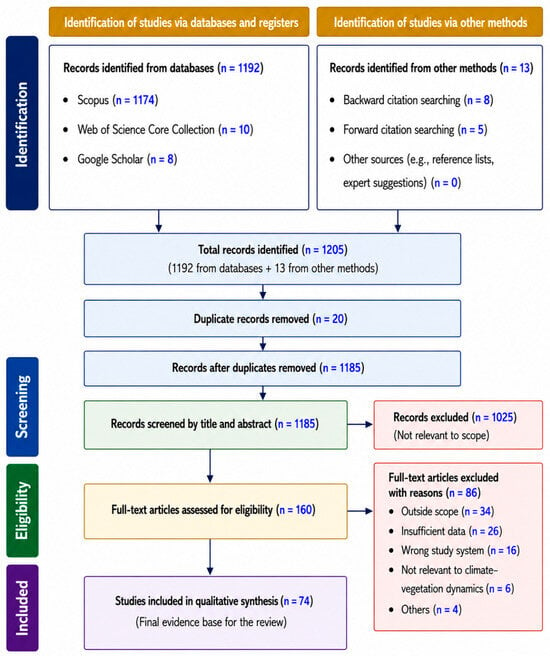
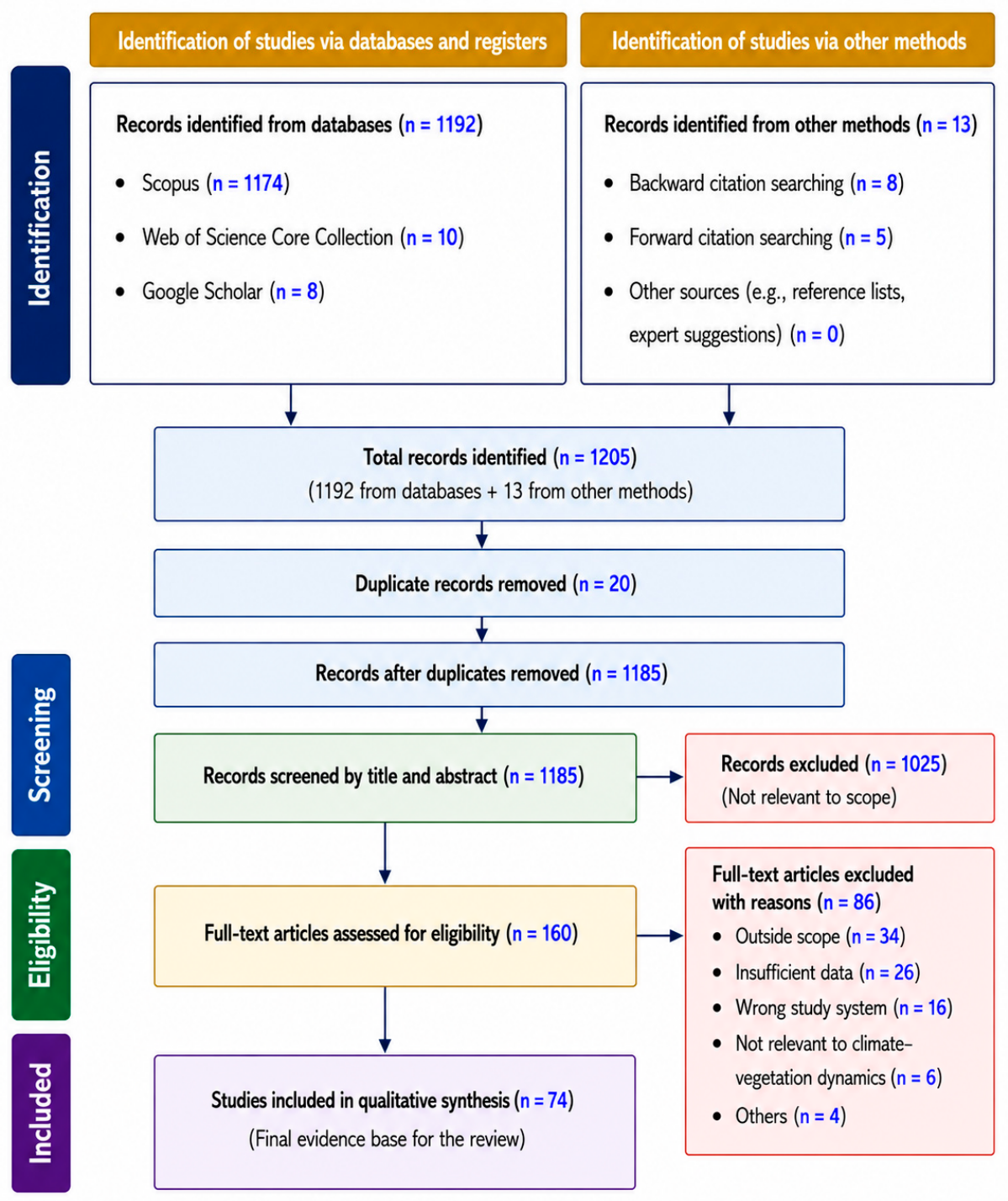
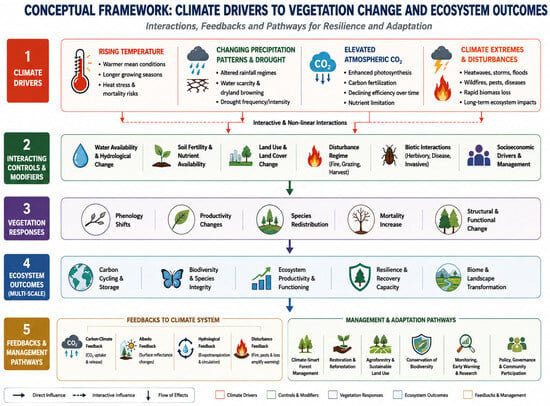
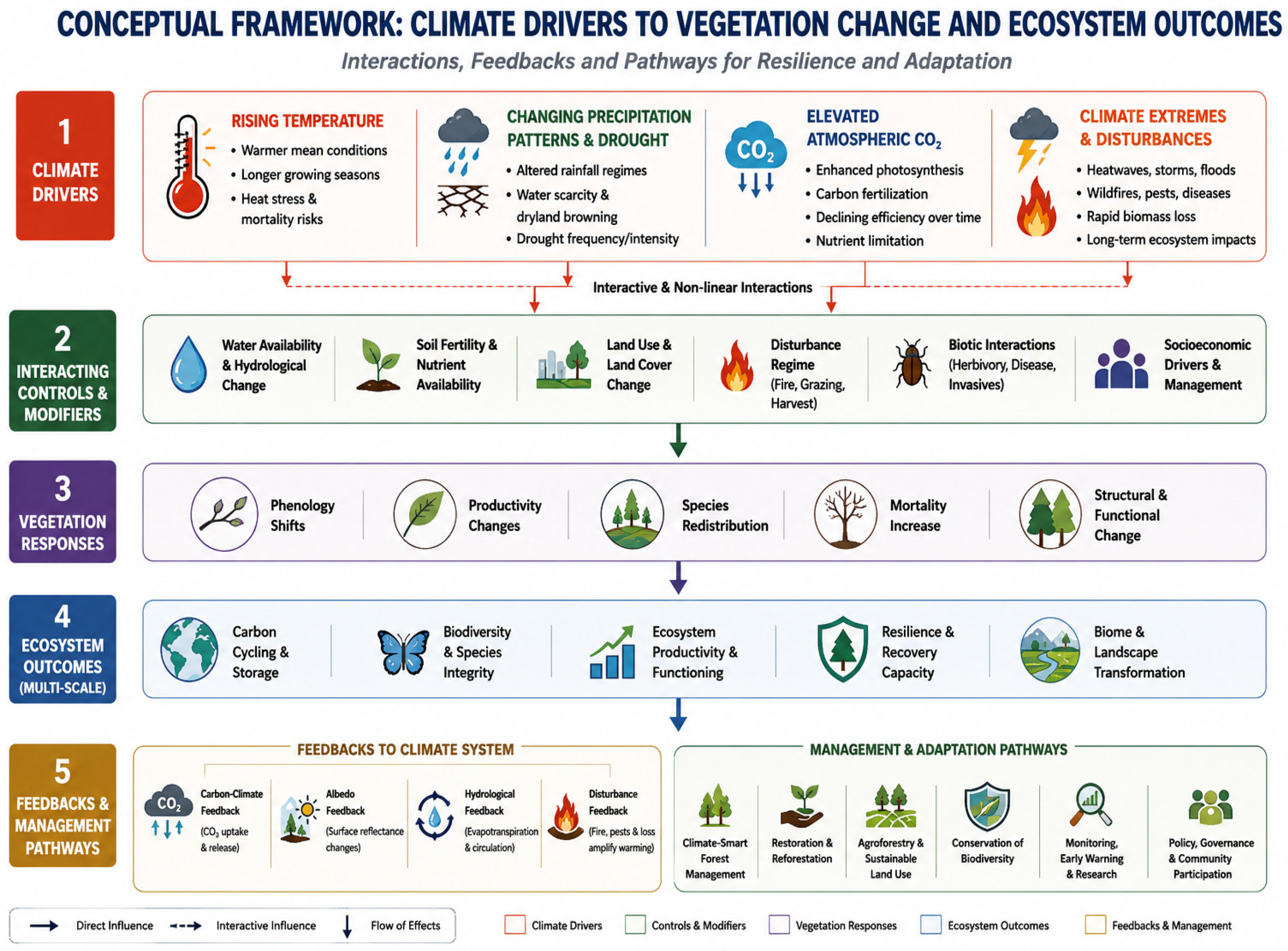
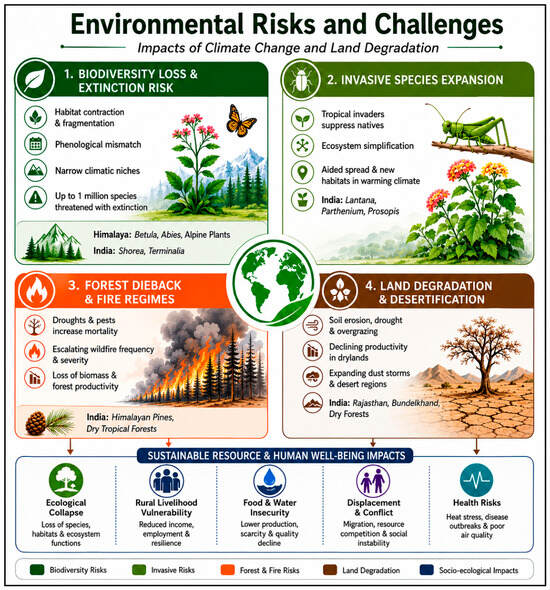
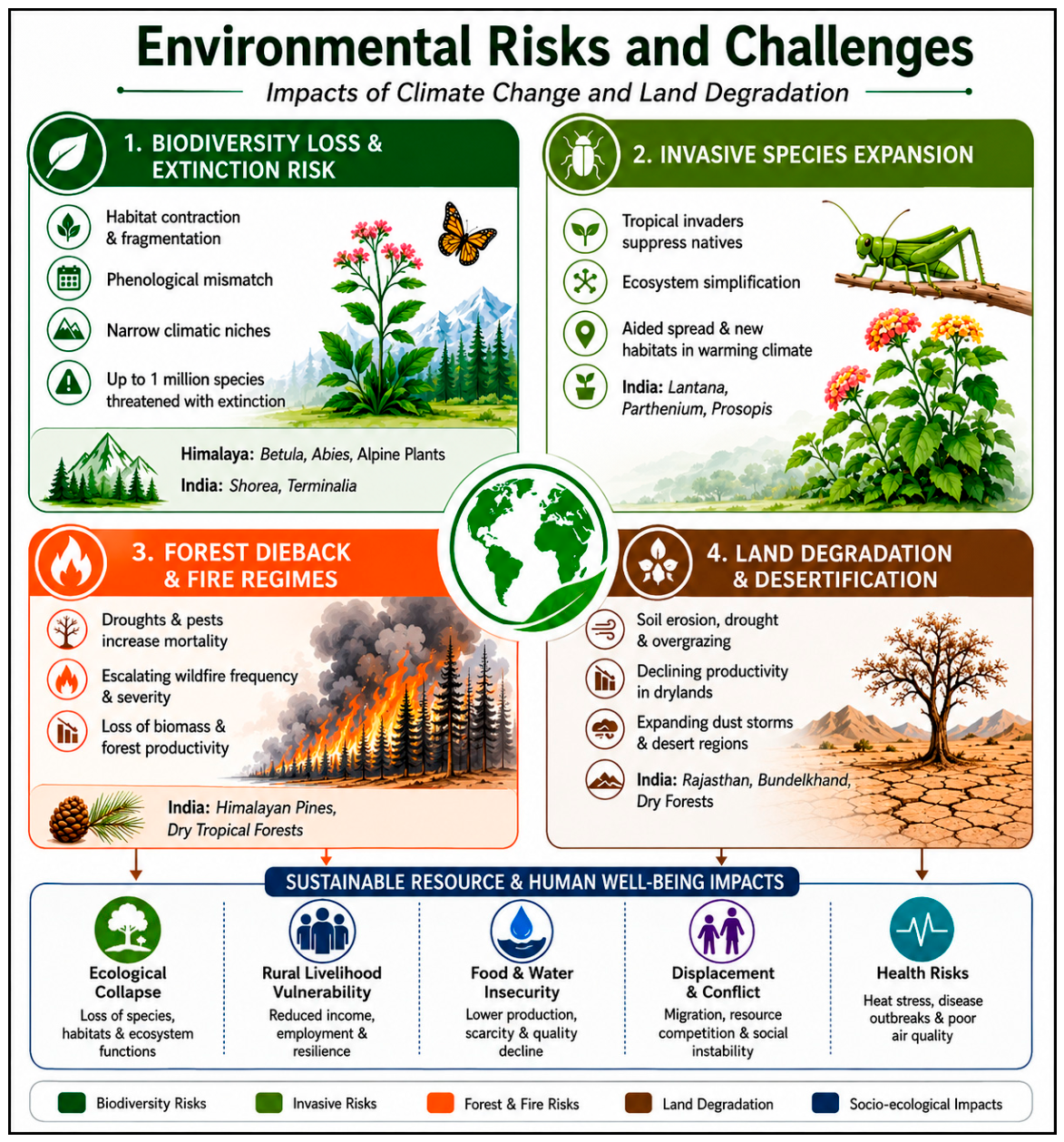

Disclaimer/Publisher’s Note: The statements, opinions and data contained in all publications are solely those of the individual author(s) and contributor(s) and not of MDPI and/or the editor(s). MDPI and/or the editor(s) disclaim responsibility for any injury to people or property resulting from any ideas, methods, instructions or products referred to in the content. |
© 2026 by the authors. Licensee MDPI, Basel, Switzerland. This article is an open access article distributed under the terms and conditions of the Creative Commons Attribution (CC BY) license.