


Abstract
The deep Southern Ocean remains severely undersampled, with much of its benthic macrofauna still undocumented. Here, we describe a new species of polynoid scale worm, Bathyadmetella dollypartonae sp. nov., from the Amundsen Sea, representing only the second species assigned to this genus since its erection nearly 60 years ago. Molecular data further indicate the presence of this species at an off-vent site near the East Scotia Ridge, approximately 4000 km from the type locality, suggesting a potentially broad Southern Ocean distribution. The first molecular data published for Bathyadmetella Pettibone, 1967 in this study also clearly distinguished it from Admetella McIntosh, 1885, supporting its status as a valid genus. The first molecular phylogenetic analyses incorporating sequences for both genera showed they form a well-supported clade, providing the first phylogenetic evidence for the monophyly of the subfamily Admetellinae Uschakov, 1977. Admetellinae was recovered as sister to Macellicephalinae, although weak support for deeper nodes prevents firm conclusions regarding its position within Polynoidae. These findings expand our knowledge of Southern Ocean annelid diversity, clarify key morphological features of Bathyadmetella, and strengthen the systematic basis of Admetellinae.
1. Introduction
Marine annelid collections from the BIOPEARL II (Biodiversity Dynamics: Phylogeography, Evolution and Radiation of Life) expedition to the previously unsampled Amundsen Sea, Southern Ocean, unveiled significant taxonomic novelty, particularly among scale worms from the family Polynoidae Kinberg, 1856 [1], with eight new species described to date [2,3,4]. Here, we continue with the taxonomic efforts to formally describe and document the novel biodiversity from this underexplored region. The Amundsen Sea is also experiencing rapid warming and glacier melting due to climate change [5,6], making such effort critical to understanding the biodiversity under environmental pressure.
The exclusively deep-sea subfamily Macellicephalinae Hartmann-Schröder, 1971 [7], was targeted in the previous studies [2,3,4], whilst here we focus on the genus Bathyadmetella Pettibone, 1967 [8], currently within the polynoid subfamily Admetellinae Uschakov, 1977 [9]. Pettibone [8] erected this genus to accommodate the species Bathyadmetella commando Pettibone, 1967 described from a single Pacific specimen collected off the mouth of the Columbia River, Oregon, at the depth of around 1644 m. While the specimen shared features with existing deep-sea scale worms like Admetella—such as a large, flattened body, subdistal insertion of lateral antennae and long, flattened neurochaetae—it also possessed distinct differences. Specifically, Bathyadmetella was defined by an absence of notochaetae, uniquely long sheaths on its lateral antennae, presence of lamellar papillae on the ventral lip and ventral bases of the second and third segments and extremely large bulging eyes [8,10].
Recently, Wu et al. [11] have described six new species of Admetella from the bathyal depths of seamounts in the tropical western Pacific, providing further observations on morphological similarities and differences within the genera Admetellinae. According to Wu et al. [11], while Bathyadmetella and Admetella share many features—including antennal scales (sheaths), an achaetous second segment with rudimentary parapodia, and short nephridial papillae—they are primarily distinguished by paired tentacular sheaths, which are unique to Bathyadmetella. Furthermore, Wu et al. [11] refuted Pettibone’s [8] assertion that antennal scale morphology separates the two genera, as they found both short-triangular and long-digitiform scales (sheaths) among Admetella species. Bathyadmetella is also morphologically distinguished from Admetella by a complete lack of notochaetae. However, Wu et al. [11] suggested that, as Bathyadmetella was described from a single damaged specimen and notochaetae detach easily in these taxa, a formal taxonomic reassessment and more sampling are required to confirm its generic status.
The classification of Admetellinae remains hindered by the lack of molecular data, as currently there are no published sequences for Bathyadmetella. At the same time, the genetic sequences for Admetella McIntosh, 1885 [12], the only other genus in the subfamily, were recovered as monophyletic [11,13], although its deeper evolutionary relationships remain unresolved. Currently, the most recent published polynoid phylogeny by Wu et al. [13] indicated only tentative support for the relationship between Admetella and the genera Pollentia Capa, Pons & Jaume, 2022 [14] and Alentia Malmgren, 1865 [15], and more broadly with the subfamily Eulagiscinae Pettibone, 1997. This lack of resolution highlights a pervasive issue in deep-sea scale worm systematics, where subfamilies and genera have historically been established without phylogenetic context. Such practice persists today, as researchers continue to erect new, monotypic genera in the absence of phylogenetic evidence, e.g., [16,17,18], and occasionally in direct contradiction to such evidence where analyses were carried out, e.g., [19,20].
In this study, we formally describe a new species, Bathyadmetella dollypartonae sp. nov., and place it within a phylogenetic context, enriching the known biodiversity of the Amundsen Sea and providing further insights into polynoid phylogeny.
2. Materials and Methods
2.1. Field Sampling
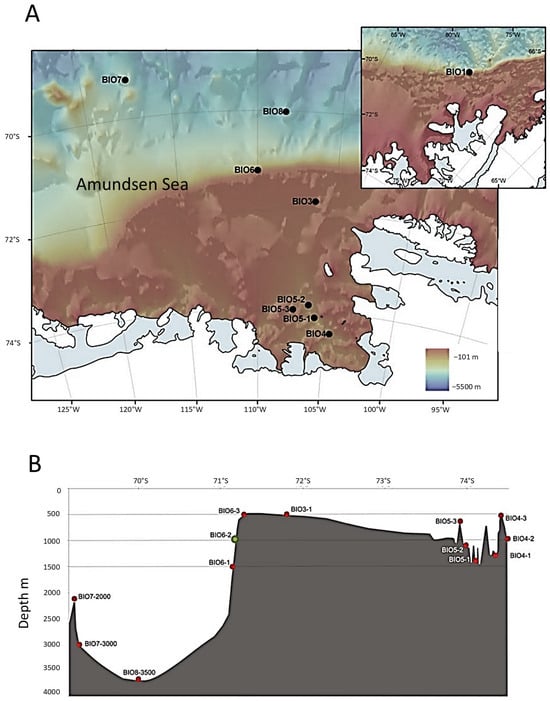
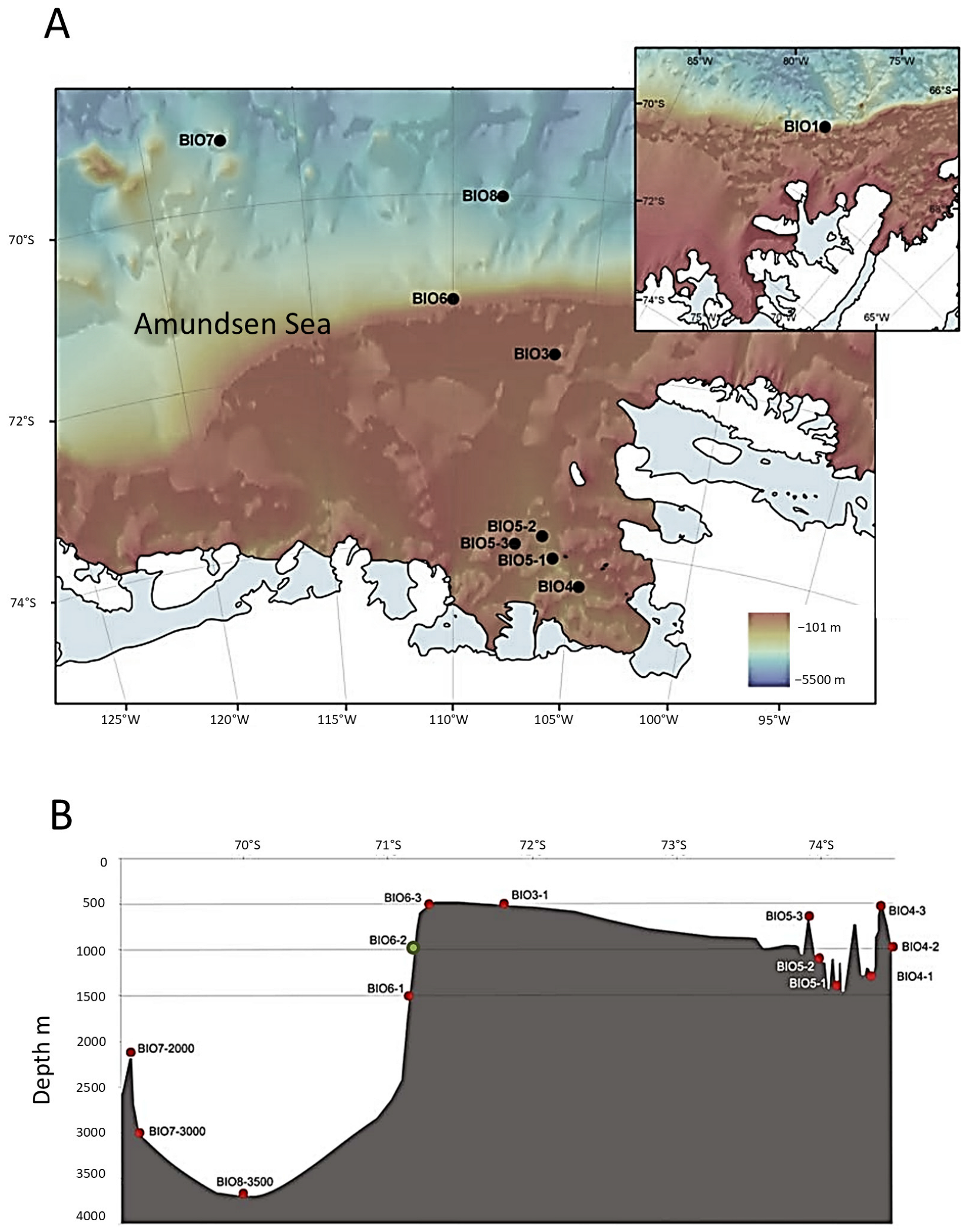
Samples were collected during the BIOPEARL II expedition to the Amundsen Sea (Figure 1A) in the austral summer of 2007/2008 onboard RRS James Clark Ross and organized by the British Antarctic Survey [21]. Targeted depths were 500 m, 1000 m, and 1500 m horizons, with more limited sampling in the deeper areas (Figure 1B). The detailed description of the sampling device, the epibenthic sled (EBS), is given in Brenke [22]. Briefly, the EBS consists of a 500-µm epi- (lower) and a supra- (upper) net, each with an opening of 100 cm width and 33 cm height. Both nets end up in cod ends with a mesh size of 300 µm. The EBS was hauled over the seabed at 1 knot for 10 min. The study areas, field methods, and treatment of annelid samples on board and in the laboratory were described in detail in Neal et al. [23], using protocols detailed in Glover et al. [24].
Figure 1.
Map of sampling sites and background environmental information. (A) Map of sampling sites visited during the BIOPEARL II—JR179 cruise to the Amundsen Sea (black circles). (B) Depth cross-section of the shelf and slope in the Amundsen Sea, showing deep-trough sites on the inner shelf (Pine Island Bay) and outer shelf/slope. Green circle: sample with Bathyadmetella dollypartonae sp. nov. presented in this study. Red circle: overall sampling effort. Modified from the publication [23].
2.2. Morphological Analysis
Specimens were examined and imaged using stereo and light microscopy at NHM London. Photomicrographs of preserved specimens were taken using a Nikon 4500 Coolpix (Nikon, Tokyo, Japan) and an Optem microscope eyepiece adapter (Optem, New York, NY, USA). The holotype NHMUK ANEA.2018.300 and paratype NHMUK ANEA.2018.301 were deposited at the Natural History Museum in London, UK.
2.3. Molecular Analysis
DNA was extracted using the DNeasy Tissue Kit (Qiagen, Hilden, Germany) following the manufacturer’s protocol. Approximately 1800 bp of 18S were amplified using the primers 18SA 5′-AYCTGGTTGATCCTGCCAGT-3′ [25] and 18SB 5′-ACCTTGTTACGACTTTTACTTCCTC-3′ [26]. Around 450 bp of 16S were amplified with the primers ann16Sf 5′-GCGGTATCCTGACCGTRCWAAGGTA-3′ [27] and 16SbrH 5′-CCGGTCTGAACTCAGATCACGT-3′ [28], and around 650 bp of cytochrome c oxidase were amplified using LCO1490 5′-GGTCAACAAATCATAAAGATATTGG-3′ [29] and COI-E 5′-TATACTTCTGGGTGTCCGAAGAATCA-3′ [30]. PCR mixtures contained ddH2O, 1 µL of each primer (10 µM), 2 µL of template DNA, and PuReTaq Ready-To-Go PCR Beads (GE Healthcare, Chicago, IL, USA) in a total volume of 25 µL. The temperature profile was as follows: 96 °C/240 s − (94 °C/30 s − 50 °C/30 s − 72 °C/60 s) × 45 cycles − 72 °C/480 s. PCR products were purified using the Millipore Multiscreen 96-well PCR Purification System, and sequencing was performed on an ABI 3730XL DNA Analyser (Applied Biosystems, Waltham, MA, USA) at The Natural History Museum Sequencing Facility, using the same primers as in the PCR reactions plus two internal primers for 18S, 620F 5′-TAAAGYTGYTGCAGTTAAA-3′ [26] and 1324R 5′-CGGCCATGCACCACC-3′ [30].
Overlapping sequence fragments were merged into consensus sequences using Geneious Prime 2025.0.3 (https://www.geneious.com, accessed on 15 September 2026). Sequences in this study were combined with sequences downloaded from NCBI GenBank (Table 1). The three genes were aligned separately using MAFFT [31] with default settings, provided as a plug-in in Geneious. The alignment consists of 54 Polynoidae sequences from the subfamilies Admetellinae, Arctonoinae, Eulagiscinae, Lepidastheniinae, Lepidonotinae, Macellicephalinae and Polynoinae, with two taxa from the family Sigalionidae as outgroup and a taxon from the family Aphroditidae as root.
Table 1.
List of taxa and their associated sequences downloaded from NCBI GenBank and included in the phylogenetic analysis in this study.
Maximum Likelihood (ML) analysis was performed using IQTree 2 [32], where ModelFinder [33] selected the optimal models TN + F + R4 for 18S and GTR + F + I + G4 for both 16S and COI. The ML analysis was run with 1000 ultrafast bootstrap replicates. Bayesian phylogenetic analyses (BA) were conducted with MrBayes v.3.2.6 [34]. In the combined Bayesian analysis, the data were partitioned into three parts (18S, 16S, and COI); the evolutionary model GTR + I + G was applied to each partition, and the parameters used for the partitions were unlinked. The Bayesian analyses were run independently three times for 10,000,000 generations. Of these, 2,500,000 generations were discarded as burn-in. The tree files were interpreted with FigTree v1.4.4 (http://tree.bio.ed.ac.uk/software/figtree/, accessed on 30 September 2026) and edited using Affinity Publisher (https://affinity.serif.com, accessed on 30 September 2026). All sequences obtained in this study have been deposited in GenBank (http://www.ncbi.nlm.nih.gov/genbank, accessed on 30 September 2026). The DNA extractions were archived at the Molecular Facilities (MCF), NHM, London.
3. Results
3.1. Phylogenetic Analyses
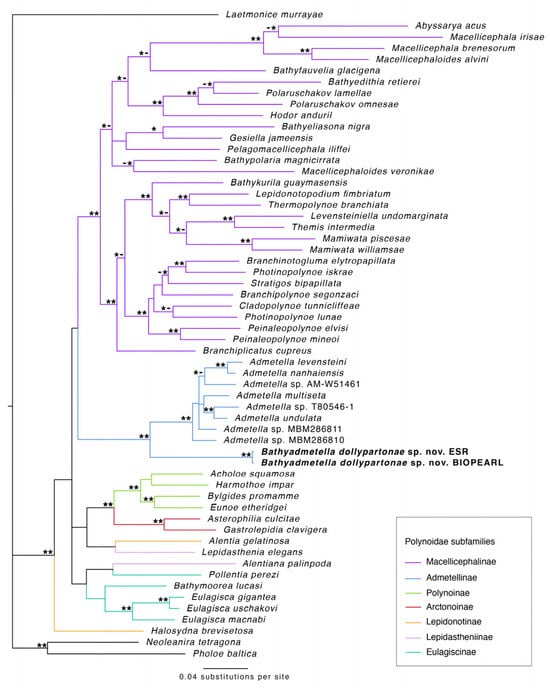
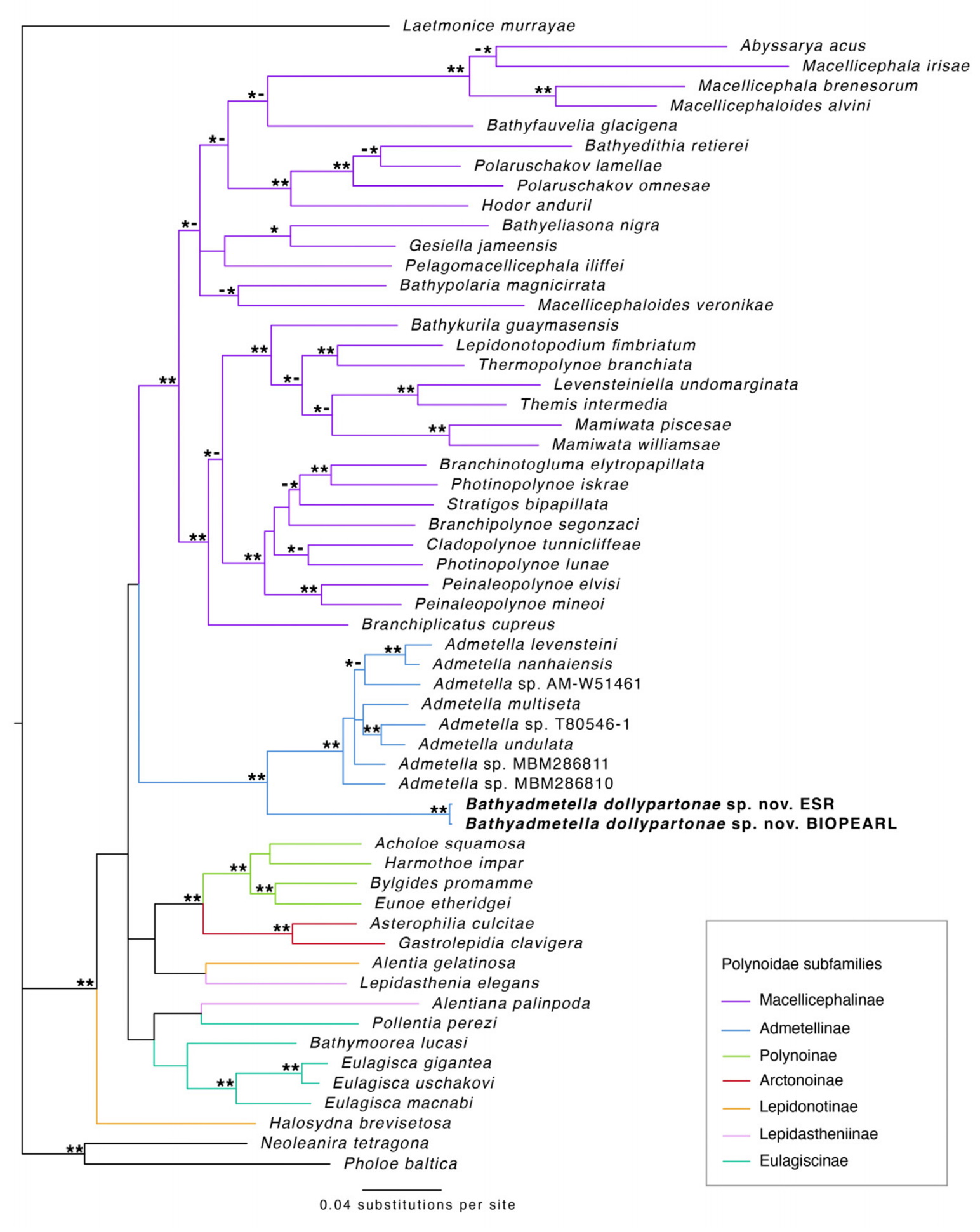
DNA was obtained from paratype NHMUK ANEA.2018.301, and the sequences were used in the molecular analyses. In both analyses, the new species is sister to the Admetella clade with strong support (Figure 2), supporting the monophyly of the subfamily Admetellinae. However, the relationship of Admetellinae with other polynoid subfamilies remained unresolved.
Figure 2.
Majority-rule consensus tree from the Bayesian analyses (BA) using 18S, 16S, and COI, with 54 taxa from Polynoidae and three taxa from other scale-worm families as outgroup and root. The bootstrap support values from the Maximum Likelihood (ML) analyses are added to the Bayesian tree as BA/ML on the nodes. Support values at or above 0.95 for the BA and 95 for ML are shown in the tree as asterisks. Support values from both analyses are shown as **, while if support is low from one of the analyses it is shown as *- (ML low) or -* (BA low). No symbols on nodes show that there was low support in both analyses.
3.2. Systematics
- Polynoidae Kinberg, 1856
- Admetellinae Uschakov, 1977
- Bathyadmetella Pettibone, 1967
- Type-species: Bathyadmetella commando Pettibone, 1967
Diagnosis (emended from Pettibone [8]). Prostomium with 3 antennae and a pair of large crescent-shaped eyes. Lateral antennae inserted on anterolateral extensions of prostomium, with sheaths dorsal to lateral antennae. First segment achaetous, with 2 pairs of tentacular cirri, with paired long tentacular sheaths between palps and tentacular cirri. Second segment with parapodia rudimentary, achaetous, mouth surrounded by lobes/lamellar papillae. Nephridial papillae from segment 5. Parapodia subbiramous; notopodia small, with slender acicular lobes; neuropodia very long, with elongated acicular processes. Notochaetae absent. Neurochaetae numerous, transparent, flattened, with faint spinous rows and sesquidentate tips.
Remarks. Pettibone [8] considered the number of body segments greater than 50, the number of pairs of elytra greater than 20, and the presence of facial tubercle as generic characters, based on the only species known at the time, B. commando Pettibone, 1967. However, the complete specimen of B. dollypartonae sp. nov. described here possesses only 39 body segments and 16 pairs of elytra, and the presence of a facial tubercle has not been confirmed, though it may be damaged. Otherwise, Bathyadmetella dollypartonae sp. nov. described here agrees with the genus Bathyadmetella because of the presence of long, well-developed antennal and tentacular sheaths as well as the sesquidentate form of neurochaetae; the form of the prostomium and the presence of large crescent-shaped eyes. Thus, the generic diagnosis of Bathyadmetella has been amended here to accommodate the new species by removing the number of segments and the number of elytra from the generic diagnosis. It is important to note that the holotype of B. dollypartonae sp. nov. is smaller in size (14 mm long for 39 segments) than B. commando (55 mm for 58 segments), and we cannot exclude the possibility that it represents a sub-adult stage.
- Bathyadmetella dollypartonae sp. nov.
- urn:lsid:zoobank.org:pub:4807CE38-39E6-457E-B9A4-7BFF5471CEDA
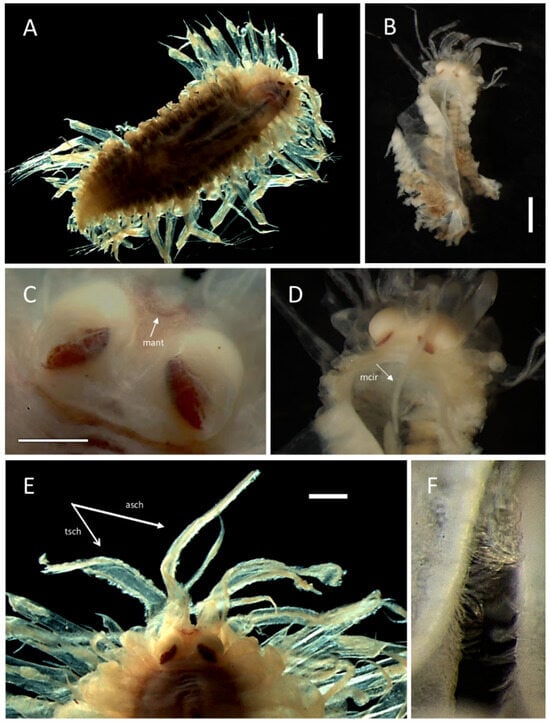
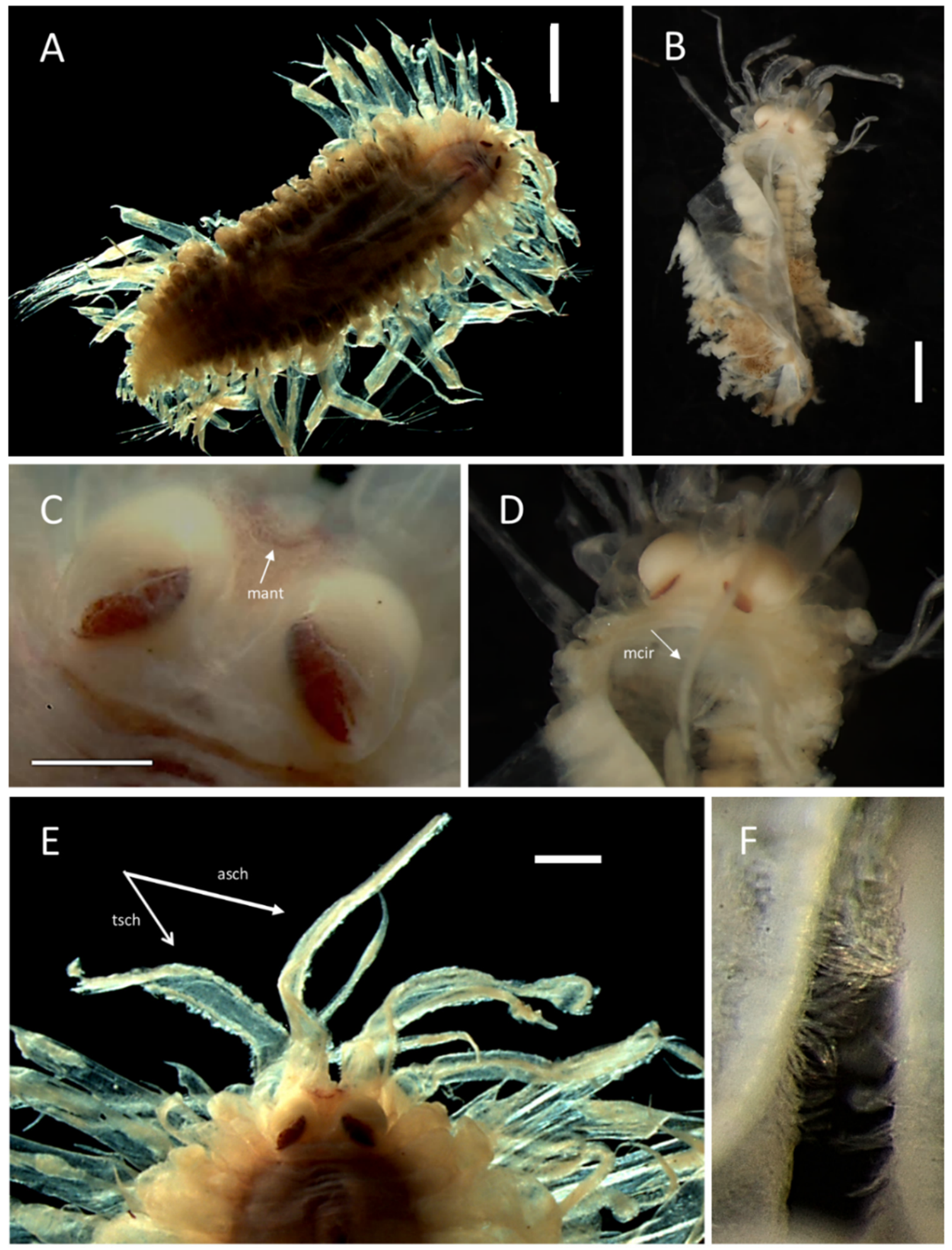
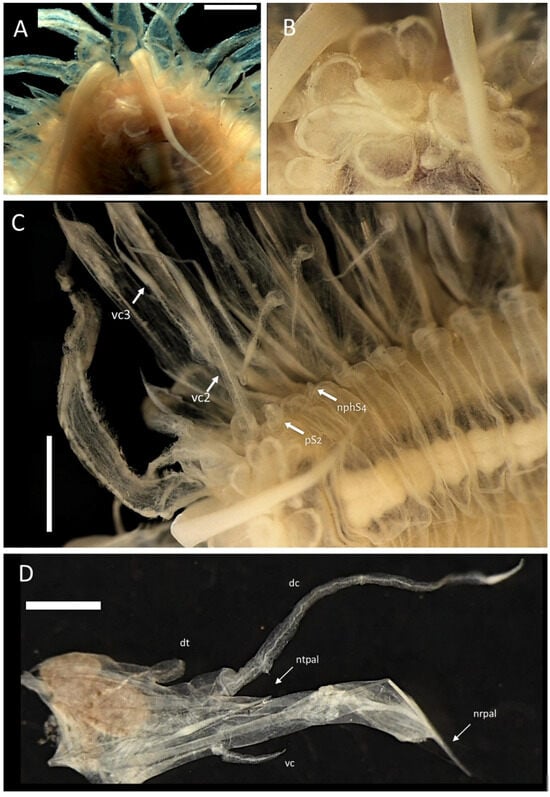
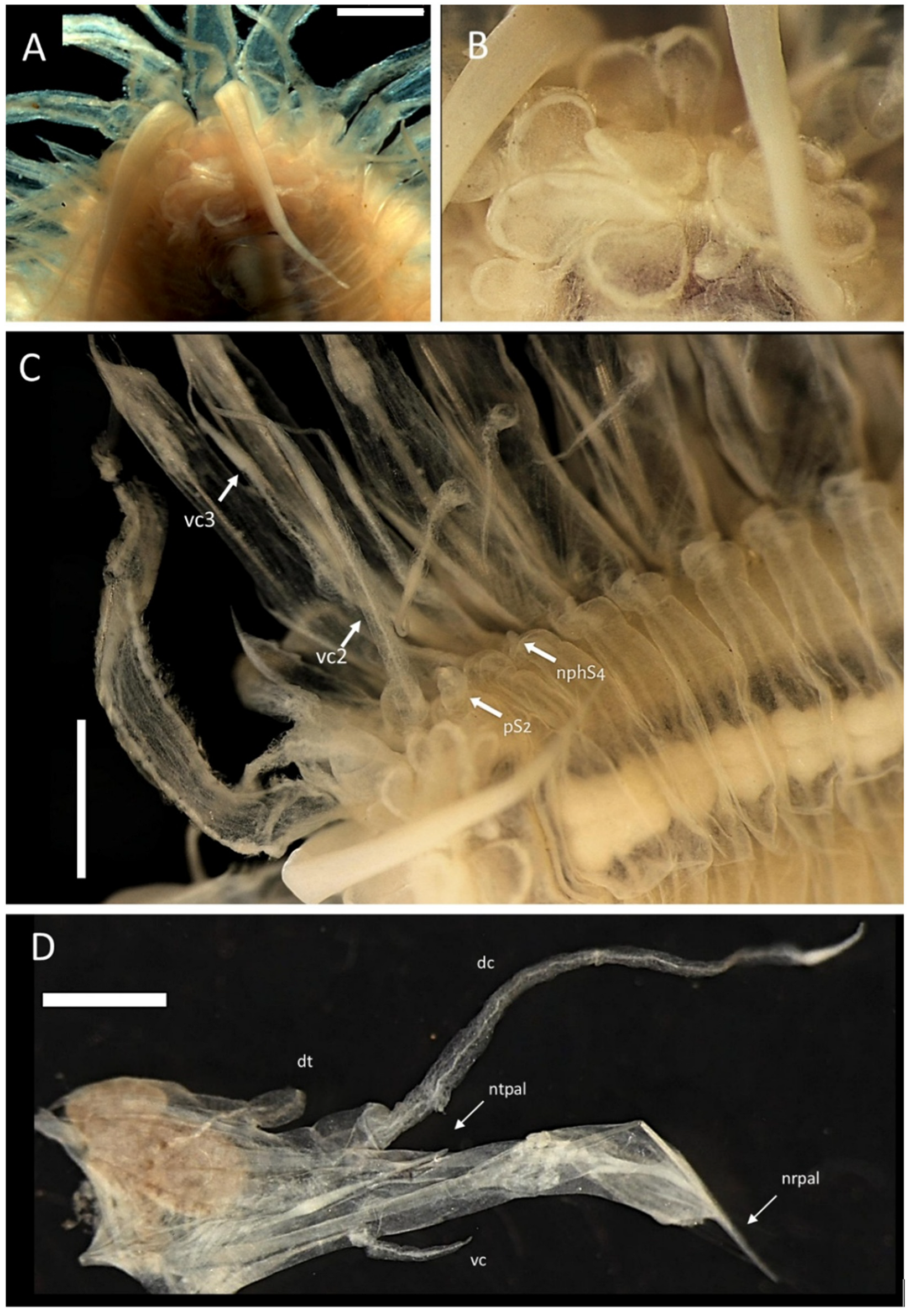
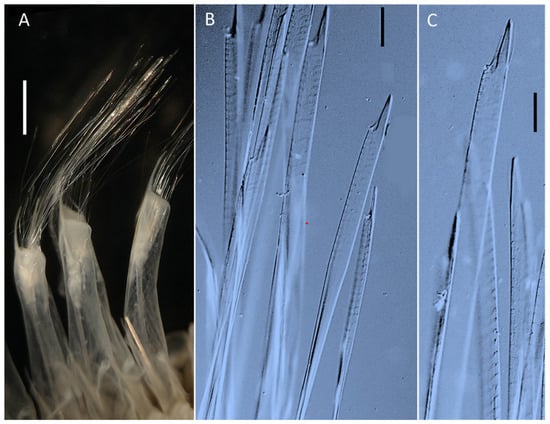
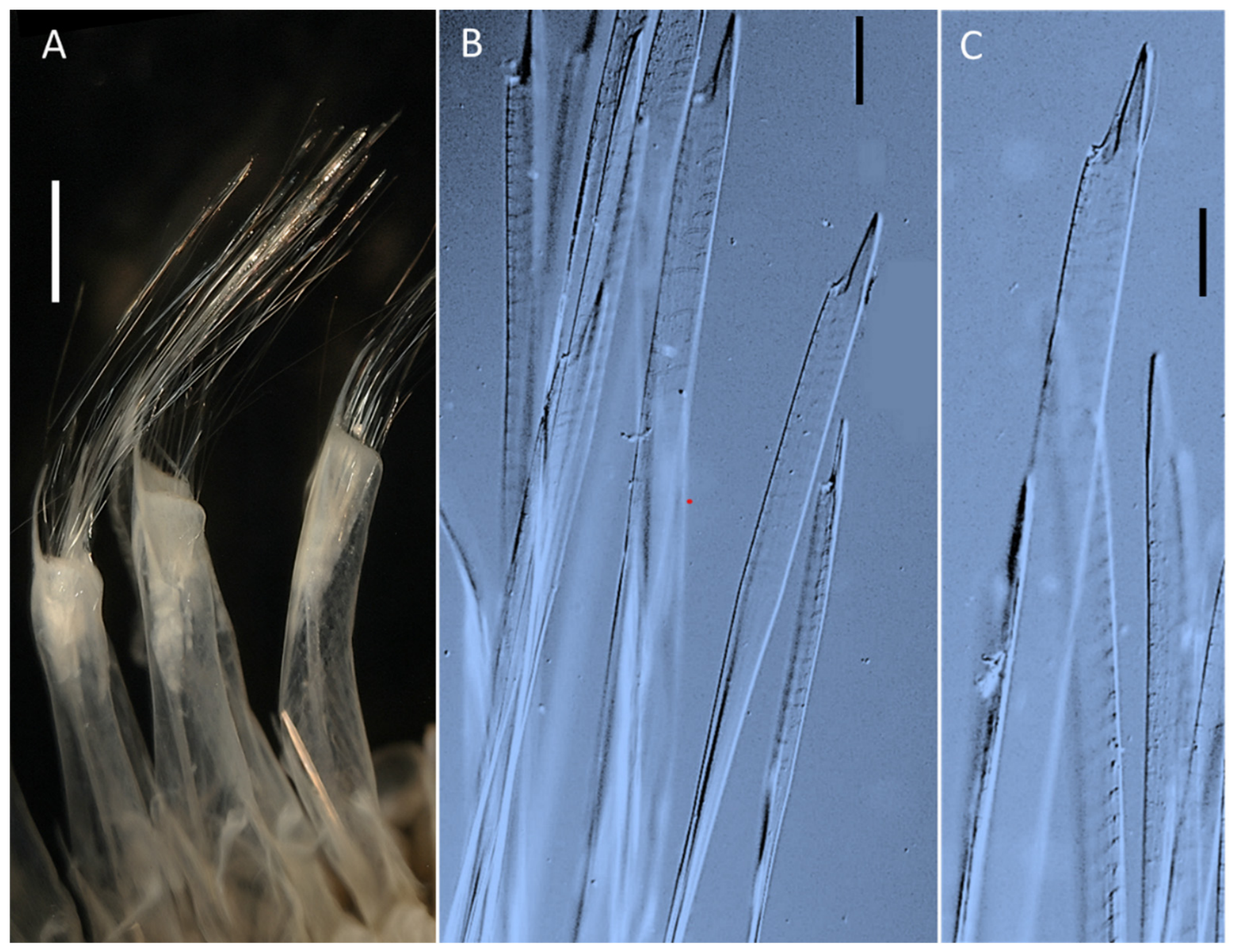
- Figure 3. Bathyadmetella dollypartonae sp. nov., holotype NHMUK.ANEA 2018.300, unless stated otherwise. (A) Posteriorly complete preserved specimen in dorsal view; some midbody parapodia missing. (B) Paratype, NHMUK.ANEA 2018.301, preserved specimen in dorsal view. (C) Prostomium in dorsal view, with antennophore of median antenna (mant) and rod-like eyes. (D) Prostomium of paratype, NHMUK.ANEA 2018.301, showing the style of the median antenna (mcir). (E) Anterior end in dorsal view, with strap-like antennal sheaths (asch) and tentacular sheaths (tsch). (F) Border papillae of antennal sheaths. Scale bars: (A) 2 mm; (B) 1 mm; (C,E) 500 µm.Figure 4. Bathyadmetella dollypartonae sp. nov., holotype NHMUK.ANEA 2018.300 (A) Ventral view of anterior end, showing rosette-forming lobes around mouth. (B) Details of fleshy lobes forming the rosette-like structure around the mouth. (C) Ventral view of the anterior end showing the papilla on segment (pS2), the first nephridial papilla on segment 4 (nphS4), and ventral cirri on segments 2 (vc2) and 3 (vc3). (D) Midbody parapodium showing the notopodial (ntpal) and neuropodial (nrpal) acicular lobes, dorsal cirrus (dc), dorsal tubercle (dt), and ventral cirrus (vc). Scale bars: (A,D) 500 µm; (C) 1 mm.Figure 5. Bathyadmetella dollypartonae sp. nov., holotype NHMUK.ANEA 2018.300. (A) Neuropodia with dense fascicles of neurochaetae. (B,C) Neurochaetae, showing the distal sesquidentate tips and faint denticulation. Scale bars: (A) 1mm; (B,C) 200 μm.
Material examined. Holotype, NHMUK ANEA.2018.300, Amundsen Sea, Southern Ocean, cruise JR 179, station BIO6-EBS-2A, collected on 12/03/2008, epibenthic sledge, supra-net, start 71° 10′ 33.492″ S, 109° 51′ 52.344″ W, end 71° 10′ 30.612″ S, 109° 51′ 23.292″ W, 1020 m depth, 303 m trawling distance. Paratype, NHMUK ANEA.2018.301, collected from the same station as holotype; GenBank accession numbers: QB283752, QB287587, QB287589.
Description. Holotype, NHMUK ANEA.2018.300, large, robust, wide, dorso-ventrally flattened, and posteriorly complete specimen, 14 mm long and 4.5 mm wide (excluding parapodia), about 10 mm wide (including parapodia) for 39 segments (including tentacular segment = segment1), some mid-body parapodia missing (Figure 3A). Paratype, NHMUK ANEA.2018.301, small, damaged, posteriorly incomplete specimen (Figure 3B), ~4 mm long and ~2 mm wide, proboscis dissected. Body gelatinous, pale to semi-transparent in alcohol (Figure 3A), with purple proboscis visible through the body wall, prostomium white, with red pigmentation at the base of the ceratophore of the median antenna (Figure 3C), parapodia translucent (Figure 3A and Figure 4D).
Prostomium bilobed (Figure 3C,D), with lobes anteriorly rounded, wider than long; with a pair of extremely large, dark red, crescent-shaped eyes, situated diagonally in the posterior half of the prostomium (Figure 3C,D). Three antennae present; ceratophore of median antenna small, cylindrical, inserted anteriorly on prostomium (Figure 3C); style of median antenna missing in holotype, but present in paratype, where thin, long, and slender (Figure 3D). Lateral antennae inserted on anterolateral extensions of prostomium; lateral ceratophores not converging mid-ventrally; styles of lateral antennae thin, smooth, and cirriform. Each lateral antenna basally attached to a prominent dorsal sheath (Figure 3E and Figure 4A); the dorsal sheaths strap-like, very wide, flat, translucent, with crenulated edges bordered by dense, translucent conical papillae (Figure 3F). Paired palps are shorter and stouter than other prostomial appendages, smooth, tapering, reaching to the beginning of segment 5; palps are not visible dorsally in the holotype, only observed when the specimen is in ventral view (Figure 4A).
Segment 1 achaetous, with two pairs of tentacular cirri; tentaculophores equal-sized, robust and cylindrical; styles of similar form, slender, cirriform, with dorsal cirrus slightly longer than ventral cirrus. A pair of tentacular sheaths present between tentacular cirri and palps, similar in form to antennal sheaths (Figure 3E and Figure 4C)—strap-like, wide, flat, translucent, with crenulated edges bordered by conical translucent papillae.
Pharynx dissected from paratype, cylindrical, purple, with 2 pairs of amber-colored jaws and a number of small, equal-sized, triangular, fleshy papillae present (the number of pairs cannot be exactly established due to damage during the dissection, but at least 7 pairs present). Facial tubercle not confirmed. Ventrally, the mouth is surrounded by 12 fleshy, rounded lobes, forming a rosette-like structure (Figure 4A,B). Second segment with elytrophores, small subbiramous parapodia, with elongated ventral cirri and fleshy lobe inserted at base of neuropodia (Figure 4C).
With 16 pairs of large, inflated, bulbous elytrophores (present on segments 2, 4, 5, 7, 9, 11, 13, 15, 17, 19, 21, 23, 26, 29, 32 and 35), all elytra missing. Parapodia subbiramous (Figure 4D). Notopodia reduced to a short, narrow acicular lobe (Figure 4D), with acicula not penetrating the epidermis. Neuropodia extremely long, translucent, distally truncated (almost rectangular-shaped) with long supra-acicular lobe (Figure 4D), acicula not penetrating the epidermis. Dorsal cirri with robust ceratophores and very long, thin, flat, translucent, and smooth styles, exceeding the length of neuropodia (Figure 4D). Dorsal tubercles well developed on cirrigerous segments, cylindrical and inflated in appearance (Figure 4D). Ventral cirri inserted basally in segment 2, where long, and extending to the tip of the neuropodia (Figure 4C); in segments 3 and 4 slightly shorter (Figure 4C), and in subsequent segments inserted near the proximal (basal) end of the neuropodium (Figure 4D), where short and slender; all ventral cirri with short, thickened, cylindrical cirrophore.
Notochaetae absent. Neurochaetae numerous (Figure 5A), very long, flat and wide, with faint denticles on both sides; distally with a sesquidentate tip (Figure 5B, C). Nephridial papillae present, located at the base of parapodia; small, digitiform, distinguishable from segment 5 (Figure 4C), largest in the mid-body, present until near the posterior end, where they become inconspicuous. Pygidium is a somewhat inflated, distally truncated lobe, with a pair of elongated anal cirri.
Etymology. The species name honours musician, author, and humanitarian Dolly Parton. News of her passing was announced while the type specimens for this description were being examined.
Genetics. Based on DNA, this species was also found during the cruise JC42 from East Scotia Ridge (ESR) in the Southern Ocean (Figure 2, Table 1). The uncorrected ‘p’ distance for the COI sequences between the two sites was 0.003. Morphologically, the ESR specimen JC42_F774_524 was a damaged body fragment; thus, we are solely relying on the molecular data for this conclusion. In the phylogenetic analysis, B. dollypartonae sp. nov. fell into a well-supported clade as the sister taxon to all hitherto sequenced Admetella species, thus supporting the monophyly of the subfamily Admetellinae. However, the basal nodes in the tree are not well supported, making it difficult to resolve the position of Admetellinae in the Polynoidae family (Figure 2).
Remarks. Bathyadmetella dollypartonae sp. nov. described here agrees with the genus Bathyadmetella because of the presence of long, well-developed antennal and tentacular sheaths. The presence of these sheaths is unique to the subfamily Admetellinae, but only in Bathyadmetella are these long and robust. Bathyadmetella dollypartonae sp. nov. further agrees well with B. commando (the only other species assigned to this genus) in having very large, reddish to brown, crescent-shaped eyes, in the form of the parapodia, and in the form of neurochaetae. These neurochaetae are rather distinct from other Polynoidae chaetae, most closely resembling the sesquidentate type sensu Muir [35].
Besides the smaller number of both segments (N = 39) and pairs of elytra (N = 16), B. dollypartonae sp. nov. differs from B. commando in the form of the antennal and tentacular sheaths. These were described as “wider basally, tapering distally” by Pettibone [8] in B. commando but are present as wide, flattened, strap-like appendages in B. dollypartonae sp. nov. (Figure 3E and Figure 4C). Further, Pettibone [8] did not report or image the antennal and tentacular sheaths as papillated in B. commando, while papillae are present in the new species (Figure 3F). Finally, the 12 lobes forming a rosette-like structure around the mouth observed in B. dollypartonae sp. nov. differ from those described in B. commando, which Pettibone [8] described as “with 11 lamellar papillae in three irregular rows”. The papillae present on the ventrum of segments 2 and 3 in B. commando were only observed in segment 2 in the new species (Figure 4C).
Distribution. A bathyal Southern Ocean species currently known from the open slope of the Amundsen Sea, ~1000 m depth, and from Kemp Caldera in the vicinity of the East Scotia Ridge hydrothermal vent site at ~1500 m depth.
4. Discussion
This is only the second species described within the genus Bathyadmetella since its formalization nearly 60 years ago [8]. The late discovery of a second species in this genus further highlights the well-known critical sampling gaps in the deep sea in general and the deep Southern Ocean in particular, underscoring how much of the marine benthic macrofauna remains completely undocumented. Given that Bathyadmetella dollypartonae sp. nov. has awaited its formal description for more than 20 years since its collection, this further highlights the also well-documented lack of taxonomic expertise and resources for taxonomic research, commonly referred to as taxonomic impediment, e.g., [36]. Yet, as our data suggest, the new species may in fact be widely distributed within the Southern Ocean, as it was detected from two localities, the Amundsen Sea and East Scotia Ridge, separated by approximately 4000 km and spanning the vast expanses of the Bellingshausen Sea, the Drake Passage, and the West/Central Scotia basins. The recovery of B. dollypartonae sp. nov. near the East Scotia Ridge was from an off-vent site, at the Kemp Caldera site [37].
From a systematist’s point of view, the family Polynoidae is remarkably diverse, currently comprising approximately 160 to 170 valid genera [38]. Historically, the family was split into as many as 21–22 subfamilies, largely due to the extensive work of Dr. Marian H. Pettibone, who frequently erected new subfamilies and often monotypic genera based solely on minor morphological variations. Modern phylogenetic evaluations—including the landmark study by Bonifácio and Menot [19]—led to synonymy of several deep-sea subfamilies under a broader definition of Macellicephalinae, condensing the family down to 8 currently recognized subfamilies [38]. Paradoxically, the proliferation of monotypic genera has continued, e.g., [16,17,18,19,20].
One of the main contributions of this study was to assess the monophyly of subfamily Admetellinae in a phylogenetic context for the first time. Using the recently published sequences for Admetella [11] and our new sequences for Bathyadmetella, the monophyly of Admetellinae has been supported by our phylogenetic analyses, with the sequences from these taxa forming a well-supported clade (Figure 2). However, similarly to previously published phylogenies [11,13], the basal clades positioning the subfamilies within Polynoidae have low support (Figure 2). Although previously, Wu et al. [11] stated that the deep-sea genus Admetella is a sister group to the deep-sea Macellicephalinae, this conclusion was in fact spurious, as ambiguous support was found for this grouping in their analysis. The subsequent analysis by Wu et al. [13] recovered Admetella within the subfamily Eulagiscinae, although again it is important to stress the low support values. In our phylogenetic tree (Figure 2), Admetellinae has been recovered as the sister taxon to Macellicephalinae, but with low support values (Figure 2). Though the current evidence for the relationship of Admetellinae with other polynoid subfamilies is unresolved, limited evidence suggests a close relationship between the exclusively deep-sea, chemosynthetic habitats, polar and anchialine cave-dwelling polynoids currently placed within subfamilies Macellicephalinae, Eulagiscinae and Admetellinae. This could suggest a common descent for taxa adapted to dark and thermal extremes; see also discussion by Gonzalez et al. [39]. Nevertheless, more molecular data from other polynoid taxa are needed to further elucidate these relationships.
The second contribution of this study lies in the confirmation of the true absence of notochaetae in Bathyadmetella as previously reported by Pettibone [8] but questioned by Wu et al. [11]. Although only two specimens were available for the examination in this study, as is typical for deep-sea studies, the notochaetae were found to be truly absent in B. dollypartonae sp. nov. Thus, we suggest that together with the presence of tentacular sheaths, the absence of notochaetae represents an apomorphy for the genus Bathyadmetella. Further, the genus status of Bathyadmetella has also been well supported by our phylogenetic analysis (Figure 2), with the sequences distinct from those of Admetella. Given that it has taken nearly 60 years to describe only a second species in this genus, future discoveries are likely and necessary for further insights into the taxonomy and systematics of this enigmatic deep-sea taxon.
5. Conclusions
This work has contributed to the formalization of a new species, B. dollypartonae sp. nov., from the Amundsen Sea, an area of taxonomic novelty. We have shown that, at least based on the DNA sequences, the species is also found at the distant site of the East Scotia Ridge. The first ever published sequences for Bathyadmetella have confirmed the monophyly of the subfamily Admetellinae.
Author Contributions
Conceptualization, L.N. and H.W.; methodology, L.N.; validation, L.N. and H.W.; formal analysis, L.N. and H.W.; investigation, L.N. and H.W.; resources, L.N. and H.W.; data curation, L.N.; writing—original draft preparation, L.N.; writing—review and editing, H.W.; visualization, L.N. All authors have read and agreed to the published version of the manuscript.
Funding
This publication has been supported by the Nippon Foundation.
Data Availability Statement
All sequence reads were deposited in GenBank.
Acknowledgments
We would like to thank the British Antarctic Survey for organizing and leading the BIOPEARL expeditions, especially Peter Enderlein—the lead scientist of the BIOPEARL II expedition- and the crew of RRS James Clarke Ross during the cruise JR179. Adrian Glover collected the BIOPEARL II material used in this study. Further, we would like to acknowledge the JC42 expedition organized as part of the CHESSO Project (Chemosynthetic Ecosystems of the Southern Ocean), a scientific research program coordinated by the University of Southampton that investigated deep-sea hydrothermal vents in Antarctica, with Alex Roger as a principal scientist. Special thanks Jude Stewart for proofreading the manuscript. The taxonomic work has been enabled thanks to the grant from the NIPPON Foundation.
Conflicts of Interest
The authors declare no conflicts of interest.
References
- Kinberg, J.H. Nya slägten och arter af Annelider. Öfversigt af Kongl. ÖÖfvers. Kongl. Vetensk. Akad. Förh. 1856, 12, 381–388. [Google Scholar]
- Neal, L.; Barnich, R.; Wiklund, H.; Glover, A.G. A new genus and species of Polynoidae (Annelida, Polychaeta) from Pine Island Bay, Amundsen Sea, Southern Ocean—A region of high taxonomic novelty. Zootaxa 2012, 3542, 80–88. [Google Scholar] [CrossRef] [Scilit]
- Neal, L.; Brasier, M.J.; Wiklund, H. Six new species of Macellicephala (Annelida: Polynoidae) from the Southern Ocean and south Atlantic with re-description of type species. Zootaxa 2018, 4455, 1–34. [Google Scholar] [CrossRef] [Scilit]
- Neal, L.; Wiklund, H.; Glover, A.G. Description of new species Macellicephaloides veronikae sp. n. (Polynoidae, Annelida) from the Amundsen Sea, Southern Ocean. Polar Biol. 2025, 48, 107. [Google Scholar] [CrossRef] [Scilit]
- Jacobs, S.S.; Jenkins, A.; Giulivi, C.F.; Dutrieux, P. Stronger Ocean circulation and increased melting under Pine Island Glacier ice shelf. Nat. Geosci. 2011, 4, 519–523. [Google Scholar] [CrossRef] [Scilit]
- Reed, B.; Green, J.A.M.; Jenkins, A.; Gudmundsson, G.H. Melt sensitivity of irreversible retreat of Pine Island Glacier. Cryosphere 2024, 18, 4567–4587. [Google Scholar] [CrossRef] [Scilit]
- Hartmann-Schröder, G. Annelida, Borstenwürmer, Polychaeta. In Die Tierwelt Deutschlands und der Angrenzenden Meeresteile nach ihren Merkmalen und nach ihrer Lebensweise; Dahl, M., Peus, F., Eds.; Gustav Fischer Verlag: Jena, Germany, 1971; Volume 58, pp. 1–594. [Google Scholar]
- Pettibone, M.H. Some bathyal polynoids from central and northeastern Pacific (Polychaeta: Polynoids). Proc. U. S. Natl. Mus. 1967, 121, 1–15. [Google Scholar] [CrossRef] [Scilit]
- Uschakov, P.V. Phylogenetic relationships in the family Polynoidae (Polychaeta). In Essays on Polychaetous Annelids in Memory of Dr. Olga Hartman: Los Angeles, University of Southern California; Reish, D.J., Fauchald, K., Eds.; Allan Hancock Press: Los Angeles, CA, USA, 1977; pp. 29–38. [Google Scholar]
- Levenstein, R. Annelida (Polychaeta) from the deep waters of the Pacific region of Antarctic. Tr. Inst. Okeanol. SSR 1978, 113, 73–87. [Google Scholar]
- Wu, X.; Kou, Q.; Sun, Y.; Zhen, W.; Xu, K. Morphology, phylogeny, and evolution of the rarely known genus Admetella Mcintosh, 1885 (Annelida, Polynoidae) with recognition of four new species from Western Pacific seamounts. J. Zool. Syst. Evol. Res. 2024, 9886076. [Google Scholar] [CrossRef] [Scilit]
- McIntosh, W.C. Report on the Scientific Results of the Voyage of H.M.S. Challenger during the years 1873–76. Zoology 1885, 12, i–xxxvi, 1–554. [Google Scholar]
- Wu, X.; Ma, M.; Zhang, Y.; Xu, K. A new genus and species of Eulagiscinae Pettibone, 1997 (Annelida, Polynoidae) from a western Pacific seamount, with remarks on generic placement and putative sponge association. J. Zool. Syst. Evol. Res. 2026, 1, e010. [Google Scholar] [CrossRef] [Scilit]
- Capa, M.; Pons, J.; Jaume, D. Discovery of a new scale worm (Annelida: Polynoidae) with presumed deep-sea affinities from an anchialine cave in the Balearic Islands (western Mediterranean). Zool. J. Linn. Soc. 2022, 196, 479–502. [Google Scholar] [CrossRef] [Scilit]
- Malmgren, A.J. Nordiska Hafs-Annulater. ÖÖfversigt AF K. Vetenskapsakademiens Förh. Stockh. 1865, 22, 51–110, lates VIII–XV. [Google Scholar]
- Salazar-Vallejo, S.I. Barnichia crialesae gen. nov., sp. nov., from the western Atlantic (Annelida, Polychaeta, Polynoidae, Polynoinae). Bull. Mar. Sci. 2024, 100, 439–450. [Google Scholar] [CrossRef] [Scilit]
- Salazar-Vallejo, S.I.; Suárez-Morales, E. Jimipolyeunoa richeri gen. n., sp. n. from New Caledonia (Polychaeta, Polynoidae), and Herpyllobius pleurotumoris sp. n., its copepod parasite. J. Mar. Biol. Assoc. U. K. 2025, 105, e136. [Google Scholar] [CrossRef] [Scilit]
- Salazar-Silva, P.; Salazar-Vallejo, S.I. Revision of Hermenia with descriptions of five new species and a new genus (Polychaeta: Polynoidae). Rev. Mex. Biodivers. 2025, 96, e965648. [Google Scholar] [CrossRef] [Scilit]
- Bonifácio, P.; Menot, L. New genera and species from the Equatorial Pacific provide phylogenetic insights into deep-sea Polynoidae (Annelida). Zool. J. Linn. Soc. 2019, 185, 555–635. [Google Scholar] [CrossRef] [Scilit]
- Chuar, C.H.; Hookabe, N.; Fujiwara, Y.; Iesa, I.; Kobayashi, I.; Zhang, D.S.; Jimi, N. A new genus and two new species of asteroid-associated Polynoidae (Annelida: Polychaeta: Macellicephalinae) from the deep Indo-West Pacific. Raffles Bull. Zool. 2026, 74, 660–679. [Google Scholar] [CrossRef]
- Linse, K.; Barnes, D.K.A.; Griffiths, H.J.; Enderlein, P.; Moreau, C. BIOPEARL II-JR 179 RRS James Clark Ross 2008: Cruise Report; British Antarctic Survey: Cambridge, UK, 2008. [Google Scholar]
- Brenke, N. An epibenthic sledge for operations on marine soft bottom and bedrock. Mar. Tech. Soc. J. 2005, 39, 10–21. [Google Scholar] [CrossRef] [Scilit]
- Neal, L.; Linse, K.; Brasier, M.J.; Sherlock, E.; Glover, A.G. Comparative marine biodiversity and depth zonation in the Southern Ocean: Evidence from a new large polychaete dataset from Scotia and Amundsen seas. Mar. Biodivers. 2018, 48, 581–601. [Google Scholar] [CrossRef] [Scilit]
- Glover, A.G.; Dahlgren, T.G.; Wiklund, H.; Mohrbeck, I.; Smith, C.R. An end-to-end DNA taxonomy methodology for benthic biodiversity survey in the Clarion-Clipperton Zone, central Pacific abyss. J. Mar. Sci. Eng. 2015, 4, 2. [Google Scholar] [CrossRef] [Scilit]
- Medlin, L.; Elwood, H.J.; Stickel, S.; Sogin, M.L. The characterization of enzymatically amplified eukaryotic 16S-like rRNA-coding regions. Gene 1988, 71, 491–499. [Google Scholar] [CrossRef] [Scilit]
- Nygren, A.; Sundberg, P. Phylogeny and evolution of reproductive modes in Autolytinae (Syllidae, Annelida). Mol. Phylogenet. Evol. 2003, 29, 235–249. [Google Scholar] [CrossRef] [Scilit]
- Sjölin, E.; Erséus, C.; Källersjö, M. Phylogeny of Tubificidae (Annelida, Clitellata) based on mitochondrial and nuclear sequence data. Mol. Phylogenet. Evol. 2005, 35, 431–441. [Google Scholar] [CrossRef] [Scilit]
- Palumbi, S.R. Nucleic Acids II: The Polymerase Chain Reaction; ScienceOpen, Inc.: Lexington, MA, USA, 1996; pp. 205–247. [Google Scholar]
- Folmer, O.; Black, M.; Hoeh, W.; Lutz, R.; Vrijenhoek, R. DNA primers for amplification of mitochondrial cytochrome c oxidase subunit I from diverse metazoan invertebrates. Mol. Mar. Biol. Biotechnol. 1994, 3, 294–299. [Google Scholar]
- Cohen, B.L.; Gawthrop, A.; Cavalier-Smith, T. Molecular phylogeny of brachiopods and phoronids based on nuclear-encoded small subunit ribosomal RNA gene sequences. Philos. Trans. R. Soc. Lond. B Biol. Sci. 1998, 353, 2039–2061. [Google Scholar] [CrossRef] [Scilit]
- Katoh, K.; Misawa, K.; Kuma, K.I.; Miyata, T. MAFFT: A novel method for rapid multiple sequence alignment based on fast Fourier transform. Nucleic Acids Res. 2002, 30, 3059–3066. [Google Scholar] [CrossRef] [Scilit]
- Minh, B.Q.; Schmidt, H.A.; Chernomor, O.; Schrempf, D.; Woodhams, M.D.; Von Haeseler, A.; Lanfear, R. IQ-TREE 2: New Models and Efficient Methods for Phylogenetic Inference in the Genomic Era. Mol. Biol. Evol. 2020, 37, 1530–1534. [Google Scholar] [CrossRef] [Scilit]
- Kalyaanamoorthy, S.; Minh, B.Q.; Wong, T.K.; Von Haeseler, A.; Jermiin, L.S. ModelFinder: Fast model selection for accurate phylogenetic estimates. Nat. Methods 2017, 14, 587–589. [Google Scholar] [CrossRef] [Scilit]
- Ronquist, F.; Teslenko, M.; Van Der Mark, P.; Ayres, D.L.; Darling, A.; Höhna, S.; Larget, B.; Liu, L.; Suchard, M.A.; Huelsenbeck, J.P. MrBayes 3.2: Efficient Bayesian phylogenetic inference and model choice across a large model space. Syst. Biol. 2012, 61, 539–542. [Google Scholar] [CrossRef] [Scilit]
- Muir, A.I. Generic characters in the Polynoinae (Annelida, Polychaeta) with notes on the higher classification of the scale-worms (Aphroditacea). Bull. Br. Mus. (Nat. Hist.) Zool. Ser. 1982, 43, 153–177. [Google Scholar]
- Engel, M.S.; Ceríaco, L.M.; Daniel, G.M.; Dellapé, P.M.; Löbl, I.; Marinov, M.; Reis, R.E.; Young, M.T.; Dubois, A.; Agarwal, I.; et al. The taxonomic impediment: A shortage of taxonomists, not the lack of technical approaches. Zool. J. Linn. Soc. 2021, 193, 381–387. [Google Scholar] [CrossRef] [Scilit]
- Rogers, A.D. RRS James Cook Cruise JC042 Cruise Report: Chemosynthetic Ecosystems of the Southern Ocean (CHESSO); National Oceanography Centre: Southampton, UK, 2010. [Google Scholar]
- Read, G.; Fauchald, K. (Eds.) World Polychaeta Database. Polynoidae Kinberg, 1856. Accessed Through: World RegisterofMarineSpecies. Available online: https://www.marinespecies.org/aphia.php?p=taxdetails&id=939 (accessed on 2 October 2026).
- Gonzalez, B.C.; Martínez, A.; Worsaae, K.; Osborn, K.J. Morphological convergence and adaptation in cave and pelagic scale worms (Polynoidae, Annelida). Sci. Rep. 2021, 11, 10735. [Google Scholar] [CrossRef] [Scilit]

Disclaimer/Publisher’s Note: The statements, opinions and data contained in all publications are solely those of the individual author(s) and contributor(s) and not of MDPI and/or the editor(s). MDPI and/or the editor(s) disclaim responsibility for any injury to people or property resulting from any ideas, methods, instructions or products referred to in the content. |
© 2026 by the authors. Licensee MDPI, Basel, Switzerland. This article is an open access article distributed under the terms and conditions of the Creative Commons Attribution (CC BY) license.