


Abstract
Tailings ponds associated with the beneficiation of low-grade sulphide ores are a recognized source of acid mine drainage (AMD) and heavy metal contamination in receiving watercourses. This study assesses the physicochemical quality of process water stored in the Valea Șesei tailings pond, which receives flotation tailings from the Roșia Poieni porphyry copper deposit (Apuseni Mountains, Romania), and evaluates the impact of its discharge on the Arieș River. Ten water samples were analysed for pH, dissolved oxygen, turbidity, conductivity, total dissolved solids, salinity, hardness, and dissolved copper and iron (ICP-OES). Water within the tailings pond was strongly acidic (pH as low as 3.27), with elevated conductivity and turbidity consistent with active AMD generation; pH and conductivity were negatively correlated (r = −0.68), a signature characteristic of sulphide oxidation. At the discharge point, copper and iron concentrations exceeded Romanian STAS 4706/1988 limits by two orders of magnitude and remained 30- to 40-fold above the limit in the Arieș River after dilution. Recomputing exceedances against the current NTPA-001/2002 normative altered this picture for iron, while copper remained non-compliant under both standards. These results confirm a measurable impact of tailings pond discharge on downstream water quality and highlight the need for regular monitoring against current regulatory thresholds.
1. Introduction
Sulphide-bearing base-metal ores frequently occur at low grades and require beneficiation by froth flotation, a process that generates large volumes of finely ground tailings. These tailings, together with the process water used for ore concentration, are typically stored in engineered impoundments known as tailings ponds. Oxidation of residual sulphide minerals within these facilities generates acid mine drainage (AMD), characterised by low pH and elevated dissolved concentrations of iron, copper and other metals, which poses a well-documented risk to receiving watercourses when tailings-pond water is discharged, seeps through the impoundment dam, or is released following a dam failure [1,2]. AMD remains an active area of international research, with recent work continuing to document its persistence and severity in mining regions worldwide and to develop prevention and treatment strategies for both active and legacy tailings facilities [3].
Romania hosts several porphyry-copper and related base-metal deposits in the Apuseni Mountains, where decades of mining and ore processing have left a legacy of tailings storage facilities. A number of these have been identified as posing a major environmental risk to surface water bodies [4,5], which has prompted the development of standardised hazard and risk identification frameworks for Romanian tailings ponds, in line with the requirements of the EU Extractive Waste Directive 2006/21/EC [6,7] and with the alert-threshold approach adopted for transboundary river basins such as the Danube [8].
The research area is located within the catchment of a low-grade porphyry copper deposit at approximately 23°10′ E and 46°20′ N, in the Apuseni Mountains of the Romanian Carpathians. The surrounding relief is predominantly mountainous, with elevations between 600 and 1250 m, dissected by deep valleys typical of volcanic terrain. The Roșia Poieni deposit was delineated through geological, geochemical and geophysical exploration programmes carried out between 1960 and 1970, and extends to a depth of more than 1200 m, between elevations of +1046 m and −154 m, forming a vertically developed body with a broadly elliptical cross-section.
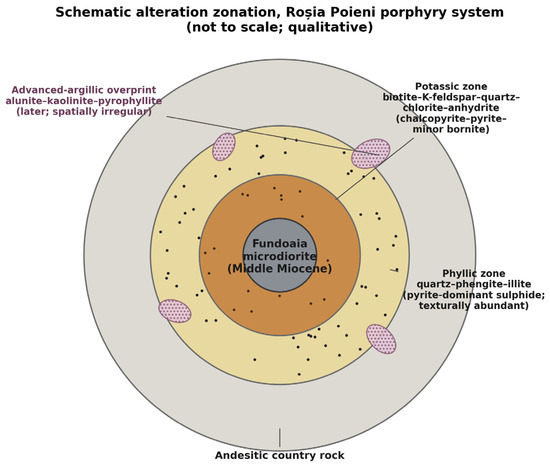
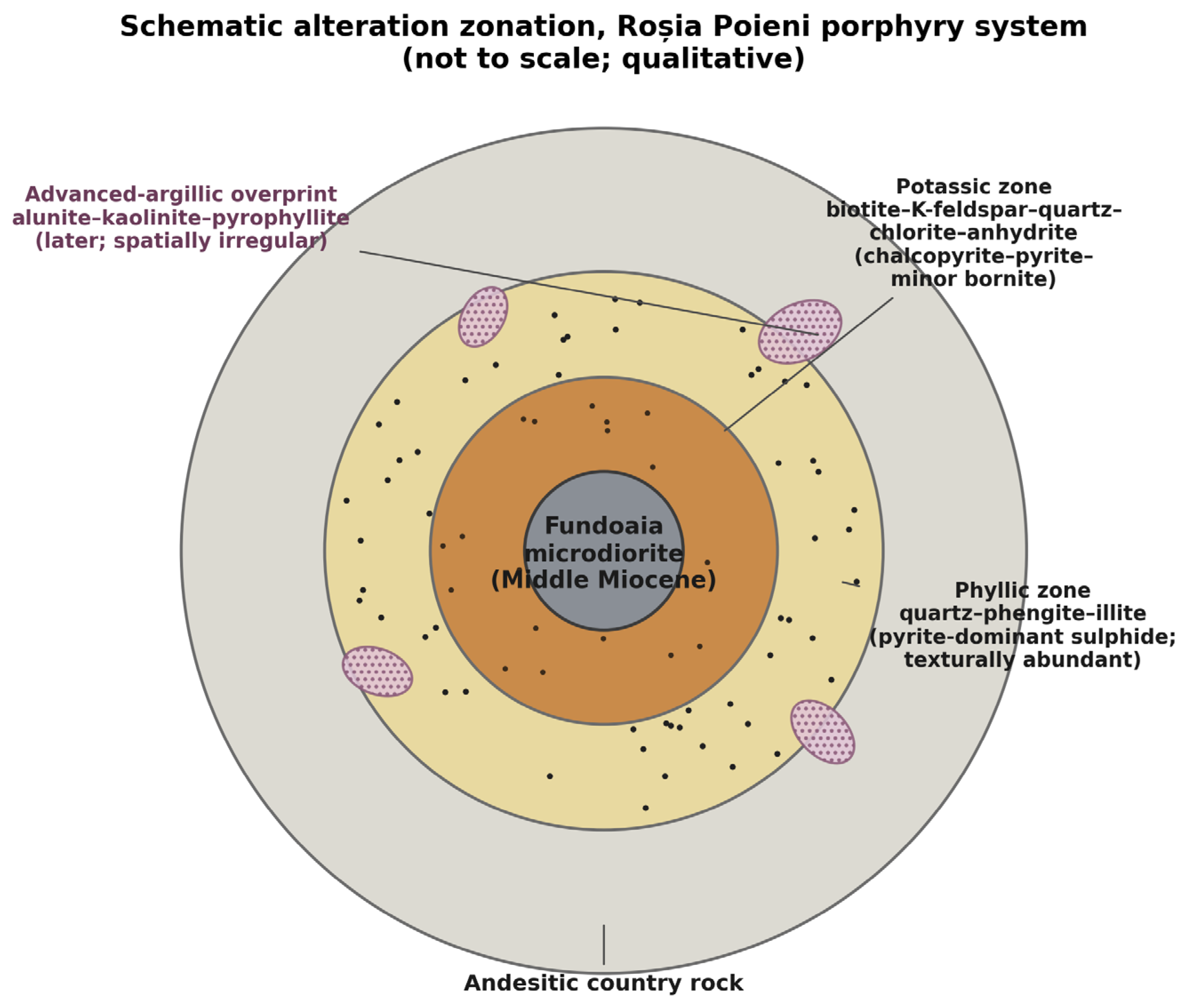
The deposit is a porphyry copper system centred on the Fundoaia microdiorite, a Middle Miocene subvolcanic body intruding andesitic country rock [9]. Ore-stage sulphide mineralisation comprises chalcopyrite, pyrite and minor bornite within an inner potassic alteration zone (biotite, K-feldspar, quartz, chlorite, anhydrite), which is overprinted by a phyllic zone (quartz, phengite, illite) in which pyrite is the dominant sulphide, and by a later advanced-argillic assemblage (alunite, kaolinite, pyrophyllite) [9]. The texturally abundant pyrite documented in the potassic and, especially, the phyllic alteration zones is consistent with the sulphide-oxidation signature (low pH, elevated conductivity) observed in the tailings pond water in this study (Section 3.2). This zonation is summarised schematically in Figure 1.
Figure 1.
Schematic alteration zonation of the Roșia Poieni porphyry system (not to scale; qualitative): a potassic core (biotite, K-feldspar, quartz, chlorite, anhydrite; chalcopyrite–pyrite–minor bornite) around the Fundoaia microdiorite intrusion, overprinted by a phyllic zone (quartz, phengite, illite; pyrite-dominant, texturally abundant) and by a later, spatially irregular advanced-argillic assemblage (alunite, kaolinite, pyrophyllite), within Middle Miocene andesitic country rock. Redrawn as an original schematic from the zonation described in Milu et al. [9]; this diagram is not a reproduction of any previously published map and does not depict true areal extent or geometry.
Flotation tailings from the Roșia Poieni open pit (Alba County) are stored in the Valea Șesei tailings pond, located within the Șesei valley catchment (Figure 2 and Figure 3). After a sedimentation period intended to allow settling of suspended solids, the supernatant process water is discharged into the Arieș River. Prior monitoring of this discharge has repeatedly reported exceedances of the admissible limits for suspended solids, copper, iron and pH [4].
Given the recurring nature of these exceedances, a detailed physicochemical characterisation of the pond water and of its impact on the receiving river was considered necessary. The aims of this study were: (i) to characterise the physicochemical quality of water within the Valea Șesei tailings pond; (ii) to quantify the impact of pond discharge on the water quality of the Arieș River relative to the Romanian regulatory limits applicable at the time of sampling (STAS 4706/1988); and (iii) to discuss the implications of the findings for hazard and risk management at similar tailings facilities in Romania.
Figure 2.
Roșia Poieni open-pit copper mine, Alba County, Romania. Photo: Cristian Bortes, licensed under CC BY 2.0 (via Wikimedia Commons; https://commons.wikimedia.org/wiki/File:Roșia_Poieni_open-pit_copper_mine.jpg (accessed on 4 September 2026)), reproduced unmodified.
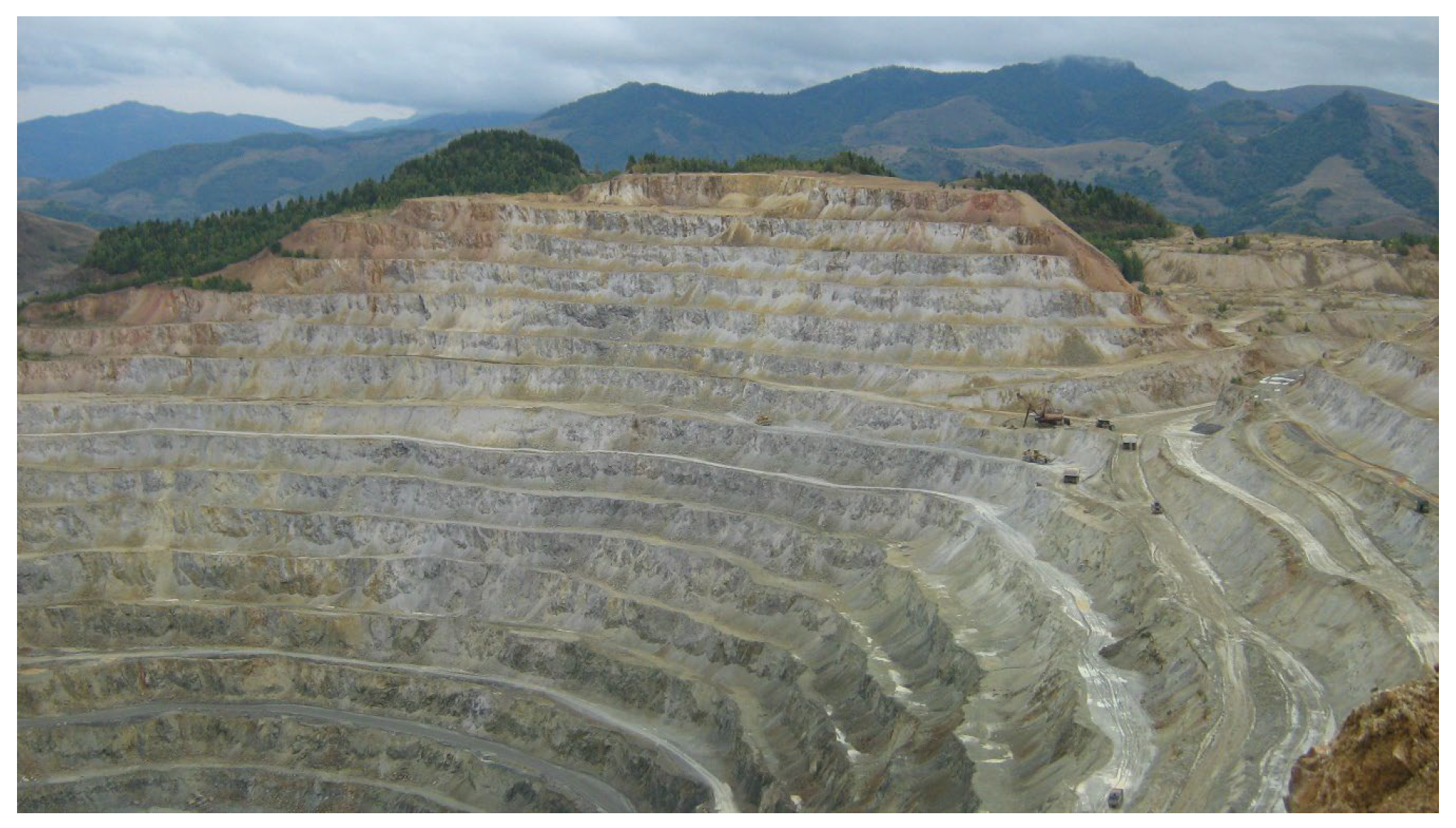
Figure 3.
Schematic site location and setting: Roșia Poieni open-pit mine, Valea Șesei tailings pond, and the Arieș River (illustrative, not to scale; see Figure 4 for the sampling-point layout).
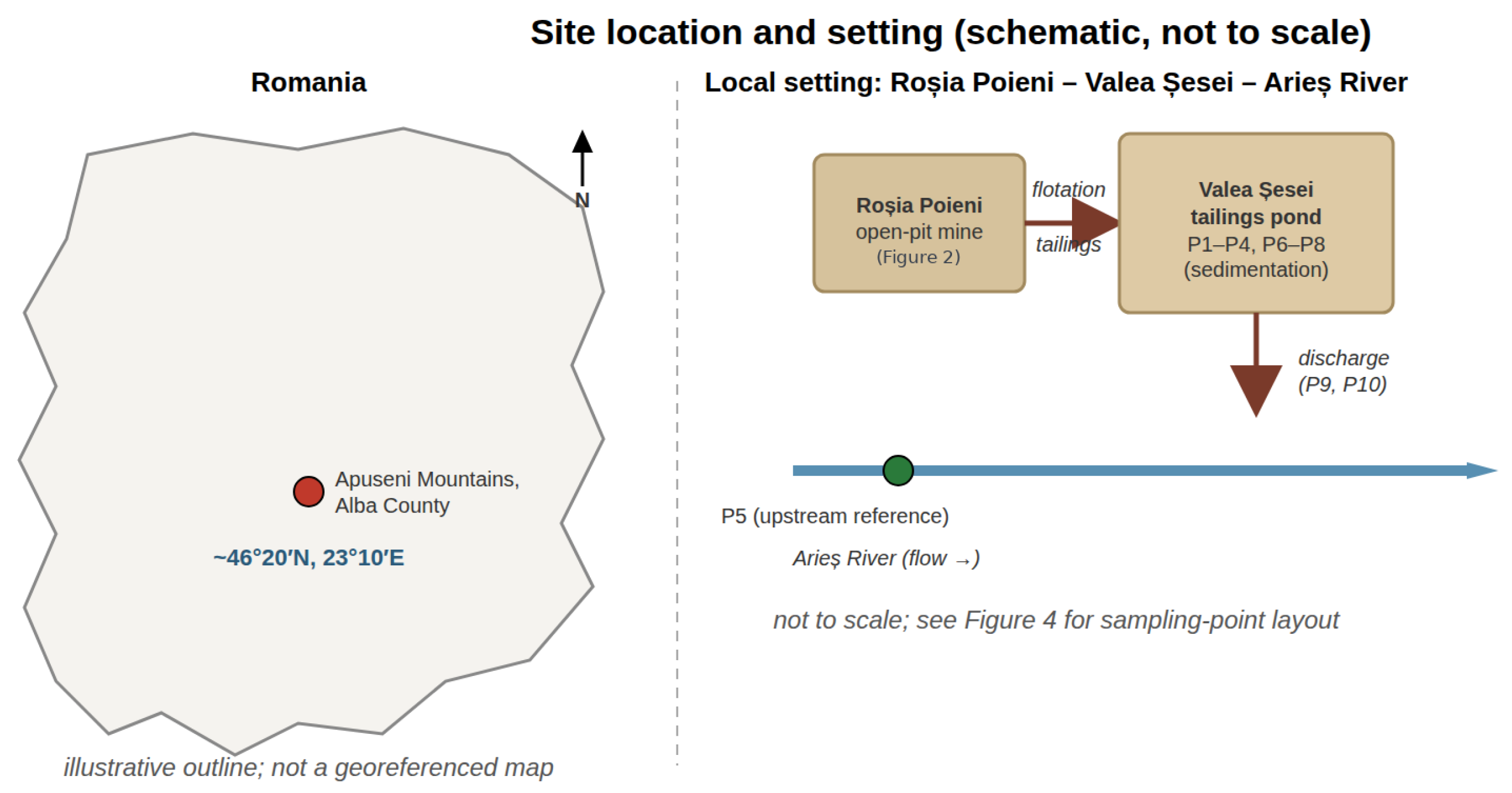
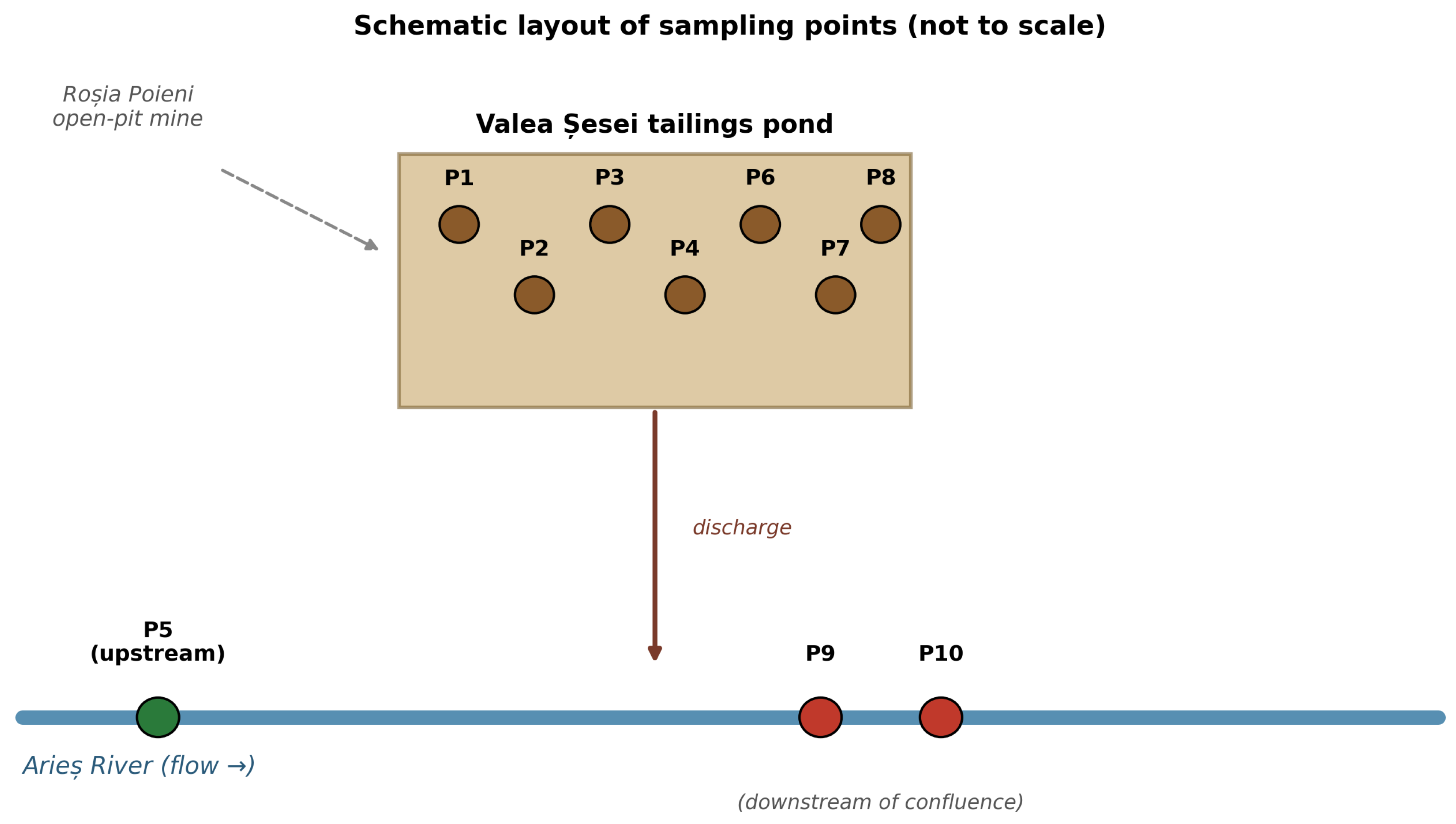
Figure 4.
Schematic layout of sampling points P1–P10 relative to the Valea Șesei tailings pond and the Arieș River (not to scale; drawn from the sampling design described in Section 2.2, not from the recorded GPS coordinates).
2. Materials and Methods
2.1. Study Area
The Valea Șesei tailings pond stores flotation tailings generated during the beneficiation of copper ore from the Roșia Poieni open pit (Figure 2), located in Alba County, Romania. The pond occupies part of the Șesei valley catchment (Figure 3); after a sedimentation period, the clarified process water is discharged into the Arieș River. The facility has been in operation since 1978 under Cupru Min SA (Abrud), a state-owned mining company, and is among the largest mine-tailings repositories in Romania; its progressive expansion has submerged much of the former village of Geamăna beneath accumulated tailings [10].
2.2. Sampling Design
Ten water samples were collected: seven samples (P1–P4, P6–P8) from within the tailings pond, one sample (P5) upstream of the pond, and two samples (P9–P10) from the point at which pond water discharges into the Arieș River. Sample coordinates were recorded using a handheld GPS receiver (Garmin eTrex Legend, Garmin, Olathe, KS, USA). This ten-point survey was carried out in a field campaign in approximately October 2023, with field collection conducted by a colleague (T. Rusu; see Acknowledgments) rather than by the author personally. The dataset is reported here, notwithstanding its age relative to the time of writing, because it remains the most complete water-quality characterisation available for this site and because, as discussed in Section 4.2, the tailings pond remains an active, regulated facility currently undergoing a capacity-expansion process, which reinforces rather than diminishes the relevance of this baseline. The spatial layout of the sampling points relative to the pond and the river is summarised schematically in Figure 4.
2.3. Laboratory Analyses
Suspended solids (Table 1) were determined gravimetrically by filtration through glass fibre filters, following the general principle of the SR EN 872 [11] standard method (filtration of a known sample volume, drying and weighing of the retained residue); the exact filter pore size, drying temperature and drying duration used are not specified in the surviving laboratory records for this dataset and are therefore not reported here. Measured suspended-solids concentrations are reported later for the Arieș River and effluent samples (Section 3.4).
Table 1.
Comparison of discharge limits under STAS 4706/1988 (historical, applied in this study) and the current NTPA-001/2002 normative, for the indicators measured. Note the substantially different treatment of iron between the two standards (0.2 vs. 5.0 mg/L), which materially changes the compliance picture for this parameter.
pH, dissolved oxygen (mg/L and %), temperature, atmospheric pressure, resistivity, conductivity (raw and temperature-compensated), total dissolved solids, and salinity were measured in the laboratory using a portable multiparameter water quality meter (HI 9828, Hanna Instruments, Woonsocket, RI, USA). Atmospheric pressure was recorded because the instrument uses it, together with temperature and salinity, as an internal input to compute dissolved oxygen percent saturation from the raw sensor signal, rather than as an independent water-quality determinant; it is reported in Section 3.2 for methodological transparency and reproducibility, not as an indicator of water quality in its own right. Turbidity was likewise measured in the laboratory with a portable turbidimeter (HI 93703, Hanna Instruments). Total hardness, expressed as CaCO3 equivalent, was not determined by direct titrimetric or ion-based analysis; it was instead estimated from the conductivity readings obtained with the HI 9828 multiparameter meter, using an empirical conductivity-to-hardness relationship, and should therefore be treated as an approximate proxy value rather than a direct measurement. Similarly, total dissolved solids (Section 3.2) were not determined as the gravimetric sum of major dissolved ions (which would require a full major-ion analysis, itself among the excluded parameters discussed in Section 4.1); these values are the HI 9828 meter’s internal conductivity-derived estimate. A separate “fixed residue” value, reported later for the Arieș River and effluent samples (Section 3.4), was determined gravimetrically by evaporation and drying of a known sample volume, following the general principle of the STAS 9187-84 [12] standard method (cap. 6); the exact drying temperature and duration used for this historical determination are not specified in the surviving laboratory records. Dissolved copper and iron were determined by inductively coupled plasma optical emission spectrometry (ICP-OES, Optima 2100 DV, PerkinElmer, Waltham, MA, USA). Copper and iron were selected as the primary dissolved-metal indicators for the ten-point survey because they are, respectively, the ore commodity and the dominant sulphide-hosted gangue element at the Roșia Poieni deposit (Section 1), and because oxidation of iron sulphides is the principal geochemical process generating acid mine drainage at this and comparable porphyry-copper sites [1,2]; other AMD-associated trace metals (e.g., Zn, Ni, Cd) were accordingly not included in the primary survey, although a broader eight-element historical screening reporting these elements is presented separately in Section 3.5. Although the multiparameter meter and turbidimeter are portable instruments, all analyses in this study were performed on samples transported to the laboratory rather than in the field.
2.4. Regulatory Reference Values
Measured concentrations were compared with the admissible limits for surface water discharge set out in the Romanian standard STAS 4706/1988, which was in force at the time the underlying dataset was compiled. This standard was subsequently superseded by the NTPA-001/2002 and NTPA-002/2002 discharge norms (Government Decision 188/2002), which transposed relevant EU requirements. STAS 4706/1988 values are retained here for internal consistency with the historical dataset; re-assessment of compliance against the current NTPA-001/002 thresholds is recommended for any regulatory use of these results.
For transparency, Table 1 also presents the current NTPA-001/2002 limits [13] alongside the historical STAS 4706/1988 values used for internal consistency with the dataset. Recomputing the exceedance factors against NTPA-001/2002 changes the compliance picture for iron in particular: the Valea Șesei effluent copper concentration (27.1 mg/L) is approximately 271 times the NTPA-001/2002 limit (0.1 mg/L), a stricter comparison than under STAS (135 times), whereas the effluent iron concentration (195 mg/L) is approximately 39 times the NTPA-001/2002 limit (5.0 mg/L)—far below the 975-fold exceedance reported under STAS, since NTPA-001/2002 sets a substantially higher permissible iron concentration. Downstream in the Arieș River, copper remained approximately 65 times the NTPA-001/2002 limit, while iron exceeded it by only about 1.6 times. This divergence underlines the importance of specifying which regulatory framework is applied when reporting compliance, and indicates that copper, rather than iron, is the more consistently non-compliant parameter under current Romanian legislation.
2.5. Statistical Analysis
Descriptive statistics (mean, standard deviation, minimum and maximum) were calculated for the physicochemical parameters measured across the ten sampling points. Pearson correlation coefficients were computed between pairs of parameters to assess the internal consistency of the dataset and to explore relationships characteristic of acid mine drainage (e.g., between pH and conductivity). Given the small sample size (n = 10), these correlations are reported as an exploratory, descriptive complement to the site-by-site comparison in Section 3, rather than as a basis for formal hypothesis testing.
3. Results
3.1. Visual Characterisation of the Samples
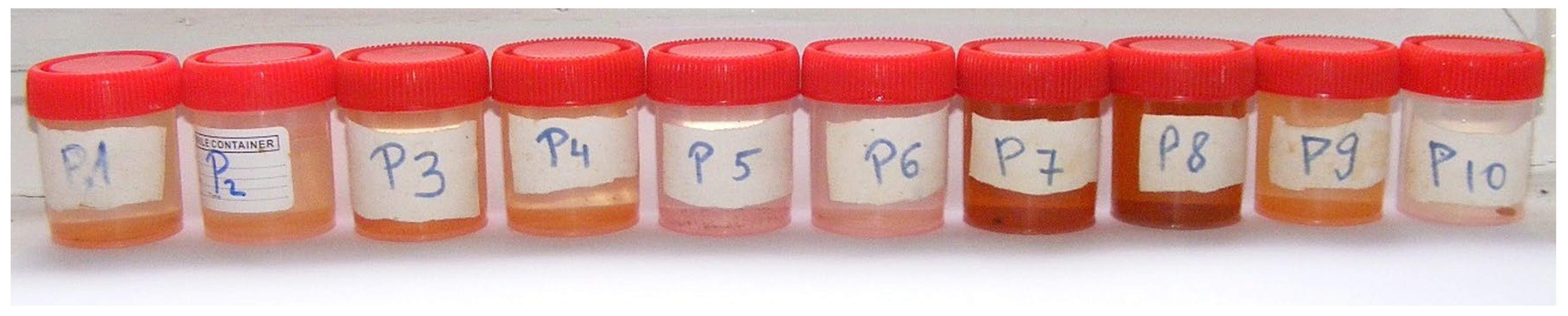
The ten samples showed marked differences in colour and turbidity (Figure 5). Samples P1–P4 had a slightly yellowish appearance with traces of sediment; P5 was colourless with sediment traces; P6 was colourless; P7 and P8 had a reddish appearance with sediment traces; P9 was ochre-coloured; and P10 was colourless. This variability reflects differing degrees of sulphide/iron oxidation and suspended sediment load across the sampling points. These qualitative descriptions were made through the translucent sample-container walls (the red fittings visible in Figure 5 are the screw caps only, not the container body) and are corroborated quantitatively by the turbidity readings reported in Section 3.2, which range from 1.13 NTU at the near-colourless reference point P5 to 45.14 NTU at the visibly reddish point P8.
Figure 5.
Water samples collected from the Valea Șesei tailings pond and adjacent reference/discharge points (P1–P10).
3.2. Physicochemical Characterisation of the Tailings Pond Water
pH was strongly acidic at most in-pond sampling points (Table 2), ranging from 3.27 to 3.90 (P1–P4, P7, P8), consistent with active sulphide oxidation. The upstream reference point (P5) was near-neutral (pH 8.59), as expected outside the influence of the tailings. Sampling point P6, although located within the pond perimeter (Section 2.2), was also near-neutral (pH 8.11) rather than acidic; this is consistent with a report that the Valea Șesei facility performs a degree of in-pond acid neutralisation using material from nearby waste stockpiles, in addition to its primary sedimentation function [14], suggesting P6 may have been located within or near such a neutralisation zone. This remains a plausible explanation rather than a confirmed cause, since the exact position of any neutralisation zone relative to P6 was not independently verified in the field, and is noted here as a specific target for follow-up sampling. Dissolved oxygen was variable and dropped to 0 ppm at P7; given that this value is physically implausible for a surface sample under the reported conditions, it is flagged here as a probable probe/electrode artefact rather than a genuine anoxic condition, and should be re-verified in any future sampling campaign.
Table 2.
Dissolved oxygen (DO), pH, atmospheric pressure and temperature of the tailings pond water and adjacent reference/discharge points.
Turbidity, conductivity and total dissolved solids were markedly higher at P7 and P8 than at the upstream reference point P5 (Table 3), consistent with concentrated flotation-tailings effluent chemistry and progressive ionic concentration within the pond. Conductivity at P7 (9822 µS/cm) was approximately 35 times higher than at the reference point P5 (284 µS/cm).
Table 3.
Turbidity (NTU, nephelometric turbidity units), conductivity (25 °C-compensated and actual), total dissolved solids (TDS), and salinity (PSU, practical salinity units) of the tailings pond water and adjacent reference/discharge points.
Resistivity was also recorded by the multiparameter probe but is omitted from Table 3, as it is the mathematical reciprocal of conductivity and provides no independent information. Conductivity is reported both as measured at the sample temperature (“actual”) and normalised to 25 °C by the probe’s built-in algorithm (“25 °C-compensated”), which is why the two columns differ. Salinity (PSU, practical salinity units) is computed by the probe from conductivity using an algorithm calibrated for seawater; in this freshwater/acid-mine-drainage context the reported PSU values should be read as an instrument-computed conductivity-derived index rather than true oceanographic salinity.
3.3. Statistical Relationships Among Physicochemical Parameters
Descriptive statistics for the full sample set (n = 10) are summarised in Table 4. The wide standard deviations relative to the means, particularly for conductivity, TDS, and turbidity, reflect the strong contrast between the acidic, ion-enriched tailings-pond samples and the near-neutral reference/discharge points, rather than measurement variability at any single location.
Table 4.
Descriptive statistics (n = 10) for selected physicochemical parameters across all sampling points.
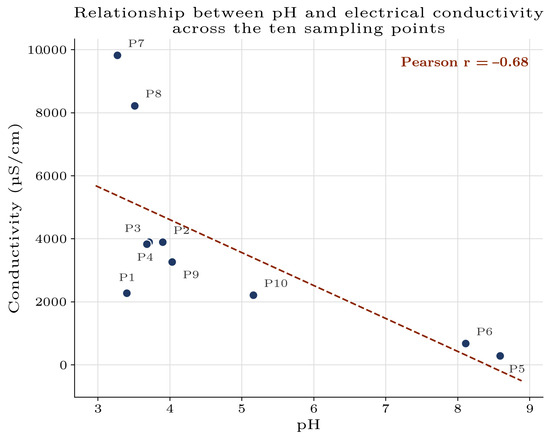
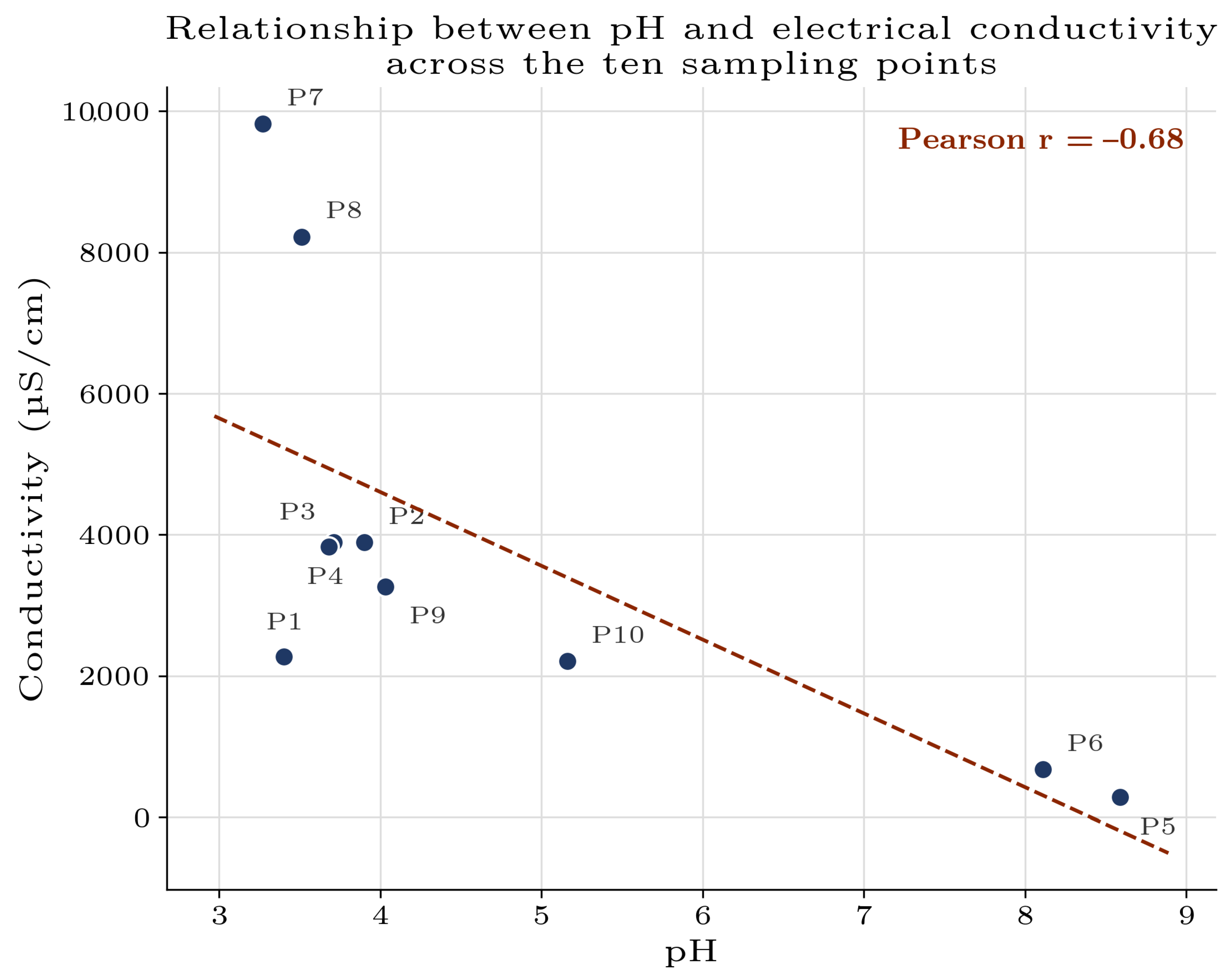
Pearson correlation analysis indicated a moderate negative relationship between pH and conductivity (r = −0.68; Figure 6) and between pH and total dissolved solids (r = −0.67), consistent with the expected acid mine drainage signature in which sulphide oxidation simultaneously lowers pH and increases the dissolved ionic load. As expected, given that TDS was calculated from conductivity by the multiparameter probe, conductivity and TDS were almost perfectly correlated (r = 1.00); this internal consistency check supports the reliability of the readings but is not treated as an independent finding. The correlation between turbidity and TDS was weak (r = 0.23), indicating that suspended-sediment load and dissolved-ion concentration varied largely independently across the sampling points—consistent with the differing colour and clarity observed visually among samples (Section 3.1).
Figure 6.
Relationship between pH and conductivity across the ten sampling points (Pearson r = −0.68), illustrating the acid mine drainage signature in which sulphide oxidation simultaneously lowers pH and increases the dissolved ionic load; dashed line is a linear least-squares fit shown for visual reference only.
3.4. Impact of Tailings Pond Discharge on Arieș River Water Quality
Under STAS 4706/1988, discharged water is generally required to have a pH close to neutrality (6.5–8.5 units), a value influenced by the presence of carbon dioxide, carbonates and bicarbonates and other substances affecting hydrogen ion concentration. Sampling results (Table 5) showed that the Valea Șesei effluent had a pH of 2.72, a dissolved copper concentration approximately 135 times the admissible limit (27.1 mg/L against a 0.2 mg/L limit), and a dissolved iron concentration approximately 975 times the admissible limit (195 mg/L against a 0.2 mg/L limit). Downstream of the confluence, the Arieș River showed clear dilution of these concentrations, but copper and iron remained approximately 33 and 40 times above the STAS limit, respectively, and suspended solids remained above the admissible value (42 mg/L against 25 mg/L). The downstream pH (6.15) represented a substantial recovery from the effluent value of 2.72, but still fell marginally below the lower bound of the STAS 4706/1988 compliance range (6.5–8.5), indicating that dilution by the Arieș River had not fully neutralised the acidic discharge at the point of sampling.
Table 5.
Water quality of the Arieș River upstream and downstream of the confluence with the Valea Șesei tailings pond effluent, and of the effluent itself. Hardness values are conductivity-derived estimates, not direct titrimetric measurements (see Section 2.3).
A second, independent sampling campaign upstream of the confluence recorded pH 7.25, suspended solids 22 mg/L, fixed residue 205 mg/L, hardness 30.46 mg/L and dissolved copper and iron of 2.67 and 1.31 mg/L, respectively—all compliant with STAS 4706/1988 and broadly consistent with the first-determination upstream values reported in Table 5 (pH 7.52; Cu 1.47 mg/L; Fe 1.88 mg/L). This second campaign was carried out in approximately March 2024, roughly five months after the ten-point survey. This agreement between two independent upstream measurements indicates that the reference (upstream) reach of the Arieș River is comparatively stable in composition between sampling occasions, reinforcing the interpretation that the exceedances recorded downstream of the confluence in Table 5 are attributable to the Valea Șesei discharge rather than to background variability in the river itself.
3.5. Broader Multi-Element Screening (Historical Dataset)
An earlier multi-element ICP-OES screening of Valea Șesei tailings-pond water, covering eight additional elements (Cd, Co, Cr, Cu, Fe, Mn, Ni, Zn) beyond the copper and iron retained in the primary ten-point survey (Section 2.2, Section 2.3, Section 2.4, Section 2.5, Section 3.1, Section 3.2, Section 3.3 and Section 3.4), was located in the authors’ own laboratory records; it is the dataset referred to in Section 4.1 and Section 5 as having been excluded from earlier drafts for lacking verifiable support. On re-examination, it is reported here rather than omitted, subject to explicit caveats. First, the ten sampling points in this record (labelled P1A–P10A) cannot be confidently matched to the P1–P10 points used elsewhere in this manuscript: the pH pattern differs substantially (e.g., P5A and P6A are strongly acidic, pH 1.24 and 0.80, whereas the upstream reference point P5 and the anomalous in-pond point P6 of the primary survey are near-neutral, pH 8.59 and 8.11), indicating either a different point layout or a different sampling occasion, which could not be reconstructed after several years. Second, the exact sampling date is not recorded; it predates the ten-point survey reported elsewhere in this manuscript by an unknown interval. Third, concentrations in the original record were expressed in µg/L rather than mg/L as labelled in the source table; they have been converted to mg/L (÷1000) for consistency with the rest of this manuscript. Fourth, no QA/QC documentation (blanks, duplicates, certified reference materials) accompanies this record. For these reasons, this dataset is reported as an independent historical screening rather than merged with the primary ten-point dataset (Table 2 and Table 3) or used to support point-specific interpretation elsewhere in this manuscript.
Despite the unresolved point correspondence, the concentrations in Table 6 are broadly consistent in order of magnitude with the compliance-oriented values already reported for the Valea Șesei effluent in Table 5 (dissolved copper 27.1 mg/L, dissolved iron 195 mg/L): the most contaminated points in this historical record (P7A, P8A) show dissolved copper of 6.8–7.7 mg/L and dissolved iron of 124–141 mg/L, the same order of magnitude as the effluent values, which supports the general plausibility of the unit-corrected values without establishing point-level correspondence. Cadmium, cobalt, chromium, and nickel are elevated at the most contaminated points relative to typical freshwater background but remain one to three orders of magnitude below dissolved copper and iron, consistent with the copper-mining origin of the tailings (Section 2.1).
Table 6.
Multi-element ICP-OES screening (Cd, Co, Cr, Cu, Fe, Mn, Ni, Zn) from an earlier, undated field investigation at the Valea Șesei tailings pond; sample labels (P1A–P10A) do not correspond to the P1–P10 points used elsewhere in this manuscript. n.d. = not determined in the original record.
4. Discussion
Dissolved copper and iron concentrations in water associated with the Valea Șesei tailings pond substantially exceeded STAS 4706/1988 limits, in a pattern characteristic of acid mine drainage generated by oxidation of residual sulphide minerals in the flotation tailings [1]. The persistence of these exceedances after dilution in the Arieș River indicates a measurable impact on receiving-water quality. This is consistent with the risk classification previously proposed for Romanian tailings ponds, including Valea Șesei, under standardised hazard and risk assessment frameworks [4,7]. These findings are also consistent with recent international case studies of AMD-affected watercourses, which report comparable seasonal and spatial contamination patterns [15], health-risk implications for downstream communities [16], and measurable ecotoxicological effects on aquatic organisms exposed to AMD-impacted waters [17]. Given known toxicity thresholds of dissolved copper and iron for aquatic biota, continued discharge at the concentrations recorded here is likely to pose an ecological risk to the Arieș River downstream of the confluence, warranting monitoring against the alert-threshold approach used for the Danube basin [8] and re-assessment against current NTPA-001/002 regulatory limits [13]. Comparable AMD signatures have been reported from other Eastern European porphyry-copper districts, notably the Bor and Majdanpek mining areas in Eastern Serbia, where acidic, metal-laden drainage measurably affects the Danube more than 100 km downstream [18]—a transboundary pattern analogous to the Arieș–Mureș–Tisza–Danube pathway relevant to Valea Șesei discharge. Within the Arieș catchment itself, earlier surveys of the middle basin have similarly identified mining-derived heavy-metal pollution as the dominant pressure on surface-water quality [19], while comparable AMD-driven contamination has been documented elsewhere in the Apuseni Mountains at Certej [20] and Roșia Montană [21], indicating that the Valea Șesei case is representative of a broader regional pattern rather than an isolated occurrence. From a regulatory standpoint, it is notable that copper and iron are not among the substances harmonised at EU level under the Water Framework Directive and its Environmental Quality Standards Directive [22,23], which set common thresholds only for cadmium, lead, mercury, nickel and a limited list of organic pollutants; discharge limits for copper and iron therefore remain a national competence, which helps explain the divergence between the STAS 4706/1988 and NTPA-001/2002 values discussed in Section 2.4. This regulatory gap is particularly significant given that the 2000 Baia Mare and Baia Borsa tailings-pond accidents in Romania were direct catalysts for the adoption of Directive 2006/21/EC [6,24], underscoring the historical link between Romanian tailings-pond incidents and current EU extractive-waste policy.
Beyond regulatory compliance, it is instructive to compare the measured dissolved copper and iron concentrations against ecotoxicological guidelines developed to protect freshwater aquatic life, since discharge standards such as STAS 4706/1988 and NTPA-001/2002 are not derived from species-sensitivity data and are not necessarily protective of aquatic biota. For copper, the EU regulatory framework itself provides a directly relevant benchmark: under the Water Framework Directive and the copper REACH dossier, several EU Member States derive bioavailability-based Environmental Quality Standards for copper as a river basin-specific pollutant, and a continent-wide evaluation across 19 European countries confirmed the validity of a protective threshold of 1 μg/L (0.001 mg/L) dissolved copper [25]. This value, rather than a non-European guideline, is used in Table 7; it should be noted that the cited evaluation was funded by the copper industry, although the underlying bioavailability methodology is the one adopted by EU regulators. For iron, no equivalent EU-harmonised or industry-derived screening value exists—consistent with the absence of iron from the EU priority-substances list discussed above—so the chronic guideline for dissolved iron (0.35 mg/L) from a Canadian/British Columbian regulatory source is used instead [26] and should be treated as illustrative only. Table 7 shows that dissolved copper exceeded the EU-consistent threshold by three to four orders of magnitude at all three locations, including roughly 1500-fold at the upstream Arieș site—a reach compliant with both Romanian discharge standards. This indicates that copper concentrations even upstream of the Valea Șesei confluence, plausibly reflecting the naturally mineralised, porphyry-copper geology of the catchment, may already pose a chronic risk to sensitive aquatic organisms irrespective of the tailings-pond discharge, while the discharge itself adds a much larger increment downstream. Site-specific bioavailability (pH, hardness and, in particular, dissolved organic carbon, which was not measured in this study) was not fully characterised, so the exceedance factors in Table 7 should be read as indicative rather than as a formal bioavailability-corrected risk assessment; in the generally low-hardness, low-alkalinity waters of this catchment, accounting for bioavailability would be expected to lower the protective threshold further rather than raise it.
Table 7.
Measured dissolved copper and iron concentrations (from Table 5) compared with chronic freshwater ecotoxicological guidelines for aquatic life protection.
4.1. Study Limitations
Several limitations should be considered when interpreting these results. First, the dataset derives from a single sampling campaign, supplemented only by a partial upstream check from a second campaign (Section 3.4); temporal variability, known to be pronounced in AMD-affected systems in response to precipitation, seasonal flow and freeze-thaw cycles [15], could not be assessed, and the results should be interpreted as a snapshot rather than as characteristic of year-round conditions. Second, although the ICP-OES instrument used (Optima 2100 DV) is capable of a broader multi-element scan, only dissolved copper and iron were determined at the ten primary sampling points (P1–P10); a broader eight-element screening (Cd, Co, Cr, Mn, Ni, Zn, alongside Cu and Fe) exists from an earlier, undated field investigation at the same site and is reported separately in Section 3.5, but its sampling points could not be matched to P1–P10 and it lacks QA/QC documentation, so it could not be merged with the primary dataset. Major-ion data (Ca, Mg, K, Na, SO4) referenced in earlier drafts of the underlying study could not be recovered in any verifiable form and remain entirely excluded (see Section 5). Aluminium, which can also reach elevated concentrations in acid mine drainage, was likewise not included in either the primary Cu/Fe determination or the historical eight-element screening (Section 3.5), and its absence should be noted as a further data gap alongside the major-ion series. A fully QA/QC-documented, spatially matched multi-element and major-ion characterisation remains a priority for future sampling. Third, no explicit quality assurance/quality control protocol (blanks, duplicates, certified reference materials, method detection limits) is reported for the ICP-OES analyses; the internal consistency checks performed (Section 3.3) support the plausibility of the dataset but do not substitute for independent QA/QC documentation. Fourth, the ecotoxicological comparison in Table 7 uses an EU-consistent, bioavailability-based threshold for copper but a non-European (Canadian/British Columbian) guideline for iron, in the absence of an EU-harmonised aquatic-life threshold for the latter; site-specific bioavailability correction was not possible, so the comparison should be treated as indicative rather than as a formal risk assessment. Fifth, total hardness was not measured directly but estimated from conductivity via an empirical conductivity-to-hardness relationship (Section 2.3); this proxy approach is inherently less accurate than titrimetric (e.g., EDTA) or ion-based (Ca, Mg) determination, and the hardness values reported in Table 5 should be interpreted with this caveat in mind. Sixth, all sampling, analysis, and interpretation were carried out by a single researcher, without independent replicate analysis by a second laboratory. Finally, the exact storage conditions and the holding time between field collection and laboratory analysis for both campaigns (Section 2.2) were not documented at the time of sampling and could not be reconstructed retrospectively; whether samples were preserved (e.g., acidified) prior to ICP-OES analysis is likewise not recorded. This is a genuine limitation, particularly for storage-sensitive parameters such as dissolved oxygen and pH, and is noted here rather than assumed away. Finally, although sample coordinates were recorded in the field with a handheld GPS receiver (Section 2.2), the coordinate log itself did not survive in the recoverable field records for this dataset; Figure 4 is therefore presented explicitly as an illustrative schematic of the sampling design rather than a georeferenced map, and no attempt has been made to reconstruct approximate coordinates from memory.
4.2. Management and Remediation Implications
The persistence of copper and iron exceedances downstream of the Valea Șesei confluence, even after dilution, points to a need for active management of the pond discharge rather than reliance on natural attenuation. Chemical neutralisation remains the most common approach for AMD sources with high metal and acidity loads [1], but where flow and acidity are moderate, passive treatment systems—constructed wetlands, anoxic limestone drains and related technologies—have achieved substantial and sustained reductions in acidity and dissolved iron at comparable AMD sites, and could be evaluated as a lower-cost complement or alternative for the Valea Șesei effluent [27]. Given the sulphide-rich nature of the flotation tailings, source-control measures reviewed elsewhere for tailings recycling and AMD prevention [3]—including partial reprocessing of the tailings for residual copper recovery, engineered covers to limit oxygen ingress, and improved sedimentation/retention time before discharge—could reduce the metal load generated at source rather than only treating it after formation. Any such intervention should be preceded by the regular monitoring recommended in Section 5, ideally incorporating the broader metal suite and QA/QC protocol identified in Section 4.1, to establish a sound baseline against which remediation performance can be assessed.
Beyond treating or reducing the pond discharge itself, a complementary circular-economy strategy increasingly explored for flotation tailings is their reuse as an engineered material rather than indefinite surface storage. Khayrutdinov et al. [28] showed that mechanically activated copper-mine tailings, incorporated into cemented backfill composites, achieved improved strength and pore-structure properties suitable for stabilising underground voids and drainage boreholes, while displacing the emissions associated with conventional backfill materials. Applying a similar tailings-reuse approach at Valea Șesei, even partially, would reduce the volume of sulphide-bearing material held in long-term surface storage and thus the area exposed to oxidative weathering, the principal driver of the acid mine drainage signature reported in this study.
The facility remains an active, regulated operation. In May 2026, the operator submitted an application to the Alba County Environmental Protection Agency for a capacity-increase permit for the Valea Șesei tailings pond, proposing to raise the dam crest by approximately 2 m (from 710 to 712 m above datum), together with downstream consolidation works and extension of the tailings transport system [10,14]. This ongoing expansion underscores the continued relevance of the water-quality baseline reported here and reinforces the case for regular monitoring accompanying any future modification of the impoundment.
5. Conclusions
Water within the Valea Șesei tailings pond is strongly acidic and enriched in dissolved copper and iron, consistent with active acid mine drainage generation from residual sulphide minerals in the flotation tailings.
Discharge of this water into the Arieș River causes measurable, non-compliant increases in copper, iron, suspended solids, and acidity downstream of the confluence, with copper and iron exceeding STAS 4706/1988 limits by more than an order of magnitude even after dilution.
Important data gaps remain: an eight-element heavy-metal screening (Cd, Co, Cr, Cu, Fe, Mn, Ni, Zn) exists from an earlier field investigation at the site and is reported in Section 3.5, but its sampling points could not be reconciled with the P1–P10 survey, and it lacks QA/QC documentation, so it does not substitute for a spatially matched characterisation. Major-ion data (Ca, Mg, K, Na, SO4) referenced in earlier drafts of the underlying study could not be recovered in any verifiable form and remain entirely excluded from this manuscript.
Given the recurring nature of these exceedances, regular monitoring of tailings pond discharge quality against current national and EU regulatory limits is recommended, together with the application of structured hazard and risk assessment frameworks (e.g., [5]) to this and similar tailings facilities in Romania, at a frequency proportionate to facility risk classification as required under Directive 2006/21/EC [6]. Concretely, for Valea Șesei we recommend a minimum quarterly monitoring frequency for the core parameters used in this study (pH, conductivity, dissolved copper and iron), intensified to monthly during the spring snowmelt period (March–May), when acid mine drainage generation and metal mobilisation are typically highest in temperate mountain catchments [15]; this recommendation is reinforced by the roughly five-month gap between the two sampling campaigns reported here (Section 2.2), which was too coarse to resolve any seasonal pattern (Section 4.1). Future work should include a complete multi-metal characterisation, replicate sampling across seasons at this recommended frequency, and assessment of downstream ecological effects.
Funding
This research received no external funding.
Data Availability Statement
The original contributions presented in this study are included in the article. Further raw data are available from the author on request.
Acknowledgments
The author gratefully acknowledges the Technical University of Cluj-Napoca for laboratory support during sample analysis. The author thanks Tiberiu Rusu for conducting the field sample collection campaigns. The author also thanks Cristian Bortes for the Figure 2 photograph, reproduced unmodified under a Creative Commons Attribution 2.0 (CC BY 2.0) license via Wikimedia Commons.
Conflicts of Interest
The author declares no conflicts of interest.
References
- Akcil, A.; Koldas, S. Acid Mine Drainage (AMD): Causes, treatment and case studies. J. Clean. Prod. 2006, 14, 1139–1145. [Google Scholar] [CrossRef] [Scilit]
- Lottermoser, B.G. Mine Wastes: Characterization, Treatment and Environmental Impacts, 3rd ed.; Springer: Berlin/Heidelberg, Germany, 2010. [Google Scholar] [CrossRef] [Scilit]
- Park, I.; Tabelin, C.B.; Jeon, S.; Li, X.; Seno, K.; Ito, M.; Hiroyoshi, N. A review of recent strategies for acid mine drainage prevention and mine tailings recycling. Chemosphere 2019, 219, 588–606. [Google Scholar] [CrossRef] [Scilit]
- Mara, S.; Tănăsescu, M.; Ozunu, A.; Vlad, Ș.N. Criteria for identifying the major risks associated with tailings ponds in Romania. Mine Water Environ. 2007, 26, 256–263. [Google Scholar] [CrossRef] [Scilit]
- ANMR (Agenția Națională Pentru Resurse Minerale). Diminuarea Riscurilor și Pregătirea Răspunsurilor în Cazurile de Urgență: Asistența Tehnică Pentru Deșeuri Miniere; ANMR: Bucharest, Romania, 2006. [Google Scholar]
- European Union. Directive 2006/21/EC of the European Parliament and of the Council on the management of waste from extractive industries. Off. J. Eur. Union 2006, L102, 15–34. [Google Scholar]
- Mara, S.; Tănăsescu, M.; Ozunu, A.; Vlad, Ș.N. Propunere de metodologie standardizată de evaluare a riscului, hazardului și a vulnerabilității iazurilor miniere din România conform cerinței Directivei Managementului Deșeurilor din Industria Extractivă (2006/21/EC). Environ. Prog. 2007, 11, 281–286. [Google Scholar]
- ICPDR (International Commission for the Protection of the Danube River). Alert Thresholds for Extraordinary Water Pollution in the Framework of the International Danube Accident Emergency Warning System; ICPDR: Vienna, Austria, 2005. [Google Scholar]
- Milu, V.; Milesi, J.-P.; Leroy, J.L. Roșia Poieni copper deposit, Apuseni Mountains, Romania: Advanced argillic overprint of a porphyry system. Miner. Depos. 2004, 39, 173–188. [Google Scholar] [CrossRef] [Scilit]
- Ziarul Unirea. Barajul Iazului de Decantare Valea Șesii, Unul Dintre Cele Mai Mari Depozite de Steril Minier din România, va fi Supraînălțat Pentru Extinderea Capacității de Depozitare—A Fost Solicitat Aviz de Mediu. Ziarul Unirea. 19 May 2026. Available online: https://ziarulunirea.ro/barajul-iazului-de-decantare-valea-sesii-unul-dintre-cele-mai-mari-depozite-de-steril-minier-din-romania-va-fi-suprainaltat-pentru-extinderea-capacitatii-de-depozitare-a-fost-solicitat-aviz-de-medi-993926/ (accessed on 4 September 2026).
- SR EN 872:2005; Water Quality—Determination of Suspended Solids—Method by Filtration through Glass Fibre Filters. ASRO: Bucharest, Romania, 2005.
- STAS 9187-84; Water Quality—Determination of Residue. ASRO: Bucharest, Romania, 1984.
- Romanian Parliament NTPA-001-2002. Available online: https://pierderideapa.wordpress.com/wp-content/uploads/2015/07/ntpa-001-28-02-2002.pdf (accessed on 28 July 2026).
- Alba24. Proiect Pentru Supraînălțarea Barajului de la Iazul de Decantare Valea Șesei: Acord de Mediu Solicitat la APM Alba. Alba24. 19 May 2026. Available online: https://alba24.ro/proiect-pentru-suprainaltarea-barajului-de-la-iazul-de-decantare-valea-sesei-acord-de-mediu-solicitat-la-djm-alba-1137707.html (accessed on 4 September 2026).
- Gomes, P.; Valente, T. Seasonal impact of acid mine drainage on water quality and potential ecological risk in an old sulfide exploitation. Environ. Sci. Pollut. Res. 2024, 31, 21124–21135. [Google Scholar] [CrossRef] [Scilit]
- Bu, C.; Li, X.; Li, Q.; Li, L.; Wu, P. Spatiotemporal distributions, sources, and health risks of heavy metals in an acid mine drainage (AMD)-contaminated karst river in southwest China. Appl. Water Sci. 2024, 14, 251. [Google Scholar] [CrossRef] [Scilit]
- Yoon, H.; Yoon, J. The Impact Evaluation of Acid Mine Drainage on Zebrafish (Danio rerio) and Water Fleas (Daphnia magna) in the Vicinity of the Geum River Basin in Korea. Int. J. Environ. Res. Public Health 2022, 19, 16470. [Google Scholar] [CrossRef] [Scilit]
- Ștefănescu, L.; Ozunu, A. Surface water pollution generated by mining activities. Case study: Arieș River middle catchment basin, Romania. Environ. Eng. Manag. J. 2009, 8, 809–815. [Google Scholar] [CrossRef] [Scilit]
- Zobrist, J.; Sima, M.; Dogaru, D.; Senila, M.; Yang, H.; Popescu, C.; Roman, C.; Bela, A.; Frei, L.; Dold, B.; et al. Environmental and socioeconomic assessment of impacts by mining activities—A case study in the Certej River catchment, Western Carpathians, Romania. Environ. Sci. Pollut. Res. 2009, 16, 14–26. [Google Scholar] [CrossRef] [Scilit]
- Ștefănescu, L.; Robu, B.M.; Ozunu, A. Integrated approach of environmental impact and risk assessment of Roșia Montană mining area, Romania. Environ. Sci. Pollut. Res. 2013, 20, 7719–7727. [Google Scholar] [CrossRef] [Scilit]
- Adamovic, D.; Ishiyama, D.; Dordievski, S.; Ogawa, Y.; Stevanovic, Z.; Kawaraya, H.; Sato, H.; Obradovic, L.; Marinkovic, V.; Petrovic, J.; et al. Estimation and comparison of the environmental impacts of acid mine drainage-bearing river water in the Bor and Majdanpek porphyry copper mining areas in Eastern Serbia. Resour. Geol. 2021, 71, 123–143. [Google Scholar] [CrossRef] [Scilit]
- European Union. Directive 2000/60/EC of the European Parliament and of the Council establishing a framework for Community action in the field of water policy. Off. J. Eur. Union 2000, L327, 1–73. [Google Scholar]
- European Union. Directive 2008/105/EC of the European Parliament and of the Council on environmental quality standards in the field of water policy. Off. J. Eur. Union 2008, L348, 84–97. [Google Scholar]
- ICPDR (International Commission for the Protection of the Danube River). Danube Watch 2/2016: Tailing Ponds—Still a Risk in the Danube Basin? ICPDR: Vienna, Austria, 2016. [Google Scholar]
- Wilson, I.; Peters, A.; Merrington, G.; Baken, S. Following the evidence and using the appropriate regulatory tools: A European-wide risk assessment of copper in freshwaters. Integr. Environ. Assess. Manag. 2023, 19, 1570–1580. [Google Scholar] [CrossRef] [Scilit]
- Phippen, B.W.; Horvath, C.; Nordin, R.; Nagpal, N. Ambient Water Quality Guidelines for Iron: Overview Report; British Columbia Ministry of Environment: Victoria, BC, Canada, 2008.
- Skousen, J.; Zipper, C.E.; Rose, A.; Ziemkiewicz, P.F.; Nairn, R.; McDonald, L.M.; Kleinmann, R.L. Review of passive systems for acid mine drainage treatment. Mine Water Environ. 2017, 36, 133–153. [Google Scholar] [CrossRef] [Scilit]
- Khayrutdinov, M.M.; Ma, L.Q.; Mangi, H.N.; Kongar-Syuryun, C.B.; Klyuev, R.V.; Petenko, A.; Brigida, V. Ensuring decarbonization underground construction technologies of backfilling based on the tailings. Constr. Mater. Prod. 2026, 9, 7. [Google Scholar] [CrossRef] [Scilit]

Disclaimer/Publisher’s Note: The statements, opinions and data contained in all publications are solely those of the individual author(s) and contributor(s) and not of MDPI and/or the editor(s). MDPI and/or the editor(s) disclaim responsibility for any injury to people or property resulting from any ideas, methods, instructions or products referred to in the content. |
© 2026 by the author. Licensee MDPI, Basel, Switzerland. This article is an open access article distributed under the terms and conditions of the Creative Commons Attribution (CC BY) license.