


Abstract
This study evaluated the performance of a commercial soybean oil-based collector SbOFA in flotation of spodumene from gangue minerals (feldspars, quartz and muscovite) by micro-flotation tests, performed with each single mineral and by bench flotation of real lithium ore, constituted by the aforementioned gangue minerals in addition to Fe-bearing silicate minerals (hornblende, clinochlore), apatite and lithiophorite, using respectively a saponified and unsaponified collector. In micro-flotation tests, recoveries of spodumene were 50–80% higher than recoveries of gangue minerals in the pH range 8–12. In bench-scale flotation tests with three different samples previously activated with NaOH—without desliming (AM01), deslimed (AM02), and deslimed followed by magnetic separation (AM03)—the effect of the pH and collector dosage on the flotation of each sample was investigated by a complete two-level experiment design with two replicates. It was concluded that the low flotation performance with the collector is related to the presence of slimes and iron-bearing silicates (samples AM01 and AM02), requiring the unit operations of desliming and magnetic separation (sample AM03), and in addition, a recleaner stage (magnetic separation) of the cleaner concentrate from flotation at pH 11.5, aimed at obtaining quality specifications for Li-ion batteries, to be experimentally tested.
1. Introduction
The strong global demand for Li, intended mainly to manufacture batteries for electronic devices (computers, cell phones) and electric/hybrid cars, has enabled the implementation of numerous granite pegmatite mining projects (0.6% ≤ Li2O ≤ 2.7%) around the world [1], which currently supply 50% of the global market. In addition, there is a growing need to recycle Li-ion batteries from electric vehicles to meet the exponential increase in consumption of this critical metal, with an estimated growth of 800% from 2023 to 2040 [2,3].
Spodumene (Li2O = 8.0%) is the primary Li-bearing mineral of economic interest, present in granitic pegmatites, where it usually occurs in association with other silicates (feldspars, quartz, muscovite, hornblende, tourmaline) with a weight proportion of Li-bearing minerals ≤20% and ≥80% of gangue minerals. Some ores contain cassiterite and tantalite (both of economic interest) and traces of other gangue minerals [4,5,6]. For this reason, concentration stages are necessary for these ores to obtain a product with adequate specifications to produce Li-ion batteries (Li2O ≥ 6% e Fe2O3 ≤ 1.0%) [4,7,8].
The industrial flowcharts for the processing of hard Li-bearing rocks include stages of fragmentation, size classification, and concentration of spodumene based on its size (manual and/or automated ore sorting, dense media separation, and flotation), as well as other minerals of economic interest such as cassiterite and tantalite, which are recovered through magnetic and gravity separation [1,4,6,9,10]. Due to the enormous volume of tailings (70 to 80% by weight) generated during the spodumene concentration stage and the inefficiency of separation using dense media and gravity methods (Humphrey’s spiral and shaking table) for the recovery/concentration of spodumene in the −0.850 mm size fraction, it is common practice worldwide to use flotation for this material. The tailings from the industrial processing flowcharts for these ores can be purified and used in the manufacturing of ceramic products, since feldspar and quartz are raw materials for this industrial segment [11,12,13], which is aligned with practices aimed at economic and environmental sustainability.
The direct anionic flotation of spodumene at alkaline pH using a tall oil fatty acid (TOFA) collector without the use of a depressant is the widely employed flotation method for concentrating lithium ores. More recently, other plant-based sources of fatty acids are being used industrially [14]. In this process, spodumene is activated with NaOH in order to increase the Al3+ sites on the cleavage plans (110) of the mineral by dissolution of silicon tetrahedrons in relation to the gangue minerals (feldspars), in which the Al3+ sites are in more internal positions within their crystalline structures and less accessible for chemical adsorption by carboxylate anions [15]. This mechanism was based on fundamental studies with pure mineral samples (micro-flotation, zeta potential measurements, infrared spectroscopy, X-ray photoelectron spectroscopy—XPS) using sodium oleate, which is from saponification of one the carboxylic acidswith NaOH, that are present in commercial collectors of plant origin, used industrially without prior saponification [16].
The size ranges of pure spodumene and the main gangue minerals (feldspar, quartz and muscovite) present in granitic rocks used in micro-flotation tests are similar. This differs from the broad size ranges of mineral particles in ores fed into industrial flotation circuits, which include slimes and other gangue minerals with iron in their crystalline structure. Additionally, the linoleic acid content (45–57%) in the compositions of commercial collectors can be up to twice the oleic acid content, besides the presence of other fatty acids (both saturated and unsaturated) in smaller proportions [17,18,19]. Therefore, the results obtained in academic studies performed with sodium oleate and pure mineral samples with a narrow particle size range do not exactly reflect the behavior of real ores with TOFA and SbOFA [8].
In this study, we present the lipid profile and physicochemical properties of a commercial soybean oil-based collector. Micro-flotation tests were carried out on spodumene and gangue minerals (feldspars, quartz, and muscovite) with the saponified collector as a function of pH. The selectivity in separating spodumene from the gangue minerals was evaluated through bench-scale flotation tests, conducted with a real ore sample from AMG Brazil, using the same unsaponified collector as used in industrial flotation of lithium hard rock.
2. Materials and Methods
2.1. Pure Minerals and Lithium Ore Samples
In Table 1, the chemical and mineralogical compositions of the mineral samples are presented, which were utilized in the micro-flotation tests in a modified Hallimond cell (size fraction −106 + 38 µm). As can be observed, spodumene, quartz, and muscovite minerals are of high purity. Meanwhile, the feldspar is composed of microcline, albite, and traces of anorthite. These results are compatible with the minerals identified by X-ray diffraction (XRD) and quantified by the Rietveld refinement method, as also reported in Table 1.
Table 1.
Chemical compositions (wt%) of the spodumene, feldspar, quartz, and muscovite samples in the size range −106 + 38 µm (modified from Barcelos et al. [17]).
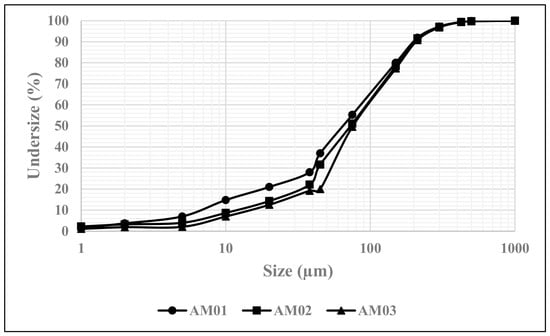
For the bench-scale flotation tests, a sample of real ore (sample AM01) was collected from the discharge of the industrial mill at Volta Grande AMG-Brazil’s, Nazareno, MG, Brazil mine prior to the desliming and magnetic separation stages of the flotation feed. After filtration and drying of sample AM01, homogenization and quartering were performed. Part of sample AM01 was reserved for subsequent quartering, and the other part was homogenized and quartered once again for the preparation of sample AM02, which consisted of the laboratory desliming step pulp with 35% solids at pH 10, adjusted by the addition of NaOH in a jar test with three 2 L rectangular vessels, at impeller speed 1650 RPM for 5 min. After stirring, the vessels were removed from the equipment and followed by a 1 min rest for siphoning the supernatant up to 1 cm height from sunk particles. Afterwards, water was added in the vessels to complete the volume for 2L, and the steps described previously were performed once again. Then, this material was subjected to filtration and drying—sample AM02. For sample AM03, part of sample AM02 from the homogenization and quartering operations was subjected to single-stage bench magnetic separation in a magnetic separator (model WL-4, INBRAS-ERIEZ Equipamentos Magnéticos e Vibratórios Ltda., Diadema, São Paulo, Brazil) with a 1.2 mm groove plate gap, 1 L conical vessel) operated in 10,000 Gauss magnetic strength and pulp with 40% solids—sample AM03. See the size distribution for these samples in Figure 1, chemical composition in Table 2, and mineralogical composition in Table 3.
Figure 1.
Size distribution of the samples used in the bench-scale flotation tests: AM01, AM02, and AM03.
Table 2.
Chemical composition of the samples used in the bench-scale flotation tests.
Table 3.
Minerals identified by X-ray diffractometry in the samples used in the bench-scale flotation tests, with their respective chemical formulas.
Figure 1 reveals a decrease of ~8% in the slime content (particles −10 µm) of both samples, AM02 and AM03, in relation to sample AM01. Table 2 shows a decrease in the Li2O grade of 0.2% (AM02) and 0.4% (AM03) compared to sample AM01 (1.6%). A significant decrease in the grades of Fe2O3, Al2O3, CaO, K2O, P2O5 and MgO is also observed after the unit operations of desliming and magnetic separation.
The MnO and TiO2 grades were the same in samples AM02 and AM03, and 0.1% lower than in sample AM01. The opposite occurred with the SiO2 grade. This effect is related to the partial removal of minerals present in the slimes (particles −10 µm) during the desliming process and of iron-bearing minerals through magnetic separation (hornblende), in addition to the possibility of isomorphic substitution of Al3+ by Fe3+ in the crystalline structures of spodumene, muscovite, and feldspars [20,21,22,23], which is coherent with the non-identification of some minerals (lithophorite, clinochlore, and apatite) in samples AM02 and AM03 (Table 3), with weight proportions probably lower than the detection limit of the X-ray diffractometer utilized (PANalytical, Amelo, Netherlands —X’Pert3 Powder).
2.2. Collector
In Table 4 and Table 5 respectively, the lipid profile (determined by gas chromatography) and the physicochemical properties of the commercial soybean oil-based collector SbOFA (Flotinor 17695) synthesized by Clariant, Muttenz, Switzerland are presented; this collector was utilized in both micro-flotation tests (saponified reagent, according to the methodology described by Barcelos et al. [17]) and bench-scale flotation tests (unsaponified reagent). For pH control, solutions of HCl (5% v/v) and NaOH (5% w/v), both from Synth, were prepared. For comparison purposes, the lipid profiles and physicochemical properties of the soybean oil-based collectors (SbOFA—CAMIX01 and SbOFA—CAMIX02), soybean oil, and oleic acid used in the flotation of apatite ores [19] are presented.
Table 4.
Lipid profile determined by gas chromatography of the collector (SbOFA—Flotinor 17695) and other collectors published in the literature.
Table 5.
Physicochemical properties of the collector (SbOFA-Flotinor 17695) and other reagents, as published in the literature.
Table 4 indicates that the saturated fatty acid ester content in Flotinor 17695 (palmitic and stearic acids) is ~7.5–7.9% higher than in CAMIX01 and CAMIX02 (residues from the soybean oil manufacturing industry) and ~ 9.5% higher than in soybean oil, as characterized by Brandão et al. [19]. According to general knowledge, saturated carboxylic acids are less selective in flotation than unsaturated fatty acids (palmitoleic, oleic, and linoleic) [7,24]. The oleic acid ester contents of all collectors derived from soybean oil (Flotinor 17695, CAMIX01, CAMIX02, and soybean oil) are much lower than that of oleic acid (~55–60.3%), which is commonly utilized in academic studies on the flotation of the main minerals present in granitic pegmatites (spodumene, feldspars, quartz, and muscovite). The oleic acid, linoleic acid and α-linolenic acid ester contents of the three-soybean oil-based collectors (Flotinor 17695, CAMIX01 and CAMIX02) are comparable to each other and lower (9.4–11.6%) than that of soybean oil (84.8%) for the flotation of apatite ores, as characterized by Brandão et al. [19].
Table 5 shows that the acidity index of Flotinor 17695 is lower than those of CAMIX01, CAMIX02 and oleic acid, thus indicating that this reagent has a lower content of free carboxylic acids than the three reagents mentioned previously. The opposite is true for soybean oil. However, the saponification index of Flotinor 17695 is close to that of its acidity index. In the case of oleic acid, the saponification index was practically equal to the acidity index, which means that this reagent is composed basically of free carboxylic acids [19]. In other words, Flotinor 17695 has a higher proportion of free carboxylic acids in relation to CAMIX01, CAMIX02 and soybean oil.
2.3. Flotation Assays
2.3.1. Micro-Flotation Assays of Pure Mineral Samples
Micro-flotation tests were conducted in a modified 350 mL Hallimond cell with 1 g of each pure mineral sample (spodumene, feldspar, quartz, and muscovite) using the SbOFA–Flotinor 17695 collector. The tests were performed in triplicate under the following conditions: 20 mg/L, which was the dosage yielding the highest spodumene recovery with CAMIX01 and CAMIX01, as determined by Barcelos et al. [17,18]; conditioning time of 8 min; 3 min collection time; air flow rate (commercial nitrogen) of 60 mL; and stirring speed at 900 RPM for the following pH values: 4, 6, 7, 8, 9, 10, and 12. After filtration, drying, and weighing of the floated and sunk products, the recovery was calculated using Formula (1), and the resulting values for each pH were used to calculate the mean and standard deviation (σ).
where:
Wf—mass of the floated product;
Ws—mass of the sunk product.
2.3.2. Bench-Scale Flotation Assays with Lithium Ore
Flotation tests on Li ore samples (AM01, AM02, and AM03) were performed in a Denver sub-aeration flotation machine with a 2L cell in accordance with the standard operating procedures of AMG-Mining: pulp with 45% solids; impeller speed at 1650 and 1450 RPM, respectively, during the conditioning and flotation stages in natural air. The conditioning time and the time to collect the floated product were equal to 7 min for each of these stages [6]. Minitab 22 software was utilized for the complete factorial design of the two-level experiments with replication (Table 6) as well as for analyzing the obtained results. The effects of the factors pH (A) and collector dosage (B) on Yield (%) and Li2O recoveries (%) as well as on the quality of the concentrates obtained (Li2O and Fe2O3 grades) from flotation tests with Flotinor 17695 were evaluated. The levels of pH used in bench-flotation assays were based on results of micro-flotation assays performed with SbOFA (Flotinor 17695) and the collector dosages were based on the dosage of this collector used in lithium ore industrial flotation at Volta Grande AMG-Brazil’s mine, which are within the fatty acid dosage levels (500–750 g/t) published in the literature [7].
Table 6.
Statistical planning of flotation experiments on lithium ore samples (AM01, AM02, and AM03).
The Li2O recoveries from the tests were determined using Formula (2), presented below:
where:
C and T are the weights of the concentrate (floated) and the tailings (sunk), respectively;
c and t—Li2O grades in the concentrate (floated) and the tailings (sunk), respectively.
3. Results and Discussion
3.1. Micro-Flotation Assays
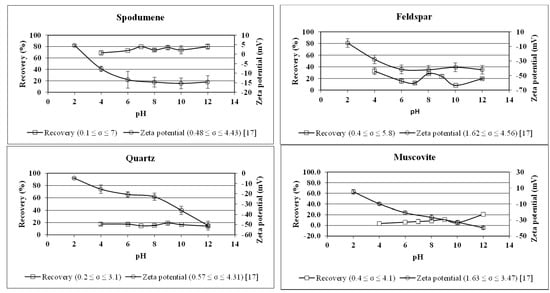
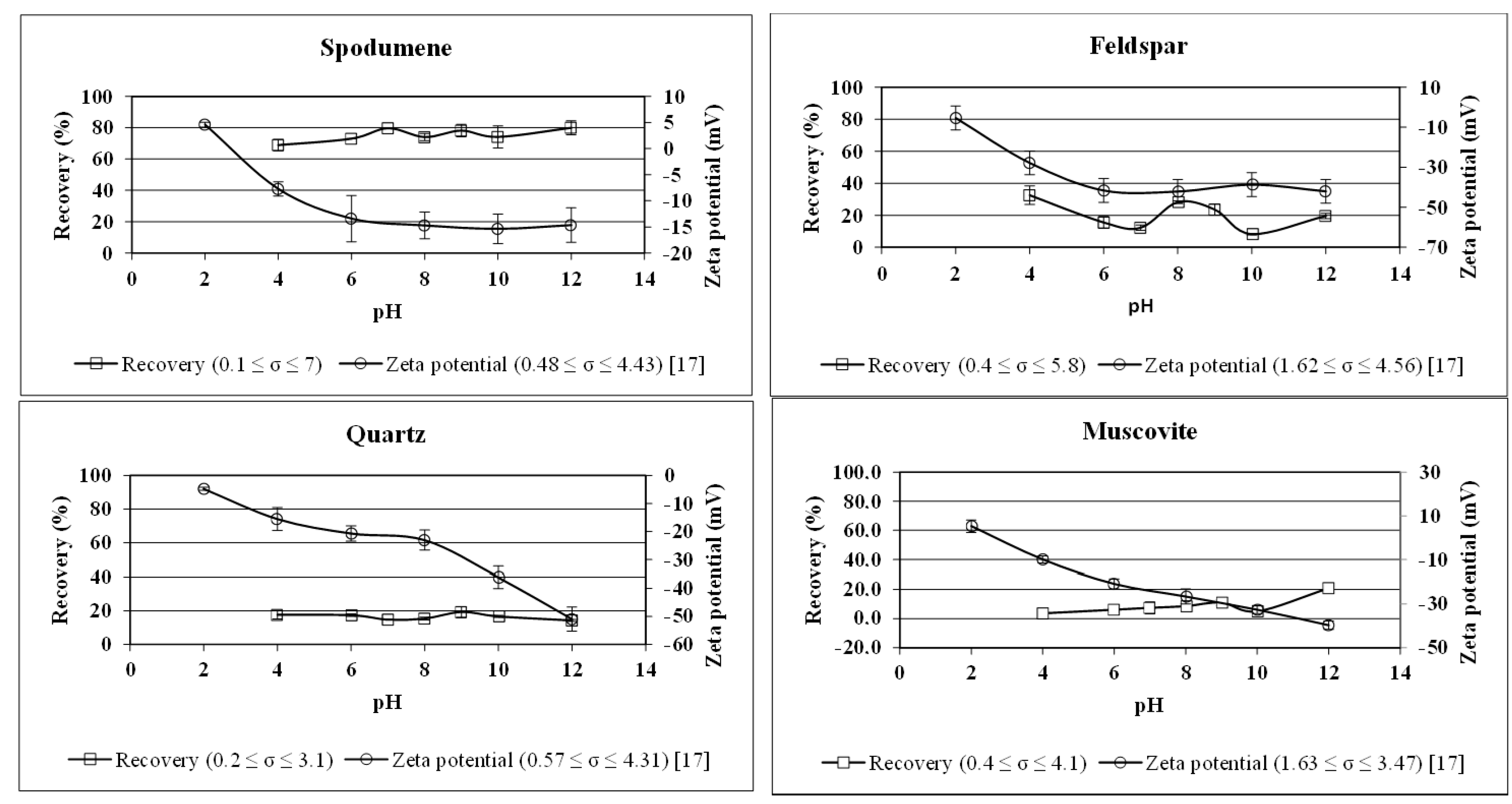
In Figure 2, the results (mean values with their respective error bar, determined by standard deviation) of micro-flotation tests on spodumene and the main silicate gangue minerals (feldspar, quartz, and muscovite) are presented for granitic pegmatites. As in some results the error bars were not visible, the standard deviation range is also shown. In order to analyze the results obtained, the zeta potential curves of the pure mineral samples, previously determined at a constant ionic strength (NaCl = 10−3 M), are also presented.
Figure 2.
Recovery curves (SbOFA-Flotinor 17695 = 20 mg/L) and zeta potential (NaCl = 10−3 M) of spodumene, feldspar, quartz, and muscovite as a function of pH.
As can be observed in Figure 2, the recoveries for spodumene ranged from 70% to 80%. These were higher than the recoveries for gangue minerals, especially quartz and muscovite, which were less than 20%. Lower recoveries were observed for muscovite at pH values ≤ 10 in relation to quartz. Upon comparison of the spodumene and feldspar recovery curves, a narrower gap in the recovery values are observed between the two minerals at pHs of 4, 8, and 9. It is observed that the zeta potential values of all minerals are negative within the pH range of the micro-flotation tests performed. This suggests chemical adsorption of the collector’s anionic species onto the studied minerals, as will be discussed further below.
The higher recovery of spodumene in relation to feldspar (mixture of feldspars—Table 1) across the entire pH range studied is related to the greater number of Al3+ sites, resulting from the preferential fracturing of this mineral in the cleavage plane (110) than the Al3+ sites in feldspar, which are in more internal positions of its crystalline network and are not accessible for the chemical adsorption of anionic species from the collector [15]. However, there are two peaks in spodumene recovery at pH 4 and in the range of 7 to 9 with sodium oleate, attributed respectively to the presence of Fe impurities in the mineral [15] and to the chemical adsorption of the ion-molecular species of the collector, whose maximum concentration occurs at pH 8.3 [16], which is close to the pKa of oleic acid (9.85), as determined by Kanicky and Sahah [25]. In the present study and in the study conducted with CAMIX01 by Barcelos et al. [17], “high” recoveries of spodumene were observed across the entire pH range, which is most likely related to the anionic species of carboxylic acids present in the composition of SbOFA-Flotinor 17695 [25,26]—palmitic (pKa = 4.7), stearic (pKa = 10.15), linoleic (pKa = 9.24), and α-linolenic (pKa = 8.28)—that chemically adsorb onto the Al3+ sites present on the surface of the minerals [16,17,18]. The same can be said for feldspar. Recoveries were around 20% for quartz (0.133% Al2O3) and muscovite (0.451% Fe2O3), which also contains Al in its crystalline structure, where the anionic species of the collector are adsorbed [15,16,17,18]. To confirm the results obtained in this work with the commercial collector (SbOFA-Flotinor 17695), future studies should be carried out with the main carboxylic acids of analytical purity (oleic, linoleic, palmitic, and stearic acids) identified in this collector.
3.2. Bench-Scale Flotation Assays with Real Lithium Ore
Table 7 presents the raw results of the bench flotation assays, performed with the spodumene ore samples AM01, AM02 and AM03. In general, it can be seen that there is a decrease in the yields from AM01 to AM02 and AM03 as well as the Fe2O3 grades in the obtained concentrates. This behavior can be attributed to the decrease in the content of both slimes (particles smaller than 10 µm) and iron-bearing minerals in the samples after desliming and magnetic separation. See Figure 1 and Table 3 for the size distribution of particles and the minerals identified in these samples, respectively.
Table 7.
Raw results of bench flotation assays performed with the spodumene ore samples AM01, AM02 and AM03 by SbOFA (Flotinor 17695) collector.
From Table 8—sample AM01, it can be verified that none of the analyzed factors (pH and collector dosage) were significant for the response variables Yield, Li2O recovery and Li2O grade in the concentrate, which is related to the high content of slimes (particles −10 µm = 15%) present in this sample (Figure 1) that were probably recovered by entrainment in water. For this reason, desliming is a common practice in all industrial flotation processes, aiming to remove slimes from the pulp before reagent conditioning. However, this operation results in significant losses of valuable minerals. Jia et al. [27], through micro-flotation tests, scan electron microscopy (SEM) images and adsorption test results, concluded that the decreased recovery of spodumene in the presence of feldspar slimes at pH 8–8.5 with sodium oleate was due to collector consumption by slimes. As can be observed in Table 3, in addition to spodumene and hornblende, the minerals lithiophorite, clinoclore and apatite were identified only in sample AM01, which were removed after the desliming operation (sample AM02). The low performance in the flotation of lithium ore (sample AM01) with a narrow collector dosage (500 and 600 g/ton) is probably related to the high consumption of this reagent by slimes of these minerals, as they have in their chemical composition sites of Al3+, Ca2+, Fe3+, Mg2+, and Mn2+, where the species of carboxylates adsorb [14].
Table 8.
Summary of estimated effects and coefficients for the evaluated responses variables using the SbOFA (Flotinor 17695) collector with confidence level of 95% (α = 0.05).
As shown in Table 8 (sample AM01), the collector dosage (B) was the only significant factor for the Fe2O3 grade in the concentrate, since the anionic species of carboxylic acids (palmitic, oleic, linoleic) present in the aqueous medium can be chemically adsorbed onto the Fe3+ sites [14] present in the crystalline structures of the minerals (hornblende and clinochlore) that were identified in this sample (see Table 3).
The Yield and Li2O recovery of sample AM02 (Table 7), obtained after desliming sample AM01, decrease sharply in relation to sample AM01, probably due to the decreasing entrainment in water of gangue mineral slimes. Although the Li2O grade of sample AM02 is 0.2% smaller than that of sample AM01 (Table 2), the Li2O grades in the concentrates were higher for the tests performed with this sample, probably due to the partial removal of other aluminosilicates (microcline, albite, muscovite), in addition to the total removal of lithiophorite, clinochlore, and apatite in the desliming operation. The opposite occurred with the Fe2O3 grade, which is due to adsorption of carboxylate anions on Fe sites of hornblende, as clinochore was not identified in the desliming sample (AM02)—see Table 3.
Table 8 shows that, for sample AM02, only the pH was significant for all the response variables analyzed, except for the Li2O grade in the concentrate, which varied very little as a function of the collector dosage and pH (see Table 7 for sample AM02). This may be associated with the feldspar slimes (microcline and albite) identified in this sample, which cause selectivity losses in spodumene flotation [27]. Although the slimes’ % by weight decreased from ~15% in sample AM01 to ~7% in sample AM02, the particles (−10 µm) remained present (see Figure 2).
In Table 7, there is clearly a lower Yield for sample AM03 in relation to the other two samples (AM01and AM02), which is related to the greater removal of hornblende present in sample AM01, since in the desliming stage (sample AM02), the minerals clinochlore, lithiophorite, and apatite were probably removed by up to 1–5% by mass, falling below the XRD detection limit (Table 3). The lower Fe2O3 grades in the concentrates from sample AM03, compared to those in sample AM02, corroborate the incremental removal of hornblende by magnetic separation, which led to an increase in both Li2O recovery and the Li2O grade in the concentrate in relation to sample AM02. It is clearly evident that the Fe2O3 grades were lower at pH 11.5. At pH 8, there is a higher concentration of ion-molecular species of fatty acids (oleic, linoleic, and linolenic) present in the collector, which adsorb themselves at the Al3+ sites of spodumene and Fe3+ sites of hornblende, and that is coherent with the pH range of maximum recovery from Fe-bearing minerals containing sodium oleate [14].
At pH 11.5, the anionic (monomeric and dimeric) species of fatty acids are predominant in aqueous media, which also adsorbs itself at the Al3+ and Fe3+ sites. However, there is electrostatic repulsion of the anionic polar heads of these species, thus reducing the recovery of hornblende and, consequently, the Fe2O3 grade at this pH value [16]. Table 8 shows that only the pH factor was significant for all the response variables analyzed, which may be related to the narrow range of the collector dosage (500 and 600 g/t).
Cook et al. [8], through a central composite experimental plan (central composite experimental design) and linear regression analysis, investigated the effect of the initial pulp pH, unsaponified TOFA (tall oil fatty acid) dosage, conditioning time, and power density (watts per liter, W/L) in the flotation of a lithium ore sample, previously activated with NaOH and deslimed (1.64% Li2O, 0.55% Fe2O3). The optimized result (Li2O recovery > 90% and % Li2O > 5.5%) was obtained at an initial flotation pH of 8.85; collector dosage = 625 g/t; and 31 W/L energy input. In the tests carried out with lithium ore from the Volta Grande/MG-AGM Brazil deposit, previously activated with NaOH, deslimed, and subjected to magnetic separation (AM03), in this present study using unsaponified SbOFA (Flotinor 17695), rougher concentrates with 3.9–4.2% Li2O were obtained at pHs of 8 and 11.5. However, Li2O recoveries were higher at pH 11.5. Also, the grades obtained in this study were higher than the best grade (3.1% Li2O) obtained from a low-grade Indian lithium ore (1.1% Li2O), using unsaponified oleic acid as a collector for spodumene and sodium silicate as a depressant for quartz and other silicate-bearing gangue minerals. Nevertheless, no activation of spodumene with NaOH was performed, nor was the flotation pH reported [28].
Table 9 presents the mass and metallurgical balances of a prelaminar cleaner flotation assay performed with a rougher flotation concentrate at pH 11.5 and 500 g/t of the collector from the AM03 sample, without the addition of a collector at the same pH as the rougher test and 35% solids by weight. As can be observed, the specifications required for Li-ion battery manufacturing (Li2O ≥ 6% and Fe2O3 ≤ 1.0%) [4,7,8] were not met. However, it is clear that a magnetic separation stage could be tested after the cleaner flotation stage in order to remove the Fe-bearing mineral (hornblende) to adjust the Li2O and Fe2O3 grades.
Table 9.
Mass and metallurgical balance of the cleaner test performed on rougher concentrate from the AM03 sample (pH = 11.5 and collector dosage = 500 g/t).
4. Conclusions
According to the studies conducted on pure mineral samples using the commercial SbOFA—Floinor 17695 collector, which is mainly composed of linoleic, oleic, and palmitic acid esters, with a higher proportion of free fatty acids than the SbOFA-CAMIX01, SbOFA-CAMIX02 and apatite soybean oil, it was observed that spodumene recoveries exceeded 70% for all pH values ≥ 6 and were less than 20% for the main gangue minerals (feldspars, quartz, and muscovite), except for feldspars at pH 8 (~28%). In the bench flotation tests conducted with ore from AMG-Brazil, it was observed that rougher flotation performed better for the deslimed sample and after magnetic separation to remove Fe-bearing silicates (AM03). However, following the cleaner stage, a recleaner stage will still be necessary, using magnetic separation as a final adjustment of the Li2O and Fe2O3 grades for application in Li-ion batteries, which must be tested experimentally in future works.
Author Contributions
Conceptualization, R.M.F.L. and R.C.d.O.; methodology, R.C.d.O. and A.P.D.; formal analysis, R.C.d.O. and R.M.F.L.; writing—original draft preparation, R.C.d.O.; writing—review and editing, R.M.F.L. and M.M.F.L. All authors have read and agreed to the published version of the manuscript.
Funding
This research received no external funding.
Data Availability Statement
The original contributions presented in this study are included in the article. Further inquiries can be directed to the corresponding author.
Acknowledgments
The authors would like to thank Brazilian funding agencies FINEP, FAPEMIG, CNPq, CAPES, and UFOP for the financial resources to conduct this study. Also, we thank AMG-Brazil for the donation of the reagent, ore, and use of the infrastructure for the bench-scale flotation tests and chemical analyses of the products obtained.
Conflicts of Interest
The authors declare no conflicts of interest.
References
- Sahoo, S.K.; Tripathy, S.K.; Nayak, A.; Hembrom, K.C.; Dey, S.; Rath, R.K.; Mohanta, M.K. Beneficiation of lithium bearing pegmatite rock: A review. Mineral. Process. Extr. Metall. Rev. 2024, 45, 1–27. [Google Scholar] [CrossRef] [Scilit]
- Pieró, L.T.; Méndez, G.V.; Ayres, R.U. Lithium: Sources, Production, Uses, and Recovery Outlook. JSM 2013, 65, 986–996. [Google Scholar] [CrossRef] [Scilit]
- Maisel, F.; Neef, C.; Marscheider-Weidemann, F.; Nissen, N.F. A forecast on future raw material demand and recycling potential of lithium-ion batteries in electric vehicles. Resour. Conserv. Recycl. 2023, 192, 106920. [Google Scholar] [CrossRef] [Scilit]
- Tadesse, B.; Makuei, F.; Albijanic, B.; Dyer, L. The beneficiation of lithium minerals from hard rock ores: A review. Miner. Eng. 2019, 131, 170–184. [Google Scholar] [CrossRef] [Scilit]
- Roy, T.; Plante, B.; Benzaazoua, M.; Demers, I. Geochemistry and mineralogy of a spodumene-pegmatite lithium ore at various mineral beneficiation stages. Miner. Eng. 2023, 202, 108312. [Google Scholar] [CrossRef] [Scilit]
- Oliveira, R.C. Flotação de Minério de Li com Óleo de Soja: Efeito de Variáveis Físico-Químicas e de Processo (Flotation of Li Ore Using Soybean Oil: The Effect of Physicochemical and Process Variables. Master’s Thesis, Programa de Pós-Graduação em Engenharia Mineral-PPGEM Graduate Program in Mineral Engineering (PPGEM), Universidade Federal de Ouro Preto, Ouro Preto, Brazil, 2026. [Google Scholar]
- Cook, B.K.; Gibson, C.E. A Review of Fatty Acid Collectors: Implications for Spodumene Flotation. Minerals 2023, 13, 212. [Google Scholar] [CrossRef] [Scilit]
- Cook, B.K.; Aghamirian, M.; Gibson, C.H. Optimization of spodumene flotation with a fatty acid collector. Miner. Eng. 2023, 204, 108412. [Google Scholar] [CrossRef] [Scilit]
- Sagzhanov, D.; Ito, J.; Altansukh, B.; Godirilwe, L.L.; Haga, K.; Takasaki, Y.; Shibayma, A. Lithium Ore Beneficiation: Sustainable Approaches for Efficient Recovery of Lithium from a Low-Grade Spodumene Ore. JSM 2025, 11, 754–772. [Google Scholar] [CrossRef] [Scilit]
- CBL—Companhia Brasileira de Lítio. Disponível em (Brazilian Lithium Company). Available online: https://cblitio.com.br (accessed on 6 June 2026).
- Moura, L.C.; André, F.P.; Micele, H.; Neumann, R.; Tavares, L.M. Manufactured Feldspar—Quartz for Glass Industry from Gneiss Quarry Rock Fines Using Dry Rare-earth Magnetic Separation. Miner. Process. Extr. Metall. Rev. 2019, 40, 333–343. [Google Scholar] [CrossRef] [Scilit]
- Kalyoncu, E.; Burat, F. Selective Separation of Coloring Impurities from Feldspar Ore by Innovative Single-stage Flotation. Mineral. Process. Extr. Metall. Rev. 2022, 43, 910–915. [Google Scholar] [CrossRef] [Scilit]
- Baila, F.; Labbilta, T.; Darmane, Y. Feldspar Purification from Iron Impurities: A Review of Treatment Methods. Miner. Process. Extr. Metall. Rev. 2024, 45, 564–572. [Google Scholar] [CrossRef] [Scilit]
- Pacholcksac, A.; Cook, B.K.; Baker, R.J.; Gibson, C.E. Novel spodumenne flotation collector development: A comparative review. Miner. Eng. 2026, 242, 110200. [Google Scholar] [CrossRef] [Scilit]
- Moon, K.S.; Fuerstenau, D. Surface crystal chemistry in selective flotation of spodumene (LiAl[SiO3]2) from other aluminosilicates. Int. J. Miner. Process. 2003, 72, 11–24. [Google Scholar] [CrossRef] [Scilit]
- Yu, F.; Wang, Y.; Lei, Z.; Zhu, G. Role of oleic acid ionic-molecular complexes in the flotation of spodumene. Miner. Eng. 2015, 71, 7–12. [Google Scholar] [CrossRef] [Scilit]
- Barcelos, H.O.; Silva, I.P.S.; Lima, R.M.F. Flotation of Li pegmatite with a soybean oil-based collector: Fundamental studies. Miner. Process. Extr. Metall. Rev. 2024, 46, 811–820. [Google Scholar] [CrossRef] [Scilit]
- Barcelos, H.O.; Silva, I.P.S.; Lima, M.M.F.; Lima, R.M.F. Soybean-oil based collector in the flotation of spodumene from other silicates. Discov. Appl. Sci. 2026, 8, 1044. [Google Scholar] [CrossRef] [Scilit]
- Brandão, P.R.G.; Caires, L.C.; Queiroz, D.S.B. Vegetable Lipid Oil-Based Collectors in the Flotation of Apatite Ores. Miner. Eng. 1994, 7, 917–925. [Google Scholar] [CrossRef] [Scilit]
- Dana, J.D. Manual de Mineralogia (Mineralogy Manual); Printed in Brazil: Rio de Janeiro, Brazil, 1981. [Google Scholar]
- Klein, C.; Dutrow, B. Manual de Ciências dos Minerais (Mineral Science Manual), 23rd ed.; Bookman: Porto Alegre, Brazil, 2012; Volume 1. [Google Scholar]
- Dias, C.H. Mineralogia, Tipologia e Causas de cor de Espodumênio da Província Pegmatítica Oriental do Brasil e Química Mineral de Nb-Tantalatos da Mina da Cachoeira (Minas Gerais) [Mineralogy, Typology, and Causes of Color in Spodumene from the Oriental Pegmatite Province of Brazil, and the Mineral Chemistry of Nb-Tantalates from the Cachoeira Mine (Minas Gerais)]. Master’s Thesis, Universidade Federal de Minas Gerais, Belo Horizonte, Brazil, 2015; p. 128. [Google Scholar]
- Zhu, G.; Zhao, Y.; Zheng, X.; Wang, Y.; Zheng, H.; Lu, D. Understand the role of sodium hydroxide in the selective flotation separation flotation of spodumene from feldspar and quartz. Miner. Eng. 2020, 159, 606648. [Google Scholar] [CrossRef] [Scilit]
- Bulatovic, S.R. Handbook of Flotation Reagents: Chemistry, Theory and Practice Flotation of Sulfide Ores; Bulatovic, S.R., Ed.; Elsevier: Amsterdam, The Netherlands, 2007; Volume 1, Chapter 2, pp. 5–40. [Google Scholar]
- Kanicky, J.R.; Shah, D. Effect of degree, type and, position of unsaturation on the pKa of long-chain fatty acids. J. Colloids Interface Sci. 2002, 256, 201–207. [Google Scholar] [CrossRef] [Scilit] [PubMed]
- Quast, K. Minerals Engineering. Flotation of hematite using C6–C18 saturated fatty acids. Miner. Eng. 2006, 19, 582–597. [Google Scholar] [CrossRef] [Scilit]
- Jia, W.; Jiao, F.; Zhu, H.; Xu, L.; Qin, W. Mitigating the negative effects of feldspar slime on spodumene flotation using mixed anionic-cationic collector. Miner. Eng. 2021, 168, 106813. [Google Scholar] [CrossRef] [Scilit]
- Kundu, T.; Parhi, P.K. Explore the Flotation Performance of a Novel-Low Grade Indian Spodumene-Bearing Pegmatite Deposit for Sustainable Development. JSM 2026, 12, 417–437. [Google Scholar] [CrossRef] [Scilit]

Disclaimer/Publisher’s Note: The statements, opinions and data contained in all publications are solely those of the individual author(s) and contributor(s) and not of MDPI and/or the editor(s). MDPI and/or the editor(s) disclaim responsibility for any injury to people or property resulting from any ideas, methods, instructions or products referred to in the content. |
© 2026 by the authors. Licensee MDPI, Basel, Switzerland. This article is an open access article distributed under the terms and conditions of the Creative Commons Attribution (CC BY) license.