

Next Issue
Volume 6, March
Previous Issue
Volume 5, September


BioChem, Volume 5, Issue 4 (December 2025) – 12 articles
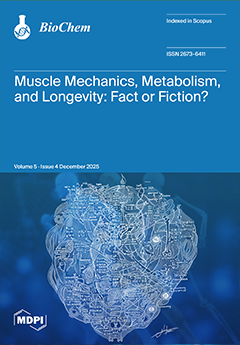
Cover Story (view full-size image): Skeletal muscle contraction shapes metabolic health and healthy ageing, not just movement. Higher strength is associated with lower cardiometabolic risk and mortality, and structured training produces measurable mitochondrial, vascular, and anti‑inflammatory adaptations in muscle. The article frames these changes as responses to specific mechanical “doses,” moving beyond generic exercise advice and positioning exercise science as a core treatment modality within integrative medicine. Skeletal muscle also acts as an endocrine organ: contraction‑evoked myokines can signal to adipose tissue, liver, vessels, and immune cells, supporting systemic benefits. Importantly, older muscle remains adaptable with appropriately prescribed resistance, aerobic, or combined functional training. This emerging field bridges performance science, exercise medicine, and rehabilitation in modern clinical care. View this paper
  • Issues are regarded as officially published after their release is announced to the table of contents alert mailing list.
  • You may sign up for e-mail alerts to receive table of contents of newly released issues.
  • PDF is the official format for papers published in both, html and pdf forms. To view the papers in pdf format, click on the "PDF Full-text" link, and use the free Adobe Reader to open them.
Order results
Result details
Select all
Export citation of selected articles as:
15 pages, 545 KB  
Article
Frequency of HLA-A, -B, -DRB1, and -DQB1 Alleles in Moroccan Adult Patients with Acute Myeloid Leukemia: A Case–Control Study
by Khalid Laaziri, Abdelmajid Zyad, Fatima Ezzahra Lahlimi, Ouadii Abakarim, Illias Tazi, Ikram Brahim, Nadia Lakhouaja, Raja Hazime, El Mostafa Mtairag and Brahim Admou
BioChem 2025, 5(4), 44; https://doi.org/10.3390/biochem5040044 - 3 Dec 2025
Viewed by 206
Abstract
Background/Objectives: Acute myeloid leukemia (AML) is the most common acute leukemia in adults, with over 50% of individuals succumbing to the disease annually. This study aimed to assess the correlation between human leukocyte antigen (HLA) genes and acute myeloid leukemia (AML) in an [...] Read more.
Background/Objectives: Acute myeloid leukemia (AML) is the most common acute leukemia in adults, with over 50% of individuals succumbing to the disease annually. This study aimed to assess the correlation between human leukocyte antigen (HLA) genes and acute myeloid leukemia (AML) in an adult Moroccan cohort. We included 60 persons with acute myeloid leukemia (AML) who were eligible for hematopoietic stem cell transplantation and compared them to a control group of 90 healthy adults. Methods: Patients and controls were subjected to HLA class I and II typing utilizing either sequence-specific primers (SSP) or sequence-specific oligonucleotides (SSO) in polymerase chain reaction-based methodologies. Results: The AML categories were predominantly represented by AML2, AML3, and AML4, comprising 36.66%, 30%, and 16.66%, respectively. We identified a notable correlation between HLA-A*11 (p = 0.003) and HLA-B*27 (p = 0.005) with acute myeloid leukemia (AML), and for HLA class II allele groups, we detected an elevated frequency of HLA-DQB1*05 (p = 0.002) in adult AML patients. We identified a notable correlation between AML 2 and the allele groups examined, namely with HLA class I: HLA-A*11 (p = 0.0003) and HLA-B*27 (p = 0.00006). Conclusion: Our study suggests a potential association between specific HLA alleles and the development of AML specifically AML type 2 in adults. Further larger studies are needed to confirm these findings. Full article
Show Figures

Figure 1

15 pages, 805 KB  
Systematic Review
The Role of Microglial Activation in the Pathogenesis of Drug-Resistant Epilepsy: A Systematic Review of Clinical Studies
by Abba Musa Abdullahi, Shah Taha Sarmast and Usama Ishaq Abdulrazak
BioChem 2025, 5(4), 43; https://doi.org/10.3390/biochem5040043 - 1 Dec 2025
Viewed by 226
Abstract
Background: Microglial cells are the resident immune cells in the central nervous system (CNS) and constitute the brain’s innate immune system. They are the smallest of the glial cells and are derived from phagocytic white blood cells, fetal monocytes, which migrate from [...] Read more.
Background: Microglial cells are the resident immune cells in the central nervous system (CNS) and constitute the brain’s innate immune system. They are the smallest of the glial cells and are derived from phagocytic white blood cells, fetal monocytes, which migrate from the blood into the brain during development. On the other hand, epilepsy is a chronic condition defined as recurrent unprovoked seizures, with at least two seizures occurring over 24 h apart. Methods: To determine the role of microglial activation in the pathogenesis of drug-resistant epilepsy, we systematically searched published data for biomarkers of microglial activation from main databases including PubMed, PubMed Central, Scopus, Embase, Google Scholar, and Medline. Two research registries were also searched: the Cochrane Registry and clinicaltrial.gov. Data was collected after applying inclusion and exclusion criteria and studies were appraised critically. Both Medical Subject Headings (MeSH) and regular keyword search strategies were employed. Results: Our systematic review shows significant elevation of biomarkers of microglial activation in patients with drug-resistant epilepsy, suggesting its role in the disease’s pathogenesis. Conclusions: Microglia cells are therefore considered as a special type of mononuclear phagocytes found in the CNS that plays important roles in both the brain’s immunity and homeostatic functions. The role of microglial activation in the pathogenesis of drug-resistant epilepsy is an active area of study, with potential therapies for drug-resistant epilepsy that target microglia currently being investigated. Full article
Show Figures

Figure 1

14 pages, 242 KB  
Article
Drug Allergy in Hospitalized Patients: Three Years of Consultation Experience in a Tertiary Care Setting
by Christian P. Ratti, Alessandra Chiei Gallo, Francesca Barei, Alice Botta, Matteo Cavara, Eleonora Bono, Lea Caron, Valeria G. R. Ortolani and Enrico Iemoli
BioChem 2025, 5(4), 42; https://doi.org/10.3390/biochem5040042 - 1 Dec 2025
Viewed by 271
Abstract
Background/Objectives: Drug hypersensitivity reactions (DHRs) are an important cause of morbidity in hospitalized patients, but their epidemiology and management in the inpatient setting are not well defined. Mislabeling of drug allergies may lead to inappropriate treatment and reduced antimicrobial stewardship. This study [...] Read more.
Background/Objectives: Drug hypersensitivity reactions (DHRs) are an important cause of morbidity in hospitalized patients, but their epidemiology and management in the inpatient setting are not well defined. Mislabeling of drug allergies may lead to inappropriate treatment and reduced antimicrobial stewardship. This study aimed to characterize the clinical profile, diagnostics, and management of inpatients referred for suspected drug allergy in a tertiary care hospital. Methods: We retrospectively reviewed all adult inpatients (≥18 years) at Luigi Sacco Hospital (Milan, Italy) who received allergology consultation between 1 June 2022 and 31 May 2025. Data on demographics, reaction type, culprit drugs, investigations, and management were collected. Immediate reaction severity was graded using the United States Drug Allergy Registry (USDAR) scale; delayed reactions were classified as severe cutaneous adverse reactions (SCARs) or non-SCARs. Logistic regression identified predictors of severity. Results: Among 35,438 admissions, 334 patients (0.9%) were evaluated; median age was 65 years, 51.2% were female, 67.4% had atopic comorbidities, and 55.1% reported prior drug allergy. Immediate reactions occurred in 49.1%, delayed in 43.7%. Cutaneous involvement was present in 86.8%, anaphylaxis in 6.6%, and SCARs in 3.9%. Antibiotics—particularly β-lactams—were most often implicated. In multivariate analysis, antibiotic exposure and older age were linked to more severe immediate reactions, while the absence of atopy predicted SCARs. Desensitization was successfully performed in 16.2% of patients. Conclusions: DHRs in inpatients are frequent and often involve high-risk drugs. Structured inpatient allergology services and an “allergy stewardship” approach may reduce DHR-related risks, support optimal therapy, and improve antimicrobial use strategies in tertiary care settings. Full article
(This article belongs to the Special Issue Feature Papers in BioChem, 2nd Edition)
23 pages, 3985 KB  
Review
Polyoxometalates’ Progress for the Treatment of Alzheimer’s Disease
by Manuel Aureliano, João Mateus and David Manjua Rijo
BioChem 2025, 5(4), 41; https://doi.org/10.3390/biochem5040041 - 20 Nov 2025
Cited by 1 | Viewed by 713
Abstract
Alzheimer’s disease (AD) signifies a devastating impact on the quality of life of patients and their families. At a biomolecular level, AD is characterized by the deposition of extracellular plaques of β-amyloid (Aβ), affecting language, spatial navigation, recognition abilities and memory. Among the [...] Read more.
Alzheimer’s disease (AD) signifies a devastating impact on the quality of life of patients and their families. At a biomolecular level, AD is characterized by the deposition of extracellular plaques of β-amyloid (Aβ), affecting language, spatial navigation, recognition abilities and memory. Among the selected 30 articles about polyoxometalates (POMs) and AD published from 2011 to 2025, pure POMs, hybrid POMs and POM nanoparticles can be found. The majority of POMs are polyoxotungstates (62%), the Keggin-type SiW11O39 being the most studied in AD. The main effect described is the inhibition of Aβ aggregates. Other effects include reversing the neurotoxicity induced by Aβ aggregates, decreasing ROS production and neuroinflammation, restoring memory and sequestering Zn2+ and Cu2+, among others, features that are well known to be associated with the pathology of AD. POMs have also shown the ability to induce the disaggregation of Aβ fibrils, particularly after irradiation, and to inhibit acetylcholinesterase activity at an nM range. Putting it all together, this review highlights a predominant trend in the exploration of POMs to act directly at the level of the formation and/or disaggregation of Aβ aggregates in the treatment of AD. Full article
(This article belongs to the Special Issue Feature Papers in BioChem, 2nd Edition)
Show Figures

Graphical abstract

33 pages, 1158 KB  
Review
Converging Structural Biology and Nanotechnology to Decipher and Target Alzheimer’s Disease: From Atomic Insights to Clinical Translation
by Akshata Yashwant Patne, Imtiyaz Bagban and Meghraj Vivekanand Suryawanshi
BioChem 2025, 5(4), 40; https://doi.org/10.3390/biochem5040040 - 18 Nov 2025
Viewed by 584
Abstract
Alzheimer’s disease (AD), the leading cause of dementia, is defined by two pathological hallmarks, amyloid-β (Aβ) plaques and hyperphosphorylated tau tangles—both now structurally resolved at near-atomic precision thanks to cryo-EM. Despite decades of research, effective disease-modifying therapies remain elusive, underscoring the need for [...] Read more.
Alzheimer’s disease (AD), the leading cause of dementia, is defined by two pathological hallmarks, amyloid-β (Aβ) plaques and hyperphosphorylated tau tangles—both now structurally resolved at near-atomic precision thanks to cryo-EM. Despite decades of research, effective disease-modifying therapies remain elusive, underscoring the need for innovative interdisciplinary approaches. This review synthesizes recent advances in structural biology and nanotechnology, highlighting their synergistic potential in revolutionizing AD diagnosis and treatment. Cryo-EM and NMR have revolutionized our understanding of Aβ/tau polymorphs, revealing structural vulnerabilities ripe for therapeutic targeting—yet clinical translation remains bottlenecked by the blood–brain barrier (BBB). Concurrently, nanotechnology offers groundbreaking tools, including nanoparticle-based drug delivery systems for blood–brain barrier (BBB) penetration, quantum dot biosensors for early Aβ detection, and CRISPR-nano platforms for APOE4 gene editing. We discuss how integrating these disciplines addresses critical challenges in AD management—from early biomarker detection to precision therapeutics—and outline future directions for translating these innovations into clinical practice. Full article
Show Figures

Graphical abstract

21 pages, 2379 KB  
Article
Deamidation at N53 Causes SOD1 Structural Instability and Excess Zn Incorporation
by Eric Zanderigo, Phyllis Schram, Owen Rogers, Mikayla McLaughlin, Colin A. Smith and Alison L. O’Neil
BioChem 2025, 5(4), 39; https://doi.org/10.3390/biochem5040039 - 13 Nov 2025
Viewed by 343
Abstract
Background/Objectives: Approximately 20% of familial ALS (fALS) cases are linked to mutations in Cu/Zn superoxide dismutase (SOD1). Through a gain function, SOD1 misfolding exerts a toxic effect on motor neurons, leading to their degradation and ALS symptomology in both fALS cases and [...] Read more.
Background/Objectives: Approximately 20% of familial ALS (fALS) cases are linked to mutations in Cu/Zn superoxide dismutase (SOD1). Through a gain function, SOD1 misfolding exerts a toxic effect on motor neurons, leading to their degradation and ALS symptomology in both fALS cases and sporadic ALS (sALS) cases with no known genetic cause. To further our understanding of SOD1-ALS etiology, identifying motor neuron-specific SOD1 post-translational modifications (PTMs) and studying their structural influence is necessary. To this end, we have conducted a study on the influence of the deamidation of Asn53, a PTM proximal to key stabilizing motifs in SOD1, which has scarcely been addressed in the literature to date. Methods: Deamidation to N53 was identified by tandem mass spectrometry of SOD1 immunoprecipitated from motor neuron (MN) cultures derived from wild-type (WT) human induced pluripotent stem cells (iPSCs). WT SOD1 and N53D SOD1, a mutant mimicking the deamidation, were expressed in Escherichia coli and purified for in vitro analyses. Differences between species were measured by experiments probing metal cofactors, relative monomer populations, and aggregation propensity. Furthermore, molecular dynamics experiments were conducted to model and determine the influence of the PTM on SOD1 structure. Results: In contrast to WT, N53D SOD1 showed non-native incorporation of metal cofactors, coordinating more Zn2+ cofactors than total Zn-binding sites, and more readily adopted monomeric forms, unfolded, and aggregated with heating, possibly while releasing coordinated metals. Conclusions: Deamidation to N53 in SOD1 encourages the adoption of non-native conformers, and its detection in WT MN cultures suggests relevance to sALS pathophysiology. Full article
Show Figures

Graphical abstract

16 pages, 482 KB  
Review
RASopathy and Sudden Cardiac Death: A Literature Review
by Cecilia Salzillo and Andrea Marzullo
BioChem 2025, 5(4), 38; https://doi.org/10.3390/biochem5040038 - 7 Nov 2025
Viewed by 363
Abstract
RASopathies are a heterogeneous group of genetic syndromes caused by germline mutations in genes encoding proteins of the RAS/MAPK pathway, which are essential in the regulation of cell proliferation, differentiation and survival. Although characterized by common phenotypic manifestations such as craniofacial dysmorphism, congenital [...] Read more.
RASopathies are a heterogeneous group of genetic syndromes caused by germline mutations in genes encoding proteins of the RAS/MAPK pathway, which are essential in the regulation of cell proliferation, differentiation and survival. Although characterized by common phenotypic manifestations such as craniofacial dysmorphism, congenital heart defects, and growth retardation, an aspect of great clinical relevance is the increased risk of sudden cardiac death, especially in relation to hypertrophic cardiomyopathy (HCM) and ventricular arrhythmias. Pathogenic variants in genes such as RAF1, RIT1, PTPN11, BRAF and SHOC2 have been associated with phenotypes with increased incidence of HCM, sometimes with early onset and a rapidly evolving course. The literature highlights the importance of early identification of patients at risk; however, specific surveillance protocols and follow-up strategies are defined in expert guidelines. This literature review aims to provide an updated overview of the main RASopathies with cardiac involvement, highlighting the genotype-phenotype correlations, the pathogenic mechanisms underlying sudden cardiac death, and current diagnosis, monitoring, and prevention strategies. The aim is to promote greater clinical awareness and encourage a multidisciplinary approach aimed at reducing mortality in these rare genetic conditions. Full article
(This article belongs to the Special Issue Feature Papers in BioChem, 2nd Edition)
Show Figures

Figure 1

30 pages, 7784 KB  
Review
Muscle Mechanics in Metabolic Health and Longevity: The Biochemistry of Training Adaptations
by Mike Tabone
BioChem 2025, 5(4), 37; https://doi.org/10.3390/biochem5040037 - 30 Oct 2025
Viewed by 1503
Abstract
Skeletal muscle is increasingly recognized as a dynamic endocrine organ whose secretome—particularly myokines—serves as a central hub for the coordination of systemic metabolic health, inflammation, and tissue adaptation. This review integrates molecular, cellular, and physiological evidence to elucidate how myokine signaling translates mechanical [...] Read more.
Skeletal muscle is increasingly recognized as a dynamic endocrine organ whose secretome—particularly myokines—serves as a central hub for the coordination of systemic metabolic health, inflammation, and tissue adaptation. This review integrates molecular, cellular, and physiological evidence to elucidate how myokine signaling translates mechanical and metabolic stimuli from exercise into biochemical pathways that regulate glucose homeostasis, lipid oxidation, mitochondrial function, and immune modulation. We detail the duality and context-dependence of cytokine and myokine actions, emphasizing the roles of key mediators such as IL-6, irisin, SPARC, FGF21, and BAIBA in orchestrating cross-talk between muscle, adipose tissue, pancreas, liver, bone, and brain. Distinctions between resistance and endurance training are explored, highlighting how each modality shapes the myokine milieu and downstream metabolic outcomes through differential activation of AMPK, mTOR, and PGC-1α axes. The review further addresses the hormetic role of reactive oxygen species, the importance of satellite cell dynamics, and the interplay between anabolic and catabolic signaling in muscle quality control and longevity. We discuss the clinical implications of these findings for metabolic syndrome, sarcopenia, and age-related disease, and propose that the remarkable plasticity of skeletal muscle and its secretome offers a powerful, multifaceted target for lifestyle interventions and future therapeutic strategies. An original infographic is presented to visually synthesize the complex network of myokine-mediated muscle–organ interactions underpinning exercise-induced metabolic health. Full article
Show Figures

Figure 1

11 pages, 3116 KB  
Article
AI-Assisted Identification of the Functional Residues of Ginsenoside Biosynthesis-Associated UGTs
by Kisook Jung, Narae Kim, Chaelin Park and Jaewook Kim
BioChem 2025, 5(4), 36; https://doi.org/10.3390/biochem5040036 - 14 Oct 2025
Viewed by 599
Abstract
Background/Objectives: Ginsenosides, one of the most pharmaceutically valuable chemical compounds in Panax ginseng, are synthesized with several enzymes, including UGTs. UGTs determine absorbability and physiological function upon consumption. Thus, understanding the functional residues of ginsenoside biosynthesis-associated UGTs is crucial for enhancing [...] Read more.
Background/Objectives: Ginsenosides, one of the most pharmaceutically valuable chemical compounds in Panax ginseng, are synthesized with several enzymes, including UGTs. UGTs determine absorbability and physiological function upon consumption. Thus, understanding the functional residues of ginsenoside biosynthesis-associated UGTs is crucial for enhancing the production of valuable ginsenoside varieties. Methods: We collected the UGT homologs of high sequence similarity from two rate-limiting steps of the biosynthetic pathway. The 3D structures of these proteins were predicted using the AlphaFold3 model. The ligand-binding interactions of these UGTs were examined using SwissDock and CB-Dock2. Enzyme kinetics were analyzed with MPEK. Using these tools, we performed in silico mutagenic analyses to identify the functional residues of UGTs in detail. Results: We elucidated the molecular mechanisms of experimentally verified functional residues in UGTs, many of which were associated with optimal ligand interaction angles that expose target carbons. We also identified putatively important amino acid residues that mediate ligand interactions and modulate reaction kinetics by more than 25%. In this study, residues at positions 62, 224, 397, and 398 were shown to significantly influence enzyme kinetics. Conclusions: Our study provides the first structural analysis of the functional residues of ginsenoside biosynthetic UGTs based on their 3D structures. We identified several key amino acid residues essential for proper ginsenoside biosynthesis: (1) residues determining ligand interactions, (2) residues modulating ligand binding angles, and (3) residues affecting reaction kinetics. Our findings demonstrate an effective approach to identifying functional residues in plant enzymes and present valuable UGT candidates for future experimental validation. Full article
(This article belongs to the Special Issue Feature Papers in BioChem, 2nd Edition)
Show Figures

Figure 1

49 pages, 2570 KB  
Review
Therapeutic Strategies Targeting Oxidative Stress and Inflammation: A Narrative Review
by Charles F. Manful, Eric Fordjour, Emmanuel Ikumoinein, Lord Abbey and Raymond Thomas
BioChem 2025, 5(4), 35; https://doi.org/10.3390/biochem5040035 - 6 Oct 2025
Viewed by 5644
Abstract
Oxidative stress and inflammation are deeply interconnected processes implicated in the onset and progression of numerous chronic diseases. Despite promising mechanistic insights, conventional antioxidant and anti-inflammatory therapies such as NSAIDs, corticosteroids, and dietary antioxidants have shown limited and inconsistent success in long-term clinical [...] Read more.
Oxidative stress and inflammation are deeply interconnected processes implicated in the onset and progression of numerous chronic diseases. Despite promising mechanistic insights, conventional antioxidant and anti-inflammatory therapies such as NSAIDs, corticosteroids, and dietary antioxidants have shown limited and inconsistent success in long-term clinical applications due to challenges with efficacy, safety, and bioavailability. This review explores the molecular interplay between redox imbalance and inflammatory signaling and highlights why conventional therapeutic translation has often been inconsistent. It further examines emerging strategies that aim to overcome these limitations, including mitochondrial-targeted antioxidants, Nrf2 activators, immunometabolic modulators, redox enzyme mimetics, and advanced delivery platforms such as nanoparticle-enabled delivery. Natural polyphenols, nutraceuticals, and regenerative approaches, including stem cell-derived exosomes, are also considered for their dual anti-inflammatory and antioxidant potential. By integrating recent preclinical and clinical evidence, this review underscores the need for multimodal, personalized interventions that target the redox-inflammatory axis more precisely. These advances offer renewed promise for addressing complex diseases rooted in chronic inflammation and oxidative stress. Full article
Show Figures

Graphical abstract

13 pages, 1618 KB  
Article
Application Potential of Lysinibacillus sp. UA7 for the Remediation of Cadmium Pollution
by Yue Liang, Peng Zhao, Haoran Shi and Feiyan Xue
BioChem 2025, 5(4), 34; https://doi.org/10.3390/biochem5040034 - 2 Oct 2025
Viewed by 721
Abstract
Background: Cadmium (Cd) pollution poses a significant environmental challenge. Microbially induced carbonate precipitation (MICP), an advanced bioremediation approach, relies on the co-precipitation of soluble metals with the microbial hydrolysate from urea. This study isolated a urease-producing strain and evaluated its Cd remediation [...] Read more.
Background: Cadmium (Cd) pollution poses a significant environmental challenge. Microbially induced carbonate precipitation (MICP), an advanced bioremediation approach, relies on the co-precipitation of soluble metals with the microbial hydrolysate from urea. This study isolated a urease-producing strain and evaluated its Cd remediation potential. Methods: The isolated strain UA7 was identified through 16S rDNA gene sequencing. Urease production was enhanced by optimizing the culture conditions, including temperature, dissolved oxygen levels—which were affected by the rotational speed and the design of the Erlenmeyer flask, and the concentration of urea added. Its Cd remediation efficacy was assessed both in water and soil. Results: UA7 was identified as Lysinibacillus sp., achieving peak urease activity of 188 U/mL. The immobilization rates of soluble Cd reached as high as 99.61% and 63.37%, respectively, at initial concentrations of 2000 mg/L in water and 50 mg/kg in soil. The mechanism of Cd immobilization by strain UA7 via MICP was confirmed by the microstructure of the immobilized products with attached bacteria, characteristic absorption peaks, and the formed compound Ca0.67Cd0.33CO3, which were analyzed using scanning electron microscopy (SEM), Fourier transform infrared spectroscopy (FTIR), and X-ray diffraction (XRD). The Cd-remediation effect of strain UA7, which reduces lodging in wheat plants, prevents the thinning and yellowing of stems and leaves, and hinders the transition of soluble Cd to the above-ground parts of the plant, was also demonstrated in a pot experiment. Conclusions: Therefore, Lysinibacillus sp. UA7 exhibited high potential for efficiently remediating contaminated Cd. Full article
Show Figures

Graphical abstract

25 pages, 1507 KB  
Review
Biochemical Programming of the Fungal Cell Wall: A Synthetic Biology Blueprint for Advanced Mycelium-Based Materials
by Víctor Coca-Ruiz
BioChem 2025, 5(4), 33; https://doi.org/10.3390/biochem5040033 - 1 Oct 2025
Viewed by 1872
Abstract
The global transition to a circular bioeconomy is accelerating the demand for sustainable, high-performance materials. Filamentous fungi represent a promising solution, as they function as living foundries that transform low-value biomass into advanced, self-assembling materials. While mycelium-based composites have proven potential, progress has [...] Read more.
The global transition to a circular bioeconomy is accelerating the demand for sustainable, high-performance materials. Filamentous fungi represent a promising solution, as they function as living foundries that transform low-value biomass into advanced, self-assembling materials. While mycelium-based composites have proven potential, progress has been predominantly driven by empirical screening of fungal species and substrates. To unlock their full potential, a paradigm shift from empirical screening to rational design is required. This review introduces a conceptual framework centered on the biochemical programming of the fungal cell wall. Viewed through a materials science lens, the cell wall is a dynamic, hierarchical nanocomposite whose properties can be deliberately tuned. We analyze the contributions of its principal components—the chitin–glucan structural scaffold, the glycoprotein functional matrix, and surface-active hydrophobins—to the bulk characteristics of mycelium-derived materials. We then identify biochemical levers for controlling these properties. External factors such as substrate composition and environmental cues (e.g., pH) modulate cell wall architecture through conserved signaling pathways. Complementing these, an internal synthetic biology toolkit enables direct genetic and chemical intervention. Strategies include targeted engineering of biosynthetic and regulatory genes (e.g., CHS, AGS, GCN5), chemical genetics to dynamically adjust synthesis during growth, and modification of surface chemistry for specialized applications like tissue engineering. By integrating fungal cell wall biochemistry, materials science, and synthetic biology, this framework moves the field from incidental discovery toward the intentional creation of smart, functional, and sustainable mycelium-based materials—aligning material innovation with the imperatives of the circular bioeconomy. Full article
Show Figures

Figure 1

Previous Issue
Next Issue
Back to TopTop
