


Abstract
Background: Excessive gingival display is frequently associated with upper lip hypermobility and represents a common aesthetic concern. Several therapeutic approaches have been proposed, including botulinum toxin type A injections, lip repositioning surgery (LRS), and combined techniques; however, no clear consensus exists regarding the most effective and stable treatment option. Methods: A systematic review was conducted in accordance with the Preferred Reporting Items for Systematic Reviews and Meta-Analyses guidelines (PRISMA) guidelines. A comprehensive search of multiple electronic databases was performed, leading to the inclusion of 17 human studies that met predefined PICOS criteria. The review protocol was registered in PROSPERO (CRD420261281920). Results: Most included studies reported favorable outcomes in terms of reduction in gingival display, improvement in smile aesthetics, and patient satisfaction. No major adverse effects were reported, suggesting acceptable safety profiles for all therapeutic modalities. Outcomes varied depending on the type of intervention, surgical technique, botulinum toxin dosage and injection protocol, and the initial severity of upper lip hypermobility. Conclusions: Both botulinum toxin injections and LRS demonstrated effectiveness in reducing excessive gingival display. Botulinum toxin provided a rapid but temporary improvement, whereas modified LRS showed greater stability over time. Combined approaches appeared to offer the most consistent long-term results by limiting postoperative relapse. Further standardized protocols and long-term clinical studies are needed to confirm these findings and support evidence-based clinical decision-making.
1. Introduction
The smile is a complex facial expression, closely linked to the perception of beauty and facial harmony. It is mainly influenced by three key anatomical structures: the gums, the lips, and the teeth [1]. A smile showing more than 3 mm of gingival exposure is often perceived, according to commonly accepted aesthetic standards in the scientific literature, as less harmonious [1,2]. This feature can cause significant discomfort in some patients, affecting their self-esteem and social interactions [2,3]. Although it is not considered a pathology, this condition is increasingly taken into account in contemporary aesthetic dentistry, representing one of the main concerns expressed by patients [4].
Associated with various etiologies, the gummy smile represents one of the greatest aesthetic challenges in dentistry. It may result from an imbalance of the bony structure, such as excessive maxillary height, a soft tissue imbalance, such as hyperactivity of the levator muscle of the upper lip, and/or a dental imbalance, such as a short clinical crown [5]. Each of these factors can contribute, alone or in combination, to the appearance of a gummy smile [5]. The choice of treatment must therefore stem from a personalized etiological analysis.
This work will focus on the etiology of upper lip hypermobility (ULH), as it appears to be the most frequent in the population [6]. Functionally, “normal” labial mobility from rest to maximum smile is on average around 6–8 mm in vertical analysis; beyond 8 mm, it is classically defined as hyperactivity or hypermobility, frequently associated with excessive gingival exposure [7]. This hyperactivity is responsible for excessive elevation of the lip during smiling, regardless of other skeletal or dento-periodontal determinants.
Historically, the correction of excessive gingival exposure relied on surgical interventions, notably orthognathic surgery, first described in 1965 for the treatment of vertical maxillary excess [8]. Rubinstein and Kostianovsky proposed in 1973 an approach derived from plastic surgery, lip repositioning, which was gradually adapted into aesthetic dentistry [9]. This technique, still successfully used today, has proven effective in many cases. However, it may present certain limitations, such as the risk of recurrence or less satisfactory results in cases dominated by significant labial hypermobility [10].
In the early 2000s, botulinum toxin type A (BTX-A) emerged as a non-surgical, simple, and minimally invasive alternative [1,2,11]. The injection into the lip elevator muscles allows for a temporary but significant reduction in gingival exposure, with a maximal effect observed after a few weeks and a duration of action lasting several months [1,11]. This approach, well tolerated and reversible, offers an interesting option in cases dominated by labial hypermobility [10,12].
Finally, in order to optimize the stability of aesthetic results and patient satisfaction, recent studies have evaluated the combination of lip repositioning and botulinum toxin, thus opening the way to a combined therapeutic strategy [13,14]. This complementarity makes it possible to adapt the treatment to the needs and expectations of each patient while broadening the available therapeutic arsenal.
Despite the diversity of available techniques, there is still no clear consensus regarding the optimal management of gummy smiles associated with upper lip hypermobility. Lip repositioning remains a validated option but is sometimes limited by recurrence, while botulinum toxin A offers an effective but temporary alternative. The combination of the two appears to be a promising approach, though still insufficiently studied.
In this context, the present work will therefore seek to determine which therapeutic approach, surgical, non-surgical, or combined, provides the most satisfactory and durable results for the correction of a gummy smile.
The main objective of this systematic and descriptive review is to carry out three therapeutic approaches used in the correction of excessive gingival display, commonly referred to as a “gummy smile.” These approaches include a surgical technique based on upper lip repositioning, a non-surgical approach using botulinum toxin injections, and a combined approach integrating both techniques. The secondary objective is to compare these different approaches by examining their respective advantages and disadvantages, the esthetic and functional outcomes achieved, the duration of treatment effectiveness, and the potential side effects in patients undergoing treatment for excessive gingival exposure.
2. Materials and Methods
This systematic review was initiated in June 2025 with bibliographic research and determination of the subject and objectives. It was concluded in December 2025, following the guidelines of the “Preferred Reporting Items for Systematic Reviews and Meta-Analyses guidelines” (PRISMA) [15], through the databases PubMed, Web of Science, Science Direct, Google Scholar, and Wiley Library. The PRISMA checklist is provided as Supplementary Material. The PRISMA 2020 checklist, which provides a detailed overview of the reporting standards followed in this review, can be consulted in the Supplementary Materials (Table S1).
2.1. PICOS
The research question was formulated using the PICOS strategy [15]: In patients with gummy smile due to upper lip hypermobility, which therapeutic approach surgical, non-surgical, or combined provides the most satisfactory and long-lasting results for the correction of gummy smile?
P-Population: Patients presenting with gingival exposure greater than 3 mm caused by upper lip hypermobility, with or without vertical maxillary excess grade I–II).
I-Intervention: Non-surgical technique with botulinum toxin injections, surgical lip repositioning technique and the combined approach integrating both of the above techniques.
C-Comparison: Comparison between the two techniques and the combined approach.
O-Outcome: Determining whether one method is more effective than the other in correcting a gummy smile.
S-Study Designs: Randomized controlled studies, prospective studies and case series.
The study protocol for this systematic review was registered on the International Prospective of Systematic Reviews (PROSPERO), under number CRD420261281920.
2.2. Research Strategy
A systematic search was carried out in the main electronic databases PubMed, Cochrane Library, and ScienceDirect, using keywords and combinations of MeSH terms adapted to the clinical question. The search strategy used was: ((“gingival smile” OR “gummy smile” OR “excessive gingival display”) AND (“lip repositioning” OR “Botulinum Toxins, Type A” [MeSH Terms])) for PubMed and Google Scholar. (“gummy smile” or “gingival smile” or “excessive gingival display”) and (“lip repositioning” or “Botulinum Toxins”) for Web of Science and Wiley Library. (“gummy smile” OR “excessive gingival display”) AND (“lip repositioning” OR “Botulinum Toxins) for Science Direct.
2.3. Eligibility Criteria
To refine the literature search, predefined inclusion and exclusion criteria were applied. Studies were considered eligible if they were published in English, French, Spanish, or Portuguese between 2016 and 2025. Eligible study designs included clinical trials, prospective studies, case series, and randomized controlled trials. Furthermore, only articles with abstracts deemed relevant and directly related to the objective of this review were considered. Studies were excluded if the full text was not accessible, if they failed to provide comprehensive or relevant data after abstract or full-text assessment, or if they were identified as duplicates. Additionally, articles presenting a high risk of bias were excluded from the final analysis.
2.4. Extraction of Sample Data
Data extraction was performed for each included study using a standardized data collection form designed to capture all relevant information. Extracted data included the study reference (authors, year of publication, and title), study design and objective (randomized controlled trial, prospective study, case series, or other designs), and population characteristics, including the number of patients, demographic data (mean age and sex), and clinical features related to excessive gingival display. Detailed information regarding the intervention was collected, including the treatment modality (botulinum toxin injections, lip repositioning surgery, or combined approaches), as well as the allocation of participants to intervention and control groups when applicable. Outcome measures extracted from each study included the reduction in gingival display, stability of results over time, patient satisfaction, and other relevant quantitative or qualitative findings. Information on follow-up duration and post-treatment evaluation time points was also recorded. Additionally, data regarding adverse effects or complications were collected, including explicit confirmation of their absence when reported. This standardized data extraction process ensured consistency across studies and facilitated meaningful comparison between the different therapeutic approaches.
2.5. Risk of Bias and Quality Assessment
To assess the methodological quality of a study and determine the extent to which a study has addressed the possibility of bias in its design, conduct, or analysis, we used the Joanna Briggs Institute (JBI) guidance 2017 for each type of study (quasi-experimental studies, case-series, or randomized controlled trials) [16]. For each type of study, a different questionnaire was conducted using the answers Yes (Y), No (N), Unclear (UN), Not/Applicable (NA). Two reviewers independently assessed each article for inclusion, data extraction, and quality evaluation, thereby ensuring intra- and inter-examiner reliability. In case of disagreement, a discussion was undertaken until consensus was reached. If no consensus could be achieved, a third reviewer acted as an arbiter to make the final decision.
3. Results
3.1. Study Selection
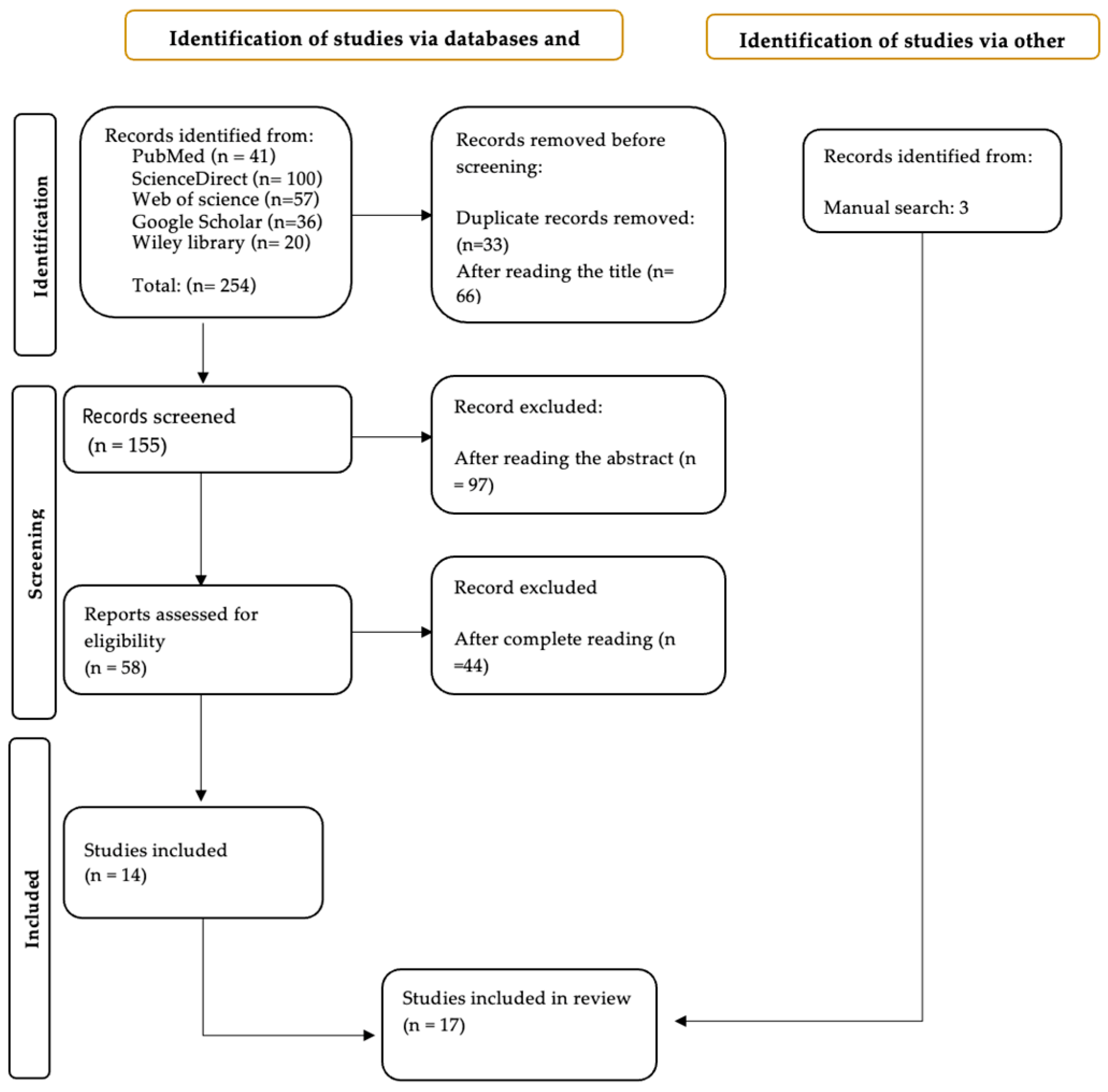
A total of 254 studies were initially identified. After the removal of duplicates, records were screened based on titles and abstracts. Three additional articles were identified through manual searching. Finally, 17 studies met the inclusion criteria and were included in the systematic review, all of which underwent full-text analysis, as illustrated in Figure 1.
Figure 1.
PRISMA flowchart summarizing the study identification and selection process.
3.2. Analysis of the Included Studies
A total of 17 studies involving 576 patients were included in this systematic review. Among these, 179 patients received botulinum toxin injections alone, 317 underwent lip repositioning surgery, and 80 received a combined approach (botulinum toxin + lip repositioning).
The studies showed important heterogeneity in baseline characteristics, intervention protocols, and follow-up duration. Baseline gingival display was generally comparable across groups, ranging from 4.8 to 6.9 mm. Most participants presented with moderate to severe upper lip hypermobility, with or without mild vertical maxillary excess (VME grade I–II according to Garber & Salama).
Botulinum toxin protocols varied widely in dosage (2 to 7.5 U per side), targeted muscles (mainly the levator labii superioris alaeque nasi [LLSAN], alone or combined with the levator labii superioris [LLS]), injection sites, and toxin formulations. Surgical techniques included both conventional lip repositioning and modified approaches incorporating myotomy or periosteal anchoring sutures. Follow-up periods ranged from 2 weeks to 3 years (mean 9.4 months).
3.3. Characterization of Sample Bias Risk
Quality assessments are shown in Table 1 for quasi-experimental studies, Table 2 for case-series studies, and Table 3 for randomized controlled trials.
The degree of quality of the studies on the relational index used and the number of positive responses to the questions are mostly high, including fourteen articles, although we can also find two studies with moderate evidence [1,10,11,17,18,19,20,21,22,23,24,25,26,27,28,29] and only one of low quality [30].
3.4. Characterization of the Included Studies
Regarding the 17 selected articles, 8 were classified as randomized controlled trials, 6 were classified as quasi-experimental studies, 2 were classified as case series, and 1 was classified as a cohort study. Overall, the studies involved a total of 576 patients who underwent botulinum toxin injections, lip repositioning surgery, or a combination of both interventions. The main characteristics of the included studies, including study design, population, interventions, reported outcomes, follow-up duration, and observed adverse effects, are summarized in Table 4.
Table 1.
Risk of Bias for Quasi-Experimental Studies (JBI).
Table 2.
Risk of Bias for case series (JBI).
Table 3.
Risk of Bias for randomized controlled trials (JBI).
Table 4.
The main characteristics of the included studies.
The main clinical outcomes regarding the reduction in gingival display and the stability of results over time are summarized in Table 5. This synthesis highlights the differences in efficacy and durability between botulinum toxin injections, lip repositioning surgery (conventional and modified), and the combined approach.
Table 5.
Mean reduction in gingival display (mm) and long-term stability according to treatment modality.
4. Discussion
The gingival smile related to upper-lip hypermobility represents a frequent therapeutic challenge in aesthetic dentistry, as it is driven by a dynamic muscular dysfunction rather than by a bone or dento-periodontal abnormality [5]. Gummy smiles can be classified as mild (2 to 3 mm of gingival exposure), moderate (4 to 5 mm of gingival exposure), or severe (more than 5 mm of exposure) [11]. The aim of treatment is therefore not only to reduce gingival exposure but also to preserve the harmony and expressiveness of the smile.
The main therapeutic options described are type A botulinum toxin (BTX-A) injections and lip repositioning surgery, to which is now added a more recent combined approach designed to optimise the stability and durability of results [20,25,26].
4.1. Non-Surgical Approach: Type A Botulinum Toxin (BTX-A)
BTX-A, derived from Clostridium botulinum, acts by inhibiting acetylcholine release at the neuromuscular junction, thereby temporarily reducing the activity of the upper lip elevator muscles [6].
All included studies showed a rapid, marked, and reproducible efficacy of botulinum toxin in the treatment of the gingival smile due to lip hypermobility [1,11,29]. A significant improvement is observed as early as two weeks post-injection, with a mean reduction from 3.0 to 4.2 mm (Table 5) [1,19,23]. These findings confirm the strong short-term efficacy of BTX-A, regardless of the injection protocol used.
The most pronounced early effect was reported by Al-Fouzan et al. [19] in 2017 with a mean improvement of 99.6% two weeks after injection [19]. However, this result should be interpreted with caution due to the absence of a control group, lack of randomization, and the use of non-standardized photographic measurements.
Despite this consistent initial efficacy, the durability of BTX-A remains its principal limitation. Most studies report a progressive relapse over time, with a substantial loss of effect occurring between three and four months [21,23]. At 12 months, only a modest residual reduction of 0.8–1.5 mm is typically observed, with relapse rates ranging from 70.0% to 90.0% (Table 5). Longitudinal data indicate that repeated injections do not significantly extend the duration of effect, as each treatment cycle follows a similar pattern of rapid improvement followed by progressive regression due to neuromuscular reinnervation [21].
This result challenges the hypothesis proposed by Mazzuco & Hexsel [31], 2010, which suggested that repeated injections could induce prolonged muscular relaxation [1,31]. Adel’s [21] 2022 data instead show that each injection follows the exact same cycle: maximal improvement at two weeks, progressive decrease, and full recovery between three and four months, with no extension of duration despite repeated sessions.
By contrast, some studies have reported a more gradual recovery and a residual improvement that seems to persist slightly longer, although without a full return to baseline [1,23]. This apparent difference does not reflect a more prolonged biological effect of BTX-A, but can be explained by several methodological factors, such as lower initial severity in some participants, the use of lower doses, interindividual variations in the rate of muscle reinnervation, as well as measurement methods based on photography, which are more sensitive to fluctuations in facial expression.
An important nuance emerges from comparative protocol analyses, showing that the 4-point injection protocol produces a more marked and uniform initial effect, which translates into an apparent persistence of the result up to 25 weeks, whereas the 2-point protocol shows a faster regression [11]. This phenomenon does not mean that the toxin acts longer, but that the stronger the initial improvement, the more gradual the recovery of the smile appears [11].
Overall, the duration of BTX-A efficacy does not depend on progressive muscle weakening with repeated injections, but rather on the protocol used (dose, targeted muscles, and technique), as well as the intensity of the initial effect. However, despite these variations, the biology of nerve reinnervation limits the effect of BTX-A to no more than 3–4 months [11,23].
Moreover, comparative analyses indicate that the choice of target muscle plays a critical role in treatment efficacy. Targeting the LLSAN (Levator Labii Superioris Alaeque Nasi) has been associated with a greater and more stable reduction in gingival exposure compared with injections into the orbicularis oris (OO), which tend to produce more modest improvements without any extension of effect duration [1].
These observations are further supported by dose–response analyses, which demonstrate a clear association between LLSAN targeting and treatment efficacy [29]. In this context, evaluation of different abobotulinumtoxin A doses has shown that a medium dose produces a significantly greater reduction in gingival display than lower doses, whereas increasing the dose beyond this threshold does not yield additional clinical benefit, revealing a plateau in effectiveness [29].
Finally, the result may be influenced by the injected dose. Indeed, Hexsel et al.’s [29] 2021 study is one of the most important for clinical interpretation, as it evaluates three doses of abobotulinumtoxin A: 2.5 U, 5 U, and 7.5 U [29].
The results show that 5 U produces a significantly greater reduction than 2.5 U, but that 7.5 U provides no additional improvement, revealing a plateau in effectiveness [29]. These findings support a clinical recommendation indicating that medium doses (4–5 U per injection point) are optimal for balancing efficacy and safety [29].
Conversely, protocols using lower doses tend to result in less pronounced but more persistent effects, reflecting a reduced initial neuromuscular inhibition [23].
If BTX-A constitutes an effective non-invasive approach but is intrinsically limited by muscular reinnervation, surgical techniques aim to structurally modify the position of the upper lip to obtain a more durable correction. Therefore, it is essential to examine the literature on the different variants of lip repositioning to assess their immediate efficacy, limitations, and medium- to long-term stability.
4.2. Surgical Approach: Lip Repositioning Surgery
All surgical studies consistently report an immediate and significant reduction in gingival exposure following lip repositioning, irrespective of the technical variant employed. Clinical trials have demonstrated marked early improvement, confirming the ability of lip repositioning to alter the apical position of the upper lip by restricting its vertical translation during smiling [10,27,30].
Despite this shared initial efficacy, the magnitude and stability of correction vary substantially according to the surgical approach used. Conventional techniques based on simple mucosal excision produce satisfactory early results but rely on healing and muscular traction, making the early response highly variable [10,27,30].
With extended follow-ups beyond three to six months, a recurrent pattern emerges in the literature, characterized by a high rate of partial relapse associated with conventional lip repositioning techniques [28].
Although a pronounced initial reduction in gingival display is typically achieved, a substantial proportion of patients experience a progressive reappearance of gingival exposure between six and twelve months postoperatively [27,30]. The resumption of muscular traction, elastic soft tissue healing, and progressive re-adaptation of the vestibule are key factors behind this loss of stability [27,30].
Evidence from larger cohorts further supports these observations, indicating that conventional lip repositioning is particularly prone to relapse in patients presenting with marked upper-lip hypermobility or moderate vertical maxillary excess, clinical contexts in which the muscular component plays a predominant role in the pathophysiology of the gingival smile [24].
These limitations of the traditional technique have led to the development of modified techniques specifically aimed at countering muscular traction, identified as the main cause of relapse.
4.2.1. Modified Technique with Myotomy
Evidence suggests that incorporating a myotomy into conventional mucosal excision techniques significantly enhances long-term postoperative stability. By selectively weakening the levator labii superioris alaeque nasi (LLSAN) and the levator labii superioris (LLS), this modification reduces excessive vertical elevation of the upper lip and limits its progressive upward displacement during the healing phase [27,30].
4.2.2. Modified Technique with Periosteal Anchor Sutures
Among the modified surgical approaches, the use of periosteal anchor sutures appears to provide one of the most robust improvements in postoperative stability. Evidence from a large cohort study involving 200 patients demonstrates that the addition of periosteal sutures is associated with a significant reduction in relapse rates, superior clinical stability, and markedly higher patient satisfaction at one year postoperatively [18].
These findings are corroborated by Al Jasser et al.’s [17] 2021 twin study, whose 3-year follow-up provides a rare demonstration of long-term durability: the modified technique shows an almost complete maintenance of results, whereas the conventional technique exhibits notable relapse during the second and third year [17].
Although modified techniques offer better outcomes, no procedure guarantees absolute stability. Several factors influence the risk of relapse, such as the degree of labial hypermobility, the elasticity and thickness of the mucosal tissue, interindividual variability in healing, and the lack of muscular management in simpler techniques.
Clinical observations from other studies further illustrate these limitations, showing that, although initial improvement may be satisfactory, a progressive recurrence of gingival display can occur over time, particularly in cases with multifactorial aetiology [10,24].
Overall, modified surgical techniques incorporating periosteal anchorage provide significantly greater long-term stability than conventional lip repositioning procedures, especially in clinical situations where muscular hyperactivity plays a predominant role in the pathophysiology of the gingival smile.
4.3. Combined Approach: Lip Repositioning + BTX-A
Although modified surgical techniques significantly improve postoperative stability, recent data show that some relapses persist despite optimization of the protocols. This reinforces the determinant role of muscular traction, which remains active even after myotomy or deep sutures and is one of the major factors behind progressive upward lip movement during healing [24,27].
In this context, several authors have proposed combining BTX-A with surgery to temporarily neutralize the muscular component during the critical healing period [22,24,25,26].
The goal of combining both treatments is to markedly reduce the risk of a lip rising during the weeks following surgery.
Experimental studies on BTX-A show that its effect peaks between 2 and 4 weeks and lasts about 3 months, precisely the period during which mucosal tissues heal and when relapse is most likely after lip repositioning.
Randomized clinical trials have shown that immediate postoperative outcomes are comparable in patients treated with or without adjunctive BTX-A, as surgical intervention alone produces an immediate mechanical reduction in gingival exposure [25,26].
In contrast, patients who received BTX-A show significantly reduced vertical lip mobility, more stable healing, and less postoperative pain [25].
These elements suggest a benefit that becomes particularly visible after the first month.
Medium and Long-Term Stability
From three months onward, clinically meaningful differences between treatment strategies become apparent. Randomized clinical trials with follow-up periods of six and twelve months have demonstrated significantly lower relapse rates in patients treated with the combined protocol compared with surgery alone [25,26]. Postoperative results are better maintained over time, and vertical lip translation is significantly reduced.
These findings suggest that BTX-A exerts a temporary stabilising effect by reducing activity of the elevator muscles during the critical healing phase, improving postoperative stability [22,25,26].
An integrated protocol involving repeated BTX-A injections has been proposed to further optimise long-term outcomes. This approach includes a preoperative injection followed by three postoperative booster injections at two, four, and six months [22]. Clinical results obtained with this protocol show minimal relapse at twelve months, with sustained maintenance of gingival reduction.
This protocol reinforces the idea that prolonged muscular stabilisation throughout the entire duration of tissue maturation (generally 4–6 months) is key to achieving a durable result [22].
These elements confirm that the combined approach is particularly notable in gingival smiles with a dominant muscular component or in mixed aetiologies where neither surgery nor BTX-A alone is sufficient.
The BTX-A + surgery combination now appears to be a particularly effective strategy for optimising postoperative stability in cases of lip hypermobility, significantly reducing the relapse observed with surgery alone. By neutralizing muscular traction during the key healing period, BTX-A compensates for one of the main limitations of lip repositioning, allowing more homogeneous, more durable, and better-perceived outcomes.
4.4. Clinical Indications for Each Therapeutic Approach
The choice of treatment for gummy smiles must be guided by a precise etiological diagnosis, as excessive gingival display may result from muscular, dentoalveolar, or skeletal factors [5].
Botulinum toxin is primarily indicated in cases of excessive gingival display related to hyperactivity of the upper lip elevator muscles. Its neuromodulatory effect allows for a temporary reduction in lip elevation during smiling, making it particularly suitable for mild to moderate cases and for patients seeking a minimally invasive and reversible option [6,11,29].
Lip repositioning surgery is mainly indicated in patients presenting with upper lip hypermobility. Several studies have demonstrated its effectiveness in reducing gingival display by limiting lip elevation during smiling [10,27,30]. Some authors have also reported favorable outcomes in selected cases of mild to moderate vertical maxillary excess (degree I–II), particularly when associated with a significant muscular component [24]. However, this technique does not address the underlying skeletal discrepancy and should not be considered a definitive treatment for skeletal etiologies.
In cases of severe vertical maxillary excess, orthognathic surgery remains the gold standard, as it directly corrects the underlying skeletal deformity rather than only modifying the soft tissue component [5,8].
The combined approach, including botulinum toxin and lip repositioning surgery, appears particularly relevant in cases of mixed etiology, where both muscular hyperactivity and soft tissue factors contribute to excessive gingival display. This strategy allows temporary control of muscular activity during the healing phase and has been associated with improved stability and reduced relapse rates [25,26].
4.5. Limitations
Despite the relevance of the findings discussed, the results of this review must be interpreted in light of several methodological limitations.
Most included studies involve relatively small sample sizes and limited follow-up periods, rarely extending beyond 6 to 12 M, which restricts the assessment of long-term stability. In addition, considerable heterogeneity exists among the protocols used, including variations in BTX-A dosage, targeted muscles, surgical techniques, and outcome evaluation criteria.
Furthermore, variability in surgical techniques, particularly regarding muscle management strategies such as myotomy or periosteal anchoring sutures, may significantly influence treatment outcomes and postoperative stability. This represents a potential confounding factor and further limits the comparability of surgical results across studies.
Another important limitation of this review is the heterogeneity of baseline characteristics across the included studies. Differences in initial gingival display, etiology, and patient selection criteria limit direct comparability between treatment groups. Therefore, comparisons between interventions should be interpreted with caution. Several studies rely on non-standardised photographic assessments, which are sensitive to facial expression variability and may affect measurement accuracy. Moreover, some investigations lack randomization or control groups, increasing the risk of bias. Finally, the absence of a clear consensus regarding optimal injection points, dosage, and precise indications for each therapeutic approach limits comparability across studies.
These limitations highlight the need for larger, well-designed randomized clinical trials with long-term follow-up and standardised measurement methods to better define the optimal management of the gingival smile related to upper-lip hypermobility.
5. Conclusions
In summary, the management of gingival smiles of muscular origin currently relies on three complementary approaches: BTX-A injections, lip repositioning surgery, and their combination. BTX-A offers rapid and reproducible efficacy but remains inherently limited by neuromuscular reinnervation. Surgical lip repositioning allows stable anatomical correction; however, relapses remain possible when the muscular component predominates. Modified surgical techniques significantly reduce this risk but do not eliminate it entirely.
In this context, the combined use of BTX-A and lip repositioning surgery appears to represent the most coherent strategy for optimising postoperative stability, particularly in cases of upper-lip hypermobility or mixed aetiologies. By temporarily neutralising muscular traction during the critical healing phase, BTX-A compensates for one of the main limitations of surgery alone, allowing more homogeneous, more durable, and better-perceived clinical outcomes.
Based on current evidence, the management of gingival smiles should remain individualised, integrating precise aetiological diagnosis and a tailored therapeutic approach that combines anatomical correction and muscular control when indicated.
Supplementary Materials
The following supporting information can be downloaded at https://www.mdpi.com/article/10.3390/oral6020049/s1. Table S1: Prisma 2020 Checklist. Reference [32] is cited in the supplementary materials.
Author Contributions
Conceptualization, M.S. and C.C.; methodology, M.S. and M.R.; validation, M.S., C.C. and C.R.; formal analysis, M.S. and C.C.; investigation, M.S. and C.C.; resources, M.S. and R.C.; data curation, M.S. and C.R.; writing—original draft preparation, M.S. and C.C.; writing—review and editing, M.S., C.R. and R.C.; visualization, M.S., R.C. and A.S.V.; supervision, C.C. and M.R.; project administration, M.S. and A.S.V. All authors have read and agreed to the published version of the manuscript.
Funding
This work was conducted under the affiliation of the University Institute of Health Sciences (IUCS), Cooperativa de Ensino Superior Politécnico e Universitário (CESPU). No funding was received for its execution.
Institutional Review Board Statement
Not applicable.
Informed Consent Statement
Not applicable.
Data Availability Statement
No new data were generated or analyzed in this study. Data sharing is not applicable to this article as it is based on a systematic review of the publicly available literature.
Conflicts of Interest
The authors declare no conflicts of interest.
Correction Statement
This article has been republished with a minor correction to the reference 2. This change does not affect the scientific content of the article.
Abbreviations
The following abbreviations are used in this manuscript:
| 0 D | Day 0 |
| 12 W | 12 Weeks |
| 14 D | 14 Days |
| 15 D | 15 Days |
| 16 W | 16 Weeks |
| 1 M | 1 Month |
| 1 Y | 1 Year |
| 25 W | 25 Weeks |
| 2 M | 2 Months |
| 2 W | 2 Weeks |
| 32 W | 32 Weeks |
| 3 M | 3 Months |
| 3 Y | 3 Years |
| 4 M | 4 Months |
| 4 W | 4 Weeks |
| 6 M | 6 Moths |
| 8 M | 8 Months |
| ABO | Abobotulinumtoxin A |
| BTI | Botulinum Toxin Injection |
| BTX-A | Botulinum Toxin Type A |
| CESPU | Cooperativa de Ensino Superior Politécnico e Universitário |
| CG | Control Group |
| EGD | Excessive Gingival Display |
| G1 | Group 1 |
| G2 | Group 2 |
| GS | Gummy Smile |
| GS | Good Stability |
| HS | Highest Stability |
| IUCS | University Institute of Health Sciences |
| JBI | Joanna Briggs Institute |
| LLS | Levator Labii Superioris |
| LLSAN | Levator Labii Superioris Alaeque Nasi |
| LRS | Lip Repositioning Surgery |
| MLRS | Modified Lip Repositioning Surgery |
| MS | Moderate Stability |
| N | No |
| NA | Not/Applicable |
| OO | Orbicularis Oris |
| PIDAQ | Psychosocial Impact of Dental Aesthetics Questionnaire |
| PRISMA | Preferred Reporting Items for Systematic Reviews and Meta-Analyses |
| PROSPERO | International Prospective of Systematic Reviews |
| TE | Temporary Effect |
| TG | Test Group |
| U | Botox Unit |
| ULH | Upper Lip Hypermobility |
| UN | Unclear |
| VAS | Visual Analogue Scale |
| VME | Vertical Maxillary Excess |
| Y | Yes |
References
- Cengiz, A.F.; Goymen, M.; Akcali, C. Efficacy of botulinum toxin for treating a gummy smile. Am. J. Orthod. Dentofac. Orthop. 2020, 158, 50–58. [Google Scholar] [CrossRef] [Scilit]
- Broilo, K.; Ramalho, J.A.S.; Pereira, P.A.; Ramalho, K.M.; Morimoto, S. Botulinum Toxin (Type A) as a Minimally Invasive Treatment for Gengival Smile: Case Report. J. Oral Healthc. 2020, 1, 11–16. [Google Scholar]
- Dawadi, A.; Humagain, M.; Lamichhane, S.; Sapkota, B. Clinical and psychological impact of lip repositioning surgery in the management of excessive gingival display. Saudi Dent. J. 2024, 36, 84–90. [Google Scholar]
- Arcuri, T.; da Costa, M.F.P.; Ribeiro, I.M.; Barreto, B.D.; eSilva, J.P.L. Labial repositioning using polymethylmethracylate (PMMA)-based cement for esthetic smile rehabilitation—A case report. Int. J. Surg. Case Rep. 2018, 49, 194–204. [Google Scholar] [CrossRef] [Scilit]
- Venugopal, A.; Manzano, P.; Ahmed, F.; Vaiid, N.; Bowman, S.J. Gummy smiles: Etiologies, diagnoses & formulating a clinically effective treatment protocol. Semin. Orthod. 2024, 30, 482–501. [Google Scholar] [CrossRef] [Scilit]
- Fatani, B. An Approach for Gummy Smile Treatment Using Botulinum Toxin A: A Narrative Review of the Literature. Cureus 2023, 15, e34032. [Google Scholar] [CrossRef] [Scilit]
- Kezban, E. Gummy Smile Etiology and Treatment Options. Selcuk Dent. J. 2025, 12, 166–171. [Google Scholar] [CrossRef] [Scilit]
- Kadam, D. Professor Hugo Lorenz Obwegeser (1920–2017): An Icon of Orthognathic Surgery. Indian J. Plast. Surg. 2023, 56, 393–394. [Google Scholar] [CrossRef] [Scilit]
- Faus-Matoses, V.; Faus-Matoses, I.; Jorques-Zafrilla, A.; Faus-Llácer, V.J. Lip repositioning technique. A simple surgical procedure to improve the smile harmony. J. Clin. Exp. Dent. 2018, 10, e408–e412. [Google Scholar] [CrossRef] [Scilit]
- Haddadi, P.; Zare, H.; Azadikhah, A. Lip Repositioning, a Solution for Gummy Smile. Front. Dent. 2021, 18, 15. [Google Scholar] [CrossRef] [Scilit]
- Costa, A.B.; Romansina, D.; Ramalho, J.; Pereira, P.; Tedesco, T.K.; Morimoto, S.; Gonçalves, F.; Ramalho, K.M. Botulinum Toxin A in the Management of a Gummy Smile: A Clinical Controlled Preliminary Study. Aesthet. Surg. J. 2022, 42, 421–430. [Google Scholar] [CrossRef] [Scilit] [PubMed]
- Soris, B.A.T.; Shenoy, K.V.; Ramadorai, A.; Kumar, C.S.C.S.; Marimuthu, L. Botulinum Toxin-A in the Treatment of Excessive Gingival Display: A Clinical Study. J. Maxillofac. Oral Surg. 2022, 21, 51–57. [Google Scholar] [CrossRef] [Scilit] [PubMed]
- Aly, L.A.; Hammouda, N.I. Botox as an adjunct to lip repositioning for the management of excessive gingival display in the presence of hypermobility of upper lip and vertical maxillary excess. Dent. Res. J. 2016, 13, 478–483. [Google Scholar] [CrossRef] [Scilit] [PubMed]
- Ikbal, S.A.; Siddiqui, Z.R.; Dutta, S.; Fatima, T.; Mehrotra, R.; Yadav, S.K. Surgical Lip Repositioning in Search of Aesthetics—A Case Series. Indian J. Dent. Res. 2024, 35, 239–241. [Google Scholar] [CrossRef] [Scilit]
- Liberati, A.; Altman, D.G.; Tetzlaff, J.; Mulrow, C.; Gotzsche, P.C.; Ioannidis, J.P.A.; Clarke, M.; Devereaux, P.J.; Kleijnen, J.; Moher, D. The PRISMA statement for reporting systematic reviews and meta-analyses of studies that evaluate healthcare interventions: Explanation and elaboration. BMJ 2009, 339, b2700. [Google Scholar] [CrossRef] [Scilit]
- Porritt, K.; Gomersall, J.; Lockwood, C. JBI’s Systematic Reviews: Study Selection and Critical Appraisal. AJN Am. J. Nurs. 2014, 114, 47–52. [Google Scholar] [CrossRef] [Scilit]
- Al Jasser, R.; AlSarhan, M.; Alotaibi, D.; Bhola, M. A Modified Approach in Lip Repositioning Surgery: A Prospective Study in a Twin Population with a 3-Year Follow-up. Int. J. Periodontics Restor. Dent. 2021, 41, e243–e253. [Google Scholar] [CrossRef] [Scilit]
- Al Jasser, R.N. A Modified Approach in Lip Repositioning Surgery for Excessive Gingival Display to Minimize Post-Surgical Relapse: A Randomized Controlled Clinical Trial. Diagnostics 2023, 13, 716. [Google Scholar] [CrossRef] [Scilit]
- Al-Fouzan, A.F.; Mokeem, L.S.; Al-Saqat, R.T.; Alfalah, M.A.; Alharbi, M.A.; Al-Samary, A.E. Botulinum Toxin for the Treatment of Gummv Smile. J. Contemp. Dent. Pract. 2017, 18, 474–478. [Google Scholar] [CrossRef] [Scilit]
- Adel, N.; Tawfik, B.E.; Nouh, A.S. Evaluation of Soft Tissue Changes on Lateral Cephalometric X-Ray Associated with Lip Repositioning Surgery and/or Botulinum Toxin Injections in Gummy Smile Cases. Randomized Clinical Study. Acta Sci. Dent. Sci. 2021, 5, 93–99. [Google Scholar] [CrossRef] [Scilit]
- Adel, N. A Standardized Technique for Gummy Smile Treatment Using Repeated Botulinum Toxins: A 1-year Follow-up Study. Plast. Reconstr. Surg.—Glob. Open 2022, 10, e4281. [Google Scholar] [CrossRef] [Scilit]
- Adel, N. Botulinum Toxins and Lip Repositioning Surgery with Repeated Botulinum Toxin Injection: A Combined Approach for Gummy Smile Treatment. Plast. Reconstr. Surg.—Glob. Open 2023, 11, e5198. [Google Scholar] [CrossRef] [Scilit] [PubMed]
- Vieira, C.E.A.; Almeida, W.R.D.; Cotrin, P.; Oliveira, R.C.G.D.; Oliveira, R.C.G.D.; Valarelli, F.P.; Zamuner, J.W.; Freitas, K.M.S.D. Evaluation of the botulinum toxin effects in the correction of gummy smile 32 weeks after application. ABCS Health Sci. 2022, 47, e022201. [Google Scholar] [CrossRef] [Scilit]
- Hakobyan, G.; Boyadjian, A.; Boyadjian, M.; Harutyunyan, A.; Tunyan, G.; Khachatryan, G. Clinical advantages of improving the excessive gingival display (EGD) by surgical repositioning of the upper lip. Clin. Oral Investig. 2022, 26, 7265–7275. [Google Scholar] [CrossRef] [Scilit] [PubMed]
- Antunes, K.B.; Dias, A.; Kahn, S.; Schneider, L.F.J.; Cavalcante, L.M. Use of Botulinum Toxin Before Surgical Lip Repositioning: A Randomized Clinical Trial. Int. J. Periodontics Restor. Dent. 2022, 42, e175–e183. [Google Scholar] [CrossRef] [Scilit]
- Ghoniem, O.M.; Madkor, G.G.; Darhous, M.S. Evaluating Lip Repositioning for the Treatment of Excess Gingival Display with and without Pretreatment with Botox: A Randomized Clinical Trial. J. Contemp. Dent. Pract. 2025, 26, 119–126. [Google Scholar] [CrossRef] [Scilit]
- Tawfik, O.K.; Naiem, S.N.; Tawfik, L.K.; Yussif, N.; Meghil, M.M.; Cutler, C.W.; Darhous, M.; El-Nahass, H.E. Lip repositioning with or without myotomy: A randomized clinical trial. J. Periodontol. 2018, 89, 815–823. [Google Scholar] [CrossRef] [Scilit]
- Makkeiah, M.O.; Harfoush, M.; Makkiah, A.; Saneeva, L.; Tuturov, N.; Katbeh, I. Comparative efficacy of Botox and surgical lip repositioning in the correction of gummy smile. Stomatologiya 2021, 100, 47. [Google Scholar] [CrossRef] [Scilit]
- Hexsel, D.; Dal’Forno, T.; Camozzato, F.; Valente, I.; Soirefmann, M.; Silva, A.F.; Siega, C. Effects of different doses of abobotulinumtoxinA for the treatment of anterior gingival smile. Arch. Dermatol. Res. 2021, 313, 347–355. [Google Scholar] [CrossRef] [Scilit]
- Alammar, A.; Heshmeh, O.; Mounajjed, R.; Goodson, M.; Hamadah, O. A comparison between modified and conventional surgical techniques for surgical lip repositioning in the management of the gummy smile. J. Esthet. Restor. Dent. 2018, 30, 523–531. [Google Scholar] [CrossRef] [Scilit]
- Mazzuco, R.; Hexsel, D. Gummy smile and botulinum toxin: A new approach based on the gingival exposure area. J. Am. Acad. Dermatol. 2010, 63, 1042–1051. [Google Scholar] [CrossRef] [Scilit]
- Page, M.J.; McKenzie, J.E.; Bossuyt, P.M.; Boutron, I.; Hoffmann, T.C.; Mulrow, C.D.; Shamseer, L.; Tetzlaff, J.M.; Akl, E.A.; Brennan, S.E.; et al. The PRISMA 2020 statement: An updated guideline for reporting systematic reviews. BMJ 2021, 372, n71. [Google Scholar] [CrossRef] [Scilit]
Disclaimer/Publisher’s Note: The statements, opinions and data contained in all publications are solely those of the individual author(s) and contributor(s) and not of MDPI and/or the editor(s). MDPI and/or the editor(s) disclaim responsibility for any injury to people or property resulting from any ideas, methods, instructions or products referred to in the content. |
© 2026 by the authors. Licensee MDPI, Basel, Switzerland. This article is an open access article distributed under the terms and conditions of the Creative Commons Attribution (CC BY) license.