


Abstract
Background: In hematologic malignancies, treatment allocation and outcome prediction are traditionally driven by clinical and biological parameters. However, growing evidence suggests that non-clinical factors—such as psychosocial context, caregiver availability, organizational support, and digital health integration—play a pivotal role in patients’ ability to tolerate and adhere to complex therapeutic pathways. The concept of “resilience” may offer a more comprehensive framework to capture this multidimensional readiness to treatment. Methods: We conducted a narrative review of the literature focusing on patient and caregiver resilience in hematologic settings. PubMed, Scopus, and Web of Science were searched for studies published in English over the last 15 years, addressing clinical, psychosocial, organizational, and contextual determinants influencing treatment tolerance, continuity of care, and outcomes in hematology. Results: the literature highlights resilience as a dynamic construct shaped by clinical fitness, psychological resources, caregiver competence, social and family context, healthcare system organization, and access to supportive technologies such as telemedicine. Several domains emerged as recurrent determinants of resilience, yet no standardized, integrated assessment tool is currently available in routine hematologic practice. Conclusions: Resilience in hematology should be reframed as a multidimensional, context-dependent construct extending beyond traditional clinical fitness. Incorporating resilience-oriented assessment into clinical workflows may improve treatment personalization, optimize resource allocation, and enhance patient- and caregiver-centered care. Future research should focus on developing pragmatic, clinically applicable tools to operationalize resilience in real-world hematologic settings.
1. Introduction
The management of hematologic malignancies has undergone a profound transformation over the last two decades. Advances in diagnostic accuracy, risk stratification, and therapeutic options have significantly improved survival outcomes across multiple disease entities [1]. However, this progress is accompanied by a 15–20% rate of early treatment discontinuation in specific hematologic settings, often driven by a combination of biological toxicities and poor psychosocial support. Furthermore, these achievements have also led to increasing complexity in treatment pathways, which often require prolonged therapies, strict adherence to schedules, close monitoring, and a high degree of patient engagement. In this context, traditional criteria used to define treatment eligibility—primarily based on age, comorbidities, and performance status—appear increasingly insufficient to capture the real-world capacity of patients to tolerate and complete modern hematologic treatments [2,3].
Clinical decision-making in hematology continues to rely heavily on the concept of “fitness,” a construct largely derived from physiological and functional parameters [4]. To operationalize this approach in real-world practice, it is crucial to establish a rigorous definition of resilience and clearly distinguish it from overlapping clinical and contextual constructs. In this framework, resilience is defined as a dynamic capacity and a process of effectively adapting to significant medical or psychosocial stressors, thereby maintaining psychological equilibrium amid adversity. Far from being a static or innate personality trait, resilience encompasses a spectrum of behaviors, cognitive patterns, and active coping mechanisms that individuals and care dyads can continuously cultivate and develop over time [5].
Consequently, resilience diverges significantly from other routinely assessed parameters. Frailty, for instance, identifies an objective lack of physiological and biological reserve, whereas resilience represents the overall, active process of adaptation to that state. A hematological patient may be biologically frail yet exhibit high resilience through effective emotional coping, a robust informal support system, and strict treatment adherence. Similarly, performance status provides a mere cross-sectional snapshot of objective, physical capacity at a single point in time. In contrast, resilience operates as a longitudinal and dyadic construct that encompasses caregiver competence, emotional stress management, and the adaptive capacity to reorganize life and care dynamics after a severe medical complication or an unexpected hospitalization. Finally, social vulnerability outlines the structural and baseline context of the patient-often posing material, financial, or logistical hurdles-whereas resilience reflects the dynamic manner in which the patient–caregiver dyad, despite such barriers, successfully activates surrogate strategies (such as engaging formal networks, patient associations, or digital health solutions) to optimally navigate the complex therapeutic journey. While traditional biological parameters are essential for estimating direct treatment-related toxicities, they overlook these non-clinical, process-oriented determinants that strongly influence long-term therapeutic feasibility and clinical outcomes [6].
Psychological resilience, cognitive resources, caregiver support, social stability, and healthcare system organization all contribute substantially to the patient’s ability to navigate complex therapeutic journeys, yet these elements are rarely assessed in a structured or systematic manner [7].
Emerging evidence suggests that treatment discontinuation, dose reductions, unplanned hospitalizations, and poor adherence are often driven not only by biological frailty but also by contextual vulnerabilities [8]. Recent epidemiological data indicate that diagnostic and therapeutic advances have led to a significant improvement in cancer survival rates, with a 5-year relative survival for all cancers reaching 68% in recent reports. However, this progress is accompanied by a 15–20% rate of early treatment discontinuation in specific hematologic settings, often driven by a combination of biological toxicities and poor psychosocial support [7,8]. In hematology settings, where therapies are frequently intensive and long-lasting, the role of caregivers becomes particularly relevant. Caregivers often act as informal care coordinators, supporting symptom monitoring, treatment compliance, and access to healthcare services [9,10]. Their availability, competence, and psychosocial well-being may therefore directly impact patient outcomes, positioning caregiver-related factors as integral components of the therapeutic process rather than peripheral elements [11].
In parallel, organizational and system-level factors have gained increasing relevance. Access to specialized centers, continuity of care, availability of supportive services, and the integration of telemedicine have been shown to influence treatment delivery and the patient experience. These aspects highlight the need for a broader conceptual framework that extends beyond individual clinical characteristics and incorporates the interaction between patients, caregivers, and healthcare systems [12].
Within this evolving landscape, the concept of resilience has emerged as a potential unifying paradigm. Unlike fitness, resilience is inherently dynamic and multidimensional, encompassing the capacity of individuals and their surrounding context to adapt to stressors, maintain functional stability, and recover from treatment-related challenges. Although widely explored in psychological and sociological research [13], resilience remains inconsistently defined and operationalized in hematologic care, limiting its translation into clinical practice.
The aim of this narrative review is to explore how resilience has been conceptualized and applied in hematologic settings, with particular attention to patient-, caregiver-, and system-related determinants. By synthesizing the available literature, we seek to propose a multidimensional framework of resilience that may support more holistic clinical decision-making and foster the development of pragmatic assessment tools suitable for real-world hematology practice.
By synthesizing the available literature, we seek to propose a multidimensional framework of resilience that may support more holistic clinical decision-making and foster the development of pragmatic assessment tools suitable for real-world hematology practice. Although systematic or scoping reviews are typically preferred when examining homogeneous constructs with standardized outcome measures, the concept of resilience in hematologic care remains theoretically fragmented and operationally undefined. A narrative review was therefore considered the most appropriate methodological approach to explore conceptual boundaries, map recurring domains, and generate an integrative interpretive framework [14]. To mitigate the selection bias inherently associated with narrative syntheses, the conceptual boundaries of this review were rigorously predefined through explicit inclusion and exclusion criteria.
First, in the present review, the construct of resilience is understood exclusively in its clinical and adaptive dimension—specifically as the dynamic capacity to sustain complex therapeutic pathways and recover from medical stressors—thereby excluding conceptualizations of a purely sociological or ecological nature. Second, to address the multifaceted reality of hematologic care, we integrated both the clinical-functional framework (focused on physiological fitness and frailty) and the psychosocial-organizational model (focused on caregiver and systemic resources). This explicit integration allows us to overcome the interpretative limitations of individual models, which often fail to explain why patients with identical biological fitness experience completely different care trajectories. Third, we intentionally chose not to analyze pure psychological trait-resilience theories, as they have been extensively discussed in the prior psychiatric literature and do not directly focus on the emerging, pragmatic aspects of multidisciplinary management required in modern hematology.
2. Materials and Methods
This review was aimed at exploring the concept of resilience in hematologic care, with a specific focus on patient-, caregiver-, and healthcare system-related determinants influencing treatment tolerance, continuity of care, and real-world clinical outcomes. A narrative approach was selected to allow a comprehensive and flexible synthesis of heterogeneous evidence emerging from the clinical, psychosocial, organizational, and digital health literature.
A structured literature search was conducted across three electronic databases: PubMed, Scopus, and Web of Science. The search covered articles published in English over the last 15 years. Keywords and Medical Subject Headings (MeSH) terms, when applicable, were combined using Boolean operators and included terms related to hematology and resilience, such as “hematologic malignancies,” “resilience,” “treatment tolerance,” “caregiver,” “psychosocial factors,” “organizational factors,” and “telemedicine.” Reference lists of relevant articles were also screened to identify additional pertinent studies.
Studies were considered eligible if they addressed one or more determinants of resilience in adult patients with hematologic diseases or their caregivers, including clinical, psychological, social, organizational, or technological aspects influencing treatment feasibility or care trajectories. Both qualitative and quantitative studies, as well as reviews and consensus papers, were included to capture the multidimensional nature of the topic. Studies focusing exclusively on pediatric populations or unrelated to hematologic care were excluded.
Data extraction focused on study characteristics, resilience-related determinants, and contextual influences on treatment feasibility. Given the heterogeneity of study designs and outcome measures, a qualitative synthesis approach was adopted. Findings were grouped into thematic domains reflecting recurrent determinants of resilience, including clinical and functional status, psychological and emotional resources, caregiver-related factors, social and family context, healthcare organization, and digital health integration.
The review process was iterative in nature, reflecting the exploratory objective of clarifying the conceptual boundaries of resilience in hematologic care. Initial search cycles primarily focused on patient-level determinants; however, caregiver- and system-level influences consistently emerged as integral components. The search strategy was therefore expanded to include organizational and digital health perspectives. The iterative search and thematic grouping were continued until conceptual redundancy was observed and no substantially new resilience domains emerged. At this stage, thematic sufficiency was considered achieved for the purpose of constructing the proposed framework.
Based on the synthesis of the selected literature, an interpretative framework was developed to conceptualize resilience as a dynamic, multidimensional construct in hematologic care. Rather than aiming for quantitative aggregation, the review sought to identify converging themes and practical implications for clinical decision-making, with the goal of informing future research and the development of clinically applicable assessment tools.
3. Results
For the purpose of this review, resilience was conceptualized as the dynamic capacity of patients, caregivers, and healthcare systems to adapt to treatment-related stressors while maintaining the functional continuity of care. This definition was selected among multiple existing psychological and sociological conceptualizations of resilience because it aligns with the clinical realities of hematologic practice, where treatment feasibility depends on the interactions between biological, psychosocial, and organizational determinants.
The literature analysis revealed that resilience is a multidimensional construct emerging from the interaction among individual patient characteristics, caregiver-related factors, and healthcare system organization. Across the included studies, resilience was rarely defined through a single parameter; rather, it appeared as the cumulative result of multiple domains influencing treatment tolerance, adherence, and continuity of care in hematologic settings. Six major thematic domains consistently emerged.
3.1. Clinical and Functional Determinants
Clinical and functional status represented the most frequently explored dimension of resilience. Traditional indicators such as performance status, comorbidity burden, organ function, and baseline functional autonomy were commonly associated with treatment feasibility and the risk of complications. However, several studies emphasized that these parameters alone failed to explain the variability in treatment tolerance and outcomes. Functional decline, when present, often interacted with non-clinical factors, amplifying vulnerability during intensive or prolonged therapies [15,16,17].
In real-world hematologic practice, a substantial proportion of patients fall into a “borderline fitness” category, where clinical parameters do not clearly support either full-intensity treatment or de-escalated strategies. In such scenarios, decision-making frequently extends beyond physiological metrics and incorporates contextual elements, including caregiver reliability, access to rapid medical evaluation, and the patient’s capacity to manage treatment-related toxicities at home. The absence of structured tools to integrate these determinants may result in either the overtreatment of socially vulnerable patients or the undertreatment of individuals who are biologically fit but perceived as fragile. These observations suggest that clinical fitness should be interpreted within a broader resilience-informed framework, particularly when therapeutic decisions involve high-intensity regimens or narrow therapeutic margins. In these settings, clinical and functional status are frequently assessed through the Comprehensive Geriatric Assessment (CGA) [4,16] and the Geriatric Prognostic Index [17], which provide an objective quantification of biological vulnerability.
Specifically, large-scale prospective evidence from the Elderly Project has validated the Simplified Geriatric Assessment (sGA) as a reliable, objective tool to stratify fitness status in clinical practice, while defining a dedicated prognostic index to effectively predict overall survival in older patients with diffuse large B-cell lymphoma (DLBCL) undergoing chemoimmunotherapy [16]. In parallel, the development and external validation of the Geriatric Prognostic Index (GPI) specifically designed for older DLBCL patients receiving R-CHOP have shown that this geriatric-informed tool outperforms conventional staging systems, including the International Prognostic Index (IPI), revised-IPI, and NCCN-IPI, in predicting survival outcomes. Notably, the translation of this index into a publicly accessible web-based calculator underscores its readiness for routine clinical implementation, enabling precision risk stratification [17].
From this perspective, resilience should be understood as an integrative construct that contextualizes fitness and frailty within the patient’s real-life care environment.
3.2. Psychological and Emotional Factors
Psychological resilience, encompassing coping strategies, emotional regulation, and perceived self-efficacy, emerged as a critical determinant of the patients’ ability to endure complex treatment pathways. This domain is often operationalized using the Connor–Davidson Resilience Scale (CD-RISC) [13], which evaluates the patient’s capacity to adapt to treatment-related stressors. Anxiety, depressive symptoms, and cognitive overload were repeatedly associated with reduced adherence, increased symptom burden, and higher healthcare utilization [18]. Conversely, adaptive coping mechanisms and emotional stability were linked to improved engagement with care and better management of treatment-related stressors.
3.3. Caregiver-Related Factors
Caregiver availability and competence were consistently identified as central components of resilience in hematologic care. Caregivers frequently assumed responsibilities related to symptom monitoring, medication management, logistical coordination, and emotional support. Studies highlighted that caregiver strain, limited health literacy, or a lack of support networks could negatively affect patient outcomes, whereas well-supported and adequately informed caregivers enhanced treatment continuity and reduced unplanned care disruptions [19,20,21]. In this framework, caregiver-related factors should be considered a distinct analytical domain rather than an isolated construct. Specifically, they function as contextual modifiers of patient resilience. A reliable and competent caregiver may buffer patient vulnerability by supporting treatment adherence, symptom monitoring, timely access to care, and emotional containment. Conversely, caregiver burden, limited health literacy, or poor availability may amplify patient vulnerability and reduce the feasibility of complex therapeutic pathways. Therefore, caregiver capacity represents a core component of the broader patient–caregiver–healthcare system resilience construct [9,10].
This interconnectedness underscores the importance of assessing caregiver resilience alongside patient-level indicators. Specifically, evidence focusing on the highly demanding transplant setting demonstrates that caregiver coping strategies are significantly related to psychological distress and overall quality of life (QoL) even prior to the initiation of hematopoietic stem cell transplantation (HSCT) [18]. Looking forward, evidence underscores that the future of post-allogeneic HSCT care demands a structural shift toward patient-centered, flexible caregiving models that can dynamically accommodate the diverse socioeconomic circumstances and personal needs of patients [21]. Implementing such evidence-based changes in the caregiving paradigm is vital not only to enhance equity of access to intensive procedures but also to maximize long-term survival outcomes for allogeneic HSCT recipients [21].
Consequently, caregivers of patients with hematologic malignancies undergoing HSCT may uniquely benefit from the early deployment of targeted resources and interventions designed to facilitate adaptive coping mechanisms to manage the complex demands of caregiving from the very baseline of the therapeutic pathway [18].
3.4. Social and Family Context
Social stability, family structure, and socioeconomic conditions contributed significantly to resilience. Patients embedded in supportive family environments demonstrated a greater capacity to manage treatment demands and recover from adverse events. In contrast, social isolation and unstable living conditions significantly amplified patient vulnerability. Within this socioeconomic domain, financial toxicity (FT) has emerged as a highly prevalent stressor in patients with hematologic malignancies, and it is consistently associated with poorer clinical outcomes and diminished quality of life [22]. However, as highlighted in current systematic evidence, research on FT predominantly relies on non-standardized reporting methodologies and cross-sectional analyses rather than robust, prospective longitudinal assessments. Consequently, further efforts are urgently required to standardize FT reporting criteria and investigate structured measures to alleviate this economic burden within the hematologic care context [22].
3.5. Organizational Factors
Healthcare organizations emerged as a key, yet often under-recognized, determinant of resilience. Continuity of care, the accessibility of specialized services, multidisciplinary coordination, and clear communication pathways influence the patients’ ability to navigate complex therapeutic trajectories. Fragmented care models—characterized by delayed referrals, inconsistent communication between inpatient and outpatient settings, or unclear responsibility transitions—may increase the cognitive and logistical burden placed on patients and caregivers, thereby reducing resilience even in clinically fit individuals.
Timely access to diagnostic procedures, specialist consultations, supportive services, and the urgent evaluation of treatment-related complications represents another critical dimension. In hematologic malignancies, where therapeutic windows can be narrow and toxicity profiles unpredictable, delays in care access may directly affect treatment feasibility and outcomes. Conversely, integrated care pathways with defined access channels and rapid-response mechanisms may buffer contextual vulnerabilities and enhance the patients’ capacity to sustain intensive therapeutic regimens [23,24,25]. These findings suggest that resilience is not solely a patient-level attribute but also reflects the structural robustness of the healthcare system where care is delivered.
3.6. Digital Health and Telemedicine
The integration of digital health tools, including telemedicine and remote monitoring, was increasingly described as a resilience-enhancing factor. Healthcare system responsiveness and monitoring are increasingly facilitated by patient-reported outcome (PRO) systems and standardized triage protocols [15,26]. These technologies support timely symptom reporting, reduce logistical barriers, and facilitate communication between patients, caregivers, and healthcare teams. In particular, patient-reported outcome (PRO)-based monitoring systems have demonstrated the potential to improve the early detection of treatment-related toxicities, enabling proactive clinical intervention before complications escalate. Crucially, these clinical benefits extend beyond symptom control: randomized evidence has demonstrated that digital symptom self-reporting during routine cancer care is significantly associated with a measurable improvement in patients’ median overall survival, enhanced quality of life, and a concrete reduction in emergency department visits and unplanned hospitalizations [15,26]. Remote toxicity management platforms and structured tele-triage models may reduce avoidable emergency visits and unplanned hospitalizations, thereby preserving treatment continuity in patients undergoing intensive or prolonged therapies [23,26,27]. It should be noted, however, that part of the evidence supporting PRO-based monitoring, telemonitoring, and remote toxicity management derives from general oncology populations rather than hematology-specific cohorts [15,26,27]. These data were considered relevant because they address mechanisms—such as early symptom detection, timely clinical escalation, and improved communication—that are also central to hematologic care. Nevertheless, their direct transferability to hematologic malignancies should be interpreted with caution, given the specific toxicity profiles, immunosuppression-related risks, transfusion needs, and rapid clinical changes that characterize many hematologic pathways. Teleconsultations and digital communication tools further contribute to resilience by decreasing geographic and organizational constraints, especially for patients managed predominantly in outpatient settings. However, the effectiveness of these interventions depends on digital literacy, caregiver involvement, and integration within established clinical workflows. When embedded within coordinated care models, digital health solutions may function not merely as technological adjuncts but as structural enablers of resilience-oriented hematologic care.
Across domains, no study has provided an integrated operational model combining biological, psychosocial, and organizational determinants. Most available evidence remains fragmented, with limited cross-domain integration. This fragmentation reinforces the need for a multidimensional interpretative framework capable of capturing resilience as a system-level construct rather than an individual attribute [28,29].
3.7. The Integrated Dyadic and Systemic Resilience Framework in Hematologic Care
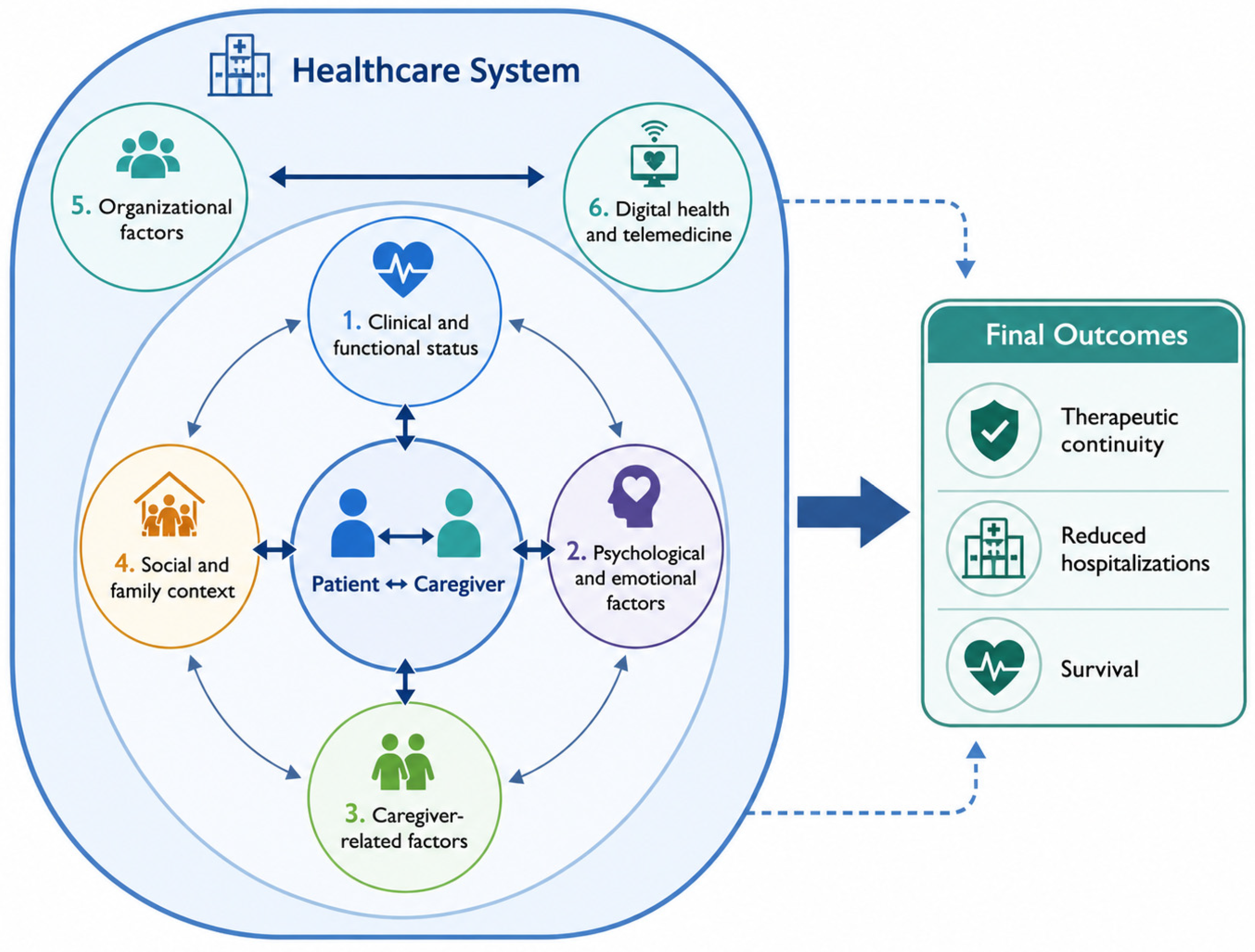
To provide a cohesive synthesis of the identified dimensions, the findings of this review have been mapped onto a structured conceptual framework. This architecture is theoretically adapted from the Dyadic Cancer Outcomes Framework [30], which posits that cancer experiences and outcomes are inherently transactional, shaped by the interdependent characteristics of both patients and their informal support networks. By expanding this dyadic lens to encompass healthcare system dynamics, we organize the resilience landscape in hematology into six interconnected core domains:
Domain 1: Patient Clinical and Functional Determinants—Core biological reserves and fitness profiles (e.g., sGA, standard performance status) [15,16,17].
Domain 2: Psychological and Emotional Factors—Individual coping mechanisms, distress tolerance, and baseline psychological vulnerability [18].
Domain 3: Caregiver-Related Vulnerabilities—Caregiver burden, emotional competence, and dyadic coping capacity [19,20,21].
Domain 4: Social and Family Context—Structural socioeconomic status, financial toxicity, and informal network stability [22].
Domain 5: Organizational Support and Case Management—Systemic buffers, including nurse-led coordination and navigation pathways [23,24,25].
Domain 6: Digital Health and Remote Monitoring—Technological safety nets (e.g., ePROs, tele-triage platforms) ensuring treatment continuity [23,26,27].
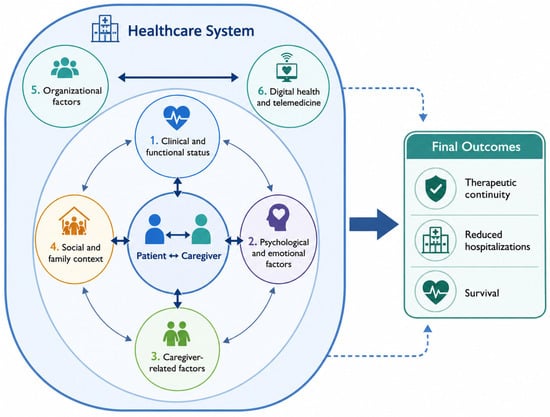
As illustrated in Figure 1, these six domains do not act as isolated variables; rather, they form a mechanistic ecosystem where dyadic resources (patient–caregiver interaction) and systemic assets (organizational and digital infrastructures) constantly cross-modulate each other. For instance, high structural vulnerability (Domain 4) can be neutralized by active nurse-led navigation (Domain 5) combined with digital symptom monitoring (Domain 6), which ultimately preserves the patient’s functional status (Domain 1) and prevents caregiver burnout (Domain 3). Shifting the hematological paradigm toward this integrated framework allows clinicians to identify operational levers to support resilience throughout the high-intensity treatment continuum. To prevent overgeneralization when interpreting this framework, the inherent heterogeneity of the cited primary literature must be addressed (synthesized in Table 1). Methodologically, the current landscape suffers from a high degree of heterogeneity, characterized by a sharp predominance of cross-sectional designs and generic, unidimensional psychometric measures over robust, longitudinal observations specifically validated for resilience. Clinically, significant heterogeneity arises from the diverse treatment intensities considered across the studies, which span from standard frontline chemoimmunotherapy regimens [16,17] to highly intensive, multiphase procedures such as allogeneic hematopoietic stem cell transplantation [18,21]. These variations imply that the operational weight of each resilience domain must be dynamically contextualized by the clinician based on the specific therapeutic risk profile.
Figure 1.
The Integrated Dyadic and Systemic Resilience Framework in Hematologic Care (adapted from Thompson et al., 2021 [30]). The diagram illustrates the dynamic interaction among the six core domains identified in the literature. At the center, the dyadic core represents the interdependent relationship between the patient and the informal caregiver, driven by reciprocal feedback loops where individual coping strategies directly modulate mutual distress. This dyadic engine is deeply embedded within the socioeconomic and personal context (Domains 2 and 4), which establishes baseline financial and psychological vulnerabilities. Surrounding and supporting this microsystem, the systemic healthcare environment acts as an operational buffer through structured, nurse-led coordination and navigation pathways (Domain 5) and real-time technological safety nets like electronic patient-reported outcomes (Domain 6). The synergistic cross-modulation of these six tiers actively counters clinical shocks and toxicities, protecting the patient’s biological reserves (Domain 1) and ultimately translating into optimized clinical trajectories, enhanced quality of life, and superior overall survival.
Table 1.
Domains of Resilience in Hematologic Care. To improve clinical applicability, this table also reports examples of possible assessment tools or measurable indicators that may be used to operationalize each resilience domain in routine hematologic practice.
Caregiver-related factors are presented as a distinct domain for analytical clarity; however, within the proposed framework, they act as contextual modifiers of patient resilience as part of a broader patient–caregiver–healthcare system construct.
4. Discussion
This narrative review highlights resilience as a multidimensional and context-dependent construct that cannot be adequately captured by traditional definitions of clinical fitness alone. In hematologic care, where therapeutic strategies are increasingly complex, prolonged, and resource-intensive, resilience emerges as a key determinant of real-world treatment feasibility, continuity, and outcomes. Our findings suggest that resilience is not an intrinsic patient characteristic but rather the result of a dynamic interaction among clinical status, psychosocial resources, caregiver capacity, and healthcare system organization.
From a hematologic perspective, fitness assessments remain indispensable for estimating treatment-related risks; however, they primarily address biological vulnerability. The added value of resilience lies in its ability to complement, rather than replace, existing fitness and frailty assessments. A patient may be clinically fit but poorly resilient if caregiver support is absent, access to care is fragmented, or psychosocial resources are insufficient. Conversely, a patient with borderline fitness may successfully complete intensive or prolonged therapy when supported by a reliable caregiver, effective care coordination, and timely access to clinical services. Resilience therefore captures the dynamic interaction between biological vulnerability and contextual resources, helping to explain why patients with similar fitness profiles may experience markedly different real-world care trajectories [6]. In daily practice, hematologists frequently encounter this discrepancy, which underscores the limitations of fitness-based decision-making when applied in isolation and supports the need for broader evaluative frameworks.
A particularly relevant finding concerns the central role of caregivers in shaping resilience. In hematologic pathways—especially those involving outpatient-based regimens, long-term oral therapies, or frequent hospital access—caregivers often function as informal extensions of the healthcare team. Their ability to recognize early warning signs, manage complex medication schedules, and coordinate logistics can directly influence treatment adherence and prevent avoidable complications. Importantly, caregiver resilience is itself dependent on education, support, and integration within the care pathway, highlighting the necessity of structured caregiver assessment and engagement. Caregiver-related determinants were retained as a separate domain in the framework to improve conceptual clarity, but they should be interpreted as relational and system-level modifiers rather than as variables external to patient resilience. In hematologic care, the patient’s ability to sustain treatment is often mediated by caregiver capacity, particularly in outpatient regimens, transplantation, cellular therapies, and prolonged oral treatments [9,10,19,20,21]. This perspective supports a combined patient–caregiver–healthcare system model, in which resilience emerges from the interaction among individual resources, relational support, and organizational responsiveness [23,24,25].
In hematologic malignancies such as aggressive lymphomas, acute leukemias, and transplant settings, treatment intensity and timing often leave limited margins for error. In these contexts, resilience may influence not only adherence but also eligibility for advanced therapeutic options. Failure to consider contextual determinants may inadvertently exclude patients who are biologically fit but socially vulnerable.
Within this context, the role of the nurse case manager appears pivotal. Positioned at the intersection among patients, caregivers, and the healthcare system, nurse case managers are uniquely equipped to identify early signs of reduced resilience, whether clinical, psychological, or organizational. Through continuous patient contact, care coordination, and education, they contribute to maintaining treatment continuity and mitigating the fragmentation of care. Rather than representing an additional layer of support, case management should be considered as an integral component of resilience-oriented hematologic care.
To translate this framework into clinical practice, the domains summarized in Table 1 and supported by the key evidence reported in Table 2 may be operationalized through a structured nurse-led multidimensional assessment. Such an assessment could be performed at key transition points of the hematologic care pathway, including baseline evaluation before treatment initiation, pre-transplant or pre-cellular therapy assessment, hospital discharge, treatment change, and follow-up visits. The aim of this workflow is not to replace existing fitness or frailty tools, nor is it to provide a validated prognostic score at this stage, but to identify modifiable vulnerabilities that may compromise treatment feasibility and continuity of care. Critical or partially adequate findings in each domain could trigger targeted interventions, including caregiver education, psycho-oncology referral, social work involvement, case manager activation, improved access pathways, telemonitoring support, or treatment-planning adjustments. The indicators reported in Table 1 should be interpreted as examples of possible operational measures rather than as a validated scoring system. Their purpose is to support structured clinical assessment and guide the future development of resilience-oriented tools in hematologic care.
Table 2.
Summary of Key Evidence on Resilience Determinants.
Organizational and system-level determinants further modulate resilience, often independently of individual patient characteristics. Fragmented care pathways, limited access to supportive services, and poor communication between care settings increase the burden placed on patients and caregivers, potentially overwhelming even those with adequate personal resources. Conversely, coordinated models of care—characterized by multidisciplinary collaboration, clear communication pathways, and continuity across settings—appear to enhance resilience by reducing uncertainty and the cognitive load.
Digital health solutions and telemedicine may act as resilience multipliers within such models. By facilitating timely communication, remote monitoring, and rapid intervention, these tools can partially compensate for geographic, logistical, or organizational barriers. However, their effectiveness depends on appropriate patient and caregiver engagement, as well as on their integration into established clinical workflows, rather than on stand-alone implementation.
To bridge the gap between theoretical multi-domain synthesis and real-world application, this framework must be translated into quantifiable metrics capable of seamlessly integrating into existing hematological workflows. Rather than introducing entirely new diagnostic hurdles, clinicians can deploy a targeted assessment strategy using validated, domain-specific instruments: standard performance status (ECOG/Karnofsky) and the sGA [16] for the clinical-functional domain; the Brief COPE for psychological strategies; the Family Resilience Assessment Scale (FRAS) and the Zarit Burden Interview (ZBI) for dyadic caregiving strain [18]; the Multidimensional Scale of Perceived Social Support (MSPSS) and the COST tool for financial toxicity [22]; the Care Transitions Measure (CTM-15) for organizational coordination; and the System Usability Scale (SUS) for digital health readiness [26]. Furthermore, when a holistic, generalized measure of health resilience is required, newly validated tools like the Multi-Dimensional Health Resilience Scale (MHRS) [31] or established oncological benchmarks such as the Connor–Davidson Resilience Scale (CD-RISC) [13] and the Brief Resilience Scale (BRS) [32] can be easily incorporated into rapid pre-treatment screening to optimize treatment continuity.
The implementation of multi-domain resilience frameworks into routine hematological practice requires addressing several challenges. Healthcare system differences among countries heavily influence framework applicability. In publicly funded health systems, implementing longitudinal dyadic monitoring may be facilitated by integrated networks; conversely, in private or multi-insurer systems, coordination between the involved organizational stakeholders may face substantial administrative and financial barriers [33]. The data collection burden represents a major hurdle for both healthcare providers and care dyads. Asking patients undergoing intensive regimens (e.g., HSCT) and acutely stressed caregivers to complete extensive psychometric questionnaires may cause fatigue, attrition, or a lack of adherence [34]. To mitigate this, the implementation of computerized tools, such as ultrabrief validated screeners, and the integration of Patient-Reported Outcome Measures (PROMs) into existing Electronic Health Records (EHRs) could be pivotal to automate triggers for psychosocial interventions. Finally, equity and accessibility are critical concerns. A framework that heavily relies on digital health solutions and high health literacy risks exacerbating disparities, leaving behind older dyads, those with low socioeconomic status, or patients living in rural areas (the digital divide). Equitable care requires co-designing resilience tools and pathways with end-users [35], integrating culturally adapted (digital or non-digital) navigation programs, and ensuring leadership by specialized nurses or social workers [36].
Taken together, these findings support a shift from a static, patient-centered notion of fitness toward a dynamic, system-oriented concept of resilience. This perspective aligns closely with real-world hematologic practice, where treatment success often depends as much on care organization and support structures as on disease biology. Embedding resilience assessment into routine clinical workflows—potentially through structured, nurse-led evaluations—may enhance therapeutic personalization, optimize resource allocation, and reduce avoidable treatment disruptions.
Future research should focus on translating this conceptual framework into pragmatic tools applicable in everyday practice. Such tools should be simple, multidimensional, and designed for use within multidisciplinary teams, with particular attention to the role of nurse case managers in their implementation. By operationalizing resilience in this manner, hematologic care may move closer to truly personalized, context-aware treatment strategies that reflect the complexity of the patients’ real-world experiences [37,38,39].
Limitations
This review has limitations inherent to its narrative methodology. First, although a structured search strategy was employed, the approach was not designed to achieve the exhaustive retrieval of all potentially relevant studies. Narrative reviews prioritize conceptual integration over comprehensive inclusion; therefore, some relevant publications may not have been captured.
Second, the interpretation and thematic grouping of the literature were influenced by the authors’ clinical and case-management experience in hematology settings. While this perspective enhances clinical applicability, different research teams might have emphasized alternative dimensions or organized the domains differently.
Third, the concept of resilience in hematologic care lacks standardized operational definitions and validated measurement tools. As a result, the proposed framework reflects a conceptual synthesis rather than empirical validation. The heterogeneity of study designs, populations, and endpoints further limits the possibility of quantitative aggregation.
Finally, although caregiver and organizational factors emerged as central components of resilience, the available literature remains uneven across domains, with stronger evidence existing in psychosocial oncology than in hematology-specific contexts. This imbalance may influence the relative weight attributed to certain determinants within the proposed framework. In addition, some evidence supporting digital health interventions, particularly PRO-based monitoring and remote toxicity management, was derived from general oncology populations rather than hematology-specific cohorts [15,26,27]. Although these studies provide relevant insights into symptom monitoring and care continuity, further hematology-specific validation is required before these tools can be fully integrated into resilience-oriented hematologic pathways.
Furthermore, most available studies originate from high-income healthcare systems, potentially limiting the transferability of the proposed framework to low-resource settings.
Despite these limitations, the narrative approach was intentionally chosen to explore conceptual boundaries and generate a clinically grounded interpretative model. The framework proposed in this review should therefore be considered a starting point for future empirical validation rather than a definitive classification.
5. Conclusions
Resilience in hematologic care represents a multidimensional construct that extends beyond traditional assessments of clinical fitness. This review highlights how treatment feasibility and continuity are not only shaped by biological and functional parameters, but also by psychological resources, caregiver capacity, social context, and healthcare system organization. Ignoring these dimensions may lead to suboptimal therapeutic decisions and an increased risk of treatment discontinuation in real-world practice.
Reframing resilience as a dynamic interaction among patients, caregivers, and care systems offers a more realistic lens through which to interpret treatment tolerance and outcomes in hematology. Such an approach aligns with daily clinical experience, where the success of complex therapeutic pathways often depends on coordinated care, effective communication, and the early identification of contextual vulnerabilities.
Integrating resilience-oriented evaluation into routine hematologic practice may support more personalized treatment strategies, improve the allocation of supportive resources, and enhance patient and caregiver engagement. In this framework, structured, multidisciplinary, and nurse-led care models—particularly those involving case management—may play a key role in translating resilience from a conceptual construct into a practical clinical tool. From this perspective, a nurse-led checklist or screening workflow based on the proposed domains may represent a pragmatic first step toward integrating resilience assessment into routine hematologic care.
To translate this framework into real-world clinical utility, further research must pursue two distinct pathways. Prospective validation studies are needed to evaluate how baseline dyadic resilience scores predict hard clinical outcomes, such as treatment adherence, relative dose intensity, and unplanned hospitalizations. Furthermore, targeted interventional strategies should be tested within real-world hematologic settings. These include structured, nurse-led dyadic navigation programs for proactive symptom management and integrated digital health tools designed to alleviate caregiver burden and sustain treatment continuity during intense therapeutic phases. By pursuing these concrete empirical objectives, hematologic oncology can successfully transition from traditional risk stratification toward a dynamic, resilience-informed paradigm that optimizes both patient outcomes and healthcare system sustainability.
Author Contributions
Conceptualization, V.Z. and M.G.; methodology, S.B.; software, M.G.; validation, V.Z.; formal analysis, D.M.; investigation, F.O.; resources, M.G.; data curation, V.Z.; writing—original draft preparation, V.Z.; writing—review and editing, V.Z., S.B.; visualization, D.M.; supervision, M.G.; project administration, V.Z. All authors have read and agreed to the published version of the manuscript.
Funding
This research received no external funding.
Institutional Review Board Statement
Not applicable.
Informed Consent Statement
Not applicable.
Data Availability Statement
Data generated by the review process are available from the first author (Dr. Valentina Zoboli) upon reasonable request.
Acknowledgments
The authors thank Enrico Fontanesi for the suggestions during data analysis and interpretation. A special thanks to the GITMO NG for the useful impressions provided.
Conflicts of Interest
The authors declare no conflicts of interest.
References
- Siegel, R.L.; Giaquinto, A.N.; Jemal, A. Cancer statistics. CA Cancer J. Clin. 2024, 74, 12–49. [Google Scholar] [CrossRef] [Scilit]
- Abel, G.A.; Klepin, H.D. Frailty and the management of hematologic malignancies. Blood 2018, 131, 515–524. [Google Scholar] [CrossRef] [Scilit]
- Salvini, M.; D’Agostino, M.; Bonello, F.; Boccadoro, M.; Bringhen, S. Determining treatment intensity in elderly patients with multiple myeloma. Expert Rev. Anticancer. Ther. 2018, 18, 917–930. [Google Scholar] [CrossRef] [Scilit]
- Holler, M.; Ihorst, G.; Reinhardt, H.; Rösner, A.; Braun, M.; Möller, M.D.; Dreyling, E.; Schoeller, K.; Scheubeck, S.; Wäsch, R.; et al. An objective assessment in newly diagnosed multiple myeloma to avoid treatment complications and strengthen therapy adherence. Haematologica 2023, 108, 1115–1126. [Google Scholar] [CrossRef] [Scilit]
- U.S. Department of State. Resilience: Managing Stress and Maintaining Equilibrium. Available online: https://2009-2017.state.gov/m/med/dsmp/c44950.htm (accessed on 21 May 2026).
- Opsomer, S.; Lauwerier, E.; De Lepeleire, J.; Pype, P. Resilience in advanced cancer caregiving: A systematic review and meta-synthesis. Palliat. Med. 2022, 36, 44–58. [Google Scholar] [CrossRef] [Scilit] [PubMed]
- Mu, H.; Liu, B.; Ren, G.; Wang, L.; Cui, Y.; Chen, C.; Chen, X.; Zhang, Y. Family Resilience and Quality of Life Among Chinese Patients With Acute Leukaemia: A Moderated Mediation Model of Cognitive Appraisal and Coping Style. J. Clin. Nurs. 2025, 34, 4819–4828. [Google Scholar] [CrossRef] [Scilit]
- Peipert, J.D.; Zhao, F.; Lee, J.W.; Shen, S.E.; Ip, E.; O’Connell, N.; Carlos, R.C.; Graham, N.; Smith, M.L.; Gareen, I.F.; et al. Patient-Reported Adverse Events and Early Treatment Discontinuation Among Patients With Multiple Myeloma. JAMA Netw. Open 2024, 7, e243854. [Google Scholar] [CrossRef] [Scilit] [PubMed]
- Wang, Z.; Yu, S.; Liu, Y.; Han, Y.; Zhao, W.; Zhang, W. Effectiveness of family centred interventions for family caregivers: A systematic review and meta-analysis of randomized controlled trials. J. Clin. Nurs. 2024, 33, 1958–1975. [Google Scholar] [CrossRef] [Scilit] [PubMed]
- Capodanno, I.; Rocchi, M.; Prandi, R.; Pedroni, C.; Tamagnini, E.; Alfieri, P.; Merli, F.; Ghirotto, L. Caregivers of Patients with Hematological Malignancies within Home Care: A Phenomenological Study. Int. J. Environ. Res. Public Health 2020, 17, 4036. [Google Scholar] [CrossRef] [Scilit]
- Rangel, M.L.; Stelzig, D.; Martinez Enriquez, C.; Badr, H. Multi-Stakeholder Perspectives on Barriers to Mental Health Support for Informal Caregivers. Int. J. Environ. Res. Public Health 2026, 23, 325. [Google Scholar] [CrossRef] [Scilit]
- Chen, C.H.; Lan, Y.L.; Yang, W.P.; Hsu, F.M.; Lin, C.L.; Chen, H.C. Exploring the Impact of a Telehealth Care System on Organizational Capabilities and Organizational Performance from a Resource-Based Perspective. Int. J. Environ. Res. Public Health 2019, 16, 3988. [Google Scholar] [CrossRef] [Scilit]
- Connor, K.M.; Davidson, J.R.T. Development of a new resilience scale: The Connor-Davidson Resilience Scale (CD-RISC). Depress. Anxiety 2003, 18, 76–82. [Google Scholar] [CrossRef] [Scilit]
- Baethge, C.; Goldbeck-Wood, S.; Mertens, S. SANRA—A scale for the quality assessment of narrative review articles. Res. Integr. Peer. Rev. 2019, 4, 5. [Google Scholar] [CrossRef] [Scilit]
- Basch, E.; Deal, A.M.; Kris, M.G.; Scher, H.I.; Hudis, C.A.; Sabbatini, P.; Rogak, L.; Bennett, A.V.; Dueck, A.C.; Atkinson, T.M.; et al. Symptom monitoring with patient-reported outcomes during routine cancer treatment: A randomized controlled trial. J. Clin. Oncol. 2016, 34, 557–565. [Google Scholar] [CrossRef] [Scilit] [PubMed]
- Merli, F.; Luminari, S.; Rossi, G.; Arcari, A.; Rigacci, L.; Hawkes, E.; Chiattone, C.S.; Cavallo, F.; Cabras, G.; Alvarez, I.; et al. Simplified geriatric assessment in older patients with diffuse large B-cell lymphoma: The prospective elderly project of the Fondazione Italiana Linfomi. J. Clin. Oncol. 2021, 39, 1214–1222. [Google Scholar] [CrossRef] [Scilit]
- Isaksen, K.T.; Galleberg, R.B.; Mastroianni, M.A.; Rinde, M.; Rusten, L.S.; Barzenje, D.; Ramslien, F.; Fluge, O.; Slaaen, M.; Meyer, P.; et al. The geriatric prognostic index: A clinical prediction model for survival of older diffuse large B-cell lymphoma patients treated with standard immunochemotherapy. Haematologica 2023, 108, 2454–2466. [Google Scholar] [CrossRef] [Scilit]
- Amonoo, H.L.; Johnson, P.C.; Nelson, A.M.; Clay, M.A.; Daskalakis, E.; Newcomb, R.A.; Deary, E.C.; Mattera, E.F.; Yang, D.; Cronin, K.; et al. Coping in caregivers of patients with hematologic malignancies undergoing hematopoietic stem cell transplantation. Blood Adv. 2023, 7, 1108–1116. [Google Scholar] [CrossRef] [Scilit] [PubMed]
- Tucci, A.; Martelli, M.; Rigacci, L.; Riccomagno, P.; Cabras, M.G.; Salvi, F.; Stelitano, C.; Fabbri, A.; Storti, S.; Fogazzi, S.; et al. Comprehensive geriatric assessment is an essential tool to support treatment decisions in elderly patients with diffuse large B-cell lymphoma. Leuk. Lymphoma 2015, 56, 921–926. [Google Scholar] [CrossRef] [Scilit] [PubMed]
- Nielsen, I.H.; Tolver, A.; Piil, K.; Kjeldsen, L.; Grønbæk, K.; Jarden, M. Family caregiver quality of life and symptom burden in patients with hematological cancer: A nationwide cross-sectional study. Eur. J. Oncol. Nurs. 2024, 69, 102538. [Google Scholar] [CrossRef] [Scilit]
- Tweeten, B.; Randall, J.; Barata, A.; Khera, N.; Griffith, M.A.; DeSalvo, A.M.; Schoeppner, K.; Preussler, J.M. The caregiver paradigm in hematopoietic cell transplant: Current and future directions. Transplant. Cell. Ther. 2025, 31, 874–888. [Google Scholar] [CrossRef] [Scilit]
- Ouchveridze, E.; Banerjee, R.; Desai, A.; Aziz, M.; Lee-Smith, W.; Mian, H.; Berger, K.; McClune, B.; Sborov, D.; Qazilbash, M.; et al. Financial toxicity in hematological malignancies: An understudied but important side effect. Blood Cancer J. 2022, 12, 74. [Google Scholar] [CrossRef] [Scilit]
- Wang, N.; Chen, J.; Chen, W.; Shi, Z.; Yang, H.; Liu, P.; Wei, X.; Dong, X.; Wang, C.; Mao, L.; et al. The effectiveness of case management for cancer patients: An umbrella review. BMC Health Serv. Res. 2022, 22, 1247. [Google Scholar] [CrossRef] [Scilit]
- Chan, R.J.; Milch, V.E.; Crawford-Williams, F.; Agbejule, O.A.; Joseph, R.; Johal, J.; Dick, N.; Wallen, M.P.; Ratcliffe, J.; Agarwal, A.; et al. Patient navigation across the cancer care continuum: An overview of systematic reviews and emerging literature. CA Cancer J. Clin. 2023, 73, 565–589. [Google Scholar] [CrossRef] [Scilit]
- Ferraz, L.F.M.; Ferreira, A.P.S.; Guimarães, T.V.V.; de Melo Campos, P. Early integration of palliative care in hematology: An urgency for patients, a challenge for physicians. Hematol. Transfus. Cell Ther. 2022, 44, 567–573. [Google Scholar] [CrossRef] [Scilit]
- Basch, E.; Deal, A.M.; Dueck, A.C.; Scher, H.I.; Kris, M.G.; Hudis, C.; Schrag, D. Overall survival results of a trial assessing patient-reported outcomes for symptom monitoring during routine cancer treatment. JAMA 2017, 318, 197–198. [Google Scholar] [CrossRef] [Scilit] [PubMed]
- Mir, O.; Ferrua, M.; Fourcade, A.; Mathivon, D.; Duflot-Boukobza, A.; Dumont, S.; Baudin, E.; Delaloge, S.; Malka, D.; Albiges, L.; et al. Digital remote monitoring plus usual care versus usual care in patients treated with oral anticancer agents: The randomized phase 3 CAPRI trial. Nat. Med. 2022, 28, 1224–1231. [Google Scholar] [CrossRef] [Scilit]
- Hong, A.S.; Chang, H.; Courtney, D.M.; Fullington, H.; Lee, S.J.C.; Sweetenham, J.W.; Halm, E.A. Patterns and results of triage advice before emergency department visits in patients with cancer. JCO Oncol. Pract. 2021, 17, e564–e574. [Google Scholar] [CrossRef] [Scilit]
- Chapman, A.; Bardsley, E.; Card, H.; Marshall, E.; Olsson-Brown, A. Evaluation of an established oncology triage hotline assessing the UKONS triage tool and call outcomes. Support Care Cancer 2023, 31, 742. [Google Scholar] [CrossRef] [Scilit]
- Thompson, T.; Ketcher, D.; Gray, T.F.; Kent, E.E. The Dyadic Cancer Outcomes Framework: A general framework of the effects of cancer on patients and informal caregivers. Soc. Sci. Med. 2021, 287, 114357. [Google Scholar] [CrossRef] [Scilit] [PubMed]
- Ge, L.; Yip, W.F.; Li, R.; Chua, E.S.S.; Ho, M.R.; Ho, A.H.Y.; Chua, E.Y.; Cheng, D.; Leong, I.Y.O.; Chieh, P.P.; et al. Development and validation of the multi-dimensional health resilience scale for community-dwelling adults. Front. Public Health 2025, 13, 1452738. [Google Scholar] [CrossRef] [Scilit] [PubMed]
- Smith, B.W.; Dalen, J.; Wiggins, K.; Tooley, E.; Christopher, P.; Bernard, J. The Brief Resilience Scale: Assessing the ability to bounce back. Int. J. Behav. Med. 2008, 15, 194–200. [Google Scholar] [CrossRef] [Scilit]
- Boscolo, P.R.; Callea, G.; Ciani, O.; Tarricone, R. Measuring Value in Health Care: A Comparative Analysis of Value-based Frameworks. Clin. Ther. 2020, 42, 34–43. [Google Scholar] [CrossRef] [Scilit] [PubMed]
- Nguyen, H.; Butow, P.; Dhillon, H.; Sundaresan, P. A review of the barriers to using Patient-Reported Outcomes (PROs) and Patient-Reported Outcome Measures (PROMs) in routine cancer care. J. Med. Radiat. Sci. 2021, 68, 186–195. [Google Scholar] [CrossRef] [Scilit]
- Tanay, M.A.L.; Armes, J.; Oakley, C.; Sage, L.; Tanner, D.; Roca, J.; Bryson, L.; Greenall, B.; Urwin, L.; Wyatt, T.; et al. Co-designing a cancer care intervention: Reflections of participants and a doctoral researcher on roles and contributions. Res. Involv. Engagem. 2022, 8, 36. [Google Scholar] [CrossRef] [Scilit] [PubMed]
- Dixit, N.; Rugo, H.; Burke, N.J. Navigating a Path to Equity in Cancer Care: The Role of Patient Navigation. Am. Soc. Clin. Oncol. Educ. Book 2021, 41, 3–10. [Google Scholar] [CrossRef] [Scilit]
- Marzorati, C.; Renzi, C.; Russell-Edu, S.W.; Pravettoni, G. Telemedicine use among caregivers of cancer patients: Systematic review. J. Med. Internet Res. 2018, 20, e223. [Google Scholar] [CrossRef] [Scilit]
- Hochrath, S.; Dhollander, N.; Deliens, L.; Schots, R.; Daenen, F.; Kerre, T.; Beernaert, K.; Pardon, K. Palliative care in hematology: A systematic review of the components, effectiveness, and implementation. J. Pain Symptom Manag. 2025, 69, 114–133.e2. [Google Scholar] [CrossRef] [Scilit] [PubMed]
- Papadopoulou, C.; Johnston, B. Early integration of palliative care in haemato-oncology: Latest developments. Curr. Opin. Support. Palliat. Care 2024, 18, 235–242. [Google Scholar] [CrossRef] [Scilit]

Disclaimer/Publisher’s Note: The statements, opinions and data contained in all publications are solely those of the individual author(s) and contributor(s) and not of MDPI and/or the editor(s). MDPI and/or the editor(s) disclaim responsibility for any injury to people or property resulting from any ideas, methods, instructions or products referred to in the content. |
© 2026 by the authors. Licensee MDPI, Basel, Switzerland. This article is an open access article distributed under the terms and conditions of the Creative Commons Attribution (CC BY) license.