


Abstract
Flocculation is a physicochemical process with critical relevance to industrial and environmental operations, including potable water production, wastewater remediation, mineral processing, papermaking, and food manufacturing. The efficiency of flocculation is determined by the chemical nature, molecular structure, and physicochemical interactions of flocculants with suspended colloidal matter. Conventional synthetic polyacrylamides, available in nonionic, anionic, and cationic forms, function predominantly via electrostatic neutralization, polymer chain bridging, and sweep flocculation induced by precipitated hydroxides. Their high molecular weight, customizable charge density, and cost-effectiveness have consolidated their industrial dominance. However, the inherent resistance of polyacrylamides to biodegradation in combination with its monomer’s toxicity and increasing regulatory pressure have accelerated research toward sustainable alternative materials. Recent developments include functionalized natural polysaccharides (e.g., chitosan, cellulose derivatives, starch esters), bio-based copolymers, and nanoengineered hybrid systems incorporating inorganic domains to enhance colloid destabilization and sedimentation kinetics. This review systematically examines the physicochemical principles underlying flocculation, evaluates the performance parameters and limitations of polyacrylamides, and highlight emerging strategies for sustainable flocculant design. Prospects for the next generation of flocculation technologies are discussed in the context of mechanistic optimization, ecological safety, and compliance with evolving environmental regulations.
1. Introduction
Flocculation is an essential physicochemical process that enables the aggregation and separation of suspended particles in liquid media, serving as a cornerstone technology across diverse industrial and environmental applications [1]. Its significance spans water treatment, mineral processing, food and beverage production, papermaking, pharmaceuticals, and biotechnology (Figure 1) [2,3]. In these sectors, flocculation enhances the removal of emergent contaminants, including solid particles such as microplastics, pathogen compounds, and colloidal materials. This facilitates resource recovery, improves process efficiency, and ensures compliance with stringent environmental regulations [4].
Figure 1.
Schematic representation of key applications of flocculation in industrial and environmental processes.
Despite the growing body of literature on flocculation, most existing reviews remain largely descriptive, sorting flocculant classes without systematically linking polymer architecture to performance or placing flocculant choice within the current regulatory and sustainability context. This review specifically addresses this gap: it aims to (i) establish a structure–property–performance framework connecting different aspects, including charge density, molecular weight, branching, and hydrophobicity, to flocculation efficiency across synthetic, bio-based and hybrid systems, and (ii) critically evaluate the readiness of sustainable alternatives to replace polyacrylamides at industrial scale. This latter objective is particularly urgent: tightening regulatory limits on acrylamide residuals and metal-based coagulants, ESG-driven procurement policies in water utilities, and mounting evidence of polyacrylamide environmental persistence are all contributing to accelerating the need for a critical, quantitatively grounded assessment of sustainable flocculant options.
In municipal and industrial wastewater treatment, coagulation constitutes the initial chemical destabilization step, whereas flocculation refers to the subsequent physical aggregation stage. Coagulation is generally induced by the addition of inorganic salts or low-molecular-weight polymers, which dissociate in solution and neutralize particle surface charges, thereby reducing electrostatic repulsion. Flocculation then promotes the formation of larger aggregates through the action of high-molecular-weight polymers, which facilitate particle bridging and settling (Figure 2). Although both processes involve aggregation phenomena, they differ in mechanism and, from a surface and physical chemistry perspective, in their degree of reversibility (Table 1). In municipal and industrial wastewater treatment, these processes contribute to the removal of fine particulates and organic matter, thereby improving effluent quality and protecting public health [1]. In mining operations, they support mineral recovery from slurries and the clarification of tailings pond effluents. In the food industry, they are applied to clarify beverages, stabilize emulsions, and purify raw materials [5,6]. In papermaking, flocculation is employed to enhance fibre and filler retention and optimize paper properties [7]. It is also relevant in the textile industry, where it is used for dye removal from wastewater [8]. Overall, the efficiency of the process depends on the properties of the dispersed particles, the chemistry of the suspension, and the nature of the flocculant used [9].
Table 1.
Comparison of coagulation and flocculation destabilization processes in water treatment [10].
Figure 2.
Principal flocculation mechanisms: (a) charge neutralization, (b) polymer patching, and (c) bridging (adapted from reference [11] with the permission of MDPI).
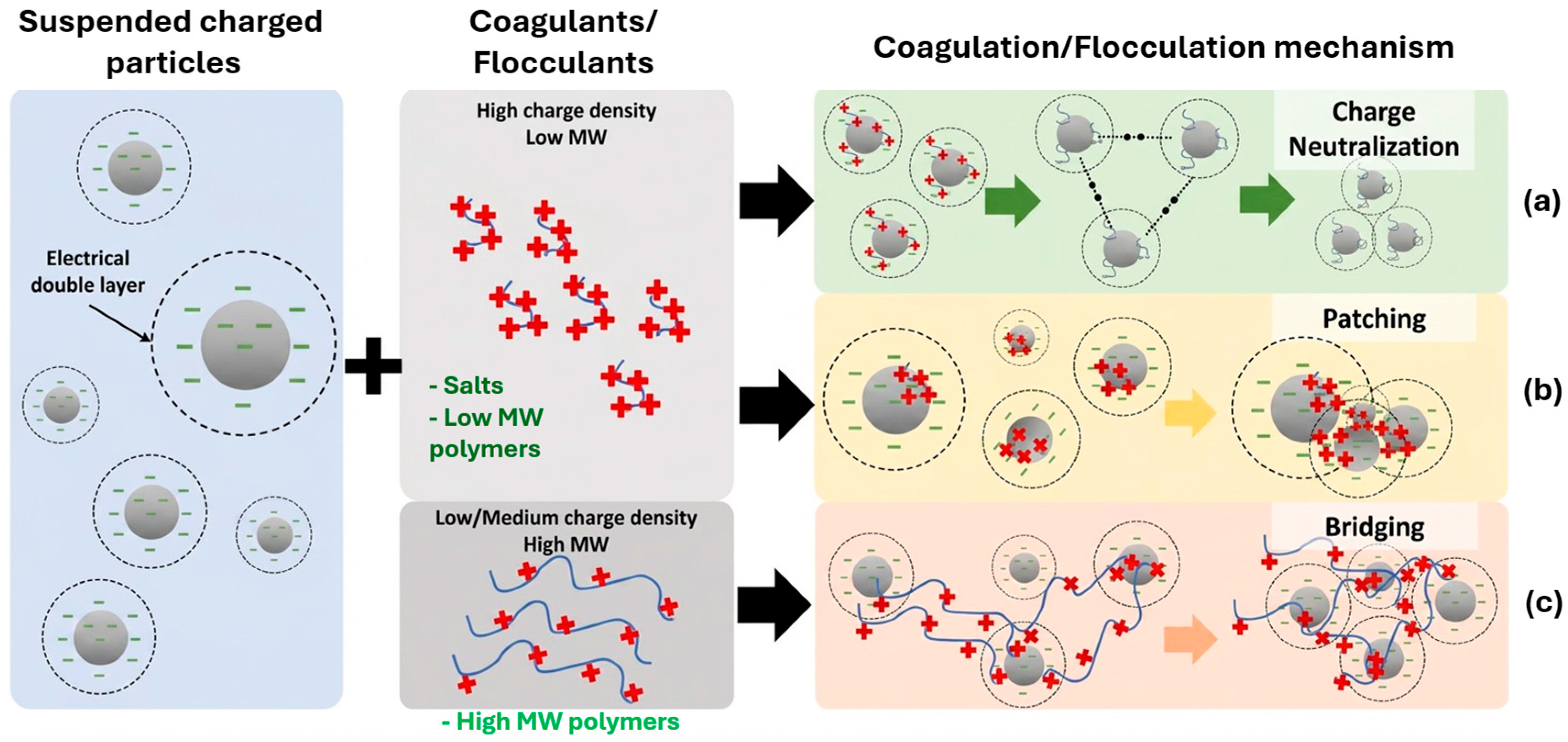
Charge neutralization (Figure 2a) occurs when flocculants bearing charges opposite to those on particle surfaces neutralize surface potentials and reduce electrostatic repulsions. This mechanism is commonly observed with aluminum or iron salts and cationic polyelectrolytes, which compress the electric double layer surrounding colloidal particles [4]. Polymer bridging (Figure 2c) involves high-molecular-weight polymers that adsorb onto multiple particles simultaneously, linking them via extended chain loops and tails. This represents one of the most efficient pathways for forming large, dense flocs, particularly effective below the isoelectric point [12]. Patch or hydrogen bridging (Figure 2b) results in the formation of intermolecular hydrogen bonds, a phenomenon that commonly occurs with natural polymers rich in hydroxyl groups, leading to semi-colloidal aggregates with enhanced stability. In practice, careful adjustment of both coagulant and flocculant concentrations is essential to optimize performance for specific applications. The selection and tuning of these chemical agents must account for the unique characteristics of the target suspension and the desired treatment outcome. Advanced techniques, such as Laser Diffraction Spectroscopy (LDS), are suitable to evaluate in real time the kinetics and underlying pathways of floc formation, distinguishing between charge neutralization and bridging mechanisms [13,14]. Aggregate size, structure, and fractal dimensions, depending on the dominant mechanism and operating conditions, directly impact floc strength, sedimentation rates, and dewatering performance [15]. Furthermore, polymer-induced bridging has been characterized using light scattering, providing quantitative assessment of floc development, and modelling approaches have been reviewed to clarify underlying mechanistic frameworks for predicting floc formation and performance [16,17,18,19]. Studies highlight the competition between charge neutralization and bridging, their dependence on polymer concentration, ionic strength, and shear forces, as well as the resultant variations in floc compactness, porosity, and mechanical robustness [4,20,21]. It is worth clarifying that charge neutralization and double-layer compression, although both reducing electrostatic repulsion, are mechanistically distinct: charge neutralization involves direct adsorption of oppositely charged species onto the particle surface, reducing the surface potential itself, whereas double-layer compression results from an increase in ionic strength that screens surface charge without altering it. Bridging can likewise be separated into a chemical component, arising from specific chemisorption, hydrogen bonding or ionic pairing between functional groups on the polymer and the particle surface, and a physical component, arising from the mechanical entanglement and looping of extended polymer chains across particles. Regarding the conditions favouring patching over bridging (Figure 2b vs. Figure 2c): patching tends to dominate at low polymer molecular weight, high charge density, and concentrations approaching or exceeding particle-surface saturation, since short, highly charged chains cannot extend far enough to bridge separate particles. On the other hand, bridging is favoured by high molecular weight, sub-saturation concentration, and moderate mixing intensity that preserves extended chain conformation, whereas excessive shear can break bridges and convert a bridged floc into an overdosed, restabilized (patched) system.
According to Hogg (2000) [22], destabilization of particles during flocculation and dewatering is a decisive precursor for effective floc development and directly influences subsequent floc characteristics. The destabilization process reduces the electrostatic repulsion among colloidal particles, often through charge neutralization or compression of the electrical double layer, facilitating attractive forces and promoting the initial formation of flocs, as illustrated in Figure 2.
As flocculation progresses, the rate and efficiency of floc development are affected by different factors, including polymer concentration, mixing intensity, and the chemical conditions of the solution (pH, ionic strength, and dissolved ions). These parameters not only determine the average floc size and morphology but also influence the density and cohesion of the aggregates. The resulting flocs, depending on the flocculant type and mixing regime, can range from loose and porous to compact and robust structures that exhibit distinct settling and dewatering performances [23]. Optimizing these process variables is therefore vital to achieve ideal floc characteristics for efficient solid–liquid separation in practical applications. Since flocculation depends on the prior destabilization of colloidal particles, the process must be understood in conjunction with the initial coagulation stage. Accordingly, the process begins with coagulation, where coagulants such as aluminum sulfate (alum) [24,25], polyaluminium-chloride [26], acrylamide-based cationic polyelectrolytes [27], or polyferric sulfate (PFS) [28] are rapidly mixed into the water under vigorous agitation. During this critical period, these agents neutralize the electrical charges on fine particles and colloids, compress the electric double layer, and trigger the formation of gelatinous hydroxide precipitates such as Al(OH)3 [24,25], leading to the entrapment of impurities within microflocs, while preparing the system for subsequent aggregation. Following this initial destabilization, flocculants are introduced, commonly high-molecular-weight polymers, such as polyacrylamide (PAM) [29,30] or natural agents including cellulose [31], chitosan [32], gums [33], tannin [34], or starches [35,36], and the mixture is subjected to slow and controlled stirring, promoting gentle collisions among microflocs. During this phase, the extended chains of the polymeric flocculant act by bridging adjacent microflocs, causing them to aggregate into larger, denser, and faster-settling flocs. This sequential approach is widely observed in treatment plants and has been extensively corroborated through experimental studies, models, and mechanistic reviews [17,19,21]. For example, in studies of oil refinery wastewater, sequential flocculation chambers and innovative scenarios demonstrated specialized flocculation mechanisms, with site-specific adaptation and parameter tuning required for maximum efficiency. All powered by insights coming from scattering (like LDS), modelling and mechanisms, focused publications [4,13,16,20].
Building on these mechanistic insights, recent research has increasingly focused on how real-time monitoring and data-driven control strategies can enhance process reliability. Rather than relying solely on fixed chemical dosing, modern approaches integrate continuous assessment of floc growth, stability, and breakage dynamics to adjust operational conditions with greater precision. This shift reflects a broader trend toward adaptive flocculation control, where mixing energy, solution chemistry, and polymer interactions are fine-tuned in response to changing suspension characteristics [37]. Industrial case studies and lab-scale innovations further highlight the complex interplay between charge neutralization, polymer bridging, and structural reinforcement, making the approach to process control increasingly data-driven and context-specific [14].
The growing emphasis on sustainability, driven by industry Environmental, Social, and Governance (ESG) mandates in water utilities [38], academic advances in bioflocculant R&D, and government regulations (e.g., EU restrictions on aluminum coagulants and U.S. Environmental Protection Agency (EPA) PFAS rules) [39], has accelerated the shift toward bio-based and biodegradable flocculants. These alternatives to conventional synthetic polymers reduce environmental impacts while matching or surpassing treatment performance. Together, these regulatory pressures and technological advances are reshaping the criteria for flocculant selection, shifting the focus from purely performance-driven choices to solutions that balance efficiency, environmental safety, and long-term sustainability. This transition is accelerating the development and adoption of bio-based and biodegradable flocculants, which are increasingly positioned as viable alternatives to conventional synthetic polymers. In particular, drinking-water guideline limits for residual acrylamide monomer set by the World Health Organization (0.5 µg/L) and enforced nationally through frame-works such as the US Safe Drinking Water Act and the EU Drinking Water Directive directly constrain the acrylamide content permissible in PAM products used for potable water treatment, distinguishing this monomer-specific regulation from the broader aluminum-coagulant and PFAS-related restrictions noted above [40].
2. Industrial Flocculants
The selection and utilization of flocculants are fundamental for efficient solid–liquid separation in modern industrial and municipal water treatment. Currently, the industry relies on a combination of inorganic and organic agents to meet increasingly stringent process and regulatory demands [41,42]. Soluble mono-metal salts, such as ferric chloride, ferric sulfate, magnesium chloride, and aluminum sulfate, remain widely applied for their cost-effectiveness and reasonable performance in destabilizing colloidal suspensions through charge neutralization [43]. Polymetallic salts, including polyaluminum chloride and polyferric chloride, have seen growing adoption due to their higher pollutant removal efficiency, broader operational pH ranges, and reduced chemical dosing compared to traditional salts [44]. Their use is especially prevalent in large-scale water, wastewater, and mineral processing plants, where operational reliability and adaptability to fluctuating water quality are crucial. The evolution of polymer science, particularly regarding the development of novel water-soluble polyelectrolytes, has led to substantial advances in flocculation technology. Synthetic polymers, such as polyacrylamides (including amino-methyl polyacrylamide), polyalkylenes, polyamines, polyethyleneimine, and polydiallyldimethyl ammonium chloride, are being finely engineered to optimize molecular weight, architecture, and charge density for targeted applications [45]. Modern polyelectrolytes are valued for their outstanding ability to induce particle bridging, resulting in rapid settling, compact sludge, and improved downstream handling, even when applied at low concentrations [46]. These agents are compatible with inorganic coagulants, maximizing process synergy and cost savings by enhancing floc quality and reducing overall chemical consumption [3]. Regarding the silica-based agents listed in Table 2, it should be noted that activated (poly)silicic acid carries a net negative surface charge and is therefore not used as a stand-alone flocculant. It is typically applied in combination with aluminum- or iron-based agents, polyacrylamides or bio-based polymers as part of composite coagulant–flocculant systems, in which the silicate component reinforces floc structure while the metal salt provides the primary charge-neutralization function [47]. Titanium-containing reagents represent a further, less widely discussed class of inorganic coagulant–flocculants: by analogy with silicon-based systems, they exhibit combined coagulation and flocculation behaviour arising from the polymerization and polycondensation of meta- and ortho-titanic acid species generated upon hydrolysis of titanium salts, with performance comparable to conventional aluminium- and iron-based agents in recent studies [48].
Table 2.
Main flocculant agents used at industrial scale.
3. Synthetic Flocculants: Polyacrylamides (PAMs)
Among all synthetic organic flocculants, polyacrylamides (PAMs) occupy a particularly prominent role in industrial water treatment due to their remarkable adaptability and proven performance. Their long-chain polymeric structure (see Figure 3), derived from acrylamide units and readily modified through copolymerization or post-polymerization processes, enables precise control over charge density, hydrophilicity, and adsorption properties.
Figure 3.
Chemical structure of (A) polyacrylamide (PAM). Taken from [56] with permission of MDPI.
As a result, PAMs can be custom-tailored as anionic, cationic, or nonionic alternatives to address a broad spectrum of contaminants and operational scenarios [57]. This versatility enables widespread usage of PAMs for flocculation in most sectors. The predominant mechanism through which PAMs function as flocculants is interparticle bridging, which is facilitated by hydrogen bonding, van der Waals forces, or direct ionic interactions. For example, anionic PAMs aggregate positively charged particles such as metal hydroxides, making them highly effective in mining and water clarification operations. By contrast, cationic PAMs are widely employed for their ability to bind and destabilize negatively charged organic matter in industrial effluents and municipal sewage [58]. Notably, PAMs often serve as coagulant aid in concert with agents like aluminum sulfate (alum), boosting the formation of dense floc structures and enhancing solid–liquid separation efficiency. Laboratory and field studies consistently report significant improvements in turbidity reduction and sludge management, even at minimal PAM concentrations [57]. Their robust performance across different pH and temperature conditions further cements their status as an essential tool in these processes [59]. Despite their clear advantages, the industrial use of PAMs is tempered by considerations relating to environmental persistence and potential toxicity [60]. Slow degradation rates in natural waters and sludge have prompted attention to their fate in the environment, as have concerns regarding residual acrylamide monomer levels [61]. The degradation process of PAM generally occurs over multiple steps [62,63,64,65,66,67,68], as shown in Figure 4. Many small-fragment oligomers are first produced and then converted to acrylamide monomers (AM) followed by a series of degradations. Subsequently, AM can experience biodegradation by amidase or amidohydrolase, converting it to acrylic acid (AA) and ammonia (NH3). Çelik et al. (2018) indicated that the biodegradation of AM by microbes typically occurs within 100–700 h in unsterilized natural and polluted waters [62].
Figure 4.
Schematic illustration of PAM degradation processes.
Despite their widespread industrial dominance, PAMs face growing concern due to environmental persistence and potential toxicity risks [69]. Slow degradation rates in natural waters and sludge, combined with concerns over residual AM, have intensified research into their environmental fate [61]. These functional differences reflect deeper structural variation among PAM derivatives: anionic PAMs typically incorporate acrylate or sulfonate comonomers, introducing negative charge, whereas cationic PAMs incorporate quaternary ammonium or amine-based comonomers, and nonionic PAMs rely on a purely acrylamide backbone; charge density, comonomer distribution (random vs. block) and molecular weight within each class further modulate adsorption behaviour, floc density and shear resistance, and should be considered jointly with charge type when selecting a PAM grade for a given application. It should also be clarified that the environmental concern associated with PAM use does not stem from a single factor but from the combination of three main issues: (i) the intrinsic persistence of the high-molecular-weight polymer backbone itself in soils and sediments, (ii) the presence of residual, unreacted acrylamide monomers from the polymerization process, and (iii) the generation of acrylamide and other toxic products during subsequent environmental degradation of the polymer (Figure 4); these three sources of concern are regulated differently and should not be conflated when assessing PAM’s environmental footprint [69]. Finally, the degradation pathways summarized in Figure 4 are not equivalent and proceed through distinct mechanisms: abiotic (hydrolytic) degradation slowly cleaves amide side groups under ambient pH and temperature [70]; thermal degradation [71], relevant during sludge incineration or high-temperature processing [72], accelerates backbone scission; oxidative degradation, driven by radicals, UV exposure or advanced oxidation processes, fragments the polymer chain into smaller oligomers; and biological degradation, mediated by microbial amidase/amidohydrolase activity, is generally the slowest pathway but is ultimately responsible for the conversion of acrylamide monomer to acrylic acid and ammonia [69].
These environmental persistence concerns highlight the importance of ongoing regulatory oversight and the development of process strategies that mitigate environmental risk, ensuring the continued utility of PAMs and maintaining high standards of water treatment and resource recovery [68,73,74,75]. Despite their long-standing industrial relevance, the environmental fate of PAMs, particularly their slow degradation and the potential release of acrylamide monomers, continues to raise regulatory and operational challenges. This context has prompted the scientific and industrial community to seek novel solutions that maintain or surpass the performance benchmarks set by PAMs while addressing ecological and safety concerns. As a result, increasing research and innovation are now focused on modified natural polymers, biodegradable biopolymers, and hybrid systems as promising alternatives to conventional synthetic agents. The following section examines these new classes of bio-based and hybrid flocculants, comparing their mechanisms, advantages, and application outcomes with those of PAMs, and highlighting current trends in sustainable water treatment technologies.
The performance of both synthetic and bio-based flocculants is strongly influenced by the composition of the wastewater matrix. High ionic strength and salinity compress the electrical double layer and can screen the charged groups of polyelectrolytes, thus reducing the electrostatic component of bridging and often requiring increased concentrations to achieve equivalent destabilization; this effect is generally more pronounced for natural polyelectrolytes, whose charge density is comparatively lower and more pH-dependent than that of PAM [76]. Water hardness, mainly through divalent cations such as Ca2+ and Mg2+, can promote charge screening and complexation with anionic functional groups, changing both concentration requirements and floc structure [77]. Dissolved and natural organic matter compete with target colloids for adsorption sites on the flocculant, can coat particle surfaces and alter their charge, and may consume flocculant concentration without contributing to floc growth, an effect that is particularly relevant for cellulose- and chitosan-based flocculants relying on hydrogen bonding and electrostatic interactions [78]. PAM performance is comparatively more robust across a wider range of these matrix conditions, owing to its higher and more precisely tuneable molecular weight and charge density, which partly explains its continued industrial dominance despite the sustainability drawbacks discussed above.
4. New Flocculants
For clarity, the terminology used throughout this section is defined as follows. “Natural flocculants” refers to polymers derived directly from plant, animal, or microbial sources with minimal or no chemical modification (e.g., unmodified chitosan, plant mucilage). “Modified natural polymers” refers to natural polymers that have undergone deliberate chemical functionalization (e.g., cationization, oxidation, grafting) to enhance or tailor their flocculation performance. “Biodegradable flocculants” is used as an umbrella term encompassing both natural and modified natural polymers that undergo environmental biodegradation, as distinct from persistent synthetic polymers such as PAM. Finally, “hybrid flocculants” is used in this review to denote systems that combine two or more of these components, including polymer–inorganic blends, grafted or composite polymer–polymer systems, and bioflocculant-assisted coagulation strategies, with the specific subtype indicated at each occurrence below.
Recent advances in water and wastewater treatment are marked by the development of bio-based and biodegradable flocculants engineered to address limitations of conventional polymers such as PAMs. These sustainable alternatives are designed to offer improved environmental compatibility, rapid biodegradation, and lower health risks, all while maintaining, or even exceeding, flocculation efficacy.
4.1. Modified Natural Polymers
Natural polymers like chitosan (obtained by deacetylation of chitin), starch, cellulose, and alginate are most commonly modified and deployed in industrial settings. Chitosan, for example, exhibits superior cationic charge density, making it particularly effective at removing suspended solids and organics in effluents from food processing, palm oil mills, and papermaking [79]. Issahaku et al. (2023) show that chitosan’s removal rates for total suspended solids (TSS) and residual oils can consistently reach 90–95% in palm oil mill wastewater, in contrast to petroleum-derived PAMs but with the added benefit of renewable sourcing and nontoxic sludge [80]. In papermaking, Guo et al. (2020) [81] compared different molecular weights and charge densities of chitosan. The authors found it more efficient than synthetic polyamines in aggregating fine particles and showing higher affinity for cellulose fibres, resulting in rapid stabilization and reversible flocculation, essential for process adjustment and maintenance. The charge density of chitosan can be modified by changing the pH in aqueous solution below the pKa of amine groups (typically ranging between 6.17 and 6.51) [82], after deacetylation of chitin, or by chemical modification of chitosan, using chemical modification agents, such as 2,3-epoxypropyl-trimethyl quaternary ammonium chloride (EPTAC), Figure 5. Cellulose and chitosan are given particular emphasis in this review because of their natural abundance, well-established and versatile modification chemistry, commercial availability, and the comparatively large body of quantitative performance data available in the literature, which allows more rigorous comparison with PAM than is currently possible for other less-studied natural polymers such as starch, alginate, gums and tannins, discussed further in Section 4.4. Beyond flocculation efficiency, both cellulose and chitin share key advantages over PAM that are often underemphasized: negligible acute toxicity, established biodegradability, generally lower raw-material cost given their renewable and often waste-derived origin, and sludge that is compatible with agricultural or soil-amendment reuse rather than requiring specialized disposal [83].
Figure 5.
Chitosan transformation to a polycationic electrolyte by reaction with 2,3-epoxypropyl-trimethyl quaternary ammonium chloride (EPTAC). Taken from [84] with permission of Emerald Publishing.
Nicu et al. (2013) [85] conducted a comparative study assessing the flocculation efficiency with different molecular weights and charge densities of chitosan against conventional synthetic polymers in papermaking. The authors found that chitosan not only outperformed PDADMAC and PEI in flocculating fine calcium carbonate particles but also exhibits a stronger affinity for cellulose fibres, enabling stable and reversible flocculation, a desirable property for fibre retention and process control.
In another case, the industrial deployment of cellulose-based flocculants for dye removal in textile wastewater [86] was evaluated using both cationized cellulose (CDAC) and anionic dialdehyde cellulose (ADAC), Figure 6. Performance tests revealed that colour removal percentages exceeded 90% for most dye classes, matching or exceeding the efficacy of synthetic polyacrylamide. These results affirmed that natural cellulose-derived polyelectrolytes present a viable and eco-friendly alternative to conventional flocculants for treating heavily coloured industrial effluents, with process tunability via backbone modification and charge adjustment [87].
Figure 6.
Cellulose-based PELs, by periodate oxidation (DAC) followed by cationization of DAC with Girard’s reagent T (CDAC) or anionization with sodium metabisulfite (ADAC). Adapted from [86].
Notably, oxidized, cationic-modified cellulose pulp has shown competitive performance in comparison to PAMs in removing dyes from textile wastewater, with performance dependent on functional group density and backbone reactivity, both of which can be tuned for process optimization. Recent innovations, as demonstrated by Magalhães et al. (2024) [88], suggest dual modification strategies to tailor cellulose’s properties. First, a cationization step (using periodate oxidation and Girard T reagent) was used to introduce charged functional groups. Secondly, hydrophobic modification was achieved by enzyme-assisted esterification with fatty acids derived from vegetable oils, resulting in polymers possessing both cationic and hydrophobic groups. This approach enables control over charge density, hydrophobicity, and molecular weight, with the resulting cellulose-based flocculants showing a degree of substitution for cationic groups (DS_cationic) between 0.3 and 1.8 and hydrophobic groups (DS_hydrophobic) from 0.09 to 0.66. Their study highlights the importance of tuning reaction parameters such as temperature and reaction time to optimize yields and performance, supporting the sustainable production of tailored, effective biobased flocculants for diverse industrial needs.
Magalhães et al. (2025) demonstrated that the developed sustainable bio-based polyelectrolytes, by customization of cellulose through the introduction of charged and hydrophobic groups, substantially enhanced flocculation performance and selectivity [89], as shown in Figure 7. Their work demonstrates that chemical modification of cellulose, such as quaternization, carboxylation, and hydrophobic grafting, enables tailoring of flocculant architecture to specific effluent types and pollutant profiles. This innovation further supports the use of cellulose-derived polyelectrolytes as viable, sustainable alternatives to conventional synthetic flocculants.
Figure 7.
Two-step synthesis route for cationic cellulose (CDAC) from cellulose via periodate oxidation to dialdehyde cellulose (DAC) followed by cationization under acidic catalysis. Taken from [88] with permission of MDPI.
The modification of natural polymers, particularly through oxidation, cationization, and grafting, has proven effective in producing tailored, high-performance biopolymeric flocculants [90]. These systems bridge the gap between natural and synthetic materials, offering renewable and tuneable alternatives for industrial wastewater treatment. Building on these advances, the next section explores plant-derived flocculants, which rely primarily on the intrinsic physicochemical properties of natural extracts and polysaccharides rather than chemical modification.
Taken together, the studies discussed above indicate a consistent trend for modified cellulose and chitosan: chemical modification (e.g., cationization, oxidation, hydrophobic grafting) reliably improves affinity for the target colloid and allows tuning of charge density and hydrophobicity to specific effluent types, with reported removal efficiencies for TSS, oils and dyes generally falling in the 90–99% range under optimized dosing, comparable to or exceeding PAM benchmarks in the cited studies [91]. The main recurring limitation among these examples is not the flocculation performance per se but process-level factors, concentration optimization, reproducibility of the degree of substitution between batches, and the additional processing steps required for chemical modification, which will need to be addressed for broader industrial adoption.
4.2. Plant-Derived Flocculants
The exploration of plant-based flocculants, including the ones derived from gums, vegetable extracts, cellulose, chitosan, starch, tannins, seed kernels, and from a wide range of other botanical sources, has become a dynamic area within bio flocculation research Figure 8. Saleem et al. (2019) presented an extensive review covering the chemistry, historical milestones, and practical efficacy of plant coagulants, including their roles as cationic, anionic, and non-ionic process aids, and highlighted their growing prospects for large-scale application and commercialization [92]. Mohd-Salleh et al. (2019) conducted a comparative assessment of over sixteen different plants, reporting notable outcomes for natural materials as coagulant aids and composite flocculants, while emphasizing their sustainability, low impact, and adaptability in real industrial contexts [93]. Case studies compiled in these reviews demonstrate the capacities of Moringa oleifera seeds, Opuntia ficus-indica mucilage, Trigonella foenum-graecum, Citrullus lanatus, Chrysopogon zizanioides, and other botanical extracts, which have achieved turbidity removals up to 93% in synthetic and real wastewaters, often surpassing chemical benchmarks such as alum or synthetic polymers [94]. The literature consistently emphasizes that plant-based coagulants not only deliver efficient removal of suspended solids and organics, but also offer operational advantages, non-corrosive effects, carbon neutrality, lower sludge volumes, and agricultural suitability for sludge reuse, making them credible candidates for greener industrial water treatment [95].
Figure 8.
Examples of sources of plant-based bioflocculants. Adapted from [95] with permission of IWA Publishing.
A case study by Dkhissi et al. (2020) examined the use of cactus mucilage (Opuntia ficus-indica) as a bio-flocculant for treating vegetable oil refinery wastewater in Casablanca, Morocco [96]. The researchers performed pilot-scale tests using jar methodology and found that Opuntia pads achieved greater than 99% turbidity removal at an optimal dose of 1.48 g/L, with surfactant and phenol removal performance reaching up to 78% and 45%, respectively, for different pollution loads. These findings highlight the cost-effectiveness and versatility of cactus-derived flocculants for industrial applications, especially when pollution profiles vary significantly.
In another case, Mageshkumar and Karthikeyan (2016) investigated the application of Moringa oleifera seed extract in a tannery wastewater treatment setting [97]. Using natural coagulant protein from the seeds, the study observed turbidity reductions up to 98% and significant colour and chemical oxygen demand removal without the need for supplementary chemical agents. This demonstrates that Moringa oleifera is not only highly effective under industrial operating conditions but also suitable for integration into existing treatment infrastructures, while requiring minimal modifications.
Despite these limitations, several strategies have been developed to reduce the variability and improve the industrial reliability of plant-derived flocculants. Controlled extraction, purification, and molecular fractionation help standardize the physicochemical properties of plant polymers, while mild chemical modifications (such as oxidation, cationization, or grafting) enable the production of flocculants with reproducible charge density and functionality [86,98,99,100]. Additionally, controlled cultivation practices and precision agriculture reduce seasonal fluctuations in biomass quality and availability. The production of stabilized concentrates or dried formulations further enhances storage stability and facilitates consistent dosing. Finally, hybrid systems that combine plant-based polymers with microbial or inorganic components provide improved robustness and performance consistency. Together, these approaches significantly mitigate the challenges associated with natural variability and support the large-scale deployment of plant-derived flocculants. Two further barriers deserve explicit mention. First, extract stability during storage remains a practical concern, as many plant-derived active fractions (proteins, mucilage polysaccharides) are prone to microbial spoilage and loss of activity over time unless stabilized or dried, adding cost and complexity relative to synthetic PAM formulations with long shelf lives. Second, regulatory acceptance of plant-derived flocculants for potable water and food-contact applications remains comparatively underdeveloped, with far fewer standardized purity, composition and toxicological testing frameworks available than for established synthetic or mineral-based agents, which continues to slow their transition from pilot- to full-scale deployment.
Overall, plant-derived flocculants demonstrate that natural, low-cost feedstocks can achieve turbidity and pollutant removal efficiencies rivalling, and in several cited cases exceeding, those of alum and synthetic polymers, particularly for oil-, protein- and phenol-rich effluents. However, the evidence base remains dominated by laboratory- and pilot-scale case studies with limited long-term or multi-site validation, highlighting the distinction between demonstrated laboratory efficacy and proven industrial deployability further stressed in the conclusions section.
4.3. Microbial and Hybrid Bioflocculants
In wastewater treatment, microbial bioflocculants, particularly those produced by Bacillus and mixed-culture systems, have been spotlighted for their remarkable efficacy and sustainability. In a study by Omoike et al. (2004) [101], bioflocculant-producing Bacillus subtilis strains isolated from sewage exhibited strong performance when applied to industrial effluents: removal efficiencies of up to 85% for total suspended solids and 67% for chemical oxygen demand were observed, comparable to, and in some cases surpassing, chemical coagulants under similar operational conditions. The study identified polysaccharide and protein functional groups in the biopolymer matrix as central to its bridging and adsorption mechanisms, confirming the link between biomolecular structure and flocculation results [102].
Agunbiade et al. (2016) [103] studied a mixed-culture hybrid approach where Halobacillus and Oceanobacillus species were cultivated together and deployed in the treatment of swine industry and river wastewater. According to Agunbiade et al. (2016), the consortium achieved 91% turbidity reduction and removed 42% of chemical oxygen demand in swine effluent, while in river water, the mixed bioflocculant reached 94% turbidity removal. Notably, this mixed-species system outperformed most individual bacterial bioflocculants and chemical coagulants, highlighting the value of engineered microbial consortia and hybrid formulations for complex effluents.
Recent studies have also highlighted the potential of integrating microbial bioflocculant production with circular-economy strategies. Agustin et al. (2026) demonstrated that oil palm frond (OPFs), an abundant agricultural residue, can be effectively valorized as a renewable carbon source for microbial synthesis of high-performance bioflocculants [104]. The resulting biopolymer exhibited strong flocculation efficiency while significantly reducing production costs and environmental impact. This work illustrates how lignocellulosic waste streams can be converted into value-added flocculants, reinforcing the sustainability and scalability of microbial systems for industrial wastewater treatment.
Yang et al. (2024) provide quantitative evidence of the rapid progress in microbial bioflocculant research [105]. The bioflocculants produced by bacteria, fungi, and algae typically achieve flocculation efficiencies between 85% and 98% in kaolin suspensions, with polysaccharide-based MBFs frequently exceeding 90% efficiency. In real wastewater applications, the review highlights removal rates of 70–95% for turbidity, 60–90% for dyes, and 40–80% for heavy metals, depending on the microorganism and substrate used. The authors also note that MBF yields remain relatively low, often in the range of 1–8 g/L, contributing to higher production costs and motivating the search for low-cost carbon sources. To address these challenges, the review emphasizes strategies such as waste valorisation (which can reduce substrate costs by 40–70%), metabolic engineering to increase MBF yield by 2–3-fold, and hybrid MBF–inorganic systems that can enhance flocculation performance by 10–20%. These quantitative insights reinforce the growing consensus that microbial and hybrid bioflocculants are becoming competitive, scalable, and environmentally compatible alternatives to synthetic polymers.
These examples demonstrate that microbial and hybrid bioflocculants are already proving their value in real-world industrial scenarios, delivering high removal rates and operational reliability with the added benefits of lower toxicity and environmental persistence. Nevertheless, industrial translation of microbial bioflocculants remains constrained by three main interlinked barriers: fermentation scale-up, since performance and yield established in shake-flask or bench-scale bioreactors do not always translate linearly to industrial fermenters; the economics of the carbon/substrate source, which dominates production cost and motivates the waste-valorisation strategies discussed above; and downstream purification, as the low typical yields (1–8 g/L) reported for microbial bioflocculants necessitate energy- and cost-intensive recovery steps (centrifugation, precipitation, drying) that are not yet optimized at scale [106,107].
4.4. Commercial Products and Hybrids
Commercial bioflocculants and hybrid flocculant systems are gaining increasing momentum in the global market, driven by regulatory pressure for greener technologies and the need for reliable, scalable solutions across industrial sectors. Leading products such as Tanfloc® (a natural tannin-based coagulant derived from Acacia mearnsii bark extract, applied in food, mining, and municipal wastewater treatment and certified by NSF (Montenegro, Brazi) for potable water), Sorbfloc® (Modified polyacrylamides developed by BASF (Ludwigshafen am Rhein, Germany)), Zeoturb® (bio-organic liquid flocculant developed by Genesis Water Technologies, Inc. (Maitland, FL, USA)), and Kemira’s bioflocculant blends exemplify the shift towards biodegradable, low-toxicity formulations for municipal, agricultural, food, and industrial wastewater streams. Other tannin-derived products, including TANFLOC from Spanish developers and Organo-Floc™ by Chem P Ltd. (Singapore), have shown robust coagulation–flocculation performance in urban and industrial effluents, often reducing residual chemical loads and enabling sludge reuse. Commercial bioflocculants also encompass Lucent, a 100% natural tannin-based coagulant jointly developed by NTE Bondtite and Aqua + Tech Switzerland as a wattle-extract formulation intended to replace conventional inorganic salts in industrial water treatment, enhancing coagulation efficiency while supporting more sustainable treatment strategies. Lucent is supplied as a dark-brown, pumpable, fully water-soluble solution with controlled solids content and viscosity, and has been specifically engineered to provide consistent performance of natural tannins in water and wastewater applications under variable operating conditions. The market for bioflocculants, valued at over USD 3 billion in 2024 and projected to nearly double by 2034, is expected to grow about 6.9% per year [108], particularly in North America, Europe, and China. In parallel, case studies illustrate the practical impact of these products. Field deployment of Zeoturb® in aquaculture and manufacturing effluents has achieved up to 90% reductions in organic pollutants, alongside improved sludge handling and compatibility with circular-economy-oriented process configurations. Demonstration units in municipal water treatment plants using Sorbfloc® have reported effective substitution of polyacrylamide, producing non-toxic sludge suitable for fertilizer and animal feed applications without the need for major infrastructure upgrades. It should be noted that several performance figures cited above for commercial products originate from manufacturer-reported case studies rather than independent peer-reviewed verification; while consistent with the mechanisms and performance ranges reported for the underlying flocculant chemistries elsewhere in this review, they should be interpreted as industry-reported evidence pending independent confirmation.
Hybrid flocculants, typically formulated as blends of natural polymers with inorganic coagulants or mineral additives, offer enhanced robustness across broad pH ranges and in high-load, compositionally variable effluents. Experimental studies and full-scale implementations indicate that such hybrid systems can simultaneously improve contaminant removal, reduce filter backwash frequency, and lower overall chemical demand, thereby decreasing operating costs. Table 3 summarizes sources of bio-based and hybrid flocculants for wastewater treatment.
Table 3.
Sources of bio-based and hybrid flocculants for wastewater treatment.
Together, these developments show that bioflocculants and hybrid systems have moved beyond experimental or eco-oriented niches and now represent mature, scalable technologies shaping the future of industrial and municipal water treatment.
4.5. Quantitative Performance Comparison and Sustainability Metrics
To provide a common quantitative basis for comparison, Table 4 summarizes, for representative flocculants discussed throughout this review, typical concentration ranges, operating pH, reported removal efficiencies, sludge generation/biodegradability, and relative production cost, compiled from the primary studies cited in Section 3 and Section 4.
Table 4.
Quantitative comparison of representative flocculants discussed in this review.
Values are drawn directly from the primary studies already cited in this review; entries marked ‘not fully quantified in cited source’ indicate that the corresponding original publication did not report that specific metric, and dedicated determination of these parameters is highlighted as a research priority in Section 5.
Beyond flocculation efficiency, a robust comparison between synthetic and bio-based flocculants requires evaluation across multiple sustainability dimensions. Biodegradability and ecotoxicity differ sharply between the two classes: PAM is inherently persistent, and its residual acrylamide monomer is a recognized aquatic toxicant [69], whereas the natural and modified natural flocculants reviewed above are generally readily biodegradable and of low acute toxicity, though comprehensive ecotoxicological data remain scarcer for several plant- and microbially derived materials. Sludge reuse potential also differs markedly: sludge generated by bio-based flocculants is frequently reported as suitable for agricultural or soil-amendment reuse, while PAM-containing sludge typically requires dedicated disposal due to residual-monomer concerns [120]. From a life-cycle perspective, bio-based flocculants derived from agricultural or industrial residues (e.g., oil palm fronds, vegetable-oil by-products) offer a resource-circularity advantage over petrochemical-derived PAM, although a full life-cycle assessment across feedstock cultivation/collection, extraction, chemical modification, transport and end-of-life fate has not yet been performed for most of the systems discussed. Techno-economic feasibility remains one of the most significant barriers to large-scale substitution: PAM benefits from decades of process optimization and economies of scale that translate into low unit cost, whereas bio-based alternatives, while often relying on inexpensive or waste-derived feedstocks, incur additional extraction, purification and quality-control costs that can offset the raw-material advantage, particularly for microbial bioflocculants, whose downstream purification is a recognized cost driver (Section 4.3). Finally, it is important to distinguish laboratory-demonstrated flocculation performance, which dominates the evidence base for plant extracts and microbial bioflocculants, from proven industrial deployability, which requires demonstrated batch-to-batch consistency, regulatory approval, and stable supply chains; only a subset of the technologies reviewed here (notably several commercial tannin- and PAM-based hybrid products, Section 4.4) have achieved this level of maturity. Figure 9 illustrates a Roadmap linking feedstock selection, polymer modification, mechanism, wastewater type, and scale-up potential for representative sustainable flocculant families discussed in this review.
Figure 9.
Roadmap linking feedstock selection, polymer modification, mechanism, wastewater type, and scale-up potential for representative sustainable flocculant families.
5. Conclusions and Future Perspectives
The transition from synthetic flocculants such as PAMs to bio-based alternatives has become increasingly prominent in water treatment research and industrial practice. PAMs remain widely used due to their high efficiency, operational versatility, and cost-effectiveness. However, their limited biodegradability and the presence of residual acrylamide have raised environmental and regulatory concerns, particularly regarding long-term accumulation in sludge and potential ecological impacts. In contrast, natural and bio-derived flocculants, including modified polysaccharides, plant extracts, and microbially produced polymers, combine effective flocculation with inherent biodegradability and low toxicity. Numerous studies report that chitosan, starch derivatives, and plant-based mucilage can achieve pollutant removal efficiencies comparable to or exceeding those of PAMs, while generating sludge with lower environmental burden and potential for safe reuse. These characteristics have strengthened the case for bio-based materials as practical and sustainable alternatives.
Recent developments in hybrid flocculant design have further expanded performance capabilities. Grafted polysaccharides, bio-inorganic composites, and nanostructured hybrids exhibit improved selectivity, mechanical stability, and tolerance to variations in pH and ionic strength. Microbial bioflocculants produced by species such as Bacillus, Pseudomonas, and Aspergillus routinely achieve flocculation efficiencies above 90% in kaolin suspensions, aquaculture effluents, and food-processing wastewater, often without the need for pH adjustment or additional chemical aids. Commercial plant-derived formulations have also demonstrated compatibility with existing treatment infrastructure, facilitating gradual substitution of synthetic polymers.
Despite these advances, several challenges remain for large-scale implementation. Variability in natural feedstocks can affect batch consistency and production and purification costs, particularly for microbial and fungal bioflocculants, still limit competitiveness with synthetic options. Ensuring stable supply chains, improving yields, and establishing standardized quality-control protocols are therefore essential for broader adoption. Progress in microbial strain engineering and process optimization is expected to play a central role in addressing these limitations [121]. Looking ahead, three research directions appear especially promising for closing the performance and deployability gap with PAM. First, graft copolymers that combine a biodegradable natural backbone (cellulose, chitosan, starch) with tailored synthetic side chains could, in principle, reproduce PAM-like molecular weight and charge tunability while retaining biodegradability. Second, dual-function flocculants that combine flocculation with a secondary function such as heavy-metal chelation or dye adsorption could improve process economics by reducing the number of unit operations required. Third, waste-derived biopolymers, produced from lignocellulosic or agro-industrial residues via microbial or enzymatic routes, offer a route to decouple bio-based flocculant production from cost-sensitive virgin feedstocks, directly addressing the techno-economic barrier discussed in Section 4.5. Priority research needs include: standardized protocols for reporting concentration-normalized removal efficiency to enable direct comparison across studies, systematic ecotoxicological and life-cycle assessment of bio-based and hybrid flocculants, pilot- and industrial-scale validation beyond current laboratory case studies, and harmonized regulatory acceptance criteria for natural and microbial flocculants in potable-water and food-contact applications.
Author Contributions
Conceptualization, S.M.; writing—original draft preparation, S.M.; writing—review and editing, S.M., M.O., C.V., I.L., L.A., B.M., M.d.G.R., C.B., A.W., M.J., D.R.M., I.S. and M.N. project administration, D.R.M., I.S. and M.N. Author Maria Da Graça Rasteiro passed away prior to the publication of this manuscript. All other authors have read and agreed to the published version of this manuscript.
Funding
This work was financially supported by the Knowledge Foundation and Portuguese Foundation for Science and Technology (FCT). S.M., I.S. and M.N. acknowledge the support from Knowledge Foundation Mission 0 House (Grant 20240105). S.M also acknowledges support from the Portuguese Foundation for Science and Technology (FCT), through the PhD grant 2020.07638, and also acknowledges the support of Bruno Tavares for his assistance in the English review of the paper. BD (DOI: https://doi.org/10.54499/2020.07638.BD). B.M. and L.A. acknowledge FCT for the individual research contracts CEECIND/01014/2018 (DOI: https://doi.org/10.54499/CEECIND/01014/2018/CP1540/CT0002) and 2021.00399.CEECIND (DOI: https://doi.org/10.54499/2021.00399.CEECIND/CP1656/CT0025), respectively. The MED (DOI: https://doi.org/10.54499/UIDB/05183/2020; https://doi.org/10.54499/UIDP/05183/2020) and CHANGE (https://doi.org/10.54499/LA/P/0121/2020) also acknowledge the support from FCT (UIDB/05183/2020; LA/P/0121/2020). This research was also funded by CESAM through the FCT—Foundation for Science and Technology UID/50017/2025 (doi.org/10.54499/UID/50017/2025) and LA/P/0094/2020 (doi.org/10.54499/LA/P/0094/2020). CERES was also supported by national funds from FCT within the project UIDB/00102/2020 (DOI: https://doi.org/10.54499/UIDB/00102/2020 and DOI: https://doi.org/10.54499/UIDP/00102/2020).
Institutional Review Board Statement
Not applicable.
Data Availability Statement
The raw data supporting the conclusions of this article will be made available by the authors upon request.
Conflicts of Interest
Authors Solange Magalhães, Carin Backe, Anneli Wärn, Mathilda Johansson, and David Rehnlund Maibach were employed by the company Polestar Sustainability. The remaining authors declare that the research was conducted in the absence of any commercial or financial relationships that could be construed as a potential conflict of interest.
References
- Zezulka, Š.; Maršálek, B.; Maršálková, E.; Odehnalová, K.; Pavlíková, M.; Lamaczová, A. Suspended Particles in Water and Energetically Sustainable Solutions of Their Removal—A Review. Processes 2024, 12, 2627. [Google Scholar] [CrossRef] [Scilit]
- Teh, C.Y.; Budiman, P.M.; Shak, K.P.Y.; Wu, T.Y. Recent Advancement of Coagulation–Flocculation and Its Application in Wastewater Treatment. Ind. Eng. Chem. Res. 2016, 55, 4363–4389. [Google Scholar] [CrossRef] [Scilit]
- El Ouadrhiri, F.; Saleh, E.A.M.; Lahkimi, A. From Mineral Salts to Smart Hybrids: Coagulation–Flocculation at the Nexus of Water, Energy, and Resources—A Critical Review. Processes 2025, 13, 3405. [Google Scholar] [CrossRef] [Scilit]
- Ries, H.E.; Meyers, B.L. Flocculation Mechanism: Charge Neutralization and Bridging. Science 1968, 160, 1449–1450. [Google Scholar] [CrossRef] [Scilit] [PubMed]
- Vilela, A.; Cosme, F.; Pinto, T. Emulsions, Foams, and Suspensions: The Microscience of the Beverage Industry. Beverages 2018, 4, 25. [Google Scholar] [CrossRef] [Scilit]
- Piorkowski, D.T.; McClements, D.J. Beverage emulsions: Recent developments in formulation, production, and applications. Food Hydrocoll. 2014, 42, 5–41. [Google Scholar] [CrossRef] [Scilit]
- Rojas, O.J.; Hubbe, M.A. The Dispersion Science of Papermaking. J. Dispers. Sci. Technol. 2005, 25, 713–732. [Google Scholar] [CrossRef] [Scilit]
- Wu, W.; Jiang, X.; Qi, J.; Li, C.; Wu, X.; Fang, J.; Li, H. Efficient dye-containing wastewater treatment: A more effective flocculant structure and flocculation mechanism. Chem. Eng. Sci. 2026, 321, 122706. [Google Scholar] [CrossRef] [Scilit]
- Gregory, J.; O’Melia, C.R. Fundamentals of flocculation. Crit. Rev. Environ. Control 1989, 19, 185–230. [Google Scholar] [CrossRef] [Scilit]
- Bratby, J. Coagulation and Flocculation in Water and Wastewater Treatment, 3rd ed.; IWA Publishing: London, UK, 2016. [Google Scholar] [CrossRef] [Scilit]
- Magalhães, S.; Alves, L.; Medronho, B.; Romano, A.; Rasteiro, M.d.G. Microplastics in Ecosystems: From Current Trends to Bio-Based Removal Strategies. Molecules 2020, 25, 3954. [Google Scholar] [CrossRef] [Scilit] [PubMed]
- Moody, G.M. Polymeric Flocculants. In Handbook of Industrial Water Soluble Polymers; John Wiley & Sons, Inc.: Hoboken, NJ, USA, 2007; pp. 134–173. [Google Scholar] [CrossRef] [Scilit]
- Rasteiro, M.G.; Garcia, F.A.P.; Ferreira, P.; Blanco, A.; Negro, C.; Antunes, E. The use of LDS as a tool to evaluate flocculation mechanisms. Chem. Eng. Process. Process Intensif. 2008, 47, 1323–1332. [Google Scholar] [CrossRef] [Scilit]
- Turan, M.; Rasteiro, M.G.; Dutta, A. Structure-sensitive kinetics of polymer-induced flocculation in papermaking: A population balance model study. Chem. Eng. J. 2026, 536, 175911. [Google Scholar] [CrossRef] [Scilit]
- Biggs, S.; Habgood, M.; Jameson, G.J.; Yan, Y.-d. Aggregate structures formed via a bridging flocculation mechanism. Chem. Eng. J. 2000, 80, 13–22. [Google Scholar] [CrossRef] [Scilit]
- Zhou, Y.; Franks, G.V. Flocculation Mechanism Induced by Cationic Polymers Investigated by Light Scattering. Langmuir 2006, 22, 6775–6786. [Google Scholar] [CrossRef] [Scilit] [PubMed]
- Brostow, W.; Pal, S.; Singh, R.P. A model of flocculation. Mater. Lett. 2007, 61, 4381–4384. [Google Scholar] [CrossRef] [Scilit]
- Thomas, D.N.; Judd, S.J.; Fawcett, N. Flocculation modelling: A review. Water Res. 1999, 33, 1579–1592. [Google Scholar] [CrossRef] [Scilit]
- Swenson, J.; Smalley, M.V.; Hatharasinghe, H.L.M. Mechanism and Strength of Polymer Bridging Flocculation. Phys. Rev. Lett. 1998, 81, 5840–5843. [Google Scholar] [CrossRef] [Scilit]
- Harif, T.; Khai, M.; Adin, A. Electrocoagulation versus chemical coagulation: Coagulation/flocculation mechanisms and resulting floc characteristics. Water Res. 2012, 46, 3177–3188. [Google Scholar] [CrossRef] [Scilit] [PubMed]
- Blanco, A.; Negro, C.; Fuente, E.; Tijero, J. Effect of Shearing Forces and Flocculant Overdose on Filler Flocculation Mechanisms and Floc Properties. Ind. Eng. Chem. Res. 2005, 44, 9105–9112. [Google Scholar] [CrossRef] [Scilit]
- Hogg, R. Flocculation and dewatering. Int. J. Miner. Process. 2000, 58, 223–236. [Google Scholar] [CrossRef] [Scilit]
- Chen, G.; Li, C.; Ruan, Z.; Bürger, R.; Hou, H. Research on floc structure and physical properties based on pipeline flocculation. J. Water Process Eng. 2023, 53, 103627. [Google Scholar] [CrossRef] [Scilit]
- Bakar, A.F.A.; Halim, A.A. Treatment of automotive wastewater by coagulation-flocculation using poly-aluminum chloride (PAC), ferric chloride (FeCl3) and aluminum sulfate (alum). AIP Conf. Proc. 2013, 1571, 524–529. [Google Scholar] [CrossRef] [Scilit]
- Tahraoui, H.; Toumi, S.; Boudoukhani, M.; Touzout, N.; Sid, A.N.E.H.; Amrane, A.; Belhadj, A.-E.; Hadjadj, M.; Laichi, Y.; Aboumustapha, M.; et al. Evaluating the Effectiveness of Coagulation–Flocculation Treatment Using Aluminum Sulfate on a Polluted Surface Water Source: A Year-Long Study. Water 2024, 16, 400. [Google Scholar] [CrossRef] [Scilit]
- Chen, Y.; Matsui, Y.; Sato, T.; Shirasaki, N.; Matsushita, T. Overlooked effect of ordinary inorganic ions on polyaluminum-chloride coagulation treatment. Water Res. 2023, 235, 119909. [Google Scholar] [CrossRef] [Scilit] [PubMed]
- Lourenço, A.; Arnold, J.; Gamelas, J.A.F.; Cayre, O.J.; Rasteiro, M.G. Pre-treatment of industrial olive oil mill effluent using low dosage health-friendly cationic polyelectrolytes. J. Environ. Chem. Eng. 2017, 5, 6053–6060. [Google Scholar] [CrossRef] [Scilit]
- Zouboulis, A.I.; Moussas, P.A.; Vasilakou, F. Polyferric sulphate: Preparation, characterisation and application in coagulation experiments. J. Hazard. Mater. 2008, 155, 459–468. [Google Scholar] [CrossRef] [Scilit] [PubMed]
- Lourenço, A.; Arnold, J.; Cayre, O.J.; Rasteiro, M.G. Flocculation Treatment of an Industrial Effluent: Performance Assessment by Laser Diffraction Spectroscopy. Ind. Eng. Chem. Res. 2018, 57, 2628–2637. [Google Scholar] [CrossRef] [Scilit]
- Lourenço, A.; Arnold, J.; Gamelas, J.A.F.; Cayre, O.J.; Rasteiro, M.G. Anionic Polyelectrolytes Synthesized in an Aromatic-Free-Oils Process for Application as Flocculants in Dairy-Industry-Effluent Treatment. Ind. Eng. Chem. Res. 2018, 57, 16884–16896. [Google Scholar] [CrossRef] [Scilit]
- Grenda, K.; Gamelas, J.A.F.; Arnold, J.; Cayre, O.J.; Rasteiro, M.G. Cationization of Eucalyptus wood waste pulps with diverse lignin contents for potential application in colored wastewater treatment. RSC Adv. 2019, 9, 34814–34826. [Google Scholar] [CrossRef] [Scilit] [PubMed]
- Yang, R.; Li, H.; Huang, M.; Yang, H.; Li, A. A review on chitosan-based flocculants and their applications in water treatment. Water Res. 2016, 95, 59–89. [Google Scholar] [CrossRef] [Scilit] [PubMed]
- Li, N.; Fan, Y.; Dong, X.; Ma, X.; Chen, R.; Chang, M.; Xu, G. Synthesis and characterization of a guar gum-based flocculant and its flocculation-dewatering mechanism in coal mine wastewater. Int. J. Biol. Macromol. 2025, 308, 142438. [Google Scholar] [CrossRef] [Scilit] [PubMed]
- Grenda, K.; Arnold, J.; Gamelas, J.A.F.; Rasteiro, M.G. Up-scaling of tannin-based coagulants for wastewater treatment: Performance in a water treatment plant. Environ. Sci. Pollut. Res. 2020, 27, 1202–1213. [Google Scholar] [CrossRef] [Scilit] [PubMed]
- Maćczak, P.; Kaczmarek, H.; Ziegler-Borowska, M.; Węgrzynowska-Drzymalska, K.; Burkowska-But, A. The Use of Chitosan and Starch-Based Flocculants for Filter Backwash Water Treatment. Materials 2022, 15, 1056. [Google Scholar] [CrossRef] [Scilit] [PubMed]
- Sharma, B.R.; Dhuldhoya, N.C.; Merchant, U.C. Flocculants—An Ecofriendly Approach. J. Polym. Environ. 2006, 14, 195–202. [Google Scholar] [CrossRef] [Scilit]
- Ding, C.; Shen, L.; Liang, Q.; Li, L. Machine Learning in Flocculant Research and Application: Toward Smart and Sustainable Water Treatment. Separations 2025, 12, 203. [Google Scholar] [CrossRef] [Scilit]
- Rame, R.; Purwanto, P.; Sudarno, S. Industry 5.0 and sustainability: An overview of emerging trends and challenges for a green future. Innov. Green Dev. 2024, 3, 100173. [Google Scholar] [CrossRef] [Scilit]
- Voulgaropoulos, A. Mitigation of PFAS in U.S. Public Water Systems: Future steps for ensuring safer drinking water. Environ. Prog. Sustain. Energy 2022, 41, e13800. [Google Scholar] [CrossRef] [Scilit]
- World Health Organization. Chemical Fact Sheets: Acrylamide; World Health Organization: Geneva, Switzerland, 2022; Volume 12, p. 2. [Google Scholar]
- Xu, S.; Shi, J.; Sun, H.; Deng, J.; He, Z.; Ye, Z.; Wang, Y. Effects of a new synthetic Fe-PAM flocculants on filtration and consolidation of bentonite slurry. Constr. Build. Mater. 2024, 439, 137331. [Google Scholar] [CrossRef] [Scilit]
- Sholkovitz, E.R. Flocculation of dissolved organic and inorganic matter during the mixing of river water and seawater. Geochim. Cosmochim. Acta 1976, 40, 831–845. [Google Scholar] [CrossRef] [Scilit]
- Al-Anzi, B.S.; Naik, M.-u.-d.; Ahmad, M. The Imperative Need of Metal Salt for the Treatment of Industrial Wastewater via the Synergic Coagulation-Flocculation Method. Polymers 2022, 14, 1651. [Google Scholar] [CrossRef] [Scilit] [PubMed]
- Mirsalami, S.M.; Mirsalami, M. Assessing the efficacy of poly-ferric sulfate and polyaluminum hydroxychloride in remediating partially stabilized landfill effluent. Results Eng. 2024, 24, 102996. [Google Scholar] [CrossRef] [Scilit]
- Orwoll, R.A.; Chong, Y.S. Polyacrylamide. In Polymer Data Handbook, 2nd ed.; Mark, J.E., Ed.; Oxford University Press: Oxford, UK, 2009. [Google Scholar] [CrossRef] [Scilit]
- Petzold, G.; Schwarz, S. Polyelectrolyte Complexes in Flocculation Applications. In Polyelectrolyte Complexes in the Dispersed and Solid State II: Application Aspects; Müller, M., Ed.; Springer: Berlin/Heidelberg, Germany, 2014; pp. 25–65. [Google Scholar] [CrossRef] [Scilit]
- Khan, M.T.; Ahmad, M.; Hossain, M.F.; Nawab, A.; Ahmad, I.; Ahmad, K.; Panyametheekul, S. Microplastic removal by coagulation: A review of optimizing the reaction conditions and mechanisms. Emerg. Contam. Environ. Health 2023, 2, 22. [Google Scholar] [CrossRef] [Scilit]
- Gan, Y.; Li, J.; Zhang, L.; Wu, B.; Huang, W.; Li, H.; Zhang, S. Potential of titanium coagulants for water and wastewater treatment: Current status and future perspectives. Chem. Eng. J. 2021, 406, 126837. [Google Scholar] [CrossRef] [Scilit]
- Lee, C.S.; Robinson, J.; Chong, M.F. A review on application of flocculants in wastewater treatment. Process Saf. Environ. Prot. 2014, 92, 489–508. [Google Scholar] [CrossRef] [Scilit]
- Mohamad, N.A.; Hamzah, S.; Hairom, N.H.H.; Zahid, M.S.A.; Ali, K.A.M.; Ghazali, C.M.R.; Sandu, A.V.; Abdullah, M.M.a.B.; Vizureanu, P. Poly-ferric sulphate as superior coagulant: A review on preparation methods and properties. Rev. Adv. Mater. Sci. 2023, 62, 20220327. [Google Scholar] [CrossRef] [Scilit]
- Yue, Q.Y.; Gao, B.Y.; Wang, Y.; Zhang, H.; Sun, X.; Wang, S.G.; Gu, R.R. Synthesis of polyamine flocculants and their potential use in treating dye wastewater. J. Hazard. Mater. 2008, 152, 221–227. [Google Scholar] [CrossRef] [Scilit] [PubMed]
- Santos, A.S.; Oliveira, L.F.S.; Marques, A.M.T.; Silva, D.C.A.; Mansur, C.R.E. Evaluation of the efficiency of polyethylenimine as flocculants in the removal of oil present in produced water. Colloids Surf. A Physicochem. Eng. Asp. 2018, 558, 200–210. [Google Scholar] [CrossRef] [Scilit]
- Diver, D.; Nhapi, I.; Ruziwa, W.R. The potential and constraints of replacing conventional chemical coagulants with natural plant extracts in water and wastewater treatment. Environ. Adv. 2023, 13, 100421. [Google Scholar] [CrossRef] [Scilit]
- Demers, I.; Finch, J.; El-Ammouri, E. Use of activated silica sol as a flocculant in the treatment of acid mine drainage to promote sludge stability. Miner. Eng. 2009, 22, 506–512. [Google Scholar] [CrossRef] [Scilit]
- Zhou, F.-s.; Li, J.; Zhou, L.; Liu, Y. Preparation and Mechanism of a New Enhanced Flocculant Based on Bentonite for Drinking Water. Adv. Mater. Sci. Eng. 2015, 2015, 579513. [Google Scholar] [CrossRef] [Scilit]
- Muhammed, N.S.; Haq, M.B.; Al-Shehri, D.; Rahaman, M.M.; Keshavarz, A.; Hossain, S.M.Z. Comparative Study of Green and Synthetic Polymers for Enhanced Oil Recovery. Polymers 2020, 12, 2429. [Google Scholar] [CrossRef] [Scilit] [PubMed]
- Abdollahi, Z.; Gomes, V.G. Synthesis and characterization of polyacrylamide with controlled molar weight. In Chemeca 2011: Engineering a Better World: Sydney Hilton Hotel, Sydney, Australia, 18–21 September 2011; Engineers Australia: Canberra, Australia, 2011; pp. 2291–2297. [Google Scholar]
- Rabiee, A.; Ershad-Langroudi, A.; Zeynali, M.E. A survey on cationic polyelectrolytes and their applications: Acrylamide derivatives. Rev. Chem. Eng. 2015, 31, 239–261. [Google Scholar] [CrossRef] [Scilit]
- Li, F. Polyacrylamide Polymers. In Water Treatment Chemicals: Coagulants and Flocculants; Springer Nature: Singapore, 2025; pp. 149–177. [Google Scholar] [CrossRef] [Scilit]
- Pereira, J.L.; Vidal, T.; Gonçalves, F.J.M.; Gabriel, R.G.; Costa, R.; Rasteiro, M.G. Is the aquatic toxicity of cationic polyelectrolytes predictable from selected physical properties? Chemosphere 2018, 202, 145–153. [Google Scholar] [CrossRef] [Scilit] [PubMed]
- Guezennec, A.G.; Michel, C.; Bru, K.; Touze, S.; Desroche, N.; Mnif, I.; Motelica-Heino, M. Transfer and degradation of polyacrylamide-based flocculants in hydrosystems: A review. Environ. Sci. Pollut. Res. 2015, 22, 6390–6406. [Google Scholar] [CrossRef] [Scilit] [PubMed]
- Celik, F.; Cora, T.; Yigin, A. Investigation of genotoxic and cytotoxic effects of acrylamide in HEK293 cell line. J. Cancer Prev. Curr. Res. 2018, 9, 260–264. [Google Scholar] [CrossRef] [Scilit]
- Buranasilp, K.; Charoenpanich, J. Biodegradation of acrylamide by Enterobacter aerogenes isolated from wastewater in Thailand. J. Environ. Sci. 2011, 23, 396–403. [Google Scholar] [CrossRef] [Scilit] [PubMed]
- Dell’Ambrogio, G.; Wong, J.W.Y.; Ferrari, B.J.D. Ecotoxicological Effects of Polyacrylate, Acrylic Acid, Polyacrylamide and Acrylamide on Soil and Water Organisms; Swiss Centre for Applied Ecotoxicology: Dübendorf, Switzerland, 2019. [Google Scholar]
- Shanker, R.; Ramakrishna, C.; Seth, P.K. Microbial degradation of acrylamide monomer. Arch. Microbiol. 1990, 154, 192–198. [Google Scholar] [CrossRef] [Scilit] [PubMed]
- Hennecke, D.; Bauer, A.; Herrchen, M.; Wischerhoff, E.; Gores, F. Cationic polyacrylamide copolymers (PAMs): Environmental half life determination in sludge-treated soil. Environ. Sci. Eur. 2018, 30, 16. [Google Scholar] [CrossRef] [Scilit] [PubMed]
- Nyyssölä, A.; Ahlgren, J. Microbial degradation of polyacrylamide and the deamination product polyacrylate. Int. Biodeterior. Biodegrad. 2019, 139, 24–33. [Google Scholar] [CrossRef] [Scilit]
- Cheng, Y.-C.; Wang, C.-P.; Liu, K.-Y.; Pan, S.-Y. Towards sustainable management of polyacrylamide in soil-water environment: Occurrence, degradation, and risk. Sci. Total Environ. 2024, 926, 171587. [Google Scholar] [CrossRef] [Scilit] [PubMed]
- Xiong, B.; Loss, R.D.; Shields, D.; Pawlik, T.; Hochreiter, R.; Zydney, A.L.; Kumar, M. Polyacrylamide degradation and its implications in environmental systems. npj Clean Water 2018, 1, 17. [Google Scholar] [CrossRef] [Scilit]
- Yeol Lee, S.; Park, J.W.; Yoo, Y.T.; Im, S.S. Hydrolytic degradation behaviour and microstructural changes of poly(ester-co-amide)s. Polym. Degrad. Stab. 2002, 78, 63–71. [Google Scholar] [CrossRef] [Scilit]
- Luo, Y.; Zheng, Y.; Zhou, Y.; Li, F.a.; Chen, M.; Su, R.; Huang, H.; Wang, C. Study on the thermal degradation behavior of nonionic polyacrylamide-based polymers. Polym. Degrad. Stab. 2026, 245, 111871. [Google Scholar] [CrossRef] [Scilit]
- Hu, Y.; Chen, Z. Thermochemical Conversion of Sewage Sludge: Progress in Pyrolysis and Gasification. Water 2025, 17, 1833. [Google Scholar] [CrossRef] [Scilit]
- Costa, R.; Pereira, J.L.; Gomes, J.; Gonçalves, F.; Hunkeler, D.; Rasteiro, M.G. The effects of acrylamide polyelectrolytes on aquatic organisms: Relating toxicity to chain architecture. Chemosphere 2014, 112, 177–184. [Google Scholar] [CrossRef] [Scilit] [PubMed]
- Farkas, J.; Altin, D.; Hansen, B.H.; Øverjordet, I.B.; Nordtug, T. Acute and long-term effects of anionic polyacrylamide (APAM) on different developmental stages of two marine copepod species. Chemosphere 2020, 257, 127259. [Google Scholar] [CrossRef] [Scilit] [PubMed]
- Chen, F.M. Polyacrylamide (PAM) as a Source of Particulate Plastics in the Terrestrial Environment. In Particulate Plastics in Terrestrial and Aquatic Environments; Nanthi, S., Bolan, M.B.K., Halsband, C., Nugegoda, D., Ok, Y.S., Eds.; CRC Press: Boca Raton, FL, USA, 2020. [Google Scholar] [CrossRef] [Scilit]
- Vargáné Árok, Z.; Sáringer, S.; Takács, D.; Bretz, C.; Juhász, Á.; Szilagyi, I. Effect of salinity on solution properties of a partially hydrolyzed polyacrylamide. J. Mol. Liq. 2023, 384, 122192. [Google Scholar] [CrossRef] [Scilit]
- Mendoza-Llamas, N.G.; López-Valdivieso, A.; Robledo-Cabrera, A.; Quezada-Escalona, G. Divalent cation effects on magnetite-montmorillonite-polyacrylamide systems: From colloidal behavior to molecular interactions. MRS Adv. 2025, 10, 2660–2666. [Google Scholar] [CrossRef] [Scilit]
- Ashouri, A.; Khorasani, M. Evaluation of polyacrylamide synthesis and its performance as a flocculant using a response surface methodology (RSM) approach. Desalination 2025, 616, 119348. [Google Scholar] [CrossRef] [Scilit]
- Aranaz, I.; Alcántara, A.R.; Civera, M.C.; Arias, C.; Elorza, B.; Heras Caballero, A.; Acosta, N. Chitosan: An Overview of Its Properties and Applications. Polymers 2021, 13, 3256. [Google Scholar] [CrossRef] [Scilit] [PubMed]
- Issahaku, I.; Tetteh, I.K.; Tetteh, A.Y. Chitosan and chitosan derivatives: Recent advancements in production and applications in environmental remediation. Environ. Adv. 2023, 11, 100351. [Google Scholar] [CrossRef] [Scilit]
- Guo, K.; Gao, B.; Pan, J.; Shen, X.; Liu, C.; Yue, Q.; Xu, X. Effects of charge density and molecular weight of papermaking sludge-based flocculant on its decolorization efficiencies. Sci. Total Environ. 2020, 723, 138136. [Google Scholar] [CrossRef] [Scilit] [PubMed]
- Araújo, F.; Magalhães, S.; Medronho, B.; Eivazi, A.; Dahlström, C.; Norgren, M.; Alves, L. Effect of Chitosan Properties and Dissolution State on Solution Rheology and Film Performance in Triboelectric Nanogenerators. Gels 2025, 11, 523. [Google Scholar] [CrossRef] [Scilit] [PubMed]
- Leonhartsberger, S.; Carmona, P.; Seidl, B.; Mann, K.-J.; Kozich, M.; Sulaeva, I.; Stanetty, C.; Mihovilovic, M.D. Polysaccharide-based green flocculants: A systematic and comparative study of their coagulation-flocculation efficiency. Carbohydr. Polym. 2025, 358, 123527. [Google Scholar] [CrossRef] [Scilit] [PubMed]
- Madera-Santana, T.J.; Herrera-Mndez, C.H.; Rodrguez-Nez, J.R. An overview of the chemical modifications of chitosan and their advantages. Green Mater. 2018, 6, 131–142. [Google Scholar] [CrossRef] [Scilit]
- Nicu, R.; Bobu, E.; Miranda, R.; Blanco, A. Flocculation Efficiency of Chitosan for Papermaking Applications. BioResources 2012, 8, 768–784. [Google Scholar] [CrossRef] [Scilit]
- Grenda, K. Modification of Natural Polymers and Natural by-Products for Coagulation and Flocculation Pruposes. Ph.D. Thesis, University of Coimbra, Coimbra, Portugal, 2018. [Google Scholar]
- Magalhães, S. Making Water Cleaner: Development of Novel Lignocellulose-Based Systems for the Removal of Microplastics from Aqueous Media. Ph.D. Thesis, University of Coimbra, Coimbra, Portugal, 2024. [Google Scholar]
- Magalhães, S.; Aliaño-González, M.J.; Cruz, P.F.; Rosenberg, R.; Haffke, D.; Norgren, M.; Alves, L.; Medronho, B.; da Graça Rasteiro, M. Customising Sustainable Bio-Based Polyelectrolytes: Introduction of Charged and Hydrophobic Groups in Cellulose. Polymers 2024, 16, 3105. [Google Scholar] [CrossRef] [Scilit] [PubMed]
- Magalhães, S.; Norgren, M.; Alves, L.; Medronho, B.; da Graça Rasteiro, M. Tailored cellulose-based flocculants for microplastics removal: Mechanistic insights, pH influence, and efficiency optimization. Powder Technol. 2025, 456, 120838. [Google Scholar] [CrossRef] [Scilit]
- Badawi, A.K.; Salama, R.S.; Mostafa, M.M.M. Natural-based coagulants/flocculants as sustainable market-valued products for industrial wastewater treatment: A review of recent developments. RSC Adv. 2023, 13, 19335–19355. [Google Scholar] [CrossRef] [Scilit] [PubMed]
- Yu, Z.; Ji, Y.; Bourg, V.; Bilgen, M.; Meredith, J.C. Chitin- and cellulose-based sustainable barrier materials: A review. Emergent Mater. 2020, 3, 919–936. [Google Scholar] [CrossRef] [Scilit]
- Saleem, M.; Bachmann, R.T. A contemporary review on plant-based coagulants for applications in water treatment. J. Ind. Eng. Chem. 2019, 72, 281–297. [Google Scholar] [CrossRef] [Scilit]
- Mohd-Salleh, S.N.A.; Zin, N.; Othman, N. A Review of Wastewater Treatment using Natural Material and Its Potential as Aid and Composite Coagulant. Sains Malays. 2019, 48, 155–164. [Google Scholar] [CrossRef] [Scilit]
- Hamid, M.H.A.; Md Yusoff, M.H.; Rosazlina, R.; Shafie, M.H. A review on Moringa oleifera polysaccharides: Extraction, purification, structure-activity, bioactivities and application. Int. J. Biol. Macromol. 2025, 323, 147089. [Google Scholar] [CrossRef] [Scilit] [PubMed]
- Das, N.; Ojha, N.; Mandal, S.K. Wastewater treatment using plant-derived bioflocculants: Green chemistry approach for safe environment. Water Sci. Technol. 2021, 83, 1797–1812. [Google Scholar] [CrossRef] [Scilit] [PubMed]
- Dkhissi, O.; Chatoui, M. Valorization of Opuntia ficus-Indica Pads and Steel Industry FeCl3-Rich Rejection for Removing Surfactant and Phenol from Oil Refinery Wastewater Through Coagulation-Flocculation. J. Health Pollut. 2020, 10, 201204. [Google Scholar] [CrossRef] [Scilit] [PubMed]
- Mageshkumar, M.; Karthikeyan, R. Modelling the kinetics of coagulation process for tannery industry effluent treatment using Moringa oleifera seeds protein. Desalin. Water Treat. 2016, 57, 14954–14964. [Google Scholar] [CrossRef] [Scilit]
- Magalhães, S.; Moreira, A.; Almeida, R.; Cruz, P.F.; Alves, L.; Costa, C.; Mendes, C.; Medronho, B.; Romano, A.; Carvalho, M.d.G.; et al. Acacia Wood Fractionation Using Deep Eutectic Solvents: Extraction, Recovery, and Characterization of the Different Fractions. ACS Omega 2022, 7, 26005–26014. [Google Scholar] [CrossRef] [Scilit] [PubMed]
- Magalhães, S.; Fernandes, C.; Pedrosa, J.F.S.; Alves, L.; Medronho, B.; Ferreira, P.J.T.; Rasteiro, M.d.G. Eco-Friendly Methods for Extraction and Modification of Cellulose: An Overview. Polymers 2023, 15, 3138. [Google Scholar] [CrossRef] [Scilit] [PubMed]
- Pedrosa, J.F.S.; Alves, L.; Neto, C.P.; Rasteiro, M.G.; Ferreira, P.J.T. Assessment of the Performance of Cationic Cellulose Derivatives as Calcium Carbonate Flocculant for Papermaking. Polymers 2022, 14, 3309. [Google Scholar] [CrossRef] [Scilit] [PubMed]
- Omoike, A.; Chorover, J. Spectroscopic Study of Extracellular Polymeric Substances from Bacillus subtilis: Aqueous Chemistry and Adsorption Effects. Biomacromolecules 2004, 5, 1219–1230. [Google Scholar] [CrossRef] [Scilit] [PubMed]
- Vimala, R.T.V. Production and Flocculating Performance of Bioflocculant by Bacterial Strain and its Application for Municipal Wastewater Treatment. J. Pure Appl. Microbiol. 2019, 13, 1673–1681. [Google Scholar] [CrossRef] [Scilit]
- Agunbiade, M.O.; Pohl, C.H.; Ashafa, A.O.T. A Review of the Application of Biofloccualnts in Wastewater Treatment. Pol. J. Environ. Stud. 2016, 25, 1381–1389. [Google Scholar] [CrossRef] [Scilit] [PubMed]
- Agustin, Y.E.; Ma, M.; He, N.; Yeap, S.K.; Hui, Y.W.; Ding, G.; Manaf, S.F.A.; Jamali, N.S.; Silvamany, H.; Tan, J.P. Valorization of Oil Palm Frond as a Renewable Carbon Source for Microbial Bioflocculant Production: A Green Approach to Agricultural Waste Management. Waste Biomass Valorization 2026. [Google Scholar] [CrossRef] [Scilit]
- Yang, Y.; Jiang, C.; Wang, X.; Fan, L.; Xie, Y.; Wang, D.; Yang, T.; Peng, J.; Zhang, X.; Zhuang, X. Unraveling the Potential of Microbial Flocculants: Preparation, Performance, and Applications in Wastewater Treatment. Water 2024, 16, 1995. [Google Scholar] [CrossRef] [Scilit]
- Nwodo, U.U.; Okoh, A.I. Mixed Culture Fermentation and Media Optimization by Response Surface Model: Streptomyces and Brachybacterium Species in Bioflocculant Production. Molecules 2014, 19, 11131–11144. [Google Scholar] [CrossRef] [Scilit] [PubMed]
- Shahadat, M.; Teng, T.T.; Rafatullah, M.; Shaikh, Z.A.; Sreekrishnan, T.R.; Ali, S.W. Bacterial bioflocculants: A review of recent advances and perspectives. Chem. Eng. J. 2017, 328, 1139–1152. [Google Scholar] [CrossRef] [Scilit]
- Pinheiro, I.; Ferreira, P.J.; Garcia, F.A.; Reis, M.S.; Pereira, A.C.; Wandrey, C.; Ahmadloo, H.; Amaral, J.L.; Hunkeler, D.; Rasteiro, M.G. An experimental design methodology to evaluate the importance of different parameters on flocculation by polyelectrolytes. Powder Technol. 2013, 238, 2–13. [Google Scholar] [CrossRef] [Scilit]
- Zhao, X.; Tian, Z.; Ma, C.; Li, L.; Yang, J. Amine-Modified Chitosan Flocculant Synthesized via Single-Mode Microwave Method for Laundry Wastewater Treatment. ACS Omega 2022, 7, 24522–24530. [Google Scholar] [CrossRef] [Scilit] [PubMed]
- Leão, S.; Magalhães, S.; Alves, L.; Gamelas, J.A.F.; Lima, C.; Stein, B.; Rasteiro, M.d.G. Anionic bio-flocculants from sugarcane for purification of sucrose: An application of circular bioeconomy. Heliyon 2023, 9, e17134. [Google Scholar] [CrossRef] [Scilit] [PubMed]
- Wu, Y.; Zheng, Y.; Ding, W.; Zheng, H.; Wang, L.; Ma, J. Application of starch-based flocculants in wastewater treatment: Recent advances and prospects. Sep. Purif. Technol. 2026, 386, 136574. [Google Scholar] [CrossRef] [Scilit]
- Tian, Z.; Zhang, L.; Sang, X.; Shi, G.; Ni, C. Preparation and flocculation performance study of a novel amphoteric alginate flocculant. J. Phys. Chem. Solids 2020, 141, 109408. [Google Scholar] [CrossRef] [Scilit]
- Ndabigengesere, A.; Narasiah, K.S.; Talbot, B.G. Active agents and mechanism of coagulation of turbid waters using Moringa oleifera. Water Res. 1995, 29, 703–710. [Google Scholar] [CrossRef] [Scilit]
- Nouhi, S.; Kwaambwa, H.M.; Gutfreund, P.; Rennie, A.R. Comparative study of flocculation and adsorption behaviour of water treatment proteins from Moringa peregrina and Moringa oleifera seeds. Sci. Rep. 2019, 9, 17945. [Google Scholar] [CrossRef] [Scilit] [PubMed]
- Rachdi, R.; Srarfi, F.; Shimi, N.S. Cactus Opuntia as natural flocculant for urban wastewater treatment. Water Sci. Technol. 2017, 76, 1875–1883. [Google Scholar] [CrossRef] [Scilit] [PubMed]
- Lanan, F.A.B.M.; Selvarajoo, A.; Sethu, V.; Arumugasamy, S.K. Utilisation of natural plant-based fenugreek (Trigonella foenum-graecum) coagulant and okra (Abelmoschus escluentus) flocculant for palm oil mill effluent (POME) treatment. J. Environ. Chem. Eng. 2021, 9, 104667. [Google Scholar] [CrossRef] [Scilit]
- Li, S.; Zhang, J.; Liu, Y.; Song, N.; Li, W.; Tang, L.; Zheng, H.; Zhang, Y.; Chen, Y.; Zhang, S. Microbial flocculants for removing multiple pollutants in wastewater: A review of recent trends and perspectives. J. Water Process Eng. 2025, 69, 106564. [Google Scholar] [CrossRef] [Scilit]
- Ben Rebah, F.; Mnif, W.; Siddeeg, S.M. Microbial Flocculants as an Alternative to Synthetic Polymers for Wastewater Treatment: A Review. Symmetry 2018, 10, 556. [Google Scholar] [CrossRef] [Scilit]
- Elrasoul, E.A.; Yong, E.L. A Systematic Review on the Application of Bacteria-Based Bioflocculants in Wastewater Treatment: Trends and Future Advances. Water Air Soil Pollut. 2025, 236, 276. [Google Scholar] [CrossRef] [Scilit]
- Kokkinos, P.; Comia, J.R.; Caucci, S.; Hettiarachchi, H.; Ballesteros, F.C.; Oron, G.; Salgot, M.; Kalavrouziotis, I.K. Wastewater and sludge reuse: Selected case studies across the globe. Desalin. Water Treat. 2022, 250, 65–79. [Google Scholar] [CrossRef] [Scilit]
- Sharma, M.; Agarwal, S.; Agarwal Malik, R.; Kumar, G.; Pal, D.B.; Mandal, M.; Sarkar, A.; Bantun, F.; Haque, S.; Singh, P.; et al. Recent advances in microbial engineering approaches for wastewater treatment: A review. Bioengineered 2023, 14, 2184518. [Google Scholar] [CrossRef] [Scilit] [PubMed]
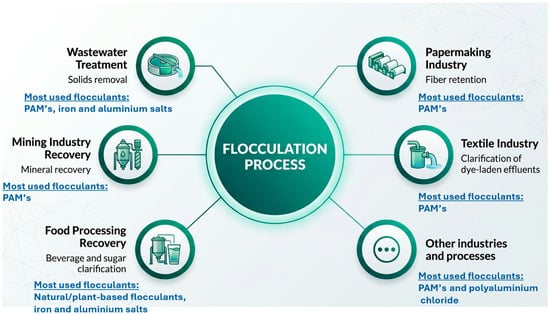
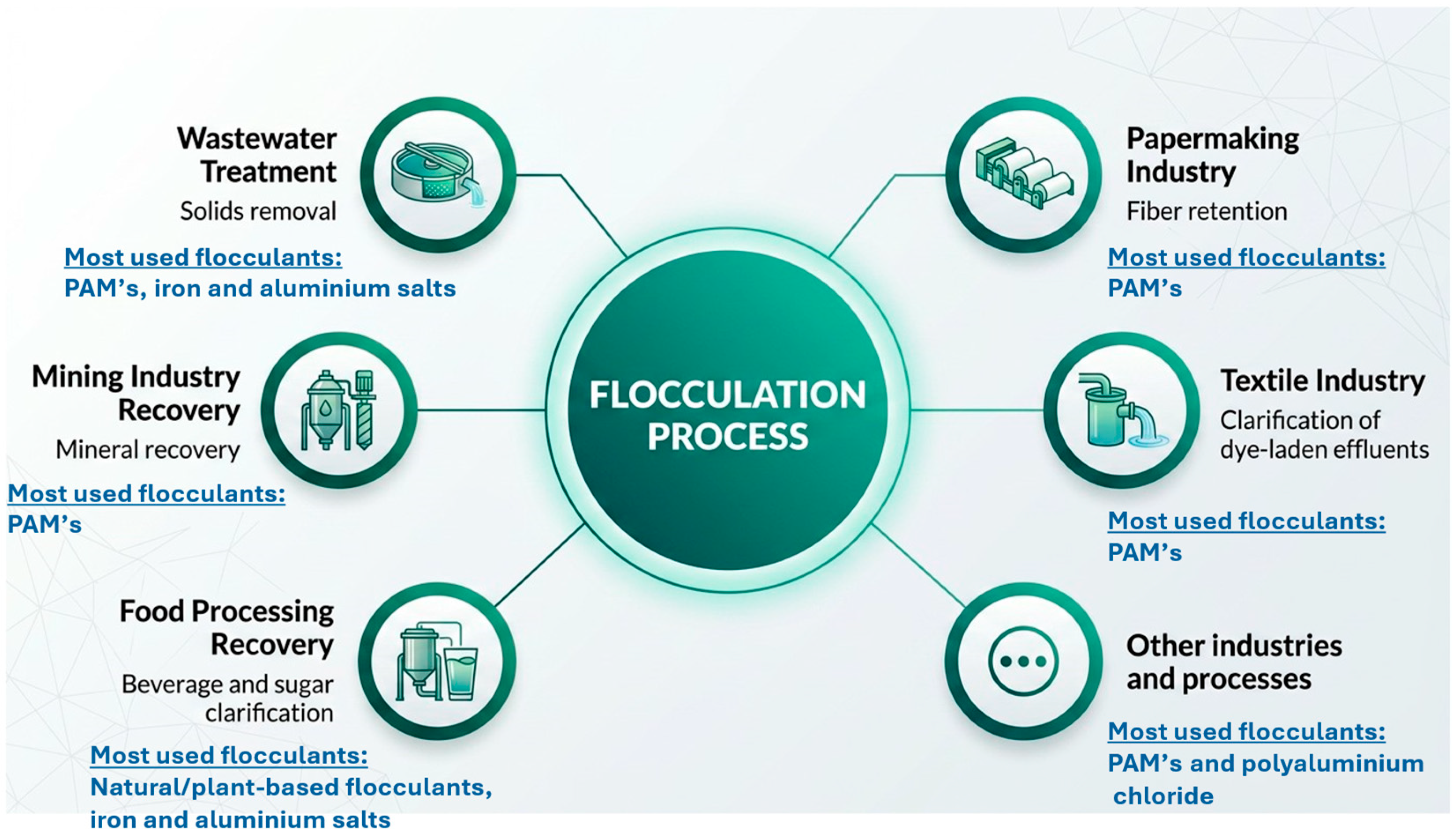
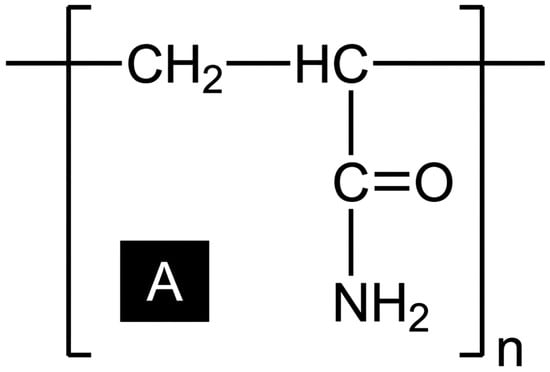
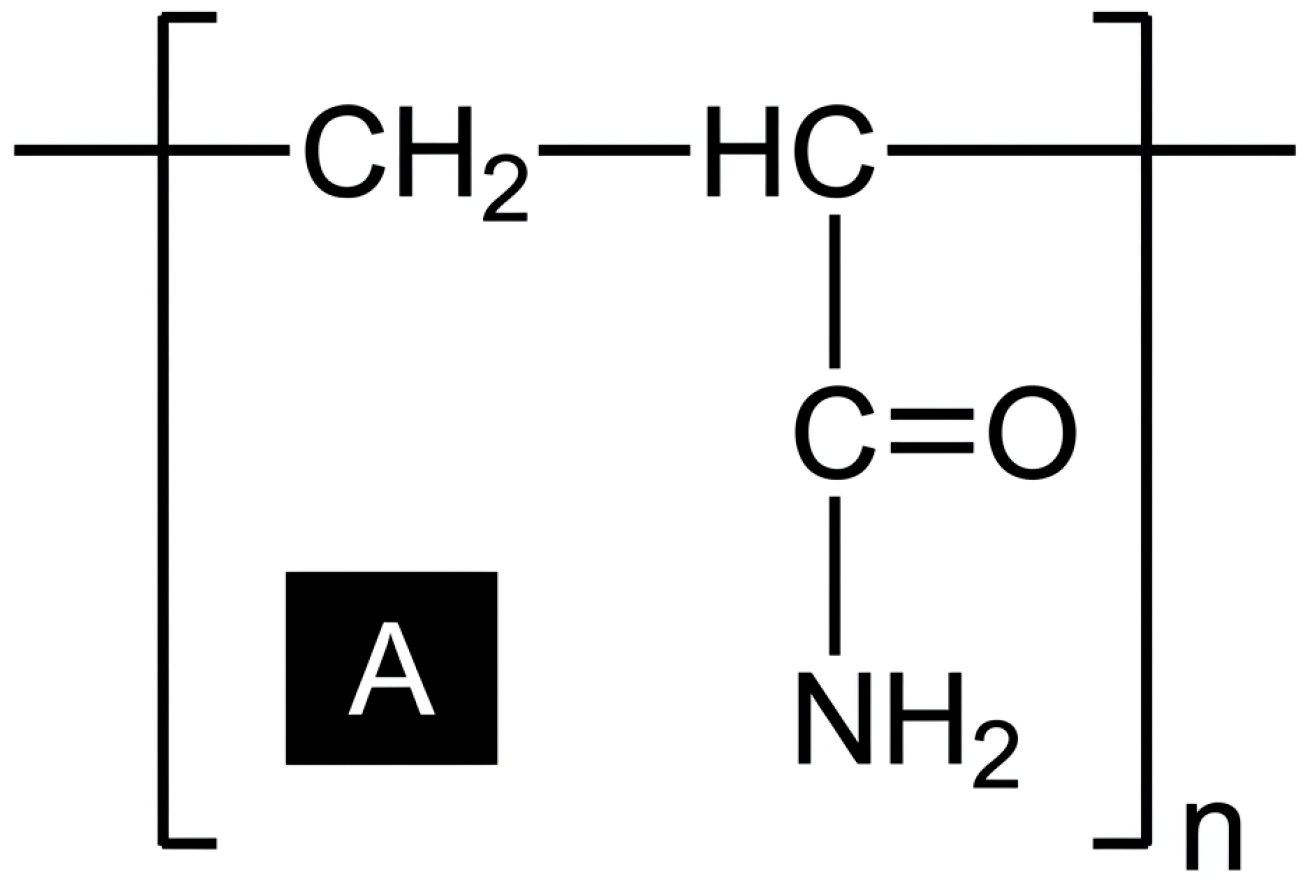
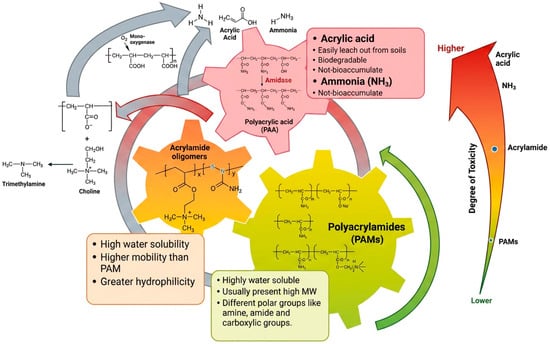
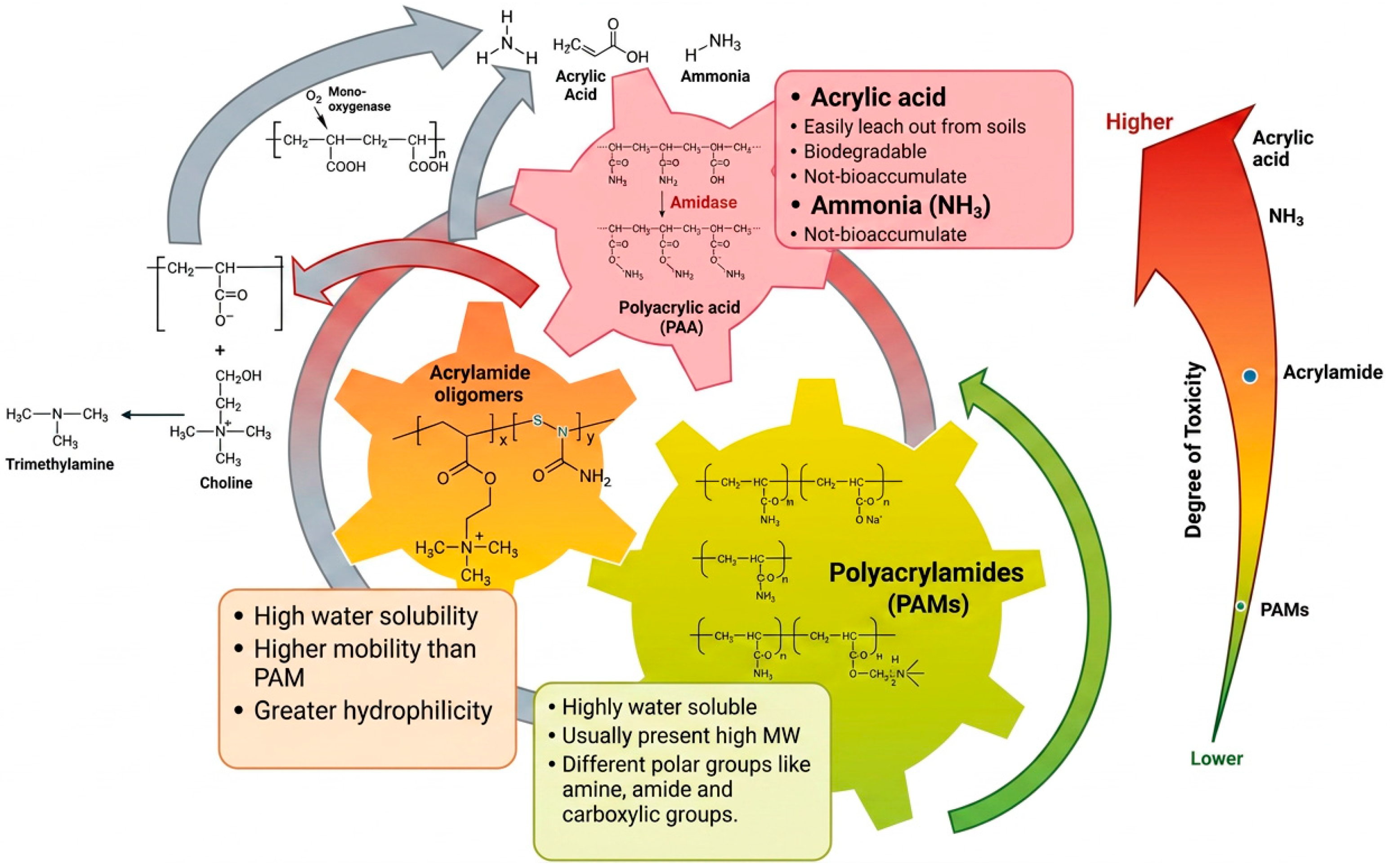
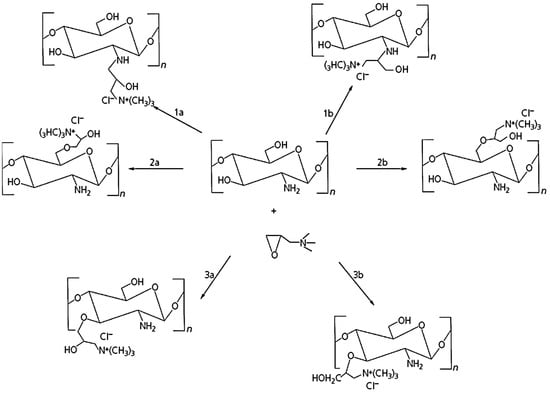
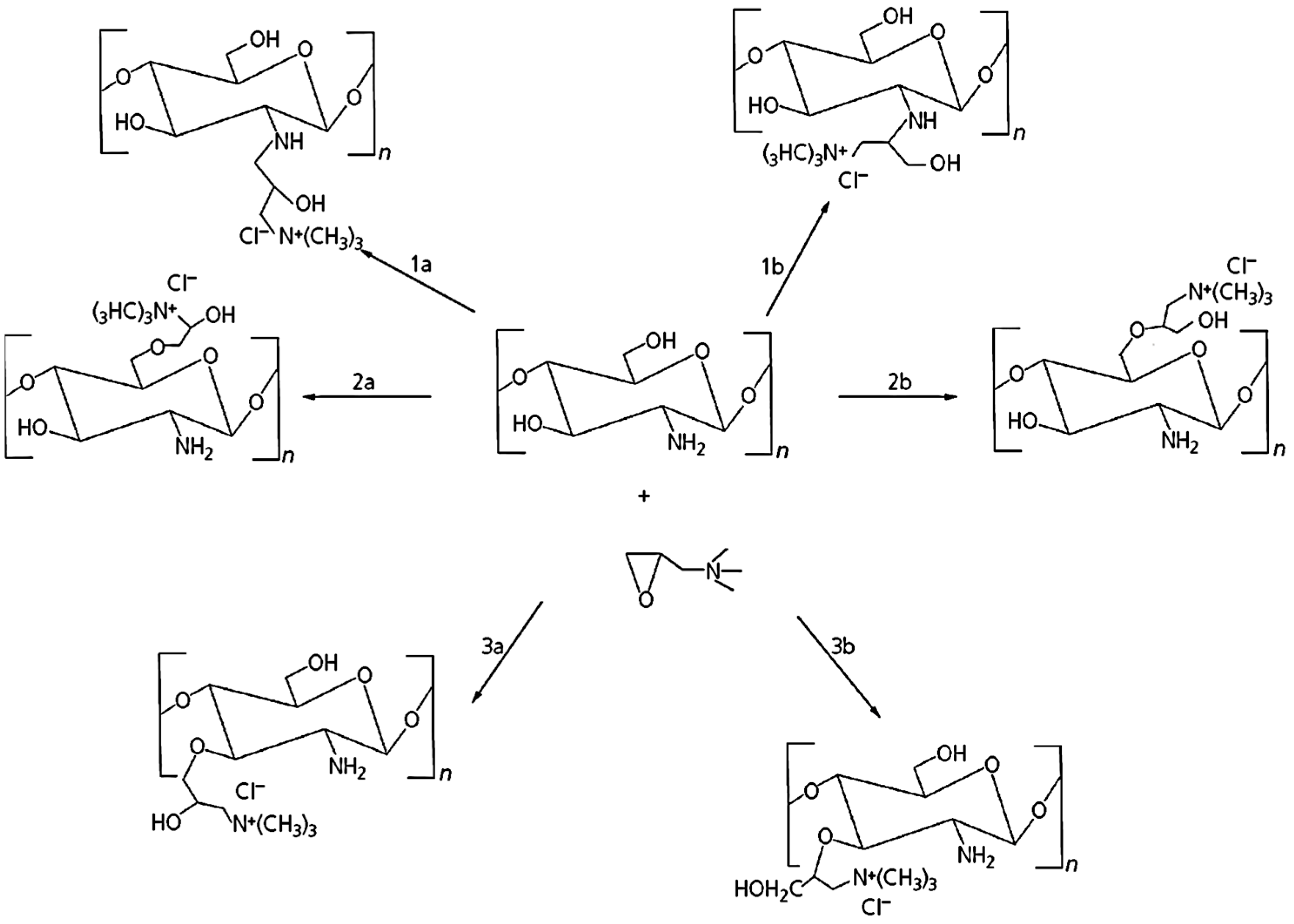
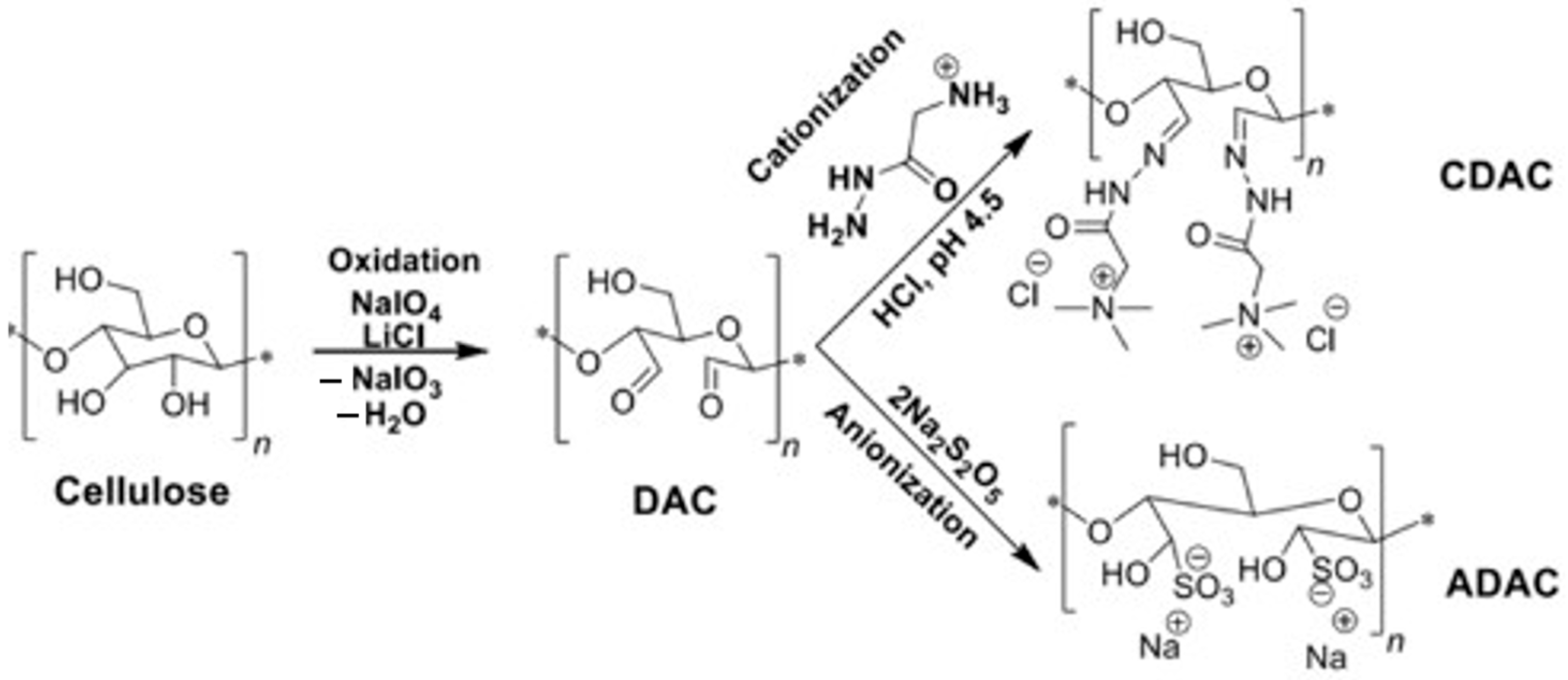
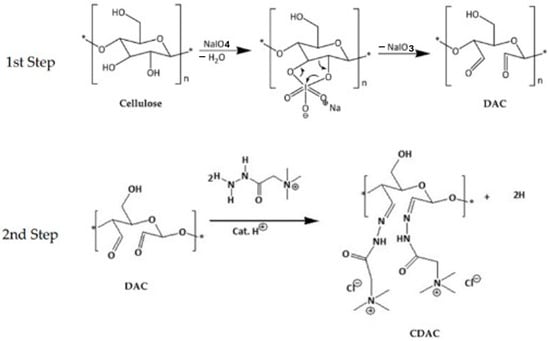
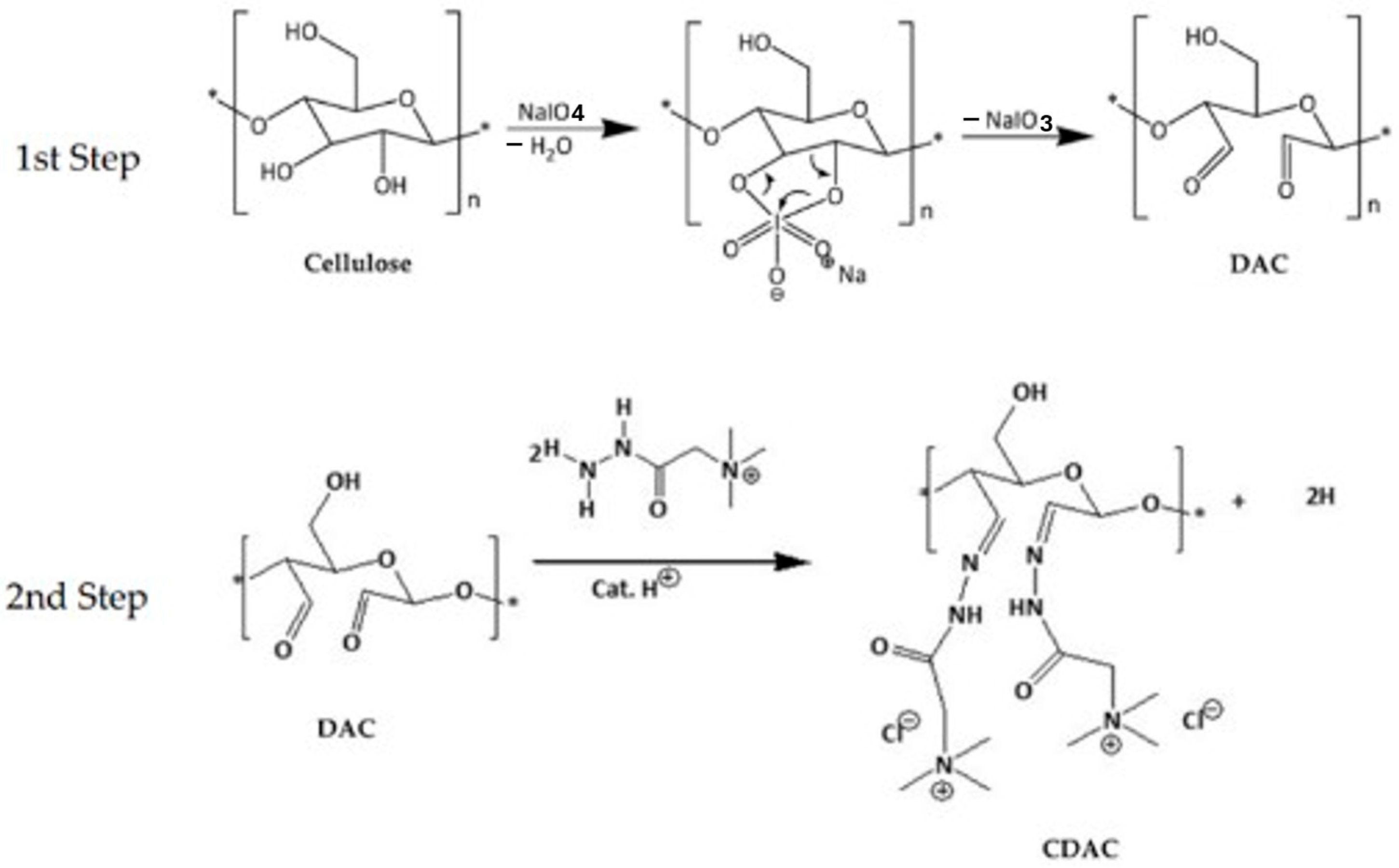
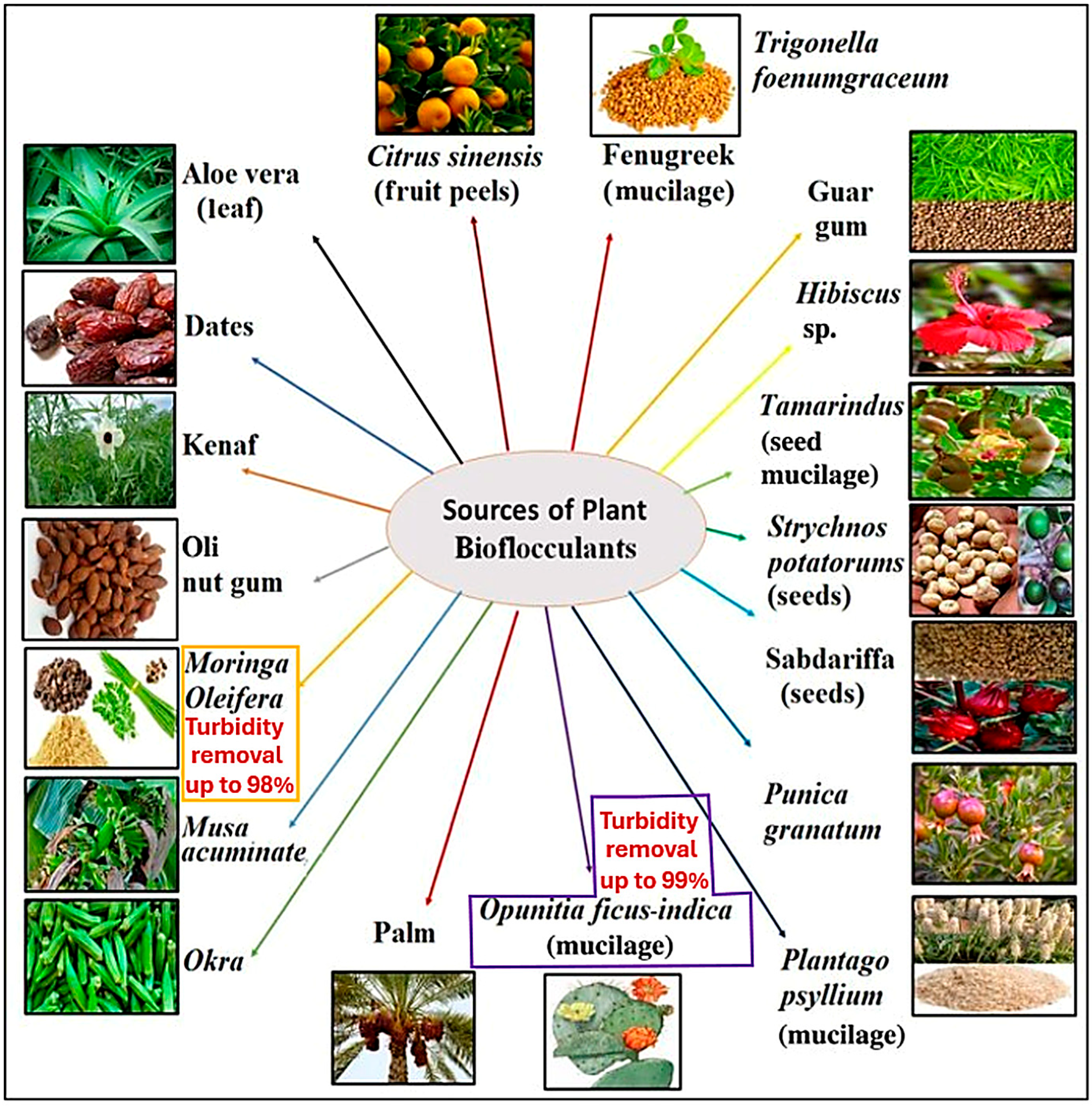
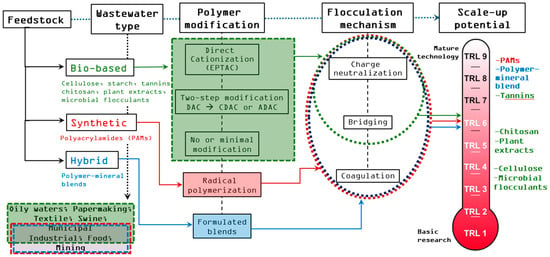
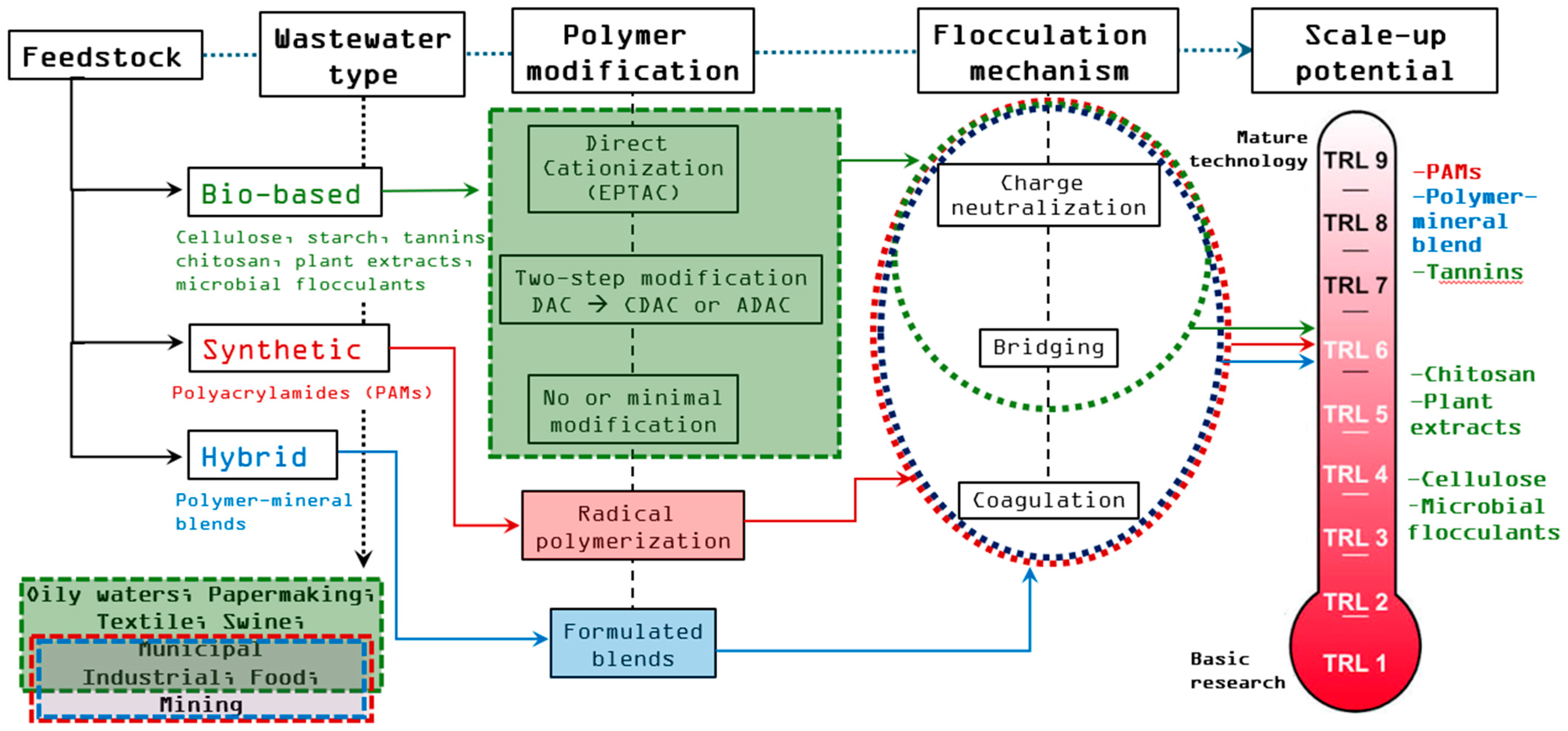

Disclaimer/Publisher’s Note: The statements, opinions and data contained in all publications are solely those of the individual author(s) and contributor(s) and not of MDPI and/or the editor(s). MDPI and/or the editor(s) disclaim responsibility for any injury to people or property resulting from any ideas, methods, instructions or products referred to in the content. |
© 2026 by the authors. Licensee MDPI, Basel, Switzerland. This article is an open access article distributed under the terms and conditions of the Creative Commons Attribution (CC BY) license.