


Abstract
Polyhydroxybutyrate (PHB) composites represent a promising sustainable solution to address the environmental challenges posed by conventional polymers across multiple sectors. This comprehensive review synthesizes current knowledge on PHB-based composites, examining their development, performance, and biodegradation characteristics in diverse applications such as packaging, biomedical devices, agriculture, aerospace, and environmental remediation. Various composite fabrication methods, including melt blending, solution casting, electrospinning, and in situ polymerization, are evaluated for their impact on functional properties. Natural fiber- and nanomaterial-reinforced PHB composites are critically analyzed for their mechanical integrity, thermal stability, surface chemistry, biodegradability, and environmental compatibility. Practical challenges, including manufacturing scalability, cost-effectiveness, and long-term stability in complex environments, are discussed within circular economy and regulatory frameworks to situate PHB composites for realistic industrial and environmental deployment. This review provides timely insights for researchers and practitioners aiming to develop environmentally compatible, scalable biopolymer-based solutions across multiple domains.
1. Introduction
The escalating environmental challenges posed by plastic pollution and the unsustainable consumption of finite fossil resources necessitate a fundamental re-evaluation of conventional synthetic polymers and their production paradigms. Petrochemical-based plastics have long been favored across various industries due to their advantageous mechanical properties, barrier functions, and economic viability. Nevertheless, their exceptional chemical inertness, which initially enabled broad application, has now become a critical environmental liability, imparting persistent contamination in ecosystems through accumulation and microplastic formation. This linear lifecycle, characterized by production, usage, and disposal without effective recovery, intensifies resource depletion and ecological harm, emphasizing the urgent requirement for sustainable polymeric alternatives. Biopolymers derived from renewable sources such as plants and microorganisms, including polysaccharides, proteins, and microbial polyesters like polyhydroxyalkanoates (PHAs) offer promising solutions by virtue of their biodegradability, biocompatibility, and potential compatibility with circular economy frameworks. Despite these environmental benefits, widespread industrial adoption of bioplastics is constrained by challenges related to processing complexity, mechanical performance, and cost competitiveness [1,2,3].
Within this landscape, polyhydroxybutyrate (PHB), a naturally occurring, microbially synthesized aliphatic polyester, has garnered extensive research interest as a biodegradable and bio-based polymer with diverse applicability. PHB exhibits intrinsic advantages, including full microbial degradability in diverse environments (soil, water, and air) without the generation of harmful residues, thereby aligning with the principles of green chemistry and sustainable material design [4]. The innate biocompatibility of PHB is corroborated by the presence of its monomer, 3-hydroxybutyrate, within human metabolic pathways, rendering it suitable for biomedical applications such as surgical sutures, tissue scaffolds, and controlled drug delivery systems [5]. Furthermore, PHB’s effective gas barrier properties and biodegradability have facilitated its investigation in food packaging, aiming to mitigate environmental impacts relative to conventional plastics [6]. In agriculture, PHB-based mulch films and controlled-release formulations provide sustainable alternatives, reducing microplastic pollution and soil degradation. Additionally, PHB composites reinforced with natural fibers or nanomaterials have been explored for applications ranging from lightweight aerospace components to environmental remediation through adsorption of organic and inorganic pollutants, underscoring PHB’s versatile potential [7,8].
However, PHB’s inherent material characteristics and production economics currently limit broader commercial utilization. The polymer’s high degree of crystallinity (approximately 50–60%) results in intrinsic brittleness, manifested in tensile strengths generally within 20–40 MPa and elongation at break below 10%, which compromises mechanical robustness and manufacturability when compared to petroleum-derived polymers such as polypropylene and polyethylene [9]. Thermal instability and a narrow processing window require precise control of synthesis and fabrication conditions. Economically, PHB production is hampered by high fermentation costs, largely attributed to the use of sterile, pure carbon substrates (accounting for 40–50% of total cost), alongside energy-intensive downstream purification processes (approximately 40% of manufacturing costs) [5,10]. These factors collectively contribute to PHB being priced at a premium—four to ten times higher than conventional plastics, posing a significant barrier to industrial scalability [11].
To overcome these constraints, incorporation of PHB into composite materials has been a focal strategy aimed at enhancing performance and processing flexibility. PHB composites integrating natural fibers (e.g., sisal, coconut), plasticizers such as lauric acid, and nanomaterials including cellulose nanocrystals (CNCs) have demonstrated improvements in tensile strength, elasticity, thermal stability, and barrier properties without compromising biodegradability [7,8,10]. Fabrication techniques including solvent casting, melt blending, electrospinning, and compression molding provide variable control over microstructure and mechanical characteristics, tailoring materials for targeted applications in packaging, biomedical devices, and environmental remediation [6,12]. Notably, the surface area and morphology of PHB-based materials influence biodegradation rates, with fibrous structures exhibiting accelerated decomposition relative to films a critical consideration in product design for controlled lifespan and environmental compatibility [12].
Despite promising advances, critical gaps remain in the comprehensive understanding of PHB composites’ biodegradation mechanisms under realistic environmental conditions, lifecycle environmental impacts, and techno-economic feasibilities at scale. Standardized protocols for assessing biodegradability alongside mechanical durability tailored to end-use scenarios are yet to be fully established. Moreover, economic analyses integrating feedstock diversification, renewable energy integration, and process optimization are essential to reducing production costs and enhancing sustainability metrics. Addressing these challenges through multidisciplinary research will be pivotal in realizing PHB’s full potential as a sustainable alternative to conventional plastics, thus contributing meaningfully to mitigating plastic pollution and advancing circular bioeconomy objectives [13].
In this context, the current review critically evaluates the synthesis, characterization, and application spectrum of PHB and its composites, emphasizing recent progress in enhancing material properties, biodegradation behavior, and environmental compatibility. We discuss processing methodologies and their influence on polymer morphology and performance, analyze biodegradation kinetics with respect to material architecture, and explore emerging applications spanning packaging, biomedical engineering, agriculture, and environmental remediation.
2. Methodology
This review used a full bibliometric analysis to create a systematic map using VOSviewer software (version 1.6.19). This approach was used to produce an intellectual map to comprehend patterns in scientific literature and identify important keywords related to PHB composites.
2.1. Data Collection
Primary literature retrieval was performed using the Scopus database, with the finalized search executed in April 2026. To ensure a rigorous data foundation consisting exclusively of peer-reviewed research and comprehensive syntheses, document types were strictly limited to “Article” and “Review”. A total of 885 publications were retrieved using the following advanced Boolean search string: TITLE-ABS-KEY ((“polyhydroxybutyrate” OR “PHB”) AND (“composite*” OR “blend*” OR “nanocomposite*” OR “reinforced”) AND (“melt blending” OR “solution casting” OR “electrospinning” OR “in situ polymerization” OR “natural fiber*” OR “nanomateri*” OR “packaging” OR “biomedical” OR “agricultur*” OR “aerospace” OR “wastewater”)). During the subsequent screening stage, the dataset was filtered to encompass the specific period from 2020 to April 2026 to focus exclusively on contemporary advancements. After screening these results against the predefined inclusion and exclusion criteria outlined in Table 1 (ensuring a dedicated focus on PHB-based matrices, functional blends, and relevant applications), a final curated cohort of 310 publications was selected. The complete bibliographic metadata, including abstracts, indexing terms, and citation data, were exported in both RIS and CSV formats. Records from 2026 were treated as a partial-year dataset. Keyword co-occurrence networks were generated using VOSviewer via the exported RIS file, while chronological publication trajectories were modeled using the CSV dataset via custom Python (version 3.11) scripts running within an Anaconda environment (utilizing Pandas and Matplotlib libraries).
Table 1.
Inclusion and exclusion criteria for bibliometric analysis.
2.2. Data Processing and Analysis with VOSviewer
The VOSviewer software was used to construct and visualize the network after the exported data were imported. A co-occurrence network of keywords was created to determine the main research themes and how they have changed over time within the field. To reduce noise and concentrate on the most important terms, a minimum occurrence threshold was established (for example, a keyword must appear at least 10 times). The “full counting” method was used to create the network, which was then displayed as a map with nodes representing keywords, their size indicating frequency, and lines indicating the strength of co-occurrence. Related keywords were grouped into thematic clusters using the VOSviewer clustering algorithms, as shown in Figure 1.
Figure 1.
Bibliometric map based on the network of keyword co-occurrence.
2.3. Bibliometric Trend Analysis
The trends presented in Figure 2 show how research on PHB composites has gained interest in the scientific community in recent years. The analysis shows that research on PHB composites has gained significant cumulative growth from 2020 to 2026. The peak in 2025 demonstrates increased interest among global researchers owing to its biodegradability and sustainable applications. Therefore, a comprehensive review of PHB composites in relation to sustainable applications is crucial.
Figure 2.
Annual and cumulative publication trends in PHB-based composites research (2020–2026). (a) Annual publication trend of PHB composite research (b) Cumulative growth of PHB composite literature.
3. PHB as a Renewable Source
PHB is a biodegradable polyhydroxyalkanoate (PHA) polymer, produced by microorganisms. Its degradation occurs by surface erosion due to its hydrophobic nature. Biodegradation of PHB takes place by the enzyme (PHB-depolymerase) released by microorganisms. These enzymes help bacteria to mineralize PHB into monomers that can be further assimilated and utilized as a carbon source [14,15]. Temperature and humidity are two environmental factors that significantly impact the rates of degradation [16]. PHB films decay very rapidly in mesophilic conditions, with degradation occurring in two weeks under high humidity (100%), and much less so at low humidity (40%) [17]. Mesophilic conditions tend to enhance faster degradation compared to thermophilic conditions. In soils, compost, and marine ecosystems, the duration required to achieve approximately 80% degradation depends on the local microbial community and environmental conditions, ranging from 35 to 110 days, as shown in Table 2 [18].
PHB is very crystalline (50–60%), which is higher than that of typical petroleum-based polymers, such as polypropylene (PP) and polyethene terephthalate (PET). The higher crystallinity is attributed to the linear molecular structure of PHB, which results in increased hardness and brittleness, complicating processing compared to PP or PET. PHB has a lower melting point, less than 165–175 °C, and solidification below 5–9 °C (Glass transition temperature), making it stiff and brittle at room temperature. Its mechanical properties include low elongation at break (5–10%), tensile strength (20–40 MPa), and tensile modulus (3–3.5 GPa), which means it has low stretchability and flexibility. To improve such properties, copolymerization with monomers such as 3-hydroxyvalerate (3HV) has been a popular research subject [19].
PHB has also been found to be a sufficient gas barrier and a low-permeable material according to morphology, which has made it efficient for food packaging [20]. Moreover, it is biocompatible, non-cytotoxic, and free of allergens and carcinogens (Figure 3). Additionally, its monomer, 3HB, is known to be present in human blood, suggesting that it is likely safe for use in medicine [21].
Figure 3.
Intracellular biosynthesis pathway, environmental biodegradation profiles, and inherent material limitations of pristine PHB. Top panel schematic illustrates the enzymatic conversion of carbon sources into stored intracellular PHB granules. Bottom-left habitat icons and animal silhouette denote biodegradation media and biocompatibility traits, respectively. Bottom-right symbols (thermometers, snowflake) highlight mechanical brittleness, a narrow processing window, and sub-ambient glass transition temperature (below 5–9 °C). (Source: Created by the authors using Canva web application, 2025).
Table 2.
Microbial biodegradation of PHB in different environmental conditions.
4. Importance of PHB Composites
Although PHB is renowned for its sustainability, pure PHB has weaknesses, including brittleness, thermal instability, and high manufacturing costs, which restrict its large-scale use. Therefore, the establishment of polymer composites and nanocomposites to control and enhance the physicochemical and mechanical properties of PHB is crucial [47].
The selective utilization of PHB in strategic combination with other polymers (e.g., polyethylene glycol and polylactic acid) and a broad spectrum of nanomaterials (e.g., cellulose whiskers, clay, and carbon nanotubes) offers materials with strategically important performance profiles. Their inclusion not only enhances the strength of the matrix but also tends to increase the existing high rate of biodegradation, which is essential for minimizing environmental persistence [48].
This synergy opens high-value applications in many fields. PHB nanocomposites play an important role in the medical industry, especially in tissue engineering scaffolds and controlled drug delivery system development, because of their biocompatibility and controllable degradation rates [49]. Composites are superior for packaging in terms of their barrier properties and mechanical strength [50]. In addition, they find application in other fields such as agriculture (slow-release fertilizers and mulches) [51], aerospace (lightweight structural components) [52], and environmental remediation (e.g., heavy metals and dyes) owing to their large surface area and tailored surface chemistry [53]. A comparative analysis of the available literature shows that the interaction between these factors is multifaceted and enables the customization of material degradation characteristics to achieve specific end-of-life requirements, such as the fast degradation of agricultural mulch or long-lived biomedical implants [54].
5. Methods of PHB Composites Formation
The fabrication technique is an important factor in determining the ultimate properties, microstructure, and applications of polyhydroxybutyrate (PHB) composites [55]. The brittle nature, thermal sensitivity, and processing window of PHB require that the processing methods be carefully considered to maximize the dispersion of fillers, increase the interfacial adhesion, and minimize polymer degradation [56]. The most used methods include melt blending, solution casting, electrospinning, and in situ polymerization, each of which has its advantages and disadvantages, determining the applicability of each method to a particular application, such as large packaging or high-value biomedical devices [57]. Table 3 provides a comparative summary of these techniques.
Table 3.
Comparative Overview of Primary PHB Composite Fabrication Methods.
5.1. Melt Blending and Extrusion
The most industrially feasible and widely used process for creating PHB composites is melt blending, particularly via twin-screw extrusion [58]. In this solvent-free method, the PHB granules and filler materials were heated in the presence of co-rotating screws inside a heated barrel at a temperature exceeding the melting point of PHB (~175 °C) (as shown in Figure 4). The shear forces present during mixing accelerate the distributive and dispersive mixing of the filler in the molten polymer matrix [60]. One of the main advantages of this approach is its favorable environmental and economic profile, as it does not contain solvents, resulting in lower environmental, health, and recovery costs [59]. It is also well-suited for large-scale continuous production [57,72]. Nevertheless, the primary concern is that PHB is susceptible to thermal degradation under prolonged exposure to thermally vigorous conditions and shear forces, which can lead to a decrease in molecular weight and brittleness in the resulting product [73].
Figure 4.
Production of PHB composites with different methods, e.g., 1. solvent casting, 2. in situ polymerization, 3. electrospinning, and 4. melt blending/extrusion (Source: Created by the authors using Canva web application, 2025).
5.2. Solution Casting
Solution casting is a crucial method for preparing high-quality, defect-free PHB composite films in the laboratory [61]. During this procedure, PHB and the filler material are dissolved or dispersed in a volatile organic solvent (e.g., chloroform, dimethylformamide (DMF), or acetic acid) and prepared as a homogeneous solution or suspension [63,74]. The main benefit of solution casting is that it operates at a low processing temperature, which effectively prevents the thermal degradation of PHB and maintains its molecular weight [62]. This process allows excellent molecular-scale dispersion of polymers, such as chitosan or nanofillers, for example, cellulose nanocrystals or graphene oxide, into the polymer matrix. However, its significant limitations are the use of toxic and costly solvents and its batch method, which makes it unsuitable for large-scale production [75].
5.3. Electrospinning
Electrospinning is a universal technique employed to manufacture non-woven mats containing ultra-fine PHB composite fibers with diameters in the micro- to nano-range, possessing a large surface area-to-volume ratio [64]. This technique uses a solution of viscous PHB/filler and high voltage to draw a continuous jet of fiber to a collector [65,76]. The electrospun PHB composites have a highly porous structure that provides high versatility owing to their unique and highly preferred properties. Due to this nature, these electrospun PHB composites have several applications, such as tissue engineering as a scaffold, active food packaging, and high-efficiency filtration membranes [66]. However, this process is relatively slow and requires optimization of many different parameters, as well as the use of solvents, limiting its application to research and expert use on a laboratory scale [67].
5.4. In Situ Polymerization
One of the least popular but most effective synthesis pathways is the in situ polymerization approach, in which the filler substance is dispersed in the monomeric form of PHB, and the polymerization process is triggered [69]. This method allows the polymer chains to grow and orient in the presence of filler particles and provides a powerful interfacial bond and uniform distribution of the filler throughout the polymer structure [71,77]. Such a high level of interaction between the matrix and filler usually leads to increased mechanical characteristics and better thermal stability of the composites compared to those produced by ex situ means, such as melt blending [63]. This is due to the complexity of the process, the fact that polymerization kinetics require a high degree of control, and the increased production costs, which make it less convenient than other methods [47].
5.5. Interfacial Adhesion, Dispersion Challenges, and Processing Limitations Across PHB Composite Methods
The performance of PHB composites is strongly governed by the quality of the filler–matrix interface; inadequate adhesion often leads to stress concentration, reduced tensile strength, and premature failure. Melt blending, despite its industrial scalability and solvent-free nature, frequently suffers from filler agglomeration and uneven dispersion due to PHB’s high melt viscosity and thermal sensitivity, which can accelerate chain scission and embrittlement during processing [73]. Solution casting offers superior molecular-level dispersion and avoids thermal degradation, but its reliance on large volumes of volatile organic solvents (e.g., chloroform, DMF) introduces environmental burdens, slow evaporation kinetics, and poor scalability for continuous manufacturing [75]. Electrospinning enables exceptional control over morphology and interfacial interactions within ultrafine fibers, yet its low throughput and complex parameter optimization limit its feasibility for bulk composite production [67]. In situ polymerization provides the strongest interfacial bonding and most homogeneous filler distribution, but the need for precise control over polymerization kinetics and the high cost of monomer-level processing restrict its use to specialized high-value applications [47]. These trade-offs highlight that fabrication method selection must balance interfacial engineering, dispersion quality, environmental impact, and scalability to achieve PHB composites with reliable and application-specific performance.
6. Types of PHB Composites
PHB can be molded into fibers and films, and heteropolymers can be produced by mixing it with various other polymers. It can be conjugated with other polymers by the technique of co-polymerization [78].
6.1. PHB Composites with Natural Fibers
To overcome the issues in the mechanical properties of PHB, researchers have investigated the introduction of natural fibers and biopolymers such as lignin, cellulose, starch, chitin, polylactic acid (PLA), and poly(3-hydroxybutyrate-co-valerate) (PHBV) into PHB matrices. Lignin is an aromatic polymer produced from lignocellulosic biomass with UV resistance, antioxidant activity, and even a cost-cutting advantage when used as a filler in PHB composites [79]. Lignin improves the ability of PHB to function as a UV-blocker and oxygen barrier because of its aromatic backbone [80]. It also improves thermal stability and resistance to oxidation, which is very useful in packaging [81]. Nevertheless, the fact that lignin is not compatible with PHB leads to phase separation and embrittlement in most cases. Surface modification procedures, such as acetylation or grafting, are required to improve interfacial adhesion [82]. Additionally, the lignin gives the composite a dark shade, and its use is restricted when the packaging is transparent.
Biodegradation potential and reinforcing potential of cellulose and lignocellulosic fibers (e.g., bamboo, rice husk, flax) are generally used due to their abundance, biodegradability, and reinforcing properties. The fiber of cellulose has a great effect on the tensile strength and modulus of PHB-based composites [83]. They act as a nucleating agent that eases crystallization and increases dimensional stability. Interfacial bonding and thermal resistance can also be enhanced by alkaline treatment of fibers. Cellulose is hydrophilic; hence, it absorbs moisture, a fact that may adversely affect its mechanical properties and dimensional stability. Furthermore, fiber dispersion and agglomeration are also some issues experienced during the process of melting [84].
However, the efficacy of these surface treatments exhibits considerable variability depending on processing parameters such as chemical concentration, exposure time, and fiber origin. For instance, while optimal alkaline treatment removes hemicellulose and lignin to expose cellulose binding sites, excessive alkali concentration can cause fiber fibrillation, structural pitting, and a subsequent drop in composite tensile strength. Similarly, the degree of acetylation must be carefully optimized; over-acetylation excessively reduces fiber hydrophilicity, hindering necessary wetting by the PHB matrix and leading to inconsistent mechanical performance across different batches [82,84].
PHB is sometimes blended with starch, a biodegradable and low-cost polysaccharide, to reduce its cost and increase its biodegradability. Starch makes PHB composites less expensive and can enhance the rate of biodegradation. It can also be used as a filler, and when well dispersed, it can improve barrier properties. PHB does not combine with native starch, resulting in phase separation and poor mechanical properties. Thermoplastic starch (TPS) requires plasticizers, such as glycerol, for processing; however, these plasticizers render the material water-sensitive [85]. Interfacial adhesion is typically enhanced using compatibilizers or chemical modifications [86].
Chitin and chitosan (deacetylated chitin) are polysaccharides containing nitrogen that possess antimicrobial properties, making them suitable for use in the biomedical and food packaging industries (Figure 5). The polar functional groups in chitosan confer antimicrobial properties and enhance their oxygen barrier properties [87]. It has amino and hydroxyl groups that can participate in hydrogen bonding with PHB, thereby increasing interfacial adhesion. Chitosan is thermolabile and melts at temperatures near the processing range of PHB, making it difficult to process using melt processing methods. It is also more hydrophilic, enabling higher moisture uptake, thereby influencing its long-term stability [88].
Figure 5.
Blending strategies of PHB with natural biopolymers and synthetic biodegradable polymers alongside their structural properties and targeted applications. The green spiral arrows indicate the extraction or derivation of lignin and cellulose (Within the molecular structures, grey, red, and white spheres represent carbon, oxygen, and hydrogen atoms, respectively) components from the wood source. Purple double arrows represent the blending pathways of these polymers with the central PHB matrix (central PHB graphic and the surrounding molecular representations are illustrative, generic clip-art elements from Canva software used to conceptually depict polymer blending). (Source: Created by the authors using Canva web application, 2025).
Mechanical and thermal properties are typically customized by mixing PHB with other biopolymers such as PLA and PHBV. The PLA and PHB composites were improved in terms of stiffness and transparency. Nevertheless, in the case of immiscibility, the phases start separating, thus making the mechanical performance poor, unless compatibilizers and chain extensors are employed. PHBV is a copolymer of PHB that increases ductility and processability. As it decreases crystallinity and results in increased impact resistance, it is applied in areas where flexibility is required [89,90].
Waste products such as bagasse, rice straw, and wheat husks have been investigated as fillers in PHB composites. These fibers are inexpensive, renewable, and have the potential to improve stiffness and thermal stability to a great extent. They also contribute to the local economy and help mitigate environmental degradation. Fluctuations in fiber composition and morphology may influence reproducibility. Poor dispersion and moisture uptake are additional challenges that necessitate the optimization of surface treatment and processing conditions [91].
6.2. PHB Composites with Nanomaterials
Synthetic modification has great potential to improve the functional properties of natural fibers. In particular, the modification of cellulose-based materials creates new possibilities for further applications of fibers [92]. Bacterial cellulose has been established as a strong platform for modifying fibers in polylactide and other polymer systems. The incorporation of metallic nanomaterials into these fibers (via adsorption or absorption) is a promising method for enhancing their antibacterial functionality. The strong interaction between metallic nanoparticles and PHB composites is the primary advantage of the observed improvement in their bioactivity after the addition of such compounds. In addition, conjugating PHB-NPs with antibiotics or quorum quenching enzymes can further maximize the functionality of the fibers. Among the types of nanoparticles that are often used for this purpose are zinc nanoparticles (Zn-NPs) [93,94].
Nanocellulose fibers are frequently incorporated with PHB to enhance its elastic modulus, serve as nucleating agents to enhance its toughness, and provide structural integrity. Similarly, the PHB nanocomposites can be filled with carbon nanotubes, which improves the hardness, brittleness, and the elastic modulus according to the specific carbon nanomaterial used [95]. Recent studies have also shown the advantage of adding 2-dimensional graphene nanoparticles to the PHB matrices. By creating a percolation network, the reduced graphene oxide is shown to significantly enhance the elastic modulus, tensile strength, and electrical conductivity of the composite [96].
Although polystyrene has historically dominated food packaging applications, PHB can be customized for food packaging by adding nanoparticles. Nanomaterials supplement the physicochemical properties of biopolymers, making them more suitable for packaging applications. PHB-based nanocomposites reduce the number of pathogens, protect against external agents such as heat, gas diffusion, and moisture, and enhance the overall stability of food (Figure 6). Some of the nanoparticles commonly used for these applications include chitosan, carbon nanotubes, cellulose, clay, metal oxides, starch, and silver [97].
Figure 6.
Overview of various nanoparticle/PHB composites detailing their functional properties and corresponding industrial and biomedical applications (Source: Created by the authors using Canva web application, 2025).
The use of zinc nanoparticles (Zn-NPs) as additives in polyhydroxybutyrate (PHB) can improve its antimicrobial performance, higher ethylene and oxygen uptake, and help in maintaining food quality [98]. Likewise, the insertion of graphene nanoparticles decreases the water vapor and oxygen permeability in PHB matrices [99]. PHB/silver nanocomposites have shown high antibacterial activity against pathogens that are foodborne pathogens such as Listeria monocytogenes, Pseudomonas aeruginosa, and Salmonella enterica [100]. Importantly, the addition of silver nanoparticles enhances the performance of the packaging without affecting its biodegradability. PHB/Co3O4 nanocomposites also show high antipathogenic efficiency against Escherichia coli and Staphylococcus aureus, which also strengthens their use for food packaging applications [78,101].
Molybdenum-based nanoparticles have provided nanocomposites with dual functionality (combining antimicrobial activity and superior mechanical strength, as well as layered structural properties, hydrophilicity, and photoactivity through the generation of reactive oxygen species (ROS)). When used in the form of PHB, these nanoparticles have a lower gas permeability than graphene-based composites, while at the same time being biocompatible and less toxic. Their thermal stability and ability to absorb near-infrared light make them suitable for sophisticated applications, such as laser marking [102,103].
Furthermore, the use of graphene nanoparticles in PHB nanocomposites creates a conductive network in the polymer matrix, enabling the tailoring of electrical conductivity. These characteristics make PHB-graphene systems promising candidates for biomedical devices, biosensors, and flexible electronics, such as displays and wearable technology. The physicochemical properties of graphene oxide, which is obtained from graphene oxidation, and its interaction with PHB critically affect the composite morphology, thereby improving the thermal stability and electrochemical performance [104].
7. The PHB Composite Biodegradation
The drawbacks of the mechanical properties of PHB have led researchers to consider subsequent solutions to address this issue. For this purpose, mixing PHB with other polymers was considered to enhance the overall strength of PHB. The biodegradation of polyhydroxybutyrate (PHB) composites is a complex and highly dynamic process that has been extensively researched due to its potential use as a sustainable alternative to conventional plastics [105].
A comparative analysis of the available literature reveals that the interaction between these factors is multifaceted, allowing for the customization of material degradation characteristics to meet specific end-of-life requirements, such as the rapid degradation of agricultural mulch or long-lived biomedical implants (Table 4) [105,106].
Table 4.
Biodegradation potential of different PHB composites with emphasis on the filler content and the respective environment in which it degrades.
Probably, the most crucial determinants of the biodegradation behavior of a composite are the nature and type of filler material. This is evident when the impacts of inorganic fillers are compared to those of natural fibers. Paradoxically, an inorganic filler may have a rapid or slow degradation effect based on its properties, concentration, and the environment to which it is subjected. In biomedical applications, bioactive ceramics, such as hydroxyapatite (HA) and tricalcium phosphate (TCP) incorporated into PHB-PHV copolymer, were found to lower the temperature at which the polymer degrades by a wide margin [107]. It may be helpful in in-body applications where reduced thermal stability can help ensure faster turnover and replacement by newly formed tissue. Further, an in vivo experiment in rabbits demonstrated that a PHB-HA composite was not only biocompatible and osteoconductive, but also exhibited obvious indications of biodegradation, with fragments being ingested by giant cells [108]. Similarly, a composite of PHB-HA with 10–20% HA was also found to be used as a scaffold for bone tissue development, making this composite viable for biomedical use [116].
Along with ceramics, magnetite (Fe3O4) or zinc oxide (ZnO) nanoparticles have been reported to achieve a faster rate of biodegradation by forming internal voids or contributing to the improvement of the proportion of the amorphous phase of the polymer, which is more prone to biodegradation [117,118]. The addition of ZnO also has the added benefit of having excellent anti-bacterial and anti-biofouling properties and extending the useful life of the material before disposal. For example, PHB film with 3 wt% of ZnO showed a 97.5% bacterial inactivation rate against Escherichia coli and 76.2% against Staphylococcus epidermidis [105]. At the same time, this addition led to an increase in the ultimate biodegradation in the soil; the rates reached 99% only after 10 weeks [105]. This contrasts with the application of graphene nanoparticles, which, due to their antimicrobial property, were found to provide degradation resistance to soil microorganisms against pristine PHB. Even with this resistance, PHB-graphene nanocomposites with only 0.7 (w/w) graphene were able to degrade completely in soil (after 30 days) with some polymer residues [99].
The effect of other inorganic fillers, such as nanosized TiO2 photocatalysts, was less noticeable. Although they can enhance the photocatalytic decomposition of organic molecules in the presence of sunlight and decolorize methylene blue by 96% in one hour, they can retard the decomposition reaction in buried soil, where the main degradation process is microbial activity [39,119]. Similarly, the effect of hollow glass microspheres (HGMs) on the biodegradation mechanism was observed without affecting the rate, indicating that not all fillers are accelerators [120]. The inclusion of rice husk ash (RHA) also did not substantially affect the overall degradation. However, it presents a feasible solution for the reuse of by-products [115]. Montmorillonite (clay) can be used to improve the mechanical properties of PHB nanocomposites and increase the rate of biodegradation, which is attributed to the modification of the crystallization behavior of the polymer [121,122,123].
In contrast to inorganic fillers, natural fibers and organic fillers are some of the most potent stimulators of PHB biodegradation. The major processes are increased water uptake, thereby making a readily available source of nutrients for microorganisms. For instance, the incorporation of sugarcane bagasse, wood flour, or sisal fibers into PHB films always results in a higher rate of mass loss than that of the pure polymer [109,124]. In a study of PHB tubes containing 20% wood flour or sisal fiber, both PHB composites lost more weight than pure PHB tubes when placed in soil over 90 days [109]. This phenomenon was observed in PHBV composites obtained with wood flour, in which the localized stress and biodegradation created a network of interconnecting porosity, increasing the surface area on which microbial attack can occur, resulting in a more rapid loss of mechanical integrity [110].
Chemical processes can be used to improve the effectiveness of these natural fillers. Notably, the tensile strength of the PHB-carnauba fiber composites was optimal when the fibers were peroxidized, resulting in improved interfacial bonding and ultimately superior performance of the composite [114]. Other natural fillers, such as olive mill wastewater [125] residue and particulate peach palm [126], also presented better biodegradation because of the spaces and channels created in the matrix. It has been found that adding paper interlayers based on cellulose to PLA/PHB-based blends, such as PLA/PHB/cellulose, increases the retention of water and the degradation rate of the obtained blend [127]. The enhancement of cellulose fiber processing was found to be synergistic with the PHB melt, in which the in situ formation of acids during processing caused the fibers to be hydrolyzed, facilitating more chain scission of the polymer, thus degrading faster [128]. Similar results were observed in composites with regenerated cellulosic fibers (lyocell) and other plant fibers, such as hemp and jute, which showed higher rates of biodegradation [36].
The use of agricultural byproducts as fillers not only provides a higher degree of biodegradability to the material but also provides a cost-effective, sustainable solution. The content of biodegradable potato peel waste fermentation residue (PPW-FR) not only enhances the characteristics of the composite but also results in a high biodegradation rate, with specific compositions even having 50% fiber that fully decomposes in soil within 8 months [111].
Similarly, Distillers’ grains with solubles (DDGS) and wood sawdust were also helpful in this regard. They could be used as fillers to enhance mass loss and the formation of an areolate structure at the surface (Figure 7), thereby forming sustainable plastics suitable for agricultural applications [129,130]. A PHB composite study with peat, wood flour, and clay indicated that after 35 days, there was a remaining mass of 68% of PHB, 56.4% of PHB/peat, 67% of PHB/wood flour, and 64% of PHB/clay, with even lower values of the same composition graphs of granules [112]. PHBV was also reported to utilize olive pomace as a filler successfully, and the biocomposite became 100% biodegraded after 75 to 87 days, whereas neat PHBV became 91% biodegraded after 123 days [106]. The extraordinary principle of biostimulation, in which the simple presence of microbial biomass, such as green algae or cyanobacteria, itself becomes a direct stimulator of microbial activity, is yet another reflection of the fundamental impact of the biological environment on biodegradation. This impact was so significant that it led to the most considerable effect on the biodegradation rates [131].
Figure 7.
Influence of physicochemical properties on the biodegradability of PHB-based biocomposites (Source: Created by the authors using Canva web application, 2025).
In addition to the composition, the environmental factors in which biodegradation occurs are dominant. The rate and mechanism of degradation are sensitive to temperature, humidity, and the type of microbial communities used. The highest rates of degradation are always recorded in thermophilic composting systems, which operate at high temperatures and have a high population of active microbes, which provide an ideal environment for breaking down biopolymers. The studies on PHBV biocomposites showed that the rate of its degradation after 90 days in thermophilic compost was more than 90% compared to 3.9% in vermicomposting or freshwater biotopes [113]. This suggests that where the application requires rapid decomposition, such as single-use packaging, a thermophilic composting design would be a suitable approach. In addition, the process of enzymatic degradation is much more efficient than non-enzymatic hydrolytic degradation, as revealed by the faster degradation of PHB/PLA blends under the influence of pancreatic lipase [89]. This observation has important implications for the development of biodegradable medical scaffolds, which should degrade in a physiological environment. The pH influence on the degradation was also tested, and the electrospun fibers prepared from PHB/chitosan showed that they can degrade faster in acidic solution than in alkaline solution; meanwhile, in the phosphate-buffered saline (PBS) solution, the degradation rate was the slowest rate [64]. The occurrence of a bacterial consortium has been reported as an enhancement in the degradation rate of PHB films and shows the importance of specific microbial activity [132]. Mass loss and changes in properties of PHB and its hemp fiber composites were also observed in accelerated weathering tests, which included exposure to UV light, heat, and water spray, because of photo-oxidation and hydrolytic degradation [133].
Degradation is inextricably connected to the physical and structural development of the composite material. It has been observed several times that biodegradation works primarily on the amorphous stage of the polymer at the beginning. This is attributed to the fact that amorphous chains that are less ordered and more accessible are easily attacked by microbial enzymes. However, with continued degradation, the relative crystallinity of the resource increases, and paradoxically, the general rate of degradation declines during the later stages [134,135]. The degradation process is implied to be two stages in nature, that is, the fast phase occurs at the start, and then the slow phase occurs when more recalcitrant crystalline regions are accessed. Morphological analysis using SEM provides a graphical account of this process, in which pores, grooves, and pits appear on the surface as microorganisms secrete enzymes to erode the material [39]. The extra surface area created by these changes is one of the factors that creates a faster rate of degradation. These changes can be exacerbated by the presence of natural fibers that form the initial access points for water and microorganisms, i.e., the space between these fibers and the polymer matrix [136,137].
The mechanical and thermal properties of PHB composites are directly related to the structural condition of the composites and, thus, to the biodegradation condition. The load-bearing capacity of PHB-based materials decreases progressively during biodegradation. For example, flax/PHB/HV composites show a large decrease in tensile properties at the beginning of degradation, although the process is slow at the advanced stages [138]. A comparative study on PHB films and electrospun fibers showed a much sharper decrease in the strength of fibrous materials, which was attributed to a larger surface area, which causes them to be more vulnerable to microbial attack. The maximum strength of electrospun fibers decreased by 91%, as compared with a 49% reduction in PHBV films [66].
This correlation between structural changes and functional loss is a critical consideration in the design of materials to have a predictable service life and control end-of-life behavior. Additives such as plasticizers (acetyl tributyl citrate, ATBC) can be used to speed up the depolymerization process while enhancing processability and mechanical performance [139,140]. Similarly, PHB/chitosan electrospun biocomposites plasticized with tetracycline showed good disintegration under composting conditions [141].
The immiscible character of certain mixtures, such as PLA/PHB, can also lead to more homogeneous degradation by enzymes than the pure ones [89]. The incorporation of natural rubber, including epoxidized natural rubber (ENR), into a PHBv/flax biocomposite increased the rate of biodegradation compared to an untoughened composite. With the PHBv/ENR/flax composite having the highest rate, presumably because a particular type of bacteria exists in soil that preys on natural rubber [142]. Mechanical properties were dramatically enhanced when a PHB-rubber copolymer was added to a PLA matrix (elongation increased by 128-fold (680% strain) and toughness increased by 84-fold) without loss of biodegradability [143].
8. Applications of PHB Composites
The packaging industry is one of the most feasible and frequently researched fields of PHB composite application as an alternative to conventional plastics [78]. PHB also has several features used in packaging, such as good oxygen and water vapor barrier properties, biocompatibility, and biodegradability (Figure 8). However, to counter the brittle nature of PHB, a composite may have to be created to improve its barrier and functional properties to meet commercial requirements [70,90].
Figure 8.
Multidisciplinary applications of PHB-based composites formulated with sustainable biomaterials and nanomaterials. The schematic illustrates the utilization of PHB matrices modified with cellulose, chitosan, lignin, and nano-reinforcements across key sectors including sustainable packaging, biomedicine, toxin adsorption, aerospace manufacturing, and advanced agriculture (Source: Created by the authors Canva web application, 2025).
8.1. Packaging Industry
In food packaging, PHB composites are intended to ensure that perishable foods have an increased shelf life. Natural fibers are used as reinforcement agents, which increase the tensile strength and modulus and decrease the total cost [141]. The addition of a platelet-like nanofiller creates a tortuous pathway, which greatly impedes the diffusion of oxygen and carbon dioxide molecules and has a drastic impact on increasing the barrier property [144]. Along with the passive improvement of barriers, PHB composites can be developed to possess active packaging properties (Table 5). For example, the composite film may contain antimicrobial metal oxide nanoparticles to inhibit the proliferation of spoilage and pathogenic microorganisms, thus having a positive effect on safety [145].
Table 5.
The special functions of various fillers in improving PHB for use in packaging.
8.2. Biomedical Applications
PHB is produced by various microorganisms using inexpensive feedstocks, and current endeavors have focused on enhancing fermentation, downstream processing, and contaminant control to obtain commercially viable PHB [147]. Some of the benefits of PHB in the formulation of sustainable materials are its environmental value, biocompatibility, and possible replacement of traditional plastics in packaging, medical implants, and drug delivery systems (Figure 9). The following natural polyesters provide environmentally friendly alternatives to synthetic materials in three important fields of biomedical application: surgical implants and sutures, drug delivery systems, and tissue engineering scaffolds [147].
Figure 9.
Categorization of PHB-based biocomposites across key biomedical sectors: surgical implants, targeted drug delivery, and tissue engineering (Source: Created by the authors using Canva web application, 2025).
Polyhydroxybutyrate (PHB) is suitable for use in surgical implants and sutures because of its biocompatibility, biodegradability, and mechanical strength. PHB can be used for long-term contact with human tissues without adverse effects. PHB has been used to produce sutures approved by the United States Food and Drug Administration (FDA). PHB has also been used to temporarily scaffold tissue regeneration in animal models, as pericardial patches, and in bone engineering applications [143]. The first clinical trials with PHB-based tissue-engineered tri-leaflet valves have demonstrated clinical success in vivo during cardiovascular surgery, supporting the application of the polymer to complex surgical implants. The biocompatibility and biodegradability of PHB also make it a suitable candidate for temporary surgical use (Figure 9), where gradual absorption is required, and a secondary removal procedure is unnecessary [147].
PHB is also capable of outstanding diversification in drug delivery systems, allowing the controlled and slow release of various therapeutics. Wu et al. (2016) [148] studied thermo-gels based on biodegradable polyhydroxyalkanoate (PHA) and found that they can be employed successfully as sustained drug delivery in the treatment of cancer because they can control the release pattern [149]. PHB is an ideal material for drug delivery systems because of its biodegradability, biocompatibility, and thermostability. PHB can be used to entrap drugs and slowly release them to enable sustained and targeted drug delivery. It can be used in different forms, such as films, porous matrices, microcapsules, microspheres, and nanoparticles (Figure 9), to deliver antibiotics, anticancer agents, and other bioactive substances [150].
PHB is also an important polymer in tissue engineering because its biodegradability and mechanical properties can be tailored to fit specific tissue requirements. PHB scaffolds are also desirable because of their mechanical strength and biocompatibility, making them easy to apply in other tissue engineering applications [151]. PHB is a temporary scaffold that promotes cell growth and remodeling and decomposes with no adverse effects (Figure 9). It is important to note that PHB has already been used as a pericardial patch in an animal model, and it showed the capacity to regenerate the pericardial tissue. PHB can be used in bone engineering to reinforce the structure and assist in tissue repair. The pore architecture, surface microstructure, and porosity can be precisely controlled using the latest fabrication methods, such as three-dimensional (3D) printing using fused deposition modeling and electrospinning, which are vital for vascularization and cell penetration. The demonstrated biocompatibility of PHB composites in biomedical systems further supports their environmental safety and low ecotoxicity when applied in water and soil remediation contexts [152].
8.3. Agricultural Applications
PHB is also becoming popular in the agriculture sector as an alternative to synthetic polymers in terms of being biodegradable, biocompatible, and sustainable. The application of materials with PHB would facilitate sustainable actions and increase the efficiency of pesticide application to the environment [153]. Due to the increased attention to plastic pollution in agricultural systems, the implementation of non-biodegradable mulch films, and fertilizer coatings, microplastic accumulation and soil erosion have become a reality, which explains the increasing interest in bioplastic solutions (Figure 10). PHB can be used in the production of products like mulch film, controlled-release fertilizers, pesticide delivery systems, etc. The applications make the environment sustainable and allow agricultural productivity to be high [154].
Figure 10.
Agronomic applications of PHB-based biocomposites across key agricultural management sectors: Mulch films, targeted pesticide encapsulation, and controlled-release fertilizers. In the schematic, multi-colored hexagonal cage represents PHB and nanocomposite biopolymers, respectively, combined (+) to form the composite film. In the fertilizer section, green, orange, and blue spheres labeled N, P, and K denote nitrogen, phosphorus, and potassium nutrients. (Source: Created by the authors using Canva web application, 2025).
PHB-based mulch films are substitutes for traditional polyethylene mulches and have the advantages of weed control, moisture retention, and soil temperature regulation in farming activities [155]. The PHB mulch films have great environmental benefits compared to non-biodegradable polypropylene and polyvinyl chloride films, which may take decades to decompose, resulting in added problems of salt build-up, water and nutrient flows, and damage to farmland [156].
Biodegradable mulches (BDMs) made of poly (butylene adipate-co-terephthalate)/PBAT and polylactic acid/PLA-based films were found to increase crop yields by 8–24% higher than polyethylene (PE) mulches [157]. The same benefits are provided by BDMs, including PHB-based mulches, which regulate soil temperature, moisture levels, and weed growth [158]. PE and PBAT-based BDMs were shown to raise maize system yields by 9–13% over unmulched systems, although at a greater cost, which led to reduced net returns [159]. Black BDMs increased the yield by 60% in rain-fed wheat, and it beat PE, whereas pure BDMs did not [157]. Changes in mechanical and thermal properties of biodegradable mulches based on plasticized PLA/PHB filled with 3 wt% of carbon black were investigated during natural aging in real soil environments after application for one season. The plasticized PLA/PHB/CB film buried in soil lost its tensile properties faster than when shadowed by plants or exposed to sunlight. The obtained results showed that plasticized PLA/PHB/CB film has the potential for application for one season mulches [160,161,162].
A biocomposite based on PVA and polyhydroxybutyrate (PHB), plasticized with triacetin, was applied as mulch for maize plants in pots. The results were positive, showing that the mulches effectively supported the growth of the maize plants. Further, signs of initial degradation were observed after 5 days, and the film reached a degradation level of 50–55% after 30 days under natural conditions [163].
Moreover, biodegradable antifungal mulches were prepared by blending poly(3-hydroxybutyrate-co-4-hydroxybutyrate) (PHB) with the fungicide prothioconazole (PRO), which were used for effective and sustained control of soil-borne plant diseases [164]. Furthermore, PHB mulches can increase the growth rate of microbes and the presence of fungi and represent a reasonable alternative to traditional plastics, which can increase productivity and reduce environmental harm [165].
PHB composites are a regulated-release fertilizer matrix that has been developed. Their disintegration mechanisms can be modified to time the crop with nutrient release, and their products are not toxic, thus reducing soil and water pollution [153]. PHB-coated pellets (i.e., ammonium nitrate) led to slower nutrient release (i.e., approximately 3.5–5.7% after 7 days, approximately 20% after 76 days), and consequently, to increased nitrogen availability, plant biomass, and reduced losses in maize pot experiments [159]. Similarly, PHB composites regulated NPK release (40–50% in 30 days), increased germination, minimized agrochemical waste, and showed delayed yet increased breakage in a month [166].
8.4. Automotive and Aerospace Industries
PHAs are biodegradable substitutes for conventional plastics and can be degraded aerobically and anaerobically in soil. Therefore, PHAs may also be used as a natural replacement for petroleum. Poly-3-hydroxybutyrate (P-3HB) is the most popular and widely used PHA polymer [167]. PHB is a monomer with a short chain of carbon atoms that is customized and copolymerized during production. It has mechanical properties similar to those of plastics. PHBs can be customized to control their chemical content, molecular weight, microstructure, and crystallization. The crystallization and tensile strength of PHB were enhanced through the introduction of nucleating agents and drawing, respectively. Rubbery agents and plasticizers may be incorporated to increase the resilience of PHB [168].
PHB composites exhibit significant potential for aerospace and automotive applications due to their enhanced mechanical and thermal properties. The CoCrAlY-hBN-PHB seal coating study demonstrates PHB’s role in tailoring coating hardness and abradability for high-temperature aero-engine components [169]. Battegazzore et al. (2019) [170] also carried out a study in which bio-composites were made of PHAs or PHB matrices and overlaid with cotton fabric. This led to a constant spacing of approximately 100 µm between stacks. This multilayered bio-composite was noted to be porous (6–8 percent). Functional epoxy oligomeric acrylic was added to make the porosity lower to 3% to 4% and consequently enhance the flexural properties by increasing the transfer of stresses. All these characteristics of multilayered bio-composites qualify them to be used as substitutes for engineering woods and the automotive industry. The DMTA analysis of cotton bio-composites showed an increase in HDT temperature from 70 °C to 123 °C, and that is why the material is functional even at high temperatures. Lastly, the value was high enough to be used in automobiles. Additionally, PLA/PHB blends optimized via 3D printing offer biodegradability and mechanical performance suitable for lightweight, sustainable components in aerospace and automotive industries [171].
Polymer composites can also be used to build various parts of spacecraft and aircraft [165,172]. Examples of such components include gliders and gondolas employed in hot air balloons, fighter aircraft, spaceships, and airlines [173]. Other uses of these biopolymers include airplanes, including the wings of the Beech Starship, rotor blades of helicopters, instrument enclosures, seats, and propellers [174]. The use of these biocomposites in aircraft requires reliance primarily on their mechanical characteristics.
8.5. Wastewater Treatment
The growing challenges of water pollution, which are encouraged by active industrialization and insufficient wastewater treatment, are a major threat to global biodiversity and human health. Water receives 80% of the wastewater without any remediation, which is a very frightening fact; hence, novel, sustainable ways of wastewater treatment are needed [175]. To overcome this dilemma, researchers have turned to using biodegradable biopolymers as possible alternatives to non-biodegradable adsorbent materials, which are widespread in traditional adsorbents. Among them, PHB has emerged as a promising candidate. Although PHB has beneficial properties, its functional and mechanical properties are greatly improved with other materials to form composites (Figure 11). These composite materials represent a sustainable future in the pursuit of viable water treatment solutions [53,175].
Figure 11.
The sunburst diagram shows the hierarchical arrangement of existing research directions of polyhydroxybutyrate-based materials. The diagram classifies publications based on dimensions of material type (inner ring), fabrication or modification methodology (second ring), the domain of application (third ring), the targeted pollutant (fourth ring), and year of publication (outermost ring).
The effectiveness of polyhydroxybutyrate (PHB)-based adsorbents depends on the choice of complementary materials and the methodological procedure of fabrication [168,175]. Villabona-Ortíz studied the use of cellulose acetate (CA) in PHB to obtain porous and homogeneous composites using coconut mesocarp and sugarcane fiber as source materials. These composites are characterized by enhanced thermal stability and homogeneous morphology, with 89 percent removal of methylene blue (MB) dye and 86.44% removal of nickel (Ni2+) ions (Figure 12) (Table 6). The solvent-casting technique adopted by the authors provides a simple and well-controlled procedure for forming homogeneous films and membranes [168,175].
Figure 12.
Application and performance of different PHB composites in toxin removal (a) adsorption capacity of PHB composites (b) Removal % of toxins by PHB composites (Table 6).
Table 6.
PHB composites application in toxin removal.
In addition to cellulose blends, carbon-based nanomaterials have been investigated for exploitation because of their large surface area and unique physicochemical characteristics. Multi-walled carbon nanotubes (CNTs) are broadly embraced by nanomaterials. According to Bankole et al. (2019) [181] and Tijani et al. (2024) [192], PHB-functionalized CNTs are more effective than pristine CNTs in removing heavy metals and reducing the chemical oxygen demand (COD) of electroplating wastewater [181,188,192]. These composites are commonly electrolyzed through catalytic chemical vapor deposition (CCVD), which guarantees a large surface area and a homogeneous crystalline structure, thereby increasing the adsorption efficiency [192].
In addition, PHB-biochar composites have been used in mini-pilot reactors to treat groundwater, mainly to treat trichloroethene (TCE) pollution. In such systems, pine wood-derived biochar serves as an adsorbent and home to microbial communities, whereas PHB serves as a slow-release electron donor (Figure 13). This multifunctional design allows adsorption and biodegradation to occur in parallel, which is an emerging and promising method for removing difficult pollutants [176,177].
Figure 13.
Current and prospects of PHB composites in wastewater treatment (Source: Created by the authors using Canva web application, 2025).
Electrospinning and precipitation are techniques that are regularly used to fabricate polyhydroxybutyrate (PHB)-based composites. Nanofibrous membranes electrodeposited with PHB, calcium alginate, and carbon nanotubes exhibited enhanced hydrophilicity and improved dye rejection. Electrospinning provides precise control of fiber morphology and results in an open porous structure, which serves as an efficient physical barrier with a broad surface area to facilitate adsorption [183,184].
In addition to fiber-based constructions, photocatalytic and adsorptive characteristics are significantly improved by incorporating functional nanoparticles into PHB structures. For example, PHB with ZnO nanoparticles and niobium oxyhydroxide has been introduced into PHB composites to develop advanced materials with high photocatalytic activity and enhanced efficiency in eliminating pollutants. Thus, the choice of a suitable secondary material is essential to maximize the properties of PHB and to match the composites to a particular remediation goal, such as organic dyes, heavy metals, and chlorinated pollutants [179,186].
PHB composites exhibited superior dye elimination performance. The PHB-cellulose acetate formulation reached 89% methylene blue removal, but other formulations reached higher adsorption abilities. The PHB-pEtOx/ZnO nanocomposites had a maximum malachite green monolayer adsorption capacity of 198 mgg−1, which was equivalent to a removal rate of 98.7 percent [179]. Similarly, PHB-based systems are useful for extracting heavy metals. PHB-cellulose acetate composites prepared using sugar cane were effective in adsorbing Ni2+ ions, and PHB/polyamide 6 composites, including montmorillonite, showed better adsorption of Pb2+ (55.55 mgg−1) than that of Cu2+ [185]. Moreover, PHB-functionalized carbon nanotubes (PHB-CNTs) have been shown to remove a high percentage of metallic ions from electroplating wastewater, highlighting the benefits of multicomponent composites in the treatment of complex industrial effluents [181].
In addition to dyes and metals, PHB composites have been used to reduce more complex contaminants. For example, PHB microplastics have a better triclosan adsorption capacity than polyethylene microplastics [178]. In addition, PHB-biochar systems have been used in the reactor-based remediation of trichloroethylene (TCE), where PHB is utilized as a slow-release source of electrons and biochar is used as an adsorption and biodegradation location (synergistic integration) [176,177].
The pseudo-second-order kinetic model is always used to describe the dynamics of adsorption in these composites, which implies that the rate-determining step is controlled by chemisorption [181]. Depending on the surface and the nature of the pollutant, equilibrium data are generally well summarized by both the Langmuir and the Freundlich isotherms. The Langmuir (monolayer adsorption) model is applicable to systems aimed at adsorbing dyes such as safranin-O and malachite green, and at adsorbing Pb+2 ions on PHB-montmorillonite composites [179,182,185]. In contrast, the Freundlich model is more descriptive of heterogeneous adsorption surfaces, such as PHB acting as an adsorbent on cellulose acetate or CNT to remove chemical oxygen demand (COD) [188].
Structural characterization using FTIR, SEM, and EDX results was used to determine that the high porosity, large surface area, and functional groups (–OH, C=O, and N–H) are among the determining factors of adsorption activity [53,180].
Reusability is another important aspect of sustainability. The PHB-niobium oxyhydroxide films demonstrated high photocatalytic activity and were easy to use in the regeneration procedure [186]. Similarly, PHB-calcium alginate/CNT membranes maintain high flux and rejection rates, making them applicable in continuous filtration systems [183,184]. Moreover, biocomposites made of PHB have been presented as slow toxin transporters in livestock, with reported controlled adsorption and release of toxins under simulated rumen conditions [190].
Therefore, PHB-based composites are an all-purpose and environmentally friendly water purification approach. These characteristics make them practical because they have predictable adsorption kinetics that can be adjusted to various types of pollutants and can be regenerated. Future research should focus on streamlining synthesis procedures, industrializing production methods, and developing new composite compositions to maximize the capabilities of PHB in wastewater treatment [Figure 14].
Figure 14.
Future prospects of PHB composites in Environmental sustainability. Numbered sequences (1–5) denote the circular lifecycle of the biopolymer: 1. Extraction and blending, 2. Composite synthesis, 3. Wastewater treatment implementation, 4. Natural biodegradation, and 5. Microbial recycling for PHB reproduction. Processing arrows indicate material routing pathways, while all environmental media (wastewater, sewage, soil) and target pollutants (heavy metals, antibiotics, dyes) are explicitly labeled within the schematic layout. (Source: Created by the authors using Canva web application, 2025).
9. Limitations of PHB Composites
The search for sustainable materials has led to the consideration of poly(3-hydroxybutyrate) (PHB) biocomposites as highly attractive alternatives to petrochemical-based plastics because they naturally biodegrade and are fabricated using renewable resources. However, their widespread use in industry, particularly in more sophisticated applications such as toxin adsorption, is limited. The greatest challenge is the high cost of manufacturing PHB, which may increase to four or ten times the cost of commodity polymers, including polyethylene or polypropylene [193]. The characteristics of such a financial imbalance are that the complex microbial fermentation process is associated with the use of costly, sterile carbon sources, which can constitute 40–50 percent of the final production cost, and downstream processing, which can consume large amounts of energy and make up to 40 percent of the final production cost [194].
Scientists are considering two alternatives to resolve the cost challenge: feedstock replacement and green extraction. This allows the cost of raw materials to be minimized by drastically reducing the use of pure sugars (as crude glycerol, industrial wastewater, or lignocellulosic biomass) using valorized low-cost waste streams [195]. Furthermore, the purification step will be less costly and scalable by replacing the more traditional, harsh, organic solvents, including chloroform, with less harmful alternative solvents, including ionic liquids, or the development of engineered strains that would simplify the extraction process [196].
In addition to its cost, PHB has harsh material limitations that prevent its melting and final mechanical capability. This is not ideal for most demanding applications because it is brittle owing to its crystalline nature and thus has a low elongation at break. To emphasize the situation, the polymer possesses a very low processing window; the thermal degradation temperature of the polymer is often equal to its melting temperature (170 °C), leading to rapid loss of molecular weight and degradation when subjecting the thermoplastic product to the typical method of extrusion and molding [197]. The solution to these thermal and mechanical drawbacks is achieved by modifying materials with approaches that are focused on plasticization with small-molecule compatibilizers and enhancing chain mobility and flexibility, and the manufacture of biocomposites using natural fibers or inorganic nanoparticles to improve both thermal stability and mechanical stiffness. Another possible method for reducing crystallinity and increasing toughness is copolymerization [47].
A special and complicated constraint arises when PHB composites are employed as toxin adsorbents. Since the virgin polymer is biodegradable, however, the final use of the composite is highly saturated and concentrated with toxic pollutants, which essentially changes its ultimate degradation [198]. This contaminated composite cannot be safely composted or biodegraded because it would destroy the environment by discharging concentrated toxins into it, resulting in consequential pollution. Therefore, this is a significant environmental loss of PHB, as the separated material is subjected to costly and specialized hazardous waste treatment channels, including incineration with stringent emissions control or safe landfills. The most critical long-term solution involves developing robust and economically viable regeneration processes to selectively desorb toxins and enable the safe reuse or detoxification of the PHB matrix. Further research is urgently needed on advanced chemical or biological detoxification methods to prevent secondary pollution upon disposal or degradation of spent composites. Finally, the economic feasibility of PHB biocomposites depends on a set of actions that lower production expenses, improve the quality of materials, and introduce a safe and affordable framework for spent adsorbents, which are toxic [181].
10. Environmental Sustainability and Life Cycle Assessment of PHB Composites
10.1. LCA Methodology and Selection Framework
To address the environmental sustainability of PHB composites, published life cycle assessment (LCA) studies were systematically reviewed following the ISO 14040 and ISO 14044 framework adopted in the original studies [199,200]. Literature was retrieved from the Scopus database using combinations of the keywords “life cycle assessment”, “LCA”, “polyhydroxybutyrate”, “PHB”, “bioplastics”, “polypropylene”, “polyethylene”, and “polylactic acid”. Only English-language peer-reviewed articles and reviews published between 2015 and 2026 were considered. Studies were included when they reported cradle-to-gate or cradle-to-grave environmental assessments of PHB or comparable polymer systems and provided information on greenhouse gas emissions, cumulative energy demand, production hotspots, end-of-life scenarios, or other environmental impact indicators. Studies focusing solely on economic analysis without environmental assessment were excluded.
Because the reviewed studies differed in functional units, electricity mixes, feedstock sources, allocation procedures, production scales, and impact assessment methods, the present review emphasizes qualitative comparison rather than direct numerical comparison. Environmental hotspots, production-stage burdens, end-of-life performance, and major methodological trends were synthesized to identify common conclusions and remaining research gaps.
10.2. Environmental Sustainability and Life Cycle Assessment of PHB and PHB-Based Composites
Life cycle assessment (LCA) has become an indispensable tool for evaluating the environmental sustainability of polymeric materials by considering impacts throughout the entire product life cycle, including raw material extraction, polymer production, composite fabrication, product use, and end-of-life management. Recent cradle-to-grave and cradle-to-gate studies have enabled meaningful comparisons between PHB, conventional petrochemical plastics (PP and PE), and other bio-based polymers such as PLA. Table 7 summarizes the principal LCA studies reported for PHB, PHB composites, PLA, PP, and PE, including system boundaries, functional units, environmental hotspots, and major conclusions. Although these studies provide valuable comparative insights, direct quantitative comparisons should be interpreted cautiously because they differ in functional units, electricity mixes, feedstock sources, allocation procedures, production scales, and impact assessment methodologies [201,202].
Table 7.
Comparative life cycle assessment (LCA) indicators for polyhydroxybutyrate (PHB), polylactic acid (PLA), polypropylene (PP), and polyethylene/polystyrene (PE/PS) from published cradle-to-gate and cradle-to-grave studies.
10.3. Production Phase Trade-Offs
The production stage consistently represents the dominant contributor to the overall environmental burden of PHB. Laboratory-scale LCA studies reported substantially higher production-related greenhouse gas emissions for PHB than for PP, PE, and PLA, primarily because PHB production requires energy-intensive fermentation, biomass recovery, solvent extraction, purification, and drying processes [193]. Fermentation alone accounts for approximately 52.4% of the total production energy demand, while downstream recovery processes further increase cumulative energy consumption [202]. In comparison, PLA production generally involves lower-temperature polymerization processes and more mature industrial manufacturing systems, whereas PP and PE benefit from highly optimized petrochemical production technologies [203].
As illustrated in Figure 15, fermentation and downstream purification constitute the major environmental hotspots during PHB production, whereas raw material extraction and polymer synthesis dominate the environmental impacts of conventional petrochemical plastics. Composite fabrication contributes comparatively little to the total life-cycle burden across all polymer systems [201].
Figure 15.
Comparative life cycle stages, environmental performance metrics, and end-of-life options for biodegradable (PHB, PLA) versus conventional (PP, PE) polymers.
An important finding is that the environmental performance of PHB is highly dependent on the electricity source. Wojnarowska et al. (2025) [202] demonstrated that replacing 50% of conventional electricity with renewable energy reduced production-stage greenhouse gas emissions by approximately 67%, highlighting that energy sourcing is one of the most influential parameters controlling PHB sustainability. Likewise, Chysirichote & Tojumsi (2025) [205] suggested that solvent-free extraction technologies, waste-derived feedstocks, and improved microbial productivity could substantially reduce future environmental impacts.
10.4. End-of-Life Environmental Performance
Despite relatively high production impacts, PHB exhibits considerable environmental advantages during the end-of-life stage owing to its biodegradability under controlled composting and anaerobic digestion conditions. Cradle-to-grave assessments demonstrated that anaerobic digestion and incineration with energy recovery generate negative global warming potential (GWP) credits for both PHB and PLA because of energy recovery and fossil fuel substitution [204]. In contrast, conventional plastics such as PP and PE primarily depend on mechanical recycling, incineration, or landfill disposal, while their persistence in natural environments remains an important environmental concern [201].
The comparative environmental performance of these polymers across different life-cycle stages is summarized in Table 7, which clearly demonstrates that production and end-of-life phases largely determine the overall sustainability of polymeric materials.
However, these advantages remain highly dependent on regional waste management infrastructure. Under municipal waste management systems dominated by landfilling, PHB may exhibit higher cradle-to-grave GWP than conventional plastics because its biodegradation potential is not fully utilized [204]. Conversely, scenarios incorporating efficient anaerobic digestion or incineration with energy recovery substantially improve the overall environmental performance of PHB.
10.5. Influence of Production Scale
An important limitation of current comparative LCAs is the inconsistency in production scale. Most environmental inventories for PHB are derived from laboratory- or pilot-scale production systems, whereas environmental data for PP, PE, and PLA represent mature industrial manufacturing processes [193]. Consequently, existing comparisons likely overestimate the environmental burden of PHB relative to commercially established polymers. Future industrial-scale production employing renewable electricity, solvent-free extraction technologies, improved microbial strains, and waste-derived carbon sources is expected to substantially reduce the carbon footprint of PHB [205].
10.6. Environmental Hotspots
A synthesis of published LCA studies (Figure 15) indicates that environmental hotspots differ considerably among polymer systems. For PHB, fermentation and downstream purification consistently dominate cumulative energy demand and greenhouse gas emissions [202,205]. In contrast, petrochemical plastics derive most of their environmental impacts from fossil feedstock extraction and polymer synthesis, whereas composite fabrication contributes only a minor fraction of the total life-cycle burden [201]. These findings suggest that future sustainability improvements should primarily target upstream production processes, renewable energy integration, and efficient polymer recovery technologies rather than composite manufacturing itself.
10.7. Research Gaps and Future Perspectives
Although considerable progress has been achieved, several important research gaps remain. First, relatively few cradle-to-grave LCAs have evaluated PHB composites reinforced with natural fibers, cellulose nanomaterials, biochar, graphene, or other functional fillers; most published studies focus on neat PHB rather than composite systems. Second, methodological heterogeneity among published studies—including differences in functional units, system boundaries, electricity mixes, allocation methods, and impact assessment methodologies—limits direct quantitative comparison. Third, regional differences in waste management infrastructure introduce considerable uncertainty regarding end-of-life performance. Finally, current studies predominantly assess environmental impacts, whereas integrated Life Cycle Sustainability Assessment (LCSA), combining environmental, economic, and social dimensions, remains limited.
11. Conclusions
In conclusion, PHB is a biodegradable polymer, and its drawbacks can be mitigated by forming composites with other biodegradable polymers. The favorable properties of these materials have already been applied in packaging, agriculture (biodegradable mulch), and medicine (drug delivery). Moreover, ecological and improved biotechnologies should be combined with sustainable materials to ensure sustainable wastewater treatments. Polyhydroxybutyrate (PHB) composites are unique, with a high adsorption capacity and complete biodegradability, eliminating the secondary pollution typically associated with traditional treatments. In the future, biotreatment technologies, such as microspheres and bacterial immobilization, will become increasingly important. Microbial resilience and mass transfer can also be enhanced by mechanically stable carriers, which are essential for the breakdown of chronic pollutants. Although issues related to expanding production and creating cost-efficient and selective carriers remain, a combination of PHB composites and new immobilization systems can lead to cleaner water systems.
Author Contributions
S.A.: Conceptualization; Methodology; Investigation; Formal analysis; Data curation; Writing—original draft; Writing—review and editing. I.: Visualization; Writing—original draft; Investigation; Contribution to key sections of the manuscript; Proofreading. G.R.A.: Writing—review and editing. M.N.: Writing—review and editing. A.: Writing—review and editing. Y.Z.: Writing—review and editing. Y.-C.C.: Investigation; Formal analysis; Validation; Writing—review and editing; Supervision. All authors have read and agreed to the published version of the manuscript.
Funding
This study was funded by JSPS KAKENHI (grant number: 24K11471). This research was also funded by the Ogasawara Foundation for the Promotion of Science and Engineering (Japan), Funds for Promoting Future Creation (Muroran Institute of Technology) (Japan), the Iwatani Foundation for the Promotion of Science and Engineering (Japan) Japan), and the Steel Foundation for Environmental Promotion Technology (Japan).
Institutional Review Board Statement
Not applicable.
Informed Consent Statement
Not applicable.
Data Availability Statement
No new data were created or analyzed in this study. Data sharing is not applicable to this article.
Acknowledgments
During the preparation of this manuscript, the authors used PaperPal and Grammarly for the purposes of improving the clarity, grammar, and coherence of the English text. All figures included in this review (include Graphical Abstract) are original illustrations designed by the authors using Canva graphic assets, based on compiled data from the reviewed literature sources. The authors have reviewed and edited the output and take full responsibility for the content of this publication.
Conflicts of Interest
The authors declare no conflicts of interest.
References
- Agbogo, V.U.; Sadiku, E.R.; Mavhungu, L.M.; Teffo, M.L. Next-generation biodegradable polymers: Toward a circular plastics economy. AIMS Bioeng. 2025, 12, 473–502. [Google Scholar] [CrossRef] [Scilit]
- Muneer, F.; Nadeem, H.; Arif, A.; Zaheer, W. Bioplastics from Biopolymers: An Eco-Friendly and Sustainable Solution of Plastic Pollution. Polym. Sci. Ser. C 2021, 63, 47–63. [Google Scholar] [CrossRef] [Scilit]
- Samuel, H.S.; Ekpan, F.-D.M.; Ori, M.O. Biodegradable, Recyclable, and Renewable Polymers as Alternatives to Traditional Petroleum-based Plastics. Asian J. Environ. Res. 2024, 1, 152–165. [Google Scholar] [CrossRef] [Scilit]
- Raza, Z.A.; Noor, S.; Khalil, S. Recent developments in the synthesis of poly(hydroxybutyrate) based biocomposites. Biotechnol. Prog. 2019, 35, e2855. [Google Scholar] [CrossRef] [Scilit] [PubMed]
- de Lima Nascimento, T.R.; de Amoêdo Campos Velo, M.M.; Silva, C.F.; Costa Cruz, S.B.S.; Gondim, B.L.C.; Mondelli, R.F.L.; Castellano, L.R.C. Current Applications of Biopolymer-based Scaffolds and Nanofibers as Drug Delivery Systems. Curr. Pharm. Des. 2019, 25, 3997–4012. [Google Scholar] [CrossRef] [Scilit] [PubMed]
- Cheng, J.; Gao, R.; Zhu, Y.; Lin, Q. Applications of biodegradable materials in food packaging: A review. Alex. Eng. J. 2024, 91, 70–83. [Google Scholar] [CrossRef] [Scilit]
- Bhardwaj, U.; Dhar, P.; Kumar, A.; Katiyar, V. Polyhydroxyalkanoates (PHA)-Cellulose Based Nanobiocomposites for Food Packaging Applications. In Food Additives and Packaging; American Chemical Society: Washington, DC, USA, 2014; pp. 275–314. [Google Scholar] [CrossRef] [Scilit]
- Hosokawa, M.N.; Darros, A.B.; da Silva Moris, V.A.; de Paiva, J.M.F. Polyhydroxybutyrate Composites with Random Mats of Sisal and Coconut Fibers. Mater. Res. 2016, 20, 279–290. [Google Scholar] [CrossRef] [Scilit]
- He, Y.; Kannaujiya, V.K.; Zhuo, L.; Ling, W.; Wang, C.H.; Boyer, C.; Zhang, J. Enhancing the Mechanical Properties of Inherently Brittle, Biobased and Biodegradable Polyhydroxybutyrate (PHB) Polymer by Cotton Fibre Reinforcement and Interfacial Grafting. Adv. Sustain. Syst. 2025, 9, e00294. [Google Scholar] [CrossRef] [Scilit]
- Adorna, J.A.; Aleman, C.K.A.; Gonzaga, I.L.E.; Pangasinan, J.N.; Sisican, K.M.D.; Dang, V.D.; Doong, R.-A.; Ventura, R.L.G.; Ventura, J.-R.S. Effect of Lauric Acid on the Thermal and Mechanical Properties of Polyhydroxybutyrate (PHB)/Starch Composite Biofilms. Int. J. Polym. Sci. 2020, 2020, 7947019. [Google Scholar] [CrossRef] [Scilit]
- Shah, H.; Gondaliya, N.; Soni, R. Biodegradable Plastic Production from Polyhydroxybutyrate(PHB) Producing Bacteria and Its Impact on Environment. Towards Excell. 2021, 13, 584–593. [Google Scholar] [CrossRef] [Scilit]
- Basar, A.O.; Prieto, C.; Cabedo, L.; Lagaron, J.M. Enhancing the Mechanical Properties of Electrospun Poly(3-hydroxybutyrate-co-3-hydroxyvalerate) Fiber Mats Using Deep Eutectic Solvents. ACS Omega 2025, 10, 12936–12952. [Google Scholar] [CrossRef] [Scilit] [PubMed]
- Jha, S.; Akula, B.; Enyioma, H.; Novak, M.; Amin, V.; Liang, H. Biodegradable Biobased Polymers: A Review of the State of the Art, Challenges, and Future Directions. Polymers 2024, 16, 2262. [Google Scholar] [CrossRef] [Scilit] [PubMed]
- Chang, Y.-C.; Reddy, M.V.; Suzuki, H.; Terayama, T.; Mawatari, Y.; Seki, C.; Sarkar, O. Characterization of Ralstonia insidiosa C1 isolated from Alpine regions: Capability in polyhydroxyalkanoates degradation and production. J. Hazard. Mater. 2024, 471, 134348. [Google Scholar] [CrossRef] [Scilit] [PubMed]
- Pinaeva, L.G.; Noskov, A.S. Biodegradable biopolymers: Real impact to environment pollution. Sci. Total Environ. 2024, 947, 174445. [Google Scholar] [CrossRef] [Scilit] [PubMed]
- Kim, J.; Gupta, N.S.; Bezek, L.B.; Linn, J.; Bejagam, K.K.; Banerjee, S.; Dumont, J.H.; Nam, S.Y.; Kang, H.W.; Park, C.H.; et al. Biodegradation Studies of Polyhydroxybutyrate and Polyhydroxybutyrate-co-Polyhydroxyvalerate Films in Soil. Int. J. Mol. Sci. 2023, 24, 7638. [Google Scholar] [CrossRef] [Scilit] [PubMed]
- Farveen, M.S.; Muñoz, R.; Narayanan, R.; García-Depraect, O. Enhancing Bioplastic Degradation in Anaerobic Digestion: A Review of Pretreatment and Co-Digestion Strategies. Polymers 2025, 17, 1756. [Google Scholar] [CrossRef] [Scilit] [PubMed]
- Meereboer, K.W.; Misra, M.; Mohanty, A.K. Review of recent advances in the biodegradability of polyhydroxyalkanoate (PHA) bioplastics and their composites. Green Chem. 2020, 22, 5519–5558. [Google Scholar] [CrossRef] [Scilit]
- McAdam, B.; Brennan Fournet, M.; McDonald, P.; Mojicevic, M. Production of Polyhydroxybutyrate (PHB) and Factors Impacting Its Chemical and Mechanical Characteristics. Polymers 2020, 12, 2908. [Google Scholar] [CrossRef] [Scilit] [PubMed]
- Siracusa, V.; Karpova, S.; Olkhov, A.; Zhulkina, A.; Kosenko, R.; Iordanskii, A. Gas Transport Phenomena and Polymer Dynamics in PHB/PLA Blend Films as Potential Packaging Materials. Polymers 2020, 12, 647. [Google Scholar] [CrossRef] [Scilit] [PubMed]
- Ansari, S.; Sami, N.; Yasin, D.; Ahmad, N.; Fatma, T. Biomedical applications of environmental friendly poly-hydroxyalkanoates. Int. J. Biol. Macromol. 2021, 183, 549–563. [Google Scholar] [CrossRef] [Scilit] [PubMed]
- Budwill, K.; Fedorak, P.M.; Page, W.J. Methanogenic Degradation of Poly(3-Hydroxyalkanoates). Appl. Environ. Microbiol. 1992, 58, 1398–1401. [Google Scholar] [CrossRef] [Scilit] [PubMed]
- Puechner, P.; Mueller, W.-R.; Bardtke, D. Assessing the biodegradation potential of polymers in screening- and long-term test systems. J. Environ. Polym. Degrad. 1995, 3, 133–143. [Google Scholar] [CrossRef] [Scilit]
- Volova, T.G.; Gladyshev, M.I.; Trusova, M.Y.; Zhila, N.O. Degradation of polyhydroxyalkanoates in eutrophic reservoir. Polym. Degrad. Stab. 2007, 92, 580–586. [Google Scholar] [CrossRef] [Scilit]
- Thellen, C.; Coyne, M.; Froio, D.; Auerbach, M.; Wirsen, C.; Ratto, J.A. A Processing, Characterization and Marine Biodegradation Study of Melt-Extruded Polyhydroxyalkanoate (PHA) Films. J. Polym. Environ. 2008, 16, 1–11. [Google Scholar] [CrossRef] [Scilit]
- ASTM D6691; Standard Test Method for Determining Aerobic Biodegradation of Plastic Materials in the Marine Environment by a Defined Microbial Consortium or Natural Sea Water Inoculum. ASTM International: West Conshohocken, PA, USA, 2017.
- Weng, Y.-X.; Wang, Y.; Wang, X.-L.; Wang, Y.-Z. Biodegradation behavior of PHBV films in a pilot-scale composting condition. Polym. Test. 2010, 29, 579–587. [Google Scholar] [CrossRef] [Scilit]
- ISO 14855-1; Determination of the Ultimate Aerobic Biodegradability of Plastic Materials Under Controlled Composting Conditions—Method by Analysis of Evolved Carbon Dioxide—Part 1: General Method. International Organization for Standardization: Geneva, Switzerland, 2012.
- Gutierrez-Wing, M.T.; Stevens, B.E.; Theegala, C.S.; Negulescu, I.I.; Rusch, K.A. Anaerobic Biodegradation of Polyhydroxybutyrate in Municipal Sewage Sludge. J. Environ. Eng. 2010, 136, 709–718. [Google Scholar] [CrossRef] [Scilit]
- ASTM D5210-92; Standard Test Method for Determining the Anaerobic Biodegradation of Plastic Materials in the Presence of Sewage Sludge. ASTM International: West Conshohocken, PA, USA, 2007.
- Gutierrez-Wing, M.T.; Stevens, B.E.; Theegala, C.S.; Negulescu, I.I.; Rusch, K.A. Aerobic Biodegradation of Polyhydroxybutyrate in Compost. Environ. Eng. Sci. 2011, 28, 477–488. [Google Scholar] [CrossRef] [Scilit]
- ASTM D5338-98; Standard Test Method for Determining Aerobic Biodegradation of Plastic Materials Under Controlled Composting Conditions, Incorporating Thermophilic Temperatures. ASTM International: West Conshohocken, PA, USA, 2003.
- Volova, T.G.; Boyandin, A.N.; Vasil’ev, A.D.; Karpov, V.A.; Kozhevnikov, I.V.; Prudnikova, S.V.; Rudnev, V.P.; Xuån, B.B.; Dũng, V.V.; Gitel’zon, I.I. Biodegradation of polyhydroxyalkanoates (PHAs) in the South China Sea and identification of PHA-degrading bacteria. Microbiology 2011, 80, 252–260. [Google Scholar] [CrossRef] [Scilit]
- Weng, Y.-X.; Wang, X.-L.; Wang, Y.-Z. Biodegradation behavior of PHAs with different chemical structures under controlled composting conditions. Polym. Test. 2011, 30, 372–380. [Google Scholar] [CrossRef] [Scilit]
- Gunning, M.A.; Geever, L.M.; Killion, J.A.; Lyons, J.G.; Higginbotham, C.L. Mechanical and biodegradation performance of short natural fibre polyhydroxybutyrate composites. Polym. Test. 2013, 32, 1603–1611. [Google Scholar] [CrossRef] [Scilit]
- Yagi, H.; Ninomiya, F.; Funabashi, M.; Kunioka, M. Mesophilic anaerobic biodegradation test and analysis of eubacteria and archaea involved in anaerobic biodegradation of four specified biodegradable polyesters. Polym. Degrad. Stab. 2014, 110, 278–283. [Google Scholar] [CrossRef] [Scilit]
- ISO 13975; Plastics—Determination of the Ultimate Anaerobic Biodegradation of Plastic Materials in Controlled Slurry Digestion Systems—Method by Measurement of Biogas Production. International Organization for Standardization: Geneva, Switzerland, 2019.
- Altaee, N.; El-Hiti, G.A.; Fahdil, A.; Sudesh, K.; Yousif, E. Biodegradation of different formulations of polyhydroxybutyrate films in soil. Springerplus 2016, 5, 762. [Google Scholar] [CrossRef] [Scilit] [PubMed]
- Ong, S.Y.; Sudesh, K. Effects of polyhydroxyalkanoate degradation on soil microbial community. Polym. Degrad. Stab. 2016, 131, 9–19. [Google Scholar] [CrossRef] [Scilit]
- Pérez-Arauz, A.O.; Aguilar-Rabiela, A.E.; Vargas-Torres, A.; Rodríguez-Hernández, A.-I.; Chavarría-Hernández, N.; Vergara-Porras, B.; López-Cuellar, M.R. Production and characterization of biodegradable films of a novel polyhydroxyalkanoate (PHA) synthesized from peanut oil. Food Packag. Shelf Life 2019, 20, 100297. [Google Scholar] [CrossRef] [Scilit]
- Julinová, M.; Šašinková, D.; Minařík, A.; Kaszonyiová, M.; Kalendová, A.; Kadlečková, M.; Fayyazbakhsh, A.; Koutný, M. Comprehensive Biodegradation Analysis of Chemically Modified Poly(3-hydroxybutyrate) Materials with Different Crystal Structures. Biomacromolecules 2023, 24, 4939–4957. [Google Scholar] [CrossRef] [Scilit] [PubMed]
- Park, S.L.; Cho, J.Y.; Kim, S.H.; Lee, H.-J.; Kim, S.H.; Suh, M.J.; Ham, S.; Bhatia, S.K.; Gurav, R.; Park, S.-H.; et al. Novel Polyhydroxybutyrate-Degrading Activity of the Microbulbifer Genus as Confirmed by Microbulbifer sp. SOL03 from the Marine Environment. J. Microbiol. Biotechnol. 2022, 32, 27–36. [Google Scholar] [CrossRef] [Scilit] [PubMed]
- Viel, T.; Liotta, I.; Avolio, R.; Errico, M.E.; Manfra, L.; Libralato, G.; Zupo, V.; Costantini, M.; Cocca, M. The fate of biodegradable polyesters in the marine environment. Polym. Degrad. Stab. 2025, 241, 111539. [Google Scholar] [CrossRef] [Scilit]
- Chae, Y.J.; Lee, T.G. Controlled biodegradability of polyhydroxybutyrate via surface coating with cellulose triacetate. Sci. Rep. 2025, 15, 25776. [Google Scholar] [CrossRef] [Scilit] [PubMed]
- ISO 19679; Plastics—Determination of Aerobic Biodegradation of Non-Floating Plastic Materials in a Seawater/Sediment Interface—Method by Analysis of Evolved Carbon Dioxide. International Organization for Standardization: Geneva, Switzerland, 2020.
- ISO 17556; Plastics—Determination of the Ultimate Aerobic Biodegradability of Plastic Materials in Soil by Measuring the Oxygen Demand in a Respirometer or the Amount of Carbon Dioxide Evolved. International Organization for Standardization: Geneva, Switzerland, 2019.
- Li, X.; Shang, X.; Lyu, J.; Tong, Y.; Situ, W.; Yu, L.; Wu, T.; Xie, H.; Qu, J. Efficient fabrication of PLA/PHB composites with enhanced mechanical properties, excellent thermal stability, fast crystallization ability, and degradation rate via the synergistic of weak shear field and melt quenching technique. Ind. Crops Prod. 2023, 196, 116516. [Google Scholar] [CrossRef] [Scilit]
- Rivera-Briso, A.L.; Serrano-Aroca, Á. Poly(3-Hydroxybutyrate-co-3-Hydroxyvalerate): Enhancement Strategies for Advanced Applications. Polymers 2018, 10, 732. [Google Scholar] [CrossRef] [Scilit] [PubMed]
- Ankush, K.; Pugazhenthi, G.; Mohit, K.; Vasanth, D. Experimental study on fabrication, biocompatibility and mechanical characterization of polyhydroxybutyrate-ball clay bionanocomposites for bone tissue engineering. Int. J. Biol. Macromol. 2022, 209, 1995–2008. [Google Scholar] [CrossRef] [Scilit] [PubMed]
- Sanchez-Safont, E.L.; Cabedo, L.; Gamez-Perez, J. Cellulose-Reinforced Biocomposites Based on PHB and PHBV for Food Packaging Applications. In Sustainable Food Packaging Technology; Wiley: Hoboken, NJ, USA, 2021; pp. 225–261. [Google Scholar] [CrossRef] [Scilit]
- Verma, K.; Sarkar, C.; Saha, S. Biodegradable Polymers for Agriculture. In Biodegradable Polymers and Their Emerging Applications. Materials Horizons: From Nature to Nanomaterials; Springer: Singapore, 2023; pp. 191–212. [Google Scholar] [CrossRef] [Scilit]
- Xu, Y.; Li, Z.; Sun, X.; Zhu, K.; Yang, N.; Liu, Y.; He, Q.; Li, C. Enhanced toughness and degradable ability of polybenzoxazines/polyhexahydrotriazines interpenetrating polymer networks by sequential cure method. Mater. Today Chem. 2022, 24, 100937. [Google Scholar] [CrossRef] [Scilit]
- Hungund, B.S.; Umloti, S.G.; Upadhyaya, K.P.; Manjanna, J.; Yallappa, S.; Ayachit, N.H. Development and characterization of polyhydroxybutyrate biocomposites and their application in the removal of heavy metals. Mater. Today Proc. 2018, 5, 21023–21029. [Google Scholar] [CrossRef] [Scilit]
- Pallavi, K.C.; Isloor, A.M. Biopolymeric Nanofibrous Materials for Environmental Remediation. In Biodegradable Materials and Their Applications; Wiley: Hoboken, NJ, USA, 2022; pp. 687–714. [Google Scholar] [CrossRef] [Scilit]
- Schmidt, A.; Bittmann-Hennes, B.; Montero, B.; Wetzel, B.; Barral, L. Green Bionanocomposites Based on Polyhydroxybutyrate and Filled with Cellulose Nanocrystals: Melting Processing and Characterization. J. Polym. Environ. 2023, 31, 4801–4816. [Google Scholar] [CrossRef] [Scilit]
- Koller, M.; Mukherjee, A. Polyhydroxyalkanoates (PHAs)—Production, Properties, and Biodegradation. In Biodegradable Polymers in the Circular Plastics Economy; Wiley: Hoboken, NJ, USA, 2022; pp. 145–204. [Google Scholar] [CrossRef] [Scilit]
- Ohaeri, O.; Cree, D. Development and Characterization of PHB-PLA/Corncob Composite for Fused Filament Fabrication. J. Compos. Sci. 2022, 6, 249. [Google Scholar] [CrossRef] [Scilit]
- Omran, A.A.B.; Mohammed, A.A.B.A.; Sapuan, S.M.; Ilyas, R.A.; Asyraf, M.R.M.; Koloor, S.S.R.; Petrů, M. Micro- and Nanocellulose in Polymer Composite Materials: A Review. Polymers 2021, 13, 231. [Google Scholar] [CrossRef] [Scilit] [PubMed]
- Rajeshkumar, L. Biodegradable polymer blends and composites from renewable resources. In Biodegradable Polymers, Blends and Composites; Elsevier: Amsterdam, The Netherlands, 2022; pp. 527–549. [Google Scholar] [CrossRef] [Scilit]
- Gonçalves, L.F.F.F.; Reis, R.L.; Fernandes, E.M. Forefront Research of Foaming Strategies on Biodegradable Polymers and Their Composites by Thermal or Melt-Based Processing Technologies: Advances and Perspectives. Polymers 2024, 16, 1286. [Google Scholar] [CrossRef] [Scilit] [PubMed]
- Naser, A.Z.; Deiab, I.; Defersha, F.; Yang, S. Expanding Poly(lactic acid) (PLA) and Polyhydroxyalkanoates (PHAs) Applications: A Review on Modifications and Effects. Polymers 2021, 13, 4271. [Google Scholar] [CrossRef] [Scilit] [PubMed]
- Adorna, J.A.; Ventura, R.L.G.; Dang, V.D.; Doong, R.; Ventura, J.S. Biodegradable polyhydroxybutyrate/cellulose/calcium carbonate bioplastic composites prepared by heat-assisted solution casting method. J. Appl. Polym. Sci. 2022, 139, 51645. [Google Scholar] [CrossRef] [Scilit]
- Anbukarasu, P.; Sauvageau, D.; Elias, A. The effects of solvent casting temperature and physical aging on polyhydroxybutyrate-graphene nanoplatelet composites. Polym. Compos. 2021, 42, 1451–1461. [Google Scholar] [CrossRef] [Scilit]
- Zhou, Y.; Li, Y.; Li, D.; Yin, Y.; Zhou, F. Electrospun PHB/Chitosan Composite Fibrous Membrane and Its Degradation Behaviours in Different pH Conditions. J. Funct. Biomater. 2022, 13, 58. [Google Scholar] [CrossRef] [Scilit] [PubMed]
- Pryadko, A.S.; Mukhortova, Y.R.; Chernozem, R.V.; Shlapakova, L.E.; Wagner, D.V.; Romanyuk, K.; Gerasimov, E.Y.; Kholkin, A.; Surmenev, R.A.; Surmeneva, M.A. Comprehensive Study on the Reinforcement of Electrospun PHB Scaffolds with Composite Magnetic Fe3O4–rGO Fillers: Structure, Physico-Mechanical Properties, and Piezoelectric Response. ACS Omega 2022, 7, 41392–41411. [Google Scholar] [CrossRef] [Scilit] [PubMed]
- Gasparyan, K.G.; Tyubaeva, P.M.; Varyan, I.A.; Vetcher, A.A.; Popov, A.A. Assessing the Biodegradability of PHB-Based Materials with Different Surface Areas: A Comparative Study on Soil Exposure of Films and Electrospun Materials. Polymers 2023, 15, 2042. [Google Scholar] [CrossRef] [Scilit] [PubMed]
- Zhu, Y.; Fu, J.; Ou, Z.; Tao, X.; Yan, T.; Pan, Z. Poly(3-hydroxybutyrate)/Poly(lactic acid) Composite Nanofibrous Membrane with Outstanding Photochromic and Antibacterial Performances for Multifunctional Applications. ACS Appl. Polym. Mater. 2024, 6, 9883–9891. [Google Scholar] [CrossRef] [Scilit]
- Li, D.; Yang, Y.; Liu, R.; Wu, Y.; Guo, F. Review of Biopolymer Polyhydroxybutyrate (PHB) and Blends: Modification of Thermal and Mechanical Properties via Additive Manufacturing Processing. Polymers 2025, 17, 3083. [Google Scholar] [CrossRef] [Scilit] [PubMed]
- Müller, K.; Bugnicourt, E.; Latorre, M.; Jorda, M.; Sanz, Y.E.; Lagaron, J.; Miesbauer, O.; Bianchin, A.; Hankin, S.; Bölz, U.; et al. Review on the Processing and Properties of Polymer Nanocomposites and Nanocoatings and Their Applications in the Packaging, Automotive and Solar Energy Fields. Nanomaterials 2017, 7, 74. [Google Scholar] [CrossRef] [Scilit] [PubMed]
- Sun, J.; Shen, J.; Chen, S.; Cooper, M.A.; Fu, H.; Wu, D.; Yang, Z. Nanofiller Reinforced Biodegradable PLA/PHA Composites: Current Status and Future Trends. Polymers 2018, 10, 505. [Google Scholar] [CrossRef] [Scilit] [PubMed]
- Tanaka, T. Tailoring of Nanocomposite Dielectrics; Jenny Stanford Publishing: Singapore, 2016. [Google Scholar] [CrossRef] [Scilit]
- Frone, A.N.; Batalu, D.; Chiulan, I.; Oprea, M.; Gabor, A.R.; Nicolae, C.-A.; Raditoiu, V.; Trusca, R.; Panaitescu, D.M. Morpho-Structural, Thermal and Mechanical Properties of PLA/PHB/Cellulose Biodegradable Nanocomposites Obtained by Compression Molding, Extrusion, and 3D Printing. Nanomaterials 2019, 10, 51. [Google Scholar] [CrossRef] [Scilit] [PubMed]
- Park, J.H.; Kang, S.-J.; Kim, O.Y.; Hwang, S.-H. Thermal, mechanical, and rheological properties of poly(3-hydroxybutyrate-co-4-hydroxybutyrate)/cellulose acetate butyrate blends as a function of 4HB and CAB content. Macromol. Res. 2025, 33, 1743–1751. [Google Scholar] [CrossRef] [Scilit]
- Uzun, G.; Aydemir, D. Biocomposites from polyhydroxybutyrate and bio-fillers by solvent casting method. Bull. Mater. Sci. 2017, 40, 383–393. [Google Scholar] [CrossRef] [Scilit]
- Zhuikova, Y.; Zhuikov, V.; Varlamov, V. Biocomposite Materials Based on Poly(3-hydroxybutyrate) and Chitosan: A Review. Polymers 2022, 14, 5549. [Google Scholar] [CrossRef] [Scilit] [PubMed]
- Kaniuk, Ł.; Stachewicz, U. Development and Advantages of Biodegradable PHA Polymers Based on Electrospun PHBV Fibers for Tissue Engineering and Other Biomedical Applications. ACS Biomater. Sci. Eng. 2021, 7, 5339–5362. [Google Scholar] [CrossRef] [Scilit] [PubMed]
- Turco, R.; Santagata, G.; Corrado, I.; Pezzella, C.; Di Serio, M. In vivo and Post-synthesis Strategies to Enhance the Properties of PHB-Based Materials: A Review. Front. Bioeng. Biotechnol. 2021, 8, 619266. [Google Scholar] [CrossRef] [Scilit] [PubMed]
- Maureira, J.; Olate-Moya, F.; Bastías, R.; Farias, S.; Alvarez, R.; Rosales-Cuello, N.; Palza, H. Multifunctional poly(3-hydroxybutyrate) composites with MoS2 for food packaging applications. Eur. Polym. J. 2023, 188, 111914. [Google Scholar] [CrossRef] [Scilit]
- Yu, Z.; Liu, F.; Zhuo, Y.; Chen, L.; Chen, M.; Xia, Y.; Zhong, F. Light-colored, easily dispersible, and emulsifying-active lignin-nanocellulose UV-resistant materials: Derived from the original composition of natural bagasse. Food Hydrocoll. 2026, 174, 112340. [Google Scholar] [CrossRef] [Scilit]
- Dona, N.L.K.; Smith, R.C. Tailoring Polymer Properties Through Lignin Addition: A Recent Perspective on Lignin-Derived Polymer Modifications. Molecules 2025, 30, 2455. [Google Scholar] [CrossRef] [Scilit] [PubMed]
- Alebachew, A.W.; Abdalkarim, S.Y.H.; Zhu, J.; Wu, S.; Zhang, Y.; Yu, H.-Y.; Yunusov, K.E. Two-directions mechanical strength and high-barrier mechanisms of cellulose nanocrystal-based hybrids reinforced packaging with nacre-mimetic structure. Carbohydr. Polym. 2025, 348, 122910. [Google Scholar] [CrossRef] [Scilit] [PubMed]
- Luo, S.; Cao, J.; McDonald, A.G. Interfacial Improvements in a Green Biopolymer Alloy of Poly(3-hydroxybutyrate-co-3-hydroxyvalerate) and Lignin via in Situ Reactive Extrusion. ACS Sustain. Chem. Eng. 2016, 4, 3465–3476. [Google Scholar] [CrossRef] [Scilit]
- Banik, N.; Dey, V.; Sastry, G.R.K. An Overview of Lignin & Hemicellulose Effect Upon Biodegradable Bamboo Fiber Composites Due to Moisture. Mater. Today Proc. 2017, 4, 3222–3232. [Google Scholar] [CrossRef] [Scilit]
- Parida, M.R.; Mohanty, S.; Nayak, S.K. Natural fiber composites—Examining the effect of physical and chemical pretreatments on the mechanical, thermal and morphological performance. Polym. Int. 2025, 75, 237–276. [Google Scholar] [CrossRef] [Scilit]
- Williams, S.F.; Martin, D.P. Applications of Polyhydroxyalkanoates (PHA) in Medicine and Pharmacy. In Biopolymers Online; Doi, Y., Steinbüchel, A., Eds.; Wiley: Hoboken, NJ, USA, 2002. [Google Scholar] [CrossRef] [Scilit]
- Trinh, B.M.; Tadele, D.T.; Mekonnen, T.H. Robust and high barrier thermoplastic starch—PLA blend films using starch-graft-poly(lactic acid) as a compatibilizer. Mater. Adv. 2022, 3, 6208–6221. [Google Scholar] [CrossRef] [Scilit]
- Dutta, J.; Tripathi, S.; Dutta, P.K. Progress in antimicrobial activities of chitin, chitosan and its oligosaccharides: A systematic study needs for food applications. Food Sci. Technol. Int. 2012, 18, 3–34. [Google Scholar] [CrossRef] [Scilit] [PubMed]
- Rogovina, S.; Lomakin, S.; Usachev, S.; Yakhina, A.; Zhorina, L.; Berlin, A. Thermal Behavior of Biodegradable Compositions of Polylactide and Poly(3-hydroxybutyrate) with Chitosan and the Effect of UV Radiation on Their Structure. Appl. Sci. 2023, 13, 3920. [Google Scholar] [CrossRef] [Scilit]
- Zhuikov, V.; Akoulina, E.; Chesnokova, D.; Wenhao, Y.; Makhina, T.; Demyanova, I.; Zhuikova, Y.; Voinova, V.; Belishev, N.; Surmenev, R.; et al. The Growth of 3T3 Fibroblasts on PHB, PLA and PHB/PLA Blend Films at Different Stages of Their Biodegradation In Vitro. Polymers 2020, 13, 108. [Google Scholar] [CrossRef] [Scilit] [PubMed]
- Sánchez-Safont, E.L.; Aldureid, A.; Lagarón, J.M.; Gamez-Perez, J.; Cabedo, L. Effect of the Purification Treatment on the Valorization of Natural Cellulosic Residues as Fillers in PHB-Based Composites for Short Shelf Life Applications. Waste Biomass Valorization 2021, 12, 2541–2556. [Google Scholar] [CrossRef] [Scilit]
- Oliver-Ortega, H.; Evon, P.; Espinach, F.X.; Raynaud, C.; Méndez, J.A. Polyhydroxy-3-Butyrate (PHB)-Based Composite Materials Reinforced with Cellulosic Fibers, Obtained from Barley Waste Straw, to Produce Pieces for Agriculture Applications: Production, Characterization and Scale-Up Analysis. Materials 2024, 17, 1901. [Google Scholar] [CrossRef] [Scilit] [PubMed]
- Aslanli, A.; Lyagin, I.; Efremenko, E. Charges’ interaction in polyelectrolyte (nano)complexing of His6-OPH with peptides: Unpredictable results due to imperfect or useless concept? Int. J. Biol. Macromol. 2019, 140, 368–376. [Google Scholar] [CrossRef] [Scilit] [PubMed]
- Lyagin, I.; Maslova, O.; Stepanov, N.; Presnov, D.; Efremenko, E. Assessment of Composite with Fibers as a Support for Antibacterial Nanomaterials: A Case Study of Bacterial Cellulose, Polylactide and Usual Textile. Fibers 2022, 10, 70. [Google Scholar] [CrossRef] [Scilit]
- Saravanan, K.; Kathirvel, P. Fabrication of ZnO nanoparticles reinforced PHB/PEG nanocomposite film for active packaging of Indian gooseberry and bread. Polym. Bull. 2025, 82, 10415–10451. [Google Scholar] [CrossRef] [Scilit]
- Nayak, V.; Shivanna, J.M.; Ramu, S.; Radoor, S.; Balakrishna, R.G. Efficacy of Electrospun Nanofiber Membranes on Fouling Mitigation: A Review. ACS Omega 2022, 7, 43346–43363. [Google Scholar] [CrossRef] [Scilit] [PubMed]
- Zhang, B.; Huang, C.; Zhao, H.; Wang, J.; Yin, C.; Zhang, L.; Zhao, Y. Effects of Cellulose Nanocrystals and Cellulose Nanofibers on the Structure and Properties of Polyhydroxybutyrate Nanocomposites. Polymers 2019, 11, 2063. [Google Scholar] [CrossRef] [Scilit] [PubMed]
- Rhim, J.-W.; Park, H.-M.; Ha, C.-S. Bio-nanocomposites for food packaging applications. Prog. Polym. Sci. 2013, 38, 1629–1652. [Google Scholar] [CrossRef] [Scilit]
- Zare, M.; Namratha, K.; Ilyas, S.; Sultana, A.; Hezam, A.; L, S.; Surmeneva, M.A.; Surmenev, R.A.; Nayan, M.B.; Ramakrishna, S.; et al. Emerging Trends for ZnO Nanoparticles and Their Applications in Food Packaging. ACS Food Sci. Technol. 2022, 2, 763–781. [Google Scholar] [CrossRef] [Scilit]
- Manikandan, N.A.; Pakshirajan, K.; Pugazhenthi, G. Preparation and characterization of environmentally safe and highly biodegradable microbial polyhydroxybutyrate (PHB) based graphene nanocomposites for potential food packaging applications. Int. J. Biol. Macromol. 2020, 154, 866–877. [Google Scholar] [CrossRef] [Scilit] [PubMed]
- Jayakumar, A.; Prabhu, K.; Shah, L.; Radha, P. Biologically and environmentally benign approach for PHB-silver nanocomposite synthesis and its characterization. Polym. Test. 2020, 81, 106197. [Google Scholar] [CrossRef] [Scilit]
- Safaei, M.; Taran, M.; Jamshidy, L.; Imani, M.M.; Mozaffari, H.R.; Sharifi, R.; Golshah, A.; Moradpoor, H. Optimum synthesis of polyhydroxybutyrate-Co3O4 bionanocomposite with the highest antibacterial activity against multidrug resistant bacteria. Int. J. Biol. Macromol. 2020, 158, 477–485. [Google Scholar] [CrossRef] [Scilit] [PubMed]
- Ismail, K.B.M.; Arun Kumar, M.; Mahalingam, S.; Kim, J.; Atchudan, R. Recent Advances in Molybdenum Disulfide and Its Nanocomposites for Energy Applications: Challenges and Development. Materials 2023, 16, 4471. [Google Scholar] [CrossRef] [Scilit] [PubMed]
- Mukheem, A.; Shahabuddin, S.; Akbar, N.; Anwar, A.; Sarih, N.M.; Sudesh, K.; Khan, N.A.; Sridewi, N. Fabrication of biopolymer polyhydroxyalkanoate/chitosan and 2D molybdenum disulfide–doped scaffolds for antibacterial and biomedical applications. Appl. Microbiol. Biotechnol. 2020, 104, 3121–3131. [Google Scholar] [CrossRef] [Scilit] [PubMed]
- Talaniuk, V.; Godzierz, M.; Sikorska, W.; Adamus, G.; Forys, A.; Szeluga, U. Tailoring the Conductivity and Flexibility of Natural Poly(3-hydroxybutyrate-co-3-hydroxyvalerate)-Based Biocomposites by Introduction of Carbon Nanomaterials and Atactic Poly-3-hydroxybutyrate. Materials 2025, 18, 1585. [Google Scholar] [CrossRef] [Scilit] [PubMed]
- Ladhari, S.; Vu, N.; Bastien, J.V.; Van Tran, B.; Nguyen, T.H.; Saidi, A.; Barnabe, S.; Sollogoub, C.; Nguyen-Tri, P. A green synthesis route of ZnO/polyhydroxybutyrate composites with antibacterial and biodegradable properties. Polym. Eng. Sci. 2025, 65, 1037–1054. [Google Scholar] [CrossRef] [Scilit]
- Lammi, S.; Gastaldi, E.; Gaubiac, F.; Angellier-Coussy, H. How olive pomace can be valorized as fillers to tune the biodegradation of PHBV based composites. Polym. Degrad. Stab. 2019, 166, 325–333. [Google Scholar] [CrossRef] [Scilit]
- Chen, L.J.; Wang, M. Production and evaluation of biodegradable composites based on PHB–PHV copolymer. Biomaterials 2002, 23, 2631–2639. [Google Scholar] [CrossRef] [Scilit] [PubMed]
- Reis, E.C.C.; Borges, A.P.B.; Fonseca, C.C.; Martinez, M.M.M.; Eleotério, R.B.; Morato, G.O.; Oliveira, P.M. Biocompatibility, osteointegration, osteoconduction, and biodegradation of a hydroxyapatite-polyhydroxybutyrate composite. Braz. Arch. Biol. Technol. 2010, 53, 817–826. [Google Scholar] [CrossRef] [Scilit]
- Casarin, S.A.; Rodrigues, C.P.; de Souza Júnior, O.F.; Rosário, F.; Agnelli, J.A.M. Biodegradation in Soil of the PHB/Wood Flour (80/20) and PHB/Sisal Fiber (80/20) Tubes. Mater. Res. 2017, 20, 47–50. [Google Scholar] [CrossRef] [Scilit]
- Chan, C.M.; Vandi, L.-J.; Pratt, S.; Halley, P.; Richardson, D.; Werker, A.; Laycock, B. Insights into the biodegradation of PHA / wood composites: Micro- and macroscopic changes. Sustain. Mater. Technol. 2019, 21, e00099. [Google Scholar] [CrossRef] [Scilit]
- Wei, L.; Liang, S.; McDonald, A.G. Thermophysical properties and biodegradation behavior of green composites made from polyhydroxybutyrate and potato peel waste fermentation residue. Ind. Crops Prod. 2015, 69, 91–103. [Google Scholar] [CrossRef] [Scilit]
- Thomas, S.; Shumilova, A.A.; Kiselev, E.G.; Baranovsky, S.V.; Vasiliev, A.D.; Nemtsev, I.V.; Kuzmin, A.P.; Sukovatyi, A.G.; Avinash, R.P.; Volova, T.G. Thermal, mechanical and biodegradation studies of biofiller based poly-3-hydroxybutyrate biocomposites. Int. J. Biol. Macromol. 2020, 155, 1373–1384. [Google Scholar] [CrossRef] [Scilit] [PubMed]
- Brdlík, P.; Borůvka, M.; Běhálek, L.; Lenfeld, P. The Influence of Additives and Environment on Biodegradation of PHBV Biocomposites. Polymers 2022, 14, 838. [Google Scholar] [CrossRef] [Scilit] [PubMed]
- Melo, J.D.D.; Carvalho, L.F.M.; Medeiros, A.M.; Souto, C.R.O.; Paskocimas, C.A. A biodegradable composite material based on polyhydroxybutyrate (PHB) and carnauba fibers. Compos. B Eng. 2012, 43, 2827–2835. [Google Scholar] [CrossRef] [Scilit]
- Boitt, A.P.W.; Barcellos, I.O.; Alberti, L.D.; Bucci, D.Z. Evaluation of the influence of the use of waste from the processing of rice in physicochemical properties and biodegradability of PHB in composites. Polímeros 2014, 24, 640–645. [Google Scholar] [CrossRef] [Scilit]
- Shishatskaya, E.I.; Khlusov, I.A.; Volova, T.G. A hybrid PHB–hydroxyapatite composite for biomedical application: Production, in vitro and in vivo investigation. J. Biomater. Sci. Polym. Ed. 2006, 17, 481–498. [Google Scholar] [CrossRef] [Scilit] [PubMed]
- Shlapakova, L.E.; Pryadko, A.S.; Zharkova, I.I.; Volkov, A.; Kozadaeva, M.; Chernozem, R.V.; Mukhortova, Y.R.; Chesnokova, D.; Zhuikov, V.A.; Zeltser, A.; et al. Osteogenic Potential and Long-Term Enzymatic Biodegradation of PHB-based Scaffolds with Composite Magnetic Nanofillers in a Magnetic Field. ACS Appl. Mater. Interfaces 2024, 16, 56555–56579. [Google Scholar] [CrossRef] [Scilit] [PubMed]
- Silva, N.G.S.; Zanini, N.C.; Barbosa, R.F.S.; de Souza, A.G.; Medeiros, S.F.; Rosa, D.S.; Mulinari, D.R. A promising sustainable PHB-ZnO composite for development of biodegradable filaments. Polym. Compos. 2022, 43, 144–159. [Google Scholar] [CrossRef] [Scilit]
- Yew, S.-P.; Tang, H.-Y.; Sudesh, K. Photocatalytic activity and biodegradation of polyhydroxybutyrate films containing titanium dioxide. Polym. Degrad. Stab. 2006, 91, 1800–1807. [Google Scholar] [CrossRef] [Scilit]
- Araque, L.M.; Alves, T.S.; Barbosa, R. Biodegradation of polyhydroxybutyrate and hollow glass microspheres composite films. J. Appl. Polym. Sci. 2019, 136, 47195. [Google Scholar] [CrossRef] [Scilit]
- Maiti, P.; Batt, C.A.; Giannelis, E.P. New Biodegradable Polyhydroxybutyrate/Layered Silicate Nanocomposites. Biomacromolecules 2007, 8, 3393–3400. [Google Scholar] [CrossRef] [Scilit] [PubMed]
- Botana, A.; Mollo, M.; Eisenberg, P.; Sanchez, R.M.T. Effect of modified montmorillonite on biodegradable PHB nanocomposites. Appl. Clay Sci. 2010, 47, 263–270. [Google Scholar] [CrossRef] [Scilit]
- Silva, R.D.N.; da Silva, L.R.C.; de Morais, A.C.L.; Alves, T.S.; Barbosa, R. Study of the hydrolytic degradation of poly-3-hydroxybutyrate in the development of blends and polymeric bionanocomposites. J. Thermoplast. Compos. Mater. 2021, 34, 884–901. [Google Scholar] [CrossRef] [Scilit]
- Sabapathy, P.C.; Devaraj, S.; Anburajan, P.; Parvez, A.; Kathirvel, P.; Qi, X. Active polyhydroxybutyrate (PHB)/sugarcane bagasse fiber-based anti-microbial green composite: Material characterization and degradation studies. Appl. Nanosci. 2023, 13, 1187–1199. [Google Scholar] [CrossRef] [Scilit]
- Carofiglio, V.E.; Stufano, P.; Cancelli, N.; De Benedictis, V.M.; Centrone, D.; De Benedetto, E.; Cataldo, A.; Sannino, A.; Demitri, C. Novel PHB/Olive mill wastewater residue composite based film: Thermal, mechanical and degradation properties. J. Environ. Chem. Eng. 2017, 5, 6001–6007. [Google Scholar] [CrossRef] [Scilit]
- Batista, K.C.; Silva, D.A.K.; Coelho, L.A.F.; Pezzin, S.H.; Pezzin, A.P.T. Soil Biodegradation of PHBV/Peach Palm Particles Biocomposites. J. Polym. Environ. 2010, 18, 346–354. [Google Scholar] [CrossRef] [Scilit]
- Radu, E.-R.; Panaitescu, D.M.; Nicolae, C.-A.; Gabor, R.A.; Rădiţoiu, V.; Stoian, S.; Alexandrescu, E.; Fierăscu, R.; Chiulan, I. The Soil Biodegradability of Structured Composites Based on Cellulose Cardboard and Blends of Polylactic Acid and Polyhydroxybutyrate. J. Polym. Environ. 2021, 29, 2310–2320. [Google Scholar] [CrossRef] [Scilit]
- Gatenholm, P.; Mathiasson, A. Biodegradable natural composites. II. Synergistic effects of processing cellulose with PHB. J. Appl. Polym. Sci. 1994, 51, 1231–1237. [Google Scholar] [CrossRef] [Scilit]
- Madbouly, S.A.; Schrader, J.A.; Srinivasan, G.; Liu, K.; McCabe, K.G.; Grewell, D.; Graves, W.R.; Kessler, M.R. Biodegradation behavior of bacterial-based polyhydroxyalkanoate (PHA) and DDGS composites. Green Chem. 2014, 16, 1911–1920. [Google Scholar] [CrossRef] [Scilit]
- Cinelli, P.; Seggiani, M.; Mallegni, N.; Gigante, V.; Lazzeri, A. Processability and Degradability of PHA-Based Composites in Terrestrial Environments. Int. J. Mol. Sci. 2019, 20, 284. [Google Scholar] [CrossRef] [Scilit] [PubMed]
- Eckel, F.; Sinzinger, K.; Van Opdenbosch, D.; Schieder, D.; Sieber, V.; Zollfrank, C. Influence of microbial biomass content on biodegradation and mechanical properties of poly(3-hydroxybutyrate) composites. Biodegradation 2024, 35, 209–224. [Google Scholar] [CrossRef] [Scilit] [PubMed]
- Debbarma, P.; Raghuwanshi, S.; Singh, J.; Suyal, D.C.; Zaidi, M.G.H.; Goel, R. Comparative in situ biodegradation studies of polyhydroxybutyrate film composites. 3 Biotech 2017, 7, 178. [Google Scholar] [CrossRef] [Scilit] [PubMed]
- Michel, A.T.; Billington, S.L. Characterization of poly-hydroxybutyrate films and hemp fiber reinforced composites exposed to accelerated weathering. Polym. Degrad. Stab. 2012, 97, 870–878. [Google Scholar] [CrossRef] [Scilit]
- Beltrami, L.V.R.; Bandeira, J.A.V.; Scienza, L.C.; Zattera, A.J. Biodegradable composites: Morphological, chemical, thermal, and mechanical properties of composites of poly(hydroxybutyrate-co-hydroxyvalerate) with curaua fibers after exposure to simulated soil. J. Appl. Polym. Sci. 2014, 131, 40712. [Google Scholar] [CrossRef] [Scilit]
- Ruka, D.R.; Sangwan, P.; Garvey, C.J.; Simon, G.P.; Dean, K.M. Biodegradability of Poly-3-hydroxybutyrate/Bacterial Cellulose Composites under Aerobic Conditions, Measured via Evolution of Carbon Dioxide and Spectroscopic and Diffraction Methods. Environ. Sci. Technol. 2015, 49, 9979–9986. [Google Scholar] [CrossRef] [Scilit] [PubMed]
- Wu, C.-S.; Liao, H.-T.; Cai, Y.-X. Characterisation, biodegradability and application of palm fibre-reinforced polyhydroxyalkanoate composites. Polym. Degrad. Stab. 2017, 140, 55–63. [Google Scholar] [CrossRef] [Scilit]
- Avella, M.; La Rota, G.; Martuscelli, E.; Raimo, M.; Sadocco, P.; Elegir, G.; Riva, R. Poly(3-hydroxybutyrate-co-3-hydroxyvalerate) and wheat straw fibre composites: Thermal, mechanical properties and biodegradation behaviour. J. Mater. Sci. 2000, 35, 829–836. [Google Scholar] [CrossRef] [Scilit]
- Barkoula, N.M.; Garkhail, S.K.; Peijs, T. Biodegradable composites based on flax/polyhydroxybutyrate and its copolymer with hydroxyvalerate. Ind. Crops Prod. 2010, 31, 34–42. [Google Scholar] [CrossRef] [Scilit]
- Mosnáčková, K.; Opálková Šišková, A.; Kleinová, A.; Danko, M.; Mosnáček, J. Properties and Degradation of Novel Fully Biodegradable PLA/PHB Blends Filled with Keratin. Int. J. Mol. Sci. 2020, 21, 9678. [Google Scholar] [CrossRef] [Scilit] [PubMed]
- Danko, M.; Mosnáčková, K.; Vykydalová, A.; Kleinová, A.; Puškárová, A.; Pangallo, D.; Bujdoš, M.; Mosnáček, J. Properties and Degradation Performances of Biodegradable Poly(lactic acid)/Poly(3-hydroxybutyrate) Blends and Keratin Composites. Polymers 2021, 13, 2693. [Google Scholar] [CrossRef] [Scilit] [PubMed]
- Arrieta, M.; Samper, M.; Aldas, M.; López, J. On the Use of PLA-PHB Blends for Sustainable Food Packaging Applications. Materials 2017, 10, 1008. [Google Scholar] [CrossRef] [Scilit] [PubMed]
- Zaidi, Z.; Mawad, D.; Crosky, A. Soil Biodegradation of Unidirectional Polyhydroxybutyrate-Co-Valerate (PHBV) Biocomposites Toughened with Polybutylene-Adipate-Co-Terephthalate (PBAT) and Epoxidized Natural Rubber (ENR). Front. Mater. 2019, 6, 275. [Google Scholar] [CrossRef] [Scilit]
- Yeo, J.C.C.; Muiruri, J.K.; Thitsartarn, W.; Li, Z.; He, C. Recent advances in the development of biodegradable PHB-based toughening materials: Approaches, advantages and applications. Mater. Sci. Eng. C 2018, 92, 1092–1116. [Google Scholar] [CrossRef] [Scilit] [PubMed]
- Yang, T.; Skirtach, A.G. Nanoarchitectonics of Sustainable Food Packaging: Materials, Methods, and Environmental Factors. Materials 2025, 18, 1167. [Google Scholar] [CrossRef] [Scilit] [PubMed]
- Espitia, P.J.P.; Otoni, C.G.; Soares, N.F.F. Zinc Oxide Nanoparticles for Food Packaging Applications. In Antimicrobial Food Packaging; Elsevier: Amsterdam, The Netherlands, 2016; pp. 425–431. [Google Scholar] [CrossRef] [Scilit]
- Nitodas, S.; Shah, R.; Das, M. Research Advancements in the Mechanical Performance and Functional Properties of Nanocomposites Reinforced with Surface-Modified Carbon Nanotubes: A Review. Appl. Sci. 2025, 15, 374. [Google Scholar] [CrossRef] [Scilit]
- Chen, G.-Q.; Wu, Q. The application of polyhydroxyalkanoates as tissue engineering materials. Biomaterials 2005, 26, 6565–6578. [Google Scholar] [CrossRef] [Scilit] [PubMed]
- Wu, Y.; Wang, H.; Qiu, Y.; Liow, S.S.; Li, Z.; Loh, X.J. PHB-Based Gels as Delivery Agents of Chemotherapeutics for the Effective Shrinkage of Tumors. Adv. Healthc. Mater. 2016, 5, 2679–2685. [Google Scholar] [CrossRef] [Scilit] [PubMed]
- Zhang, Y.; Ding, J.; Sun, D.; Sun, H.; Zhuang, X.; Chang, F.; Wang, J.; Chen, X. Thermogel-mediated sustained drug delivery for in situ malignancy chemotherapy. Mater. Sci. Eng. C 2015, 49, 262–268. [Google Scholar] [CrossRef] [Scilit] [PubMed]
- Shrivastav, A.; Kim, H.-Y.; Kim, Y.-R. Advances in the Applications of Polyhydroxyalkanoate Nanoparticles for Novel Drug Delivery System. BioMed Res. Int. 2013, 2013, 581684. [Google Scholar] [CrossRef] [Scilit] [PubMed]
- Zhao, K.; Deng, Y.; Chen, J.C.; Chen, G.-Q. Polyhydroxyalkanoate (PHA) scaffolds with good mechanical properties and biocompatibility. Biomaterials 2003, 24, 1041–1045. [Google Scholar] [CrossRef] [Scilit] [PubMed]
- dos Santos, T.I.D.; da Silva Dantas, A.C.; Olivier, N.C.; Moreira, A.; Oliveira, C.; de Sousa Moura, J.A. Production of PHB Scaffolds Reinforced with HAp Through Electrospinning. Mater. Res. 2024, 27, e20230472. [Google Scholar] [CrossRef] [Scilit]
- Dakshinamoorthi, B.M.; Chinnarasu, U.A.A.; Krishnan, N.; Jothiraman, S. Polyhydroxybutyrates: A Sustainable Alternative for Synthetic Polymers. Biosci. Biotechnol. Res. Asia 2024, 21, 851–862. [Google Scholar] [CrossRef] [Scilit]
- Akinmulewo, A.B.; Nwinyi, O.C. Polyhydroxyalkanoate: A biodegradable polymer (a mini review). J. Phys. Conf. Ser. 2019, 1378, 042007. [Google Scholar] [CrossRef] [Scilit]
- Othman, N.A.F.; Selambakkannu, S.; Seko, N. Biodegradable dual-layer Polyhydroxyalkanoate (pha)/Polycaprolactone (pcl) mulch film for agriculture: Preparation and characterization. Energy Nexus 2022, 8, 100137. [Google Scholar] [CrossRef] [Scilit]
- Ryu, Y.; Bouharras, F.E.; Cha, M.; Mudondo, J.; Kim, Y.; Ramakrishnan, S.R.; Shin, S.; Yu, Y.; Lee, W.; Park, J.; et al. Recent advancements in the evolution, production, and degradation of biodegradable mulch films: A review. Environ. Res. 2025, 277, 121629. [Google Scholar] [CrossRef] [Scilit] [PubMed]
- Dada, O.I.; Liyanage, T.U.H.; Chi, T.; Yu, L.; DeVetter, L.W.; Chen, S. Towards sustainable agroecosystems: A life cycle assessment review of soil-biodegradable and traditional plastic mulch films. Environ. Sci. Ecotechnol. 2025, 24, 100541. [Google Scholar] [CrossRef] [Scilit] [PubMed]
- Dewi, S.K.; Bhat, S.A.; Wei, Y.; Li, F. Impacts of Biodegradable Mulch: Benefits, Degradation, and Residue Effects on Soil Properties and Plant Growth. Rev. Agric. Sci. 2024, 12, 262–280. [Google Scholar] [CrossRef] [Scilit] [PubMed]
- Kontárová, S.; Přikryl, R.; Škarpa, P.; Kriška, T.; Antošovský, J.; Gregušková, Z.; Figalla, S.; Jašek, V.; Sedlmajer, M.; Menčík, P.; et al. Slow-Release Nitrogen Fertilizers with Biodegradable Poly(3-hydroxybutyrate) Coating: Their Effect on the Growth of Maize and the Dynamics of N Release in Soil. Polymers 2022, 14, 4323. [Google Scholar] [CrossRef] [Scilit] [PubMed]
- Mosnáčková, K.; Šlosár, M.; Kollár, J.; Janigová, I.; Šišková, A.; Chmela, Š.; Sikorska, W.; Perďochová, D.; Gálisová, I.; Alexy, P.; et al. Ageing of plasticized poly(lactic acid)/poly(3-hydroxybutyrate)/carbon black mulching films during one season of sweet pepper production. Eur. Polym. J. 2019, 114, 81–89. [Google Scholar] [CrossRef] [Scilit]
- Mosnáčková, K.; Šišková, A.; Janigová, I.; Kollár, J.; Šlosár, M.; Chmela, Š.; Alexy, P.; Chodák, I.; Bočkaj, J.; Mosnáček, J. Ageing of plasticized poly(lactic acid)/poly(β-hydroxybutyrate) blend films under artificial UV irradiation and under real agricultural conditions during their application as mulches. Chem. Pap. 2016, 70, 1268–1278. [Google Scholar] [CrossRef] [Scilit]
- de Simão de Sousa, G.; Latras, A.; Fernández, C.; Mínguez Enkovaara, L.F.; Jiménez-Quero, A. Polyhydroxyalkanoates as Sustainable Agricultural Plastics: Processing Strategies, Performance, and Environmental Perspectives. Macromol. Mater. Eng. 2026, 311, e70236. [Google Scholar] [CrossRef] [Scilit]
- Anjana; Rawat, S.; Goswami, S. Development of a biodegradable ternary blend of poly (vinyl alcohol) and polyhydroxybutyrate functionalized with triacetin for agricultural mulch applications. ACS Omega 2024, 9, 30169–30182. [Google Scholar] [CrossRef] [Scilit] [PubMed]
- Chen, G.; Cao, L.; Cao, C.; Zhao, P.; Li, F.; Xu, B.; Huang, Q. Effective and sustained control of soil-borne plant diseases by biodegradable polyhydroxybutyrate mulch films embedded with fungicide of prothioconazole. Molecules 2021, 26, 762. [Google Scholar] [CrossRef] [Scilit] [PubMed]
- Campanale, C.; Galafassi, S.; Di Pippo, F.; Pojar, I.; Massarelli, C.; Uricchio, V.F. A critical review of biodegradable plastic mulch films in agriculture: Definitions, scientific background and potential impacts. TrAC Trends Anal. Chem. 2024, 170, 117391. [Google Scholar] [CrossRef] [Scilit]
- da Silva Daitx, T.; de Lima, V.S.; Gryczak, M.; Petzhold, C.L.; Carli, L.N.; Mauler, R.S. Poly(hydroxybutyrate)-based systems behavior on the controlled release of NPK fertilizers. Polym. Adv. Technol. 2020, 31, 2579–2587. [Google Scholar] [CrossRef] [Scilit]
- Rahman, M.Z.; Rahman, M.; Mahbub, T.; Ashiquzzaman, M.; Sagadevan, S.; Hoque, M.E. Advanced biopolymers for automobile and aviation engineering applications. J. Polym. Res. 2023, 30, 106. [Google Scholar] [CrossRef] [Scilit]
- Zhang, D. Lightweight Materials from Biofibers and Biopolymers. In Lightweight Materials from Biopolymers and Biofibers; American Chemical Society: Washington, DC, USA, 2014; pp. 1–20. [Google Scholar] [CrossRef] [Scilit]
- He, R.; Yang, S.; Li, N.; Che, Y.; Geng, P.; Liu, Z.; Wang, J.; Xiong, T.; Cui, X. Optimizing hBN-PHB composites to enhance high-speed tribological performance of CoCrAlY abradable seal coatings for Ti2AlNb compressor. Surf. Coat. Technol. 2026, 524, 133229. [Google Scholar] [CrossRef] [Scilit]
- Battegazzore, D.; Abt, T.; Maspoch, M.L.; Frache, A. Multilayer cotton fabric bio-composites based on PLA and PHB copolymer for industrial load carrying applications. Compos. B Eng. 2019, 163, 761–768. [Google Scholar] [CrossRef] [Scilit]
- Yang, Z.; Zhang, Q.; Cai, D. Biodegradable Polymer Blend Based on Polylactic Acid and Polyhydroxybutyrate in FDM 3D Printing Technology. In Biotechnological and Biomedical Applications of Polylactic Acids Based Blends; Springer Nature: Singapore, 2025; pp. 233–250. [Google Scholar]
- Liu, Y.; Du, H.; Liu, L.; Leng, J. Shape memory polymers and their composites in aerospace applications: A review. Smart Mater. Struct. 2014, 23, 023001. [Google Scholar] [CrossRef] [Scilit]
- Giurgiutiu, V. Structural health monitoring of aerospace composites. In Structural Health Monitoring of Aerospace Composites; Academic Press: Cambridge, MA, USA, 2016. [Google Scholar]
- Saba, N.; Tahir, P.; Jawaid, M. A Review on Potentiality of Nano Filler/Natural Fiber Filled Polymer Hybrid Composites. Polymers 2014, 6, 2247–2273. [Google Scholar] [CrossRef] [Scilit]
- Villabona-Ortíz, Á.; Ortega-Toro, R.; Pedroza-Hernández, J. Biocomposite Based on Polyhydroxybutyrate and Cellulose Acetate for the Adsorption of Methylene Blue. J. Compos. Sci. 2024, 8, 234. [Google Scholar] [CrossRef] [Scilit]
- Rossi, M.M.; Alfano, S.; Amanat, N.; Andreini, F.; Lorini, L.; Martinelli, A.; Papini, M.P. A Polyhydroxybutyrate (PHB)-Biochar Reactor for the Adsorption and Biodegradation of Trichloroethylene: Design and Startup Phase. Bioengineering 2022, 9, 192. [Google Scholar] [CrossRef] [Scilit] [PubMed]
- Lorini, L.; Rossi, M.M.; Di Franca, M.L.; Villano, M.; Matturro, B.; Papini, M.P. A Coupled Adsorption–Biodegradation (CAB) Process Employing a Polyhydroxybutyrate (PHB)–Biochar Mini Pilot-Scale Reactor for Trichloroethylene-Contaminated Groundwater Remediation. Bioengineering 2025, 12, 148. [Google Scholar] [CrossRef] [Scilit] [PubMed]
- Tong, H.; Hu, X.; Zhong, X.; Jiang, Q. Adsorption and Desorption of Triclosan on Biodegradable Polyhydroxybutyrate Microplastics. Environ. Toxicol. Chem. 2020, 40, 72–78. [Google Scholar] [CrossRef] [Scilit] [PubMed]
- Muhammad, H.; Tuzen, M.; Hazer, B.; Umar, A.R. Multivariate optimized poly(3-hydroxybutyrate)-graft-poly(2-ethyl oxazoline)-zinc oxide nanocomposite for high-efficiency malachite green adsorption. J. Ind. Eng. Chem. 2025, 147, 522–534. [Google Scholar] [CrossRef] [Scilit]
- Ullah, R.; Tuzen, M.; Hazer, B.; Wahba, H.; Saleh, T.A. Synthesis of poly (3-hydroxy butyrate)-g-poly (ricinoleic acid)-Ag nanocomposite for adsorption of methyl blue with multivariate optimization. J. Mol. Liq. 2024, 399, 124369. [Google Scholar] [CrossRef] [Scilit]
- Bankole, M.T.; Abdulkareem, A.S.; Mohammed, I.A.; Ochigbo, S.S.; Tijani, J.O.; Abubakre, O.K.; Roos, W.D. Selected Heavy Metals Removal from Electroplating Wastewater by Purified and Polyhydroxylbutyrate Functionalized Carbon Nanotubes Adsorbents. Sci. Rep. 2019, 9, 4475. [Google Scholar] [CrossRef] [Scilit] [PubMed]
- Abdullah; Hazer, B.; Tuzen, M. Synthesis of poly (3-hydroxybutyrate)-comb-polyethylene glycol@TiO2 graft copolymer nanocomposite and their analytical practicality for adsorptive removal of safranin-O from water samples. Int. J. Environ. Anal. Chem. 2025, 105, 6893–6909. [Google Scholar] [CrossRef] [Scilit]
- Guo, J.; Zhang, Q.; Cai, Z.; Zhao, K. Preparation and dye filtration property of electrospun polyhydroxybutyrate–calcium alginate/carbon nanotubes composite nanofibrous filtration membrane. Sep. Purif. Technol. 2016, 161, 69–79. [Google Scholar] [CrossRef] [Scilit]
- Zhijiang, C.; Cong, Z.; Ping, X.; Jie, G.; Kongyin, Z. Calcium alginate-coated electrospun polyhydroxybutyrate/carbon nanotubes composite nanofibers as nanofiltration membrane for dye removal. J. Mater. Sci. 2018, 53, 14801–14820. [Google Scholar] [CrossRef] [Scilit]
- Penchev, H.; Budurova, D.; Ublekov, F.; Zaharieva, K.; Ali, E.A.; Abdelhamid, A.E.; El-Sayed, A.A.; Khalil, A.M. Formic acid electrospun composite fibers based on polyhydroxybutyrate/polyamide 6 loaded with protonated montmorillonite as promising disposable heavy metal removal sorbent. Emergent Mater. 2025, 8, 2451–2462. [Google Scholar] [CrossRef] [Scilit]
- Heitmann, A.P.; Patrício, P.S.O.; Coura, I.R.; Pedroso, E.F.; Souza, P.P.; Mansur, H.S.; Mansur, A.; Oliveira, L.C.A. Nanostructured niobium oxyhydroxide dispersed Poly (3-hydroxybutyrate) (PHB) films: Highly efficient photocatalysts for degradation methylene blue dye. Appl. Catal. B 2016, 189, 141–150. [Google Scholar] [CrossRef] [Scilit]
- Zou, L.; Zhou, M.; Luo, Z.; Zhang, H.; Yang, Z.; Cheng, H.; Li, R.; He, Q.; Ai, H. Selection and synthesization of multi–carbon source composites to enhance simultaneous nitrification–denitrification in treating low C/N wastewater. Chemosphere 2022, 288, 132567. [Google Scholar] [CrossRef] [Scilit] [PubMed]
- Bankole, M.T.; Abdulkareem, A.S.; Tijani, J.O.; Ochigbo, S.S.; Afolabi, A.S.; Roos, W.D. Chemical oxygen demand removal from electroplating wastewater by purified and polymer functionalized carbon nanotubes adsorbents. Water Resour. Ind. 2017, 18, 33–50. [Google Scholar] [CrossRef] [Scilit]
- Rogovina, S.; Zhorina, L.; Yakhina, A.; Shapagin, A.; Iordanskii, A.; Berlin, A. Hydrolysis, Biodegradation and Ion Sorption in Binary Biocomposites of Chitosan with Polyesters: Polylactide and Poly(3-Hydroxybutyrate). Polymers 2023, 15, 645. [Google Scholar] [CrossRef] [Scilit] [PubMed]
- Yuan, Y.; Gauthier, E.; Ouwerkerk, D.; Fletcher, M.T.; Laycock, B. Unravelling biodegradation and toxin release kinetics of poly(3-hydroxybutyrate-co-3-hydroxyvalerate)-based biocomposites in a simulated rumen environment: A preliminary study. Sustain. Mater. Technol. 2022, 33, e00498. [Google Scholar] [CrossRef] [Scilit]
- Penchev, H.; Abdelhamid, A.; Ali, E.; Budurova, D.; Grancharov, G.; Ublekov, F.; Koseva, N.; Zaharieva, K.; El-Sayed, A.; Khalil, A. Novel Electrospun Composite Membranes Based on Polyhydroxybutyrate and Poly(vinyl formate) Loaded with Protonated Montmorillonite for Organic Dye Removal: Kinetic and Isotherm Studies. Membranes 2023, 13, 582. [Google Scholar] [CrossRef] [Scilit] [PubMed]
- Tijani, J.O.; Abdulkareem, A.S.; Mustapha, S.; Ndamitso, M.M.; Bada, S.O.; Sagadevan, S. Polyethyleneglycol-polyhydroxylbutyrate functionalized carbon nanotubes for industrial electroplating wastewater treatment. Sep. Purif. Technol. 2024, 332, 125736. [Google Scholar] [CrossRef] [Scilit]
- Morgan-Sagastume, F.; Hjort, M.; Cirne, D.; Gérardin, F.; Lacroix, S.; Gaval, G.; Karabegovic, L.; Alexandersson, T.; Johansson, P.; Karlsson, A.; et al. Integrated production of polyhydroxyalkanoates (PHAs) with municipal wastewater and sludge treatment at pilot scale. Bioresour. Technol. 2015, 181, 78–89. [Google Scholar] [CrossRef] [Scilit] [PubMed]
- González-Rojo, S.; Paniagua-García, A.I.; Díez-Antolínez, R. Advances in Microbial Biotechnology for Sustainable Alternatives to Petroleum-Based Plastics: A Comprehensive Review of Polyhydroxyalkanoate Production. Microorganisms 2024, 12, 1668. [Google Scholar] [CrossRef] [Scilit] [PubMed]
- Patil, T.D.; Ghosh, S.; Agarwal, A.; Patel, S.K.S.; Tripathi, A.D.; Mahato, D.K.; Kumar, P.; Slama, P.; Pavlik, A.; Haque, S. Production, optimization, scale up and characterization of polyhydoxyalkanoates copolymers utilizing dairy processing waste. Sci. Rep. 2024, 14, 1620. [Google Scholar] [CrossRef] [Scilit] [PubMed]
- Kumar, P.; Kim, B.S. Valorization of polyhydroxyalkanoates production process by co-synthesis of value-added products. Bioresour. Technol. 2018, 269, 544–556. [Google Scholar] [CrossRef] [Scilit] [PubMed]
- D’Arienzo, L.; Acierno, S.; Patti, A.; Di Maio, L. Cellulose/Polyhydroxybutyrate (PHB) Composites as a Sustainable Bio-Based Feedstock to 3D-Printing Applications. Materials 2024, 17, 916. [Google Scholar] [CrossRef] [Scilit] [PubMed]
- Taguchi, S.; Matsumoto, K. Evolution of polyhydroxyalkanoate synthesizing systems toward a sustainable plastic industry. Polym. J. 2021, 53, 67–79. [Google Scholar] [CrossRef] [Scilit]
- ISO 14040; Environmental Management—Life Cycle Assessment—Principles and Framework. International Organization for Standardization: Geneva, Switzerland, 2006.
- ISO 14044; Environmental Management—Life Cycle Assessment—Requirements and Guidelines. International Organization for Standardization: Geneva, Switzerland, 2006.
- Hottle, T.A.; Bilec, M.M.; Landis, A.E. Biopolymer Production and End of Life Comparisons Using Life Cycle Assessment. Resour. Conserv. Recycl. 2017, 122, 295–306. [Google Scholar] [CrossRef] [Scilit]
- Wojnarowska, M.; Rychwalski, M.; Witko, T. Environmental Life Cycle Assessment of Poly(3-Hydroxybutyrate) (PHB): A Comparative Study with Petrochemical and Bio-Based Polymers. Resources 2025, 14, 162. [Google Scholar] [CrossRef] [Scilit]
- Senila, L.; Kovacs, E.; Resz, M.-A.; Senila, M.; Becze, A.; Roman, C. Life Cycle Assessment (LCA) of Bioplastics Production from Lignocellulosic Waste (Study Case: PLA and PHB). Polymers 2024, 16, 3330. [Google Scholar] [CrossRef] [Scilit] [PubMed]
- Park, D.; Lee, H.; Won, W. Unveiling the Environmental Gains of Biodegradable Plastics in the Waste Treatment Phase: A Cradle-to-Crave Life Cycle Assessment. Chem. Eng. J. 2024, 487, 150540. [Google Scholar] [CrossRef] [Scilit]
- Chysirichote, T.; Tojumsi, W. Polyhydroxybutyrate Production from Waste Frying Oil Using Bacillus Megaterium: Process Optimization and Economic Analysis and Life Cycle Assessment. Waste Biomass Valorization 2025. [Google Scholar] [CrossRef] [Scilit]
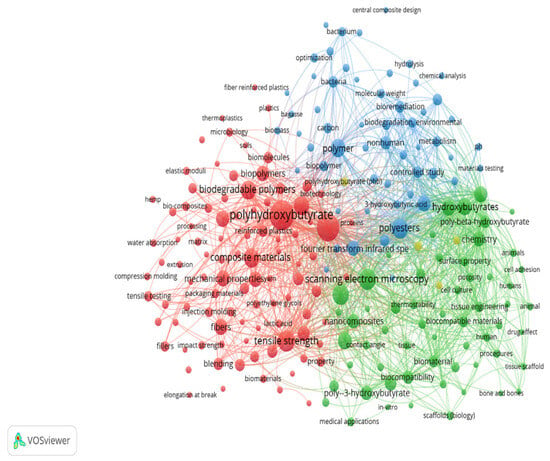
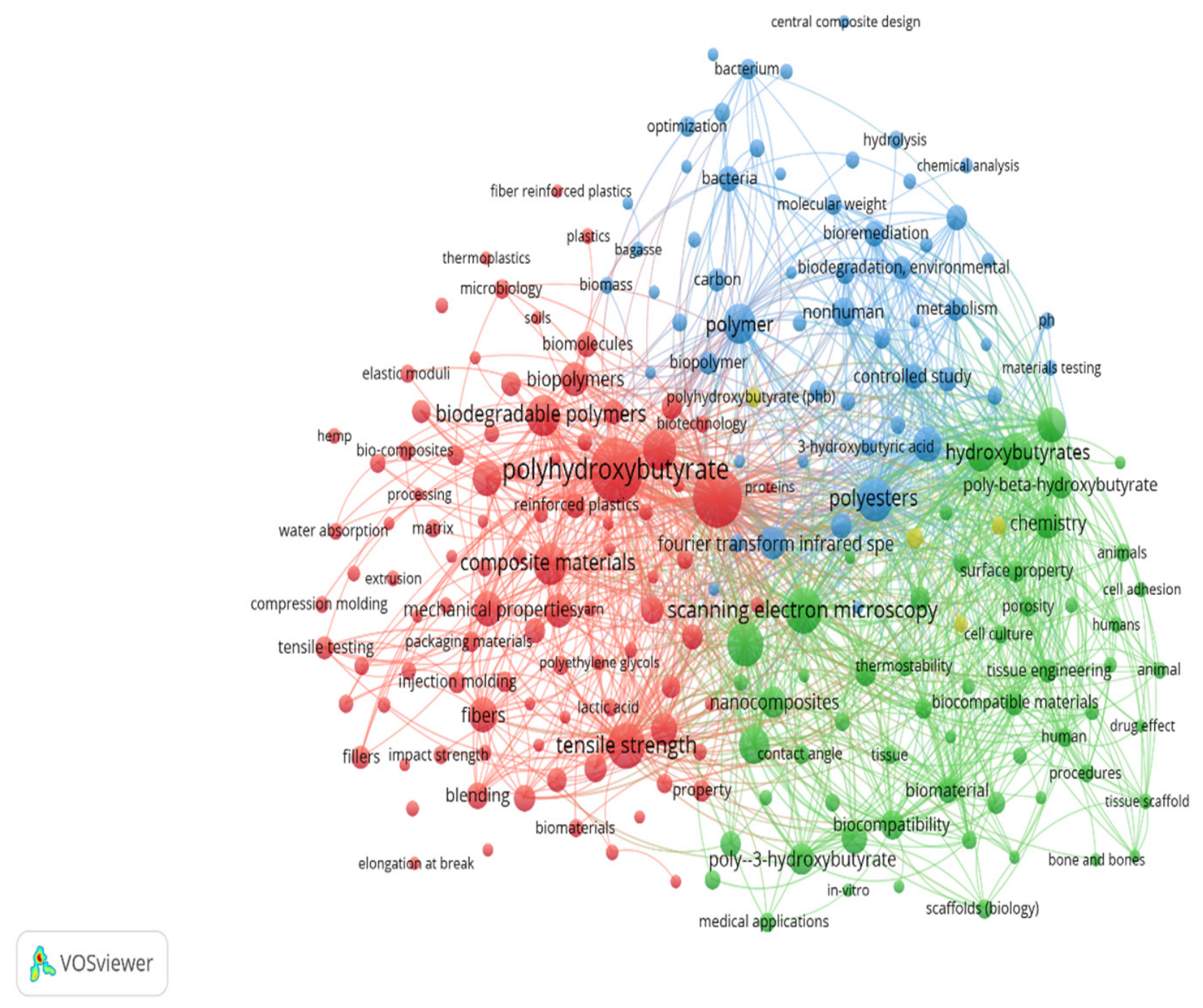
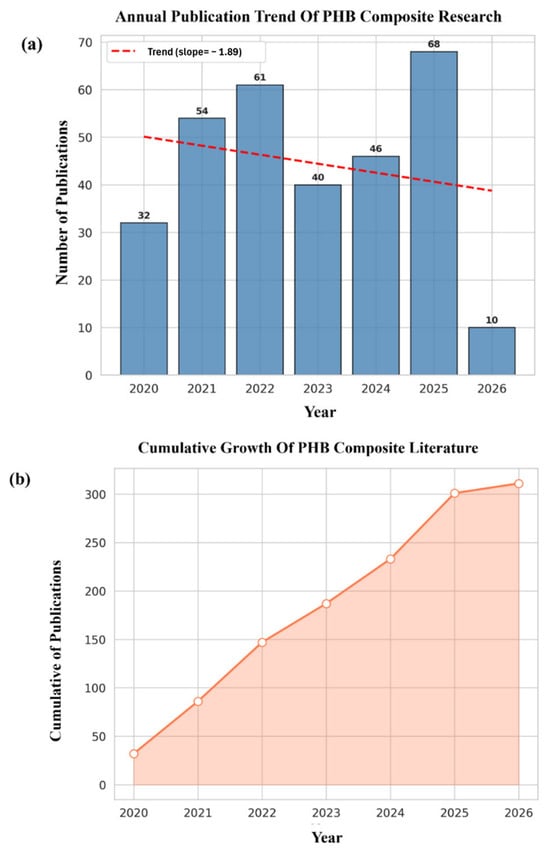
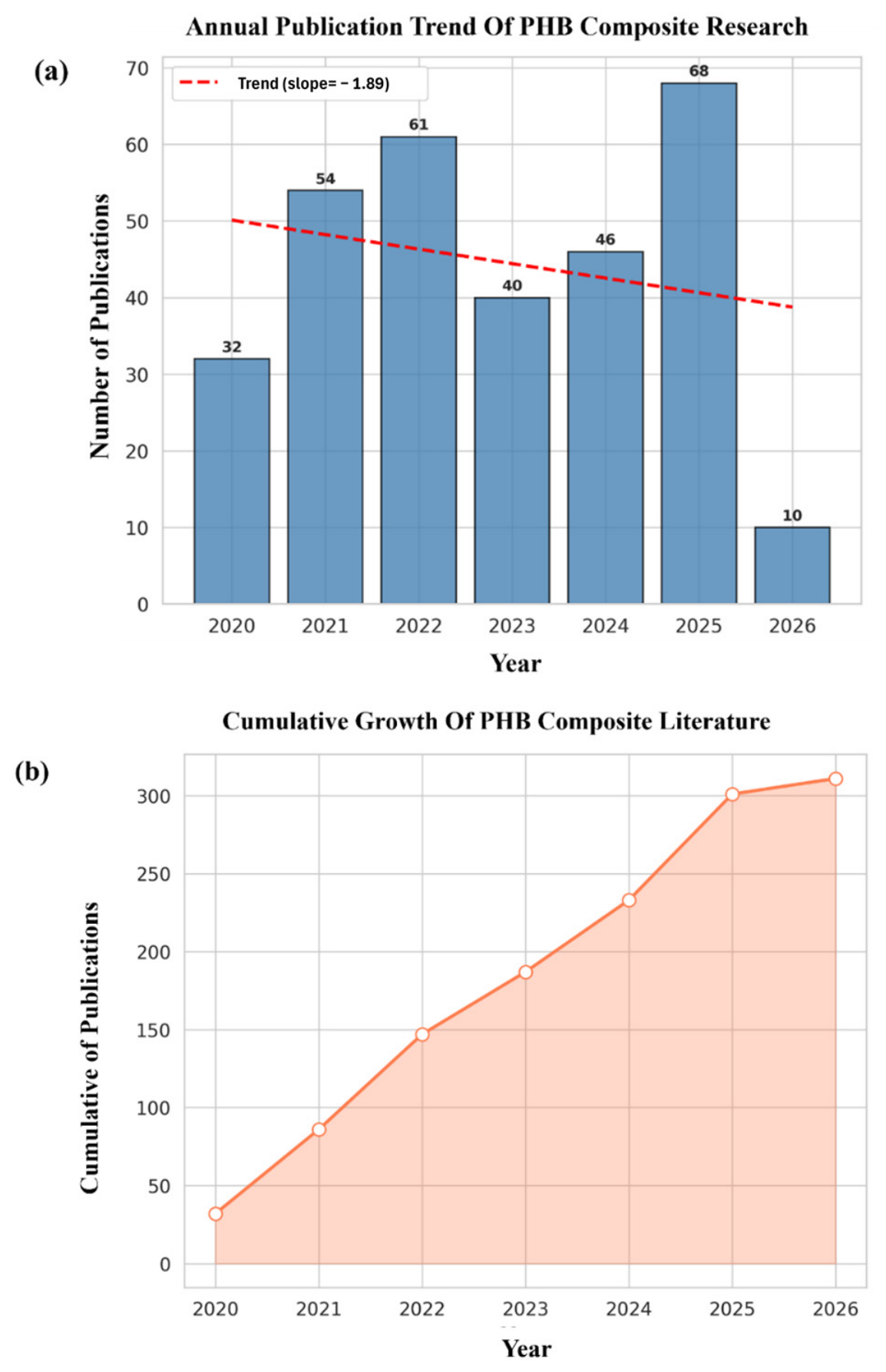
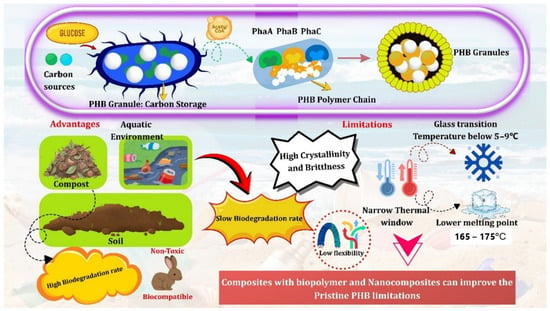
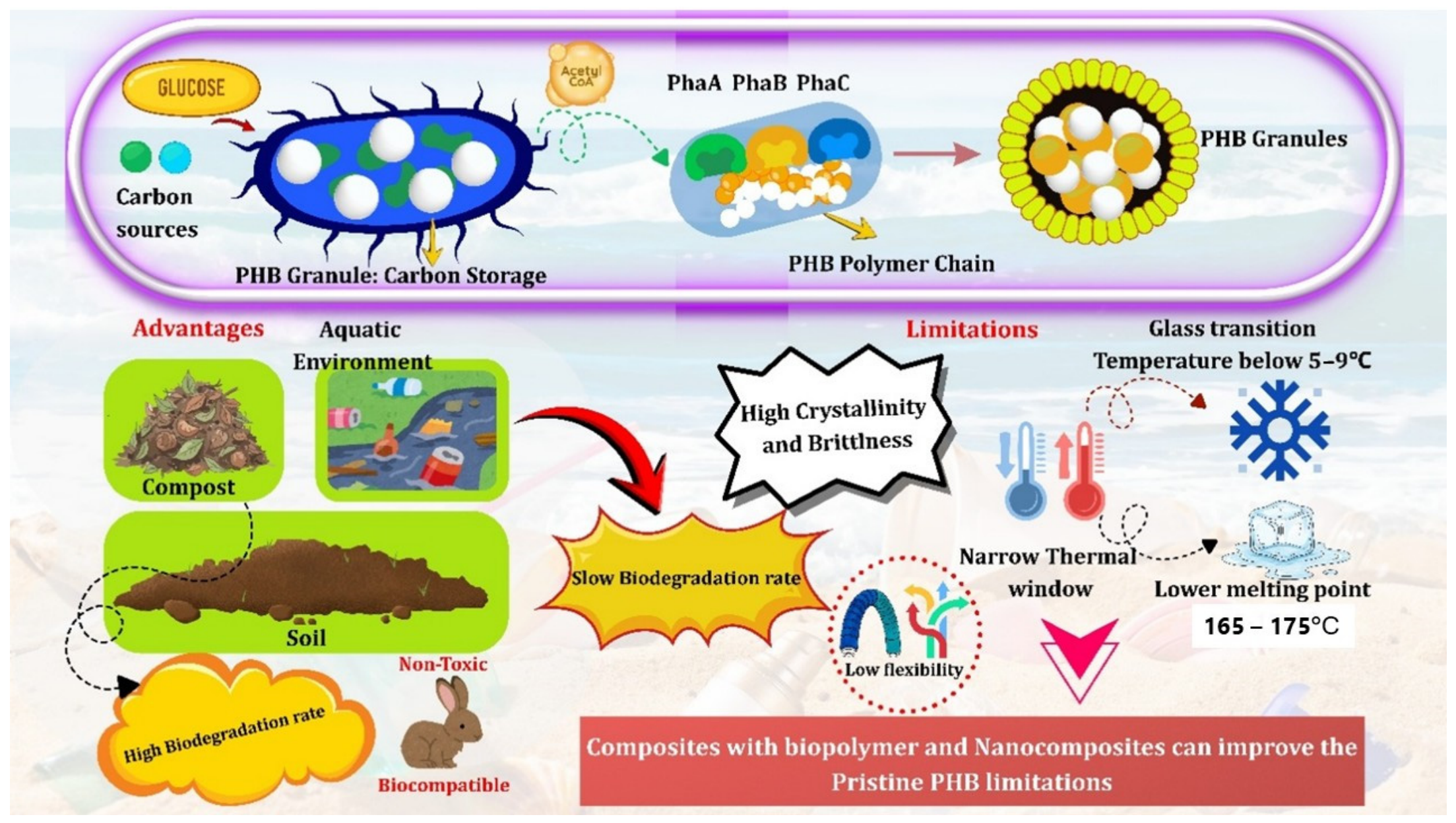
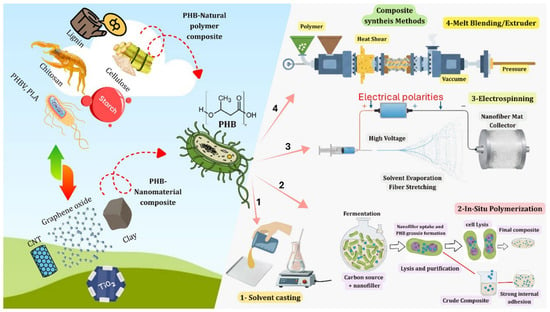
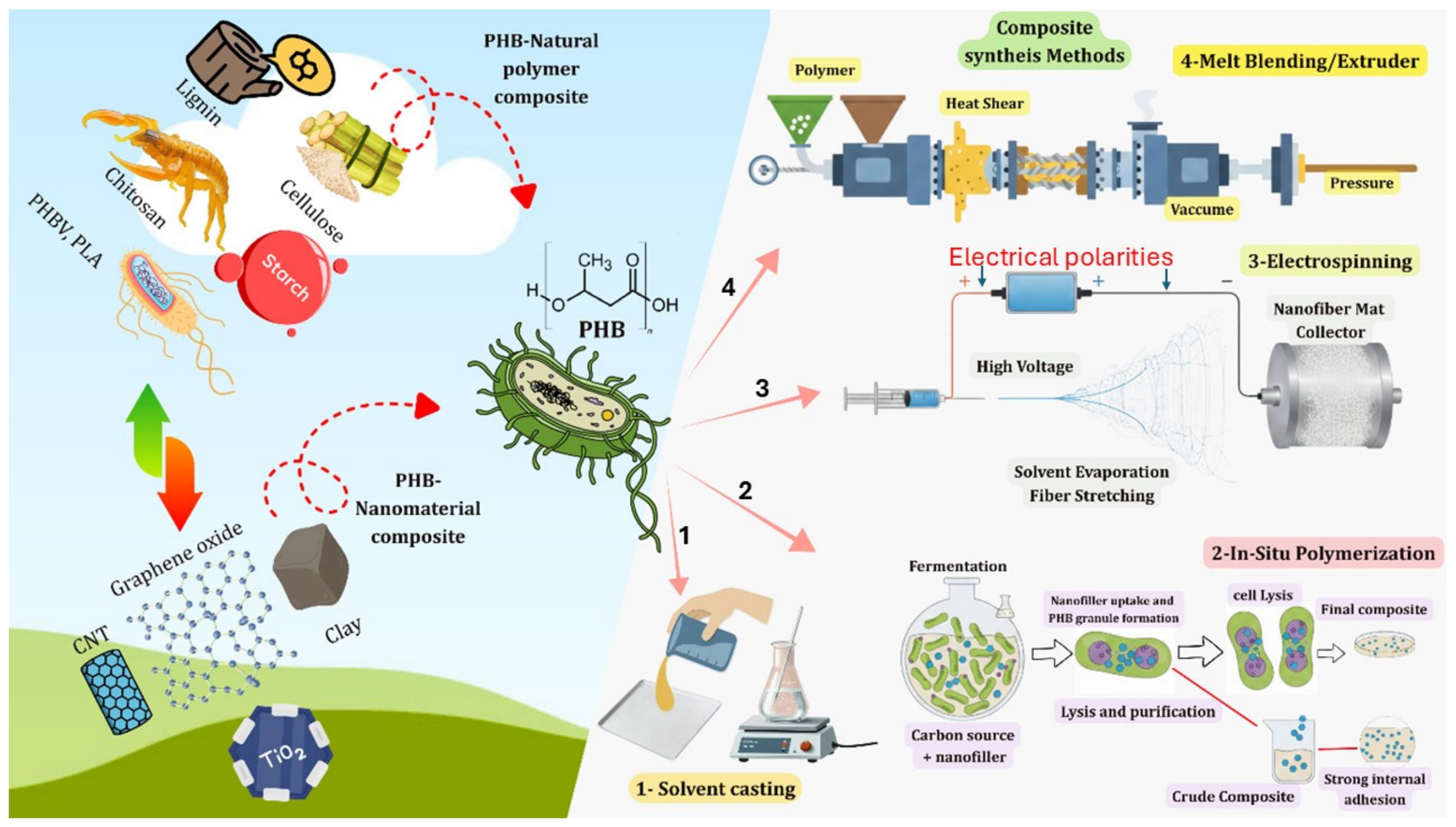
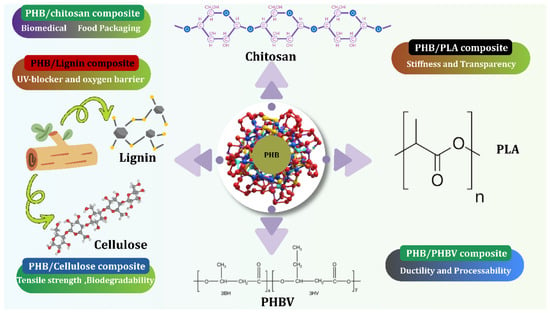
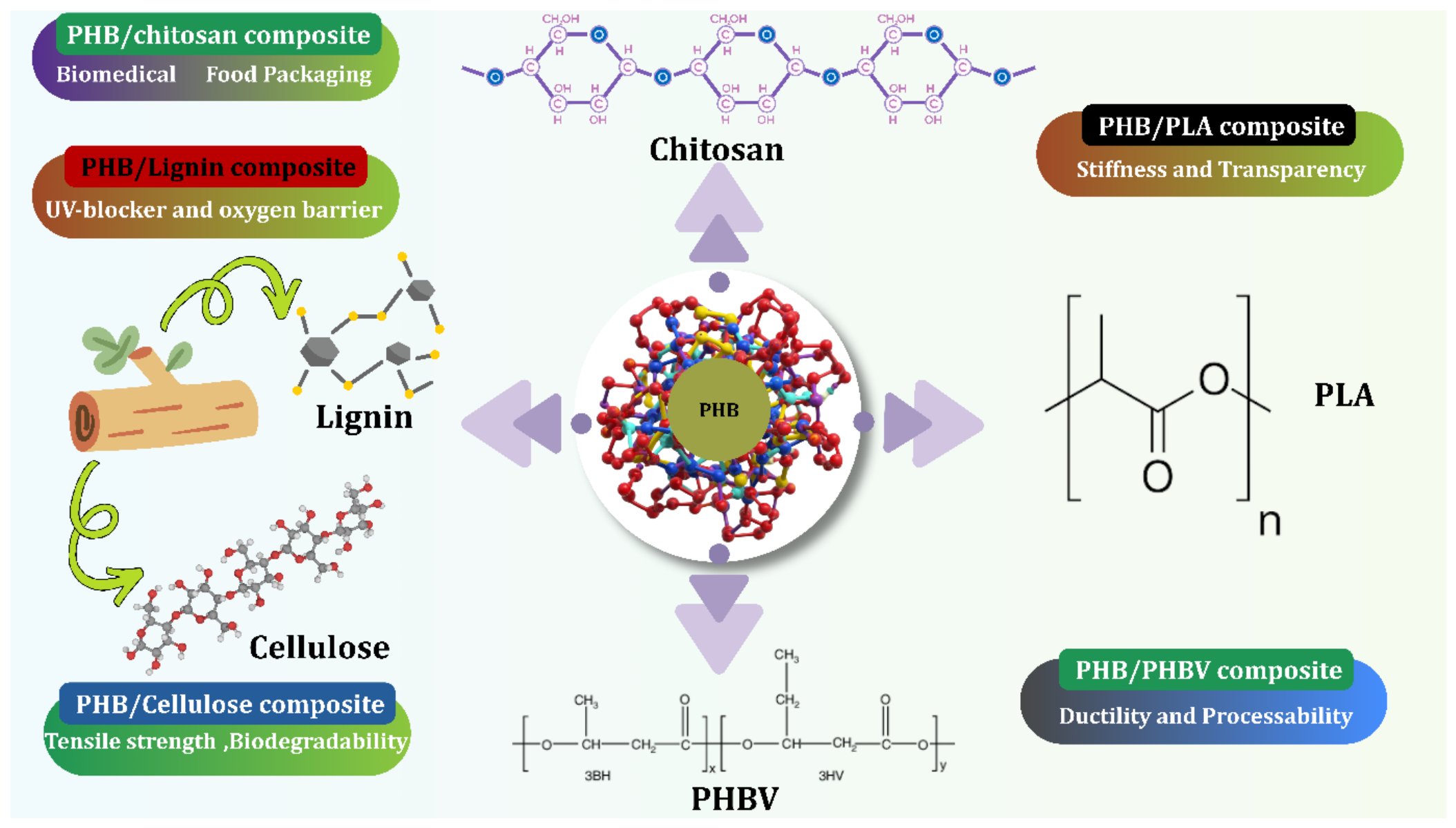
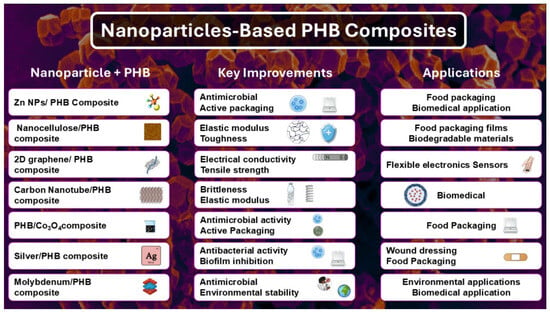
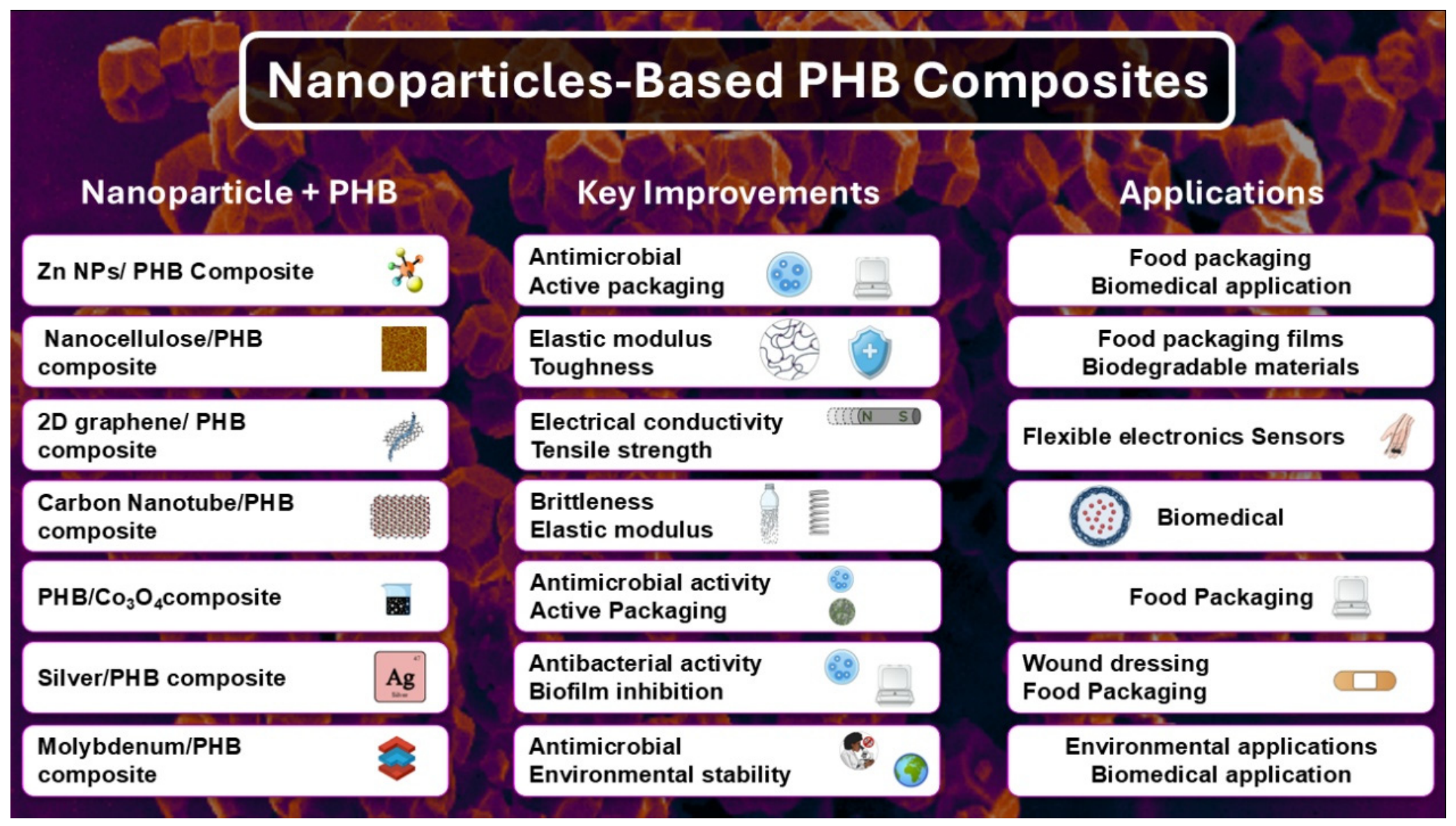
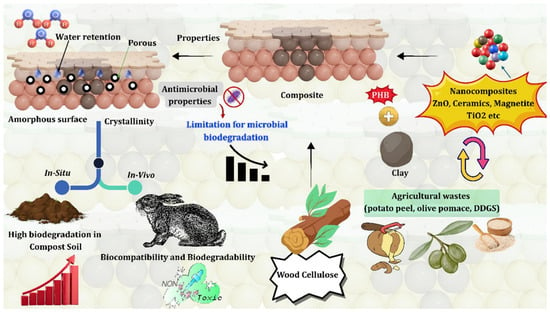
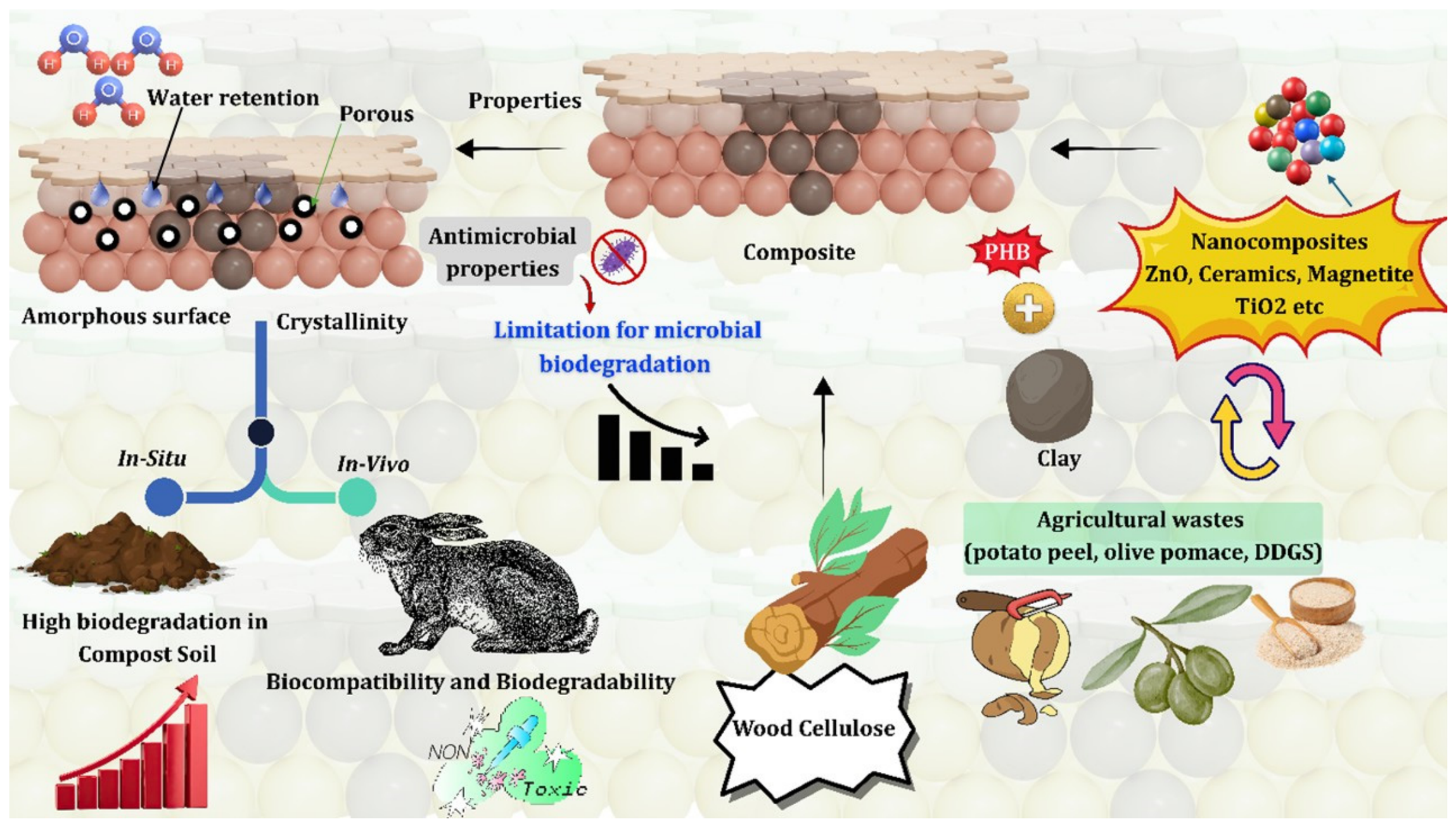
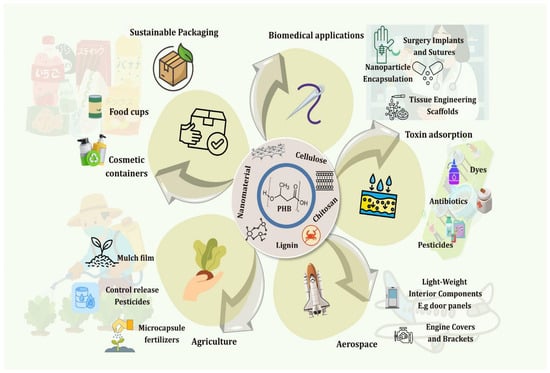
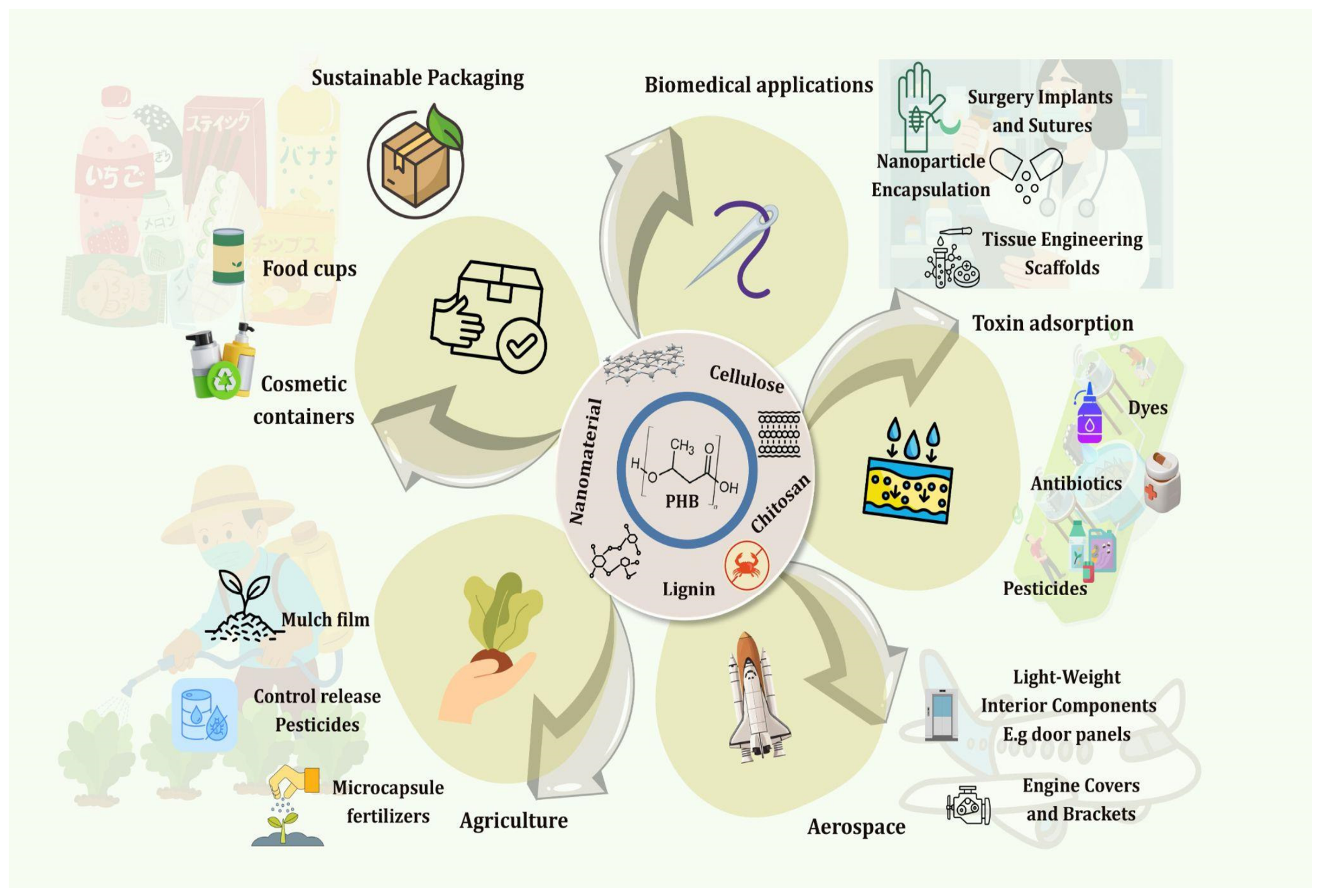
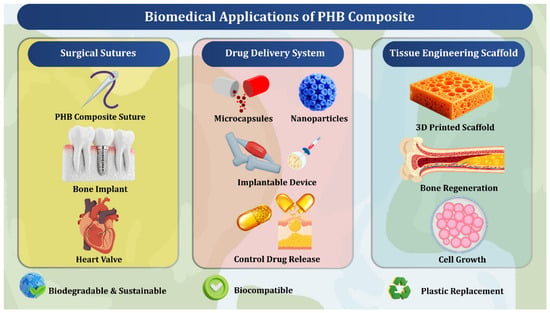
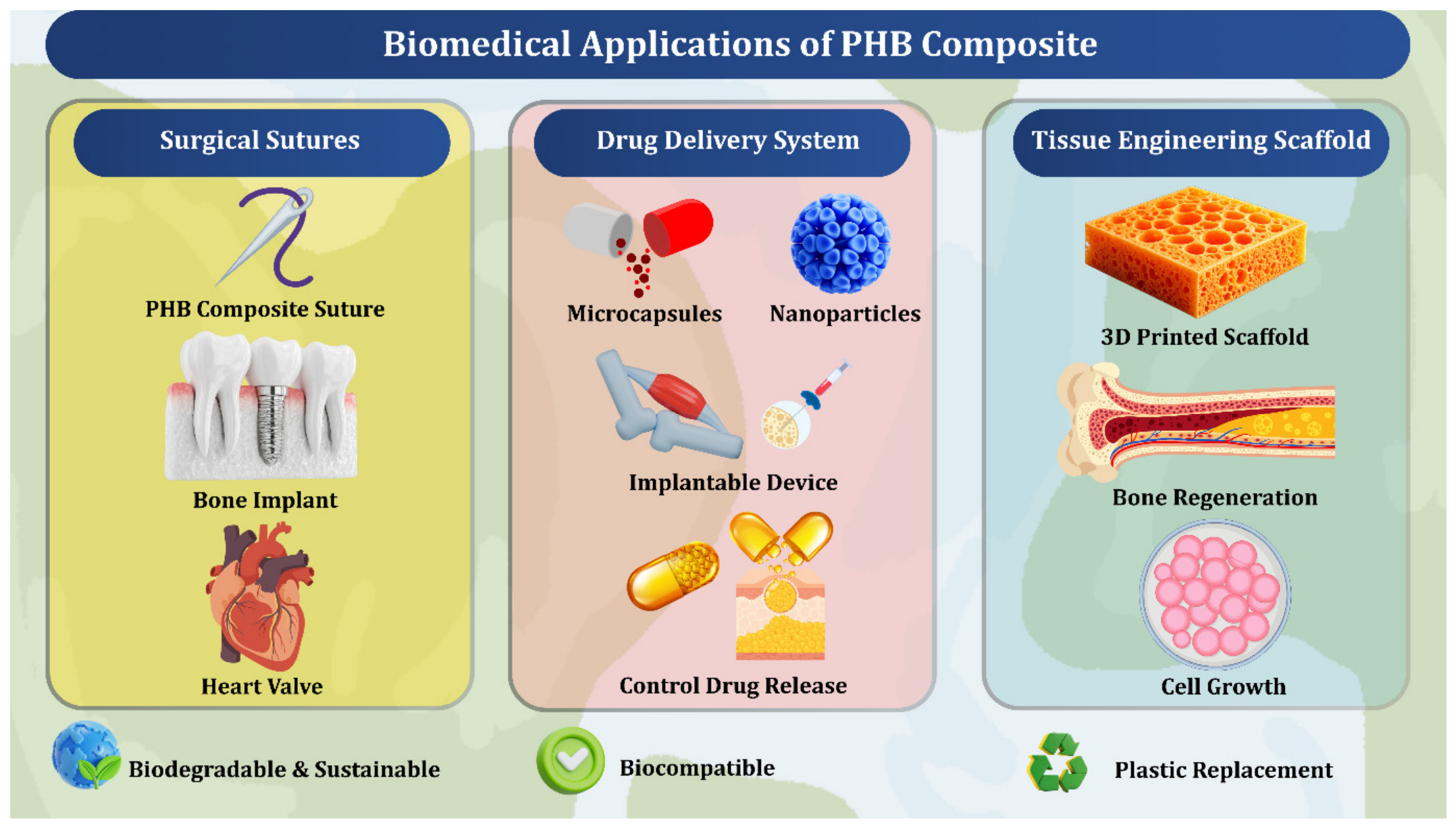
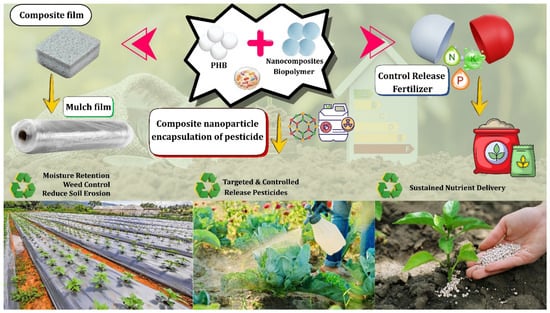
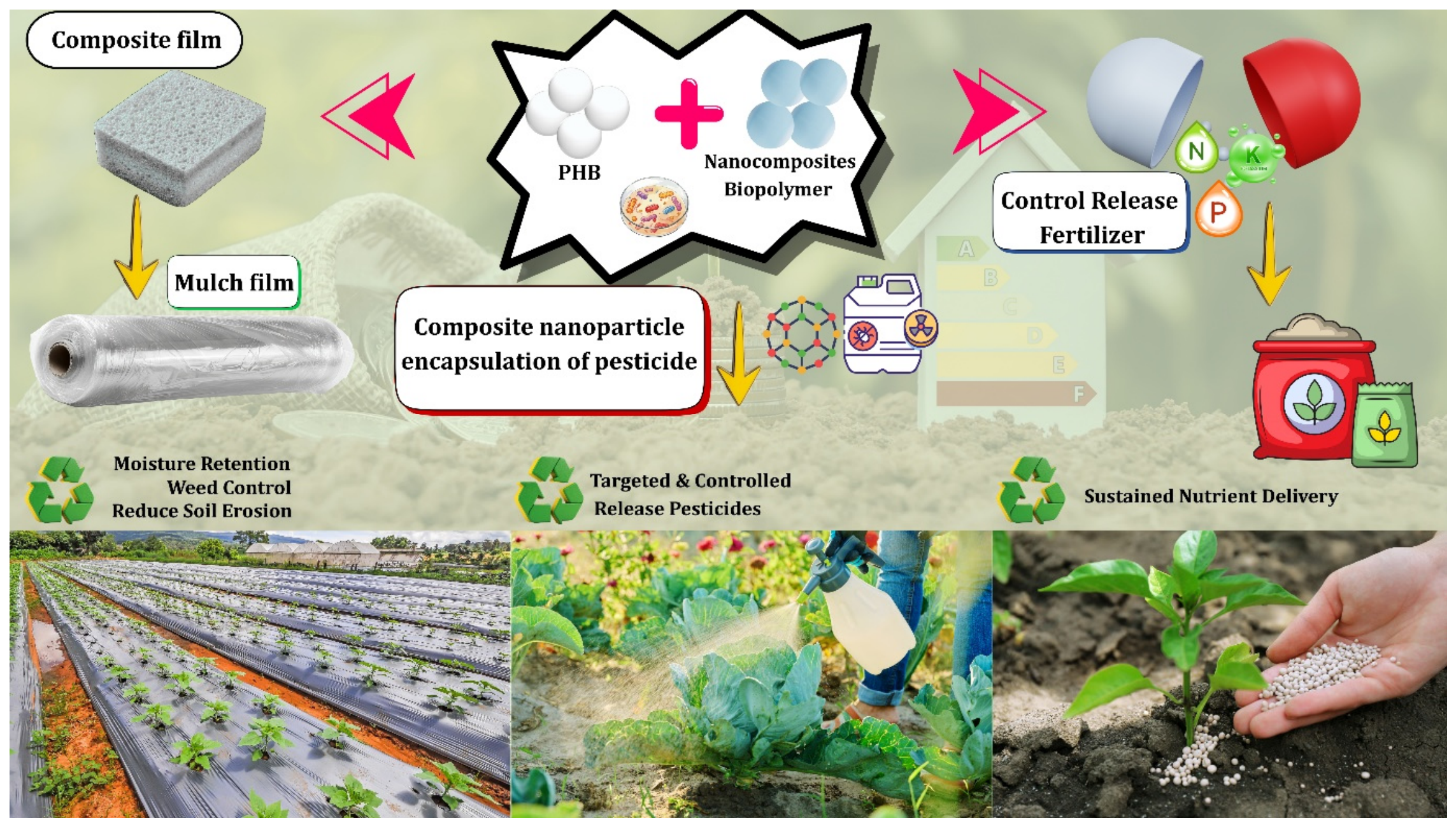
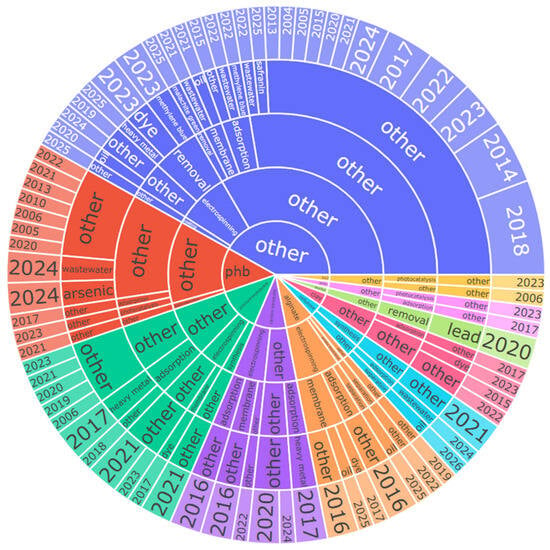
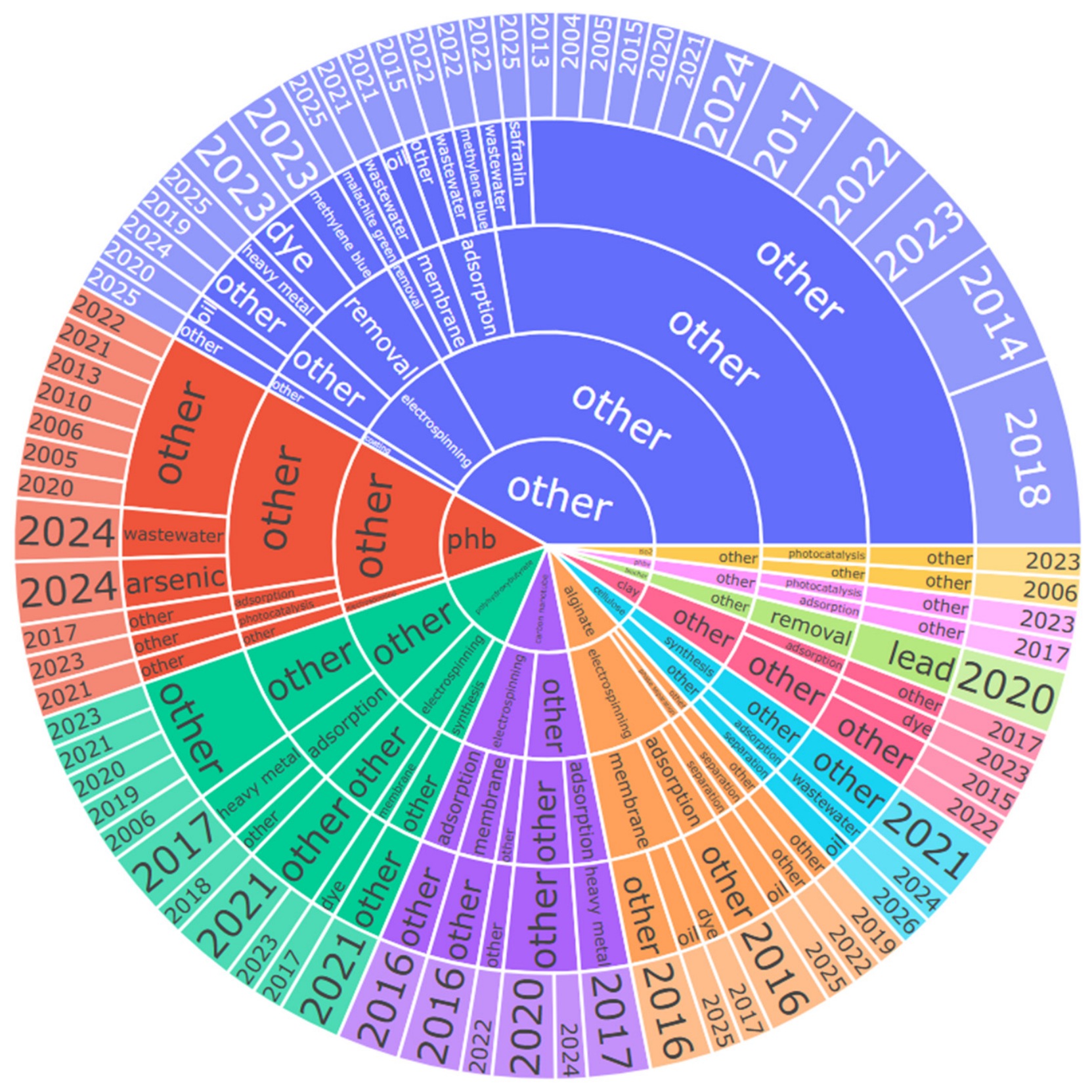
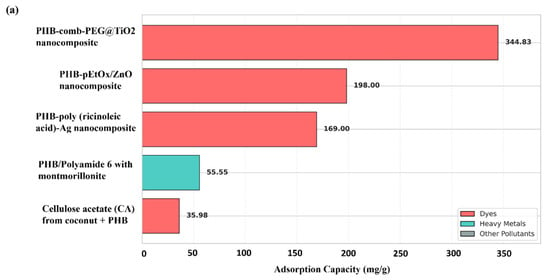
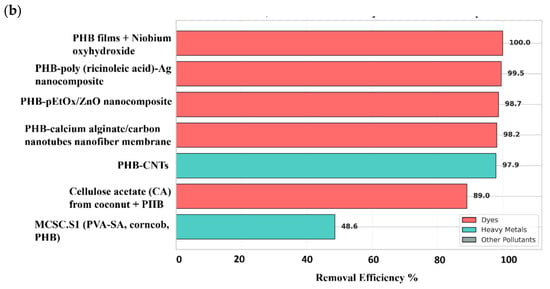
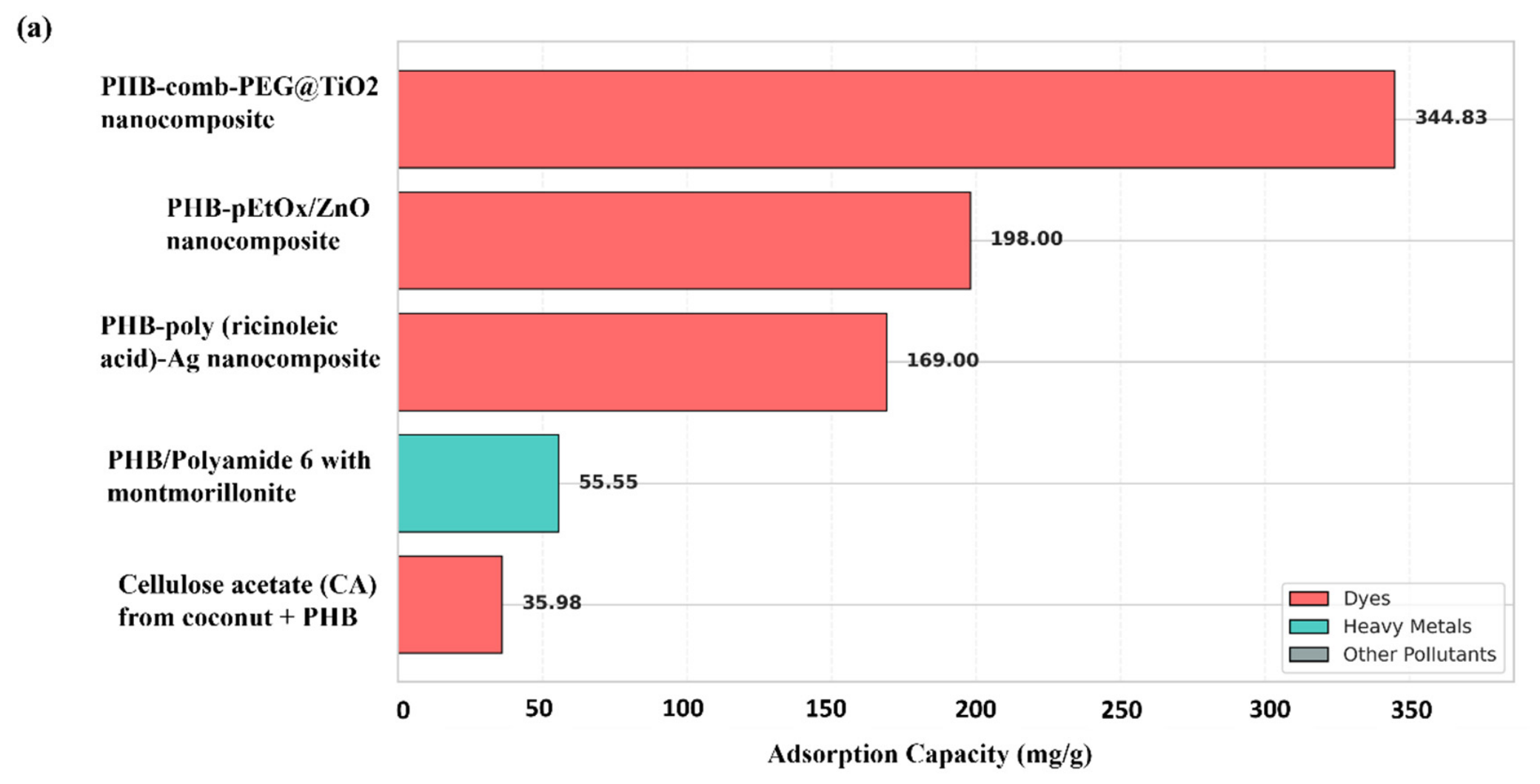
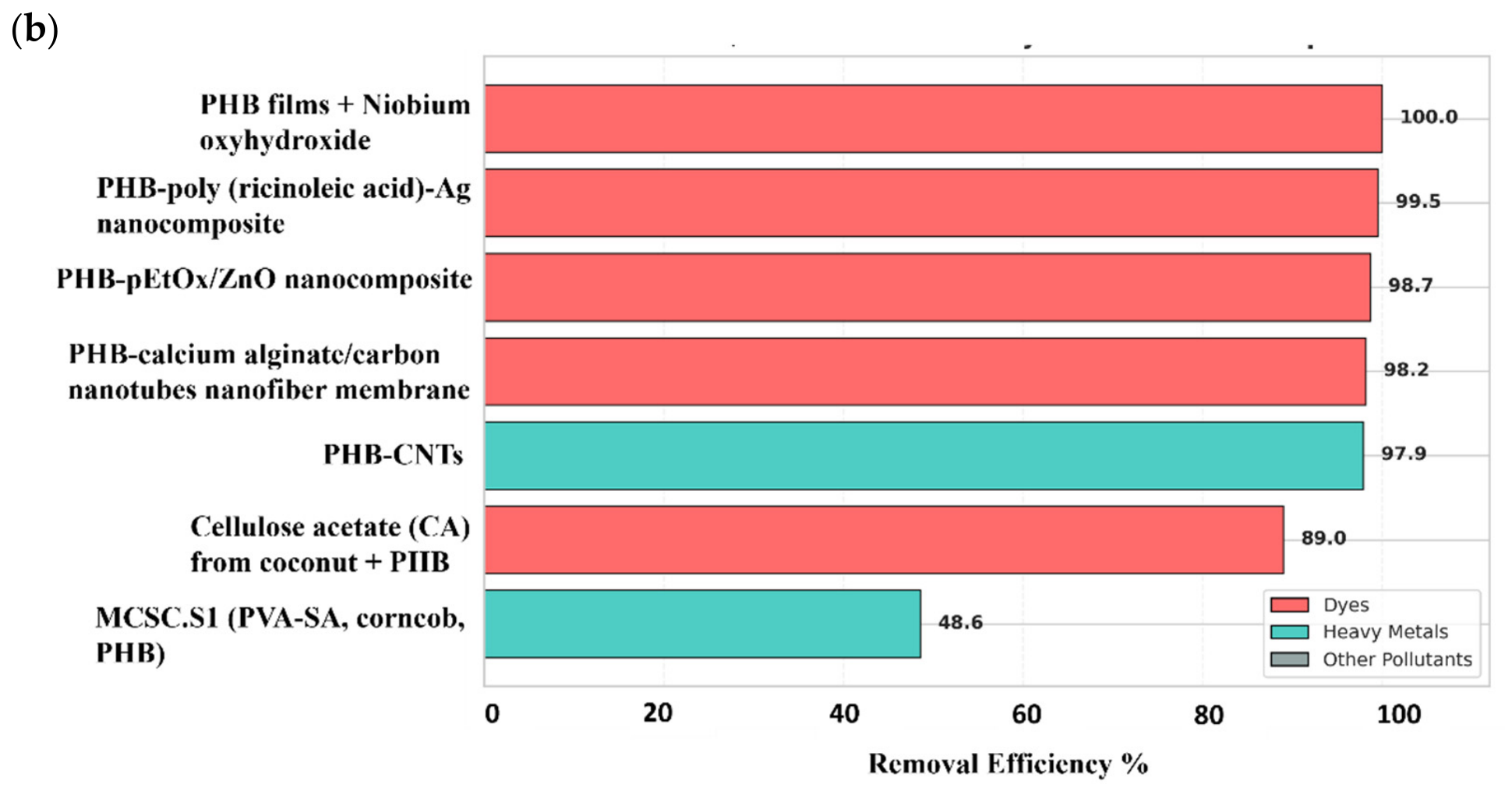
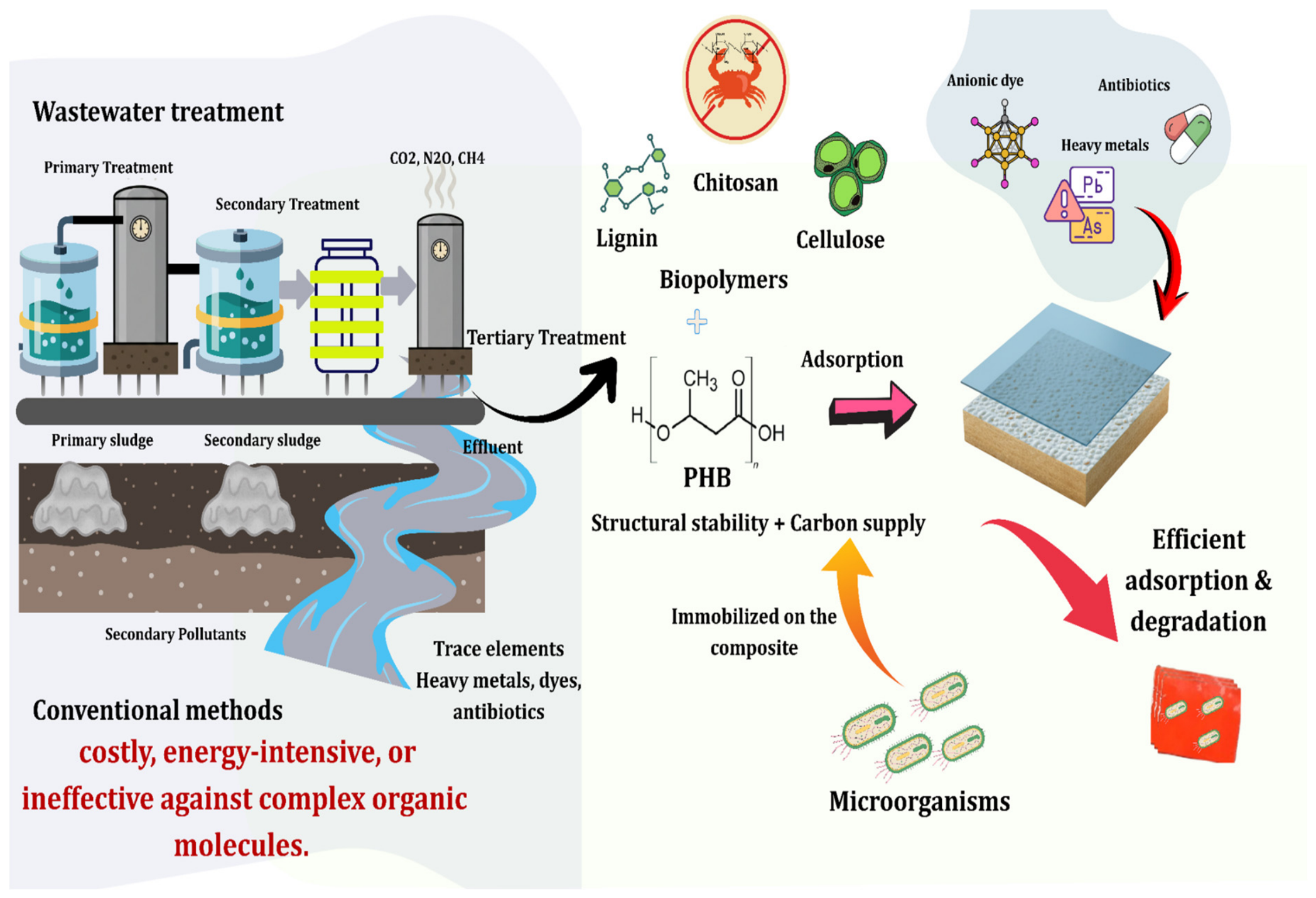
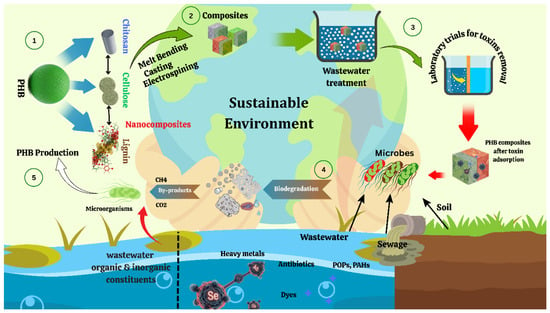
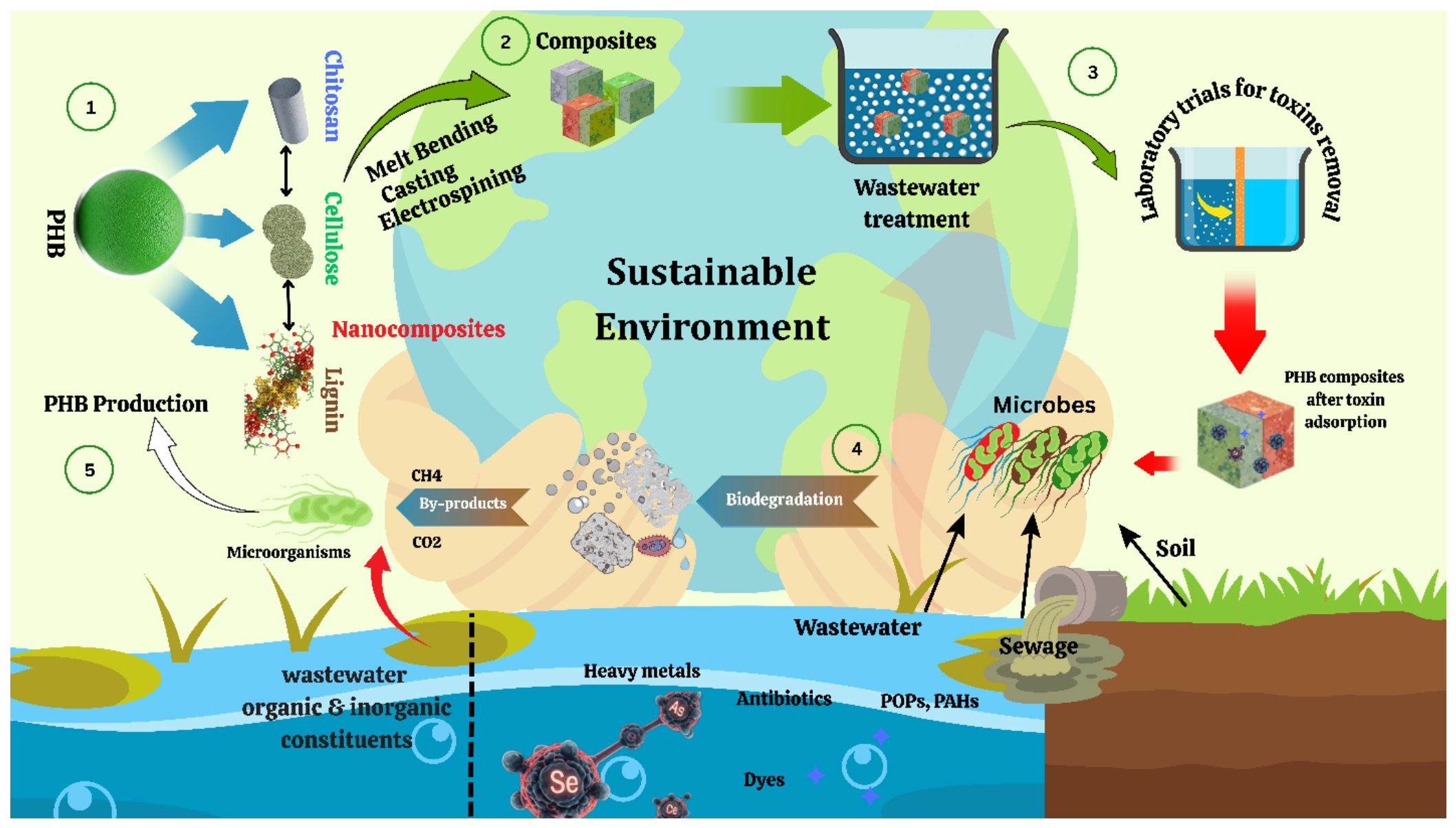
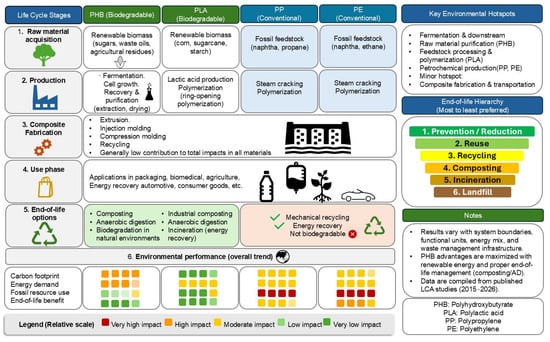
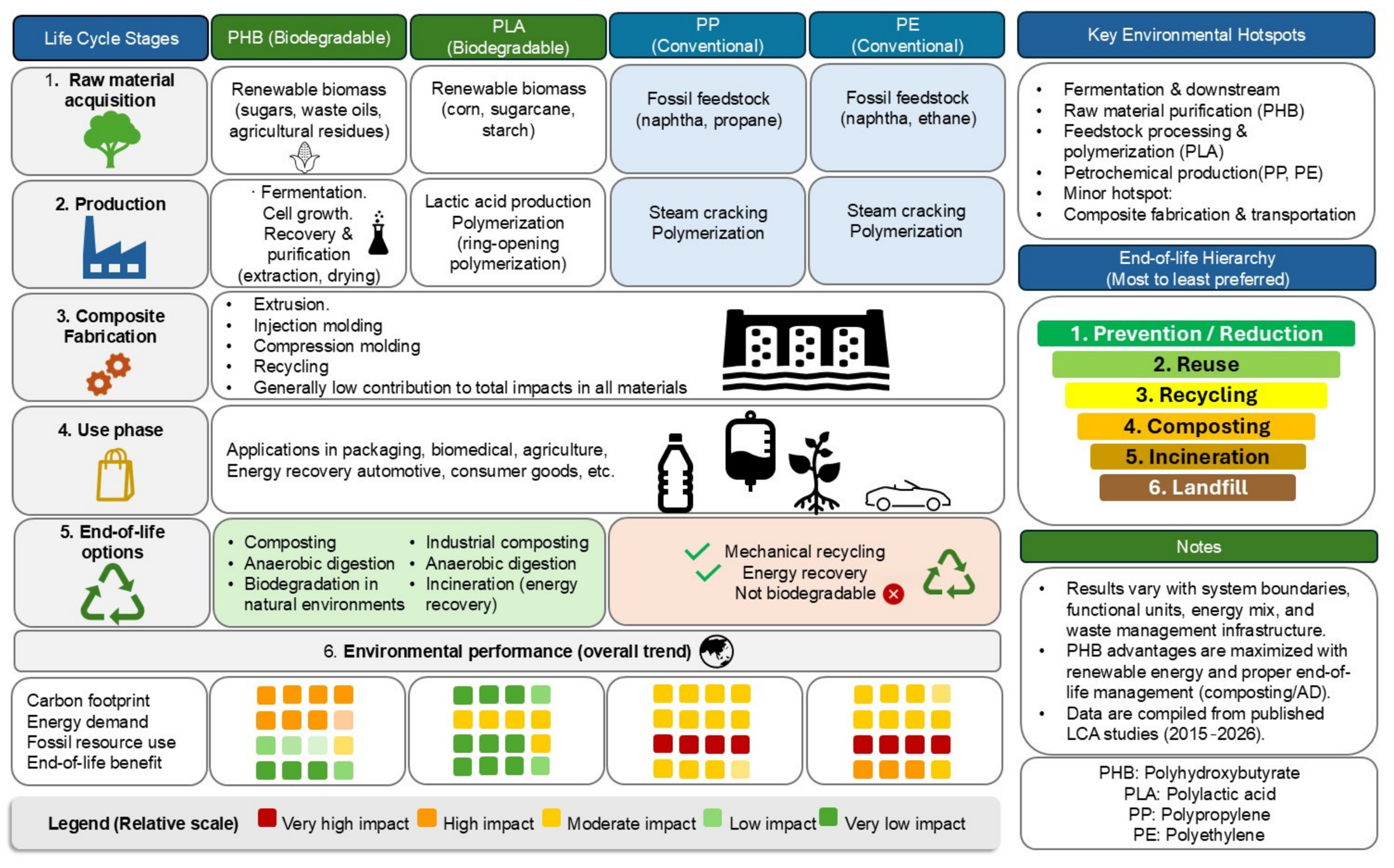

Disclaimer/Publisher’s Note: The statements, opinions and data contained in all publications are solely those of the individual author(s) and contributor(s) and not of MDPI and/or the editor(s). MDPI and/or the editor(s) disclaim responsibility for any injury to people or property resulting from any ideas, methods, instructions or products referred to in the content. |
© 2026 by the authors. Licensee MDPI, Basel, Switzerland. This article is an open access article distributed under the terms and conditions of the Creative Commons Attribution (CC BY) license.