


Simple Summary
This study examined the winter diet composition of Black Francolin in Totali Public Game Reserve, Pakistan, using crop contents from 24 harvested birds during 2022–2024. Thirty-three food taxa were identified; Poaceae and Fabaceae were the dominant plant families, whereas Formicidae dominated the animal component. Diversity indices revealed an uneven diet concentrated on a few key resources despite high taxonomic richness. Body mass, crop mass, and dry food mass did not differ between sexes, although body mass was positively correlated with both crop mass and dry food mass. These findings establish a baseline for future seasonal and multi-site dietary studies of Black Francolin.
Abstract
The winter diet of Black Francolin (Francolinus francolinus) is poorly documented in Totali Public Game Reserve, Pakistan. We examined crop contents from 24 legally harvested birds (14 males and 10 females) collected during 2022–2024. Thirty-three identifiable food taxa were recorded, comprising 22 plant and 11 animal taxa, together with unidentified plant and animal material. Dietary composition was quantified using frequency of occurrence, numerical abundance, mass percentage, and importance value (IV%). Plant material dominated numerically, with Poaceae (IV = 57.1%) and Fabaceae (IV = 25.7%) contributing most strongly among plant families, whereas Formicidae dominated the animal component (IV = 70.8%). Dietary indices were Shannon–Wiener H’ = 2.34, Simpson’s 1-D = 0.84, Pielou’s J’ = 0.67, and standardized Levins’ niche breadth B_sta = 0.16, indicating an uneven winter diet concentrated in a limited subset of resources despite the number of taxa recorded. Body mass, crop mass, and dry food mass did not differ significantly between sexes. Body mass was positively correlated with crop mass (r = 0.61, p = 0.001) and dry food mass (r = 0.59, p = 0.002). These findings provide a site-specific description of the winter diet and a baseline for future seasonal, multi-site, and resource-availability studies.
1. Introduction
Birds have highly diverse diets that include worms, insects, and seeds [1,2]. Their diets can also include rodents, fruit, fish, leaves, plankton, blood, beeswax, and organic mud [3]. A bird’s diet provides information about the habitat it occupies and the resources available in its environment [4,5]. Fluctuations in prey diversity caused by environmental changes can significantly affect the health and resilience of bird species [6]. Diet also shapes how species share ecological space, helping sympatric species avoid direct competition through niche partitioning and directly influencing breeding success [2,7]. This relationship is especially relevant to game birds, whose populations can vary with habitat quality and surrounding agricultural practices [8]. Studies of food preferences in birds provide an evidence-based foundation for habitat management and conservation planning [9].
The Black Francolin (Francolinus francolinus) is a well-known galliform game bird widely distributed across South Asia and parts of the Middle East [10,11,12]. In Pakistan, the species primarily inhabits irrigated agricultural land, riverine forests, and subtropical vegetation of the Indus Plains [11,13,14]. Black Francolins play important roles in sustaining regional ecosystems and biodiversity [15,16]. They consume large quantities of insects, larvae, termites, beetles, and grasshoppers, which are significant crop pests [17,18]. In addition, they consume seeds, fruits, and vegetative material that contribute to seed dispersal and vegetation dynamics [19]. Under some conditions, feeding on cultivated grain and seedlings can cause localized crop damage, reflecting a dual role commonly observed in omnivorous farmland birds [17].
Diet composition in francolins and other galliforms can vary with season, habitat, and local food availability [18,20]. Consequently, a diet recorded at one locality or time of year should not be generalized to the full annual or geographic niche of the species. Crop-content analysis provides direct evidence of recently ingested food and permits item-level identification and quantification, although it represents only a short feeding interval [21].
Winter diet has not previously been described for Black Francolins in Totali Public Game Reserve. Legally harvested birds provide an opportunity to obtain crop samples without additional collection specifically for research. We therefore characterized the winter crop contents of 24 hunter-harvested Black Francolins collected during the November-January hunting periods of 2022–2024. The objectives were to identify the principal plant and animal food items, quantify the distribution of dietary use among recorded taxa, and test whether body mass, crop mass, and dry food mass differed between sexes or were correlated within the sampled birds. The study represents a site-specific winter snapshot rather than a species-wide or year-round dietary assessment.
2. Materials and Methods
2.1. Study Area
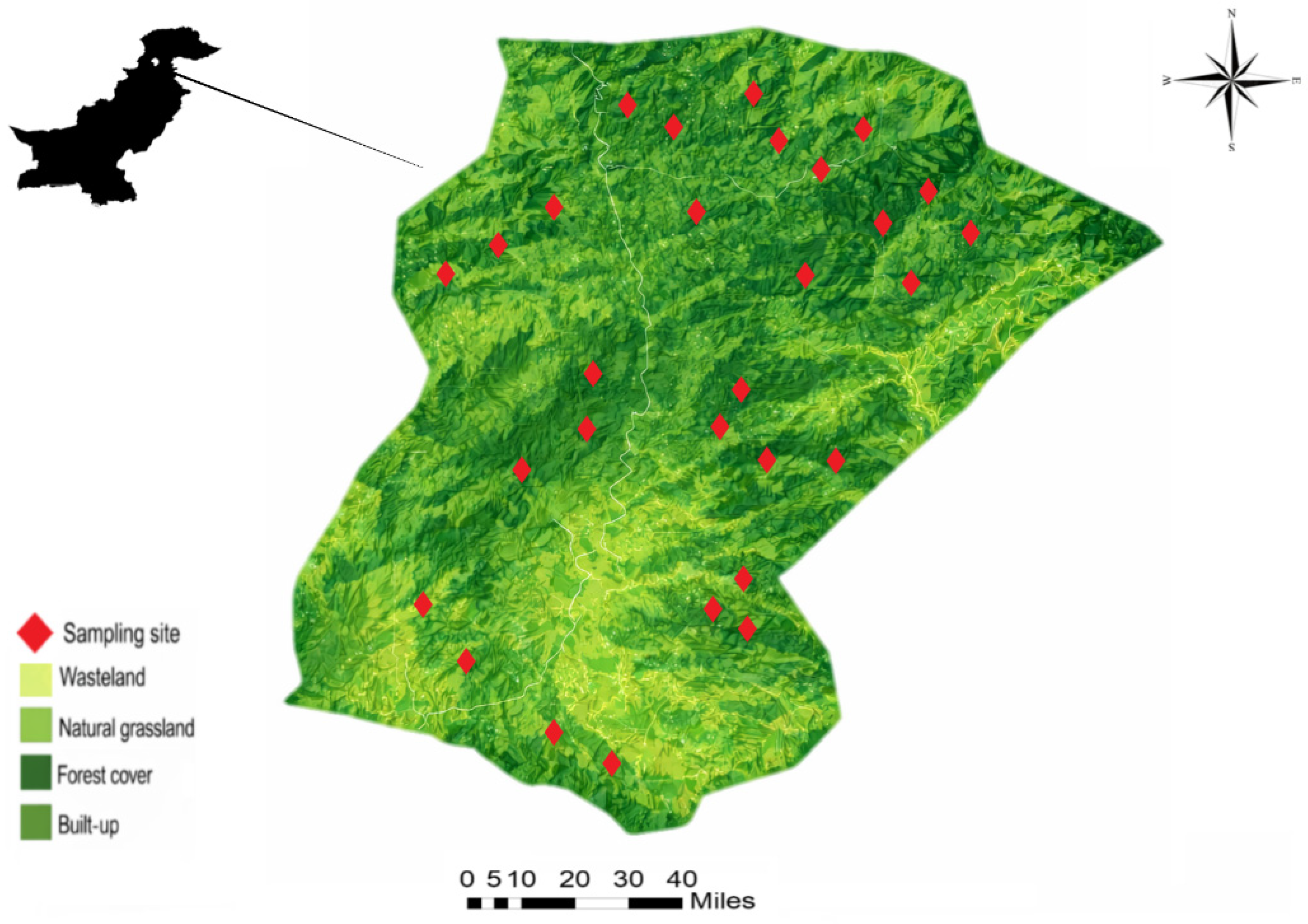
The study was conducted in Totali Public Game Reserve, Buner district, Pakistan (Figure 1), a protected wildlife area spanning approximately 30,960 hectares at elevations ranging from 500 to 2100 m. The mapped reserve landscape includes three broad habitat types distributed across the elevation gradient: agricultural land comprising cultivated crops interspersed with natural vegetation; pastureland dominated by herbaceous plants and shrubs; and agroforest located largely at higher elevations and in more rugged areas of the reserve, characterized by tall trees, dense cover, and grass-dominated open patches. The study area experiences hot summers and moderate, irregular rainfall, with more frequent rainfall during the July–August monsoon. Vegetation flowers mainly in autumn, with some flowering in spring. Agricultural habitats comprise cultivated crops of the Poaceae family interspersed with natural vegetation. The dominant plant species in the area were hopbush, raspberry, barberry, and blackberry, which provide food and shelter. Black Francolins occur in tropical and subtropical habitats associated with thorn forest, and the reserve supports trees, shrubs, herbs, grasses, and terrestrial invertebrates [11]. Samples were obtained during the legally permitted hunting months of November, December, and January across the 2022–2024 hunting periods. Hunting was permitted on Sundays and was subject to the established bag limit. Quantitative vegetation cover, crop abundance, and invertebrate availability were not measured; therefore, the dietary data cannot distinguish resource preference from resource use driven by local availability.
Figure 1.
Sampling sites within the Totali Public Game Reserve landscape, Buner district, Pakistan. The map shows sampling localities in relation to wasteland, natural grassland, forest cover, and built-up land-cover classes.
2.2. Sampling and Crop-Content Processing
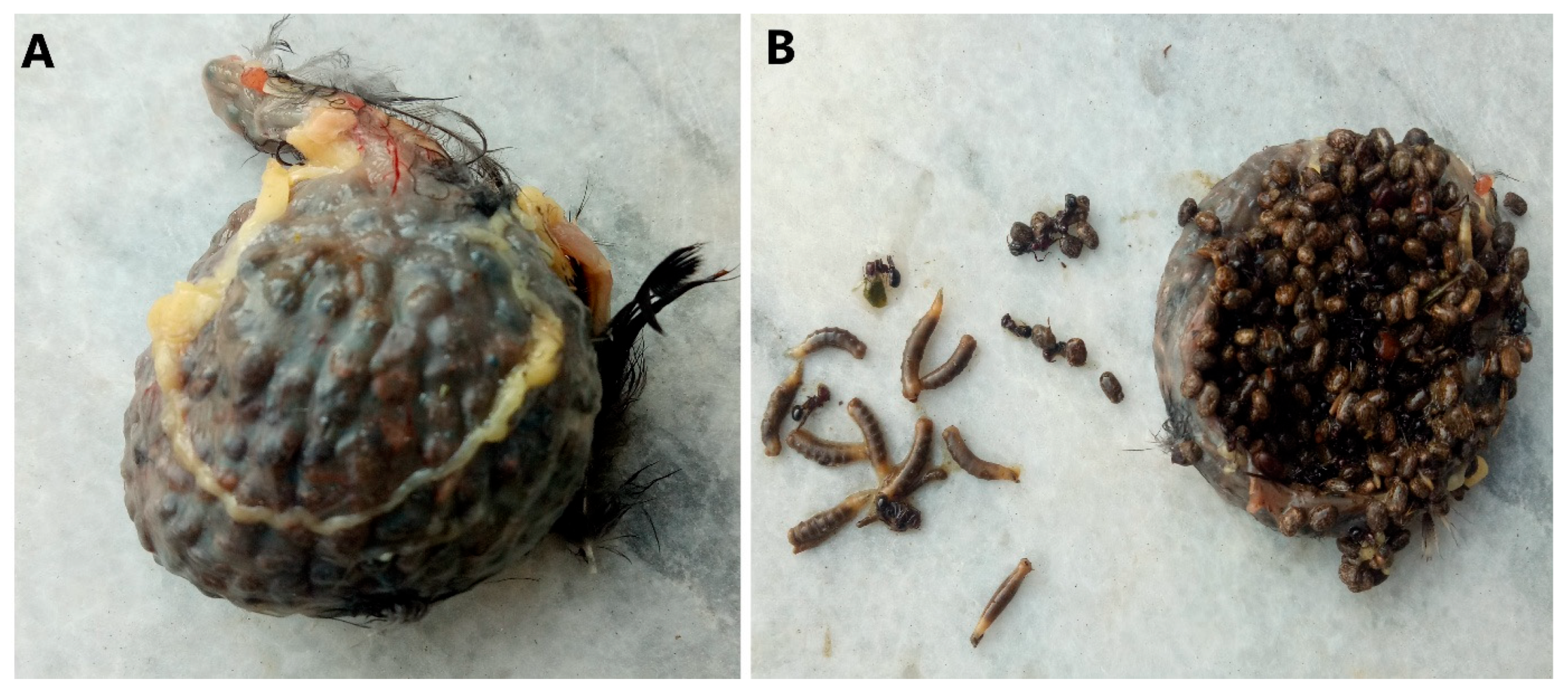
Twenty-four hunter-harvested Black Francolins (14 males and 10 females) were obtained from local hunters within the public game reserve and immediately adjacent areas during the legal hunting period. Body mass was recorded for each bird before crop-content analysis (Figure 2). Each crop was removed, its mass was recorded using a digital scale, and both ends were tied with thread to prevent loss of content. Crops were placed individually in plastic bags containing commercial-grade formalin and transported to the laboratory. Crop contents were washed under running water, transferred to Petri dishes, and separated into recognizable food categories. Plant material was identified using Flora of Pakistan [22], and animal material was identified using the entomological references of Richards and Davies [23] and Yousuf and Siddiqui [24]. Identification was confirmed with the naked eye, a hand lens, or a dissecting microscope (10–20× Olympus, Stereo, Japan), depending on fragment size and diagnostic features. Material lacking sufficient diagnostic characters for more specific assignment was retained as either unidentified plant or unidentified animal material rather than being assigned to a taxon without sufficient evidence. Grit was separated and recorded independently from food items.
Figure 2.
Black Francolin crop used for dietary analysis. (A) External view before dissection. (B) Opened crop showing recently ingested plant and animal material prior to sorting and taxonomic identification.
2.3. Dietary Indices and Statistical Analysis
For each food taxon, frequency of occurrence (%FO) was calculated as the number of crops containing the item divided by 24 and multiplied by 100. Numerical abundance (%N) was calculated as the number of items assigned to a taxon divided by the total number of counted plant and animal food items and multiplied by 100, representing the contribution of each food category to total food mass. Importance value (IV%) was calculated as (%FO × %M)/100, following the procedure used for Black Francolin crop contents [19,25]. Unidentified plant and animal material were retained as separate categories in descriptive dietary calculations; grit was treated separately because it is not a food taxon. Shannon–Wiener diversity [26], Simpson’s diversity index [27], Pielou’s evenness index [28], and standardized Levins’ niche breadth index [29] were used to describe the distribution of dietary use. Feeding strategy was visualized by plotting %FO against %N for each food item, following the general approach of [30,31]. Morphometric variables were assessed for normality using Shapiro–Wilk tests within sex groups and for homogeneity of variance using Levene tests. None of the assumption tests was significant (Shapiro–Wilk, all p ≥ 0.20; Levene, all p ≥ 0.64), so male–female comparisons used independent-samples t-tests with pooled variances. For each comparison, the mean difference (male minus female), 95% confidence interval, and Hedges’ g were reported. Associations of body mass with crop mass and dry food mass were assessed using Pearson correlations, with 95% confidence intervals calculated using Fisher’s z transformation. All tests were two-sided with α = 0.05. Analyses were performed in R version 4.5.2.
3. Results
3.1. Winter Diet Composition
The crop contents of Black Francolins contained 33 identifiable food taxa (22 plant and 11 animal), together with unidentified plant and animal material (Table 1). By number, 715 plant items and 365 animal items were recorded; grit was recorded separately in 21 crops. The diet was taxonomically diverse, as reflected by the Shannon–Wiener index (H′ = 2.34) and Simpson’s index (1 − D = 0.84); however, this diversity was unevenly distributed across taxa, as indicated by the comparatively low Pielou’s evenness (J′ = 0.67). This pattern was further supported by Levins’ standardized niche breadth index (B_sta = 0.16).
Table 1.
Food items recovered from Black Francolin crops (n = 24). Item count gives the number of recovered fragments or items assigned to each category; crop occurrence gives the number of individual crops in which the category was recorded.
3.2. Morphometric Measurements and Crop Contents
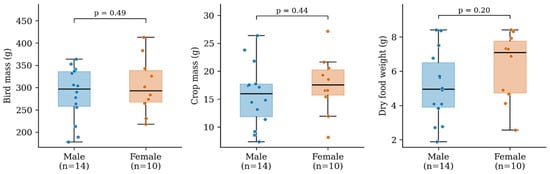
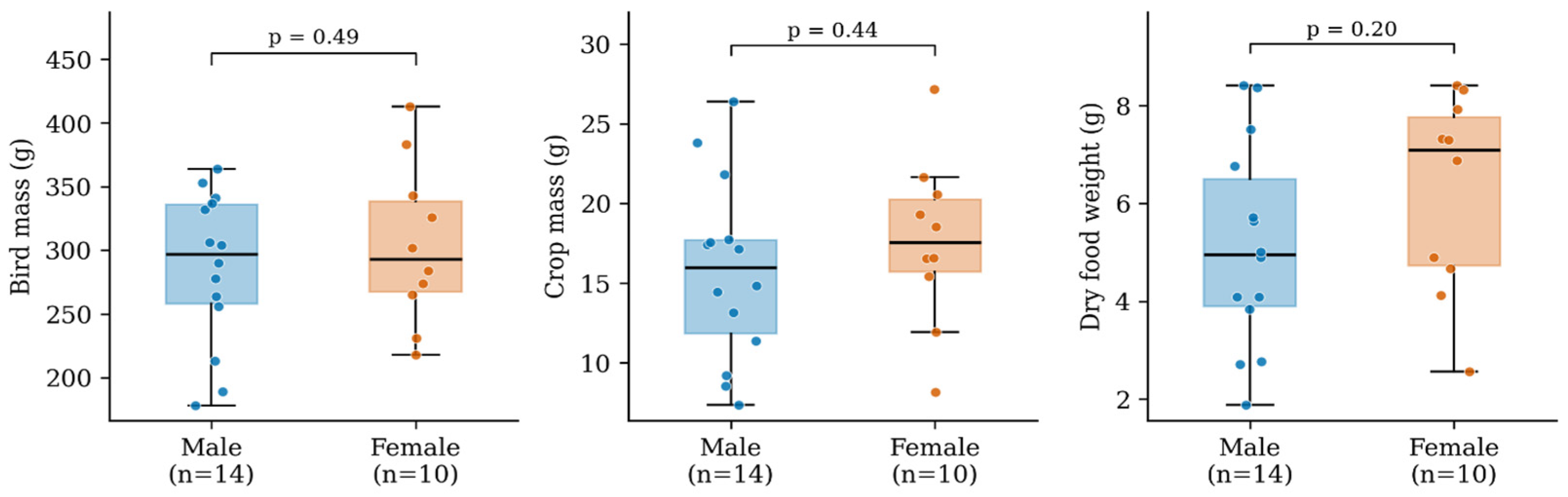
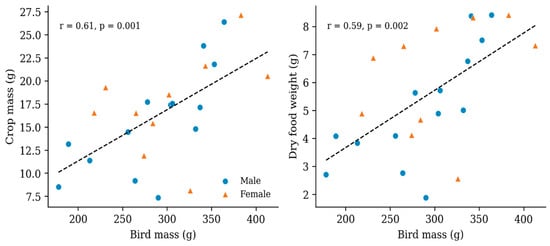
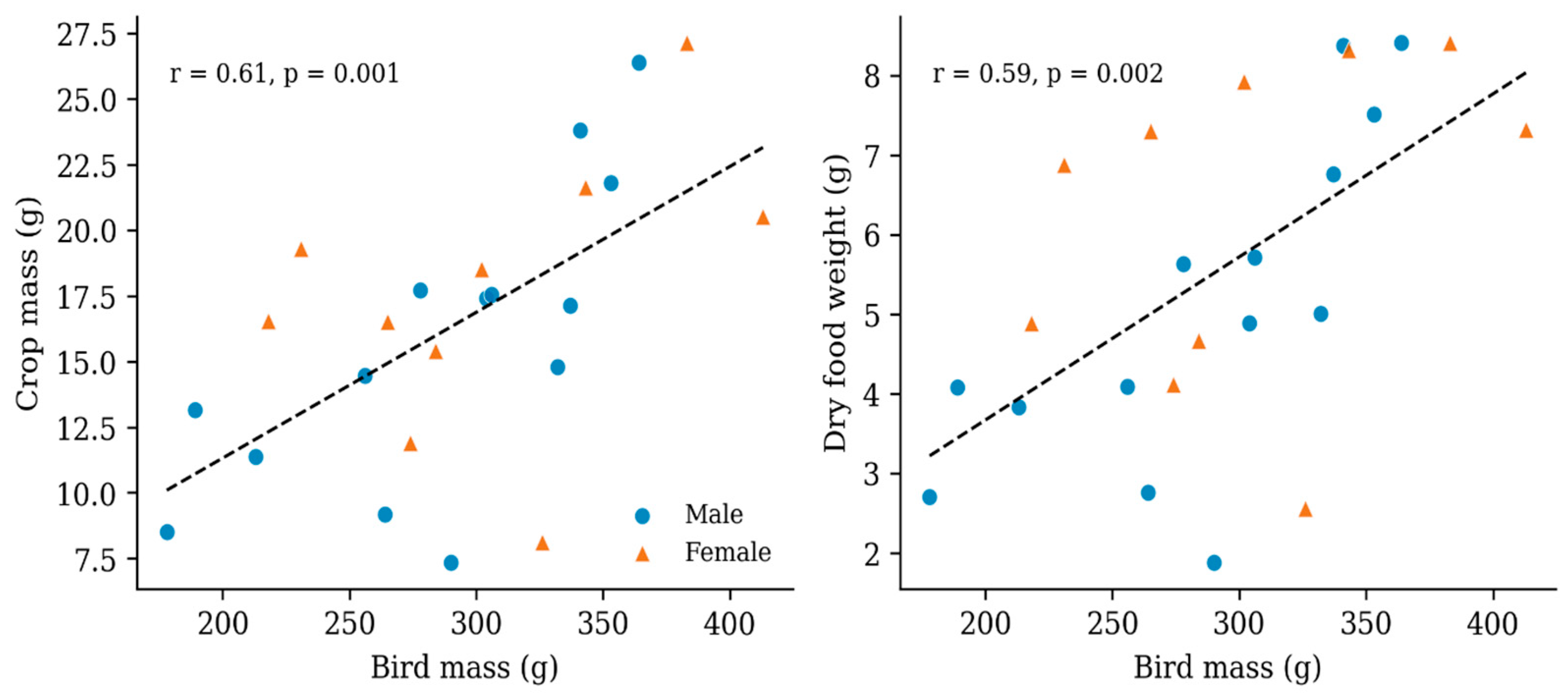
Body mass did not differ significantly between males (286.1 ± 60.1 g) and females (303.9 ± 63.0 g; t(22) = −0.70, p = 0.490; mean difference = −17.8 g, 95% CI −70.4 to 34.8; Hedges’ g = −0.28) (Table 2). Crop mass also did not differ between males (15.8 ± 5.7 g) and females (17.6 ± 5.3 g; t(22) = −0.79, p = 0.437; mean difference = −1.81 g, 95% CI −6.55 to 2.93; Hedges’ g = −0.32). Dry food mass was 5.1 ± 2.1 g in males and 6.2 ± 2.0 g in females (t(22) = −1.32, p = 0.201; mean difference = −1.12 g, 95% CI −2.89 to 0.64; Hedges’ g = −0.53) (Figure 3). Body mass was positively correlated with crop mass (r = 0.61, p = 0.001, 95% CI 0.28–0.82) and dry food mass (r = 0.59, p = 0.002, 95% CI 0.25–0.80) (Figure 4). These correlations are reported descriptively and were not used to infer a specific ecological mechanism.
Table 2.
Individual body mass, crop mass, and dry food mass for the 24 Black Francolin samples.
Figure 3.
Sex-specific distributions of body mass, crop mass, and dry food mass in male (n = 14) and female (n = 10) Black Francolins. Points represent individual birds; boxes show the interquartile range with the median, and brackets report two-sided independent-samples t-test p value.
Figure 4.
Associations of body mass with crop mass (left) and dry food mass (right) in Black Francolins (n = 24). Points represent individual birds; circles denote males and triangles denote females. Dashed lines show pooled linear fits. Pearson correlation coefficients and p-values are reported for the full sample.
3.3. Family-Level Dietary Composition
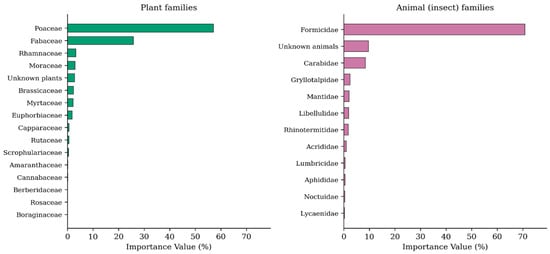
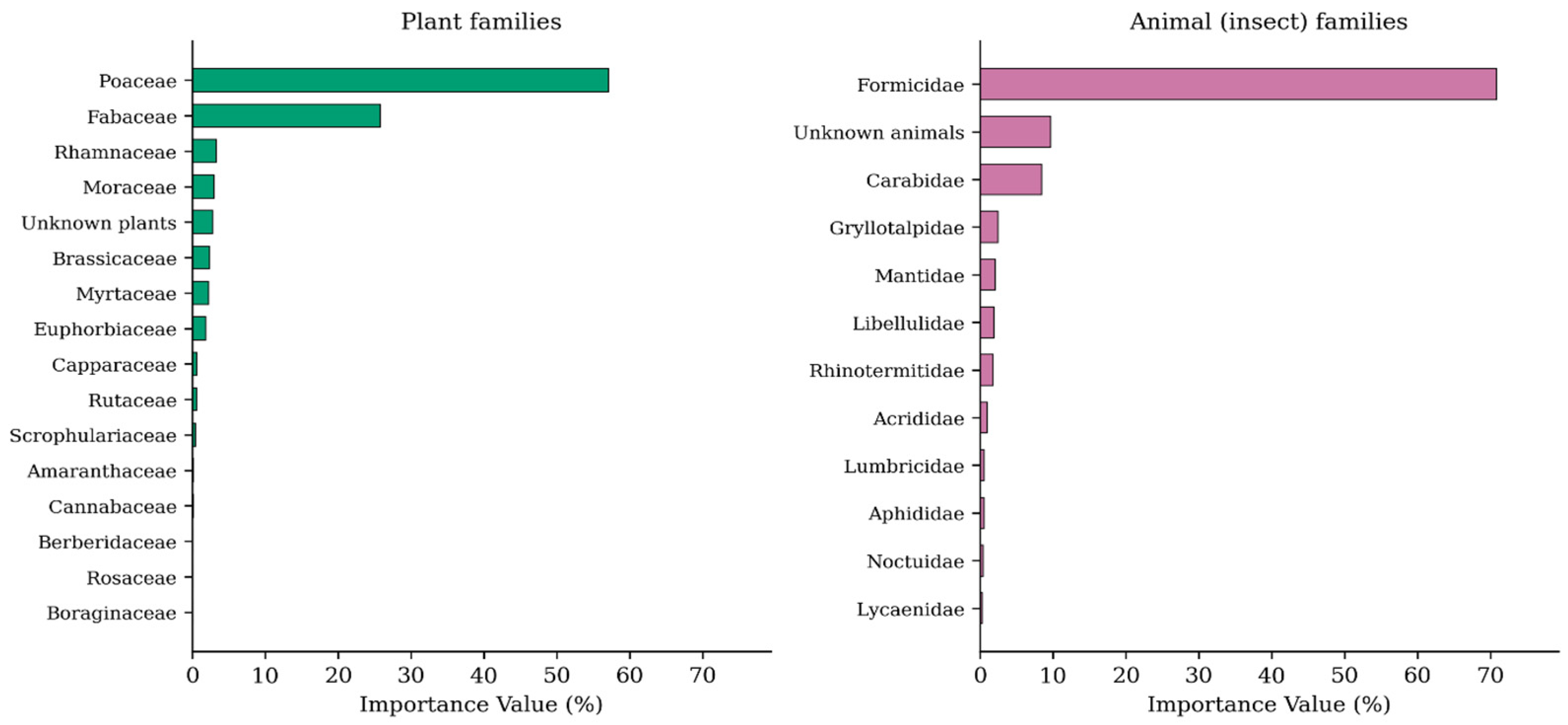
The crop contents comprised 15 plant families and 11 animal (insect) families, with importance value (IV%) calculated separately within each group (Figure 5). Among plant taxa, Poaceae (IV = 57.1%) and Fabaceae (IV = 25.7%) together accounted for the large majority of plant-derived dietary importance, with all remaining plant families contributing less than 3.3% each. Despite the dominance of Poaceae, Black Francolins also consumed other plant species, such as Mallotus philippensis (Red Kamala) and Berberis lycium (Indian Barberry) (Figure 5). Insects constituted a smaller portion of the Black Francolin diet, with marked differences among taxa. Formicidae (ants) dominated the animal component of the diet (IV = 70.8%), followed by unidentified animal material (IV = 9.7%) and Carabidae (IV = 8.5%). The remaining nine insect families each contributed less than 2.5% (Figure 5).
Figure 5.
Family-level importance values (IV%) for plant and animal food categories recovered from Black Francolin crops. Importance values were calculated separately within the plant and animal components; higher values indicate food families that combined frequent occurrence with greater contribution by mass.
3.4. Feeding Strategy
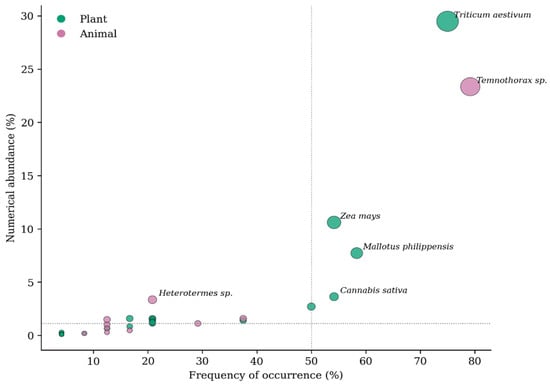
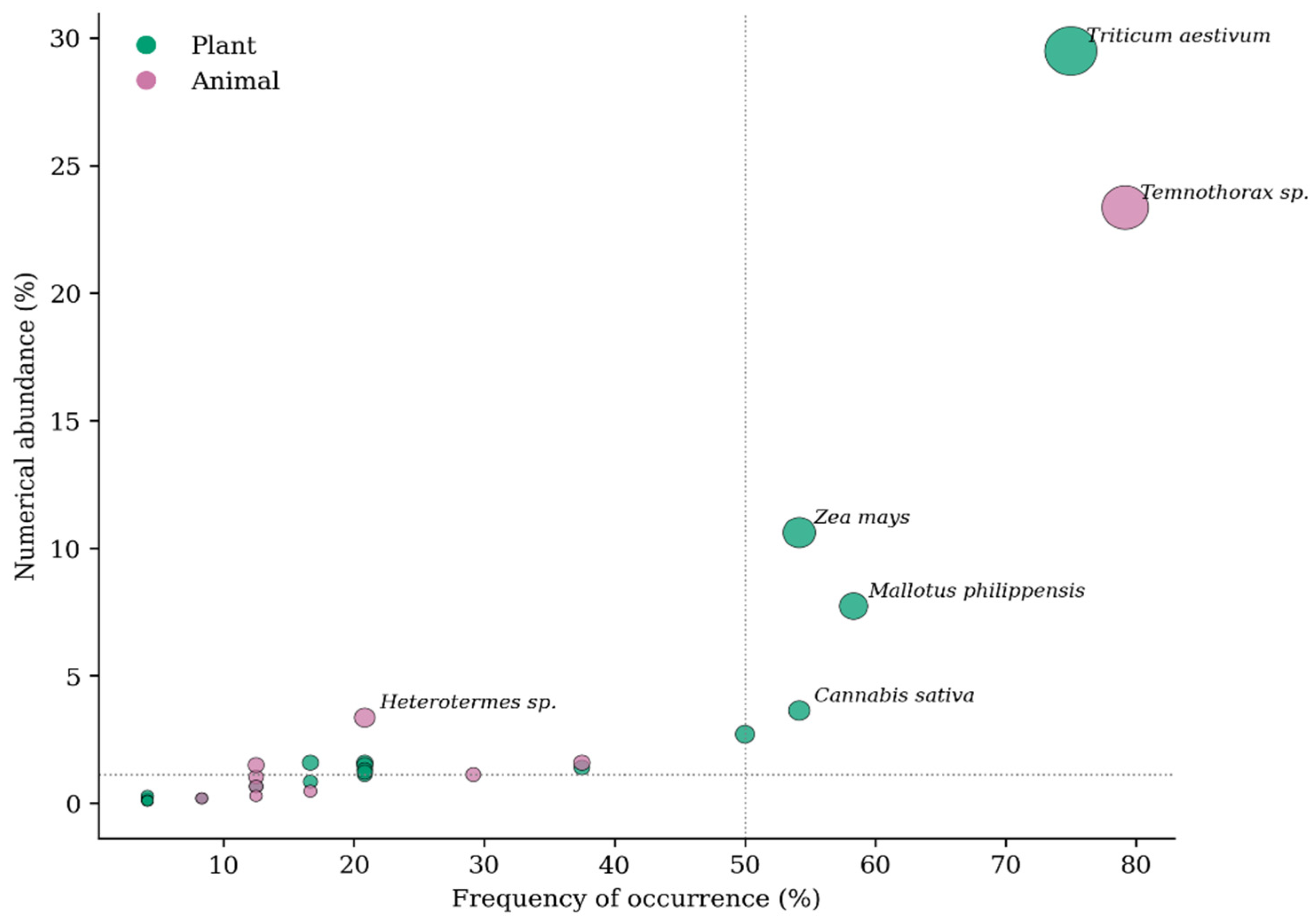
The frequency–abundance plot identified wheat (Triticum aestivum; %FO = 75.0) and ants (Temnothorax sp.; %FO = 79.2) as the most recurrent high-abundance food items (Figure 6). Maize (Zea mays), Red Kamla (Mallotus philippensis), and Hemp (Cannabis sativa) occurred at intermediate frequencies, whereas most other taxa were recorded in relatively few crops and contributed little by number. This pattern indicates a taxonomically broad but strongly uneven winter diet: many food taxa were recorded, but numerical intake was concentrated in a small number of recurrent resources. Because environmental resource abundance was not quantified, the observed dominance cannot be interpreted as dietary preference independent of availability.
Figure 6.
Frequency of occurrence (%FO) plotted against numerical abundance (%N) for plant and animal food items recovered from Black Francolin crops. Bubble size is proportional to the number of recovered items. Grit is excluded because it is not food taxon.
4. Discussion
This study examined the winter diet ecology of the Black Francolin in Totali Public Game Reserve, Pakistan. Crop contents comprised plants (63.9%), insects (32.8%), and grit (3.3%). Black Francolins are predominantly omnivorous, relying heavily on plant material and supplementing it with a diverse range of insects. They are opportunistic feeders that consume a broad range of available foods [19,32,33,34]. Seeds from various herbs were the most important food source, as they were found in every crop examined. However, insects also contributed substantially to the diet. These findings are consistent with the report by BirdLife International that this species consumes a wide variety of plants and insects [35]. These results differ from those of [36], who found that Black Francolins depend more heavily on animal matter than on plant matter. These differences may reflect variation in habitat and food availability between the two study sites, because seeds and plants may be more consistently available than invertebrate prey in Totali Public Game Reserve.
The plant families Poaceae (IV = 57.05%) and Fabaceae (IV = 25.74%) dominated the diet, with wheat, maize, and other grass seeds being the most abundant plant items recovered from the crop contents (Figure 5). These findings align with those of [37], who found that seeds from Rubus ellipticus and cultivated crops (Triticum vulgare, Hordeum vulgare, and Echinochloa frumentacea) constituted an important part of the diet of Black Francolins. The dominance of wheat in the crop contents reflected the seasonal cropping calendar of the study area. This pattern could be associated with birds tracking grain availability rather than foraging across the landscape. This pattern parallels findings from other agroecosystem studies, where cultivated cereals form a substantial component of francolin diets [17]. In contrast, Ref. [19] reported that the families Graminae, Solanaceae, and Boraginaceae constituted an important part of the Black Francolin diet in Cyprus. Along with the plant-versus-animal differences noted above relative to [36], these cross-site differences are consistent with habitat-driven variation in plant community composition rather than general dietary flexibility. Grasslands and agricultural scrublands in the study area likely support high Poaceae seed availability. Plant food items contributed more to the diet of this species than animal food items, a finding supported by [19,34]. However, the number of identifiable food species in the present study was lower than that reported from Lal Suhanra National Park, where 35 plant species and 16 animal species were recorded [33], and was also lower than in other comparable studies [38,39].
The proximity of crop fields to field margins, hedgerows, and scrub cover may be associated with differences in diet breadth and the balance between plant and animal food items recorded in the diet. Field margins and uncultivated edges are often associated with higher arthropod abundance and wild-seed diversity in other agroecosystem studies [5,20,36], which could contribute to the patterns observed here. However, [32,38] also reported reptiles in the diet of francolins. Ants (Temnothorax sp., IV = 70.82%) dominated the animal component, consistent with reports that ants, termites, beetles, grasshoppers, and insect larvae are common dietary components of this species [19,40]. Variation in agricultural practices, such as crop types, harvesting, irrigation, and pesticide use, could be associated with finer-scale variation in food availability than habitat alone [41,42]. Because sampling was seasonal, these drivers may vary over time rather than represent static habitat associations. Seasonal flexibility in diet composition is consistent with the foraging strategy previously described for Black Francolins [39]. This flexibility, together with the habitat-driven variation discussed above, is consistent with the view that cultivated cereals serve as a primary dietary resource for francolins in different habitats [43]. Similarly, [34] reported that these birds developed adaptations to a wide variety of food items over a long evolutionary period. This allows them to use both plant and animal resources effectively to meet their metabolic needs [44].
Morphometric measurements showed that body mass (293.5 ± 60.6; mean ± SD), crop mass (16.5 ± 5.5; mean ± SD), and dry food mass (5.6 ± 2.1; mean ± SD) did not differ significantly between male and female Black Francolins. The overall body size of the Black Francolin requires greater energetic intake for movement, territorial defence, and reproduction [34,45]. Many galliforms use an enlarged crop to store food when it is plentiful [46]. Ref. [21] found some variation in food consumption between sexes; when comparing the mass of wild food items consumed, females ate a greater quantity of wild seeds than males. However, we did not detect a significant difference in the number of seeds between sexes (Figure 3).
Hunter-harvested specimens can generate useful ecological data while underlining the need to keep harvest within sustainable limits [47]. Similar studies have been reported for other game species, where systematic sampling of legally harvested individuals has provided critical information on age structure, reproductive status, and disease prevalence [48]. These findings support broader evidence that well-regulated hunting regimes can function as structured monitoring programs [49]. They can transform routine harvests into an efficient way to gather data on population trends and health [50]. However, the ecological value of such data depends on keeping harvest levels within scientifically defined quotas [8,23]. When harvests exceed sustainable limits, the same monitoring system can mask population declines rather than detect them [51,52]. Integrating hunter-reported data with independent surveys further strengthens inference, showing that regulated harvests can complement, but not replace, conventional wildlife monitoring [53].
This study has several limitations that require cautious interpretation. Diet was assessed only from crop contents of hunter-harvested birds, which reflect recent intake but not necessarily long-term patterns. Sampling relied on hunted individuals rather than random sampling of the reserve population. These results should be interpreted as reflecting the diets of birds that were hunted, not necessarily the full range of dietary patterns within the population. Hunting typically occurs at specific times and in accessible locations, meaning birds from certain microhabitats in the reserve may be underrepresented, while those from more accessible locations may be overrepresented. Hunting may also selectively remove certain age classes, sexes, and behavioural phenotypes, all of which can skew the sample away from broader population-level dietary patterns. Furthermore, sampling was limited to one protected area, and diet likely varies across Pakistan’s agricultural, scrubland, forest, and mountain habitats; multi-site studies would better capture range-wide feeding ecology. As agricultural intensification and climate change continue, future studies should also evaluate how pesticide use, land-use change, fragmentation, and shifting weather patterns affect food availability for francolins.
5. Conclusions
Crop-content analysis of 24 hunter-harvested Black Francolins collected during the November-January hunting periods of 2022–2024 documented a mixed winter diet comprising 33 identifiable plant and animal taxa. Wheat and ants were the most recurrent high-abundance food items, while Poaceae, Fabaceae, and Formicidae dominated family-level importance values. The low standardized niche breadth (B_sta = 0.16), together with low evenness, indicates that winter intake was concentrated in a limited subset of resources despite the number of taxa recorded. Body mass, crop mass, and dry food mass did not differ significantly between sexes; the positive correlations of body mass with crop and dry food mass are interpreted descriptively. Because the study used a small harvest-dependent sample from one reserve landscape and did not quantify environmental resource availability, the findings should not be generalized to year-round or species-wide dietary patterns. They provide baseline, site-specific information for future seasonal, multi-site, and resource-availability studies.
Author Contributions
A.U.: Formal analysis, Investigation, Methodology, Visualization, and Writing—original draft. S.S.: Conceptualization, Supervision, Methodology, Funding acquisition, Project administration, and Writing—review & editing. S.A.: Data curation, Formal analysis, Investigation, Visualization, and Writing—review & editing. M.H.G.K.: Data curation, Formal analysis, Investigation, Visualization, and Writing—review & editing. P.R.D.l.R.-E. and T.U.: Resources, Funding acquisition, Formal analysis, Validation, and Writing—review & editing. F.B.: Conceptualization, Supervision, Methodology, Funding acquisition, Project administration, and Writing—review & editing. All authors have read and agreed to the published version of the manuscript.
Funding
This study was financially supported by Project MECESUP UCT 0804.
Institutional Review Board Statement
All research procedures were approved by the Institutional Ethics Committee of the Animal Ethics and Welfare Committee of the Department of Zoology, Abdul Wali Khan University, Mardan, Pakistan (PK) (approval No. AWK-ZOO24906) on 21 December 2022, and all methods were carried out according to the Code of Practice for the Care and Handling of Animals Guidelines.
Informed Consent Statement
Not applicable.
Data Availability Statement
The original contributions presented in this study are included in the article. Further inquiries can be directed to the corresponding authors.
Acknowledgments
Our research team sincerely thanks the District Forest Officer (Buner Wildlife Division) and staff for their valuable support. We especially appreciate the experts at Totali Game Reserve, District Buner, who provided relevant information during site visits.
Conflicts of Interest
The authors declare no conflicts of interest.
References
- Mishra, A.; Prateek; Mishra, H.; Kumar, V.; Kumar, A. Foraging Behaviour and Diet Composition of Grey Francolin, Ortygornis Pondicerianus, during Breeding and Non-Breeding Seasons. Avian Biol. Res. 2026, 19, 22–31. [Google Scholar] [CrossRef] [Scilit]
- Sato-Bajracharya, S.; Blaalid, R.; Østnes, J.E.; Kleven, O.; Davey, M.; Ingvaldsen, E.W.; Nilsen, E.B. Between Birch and Berries: Seasonal Dietary Niche Partitioning among Sympatric Alpine Herbivorous Birds. Oikos 2026, 2026, e12437. [Google Scholar] [CrossRef] [Scilit]
- Miller, C.V.; Pittman, M. The Diet of Early Birds Based on Modern and Fossil Evidence and a New Framework for Its Reconstruction. Biol. Rev. 2021, 96, 2058–2112. [Google Scholar] [CrossRef] [Scilit] [PubMed]
- Khalil, S.; Anwar, M.; Hussain, T.; Rafay, M.; Ashraf, I.; Abdullah, M.; Safeer, M.; Rasool, A. Food Composition of the Grey Francolin Francolinus pondicerianus in the Salt Range, Punjab, Pakistan. Podoces 2016, 11, 13–20. [Google Scholar]
- Khan, A.R.; Khan, A.A.; Iqbal, J.; Khan, A.M.; Hassan, Z.; Aatif, H.M.; Shahzad, U. Impact of Feeding Habits on Population Ecology and Breeding Biology of Grey Francolin (Francolinus pondicerianus) in District Bhakkar, Punjab, Pakistan. Pak. J. Zool. 2021, 53, 2351. [Google Scholar] [CrossRef] [Scilit]
- Mariyappan, M.; Rajendran, M.; Velu, S.; Johnson, A.D.; Dinesh, G.; Solaimuthu, K.; Kaliyappan, M.; Sankar, M. Ecological Role and Ecosystem Services of Birds: A Review. Int. J. Environ. Clim. Change 2023, 13, 76–87. [Google Scholar] [CrossRef] [Scilit]
- Gulka, J.; Ronconi, R.A.; Davoren, G.K. Spatial Segregation Contrasting Dietary Overlap: Niche Partitioning of Two Sympatric Alcids during Shifting Resource Availability. Mar. Biol. 2019, 166, 115. [Google Scholar] [CrossRef] [Scilit]
- Mustin, K.; Newey, S.; Irvine, J.; Arroyo, B.; Redpath, S. Biodiversity Impacts of Game Bird Hunting and Associated Management Practices in Europe and North America; RSPB Report; The James Hutton Institute: Scotland, UK, 2011. [Google Scholar]
- Chatterjee, S.; Basu, P. Food Preferences Determine Habitat Selection at Multiple Scales: Implication for Bird Conservation in Tropical Forests. Anim. Conserv. 2018, 21, 332–342. [Google Scholar] [CrossRef] [Scilit]
- Ullah, A.; Shams, S.; Ayaz, S.; Ibáñez-Arancibia, E.; Siraj, U.; De los Rios-Escalante, P.R.; Badshah, F. Influence of Nesting Habitat and Nest Emplacement on the Breeding Success of the Black Francolin (Francolinus francolinus, Phasianidae): A Case Study from Pakistan. Birds 2025, 6, 16. [Google Scholar] [CrossRef] [Scilit]
- Ullah, A.; Shams, S.; Ayaz, S.; Ibáñez Arancibia, E.; Siraj, U.; De los Rios-Escalante, P.R.; Ullah, T.; Badshah, F. Ecological and Population Dynamics of Black and Grey Francolin (Phasianidae) in Totali Game Reserve, Pakistan. Birds 2025, 6, 26. [Google Scholar] [CrossRef] [Scilit]
- Wahab, S.A.M.A. Black Francolin (Francolinus francolinus) in Iraq: A Review. J. Med. Life Sci. 2025, 7, 482–492. [Google Scholar] [CrossRef] [Scilit]
- Khalil, S.; Anwar, M.; Hussain, I.; Hussain, I. 17. Population Estimation of Grey Francolin (Francolinus pondicerianus) in Salt Range, Punjab, Pakistan. Pure Appl. Biol. (PAB) 2021, 4, 584–596. [Google Scholar]
- Mahmood, S.; Mahmood, T.; Rais, M.; Zia Qureshi, I.; Nadeem, M.S. A Comparative Study on the Populations and Habitats of the Grey Francolin Francolinus pondicerianus and the Black Francolin Francolinus francolinus in Lehri Nature Park, Punjab, Pakistan. Podoces 2010, 5, 42–53. [Google Scholar]
- Khan, M.F.; Awan, M.S.; Nayyer, A.; Mehmood, K.; Khattak, M.N.K. A Comparative Study on the Population and Habitats of the Grey Francolin Francolinus pondicerianus and Black Francolin Francolinus francolinus in Mang Game Reserve, Haripur, Pakistan. J. Anim. Plant Sci. 2015, 25, 101–107. [Google Scholar]
- Basıt, A.; Anwar, M.A.; Rakha, B.A.; Munawar, N.; Akhter, A. Population density of black francolin (Francolinus francolinus L.) In kala chitta range, pakistan. J. Anim. Plant Sci. 2021, 31, 1537. [Google Scholar] [CrossRef] [Scilit]
- Khan, W.A. Studies on the Comparative Ecology of the South Persian Black Partridge, Francolinus francolinus Henrici, and the Northern Grey Partridge, Francolinus pondicerianus interpositus, in lal Suhanra National Park, Bahawalpur, Punjab, Pakistan. Doctoral Dissertation, Pir Mehr Ali Shah Arid Agriculture University, Rawalpindi, Pakistan, 2010. [Google Scholar]
- Khan, W.A.; Mian, A. Comparative Population Biology of Black (Francolinus francolinus) and Grey (F. Pondicerianus) Francolins Under Lal Suhanra National Park (Pakistan) Conditions. Pak. J. Zool. 2013, 45, 949–958. [Google Scholar]
- Paralikidis, N.; Papageorgiou, N.S.; Tsiompanoudis, A.; Konstantinou, L.; Christakis, T. Foods of Hunter-Killed Black Francolins (Francolinus francolinus) in Cyprus. Eur. J. Wildl. Res. 2009, 56, 89–93. [Google Scholar] [CrossRef] [Scilit]
- Abdullah, M.; Shehzad, M.; Ali, A.; Ahmad, T.; Majid, A.; Khan, M.T. Distribution, Diet, and Conservation Threats of the Black Francolin (Francolinus francolinus) in Southern Khyber Pakhtunkhwa, Pakistan. Preprint 2024. [Google Scholar] [CrossRef] [Scilit]
- Owolabi, O.C.; Akinpelu, A.I.; Owolabi, K.E. Analysis of the Effects of Feeding Ecology of Double-Spurred Francolin (Pternitis bicalcaratus Linn.) on Crop Production in Ekiti State, Nigeria. J. Agric. Ecol. Res. Int. 2020, 21, 37–47. [Google Scholar] [CrossRef] [Scilit]
- Harriman, N.A. Flora of Pakistan. Econ. Bot. 2004, 58, 742. [Google Scholar] [CrossRef] [Scilit]
- Richards, O.; Davies, R. Imms’ General Textbook of Entomology: Volume 2: Classification and Biology; Springer Science & Business Media: New York, NY, USA, 2013; ISBN 94-017-0472-4. [Google Scholar]
- Yousuf, M.; Siddiqui, E.M. A Guide to Insect Orders; Department of Entomology, University of Agriculture: Faisalabad, Pakistan, 1989. [Google Scholar]
- Rosenberg, K.V. Approaches to Avian Diet Analysis. Stud. Avian Biol. 1990, 13, 80. [Google Scholar]
- Shannon, C.E. A Mathematical Theory of Communication. Bell Syst. Tech. J. 1948, 27, 379–423. [Google Scholar] [CrossRef] [Scilit]
- Simpson, E.; Simpson, E.H. Measurement of Diversity. Nature 1949, 163, 10–1038. [Google Scholar] [CrossRef] [Scilit]
- Pielou, E.C. The Measurement of Diversity in Different Types of Biological Collections. J. Theor. Biol. 1966, 13, 131–144, Correction in J. Theor. Biol. 1967, 15, 177. [Google Scholar] [CrossRef] [Scilit]
- Levins, R. Evolution in Changing Environments: Some Theoretical Explorations; Princeton University Press: Princeton, NJ, USA, 1968. [Google Scholar]
- Amundsen, P.; Gabler, H.; Staldvik, F. A New Approach to Graphical Analysis of Feeding Strategy from Stomach Contents Data—Modification of the Costello (1990) Method. J. Fish Biol. 1996, 48, 607–614. [Google Scholar] [CrossRef] [Scilit]
- Costello, M. Predator Feeding Strategy and Prey Importance: A New Graphical Analysis; CABI Digital Library: Oxfordshire, UK, 1990. [Google Scholar]
- Ali, S.; Ripley, S.D. Handbook of the Birds of India and Pakistan, Compact ed.; Oxford University Press and BNHS: Mumbai, India, 1968. [Google Scholar]
- Baskaran, S.T. Sighting of Dusky Horned Owl. Newsl. Birdwatchers 1992, 32, 10. [Google Scholar]
- Khan, W.A.; Mian, A. Food of Grey Francolin (Francolinus pondicerianus Interpositus) with Remarks on Competition with Black Francolin (Francolinus francolinus Henrici) in Lal Suhanra National Park (Pakistan). Pak. J. Zool. 2012, 44, 1099–1109. [Google Scholar]
- BirdLife International. Threatened Birds of the World; Lynx Editions, BirdLife International: Barcelona Spain; Cambridge, UK, 2000. [Google Scholar]
- Dement’ev, G.P.; Birron, A.; Cole, Z. Birds of the Soviet Union. (Ptitsy Sovetskogo Soyuza); Israel Program for Scientific Translations: Jerusalem, Israel, 1966. [Google Scholar]
- Negi, P.; Lakhera, P. Food of Black Francolin (Francolinus francolinus Asiae) in Garhwal Himalaya, Uttarakhand. NeBIO 2016, 7, 93–95. [Google Scholar]
- Chaudhry, A.; Bhatti, M. Biology of Grey Francolin (Francolinus pondicerianus) in the Central Punjab Plains. In Proceedings of the 12th Pakistan Congress of Zoology; Zoological Society of Pakistan: Lahore, Pakistan, 1992; pp. 161–162. [Google Scholar]
- Faruqi, S.A.; Bump, G.; Nanda, P.; Christensen, G.C. A Study of the Seasonal Food of the Black Francolin {Francolinus francolinus (Linnaeus)}, the Grey Francolin {Francolinus pondicerianus (Gmelin)}, and the Commomn Sandgrouse {Pterocles Exustus (Temminck)} in India and Pakistan. J. Bombay Nat. Hist. Soc. 1960, 57, 354–361. [Google Scholar]
- Wijeyamohan, S.; Vandercone, R.; Santiapillai, C. Observations on the Grey Francolin (Francolin Pondicerianus Ceylonensis Whistler) in the Vicinity of the Giant’s Tank, Sri Lanka. PQF News 2003, 19, 11–14. [Google Scholar]
- De Leo, G.A.; Focardi, S.; Gatto, M.; Cattadori, I.M. The Decline of the Grey Partridge in Europe: Comparing Demographies in Traditional and Modern Agricultural Landscapes. Ecol. Model. 2004, 177, 313–335. [Google Scholar] [CrossRef] [Scilit]
- Chamberlain, D.E.; Fuller, R.J.; Bunce, R.G.H.; Duckworth, J.; Shrubb, M. Changes in the Abundance of Farmland Birds in Relation to the Timing of Agricultural Intensification in England and Wales. J. Appl. Ecol. 2000, 37, 771–788. [Google Scholar] [CrossRef] [Scilit]
- Jansen, R.; Crowe, T. Food Preferences of Swainson’s Spurfowl, Pternistis Swainsonii, in a Diverse Agricultural Landscape. S. Afr. J. Wildl. Res.-24-Mon. Delayed Open Access 2006, 36, 113–121. [Google Scholar]
- Khan, W.A.; Mian, A. Food of Black Francolin (Francolinus francolinus Henrici) in Lal Suhanra National Park, Pakistan. Pak. J. Zool. 2011, 43, 825. [Google Scholar]
- Forcina, G.; Clavero, M.; Meister, M.; Barilaro, C.; Guerrini, M.; Barbanera, F. Introduced and Extinct: Neglected Archival Specimens Shed New Light on the Historical Biogeography of an Iconic Avian Species in the Mediterranean. Integr. Zool. 2024, 19, 887–897. [Google Scholar] [CrossRef] [Scilit] [PubMed]
- Stidham, T.A.; Townsend, K.B.; Holroyd, P.A. Evidence for Wide Dispersal in a Stem Galliform Clade from a New Small-Sized Middle Eocene Pangalliform (Aves: Paraortygidae) from the Uinta Basin of Utah (USA). Diversity 2020, 12, 90. [Google Scholar] [CrossRef] [Scilit]
- Caro, J.; Delibes-Mateos, M.; Vinuela, J.; López-Lucero, J.F.; Arroyo, B. Improving Decision-Making for Sustainable Hunting: Regulatory Mechanisms of Hunting Pressure in Red-Legged Partridge. Sustain. Sci. 2015, 10, 479–489. [Google Scholar] [CrossRef] [Scilit]
- Paudel, P.K.; Shrestha, D.; Deshar, R. Global Patterns and Drivers of Wildlife Hunting and Trade: A Review. Ecol. Front. 2025, 45, 1147–1156. [Google Scholar] [CrossRef] [Scilit]
- Di Minin, E.; Clements, H.S.; Correia, R.A.; Cortes-Capano, G.; Fink, C.; Haukka, A.; Hausmann, A.; Kulkarni, R.; Bradshaw, C.J. Consequences of Recreational Hunting for Biodiversity Conservation and Livelihoods. One Earth 2021, 4, 238–253. [Google Scholar] [CrossRef] [Scilit]
- Mukaku Kazadi, G.; Mpanda Mukenza, M.; Kikuni Tchowa, J.; Malaisse, F.; N’Tambwe Nghonda, D.-D.; Bogaert, J.; Useni Sikuzani, Y. Hunters’ Perceptions and Protected-Area Governance: Wildlife Decline and Resource-Use Management in the Lomami Landscape, DR Congo. Conservation 2025, 5, 49. [Google Scholar] [CrossRef] [Scilit]
- Heffelfinger, J.R.; Geist, V.; Wishart, W. The Role of Hunting in North American Wildlife Conservation. Int. J. Environ. Stud. 2013, 70, 399–413. [Google Scholar] [CrossRef] [Scilit]
- Parsons, A.W.; Wikelski, M.; von Wolff, B.K.; Dodel, J.; Kays, R. Intensive Hunting Changes Human-Wildlife Relationships. PeerJ 2022, 10, e14159. [Google Scholar] [CrossRef] [Scilit] [PubMed]
- Moller, H.; Berkes, F.; Lyver, P.O.; Kislalioglu, M. Combining Science and Traditional Ecological Knowledge: Monitoring Populations for Co-Management. Ecol. Soc. 2004, 9, 2. [Google Scholar] [CrossRef] [Scilit]

Disclaimer/Publisher’s Note: The statements, opinions and data contained in all publications are solely those of the individual author(s) and contributor(s) and not of MDPI and/or the editor(s). MDPI and/or the editor(s) disclaim responsibility for any injury to people or property resulting from any ideas, methods, instructions or products referred to in the content. |
© 2026 by the authors. Licensee MDPI, Basel, Switzerland. This article is an open access article distributed under the terms and conditions of the Creative Commons Attribution (CC BY) license.