


Abstract
This study examines the relationships among international gastronomic recognition, gastronomy tourism, gastronomic entrepreneurship, and perceived territorial development in Manabí, Ecuador, designated in 2025 as a World Region of Gastronomy 2026. A quantitative, cross-sectional, correlational design was employed using structured surveys administered to 312 stakeholders from the regional gastronomic ecosystem, including business owners, sector employees, tourists, and residents. Data were analyzed using partial least squares structural equation modeling (PLS-SEM), including assessment of the measurement and structural models. All three predictors showed positive and statistically significant associations with perceived territorial development. Gastronomy tourism presented the numerically largest structural coefficient (β = 0.42), followed by international gastronomic recognition (β = 0.31) and gastronomic entrepreneurship (β = 0.27). The model explained 58% of the variance in perceived territorial development (R2 = 0.58) and showed positive blindfolding-based predictive relevance (Q2 = 0.31). The findings distinguish the complementary roles of tourism activation, symbolic recognition, and locally embedded entrepreneurial capacity in stakeholders’ territorial-development perceptions. The study extends evidence from an emerging Latin American gastronomic destination while recognizing the cross-sectional design, heterogeneous convenience sample, and perceptual nature of the measures.
1. Introduction
Over recent decades, gastronomy has evolved from a dimension of food consumption into a strategic resource for tourism and territorial development. Local cuisine and culinary experiences can differentiate destinations, enrich visitor experiences, preserve cultural heritage, and stimulate economic activity through connections among producers, restaurants, tourism services, and local communities (Richards, 2015; Ellis et al., 2018). Recent research likewise emphasizes the role of gastronomy tourism in destination development, cultural identity, and more sustainable relationships between visitors and host territories (Moura et al., 2025; Sánchez-Sánchez et al., 2025). Gastronomy can therefore be understood as a territorially embedded system of products, practices, knowledge, meanings, and economic relationships.
From a destination perspective, the value of gastronomy is strengthened when distinctive local food is integrated into coherent experiences and territorial narratives. Place-branding research shows that gastro-cultural resources can reinforce destination identity when local products, cultural meanings, tourism services, and stakeholder contributions are effectively combined (Kladou & Trihas, 2022; Martins-Rodal & Patiño Romarís, 2025). Such integration can enhance destination visibility, perceptions of authenticity, and visitors’ tangible and symbolic connections with place, particularly in emerging destinations seeking differentiation in competitive tourism markets.
International gastronomic recognition adds a symbolic and positioning-related dimension to this process. Awards and designations can provide external validation, increase visibility, and reinforce destination reputation among tourists, institutions, investors, and other stakeholders (Anholt, 2007; Zhu et al., 2024). From a legitimacy perspective, external recognition may function as symbolic endorsement that strengthens the perceived credibility and distinctiveness of a territory (Suchman, 1995). In this study, legitimacy is used only as an interpretive lens rather than as an empirically measured construct. The territorial value associated with recognition is strengthened when increased visibility is translated into accessible tourism experiences, marketable products, business opportunities, and locally embedded value chains. Entrepreneurial capabilities, professional skills, and stakeholder coordination are therefore important for mobilizing gastronomic resources (Fontefrancesco et al., 2023), while tourism entrepreneurs can contribute to diversification, cultural preservation, innovation, and participatory destination development (Stylianou et al., 2025; Berry & Yadav, 2026).
These relationships are particularly relevant from sustainable and inclusive destination-development perspectives. Gastronomy-based tourism can support local sourcing, small enterprises, culinary knowledge, and broader participation in tourism value creation. Such outcomes are strengthened through coordination among public institutions, businesses, workers, communities, and visitors. A multi-stakeholder perspective is therefore useful because these groups occupy different positions within the gastronomic ecosystem: entrepreneurs and workers participate directly in production and commercialization, tourists shape demand and external perceptions, and residents experience the wider economic, social, and cultural context of destination development.
Despite the growing literature on gastronomy tourism, existing research has largely focused on tourist motivations, satisfaction, destination image, authenticity, and revisit intentions (Ellis et al., 2018; Zhu et al., 2024; Moura et al., 2025). Gastronomy tourism, destination branding and recognition, entrepreneurship, and cultural identity have also frequently been examined as relatively separate phenomena. Consequently, less attention has been paid to whether international gastronomic recognition, gastronomy tourism, and gastronomic entrepreneurship provide distinct explanatory information about perceived territorial development when examined simultaneously. This gap is especially relevant in emerging Latin American destinations, where institutional conditions, entrepreneurial ecosystems, and levels of international tourism consolidation may differ from those of more established settings.
Manabí, on Ecuador’s Pacific coast, provides a relevant context for examining these relationships. Its culinary identity is closely connected to agricultural and marine products, traditional preparation methods, community knowledge, and practices transmitted across generations. In 2025, the International Institute of Gastronomy, Culture, Arts and Tourism (IGCAT, 2025) awarded Manabí the title of World Region of Gastronomy 2026. The designation provides a timely setting for examining stakeholder evaluations during an early stage of international gastronomic positioning. Accordingly, the study focuses on how actors assess the economic, social, cultural, and sustainability-related territorial relevance of gastronomy rather than on objectively measured regional transformation.
This study therefore aims to analyze the associations of international gastronomic recognition, gastronomy tourism, and gastronomic entrepreneurship with perceived territorial development in Manabí. The three dimensions are specified as direct and parallel predictors, allowing their relative associations to be examined without assuming mediation, temporal ordering, or a causal sequence. The study addresses the following research question:
How are international gastronomic recognition, gastronomy tourism, and gastronomic entrepreneurship associated with perceived territorial development in an emerging Latin American destination?
To answer this question, a quantitative, cross-sectional, correlational design was applied to data from 312 gastronomic business owners, sector employees, tourists, and local residents. The relationships were analyzed using partial least squares structural equation modeling (PLS-SEM), consistent with the study’s variance-oriented objective of estimating the independent association of each predictor with perceived territorial development while accounting for the others.
The study makes a primarily integrative theoretical contribution to gastronomy-led destination-development research. It distinguishes three non-equivalent functions within the gastronomic ecosystem: international recognition as symbolic validation and external positioning; gastronomy tourism as experiential and demand-related activation; and gastronomic entrepreneurship as locally embedded productive capacity. Their simultaneous estimation assesses whether each contributes distinct explanatory information to stakeholder perceptions of territorial development rather than treating visibility, tourism activity, and productive capacity as interchangeable expressions of a single process. The emerging Latin American setting and inclusion of several stakeholder categories provide complementary empirical extensions beyond the established destinations and tourist-centered perspectives that predominate in the literature.
2. Theoretical Background
Gastronomy-led destination development involves cultural resources, tourism experiences, entrepreneurial activity, institutional recognition, and local economic relationships. Gastronomy therefore connects producers, businesses, workers, residents, public institutions, and tourists through place-based systems of production, exchange, cultural representation, and value creation.
This study draws on three complementary bodies of literature: destination branding and legitimacy, gastronomy tourism, and gastronomic entrepreneurship. These perspectives explain how international gastronomic recognition, tourism activation, and entrepreneurship may each be associated with stakeholders’ perceptions of territorial development. The constructs are examined as direct and parallel predictors rather than as stages in a sequential causal process.
2.1. Gastronomy and Perceived Territorial Development
Territorial development is a place-based and multidimensional process shaped by regional resources, capabilities, institutions, and identities (Boisier, 2001; Vázquez-Barquero, 2007). It encompasses economic dynamism, employment, community well-being, social cohesion, cultural identity, and sustainable resource use (Pike et al., 2007).
In this study, territorial development is operationalized as perceived territorial development (PTD). The construct captures stakeholders’ assessments of how gastronomy is associated with economic activity, employment opportunities, community development, territorial identity, and sustainability in Manabí. It therefore represents perceived territorial conditions rather than objectively observed changes in income, employment, business creation, or tourism flows.
PTD also operates at a broader analytical level than gastronomy tourism. Whereas gastronomy tourism concerns the visitor-related activation of culinary resources, PTD reflects stakeholders’ broader evaluation of gastronomy as a cultural, productive, entrepreneurial, and tourism resource within the territory.
Gastronomy contributes to this broader territorial perspective by connecting cultural heritage with production, tourism, and local consumption. Local cuisine constitutes a territorially embedded system of products, culinary knowledge, preparation techniques, symbolic meanings, commercial activities, and social relationships (Bessière, 1998; Hall & Sharples, 2003). Food practices also transmit knowledge and meanings across generations and reinforce collective belonging (Fischler, 1988; Poulain, 2002; Montanari, 2006). Their integration into tourism can strengthen destination identity and perceptions of authenticity when local traditions and community interests are incorporated into planning and management (Cheng et al., 2025; Everett & Aitchison, 2008; Sánchez-Sánchez et al., 2025).
Gastronomy is also linked to sustainability through local sourcing, regional products, shorter supply relationships, and preservation of culinary knowledge (Long et al., 2024; Wani et al., 2024). These contributions are strengthened when tourism activities broaden participation in value creation and retain benefits within the territory. Gastronomy thus provides the common territorial foundation for the three explanatory dimensions examined in the model (Orea-Giner et al., 2026).
2.2. International Gastronomic Recognition and Perceived Territorial Development
International recognition can influence how destinations are positioned and evaluated in external markets. Awards, designations, and certifications may increase visibility, strengthen reputation, and communicate distinctive attributes to tourists, institutions, investors, and other stakeholders (Anholt, 2007). Within destination branding, such recognition can reinforce territorial narratives when local identity, visitor experiences, and stakeholder participation are effectively integrated (Kavaratzis & Ashworth, 2005; Kladou & Trihas, 2022).
Legitimacy theory provides an interpretive perspective for this process. Legitimacy refers to the perception that an entity or positioning strategy is appropriate and credible within socially constructed systems of values and expectations (Suchman, 1995). Applied to destinations, international gastronomic recognition can therefore function as an external endorsement of the quality, authenticity, and cultural relevance of local culinary resources.
In the present study, territorial legitimacy is used only as an interpretive lens. The empirical construct is international gastronomic recognition (IGR), which captures stakeholders’ evaluations of the designation’s relevance to Manabí’s visibility, reputation, external positioning, and capacity to attract attention. It does not measure prior awareness, familiarity, or exposure to the designation; rather, it reflects evaluations of the recognition as presented in the survey.
Stakeholders may associate such recognition with tourism opportunities, institutional attention, investment prospects, and stronger gastronomic positioning, particularly during an early stage of international destination consolidation. Accordingly:
H1.
International gastronomic recognition is positively associated with perceived territorial development.
2.3. Gastronomy Tourism and Perceived Territorial Development
Gastronomy tourism refers to travel experiences in which food, culinary practices, local products, and food-related cultural expressions constitute meaningful components of the visitor experience (Ellis et al., 2018; Hjalager, 2002). Here, it is conceptualized as the perceived tourism-related activation of Manabí’s culinary resources through visitor attraction, tourism interest, destination differentiation, culinary experiences, and tourism-related consumption. This distinguishes the construct from the broader territorial conditions captured by PTD.
Culinary experiences can differentiate destinations by offering sensory and symbolic encounters rooted in place. Authentic local food may strengthen emotional connections, enhance the value of the visit, and support place-sensitive forms of tourism consumption (Sims, 2009). Gastronomy tourism can also connect visitor expenditure with restaurants, markets, accommodation, transportation, food producers, and cultural events, thereby supporting local value chains and opportunities for small businesses and workers (Moura et al., 2025).
Its territorial contribution is strengthened when tourism demand is connected to locally embedded production and service systems. Gastronomy tourism can also increase the visibility of traditional knowledge and create incentives for preserving culinary practices, while inclusive destination development benefits from coordination among enterprises, institutions, producers, workers, and residents.
Because gastronomy tourism combines destination attractiveness, visitor activity, local consumption, and cultural valorization, stakeholders are expected to associate it with broader territorial development:
H2.
Gastronomy tourism is positively associated with perceived territorial development.
2.4. Gastronomic Entrepreneurship and Perceived Territorial Development
Gastronomic entrepreneurship connects territorial resources with marketable products, services, and experiences. From an innovation perspective, it can be understood as the creative recombination of cultural, productive, and symbolic resources to generate new forms of economic activity (Schumpeter, 1934).
Its relevance extends beyond individual business creation. Entrepreneurs can link visitor demand with agricultural production, fishing, food processing, accommodation, transportation, cultural activities, and other locally embedded services. Through these connections, entrepreneurial activity may support business diversification, employment, innovation, and the retention of tourism value within the region.
Destinations’ ability to capitalize on gastronomic resources depends partly on the knowledge, skills, and coordination capabilities of entrepreneurs and other local actors (Fontefrancesco et al., 2023). Gastronomic entrepreneurship can therefore help transform cultural resources into accessible experiences and commercially viable offerings while supporting innovation around distinctive ingredients, techniques, and narratives.
Small-scale gastronomic entrepreneurship may also broaden participation by families, young people, rural producers, and community-based organizations when supported by training, financing, markets, infrastructure, and institutional mechanisms. Stakeholders may consequently perceive stronger entrepreneurial activity as enhancing the region’s capacity to generate employment, diversify the local economy, and convert culinary heritage into sustained territorial opportunities.
Accordingly:
H3.
Gastronomic entrepreneurship is positively associated with perceived territorial development.
2.5. Integrated Conceptual Model
The model integrates international gastronomic recognition, gastronomy tourism, and gastronomic entrepreneurship as three distinct components of a gastronomy-based territorial ecosystem. International recognition represents symbolic visibility and external validation; gastronomy tourism represents experiential and demand-related activation; and gastronomic entrepreneurship represents locally embedded productive capacity. Perceived territorial development is the broader outcome construct, capturing economic, social, cultural, and sustainability-related conditions that stakeholders associate with gastronomy in Manabí.
The three predictors are specified as direct and parallel relationships. This allows the association of each predictor with PTD to be estimated while accounting for the other two and is consistent with the study’s cross-sectional, correlational design.
The theoretical value of this specification lies in determining whether symbolic validation, tourism activation, and entrepreneurial capacity provide distinct explanatory information rather than functioning as interchangeable expressions of a single gastronomy-development process. An independent association for each predictor would therefore support their interpretation as complementary but analytically differentiated components of the territorial gastronomic ecosystem.
Legitimacy theory is used specifically to interpret H1: international recognition may strengthen the perceived credibility and distinctiveness of the destination through external endorsement. Territorial legitimacy itself is not modeled as a separate construct or tested as a mediating mechanism. The proposed relationships are summarized in Figure 1.
Figure 1.
Conceptual model of the study.
3. Materials and Methods
3.1. Study Context and Research Design
Manabí is one of Ecuador’s most prominent gastronomic regions, characterized by its diverse culinary heritage, agricultural and marine products, and traditional food practices embedded in regional and national identity. In 2025, the International Institute of Gastronomy, Culture, Arts and Tourism designated Manabí as a World Region of Gastronomy 2026, providing a relevant setting for examining stakeholder perceptions of international gastronomic recognition, gastronomy tourism, gastronomic entrepreneurship, and territorial development in an emerging destination.
The study employed a quantitative, non-experimental, cross-sectional, and correlational design (Creswell, 2014), with the individual stakeholder as the unit of analysis. Data were collected at a single point in time without manipulating the variables. The structural model estimated the contemporaneous direct associations of international gastronomic recognition, gastronomy tourism, and gastronomic entrepreneurship with perceived territorial development while accounting simultaneously for the other predictors. Given the cross-sectional design, temporal ordering and causal direction remain outside the scope of the analysis, and the findings are interpreted as associations.
3.2. Participants and Sampling
The sample comprised 312 adults associated with Manabí’s gastronomic ecosystem: 87 gastronomy business owners, 69 sector employees, 94 tourists, and 62 local residents. Participants were recruited through non-probability convenience sampling. Eligibility required participants to be at least 18 years old, provide informed consent, and meet the operational definition of one of the four stakeholder categories.
Local residents were individuals whose usual residence was in Manabí, whereas tourists had their primary residence outside the province and were visiting temporarily for leisure, culinary, or tourism-related purposes. Gastronomy business owners were owners, co-owners, or operational managers of enterprises related to food, gastronomy, or tourism, while sector employees were paid workers in these establishments or related hospitality and culinary services. Participants who did not meet these criteria, were younger than 18 years, did not provide consent, or submitted incomplete questionnaires were excluded.
The four categories represent different positions within gastronomy-led destination development: business owners and employees participate directly in producing and commercializing gastronomic goods and experiences, tourists represent external demand and destination evaluation, and residents experience the broader economic, social, and cultural context of tourism development.
The categories were pooled because the primary objective was to estimate relationships among international gastronomic recognition, gastronomy tourism, gastronomic entrepreneurship, and perceived territorial development across a heterogeneous sample connected to the regional gastronomic ecosystem, rather than to compare stakeholder groups. Accordingly, the pooled model does not imply equivalent interpretations across categories and is treated as an analysis of a heterogeneous convenience sample.
Measurement invariance and exploratory multigroup comparisons were subsequently conducted (Section 3.5 and Section 4.6). At least partial measurement invariance was established across all pairwise comparisons, and no statistically significant differences were detected in the structural paths. These findings support the stability of the pooled relationships in the present sample but do not establish complete homogeneity across stakeholder categories, particularly given the moderate subgroup sizes and exploratory nature of the comparisons.
The non-probability sampling strategy limits statistical generalization to the population of Manabí. An a priori power analysis using G*Power 3.1 (Faul et al., 2007) indicated a minimum sample of 77 for a linear model with three predictors, α = 0.05, power = 0.80, and a medium effect size (f2 = 0.15). The final sample of 312 exceeded this requirement for estimating the pooled model.
3.3. Survey Instrument and Construct Measurement
Data were collected using a structured questionnaire comprising 18 items measured on a five-point Likert-type scale ranging from 1 = strongly disagree to 5 = strongly agree. The instrument measured four constructs: international gastronomic recognition, gastronomy tourism, gastronomic entrepreneurship, and perceived territorial development.
The questionnaire was newly developed for this study rather than adopted from a single previously validated scale. Item development began by defining each construct from the theoretical framework. International gastronomic recognition covered visibility, reputation, external positioning, and external stakeholder interest (Anholt, 2007; Suchman, 1995); gastronomy tourism covered visitor attraction, tourism interest, destination differentiation, culinary experiences, and tourism-related economic activation (Ellis et al., 2018; Richards, 2015); gastronomic entrepreneurship covered entrepreneurial opportunities, business creation, innovation, and small place-based enterprises (Schumpeter, 1934; Apak & Gürbüz, 2023); and perceived territorial development encompassed economic dynamism, employment, community development, territorial identity, and sustainability (Pike et al., 2007; Richards, 2015).
Candidate statements were drafted from these domains and assigned a priori to their intended constructs. An item-to-construct mapping matrix was used to assess whether each item represented recognition and external positioning, tourism-related activation, locally embedded entrepreneurial capacity, or broader perceived territorial conditions. The resulting definitions, item codes, and wording are reported in Table 1.
Table 1.
Constructs and Measurement Items.
An item-level content review was conducted to examine conceptual independence between the predictors and PTD. Gastronomy-tourism items primarily represented visitor attraction, tourism interest, destination differentiation, culinary experiences, and tourism-related activation, whereas gastronomic-entrepreneurship items represented entrepreneurial opportunities, business formation, innovation, and locally embedded enterprise capacity. PTD, by contrast, captured broader perceived territorial conditions related to economic dynamism, employment, community development, identity, and sustainability.
GT5 and GE2 were identified as the predictor items closest to outcome-related wording. GT5 refers directly to regional economic dynamism, while GE2 refers to new gastronomy-related businesses and also incorporates recognition-related language. Because the questionnaire had already been administered, these items were retained in the primary model, and reduced-item specifications were subsequently estimated to assess whether the structural results depended on their inclusion.
Three experts were purposively selected based on their academic and professional experience in gastronomy, tourism and destination development, and research methodology and measurement. They independently reviewed the candidate items for clarity, substantive relevance, and congruence with the assigned constructs. The review was qualitative; standardized numerical item-level ratings were not collected, and no formal content-validity coefficient was calculated. Consequently, Aiken’s V or other quantitative content-validity indices requiring structured expert ratings could not be derived retrospectively without reconstructing information that was not part of the original assessment. Expert feedback informed wording simplification, revision of ambiguous expressions, and item reassignment or removal without changing the intended conceptual domains.
The questionnaire was developed and administered in Spanish. The English wording in Table 1 was prepared only for manuscript reporting; therefore, no participant-facing translation or back-translation was required.
No separate pilot study or formal cognitive-interview phase preceded the main survey. Accordingly, the questionnaire is presented as a newly developed instrument receiving an initial empirical assessment rather than as an established measurement scale. Its measurement properties were evaluated through indicator reliability, internal consistency, convergent validity, and discriminant validity, and further validation in independent samples and contexts is required.
The constructs were specified as reflective because their indicators were treated as manifestations of broader stakeholder evaluations. Perceived territorial development, in particular, represents an overall evaluative perception reflected in economic, employment, community, cultural, and sustainability-related assessments rather than an objective composite index of territorial performance.
3.4. Data Collection and Ethical Considerations
Data were collected during May and June 2026, after Manabí’s designation as a World Region of Gastronomy 2026 had been publicly announced in 2025. The survey therefore captured stakeholder evaluations during an early stage of the designation and international positioning process.
The questionnaire was administered face-to-face in Portoviejo, Manta, San Vicente, and Sucre, including gastronomy businesses, tourism sites, traditional markets, and public spaces. Convenience recruitment targeted individuals meeting the stakeholder-category and age criteria described in Section 3.2. Because the number of individuals who encountered or declined the invitation was not systematically recorded, a conventional response rate could not be calculated.
Questionnaires were excluded when informed consent was not provided, stakeholder eligibility could not be confirmed, substantial item nonresponse occurred, or duplicate participation was detected. All questionnaires retained for analysis were complete, and the final dataset contained no missing item-level values. Trained interviewers sought to ensure single participation during field administration, and submissions were manually screened before analysis.
Prior awareness or familiarity with the World Region of Gastronomy designation was not measured separately and therefore was not used as an eligibility criterion, control variable, or basis for subgroup comparison. Participants were retained regardless of prior familiarity. The questionnaire identified Manabí’s World Region of Gastronomy 2026 designation when presenting the international gastronomic recognition items. Accordingly, the IGR construct captures respondents’ evaluations of the stated recognition and its perceived relevance to Manabí’s visibility, reputation, external positioning, and external interest rather than independently verified prior awareness or exposure. Because the designation was made salient and the recognition items were positively framed, a priming or favorable-evaluation effect cannot be excluded.
Participation was voluntary and anonymous. Before completing the questionnaire, participants were informed about the study purpose, voluntary participation, confidential and aggregate treatment of responses, and their right to withdraw. Written informed consent was obtained before questionnaire completion, and the data were used exclusively for academic purposes.
Procedural measures to reduce response and common method bias included anonymity, voluntary participation, standardized instructions, and clear item wording. However, because all constructs were self-reported by the same participants at a single point in time, common method variance remains a potential source of bias.
3.5. Analytical Strategy
Data were analyzed using descriptive statistics, Pearson correlations, and partial least squares structural equation modeling (PLS-SEM) in SmartPLS 4. Pearson correlations provided a complementary description of zero-order bivariate relationships among construct scores and were not used to test H1–H3. PLS-SEM constituted the primary multivariate analysis because it allowed the association of each predictor with perceived territorial development to be estimated while accounting simultaneously for the others. Its selection reflected the study’s variance-oriented objective, emphasizing explained variance, effect sizes, and predictive relevance rather than exact reproduction of the empirical covariance matrix or global confirmatory model fit (Hair et al., 2019, 2022).
Before model estimation, indicator distributions were examined descriptively. Item-level skewness ranged from −0.85 to −0.32 and kurtosis from −0.45 to 0.62. These diagnostics characterized the observed distributions but were not the sole basis for selecting PLS-SEM. Inferential statistics were obtained through nonparametric bootstrapping, and multivariate normality was not imposed as an estimation assumption.
The PLS algorithm used the path-weighting scheme, a maximum of 3000 iterations, and a convergence criterion of . The final analytical dataset contained no missing item-level values; consequently, no imputation was required.
The analysis proceeded in two stages (Anderson & Gerbing, 1988). First, the reflective measurement model was assessed through standardized outer loadings, Cronbach’s alpha, composite reliability, average variance extracted (AVE), and the heterotrait–monotrait ratio (HTMT). AVE values above 0.50 were used to support convergent validity (Fornell & Larcker, 1981), while discriminant validity was evaluated following Henseler et al. (2015). Complete loadings and reliability statistics are reported in Table 2, and pairwise HTMT values with bootstrap confidence intervals are reported in Table A3.
Table 2.
Indicator Loadings, Construct Reliability, and Convergent Validity.
Second, the structural model was evaluated using standardized path coefficients, inner variance inflation factors (VIFs), coefficients of determination (R2), effect sizes (f2), blindfolding-based predictive relevance (Q2), and the standardized root mean square residual (SRMR). Inner VIFs were examined before interpreting the structural coefficients. Statistical significance, bootstrap standard errors, and 95% confidence intervals were estimated using 5000 bootstrap subsamples, percentile confidence intervals, two-tailed testing at α = 0.05, and no sign changes. Blindfolding-based Q2 was interpreted only as predictive relevance under the applied procedure; because PLSpredict was not implemented, no claims of out-of-sample predictive performance were made.
Potential common method bias was assessed using Harman’s single-factor test and full-collinearity VIFs as complementary diagnostics (Podsakoff et al., 2003; Kock, 2015). For the latter, each latent-variable score was regressed on the remaining scores, using VIF < 3.3 as a conservative diagnostic criterion (Kock, 2015). These procedures were considered alongside the procedural measures described in Section 3.4 and were not interpreted as ruling out common method variance.
The primary pooled model estimated three direct and parallel relationships without mediation or moderation, consistent with the theoretical framework and cross-sectional design. Estimates were interpreted as associations within a heterogeneous convenience sample rather than as evidence of homogeneous stakeholder perceptions.
Two nested sensitivity analyses addressed potential item-level overlap identified in Section 3.3. The first excluded GT5, and the second excluded both GT5 and GE2. Reduced models were compared with the primary model in terms of measurement properties, structural coefficients, statistical significance, and explained variance and were treated as robustness checks rather than post hoc construct redefinitions.
Measurement comparability across stakeholder categories was assessed using the measurement invariance of composite models (MICOM) procedure (Henseler et al., 2016). Configural invariance was established through identical indicators, model specifications, data-treatment procedures, and algorithm settings. Compositional invariance and equality of composite means and variances were evaluated using 5000 permutations at α = 0.05. Pairwise structural comparisons were conducted only where at least partial measurement invariance was established and were interpreted as exploratory given the subgroup sizes and pooled study design.
Finally, stakeholder category was introduced as three dummy-coded controls, with local residents as the reference group, to assess the stability of the principal coefficients and explained variance after accounting for sample composition. This analysis was treated as a complementary sensitivity check rather than as evidence of homogeneous stakeholder perceptions.
4. Results
4.1. Sample Characteristics
The final sample comprised 312 participants associated with Manabí’s gastronomic ecosystem. Tourists represented the largest stakeholder group (, 30.1%), followed by gastronomy business owners (, 27.9%), sector employees (, 22.1%), and local residents (, 19.9%). Women accounted for 52% of the sample and men for 48%. Participants aged 25 to 45 years accounted for 61% of the sample, indicating a predominance of economically active adults.
4.2. Measurement Model Assessment
The reflective measurement model was evaluated before examining the structural relationships. Indicator reliability, internal consistency, convergent validity, and discriminant validity were assessed using the criteria described in the methodology.
As reported in Table 2, the item-level outer loadings ranged from 0.741 to 0.881, and all exceeded 0.70. The complete loading pattern therefore supported indicator reliability without requiring the removal of any item. Cronbach’s alpha values ranged from 0.79 to 0.86, while composite reliability values ranged from 0.86 to 0.90. These results indicate satisfactory internal consistency across the four constructs. Average variance extracted values ranged from 0.61 to 0.65 and therefore exceeded the recommended threshold of 0.50, supporting convergent validity. These results represent an initial empirical assessment of a newly developed instrument. They support the reliability and convergent validity of the measures in the present sample but do not establish that the questionnaire is a fully validated or context-independent scale.
The complete item-level outer loadings and construct-level reliability and convergent validity results are presented in Table 2. All outer loadings exceeded 0.70, Cronbach’s alpha and composite reliability values were above 0.70, and AVE values exceeded 0.50, supporting indicator reliability, internal consistency, and convergent validity across the four constructs.
Discriminant validity was assessed using HTMT. As reported in Table A3, all pairwise HTMT values remained below the adopted threshold, and the corresponding bootstrap confidence intervals supported the empirical distinction among the four constructs.
Potential common method bias was examined using two complementary statistical diagnostics. Harman’s single-factor test showed that the first unrotated factor accounted for 34.6% of the total variance, below the conventional 50% benchmark, indicating that no single factor accounted for most of the variance in the measures. In addition, the full-collinearity VIF values were IGR = 1.85, GT = 2.10, GE = 1.72, and PTD = 1.95, ranging from 1.72 to 2.10. All values were below the conservative threshold of 3.3 proposed by Kock (2015).
Taken together, these diagnostics do not indicate that a single common factor or excessive full collinearity dominated the observed responses. However, they do not demonstrate the absence of common method variance. Because all constructs were measured from the same respondents, using the same response format and at the same point in time, shared method variance, halo effects, local pride, and generally favorable attitudes toward Manabí’s gastronomy remain plausible alternative influences on the observed relationships.
4.3. Descriptive Statistics and Correlations
The mean scores were above the midpoint of the five-point scale for all four constructs, indicating generally favorable stakeholder assessments of gastronomy-related territorial dynamics. Gastronomy tourism obtained the highest mean score (), followed by international gastronomic recognition (), gastronomic entrepreneurship (), and perceived territorial development ().
Pearson correlation analysis was conducted solely as a complementary descriptive assessment of the zero-order bivariate relationships among the constructs. These coefficients describe contemporaneous associations and do not imply temporal ordering or causal direction. They were not used to test H1–H3, which were evaluated through the multivariate PLS-SEM structural model reported in Section 4.4. As shown in Table 3, all correlations were positive and statistically significant at the 0.01 level. Perceived territorial development showed its strongest correlation with gastronomy tourism (), followed by gastronomic entrepreneurship () and international gastronomic recognition (). The correlations among the three predictor constructs ranged from 0.58 to 0.66. Although these coefficients did not indicate extreme empirical overlap, collinearity was assessed separately in the structural model using variance inflation factors.
Table 3.
Descriptive Statistics and Pearson Correlations ().
4.4. Structural Model Assessment
After establishing the adequacy of the measurement model, the structural model was assessed using PLS-SEM. Collinearity diagnostics showed variance inflation factor values below 3.0 for all predictor constructs, indicating that collinearity was not a critical concern in the estimation of the structural relationships.
The model accounted for 58% of the variance in perceived territorial development (). The blindfolding-based value for perceived territorial development was 0.31. Because this value was above zero, the model showed predictive relevance for the endogenous construct under the blindfolding procedure. This result is an in-sample diagnostic and should not be interpreted as evidence of out-of-sample predictive performance. The standardized root mean square residual was 0.06, below the frequently used benchmark of 0.08, suggesting acceptable approximate model fit.
Bootstrapping with 5000 subsamples showed that all three structural relationships were positive and statistically significant. Gastronomy tourism presented the numerically largest standardized coefficient (β = 0.42, SE = 0.041, t = 10.24, p < 0.001, 95% CI [0.34, 0.50]), supporting H2. International gastronomic recognition was also positively associated with perceived territorial development (β = 0.31, SE = 0.046, t = 6.74, p < 0.001, 95% CI [0.22, 0.40]), supporting H1, while gastronomic entrepreneurship showed a positive association of smaller numerical magnitude (β = 0.27, SE = 0.046, t = 5.87, p < 0.001, 95% CI [0.18, 0.36]), supporting H3. The corresponding effect sizes ranged from f2 = 0.11 to f2 = 0.21, indicating small-to-moderate incremental contributions. Gastronomy tourism had the numerically largest effect size (f2 = 0.21), followed by international gastronomic recognition (f2 = 0.14) and gastronomic entrepreneurship (f2 = 0.11). This ordering is descriptive and does not demonstrate statistically significant differences among the three coefficients. Complete results are reported in Table 4.
Table 4.
Structural Model Results.
Figure 2 provides a visual comparison of the standardized path coefficients and their 95% bootstrap confidence intervals.
Figure 2.
Standardized path coefficients and 95% bootstrap confidence intervals.
Gastronomy tourism presented the numerically largest coefficient, followed by international gastronomic recognition and gastronomic entrepreneurship. In all three cases, the confidence intervals remained above zero. This numerical ordering is descriptive and should not be interpreted as evidence that the three structural coefficients differ significantly from one another.
4.5. Sensitivity Analysis
Because some predictor items used wording related to economic or entrepreneurial outcomes, two reduced-item models were estimated to assess whether the primary findings were sensitive to potential criterion contamination.
In the first sensitivity model, GT5 was removed because both GT5 and PTD1 refer to regional economic dynamism. The resulting four-item gastronomy-tourism construct retained satisfactory measurement properties, with outer loadings ranging from 0.74 to 0.88, Cronbach’s alpha of 0.83, composite reliability of 0.88, and an AVE of 0.64. The GT → PTD relationship remained positive and statistically significant ( = 0.40, SE = 0.043, = 9.30, < 0.001, 95% CI [0.315, 0.485]). The IGR → PTD and GE → PTD coefficients also remained substantively similar to those in the primary model, while changed from 0.580 to 0.568. Thus, the findings were not dependent on the inclusion of GT5.
A second, more restrictive specification excluded both GT5 and GE2. GE2 was selected because its reference to the creation of new gastronomy-related businesses was comparatively close to the economic and employment-related content of perceived territorial development and because it also referred to gastronomic recognition. After its removal, the three-item gastronomic-entrepreneurship construct retained satisfactory outer loadings (0.75–0.83), Cronbach’s alpha (0.75), composite reliability (0.84), and AVE (0.63). The structural relationships remained positive and statistically significant: IGR → PTD ( = 0.32, < 0.001), GT → PTD ( = 0.39, < 0.001), and GE → PTD ( = 0.25, < 0.001). The model explained 55.4% of the variance in PTD, compared with 58.0% in the primary specification.
Across the primary and reduced-item models, the direction, statistical significance, and substantive ordering of the three relationships remained stable. The modest change in explained variance indicates that the reported was not attributable solely to GT5, GE2, or their outcome-proximate wording. Nevertheless, these robustness results reduce rather than eliminate concerns regarding conceptual proximity because all constructs were measured through evaluative self-report items administered within the same questionnaire. Complete reduced-model results are reported in Table A2.
4.6. Stakeholder-Group Invariance and Sensitivity Analysis
The sample included 87 gastronomy business owners (27.9%), 69 sector employees (22.1%), 94 tourists (30.1%), and 62 local residents (19.9%). Before comparing the structural relationships across these categories, measurement invariance was assessed using the MICOM procedure. Configural invariance was established by applying identical indicators, model specifications, data-treatment procedures, and algorithm settings across all groups.
The permutation results supported compositional invariance for all four constructs across the six pairwise group comparisons. Equality of composite means and variances was supported for all constructs in the comparison between business owners and residents, indicating full measurement invariance. In the other five comparisons, equality of means and/or variances was not fully supported, although compositional invariance was established. These comparisons therefore achieved partial measurement invariance. Table 5 summarizes the invariance levels.
Table 5.
Summary of MICOM Results across Stakeholder-Group Comparisons.
Because at least partial measurement invariance was established for every group pair, exploratory permutation-based multigroup comparisons were conducted for the three structural relationships. As summarized in Table 6, none of the pairwise differences in the IGR → PTD, GT → PTD, or GE → PTD coefficients was statistically significant (). The complete group-specific coefficients, confidence intervals, and permutation results are provided in Table A1. These findings provide no evidence of detectable differences in the structural relationships across stakeholder categories in the present sample. However, the absence of statistically significant differences should not be interpreted as proof that the relationships are identical, particularly given the moderate subgroup sizes and the exploratory nature of the comparisons.
Table 6.
Exploratory Permutation-Based Multigroup Comparisons of Structural Paths.
As a complementary sensitivity analysis, stakeholder category was introduced into the pooled model through three dummy-coded control variables, with local residents serving as the reference category. The inclusion of these controls produced only marginal changes in the principal coefficients: IGR → PTD changed from to , GT → PTD from to , and GE → PTD from to . The explained variance increased only slightly, from = 0.58 to = 0.586, and none of the stakeholder-category controls showed a statistically significant direct association with perceived territorial development (). Thus, the principal pooled relationships remained substantively stable after accounting for stakeholder-category composition. This sensitivity analysis does not, however, establish homogeneous stakeholder perceptions or rule out smaller group-specific differences.
Taken together, the MICOM results provided sufficient measurement comparability for exploratory multigroup analysis, while both the multigroup and control-variable analyses showed no detectable stakeholder-category differences in the present data. Nevertheless, the primary findings continue to be interpreted as pooled associations across a heterogeneous convenience sample rather than as evidence of a fully shared or homogeneous multi-stakeholder assessment.
5. Discussion
5.1. Main Findings
This study examined the associations of international gastronomic recognition, gastronomy tourism, and gastronomic entrepreneurship with perceived territorial development in Manabí, Ecuador. All three predictors showed positive and statistically significant associations, and the model explained 58% of the variance in stakeholders’ perceptions of territorial development. Thus, participants associated gastronomy-related visibility, tourism activation, and entrepreneurship with perceived economic, community, cultural, and sustainability-related territorial conditions. These findings concern stakeholder perceptions rather than objectively measured regional change.
Because the three predictors were estimated simultaneously, each path coefficient represents its association with perceived territorial development after accounting for the other two dimensions. Their magnitudes therefore provide information on their relative contributions within the specified model. However, their numerical ordering does not demonstrate statistically significant differences among the coefficients.
Gastronomy tourism presented the numerically largest association with perceived territorial development (β = 0.42; f2 = 0.21). Surveyed stakeholders therefore attributed particular relevance to the tourism-related activation of culinary resources. Visitor interest, destination differentiation, culinary experiences, and tourism-related consumption may constitute relatively immediate and visible expressions of gastronomy’s territorial relevance by connecting visitors with restaurants, markets, food producers, cultural events, and local services. This interpretation is consistent with research emphasizing the role of food experiences in destination differentiation, place attachment, and local value creation (Sims, 2009; Richards, 2015; Ellis et al., 2018; Moura et al., 2025).
International gastronomic recognition also retained an independent positive association with perceived territorial development (β = 0.31; f2 = 0.14) after gastronomy tourism and entrepreneurship were considered. This finding supports the conceptual distinction of recognition as a symbolic and positioning-related dimension associated with Manabí’s visibility, reputation, credibility, and external positioning. Because prior awareness or exposure to the designation was not independently measured, the coefficient represents respondents’ evaluations of the stated recognition rather than an effect of prior familiarity.
The smaller numerical coefficient for international recognition relative to gastronomy tourism is consistent with its more distal role. Symbolic recognition can create attention, reinforce territorial narratives, and generate favorable expectations, while its broader territorial relevance depends on institutional coordination, infrastructure, destination-product development, financing, communication, local participation, and linkages between tourism demand and regional producers. This interpretation is particularly pertinent because the survey captured an early stage of Manabí’s international gastronomic positioning. The model therefore supports recognition as a distinct component of the gastronomic ecosystem without implying a mediated or sequential relationship through tourism.
Gastronomic entrepreneurship also showed a positive association with perceived territorial development (β = 0.27; f2 = 0.11). Participants associated entrepreneurship with the capacity to transform cultural and productive resources into food products, services, tourism experiences, and commercial opportunities. Its comparatively smaller numerical contribution may reflect the longer time required for entrepreneurial outcomes to become visible and their dependence on financing, skills, formalization, market access, and institutional support. This interpretation is consistent with perspectives that emphasize entrepreneurship as a mechanism for recombining local resources and strengthening territorially embedded business ecosystems (Schumpeter, 1934; Porter, 1990; Fontefrancesco et al., 2023; Galarraga & Martinez de Albeniz, 2025).
The findings also align with recent evidence from Latin American gastronomic destinations. In Puerto Jelí, Ecuador, Gallardo (2025) reported that strong culinary identity and visitor satisfaction coexist with constraints related to tourism infrastructure, promotion, security, investment, and inter-institutional coordination. Research in Montañita, Ecuador, links gastronomic motivations and cultural and sensory experiences with tourist satisfaction and destination loyalty (Carvache-Franco et al., 2025). Similarly, Esparza-Huamanchumo et al. (2025) found that local gastronomy contributes to destination image, satisfaction, and loyalty in Chiclayo–Lambayeque, Peru, while emphasizing authenticity, service quality, cultural narratives, and public–private collaboration. Together, these studies support the interpretation that tourism-related manifestations of gastronomy may be more immediately visible to stakeholders, whereas the conversion of symbolic recognition into broader territorial outcomes depends more strongly on local implementation and institutional conditions.
Alternative explanations remain relevant. Because the constructs were measured cross-sectionally, stakeholders who already perceived Manabí as economically dynamic, culturally distinctive, or development-oriented may also have evaluated its gastronomy tourism, entrepreneurship, and international recognition more favorably. Local pride, optimism, and expectations surrounding the recent designation may likewise have elevated evaluations across several constructs. The observed relationships are therefore best understood as contemporaneous patterns of stakeholder evaluation rather than evidence of temporal or causal ordering.
Overall, the findings support functional differentiation rather than a hierarchy of territorial effects. Gastronomy tourism represents the relatively immediate activation of culinary resources through visitor demand and experience; international recognition provides symbolic validation and external positioning; and gastronomic entrepreneurship reflects locally embedded capacity to organize those resources into products, services, enterprises, and opportunities. All three dimensions contributed distinct information within the pooled model, with small-to-moderate incremental effect sizes. Their numerical ordering should therefore be interpreted descriptively rather than as evidence of causal sequencing, statistically demonstrated differences among coefficients, or a hierarchy of policy effectiveness.
5.2. Theoretical and Practical Implications
The study contributes theoretically by integrating three strands of literature that have often been examined separately. Destination-branding and legitimacy perspectives explain how external recognition can strengthen symbolic visibility, reputation, credibility, and external positioning; gastronomy-tourism research emphasizes visitor experiences, demand activation, destination differentiation, and tourism-related consumption; and entrepreneurship literature focuses on the local capacity to transform cultural and productive resources into businesses, services, innovations, and economic opportunities. The present model brings these perspectives together while maintaining their conceptual distinctiveness.
The simultaneous estimation of the three predictors indicates that they provide complementary rather than interchangeable information about perceived territorial development. International gastronomic recognition retained an independent positive association after gastronomy tourism and entrepreneurship were considered, supporting its interpretation as a distinct symbolic and positioning-related component of the gastronomic ecosystem. Gastronomy tourism contributed an experiential and demand-related dimension, whereas gastronomic entrepreneurship represented locally embedded productive capacity.
The numerical pattern further refines the role of international recognition. Although its coefficient was smaller than that of gastronomy tourism, recognition was not subsumed by tourism activity or entrepreneurial capacity. Its more distal role is consistent with the idea that visibility, legitimacy, and favorable expectations acquire broader territorial relevance through locally implemented tourism products, entrepreneurial capabilities, infrastructure, institutional coordination, financing, and stakeholder participation. The theoretical contribution therefore lies in differentiating external validation, tourism activation, and local productive capacity as empirically distinguishable components of a gastronomy-based territorial ecosystem rather than proposing a causal sequence among them. Legitimacy theory remains an interpretive explanation for H1 rather than an empirically tested mechanism.
The inclusion of business owners, employees, tourists, and residents broadens the empirical perspective beyond tourist evaluations alone. These groups occupy different positions in production, service delivery, consumption, and community life. The exploratory multigroup analysis detected no statistically significant differences in the structural paths, but this does not establish substantively identical perspectives. Business owners and employees may emphasize market activity, employment, and operational opportunities; tourists may place greater weight on destination differentiation and experience quality; and residents may be more attentive to cultural continuity, community effects, and benefit distribution. Given the moderate subgroup sizes and predominantly partial measurement invariance, the findings remain best interpreted as pooled associations within a heterogeneous stakeholder sample. This interpretation is consistent with comparative evidence showing variation in the organization and management of gastronomic tourism across Ecuador and major South American competitor destinations (Valdés-Alarcón et al., 2025).
An important boundary condition concerns the distribution of opportunities generated by increased gastronomic visibility and visitor demand. Destination-level benefits may become concentrated among established firms, highly visited municipalities, or better-connected actors. Gastronomic branding may also simplify heterogeneous culinary practices when they are translated into standardized destination narratives. The developmental relevance of gastronomy is strengthened when visitor demand is linked to local procurement, small-producer and community participation, cultural stewardship, and governance mechanisms that retain value within the territory.
The findings suggest several practical priorities for destination management and public policy. The numerically largest association between gastronomy tourism and perceived territorial development indicates that surveyed stakeholders placed particular importance on the experiential and visitor-related activation of culinary resources. Potential initiatives therefore include strengthening gastronomic routes, markets, festivals, producer visits, culinary interpretation, and connections between coastal and rural food systems while preserving the cultural meanings and local knowledge associated with Manabí’s cuisine.
Stakeholder evaluations also suggest that international recognition should be accompanied by sustained destination management. The World Region of Gastronomy 2026 designation can support Manabí’s visibility and reputation when combined with institutional coordination, coherent communication, destination-product development, and meaningful local participation. International positioning can therefore be connected to concrete regional programs that translate increased visibility into locally embedded opportunities.
Experiences from earlier Regions of Gastronomy illustrate policy mechanisms that may support this process. Aarhus–Central Denmark followed its 2017 designation with a multi-year legacy allocation and microfunding for small food and cultural initiatives (IGCAT, 2018, 2021). Galway integrated gastronomy into economic, tourism, community, and rural-development strategies and proposed monitoring based on indicators such as visitor expenditure, product diversity, participation, and media visibility (Galway County Council, 2016). Slovenia linked its 2021 title to a national gastronomy-tourism action plan covering destination branding, events, quality initiatives, and sustainability measures (Slovenian Tourist Board, 2019). These cases provide illustrative policy mechanisms rather than causal evidence of recognition effects, highlighting sustained cross-sector coordination, support for small producers and community initiatives, integration with tourism and rural-development policies, and longitudinal monitoring of economic, social, cultural, and environmental outcomes.
Support for gastronomic entrepreneurship could likewise prioritize small and locally embedded enterprises participating in tourism-related value creation. Training in business management, service quality, digital communication, product innovation, and sustainable practices, together with access to financing, formalization mechanisms, local procurement networks, and collaboration with agricultural and marine producers, may strengthen territorially embedded value chains.
From an inclusive-development perspective, destination strategies can also broaden opportunities for residents, employees, small producers, women, young people, and community-based enterprises. Because benefit distribution was not measured directly, inclusion is treated here as a policy and planning objective. Participatory governance and transparent monitoring can help assess whether opportunities associated with international recognition and tourism growth are broadly distributed across the territory.
Overall, these recommendations represent priorities derived from stakeholder perceptions rather than interventions whose territorial effects were tested in the present study. Their effectiveness should therefore be assessed through longitudinal research combining perceptual evidence with objective indicators of employment, income, business creation, local procurement, inclusion, cultural preservation, and environmental performance.
5.3. Limitations and Future Research
The findings should be interpreted in light of several limitations. First, the cross-sectional design identifies contemporaneous associations but does not establish temporal ordering or causal relationships. Perceived territorial development was also measured through stakeholder evaluations rather than objective indicators of employment, income, business creation, visitor expenditure, local procurement, cultural preservation, or environmental performance.
Second, non-probability convenience sampling limits external validity, and the findings cannot be statistically generalized to the population of Manabí. The pooled model also combined business owners, employees, tourists, and residents, whose knowledge, interests, and involvement in the gastronomic ecosystem may differ. Although MICOM established at least partial measurement invariance across all pairwise comparisons and exploratory multigroup analyses detected no statistically significant differences in the structural paths, the moderate subgroup sizes and predominantly partial invariance preclude treating the four categories as substantively homogeneous. The findings therefore represent associations within a heterogeneous pooled convenience sample.
Third, all constructs were self-reported by the same participants at a single point in time using the same response format. Although procedural controls, Harman’s single-factor test, and full-collinearity VIFs did not indicate a dominant common factor or excessive shared collinearity, these diagnostics cannot rule out common method variance. The observed relationships may partly reflect halo effects, local pride, optimism surrounding the recent designation, or generally favorable attitudes toward Manabí’s gastronomy. Future studies could address this issue through temporal separation, multiple data sources, independently measured outcomes, and appropriately designed marker variables.
Fourth, some predictor items were conceptually close to territorial outcomes. GT5 and PTD1 both refer to regional economic dynamism, while GE2 concerns business creation and incorporates recognition-related wording. The stability of the results after excluding GT5 and, subsequently, both GT5 and GE2 reduces concern that the structural relationships were driven solely by these items, but it does not eliminate the possibility of criterion contamination or shared evaluative content. Future instruments should provide greater lexical and substantive differentiation among tourism activation, entrepreneurial capacity, and territorial outcomes.
The questionnaire itself was newly developed rather than adopted from established scales. Expert review and measurement-model results provide an initial empirical assessment of its measurement properties, but no formal quantitative content-validity index, independent pilot study, or cognitive-interview phase was conducted. Future validation should refine the item pool, use structured expert ratings and appropriate item-level content-validity measures such as Aiken’s V, conduct cognitive interviews and pilot testing, and evaluate the instrument in independent samples and destinations.
A further limitation concerns the timing of data collection and awareness of the designation. Data were collected in May and June 2026, after the World Region of Gastronomy 2026 designation had been publicly announced and during an early stage of international positioning. Prior awareness was not independently measured, and the questionnaire identified the designation when presenting the IGR items. Consequently, IGR captures evaluations of the stated recognition rather than independently verified awareness or exposure, and its salience and positive framing may have encouraged favorable responses. Future studies should measure unaided and aided awareness before presenting information about the designation and examine familiarity as a control, moderator, or grouping variable.
Future research should adopt longitudinal and multi-source designs to examine how stakeholder perceptions and objective territorial indicators evolve before, during, and after international recognition. Relevant indicators include tourist arrivals and expenditure, employment, business registrations, local procurement, entrepreneurial participation, cultural initiatives, and environmental performance. Larger stakeholder-specific samples could provide more powerful invariance and multigroup assessments. Subsequent structural models could examine theoretically justified mediation or moderation involving tourism and entrepreneurship, while comparative research across recognized gastronomic regions could assess the roles of institutional capacity, destination maturity, legacy funding, cross-sector governance, local value-chain integration, digitalization, and monitoring capacity. Qualitative and mixed-method studies could further investigate authenticity, participation, benefit distribution, and cultural commercialization, while future measurement research could develop and validate territorial legitimacy as a distinct construct.
6. Conclusions
This study analyzed the associations of international gastronomic recognition, gastronomy tourism, and gastronomic entrepreneurship with perceived territorial development in Manabí, Ecuador. All three relationships were positive and statistically significant within the surveyed sample, and the model explained 58% of the variance in perceived territorial development. Gastronomy tourism showed the numerically largest association, followed by international gastronomic recognition and gastronomic entrepreneurship.
The findings indicate that stakeholders associated perceived territorial development with complementary dimensions of the gastronomic ecosystem. Tourism-related activation and culinary experiences received particular importance in their evaluations, while international recognition and gastronomic entrepreneurship also contributed distinct information about perceived economic, community, cultural, and sustainability-related territorial conditions.
Within the scope of the study, these results characterize stakeholder perceptions of territorial development. The study did not assess objective regional change, as it focused on contemporaneous stakeholder evaluations rather than longitudinal territorial indicators. Accordingly, indicators such as income, employment, business creation, tourism expenditure, local procurement, social inclusion, cultural preservation, and environmental performance were outside the study’s empirical scope, as was any before-and-after assessment of the World Region of Gastronomy designation. The findings should therefore be interpreted as contemporaneous associations rather than evidence of temporal or causal relationships. In addition, the non-probability convenience sample does not support statistical generalization to the wider population of Manabí. The sensitivity analyses and MICOM/multigroup procedures strengthen the robustness and stability of the observed associations within the sample, but they do not remove the limitations associated with the convenience sampling strategy, cross-sectional design, and perceptual nature of the data.
For Manabí and other emerging gastronomic destinations, the findings identify tourism planning, entrepreneurial support, local sourcing, cultural preservation, stakeholder coordination, and participatory governance as relevant policy priorities from the perspective of the surveyed participants. Subsequent longitudinal research should examine their contribution to territorial development by combining stakeholder perceptions with objective regional indicators.
More broadly, the study shows that gastronomy can be perceived as a place-based resource connecting cultural identity, visitor experiences, entrepreneurial activity, and territorial aspirations. A development-oriented approach can integrate culinary-heritage promotion with meaningful local participation, stakeholder coordination, preservation of local knowledge, locally embedded implementation, and equitable distribution of the opportunities associated with tourism growth.
Author Contributions
Conceptualization, R.P.-C. and M.E.V.-A.; software, G.G.-V., E.H.R.-P. and R.P.-C.; methodology, G.G.-V., M.E.V.-A. and R.M.-V.; validation, G.G.-V., R.P.-C. and M.E.V.-A.; formal analysis, A.S.-R. and R.M.-V.; investigation, G.G.-V., A.S.-R., R.P.-C., M.E.V.-A., E.H.R.-P. and R.M.-V.; data curation, R.M.-V., E.H.R.-P. and A.S.-R.; writing—original draft preparation, R.M.-V.; writing—review and editing, A.S.-R.; visualization, A.S.-R., E.H.R.-P. and R.P.-C.; supervision, G.G.-V. and R.M.-V.; project administration, R.P.-C. All authors have read and agreed to the published version of the manuscript.
Funding
This research received no external funding.
Institutional Review Board Statement
Ethical review and approval were waived for this study due to Ethics Committee of the Ministry of Public Health Agreement under No. 00005-2022 regulation (https://www.controlsanitario.gob.ec/wp-content/uploads/downloads/2016/12/A-4889-Reglamento-para-la-aprobaci%C3%B3n-y-seguimiento-de-CEISH-y-CEAS-L.pdf, accessed on 19 July 2026).
Informed Consent Statement
Informed consent was obtained from all individual participants included in the study.
Data Availability Statement
The original contributions presented in this study are included in the article. Further inquiries can be directed to the corresponding author.
Acknowledgments
During the preparation of this manuscript, the authors used ChatGPT (GPT-5.6 Sol, OpenAI, 2026) solely for language editing, grammar correction, wording refinement, manuscript condensation, and improvement of academic writing style. The tool was not used to design the study, formulate the hypotheses, develop the measurement instrument, collect or generate empirical data, conduct the statistical analyses, interpret the findings, or draw conclusions. All theoretical, methodological, analytical, and interpretive work was undertaken, reviewed, and approved by the authors, who take full responsibility for the accuracy, integrity, and originality of the final manuscript.
Conflicts of Interest
The authors declare no conflicts of interest.
Appendix A
Table A1.
Detailed Exploratory Permutation-Based Multigroup Comparisons.
Table A2.
Item-Overlap Sensitivity Analyses.
Table A3.
HTMT Discriminant-Validity Assessment.
References
- Anderson, J. C., & Gerbing, D. W. (1988). Structural equation modeling in practice: A review and recommended two-step approach. Psychological Bulletin, 103(3), 411–423. [Google Scholar] [CrossRef]
- Anholt, S. (2007). Competitive identity: The new brand management for nations, cities and regions. Palgrave Macmillan. [Google Scholar]
- Apak, Ö. C., & Gürbüz, A. (2023). The effect of local food consumption of domestic tourists on sustainable tourism. Journal of Retailing and Consumer Services, 71, 103192. [Google Scholar] [CrossRef] [Scilit]
- Berry, K., & Yadav, N. (2026). Trends and trajectories of sustainability in gastronomy tourism: A bibliometric analysis. Cogent Business & Management, 13(1), 2633460. [Google Scholar] [CrossRef] [Scilit]
- Bessière, J. (1998). Local development and heritage: Traditional food and cuisine as tourist attractions in rural areas. Sociologia Ruralis, 38(1), 21–34. [Google Scholar] [CrossRef] [Scilit]
- Boisier, S. (2001). Desarrollo (local): ¿De qué estamos hablando? In A. Vázquez Barquero, & O. Madoery (Eds.), Transformaciones globales, instituciones y políticas de desarrollo local (pp. 48–74). Homo Sapiens. [Google Scholar]
- Carvache-Franco, M., Villagómez-Buele, C., Orden-Mejía, M., Carvache-Franco, W., Ricaurte-Párraga, R., Carvache-Franco, O., Poveda-Anchundia, T., & Baquerizo-Anastacio, M. (2025). Motivation, satisfaction, and loyalty to local gastronomy for tourism: A study in Montañita, Ecuador. International Journal of Gastronomy and Food Science, 41, 101245. [Google Scholar] [CrossRef] [Scilit]
- Cheng, D., Wu, Y., Zhou, J., & Zhou, Y. (2025). Rethinking the socio-cultural sustainability of gastronomy tourism: A critical tourism studies lens. International Journal of Gastronomy and Food Science, 42, 101370. [Google Scholar] [CrossRef] [Scilit]
- Creswell, J. W. (2014). Research design: Qualitative, quantitative, and mixed methods approaches (4th ed.). Sage. [Google Scholar]
- Ellis, A., Park, E., Kim, S., & Yeoman, I. (2018). What is food tourism? Tourism Management, 68, 250–263. [Google Scholar] [CrossRef] [Scilit]
- Esparza-Huamanchumo, R. M., Del Río-Rama, M. C., Álvarez-García, J., & Cuzquen Yocya, S. R. D. (2025). Impact of gastronomy on tourism experience through a PLS-SEM analysis: Evidence from Chiclayo–Lambayeque, Peru. Management Decision, 1–26. [Google Scholar] [CrossRef] [Scilit]
- Everett, S., & Aitchison, C. (2008). The role of food tourism in sustaining regional identity: A case study of Cornwall, South West England. Journal of Sustainable Tourism, 16(2), 150–167. [Google Scholar] [CrossRef] [Scilit]
- Faul, F., Erdfelder, E., Lang, A.-G., & Buchner, A. (2007). G*Power 3: A flexible statistical power analysis program for the social, behavioral, and biomedical sciences. Behavior Research Methods, 39(2), 175–191. [Google Scholar] [CrossRef] [Scilit] [PubMed]
- Fischler, C. (1988). Food, self and identity. Social Science Information, 27(2), 275–292. [Google Scholar] [CrossRef] [Scilit]
- Fontefrancesco, M. F., Boscolo, A., & Zocchi, D. M. (2023). Rural culinary tourism in Southern Europe: Emerging educational needs of a growing sector. Tourism and Hospitality, 4(2), 293–306. [Google Scholar] [CrossRef] [Scilit]
- Fornell, C., & Larcker, D. F. (1981). Evaluating structural equation models with unobservable variables and measurement error. Journal of Marketing Research, 18(1), 39–50. [Google Scholar] [CrossRef] [Scilit]
- Galarraga, A., & Martinez de Albeniz, I. (2025). Innovation and creativity in gastronomy beyond Haute Cuisine restaurants: Towards an innovation ecosystem in Gastronomytech in the Basque Country. Creativity and Innovation Management, 34(1), 3–29. [Google Scholar] [CrossRef] [Scilit]
- Gallardo, M. (2025). Gastronomic tourism potential and local development: The case of Puerto Jelí, Ecuador. Estudios de Administración, 33(1). [Google Scholar] [CrossRef] [Scilit]
- Galway County Council. (2016). From the ground up—Feeding our future: Galway, west of Ireland, European region of gastronomy 2018. Available online: https://www.europeanregionofgastronomy.org/wp-content/uploads/2016/12/4.Galway.pdf (accessed on 12 June 2026).
- Hair, J. F., Ringle, C. M., & Sarstedt, M. (2022). A primer on partial least squares structural equation modeling (PLS-SEM) (3rd ed.). Sage. [Google Scholar]
- Hair, J. F., Risher, J. J., Sarstedt, M., & Ringle, C. M. (2019). When to use and how to report results of PLS-SEM. European Business Review, 31(1), 2–24. [Google Scholar] [CrossRef] [Scilit]
- Hall, C. M., & Sharples, L. (2003). The consumption of experiences or the experience of consumption? In C. M. Hall, L. Sharples, R. Mitchell, N. Macionis, & B. Cambourne (Eds.), Food tourism around the world: Development, management and markets (pp. 1–24). Butterworth-Heinemann. [Google Scholar]
- Henseler, J., Ringle, C. M., & Sarstedt, M. (2015). A new criterion for assessing discriminant validity in variance-based structural equation modeling. Journal of the Academy of Marketing Science, 43(1), 115–135. [Google Scholar] [CrossRef] [Scilit]
- Henseler, J., Ringle, C. M., & Sarstedt, M. (2016). Testing measurement invariance of composites using partial least squares. International Marketing Review, 33(3), 405–431. [Google Scholar] [CrossRef] [Scilit]
- Hjalager, A.-M. (2002). A typology of gastronomy tourism. In A.-M. Hjalager, & G. Richards (Eds.), Tourism and gastronomy (pp. 21–35). Routledge. [Google Scholar] [CrossRef] [Scilit]
- International Institute of Gastronomy, Culture, Arts and Tourism. (2018). 1 million legacy for Aarhus–Central Denmark region 2017. Available online: https://igcat.org/1-million-legacy-for-aarhus-central-denmark-region-2017/ (accessed on 11 June 2026).
- International Institute of Gastronomy, Culture, Arts and Tourism. (2021). Local communities drive innovation in food and culture. Available online: https://www.europeanregionofgastronomy.org/local-communities-drive-innovation-in-food-and-culture/ (accessed on 10 June 2026).
- International Institute of Gastronomy, Culture, Arts and Tourism (IGCAT). (2025). Manabí officially awarded world region of gastronomy 2026. Available online: https://igcat.org/manabi-officially-awarded-world-region-of-gastronomy-2026/ (accessed on 10 May 2026).
- Kavaratzis, M., & Ashworth, G. J. (2005). City branding: An effective assertion of identity or a transitory marketing trick? Tijdschrift voor Economische en Sociale Geografie, 96(5), 506–514. [Google Scholar] [CrossRef] [Scilit]
- Kladou, S., & Trihas, N. (2022). Place branding through resource integration and gastro-cultural experiences: A transnational perspective. Tourism and Hospitality, 3(1), 1–14. [Google Scholar] [CrossRef] [Scilit]
- Kock, N. (2015). Common method bias in PLS-SEM: A full collinearity assessment approach. International Journal of e-Collaboration, 11(4), 1–10. [Google Scholar] [CrossRef] [Scilit]
- Long, B., Yusof, N. S., & Azmy, M. M. (2024). Factors influencing the sustainability of food tourism destinations: Evidence from the world heritage site of Guilin. Sustainability, 16(22), 10027. [Google Scholar] [CrossRef] [Scilit]
- Martins-Rodal, B., & Patiño Romarís, C. A. (2025). Gastronomic tourism and digital place marketing: Google trends evidence from Galicia (Spain). World, 6(4), 135. [Google Scholar] [CrossRef] [Scilit]
- Montanari, M. (2006). Food is culture. Columbia University Press. [Google Scholar]
- Moura, A. A., Mira, M. R., & Teixeira, A. R. (2025). The tourist gastronomic experience: Ties between young foodies’ motivation and destination development in Portugal. Tourism and Hospitality, 6(1), 7. [Google Scholar] [CrossRef] [Scilit]
- Orea-Giner, A., Fusté-Forné, F., Todd, L., & Park, E. (2026). The nexus between local food tourism events and social sustainability: Future prospects and priorities. Tourism Management Perspectives, 60, 101430. [Google Scholar] [CrossRef] [Scilit]
- Pike, A., Rodríguez-Pose, A., & Tomaney, J. (2007). What kind of local and regional development and for whom? Regional Studies, 41(9), 1253–1269. [Google Scholar] [CrossRef] [Scilit]
- Podsakoff, P. M., MacKenzie, S. B., Lee, J. Y., & Podsakoff, N. P. (2003). Common method biases in behavioral research: A critical review of the literature and recommended remedies. Journal of Applied Psychology, 88(5), 879–903. [Google Scholar] [CrossRef] [Scilit] [PubMed]
- Porter, M. E. (1990). The competitive advantage of nations. Free Press. [Google Scholar]
- Poulain, J.-P. (2002). Sociologies de l’alimentation. Presses Universitaires de France. [Google Scholar]
- Richards, G. (2015). Evolving gastronomic experiences: From food to foodies to foodscapes. Journal of Gastronomy and Tourism, 1(1), 5–17. [Google Scholar] [CrossRef] [Scilit]
- Sánchez-Sánchez, M.-D., de Pablos-Heredero, C., & Montes-Botella, J. L. (2025). Contributions of sustainable tourist behavior in food events to the cultural identity of destinations. Tourism and Hospitality, 6(2), 93. [Google Scholar] [CrossRef] [Scilit]
- Schumpeter, J. A. (1934). The theory of economic development. Harvard University Press. [Google Scholar]
- Sims, R. (2009). Food, place and authenticity: Local food and the sustainable tourism experience. Journal of Sustainable Tourism, 17(3), 321–336. [Google Scholar] [CrossRef] [Scilit]
- Slovenian Tourist Board. (2019). Taste Slovenia: Action plan for the development and marketing of gastronomy tourism 2019–2023. Available online: https://www.slovenia.info/uploads/gastronomska_regija/action_plan_for_the_development_and_marketing_of_gastronomy_tourism_2019-2023.pdf (accessed on 10 June 2026).
- Stylianou, C., Liasidou, S., & Garanti, Z. (2025). Women entrepreneurs’ role in tourism co-creation and policy: Examining the case of Cyprus. Tourism and Hospitality, 6(1), 33. [Google Scholar] [CrossRef] [Scilit]
- Suchman, M. C. (1995). Managing legitimacy: Strategic and institutional approaches. Academy of Management Review, 20(3), 571–610. [Google Scholar] [CrossRef] [Scilit]
- Valdés-Alarcón, M. E., Reyes-Pesantez, E. H., Benalcázar-Carvajal, L. A., Sánchez-Rodríguez, A., & Pérez-Campdesuñer, R. (2025). Comparative analysis of the gastronomic tourism offerings in Ecuador and its main South American competitors. Revista Turismo & Desenvolvimento, 49, 431–451. [Google Scholar] [CrossRef]
- Vázquez-Barquero, A. (2007). Endogenous development: Analytical and policy issues. In A. Scott, & G. Garofoli (Eds.), Development on the ground (pp. 23–43). Routledge. [Google Scholar]
- Wani, M. D., Bhat, S. A., & Yousuf, S. (2024). Can consumption of local food contribute to sustainable tourism? Evidence from the perception of domestic tourists. International Journal of Sustainable Development & World Ecology, 31(2), 163–178. [Google Scholar] [CrossRef] [Scilit]
- Zhu, Y., Zhu, L., & Weng, L. (2024). How do tourists’ value perceptions of food experiences influence their perceived destination image and revisit intention? A moderated mediation model. Foods, 13(3), 412. [Google Scholar] [CrossRef] [Scilit] [PubMed]
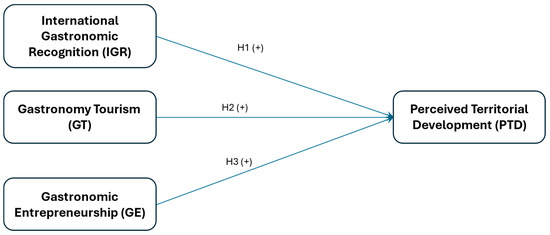
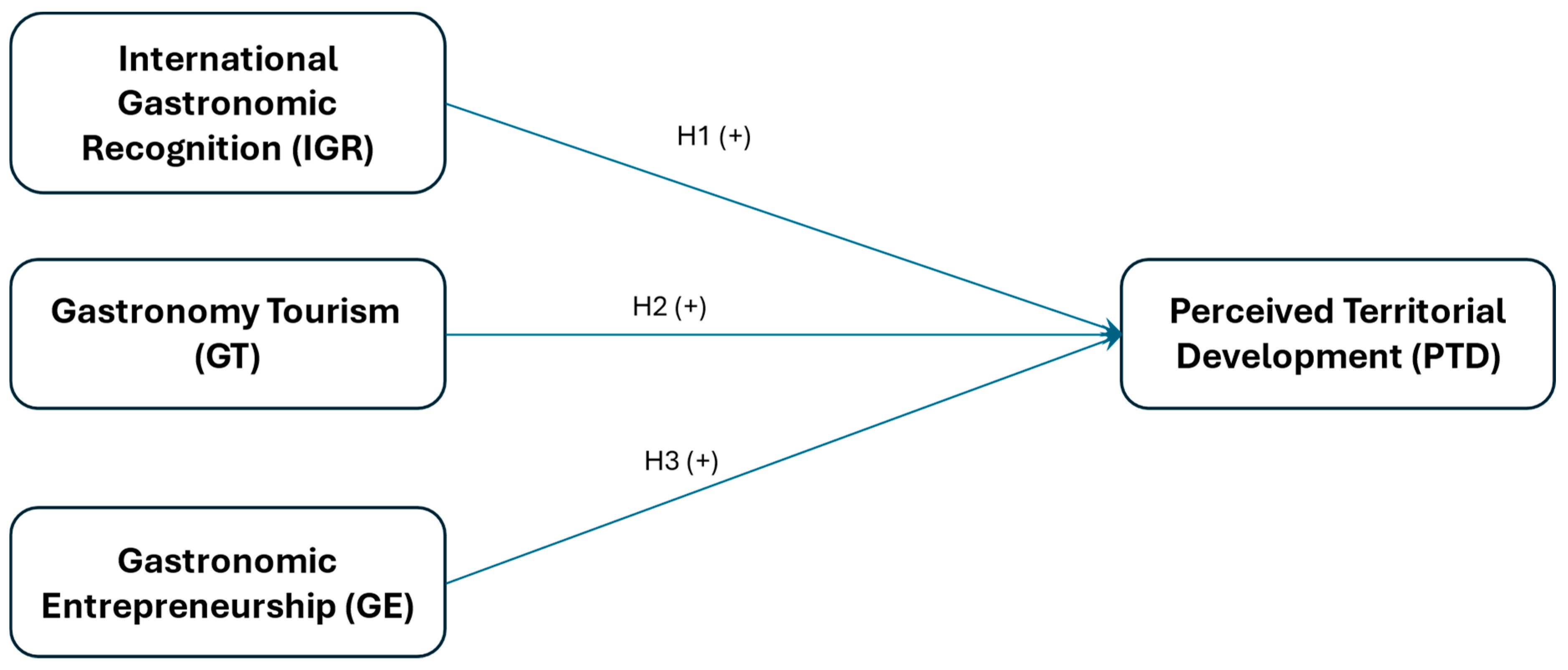
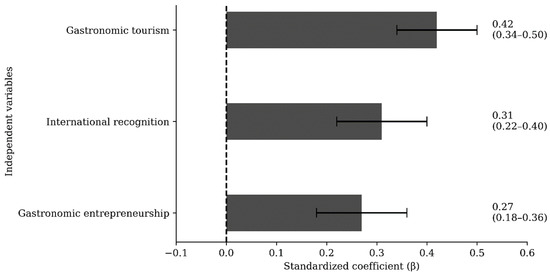
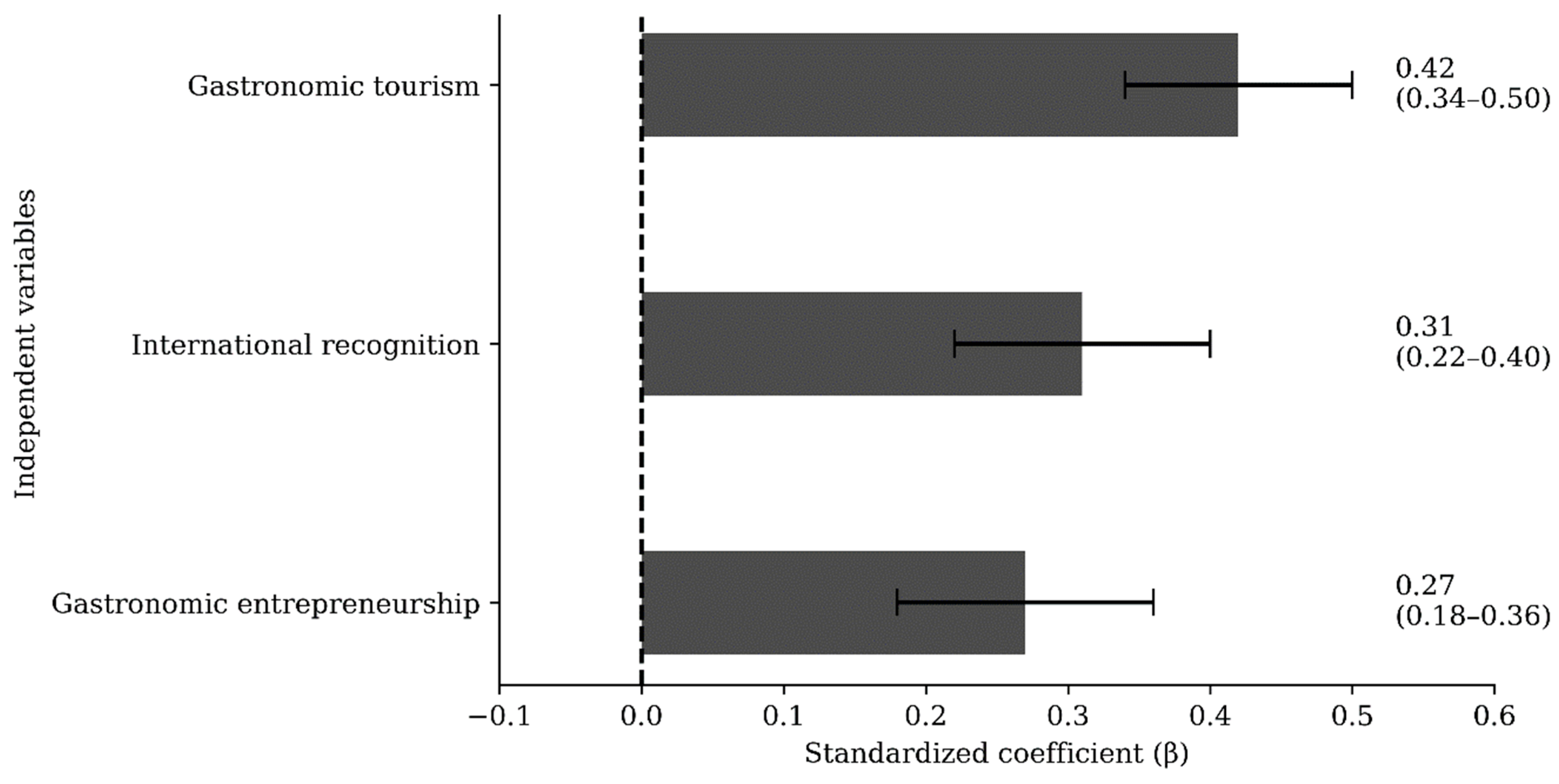

Disclaimer/Publisher’s Note: The statements, opinions and data contained in all publications are solely those of the individual author(s) and contributor(s) and not of MDPI and/or the editor(s). MDPI and/or the editor(s) disclaim responsibility for any injury to people or property resulting from any ideas, methods, instructions or products referred to in the content. |
© 2026 by the authors. Licensee MDPI, Basel, Switzerland. This article is an open access article distributed under the terms and conditions of the Creative Commons Attribution (CC BY) license.