


Abstract
Wine tourism is a form of tourism of growing importance, and understanding it requires a joint analysis of the psychosocial factors associated with visitor behaviour. The aim of this study is to analyse the relationships between motivation, perceived quality, satisfaction and loyalty amongst visitors to the Montilla-Moriles Wine Route, by comparing the patterns observed in men and women. A quantitative, non-experimental, cross-sectional study was conducted with a sample of 671 wine tourists (331 men and 340 women), selected using non-probabilistic convenience sampling. The relationships between the constructs were analysed using multi-group structural equation models, following an assessment of the reliability, validity and metric invariance of the measurement model. The results show that perceived quality and satisfaction are positively and statistically significantly associated with motivation in both groups, whilst loyalty does not show a significant association with this variable. Although the relational structure is similar between men and women, descriptive variations are observed in the magnitude of certain associations: perceived quality carries greater relative weight among men, whilst satisfaction is comparatively more significant among women. These variations do not allow us to conclude that there are statistically significant differences between the two groups. The findings reinforce the multidimensional nature of the wine tourism experience and have implications for the design of experiences tailored to the diversity of visitors.
1. Introduction
Tourism is a social, cultural and economic phenomenon linked to the movement of people away from their usual place of residence (Álvarez Verdugo et al., 2025). In Spain, it is of great significance, accounting for around 12.6 per cent of Gross Domestic Product (GDP) in 2025, even exceeding the 12.4 per cent recorded in 2019, prior to the COVID-19 pandemic, confirming the sector’s recovery and consolidation as one of the main drivers of the national economy (INE, 2020, 2025).
Against this backdrop, wine tourism has experienced significant growth in recent decades, establishing itself as a form of tourism of great strategic importance for wine-producing regions (Dorta Rodriguez & Quintela, 2024). Spain currently has 38 certified Wine Routes, spread across 14 autonomous communities following the inclusion of the Ribeira Sacra Wine Route in 2025 (ACEVIN, 2025). In 2024, the wine routes welcomed 3,036,878 visitors, representing a 2.2 per cent increase compared with the previous year and generated an economic impact of over 112 million euros; these figures demonstrate the consolidation of wine tourism as an activity with a growing capacity to boost economic development in wine-producing regions (ACEVIN, 2025).
This growth has been accompanied by an increasing diversification in visitor profiles. According to the Spanish Wine Routes Tourism Observatory, a slightly higher percentage of wine tourists are women (53.7 per cent); those aged between 46 and 65 predominate; and there is a wide range of profiles depending on their level of wine knowledge, ranging from first-time visitors to highly specialised wine tourists (Observatorio Turístico Rutas del Vino de España, 2024). This diversity highlights the importance of exploring the psychosocial factors that explain wine tourists’ behaviour and the possible influence of gender on these processes.
2. Literature Review and Theoretical Framework
2.1. Behavioural Foundations of the Wine Tourism Experience
The growing development of wine tourism has been accompanied by an increase in interest from the scientific community in understanding the factors that shape visitor behaviour and determine the quality of their experience. In this regard, research has evolved from approaches focused primarily on describing the socio-demographic profile of wine tourists towards models that incorporate psychosocial variables capable of explaining the tourism experience more accurately. This evolution stems from the recognition that the wine tourism experience is a multidimensional phenomenon involving cognitive, affective and behavioural processes that influence both the development of the destination and post-visit behaviour (Gómez-Carmona et al., 2023; Meneses et al., 2025).
From this perspective, motivation, the perceived quality of the experience, satisfaction and loyalty have established themselves as some of the key constructs used to explain visitor behaviour (Gómez-Carmona et al., 2023; Meneses et al., 2025). However, although there is broad consensus on the relevance of these factors, most research has analysed them independently or through partial relationships, limiting our understanding of how they interact collectively during the wine tourism experience and of the role each plays in explaining tourist behaviour. This limitation is particularly evident when analysing the possible effect of gender on these structural relationships, as the evidence remains limited, especially with regard to the analysis of the structural relationships between these constructs from a gender perspective (Terziyska, 2024; Nella & Christou, 2014, 2021; Bruwer & Rueger-Muck, 2019).
Among the psychosocial factors analysed in the field of tourism, motivation is a central construct for understanding the reasons that drive an individual to choose a destination and participate in a specific tourism experience. However, in cross-sectional studies such as this one, the relationships between motivation, perceived quality, satisfaction and loyalty must be interpreted in associative terms, without necessarily assuming a temporal or causal sequence between these constructs. From this perspective, it is relevant to examine these dimensions jointly to determine the extent to which they are interrelated within the wine tourism experience.
From a conceptual point of view, one of the most well-established approaches to explaining tourism motivation is the push-pull theory, proposed by Dann (1977) and subsequently developed by Crompton (1979). This model posits that the decision to travel is driven simultaneously by the individual’s internal motivations (push), such as the desire for escape, learning or socialising, and by external attributes of the destination (pull), notably the tourism offering, heritage, landscape and available resources. When applied to wine tourism, this approach helps us understand that the choice of a wine route does not depend solely on an interest in wine consumption, but also on the combination of experiential attributes offered by the destination.
In the context of wine tourism, this approach has revealed that the decision to visit a wine route is not driven solely by an interest in wine consumption, but also by the pursuit of cultural, gastronomic, scenic and educational experiences (Jiménez-Manchado et al., 2026). Consequently, motivation has been recognised as a central dimension of the wine tourism experience, although the most recent research suggests that it should be analysed in conjunction with variables such as perceived quality, satisfaction and loyalty within more comprehensive explanatory models.
The structural relationships between motivation, the perceived quality of the experience, satisfaction and loyalty can be interpreted from different conceptual frameworks. Among these, Expectation–Confirmation Theory (ECT) is one of the most widely used conceptual frameworks for explaining the formation of satisfaction and subsequent consumer behaviour. According to this theory, tourists form expectations prior to their visit and, having experienced the destination, compare these expectations with the experience actually encountered. When the experience confirms or exceeds initial expectations, satisfaction increases and, by extension, intentions to recommend the destination to others back home and to repeat the experience are strengthened (Oliver, 1980).
In the context of wine tourism, this approach helps us to understand that motivation, perceived quality, satisfaction and loyalty form part of a complex experiential process involving cognitive, affective and behavioural evaluations. However, given the cross-cutting nature of this study, these dimensions are analysed in terms of their structural relationships, without establishing a temporal or causal sequence between them. Consequently, the constructs under consideration are not interpreted as isolated variables, but as interrelated dimensions within the wine tourism experience.
2.2. Gender and Wine Tourism Behaviour: Theoretical Underpinnings and Empirical Evidence
Furthermore, Social Role Theory provides a suitable framework for analysing gender differences. This perspective maintains that the differences observed between men and women are largely attributable to socialisation processes and the different roles assumed within society, which may influence the way in which both groups perceive, evaluate and recall their tourism experiences (Eagly, 1987). From this perspective, it is reasonable to suggest that the relationships between motivation, perceived quality, satisfaction and loyalty may vary in intensity according to gender. Gender is not conceived as a direct cause of tourism behaviour, but rather as a grouping variable associated with socialisation processes capable of altering the relative importance of certain cognitive and affective evaluations. Consequently, differences between men and women should manifest themselves not necessarily in different average levels of motivation or satisfaction, but in the strength of the relationships between perceived quality, satisfaction, loyalty and motivation.
Empirical evidence on the role of gender in tourism behaviour, however, is not conclusive. Some studies have identified differences between men and women in the evaluation of the experience, emotional involvement, product knowledge or behavioural intentions (Remoaldo et al., 2020; Seyfi et al., 2025), whilst other studies show that these differences depend on the context, the degree of engagement with wine and the specific characteristics of the experience under analysis (Nella & Christou, 2014, 2021; Bruwer & Rueger-Muck, 2019). Therefore, the key issue is not to assume that men and women necessarily exhibit different behaviours, but rather to determine whether gender modifies the strength of the relationships between the cognitive, affective and behavioural processes that shape the wine tourism experience.
2.3. Research Context and Research Gap
Despite the remarkable growth experienced by wine tourism in Spain and the increasing scientific interest it has generated in recent years, empirical evidence continues to focus primarily on established destinations, whilst emerging wine routes continue to receive considerably less attention (Park & Kim, 2011; Bekar & Benzergil, 2025). In this context, Andalusia is a region of particular interest as it is home to three Wine Routes certified by the Spanish Association of Wine Cities (ACEVIN): the Condado de Huelva Wine Route, the Jerez Wine and Brandy Routes, and the Montilla-Moriles Wine Route, all of which are characterised by their integration of wine-growing heritage, cultural identity and winemaking tradition (Dancausa Millán et al., 2021; Cava Jiménez et al., 2022).
The Montilla-Moriles Wine Route, situated in the south of the province of Córdoba, is notable not only for its unique winemaking characteristics but also for its importance within Andalusia’s wine tourism offering. As one of the three routes certified by ACEVIN, it is a developing destination that combines wine-growing heritage, historical tradition and regional identity.
Virtually all production in Montilla-Moriles is based on the indigenous Pedro Ximénez grape variety and the production of fortified wines through biological ageing under a flor yeast layer. Although it shares this ageing system with Jerez, it differs in that the alcohol content is achieved naturally during fermentation, without the need to fortify with wine alcohol, which gives its wines their own distinct identity within the Spanish wine landscape (Cantoral-Fernández et al., 2023; Fuentes-Espinosa et al., 2025).
These combined characteristics make it an ideal context for analysing the psychosocial factors associated with wine tourists’ behaviour and assessing whether the structural relationships between these factors differ according to gender.
However, although the literature has demonstrated the importance of motivation, perceived quality of experience, satisfaction and loyalty in explaining such behaviour, there remains a scarcity of research that simultaneously analyses these constructs using multi-group structural equation models and assesses whether the structural relationships differ between men and women, particularly in emerging wine destinations (Oltean & Gabor, 2022; Nella & Christou, 2021; Park & Kim, 2011; Bekar & Benzergil, 2025).
This gap limits our understanding of the psychosocial mechanisms underpinning the wine tourism experience and makes it difficult to design management strategies tailored to different visitor profiles.
2.4. Hypothesis Development and Research Objective
The literature shows that satisfaction, perceived quality and loyalty are dimensions closely related to the wine tourist’s experience and behaviour (L. Wang & Li, 2023; Xia et al., 2024; Meneses et al., 2025). Based on Expectation–Confirmation Theory (Oliver, 1980), the evaluation of the experience and the extent to which it meets prior expectations can reinforce the visitor’s subsequent responses. However, given the cross-sectional nature of the present study, the hypothesised structural relationships are interpreted as associations between interrelated psychosocial constructs rather than as temporal or causal effects. Within this framework, the following hypotheses are proposed:
H1.
Satisfaction is positively associated with wine tourists’ motivation.
H2.
Perceived quality of the wine tourism experience is positively associated with wine tourists’ motivation.
H3.
Loyalty is positively associated with wine tourists’ motivation.
Furthermore, Social Role Theory (Eagly, 1987) provides a theoretical basis for considering gender as a grouping variable in the analysis of the relationships between the constructs under study. Given that previous empirical evidence is inconclusive regarding the existence of differences between men and women (Remoaldo et al., 2020; Nella & Christou, 2021; Seyfi et al., 2025), the analysis by gender is approached in a comparative and exploratory manner, without formulating a specific directional hypothesis regarding differences between groups.
In light of the above, the aim of this study is to analyse the structural relationships between motivation, perceived quality of experience, satisfaction and loyalty amongst visitors to the Montilla-Moriles Wine Route, by comparing the patterns observed in men and women.
3. Method
3.1. Research Design
A quantitative, non-experimental, cross-sectional study was carried out, framed within an ex post facto strategy. The design addressed the objective of analysing the relationships between the constructs of motivation, satisfaction, perception and loyalty, as well as comparatively examining the patterns of relationships observed in men and women.
In addition, the research seeks to identify the predictive role of motivations for the subsequent design of activities tailored to the characteristics defining the market niche interested in the Montilla-Moriles Wine Route.
3.2. Participants and Sampling
The sample comprised 671 wine tourists visiting the Montilla-Moriles Wine Route, comprising 331 men (49.33 per cent) and 340 women (50.67 per cent) (Table 1). Data collection from participants was carried out using non-probabilistic convenience sampling, a common procedure in research conducted in real-world tourism contexts.
Table 1.
Study sample.
The following inclusion criteria were established: (a) being aged 18 or over, (b) being on a tourist visit associated with the wine route during the fieldwork period, and (c) voluntarily agreeing to participate in the study.
3.3. Variables and Measurement Instrument
Data were collected using the ‘Scale for the psychosocial analysis of wine tourism consumption’. The items in the instrument were adapted from scales previously used and validated in the literature on wine tourism, drawing primarily on the work of Meneses et al. (2025), Ayoub and Mohamed (2024), Palma-López et al. (2024) and X. Wang et al. (2024). The factor structure of the instrument was examined using exploratory factor analysis (EFA) and confirmatory factor analysis (CFA) based on the sample analysed in this study. The final version, comprising 14 items, is presented in Appendix A.
The first section gathered information relating to four key constructs in the scientific literature on wine tourism: (a) Motivation: the reasons driving a visit to a wine destination; (b) Satisfaction: an overall assessment of the experience enjoyed; (c) Perception: perceived assessment of the quality of the environment, services and attributes of the destination; and Loyalty: willingness to revisit the destination, recommend it to others back home and maintain a future connection with the destination.
The second section comprised socio-demographic variables and variables characterising the tourist: age, gender, educational level, occupation, place of origin and reported income level.
The items were measured using a seven-point Likert scale (1 = strongly disagree; 7 = strongly agree).
The dimensionality of the instrument was examined using exploratory factor analysis (EFA) and confirmatory factor analysis (CFA), utilising data from the sample in this study. Internal consistency was also assessed, yielding adequate values for both Cronbach’s alpha (α = 0.872) and McDonald’s omega (ω = 0.853). The final questionnaire comprised 14 items measured using a seven-point Likert scale.
The analysis carried out to test internal consistency by dimension confirmed that all the constructs assessed exhibited adequate reliability. Specifically, the ‘Perception’ dimension achieved a Cronbach’s alpha coefficient of 0.860 and a McDonald’s omega coefficient of 0.861; in the case of ‘Satisfaction’, it achieved values of α = 0.868 and ω = 0.877; ‘Adherence’ showed higher levels of reliability (α = 0.896; ω = 0.892); whilst Motivation showed values of α = 0.723 and ω = 0.744, all of which are above the minimum threshold recommended in the literature to ensure adequate internal consistency of the measurement instruments. Taken together, these results support the reliability of the dimensions comprising the questionnaire and provide evidence supporting the internal consistency and factorial structure of the instrument within the sample analysed. Independent replication will nevertheless be required to establish the generalisability and stability of the measurement structure.
In the structural model, the items relating to satisfaction, perception and adherence were used as indicators of their respective latent constructs, whilst motivation was incorporated as an observed variable based on the combined score obtained from the items comprising this dimension.
3.4. Data Collection Procedure
Data collection took place at wineries officially registered on the Montilla-Moriles Wine Route. Prior to the start of the fieldwork, the management of the wineries on the route were contacted in order to present the objectives of the study, request authorisation to access visitors and coordinate the conditions for administering the questionnaire. Ultimately, Bodegas Alvear and Bodegas Pérez Barquero, both located in Montilla, agreed to collaborate on the research; consequently, the recruitment of participants and the administration of the questionnaire took place at these two establishments. The selection was therefore based on criteria of accessibility and willingness to participate in the study, rather than on a procedure designed to ensure the representativeness of the Montilla-Moriles Wine Route as a whole. This circumstance should be borne in mind when assessing the scope and generalisability of the results.
Data collection took place at the participating wineries, coinciding with the visitors’ wine tourism experience. Specifically, the questionnaire was distributed after the wine tasting, focusing on the key aspects of the experience being evaluated (facilities, the range of offerings provided by the wineries, service provided by staff, amenities, surroundings and the content of the visit).
Data collection was carried out in two phases. In the first phase, the questionnaire was administered in digital format via a QR code (generated by SurveyMonkey, a platform for creating, distributing and analysing online surveys), which visitors accessed via their mobile devices. However, during this phase, a high number of incomplete questionnaires were observed; therefore, with the aim of increasing the completion rate and improving the quality of the information being collected, a paper-based format was introduced in the second phase, administered by the researcher present and supervised in person by the principal investigator. In both cases, the content of the questionnaire, the order of the items and the response format remained unchanged; supervision was limited to clarifying any comprehension issues without interfering with the participants’ responses.
In total, 936 questionnaires were collected, of which 23 were completed digitally and 913 on paper. Before carrying out the statistical analyses, the database was reviewed to identify questionnaires with incomplete information on the variables under study. During the preliminary screening stage, 256 questionnaires (27.35%) were excluded because they contained incomplete responses to the variables required for the analyses. No data imputation procedure was applied. The screening process therefore yielded 680 complete questionnaires (72.65% of those initially collected), comprising 331 men, 340 women and 9 participants who identified as non-binary. Given that the multi-group analysis specifically focused on the comparison between men and women, the nine non-binary participants were not included in the gender-based structural analyses because their number was insufficient to constitute an independent analytical group. Consequently, the final sample used for the multi-group SEM comprised 671 participants. As the incomplete questionnaires were discarded before database construction and were not electronically coded, item-level patterns of missingness and statistical comparisons between complete and incomplete respondents could not be retrospectively assessed. This limitation should be considered when interpreting the findings.
Before completing the questionnaire, all participants were informed of the purpose of the study, the voluntary, anonymous and confidential nature of their participation, and the option to withdraw from the survey at any time if they so wished. The study was conducted in accordance with the ethical principles of the Declaration of Helsinki and the regulations of the University of Granada’s Ethics Committee for Human Research, having received the relevant approval (file no. 5236/CEIH/2025).
3.5. Data Analysis Strategy
Statistical analysis was performed using IBM SPSS (version 26.0). To examine the relationships between the study variables, the normality of the data was first assessed using the Shapiro–Wilk test. The assessment of the distribution was supplemented by Mardia’s multivariate normality test. The results showed deviations from the strict assumption of multivariate normality (Mardia’s skewness = 124.881; p < 0.001; multivariate kurtosis = 518.802; p < 0.001). Consequently, the structural model was estimated using the Maximum Likelihood (ML) method. Given the departure from multivariate normality, the parameter estimates and associated significance tests were interpreted with caution, and model adequacy was evaluated through the joint consideration of multiple goodness-of-fit indices rather than reliance on a single criterion. No bootstrap-based inference was applied in the original SEM estimation. In order to explore the strength and direction of the associations between the variables in greater depth, Pearson’s bivariate correlation coefficient was used. The IBM SPSS AMOS software (version 26.0) was used to estimate the structural equation model (SEM). A covariance-based structural equation modelling (CB-SEM) approach was chosen because the aim of the analysis was to test a previously specified theoretical model and simultaneously examine the relationships between the latent constructs, whilst also considering the overall fit of the model. Consequently, this approach proved suitable for the confirmatory purpose of the study and for the subsequent comparison of the model structure between men and women.
In the first phase of the analysis, a descriptive characterisation of the sample was carried out, examining the frequencies, means and standard deviations for the male and female groups. An assessment of the internal consistency of the scales was then conducted using Cronbach’s alpha, and this analysis was supplemented with other reliability indicators to obtain a more robust assessment of the psychometric properties of the instrument.
Subsequently, the relationships between the various constructs were analysed using Pearson’s bivariate correlations, with the analysis carried out separately for men and women in order to identify any possible differences between the two groups.
Given that the data were collected using a single self-report instrument within a cross-sectional design, the possible presence of common-method variance was examined using Harman’s single-factor test. The analysis carried out on the 14 items showed that the first factor explained 43.05% of the total variance, a percentage below the 50% threshold. Furthermore, three factors with eigenvalues greater than 1 were identified, which together explained 67.56% of the variance. These results do not suggest the existence of a serious problem of common-method variance in the analysed data.
Before comparing the structural models between men and women, measurement invariance was examined using a multi-group strategy. Firstly, a configural model was estimated, maintaining the same factor structure in both groups. Subsequently, a metric invariance model was estimated by imposing equality constraints on the factor loadings. The comparison between the two models was carried out by considering both the change in chi-squared and the change in CFI (ΔCFI). As the study does not compare latent means across groups, the analysis focused on establishing the configural and metric equivalence required for the comparison of structural relationships.
To conclude this statistical analysis, multi-group structural equation models were used to examine the relationships between the latent variables, to examine separately the relationships between the latent variables in men and women, and to make a descriptive comparison of the magnitude of the structural coefficients estimated in both groups. Formal between-group comparisons of the structural coefficients were subsequently conducted using the unstandardised parameter estimates and their corresponding standard errors.
To assess model fit, various incremental and absolute fit indices were considered together. Values of CFI, TLI, IFI and NFI close to or greater than 0.90 were taken as a benchmark, whilst for the RMSEA, values below 0.08 were considered indicative of adequate fit and values close to 0.10 reflective of limited fit. Consequently, the assessment of overall fit was carried out by considering the various indices together rather than relying on a single criterion.
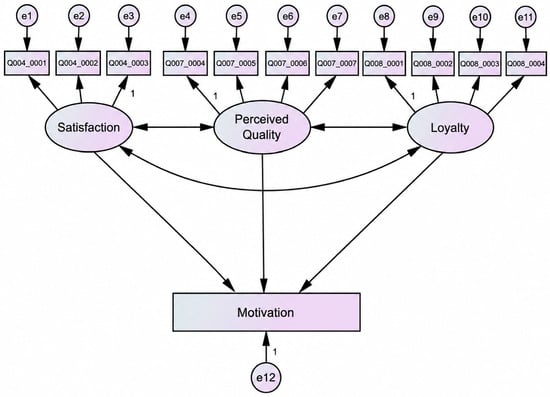
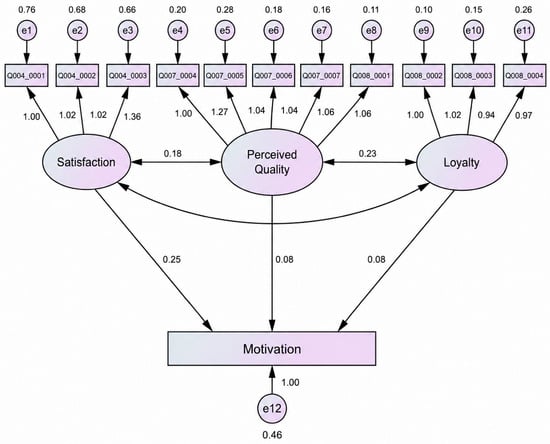
The model comprises eleven endogenous variables and four exogenous variables. The relationships specified between the constructs were established on the basis of the proposed theoretical model and the observed associations between the indicators, the consistency and reliability of which had previously been assessed. Given the cross-sectional nature of the study, these relationships are interpreted in associative rather than causal terms.
In the structural model, unidirectional arrows represent the specified structural relationships between the variables, and their magnitude was interpreted using standardised regression coefficients. The statistical significance of the estimated parameters was assessed using the critical ratio (C.R.) and its corresponding p-value, with p < 0.05 set as the criterion for statistical significance. The theoretical model underlying the structural analysis is presented in Figure 1.
Figure 1.
Theoretical model. Source: own work.
4. Results
The results in Table 2 show the matrix of bivariate correlations between the dimensions analysed in the sample of men. In general, positive and statistically significant relationships are observed between all the constructs examined in this study. The strongest association is found between perception and adherence (r = 0.761; p < 0.01), indicating a strong relationship between these two dimensions. Similarly, moderate correlations were identified between motivation and perception (r = 0.542; p < 0.01) and between motivation and adherence (r = 0.484; p < 0.01). In contrast, the associations involving the satisfaction variable show more moderate values, specifically between perception and satisfaction (r = 0.256; p < 0.01) and between adherence and satisfaction (r = 0.264; p < 0.01).
Table 2.
Correlation table for men.
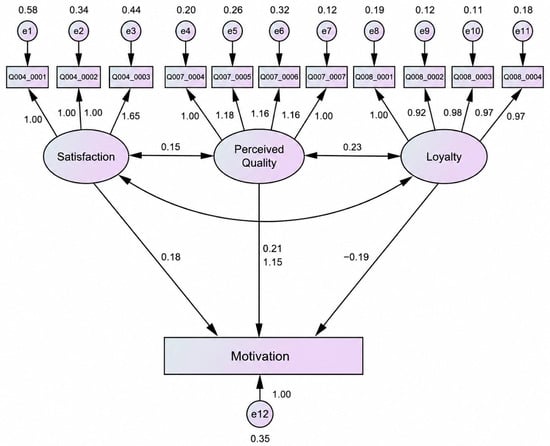
The structural equation model for men showed an acceptable overall fit. The incremental indices NFI (0.926), TLI (0.924), IFI (0.944) and CFI (0.943) exceeded the cut-off value of 0.90, whilst the RMSEA (0.090) indicated a limited fit; therefore, the model’s fit should be interpreted by considering the various fit indices together.The structural model estimated for the male sample is presented in Figure 2.
Figure 2.
Theoretical model of the study for men. Source: own work.
Table 3 shows the effects of the variables for the group of men. As can be seen, all items have a strong, positive effect on the factors to which they belong, highlighting the adequate internal consistency of the dimensions analysed. Specifically, the indicators associated with satisfaction show high standardised weight values (SWR), with item q0004_0002 standing out (β = 0.920), indicating its significant contribution to measuring the construct. Similarly, the items linked to adherence have high loadings (β s between 0.801 and 0.864), data which underline the robustness of this dimension within the model.
Table 3.
Effects of the variables on men.
With regard to the relationships between constructs, the data highlight that perception has a direct and statistically significant association with motivation (β = 0.636; p < 0.001). In contrast, the relationship between adherence and motivation shows a negative and, consequently, non-significant coefficient in the data (β = −0.140; p = 0.389), indicating that, in this case, adherence does not show a statistically significant association with motivation among men.
Furthermore, when analysing the covariances between dimensions, it is evident that the association between perception and adherence represents the strongest link in the model (β = 0.895; p < 0.001), suggesting a high degree of interdependence between the two constructs. In contrast, the relationships between satisfaction and perception (β = 0.263) and between satisfaction and adherence (β = 0.278) also show direct and significant relationships, albeit of a slightly weaker strength.
When the data are grouped and considered as a whole, the results highlight perception and satisfaction as the factors with the greatest explanatory power within the model, whilst adherence plays a more limited role in positively predicting motivation in the group of men analysed. Overall, the model explained approximately 42.2% of the variance in motivation within the group of men (R2 = 0.422).
Table 4, shown alongside, presents the correlation matrix for the sample of women. As in the previous case, all correlations are positive, although their strengths vary. As with the men, the strongest correlation is observed between perception and adherence (r = 0.647; p < 0.01), followed by the relationship between motivation and perception (r = 0.548; p < 0.01). Moderate associations are also identified between satisfaction and motivation (r = 0.436; p < 0.01) and between motivation and adherence (r = 0.408; p < 0.01). In contrast, the relationship between satisfaction and adherence shows a lower strength (r = 0.121; p < 0.05).
Table 4.
Correlation table for women.
The structural equation model for women showed an acceptable overall fit. The incremental indices NFI (0.921), TLI (0.918), IFI (0.939) and CFI (0.939) exceeded the cut-off value of 0.90, whilst the RMSEA (0.090) indicated a limited fit; therefore, the model’s fit should be interpreted by considering the various fit indices together. The structural model estimated for the female sample is presented in Figure 3.
Figure 3.
Theoretical model of the study for women. Source: own work.
Table 5 shows the estimated effects on the variables for the group of women. As can be seen from the data, all items exhibit direct and statistically significant factor loadings on the factors to which they belong, which confirms good internal consistency of the dimensions analysed. Specifically, the indicators associated with adherence have very high standardised values (SWR), with item q0008_0002 (SWR = 0.878) standing out, which highlights a strong contribution of these indicators to the measurement of the construct. At the same time, the items relating to perception show high loadings (SWR between 0.778 and 0.831), which reinforces the robustness of this dimension within the model.
Table 5.
Effects of the variables on women.
With regard to the structural relationships between constructs, both satisfaction and perception show direct and statistically significant associations with motivation in the group of women. In particular, satisfaction shows a moderate association (β = 0.335; p < 0.001), whilst perception shows a stronger association (β = 0.462; p < 0.001). Conversely, the relationship between adherence and motivation shows a low and non-significant coefficient (β = 0.048; p = 0.504); therefore, adherence does not show a statistically significant association with motivation in this group.
After analysing the covariances between the dimensions, the relationship between perception and adherence stands out as the strongest link in the model (β = 0.720; p < 0.001), indicating a notable interdependence between the two constructs. In contrast, the relationship between satisfaction and adherence is considerably weaker (β = 0.112), whilst the association between satisfaction and perception falls somewhere in between (β = 0.271). Overall, the model explained approximately 44.7% of the variance in motivation within the group of women (R2 = 0.447).
Before comparing the structural coefficients, measurement invariance between men and women was examined. The configural model showed an acceptable fit (CFI = 0.938; TLI = 0.917; RMSEA = 0.072). Subsequently, the imposition of equality constraints on the factor loadings in the metric model did not result in a significant deterioration in the fit (CFI = 0.938; TLI = 0.924; RMSEA = 0.069; Δχ2 = 7.279; Δgl = 8; p = 0.507; ΔCFI = 0.0002). These results support the metric invariance of the measurement structure between the two groups.
Further evaluation of the measurement model revealed adequate levels of composite reliability and convergent validity. Among men, composite reliability values were 0.904 for satisfaction, 0.824 for perception and 0.898 for adherence, with average variance extracted (AVE) values of 0.758, 0.541 and 0.688, respectively. Among women, composite reliability reached values of 0.842, 0.879 and 0.894, whilst AVE values were 0.640, 0.645 and 0.680, respectively. All CR values exceeded 0.70 and AVE values were above 0.50. Furthermore, the assessment of discriminant validity using the HTMT index showed values below 0.90 in all comparisons between constructs; the highest value corresponded to the relationship between perception and adherence in men (HTMT = 0.886), and this relationship should therefore be interpreted with particular caution.
Formal between-group comparisons were subsequently performed to determine whether the differences observed in the structural coefficients were statistically significant. No significant gender differences were identified for the association between satisfaction and motivation (z = −1.489, p = 0.137), perceived quality and motivation (z = 1.159, p = 0.247), or loyalty and motivation (z = −1.073, p = 0.283). Therefore, although the standardised coefficients differed descriptively between men and women, these variations did not reach statistical significance. The formal comparison of the structural paths between men and women is presented in Table 6.
Table 6.
Formal comparison of structural paths between men and women.
The descriptive comparison of the standardised coefficients reveals some variations between the two groups. The association between perception and motivation is stronger in men (β = 0.636) than in women (β = 0.462), whilst the association between satisfaction and motivation shows a slightly higher coefficient in women (β = 0.335) than in men (β = 0.289). Similarly, the covariance between perception and adherence is greater in men (β = 0.895) than in women (β = 0.720). Meanwhile, the relationship between adherence and motivation does not reach statistical significance in either group. These variations reflect descriptive differences in the magnitude of the estimated parameters and, on their own, these variations should therefore be interpreted as descriptive differences in coefficient magnitude, since the formal between-group tests indicated that none of the corresponding structural paths differed significantly between men and women.
5. Discussion
The results obtained through correlational analysis and structural equation modelling show that men and women exhibit a similar relational structure between motivation, satisfaction, perception and adherence, although descriptive variations are observed in the magnitude of some coefficients. Although descriptive differences were observed in the magnitude of some structural coefficients, the formal between-group comparisons confirmed that these variations were not statistically significant. This finding provides evidence in an area that has as yet been little analysed in the literature on wine tourism, where these constructs have mainly been studied in isolation or without considering gender as a grouping variable (Nella & Christou, 2021; Bekar & Benzergil, 2025).
One of the main findings of this research is that perception and satisfaction are statistically significantly associated with motivation in both groups, although descriptive variations are observed in the relative importance of these two constructs. Among men, perception takes on a more prominent role, whilst among women, satisfaction is of greater relative importance. This interpretation is consistent with previous research that has highlighted gender differences in the way tourist activities are evaluated and experienced (Remoaldo et al., 2020; Seyfi et al., 2025), as well as with studies showing that engagement and wine tourism experiences may exhibit distinct patterns depending on visitor characteristics (Bruwer & Rueger-Muck, 2019; Nella & Christou, 2021). However, these variations should be interpreted as descriptive differences rather than as statistically significant differences between the two groups.
The influence of perception in the case of the group comprising men could largely be interpreted as an indication that their motivation depends on making an objective assessment of the destination’s attributes, on the knowledge they acquire during the visit, and on the perceived quality of the wine tourism offering. From this perspective, the decision to participate in wine-related activities would not be determined solely by the enjoyment of the experience, but also by the cognitive value that the tourist attributes to the destination visited. This interpretation is consistent with the findings of Nella and Christou (2021), who describe a male profile that is more oriented towards the acquisition of knowledge, the technical evaluation of wine, and the alignment between prior expectations and the experience ultimately encountered. Similarly, Weightman et al. (2019) indicate that consumption among men is often linked to symbolic aspects, prestige and social recognition, whilst Králiková et al. (2025) highlight the importance of ‘Brand Love’ and multisensory experiences as mechanisms capable of strengthening the bond between the tourist and the wine products specific to the Wine Route and, by extension, local produce.
Conversely, with regard to satisfaction, it is observed that, amongst women, this factor carries relatively greater weight and its influence is close to that exerted by perception. One possible explanation for this finding could be that female motivation responds to an evaluation process in which different components are assessed, with the rational assessment of the destination sharing prominence with the affective dimension and the enjoyment derived from the experience following the visit. In other words, the results suggest that women’s motivation probably does not depend solely on a cognitive assessment of the environment in which the wine tourism activity takes place, but also on the experience’s own capacity to generate well-being, positive emotions and connections with the local area (Sthapit et al., 2024). This interpretation is consistent with Remoaldo et al. (2020), whose study highlighted women’s greater sensitivity to the quality of service received, as well as with Breda et al. (2020), who emphasise the importance of shared experiences and a break from routine as highly significant motivational factors. Similarly, Bagnato et al. (2025) point to a growing interest among women in experiences associated with wellbeing, authenticity and healthy lifestyles, whilst Gonda (2024), R. Wang (2025) and Seyfi et al. (2025) emphasise a greater sensitivity towards the cultural, social and emotional components of the tourism experience. Generally speaking, these studies provide an interpretative framework consistent with the greater relative importance that satisfaction acquires in shaping women’s motivation, as observed in this research.
Therefore, the results do not allow us to conclude that men and women have different motivations for visiting a wine route, although they suggest descriptive variations in the relative importance of the psychosocial processes associated with motivation. For men, perception plays a more prominent role, whilst for women, satisfaction is of greater relative importance. This interpretation is consistent with research indicating that gender differences in tourist behaviour can manifest in the valuation of various cognitive, affective and experiential components (Remoaldo et al., 2020; Seyfi et al., 2025). Furthermore, in the specific field of wine tourism, previous studies have shown that visitors’ experiences and behaviour can vary depending on their profile and level of engagement with wine (Bruwer & Rueger-Muck, 2019; Nella & Christou, 2021).
A second finding of interest concerns the relationship between attachment and motivation. In both groups, this association does not reach statistical significance, suggesting that attachment to the destination does not have a significant relationship with motivation in the analysed model. This result should be interpreted in light of the fact that the literature tends to conceptualise loyalty as a response following the tourism experience, closely linked to satisfaction and perceived quality, rather than as a precursor to motivation (L. Wang & Li, 2023; Xia et al., 2024). In this regard, the results obtained are consistent with the need to conceptually distinguish between the motivations underlying the decision to undertake tourism and the loyalty responses developed in relation to the experience.
From this perspective, the results suggest that it is advisable to make a conceptual distinction between motivation and loyalty within the wine tourism experience. Whilst motivation is linked to the reasons behind the decision to participate in the tourism experience, loyalty relates to subsequent responses associated with the intention to revisit or recommend the destination. This interpretation is consistent with research that identifies satisfaction and the quality of the experience as among the main factors associated with the development of tourist loyalty (L. Wang & Li, 2023; Widjanarko et al., 2025). However, given the cross-sectional nature of this study, the results obtained do not allow for the establishment of a temporal or causal sequence between these constructs.
The comparison between men and women provides additional insight into the relationship between commitment and motivation. Although this association does not reach statistical significance in either group, the variations observed should be interpreted solely from a descriptive perspective. In this regard, previous research has indicated that wine tourism behaviour may be related to factors such as learning, knowledge of wine and the exploration of new experiences (Nella & Christou, 2021), whilst other studies highlight the importance of experiential, emotional and relational components in shaping the tourism experience (Remoaldo et al., 2020; Bagnato et al., 2025). However, the results of the present study do not allow these characteristics to be attributed specifically to men or women, nor do they establish statistically significant differences between the two groups.
Overall, the results suggest that wine tourism motivation is related to various psychosocial components, the relative importance of which may vary between the groups analysed. Perception remains significantly associated with motivation in both men and women, whilst satisfaction also plays a significant role in both groups. This interpretation is consistent with research highlighting the multidimensional nature of the tourism experience and the interaction between cognitive, emotional and sociocultural components (Gonda, 2024; Seyfi et al., 2025). However, the variations observed between men and women should be regarded as descriptive, as the formal between-group comparisons did not identify statistically significant differences.
Overall, the main contribution of this research lies in providing an integrated analysis of the relationships between motivation, perception, satisfaction and loyalty among men and women within a wine tourism context. The results show significant associations between these constructs and some descriptive variations in their magnitude between the two groups. These findings expand the available evidence on the multidimensional nature of the wine tourism experience and are consistent with research highlighting the heterogeneity of wine visitors’ profiles and behaviours (Bruwer & Rueger-Muck, 2019; Nella & Christou, 2021). However, the differences observed between men and women should be interpreted with caution and do not allow us to assert the existence of statistically different structural configurations without a formal comparison between the groups.
6. Conclusions
The results show that men and women exhibit a similar relational structure amongst the psychosocial factors analysed, although descriptive variations are observed in the magnitude of some of their associations. In both groups, perception and satisfaction maintain statistically significant associations with motivation, whilst adherence does not show a significant association with this variable. The variations observed between men and women should be interpreted with caution. Formal between-group comparisons showed that the observed differences in structural coefficient magnitude did not reach statistical significance, suggesting that the relationships among the psychosocial constructs examined are broadly comparable between men and women.
Another significant finding concerns the relationship between motivation and loyalty. Structural models show that loyalty is not statistically significantly associated with motivation in either of the two groups. This finding suggests that the two constructs should be conceptually distinguished within the wine tourism experience. However, given the cross-sectional nature of the study, it is not possible to establish causal relationships or determine a temporal sequence between motivation, perception, satisfaction and loyalty.
Overall, the results show that motivation, perception, satisfaction and loyalty constitute interrelated dimensions within the wine tourism experience. The associations identified highlight the importance of considering, in conjunction, components linked to the evaluation of the experience and to visitors’ responses. However, the cross-sectional design employed does not allow us to determine the temporal direction of these relationships or to establish that certain constructs act as antecedents or consequences of others.
Following a joint assessment of the psychosocial factors analysed, the main contribution of the study lies in integrating motivation, perception, satisfaction and loyalty within a single model and examining their relationships separately for men and women. The results show descriptive variations in the magnitude of some associations between the two groups, although these do not support the existence of statistically different structural relationships between men and women.
Unlike previous research in which motivation, satisfaction or loyalty have been analysed independently, this study considers these constructs jointly within a single analytical model. This approach broadens our understanding of the associations between different dimensions of the wine tourism experience. The results thus provide empirical evidence on the interrelationship between motivation, perception, satisfaction and loyalty, whilst avoiding attributing to the observed variations between men and women a greater explanatory power than that supported by the analyses carried out.
These findings have practical implications for the management of the Montilla-Moriles Wine Route. Given that perception and satisfaction are significantly associated with motivation in both groups, management strategies should focus on strengthening those components of the experience that directly contribute to visitors’ assessment of the destination. In this regard, wineries and the route’s managers could enhance the interpretation of the wine-growing heritage, knowledge of the winemaking processes specific to Montilla-Moriles, the service provided during visits, and tourists’ active participation in tastings and other wine-related experiences. These measures would help to enhance both perceived quality and satisfaction with the experience—two dimensions that the results identify as particularly relevant in their association with wine tourism motivation.
Similarly, the results suggest the need to design communication strategies and experiences tailored to the characteristics and preferences of different visitor profiles, avoiding the assumption that behavioural differences are based solely on gender. In this regard, initiatives aimed at enhancing the authenticity of the region, its cultural heritage, gastronomy, landscape and experiential dimension can help to improve the overall assessment of the visit. Furthermore, the inclusion of content relating to wine culture, the winemaking processes characteristic of Montilla-Moriles and oenological knowledge may enhance the perceived quality of the experience. Given that the variations observed between men and women are descriptive in nature, these results should be understood as guidance for the design of diversified experiences and not as sufficient evidence to establish gender-differentiated segmentation strategies.
Like all research, this study has a number of limitations that must be taken into account when interpreting the results. Firstly, the use of non-probabilistic convenience sampling and the concentration of data collection at two wineries may introduce selection bias and limit the generalisability of the findings to all visitors to the Montilla-Moriles Wine Route and to other wine tourism destinations. Future research should extend data collection to a greater number of wineries and destinations and, where fieldwork conditions permit, employ probabilistic sampling procedures. Furthermore, the cross-sectional nature of the design prevents the establishment of causal relationships between the constructs analysed; it would therefore be advisable to conduct longitudinal studies to examine their evolution over time.
Although the EFA, CFA and SEM served different analytical purposes, they were conducted using the same sample. Consequently, the confirmatory analyses do not constitute an entirely independent replication of the exploratory factor structure. The psychometric findings should therefore be interpreted as evidence supporting the measurement structure in the present sample rather than as definitive external validation. Future studies should employ independent development and validation samples or cross-validation procedures.
Furthermore, the absence of strict multivariate normality suggests that the estimates obtained should be interpreted with caution and that robust estimation procedures or resampling techniques should be employed in future research.
Furthermore, the use of two questionnaire administration methods (digital and paper-based) constitutes a potential source of variability associated with the mode of response, even though the content, the order of the items and the response scale remained identical across both formats. Given the small number of digital questionnaires ultimately obtained, it was not possible to carry out a balanced comparison between the two methods; this aspect should therefore be considered in future research.
Finally, although the comparative analysis was approached from a gender perspective, it was limited to a comparison between men and women due to the low representation of other gender identities in the sample. In this regard, future research should consider more inclusive designs and larger samples that allow for the inclusion of a greater diversity of participants and broaden the scope of the analyses carried out.
As regards future lines of research, the results obtained highlight the need to explore in greater depth the psychological mechanisms that might explain the descriptive variations observed between men and women in the configuration of wine tourism motivation. In particular, it is of interest to analyse why perception is more strongly associated with motivation among men, whilst satisfaction carries relatively greater weight among women. In this regard, the inclusion of mediating and moderating variables—such as the level of wine knowledge, engagement with wine, familiarity with the destination, previous experience of wine tourism, the symbolic value of the product, the emotional engagement associated with the experience, the search for authenticity, or certain personality traits—would allow for a more precise understanding of the psychological mechanisms that may underlie the observed variations. Finally, it is of particular interest to replicate the model on other wine routes and in different cultural contexts, with the aim of determining whether the relationships identified in this study are specific to the Montilla-Moriles Wine Route or whether comparable patterns exist in other wine tourism destinations.
In short, the main contribution of this study lies in analysing, through structural equation models estimated for men and women, the relationships between the main psychosocial factors associated with wine tourism motivation. The results show a similar relational structure in both groups, although descriptive variations are observed in the magnitude of some associations, particularly in the relative weight of perception and satisfaction on motivation. These variations do not support the existence of statistically significant differences between men and women, as confirmed by the formal between-group comparisons of the structural parameters. Nevertheless, the findings expand our understanding of the psychosocial processes associated with wine tourist behaviour and open up a line of research aimed at determining, through specific comparative designs and analyses, whether gender may play a differentiating role in these relationships. Further exploration in this direction will enable the development of more robust theoretical models of behaviour in wine tourism and provide an empirical basis for designing management strategies tailored to the diversity of visitor profiles.
Author Contributions
Conceptualization, I.J.-M., J.E.R.-R. and L.S.-B.; methodology, I.J.-M. and L.S.-B.; software, I.J.-M. and L.S.-B.; validation, I.J.-M. and L.S.-B.; formal analysis, I.J.-M. and L.S.-B.; investigation, I.J.-M.; resources, I.J.-M.; data curation, I.J.-M. and L.S.-B.; writing—original draft preparation, I.J.-M., A.P.M.C. and J.E.R.-R.; writing—review and editing, I.J.-M. and J.E.R.-R.; visualization, I.J.-M., A.P.M.C. and L.S.-B.; supervision, I.J.-M. and L.S.-B.; project administration, I.J.-M. and L.S.-B. All authors have read and agreed to the published version of the manuscript.
Funding
This research received no external funding.
Institutional Review Board Statement
The study was approved by Research Ethics Committee, University of Granada (protocol code no. 5236/CEIH/2025 and date of approval: 7 July 2025).
Informed Consent Statement
Informed consent was obtained from all subjects involved in the study.
Data Availability Statement
The original contributions presented in this study are included in the article. Further inquiries can be directed to the corresponding author.
Conflicts of Interest
The authors declare no conflict of interest.
Appendix A
Appendix A.1. Scale for the Psychosocial Analysis of Wine Tourism Consumption
Please indicate your level of agreement with the following statements using a scale from 1 (Strongly disagree) to 7 (Strongly agree).
Table A1.
Motivation.
Table A2.
Perceived Quality.
Table A3.
Satisfaction.
Table A4.
Loyalty.
Appendix A.2. Sociodemographic Variables
| Gender: ☐ Male ☐ Female Age: __________ years Level of education: ☐ Primary/Secondary education ☐ Sixth form/Vocational training ☐ University degree ☐ Postgraduate/Master’s degree Employment status: ☐ Self-employed professional/manager ☐ Self-employed ☐ Business owner ☐ Student ☐ Civil servant ☐ Unemployed ☐ Full-time employee ☐ Part-time employee ☐ Retired ☐ Homemaker Postcode: ____________ Monthly household income: ☐ <€700 ☐ €701–1000 ☐ €1001–1500 ☐ €1501–2500 ☐ €2501–3500 ☐ >€3500 Note: The items were adapted from previously validated scales in the literature on wine tourism, primarily from Meneses et al. (2025), Ayoub and Mohamed (2024), Palma-López et al. (2024) and X. Wang et al. (2024). |
References
- Asociación Española de Ciudades del Vino (ACEVIN). (2025). Informe de visitantes a bodegas y museos del vino. Año 2024. Observatorio Turístico de las Rutas del Vino de España. Available online: https://wineroutesofspain.com/wp-content/uploads/2025/10/informe-visitas-a-bodegas-y-museos-rutas-del-vino-de-espana-2024.pdf (accessed on 20 June 2026).
- Ayoub, D., & Mohamed, D. N. H. S. (2024). The impact of push-pull motives on internal tourists’ visit and revisit intentions to Egyptian domestic destinations: The mediating role of country image. Humanities and Social Sciences Communications, 11, 358. [Google Scholar] [CrossRef] [Scilit]
- Álvarez Verdugo, M., Bel, G., Cardesa-Salzmann, A., & Benito, J. A. D. (2025). Retos del turismo sostenible en España. Papeles de Economía Española, 140–155. [Google Scholar]
- Bagnato, G., Casalegno, C., & Rizzo, C. (2025). Intergenerational dynamics and sustainable wine purchase in light of the theory of planned behavior: Testing a conceptual model. Journal of Consumer Marketing, 42(3), 392–407. [Google Scholar] [CrossRef] [Scilit]
- Bekar, A., & Benzergil, N. (2025). The profile of wine tourists and the factors affecting their wine-related attitudes: The case of Türkiye. Tourism and Hospitality, 6(3), 132. [Google Scholar] [CrossRef] [Scilit]
- Breda, Z., Santos, A., Kliček, T., & Dinis, G. (2020). Profile, motivations, and experiences from portuguese solo female travelers. In Contemporary management approaches to the global hospitality and tourism industry (pp. 131–150). IGI Global Scientific Publishing. [Google Scholar] [CrossRef] [Scilit]
- Bruwer, J., & Rueger-Muck, E. (2019). Wine tourism and hedonic experience: A motivation-based experiential view. Tourism and Hospitality Research, 19(4), 488–502. [Google Scholar] [CrossRef] [Scilit]
- Cantoral-Fernández, J. M., Ruiz-Muñoz, M., Hernández-Fernández, M., Florido-Barba, A., Villanueva-Llanes, M. P., Pizzi, S., & Cordero-Bueso, G. (2023). Taxonomic singularities of the veil of Flor yeasts in Fino Wines from the D.O. Jerez-Xérèz-Sherry. BIO Web of Conferences, 68, 02002. [Google Scholar] [CrossRef] [Scilit]
- Cava Jiménez, J. A., Millán Vázquez de la Torre, M. G., & Dancausa Millán, M. G. (2022). Enotourism in southern Spain: The montilla-moriles PDO. International Journal of Environmental Research and Public Health, 19(6), 3393. [Google Scholar] [CrossRef] [Scilit]
- Crompton, J. L. (1979). Motivations for pleasure vacation. Annals of Tourism Research, 6(4), 408–424. [Google Scholar] [CrossRef] [Scilit]
- Dancausa Millán, M. G., Millán Vázquez de la Torre, M. G., & Hernández Rojas, R. (2021). Analysis of the demand for gastronomic tourism in Andalusia (Spain). PLoS ONE, 16(2), e0246377. [Google Scholar] [CrossRef] [Scilit]
- Dann, G. M. S. (1977). Anomie, ego-enhancement and tourism. Annals of Tourism Research, 4(4), 184–194. [Google Scholar] [CrossRef] [Scilit]
- Dorta Rodriguez, A., & Quintela, J. A. (2024). The potential of wine tourism in the innovation processes of tourism experiences in the canary islands—An approach to the case of the canary brand. Sustainability, 16(15), 6314. [Google Scholar] [CrossRef] [Scilit]
- Eagly, A. H. (1987). Sex differences in social behavior: A social-role interpretation. Lawrence Erlbaum Associates. [Google Scholar]
- Fuentes-Espinosa, J. M., Muñoz-Castells, R., Moreno-García, J., García-Martínez, T., Mauricio, J. C., & Moreno, J. (2025). Analytical differentiation of wines from three terroirs located in a warm winegrowing area based on their volatilome. Molecules, 30(2), 238. [Google Scholar] [CrossRef] [Scilit]
- Gonda, T. (2024). Woman as thoughtful and responsable consumers of tourism: Gender differences in tourism consumption patterns and attitudes towards tourism. GeoJournal of Tourism and Geosites, 54(2), 794–801. [Google Scholar] [CrossRef] [Scilit]
- Gómez-Carmona, D., Paramio, A., Cruces-Montes, S., Marín-Dueñas, P. P., Aguirre Montero, A., & Romero-Moreno, A. (2023). The effect of the wine tourism experience. Journal of Destination Marketing & Management, 29, 100793. [Google Scholar] [CrossRef] [Scilit]
- Instituto Nacional de Estadística. (2020). Cuenta Satélite del Turismo de España (CSTE). INE. [Google Scholar]
- Instituto Nacional de Estadística. (2025). Cuenta Satélite de Turismo de España. INE. [Google Scholar]
- Jiménez-Manchado, I., Costa, A., & Sánchez-Bolívar, L. (2026). Analysis of wine tourism motivations on the Montilla-Moriles Wine Route: An approach based on push-pull and self-determination theories. In J. V. Carvalho, A. Abreu, R. A. Castanho, & D. Liberato (Eds.), Advances in tourism, technology and systems (Vol. 504, pp. 435–445). Springer. [Google Scholar] [CrossRef] [Scilit]
- Králiková, A., Kubát, P., & Ryglová, K. (2025). Happiness perception in wine tourism destinations and its impact on tourists’ satisfaction and loyalty. European Journal of Tourism Research, 39, 3902. [Google Scholar] [CrossRef] [Scilit]
- Meneses, R., Brito, C., Lopes, B., & Correia, R. (2025). Satisfaction and dissatisfaction in wine tourism: A user-generated content analysis. Tourism and Hospitality Research, 25(1), 120–134. [Google Scholar] [CrossRef] [Scilit]
- Nella, A., & Christou, E. (2014). Segmenting wine tourists on the basis of involvement with wine. Journal of Travel & Tourism Marketing, 31(7), 783–798. [Google Scholar] [CrossRef] [Scilit]
- Nella, A., & Christou, E. (2021). Market segmentation for wine tourism: Identifying sub-groups of winery visitors. European Journal of Tourism Research, 29, 2903. [Google Scholar] [CrossRef] [Scilit]
- Observatorio Turístico Rutas del Vino de España. (2024). Informe de visitantes a bodegas y museos del vino. Año 2023. Asociación Española de Ciudades del Vino (ACEVIN). Available online: https://wineroutesofspain.com/wp-content/uploads/2024/06/informe-visitas-a-bodegas-y-museos-rutas-del-vino-de-espana-2023.pdf (accessed on 15 June 2026).
- Oliver, R. L. (1980). A cognitive model of the antecedents and consequences of satisfaction decisions. Journal of Marketing Research, 17(4), 460–469. [Google Scholar] [CrossRef] [Scilit]
- Oltean, F. D., & Gabor, M. R. (2022). Wine tourism—A sustainable management tool for rural development and vineyards: Cross-cultural analysis of the consumer profile from Romania and moldova. Agriculture, 12(10), 1614. [Google Scholar] [CrossRef] [Scilit]
- Palma-López, J., Sánchez-Rodríguez, A. R., Del Campillo, M. C., León-Gutiérrez, J. M., & Ramírez-Pérez, P. (2024). Influence of soil properties on grape and must quality in the montilla-moriles protected designation of origin (southern Spain). Catena, 241, 108041. [Google Scholar] [CrossRef] [Scilit]
- Park, D.-B., & Kim, K.-H. (2011). Structural relationships among rural tourism motivation, satisfaction, and loyalty including the moderating effects of gender. The Korean Journal of Community Living Science, 22(2), 283–298. [Google Scholar] [CrossRef] [Scilit][Green Version]
- Remoaldo, P., Ghanian, M., & Alves, J. (2020). Exploring the experience of creative tourism in the northern region of Portugal—A gender perspective. Sustainability, 12(24), 10408. [Google Scholar] [CrossRef] [Scilit]
- Seyfi, S., Rasoolimanesh, S. M., Sthapit, E., & Hall, C. M. (2025). Antecedents of domestic visitor’s memorable experiences and gender difference: A heritage tourism context. Tourism Recreation Research, 50(4), 755–770. [Google Scholar] [CrossRef] [Scilit]
- Sthapit, E., Prentice, C., Ji, C., Yang, P., Garrod, B., & Björk, P. (2024). Experience-driven well-being and purchase: An alternative model of memorable wine tourism experiences. International Journal of Tourism Research, 26(2), e2645. [Google Scholar] [CrossRef] [Scilit]
- Terziyska, I. (2024). Drivers of memorable wine tourism experiences—A netnography study. Wine Economics and Policy, 13(1), 17–31. [Google Scholar] [CrossRef] [Scilit]
- Wang, L., & Li, X. (2023). The five influencing factors of tourist loyalty: A meta-analysis. PLoS ONE, 18(4), e0283963. [Google Scholar] [CrossRef] [Scilit]
- Wang, R. (2025). The influence of sensory language on female tourists’ experiences in the tourism industry. Highlights in Business, Economics and Management, 60, 18–22. [Google Scholar] [CrossRef] [Scilit]
- Wang, X., Zheng, J., & Luo, Y. (2024). More than taste: Effects of visitor’s cognitive appraisal on the complete satisfaction of wine tourism. International Journal of Tourism Research, 26(5), e2797. [Google Scholar] [CrossRef] [Scilit]
- Weightman, C., Bauer, F. F., Terblanche, N. S., Valentin, D., & Nieuwoudt, H. H. (2019). An exploratory study of urban South African consumers’ perceptions of wine and wine consumption: Focus on social, emotional, and functional factors. Journal of Wine Research, 30(3), 179–203. [Google Scholar] [CrossRef] [Scilit]
- Widjanarko, H., Utomo, H. S., Suratna, Muqaddas, F. H., & Gupitasari, M. (2025). The effect of memorable tourist experience on tourist satisfaction and its implications on recommendation intention. Journal of Economics, Finance and Management Studies, 8, 707–712. [Google Scholar] [CrossRef] [Scilit]
- Xia, L., Lee, T. J., & Kim, D. (2024). Relationships between motivation, service quality, tourist satisfaction, quality of life, and spa and wellness tourism. International Journal of Tourism Research, 26(1), e2624. [Google Scholar] [CrossRef] [Scilit]

Disclaimer/Publisher’s Note: The statements, opinions and data contained in all publications are solely those of the individual author(s) and contributor(s) and not of MDPI and/or the editor(s). MDPI and/or the editor(s) disclaim responsibility for any injury to people or property resulting from any ideas, methods, instructions or products referred to in the content. |
© 2026 by the authors. Licensee MDPI, Basel, Switzerland. This article is an open access article distributed under the terms and conditions of the Creative Commons Attribution (CC BY) license.