


Abstract
Digital technologies shape travel from discovery to post-trip evaluation, while destinations must reduce environmental impact, distribute visitors responsibly, and benefit local communities. This integrative review examines how digital touchpoints influence sustainable tourist intentions and behavior in Malaysia, drawing on research on smart tourism, social media, generative AI, IoT, AR/VR, gamification, online reviews, mobile and QR services, geosocial data, and green accommodation. A Scopus search and three Google Scholar queries covering 2000 to November 2026 yielded 6762 unique records. All were screened, 194 Malaysian studies were coded into an evidence map, and 67 studies were synthesized in depth by mechanism and appraised for design and outcome measurement. The evidence points to five mechanisms through which technology can influence sustainable travel: information provision, credibility and trust, social norms, convenience and choice architecture, and feedback or visibility. In the reviewed studies, these mechanisms were linked mainly to responsible intentions and self-reported behavior when sustainability information was clear, credible, and actionable, yet they may also amplify photogenic hotspots, accelerate crowding, encourage performative environmentalism, and exclude digitally disadvantaged visitors. The Malaysian evidence is fragmented: only 13 of 133 digital studies measured a sustainable or responsible outcome, and 58% of the Malaysian studies measured intentions. Where the two are linked, digital engagement is associated with responsible intentions and self-reported behavior mainly through destination image, engagement and attachment, and none of the studies synthesized in depth observed a change in sustainable behavior in the field after a digital intervention. An integrated digital sustainable travel decision framework is proposed, linking digital affordances, psychological mechanisms, decision stages and observable outcomes. Rather than digitalizing for its own sake, Malaysia should design digital tools that make low-impact, locally beneficial and environmentally responsible choices more visible, trustworthy and convenient.
1. Introduction
Tourism is increasingly decided through screens before it is experienced in person. A traveler may first encounter a destination through a short video (Zhou et al., 2023), compare hotels through online reviews (Saha & Biswas, 2025), check transport options on a mobile travel app (Sia et al., 2023), scan a QR code at an attraction (Azmadi et al., 2023), and later publish photographs that influence another person’s trip (Ghorbani et al., 2023). The way people make up their minds about travel has been altered by this chain. Technology now serves not only as a booking tool but also affects attention, expectations, the sense of risk, social approval, the image of a destination, and the practical ease of acting in certain ways. Smart-tourism scholarship refers to this change as an ecosystem in which data, connectivity, platforms, services, and travelers interact to co-create tourism experiences (Vaz Serra et al., 2024).
The question of sustainability is more complicated. Simply being aware of environmental issues is not enough for people to behave in an environmentally responsible way, as research in environmental psychology has shown, there is a persistent gap between people’s values, their intentions, and their actual behavior (Osberghaus et al., 2025). The situation is made more difficult by the fact that tourists act in unfamiliar settings, must make decisions under time pressure, rely on infrastructure, and often see their holidays as special times when it is possible to relax ordinary routines. Similarly, reviews of tourism sustainability indicate that environmentally friendly behavior is influenced by an individual’s values, social norms, the conditions of the destination, the design of the services, and the way in which the effectiveness of these actions is perceived (J. Li et al., 2024).
Digitalization can in fact close some of the gaps. Information can be delivered at the point of choice, transport and visitor-flow options can be much easier to compare, environmental labelling can be much more visible, and social norms can be reinforced through peer content. It can also create new problems, however. Popularity metrics can drive visitors to the most popular areas; the content can be eye-catching and attract attention, and it can be persuasive in creating an image of a place without any actual change in behavior. So the central issue is not whether digitalization is “good” or “bad” for sustainable tourism. The real issue is which digital affordances will influence which travel decisions, via which mechanisms, and under what destination conditions.
Malaysia is a particularly relevant context for this question. The country includes major tourist cities, islands, marine parks, highland areas, protected natural areas, and culturally diverse heritage sites. There is high usage of social media and mobile travel services by domestic and international tourists, and destination managers have also experimented with smart-tourism tools and QR-based information. The findings of the studies conducted in Malaysia reveal that social media influences destination selection (Hua et al., 2017), tourists react to smart-tourism attributes (Azmadi et al., 2023), and that knowledge, attitude, destination image, and consumption values are significant for tourists’ intentions for environmental responsibility (Abdullah et al., 2019b). These streams have usually been studied separately. An integrated review of digital decision-making and sustainable tourist behavior can thus shed light on what is known and where the evidence base in Malaysia is weak.
This article has four aims. First, it connects the evidence on how digital technologies affect travel behavior in the pre-trip, booking, on-site, and post-trip phases. Second, it examines the paths through which digital systems can facilitate or obstruct sustainable behavior. Third, it interprets the evidence in the Malaysian tourism context, mapping all eligible Malaysian studies by digital touchpoint, journey stage, outcome, and destination, from Kuala Lumpur, Penang and Melaka to Langkawi, the marine parks, Sabah and Sarawak. Fourth, it sets up a research agenda to move away from self-reported intentions to evidence-based behavior, longitudinal evidence and destination-level outcomes. Throughout, the review distinguishes tourists’ behavioral intentions from their self-reported and observed (actual) behavior (Section 2.4).
2. Review Approach and Scope
2.1. Review Design
Table 1 summarizes the five evidence streams that informed the search and synthesis, with the guiding question and typical evidence of each. The review is a structured integrative review rather than a formal meta-analysis. The five streams are digital decision-making, smart tourism, sustainable tourist behavior, digital traces, and Malaysia-specific studies. Peer-reviewed journal articles, systematic reviews, peer-reviewed conference papers, and authoritative policy documents were prioritized. Malaysia-specific studies were retained even when they addressed only one part of the wider mechanism, because they provide contextual evidence that global studies cannot replace.
Table 1.
Evidence streams integrated in the review.
An integrative design was chosen because the evidence relevant to digital sustainable travel is methodologically diverse. It includes structural models of intention, experiments on information display, analyses of online reviews and geotagged content, and policy reports. Integrative reviews allow such heterogeneous sources to be combined in a single conceptual synthesis, provided that the search, selection and analysis steps are reported transparently (Torraco, 2005; Whittemore & Knafl, 2005; Snyder, 2019). The steps followed in this review are described below.
2.2. Sources and Search Strategy
The final searches were run on 2 November 2026 and covered literature published from January 2000 to that date. Foundational theories of behavior and technology acceptance published earlier were added purposively (Section 2.3). Bibliographic details were verified against publisher records or DOIs.
Scopus was the primary database because of its broad coverage of tourism, hospitality, information systems, and environmental behavior journals. Google Scholar was used as a supplementary source to locate Malaysian and regional studies, conference papers, and recent articles not yet indexed in Scopus.
The Scopus search terms were organized into three thematic blocks, which cover the evidence streams in Table 1, and a Malaysian context block:
- Tourism setting: touris* OR travel* OR hospitality OR hotel* OR destination* OR ecotouris* OR visitor*.
- Digital technology: “social media” OR “user-generated content” OR “online review*” OR “smart touris*” OR “mobile app*” OR “QR code*” OR “online booking” OR chatbot* OR “generative AI” OR “augmented reality” OR “virtual reality” OR gamif* OR “internet of things” OR “digital twin*” OR blockchain OR geotag* OR tiktok OR instagram OR “short video*” OR “digital media” OR ewom OR “electronic word-of-mouth”.
- Decision and behavior: “decision-making” OR “destination choice” OR “destination image” OR booking OR “pro-environmental behavio*” OR “environmentally responsible behavio*” OR “sustainable behavio*” OR “responsible touris*” OR “green hotel*” OR overtourism OR crowding OR “behavio* intention*” OR “travel intention*” OR “visit intention*” OR “travel planning” OR visitation.
- Malaysian context: Malaysia* OR “Kuala Lumpur” OR Penang OR “George Town” OR Melaka OR Malacca OR Langkawi OR “Cameron Highlands” OR “Taman Negara” OR Tioman OR Redang OR Perhentian OR Sipadan OR Sabah OR Kinabalu OR Sarawak OR Kuching OR Putrajaya.
The Malaysian block combines the country name with 17 destination terms, so that studies that name only a destination in the title, abstract, or keywords are also retrieved. The terms cover Malaysia’s main destination types: urban and heritage destinations (Kuala Lumpur, Putrajaya, Penang and George Town, and Melaka, also spelled Malacca); islands and marine destinations (Langkawi, Tioman, Redang, Perhentian and Sipadan); highland and rainforest destinations (Cameron Highlands, Taman Negara and Kinabalu); and East Malaysia (Sabah, Sarawak and Kuching). The generic term “marine park*”, used in an earlier version, was removed because it retrieved marine-park studies from other countries and did not represent Malaysian destinations evenly. The destination terms retrieved 73 records that do not mention Malaysia in the title, abstract, or keywords, and 15 of these were included.
For international studies, the three thematic blocks were combined with AND. For Malaysian studies, the tourism and Malaysian blocks were combined with either the digital or the decision-and-behavior block, so that Malaysian studies addressing only one part of the mechanism could be retained (Section 2.1). Both combinations were run as one Scopus query on titles, abstracts, and keywords, limited to English-language articles, reviews, and conference papers published from 2000 onwards. Because Scopus cannot filter by month, the time window ends on the search date. The query returned 6586 records.
Google Scholar does not support truncation or long Boolean strings, does not report reliable result totals, and limits automated access. It was therefore searched with three shorter queries, limited to 2000–2026 and English: “smart tourism” Malaysia sustainable; “social media” “destination choice” Malaysia; and “environmentally responsible behavior” Malaysia tourism. Results were examined in order of relevance. The records kept for screening were the first 160 results of the first query, the first 42 results of the second query, and the 30 results of the third query that concerned Malaysian settings, giving 232 records. Google Scholar results were not used to estimate the size of the literature.
2.3. Selection Criteria
A study was included if it (a) was set in tourism, travel, hospitality, or a visitor destination and concerned tourists or visitors; (b) examined a digital technology, platform, or digital data source as a channel, exposure, or source of evidence; and (c) addressed a travel decision, a sustainable or responsible tourist behavior or intention, or a destination-level outcome such as crowding or visitor pressure. Malaysia-specific studies were included if they met criterion (a) and either examined a digital technology, platform or data source (criterion b) or addressed a sustainable or responsible tourist behavior or intention. Eligible document types were peer-reviewed journal articles, reviews, and peer-reviewed conference papers.
Studies were excluded if they were not about tourism or tourists; examined residents, employees, businesses or organizations rather than tourists; developed or tested a technical system without a tourist decision or behavior outcome; were reviews or bibliometric analyses without a focus on tourist decisions or behavior; were theses, preprints, books, book chapters, or conceptual papers or proposals without data; had been retracted; or duplicated results already reported in an included publication. Malaysian records were also excluded if the study was set outside Malaysia.
Duplicates were removed first: 14 within the Google Scholar records, and 42 Google Scholar records already retrieved by Scopus, leaving 6762 unique records. Each record was then screened on its title, abstract, and keywords and assigned to the Malaysian or international stream according to its setting. Two authors independently screened all records against the eligibility criteria, compared their decisions, and resolved any disagreements through discussion before the final selection. Where the abstract was insufficient, the full text was consulted. Eight Malaysian records had neither an abstract nor an obtainable full text and could not be assessed.
Of the 1074 Malaysian records, 874 were excluded, and 192 met the criteria. Of the 5688 international records, 1662 were excluded, and 4026 met the criteria. Figure 1 gives the reasons for exclusion. Seventeen studies cited in the review, two of them Malaysian, were identified through other methods (reference lists of included studies and targeted searches), and one further study was added through a targeted search during revision (Negruşa et al., 2015). Twenty-five theoretical, methodological and policy sources were added purposively; these were not subject to the screening criteria.
Figure 1.
Identification, screening and selection of records. Counts of excluded records are by the main reason for exclusion.
2.4. Data Extraction and Synthesis
Data were extracted and refined in four steps.
First, each of the 194 Malaysian studies (192 from the searches and 2 from other methods) was coded for its digital touchpoint, whether it measured a sustainable or responsible outcome, the journey stage (pre-trip, booking, on-site or post-trip), the outcome type and the destination. The touchpoint categories were social media and electronic word of mouth; smart tourism technologies, mobile apps, QR codes and AI; AR, VR and gamification; booking platforms and travel websites; digital traces such as reviews, posts and visitor records; and none. The outcome categories were intention; attitude, satisfaction or perception; self-reported behavior; observed or experimental behavior; content of reviews or posts; and destination-level data. The resulting evidence map is presented in Table 3.
Second, the codes were checked against the abstracts and, where needed, the full texts, and were refined where a category proved ambiguous. Studies that measured crowding through visitor surveys were recoded from destination-level outcomes to perceptions, because they did not measure visitor numbers. Word of mouth was coded as digital only when the study stated that it was electronic, and destinations were recorded at the most specific level reported. These refinements reduced the number of Malaysian studies with destination-level data from 10 to 3, and the number linking a digital touchpoint to a sustainable outcome from 15 to 13.
Third, 35 Malaysian studies were selected from the map for in-depth synthesis (33 from the searches and 2 from other methods). They were chosen because they link a digital touchpoint with a sustainable or responsible outcome, use observed, experimental, or destination-level data, test the route from destination image or attachment to responsible behavior, or represent a destination type not otherwise covered. The 20 studies that report every element of interest (setting, sample, touchpoint, stage, mechanism and outcome) are summarized in Table 4.
Fourth, international studies were selected for in-depth synthesis. Of the 4026 eligible international records, 725 referred in their title, abstract, or keywords to a sustainable or responsible behavior or a destination-level outcome, identified with a predefined term list (pro-environmental, environmentally responsible, responsible tourism or travel, sustainable behavior or tourism, green hotel or purchase, eco-friendly, low-carbon, carbon, overtourism, crowding, conservation, climate, emissions, plastic, waste, eco-label and certification). International studies were selected purposively so that each digital touchpoint, decision stage, mechanism and outcome level in the framework was represented, with priority given to studies that measured completed choices or destination-level outcomes. Two rules guided this selection. The first was coverage: each digital touchpoint, decision stage, mechanism, and outcome level in the framework had to be represented by at least one international study, so that every element could be compared with the Malaysian evidence. The second was strength of design: where several eligible studies represented the same element, studies with experimental designs or with observed, behavioral or destination-level data were preferred to cross-sectional surveys of intentions. Reviews and conceptual papers were used only to describe how technologies such as virtual reality, IoT, blockchain, gamification and recommender systems work, not as evidence of their effects. This gave 32 international studies: 16 retrieved by the searches and 16 identified through other methods. To allow the selection to be checked and to limit the role of judgement, every study synthesized in depth is listed in Table A1 (Appendix A) with the element it represents, its design and its appraisal. Because the selection was purposive, the international studies illustrate the mechanisms but are not a statistically representative sample of the 4026 eligible records (Section 11).
For each study synthesized in depth, the setting, digital interaction, decision stage, behavioral mechanism, outcome type, and research design were recorded. The codes were compared across studies to identify which mechanisms recurred, under which conditions they supported or weakened sustainable intentions or behavior, and which decision stages lacked evidence. Together with the 25 purposively added sources, the review draws on 92 sources (Figure 1).
Synthesis was guided by three principles. First, the technical features of a technology were separated from the psychological mechanisms they activate. A feature is something like a QR code, while a mechanism is something like reduced information effort. Second, intentions, self-reported behavior, and observed behavior were distinguished in every study, and claims about behavioral change are made only where behavior was measured. Third, destination-level outcomes (crowding, spatial concentration and ecosystem pressure) were considered separately from tourists’ attitudes. This is in agreement with previous studies which have shown that digital footprints can offer insights into patterns of visits and environmental pressures, something that traditional surveys based on intentions are unable to measure (Tenkanen et al., 2017; Chen et al., 2024).
Malaysia-specific studies were coded in the same way but analyzed separately and then compared with the international evidence, so that patterns that are prominent in the Malaysian evidence could be distinguished from findings that simply repeat international results (Section 6 and Tables 3 and 4). Studies that measured observed choices or destination-level outcomes were given more weight in the synthesis than studies that measured intentions only (Section 2.5). The framework in Section 8 was developed from these coded patterns: the five mechanisms in Section 5 came from recurring explanations across the coded studies, and the decision stages and outcome levels came from where and how each study measured its effects.
2.5. Appraisal of Methodological Quality
The 67 studies synthesized in depth were appraised for methodological quality before their findings were compared. Because they range from experiments and analyses of visitor records to cross-sectional surveys, reviews and conceptual papers, a single checklist score would not be meaningful across them. Each study was therefore appraised on the features that determine how far its findings can support conclusions about behavior: (a) the research design (experimental, multi-wave, analysis of observed or destination-level records, cross-sectional survey, qualitative, or non-empirical); (b) the level at which the outcome was measured (observed behavior or destination-level data, content of reviews or posts, self-reported behavior, intention, or attitude, satisfaction and perception); and (c) the main threat to validity evident in the design, such as single-source self-report collected at one point in time, purposive or online sampling, small samples, respondents who were not visitors to the destination studied, or social-media data that represent only platform users. The appraisal used the design, sample, and measures reported in each article.
Each study was then given one of four levels of weight. Higher weight was given to experimental designs and to analyses of observed visitation or behavioral records. Moderate weight was given to multi-wave surveys, cross-sectional surveys that measured self-reported behavior, analyses of review or post content, and experiments with fewer than 50 participants. Lower weight was given to cross-sectional surveys that measured only intentions, attitudes, satisfaction or perceptions, and to qualitative and expert-judgement studies. Reviews, conceptual papers and system-design studies were not graded; they were used only to describe technologies or mechanisms. The appraisal of each study is reported in Table A1 (Appendix A).
Of the 67 studies, 8 received higher weight, 18 moderate weight and 33 lower weight, and 8 were not graded. The Malaysian studies were weaker in design than the international studies: 2 of the 35 Malaysian studies received higher weight and 21 lower weight, compared with 6 and 12 of the 32 international studies. The most common limitation, found in 38 of the 67 studies, was a single-source cross-sectional survey, which exposes results to common-method bias and cannot show whether intentions turn into behavior, given the persistent attitude–behavior gap in sustainable tourism (Juvan & Dolnicar, 2014). None of the 67 studies observed a change in sustainable behavior in the field after a digital intervention: the experiments measured intentions, willingness to pay, attention, or visitor experience, and the analyses of destination records measured visitation patterns. The appraisal was used in three ways in the synthesis: findings from experiments and from analyses of destination records are distinguished from those of weaker designs; findings based on intentions or self-reports are labelled as such; and the status of the evidence for each mechanism and proposition is stated in Tables 5 and 7.
3. Conceptual Foundations
The theory of planned behavior remains relevant to travel decisions because attitude, perceived social norms, and perceived control jointly shape intention (Esfandiar & Hadinejad, 2026). Perceived control, however, is particularly crucial in sustainable tourism. A tourist who prefers public transport may still choose a private car if services are hard to reach, tickets are hard to obtain, or information is unclear. Digital services can alter perceived control via reduced search costs, demonstration of alternatives, and reduced uncertainty. Technology-acceptance models provide an additional explanation: perceived usefulness, ease of use, facilitating conditions, and habit influence the adoption of a digital service by travelers (Gupta et al., 2018).
Theories of environmental behavior add a further layer: values, constraints, capabilities and habits matter more than general environmental concern (De Costa et al., 2025). Tourism research reinforces this point. Reviews show that a positive attitude towards the environment does not guarantee responsible travel, especially if it comes at a higher cost, is more inconvenient, or is not signposted (J. Li et al., 2024). Digitalization therefore matters less because it increases the volume of information than because it can change these contextual conditions.
Technology and behavior can be linked via affordance. An affordance is not simply a function but the possibility for action that a technology offers a user in a given context. For instance, social media provides visibility, comparison, interaction, self-presentation, and social feedback (Ronzhyn et al., 2023). Mobile destination services provide real-time navigation, access to location-specific information, and quick evaluation. These affordances are linked to processes like trust, lowered effort, social proof, emotional activation, and perceived control (Shariffuddin et al., 2023).
The same affordance can have opposite outcomes in the context of sustainable tourism. In addition to being a tool for delivering conservation messages to visitors, visibility can lead to unexpected fame for sensitive sites. Social proof can be used to normalize the use of reusable bottles or local transport, but it can also be used to normalize wildlife disturbance if the images receive positive engagement. While personalization can minimize irrelevant information, it can also overlook viable options where ranking mechanisms are based on popularity or sales. The enabling and amplifying effects must, therefore, be taken into consideration in a useful theory of digital sustainable tourism.
4. How Digital Technologies Reshape Travel Decision-Making
Digital content often influences travelers before they have chosen a destination. A memorable photo or brief video can obtain a place on the radar and affect the interpretation of that place. Research in tourism links visual information on the Internet with destination image, trip expectations, and perceptions of the value of a destination (Ghorbani et al., 2023). A Malaysian-led study of short-form video found that digital visuals strengthened younger travelers’ intention to choose eco-conscious destinations, although its respondents were 506 Generation Z people in China rather than visitors to Malaysia (Xue et al., 2024).
The second stage involves weighing options. When traveling, people look at ratings and reviews as well as personal accounts in order to decide on destinations and places to stay, and they also compare the activities available to them and how easy it is to move around. Such accounts frequently show conditions which are not included in official advertising, thus reducing the information gap between the providers and potential visitors. Trust still depends on a number of factors, including how recent and detailed the review is, whether the person who wrote it seems similar to the reader, how many reviews there are, the reputation of the platform, and whether the account appears to be genuine (Tandon et al., 2023). Environmental aspects can also affect the choice, in particular when guests refer to waste, energy use, food, transport, or the way in which the management dealt with these issues (Pacheco et al., 2024).
At the booking stage, preferences turn into purchases, and sustainable intentions can be lost in the process. A higher price, strict cancellation terms, or a difficult booking process can outweigh environmental considerations. Research on green accommodation shows that environmental labels, sustainability information on websites, and customer sentiment can improve customers’ attitudes, purchase intentions, and willingness to pay, but this can only be achieved if the labels are believed and the value of the sustainability information is considered worthwhile (Shishan et al., 2025; J. Wang et al., 2026). The digital interfaces affect the choice that is made. If low-impact accommodation or transport is difficult to filter, only vaguely described, or placed lower in the rankings, merely providing the information will not cause people to select it.
On a trip, mobile services and smart-destination systems have the potential to influence the places that people visit, the times they travel, the things they learn while there, and whether they comply with local rules. A message based on location can explain a restriction exactly when a visitor needs it; QR codes can offer interpretations in a number of languages without the necessity of putting signs over the place. Live updates regarding transport and the level of crowds also enable visitors to avoid crowded routes or peak times. A study carried out in Malaysia on smart tourism and QR-based destinations connects technology acceptance and visitor satisfaction with sustainability attitudes and intended behavior (Azmadi et al., 2023), although the challenges involved are awareness, privacy, and security (Rahman et al., 2020).
The period after a trip is given less attention than it merits, even though it provides information for the next traveler’s planning. A review, a photo, or a posting on social media can influence the reputation of a destination. Praise for an environmentally responsible hotel or a well-managed local experience may lead people to make sustainable choices, while criticism can show the difference between what a business claims and what it actually provides. Research into electronic word-of-mouth, green knowledge sharing, and sustainability communication has repeatedly shown that tourists’ accounts after their trip affect the image of a destination, customer loyalty, and their future purchasing decisions (Nguyen et al., 2025; Garcia de los Salmones et al., 2025). Travel decisions thus make up a cycle in that one tourist’s experience becomes part of the information which guides the next.
5. Digital Pathways to Sustainable Tourist Behavior
Five mechanisms recur across the literature, and newer technologies refine each of them without changing its logic. Table 5 (Section 6.4) states for each mechanism whether it is supported by Malaysian empirical studies, mainly by international studies or mainly by theory, and at what outcome level. The first mechanism is the provision of information: digital tools bring environmental information closer to the decision point, lower the search costs, and make abstract sustainability goals into more concrete choices like “where to refill water”, “how to get there by public transport” or “when the place is less crowded”. Chatbots could extend this mechanism from planning to the trip itself by answering such questions in real time, at the moment when a tourist might otherwise settle for convenience; this potential was identified in exploratory qualitative work and has not been tested on behavior (Majid et al., 2025). In scenario experiments, the way environmental information was presented on digital media raised tourists’ sense of presence and, through it, their pro-environmental intentions (Chen et al., 2024). Information that is general or delivered away from the moment of choice is expected to have less effect on behavior, but no reviewed study tested this directly (P1).
The second mechanism is credibility and trust. The difficulty in directly verifying sustainability is offset by digital reviews, displays of certifications, and management responses, which work by reducing uncertainty, but may also leave room for selective presentation, and research on green hotels shows that online environmental communication only builds trust and word-of-mouth when practices are perceived as being genuinely consistent with the experience (Alyahia et al., 2024). Blockchain has been proposed as a response to this weakness: by recording a certification, an offset, or a “green” label in a form that cannot be altered, it would make the claim checkable rather than merely asserted, although the proposal is conceptual (Tyan et al., 2020). In Malaysia, trust in online reviews shaped millennials’ attitudes towards green online travel products and, through them, their purchase intention (Abdullah et al., 2023), whereas influencer credibility was not associated with the self-reported responsible behavior of ecotourists in Sarawak (Chan et al., 2026). Internationally, four experiments showed that positive reviews of green hotels raised green purchase intentions and willingness to pay by reducing fear of greenwashing (J. Wang et al., 2026). The evidence for this mechanism therefore concerns intentions; no reviewed study observed whether trust in sustainability information changed bookings.
The third mechanism is social norms. Online, tourists see which behaviors others approve of, and repeated exposure to popular images and the engagement they attract can shape their own norms. This evidence comes from surveys: perceived social expectations were associated with tourists’ self-reported courtesy when taking photographs (D. Li et al., 2025), and in Langkawi, attachment to other people’s social-media opinions was associated with tourists’ reported travel decisions and perceived overtourism (Kamarulzaman et al., 2026). The effect can also work in the reverse direction: if the platforms reward risky behavior or popularity at crowded “must-see” attractions, then breaking the rules may begin to seem normal.
The fourth mechanism, convenience and choice architecture, is the area in which much of the new technology focuses its influence. Choice-architecture research suggests that people are more likely to choose sustainable options when they can identify and book them without extra effort (Thaler & Sunstein, 2008), but none of the tourism studies reviewed observed completed bookings. Generative AI could combine the processes of searching and booking into a single action, showing a lower-impact destination or operator as the default rather than leaving tourists to look for it themselves. Carbon-footprint tools can estimate the emissions of alternative trips, and recommender systems can combine emissions, popularity and seasonality into a single sustainability score for each option (Banerjee et al., 2025). The Malaysian evidence is limited to attention: in a laboratory eye-tracking study with 30 participants, green facilities drew more visual attention than the other hotel attributes displayed (Isa et al., 2025). Convenience also depends on the physical setting: non-digital environmental facilitating conditions were associated with tourists’ self-reported responsible behavior on Perhentian Island and in Perak (Go et al., 2022; Seow et al., 2020).
The fifth mechanism is feedback and visibility. Digital systems make the hidden effects visible by allowing a tourist to see things such as crowds, the closure of a trail, resource consumption, or a contribution to conservation, after which they can alter their behavior accordingly. They can also give public recognition to those who make the best choice. More recent technologies go a step further by showing a variety of previously invisible pressures. For example, IoT sensors provide real-time information on the level of strain across a destination, enabling visitors to change their route or time their visit—provided the required infrastructure exists (Kontogianni & Alepis, 2020/2022). Digital twins take it one step further, modeling visitor flow and resource demand in advance to help destination managers (and thus tourists) anticipate results instead of waiting until after they occur (Rahmadian et al., 2023). Another source of visibility is through AR/VR, which allows visitors to experience an event or an entire experience virtually before visiting the site, or even eliminate the need to visit the site altogether, which has been proposed as a way to shift demand away from sites already close to capacity (Guttentag, 2010; Tussyadiah et al., 2018). Gamification has been proposed to sustain these signals through rewards (Negruşa et al., 2015). Apart from analyses of visitor data used by managers (Section 7), the evidence for this mechanism is conceptual or concerns attitudes and intentions (Tussyadiah et al., 2018).
The mechanism still carries the same risk. When the visible signal is given more importance than the actual environmental outcome it represents, feedback can turn into a performance; studies on eco-hypocrisy and digital self-presentation indicate that people might appear to be sustainable even while still traveling in high-impact ways (Tao et al., 2026; Mandić et al., 2024). The appropriate measure therefore is what people actually do and the effect this has on destinations—not the self-description alone. This applies just as much to gamified badges, VR previews, and the original feedback tools. Table 2 summarizes the main digital touchpoints, how each one works, the sustainable result it may promote, and its main associated risk.
Table 2.
Digital touchpoints, mechanisms, sustainable outcomes and risks.
The studies do not all point in the same direction, and the differences are informative. First, credibility did not work in the same way for every source. Trust in online reviews was associated with green purchase intention in Malaysia and in international experiments (Abdullah et al., 2023; J. Wang et al., 2026), whereas influencer credibility was not associated with ecotourists’ self-reported responsible behavior in Sarawak (Chan et al., 2026). Reviews may be read as peer verification and influencer content as promotion, and an intention to buy is easier to shift than responsible behavior on site, so the two results are not directly comparable. Second, the assumption that social media concentrates visitors is only partly supported. An analysis of visitation records in Oregon’s state parks found that Instagram activity was associated with visits only at a small group of parks with heavy use of the platform, and then through cumulative rather than same-period engagement (Mackenzie et al., 2024), whereas in Langkawi the link rests on tourists’ own perceptions of overtourism (Kamarulzaman et al., 2026). Third, the role of technology readiness differed: it strengthened the link between perceived smart-city sustainability and self-reported pro-environmental behavior in Kuala Lumpur (L. Wang & Ariffin, 2026), whereas the attributes of smart-tourism technologies mattered more than readiness for tourists’ motivation in another Malaysian sample (Yahya et al., 2026). These studies measured different outcomes in single cross-sectional surveys, so their differences may reflect measurement as much as context. Taken together, the inconsistencies show that the mechanisms are conditional and that most of the evidence cannot yet separate the effect of a technology from the characteristics of the visitors who use it.
6. Malaysia as a Digital Sustainable Tourism Context
Digital sustainability is a topical concern in tourism in Malaysia because its destinations are diverse and their needs vary. Digital tools have become a key part of the way urban visits are organized in Kuala Lumpur. The problem of concentration is also present in heritage cities like George Town and Melaka, where it is necessary to manage the concentration of visitors within small historic cores, and in the marine parks of Tioman, Redang and Perhentian, which are islands with fragile ecosystems and the presence of tourism. There is congestion and limited capacity in the Cameron Highlands, and protected areas in the two states of Sarawak and Sabah need to provide benefits to communities while also conserving values. There is no single digital approach that is suitable for them all.
6.1. The Malaysian Evidence Base
The Malaysian evidence base is larger than its visibility in earlier reviews suggests, but it is uneven. Table 3 summarizes the 194 eligible Malaysian studies, 137 of them published since 2020. Social media and electronic word of mouth were the most studied touchpoints (57 studies), followed by smart-tourism technologies, mobile apps, QR codes and AI (25), AR, VR and gamification (19), digital traces (17), and booking platforms and travel websites (15). Early social-media studies examined social media as a tool for choosing destinations (Hua et al., 2017) and the online actions of ecotourists visiting nature-based attractions in Kuala Lumpur (Sarkar et al., 2015). A further 61 studies examined sustainable or responsible behavior without any digital touchpoint.
There is not much overlap between the digital and sustainability literature. In total, 133 studies had a digital touchpoint, while only 13 measured a sustainable or responsible outcome, and 61 of the 74 studies focused on sustainability had no digital touchpoint. The most common outcome was intention (112 studies, 58%), followed by attitude, satisfaction, or perceptions (41) and self-reported behavior (17). Fifteen studies analyzed the content of online reviews or posts, and only eight used observed, experimental, or destination-level data.
Destination coverage is also patchy. Ninety-one studies identified a place, of which Kuala Lumpur and Klang Valley (16), Melaka (13), Langkawi (12), Penang (12), Peninsular islands and marine parks (11), Sarawak (10), Sabah (9) and other destinations (8) were the most frequently cited. The remaining 103 studied Malaysia as a whole. Studies linking a digital touchpoint with a sustainable outcome came from Kuala Lumpur (4), Langkawi (3), Sarawak (2), and one marine park, while the remaining studies were based on Malaysia as a whole. Table 4 shows the 20 key studies that were included in the synthesis.
The details of these studies matter for interpreting them. Azmadi et al. (2023) surveyed 316 local and foreign visitors using the Kuala Lumpur QR Trail, and they found that habits and sustainability attitudes were the factors that predicted satisfaction with the trail, while motivation and perceived risk did not predict it; satisfaction, in turn, predicted behavioral intention. Rahman et al. (2020) found that domestic and international tourists in Langkawi and the Cameron Highlands saw awareness, security and privacy, and implementation mechanisms as the main challenges of smart tourism. The quality of online user-generated content influences foreign inbound tourist intentions to visit Malaysia in a non-direct manner, through cognitive and affective destination images, while social information quality worked in the other direction, through affective image, as shown by Asyraff et al. (2026) with 255 foreign inbound tourists.
The nature-based studies use similar designs. Abdullah et al. (2019a) surveyed 386 millennial visitors to marine-park islands and found that destination image and environmental knowledge were the strongest predictors of the intention to behave responsibly, with attitude and consumption values playing a smaller role. Abdullah et al. (2019b) reached a similar conclusion with 103 marine-park visitors. Quoquab et al. (2021) found, with 210 ecotourists, that electronic word of mouth and product quality shaped destination brand image, and that psychological engagement carried this image into loyalty. Ramli et al. (2023) found, in a survey of 285 visitors to a Malaysian marine park, that both corporate social responsibility and social-media engagement were associated with destination brand loyalty. Xue et al. (2024), a Malaysian-led study, surveyed 506 Generation Z respondents in China and found that well-crafted short videos strengthened their intention to choose eco-conscious destinations. Because China is one of Malaysia’s main source markets for inbound tourists, the study is relevant to how Malaysian destinations reach Chinese visitors through digital content. It is not included in Table 4 because it does not observe visitors to Malaysia.
Table 3.
Malaysian evidence map: 194 eligible studies by digital touchpoint, journey stage, outcome type and destination.
6.2. Insights from the Malaysian Evidence
Read together, these studies do more than confirm international findings in a new location. Five insights emerge from the Malaysian evidence. They are not necessarily unique to Malaysia, because comparable relationships may exist in other destinations; rather, they are patterns that are prominent in this body of evidence and have received less attention in the international studies synthesized here.
First, digital influence on responsible intentions and self-reported behavior in Malaysia appears to work largely through a relational route, and the larger evidence base shows this route in urban as well as nature-based settings. In marine parks and ecotourism destinations, destination image, attractiveness, place attachment, and brand engagement were among the strongest predictors of responsible intentions, self-reported behavior, and loyalty (Abdullah et al., 2019a, 2019b; Mohammed et al., 2020; Subramaniam et al., 2020; Quoquab et al., 2021; Saleem et al., 2021; Ramli et al., 2023). Digital channels enter these models through image and engagement. Electronic word of mouth built destination brand engagement in Langkawi (Hazim et al., 2025), and a small study in George Town linked Instagram use to visitors’ place attachment (Meric et al., 2023). In Kuala Lumpur, place engagement partly mediated the effect of perceived smart-city sustainability on tourists’ self-reported pro-environmental behavior (L. Wang & Ariffin, 2026). International efforts to support sustainability via digital means have largely focused on information provision and choice architecture (Section 5). The Malaysian evidence suggests that digital engagement may also encourage responsible intentions and self-reported behavior by deepening the visitor’s relationship with the place. This route is not unique to Malaysia, but it is more visible in the Malaysian evidence than in the international studies synthesized here. All these studies were cross-sectional surveys, so the route is supported for intentions and self-reported behavior but has not been tested on observed behavior. This route is added to the framework as a testable proposition (P5, Section 8.3).
Second, technology readiness appears to reinforce sustainable intentions and self-reported behavior rather than to generate them. For the Kuala Lumpur QR Trail, habits and sustainability attitudes were a significant predictor of satisfaction, while motivation and perceived risk were not significant (Azmadi et al., 2023). Also in Kuala Lumpur, the relationship between perceived smart-city sustainability and self-reported pro-environmental behavior was stronger for more technology-ready tourists (L. Wang & Ariffin, 2026). In another Malaysian sample, the accessibility and personalization of smart-tourism technologies influenced tourists’ motivation more than their technology readiness (Yahya et al., 2026). Smart tourism tools may therefore be valued most by visitors who are already sustainability-minded and technology-ready, and do little for those who are not. At the institutional level, the main barriers reported in Langkawi and the Cameron Highlands were awareness, privacy and security, and implementation rather than technical availability (Rahman et al., 2020). Together, these findings point to a readiness gap on both the visitor and the institutional side, which smart-tourism models built around technology attributes tend to overlook (Huang et al., 2017; Jeong & Shin, 2020).
Third, the Malaysian literature remains divided by topic and by place. Only 13 of the 133 digital studies measured a sustainable or responsible outcome (Table 3). Those that did include work on social-media attachment and overtourism in Langkawi (Kamarulzaman et al., 2026), influencer credibility among ecotourists in Sarawak (Chan et al., 2026), smart-city sustainability in Kuala Lumpur (L. Wang & Ariffin, 2026), and social media on hiking trails in the Klang Valley (Ripin et al., 2026). In Penang, Melaka and Sabah, no study joined the two. Digital studies there examined food vlogs, smart-tourism technologies, and social-media data on attractions (Islam et al., 2025; Peong et al., 2024; Halim et al., 2018). Sustainability studies examined the choice of sustainable destinations or crowding at dive sites without any digital exposure (Mohaidin et al., 2017; Zhang & Chung, 2015). The connection between digital touchpoints and sustainable intentions or behavior in Malaysia is therefore still mostly inferred from separate studies. The framework in Section 8 is intended to integrate them.
Fourth, the booking and post-trip stages are well studied, but rarely as digital decision points for sustainability. The booking stage is represented by 42 studies, mostly on intentions to use green hotels, and only two studies examined the digital booking environment. Abdullah et al. (2023) found that millennials’ intention to purchase green online travel products was influenced by trust in online reviews, and Isa et al. (2025) found that green facilities had a strong visual focus when choosing a hotel. None of the studies measured the ranking of less intensive options and/or the presence of eco-labels on booking platforms. Most of the post-trip studies (38) focused on measuring electronic word of mouth (eWoM), revisit intention, or loyalty (Quoquab et al., 2021; Ramli et al., 2023; Hazim et al., 2025). These studies treated post-trip content as an outcome rather than as an input to other visitors’ decisions. Only Kamarulzaman et al. (2026) linked tourists’ attachment to other people’s social-media opinions with their travel decisions, and this link was measured through tourists’ reports and perceptions. International studies have examined choice architecture and peer communication at these stages (Section 4), which makes them clear priorities for Malaysian research (Section 9).
Fifth, digital and sustainability objectives are not connected in policy, and the evidence rests mainly on stated intentions. Malaysia’s National Tourism Policy 2020–2030 has two policy guidelines relating to digitization of tourism and promotion of sustainable tourism (Ministry of Tourism, Arts and Culture Malaysia, 2020). Observed, experimental, or destination-level designs were used in only eight of the 194 studies, but these studies show that such designs are feasible in Malaysia. Othman et al. (2018) ran a field experiment comparing a mobile guide app, pamphlets, and no information aid at the Kuching Orchid Garden. Visitor arrival records for 18 protected areas in Sarawak were used to predict visitor numbers (Abang Abdurahman et al., 2022). Geotagged social-media content was used to map recreation at the Forest Research Institute Malaysia and potential new attractions in Sabah (Adnan, 2018; Halim et al., 2018). Online reviews have been used to examine tourists’ motivations for using public transport in Kuala Lumpur (Kamarudin et al., 2025). Crowding on islands and beaches such as Langkawi, Perhentian Islands, Pangkor and Mabul was measured only through tourists’ perceptions (Rasoolimanesh et al., 2016, 2017; Yusoh et al., 2023; Zhang & Chung, 2015). No coded study related digital exposure to recorded visitor numbers or environmental outcomes. Malaysia therefore has a clear opportunity to connect the two policy goals by designing digital touchpoints around specific sustainable behaviors and evaluating whether they produce measurable change.
Table 5 (Section 6.4) compares the Malaysian and international evidence for each mechanism, and three kinds of findings can be distinguished. Findings that are prominent in the Malaysian evidence, although not necessarily unique to Malaysia, are the relational route (first insight), the readiness gap on the visitor and institutional sides (second insight), and the disconnection between the digital and sustainability literature and between the two policy goals (third and fifth insights). None of these was a focus of the international studies synthesized here, but because those studies were selected purposively, this does not show that the patterns are absent elsewhere. All come from cross-sectional surveys or from the evidence map and need confirmation with stronger designs. Findings that repeat international results are that online user-generated content, photographs and short video shape destination image and the intention to visit (Asyraff et al., 2026; Ghorbani et al., 2023; Zhou et al., 2023), that trust in online reviews raises intentions to buy green travel products (Abdullah et al., 2023; J. Wang et al., 2026), and that visitor records and geotagged content can be used to monitor visitation (Abang Abdurahman et al., 2022; Tenkanen et al., 2017). Findings that qualify international results are that influencer credibility was not associated with self-reported responsible behavior in Sarawak (Chan et al., 2026), which suggests that the trust mechanism depends on the source, and that Malaysian studies assessed crowding and overtourism through perceptions rather than visitor counts (Section 6.1). Where Malaysian evidence is missing, notably for digital choice architecture at the booking stage and for feedback to tourists on site, the review relies on international studies and theory, and these parts of the framework are treated as propositions to be tested rather than as Malaysian findings. The original contribution of the review is therefore threefold: a complete evidence map of the Malaysian literature (Table 3), the identification of the relational route and the readiness gap as prominent patterns in that literature, and a framework that states which links are supported in Malaysia and which still need testing (Table 5 and Table 7).
6.3. Implications for Malaysian Destinations
A practical consequence is that smart-tourism programs in Malaysia should start from the specific problems of each destination rather than from the available technology. In the marine parks of Tioman, Redang and Perhentian, the focus could be on guiding visitor behavior, teaching wildlife etiquette, preventing waste, and spreading out visitor numbers. In Kuala Lumpur, the priority should be multimodal navigation, information on walkability and the dispersal of visitors across attractions. In heritage cities such as George Town and Melaka, digital tools could spread visitors across the historic core and make local businesses easier to find. In the Cameron Highlands, attention should go to congestion, the management of peak times and benefits for the local community. In Langkawi, the approach might involve transport, interpretation of the natural environment, certified operators and the management of visitor numbers. In the protected areas of Sabah and Sarawak, visitor records and geotagged content can support visitor-flow planning (Abang Abdurahman et al., 2022; Halim et al., 2018). In each case, the digital component should make the locally suitable option easier to use and more believable.
Malaysia must also take into account the fact that digital capabilities vary. International visitors, domestic tourists, older travelers, people living in rural areas, and small tourism operators may not have the same kind of devices, access to reliable data, language choices, or experience with destination apps. Sustainable tourism should not rely on a single platform or attempt to promote responsible behavior merely through digital channels; people still need alternative, non-digital methods of accessing information and services. It is important to provide such access since if visitors or local providers are excluded, the problems of a destination will simply be shifted elsewhere.
Table 4.
Key Malaysian studies coded by decision stage, mechanism and outcome.
6.4. Strength of the Evidence for Each Mechanism
Table 5 brings together the appraisal (Section 2.5) and the synthesis. For each mechanism, it lists the Malaysian and international empirical studies with the outcome they measured and states the resulting status of the evidence. A mechanism is described as supported in Malaysia when Malaysian empirical studies support it, even if only for intentions or self-reports; as supported mainly by international evidence when the support comes from studies outside Malaysia; and as mainly theoretical when it rests on theory, conceptual papers, or untested proposals. No mechanism is supported by observed changes in sustainable behavior, in Malaysia or elsewhere.
Table 5.
Evidence for each mechanism: Malaysian and international studies, outcomes measured and status.
7. Risks and Unintended Consequences
The strongest caution in the literature concerns the possibility that digital popularity turns into physical congestion. Geotagged photographs, online reviews and platform rankings show where visitors congregate and may also contribute to that concentration. However, an analysis of visitation records found such an association only at a small group of parks with heavy Instagram use (Mackenzie et al., 2024), so the effect should not be assumed to be general. Research using social-media data in protected areas demonstrates that this kind of digital information can identify visitor pressure, seasonal concentrations and spatial patterns to a degree that cannot easily be achieved through surveys alone (Calicis et al., 2024). For managers, therefore, the same data source acts not only as a diagnostic tool but also as part of the phenomenon that is being managed.
A further risk is credibility inflation. Although sustainability labels and green statements can influence people’s decisions, inadequate verification encourages claims rather than genuine performance. To some degree, online reviews help because visitors can compare the claims with their own experiences, even though the reviews themselves remain selective. Destinations should therefore provide information regarding their particular practices and results, not merely rely on general green terminology. The most credible digital sustainability information is that which is specific, comparable, and linked to tangible services.
A third risk is behavioral rebound. Since improved efficiency makes travel simpler and less expensive, total consumption may go up. Although a smooth digital itinerary can reduce difficulties associated with using public transport in a destination, it can at the same time encourage more frequent short trips. On an individual basis, a tourist might carry out a number of low-impact activities and still end up with a large overall environmental footprint due to long-distance travel. The various international efforts focusing on the environmental and carbon effects of tourism serve to show that responsible behavior at the local level is only one part of achieving sustainability (Sun et al., 2024).
A fourth risk is surveillance and privacy. Intelligent tourist destinations might gather information on people’s locations, their preferences, and their behavior. The data can be used to control crowds and to enhance the services offered. At the same time, tourists could choose not to use such systems if they regard them as intrusive or unsafe. As Malaysian research into smart tourism has already noted, privacy and security are problems when introducing these systems (Rahman et al., 2020). For digitalization to be responsible, it is necessary to collect as little data as possible, obtain clear consent, state the purpose openly, and retain the data only for as long as is necessary.
The fifth risk is inequality, since greater visibility on platforms tends to benefit already well-known businesses, places and creators. It can be difficult for smaller community providers to be discovered if the ranking systems give more weight to the number of reviews or to paid promotion. Digital sustainability policy should therefore involve ensuring that local enterprises are discoverable, offering easy access to onboarding, providing information in multiple languages and curating public-interest destinations rather than supposing that commercial rankings automatically indicate community value.
Complementary research reinforces the need to connect technology use with place-specific behavior. Studies of interactive tourism technologies and sustainable servicescapes link digital or experiential features with word-of-mouth and behavioral intention (Alnasser & Alkhozaim, 2024), while work on green-hotel choice, responsible birdwatching, wildlife preferences, nature-based experience design, destination images, online reviews and place-based planning shows that the sustainability effect depends on both the visitor and the destination context (Aliyah et al., 2025; Papageorgiou et al., 2025).
8. An Integrated Digital Sustainable Travel Decision Framework
8.1. Structure of the Framework
The reviewed evidence supports a four-layer framework (Figure 2). The first layer is the digital touchpoint: social media, emerging technologies such as generative AI, AR/VR and gamification, online reviews, booking interfaces, destination websites, mobile services, QR codes, digital maps, location-aware messages and post-trip sharing. The second layer is the psychological or practical mechanism that the touchpoint activates: attention, trust, perceived usefulness, perceived control, social norms, emotional response, convenience and feedback. The third layer is the travel decision stage: destination, transport, accommodation and activity choice, on-site conduct and post-trip advocacy. The fourth layer is the sustainability outcome: reduced resource consumption, lower-impact mobility, spatial dispersion, obeying ecological rules, favoring local businesses, waste prevention, green accommodation selection, or credible sustainability communication.
Figure 2.
Integrated digital sustainable travel decision framework. Arrows show the direction of influence; the moderators shape every link, and each mechanism carries the counter-effects listed.
Additionally, the framework includes the moderators (individuals’ environmental values, travel experiences, age, comfort level with technology, and budget), the social pressure (from peers and influencers), and the destination conditions (infrastructure and prices, alternatives, crowding, governance, and conservation concerns). Moreover, digital platforms offer an added layer through their ranking mechanisms, defaults, visual representations of information, review quality, and their information policies. Therefore, the same intervention could yield different impacts in Kuala Lumpur, Langkawi, Cameron Highlands, and a marine park, depending on the constraints and desired outcomes of each location.
This framework changes the way success is judged. At the first level, managers can measure reach and use. At the second, they can measure trust, perceived ease, and knowledge. At the third, they can measure completed choices such as transport mode, time of visit, route, operator, or accommodation. At the fourth, they should measure destination outcomes such as spatial distribution, waste, rule compliance, local expenditure, or environmental pressure. Only the latter two levels can demonstrate that digitalization has produced more sustainable tourism rather than merely more digital tourism.
8.2. What the Framework Adds to Existing Knowledge
The framework builds on several established bodies of work but differs from each of them in what it explains and in how it judges success. Table 6 compares it with the closest frameworks on smart tourism, technology adoption, and sustainable tourist behavior.
Table 6.
Positioning of the framework against existing frameworks.
Against this background, the framework makes four contributions. First, it separates the digital feature from the psychological or practical mechanism it activates. Smart-tourism models describe technology attributes such as informativeness or interactivity, whereas behavioral models describe internal states; the framework connects the two explicitly, so that a QR code, a review, or a booking default can be analyzed by the mechanism it triggers rather than by its technical form.
Second, it covers the whole travel decision cycle, including booking and post-trip sharing, and treats post-trip content as an input to the next traveler’s decision. Most adoption and smart-tourism models focus on a single stage, usually on-site use or post-visit satisfaction.
Third, it builds counter-effects into each mechanism. The same affordance that spreads a conservation norm can also concentrate visitors at a fragile site, and the framework requires both paths to be considered rather than assuming that more digital engagement means more sustainable tourism. Critical work on ICT and tourism has raised this concern (Gössling, 2021), but it has not yet been incorporated into behavioral frameworks.
Fourth, it changes the standard of evidence. Technology-adoption and smart-tourism models usually treat use, satisfaction, or intention as the end point. The framework treats these as intermediate levels and argues that only completed choices and destination-level outcomes can show that digitalization has made tourism more sustainable. By adding destination conditions as moderators, it also explains why the same tool may work in Kuala Lumpur but not in a marine park, which existing frameworks do not address.
The framework should not be read as a sum of existing findings. Some of its components are taken from earlier work: the distinction between features and mechanisms follows affordance research, the counter-effects follow critical work on ICT and tourism, and the decision stages follow the tourist journey. What the review adds is, first, the combination of these components into one model in which each link can be tested; second, the relational route, which emerged from the Malaysian evidence and is absent from the information and choice-architecture accounts that dominate international work; and third, the explicit separation of links that are supported by the reviewed studies from those that remain assumptions (Table 7). The understanding the framework proposes is that digital technologies are unlikely to change sustainable tourist behavior through information alone: their effect depends on whether trusted information reaches the tourist at the point of choice, whether a low-impact alternative exists on the ground, and whether the visitor’s relationship with the place is engaged.
8.3. Testable Propositions
To make the framework testable, the synthesis is summarized in six propositions. Table 7 specifies for each proposition the main variables, the expected direction of the relationships, indicators that could be used to measure them, and whether the proposition is supported by the reviewed studies or is a new assumption introduced by the authors. Only P5 is supported by the reviewed studies, and then only for intentions and self-reported behavior; P2, P3, P4, and P6 are partly supported; and P1 is a new assumption derived from choice-architecture theory.
P1.
When delivered at the point of choice (booking or at site), digital sustainability information has a greater effect on choices than information delivered earlier in the journey.
P2.
Specific and verifiable sustainability claims on the product, such as certification corroborated by consistent peer reviews, increase the selection of lower-impact options more than general green claims do.
P3.
Both the sustainability effect and the concentration effect of social-media exposure to a destination depend on the destination’s capacity and on whether dispersal information is provided.
P4.
Digital touchpoints affect behavior only when there is an easily accessible alternative in the real world, like public transport or refill points.
P5.
Digital engagement increases responsible behavior partly by strengthening destination image, engagement and attachment, in nature-based destinations and in cities alike (the relational route, supported in the Malaysian evidence for intentions and self-reported behavior only).
P6.
Lower digital access weakens the effect of digital sustainability interventions and may shift pressure or benefits towards visitors and operators who are already well connected.
Table 7.
Variables, expected direction, possible indicators and evidential basis of propositions P1–P6.
9. Research Agenda
From this synthesis, ten priorities arise; Table 8 provides a summary of each priority together with the recommended research design and the outcome that should be measured. The first of these is that Malaysian research should shift from focusing on intention to concentrating on observed behavior. Of the 194 Malaysian studies coded in this review, 112 measured intentions and only eight used observed, experimental, or destination-level data (Section 6.1). Although surveys are still useful for theoretical purposes, they should be combined with booking data, mobility records, observations made in the field, ticketing records, or with before-and-after destination interventions. The gap between having a sustainable intention and actual travel behavior is too significant to leave unmeasured.
Second, experimental research should be carried out into digital choice architecture. Researchers could investigate whether transport defaults, sustainability filters, crowd warnings, recommendations of local businesses, or environmental labels have an effect on people’s final choices. The studies could compare different message frames, timings, and the credibility of the source, rather than merely asking tourists if they like a feature.
Third, longitudinal studies should look into whether digital sustainability interventions have lasting effects; a message which causes a change in behavior during a single visit might not affect future travel habits. Such studies should track tourists through the various stages of their decision-making and, where possible, over several trips.
Fourth, research ought to compare domestic tourists with international tourists since they differ in terms of their familiarity with the area, language, knowledge of transport, payment habits, cultural expectations and dependence on digital information. A feature which reduces uncertainty for an international visitor will provide only minor value to a domestic repeat visitor.
Fifth, it is necessary to compare destinations on the basis of their ecological and urban contexts since marine parks, islands, highlands, heritage cities and metropolitan areas all call for different kinds of sustainable behavior; studies that cover a range of destinations can show which mechanisms are general in application and which are specific to a particular place.
Sixth, researchers should look directly at the effect of social media on concentration. By linking geotagged content and review data with visitor numbers, it is possible to check whether online popularity predicts crowding, whether this relationship is nonlinear, and whether digital dispersal messages are able to redirect footfall without merely shifting the pressure to another vulnerable site. Existing Malaysian work with visitor arrival records and geotagged content offers a starting point (Abang Abdurahman et al., 2022; Adnan, 2018).
Seventh, trust merits more in-depth examination. Research should look at trust in information provided by officials, in peer reviews, in influencers, in certification bodies, and in platform rankings separately. These different sources could have varying effects on sustainability claims and might interact with perceived commercial interests.
Eighth, digital inclusion must be considered to be a result and not a control variable. Future studies should focus on the question of whether or not small local operators can benefit from smart-tourism systems, if sustainability information is accessible to older tourists and/or less connected tourists, and if multilingual design influences responsible behavior.
Ninth, research should link tourist behavior to the outcomes for the community. Even if a destination is promoted digitally as being sustainable, it may still result in only weak local economic benefits if tourists mostly use external platforms or spend through a small number of chains. Local spending, residents’ perceptions and the involvement of small enterprises should therefore be included alongside environmental indicators.
Tenth, research ethics and data governance should be incorporated into the evaluation of smart tourism. Although location and behavior data can be useful for planning, research should investigate whether less intrusive data can answer the same management questions. Designing in a way that preserves privacy can enhance legitimacy and may also lead to greater adoption.
Table 8.
Priority directions for Malaysian research.
10. Managerial and Policy Implications for Malaysia
For destination management organizations, the priority should be to decide on the kind of behavior that needs to change; “promote sustainable tourism” is too general, and instead the destination might focus on off-peak visitation, refilling behavior, certified nature operators, use of public transport, compliance with trails, or the purchase of local food. After the aim has been made clear, the digital touchpoints can then be chosen depending on the decision moment.
Second, the sustainability information should be practical. Tourists need to know the directions, prices, availability, travel time, the rules, and the evidence involved. Instead of giving a general message about conservation, it is more useful to provide a route that shows how to reach an attraction without using a private car, a QR page that explains why a wildlife rule is important, or a booking filter that highlights verified local operators.
Third, Malaysia should regard social media as both a means of communication and as an environment for managing visitors. The destination’s social-media accounts should be used to set an example of the behavior that is desired, but the authorities should also keep an eye on emerging technologies, misleading content, and repeated risky practices. When it comes to partnerships with creators, they should be assessed based on behavioral objectives and not just on the number of followers.
Fourth, digital systems should be integrated with physical infrastructure, since a mobile message cannot make up for a missing bus, an overflowing waste facility, or an inaccessible refill point. Sustainable behavior will seem credible if the digital recommendation is backed by a convenient real-world option.
Fifth, the evaluation should take account of the outcomes at the destination. While visitor satisfaction is important, it is not enough. When assessing smart-tourism investments, it is necessary to use indicators such as congestion, spatial distribution, operator participation, waste, use of public transport, compliance, and local economic retention. In this way, the digital investments can be brought in line with tourism policy rather than being made solely for the sake of adopting technology.
11. Conclusions
Technology is now incorporated into the way people make travel decisions. It influences the sights that tourists observe, the people they place their trust in, the things they compare, how easily they take action, and what they subsequently share. The literature examined in this study suggests that these functions can support sustainable tourist intentions and, potentially, behavior if the digital design is linked to reliable information, easy access to alternatives, social norms, and the capacity of the destination. This conclusion rests mainly on intentions and self-reports: none of the studies synthesized in depth observed a change in sustainable behavior in the field after a digital intervention. On its own, technology does not close the gap between intention and behavior.
Malaysia already has a substantial body of research on social media and destination choice, smart tourism and QR-enabled experiences, green hotels, marine-park responsibility and engagement with nature-based destinations. Yet only 13 of the 133 Malaysian digital studies identified in this review measured a sustainable or responsible outcome, and most studies measured intentions. Malaysia is therefore well placed to develop a more behavior-centered approach to smart tourism by linking these streams with emerging digital technologies. Future research should test real behavior; compare destinations such as Kuala Lumpur, George Town, Melaka, Langkawi, the marine parks, Sabah and Sarawak; compare visitor groups; evaluate digital interventions over time; and relate tourist choices to environmental and community outcomes.
The review has limitations. The international studies were selected purposively to represent each element of the framework and do not form a representative sample of the 4026 eligible records, so the strength of a mechanism should not be judged from the number of studies that support it. The appraisal of methodological quality was based on the design, sample and measures reported in each article and assigned broad levels of weight rather than a study-specific checklist score. Most of the appraised studies were cross-sectional surveys, so the relationships they report are associations, and the patterns identified in the Malaysian evidence, notably the relational route and the readiness gap, may also occur in other destinations and need to be confirmed with longitudinal, experimental and behavioral data. Only English-language publications indexed in Scopus or found through Google Scholar were included, so studies published in Malay or in local outlets may have been missed.
The main point is simple: when assessing sustainable digital tourism, it is not necessary to consider how much technology a destination uses; instead, it should be evaluated in terms of whether the digital interactions make it easier, more reliable, and more ordinary to make responsible choices, at the same time as reducing pressure on the area and enhancing value for local communities.
Author Contributions
Conceptualization, M.S.H.C.; methodology, M.S.H.C. and H.B.I.; formal analysis, M.S.H.C.; investigation, M.S.H.C.; writing—original draft preparation, M.S.H.C.; writing—review and editing, H.B.I.; supervision, H.B.I.; project administration, H.B.I. All authors have read and agreed to the published version of the manuscript.
Funding
This research received no external funding.
Institutional Review Board Statement
Not applicable.
Informed Consent Statement
Not applicable.
Data Availability Statement
No new data were created or analyzed in this study. Data sharing is not applicable to this article. The appraisal of the studies synthesized in depth is reported in Appendix A.
Conflicts of Interest
The authors declare no conflicts of interest.
Appendix A
Table A1 lists the 67 studies synthesized in depth (35 Malaysian and 32 international) with the setting and data, the design, the outcome level, the element of the framework each study represents, its main limitation, and the weight assigned in the appraisal (Section 2.5).
Table A1.
Appraisal of the 67 studies synthesized in depth.
References
- Abang Abdurahman, A. Z., Wan Yaacob, W. F., Md Nasir, S. A., Jaya, S., & Mokhtar, S. (2022). Using machine learning to predict visitors to totally protected areas in Sarawak, Malaysia. Sustainability, 14(5), 2735. [Google Scholar] [CrossRef] [Scilit]
- Abdullah, S. I. N. W., Samdin, Z., Ho, J. A., Ng, S. I., & Phuah, K. T. (2019a). Sustainability of marine park ecotourism in Malaysia: Predicting environmentally responsible behaviour among millennial tourists. International Journal of Environmental Technology and Management, 22(6), 432–455. [Google Scholar] [CrossRef] [Scilit]
- Abdullah, S. I. N. W., Samdin, Z., Teng, P., & Heng, B. (2019b). The impact of knowledge, attitude, consumption values and destination image on tourists’ responsible environmental behaviour intention. Management Science Letters, 9(9), 1461–1476. [Google Scholar] [CrossRef] [Scilit]
- Abdullah, S. I. N. W., Teoh, S. S., Lim, B. J. H., & Phuah, K. T. (2023). Insights on millennial’s purchase intention towards green online travel products in Malaysia: The road to recovery. Revista Turismo and Desenvolvimento, 41, 331–348. [Google Scholar]
- Adnan, N. (2018). Mapping recreation of FRIM via social media. ASM Science Journal, 11, 168–171. [Google Scholar]
- Ajzen, I. (1991). The theory of planned behavior. Organizational Behavior and Human Decision Processes, 50(2), 179–211. [Google Scholar] [CrossRef] [Scilit]
- Aliyah, U., Williady, A., & Kim, H. S. (2025). An evaluation of green hotels in Singapore, Sentosa Island: A big data study through online review. Tourism and Hospitality, 6(1), 24. [Google Scholar] [CrossRef] [Scilit]
- Alnasser, E. M., & Alkhozaim, S. M. (2024). Unveiling tourist behaviour in time of smart tourism technology and social influence. Transformations in Business & Economics, 23(2 (62)), 434–460. [Google Scholar] [CrossRef] [Scilit]
- Alyahia, M., Azazz, A. M., Fayyad, S., Elshaer, I. A., & Mohammad, A. A. (2024). Greenwashing behavior in hotels industry: The role of green transparency and green authenticity. Sustainability, 16(3), 1050. [Google Scholar] [CrossRef] [Scilit]
- Asyraff, M. A., Hanafiah, M. H., Md Zain, N. A., & Patwary, A. K. (2026). Understanding Malaysia’s perceived destination image formation through online user-generated content information qualities. Global Knowledge, Memory and Communication, 75(5–6), 2484–2504. [Google Scholar] [CrossRef] [Scilit]
- Azmadi, A. S. A., Hamid, M. A., Hanafiah, M. H., Hariani, D., & Shariffuddin, N. S. M. (2023). Measuring tourist preferences and behavior toward smart tourism destination planning. Planning Malaysia, 21(30). [Google Scholar] [CrossRef] [Scilit]
- Banerjee, A., Mahmudov, T., Adler, E., Aisyah, F. N., & Wörndl, W. (2025). Modeling sustainable city trips: Integrating CO2e emissions, popularity, and seasonality into tourism recommender systems. Information Technology & Tourism, 27(1), 189–226. [Google Scholar] [CrossRef] [Scilit]
- Buhalis, D., & Amaranggana, A. (2015). Smart tourism destinations enhancing tourism experience through personalisation of services. In I. Tussyadiah, & A. Inversini (Eds.), Information and communication technologies in tourism 2015 (pp. 377–389). Springer. [Google Scholar]
- Calicis, E., Costa, J., Pérez-Alberti, A., & Gomes, A. (2024). Exploring visitor patterns in island natural parks: The relationship between photo locations, trails, and land use. Land, 13(12), 2003. [Google Scholar] [CrossRef] [Scilit]
- Chan, W. C., Chin, C. H., & Wong, W. P. M. (2026). Influencer credibility and responsible tourism: A study of ecotourists’ economic, socio-cultural, and environmental responsible behaviors in Sarawak. Sustainable Development, 1–22. [Google Scholar] [CrossRef] [Scilit]
- Chen, X., Cheng, Z. F., & Yang, H. J. (2024). Empowering pro-environmental behavior in tourists through digital media: The influence of eco-guilt and empathy with nature. Frontiers in Psychology, 15, 1387817. [Google Scholar] [CrossRef] [Scilit]
- Davis, F. D. (1989). Perceived usefulness, perceived ease of use, and user acceptance of information technology. MIS Quarterly, 13(3), 319–340. [Google Scholar] [CrossRef] [Scilit]
- De Costa, R., Ferrara, I., Toplak, M., Alam, A., Bowie, R., & Burnett, A. (2025). Behavioural insights and environmental sustainability: Key findings and policy implications from a systematic review. Journal of Environmental Management, 390, 126118. [Google Scholar] [CrossRef] [Scilit]
- Esfandiar, K., & Hadinejad, A. (2026). A critical review of the theory of planned behaviour in tourism research. Current Issues in Tourism, 29(8), 1629–1643. [Google Scholar] [CrossRef] [Scilit]
- Garcia de los Salmones, M. D. M., Herrero, A., & Martínez García de Leaniz, P. (2025). The intention to share a sustainability communication about a tourism destination. Spanish Journal of Marketing-ESIC, 29(3), 371–398. [Google Scholar] [CrossRef] [Scilit]
- Ghorbani, A., Mousazadeh, H., Golafshan, A., Akbarzadeh Almani, F., & Dávid, L. D. (2023). Tourists-generated photographs in online media and tourism destination choice: The case of Shiraz metropolis in Iran. Cogent Social Sciences, 9(1), 2225336. [Google Scholar] [CrossRef] [Scilit]
- Go, Y. H., Yii, K. J., Loh, C. T. I., Ching, S. L., & Choong, C. K. (2022). Exploring the moderating effect of environmental facilitating conditions on environmentally responsible behaviour among tourists: Evidence from Perhentian Island, Malaysia. Business Strategy & Development, 5(2), 117–124. [Google Scholar] [CrossRef] [Scilit]
- Gössling, S. (2017). Tourism, information technologies and sustainability: An exploratory review. Journal of Sustainable Tourism, 25(7), 1024–1041. [Google Scholar] [CrossRef] [Scilit]
- Gössling, S. (2021). Tourism, technology and ICT: A critical review of affordances and concessions. Journal of Sustainable Tourism, 29(5), 733–750. [Google Scholar] [CrossRef] [Scilit]
- Gretzel, U., Sigala, M., Xiang, Z., & Koo, C. (2015). Smart tourism: Foundations and developments. Electronic Markets, 25(3), 179–188. [Google Scholar] [CrossRef] [Scilit]
- Gupta, A., Dogra, N., & George, B. (2018). What determines tourist adoption of smartphone apps? An analysis based on the UTAUT-2 framework. Journal of Hospitality and Tourism Technology, 9(1), 50–64. [Google Scholar]
- Guttentag, D. A. (2010). Virtual reality: Applications and implications for tourism. Tourism Management, 31(5), 637–651. [Google Scholar] [CrossRef] [Scilit]
- Halim, M. A., Saraf, N. M., Hashim, N. I., Rasam, A. R. A., Idris, A. N., & Saad, N. M. (2018). Discovering new tourist attractions through social media data: A case study in Sabah Malaysia. In 2018 IEEE 8th international conference on system engineering and technology (ICSET) (pp. 157–161). IEEE. [Google Scholar]
- Hazim, N. M., Shaari, H., & Murad, S. M. A. (2025). The mediating role of destination brand engagement in customer-based destination brand equity: Evidence from ecotourism in Langkawi island. PaperASIA, 41(5b), 425–437. [Google Scholar] [CrossRef] [Scilit]
- Hua, L. Y., Ramayah, T., Ping, T. A., & Jun-Hwa, C. (2017). Social media as a tool to help select tourism destinations: The case of Malaysia. Information Systems Management, 34(3), 265–279. [Google Scholar] [CrossRef] [Scilit]
- Huang, C. D., Goo, J., Nam, K., & Yoo, C. W. (2017). Smart tourism technologies in travel planning: The role of exploration and exploitation. Information & Management, 54(6), 757–770. [Google Scholar] [CrossRef] [Scilit]
- Isa, S. M., Alsharif, A. H., & Salleh, N. Z. M. (2025). Beyond self-reports: Using eye-tracking to explore consumer decision-making in green hotels. Journal of Tourism and Services, 16(31), 270–299. [Google Scholar] [CrossRef] [Scilit]
- Islam, M. T., Kumar, J., Jieyao, Z., & Ari Ragavan, N. (2025). Does food vlog video drive international tourists’ gastronomic escapades? Evidence from Penang, Malaysia. International Journal of Tourism Cities, 11(3–4), 448–464. [Google Scholar] [CrossRef] [Scilit]
- Jeong, M., & Shin, H. H. (2020). Tourists’ experiences with smart tourism technology at smart destinations and their behavior intentions. Journal of Travel Research, 59(8), 1464–1477. [Google Scholar] [CrossRef] [Scilit]
- Juvan, E., & Dolnicar, S. (2014). The attitude–behaviour gap in sustainable tourism. Annals of Tourism Research, 48, 76–95. [Google Scholar] [CrossRef] [Scilit]
- Kamarudin, N., Sinniah, G. K., Jaafar, S. M. R. S., & Yusof, J. N. (2025). Extrinsic and intrinsic motivation of urban tourists to travel with public transport for leisure: Analysis of Tripadvisor reviews. Planning Malaysia, 23(35). [Google Scholar] [CrossRef] [Scilit]
- Kamarulzaman, N. D., Hanafiah, M. H., Nazlan, N. H., & Cham, T. H. (2026). Overtourism and social media: The impact of social media attachment on tourists’ decision-making behaviour. Tourism Planning & Development, 23(3), 520–542. [Google Scholar]
- Kontogianni, A., & Alepis, E. (2020). Smart tourism: State of the art and literature review for the last six years. Array, 6, 100020, (Erratum in 2022, Array, 13, 100125). [Google Scholar] [CrossRef] [Scilit]
- Li, D., Duan, Z., Xu, X., Chen, Y., & Liu, X. (2025). Social expectations or self-regulation?—Study on tourists’ comity behavior in taking photos. Frontiers in Psychology, 16, 1492283. [Google Scholar] [CrossRef] [Scilit]
- Li, J., Coca-Stefaniak, J. A., Nguyen, T. H. H., & Morrison, A. M. (2024). Sustainable tourist behavior: A systematic literature review and research agenda. Sustainable Development, 32(4), 3356–3374. [Google Scholar] [CrossRef] [Scilit]
- Mackenzie, A. L., Dundas, S. J., & Zhao, B. (2024). The Instagram effect: Is social media influencing visitation to public lands? Land Economics, 100(2), 256–277. [Google Scholar] [CrossRef] [Scilit]
- Majid, G. M., Tussyadiah, I., & Kim, Y. R. (2025). Exploring the potential of chatbots in extending tourists’ sustainable travel practices. Journal of Travel Research, 64(6), 1292–1317. [Google Scholar] [CrossRef] [Scilit]
- Mandić, A., Walia, S. K., & Rasoolimanesh, S. M. (2024). Gen Z and the flight shame movement: Examining the intersection of emotions, biospheric values, and environmental travel behaviour in an Eastern society. Journal of Sustainable Tourism, 32(8), 1621–1643. [Google Scholar] [CrossRef] [Scilit]
- Mehrabian, A., & Russell, J. A. (1974). An approach to environmental psychology. MIT Press. [Google Scholar]
- Meric, T. E., Ujang, N., & MacKee, J. (2023). Effects of Instagram on visitors’ place attachment to the historic city centre in Georgetown, Penang. Alam Cipta: International Journal on Sustainable Tropical Design Research & Practice, 16(1), 54. [Google Scholar] [CrossRef] [Scilit]
- Ministry of Tourism, Arts and Culture Malaysia. (2020). National tourism policy 2020–2030. Ministry of Tourism, Arts and Culture Malaysia. Available online: https://leap.unep.org/en/countries/my/national-legislation/national-tourism-policy-2020-2030 (accessed on 23 November 2026).
- Mohaidin, Z., Wei, K. T., & Ali Murshid, M. (2017). Factors influencing the tourists’ intention to select sustainable tourism destination: A case study of Penang, Malaysia. International Journal of Tourism Cities, 3(4), 442–465. [Google Scholar] [CrossRef] [Scilit]
- Mohammed, N., Aziz, Y. A., Awang, K. W., & Samdin, Z. (2020). Influence of destination attractiveness on place satisfaction and environmentally responsible behaviour in marine parks. Journal of Sustainability Science and Management, 15(1), 52–67. [Google Scholar]
- Negruşa, A. L., Toader, V., Sofică, A., Tutunea, M. F., & Rus, R. V. (2015). Exploring gamification techniques and applications for sustainable tourism. Sustainability, 7(8), 11160–11189. [Google Scholar] [CrossRef] [Scilit]
- Nguyen, T. H. H., Pilík, M., & Pham, N. T. (2025). Firms’ green knowledge sharing and tourists’ green electronic word-of-mouth intention: A two-wave time-lagged study of moderated mediation model. Journal of Sustainable Tourism, 33(3), 416–435. [Google Scholar] [CrossRef] [Scilit]
- Osberghaus, D., Botzen, W. W., & Kesternich, M. (2025). The intention-behavior gap in climate change adaptation: Evidence from longitudinal survey data. Ecological Economics, 231, 108543. [Google Scholar] [CrossRef] [Scilit]
- Othman, M. K., Idris, K. I., Aman, S., & Talwar, P. (2018). An empirical study of visitors’ experience at kuching orchid garden with mobile guide application. Advances in Human-Computer Interaction, 2018(1), 5740520. [Google Scholar] [CrossRef] [Scilit]
- Pacheco, L., Ramazanova, M., Carvalho, J. M., Nogueira, S., & Durão, M. (2024). How do guests evaluate eco-certified hotels? An analysis of guests’ reviews of Portuguese hotels. Tourism and Hospitality Research, 14673584241264776. [Google Scholar]
- Papageorgiou, K., Milioris, K., & Kikilia, K. (2025). Innovating destination planning: The role of local development in sustainable tourism. Journal of Tourism, Sustainability and Well-Being, 13(3), 206–218. [Google Scholar]
- Peong, K. K., Peong, K. P., Yeo, S. F., Solarin, S. A., Tan, C. L., & Lim, K. B. (2024). The impact of smart tourism technologies and destination image on tourists’ intention to revisit Malaysia: The mediator role of memorable tourists’ experiences. In The AI revolution: Driving business innovation and research (Vol. 1, pp. 925–937). Springer Nature. [Google Scholar]
- Quoquab, F., Mohammad, J., & Mohd Sobri, A. M. (2021). Psychological engagement drives brand loyalty: Evidence from Malaysian ecotourism destinations. Journal of Product & Brand Management, 30(1), 132–147. [Google Scholar] [CrossRef] [Scilit]
- Rahmadian, E., Feitosa, D., & Zwitter, A. (2023). Governing digital twin technology for smart and sustainable tourism: A case study in applying a documentation framework for architecture decisions. In A. Zwitter, & O. J. Gstrein (Eds.), Handbook on the politics and governance of big data and artificial intelligence (pp. 105–137). Edward Elgar. [Google Scholar]
- Rahman, S. A. A., Dura, N. H., Yusof, M. A., Nakamura, H., & Nong, R. A. (2020). Challenges of smart tourism in Malaysia eco-tourism destinations. Planning Malaysia, 18. [Google Scholar] [CrossRef] [Scilit]
- Ramli, M. F., Badarulzaman, N., & Latif, S. A. A. (2023). Study on the nexus of CSR and social media engagement on tourist destination loyalty in sustainable development nature-based tourism. Planning Malaysia, 21. [Google Scholar] [CrossRef] [Scilit]
- Rasoolimanesh, S. M., Jaafar, M., Marzuki, A., & Abdullah, S. (2017). Tourist’s perceptions of crowding at recreational sites: The case of the Perhentian Islands. Anatolia, 28(1), 41–51. [Google Scholar] [CrossRef] [Scilit]
- Rasoolimanesh, S. M., Jaafar, M., Marzuki, A., & Mohamad, D. (2016). How visitor and environmental characteristics influence perceived crowding. Asia Pacific Journal of Tourism Research, 21(9), 952–967. [Google Scholar] [CrossRef] [Scilit]
- Ripin, S. N. A. A. M., Nasir, R. A., Aziz, N. A. A., & Ibharim, N. A. (2026). The influence of social media on popular hiking spots in Klang Valley. Malaysian Forester, 89(2), 262–278. Available online: https://www.scopus.com/pages/publications/105043136224 (accessed on 23 November 2026).
- Ronzhyn, A., Cardenal, A. S., & Batlle Rubio, A. (2023). Defining affordances in social media research: A literature review. New Media & Society, 25(11), 3165–3188. [Google Scholar] [CrossRef] [Scilit]
- Saha, P., & Biswas, A. (2025). Seal the deal: Unleashing the magnitude of online reviews, website quality and trust for seamless hotel reservations. International Journal of Productivity and Performance Management, 74(4), 1125–1155. [Google Scholar] [CrossRef] [Scilit]
- Saleem, M. A., Li, J., & Afzal, H. (2021). Protect for affinity? The role of destination brand engagement in forming environmentally responsible tourist behaviours. Journal of Sustainable Tourism, 29(8), 1344–1364. [Google Scholar] [CrossRef] [Scilit]
- Sarkar, S. K., Au, N., & Law, R. (2015). A study on online actions of ecotourists visiting nature based attractions in Kuala Lumpur. Revista Turismo Estudos e Práticas-RTEP/GEPLAT/UERN, 4, 34–52. [Google Scholar]
- Schwartz, S. H. (1977). Normative influences on altruism. In L. Berkowitz (Ed.), Advances in experimental social psychology (Vol. 10, pp. 221–279). Academic Press. [Google Scholar]
- Seow, A. N., Choong, Y. O., Lau, L. S., Choong, C. K., Loh, C. T., Go, Y. H., Ching, S. L., & Jing, Y. K. (2020). Are environmentally responsible behaviours shaped by environmental facilitating conditions and antecedent of attitudes? The case of Perak in Malaysia. International Journal of Environment and Sustainable Development, 19(3), 269–283. [Google Scholar] [CrossRef] [Scilit]
- Shariffuddin, N. S. M., Azinuddin, M., Yahya, N. E., & Hanafiah, M. H. (2023). Navigating the tourism digital landscape: The interrelationship of online travel sites’ affordances, technology readiness, online purchase intentions, trust, and E-loyalty. Heliyon, 9(8), e19135. [Google Scholar] [CrossRef] [Scilit]
- Shishan, F., Majeed, S., Nimri, R., Qasem, Z., & Millanyani, H. (2025). Green hotels and greener choices: Impact of environmental claims on traveler perceptions. Journal of Vacation Marketing, 13567667251401238. [Google Scholar]
- Sia, P. Y. H., Saidin, S. S., & Iskandar, Y. H. P. (2023). Systematic review of mobile travel apps and their smart features and challenges. Journal of Hospitality and Tourism Insights, 6(5), 2115–2138. [Google Scholar] [CrossRef] [Scilit]
- Snyder, H. (2019). Literature review as a research methodology: An overview and guidelines. Journal of Business Research, 104, 333–339. [Google Scholar] [CrossRef] [Scilit]
- Stern, P. C. (2000). New environmental theories: Toward a coherent theory of environmentally significant behavior. Journal of Social Issues, 56(3), 407–424. [Google Scholar] [CrossRef] [Scilit]
- Subramaniam, T., Samdin, Z., Ramachandran, S., & Kunasekaran, P. (2020). The influence of place attachment on pro-environmental behavioural intentions of ecotourists in Taman Negara National Park, Pahang, Malaysia. Asia-Pacific Journal of Innovation in Hospitality & Tourism, 9(1), 121–140. [Google Scholar]
- Sun, Y. Y., Faturay, F., Lenzen, M., Gössling, S., & Higham, J. (2024). Drivers of global tourism carbon emissions. Nature Communications, 15(1), 10384. [Google Scholar] [CrossRef] [Scilit]
- Tandon, A., Aggarwal, A. G., & Aggarwal, S. (2023). Understanding the determinants of reviewer credibility: An interpretive structural modeling and artificial neural network approach. Annals of Operations Research, 1–21. [Google Scholar] [CrossRef] [Scilit]
- Tao, J., Liu, G. G., Yu, J. J., & Liao, J. (2026). From “sacred spaces” to “selfie spots”: How social media sharing motivations transform tourist-destination relationships. Journal of Sustainable Tourism, 1–28. [Google Scholar] [CrossRef] [Scilit]
- Tenkanen, H., Di Minin, E., Heikinheimo, V., Hausmann, A., Herbst, M., Kajala, L., & Toivonen, T. (2017). Instagram, Flickr, or Twitter: Assessing the usability of social media data for visitor monitoring in protected areas. Scientific Reports, 7, 17615. [Google Scholar] [CrossRef] [Scilit]
- Thaler, R. H., & Sunstein, C. R. (2008). Nudge: Improving decisions about health, wealth, and happiness. Yale University Press. [Google Scholar]
- Torraco, R. J. (2005). Writing integrative literature reviews: Guidelines and examples. Human Resource Development Review, 4(3), 356–367. [Google Scholar] [CrossRef] [Scilit]
- Tussyadiah, I. P., Wang, D., Jung, T. H., & tom Dieck, M. C. (2018). Virtual reality, presence, and attitude change: Empirical evidence from tourism. Tourism Management, 66, 140–154. [Google Scholar] [CrossRef] [Scilit]
- Tyan, I., Yagüe, M. I., & Guevara-Plaza, A. (2020). Blockchain technology for smart tourism destinations. Sustainability, 12(22), 9715. [Google Scholar] [CrossRef] [Scilit]
- Vaz Serra, P., Seabra, C., & Caldeira, A. (2024). Smart tourism ecosystem: From connectivity to value co-creation. In International conference on advanced research in technologies, information, innovation and sustainability (pp. 379–387). Springer Nature. [Google Scholar]
- Venkatesh, V., Morris, M. G., Davis, G. B., & Davis, F. D. (2003). User acceptance of information technology: Toward a unified view. MIS Quarterly, 27(3), 425–478. [Google Scholar] [CrossRef] [Scilit]
- Wang, J., Ma, Y., Tang, B., & Wu, Y. (2026). Fret or overpay? How online review valence of green hotels influences consumers’ green purchase intentions: The moderating role of social media influencer type. International Journal of Hospitality Management, 133, 104419. [Google Scholar] [CrossRef] [Scilit]
- Wang, L., & Ariffin, A. A. M. (2026). Understanding pro-environmental behaviour in smart city tourism: The interplay of sustainability, technology readiness, and place engagement in Kuala Lumpur. International Journal of Sustainable Development & Planning, 21(4), 1561. [Google Scholar] [CrossRef] [Scilit]
- Whittemore, R., & Knafl, K. (2005). The integrative review: Updated methodology. Journal of Advanced Nursing, 52(5), 546–553. [Google Scholar] [CrossRef] [Scilit]
- Xue, Z., Hashim, N. H., & Hassan, N. B. (2024). Transitioning from green screens to green scenes: Exploring how short videos influence Gen Z’s choice of eco-conscious travel destinations. Journal of Infrastructure, Policy and Development, 8(4), 4701. [Google Scholar] [CrossRef] [Scilit]
- Yahya, N. E., Mior Shariffuddin, N. S., Azinuddin, M., Mat Som, A. P., & Hanafiah, M. H. (2026). Digital encounters and tourist decisions: Linking smart technologies, readiness, and travel motivations. Quality & Quantity, 60, 12773–12798. [Google Scholar] [CrossRef] [Scilit]
- Yusoh, M. P., Latip, N. A., Hanafi, N., Hua, A. K., Zakaria, Z., & Ridzuan, M. I. M. (2023). Social carrying capacity as a planning tool for sustainable tourism: A case of Pangkor Island, Perak, Malaysia. Planning Malaysia, 21. [Google Scholar] [CrossRef] [Scilit]
- Zhang, L., & Chung, S. (2015). Assessing the social carrying capacity of diving sites in Mabul Island, Malaysia. Environmental Management, 56(6), 1467–1477. [Google Scholar] [CrossRef] [Scilit]
- Zhou, Q., Sotiriadis, M., & Shen, S. (2023). Using TikTok in tourism destination choice: A young Chinese tourists’ perspective. Tourism Management Perspectives, 46, 101101. [Google Scholar] [CrossRef] [Scilit]
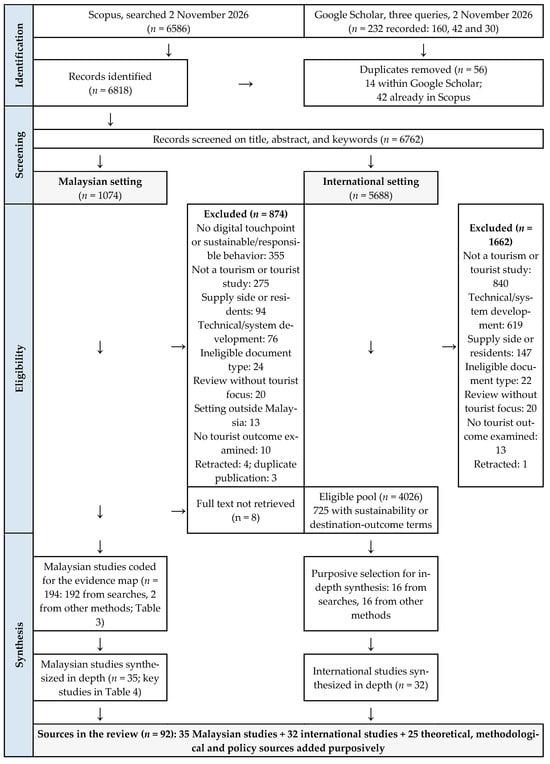
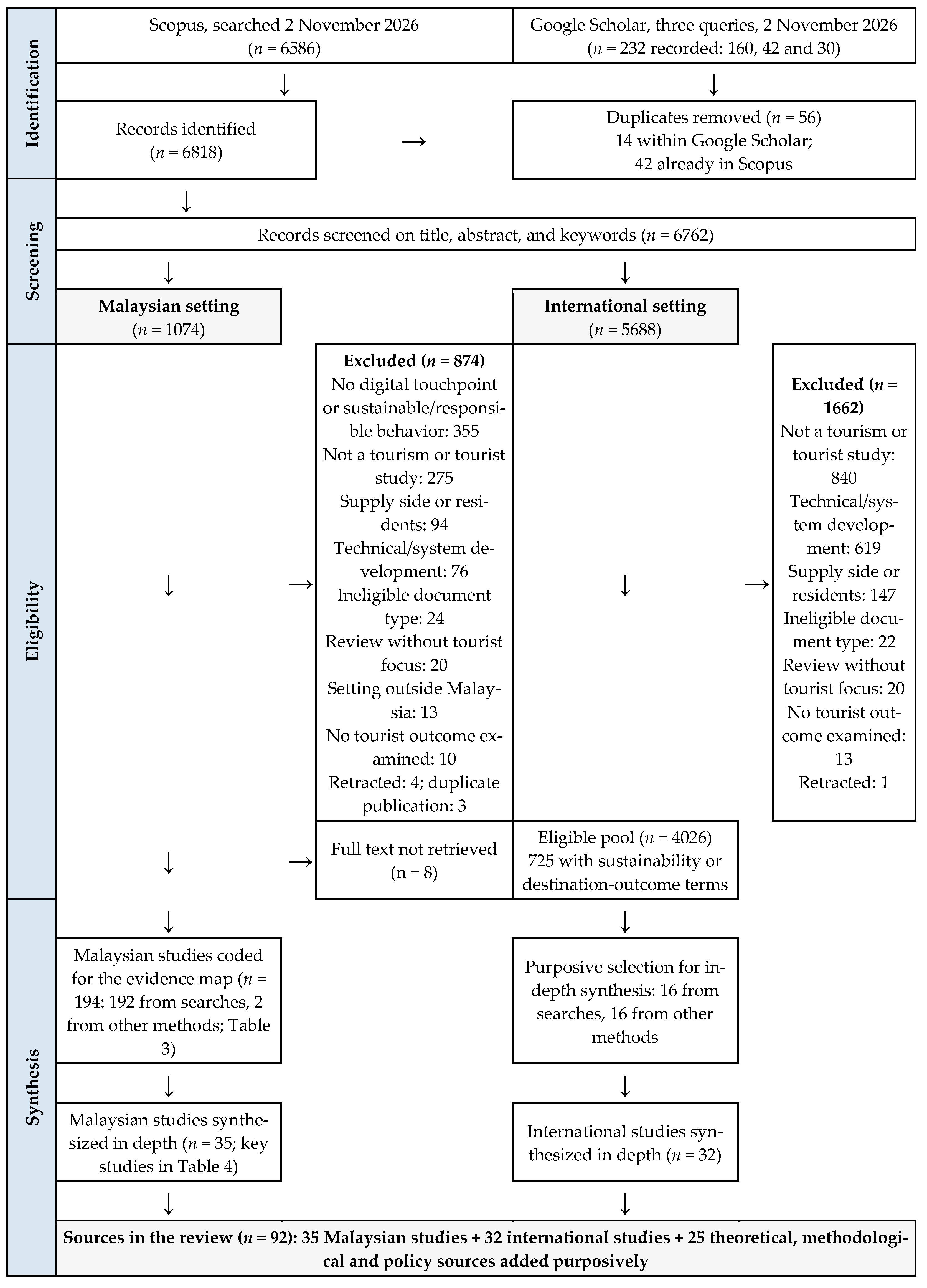
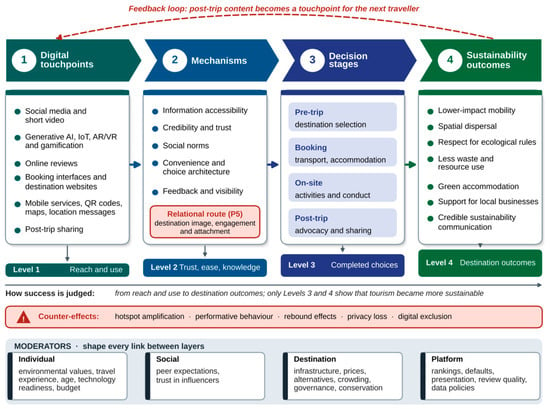
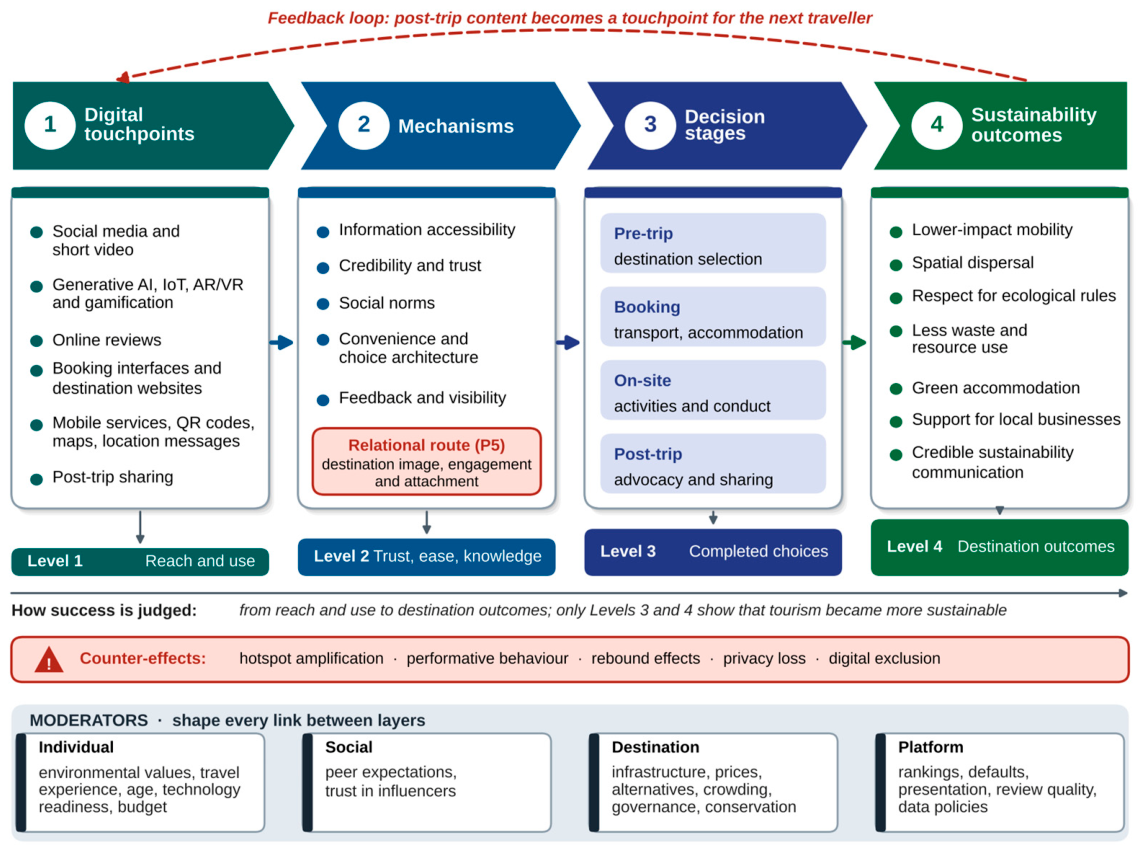

Disclaimer/Publisher’s Note: The statements, opinions and data contained in all publications are solely those of the individual author(s) and contributor(s) and not of MDPI and/or the editor(s). MDPI and/or the editor(s) disclaim responsibility for any injury to people or property resulting from any ideas, methods, instructions or products referred to in the content. |
© 2026 by the authors. Licensee MDPI, Basel, Switzerland. This article is an open access article distributed under the terms and conditions of the Creative Commons Attribution (CC BY) license.