


Abstract
Tourists’ environmental concern is rarely reflected in what they do when they travel. Digital technologies now shape how tourists search, book, stay and share, but it is unclear whether they help to close this attitude–behaviour gap. This systematic review, reported following PRISMA 2020, examines the mechanisms through which digital technologies change sustainable tourist behaviour, how strong the evidence is for each mechanism, and when individual change produces a net benefit at system level. Scopus and Web of Science were searched on 30 June 2026 for journal articles published from January 2010 onwards, and citation searching was added. Of the 156 included studies, 136 (87%) measured intentions or self-reported behaviour and 13 measured observed behaviour. Eleven of these 13 also involved real tourists in field, quasi-field or incentive-compatible designs and were graded as strong design evidence; one of the eleven found no significant difference between conditions. All eleven concern technologies that act at the moment of choice: real-time feedback, digital defaults, recommenders and real-time information, robot-delivered prompts and app-based rewards. Evidence on social media, labels, immersive media and smart destinations rests on intentions. Spillover, rebound and the technology’s own footprint are rarely measured. The review proposes the Technology-Mediated Sustainable Tourist Behaviour (TMSTB) model, which specifies and grades each relationship and sets an agenda for testing it.
1. Introduction
Tourism has fully recovered from the pandemic. International arrivals reached an estimated 1.52 billion in 2025 (4% above 2024), and tourism export revenues reached a record US$2.2 trillion (UN Tourism, 2026). In 2024 the sector accounted for around 10% of global GDP and 357 million jobs (WTTC, 2025), and it is referenced in the 2030 Agenda under targets 8.9, 12.b and 14.7 (United Nations, 2015). However, its environmental costs are growing faster than its efficiency is improving. 2024 was the warmest year on record, at about 1.55 °C above pre-industrial levels (WMO, 2025), and global emissions must fall by 42% by 2030 to keep warming within 1.5 °C (UNEP, 2024). Tourism emitted 5.2 Gt CO2e in 2019 (8.8% of the global total), and over the previous decade its emissions grew by 3.5% per year as demand grew by 3.8% per year, while efficiency improved by only 0.3% per year (Sun et al., 2024).
Sustainable tourism, in the sense of taking full account of economic, social and environmental impacts, is the accepted policy goal (UNWTO & UNEP, 2005), but implementation lags far behind. Only 27% of the climate plans submitted under the Glasgow Declaration contain specific targets, and none has yet reported actual reductions (UN Tourism, 2024). So far, sustainable tourism has mainly reduced the impact per trip or per room rather than the absolute impact.
Absolute reductions depend on demand and therefore on tourist behaviour. Although 93% of travellers say they want to make more sustainable choices (Booking.com, 2025), most leisure travellers place no value on lower flight emissions when they choose a flight (Crosby et al., 2025). This attitude–behaviour gap is well documented. Environmental concern does not translate into behaviour because tourists are away from their routines and usually do not pay directly for the resources they consume on holiday. Awareness campaigns make little difference, whereas changes to the structure of the decision do (Juvan & Dolnicar, 2014; Dolnicar et al., 2019). The critical issue is therefore less what tourists know than how the choice is presented to them at the point of decision.
Digital technology is increasingly shaping those decisions. In 2024, 68% of the world’s population was online (ITU, 2024), and searching, booking, staying and sharing are now all mediated by platforms, apps, sensors and generative AI (Carvalho & Ivanov, 2024; Sigala et al., 2024). Field experiments have shown that digital tools can influence behaviour: real-time feedback reduced hotel shower time by 25.8% (Pereira-Doel et al., 2025), pre-set offset amounts influenced the choices of over 11,000 airline customers (Berger et al., 2022), a conversational recommender led tourists to spend less time in the busiest areas (Mitas et al., 2023) and guilt-framed messages from a robot concierge led to increased towel and linen reuse in a randomised hotel trial (Alboqami & Agag, 2026). The same tools can also have the opposite effect. AI services and robots have been shown to reduce pro-environmental behaviour relative to human staff (Guan et al., 2025; H. Song et al., 2026) and frictionless, data-driven travel can stimulate the very demand growth that negates any efficiency gains (Gössling, 2021). Whether digital technology is closing the attitude–behaviour gap or widening the footprint and inequalities of tourism remains an open question.
Three gaps prevent the literature from answering this question. The first concerns what earlier reviews have evaluated. Existing reviews map the field of smart tourism (Mehraliyev et al., 2020; Ye et al., 2020; Shasha et al., 2025), focus on a single sector (Gunduz Songur et al., 2023), critique ICT without a behavioural framework (Gössling, 2021) or catalogue nudges and AI-enabled nudges (Souza-Neto et al., 2023; Syah & Binesh, 2025). Their unit of analysis is the technology or the research theme. None of them evaluates whether tourists’ behaviour actually changed, and none distinguishes observed behaviour from stated intention or weighs studies by design. The second gap is that the evidence stops at the individual. Most studies measure stated intentions or single choices and do not consider persistence, spillover, rebound or the technology’s own footprint, although a recent field study found that guests’ electricity use rose while their water use fell under the same intervention (MacAskill et al., 2026). The third gap is that the evidence is narrow. Smart tourism research is concentrated in East Asia, Europe and North America, with no country in Africa or Latin America among the 15 most productive (Shasha et al., 2025), and it focuses almost entirely on environmental behaviour, leaving the social and economic aspects largely unexamined.
This review asks three questions:
RQ1. What are the mechanisms through which digital technologies are linked to sustainable tourist behaviour, and how strong is the evidence for each?
RQ2. When do individual-level behavioural gains translate into a net benefit for the system as a whole?
RQ3. How can these mechanisms and conditions be incorporated into a framework for research and practice?
The review adds to existing knowledge in three ways. First, it changes the unit of analysis from the technology to the behavioural outcome: instead of describing which technologies have been studied, it asks which of them have been shown to change what tourists actually do, and it separates observed behaviour from stated intention for every study. Second, it grades the evidence by study design and outcome type and carries these grades through to each relationship in an explanatory model, the TMSTB model, so that empirically supported relationships are distinguished from those that remain theoretical or untested. Third, it links individual behaviour to system-level outcomes through a net-benefit test that accounts for persistence, spillover, rebound and the technology’s footprint, and it treats equity, ethics and SDG relevance as analytical dimensions. For destination managers, platform designers and policymakers, the review identifies which digital levers already have field evidence on observed behaviour (real-time feedback, digital defaults, visitor redirection and agent-delivered prompts) and which still need testing before investment.
2. Prior Reviews and the Contribution of This Review
Table 1 compares this review with the nearest earlier reviews. These reviews trace the evolution and themes of smart tourism research, examine one sector or critique ICT. None of the reviews we found assesses behavioural evidence across digital technologies or links it to system-level outcomes.
Table 1.
Prior reviews and the gap this review fills.
Two clear patterns emerge. The bibliometric and systematic reviews show that the impact of technology on tourists’ perceptions and behaviour is by far the most researched theme in the smart tourism literature (Ye et al., 2020), yet these reviews do not ask whether that influence produces sustainability gains. The reviews that do focus on sustainability either predate the current wave of AI and immersive technologies (Gössling, 2017) or are restricted to a single sector.
The comparison in Table 1 shows why existing reviews cannot answer the questions asked here. First, their unit of analysis is the technology or the research theme rather than the behavioural outcome. Smart tourism reviews map what has been studied (Mehraliyev et al., 2020; Ye et al., 2020; Shasha et al., 2025), and El Archi et al. (2023) map which technologies support sustainable destinations, but none asks whether tourists’ behaviour changed. Second, none of the reviews grades the behavioural evidence by design or separates observed behaviour from intention. Souza-Neto et al. (2023) and Syah and Binesh (2025) catalogue nudges and AI-enabled nudges, but they do not grade the strength of the behavioural evidence. This matters because intentions and self-reports overstate sustainable behaviour in tourism (Juvan & Dolnicar, 2016). Third, the reviews stop at the individual tourist. Gössling (2017, 2021) shows that the effects of technology are ambivalent and that efficiency gains can be offset, but no review links behavioural evidence to persistence, spillover, rebound and the footprint of the technology.
This review addresses these three limitations by design. It takes the behavioural outcome as the unit of analysis, grades each study by design and outcome type, and connects individual behaviour to system-level outcomes through the TMSTB model and the net-benefit test. Its contribution is therefore an evaluation of whether digital technologies change sustainable behaviour, and under which conditions, rather than another review of the technologies themselves.
3. Method
This review is reported in accordance with the PRISMA 2020 statement (Page et al., 2021). Because the study designs and outcomes were highly heterogeneous, a meta-analysis was not feasible. The evidence was therefore synthesised thematically, and each study was graded by design and outcome type (Section 3.3). The review was not pre-registered, and no protocol was prepared.
3.1. Search Strategy
Two databases, Scopus and the Web of Science Core Collection, were searched on 30 June 2026. Both searches used the same three blocks of terms, combined with AND: tourism setting, sustainable behaviour and digital technology. Scopus was searched in titles, abstracts and keywords (TITLE-ABS-KEY), and the Web of Science in the Topic field (TS), which covers titles, abstracts, author keywords and Keywords Plus. The search period ran from January 2010, the point at which smart tourism entered the academic literature, to 30 June 2026. The complete search strings were as follows.
Web of Science Core Collection (Advanced Search, 30 June 2026):
- TS=(touris* OR hotel* OR hospitality OR destination*) AND TS=(“pro-environmental” OR “sustainable behavio*” OR “carbon offset*” OR “food waste” OR overtourism OR crowding) AND TS=(digital OR smart OR app OR chatbot* OR robot* OR “artificial intelligence” OR “virtual reality” OR gamif* OR nudg* OR “eco-feedback” OR recommender OR “social media” OR “online booking” OR “carbon label*”) AND DOP=(2010-01-01/2026-06-30)
Scopus (Advanced Search, 30 June 2026):
- TITLE-ABS-KEY ( touris* OR hotel* OR hospitality OR destination* ) AND TITLE-ABS-KEY ( “pro-environmental” OR “sustainable behavio*” OR “carbon offset*” OR “food waste” OR overtourism OR crowding ) AND TITLE-ABS-KEY ( digital OR smart OR app OR chatbot* OR robot* OR “artificial intelligence” OR “virtual reality” OR gamif* OR nudg* OR “eco-feedback” OR recommender OR “social media” OR “online booking” OR “carbon label*” ) AND PUBYEAR > 2009 AND ORIG-LOAD-DATE BEF 20260701 AND ( LIMIT-TO ( DOCTYPE , “ar” ) ) AND ( LIMIT-TO ( LANGUAGE , “English” ) )
The Scopus search returned 636 records. All Web of Science records were exported (1134 unique records from two exports made on the same day), of which 1063 fell within the date range. Document type and language were not restricted in the Web of Science query; records that were not journal articles (n = 313) or not in English (n = 6) were removed before screening (Figure 1).
Figure 1.
PRISMA 2020 flow diagram of study selection. Source: Authors’ own work, following Page et al. (2021).
Citation searching was used to find eligible studies that the database strings missed, mainly because their titles and abstracts did not contain the search terms. The reference lists of the included studies and of the earlier reviews in Table 1 were checked, and only studies published by 30 June 2026 were considered. Candidate studies were assessed in full text against the same eligibility criteria by the same two authors. Eleven studies were identified and included in this way. In Figure 1 they are reported in a separate column, so that records, reports assessed in full text and included studies are counted separately for the database and citation-searching routes.
3.2. Eligibility Criteria and Study Selection
Studies were eligible if they (1) reported primary empirical research; (2) involved tourists, hotel guests, visitors or prospective tourists in a tourism, travel or hospitality setting; (3) examined a digital technology that delivered or structured the intervention or was itself the exposure; and (4) measured an environmental, social or economic sustainability behaviour, intention or choice. Studies of employees, firms, residents or whole destinations, studies in which the technology was only a means of measuring behaviour, non-digital interventions, and reviews or conceptual papers were excluded.
Figure 1 shows the selection process. The searches returned 1699 records within the date range (Scopus 636, Web of Science 1063). After the removal of 323 duplicates and 319 Web of Science records that were not journal articles (n = 313) or not in English (n = 6), 1057 records were screened. Title screening excluded 816 records, mainly because they did not concern sustainable tourist behaviour (n = 383), were not set in tourism (n = 269) or did not involve digital technology (n = 110). Abstract screening excluded a further 94, mainly because digital technology was not the exposure (n = 29), no sustainable behaviour outcome was measured (n = 27) or the participants were not tourists, guests or visitors (n = 24). The full texts of the remaining 147 reports were assessed against the eligibility criteria, with particular attention to the design, sample and outcome of studies that appeared to meet the strong evidence criteria (Section 3.3). Two reports were excluded at this stage: in one, the field trial described in the abstract was not reported in the full text, and in the other, the field experiment was a computational evaluation of route quality with no measurement of tourist behaviour. This left 145 studies from the databases (125 from Scopus, 81 of which were also in Web of Science, and 20 from Web of Science only). With the 11 studies from citation searching, 156 studies were included.
Screening followed the same procedure at each stage. Two authors independently screened all records, first on title and then on abstract, and then compared their decisions; the same procedure was used for the full-text assessment, for the coding of each study and for its evidence grade. Disagreements were resolved by discussion until consensus was reached, and the consensus decision was recorded as the final decision at each stage. This procedure reports what PRISMA 2020 asks for on study selection, namely how many reviewers screened each record and report and whether they worked independently, together with how disagreements were resolved (Page et al., 2021). Because the grading criteria (C1–C3) are binary and verifiable against each study’s design and outcome, every study graded strong was confirmed against its full text. The decision and reason for every record (with the Scopus and Web of Science records merged into a single list), together with the coding and grade of each included study, are provided in the Supplementary Materials, so that every classification can be checked independently.
3.3. Data Extraction and Evidence Grading
A standard coding form was used for every included study. It recorded the touchpoint (the eight categories in Table 2), the sustainability dimension (environmental, social or economic; a study could have more than one), the design (survey; scenario, online or laboratory experiment; field or quasi-field experiment; qualitative or mixed methods), the outcome type and the three grading criteria described below. For the studies graded strong, the setting, design and sample, technology, observed outcome and effect, and main threat to validity were also extracted (Table 3).
Table 2.
Included studies by touchpoint and strength of evidence (n = 156).
Table 3.
Evidence matrix of studies graded strong.
Outcome type distinguishes observed behaviour from stated responses, because intentions only partly translate into behaviour (Sheeran & Webb, 2016). Four outcome types were defined. Observed behaviour is behaviour recorded when it occurred by a device, system or observer, or a real choice with real consequences, rather than reported by the participant afterwards; examples are metered water or energy use, recorded bookings or offset purchases, tracked movement, app-logged activity verified with receipts and an actual donation choice. Self-reported behaviour is a participant’s report of behaviour already performed. Behavioural intention is a stated plan, willingness or likelihood to act. Hypothetical choice is a choice made in a scenario or choice experiment without real consequences. Each study was assigned one outcome type on the basis of its primary behavioural outcome; self-reported behaviour and intention were combined into one category in the analysis.
Evidence was graded at two levels. At the study level, three criteria were applied. C1 (directness): the study involved real tourists, guests or visitors in a tourism context. C2 (design): it was a field or quasi-field intervention study or an incentive-compatible experiment, designs that reduce selection and hypothetical bias (Shadish et al., 2002; Harrison & List, 2004). C3 (outcome): it measured observed behaviour rather than intention or self-report, which overstate sustainable behaviour in tourism (Juvan & Dolnicar, 2016; Morales et al., 2017; Viglia & Dolnicar, 2020). Studies that met all three criteria, as confirmed against the full text, were graded strong; all other studies were graded emerging. Measuring observed behaviour (C3) is therefore necessary but not sufficient for a strong grade: of the 13 studies that measured observed behaviour, 11 also met C1 and C2 and were graded strong, whereas the other two did not meet C1 or C2 and were graded emerging (Section 3.4).
The grades describe the design and outcome measurement of a study, that is, its capacity to show whether a technology changed observed tourist behaviour. They are not a rating of overall evidence quality or risk of bias, and they say nothing about whether an intervention was effective. The approach borrows the GRADE logic of rating evidence by risk of bias and directness (Guyatt et al., 2008), but the other GRADE domains (inconsistency, imprecision and publication bias) were not assessed. A study can therefore be graded strong and still report no significant effect, as in the case of Coghlan (2022) (Table 3). Table 3 also records the main threat to validity of each strong study.
At the level of the TMSTB model, each relationship was graded from the studies that tested it, taking the direction of their results into account. A relationship was graded supported when at least two strong studies found an effect in the same direction and no strong study contradicted them; preliminary when it rested on a single strong study with a significant effect; emerging when it rested only on emerging studies or when the only strong study found no significant effect; and untested when no tourism study had examined it. Where studies pointed in opposite directions, the relationship was not graded above preliminary, and the conflicting evidence is reported in Section 5 and Section 6.1, which also compares this rule with a more lenient rule under which one strong study is sufficient for the highest grade.
The studies were then synthesised thematically (Thomas & Harden, 2008) into the themes of Section 5, and the TMSTB model was developed abductively from the coded evidence in four steps. First, the touchpoints were grouped by the mechanism through which the technology was expected to act, using the studies’ own theoretical framing and the theories in Section 4.2; this produced the information, normative and affective mechanisms. Second, outcomes were separated into behavioural outputs at the level of the tourist and system outputs at the level of the destination. Third, factors that the studies reported as conditioning an effect were grouped into design moderators and individual moderators. Fourth, each relationship was graded with the rule above. Relationships implied by theory but not tested in any tourism study were kept in the model and graded untested, so that the gaps remain visible.
3.4. Characteristics of the Included Studies
The field is new and growing rapidly. Of the 156 studies, 148 (95%) were published from 2020 onwards, and 98 were published in 2025 or the first half of 2026. Surveys are by far the most common design (n = 86), followed by scenario, online or laboratory experiments (n = 38) and field or quasi-field experiments (n = 18); the remaining 14 are qualitative or mixed-methods studies. Most studies measure intention or self-reported behaviour (n = 136; 87%); 13 measure observed behaviour and seven measure hypothetical choice. The evidence is overwhelmingly environmental (n = 137); 23 studies examine social and four economic outcomes. Because a study can examine more than one dimension, these figures overlap: 25 studies examine at least one social or economic outcome, and two of these examine both.
Of the 13 studies that measured observed behaviour, 11 met all three criteria and are graded strong. The remaining 145 studies are graded emerging (Table 2); they include the two observed-behaviour studies, one on a booking interface and one on social media, that did not meet C1 or C2. The strong evidence is concentrated in in-stay feedback (five studies) and visitor-flow tools (two studies), with one study each on booking defaults, AI agents, apps and immersive media. None of the 60 studies on social and digital media or the seven on smart destinations is graded strong. Table 3 presents the strong studies as an evidence matrix. Throughout the review, the 13 observed-behaviour studies and the 11 strong studies are reported separately: the first number describes outcome measurement only, and the second describes outcome measurement combined with directness and design.
4. Conceptual and Theoretical Background
4.1. Smart Tourism and Sustainable Tourist Behaviour
Smart tourism is a real-time ecosystem in which data from the tourist, the provider, the infrastructure and the environment are sensed, processed and then fed back via apps, agents and immersive media (Buhalis & Amaranggana, 2015; Gretzel et al., 2015). It has three layers: the sensing layer (IoT sensors, GPS, apps and social media which generate data on behaviour and the environment), the processing layer (AI which takes that data and turns it into forecasts, recommendations and alerts) and the interaction layer (the apps, agents and displays through which the tourist receives and responds to the system). For promoting sustainable behaviour, the interaction layer matters most, because it is in this layer that the tourist is presented with prompts, defaults and information at the point of choice. The governance of this layer determines whose interests the data serves (Gretzel et al., 2015) and in this layer the tourist is a co-creator rather than a passive user (Femenia-Serra et al., 2019).
Sustainable tourist behaviour covers environmental (energy and water conservation, low-carbon travel), social (respect for local people, avoiding the most crowded sites) and economic (buying local) aspects.
4.2. Theoretical Foundations
Four families of theory cover different stages of one pathway (Figure 2). Adoption theories explain exposure: people act on tools that they find useful and easy to use (Davis, 1989) and on information they find credible (Sussman & Siegal, 2003). Normative theories explain obligation: the theory of planned behaviour (Ajzen, 1991), value-belief-norm theory (Stern, 2000) and the norm activation model (Schwartz, 1977) all relate awareness of consequences and social norms to personal norms. Behaviour-design theories explain action: nudges change behaviour by altering the choice architecture without restricting options (Thaler & Sunstein, 2008); behaviour requires motivation, ability and a prompt at the same time (Fogg, 2009), and external rewards can undermine intrinsic motivation (Deci et al., 1999). System-level theories explain whether individual gains add up: efficiency gains can be counteracted by induced consumption (Sorrell & Dimitropoulos, 2008), and innovations matter only if they reconfigure the wider regime (Geels, 2002).
Figure 2.
Integrated theoretical pathway underpinning the TMSTB model. Source: Authors’ own work.
No single theory covers the entire pathway. Adoption theories explain who is exposed but not why exposure changes behaviour. Normative theories explain intentions but not observed behaviour. Behaviour-design theories explain behaviour but not its aggregate impact, and system theories explain aggregate impact but not the individual decision. The TMSTB model therefore combines the theories rather than treating them as alternatives, and Table 4 shows which link of the model each theory explains. A digital intervention can succeed on one link and fail on the next; for example, it may be widely adopted but have no effect on intentions, or it may change behaviour but lead to more travel.
Table 4.
Theoretical foundations of the TMSTB model.
The theories complement one another because their constructs map onto different parts of the model. Perceived usefulness and source credibility (Davis, 1989; Sussman & Siegal, 2003) determine whether a tourist attends to and trusts a touchpoint, which is the precondition for information activation. Awareness of consequences, social norms and personal norms (Schwartz, 1977; Ajzen, 1991; Stern, 2000) are the constructs through which normative activation works, for example when a robot or an app conveys what other guests do. Presence and moral emotion are the constructs of affective activation. Defaults, prompts, timing, motivation and ability (Thaler & Sunstein, 2008; Fogg, 2009) describe how the design of a touchpoint determines whether activation becomes action, and intrinsic motivation and crowding out (Deci et al., 1999) describe whether action persists after rewards end. Induced consumption and regime change (Geels, 2002; Sorrell & Dimitropoulos, 2008) describe whether individual action becomes a system-level gain.
The theories also make competing predictions, and these help to explain divergent findings. Normative theories predict that behaviour changes through intentions and norms, whereas nudge theory predicts that defaults and feedback can change behaviour without any change in intention. The field evidence reviewed here fits the second prediction better, because the strong effects come from feedback, defaults and redirection rather than from interventions that first change intentions. Fogg’s model treats rewards as prompts that raise motivation, whereas self-determination theory predicts that external rewards can undermine intrinsic motivation once they are withdrawn; the reward app studied by Mundi (2025) is consistent with the first prediction in the short term, but persistence has not been tested. Finally, behaviour-design theories treat each change in behaviour as a gain, whereas rebound theory predicts that savings in one behaviour can be offset elsewhere. An integrated model is needed because any single theory would either ignore these competing predictions or stop before the system level.
4.3. The Post-COVID-19 Context
The pandemic has accelerated the uptake of contactless and app-based services (Sigala, 2020) and has shown how rapidly tourism demand and its impacts can shift (Gössling et al., 2021). However, adoption is not the same as sustainable behaviour, and the shift has deepened the exclusion of people without access to digital technologies. The post-pandemic digital environment is therefore treated as a contextual condition within the TMSTB model.
5. Thematic Synthesis
Throughout this section, the outcome type of each finding is stated: observed behaviour, self-reported behaviour, intention or hypothetical choice (Section 3.3). Within each theme, evidence on observed behaviour is presented first, followed by evidence on intentions and self-reports, so that the two are not combined.
5.1. Technology as an Enabler of Pro-Environmental Behaviour
5.1.1. Feedback, Carbon Information and Defaults
Real-time feedback during the stay has the strongest evidence in this review, and all of it concerns observed behaviour. Smart shower meters reduced shower energy use by 11.4% in six Swiss hotels whose guests had not opted in (Tiefenbeck et al., 2019). Covert field experiments with shower feedback devices reduced shower time by 12.1% in one hotel (Pereira-Doel et al., 2019) and water runtime by 25.8% across six properties, with persuasive messages adding nothing to the effect of feedback (Pereira-Doel et al., 2025). In an Australian ecolodge, signage with tablet and QR-code feedback reduced metered water use by 13.8% (MacAskill et al., 2026). In self-contained cottages, persuasive communication combined with smart-meter eco-feedback reduced guests’ metered use of electricity, gas and water without affecting satisfaction (Warren et al., 2017). Information alone did not work: a leaflet on water scarcity did not reduce guests’ metered water use in showers, taps or toilets (López-Rodríguez et al., 2025).
These findings are consistent with behaviour-design theory. Real-time feedback makes consumption visible at the point of consumption, acts as a prompt when both motivation and ability are present (Fogg, 2009) and operates without guests having to opt in or pay. Static information, by contrast, comes either before or after the decision and competes with the hedonic aspects of the holiday. The lack of any additional effect from the persuasive messages suggests that once consumption is made visible, telling the guest why they should save makes little difference (Pereira-Doel et al., 2025).
Evidence on information at the point of booking is weaker and rests mainly on hypothetical choices and intentions. Tourism carbon labels are rarely designed to influence choice (Gössling & Buckley, 2016). Emission labels and green badges affect hypothetical choices and booking intentions (Assaker & O’Connor, 2023; Godovykh et al., 2024; Meske et al., 2024; Khan et al., 2025), but most leisure travellers do not value lower emissions. In a choice experiment based on the Google Flights interface (hypothetical choice), business travellers and an emissions-conscious subset of leisure travellers (about 42%) were willing to pay for lower emissions, whereas the price-conscious majority were not (Crosby et al., 2025). Expressing emissions as tangible equivalents rather than kilograms of CO2 reduced the intention to book high-emission flights (Boeuf & Flipo, 2026). Badges work mainly when they are credible: perceived credibility increased green image and inspiration, which in turn predicted booking intention (Khan et al., 2025). A working paper using observed US booking data, which is not peer-reviewed and is therefore not among the included studies, found that emissions display made travellers about 22% more responsive to differences in emissions (Lohawala & Teng, 2026). Information at the point of booking may therefore work for a motivated minority, but a structural lever such as a default is likely to be needed to reach the majority.
Changing the default has a stronger effect on observed choices. Among more than 11,000 airline customers who chose to offset, 43% kept the pre-set amount (Berger et al., 2022). The effect diminished as the cost of the default increased and approached zero at around €800. Non-digital field evidence points the same way: defaults and shared savings change behaviour, whereas awareness appeals do not (Araña & León, 2013; Dolnicar et al., 2019). Nudges did not increase actual offset purchases in either of two randomised online trials with students (Tyers, 2018), a study that measured observed purchases but did not involve tourists making a real booking. It is not known whether any of these changes persist beyond a single stay or booking, because none of the studies followed up its participants.
5.1.2. Gamification
Gamification generally has positive but context-dependent effects (Hamari et al., 2014). The strongest tourism evidence comes from a randomised trial in which tourists given an app with financial rewards for environmentally friendly activities engaged in more such activities and spent more with local businesses than tourists given the standard app (Mundi, 2025). The effect was still present in the two days after the rewards ended. The activities were logged by the participants in the app and supported by uploaded receipts, which is why the study is classified as observed behaviour; because only the rewarded group had an incentive to log, this is its main threat to validity (Table 3). A hotel quasi-experiment also found a link between gamification affordances and green behaviour (Wang & Guo, 2025). In a self-reported study, satisfaction with a gamified recycling app predicted recycling, but expectations of prizes could be counterproductive when users did not see them as useful for the promoted behaviour (Aguiar-Castillo et al., 2019); rewards may also undermine intrinsic motivation (Deci et al., 1999). A wildlife tour that used web and mobile follow-up had little effect on conservation action three months later, apart from one social media action (Wheaton et al., 2016). Gamified and app-based tools can therefore help tourists start a behaviour, but whether the effect lasts beyond the rewards has not been tested.
5.1.3. Social Norms, Agents and Robots
Descriptive norms are a powerful tool for influencing conservation behaviour. In a hotel setting, cards describing what previous guests in the same room had done increased observed towel reuse (Goldstein et al., 2008). Digital channels are well suited to delivering such normative information at the point of choice. The strongest evidence comes from a 12-week cluster-randomised trial in eight Chinese hotels, in which guilt-framed messages from a robot concierge led to significantly higher observed towel and linen reuse and more housekeeping opt-outs than neutral messages, through anticipated guilt and perceived social presence (Alboqami & Agag, 2026). Other studies measured intentions. Social feedback from a virtual assistant increased normative intention (Tussyadiah & Miller, 2019) and green influencers increased stated support for environmental initiatives (Ding et al., 2026).
The wider evidence on robots and AI agents is divided, and almost all of it concerns intentions or self-reports. Surveys link interactive robots and anthropomorphic chatbots with higher reported pro-environmental behaviour. Interaction with service robots increased guests’ psychological ownership of the hotel, which predicted self-reported pro-environmental behaviour (Duan et al., 2025), and interaction with hotel chatbots was linked to greater willingness to behave pro-environmentally through hedonic motivation and a positive chatbot experience (Singh & Kunja, 2026). Spoken robot feedback outperformed on-screen text in some conditions (Chang et al., 2025). In contrast, AI services reduced consumers’ social arousal and thereby their pro-environmental behaviour (Guan et al., 2025), human service outperformed robot service (H. Song et al., 2026), and diners wasted more food when served by robot chefs (Wen & Huang, 2026).
Three differences between these studies help to explain why similar technologies produce opposite results. The first is the outcome measured: the only study of observed behaviour, the cluster-randomised hotel trial, found a positive effect (Alboqami & Agag, 2026), whereas both the positive and the negative results from surveys and scenario experiments rest on reported behaviour or willingness. The second is the role the agent plays. When the agent delivers a normative or guilt-based message, it adds a source of social presence and accountability; when it replaces human staff without such a message, it can remove the social presence that sustains norms (Guan et al., 2025; H. Song et al., 2026). The third is the setting: the negative findings come from general service encounters and dining, whereas the positive field result concerns a specific conservation request (towel and linen reuse). These explanations are interpretations of differences between studies rather than tested moderators, and they are therefore posed as a research question (FRQ2).
Social and digital media form the largest group of studies (60). Only one of them measured observed behaviour, and none met all three criteria; the others are surveys and scenario experiments of intention or self-report. They link social media to stronger pro-environmental intentions (e.g., Han et al., 2018; Hussain et al., 2026), but the same media can also normalise high-impact behaviour. Social media use was only weakly associated with overtourism through concentrated tourist flows (Q. Song & Wondirad, 2023), and exposure to food content was associated with conformity and irrational food consumption, which leads to waste (Zhang et al., 2025). Platforms can also use behavioural data to predict and influence behaviour (Gössling, 2021). Whether media exposure changes observed behaviour has not yet been tested.
5.2. AI-Driven Personalisation and Visitor Flows
Recommender systems strongly influence what tourists see and what they choose (Borràs et al., 2014). They can already take into account transport mode and crowding (Zheng et al., 2020), but the objectives of the platform are driven by commercial conversion and there has been no real-world testing of sustainability-weighted recommendations. The strongest evidence concerns crowding and access, and it is based on observed behaviour. In a field experiment with a conversational recommender, tourists who were given recommendations to go to less-visited areas spent significantly more time in those areas and significantly less time in the more crowded areas, without any loss of satisfaction (Mitas et al., 2023). In the Wadden Sea, about half of the visitors who read a tidal information pillar with real-time signage turned back at high tide, although the study had no control group (Wielenga et al., 2024). Decoy options have been shown to have a greater impact on where people go than when (Chvirova et al., 2026) and access to real-time crowding information on social media increased stated willingness to change plans (Shen, 2025). It is not known whether redistributing visitors simply moves crowding to another location. Reservation and dynamic pricing systems may leave tourists who do not have a smartphone or are not digitally literate with the least desirable time slots (Minghetti & Buhalis, 2010).
Conversational agents can also extend their influence beyond the trip itself. A chatbot which was used to prompt tourists to engage in pro-environmental behaviour whilst on holiday was associated with greater self-reported use of sustainable transport at home (Majid et al., 2026). The control group in that study had not visited the destination and the data were self-reported.
5.3. Digital Platforms and Immersive Media
IoT sensors allow for the continuous monitoring of resource consumption, air quality and levels of crowding (Novera et al., 2022) but they mainly benefit the manager rather than the tourist. Where meters are linked to guest feedback, they reduce resource use (Section 5.1.1); in the absence of such guest feedback the benefit is largely operational (e.g., leak detection). When smart water meters provided feedback to the establishment rather than to guests, observed water use did not decrease (Padrón-Fumero et al., 2025).
AR is increasingly being used at heritage sites (tom Dieck & Jung, 2018), but its link to actual conservation behaviour has not been examined. In the tourism context, 23 studies have examined the relationship between immersive media and pro-environmental values or behaviour, and almost all of them used surveys or scenario experiments (e.g., Su et al., 2024; Zhu et al., 2025). The only field study with an observed outcome compared a VR game with a 360° VR video on reef tours and recorded passengers’ actual choice of a conservation donation as their thank-you gift (Coghlan, 2022). In both conditions, most passengers chose the donation, and the choice of gift did not differ significantly between the two groups (p = 0.096). Because both conditions were immersive, the study cannot isolate the effect of immersion; it meets the strong design criteria but provides no evidence of an effect. Results from other experiments are mixed. One laboratory study found that VR reduced paper use (Ahn et al., 2014), and a full VR experience with negative framing produced the highest conservation donations (Nelson et al., 2020). In a non-tourism field experiment, however, VR made no difference to conservation behaviour compared with 2D video (Banerjee & Ferreira, 2024). The VR viewers in that study did, however, engage more with the conservation content online three months later. Whether immersion leads to action rather than avoidance, and whether it justifies its cost and footprint, remains an open question.
5.4. Barriers, Paradoxes and System Effects
5.4.1. Spillover and Rebound
Efficiency gains do not reduce absolute impact if they are offset by increased consumption (Sorrell & Dimitropoulos, 2008). Aviation illustrates this: fuel efficiency has improved substantially, yet total emissions continue to rise (Peeters et al., 2016; IATA, 2025). The first tourism field evidence of spillover within a stay has now been reported: under real-time feedback, guests’ observed water use fell, while their electricity use rose by 7.3%, although this increase was not statistically significant (MacAskill et al., 2026). No tourism study has examined rebound in travel frequency or hotel occupancy. Both forms of rebound are plausible. Digital booking lowers the time and search costs of travel, and efficient smart rooms may allow hotels to raise occupancy, so absolute consumption could remain unchanged even if consumption per stay falls. Measuring these effects requires data at the destination or firm level rather than at the level of the individual guest.
5.4.2. Equity, Privacy and Governance
This subsection separates what the reviewed evidence shows from issues that are proposed here for future investigation. None of the eleven strong studies reports effects by age, income or digital literacy, so differences between these groups have not been established by the reviewed studies. The relevant evidence comes from the wider literature: 2.6 billion people were still offline in 2024 (ITU, 2024), inequalities in skills and benefits persist even where access exists (van Deursen & van Dijk, 2019), and reservation and dynamic pricing systems can disadvantage tourists without smartphones or digital skills (Minghetti & Buhalis, 2010). On this basis, three groups are proposed as being at particular risk of exclusion. These are hypotheses for future research, not findings of this review:
- Older tourists, who may prefer human contact and may therefore be excluded from app-only information, timed entry and digital eco-incentives;
- Low-income travellers, for whom device, data and roaming costs, app-gated discounts and dynamic pricing may make sustainable options more expensive;
- Tourists with low digital literacy or language barriers, for whom complex interfaces and consent flows may prevent use, since a nudge cannot work if the tool is not understood.
If these risks are confirmed, equity-sensitive design would require non-digital channels for essential services, defaults that work without any user action, multilingual and low-bandwidth interfaces, and monitoring of uptake by tourist segment. Whether effects differ by age, income and digital literacy is set out for testing as FRQ4 (Section 6.3).
Personalisation also depends on data, and here the reviewed evidence concerns stated disclosure rather than observed behaviour. In a survey of 685 travellers, privacy concern did not prevent the disclosure of behavioural data, whereas willingness to share biometric data depended on the expected benefits (Ioannou et al., 2020), and trust in the provider weakened the effect of privacy concern on disclosure (Ioannou et al., 2021). It is therefore proposed, but not yet tested, that personalised sustainability nudges may mainly reach tourists who trust the provider (FRQ5). The remaining governance issues are conceptual rather than empirical. Opaque algorithms raise the question of who decides what counts as ‘sustainable’ and whether rankings can be greenwashed, and sustainability monitoring can become surveillance (Kitchin, 2016; Gössling, 2021). Privacy by design, aggregation of data by default, independent auditing of sustainability rankings and restrictions on secondary use would be consistent with the governance dimension of smart tourism (Gretzel et al., 2015).
5.4.3. Autonomy and Transparency of Digital Nudges
Defaults and feedback are effective partly because they work without requiring deliberate thought, which raises ethical questions. Nudges are generally considered ethically acceptable when they are transparent and do not remove any options (Thaler & Sunstein, 2008; Hansen, 2016). Digital nudges, however, can be personalised, continuous and invisible. The EU AI Act requires that people be informed when they are interacting with an AI system (European Union, 2024), which is directly relevant to chatbots and AI concierges. Sustainability nudges in tourism should therefore be transparent and easy to reverse, and their unintended consequences should be evaluated, including a possible loss of felt responsibility when AI agents replace human staff (H. Song et al., 2026). These are normative recommendations; none of the reviewed studies evaluated the transparency or reversibility of a nudge.
5.4.4. The Technology’s Own Footprint
Data centres, networks, devices and AI models have operational and embodied emissions (Belkhir & Elmeligi, 2018; Luccioni et al., 2024) although estimates vary widely (Freitag et al., 2021). A technology delivers net benefit only if the emissions it avoids, over the period the change lasts, exceed its life-cycle emissions and any rebound it induces:
NB = (ΔE × D) − (Lm + Lo) − R
All terms are in kg CO2e over the same accounting period. ΔE is the emissions avoided per unit of use (e.g., per stay or per booking) net of any measured spillover to other resources; D is the number of units over which the change is sustained; Lm is the share of embodied emissions of the devices and infrastructure that are allocated to the intervention on the basis of lifetime and use; Lo is operational emissions over the same period; and R is emissions from induced consumption (rebound). Non-carbon outcomes (e.g., water saved, crowding reduced, local income) are reported as separate indicators rather than being converted into the equation. The test is a conceptual accounting framework rather than a validated measurement model. For example, a tool that avoids 2 kg CO2e per trip over 10,000 trips saves 20 tonnes per year; if it emits 5 tonnes and induces 5 tonnes of rebound, the net saving is halved to 10 tonnes; and if the effect lasts for only half of the trips, the net saving is zero. Very few tourism studies report any term other than ΔE. In practice, the test favours lightweight interventions (defaults and simple feedback) over compute-intensive experiences with a similar effect, as well as long hardware lifespans and low-carbon hosting.
To make the test usable in empirical research, four operational criteria are specified, following the logic of life-cycle assessment (ISO, 2006):
- Functional unit: The unit of tourism service to which all terms refer, such as one guest night, one booking or one visitor day, so that results can be compared across interventions.
- System boundary: The targeted behaviour; other resource uses of the same tourists during the same stay or trip, to capture spillover; the devices, networks and data services required by the technology, for embodied and operational emissions; and changes in demand induced by the intervention, for rebound. Behaviour outside the trip, such as at home, is reported separately unless it is measured.
- Time horizon: The period over which the change in behaviour is observed, which should cover at least the stay or trip and a follow-up after the intervention ends; embodied emissions are allocated to the same period in proportion to the share of the equipment’s lifetime that it covers.
- Decision rule: An intervention is classified as producing a net benefit when NB is greater than zero at the lower bound of the uncertainty range of ΔE, after all measured terms are included. When a term is not measured, the result is reported as an individual-level behavioural outcome, not as a system-level gain.
These criteria separate two kinds of outcome that the literature often treats as one. Individual-level behavioural outcomes, such as shorter showers or towel reuse, are what the reviewed field studies measure. Aggregate environmental outcomes, such as a destination’s total emissions or water use, also depend on how many tourists are reached, how long the change lasts and whether savings are offset elsewhere. No included study linked an observed change in tourist behaviour to an aggregate environmental outcome at destination level, so the system-level part of the test cannot yet be applied to the reviewed evidence and remains a framework for future studies (FRQ6).
5.5. Generative and Agentic AI
Generative AI is moving travel planning from tools that support a decision towards agents that make it (Carvalho & Ivanov, 2024; Sigala et al., 2024). When an agent proposes a single itinerary, that itinerary becomes the default, so whether the agent’s objective function includes carbon or crowding becomes a governance issue. No included study has examined the effect of such agents on sustainable tourist behaviour, which makes this a research priority. The evidence on defaults indicates why it matters: if a pre-selected offset can shift the choices of thousands of airline customers (Berger et al., 2022), an agent that pre-selects an entire itinerary could shift far more, in either direction. This is an inference from the evidence on defaults, not a finding about AI agents.
5.6. Social and Economic Dimensions and Regional Balance
The evidence is also unbalanced across dimensions and regions. Of the 156 studies, 137 examine environmental behaviour, 23 social behaviour and only four economic behaviour, such as spending with local businesses (Mundi, 2025). Social outcomes are studied mainly through residents: smart destination development has been associated with higher resident life satisfaction (Wei et al., 2024), and platform intermediation can channel revenue to global firms rather than to local businesses (Gössling, 2021). Technologies designed to direct tourists to local businesses are therefore relevant, but no included study has measured their effect on observed behaviour. Geographically, smart tourism research as a whole, not only the sample of this review, is concentrated in East Asia, Europe and North America (Table 5). Among the eleven strong studies, nine were conducted in Europe or Australia or on a European airline website (Table 3); the other two, both published in 2025–2026, were conducted in Chinese hotels and with Indian tourists. Most Asian studies are still surveys and scenario experiments, and very few studies come from Africa or Latin America. Because infrastructure, payment systems and social norms differ across regions, the grades in this review should be treated as provisional outside the regions in which the evidence was generated.
Table 5.
Regional share of smart tourism publications (15 most productive countries).
5.7. Cross-Cutting Synthesis
Comparing findings across studies, rather than within themes, shows a consistent pattern. All eleven strong studies share one feature: the technology acted on the decision environment at the point of action. Five provided real-time feedback on resource use, two redirected visitors through recommendations or real-time information, one used a default, one used a robot to deliver a prompt, one used an app to reward behaviour, and one placed a VR game immediately before a donation decision. Ten of the eleven found effects in the expected direction; the exception was the VR study, which found no significant difference between two immersive conditions (Coghlan, 2022).
The size of the effects varied with the cost of acting. In the feedback studies, where acting cost the guest nothing, the targeted resource use fell by between about 11% and 32% (Tiefenbeck et al., 2019; Pereira-Doel et al., 2019, 2025; MacAskill et al., 2026). By contrast, the effect of a pre-selected carbon offset fell as its price rose and approached zero at the highest levels (Berger et al., 2022). Adding persuasive messages to real-time feedback produced no further reduction (Pereira-Doel et al., 2025), which suggests that the information delivered at the moment of action, rather than its persuasive content, produced the effect. Where outcomes beyond the targeted behaviour were measured, part of the gain was offset, because electricity use rose while water use fell (MacAskill et al., 2026).
The same technologies also appear more effective when outcomes are stated than when they are observed. Surveys link social media, labels, chatbots and immersive media to stronger intentions (Section 5.1, Section 5.2 and Section 5.3), but the only tourism field test of immersive media found no difference between conditions. AI agents increased observed conservation when they delivered a norm-based prompt (Alboqami & Agag, 2026), whereas studies outside the field setting found that AI service can weaken social arousal and pro-environmental behaviour (Guan et al., 2025; H. Song et al., 2026). The direction of an effect therefore appears to depend less on the technology category than on what the technology is designed to do at the moment of choice and on whether the outcome is stated or observed. Across all studies, persistence, spillover, rebound, footprint and distribution are almost never measured together, so the field cannot yet determine whether technology-driven gains are offset elsewhere.
6. The TMSTB Model
The TMSTB model (Figure 3) was derived from the coded evidence in the four steps described in Section 3.3. Its central proposition is that digital technology changes sustainable tourist behaviour mainly by altering the decision environment at the moment of choice, and that a change in behaviour becomes a sustainability gain only if it is not cancelled out by spillover, rebound and the technology’s own footprint at system level. The model specifies four types of relationship. (1) Sequential mediation: Touchpoints affect behaviour only through at least one activation mechanism (touchpoint → mechanism → behavioural output), and behavioural outputs affect system outputs only after aggregation across tourists and over time (behavioural output → system output). (2) Simultaneous mechanisms: The three mechanisms are not stages; one touchpoint can activate more than one mechanism at the same time, for example a feedback display that also compares the guest with other guests, and their effects are expected to add up. (3) Moderation: Design moderators and individual moderators act on the links from mechanisms to behaviour rather than on the touchpoints; design moderators determine whether activation becomes action, and individual moderators determine whom it reaches. (4) Feedback: System outputs, including spillover, rebound and footprint, feed back to the design of touchpoints. The context and governance layer conditions which touchpoints are available and who benefits. The line styles in Figure 3 show the evidence grade of each relationship, assigned with the rule in Section 3.3 and set out in Table 6.
Figure 3.
The TMSTB model, graded by strength of evidence. Note: Line styles show the evidence grade of each relationship (Section 3.3; Table 6): thick solid = supported; thin solid = preliminary; dashed = emerging; dotted = untested. Grey arrows show which mechanisms a touchpoint can activate and are not graded. Brown arrows show the paths of the design and individual moderators, with line styles as above, and the blue dashed arrow shows the feedback from system outputs to the design of touchpoints. Box shading distinguishes the moderators (beige), the input, mechanisms and behavioural outputs (light grey), the system outputs (light blue) and the context layer (grey). FRQ1–FRQ6 refer to the future research questions in Section 6.3. Source: Authors’ own work.
Table 6.
Evidence grades of the TMSTB relationships under the adopted and lenient rules.
6.1. Components and Evidence Grades
Touchpoints occur along the whole journey: pre-trip (booking defaults, carbon information, recommendations, VR previews), in-trip (feedback devices, agents, crowding information, apps) and post-trip (feedback, sharing, loyalty schemes). They form the interaction layer of the smart tourism ecosystem (Section 4.1).
Information activation (based on adoption theory) makes the consequences of a choice salient at the point of decision. For real-time feedback, recommendations and real-time information, its link to behaviour is graded supported, because seven strong studies found effects in the same direction (Warren et al., 2017; Tiefenbeck et al., 2019; Pereira-Doel et al., 2019, 2025; Mitas et al., 2023; Wielenga et al., 2024; MacAskill et al., 2026); for labels and badges, the link is emerging, because it rests on intentions. Normative activation (based on value-belief-norm theory and the norm activation model) works through social reference points and the presence of an agent. It is graded preliminary: one cluster-randomised field trial found that guilt-framed messages from a robot increased conservation (Alboqami & Agag, 2026), but emerging evidence suggests that AI services can also weaken norms (Guan et al., 2025). Affective activation (based on immersion and moral emotion) is graded emerging, because the only tourism field trial compared two immersive formats and found no significant difference in donation choice (Coghlan, 2022), and the other evidence is mixed and largely from outside tourism. Because the mechanisms can operate simultaneously, field designs that switch them on separately are needed to establish which mechanism produces an effect.
Design moderators (defaults, their cost and financial rewards) are graded preliminary, because each rests on a single strong study (Berger et al., 2022; Mundi, 2025); under the lenient rule they would have been graded strong. Individual moderators (values, digital literacy, privacy concern and trust) are emerging (Ioannou et al., 2020; Crosby et al., 2025). The model proposes that individual moderators matter most for information-based touchpoints, which require attention and motivation, and least for defaults, which work without any user action; this proposition has not yet been tested (P4 in Section 6.5).
Behavioural outputs are outcomes at the level of the tourist, such as resource savings, low-carbon choices and visits to less crowded sites. System outputs are outcomes at the level of the destination, such as destination emissions, visitor distribution, host-community benefit, equity and the technology’s footprint. The link from behavioural to system outputs, and the role of context, are untested. The feedback loop is emerging: one strong study observed a non-significant increase in electricity use alongside a significant reduction in water use (MacAskill et al., 2026), but no study has measured rebound in tourism demand.
The context and governance layer covers regional infrastructure and institutional capacity, data governance and AI transparency, the post-pandemic digital landscape and the spread of generative and agentic AI. Context determines whether touchpoints are available and who benefits from them. Because the model pairs behavioural with system outputs and includes a feedback loop, it does not equate a change in behaviour with a sustainability gain.
6.2. Mapping to the SDGs
Table 7 maps the model’s outputs to the SDGs. Tourism is explicitly referenced in targets 8.9, 12.b and 14.7, and the monitoring tools examined here are potential instruments for target 12.b. The mapping is conceptual and highlights potential trade-offs, for example between digital infrastructure (SDG 9) and climate action (SDG 13).
Table 7.
TMSTB outcomes, SDGs and trade-offs.
6.3. Future Research Questions
The questions follow from the grades: FRQ1 concerns the supported information link and the preliminary design link, FRQ2 the preliminary normative link, FRQ3 to FRQ5 the emerging links and FRQ6 the untested system-level link.
FRQ1. Do the effects of real-time feedback and digital defaults persist beyond the stay or booking, and do labels and badges change observed bookings?
FRQ2. Do agent-delivered norms change observed behaviour beyond a single trial, and under what conditions do AI agents strengthen rather than weaken pro-environmental behaviour?
FRQ3. When does immersive media lead to action rather than avoidance, and does it outperform cheaper media?
FRQ4. Do effects differ across digital literacy, age and income, and do defaults or non-digital channels close the gap?
FRQ5. How do privacy concerns and trust influence who is exposed to personalised sustainability interventions?
FRQ6. Do behavioural gains survive spillover, rebound and the technology’s footprint at destination level, and how does context influence this?
6.4. What the TMSTB Model Adds
The TMSTB model is intended to explain the reviewed findings, not only to organise them. Table 8 compares it with the frameworks on which it draws. Each of these frameworks explains one part of the pathway. The smart tourism ecosystem describes the technological and governance infrastructure but contains no behavioural mechanism (Gretzel et al., 2015). Adoption models explain whether a technology or message is accepted but treat adoption as the outcome (Davis, 1989; Sussman & Siegal, 2003). The theory of planned behaviour, value-belief-norm theory and the norm activation model explain intentions through attitudes, values and norms, but most tourism studies that use them stop at intention (Ajzen, 1991; Stern, 2000). Nudge typologies, including MINDSPACE, catalogue intervention types without grading their behavioural evidence or following their effects to the system level (Souza-Neto et al., 2023; Syah & Binesh, 2025), and critical reviews of ICT in tourism identify system-level risks without specifying the individual mechanism (Gössling, 2017, 2021).
Table 8.
Explanatory contribution of the TMSTB model compared with existing frameworks.
The model therefore goes beyond existing explanations in three ways. First, it explains why the strongest effects so far come from simple technologies: when a touchpoint acts on the decision environment at the moment of choice, behaviour can change without a prior change in intention, which models based on the theory of planned behaviour do not predict. Second, it explains why similar technologies produce different results: the outcome depends on which mechanism the design activates and on whether an agent reinforces or replaces social accountability, rather than on the technology category. Third, it makes the sustainability claim conditional: a change in behaviour counts as a system-level gain only after the feedback loop and the net-benefit test (Section 5.4.4) have been applied.
6.5. Testing the Model
The model can be applied and tested in future empirical research through six propositions. Each proposition names the relationship tested, the expected direction and a design that can test it with observed outcomes.
- P1 (information activation; supported). Real-time feedback at the point of action reduces observed resource use during the stay, and part of the reduction persists after the feedback is withdrawn. Test: Randomised field trials in accommodation with metered outcomes and follow-up after the intervention.
- P2 (normative activation; preliminary). Norm-based prompts delivered by an agent increase observed conservation more than neutral prompts, and the effect is weaker when the agent replaces rather than supports human staff. Test: Multi-site cluster-randomised trials that cross message framing with service mode.
- P3 (simultaneous mechanisms). Touchpoints that activate the information and normative mechanisms together, such as feedback with a comparison to other guests, produce larger effects than either mechanism alone. Test: Factorial field experiments that switch each mechanism on separately.
- P4 (individual moderation; emerging). Digital literacy and age moderate the effects of information-based touchpoints more strongly than the effects of defaults. Test: Stratified field experiments with pre-registered interaction terms.
- P5 (design moderation; preliminary). The effect of green defaults decreases as the cost of the default option increases. Test: Replication through platform A/B tests that vary price levels, with ethics review.
- P6 (system outputs and feedback; untested). Behavioural gains produce a positive net benefit at destination level only when spillover, rebound and the technology’s footprint are smaller than the avoided emissions. Test: Metered multi-resource studies combined with life-cycle assessment and destination-level demand data, applying the criteria in Section 5.4.4.
Survey-based structural equation models can test the mediation paths in P1–P4 on intentions, but a relationship can be upgraded only when it is confirmed with observed outcomes. Section 8 links the research questions to suitable methods.
7. Implications
7.1. Theoretical Implications
The review has three theoretical implications, which should be read as propositions grounded in a limited evidence base rather than as established conclusions. First, it combines adoption, normative, behaviour-design and system theories into one graded pathway and shows that each theory accounts for a different link, so that a technology can succeed on one link and fail on another. Second, it shifts the central question of the field from whether a technology helps to whether its net effect can be measured, and the net-benefit test sets out the terms that are required. Third, the field evidence available so far suggests that the digital levers with the most consistent effects act on the decision environment and require little computational sophistication, whereas more sophisticated tools, such as AI agents, can help or backfire depending on their design. If this pattern is confirmed, research should ask which technology fits which decision environment rather than whether technology in general promotes sustainability. This would also explain why earlier critical reviews reached ambivalent conclusions (Gössling, 2017, 2021).
7.2. Practical Implications
Table 9 sets out specific actions for tourism organisations and policymakers. For each action, it states whether the action is supported by field evidence on observed behaviour or remains promising but insufficiently tested, and it states the conditions and limits under which the action may be effective.
Table 9.
Practical actions by evidence status.
Two conditions apply to all actors. Gains should be evaluated with absolute rather than per-visitor or per-room indicators, and the energy use of the technology should be reported alongside its behavioural effect, so that the net-benefit test can be applied.
7.3. Implications for Research Design
Five practices would strengthen the evidence base:
- Measure observed behaviour, such as metered use, recorded bookings or tracked movement, alongside intention;
- Follow participants beyond a single stay or trip to test persistence;
- Meter several resources at once to detect spillover between behaviours;
- Report the energy and emissions of the technology itself, so that net benefit can be estimated;
- Report effects separately by age, income and digital literacy, and pre-register hypotheses where possible.
8. Limitations and Research Agenda
Search and selection. The search was limited to two multidisciplinary databases, Scopus and the Web of Science Core Collection, which together cover the main tourism, hospitality and behavioural science journals (Mongeon & Paul-Hus, 2016). Other sources, such as EBSCOhost or Google Scholar, were not searched, so relevant studies indexed only there may have been missed; citation searching was used to reduce this risk, particularly for field studies published outside tourism journals. Limiting the evidence to peer-reviewed English-language articles improves comparability but excludes the grey literature and studies in other languages. In addition, screening and grading decisions were recorded as consensus decisions of the two authors rather than as separate ratings; to ensure transparency, every study graded strong was checked again against its full text, and the decisions for all records and the coding of all 156 studies are reported in the Supplementary Materials.
Appraisal and synthesis. Rather than relying on the authors’ own claims, each study was assessed against three explicit criteria (directness, design and outcome), which distinguish observed behaviour from stated intention and allow each grade to be verified against the Supplementary Materials. These criteria describe study design and outcome measurement; they are not a full assessment of risk of bias or of intervention effectiveness, and a study can meet them without finding a significant effect (Coghlan, 2022). Because designs and outcome measures differed greatly, effect sizes were not pooled; the synthesis therefore establishes the direction and strength of the evidence for each mechanism, which future meta-analyses can build on.
Nature of the evidence. That most studies are intention-based and have short observation periods is itself a major finding of this review, and it is the reason why the TMSTB model grades each relationship and why FRQ1–FRQ6 prioritise field experiments with follow-up. Strong evidence comes mainly from Europe and Australia, so its transferability to other regions should be tested rather than assumed.
Scope and timing. The review concentrates on digital technologies in tourism, which sets a clear boundary for the synthesis; evidence from outside tourism or on non-digital interventions is used to explain mechanisms, not to grade them. Because generative and agentic AI are developing faster than the publication cycle, the model focuses on decision structures rather than on specific tools.
Conceptual contribution. The TMSTB model and the net-benefit test are derived from the reviewed evidence and are designed to be tested; the propositions in Section 6.5 are falsifiable and form the research programme that follows.
The six research questions in Section 6.3 and the propositions in Section 6.5 set the agenda, and Table 10 maps each question to suitable methods. Four priorities emerge: (1) field experiments with observed outcomes and follow-up beyond a single stay or trip; (2) system-level accounting that applies the net-benefit test, combining behavioural data with life-cycle assessment and rebound estimates; (3) designs that report effects by age, income and digital literacy; and (4) comparable studies in Asia, Africa and Latin America, together with studies of social and economic behaviour, which are almost entirely absent. As generative and agentic AI enter booking and planning, studies should examine the objectives that these tools are designed to optimise and their energy use.
Table 10.
Research agenda linked to the future research questions.
9. Conclusions
Empirical findings (RQ1). Of the 156 included studies, 136 (87%) measured intentions or self-reported behaviour, and only eleven provided strong design evidence on observed behaviour. Ten of these eleven found effects in the expected direction, all for technologies that act at the moment of choice: real-time feedback, digital defaults, recommendations and real-time information, robot-delivered prompts and app-based rewards. Only the link from information activation to behaviour is supported by more than one strong study; the normative and design links rest on one study each, and the evidence on social media, labels, immersive media and smart destinations rests on intentions. Because these findings come from a small number of short field studies, mostly in Europe and Australia, they should be interpreted with caution.
System-level outcomes (RQ2). Individual gains become a net benefit only if the emissions avoided over the period of the change exceed spillover, rebound and the technology’s footprint. The first tourism field evidence of spillover shows that this condition cannot be assumed. No included study measured these terms together or linked behaviour change to destination-level outcomes.
Conceptual contribution (RQ3). The TMSTB model and the net-benefit test are conceptual contributions that are derived from this evidence but have not yet been tested against it. The model specifies sequential, simultaneous and moderating relationships, grades each of them and translates them into six testable propositions.
The main implication is that the most effective digital interventions identified so far are not the most technologically sophisticated, although this conclusion rests on limited evidence. Before the field can claim sustainability gains, it needs to measure observed behaviour over time and system-level outcomes. For tourism to contribute to the 42% emissions reduction required by 2030, behaviour change would have to occur at scale and in absolute terms, not only per trip or per room.
Tourists are becoming increasingly ‘smart’. Whether they also become sustainable is likely to depend less on the sophistication of the technology than on how its decision structures are designed, governed and evaluated.
Supplementary Materials
The following supporting information can be downloaded at https://www.mdpi.com/article/10.3390/tourhosp7110392/s1, Table S1: PRISMA 2020 checklist; Table S2: Search, screening and coding data.
Author Contributions
M.S.H.C.: conceptualisation, methodology, data curation, original draft preparation, review and editing; and H.B.I.: visualisation, supervision, review and editing. All authors have read and agreed to the published version of the manuscript.
Funding
This research received no external funding.
Institutional Review Board Statement
Not applicable.
Informed Consent Statement
Not applicable.
Data Availability Statement
The original contributions presented in this study are included in the article and its Supplementary Materials. Further inquiries can be directed to the corresponding author.
Conflicts of Interest
The authors declare no conflicts of interest.
References
- Aguiar-Castillo, L., Clavijo-Rodriguez, A., De Saa-Perez, P., & Perez-Jimenez, R. (2019). Gamification as an approach to promote tourist recycling behavior. Sustainability, 11(8), 2201. [Google Scholar] [CrossRef] [Scilit]
- Ahn, S. J. G., Bailenson, J. N., & Park, D. (2014). Short-and long-term effects of embodied experiences in immersive virtual environments on environmental locus of control and behavior. Computers in Human Behavior, 39, 235–245. [Google Scholar] [CrossRef] [Scilit]
- Ajzen, I. (1991). The theory of planned behavior. Organizational Behavior and Human Decision Processes, 50(2), 179–211. [Google Scholar] [CrossRef] [Scilit]
- Alboqami, H., & Agag, G. (2026). Can AI change how guests behave? Field experimental evidence on guilt appeals and sustainable choices in hotels. International Journal of Hospitality Management, 139, 104778. [Google Scholar] [CrossRef] [Scilit]
- Araña, J. E., & León, C. J. (2013). Can defaults save the climate? Evidence from a field experiment on carbon offsetting programs. Environmental and Resource Economics, 54(4), 613–626. [Google Scholar] [CrossRef] [Scilit]
- Assaker, G., & O’Connor, P. (2023). The importance of green certification labels/badges in online hotel booking choice: A conjoint investigation of consumers’ preferences pre-and post-COVID-19. Cornell Hospitality Quarterly, 64(4), 401–414. [Google Scholar] [CrossRef] [Scilit]
- Banerjee, S., & Ferreira, A. (2024). Virtual reality is only mildly effective in improving forest conservation behaviors. Scientific Reports, 14(1), 28532. [Google Scholar] [CrossRef] [Scilit] [PubMed]
- Belkhir, L., & Elmeligi, A. (2018). Assessing ICT global emissions footprint: Trends to 2040 & recommendations. Journal of Cleaner Production, 177, 448–463. [Google Scholar] [CrossRef] [Scilit]
- Berger, S., Kilchenmann, A., Lenz, O., Ockenfels, A., Schlöder, F., & Wyss, A. M. (2022). Large but diminishing effects of climate action nudges under rising costs. Nature Human Behaviour, 6(10), 1381–1385. [Google Scholar] [CrossRef] [Scilit] [PubMed]
- Boeuf, B., & Flipo, C. (2026). Carbon emissions tangibility and air travel preferences. Current Issues in Tourism, 29(5), 821–825. [Google Scholar] [CrossRef] [Scilit]
- Booking.com. (2025). 2025 travel and sustainability report. Available online: https://transition-pathways.europa.eu/system/files/2025-05/2025travelampsustainabilityreport-booking.com2_.pdf (accessed on 10 November 2026).
- Borràs, J., Moreno, A., & Valls, A. (2014). Intelligent tourism recommender systems: A survey. Expert Systems with Applications, 41(16), 7370–7389. [Google Scholar] [CrossRef] [Scilit]
- Buhalis, D., & Amaranggana, A. (2015). Smart tourism destinations enhancing tourism experience through personalisation of services. In I. Tussyadiah, & A. Inversini (Eds.), Information and communication technologies in tourism 2015 (pp. 377–389). Springer. [Google Scholar]
- Carvalho, I., & Ivanov, S. (2024). ChatGPT for tourism: Applications, benefits and risks. Tourism Review, 79(2), 290–303. [Google Scholar] [CrossRef] [Scilit]
- Chang, R., Yang, D., Lyu, D., Cao, J., Wei, Y., & Xiao, D. (2025). The linguistic feedback of tourism robots significantly influences visitors’ ecotourism behaviors. Scientific Reports, 15(1), 16015. [Google Scholar] [CrossRef] [Scilit] [PubMed]
- Chvirova, D., Keller, R., Stöbe, L., & Wolf, L. (2026). Beyond choice architecture: Toward understanding the role of the decoy effect in sustainable tourism recommender systems. Information Technology & Tourism, 28(1), 5. [Google Scholar] [CrossRef] [Scilit]
- Coghlan, A. (2022). Can ecotourism interpretation influence reef protective behaviours? Findings from a quasi-experimental field study involving a virtual reality game. Journal of Ecotourism, 21(2), 187–196. [Google Scholar] [CrossRef] [Scilit]
- Crosby, P., Thompson, D., & Best, R. (2025). Air travellers’ attitudes towards carbon emissions: Evidence from the Google Flights interface. Journal of Sustainable Tourism, 33(12), 2669–2692. [Google Scholar] [CrossRef] [Scilit]
- Davis, F. D. (1989). Perceived usefulness, perceived ease of use, and user acceptance of information technology. MIS Quarterly, 13(3), 319–340. [Google Scholar] [CrossRef] [Scilit] [PubMed]
- Deci, E. L., Koestner, R., & Ryan, R. M. (1999). A meta-analytic review of experiments examining the effects of extrinsic rewards on intrinsic motivation. Psychological Bulletin, 125(6), 627. [Google Scholar] [CrossRef] [Scilit] [PubMed]
- Ding, A., Legendre, T. S., Lee, H. S., & Min, J. (2026). The transferability of passion: How green influencers inspire tourists’ green initiative support. Journal of Sustainable Tourism, 34(1), 42–59. [Google Scholar] [CrossRef] [Scilit]
- Dolnicar, S., Knezevic Cvelbar, L., & Grün, B. (2019). A sharing-based approach to enticing tourists to behave more environmentally friendly. Journal of Travel Research, 58(2), 241–252. [Google Scholar] [CrossRef] [Scilit] [PubMed]
- Duan, Z., Ding, Z., Mou, Y., & Deng, X. (2025). I am the ‘owner’ of the hotel: The impact of human–robot interactivity on guests’ pro-environmental behavior in hotels. Journal of Hospitality and Tourism Management, 62, 284–293. [Google Scholar] [CrossRef] [Scilit]
- El Archi, Y., Benbba, B., Kabil, M., & Dávid, L. D. (2023). Digital technologies for sustainable tourism destinations: State of the art and research agenda. Administrative Sciences, 13(8), 184. [Google Scholar] [CrossRef] [Scilit]
- European Union. (2024). Regulation (EU) 2024/1689 of the European Parliament and of the Council of 13 June 2024 laying down harmonised rules on artificial intelligence (Artificial Intelligence Act). Official Journal of the European Union. L series. Available online: http://data.europa.eu/eli/reg/2024/1689/oj (accessed on 10 November 2026).
- Femenia-Serra, F., Neuhofer, B., & Ivars-Baidal, J. A. (2019). Towards a conceptualisation of smart tourists and their role within the smart destination scenario. The Service Industries Journal, 39(2), 109–133. [Google Scholar] [CrossRef] [Scilit]
- Fogg, B. J. (2009). A behavior model for persuasive design. In Proceedings of the 4th international conference on persuasive technology (pp. 1–7). Association for Computing Machinery. [Google Scholar]
- Freitag, C., Berners-Lee, M., Widdicks, K., Knowles, B., Blair, G. S., & Friday, A. (2021). The real climate and transformative impact of ICT: A critique of estimates, trends, and regulations. Patterns, 2(9), 100340. [Google Scholar] [CrossRef] [Scilit] [PubMed]
- Geels, F. W. (2002). Technological transitions as evolutionary reconfiguration processes: A multi-level perspective and a case-study. Research Policy, 31(8–9), 1257–1274. [Google Scholar] [CrossRef] [Scilit]
- Godovykh, M., Fyall, A., & Baker, C. (2024). Sustainable labels in tourism practice: The effects of sustainable hotel badges on guests’ attitudes and behavioral intentions. Sustainability, 16(6), 2484. [Google Scholar] [CrossRef] [Scilit]
- Goldstein, N. J., Cialdini, R. B., & Griskevicius, V. (2008). A room with a viewpoint: Using social norms to motivate environmental conservation in hotels. Journal of Consumer Research, 35(3), 472–482. [Google Scholar] [CrossRef] [Scilit] [PubMed]
- Gössling, S. (2017). Tourism, information technologies and sustainability: An exploratory review. Journal of Sustainable Tourism, 25(7), 1024–1041. [Google Scholar] [CrossRef] [Scilit]
- Gössling, S. (2021). Tourism, technology and ICT: A critical review of affordances and concessions. Journal of Sustainable Tourism, 29(5), 733–750. [Google Scholar] [CrossRef] [Scilit]
- Gössling, S., & Buckley, R. (2016). Carbon labels in tourism: Persuasive communication? Journal of Cleaner Production, 111, 358–369. [Google Scholar] [CrossRef] [Scilit]
- Gössling, S., Scott, D., & Hall, C. M. (2021). Pandemics, tourism and global change: A rapid assessment of COVID-19. Journal of Sustainable Tourism, 29(1), 1–20. [Google Scholar] [CrossRef] [Scilit]
- Gretzel, U., Sigala, M., Xiang, Z., & Koo, C. (2015). Smart tourism: Foundations and developments. Electronic Markets, 25(3), 179–188. [Google Scholar] [CrossRef] [Scilit]
- Guan, B., Li, X., Luo, Z., & Liu, P. (2025). Can (A) I arouse you? The impact of AI services on consumer pro-environmental behavior. Journal of Hospitality & Tourism Research, 49(5), 932–945. [Google Scholar] [CrossRef] [Scilit]
- Gunduz Songur, A., Turktarhan, G., & Cobanoglu, C. (2023). Progress on green technology research in hotels: A literature review. Journal of Hospitality and Tourism Insights, 6(5), 2052–2072. [Google Scholar] [CrossRef] [Scilit]
- Guyatt, G. H., Oxman, A. D., Vist, G. E., Kunz, R., Falck-Ytter, Y., Alonso-Coello, P., & Schünemann, H. J. (2008). GRADE: An emerging consensus on rating quality of evidence and strength of recommendations. BMJ, 336(7650), 924–926. [Google Scholar] [CrossRef] [Scilit] [PubMed]
- Hamari, J., Koivisto, J., & Sarsa, H. (2014, January). Does gamification work? A literature review of empirical studies on gamification. In 2014 47th Hawaii international conference on system sciences (pp. 3025–3034). IEEE. [Google Scholar]
- Han, W., McCabe, S., Wang, Y., & Chong, A. Y. L. (2018). Evaluating user-generated content in social media: An effective approach to encourage greater pro-environmental behavior in tourism? Journal of Sustainable Tourism, 26(4), 600–614. [Google Scholar] [CrossRef] [Scilit]
- Hansen, P. G. (2016). The definition of nudge and libertarian paternalism: Does the hand fit the glove? European Journal of Risk Regulation, 7(1), 155–174. [Google Scholar] [CrossRef] [Scilit]
- Harrison, G. W., & List, J. A. (2004). Field experiments. Journal of Economic Literature, 42(4), 1009–1055. [Google Scholar] [CrossRef] [Scilit]
- Hussain, K., Stephenson, M. L., Alagas, E. N., Wong, P. P. W., Salman, A., & Bostani, A. (2026). The contribution of social media influencers to sustainable travel behaviour: The mediating role of inspiration and involvement in sustainable travel practices. Management & Sustainability: An Arab Review, 5(5), 889–916. [Google Scholar] [CrossRef] [Scilit]
- IATA. (2025). 2024 aviation emissions: Efficiency gains vs. rising totals. International Air Transport Association. Available online: https://www.iata.org/en/iata-repository/publications/economic-reports/2024-aviation-emissions-efficiency-gains-vs.-rising-totals (accessed on 28 November 2025).
- Ioannou, A., Tussyadiah, I., & Lu, Y. (2020). Privacy concerns and disclosure of biometric and behavioral data for travel. International Journal of Information Management, 54, 102122. [Google Scholar] [CrossRef] [Scilit]
- Ioannou, A., Tussyadiah, I., & Miller, G. (2021). That’s private! Understanding travelers’ privacy concerns and online data disclosure. Journal of Travel Research, 60(7), 1510–1526. [Google Scholar] [CrossRef] [Scilit]
- ISO. (2006). Environmental management—Life cycle assessment—Requirements and guidelines (ISO 14044:2006). International Organization for Standardization.
- ITU. (2024). Measuring digital development: Facts and figures 2024. International Telecommunication Union. Available online: https://www.itu.int/itu-d/reports/statistics/facts-figures-2024/ (accessed on 10 November 2026).
- Juvan, E., & Dolnicar, S. (2014). The attitude–behaviour gap in sustainable tourism. Annals of Tourism Research, 48, 76–95. [Google Scholar] [CrossRef] [Scilit]
- Juvan, E., & Dolnicar, S. (2016). Measuring environmentally sustainable tourist behaviour. Annals of Tourism Research, 59, 30–44. [Google Scholar] [CrossRef] [Scilit]
- Khan, U., Ali, F., Ali, L., Parvez, M. O., & Alotaibi, S. (2025). The effectiveness of sustainability badges in hospitality: Examining credibility and its impact on booking intentions. International Journal of Tourism Research, 27(6), e70142. [Google Scholar] [CrossRef] [Scilit]
- Kitchin, R. (2016). The ethics of smart cities and urban science. Philosophical Transactions of the Royal Society A: Mathematical, Physical and Engineering Sciences, 374(2083), 20160115. [Google Scholar] [CrossRef] [Scilit] [PubMed]
- Lohawala, N., & Teng, X. (2026). Impact of flight emissions information on consumer demand: Evidence from the US airline industry (Working Paper No. 26-08). Resources for the Future. [Google Scholar]
- López-Rodríguez, S., Deyá-Tortella, B., & Lejarraga, T. (2025). Information is not enough to boost water savings in hotel rooms. Humanities and Social Sciences Communications, 12, 413. [Google Scholar] [CrossRef] [Scilit]
- Luccioni, S., Jernite, Y., & Strubell, E. (2024). Power hungry processing: Watts driving the cost of AI deployment? In Proceedings of the 2024 ACM conference on fairness, accountability, and transparency (pp. 85–99). Association for Computing Machinery. [Google Scholar]
- MacAskill, S., Becken, S., Coghlan, A., Warren, C., & Font, X. (2026). Smart-metre insights into ecolodge guests’ water and energy behaviours in a field quasi-experiment. Journal of Sustainable Tourism, 1–21. [Google Scholar] [CrossRef] [Scilit]
- Majid, G. M., Tussyadiah, I., Kim, Y. R., & Chen, J. L. (2026). From destination to daily life: A longitudinal study on the effects of flashback nudging on pro-environmental behavior spillover. Journal of Travel Research, 65(5), 1321–1359. [Google Scholar]
- Mehraliyev, F., Chan, I. C. C., Choi, Y., Koseoglu, M. A., & Law, R. (2020). A state-of-the-art review of smart tourism research. Journal of Travel & Tourism Marketing, 37(1), 78–91. [Google Scholar] [CrossRef] [Scilit]
- Meske, C., Amojo, I., & Müller, C. (2024). Online flight booking: Digital nudging to decrease aviation-related carbon emissions. Information Technology & People, 37(1), 29–50. [Google Scholar] [CrossRef] [Scilit]
- Minghetti, V., & Buhalis, D. (2010). Digital divide in tourism. Journal of Travel Research, 49(3), 267–281. [Google Scholar] [CrossRef] [Scilit]
- Mitas, O., Badal, R., Verhoeven, M., Verstraten, K., de Graaf, L., Mitasova, H., Weijdema, W., & Klijs, J. (2023). Tell me where to go: An experiment in spreading visitor flows in The Netherlands. International Journal of Environmental Research and Public Health, 20(8), 5441. [Google Scholar] [CrossRef] [Scilit] [PubMed]
- Mongeon, P., & Paul-Hus, A. (2016). The journal coverage of Web of Science and Scopus: A comparative analysis. Scientometrics, 106(1), 213–228. [Google Scholar] [CrossRef] [Scilit]
- Morales, A. C., Amir, O., & Lee, L. (2017). Keeping it real in experimental research—Understanding when, where, and how to enhance realism and measure consumer behavior. Journal of Consumer Research, 44(2), 465–476. [Google Scholar] [CrossRef] [Scilit]
- Mundi, H. S. (2025). Financial incentives and tourist motivation: Understanding drivers of sustainable tourism. Tourism Management Perspectives, 58, 101403. [Google Scholar] [CrossRef] [Scilit]
- Nelson, K. M., Anggraini, E., & Schlüter, A. (2020). Virtual reality as a tool for environmental conservation and fundraising. PLoS ONE, 15(4), e0223631. [Google Scholar] [CrossRef] [Scilit] [PubMed]
- Novera, C. N., Ahmed, Z., Kushol, R., Wanke, P., & Azad, M. A. K. (2022). Internet of Things (IoT) in smart tourism: A literature review. Spanish Journal of Marketing-ESIC, 26(3), 325–344. [Google Scholar] [CrossRef] [Scilit]
- Padrón-Fumero, N., Bauluz, A., Díaz-Hernández, J. J., Diaz-Farina, E., & Hernández-Yumar, A. (2025). Unlocking water saving potential in tourism destinations using Smart Water Meters. Current Issues in Tourism, 1–27. [Google Scholar] [CrossRef] [Scilit]
- Page, M. J., McKenzie, J. E., Bossuyt, P. M., Boutron, I., Hoffmann, T. C., Mulrow, C. D., Shamseer, L., Tetzlaff, J. M., Akl, E. A., Brennan, S. E., Chou, R., Glanville, J., Grimshaw, J. M., Hróbjartsson, A., Lalu, M. M., Li, T., Loder, E. W., Mayo-Wilson, E., McDonald, S., … Moher, D. (2021). The PRISMA 2020 statement: An updated guideline for reporting systematic reviews. BMJ, 372, n71. [Google Scholar] [CrossRef] [Scilit] [PubMed]
- Peeters, P., Higham, J., Kutzner, D., Cohen, S., & Gössling, S. (2016). Are technology myths stalling aviation climate policy? Transportation Research Part D: Transport and Environment, 44, 30–42. [Google Scholar] [CrossRef] [Scilit]
- Pereira-Doel, P., Font, X., Wyles, K., & Pereira-Moliner, J. (2019). Showering smartly. A field experiment using water-saving technology to foster pro-environmental behaviour among hotel guests. E-Review of Tourism Research, 17(3), 407–425. [Google Scholar]
- Pereira-Doel, P., Font, X., Wyles, K., & Pereira-Moliner, J. (2025). Reducing shower duration in tourist accommodations: A covert true experiment of continuous real-time eco-feedback and persuasive messaging. Journal of Travel Research, 64(5), 1100–1120. [Google Scholar] [CrossRef] [Scilit]
- Schwartz, S. H. (1977). Normative influences on altruism. In L. Berkowitz (Ed.), Advances in experimental social psychology (Vol. 10, pp. 221–279). Academic Press. [Google Scholar]
- Shadish, W. R., Cook, T. D., & Campbell, D. T. (2002). Experimental and quasi-experimental designs for generalized causal inference. Houghton Mifflin. [Google Scholar]
- Shasha, Z. T., Weideman, M., Sun, H., & Liu, G. (2025). A bibliometric review of research progress, trends, and updates on smart tourism research. Businesses, 5(3), 39. [Google Scholar] [CrossRef] [Scilit]
- Sheeran, P., & Webb, T. L. (2016). The intention–behavior gap. Social and Personality Psychology Compass, 10(9), 503–518. [Google Scholar] [CrossRef] [Scilit]
- Shen, C. (2025). Social media marketing and digital influence for visitor flow management in sustainable heritage tourism. Scientific Reports, 15(1), 45767. [Google Scholar] [CrossRef] [Scilit] [PubMed]
- Sigala, M. (2020). Tourism and COVID-19: Impacts and implications for advancing and resetting industry and research. Journal of Business Research, 117, 312–321. [Google Scholar] [CrossRef] [Scilit] [PubMed]
- Sigala, M., Ooi, K.-B., Tan, G. W.-H., Aw, E. C.-X., Buhalis, D., Cham, T.-H., Chen, M. M., Dwivedi, Y. K., Gretzel, U., Inversini, A., Jung, T., Law, R., & Ye, I. H. (2024). Understanding the impact of ChatGPT on tourism and hospitality: Trends, prospects and research agenda. Journal of Hospitality and Tourism Management, 60, 384–390. [Google Scholar] [CrossRef] [Scilit]
- Singh, D. A., & Kunja, S. R. (2026). Engaging guests for a greener tomorrow: Examining the role of hotel chatbots in encouraging pro-environmental behavior. Tourism and Hospitality Research, 26(4), 872–886. [Google Scholar] [CrossRef] [Scilit]
- Song, H., Zhong, N., Fan, D. X., & Wu, M. (2026). High-tech or high-touch? Effects of tourism service mode on tourists’ pro-environmental behavior. Journal of Hospitality & Tourism Research. Advance online publication. [Google Scholar] [CrossRef] [Scilit]
- Song, Q., & Wondirad, A. (2023). Demystifying the nexus between social media usage and overtourism: Evidence from Hangzhou, China. Asia Pacific Journal of Tourism Research, 28(4), 364–385. [Google Scholar] [CrossRef] [Scilit]
- Sorrell, S., & Dimitropoulos, J. (2008). The rebound effect: Microeconomic definitions, limitations and extensions. Ecological Economics, 65(3), 636–649. [Google Scholar] [CrossRef] [Scilit]
- Souza-Neto, V., Marques, O., Mayer, V. F., & Lohmann, G. (2023). Lowering the harm of tourist activities: A systematic literature review on nudges. Journal of Sustainable Tourism, 31(9), 2173–2194. [Google Scholar] [CrossRef] [Scilit]
- Stern, P. C. (2000). New environmental theories: Toward a coherent theory of environmentally significant behavior. Journal of Social Issues, 56(3), 407–424. [Google Scholar] [CrossRef] [Scilit]
- Su, Z., Lei, B., Lu, D., Lai, S., & Zhang, X. (2024). Impact of ecological presence in virtual reality tourism on enhancing tourists’ environmentally responsible behavior. Scientific Reports, 14(1), 5939. [Google Scholar] [CrossRef] [Scilit] [PubMed]
- Sun, Y. Y., Faturay, F., Lenzen, M., Gössling, S., & Higham, J. (2024). Drivers of global tourism carbon emissions. Nature Communications, 15(1), 10384. [Google Scholar] [CrossRef] [Scilit] [PubMed]
- Sussman, S. W., & Siegal, W. S. (2003). Informational influence in organizations: An integrated approach to knowledge adoption. Information Systems Research, 14(1), 47–65. [Google Scholar] [CrossRef] [Scilit]
- Syah, A., & Binesh, N. (2025). AI-enabled nudging in tourism and hospitality: A systematic review and research agenda through the lens of “MINDSPACE”. Tourism and Hospitality Research, 14673584251409417. [Google Scholar] [CrossRef] [Scilit]
- Thaler, R. H., & Sunstein, C. R. (2008). Nudge: Improving decisions about health, wealth, and happiness. Yale University Press. [Google Scholar]
- Thomas, J., & Harden, A. (2008). Methods for the thematic synthesis of qualitative research in systematic reviews. BMC Medical Research Methodology, 8(1), 45. [Google Scholar] [CrossRef] [Scilit] [PubMed]
- Tiefenbeck, V., Wörner, A., Schöb, S., Fleisch, E., & Staake, T. (2019). Real-time feedback promotes energy conservation in the absence of volunteer selection bias and monetary incentives. Nature Energy, 4(1), 35–41. [Google Scholar] [CrossRef] [Scilit]
- tom Dieck, M. C., & Jung, T. (2018). A theoretical model of mobile augmented reality acceptance in urban heritage tourism. Current Issues in Tourism, 21(2), 154–174. [Google Scholar] [CrossRef] [Scilit]
- Tussyadiah, I., & Miller, G. (2019). Nudged by a robot: Responses to agency and feedback. Annals of Tourism Research, 78, 102752. [Google Scholar] [CrossRef] [Scilit]
- Tyers, R. (2018). Nudging the jetset to offset: Voluntary carbon offsetting and the limits to nudging. Journal of Sustainable Tourism, 26(10), 1668–1686. [Google Scholar] [CrossRef] [Scilit]
- UNEP. (2024). Emissions gap report 2024: No more hot air … please! United Nations Environment Programme. Available online: https://www.unep.org/resources/emissions-gap-report-2024 (accessed on 10 November 2026).
- United Nations. (2015). Transforming our world: The 2030 agenda for sustainable development (A/RES/70/1). Available online: https://sdgs.un.org/2030agenda (accessed on 10 November 2026).
- UN Tourism. (2024). Glasgow declaration on climate action in tourism: Implementation report 2023. Available online: https://www.oneplanetnetwork.org/sites/default/files/2023-12/Glasgow%20Declaration%20Implementation%20Report%202023%20Main%20Takeaways_fv.pdf (accessed on 10 November 2026).
- UN Tourism. (2026, January). World tourism barometer. Available online: https://www.untourism.int/news/international-tourist-arrivals-up-4-in-2025-reflecting-strong-travel-demand-around-the-world (accessed on 10 November 2026).
- UNWTO & UNEP. (2005). Making tourism more sustainable: A guide for policy makers. World Tourism Organization and United Nations Environment Programme. Available online: https://wedocs.unep.org/20.500.11822/8741 (accessed on 10 November 2026).
- van Deursen, A. J., & van Dijk, J. A. (2019). The first-level digital divide shifts from inequalities in physical access to inequalities in material access. New Media & Society, 21(2), 354–375. [Google Scholar] [CrossRef] [Scilit] [PubMed]
- Viglia, G., & Dolnicar, S. (2020). A review of experiments in tourism and hospitality. Annals of Tourism Research, 80, 102858. [Google Scholar] [CrossRef] [Scilit]
- Wang, Q., & Guo, Q. (2025). Green and gamification: A win-win combination for hotels and ant Forest. Current Issues in Tourism, 29, 4618–4648. [Google Scholar] [CrossRef] [Scilit]
- Warren, C., Becken, S., & Coghlan, A. (2017). Using persuasive communication to co-create behavioural change—Engaging with guests to save resources at tourist accommodation facilities. Journal of Sustainable Tourism, 25(7), 935–954. [Google Scholar] [CrossRef] [Scilit]
- Wei, W., Önder, I., & Uysal, M. (2024). Smart tourism destination (STD): Developing and validating an impact scale using residents’ overall life satisfaction. Current Issues in Tourism, 27(17), 2849–2872. [Google Scholar] [CrossRef] [Scilit]
- Wen, L., & Huang, L. (2026). Whispers of automation: Exploring the influence of service robots on food waste. International Journal of Hospitality Management, 133, 104484. [Google Scholar] [CrossRef] [Scilit]
- Wheaton, M., Ardoin, N. M., Hunt, C., Schuh, J. S., Kresse, M., Menke, C., & Durham, W. (2016). Using web and mobile technology to motivate pro-environmental action after a nature-based tourism experience. Journal of Sustainable Tourism, 24(4), 594–615. [Google Scholar] [CrossRef] [Scilit]
- Wielenga, B., Folmer, A., Hartman, S., Heslinga, J. H., Middelhoek, N., & Groenhof, E. (2024). Nudging visitors into pro-environmental behaviour: Assessing the use of a tidal information pillar for effective dynamic zoning. Journal of Outdoor Recreation and Tourism, 46, 100776. [Google Scholar] [CrossRef] [Scilit]
- WMO. (2025). WMO confirms 2024 as warmest year on record at about 1.55 °C above pre-industrial level. World Meteorological Organization. Available online: https://wmo.int/news/media-centre/wmo-confirms-2024-warmest-year-record-about-155degc-above-pre-industrial-level (accessed on 10 November 2026).
- WTTC. (2025). Economic impact research 2025. World Travel & Tourism Council. Available online: https://wttc.org/news/global-travel-and-tourism-is-strong-despite-economic-headwinds (accessed on 10 November 2026).
- Ye, B. H., Ye, H., & Law, R. (2020). Systematic review of smart tourism research. Sustainability, 12(8), 3401. [Google Scholar] [CrossRef] [Scilit]
- Zhang, Y., Hsu, F. C., & Gao, L. (2025). The role of social media in tourists’ conformity and irrational food consumption: Implications for food waste. International Journal of Gastronomy and Food Science, 39, 101133. [Google Scholar] [CrossRef] [Scilit]
- Zheng, W., Liao, Z., & Lin, Z. (2020). Navigating through the complex transport system: A heuristic approach for city tourism recommendation. Tourism Management, 81, 104162. [Google Scholar] [CrossRef] [Scilit]
- Zhu, Z., Hall, C. M., Li, Y., & Zhang, X. (2025). Exploring the impact of virtual reality on tourists’ pro-sustainable behaviors in heritage tourism. Sustainability, 17(14), 6278. [Google Scholar] [CrossRef] [Scilit]
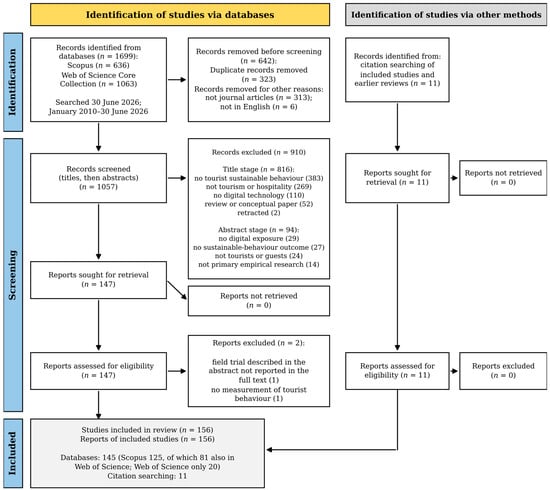
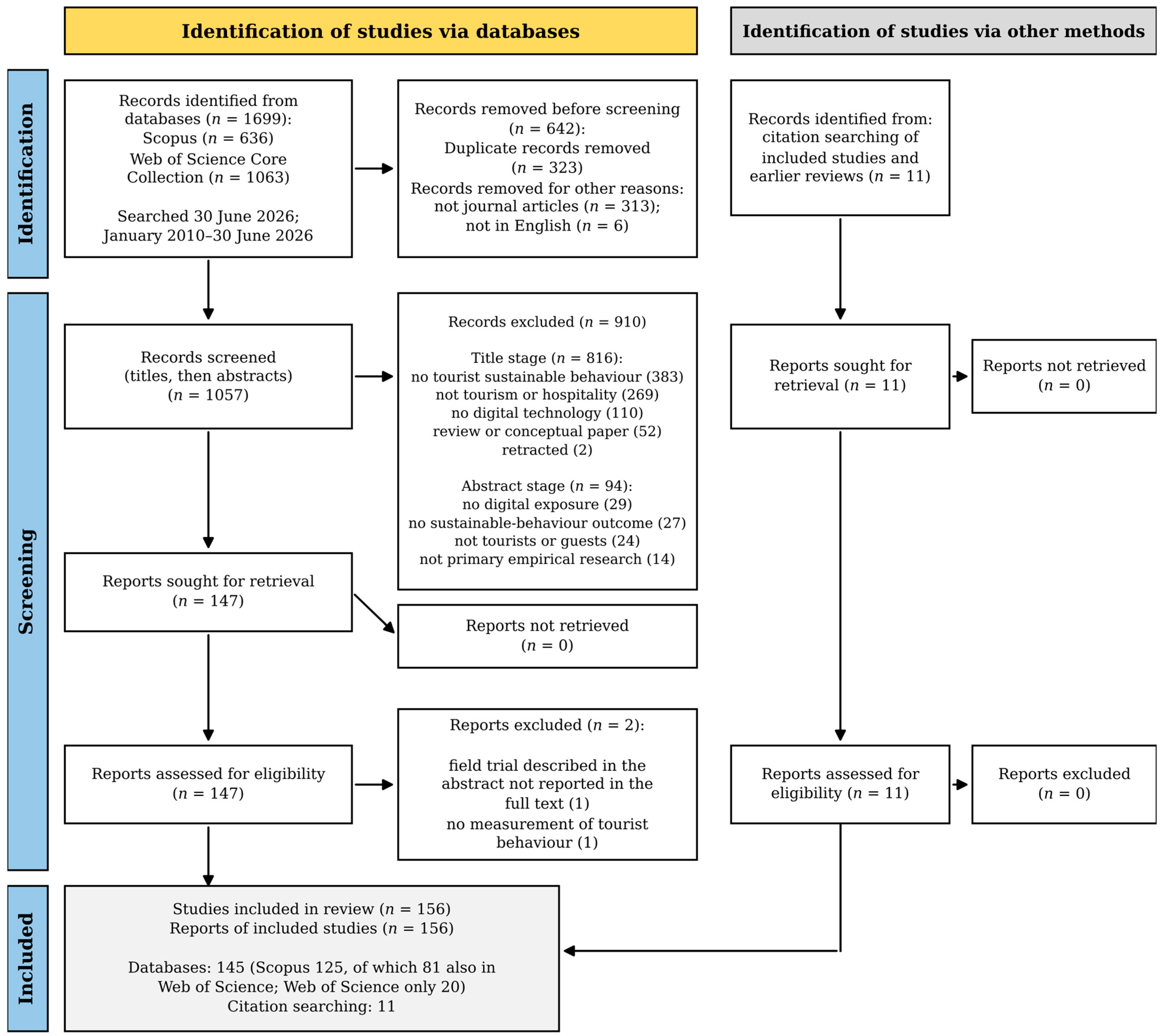
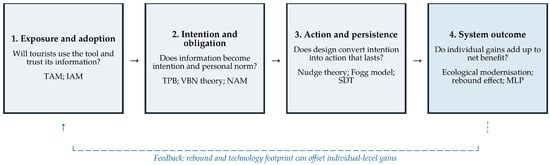
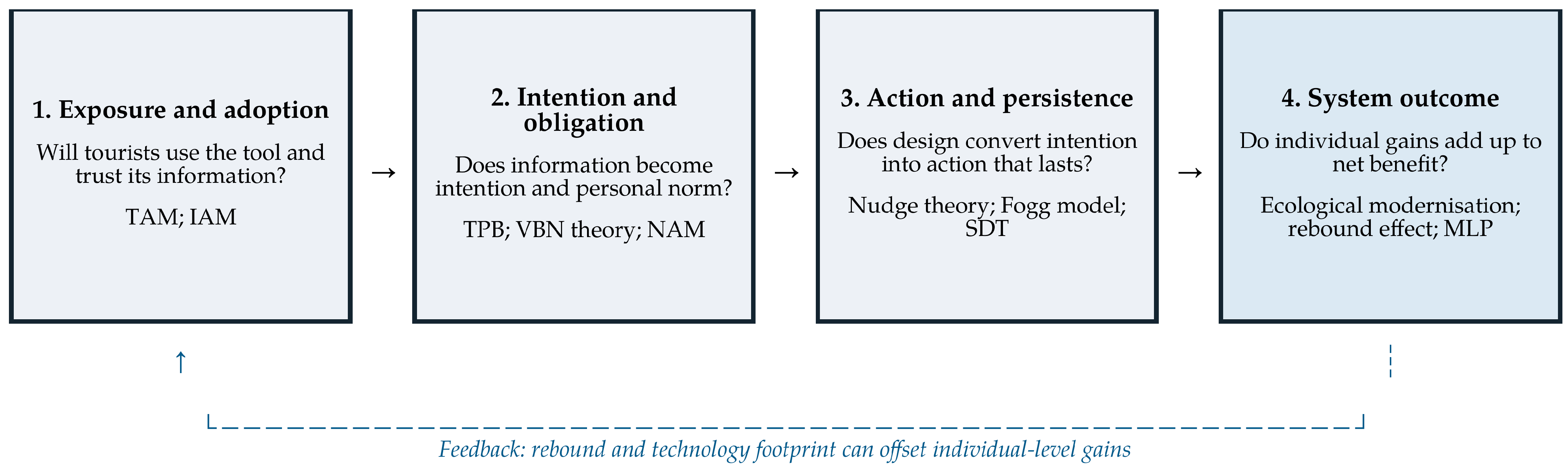
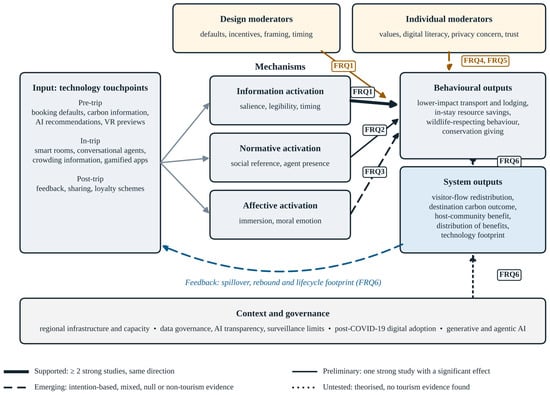
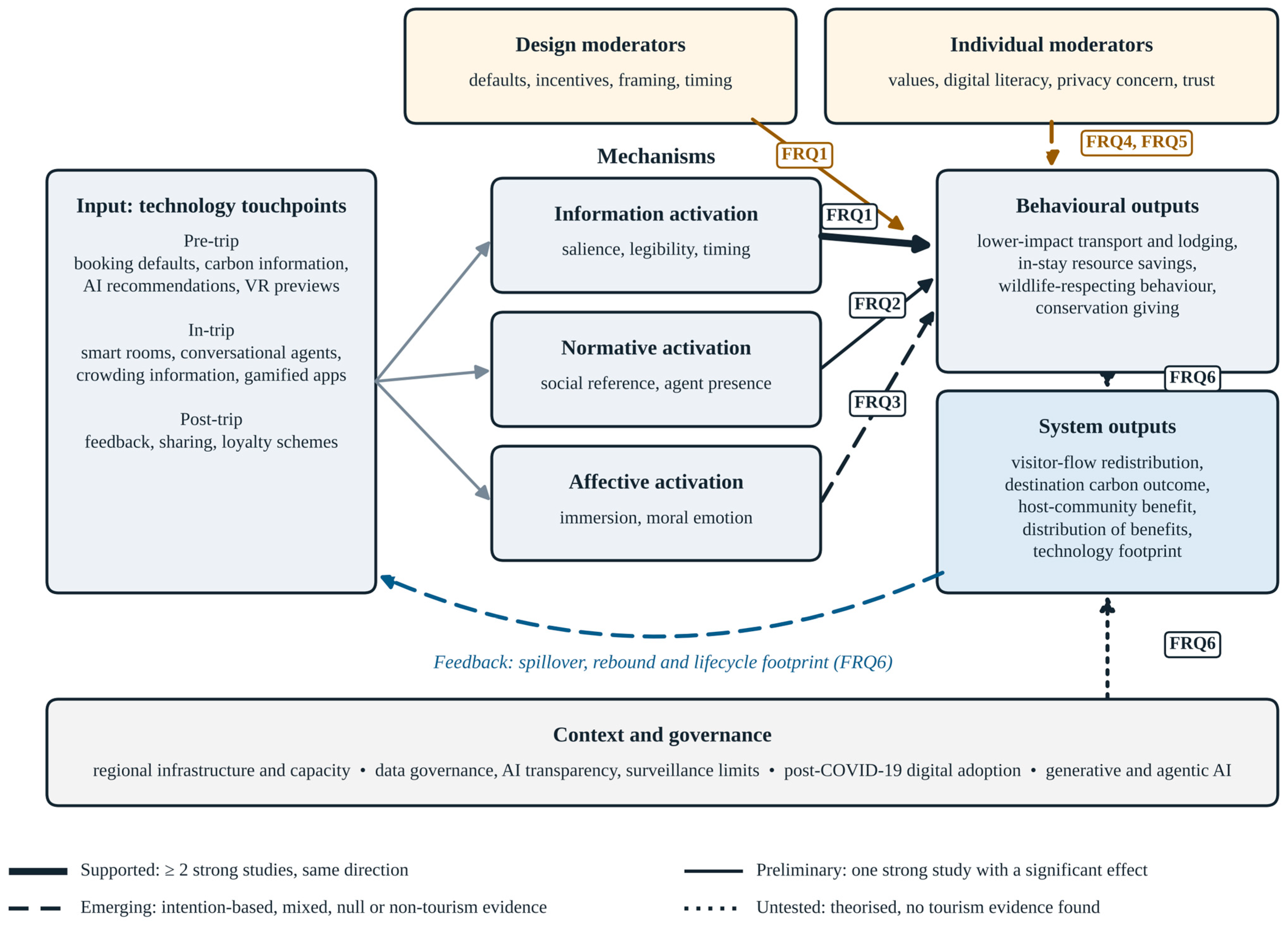

Disclaimer/Publisher’s Note: The statements, opinions and data contained in all publications are solely those of the individual author(s) and contributor(s) and not of MDPI and/or the editor(s). MDPI and/or the editor(s) disclaim responsibility for any injury to people or property resulting from any ideas, methods, instructions or products referred to in the content. |
© 2026 by the authors. Licensee MDPI, Basel, Switzerland. This article is an open access article distributed under the terms and conditions of the Creative Commons Attribution (CC BY) license.