


Abstract
Whether technical accessibility findings justify conclusions about tourism participation depends on what they establish about travelers’ opportunities for action, a relationship examined here through the interpretation of heterogeneous evidence. Methodologically, the study combines a critical narrative evidence synthesis with bounded bibliometric mapping and an exploratory secondary analysis of published airline audits. A Crossref rerun on 24 October 2026 yielded 700 export positions and 593 unique digital object identifiers (DOIs); applying the reported selection rules recovered the same 34-title bibliometric corpus. Technical audit and digital booking journey scores were reconstructed for 11 airlines assessed between March and June 2023. Spearman’s rho was 0.440, with substantial resampling uncertainty. Four conflicts between the summary tables and airline profiles, along with a potentially related arithmetic discrepancy, were explicitly retained. Across 16 component-based source variants, rho ranged from 0.418 to 0.521. A machine-readable statement schema links reconstructed values to their measurement dimensions, scales, temporal context, and sources. Divergent rankings illustrate non-identical orderings within the audited cases; they do not constitute a validated test of practical non-interchangeability. The contribution lies in linking source reconstruction, provenance-preserving statements, and sensitivity analysis within one documented tourism case. Population-level equivalence, current legal compliance, and individual participation outcomes cannot be inferred.
1. Introduction
Where accessibility-related information remains insufficiently specific and coordination among tourism stakeholders is fragmented, the assessment of an offering becomes inseparable from the question of whether the conditions necessary for its use can be established across the services involved.
In further explicating the relationship between information provision and its practical use, the assessment of an offering’s suitability must be situated within the conditions under which travelers can relate digitally communicated accessibility arrangements to their particular requirements and establish a reasoned basis for relying on those arrangements throughout the intended journey (Theofanous et al., 2026; Nigg & Peters, 2022).
A starting point for this is provided by the tourism studies discourse on inclusive development, in which the accessibility of existing offerings is linked to the question of the extent to which people with disabilities are recognized as active participants and can influence the design of tourism services (Gillovic & McIntosh, 2020). It therefore needs to be clarified under what conditions the technically enabled opportunity for interaction actually supports a self-determined tourism decision and at which points in the mediation process its feasibility remains limited (Kim & Adu-Ampong, 2025).
Drawing on phenomenological research into the lived significance of tourism for individuals with intellectual disabilities, the present investigation approaches the interpretation of travel information through the meaning that a prospective journey acquires in relation to the traveler’s circumstances and perceived possibilities for participation (Gillovic et al., 2021). Within this interpretive perspective, the connection between information retrieval, situated judgment, and action concerns how an encountered description becomes a basis for assessing the compatibility of an offering with individual requirements; its relevance to digital accessibility is further informed by research examining how travelers with disabilities seek online information to address uncertainty about the accessibility of tourism services (H. Park et al., 2025). In pursuing this argument, the praxeological realization of an informed choice presupposes that travelers can complete the entire sequence of booking steps through which their decision is enacted under the relevant conditions of use (W3C, 2024b, Section 5.2.3).
Consequently, and also within this research subject, the Capability Approach provides a theoretical framework for this differentiation by conceptually distinguishing between available resources, real opportunities for realization, and actions or states that have actually been realized (Kim & Adu-Ampong, 2025). With regard to digitally mediated travel decisions, system availability denotes a resource without establishing the options for action open to a specific person under concrete conditions (Kim & Adu-Ampong, 2025; Müller-Salo, 2025). Similarly, the actual undertaking of a trip must be distinguished from the possibility of making a self-determined decision for or against it (Kim & Adu-Ampong, 2025; Müller-Salo, 2025). For the empirical analysis, this implies that technical accessibility should not be equated directly with participation in tourism, nor should a trip that did not take place be interpreted as exclusion without knowledge of the decision-making conditions.
Deficiencies in text alternatives, adaptability, and also distinguishable presentation documented across 246 tourism websites provide a basis for this inquiry, although their significance for tourism participation requires a further inferential step: establishing how the affected system characteristics bear on the activities through which travelers assess an offering and pursue its use (K. Park et al., 2022). In light of the polysemy of accessibility, differences in technical problems across tourism supply segments require interpretation in relation to the offerings and system characteristics examined (Eusébio et al., 2023). Taken together, these findings leave open how the documented deficiencies affect a traveler’s ability to assess an offering or complete a booking, since an error count does not establish whether a particular goal can be attained under specified conditions (DIN, 2018).
Therefore, a second line of research focuses on the information content of tourism offerings. Domínguez Vila and Darcy (2025) explicitly focus their study on accessibility information along the tourism value chain and distinguish this perspective from technical website audits. For the deductive explication of the research problem, the examination of 71 destination websites is pertinent because it relates technical accessibility findings and accessibility-related information to aggregated traffic metrics, prompting a distinction between the characteristics of a digital offering and the forms of use that the available indicators can substantiate (Rubio-Escuderos et al., 2026). Given this development, the rationale for the present study concerns an unresolved question: under which conditions can findings derived from different assessment procedures be combined without attributing to them a meaning that exceeds their respective evidentiary basis (Domínguez Vila & Darcy, 2025)? Addressing this question requires an explicit account of how findings are represented and related within the synthesis, making the grounds and evidentiary scope of the proposed interpretation reconstructable (Campbell et al., 2020).
In this respect, this requirement takes on particular significance in the further processing of audit reports. Data extraction can produce formally correct figures and yet be scientifically inadequate if it loses the scale logic, the time of observation, or competing sources (Li et al., 2024). Provenance modeling, developed by the W3C, provides a conceptual foundation for the process by linking data objects, the activities that generate them, and the responsible actors (W3C, 2013). For the subject under examination here, the model gives rise to the requirement to store not merely an airline and a rating value, but a source-linked statement with explicit conditions of validity (Li et al., 2024; W3C, 2013).
Relative to Domínguez Vila and Darcy (2025) and Rubio-Escuderos et al. (2026), the present contribution concerns the reconstruction and reuse of published assessments. The distinctions between technical accessibility, information content, usability, and participation are established premises. What is added is their application to a source-linked representation of one audit, with competing values and the consequences of reconstruction choices made explicit. The airline re-analysis illustrates this methodological application; it does not introduce a new causal mechanism of accessible tourism or validate either audit composite as a measure of participation.
Accordingly, a distinction can be deduced between the evidentiary scope of testable requirements for web content, as formulated in WCAG 2.2, and the contextual assessment of usability under DIN EN ISO 9241-11 (DIN, 2018; W3C, 2024b): whereas the former provides criteria against which properties of web content can be assessed, the latter requires those properties to be considered in relation to the effectiveness, efficiency, and satisfaction with which specified users achieve specified goals in a specified context of use (DIN, 2018; W3C, 2024b). Although these two perspectives overlap, they must not be equated without examining their respective subjects.
Based on these findings, and with a focus on the deductive rigor to be established, the guiding research question can be defined: namely, under what conditions can information technology-based or technical audit evaluations be interpreted per se as evidence to support digitally mediated travel decisions?
This question is further specified by four sub-questions:
RQ1 examines which differences between technical accessibility, information quality, usability, and documented action execution are relevant for the literature review. Descriptive title mapping contributes to this question by identifying the lexical categories represented in the bounded corpus without determining the substantive content or prevalence of those constructs in the wider literature.
RQ2 examines the prerequisites for a knowledge representation that preserves these differences and the origins of individual findings.
RQ3 explores the relationship between technical evaluations and assessments of the digital booking journey across eleven airline cases documented in a single published audit report.
RQ4 examines the extent to which the estimated rank association depends on the selection among conflicting source values and the inclusion of individual observations and how these dependencies delimit the statistical conclusions that can be substantiated from the reconstructed dataset. The corresponding sensitivity of individual airline ranks is also examined.
2. Theoretical Background: Normative and Operational Foundations
This section supplies conceptual and normative background rather than results derived from the airline data. The German framework provides an example of the jurisdiction-specific conditions under which an audit finding could acquire regulatory significance. It is not applied to classify the UK services assessed in 2023; the case analysis makes no determination under German law or Directive (EU) 2019/882.
An examination of the legal and regulatory framework reveals a logical sequence of reasoning, according to which the legal classification of a specific offer must first be determined before technical requirements can be used as a legally binding evaluation criterion. Following Directive (EU) 2019/882, which applies to specified products and services, the German Accessibility Strengthening Act (Barrierefreiheitsstärkungsgesetz, BFSG) defines the corresponding scope of application in Germany; for tourism offerings, the specified elements of passenger transportation services and services in electronic commerce are particularly relevant (BFSG, 2021, § 1; Directive (EU) 2019/882, 2019).
Whether this gives rise to an obligation in a specific case, however, is determined only after taking into account the relevant exceptions, which include the exemption of micro-enterprises providing services from the requirements of § 3(1) of the BFSG (BFSG, 2021, § 3(3)). To the extent that such an obligation exists, the Ordinance implementing the German Accessibility Strengthening Act (Verordnung zum Barrierefreiheitsstärkungsgesetz, BFSGV) specifies requirements for accessible service information and, in electronic commerce, for identification, authentication, and payment functions (BFSGV, 2022, §§ 12, 19).
Even if the mere fact that an informational website is thematically related to tourism were treated as sufficient grounds for its legal classification, it would remain unclear why the specific service offered fulfills the relevant legal criteria; this necessary classification would thus be replaced by an industry classification that does not itself establish the basis for the obligation (BFSG, 2021, § 1(3)). For a regulatory application of this framework, it would therefore first be necessary to clarify which legal requirement the respective offering addresses and to what extent the technical evaluation criteria used are suitable for assessing compliance with that requirement. However, even a clearly justified classification does not in itself indicate whether users can actually complete a tourism-related action, because its success depends on the interaction of their individual usage prerequisites with the specific system conditions and must therefore be empirically examined on the basis of corresponding action sequences and results (DIN, 2018).
Within the federal regulatory framework, the German Accessible Information Technology Ordinance 2.0 (Barrierefreie-Informationstechnik-Verordnung, BITV 2.0) specifies accessibility requirements for the digital offerings of federal public bodies within its scope; applicability therefore depends on the institutional classification of the responsible body and the offering concerned (BITV 2.0, 2011, § 2). Because the binding effect arises from this legally defined scope of application, it cannot be extended to private lodging establishments solely on the basis of comparable tourism-related functions; rather, in the case of municipal destination organizations, the requirements applicable to the respective offering must be determined based on their institutional classification and the relevant state-level legal provisions (BITV 2.0, 2011, § 2; Behindertengleichstellungsgesetz [BGG], 2002, § 12). For the present secondary analysis, the BITV 2.0 gives rise to the methodological necessity of distinguishing between the normative reference to German accessibility requirements and a legal classification of the British audit findings. While the former provides a basis for discussing the documented accessibility conditions within the current German regulatory framework, assessing legal compliance would require identifying the obligations applicable to the specific service during the 2023 audit period and examining the documented findings against those obligations; such an assessment cannot be replaced by the retrospective application of German regulations.
As of the date of this research, the version of EN 301 549 V4.1.1 published in September 2026 must also be taken into account (ETSI, 2026). According to the AccessibleEU announcement dated 7 September 2026, it incorporates WCAG 2.2; a distinction must be made between this publication and a notification under Union law designating it as a reference standard (AccessibleEU, 2026). At the same time, V3.2.1 remains relevant for the classification of earlier studies, insofar as the tests or regulatory references at that time were based on it. A specific presumption of conformity therefore requires an examination of the relevant legal act, the reference date, and whether the reference to the applicable version of the harmonized standard was published in the Official Journal of the European Union, including which requirements that standard covers (BFSG, 2021, § 4). In this manuscript, no blanket presumption of conformity with the BFSG is derived from the mere application of a specific version.
Against this background and among the web-related criteria, WCAG 2.2 adds requirements addressing accessible authentication, avoidance of redundant data entry, and keyboard focus that is not obscured (W3C, 2024b). Since July 2026, WCAG-EM 2.0 has also been available as an informative group note addressing the definition of the scope of evaluation, the selection of samples, and the examination of complete processes (W3C, 2026a). For the interpretation of evidence, the chronological development of these documents implies that the current evaluation framework must be distinguished from the actual tools used in older audits. A contemporary assessment based on refined criteria may raise follow-up methodological questions, but it does not alter either the original scope of the evaluation or the historical scope of the findings.
To further define the relationship between technical accessibility and actual use, the standards provided in the DIN EN ISO 9241 series are used. According to DIN EN ISO 9241-11, usability is tied to specified users, goals, and contexts of use, thereby explicitly identifying the prerequisites for a task-oriented interpretation (DIN, 2018). DIN EN ISO 9241-110 introduces interaction principles whose design implications must be distinguished from the empirical evaluation of specific task performance (DIN, 2020a). DIN EN ISO 9241-210 defines the process-related aspect through the iterative development of interactive systems based on an understanding of users and their context (DIN, 2020b). These different functions give rise to the requirements for evidence interpretation summarized in Table 1.
Table 1.
Levels of Reference and Implications for the Interpretation of Evidence.
3. Materials and Methods
3.1. Research Objectives and Study Design
Methodological triangulation in the present study proceeds from the need to establish how the theoretical constitution of the research object informs the interpretation of the available empirical material, since a conceptual relationship does not, by itself, determine what a bibliographic pattern or an observed statistical association can substantiate (Flick, 2018). Within this rationale, the source-critical literature review provides the basis for explicating the definitions through which the research object is delimited and for deriving the determinants considered relevant to its investigation; their subsequent operationalization requires a reasoned account of why particular indicators can represent those determinants under the premises adopted (Flake & Fried, 2020; Snyder, 2019). At this point, complementing the source-critical reconstruction of the research object, bibliometric mapping examines the distribution of the retrieved publications within the explicitly delimited metadata corpus, making the composition of this part of the literature base available for scrutiny (Donthu et al., 2021). Furthermore, in extending this source-critical argument to the empirical material, the statistical reanalysis examines how the assessment dimensions documented in the published audit relate to one another and how discrepancies in rank ordering, considered alongside conflicting values in the source report, qualify the inferences that their comparison can sustain (Li et al., 2024; Schober et al., 2018).
For the methodological triangulation developed here, discrepancies between findings provide a reason to return to the relationship between the research object as theoretically conceived and the conditions under which particular aspects of it become empirically observable. Their explanatory significance depends on establishing whether divergent findings concern comparable characteristics under different conditions or arise because the respective approaches render different aspects of the phenomenon accessible to investigation; only through this distinction can their implications for the interpretation of the research problem be assessed (Farmer et al., 2006; Flick, 2018).
From the social understanding of disability, the premise arises that a digital access barrier can only be adequately described by taking into account the requirements and support conditions of the system in question (Gillovic & McIntosh, 2020). Accordingly, as a deductively grounded extraction requirement, it can be stated that a reported barrier must be linked to the object under examination and, to the extent documented, to the relevant usage situation (W3C, 2024a).
Furthermore, the distinction between resources and opportunities for realization justifies the separate measurement of resource characteristics, conditions of use, and observed outcomes of action (DIN, 2018; Kim & Adu-Ampong, 2025; Müller-Salo, 2025). Combining them requires a transparent link between the respective indicators and the theoretical constructs.
Ultimately, the information-based perspective clarifies the condition under which a technically feasible choice can be understood as an informed travel decision grounded in information relevant to the traveler’s requirements (Domínguez Vila & Darcy, 2025; H. Park et al., 2025). This interpretation draws on the abstract of H. Park et al. (2025), which concerns online information search under accessibility-related uncertainty. For the present analysis, this implies that the technical accessibility and decision-relevance of information must be assessed separately (Domínguez Vila & Darcy, 2025; W3C, 2024a).
As long as there is no validation of technical audit values as indicators of specific task performance, their informative value must be limited to the system characteristics that were actually tested (DIN, 2018; W3C, 2024a). Although technical accessibility and the decision-relevance of information are distinguished conceptually, their separation does not establish how they relate within the service being examined (Domínguez Vila & Darcy, 2025; Schober et al., 2018). Whether the corresponding evaluations vary together is therefore an empirical question, whereas their interchangeability would require a further justification showing that substituting one for the other preserves the meaning of the assessment; a correlation alone cannot provide that justification (Schober et al., 2018). These considerations supply the deductive rationale for examining the audit material, but, because the analytical expectations were not documented prospectively, their role is to guide an exploratory interpretation whose theoretical justification must remain distinguishable from a confirmatory test specified independently of the findings (Nosek et al., 2018; Wagenmakers et al., 2012). Subsequently, the rank deviations and source conflicts that emerge in the reconstructed material are examined inductively for their methodological significance.
3.2. Search Period and Documentation Status
The original literature search covered publications from 1 January 2020 through 29 September 2026. A targeted extension was conducted through the institution’s EBSCO Discovery Service on 27 October 2026, to examine additional evidence relevant to the relationship between digital accessibility assessments and tourism-related action. The executed date filters and export partitions are reported separately in Supplementary Section S11. Earlier methodological foundations, standards, and legal sources retain their explicitly identified conceptual or normative functions.
To make the evidentiary basis of the synthesis open to scrutiny, reporting draws on PRISMA 2020 and PRISMA-S as reference points for identifying documented procedures and remaining reporting gaps (Page et al., 2021; Rethlefsen et al., 2021). Furthermore, within this framework, the adapted flow diagram (Supplementary Figure S1) distinguishes the reported expanded-search aggregate from the documented Crossref deduplication and title-selection sequence, while separately representing the audit source that underlies the exploratory secondary analysis.
For the original synthesis, screening, selection, and extraction were undertaken by the author alone, as documented in Supplementary Table S6.
Methodologically, the literature search combined a bounded Crossref retrieval stream with a broader investigation of sources relevant to digital accessibility in tourism. For the revision, the seven reported Crossref queries were rerun on 24 October 2026 through the query.bibliographic parameter, retaining the publication-date filters from 1 January 2020 through 29 September 2026, and the first 100 records per query under the service’s default relevance ordering. The 700 export positions yielded 593 unique DOI records, of which 34 were retained by applying the documented title and metadata rules and the listed semantic exclusions. The final DOI set, normalized titles, and publication years match the original 34-record inventory. Saved API responses, request logs, and an offline reproduction script document this dated retrieval. The original figure of 591 unique records remains a historical report whose exact record composition could not be reconstructed. The revision does not establish representative or exhaustive coverage of the research field.
Beyond the separately quantified Crossref retrieval stream, the expanded search encompassed multidisciplinary citation databases and specialized bibliographic resources relevant to tourism and digital accessibility, supplemented by searches of publisher platforms and institutional repositories. Furthermore, source selection encompassed technical standards and organizational reports to delineate the normative frames of reference and institutional context informing the interpretation of the empirical findings. Supplementary Table S2b specifies the corresponding inventory of information resources identified in the author’s account as having been consulted during the broader search. Across thirteen source groups, the author reported an aggregate of 922 hits, described in the search account as preceding deduplication (Table S2c). Counts were partly recorded in handwritten notes. Exploratory searches that appeared insufficiently relevant were not pursued or saved, and a complete record-level export and exclusion history was not retained. These figures therefore describe the reported search context rather than a verified denominator for a systematic screening flow. Earlier intermediate counts are distinguished from the individually documented inventories in Table S2d. Table S5a,d identify the 24 sources purposively selected for the critical narrative synthesis, their evidentiary roles, access conditions, and reported discovery or access routes. Six also occur in the separate 34-title mapping corpus (Table S4b), whose selection is documented in Supplementary Table S3c. Both inventories serve distinct analytical purposes and do not represent successive screening stages. Because the complete overlap between the initial retrieval streams remains unknown, neither addition of their starting counts nor subtraction of 700 from 922 produces a verified source total. Figure S1 represents the evidence streams and the documentation boundary separately.
In this regard, to examine whether further empirical work required qualification of the established interpretation, the 27 October extension used two complementary searches. T1 addressed digital and website accessibility in tourism; T2 addressed disability-related information needs, usability, and tourism decisions. Reconciliation of the supplied exports recovered 1592 EBSCO record identities for T1 and 508 for T2. With 54 identities shared between the searches, the combined inventory contains 2046 distinct EBSCO permalinks. These counts refer to exported records, whose relationship to individual publications requires further bibliographic reconciliation.
Selection within this inventory was directed toward the evidentiary questions already specified in the manuscript. Computer-assisted lexical prioritization and consultation of selected titles and abstracts informed the examination of relevant full-text sections. Two additional publications were retained for a defined interpretive purpose: specifying the informational content of an accessibility assessment and situating the airline reconstruction alongside a contemporary composite-index study. Supplementary Section S11 and its accompanying register preserve the source identities, material consulted, and claims assigned. This purposive extension supplies a dated, traceable basis for those additions without reconstructing the missing selection history of the earlier search.
3.3. Selection and Critical Evaluation of Sources
Following the delimitation of the research object established above, inclusion in the core source-critical analysis depends on whether a study helps clarify how digital systems mediate access to tourism offerings, including the information through which their suitability can be assessed. A thematic association with tourism or accessibility is insufficient to establish this relevance where the investigation concerns geographical access, general demand, or financial inclusion without examining their relationship to digital mediation. However, where several publications originate from the same investigation, their convergence requires interpretation in light of that shared empirical basis; separate publication does not, in itself, confer the status of independent corroboration (Li et al., 2024). For access@tour, the source-critical reconstruction concerns the transition from benchmarking existing solutions to formulating a development approach within a common project. Each report’s contribution must consequently be assessed in relation to the empirical material supporting its claims, since distinct stages of project development do not necessarily furnish independent corroboration (Alves et al., 2022; Teixeira et al., 2024).
Consequently, the deductively stated premises first lead to an examination of the extent to which the chosen operationalization actually captures the theoretically defined object of study. Because the validity of this mapping remains tied to the respective data collection context, it must be possible to trace, based on the documented data provenance, the temporal conditions under which the findings were generated and the extent to which the usage conditions of the individuals concerned were taken into account (DIN, 2018; Li et al., 2024). Due to the differing outcome measures, a meta-analysis is not conducted. Likewise, the study quality is not condensed into a single numerical overall score, as such an aggregation could obscure the design-specific limitations of each study; what remains decisive is their explicit association with the findings in question (Hong et al., 2018). Accordingly, empirical studies, methodological publications, standards, and organizational reports were distinguished according to their evidentiary function, since their inclusion within a common research framework does not confer an identical basis for inference (Li et al., 2024).
For the revision, source appraisal was made explicit across six domains: correspondence between construct and measure, sampling and coverage, observation conditions, analytical transparency, independence of the underlying evidence, and applicability to the proposed claim. Supplementary Table S5b, c document the questions and claim-specific restrictions applied to the full-text sources carrying the central argument. Within the original 24-source inventory in Table S5, obtaining the full texts of Kim and Adu-Ampong (2025) and Domínguez Vila and Darcy (2025) increased the full-text group from eleven to thirteen sources. The other eleven sources retain their abstract or preview status and contextual evidentiary functions. Appraisal of the two additions from the EBSCO extension is documented separately in Supplementary Section S11, with the consulted sections and the permissible scope of each claim identified. Completed author verification of both appraisals is recorded in Section S11E. This structured narrative appraisal was undertaken during revision and is not represented as a prospectively registered or validated risk-of-bias instrument.
Furthermore, Python 3.12.14 was used to process the exported Crossref metadata, generate the bibliometric analyses and also visualizations, and reproduce the exploratory statistical analysis of the reconstructed airline audit scores.
The literature component is reported as a critical narrative evidence synthesis, with the original purposive selection and the dated EBSCO extension documented separately in Supplementary Table S5 and Section S11. Supplementary Table S6 maps selected reporting requirements of PRISMA 2020 to the procedures undertaken; PRISMA-S informs the search documentation, but its complete checklist is not reproduced. Because analytical decisions were developed during source review rather than fixed in a prospectively registered protocol, the corresponding analyses retain their exploratory status (Nosek et al., 2018).
3.4. Bibliometric Research Mapping
The 24 October 2026 Crossref rerun produced 700 export positions and 593 unique DOI records after removal of 107 duplicate positions. Applying the tourism and accessibility title blocks retained 218 records and excluded 375. Requiring a digital title term and the metadata type journal-article retained 40 and excluded a further 178. The six listed semantic exclusions reduced this set to the same 34 records used in the original title mapping (Supplementary Table S3b–d). This procedure can be repeated from the saved responses with reproduce_crossref_snapshot.py. It applies the documented rules and exclusions to the dated retrieval; it does not constitute independent second-reviewer screening.
Within this framework, the publication year, publication medium, and co-occurrences of predefined term groups in the titles were analyzed to characterize this corpus. For chronological classification, the earliest publication year recorded in the published field in Crossref is used, while the year listed in the bibliography is based on the specific version of the publication being cited. According to Donthu et al. (2021), following the distinction between bibliometric performance analysis and thematic mapping, a descriptive approach is thus adopted. Given the restriction to a bounded set of relevance-ranked search results, author-productivity rankings, citation comparisons, and field-wide growth estimates are not supported by this dataset.
Accordingly, each concept group was coded as present or absent in each title, irrespective of how often its terms occurred. The diagonal entries of the co-occurrence matrix therefore indicate the number of titles containing each group, while the off-diagonal entries indicate the number containing both groups. Because this operationalization is lexical, its interpretive scope remains confined to title features: the absence of a term does not establish that the corresponding topic is absent from the full text, and the co-occurrence of two groups does not, by itself, demonstrate a theoretical relationship between them (Donthu et al., 2021).
3.5. Source and Reconstruction of Empirical Data
In this context, the secondary statistical analysis is based on the publicly available Airline Digital Accessibility Report by Hassell Inclusion and the UK Civil Aviation Authority (Hassell Inclusion & CAA, 2023). Eleven airlines are considered units of observation; selected digital processes at these airlines were audited between March and June 2023. Thus, the analyzed values refer to historically determined, organization-specific assessments within a single report. Individual passenger and booking histories, as well as check-in data, are unavailable, and the analysis does not encompass all digital and physical touchpoints of a trip. Selection reflected passenger volumes at UK airports or importance to particular UK regions. The common framework and the availability of conflicting published values justify the case’s use for source reconstruction, not its representativeness of hotels, destination portals, online travel agencies, or independently conducted audits.
For the reconstruction, the technical evaluation from the overview on page 16 was used and linked to the information on the digital booking journey on page 18. There, consumer touchpoints are rated on a scale of up to four points, the accessibility statement on a scale of up to three points, and usability and inclusion on a scale of up to three points. In addition to the separate recording of these components, the explicitly stated total score was saved and checked against their arithmetic sum. At the level of measurement, the technical score derives from the aggregation of prioritized findings into ordered rating categories. Interpreting it alongside the reconstructed booking components and their reported total therefore requires examination of the procedure by which those categories are constituted (Hassell Inclusion & CAA, 2023, p. 15). Because the technical rating expresses an ordering derived from prioritized findings, its numerical form alone supplies neither the measurement basis for calculating the proportion of WCAG success criteria fulfilled nor sufficient evidence for an official determination of conformance. Concretely, the source rubric includes assistance booking, free assistance and easily located general telephone contacts, and accessible documentation within Consumer Touchpoints; presence, accuracy, and feedback or assistance contacts within Accessibility Statement; and non-WCAG usability, WCAG 2.1 AAA, and industry practice within Usability & Inclusion (Hassell Inclusion & CAA, 2023, p. 17). These criteria create substantive overlap with technical assessment. The journey composite is consequently not an independent behavioral measure of successful booking.
Four source conflicts were identified: consumer touchpoints for Emirates, usability and inclusion for EasyJet, usability and inclusion for TUI, and the technical audit score for Wizz Air (Hassell Inclusion & CAA, 2023). A potentially related arithmetic discrepancy occurs within the overview, as EasyJet’s sub-scores total eight points, while the overall score is reported as seven points. For the main analysis, the explicitly published overall scores are used, without thereby attributing greater factual accuracy to them (see Supplementary Section S6 and Table S9). A supplementary sensitivity analysis recalculates the total scores from the components and takes into account all 16 combinations of the four binary source decisions (see Supplementary Table S11). EasyJet’s profile gives 3 + 2 + 2 = 7, matching the reported total. A single erroneous summary-table component could therefore explain both observations; their common cause remains unconfirmed. Retaining the expressly published total preserves an identifiable source assessment, while separate component-based variants expose the consequences of alternative reconstruction rules.
3.6. Statistical Methods and Permissible Inference
Given the ordinal interpretation of the reconstructed audit ratings, the statistical comparison concerns how the two assessment procedures order the eleven airline cases, since the numerical distances between their scores do not establish corresponding differences in the characteristics assessed. Spearman’s rank correlation was therefore calculated between the technical audit score and the published digital booking journey score to characterize the direction and strength of their monotonic association, with average ranks (midranks) assigned to tied observations (Schober et al., 2018). The two-sided permutation test used B = 199,999 random permutations generated with NumPy’s default_rng and a random seed of 20260929. The p-value was calculated as (b + 1)/(B + 1), where b denotes the number of permutations for which the absolute Spearman correlation was at least as large as the absolute observed correlation (Phipson & Smyth, 2010). To assess the internal ranking structure, Kendall’s tau-b and the rank relationships of the 55 possible airline pairs are also reported. A leave-one-out analysis additionally determines the influence of individual observation units. Together, these methods serve to explore the relationships and stability within the reconstructed dataset (see Supplementary Section S7 and Tables S10 and S12).
For a resampling-based description of uncertainty, complete airline rows are drawn in 20,000 paired bootstrap repetitions (Hesterberg, 2015). Because the initial selection of airlines was targeted, the resulting percentile interval has no guaranteed interpretation as representative of the population; its interpretation remains tied to the observed data structure. Furthermore, the null distribution of the permutation test is based on an assumption, namely the exchangeability of the assignments, without explicitly modeling shared provider structures or other dependencies (Winkler et al., 2014). For this reason, the calculated probabilities are reported as conditional statistical descriptions. A general effect of digital accessibility or a causal relationship between the evaluation dimensions cannot be determined from this.
Furthermore, it should be noted here that, due to the different construction of the scales, their values are neither treated as equivalent measurements in a paired t-test nor converted into a common conformity index. A difference of two points does not necessarily have the same objective meaning on both scales (Hassell Inclusion & CAA, 2023). Furthermore, for the four source conflicts, no probabilities of occurrence are estimated for the respective alternative values, so that the resulting range of values describes a sensitivity to processing decisions (Steegen et al., 2016). Given the eleven observation units, the analysis is limited to rank relationships and their stability; regression-based control models and the training of a predictive model would require a more extensive data set. No acceptable-disagreement threshold for practical interchangeability was prespecified. The available data also contain no repeated ratings or measurement-error estimates with which to distinguish substantive disagreement from rating instability.
3.7. Machine-Readable Knowledge Representation
In the implemented statement schema, each observation is linked to an organization, a measured variable, a reported value, the scale maximum, the data collection period, the source address, the page reference, and the conflict status. If conflicting information is available, both the alternative value and its reference are retained. Eleven organizations, each with one technical value, three component ratings, and one explicitly stated total value, result in 55 statement entries (see Supplementary Section S8). The calculated sum of the components is tracked separately, which allows for the identification of the arithmetic discrepancy in EasyJet’s case compared to the published total value (see Supplementary Section S6 and Table S9). For further processing, the statements are available in the open JSONL format, and the tabular source values and results are available as CSV files (see Supplementary Section S9 and Table S14).
By tracing reconstructed statements back to their documented origin and the respective context in which they were collected, the schema operationalizes the provenance principle for the defined subject of investigation (W3C, 2013). From a research perspective, the schema requires that competing source references be preserved, because otherwise a decision between different sources would already be incorporated into the data preparation without being verifiable in terms of its impact on the analysis results (Li et al., 2024; Steegen et al., 2016). At the same time, the constraint of adhering to the historical audit context limits the scope of possible conclusions: a documented assessment status can only be interpreted under the investigative conditions prevailing at that time and therefore does not constitute evidence of current legal compliance. As a structured representation of these conditions of validity, the schema enables the traceable processing of the reconstructed findings; the validation of a knowledge graph or the full implementation of the PROV-O ontology would require further tests that were not conducted here. Therefore, to reproduce the reported calculations, a script was prepared specifically for this revision using the values documented in the supplied tables. Its computational environment comprises Python 3.12.14, NumPy 2.3.5, SciPy 1.17.0, and Matplotlib 3.10.8, with these versions recorded in the accompanying reproduction package.
4. Results
4.1. Technical Findings and Their Scope
To interpret technical accessibility studies comparatively, it is first necessary to determine which testing methods were used to produce the reported findings, because the common reference to digital accessibility does not in itself guarantee consistency in the characteristics actually measured (Flake & Fried, 2020; W3C, 2024a).
By encompassing the homepages of 39 Portuguese and Spanish destination websites together with 33 associated apps, the investigation extends its coverage across digital channels while leaving the evidentiary scope of each finding dependent on the accessibility characteristics that the respective assessment procedures can capture (Fernández-Díaz et al., 2021). For the methodological argument developed here, this distinction requires the breadth of the material examined to be considered separately from the justification of the conclusions drawn from it, since extending an investigation to additional channels does not in itself establish that the methods employed adequately represent the accessibility requirements relevant to their use. Accordingly, interpretation must return to the relationship between the object assessed and its operationalization, specifying which characteristics were made observable and how those observations substantiate the particular claim advanced. For the theoretical triangulation of the present study, the analysis implies that the transition from theoretically grounded requirements to empirical indicators must be explicitly justified, because only this mediation reveals the extent to which a collected finding supports the statement derived from the premises (Flake & Fried, 2020). To the extent that an automated method can verify only a portion of these requirements, the absence of an error message initially indicates only the lack of a corresponding detection within its scope of testing; no statement has yet been made regarding compliance with the requirements that were not captured (W3C, 2026b).
It can be argued that this is the methodological significance of the need for expert human evaluation emphasized by the Web Accessibility Initiative, through which the assessment tasks that a testing tool alone cannot perform to determine compliance with standards must be incorporated (W3C, 2026b).
In this context, a concrete example of this instrument-dependent scope of insight is also demonstrated by the study by Teixeira et al. (2022), in which 306 websites of hotels and pousadas in central Portugal were analyzed and evaluated ex post using automated diagnostic methods. For the present synthesis, the analysis implies that the reported findings should initially be interpreted as statements about the technical characteristics captured by the instruments used within the selected sample. Extending these technical findings to claims about booking performance would require additional task-based evidence establishing how the identified characteristics relate to the execution of the intended activity under specified conditions of use. Whether, for example, the information required to make an accommodation decision can be accessed using a specific assistive technology configuration and effectively processed in the subsequent booking process cannot be deduced from the frequency of technical errors alone (W3C, 2024a). Methodologically, therefore, the original measurement framework remains in place until supplementary observations enable a well-founded connection to be established between the technical findings and the successful completion of tourism-related tasks (Flake & Fried, 2020).
By basing their analysis of 14 tourism apps on automated and manual evaluations using VoiceOver and TalkBack, Madeira et al. (2021) expand the methodological approach to include the question of how the applications under examination can be accessed within a specific assistive environment. The findings highlight the relationship between the application and technically mediated access. Accessibility determined under these conditions refers to the tested interaction of the components involved and therefore cannot be treated as a permanent characteristic of the application without further justification (W3C, 2024a). If such a finding is to be applied to a later version of the app, it must therefore be examined to what extent the interaction conditions that were decisive for its emergence continue to exist. In the background is the fact that a changed technical configuration can affect precisely those conditions under which content was accessible or a function was, in the first place, usable in a way that was appropriate for the target audience and intuitive (DIN, 2018). However, this continuity cannot be inferred from the year of publication.
For this evidence synthesis, therefore, to the extent that the sources allow, the actual time of data collection and the technical configuration under investigation are documented as constitutive conditions of the respective statement, so that it remains clear to which tested usage situation the assessment refers and at what point its generalization requires further empirical testing.
4.2. Information Quality and Observed Usage
Applied to the examination of accessibility features listed online for more than 31,000 hotels offered through Booking.com, the preceding distinction between the object of assessment and the scope of inference locates the evidentiary contribution of the study in the information provided about accommodation facilities (Martin-Fuentes et al., 2021). Such information may inform a traveler’s judgment of an offering’s suitability, yet its availability leaves open whether the platform enables that person to retrieve and interpret it under the relevant conditions of use; the distinction developed above therefore extends to the relationship between what is communicated about a tourism service and the digital interaction through which that information becomes accessible for decision-making (Domínguez Vila & Darcy, 2025). Furthermore, without additional verification, provider information remains, for now, merely documented statements about accessibility; whether the described conditions actually exist on site is not conclusively verified. Within the evidence synthesis, such results are therefore classified as findings regarding reported service features, ensuring that the information available, digital usability, and actual service delivery remain analytically distinguishable.
In further specifying the informational conditions of digitally mediated participation, the evaluation of Spanish national park websites combines an expert-weighted assessment of accessibility-related content with search-engine visibility, distinguishing the substance of informational provision from its discoverability (Aguilar-Carrasco et al., 2024). For the deductive construction of indicators, this distinction gives empirical specificity to conditions whose relevance to participation requires examining how travelers interpret and use the information encountered. Because neither booking completion nor realized visits falls within the design’s observational scope, the relationship between informational accessibility and participation remains an explanatory question that the assessment helps delimit but does not empirically resolve.
Regarding the usage-based evaluation of a developed information platform, Costa et al. (2025) report, as part of the ElderWander project, task-based testing with eight older adults and an average score of 84 on the System Usability Scale (SUS). Thus, compared to simply assessing system characteristics, this approach makes subjective evaluation within a specific usage situation possible. Nevertheless, the small group of participants and their everyday experience with technology remain decisive factors in the scope of these findings. These positive results can therefore provide project-specific guidance for further development, whereas generalizing the findings to all older travelers or to different types of disabilities would require a broader study with a correspondingly diverse participant group (W3C, 2024a).
Within this context of task-related evaluation, the abstract of the access@tour study reports a combination of expert review with usability testing involving nine experts and 78 end users, bringing the assessment of platform characteristics into relation with their significance for users under the examined conditions (Teixeira et al., 2025). For the present synthesis, the methodological relevance of this combination lies in the possibility of examining whether concerns identified through expert assessment also emerge in use and how users’ experiences qualify the interpretation of those concerns.
Since only the abstract was available for the present analysis, recruitment procedures, measurement quality, and the extent and handling of missing data could not be assessed in detail. Under the same conditions regarding access to sources, the mixed-methods study by Mesquita et al. (2025) is included; its publicly available abstract indicates a focus group with seven participants and a survey of 200 people. For the comparative interpretation of both studies, the independent subject matter of subjective evaluations is decisive, because these reveal how respondents perceive and assess digital accessibility, whereas a statement of conformance presupposes the demonstrated fulfillment of specific requirements for the service under examination (W3C, 2024b, Section 5.2). Consequently, directly translating such perceptual findings into statements about WCAG conformance would alter the subject matter of the conclusion without conducting the necessary examination of the relevant success criteria; within the synthesis, therefore, the reported subjective evaluations are retained as a distinct contextual evidence type, without detailed appraisal beyond the abstract, and their relationship to technical findings must be examined separately.
The existing review literature situates technology and accessible tourism within an established research context. Establishing methodological rigor through deductive reasoning therefore requires an account of how the evidence assembled in each review supports its treatment of the research object. In the present comparison, the systematic review reports in its abstract that it encompasses 68 articles published between 2020 and 2025 (Theofanous et al., 2026), while the bibliometric study examines 290 publications on digital communication and technology in inclusive tourism from 1997 to 2022 (Fernández-Díaz et al., 2025). For the present investigation, the significance of these differences depends on how the respective selection procedures delimit the research object and support the conclusions drawn, rather than on corpus size or temporal coverage alone.
Building on this preliminary work, the present study focuses on the question of under what conditions heterogeneous findings can be related to one another at all, since their shared thematic classification does not in itself establish a correspondence between the subjects under investigation or the respective claims to validity (Flake & Fried, 2020). Using a publicly documented audit dataset, this issue is empirically explored by examining the extent to which technical evaluations and evaluations of the digital booking journey produce consistent rankings and what limitations on their mutual interpretability emerge from observable deviations. For the research subject examined and deduced here, extending an interpretation beyond the original tourism context requires an explicit justification of why the premises supporting that interpretation remain applicable when the service configuration or the circumstances of evaluation change. Such justification depends on a source-critical comparison through which the conditions constitutive of the reported relationship can be distinguished from contextual features whose variation does not undermine the proposed inference. Where the available evidence does not sustain this distinction, the synthesis must delimit the interpretation accordingly and specify which additional observations would be needed to assess its applicability in the tourism context under consideration.
4.3. Participation and Institutional Implementation
The question of how digital accessibility becomes institutionally embedded shifts the discussion from assessing existing offerings to examining the development processes through which the requirements of intended users inform and justify design decisions. Within this perspective, the projects examined provide a basis for considering how those requirements are translated into proposed solutions and how the justification of such solutions is reassessed through user involvement and iterative evaluation, thereby making their suitability for the relevant contexts of use open to scrutiny throughout development (DIN, 2020b). For the access@tour development project, enabling intended user groups to proceed from accessing tourism information to acting upon it provides a rationale for relating the comparative examination of existing offerings to the specification of user requirements. Benchmarking ten platforms supplies a reference for developing a new solution, but the relevance of the features identified depends on whether they address the conditions under which those users can understand an offering and pursue their intended activities (Alves et al., 2022). Connecting requirements gathering with iterative development allows this relationship to be examined through the evaluation of design decisions concerning user experience (UX) and human–computer interaction (HCI) so that insights from existing platforms can be reconsidered as the requirements of the intended users become more precisely defined (Teixeira et al., 2024). Within the present discussion, this connection grounds the pursuit of continuity across the tourism process in an explicit design question: whether the proposed interaction enables users with differing requirements to carry a decision forward without encountering barriers that interrupt its practical realization. From a research perspective, the connection between the two contributions lies in the fact that the comparison of existing solutions initially yields design cues; however, their suitability for the intended context of use can only be established by linking them back to the requirements of the target users (DIN, 2020b). As a result, evaluation plays a constitutive role in the development process, as its findings can influence which requirements need further clarification and which design decisions need to be revised (DIN, 2020b). Therefore, in terms of the present evidence synthesis, this relationship must also be taken into account as the shared context in which the publications originated. That means, since both studies address different tasks within the same project development, they enable a nuanced reconstruction of that development. Precisely because these contributions address different stages of a shared development process, their complementary perspectives must be interpreted in relation to the empirical basis from which they arise; whether they also provide independent corroboration depends on establishing how far the respective findings draw on distinct data and investigative procedures rather than on different treatments of the same project material (Li et al., 2024).
Based on the explanation provided here and beyond the inclusion of user-related requirements, research on co-design with the disability community raises questions about the conditions for genuine participation (Dickson et al., 2025). To make an empirically verifiable claim of participation, it would therefore be necessary to determine at what point people with disabilities were involved, what roles they assumed, and to what extent their contributions influenced design decisions (DIN, 2020b). A counter-indicator could be documentation that claims a user-centered approach but leaves the specific influence on decision-making open. Such qualities of participation cannot be reconstructed from the organization-related airline values; within the synthesis, they therefore represent a distinct dimension that requires separate investigation.
4.4. Bibliometric Results of the Limited Search Corpus
The 24 October 2026 rerun yielded 593 unique DOI records after removal of 107 duplicate positions from 700 exported records. The more detailed title mapping yields 34 entries, which are distributed across the years 2020 through 2026 as follows: 3, 7, 7, 2, 2, 9, and 4 records (Figure 1; see Supplementary Tables S3c and S4a). As a characteristic of the retrieved data set, 2025 thus has the highest frequency. However, due to the relevance filter applied to the searches and the incomplete observation year of 2026, neither a general increase nor a decline in research interest can be inferred from this distribution. Its significance lies in the temporal description of the specifically documented research segment.
Figure 1.
Publication years of the 34 records retained for bibliometric title mapping from seven Crossref exports. The 2026 observation window ends on 29 September. Source: Author’s calculations.
Based on eight predefined concept groups, the lexical mapping illustrates both the frequency of individual title characteristics and their co-occurrence (Figure 2; see Supplementary Section S3 and Table S4b,c). In relation to RQ1, this describes which lexical categories occur in the selected records; it does not establish conceptual relationships or the representativeness of the search. It remains unclear, however, to what extent, for example, cognitive barriers, participatory design, or assistive technologies are examined in the full studies, provided that such content is not explicitly mentioned in the title. A corresponding statement regarding research priorities would require content-based coding of a final, selected corpus of studies.
Figure 2.
Co-occurrences of term groups in the titles of the bibliometric corpus. Diagonal values represent individual frequencies; the remaining cells contain co-occurrences in titles. Source: Author’s calculations (2026). The label Digital corresponds to digital|e-commerce and does not operationalize inclusion.
4.5. Correlation of Airline Ratings
For the eleven airlines reconstructed from the overviews, Table 2 documents technical ratings ranging from one to nine points and ratings for the booking process ranging from one to seven points. Due to the different scale constructions, these value ranges are initially interpreted within their respective dimensions. With regard to their joint ranking, Spearman’s rho is 0.440, and Kendall’s tau-b, which adjusts for ties, is 0.344. The two-tailed permutation p-value is 0.176; the simulation settings and Monte Carlo standard error are reported in Supplementary Section S7. These results describe the correlation within the selected main dataset (see Supplementary Section S7 and Table S10).
Table 2.
Published summary data for eleven airlines. Technical assessment from page 16; other values from page 18 of the original report (Hassell Inclusion & CAA, 2023).
Viewed inductively within the study’s methodological triangulation, the 95% paired bootstrap percentile interval, ranging from −0.290 to 0.904 and encompassing zero, qualifies the positive point estimate by indicating substantial uncertainty regarding the direction and magnitude of the estimated rank association (see Supplementary Section S7 and Table S10). Accordingly, interpretation must remain anchored in the historical audit cases and incorporate the source-critical examination of the constructs and assessment procedures underlying the two sets of scores, through which the substantive meaning of their statistical relationship can be assessed. Given the targeted selection of organizations, this range should be understood as a conditional resampling description. In conjunction with the permutation result, it limits both a generalized claim of positive correlation and the interpretation of a demonstrated null relationship. For further analysis, therefore, the observed internal order of the values remains decisive; their specific deviations can be described without inferring a population-level pattern from them.
In the reference analysis, 29 of the 55 possible pairs of airlines are concordant and 13 are discordant with respect to the technical audit and digital booking journey scores. In addition, three pairs of airlines are tied only on the technical audit score, six only on the digital booking journey score, and four on both scores. Among the 42 pairs of airlines with no ties on either score, 13 (31.0%) exhibit discordant rankings between the technical audit score and the digital booking journey score (see Supplementary Section S7 and Table S10). As a descriptive metric, this proportion quantifies the extent to which the two evaluation dimensions produce different rankings within the data set. However, interpreting this as an audit error rate or as the proportion of non-accessible trips would be inconsistent with the organization-based unit of analysis. Some discordance can arise from differences in component content, ordinal compression, ties, and measurement noise. The observed count does not distinguish these explanations or supply an independent agreement-validation criterion.
These differences in dimensions are particularly evident in the case of Virgin Atlantic, for which the main data set lists eight technical points and one point for the booking process (Figure 3; see Supplementary Section S6). Within the material examined, this pattern contradicts the assumption that a high technical score alone guarantees a correspondingly high rating for the entire booking process under review. However, the combination of scores alone does not reveal the underlying causes of this discrepancy or the current state of the service offering. Within the audited cases, the reported scores therefore provide non-identical orderings. Their conceptual differences caution against assuming equivalence, but this observation does not establish a degree of practical non-interchangeability against a predefined agreement criterion.
Figure 3.
Technical audit assessment and evaluation of the digital booking journey at eleven airlines. Overlapping points are labeled jointly. Observation period: March through June 2023. Source: Author’s secondary analysis of Hassell Inclusion and CAA (2023).
4.6. Source Conflicts and Sensitivity
There are discrepancies between the summary tables and individual profiles for four of the eleven organizations; in the case of EasyJet, the component conflict may also explain the arithmetic discrepancy within the summary table (see Supplementary Section S6 and Tables S8 and S9). Recalculating the total scores from the components reported in the summary table yields a Spearman rank correlation coefficient of ρ = 0.418. Taking into account all 16 combinations of competing source values, Spearman’s rho subsequently varies between 0.418 and 0.521 (see Supplementary Table S11). This range must be distinguished from the main analysis, which uses explicitly published total values and yields rho = 0.440, because the two evaluations follow different processing rules. The variant consisting exclusively of individual profiles is also treated as an equally admissible source constellation for the sensitivity analysis. Without additional information from the report’s author, it remains unclear which data point reflects the originally intended evaluation; however, as a methodological finding, it is possible to determine the extent to which the documented decisions alter the key figure.
Across the leave-one-out analyses, Spearman’s ρ ranges from 0.288 to 0.760, indicating that the estimated rank association is sensitive to the inclusion of individual airlines. Omitting the particularly discordant case raises the coefficient from 0.440 to 0.760, illustrating how the composition of the small audit dataset shapes the aggregate association and therefore needs to be considered when interpreting the relationship between the two assessment approaches (see Supplementary Table S12). Nevertheless, this change does not constitute an objective reason for exclusion, because removing a discordant case on the basis of its disagreement would predetermine the association being described. Consequently, from a methodological standpoint, the case in question is retained in the main analysis, and its influence is documented as a characteristic of the small dataset. The source-variant range of 0.418–0.521 is appreciably narrower than the leave-one-out range and the bootstrap interval. Documented source choice is thus a smaller contributor to variation in these particular checks; their widths are not components of a common probabilistic uncertainty decomposition. Table S11b additionally reports rank ranges for each airline across the sixteen variants, in which the number of discordant pairs ranges from 9 to 14.
Figure 4 displays the technical audit score alongside the three reported dimensions contributing to the digital booking journey assessment: consumer touchpoints, accessibility statement, and usability and inclusion. For visual comparability, the colors correspond to the proportion of the respective scale maximum, while the numbers shown retain their original point values. This representation does not assume a common interval scaling of the sub-constructs. Rather, their differing substantive meanings remain decisive for interpretation; their source-based reconstruction is documented in Supplementary Section S6 and Tables S8 and S9, while all 16 component-based source variants are reported in Supplementary Table S11.
Figure 4.
Directly reconstructed assessment dimensions. Numbers indicate original scores; colors indicate the proportion of the respective maximum. This representation does not establish a common metric scale and does not constitute proof of compliance. Source: Author’s secondary analysis of Hassell Inclusion and CAA (2023).
5. Discussion
5.1. Conditions for a Sound Interpretation of Evidence
A review of the literature and secondary analysis reveals that, for the construct validity of tourism accessibility assessments, it is necessary to explicitly justify the transition from the collected findings to the claimed conclusion (Flake & Fried, 2020). Although technical accessibility and decision-relevant information can theoretically be linked as prerequisites for task-oriented use, whether these prerequisites enable concrete action and translate into actual tourism participation involves broader contexts for which empirical evidence has not yet been provided by identifying individual system characteristics. This distinction becomes tangible in the relationship between a tool notification regarding a missing text equivalent and the observed completion of a booking, because the former refers to an identified technical deviation, while the latter documents a task accomplished under specific usage conditions without, on its own, revealing the significance of the deviation in question for the task’s completion (W3C, 2024a). Synthesizing such findings requires their proposed theoretical relationship to be made explicit through a transparent mapping of the respective measurement frameworks, whereas any claim of an empirical association must be substantiated by appropriate observations. On this basis, the synthesis can distinguish between findings addressing comparable characteristics and those providing complementary evidence on different levels of tourism activity, without treating their theoretical connection as sufficient justification for assuming empirical equivalence.
Against this distinction, research covering 30 European airlines combines automated error counts, access to assistance information, and website content in composite indicators (Adiloğlu-Yalçınkaya & Martín-Domingo, 2026). This offers a contemporary point of comparison for the present reconstruction, although differences in assessment components and observation periods preclude treating the two datasets as replications. Relating either composite to travelers’ task performance would require observations linking the assessed interfaces to actual use.
At this point, our own secondary analysis provides a limited empirical illustration. The positive rank correlation reveals a partially shared order among the audit dimensions, while the oppositely ordered pairs demonstrate non-identical rankings within the dataset. Due to the high degree of uncertainty and the influence of individual cases, the generalizability of this observation remains limited (see Supplementary Section S7 and Tables S10 and S12). For the theoretical argument, therefore, it is not necessary to assert the complete independence of the dimensions. The conceptual distinction between their measurement contents, illustrated by the observed diversity, explains why the further processing of technical evaluations must preserve their specific subject matter, provided that there is no additional validation as an indicator of tourism performance (Flake & Fried, 2020).
The bibliometric component contributes to RQ1 at the descriptive level: Figure 1 and Figure 2 show the temporal and lexical composition of the 34-title corpus, including the single title coded for usability. These counts indicate the limits of what title mapping can contribute to the subsequent construct comparison, rather than the prevalence of usability or inclusion research in tourism. Substantive distinctions remain grounded in source appraisal, and the label Digital denotes only the expression digital|e-commerce.
Such a limitation corresponds to the context-based definition of usability in DIN EN ISO 9241-11, according to which users, goals, and conditions of use are part of the basis for evaluation (DIN, 2018). The Capability Approach further helps to explain why available system properties must be distinguished from individual opportunities for realization and actual actions performed (Kim & Adu-Ampong, 2025). For the interpretation of the airline values, the approach results in a precise application of the theory: it justifies the questions and distinctions used to interpret the data without retroactively attributing the property of a measure of participation to the scales used (Flake & Fried, 2020). Accordingly, missing individual courses of action can neither be reconstructed from the audit value nor replaced by a normative definition.
5.2. Source-Based Representation of Knowledge on Tourist Accessibility
As a case-specific methodological contribution, this study combines a source-based statement schema with an executable sensitivity analysis. The starting point is the observation that multiple values may be published within a single report for the same organization and the same evaluation dimension (see Supplementary Section S6 and Tables S8 and S9). If only one value were included in a results table in each case, the decision between the source references might remain invisible in the subsequent dataset. By additionally storing the source location, alternative value, and conflict status, however, this decision itself becomes the subject of a traceable evaluation (see Supplementary Section S8 and Table S11). For tourism information databases, the significance of this approach lies in the fact that the conditions required to assess comparability can be inspected through disclosed source information.
Beyond the specific use case, the paper’s research objective remains tied to the question of how published accessibility evaluations can be represented in such a way that their original contextual conditions remain comprehensible even after they have been consolidated. By implementing a corresponding schema within the limited document corpus, its methodological applicability is first demonstrated (see Supplementary Section S8). However, a performance advantage of automated processing could only be substantiated through a comparison with competing extraction methods using independently annotated reference data, which was not conducted here. From a tourism studies perspective, the benefit, therefore, lies in clarifying the information that must be retained to assess the extent to which a consolidated evaluation is relevant to a specific decision regarding an offer or a booking process and what conclusions its data basis actually supports. Whether the representation requirements established for this purpose are appropriate beyond the case examined would need to be verified using independently prepared audit reports from other tourism segments; in particular, it would be necessary to examine whether the framework preserves the conditions for decision-relevant statements even when evaluation procedures differ or whether it requires an expansion in terms of content. The schema applies established provenance principles rather than introducing a new ontology. A conventional structured table could preserve the same attributes. Improvements in interoperability, evidence integration, decision accuracy, or accessibility management have not been demonstrated relative to such an alternative.
Nevertheless, this leads to a subsequent design requirement for AI-supported tourism information systems. For an automated response to an individual accessibility question, its evidentiary basis must remain identifiable, including whether it derives from provider-reported information, a technical assessment, or usability testing and when the underlying observation or statement was made. Where the provenance and temporal validity of the underlying information remain undisclosed, the coherence of an automated answer may encourage readers to attribute a common degree of evidentiary support to claims derived from differently substantiated sources, allowing confidence in the formulation to extend to the reliability of the accessibility conditions it describes (Autio et al., 2024). For tourism-related accessibility decisions, the methodological concern is that travelers may consequently treat a statement about an offering as sufficient grounds for relying on the arrangements necessary to use it, although the underlying evidence does not establish that those arrangements meet their requirements. The differentiation of evidence types developed in this study therefore grounds a design requirement to preserve the conditions under which an accessibility statement can reasonably inform a decision; whether making those conditions explicit improves the decision itself remains an empirical question. A subsequent evaluation would need to examine how travelers understand and act upon such information under specified conditions of use, while separately investigating whether any observed improvement extends to their experience of the service, including exposure to discrimination.
5.3. Implications for Design and Evaluation
An evaluation program focused on tourist activities derives its evaluation criteria from the question of what tasks a person must be able to accomplish under the conditions of the respective usage context; following the integration of interaction principles and human-centered design, the significance of technical characteristics must therefore be related to the achievability of these action goals (DIN, 2020a, 2020b). Using the example of booking accommodations, this evaluation means that the accessibility of individual pieces of information must be assessed based on whether they enable a well-informed decision regarding the offer and whether this decision can actually be implemented in the subsequent process, including any necessary authentication and payment steps (W3C, 2024b, Section 5.2.3). Which requirements are essential in this context can only be determined by analyzing the usage context with the participation of the individuals concerned, as their specific circumstances determine which support services are needed and at what point a technical deviation becomes relevant to the course of action (DIN, 2020b). On this basis, the individual finding acquires its task-related significance without its isolated determination having to be treated as an evaluation of the entire tourism process.
As soon as such a process extends beyond a destination’s information offerings into the booking system of another provider, the scope of the study expands to include the question of under what conditions accessibility is maintained across organizational boundaries. Conceptual reference in this regard is provided by the study by Cassia et al. (2021), which links the coordination of information relationships within digital ecosystems to the provision of high-quality, accessible tourism services. Within the evidence framework developed here, each finding must therefore be situated in its organizational and technical context by identifying the responsible organization and the platform actually examined, while separately documenting the assessed process stage and the date or period of data collection (Li et al., 2024). Maintaining this distinction is necessary because evidence concerning a particular stage of a tourism service remains bound to the conditions documented at the time of assessment, so that extending its interpretation to other process stages or subsequent system configurations requires additional empirical justification (W3C, 2024a). Only under this condition is it possible, for example, to combine a positive evaluation of destination information with a separate examination of the downstream booking system without obscuring the as-yet-unexamined interface by transferring a finding from another process stage.
The co-design perspective introduced by Dickson et al. (2025) also raises the question of the extent to which people with disabilities can already influence which usability difficulties are recognized as design problems and addressed in the development process. To assess this participation, it is therefore necessary to understand how the experiences of the individuals involved are incorporated into the problem definition and what weight they carry in subsequent design decisions; mere presence in a survey would not yet prove such influence (Slattery et al., 2020). From this perspective, whether a project fulfills its claim to user-centered development is measured by the documented connection between participation and decision-making practices. The absence of such documentation serves as a counter-indicator for the verifiability of the claimed degree of participation, though it does not necessarily imply that participation actually failed to occur; the technical audit is thus supplemented by an institutional level of assessment, at which the conditions under which the examined design came into being themselves become the subject of scientific scrutiny.
5.4. Heuristic Complexity Reduction as a Bridge Between Usability, Interaction Design, and Human-Centered Development
In light of the sometimes-conflicting rankings in technical evaluations and assessments of the digital booking journey, a further question arises for the discussion: how can accessible system characteristics be linked to the prerequisites for a transparent and self-determined travel decision? Within the examined dataset, these discrepancies illustrate the conceptually justified distinction between the respective objects of evaluation (see Supplementary Section S7 and Table S10). For a design-oriented interpretation, it must also be clarified under what conditions technical accessibility can contribute to the accomplishment of a tourism-related task. DIN EN ISO 9241-11 provides a normative framework for usability by defining it as the result of use under specific personal and situational conditions (DIN, 2018). This shifts the focus from an isolated system characteristic to the relationship between the intended action and the conditions under which it is carried out.
Furthermore, for tourist information and booking systems, this relationship presupposes a sufficiently clear understanding of the goal the person in question is pursuing. For example, a technically completed booking would only be an appropriate indicator of successful task completion if the selected service meets the previously defined requirements and its relevant terms and conditions have been understood. Similarly, a well-reasoned decision against an unsuitable offer can represent the result of a successful information search. It follows from this user-goal-oriented application of the concept of usability that commercial conversion metrics can only be used as evaluation measures after their relevance to the task at hand has been assessed. In addition to achieving the goal, one should evaluate the effort required and the level of user satisfaction under the respective documented conditions (DIN, 2018).
These results-oriented approaches can be complemented by heuristic complexity reduction as a design-oriented mediating function. In the present context of argumentation, the approach refers to the structuring of complex offer and process conditions based on well-founded principles of interaction, with the aim of reducing avoidable demands associated with accessing and processing them (DIN, 2020a). The heuristic character of this approach lies in systematically identifying potential barriers to use and deriving testable design assumptions from them. Accordingly, a more intuitive interface would only be considered an improvement to the extent that the reduction in the effort required to use it goes hand in hand with the retention of information relevant to decision-making. A contextual reference, available here through its abstract, is the research by H. Park et al. (2025), which examines how travelers with disabilities search for information in the context of uncertainties regarding the accessibility of tourism services. From the perspective developed here, the question of whether a design simplification actually supports an informed assessment of an offering becomes particularly relevant.
In this context, DIN EN ISO 9241-110 provides an initial concrete definition of this relationship through the principle of suitability for the user’s tasks, since design must be based on the characteristics of the task to be performed (DIN, 2020a). For a travel decision, the principle suggests that information about the accessibility of a connection and the necessary support services should be made available, particularly when such information affects the choice. For this provision to be effective in guiding action, the available options and the consequences of selecting them must also be understandable in terms of self-descriptiveness. Conformity with user expectations links this orientation to the predictability of the subsequent process so that understanding already acquired can also be applied during the transition from the information offering to the booking system. As interrelated design assumptions, these principles thus specify the conditions under which relevant information should be translated into a comprehensible action (DIN, 2020a).
Nevertheless, such guidance remains incomplete if travelers cannot influence the course of the interaction according to their specific needs. Controllability, including support for individualization, should therefore be defined in terms of the ability to pause the process, review decisions, and use appropriate forms of interaction. With regard to use error robustness, the evaluation examines whether the interaction design supports error prevention and, where errors occur, enables users to recognize and recover from them through comprehensible guidance without unnecessary loss of valid entries or progress already made. Learnability complements this perspective by addressing how the necessary operational knowledge can be acquired during actual use. User engagement, as addressed in ISO 9241-110, concerns an inviting and motivating interaction (DIN, 2020a). In the present tourism context, its design implications should remain compatible with informed choice, revision, and voluntary termination of the booking process.
Therefore, DIN EN ISO 9241-210 provides a process framework for evaluating how well proposed design solutions meet the requirements established for specific contexts of use (DIN, 2020b). By linking an understanding of users and their contexts of use with their ongoing involvement and the iterative evaluation of design solutions, DIN EN ISO 9241-210 establishes a process framework within which heuristically derived design assumptions can be tested against the conditions of their practical application and further developed (DIN, 2020b). In this context, user experiences play a knowledge-guiding role because they reveal both previously inadequately defined requirements and discrepancies between the intended interaction flow and how it is actually carried out. For the target-group-oriented design of tourism systems, this implies that the selection of participants must take into account the various usage conditions under which a travel decision is prepared and implemented; only by comprehensively considering these conditions can one assess for which individuals and situational contexts a design solution can be considered appropriate (W3C, 2024a).
Within the framework developed above, the significance of user involvement can be further explicated through co-design, because the experiential knowledge of people with disabilities provides a basis for identifying where proposed service arrangements fail to accommodate the requirements of a connected journey. In the tourism context, collaboration with those concerned brings this knowledge into the formulation of design problems, allowing the adequacy of an individual solution to be considered in relation to the travel itinerary within which it must function (Dickson et al., 2025). For the purposes of this discussion, this conceptual connection motivates the requirement that the influence of this knowledge on the development of a system be preserved in a way that allows it to be reconstructed across individual design decisions. There must be a clear understanding of how a reported barrier to use is translated into a requirement, what changes result from it, and on the basis of what feedback its appropriateness is reassessed (DIN, 2020b). Only on this basis does participation acquire verifiable significance for heuristic complexity reduction, because it allows us to examine the extent to which the structuring of tourism-related decision-making requirements actually corresponds to the experiences and options for action of the intended users.
In this discussion, continuity across the tourism information and booking process denotes the extent to which accessible identification of options remains connected to the subsequent execution of actions. A further design-oriented triangulation could examine whether a change derived from the principles of interaction, under comparable conditions of use, facilitates the informed selection of a suitable service offering and reduces the required effort (DIN, 2018, 2020a). As a counter-indicator, one could consider, for example, a design that, while enabling a faster completion of the transaction, simultaneously impairs the understanding of essential service conditions or restricts opportunities for correction. In this way, normative design assumptions and observed usage outcomes would be placed in a verifiable relationship. For the present historical audit data, this discussion clarifies the interpretive framework; its empirical extension would involve examining the derived relationships using coherent tourism-related tasks with the participation of the individuals concerned.
5.5. Limitations of the Literature Base and the Secondary Analysis
With regard to the literature base, the interpretation of the completed source selection remains bounded by the documented retrieval procedures and the source-specific depth of appraisal. Both the relevance restrictions of Crossref retrievals and the use of English search terms, as well as varying access to abstracts or full texts, can influence the composition and interpretive scope of the assembled evidence. Consequently, the bibliometric figures describe the separately defined Crossref title corpus, while the narrative synthesis provides a source-critical interpretation of the material examined, with distinctions between abstract-based and full-text-based assessments documented in Supplementary Table S5. In determining the evidentiary contribution of the 27 October 2026 EBSCO extension, source appraisal acquires explanatory significance through the relevance feedback by which additional findings inform reconsideration of the framework’s premises and indicators. Reconciliation of the retained exports makes the selection base traceable, while examination of selected contributions specifies how their findings substantiate particular distinctions or require the scope of an interpretation to be refined. Interpretive weight consequently rests on the documented relationship between the material examined and the claims developed from it, with the purposive scope of selection defining the reach of the resulting synthesis.
Furthermore, the broader search documentation includes reported source-group profiles, dates, and an aggregate of 922 hits, partly based on handwritten count notes. Some exploratory searches were discontinued without retaining their results. These materials do not support a complete record-level reconstruction of deduplication, exclusion decisions, or a 70-resource contextual inventory. The selection of the 24 synthesis sources is documented through their relevance, access conditions, appraisal, and reported provenance in Table S5a–d; selection bias remains possible. For the bibliometric component, the saved 24 October 2026 responses support repeatable processing of 593 unique DOI records into the unchanged 34-title corpus. This dated rerun does not recover the original 591-record export or establish exhaustive coverage.
There are limitations to this secondary statistical analysis due to the small sample size, the targeted selection of organizations, and the shared context in which the original report was produced. In this sense, all evaluations are based on a coherent audit framework, meaning they do not represent independent measurements conducted by different research groups. Furthermore, the assessment of the digital booking journey includes technical and standard-related elements, causing the two constructs to overlap to some extent (Hassell Inclusion & CAA, 2023). Consequently, even with greater statistical precision, any observed correlation could not be directly interpreted as the effect of technical compliance on individual user experience. The association could therefore differ substantially under other sector-specific rubrics or independent assessments; transfer to those settings requires separate empirical evaluation.
In addition, actual booking cancellations, additional costs, and individual support needs, as well as the travelers’ health or social characteristics, remain unobserved. Corresponding individual statements cannot be derived from the organization-related evaluations. Given that the underlying audits were conducted in 2023, the dataset does not support conclusions regarding the implementation of the BFSG from 2025 onward or establish conformity with editions of technical standards published after the audit period. Finally, the four discrepancies between data sources and the potentially related discrepancy in EasyJet’s total introduce a degree of uncertainty in the documentation; while the effects of this uncertainty have been analyzed mathematically, its origin remains unclear without Supplementary Information from the report’s authors (see Supplementary Section S6, Tables S8, S9 and S11).
5.6. Follow-Up Research Program
The conceptual relationship developed between technical assessments and tourism-related tasks provides a basis for a further design-oriented triangulation, within which the theoretical rationale for accessibility requirements could be translated into concrete design proposals and, through empirical testing, evaluated for their appropriateness. Based on the reconstructed conditions for making statements, one could, for example, investigate how digital information and booking services would need to be designed so that travelers can access the information relevant to their individual circumstances and use it within a coherent sequence of actions. With the participation of people with disabilities, corresponding design assumptions could be prototyped, and observations of task performance would reveal the extent to which the theoretically grounded requirements adequately capture the actual difficulties encountered in use and what further developments might result (DIN, 2020b). In this way, the differentiation of levels of evidence undertaken in the present study would prove fruitful in a research context in which empirical findings contribute to the justification of design decisions, and the testing of these decisions, in turn, enables a refinement of the underlying assumptions.
To expand the empirical framework, several independently published audit reports with comparable evaluation dimensions, as well as current, task-related usage data, appear to be relevant. Adding flight traffic or check-in figures, on the other hand, would only contribute to the research question if their connection to specifically operationalized barriers to access were substantiated and observable. As a further research design, technical tests could be combined with the verification of tourism-related information and the observation of related task performance. In this way, the levels that are analytically separated here could be empirically linked; such data collection is not yet included in the current state of the study.
The following regulatory and design implications specify propositions for that follow-up program. Their value as design requirements is conceptually motivated; effects on decisions, inclusion, or mobility have not been tested in the airline analysis.
For a subsequent regulatory application of the proposed framework, it is necessary to determine how legal obligations are translated into specific requirements for tourism services. Directive (EU) 2019/882, commonly referred to as the European Accessibility Act (EAA), provides the EU legislative point of reference, while its implementation through the BFSG establishes obligations for the specified elements of passenger transportation services and for services in electronic commerce (BFSG, 2021, § 1(3); Directive (EU) 2019/882, 2019). The plausibility assessment required by the preceding argument begins with the justification of the legal provision’s applicability to the offering examined, because a technical finding acquires significance for compliance only insofar as it can be related to an obligation governing that particular service. Where an electronic booking service falls within the relevant scope, the BFSGV specifies requirements for accessible information provision and, in electronic commerce, for identification, authentication, and payment functions; their use as assessment criteria therefore presupposes an explicit account of which requirement applies to which function of the booking process (BFSGV, 2022, §§ 12, 19). For offerings of federal public bodies covered by the BITV 2.0, this justification must proceed from its independently defined scope, with the institutional status of the provider and the nature of the digital offering examined in conjunction with the applicable exceptions (BITV 2.0, 2011, § 2). Within the present investigation, plausibility assessment thus concerns whether the proposed relationship between a documented finding and a legal requirement is adequately justified, while a determination of compliance would additionally require examination of the facts against all applicable obligations.
From a research-logical premise, it can be stated that this legal differentiation is followed by an information technology-based or technical operationalization, for which EN 301 549 and WCAG 2.2 provide specified requirements; the use of these requirements must clearly indicate the specific version on which they are based (ETSI, 2026; W3C, 2024b). When mapping these requirements to legal obligations, the relevant legal reference or harmonization status must also be indicated so that it remains clear on what basis a technical evaluation criterion acquires legal significance. For the present study, the differentiation results in a current normative framework for design, the informative function of which must be distinguished from a retrospective assessment of the legality of historical British audit findings.
Furthermore, going beyond this classification, it can be deduced that linking the concept of usability in DIN EN ISO 9241-11 with the interaction principles of DIN EN ISO 9241-110 fosters a perspective on the conditions that are tailored to the target group and user-centered, under which technically accessible offerings can contribute to the completion of specific travel tasks (DIN, 2018, 2020a). Within the present approach, this connection can be understood as a framework for heuristic complexity reduction, whose conceptual foundations and design implications are developed in Section 5.4. Its heuristic nature lies in guiding the identification of potential barriers to use and the development of corresponding design solutions, the actual suitability of which must subsequently be tested in the respective context of use.
In this regard, equity for target groups and accessibility should be assessed on this basis by determining whether people with different usage requirements can navigate the related information and booking processes. Following human-centered design principles as defined in DIN EN ISO 9241-210, the essential requirements for the design can be derived from an analysis of actual usage contexts and iteratively verified with the participation of the affected individuals (DIN, 2020b). For the evaluation, it would therefore be necessary to examine whether a design solution supports the successful completion of tasks, what effort its use requires, and how the participants assess the process. This approach combines heuristically based design assumptions with a usage-based assessment, the results of which can in turn be used to refine the requirements.
Furthermore, this design perspective gains additional significance through the European Sustainable and Smart Mobility Strategy, which combines the digitalization and multimodal integration of transportation with decarbonization goals and the commitment to accessible mobility (European Commission, 2020). Target 11.2 of the 2030 Agenda supplements this connection with the explicitly stated objective of providing accessible and sustainable transportation systems, with special attention to the needs of people with disabilities (United Nations, 2015). From these policy objectives, a UX-design-oriented perspective can be formulated for subsequent research: to the extent that tourism mobility services are accessed via digital selection and booking processes, it must be examined under what conditions their design supports the actual use of these services. A corresponding triangulation approach could combine legally grounded design requirements with technical evaluations and task-based studies involving people with disabilities. At the center of this approach would be the empirical question of whether and why the design solutions resulting from a heuristic reduction in complexity enable a seamless, understandable, and self-determined travel decision-making process; potential environmental impacts would then need to be examined separately.
6. Conclusions
Returning to the problem from which the research questions were deductively developed, the study locates the significance of digital accessibility in the relationship between the properties of an information system and the conditions under which travelers can use it to pursue an intended course of action. Bringing the critical evidence synthesis into relation with the exploratory secondary analysis clarifies what heterogeneous findings can substantiate about this relationship, since their common reference to accessibility does not establish that they capture the same aspect of a tourism information or booking process. Within the historical audit dataset, this distinction acquires empirical substance where technical evaluations and assessments of the digital booking journey produce divergent rankings, demonstrating that the two approaches do not provide an identical ordering of the cases examined. These differences illustrate the need to examine the meaning of the two composites, without establishing practical non-interchangeability, while the targeted selection of organizations and the uncertainty identified through resampling delimit the extent to which the observed relationship can inform conclusions beyond those cases. At the same time, the contradictory source references and the potentially related discrepancy in EasyJet’s total show that data preparation itself requires interpretive decisions, the scientific traceability of which depends on preserving the source references. In light of the argumentation developed here and with the machine-readable statement schema and the executable analysis steps, this relationship between the original findings, the justified source decision, and statistical processing is verifiably documented for the report under examination. Accordingly, the study’s added contribution is the combination of source reconstruction, provenance-preserving representation, and sensitivity analysis for one audit. It neither validates the composites as measures of individual participation nor demonstrates superior decisions arising from the proposed representation.
Supplementary Materials
The following supporting information can be downloaded at: https://www.mdpi.com/article/10.3390/tourhosp7110367/s1. Supplementary Sections S1–S11 document search provenance, source appraisal, the airline reconstruction, statistical procedures, and author verification. Table S1. Evidence units and documented scope. Table S2. Search strategies and source provenance: (a) Reported Crossref query expressions rerun on 24 October 2026; (b) Reported information resources consulted during the broader search; (c) Author-reported source-group profiles, search dates, and aggregate hit counts; (d) Documentation status of the broader search and analytical inventories. Table S3. Search context and bibliometric selection: (a) Reported search context and documented bibliometric selection; (b) Exact title-selection expressions used in the Python script; (c) Sequential title and metadata selection in the 24 October 2026 rerun; (d) Six semantic exclusions affecting the narrow title corpus. Table S4. Bounded bibliometric corpus and title coding: (a) Publication years in the bounded title corpus; (b) Complete inventory of the 34 records retained for bibliometric mapping; (c) Lexical groups used for title co-occurrence and their individual frequencies. Table S5. Source inventory, appraisal, and provenance: (a) Original claim-specific evidence matrix and contextual sources (24 sources); (b) Explicit domains for the narrative appraisal undertaken during revision; (c) Claim-specific appraisal of the central full-text sources; (d) Source-level provenance and crosswalk between the 24-source synthesis inventory and the 34-title mapping corpus. Table S6. PRISMA 2020 reporting map for the documented investigation. Table S7. Data dictionary for the airline CSV and associated provenance records. Table S8. Published summary values and separate arithmetic reconstruction. Table S9. Table–profile conflicts and the potentially related EasyJet arithmetic discrepancy. Table S10. Primary results and complementary sensitivity summaries. Table S11. Source-variant results and individual rank sensitivity: (a) All combinations of the four binary source choices; (b) Individual rank sensitivity across the sixteen component-based source variants. Table S12. Leave-one-out sensitivity of the primary data version. Table S13. Theoretical perspectives and boundaries of operationalization. Table S14. Principal files in the reproducibility package. Table S15. Reconciled EBSCO record inventory. Table S16. Additional sources and the claims assigned to them. Table S17. Source-to-claim records for the completed author verification. Figure S1. Dated Crossref selection, reported broader search context, original synthesis inventory, and audit source. The works cited in the supplementary text and evidence matrices are included in the main reference list (Adiloğlu-Yalçınkaya & Martín-Domingo, 2026; Aguilar-Carrasco et al., 2024; Alves et al., 2022; Cassia et al., 2021; Costa et al., 2025; DIN, 2018, 2020a, 2020b; Dickson et al., 2025; Domínguez Vila & Darcy, 2025; Donthu et al., 2021; Eusébio et al., 2023; Fernández-Díaz et al., 2021, 2025; Gillovic & McIntosh, 2020; Gillovic et al., 2021; Hassell Inclusion & CAA, 2023; Kim & Adu-Ampong, 2025; Madeira et al., 2021; Martin-Fuentes et al., 2021; Mesquita et al., 2025; Müller-Salo, 2025; Nigg & Peters, 2022; Page et al., 2021; H. Park et al., 2025; K. Park et al., 2022; Rethlefsen et al., 2021; Rubio-Escuderos et al., 2026; Teixeira et al., 2022, 2024, 2025; Theofanous et al., 2026; W3C, 2013).
Funding
This research received no external funding.
Institutional Review Board Statement
Not applicable.
Informed Consent Statement
Not applicable.
Data Availability Statement
The original contributions presented in this study are included in the article and its Supplementary Materials. The accompanying archive, Tourism_MDPI_Supplementary_Proof_20261103.zip, contains the reconstructed airline values, source references, retained bibliographic exports, analysis code, computational results, and verification records. The source report is available at https://www.caa.co.uk/publication/download/20632 (accessed on 1 November 2026). The scope and limitations of the retained documentation are specified in Supplementary Sections S1–S11. Further inquiries can be directed to the corresponding author.
Conflicts of Interest
The author declares no conflicts of interest. The study was conducted and reported in accordance with the applicable principles of research integrity, methodological transparency, and accountable documentation, particularly the Guidelines for Safeguarding Good Research Practice: Code of Conduct issued by the Deutsche Forschungsgemeinschaft (DFG, 2025).
Abbreviations
The following abbreviations are used in this manuscript:
| AI | Artificial intelligence |
| BFSG | German Accessibility Strengthening Act (Barrierefreiheitsstärkungsgesetz) |
| BFSGV | Ordinance implementing the German Accessibility Strengthening Act (Verordnung zum Barrierefreiheitsstärkungsgesetz) |
| BITV 2.0 | German Accessible Information Technology Ordinance 2.0 (Barrierefreie-Informationstechnik-Verordnung) |
| CAA | Civil Aviation Authority, United Kingdom |
| CSV | Comma-separated values |
| DFG | German Research Foundation (Deutsche Forschungsgemeinschaft) |
| DIN | German Institute for Standardization (Deutsches Institut für Normung) |
| DOI | Digital object identifier |
| EAA | European Accessibility Act |
| EN | European Standard |
| ETSI | European Telecommunications Standards Institute |
| EU | European Union |
| HCI | Human–computer interaction |
| ICT | Information and communication technology |
| ISO | International Organization for Standardization |
| JSONL | JSON Lines; a format containing one JavaScript Object Notation value per line |
| KLM | Koninklijke Luchtvaart Maatschappij, known in English as KLM Royal Dutch Airlines |
| PRISMA | Preferred Reporting Items for Systematic Reviews and Meta-Analyses |
| PRISMA-S | PRISMA extension for reporting literature searches in systematic reviews |
| PROV-O | PROV Ontology; the W3C ontology for representing and exchanging provenance information |
| RQ | Research question |
| SUS | System Usability Scale |
| TUI | Touristik Union International; the historical name underlying the TUI brand |
| UK | United Kingdom |
| UX | User experience |
| W3C | World Wide Web Consortium |
| WCAG | Web Content Accessibility Guidelines |
| WCAG-EM | WCAG Evaluation Methodology; the designation used for version 2.0 |
References
- AccessibleEU. (2026, September 7). The European accessibility standard EN 301 549 has been updated. European Commission. Available online: https://accessible-eu-centre.ec.europa.eu/content-corner/news/european-accessibility-standard-en-301-549-has-been-updated-2026-09-07_en (accessed on 4 October 2026).
- Adiloğlu-Yalçınkaya, L., & Martín-Domingo, L. (2026). Assessing airline service inequality through website accessibility. Journal of Air Transport Management, 136, 103052. [Google Scholar] [CrossRef] [Scilit]
- Aguilar-Carrasco, M.-J., Gielen, E., Vallés-Planells, M., & Galiana, F. (2024). Can website information be a constraint for people with physical disabilities? Assessing an index of national parks’ website content quality and efficiency. European Journal of Tourism Research, 38, 3803. [Google Scholar] [CrossRef] [Scilit]
- Alves, J., Teixeira, P., Eusébio, C., & Teixeira, L. (2022). Benchmarking of technological platforms for accessible tourism: A study resulting in an innovative solution—Access@tour. Applied Sciences, 12(8), 3963. [Google Scholar] [CrossRef] [Scilit]
- Autio, C., Schwartz, R., Dunietz, J., Jain, S., Stanley, M., Tabassi, E., Hall, P., & Roberts, K. (2024). Artificial intelligence risk management framework: Generative artificial intelligence profile (NIST AI 600-1). National Institute of Standards and Technology. [Google Scholar] [CrossRef] [Scilit]
- Barrierefreie-Informationstechnik-Verordnung [BITV 2.0]. (2011). Verordnung zur Schaffung barrierefreier Informationstechnik nach dem Behindertengleichstellungsgesetz [Ordinance on the creation of barrier-free information technology under the Disability Equality Act]. Available online: https://www.gesetze-im-internet.de/bitv_2_0/ (accessed on 4 October 2026).
- Barrierefreiheitsstärkungsgesetz [BFSG]. (2021). Gesetz zur Umsetzung der Richtlinie (EU) 2019/882 des Europäischen Parlaments und des Rates über die Barrierefreiheitsanforderungen für Produkte und Dienstleistungen [Act implementing Directive (EU) 2019/882 on accessibility requirements for products and services]. Available online: https://www.gesetze-im-internet.de/bfsg/ (accessed on 4 October 2026).
- Behindertengleichstellungsgesetz [BGG]. (2002). Gesetz zur Gleichstellung von Menschen mit Behinderungen [Act on equal opportunities for persons with disabilities]. Available online: https://www.gesetze-im-internet.de/bgg/ (accessed on 4 October 2026).
- Campbell, M., McKenzie, J. E., Sowden, A., Katikireddi, S. V., Brennan, S. E., Ellis, S., Hartmann-Boyce, J., Ryan, R., Shepperd, S., Thomas, J., Welch, V., & Thomson, H. (2020). Synthesis without meta-analysis (SWiM) in systematic reviews: Reporting guideline. BMJ, 368, l6890. [Google Scholar] [CrossRef] [Scilit]
- Cassia, F., Castellani, P., Rossato, C., & Baccarani, C. (2021). Finding a way towards high-quality, accessible tourism: The role of digital ecosystems. The TQM Journal, 33(1), 205–221. [Google Scholar] [CrossRef] [Scilit]
- Costa, R., Coelho, J., Lima, D., Duarte, C., & Moita, P. (2025). ElderWander: An accessible digital tourism platform for older adults. Information Technology & Tourism, 27(3), 833–863. [Google Scholar] [CrossRef] [Scilit]
- Deutsche Forschungsgemeinschaft. (2025). Guidelines for safeguarding good research practice: Code of conduct (Revised version 1.2). Deutsche Forschungsgemeinschaft. [Google Scholar] [CrossRef]
- Deutsches Institut für Normung. (2018). Ergonomie der Mensch-System-Interaktion—Teil 11: Gebrauchstauglichkeit: Begriffe und Konzepte [Ergonomics of human-system interaction—Part 11: Usability: Definitions and concepts] (DIN EN ISO 9241-11:2018-11; ISO 9241-11:2018). Beuth Verlag.
- Deutsches Institut für Normung. (2020a). Ergonomie der Mensch-System-Interaktion—Teil 110: Interaktionsprinzipien [Ergonomics of human-system interaction—Part 110: Interaction principles] (DIN EN ISO 9241-110:2020-10; ISO 9241-110:2020). Beuth Verlag.
- Deutsches Institut für Normung. (2020b). Ergonomie der Mensch-System-Interaktion—Teil 210: Menschzentrierte Gestaltung interaktiver Systeme [Ergonomics of human-system interaction—Part 210: Human-centred design for interactive systems] (DIN EN ISO 9241-210:2020-03; ISO 9241-210:2019). Beuth Verlag.
- Dickson, T. J., Darcy, S., & Schweinsberg, S. (2025). Co-designing accessible tourism WITH the disability community for embodied choice. Tourism Geographies, 27(7), 1377–1398. [Google Scholar] [CrossRef] [Scilit]
- (2019). Directive (EU) 2019/882 of the European Parliament and of the Council of 17 April 2019 on the accessibility requirements for products and services. Official Journal of the European Union, L 151, 70–115.
- Domínguez Vila, T., & Darcy, S. (2025). Beyond technical website compliance: Identifying and assessing accessible tourism value chain information content on national tourism organisation websites. Tourism Management Perspectives, 55, 101332. [Google Scholar] [CrossRef] [Scilit]
- Donthu, N., Kumar, S., Mukherjee, D., Pandey, N., & Lim, W. M. (2021). How to conduct a bibliometric analysis: An overview and guidelines. Journal of Business Research, 133, 285–296. [Google Scholar] [CrossRef] [Scilit]
- European Commission. (2020). Sustainable and smart mobility strategy—Putting European transport on track for the future (COM(2020) 789 final). Available online: https://eur-lex.europa.eu/legal-content/EN/TXT/?uri=CELEX:52020DC0789 (accessed on 1 November 2026).
- European Telecommunications Standards Institute. (2026). Accessibility requirements for ICT products and services (EN 301 549 V4.1.1, 2026–09). Available online: https://www.etsi.org/deliver/etsi_en/301500_301599/301549/04.01.01_60/en_301549v040101p.pdf (accessed on 1 November 2026).
- Eusébio, C., Teixeira, L., Teixeira, P., Carneiro, M. J., Lemos, D., & Silveiro, A. (2023). The state of web accessibility for tourists with disabilities: A comparative study between different tourism supply agents. Disability and Rehabilitation: Assistive Technology, 18(1), 17–29. [Google Scholar] [CrossRef] [Scilit]
- Farmer, T., Robinson, K., Elliott, S. J., & Eyles, J. (2006). Developing and implementing a triangulation protocol for qualitative health research. Qualitative Health Research, 16(3), 377–394. [Google Scholar] [CrossRef] [Scilit]
- Fernández-Díaz, E., Correia, M. B., & de Matos, N. (2021). Portuguese and Spanish DMOs’ accessibility apps and websites. Journal of Theoretical and Applied Electronic Commerce Research, 16(4), 874–899. [Google Scholar] [CrossRef] [Scilit]
- Fernández-Díaz, E., de Matos, N., & Correia, M. B. (2025). Beyond physical accessibility: A bibliometric analysis about the influence of digital communication and the use of technology on inclusive tourism in WCAG 3.0 era—Tourism for all from a more accessible content perspective. Universal Access in the Information Society, 24(3), 2127–2149. [Google Scholar] [CrossRef] [Scilit]
- Flake, J. K., & Fried, E. I. (2020). Measurement schmeasurement: Questionable measurement practices and how to avoid them. Advances in Methods and Practices in Psychological Science, 3(4), 456–465. [Google Scholar] [CrossRef] [Scilit]
- Flick, U. (2018). Doing triangulation and mixed methods. SAGE Publications. [Google Scholar] [CrossRef] [Scilit]
- Gillovic, B., & McIntosh, A. (2020). Accessibility and inclusive tourism development: Current state and future agenda. Sustainability, 12(22), 9722. [Google Scholar] [CrossRef] [Scilit]
- Gillovic, B., McIntosh, A., Cockburn-Wootten, C., & Darcy, S. (2021). Experiences of tourists with intellectual disabilities: A phenomenological approach. Journal of Hospitality and Tourism Management, 48, 155–162. [Google Scholar] [CrossRef] [Scilit]
- Hassell Inclusion & UK Civil Aviation Authority. (2023). Airline digital accessibility report March–June 2023 (CAP2575). Available online: https://www.caa.co.uk/publication/download/20632 (accessed on 1 November 2026).
- Hesterberg, T. C. (2015). What teachers should know about the bootstrap: Resampling in the undergraduate statistics curriculum. The American Statistician, 69(4), 371–386. [Google Scholar] [CrossRef] [Scilit]
- Hong, Q. N., Fàbregues, S., Bartlett, G., Boardman, F., Cargo, M., Dagenais, P., Gagnon, M.-P., Griffiths, F., Nicolau, B., O’Cathain, A., Rousseau, M.-C., Vedel, I., & Pluye, P. (2018). The Mixed Methods Appraisal Tool (MMAT) version 2018 for information professionals and researchers. Education for Information, 34(4), 285–291. [Google Scholar] [CrossRef] [Scilit]
- Kim, S., & Adu-Ampong, E. A. (2025). Disabilities, functionings and capabilities: The capability approach in accessible tourism. Current Issues in Tourism, 28(2), 272–286. [Google Scholar] [CrossRef] [Scilit]
- Li, T., Higgins, J. P., & Deeks, J. J. (2024). Chapter 5: Collecting data. In J. P. T. Higgins, J. Thomas, J. Chandler, M. Cumpston, T. Li, M. J. Page, & V. A. Welch (Eds.), Cochrane handbook for systematic reviews of interventions (Version 6.5). Cochrane. Available online: https://www.cochrane.org/authors/handbooks-and-manuals/handbook/current/chapter-05 (accessed on 4 October 2026).
- Madeira, S., Branco, F., Gonçalves, R., Au-Yong-Oliveira, M., Moreira, F., & Martins, J. (2021). Accessibility of mobile applications for tourism—Is equal access a reality? Universal Access in the Information Society, 20(3), 555–571. [Google Scholar] [CrossRef] [Scilit]
- Martin-Fuentes, E., Mostafa-Shaalan, S., & Mellinas, J. P. (2021). Accessibility in inclusive tourism? Hotels distributed through online channels. Societies, 11(2), 34. [Google Scholar] [CrossRef] [Scilit]
- Mesquita, S., Almeida, S., & Palma-Moreira, A. (2025). Exploring online accessibility challenges for people with disabilities in the hospitality sector. Tourism Recreation Research, 51, 2386–2402. [Google Scholar] [CrossRef] [Scilit]
- Müller-Salo, J. (2025). Leading good digital lives. Ethics and Information Technology, 27(1), 8. [Google Scholar] [CrossRef] [Scilit]
- Nigg, J. J., & Peters, M. (2022). The evolution of ICTs in accessible tourism: A stakeholder collaboration analysis. Journal of Hospitality and Tourism Management, 52, 287–294. [Google Scholar] [CrossRef] [Scilit]
- Nosek, B. A., Ebersole, C. R., DeHaven, A. C., & Mellor, D. T. (2018). The preregistration revolution. Proceedings of the National Academy of Sciences, 115(11), 2600–2606. [Google Scholar] [CrossRef] [Scilit]
- Page, M. J., McKenzie, J. E., Bossuyt, P. M., Boutron, I., Hoffmann, T. C., Mulrow, C. D., Shamseer, L., Tetzlaff, J. M., Akl, E. A., Brennan, S. E., Chou, R., Glanville, J., Grimshaw, J. M., Hróbjartsson, A., Lalu, M. M., Li, T., Loder, E. W., Mayo-Wilson, E., McDonald, S., … Moher, D. (2021). The PRISMA 2020 statement: An updated guideline for reporting systematic reviews. BMJ, 372, n71. [Google Scholar] [CrossRef] [Scilit]
- Park, H., Park, E., Costa, R., & Lee, M. (2025). Travelers with disabilities: How online information search reduces uncertainty about service accessibility in hospitality and tourism. Journal of Hospitality & Tourism Research, 49(6), 1159–1174. [Google Scholar] [CrossRef] [Scilit]
- Park, K., Jeon, H., & Park, S. B. (2022). Disability e-inclusion for accessible tourism websites. Current Issues in Tourism, 25(22), 3571–3578. [Google Scholar] [CrossRef] [Scilit]
- Phipson, B., & Smyth, G. K. (2010). Permutation p-values should never be zero: Calculating exact p-values when permutations are randomly drawn. Statistical Applications in Genetics and Molecular Biology, 9(1), 39. [Google Scholar] [CrossRef] [Scilit]
- Rethlefsen, M. L., Kirtley, S., Waffenschmidt, S., Ayala, A. P., Moher, D., Page, M. J., Koffel, J. B., & PRISMA-S Group. (2021). PRISMA-S: An extension to the PRISMA statement for reporting literature searches in systematic reviews. Systematic Reviews, 10(1), 39. [Google Scholar] [CrossRef] [Scilit]
- Rubio-Escuderos, L., Domínguez Vila, T., & Alén González, E. (2026). Technical and informational content accessibility as a tool to improve web traffic on destination management organization websites: Evidence from an empirical analysis. Information Technology & Tourism, 28(1), 32. [Google Scholar] [CrossRef] [Scilit]
- Schober, P., Boer, C., & Schwarte, L. A. (2018). Correlation coefficients: Appropriate use and interpretation. Anesthesia & Analgesia, 126(5), 1763–1768. [Google Scholar] [CrossRef] [Scilit]
- Slattery, P., Saeri, A. K., & Bragge, P. (2020). Research co-design in health: A rapid overview of reviews. Health Research Policy and Systems, 18(1), 17. [Google Scholar] [CrossRef] [Scilit]
- Snyder, H. (2019). Literature review as a research methodology: An overview and guidelines. Journal of Business Research, 104, 333–339. [Google Scholar] [CrossRef] [Scilit]
- Steegen, S., Tuerlinckx, F., Gelman, A., & Vanpaemel, W. (2016). Increasing transparency through a multiverse analysis. Perspectives on Psychological Science, 11(5), 702–712. [Google Scholar] [CrossRef] [Scilit]
- Teixeira, P., Eusébio, C., & Teixeira, L. (2022). How diverse is hotel website accessibility? A study in the central region of Portugal using web diagnostic tools. Tourism and Hospitality Research, 22(2), 180–195. [Google Scholar] [CrossRef] [Scilit]
- Teixeira, P., Eusébio, C., & Teixeira, L. (2024). How to develop information systems to improve accessible tourism: Proposal of a roadmap to support the development of accessible solutions. Computers, 13(3), 69. [Google Scholar] [CrossRef] [Scilit]
- Teixeira, P., Teixeira, L., & Eusébio, C. (2025). Evaluating both usability and accessibility: The case of access@tour by action—A digital solution for accessible tourism. Disability and Rehabilitation: Assistive Technology, 20(4), 1159–1175. [Google Scholar] [CrossRef] [Scilit]
- Theofanous, G., Thrassou, A., & Melanthiou, Y. (2026). The role of technology in facilitating accessible tourism: A systematic literature review of service access for people with disabilities. Asia-Pacific Journal of Business Administration. Advance online publication. [Google Scholar] [CrossRef] [Scilit]
- United Nations. (2015). Transforming our world: The 2030 Agenda for Sustainable Development (A/RES/70/1). Available online: https://sdgs.un.org/2030agenda (accessed on 1 November 2026).
- Verordnung zum Barrierefreiheitsstärkungsgesetz [BFSGV]. (2022). Verordnung über die Barrierefreiheitsanforderungen für Produkte und Dienstleistungen nach dem Barrierefreiheitsstärkungsgesetz [Ordinance on accessibility requirements for products and services under the Accessibility Strengthening Act]. Available online: https://www.gesetze-im-internet.de/bfsgv/ (accessed on 4 October 2026).
- Wagenmakers, E.-J., Wetzels, R., Borsboom, D., van der Maas, H. L. J., & Kievit, R. A. (2012). An agenda for purely confirmatory research. Perspectives on Psychological Science, 7(6), 632–638. [Google Scholar] [CrossRef] [Scilit]
- Winkler, A. M., Ridgway, G. R., Webster, M. A., Smith, S. M., & Nichols, T. E. (2014). Permutation inference for the general linear model. NeuroImage, 92, 381–397. [Google Scholar] [CrossRef] [Scilit]
- World Wide Web Consortium. (2013, April 30). PROV-O: The PROV ontology [W3C Recommendation]. Available online: https://www.w3.org/TR/prov-o/ (accessed on 1 November 2026).
- World Wide Web Consortium. (2024a, April 30). Involving users in evaluating web accessibility. Web Accessibility Initiative. Available online: https://www.w3.org/WAI/test-evaluate/involving-users/ (accessed on 4 October 2026).
- World Wide Web Consortium. (2024b, December 12). Web content accessibility Guidelines (WCAG) 2.2 [W3C Recommendation]. Available online: https://www.w3.org/TR/2024/REC-WCAG22-20241212/ (accessed on 1 November 2026).
- World Wide Web Consortium. (2026a, July 23). WCAG evaluation methodology (WCAG-EM) 2.0 [W3C Group Note]. Available online: https://www.w3.org/TR/2026/NOTE-wcag-em-2-20260723/ (accessed on 1 November 2026).
- World Wide Web Consortium. (2026b, August 12). Evaluating web accessibility overview. Web Accessibility Initiative. Available online: https://www.w3.org/WAI/test-evaluate/ (accessed on 4 October 2026).
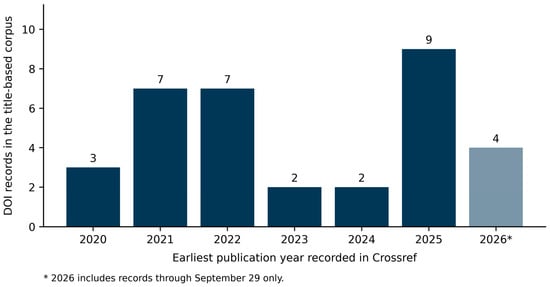
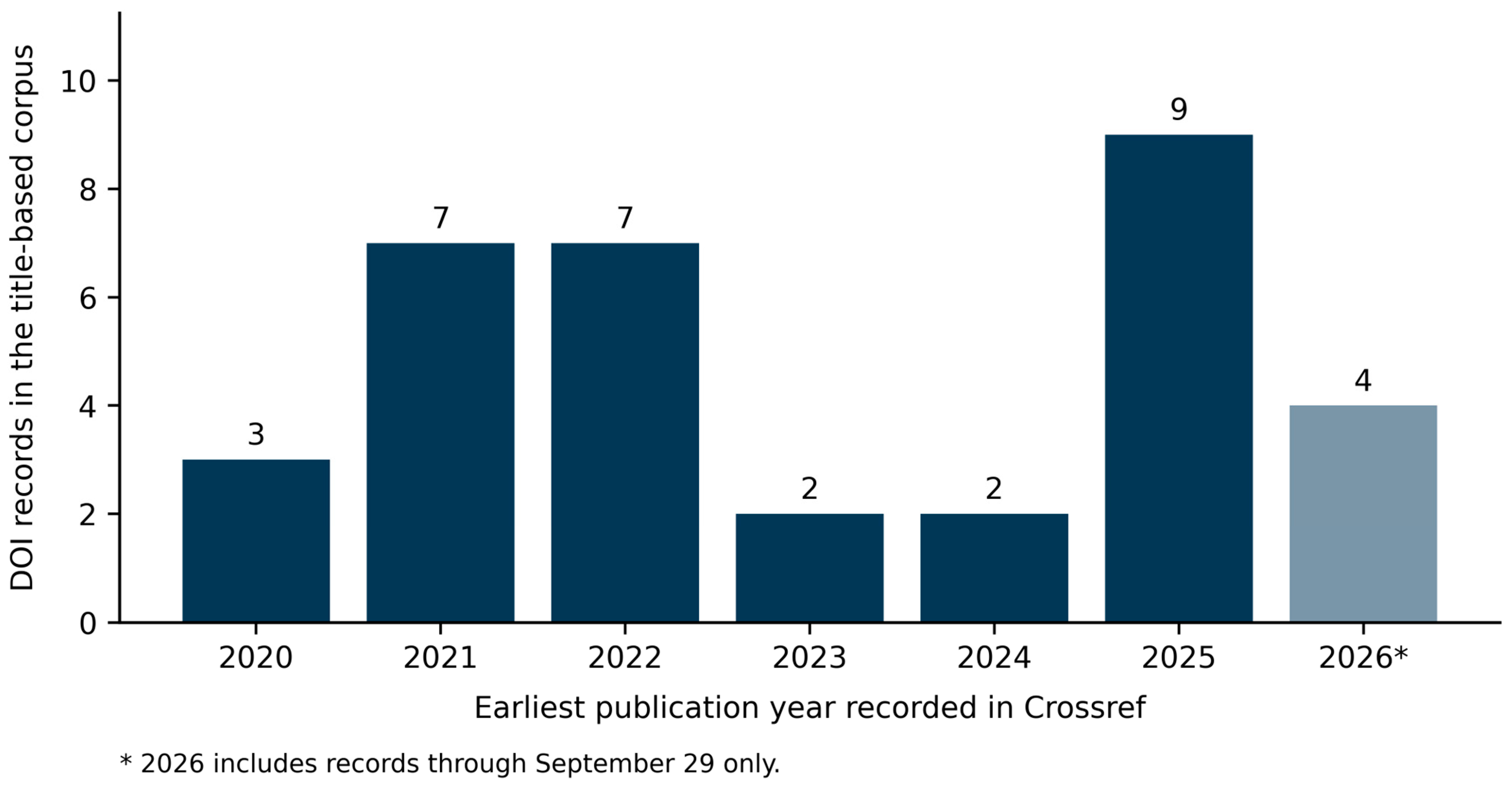
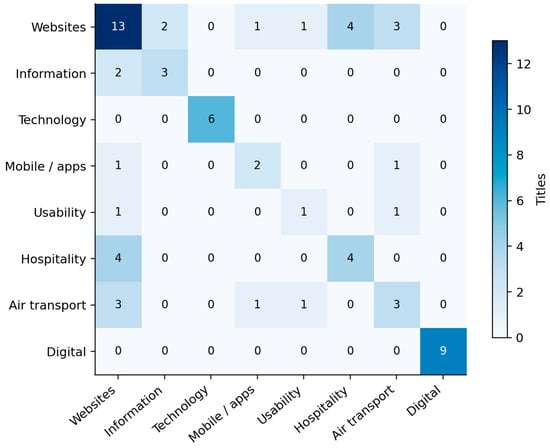
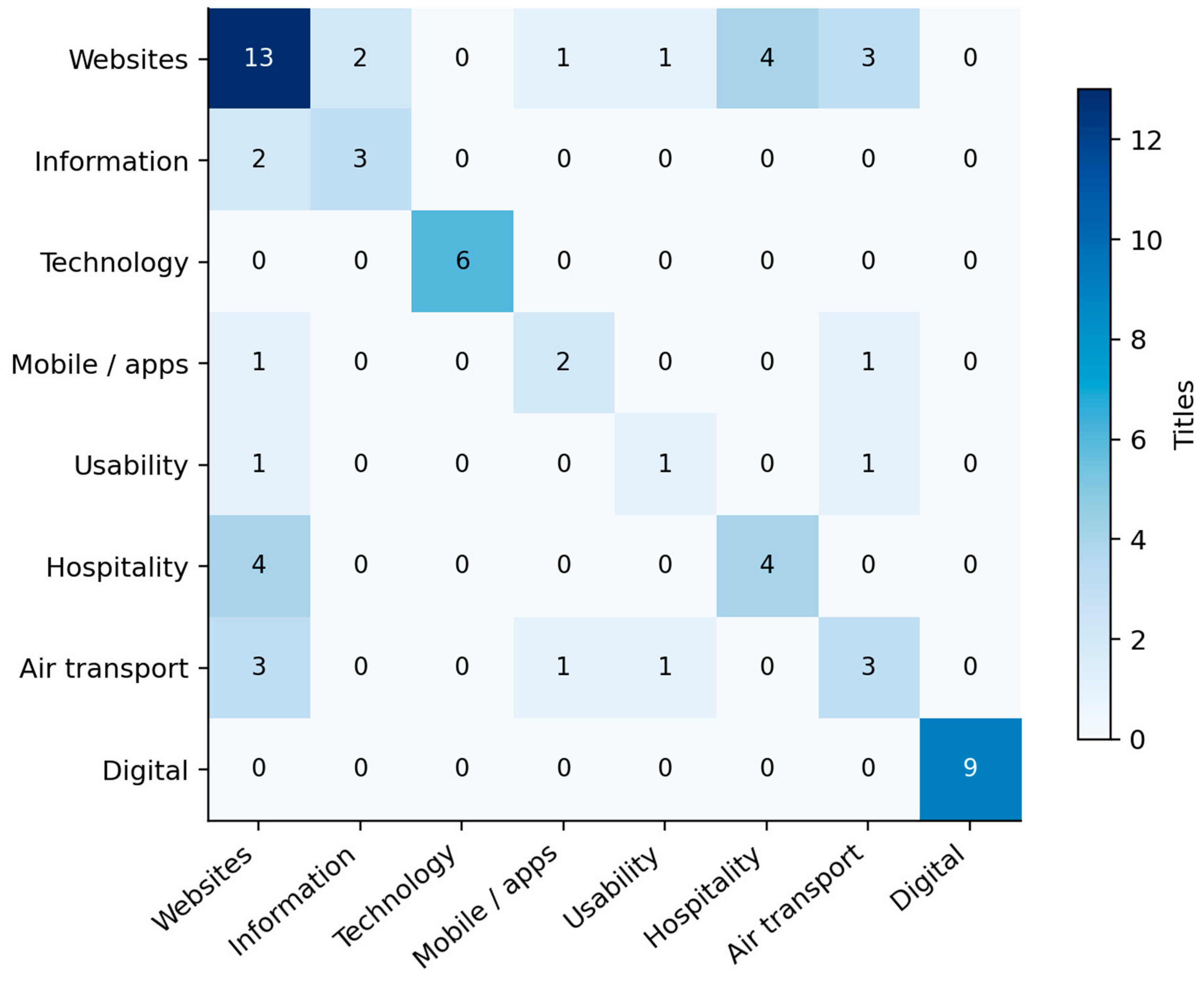
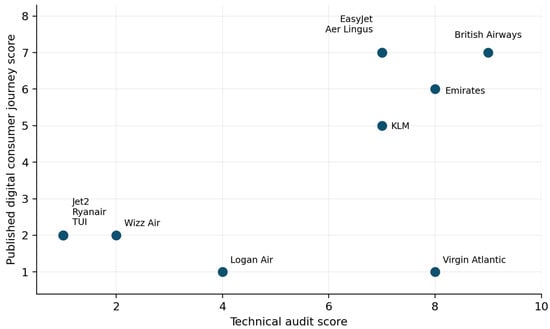
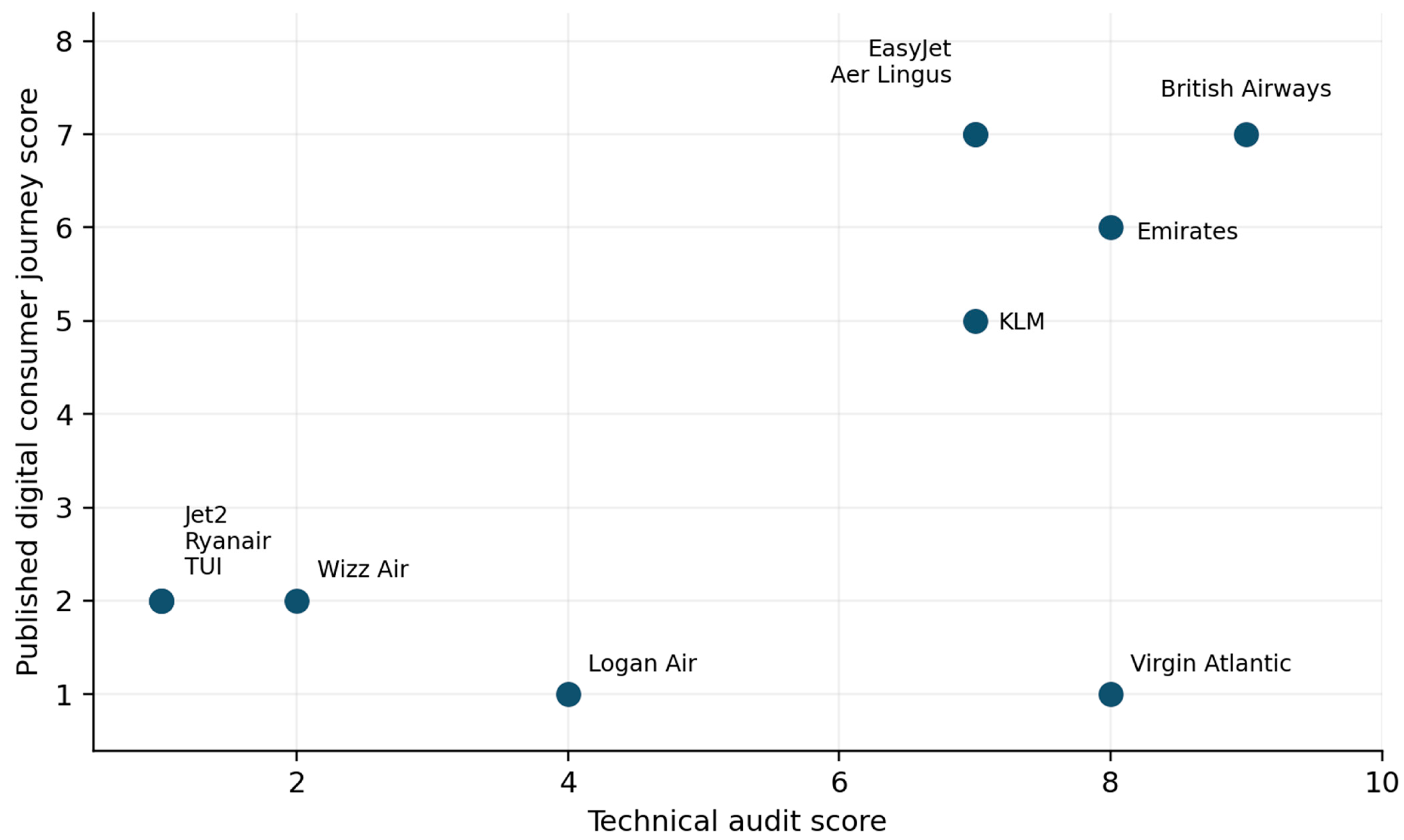
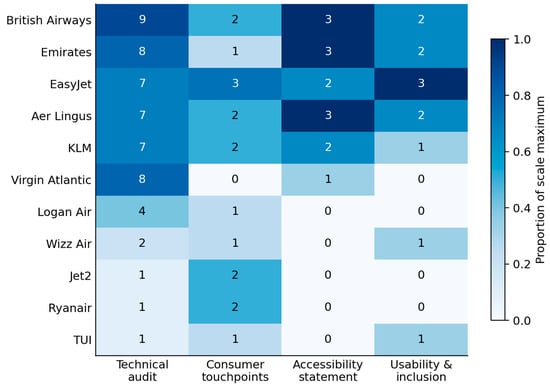
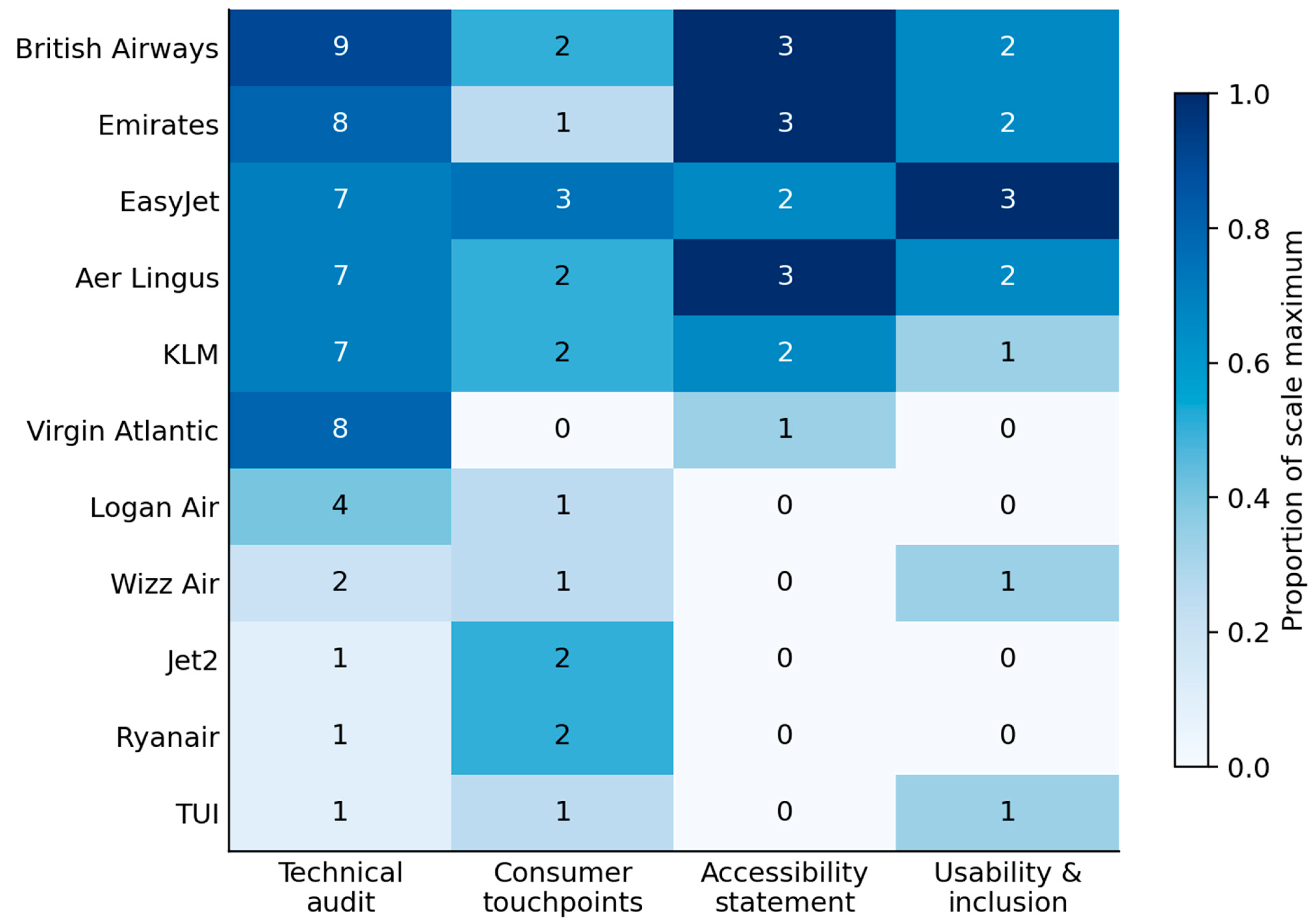

Disclaimer/Publisher’s Note: The statements, opinions and data contained in all publications are solely those of the individual author(s) and contributor(s) and not of MDPI and/or the editor(s). MDPI and/or the editor(s) disclaim responsibility for any injury to people or property resulting from any ideas, methods, instructions or products referred to in the content. |
© 2026 by the author. Licensee MDPI, Basel, Switzerland. This article is an open access article distributed under the terms and conditions of the Creative Commons Attribution (CC BY) license.