


Abstract
Over the past few decades, many environmental labels and schemes have been established at different levels to verify the degree to which businesses are operating in an environmentally sustainable manner and to inform tourist choices. These voluntary tools are used by tourist accommodation services to guarantee quality and conformity to high environmental and sometimes broader performance criteria, drive sustainability awareness and act as a marketing tool. According to the EU’s “Transition Pathway for Tourism” and “European Agenda for Tourism 2030”, environmental labels and schemes can play a role in driving the green transition and strengthening the contribution of tourism to the European Green Deal. This article summarises the main findings from an online survey conducted among global entities managing environmental labels and schemes for tourist accommodation services. The aim of this study is to provide a first characterisation at the European Union level. The results show that, in addition to EU tools such as the EU Ecolabel and the EU Eco-Management and Audit Scheme, a diverse range of other labels and schemes is available on the market, but further harmonisation, clarity, and transparency are required to enhance the uptake and effectiveness of these tools for the accommodation sector.
1. Introduction
Promoting sustainable consumption and production in all the economic sectors is an essential aspect of sustainable development, which depends on achieving long-term economic growth consistent with environmental and social needs (OECD, 2008). Tourism is one of the world’s fastest developing sectors and is associated with an increase in greenhouse gas emissions; the consumption of energy, water, land, and materials; and the generation of solid waste, sewage, and loss of biodiversity. Hence, tourism expansion may entail an ecological cost vis-à-vis its socio-economic benefits (Baloch et al., 2023; Mikayilov et al., 2019). In the context of tourism services, there is growing attention towards sustainability labelling and certification schemes. In this paper, we use the term “environmental labels and schemes” to denote their relevance to the environmental impacts of tourism while recognising that some of them also measure broader sets of sustainability-related impacts. These are voluntary tools for goods and services certifying their adherence to a particular standard that aims to measure and support minimising environmental impacts. Environmental labels and schemes have been promoted globally to support a green transition over the past decades, guarantee the quality of goods and services, and diminish harmful impacts. The spread of different labels and schemes highlights the necessity for globally recognised and standardised labelling criteria to ensure fairness and trustworthiness in tourism services (International Organization for Standardization, 2019). The general goal of an environmental label/scheme is to encourage the demand for and supply of products and services that cause less pressure on the environment, thereby stimulating continuous environmental improvement (ISO 14020) (International Organization for Standardization, 2022). Environmental labels and schemes raise awareness about the ecological impact of certain products and services and may influence buying behaviour (Yılmaz et al., 2019). For example, those linked with tourism services may help tourists make informed choices about holiday destinations (Bučar et al., 2019; Barbulescu et al., 2019; Rome, 2002). Furthermore, these labels/schemes sometimes take into account a social and economic standpoint next to an environmental perspective.
In this context, the EU Ecolabel (European Commission, 2025a), a third-party certified Type I (ISO 14024) (International Organization for Standardization, 2018) environmental labelling scheme, was established in 1992 by the EU Regulation EEC No. 880/92 and updated by the subsequent EU Regulation (EC) No. 66/2010. Today, the EU Ecolabel covers product categories as diverse as textiles, paper, detergents, tourist accommodation establishments, and many others. Furthermore, in 1993, the European Commission established the EU Eco-Management and Audit Scheme (EMAS), a management instrument for organisations to evaluate, report, and improve their environmental performance. Many studies have already demonstrated that environmental management can contribute to improving the competitiveness of a destination (Claver-Cortés et al., 2007). Besides the EU Ecolabel and EMAS, there is an ever-increasing number of labels and schemes, both national and international, targeting different categories of products/services and with different objectives and criteria. This includes international standards for environmental management systems, such as ISO 14001 (International Organization for Standardization, 2015). However, according to the European Commission (2022), there may be concerns regarding the reliability of numerous labels because they are subject to varying degrees of robustness, transparency, and supervision.
Focusing specifically on the tourism sector, since the 1990s, Hamele (2001) noted that an ever-increasing number of tourism associations began to pay attention to ecologically sound tourism. By the year 2000, tourism associations had introduced over 40 different environmental certificates and awards for all kinds of tourism suppliers spanning the regional, national, and international levels. About 30 of these certificates were specifically designed for accommodation services. Rome (2002) described the potential benefits of promoting environmental labels in tourism, as well as the challenges of being credible to consumers; to national regulatory authorities; to environmental specialists; to international, national, local, and civil society organisations; and to businesses themselves. Font (2002) outlined the status of the environmental certification of tourism and hospitality business, alongside the possible future evolution towards a common accreditation system. In the last decade, Schönberger et al. (2013) described some examples of the best environmental management practises to allow organisations to minimise their impact on the environment. Furthermore, the European Travel Commission (2019) described the use of sustainability certifications, awards, and programmes for tourism services in the EU.
According to the Ecolabel Index (2025), the largest global directory of ecolabels, there are currently 456 ecolabels in 199 countries covering 25 industry sectors and, in the EU, there are 231. The increase in the number of these labels over time enhances the necessity to promote a systematic comparative analysis sector-by-sector to improve the clarity and meaning, both for producers and consumers. Therefore, since environmental labels and schemes are issued by a myriad of organisations and covering, inter alia, the tourism accommodation sector (Duglio et al., 2017), it is considered relevant to shed some light on this complex landscape. Furthermore, it is desirable to assess the impacts that may result from reducing environmental labels and schemes that do not meet specific requirements and goals for impact reduction. This aligns with the European Commission’s objective to address their proliferation by developing a common approach to overcome this challenge. Specifically, the recently adopted directive on empowering consumers for the green transition (European Parliament & Council of the European Union, 2024) to allow only labels which are based on a certification scheme or established by public authorities. This approach also fits with the proposed directive on green claims (European Commission, 2023) that would set minimum requirements for environmental labels to guarantee reliable information to consumers.
Focus on Tourist Accommodation
Tourist accommodation services are defined as “structures providing, for a fee, a sheltered overnight accommodation in rooms, including at least a bed, and private or shared sanitary facilities, offered to tourists, travellers, and lodgers” (European Commission, 2017, p. L 28/10). They represent a high-energy intensity sector within the tourism industry (Mak & Chang, 2019) and rely on energy provision, water resources, and waste management, which have an environmental footprint. As stated by Dief and Font (2010, p. 157) “within the tourism sector, hotels have been the focus of many actions, not only because of their size and visual presence but also because of the relatively easy opportunity to reduce impacts while reducing costs and improving the customer experience”. For this reason, and due to their economic weight in the tourism sector, tourist accommodation services were identified as an initial priority for the development of tourism-related environmental labels and schemes (Hamele, 2001; Ayuso, 2007; Bonilla Priego et al., 2011; Velaoras et al., 2025).
According to Dabeva (2013), different benefits can arise in the hotel industry from the adoption of labels and schemes, from an improved reputation to an increased competitiveness and product quality. Additionally, Bilynets et al. (2023) argue that environmentally sustainable destinations are perceived as being more attractive by tourists. Hence, tourist accommodation services are even the main or the only focus of specific labels and schemes, generating a niche market where ecolabelling represents a factor of influence when choosing among alternative tourist providers (Karlsson & Dolnicar, 2016).
To the best of our knowledge, there is no recent and systematic assessment of the existing environmental labels and schemes for tourist accommodation services and very often “[…] the volume and variety of existing labels has also become a barrier to, rather than a facilitator of, consumer choice” Weston et al., 2018, p. 9). This rapid proliferation led Núñez and Hamele (2014) to coin the term “eco-label jungle”. This further reinforces the need to clarify the variety of existing labels and schemes for tourist accommodation services and to enable the most suitable choice based on specific needs.
In the EU policy context, the “Transition Pathway for Tourism” (European Commission, 2022) encourages businesses to apply for the EU Ecolabel, other EN ISO 14024 type I ecolabels, or equivalent voluntary labels that are independent, multi-criteria-based, and third-party verified. This push to engage in environmentally friendly practises is also confirmed in the European Council’s conclusions on the “European Agenda for Tourism 2030” (Council of the European Union, 2022).
The EU Ecolabel aims at providing hotels and camping sites with specific criteria to lower their environmental impacts whilst guaranteeing a high level of guest satisfaction. To be awarded the EU Ecolabel, tourist accommodations must comply with 22 mandatory criteria and score at least 20 points from 45 additional optional criteria, with these criteria being periodically reviewed (European Commission, 2025b). As of September 2024, 799 tourist accommodation services had obtained the EU Ecolabel (European Commission, 2024), a figure that pales in comparison with the more than 650,000 tourist accommodations in the EU27, Iceland, Norway, and Switzerland in 2022. The objective of the EU Ecolabel is to serve as a “best-in-class” label, awarding tourist accommodations that excel in meeting stringent environmental standards. It is important, however, to note that there are currently several EU countries where no accommodation services have yet obtained the EU Ecolabel. This suggests that to enhance the role of environmental labels and schemes in supporting the green transition, it would be beneficial to examine the current adoption of other high-quality labels and schemes in the EU’s tourism accommodation sector.
The review of the limited available literature indicates that a systematic assessment of the existing labels and schemes focused on tourist accommodation services is missing. This study aimed to fill this gap by creating a first inventory and characterisation of those operating in the European Union. The inventory was based on a structured online survey that was sent out to entities managing environmental labels and schemes for the tourist accommodation sector. Desk research was performed to fill in information gaps and to cross-check the responses against publicly available material. Ultimately, the survey enabled the characterisation of these labels and schemes according to their scope, criteria, audit procedure, renewal and price policies, geographical coverage, adoption, etc., as documented in this paper. Based on the examined state of the art, we believe that this is the most complete list of data collected for a review of environmental labels and schemes in the tourism sector to date. See the Appendix A and Appendix B.
This study was carried out in the context of the “EU Tourism Dashboard” (EUTD) (European Commission, 2025c) developed by the European Commission’s Joint Research Centre (JRC), in collaboration with the Directorate-General for Internal Market, Industry, Entrepreneurship, and SMEs (DG GROW). The Dashboard represents a flagship initiative aimed at supporting the green and digital transitions of the tourism sector towards higher resilience and sustainability. This encompasses the monitoring of tourism indicators in the EU27 member states, Iceland, Norway, and Switzerland related to environmental impacts, digitalisation, and socio-economic resilience. The aim of the work outlined in this paper is to offer additional support for the development of EUTD indicators, including the evaluation of existing environmental labels and schemes, and strengthen their contribution to advancing the green transition within the tourism accommodation sector.
2. Materials and Methods
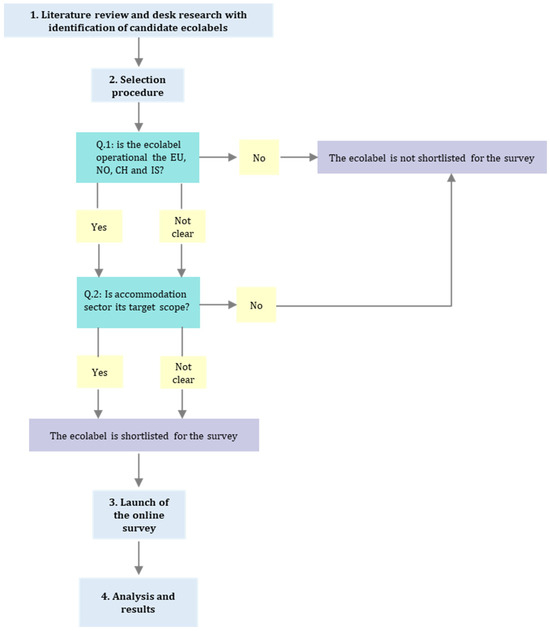
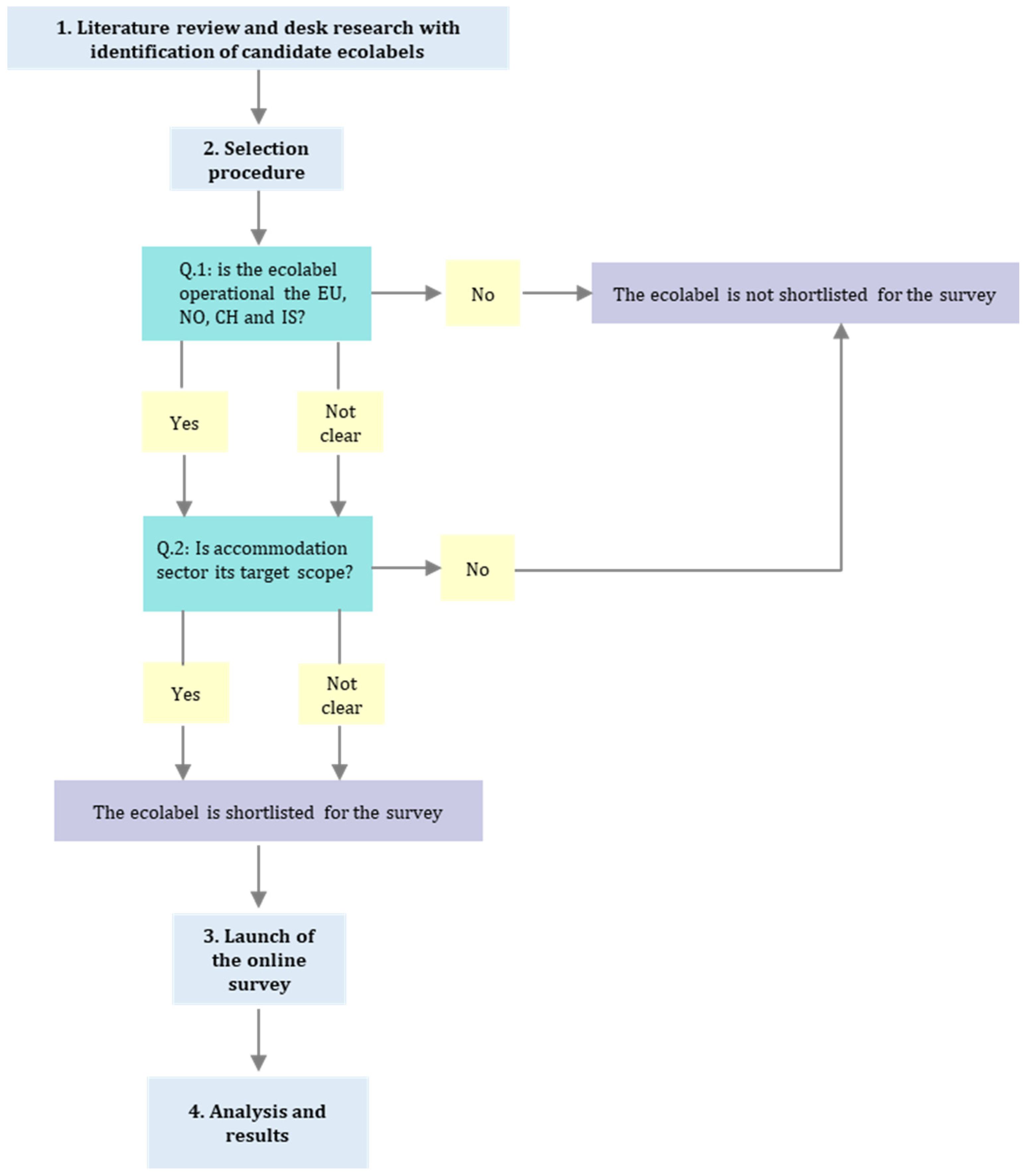
The full methodological workflow is represented in Figure 1. The first phase of this study comprised a review of the state of the art of the existing environmental labels and schemes in the EU tourism ecosystem and Iceland, Norway, and Switzerland, with a special focus on those relating to tourist accommodation services.
Figure 1.
Methodological workflow.
First, we detected existing environmental labels and schemes from a through desk review of secondary sources, such as public documents, tourism agencies’ documents, and ecotourism websites (see Appendix A for a complete list of the sources consulted). To give some examples of the consulted sources, Núñez and Hamele (2014) reviewed 20 quality labels for sustainability in tourism, selecting from over 150 labels worldwide, which obviously called for clear-cut criteria. Another example from Wilde Tippett et al. (2020) gives an overview of the 20 ecolabels (including 3 environmental management systems) perceived as being the most relevant for SMEs.
In the selection process, environmental labels and schemes for which no clear geographical and sectorial scope could be retrieved were nonetheless shortlisted for the survey. This approach was taken to prevent the exclusion of potentially pertinent labels and schemes. The final stages of the process involved designing and launching the online survey to collect the most important characteristics of the selected labels and schemes. Ultimately, a qualitative analysis of the responses was performed, and the results are presented and discussed in the following paragraphs.
An online survey to be sent out and filled in directly by entities managing and issuing labels and schemes for the tourist accommodation sector was deemed the most cost-effective data collection method and the only way to obtain information not always publicly available or not easily accessible. We established the information that was considered relevant to collect in consultation with experts in the field and designed and deployed the survey using the European Commission’s official survey management tool, distributing it in English to the selected issuing entities.
The survey was launched on 27 April 2022, and the data collection process lasted approximately 40 days. A quality check was subsequently carried out to assess the consistency of the obtained answers with publicly available information for a large sample of the surveyed entities. More details on this are provided in Section 3.4. The survey included 38 structured, semi-structured, and open-ended questions that were divided in 5 main sections (see Appendix B for more details about the survey structure).
- Section 1 gathered general information on the label/scheme and its basic characteristics.
- Section 2 focused on the scope of the label/scheme, with questions ranging from service coverage to geographical scope.
- Section 3 aimed to collect information on the certification procedure, in terms of the type of label/scheme, criteria considered, or the audit procedure type and compliance with any ISO standards.
- Section 4 aimed to collate information on the certified tourist accommodation services, i.e., the number of tourism services possessing a label/scheme and their geographical location.
- Finally, Section 5 collected the entities’ contact details.
An additional aim of this study was to lay the foundation for the development of a preliminary geographical database of certified tourism accommodations at the highest possible spatial resolution. Nevertheless, due to the limited geographical information data collected during this first attempt, this step is not included in the present paper.
3. Results
The information was initially obtained through responses to the online survey sent by the ecolabel entities identified in the selection process described in Section 2 (n = 90). In cases where certain entities did not provide responses, the authors conducted desk research to complete the survey. Due to limited resources, a subset of eight missing labels and schemes was selected for the desk research considering the three following criteria:
- Geographical scope, i.e., prioritising the worldwide, European-wide, or multiple European country ones over those covering single countries or regions.
- Language, i.e., selecting those with an English website to facilitate ease of comprehension.
- Prioritisation given to labels cited in at least four different literature sources (see Appendix A for a complete overview of the sources consulted).
Ultimately, the final inventory collated data for a total of 44 labels and schemes, including the EU Ecolabel and EMAS. Although this approach does not cover every possible environmental label/scheme operating in the EU, Iceland, Norway, and Switzerland, given the prioritisation of data collection methods, we consider that this sample includes the most relevant ones and offers a representative overview. In the following sections, we will focus on the main findings from the survey results.
3.1. General Information
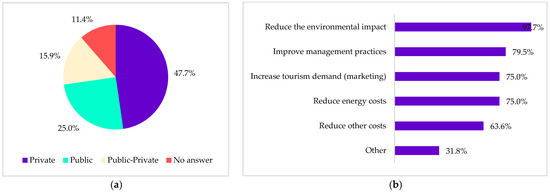
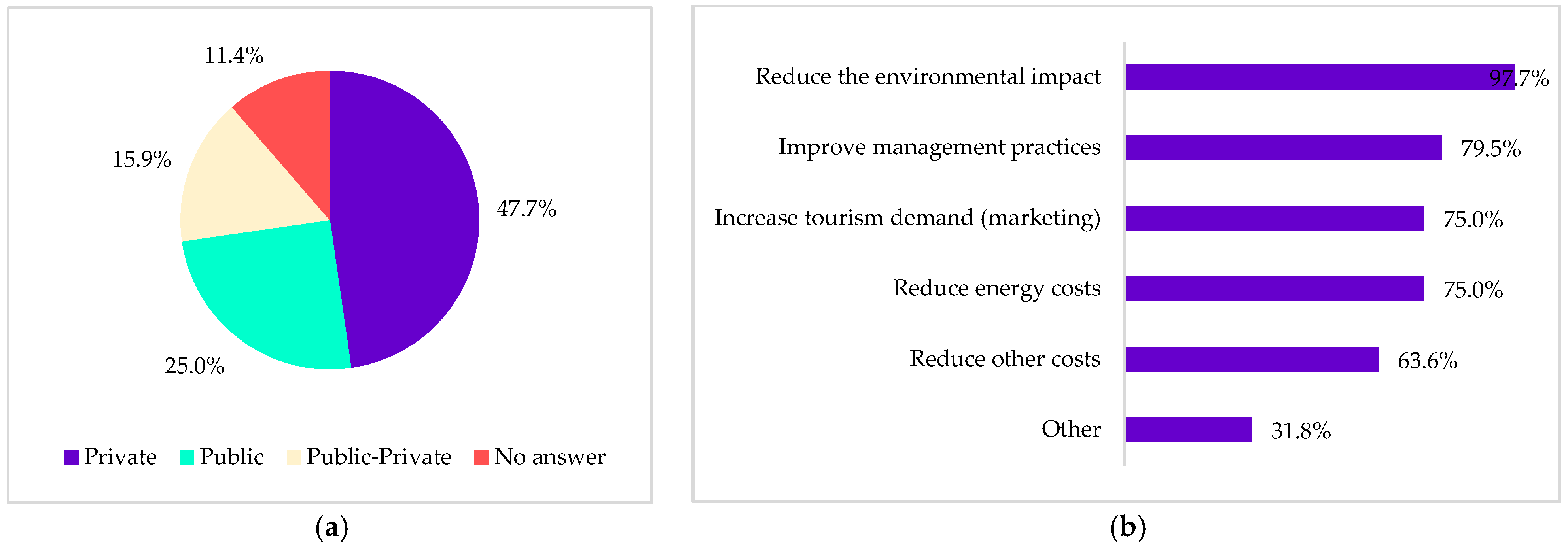
Section 1 of the survey assessed the general features of the label or scheme, starting from the type of owner. Entities responsible for defining the certification criteria, auditing, and issuing the certificates can be either public or private or represent a mix. Analysing the results, it is possible to observe that almost half of the respondents (47.7%) were owned by a private entity, 25% by a public entity, 15.9% by a mix of public–private, and 11.4% did not reply to this question (Figure 2a).
Figure 2.
General information. (a) Type of owner; (b) reason to obtain the label.
Almost all the respondents indicated among the reasons for tourist accommodation establishments to obtain the label/scheme the goal of reducing environmental impacts (97.7%), followed by an improvement in management practises (79.5%) and an increase in tourism demand (75.0%), which scored the same as the reduction in energy costs. Finally, the reduction in other costs was selected by 63.6% with only 31.8% selecting “other” as an option, indicating other motivators not listed in the survey prompts (Figure 2b). Respondents were also able to add other motivators in a free-text field. Examples included “to add value to local agri-food, craft, and tourism services”, “to gain local and worldwide recognition”, as well as “be frontrunners in the tourism industry, supporting community and biodiversity”, and achieve a “better operating business, attracting more clients and leading to more engaged and supportive employees, also obtaining easier access to technical and financial assistance to implement new technology”. In addition, a “competitive advantage, return on investment, and reduction in operational costs” is also mentioned. Most respondents declared more than one motivator, with a low percentage (10.4%) declaring the reduction in environmental impacts as the only reason to obtain the label.
3.2. Geographical and Sectoral Scope of Ecolabels
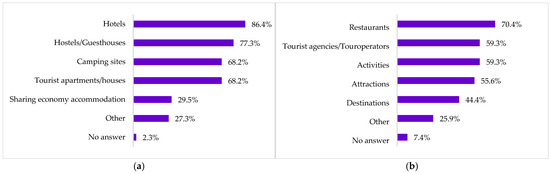
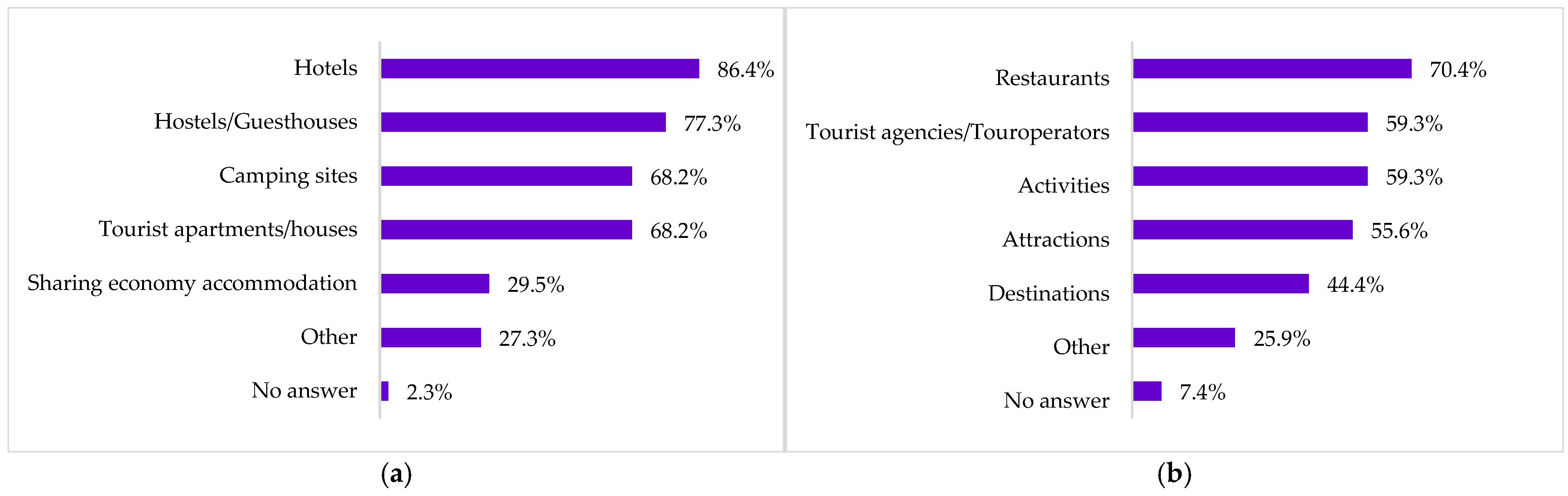
This section of the survey was aimed at understanding the types of tourist accommodation services and other tourist services that were considered by the issuing entities. Most respondents (61.4%) also declared covering under their label other tourist services besides accommodations. Furthermore, most issuing entities (81.8%) cover more than one type of tourist accommodation service. Figure 3a represents the typology of accommodation services reported in the survey. There is a predominance of hotels (86.4%), followed by guesthouses (77.3%), camping sites (68.2%), and tourist apartments/houses (68.2%), while the less represented services are sharing economy accommodations (29.5%). There was also an open question with the possibility of mentioning accommodation services other than those listed. Typologies like “glamping sites”, “resorts”, or “rural accommodations” emerged. As far as the other tourist services covered under the label or scheme, Figure 3b shows that the most popular are restaurants (70.4%), followed by tourism agencies/operators and activities scoring the same (59.3%), while destinations represent the least common service (44.4%). These percentages are in relation to respondents covering other tourist services apart from accommodations (27 respondents). Amongst the other tourist services reported in the open question, the survey revealed “conference centres”, “museums”, “spas”, etc. Furthermore, only a minority (4.5%) declared the coverage of only one single tourist service, while most of the respondents covered up to six services and, in general, always more than one.
Figure 3.
(a) Types of accommodations; (b) other tourism services covered.
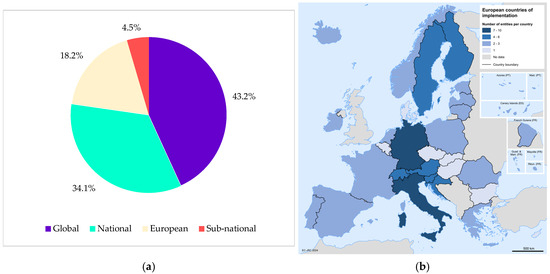
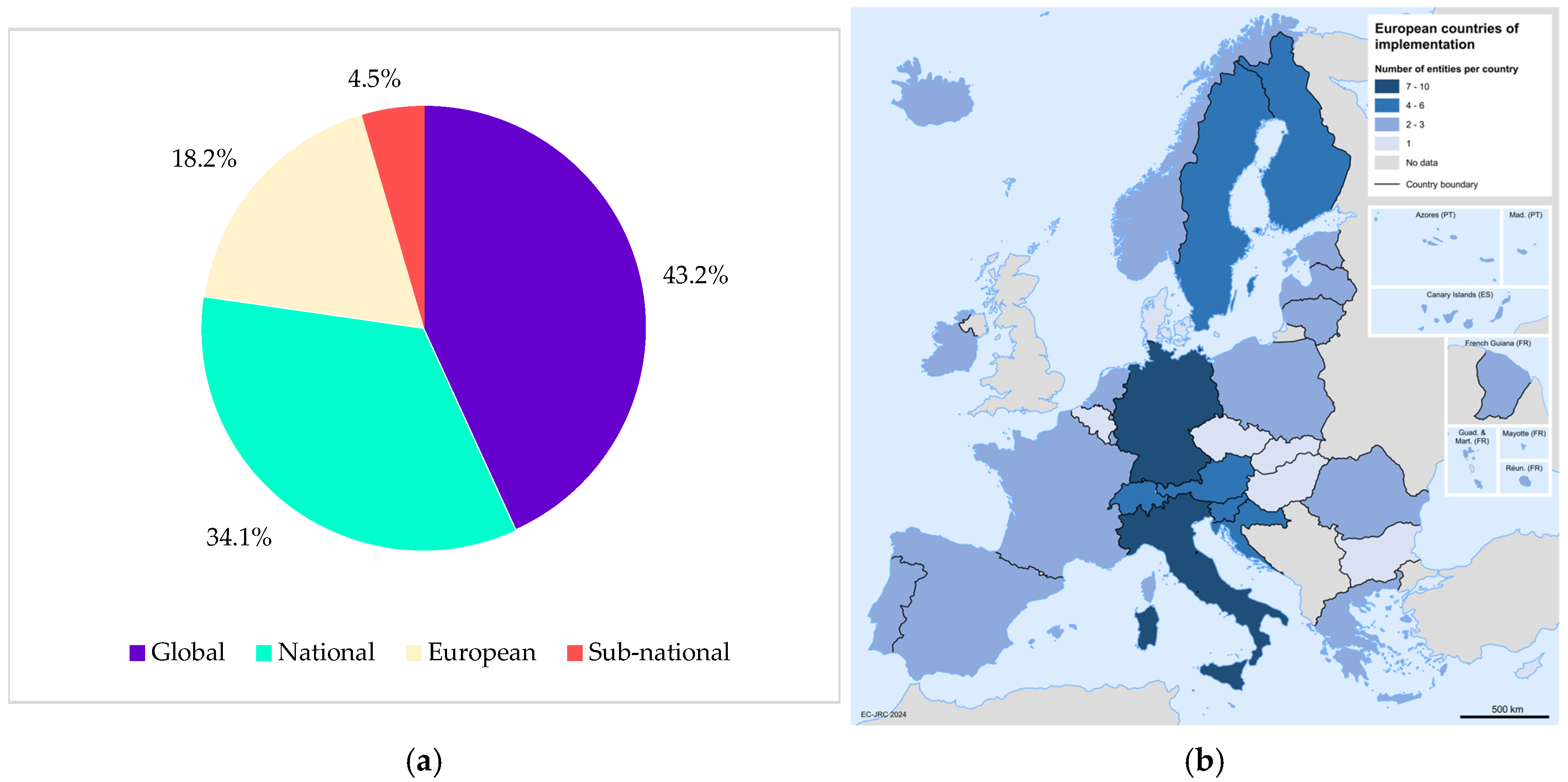
We also investigated the territorial spread of the labels/schemes. Figure 4a illustrates the overall geographical scope of the respondents. Approximately 61% operate at the supra-national level (43.2% global and 18.2% European), while approximately 34% operate within a single European country, and we found 15 countries with national labels. The inventory includes only two sub-national labels in Croatia and Spain. Others might exist but may not have been identified or covered by the survey. The map in Figure 4b shows the aggregated number of entities per country among those operating at the national (single EU country) or European levels (multiple EU countries covered by the same entity).
Figure 4.
(a) Geographical scope; (b) European scope.
3.3. Certification Procedure
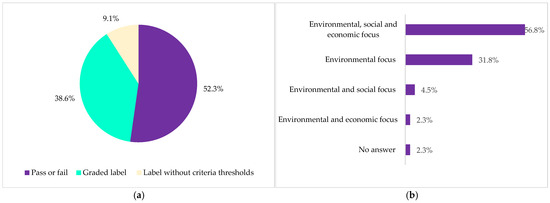
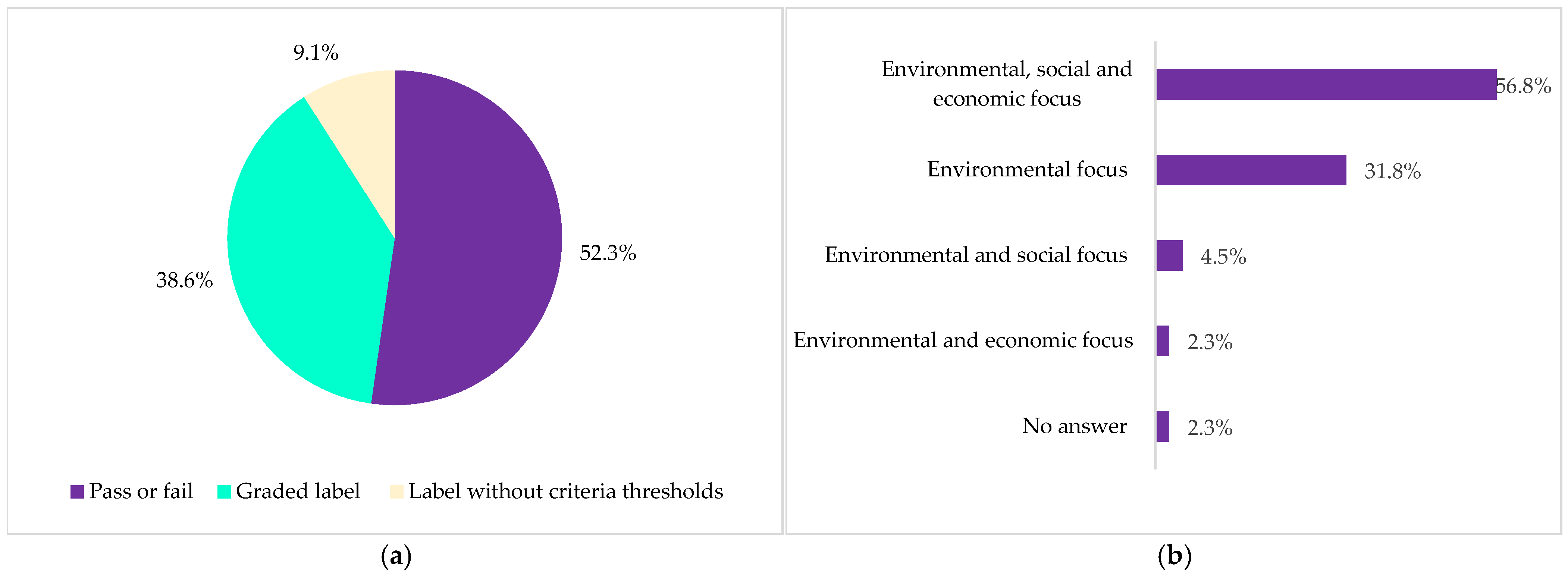
Section 3 of the survey investigated the certification procedure. Around half of the labels/schemes assess tourist accommodation services on a “pass or fail” basis, meaning that to be awarded the ecolabel, all criteria need to be fulfilled or a minimum score should be reached in line with a scoring system. Around 40% of the entities apply a “graded label” approach, where different grades of criteria fulfilment are foreseen, e.g., bronze, silver, or gold. Lastly, only a minority (9.1%) correspond to a “label without criteria thresholds” (management label or open choice on which criteria to satisfy) (Figure 5a). We also investigated the thematic focus, which covers not only the environmental domains but also the social and economic dimensions. This was confirmed by the survey results, where almost all the respondents indicated an environmental focus, nearly always associated with another focus among the social and economic ones. More precisely, 31.8% of the respondents declared an environmental focus only, 4.5% associated the environmental focus to the social one, and only for 2.3% was there an economic dimension alongside the environmental one (Figure 5b). It is worth mentioning that about 61.4% of the entities considered more than one focus under the same label and, more specifically, around 56.8% of the total respondents assessed accommodation services according to the environmental, social, and economic dimensions.
Figure 5.
Type of labels. (a) Certification procedure; (b) thematic dimensions.
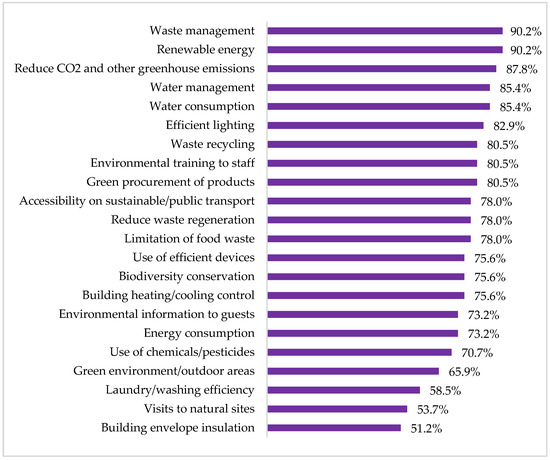
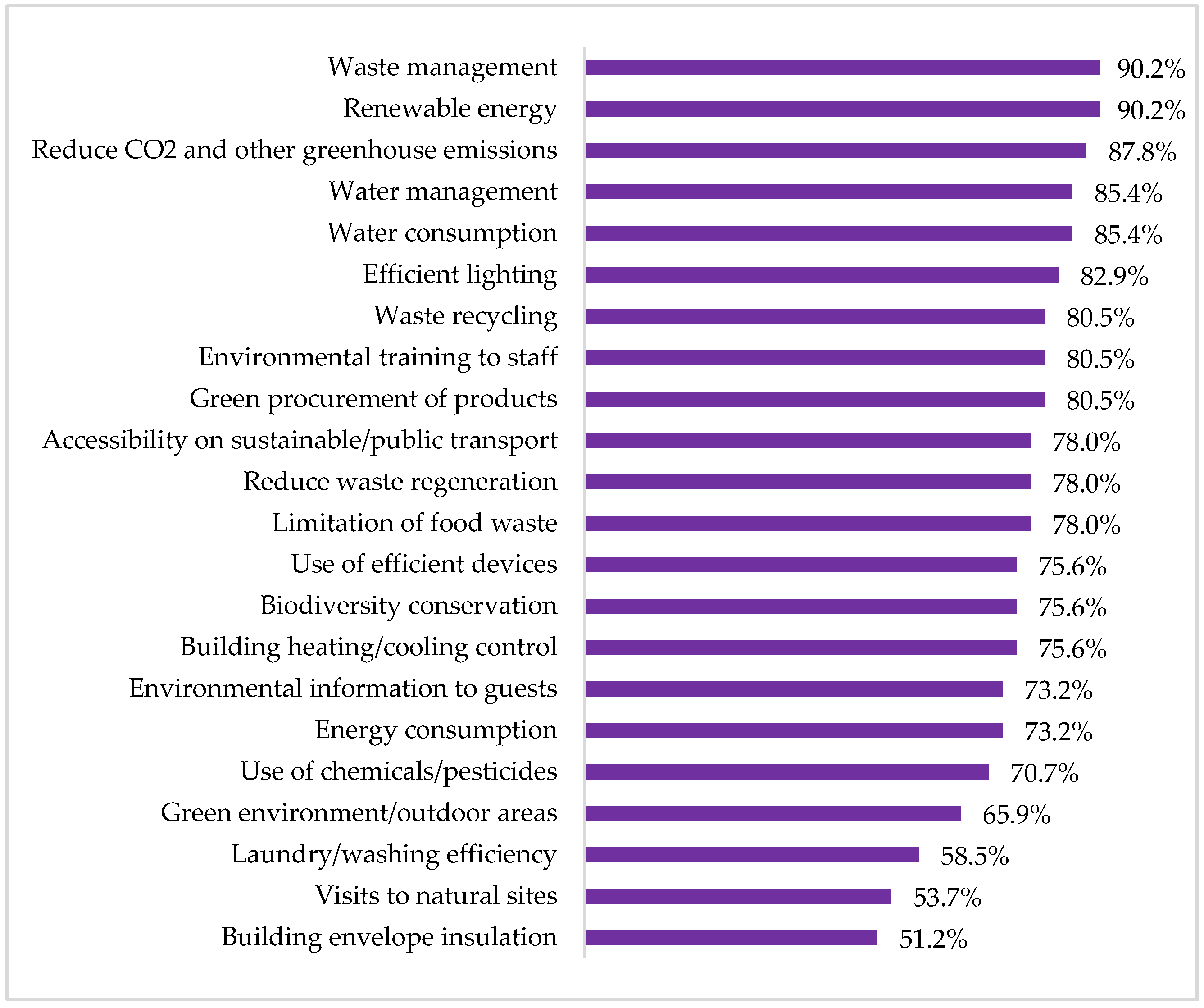
When asked about the specific evaluation criteria related to the environment, the labels and schemes covered many of the options offered. Figure 6 illustrates the different criteria popularity (percentage of times a criterion was selected). As shown in the graph, the most popular ones were “waste management” and “renewable energy”, while the least represented one was “building envelope insulation”. A small number of entities did not answer (6.8%), while most of them (81%) applied more than one criterion simultaneously. As far as the social criteria were concerned, the most popular ones are “raise staff awareness on sustainable tourism development” and “community support”, while on the economic side, more emphasis is on “local purchasing” and “consumption of local products”. Among the other criteria considered, the following were reported: “Food and gastronomy”, “sustainable mobility”, “eco-sustainable purchases”, “noise”, “indoor air quality”, “building infrastructure”, and “land use”.
Figure 6.
Environmental criteria frequency.
Less than one-third of the respondents (31.8%) declared that the assessment criteria were established independently, i.e., by an external entity or source that could be, for example, represented by a research body. For 25% of the labels/schemes, the criteria were not established by an independent source, whereas a mixed approach was declared by 31.8%. The remainder (11.4%) did not reply to the question.
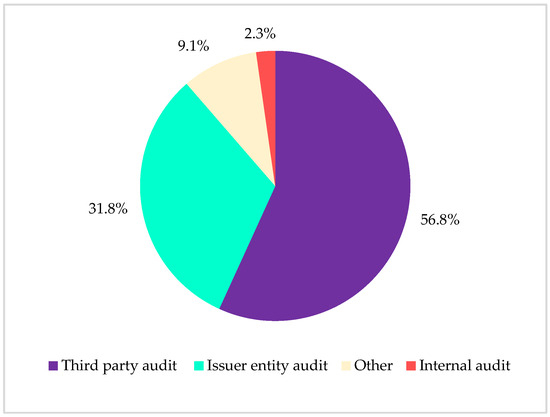
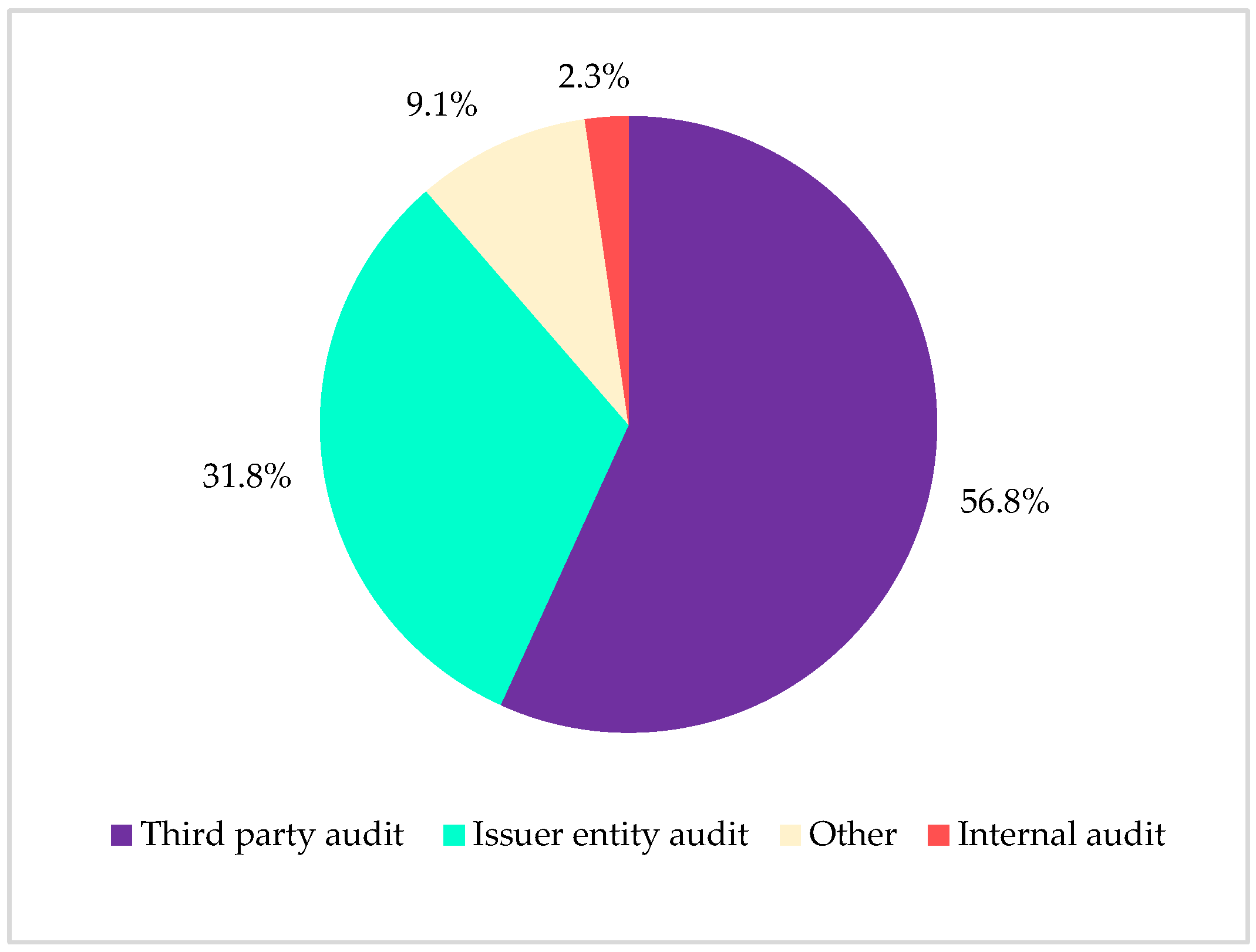
When the respondents were asked about more details on the audit procedure type, the results indicated that the most common method was a third-party audit (56.8%), conducted presumably by an external and independent entity. This was followed by an issuer entity audit (31.8%), while other audit approaches (including mixed) were reported by 9.1% of the respondents. Finally, the internal audit, interpreted as a self-assessment by the accommodation establishments, was only referred to by one respondent (Figure 7). Third-party auditing is preferred because it provides further assurances on the impartiality of the label or scheme, while the self-assessment is the least preferred option. As stated by Preziosi et al. (2019, p. 2), “[…] third-party certified ecolabels stand out due to their capacity to communicate directly with customers and to the credibility ensured by external certification”.
Figure 7.
Audit procedure type.
To evaluate the transparency of the label procedure, entities were inquired about the availability of the environmental label/scheme’s criteria and methodology. The findings indicate that most labels/schemes are considered as “fully published” (56.8%), meaning that all the relevant information is available on their respective websites. For a lower share (36.4%), the pertinent information is only partially available online, whilst a minority (6.8%) declared restricted access to the information. The high combined percentage of labels not fully publishing their criteria and methodology confirm our original choice to resort to a survey as the preferred data collection method for this study. A fully independent desk research would be impractical and lead to lower coverage and incomplete results due to limited access to online information in many cases.
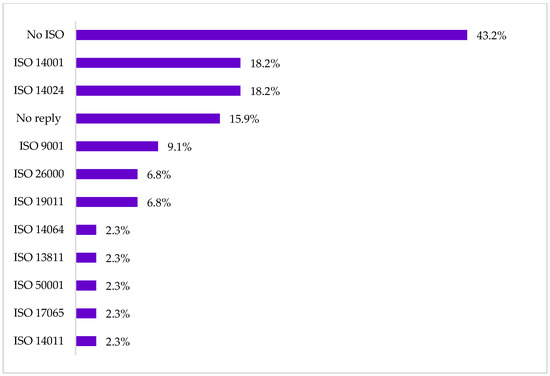
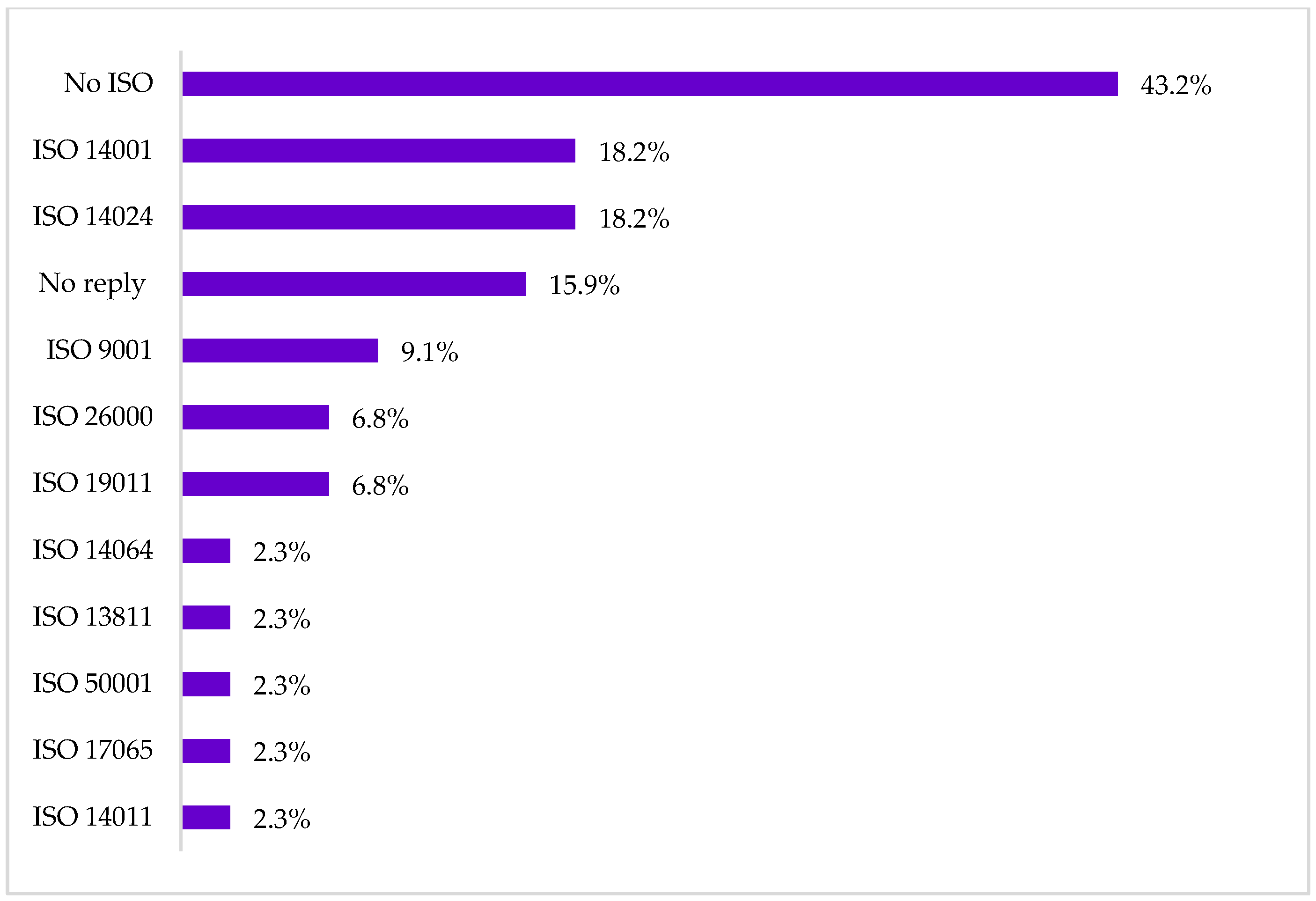
Following the recommendation in the “Transition Pathway for Tourism” and in the European Council’s conclusions on the “European Agenda for Tourism 2030” to increase the uptake of the EU Ecolabel or other EN ISO 14024 Type I ecolabels or equivalent voluntary labels, the survey assessed whether the entities were compliant with any ISO standards. Two options were proposed, i.e., ISO 14001—Environmental Management—and ISO 14024—Type I Environmental labelling. Respondents were also given the possibility to specify other standards if relevant. The results showed that many respondents (43.2%) do not follow any ISO standard and 15.9% did not reply to the question. Figure 8 shows that ISO 14001 and ISO 14024 standards were the most cited.
Figure 8.
ISO standards.
Finally, in Section 3, some of the questions concerned the duration/validity of the certification and the fees charged for issuing the label/scheme, including a possible renewal fee. As far as the duration/validity is concerned, it seems that the most common option was 3 years (45.4%), while the 1-year and 2-year durations scored 18.2% and 20.5%, respectively. A lower percentage had a longer duration of 4 years or more (4.5%), with no entity declaring an unlimited duration and about 11.4% declaring other durations.
For what concerns the fees, about 79.5% of the respondents replied and, in some cases, only specified that the fee varied according to the type of tourist accommodation or country of the accommodation. Application fees ranged from a minimum interval of EUR 1–50 to a maximum of about EUR 4000, and a similar variation was found in the renewal fees. Many respondents fall in the higher price range, varying from EUR 2001 to 4000. For comparison, the application fee for an EU Ecolabel can range from EUR 200 to 2000 plus annual fees reaching up to EUR 25,000 in a few cases and depending on the turnover of the company. In addition, the EU Ecolabel gives SMEs, micro-enterprises, and companies from developing countries the possibility to benefit from reduced fees. It must be noted, however, that the audit costs of the certification procedure are not included in the above prices. Furthermore, the companies may have other costs, such as paying for consultancy in estimating their environmental effects to prepare the application and audit.
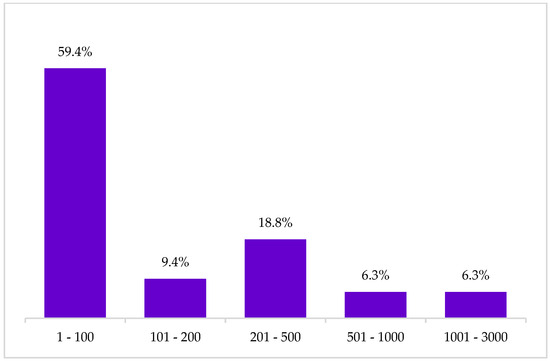
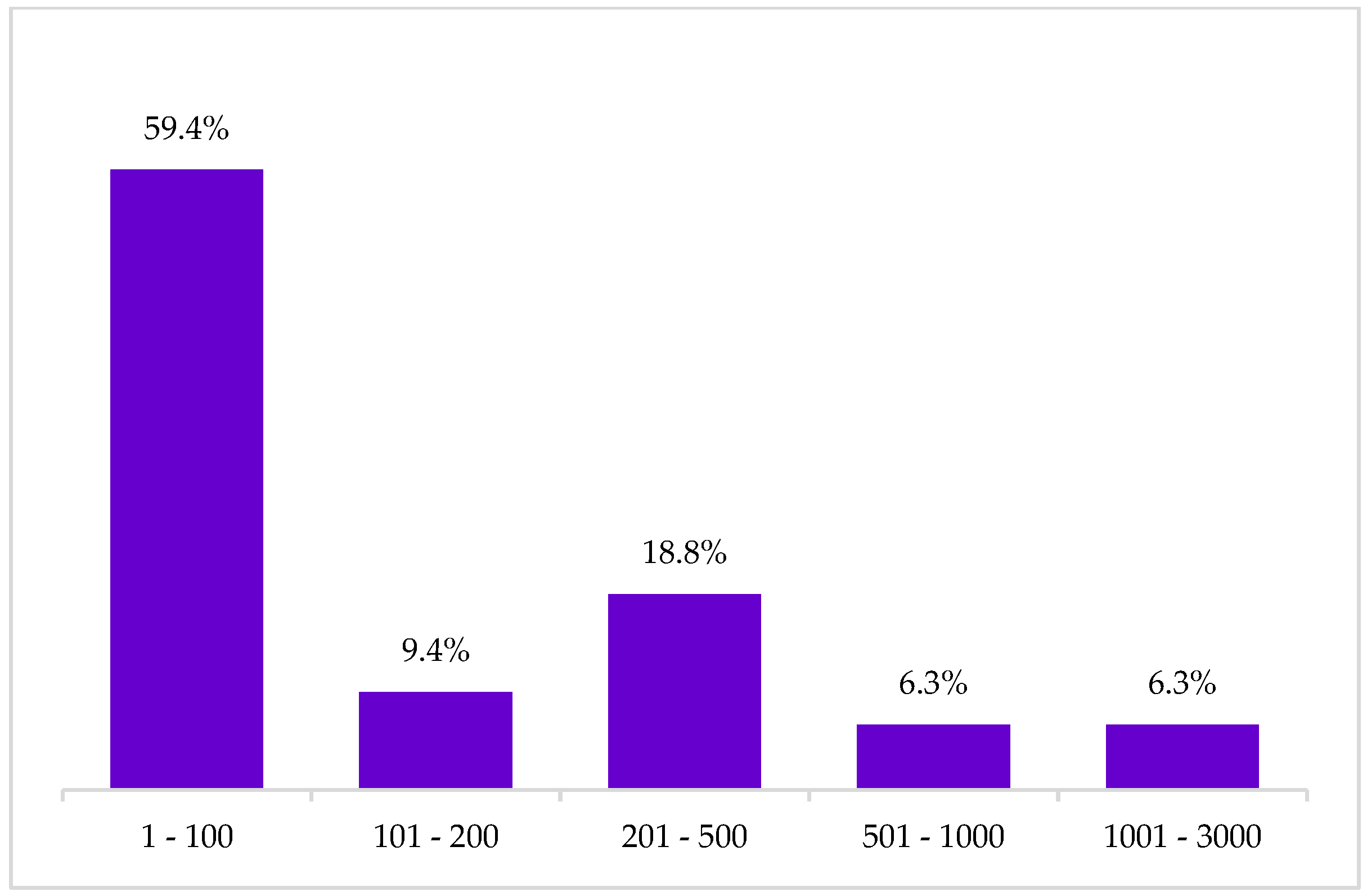
Finally, respondents were asked to provide the number of tourist accommodation services worldwide that were awarded their environmental label or scheme. Approximately 82.8% replied to this question. The results ranged from a minimum of five to a maximum of 3450, reaching a total of 10,110, of which 8572 were in the EU (more details on the ranges are reported in Figure 9). It is worth noting that in Europe/IS/NO and CH, the majority of environmental labels/schemes fall within the lower range (1–100) in terms of the number of certifications awarded in Europe. Consequently, the EU Ecolabel is part of a smaller percentage (6.3%), characterised by a higher range of certifications awarded (501–1000); hence, it can still be considered among the most popular solutions, although representing an overall limited market share.
Figure 9.
Ecolabels by number of tourist services awarded in Europe.
3.4. Quality Check
To validate the survey results, we performed a quality check on the answers obtained from a relatively large sample of participating entities (n = 24), which corresponds to 66.7% (n = 36) of the total entities that replied to the survey. Priority was given to entities with a larger number of ecolabels issued in Europe.
The quality check consisted of a comparison between the answers provided by the entities and the information that could be retrieved online, usually from the entities’ own websites. While this quality check could not verify the actual veracity of the stated information (both in the survey and online), it was important to assess the consistency with the survey. Frequent and/or strong inconsistencies for specific environmental labels or schemes could flag potential reliability issues, while recurrent and strong inconsistencies across many respondents could compromise the results and conclusions of the study or at least for specific questions.
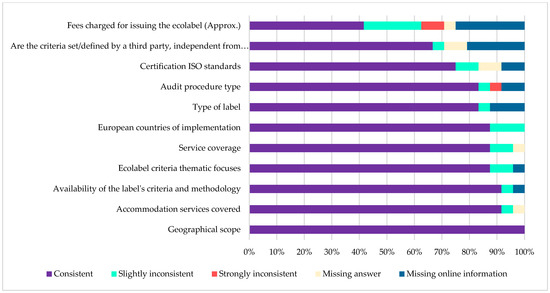
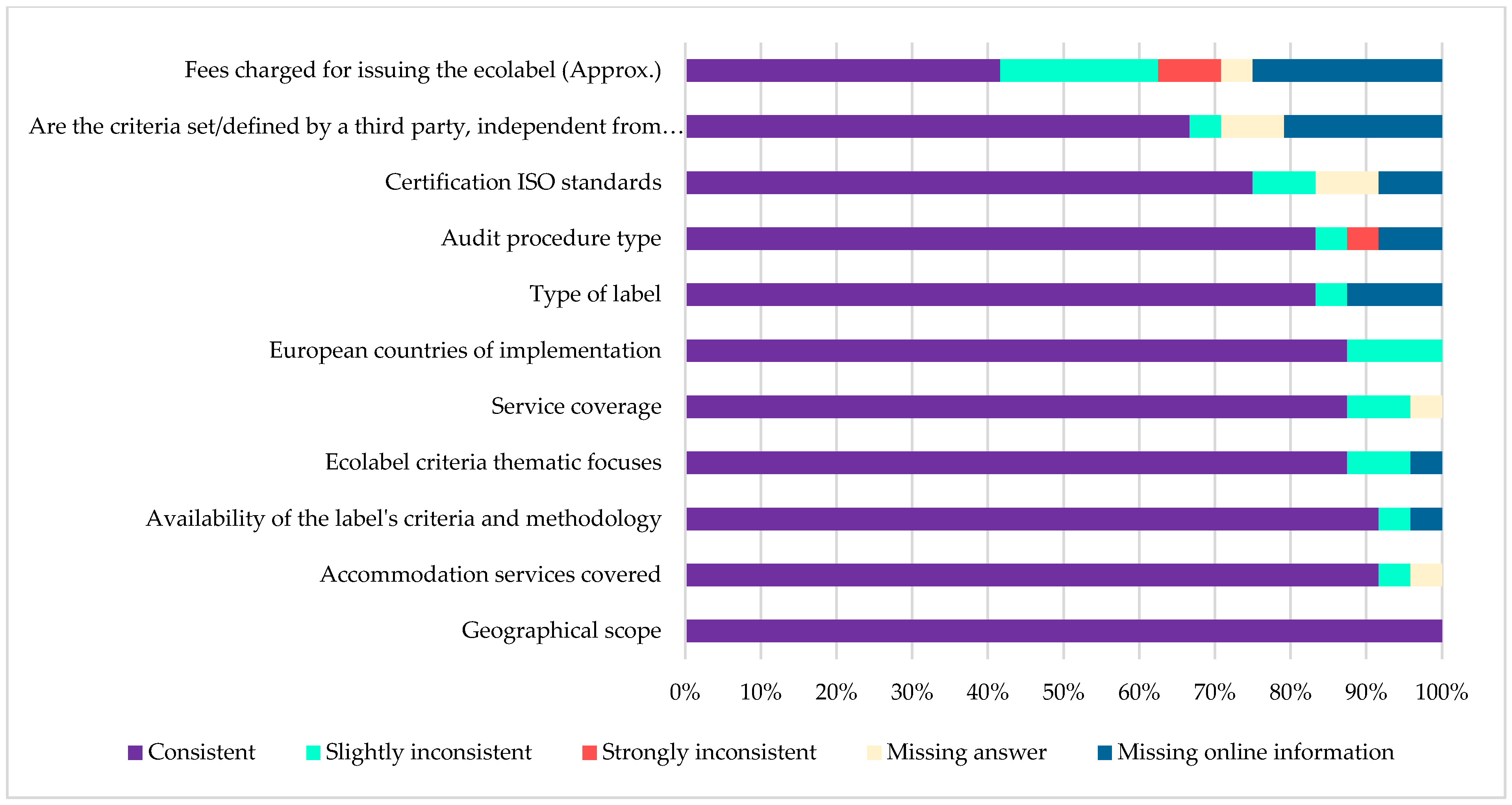
This check was performed for a subset of 11 relevant questions (as in Figure 10), considering that some respondents declared that the information on the criteria and methodology was only partially available online. The responses from each label/scheme were classified as follows:
Figure 10.
Results of the quality check for the most significant questions.
- “Consistent”; survey reply corresponds to what is shown online.
- “Slightly inconsistent”; survey reply slightly differs from that which is shown online but does not compromise the main conclusions. For example, some details are missing or do not match entirely.
- “Strongly inconsistent”; survey reply is completely different from that which is shown online.
- “Missing answer”; the entity did not provide any reply to that specific question independently from what is shown online.
- “Missing online information”; the entity did provide a reply in the survey, but it was not possible to verify the reply because the information was not available online.
The results of this check returned an overall good level of response consistency (Figure 10), ranging from a minimum of 41.7% for the question related to the fees for issuing the ecolabel to a maximum of 100% for the geographical scope. Concerning the question regarding fees and the independence of the criteria established, answers that were either completely consistent or slightly inconsistent represented no less than 83% of the total responses.
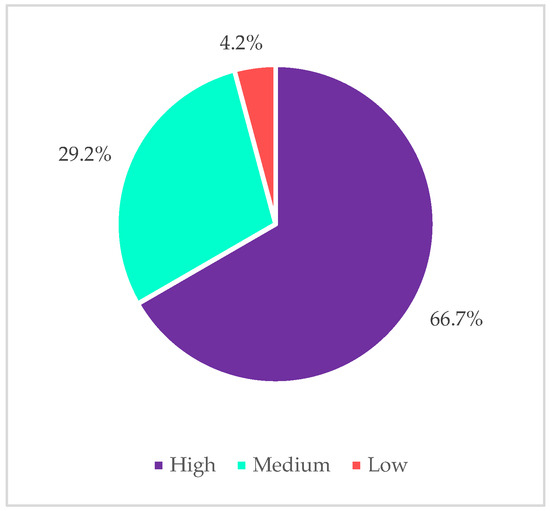
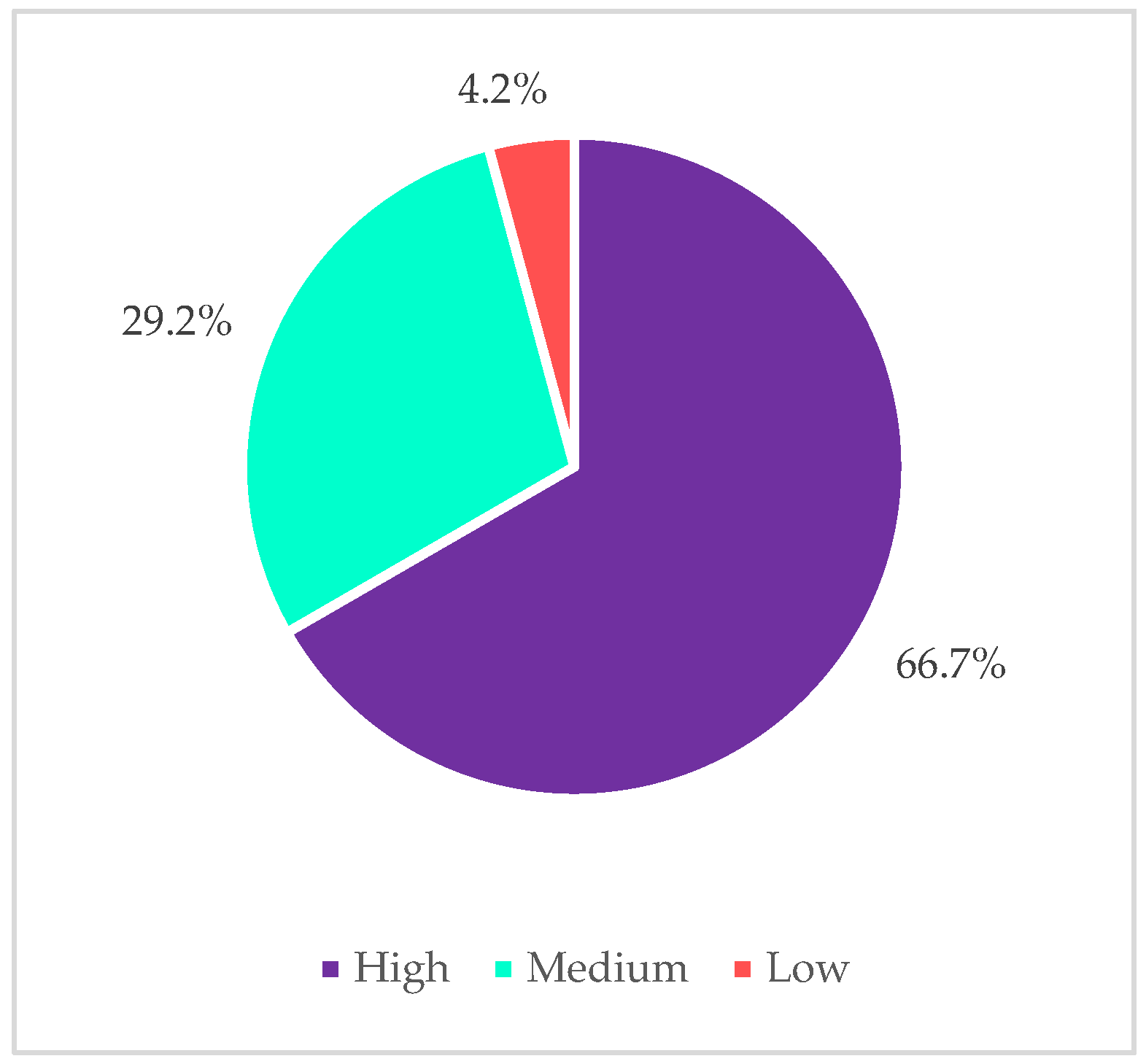
An assessment of the level of consistency per label/scheme issuing entity was also carried out. Each respondent entity was classified according to the degree of consistency between their answers and the information that could be retrieved online as follows: “high level” when the degree of consistency is higher or equal to 80%; “medium level” when it lies between 80% and 60%; and “low level” when it is below or equal to 60% (in this specific assessment, the “slightly inconsistent” option was merged with the “consistent” option due to its negligibility in the perspective of an overall evaluation). Most of the respondents (66.7%) showed a high level of consistency, with 29.2% showing a medium level and only 4.2% a low level (Figure 11). Overall, the degrees of consistency, both at the level of single answers and per issuing entity, are rather reassuring as to the quality of the data collected. This demonstrates that the method to collect data from the entities via an online survey was cost-efficient, allowing for a high completion level, consistency, and harmonisation of the information obtained. The main caveat is that the actual veracity of the information being transmitted by the entities via the survey or by examining their official online channels cannot be established without some form of auditing, but this was out of the scope of this study.
Figure 11.
Degrees of consistency of the checked labels/schemes (n = 24).
4. Discussion
Environmental labels and schemes are an interesting market instrument to mitigate environmental impacts and accelerate the shift towards the green transition in the tourism sector (Yılmaz et al., 2019). To the best of our knowledge, this study provides the most complete inventory of labels and schemes for tourist accommodation services operating in the EU, Iceland, Norway, and Switzerland, both in terms of the data sample (44 environmental labels and schemes) and information collected (answer to 38 questions). The data collection strategy was based on a survey directed at the issuing entities then completed by the authors based on data collected from public online data sources.
This paper presents and discusses the results coming from the survey analysis. Furthermore, the quality check revealed that most of the entities showed a satisfactory level of consistency in their replies with the information that could be retrieved online, confirming the use of a survey as a suitable method to collect information.
The 44 surveyed environmental labels and schemes covered in mid-2022 represented more than 8500 tourist accommodation services in Europe, a rather small share of the more than 650,000 tourist accommodations in the EU27, Iceland, Norway, and Switzerland in the same year. Hence, despite the proliferation of environmental labels and schemes, their yet limited adoption by tourist accommodation services indicates that there is an untapped potential for providing tourists with informed choices supported by specific environmental performance criteria, as well as economic and social guarantees.
The survey showed that most labels and schemes focus on aspects concerning energy, waste, and water consumption/management. Also, they cite the “reduction of environmental impacts”, “improvement of management practices”, “increase of tourism demand”, and “reduction of costs” as the main reasons motivating accommodation services to obtain an ecolabel or adhere to an environmental scheme. However, the surveyed labels and schemes are very diverse in terms of ownership (private, public, or public–private), geographical scope (from sub-national to European and global), audit procedure (third party audit and issuer entity audit or self-assessment), followed ISOs, and fees.
The work underpinning this study made it clear that substantial effort is required to simplify the intricate landscape of environmental labels and schemes. This was evident from the limited response rate obtained, as well as from the different nomenclatures, criteria, and auditing methods of the surveyed labels and schemes. Further harmonisation and transparency are essential to boost uptake by tourist accommodation services and facilitate them in selecting the most suitable label or scheme in line with their needs. At the same time, this would also empower tourists’ choice “[…] through more transparent information about the sustainability and environmental footprints of the destinations/tourism services […]” (European Commission, 2022, p. 11).
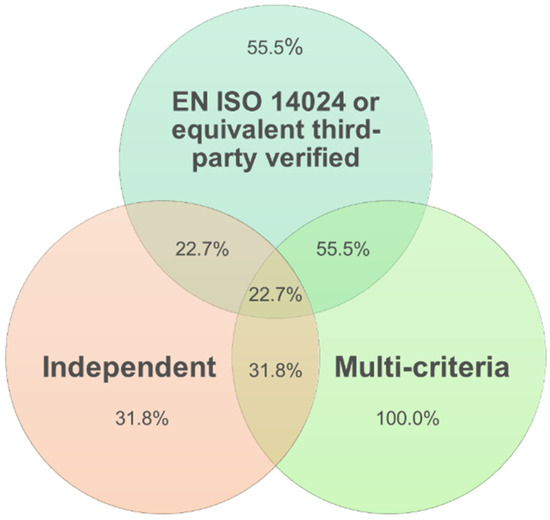
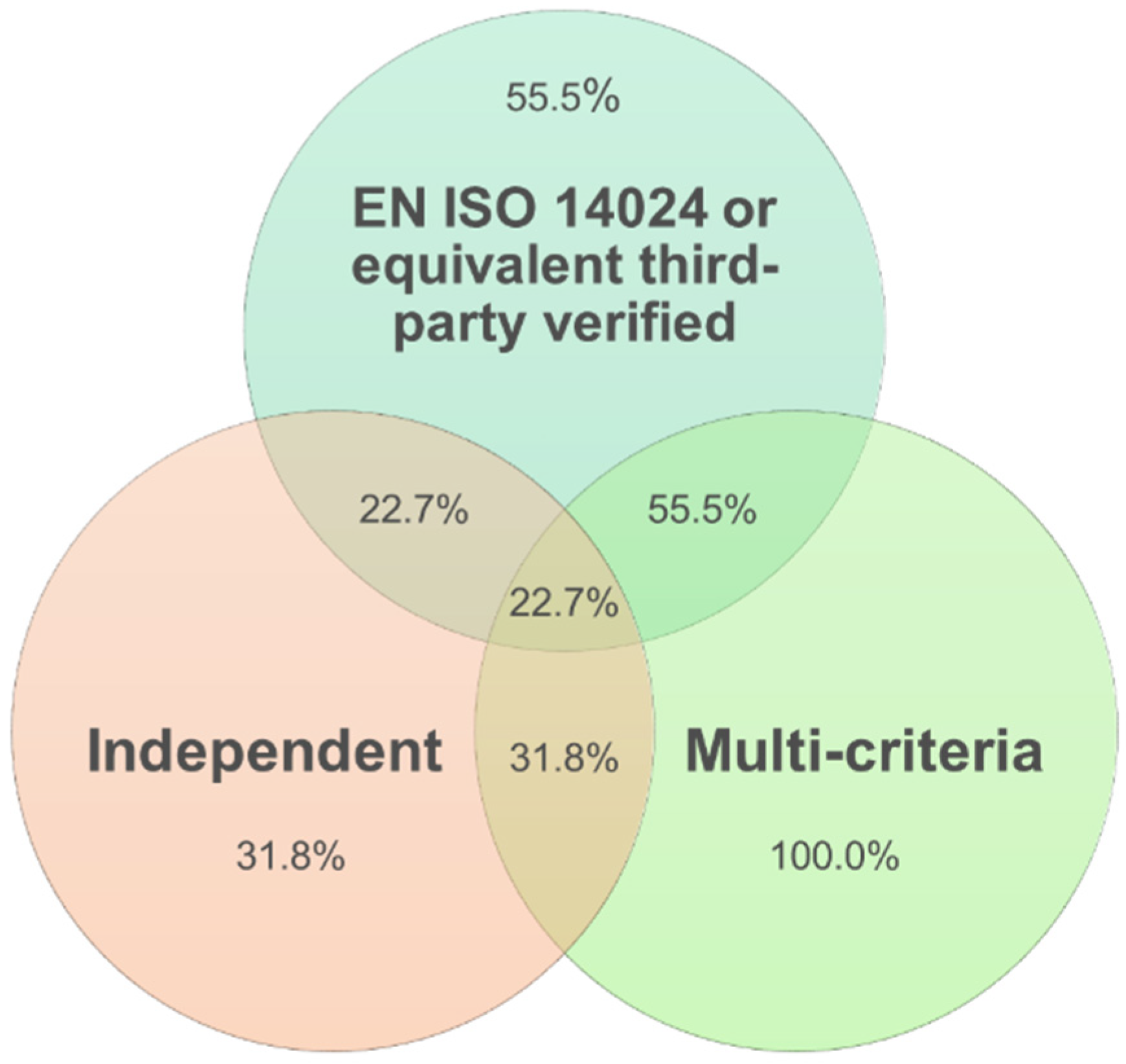
What can be deduced from this survey is the compliance with the key policy criteria on labels being third-party verified, independent, and multi-criteria-based. Although there is room for interpretation on the meaning of some of these criteria, based on the received replies, only 22.7% appear to be compliant with all criteria (Figure 12).
Figure 12.
Venn diagram of the adherence of surveyed ecolabels to three key policy requirements.
The survey revealed that all the labels/schemes are multi-criteria-based (for the environmental dimension), but only 31.8% of the surveyed entities declared their criteria to be developed through an independent process or taken from an independent source. Finally, 13.6% are Type I EN ISO 14024 and 55.5% carry a third-party verification or have been audited. Despite the proliferation of many other environmental labels and schemes beyond the EU Ecolabel and EMAS, those that have comparable assurances to the EU-level tools represent a minor share.
5. Conclusions
This study has provided insights into the current landscape of environmental labels and schemes for tourist accommodation services in Europe and has highlighted the need for better harmonisation, transparency, and communication in this area. The results of the analysis indicate a proliferation of environmental labels and schemes characterised by different governance models but a still timid uptake of such schemes by tourist accommodation operators. This gap offers a chance for targeted campaigns to raise awareness among tourist accommodations about the benefits and advantages of certification and assist them in the selection of the most suitable and reliable labels/schemes, as well as during the certification procedure.
Further action and research to leverage the full potential of these tools in promoting sustainable tourism practises are worth pursuing by researchers and policymakers. Additional investigation is required to examine the effects of environmental labels on consumer behaviour, the existence of any economic benefits for accommodations that adopt such labels, including the development of any economic indicators to measure them, and the actual environmental outcomes. Furthermore, incorporating existing science-based approaches such as environmental footprint assessments could pave the way for labels and schemes with more standardised criteria, moving towards a more unified approach. Subsequent research endeavours may also concentrate on constructing an extensive database of reliable environmental labels and schemes, incorporating detailed criteria, adoption rates, and geographic coverage.
Policymakers are encouraged to promote strategies to streamline and simplify the complex ecolabel market, possibly developing a unified approach to ease the decision-making process for both accommodations seeking a certification and tourists willing to make informed choices. In this context, the directives by the European Commission on empowering consumers for the green transition (European Commission, 2023) and green claims (European Parliament & Council of the European Union, 2024) will be playing a key role for regulating the use of ecolabels in the future to ensure reliable information for consumers. The requirements would include, among others, (1) ensuring that labels are based on a certification scheme or established by public authority, (2) making available a summary of the assessment that leads to the award of the label, (3) having freely and transparently accessible information of the scheme, (4) ensuring that criteria underpinning the award is developed by experts and reviewed by stakeholders, (5) creating a complaint and resolution mechanism, and (6) creating procedures for dealing with non-compliance. Moreover, as emphasised by the proposal for a green claims directive, companies that make the effort to adhere to reliable environmental labelling schemes may be disadvantaged compared to those adopting unreliable certifications, and consumers are unable to make this distinction. Hence, these directives seek to control the use of environmental labels and schemes, guaranteeing that they give customers trustworthy information and support the goals of the European Green Deal.
The survey described in this paper was performed before publication of the proposal for the green claims directive; hence, not all the aspects included in it were surveyed, suggesting the possibility to implement a follow-up survey. Consequently, future work may include a new iteration of or update to this survey, trying to include an even higher number of respondents to assess whether and how they evolve with regard to the future legal obligations for ecolabels and schemes. Such information could be organised and provided to both accommodation services and final consumers to enhance more informed decisions and foster the adoption of labels and schemes to, ultimately, boost the green transition and promote sustainable development in the tourism sector.
The herein assessment may also serve in the future to feed the European Commission’s EU Tourism Dashboard’s indicator on environmental labels and schemes (European Commission, 2025c). This indicator currently records listings under the EU Eco-Management and Audit Scheme (EMAS) and the EU Ecolabel; however, it is designed to be inclusive of additional candidates deemed eligible in future updates. Therefore, additional labels or schemes compliant with the evolving legal framework may be added in subsequent updates using the methodology described in the present paper or following any official list that may be possibly made available based on the legislative decrees. The development of this indicator could help monitoring the changing adoption of reliable labels and schemes in the tourism sector.
Author Contributions
Conceptualization and methodology, F.B.e.S. and S.I.; formal analysis, S.I., G.R. and B.M.-G.; investigation, G.R., B.M.-G., S.I., A.-M.M. and D.K.-B.; data curation, S.I., G.R. and B.M.-G.; writing—original draft preparation, S.I. and F.B.e.S.; writing—review and editing, F.B.e.S., S.I., A.-M.M. and K.A.-M. All authors have read and agreed to the published version of the manuscript.
Funding
This research received no external funding.
Institutional Review Board Statement
Ethical review and approval were waived for this study due to the Seventeenth additional provision, the “Treatment of health data” of the consolidated text of Organic Law 3/2018, December 5, on the “Protection of Personal Data and guarantee of digital rights” (BOE 294, 6 December 2018).
Informed Consent Statement
Informed consent for participation was obtained from all subjects involved in the study.
Data Availability Statement
The raw data supporting the conclusions of this article will be made available by the authors on request.
Acknowledgments
This study was made possible thanks to the collaboration between several Directorates-General of the European Commission, The Joint Research Centre (JRC), Directorate-General for Internal Market, Industry, Entrepreneurship and SMEs (DG GROW), and Directorate-General for the Environment (DG ENV). In particular, the authors would like to thank Ramune Genzbigelyte-Venturi, Silvia Ferratini, and Zahara Perez Arribas, who commented or provided input during the different phases of this study. The views expressed in this paper are purely those of the authors and may not, in any circumstances, be regarded as stating an official position of the European Commission.
Conflicts of Interest
The authors declare no conflicts of interest.
Appendix A
Table A1.
Ecolabel selection according to the consulted sources.
Appendix B
Table A2.
Survey structure.
References
- Ayuso, S. (2007). Comparing voluntary policy instruments for sustainable tourism: The experience of the spanish hotel sector. Journal of Sustainable Tourism, 15(2), 144–159. [Google Scholar] [CrossRef] [Scilit]
- Baloch, Q. B., Shah, S. N., Iqbal, N., Sheeraz, M., Asadullah, M., Mahar, S., & Khan, A. U. (2023). Impact of tourism development upon environmental sustainability: A suggested framework for sustainable ecotourism. Environmental Science and Pollution Research, 30(3), 5917–5930. [Google Scholar] [CrossRef] [Scilit] [PubMed]
- Barbulescu, A., Moraru, A.-D., & Duhnea, C. (2019). Ecolabelling in the romanian seaside hotel industry—Marketing considerations, financial constraints, perspectives. Sustainability, 11(1), 265. [Google Scholar] [CrossRef] [Scilit]
- Bilynets, I., Knezevic Cvelbar, L., & Dolnicar, S. (2023). Can publicly visible pro-environmental initiatives improve the organic environmental image of destinations? Journal of Sustainable Tourism, 31(1), 32–46. [Google Scholar] [CrossRef] [Scilit]
- Bonilla Priego, M. J., Najera, J. J., & Font, X. (2011). Environmental management decision-making in certified hotels. Journal of Sustainable Tourism, 19(3), 361–381. [Google Scholar] [CrossRef] [Scilit]
- Bookdifferent. (2025). Eco-certified hotel. Available online: https://www.bookdifferent.com/en/eco-certified-hotels// (accessed on 4 December 2024).
- Bučar, K., Van Rheenen, D., & Hendija, Z. (2019). Ecolabelling in tourism: The disconnect between theory and practice. Tourism: An International Interdisciplinary Journal, 67(4), 365–374. Available online: https://hrcak.srce.hr/230634 (accessed on 17 October 2024).
- Claver-Cortés, E., Molina-Azorín, J. F., Pereira-Moliner, J., & López-Gamero, M. D. (2007). Environmental strategies and their impact on hotel performance. Journal of Sustainable Tourism, 15(6), 663–679. [Google Scholar] [CrossRef] [Scilit]
- Council of the European Union. (2022). European agenda for tourism 2030—Council conclusions. Available online: https://data.consilium.europa.eu/doc/document/ST-15441-2022-INIT/en/pdf (accessed on 11 December 2024).
- Dabeva, T. (2013, October 2–4). The role of international eco certification system in the hotel industry. Sixth Black Sea Tourism Forum (pp. 149–160), Varna, Bulgaria. [Google Scholar]
- Dief, M. E., & Font, X. (2010). The determinants of hotels’ marketing managers’ green marketing behaviour. Journal of Sustainable Tourism, 18(2), 157–174. [Google Scholar] [CrossRef] [Scilit]
- Duglio, S., Ivanov, S., Magliano, F., & Ivanova, M. (2017). Motivation, costs and benefits of the adoption of the European ecolabel in the tourism sector: An exploratory study of Italian accommodation establishments. Business & Management Compass, University of Economics Varna, 61(1), 83–95. Available online: https://ideas.repec.org/a/vrn/journl/y2017i1p83-95.html (accessed on 11 December 2024).
- Ecobnb. (2025). Green labels for sustainable tourism: An all in one Guide. Available online: https://ecobnb.com/blog/2021/07/green-labels-sustainable-tourism-guide/ (accessed on 11 December 2024).
- Ecolabel Index. (2025). Available online: https://www.ecolabelindex.com/ (accessed on 11 December 2024).
- European Commission. (2017). Commission decision (EU) 2017/175 of 25 January 2017 on establishing EU ecolabel criteria for tourist accommodation. Available online: https://eur-lex.europa.eu/legal-content/EN/TXT/HTML/?uri=CELEX:32017D0175 (accessed on 23 October 2024).
- European Commission. (2022). Directorate-general for internal market, industry, entrepreneurship and SMEs. Transition pathway for tourism. Publications Office of the European Union. Available online: https://data.europa.eu/doi/10.2873/344425 (accessed on 10 July 2024).
- European Commission. (2023). Proposal for a directive of the European parliament and of the council on substantiation and communication of explicit environmental claims (green claims directive). Available online: https://eur-lex.europa.eu/legal-content/EN/TXT/HTML/?uri=CELEX:52023PC0166 (accessed on 11 December 2024).
- European Commission. (2024). EU ecolabel facts and figures. Available online: https://environment.ec.europa.eu/topics/circular-economy/eu-ecolabel-home/business/ecolabel-facts-and-figures_en (accessed on 11 December 2024).
- European Commission. (2025a). Directorate-general for environment. EU ecolabel. The official European Union voluntary label for environmental excellence. Available online: https://environment.ec.europa.eu/topics/circular-economy/eu-ecolabel_en (accessed on 11 December 2024).
- European Commission. (2025b). EU ecolabel product groups and criteria. Available online: https://environment.ec.europa.eu (accessed on 11 December 2024).
- European Commission. (2025c). The EU tourism dashboard. Available online: https://tourism-dashboard.ec.europa.eu/?lng=en&ctx=tourism (accessed on 11 December 2024).
- European Parliament & Council of the European Union. (2024). Directive (eu) 2024/825 of the European parliament and of the council amending directives 2005/29/EC and 2011/83/EU as regards empowering consumers for the green transition through better protection against unfair practices and through better information. Available online: https://eur-lex.europa.eu/legal-content/EN/TXT/HTML/?uri=OJ:L_202400825 (accessed on 11 December 2024).
- European Travel Commission. (2019). Report on European sustainability schemes and their role in promoting sustainability and competitiveness in european tourism (ETC Market Intelligence Report). Available online: https://etc-corporate.org/reports/european-sustainability-schemes/ (accessed on 11 December 2024).
- Font, X. (2002). Environmental certification in tourism and hospitality: Progress, process and prospects. Tourism Management, 23(3), 197–205. [Google Scholar] [CrossRef] [Scilit]
- Global Ecotourism Network. (2025). Available online: https://www.globalecotourismnetwork.org/ (accessed on 4 December 2024).
- Google Trips—List of Ecolabels. (2025). Available online: https://www.google.com/travel/ (accessed on 10 July 2024).
- Green Travel Index. (2025). Available online: https://greentravelindex.com/ (accessed on 11 December 2024).
- GSTC Recognized Standards for Hotels. (2025). Available online: https://www.gstcouncil.org/gstc-criteria/gstc-recognized-standards-for-hotels/ (accessed on 11 December 2024).
- Hamele, H. (2001). Ecolabels for tourism in Europe: The European ecolabel for tourism? In Tourism ecolabelling: Certification and promotion of sustainable management (pp. 175–188). CABI Publishing. [Google Scholar]
- International Organization for Standardization (ISO). (2015). ISO 14001:2015. Environmental management systems—Requirements with guidance for use. Available online: https://www.iso.org/standard/60857-v2.html (accessed on 11 December 2024).
- International Organization for Standardization (ISO). (2018). ISO 14024:2018. Environmental labels and declarations—Type I environmental labelling—Principles and procedures. Available online: https://www.iso.org/standard/72458.html (accessed on 11 December 2024).
- International Organization for Standardization (ISO). (2019). Environmental labels. Available online: https://www.iso.org/publication/PUB100323.html (accessed on 4 June 2024).
- International Organization for Standardization (ISO). (2022). ISO 14020:2022. Environmental statements and programmes for products—Principles and general requirements. Available online: https://www.iso.org/standard/79479.html (accessed on 11 December 2024).
- Karlsson, L., & Dolnicar, S. (2016). Does eco certification sell tourism services? Evidence from a quasi-experimental observation study in Iceland. Journal of Sustainable Tourism, 24(5), 694–714. [Google Scholar] [CrossRef] [Scilit]
- Labelinfo.ch. (2025). Available online: https://www.labelinfo.ch/de (accessed on 11 December 2024).
- Mak, A. H. N., & Chang, R. C. Y. (2019). The driving and restraining forces for environmental strategy adoption in the hotel Industry: A force field analysis approach. Tourism Management, 73, 48–60. [Google Scholar] [CrossRef] [Scilit]
- Mikayilov, J. I., Mukhtarov, S., Mammadov, J., & Azizov, M. (2019). Re-evaluating the environmental impacts of tourism: Does EKC exist? Environmental Science and Pollution Research, 26(19), 19389–19402. [Google Scholar] [CrossRef] [Scilit] [PubMed]
- Núñez, D., & Hamele, H. (2014). Sustainability in tourism: A guide through the label jungle. Roundtable Human Rights in Tourism. Naturefriends International, Berlin, Germany. Available online: https://www.nf-int.org/sites/default/files/infomaterial/downloads/2018-08/Labelguide_Dritte_Auflage_ENG_2016.pdf (accessed on 11 December 2024).
- OECD. (2008). Promoting sustainable consumption: Good practices in OECD countries. OECD. [Google Scholar] [CrossRef] [Scilit]
- Preziosi, M., Tourais, P., Acampora, A., Videira, N., & Merli, R. (2019). The role of environmental practices and communication on guest loyalty: Examining EU-Ecolabel in Portuguese hotels. Journal of Cleaner Production, 237, 117659. [Google Scholar] [CrossRef] [Scilit]
- Rome, A. (2002). Tourism ecolabelling: Certification and promotion of sustainable management. Annals of Tourism Research, 29(2), 565–567. [Google Scholar] [CrossRef] [Scilit]
- Schönberger, H., Galvez Martos, J. L., & Styles, D. (2013). Best environmental management practice in the tourism sector: Learning from frontrunners. Joint Research Centre, Institute for Prospective Technological Studies, Publications Office of the European Union. [Google Scholar] [CrossRef]
- Tourism 2030 DestiNet Services. (2025). Available online: https://destinet.eu/who-who/civil-society-ngos/ecotrans/publications/guide-through-label-jungle-1 (accessed on 11 December 2024).
- Velaoras, K., Menegaki, A. N., Polyzos, S., & Gotzamani, K. (2025). The role of environmental certification in the hospitality industry: Assessing sustainability, consumer preferences, and the economic impact. Sustainability, 17(2), 650. [Google Scholar] [CrossRef] [Scilit]
- Weston, R., Hamele, H., Balas, M., Denman, R., Pezzano, A., Sillence, G., Reiner, K., Grebenar, A., & Lawler, M. (2018). Research for TRAN committee—European tourism labelling. European parliament, Policy department for structural and cohesion policies. Available online: https://www.europarl.europa.eu/RegData/etudes/STUD/2018/617461/IPOL_STU(2018)617461_EN.pdf (accessed on 11 December 2024).
- Wilde Tippett, A., Ragni Ytterdal, E., & Øyvind, S. (2020). Ecolabelling for tourism enterprises: What, why and how. Norwegian University of Science and Technology. Available online: https://www.waddensea-worldheritage.org/ecolabelling-tourism-enterprises-what-why-and-how (accessed on 17 October 2024).
- Yılmaz, Y., Üngüren, E., & Kaçmaz, Y. Y. (2019). Determination of managers’ attitudes towards eco-labeling applied in the context of sustainable tourism and evaluation of the effects of eco-labeling on accommodation enterprises. Sustainability, 11(18), 5069. [Google Scholar] [CrossRef] [Scilit]
Disclaimer/Publisher’s Note: The statements, opinions and data contained in all publications are solely those of the individual author(s) and contributor(s) and not of MDPI and/or the editor(s). MDPI and/or the editor(s) disclaim responsibility for any injury to people or property resulting from any ideas, methods, instructions or products referred to in the content. |
© 2025 by the authors. Licensee MDPI, Basel, Switzerland. This article is an open access article distributed under the terms and conditions of the Creative Commons Attribution (CC BY) license (https://creativecommons.org/licenses/by/4.0/).