


Abstract
The Cactaceae are one of the most diverse and threatened plant families worldwide, and Mexico is their main center of diversity and endemism. Botanical gardens contribute to the ex situ conservation of this flora by maintaining documented living collections that support research, education, and species preservation. This study presents the first comprehensive taxonomic inventory and conservation assessment of the Cactaceae collection held at the Botanical Garden of the Facultad de Estudios Superiores Cuautitlán (FESC), Universidad Nacional Autónoma de México (UNAM). Between January 2024 and June 2025, all living specimens were inventoried and taxonomically verified. The conservation status of each taxon was assessed under the IUCN Red List, NOM-059-SEMARNAT-2019, and the CITES Appendices. The collection comprises 342 taxa in 63 genera. Of these, 265 (77.5%) are native to Mexico, including 215 (62.9%) endemics, and 77 (22.5%) are exotic, mostly of South American origin. The native taxa correspond to 250 species, approximately 37% of the native cactus flora of Mexico. Overall, 106 taxa (31.0%) are threatened according to the IUCN Red List, a proportion that rises to 43.3% among endemic taxa, and 112 native taxa are listed under NOM-059-SEMARNAT-2019 as in danger of extinction (P) or subject to special protection (Pr). The IUCN and national assessments agreed for 90.9% of the native taxa, whereas nearly half of the exotic taxa have not been evaluated by the IUCN. Altogether, these findings highlight the high conservation value of the collection at both national and international levels and demonstrate that the FESC Botanical Garden holds a substantial ex situ collection of Mexican cacti, with potential value for conservation, scientific research, environmental education, and long-term preservation of threatened plant genetic resources.
1. Introduction
Mexico ranks among the most biologically megadiverse countries on Earth, a distinction that is particularly evident within the family Cactaceae. With approximately 669 species distributed across its territory, of which nearly 78% are considered endemic, Mexico represents the primary center of diversification and origin of this family at the global scale [1,2]. The Cactaceae family comprises roughly 1480 species grouped in 157 genera [3], and its members are predominantly distributed in arid and semiarid regions of the Americas, with Mexico harboring the greatest species richness on the continent [4,5]. The high level of endemism observed in Mexico is attributable to the complex geological and climatic history of the country, which has generated a remarkable diversity of microhabitats, particularly across the Chihuahuan Desert, the Tehuacán-Cuicatlán Valley, and the Mexican Plateau [6,7].
Beyond their ecological significance as keystone species that provide food and shelter, cacti hold profound cultural and historical importance in Mexico. Their use by Indigenous and rural communities spans millennia and encompasses nutritional, medicinal, ceremonial, and economic dimensions. Species such as Opuntia spp., Stenocereus queretaroensis (F.A.C.Weber ex Mathes.) Buxb., and Lophophora williamsii (Lem. ex Salm-Dyck) J.M.Coult. exemplify the deep intertwining of cacti with Mexican cultural heritage and identity [8,9]. Furthermore, cacti are prominent elements of Mexico’s national symbols: Opuntia is the central motif of the coat of arms on the national flag, where it stands as an emblem of territorial and civilizational identity.
Despite this ecological and cultural relevance, Cactaceae are one of the most threatened plant families globally. According to the most comprehensive global assessment conducted to date, approximately 31% of cactus species are threatened with extinction, driven primarily by illegal collection, habitat loss due to agricultural expansion and urban development, and climate change [2]. In Mexico, national legislation, particularly the Mexican Official Standard NOM-059-SEMARNAT-2019 [10], and international frameworks, notably the Red List of Threatened Species of the International Union for Conservation of Nature (IUCN) [11] and the Appendices of the Convention on International Trade in Endangered Species of Wild Fauna and Flora (CITES) [12], provide normative instruments for the protection and regulation of cactus species. These instruments differ in scope and purpose: the IUCN Red List and NOM-059-SEMARNAT-2019 classify species according to their extinction risk at the global and national scales, respectively, whereas CITES regulates international trade. Together, they provide a critical baseline for conservation planning at both national and global levels.
In this context, botanical gardens have historically played a central role in the ex situ conservation of plant biodiversity, particularly for threatened and endemic species. The first botanical gardens in Mexico emerged during the colonial period, with the Royal Botanical Garden of New Spain established in 1788 by decree of Viceroy Juan Vicente de Güemes, one of the earliest formal institutions for scientific botanical study in the Americas [13]. Since the twentieth century, botanical gardens in Mexico have evolved considerably in their conservation mandates, shifting from ornamental and teaching spaces toward active repositories of living collections with strategic conservation value [14,15,16]. Institutions such as the Jardín Botánico del Instituto de Biología of the Universidad Nacional Autónoma de México (UNAM) and many other Mexican botanical gardens have become internationally recognized models for the integration of plant conservation, scientific research, and public education [17,18].
The Botanical Garden of the Facultad de Estudios Superiores Cuautitlán, UNAM (hereafter, FESC Botanical Garden) is located in the municipality of Cuautitlán Izcalli, State of Mexico, within a predominantly urban and industrial landscape in the northern metropolitan area of Mexico City [19]. As a living collection embedded in an environment under heavy anthropogenic pressure, the garden performs functions that extend beyond academic and teaching goals, maintaining ex situ collections of plant species whose natural habitats are increasingly affected by land-use change. Despite its strategic position and institutional affiliation, the cactus collection of the FESC Botanical Garden had not been subjected to a systematic taxonomic inventory or to a formal evaluation of the conservation status of its taxa under current national and international frameworks.
As part of the requirements for membership in the Mexican Association of Botanical Gardens, institutions are expected to maintain up-to-date inventories of their living collections and to ensure the proper preservation, documentation, and maintenance of these collections in accordance with recognized botanical garden standards [16]. Therefore, the present study aims to (i) document the taxonomic diversity of the cactus collection at the FESC Botanical Garden, distinguishing native, endemic, and exotic taxa, and (ii) evaluate the conservation relevance of the collection by determining the conservation status of each taxon under the IUCN Red List, NOM-059-SEMARNAT-2019, and the CITES Appendices, and by comparing these three frameworks. The resulting inventory is intended to serve as a baseline for collection management, propagation and exchange programs, research, and the identification of conservation priorities within the collection.
2. Materials and Methods
2.1. Study Site
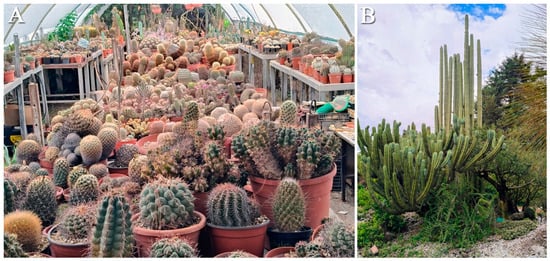
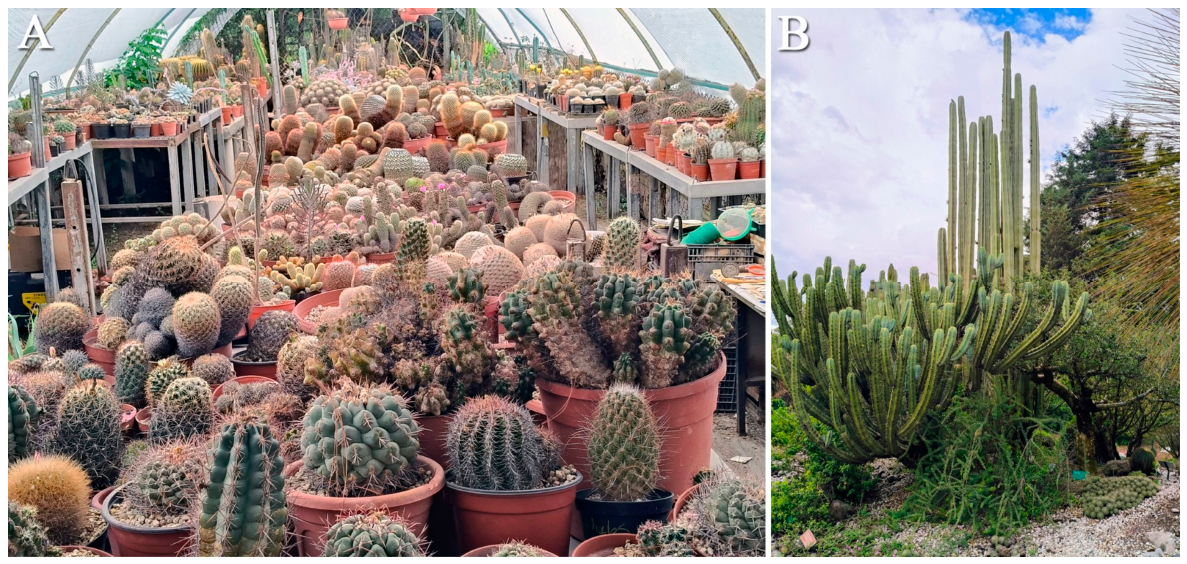
The Cactarium of the FESC Botanical Garden houses a diverse collection of cacti along with other plant species. Specimens are maintained both inside a main greenhouse and in outdoor exhibition areas open to visitors (Figure 1). Plants displayed outdoors are established directly in the ground and arranged in landscaped groupings designed for educational, conservation, and outreach purposes, whereas research and conservation activities are primarily conducted with specimens cultivated in pots [16].
Figure 1.
Cactarium at FESC-Botanical Garden. (A) Main greenhouse. (B) Part of the outside collection.
2.2. Inventory and Taxonomic Verification
Between January 2024 and June 2025, a comprehensive inventory of the living collection was carried out, and all specimens were recorded in a digital database. Cacti were the most abundant plant group within the collection. The taxonomic identification of each specimen was verified by one of the collection curators (Alejandro De La Rosa-Tilapa) and by a taxonomist specialized in this family (Gabriel Olalde). Specimens that could not be reliably identified to species level were excluded from the analyses (three grafted species). Accepted names and generic circumscriptions followed Plants of the World Online [3], and full names and author abbreviations were verified in the International Plant Names Index [20]. In this study, “taxon” refers to each species or infraspecific taxon (subspecies) recorded in the collection, irrespective of the number of individuals representing it; therefore, the number of taxa is not equivalent to the number of accessions, the collection currently holds 1887 individual plants.
2.3. Origin and Conservation Status
The origin status of each taxon was recorded as endemic to Mexico (En), native to Mexico but not endemic (Na), or exotic (Ex) according to the checklist of the native vascular plants of Mexico [21]; for exotic taxa, the region of origin (South America or the Antilles) was recorded following Plants of the World Online [3]. Conservation status was assigned according to the IUCN Red List (version 2025-2, consulted in April 2026) [11], the list of species at risk of NOM-059-SEMARNAT-2019 [10], and the CITES Appendices (consulted in April 2026) [12]. Because NOM-059-SEMARNAT-2019 applies only to native Mexican species, exotic taxa were considered not applicable under this standard. CITES lists the entire family Cactaceae in Appendix II, except for the taxa included in Appendix I and the genera Pereskia, Pereskiopsis, and Quiabentia, which are excluded from the Appendices [12]. Accordingly, each taxon was assigned to Appendix I when listed individually or at the genus level (e.g., Ariocarpus spp., Pelecyphora spp., Turbinicarpus spp.) and to Appendix II otherwise; for genera recently segregated from listed genera (e.g., Kadenicarpus and Rapicactus, segregated from Turbinicarpus), the listing of the original genus was applied. Infraspecific taxa lacking an individual assessment were assigned the category of their parent species.
2.4. Data Analysis
Taxa were grouped by origin (endemic, native non-endemic, and exotic), and the number of taxa in each category of the three frameworks for each group and for each genus were indicated. Taxa classified as Critically Endangered (CR), Endangered (EN), or Vulnerable (VU) were considered threatened under the IUCN Red List. For native taxa, agreement between the IUCN Red List and NOM-059-SEMARNAT-2019 was evaluated by cross-tabulating their categories (CR, EN, VU) versus listed in NOM-059-SEMARNAT-2019 (P, A, or Pr). The representativeness of the collection was estimated by comparing the number of native species with the national species richness reported in the checklist of the native vascular plants of Mexico [21]. In addition, each taxon was assigned to a growth form (globose to short-cylindrical, columnar, opuntioid, epiphytic, scandent, or leafy shrub) based on the descriptions in the specialized literature [4,5].
3. Results
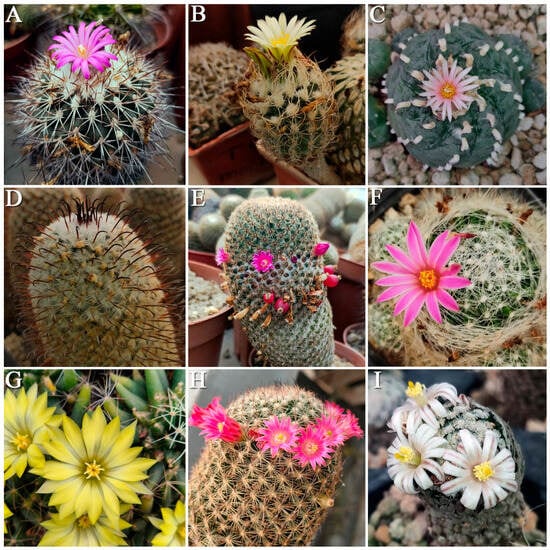
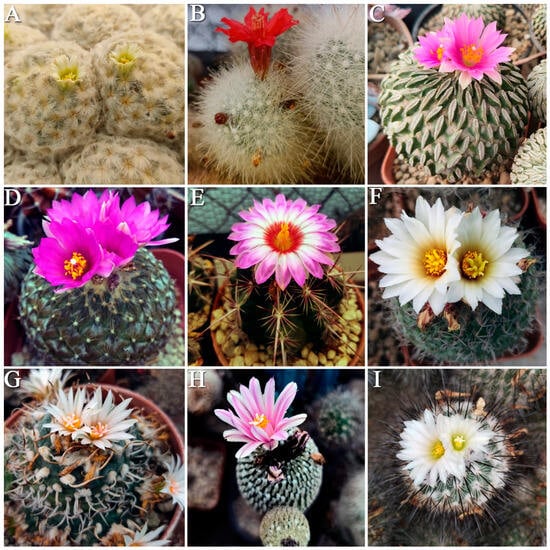
The cactus collection of the FESC Botanical Garden comprises 342 taxa belonging to 63 genera, including 25 subspecies, and corresponding to 326 species (Table 1, Table 2 and Table 3; Figure 2, Figure 3 and Figure 4). Of the 342 taxa, 265 are native to Mexico, of which 215 are endemic to the country (Table 1), and 77 are exotic (Table 2). The 265 native taxa correspond to 250 species in 42 genera (Table 3).
Table 1.
Native and endemic cactus taxa (species and subspecies) held in the Cactarium of the FESC Botanical Garden, with their origin and conservation categories.
Table 2.
Exotic cactus taxa (species and subspecies) held in the Cactarium of the FESC Botanical Garden, with their region of origin and conservation categories.
Table 3.
Taxonomic diversity by genus in the Cactarium of the FESC Botanical Garden and number of taxa included in conservation categories.
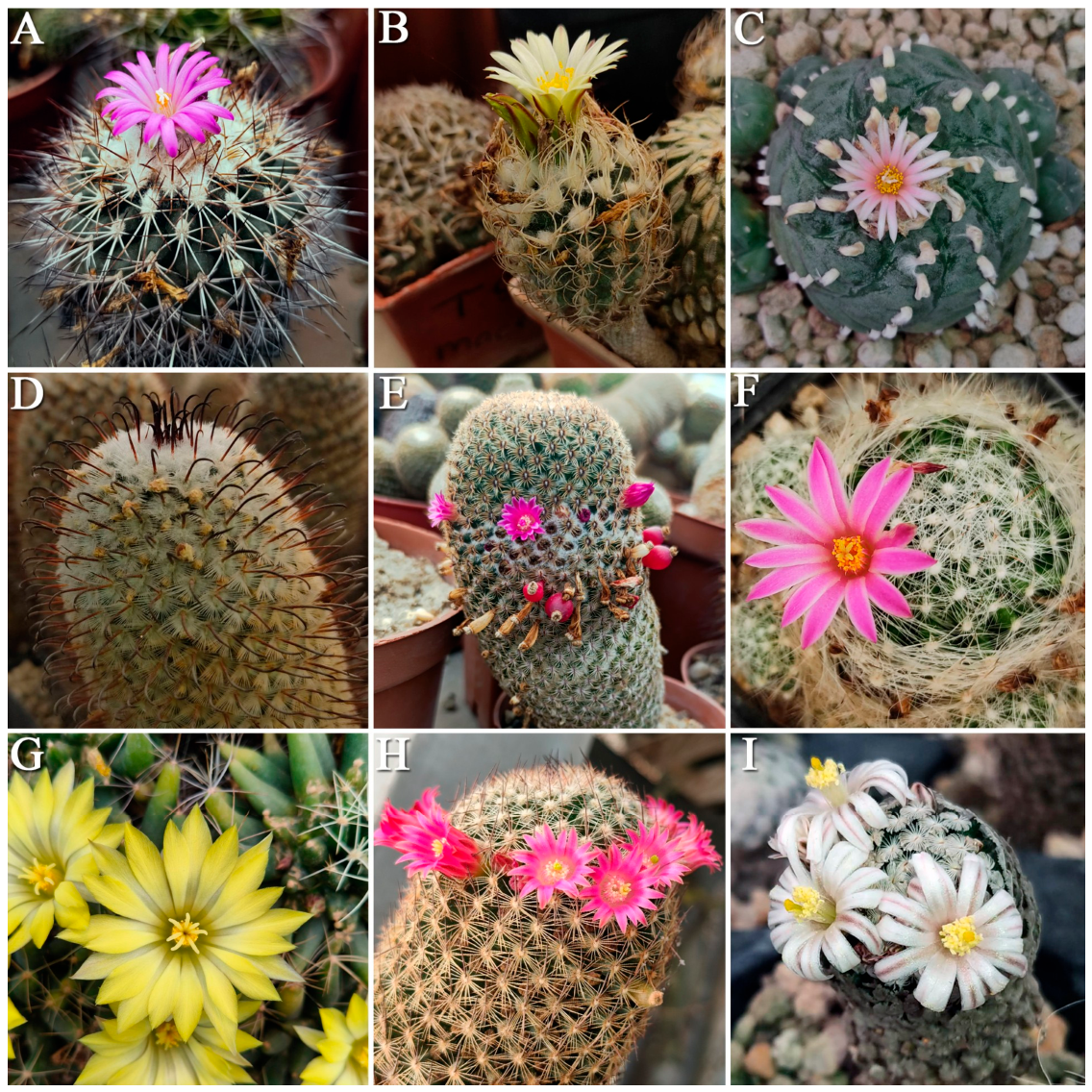
Figure 2.
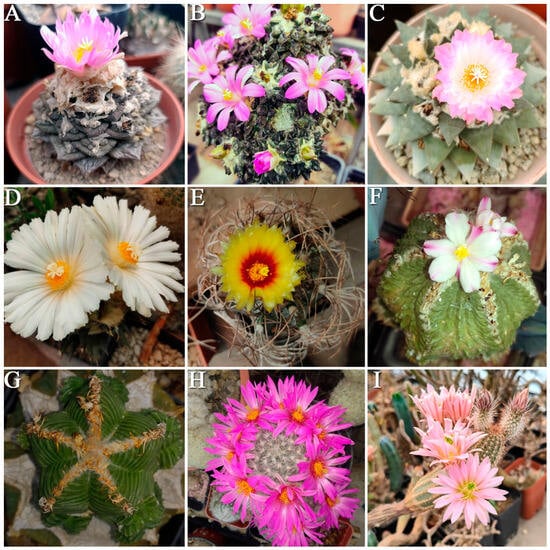
Species at Cactarium at FESC-Botanical Garden. (A) Ariocarpus fissuratus; (B) Ariocarpus kotschoubeyanus; (C) Ariocarpus retusus; (D) Ariocarpus trigonus; (E) Astrophytum capricorne; (F) Aztekium ritteri; (G) Aztekium valdezii; (H) Cochemiea poselgeri; (I) Echinocereus schmollii.
Figure 3.
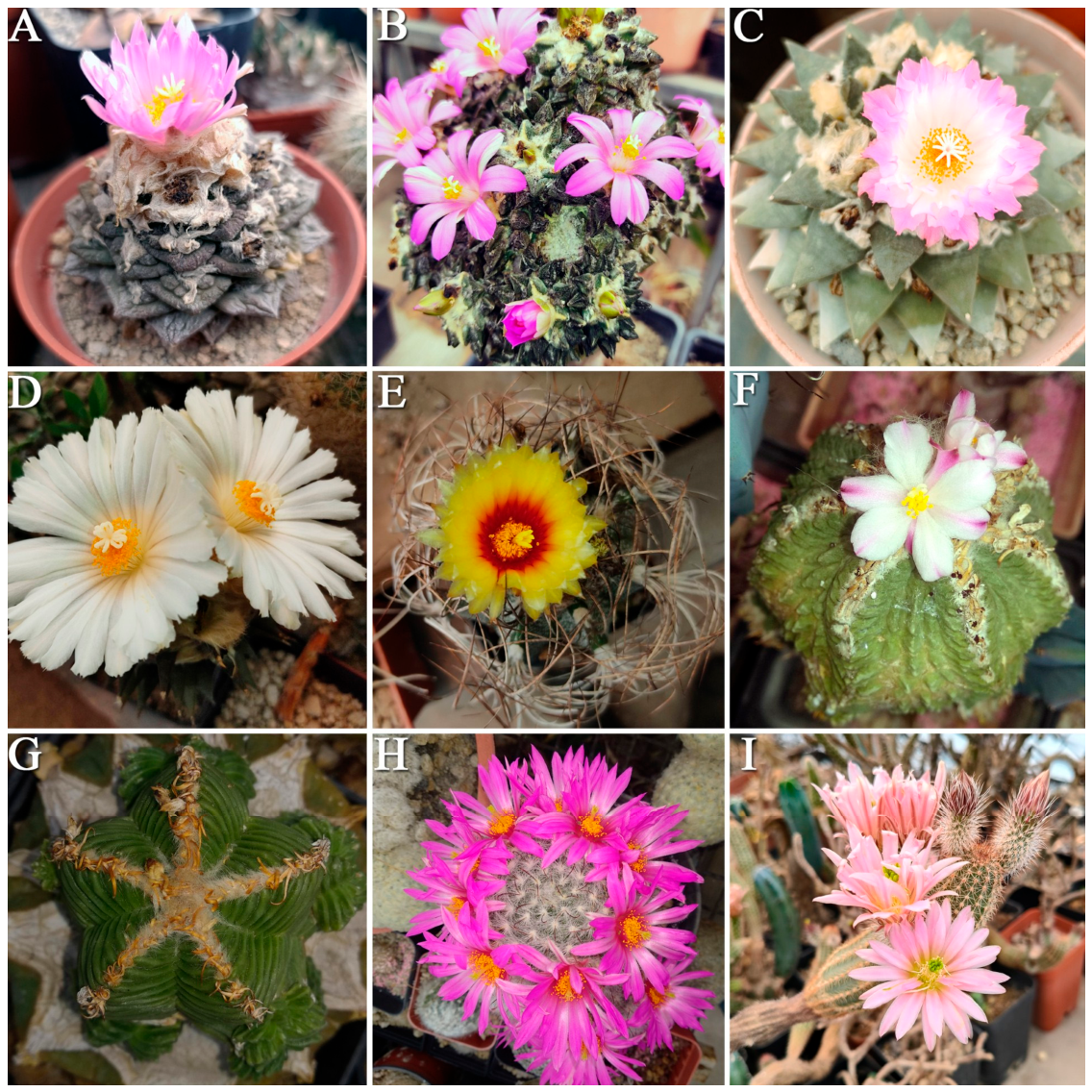
Species at Cactarium at FESC-Botanical Garden. (A) Kadenicarpus horripilus; (B) Kadenicarpus pseudomacrochele subsp. krainzianus; (C) Lophophora williamsii; (D) Mammillaria bombycina; (E) Mammillaria huitzilopochtli; (F) Mammillaria laui; (G) Mammillaria longimamma; (H) Mammillaria matudae; (I) Mammillaria pectinifera.
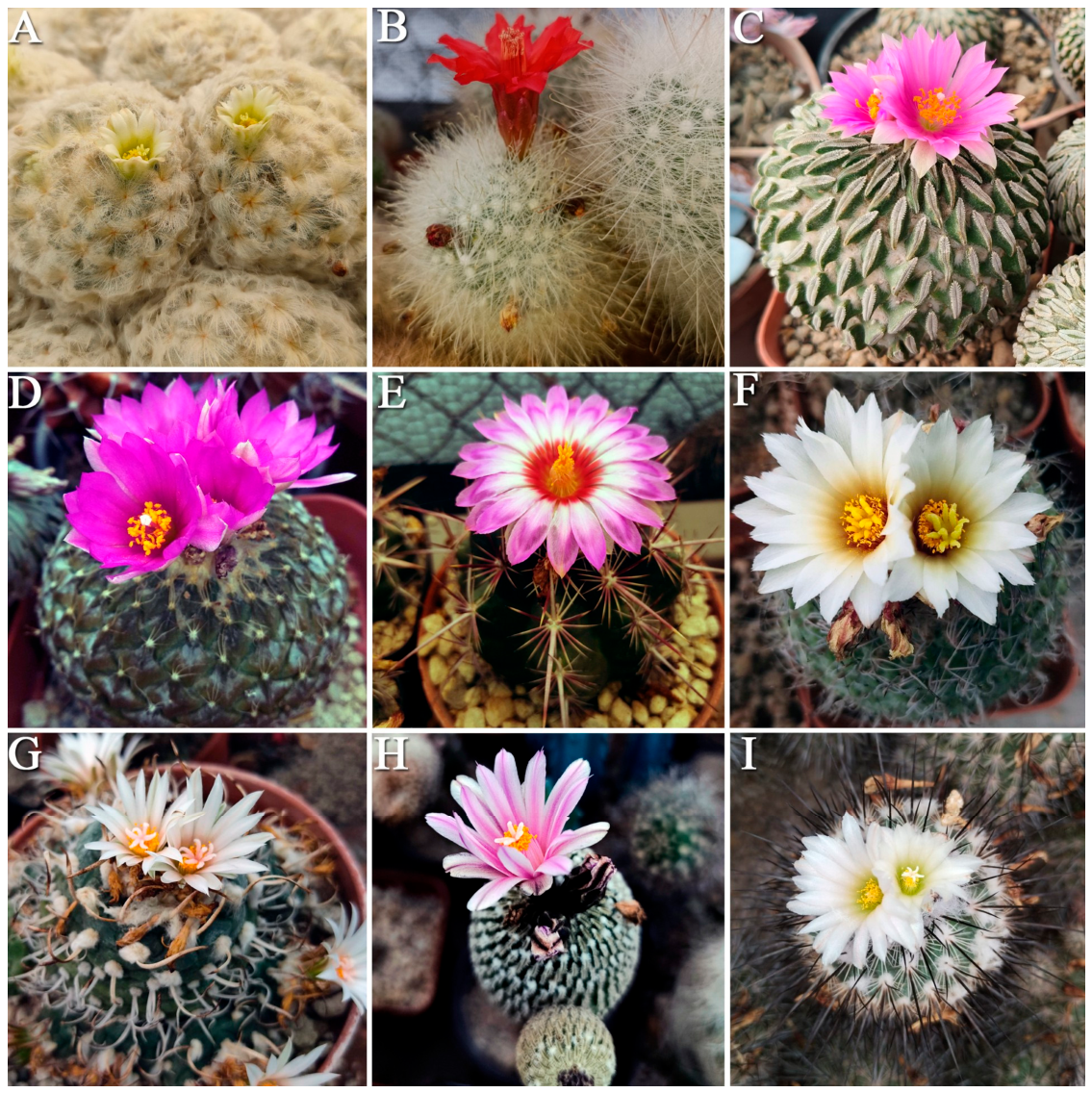
Figure 4.
Species at Cactarium at FESC-Botanical Garden. (A) Mammillaria plumosa; (B) Mammillaria senilis; (C) Pelecyphora aselliformis; (D) Pelecyphora strobiliformis; (E) Strombocactus disciformis; (F) Thelocactus bicolor; (G) Turbinicarpus schmiedickeanus; (H) Turbinicarpus valdezianus; (I) Turbinicarpus viereckii subsp. major.
Taxonomic richness was unevenly distributed among genera (Table 3). Mammillaria was by far the most diverse genus, with 102 native taxa (38.5% of the native taxa) corresponding to 92 species. It was followed by Echinocereus (22 taxa), Turbinicarpus (18 taxa), Coryphantha and Ferocactus (12 taxa each), Thelocactus (11), and Opuntia (10 native taxa), whereas 16 native genera were represented by a single taxon. The 77 exotic taxa belong to 23 genera, and almost all of them originate from South America (72 taxa), with four taxa from the Antilles and one (Cereus repandus) distributed in both regions (Table 2). The most diverse exotic genera were Gymnocalycium (14 taxa), Parodia (12), Echinopsis (10), and Aylostera (7).
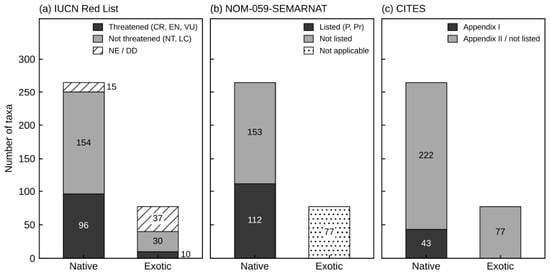
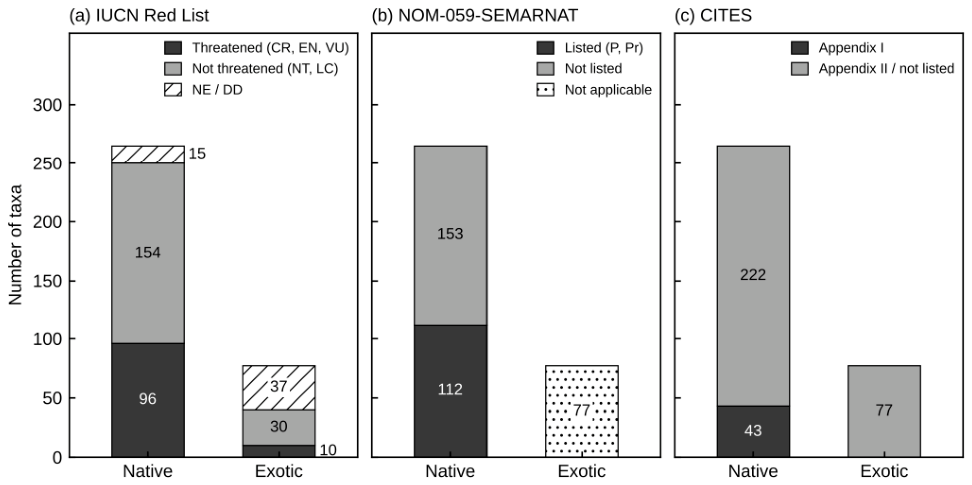
The IUCN Red List assessment indicates that 180 taxa are classified as Least Concern (LC), whereas 106 fall into threatened categories: 45 Vulnerable (VU), 41 Endangered (EN), and 20 Critically Endangered (CR) (Table 4; Figure 5). In addition, four taxa are Near Threatened (NT), six are Data Deficient (DD), and 46 have not been evaluated (NE). Threatened taxa were concentrated among endemics (93 of 215), compared with three of the 50 native non-endemic taxa and ten of the 77 exotic taxa. Conversely, most NE taxa were exotic (37 of 46), accounting for 48.1% of the exotic taxa, whereas only nine native taxa lacked an IUCN assessment, four of them epiphytic species of Disocactus; all six DD taxa are endemic, and five of them belong to Mammillaria. Mammillaria contributed the largest number of threatened taxa (40), whereas all the taxa of Turbinicarpus (18), Kadenicarpus (4), Rapicactus (4), Escobaria (3), and Pelecyphora (2) held in the collection are threatened (Table 3; Figure 5).
Table 4.
Number (and percentage) of taxa of the Cactarium of the FESC Botanical Garden in each category of the IUCN Red List, NOM-059-SEMARNAT-2019, and CITES, by origin.
Figure 5.
Conservation status of native (n = 265) and exotic (n = 77) cactus taxa in the FESC Botanical Garden according to (a) the IUCN Red List, (b) NOM-059-SEMARNAT, and (c) the CITES Appendices. Numbers indicate the number of taxa in each category. NE = Not Evaluated; DD = Data Deficient; P = in danger of extinction; Pr = subject to special protection. NOM-059-SEMARNAT applies only to species native to Mexico.
Under NOM-059-SEMARNAT-2019, 112 native taxa (42.3% of the native taxa) are listed, 65 as in danger of extinction (P) and 47 as subject to special protection (Pr); no taxon in the collection is listed as threatened (A), and 153 native taxa are not included in the standard. Under CITES, 43 taxa (12.6%), all of them native, are included in Appendix I, 298 (87.1%) are included in Appendix II, and one (Pereskiopsis diguetii) is not covered by the Appendices.
The IUCN Red List and NOM-059-SEMARNAT-2019 showed high agreement for native taxa (Figure 5). Of the 265 native taxa, 92 are both threatened under the IUCN and listed in NOM-059-SEMARNAT-2019, and 149 are neither threatened nor listed. All 19 native CR taxa and 35 of the 37 native EN taxa are listed as P, whereas most native VU taxa (30 of 40) are listed as Pr. Discrepancies involved 24 taxa (9.1%). Four taxa are threatened according to the IUCN but are not included in NOM-059-SEMARNAT-2019 (Escobaria sneedii subsp. leei, Mammillaria duoformis, Sclerocactus mariposensis, and S. pinkavanus), whereas 20 are listed in the national NOM-059-SEMARNAT-2019 but are not threatened under the IUCN: four NT taxa listed as P (Ariocarpus fissuratus, A. kotschoubeyanus, A. trigonus, and Lophophora williamsii), 15 LC taxa listed as Pr (e.g., Astrophytum myriostigma, A. ornatum, Echinocactus platyacanthus, and five species of Ferocactus), and one NE taxon listed as Pr (Aztekium valdezii). All 43 taxa included in CITES Appendix I are threatened or near threatened under the IUCN, and 41 of them are also listed in NOM-059-SEMARNAT-2019 (Table 4).
4. Discussion
4.1. Representativeness of the Collection
This study provides the first comprehensive taxonomic inventory of the Cactaceae collection at the FESC Botanical Garden, documenting 342 taxa, of which 265 are native and 215 are endemic to Mexico. The value of the collection for ex situ conservation derives mainly from this native component, which should therefore be considered separately from the exotic taxa. The 250 native species represent approximately 37% of the 677 native cactus species recorded for Mexico [21], a proportion that is particularly significant considering that a large percentage of these species are endemic and threatened by habitat loss and illegal collection [2]. Representation is especially high in genera of small globose cacti centered in the Chihuahuan Desert and the Mexican Plateau [6], such as Mammillaria (92 of 169 Mexican species; 54.4%) and Turbinicarpus (16 of 21; 76.2%) [20]. In contrast, columnar, opuntioid, and epiphytic cacti are comparatively underrepresented (12, 14, and 4 native taxa, respectively; Table 3), a bias that probably reflects the space constraints of greenhouse cultivation and the historical emphasis of the collection on globose species. Future acquisitions could therefore prioritize these growth forms, for example, the columnar cacti that characterize the Tehuacán-Cuicatlán Valley [7], to make the collection more representative of the Mexican cactus flora.
4.2. Endemic Taxa
A prominent feature of the collection is the predominance of endemic taxa (i.e., found nowhere else), which account for 62.9% of all taxa and 81.1% of the native taxa. This pattern reflects the status of Mexico as the main center of cactus diversity and endemism [1,2]: nearly half of all described cactus species occur in the country, many of them exclusively [22,23]. Such endemism has been attributed to the complex geological history of the Mexican territory, marked environmental heterogeneity, pronounced climatic gradients, and the extensive development of arid and semi-arid ecosystems [24]. It also has important conservation implications, because many Mexican cacti are microendemic and restricted to specific habitats or geological substrates [2,25]; such narrow distributions increase their vulnerability to habitat modification, mining, infrastructure development, and illegal extraction [2,22,26,27]. In this context, ex situ collections play a complementary role in preserving living material from threatened natural populations [28].
4.3. Threatened Taxa and Agreement Among Conservation Frameworks
Evaluation of the conservation status of the taxa at the FESC Botanical Garden further emphasizes the conservation relevance of this collection. Almost one-third of all taxa (31.0%) and 43.3% of the endemic taxa are threatened according to the IUCN Red List, which is consistent with the recognition of Cactaceae as one of the most threatened plant families worldwide [2]. Threatened taxa are concentrated in a few genera of small globose cacti, mainly Mammillaria, Turbinicarpus, Kadenicarpus, Rapicactus, Ariocarpus, and Pelecyphora (Figure 5c), which combine microendemism, habitat specialization, slow growth, and high demand among collectors [25,27,29]. For instance, Ariocarpus bravoanus, restricted to a small area of San Luis Potosí, illustrates how habitat fragmentation, illegal collection, slow growth, and limited recruitment interact to increase extinction risk [22,29,30,31,32]. Similarly, several species of Turbinicarpus and Rapicactus (e.g., T. alonsoi, T. dickisoniae, T. laui, R. jauernigii, and R. zaragozae) are restricted to very small geological formations [25]; population declines associated with habitat fragmentation and historical collection have been documented in Mammillaria pectinifera [33,34]; and M. herrerae and M. luethyi occupy extremely small geographic ranges [35,36]. Together, these cases illustrate a recurrent conservation pattern among Mexican cacti rather than isolated, species-specific situations.
The comparison among the three frameworks must be interpreted in light of their different objectives. The IUCN Red List evaluates extinction risk at the global scale, NOM-059-SEMARNAT-2019 assesses risk at the national scale using its own criteria and legal categories, and CITES regulates international trade rather than assessing extinction risk [10,11,12]. In particular, the inclusion of the entire family in CITES Appendix II is partly precautionary, because many cacti, especially as seeds, seedlings, or plant parts, are difficult to distinguish in trade; consequently, Appendix II status provides little information on the conservation status of individual taxa, and only Appendix I listings can be meaningfully compared with extinction-risk categories. From this perspective, the three frameworks were largely concordant: the IUCN Red List and NOM-059-SEMARNAT-2019 agreed for 90.9% of the native taxa, all native CR taxa were listed as P, and all Appendix I taxa were threatened or near threatened under the IUCN. The 24 discrepancies identified do not necessarily represent inconsistencies; rather, they reflect differences in geographic scope, assessment criteria, and update frequency. For example, Astrophytum myriostigma, A. ornatum, Echinocactus platyacanthus, and several Ferocactus species are LC at the global scale but remain under special protection (Pr) in Mexico, which probably reflects national concern about the harvesting of these widely traded species [27]. Conversely, the four taxa that are threatened according to the IUCN but are not included in NOM-059-SEMARNAT-2019 warrant review in future updates of the national standard. Likewise, the nine native taxa not yet evaluated by the IUCN, particularly Aztekium valdezii, which is already protected in Mexico (Pr), and the six DD taxa, mostly Mammillaria species, should be prioritized for assessment at the national and global levels. The presence of NE and DD taxa should therefore be interpreted as evidence of knowledge gaps.
4.4. Monotypic Genera and Notable Evolutionary Lineages
The collection also includes several evolutionarily distinctive lineages. Eight genera in the collection are monotypic (Carnegiea, Escontria, Geohintonia, Kroenleinia, Leuchtenbergia, Mammilloydia, Obregonia, and Ortegocactus), and Strombocactus has traditionally been treated as monotypic [3,4]. Several of them have highly restricted distributions: Geohintonia mexicana grows on gypsum cliffs in Nuevo León [22,37], Obregonia denegrii is endemic to northeastern Mexico [38,39], Strombocactus disciformis is characterized by a restricted distribution and slow recruitment [25,40,41,42], and Ortegocactus macdougallii is endemic to Oaxaca [43]. Accordingly, G. mexicana and O. denegrii are classified as EN and S. disciformis and O. macdougallii as VU by the IUCN, and all four are listed as P in NOM-059-SEMARNAT-2019 (Table 1). Because the extinction of a monotypic genus entails the loss of an entire evolutionary lineage, the conservation of these taxa contributes disproportionately to maintaining phylogenetic diversity [44].
Cephalocereus senilis (old man cactus), one of the most recognizable Mexican cacti and an emblematic component of the country’s cactus diversity [45], is another notable lineage in the collection. This columnar species, which is classified as VU by the IUCN and listed as P in NOM-059-SEMARNAT-2019, is one of the few threatened columnar cacti in the collection.
4.5. Taxa of Cultural Value
The collection also includes species of biocultural significance. Lophophora williamsii (peyote), a species with long-standing ceremonial significance for Indigenous peoples of northern Mexico and the southern United States, particularly the Wixárika, Rarámuri, and Cora [46,47], faces harvesting pressure and habitat transformation in its natural populations [48,49]. Its close relative L. diffusa is restricted to a small region of Querétaro, where quarrying, agricultural expansion, and urban development continue to reduce suitable habitat [50]. Together with species of Opuntia, which are central to Mexican food traditions and national identity [8,9], these taxa show that the collection preserves species of both biological and cultural significance, which strengthens its role in environmental education.
4.6. Exotic Taxa
Exotic taxa represent 22.5% of the collection and are mostly South American globose cacti. Although they do not contribute to the conservation of the Mexican flora, they include 10 threatened taxa, such as Melocactus matanzanus (CR), from the Antilles, and Gymnocalycium ragonesei, Matucana madisoniorum, Melocactus azureus, and Micranthocereus flaviflorus (EN), from South America. Moreover, almost half of the exotic taxa (48.1%) have not been evaluated by the IUCN, which highlights the need for conservation assessments in their countries of origin. Within the collection, exotic taxa are mainly valuable for education, comparative research, and horticultural exchange; however, their high proportion of NE taxa would inflate the number of non-evaluated taxa if they were analyzed together with native taxa, which is why both groups were analyzed separately in this study.
4.7. Limitations and Perspectives
The value of the collection as a repository of living genetic material should be interpreted with caution. The present inventory documents taxonomic diversity and conservation status, but it does not provide information on the number of individuals per taxon, the provenance of the plants, the number of wild-collected founders, their propagation history, or the genetic representation of natural populations. This information is essential to evaluate the effectiveness of an ex situ collection as a genetic reservoir and to use it in reintroduction or restoration programs [28]. Likewise, because most plants are cultivated in pots or landscaped beds, the collection is not suitable for evaluating habitat preferences or reproductive strategies, which require large numbers of individuals under natural conditions. Future work should therefore document the provenance and number of individuals of each accession, particularly for threatened Mexican endemics, establish propagation programs for taxa represented by few individuals, and quantify the phylogenetic diversity represented in the collection [44]. Finally, conservation categories represent a snapshot of current knowledge rather than permanent classifications; taxonomic revisions, new population data, and changes in habitat conditions may alter extinction-risk assessments over time. Periodic updating of the inventory and of the conservation assessments will therefore be necessary to identify changing priorities within the collection.
5. Conclusions
This study provides the first comprehensive taxonomic inventory and conservation assessment of the Cactaceae collection at the FESC Botanical Garden, UNAM, and fulfills its two objectives. First, it documents a taxonomically diverse collection of 342 taxa in 63 genera, dominated by native (77.5%) and endemic (62.9%) taxa, that represents approximately 37% of the native cactus species of Mexico, with particularly high representation of Mammillaria and Turbinicarpus. Second, it demonstrates the conservation relevance of the collection: 31.0% of all taxa and 43.3% of the endemic taxa are threatened according to the IUCN Red List, 112 native taxa are protected under NOM-059-SEMARNAT-2019, and 43 are included in CITES Appendix I. The collection also contains monotypic genera, microendemic species, and taxa of cultural significance. The IUCN and national assessments were largely concordant, and the discrepancies identified, together with the NE and DD taxa, point to specific taxa that should be prioritized in future assessments.
These results indicate that the FESC Botanical Garden maintains an ex situ collection of Mexican cacti with substantial potential value for conservation, scientific research, and environmental education, complementing rather than replacing the protection of natural habitats. To realize this potential, future efforts should document the provenance and genetic representation of the accessions, prioritize the propagation of threatened endemic taxa, and periodically update the inventory and conservation assessments. The inventory presented here provides the baseline for these actions and for integrating the collection into national strategies for the conservation of Mexican Cactaceae.
Author Contributions
Conceptualization, A.T.-M. and M.S.J.-N.; methodology, A.D.L.R.-T.; investigation, A.T.-M., M.S.J.-N. and A.D.L.R.-T.; resources, A.T.-M.; data curation, A.T.-M.; writing—original draft preparation, A.T.-M.; writing—review and editing, M.S.J.-N.; visualization, A.D.L.R.-T.; funding acquisition, A.T.-M. All authors have read and agreed to the published version of the manuscript.
Funding
This research was funded by the Programa Interno de Cátedras de Investigación 2026 de la FESC for funding project CI2668.
Institutional Review Board Statement
Not applicable.
Informed Consent Statement
Not applicable.
Data Availability Statement
The original contributions presented in this study are included in the article. Further inquiries can be directed to the corresponding author.
Acknowledgments
We extend our deepest gratitude to the dedicated staff of the Botanical Garden, whose commitment, expertise, and tireless efforts have been essential to the care and preservation of this collection. The authors offer our most heartfelt appreciation to Gabriel Olalde (may he rest in peace), whose extraordinary contribution to the curation of the collection was truly exceptional. His knowledge, generosity, and unwavering dedication left an enduring legacy that continues to enrich this work.
Conflicts of Interest
The authors declare no conflicts of interest.
References
- Hernández-Hernández, T.; Brown, J.W.; Schlumpberger, B.O.; Eguiarte, L.E.; Magallón, S. Beyond aridification: Multiple explanations for the elevated diversification of cacti in the New World Succulent Biome. New Phytol. 2014, 202, 1382–1397. [Google Scholar] [CrossRef] [Scilit]
- Goettsch, B.; Hilton-Taylor, C.; Cruz-Piñón, G.; Duffy, J.P.; Frances, A.; Hernández, H.M.; Inger, R.; Pollock, C.; Schipper, J.; Superina, M.; et al. High proportion of cactus species threatened with extinction. Nat. Plants 2015, 1, 15142. [Google Scholar] [CrossRef] [Scilit]
- Plants of the World Online. Available online: https://powo.science.kew.org (accessed on 15 June 2026).
- Hunt, D.; Taylor, N.; Charles, G. (Eds.) The New Cactus Lexicon; DH Books: Milborne Port, UK, 2006. [Google Scholar]
- Anderson, E.F. The Cactus Family; Timber Press: Portland, OR, USA, 2001. [Google Scholar]
- Hernández, H.M.; Bárcenas, R.T. Endangered cacti in the Chihuahuan Desert: I. Distribution patterns. Conserv. Biol. 1995, 9, 1176–1188. [Google Scholar] [CrossRef] [Scilit]
- Dávila, P.; Arizmendi, M.C.; Valiente-Banuet, A.; Villaseñor, J.L.; Casas, A.; Lira, R. Biological diversity in the Tehuacán-Cuicatlán Valley, Mexico. Biodivers. Conserv. 2002, 11, 421–442. [Google Scholar] [CrossRef] [Scilit]
- Casas, A.; Caballero, J.; Valiente-Banuet, A.; Soriano, J.A.; Dávila, P. Morphological variation and the process of domestication of Stenocereus stellatus (Cactaceae) in Central Mexico. Am. J. Bot. 1999, 86, 522–533. [Google Scholar] [CrossRef] [Scilit]
- Reyes-Agüero, J.A.; Aguirre Rivera, J.R.; Hernández, H.M. Systematic notes and a detailed description of Opuntia ficus-indica (L.) Mill. (Cactaceae). Agrociencia 2006, 40, 395–408. [Google Scholar]
- Norma Oficial Mexicana NOM-059-SEMARNAT-2019; Protección Ambiental. Especies Nativas de México de Flora y Fauna Silvestres. Categorías de Riesgo y Especificaciones Para su Inclusión, Exclusión o Cambio. Lista de Especies en Riesgo. Diario Oficial de la Federación: Mexico City, Mexico, 2019.
- IUCN. The IUCN Red List of Threatened Species. Version 2025-2. Available online: https://www.iucnredlist.org (accessed on 20 April 2026).
- Convention on International Trade in Endangered Species of Wild Fauna and Flora. The CITES Appendices. Available online: https://cites.org/eng/app/appendices.php (accessed on 15 April 2026).
- Toledano, A. Forgotten botany: The politics of knowledge within the Royal Botanical Garden of New Spain. Ber. Wiss. 2021, 44, 228–244. [Google Scholar] [CrossRef] [Scilit]
- Esparza-Olguín, L.G.; Martínez, A.M.; Hernández García, G.; Martínez Romero, E. Botanical garden and arboretum: Forest conservation strategies in anthropized landscapes of the Mexican tropics. Rev. Mex. Cienc. For. 2020, 11, 50–77. [Google Scholar]
- Dávila, P.; Soto-Trejo, F.; Rodríguez-Arévalo, I.; Ponce, A.; Arias, S.; Escalante, A.; Téllez, O.; Lira, R. Wild plant conservation in Mexico in the 21st century. Bot. Sci. 2022, 100, 175–197. [Google Scholar] [CrossRef] [Scilit]
- Jiménez-Noriega, M.; De la Rosa Tilapa, A. El Jardín Botánico de la Facultad de Estudios Superiores Cuautitlán: Espacio de Conservación y Enseñanza para la Zona Norte del Valle de México. In México Megadiverso Visto a Través de sus Jardines y sus Protagonistas; Viccon-Esquivel, J., Arias Montes, S., Cristians Niizawa, S., Hernández Peña, M.A., Castro Castro, A., Cetzal Ix, W., Rivas Avendaño, M., Escalante Castro, J.R., Luna Zúñiga, J.G., Díaz Toribio, M.H., Eds.; AMJB/CONAHCYT: Mexico City, Mexico, 2023; pp. 146–153. [Google Scholar]
- Velasco, A.T. The important role that the Botanical Garden of the National Autonomous University of Mexico plays in the conservation of Mexican orchids. Lankesteriana 2007, 7, 156–160. [Google Scholar]
- Vovides, A.P.; Iglesias, C.; Luna, V.; Balcázar, T. Los jardines botánicos y la crisis de la biodiversidad. Bot. Sci. 2013, 91, 239–250. [Google Scholar] [CrossRef] [Scilit]
- Torres-Montúfar, A.; Jiménez-Noriega, M.S.; Quiñones-Molina, K. Rescuing the Forgotten Flora: Proposal of an Ornamental Native Plant Collection for a Botanical Garden in an Industrial Zone. J. Zool. Bot. Gard. 2025, 6, 54. [Google Scholar] [CrossRef] [Scilit]
- IPNI. International Plant Names Index. Available online: https://www.ipni.org (accessed on 20 July 2026).
- Villaseñor, J.L. Checklist of the native vascular plants of Mexico. Rev. Mex. Biodivers. 2016, 87, 559–902. [Google Scholar] [CrossRef] [Scilit]
- Hernández, H.M.; Godínez, H. Contribución al conocimiento de las cactáceas mexicanas amenazadas. Acta Bot. Mex. 1994, 26, 33–52. [Google Scholar] [CrossRef] [Scilit]
- Barthlott, W.; Hunt, D.R. Cactaceae. In The Families and Genera of Vascular Plants; Kubitzki, K., Ed.; Springer: Berlin, Germany, 1993; Volume 2, pp. 161–197. [Google Scholar]
- Soto-Trejo, F.; Robles, F.; Lira, R.; Sánchez-González, L.A.; Ortíz, E.; Dávila, P. The evolution of paleo- and neo-endemic species of Cactaceae in the isolated Valley of Tehuacán-Cuicatlán, Mexico. Plant Ecol. Evol. 2024, 157, 42–54. [Google Scholar] [CrossRef] [Scilit]
- Hernández, H.M.; Gómez-Hinostrosa, C. Mapping the cacti of Mexico: Priorities for conservation. Cactus Succul. J. 2011, 83, 219–226. [Google Scholar]
- Margulies, J.D.; Bullough, L.A.; Hinsley, A.; Ingram, D.J.; Cowell, C.; Goettsch, B.; Klitgård, B.B.; Lavorgna, A.; Sinovas, P.; Phelps, J. Illegal wildlife trade and the persistence of “plant blindness”. Plants People Planet 2019, 1, 173–182. [Google Scholar] [CrossRef] [Scilit]
- Margulies, J.D.; Moorman, F.R.; Goettsch, B.; Axmacher, J.C.; Hinsley, A. Prevalence and perspectives of illegal trade in cacti and succulent plants in the collector community. Conserv. Biol. 2023, 37, e14030. [Google Scholar] [CrossRef] [Scilit]
- Guerrant, E.O.; Havens, K.; Maunder, M. (Eds.) Ex situ Plant Conservation: Supporting Species Survival in the Wild; Island Press: Washington, DC, USA, 2004. [Google Scholar]
- Aguilar-Morales, G.; Martínez-Peralta, C.; Arroyo-Feria, P.; Golubov, J.; Mandujano, M.C. Distribución geográfica del género Ariocarpus Scheidweiler (Cactaceae). Cact. Sucul. Mex. 2011, 56, 49–63. [Google Scholar]
- Hernández, H.M.; Anderson, E.F. A new species of Ariocarpus (Cactaceae). Bradleya 1992, 10, 1–4. [Google Scholar] [CrossRef] [Scilit]
- Hernández, H.M. Conservation massacre: Ariocarpus bravoanus driven near extinction. Cactus Succul. J. 2008, 80, 220–221. [Google Scholar]
- Hughes, S.L.; Rodriguez, V.M.; Hardesty, B.D.; Bárcenas Luna, R.T.; Hernández, H.M.; Robson, R.M.; Hawkins, J.A. Characterization of microsatellite loci for the critically endangered cactus Ariocarpus bravoanus. Mol. Ecol. Resour. 2008, 8, 1068–1070. [Google Scholar] [CrossRef] [Scilit]
- Zavala-Hurtado, J.A.; Valverde, P.L. Habitat restriction in Mammillaria pectinifera, a threatened endemic Mexican cactus. J. Veg. Sci. 2003, 14, 891–898. [Google Scholar] [CrossRef] [Scilit]
- Martorell, C.; Peters, E.M. The measurement of chronic disturbance and its effects on the threatened cactus Mammillaria pectinifera. Biol. Conserv. 2005, 124, 199–207. [Google Scholar] [CrossRef] [Scilit]
- Maruri, B.M.; Martínez, E.S.; Figueroa, J.G. In situ analysis of the current conservation status of Mammillaria herrerae Werderm. in the southern Chihuahuan Desert. Bradleya 2012, 30, 111–126. [Google Scholar] [CrossRef] [Scilit]
- de la Rosa-Carrillo, M.D. Cultivo y propagación in vitro de cactáceas amenazadas del género Turbinicarpus. Interciencia 2012, 37, 114–120. [Google Scholar]
- Lawrie, I. Geohintonia mexicana and Aztekium hintonii. Br. Cactus Succul. J. 1996, 14, 9–12. [Google Scholar]
- Anderson, E.F. A study of the proposed genus Obregonia (Cactaceae). Am. J. Bot. 1967, 54, 897–903. [Google Scholar] [CrossRef] [Scilit]
- Cardarelli, M.; Borgognone, D.; Colla, G. In vitro propagation of Obregonia denegrii Fri. (Cactaceae). Propag. Ornam. Plants 2010, 10, 29–36. [Google Scholar]
- Álvarez, R.; Godínez-Álvarez, H.; Guzmán, U.; Dávila, P. Aspectos ecológicos de dos cactáceas mexicanas amenazadas: Implicaciones para su conservación. Bot. Sci. 2004, 75, 7–16. [Google Scholar] [CrossRef] [Scilit]
- Olmos-Lau, V.R.; Mandujano, M.C. An open door for illegal trade: Online sale of Strombocactus disciformis (Cactaceae). Nat. Conserv. 2016, 15, 1–9. [Google Scholar] [CrossRef] [Scilit]
- Camacho-Velázquez, A.; Arias, S.; García-Campusano, F.; Sánchez-Martínez, E.; Vázquez-Santana, S. Seed development and germination of Strombocactus species (Cactaceae): A comparative morphological and anatomical study. Flora 2018, 242, 89–101. [Google Scholar] [CrossRef] [Scilit]
- Arellano-Perusquía, A.; López-Peralta, M.C.G.; Chablé-Moreno, F.; Estrada-Luna, A.A. Effect of growth regulators on the organogenesis and multiplication of Ortegocactus macdougallii Alexander. Propag. Ornam. Plants 2013, 13, 160–167. [Google Scholar]
- Faith, D.P. Conservation evaluation and phylogenetic diversity. Biol. Conserv. 1992, 61, 1–10. [Google Scholar] [CrossRef] [Scilit]
- Nicholas, D. Valley of the Old Men and Metztitlán, Hidalgo. Br. Cactus Succul. J. 1995, 13, 113–115. [Google Scholar]
- Gutiérrez del Ángel, A. Interculturalidad en torno al uso del peyote: Un patrimonio biocultural en condición de ilegalidad. Relac. Estud. Hist. Soc. 2017, 38, 95–128. [Google Scholar]
- Labate, B.C.; Cavnar, C. (Eds.) Peyote: History, Tradition, Politics, and Conservation; Praeger: Santa Barbara, CA, USA, 2016. [Google Scholar]
- Terry, M.; Trout, K.; Williams, B.; Herrera, T. Conservation of Lophophora williamsii (peyote): Biological, ecological and cultural perspectives. Cactus Succul. J. 2011, 83, 62–69. [Google Scholar]
- Terry, M.; Peña-García, E.; Trout, K.; Fowler, N. Limitations to natural production of Lophophora williamsii (Cactaceae). J. Bot. Res. Inst. Tex. 2012, 6, 565–573. [Google Scholar]
- Bravo, H. Lophophora diffusa (Croizat) Bravo. Cact. Sucul. Mex. 1967, 12, 13–18. [Google Scholar]

Disclaimer/Publisher’s Note: The statements, opinions and data contained in all publications are solely those of the individual author(s) and contributor(s) and not of MDPI and/or the editor(s). MDPI and/or the editor(s) disclaim responsibility for any injury to people or property resulting from any ideas, methods, instructions or products referred to in the content. |
© 2026 by the authors. Licensee MDPI, Basel, Switzerland. This article is an open access article distributed under the terms and conditions of the Creative Commons Attribution (CC BY) license.