


Abstract
Otters spend a considerable amount of time vocalizing within zoos and other captive settings. Although associations between these vocalizations and social activity have been investigated prior, it is not always clear how this is reflected in interactions with people under typical zoo conditions, including interactions with zoo visitors and staff. In addition, the implications for zoo welfare and their relation to vocalizing are also not clear, warranting greater investigation to identify potential future welfare metrics for otter species. We examined zoo Asian small-clawed otter vocalizations and general activity in the presence of people, including both visitors and staff. Our focus was on measuring vocalizations as a binomial response (yes/no) in relation to two variables: (a) people, and (b) time. In addition, we also measured differences in vocalizations during sessions, when visitors were present with or without staff. Finally, we measured general otter activity during sessions when 50% or more of the observation intervals had people present (More People), as opposed to sessions where less than 50% of all intervals had a person present (Less People). Overall, otters were statistically more active and less out of sight when more people were present; a weak to moderate correlation was observed between vocalizations and people, a weak correlation was observed between vocalizations and time, and there was no statistically significant difference in vocalizations of the otters in the presence of visitors regardless of staff presence. These results suggest that the measured variables showed no evidence of an overtly negative visitor effect for the otters and may have produced a potentially enriching effect. In addition, measuring multiple variables, including time of day, diurnal patterns, feeding patterns, weather, and providing experimental control could aid in identifying the potential visitor effect for otters and other zoo animals.
1. Introduction
1.1. Otter Background and Behavior
The Asian small-clawed otter (Aonyx cinereus) is an otter species native to South and Southeast Asia. According to the IUCN rating, Asian small-clawed otters are listed as vulnerable to extinction [1]. Otters are often described as an apex predator species due to their diet which ensures the functioning of freshwater and marine ecosystems [2]. The Asian small-clawed otters’ natural diet consists of crustaceans such as crabs, and other small animals such as fish, frogs, arthropods, and snails [3].
Although these animals often live in small family groups of two to four individuals, they have been recorded living in groups of up to 15 [1,4]. Most research on Asian small-clawed otter sociality has been performed in captive settings outside of their distribution range [5]. Typically, captive studies have suggested that these otters exhibit strong pair bonds, live with their offspring, and demonstrate some level of cooperation [5,6].
Otters are commonly described as social, vocal animals, with vocalizations that include squeals, chirps, screams, and barks [7,8,9,10]. Research has suggested that vocalizations can be directed toward specific group members for relationship maintenance and can be context dependent, such as utilizing different calls for food-related, vigilance, and social calls [11]. For instance, in a study conducted by Scheifele and colleagues (2015), researchers found that chirp vocalizations of Asian small-clawed otters can be grouped as both stress or non-stress responses, with some stress-related vocalizations occurring prior to food [12,13]. In many zoological institutions, the presence of staff is often correlated with feeding [14]. Additionally, Morabito and Bashaw (2012) found that captive North American river otter vocalizations, when repetitive (i.e., stereotypic) can function as a sign of stress and can be linked to negative welfare in captivity [15].
1.2. Otters in Human Care
Otters are housed in zoological facilities around the world to engage and educate the public on the importance of preserving natural habitats in relation to conservation. Additionally, zoos typically house otters to contribute to conservation by housing assurance populations and participating in breeding programs [16]. The zoos’ ability to effectively achieve these goals is directly reliant on their World Association of Zoos and Aquariums (WAZA) guidelines, public perceptions, and therefore the welfare of the animals they house [17,18,19]. Welfare can be assessed in many ways, with one common and non-invasive way being behavioral observations, in particular, vocalizations [20].
The presence of people can impact the animal’s welfare, and therefore it is crucial to understand the relationship between these two variables. This includes any negative impacts which can assist in exhibit design and overall husbandry practices to ensure good welfare [21]. Several studies have investigated the relationship between otter vocalizations, activity, zoo visitors, and staff. For instance, giant otters (Pteronura brasiliensis) have been observed to engage in more alert responses (e.g., standing) in the presence of observers and visitors, suggesting a potential negative visitor effect [22]. Asian small-clawed otters have been observed to show an increase in begging behavior in the presence of caregivers [23], and Gothard (2007) observed a reduction in vocalizations after Asian small-clawed otters had been fed [24]. The above research suggests that people, specifically visitors and staff, can directly impact the activity and behavioral welfare of otters housed in zoological facilities, which includes otter vocalizations, as they may be correlated with the presence or number of people and visitor activity.
1.3. Study Purpose
The aim of this study was to understand the relationship between Asian small-clawed otter vocalizations and their overall activity, according to the presence or absence of staff. Additionally, the occurrence (presence/absence), rather than the type of otter vocalizations was studied over time and during increased or decreased visitor presence. Specifically, we examined three separate correlations: (1) the correlation between the occurrences of otter vocalizations and (a) people count (observed intervals with people present), and (b) time of day, (2) otter vocalization occurrence in the presence of groups that did or did not contain staff, and (3) otter activity when in the presence of more or less people.
2. Materials and Methods
2.1. Subjects and Setting
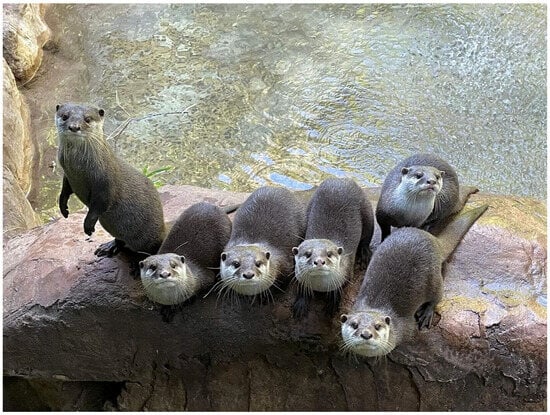
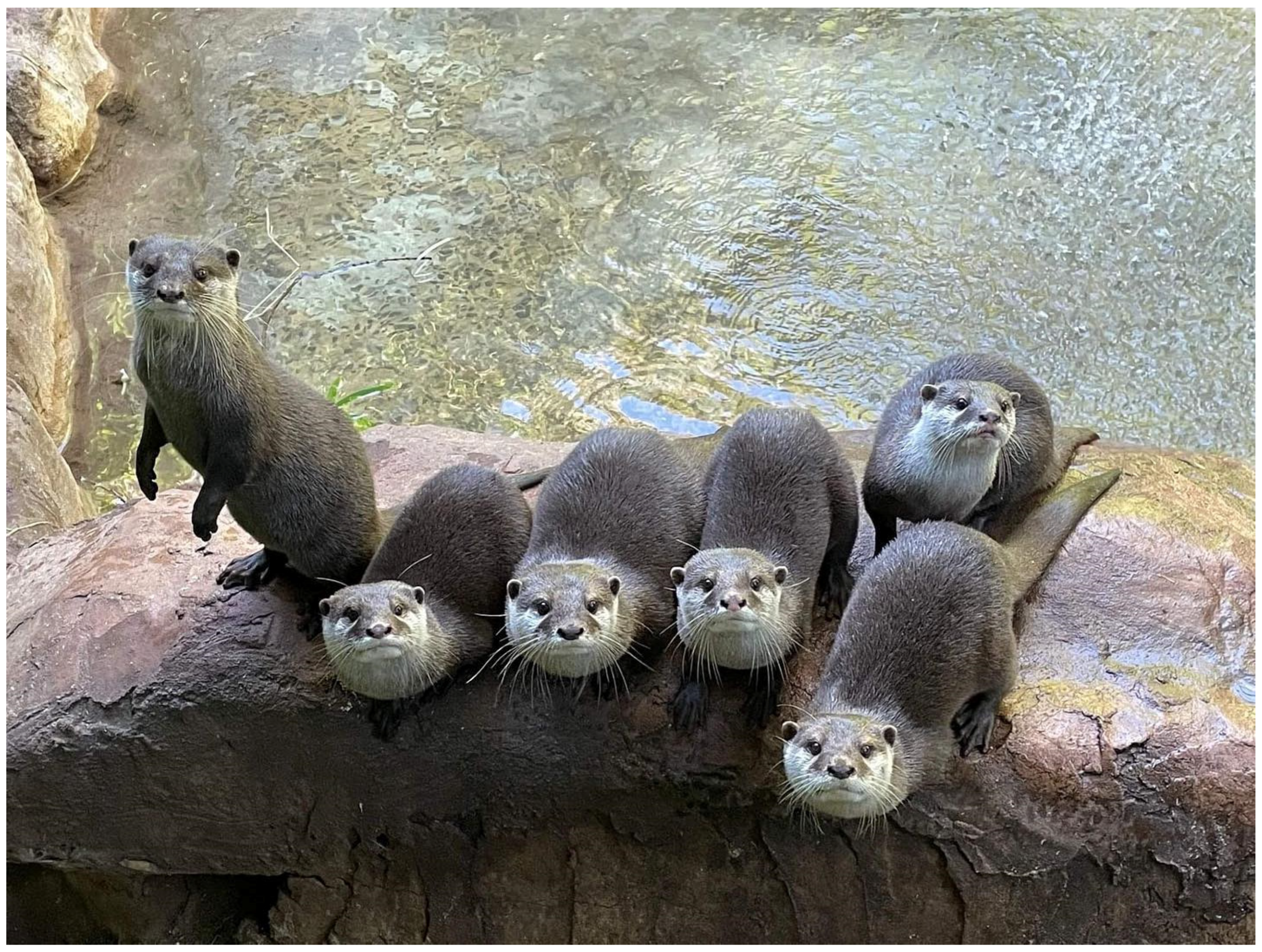
Preceding observations, the University of Adelaide Animal Ethics Committee granted approval of the study (S-2023-016). Six Asian small-clawed otters, whose ages ranged from 2 to 11 years old at the time of the study, were housed at Adelaide Zoo, Australia (see Figure 1). The otters within the study shared the same bloodline, with two of the six being the maternal sow and paternal boar. The other four otters (two female and two male) were offspring produced by the aforementioned sow and boar in two different litters.
Figure 1.
The six otters included within the study within their enclosure. Two of the six are the parents of the other four, which were produced in two separate litters. Photo credit to Adelaide Zoo.
The otters were housed in a naturalistic zoo habitat (~120 m2) consisting of two pool areas, scattered hollow logs, stumps, trees, foliage, and a variety of sizes and textures of rocks. There was an out of sight retreat area behind the main habitat where the otters could enter at any point. This retreat area was not visible to the public, provided shelter as well as a den and feeding area, and functioned as night quarters for the otters when not on display. Visitors had access to view the otters from one side of the habitat (front) behind a glass fence and barrier ~1 m from the first pool area, which separated the otters from the visitors. The otters were fed at randomized intervals throughout the day (from Approx. 08:30 h to 17:30 h), usually consisting of five feeds that reflected a species-typical natural diet of fish, crustaceans, chicken, eggs, mealworms, mincemeat, fruits, vegetables, and kibble. There was an enrichment program in place for the otters which comprised hollow hay-filled logs, scatter-feedings (in which their daily diet was thrown or hidden across the habitat), KONG® (Kong Company, Golden, CO, USA) and pipe enrichment (filled with vegetables, fruits, meat, or fish), ice blocks, slides, plastic pools, colored balls, footballs, and hanging rubber balls.
2.2. Materials
Several iPad® (Apple Inc., Cuppertino, CA, USA) handheld tablets were individually numbered and distributed to all observers taking part in the data collection process. The application ZooMonitor [25] was utilized for all data collection.
2.3. Data Collection and Procedure
An ethogram was developed using previous research by Brereton and colleagues (2023) [22], Scheifele and colleagues (2015) [13], and Morabito and Bashaw (2012) [15]. The observers within the study were five university undergraduate students as a part of their undergraduate course and were briefed on the behaviors included in the ethogram before initial observations by the advising author (E.J.F). Interobserver reliability was not assessed and therefore is a major limitation of this study and results are preliminary and exploratory in nature. However, observers were trained prior to data collection by the supervising author, including both live training at the facility and follow-up monitoring and discussion in lab meetings. Additionally, there was a limited number of variables recorded and a small sample size; therefore, if significance was found, it was interpreted with these limitations in mind. Data collection was taken over a six-month period (18 August 2023–20 February 2024) and collected during the zoo’s opening hours (09:00–17:00) at variable starting times, seven days a week, depending on the schedule outlined by the zoo, and as such, no two students were present at the same time to conduct any interobserver reliability. The ethogram was designed to be exhaustive, mutually exclusive, and was divided into seven behavioral classes with a total of 15 behaviors described (see Table 1). All data were recorded on tablets using ZooMonitor. Sessions were one hour long with observations occurring at 60 s intervals utilizing instantaneous (pinpoint) scan sampling [26]. Data were recorded at each exact 60 s pinpoint interval within an hour session and included otter vocalization (simply yes or no; no identification of vocalization type), behavior for up to six total otters (i.e., ethogram category; see Table 1 below), and presence of people (visitors, staff, both, or no-one). Over the data collection period, 169 sessions were recorded. Any sessions under 45 min were removed from the analysis, leaving 146 sessions for analysis.
Table 1.
An ethogram for Asian small-clawed otters depicting 15 behaviors within 7 behavioral categories. Each behavior and behavior class is listed, as well as its abbreviation and operational definition.
2.4. Statistical Analyses
All data were collected, collated, and organized in Microsoft Excel®. Descriptive statistics such as the mean and standard error of the mean (SEM) were produced in Excel® after organizing the data. All statistical analyses were done in SigmaPlot version 14.0 (Systat Software Inc., San Jose, CA, USA). Otter vocalizations were compared against people presence and time across observation sessions to identify any correlations within scatter plot graphs. Both correlations failed normality (Shapiro–Wilk test), and therefore, Spearman’s rank correlation was used to examine both relationships. Sessions were also categorized by whether they had a staff member present (Staff) or not (No Staff; all sessions had at least one interval with a visitor present), as well as whether people were present for less than half the intervals (Less People), or for half or more of all intervals (More People). See below for definitions regarding people count, staff, and ‘more/less’ people definitions: People Count: Number of intervals in a session with at least one person present.
Any Staff: Presence of any staff members excluding volunteers (staff wore green, while volunteers wore purple).
More People/Less People: Sessions with at least one person present for at least half of the session intervals (30 or more intervals) were described as more people whereas sessions with people present for less than half of intervals (29 or less intervals) were described as less people.
Otter vocalizations were then examined across Staff and No Staff conditions. Analyses were limited to four of the seven classes of behavior (Active, Forage, Inactive, and Other), since the other three classes occurred for less than 5% of total observations across conditions. A Bonferroni correction was applied to these former four statistical tests, which set the p-value at 0.0125 (0.05/4). All categories except for “Active” failed normality (Shapiro–Wilk tests), which led to an independent samples t-test being utilized for the Less People/More People Active analysis, and Mann–Whitney U tests for all other comparisons. All the above approaches to the use of inferential statistics are consistent with small-N studies within the field of animal behavior, particularly as they relate to applied settings [27].
3. Results
3.1. Otter Vocalizations by People Type and Otter Activity by People Frequency
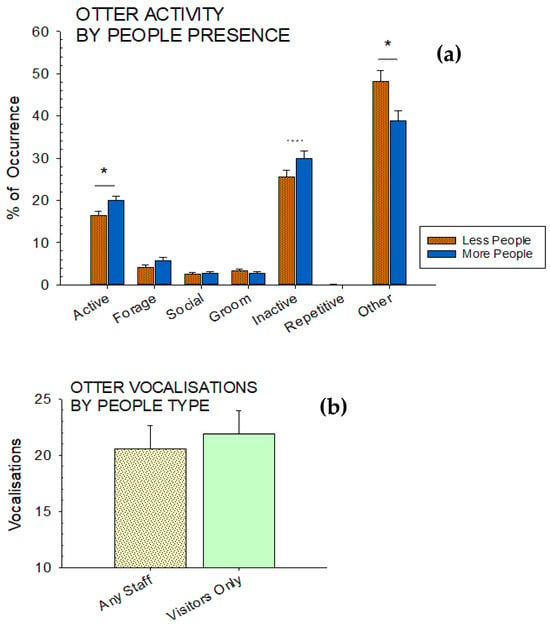
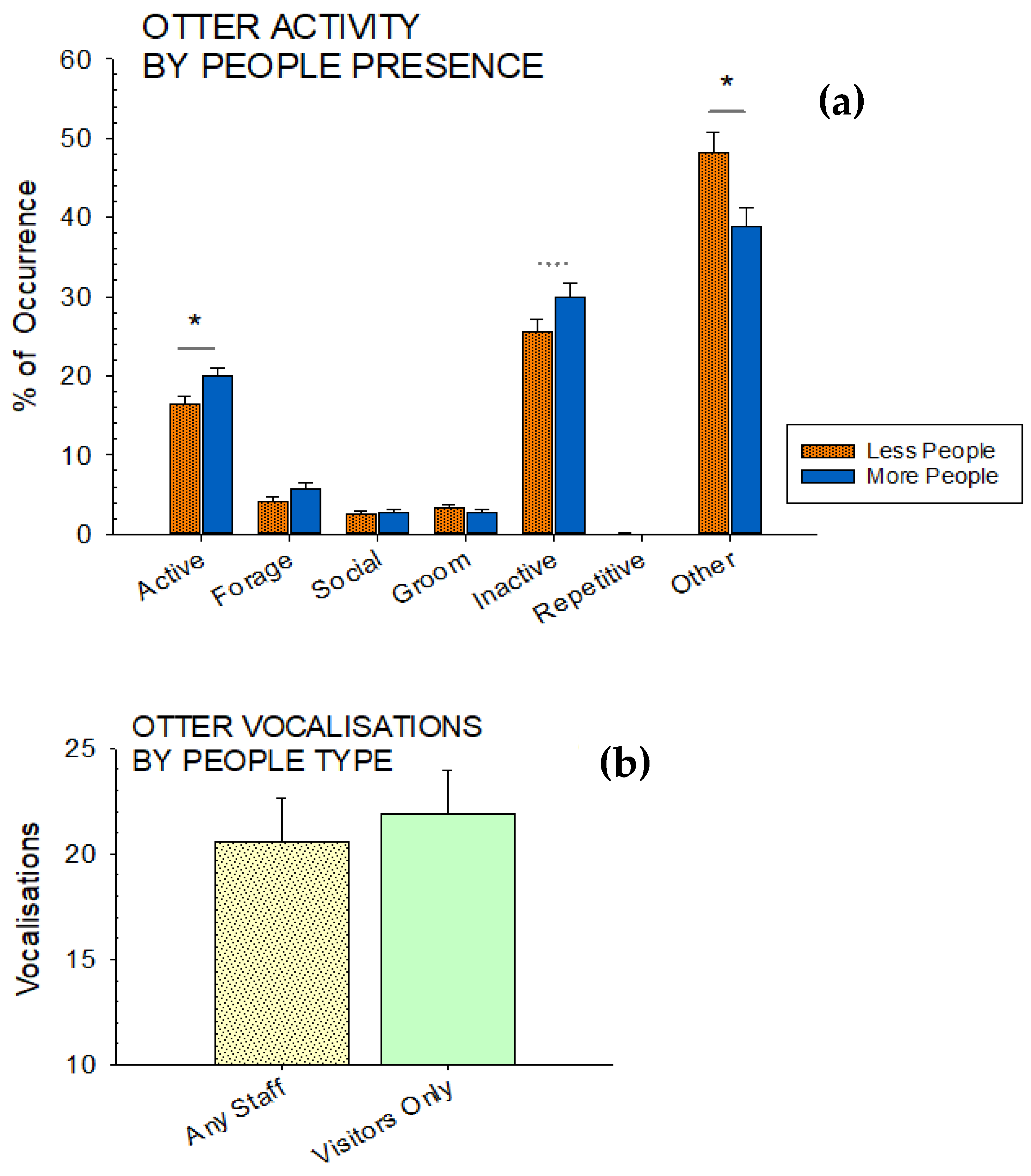
Figure 2 demonstrates two bar graphs for otter activity in the presence of sessions when less than half of all intervals had people present (Less People), or when half or more of all session intervals had people present (More People), as well as otter vocalizations when visitors were present with staff (Any Staff) or when visitors alone were present (Visitors Only).
Figure 2.
Top bar graph (a) shows the averages (plus SEM bars) for the seven classes of behavior under the presence of people (Less or More People). Lines plus * indicate a corrected significant difference (p < 0.0125), whereas the dotted line above Inactive represents approaching significance (p = 0.05). Bottom bar graph (b) shows otter vocalizations (percentage of occurrence) by the type of people present (Any Staff or Visitors Only). The results were not significant (p = 0.683).
In the top graph (Figure 2a), Active behaviors were higher in the More People condition (39.59% ± 0.95) than the Less People condition (16.36% ± 0.98). This difference was statistically significant (t144 = −2.673, p = 0.008, d = 0.443). There was also a statistically significant difference for Other behaviors (U = 1927, nmore = 69, nless = 77, p = 0.004, d = 0.487), with more Other behaviors lower in the More People condition (38.93% ± 2.26) than in the Less People condition (48.12% ± 3.57). It is additionally worth noting that the vast majority (>99%) of Other behaviors were otters being out of sight, in their off-habitat den that the general public and observers did not have access to. Finally, Inactive behaviors demonstrated a change that approached significance (U = 2155, nmore = 69, nless = 77, p = 0.05, d = 0.330), with Inactive behaviors higher in the More People condition (29.82% ± 1.80) than in the Less People condition (25.50% ± 1.62).
In the bottom bar graph (Figure 2b), Visitors Only observed a slightly higher vocalization count (percentage of occurrence; 21.93% ± 2.02), while Any Staff observed a slightly lower vocalization count (20.60% ± 2.04). However, there was no significant differences between the conditions (U = 2477, nstaff = 60, nnostaff = 86, p = 0.683, d = 0.068).
3.2. Otter Vocalizations by People Count and Time
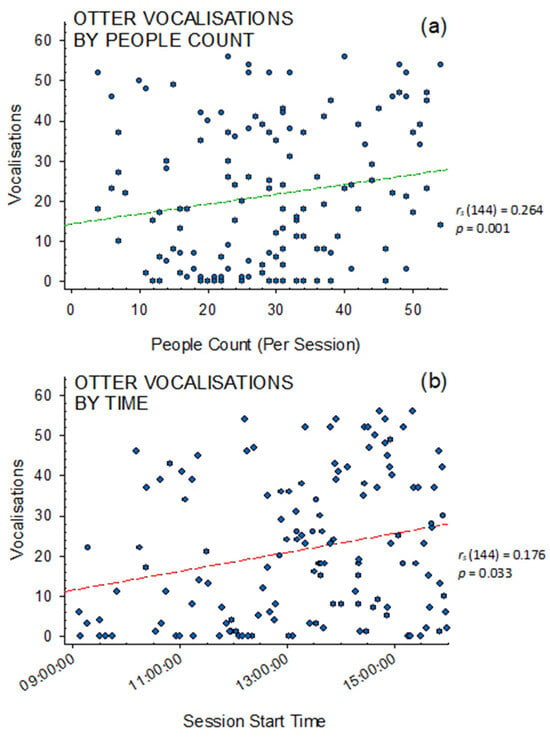
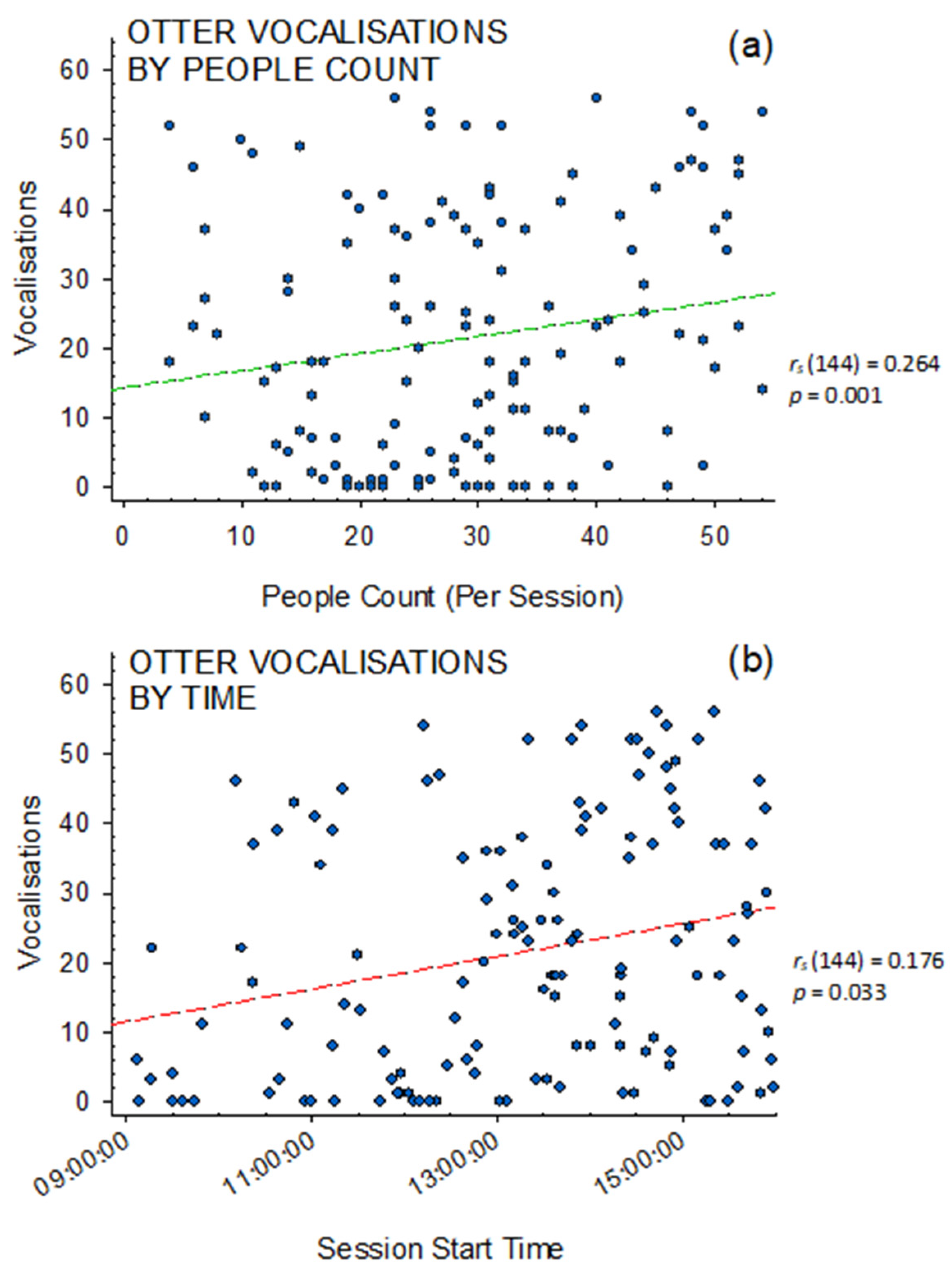
There was a weak to moderate positive correlation between otter vocalizations and people count that was statistically significant (rs (144) = 0.264, p = 0.001; see Figure 3a). There was also a weaker positive correlation between otter vocalizations and time that was statistically significant (rs (144) = 0.176, p = 0.033; see Figure 3b).
Figure 3.
Scatter plots with correlations (dotted green and red lines) for vocalizations per session (y-axis) by (a) people count per session (x-axis), and (b) session start time (x-axis).
4. Discussion
4.1. Otter Observations and Activity
The otters displayed a varied range of behaviors that were classified into different categories. The otters were found to spend most of their time performing Active, Inactive, and Other behaviors, which followed the trends of the results of an unpublished study, which also investigated otters [28]. Within literature, it is often inferred that when more people are present at a habitat, the animals are more likely to be active, which was observed in the otters within this study, as they were significantly more active. However, this needs to be interpreted cautiously, as it is unclear as to whether the otters were more active because there were more visitors present, or if they were more active and thus attracted more visitors. This is the major confounding variable within this study, as causation is unclear. Further measures of welfare could be used in future studies to provide more context to understand why this may be occurring, and additionally, further investigation that includes observing variables such as weather, time of day, and potential anticipation regarding feeding times. Majority of people who viewed the otters were visitors and did not appear to be associated with negative visitor effects [17,21,29]. Without experimental control, it is difficult to interpret the causal relationship in an animal–visitor interaction [30]. Nonetheless, our results may suggest that the otters in this study did not find visitors aversive, considering they spent more time visible and active when more visitors were present. However, it is important to note that visitors may have been attracted to more active otters and thus, the causal relationship is unclear. This is consistent with Collins and colleagues (2016), which observed an increase in pool usage, which was classified as a form of active behavior, particularly during increased visitor numbers [31]. As aforementioned, the findings of this study are difficult to extrapolate as it is unclear whether the visitors were causing an increase in activity, or if more visitors congregated as the otters were more active. Additional research is needed to better understand the relationship between crowd size and activity. Furthermore, there may be some other relationship occurring between these variables which results in an increase in activity such as time of day or temperature [32].
Taken together, otter activity in the presence of people may suggest that otters were not averse to zoo visitors and future research may be able to investigate in more detail how the otters’ welfare states were affected and if there is a potential for enrichment, as, within this study there was a general activity increase. However, in the absence of additional information collected or experimental manipulation, this is difficult to interpret and apply broader than this study. Our results indicate that there is little evidence of a negative visitor effect, and the potential for a positive welfare effect among zoo-housed otter species.
Two specific limitations are worth noting: A lack of experimental control and the absence of interobserver reliability measured. Regarding the former, as noted previously in the discussion, the observation-only nature of our study limits what we can say about the true impact of people on otter vocalizations and behavior, and thus what effect this has on their welfare. While our study suggests little to no negative impacts of visitors on the otters, and more recent writings on the effects of human–animal interactions in zoos suggest a potential positive or enriching impact from visitor interactions [33,34], nothing conclusive can be applied in the absence of experimental control.
4.2. Otter Vocalizations and Correlations
There was a statistically significant but weak to moderate correlation between otter vocalization and people, which may suggest that there is some moderate association between the two. However, as this was primarily a preliminary and exploratory study, results should be interpreted carefully. Prior literature has investigated otter vocalizations when housed in human care and observed that different types of vocalizations can be indicative of different affective states, such as affiliative, agonistic, anticipatory, and alert. For instance, Bettoni and colleagues (2021) observed that otters expressed vocalizations associated with both alarm and novelty in the presence of people, indicating a variety of potential welfare effects from visitors [10]. As such, vocalizations in the presence of people has been shown to vary drastically, which increases the complexity in interpreting any potential visitor effects on zoo-housed otters’ welfare. For the purposes of this study, vocalization type was not categorized, it was measured as a binomial (presence/absence of vocalization) as this was a preliminary study and the aim was to identify if vocalization changed in the presence of people, rather than the types of vocalization. In regard to vocalization in the presence of people, a weak positive correlation was observed; however, it was only approaching significance between time and people due to the Bonferroni correction. This could indicate a potential visitor effect, and as other factors were not investigated, it presents confounding variables that do not explain causation. Additional variables may have included diurnal rhythms and pre-established behavior patterns, such as vocalizing more during the morning and evening, which has been observed in other animals as well as otters [7,10]. Another variable may have included feeding schedules, although these were randomized throughout the day, with approximately six feedings. However, feeding schedules can become anticipatory and produce behavioral effects, such as an increase in vocalizations or abnormal repetitive behaviors [24,35,36]. Another variable to consider is weather; weather has been identified prior as a contributing factor to changes in animal behavior [37,38]. As such, these variables may have contributed to the differences observed in otter vocalization compared to solely visitor presence. Additional information and context would be necessary to understand if vocalizations are able to be utilized to investigate visitor effects and to better understand otter welfare in different contexts, inclusive of feeding schedules. Other research has suggested that fixed interval feedings may influence abnormal repetitive behaviors, inclusive of vocalization, which could predict the occurrence of otter vocalization in this environment, given that the otters were fed on a fixed interval five times a day [35,36,39].
There were no observed differences in vocalizations when staff were present versus when staff were absent. However, this may have been due to the prevalence of visitors as visitors were able to view the enclosure at any time during opening hours, whereas staff were minimally present except for husbandry and feeding. This created a skewed exposure to visitors and staff, which may have impacted results. The current literature has documented differences between the frequency and presentation of some behaviors in the presence of staff versus absence of staff. For instance, Martin and Melfi (2016) observed that in the presence of familiar keepers, elephants, giraffes, tapirs, and meerkats demonstrated fewer alert behaviors and more movement towards keepers compared to unfamiliar humans [40]. Further testing would be necessary to examine if these otters did respond differently using other measures to keepers or other staff compared to non-familiar individuals.
4.3. Limitations
As scan sampling was utilized at one-minute intervals within sessions of 60 min; vocalization was treated as a non-continuous binomial (presence/absence) measure. This may have limited the results as the number of otters vocalizing, the individual, and the type of vocalization was not considered. Other research in this area has observed different call types and potential associated welfare states; however, this was not utilized within this study as it was primarily about investigating if the presence of vocalization would change with visitors and staff. Furthermore, as individual vocalization was not recorded, it is difficult to extrapolate which individuals may have been vocalizing—if it was only one, or if it was more than one individual. Animal welfare is typically treated as individual affective states, and while group observations are useful, they should not be treated as a complex assessment of welfare.
As aforementioned regarding the lack of causation between visitors and otter vocalization, it is unclear as to whether the otters behaved a certain way because visitors were present, or that visitors aggregated when observing the otters behaving a certain way. Additionally, other variables such as weather, time of day, diurnal patterns, and other behavioral patterns were not investigated, which limits results as vocalizations may have changed during the time of day or when anticipating an event such as feeding. Finally, the significant effects are limited by the small sample size, which would warrant a cautious approach in terms of overall generalization and possible effect size. Future research should aim to investigate these variables in more detail, including replicability of similar studies.
In addition, the lack of any form of reliability measurement is problematic, and one endemic to both zoo-based studies and animal behavior research in general. For instance, Burghardt and colleagues (2012) found that less than 7% of all published papers incorporated any type of reliability measurement in their studies, and while an updated review of the topic suggests improvement across several popular animal behavior journals [41,42], the majority of animal behavior publications still provide no measurement of reliability (i.e., total agreement) between observers. Although lack of reliability measures is common, it is not good practice. Therefore, this is a major limitation of the study which means we must remain skeptical of the validity of the observations obtained [43]. As such, we attempted to limit interpretations of our results to suggestions that might inspire future research, rather than provide detailed specifics.
5. Conclusions
Our results found that the otter vocalizations were moderately positively correlated with the presence of people, weakly positively correlated with time of day, that no differences were observed when staff were present with visitors compared to only visitors in the absence of staff, and that the presence of more visitors was associated with greater otter activity and less time spent out of sight. This may imply that the presence of people was not aversive for the otters within this study, and that people may produce an enriching or otherwise positive welfare effect. However, further research is needed to determine the validity of these potential welfare impacts, as this study was primarily preliminary and exploratory, and therefore did not utilize reliability measures or investigate other potential variables (i.e., weather or feeding patterns). In the absence of experimental control, we can only indicate correlations, not causation. Future zoo-based human–animal interaction research should look to incorporate a variety of variables and experimental controls into their studies. Doing so will allow us to better understand the influence and, ultimately, the effect of visitors and other people on zoo-housed animals.
Author Contributions
P.K.—Data curation, Writing—review and editing, Investigation, Writing—original draft, Formal analysis, Methodology. B.C.-R.—Writing—original draft, Data curation, Formal analysis, Investigation, Writing—review and editing, Methodology. E.J.F.—Conceptualization, Supervision, Data curation, Formal analysis, Investigation, Methodology, Project administration, Writing—review and editing. All authors have read and agreed to the published version of the manuscript.
Funding
No funding was provided for the completion of this project.
Institutional Review Board Statement
The study was conducted in accordance with and approval of Adelaide University Animal Ethics Committee (S-2023-016).
Informed Consent Statement
Not applicable as this study utilized animals.
Data Availability Statement
All data are available from the authors upon reasonable request.
Acknowledgments
A special thank you to the Adelaide Zoo staff and management for facilitating this research, as well as to the otters and visitors for being a part of it.
Conflicts of Interest
The authors declare no known conflicts of interest.
References
- Wright, L.; de Silva, P.K.; Chan, B.; Reza Lubis, I.; Basak, S. Aonyx cinereus, Asian Small-clawed Otter. IUCN Red List Threat. Species 2021, 2021, e.T44166A164580923. [Google Scholar] [CrossRef] [Scilit]
- Kruuk, H. Otters: Ecology, Behaviour, and Conservation; Oxford University Press: New York, NY, USA, 2006; Available online: https://academic.oup.com/book/8338 (accessed on 10 April 2024).
- Shekhar Palei, H.; Mohapatra, P.P.; Hussain, S.A. Habitat selection and diet of the Asian small-clawed otter in Karlapat Wildlife Sanctuary, Odisha, India. Ecoscience 2023, 30, 17–26. [Google Scholar] [CrossRef] [Scilit]
- Lélias, M.; Lemasson, A.; Lodé, T. Social organization of otters in relation to their ecology. Biol. J. Linn. Soc. 2021, 133, 1–27. [Google Scholar] [CrossRef] [Scilit]
- Hussain, S.A.; Gupta, S.K.; de Silva, P.K. Biology and Ecology of Asian Small-Clawed Otter Aonyx cinereus (Illiger, 1815): A Review. IUCN Otter Spec. Group Bull. 2011, 28, 63–75. [Google Scholar]
- Schmelz, M.; Duguid, S.; Bohn, M.; Völter, C.J. Cooperative problem solving in giant otters (Pteronura brasiliensis) and Asian small-clawed otters (Aonyx cinerea). Anim. Cogn. 2017, 20, 1107–1114. [Google Scholar] [CrossRef] [Scilit] [PubMed]
- Leuchtenberger, C.; Sousa-Lima, R.; Duplaix, N.; Magnusson, W.; Mourão, G. Vocal repertoire of the social giant otter. J. Acoust. Soc. Am. 2014, 136, 2862–2875. [Google Scholar] [CrossRef] [Scilit] [PubMed]
- Mumm, C.; Knörnschild, M. The Vocal Repertoire of Adult and Neonate Giant Otters (Pteronura brasiliensis). PLoS ONE 2014, 9, e112562. [Google Scholar] [CrossRef] [Scilit] [PubMed]
- Rossi, C.; Accorsi, P.A.; Petrulli, C.; Florio, D.; Gridelli, S.; Marliani, G. Effect of visitors on the behavior of three Asian small-clawed otters Aonyx cinereus at Cattolica Aquarium. Zool. Soc. Lond. 2020, 54, 53–59. [Google Scholar]
- Bettoni, S.; Steoger, A.; Rodriguez, C.; Fitch, W. Airborne Vocal Communication in adult neotropical otters (Lontra longicaudis). PLoS ONE 2021, 16, e0251974. [Google Scholar] [CrossRef] [Scilit] [PubMed]
- Lemasson, A.; Mikus, M.; Blois-Heulin, C.; Lodé, T. Vocal repertoire, individual acoustic distinctiveness, and social networks in a group of captive Asian small-clawed otters (Aonyx cinerea). J. Mammal. 2014, 95, 128–139. [Google Scholar] [CrossRef] [Scilit]
- Scheifele, P.M.; Johnson, M.T.; Fry, M.; Hamel, B.; Laclede, K. Vocal classification of vocalizations of a pair of Asian Small-Clawed otters to determine stress. J. Acoust. Soc. Am. 2015, 138, 105–109. [Google Scholar] [CrossRef] [Scilit] [PubMed]
- Kim, J.Y. Welfare assessment of captive asian small-clawed otters (Aonyx cinereus) in Korean private zoos: Associations of contact hand-feeding tubes with S-AWAG scores and begging behaviour. Appl. Anim. Behav. Sci. 2026, 133, 107000. [Google Scholar]
- Pacheco, E.; Krebs, B.L.; Watters, J.V. Keeper effect: Animals are more active in the presence of their caretakers. Zoo Biol. 2024, 43, 306–314. [Google Scholar] [CrossRef] [Scilit] [PubMed]
- Morabito, P.; Bashaw, M.J. A Survey of Abnormal Repetitive Behaviors in North American River Otters Housed in Zoos. J. Appl. Anim. Welf. Sci. 2012, 15, 208–221. [Google Scholar] [CrossRef] [Scilit] [PubMed]
- Spooner, S.L.; Walker, S.L.; Dowell, S.; Moss, A. The value of zoos for species and society: The need for a new model. Biol. Conserv. 2023, 279, 109925. [Google Scholar] [CrossRef] [Scilit]
- Fernandez, E.; Tamborski, M.; Pickens, S.; Timberlake, W. Animal-Visitor interactions in the modern zoo: Conflicts and interventions. Appl. Anim. Behav. Sci. 2009, 120, 1–8. [Google Scholar]
- D’Cruze, N.; Khan, S.; Carder, G.; Megson, D.; Coulthard, E.; Norrey, J.; Groves, G. A Global Review of Animal–Visitor Interactions in Modern Zoos and Aquariums and Their Implications for Wild Animal Welfare. Animals 2019, 9, 332. [Google Scholar] [CrossRef] [Scilit] [PubMed]
- Spooner, S.L.; Walker, S.L.; Dowell, S.; Marques, M.C.; Somenzari, M.; Rocha, F.L.; Cordero-Schmidt, E.; Hughes, C.; Lee, C.; Smith, C.; et al. The zoo sphere of influence model. Biol. Conserv. 2025, 311, 110466. [Google Scholar] [CrossRef] [Scilit]
- Binding, S.; Farmer, H.; Krusin, L.; Cronin, K. Status of animal welfare research in zoos and aquariums: Where are we, where to next? J. Zoo Aquar. Res. 2020, 8, 166–174. [Google Scholar]
- Sherwen, S.L.; Hemsworth, P.H. The visitor effect on zoo animals: Implications and opportunities for zoo animal welfare. Animals 2019, 9, 366. [Google Scholar] [CrossRef] [Scilit] [PubMed]
- Brereton, J.E.; Jones, E.M.L.; McMillan, C.; Perkins, K. Visitors and observers otter-ly influence the behavior and enclosure use of zoo-housed giant otters. Zoo Biol. 2023, 42, 509–521. [Google Scholar] [PubMed]
- Bandoli, F.; Mace, J.; Knight, A. The Integrated Effect of Environmental Conditions and Human Presence on the Behavior of a Pair of Zoo-Housed Asian Small-Clawed Otters. Animals 2023, 13, 2228. [Google Scholar] [PubMed]
- Gothard, N. What is the proximate cause of begging behavior in a group of captive Asian short-clawed otters. IUCN Otter Spec. Group Bull. 2007, 24, 14–35. [Google Scholar]
- Wark, J.D.; Cronin, K.A.; Niemann, T.; Shender, M.A.; Horrigan, A.; Kao, A.; Ross, M.R. Monitoring the behavior and habitat use of animals to enhance welfare using the ZooMonitor app. Anim. Behav. Cogn. 2019, 6, 158–167. [Google Scholar] [CrossRef] [Scilit]
- Brereton, J.; Tuke, J.; Fernandez, E. A Simulated Comparison of Behavioral Observation Sampling Methods. Sci. Rep. 2022, 12, 3096. [Google Scholar] [PubMed]
- Fernandez, E.J.; Brereton, J.E.; Tuke, J. Learning your individual inferences: A guide for overcoming statistical challenges in small-N studies. Appl. Anim. Behav. Sci. 2025, 292, 106804. [Google Scholar] [CrossRef] [Scilit]
- Owen, C. Do visitors affect the Asian short-clawed otter Aonyx cinerea in a captive environment? (not published). In Proceedings of the 6th Annual Symposium on Zoo Research; BIAZA: London, UK, 2004; pp. 202–211. Available online: https://www.cabidigitallibrary.org/doi/pdf/10.5555/20123176359 (accessed on 10 April 2024).
- Hosey, G.R. Zoo Animals and Their Human Audiences: What is the Visitor Effect? Anim. Welf. 2000, 9, 343–357. [Google Scholar] [CrossRef] [Scilit]
- Fernandez, E.; Chiew, S. Animal-Visitor Interactions: Effects, Experiences, and Welfare. Anim. Behav. Cogn. 2021, 8, 462–467. [Google Scholar] [CrossRef] [Scilit]
- Collins, C.K.; Quirke, T.; Overy, L.; Flannery, K.; O’Riordan, R. The effect of the zoo setting on the behavioural diversity of captive gentoo penguins and the implications for their educational potential. J. Zoo Aquar. Res. 2016, 4, 85–90. [Google Scholar] [CrossRef] [Scilit]
- Fernandez, E.J.; Ramirez, M.; Hawkes, N.C. Activity and pool use in relation to temperature and water changes in zoo hippopotamuses (Hippopotamus amphibious). Animals 2020, 10, 1022. [Google Scholar] [CrossRef] [Scilit] [PubMed]
- Fernandez, E.J.; Sherwen, S.L. An Introduction to Human–Animal Interactions in Zoos and Aquariums. In Human-Animal Interactions in Zoos: Integrating Science and Practice; CABI: Oxfordshire, UK, 2024; pp. 1–5. [Google Scholar]
- Williams, E.; Hunton, V.; Hosey, G.; Ward, S. The impact of visitors on non-primate species in Zoos: A quantitative review. Animals 2023, 13, 1178. [Google Scholar] [CrossRef] [Scilit] [PubMed]
- Gilbert-Norton, L.; Leaver, L.; Shivik, J. The effect of randomly altering the time and location of feeding on the behavior of captive coyotes (Canis latrans). Appl. Anim. Behav. Sci. 2009, 120, 179–185. [Google Scholar] [CrossRef] [Scilit]
- Fitskie, L.; Kappelhof, J.; Cunha, F. Effects of Random Feeding Schedule on Pacing in Asiatic Lions (Panthera leo persicus). Zoo Biol. 2024, 43, 590–594. [Google Scholar] [CrossRef] [Scilit] [PubMed]
- Goodenough, A.E.; McDonald, K.; Moody, K.; Wheeler, C. Are “visitor effects” overestimated? Behavior in captive lemurs is mainly driven by co-variation with time and weather. J. Zoo Aquar. Res. 2019, 7, 59–66. [Google Scholar]
- Rose, P.E.; Scales, J.S.; Brereton, J.E. Why the “visitor effect” is complicated. Unraveling individual animal, visitor number, and climatic influences on behavior, space use and interactions with keepers—A case study on captive hornbills. Front. Vet. Sci. 2020, 7, 236. [Google Scholar] [CrossRef] [Scilit] [PubMed]
- Vladimirova, V. The effects of captivity on the behaviour of Aonyx cinerea in five British institutions. ResearchGate 2014. [Google Scholar] [CrossRef]
- Martin, R.; Melfi, V. A Comparison of Zoo Animal Behavior in the Presence of Familiar and Unfamiliar People. J. Appl. Anim. Welf. Sci. 2016, 19, 234–244. [Google Scholar] [CrossRef] [Scilit] [PubMed]
- Burghardt, G.M.; Bartmess-LeVasseur, J.N.; Browning, S.A.; Morrison, K.E.; Stec, C.L.; Zachau, C.E.; Freeberg, T.M. Perspectives–minimizing observer bias in behavioral studies: A review and recommendations. Ethology 2012, 118, 511–517. [Google Scholar]
- Freeberg, T.M.; Benson, S.A.; Burghardt, G.M. Minimizing observer bias in animal behavior studies revisited: Improvement, but a long way to go. Ethology 2024, 130, e13446. [Google Scholar] [CrossRef] [Scilit]
- Li, C.; Alostad, Z.; Crittle, C.; Fernandez, E.J. An Examination of Visitor and Tiger Activity Between Two Zoo Tiger Groups. Vet. Med. Sci. 2025, 11, e70286. [Google Scholar] [CrossRef] [Scilit] [PubMed]

Disclaimer/Publisher’s Note: The statements, opinions and data contained in all publications are solely those of the individual author(s) and contributor(s) and not of MDPI and/or the editor(s). MDPI and/or the editor(s) disclaim responsibility for any injury to people or property resulting from any ideas, methods, instructions or products referred to in the content. |
© 2026 by the authors. Licensee MDPI, Basel, Switzerland. This article is an open access article distributed under the terms and conditions of the Creative Commons Attribution (CC BY) license.