


Abstract
Large-scale and long-term hydrogen storage is a key requirement for a sustainable hydrogen-based energy system. Although underground hydrogen storage (UHS) in porous media has gained increasing attention, the behavior of hydrogen during cyclic injection and withdrawal remains poorly understood. This study experimentally investigates the effects of cyclic hydrogen injection cycles (3, 6, 9, and 12 cycles) on the physical and mechanical properties of both dry and brine-saturated Berea, which serves as a representative reservoir rock. Porosity, permeability, and mineral composition of the samples were measured before and after the injection cycles, while triaxial tests were conducted post-injection and compared with reference sister samples. Results show negligible and inconsistent mineralogical changes before and after hydrogen injection. Porosity remained nearly constant (<2 percentage variation), whereas permeability declined by more than 20% in samples, which can impact recovery efficiency. Mechanical properties remained largely unchanged, indicating stability. However, further experimental and modeling studies are required to better understand the observed permeability reduction and its implications for underground hydrogen storage (UHS).
1. Introduction
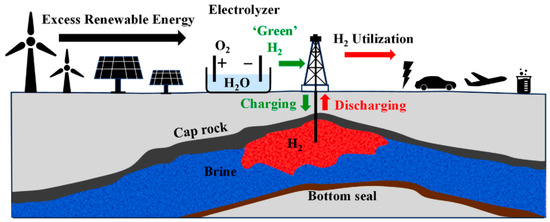
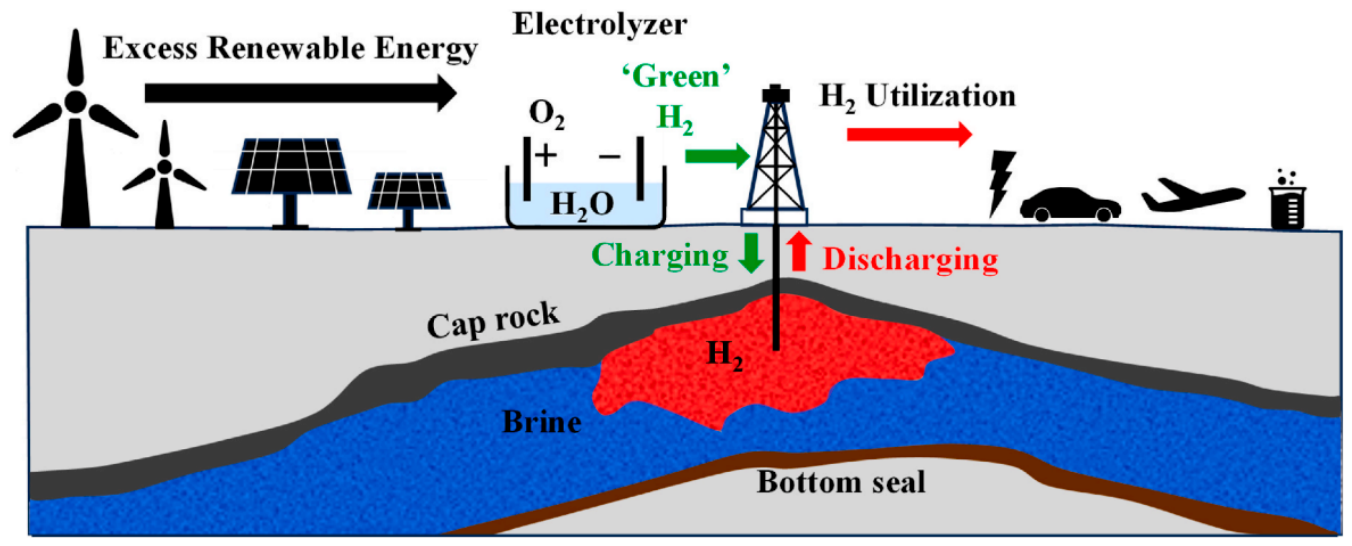
The decarbonization of the energy sector requires long-duration storage solutions capable of compensating for the inherent variability of renewable energy resources. The variable and cyclic nature of solar and wind generation results in periods of energy surplus during peak production and deficits during low-output conditions [1,2,3,4]. Excess renewable energy can be converted into green hydrogen through electrolysis and stored for later use during periods of high demand. Figure 1 shows the conversion of excess energy into green hydrogen and storing and producing them for later use in a depleted oil and gas reservoir. As a carbon-neutral energy carrier, hydrogen can be deployed during peak demand periods, thereby enhancing grid reliability and flexibility [5]. To effectively balance seasonal fluctuations in renewable energy supply and demand and to enable the development of a hydrogen economy, large-scale storage capacities of the order of gigawatt-hours to terawatt-hours are required [6]. Underground hydrogen storage (UHS), particularly in depleted oil and gas reservoirs, represents a promising and scalable solution to meet these large-capacity storage needs [7,8].
Figure 1.
Schematic of surplus renewable energy conversion to hydrogen via electrolysis, subsurface storage, and production for end-use applications, reproduced from [5].
Depleted oil and gas reservoirs are considered strong candidates for underground hydrogen storage due to their existing surface and subsurface infrastructure, well-characterized geological frameworks, and residual cushion gas [9]. However, several technical and operational criteria must be satisfied to ensure reliable long-term UHS performance. A comprehensive evaluation of reservoir integrity, economic viability, and operational safety is therefore essential prior to implementation configurations [10].
The development of UHS is supported by the extensive operational experience gained from over 662 underground natural gas storage sites worldwide. The selection of storage formations, reservoir characterization, injection operations, and containment strategies employed in UHS are largely adapted from the proven methodologies developed for underground natural gas storage and geological carbon sequestration [11,12]. In contrast to conventional carbon sequestration and oil/gas operations, which generally involve a unidirectional change in pore pressure through either continuous injection or depletion, UHS is governed by cyclic pressure fluctuations with seasonal energy demand [13]. These repetitive injection–withdrawal cycles impose evolving stress paths on both the reservoir and the caprock. Experience from hydrocarbon production and carbon capture and storage demonstrates that pressure depletion can result in reservoir compaction, surface subsidence, and stress transfer to the caprock, potentially inducing mechanical instability [14,15,16]. In contrast, fluid injections increase pore pressure and compress the reservoir matrix, elevating deviatoric stresses in the surrounding formations. If the induced stress exceeds the rock strength, fracturing and the development of leakage pathways may occur [17,18]. Given mechanical parallels between these operations and UHS, a thorough understanding of the geomechanical response to cyclic hydrogen injection–withdrawal is critical for evaluating long-term reservoir and caprock integrity.
Over the past several decades, numerous laboratory-scale studies have investigated the stress–strain behavior of rocks under different loading conditions, including uniaxial, triaxial, and cyclic loading scenarios. These experiments have significantly advanced the understanding of rock mechanical response under controlled conditions. However, in the context of UHS, there remains a clear gap in experimental research involving porous reservoir rocks saturated with hydrogen as the pore fluid at the laboratory scale. Wen et al. [19] examined the hydromechanical response of porous sandstone under triaxial loading to assess its relevance to UHS. By applying various stress paths, the study monitored changes in porosity and permeability. Their findings indicated that cyclic loading caused microstructural compaction, leading to decreases in porosity and permeability, which could reduce hydrogen recovery efficiency during storage operations. However, the experiments were conducted using water as the pore fluid, highlighting the need for further investigation using hydrogen as the pore fluid. Zhou et al. [20] investigated the impact of cyclic stress on the permeability evolution of sandstone, with implications for underground gas storage. Their results showed that the elastic modulus increased progressively with the number of loading cycles and stabilized after approximately 30 cycles. Similarly, Poisson’s ratio increased during the initial cycles and then remained relatively constant. Permeability exhibited a significant reduction during the first 10 cycles, followed by more gradual decline between 10 and 30 cycles, and eventually stabilizing after 30 to 50 cycles. These findings suggest that permeability reduction is most pronounced during the early stages of cyclic loading, after which the reservoir stabilizes, indicating that similar permeability trends may be expected during cyclic injection and withdrawal operations in underground gas storage systems.
Ajibona et al. [21] investigated the effects of cyclic hydrogen injection and depletion on Marcellus shale. Quadrant samples were placed in a core holder and subjected to hydrogen injection up to a maximum pressure of 10.34 MPa, applied in stepwise increments of 1.72 MPa. Porosity and mineralogical characteristics were evaluated before and after the injection cycles. The results showed that the shale matrix porosity increased by approximately 12% after eight cycles, with projections indicating a potential increase up to 19% after 30 cycles, suggesting that cyclic hydrogen exposure can alter the pore structure of shale formations. Joshi et al. [22] examined the impact of cyclic hydrogen injection and withdrawal on the physical and mechanical properties of Berea sandstone under simulated reservoir conditions. Following exposure to 100 cyclic hydrogen loading cycles, the samples exhibited no significant change in mechanical strength or dissolution of minerals. These findings demonstrate that sandstone formations such as Berea sandstone have strong potential to function as stable and reliable reservoirs for UHS over extended operational cycles.
This study aims to improve the understanding of the physical and mechanical behavior of reservoir rocks subjected to cyclic hydrogen injection. While [22] investigated cyclic hydrogen injection in Berea sandstone, the present study extends this work by using brine-saturated samples and conducting triaxial compression testing to evaluate rock strength and static elastic properties under representative reservoir conditions. These experimental conditions provide a more realistic assessment of in situ behavior. The findings from this study offer valuable insights into the geomechanical response of reservoir rocks during cyclic hydrogen storage, which can support the optimization of injection strategies, improve storage performance, ensure long-term reservoir integrity, and reduce potential geomechanical risks associated with underground hydrogen storage.
2. Materials and Methods
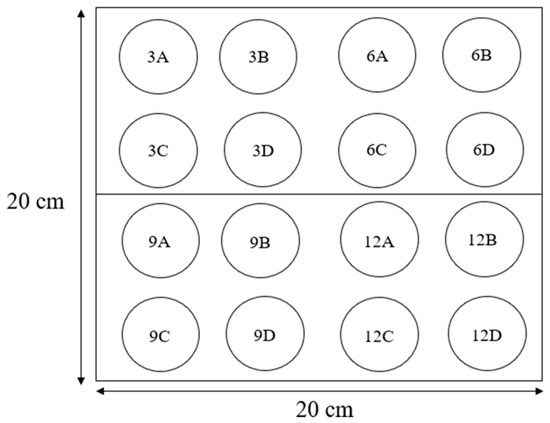
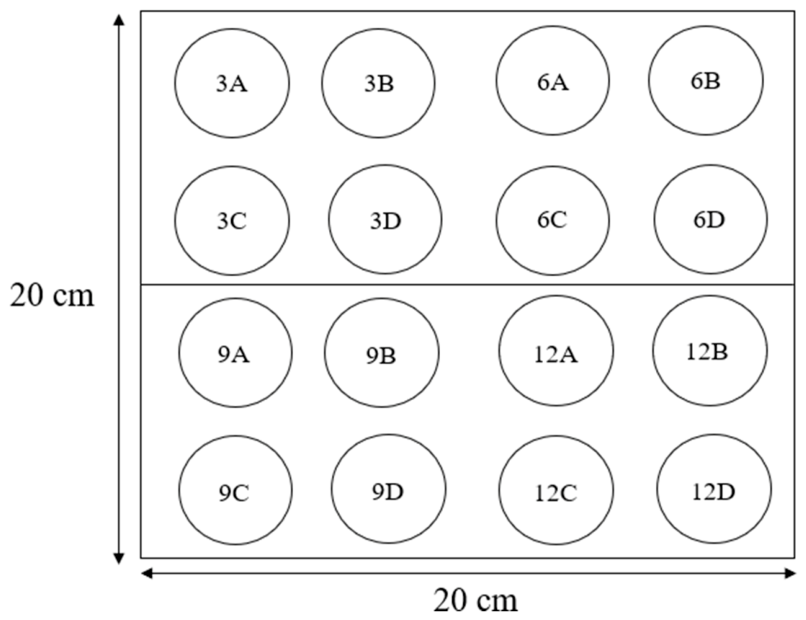
Porosity and permeability are fundamental reservoir properties that govern the suitability of subsurface formations for UHS. Porosity defines the available storage volume, whereas permeability controls fluid transport and directly affects injection and production efficiency. Sandstone reservoirs are considered favorable storage candidates due to their relatively high porosity, permeability, and well-connected pore networks [23,24,25,26]. Berea sandstone was selected for this study due to its homogenous pore structure, well-documented properties, and its widespread use as an analog for natural reservoir rocks in hydrogen storage research [5,27,28,29,30,31,32,33,34]. Sixteen cylindrical core samples were drilled from a Berea sandstone block supplied by Kocurek Industries (Caldwell, TX, USA). The samples were organized into four groups of sister samples (3A–3D, 6A–6D, 9A–9D, and 12A–12D), with each specimen measuring 8.13 cm in length and 3.81 cm in diameter. A rock core section approximately 0.37 cm thick was removed from each core prior to testing and preserved for baseline mineralogical analysis using XRD. Figure 2 shows how the sandstone samples have been cored in the sandstone block. Table 1 presents the classification and designation of Berea sandstone samples used in this study. The numerical identifier (3,6,9, and 12) denotes the number of hydrogen injection cycles applied to each group. Within each group, sample A represents the baseline condition and serves as the reference for comparison in triaxial testing. Sample B corresponds to dry Berea sandstone subjected to cyclic hydrogen injection. Samples C and D were fully saturated with brine prior to hydrogen cycling to simulate reservoir conditions and to assess the influence of pore fluid saturation on the physical and geomechanical behavior of the rock. This classification enables a systematic comparison of the effects of cyclic loading, fluid saturation, and hydrogen exposure on reservoir rock integrity. In this study, sister core samples were obtained from adjacent locations within the same parent core block to minimize variability associated with natural rock heterogeneity. Due to the destructive nature of triaxial testing, one untreated sister core served as the reference sample, whereas the remaining sister cores were subjected to cyclic hydrogen injection. The initial petrophysical properties of the samples, including porosity and permeability, are presented in Table 2. Prior to cyclic hydrogen injection, the samples exhibited minimal variability, with porosity and permeability differences limited to 1% and 20 mD, respectively.
Figure 2.
Coring of samples from sandstone blocks.
Table 1.
Sample grouping and designation for cyclic H injection experiments.
Table 2.
Initial porosity and permeability of the samples.
After coring, the samples were vacuum-dried at 60 °C for 48 h to eliminate residual moisture introduced during water-assisted coring. Sample weights were recorded at 8 h intervals to confirm stabilization, indicating complete moisture removal [35]. Pre-exposure characterization of the samples was conducted in the following sequence. All measurements of petrophysical and mechanical properties were conducted under a confining pressure of 10.34 MPa. Porosity was assessed using the Ultrapore-300 (Core Laboratories, Houston, TX, USA) with helium as the working gas, and permeability was determined using the UltraK-500+ gas permeameter (Core Laboratories) using nitrogen. Due to their destructive nature, triaxial tests were carried out using GCTS RTR-2500 Rapid Rock Triaxial Testing system (Tempe, AZ, USA) with a strain rate of 5 × 10⁻⁷ in/in/sec exclusively after the exposure period. Stress–strain data from these tests were used to evaluate the static elastic properties and peak strength of the samples. Following the triaxial tests, mineralogical composition was analyzed using a Rigaku MiniFlex benchtop X-ray diffractometer (Tokyo, Japan). The samples were finely ground to less than 75 µm using a mortar and pestle to ensure uniformity. Berea sandstone samples were scanned over a 2 range of 5–70° to detect the minerals present in them.
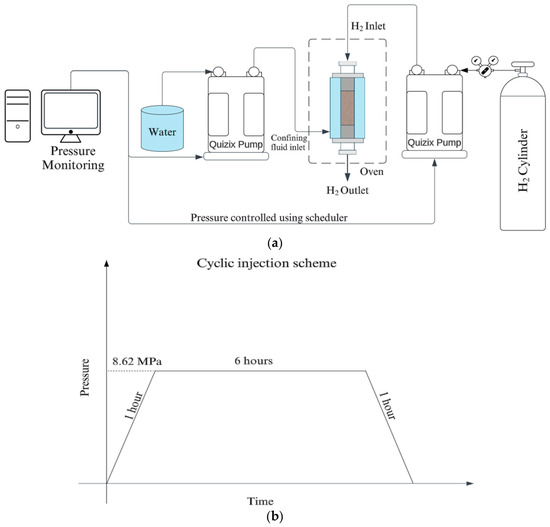
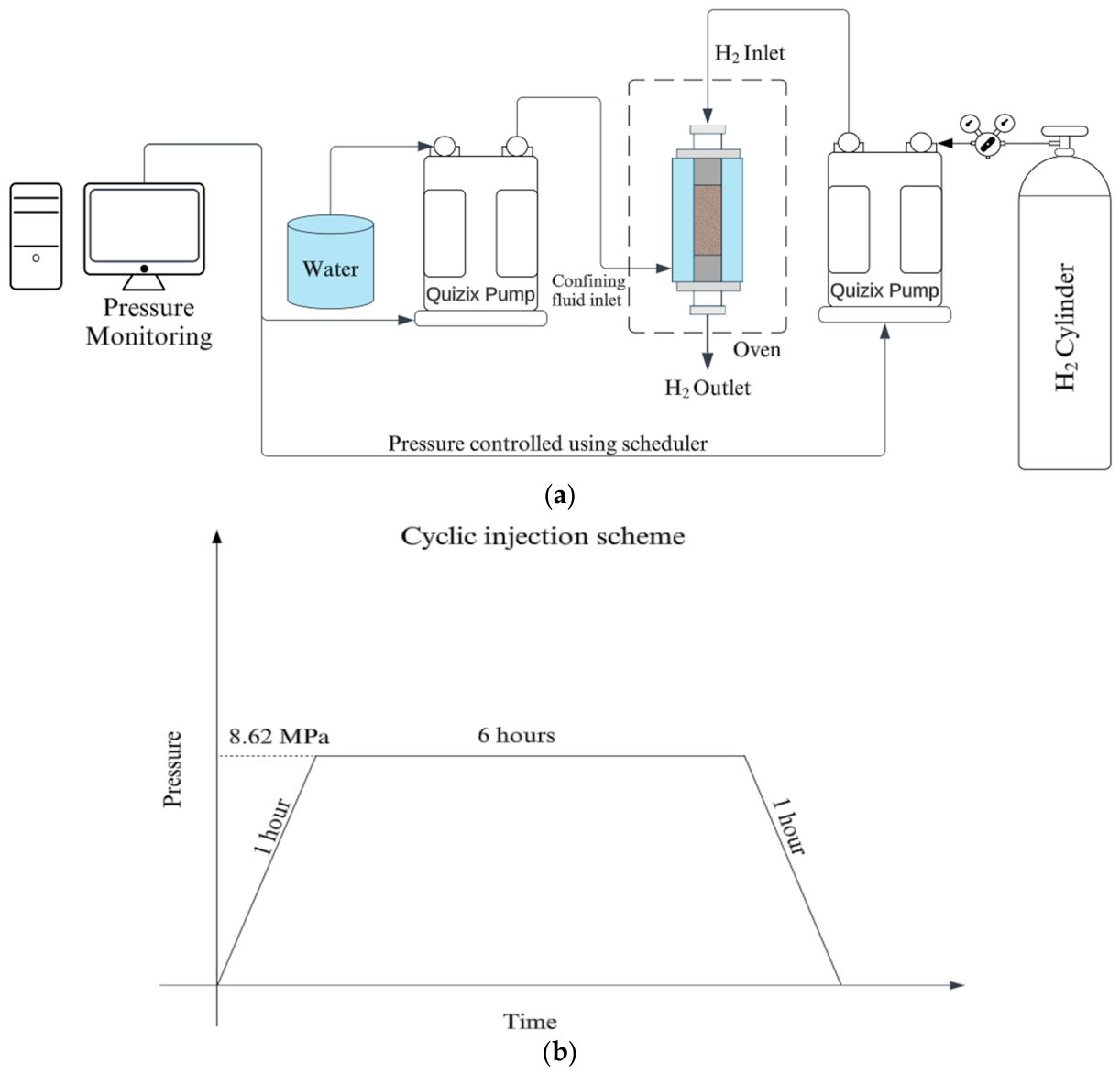
Following the pre-cyclic characterization, the samples were saturated with brine. The brine solution was prepared in the laboratory with a concentration of 10% NaCl by weight. Figure 3 presents the experimental apparatus and cyclic hydrogen injection scheme followed in this study. The setup includes two Quizix pumps (Broken Arrow, OK, USA), one used for hydrogen injection and other for applying confining pressure using water as the confining medium. A confining pressure of 10.34 MPa was maintained throughout the experiment to replicate subsurface reservoir stress conditions typical of UHS operations. The rock samples were mounted in a core holder and placed inside a temperature-controlled oven maintained at 60 °C to simulate reservoir temperatures. As shown in Figure 3b, hydrogen was injected following a cyclic pressure schedule in which the pressure was increased from 0 MPa to 8.62 MPa over one hour, held constant for six hours, and then decreased back to 0 MPa over one hour. This sequence represents one cycle and was repeated for the specified number of cycles assigned to each sample. Hydrogen gas with 99.9% purity supplied by AirGas (Radnor, PA, USA) was used.
Figure 3.
(a) Experimental setup. (b) Cyclic-injection scheme.
3. Results and Discussion
3.1. XRD (X-Ray Diffraction)
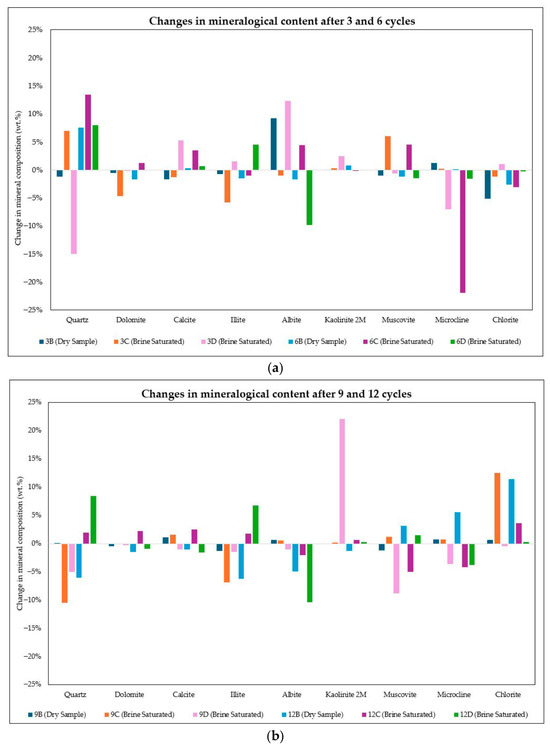
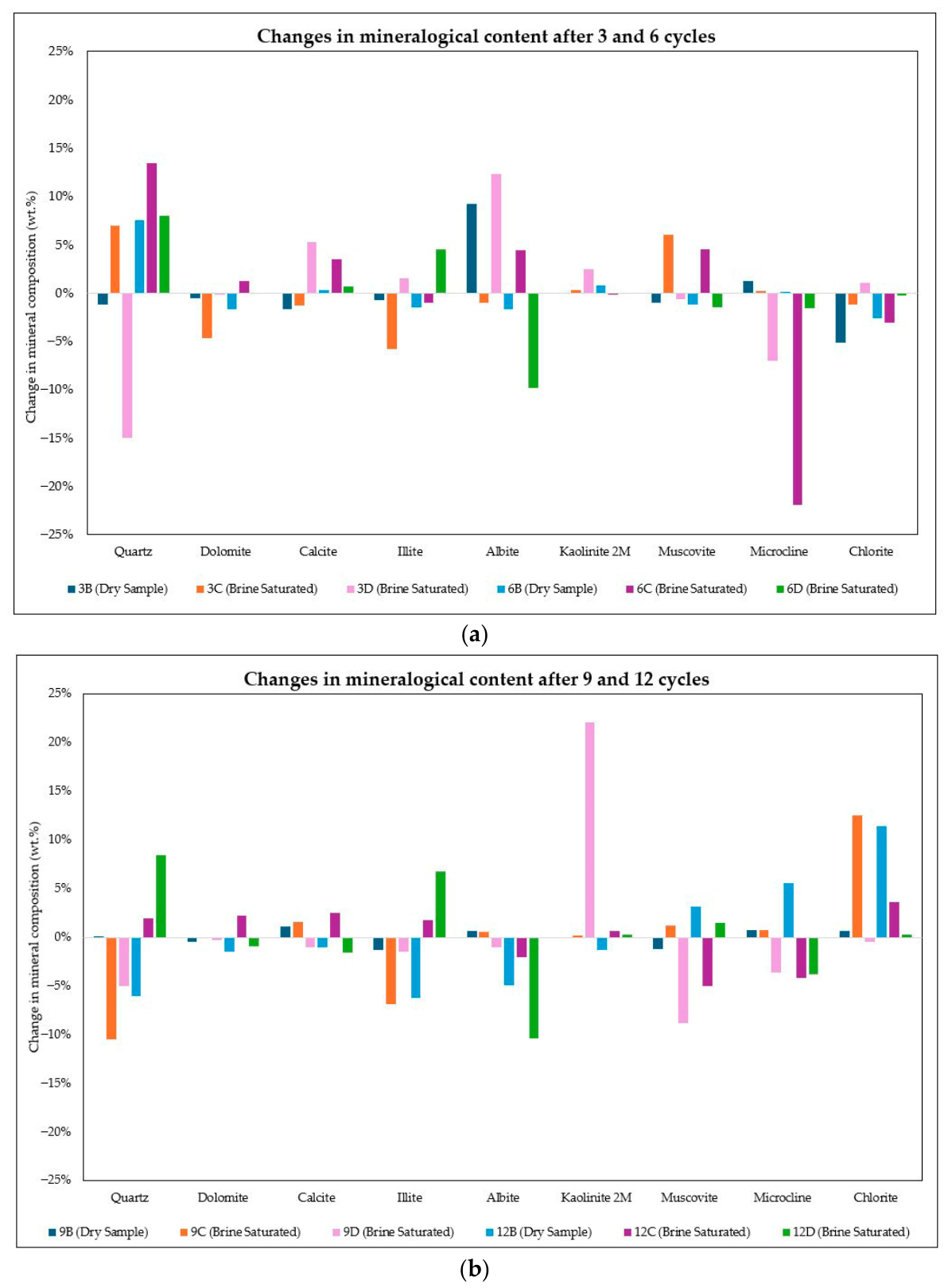
The interaction between Berea sandstone minerals, hydrogen, and brine plays a critical role in hydrogen trapping and storage; a thorough understanding of these geochemical processes is essential for accurately evaluating storage capacity and the long-term sustainability of sandstone formations for underground hydrogen storage [36]. Figure 4 illustrates the changes in weight percentage of mineral phases in the samples after cyclic injection of hydrogen. Negative changes indicate dissolution, whereas positive changes indicate precipitation. The XRD patterns were processed using SmartLab Studio II, employing the Whole Powder Pattern Fitting (WPPF) method with embedded Rietveld refinement for quantitative phase analysis and parameter determination. The mineral phases observed in Berea sandstone corresponds to those commonly documented in prior studies [27,37,38,39,40,41,42,43]. The pre-treatment and post-treatment mineralogical analyses show that quartz consistently accounts for more than 65% of the total mineral composition across all samples, with the remaining fraction comprising dolomite, illite, calcite, albite, kaolinite 2 M, muscovite, microcline, and chlorite. After three cycles of hydrogen injection, slight quartz dissolution was observed along with minor precipitation of clay minerals (illite, kaolinite 2 M, and muscovite) and carbonates. In contrast, results after six cycles indicate a modest precipitation of quartz accompanied by dissolution of other silicates, particularly albite and microcline, while clays and carbonates exhibited only limited changes, except for sample 6C, which experienced significant dissolution of microcline. Following nine cycles, mineralogical variations were generally minimal, except for sample 9D, which showed a noticeable increase in kaolinite 2 M. However, after twelve cycles, the samples displayed inconsistent trends, particularly in the precipitation behavior of silicates and clay minerals. The results of this study are consistent with those reported in the literature, indicating minor mineral dissolution and precipitation in the samples after hydrogen treatment [27,44,45,46,47]. The mineralogical variations observed after cyclic injection indicate the strong geochemical stability of Berea sandstone under hydrogen storage conditions, highlighting its potential for cyclic operations with negligible impact on reservoir mineralogy. However, further detailed investigations involving a larger sample size and a wider range of testing conditions are required to confirm the geochemical stability of Berea sandstone.
Figure 4.
XRD results before and after cyclic injection: (a) 3 and 6 cycles and (b) 9 and 12 cycles.
3.2. Porosity and Permeability
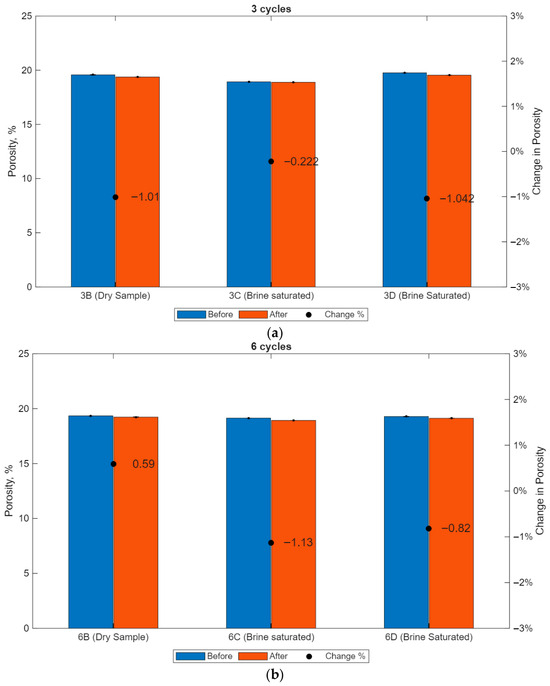
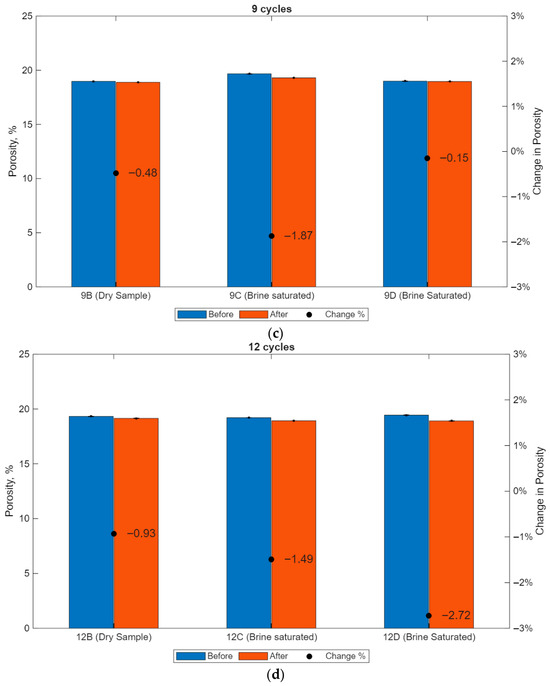
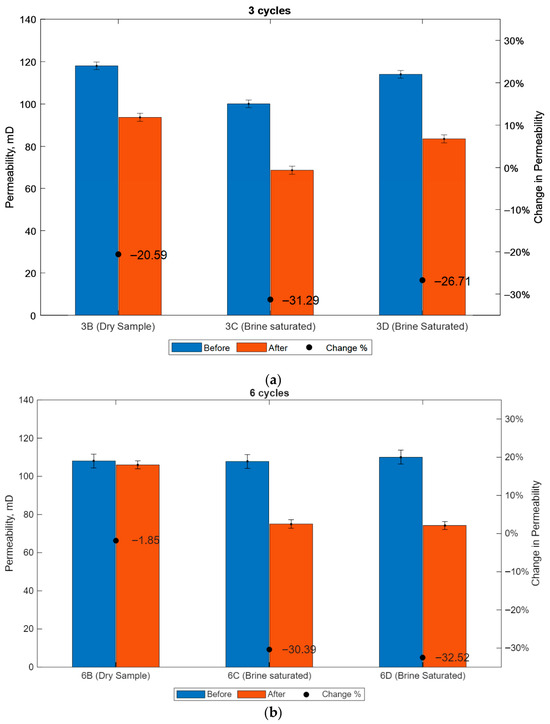
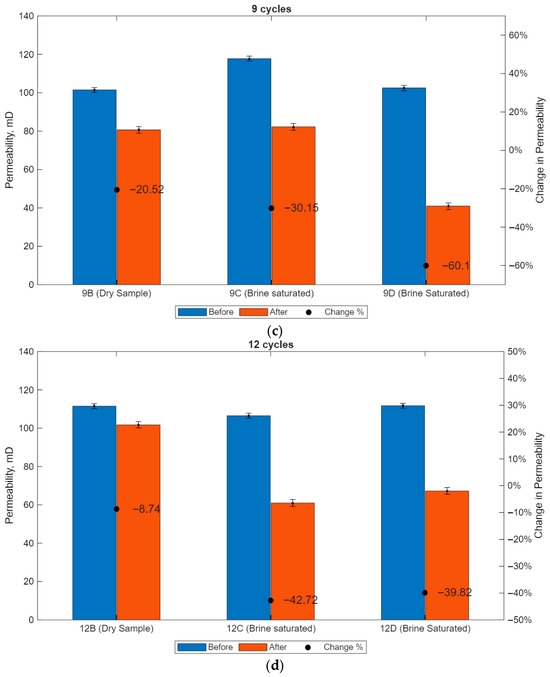
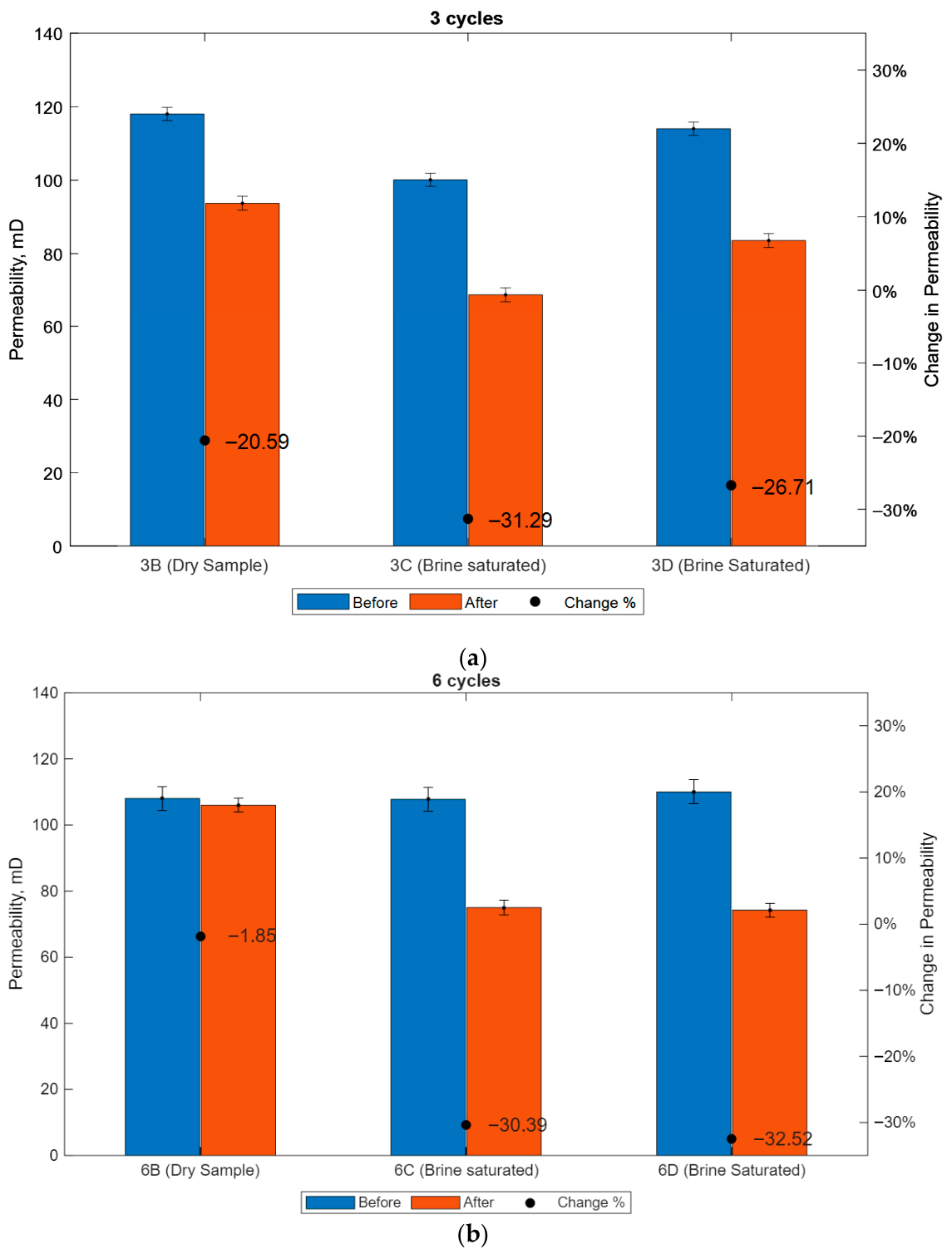
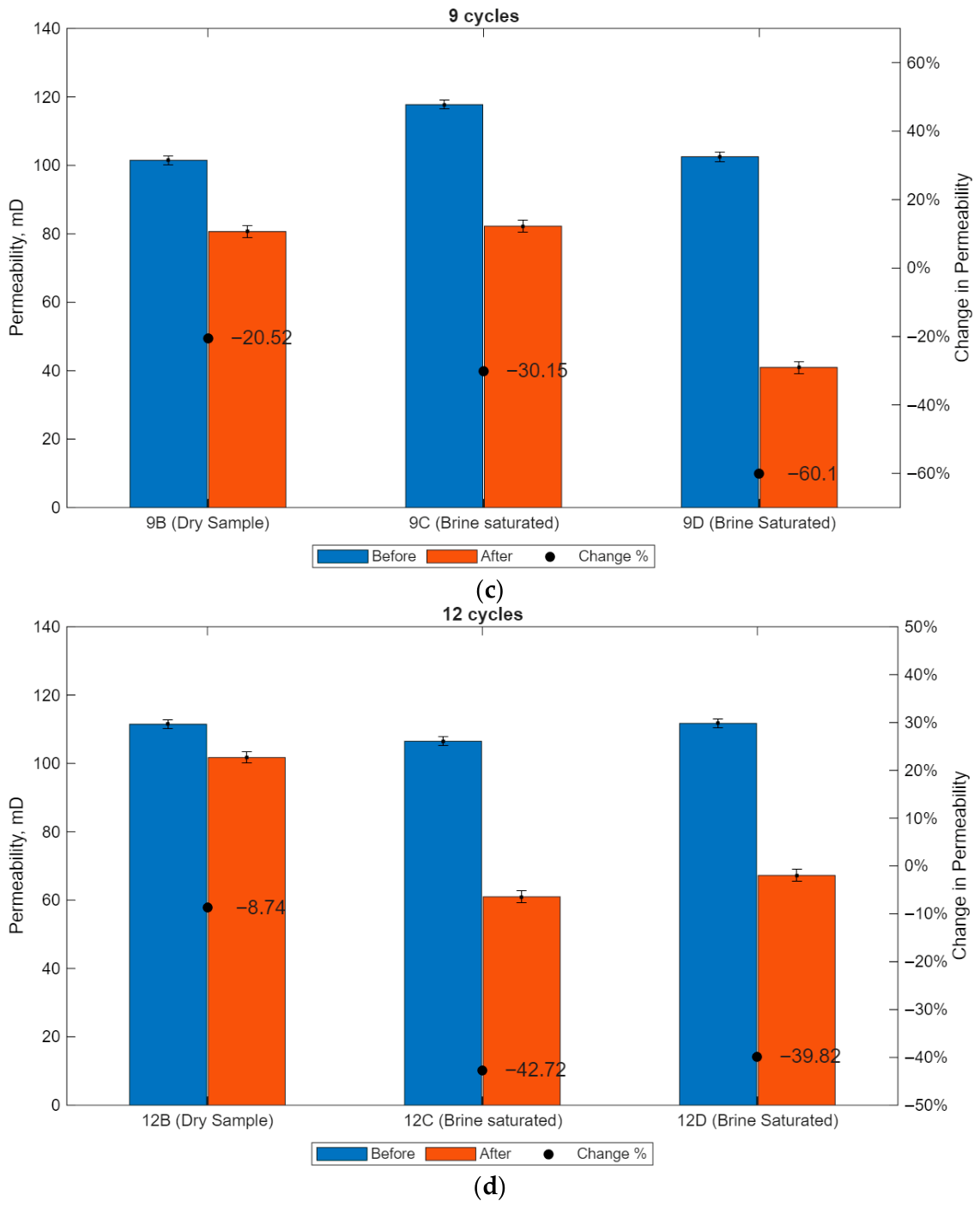
Figure 5 and Figure 6 present the porosity and permeability of the samples before and after cyclic hydrogen injection. Variations in these properties following cyclic injection indicate the influence of repeated hydrogen exposure on storage capacity and recovery efficiency. Prior to cyclic injection, the porosity of all samples ranged between 18% and 20%, while permeability ranged from 100 mD to 120 mD. After 3, 6, 9, and 12 injection cycles, both dry and brine-saturated samples exhibited negligible changes in porosity, with reductions of less than 2% across all samples. In contrast, permeability showed a significant reduction greater than 20% in most samples. However, dry samples 6B and 12B exhibited relatively minor decreases of 1.85% and 8.74% respectively. The greatest reduction in permeability was observed in brine-saturated sample 9D, which showed a decrease of 60.10%.
Figure 5.
Porosity: (a) 3 cycles; (b) 6 cycles; (c) 9 cycles; (d) 12 cycles.
Figure 6.
Permeability: (a) 3 cycles; (b) 6 cycles; (c) 9 cycles; (d) 12 cycles.
The minimal reduction in porosity following cyclic hydrogen injection indicates that the pore volume of the samples remained largely intact, suggesting the absence of significant chemical reactions or dissolution within the pore network. This stability in porosity implies that the overall hydrogen storage capacity of the reservoir rock is unlikely to be substantially affected by cyclic injection. However, the significant decrease in permeability observed across the samples suggests that cyclic hydrogen injection may negatively impact hydrogen recovery efficiency and flow performance. Generally, a slight reduction in porosity results in a correspondingly small decrease in permeability. However, in our study, despite the minimal decrease in porosity, a significant reduction in permeability was observed which can be attributed to the cementation within the rock. This cementation restricts pore throat pathways, leading to the isolation and disconnection of voids leading to a reduction in porosity and permeability [48,49]. The reduction in permeability is likely associated with a combination of mechanical and physicochemical mechanisms. In brine-saturated samples, salt precipitation during cyclic injection can partially block pore throats, thereby restricting fluid flow. Over multiple injection cycles, cyclic loading may initially generate microcracks that temporarily enhance permeability. Nevertheless, continued cycling promotes grain rearrangement, pore throat constriction, and localized pore collapse, resulting in a net reduction in permeability over time. Additionally, cyclic pressure fluctuations may mobilize loosely bound grains, leading to sand migration and accumulation within pore throats or flow pathways. This migration can obstruct flow pathways, reducing hydrogen injectivity, impairing storage efficiency, and potentially affecting long-term reservoir performance [22]. The above-mentioned phenomenon has been observed in the following studies, which investigated the effect of cyclic injection on sandstones [14,15,19,20,22,50]. However, additional experimental studies conducted under the same testing conditions are necessary to verify the proposed mechanisms of grain rearrangement, pore throat constriction, and localized pore collapse. Furthermore, reservoir-scale numerical simulations, together with experiments under a broad range of treatment conditions, are essential to evaluate these mechanisms and facilitate the reliable implementation of long-term underground hydrogen storage.
3.3. Strength and Static Elastic Properties
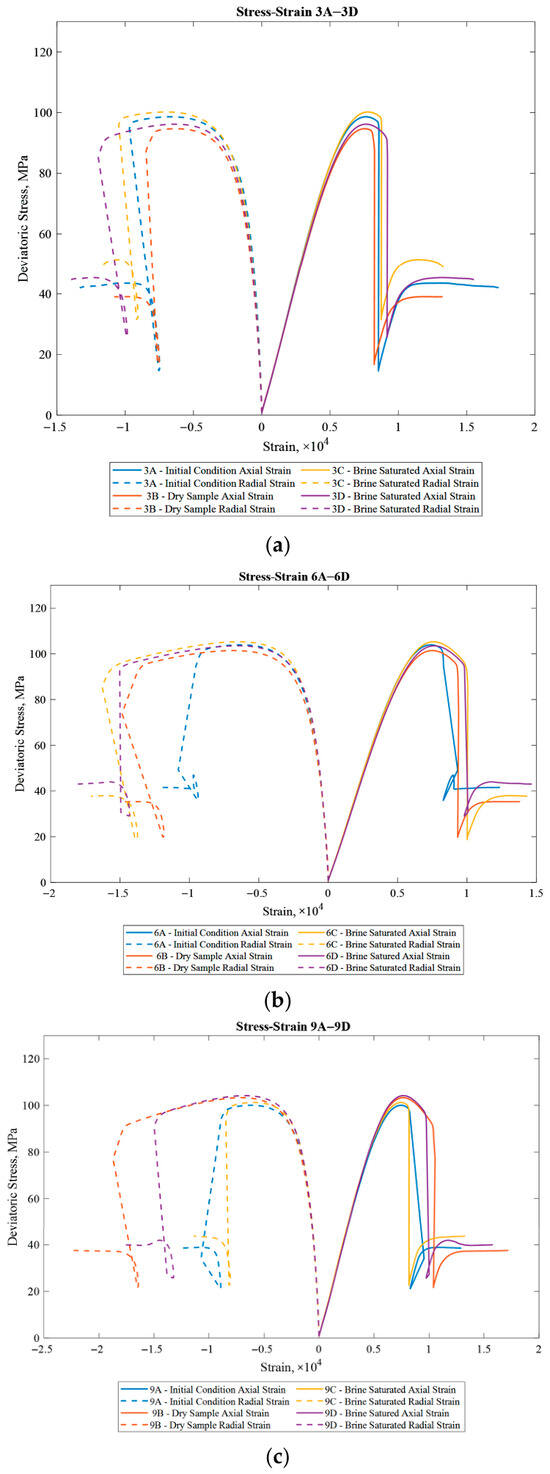
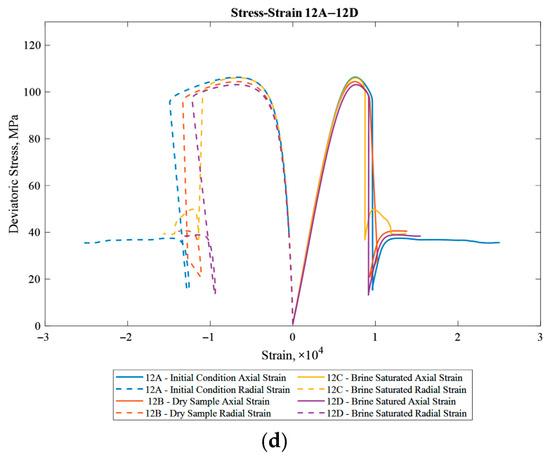
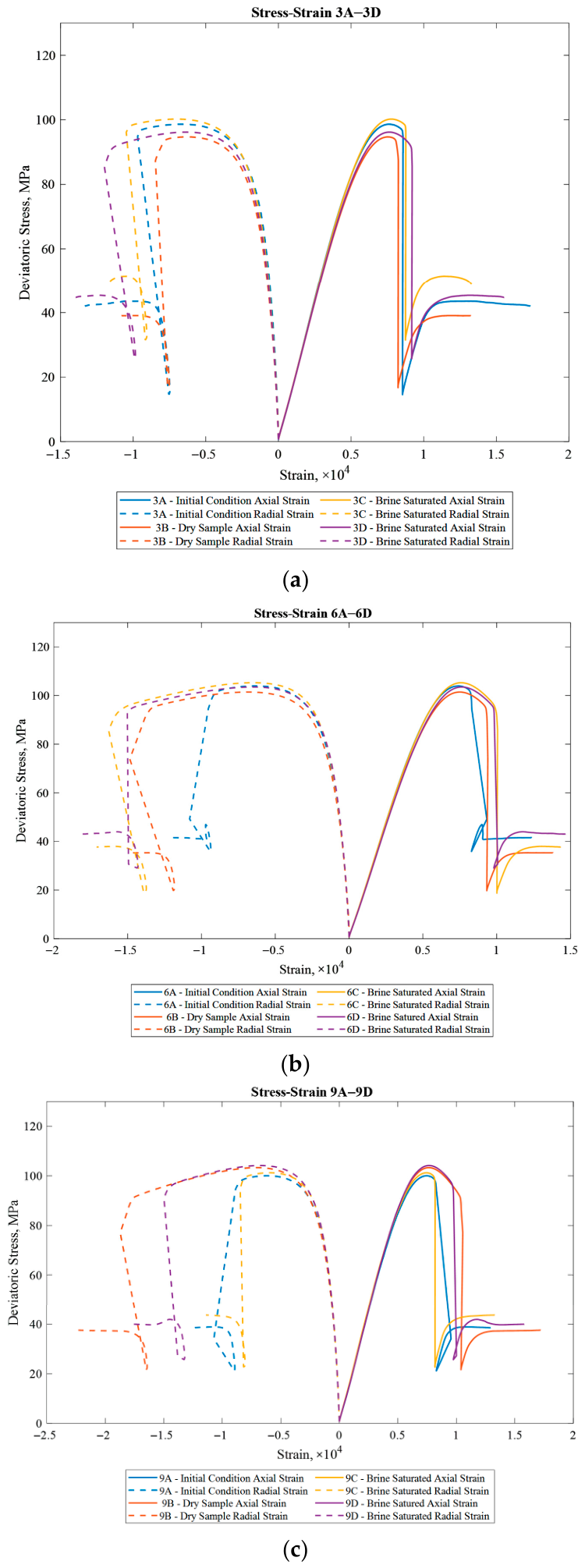
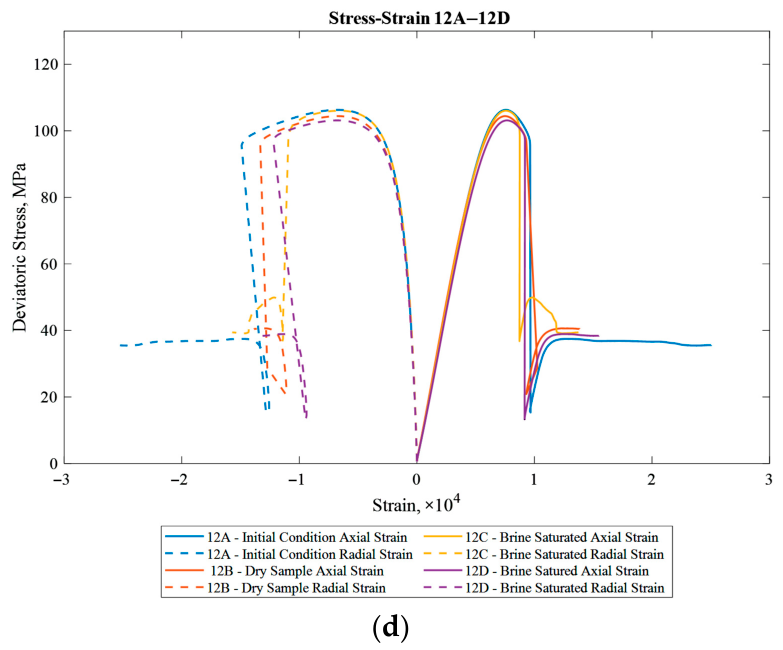
Triaxial tests play a crucial role in geomechanics for studying the mechanical and fluid flow properties of rocks under various confining pressures. These tests are essential for rock characterization and supply the necessary parameters for numerical modeling and the development of precise constitutive models [51]. Figure 7 illustrates the stress–strain curves obtained through triaxial compression tests on both reference samples and the samples injected with hydrogen. The static elastic moduli are calculated from the linear portion of the stress–strain curves [52,53]. Table 3 summarizes the changes in triaxial strength and static elastic properties by comparing the initial condition samples with the post-hydrogen injection samples. Following cyclic hydrogen injection, the samples did not show any significant variation in peak strength or static Young’s Modulus, while only minor fluctuations were observed in the static Poisson’s ratio. The greatest reduction in peak strength was recorded in sample 12D (brine-saturated), which exhibited a decrease of 4.73%, whereas the smallest reduction was observed in sample 12C (brine-saturated), with a decrease of only 0.24%. Notably, samples exposed to nine cycles of hydrogen injection showed a slight increase in strength compared to their initial condition.
Figure 7.
Stress–Strain curves: (a) 3 cycles; (b) 6 cycles; (c) 9 cycles; (d) 12 cycles.
Table 3.
Triaxial strength and static elastic properties pre and post cyclic injection.
Similar to the findings of the present study, Ref. [22] reported negligible changes in the peak strength and Young’s Modulus of Berea sandstone after 15 and 25 cycles of hydrogen injection, with no measurable variations after 5 and 10 cycles. These observations indicate that cyclic hydrogen injections do not significantly compromise the mechanical integrity of sandstone under reservoir conditions. Furthermore, Ref. [54] demonstrated that when cyclic loading remains below the yield stress of the rock, its influence on strength is minimal, whereas loading beyond the yield stress can cause substantial mechanical degradation. In the present study, the applied cyclic stresses were below the yield threshold of the Berea sandstone, which explains the negligible changes in strength and elastic properties observed after multiple hydrogen injection cycles. Although several previous studies have reported similar mechanical stability under cyclic loading, most did not consider hydrogen as the pore fluid [19,20,50,55,56]. Therefore, the results of this study provide important experimental evidence that sandstone reservoirs can maintain their mechanical stability during hydrogen injection and withdrawal. This mechanical stability is important for ensuring long-term reservoir integrity, minimizing the risk of structural failure, and supporting safe and efficient UHS operations.
4. Conclusions and Recommendations
This study investigated the effects of cyclic hydrogen injection on the physical and mechanical properties of dry and brine-saturated Berea sandstone under simulated reservoir conditions. Key insights were obtained through the analysis of permeability, porosity, and triaxial compression test results.
The experimental results indicate that cyclic hydrogen injection has a negligible effect on porosity, suggesting that the hydrogen storage capacity of the rock remains largely unaffected. In contrast, permeability exhibited a significant reduction of 20% in most samples across multiple injection cycles, indicating that cyclic injection may influence hydrogen recovery efficiency by restricting fluid flow pathways. The observed permeability reduction is likely associated with pore throat narrowing, grain rearrangement, and potential salt precipitation effects in brine-saturated samples. Despite these changes in permeability, the mechanical properties including peak strength, static Young’s Modulus, and static Poisson’s ratio showed minimal variation following cyclic hydrogen injection. These findings indicate that the mechanical integrity and load-bearing capacity of the sandstone were largely preserved under the tested conditions.
Overall, the results demonstrate that the storage capacity and mechanical stability of Berea sandstone remain intact following cyclic hydrogen injection, confirming its suitability as a potential reservoir rock for UHS. Although permeability reductions may influence recovery efficiency, the absence of significant mechanical degradation suggests a low risk of reservoir failure during cyclic storage operations.
Future work should investigate the response of reservoir rocks to prolonged cyclic hydrogen injection by extending the number of injection cycles beyond the 12 examined in this study, as commercial underground hydrogen storage (UHS) operations are expected to undergo significantly more injection–withdrawal cycles over their operational lifetime. Additionally, the influence of key operational parameters, including injection pressure, confining pressure, temperature, and brine salinity, should be investigated. Expanding the experimental conditions will enhance the understanding of long-term reservoir evolution and contribute to the development of safe and efficient UHS operations.
Author Contributions
Conceptualization, S.R.T. and H.E.; methodology, S.R.T.; software, D.M.F.; validation, S.R.T., A.H. and D.M.F.; formal analysis, S.R.T.; investigation, S.R.T., D.P., I.I. and E.S.; resources, H.E., I.I. and M.W.; data curation, S.R.T. and D.M.F.; writing—original draft preparation, S.R.T.; writing—review and editing, S.R.T., A.H., D.M.F. and H.E.; visualization, D.M.F. and S.R.T.; supervision, H.E. and M.W.; project administration, M.W.; funding acquisition, H.E. All authors have read and agreed to the published version of the manuscript.
Funding
This research received no external funding.
Data Availability Statement
The original contributions presented in the study are included in the article; further inquiries can be directed to the corresponding author.
Acknowledgments
The authors acknowledge Cecil Millikan for their support throughout the research.
Conflicts of Interest
Author Athar Hussain was employed by ProPetro Services. The remaining authors declare that the research was conducted in the absence of any commercial or financial relationships that could be construed as a potential conflict of interest.
Abbreviations
The following abbreviations are used in this manuscript:
| UHS | Underground Hydrogen Storage |
| XRD | X-Ray Diffraction |
References
- Heinemann, N.; Alcalde, J.; Miocic, J.M.; Hangx, S.J.T.; Kallmeyer, J.; Ostertag-Henning, C.; Hassanpouryouzband, A.; Thaysen, E.M.; Strobel, G.J.; Schmidt-Hattenberger, C.; et al. Enabling Large-Scale Hydrogen Storage in Porous Media–the Scientific Challenges. Energy Environ. Sci. 2021, 14, 853–864. [Google Scholar] [CrossRef] [Scilit]
- Nazari, F.; Nafchi, S.A.; Asbaghi, E.V.; Farajzadeh, R.; Niasar, V.J. Impact of Capillary Pressure Hysteresis and Injection-Withdrawal Schemes on Performance of Underground Hydrogen Storage. Int. J. Hydrogen Energy 2024, 50, 1263–1280. [Google Scholar] [CrossRef] [Scilit]
- Li, Q.; Li, Q.; Wu, J.; He, K.; Xia, Y.; Liu, J.; Wang, F.; Cheng, Y. Wellhead Stability During Development Process of Hydrate Reservoir in the Northern South China Sea: Sensitivity Analysis. Processes 2025, 13, 1630. [Google Scholar] [CrossRef] [Scilit]
- Li, Q.; You, D.; Li, Q.; Wang, F.; Wang, Y.; Yang, Y. Analysis of Sedimentation Behavior and Influencing Factors of Solid Particles in CO2 Fracturing Fluid. Processes 2025, 13, 4049. [Google Scholar] [CrossRef] [Scilit]
- Bijay, K.C.; Frash, L.P.; Creasy, N.M.; Neil, C.W.; Purswani, P.; Li, W.; Meng, M.; Iyare, U.; Gross, M.R. Laboratory Study of Cyclic Underground Hydrogen Storage in Porous Media with Evidence of a Dry Near-Well Zone and Evaporation Induced Salt Precipitation. Int. J. Hydrogen Energy 2024, 71, 515–527. [Google Scholar] [CrossRef] [Scilit]
- Chen, F.; Ma, Z.; Nasrabadi, H.; Chen, B.; Mehana, M.Z.S.; Wijk, J.V. Capacity Assessment and Cost Analysis of Geologic Storage of Hydrogen: A Case Study in Intermountain-West Region USA. Int. J. Hydrogen Energy 2023, 48, 9008–9022. [Google Scholar] [CrossRef] [Scilit]
- Foh, S.; Novil, M.; Rockar, E.; Randolph, P. Underground Hydrogen Storage. Final Report. [Salt Caverns, Excavated Caverns, Aquifers and Depleted Fields]; Brookhaven National Lab.: Upton, NY, USA, 1979. [Google Scholar]
- Muhammed, N.S.; Haq, B.; Shehri, D.A.; Al-Ahmed, A.; Rahman, M.M.; Zaman, E. A Review on Underground Hydrogen Storage: Insight into Geological Sites, Influencing Factors and Future Outlook. Energy Rep. 2022, 8, 461–499. [Google Scholar] [CrossRef] [Scilit]
- Tarkowski, R. Underground Hydrogen Storage: Characteristics and Prospects. Renew. Sustain. Energy Rev. 2019, 105, 86–94. [Google Scholar] [CrossRef] [Scilit]
- Duartey, K.O.; Ampomah, W.; Rahnema, H.; Mehana, M. Underground Hydrogen Storage: Transforming Subsurface Science into Sustainable Energy Solutions. Energies 2025, 18, 748. [Google Scholar] [CrossRef] [Scilit]
- Lord, A.S. Overview of Geologic Storage of Natural Gas with an Emphasis on Assessing the Feasibility of Storing Hydrogen; Sandia National Laboratories: Albuquerque, NM, USA, 2009. [Google Scholar]
- Perera, M.S.A. A Review of Underground Hydrogen Storage in Depleted Gas Reservoirs: Insights into Various Rock-Fluid Interaction Mechanisms and Their Impact on the Process Integrity. Fuel 2023, 334, 126677. [Google Scholar] [CrossRef] [Scilit]
- Kumar, K.R.; Honorio, H.; Chandra, D.; Lesueur, M.; Hajibeygi, H. Comprehensive Review of Geomechanics of Underground Hydrogen Storage in Depleted Reservoirs and Salt Caverns. J. Energy Storage 2023, 73, 108912. [Google Scholar] [CrossRef] [Scilit]
- Hettema, M.H.H.; Schutjens, P.M.T.M.; Verboom, B.J.M.; Gussinklo, H.J. Production-Induced Compaction of a Sandstone Reservoir: The Strong Influence of Stress Path. SPE Reserv. Eval. Eng. 2000, 3, 342–347. [Google Scholar] [CrossRef] [Scilit]
- Musso, G.; Volonté, G.; Gemelli, F.; Corradi, A.; Nguyen, S.K.; Lancellotta, R.; Brignoli, M.; Mantica, S. Evaluating the Subsidence above Gas Reservoirs with an Elasto-Viscoplastic Constitutive Law. Laboratory Evidences and Case Histories. Géoméch. Energy Environ. 2021, 28, 100246. [Google Scholar] [CrossRef] [Scilit]
- Settari, A.; Walters, D.A. Advances in Coupled Geomechanical and Reservoir Modeling with Applications to Reservoir Compaction. SPE J. 2001, 6, 334–342. [Google Scholar] [CrossRef] [Scilit]
- Lavrov, A. Dynamics of Stresses and Fractures in Reservoir and Cap Rock under Production and Injection. Energy Procedia 2016, 86, 381–390. [Google Scholar] [CrossRef] [Scilit][Green Version]
- Browning, J.; Meredith, P.G.; Stuart, C.; Harland, S.; Healy, D.; Mitchell, T.M. A Directional Crack Damage Memory Effect in Sandstone Under True Triaxial Loading. Geophys. Res. Lett. 2018, 45, 6878–6886. [Google Scholar] [CrossRef] [Scilit]
- Wen, M.; Wang, Q.; Jiang, H.; Busch, A. Experimental Study on the Hydromechanical Behaviours of Porous Sandstone under Cyclic Proportional Triaxial Loading: Implications for Cyclic Underground Hydrogen Storage. Rock Mech. Rock Eng. 2025, 58, 13267–13289. [Google Scholar] [CrossRef] [Scilit]
- Zhou, J.; Deng, G.; Tian, S.; Xian, X.; Yang, K.; Zhang, C.; Dong, Z. Experimental Study on the Permeability Variation of Sandstone at Cyclic Stress: Implication for Underground Gas Storage. J. Energy Storage 2023, 60, 106677. [Google Scholar] [CrossRef] [Scilit]
- Ajibona, A.; Pandey, R. Strain-Based Assessment of Shale Caprock during Cyclic Underground Hydrogen Storage. Energy Fuels 2025, 39, 11053–11066. [Google Scholar] [CrossRef] [Scilit]
- Joshi, S.; Chaturvedi, K.R. Investigating the Impact of Cyclical Hydrogen Injection and Extraction on Subsurface Reservoir Formation Rocks for Underground Hydrogen Storage. In SPWLA Annual Logging Symposium; SPWLA: Houston, TX, USA, 2025. [Google Scholar]
- Al-Shafi, M.; Massarweh, O.; Abushaikha, A.S.; Bicer, Y. A Review on Underground Gas Storage Systems: Natural Gas, Hydrogen and Carbon Sequestration. Energy Rep. 2023, 9, 6251–6266. [Google Scholar] [CrossRef] [Scilit]
- Evans, D.J. A Review of Underground Fuel Storage Events and Putting Risk into Perspective with Other Areas of the Energy Supply Chain. In Underground Gas Storage: Worldwide Experiences and Future Development in the UK and Europe; GeoScienceWorld: McLean, VA, USA, 2009; Volume 313. [Google Scholar] [CrossRef] [Scilit]
- Schultz, R.A.; Heinemann, N.; Horváth, B.; Wickens, J.; Miocic, J.M.; Babarinde, O.O.; Cao, W.; Capuano, P.; Dewers, T.A.; Dusseault, M.; et al. An Overview of Underground Energy-Related Product Storage and Sequestration. In Enabling Secure Subsurface Storage in Future Energy Systems; GeoScienceWorld: McLean, VA, USA, 2023. [Google Scholar] [CrossRef] [Scilit]
- Uliasz-Misiak, B.; Misiak, J.; Lewandowska-Śmierzchalska, J. Hydrogen Storage in Porous Rocks: A Bibliometric Analysis of Research Trends. Energies 2024, 17, 805. [Google Scholar] [CrossRef] [Scilit]
- Al-Yaseri, A.; Yekeen, N.; Al-Mukainah, H.; Hassanpouryouzband, A. Geochemical Interactions in Geological Hydrogen Storage: The Role of Sandstone Clay Content. Fuel 2024, 361, 130728. [Google Scholar] [CrossRef] [Scilit]
- Boon, M.; Hajibeygi, H. Experimental Characterization of H2/Water Multiphase Flow in Heterogeneous Sandstone Rock at the Core Scale Relevant for Underground Hydrogen Storage (UHS). Sci. Rep. 2022, 12, 14604. [Google Scholar] [CrossRef] [Scilit] [PubMed]
- KC, B.; Frash, L.P.; Meng, M.; Iyare, U.; Madenova, Y.; Neil, C.; Carey, J.W.; Gross, M. Measuring Poromechanical Properties of Berea Sandstone Relevant to Underground Hydrogen Storage. In Proceedings of the 57th U.S. Rock Mechanics/Geomechanics Symposium; American Rock Mechanics Association: Westminster, CO, USA, 2023. [Google Scholar]
- Galvis-Silva, H.; Okoroafor, E.R. Investigating Rock Alterations in Underground Hydrogen Storage: A Geochemical and Geomechanical Baseline Study. J. Energy Storage 2024, 101, 113939. [Google Scholar] [CrossRef] [Scilit]
- Hashemi, L.; Glerum, W.; Farajzadeh, R.; Hajibeygi, H. Contact Angle Measurement for Hydrogen/Brine/Sandstone System Using Captive-Bubble Method Relevant for Underground Hydrogen Storage. Adv. Water Resour. 2021, 154, 103964. [Google Scholar] [CrossRef] [Scilit]
- Mirchi, V.; Dejam, M. Effect of Rock Surface Wettability on Hydrogen-Cushion Gas Adsorption with Application to Hydrogen Storage in Depleted Oil and Gas Reservoirs. J. Energy Storage 2023, 73, 109152. [Google Scholar] [CrossRef] [Scilit]
- Mirchi, V.; Dejam, M.; Alvarado, V.; Akbarabadi, M. Effect of Cushion Gas on Hydrogen/Brine Flow Behavior in Oil-Wet Rocks with Application to Hydrogen Storage in Depleted Oil and Gas Reservoirs. Energy Fuels 2023, 37, 15231–15243. [Google Scholar] [CrossRef] [Scilit]
- Zhong, L.; Baek, S.; Guo, M.; Bagwell, C.; Huerta, N. Hydrogen, Methane, Brine Flow Behavior, and Saturation in Sandstone Cores During H2 and CH4 Injection and Displacement. Energies 2024, 17, 5800. [Google Scholar] [CrossRef] [Scilit]
- Soeder, D.J. Laboratory Drying Procedures and the Permeability of Tight Sandstone Core. SPE Form. Eval. 1986, 1, 16–22. [Google Scholar] [CrossRef] [Scilit]
- Al-Yaseri, A.; Fatah, A.; Alsaif, B.; Sakthivel, S.; Amao, A.; Al-Qasim, A.S.; Yousef, A.A. Subsurface Hydrogen Storage in Limestone Rocks: Evaluation of Geochemical Reactions and Gas Generation Potential. Energy Fuels 2024, 38, 9923–9932. [Google Scholar] [CrossRef] [Scilit]
- Eyitayo, S.I.; Gamadi, T.; Ispas, I.; Kolawole, O.; Watson, M.C. Produced Water Integration in CO2 Storage Using Different Injection Strategies: The Effect of Salinity on Rock Petrophysical, Mineralogy, Wettability and Geomechanical Properties. J. Environ. Manag. 2024, 372, 123307. [Google Scholar] [CrossRef] [Scilit] [PubMed]
- Kareem, R.; Cubillas, P.; Gluyas, J.; Bowen, L.; Hillier, S.; Greenwell, H.C. Multi-Technique Approach to the Petrophysical Characterization of Berea Sandstone Core Plugs (Cleveland Quarries, USA). J. Pet. Sci. Eng. 2017, 149, 436–455. [Google Scholar] [CrossRef] [Scilit]
- Breen, C.; Clegg, F.; Herron, M.M.; Hild, G.P.; Hillier, S.; Hughes, T.L.; Jones, T.G.J.; Matteson, A.; Yarwood, J. Bulk Mineralogical Characterisation of Oilfield Reservoir Rocks and Sandstones Using Diffuse Reflectance Infrared Fourier Transform Spectroscopy and Partial Least Squares Analysis. J. Pet. Sci. Eng. 2008, 60, 1–17. [Google Scholar] [CrossRef] [Scilit]
- Tarokh, A.; Makhnenko, R.Y.; Kim, K.; Zhu, X.; Popovics, J.S.; Segvic, B.; Sweet, D.E. Influence of CO2 Injection on the Poromechanical Response of Berea Sandstone. Int. J. Greenh. Gas. Control 2020, 95, 102959. [Google Scholar] [CrossRef] [Scilit]
- Mahmoud, M.A.; Abdelgawad, K.Z. A New Chemical EOR for Sandstone and Carbonate Reservoirs. In SPE Saudi Arabia Section Technical Symposium and Exhibition; SPE: Richardson, TX, USA, 2014; p. SPE-172183-MS. [Google Scholar] [CrossRef] [Scilit]
- Nasralla, R.A.; Bataweel, M.A.; Nasr-El-Din, H.A. Investigation of Wettability Alteration and Oil-Recovery Improvement by Low-Salinity Water in Sandstone Rock. J. Can. Pet. Technol. 2013, 52, 144–154. [Google Scholar] [CrossRef] [Scilit]
- Kamal, M.S.; Mahmoud, M.; Hanfi, M.; Elkatatny, S.; Hussein, I. Clay Minerals Damage Quantification in Sandstone Rocks Using Core Flooding and NMR. J. Pet. Explor. Prod. Technol. 2019, 9, 593–603. [Google Scholar] [CrossRef] [Scilit]
- Dodangoda, C.; Ranjith, P.G.; Haque, A. Unlocking the Potential of Underground Hydrogen Storage for Clean Energy Solutions. Géoméch. Geophys. Geo-Energy Geo-Resour. 2024, 10, 130. [Google Scholar] [CrossRef] [Scilit]
- Yekta, A.E.; Pichavant, M.; Audigane, P. Evaluation of Geochemical Reactivity of Hydrogen in Sandstone: Application to Geological Storage. Appl. Geochem. 2018, 95, 182–194. [Google Scholar] [CrossRef] [Scilit]
- Bo, Z.; Zeng, L.; Chen, Y.; Xie, Q. Geochemical Reactions-Induced Hydrogen Loss during Underground Hydrogen Storage in Sandstone Reservoirs. Int. J. Hydrogen Energy 2021, 46, 19998–20009. [Google Scholar] [CrossRef] [Scilit]
- Al-Yaseri, A.; Al-Mukainah, H.; Yekeen, N. Experimental Insights into Limestone-Hydrogen Interactions and the Resultant Effects on Underground Hydrogen Storage. Fuel 2023, 344, 128000. [Google Scholar] [CrossRef] [Scilit]
- Akintorinwa, O.J.; Ojo, J.S.; Olowokere, M.T. Velocity-Porosity Relationship in Clastic Formations–a Case Study from Some Parts of Niger Delta, Nigeria. Glob. J. Pure Appl. Sci. 2006, 12, 125–128. [Google Scholar] [CrossRef] [Scilit]
- Gomez, C.T.; Dvorkin, J.; Vanorio, T. Laboratory Measurements of Porosity, Permeability, Resistivity, and Velocity on Fontainebleau sandstones Laboratory Measurements on Sandstones. Geophysics 2010, 75, E191–E204. [Google Scholar] [CrossRef] [Scilit]
- Li, J.; Zhao, G.; Qi, Z.; Yin, B.; Xu, X.; Fang, F.; Yang, S.; Qi, G. Stress Sensitivity of Formation during Multi-Cycle Gas Injection and Production in an Underground Gas Storage Rebuilt from Gas Reservoirs. Pet. Explor. Dev. 2021, 48, 968–977. [Google Scholar] [CrossRef] [Scilit]
- Perera, M.S.A.; Ranjith, P.G.; Choi, S.K.; Airey, D. Numerical Simulation of Gas Flow through Porous Sandstone and Its Experimental Validation. Fuel 2011, 90, 547–554. [Google Scholar] [CrossRef] [Scilit]
- Gong, F.; Di, B.; Wei, J.; Ding, P.; Tian, H.; Han, J. A Study of the Anisotropic Static and Dynamic Elastic Properties of Transversely Isotropic Rocks. Geophysics 2019, 84, C281–C293. [Google Scholar] [CrossRef] [Scilit]
- Yang, S.-Q.; Yin, P.-F.; Ranjith, P.G. Experimental Study on Mechanical Behavior and Brittleness Characteristics of Longmaxi Formation Shale in Changning, Sichuan Basin, China. Rock Mech. Rock Eng. 2020, 53, 2461–2483. [Google Scholar] [CrossRef] [Scilit]
- Xiaolong, Z.; Yizhong, Z.; Dongying, W.; Zhuyu, Z.; Yue, D.; Chuanliang, Y.; Gang, C.; Wei, L.; Zehao, L. Study on the Effect of Cyclic Loading on the Geomechanics of Sandstone Reservoirs in Gas Storage. Int. J. Chem. Eng. 2024, 2024, 8833360. [Google Scholar] [CrossRef] [Scilit]
- Wen, M.; Harpers, N.; Inskip, N.F.; Buckman, J.; Singh, K.; Miller, P.; Busch, A. Mechanical Responses and Permeability Evolution in Porous Sandstones Under Cyclic Loading Conditions: Implications for Subsurface Hydrogen Storage. Rock Mech. Rock Eng. 2025, 58, 10643–10673. [Google Scholar] [CrossRef] [Scilit]
- Naderloo, M.; Kumar, K.R.; Hernandez, E.; Hajibeygi, H.; Barnhoorn, A. Experimental and Numerical Investigation of Sandstone Deformation under Cycling Loading Relevant for Underground Energy Storage. J. Energy Storage 2023, 64, 107198. [Google Scholar] [CrossRef] [Scilit]

Disclaimer/Publisher’s Note: The statements, opinions and data contained in all publications are solely those of the individual author(s) and contributor(s) and not of MDPI and/or the editor(s). MDPI and/or the editor(s) disclaim responsibility for any injury to people or property resulting from any ideas, methods, instructions or products referred to in the content. |
© 2026 by the authors. Licensee MDPI, Basel, Switzerland. This article is an open access article distributed under the terms and conditions of the Creative Commons Attribution (CC BY) license.