


Abstract
Background: Hospitalization and incarceration are distinct institutional experiences, but both may involve reduced autonomy, externally regulated routines, uncertainty, restricted privacy, and disruption of meaningful social relationships. This systematic review examined shared and setting-specific psychological outcomes and associated factors across the two environments. Methods: PubMed, Scopus, Web of Science and the Cochrane Library were searched from database inception to 30 January 2026. Of 1149 identified records, 22 studies met the eligibility criteria. Methodological quality was assessed using the Mixed Methods Appraisal Tool 2018, and findings were synthesized narratively because substantial clinical and methodological heterogeneity precluded meta-analysis. Results: Ten studies examined incarcerated populations and twelve examined hospitalized populations. Across incarceration studies, reported estimates ranged from 14.9% to 72.6% for depressive symptoms or mood disorders and from 23.3% to 77.8% for anxiety symptoms or disorders. Across hospitalization studies, corresponding estimates ranged from 5.1% to 41.0% and from 5.8% to 60.0%, respectively. These ranges reflect heterogeneous screening instruments, diagnostic procedures, populations, and outcome definitions and were not statistically pooled. In both settings, poorer psychological outcomes were associated with reduced perceived control, disrupted routines, uncertainty, limited social support, and individual vulnerability. Setting-specific factors included prison climate, coping style, shame, and sentence-related circumstances in incarceration, and illness severity, functional impairment, prognostic uncertainty, isolation precautions, and prolonged or repeated admission in hospitalization. Findings concerning exposure duration were inconsistent in both settings. Conclusions: Hospitalization and incarceration should not be regarded as psychologically equivalent. Nevertheless, they may share experiential conditions associated with distress, particularly when autonomy, privacy, predictability, and social connectedness are reduced. Because the evidence was heterogeneous and predominantly observational, causal conclusions and direct quantitative comparisons cannot be made.
1. Introduction
1.1. Institutional Distinctions and Comparative Scope
Long-term hospitalization and incarceration are fundamentally different institutional experiences and should not be regarded as equivalent. Incarceration is inherently imposed within a legal and coercive framework and entails a formal deprivation of liberty. Hospitalization, by contrast, has a therapeutic purpose and is often entered with consent, although the degree of voluntariness may vary in emergency, psychiatric, isolation, incapacity, and other clinical circumstances. Hospitalized individuals may also retain substantially greater legal and practical possibilities for participation in decisions or discharge than incarcerated individuals.
The principal sources of psychological distress may consequently differ. In incarceration, distress may be related to legal coercion, punishment, sentence uncertainty, stigma, prison climate, interpersonal threat, and separation from ordinary social life. In hospitalization, distress may arise primarily from illness severity, pain, functional impairment, diagnostic or prognostic uncertainty, treatment burden, dependency, or fear of deterioration. Institutional restrictions may contribute to distress in both settings, but similar symptom profiles cannot by themselves demonstrate a common cause.
The comparison developed in this review is therefore limited to specific experiential dimensions—such as reduced perceived control, externally regulated routines, limited privacy, uncertainty, and disrupted social relationships—rather than implying equivalence between the institutions or between the causal pathways leading to psychological distress. The broader concept of a restrictive environment has been examined in settings including hospitals, nursing homes, prisons, and detention facilities, as well as during exceptional periods of restricted mobility and social isolation, including the COVID-19 pandemic [1].
1.2. Restrictive Environments and Theoretical Framework
In the present review, a “restrictive environment” is operationally defined not merely as a physically enclosed setting, but as an institutional context characterized by a sustained reduction in personal choice, autonomy, privacy, perceived control, and access to meaningful social relationships. Such restrictions may concern movement, daily routines, visiting opportunities, personal space, communication, and participation in decisions affecting everyday life. In the present review, the term “restrictive” is used as an analytical descriptor of these specific experiential conditions and not as a claim that hospitalization and incarceration have the same legal status, degree of coercion, institutional purpose, or psychological meaning. This definition draws on the classical concept of the “total institution,” which describes institutional settings in which major aspects of everyday life are organized within the same place and under a shared system of authority [2]. More specifically, the proposed conceptual framework is informed by Self-Determination Theory, according to which autonomy, competence, and relatedness represent basic psychological needs whose satisfaction supports motivation and psychological well-being, whereas their frustration may contribute to distress and maladjustment [3].
Evidence from psychiatric inpatient settings indicates that institutional practices may either support or frustrate these psychological needs by influencing patients’ behavioural freedom, participation in treatment decisions, access to meaningful activities, and relationships with healthcare professionals and significant others [4]. Similarly, research conducted in prison settings has shown that perceived opportunities for choice and autonomy are associated with prisoners’ subjective quality of life and psychological well-being [5]. In accordance with the United Nations Standard Minimum Rules for the Treatment of Prisoners [6], the prison system must not exacerbate the suffering already inherent in the situation of deprivation of liberty. Therefore, the present comparison does not assume that hospitals and prisons are interchangeable. Rather, it investigates whether reduced autonomy, externally regulated routines, separation from significant relationships, limited privacy, and uncertainty represent recurring experiential correlates of distress across the two settings. These factors are not assumed to constitute identical causal pathways, because distress during hospitalization remains inseparable from illness and treatment, whereas distress during incarceration occurs within an inherently coercive legal environment.
1.3. Deprivation, Institutionalization, and Exposure Context
Within this framework, Sykes’s deprivation model and the concept of the “pains of imprisonment” describe confinement-related suffering as arising not only from the loss of liberty, but also from reduced autonomy, security, access to valued resources, and meaningful relationships [7]. Although originally developed in relation to imprisonment, these mechanisms provide a cautious comparative lens for prolonged hospitalization, where long-term institutional living may also be associated with dependency, passivity, withdrawal, and reduced initiative phenomena historically discussed within the institutionalization or “institutional neurosis” literature [8,9]. From an environmental-psychology perspective, perceived control, crowding, privacy regulation, and the ability to manage social interaction represent potential pathways through which institutional environments may affect psychological well-being [10]. To provide a balanced comparison with the prison-climate construct, the hospital environment can be examined through the related concepts of ward climate or ward atmosphere, which encompass the relational, organizational, and physical characteristics of inpatient units. Ward atmosphere has been associated particularly with patient satisfaction, although evidence regarding direct treatment outcomes remains mixed [11,12]. The scale and duration of institutional exposure differ substantially between the two settings. The fourteenth edition of the World Prison Population List estimated that approximately 11.5 million people were held in penal institutions worldwide in 2024 [13]. A directly equivalent global point-prevalence estimate is not available for hospitalization, because hospital activity is generally reported through admissions, discharges, bed capacity, and length of stay. Across OECD countries, there were an average of 128 acute-care hospital discharges per 1000 population in 2023, and the average length of stay for acute hospital care was 6.5 days [14]. Council of Europe data indicated that the average duration of imprisonment across reporting European prison administrations was 11.3 months in 2023, while the median was 8.7 months [15]. These figures provide broad contextual indicators but should not be interpreted as directly comparable measures because they reflect different populations, institutional purposes, and methods of calculation. Hospital discharge and release from prison are administrative endpoints and cannot be treated as equivalent indicators of psychological improvement or recovery; no harmonized comparative improvement rate was available.
1.4. Public Expenditure and System Burden
Both institutional systems also entail substantial public expenditure. Hospitalisation has a substantial impact on national public health expenditure. In 2016, total healthcare spending represented 17.8% of GDP in the United States, compared with 9.6% in Australia and 12.4% in Switzerland [16]. In Victoria, Australia, hospital stays lasting ≥14 days represented only 9.7% of admissions but accounted for 44.2% of all inpatient bed-days; a 5% reduction in these stays was estimated to save more than 104,000 bed-days annually [17]. Detention also generates markedly different public costs across countries. In 2020, the reported daily expenditure per incarcerated person ranged from €6.50 in Bulgaria and €8.08 in Azerbaijan to €303 in Sweden, €330.60 in Norway, and approximately €332.60 in Luxembourg. Prison expenditure also varied as a proportion of GDP, from 0.03% in Bulgaria and 0.07% in Greece to 0.35% in Moldova and 0.40% in Albania [18].
1.5. Terminology, Psychological Outcomes, and Confounding
Throughout this review, the terms psychological distress, psychological symptoms, positive screening results, and mental disorders are used distinctly. Psychological distress refers to a non-specific state of emotional suffering that may include anxiety, low mood, irritability, perceived stress, or difficulties in adapting to a new environment. Psychological symptoms refer to manifestations measured through self-report questionnaires or psychometric scales. Scores above a validated screening cut-off indicate the possible presence of clinically relevant symptoms but do not, by themselves, establish a psychiatric diagnosis. The term “mental disorder” is therefore reserved for conditions identified through clinical assessment, structured diagnostic interviews, or clearly reported diagnostic criteria.
Both hospitalization and incarceration may be associated with psychological distress; however, the available studies differ considerably in study design, population, assessment instruments, and methods of diagnostic ascertainment. During the initial period of incarceration, individuals may report increased distress and difficulties in adapting to institutional life [19]. Psychological well-being in prison may also be influenced by the perceived prison climate, including institutional relationships, safety, autonomy, fairness, and the organization of everyday life [20]. These findings should not be interpreted as demonstrating that incarceration necessarily causes a specific mental disorder, because pre-existing vulnerabilities, previous psychiatric conditions, social circumstances, and characteristics of the prison environment may also contribute to the observed outcomes.
Hospitalized patients may similarly experience psychological distress associated with illness-related concerns, separation from familiar relationships, reduced autonomy, disrupted routines, environmental noise, uncertainty, and limited privacy. Earlier observational studies documented emotional reactions, anxiety, discomfort, and sleep difficulties during hospitalization [21,22]. More recent studies using screening instruments such as the Hospital Anxiety and Depression Scale and the Patient Health Questionnaire-9 have reported elevated anxiety and depressive symptoms among hospitalized patients [23]. These results indicate symptom severity or screening positivity and should not automatically be described as confirmed anxiety or depressive disorders.
Similar caution is required when interpreting evidence from detained populations. Self-report questionnaires may identify high levels of anxiety symptoms, depressive symptoms, perceived stress, or general psychological distress, but diagnostic terminology should be used only when the original study employed an appropriate clinical or structured diagnostic assessment. Research among prisoners has also identified associations between perceived stress, psychological distress, poor sleep quality, and insomnia symptoms [24]. However, these associations do not establish that detention directly causes an insomnia disorder.
Pre-existing psychopathology represents an important potential source of confounding in both settings. Individuals entering prison may already present mental disorders, substance-use problems, trauma-related difficulties, personality pathology, or developmental histories involving conduct problems and persistent antisocial behaviour. Such developmental associations are probabilistic rather than deterministic and should not be interpreted as implying that childhood behavioural disorders or antisocial personality disorder inevitably result in criminal behaviour or incarceration.
Similarly, hospitalized individuals may enter the institution with pre-existing depressive, anxiety, alcohol-related, cognitive, or other psychiatric conditions. Silverstone, for example, assessed psychiatric status both during hospitalization and during the month preceding admission and found that several disorders identified among medical inpatients had already been present before hospitalization. Psychological morbidity observed within either institution therefore cannot automatically be attributed to institutional exposure, and temporal information was considered whenever it was reported by the original studies.
Although the present review is particularly concerned with prolonged hospitalization, the included literature encompasses acute, general medical, psychiatric, and long-stay inpatient settings. These contexts are distinguished when interpreting the findings, and evidence from ordinary or short-term hospitalization is not treated as directly equivalent to the experience of long-stay patients.
1.6. Subjective Restriction and Humanized Institutional Care
Beyond the structural characteristics of institutional settings, the subjective experience of restriction is clinically relevant. Institutional rules may be necessary to ensure safety, treatment delivery, and the organization of everyday activities. However, when these rules are experienced as rigid, impersonal, unpredictable, or insufficiently negotiated, they may reduce individual agency and intensify feelings of dependence, uncertainty, isolation, and loss of identity.
Hospitalization may negatively affect patients’ emotional adjustment, coping abilities, and psychological well-being, although these effects may vary according to the duration of hospitalization, the severity of the underlying clinical condition, previous psychological vulnerability, social support, and the organization of care [25]. In inpatient settings, humanized and person-centred care requires that necessary institutional rules be balanced with individualized communication, preservation of dignity and privacy, participation in treatment decisions, access to meaningful activities, and continuity of significant relationships.
Qualitative evidence from acute psychiatric inpatient units indicates that patients, caregivers, and healthcare professionals understand humanized care as individualized, ethical, safe, and empowering care, supported by therapeutic relationships, effective communication, and the active involvement of patients and caregivers [26]. Furthermore, experiences that support behavioural freedom, participation in treatment decisions, meaningful activities, and positive relationships may promote the satisfaction of patients’ needs for autonomy, competence, and relatedness [27]. A review has emphasized the need for discretion and flexibility in striking a balance between regulations and improving long-term residents’ quality of life [28]. In this regard, programs aimed at humanizing care come into play, particularly in situations involving prolonged hospital admission. Long-term hospitalisation may be defined as a continuous inpatient stay that extends substantially beyond the duration normally expected for the patient’s clinical condition and care pathway. Although no universally accepted temporal threshold exists, acute-care studies have frequently operationalised prolonged hospitalisation as an admission lasting at least 14 days [17]. Within this context, humanisation theory can be understood as a phenomenologically informed, lifeworld-oriented framework that places the person at the centre of care. It considers whether healthcare practices preserve or undermine fundamental dimensions of human experience, including personal agency, uniqueness, embodiment, meaningful relationships, sense-making, personal history, and a sense of place and belonging [29]. Humanised care consequently integrates scientific competence with authentic presence, empathy, ethical sensitivity, and recognition of the patient as a unique person with physical, psychological, social, cultural, and spiritual needs [30]. In long-term hospitalisation, humanisation should not be interpreted minimally as the use of respectful, inclusive, or technically correct terminology; rather, it must be translated into observable and sustained actions aimed at preserving dignity and improving quality of life. Such actions include involving patients in shared decision-making, providing clear and consistent information, individualising routines and care plans, protecting privacy, facilitating family and social relationships, ensuring effective symptom management, promoting mobility, sleep, nutrition, and meaningful daily activities, allowing access to personal belongings and familiar environmental elements, and providing psychological, social, and spiritual support. Continuity of care, interdisciplinary collaboration, adequate staffing, professional education, and systematic reflection on humanising and dehumanising practices are also essential. Instruments such as the Humanised Care Assessment Tool can help professionals identify concrete aspects of practice that make patients feel recognised as human beings rather than treated as passive recipients of care [31]. Evidence from recent reviews similarly indicates that empathy, effective communication, personalised care, family participation, and supportive organisational conditions can improve patient satisfaction, the experience of hospitalisation, and clinical outcomes [32,33].
Also, in correctional settings, humanisation entails recognising incarcerated individuals as persons with inherent dignity, autonomy, and healthcare rights, notwithstanding the legal restriction of their liberty. Humanised correctional care requires an appropriate balance between institutional security and the ethical obligations of healthcare professionals, ensuring that custodial priorities do not override clinical judgement or reduce the individual to their legal status or offence. In practical terms, it involves providing healthcare equivalent to that available in the wider community, protecting confidentiality and informed consent, ensuring non-discriminatory access to treatment, adopting compassionate and culturally sensitive communication, and involving incarcerated people in decisions concerning their health whenever possible. Humanisation should therefore not be limited to respectful terminology or courteous interactions but should be reflected in concrete organisational and professional practices that reduce stigma, avoid unnecessarily restrictive measures, preserve privacy, strengthen therapeutic relationships, and promote physical, psychological, and social well-being [34,35].
In prison settings, the lived experience of restriction is similarly influenced not only by physical confinement, but also by externally regulated routines, limited autonomy, separation from significant others, reduced control over access to healthcare, and uncertainty regarding institutional procedures. Qualitative research has shown that waiting for healthcare in prison may be experienced as an additional form of punishment because incarcerated individuals have limited control over when and how care is accessed [36]. The absence of visits from family or friends has also been associated in prisoners’ narratives with loneliness, depressed mood, and social isolation, whereas supportive visiting relationships may promote self-esteem, improved mood, and personal growth [37]. Moreover, autonomy-supportive prison environments that provide meaningful opportunities for participation and internally motivated activities may contribute to better psychological well-being [38].
Consistent with this perspective, the WHO Prison Health Framework emphasizes that the health and well-being of incarcerated people are influenced not only by the availability of healthcare services, but also by the prison environment, the organization of institutional life, respect for human rights, equity, and the responsiveness of prison health systems [39]. Accordingly, the present review adopts an experiential perspective and examines how long-term hospitalized patients and incarcerated individuals may subjectively experience reduced autonomy, externally regulated routines, limited privacy, separation from meaningful relationships, and diminished participation in everyday decisions. Mental-health care in correctional facilities may include screening at admission, psychological and psychiatric assessment, crisis intervention, suicide prevention procedures, psychosocial or psychotherapeutic interventions, pharmacological treatment when clinically indicated, substance-use treatment, stress-management programmes, and referral to specialized services. Continuity of care during transfers and following release is also considered important. Nevertheless, the availability, accessibility, intensity, and quality of these interventions differ considerably across countries and correctional systems; therefore, their presence should not be assumed for all incarcerated populations [39,40,41,42]. This perspective is particularly relevant when hospitalization or detention is prolonged, and the institutional environment becomes part of everyday life rather than a brief interruption of ordinary routines.
1.7. Review Aim, Research Questions, and Working Hypothesis
Against this background, the aim of the present systematic review was to synthesize and compare the available evidence on psychological, emotional, behavioural, and sleep-related outcomes associated with incarceration and hospitalization, with particular attention to prolonged hospitalization and the subjective experience of reduced autonomy.
The review addressed the following research questions: (1) Which psychological, emotional, behavioural, and sleep-related outcomes have been reported among adults exposed to incarceration or hospitalization? (2) Which environmental, individual, and social factors are associated with these outcomes in each setting? (3) Which shared and setting-specific patterns emerge when the two bodies of evidence are compared?
The working hypothesis was that hospitalization and incarceration might show partially overlapping experiential correlates of psychological distress when individuals perceived reduced autonomy, control, privacy, predictability, or social connectedness. We did not hypothesize that these settings would produce equivalent psychological effects or that similar symptoms would arise through the same causal mechanisms. Instead, we expected the determinants and meaning of distress to differ substantially because incarceration involves involuntary legal coercion, whereas hospitalization is primarily shaped by therapeutic aims, illness burden, treatment requirements, and variable degrees of consent and dependency.
2. Materials and Methods
2.1. Review Design, Reporting, and Registration
This study was conducted as a systematic review with narrative synthesis of empirical studies examining psychological and emotional outcomes associated with incarceration and hospitalization, with particular attention to prolonged hospitalization and the subjective experience of reduced autonomy. The review was designed to identify, select, critically appraise, and synthesize eligible studies using predefined methods. The review is reported in accordance with the Preferred Reporting Items for Systematic Reviews and Meta-Analyses 2020 statement (PRISMA 2020) and the PRISMA extension for reporting literature searches in systematic reviews (PRISMA-S) [43,44]. The completed PRISMA checklist is provided in the Supplementary Materials. The review methods were retrospectively registered on the Open Science Framework after completion of the original review process (OSF; DOI: 10.17605/OSF.IO/723GA). The review commenced on 30 June 2025, and the original review process was completed on 30 January 2026.
2.2. Information Sources and Search Strategy
A systematic literature search was conducted in PubMed, Scopus, Web of Science and the Cochrane Library. The searches were conducted between 30 June 2025 and 30 January 2026. Each database was searched from its inception to 30 January 2026, with no restrictions on publication year. The final search was conducted on 30 January 2026. Only studies published in English were considered eligible. Two complementary free-text search strategies were developed. The first was designed to identify studies examining psychological outcomes associated with detention or confinement, whereas the second was designed to identify studies examining psychological outcomes associated with long-term hospitalization or institutionalization. The psychological outcome search block included the terms “psychological effects,” “psychological impact,” “mental health outcomes,” and “psychological distress.” For studies concerning detention, these terms were combined with “detention,” “incarceration,” “imprisonment,” and “confinement.” For studies concerning hospitalization, they were combined with “long-term hospitalization,” “prolonged hospitalization,” “extended hospital stay,” and “institutionalization.” The Boolean operator OR was used to combine synonyms and related terms within each search block, whereas AND was used to combine the psychological-outcome block with the institutional-setting block. The search syntax was adapted to the requirements and searchable fields of each database. The complete database-specific search strategies are reported in Supplementary Table S1. The reference lists of the included studies and relevant reviews were also manually examined to identify additional potentially eligible studies. To enhance transparency and reproducibility, the review process comprised six sequential stages: (1) identification of records through two complementary database-search strategies; (2) record management, including exclusion of non-English publications and manual removal of duplicates; (3) title and abstract screening according to the predefined eligibility criteria; (4) full-text eligibility assessment and documentation of exclusion reasons; (5) methodological quality appraisal; and (6) standardized data extraction and narrative synthesis according to institutional setting and principal outcome domains.
2.3. Eligibility Criteria
Original peer-reviewed empirical studies published in English were eligible if they examined adults exposed to incarceration or hospitalization and reported at least one psychological, emotional, behavioural, or sleep-related outcome. Eligible outcomes included psychological distress, anxiety or depressive symptoms, stress, adjustment difficulties, psychological well-being, coping, quality of life, sleep quality, insomnia symptoms, self-harm, suicidal ideation, or clinically diagnosed mental disorders. Positive screening results and clinically diagnosed mental disorders were considered separately. A direct comparison between hospitalized and incarcerated populations within the same study was not required. Studies involving general medical, surgical, psychiatric, rehabilitation, or long-stay inpatient settings were eligible. Prolonged hospitalization was identified when the original authors described the admission as prolonged, extended, or long stay, or when hospitalization duration was explicitly examined in relation to psychological outcomes. No restrictions were applied according to publication year or sample size. Reviews, meta-analyses, protocols, case reports, conference abstracts, dissertations, editorials, commentaries, and letters were excluded. Studies were also excluded if they involved only children or adolescents; examined staff, family members, or caregivers rather than hospitalized or incarcerated individuals; focused exclusively on outpatient, emergency, post-discharge, or post-release populations; or did not report relevant original psychological or sleep-related data. When multiple publications used the same sample, the most complete report was retained.
2.4. Study Selection Process
All records retrieved from the electronic databases were imported into Microsoft Excel 2021 (Microsoft Corporation, Redmond, WA, USA). Articles published in languages other than English were first excluded, after which duplicate records were manually identified and removed. One reviewer (A.A.) performed the study selection sequentially by screening titles, abstracts, and the full texts of potentially eligible articles according to the predefined eligibility criteria. Two additional reviewers (M.P. and F.C.) checked the selection process and verified the final set of included studies using the same Excel database. Any uncertainties or disagreements identified during the verification process were discussed among the three reviewers and resolved by consensus. The screening process was not conducted as fully independent duplicate screening. The study selection process is presented in the PRISMA flow diagram.
2.5. Methodological Quality Assessment
The methodological quality of the included studies was assessed using the Mixed Methods Appraisal Tool, version 2018 (MMAT) [45]. The appropriate MMAT category was selected according to the design of each study. One reviewer (A.A.) performed the initial assessment, and two additional reviewers (M.P. and F.C.) verified the judgments. Any disagreements were resolved through discussion and consensus.
Each methodological criterion was rated as “Yes,” “No,” or “Can’t tell.” In accordance with the MMAT recommendations, no overall numerical quality score was calculated. Instead, the results for each individual criterion were reported to preserve information concerning the specific methodological strengths and limitations of each study. The complete assessment is presented in Supplementary Table S2.
2.6. Data Extraction and Synthesis
Data extraction was performed by one reviewer (A.A.) using a standardized Microsoft Excel spreadsheet. The extracted information included authors and year of publication, country, study design, institutional setting, sample size, participant characteristics, duration of hospitalization or incarceration when reported, assessment instruments, psychological or sleep-related outcomes, and main findings. Where available, information was also extracted on baseline psychiatric history, previous trauma, socioeconomic characteristics, substance-use problems, illness severity, treatment burden, social support, hospitalization duration, time served, prison conditions, isolation conditions, sentence-related circumstances, and the voluntary or involuntary nature and legal status of hospital admission.
Owing to substantial heterogeneity in study populations, institutional settings, study designs, assessment instruments, cut-off scores, reference periods, case definitions, and outcome definitions, a meta-analysis was not considered appropriate. The findings were therefore synthesized narratively and organized according to principal psychological outcome domains, including anxiety and depressive outcomes; psychological distress, stress, and well-being; sleep-related outcomes; diagnosed mental disorders and other psychiatric outcomes; and factors associated with psychological outcomes and duration of exposure. Within each outcome domain, evidence concerning incarcerated and hospitalized populations was presented side by side to facilitate qualitative comparison.
Findings based on screening instruments and symptom questionnaires were interpreted separately from clinically diagnosed mental disorders. Study-specific percentages were not statistically pooled or arithmetically averaged and were not considered directly comparable when they were derived from different instruments, cut-off scores, reference periods, or diagnostic procedures.
Similarities and differences between the two institutional settings were examined with particular attention to duration of exposure, institutional conditions, perceived autonomy, social support, individual vulnerability, and setting-specific clinical or legal circumstances. Potential confounding factors were considered as alternative explanations for the reported psychological outcomes when they were available in the original studies. However, because these variables were inconsistently measured and statistically controlled, the independent contribution of institutional restriction could not be determined.
Instrument-level characteristics, including the construct assessed, number of items and dimensions, scoring procedures, original development or standardization year, and sample-specific psychometric information when reported, were summarized in Supplementary Table S3. Reliability and validity indices were reported only when explicitly provided by the included studies; otherwise, they were marked as not reported.
3. Results
The results are presented in relation to the predefined research questions and conceptual working hypothesis. Following the description of study selection, study characteristics, and methodological quality, the evidence is synthesized according to the principal psychological outcome domains. Within each outcome domain, findings concerning incarcerated and hospitalized populations are presented side by side to facilitate the identification of shared and setting-specific patterns.
Because of substantial methodological and clinical heterogeneity, the working hypothesis was examined through structured narrative synthesis rather than inferential statistical testing. Study-specific percentages were not statistically pooled or arithmetically averaged and should not be interpreted as directly comparable when derived from different populations, instruments, cut-off scores, reference periods, or diagnostic procedures.
The characteristics of the included studies are presented in Table 1, which is organized into separate panels for studies involving incarcerated and hospitalized populations. Detailed information concerning the psychological assessment instruments is provided in Supplementary Table S3.
3.1. Study Selection
The database searches identified 1149 records. After the exclusion of 22 non-English-language records and the removal of 578 duplicates, 549 records underwent title and abstract screening. Following this screening stage, 58 full-text articles were assessed for eligibility. Of these, 36 were excluded for the reasons reported in the PRISMA flow diagram. A total of 22 studies met the eligibility criteria and were included in the systematic review. The study selection process is presented in Figure 1.
Figure 1.
PRISMA 2020 flow diagram of study identification, screening, eligibility assessment, and inclusion.
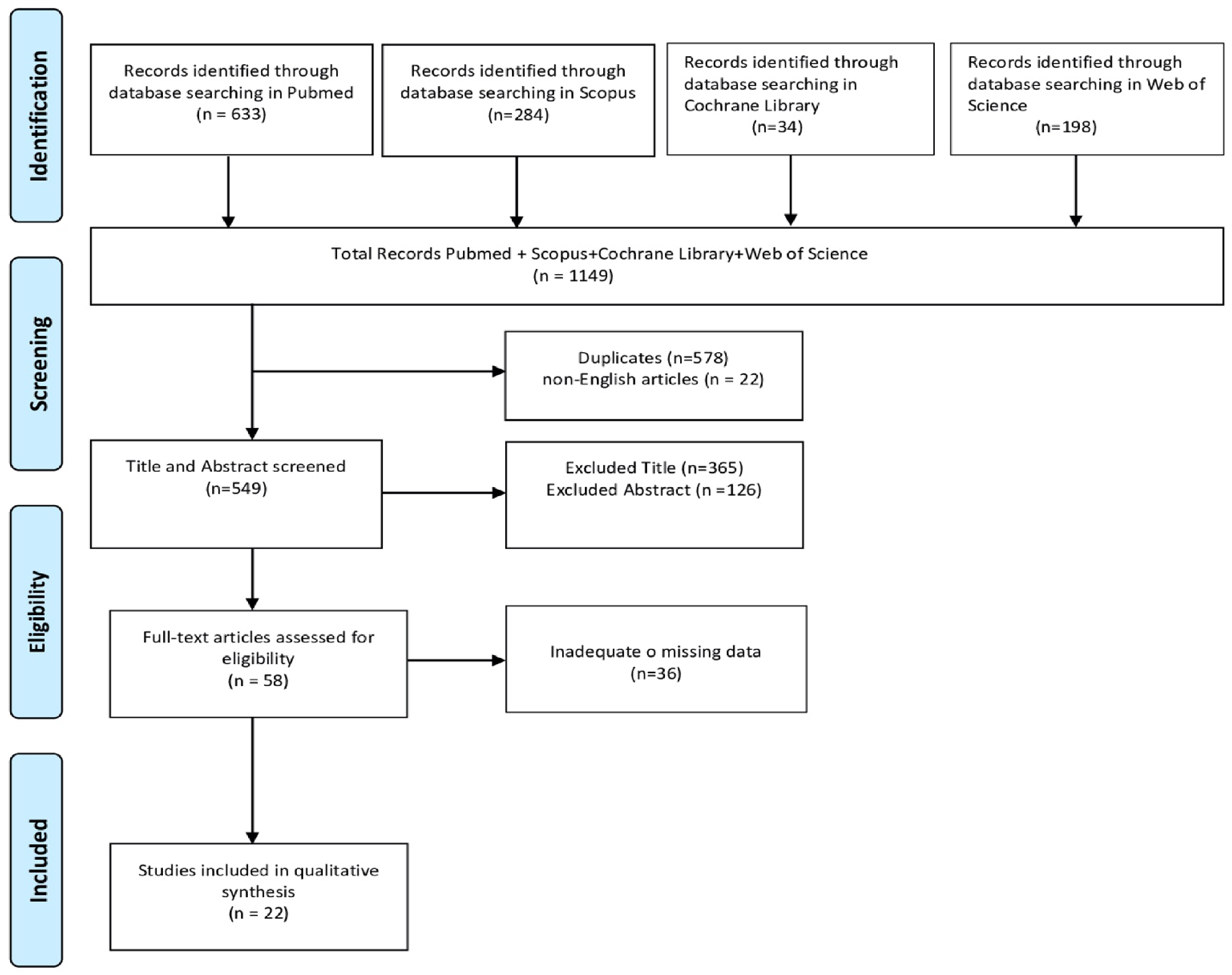
Table 1.
Characteristics, methodological design, assessment instruments, and principal findings of the included studies.
All included studies examined the psychological effects and quality of life during hospitalization and detention. Of the 22 selected studies, 10 examined the psychopathological aspects of detention [19,20,24,46,47,48,49,50,51,52], and 12 examined the psychopathological aspects of hospitalization [21,22,23,53,54,55,56,57,58,59,60,61]. For a detailed description of the studies, see Table 1.
3.2. Characteristics of the Included Studies
A total of 22 studies were included, of which 10 examined incarcerated populations and 12 examined hospitalized populations. The studies were conducted in different geographical and institutional contexts and showed substantial variation in sample size, participant characteristics, duration of institutional exposure, study design, and assessment instruments.
Most studies used observational designs. These included cross-sectional descriptive or correlational surveys, prospective observational studies, retrospective longitudinal comparisons, and one quasi-experimental comparison. Sample sizes ranged from small purposively selected clinical groups to large multicentre or nationwide samples.
Psychological outcomes were assessed using heterogeneous methods, including structured diagnostic interviews, standardized self-report questionnaires, screening instruments, clinical ratings, institutional records, and exploratory interviews. The principal outcomes included psychological distress, anxiety and depressive symptoms, clinically diagnosed mental disorders, psychological well-being, coping, perceived control, social support, sleep-related difficulties, self-harm, and adjustment to the institutional environment. Detailed study characteristics are reported in Table 1.
3.3. Methodological Quality of the Included Studies
Methodological quality varied substantially across the included studies. Larger multicentre and nationwide studies generally showed stronger sampling procedures, more standardized assessments, and more appropriate statistical analyses. In contrast, several investigations were based on small, single-centre, convenience, volunteer, or purposively selected samples, which limited representativeness and generalizability.
Common methodological limitations included unclear recruitment denominators, nonresponse or attrition bias, exclusion of severely ill or cognitively impaired participants, insufficient adjustment for potential confounding variables, and reliance on self-report screening instruments. Some studies used structured diagnostic assessments, whereas others measured symptoms or positive screening results without confirming a clinical diagnosis.
The complete criterion-level methodological appraisal using the MMAT 2018 is reported in Supplementary Table S2. No overall numerical quality score was calculated.
To facilitate comparison between the two institutional settings, the findings were grouped according to psychological outcome domains rather than presented study by study. Within each subsection, evidence concerning incarceration and hospitalization is presented together. The percentages reported below are study-specific estimates and should not be interpreted as directly comparable prevalence rates because the studies differed in populations, assessment instruments, cut-off scores, reference periods, and diagnostic procedures. No prevalence estimates were statistically pooled or arithmetically averaged.
3.4. Anxiety and Depressive Outcomes
Anxiety and depressive outcomes were frequently examined in both institutional settings, although the measurement methods varied substantially. In incarcerated populations, Osasona et al. [50] reported positive HADS screening results for depressive and anxiety symptoms in 72.6% and 77.8% of participants, respectively. Gullone et al. [51] found that 38% of participants scored within the moderate-to-severe depressive-symptom range, while state and trait anxiety scores exceeded normative values. By contrast, the structured diagnostic assessment conducted by Vicens et al. [52] identified current mood disorders in 14.9% and anxiety disorders in 23.3% of the sample.
In hospitalized populations, De Fazio et al. [23] reported HADS screening positivity of 41.0% for depressive symptoms and 60.0% for anxiety symptoms; 40.0% also presented clinically relevant depressive symptoms according to the PHQ-9. Beausang et al. [61] reported probable depression in 19.0% and probable anxiety in 23.0% of general medical inpatients. Kunsebeck et al. [20] reported estimated ranges of 16.1–24.9% for depressive symptoms and 20.7–30.3% for social anxiety symptoms. Clarke et al. [60] identified a current major depressive episode in 12.0% of participants and higher anxiety scores than those reported in general population samples. Using a structured diagnostic interview, Silverstone et al. [58] identified major depressive disorder in 5.1% and anxiety disorders in 5.8% of acute medical inpatients.
These estimates should not be ranked or directly contrasted because some represent screening positivity or symptom severity, whereas others represent disorders identified through structured diagnostic assessment.
3.5. Psychological Distress, Stress, and Well-Being
Psychological distress was also reported in both settings. In incarcerated populations, van Ginneken et al. [4] found that 18.0% of participants scored above the K6 cut-off for serious psychological distress. Osasona et al. [50] reported SRQ-20 screening positivity for general psychiatric morbidity in 80.6% of participants. Other prison studies examined distress as a continuous outcome and found associations with prison climate, limited perceived control, avoidance coping, shame, negative affectivity, and pre-existing psychological vulnerability [19,20,47,48,49].
In hospitalized populations, Clarke et al. [60] estimated psychiatric morbidity at 30.0% using the GHQ, whereas other studies assessed distress, affective decompensation, perceived powerlessness, or hospitalization-related stress without providing directly comparable prevalence estimates. Important hospital stressors included uncertainty regarding recovery, illness severity, possible surgery, family responsibilities, financial difficulties, loss of control, and disruption of ordinary roles [53,54,55].
Across both settings, adaptive coping, social support, positive interpersonal relationships, and greater perceived control were generally associated with better psychological well-being. Nevertheless, the evidence was observational and did not establish that institutional conditions caused the reported distress.
3.6. Sleep-Related Outcomes
Sleep-related outcomes were examined less frequently. Among incarcerated individuals, Poorebrahim et al. [24] found that psychological distress and perceived stress were associated with poorer sleep quality and greater insomnia symptoms. Higher dispositional mindfulness predicted more favourable sleep outcomes at follow-up, with distress and perceived stress partially mediating these associations.
Among hospitalized patients, Wilson-Barnett [21] reported that 86 participants experienced night-time difficulties associated with ward noise, the presence of other patients, or unfamiliarity with the hospital environment. However, the hospital study used an exploratory interview rather than standardized sleep diagnostic criteria. Consequently, these findings indicate sleep-related difficulties in both settings but do not provide comparable prevalence estimates for insomnia or sleep disorders.
3.7. Diagnosed Mental Disorders and Other Psychiatric Outcomes
Structured or clinical diagnostic assessments identified additional psychiatric outcomes. Among incarcerated populations, Vicens et al. [52] reported a past-month prevalence of 41.2% for any mental disorder, including substance-use disorders in 17.5%, psychotic disorders in 4.2%, anxiety disorders in 23.3%, and mood disorders in 14.9%. Lifetime prevalence was substantially higher, indicating that many disorders may have preceded the current period of incarceration. Dettbarn [46] reported clinically assigned mental-disorder diagnoses in 69.0% of participants at the initial assessment and 48.3% at long-term follow-up; adjustment disorder, suicide attempts, and self-inflicted injuries were also documented.
Among hospitalized populations, Silverstone et al. [58] identified at least one DSM-IV diagnosis in 27.2% of acute medical inpatients. Adjustment disorders were identified in 13.7%, alcohol dependence or abuse in 5.4%, major depressive disorder in 5.1%, and anxiety disorders in 5.8%. Importantly, several disorders had already been present during the month preceding hospital admission. Therefore, psychiatric morbidity observed during either incarceration or hospitalization cannot automatically be attributed to the institutional exposure itself.
3.8. Associated Factors and Duration of Exposure
The factors associated with psychological outcomes differed between the two settings. In incarcerated populations, outcomes were associated with prison climate, shame, coping style, interpersonal relationships, social support, sentence-related circumstances, and pre-existing psychopathology. Evidence regarding duration was inconsistent: some studies reported greater symptom severity during earlier periods of incarceration, whereas others found no statistically significant association between time served and psychological distress [46,48,49].
In hospitalized populations, psychological outcomes were more closely associated with illness severity, functional impairment, diagnostic or prognostic uncertainty, previous admissions, medical procedures, isolation precautions, and disruption of family or occupational roles. Some studies reported associations between longer hospital stays and greater anxiety, depressive symptoms, or affective decompensation, but duration was not examined consistently across all samples.
Thus, duration alone did not provide a uniform explanation for psychological outcomes in either setting. The available evidence instead suggests that duration interacts with individual vulnerability, institutional conditions, social support, coping resources, illness burden, and the meaning of the institutional experience.
Potential confounding factors were assessed inconsistently across the included studies. Baseline psychiatric morbidity, previous trauma, socioeconomic circumstances, illness severity, prison conditions, and voluntariness of hospital admission were frequently absent or incompletely controlled. Consequently, the independent association between institutional restriction and psychological outcomes could not be determined.
3.9. Comparative Interpretation
The two bodies of evidence showed overlap in broad outcome labels, including anxiety, depressive symptoms, psychological distress, adjustment difficulties, and sleep-related problems. This overlap should not be interpreted as evidence of equivalent prevalence or identical causal mechanisms. Hospital-related distress was frequently embedded within physical illness, pain, functional impairment, treatment burden, and prognostic uncertainty, whereas prison-related distress occurred within an involuntary legal and coercive context.
No included study directly compared incarcerated and hospitalized populations using the same design, assessment instruments, cut-off scores, and reference periods. Direct statistical comparison, formal harmonization of case definitions, and conclusions of psychological equivalence were therefore not possible.
4. Discussion
4.1. Principal Findings and Answer to the Research Question
Given the predominantly observational and cross-sectional nature of the included evidence, the findings should be interpreted as associations rather than as demonstrated causal effects.
In particular, the high prevalence of psychiatric morbidity among incarcerated individuals cannot be interpreted as evidence that incarceration caused the onset of these conditions, because mental disorders, substance-use problems, trauma-related difficulties, and social vulnerability may have been present before prison entry [13,49,52].
The principal finding of this review is that hospitalization and incarceration cannot be considered psychologically equivalent environments, but they may share several experiential conditions associated with distress. Across both settings, poorer psychological outcomes were more frequently reported when institutional exposure involved reduced perceived control, uncertainty, disrupted routines, separation from significant others, restricted privacy, and limited opportunities for autonomous decision-making [3,4,5,10,20,21,22,23,24,53,54,55].
The comparison nevertheless identified substantial contextual differences. In incarceration, psychological outcomes were more frequently associated with prison climate, coping style, social support, shame, sentence-related circumstances, and pre-existing psychological vulnerability. In hospitalization, distress was more frequently associated with illness severity, functional impairment, uncertainty regarding diagnosis or prognosis, medical procedures, repeated or prolonged admission, and isolation precautions [19,20,23,46,47,48,49,50,51,52,53,54,55,56,57,58,59,60,61].
The answer to the research question is therefore qualified. Restrictive institutional environments may share psychological stressors, particularly when autonomy, control, privacy, and social connectedness are reduced. However, the nature, meaning, and determinants of distress differ between hospitalization and incarceration. The available evidence does not support treating the two settings as equivalent, nor does it permit a direct quantitative comparison between them. The principal scientific contribution of this review lies in its structured comparison of two institutionally and socially distinct environments. Rather than suggesting that hospitalization and incarceration are equivalent, the synthesis identifies experiential dimensions that may be relevant across both contexts, including autonomy, perceived control, uncertainty, privacy, social connectedness, and disruption of ordinary roles. It also shows that similar psychological outcomes may have different determinants and meanings depending on the legal, clinical, and social context in which they occur.
4.2. Similarities Between Hospitalization and Incarceration
Several recurring themes were identified across the two institutional settings. First, reduced perceived control was associated with poorer psychological outcomes. Individuals in both settings may be required to adapt to externally imposed schedules, institutional rules, restrictions on movement, and reduced control over ordinary daily decisions [3,4,5,10,20,55].
Second, uncertainty appeared relevant in both contexts. For incarcerated individuals, uncertainty could concern sentence progression, release, relationships, personal safety, and adaptation to the prison environment. For hospitalized individuals, uncertainty more frequently concerned diagnosis, prognosis, medical procedures, recovery, and discharge [19,20,21,22,23,37,54].
Third, separation from ordinary social roles and significant relationships was repeatedly associated with distress. Institutional exposure could disrupt family contact, employment, privacy, identity, and established routines. Social support and adaptive coping were associated with better psychological outcomes in both populations, although these relationships were not uniform across all studies [20,21,37,48,51,54]. These similarities suggest that the psychological relevance of a restrictive environment may depend not only on physical confinement, but also on the individual’s subjective experience of autonomy, predictability, social connectedness, and control.
4.3. Setting-Specific Differences
Despite these common themes, hospitalization and incarceration differed substantially in their purpose, legal status, expected duration, social meaning, and sources of vulnerability. Voluntariness represents a particularly important disanalogy. Incarceration necessarily involves coercive legal authority and the inability to leave the institution freely. Hospitalization, by contrast, has a therapeutic purpose and is often consensual, although some patients may experience limited choice because of clinical urgency, impaired decision-making capacity, compulsory psychiatric treatment, infection-control requirements, or dependence on continuing care. The degree and meaning of restriction therefore vary substantially within hospital settings and cannot be assumed to correspond to the formal deprivation of liberty inherent in incarceration [2,6,7,25,27].
In incarcerated populations, distress appeared particularly related to prison climate, interpersonal relationships, coping style, shame, social isolation, sentence-related circumstances, and pre-existing mental health vulnerability. The evidence concerning time served was inconsistent, suggesting that duration alone did not adequately explain psychological outcomes [19,20,37,38,47,48,49,50,51,52].
In hospitalized populations, psychological distress was more closely associated with the burden of physical illness, functional impairment, uncertainty regarding prognosis, repeated admissions, prolonged length of stay, invasive procedures, isolation, and disruption of family and occupational roles. The psychological experience of hospitalization was therefore inseparable from the underlying medical condition and its perceived severity [17,21,22,23,24,25,53,54,55,56,57,58,59,60,61].
These differences indicate that similar psychological outcomes may arise through different pathways. Anxiety or depressive symptoms in prison cannot automatically be interpreted as equivalent to similar symptoms during hospitalization, because the institutional meaning, precipitating factors, and associated vulnerabilities differ substantially. Accordingly, the presence of anxiety, depressive symptoms, sleep disturbance, or psychological distress in both populations does not establish that these outcomes arise from the same mechanism. The comparison concerns partially overlapping experiential dimensions, not causal equivalence.
4.4. Possible Shared and Specific Mechanisms
Several experiential factors recurred across both bodies of evidence and may represent candidate shared mechanisms associated with psychological distress. These include reduced autonomy, diminished perceived control, disruption of ordinary routines, uncertainty, limited privacy, social separation, dependency on institutional staff, and restricted opportunities for meaningful activity. These factors are consistent with the conceptualization of restrictive environments as settings in which individuals may experience a sustained reduction in choice and control [2,3,4,5,7,8,9,10,20,21,22,23,24,53,54,55].
However, these mechanisms should be interpreted as explanatory hypotheses rather than as demonstrated causal pathways. None of the included studies experimentally manipulated autonomy, control, or institutional restriction, and no study directly tested the same mechanism in hospitalized and incarcerated populations. Accordingly, the presence of similar symptom profiles in the two settings should not be interpreted as evidence that the same psychological mechanisms were operating.
Setting-specific mechanisms were also identified. In incarceration, legal coercion, stigma, sentence uncertainty, prison climate, interpersonal threat, and adaptation to institutional rules may be particularly relevant. In hospitalization, illness severity, fear of deterioration, dependency resulting from functional impairment, diagnostic uncertainty, treatment burden, and isolation for clinical reasons may have greater importance [7,19,20,23,27,37,46,47,48,49,50,51,52,53,54,55,56,57,58,59,60,61].
Several alternative explanations must also be considered. Entry into hospitalization or incarceration is not random, and psychological status during institutional exposure may reflect vulnerabilities and circumstances that preceded admission or detention. Baseline psychiatric disorders, previous trauma, socioeconomic disadvantage, substance-use problems, and limited social support may independently predict anxiety, depressive symptoms, and psychological distress. In hospitalized populations, illness severity, pain, functional impairment, prognostic uncertainty, and treatment intensity may represent more immediate determinants of distress than institutional restriction itself. Moreover, a longer hospital stay may be a consequence or marker of greater clinical severity rather than an independent cause of poorer psychological outcomes. In incarcerated populations, psychological outcomes may vary according to prison climate, safety, interpersonal threat, access to healthcare, opportunities for social contact, and other material or organizational conditions. Voluntary and involuntary hospitalization may also involve substantially different experiences of autonomy and coercion. Because these variables were inconsistently measured and adjusted for in the included studies, the independent contribution of institutional restriction could not be isolated [13,17,20,23,37,49,52,58].
Accordingly, the findings are consistent with an interpretive model in which psychological distress may reflect interactions among institutional conditions, the meaning of the institutional experience, pre-existing vulnerability, coping resources, social support, and setting-specific clinical or legal circumstances. This model should be regarded as a framework for future investigation rather than as a causal mechanism demonstrated by the included studies. Similar symptom profiles across the two settings are compatible with multiple alternative pathways and cannot, by themselves, be attributed to confinement or restriction [3,5,10,20,23,24,51,55].
4.5. Comparison with Previous Reviews and Meta-Analyses
Previous systematic reviews and meta-analyses have consistently documented a substantial burden of psychiatric morbidity among incarcerated populations [13]. Fazel and Danesh reported major depression in approximately 10% of male prisoners and 12% of female prisoners, and psychotic disorders in 3.7% and 4.0%, respectively [62]. A subsequent meta-analysis reported pooled prevalences of major depression of 10.2% among male prisoners and 14.1% among female prisoners, together with psychotic disorders in 3.6% and 3.9%, respectively [63]. Among incarcerated populations in low- and middle-income countries, Baranyi et al. reported pooled one-year prevalence estimates of 16.0% for major depression and 6.2% for psychosis [64].
The structured diagnostic estimates identified in the present review were broadly consistent with these previous meta-analytic findings. For example, Vicens et al. reported current mood disorders in 14.9% of participants and psychotic disorders in 4.2%. By contrast, markedly higher estimates were found in studies using symptom-screening instruments, including the HADS and SRQ-20. These differences should not be interpreted as disagreement with previous meta-analyses because positive screening results, symptom severity, and clinically diagnosed disorders are not equivalent outcomes. Variation in sampling procedures, countries, institutional settings, reference periods, assessment instruments, cut-off scores, and case definitions may also explain the wide range of estimates [50,52].
Previous evidence also challenges a simple environmental-causation interpretation. Psychiatric disorders, substance-use problems, trauma-related difficulties, and social disadvantage may already be present before prison entry. Baranyi et al. also observed higher prevalence estimates in samples assessed at prison intake, suggesting that at least part of the psychiatric burden may precede prolonged exposure to the prison environment [64]. Similarly, the high lifetime prevalence reported by Vicens et al. indicates that many disorders were not necessarily initiated by the current period of incarceration [13,49,52].
Consequently, cross-sectional prevalence data cannot establish that incarceration caused the onset of the observed disorders. Prison conditions may exacerbate, maintain, or interact with pre-existing vulnerabilities, but the temporal direction of these relationships remains uncertain. The present findings therefore support an interactional interpretation in which individual vulnerability, previous psychopathology, social disadvantage, and prison-specific environmental conditions may jointly contribute to psychological morbidity [19,20,46,48,49,52].
Comparison with previous reviews of hospitalization is less straightforward because hospital studies include markedly heterogeneous acute, medical, surgical, oncological, psychiatric, isolation, rehabilitation, and long-stay populations. Alzahrani’s integrative review similarly identified anxiety, depressive reactions, emotional distress, and impaired coping and adjustment during hospitalization, as well as associations with admission, length of stay, readmission, patient characteristics, and the role of healthcare professionals [25]. However, that review did not provide a single pooled prevalence estimate directly comparable with the study-specific estimates reported here. Agreement with the previous hospitalization literature is therefore primarily thematic rather than numerical.
Overall, the present review does not provide new pooled prevalence estimates. Its contribution lies in comparing recurring psychological and contextual patterns across hospitalization and incarceration while demonstrating that apparently similar outcomes may reflect different assessment methods, pre-existing vulnerabilities, institutional conditions, and causal pathways.
4.6. Methodological Quality and Interpretation of the Evidence
The included studies were heterogeneous not only clinically but also methodologically. Sample sizes ranged from very small purposively selected groups to large multicentre or nationwide populations. Sampling strategies included consecutive recruitment, random or systematic sampling, volunteer participation, convenience sampling, and purposive selection. The evidential contribution of the studies should therefore not be considered equivalent.
Larger epidemiological studies generally provided more precise estimates and used more standardized procedures, although they were not free from nonresponse, selection, or generalizability concerns. Several smaller studies provided useful contextual information but were limited by single-centre recruitment, low response rates, restricted eligibility criteria, incomplete follow-up, or insufficient adjustment for confounding variables.
Measurement methods also differed substantially. Some studies used structured diagnostic interviews, whereas others relied on symptom questionnaires or screening cut-offs. Positive screening results cannot be interpreted as equivalent to confirmed clinical diagnoses. Differences in instruments, reference periods, thresholds, and outcome definitions also prevented direct comparison of prevalence estimates.
These methodological differences reduce confidence in broad generalizations and reinforce the decision not to calculate pooled or average prevalence estimates. The complete MMAT criterion-level assessment is presented in Supplementary Table S2.
4.7. Clinical and Institutional Implications
The findings suggest that psychological support in restrictive institutional settings should not focus exclusively on identifying symptoms. Attention should also be directed toward potentially modifiable contextual factors, including perceived control, communication, privacy, predictability of routines, meaningful social contact, and opportunities for participation in decisions [3,4,5,10,20,26,29,30,31,32,33,39].
In hospital settings, professionals should provide clear and repeated information concerning diagnosis, procedures, prognosis, and discharge planning. When clinically feasible, care should preserve privacy, family contact, ordinary routines, access to meaningful activities, and patient participation in treatment decisions. Patients exposed to prolonged admission, repeated hospitalization, isolation precautions, functional impairment, or limited social support may require additional psychological monitoring [4,25,26,28,29,30,31,32,33].
In correctional settings, implications include timely mental health screening, access to psychological and psychiatric care, suicide prevention procedures, meaningful daily activities, supportive interpersonal relationships, transparent institutional processes, and opportunities to maintain family and social connections. Interventions aimed at coping or emotional regulation should also be adapted to the specific restrictions and stressors of the correctional environment [6,27,34,35,36,37,38,39,40,41,42].
A practical implication common to both settings is the need to distinguish pre-existing mental disorders from symptoms that emerge or worsen during institutional exposure. Initial assessment should therefore include previous psychiatric history, substance use, social support, coping resources, and relevant clinical or legal circumstances. Repeated assessment may be particularly useful when exposure is prolonged or when significant changes in psychological functioning are observed [13,52,58].
These principles may also be considered in other environments characterized by reduced autonomy and externally regulated routines, such as psychiatric units, rehabilitation facilities, residential-care institutions, immigration detention settings, and other forms of long-term institutional care. Their application should be adapted to the purpose, population, legal framework, and degree of restriction of each setting rather than assuming that all restrictive environments are equivalent [1,2,8,9,28,29].
Because the evidence reviewed was predominantly observational, these recommendations should be interpreted as practice-oriented implications supported by recurring patterns in the literature, rather than as interventions whose effectiveness was directly demonstrated by the included studies. Future implementation studies should evaluate whether improving communication, autonomy support, privacy, social connectedness, and participation in decisions reduces psychological distress in specific institutional contexts [3,4,5,26,29,30,31,32,33,39,40,41,42].
4.8. Strengths and Limitations
This review has several strengths. It applies an explicit systematic review framework, reports database-specific search strategies, distinguishes psychological symptoms and positive screening results from clinically diagnosed mental disorders, appraises methodological quality using the MMAT 2018, and provides a structured comparison between hospitalization and incarceration.
Several important limitations must nevertheless be acknowledged. First, no included study directly compared hospitalized and incarcerated populations within the same research design. The comparison presented in this review is therefore indirect and is based on patterns identified across two separate and heterogeneous bodies of literature. It should not be interpreted as demonstrating equivalence between hospitalization and incarceration.
Second, the included studies differed substantially in participant characteristics, institutional settings, duration of exposure, study design, sampling strategy, assessment instruments, reference periods, and outcome definitions. This heterogeneity prevented meaningful statistical pooling and limited the direct comparability of individual findings. Moreover, the hospitalization literature included both prolonged or long-stay admissions and studies conducted in general or acute inpatient settings, limiting the extent to which all findings can be generalized specifically to long-term hospitalization.
Third, most studies used cross-sectional or observational designs. Temporal direction could therefore not be established, and causal conclusions concerning the psychological effects of incarceration or hospitalization are not supported. Baseline psychiatric disorders, previous trauma, socioeconomic disadvantage, substance-use problems, social circumstances, and limited social support may have preceded institutional exposure and independently influenced the reported psychological outcomes. In hospitalized populations, illness severity, pain, functional impairment, prognostic uncertainty, and treatment intensity may have contributed directly to distress, while duration of hospitalization may have reflected greater clinical severity rather than an independent effect of restriction. In incarcerated populations, prison climate, safety, interpersonal conditions, access to healthcare, isolation, and opportunities for family or social contact may have influenced outcomes independently of confinement itself. Voluntary and involuntary hospital admissions were not consistently distinguished. Because these factors were inconsistently measured or statistically adjusted for, the review could not isolate the independent contribution of institutional restriction.
Fourth, the methodological quality of the included studies was not uniform. Sample sizes ranged from very small purposively selected groups to large multicentre or nationwide samples. Several investigations relied on single-centre, volunteer, convenience, or purposive recruitment. Nonresponse, attrition, unclear recruitment denominators, and the exclusion of severely ill, cognitively impaired, or non-communicating individuals may have introduced selection bias and limited the generalizability of the findings.
Fifth, outcome measurement was highly heterogeneous and directly limited the validity of the cross-setting comparison. Screening instruments, symptom questionnaires, clinical ratings, institutional records, exploratory interviews, and structured diagnostic assessments were not interchangeable. Positive screening results cannot be considered equivalent to clinically confirmed mental disorders, and percentages obtained using different instruments, cut-off scores, reference periods, and case definitions cannot be interpreted as directly comparable prevalence estimates. This heterogeneity prevented meaningful quantitative pooling.
A further limitation concerns the difficulty of investigating the subjective experience of restriction. Autonomy, perceived control, privacy, uncertainty, and social disconnection are complex experiential dimensions that cannot be fully captured through symptom scales or administrative measures alone. Only a limited number of studies directly explored how hospitalized or incarcerated individuals interpreted and experienced institutional restrictions. Consequently, the present review may not fully represent the lived experience underlying the reported psychological outcomes.
The comparison is also complicated by the different meaning of the two institutional conditions. Hospitalization is generally justified by health-related and therapeutic needs, whereas incarceration occurs within a legal and coercive framework. The two settings differ in voluntariness, responsibility, stigma, institutional purpose, and social meaning. These differences may shape psychological responses independently of the degree of environmental restriction.
Comparability was further limited by variation across national healthcare and penal systems. Countries differed in legal frameworks, admission and detention procedures, institutional organization, staffing, living conditions, access to mental-health services, continuity of care, and opportunities for family and social contact. These system-level differences may have influenced the reported outcomes independently of hospitalization or incarceration and restrict the transferability of findings across institutional and national contexts.
The review process also presents limitations. The search strategy was based on free-text terms and did not incorporate controlled vocabulary or all possible outcome-specific terms, such as individual terms for anxiety, depression, insomnia, or self-harm. Although multiple synonyms were used and the reference lists of included studies and relevant reviews were manually examined, potentially eligible studies may have been missed. Only English-language publications were included, potentially introducing language bias. Publication bias also cannot be excluded, because studies reporting elevated psychological distress or statistically significant associations may have been more likely to be published than studies reporting null, inconsistent, or favourable findings. Retrieval bias is also possible because the original search relied on free-text terms and did not include controlled vocabulary or all potentially relevant outcome-specific terms. The review methods were registered retrospectively rather than prospectively. In addition, title and abstract screening, full-text assessment, and data extraction were primarily performed by one reviewer and subsequently checked by two additional reviewers rather than being conducted independently in duplicate. These methodological features may have increased the risk of selection and retrieval bias.
Overall, the findings should be interpreted cautiously. They identify potentially shared experiential dimensions across restrictive environments, but they do not demonstrate that hospitalization and incarceration produce equivalent psychological consequences or that the reported institutional factors directly cause psychological distress.
4.9. Future Research
Future research should directly examine shared psychological mechanisms across different restrictive environments using comparable measures and clearly defined exposure characteristics. Studies should assess perceived autonomy, control, privacy, uncertainty, social support, institutional climate, and duration using longitudinal designs.
Direct comparative studies between institutional settings would improve understanding of which psychological outcomes reflect shared experiences of restriction and which are specific to legal coercion, illness burden, treatment procedures, or institutional culture. Future investigations should also distinguish symptoms and screening results from clinically diagnosed disorders and should report recruitment, nonresponse, attrition, and confounding more transparently.
Intervention studies are needed to determine whether improving communication, predictability, social contact, privacy, participation in decisions, and access to psychological support can reduce distress in hospital and correctional settings.
5. Conclusions
This systematic review suggests that hospitalization and incarceration should not be regarded as psychologically or causally equivalent environments. Nevertheless, the two bodies of evidence reported partially overlapping psychological outcomes, including anxiety, depressive symptoms, psychological distress, adjustment difficulties, and sleep-related problems. These outcomes were more frequently observed in association with reduced perceived control, disrupted routines, uncertainty, limited privacy, and reduced social connectedness. Important setting-specific differences were also identified. In incarcerated populations, psychological outcomes were more frequently associated with prison climate, legal coercion, sentence-related circumstances, coping style, social support, shame, and pre-existing vulnerability. In hospitalized populations, distress was more closely associated with illness severity, pain, functional impairment, diagnostic or prognostic uncertainty, treatment burden, repeated or prolonged admission, and isolation precautions. Similar symptom profiles may therefore arise through substantially different pathways and should not be interpreted as having the same origin or meaning. The evidence was heterogeneous in study populations, institutional contexts, assessment instruments, case definitions, and methodological quality. Most studies were observational or cross-sectional, and no included study directly compared hospitalized and incarcerated populations using the same design and measurement procedures. Consequently, causal conclusions, pooled prevalence estimates, and direct quantitative comparisons are not supported. The findings indicate that institutional settings should pay attention to potentially modifiable contextual factors, including communication, privacy, predictability, social contact, perceived control, access to psychological care, and participation in decisions when legally and clinically feasible. These implications should be adapted to the distinct clinical, legal, and organizational characteristics of each setting. Future longitudinal, comparative, and intervention studies using harmonized definitions and assessment procedures are needed to distinguish pre-existing vulnerability from psychological changes associated with institutional exposure.
Supplementary Materials
The following supporting information can be downloaded at: https://www.mdpi.com/article/10.3390/psychiatryint7040178/s1, Table S1: Database-specific search strategies; Table S2: Methodological quality appraisal using the Mixed Methods Appraisal Tool (MMAT), version 2018; Table S3: Characteristics of the Psychological Assessment Instruments Used in the Included Studies; Table S4: PRISMA 2020 Checklist.
Author Contributions
Conceptualization: F.C. and A.A., Methodology: F.C. and I.C., Validation: R.S.C. and F.C., Investigation: A.A., Writing—Original Draft Preparation: A.A., F.C., R.S.C. and I.C., Writing—Review and Editing: A.A., F.C., D.C., M.P. and I.C., Supervision: F.C. and R.S.C., Data Curation: A.A. and I.C. All authors have read and agreed to the published version of the manuscript.
Funding
This research received no external funding.
Institutional Review Board Statement
Not applicable.
Informed Consent Statement
Not applicable.
Data Availability Statement
No new data were created or analyzed in this study.
Conflicts of Interest
The authors declare no conflicts of interest.
References
- Ramkissoon, H. COVID-19 place confinement, pro-social, pro-environmental behaviors, and residents’ wellbeing: A new conceptual framework. Front. Psychol. 2020, 11, 2248. [Google Scholar] [CrossRef] [Scilit]
- Goffman, E. Asylums: Essays on the Social Situation of Mental Patients and Other Inmates; Anchor Books: New York, NY, USA, 1961. [Google Scholar]
- Ryan, R.M.; Deci, E.L. Self-determination theory and the facilitation of intrinsic motivation, social development, and well-being. Am. Psychol. 2000, 55, 68–78. [Google Scholar] [CrossRef] [PubMed]
- Gaine, G.S.; Dubue, J.D.; Purdon, S.E.; Abba-Aji, A. Psychiatric hospital experiences that support and frustrate emerging adults’ psychological needs: A self-determination theory perspective. Early Interv. Psychiatry 2022, 16, 402–409. [Google Scholar] [CrossRef] [Scilit] [PubMed]
- van der Kaap-Deeder, J.; Audenaert, E.; Vandevelde, S.; Soenens, B.; Van Mastrigt, S.; Mabbe, E.; Vansteenkiste, M. Choosing when choices are limited: The role of perceived afforded choice and autonomy in prisoners’ well-being. Law Hum. Behav. 2017, 41, 567–578. [Google Scholar] [CrossRef] [Scilit] [PubMed]
- McCall-Smith, K. United Nations standard minimum rules for the treatment of prisoners (Nelson Mandela Rules). Int. Leg. Mater. 2016, 55, 1180–1205. [Google Scholar] [CrossRef] [Scilit]
- Sykes, G.M. The Society of Captives: A Study of a Maximum Security Prison; Princeton University Press: Princeton, NJ, USA, 1958. [Google Scholar]
- Liberakis, E.A. Factors predisposing to institutionalism. Acta Psychiatr. Scand. 1981, 63, 357–366. [Google Scholar] [CrossRef] [Scilit] [PubMed]
- Chow, W.S.; Priebe, S. Understanding psychiatric institutionalization: A conceptual review. BMC Psychiatry 2013, 13, 169. [Google Scholar] [CrossRef] [Scilit] [PubMed]
- Evans, G.W. The built environment and mental health. J. Urban Health 2003, 80, 536–555. [Google Scholar] [CrossRef] [Scilit] [PubMed]
- Jörgensen, K.N.; Römma, V.; Rundmo, T. Associations between ward atmosphere, patient satisfaction and outcome. J. Psychiatr. Ment. Health Nurs. 2009, 16, 113–120. [Google Scholar] [CrossRef] [Scilit] [PubMed]
- Papoulias, C.; Csipke, E.; Rose, D.; McKellar, S.; Wykes, T. The psychiatric ward as a therapeutic space: Systematic review. Br. J. Psychiatry 2014, 205, 171–176. [Google Scholar] [CrossRef] [Scilit] [PubMed]
- Favril, L.; Rich, J.D.; Hard, J.; Fazel, S. Mental and physical health morbidity among people in prisons: An umbrella review. Lancet Public Health 2024, 9, e250–e260. [Google Scholar] [CrossRef] [Scilit] [PubMed]
- Hämmerli, M.; Milstein, R.; Mueller, M. Incentivising Patient Pathways in Outpatient Care: A Review of Gatekeeping and Cost-Sharing Policies Across the OECD; OECD Health Working Papers No. 196; OECD Publishing: Paris, France, 2026. [Google Scholar] [CrossRef] [Scilit]
- Aebi, M.; Dreyer, J.; Siedler, C.; Niedenzu, K.; Forgó Baer, É.; Campanello, C.; Wepfer, A.; Castelli, F.; Urwyler, T. Assessing psychosocial maturity to diagnose severe personality development disorders in young adult males adjudicated of serious criminal offences: A psychometric validation study of a new instrument. Swiss Med. Wkly. 2025, 155, 3793. [Google Scholar] [CrossRef] [Scilit] [PubMed]
- Papanicolas, I.; Woskie, L.R.; Jha, A.K. Health care spending in the United States and other high-income countries. JAMA 2018, 319, 1024–1039. [Google Scholar] [CrossRef] [Scilit] [PubMed]
- Ofori-Asenso, R.; Liew, D.; Mårtensson, J.; Jones, D. The frequency of, and factors associated with prolonged hospitalization: A multicentre study in Victoria, Australia. J. Clin. Med. 2020, 9, 3055. [Google Scholar] [CrossRef] [Scilit] [PubMed]
- Altobelli, E.; Guergache, A.K.; Galassi, F.; Petrocelli, R.; Marziliano, C. Cost analysis of penitentiary systems and comparison between the countries of the Council of Europe. Economies 2024, 12, 311. [Google Scholar] [CrossRef] [Scilit]
- Kovács, Z.; Kun, B.; Griffiths, M.D.; Demetrovics, Z. A longitudinal study of adaption to prison after initial incarceration. Psychiatry Res. 2019, 273, 240–246. [Google Scholar] [CrossRef] [Scilit] [PubMed]
- van Ginneken, E.F.J.C.; Palmen, H.; Bosma, A.Q.; Sentse, M. Bearing the weight of imprisonment: The relationship between prison climate and well-being. Crim. Justice Behav. 2019, 46, 1385–1404. [Google Scholar] [CrossRef] [Scilit]
- Wilson-Barnett, J. Patients’ emotional reactions to hospitalization: An exploratory study. J. Adv. Nurs. 1976, 1, 351–358. [Google Scholar] [CrossRef] [Scilit] [PubMed]
- Wilson-Barnett, J.; Carrigy, A. Factors influencing patients’ emotional reactions to hospitalization. J. Adv. Nurs. 1978, 3, 221–229. [Google Scholar] [CrossRef] [Scilit] [PubMed]
- De Fazio, P.; Cerminara, G.; Ruberto, S.; Caroleo, M.; Puca, M.; Rania, O.; Suffredini, E.; Procopio, L.; Segura-Garcìa, C. Hospitalization and other risk factors for depressive and anxious symptoms in oncological and non-oncological patients. Psycho-Oncology 2017, 26, 493–499. [Google Scholar] [CrossRef] [Scilit] [PubMed]
- Poorebrahim, A.; Lin, C.-Y.; Imani, V.; Griffiths, M.D.; Pakpour, A.H. A prospective study examining the relationship between dispositional mindfulness and insomnia among male prisoners in Iran: The mediating effect of psychological distress and perceived stress. Int. J. Ment. Health Addict. 2020, 20, 19–30. [Google Scholar] [CrossRef] [Scilit]
- Alzahrani, N. The effect of hospitalization on patients’ emotional and psychological well-being among adult patients: An integrative review. Appl. Nurs. Res. 2021, 61, 151488. [Google Scholar] [CrossRef] [Scilit] [PubMed]
- Sanz-Osorio, M.T.; González-Diez, L.; Sánchez-Rueda, G.; Vallès, V.; Escobar-Bravo, M.A.; Monistrol, O. Humanised care in acute psychiatric hospitalisation units: Definition, values and strategic initiatives from the perspective of persons with mental health problems, primary carers and professionals. J. Psychiatr. Ment. Health Nurs. 2024, 31, 228–239. [Google Scholar] [CrossRef] [Scilit] [PubMed]
- Niveau, G.; Welle, I. Forensic psychiatry, one subspecialty with two ethics? A systematic review. BMC Med. Ethics 2018, 19, 25. [Google Scholar] [CrossRef] [Scilit] [PubMed]
- Hande, M.J.; Keefe, J.; Taylor, D. Long-term residential care policy guidance for staff to support resident quality of life. Gerontologist 2021, 61, 540–551. [Google Scholar] [CrossRef] [Scilit] [PubMed]
- Todres, L.; Galvin, K.T.; Holloway, I. The humanization of healthcare: A value framework for qualitative research. Int. J. Qual. Stud. Health Well-Being 2009, 4, 68–77. [Google Scholar] [CrossRef] [Scilit]
- Ghanbari-Afra, L.; Adib-Hajbaghery, M.; Dianati, M. Human caring: A concept analysis. J. Caring Sci. 2022, 11, 246–254. [Google Scholar] [CrossRef] [Scilit] [PubMed]
- Galvin, K.; Sloan, C.; Cowdell, F.; Ellis-Hill, C.; Pound, C.; Watson, R.; Ersser, S.; Brooks, S. Facilitating a dedicated focus on the human dimensions of care in practice settings: Development of a new Humanised Care Assessment Tool (HCAT) to sensitise care. Nurs. Inq. 2018, 25, e12235. [Google Scholar] [CrossRef] [Scilit] [PubMed]
- Méndez Toledo, J.R. Benefits, challenges and strategies in the implementation of humanized nursing care in hospitalization: A narrative review. Enferm. Cuid. Humaniz. 2025, 14, e4309. [Google Scholar] [CrossRef] [Scilit]
- Reyes-Téllez, Á.; González-García, A.; Martín-Salvador, A.; Gázquez-López, M.; Martínez-García, E.; García-García, I. Humanization of nursing care: A systematic review. Front. Med. 2024, 11, 1446701. [Google Scholar] [CrossRef] [Scilit] [PubMed]
- Lehrer, D. Compassion in corrections: The struggle between security and health care. J. Correct. Health Care 2021, 27, 81–84. [Google Scholar] [CrossRef] [Scilit] [PubMed]
- Maschi, T.; Richter, M. Human rights and dignity behind bars: A reflection on death and dying in world prisons. J. Correct. Health Care 2017, 23, 76–82. [Google Scholar] [CrossRef] [Scilit] [PubMed]
- Bellass, S.; Canvin, K.; Farragher, T.; McLintock, K.; Wright, N.; Hearty, P.; Seanor, N.; Cunningham, M.; Foy, R.; Sheard, L. Understanding and improving the quality of primary care for people in prison: A mixed-methods study. Health Soc. Care Deliv. Res. 2024, 12, 1–329. [Google Scholar] [CrossRef] [Scilit] [PubMed]
- Burns, D.; Murray, C.; Ferguson, J.; Moore, L. The experiences of men in prison who do not receive visits from family or friends: A qualitative systematic review. Crim. Behav. Ment. Health 2024, 34, 271–295. [Google Scholar] [CrossRef] [Scilit] [PubMed]
- Hammond, H.; Meek, R.; Glorney, E. Healthy prison cultures: Factors influencing male prisoners’ engagement in exercise and subsequent healthy behaviours. Int. J. Prison Health 2024, 20, 16–29. [Google Scholar] [CrossRef] [Scilit] [PubMed]
- Alves da Costa, F.; Verschuuren, M.; Andersen, Y.; Stürup-Toft, S.; Lopez-Acuña, D.; Ferreira-Borges, C. The WHO Prison Health Framework: A framework for assessment of prison health system performance. Eur. J. Public Health 2022, 32, 565–570. [Google Scholar] [CrossRef] [Scilit] [PubMed]
- Franke, I.; Vogel, T.; Eher, R.; Dudeck, M. Prison mental healthcare: Recent developments and future challenges. Curr. Opin. Psychiatry 2019, 32, 342–347. [Google Scholar] [CrossRef] [Scilit] [PubMed]
- Kristofersson, G.K.; Kaas, M.J. Stress management techniques in the prison setting. J. Forensic Nurs. 2013, 9, 111–119. [Google Scholar] [CrossRef] [Scilit] [PubMed]
- Choi, Y.; Kim, M.; Park, J. Mental healthcare through cognitive emotional regulation strategies among prisoners. Healthcare 2024, 12, 6. [Google Scholar] [CrossRef] [Scilit] [PubMed]
- Page, M.J.; McKenzie, J.E.; Bossuyt, P.M.; Boutron, I.; Hoffmann, T.C.; Mulrow, C.D.; Shamseer, L.; Tetzlaff, J.M.; Akl, E.A.; Brennan, S.E.; et al. The PRISMA 2020 statement: An updated guideline for reporting systematic reviews. BMJ 2021, 372, n71. [Google Scholar] [CrossRef] [Scilit] [PubMed]
- Rethlefsen, M.L.; Kirtley, S.; Waffenschmidt, S.; Ayala, A.P.; Moher, D.; Page, M.J.; Koffel, J.B.; PRISMA-S Group. PRISMA-S: An extension to the PRISMA statement for reporting literature searches in systematic reviews. Syst. Rev. 2021, 10, 39. [Google Scholar] [CrossRef] [Scilit] [PubMed]
- Hong, Q.N.; Gonzalez-Reyes, A.; Pluye, P. Improving the usefulness of a tool for appraising the quality of qualitative, quantitative and mixed methods studies, the Mixed Methods Appraisal Tool (MMAT). J. Eval. Clin. Pract. 2018, 24, 459–467. [Google Scholar] [CrossRef] [Scilit] [PubMed]
- Dettbarn, E. Effects of long-term incarceration: A statistical comparison of two expert assessments of two experts at the beginning and the end of incarceration. Int. J. Law. Psychiatry 2012, 35, 236–239. [Google Scholar] [CrossRef] [Scilit] [PubMed]
- Lanciano, T.; de Leonardis, L.; Curci, A. The psychological effects of imprisonment: The role of cognitive, psychopathic and affective traits. Eur. J. Psychol. 2022, 18, 262–278. [Google Scholar] [CrossRef] [Scilit] [PubMed]
- Luke, R.J.; Daffern, M.; Skues, J.L.; Trounson, J.S.; Pfeifer, J.E.; Ogloff, J.R.P. The effect of time spent in prison and coping styles on psychological distress in inmates. Prison J. 2021, 101, 60–79. [Google Scholar] [CrossRef] [Scilit]
- Molina-Coloma, V.; Lara-Machado, R.; Pérez-Pedraza, B.; López-Rodríguez, D. Psychological symptomatology in a prison population: An exploratory study of age, psychopathological history and time in prison. Rev. Esp. Sanid. Penit. 2021, 23, 20–27. [Google Scholar] [CrossRef] [Scilit] [PubMed]
- Osasona, S.O.; Koleoso, O.N. Prevalence and correlates of depression and anxiety disorder in a sample of inmates in a Nigerian prison. Int. J. Psychiatry Med. 2015, 50, 203–218. [Google Scholar] [CrossRef] [Scilit] [PubMed]
- Gullone, E.; Jones, T.; Cummins, R. Coping styles and prison experience as predictors of psychological well-being in male prisoners. Psychiatry Psychol. Law. 2000, 7, 170–181. [Google Scholar] [CrossRef] [Scilit]
- Vicens, E.; Tort, V.; Dueñas, R.M.; Muro, Á.; Pérez-Arnau, F.; Arroyo, J.M.; Acín, E.; De Vicente, A.; Guerrero, R.; Lluch, J.; et al. The prevalence of mental disorders in Spanish prisons. Crim. Behav. Ment. Health 2011, 21, 321–332. [Google Scholar] [CrossRef] [Scilit] [PubMed]
- Incalzi, R.A.; Gemma, A.; Capparella, O.; Muzzolon, R.; Antico, L.; Carbonin, P.U. Effects of hospitalization on affective status of elderly patients. Int. Psychogeriatr. 1991, 3, 67–74. [Google Scholar] [CrossRef] [Scilit] [PubMed]
- Boey, J.P.; Boey, K.W. Stress associated with hospitalization among rural patients in Malaysia. Int. Med. J. 2016, 23, 620–623. [Google Scholar]
- Gammon, J. Analysis of the stressful effects of hospitalization and source isolation on coping and psychological constructs. Int. J. Nurs. Pract. 1998, 4, 84–96. [Google Scholar] [CrossRef] [Scilit] [PubMed]
- Benítez-Agudelo, J.C.; Barceló-Martínez, E.A.; Gelves-Ospina, M. Características psicológicas de los pacientes con larga estancia hospitalaria y propuesta de protocolo para su manejo clínico. Cir. Plástica Ibero-Latinoam. 2016, 42, 391–398. [Google Scholar] [CrossRef] [Scilit]
- Saravay, S.M.; Steinberg, M.D.; Weinschel, B.; Pollack, S.; Alovis, N. Psychological comorbidity and length of stay in the general hospital. Am. J. Psychiatry 1991, 148, 324–329. [Google Scholar] [CrossRef] [Scilit] [PubMed]
- Silverstone, P.H. Prevalence of psychiatric disorders in medical inpatients. J. Nerv. Ment. Dis. 1996, 184, 43–51. [Google Scholar] [CrossRef] [Scilit] [PubMed]
- Künsebeck, H.W.; Lempa, W.; Freyberger, H. Identification of psychosomatic and psychic disorders in non-psychiatric in-patients. Psychother. Psychosom. 1984, 42, 187–194. [Google Scholar] [CrossRef] [Scilit] [PubMed]
- Clarke, D.M.; Minas, I.H.; Stuart, G.W. The prevalence of psychiatric morbidity in general hospital inpatients. Aust. N. Z. J. Psychiatry 1991, 25, 322–329. [Google Scholar] [CrossRef] [Scilit] [PubMed]
- Beausang, P.; Syyed, R. Screening for anxiety and depression in adult general medical in-patients in a Scottish district general hospital. Scott. Med. J. 1998, 43, 177–180. [Google Scholar] [CrossRef] [Scilit] [PubMed]
- Fazel, S.; Danesh, J. Serious mental disorder in 23000 prisoners: A systematic review of 62 surveys. Lancet 2002, 359, 545–550. [Google Scholar] [CrossRef] [Scilit] [PubMed]
- Fazel, S.; Seewald, K. Severe mental illness in 33,588 prisoners worldwide: Systematic review and meta-regression analysis. Br. J. Psychiatry J. Ment. Sci. 2012, 200, 364–373. [Google Scholar] [CrossRef] [Scilit] [PubMed]
- Baranyi, G.; Scholl, C.; Fazel, S.; Patel, V.; Priebe, S.; Mundt, A.P. Severe mental illness and substance use disorders in prisoners in low-income and middle-income countries: A systematic review and meta-analysis of prevalence studies. Lancet Glob. Health 2019, 7, e461–e471. [Google Scholar] [CrossRef] [Scilit] [PubMed]
Disclaimer/Publisher’s Note: The statements, opinions and data contained in all publications are solely those of the individual author(s) and contributor(s) and not of MDPI and/or the editor(s). MDPI and/or the editor(s) disclaim responsibility for any injury to people or property resulting from any ideas, methods, instructions or products referred to in the content. |
© 2026 by the authors. Licensee MDPI, Basel, Switzerland. This article is an open access article distributed under the terms and conditions of the Creative Commons Attribution (CC BY) license.