


Abstract
Background: Previous research has suggested a potential association between low serum cholesterol levels and aggressive or violent behavior; however, findings across studies have been inconsistent, and meta-analytic evidence remains limited. Objectives: To meta-analyze the association between serum cholesterol levels and aggression, and to examine whether study design, population characteristics, and biological sex moderate this relationship. Methods: A meta-analysis of peer-reviewed English-language studies was conducted. Web of Science, APA PsycInfo, APA PsycArticles, PubMed, and Ovid Medline were searched up to September 2025. Eligible studies examined the relationship between serum cholesterol and aggression using either experimental–control group designs or one-group correlational designs. Risk of bias was assessed indirectly through study design characteristics and heterogeneity analyses. Random-effects meta-analyses with restricted maximum likelihood estimation were performed separately for each design type. Results: Twenty-nine studies comprising 6285 participants were included. In experimental–control group studies (15 comparisons; n = 3345), lower cholesterol levels were significantly associated with higher aggression (b = −0.56, SE = 0.15, p = 0.002), although heterogeneity was substantial (I2 = 91.0%). In contrast, one-group correlational studies (17 samples; n = 2940) showed no significant association between cholesterol and aggression (b = 0.07, SE = 0.05, p = 0.160; I2 = 90.8%). Differences in psychiatric status and sex distribution between study designs were pronounced and may partially explain discrepant findings. Limitations: The evidence base was characterized by high heterogeneity, variable operationalizations of aggression, and a predominance of older studies. Risk of bias could not be formally assessed using standardized tools. Conclusions: This meta-analysis indicates that lower cholesterol levels are associated with increased aggression primarily in studies comparing aggressive and non-aggressive groups, particularly within psychiatric populations. The absence of this association in correlational studies suggests that population characteristics, measurement methods, and sex distribution critically influence observed effects. Future research should clarify underlying biological mechanisms and address methodological heterogeneity.
1. Introduction
Aggression is a deeply rooted behavior observed across virtually all animal species, including humans and non-human primates, and it serves clear evolutionary functions in a Darwinian framework. Traditionally, evolutionary psychology distinguishes between two major forms of aggression: reactive and instrumental. More recently, a third variant—appetitive aggression—has been recognized as more prevalent in humans than previously assumed [1]. Despite extensive research, the biological origins of aggression remain complex and only partially understood. Some genetic predispositions have been identified and linked to adverse social environments [2,3], but many molecular mechanisms underlying aggressive behavior are still unresolved.
Against this backdrop, an intriguing observation emerged in 1979. That year, Virkkunen [4] described a peculiar association between antisocial personality traits and low levels of serum cholesterol. More than a decade later, several studies reported, amongst others, associations between statin treatment for hypercholesterolemia and increased mortality due to accidents, injuries, suicide, and trauma [5,6,7,8,9,10]. This observation raises the question of whether lowering cholesterol levels is invariably beneficial. Notably, a population-based study reported that high to very high cholesterol levels were associated with lower all-cause mortality [11]. Furthermore, elderly individuals in the lowest cholesterol quartile were found to have a twofold higher mortality risk compared with those in the highest quartile [12].
Motivated by the findings from the 1990s, Kaplan and colleagues empirically examined the relationship between cholesterol levels and aggressive behavior, contrasting the notion of heightened aggression under low cholesterol conditions with the so-called “fat and happy” hypothesis. Across three experiments involving varying experimental parameters and observation periods of up to several months, they demonstrated that a cholesterol-lowering diet in macaques increased aggressive behavior, whereas elevated cholesterol levels supported the “fat and happy” hypothesis [13,14,15]. Nevertheless, some caution is still warranted, as elevated peripheral cholesterol levels have also been linked to adverse mental health outcomes. Tong et al. [16] demonstrated that hypercholesterolemia induced by a high-fat diet led to cognitive impairment, including learning deficits, as well as white matter inflammation characterized by astrogliosis and microgliosis. In contrast to these findings, previous research has suggested an association between low serum cholesterol levels, disrupted brain cholesterol metabolism, and Alzheimer’s disease [17].
The association between low cholesterol and increased aggression has even been demonstrated in non-mammalian species such as fish, suggesting that this relationship may be conserved across diverse evolutionary lineages [18]. Mechanistically, Muldoon and colleagues [19] and Kaplan et al. [14] proposed altered serotonergic signaling as a biological basis for the observed increase in aggression. Muldoon et al. [19] indirectly demonstrated lower central serotonin activity in low-cholesterol animals by assessing fenfluramine-induced prolactin release. In parallel, Kaplan et al. [14] reported reduced cerebrospinal fluid concentrations of 5-hydroxyindoleacetic acid (5-HIAA), the primary metabolite of serotonin, further supporting the link between decreased cholesterol levels and diminished serotonergic function. This link was later reaffirmed by Buydens-Branchey et al. [20], who reported that low cholesterol was associated not only with heightened aggression but also with blunted cortisol and prolactin responses in individuals with cocaine dependence. Interestingly, this association was not observed for peripheral serotonin levels. Although both cholesterol and platelet serotonin were significantly reduced in violent suicide attempters, the two measures did not correlate with one another [21].
From an evolutionary psychological perspective, these observations reflect behavioral patterns that diverge from those expected under modern societal conditions. Kaplan, Klein, and Manuck [22] proposed that the body may interpret reduced cholesterol levels—such as those induced by statin treatment—as a signal of caloric “scarcity”, particularly of animal-derived nutrients. This perceived scarcity could lead to decreased central serotonergic activity, thereby promoting more impulsive and risk-prone behaviors. In early human evolution, such responses would have manifested as heightened competitiveness in foraging and hunting, ultimately serving to increase the chances of survival.
Regardless of whether this hypothesis ultimately proves correct, the subsequent decades produced numerous studies investigating the relationship between cholesterol levels and aggression. While some of these reports replicated the early observed associations [4,20,23,24,25,26,27,28,29,30,31,32,33,34,35], others did not find supporting evidence [36,37,38,39,40,41,42,43,44,45,46,47,48,49]. Moreover, although several narrative reviews have addressed this topic [50,51,52,53], no comprehensive meta-analysis has yet quantified the overall effect size or assessed the robustness of these findings. Therefore, the present work aims to statistically evaluate primary research articles examining the link between cholesterol concentrations and aggression, while accounting for potentially moderating variables such as population characteristics and biological sex.
Sex was chosen as a moderator because prior research indicates that men and women may differ in both aggressive behavior [54] and cholesterol profiles [55]. Psychiatric status was included as a moderator because serum cholesterol levels may be associated with variations in mental state or personality [56]. Understanding potential moderating effects can help clarify sources of variability across studies and inform more targeted research and clinical applications. Readers, however, should be aware that several other factors—many of which are difficult to assess—may influence total cholesterol levels and, consequently, the present analysis. These factors include diet, physical activity, smoking habits, heredity, medication use, and underlying medical conditions [57].
2. Methods
2.1. Search Strategy
We performed a systematic search of the literature in the databases Web of Science (including Web of Science Core Collection, Preprint Citation Index, and ProQuest TM Dissertation & Theses Citation Index), APA PsycInfo, APA PsycArticles, PubMed, and Ovid Medline. We included English-language publications because they represent the majority of international research and allow comparability with previous meta-analyses. We initially applied the following search term: TI cholesterol AND (TI aggression OR TI violence OR TI “violent crime” OR TI hostility OR TI crime OR TI anger). However, as a considerable number of studies have also examined the relationship between “cholesterol” and “suicide” as well as “violence-related mortality”, and given that some studies investigated cholesterol levels in fish rather than in humans, we subsequently expanded and refined the search term as follows: (TI cholesterol AND (TI aggression OR TI violence OR TI “violent crime” OR TI hostility OR TI crime OR TI anger)) NOT TX mortality NOT TX suicide NOT TX fish; where TI = title and TX = all fields. We also added articles identified in the reference lists of relevant studies. The literature search was performed in September 2025 independently by two of the authors (MW and JS).
2.2. Study Selection
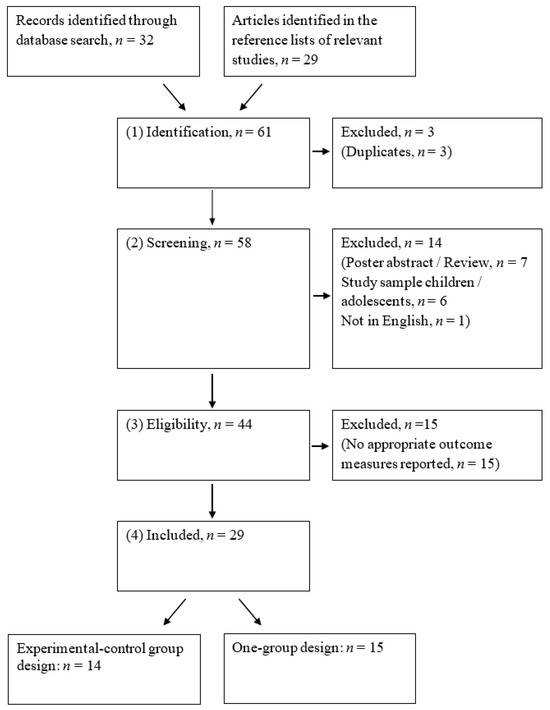
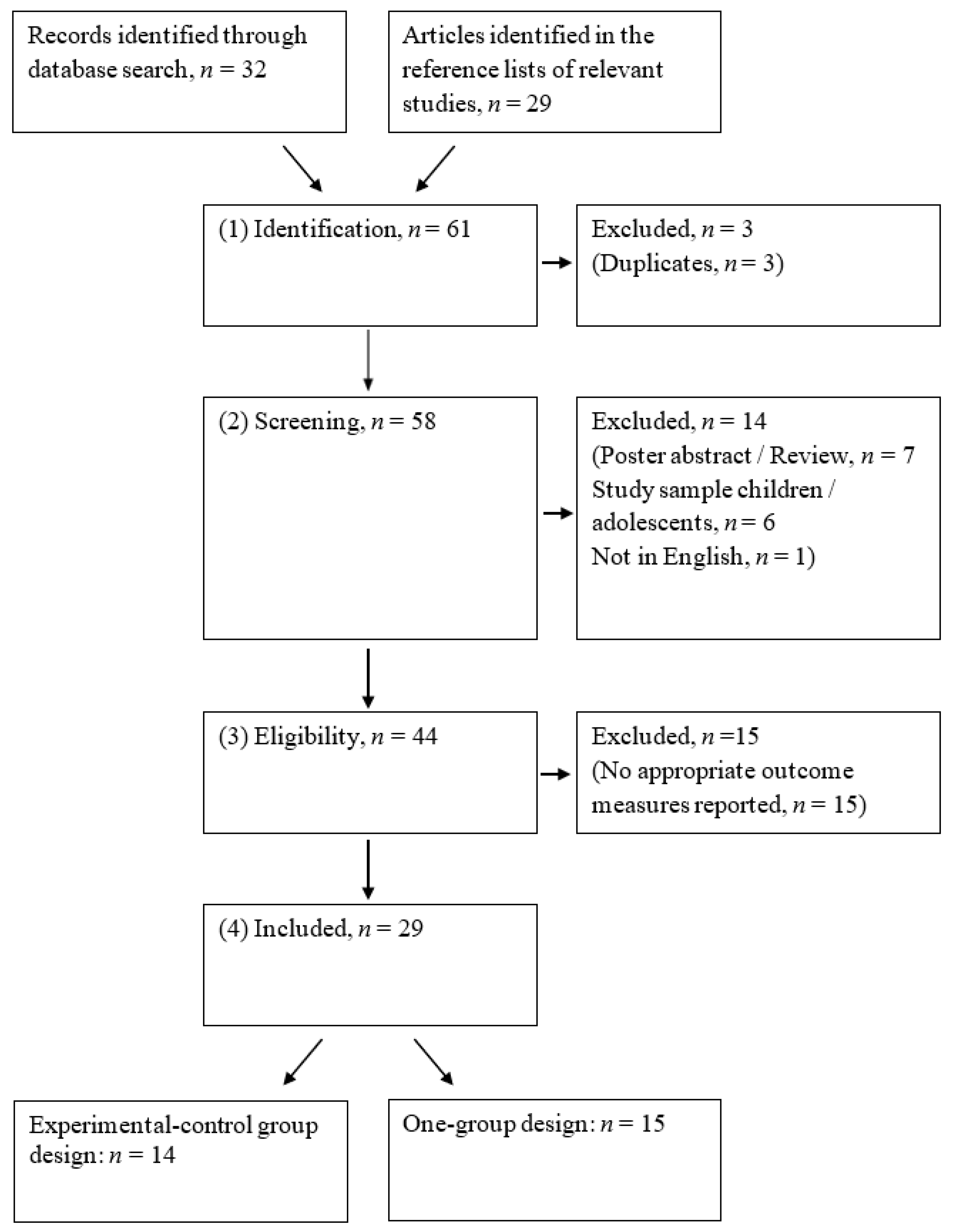
Following the database search, the records were pooled in an Excel file. After deleting duplicates, author JS screened the titles and abstracts of the identified records to identify the relevant ones for full-text screening. During the screening phase, studies that were not published in English or involved children or adolescents were excluded. Poster abstracts, reviews, case reports, and studies without extractable data were also excluded. During full-text screening, articles were evaluated for eligibility. Hereby, we observed that the included studies employed a wide range of research designs. Several studies compared cholesterol levels between “aggressive” and “non-aggressive” or “less aggressive” individuals (experimental–control group design). In other studies, correlations were calculated between cholesterol levels and questionnaire-based measures of aggression (one-group design). The two study designs were handled differently in the analysis. Experimental-control group design studies were eligible if they reported serum cholesterol levels in “aggressive” and “non-aggressive” or “less aggressive” individuals. One-group design studies were eligible if they reported correlations between serum cholesterol levels and a quantitative measure of aggression. The full-text screening was repeated independently by another author (MF). The two authors discussed and resolved any inconsistencies in the eligible records they identified. Finally, 29 records were included in the meta-analyses, 14 with an experimental-control group design and 15 with a one-group design. A schematic overview is shown in Figure 1.
Figure 1.
PRISMA-flowchart of study selection.
2.3. Data Extraction
Data were extracted from each included study using a standardized form. For all studies, information on mean age and sex distribution was collected. In experimental–control group designs, sample sizes were recorded separately for the experimental group (e.g., more aggressive/violent individuals) and the control group (e.g., less aggressive/non-violent individuals), and each group was described according to the characteristics reported in the study. Mean serum cholesterol levels with corresponding standard deviations were also extracted. For one-group designs, data extracted included the total sample size, the specific aggression questionnaire used, and the correlation coefficient between serum cholesterol and aggression scores.
All reported cholesterol concentrations were converted to a common unit of measurement (mg/dL) for consistency across studies. When necessary, values originally reported in mmol/L were converted using the standard conversion formula: mg/dL = mmol/L × 38.67.
2.4. Meta-Analyses
A meta-analysis of studies with experimental–control group designs was conducted using the META ANALYSIS CONTINUOUS procedure in IBM SPSS Statistics version 29 (IBM, Armonk, NY, USA). For each study, means, standard deviations, and sample sizes for the experimental and control group were entered. Virkkunen [34] included various patient groups, so we considered the groups separately and analyzed the respective data as two studies reported in one paper.
Standardized mean differences (Hedges’ g) were calculated for each study. The overall pooled effect size was estimated using a random-effects model, with between-study variance (τ2) estimated via restricted maximum likelihood (REML). Heterogeneity was assessed using Cochran’s Q statistic and the I2 index. To obtain more robust and conservative estimates, a Knapp–Hartung adjustment was applied.
For the meta-analysis of one-group studies, studies reporting Pearson’s correlation coefficients (r) between cholesterol levels and measures of aggression were included. All r values were subsequently Fisher-z transformed using the formula z = 0.5 × ln((1 + r)/(1 − r)) to stabilize the variance. The sampling variance of each transformed effect size was calculated as Var(z) = 1/(n − 3), where n denotes the sample size of the respective study. When multiple effect sizes were reported within the same study sample (e.g., for different measures of aggression), these dependent effects were combined into a single composite effect size to maintain statistical independence at the study level. The composite Fisher’s z value for each study sample was calculated as an inverse-variance weighted mean:
z(combined) = Σ(wi × zi)/Σwi, with weights defined as wi = 1/Var(zi). The corresponding sampling variance of the composite effect size was computed as Var(z(combined)) = 1/Σwi.
These pooled Fisher’s z values and their sampling variances were then used as study-level inputs for the meta-analysis conducted in IBM SPSS Statistics version 31. The analyses were performed using the META ANALYSIS CONTINUOUS (Pre-Calculated Effect Sizes) procedure. A random-effects model with restricted maximum likelihood (REML) estimation was applied to account for between-study variability (τ2). Heterogeneity was assessed using Cochran’s Q statistic and the I2 index. A Knapp–Hartung adjustment was applied.
In both analyses, meta-analytic forest plots were generated to visualize the relationship between serum cholesterol and aggression. Each study is displayed as blue square, with its position corresponding to the reported effect size. The size of each point reflects the relative weight of the study in the meta-analysis. Horizontal lines through the points indicate the 95% confidence intervals for each study. The total effect size across all studies is depicted as a diamond at the bottom of the plot, with the width representing the 95% confidence interval of the overall estimate. Each study in both the forest and funnel plots was labeled consistently to allow cross-referencing with the superscript numbers in Table 1 and Table 2. Subsequently, potential publication bias was examined through visual inspection of the funnel plot and Egger’s regression test for funnel plot asymmetry.
Table 1.
Characteristics of the 15 studies (14 records *) with an experimental-control group design.
Table 2.
Characteristics of the 17 studies (15 records *) with an experimental-control group design.
2.5. Additional Statistical Comparisons
Moderator analyses were conducted to explore whether sex and psychiatric status (clinical vs. non-clinical populations) moderated the relationship between serum cholesterol and aggression. In addition, chi-square tests were performed to examine whether the proportions of men and women, as well as the prevalence of psychiatric patients, differed between the two meta-analyses, and whether these differences could account for the observed variation in meta-analytic outcomes.
3. Results
3.1. Meta-Analysis of Studies with an Experimental-Control Group Design
Fourteen records were included in the meta-analysis of studies using an experimental-control group design. Because Virkkunen [34] reported results for two distinct groups (homicidal offenders with antisocial personality and homicidal offenders with intermittent explosive disorder), each compared with individuals without a tendency to violence, we treated these groups separately and analyzed the corresponding data as two independent studies reported within a single paper. Consequently, the 15 studies derived from 14 records comprised a total of 3345 participants. Nine studies were conducted before the year 2000, and six studies were conducted in or after the year 2000. Only a single study, published in 2024, can be considered truly recent. The majority of the studies were carried out in the United States (n = 5). The experimental group comprised the more aggressive/violent sample in each study, whereas the control group consisted of the non-aggressive or less aggressive/violent sample (see Table 1 for further information).
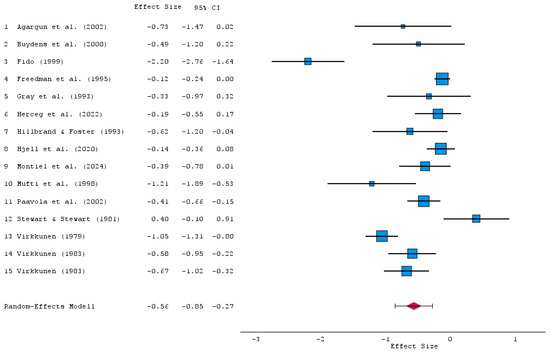
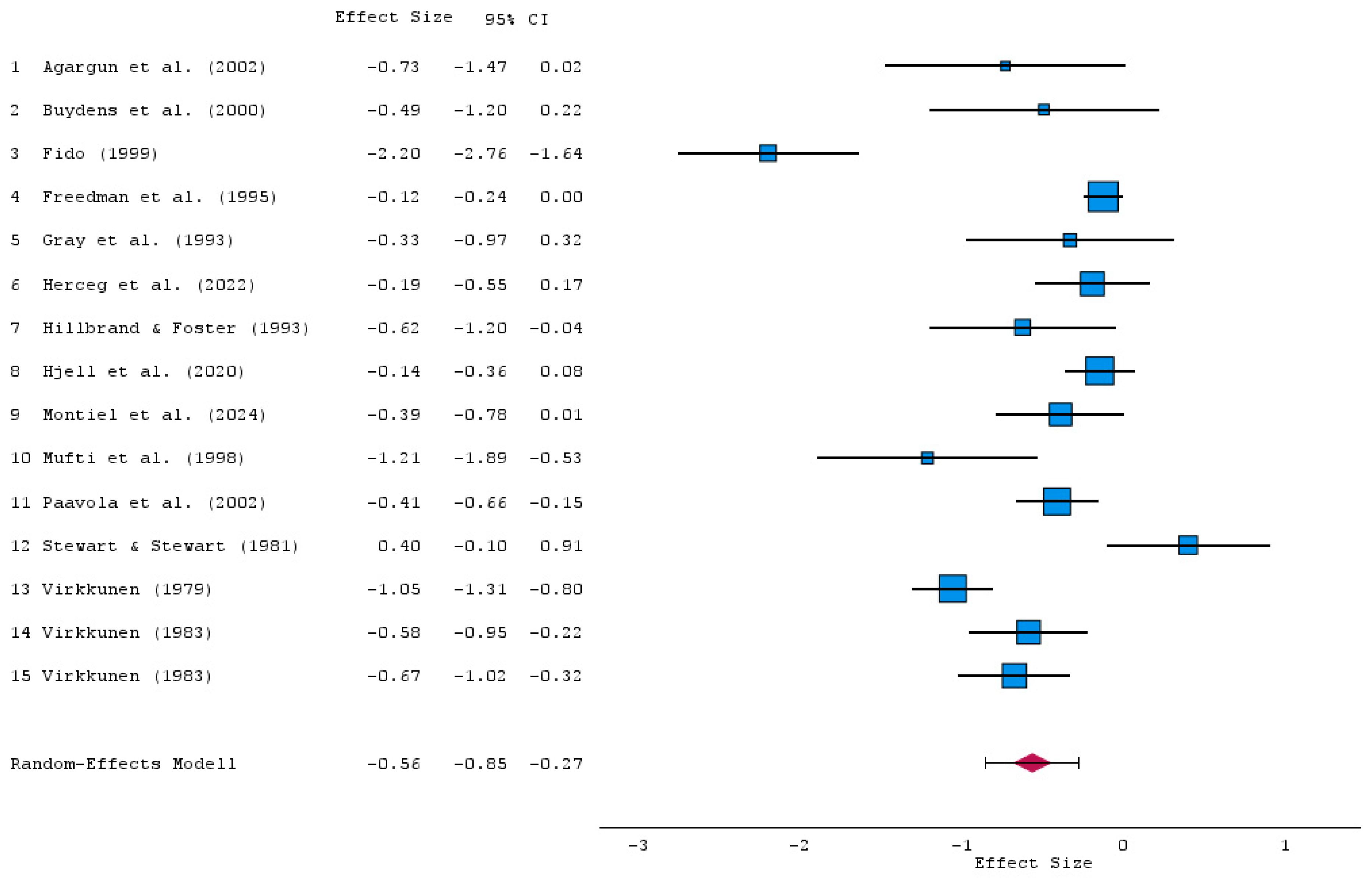
The total effect size was significant (b = −0.56, SE = 0.15, t = −3.74, p = 0.002). The regression coefficient was negative, indicating that “aggressive” experimental groups had lower cholesterol levels compared to “less aggressive” control groups. The analysis, however, revealed significant heterogeneity across studies (Q(14) = 113.13, p < 0.001; I2 = 91.0%) and a considerable variability in effect sizes (τ2 = 0.28), suggesting that the magnitude of the effects differed substantially between studies. For further details, see Figure 2.
Figure 2.
Forest plot for studies [4,20,25,26,27,28,29,30,31,32,33,34,35,58] with an experimental-control group design (Effect size = Hedges’ g, the size of each blue square reflects the study’s relative weight. Horizontal lines indicate 95% confidence intervals. The purple diamond represents the overall effect size; its width reflects the corresponding 95% confidence interval).
Given the presence of significant heterogeneity, a moderator analysis was conducted. We examined the influence of two moderators, i.e., percentage of male participants and (forensic) psychiatric patients (=1) versus others/general population (=0), on effect size (Studies involving (forensic) psychiatric patients were indicated by a # in Table 1). The results showed no significant effects of either moderator on the effect size (percentage of male participants: b = −0.20, SE = 0.48, p = 0.688; (forensic) psychiatric patients versus others: b = 0.44, SE = 0.29, p = 0.152).
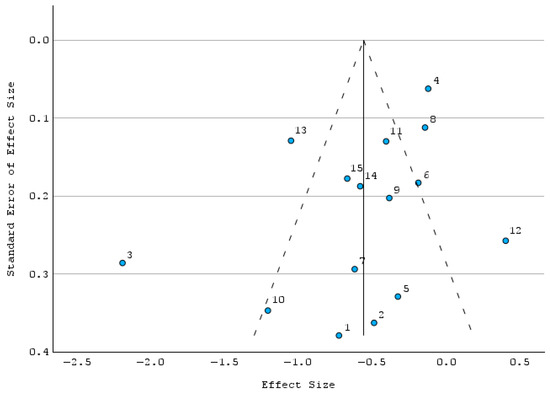
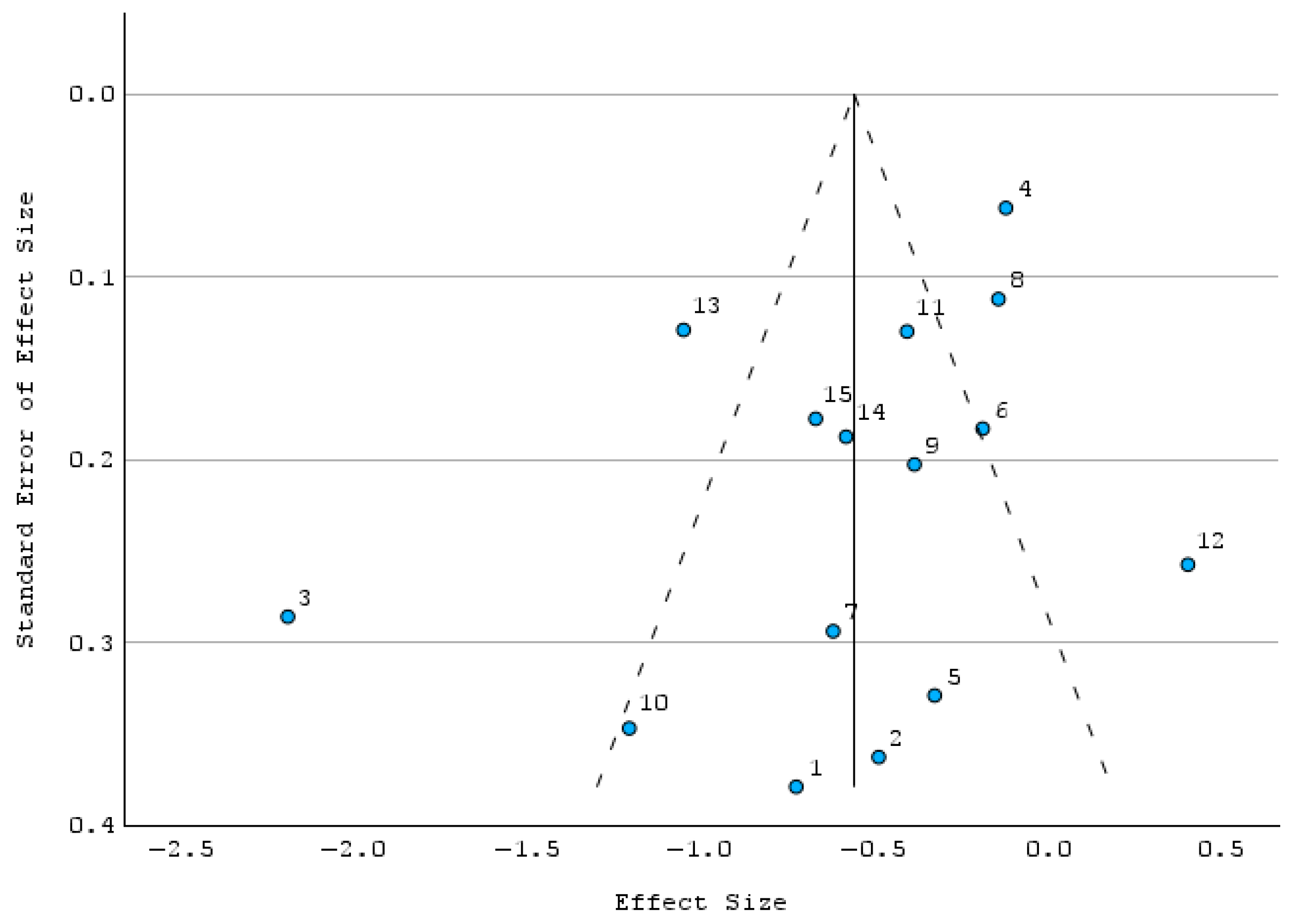
Publication bias was assessed using Egger’s regression test for funnel plot asymmetry. The test indicated no significant funnel plot asymmetry (Intercept = −0.18, t(13) = −0.47, p = 0.647; see Figure 3).
Figure 3.
Funnel plot for studies with an experimental-control group design (Effect size = Hedges’ g).
3.2. Meta-Analysis of Studies with a One-Group Design
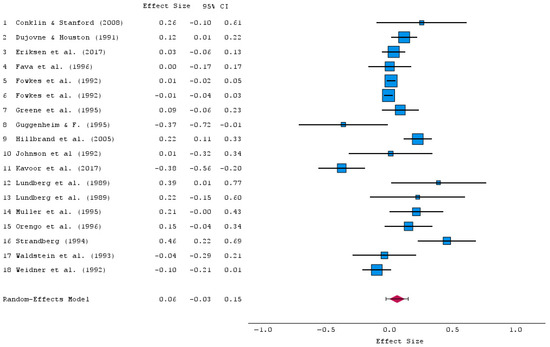
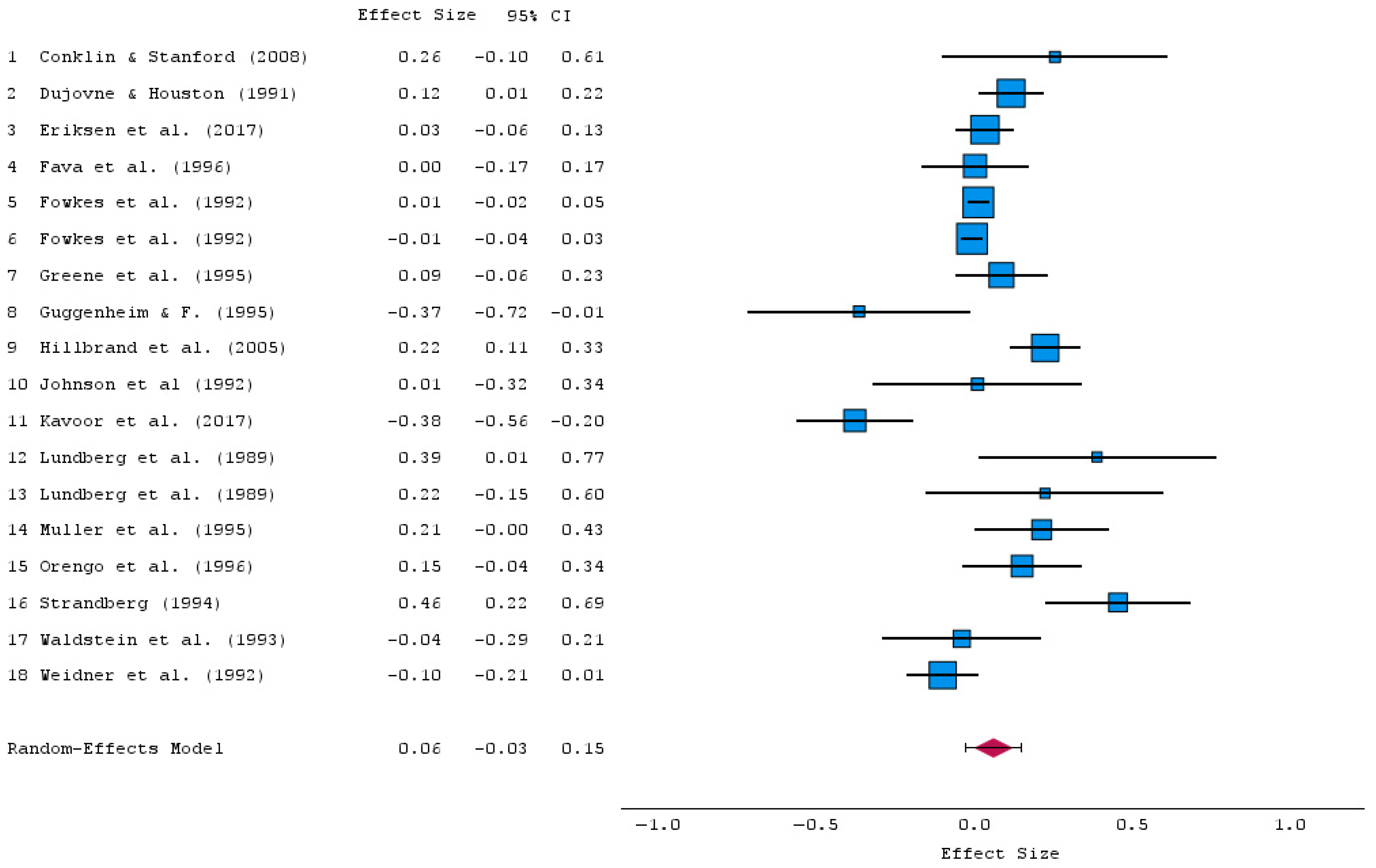
Fifteen records were included in the meta-analysis of studies using a one-group design. Because Fowkes et al. [36] and Lundberg et al. [38] reported results separately for male and female individuals, the corresponding data were treated as two independent studies within a single paper. Consequently, 17 studies were derived from the 15 records, comprising a total of 2940 participants. Three articles were published after the year 2000, and 12 before 2000, indicating that most of the included studies are relatively outdated. The majority of studies were conducted in the United States (n = 9). A variety of aggression questionnaires were employed across the studies (see Table 2 for further details).The total effect size was not statistically significant (b = 0.07, SE = 0.05, t = 1.47, p = 0.160), indicating that serum cholesterol levels were not significantly associated with measures of aggression. Significant heterogeneity was observed across studies (Q(16) = 67.94, p < 0.001, I2 = 90.8%), reflecting substantial variability in effect sizes between studies (τ2 = 0.03). Further details are presented in the forest plot shown in Figure 4.
Figure 4.
Forest plot for studies [23,24,36,37,38,39,40,41,42,43,44,45,46,47,48,49] with a one-group design (Effect size = (pooled) Fisher-z values, the size of each blue square reflects the study’s relative weight. Horizontal lines indicate 95% confidence intervals. The purple diamond represents the overall effect size; its width reflects the corresponding 95% confidence interval).
Given the presence of significant heterogeneity, a moderator analysis was conducted. We examined the influence of two moderators, i.e., percentage of male participants and (forensic) psychiatric patients (=1) versus others/general population (=0), on effect size (Studies involving (forensic) psychiatric patients were indicated by a # in Table 2). The results showed no significant effects of either moderator on the effect size (percentage of male participants: b = 0.03, SE = 0.15, p = 0.863; (forensic) psychiatric patients versus others: b = −0.18, SE = 0.10, p = 0.082).
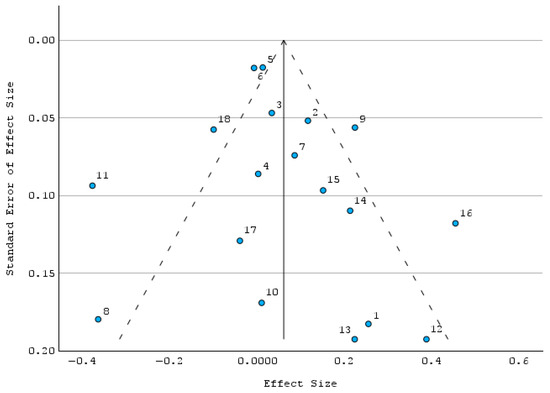
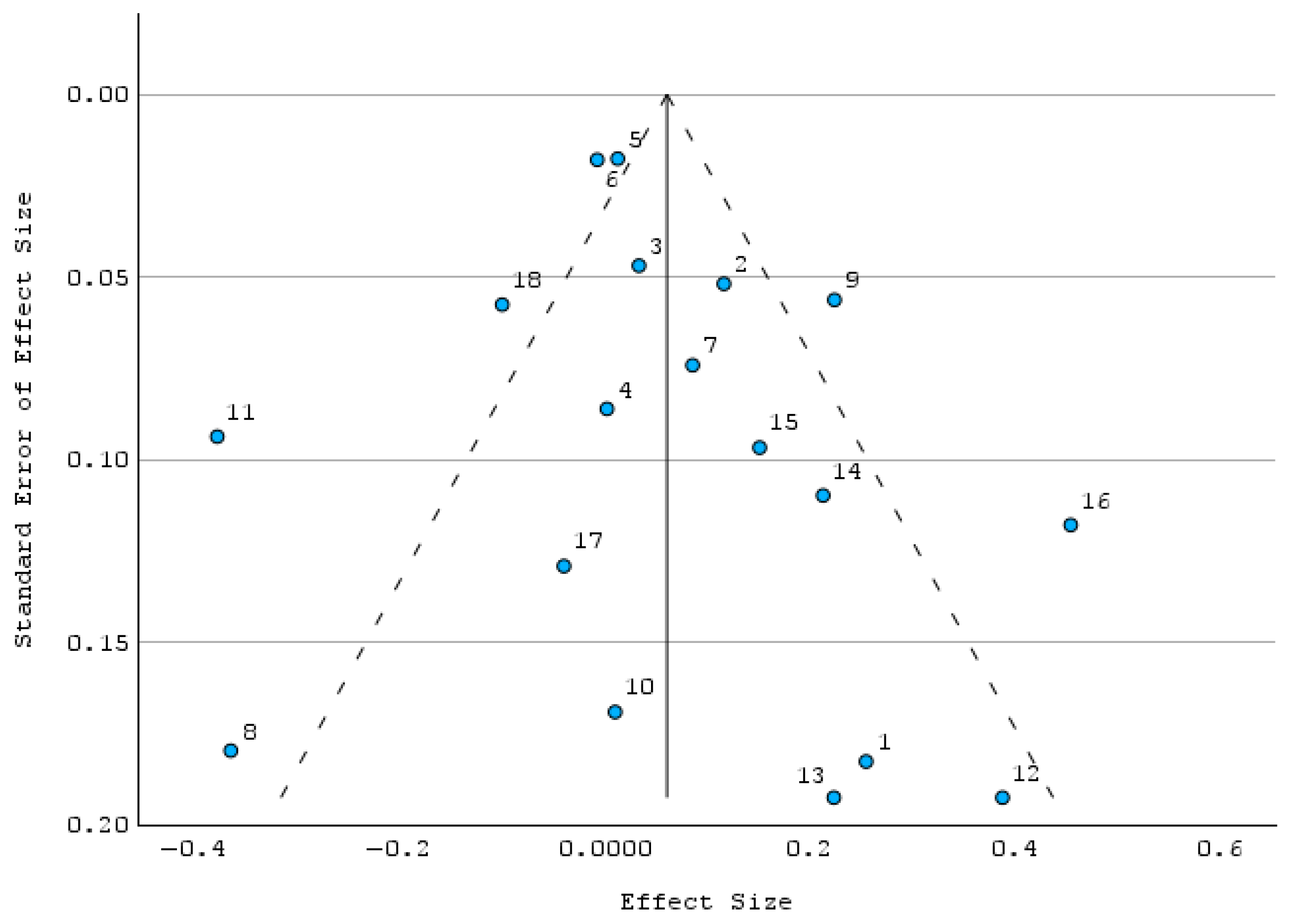
Publication bias was assessed using Egger’s regression test for funnel plot asymmetry. The test indicated no significant funnel plot asymmetry (Intercept = 0.03, t(15) = 0.27, p = 0.793; see Figure 5).
Figure 5.
Funnel plot for studies with a one-group design (Effect size = (pooled) Fisher-z values).
3.3. Comparing Study Samples
Looking at the sample characteristics shown in Table 1 and Table 2, substantial differences emerged between studies using an experimental-control group design and those employing a one-group design. Regarding sex distribution, for example, the experimental—control group studies included 2997 men (89.60%) and 348 women (10.40%), whereas the one-group studies comprised 1610 men (54.76%) and 1330 women (45.24%). A chi-square test indicated that the sex distribution differed significantly between the two design types, χ2(1) = 970.19, p < 0.001, with a large effect size (Cramer’s V = 0.393). Specifically, women were markedly overrepresented in the one-group design studies (standardized residual = 19.5).
A similar pattern was observed for psychiatric status. In the experimental—control group design studies, 1633 participants (48.82%) were psychiatric patients, compared to 722 participants (24.56%) in the one-group studies. The proportion of psychiatric versus non-psychiatric participants differed significantly across design types, χ2(1) = 393.09, p < 0.001, though with a moderate effect size (Cramer’s V = 0.250). Here, psychiatric patients were relatively less common in the one-group design studies (standardized residual = −11.4).
4. Discussion
In summary, our systematic meta-analysis showed a significant association between lower cholesterol levels and higher aggression in studies comparing blood lipids between more and less aggressive groups. However, this effect was not observed in studies using a one-group design in which aggression and cholesterol were correlated within the same sample. Notably, both analyses exhibited substantial heterogeneity, indicating that underlying methodological and sample-related factors likely contribute to the divergent findings.
Several explanations may account for this discrepancy. A central factor may be social desirability bias, which strongly affects self-report measures of aggression [60]. In the case–control studies, aggression was often assessed using objective indicators such as documented violent offenses or time spent in isolation due to disruptive behavior. In contrast, studies in the one-group analysis predominantly relied on self-report questionnaires. Social desirability is a well-established source of underreporting in psychological assessments, particularly for anger [61] and aggression [62]. Supporting this, low social desirability scores have been found to predict violent recidivism [63], and impression management has been identified as a major influencing factor in aggression-related reporting [62].
A second explanatory factor concerns differences in sample composition. The case–control meta-analysis included a substantially higher proportion of psychiatric patients (48.82%), compared to the one-group design (24.56%). Psychiatric samples—especially those involving schizophrenia or severe affective disorders—may exhibit distinct biological mechanisms linking cholesterol to aggression.
A third factor involves gender distribution. The case–control studies included only 10.40% women, whereas women accounted for 45.24% in the one-group studies. Evidence indicates that the cholesterol–aggression relationship may differ by sex. While one study was able to associate low cholesterol with aggression in female schizophrenia patients, similar to the findings in men [30], inverse correlations have been reported exclusively for men in general psychiatric settings, where low cholesterol predicted post-discharge violence [38]. Conversely, a large study of 28,905 Japanese women found that higher cholesterol levels were associated with increased suicide risk [64]. These divergent patterns in women may reflect a complex sex-specific interaction between cholesterol levels and serotonergic genetic variants, such as the HTR2A-1438A/G polymorphism, which modulates maladaptive impulsivity. In this context, higher cholesterol levels appear to amplify genotype effects [65], potentially increasing susceptibility to impulsive or self-directed aggression in a sex-specific manner.
On the other hand, the predominantly male-specific findings linking low cholesterol to increased impulsive behavior are consistent with the proposed evolutionary hypothesis. In ancestral environments, risk-taking behaviors such as competitive foraging and hunting were more commonly performed by males, potentially shaping sex-specific biological responses to perceived resource scarcity.
Together, these findings underscore the importance of considering subgroup-specific mechanisms and the influence of key confounders when interpreting associations between cholesterol and aggression.
An additional confound may be the inconsistent operationalization of “low” cholesterol across studies. For example, Herceg et al. [30] and Mufti et al. [32] dichotomized cholesterol at 180 mg/dL (as suggested by [5]), while other studies examined correlations across the full concentration range (e.g., [26]) or reported considerably lower mean values, around 60 mg/dL [38]. Hillbrand et al. [31], on the other hand, thought the distinction below and above 200 mg/dL, with means of 194 mg/dL for aggressive and 225 mg/dL for less aggressive participants. Such methodological variability may substantially contribute to the heterogeneity observed in our analyses, making it difficult to determine a specific cholesterol threshold that could serve as a benchmark for aggression. Nevertheless, Hillbrand and Spitz [66], in their systematic review, suggested that a threshold for physical aggression may lie in the range of approximately 150–160 mg/dL.
A potential limitation of the current analysis is that two studies reported differing correlations depending on the type of aggression measured (i.e., Fowkes et al. [49] and Conklin & Stanford [36]); nevertheless, the coefficients were pooled. Future research could address this by differentiating between forms of aggression, such as impulsive versus reactive, to gain clearer insights into the relationship between cholesterol and aggressive behavior. Another limitation that must be noted is that only a few recent studies were included in the meta-analysis. This is due to the fact that the relationship between aggression and cholesterol has been studied much less frequently in recent years. Finally, the present study is limited to a meta-analytic approach; while this allows for a quantitative synthesis of the existing literature, a systematic literature review could provide additional and complementary insights, for example, by incorporating qualitative findings.
Ultimately, two fundamental questions remain unresolved and warrant systematic investigation. (1) What are the precise molecular mechanisms through which low peripheral cholesterol levels influence central serotonergic transmission? (2) Under what conditions do individuals exhibit reduced cholesterol in the absence of pharmacological interventions such as statin treatment? While statin use initially motivated much of the early work in this field, it does not fully explain the patterns observed in the present meta-analysis.
5. Conclusions
In conclusion, accumulating evidence points to a relationship between low serum cholesterol levels and increased aggression; however, this association appears to be context-dependent rather than universally applicable. The current meta-analysis suggests that the effect is more pronounced in male psychiatric populations, whereas evidence for women or for the general population remains inconsistent. The substantial variability in effect sizes across studies further indicates that additional moderating or confounding factors of currently unknown origin likely shape this relationship. Moving forward, a broader scientific effort is required to advance beyond correlational findings and to elucidate the molecular and neurobiological mechanisms that may underpin the cholesterol-aggression link.
Author Contributions
Conceptualization, M.F. and J.S.; Validation, M.F. and J.S.; Formal Analysis, J.S.; Investigation, M.W. and J.S.; Resources, M.D.; Data Curation, J.S.; Writing—Original Draft Preparation, M.F. and J.S.; Writing—Review and Editing, M.W. and M.D.; Visualization, J.S.; Supervision, M.D.; Project Administration, J.S. All authors have read and agreed to the published version of the manuscript.
Funding
This research received no external funding.
Institutional Review Board Statement
Not applicable.
Informed Consent Statement
Not applicable.
Data Availability Statement
No new data were created or analyzed in this study.
Conflicts of Interest
The authors declare no conflicts of interest.
References
- Fritz, M.; Soravia, S.-M.; Dudeck, M.; Malli, L.; Fakhoury, M. Neurobiology of Aggression—Review of Recent Findings and Relationship with Alcohol and Trauma. Biology 2023, 12, 469. [Google Scholar] [CrossRef] [Scilit]
- Caspi, A.; McClay, J.; Moffitt, T.E.; Mill, J.; Martin, J.; Craig, I.W.; Taylor, A.; Poulton, R. Role of Genotype in the Cycle of Violence in Maltreated Children. Science 2002, 297, 851–854. [Google Scholar] [CrossRef] [Scilit]
- Fritz, M.; Rösel, F.; Dobler, H.; Streb, J.; Dudeck, M. Childhood Trauma, the Combination of MAO-A and COMT Genetic Polymorphisms and the Joy of Being Aggressive in Forensic Psychiatric Patients. Brain Sci. 2021, 11, 1008. [Google Scholar] [CrossRef] [Scilit]
- Virkkunen, M. Serum Cholesterol in Antisocial Personality. Neuropsychobiology 1979, 5, 27–30. [Google Scholar] [CrossRef] [Scilit] [PubMed]
- Jacobs, D.; Blackburn, H.; Higgins, M.; Reed, D.; Iso, H.; McMillan, G.; Neaton, J.; Nelson, J.; Potter, J.; Rifkind, B. Report of the Conference on Low Blood Cholesterol: Mortality Associations. Circulation 1992, 86, 1046–1060. [Google Scholar] [CrossRef] [Scilit]
- Muldoon, M.F.; Manuck, S.B.; Matthews, K.A. Lowering Cholesterol Concentrations and Mortality: A Quantitative Review of Primary Prevention Trials. BMJ 1990, 301, 309–314. [Google Scholar] [CrossRef] [Scilit]
- Muldoon, M.F.; Manuck, S.B. Health Through Cholesterol Reduction: Are There Unforeseen Risks? Ann. Behav. Med. 1992, 14, 101–108. [Google Scholar] [CrossRef] [Scilit]
- Muldoon, M.F.; Rossouw, J.E.; Manuck, S.B.; Glueck, C.J.; Kaplan, J.R.; Kaufmann, P.G. Low or Lowered Cholesterol and Risk of Death from Suicide and Trauma. Metabolism 1993, 42, 45–56. [Google Scholar] [CrossRef] [Scilit] [PubMed]
- Lindberg, G.; Rastam, L.; Gullberg, B.; Eklund, G.A. Low Serum Cholesterol Concentration and Short Term Mortality from Injuries in Men and Women. BMJ 1992, 305, 277–279. [Google Scholar] [CrossRef] [Scilit]
- Neaton, J.D.; Wentworth, D.N. Low Serum Cholesterol and Risk of Death from AIDS. AIDS 1997, 11, 929–930. [Google Scholar]
- Bathum, L.; Depont Christensen, R.; Engers Pedersen, L.; Lyngsie Pedersen, P.; Larsen, J.; Nexøe, J. Association of Lipoprotein Levels with Mortality in Subjects Aged 50 + without Previous Diabetes or Cardiovascular Disease: A Population-Based Register Study. Scand. J. Prim. Health Care 2013, 31, 172–180. [Google Scholar] [CrossRef] [Scilit]
- Schupf, N.; Costa, R.; Luchsinger, J.; Tang, M.; Lee, J.H.; Mayeux, R. Relationship Between Plasma Lipids and All-Cause Mortality in Nondemented Elderly. J. Am. Geriatr. Soc. 2005, 53, 219–226. [Google Scholar] [CrossRef] [Scilit]
- Kaplan, J.R.; Manuck, S.B.; Shively, C. The Effects of Fat and Cholesterol on Social Behavior in Monkeys. Psychosom. Med. 1991, 53, 634–642. [Google Scholar] [CrossRef] [Scilit] [PubMed]
- Kaplan, J.R.; Shively, C.A.; Fontenot, M.B.; Morgan, T.M.; Howell, S.M.; Manuck, S.B.; Muldoon, M.F.; Mann, J.J. Demonstration of an Association among Dietary Cholesterol, Central Serotonergic Activity, and Social Behavior in Monkeys. Psychosom. Med. 1994, 56, 479–484. [Google Scholar] [CrossRef] [Scilit]
- Kaplan, J.R.; Fontenot, M.B.; Manuck, S.B.; Muldoon, M.F. Influence of Dietary Lipids on Agonistic and Affiliative Behavior in Macaca fascicularis. Am. J. Primatol. 1996, 38, 333–347. [Google Scholar] [CrossRef] [Scilit]
- Tong, X.-K.; Trigiani, L.J.; Hamel, E. High Cholesterol Triggers White Matter Alterations and Cognitive Deficits in a Mouse Model of Cerebrovascular Disease: Benefits of Simvastatin. Cell Death Dis. 2019, 10, 89. [Google Scholar] [CrossRef] [Scilit]
- Yang, X.; Yao, K.; Zhang, M.; Zhang, W.; Zu, H. New Insight into the Role of Altered Brain Cholesterol Metabolism in the Pathogenesis of AD: A Unifying Cholesterol Hypothesis and New Therapeutic Approach for AD. Brain Res. Bull. 2025, 224, 111321. [Google Scholar] [CrossRef] [Scilit]
- Aguiar, A.; Giaquinto, P.C. Low Cholesterol Is Not Always Good: Low Cholesterol Levels Are Associated with Decreased Serotonin and Increased Aggression in Fish. Biol. Open 2018, 7, bio030981. [Google Scholar] [CrossRef] [Scilit]
- Muldoon, M.F.; Kaplan, J.R.; Manuck, S.B.; John Mann, J. Effects of a Low-Fat Diet on Brain Serotonergic Responsivity in Cynomolgus Monkeys. Biol. Psychiatry 1992, 31, 739–742. [Google Scholar] [CrossRef] [Scilit]
- Buydens-Branchey, L.; Branchey, M.; Hudson, J.; Fergeson, P. Low HDL Cholesterol, Aggression and Altered Central Serotonergic Activity. Psychiatry Res. 2000, 93, 93–102. [Google Scholar] [CrossRef] [Scilit] [PubMed]
- Alvarez, J.C.; Cremniter, D.; Lesieur, P.; Gregoire, A.; Gilton, A.; Macquin-Mavier, I.; Jarreau, C.; Spreux-Varoquaux, O. Low Blood Cholesterol and Low Platelet Serotonin Levels in Violent Suicide Attempters. Biol. Psychiatry 1999, 45, 1066–1069. [Google Scholar] [CrossRef] [Scilit] [PubMed]
- Kaplan, J.R.; Klein, K.P.; Manuck, S.B. Cholesterol Meets Darwin: Public Health and Evolutionary Implications of the Cholesterol-Serotonin Hypothesis. Evol. Anthropol. Issues News Rev. 1997, 6, 28–37. [Google Scholar] [CrossRef]
- Guggenheim, C.B.; Foster, H.G. Serum Cholesterol and Perception of Anger and Sadness. Psychol. Rep. 1995, 77, 1343–1345. [Google Scholar] [CrossRef] [Scilit] [PubMed]
- Kavoor, A.R.; Mitra, S.; Kumar, S.; Sisodia, A.K.; Jain, R. Lipids, Aggression, Suicidality and Impulsivity in Drug-Naïve/Drug-Free Patients of Schizophrenia. Asian J. Psychiatry 2017, 27, 129–136. [Google Scholar] [CrossRef] [Scilit]
- Agargun, M.Y.; Şekeroğlu, M.R.; Kara, H.; Özer, Ö.A.; Tombul, T.; Kiran, Ü.; Selvi, Y. Sleep-related Violence and Low Serum Cholesterol: A Preliminary Study. Psychiatry Clin. Neurosci. 2002, 56, 195–198. [Google Scholar] [CrossRef] [Scilit]
- Montiel, F.; Karanassios, G.; Streb, J.; Dudeck, M.; Fritz, M. The Relationship Between Serum Cholesterol, Triglycerides, and Self-Reported Appetitive and Reactive Aggression, as Well as Violent Crimes in Male Forensic Patients with Substance Use Disorder. Psychiatry Int. 2024, 5, 823–830. [Google Scholar] [CrossRef] [Scilit]
- Hjell, G.; Mørch-Johnsen, L.; Holst, R.; Tesli, N.; Bell, C.; Lunding, S.H.; Rødevand, L.; Werner, M.C.F.; Melle, I.; Andreassen, O.A.; et al. Disentangling the Relationship between Cholesterol, Aggression, and Impulsivity in Severe Mental Disorders. Brain Behav. 2020, 10, e01751. [Google Scholar] [CrossRef] [Scilit]
- Freedman, D.S.; Byers, T.; Barrett, D.H.; Stroup, N.E.; Eaker, E.; Monroe-Blum, H. Plasma Lipid Levels and Psychologic Characteristics in Men. Am. J. Epidemiol. 1995, 141, 507–517. [Google Scholar] [CrossRef] [Scilit]
- Gray, R.F.; Corrigan, F.M.; Strathdee, A.; Skinner, E.R.; Van Rhijn, A.G.; Horrobin, D.F. Cholesterol Metabolism and Violence: A Study of Individuals Convicted of Violent Crimes. NeuroReport 1993, 4, 754–756. [Google Scholar] [CrossRef] [Scilit]
- Herceg, D.; Mimica, N.; Herceg, M.; Puljić, K. Aggression in Women with Schizophrenia Is Associated with Lower HDL Cholesterol Levels. Int. J. Mol. Sci. 2022, 23, 11858. [Google Scholar] [CrossRef] [Scilit]
- Hillbrand, M.; Foster, H.G. Serum Cholesterol Levels and Severity of Aggression. Psychol. Rep. 1993, 72, 270. [Google Scholar] [CrossRef] [Scilit] [PubMed]
- Mufti, R.M.; Balon, R.; Arfken, C.L. Low Cholesterol and Violence. Psychiatr. Serv. 1998, 49, 221–224. [Google Scholar] [CrossRef] [Scilit]
- Paavola, P.; Repo-Tiihonen, E.; Tiihonen, J. Serum Lipid Levels and Violence among Finnish Male Forensic Psychiatric Patients. J. Forensic Psychiatry 2002, 13, 555–568. [Google Scholar] [CrossRef] [Scilit]
- Virkkunen, M. Serum Cholesterol Levels in Homicidal Offenders. Neuropsychobiology 1983, 10, 65–69. [Google Scholar] [CrossRef] [Scilit] [PubMed]
- Fido, A.A. Serum Cholesterol Concentrations in Prisoners Charged with Violent Crimes. Saudi Med. J. 1999, 20, 287–290. [Google Scholar]
- Conklin, S.M.; Stanford, M.S. Premeditated Aggression Is Associated with Serum Cholesterol in Abstinent Drug and Alcohol Dependent Men. Psychiatry Res. 2008, 157, 283–287. [Google Scholar] [CrossRef] [Scilit]
- Dujovne, V.F.; Houston, B.K. Hostility-Related Variables and Plasma Lipid Levels. J. Behav. Med. 1991, 14, 555–565. [Google Scholar] [CrossRef] [Scilit]
- Eriksen, B.M.S.; Bjørkly, S.; Lockertsen, Ø.; Færden, A.; Roaldset, J.O. Low Cholesterol Level as a Risk Marker of Inpatient and Post-Discharge Violence in Acute Psychiatry—A Prospective Study with a Focus on Gender Differences. Psychiatry Res. 2017, 255, 1–7. [Google Scholar] [CrossRef] [Scilit]
- Fava, M.; Abraham, M.; Pava, J.; Shuster, J.; Rosenbaum, J. Cardiovascular Risk Factors in Depression. Psychosomatics 1996, 37, 31–37. [Google Scholar] [CrossRef] [Scilit]
- Fowkes, F.G.R.; Leng, G.C.; Donnan, P.T.; Housley, E.; Deary, I.J.; Riemersma, R.A. Serum Cholesterol, Triglycerides, and Aggression in the General Population. Lancet 1992, 340, 995–998. [Google Scholar] [CrossRef] [Scilit] [PubMed]
- Johnson, E.H.; Collier, P.; Nazzaro, P.; Gilbert, D.C. Psychological and Physiological Predictors of Lipids in Black Males. J. Behav. Med. 1992, 15, 285–298. [Google Scholar] [CrossRef] [Scilit]
- Lundberg, U.; Hedman, M.; Melin, B.; Frankenhaeuser, M. Type A Behavior in Healthy Males and Females as Related to Physiological Reactivity and Blood Lipids. Psychosom. Med. 1989, 51, 113–122. [Google Scholar] [CrossRef] [Scilit]
- Hillbrand, M.; Waite, B.M.; Rosenstein, M.; Harackiewicz, D.; Lingswiler, V.M.; Stehney, M. Serum Cholesterol Concentrations and Non-Physical Aggression in Healthy Adults. J. Behav. Med. 2005, 28, 295–299. [Google Scholar] [CrossRef] [Scilit] [PubMed]
- Waldstein, S.R.; Polefrone, J.M.; Bachen, E.A.; Muldoon, M.F.; Kaplan, J.R.; Manuck, S.B. Relationship of Cardiovascular Reactivity and Anger Expression to Serum Lipid Concentrations in Healthy Young Men. J. Psychosom. Res. 1993, 37, 249–256. [Google Scholar] [CrossRef] [Scilit]
- Weidner, G.; Connor, S.L.; Hollis, J.F.; Connor, W.E. Improvements in Hostility and Depression in Relation to Dietary Change and Cholesterol Lowering: The Family Heart Study. Ann. Intern. Med. 1992, 117, 820–823. [Google Scholar] [CrossRef] [Scilit]
- Strandberg, T.E.; Räikkönen, K.; Partinen, M.; Pihl, S.; Vanhanen, H.; Miettinen, T.A. Associations of Cholesterol Lowering by Statins with Anger and Hostility in Hypercholesterolemic Men. Biol. Psychiatry 1994, 35, 575–577. [Google Scholar] [CrossRef] [Scilit]
- Orengo, C.A.; Kunik, M.E.; Molinari, V.A.; Teasdale, T.A.; Workman, R.H.; Yudofsky, S.C. Association of Serum Cholesterol and Triglyceride Levels with Agitation and Cognitive Function in a Geropsychiatry Unit. J. Geriatr. Psychiatry Neurol. 1996, 9, 53–56. [Google Scholar] [CrossRef] [Scilit] [PubMed]
- Müller, M.M.; Rau, H.; Brody, S.; Elbert, T.; Heinle, H. The Relationship between Habitual Anger Coping Style and Serum Lipid and Lipoprotein Concentrations. Biol. Psychol. 1995, 41, 69–81. [Google Scholar] [CrossRef] [Scilit]
- Greene, R.E.; Houston, B.K.; Holleran, S.A. Aggressiveness, Dominance, Developmental Factors, and Serum Cholesterol Level in College Males. J. Behav. Med. 1995, 18, 569–580. [Google Scholar] [CrossRef] [Scilit]
- Golomb, B.A. Cholesterol and Violence: Is There a Connection? Ann. Intern. Med. 1998, 128, 478–487. [Google Scholar] [CrossRef] [Scilit] [PubMed]
- Tomson-Johanson, K.; Harro, J. Low Cholesterol, Impulsivity and Violence Revisited. Curr. Opin. Endocrinol. Diabetes Obes. 2018, 25, 103–107. [Google Scholar] [CrossRef] [Scilit]
- Wallner, B.; Machatschke, I.H. The Evolution of Violence in Men: The Function of Central Cholesterol and Serotonin. Prog. Neuropsychopharmacol. Biol. Psychiatry 2009, 33, 391–397. [Google Scholar] [CrossRef] [Scilit]
- Sen, P.; Adewusi, D.; Blakemore, A.I.; Kumari, V. How Do Lipids Influence Risk of Violence, Self-Harm and Suicidality in People with Psychosis? A Systematic Review. Aust. N. Z. J. Psychiatry 2022, 56, 451–488. [Google Scholar] [CrossRef] [Scilit]
- Hyde, J.S. How Large Are Gender Differences in Aggression? A Developmental Meta-Analysis. Dev. Psychol. 1984, 20, 722–736. [Google Scholar] [CrossRef]
- Tharu, B.P.; Tsokos, C.P. A Statistical Study of Serum Cholesterol Level by Gender and Race. J. Res. Health Sci. 2017, 17, e00386. [Google Scholar] [PubMed]
- Boston, P.F.; Dursun, S.M.; Reveley, M.A. Cholesterol and Mental Disorder. Br. J. Psychiatry 1996, 169, 682–689. [Google Scholar] [CrossRef] [Scilit] [PubMed]
- Patterson, C.C.; McCrum, E.; McMaster, D.; Kerr, M.; Sykes, D.; Evans, A.E. Factors Influencing Total Cholesterol and High-density Lipoprotein Cholesterol Concentrations in a Population at High Coronary Risk. Acta Med. Scand. 1988, 224, 150–158. [Google Scholar] [CrossRef] [Scilit]
- Stewart, M.A.; Stewart, S.G. Serum Cholesterol in Antisocial Personality: A failure to replicate earlier findings. Neuropsychobiology 1981, 7, 9–11. [Google Scholar] [CrossRef] [Scilit]
- Lenhard, W.; Lenhard, A. Computation of Effect Sizes; ResearchGate: Berlin, Germany, 2017. [Google Scholar]
- Gregoski, M. Measuring Direct and Indirect Aggression: Is There A Response Bias? Psychol. Rep. 2005, 97, 563. [Google Scholar] [CrossRef] [Scilit]
- Fernandez, E.; Woldgabreal, Y.; Guharajan, D.; Day, A.; Kiageri, V.; Ramtahal, N. Social Desirability Bias Against Admitting Anger: Bias in the Test-Taker or Bias in the Test? J. Pers. Assess. 2019, 101, 644–652. [Google Scholar] [CrossRef] [Scilit]
- McEwan, T.E.; Davis, M.R.; MacKenzie, R.; Mullen, P.E. The Effects of Social Desirability Response Bias on STAXI-2 Profiles in a Clinical Forensic Sample. Br. J. Clin. Psychol. 2009, 48, 431–436. [Google Scholar] [CrossRef] [Scilit]
- Mills, J.F.; Loza, W.; Kroner, D.G. Predictive Validity despite Social Desirability: Evidence for the Robustness of Self-report among Offenders. Crim. Behav. Ment. Health 2003, 13, 140–150. [Google Scholar] [CrossRef] [Scilit]
- Svensson, T.; Inoue, M.; Sawada, N.; Charvat, H.; Mimura, M.; Tsugane, S.; the JPHC Study Group; Iwasaki, M.; Sasazuki, S.; Yamaji, T.; et al. High Serum Total Cholesterol Is Associated with Suicide Mortality in Japanese Women. Acta Psychiatr. Scand. 2017, 136, 259–268. [Google Scholar] [CrossRef] [Scilit] [PubMed]
- Tomson, K.; Vaht, M.; Laas, K.; Veidebaum, T.; Harro, J. Effect of a Human Serotonin 5-HT2A Receptor Gene Polymorphism on Impulsivity: Dependence on Cholesterol Levels. J. Affect. Disord. 2016, 206, 23–30. [Google Scholar] [CrossRef] [Scilit] [PubMed]
- Hillbrand, M.; Spitz, R.T. Cholesterol and Aggression. Aggress. Violent Behav. 1999, 4, 359–370. [Google Scholar] [CrossRef] [Scilit]

Disclaimer/Publisher’s Note: The statements, opinions and data contained in all publications are solely those of the individual author(s) and contributor(s) and not of MDPI and/or the editor(s). MDPI and/or the editor(s) disclaim responsibility for any injury to people or property resulting from any ideas, methods, instructions or products referred to in the content. |
© 2026 by the authors. Licensee MDPI, Basel, Switzerland. This article is an open access article distributed under the terms and conditions of the Creative Commons Attribution (CC BY) license.