


Abstract
Coal mining is a hazardous occupation that can adversely affect both the physical and mental health of workers. This study aimed to estimate the pooled prevalence of various mental health outcomes and job burnout among coal miners and to summarize available intervention strategies addressing these conditions. A systematic search of scientific databases, including Scopus, Embase, PubMed and Cochrane Central, was conducted for studies published from 2000 onwards. The study protocol was registered in PROSPERO [CRD42024536144]. Methodological quality of the studies was evaluated using AXIS, ROBINS-I and RoB 2 tools. A random-effects model was applied to estimate pooled prevalences. Of the 14,048 studies identified, 34 studies were included, comprising a total of 38,996 coal miners. The pooled prevalence of job burnout was 53.75% (95% CI: 50.64–56.86%), while depressive symptoms were observed in 35.35% of coal miners (95% CI: 16.43–54.28%; I2 = 97.41%). The pooled prevalence estimates were calculated with substantial heterogeneity (I2 > 90%) and wide prediction intervals indicate considerable variability across studies. These findings should be interpreted with caution due to substantial heterogeneity across studies, which may limit the reliability of pooled estimates. A limited number of studies reported interventions, including an Integrated Approach of Yoga Therapy (IAYT) and peer-based mental health and suicide prevention programs with supervisor training, which demonstrated potential benefits; however, these findings are based on limited and methodologically heterogeneous evidence, and the overall certainty remains low. The findings highlight a substantial burden of mental health problems among coal miners and suggest important policy implications, particularly for integrating mental health screening into periodic occupational health assessments. Addressing personal, social, and work-related determinants through comprehensive workplace strategies may help improve mental well-being and support workforce sustainability in the mining sector.
1. Introduction
Coal, a major non-renewable energy source, has played a significant role in shaping the world’s energy landscape for many years [1]. Globally, mining is considered one of the most hazardous occupations [2]. Workers are continuously exposed to a range of occupational hazards, including physical, chemical, and biological risks. Although the workforce receives fair remuneration, they often contend with long working shifts, physically demanding work environments, potential exposure to occupational hazards, and an elevated risk of workplace accidents [2,3,4]. Such conditions adversely affect the safety and health conditions of the workers, which may subsequently lead to disease, disability or even death [4,5,6,7].
Mental health problems are important yet underrecognized health concerns among coal mine workers [5,6]. The spectrum of mental health issues reported in this population includes hazardous alcohol use, anxiety, depressive symptoms, substance use, and sleep-related problems, which are important predictors of sickness, absenteeism, and workplace injury [8]. Consequently, poor mental health among mine workers represents a significant public health challenge and may adversely influence workers’ productivity, operational efficiency, and overall production outcomes in the mining sector. Workers’ periodic health checkups are typically focused on industry-specific assessments, such as lung function tests, blood parameters, and blood pressure monitoring. Despite the high-risk nature of the occupation, systematic efforts to identify, monitor, or support workers’ mental health remain limited in many mining industries. Mental health screening and support systems are rarely integrated into routine occupational health programs.
Moreover, a notable gap exists in the academic literature, with only one comprehensive review to date addressing mental health outcomes among mine workers, which included workers from multiple sectors such as coal, copper, gold, diamond, platinum, silver, and mining [2]. In response to this gap, the present systematic review and meta-analysis (SRMA) was conducted to provide a focused synthesis of the available evidence. To the best of our knowledge, this is the first review specifically examining mental health outcomes among coal miners worldwide. The objective of the study was to synthesize the pooled prevalence of various mental health outcomes and job burnout and to summarize the mental health intervention measures implemented to address these conditions among coal mine workers.
2. Materials and Methods
This SRMA was registered in the PROSPERO database [CRD42024536144] [9] and was carried out following the PRISMA 2020 guidelines (Tables S1 and S2) [10].
The study selection criteria included cross-sectional studies, stating the burden of different mental health outcomes among coal mine workers. Randomised controlled trials (RCTs), cluster-RCTs, quasi-RCTs, and controlled before-and-after studies stating any mental health interventions among coal mine workers were also included. The time period considered was from the year 2000 onwards. No language restrictions or geographic restrictions were imposed in the research.
2.1. Literature Search
Initially, the research question was categorised under different components as per P (Population), E (Exposure), I (Intervention), C (Comparator), and O (Outcome) format (Table S3). The present SRMA focused on Scopus, Embase, PubMed and Cochrane Central. For each component of the concept, ‘MeSH’ and ‘TiAb’ terms were identified. Manual searching was also conducted from included studies, both prospectively from their citations (forward search) and from their reference lists (backward search). The initial search was conducted in April 2024, and the final search took place in March 2025 (Tables S4–S7).
Screening and selection of the studies were carried out in the Rayyan software. Studies were initially screened independently by two reviewers (IS/JM) by titles and abstracts. Following that, the full texts of the relevant papers were assessed for possible inclusion in the review. A PRISMA flow diagram was prepared to portray the process of selecting studies for review. Any disagreements between the two reviewers were resolved through discussion among the reviewers or in consultation with the third reviewer (BSB/SD/DM/MK), who served as the adjudicator.
2.2. Data Extraction and Methodological Quality of the Studies
Using the final Cochrane Data Extraction Form [11], data were extracted from eligible articles. The methodological quality of the included cross-sectional studies, RCTs and quasi-experimental studies was assessed using AXIS [12], RoB 2 tool [13], ROBINS-I tool [14] respectively. Quality assessment was conducted independently by two reviewers, and discrepancies were resolved through discussion until consensus was achieved, with consultation from a third reviewer when necessary.
2.3. Statistical Analysis
Stata software, version 17 (StataCorp, College Station, TX, USA) was used for Meta-analysis. Pooled prevalence with 95% Confidence Intervals (CI) was measured for overall mental health symptoms, depressive symptoms, anxiety symptoms, post-traumatic stress symptoms, and job burnout independently. Given anticipated heterogeneity across studies, random-effects meta-analysis using the Hartung–Knapp–Sidik–Jonkman (HKSJ) method was applied for outcomes with a smaller number of studies. For depressive symptoms (with a larger number of studies), the DerSimonian–Laird method was used, with additional analyses using the REML estimator to assess the robustness of pooled estimates. A leave-one-out sensitivity analysis was performed to evaluate the stability and impact of each individual study on the pooled results. A subgroup analysis was performed based on the country and region of the study, as earlier studies showed significant differences in the occurrence of mental health issues among coal mine workers within this subgroup. Statistical heterogeneity was evaluated through Cochran’s Q test and I2 statistic. I2 values assess heterogeneity: low below 25%, moderate 25–75%, high above 75%. To stabilise the variances, the Freeman–Tukey double arcsine transformation was applied [15]. Prediction intervals were calculated to reflect the expected range of true prevalence in similar future settings. Due to the use of normal approximation in random-effects models, prediction intervals may extend beyond the 0–1 range when between-study heterogeneity is substantial.
3. Results
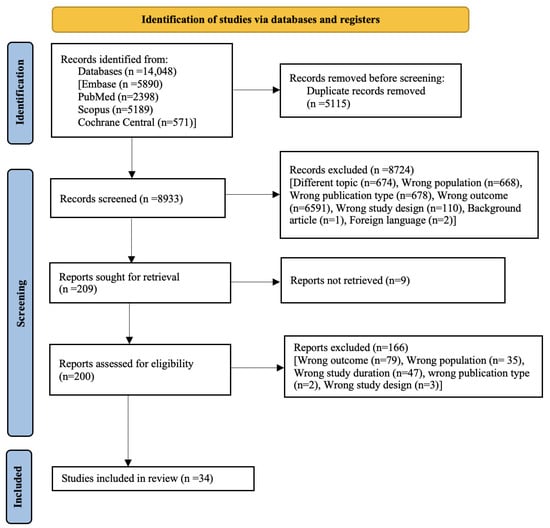
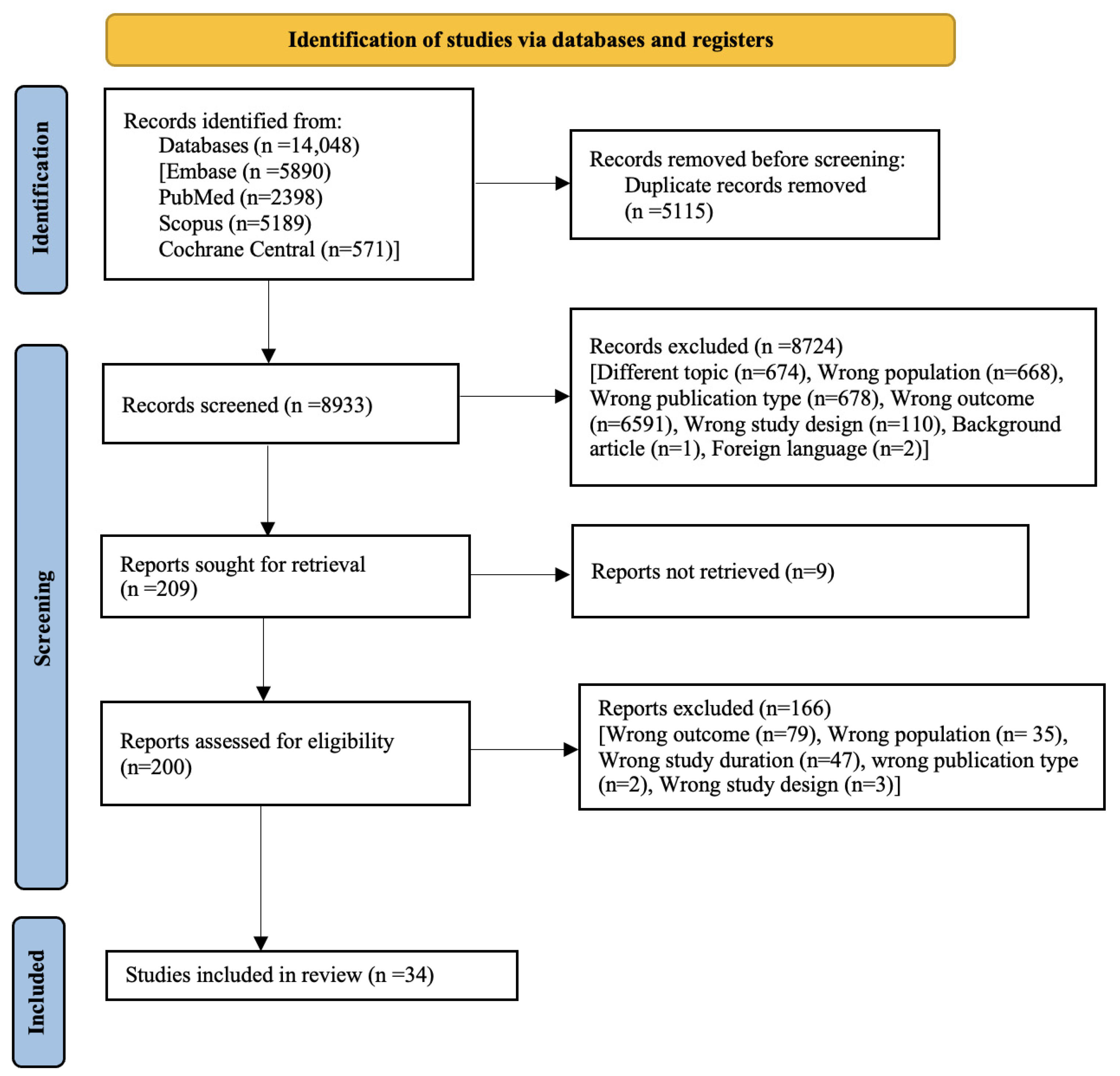
Initially, 14,048 studies were identified from four different databases. Following screening and eligibility assessment, 34 studies comprising 38,996 workers were included in the review [16,17,18,19,20,21,22,23,24,25,26,27,28,29,30,31,32,33,34,35,36,37,38,39,40,41,42,43,44,45,46,47,48,49], with 32 studies contributing to the meta-analysis of various mental health disorders [16,17,18,19,20,21,22,23,24,25,26,27,28,29,30,31,32,33,34,35,36,37,38,39,41,42,43,44,45,46,47,48] and two studies included in the narrative synthesis of intervention measures [40,49]. The reasons for the excluded studies are documented in the PRISMA flow chart (Figure 1) at each step.
Figure 1.
PRISMA 2020 flow diagram for the SRMA which included searches of databases.
3.1. Quality of the Included Studies
Among the included studies, 32 studies on prevalence used a cross-sectional design with clear aims and appropriate methods. Each study clearly defined its objectives, appropriate study design, and identified its target populations. While 78.12% justified sample sizes, all provided estimates of significance or precision. Data were well described, and findings aligned with methodologies. Non-responder measures were mentioned in 75%, with 78.12% of these including non-responder information. Most studies discussed limitations (87.50%) and ethics (96.87%) (Table S8). Several AXIS domains were consistently underreported, particularly sample size justification, non-response handling, and rate of non-response, indicating potential methodological weaknesses. One RCT and one quasi-experimental study examining interventions for mental health disorders demonstrated a low and critical risk of bias, respectively (Tables S9 and S10).
3.2. Study Characteristics
Out of the 34 studies, the majority were conducted in China (64.70%, 22/34) [16,17,18,19,20,21,22,23,24,25,26,27,29,34,36,37,38,41,43,44,45,46], followed by Australia (14.70%, 5/34) [30,33,35,39,49], India (5.89%, 2/34) [40,48], Turkey (5.89%, 2/34) [1,28,42], Brazil (2.94%, 1/34) [31], the United States of America (2.94%, 1/34) [47], and Serbia (2.94%, 1/34) [32] (Table 1). The study period spanned from 2002 to 2022, whereas 23.53% of the studies (8/34) [27,30,32,34,39,40,47,49] did not specify their study period (Table 1). While most of the studies included coal mine workers aged 18 years or above, only one study reported an age range of 17 to 73 years [30], indicating the inclusion of minors. The mean age of the study population ranged from 32.9 years to 67.2 years. The sample size ranged from 46 to 6130 participants, with a combined total of 38,996 (Table 1). About 52.95% of studies (18/34) had only male participants, while 38.23% included both male and female participants. The proportion of female participants in these studies ranged from 5.4% to 34.3% [16,22,23,24,25,26,29,30,33,35,44,49]. The most commonly used assessment tools included the Symptom Checklist-90 (SCL-90), Maslach Burnout Inventory (MBI), Effort-Reward Imbalance Scale (ERI), Psychological Capital Questionnaire (PCQ), Center for Epidemiologic Studies Depression Scale (CES-D), and the Work–Family Conflict Scale (WFC). About 82.36% of studies (28/34) were conducted offline [16,18,19,20,21,25,27,28,29,30,31,32,33,34,35,36,37,38,39,40,41,42,43,44,45,46,48,49], whereas 11.76% (4/34) were conducted online [17,24,26,47], and 5.88% studies (2/34) did not mention their mode of administration [22,23] (Table 1).
Table 1.
Demographic details of the selected studies (n = 34).
3.3. Various Mental Health Outcomes
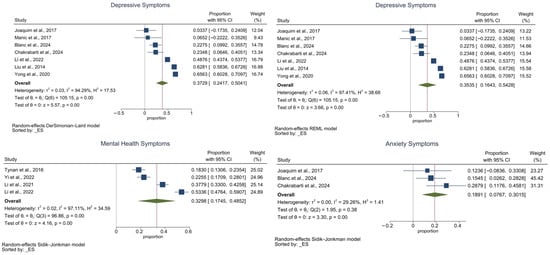
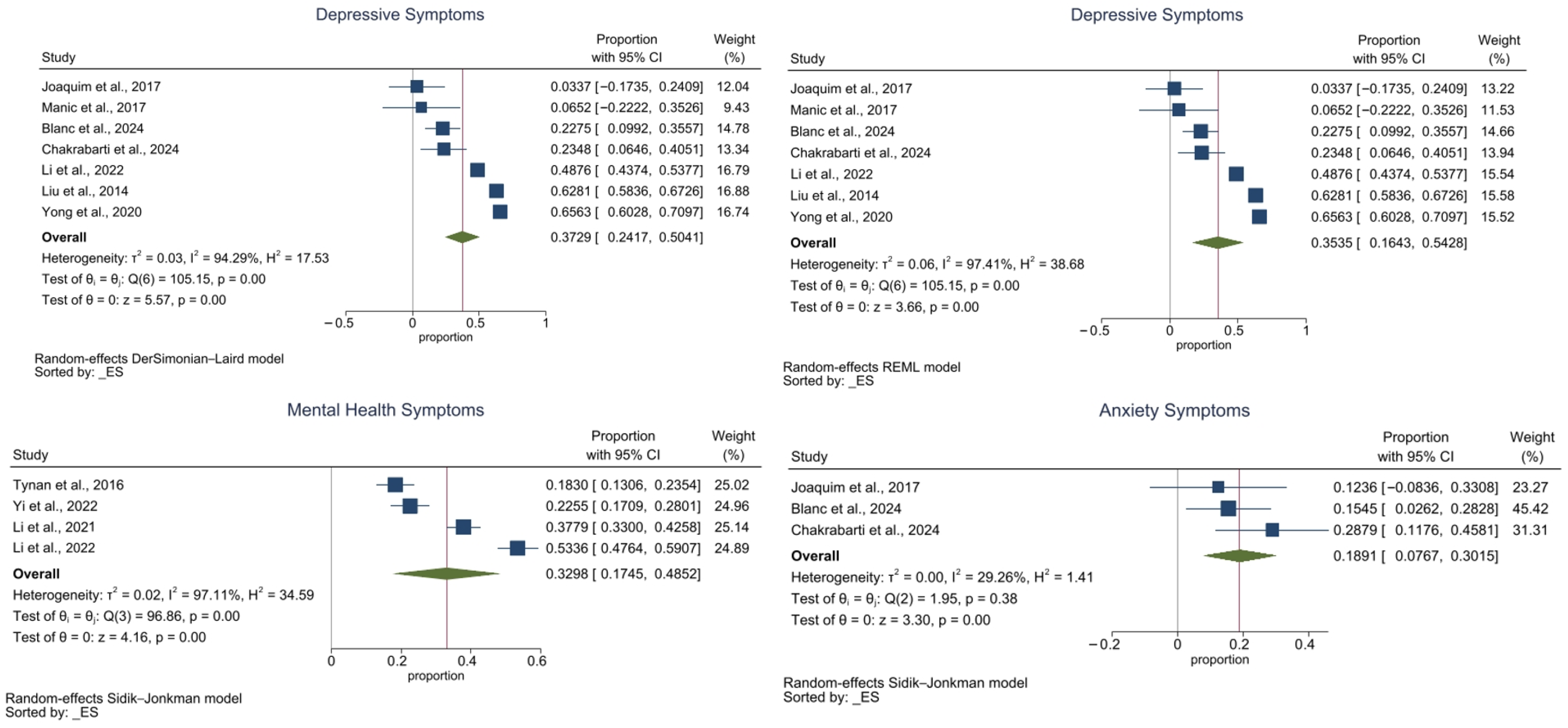
The overall prevalence of mental health symptoms across four studies ranged from 18.3% to 53.4% (median = 30.18%), with a pooled prevalence of 32.98% (95% CI: 17.45–48.52%) based on 5537 participants. The very high heterogeneity (I2 = 97.11%) indicates substantial variability across studies (Figure 2) (Table 2). Country-specific subgroup analysis showed a pooled prevalence of 37.88% (95% CI: 20.61–55.16%) in studies conducted in China, also high heterogeneity (I2 = 96.85%) (Figure S1). Region-wise subgroup analysis demonstrated the highest prevalence in East Asian studies, with a pooled prevalence of 37.88% (95% CI: 20.61–55.16%) with an I2 value of 96.85% (Figure S2). Leave-one-out analysis indicated that the pooled prevalence ranged from 26.27% to 37.88% following sequential exclusion of individual studies (Figure S3).
Figure 2.
Forest plot showing the pooled prevalence of depressive symptoms (n = 7) [29,31,32,38,44,47,48], overall mental health symptoms (n = 4) [16,22,25,35], and anxiety symptoms (n = 3) [31,47,48].
Table 2.
Different Mental Health Outcomes Among Coal Miners (n = 32).
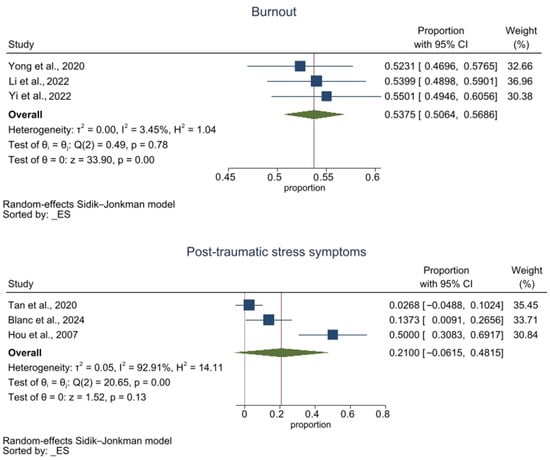
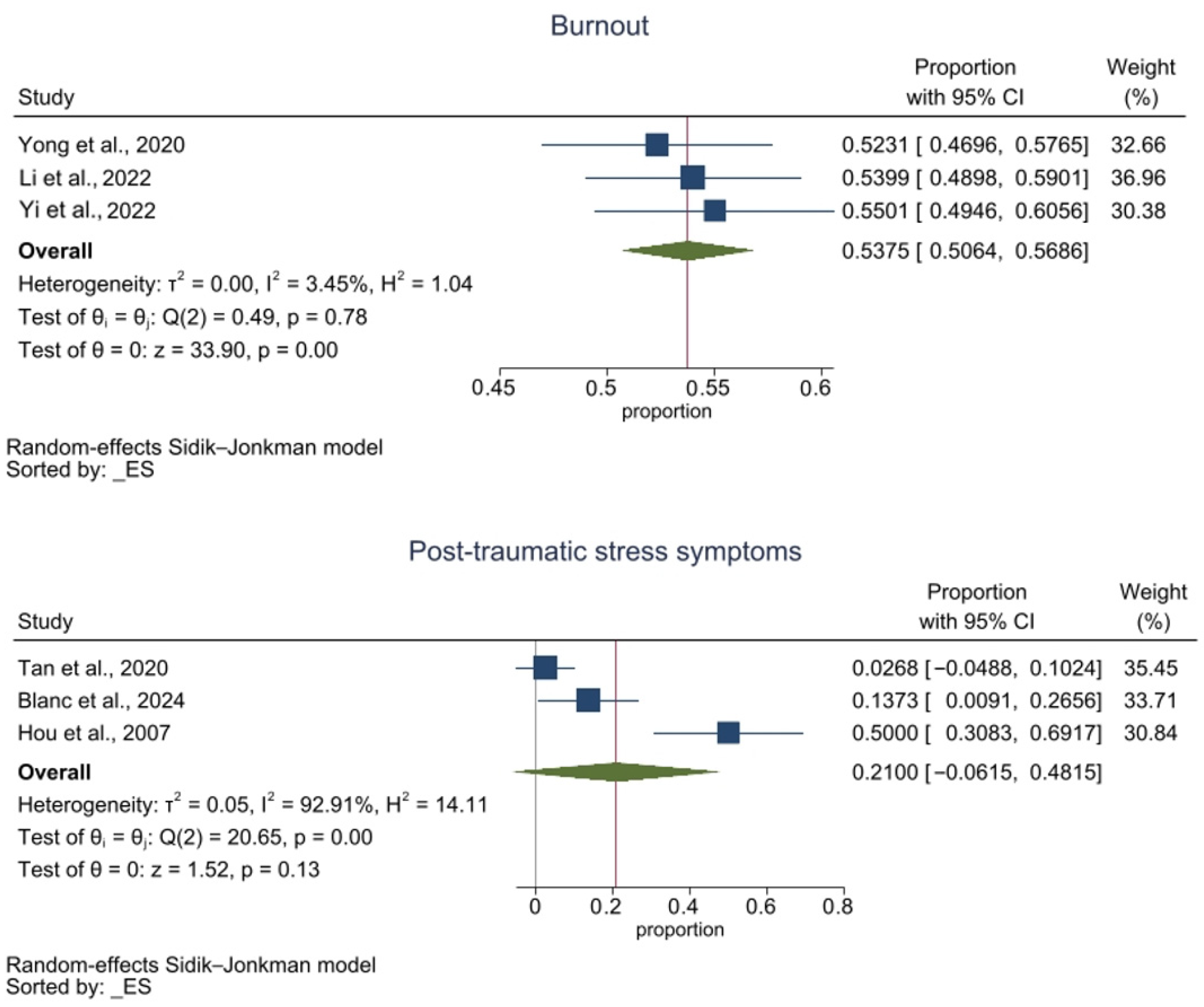
Depressive symptoms were reported with prevalence ranging from 3.5% to 66.1% (median = 23.5%), and scores from 1.2 ± 2.09 to 20 ± 9.99 (Table 2). A meta-analysis of seven studies, including 5308 participants, estimated the pooled prevalence of depressive symptoms at 37.29% (95% CI: 24.17–50.41%) with high heterogeneity (I2 = 94.29%) (Figure 2). Using REML estimator, the pooled prevalence was 35.35% (95% CI: 16.43% to 54.28%, I2 = 97.41%), indicating consistent findings and variability across studies rather than a stable estimate. Subgroup analysis of studies conducted in China showed a prevalence of 59.06% (95% CI: 49.06–69.07%; I2 = 91.92%) (Figure S1). Region-wise subgroup indicated the highest prevalence in East Asian studies at 59.06% (Figure S2). Leave-one-out sensitivity analysis showed that the pooled prevalence ranged from 30.94% to 42.58% (Figure S3). The prevalence of anxiety symptoms ranged from 12.9% to 28.8% (median = 15.9%), with anxiety scores ranging between 1.60 ± 0.77 to 46.69 ± 11.34 (Table 2). Three studies involving 454 participants yielded a pooled prevalence of anxiety symptoms of 18.91% (95% CI: 07.67–30.15%), with I2 value of 29.26% (Figure 2). In studies conducted in India, the pooled prevalence of anxiety symptoms was 28.79% (95% CI: 11.76–45.81%), with no heterogeneity (I2 = 0%) (Figure S4). Leave-one-out sensitivity analysis showed that the pooled prevalence ranged from 14.59% to 21.57% (Figure S3). The post-traumatic stress symptoms scores and prevalence ranged from 4.27 ± 4.49 to 50.4 ± 18.8 and 2.7% to 50% (median = 25.2%), respectively (Table 2). A meta-analysis of three studies with 1009 participants estimated a pooled prevalence of 21%, with high heterogeneity (I2 = 92.91%), indicating marked differences across study findings (Figure 3). Subgroup analysis of studies conducted in China showed a higher pooled prevalence of post-traumatic stress symptoms of 50% (95% CI: 30.83–69.17%) (Figure S4). Leave-one-out revealed that the pooled prevalence ranged from 6.92% to 31.08% (Figure S3). Job burnout scores ranged from 3.17 ± 0.73 to 48.87 ± 14.69, with prevalence varying from 52.7% to 55% (median = 54%). The pooled prevalence, based on three studies involving 4119 participants, was 53.75% (95% CI: 50.64–56.86%), also with I2 value of 3.45% (Figure 3). Subgroup analyses based on country or region could not be performed because all included studies were conducted in China. Leave-one-out analysis showed that the pooled prevalence ranged from 53.20% to 54.45% (Figure S3).
Figure 3.
Forest plot showing the pooled prevalence of post-traumatic stress symptoms (n = 3) [28,41,47] and job burnout (n = 3) [20,29,44].
Prediction intervals were wide across several outcomes, indicating substantial between-study heterogeneity and suggesting that pooled estimates may not represent stable or consistent effects across different settings. For anxiety symptoms, the prediction interval ranged from −0.408 to 0.783, while depressive symptoms ranged from −0.076 to 0.822. Similarly, mental health symptoms showed a wide interval (−0.398 to 1.057), and post-traumatic stress symptoms demonstrated particularly high variability (−0.678 to 3.090), reflecting considerable uncertainty in the true effect across populations. Although job burnout showed a comparatively narrower interval (0.340 to 0.735), variability remained present (Figure S5). These findings suggest that pooled estimates should be interpreted with caution and may not represent stable summary measures.
For psychotic symptoms, the reported prevalence in a study was 6% (Table 2). As only one study reported psychotic symptoms, a meta-analysis could not be performed. Somatic symptoms exhibited a prevalence of 16% (Table 2). However, due to the limited number of studies reporting comparable data, a meta-analysis could not be conducted.
High levels of emotional exhaustion (82%) and insomnia (76.7%) were frequently observed, along with other symptoms such as obsessive-compulsiveness, hostility, phobic anxiety, and fear. Occupational stress ranged from 38.1% to 50.2%, while work–family conflict scores ranged between 3.11 and 3.37. Substance use patterns were common, with smoking prevalence reaching up to 72% and alcohol use up to 71%. Psychological well-being indicators, such as hope, resilience, optimism, and self-efficacy, varied across studies (Table 2).
3.4. Interventions for Mental Health Outcomes Among Coal Mine Workers
A randomized trial conducted in India evaluated a 12-week Integrated Approach of Yoga Therapy (IAYT) program among coal miners with COPD [40]. The intervention consisted of a structured yoga module including breathing exercises, loosening practices, physical postures, pranayama, meditation, relaxation techniques, and weekly kriya sessions, delivered by trained yoga instructors. Sessions were conducted daily following a standardized schedule, and participant adherence was monitored using attendance records and daily diaries. Compared with the control group, participants in the intervention group reported significant reductions in the COPD Assessment Test (CAT) scores (20.69 ± 5.53 to 15.92 ± 6.51), depression scores measured using the Beck Depression Inventory-II (22.25 ± 8.47 to 16.56 ± 7.03), and anxiety scores measured using the State-Trait Anxiety Inventory (state: 39.61 ± 8.73 to 33.28 ± 9.92; trait: 41.06 ± 7.82 to 35.58 ± 9.14) after 12 weeks. Assessments were conducted at baseline and immediately following the intervention period, whereas the control group demonstrated minimal changes in these outcomes (Table S11).
In Australia, another study evaluated workplace mental health initiatives implemented across eight coal mine sites located in New South Wales and Queensland, including both open-cut and underground operations [49]. The program involved peer-based mental health and suicide prevention activities together with supervisor training to improve the recognition and management of mental health concerns among workers. Data were collected using standardized paper-based survey administered onsite during training sessions or pre-shift meetings. Findings suggested improved worker confidence in recognizing mental health concerns in themselves, colleagues, or family members, along with willingness to discuss such concerns. Supervisors also reported improved confidence in supporting employees experiencing psychological distress (Table S11).
4. Discussion
This review highlights the variability and potential burden of mental health issues in the coal mining sector, with findings differing substantially across studies and settings. The pooled estimates should therefore be interpreted as indicative rather than definitive measures of prevalence.
The work regime and associated lifestyle factors pose significant risks to psychological well-being of the coal mine workers. They are exposed to persistent challenges, including irregular shift schedules, a predominantly male-dominated work environment, and the inherent economic instability of the coal industry. These factors not only affect workers’ mental health but also have broader implications for family relationships and workforce sustainability [50]. This is the first systematic review to present pooled prevalence estimates of various mental health outcomes among coal mine workers, while also mapping existing interventions and initiatives implemented in this population. These findings underscore the urgent need for targeted mental health strategies in this high-risk occupational group.
The pooled prevalence of overall mental health symptoms was 32.98%, which is higher than estimates reported in the Australian coal mining industry, where one in five workers experience any of the mental health concerns annually [50]. Factors such as poor sleep quality, sleep deprivation, and extended shift schedules were commonly reported alongside a high prevalence of mental health problems [2,51].
The pooled prevalence of depressive and anxiety symptoms was found to be 35.35% and 18.91% respectively. A higher prevalence of anxiety symptoms among coal mine workers has been reported in a previous study, while the odds of depressive symptoms and post-traumatic stress symptoms were the same among coal and non-coal workers [47]. Research in Turkey linked silicosis with the occurrence of depressive and anxiety symptoms. Another study on pneumoconiosis in China reported an increased incidence of depressive symptoms among affected workers; however, the absence of a comparison group precludes any causal inferences [52,53]. Reporting of post-traumatic stress symptoms was relatively low, with only five studies reporting a pooled prevalence of 21%. Unlike depression or anxiety, post-traumatic stress remains underexplored in the context of coal mining [47]. Only one study examined the somatic symptoms and the prevalence was 16%, which may reflect the physically demanding and hazardous working conditions in mining environments. Such symptoms may include musculoskeletal pain, respiratory problems such as cough and shortness of breath, as well as other complaints like headaches, sleep disturbances, and weakness [7].
Evidence also links coal workers’ pneumoconiosis, progressive massive fibrosis, & chronic hypoxaemia, and the development of anxiety, depression, and suicidal ideation among coal miners in the United States [3]. Somatization, anxiety, psychoticism, phobic anxiety, and paranoid ideation were found to be significantly more prevalent among deep underground workers operating in large coal mining complexes in China [54]. The dynamic and unpredictable nature of underground mining environments, where workers operate at depths of thousands of feet below ground, may contribute to persistent psychological stress [54,55]. Physical health conditions have also been suggested to exacerbate mental health problems among Chinese coal miners, as somatization scores were notably higher among underground workers. Consequently, physical symptoms were considered a contributing factor rather than merely a consequence of poor mental health status [54]. Environmental conditions such as heat, humidity, higher carbon dioxide levels, and increased air pressure in deep mines may also contribute to disturbed sleep quality [54]. These findings highlight the importance of regular mental health screening among miners, particularly focusing on anxiety and somatization symptoms [54].
The prevalence of job burnout was 53.75%, indicating a substantial burden among coal miners. Genetic susceptibility factors, including interactions involving the GCCR gene and the SLC6A4 gene in the presence of occupational stress, have been associated with job burnout among coal miners [18]. Furthermore, job burnout has been found to correlate with psychological symptoms and is influenced by factors such as gender, educational level, marital status, shift assignment, monthly income, and work environment [24]. Burnout has also been associated with increased levels of anxiety and depressive symptoms, with significant relationships observed between emotional exhaustion, depersonalization, and broader mental health concerns, highlighting how workplace exhaustion can adversely affect overall well-being [24,56].
In the present SRMA, high levels of emotional exhaustion (82%), insomnia (76.7%), and stress (41.8%) were also reported across several studies. Substance use behaviors were common, with smoking prevalence reaching up to 72% and alcohol use up to 71%. Alcohol consumption among the underground miners has been associated with an increased risk of occupational injuries [57]. In contrast, a much lower prevalence of 22.1% alcohol use was reported among mine workers in Mongolia [58]. Engaging in moderate to high-risk alcohol or tobacco use was associated with increased odds of experiencing anxiety among participants [48]. Similarly, anxiety was more prevalent among workers who reported alcohol consumption [59]. The relationship between tobacco and mental health appears to be bidirectional, as smoking may increase the risk of anxiety and depression or, conversely, individuals experiencing psychological distress may be more likely to smoke [60]. Likewise, individuals with anxiety or other behavioral disorders are more likely to develop alcohol use disorders [61]. Previous research has also shown that limited social connections, a prior diagnosis of depression or anxiety, and problematic alcohol use were associated with a higher likelihood of experiencing mental health problems [33].
Importantly, access to mental health care in the coal mining industry is often limited. Barriers include the stigma associated with seeking psychological support, the remote locations of many mining operations, and socioeconomic factors that limit access to health services. These barriers may reduce utilization of mental health interventions and contribute to the persistence of untreated mental health conditions among miners. Addressing these challenges requires accessible, confidential, and culturally sensitive mental health programs tailored to the occupational context of coal mining.
4.1. Interventions for Mental Health Disorders Among Coal Mine Workers
Only two studies were identified that evaluated interventions addressing mental health issues among the coal miners. A randomized controlled trial conducted in India reported improvements in both psychological well-being and respiratory health among coal miners with COPD following a structured yoga-based intervention, suggesting that mind–body approaches may offer potential benefits in occupational health settings [40]. As this study was assessed as having a low risk of bias, it provides relatively stronger, although still limited, evidence regarding the potential effectiveness of such interventions. In contrast, a workplace mental health program implemented across Australian coal mines focused on peer-based mental health activities encouraging individuals concerned about their own or others’ mental well-being to seek professional assistance [49]. However, this study was assessed as having a critical risk of bias; the findings should not be considered equivalent in evidentiary strength to the randomized trial.
Beyond intervention-based evidence, several psychosocial determinants have been identified as important contributors to miners’ mental health. Perceived organizational support, psychological capital, hope, resilience, and optimism were significantly associated with lower levels of depressive and anxiety symptoms among underground Chinese coal mine workers [37]. These findings highlight the potential importance of fostering supportive work environments and investing in psychological capital to improve workers’ mental well-being. In addition, mental health support systems, including dedicated online resources and toll-free helplines, have been established to facilitate confidential access to support services [50]. However, the effectiveness of these approaches in this specific occupational context remains insufficiently evaluated. Interventions aimed at improving workplace safety and preventing occupational lung diseases have also been suggested as indirect strategies that may contribute to better mental health outcomes among coal miners [47]. Furthermore, greater recognition and management of unmet mental health needs among both active and former coal miners have been advocated as an important component of occupational health strategies in the mining sector [3].
Overall, the available evidence on interventions targeting mental health among coal miners remains limited. Current findings provide preliminary insights rather than conclusive evidence of effectiveness. Further high-quality studies, particularly well-designed randomized controlled trials, are needed to evaluate the effectiveness of occupational and psychosocial interventions in improving mental health outcomes in this population.
4.2. Limitations
Although the objectives of this SRMA were met, the study has several limitations. The geographical distribution of studies was uneven, with the majority conducted in China and only limited representation from Australia, India, Turkey, Brazil, the USA, and Serbia. This restricts the generalizability of findings across diverse mining contexts, underscoring a global research gap. Substantial heterogeneity was observed in the pooled prevalence estimates. This variability may be partly attributable to methodological differences across studies, including the use of varied assessment tools, differences in sample sizes, and heterogeneous sampling strategies. The predominance of male participants further limited the possibility of conducting subgroup analyses based on gender, which might have helped to explore sources of heterogeneity.
In addition, the use of the DL estimator for depressive symptoms may underestimate between-study variance and yield overly narrow confidence intervals. The prediction intervals were wide for several outcomes and, in some cases, extended beyond the theoretical bounds of 0–1, reflecting considerable between-study heterogeneity. This indicates that pooled estimates may be unstable and should not be interpreted as precise summary measures; instead, the range of observed estimates and prediction intervals better captures the underlying variability across studies.
Subgroup analyses were limited due to insufficient data, particularly for assessment tool–specific comparisons, mining type (surface vs. underground), and region-wise analyses. Variability in study quality may have further influenced the findings. Although leave-one-out sensitivity analyses were conducted, these complement rather than replace risk-of-bias assessment, and the potential impact of study quality cannot be fully excluded. Additionally, the quasi-experimental study included in the review was assessed as having a critical risk of bias, which should be considered when interpreting intervention-related findings.
Furthermore, publication bias could not be ruled out, as all the mental health outcomes included in meta-analysis contained fewer than 10 studies, which restricts the reliability of Egger’s test and funnel plot [62,63,64]. Studies evaluating the prevalence of mental health outcomes were cross-sectional; therefore, the findings represent prevalence at a single point in time and should be interpreted as descriptive estimates of burden rather than evidence of causal or temporal relationships. The inaccessibility to additional databases, gray literature, and other specialized occupational health databases due to resource constraints may have impacted the validity.
Finally, only two intervention-related studies were identified in this review. Among these, the quasi-experimental study was assessed as having a critical risk of bias. Additionally, the randomized yoga-based intervention trial was conducted exclusively among coal miners with COPD, representing a specific clinical sub-population, which limits the generalizability of the findings to the broader coal mining workforce. Consequently, the available evidence regarding intervention effectiveness remains scarce, and the overall certainty of evidence is low. Therefore, the findings related to intervention effectiveness should be interpreted with considerable caution.
5. Conclusions
There is an unmet need to address the diverse mental health challenges affecting coal miners globally. Understanding the personal, social, and occupational factors associated with psychological distress reveals opportunities for the mining industry to address these challenges within a broader health and social context. Given the close link between mental health, physical health, and productivity, integrating mental health screening into periodic occupational health assessments may support earlier identification of mental health concerns among mine workers. Strengthening the prevention and management of pneumoconiosis and other occupational lung diseases may also indirectly improve overall well-being. Additionally, several determinants of psychological distress, such as long working hours, limited social support, and unsafe work environments, represent modifiable workplace factors that could be addressed through occupational health policies and industry practices.
However, the current evidence on mental health interventions among coal mine workers remains limited. Furthermore, variability in methodological quality across studies should be considered when interpreting these findings and translating them into practice. Any potential benefits of existing interventions should therefore be interpreted with caution due to the limited number of studies and concerns regarding study quality. Future well-designed intervention studies conducted across diverse mining populations are needed to establish the effectiveness and generalizability of mental health interventions in this occupational setting. Strengthening methodological rigor in future research will be essential to generate more reliable and actionable evidence. Overall, integrated strategies addressing personal, social, and work-related determinants of mental health, delivered through accessible and culturally sensitive approaches, may inform policy development and implementation aimed at improving well-being, productivity, and sustainable workforce engagement.
Supplementary Materials
The following supplementary materials can be downloaded at https://www.mdpi.com/article/10.3390/psychiatryint7030111/s1; Table S1: PRISMA Checklist (Main Manuscript), Table S2: PRISMA Checklist (Abstract), Table S3: PEICO format of research questions, Table S4: Search strategy in PubMed, Table S5: Search strategy Cochrane Central, Table S6: Search strategy in Scopus, Table S7: Search strategy in Embase, Table S8: Quality Assessment of the selected studies by AXIS Tool for Cross-sectional Studies (n = 32), Table S9: Quality Assessment of the Randomized Controlled Trial Study (n = 1) using RoB 2 tool, Table S10: Quality Assessment of the Quasi-experimental Study (n = 1) using ROBINS-I Tool, Table S11: Interventions for Mental Health Disorders of Coal Miners (n = 2), Figure S1: Country-wise subgroup analysis of overall mental health symptoms and depressive symptoms, Figure S2: Region-wise subgroup analysis of overall mental health symptoms, depressive symptoms, and anxiety symptoms, Figure S3: Leave-one-out sensitivity analysis of the various mental health outcomes, Figure S4: Country-wise subgroup analysis of anxiety symptoms and post-traumatic stress symptoms, Figure S5: Prediction intervals for anxiety, post-traumatic stress, depressive, mental health symptoms and burnout.
Author Contributions
I.S.: Conceptualization, Data curation, Methodology, Writing—original draft; J.M.: Data curation, Methodology, Writing—original draft; B.S.B.: Data curation, Methodology, Formal analysis, Writing—original draft; S.D.: Data curation, Methodology, Writing—original draft; M.K.: Data curation, Methodology, Formal analysis; D.M.: Formal analysis, Methodology, Formal analysis, Writing—review & editing; U.M.: Formal analysis, Writing—review & editing; D.D.: Data curation, Methodology, Writing—original draft; T.L.S.: Formal analysis, Writing—review & editing; N.D.: Formal analysis, Supervision, Writing—review & editing; A.S.: Conceptualization, Investigation, Supervision, Writing—review & editing; A.C.: Conceptualization, Investigation, Supervision, Writing—review & editing. All authors have read and agreed to the published version of the manuscript.
Funding
This study is a part of the ICMR Task Force project, which is funded by the Indian Council of Medical Research.
Institutional Review Board Statement
Not applicable.
Informed Consent Statement
Not applicable.
Data Availability Statement
The dataset used and/or analysed during the current study is mentioned in the manuscript and is available from the corresponding author on reasonable request.
Conflicts of Interest
The authors declare no conflicts of interest.
References
- Liu, T.; Liu, S. The impacts of coal dust on miners’ health: A review. Environ. Res. 2020, 190, 109849. [Google Scholar] [CrossRef] [Scilit] [PubMed]
- Matamala Pizarro, J.; Aguayo Fuenzalida, F. Mental health in mine workers: A literature review. Ind. Health 2021, 59, 343–370. [Google Scholar] [CrossRef] [Scilit]
- Harris, D.; McMurry, T.; Caughron, A.; Willis, J.; Blackburn, J.C.; Brizendine, C.; Tomann, M. Characterization of Mental Illness Among US Coal Miners. JAMA Netw. Open 2021, 4, e2111110. [Google Scholar] [CrossRef] [Scilit]
- Why Mental Health Matters in Mining|Online Training n.d. Available online: https://gocontractor.com/blog/mental-health-matters-mining/ (accessed on 24 May 2025).
- Asare-Doku, W.; James, C.; Rich, J.L.; Amponsah-Tawiah, K.; Kelly, B. “Mental health is not our core business”: A qualitative study of mental health supports in the Ghanaian mining industry. Saf. Sci. 2022, 145, 105484. [Google Scholar] [CrossRef] [Scilit]
- James, C.; Tynan, R.; Roach, D.; Leigh, L.; Oldmeadow, C.; Rahman, M.; Kelly, B. Correlates of psychological distress among workers in the mining industry in remote Australia: Evidence from a multi-site cross-sectional survey. PLoS ONE 2018, 13, e0209377. [Google Scholar] [CrossRef] [Scilit]
- Saha, A.; Sen, S.; Bhowmik, K.; Das, A.; Mahankuda JSen Dasgupta, T.K. Health Status of the Coal Mine Workers in an Open-cast Mine of Eastern India. J. Compr. Health 2024, 12, 34–38. [Google Scholar] [CrossRef] [Scilit]
- Bryan, M.L.; Bryce, A.M.; Roberts, J. The effect of mental and physical health problems on sickness absence. Eur. J. Health Econ. 2021, 22, 1519–1533. [Google Scholar] [CrossRef] [Scilit] [PubMed]
- PROSPERO n.d. Available online: https://www.crd.york.ac.uk/PROSPERO/view/CRD42024536144 (accessed on 24 May 2025).
- Page, M.J.; McKenzie, J.E.; Bossuyt, P.M.; Boutron, I.; Hoffmann, T.C.; Mulrow, C.D.; Shamseer, L.; Tetzlaff, J.M.; Akl, E.A.; Brennan, S.E.; et al. The PRISMA 2020 statement: An updated guideline for reporting systematic reviews. BMJ 2021, 372, n71. [Google Scholar] [CrossRef] [Scilit] [PubMed]
- Büchter, R.B.; Weise, A.; Pieper, D. Development, testing and use of data extraction forms in systematic reviews: A review of methodological guidance. BMC Med. Res. Methodol. 2020, 20, 259. [Google Scholar] [CrossRef] [Scilit]
- Downes, M.J.; Brennan, M.L.; Williams, H.C.; Dean, R.S. Development of a critical appraisal tool to assess the quality of cross-sectional studies (AXIS). BMJ Open 2016, 6, e011458. [Google Scholar] [CrossRef] [Scilit]
- Sterne, J.A.C.; Savović, J.; Page, M.J.; Elbers, R.G.; Blencowe, N.S.; Boutron, I.; Cates, C.J.; Cheng, H.Y.; Corbett, M.S.; Eldridge, S.M.; et al. RoB 2: A revised tool for assessing risk of bias in randomised trials. BMJ 2019, 366, l4898. [Google Scholar] [CrossRef] [Scilit] [PubMed]
- Sterne, J.A.; Hernán, M.A.; Reeves, B.C.; Savović, J.; Berkman, N.D.; Viswanathan, M.; Henry, D.; Altman, D.G.; Ansari, M.T.; Boutron, I.; et al. ROBINS-I: A tool for assessing risk of bias in non-randomised studies of interventions. BMJ 2016, 355, i4919. [Google Scholar] [CrossRef] [Scilit]
- Freeman, M.F.; Tukey, J.W. Transformations Related to the Angular and the Square Root. Ann. Math. Stat. 1950, 21, 607–611. [Google Scholar] [CrossRef] [Scilit]
- Li, X.; Jiang, T.; Sun, X.; Yong, X.; Ma, X.; Liu, J. The relationship between occupational stress, musculoskeletal disorders and the mental health of coal miners: The interaction between BDNF gene, TPH2 gene polymorphism and the environment. J. Psychiatr. Res. 2021, 135, 76–85. [Google Scholar] [CrossRef] [Scilit] [PubMed]
- Aram, S.A.; Wang, H. Prevalence and associations between occupational diseases, emotional exhaustion, and dust mask anxiety among coal miners in Northern China. Environ. Sci. Pollut. Res. 2023, 30, 122066–122086. [Google Scholar] [CrossRef] [Scilit] [PubMed]
- Xie, H.; Liu, J.; Gao, M.; Liu, Y.; Ma, T.; Lu, Y.; Li, C.; Wang, M.; Zhang, R.; Wu, J.; et al. Physical symptoms and mental health status in deep underground miners. Medicine 2020, 99, e19294. [Google Scholar] [CrossRef] [Scilit]
- Yu, M.; Li, J. Psychosocial safety climate and unsafe behavior among miners in China: The mediating role of work stress and job burnout. Psychol. Health Med. 2020, 25, 793–801. [Google Scholar] [CrossRef] [Scilit]
- Yi, X.; Li, X.; Yong, X.; Liu, J. Effect of occupational stress on job burnout among coal miners: The mediating role of work-family conflict. J. Environ. Occup. Med. 2022, 39, 1110–1114. [Google Scholar] [CrossRef]
- Yu, M.; Li, J. Work-family conflict and mental health among Chinese underground coal miners: The moderating role of psychological capital. Psychol. Health Med. 2019, 25, 1–9. [Google Scholar] [CrossRef] [Scilit]
- Li, X.; Yi, X.; Liu, J. Effects of occupational stress and mental health on work-related musculoskeletal disorders in coal mine workers in Xinjiang. J. Environ. Occup. Med. 2022, 39, 863–870. [Google Scholar] [CrossRef]
- Lin, X.; Ma, X.; Yi, X.; Qu, C.; Li, F. Effects of environmental and genetic interactions on job burnout in coal miners: Interactions between occupational stress, coping styles, and NR3C2 gene polymorphisms. Front. Public Health 2023, 11, 1237843. [Google Scholar] [CrossRef] [Scilit]
- Fu, A.; Zhao, T.; Gao, X.; Li, X.; Liu, X.; Liu, J. Association of psychological symptoms with job burnout and occupational stress among coal miners in Xinjiang, China: A cross-sectional study. Front. Public Health 2022, 10, 1049822. [Google Scholar] [CrossRef] [Scilit] [PubMed]
- Yi, X.; Yang, J.; Gao, X.; Li, F. The relationship between occupational stress, mental health and work ability of coal chemical workers in Xinjiang. Front. Psychiatry 2022, 13, 903534. [Google Scholar] [CrossRef] [Scilit] [PubMed]
- Lu, Y.; Zhang, Z.; Gao, S.; Yan, H.; Zhang, L.; Liu, J. Association of occupational burnout and occupational exposure factors on psychological health among factory workers and miners: A propensity score analysis. Int. Arch. Occup. Environ. Health 2021, 94, 441–450. [Google Scholar] [CrossRef] [Scilit] [PubMed]
- Yang, X.; Zhang, B.; Wang, L.; Cao, L.; Tong, R. Exploring the Relationships between Safety Compliance, Safety Participation and Safety Outcomes: Considering the Moderating Role of Job Burnout. Int. J. Environ. Res. Public Health 2021, 18, 4223. [Google Scholar] [CrossRef] [Scilit] [PubMed]
- Tan, M.N.; Mevsim, V.; Topal, İ.; Alkan, Ç. Long-term posttraumatic stress disorder in mine workers after a coalmining disaster. Arch. Clin. Psychiatry 2020, 47, 13–18. [Google Scholar] [CrossRef] [Scilit]
- Yong, X.; Gao, X.; Zhang, Z.; Ge, H.; Sun, X.; Ma, X.; Liu, J. Associations of occupational stress with job burn-out, depression and hypertension in coal miners of Xinjiang, China: A cross-sectional study. BMJ Open 2020, 10, e036087. [Google Scholar] [CrossRef] [Scilit]
- Street, T.D.; Lacey, S.J.; Somoray, K. Employee Stress, Reduced Productivity, and Interest in a Workplace Health Program: A Case Study from the Australian Mining Industry. Int. J. Environ. Res. Public Health 2018, 16, 94. [Google Scholar] [CrossRef] [Scilit]
- Joaquim, A.C.; Lopes, M.; Stangherlin, L.; Castro, K.; Ceretta, L.B.; Longen, W.C.; Ferraz, F.; Perry, I.D.S. Mental health in underground coal miners. Arch. Environ. Occup. Health 2017, 73, 334–343. [Google Scholar] [CrossRef] [Scilit]
- Manić, S.; Manic, S.; Janjic, V.; Djukic Dejanovic, S.; Aleksic, A.; Aleksic, Z.; Jaredic, B.; Krkic, M. Burnout, depression and proactive coping in underground coal miners in serbia—Pilot project sindrom sagorevanja, depresija i proaktivno prevladavanje kod rudara rudnika uglja u srbiji—Pilot projekat. Ser. J. Exp. Clin. Res. 2017, 18, 45–52. [Google Scholar] [CrossRef] [Scilit]
- Considine, R.; Tynan, R.; James, C.; Wiggers, J.; Lewin, T.; Inder, K.; Perkins, D.; Handley, T.; Kelly, B. The Contribution of Individual, Social and Work Characteristics to Employee Mental Health in a Coal Mining Industry Population. PLoS ONE 2017, 12, e0168445. [Google Scholar] [CrossRef] [Scilit]
- Deng, M.; Wu, F.; Wang, J.; Sun, L. Musculoskeletal disorders, personality traits, psychological distress, and accident proneness of Chinese coal miners. Work 2017, 57, 441–449. [Google Scholar] [CrossRef] [Scilit]
- Tynan, R.J.; Considine, R.; Rich, J.L.; Skehan, J.; Wiggers, J.; Lewin, T.J.; James, C.; Inder, K.; Baker, A.L.; Kay-Lambkin, F.; et al. Help-seeking for mental health problems by employees in the Australian Mining Industry. BMC Health Serv. Res. 2016, 16, 498. [Google Scholar] [CrossRef] [Scilit]
- Liu, L.; Xu, X.; Wu, H.; Yang, Y.; Wang, L. Associations of psychological capital, demographic and occupational factors with cigarette smoking among Chinese underground coal miners. BMC Public Health 2015, 15, 20. [Google Scholar] [CrossRef] [Scilit] [PubMed]
- Liu, L.; Wen, F.; Xu, X.; Wang, L. Effective resources for improving mental health among Chinese underground coal miners: Perceived organizational support and psychological capital. J. Occup. Health 2015, 57, 58–68. [Google Scholar] [CrossRef] [Scilit] [PubMed]
- Liu, L.; Wang, L.; Chen, J. Prevalence and Associated Factors of Depressive Symptoms among Chinese Underground Coal Miners. Biomed. Res. Int. 2014, 2014, 987305. [Google Scholar] [CrossRef] [Scilit] [PubMed]
- Carlisle, K.N.; Parker, A.W. Psychological Distress and Pain Reporting in Australian Coal Miners. Saf. Health Work 2014, 5, 203–209. [Google Scholar] [CrossRef] [Scilit] [PubMed]
- Ranjita, R.; Badhai, S.; Hankey, A.; Nagendra, H. A randomized controlled study on assessment of health status, depression, and anxiety in coal miners with chronic obstructive pulmonary disease following yoga training. Int. J. Yoga 2016, 9, 137. [Google Scholar] [CrossRef] [Scilit]
- Hou, C.; Liu, J.; Wang, K.; Li, L.; Liang, M.; He, Z.; Liu, Y.; Zhang, Y.; Li, W.; Jiang, T. Brain responses to symptom provocation and trauma-related short-term memory recall in coal mining accident survivors with acute severe PTSD. Brain Res. 2007, 1144, 165–174. [Google Scholar] [CrossRef] [Scilit] [PubMed]
- Unalacak, M.; Altin, R.; Kart, L.; Tor, M.; Örnek, T.; Altunel, H. Smoking prevalence, behaviour and nicotine addiction among coal workers in Zonguldak, Turkey. J. Occup. Health 2004, 46, 289–295. [Google Scholar] [CrossRef] [Scilit]
- Han, L.; Li, Y.; Yan, W.; Xie, L.; Wang, S.; Wu, Q.; Ji, X.; Zhu, B.; Ni, C. Quality of life and influencing factors of coal miners in Xuzhou, China. J. Thorac. Dis. 2018, 10, 835–844. [Google Scholar] [CrossRef] [Scilit] [PubMed]
- Li, X.; Sun, X.; Liu, J. Relationships of job burnout and depressive symptoms with work-related musculoskeletal disorders in coal miners in Xinjiang. J. Environ. Occup. Med. 2022, 39, 625–631. [Google Scholar] [CrossRef]
- Chen, Y.; Li, S.; Xia, Q.; He, C. The Relationship between Job Demands and Employees’ Counterproductive Work Behaviors: The Mediating Effect of Psychological Detachment and Job Anxiety. Front. Psychol. 2017, 8, 1890. [Google Scholar] [CrossRef] [Scilit]
- Li, J.; Li, Y.; Liu, X. Development of a Universal Safety Behavior Management System for Coal Mine Workers. Iran. J. Public Health 2015, 44, 759–771. [Google Scholar] [PubMed]
- Blanc, P.D.; Trupin, L.; Yelin, E.H.; Katz, P.P. Psychological morbidity among coal miners compared to other occupations in Appalachia. J. Occup. Med. Toxicol. 2024, 19, 40. [Google Scholar] [CrossRef] [Scilit]
- Chakrabarti, A.; Saha, I.; Kalita, M.; Bhattacharya, D.; Haque, B.; Nagraj, A.; Mukherjee, S.; Benegal, V. High prevalence of alcohol use disorder & psychiatric comorbidity among coal mine workers: Observations from a cross-sectional study in West Bengal. Indian. J. Med. Res. 2024, 160, 95–101. [Google Scholar] [CrossRef] [Scilit]
- Tynan, R.J.; James, C.; Considine, R.; Skehan, J.; Gullestrup, J.; Lewin, T.J.; Wiggers, J.; Kelly, B.J. Feasibility and acceptability of strategies to address mental health and mental ill-health in the Australian coal mining industry. Int. J. Ment. Health Syst. 2018, 12, 66. [Google Scholar] [CrossRef] [Scilit]
- Zhang, Q.; Zhuo, C.; Lang, X.; Li, H.; Qin, W.; Yu, C. Structural Impairments of Hippocampus in Coal Mine Gas Explosion-Related Posttraumatic Stress Disorder. PLoS ONE 2014, 9, e102042. [Google Scholar] [CrossRef] [Scilit] [PubMed]
- Wang, H.-H.; Zhang, Z.-J.; Tan, Q.-R.; Yin, H.; Chen, Y.-C.; Wang, H.-N.; Zhang, R.-G.; Wang, Z.-Z.; Guo, L.; Tang, L.-H.; et al. Psychopathological, biological, and neuroimaging characterization of posttraumatic stress disorder in survivors of a severe coalmining disaster in China. J. Psychiatr. Res. 2010, 44, 385–392. [Google Scholar] [CrossRef] [Scilit]
- Coal Mining Mental Health: Coal Services n.d. Available online: https://www.coalservices.com.au/health/industry-health-topics/mental-health/ (accessed on 29 June 2025).
- Bauerle, T.; Dugdale, Z.; Poplin, G. Mineworker fatigue: A review of what we know and future decisions. Min. Eng. 2018, 70, 33. [Google Scholar] [PubMed]
- Yildiz, T. Quality of life, depression and anxiety in young male patients with silicosis due to denim sandblasting. Tuberk. Toraks 2011, 59, 120–125. [Google Scholar] [CrossRef] [Scilit]
- Lee, H.-M.; Liu, D.-Y.; Hsu, H.-L.; Yu, T.-L.; Yu, T.-S.; Shen, T.-C.; Tsai, F.-J. Risk of depression in patients with pneumoconiosis: A population-based retrospective cohort study. J. Affect. Disord. 2024, 352, 146–152. [Google Scholar] [CrossRef] [Scilit] [PubMed]
- Amponsah-Tawiah, K.; Leka, S.; Jain, A.; Hollis, D.; Cox, T. The impact of physical and psychosocial risks on employee well-being and quality of life: The case of the mining industry in Ghana. Saf. Sci. 2014, 65, 28–35. [Google Scholar] [CrossRef] [Scilit]
- Yi, X.; Li, X.; Ma, X.; Li, F. The relationship between occupational stress and job burnout in coal miners: Interactions between GCCR and SLC6A4 gene polymorphisms and the environment. J. Affect. Disord. 2022, 297, 76–82. [Google Scholar] [CrossRef] [Scilit]
- Papathanasiou, I.V.; Tsaras, K.; Kleisiaris, C.F.; Fradelos, E.C.; Tsaloglidou, A.; Damigos, D. Anxiety and Depression in Staff of Mental Units: The Role of Burnout; Springer: Cham, Switzerland, 2017; pp. 185–197. [Google Scholar] [CrossRef] [Scilit]
- Kunar, B.M.; Bhattacherjee, A.; Chau, N. Relationships of Job Hazards, Lack of Knowledge, Alcohol Use, Health Status and Risk Taking Behavior to Work Injury of Coal Miners: A Case-Control Study in India. J. Occup. Health 2008, 50, 236–244. [Google Scholar] [CrossRef] [Scilit]
- McCarthy, A.; Damiran, N. Non-Communicable Disease Risk Factors Among a Cohort of Mine Workers in Mongolia. J. Occup. Environ. Med. 2019, 61, 1072–1077. [Google Scholar] [CrossRef] [Scilit] [PubMed]
- Zhang, Z.H.; Li, R.H.; Li, D.F. Anxiety and depression status of coal miners and related influencing factors. Zhonghua Lao Dong Wei Sheng Zhi Ye Bing Za Zhi 2018, 36, 860–863. [Google Scholar] [CrossRef] [PubMed]
- Lau, J.; Ioannidis, J.P.A.; Terrin, N.; Schmid, C.H.; Olkin, I. The case of the misleading funnel plot. BMJ 2006, 333, 597–600. [Google Scholar] [CrossRef] [Scilit] [PubMed]
- Sterne, J.A.C.; Gavaghan, D.; Egger, M. Publication and related bias in meta-analysis. J. Clin. Epidemiol. 2000, 53, 1119–1129. [Google Scholar] [CrossRef] [Scilit]
- Begg, C.B.; Mazumdar, M. Operating characteristics of a rank correlation test for publication bias. Biometrics 1994, 50, 1088–1101. [Google Scholar] [CrossRef] [Scilit]

Disclaimer/Publisher’s Note: The statements, opinions and data contained in all publications are solely those of the individual author(s) and contributor(s) and not of MDPI and/or the editor(s). MDPI and/or the editor(s) disclaim responsibility for any injury to people or property resulting from any ideas, methods, instructions or products referred to in the content. |
© 2026 by the authors. Licensee MDPI, Basel, Switzerland. This article is an open access article distributed under the terms and conditions of the Creative Commons Attribution (CC BY) license.